


Abstract
This study reviews various academic discussions utilising distinct interpretations of entrepreneurship and resilience. The inadequacies of contemporary literature are explored and avenues for subsequent studies are offered in light of these discussions. Notable shifts in literature across themes, eras, and contexts have been documented. The body of literature has been steadily expanding over time, with a significant portion of research included in this SLR published from 2010 to 2024, which was not considered in earlier SLRs. A methodical, multidisciplinary evaluation of 44 publications divided into multiple academic dialogues was conducted to lay the groundwork for critical examination of each field of study. Resilience in the modern era encompasses not only the power to bounce back from stressful situations and adjust to a changed environment but also the dynamic process to improve learning capacity and foster personal development through continuous self-improvement, the acquisition of novel experiences and a forward-leaping framework. These findings contribute to the clarification and critical analysis of the current state of entrepreneurial resilience which will have several policies implications.
1. Introduction
Resilience is often acknowledged as a complex construct that poses significant challenges to scholars attempting to define it operationally (Luthar et al., 2000). Although numerous resilience scales exist, none have achieved widespread acceptance (Windle et al., 2011). Despite its importance, research on individual resilience, particularly in the entrepreneurial context, remains sparse (Walsh & McCollum, 2020). This chapter presents findings from examining the impact of entrepreneurial resilience on entrepreneurship. A Systematic Literature Review (SLR) can reveal key themes in this expanding body of work and connect them to contemporary theories while highlighting novel theoretical advancements. SLR design enhances researchers’ awareness of developments in related domains (Kraus et al., 2020). This methodological systematic literature review approach is favoured in entrepreneurship research because of its thoroughness and ability to accurately identify key trends within extensive bodies of work on a specific topic (Kraus et al., 2020; Verma & Gustafsson, 2020). Thus, offering a detailed summary of the literature is beneficial for policymakers and business owners. A recent bibliometric analysis of the management literature by (Hashemi et al., 2022) underscored entrepreneurship’s role in supply chain innovation and resilience, shifts in labour markets for independent contractors, and the pressures and coping strategies faced by business owners.
First, we summarise the current notion of entrepreneurial resilience (ER), recognising that this construct manifests differently across various domains. Understanding how entrepreneurs exhibit resilience is essential. Building on prior research, we emphasise the variations in the conceptualisation and operationalisation of entrepreneurial resilience within the entrepreneurship framework. This examination helps distinguish between the organisational level of new venture resilience and the individual level of entrepreneurial resilience among entrepreneurs. Additionally, we discuss the definition and elements of entrepreneurial resilience among entrepreneurs and improve conceptual explicitly at the nexus of resilience and entrepreneurship. Consequently, we surpass previous literature in this domain (Portuguez Castro & Gómez Zermeño, 2021; Korber & McNaughton, 2018) by creating a cohesive perspective that advances the subject.
Second, we consolidate and organise previous empirical research on the causes and effects of ER. We categorise the precursors into personal and contextual aspects to provide a comprehensive framework for this empirical study. This framework incorporates research on crucial repercussions of the new venture process, particularly the prerequisites of entrepreneurial endeavours, processes, and the initiation of entrepreneurial endeavours. It sheds light on how resilience affects all fundamental components of new venture creation and stimulates research in each of these areas based on our synthesis and categorisation.
Third, we developed a thorough road map that enables scholars to systematically identify opportunities for advancement in theory and empirical studies. We emphasise the significance of adversity, outline key theoretical underpinnings for future research, suggest methodologies for empirical studies, and discuss potential boundary conditions within the field of entrepreneurial resilience research. Furthermore, to enhance conceptual clarity, we delve into the possible negative aspects of resilience in entrepreneurship and how they relate to entrepreneurial intentions (EI). We proposed a future study agenda aimed at comprehending how entrepreneurs can effectively overcome distress and external shocks during venture initiation.
To highlight, a thorough examination of the literature pinpointing these gaps is required. First off, given the rise in research over the past ten years, a literature review concentrating on the ER concept is necessary because it is a relatively new idea in the literature entrepreneurship. Second, while there are a number of studies in the literature that look at ER in relation to how it affects company performance and organisational success, further research is required to uncover additional individual and environmental effects of ER in relation to EI. The theories, operationalisation and conceptualisation employed in the ER literature are thought to be too complex to be explained by earlier assessments. In conclusion, it is essential to present a comprehensive and integrative systematic review study. Previous reviews are not considered sufficient to explain these intersected concepts in depth. In summary, it is crucial to provide a thorough and integrative systematic review to bring more clarity to the issues of inconsistencies and develop a more nuanced understanding of the variable, given the fragmented knowledge of ER over the last ten years. This study addressed the following research objectives:
- I.
- Redefine the concept of entrepreneurial resilience as rendered in contemporary literature.
- II.
- Investigate how entrepreneurial resilience leads to entrepreneurial intentions.
- III.
- Establish or identify the determinants that affect entrepreneurial resilience in developing countries.
- IV.
- Identify the antecedents of entrepreneurial resilience.
2. Background Literature
In the first subsection, we briefly review studies that compare various definitions and conceptualisations in general and review the literature specifically for entrepreneurial resilience.
Conceptualising Entrepreneurial Resilience
The definition of entrepreneurial resilience may vary slightly depending on the context but generally encompasses traits such as adaptability, persistence, problem-solving skills, and the ability to learn from failure or past experiences. Individual resilience capability arises in the mind of the entrepreneur and includes cognitive components such as picking up and using new techniques (Brito et al., 2022) emotional components such as taking care of one’s emotional health and that of one’s staff, nurturing a sense of camaraderie and zeal for the venture (Ramli et al., 2023), and other individual resources such as financial, social, and human capital (Brito et al., 2022). Innovators with resilience are better equipped to handle demanding and unpredictable circumstances (Anwar et al., 2021). Different conceptualisations of resilience have been used in previous research, which examined resilience as a process, outcome-developable skill, or personality characteristic (Hartmann et al., 2022; Fisher et al., 2019).
3. Methodology
A Systematic Literature Review (SLR) process typically entails several crucial elements that are recorded in a review protocol that follows the Preferred Reporting Items for Systematic Review and Meta-Analysis (PRISMA) 2020 (Page et al., 2021). The different inclusion and exclusion criteria involve finding and assessing pertinent studies, obtaining and organising data from the chosen articles, and summarising the study conclusions (Tranfield et al., 2003; Kraus et al., 2020).
3.1. Eligibility Criteria and Search Strategy
We performed a keyword search in the databases Web of Science and Scopus to locate published articles in academic journals in the English language that included any combination of the following terms or phrases derived from them in their titles, abstracts, or keywords: “entrepre*” and “resilien*”. Identify articles that contain the terms entrepreneurship and resilience in their titles, keywords, or abstracts, together with synonyms or similar expressions, such as entrepreneurial, entrepreneurial, resiliency, “OR” and “AND” resilience. We searched for articles printed or made available online for the time period 2010 to 2024. Articles that did not address the resilience of entrepreneurs or potential entrepreneurs were eliminated. Identify publications that contain the terms “resilience” and “entrepreneurship”, along with synonyms or comparable expressions like “entrepreneurial”, “resiliency”, or “resilient”, in their titles, abstracts, or keywords. To maintain the topical patterns, articles from adjacent fields or those that had little bearing on resilience and entrepreneurial intentions were disregarded. English is the most widely used language in academic writing, which improves worldwide reach and engagement with academic practitioners, so that is why only English-language papers were chosen.
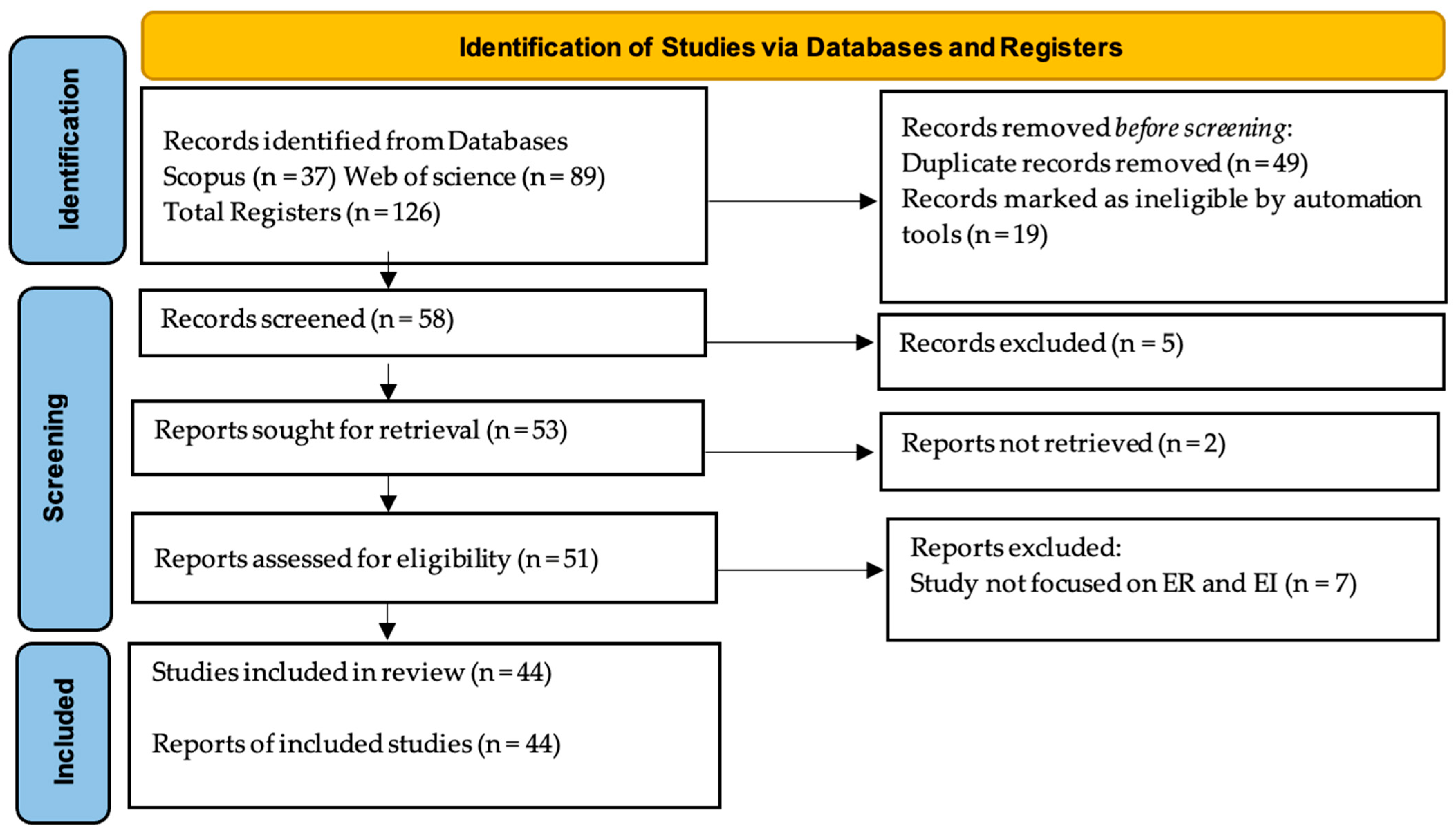
Additionally, only publications published between 2010 and 2024 were included in the search. The SLR data extraction and article selection process are presented below based on a flow chart in Figure 1’s study selection process. The source is based on the PRISMA flow diagram (the researchers’ PRISMA model 2020). Exclusion criteria were applied to include only quality publications. These articles go through a thorough peer review process and are distinguished by empirical research and scientific approaches, frequently providing excellent and trustworthy study findings. Therefore, books, book chapters, and conference proceedings were not included in the study. The dataset was improved to concentrate on resilience and entrepreneurial intentions to maintain quality standards.
Figure 1.
Study selection process. Source based on PRISMA flow diagram (PRISMA, 2020).
There were 126 results from the search in the Web of Science and Scopus databases. Of these, 49 were duplicates that showed up in searches using various keyword selections or in both databases, and 19 were automatically filtered out by the platforms since they were not published in journals. The abstracts of 58 papers were examined to determine whether they aligned with the study’s goals after duplicate articles were eliminated. Five publications were excluded because this study only included articles that were specifically focused on EI and Resilience in order to compare the findings of previous studies and comprehend the implications of these constructs. The remaining articles were then retrieved for additional examination. Only 51 articles were recovered, though, because two of the 53 remaining articles could no longer be found on the journal’s website, and the accompanying author could not be reached. Despite having the keywords, seven out of the 51 reviewed papers did not focus on EI and ER. The idea was not covered in these seven studies. This study ultimately contained 44 publications.
3.2. Data Collection Process
All of the study’s authors took on the role of reviewers in order to guarantee methodological rigour, which helped with the validation process. Notably, each author carried out this validation individually, and by working together, the gathered data was cross-verified and agreed upon. The integrity and dependability of the data collected during this systematic review were ensured by this collaborative method and the iterations that followed until an absolute convergence of the results was achieved.
3.3. Data Analysis
Subsequent stages of data extraction and key concept organisation were facilitated using the content analysis technique. The authors reviewed the research findings corresponding to the research questions. The matrix table was used to analyse the chosen papers (Garrard, 2004). Papers were analysed on the basis of their data collection method, data analysis technique, definition of resilience, theory foundation, dimensions, antecedents, outcomes, mediators, and moderators, author name, year of publication, geographic location, journal title, article types (conceptual, qualitative, quantitative, or mixed method) and industry.
3.4. Assessment of Study Risk of Bias
The systematic review framework incorporated a standardised approach to bias evaluation across all included studies examining entrepreneurial intention and resilience. Authors participated in the data collection process, and in compliance with the rules, the risk of bias was evaluated similarly. The automated tool Microsoft Excel® 2019 Version 16.77.1 was used. The same tool allowed the evaluation to be performed in a collaborative and consistent manner, thus ensuring the quality and integrity of the results obtained in this investigation. The quality and integrity of the findings from this research were guaranteed by the evaluation’s collaborative and consistent execution, which was made possible using the same instrument.
3.5. Measures of Impact
This review, which is based on secondary sources, treats these measures differently, even though they are more prevalent in primary research. This review focuses on the analysis of several indicators rather than traditional effect measurements like mean difference or risk ratio. In addition to an individual examination of the papers to ascertain the theories and characteristics of EI and resilience purpose addressed by the writers, these include temporalities of each keyword’s use as well as an individual analysis of the articles to determine the theories and variables of resilience and entrepreneurial intention addressed by the authors. Microsoft Excel®, which enables a rigorous and systematic approach to processing secondary research sources and evaluating the primary patterns and trends, was used to conduct these analyses.
3.6. Reporting Bias
Reporting bias may have occurred due to reliance on specific search terms and subject headings aligned with indexing in Web of Science and Scopus. This could have excluded relevant studies using alternative terminology. Additionally, studies without full-text access or clear methodological reporting were excluded, potentially omitting useful but less visible research
3.7. Assessment of Certainty
Certainty was evaluated globally through rigorous review, indicators, and consistent application of inclusion/exclusion criteria. The reliability of the overall results is strengthened by openness in study selection and recognition of review limits, even though individual study certainty was not graded. Furthermore, the discussion section clearly outlines the research’s limits, which aids in a thorough and open assessment of the validity and applicability of the findings of this investigation.
4. Research Findings and Discussion
This part presents the research findings in three subgroups: the theoretical foundations, methodological assessment, and empirical aspect. We will present the conception, antecedents, dynamics (moderators and mediators), and results of entrepreneurial resilience leading to entrepreneurial intentions.
4.1. Conceptualisation
The process by which an entrepreneur builds and exercises his endowments to interact with the surroundings in a positive manner, tailoring and handling before, during, and following distress, is how we define entrepreneurial resilience in the current article (Williams et al., 2017). A process paradigm provides a comprehensive insight into cognitive–behavioural mechanisms and innate capacities that catalyse positive adaptation and transformative resilience, enabling forward progress after adversity (Shepherd & Williams, 2020). The process perspective includes traits, abilities, and outcomes. It includes both the experience of difficulty and how entities react to it to achieve a positive outcome (Hoegl & Hartmann, 2021). According to Auerswald and van Opstal (2009); Youssef and Luthans (2007), proactive resilience is associated with adaptability and readiness when facing difficulty, whereas reactive resilience is associated with passive reactions to turbulence and change. According to Klein et al. (2003), a community that depends on reactive resilience views the prospective by fortifying the status quo and devising the current system’s resistance to change, whereas a society that cultivates proactive resilience acknowledges that change is inevitable and works to build a system that can adjust to changing circumstances and demands. The literature on resilience has shown a shift from a trait and skill to a process. This systematic review adopts Korber and McNaughton’s (2018) and Williams et al. (2017) process-oriented definition of entrepreneurial resilience as “a dynamic process through which entrepreneurs draw on and develop resources to positively adapt and maintain functioning when experiencing adversity or uncertainty”, directly addressing the fundamental inconsistency in conceptualisations across the literature. Our analysis reveals a critical disconnect between resilience and intention research streams: while resilience studies emphasise perseverance through adversity, intention studies typically assume linear progression from intention to action without accounting for obstacles, creating a theoretical blind spot at their intersection that requires integrated frameworks acknowledging their interdependent relationship.
4.2. How Potential Entrepreneurs Can Be Resilient
Research demonstrates resilience functions as a protective shield against psychological distress, including stress and anxiety (Campbell-Sills et al., 2006; Eschleman et al., 2010; Lara-Cabrera et al., 2021; Ye et al., 2020). Entrepreneurial resilience enables individuals to face challenges, recover from setbacks, and envision future success despite adversity. The developmental transition through emerging adulthood and university environments inherently presents elevated stress levels that may compromise well-being (Montoro-Fernández et al., 2022). Entrepreneurial resilience (ER) has been reviewed at the individual level as a personality characteristic, cognitive capacity, amalgam of behavioural patterns, and process (Hallak et al., 2018). An individual’s resilience is contingent upon a multitude of circumstances, including social interactions, external influences such as friends, school, culture and family), beliefs, and life events that impact the person, such as life changes (Ang et al., 2021; de los Reyes et al., 2022; Ross et al., 2022). Broadly seen as a dynamic and contextual process centred on situational adaptation brought about by changes (Brewer et al., 2019). A handful of entrepreneurship studies have taken a process perspective of resilience (González-López et al., 2019; Liu, 2020; Shepherd & Williams, 2020), but this work is scarce (Ahmed et al., 2022).
However, ER in educational contexts refers to students’ capacity to succeed academically as resilient individuals sustain their drive, accomplishments, and entrepreneurial output despite various obstacles (de los Reyes et al., 2022; Eri et al., 2021). In this study, resilience was conceptualised as a dynamic process. Research evidence indicates that resilient entrepreneurs effectively modify business strategies during crises and cultural challenges (Afshan et al., 2021); navigate economic instability and financial limitations (Fahad & Mohsin, 2022); operate successfully despite resource scarcity (Kwong et al., 2019); mitigate failure anxiety effects (Ukil & Jenkins, 2023), compensate for inadequate support networks (Sarwar et al., 2021); withstand social pressure toward conventional careers (Shahbaz et al., 2021) and persist in entrepreneurial pursuits following disappointments (Qasim & Mahmood, 2022). Students who exhibit higher resilience demonstrate stronger entrepreneurial intentions and vice versa (Cruz et al., 2022; Dewinda & Khairiyah, 2022; Marliyah, 2023). Research on resilience at the individual level is underdeveloped, and no consensus on entrepreneurs’ resilience involving many factors has been given even less consideration (Schäfer et al., 2024). In short, they have the inner strength and mindset to overcome challenges and move on. It is a “never give up’ attitude and to find innovative, creative solutions to problems. Research in this area is scarce (Pham et al., 2019).
4.3. Adversities Faced by Entrepreneurs (Antecedents)
Entrepreneurial resilience has evolved due to various factors. Economic conditions, technological advancements, and market trends influence the development of entrepreneurial resilience. Unexpected occurrences that could endanger a business’s existence, such as financial crises, technological advancements, or new competitors, are common for entrepreneurs (Duchek, 2018). Entrepreneurial resilience research is still in its early stages (Bullough & Renko, 2013). Resilience “to what” includes coping with economic shocks (Bakas, 2017; Berno, 2017), marginalisation (Kawharu et al., 2017; McInnis-Bowers et al., 2017), and natural catastrophes (McKnight & Linnenluecke, 2016; Sankaran & Demangeot, 2017). Disasters of all kinds can spur innovative thinkers, increase competitiveness in economic hardship, and expand knowledge of culture and entrepreneurship education, which can strengthen the voices of marginalised individuals and communities.
4.4. Factors Influencing Entrepreneurial Resilience (Dynamics)
Empirical studies have recognised the diverse manifestations of resilience across various contexts and professional settings, reflecting situational and cultural aspects in addition to individual differences (Ungar, 2011; Ungar & Liebenberg, 2011; Kossek & Perrigino, 2016; Linnenluecke, 2017). The interplay among external factors, personal characteristics, social support, and ongoing research is crucial for understanding resilience. Academic passion has been identified as a vital contributor to personal resources, including resilience (Bernabé et al., 2023). In challenging circumstances, resilience serves as a valuable resource for graduates, enhancing academic engagement, optimism, and social support while also improving their academic performance (Ayala & Manzano, 2018; Brewer et al., 2019; Morales-Rodríguez, 2021). This field is dynamic and continues to enrich our understanding of entrepreneurship. Two summaries, in Table 1 is a summary of studies with gaps and future directions representing entrepreneurial intentions and entrepreneurship while Table 2 outlines the factors influencing Entrepreneurial Resilience along with the identified gaps and future directions.
4.5. Entrepreneurial Resilience Generating Entrepreneurial Intentions (Outcome)
Studies have highlighted the key role of resilience in shaping entrepreneurial intentions, leading to a complex interplay between resilient communities and ecosystems. This dynamic has been likened to a “chicken and egg” scenario, as discussed by McInnis-Bowers et al. (2017), where both resilient communities can foster entrepreneurship, and resilient businesses contribute to the overall resilience of societies (McNaughton & Gray, 2017). Resilience is primarily positioned in the literature as a subsequent to entrepreneurial intentions rather than being examined as antecedent and bidirectional interactions. This gap remains unaddressed in the existing research. Individuals with high resilience tend to exhibit a robust entrepreneurial mindset by taking calculated risks, bolstered by their confidence in their ability to manage potential failures and setbacks. This resilience enables them to overcome self-doubt, recognise opportunities, and transform challenges into innovative solutions. Bullough et al. (2014) noted that this relationship is particularly noteworthy given the recognised value of entrepreneurship and the critical role of resilience in taking entrepreneurial risks. The connection between entrepreneurship and resilience remains unclear, and further research is necessary (Hallak et al., 2018). Resilience is a key determinant of entrepreneurial success despite empirical research yielding mixed results.
Two principal theoretical perspectives link these constructs. The first perspective, championed by Calvo and García (2010) and Markman and Baron (2003), the first school of thought emphasises the unique personal qualities that contribute to successful entrepreneurship. The dimensions of resilience, hardiness, resourcefulness, and optimism are particularly significant, with resourcefulness emerging as the most critical component (Ayala & Manzano, 2014). Additional traits, such as adaptability, problem-solving intelligence (Masten, 2007), self-efficacy, initiative, trust, attachment, autonomy, and humour, also enhance an entrepreneur’s resourcefulness. The second school of thought focuses on how external resources and social networks influence entrepreneurs’ resilience. The relationship between entrepreneurs and their external environment plays a crucial role in shaping resilience and mitigating risk factors (Zautra et al., 2010). Further exploring process-based resilience will help refine the idea of “the entrepreneur” (Hedner et al., 2011). Previous research has also demonstrated the potential benefits of social support and networks in fostering entrepreneurs’ resilience (Li et al., 2021; Raghunathan et al., 2022).
According to (Liu, 2020), resilience is essential for individuals and organisations to effectively navigate economic and social challenges. However, Significant questions persist concerning appropriate organisational resilience measurement methodologies and the contextual factors that promote its cultivation (Salisu et al., 2020). This presents an opportunity for academic institutions to create environments conducive to teaching entrepreneurship that fosters resilience and job creation (Maritz et al., 2020). Numerous studies have established a positive correlation between resilience and entrepreneurial intentions (Bullough et al., 2014; Corner et al., 2017; Cruz et al., 2022; Zamfir et al., 2018). Additionally, research indicates that resilience enhances entrepreneurial intention across various contexts (Corner et al., 2017; Fisher & Maritz, 2016; Bullough & Renko, 2013; González-López et al., 2019; Branicki et al., 2018; Hedner et al., 2011).
To deepen our understanding of entrepreneurship theory and practice, it is crucial to consider diverse socioeconomic and cultural contexts (Abouzeedan, 2003; Hedner et al., 2011). Studies have consistently shown that entrepreneurs’ intentions are influenced by their resilience (Bullough & Renko, 2013; Bullough et al., 2014; González-López et al., 2019; Jin, 2017; Pérez-López et al., 2016; Renko et al., 2021). PsyCap and (social) entrepreneurial intentions (Choi & Chang, 2023; Maslakçı et al., 2022) and self-employment intentions. Baluku et al. (2021) showed significant effects on the future work self through passion and resilience in proactive career behaviour (Bernabé et al., 2023). Resilience mediates the influence of social support sources’ influence on new venture initiation for men and women (Heman, 2022). Resilient people are more likely to become self-employed as they establish and uphold the necessary social connections (extraversion and agreeableness), plan and carry out necessary tasks conscientiously (conscientiousness), maintain composure in the face of difficulty (emotional stability), and exhibit openness to novelty and change (openness) (Runst & Thomä, 2023).
Researchers have also examined variables that account for the connection between resilience and entrepreneurial intentions. Obschonka et al. (2018) discovered that entrepreneurial alertness acted as a complete mediator in the relationship between resilience and entrepreneurial ambitions. Resilience, as a moderator, strengthening the direct positive association between social entrepreneurial intentions and compassion. Compassion enhances the indirect link between social entrepreneurial intentions and loving-kindness-meditation (Sana et al., 2021). Entrepreneurs with greater resilience are more likely to launch start-ups (Bernard & Dubard Barbosa, 2016; Corner et al., 2017). According to d’Andria et al.’s (2018) qualitative research, resilience is essential for entrepreneurs to acquire an established company successfully. Furthermore, according to Reuel Johnmark et al. (2016) resilience improves the connection between impaired students’ intentions and their entrepreneurial deeds. Resilience-generating entrepreneurial intentions are (Corner et al., 2017; Fisher & Maritz, 2016; Bullough & Renko, 2013; González-López et al., 2019; Branicki et al., 2018; Hedner et al., 2011). Table 1 is a summary of studies with gaps and future directions representing entrepreneurial intentions and entrepreneurship.
Table 1.
Entrepreneurial intentions and entrepreneurial resilience.
4.6. Empirical Assessment
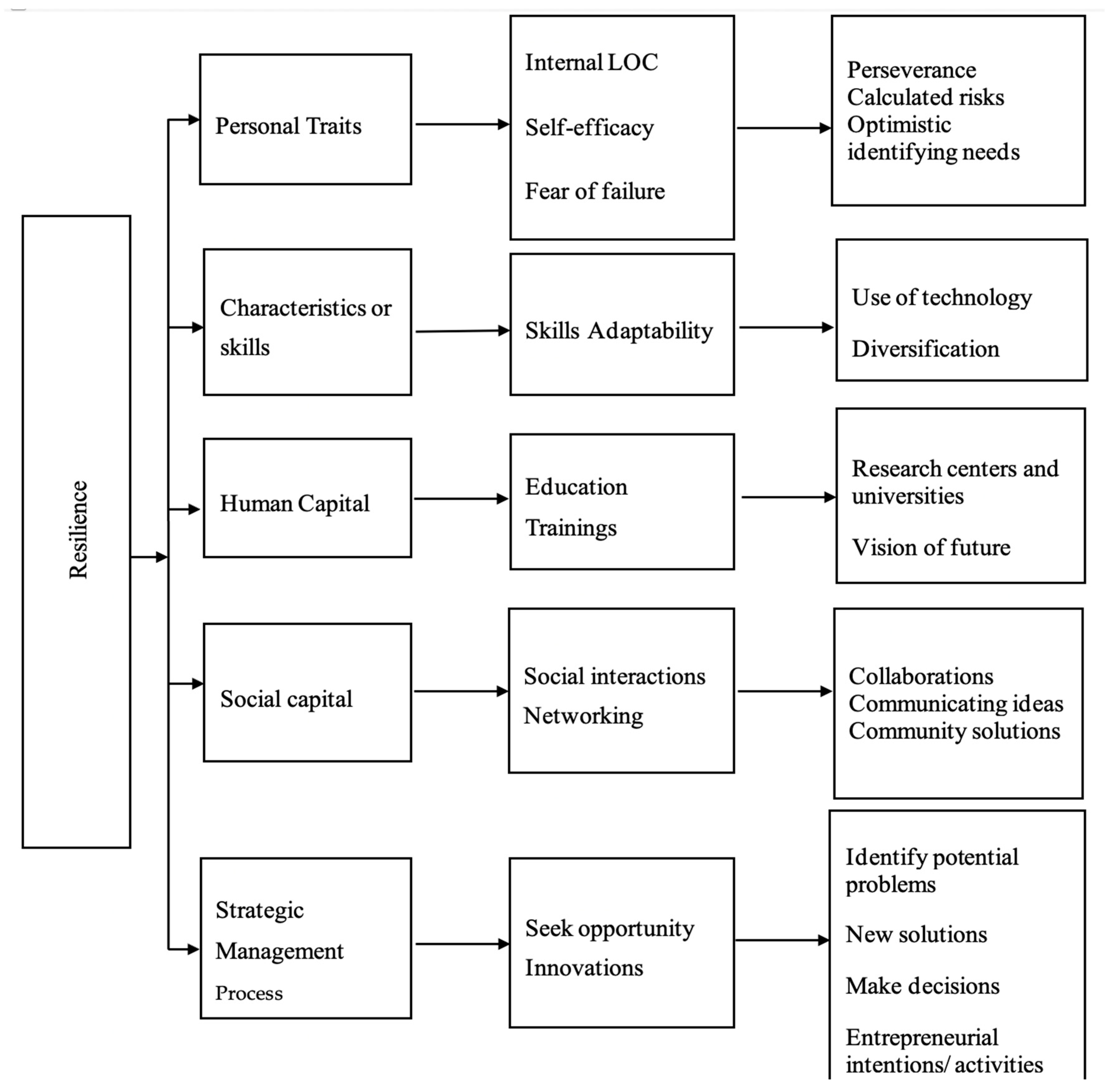
The contribution of this SLR lies in developing a theoretical framework that comprises resilience complementary factors influencing entrepreneurship intentions. Figure 2 illustrates this conceptual framework, synthesising insights from the 44 analysed papers and distilling the essential findings presented in the two referenced tables. The over-focus on organisational-level resilience identified in our analysis suggests the need for multilevel theoretical frameworks that integrate individual psychological resilience with Individual Entrepreneurial intentions. No consensus exists over the appropriate tools for measuring entrepreneurial resilience; the findings of different studies cannot be compared. Contradictory results are produced even when investigating similar populations because some researchers utilise measures unique to entrepreneurship while others use generic psychological resilience scales.
Figure 2.
The nomological network of entrepreneurial resilience.
4.7. Dark Side of Resilience
Resilience is generally seen as a positive trait that helps entrepreneurs overcome challenges. However, it is important to note that excessive or extreme can sometimes lead to negative outcomes such as burnout or reluctance to seek help when needed and have a negative or dark side. Guo et al. (2018) discuss burnout and resilience in his paper. Entrepreneurs need to find a balance between resilience and knowing when to ask for support or take a break.
4.8. Discussion and Future Agenda
There is a growing need for more research on the resilience of entrepreneurs (Patzelt et al., 2021; Shepherd & Williams, 2020) emphasise that entrepreneurs encounter various forms of adversity when starting, growing, and sustaining their endeavours (Chadwick & Raver, 2020; Pidduck & Clark, 2021). The systematic literature review identified 44 relevant publications on entrepreneurial resilience, and EI published between 2010 and 2024. A comprehensive list of all reviewed articles is presented in Table 1. Entrepreneurial intentions and Entrepreneurial resilience. Table 2 The factors influencing Entrepreneurial Resilience. These two tables present the list of all the papers with several key themes and patterns emerging regarding entrepreneurial resilience. The papers identified were mostly quantitative in nature. The Theory of Planned Behaviour (TPB) was used extensively. This analysis underscores the urgent need for theoretical integration and grounding to establish a coherent body of knowledge regarding the causes, effects, and mechanisms of entrepreneurial resilience. However, the precise definition, conceptualisation and operationalisation remain uncertain as previous empirical research has yielded ambiguous results. Addressing this ambiguity is essential for advancing the field and for providing clearer insights into how resilience can be fostered among entrepreneurs. Future empirical research endeavours should focus on examining contextual aspects at the individual level alongside diverse moderating and mediating variables. Future research should advance integrated frameworks that conceptualise resilience and intention as reciprocally related rather than distinct constructs. Methodologically, scholars should prioritise mixed-method approaches that complement self-report measures with behavioural studies and implement multi-wave longitudinal designs to capture the dynamic evolution of intentions and resilience through entrepreneurial journeys. Empirical modelling should systematically examine how cultural, technological, and economic contexts moderate these relationships. Theoretical development should embrace multilevel frameworks that bridge individual psychological resilience with organisational capabilities and entrepreneurial aspirations while reconceptualising the resilience–intention relationship as a dynamic, recursive process rather than a linear causal pathway.
Table 2 below presents the factors identified in previous studies that influence entrepreneurial resilience.
Table 2.
The factors influencing entrepreneurial resilience.
4.9. Limitations
This systematic review has many limitations despite its notable contributions. While limiting analysis to English-language publications constrained cultural representation, the exclusive focus on published journal papers probably missed relevant insights from books, practitioner publications, and grey literature. Theoretical developments may already go beyond our findings, considering how quickly entrepreneurial resilience and intention frameworks are evolving. As the field advances, these limitations emphasise the need for ongoing analysis and synthesis, especially with regard to integrating these interrelated variables across various entrepreneurial contexts.
5. Conclusions
This paper examines a number of scholarly debates that employ different definitions of resilience and entrepreneurship. In light of these talks, the shortcomings of current literature are examined, and potential directions for further research are suggested. There have been documented notable changes in literature across themes, ages, and contexts. With a large amount of research included in this SLR published from 2010 to the end of 2024 that was not taken into account in previous SLRs, the body of literature has been gradually growing over time. To prepare for a critical analysis of each subject of research, a systematic, multidisciplinary review of 44 publications split into several scholarly discussions was carried out. In the modern era, resilience includes not only the capacity to recover from traumatic events and adapt to a changed environment but also the capacity to enhance learning and promote personal growth via ongoing self-improvement, the acquisition of new experiences, and a forward-leaping mindset. The current situation of entrepreneurial resilience is clarified and critically analysed by these findings, which could have a number of policy ramifications. By clarifying its definition as a process and its role as a forerunner and a reciprocal influence on entrepreneurial goals, this systematic literature review emphasises the importance of entrepreneurial resilience. Redefined the concept of entrepreneurial resilience as rendered in contemporary literature. Investigated that entrepreneurial resilience leads to entrepreneurial intentions. Identified the antecedents and determinants that affect entrepreneurial resilience in developing countries.
Entrepreneurial resilience cultivates the desire to start a firm, which has historically been studied after entrepreneurial intentions in studies. The review shows that innovation, employment generation, and business sustainability are all significantly influenced by entrepreneurial resilience. In addition to improving organisational and personal adaptability, entrepreneurial resilience stimulates overall economic growth by giving people the skills and mindset for continuous learning and development. Entrepreneurs who are resilient are more likely to overcome obstacles, take advantage of fresh possibilities, and launch cutting-edge goods and services. This results in increased economic activity, job creation, and the development of strong, creative economies. As a result, encouraging entrepreneurial resilience ought to be considered a crucial tactic for legislators hoping to advance long-term prosperity and sustainable economic growth.
The research highlights the significance of incorporating resilience-building techniques into policy frameworks by elucidating entrepreneurial resilience as a process and a crucial precursor for entrepreneurial intentions. This strategy can support the development of the abilities and attitudes required for business owners to adjust, create, and maintain growth—particularly when faced with challenges. The practical ramifications include the development of comprehensive, flexible policy frameworks that foster innovation, sustainability, and long-term economic viability, in addition to assisting in the establishment of new businesses. Its implications extend beyond theoretical contributions to impact real-world applications in governmental and institutional approaches to fostering entrepreneurial ecosystems. Specialised training programs focusing on adaptability and perseverance, financial support mechanisms designed to help businesses weather disruptions, and educational curricula that instil resilience-oriented mindsets from early stages may simultaneously enhance national innovation capabilities, creating a virtuous cycle of economic development and competitive advantage in global markets.
Table 1 presents the list of all the searched papers.
Author Contributions
A.Y., conceptualization, methodology, software, validation, formal analysis, investigation, resources and writing—original draft preparation, visualization; R.B.C.O., L.H.O. and R.B.A.H., formal analysis, review, editing, supervision, project administration. All authors have read and agreed to the published version of the manuscript.
Funding
This research received no external funding.
Institutional Review Board Statement
This article does not contain any studies with human participants or animals performed by any of the authors.
Data Availability Statement
The data associated with this manuscript is available and can be accessed through the online database. Researchers and interested parties are encouraged to retrieve the data from this repository.
Conflicts of Interest
The authors declare no conflict of interest.
References
- Abouzeedan, A. (2003, November 12–14). Entrepreneurial school of thought and the new economy: A conceptual analysis. Working paper presented at the ISBA 26th National Small Firms Policy and Research Conference, University of Surrey, Surrey, UK. [Google Scholar]
- Afshan, G., Shahid, S., & Tunio, M. N. (2021). Learning experiences of women entrepreneurs amidst COVID-19. International Journal of Gender and Entrepreneurship, 13(2), 162–186. [Google Scholar] [CrossRef] [Scilit]
- Ahmed, A. E., Ucbasaran, D., Cacciotti, G., & Williams, T. A. (2022). Integrating psychological resilience, stress, and coping in entrepreneurship: A critical review and research agenda. Entrepreneurship Theory and Practice, 46(3), 497–538. [Google Scholar] [CrossRef] [Scilit]
- Ang, W. H. D., Shorey, S., Hoo, M. X. Y., Chew, H. S. J., & Lau, Y. (2021). The role of resilience in higher education: A meta-ethnographic analysis of students’ experiences. Journal of Professional Nursing, 37(6), 1092–1109. [Google Scholar] [CrossRef] [Scilit] [PubMed]
- Anwar, A., Coviello, N., & Rouziou, M. (2021). Weathering a crisis: A multi-level analysis of resilience in young ventures. Entrepreneurship Theory and Practice, 47(3), 864–892. [Google Scholar] [CrossRef] [Scilit]
- Auerswald, P. E., & van Opstal, D. (2009). Coping with turbulence: The resilience imperative. In Innovations: Technology, governance, globalization, special edition for the world economic forum annual meeting 2009. MIT Press. [Google Scholar]
- Ayala Calvo, J. C., & Manzano García, G. (2010). Established business owners’ success: Influencing factors. Journal of Developmental Entrepreneurship, 15(3), 263–286. [Google Scholar] [CrossRef] [Scilit]
- Ayala, J. C., & Manzano, G. (2018). Academic performance of first-year university students: The influence of resilience and engagement. Higher Education Research & Development, 37(7), 1321–1335. [Google Scholar] [CrossRef] [Scilit]
- Ayala, J.-C., & Manzano, G. (2014). The resilience of the entrepreneur. Influence on the success of the business. A longitudinal analysis. Journal of Economic Psychology, 42, 126–135. [Google Scholar] [CrossRef] [Scilit]
- Bakas, F. E. (2017). Community resilience through entrepreneurship: The role of gender. Journal of Enterprising Communities: People and Places in the Global Economy, 11(1), 61–77. [Google Scholar] [CrossRef] [Scilit]
- Baluku, M. M., Mugabi, E. N., Nansamba, J., Matagi, L., Onderi, P., & Otto, K. (2021). Psychological capital and career outcomes among final year university students: The mediating role of career engagement and perceived employability. International Journal of Applied Positive Psychology, 6(1), 55–80. [Google Scholar] [CrossRef] [Scilit]
- Barrera-Verdugo, G., Cadena-Echverría, J., Durán-Sandoval, D., & Villarroel-Villarroel, A. (2024). Analysing the effect of resilience and perceived social environment on university students’ intention to start sustainable ventures. PLoS ONE, 19(4), e0301178. [Google Scholar] [CrossRef] [Scilit]
- Bernabé, M., Merhi, R., Lisbona, A., & Palací, F. (2023). Future work self and proactive career behavior, the serial mediating effect of academic passion and resilience. Revista de Psicodidáctica (English Ed.), 29(1), 39–46. [Google Scholar] [CrossRef] [Scilit]
- Bernard, M.-J., & Dubard Barbosa, S. (2016). Résilience et entrepreneuriat: Une approche dynamique et biographique de l’acte d’entreprendre. M@n@gement, 19(2), 89. [Google Scholar] [CrossRef] [Scilit]
- Berno, T. (2017). Social enterprise, sustainability and community in post-earthquake Christchurch. Journal of Enterprising Communities: People and Places in the Global Economy, 11(1), 149–165. [Google Scholar] [CrossRef] [Scilit]
- Bhardwaj, S. (2024). A conceptual approach: Relationship between crisis, resilience, and entrepreneurial actions. Global Business and Economics Review, 30(1), 93–106. [Google Scholar] [CrossRef] [Scilit]
- Bhardwaj, S., Agarwal, S., & Tripathi, V. (2024). Exploring factors influencing the entrepreneurial intentions of the youth community towards green ICT to encourage environmental sustainability: Evidence from an emerging economy. The Electronic Journal of Information Systems in Developing Countries, 90(6), e12331. [Google Scholar] [CrossRef] [Scilit]
- Branicki, L. J., Sullivan-Taylor, B., & Livschitz, S. R. (2018). How entrepreneurial resilience generates resilient SMEs. International Journal of Entrepreneurial Behavior & Research, 24(7), 1244–1263. [Google Scholar] [CrossRef] [Scilit]
- Brewer, M. L., van Kessel, G., Sanderson, B., Naumann, F., Lane, M., Reubenson, A., & Carter, A. (2019). Resilience in higher education students: A scoping review. Higher Education Research & Development, 38(6), 1105–1120. [Google Scholar] [CrossRef] [Scilit]
- Brito, R. P. de, Lenz, A.-K., & Pacheco, M. G. M. (2022). Resilience building among small businesses in low-income neighborhoods. Journal of Small Business Management, 60(5), 1166–1201. [Google Scholar] [CrossRef] [Scilit]
- Bullough, A., & Renko, M. (2013). Entrepreneurial resilience during challenging times. Business Horizons, 56(3), 343–350. [Google Scholar] [CrossRef] [Scilit]
- Bullough, A., Renko, M., & Myatt, T. (2014). Danger zone entrepreneurs: The importance of resilience and self–efficacy for entrepreneurial intentions. Entrepreneurship Theory and Practice, 38(3), 473–499. [Google Scholar] [CrossRef] [Scilit]
- Campbell-Sills, L., Cohan, S. L., & Stein, M. B. (2006). Relationship of resilience to personality, coping, and psychiatric symptoms in young adults. Behaviour Research and Therapy, 44(4), 585–599. [Google Scholar] [CrossRef] [Scilit] [PubMed]
- Chadwick, I. C., & Raver, J. L. (2020). Psychological resilience and its downstream effects for business survival in nascent entrepreneurship. Entrepreneurship Theory and Practice, 44(2), 233–255. [Google Scholar] [CrossRef] [Scilit]
- Choi, Y., & Chang, S.-I. (2023). A study of the influence of civic engagement in the relationship between psychological capital and social performance. Cogent Business & Management, 10(1), 2195643. [Google Scholar] [CrossRef] [Scilit]
- Ciptono, W. S., Anggadwita, G., & Indarti, N. (2023). Examining prison entrepreneurship programs, self-efficacy and entrepreneurial resilience as drivers for prisoners’ entrepreneurial intentions. International Journal of Entrepreneurial Behavior & Research, 29(2), 408–432. [Google Scholar] [CrossRef] [Scilit]
- Contreras, F., Dreu, I. de, & Espinosa, J. C. (2017). Examining the relationship between psychological capital and entrepreneurial intention: An exploratory study. Asian Social Science, 13(3), 80. [Google Scholar] [CrossRef] [Scilit]
- Corner, P. D., Singh, S., & Pavlovich, K. (2017). Entrepreneurial resilience and venture failure. International Small Business Journal: Researching Entrepreneurship, 35(6), 687–708. [Google Scholar] [CrossRef] [Scilit]
- Cruz, P. D. A., Covarrubias, L. P. C., & Pérez, P. A. (2022). The effect of resilience on entrepreneurial intention in higher education students in a post-COVID stage 19. Journal of Higher Education Theory and Practice, 22(18), 6–20. [Google Scholar] [CrossRef] [Scilit]
- d’Andria, A., Gabarret, I., & Vedel, B. (2018). Resilience and effectuation for a successful business takeover. International Journal of Entrepreneurial Behavior & Research, 24(7), 1200–1221. [Google Scholar] [CrossRef] [Scilit]
- De Carolis, D. M., & Litzky, B. E. (2019). Unleashing the potential of university entrepreneurship education. New England Journal of Entrepreneurship, 22(1), 58–66. [Google Scholar] [CrossRef] [Scilit]
- de Esteban Curiel, J., Antonovica, A., & Herráez, B. R. (2024). Longitudinal analysis of gender differences regarding entrepreneurial resilience. International Entrepreneurship and Management Journal, 20(4), 2811–2838. [Google Scholar] [CrossRef] [Scilit]
- de los Reyes, E. J., Blannin, J., Cohrssen, C., & Mahat, M. (2022). Resilience of higher education academics in the time of 21st century pandemics: A narrative review. Journal of Higher Education Policy and Management, 44(1), 39–56. [Google Scholar] [CrossRef] [Scilit]
- Dewinda, H. R., & Khairiyah, U. (2022). Resilience of students who are entrepreneurial and not entrepreneurial. Jurnal RAP (Riset Aktual Psikologi Universitas Negeri Padang), 12(2), 223–232. [Google Scholar] [CrossRef] [Scilit]
- Duchek, S. (2018). Entrepreneurial resilience: A biographical analysis of successful entrepreneurs. International Entrepreneurship and Management Journal, 14(2), 429–455. [Google Scholar] [CrossRef] [Scilit]
- Emrizal, E., & Primadona, P. (2023). The role of entrepreneurial resilience and entrepreneurial self-efficacy on entrepreneurial intention on students in Padang City. International Journal of Science, Technology & Management, 4(1), 80–84. [Google Scholar] [CrossRef] [Scilit]
- Eri, R., Gudimetla, P., Star, S., Rowlands, J., Girgla, A., To, L., Li, F., Sochea, N., & Bindal, U. (2021). Digital resilience in higher education in response to COVID-19 pandemic: Student perceptions from Asia and Australia. Journal of University Teaching and Learning Practice, 18(5), 108–134. [Google Scholar] [CrossRef] [Scilit]
- Eschleman, K. J., Bowling, N. A., & Alarcon, G. M. (2010). A meta-analytic examination of hardiness. International Journal of Stress Management, 17(4), 277. [Google Scholar] [CrossRef] [Scilit]
- Fahad, S., & Mohsin, M. (2022). Social capital and entrepreneurial intentions of university students of rural areas: Mediating role of psychological capital [Master’s thesis, Pakistan Institute of Development Economics]. [Google Scholar]
- Fiernaningsih, N., Widayani, A., Herijanto, P., Himmah, M., & Utamaningsih, A. (2024). Enhancing SME performance in East Java through competency development, leadership, entrepreneurial intent, and resilience. Problems and Perspectives in Management, 22(3), 504–516. [Google Scholar] [CrossRef] [Scilit]
- Fisher, D. M., Ragsdale, J. M., & Fisher, E. C. S. (2019). The importance of definitional and temporal issues in the study of resilience. Applied Psychology, 68(4), 583–620. [Google Scholar] [CrossRef] [Scilit]
- Fisher, R., & Maritz, A. (2016). Does individual resilience influence entrepreneurial success. Available online: https://www.researchgate.net/publication/311259544 (accessed on 21 April 2025).
- Garrard, J. (2004). Health sciences literature review made easy. Jones & Bartlett Learning; Sudbury. [Google Scholar]
- González-López, M. J., Pérez-López, M. C., & Rodríguez-Ariza, L. (2019). Clearing the hurdles in the entrepreneurial race: The role of resilience in entrepreneurship education. Academy of Management Learning & Education, 18(3), 457–483. [Google Scholar] [CrossRef] [Scilit]
- Goschin, Z., Antonia, M., & Tigau, H. (2021). Entrepreneurship recovery in Romania after the Great Recession: A dynamic spatial panel approach. Sustainability, 13(19), 10702. [Google Scholar] [CrossRef] [Scilit]
- Guo, Y., Luo, Y., Lam, L., Cross, W., Plummer, V., & Zhang, J. (2018). Burnout and its association with resilience in nurses: A cross-sectional study. Journal of Clinical Nursing, 27(1–2), 441–449. [Google Scholar] [CrossRef] [Scilit] [PubMed]
- Hallak, R., Assaker, G., O’Connor, P., & Lee, C. (2018). Firm performance in the upscale restaurant sector: The effects of resilience, creative self-efficacy, innovation and industry experience. Journal of Retailing and Consumer Services, 40, 229–240. [Google Scholar] [CrossRef] [Scilit]
- Hao, X., Chen, X., Lin, K., Du, J., & Tu, Y. (2024). The mechanism of impact entrepreneurial resilience on entrepreneurial performance based on conservation of resources theory. Journal of Industrial Engineeering and Engineering Management, 38((5)), 39–51. [Google Scholar]
- Hao, X., Tu, Y., Liu, Y., & Tan, W. (2020). A theoretical framework for entrepreneurial resilience in the context of entrepreneurial failure. Foreign Economics & Management, 42(1), 30–41. [Google Scholar]
- Hartmann, S., Backmann, J., Newman, A., Brykman, K. M., & Pidduck, R. J. (2022). Psychological resilience of entrepreneurs: A review and agenda for future research. Journal of Small Business Management, 60(5), 1041–1079. [Google Scholar] [CrossRef] [Scilit]
- Hashemi, H., Rajabi, R., & Brashear-Alejandro, T. G. (2022). COVID-19 research in management: An updated bibliometric analysis. Journal of Business Research, 149, 795–810. [Google Scholar] [CrossRef] [Scilit]
- Hedner, T., Abouzeedan, A., & Klofsten, M. (2011). Entrepreneurial resilience. Annals of Innovation & Entrepreneurship, 2(1), 7986. [Google Scholar] [CrossRef] [Scilit]
- Heman, U. (2022). Social support and new venture initiation with resilience as a mediating factor. Enterprise Development & Microfinance, 33(3), 170–181. [Google Scholar] [CrossRef] [Scilit]
- Hoang, G., Luu, T. T., Le, T. T. T., Tran, N., & Tran, A. K. T. (2023). Examining the effects of entrepreneurship education on entrepreneurial intentions of Vietnamese business students: The roles of entrepreneurial alertness and resilience. Journal of Education for Business, 98(8), 462–470. [Google Scholar] [CrossRef] [Scilit]
- Hoegl, M., & Hartmann, S. (2021). Bouncing back, if not beyond: Challenges for research on resilience. Asian Business & Management, 20(4), 456–464. [Google Scholar] [CrossRef] [Scilit]
- Hossain, M. I., Tabash, M. I., Siow, M. L., Ong, T. S., & Anagreh, S. (2023). Entrepreneurial intentions of Gen Z university students and entrepreneurial constraints in Bangladesh. Journal of Innovation and Entrepreneurship, 12(1), 12. [Google Scholar] [CrossRef] [Scilit] [PubMed]
- Ibrahim, U. T. (2020). Resilience and gender as determinants of entrepreneurial intentions among secondary school students in Kwara State, Nigeria. Indonesian Journal of Educational Counseling, 4(2), 153–160. [Google Scholar] [CrossRef] [Scilit]
- Jin, C.-H. (2017). The effect of psychological capital on start-up intention among young start-up entrepreneurs. Chinese Management Studies, 11(4), 707–729. [Google Scholar] [CrossRef] [Scilit]
- Kawharu, M., Tapsell, P., & Woods, C. (2017). Indigenous entrepreneurship in Aotearoa New Zealand. Journal of Enterprising Communities: People and Places in the Global Economy, 11(1), 20–38. [Google Scholar] [CrossRef] [Scilit]
- Klein, R. J. T., Nicholls, R. J., & Thomalla, F. (2003). Resilience to natural hazards: How useful is this concept? Environmental Hazards, 5(1), 35–45. [Google Scholar] [CrossRef]
- Korber, S., & McNaughton, R. B. (2018). Resilience and entrepreneurship: A systematic literature review. International Journal of Entrepreneurial Behavior & Research, 24(7), 1129–1154. [Google Scholar] [CrossRef] [Scilit]
- Kossek, E. E., & Perrigino, M. B. (2016). Resilience: A review using a grounded integrated occupational approach. The Academy of Management Annals, 10(1), 729–797. [Google Scholar] [CrossRef]
- Kraus, S., Breier, M., & Dasí-Rodríguez, S. (2020). The art of crafting a systematic literature review in entrepreneurship research. International Entrepreneurship and Management Journal, 16, 1023–1042. [Google Scholar] [CrossRef] [Scilit]
- Kwong, C., Cheung, C., Manzoor, H., & Rashid, M. U. (2019). Entrepreneurship through bricolage. A study of displaced entrepreneurs at times of war and conflict 1. Entrepreneurship & Regional Development, 31(5–6), 435–455. [Google Scholar]
- Lara-Cabrera, M. L., Betancort, M., Muñoz-Rubilar, C. A., Rodríguez Novo, N., & De las Cuevas, C. (2021). The mediating role of resilience in the relationship between perceived stress and mental health. International Journal of Environmental Research and Public Health, 18(18), 9762. [Google Scholar] [CrossRef] [Scilit] [PubMed]
- Li, F., Luo, S., Mu, W., Li, Y., Ye, L., Zheng, X., Xu, B., Ding, Y., Ling, P., Zhou, M., & Chen, X. (2021). Effects of sources of social support and resilience on the mental health of different age groups during the COVID-19 pandemic. BMC Psychiatry, 21(1), 16. [Google Scholar] [CrossRef] [Scilit] [PubMed]
- Linnenluecke, M. K. (2017). Resilience in business and management research: A Review of influential publications and a research agenda. International Journal of Management Reviews, 19(1), 4–30. [Google Scholar] [CrossRef] [Scilit]
- Liu, Y. (2020). Contextualising risk and building resilience: Returnees versus local entrepreneurs in China. Applied Psychology, 69(2), 415–443. [Google Scholar] [CrossRef] [Scilit]
- Luthar, S. S., Cicchetti, D., & Becker, B. (2000). The construct of resilience: A critical evaluation and guidelines for future work. Child Development, 71(3), 543–562. [Google Scholar] [CrossRef] [Scilit]
- Mahfud, Hidayat, Thaib, Kholifa, & Sari. (2024). Let’s to be an entrepreneur through education! The role of entrepreneurial attitude orientation and psychological capital among university students. Global Business Finance Review, 29(8), 91–106. [Google Scholar] [CrossRef] [Scilit]
- Malhotra, S., & Kiran, R. (2024). Integrating cognitive competency, social competency and risk propensity with the theory of planned behaviour to attain sustainable-development-goal-8-driven sustainable entrepreneurial intentions. Sustainability, 16(10), 3888. [Google Scholar] [CrossRef] [Scilit]
- Maritz, A., Perenyi, A., de Waal, G., & Buck, C. (2020). Entrepreneurship as the unsung hero during the current COVID-19 economic crisis: Australian perspectives. Sustainability, 12(11), 4612. [Google Scholar] [CrossRef] [Scilit]
- Markman, G. D., & Baron, R. A. (2003). Person–entrepreneurship fit: Why some people are more successful as entrepreneurs than others. Human Resource Management Review, 13(2), 281–301. [Google Scholar] [CrossRef] [Scilit]
- Marliyah, L. (2023). The relationship between resilience and entrepreneurial attitude of University students in semarang. Indonesian Journal of Business and Entrepreneurship (IJBE), 9(2), 220. [Google Scholar] [CrossRef] [Scilit]
- Martín-Rojas, R., Garrido-Moreno, A., & García-Morales, V. J. (2023). Social media use, corporate entrepreneurship and organizational resilience: A recipe for SMEs success in a post-COVID scenario. Technological Forecasting and Social Change, 190, 122421. [Google Scholar] [CrossRef] [Scilit]
- Maslakçı, A., Sürücü, L., & Şeşen, H. (2022). Positive psychological capital and university students’ entrepreneurial intentions: Does gender make a difference? International Journal for Educational and Vocational Guidance, 24(1), 125–150. [Google Scholar] [CrossRef] [Scilit]
- Masten, A. S. (2007). Resilience in developing systems: Progress and promise as the fourth wave rises. Development and Psychopathology, 19(3), 921–930. [Google Scholar] [CrossRef] [Scilit]
- McInnis-Bowers, C., Parris, D. L., & Galperin, B. L. (2017). Which came first, the chicken or the egg? Journal of Enterprising Communities: People and Places in the Global Economy, 11(1), 39–60. [Google Scholar] [CrossRef] [Scilit]
- McKnight, B., & Linnenluecke, M. K. (2016). How firm responses to natural disasters strengthen community resilience. Organization & Environment, 29(3), 290–307. [Google Scholar] [CrossRef] [Scilit]
- McNaughton, R. B., & Gray, B. (2017). Entrepreneurship and resilient communities—Introduction to the special issue. Journal of Enterprising Communities: People and Places in the Global Economy, 11(1), 2–19. [Google Scholar] [CrossRef] [Scilit]
- Montoro-Fernández, E., Ramón Cárdenas-Gutiérrez, A., & Bernal-Guerrero, A. (2022). Entrepreneurial resilience: A case study on university students. International Journal of Environmental Research and Public Health, 19(5), 2589. [Google Scholar] [CrossRef] [Scilit]
- Morales-Rodríguez, F. M. (2021). Fear, stress, resilience and coping strategies during COVID-19 in Spanish university students. Sustainability, 13(11), 5824. [Google Scholar] [CrossRef] [Scilit]
- Morris, T. H., & König, P. D. (2020). Self-directed experiential learning to meet ever-changing entrepreneurship demands. Education + Training, 63(1), 23–49. [Google Scholar] [CrossRef] [Scilit]
- Nakpodia, F., Ashiru, F., You, J. J., & Oni, O. (2024). Digital technologies, social entrepreneurship and resilience during crisis in developing countries: Evidence from Nigeria. International Journal of Entrepreneurial Behavior & Research, 30(2/3), 342–368. [Google Scholar] [CrossRef] [Scilit]
- Obschonka, M., Hahn, E., & Bajwa, N. u. H. (2018). Personal agency in newly arrived refugees: The role of personality, entrepreneurial cognitions and intentions, and career adaptability. Journal of Vocational Behavior, 105, 173–184. [Google Scholar] [CrossRef] [Scilit]
- Ojewumi, K. A., Fagbenro, D. A., & Babatunde, S. I. (2020). Psycho-demographic factors and entrepreneurial intention among university students. Open Journal for Psychological Research, 4(1), 31–42. [Google Scholar] [CrossRef] [Scilit]
- Page, M. J., McKenzie, J. E., Bossuyt, P. M., Boutron, I., Hoffmann, T. C., Mulrow, C. D., Shamseer, L., Tetzlaff, J. M., Akl, E. A., Brennan, S. E., Chou, R., Glanville, J., Grimshaw, J. M., Hróbjartsson, A., Lalu, M. M., Li, T., Loder, E. W., Mayo-Wilson, E., McDonald, S., … Moher, D. (2021). The PRISMA 2020 statement: An updated guideline for reporting systematic reviews. PLoS Medicine, 18(3), e1003583. [Google Scholar] [CrossRef]
- Patterson, J. M. (2002). Understanding family resilience. Journal of Clinical Psychology, 58(3), 233–246. [Google Scholar] [CrossRef] [Scilit] [PubMed]
- Patzelt, H., Preller, R., & Breugst, N. (2021). Understanding the life cycles of entrepreneurial teams and their ventures: An agenda for future research. Entrepreneurship: Theory and Practice, 45(5), 1119–1153. [Google Scholar] [CrossRef] [Scilit]
- Pérez-López, M. C., González-López, M. J., & Rodríguez-Ariza, L. (2016). Competencies for entrepreneurship as a career option in a challenging employment environment. Career Development International, 21(3), 214–229. [Google Scholar] [CrossRef] [Scilit]
- Pérez-Macías, N., Fernández-Fernández, J. L., & Rúa Vieites, A. (2022). Resilience and entrepreneurial intentions of people with disabilities: In search of the Sustainable Development Goals (SDGs). F1000Research, 11, 726. [Google Scholar] [CrossRef] [Scilit]
- Pham, L., Nguyen, N., & Tran, T. (2019). On the factors affecting start-up intention of Millennials in Vietnam. International Journal of Advanced and Applied Sciences, 6(1), 1–8. [Google Scholar] [CrossRef] [Scilit]
- Pidduck, R. J., & Clark, D. R. (2021). Transitional entrepreneurship: Elevating research into marginalized entrepreneurs. Journal of Small Business Management, 59(6), 1081–1096. [Google Scholar] [CrossRef] [Scilit]
- Portuguez Castro, M., & Gómez Zermeño, M. G. (2021). Identifying entrepreneurial interest and skills among university students. Sustainability, 13(13), 6995. [Google Scholar] [CrossRef] [Scilit]
- Prihadi, K., Cheow, D. Z. Y., Yong, J. H. E., & Sundrasagran, M. (2018). Improving resilience and self-esteem among university students with entrepreneurship simulation board game. International Journal of Evaluation and Research in Education (IJERE), 7(1), 48. [Google Scholar] [CrossRef] [Scilit]
- PRISMA. (2020). PRISMA 2020 flow diagram—PRISMA statement. Available online: https://www.prisma-statement.org/prisma-2020-flow-diagram (accessed on 30 December 2024).
- Protogerou, A., Kontolaimou, A., & Caloghirou, Y. (2022). Creative industries and resilience in times of crisis: The role of firm and entrepreneurial team characteristics. International Journal of Entrepreneurial Behaviour and Research, 28(4), 1075–1105. [Google Scholar] [CrossRef]
- Qasim, Y., & Mahmood, Z. (2022). Technopreneurship education: The way to rebuild COVID-19 affected economy. Journal of Management and Research, 9(1). [Google Scholar] [CrossRef] [Scilit]
- Raghunathan, S., Darshan Singh, A., & Sharma, B. (2022). Study of resilience in learning environments during the COVID-19 pandemic. Frontiers in Education, 6, 677625. [Google Scholar] [CrossRef] [Scilit]
- Ramli, S. N., & Ahayalimudin, N. (2023). Burnout level and its associated factors among critical care nurses: A literature review. International Journal of Care Scholars, 6(1), 59–70. [Google Scholar] [CrossRef] [Scilit]
- Renko, M., Bullough, A., & Saeed, S. (2021). How do resilience and self-efficacy relate to entrepreneurial intentions in countries with varying degrees of fragility? A six-country study. International Small Business Journal: Researching Entrepreneurship, 39(2), 130–156. [Google Scholar] [CrossRef] [Scilit]
- Reuel Johnmark, D., Munene, J. C., & Balunywa, W. (2016). Robustness of personal initiative in moderating entrepreneurial intentions and actions of disabled students. Cogent Business & Management, 3(1), 1169575. [Google Scholar] [CrossRef] [Scilit]
- Ross, P. M., Scanes, E., Poronnik, P., Coates, H., & Locke, W. (2022). Understanding STEM academics’ responses and resilience to educational reform of academic roles in higher education. International Journal of STEM Education, 9(1), 11. [Google Scholar] [CrossRef] [Scilit]
- Runst, P., & Thomä, J. (2023). Resilient entrepreneurs?—Revisiting the relationship between the Big Five and self-employment. Small Business Economics, 61(1), 417–443. [Google Scholar] [CrossRef] [Scilit]
- Salisu, I., Hashim, N., Mashi, M. S., & Aliyu, H. G. (2020). Perseverance of effort and consistency of interest for entrepreneurial career success. Journal of Entrepreneurship in Emerging Economies, 12(2), 279–304. [Google Scholar] [CrossRef] [Scilit]
- Sana, H. A., Alkhalaf, S., Zulfiqar, S., Al-Rahmi, W. M., Al-Adwan, A. S., & AlSoud, A. R. (2021). Upshots of intrinsic traits on social entrepreneurship intentions among young business graduates: An investigation through moderated-mediation model. Sustainability, 13(9), 5192. [Google Scholar] [CrossRef] [Scilit]
- Sankaran, K., & Demangeot, C. (2017). Conceptualizing virtual communities as enablers of community-based entrepreneurship and resilience. Journal of Enterprising Communities: People and Places in the Global Economy, 11(1), 78–94. [Google Scholar] [CrossRef] [Scilit]
- Sarwar, A., Ahsan, Q., & Rafiq, N. (2021). Female entrepreneurial intentions in Pakistan: A theory of planned behavior perspective. Frontiers in Psychology, 12, 553963. [Google Scholar] [CrossRef] [Scilit]
- Schäfer, S. K., Supke, M., Kausmann, C., Schaubruch, L. M., Lieb, K., & Cohrdes, C. (2024). A systematic review of individual, social, and societal resilience factors in response to societal challenges and crises. Communications Psychology, 2(1), 92. [Google Scholar] [CrossRef] [Scilit]
- Shahbaz, S., Ali, Q., Chaudhry, Z. A., & Hafeez, S. (2021). Challenges and prospects of women entrepreneurship in Pakistan: A qualitative inquiry. Webology, 18(6). [Google Scholar]
- Shepherd, D. A., & Williams, T. (2020). Entrepreneurship responding to adversity: Equilibrating adverse events and disequilibrating persistent adversity. Organization Theory, 1(4), 263178772096767. [Google Scholar] [CrossRef] [Scilit]
- Steinbrink, K. M., & Ströhle, C. (2024). The entrepreneurial intention of top athletes—Does resilience lead the way? International Entrepreneurship and Management Journal, 20(2), 607–629. [Google Scholar] [CrossRef] [Scilit]
- Tranfield, D., Denyer, D., & Smart, P. (2003). Towards a methodology for developing evidence-informed management knowledge by means of systematic review. British Journal of Management, 14(3), 207–222. [Google Scholar] [CrossRef] [Scilit]
- Ukil, M. I., & Almashayekhi, A. (2024). Interested to start a venture but worried about the future: Investigating the role of resilience in fear of career uncertainty and entrepreneurial intention. Acta Psychologica, 243, 104148. [Google Scholar] [CrossRef] [Scilit]
- Ukil, M. I., & Jenkins, A. (2023). Willing but fearful: Resilience and youth entrepreneurial intentions. Journal of Small Business and Enterprise Development, 30(1), 78–99. [Google Scholar] [CrossRef] [Scilit]
- Ungar, M. (2011). The social ecology of resilience: A handbook of theory and practice. Springer. [Google Scholar]
- Ungar, M., & Liebenberg, L. (2011). Assessing resilience across cultures using mixed methods: Construction of the child and youth resilience measure. Journal of Mixed Methods Research, 5(2), 126–149. [Google Scholar] [CrossRef] [Scilit]
- Verma, S., & Gustafsson, A. (2020). Investigating the emerging COVID-19 research trends in the field of business and management: A bibliometric analysis approach. Journal of Business Research, 118, 253–261. [Google Scholar] [CrossRef] [Scilit] [PubMed]
- Viana, L. F. C., Hoffmann, V. E., & Miranda Junior, N. da S. (2023). Regional resilience and innovation: Paper profiles and research agenda. Innovation & Management Review, 20(2), 119–131. [Google Scholar] [CrossRef] [Scilit]
- Wall, T., & Bellamy, L. (2019). Redressing small firm resilience: Exploring owner-manager resources for resilience. International Journal of Organizational Analysis, 27(2), 269–288. [Google Scholar] [CrossRef] [Scilit]
- Walsh, C. B., & McCollum, W. (2020). Exploring the impact of individual resilience on entrepreneurial success. Journal of Entrepreneurship & Organization Management, 9(5), 1–6. [Google Scholar]
- Williams, T. A., Gruber, D. A., Sutcliffe, K. M., Shepherd, D. A., & Zhao, E. Y. (2017). Organizational response to adversity: Fusing crisis management and resilience research streams. Academy of Management Annals, 11(2), 733–769. [Google Scholar] [CrossRef] [Scilit]
- Windle, G., Bennett, K. M., & Noyes, J. (2011). A methodological review of resilience measurement scales. Health and Quality of Life Outcomes, 9(1), 8. [Google Scholar] [CrossRef] [Scilit]
- Wu, K., Zhao, X., Wang, X., Chen, X., Hung, T.-K., Wang, Z., & Lee, S.-C. (2023). The impact of entrepreneurial resilience on the entrepreneurial intention of return migrants: An empirical study based on survey data from multiple provinces in China. Sage Open, 13(2). [Google Scholar] [CrossRef] [Scilit]
- Xiao, C., & Wang, X. (2022). Overseas Chinese returnees’ swindler syndrome and their entrepreneurial education under psychological resilience. Frontiers in Psychology, 12, 747687. [Google Scholar] [CrossRef] [Scilit]
- Yang, Y., & Danes, S. M. (2015). Resiliency and resilience process of entrepreneurs in new venture creation. Entrepreneurship Research Journal, 5(1), 1–30. [Google Scholar] [CrossRef] [Scilit]
- Ye, Z., Yang, X., Zeng, C., Wang, Y., Shen, Z., Li, X., & Lin, D. (2020). Resilience, social support, and coping as mediators between COVID-19-related stressful experiences and acute stress disorder among college students in China. Applied Psychology: Health and Well-Being, 12(4), 1074–1094. [Google Scholar] [CrossRef] [Scilit] [PubMed]
- Youssef, C. M., & Luthans, F. (2007). Positive organizational behavior in the workplace. Journal of Management, 33(5), 774–800. [Google Scholar] [CrossRef] [Scilit]
- Zamfir, A.-M., Mocanu, C., & Grigorescu, A. (2018). Resilient entrepreneurship among European higher education graduates. Sustainability, 10(8), 2594. [Google Scholar] [CrossRef] [Scilit]
- Zautra, A. J., Hall, J. S., & Murray, K. E. (2010). Resilience: A new definition of health for people and communities. In J. W. Reich, A. J. Zautra, & J. S. Hall (Eds.), Handbook of adult resilience (pp. 3–29). The Guilford Press. [Google Scholar]
- Zhao, H., & Wibowo, A. (2021). Entrepreneurship resilience: Can psychological traits of entrepreneurial intention support overcoming entrepreneurial failure? Frontiers in Psychology, 12, 707803. [Google Scholar] [CrossRef] [Scilit] [PubMed]


Disclaimer/Publisher’s Note: The statements, opinions and data contained in all publications are solely those of the individual author(s) and contributor(s) and not of MDPI and/or the editor(s). MDPI and/or the editor(s) disclaim responsibility for any injury to people or property resulting from any ideas, methods, instructions or products referred to in the content. |
© 2025 by the authors. Licensee MDPI, Basel, Switzerland. This article is an open access article distributed under the terms and conditions of the Creative Commons Attribution (CC BY) license (https://creativecommons.org/licenses/by/4.0/).