


Abstract
Urban air pollution has become a critical governance challenge for many developing cities, where sustained air quality improvement depends not only on pollution-control capacity but also on durable public participation and financial support. Building on Cultural Additivity Theory (CAT), this study employs Bayesian Mindsponge Framework (BMF) analytics with a Bayesian cumulative ordinal logistic specification to investigate how environmental perceptions, adaptive behavior, and household financial capacity are associated with household willingness to pay (WTP) for urban air quality improvement, using survey data from 604 households in Hanoi, Vietnam. The results show that household income, perceived pollution urgency, perceived pollution impact, and avoidance behavior are positively associated with higher WTP. More importantly, the positive associations of perceived pollution urgency and avoidance behavior with WTP are more pronounced at higher household income levels, indicating that these environmental orientations are more closely associated with higher contribution preferences at greater levels of financial capacity. These findings suggest that household WTP reflects a differentiated decision process in which environmental engagement and material circumstances jointly correspond to stated financial contribution rather than operating as isolated determinants. This study makes three contributions. First, it extends CAT into behavioral environmental economics by distinguishing environmental value formation from its expression in stated financial contribution and revealing within-decision differentiation across environmental attributes. Second, it extends the application of BMF analytics to payment card WTP data through a Bayesian cumulative ordinal logistic specification that supports posterior and probability-based interpretation. Third, it provides evidence for designing clean air governance that combines locally relevant risk communication and behaviorally informed public engagement with flexible participation arrangements that recognize heterogeneous household financial capacity.
1. Introduction
“…Just listen to scientific news, but the environmental intelligence birds must keep the information simple. Throw away anything that sounds too complicated. Only keep what is simple to grasp…”In “GHG emissions”; Wild Wise Weird [1].
Air pollution has emerged as one of the principal threats to sustainable urban development worldwide. According to the World Health Organization (WHO), approximately 99% of the global population lived in areas where air quality did not meet WHO guidelines in 2019, while outdoor air pollution caused around 4.2 million premature deaths, most of which occurred in low- and middle-income countries [2]. The problem is particularly acute in developing economies, where rapid urbanization and economic growth often outpace environmental management capacity, placing air quality improvement high on the policy agenda. Although emission controls, environmental regulation, and cleaner technologies have improved air quality in many regions, their long-term effectiveness increasingly depends on sustained public support and participation alongside government action [3,4]. As household financial contributions constitute one form of such participation, willingness to pay (WTP) has become a widely used approach for eliciting the value placed on environmental improvement and assessing public support for environmental policies [5]. Previous research shows that contribution decisions are associated with socioeconomic conditions, environmental cognition, and perceived environmental risks [6,7,8]. These findings underscore the need to understand how environmental considerations and material circumstances jointly enter household decisions to support long-term air quality improvement.
As Vietnam’s political capital and a major economic center, Hanoi has experienced rapid urbanization and economic growth over recent decades, placing increasing pressure on urban air quality. In 2025, the city repeatedly ranked among the world’s most polluted during severe pollution episodes, while annual PM2.5 concentrations remained well above WHO guideline levels [9,10,11,12]. Addressing these pressures requires not only effective pollution-control measures but also sustained investment and public engagement. Understanding households’ willingness to participate financially is therefore relevant to broader efforts to maintain support for cleaner air over the long term. Hanoi thus provides a pertinent setting for examining how environmental concerns and economic circumstances are reflected in household contribution preferences.
Although previous studies have identified environmental cognition, adaptive behavior, and financial capacity as important correlates of WTP for air quality improvement [6,8,13,14], less is known about how these dimensions operate within the same household decision context. Most studies consider them separately, giving limited attention to whether the relevance of environmental responses varies across different financial circumstances [15,16,17]. Consequently, established WTP research offers substantial evidence on environmental and socioeconomic correlates of payment decisions, but comparatively less insight into whether environmental orientations are more closely associated with financial support under some material conditions than others. This distinction is important because evidence that income predicts WTP does not, by itself, explain how financial capacity relates to the expression of different environmental concerns in contribution decisions.
To address this gap, the study develops an analytical framework grounded in Cultural Additivity Theory (CAT) to examine how environmental cognition, adaptive behavior, environmental evaluation, and household financial capacity jointly relate to WTP for urban air quality improvement. Environmental culture is conceptualized as the configuration of perceptions, evaluative orientations, and behavioral practices through which households interpret and respond to environmental conditions, while income is treated separately as a material context for financial participation. CAT therefore provides a complementary perspective to established environmental-behavior frameworks that emphasize attitudes, beliefs, norms, and intentions, by drawing attention to how multiple environmental orientations coexist within household decision-making and may differ in their relevance to financial support. Using payment card contingent valuation data collected in Hanoi, the study applies Bayesian Mindsponge Framework (BMF) analytics with a Bayesian cumulative ordinal logistic specification to examine the main associations of the focal predictors and their income-conditioned relationships with WTP.
This study contributes to the literature in three respects. Theoretically, it applies CAT to environmental valuation by showing that environmental attributes differ in how their associations with stated financial contribution vary across material circumstances. Methodologically, it broadens the application of BMF analytics to payment card data through a Bayesian cumulative ordinal logistic model that preserves the ordinal nature of contribution preferences while supporting posterior and probability-based inference. Practically, it provides evidence on how environmental engagement and heterogeneous household resources are jointly associated with financial participation, offering a more differentiated basis for understanding household involvement in urban clean air governance.
This paper is structured into seven sections. Following the introduction, Section 2 establishes the theoretical and empirical foundations of the study. Section 3 presents the conceptual framework and develops the hypotheses. Section 4 describes the data and methodology, while Section 5 reports the empirical results. Section 6 discusses the findings, their implications, and the study’s contributions and limitations. Section 7 concludes the paper.
2. Theoretical Foundations
2.1. Willingness to Pay for Environmental Improvement
Willingness to pay (WTP) represents the monetary value that individuals or households assign to improvements in non-market environmental goods and services [5,18]. In the context of urban air pollution, it provides a monetary expression of the value households place on cleaner air and indicates their stated readiness to financially support environmental improvement. WTP is therefore relevant not only as an environmental valuation construct but also as an indicator of potential private financial support for policies and programs aimed at improving urban air quality. It should nevertheless be understood as a stated valuation rather than an observed payment or a direct measure of environmental improvement.
Because financial contribution requires households to trade environmental improvement against alternative uses of limited resources, positive environmental valuation does not necessarily imply an equivalent willingness to commit money. WTP therefore connects the value assigned to environmental improvement with the material circumstances surrounding its financial expression. This distinction is particularly relevant at the household level, where environmental preferences coexist with competing consumption priorities and budget constraints.
The contribution decision may consequently incorporate multiple considerations through which households recognize environmental conditions, respond to them, and evaluate their implications. These considerations can reflect perceptions, lived experience, behavioral responses, and evaluative judgments rather than a single environmental orientation. Understanding household WTP therefore requires attention not only to economic capacity or environmental concern separately, but also to the different ways in which environmental considerations enter a financial decision.
2.2. Economic and Environmental Dimensions of WTP
Household income is among the most consistently identified economic determinants of environmental WTP because monetary contributions require households to allocate scarce resources away from alternative uses [14,15,19]. Higher income is generally associated with greater financial capacity to absorb this trade-off and may therefore broaden the feasible scope for environmental contribution. Beyond this direct economic association, household resources may also be relevant to how particular environmental considerations are reflected in stated financial support. This possibility shifts attention from income as an isolated socioeconomic predictor toward the broader role of material circumstances within environmental contribution decisions.
Alongside economic capacity, WTP research identifies several complementary dimensions through which households relate to environmental conditions. Perceived pollution urgency captures the immediacy and salience assigned to the air-pollution problem, whereas perceived pollution impact reflects judgments about its consequences for household well-being [6,13,20]. Avoidance behavior represents a more experiential and behavioral dimension, capturing adaptive responses undertaken to reduce pollution exposure [21,22]. Air quality satisfaction, in turn, reflects an evaluative judgment of prevailing environmental conditions. Together, these dimensions capture different aspects of household engagement with air pollution: recognition of its urgency, appraisal of its consequences, behavioral adaptation, and evaluation of current environmental quality.
Existing WTP studies provide a substantial empirical basis for linking such environmental and socioeconomic considerations to stated financial support. Yet they are often examined as parallel determinants whose individual associations with WTP are considered separately. This approach is informative about whether particular factors matter, but offers less insight into how heterogeneous environmental orientations coexist within the same contribution decision or whether their financial relevance varies with household resource conditions. An integrative theoretical perspective is therefore needed to connect these dimensions without reducing them to a single form of environmental concern.
2.3. Cultural Additivity Theory and Household Environmental Decision-Making
Cultural Additivity Theory (CAT) conceptualizes cultural additivity as a continuous process through which agents situated in natural and social environments absorb, evaluate, transform, and recombine information-value bundles [23]. Information-value bundles comprise related beliefs, meanings, practices, and evaluative orientations that acquire significance through their interaction with existing values and surrounding conditions. CAT therefore directs attention away from isolated informational inputs toward the configuration and interaction of multiple value-relevant elements within a decision context. The CAT formulation explicitly treats the information-value bundle as its foundational analytical unit and cultural additivity as a process rather than a simple additive outcome.
CAT is retained as the overarching interpretive framework in this study. Mindsponge Theory, the Culture Tower, and GITT are used only as supporting conceptual lenses within that framework; they are not treated as independently tested theories or separately identified empirical mechanisms. Mindsponge Theory explains the cognitive filtering through which incoming information is evaluated, retained, revised, or rejected in relation to existing value structures [24,25]. The Culture Tower provides an evaluative architecture organized around Knowledge, Action, Utilization, and Contribution (KAUC), linking what agents know and perceive with how values enter practice, evaluation, and outward contribution [26]. Within this architecture, household environmental culture is understood in the present study as the configuration of environmental perceptions, evaluative orientations, and behavioral practices through which households interpret and respond to environmental conditions. Financial capacity remains conceptually distinct from this cultural configuration and represents the material circumstances surrounding financial participation. GITT complements these two perspectives by emphasizing the granular and relational nature of information interaction: the relevance of an informational or value element emerges through its relations with other elements and with the wider configuration in which it is situated [27]. This division of theoretical functions closely follows the architecture of CAT itself, in which Mindsponge provides the filtering apparatus, the Culture Tower the evaluative process structure, and GITT the vocabulary of granular interaction.
The combined use of these supporting lenses within CAT is particularly useful for examining household environmental decisions in which cognition, experience, behavior, evaluation, and material conditions are simultaneously relevant. Conventional environmental valuation provides the economic basis for understanding WTP as a trade-off under scarce resources, whereas CAT adds a process-oriented perspective on how heterogeneous environmental considerations coexist and acquire meaning within a broader configuration. Household income therefore occupies a different conceptual position from environmental culture: it represents a resource condition within which environmentally grounded orientations may assume differing relevance for stated financial contribution.
Environmental WTP has also been interpreted through established behavioral theories. The Theory of Planned Behavior (TPB) explains behavioral intention through attitudes, subjective norms, and perceived behavioral control [28], while the Value–Belief–Norm (VBN) framework links values, environmental beliefs, personal norms, and pro-environmental support [29]. Both frameworks have been applied to WTP and environmental economic behavior, demonstrating the relevance of attitudes, norms, beliefs, and value orientations to monetary support for environmental goods [30,31]. CAT introduces a different analytical emphasis by focusing on the coexistence and interaction of heterogeneous information-value elements and on how their association with financial contribution may vary across resource contexts. This emphasis is particularly suited to the present study, which examines environmental cognition, adaptive behavior, environmental evaluation, and financial capacity within the same household contribution decision.
Applying CAT consequently shifts the WTP question from identifying isolated predictors of payment toward understanding how different environmental orientations acquire distinct relevance within household circumstances. Environmental perceptions, adaptive practices, and evaluative judgments can thus be located within a broader configuration of household environmental culture, while financial capacity provides the material context surrounding contribution. WTP represents the financial expression examined at the contributive end of this decision context, providing an empirical basis for studying how environmental engagement and economic resources are jointly associated with household support for air quality improvement.
3. Conceptual Framework and Hypotheses Development
3.1. Conceptual Framework
Building on the theoretical foundation developed above, this study operationalizes CAT through a conceptual framework linking household environmental cognition, adaptive practice, evaluative judgment, financial capacity, and willingness to financially support urban air quality improvement (Figure 1). Rather than treating these elements as isolated determinants, the framework organizes them according to their distinct roles within household environmental decision-making and examines how their relevance to contribution may vary under different material circumstances.
Figure 1.
Conceptual framework of household financial contributions to air quality improvement. Source: Authors’ conceptualization based on CAT [23].
The framework places CAT at the center of the interpretation. The Culture Tower, Mindsponge Theory, and Granular Interaction Thinking Theory (GITT) are used only as supporting lenses to organize environmental attributes, interpret selective information processing, and describe relational patterns among value-relevant elements and practical conditions.
The Culture Tower provides the organizing architecture through the Knowledge, Action, Utilization, and Contribution (KAUC) dimensions [26]. The Knowledge (K) dimension encompasses households’ perceptions of the urgency and consequences of air pollution; the Action (A) dimension reflects adaptive practices undertaken in response to pollution exposure; and the Utilization (U) dimension captures evaluative judgments formed through experience with urban air quality. These dimensions together constitute observable aspects of household environmental culture, understood as a configuration of environmental perceptions, evaluations, and behavioral practices. Contribution (C), in turn, represents the highest manifestation of this cultural configuration, whereby internalized environmental values acquire an outward form through financial support for environmental improvement. The KAUC dimensions are therefore treated as mutually reinforcing components of a shared value system rather than as a fixed sequence of behavioral stages.
Mindsponge Theory explains how environmental information enters and becomes integrated into this value system [25]. Information concerning pollution severity, perceived consequences, adaptive experience, and environmental conditions is evaluated against existing beliefs, perceived costs and benefits, and prevailing household circumstances. Information that is considered sufficiently compatible and meaningful may subsequently become incorporated into household cognition, practice, and environmental evaluation, thereby contributing to the gradual formation of environmental culture. This filtering process helps explain why exposure to similar environmental conditions may correspond to different configurations of environmental values across households.
Within the CAT interpretation, GITT provides a relational vocabulary for considering how the relevance of individual value elements may depend on their relations within a broader configuration rather than on isolated effects alone [27]. This relational logic is not independently observed or estimated in the present cross-sectional model. Household income is instead treated as a material context whose statistical interactions with the measured environmental attributes indicate whether their associations with stated contribution vary across resource conditions; these interactions should not be interpreted as a causal mechanism that converts environmental values into payment.
Viewed through this perspective, environmental value formation and value realization constitute two analytically distinct but connected aspects of the same cultural process. Value formation reflects the selective incorporation and integration of environmental information into household cognition, practice, and evaluation, whereas value realization refers to the outward expression of this accumulated cultural configuration through Contribution under differing financial conditions. Households with comparable environmental orientations may therefore exhibit different levels of stated financial contribution across resource conditions, and the income interaction terms test whether the observed associations between environmental attributes and contribution vary across levels of household financial capacity. These concepts are analytical labels for interpreting cross-sectional patterns, not directly observed longitudinal stages or psychological mechanisms.
Contribution thus occupies a distinctive position within the framework because it represents the most explicit outward manifestation of household environmental culture. Household WTP is used as the stated monetary outcome examined at the contributive end of the framework; it is not treated as a direct measurement of the full CAT contribution construct. This distinction allows the framework to interpret how measured environmental orientations and material circumstances coexist in relation to stated financial support without claiming that the underlying cultural processes are directly observed.
3.2. Hypothesis Development
Following the proposed CAT-based framework, the hypotheses are developed according to the complementary roles of the environmental value dimensions in relation to household WTP. Among these dimensions, environmental cognition constitutes the foundation of households’ environmental value formation because financial contribution is unlikely to occur unless air pollution is first recognized as an issue requiring collective action. In this study, environmental cognition encompasses two complementary dimensions, specifically perceived pollution urgency and perceived pollution impact. These construct evaluations explain why households may extend financial support to air quality initiatives, driven by both the recognized necessity for immediate action and the anticipated consequences for human health and daily routines.
To begin, household income reflects the financial capacity available for environmental contribution, which is particularly relevant to WTP because supporting air quality improvement requires households to allocate scarce resources away from alternative uses. As income increases, less restrictive budget constraints can make the associated monetary sacrifice more affordable, thereby expanding households’ practical capacity to contribute. Consistent with this economic reasoning, previous studies identify income as an important determinant of environmental WTP across different contexts [13,14,15,19]. Financial capacity therefore represents a material resource condition that may be associated with the feasibility of expressing environmental support as a monetary commitment. Accordingly, the following hypothesis is proposed:
H1.
Household income is positively associated with household WTP for urban air quality improvement.
Additionally, environmental cognition reflects how households recognize air pollution, with perceived pollution urgency capturing its immediacy and salience and perceived pollution impact reflecting its consequences for health and daily life. Environmental consciousness has been positively linked to WTP for emission reduction [32], while pollution exposure has been shown to increase WTP for cleaner air [6]; related evidence also connects environmental-quality concerns [13] and climate perceptions [20] with financial support for environmental improvement. Together, these findings suggest that recognizing the urgency and consequences of air pollution provides complementary cognitive grounds for financially supporting cleaner urban air. Accordingly, the following hypotheses are proposed:
H2.
Perceived pollution urgency is positively associated with household WTP for urban air quality improvement.
H3.
Perceived pollution impact is positively associated with household WTP for urban air quality improvement.
Moreover, avoidance behavior reflects households’ adaptive responses to pollution exposure, as deteriorating air quality can motivate protective actions intended to reduce its adverse consequences [21]. Such responses are shaped by how individuals perceive and evaluate air-pollution risks [22], with perceived pollution also being associated with averting practices in everyday life [33]. Avoidance behavior therefore indicates practical engagement with pollution exposure and may be more closely associated with stated financial support for air quality improvement than cognitive recognition alone. Thus, the following hypothesis is proposed:
H4.
Avoidance behavior is positively associated with household WTP for urban air quality improvement.
Notably, air quality satisfaction reflects households’ evaluation of current environmental conditions, with lower satisfaction signaling that existing air quality falls short of their expectations. This perceived shortfall may correspond to a stronger perceived need for environmental improvement and, potentially, greater stated financial support. Consistent with this reasoning, previous studies link evaluations of environmental quality to households’ preferences and WTP for environmental improvement [13,14]. Accordingly, the following hypothesis is proposed:
H5.
Air quality satisfaction is negatively associated with household WTP for urban air quality improvement.
Beyond its direct association with WTP, household income may also be associated with variation in how environmental orientations correspond to stated financial support. Even when households report similar pollution perceptions or protective behaviors, their associations with WTP may plausibly differ across household income levels. From a CAT perspective, this motivates testing whether the relevance of environmental orientations to WTP varies with the material context surrounding contribution decisions. Accordingly, the positive associations of pollution urgency, pollution impact, and avoidance behavior with WTP are expected to be more pronounced at higher household income levels. The following hypotheses are proposed:
H6.
The positive association between perceived pollution urgency and household WTP for urban air quality improvement is stronger at higher household income levels.
H7.
The positive association between perceived pollution impact and household WTP for urban air quality improvement is stronger at higher household income levels.
H8.
The positive association between avoidance behavior and household WTP for urban air quality improvement is stronger at higher household income levels.
The income-conditioned association between air quality satisfaction and WTP is theoretically less determinate. Although satisfaction with current air quality may be negatively associated with perceived need for further improvement, the present theoretical framework does not imply a unique direction for how the satisfaction–WTP association should vary across household resource conditions. We therefore treat this interaction as non-directional and test whether the association between air quality satisfaction and WTP differs across income levels. Accordingly, the following hypothesis is proposed:
H9.
The association between air quality satisfaction and household WTP for urban air quality improvement varies across household income levels.
4. Data and Methodology
4.1. Data
4.1.1. Study Area
Hanoi provides a compelling setting for examining household willingness to contribute to urban air quality improvement. As Vietnam’s capital and a major economic, administrative, educational, and transportation center, the city combines a large exposed urban population with substantial economic activity. These characteristics make air pollution a salient public concern and provide a relevant setting for examining how environmental concerns and household financial conditions are associated with stated support for air quality improvement.
Air pollution, particularly fine particulate matter (PM2.5), has become one of Hanoi’s most pressing environmental and public-health challenges. The WHO annual air quality guideline for PM2.5 is 5 μg/m3 [12], whereas Hanoi’s annual average PM2.5 concentration was reported at 45.9 μg/m3 in 2025 [34], more than nine times the guideline level. World Bank analysis further indicates that improvements in PM2.5 concentrations could generate substantial welfare gains, including approximately 4500–13,300 avoided premature deaths annually and avoided economic losses of 44–114 trillion VND per year [35].
The scale and complexity of the problem also imply substantial implementation requirements. Hanoi’s PM2.5 pollution arises from multiple sources, including transport, road dust, industrial activities, open burning, combustion, construction emissions, and pollution transported from surrounding provinces [35]. Effective air quality improvement therefore requires coordinated and multi-sectoral interventions extending beyond isolated pollution-control measures. In this context, household WTP is policy-relevant as an indicator of residents’ willingness to share the financial burden associated with urban air quality improvement rather than as a direct monetary valuation of clean air.
4.1.2. Data Collection
The survey was conducted in April 2026 across seven wards in Hanoi: Ba Dinh, Cau Giay, Dong Da, Duong Noi, Ha Dong, Hai Ba Trung, and Hoan Kiem (Figure 2). These areas were purposively selected to capture variation within Hanoi’s urban setting relevant to the study of air quality. The selected areas encompass both central and rapidly developing urban locations and differ in population concentration, traffic intensity, and economic activity, thereby reflecting a range of urban conditions pertinent to air-pollution exposure and perception. Within each area, field-based intercept sampling was used to recruit eligible adults encountered at the survey locations. Participants were required to be at least 18 years old and able to respond on behalf of their households. A minimum of 70 completed interviews was targeted in each area to maintain geographic coverage, and recruitment continued within the same area when an approached individual declined to participate until the minimum allocation was reached. Face-to-face interviews were administered to facilitate respondents’ understanding of the questionnaire and valuation scenario.
Figure 2.
Location of the study area in Hanoi, Vietnam.
The survey instrument and contingent-valuation exercise were developed through a sequential process combining literature-informed design, expert assessment, and field pretesting. The initial questionnaire and payment card structure drew on previous CVM research on air-pollution mitigation in Hanoi [7]. An expert focus group subsequently assessed the clarity, relevance, logical consistency, and contextual appropriateness of the survey items and valuation scenario, after which a pilot survey involving 70 respondents evaluated their comprehensibility and practical administration under field conditions. Feedback from these stages was used to refine question wording, scenario presentation, payment alternatives, and response format, while also reducing potential range and anchoring concerns associated with payment card elicitation [5]. The finalized questionnaire comprised 38 questions organized into four sections: Section A assessed perceptions and evaluations of current air quality; Section B addressed household responses and potential solutions to air quality improvement; Section C elicited voluntary financial contributions; and Section D collected respondent and household socioeconomic characteristics.
Within Section C, the CVM exercise elicited household WTP for urban air quality improvement using a payment card format [5]. Respondents were presented with a hypothetical Air Quality Protection Service Fund administered by public authorities to finance measures such as street sanitation and public-awareness activities, with the stated objective of reducing current air-pollution levels by 50%. Contributions were voluntary and would be collected as an additional monthly payment through electricity or water bills for a minimum period of three months, with continued participation thereafter remaining voluntary. Before making their valuation decision, respondents were explicitly asked to consider their household’s current financial circumstances together with their understanding of the severity and consequences of air pollution, thereby incorporating household budget considerations directly into the valuation scenario.
The elicitation proceeded by first asking whether the household would be willing to contribute to the proposed fund and, for willing respondents, the maximum monthly amount they would pay using a fixed descending payment card. The final card contained the following amounts, expressed in thousand VND per household per month: >1000; 1000; 500; 450; 400; 350; 300; 250; 200; 150; 100; 50; 30; 10; 5; and 0 (see Box A1). The selection and spacing of these payment levels were informed by prior CVM evidence and refined through the focus-group and pilot stages [7]. For the empirical analysis, the original responses were consolidated into six ordered contribution categories: (1) no contribution/not willing to pay; (2) ≤30 thousand VND/month; (3) 31–50 thousand VND/month; (4) 51–100 thousand VND/month; (5) 101–300 thousand VND/month; and (6) >300 thousand VND/month. This coding retains the ordinal structure of household contribution intensity without treating the elicited responses as a continuous monetary outcome.
Zero-WTP respondents were additionally asked to state their reason for non-contribution, enabling genuine zero valuations to be distinguished from protest responses. Responses reflecting rejection of the proposed responsibility or contribution premise, rather than a zero valuation of the environmental improvement itself, were classified as protest responses and excluded, whereas genuine zero responses were retained as valid observations. Of the 650 questionnaires administered, 22 incomplete questionnaires and 24 protest responses were excluded, yielding a final analytical sample of 604 observations and an analytical retention rate of 92.9%. This percentage describes retention of administered questionnaires after exclusions and should not be interpreted as a conventional field response rate, which requires the total number of individuals initially approached. To protect respondent confidentiality, personally identifying information collected during survey administration was separated from the research data and removed before construction of the analytical dataset. Household income and other survey responses were retained only in de-identified form and were not linked to names, contact details, or other direct personal identifiers during analysis. The demographic and socioeconomic characteristics of this sample are summarized in Table 1.
Table 1.
Demographic and socioeconomic characteristics of the survey sample.
As shown in Table 1, 64.41% of respondents were aged between 21 and 40 years, while the gender distribution was relatively balanced, with women accounting for 53.15% of the sample. Approximately one-third (33.28%) identified as household heads. Educational attainment was comparatively high, with 73.01% holding a bachelor’s degree and a further 5.96% reporting postgraduate qualifications. Monthly household income ranged from 4.00 to 120.00 million VND, with a mean of 21.46 million VND (SD = 17.69) and a median of 17.50 million VND (IQR = 9.00–25.00). Together, these characteristics provide the empirical context for the operationalization of the study variables and the subsequent model specification.
4.2. Methodology
4.2.1. Bayesian Ordinal Logistic Regression (OLR)
Building on Cultural Additivity Theory (CAT), this study employs a Bayesian ordinal logistic model within the Bayesian Mindsponge Framework (BMF) to examine how environmental information-value attributes and household financial capacity are jointly associated with willingness to financially contribute to urban air quality improvement. The compatibility between CAT and BMF lies in their complementary roles in theory development and empirical analysis. CAT provides the substantive basis for identifying the environmental dimensions, their interactions, and the distinction between value formation and contribution expression, whereas the mindsponge mechanism is used as an interpretive information-processing logic for conceptualizing these relationships rather than as a directly measured psychological process. Bayesian inference subsequently enables the proposed relationships to be evaluated probabilistically using the observed survey data [36]. This theory-to-model correspondence is central to BMF, which combines mindsponge-based conceptualization and model construction with the flexibility of Bayesian estimation [36].
Several econometric approaches can be used to analyze WTP responses, including continuous-response models, binary-choice models, interval-based specifications, and ordinal-response models [37,38,39]. The appropriate specification depends primarily on the measurement structure of the valuation outcome. In this study, the payment card responses are represented by six ordered contribution categories rather than exact continuous monetary values. Bayesian ordinal logistic regression is therefore appropriate because it preserves the ordering of contribution intensity without requiring equal distances between adjacent WTP categories [37,38]. Although interval-based models are suitable when the analytical objective is to recover an underlying continuous monetary WTP distribution [40,41], the present study instead examines households’ relative propensity to occupy progressively higher contribution categories. This specification is consequently consistent with both the observed structure of the WTP outcome and the theoretical interpretation of financial contribution developed in the preceding sections.
Applying BMF offers several advantages for this analysis. Its close integration of conceptual reasoning and probabilistic estimation helps maintain consistency between the proposed theoretical relationships and their empirical specification, while the flexibility of Bayesian inference accommodates interaction structures and uncertainty in model parameters [36]. Rather than relying primarily on point estimates and asymptotic approximations, Bayesian estimation yields full posterior distributions that allow uncertainty to be quantified directly and prior information to be incorporated through transparent probability distributions [42,43,44]. The approach is also well suited to models containing conditional relationships because Markov Chain Monte Carlo estimation can accommodate comparatively complex specifications, while posterior simulation facilitates substantive interpretation through predicted probabilities across WTP categories. These properties are particularly valuable in the present study, where the empirical interest extends beyond the associations of individual environmental attributes to whether those associations vary across levels of household financial capacity. The flexibility of Bayesian inference for complex model structures and theoretically justified prior specification is explicitly identified among the principal strengths of BMF.
Accordingly, Bayesian ordinal logistic regression provides the specific statistical implementation through which the CAT-based propositions are examined within BMF, linking theoretically specified relationships to posterior evidence on household contribution intensity and its conditional variation with financial capacity. The formal model specification, data preparation, prior distributions, and posterior estimation procedure are presented in the following subsection.
4.2.2. Model Specification
The model specifies the associations between household income, environmental perceptions, avoidance behavior, air quality satisfaction, and willingness to financially contribute to urban air quality improvement. Let Yi denote the observed WTP category for household i, where Yi ∈ {1,2,3,4,5,6}. Following the standard latent-variable representation of ordinal logistic regression, the observed WTP category is assumed to arise from an underlying continuous propensity Yi* toward higher contribution categories [37,45], such that:
where denotes the systematic component of the model and εi follows a standard logistic distribution. The observed outcome is generated by comparing the latent propensity with a set of ordered threshold parameters:
Accordingly, the cumulative probability that household i selects category j or below is defined as
and linked to the explanatory variables through the cumulative logit function [38,46]
or equivalently,
Here, Cij is the cumulative probability that household i belongs to WTP category j or below, while denotes the threshold separating adjacent contribution categories. Because the dependent variable consists of six ordered categories, five thresholds are estimated, satisfying [37]
The latent linear predictor is specified as
where Incomei is the natural logarithm of monthly household income; PollutionUrgencyi measures household perception of the urgency of addressing urban air pollution; PollutionImpacti represents perceived impacts of air pollution on health and daily life; AvoidanceBehaviori measures the extent to which households adopt protective actions to reduce exposure to air pollution; and AirSatisfactioni captures household satisfaction with current urban air quality. For estimation, Income and the four environmental predictors were mean-centered before the interaction terms were constructed. Under this parameterization, the coefficients for the environmental predictors represent their associations with WTP when logged household income is at its sample mean, whereas the coefficient for Income represents its association when the environmental predictors are at their respective sample means. The interaction terms assess whether the associations between the environmental attributes and WTP vary across levels of household financial capacity.
ηi = β1Incomei + β2PollutionUrgencyi + β3PollutionImpacti + β4AvoidanceBehaviori + β5AirSatisfactioni + β6(Income*PollutionUrgency)i + β7(Income*PollutionImpact)i + β8(Income*AvoidanceBehavior)i + β9(Income*AirSatisfaction)i
Posterior inference follows Bayes’ theorem [43],
where θ = {β, τ} denotes the vector of regression coefficients and threshold parameters, L(Y∣θ) is the likelihood function, p(θ) is the prior distribution, and p(θ∣Y) is the posterior distribution. Weakly informative priors were specified as N(0,1) for the five main-effect coefficients and N(0,0.5) for the four interaction coefficients, providing greater regularization for the interaction terms. The five threshold parameters were assigned Student-t(3,0,2.5) priors. The model was estimated as a cumulative ordinal logistic regression with flexible thresholds using Markov Chain Monte Carlo simulation and the No-U-Turn Sampler implemented in Stan through the brms package (version 2.23.0) in R [42]. Four independent chains were run for 5000 iterations each, including 2000 warm-up iterations, yielding 12,000 post-warm-up posterior draws. Sampling used a fixed random seed of 12345, adapt_delta = 0.95, and max_treedepth = 15. Posterior inference was summarized using the posterior mean, posterior standard deviation, 95% highest-density interval (HDI), and posterior probability in the hypothesized direction. For transparent hypothesis assessment, a proposed association was classified as supported when its 95% HDI lay entirely in the hypothesized direction and the corresponding posterior probability of direction was at least 0.95. This criterion was adopted as a Bayesian reporting convention rather than as a frequentist significance threshold. For the non-directional H9, support was assessed by whether the 95% HDI excluded zero; P(β < 0) is reported descriptively and is not used as a directional decision criterion.
Exponentiated regression coefficients were additionally reported as posterior odds ratios. Under the parameterization in Equation (4), positive coefficients correspond to greater cumulative odds of occupying a WTP category above rather than at or below a given threshold. For two households with covariate vectors xi and xi′, the odds ratio is
where πij denotes the cumulative probability that household i belongs to WTP category j or below. Posterior odds ratios were computed directly from the retained posterior samples. Because regression coefficients in cumulative ordinal logistic regression are estimated on a latent scale, posterior predicted probabilities were additionally computed to facilitate substantive interpretation of changes in households’ WTP across contribution categories. In this notation, (1 − πij)/πij is the odds of being above threshold j, so exp[(xi – xi′)Tβ] is the higher-category odds ratio reported in the empirical results.
Table 2 summarizes the definitions and analytical coding of the variables used in the model, while the corresponding questionnaire items and detailed variable-construction procedures are provided in Appendix A Table A1.
Table 2.
Variable description.
4.2.3. Model Validation
The Bayesian ordinal logistic model was evaluated using complementary procedures addressing computational convergence, predictive adequacy, structural specification, functional form, demographic adjustment, and prior sensitivity. MCMC convergence was assessed using R-hat, Bulk-ESS and Tail-ESS, trace plots, divergent transitions, and tree-depth diagnostics following established recommendations for Bayesian computation [46]. Posterior predictive checks were used to examine whether replicated outcomes reproduced salient features of the observed WTP distribution, while Pareto-smoothed importance sampling leave-one-out cross-validation (PSIS-LOO) was employed to assess out-of-sample predictive performance and compare alternative model specifications [47,48]. The reliability of PSIS-LOO was evaluated using the Pareto-k diagnostic, with values below 0.7 regarded as reliable, values between 0.7 and 1.0 indicating increasing caution, and values above 1.0 indicating an unreliable importance-sampling approximation [48]. Posterior interval plots were additionally used to visualize the direction and uncertainty of the estimated associations. Sensitivity analyses evaluated whether the principal findings depended materially on alternative structural and functional-form assumptions. The common-slope structure of the primary cumulative specification was examined against adjacent-category ordinal-logit alternatives allowing category-specific effects, with comparisons based on PSIS-LOO, posterior predictive performance, and the stability of the focal posterior estimates [49]. The numerical representation of the ordered environmental predictors was assessed through monotonic and categorical specifications, which were compared with the primary model using PSIS-LOO and the consistency of posterior direction, magnitude, uncertainty, and substantive predictions [50]. Robustness to observed sample composition was further examined by adding age, education, gender, and household-head status and evaluating whether the focal posterior relationships remained stable relative to the primary specification. Prior dependence was assessed by re-estimating the model under an alternative theory-informed prior specification and comparing the resulting posterior estimates and hypothesis assessments with those obtained under the baseline priors, consistent with recommendations for transparent Bayesian sensitivity analysis [51]. Overall, the computational and predictive diagnostics indicated satisfactory model performance, and the principal conclusions remained stable across the alternative functional-form, demographic, and prior specifications. The structural sensitivity analysis identified a localized predictor-specific departure for PollutionUrgency: allowing category-specific effects improved predictive performance and indicated a stronger positive association at higher WTP transitions. This suggests that perceived pollution urgency is more strongly associated with movement toward higher contribution levels rather than exhibiting a uniform association across the ordered outcome. Importantly, this structural variation did not materially alter the direction or substantive interpretation of the supported Income*PollutionUrgency interaction. Accordingly, the cumulative specification was retained as the parsimonious primary model, with its PollutionUrgency coefficient interpreted as an overall association across the ordered WTP outcome rather than a uniform association at every transition. Detailed diagnostic statistics, model comparisons, and robustness results are reported in the Supplementary Materials.
5. Results
5.1. Descriptive Overview of Household WTP and Key Variables
The descriptive results provide an initial overview of how respondents perceive and respond to urban air pollution, together with the distribution of their willingness to contribute financially to air quality improvement. As shown in Figure 3, perceptions of pollution urgency were concentrated at the upper end of the scale, with 46.4% of respondents considering air pollution moderately urgent and 44.5% highly urgent, compared with only 9.1% reporting that it was not urgent. Perceived pollution impacts followed a similar pattern, with 52.6% reporting moderate impacts and 34.9% severe impacts, whereas 12.4% reported minimal or no impact. In contrast, avoidance behavior was less intensive, as 53.6% of respondents were classified as exhibiting minimal avoidance, 36.1% moderate avoidance, and 10.3% extensive avoidance. Evaluations of current urban air quality were predominantly unfavorable, with 81.4% of respondents reporting dissatisfaction or strong dissatisfaction, while only 0.5% were satisfied and no respondent selected the highest satisfaction category.
Figure 3.
Distribution of environmental perceptions, avoidance behavior, and satisfaction with urban air quality.
Complementing these environmental patterns, the WTP distribution in Figure 4 shows that respondents’ contribution preferences were spread across all six ordered categories, with relatively limited concentration at zero and substantial representation across the intermediate payment levels. Only 5.6% reported no willingness to contribute, while 22.0% selected contributions of up to 30 thousand VND per month and the largest share, 24.5%, fell within the 31–50 thousand VND category. Higher contribution levels were also common, with 20.1% selecting 51–100 thousand VND per month, 21.5% selecting 101–300 thousand VND, and 6.3% selecting amounts above 300 thousand VND. Overall, the descriptive distributions indicate substantial variation in both respondents’ environmental perceptions and their willingness to contribute, providing a clear empirical basis for the subsequent Bayesian ordinal analysis of the factors associated with higher WTP categories.
Figure 4.
Distribution of household WTP categories for urban air quality improvement.
5.2. Results of Bayesian Estimation
Model diagnostics indicated satisfactory convergence, sampling efficiency, and predictive adequacy for the Bayesian ordinal logistic regression. For the regression coefficients and thresholds reported in Appendix A Table A2, R-hat values were 1.000, Bulk-ESS ranged from 6829 to 14,410, and Tail-ESS from 8236 to 10,264. Across the full primary-model diagnostics summarized in Supplementary Table S1, the maximum R-hat was 1.001, the minimum Bulk-ESS was 5705, the minimum Tail-ESS was 8081, and no divergent transitions were observed. The MCMC trace plots in Figure A1 showed stable mixing across the four chains without persistent trends or systematic separation. The PSIS-LOO diagnostics in Figure A2 indicated reliable leave-one-out approximation (maximum Pareto-k = 0.255 < 0.5), while the posterior predictive check in Figure A3 showed close agreement between the observed and posterior-predicted frequencies across the six WTP categories. Detailed parameter-level convergence and sampling diagnostics are reported in Appendix A Table A2. Overall, these results support the computational stability and predictive adequacy of the model, providing a sound basis for interpreting the posterior estimates reported in Table 3.
Table 3.
Posterior estimates and hypothesis support for the Bayesian OLR model.
The posterior estimates reported in Table 3 and visualized in Figure 5 reveal distinct patterns of association between household income, the environmental variables, and household WTP for air quality improvement. Because the interacting variables were mean-centered, the coefficient for Income represents its association with WTP when the environmental predictors are at their sample means, while each environmental coefficient represents its association at the sample-mean level of household income. Income was positively associated with higher WTP categories (β = 0.334, 95% HDI [0.145, 0.542], P(β > 0∣Y) > 0.999), supporting H1. The posterior estimates for PollutionUrgency (β = 0.451, 95% HDI [0.166, 0.744], P(β > 0∣Y) = 0.999), PollutionImpact (β = 0.295, 95% HDI [0.024, 0.578], P(β > 0∣Y) = 0.983), and AvoidanceBehavior (β = 0.336, 95% HDI [0.132, 0.555], P(β > 0∣Y) > 0.999) were likewise concentrated in the positive direction, providing support for H2–H4. AirSatisfaction showed a predominantly negative posterior pattern (β = −0.203, 95% HDI [−0.459, 0.067], P(β < 0∣Y) = 0.935); however, the posterior interval extended across zero, leaving insufficient evidence for a clearly distinguishable association with WTP and therefore not supporting H5.
Figure 5.
Posterior coefficient estimates and uncertainty intervals for the Bayesian OLR model.
The interaction estimates further indicate that income-dependent variation in these associations was evident for some environmental variables but not others. Positive posterior evidence was observed for Income*PollutionUrgency (β = 0.425, 95% HDI [0.065, 0.761], P(β > 0∣Y) = 0.992) and Income*AvoidanceBehavior (β = 0.376, 95% HDI [0.080, 0.657], P(β > 0∣Y) = 0.995), supporting H6 and H8, respectively. In contrast, the posterior distribution for Income*PollutionImpact was centered near zero (β = −0.004, 95% HDI [−0.351, 0.336], P(β > 0∣Y) = 0.495), providing insufficient evidence for the positive interaction specified in H7. The estimate for Income*AirSatisfaction was also characterized by substantial posterior uncertainty (β = −0.136, 95% HDI [−0.486, 0.203], P(β < 0∣Y) = 0.780), with posterior support extending across both positive and negative values; accordingly, H9 was not supported. Because interaction coefficients in cumulative ordinal models do not correspond to constant changes in the probabilities of individual outcome categories, the substantive patterns underlying the two supported interactions, Income*PollutionUrgency and Income*AvoidanceBehavior, are examined next using posterior predicted probabilities.
Figure 6 shows that the relationship between household income and the posterior probability of higher WTP differs markedly across levels of perceived urgency of air pollution and air pollution avoidance behavior. For PollutionUrgency, posterior probabilities were relatively similar across response levels at lower household incomes but became increasingly differentiated as income rose. At the upper end of the observed income range, the posterior probability of contributing at least 51 thousand VND per month exceeded 80% among respondents who perceived air pollution as highly urgent, compared with approximately 54% among those reporting moderate urgency and about 26% among those perceiving it as not urgent. This widening separation indicates that the positive association between perceived urgency of air pollution and higher WTP was considerably more pronounced among households with higher income.
Figure 6.
Posterior predicted probabilities of higher household WTP for air quality improvement across income levels by perceived pollution urgency and avoidance behavior. Note: Higher WTP denotes a stated monthly household contribution of at least 51 thousand VND (WTP categories 4–6). Lines show posterior means and shaded bands show 95% credible intervals. For presentation, the horizontal axis shows the natural logarithm of regular monthly household income; model estimation used mean-centered log income as described in Section 4.2.2.
A similar income-dependent pattern emerged for AvoidanceBehavior, with increasingly pronounced differences across behavioral levels at higher incomes. At lower income levels, posterior probabilities of higher WTP remained relatively close across minimal, moderate, and extensive avoidance behavior, whereas the trajectories diverged progressively as income increased. Near the upper end of the income distribution, the posterior probability approached 90% for respondents reporting extensive avoidance behavior and approximately 75% for those reporting moderate avoidance, while remaining around 50% among respondents with minimal avoidance. Taken together, the findings indicate that household WTP for air quality improvement is systematically associated with household income, environmental perceptions, and protective behavior, with the associations of perceived urgency of air pollution and avoidance behavior with higher WTP becoming more pronounced at higher income levels, while the evidence for satisfaction with current urban air quality remains inconclusive.
6. Discussion
Building on Cultural Additivity Theory (CAT), this study examined how environmental perception, adaptive behavior, and financial capacity are jointly related to household WTP for air quality improvement in Hanoi. The findings indicate that households expressing greater concern about the urgency and consequences of air pollution, adopting more extensive avoidance practices, and having greater financial capacity tend to exhibit stronger willingness to contribute financially to cleaner air. Importantly, the role of financial capacity appears to extend beyond a conventional income effect, as its relevance differs across the environmental attributes considered. These patterns suggest that household contribution is not simply a function of environmental concern or economic resources in isolation but reflects the way environmental considerations and practical constraints coexist within household decision-making. Rather than treating the underlying processes of value formation and realization as directly observed mechanisms, the discussion uses them as an interpretive perspective for understanding the empirical patterns identified in the study. The following sections relate these findings to previous research, consider their implications for clean air governance, and discuss the study’s contributions and limitations.
6.1. Environmental Perception and Adaptive Behavior in Relation to Household Contribution
Household support for urban air quality improvement appears to depend not only on general environmental awareness, but also on whether air pollution is perceived as an immediate and personally relevant concern. Households reporting greater urgency, stronger perceived consequences for health and daily life, and more extensive avoidance practices also tend to express greater willingness to support cleaner air financially. In this sense, household contribution may reflect a broader environmental decision context in which cognitive appraisal, lived experience, and everyday responses to pollution are closely connected with stated financial support. By contrast, satisfaction with current air quality appears less closely connected with contribution, suggesting that general evaluations of prevailing environmental conditions may not carry the same motivational relevance as perceptions of pollution risk or direct adaptive responses.
One plausible interpretation is that direct engagement with air-pollution risks may be associated with greater salience of the costs of poor environmental quality in everyday decision-making. Households that modify their routines by wearing masks, limiting outdoor activities, or using air purifiers are already devoting attention and resources to reducing pollution exposure. Such adaptive experience may correspond to greater personal relevance of broader air quality improvement because it connects an otherwise collective environmental problem with tangible consequences in everyday life. Financial support for mitigation can therefore be understood as being more closely aligned with existing environmental engagement among households for whom pollution has already acquired practical significance.
This interpretation is consistent with previous air quality valuation studies showing that public support for cleaner air is associated not only with environmental concern, but also with perceived health risks, exposure experience, and socioeconomic circumstances [7,52,53]. In Hanoi, choice-experiment evidence indicates that residents value air quality improvement through reductions in morbidity and mortality risks together with improvements in urban tree cover [54]. Similar evidence from other urban contexts suggests that support for pollution mitigation tends to be stronger when air quality risks are perceived as immediate and personally consequential [54,55]. More broadly, behavioral research has shown that knowledge, risk perception, attitudes, and protective practices are closely connected in shaping individuals’ responses to air pollution [56].
Viewed through the lens of CAT, perceived urgency, perceived impact, and avoidance behavior can be understood as complementary expressions of how households interpret and respond to environmental information. Urgency reflects the perceived immediacy of the problem, impact captures its perceived consequences, and avoidance behavior reflects the extent to which pollution has become relevant to everyday practice. Their association with household WTP therefore points to a contribution decision embedded in a broader configuration of environmental cognition and experience rather than one arising from isolated perceptions alone. Importantly, the comparatively less evident role of air quality satisfaction suggests that these environmental attributes are not interchangeable: perceptions of immediacy, consequences, and adaptive engagement may be more closely connected with financial support than a general evaluation of current environmental conditions. This heterogeneity provides a more nuanced account of household environmental decision-making by showing that stated financial contribution is associated with different configurations of coexisting environmental perceptions and behaviors rather than with a uniform baseline of environmental concern.
6.2. Financial Capacity in Realizing Household Environmental Contribution
A central finding of this study is that household income is associated not only with greater willingness to contribute, but also with how particular environmental orientations correspond to financial support [52,57]. The income-conditioned pattern is selective: perceived urgency and avoidance behavior become more closely aligned with higher contribution preferences as household resources increase, whereas perceived pollution impact and satisfaction do not exhibit the same pattern. This distinction suggests that material resources are particularly relevant when environmental concern carries immediate action salience or has already entered everyday protective practice. Financial capacity therefore appears to matter most where environmental engagement is closest to action, rather than uniformly across all forms of environmental appraisal [58].
Existing environmental-valuation research has established a broad connection between income and WTP, although the strength of this connection varies substantially across contexts. Biodiversity studies show that demand for conservation tends to rise with societal wealth, while research on water-quality restoration and ecosystem services likewise identifies income as an important source of variation in stated environmental values [59,60,61]. Yet this literature primarily addresses how WTP itself changes with income, which is conceptually different from asking whether the associations between environmental orientations and contribution preferences vary across household resource levels. Evidence on the latter issue is more limited and notably less uniform. Ref. [62] show that the income responsiveness of WTP for pollution control varies markedly across the income distribution, while ref. [63] finds that economic circumstances condition the association between climate concern and mitigation actions but not the corresponding intention to pay. Together, these findings challenge the view of income as either a simple additive determinant or a universal moderator of environmental preferences. The present study adds a further layer to this literature by showing, within the same household WTP decision, that the relevance of income differs across environmental attributes: it is evident for urgency and adaptive behavior, but not for perceived impact or satisfaction. This within-decision differentiation constitutes a more distinctive contribution than the conventional finding that higher-income households express greater WTP.
Viewed through the lens of CAT, this differentiated pattern sharpens the distinction between value formation and value realization. Perceptions of urgency, experienced impacts, environmental evaluations, and adaptive responses may coexist within household decision-making without carrying equivalent relevance for financial commitment. Urgency conveys the immediacy of an environmental problem, while avoidance behavior indicates that pollution has already acquired practical significance in everyday life; both are therefore relatively proximal to action. Perceived impact and satisfaction, by contrast, primarily describe how households interpret or evaluate environmental conditions and may remain meaningful without being equally contingent on material resources for their financial expression. In this sense, income is better understood as a contextual condition surrounding value realization than as an automatic mechanism that converts environmental concern into payment. The absence of a uniform income-conditioned pattern is therefore theoretically informative: environmental values may coexist, but their relevance to contribution varies according to both their behavioral salience and the material context in which decisions are made.
The economic significance of this result lies in revealing the structure of financial commitment rather than reducing household preferences to a single monetary WTP estimate. By preserving payment card responses as ordered categories, the analysis distinguishes progressively different levels of stated support and shows that movement across these levels is systematically related to both household resources and particular forms of environmental engagement. This heterogeneity also has a more defensible policy implication than an affordability calculation based on converted monetary values: uniform contribution expectations may overlook important differences in households’ capacity and readiness to participate. The findings therefore provide a rationale for evaluating more flexible or tiered participation arrangements that accommodate differences in economic circumstances, rather than prescribing a common contribution level. Such arrangements should nevertheless be regarded as policy options requiring separate assessment of affordability, fairness, institutional acceptance, and actual payment behavior, consistent with best-practice guidance on the policy use of stated-preference evidence [64].
6.3. Policy Implications for Clean Air Governance and Household Contribution
The present findings suggest that household participation in air quality improvement should not be viewed simply as a financing issue or as an automatic outcome of environmental awareness. Effective engagement needs to recognize both the practical salience of air pollution in household decision-making and substantial differences in financial capacity. This consideration is particularly relevant to Hanoi’s current policy transition. Vietnam’s National Action Plan on Air Pollution for 2026–2030 explicitly prioritizes Hanoi and neighboring provinces, while the city has begun implementing a Low Emission Zone (LEZ) within Ring Road 1, initially piloted in parts of Hoan Kiem from July 2026 [65,66]. These developments create a concrete setting in which environmental communication, behavioral adaptation, and household economic circumstances increasingly intersect.
Environmental communication should therefore move beyond generic awareness raising toward making air quality risks locally relevant and practically intelligible. Information on exposure conditions, health consequences, and feasible protective responses can connect scientific evidence more closely with households’ everyday experience. This aligns with Hanoi’s current LEZ implementation, which places explicit emphasis on transparent communication, public guidance, cleaner mobility alternatives, and gradual behavioral adjustment rather than restriction alone. The relevance of avoidance behavior in the present study further suggests that households already responding to pollution represent an important basis for broader environmental engagement, although such behavioral involvement should not be assumed to translate automatically into financial participation.
The differentiated role of income also has practical relevance for Hanoi’s transition toward cleaner urban mobility. Current LEZ arrangements combine progressively tighter emission controls with measures intended to reduce adjustment burdens, including expanded green public transport, support for cleaner-vehicle transition, and temporary free bus travel within Ring Road 1 [65]. The present findings reinforce the broader principle underlying such differentiated support: one-size-fits-all expectations may overlook substantial variation in households’ capacity to participate. Any future financial-contribution mechanism should therefore be evaluated in terms of flexibility and distributional consequences rather than built around a uniform payment expectation. This study does not, however, establish the affordability or acceptability of any specific financing instrument.
Finally, household participation should be viewed as complementary to, rather than a substitute for, structural air quality management. Air pollution affecting Hanoi is generated across multiple sectors and administrative boundaries, and regional coordination remains essential for meaningful reductions in ambient pollution [67]. At the same time, research on environmental pricing shows that perceived fairness, distributional consequences, information provision, and revenue use can substantially affect public acceptability [68]. Accordingly, transparency, accountability, or differentiated participation may be important considerations for future clean air financing, but dedicated funds, matching schemes, or specific revenue-allocation arrangements require separate empirical assessment. The most defensible implication is therefore that effective clean air governance in Hanoi should combine credible environmental engagement with sensitivity to heterogeneous household resources, while retaining public regulation, infrastructure investment, and regional emission control as the primary foundations of air quality improvement.
6.4. Contributions and Limitations
This study contributes to the literature on household WTP, behavioral environmental economics, and urban air quality governance in three respects. Theoretically, the study extends CAT to environmental valuation by revealing within-decision differentiation in how environmental orientations relate to stated financial contribution across household resource conditions. This configurational perspective shows that environmental cognition, adaptive behavior, and material circumstances coexist within household decision-making without implying a uniform pathway from environmental concern to financial support. Methodologically, the study extends the application of Bayesian Mindsponge Framework (BMF) analytics to payment card WTP data through a Bayesian cumulative ordinal logistic specification. Aligning the estimation strategy with the ordinal structure of the outcome preserves the ranking of contribution categories while enabling posterior inference, explicit uncertainty quantification, and probability-based interpretation of conditional relationships. The contribution therefore lies not in introducing a new estimator, but in extending the analytical scope of BMF through an ordinal Bayesian specification suited to examining how environmental and economic attributes are jointly associated with household contribution preferences. Practically, the findings highlight substantial heterogeneity in stated financial support and provide a rationale for moving beyond uniform expectations of household participation. Clean air initiatives may therefore benefit from flexible or differentiated participation arrangements that recognize variation in economic capacity while remaining responsive to the practical salience of air quality concerns. This implication is particularly relevant to Hanoi’s ongoing transition toward more restrictive and participatory air quality governance, including the Low Emission Zone agenda, although the design, affordability, and acceptability of specific financing mechanisms require separate empirical assessment.
Several limitations should be acknowledged. First, the analysis is based on cross-sectional survey data from Hanoi, limiting causal inference and the generalizability of the findings to other urban contexts. The observed associations therefore cannot establish a temporal progression from environmental perception to adaptive behavior and financial contribution, nor can they directly identify the processes of value formation or realization proposed in the theoretical interpretation. Second, the sample is disproportionately concentrated among younger and highly educated respondents. This composition may affect not only population-level generalizability but also the observed distribution of WTP and the estimated relationships between environmental attributes, income, and contribution preferences. Third, the study relies on stated WTP rather than observed contribution behavior, so hypothetical bias cannot be entirely excluded. The payment card format may additionally be susceptible to range and anchoring effects, and its ordered responses should not be interpreted as a continuous monetary WTP distribution. Model-based inference also remains conditional on the proportional-odds specification and the chosen representation of the ordinal explanatory variables. The structural sensitivity analysis identified a notable predictor-specific departure for PollutionUrgency, so findings involving this predictor should be interpreted with appropriate caution even though the principal directional conclusions were broadly stable across sensitivity checks. Finally, the empirical model focuses on household perceptions, adaptive behavior, satisfaction, and income; institutional factors such as governance trust, perceived fairness, policy credibility, and preferences over revenue use were not directly measured. Consequently, the study cannot establish the institutional conditions under which stated support would translate into sustained participation in a specific clean air financing arrangement. Future research could address these limitations by combining longitudinal surveys, field experiments, or pilot contribution schemes with Bayesian modelling to examine whether stated contribution preferences correspond to actual financial behavior. More representative and comparative samples would help assess the stability of the observed relationships across demographic groups and urban contexts, while incorporating institutional trust, perceived fairness, and policy-design attributes would clarify how household-level environmental engagement interacts with the governance conditions surrounding contribution decisions.
7. Conclusions
This study advances a cognitive and behavioral-economic perspective on household support for urban air quality improvement in Hanoi. Building on Cultural Additivity Theory (CAT) and using Bayesian Mindsponge Framework (BMF) analytics, it examined how environmental perceptions, adaptive behavior, and household financial capacity jointly relate to willingness to pay (WTP) through payment card contingent valuation data and a Bayesian cumulative ordinal logistic specification.
The findings show that household income, perceived pollution urgency, perceived pollution impact, and avoidance behavior are positively associated with higher stated contribution preferences, whereas the role of satisfaction with current air quality is less evident. More importantly, the income-conditioned relationships were not uniform across the environmental attributes. The associations of perceived urgency and avoidance behavior with higher WTP became more pronounced at higher household income levels, whereas comparable patterns were not observed for perceived impact or satisfaction. Taken together, these findings indicate differentiated rather than uniformly reinforcing relationships between environmental engagement, household resources, and contribution preferences. From a CAT perspective, the findings reveal within-decision differentiation in how environmental orientations relate to stated financial contribution across household resource conditions. The central insight is not that economic resources universally convert environmental concern into payment, but that income-conditioned relationships are selective, emerging most clearly for perceived urgency and avoidance behavior. Methodologically, the study extends BMF analytics to payment card WTP through a Bayesian cumulative ordinal logistic specification that preserves the ordinal structure of contribution preferences while supporting posterior and probability-based interpretation. This approach is particularly useful for examining conditional relationships without reducing ordered contribution categories to a single continuous monetary estimate.
From a policy perspective, the findings suggest that strengthening household participation in clean air improvement requires more than general environmental awareness or uniform expectations of financial support. Locally relevant communication may help make air quality risks more practically salient, while flexible forms of participation can better accommodate differences in household economic circumstances. For Hanoi, where air quality governance increasingly combines pollution control, behavioral adjustment, and public engagement, these findings underscore the importance of aligning environmental communication with the heterogeneous material conditions under which households make contribution decisions. More broadly, sustainable urban air quality improvement depends not only on strengthening environmental engagement, but also on recognizing how that engagement interacts with the economic context surrounding household participation.
Supplementary Materials
The following supporting information can be downloaded at: https://www.mdpi.com/article/10.3390/environments13090498/s1, Figure S1. Density plot; Figure S2. Posterior predicted WTP-category probabilities across levels of perceived pollution urgency and perceived pollution impact; Figure S3. Posterior predicted WTP-category probabilities across levels of avoidance behavior and air quality satisfaction; Figure S4. Autocorrelation plots; Figure S5. Parameters’ posterior distributions with HPDI at 95%; Figure S6. Gelman plot; Figure S7. Robustness comparison of posterior predicted WTP-category probabilities under the primary and alternative ordinal model specifications; Table S1. MCMC diagnostics for the primary and demographic-adjusted models; Table S2. Robustness of income interaction effects to demographic adjustment; Table S3. Posterior estimates for demographic adjustment covariates; Table S4. Predictive comparison and Pareto-k diagnostics for demographic robustness; Table S5. MCMC diagnostics and PSIS-LOO predictive performance across functional-form specifications; Table S6. Pairwise PSIS-LOO comparisons of functional-form specifications; Table S7. Posterior simplex weights from the monotonic-effects specification; Table S8. Focal interaction estimates under alternative functional-form parameterizations; Table S9. Model diagnostics and PSIS-LOO performance for the proportional-odds assumption assessment; Table S10. Predictor-specific assessment of the proportional-odds/common-slope restriction; Table S11. Posterior predictive diagnostics for the proportional-odds sensitivity assessment; Table S12. Conditional predicted-probability sensitivity after relaxing the common-slope restriction for PollutionUrgency; Table S13. Baseline and theory-informed prior specifications; Table S14. Posterior coefficient sensitivity to theory-informed informative priors.
Author Contributions
Conceptualization, D.L.N., N.D.D. and V.Q.K.; Methodology, V.Q.K. and N.D.D.; Validation, D.L.N. and V.Q.K.; Formal analysis, V.Q.K. and N.D.D.; Resources, D.L.N. and V.Q.K.; Data curation, V.Q.K.; Writing—original draft, D.L.N., N.D.D., T.Q.T.T., B.D.N. and V.Q.K.; Writing—review and editing, D.L.N., N.D.D., T.Q.T.T., B.D.N. and V.Q.K.; Project administration, V.Q.K. All authors have read and agreed to the published version of the manuscript.
Funding
This research was done under the research project QG.24.40 “Study on people’s willingness to pay for air pollution reduction in urban areas in Vietnam” of Vietnam National University, Hanoi.
Institutional Review Board Statement
Ethical review and approval were not required for this study according to the current institutional practice of the VNU University of Economics and Business, Vietnam National University, Hanoi, for non-interventional, minimal-risk social science survey research.
Informed Consent Statement
Informed consent was obtained from all subjects involved in the study.
Data Availability Statement
The data presented in this study are available on request from the corresponding author due to ethical and privacy restrictions. The dataset contains household-level socio-demographic information collected under informed consent for academic research purposes, and public release of the original dataset could compromise participant confidentiality.
Acknowledgments
We would like to thank all participants who assisted us with the data collection for this study.
Conflicts of Interest
Authors Ngoc Duc Doan and Thi Quynh Trang Tran were employed by the company “VietKAP”. The remaining authors declare that the research was conducted in the absence of any commercial or financial relationships that could be construed as a potential conflict of interest.
Abbreviations
The following abbreviations are used in this manuscript:
| BMF | Bayesian Mindsponge Framework |
| CAT | Cultural Additivity Theory |
| CVM | Contingent Valuation Method |
| ESS | Effective Sample Sizes |
| GITT | Granular Interaction Thinking Theory |
| GRDP | Gross Regional Domestic Product |
| HDI | Highest Density Interval |
| KAUC | Knowledge–Action–Utilization–Contribution |
| NUTS | The No-U-Turn Sampler |
| MCMC | Markov Chain Monte Carlo |
| OLR | Ordinal Logistic Regression |
| PPC | Posterior Predictive Checks |
| PSIS-LOO | Pareto-smoothed importance sampling leave-one-out cross-validation |
| WTP | Willingness to pay |
Appendix A
Box A1. Contingent-Valuation Scenario and Payment Card Elicitation for Urban Air quality Improvement.
Suppose that public authorities establish an Air Quality Protection Service Fund to finance measures aimed at improving urban air quality in Hanoi, including street sanitation, pollution-reduction activities, and public-awareness programs. The proposed program aims to reduce current air-pollution levels by approximately 50% through these interventions. Household participation in the fund would be voluntary. Contributions would be collected as an additional monthly payment through the household’s electricity or water bill for a minimum period of three months, after which continued participation would remain voluntary. Before answering, please consider your household’s current financial circumstances, other regular household expenses, and your understanding of the severity and consequences of air pollution. Would your household be willing to contribute financially to this fund to support the proposed improvement in urban air quality?
| ☐ Yes ☐No |
If yes, what is the maximum amount your household would be willing to contribute each month? (Unit: thousand VND per household per month)
| ☐ >1000 | ☐ 1000 | ☐ 500 | ☐ 450 |
| ☐ 400 | ☐ 350 | ☐ 300 | ☐ 250 |
| ☐ 200 | ☐ 150 | ☐ 100 | ☐ 50 |
| ☐ 30 | ☐ 10 | ☐ 5 | ☐ 0 |
Table A1.
Survey measurement, variable construction, and analytical coding.
Figure A1.
MCMC trace plots for the regression coefficients of the Bayesian OLR model.
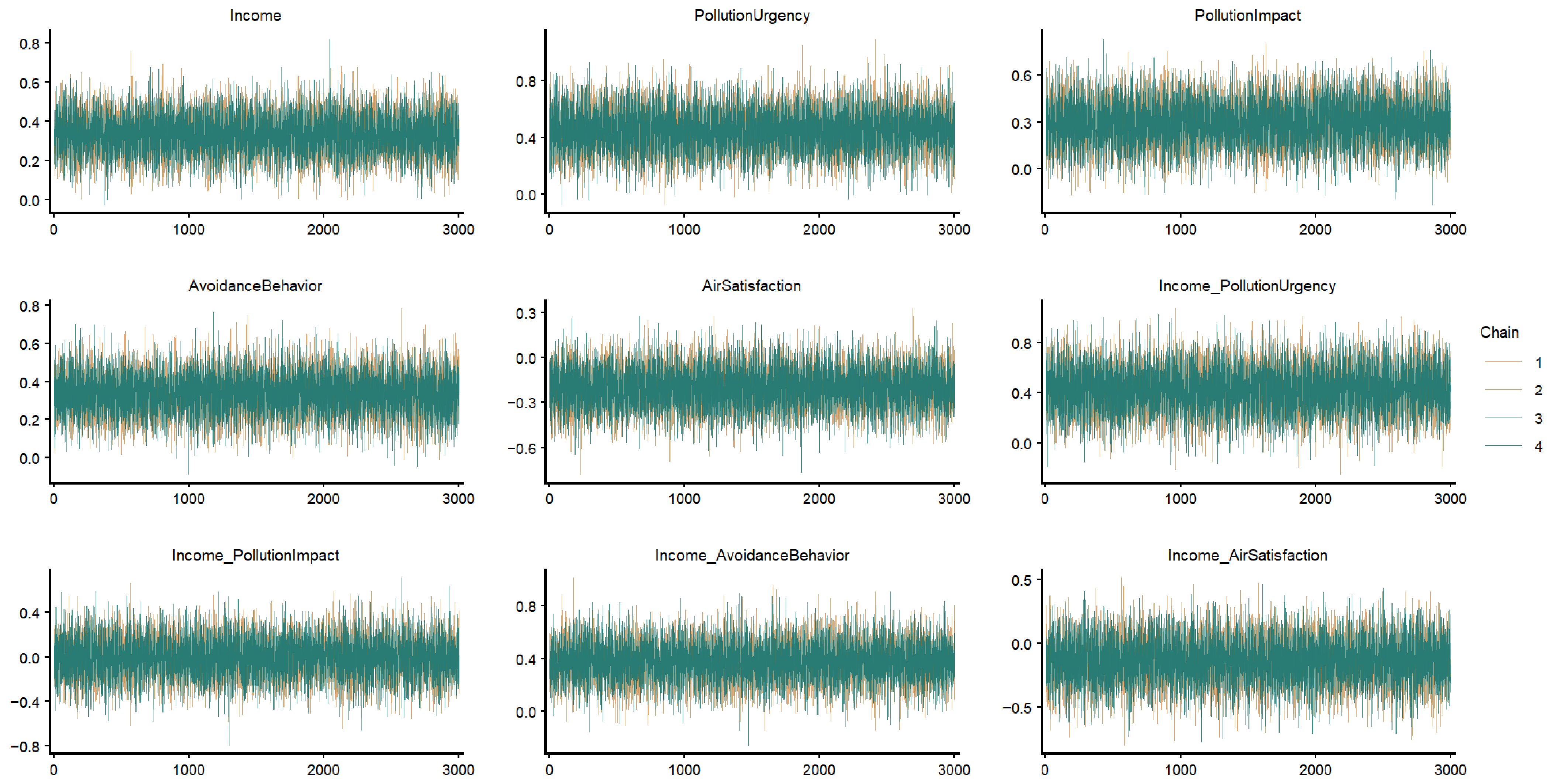
Table A2.
Parameter-level convergence and sampling-efficiency diagnostics for the Bayesian OLR model.
Figure A2.
Pareto-k diagnostics from PSIS-LOO for the Bayesian OLR model.
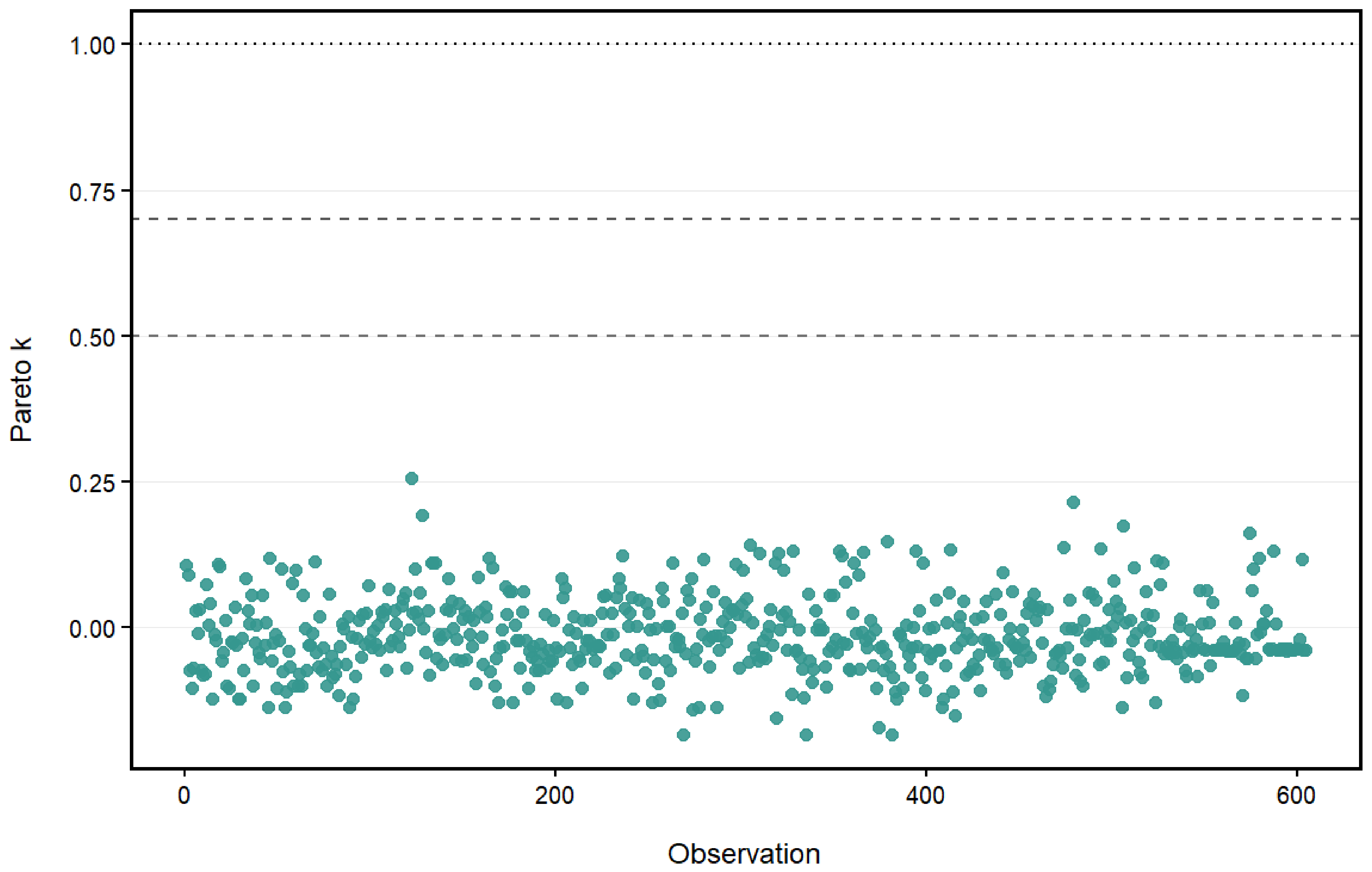
Figure A3.
Posterior predictive check comparing observed and replicated WTP distributions.
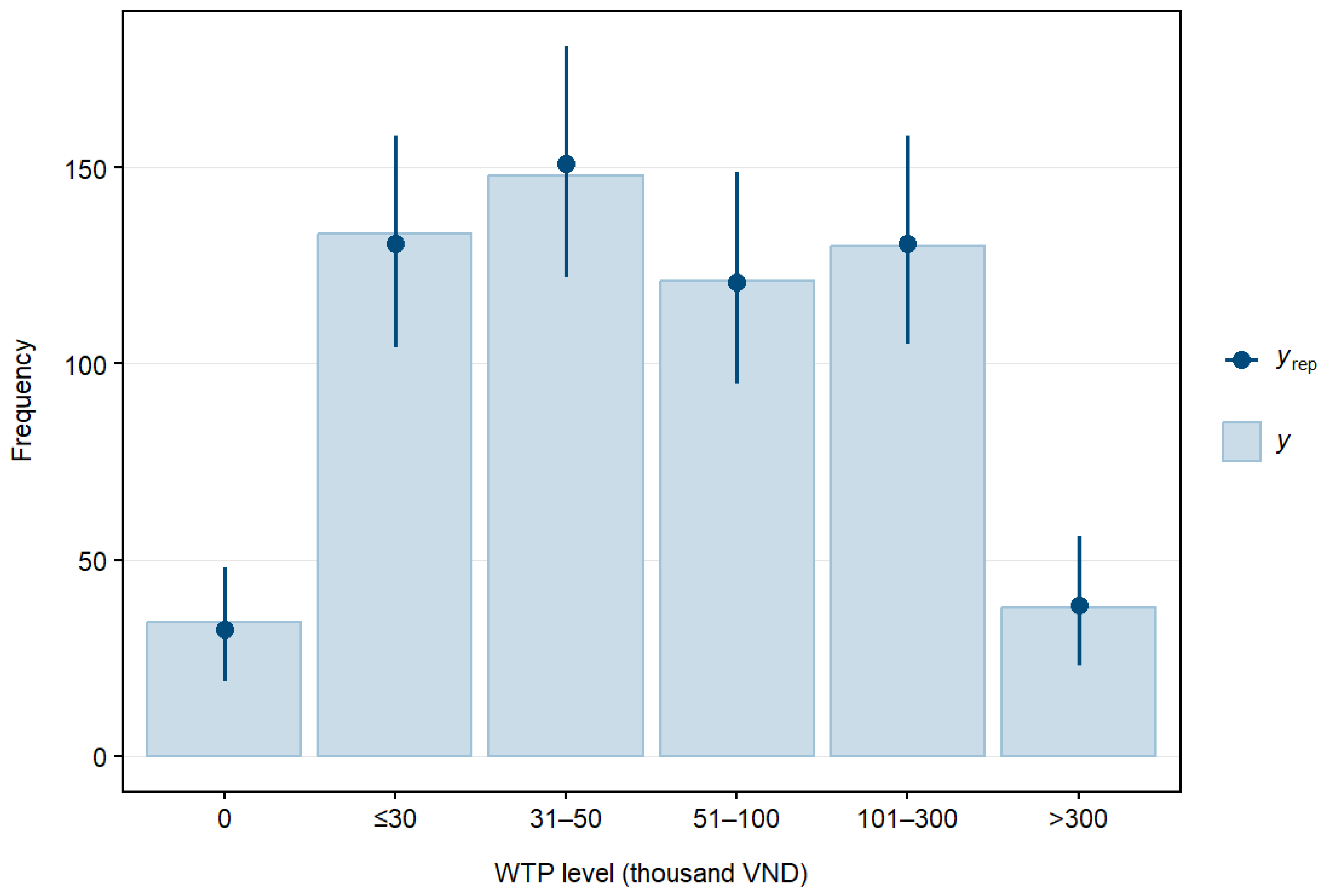
References
- Vuong, Q. Wild Wise Weird: The Kingfisher Story Collection; AISDL: Hanoi, Vietnam, 2025. [Google Scholar]
- WHO. Ambient (Outdoor) Air Pollution; WHO: Geneva, Switzerland, 2024. [Google Scholar]
- Newig, J.; Jager, N.W.; Challies, E.; Kochskämper, E. Does Stakeholder Participation Improve Environmental Governance? Evidence from a Meta-Analysis of 305 Case Studies. Glob. Environ. Change 2023, 82, 102705. [Google Scholar] [CrossRef] [Scilit] [PubMed]
- Ward, F.; Lowther-Payne, H.J.; Halliday, E.C.; Dooley, K.; Joseph, N.; Livesey, R.; Moran, P.; Kirby, S.; Cloke, J. Engaging Communities in Addressing Air Quality: A Scoping Review. Environ. Health 2022, 21, 89. [Google Scholar] [CrossRef] [Scilit] [PubMed]
- Mitchell, R.C.; Carson, R.T. Using Surveys to Value Public Goods: The Contingent Valuation Method; Resources for the Future: Washington, DC, USA, 1989; ISBN 9780915707324. [Google Scholar]
- Guo, D.; Wang, A.; Zhang, A.T. Pollution Exposure and Willingness to Pay for Clean Air in Urban China. J. Environ. Manag. 2020, 261, 110174. [Google Scholar] [CrossRef] [Scilit] [PubMed]
- Khuc, V.Q.; Nong, D.; Phu Vu, T. To Pay or Not to Pay That Is the Question—For Air Pollution Mitigation in a World’s Dynamic City: An Experiment in Hanoi, Vietnam. Econ. Anal. Policy 2022, 74, 687–701. [Google Scholar] [CrossRef] [Scilit]
- Ito, K.; Zhang, S. Willingness to Pay for Clean Air: Evidence from Air Purifier Markets in China. J. Political Econ. 2020, 128, 1627–1672. [Google Scholar] [CrossRef] [Scilit] [PubMed]
- DTiNews. Hanoi Declared World’s Second-Most Polluted City. Available online: https://dtinews.dantri.com.vn/vietnam-today/hanoi-declared-worlds-second-most-polluted-city-20250211132011422.htm (accessed on 9 July 2026).
- DTiNews. Hanoi Tops Global Air Pollution Rankings. Available online: https://dtinews.dantri.com.vn/vietnam-today/hanoi-tops-global-air-pollution-rankings-20250321130205975.htm (accessed on 9 July 2026).
- IQAir. December 3, 2025: Hanoi Among Top 10 Most Polluted Cities in the World. Available online: https://www.iqair.com/newsroom/hanoi-among-top-10-most-polluted-cities-in-the-world-12-3-2025 (accessed on 9 July 2026).
- WHO. WHO Global Air Quality Guidelines: Particulate Matter (PM2.5 and PM10), Ozone, Nitrogen Dioxide, Sulfur Dioxide and Carbon Monoxide; WHO: Geneva, Switzerland, 2021. [Google Scholar]
- Paudel, U.; Adhikari, S.R.; Pant, K.P. Willingness to Pay for Environmental Quality Improvement Programs and Its Determinants: Empirical Analysis in Western Nepal. Sustainability 2023, 15, 2176. [Google Scholar] [CrossRef] [Scilit]
- Kim, C.; Kim, K. Income, Environmental Quality and Willingness to Pay for Organic Food: A Regional Analysis in South Korea. Humanit. Soc. Sci. Commun. 2024, 11, 973. [Google Scholar] [CrossRef] [Scilit]
- Shahzad, T.; Shah, S.T.H.; Rais, S.I.; Mansoor, A.; Zaman, K. People’s Attitude towards Willingness-to-Pay for Environmental Protection in Pakistan. Environ. Sci. Pollut. Res. 2022, 29, 52635–52654. [Google Scholar] [CrossRef] [Scilit] [PubMed]
- Sánchez-García, M.; Zouaghi, F.; Lera-López, F.; Faulin, J. An Extended Behavior Model for Explaining the Willingness to Pay to Reduce the Air Pollution in Road Transportation. J. Clean. Prod. 2021, 314, 128134. [Google Scholar] [CrossRef] [Scilit]
- Wyss, A.M.; Knoch, D.; Berger, S. When and How Pro-Environmental Attitudes Turn into Behavior: The Role of Costs, Benefits, and Self-Control. J. Environ. Psychol. 2022, 79, 101748. [Google Scholar] [CrossRef] [Scilit]
- Carson, R.T.; Hanemann, W.M. Contingent Valuation. In Handbook of Environmental Economics: Valuing Environmental Changes; Mler, K.-G., Vincent, J.R., Eds.; Elsevier: Amsterdam, The Netherlands, 2005; Volume 2, pp. 821–936. ISBN 978-0-444-51145-4. [Google Scholar]
- Al Mamun, A.; Rahman, M.K.; Masud, M.M.; Mohiuddin, M. Willingness to Pay Premium Prices for Green Buildings: Evidence from an Emerging Economy. Environ. Sci. Pollut. Res. 2023, 30, 78718–78734. [Google Scholar] [CrossRef] [Scilit] [PubMed]
- Sun, F.; Kong, Z. How Media and Climate Perception Affect Residents’ Willingness to Pay for Environmental Protection: Evidence from China. Sustainability 2025, 17, 8138. [Google Scholar] [CrossRef] [Scilit]
- Chen, F.; Chen, Z. Air Pollution and Avoidance Behavior: A Perspective from the Demand for Medical Insurance. J. Clean. Prod. 2020, 259, 120970. [Google Scholar] [CrossRef] [Scilit]
- Cheng, Y.; Ao, C.; Mao, B.; Xu, L. Influential Factors of Environmental Behavior to Reduce Air Pollution: Integrating Theories of Planned Behavior and Psychological Distance. J. Environ. Plan. Manag. 2022, 65, 2490–2510. [Google Scholar] [CrossRef] [Scilit]
- Khuc, V.Q.; Nguyen, M.H. Cultural Additivity Theory. SSRN. Available online: https://ssrn.com/abstract=6767760 (accessed on 9 July 2026).
- Vuong, Q.H.; Napier, N.K. Acculturation and Global Mindsponge: An Emerging Market Perspective. Int. J. Intercult. Relat. 2015, 49, 354–367. [Google Scholar] [CrossRef] [Scilit]
- Vuong, Q.H. Mindsponge Theory; Sciendo (De Gruyter): Berlin, Germany, 2023. [Google Scholar]
- Khuc, V.Q. Culture Tower. SSRN. Available online: https://ssrn.com/abstract=4559667 (accessed on 9 July 2026).
- Vuong, Q.H.; Nguyen, M.H.; Ho, M.T.; La, V.P. GITT: Essentials, Uses, and Usage. Available online: https://ssrn.com/abstract=5521722 (accessed on 9 July 2026).
- Ajzen, I. The Theory of Planned Behavior. Organ. Behav. Hum. Decis. Process. 1991, 50, 179–211. [Google Scholar] [CrossRef] [Scilit]
- Stern, P.C.; Dietz, T.; Abel, T.; Guagnano, G.A.; Kalof, L. A Value-Belief-Norm Theory of Support for Social Movements: The Case of Environmentalism. Hum. Ecol. Rev. 1999, 6, 81–97. [Google Scholar]
- Liebe, U.; Preisendörfer, P. To Pay or Not to Pay: Competing Theories to Explain Individuals’ Willingness to Pay for Public Environmental Goods. Environ. Behav. 2011, 43, 106–130. [Google Scholar] [CrossRef] [Scilit]
- López-Mosquera, N.; Sánchez, M. Theory of Planned Behavior and the Value-Belief-Norm Theory Explaining Willingness to Pay for a Suburban Park. J. Environ. Manag. 2012, 113, 251–262. [Google Scholar] [CrossRef] [Scilit] [PubMed]
- Al-Abdulqader, K.S.; Ibrahim, A.-J.; Ong, J.; Khalifa, A.A. Environmental Consciousness and Willingness to Pay for Carbon Emissions Reductions: Empirical Evidence from Qatar. Energies 2025, 18, 4541. [Google Scholar] [CrossRef] [Scilit]
- Li, Z.; Folmer, H. Air Pollution and Perception-Based Averting Behaviour in the Jinchuan Mining Area, China. Ann. Reg. Sci. 2023, 70, 477–505. [Google Scholar] [CrossRef] [Scilit] [PubMed]
- IQAir. World’s Most Polluted Cities. Available online: https://www.iqair.com/world-most-polluted-cities?cities=ZPGtcusBx9JWBKYxm (accessed on 13 July 2026).
- World Bank. Air Quality in Hanoi: Current Situation and Policy Intervention; World Bank: Washington, DC, USA, 2021. [Google Scholar]
- Nguyen, M.H.; La, V.P.; Le, T.T.; Vuong, Q.H. Introduction to Bayesian Mindsponge Framework Analytics: An Innovative Method for Social and Psychological Research. MethodsX 2022, 9, 101808. [Google Scholar] [CrossRef] [Scilit] [PubMed]
- Agresti, A. Analysis of Ordinal Categorical Data, 1st ed.; John Wiley & Sons, Inc.: Hoboken, NJ, USA, 2010; ISBN 9780470594001. [Google Scholar]
- Champ, P.A.; Boyle, K.J.; Brown, T.C. A Primer on Nonmarket Valuation; Champ, P.A., Boyle, K.J., Brown, T.C., Eds.; The Economics of Non-Market Goods and Resources; Springer: Dordrecht, The Netherlands, 2017; Volume 13, ISBN 978-94-007-7103-1. [Google Scholar]
- Haab, T.C.; McConnell, K.E. Valuing Environmental and Natural Resources: The Econometrics of Non-Market Valuation; Edward Elgar Publishing: Cheltenham, UK, 2002; ISBN 9781843765431. [Google Scholar]
- Cameron, T.A. A New Paradigm for Valuing Non-Market Goods Using Referendum Data: Maximum Likelihood Estimation by Censored Logistic Regression. J. Environ. Econ. Manag. 1988, 15, 355–379. [Google Scholar] [CrossRef] [Scilit]
- Cameron, T.A.; Huppert, D.D. OLS versus ML Estimation of Non-Market Resource Values with Payment Card Interval Data. J. Environ. Econ. Manag. 1989, 17, 230–246. [Google Scholar] [CrossRef] [Scilit]
- Bürkner, P.-C. Brms: An R Package for Bayesian Multilevel Models Using Stan. J. Stat. Softw. 2017, 80, 1–28. [Google Scholar] [CrossRef] [Scilit]
- Gelman, A.; Carlin, J.B.; Stern, H.S.; Dunson, D.B.; Vehtari, A.; Rubin, D.B. Bayesian Data Analysis, 3rd ed.; Chapman & Hall: London, UK, 2013; ISBN 9781439840955. [Google Scholar]
- McElreath, R. Statistical Rethinking: A Bayesian Course with Examples in R and STAN, 2nd ed.; Chapman & Hall: London, UK, 2020; ISBN 9780367139919. [Google Scholar]
- McCullagh, P. Regression Models for Ordinal Data. J. R. Stat. Soc. Ser. B 1980, 42, 109–127. [Google Scholar] [CrossRef] [Scilit]
- Vehtari, A.; Gelman, A.; Simpson, D. Rank-Normalization, Folding, and Localization: An Improved R-hat for Assessing Convergence of MCMC (with Discussion). Bayesian Anal. 2021, 16, 667–718. [Google Scholar] [CrossRef] [Scilit]
- Gabry, J.; Simpson, D.; Vehtari, A.; Betancourt, M.; Gelman, A. Visualization in Bayesian Workflow. J. R. Stat. Soc. Ser. A Stat. Soc. 2019, 182, 389–402. [Google Scholar] [CrossRef] [Scilit]
- Vehtari, A.; Gelman, A.; Gabry, J. Practical Bayesian Model Evaluation Using Leave-One-out Cross-Validation and WAIC. Stat. Comput. 2017, 27, 1413–1432. [Google Scholar] [CrossRef] [Scilit]
- Peterson, B.; Harrell, F.E. Partial Proportional Odds Models for Ordinal Response Variables. J. R. Stat. Soc. Ser. C (Appl. Stat.) 1990, 39, 205–217. [Google Scholar] [CrossRef] [Scilit]
- Bürkner, P.-C.; Charpentier, E. Modelling Monotonic Effects of Ordinal Predictors in Bayesian Regression Models. Br. J. Math. Stat. Psychol. 2020, 73, 420–451. [Google Scholar] [CrossRef] [Scilit] [PubMed]
- Kruschke, J.K. Bayesian Analysis Reporting Guidelines. Nat. Hum. Behav. 2021, 5, 1282–1291. [Google Scholar] [CrossRef] [Scilit] [PubMed]
- Tan-Soo, J.-S.; Finkelstein, E.; Pattanayak, S.; Qin, P.; Zhang, X.; Jeuland, M. Air Quality Valuation Using Online Surveys in Three Asian Megacities. Resour. Environ. Sustain. 2022, 10, 100090. [Google Scholar] [CrossRef] [Scilit]
- Malik, S.; Arshad, M.Z.; Amjad, Z.; Bokhari, A. An Empirical Estimation of Determining Factors Influencing Public Willingness to Pay for Better Air Quality. J. Clean. Prod. 2022, 372, 133574. [Google Scholar] [CrossRef] [Scilit]
- Nguyen, T.C.; Le, H.T.; Nguyen, H.D.; Le, T.H.; Nguyen, H.Q. Estimating Economic Benefits Associated with Air Quality Improvements in Hanoi City: An Application of a Choice Experiment. Econ. Anal. Policy 2021, 71, 420–433. [Google Scholar] [CrossRef] [Scilit]
- Ghanem, S.; Ferrini, S.; Di Maria, C. Air Pollution and Willingness to Pay for Health Risk Reductions in Egypt: A Contingent Valuation Survey of Greater Cairo and Alexandria Households. World Dev. 2023, 172, 106373. [Google Scholar] [CrossRef] [Scilit]
- Huang, Y.-J.; Lee, P.-H.; Hsieh, S.-H.; Chiu, Y.-C.; Chan, T.-C. Understanding Factors Influencing Adoption of Air Pollution Protective Measures Using the Knowledge-Attitude-Behavior Model. Sci. Rep. 2024, 14, 28414. [Google Scholar] [CrossRef] [Scilit] [PubMed]
- Mariel, P.; Khan, M.A.; Meyerhoff, J. Valuing Individuals’ Preferences for Air Quality Improvement: Evidence from a Discrete Choice Experiment in South Delhi. Econ. Anal. Policy 2022, 74, 432–447. [Google Scholar] [CrossRef] [Scilit]
- Matthies, E.; Merten, M.J. High-Income Households—Damned to Consume or Free to Engage in High-Impact Energy-Saving Behaviours? J. Environ. Psychol. 2022, 82, 101829. [Google Scholar] [CrossRef] [Scilit]
- Drupp, M.A.; Turk, Z.M.; Groom, B.; Heckenhahn, J. Global Evidence on the Income Elasticity of Willingness to Pay, Relative Price Changes and Public Natural Capital Values. Environ. Resour. Econ. 2025, 88, 3765–3804. [Google Scholar] [CrossRef] [Scilit]
- Tyllianakis, E.; Skuras, D. The Income Elasticity of Willingness-To-Pay (WTP) Revisited: A Meta-Analysis of Studies for Restoring Good Ecological Status (GES) of Water Bodies under the Water Framework Directive (WFD). J. Environ. Manag. 2016, 182, 531–541. [Google Scholar] [CrossRef] [Scilit] [PubMed]
- Jacobsen, J.B.; Hanley, N. Are There Income Effects on Global Willingness to Pay for Biodiversity Conservation? Environ. Resour. Econ. 2009, 43, 137–160. [Google Scholar] [CrossRef] [Scilit]
- Barbier, E.B.; Czajkowski, M.; Hanley, N. Is the Income Elasticity of the Willingness to Pay for Pollution Control Constant? Environ. Resour. Econ. 2017, 68, 663–682. [Google Scholar] [CrossRef] [Scilit]
- Dienes, C. Actions and Intentions to Pay for Climate Change Mitigation: Environmental Concern and the Role of Economic Factors. Ecol. Econ. 2015, 109, 122–129. [Google Scholar] [CrossRef] [Scilit]
- Johnston, R.J.; Boyle, K.J.; Adamowicz, W.; Bennett, J.; Brouwer, R.; Cameron, T.A.; Hanemann, W.M.; Hanley, N.; Ryan, M.; Scarpa, R.; et al. Contemporary Guidance for Stated Preference Studies. J. Assoc. Environ. Resour. Econ. 2017, 4, 319–405. [Google Scholar] [CrossRef] [Scilit] [PubMed]
- Government Electronic Newspaper Công Bố Đề Án “Vùng Phát Thải Thấp Trong Vành Đai 1, Thành Phố Hà Nội” [Announcement of the Low Emission Zone Project within Ring Road 1, Hanoi]. Available online: https://xaydungchinhsach.chinhphu.vn/cong-bo-de-an-vung-phat-thai-thap-trong-vanh-dai-1-thanh-pho-ha-noi-119260703145217105.htm (accessed on 20 August 2026).
- Prime Minister of Vietnam Decision 2530/QD-TTg 2025 National Action Plan on Air Quality Management for 2026–2030 Period, with a Vision toward 2045. Available online: https://congbao.chinhphu.vn/van-ban/quyet-dinh-so-2530-qd-ttg-46640.htm (accessed on 9 July 2026).
- Van den Berg, K.; Nguyen, T.T.L. Clean Air for Hanoi: What Will It Take? World Bank Group: Washington, DC, USA, 2022. [Google Scholar]
- Maestre-Andrés, S.; Drews, S.; van den Bergh, J. Perceived Fairness and Public Acceptability of Carbon Pricing: A Review of the Literature. Clim. Policy 2019, 19, 1186–1204. [Google Scholar] [CrossRef] [Scilit]
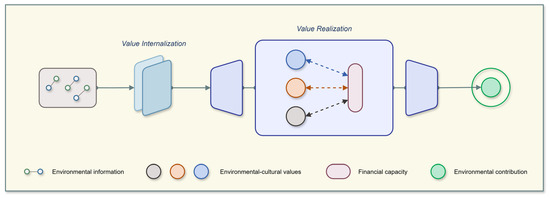
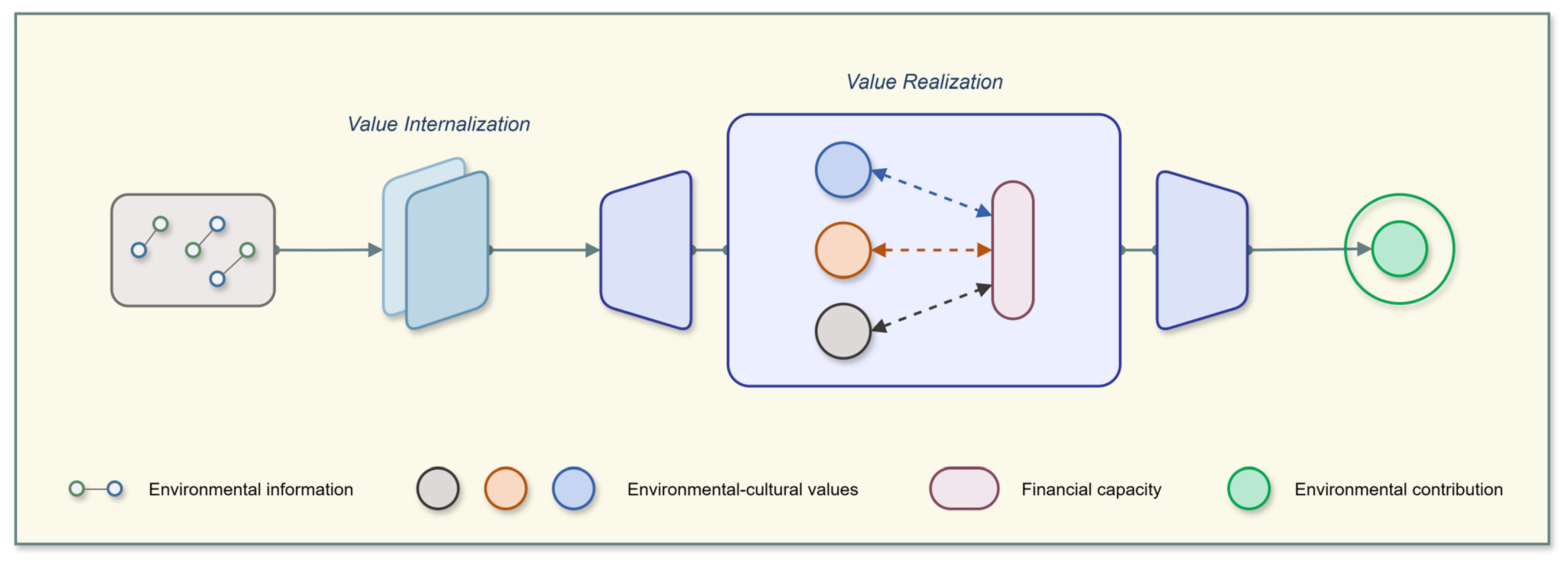
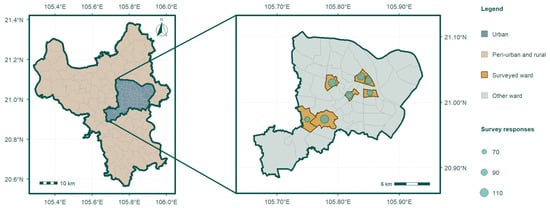
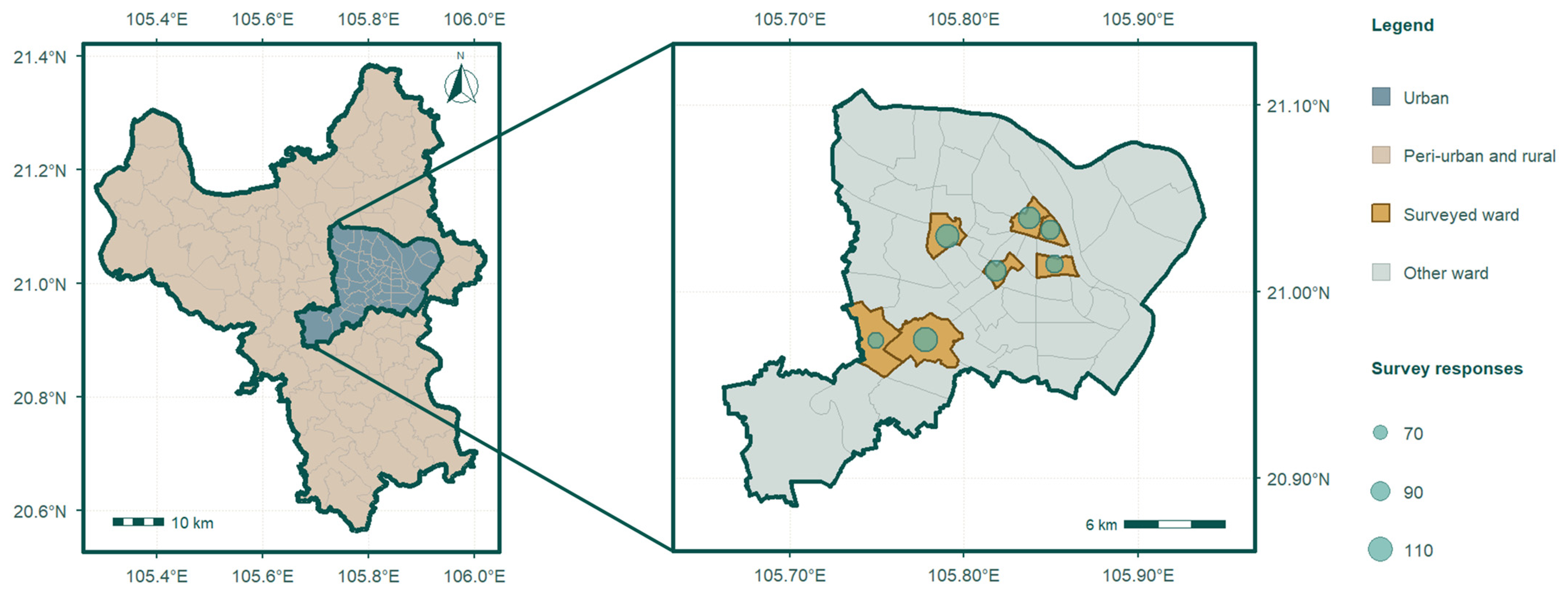
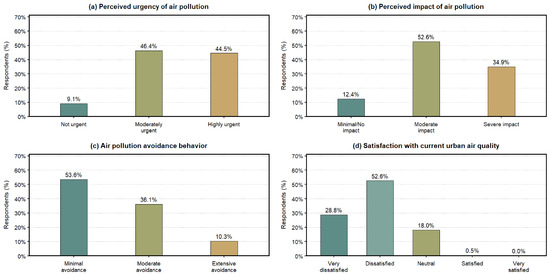
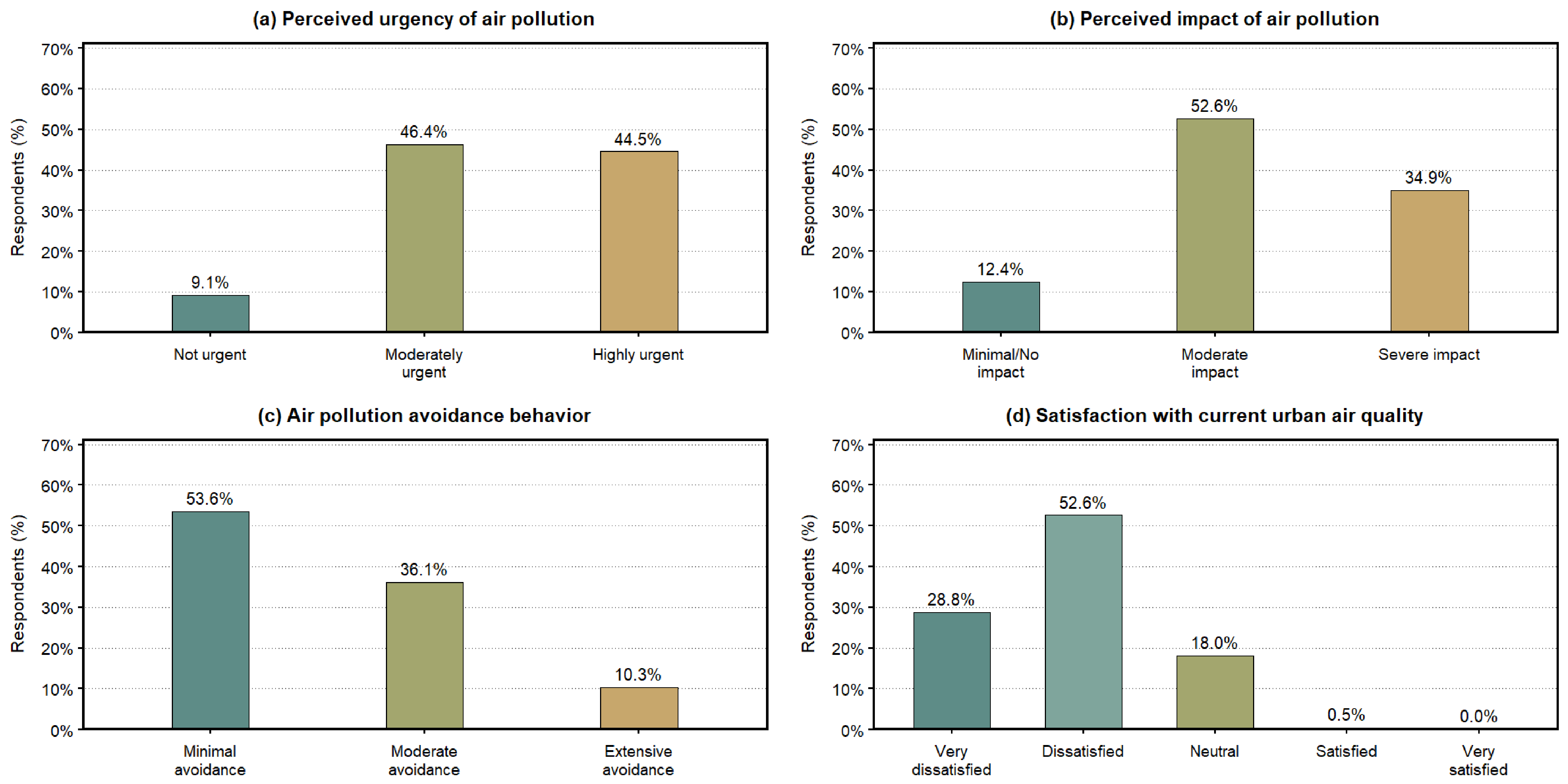
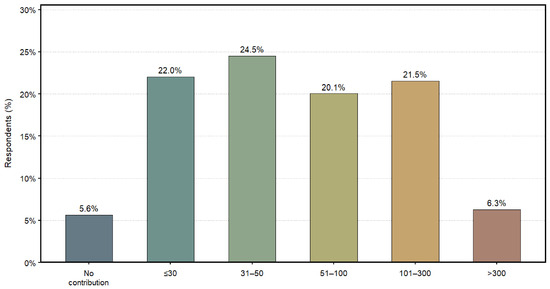
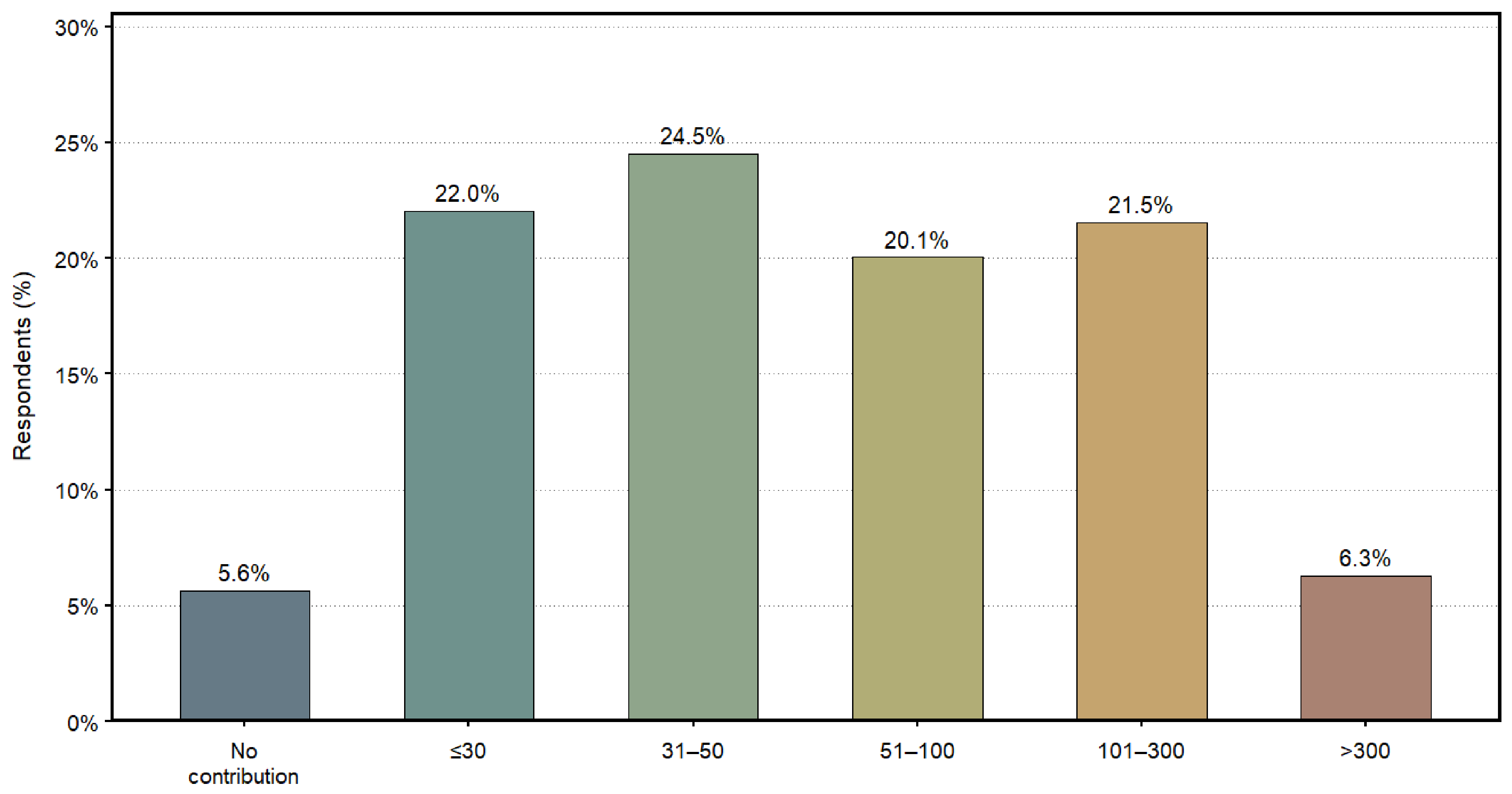
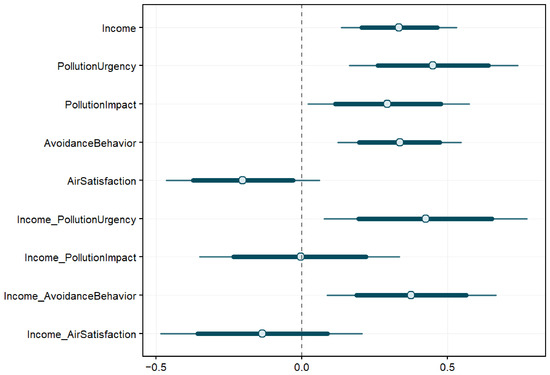
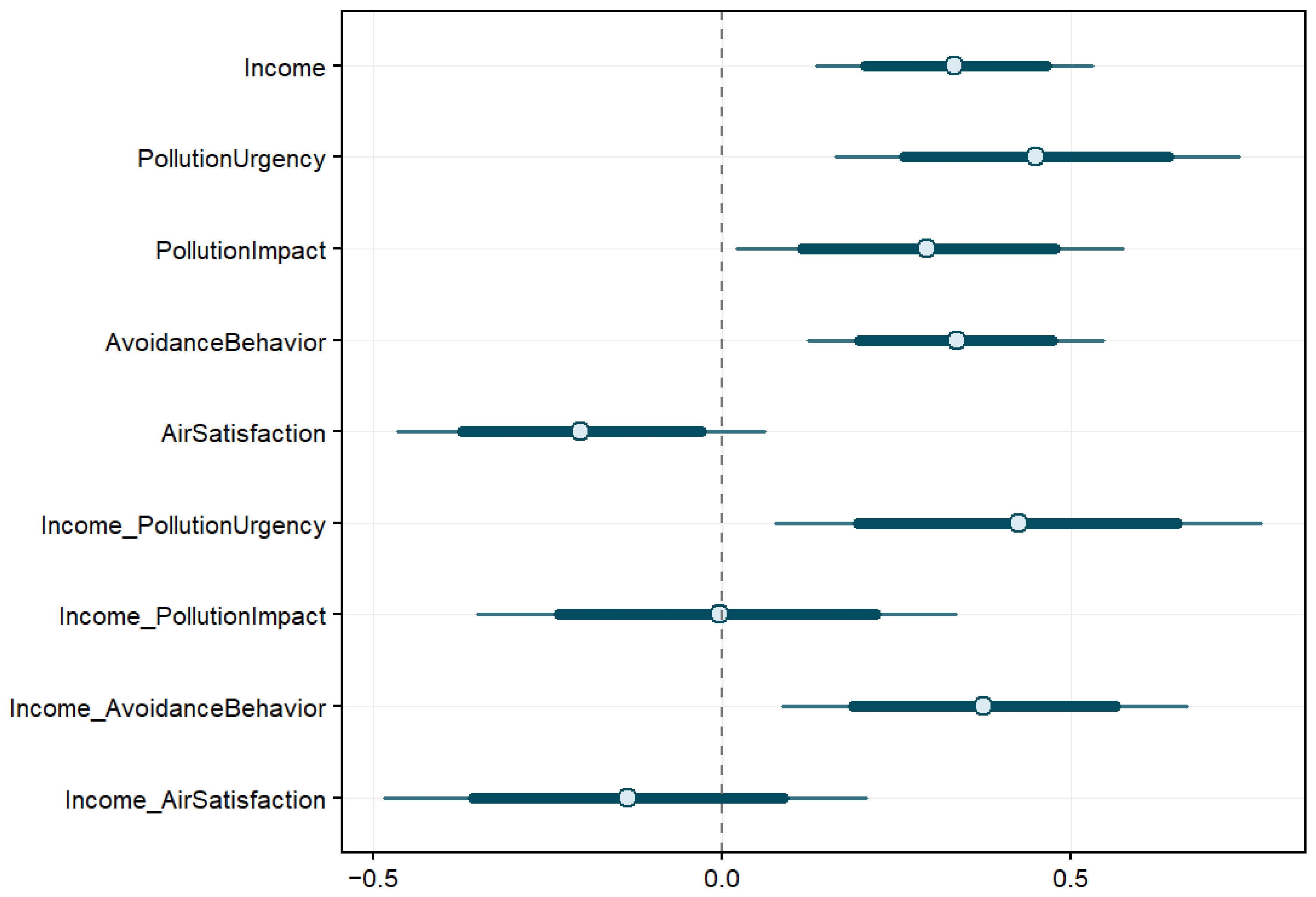
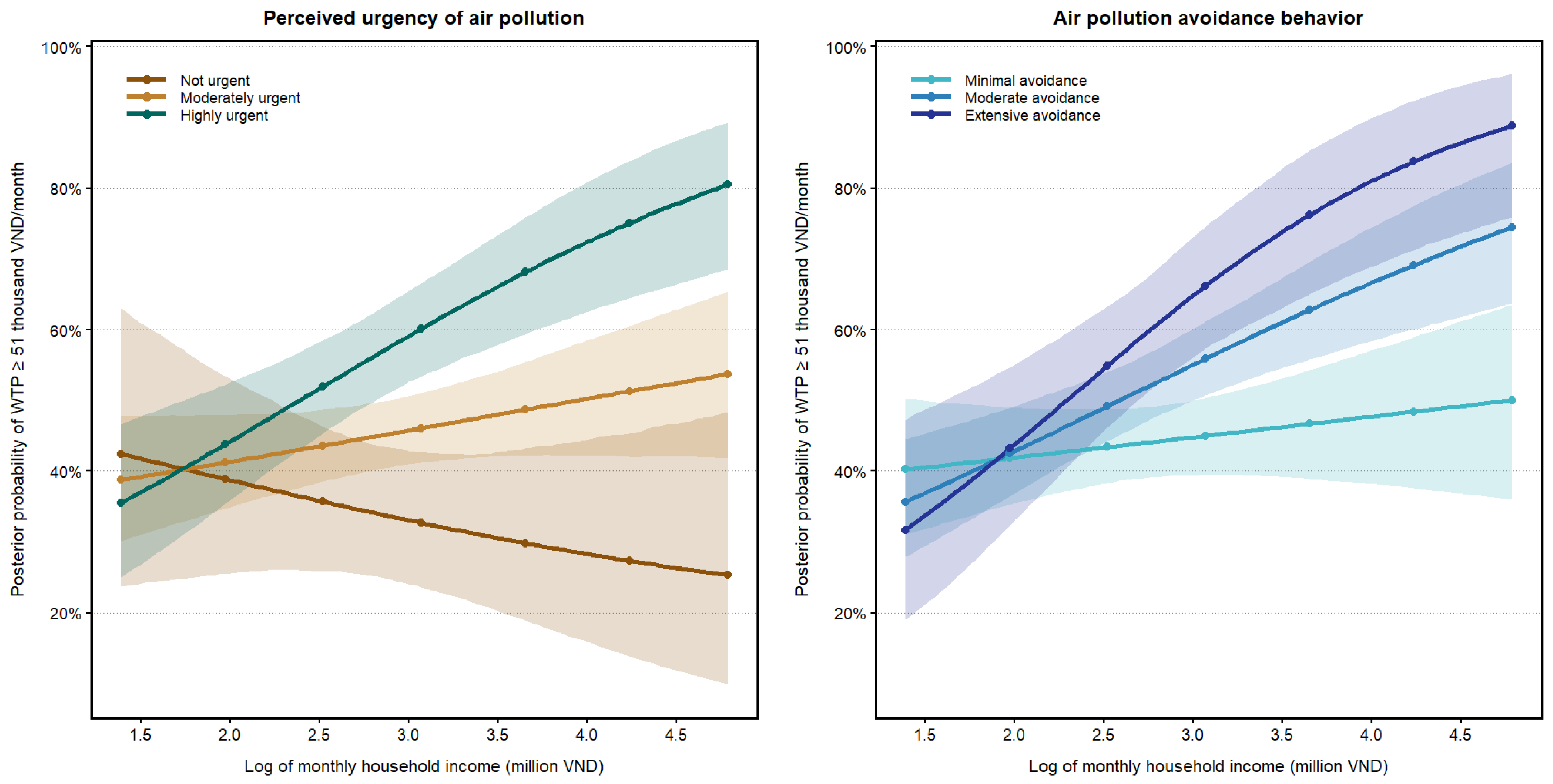

Disclaimer/Publisher’s Note: The statements, opinions and data contained in all publications are solely those of the individual author(s) and contributor(s) and not of MDPI and/or the editor(s). MDPI and/or the editor(s) disclaim responsibility for any injury to people or property resulting from any ideas, methods, instructions or products referred to in the content. |
© 2026 by the authors. Licensee MDPI, Basel, Switzerland. This article is an open access article distributed under the terms and conditions of the Creative Commons Attribution (CC BY) license.