


Abstract
The partial replacement of chemical fertilizers with organic fertilizers is regarded as one of the effective ways to achieve sustainable agricultural development. However, further research is needed to understand how different cropping systems respond to the substitution of organic fertilizers and the underlying mechanisms in the context of calcareous purple soils in the same region. In this study, four field trials involving soybean, wheat, rice, and corn were conducted at different sites within the same regional calcareous purple-soil area to investigate the comprehensive effects of partially replacing chemical fertilizers with organic fertilizers on soil fertility. The initial soil pH at the experimental site ranged from 6.25 to 8.60. The experiment established four treatments, which were CK (sole conventional chemical fertilizer), alongside OC1, OC2, and OC3, in which 10%, 20% and 30% of chemical fertilizer were substituted by a commercial organic fertilizer (45% organic matter, C/N = 25). The results indicate that replacing chemical fertilizers with organic amendments generally led to significant improvements in soil organic matter, available phosphorus, and quick-acting potassium levels. However, the impact on alkaline-hydrolyzable nitrogen varied depending on the crop type. In terms of crop responses, organic fertilizer substitution had a notable effect on nutrient accumulation in grains and overall yield. Soybeans and rice showed positive trends in both nutrient uptake and yield enhancement, while wheat primarily benefited from increased total nitrogen content in its grains. In contrast, corn achieved the best balance between yield and nutrient absorption under the OC2 treatment. An equal-weight membership function evaluation, based on within-system normalization of six soil and crop indicators, ranked the treatments as OC2 > OC3 > OC1 > CK. OC2 therefore showed the highest integrated performance among the four crop systems examined in this study. Under OC2, soil organic matter increased by 1.21–31.24% relative to CK across the four field systems, while significant yield increases of 4.2% and 6.5% were observed in the rice and corn systems, respectively. This study suggests that substituting 20% of chemical fertilizers with organic amendments can effectively enhance soil fertility and boost crop productivity, making it a promising regional fertilization strategy that balances ecological benefits with agricultural output.
1. Introduction
Calcareous purple soil, a key agricultural resource in southwestern China, is characterized by relatively high pH and a carbonate-rich mineral environment, both of which can constrain nutrient availability. This severely limits the efficiency of nutrient uptake by crops [1,2,3]. While chemical fertilizers can temporarily boost nutrient availability in calcareous purple soils, their long-term overuse often leads to soil compaction, microbial activity reduction, and environmental contamination, which ultimately undermines both crop yields and product quality [4,5]. Fortunately, recent studies have demonstrated that combining organic fertilizers with chemical ones at partial substitution rates can yield multiple benefits [6]. For instance, this approach enhances soil structure, water retention, and microbial activity, which together promote the release of poorly soluble nutrients such as phosphorus and potassium, significantly boosting nutrient-use efficiency [6,7]. However, it is important to note that different crop systems respond differently to the substitution of organic fertilizers. The underlying mechanisms driving these responses remain in need of further in-depth investigation across different cultivation systems.
As four major staple crops in China, soybeans, wheat, rice, and corn play an indispensable role in ensuring national food security [8]. Their national production reached 209.04, 140.07, 301.24, and 20.91 million tons, respectively, in 2025 (according to the National Bureau of Statistics of China) [9]. Sichuan Province is one of the major production areas for these four types of crops, and it is also a region where calcareous purple soils are widely distributed [10]. Studies have shown that soil type and texture significantly affect the ability of organic fertilizers to improve soil quality and boost nutrient efficiency [11,12]. Yet research specifically on calcareous purple soils is still lacking. Furthermore, different staple crops differ in root morphology, nutrient demand, and their response to organic fertilizers. However, systematic comparative studies on these four crops within the same regional calcareous purple-soil area remain limited. This gap prevents us from determining the optimal substitution ratios of organic fertilizers for different crops, which limits the precise development of green fertilization technologies in calcareous purple soil regions.
In this study, we systematically investigate the effects of partially substituting chemical fertilizers with organic fertilizers at varying ratios on key soil chemical properties and crop yields for the four crops mentioned above. Additionally, we used an equal-weight membership function approach to integrate soil-fertility and crop-performance indicators and to identify the treatment with the most favorable overall performance across the four crop systems. This research ultimately provides both theoretical support and practical guidance for reducing chemical fertilizer use while enhancing efficiency in regional agriculture, thereby promoting green, high-quality agricultural development.
2. Materials and Methods
2.1. Overview of the Test Site
The experimental area is located in Luojiang District, Deyang City, Sichuan Province, within the humid subtropical monsoon climate zone. The annual average temperature is 17.4 °C, and the annual average precipitation is approximately 1000 mm. Four crop cultivation sites were selected from different townships in Luojiang District to serve as the experimental sites. Data collection for the four crops covered only a single growing season. The soil type is calcareous purple soil, with a pH ranging from 6.25 to 8.60. The basic chemical properties of the soil at these different crop sites are shown in Table S1.
2.2. Experiment Design
Isolation measures and separate drainage ditches are set up between the experimental plots. Each experimental plot measured 5 m × 6 m, corresponding to an area of 30 m2. A 30 cm wide by 30 cm deep earthen trench was dug between each plot to create a barrier. A 1 m wide buffer strip was established around each experimental plot, and two buffer strips were established around the entire experimental area. According to previous studies, the experiment includes four treatment groups [13,14]: (1) Chemical fertilizer application (CK), based on recommended fertilization rates derived from local soil test data. (2) Organic fertilizer replacing 10% of the chemical fertilizer (OC1). (3) Organic fertilizer replacing 20% of the chemical fertilizer (OC2). (4) Organic fertilizer replacing 30% of the chemical fertilizer (OC3). Each treatment is replicated three times, with the experimental design arranged in a randomized complete block layout. To clearly distinguish among treatments, each plot is clearly marked with a designated treatment sign. Crop management practices other than fertilization were kept consistent among treatments within each field trial. Irrigation and drainage were conducted according to local crop requirements, and weeds, pests, and diseases were managed uniformly following standard local agronomic practices.
Soybeans: Planting density is set at 250,000 seedlings per hectare, with a conventional fertilizer application rate of 60 kg of pure nitrogen, 63 kg of P2O5, and 52.5 kg of K2O per hectare. All fertilizer for the soybeans is applied at once, eliminating the need for additional topdressing. The organic fertilizer used is a commercial product containing 1.9% N, 3.2% P2O5, 1.1% K2O, 45% organic matter, and a C/N ratio of 25.
Wheat: The recommended planting density is 200,000 seedlings per hectare. Conventional fertilizer application rates are 150 kg of pure nitrogen, 90 kg of P2O5, and 60 kg of K2O per hectare. Half of the nitrogen is applied as a base fertilizer, while the other half is used as tillering fertilizer; all organic fertilizers and phosphate–potash fertilizers are applied as a base dressing.
Rice: Planting density is 200,000 seedlings per hectare. Conventional fertilizer application rates are 120 kg of pure nitrogen, 30 kg of P2O5, and 60 kg of K2O per hectare. Apply 50% of the nitrogen and all of the phosphate fertilizer as a base dressing, while the remaining 50% of nitrogen and the full amount of potash fertilizer are applied as topdressing during the tillering stage.
Corn: The planting density was set at 66,000 plants per hectare, with conventional fertilizer application rates of 150 kg of pure nitrogen, 60 kg of P2O5, and 60 kg of K2O per hectare. All organic fertilizer, 30% of the nitrogen, 50% of the potassium, and the entire phosphorus application were applied as base fertilizer. An additional 20% of the nitrogen and the remaining 50% of potassium were applied during the seedling stage, while the rest of the nitrogen was used as a topdressing fertilizer for ear development.
Specific fertilizer amounts for each treatment are shown in Table S2.
2.3. Sample Processing and Measurement
2.3.1. Sample Processing
In accordance with the requirements of the Technical Specifications for Soil Environmental Monitoring (HJ 166-2026), three soil samples were collected from each plot using the S-shaped sampling method. The soil organic matter, alkali-hydrolyzable nitrogen, available phosphorus, and available potassium were determined. After the crops matured, soil and plant samples were collected again from the field to determine the relevant parameters. After the field survey, five plant samples were randomly selected from each plot. The plant samples were treated at 105 °C for 30 min to inactivate enzymes, then dried at 80 °C to constant weight. The dried samples were weighed, ground, and sieved through a 60-mesh screen, then bagged and labeled for future use. Meanwhile, five soil samples were selected from the topsoil of each plot and mixed. After removing plant debris and stones from the soil samples, they were subdivided using the quartering method and then left to air-dry under natural conditions.
2.3.2. Sample Determination
After separating the plant samples into their respective organs, they were ground using an FW100 grinder (Tianjin Taisite Instrument Co., Ltd., Tianjin, China) and passed through a 60-mesh sieve. Accurately weighed 0.15–0.20 g of the sample powder, which was then digested using a combined sulfuric acid-hydrogen peroxide method before being diluted to a final volume of 100 mL. Total nitrogen and total phosphorus levels were determined using a flow analyzer (CAF, model AA3, SEAL Analytical GmbH, Norderstedt, Germany), with total nitrogen measured via an automated Kjeldahl apparatus and total phosphorus quantified by the molybdenum–antimony colorimetric method. Total potassium content was analyzed using a PerkinElmer-AA400 flame atomic absorption spectrometer (PerkinElmer, Inc., Waltham, MA, USA). Soil organic matter was assessed using the potassium dichromate oxidation method under external heating conditions, while available phosphorus was determined via the molybdenum–antimony colorimetric technique. Alkaline-hydrolyzable nitrogen was measured by the diffusion method, and readily available potassium was quantified using flame photometry [15].
2.4. Data Processing
Experiment data are expressed as mean ± standard deviation (Mean ± SD). One-way analysis of variance (ANOVA) was used to test differences among fertilization treatments, followed by Duncan’s multiple range test for post hoc comparisons. Differences were considered significant at p < 0.05. Data visualization was completed with Origin 2021 software.
2.4.1. Membership Function
The integrated membership-function evaluation included six indicators, which were soil organic matter, alkaline-hydrolyzable nitrogen, available phosphorus, quick-release potassium, plant height, and yield. Moreover, it was conducted separately for each cropping system. For each indicator, the membership values of CK, OC1, OC2, and OC3 were first calculated within the corresponding cropping system using the minimum and maximum values observed among the four fertilization treatments. The resulting dimensionless membership values were then averaged across the four cropping systems for each treatment and indicator.
In the formula, Xi represents the ith comprehensive index, Xmin denotes the minimum value of a particular index across all tested treatments, and Xmax indicates the maximum value of that same index among all tested treatments.
The membership values were subsequently averaged across the four crop–site systems for each treatment and indicator.
where Uict is the membership value of treatment t for indicator I within crop system c.
2.4.2. Indicator Weight
Equal weights were used to ensure transparency and reproducibility.
where n is the total number of indicators. As six indicators were included, the weight assigned to each indicator was 1/6.
2.4.3. Overall Evaluation Score
In the formula, D represents the comprehensive evaluation score, and the higher the D value, the better the experimental results.
3. Results and Analysis
3.1. Impact of Applied Fertilizers on Soil Fertility
The effects of different fertilization treatments on soil fertility for four crops are shown in Table 1. In the soybean cropping system, soil organic matter content showed slight numerical increases of 0.57% and 1.21% under OC1 and OC2, respectively, but neither treatment differed significantly from CK. In contrast, OC3 significantly increased soil organic matter content by 9.84% relative to CK (p < 0.05). Regarding soil available nutrients, OC1 showed an 11.37% decrease in alkaline-hydrolyzable nitrogen compared to CK, while OC2 and OC3 treatments led to significant increases of 8.96% and 5.98%, respectively (p < 0.05). Notably, all organic fertilizer treatments significantly enhanced soil available phosphorus levels, increasing them by 51.92% (OC1), 77.32% (OC2), and 61.59% (OC3) relative to CK (p < 0.05). Additionally, soil available potassium levels improved across all organic fertilizer treatments. For wheat-growing soils, organic fertilizer substitution consistently boosted soil organic matter, available phosphorus, and available potassium levels to varying degrees. However, OC1 did not significantly affect alkaline-hydrolyzable nitrogen relative to CK, whereas OC2 and OC3 significantly reduced it to 99.41 and 102.74 mg kg−1, respectively, compared with 108.52 mg kg−1 under CK (p < 0.05). In rice-growing soils, organic fertilizer substitution comprehensively improved soil organic matter as well as all key indicators of available nutrients. Moreover, the OC1, OC2, and OC3 treatments significantly increased soil organic matter content in corn-growing by 12.2%, 15.2%, and 19.7% compared to CK, respectively (p < 0.05). Among these, the OC2 treatment stood out for its remarkable ability to enhance both alkaline-hydrolyzable nitrogen and available phosphorus. In the corn system, OC2 significantly increased alkaline-hydrolyzable nitrogen to 42.95 mg kg−1 and available phosphorus to 9.79 mg kg−1, compared with 40.25 and 6.58 mg kg−1 under CK, respectively (p < 0.05). Furthermore, all organic fertilizer treatments significantly elevated soil available potassium levels.
Table 1.
Effect of Organic and Chemical Fertilizers on Soil Fertility.
3.2. Impact of Applied Fertilizers on Crop Quality and Yield
3.2.1. Soybean Growth and Yield
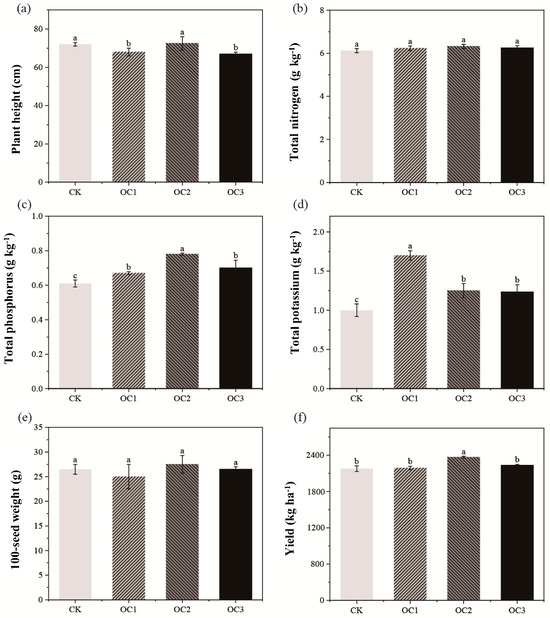
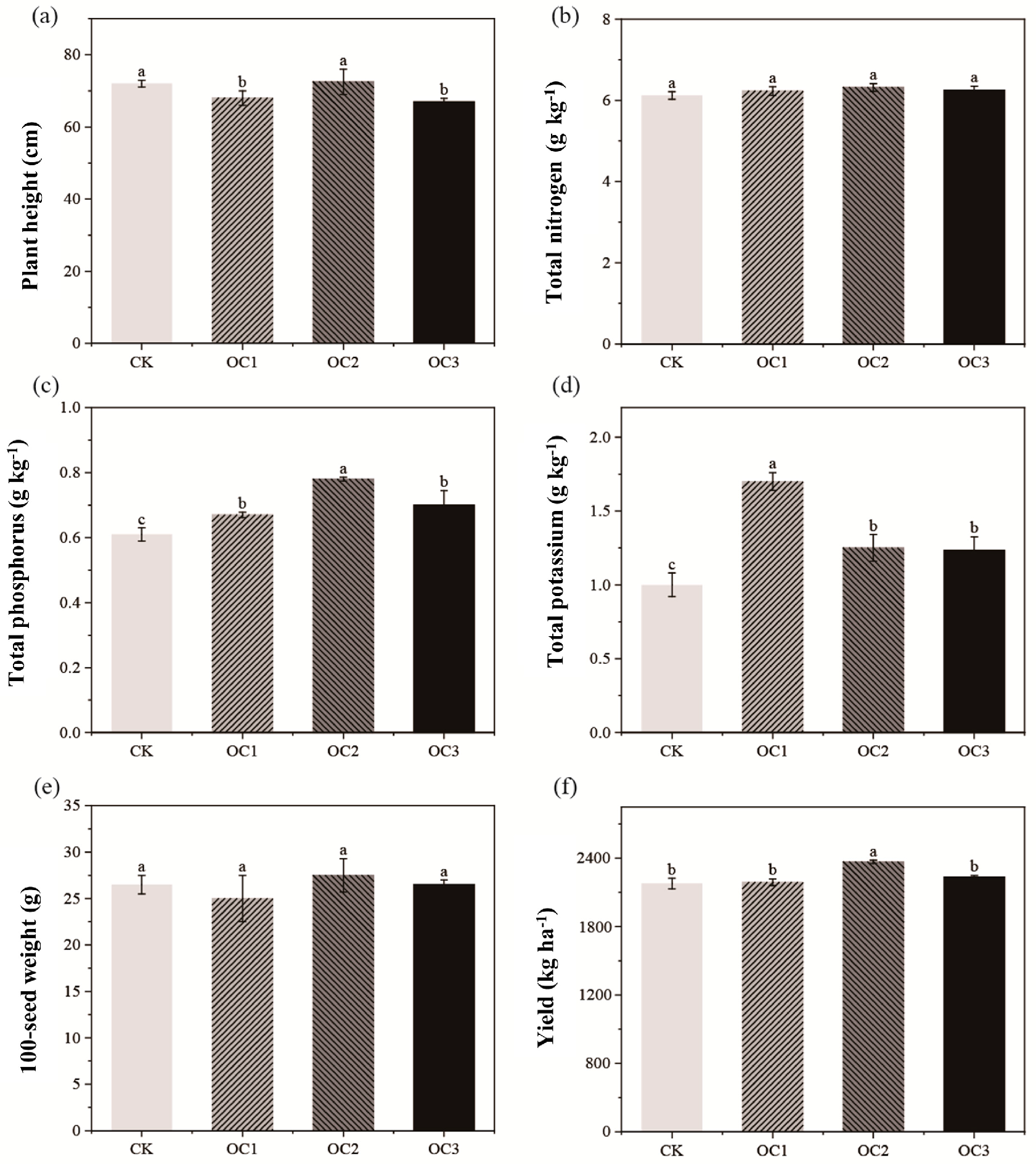
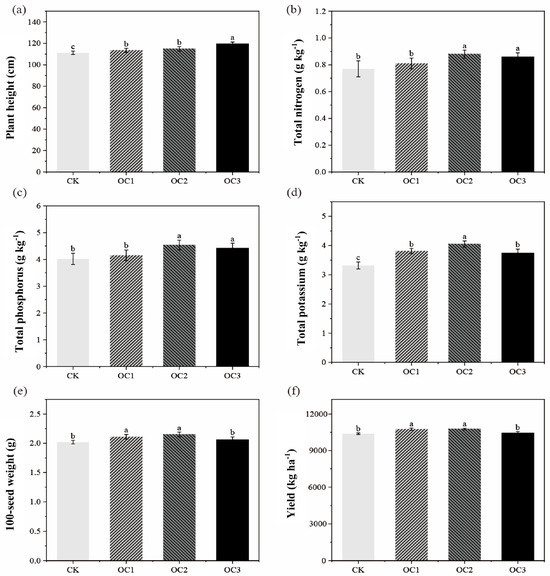
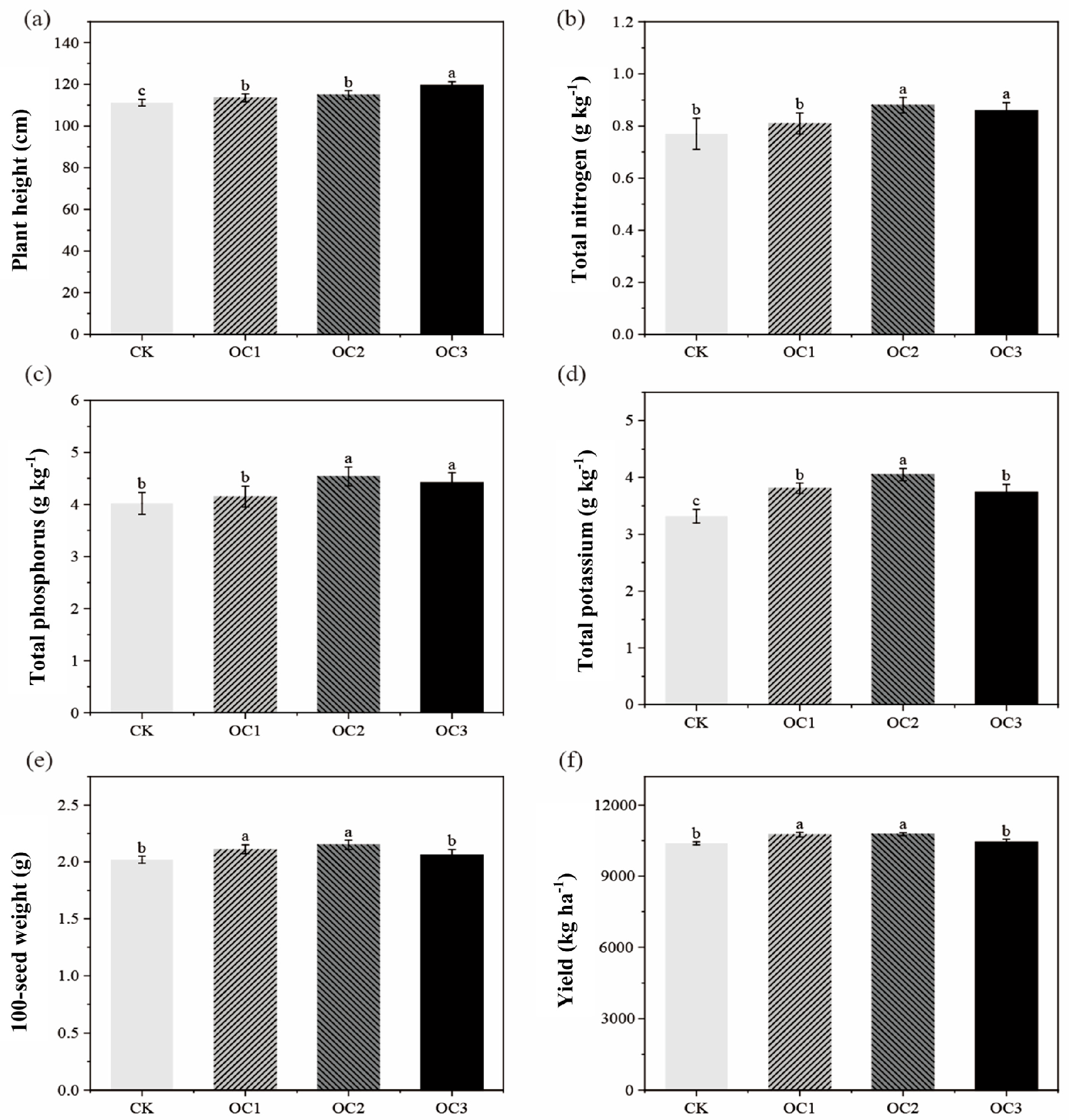
Figure 1 illustrates the growth status of soybeans under different fertilization treatments, along with variations in grain nutrient content and yield. Compared to CK, all organic fertilizer substitution treatments significantly enhanced the total phosphorus and total potassium levels in soybean grains. Specifically, OC2 increased total phosphorus content by 27.87%, while the OC1 treatment boosted total potassium levels by 40.50%. Notably, there was no significant difference in total nitrogen content among the treatments. In terms of yield-related traits, the organic fertilizer substitution treatments on average improved 100-seed weight and yield by 1.89% and 3.32%, respectively, with the OC2 treatment showing the most pronounced effect. This suggests that a 20% substitution rate of organic fertilizer holds the greatest potential for enhancing both soybean yield and quality.
Figure 1.
The effects of different fertilizers on soybean growth (a), quality (b–e), and yield (f). Note: Error bars indicate the standard deviation across three replicates (n = 3). Columns annotated with different lowercase letters denote statistically significant differences (p < 0.05) between treatments as determined by one-way ANOVA followed by the Duncan test. The same notation will be used consistently throughout the text.
3.2.2. Wheat Nutrient Content and Yield
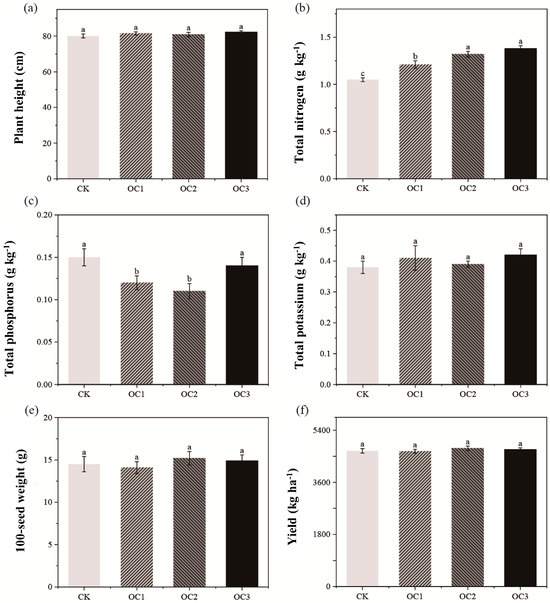
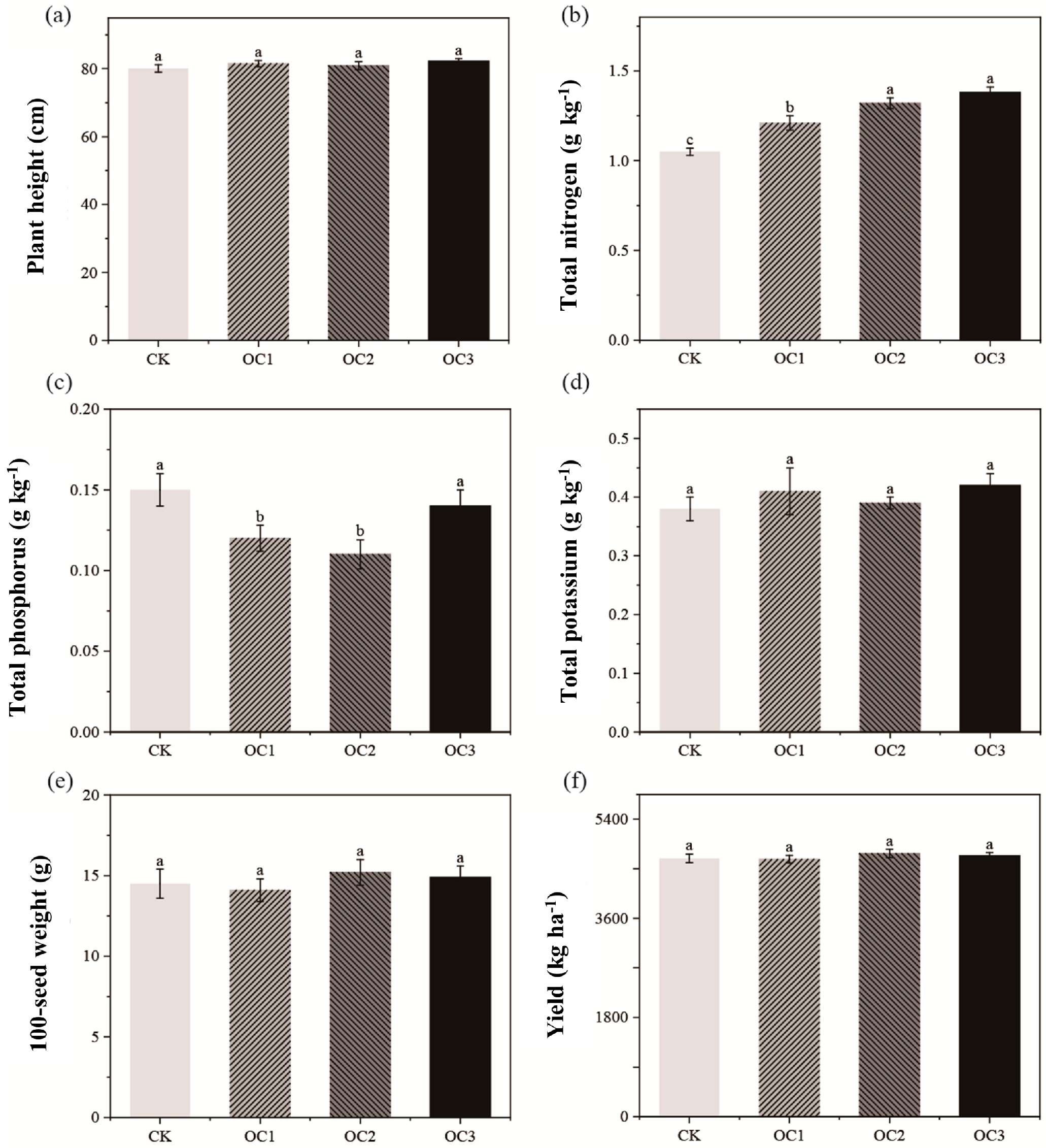
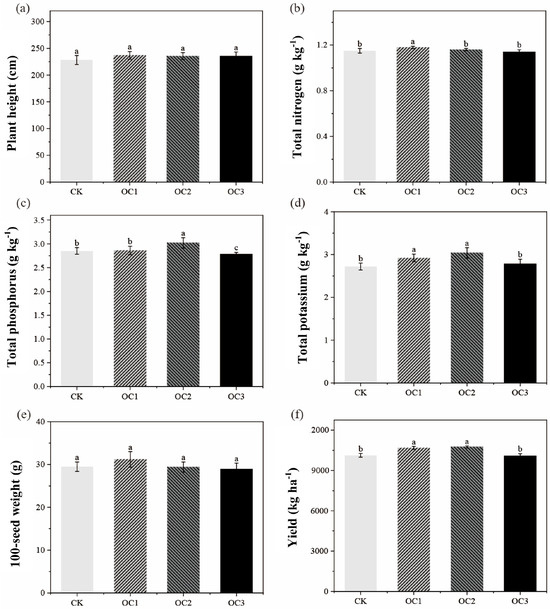
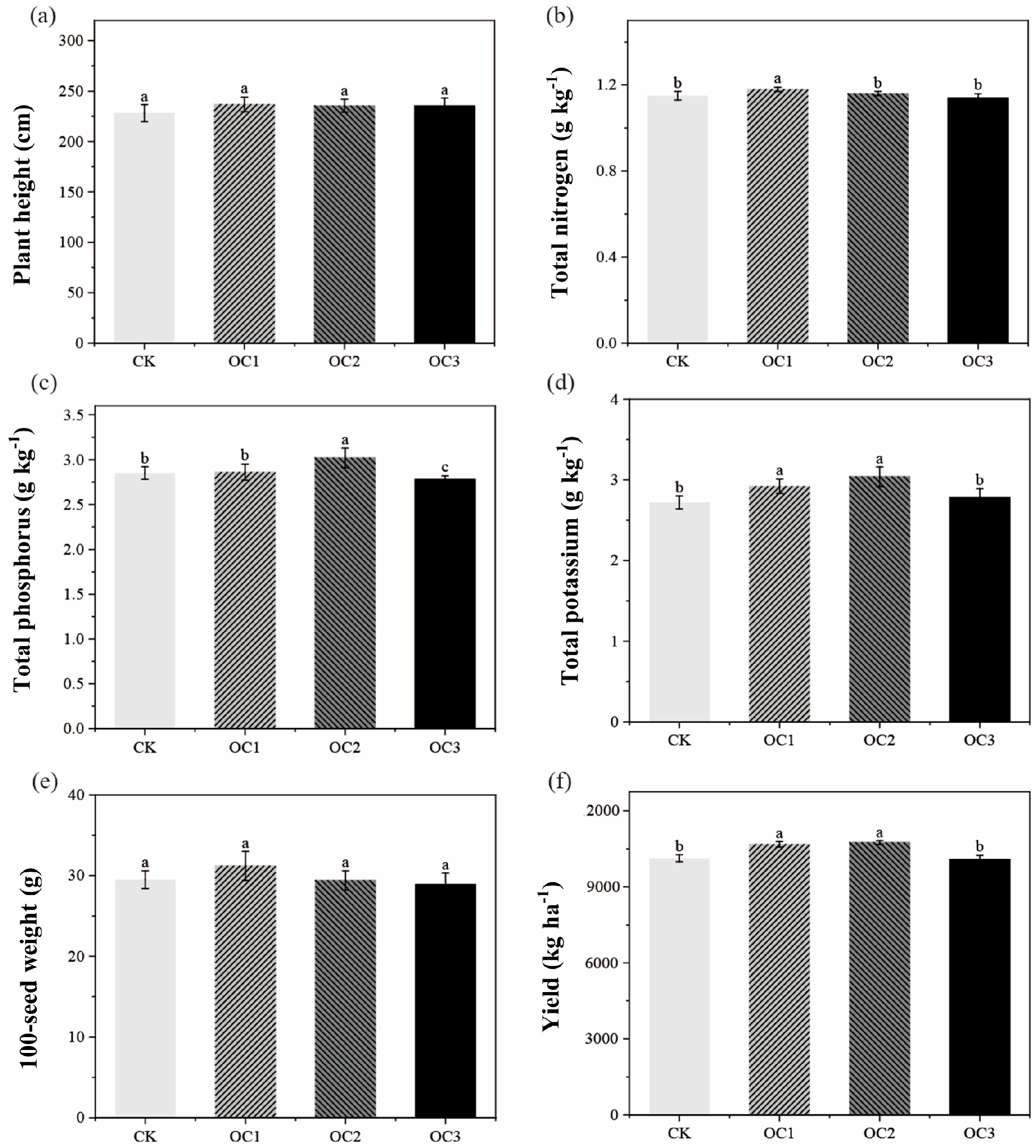
Figure 2 shows the changes in wheat growth, grain nutrient content, and yield under different fertilization treatments. None of the treatments significantly affected plant height. Notably, the organic fertilizer substitution treatments increased the total nitrogen content in grains. Compared to CK, the increases for OC1, OC2 and OC3 were 15.2%, 20.9% and 25.7%, respectively, as the substitution ratio rose. There were no significant differences in grain total potassium content among the treatments, while the total phosphorus content in OC1 and OC2 treatments was slightly lower than that of the CK. Moreover, in terms of yield, organic fertilizer substitution slightly boosted both 100-grain weight and overall yield. However, these improvements did not reach statistical significance.
Figure 2.
The effects of different fertilizers on wheat growth (a), quality (b–e), and yield (f).
3.2.3. Rice Nutrient Content and Yield
Figure 3 demonstrates the growth of rice, grain nutrient content, and yield responses. Organic fertilizer treatments significantly increased rice plant height compared to chemical fertilizers, promoting robust growth of the rice plants. OC2 and OC3 significantly increased the total nitrogen and total phosphorus content in the grains, while OC1 had no significant effect on either nutrient. All organic fertilizer treatments markedly boosted the total potassium content in the grains. In terms of yield, OC2 and OC3 treatments led to substantial increases in crop output. Among them, OC2 treatment resulted in a 5.9% improvement in 100-grain weight and a 4.2% increase in overall yield, demonstrating the best overall performance.
Figure 3.
The effects of different fertilizers on rice growth (a), quality (b–e), and yield (f).
3.2.4. Corn Nutrient Content and Yield
According to Figure 4, different fertilization treatments did not significantly affect corn plant height. Specifically, OC1 notably increased grain total nitrogen content. Meanwhile, OC2 was most effective for total phosphorus and total potassium, raising them by 5.9% and 6.3%, respectively. In terms of yield, OC1 and OC2 significantly boosted both 100-grain weight and overall productivity, with OC2 yielding a 6.5% increase compared to CK.
Figure 4.
The effects of different fertilizers on corn growth (a), quality (b–e), and yield (f).
3.3. Comprehensive Evaluation of the Integrated Benefits of Organic Fertilizers as a Substitute for Chemical Fertilizers
The soil chemical properties and crop quality after fertilization treatments were comprehensively evaluated using the membership function method, with the results presented in Table 2. The maximum membership value assigned to a treatment reflects its relative position after normalization and should not be directly equated with the magnitude of the raw percentage increase. The comprehensive evaluation scores for OC1, OC2, and OC3 treatments were all significantly higher than those of the CK treatment, indicating that partially replacing chemical fertilizers with organic amendments can effectively enhance both soil quality and crop performance synergistically. Notably, the OC2 treatment achieved the highest overall score among all treatments, highlighting its superior ability to improve soil chemical characteristics while boosting crop quality and yield. Consequently, the optimal fertilization strategy involves reducing chemical fertilizer application and supplementing it with 20% organic fertilizer. This conclusion is based on a multi-objective approach aimed at enhancing soil fertility and achieving both increased yields and improved quality in corn, soybeans, wheat, and rice.
Table 2.
Aggregated membership values and comprehensive evaluation scores of different treatments.
4. Discussion
Studies have shown that partially replacing chemical fertilizers with organic fertilizers can effectively improve soil chemical properties. For instance, Lan et al. [16] demonstrated that it increases soil organic matter content, reduces soil bulk density, and mitigates soil acidification. This study demonstrates that substituting chemical fertilizers with organic ones has a positive impact on soil fertility, particularly in boosting levels of soil organic matter, available phosphorus, and quick-release potassium. The elevated soil organic matter levels are likely attributed to the fact that bio-organic fertilizers themselves are rich in organic materials, which in turn promote their accumulation in the soil [17]. Consistent with findings by Qaswar et al. [18], the combined application of organic and chemical fertilizers significantly enhanced soil concentrations of alkaline-hydrolyzable nitrogen, available phosphorus, and quick-release potassium. This enhancement may be explained by two key factors. Firstly, the input of organic fertilizer markedly increases soil organic matter. Meanwhile, its slow-release nature fosters the formation of soil aggregates and stimulates microbial activity, which helps mobilize P and K from the soil matrix [19]. Secondly, the readily available nutrients inherently present in organic fertilizers directly enrich the nutrients of the soil [20]. It is worth noting that different cropping systems exhibit varying responses to fertilization practices. This is potentially due to the interplay among crop root characteristics, nutrient uptake patterns, and the mineralization processes of organic fertilizers [21]. In soybean-growing soils, the OC1 treatment resulted in a decrease in alkaline-hydrolyzable nitrogen levels. The reduction in alkaline-hydrolyzable nitrogen under OC1 may reflect short-term N immobilization following low-rate organic input. Given the C/N ratio of 25, microbial decomposition of added organic C may have temporarily increased microbial N assimilation, thereby reducing the measurable alkaline-hydrolyzable N pool. Changes in crop N uptake may also have contributed. Conversely, the significant increase in available phosphorus underscores the potential of organic fertilizers to stimulate phosphorus mobilization. Moreover, the relationship between organic fertilizer application rates and the extent of soil nutrient enhancement is not strictly linear. It suggests the existence of an optimal substitution ratio. Future research should delve deeper into the mechanisms by which organic fertilizers regulate soil nutrient cycling, integrating insights from microbial community structure and function. Such investigations will provide crucial theoretical foundations for optimizing fertilization strategies and advancing sustainable agricultural practices.
The response of crop performance to organic fertilizer substitution may be jointly influenced by crop growth characteristics and site-specific soil conditions. Organic amendments can improve nutrient availability through gradual mineralization and by modifying the rhizosphere environment, but the extent to which crops benefit from these processes may depend on root distribution, nutrient demand, and growth duration [21]. Corn has a well-developed and deep root system. It benefits from improvements to the topsoil whilst also being able to absorb nutrients released slowly from deeper layers [22]. Consequently, corn is better suited to the application of organic fertilizer than other shallow-rooted crops. One possible explanation is that differences in root distribution and nutrient-acquisition patterns may influence the ability of crops to use nutrients released gradually from organic fertilizer. The relatively strong response observed in the corn system may partly reflect its extensive root system, whereas the weaker short-term yield response in the wheat system may be associated with differences in nutrient-demand timing [23]. This may also explain why wheat yield did not increase significantly despite the improvement in grain nitrogen content. Meanwhile, soybeans and rice showed moderate but positive responses. Soybeans are legumes that form symbiotic relationships with nitrogen-fixing bacteria. The soil microbial environment improved by organic soil conditioners may have enhanced the biological nitrogen fixation process, thereby supplementing soil-derived nitrogen [24]. This is reflected in the improved yield and quality seen under the OC2 treatment. In rice, applying organic matter to paddy soils can alter the redox potential and influence the dynamics of key nutrients such as phosphorus and potassium, potentially enhancing their availability. This is supported by the notable improvements in both yield and quality observed under the OC2 and OC3 treatments. The optimal response of soybeans, rice, and corn to OC2 highlights the importance of matching nutrient release patterns to crop-specific physiological characteristics. Corn and rice have long growing seasons and the ability to utilize an increasingly improved rhizosphere, exhibiting a strong yield response. On the other hand, soybeans benefit from enhanced availability of non-nitrogen nutrients and an overall improvement in the microbial environment. Wheat, with its shorter growth cycle and more concentrated nutrient demands, derived fewer direct yield benefits from the current organic substitution regime. Therefore, adjusting the organic substitution ratio not only based on soil type but also according to the fundamental physiology of each crop is critical for maximizing the efficiency of integrated nutrient management strategies. However, these interpretations should be treated with caution because the four crops were grown at different field sites. Therefore, the observed differences among soybean, wheat, rice, and corn may also reflect differences in initial soil pH, organic matter, and nutrient status among sites. Moreover, future studies should directly quantify root length, rooting depth, root surface area, and rhizosphere nutrient dynamics to test these hypotheses.
Existing research indicates that replacing chemical fertilizers with organic fertilizers offers multi-dimensional benefits for improving crop quality. It not only enhances phosphorus use efficiency in crops but also promotes plant growth while boosting both yield and quality [25,26]. This study found that the impact of organic fertilizers replacing chemical fertilizers on crop grain nutrient content and yield formation varies significantly depending on the crop species and the substitution ratio. This also reflects the interspecies differences in crop nutrient uptake and utilization. Soybeans and rice showed relatively consistent responses to organic fertilizers, particularly in terms of phosphorus and potassium accumulation as well as yield enhancement. In contrast, wheat exhibited a more pronounced response in nitrogen uptake, while its yield improvement was less evident. This is likely due to its longer growth cycle and more complex nutrient requirements [27]. Meanwhile, corn achieved an optimal balance between nutrient absorption and yield at an intermediate substitution ratio (OC2). It suggested that both excessive and insufficient organic nutrient inputs could potentially hinder the full realization of yield-enhancing potential. Importantly, replacing chemical fertilizers with organic options may indirectly influence grain nutrient accumulation and yield formation by improving the root-zone microenvironment, boosting microbial activity, and fine-tuning the dynamics of nutrient release [15]. Nevertheless, because crop identity and field site were not fully separable in the experimental design, these patterns should not be interpreted as direct evidence of species-specific responses. Future studies should include multi-site replicated trials or experiments conducted under the same soil background to further clarify how crop traits and soil conditions interact to regulate the effects of organic fertilizer substitution on nutrient-use efficiency and yield formation. Moreover, the economic implications of organic fertilizer substitution also require consideration. Although OC2 showed the highest integrated agronomic performance in this study, a full cost–benefit analysis was not possible because fertilizer prices, labor inputs, transportation costs, and crop-market returns were not systematically recorded. Future research should also incorporate cost-effectiveness into its analysis.
5. Conclusions
In summary, partially replacing chemical fertilizers with organic fertilizers effectively enhances soil fertility. It significantly boosts levels of soil organic matter, available phosphorus, and quick-acting potassium across the board. However, the impact on alkali-hydrolyzable nitrogen varies depending on the specific crop system. Specifically, soybeans and rice exhibited positive responses in both productivity and grain quality, whereas wheat primarily saw improvements only in quality. Moreover, corn achieved an optimal balance between yield and nutrient uptake at a 20% substitution rate. Overall, OC2 achieved the highest score in the integrated evaluation and showed favorable performance under the field conditions examined in this study. Notably, the wheat system showed improved grain nitrogen content without a significant yield increase. Therefore, the 20% substitution rate should be regarded as a promising regional option rather than a universally optimal strategy for all crops. Moreover, because each crop was cultivated at a different field site, the observed differences among cropping systems should be interpreted with caution, as crop effects could not be fully disentangled from site-specific differences in initial soil conditions. This study demonstrates that carefully calibrated organic fertilizer substitution rates represent an ideal approach to fostering sustainable agricultural development.
Supplementary Materials
The following supporting information can be downloaded at https://www.mdpi.com/article/10.3390/environments13070401/s1, Table S1: Basic chemical properties of soil in different crop cultivation areas; Table S2: Action plan for replacing chemical fertilizers with organic fertilizers; Table S3: Crop membership values of the six indicators under different fertilization treatments.
Author Contributions
J.Y.: data curation, investigation, writing—original draft. E.Y.: data curation, investigation, writing—review and editing. Y.Z.: investigation, writing—review and editing. X.X.: resources, writing—review and editing, emotional support. All authors have read and agreed to the published version of the manuscript.
Funding
This research was funded by Sichuan Rapeseed Innovation Team of National Modern Agricultural Industry Technology, Grant No. SCCXTD-2024-3.
Data Availability Statement
The original contributions presented in this study are included in the article/supplementary material. Further inquiries can be directed to the corresponding author.
Acknowledgments
The authors are grateful for the support of Sichuan Rapeseed Innovation Team of National Modern Agricultural Industry Technology, Grant No. SCCXTD-2024-3.
Conflicts of Interest
Erwu Yang and Junpeng Yin were employed by the company CCCC Guangzhou Dredging Co., Ltd. The authors declare that this study received funding from CCCC Guangzhou Dredging Co., Ltd. The funder was not involved in the study design, collection, analysis, interpretation of data, the writing of this article, or the decision to submit it for publication.
References
- He, W.; Yang, J.; Li, J.; Ai, Y.; Li, J. Stabilization of Vanadium in Calcareous Purple Soil Using Modified Na-Bentonites. J. Clean. Prod. 2020, 268, 121978. [Google Scholar] [CrossRef] [Scilit]
- Ji, T.; Lu, Z.; Zhu, X.; Li, H.; Shi, R.; Sun, Y.; Zhou, L.; Wang, F.; Huang, C.; Zhang, F. Enhancing Phosphorus Efficiency in Calcareous Soils: Role of Polyphosphate Properties in Nutrient Solubility, Maize Nutrient Uptake, and Growth. ACS Omega 2025, 10, 4057–4067. [Google Scholar] [CrossRef] [Scilit] [PubMed]
- Saudy, H.S.; Salem, E.M.M.; Abd El-Momen, W.R. Effect of Potassium Silicate and Irrigation on Grain Nutrient Uptake and Water Use Efficiency of Wheat Under Calcareous Soils. Gesunde Pflanz. 2023, 75, 647–654. [Google Scholar] [CrossRef] [Scilit]
- Jin, D.; Lu, Z.; Song, X.; Ahammed, G.J.; Yan, Y.; Chen, S. Improvement of Yield and Quality Properties of Radish by the Organic Fertilizer Application Combined with the Reduction of Chemical Fertilizer. Agronomy 2024, 14, 1847. [Google Scholar] [CrossRef] [Scilit]
- Shi, Y.; Niu, X.; Chen, B.; Pu, S.; Ma, H.; Li, P.; Feng, G.; Ma, X. Chemical Fertilizer Reduction Combined with Organic Fertilizer Affects the Soil Microbial Community and Diversity and Yield of Cotton. Front. Microbiol. 2023, 14, 1295722. [Google Scholar] [CrossRef] [Scilit] [PubMed]
- Singh, R.; Singh, P.; Singh, H.; Raghubanshi, A.S. Impact of Sole and Combined Application of Biochar, Organic and Chemical Fertilizers on Wheat Crop Yield and Water Productivity in a Dry Tropical Agro-Ecosystem. Biochar 2019, 1, 229–235. [Google Scholar] [CrossRef] [Scilit]
- Tao, J.; Wan, C.; Leng, J.; Dai, S.; Wu, Y.; Lei, X.; Wang, J.; Yang, Q.; Wang, P.; Gao, J. Effects of Biochar Coupled with Chemical and Organic Fertilizer Application on Physicochemical Properties and in Vitro Digestibility of Common Buckwheat (Fagopyrum Esculentum Moench) Starch. Int. J. Biol. Macromol. 2023, 246, 125591. [Google Scholar] [CrossRef] [Scilit] [PubMed]
- Xie, J.; Shao, J.; Gao, C.; Gao, M.; Seglah, P.A.; Bi, Y.; Zhang, Q.; Wang, Y. Effective Nutrient Resources and Fertilizer Substitution Potential of Root Biomass of Major Crops in China. Sci. Rep. 2026, 16, 11107. [Google Scholar] [CrossRef] [Scilit] [PubMed]
- National Bureau of Statistics of China. Statistical Communiqué of the People’s Republic of China on the 2025 National Economic and Social Development; National Bureau of Statistics of China: Beijing, China, 2025. [Google Scholar]
- Zhong, S.; Han, Z.; Du, J.; Ci, E.; Ni, J.; Xie, D.; Wei, C. Relationships between the Lithology of Purple Rocks and the Pedogenesis of Purple Soils in the Sichuan Basin, China. Sci. Rep. 2019, 9, 13272. [Google Scholar] [CrossRef] [Scilit] [PubMed]
- He, H.; Peng, M.; Lu, W.; Hou, Z.; Li, J. Commercial Organic Fertilizer Substitution Increases Wheat Yield by Improving Soil Quality. Sci. Total Environ. 2022, 851, 158132. [Google Scholar] [CrossRef] [Scilit] [PubMed]
- Oyetunji, O.; Bolan, N.; Hancock, G. A Comprehensive Review on Enhancing Nutrient Use Efficiency and Productivity of Broadacre (Arable) Crops with the Combined Utilization of Compost and Fertilizers. J. Environ. Manag. 2022, 317, 115395. [Google Scholar] [CrossRef] [Scilit] [PubMed]
- Liu, Y.; Ma, R.; Yang, Y.; Wang, J.; Guan, X.; Wang, M.; Li, N.; Xu, Y.; Jiang, L. Effect of Partial Organic Fertilizer Substitution on Heavy Metal Accumulation in Wheat Grains and Associated Health Risks. Agronomy 2023, 13, 2930. [Google Scholar] [CrossRef] [Scilit]
- Kong, L.; Zhang, Y.; Hou, Y.; Yin, C.; Zhang, L.; Liu, Z.; Xu, X. Threshold of organic fertilizer replacing chemical fertilizer nitrogen for achieving high yield and efficiency of maize production in thin layer black soil region of Northeast China. J. Plant Nutr. Fertil. 2026, 32, 24–36. [Google Scholar] [CrossRef]
- Chen, Q.; Xie, J.; Li, L.; Khan, K.S.S.; Wang, L.; Chang, L.; Du, C. Partial Substitution of Chemical Fertilizer with Organic Fertilizer: A Promising Circular Economy Approach for Improvement Soil Physical and Chemical Properties and Sustainable Crop Yields. Front. Plant Sci. 2025, 16, 1565081. [Google Scholar] [CrossRef] [Scilit] [PubMed]
- Lan, X.; Shan, J.; Huang, Y.; Liu, X.; Lv, Z.; Ji, J.; Hou, H.; Xia, W.; Liu, Y. Effects of Long-Term Manure Substitution Regimes on Soil Organic Carbon Composition in a Red Paddy Soil of Southern China. Soil Tillage Res. 2022, 221, 105395. [Google Scholar] [CrossRef] [Scilit]
- Chen, H.; Yunze, R.; Zhongjun, J. A Meta-Analysis of 30 Years in China and Micro-District Experiments Shows Organic Fertilizer Quantification Combined with Chemical Fertilizer Reduction Enhances Rice Yield on Saline-Alkali Land. Rice Sci. 2025, 32, 259–272. [Google Scholar] [CrossRef] [Scilit]
- Qaswar, M.; Jing, H.; Ahmed, W.; Dongchu, L.; Shujun, L.; Lu, Z.; Cai, A.; Lisheng, L.; Yongmei, X.; Jusheng, G.; et al. Yield Sustainability, Soil Organic Carbon Sequestration and Nutrients Balance under Long-Term Combined Application of Manure and Inorganic Fertilizers in Acidic Paddy Soil. Soil Tillage Res. 2020, 198, 104569. [Google Scholar] [CrossRef] [Scilit]
- Guo, H.; Guan, M.; Wang, Y.; Li, X.; Wang, H.; He, C.; Chen, C. Research on the Synergistic Optimization of Scutellaria Baicalensis Yield, Quality and Soil Environment by Key Microorganisms, Driven by the Combined Approach of Reducing Chemical Fertilizer Usage While Incorporating Organic Fertilizer. Ind. Crops Prod. 2025, 229, 121044. [Google Scholar] [CrossRef] [Scilit]
- Wen, J.; Li, Z.; Yao, J.; Wang, S.; Liu, Y.; Liu, Y. The Combined Application of Organic and Inorganic Fertilizers Improved the Quality of Colored Wheat by Physicochemical Properties and Rheological Characteristics of Starch. Int. J. Biol. Macromol. 2024, 282, 137175. [Google Scholar] [CrossRef] [Scilit] [PubMed]
- Wang, F.; Xu, M.; Stedtfeld, R.D.; Sheng, H.; Fan, J.; Liu, M.; Chai, B.; Soares De Carvalho, T.; Li, H.; Li, Z.; et al. Long-Term Effect of Different Fertilization and Cropping Systems on the Soil Antibiotic Resistome. Environ. Sci. Technol. 2018, 52, 13037–13046. [Google Scholar] [CrossRef] [Scilit] [PubMed]
- Li, J.; Zou, Y.; Yang, K.; Zhu, Y.; Zhou, Q.; Shao, L.; Gong, J.; Peng, S.; Peng, G.; Qin, T.; et al. Well-Developed Root Systems and a Nitrogen-Rich Rhizosphere Recruit Key Bacterial Taxa to Resist Disease Invasion of Field Crop. Agric. Ecosyst. Environ. 2025, 378, 109279. [Google Scholar] [CrossRef] [Scilit]
- Li, H.; Liu, N.; Shao, L.; Liu, X.; Sun, H.; Chen, S.; Zhang, X. Changes in Root Growth and Water Uptake Contribute to the Yield and Water Productivity Improvement in Winter Wheat during the Past Three Decades: A Case Study in the North China Plain. Agric. Water Manag. 2025, 313, 109482. [Google Scholar] [CrossRef] [Scilit]
- Pereg, L.; Morugán-Coronado, A.; McMillan, M.; García-Orenes, F. Restoration of Nitrogen Cycling Community in Grapevine Soil by a Decade of Organic Fertilization. Soil Tillage Res. 2018, 179, 11–19. [Google Scholar] [CrossRef] [Scilit]
- Iqbal, A.; Xie, H.; He, L.; Ahmad, S.; Hussain, I.; Raza, H.; Khan, A.; Wei, S.; Quan, Z.; Wu, K.; et al. Partial Substitution of Organic Nitrogen with Synthetic Nitrogen Enhances Rice Yield, Grain Starch Metabolism and Related Genes Expression under the Dual Cropping System. Saudi J. Biol. Sci. 2021, 28, 1283–1296. [Google Scholar] [CrossRef] [Scilit] [PubMed]
- Pacheco, I.; Ferreira, R.; Correia, P.; Carvalho, L.; Dias, T.; Cruz, C. Microbial Consortium Increases Maize Productivity and Reduces Grain Phosphorus Concentration under Field Conditions. Saudi J. Biol. Sci. 2021, 28, 232–237. [Google Scholar] [CrossRef] [Scilit] [PubMed]
- Michel, J.; Leemans, V.; Weinmann, M.; Balanzategui-Guijarro, I.; Bin, J.; Biver, S.; Blum, A.; Börger, R.; Cao, D.; Him, S.-L.; et al. Trade-Offs between Agronomic Yields and Sustainability in Winter Wheat Cropping Systems under Climate Change Mediated by Soil Organic Matter Content. PLoS Clim. 2025, 4, e0000616. [Google Scholar] [CrossRef] [Scilit]

Disclaimer/Publisher’s Note: The statements, opinions and data contained in all publications are solely those of the individual author(s) and contributor(s) and not of MDPI and/or the editor(s). MDPI and/or the editor(s) disclaim responsibility for any injury to people or property resulting from any ideas, methods, instructions or products referred to in the content. |
© 2026 by the authors. Licensee MDPI, Basel, Switzerland. This article is an open access article distributed under the terms and conditions of the Creative Commons Attribution (CC BY) license.