


Abstract
Riverine mercury biomagnification is most frequently studied via metrics such as the trophic magnification factor (TMF), the biomagnification factor (BMF) and the trophic magnification slope (TMS). However, these metrics prove problematic in lotic systems dominated by benthic macroinvertebrates because short food chains, the frequent lack of fish, patchy basal production and marked spatial heterogeneity obscure the signal that they are meant to extract. We argue that stable isotopes of carbon and nitrogen (δ13C, δ15N) are not merely optional enhancements but are a prerequisite for a mechanistic understanding of the transfer of methylmercury (MeHg). Nitrogen isotopes distinguish among trophic positions not as categories, but as gradients, whilst carbon isotopes reflect the underlying pathways increasingly seen as defining how MeHg enters food webs. Invertebrate studies, published more recently, report systematically lower magnification levels compared to community-based studies and become far more comprehensible when carbon source and trophic pathways are made explicit, with Hg isotopes (δ202Hg, Δ199Hg) providing supplementary data about mercury sources and processing. To be able to carry out reliable river monitoring, such frameworks require clarity in choices of background value, discrimination factors and statistical methods.
1. Introduction
Mercury (Hg) is among the most extensively studied environmental contaminants, and a substantial body of knowledge on its toxicological effects and environmental fate has accumulated in the past decades [1,2]. Nevertheless, the trophic transfer of Hg continues to challenge ecotoxicologists, as it remains difficult to predict and interpret across different environmental contexts. The bioaccumulative form, MeHg, formed by the biological methylation of Hg in anoxic environments, magnifies in aquatic food webs, reaching a mean trophic magnification factor (TMF) of 8.3 ± 7.5 among freshwater communities [3], and this can pose risks to fish, wildlife and humans [4,5,6]. That mean, however, has a relatively high standard deviation, which may partly reflect non-normality in the underlying data rather than biological and biogeochemical heterogeneity alone, even though the fundamental mechanisms of trophic transfer are well established. Several specific factors likely contribute to this variability, including basal carbon source variability, feeding ecology, inter-taxon differences in Hg ratios, trophic niche overlap and baseline selection, the roles of which are explored in more detail in later Section 4.2, Section 4.3, Section 4.4 and Section 7. Such variability represents much of the uncertainty that still limits our understanding and may result in risk estimates that differ by up to an order of magnitude across sites and regions with similar MeHg concentrations [7]. Part of this uncertainty may arise because much of our understanding of Hg biomagnification has been derived from lakes and these relationships may not transfer well to rivers. Lentic systems have relatively simple pelagic food webs and fish biomass high enough to support standard δ15N analysis.
Rivers and streams, the focus of this review, are themselves undergoing numerous and increasingly intense pressures. Pollution, disrupted flow regimes, riverbed disturbances, thermal stress, and channelization are now so widespread that effectively unimpacted lotic systems have become extremely rare [8,9]. Within this stressed landscape, benthic macroinvertebrates are the most widely used biological matrix for ecological assessment of rivers under European and North American systems [10,11]. Rivers and streams, however, differ from lakes in several fundamental ways: they are open systems, have a pronounced longitudinal structure and their fauna consists primarily of bottom-dwelling invertebrates. Typically, stream food webs consist of relatively few trophic levels, with fish having a small role in the food web or even no role at all in many stream systems [12,13]. In this context, benthic macroinvertebrates are increasingly used as biosentinels as their tissues integrate Hg exposure throughout a lifetime and across spatial scales and taken together as an assemblage, across trophic positions, providing insights into Hg dynamics and bioaccumulation that sediments and river water alone may not adequately capture [14,15]. However, Hg concentrations in macroinvertebrates should be interpreted in light of species-specific differences in feeding ecology, life history, aquatic residency and ontogenetic dietary shifts, which help contextualize patterns of Hg uptake and transfer among taxa [7].
The recent meta-analysis by Sinclair et al. [7] highlighted a persistent knowledge gap: trophic magnification factors estimated from invertebrates alone are much lower than those obtained including vertebrates and primary producers in the same food web (quantitative detail in Section 5.2). Sinclair et al. [7] suggested that this pattern may arise because MeHg is biomagnified less efficiently in invertebrates than in vertebrates, likely due to physiological differences affecting MeHg assimilation and elimination, while community composition may further contribute to the observed patterns. This suggests that invertebrate-only studies might systematically underestimate biomagnification, with two implications. First, biomonitoring programmes that rely exclusively on invertebrate biosentinels will report a partial signal, that is calibrated differently from that for higher trophic levels. Second, the biological processes underlying Hg biomagnification in invertebrates remain insufficiently resolved and the effects of trophic position, diet specialization, taxonomy and bioenergetic interactions cannot be disentangled using classical biomagnification metrics alone.
Stable isotope analysis (SIA) provides a powerful tool for investigating these ecological processes. Nitrogen isotope ratios (δ15N), which have served as the primary continuous trophic proxy for over two decades, replace the discrete nature of biomagnification factors with a regression-based estimate, the trophic magnification slope (TMS). This metric is sensitive to omnivory, ontogenetic dietary shifts and different food-chain lengths among sites [16,17]. This is particularly valuable in streams dominated by macroinvertebrates, where trophic categorisation most frequently relies on assignment to functional feeding groups (FFGs). Stable isotope data also highlight the imprecision of our standard assumptions about trophic enrichment factors, which vary between roughly 2‰ and over 5‰ depending on taxon and environmental context [18,19]. Carbon isotopes (δ13C) complement δ15N analysis by providing information on the basal carbon sources supporting consumer biomass, helping to distinguish, between autochthonous inputs (e.g., algal and periphyton production within the stream) and allochthonous inputs (terrestrial organic matter entering from the surrounding catchments). In lotic systems, however, these sources often overlap substantially due to continuous exchange between riparian and in-stream production, variable hydrological inputs and spatial heterogeneity in organic matter sources, meaning that clear isotopic separation is not always possible [20,21]. Despite these limitations, δ13C values remain useful for integrating dietary information over ecologically relevant timescales. This is a substantial improvement over the snapshot provided by gut-content analysis. Recent studies indicate that basal carbon flow is the dominant driver of MeHg patterns in stream food webs, with low δ13C values indicating detrital and microbial pathways that are associated with elevated MeHg levels in predators regardless of ecosystem TMS [12,22,23]. However, the strength of these inferences depends on the degree of isotopic separation among carbon sources, which may not always be clearly resolved in natural systems. Even with those limitations, isotope-based dietary frameworks have been shown to explain, a high percentage of variance in Hg concentration among stream invertebrates that would otherwise remain unexplained or difficult to interpret.
Two complementary lines of evidence have begun to extend this framework. Mercury stable isotopes (δ202Hg, Δ199Hg) add information on Hg sources and photochemical history that cannot be resolved using concentration data alone [24,25], while studies of larvae and adult emergent insects together with spiders living in the riparian habitats capture a component of Hg transfer that is absent in fish-focused studies [26,27,28]. Whether these approaches become incorporated into routine Hg monitoring (understood here as repeated environmental data collection rather than regulatory programmes) remains uncertain, but their potential to improve interpretation of Hg transfer through food webs is clear.
This review paper synthesises current understanding of the biomagnification of Hg within riverine macroinvertebrate food webs and argues that the C-N stable isotopes are not an optional refinement of these analyses, but rather a prerequisite to understanding the process mechanistically (Figure 1), although we recognise that stable isotope data are not consistently available across studies and that many investigations of Hg or MeHg in aquatic food webs are conducted without accompanying δ15N and δ13C measurements. This variability in methodological coverage limits the degree to which fully mechanistic interpretations can be made across the broader literature and highlights a key constraint in synthesising patterns of Hg transfer in riverine systems.
Figure 1.
A conceptual model integrating the relationships between stable C and N isotopes (δ15N-δ13C), which serve to reveal food-web characteristics (food-web structure and energy pathways) and stable Hg isotopes (δ202Hg-Δ199Hg), which help to identify the primary source of Hg and the transformation pathways involving light (photochemistry) and bioaccumulation (MeHg) in stream macroinvertebrates.
2. Mercury Cycling and Methylation in Riverine Systems
2.1. Atmospheric Inputs, Watershed Mobilization and In-Stream Methylation Hotspots
Mercury enters river basins primarily through atmospheric deposition [29,30], yet atmospheric Hg inputs often show little to no relationship with in-stream Hg concentrations [31]. Once in aquatic systems, Hg(II) can serve as substrate for microbial methylation, primarily by sulfate-reducing and iron-reducing bacteria, with some input from methanogens [31,32,33]. Wetlands and riparian soils have conventionally been treated as dominant zones for MeHg production, but this view is increasingly challenged: streams in catchments lacking wetlands can show elevated Hg [13,34] and wetland mass-balance studies have failed to detect increased MeHg loading downstream [35]. Stream sediments themselves can rival or exceed increased wetland methylation potential in some cases [36], particularly in catchments with organic-rich sediments. Because these methylation zones may differ in their carbon and Hg sourcing, benthic invertebrates exposed to sediment- versus wetland-derived MeHg could potentially carry distinguishable isotope signatures, suggesting that δ13C and δ15N data may offer a way to help resolve the relative contribution of these sources to invertebrate Hg burden, something concentration data alone would likely be unable to capture [37,38,39,40].
2.2. Biogeochemical Drivers of MeHg Bioavailability
Whether inorganic Hg(II) delivered to a stream is methylated and whether the resulting MeHg becomes bioavailable to consumers, depends on a suite of interconnected biogeochemical drivers. Dissolved organic carbon (DOC) plays a particularly complex role. Although it is a major transport pathway for Hg from land to water [41,42], strong complexation with sulfur-containing ligands can reduce Hg bioavailability to methylating bacteria, weakening or even reversing the positive relationship between DOC and biotic MeHg at high DOC concentrations [12,43,44].
Acidity also influences Hg cycling. Low pH is generally associated with higher biotic MeHg concentrations because acidic conditions in anaerobic stream habitats can enhance methylation and increase Hg(II) solubility and uptake efficiency by organisms [38,45,46].
Hydrology further influences MeHg production and transport. Floodplain inundation, dam operations and storm-driven sediment mobilization can create localized “hot spots” and time-limited “hot moments” that may not be captured by routine surveys [47,48].
Together, these interaction controls generate substantial spatial and temporal variability in MeHg availability within riverine ecosystems, complicating attempts to predict Hg exposure from environmental concentrations alone.
2.3. Specificities of Lotic Ecosystems Compared with Lakes
Most existing knowledge on Hg biogeochemistry in freshwater ecosystems is derived from studies of lakes, largely because they have relatively long residence times, well-developed pelagic food webs and more clearly defined sediment compartments that facilitate relatively easy sampling and straightforward interpretation of results. Rivers and streams deviate in a few key ways, making direct transfer of lake-based inferences to lotic systems problematic. One of these relates to hydrological residence time, which is generally short and highly variable along the length of the system [13,49]. As a result, MeHg concentrations in the water column are more a snapshot reflection of an upstream balance between Hg loading from catchment sources and the in-channel processes of methylation, photodemethylation, and biotic uptake than a reflection of steady-state equilibrium. Factors such as light penetration, sediment scour and/or burial, and riparian shading differentiate the ecosystem of a small stream from large, open lakes, with important consequences for primary production and for the accumulation of Hg in bed sediments and the associated basal MeHg pool [12,50].
A second differentiating characteristic relates to the longitudinal organization of stream food webs, often described as the River Continuum Concept [51]. This framework predicts a transition from heterotrophic, leaf-litter-based headwaters to more autotrophic mid-order reaches dominated by periphyton and finally to heterotrophic downstream sections. Although well established in stream ecology, its application to Hg biogeochemistry is more recent [12,52]. The relative contribution of allochthonous carbon affects not only consumer trophic position and diet quality but also MeHg bioavailability. In many forested headwater streams, leaf-litter-derived biofilms can create conditions favourable for microbial methylation through the development of anoxic microzones, whereas in more productive reaches, rapid growth may dilute MeHg across greater algal biomass [53]. The dominant carbon pathway therefore has a primary control on the entry of MeHg into food webs, a topic further addressed in Section 6 with reference to δ13C.
A third aspect concerns the relative importance of channel sediments versus riparian and wetland zones as methylation sites, which recent evidence suggests may have been underestimated (Section 2.1). Here, variability in watershed slope, drainage basin topography, and stream order influence the relative importance of different Hg compartments, suggesting that simple catchment descriptors such as wetland cover may be insufficient for predicting biotic MeHg in riverine systems [12,54]. For macroinvertebrates, this means that the basal MeHg pool they encounter in lotic systems may vary substantially in space and time, in contrast to the more stable lake environments often assumed in MeHg models. This variability again illustrates both the value and the challenges of using stable isotopes in rivers.
3. Macroinvertebrates as Mercury Biosentinels: Strengths and Weaknesses
3.1. Practical and Ecological Advantages
A useful biosentinel, by Beeby’s [55] operationally based definition, is a contaminant-accumulating, abundant species with a wide distribution across the landscape of interest that integrates exposure to a contaminant over time. Several freshwater taxa meet these criteria. In stream ecosystems, Hg has most often been reported in Hexapoda (Ephemeroptera, Plecoptera, Trichoptera, Odonata, Diptera) as well as Crustacea such as Gammaridae. These arthropods are widespread, can occur at high densities even in fishless reaches and can be sampled regularly without threatening their populations [56,57,58]. Moreover, larval insects typically live for several months to two years, thereby integrating MeHg exposure over ecologically meaningful timescales, whereas water samples reflect only short-term conditions and vertebrates integrate exposure over much longer periods [59].
However, this temporal integration also means that macroinvertebrate Hg concentrations reflect mixed and often unresolved exposure histories across microhabitats and carbon pathways, complicating direct ecological interpretation without complementary tracers. Their accessibility and low sampling cost have further enabled large-scale and citizen-science monitoring efforts (Section 3.4), but this scaling advantage does not resolve interpretive uncertainty in trophic or dietary pathways.
Two additional advantages are specific to running-water systems. Headwater and high-elevation streams often host no fish but remain important components of regional hydrology and biogeochemistry, so macroinvertebrates can function as the dominant consumers in these systems [19,60]. Thus, Hg risks related to the food-web transfer cannot be fully characterised without understanding their trophic position and feeding behaviour. Macroinvertebrate larvae exhibit relatively high site fidelity, meaning their concentrations should reflect localized Hg exposure rather than broad spatial averages [14]. This is especially relevant in regions where Hg sources vary greatly over short distances, including catchments with multiple point sources or streams containing methylating “hot spots”.
However, these advantages come with trade-offs. Identification to family or genus can require specialised expertise that is not consistently available and many species are too small to provide sufficient tissue mass for individual analysis, forcing the use of composite samples that can obscure local Hg variations. Results may also be influenced by life stage at the time of sampling, adding another source of variability [61,62]. Overall, macroinvertebrates are valuable biological indicators of Hg contamination in streams, but their use in biomonitoring requires careful attention to methodological and operational constraints.
3.2. Functional Feeding Groups as a First-Order Organizing Principle
Most macroinvertebrate taxa cannot be assigned to a single trophic level on the basis of morphology alone, so stream ecologists traditionally organize communities by food acquisition habits rather than phylogeny using the FFG framework originally proposed by Cummins and colleagues [63]. Standard FFG classification includes shredders, which fragment coarse particulate organic matter; scrapers or grazers, which consume epilithic biofilms; collector-gatherers and collector-filterers, which ingest fine particulate matter; and predators, which feed on animals. In Hg-bioaccumulation studies, FFGs provide a pragmatic compromise between the overly detailed taxonomy and trophic categories that can mask ecological variation.
As a first approximation, this framework generally holds up. In northern Italy, a survey by Marziali et al. [57] found lower THg concentrations in grazers than in predators, with FFGs explaining significant differences among taxa. Painter et al. [19] similarly reported higher MeHg concentrations in predatory Plecoptera than in grazing Ephemeroptera in Canadian Rocky Mountain streams, with evidence of trophic biomagnification between groups. In their meta-analysis, Sinclair et al. [7] referred to this as the “Functional BMF” approach, which maximises sample size while explicitly acknowledging the drawback of producing the least accurate trophic estimates, because FFG assignments are based purely on taxonomic group.
Nonetheless, FFGs are clearly insufficient for capturing the variation most relevant to Hg risk. Shredders can exhibit MeHg concentrations comparable to predators, as observed in several river systems [7,57] suggesting that detrital pathways may contribute significantly to Hg exposure. Similarly, grazers feeding on biofilms that differ strongly in δ13C may exhibit very different MeHg values, despite belonging to the same FFG [12]. Several taxa are omnivorous and therefore more flexible: Heptageniidae may function as facultative omnivores [57], while Plecoptera (e.g., Leuctridae) vary their feeding behaviour with habitat and season. Therefore, FFGs are useful heuristics but poor proxies for true biological trophic positions and relying on them alone without isotopic data risks treating superficial feeding similarities as if they were ecologically equivalent.
3.3. Inter-Taxon Variability in MeHg/THg Ratios and Its Implications
Another confounding source of variation is the proportion of THg present as methylmercury, commonly expressed as MeHg% or the MeHg:THg ratio. In fish muscle, MeHg typically accounts for more than 90% of THg, so total mercury is often a reasonable proxy for MeHg. In macroinvertebrates, however, MeHg% can range from <10% in primary consumers to nearly 100% in predators [56,57,58]. This has direct consequences for biomonitoring and interpretation.
Taxon-specific patterns are consistent across studies. Obligate predatory insects (generally show high and relatively stable MeHg% values, whereas shredders and scrapers tend to exhibit lower and more variable proportions Riva-Murray et al. [58] and Malcata Martins et al. [56], (Figure 2). In contrast, systems with elevated inorganic Hg exposure can show decoupling between MeHg% and trophic position. For example in the Toce River, Marziali et al. [57] reported low and highly variable MeHg% across functional feeding groups, with no clear enrichment in predatory taxa despite high total Hg burdens.
Figure 2.
Violin plot MeHg percentage by functional feeding group, based on data from Riva-Murray et al. [58], Marziali et al. [57] and Malcata Martins et al. [56]. Obligate predators show the highest median MeHg% and the lowest variance, while shredders and scrapers show lower medians and wider distributions. The dashed line marks the 90% operational threshold proposed by Riva-Murray et al. [58].
These patterns indicate THg may serve as a reasonable surrogate for MeHg in obligate predatory insects, but not in primary consumers, where MeHg% is highly variable and system dependent. As a result, MeHg should be measured directly in lower trophic levels unless system-specific relationships are validated [58]. Importantly, variation in MeHg% among primary consumers also reflects environmental controls on methylation and demethylation processes, further complicating interpretation of exposure [64].
Overall, variability in MeHg/THg ratios across macroinvertebrate assemblages demonstrates that the relationship between mercury form and trophic structure cannot be assumed to be consistent across taxa or systems, reinforcing the need for complementary ecological tracers when interpreting Hg bioaccumulation.
3.4. Macroinvertebrate Biosentinels for Large-Scale Mercury Monitoring
The most advanced implementation of Hg-sensitive macroinvertebrates to date is the Dragonfly Mercury Project. Under standardised protocols, thousands of volunteers collected dragonfly larvae (order Odonata, suborder Anisoptera) across hundreds of sites in the U.S. National Park Service between 2009 and 2018 [14]. THg concentrations varied by more than two orders of magnitude and were broadly correlated with Hg concentrations in fish and amphibians supporting the use of larval dragonflies as large-scale indicators of Hg exposure.
However, interpretation of these data is constrained by ecological and methodological variability. Differences among dragonfly families reflect variation in habitat use, hunting strategies and diet, indicating that even within a single taxonomic group, Hg accumulation is not biologically uniform [14]. These patterns highlight both the value of macroinvertebrates as integrative biosentinels and the difficulty of interpreting Hg concentrations without accounting for underlying ecological differences.
Beyond dragonflies, other taxa have emerged as useful sentinels, such as Hydropsychidae caddisflies [64] and riparian long-jawed orb-weaver spiders (Tetragnathidae), which have been used to track Hg contamination across aquatic and terrestrial interfaces [27,28]. In these groups, THg is often used as a proxy for MeHg. However, variability in MeHg% and feeding ecology further complicates direct comparison of THg across taxa and systems [25].
A key limitation across most large-scale monitoring programmes is the absence of routine stable isotope analysis. The Dragonfly Mercury Project and similar initiatives focus on Hg concentration and do not include δ15N or δ13C measurements. Given the demonstrated variability in trophic position, carbon pathways and MeHg% across macroinvertebrate assemblages (Section 3.2 and Section 3.3), this omission may restrict the ecological interpretation of otherwise highly valuable datasets. Stable isotope analysis therefore represents a necessary complementary tool for improving the mechanistic interpretation of macroinvertebrate Hg biomonitoring.
4. Stable Isotopes in Macroinvertebrate Food Webs: Principles
Stable isotopes have become central to modern Hg studies of freshwater macroinvertebrates because two complementary tracers, δ13C and δ15N, provide information on basal resource use and trophic position, respectively. Stable isotope ratios are conventionally expressed in delta (δ) notation as the per mil (‰) deviation of the heavy-to-light isotope ratio in the sample from that of an internationally accepted reference standard. These are the Vienna Pee Dee Belemnite (VPDB) for carbon and atmospheric N2 for nitrogen. Because organisms live in open systems with continuous exchange of matter, isotopic values measured in consumer tissues reflect diet integrated over time, providing a much broader and more ecologically meaningful window than gut-content analysis, which captures only a brief snapshot and often fails to reflect longer-term feeding habits [65,66].
Rather than assigning invertebrates to discrete trophic categories, δ15N allows trophic position to be expressed as a continuous variable, reflecting an organism’s actual relative position in the food web. This makes it possible to detect feeding strategies, such as omnivory and dietary plasticity, that FFG classifications may not fully capture. Carbon isotopes (δ13C) allow us to identify the basal carbon sources through which energy and Hg move to consumers, distinguishing between local carbon pathways and exogenous inputs such as leaf litter or riparian plant material, both of which are crucial for Hg dynamics in streams. Together, these tracers provide a framework for estimating biomagnification metrics, assigning food sources to species, and delineating the trophic niches of macroinvertebrates. The following subsections outline the principles behind each of these techniques, while highlighting the assumptions and limitations that carry over into published macroinvertebrate-focused literature.
4.1. δ15N as a Continuous Indicator of Trophic Position
The use of δ15N for quantifying trophic position is based on the observation that the assimilation and excretion of N isotopes lead to a systematic enrichment of 15N in consumer tissues relative to their diet, the enrichment being 3.4‰ per trophic level [16,67,68]. This step-by-step enrichment is integrated along the food chain, providing the basis for estimating TMFs in macroinvertebrate-dominated lotic food webs [12,19], discussed more extensively in Section 5. In such systems, the invertebrate food web typically spans only about 4 to 6‰ in δ15N, from the primary-consumer baseline up to apex predators such as Plecoptera or Odonata, which reach roughly 8 to 10‰ [65,69]. Basal resources sit below this range: leaf litter, in particular, is more 15N-depleted, with values of approximately −3 to 4‰. Two main decisions affect the conclusions derived from such measurements: (1) the choice of trophic enrichment factor (TEF or Δ15N) with which to convert isotopic differences into trophic-level assignments and (2) baseline selection, which is discussed in Section 4.4.
A complication arises because trophic enrichment factors are not constant. Although the 3.4‰ value is widely used and is based on experimental work and meta-analysis [16,68,70], studies of macroinvertebrates have reported a broader range, from about 2.0 to 5.0‰ depending on species, diet, and physical or physiological condition [18,19]. Sinclair et al. [7] compared alternative approaches for estimating trophic levels: traditional methods using a constant 3.4‰ value, and a specialised method using taxon-specific Δ15N values where available. Their comparison showed that these methods could diverge in TMF estimations within sites by 47% (and biomagnification factors by roughly 19%), a difference of the same order as the gap often observed between invertebrate-only and full food web estimates of trophic magnification.
Another increasingly important consideration is that bulk δ15N integrates over different amino acid pools that fractionate differently. Compound-specific isotope analysis of amino acids (CSIA-AA) separately measures “source” amino acids such as phenylalanine, which undergo little trophic enrichment and retain baseline isotope signatures, and “trophic” amino acids such as glutamic acid, which fractionate strongly at each trophic step [71,72]. This approach yields more accurate, system-specific trophic level estimates without requiring exogenous baseline organisms as reference materials and has been used to derive alternative biomagnification metrics, such as the BMF’, proposed by Kim et al. [71]. Although the CSIA-AA remains an analytically challenging technique and is not likely to replace bulk-isotope analysis as the standard for routine monitoring in the near future, it highlights the limits of the conventional δ15N-TMF framework, challenged by an increasing body of research.
4.2. δ13C as a Tracer of Basal Carbon Sources
While δ15N primarily tracks the trophic level of a food chain, δ13C is commonly used to distinguish among basal carbon sources supporting consumer biomass [73,74]. Trophic enrichment in δ13C is generally small (often less than 1‰ per trophic level), which can allow consumer δ13C to closely reflect dietary carbon sources. However, this fractionation is not strictly constant and may vary among taxa, tissues and environmental conditions [74]. This variability means that δ13C-based interpretations should be applied with caution, particularly in complex natural systems.
This approach can still provide insight into contrasting food chains supported by terrestrial detritus (δ13C generally near −28‰) versus those supported by riverine algae and periphyton, whose δ13C is more variable and strongly environment-dependent [75,76]. In lotic invertebrates, this isotopic distinction corresponds loosely with functional feeding groups. Shredders, which feed on leaf litter, are at the allochthonous end of the continuum, whereas scrapers, which graze epilithic algae, are closer to the autochthonous end. Gatherers and predators draw varied amounts of carbon from each pathway depending on local conditions.
That said, the interpretation of δ13C is complicated by several factors. Lipid content can depress δ13C values by 1–3‰ because lipids are depleted in 13C relative to other tissue constituents, so lipid normalization or extraction is advisable for taxa whose C:N ratios vary with diet [77,78]. Endmembers representing the autochthonous pathways also vary with location and environmental conditions. In more productive, open-canopy reaches, benthic algal δ13C becomes less negative because reduced CO2 supply relative to demand lowers discrimination against 13C, and across lotic systems algal values can range from about −47 to −12‰ [75]. Methanogenesis and CH4-derived carbon can further complicate interpretation in systems with methane production, such as impoundments or floodplain wetlands, where methane-derived biomass often has very low δ13C values, typically around −42 to −60‰ [79].
While these factors do not diminish the usefulness of δ13C as a basal-source tracer, they highlight the need for in situ assessment of basal-source endmembers for each specific ecosystem study, rather than reliance on values published from disparate geographic areas. This distinction is important beyond carbon tracing alone. Differences in basal food sources, such as leaves versus algae, can reflect differences in microbial communities found in biofilms, organic matter residence time, and pollutant bioavailability (as explored in the case of Hg in Section 6).
4.3. Combined δ15N-δ13C Frameworks: Mixing Models and Trophic Niches
The full benefit of stable isotopes can only be obtained when their distributions in consumer tissues are combined rather than interpreted sequentially. Even in its simplest form, plotting the consumers of a food web in δ15N-δ13C space delineates their trophic niches, providing not only breadth and position, but also allowing quantitative estimate of range overlap and interspecific comparisons via the standard ellipse area statistic first proposed by Jackson et al. [80] and implemented in R within the SIBER package. For example, two consumers may have similar δ15N values and therefore appear to occupy the same trophic level, but if their δ13C values differ, they may rely on different basal carbon pathways and therefore potentially experience different MeHg exposure histories. This distinction is especially relevant for invertebrate predators that consume shredders versus scrapers, because they may integrate different Hg pathways despite similar nominal trophic positions.
Quantitative source partitioning is also achieved through stable isotope mixing models, the latest evolution of which is Bayesian. Earlier approaches included linear programming methods such as IsoSource (version 1.3; Microsoft Visual BasicTM) and Bayesian models such as SIAR and MixSIR. MixSIAR is a more advanced Bayesian framework, developed to account for source variation and isotopic discrimination error more effectively and to allow prior information to be incorporated [81,82]. For macroinvertebrates, source contributions are often characterized by limited replication and incomplete separation among sources, and Bayesian models are particularly useful in this context because they explicitly propagate uncertainty into posterior estimates. As a recent example, Leclerc et al. [22] used two-source mixing models (IsoSource) to investigate the distribution of grazer carbon and MeHg from periphytic biofilms growing on two different types of substrates, macrophytes and woody debris, in a regulated river. Their study found a strong, substrate-dependent difference in MeHg transfer efficiency. Similar approaches have been used to distinguish the contributions of allochthonous versus autochthonous resources to consumer biomass in temperate streams [83], consistently challenging the long-held assumption that allochthonous resources are disproportionately important in headwater food webs.
At the regression level, models including both isotopes generally outperform those using a single isotope when predicting log[MeHg]. Ponton et al. [23] provide empirical support for this, with carbon source emerging as a particularly strong predictor of Hg load at lower trophic levels; the underlying model comparison is presented in Section 6.2.
4.4. Baseline Selection in Lotic Systems
The δ15N values of organisms at the base of the food web reflect the isotopic composition of the dissolved inorganic nitrogen pool entering the system and vary across seasons and catchments. Spatial and temporal variation is influenced by land use, in-stream nitrogen cycling, including denitrification, and atmospheric nitrogen deposition [84,85]. For this reason, trophic position estimates compared across sites or seasons require correction. This is commonly achieved by identifying a primary consumer with stable isotopic values, often a benthivore that consumes algae, seston or particulate organic matter (POM), and subtracting that mean δ15N from the δ15N values of higher trophic level consumers [16,86].
In lentic systems, long-lived filter-feeding bivalves such as Dreissena or unionid mussels are typically used as baselines, because their slow tissue turnover integrates seasonal variation in nutrient sources into a relatively stable signal, allowing trophic position to be compared across years [66,86]. Lotic systems pose a greater baseline challenge because benthic bivalves are often absent from rivers or are restricted to depositional habitats, while periphyton, although widespread, can vary greatly in δ15N across space and time, limiting its usefulness as a steady reference point [69]. Seston and POM are also problematic, as they usually represent mixtures of many sources and therefore do not clearly reflect a single basal nitrogen source. To overcome this limitation, a variety of macroinvertebrates have been suggested and applied as baselines in streams, but the group that has been most thoroughly validated is Simuliidae (black flies). Black flies have been demonstrated to have low intra-site variation in δ15N values and to maintain a stable trophic position under varying environmental conditions, although their trophic positions may vary along land-use gradients [84]. When black flies are absent from sites, scrapers such as mayflies (Ephemeroptera) or caddisflies (Trichoptera) have been used instead, but have been demonstrated to be less suitable baselines, as their δ15N values are generally more variable and higher than those of black flies [69].
In some river systems, however, even these pragmatic compromises fail. Sinclair et al. [7], for example, preferentially used long-lived gastropods and bivalves when available, but relied on scrapers or filter feeders where those taxa were absent. Although such substitutions are often operationally unavoidable, they can introduce uncertainty into comparisons among systems.
Choosing the wrong baseline has profound implications for isotope-based assessments of Hg biomagnification. Different basal sources not only differ in their δ13C and δ15N signatures but may also differ in Hg concentration and in their capacity to generate MeHg. As a result, baseline choice can affect the apparent magnitude of the trophic magnification slope. Section 7 systematically discusses methodological difficulties and best practices that have been proposed and adopted by researchers to cope with them.
5. Disentangling Mercury Biomagnification in Macroinvertebrate Food Webs
Freshwater Hg monitoring metrics that have been used for more than a decade have recently come under scrutiny from researchers seeking to better interpret macroinvertebrate data. The average freshwater trophic magnification factor (TMF) of 8.3 ± 7.5 reported by Lavoie et al. [3] was a landmark result that shaped both regulatory risk assessment of Hg and scientific understanding of trophic transfer for more than ten years. However, current evidence suggests that this value may not be directly applicable to systems in which macroinvertebrates constitute the majority of the food-web structure. These implications extend from the calibration of Hg monitoring programmes to assessments of post-Minamata policy effectiveness.
5.1. Definitions and Metrics: BCF, BMF, TMF and TMS
Four metrics are commonly used, each measuring different attributes of Hg biomagnification and relying on assumptions that limit interpretation. The bioconcentration factor (BCF) describes Hg partitioning between water and the organism at steady state and is calculated as the concentration of Hg in tissue divided by the dissolved Hg concentration. For metals such as Hg, BCF tends to be inversely related to the exposure concentration (Section 5.4).
The biomagnification factor (BMF) operates one trophic level higher and is calculated as the ratio of predator tissue concentration to prey tissue concentration. A BMF > 1 is generally taken as evidence of biomagnification [17,19]. BMFs are straightforward to estimate, but, as Sinclair et al. [7] emphasize, they are sensitive to errors in trophic assignment, especially when predators feed omnivorously across several food-web components. Trophic magnification factors (TMFs), like the closely related trophic magnification slopes (TMSs), circumvent the binary logic of BMF by using δ15N as a continuous proxy for position within a food web. A TMS is defined as the slope from the linear regression of log-transformed Hg concentration against δ15N, or against a baseline-corrected trophic level and the TMF is the antilog of that slope, TMF = 10TMS. Conceptually, it represents the factor by which average Hg concentrations are multiplied at each trophic level. A positive and statistically significant TMS provides evidence for biomagnification [3,17,87].
In addition to being able to incorporate a broader range of consumers than pairwise predator–prey comparisons, TMFs also offer improved comparability across systems, when δ15N values are properly normalized. Normalization means expressing the isotope values of each consumer relative to those of a reference organism [69,86]. In practice, this comparison depends on several assumptions: that the trophic enrichment factor (Δ15N) used to convert isotope values to trophic levels is comparable across different species, that the selected baseline organism is isotopically stable in space and time, and that the relationship between log[Hg] and δ15N remains linear over the entire sampling range. None of these assumptions is fully supported by data collected from macroinvertebrate communities in freshwater ecosystems (see Section 4.1 and Section 4.4).
5.2. Evidence from Meta-Analyses
Lavoie et al. [3] provided the first quantitative synthesis of Hg biomagnification across freshwater food webs, reporting an arithmetic mean TMF of 8.3 ± 7.5 over all freshwater communities and an arithmetic mean TMS of 0.15 ± 0.11 across both lentic and lotic communities. The TMS estimate was slightly higher for freshwater lentic systems (0.16 ± 0.10), than for lotic systems (0.12 ± 0.11), a difference that received little attention at the time but is directly relevant to the methodological issues considered here. Because the Lavoie dataset was dominated by communities that included both invertebrates and vertebrates, its estimates have frequently been incorporated into risk assessments.
The most recent meta-analysis by Sinclair et al. [7] went further by considering only invertebrates in freshwater food webs. Analysing data from 58 publications (365 sites) that sampled freshwater communities with Hg levels for two or more invertebrate trophic levels, with vertebrates deliberately excluded from the main analysis, the researchers assigned four different sets of trophic positions (Functional, Traditional, Specialised, and Integrated, Section 5.1) and estimated invertebrate-only TMF values ranging from 2.1 ± 0.2 to 4.3 ± 0.3, with a 98.9 ± 0.4% probability that the values were below 5. This is much lower than the freshwater community TMF of 8.3 ± 7.5 reported by Lavoie et al., [3]. To ensure there were no methodological issues, Sinclair et al. [7] recalculated the TMF for the subset of their sites where vertebrate data were also available and the TMF increased by 18.6 ± 6.2 to 54.1 ± 7.7%, depending on which taxonomic groups were included.
The study does not directly refute the reference values reported by Lavoie et al. [3], but challenges the assumption that freshwater TMF is stable and broadly transferable. Instead, freshwater TMF appears to represent a family of site-specific values whose meaning depends strongly on the taxa analysed and how the trophic position is defined (Figure 3).
Figure 3.
Plot summarizing published TMFs and taxonomic scope. Redrawn from data reported by Lavoie et al. [3]; freshwater community TMF = 8.3 ± 7.5, Sinclair et al. [7]; invertebrate-only TMFs (Functional, Traditional, Specialised, Integrated) range from 2.1 ± 0.2 to 4.3 ± 0.3 and the inclusion of vertebrates increases values by 18.6–54.1%. Additional points from Han et al. [87], Painter et al. [19], and Kim et al. [71]. The horizontal red reference line indicates TMF = 5.
5.3. Why Invertebrate-Only TMFs Are Systematically Lower
At least three alternative explanations, which are not mutually exclusive, have been proposed to explain why TMF estimates based only on invertebrates are systematically lower than community-wide food web estimates (Figure 3).
The first explanation focuses on trophic compression: macroinvertebrate food webs typically span only 4 to 6‰ in δ15N, corresponding to roughly 0.5 to 2 trophic levels [12,19], whereas the inclusion of fish or amphibians extends the food-web range to approximately TL 3-4 [88]. A linear regression performed over a shorter trophic range is less sensitive to cumulative MeHg biomagnification, which can partly mask the overall signal. This statistical effect helps to explain why excluding upper consumers yields lower TMF estimates, although it does not account for the full 18.6% difference observed when vertebrates within the macroinvertebrate trophic range were added [7].
The second explanation focuses on physiology: MeHg assimilation efficiency, tissue half-life and partitioning differ among endotherms, ectotherms and invertebrate ectotherms, thereby altering how much ingested MeHg is retained in tissues [7,89,90]. Vertebrates generally assimilate Hg from their diet more efficiently than many invertebrates and because they eliminate it more slowly, accumulate it for longer periods. Among invertebrates, species with thiol-rich tissues such as mayflies, caddisflies [91,92] tend to incorporate Hg more readily than those with less cysteine content (e.g., amphipods).
The third explanation focuses on Hg flux through food webs: which may include conspicuous “trophic dead ends” that may take up large amounts of MeHg but transfer relatively little to higher trophic levels due to edibility problems. The Grand Canyon food web [93] exemplifies this, where mudsnails accumulate Hg but transfer little to trout, which instead derived most of their dietary Hg from a rare blackfly taxon (quantitative detail in Section 6.2). When linear log[Hg]-δ15N relationships are used, consumers are implicitly treated as if Hg moves through the food web in a linear and comparable way across taxa. This masks differences among consumers and overlooks dead-end pathways such as snail bioaccumulation without efficient trophic transfer. We hypothesize that, as in the case of trophic compression, including dead-end taxa in invertebrate-only calculations likely contributes to TMF underestimation because the taxa influence the regression statistics without contributing significantly to Hg flux at higher food-web levels.
It is worth stressing that none of this means invertebrate-only TMSs are inherently flawed or biased. In food webs with shorter chains, strong benthic pathways or limited representation of higher trophic levels, invertebrate-based estimates can still provide reliable and ecologically meaningful measures of mercury transfer. The differences observed between invertebrate-only and whole-food TMFs likely reflect a combination of genuine ecological variation in food-web structure and methodological differences in trophic position estimation, rather than a systematic underestimation of biomagnification by invertebrate-based approaches.
5.4. Ecological Factors: Community Composition, Food-Chain Length and Dietary Specialization
Ecological structure drives much of the remaining variability in BMFs. Sinclair et al. [7] found BMFs strongly negatively correlated with prey MeHg concentrations, with each doubling of prey MeHg cutting transfer efficiency by approximately 40% (adjusted R2 = 0.20), a pattern consistent with earlier metal-bioaccumulation studies [94,95] and likely linked to the kinetics of saturated uptake. A direct result for risk assessment is that applying a constant BMF can greatly underestimate predator Hg concentrations at low prey MeHg concentrations or overestimate them at high concentrations, which is especially problematic for already vulnerable populations.
A second important ecological factor highlighted by Sinclair et al. [7] is species diversity. Their analysis also showed that biomagnification varied with community composition: across predatory taxa, mean MeHg BMFs ranged from roughly 2 in dipterans to about 10 in hemipterans, and anisopteran dragonflies biomagnified MeHg almost twice as efficiently as zygopterans even at comparable trophic positions [7]. This pattern is broadly consistent with the family-level variation in dragonfly THg reported by Eagles-Smith et al. [14] in the Dragonfly Mercury Project, as well as with the functional-group differences discussed in Section 3.2. It also reinforces the point that an arbitrary single BMF cannot be used to predict Hg concentrations at one site from observations at another; pooling data from major meta-analyses is therefore, at best, a coarse approximation for site-specific risk assessment.
Food chain length is a third axis, regulated by ecosystem size, productivity and the disturbance frequency [16]. Short food chains, typical of headwater or dam regulated streams, can yield TMF regressions that can appear mathematically robust but are biologically misleading, since they are driven only by the lowest two or three trophic levels. Longer and more complex food chains generally yield more robust and statistically sound TMF estimates, but they also introduce other sources of uncertainty, such as ontogenetic diet shifts in the longer-lived predators that occupy the top tiers of the food web. Diet specialization further complicates interpretation. Specialist consumers can have distinct isotopic signatures including high δ15N values, which may distort the overall regression results in unpredictable ways. By contrast, generalist consumers integrate multiple basal carbon sources and trophic pathways, but these complexities are often flattened by the standard linear models used to estimate TMF.
5.5. Limitations of Current Approaches and Open Questions
The picture emerging from this body of work is more complex than current reference values suggest. Several unresolved tensions that are evident in the literature need to be explicitly acknowledged because they directly affect the methodological rationale for using stable isotopes in Hg biomagnification studies.
Comparability remains an issue between the various tissue-to-trophic level estimates published in the biomagnification literature, including TMFs and BMFs, because these are generally derived from studies using different taxonomic compositions. The within-site gap reported by Sinclair et al. [7] between invertebrate-only and whole-food-web estimates (Section 5.2) is not a trivial statistical artefact but reflects genuinely different baseline realities across datasets, and risk assessment standards applied to vertebrate-dominated ecosystems will misrepresent fishless or invertebrate-dominated ones, and vice versa. In the absence of harmonized protocols, much of the biomagnification literature is, in practice, comparing different systems under the same label. Importantly, such variability does not imply that invertebrate-based or isotope-based approaches are unreliable; rather it reflects how context-dependent these methods are, both ecologically and methodologically.
A further limitation is the geographical concentration of available evidence. Although mercury biomagnification has been studied extensively in temperate freshwater ecosystems, many of the conceptual relationships discussed in this review remain poorly characterised and underexamined in tropical watersheds. This gap matters because tropical regions are frequently affected by artisanal and small-scale gold mining, deforestation and rapid land-use change, all of which can influence mercury mobilization and exposure pathways [96,97,98,99]. Tropical aquatic food webs also tend to show strong seasonality, habitat heterogeneity and dietary plasticity, which could shift biomagnification patterns relative to those observed in temperate systems [3,96,100]. Whether reference values and ecological relationships derived mainly from temperate ecosystems can be applied to tropical rivers therefore remains uncertain and requires further investigations.
CSIA-AA has shown over the past five years that bulk δ15N-based TMFs can underestimate trophic transfer when the isotopic baselines of aquatic producers vary from one geographic area to another [71,72], yet the precautionary BMF′ framework that follows from this (Section 4.1) has yet to be tested as a monitoring or regulatory tool and costs constraints still keep routine monitoring programs reliant on bulk-isotope methods.
Most critical here is the conceptual conflict surrounding the way MeHg trophic transfer has been treated as a quantifiable process, reduced to a single scalar. A given TMF can arise from very different food-web configurations, and one community can return different TMFs depending on baseline, Δ15N and the taxa included (Section 4.1, Section 4.4, Section 5.3 and Section 5.4). What the field needs, and what SIA is now enabling, is a shift from descriptive scalars towards a more comprehensive reconstruction of the ecological processes that influence Hg bioaccumulation: basal MeHg heterogeneity, the pathway by which carbon is transferred to upper-level consumers and the efficiency of trophic transfer. The next section examines that reconstruction.
6. Linking Stable Isotopes with Mercury Dynamics
The shift from descriptive metrics to mechanistic interpretation, anticipated at the end of Section 5, requires stable isotope data to be explicitly integrated with consumer-level Hg measurements. In the last decade, this process has been markedly accelerated by convergence across three major fronts: (1) recognition that δ13C not only traces carbon source but also MeHg availability at the base of food webs, (2) development of multi- isotope models that jointly constrain both trophic position and dietary pathway and (3) a growing awareness of the parallel body of research focusing on Hg stable isotopes as source and process tracers.
6.1. The δ13C-MeHg Link: Biofilm Processing, Biodilution and the Swinton Framework
The understanding that δ13C not only traces C source but also the availability of MeHg to food webs has only begun to be widely appreciated recently and the eight-stream study of Lake George tributaries by Swinton et al. [12] offers the most explicit framework for this link to date (Figure 4). They detected significant and negative relationships between MeHg and δ13C across all measures, including predatory macroinvertebrates, epilithic algae and leaf litter, and δ13C explained 61% of variation in leaf litter MeHg, and about a third of the variation in predators and algae. TMS for MeHg, calculated within streams, did not vary widely (0.310–0.387) accounting for 68–98% of within-stream MeHg variance. However, because local biomagnification was broadly comparable across streams, it explained only a small proportion of variation in MeHg concentrations among streams. Instead, differences in stream basal MeHg concentrations associated with δ13C explained the greatest proportion of inter-stream variation.
Figure 4.
Diagrammatic representation of consumer δ13C-MeHg framework in stream food webs (based on Swinton et al. [12]). A detritus-based allochthonous pathway where MeHg is generated within the water body under low oxygen (green arc) opposes an algal-based autochthonous pathway where primary production results in MeHg dilution (blue arc) to give similar negative δ13C-MeHg isotopic signals. Scatterplot is for illustration purposes and not based on any observational data.
Two processes underlie this negative correlation between δ13C and MeHg. These operate in opposite directions, but both lead to the same outcome, namely the negative δ13C-MeHg relationship. For autochthonous endmembers, e.g., epilithic algae, high primary production consumes much of the DIC, resulting in greater reliance on dissolved bicarbonate than on carbon dioxide and hence a shift to higher δ13C. Increased algal biomass additionally dilutes the cellular burden of MeHg [53,101]. For allochthonous endmembers, i.e., biofilms on leaf litter, bacterial decomposition of detritus generates DIC with negative δ13C, which is subsequently refixed by attached algae, lowering the biofilm δ13C value. Simultaneously, the processes of decomposition in anaerobic microzones created within the biofilm promote the activity of sulfate-reducing bacteria capable of methylating inorganic Hg on-site [102,103,104]. The C:N ratio of biofilm material decreases from greater than 50 for fresh detritus to less than 15 for biofilms, reflecting increasing contributions from bacteria, fungi and algae relative to the remaining leaf material and concurrently increases Hg [12].
This combination explains why shredders feeding on detritus are able to maintain Hg levels on par with those seen in obligate predators feeding at higher trophic levels, an observation Marziali et al. [57] described in the Toce River, Italy. Subsequent studies have supported and expanded these observations, suggesting that any TMS calculated without explicit reference to δ13C may be averaging conceptually distinct sources of Hg, making it an incomplete metric. The δ13C-MeHg connection is not robust across all river systems, most clearly observed in temperate forest catchments in which the autotrophy–allotrophy continuum is well expressed. Its strength is less certain in large rivers, where carbon pools often become homogenised and in the tropics, where high productivity prevails year-round. In a tropical Amazonian system, for example, Mussy et al. [96] found that seasonal flooding caused carbon source signatures to shift substantially between high- and low-water periods, obscuring any clear relationship with MeHg. Dissolved organic carbon quality can further complicate this relationship, as discussed more in detail in Section 6.4. The relationship can be confounded by the presence of methane-derived carbon, which produces an unusual δ13C signature disconnected from the autotrophy–allotrophy pathway [23,79]. Nevertheless, this framework has recently reframed how Hg variability in the lowest reaches of aquatic food webs is conceptually understood in stream ecology, shifting attention away from aqueous Hg(II) as the critical supply pathway and toward the architecture of food-web carbon flow as a proxy for Hg supply to basal consumers.
6.2. Integration and Pathway Reconstruction
The analytical use of light stable isotopes becomes most potent when δ15N and δ13C are treated simultaneously in mechanistic models explicitly describing MeHg flux through the food web. Regression analyses consistently show the superiority of mixed effects models with both isotopes serving as predictors for log[MeHg] compared with models containing only a single isotope. For example, Ponton et al. [23] compared AIC scores of both single-isotope and combined models for primary and secondary consumers, as well as low- and high trophic level fish and in every instance, combined δ15N and δ13C models yielded a better fit (ΔAIC > 4) than δ15N-only models. Only in models of primary consumers and low trophic level fish were δ13C-only models indistinguishable from combined models, indicating that carbon source in this part of the food web can be a stronger determinant of MeHg accumulation than is trophic position. For macroinvertebrate-driven food webs, this suggests that the design of bottom-up carbon pathways can be as influential as, or more so than, trophic position for determining MeHg transfer.
Pathway-level reconstruction represents a logical expansion of this approach. In the Colorado River Grand Canyon study by Walters et al. [93], they combined trophic bases of production with measured Hg concentrations of diet items to determine Hg fluxes through different diet paths and found that more than 80% of Hg flux at the food-web base was channelled via detritus and diatoms and 56–80% of the Hg in trout originated from the rare blackfly taxon. The technique allocates consumer biomass and MeHg load to the various basal resources, weighting each pathway based on its overall production rate. This generates a flux account of MeHg distribution, complementing the concentration-based view underpinning traditional biomagnification curves. If a TMF calculation were made instead, it would treat New Zealand mudsnails, which receive 41% of the Hg flux from the food web base, as equivalent to blackflies, which account for a smaller proportion of total flux but provide a large share of dietary Hg to trout, even though the different pathways suggest fundamentally different roles. This type of source specific quantification is rarely possible using only measures of concentration.
6.3. Mercury Stable Isotopes as a Complementary Tracer
Mercury stable isotopes have become powerful tracers for source attribution, transport and transformation in aquatic systems, although their interpretation requires caution [105]. Mass-independent fractionation of Hg isotopes is generated by photochemical processes, particularly photoreduction of Hg(II) to Hg(0) and photodegradation of MeHg, which leave diagnostic isotopic signatures that can be used to reconstruct environmental processing history. In natural systems, Δ199Hg values can range from approximately −0.5‰ to +1.4‰, with negative values associated with Hg(II) photoreduction and positive values reflecting MeHg photodegradation within aquatic webs [106,107,108,109]. However, source apportionment becomes difficult when multiple Hg inputs coexist within the same system. In sediments and biota, δ202Hg is often treated primarily as a source tracer, because post-depositional processes are expected to alter only a small fraction of the total Hg pool, whereas mass-independent fractionation of the odd isotopes (Δ199Hg) records photochemical processing in the water column and can help separate source signatures from in-system transformation [25,28]. In environments impacted by elevated Hg inputs, such as stream-riparian systems affected by mining or industrial activities, isotopic signatures may differ depending on the dominant source of contamination (e.g., atmospheric deposition, industrial discharge or legacy mining inputs) and the degree of subsequent environment processing. In contrast, in less contaminated or background systems, Hg isotopic signatures are more likely to reflect a mixture of natural geogenic inputs (e.g., weathering of host rocks) and regional atmospheric deposition rather than discrete point sources [110].
Hg can be further transported, partitioned between dissolved and particulate phases and bioaccumulated within the aquatic system, with isotopic fractionation introduced primarily through microbial activity (including methylation and demethylation) and photochemical reactions. Microbial transformation is especially active in biofilms and organic-rich substrates, which often act as hotspots of microbial Hg cycling and are strongly influenced by local environmental conditions such as oxygen availability, organic matter content and redox state [52,111,112].
As a result, measured isotope values may diverge substantially from the original source signal, especially when only total Hg is measured rather than MeHg-specific isotopic composition and when multiple biochemical processes act simultaneously within the same system.
This makes Hg isotopes a valuable but context-dependent complement to light stable isotopes, because they resolve source and process information that carbon and nitrogen isotopes alone cannot capture. Hg isotope studies are therefore most robust when used alongside existing ecological and geochemical data, rather than as standalone evidence [24,25,28,105]. Kraus et al. [25] illustrate this well by showing how legacy Hg mining can contaminate connected stream-riparian food webs across multiple trophic levels, providing a useful framework for applying Hg isotopes to distinguish source inputs, environmental processing and trophic transfer.
6.4. Organic Matter Quality and Catchment-Scale Controls on MeHg Transfer
The mechanisms discussed above do not operate in isolation but are shaped by overarching, catchment-scale processes that control how much MeHg reaches the base of food webs and the pathways through which it is transferred.
Resource quality is one such control. The nutritional quality of autochthonous algae and allochthonous detritus varies with δ13C and appears to influence Hg transfer. Ward et al. [113] postulated that consumers of high-quality algal diets dilute Hg through growth, whereas poor-quality detrital diets favour MeHg bioaccumulation. Although direct evidence is limited, this mechanism is plausible independently of ambient Hg concentrations. Similarly, Broadley et al. [114] showed that macroinvertebrate feeding group explained a substantial fraction of variation in MeHg concentrations, while environmental variables further modulated these patterns.
Dissolved organic carbon links terrestrial disturbance to in-stream Hg processing but has an effect that remains ambiguous. Forest harvest, clearcutting and altered discharge increase the DOC load of streams and, accordingly, stream water Hg and MeHg concentrations [52,113], yet the same DOC binding reduces bioavailability (Section 2.2). Because of these opposing effects, higher aqueous Hg concentrations need not correspond to higher Hg uptake. This decoupling is one reason why aqueous Hg alone predicts poorly in vivo Hg accumulation.
Light availability and primary productivity represent another important pathway through which land use influences MeHg transfer. Canopy shading restricts periphyton development and thus also secondary production. Organisms inhabiting shaded environments often exhibit higher MeHg concentrations than those in sunlit habitats. Ward et al. [113] reported approximately threefold higher MeHg concentrations in shaded periphyton compared with sunlit periphyton, a pattern consistent with productivity-driven dilution. Agricultural nutrient enrichment can produce the opposite effect by stimulating algal productivity while reducing Hg concentrations per unit biomass [115]. The net influence of riparian buffers is therefore difficult to predict, as shading may reduce Hg inputs while simultaneously supressing the productivity that would otherwise dilute the Hg burden.
Taken together, this evidence suggests that MeHg transfer through streams is shaped, in part, by food-web structure and organic matter processing, and not by Hg sources alone. Thus, combining stable isotope ratios of both N and C with Hg analysis offers a way of linking trophic structure to Hg levels in an integrated framework (Table 1), in which MeHg accumulation turns out to be a property of ecosystem organization rather than of Hg supply alone [116]. Realizing this link, however, depends on satisfying several methodological prerequisites, addressed in the section that follows.
Table 1.
Synthesis of key studies on Hg biomagnification and the use of C, N and Hg stable isotopes in river food webs.
7. Methodological Challenges and Best Practices
7.1. Sampling Protocols, Preservation, and Sample Processing
Ensuring the accurate interpretation of Hg bioaccumulation and stable isotope data within aquatic food webs demands strict consistency in sampling, handling and sample preservation procedures. Benthic invertebrates typically are sampled using standard techniques (e.g., kick and Surber nets) for representative sampling of the benthic community within distinct conditions [57,117,118,119]. Moreover, the tissue selection needs further important consideration as isotopic incorporation and Hg accumulation rates can differ with tissue types and body sizes. For stable isotopes, many published works (61%) use either whole body samples or muscle tissue samples [65] and usually small organisms of lower trophic levels such as macroinvertebrates necessitate that the whole body be collected because it is generally not feasible to get enough mass from just one tissue. Muscle is typically selected over whole-body analysis in larger animals due to a more stable long-term isotope signal [77,120]. Similar considerations should be applied during Hg sample collection: measurements made from whole organisms may be necessary when quantifying Hg accumulation by smaller organisms that often reside in lower trophic levels to assess the full impact of contamination.
Pre-processing procedures may additionally influence analytical reliability. Marziali et al. [57], for example, proposed temporary retaining macroinvertebrates in mesh containers within the stream prior to preservation, to allow them to purge their gut. This reduces the influence of recently ingested material that may possess isotopic or Hg signatures differing from the assimilated tissue.
Baseline resources are commonly sampled alongside consumers. Typical approaches include manually collecting leaf litter and algae from streams alongside scraping of periphyton from submerged substrates to characterise biofilm-associated production pathways [117,121,122].
Sample preservation constitutes a further source of potential methodological bias, as chemical preservatives may alter stable isotope composition and therefore require cautious interpretation. For instance, it has been shown that ethanol preservation can modify the isotope ratios, with effects generally more pronounced for δ13C than for δ15N [123]. Given the growing importance of δ13C for tracing carbon pathways and Hg transfer mechanisms, these shifts may become increasingly significant in studies attempting to distinguish among allochthonous and autochthonous sources of MeHg.
Following preservation, samples are generally sorted to the lowest possible taxonomic resolution before drying and homogenisation [57].
7.2. Trophic Discrimination Factors
Trophic discrimination factors (TDFs) are used in isotope mixing models to estimate the proportional contributions of multiple food sources while accounting for uncertainty in source values and fractionation. They describe the predictable isotopic differences between a consumer and its diet caused by metabolic processes, typically 2–5‰ for δ15N and 0–1‰ for δ13C [124], although these values can vary, making them an important source of uncertainty. Reported δ15N discrimination factors can span a broad range (−0.8 to 5.9%) depending on taxa and environmental conditions, highlighting the limitations of applying a universal enrichment value across diverse food webs [7]. Fragoso et al. [116] note that trophic discrimination factors are inherently context dependent and can vary with species, tissue, diet composition and ecological setting. As a result, the use of a single fixed TDF may introduce uncertainty into trophic position estimates, particularly in complex aquatic food webs where consumers differ in metabolism, feeding mode and baseline isotope composition. This has direct implications for ecological inference, because errors in TDF selection can propagate into trophic position estimates and then into mercury-related biomagnification analysis based on stable isotopes. Indeed, differences between generic and taxon-specific δ15N discrimination factors can influence estimates of MeHg biomagnification and trophic magnification, highlighting the sensitivity of these metrics to assumptions regarding trophic enrichment.
7.3. Lipid Effects and δ13C Normalization
Lipids have more negative δ13C values than other biochemical compounds due to kinetic fractionation effects. As a result, variability in tissue lipid content can alter bulk δ13C values and be misinterpreted as dietary or habitat shifts. Despite this well-recognized issue, many stable isotope studies still do not perform lipid extraction prior to δ13C analysis and fewer apply mathematical lipid correction or normalization techniques. Lipid extraction generally causes a significant increase in δ13C across most species and tissue types, with freshwater whole-body invertebrate samples show an increase of approximately +1.3‰. Following a comprehensive study across marine and freshwater ecosystems including 432 samples from 18 families, Logan et al. [77] reported the best-fit linear relationship across all tissues and species as:
δ13Clipid-free = 0.967 × δ13Cbulk + 0.861
They also evaluated several mathematical correction models and found that the relationship between C:N and change in δ13C were weaker in full body invertebrate samples likely due to greater biochemical heterogeneity from compounds such as chitin. Consequently, they concluded that chemical extraction using chloroform-methanol provided more reliable estimates than mathematical correction alone. However, lipid extraction can alter δ15N values to varying degrees. Logan et al. [77] reported the following relationship across all samples:
δ15Nlipid-free = 1.018 × δ15Nbulk + 0.020
For this reason, they recommend to duplicate subsamples, with lipid extraction applied only to samples intended for δ13C analysis.
7.4. Total Versus Methylmercury Analysis
Deciding whether to quantify total Hg or MeHg in a specimen is a matter of methodological choice, not merely a technical one. Because MeHg is more easily taken up by biota, biomagnifies through food web, and is responsible for most of Hg toxicity, its measurement is usually the most informative endpoint, if sample mass and resource allow [3,57]. The trade-off is essentially analytical, since measuring MeHg needs extraction, derivatization, and instrumental separation steps that make it slower and more costly than direct THg quantification [57,125]. This problem is especially relevant when measurements must be made on small-bodied invertebrate samples with little tissue available for analysis (Section 7.6). Total Hg is an adequate surrogate at higher trophic levels because MeHg generally comprises nearly 95% of the total Hg in such samples. For primary consumers, ratios of MeHg to total Hg are more variable, making THg a less reliable proxy (Section 3.3).
7.5. Spatial and Temporal Variability
Riverine ecosystems are characterized by high spatial and temporal complexity [126,127]. This variability can lead to mismatches between consumer isotope values and baseline conditions if not properly accounted for, limiting accurate interpretation of MeHg bioaccumulation in streams [128]. Different parts of a river, such as slow-flowing pools and fast-flowing riffles, can differ substantially in oxygenation, organic matter accumulation and microbial activity [129].
Seasonal changes in resource availability and community composition can strongly influence isotopic signatures and heavy metal concentrations [112,126,130]. In systems where leaf litter represents a major Hg input, seasonal litter fall in deciduous catchments can strongly influence MeHg production and subsequent biomagnification in river macroinvertebrates [52]. δ13C is known to exhibit higher spatial and temporal variability [131], partly because periphyton consists of variable mixtures of bacteria, fungus, dead plant material and living algae [132].
Seasonal hydrological disturbances can rapidly alter these relationships. For example, a study on Korean streams found that correlations between nitrogen levels and Hg accumulation present before a monsoon flood (seasonal) disappeared afterwards, showing how rapidly Hg dynamics respond to environmental disturbances [112]. Spatial trends are similarly important, with Hg accumulation often increasing downstream as upstream organic matter and leaf litter are progressively decomposed and incorporated into the food web [52,133]. Consequently, robust experimental design should account for both spatial and temporal variability. Invertebrate sampling should ideally be carried out at least twice annually to capture seasonal variation, while precise spatial data should be recorded for all sampling locations.
7.6. Taxonomic Resolution, Compositing, Life-Stage Effects, and Statistical Practice
The appropriate level of taxonomic resolution is critical to ecological interpretation. Approaches based on species-level identification enable detection of differences in feeding behaviour within taxa and this resolution is appropriate when the study involves a restricted set of key, critically endangered or alien invasive species [134,135]. Other analyses, instead, group taxa into FFGs and this higher-level resolution can help an overview of broad energy flows or trophic structure [135,136]. FFGs, however, can mask ecological variation among species that share a feeding mode but differ in diet, habitat or physiology and therefore in their Hg biomagnification pathways (Section 3.2). For these reasons, a more granular level of analysis to the level of species is typically required to attain a full understanding of toxicological dynamics [7,58].
In macroinvertebrate studies, whole body analysis is commonly used, although removal of the gut content may be applied to reduce bias [65,119,136,137]. Nevertheless, different body components, such as soft tissue and the chitin exoskeleton, may exhibit different isotopic composition with potential consequences for trophic-level estimates [138]. Isotopic composition and Hg accumulation can also vary with life stage due to ontogenetic diet shifts. Therefore, where possible, different developmental stages should be analysed which might reveal those ontogenetic differences in trophic position and Hg bioaccumulation pattern.
Among the most frequent limitations encountered in isotope ecology studies of macroinvertebrates is low replication. Kjeldgaard et al. [135] point out that approximately 41% of macroinvertebrate isotope studies are based on only one replicate sample for each trophic group (in some circumstances there are no replicate samples at all). They propose four recommendations: combining isotopic evidence with an independent method such as gut-content analysis; applying taxon-specific trophic discrimination factors (Section 7.2); using CSIA-AA where feasible (Section 4.1); and maintaining adequate replication, which they stress cannot be waived even in Markov chain Monte Carlo mixing models, since it governs the validity of posterior estimates [135]. Mercury analysis adds an additional layer of constraints because it generally requires more tissue than stable isotope analysis. For studies simultaneously addressing Hg and isotopes, the scarcity of tissue frequently imposes the need to pool samples of many individual specimens. In the case of smaller-bodied macroinvertebrate taxa, there might even be insufficient tissue to conduct both isotopic analysis of bulk tissue and Hg determination, limiting the degree of replication and sometimes making either the stable isotope analysis, Hg analysis or both infeasible. Although tissue mass requirements vary, values around 100 mg dry weight are cited in the literature as the minimum mass needed to obtain data on both Hg and stable isotopes for a single specimen [12].
Implementing such practices would improve comparability of studies and minimise biases and therefore strengthen ecological interpretation, ultimately supporting more reliable assessment of trophic structure and derived management decisions.
8. Knowledge Gaps and Research Priorities
Despite the advances over the past decade, numerous knowledge gaps still constrain the translation of Hg biomagnification research into prediction and operational use. Work to date has substantially improved our understanding of Hg cycling within river macroinvertebrates, but its practical implications can be further exploited by resolving four main uncertainties: comparability across river ecosystems, improved integration of stable isotopes of C/N with Hg, drivers of variation in MeHg dynamics and quantification of aquatic-terrestrial transfer.
The first priority is a convergence of methodologies. Many studies differ in their choice of a “baseline” reference taxon and associated trophic factor, the method of lipid correction, the forms of Hg studied (THg versus MeHg) and the statistical modelling approach used to estimate trophic discrimination factors. In some ways, this is desirable due to environmental differences among rivers, but makes comparison of biomagnification across systems difficult, if key model assumptions are not explicitly tested. A standardisation effort is therefore in order. Future papers should justify selection of a reference baseline, provide values of corrected and raw isotopes in addition to estimated trophic shifts, test sensitivity to a range of reasonable δ15N values and differentiate clearly between MeHg and THg interpretations of biomagnification. Publication of raw data and reproducible code will help reanalysis of published studies to separate true biological differences in Hg cycling from systematic methodological differences.
The second priority is the deliberate pairing of C and N isotopes with those of Hg. Their complementary roles are set out in Section 6.3; what remains underexploited is their combined use for questions that concentration data cannot resolve, notably source tracking in contaminated reaches and testing the efficiency of remediation and photodegradation [25,28].
The third priority concerns the response of riverine Hg dynamics to climate and land use change. Although stream warming could lead to increased microbial production of MeHg by stream-bottom sediments, changes in river flow, such as more frequent drought, larger floods or wildfires, are likely to alter organic matter and carbon content, water quality (e.g., DOC), redox conditions in sediments and food-web interactions. These changes may impact MeHg production and transport not only by altering chemical pathways but also by altering basal resource composition and consumer diet choices. Direct empirical investigation using macroinvertebrate-dominated food webs remains scarce. Further empirical work should prioritize approaches such as long-term monitoring, space-for-time substitution, or experimental stream and mesocosm manipulations. These ideally should incorporate multiple isotope and Hg measurements to understand combined impacts on MeHg transfer through different trophic levels.
Lastly, greater insight is required concerning the importance of the link between the aquatic and terrestrial food webs. Emergent aquatic insects can convey MeHg from rivers to consumers that live in riparian habitats (spiders, insects, bats, birds). This coupling is an important process in food webs of fishless headwater reaches and heavily contaminated river stretches or remediated and restored rivers, in which emergence is likely the major means of Hg flux from the river to the terrestrial environment. As we saw earlier, stable isotopes play a critical role in demonstrating aquatic origins for dietary prey, such as when riparian predators are found to have distinct δ13C values suggesting an aquatic diet or δ202Hg signatures indicating exposure to aquatic Hg sources and they help to quantify the dependence of riparian consumers on food resources derived from contaminated prey fish and invertebrates [28].
9. Conclusions
Mercury biomagnification across lotic macroinvertebrate food webs cannot be adequately predicted by metrics such as TMF, BMF and TMS. Although these indices remain informative, in lotic systems they may conceal important biological variation related to short food webs, benthos-dominated communities, patchy basal production sources and spatial variations in diet that cannot be revealed solely by mass changes or trophic level approximations. Meta-analyses of Hg contamination across systems suggest that using only invertebrate datasets results in underestimated community-level biomagnification according to existing standard indices.
Carbon and nitrogen stable isotopes offer the essential tools to gain a mechanistic interpretation of Hg dynamics in river food webs. δ15N provides a measure of trophic position across a spectrum, whereas δ13C can offer cues to basal food web sources of Hg that mediate availability to consumers. Together, C-N stable isotopes link Hg biomagnification directly to food web structure and trophic pathways, which is not possible using patterns of concentration alone. Hg stable isotopes further allow more rigorous analyses to resolve Hg origins and pathways of photochemical transformation, but these applications currently remain restricted by access, analytical cost and a substantial sample mass demand.
For European monitoring programmes and management of impacted catchments, this suggests that linking conventional Hg measurements in sentinel macroinvertebrates with SIA offers a powerful means of generating richer ecological data and mechanistic insight that cannot be gained from Hg concentration data alone. The scientific capabilities required to improve our understanding of riverine mercury biomagnification have been established; the critical next steps are to carry them out systematically, with transparency and at scales appropriate to the needs of environmental management. Moving beyond concentration-based metrics towards isotope-informed frameworks is not simply a methodological refinement, but a necessary shift for accurately interpreting Hg biomagnification in lotic ecosystems.
Author Contributions
Authors K.A.W. and F.M. contributed equally to this work. All authors have read and agreed to the published version of the manuscript.
Funding
This work was supported by the National Recovery and Resilience Plan (NRRP), project “National Biodiversity Future Center—NBFC” (CN_00000033, CUP B63C22000650007).
Data Availability Statement
This study did not involve the generation of new data.
Acknowledgments
Fabrizio Monaci was supported under the National Recovery and Resilience Plan (NRRP), Mission 4 Component 2 Investment 1.4—Call for tender No. 3138 of 16 December 2021, rectified by Decree n.3175 of 18 December 2021 of Italian Ministry of University and Research funded by the European Union—NextGenerationEU.
Conflicts of Interest
The authors declare no conflicts of interest.
Abbreviations
The following abbreviations are used in this manuscript:
| AIC | Akaike information criterion |
| BCF | Bioconcentration factor |
| BMF | Biomagnification factor |
| BSAF | Biota-sediment accumulation factor |
| CSIA | Compound-specific isotope analysis |
| CSIA-AA | Compound-specific isotope analysis of amino acids |
| CV | Coefficient of variation |
| DIC | Dissolved inorganic carbon |
| DOC | Dissolved organic carbon |
| DOM | Dissolved organic matter |
| FFG | Functional feeding group |
| Kmeth | Methylation rate constant |
| POM | Particulate organic matter |
| MeHg | Methylmercury |
| SIA | Stable isotope analysis |
| TDF | Trophic discrimination factor |
| TEF | Trophic enrichment factor |
| THg | Total mercury |
| TL | Trophic level |
| TMF | Trophic magnification factor |
| TMS | Trophic magnification slope |
| VPDB | Vienna pee dee belemnite |
References
- Sonke, J.E.; Heimbürger, L.-E.; Dommergue, A. Mercury Biogeochemistry: Paradigm Shifts, Outstanding Issues and Research Needs. Comptes Rendus Geosci. 2013, 345, 213–224. [Google Scholar] [CrossRef] [Scilit]
- Basu, N.; Bastiansz, A.; Dórea, J.G.; Fujimura, M.; Horvat, M.; Shroff, E.; Weihe, P.; Zastenskaya, I. Our Evolved Understanding of the Human Health Risks of Mercury. Ambio 2023, 52, 877–896. [Google Scholar] [CrossRef] [Scilit] [PubMed]
- Lavoie, R.A.; Jardine, T.D.; Chumchal, M.M.; Kidd, K.A.; Campbell, L.M. Biomagnification of Mercury in Aquatic Food Webs: A Worldwide Meta-Analysis. Environ. Sci. Technol. 2013, 47, 13385–13394. [Google Scholar] [CrossRef] [Scilit] [PubMed]
- Chételat, J.; Shao, Y.; Richardson, M.C.; MacMillan, G.A.; Amyot, M.; Drevnick, P.E.; Gill, H.; Köck, G.; Muir, D.C. Diet Influences on Growth and Mercury Concentrations of Two Salmonid Species from Lakes in the Eastern Canadian Arctic. Environ. Pollut. 2021, 268, 115820. [Google Scholar] [CrossRef] [Scilit] [PubMed]
- Eagles-Smith, C.A.; Silbergeld, E.K.; Basu, N.; Bustamante, P.; Diaz-Barriga, F.; Hopkins, W.A.; Kidd, K.A.; Nyland, J.F. Modulators of Mercury Risk to Wildlife and Humans in the Context of Rapid Global Change. Ambio 2018, 47, 170–197. [Google Scholar] [CrossRef] [Scilit] [PubMed]
- Chételat, J.; Ackerman, J.T.; Eagles-Smith, C.A.; Hebert, C.E. Methylmercury Exposure in Wildlife: A Review of the Ecological and Physiological Processes Affecting Contaminant Concentrations and Their Interpretation. Sci. Total Environ. 2020, 711, 135117. [Google Scholar] [CrossRef] [Scilit] [PubMed]
- Sinclair, C.A.; Garcia, T.S.; Eagles-Smith, C.A. A Meta-Analysis of Mercury Biomagnification in Freshwater Predatory Invertebrates: Community Diversity and Dietary Exposure Drive Variability. Environ. Sci. Technol. 2024, 58, 19429–19439. [Google Scholar] [CrossRef] [Scilit] [PubMed]
- Vörösmarty, C.J.; McIntyre, P.B.; Gessner, M.O.; Dudgeon, D.; Prusevich, A.; Green, P.; Glidden, S.; Bunn, S.E.; Sullivan, C.A.; Liermann, C.R.; et al. Global Threats to Human Water Security and River Biodiversity. Nature 2010, 467, 555–561. [Google Scholar] [CrossRef] [Scilit] [PubMed]
- Grill, G.; Lehner, B.; Thieme, M.; Geenen, B.; Tickner, D.; Antonelli, F.; Babu, S.; Borrelli, P.; Cheng, L.; Crochetiere, H.; et al. Mapping the World’s Free-Flowing Rivers. Nature 2019, 569, 215–221. [Google Scholar] [CrossRef] [Scilit] [PubMed]
- Birk, S.; Bonne, W.; Borja, A.; Brucet, S.; Courrat, A.; Poikane, S.; Solimini, A.; Van De Bund, W.; Zampoukas, N.; Hering, D. Three Hundred Ways to Assess Europe’s Surface Waters: An Almost Complete Overview of Biological Methods to Implement the Water Framework Directive. Ecol. Indic. 2012, 18, 31–41. [Google Scholar] [CrossRef] [Scilit]
- Bonada, N.; Prat, N.; Resh, V.H.; Statzner, B. Developments in Aquatic Insect Biomonitoring: A Comparative Analysis of Recent Approaches. Annu. Rev. Entomol. 2006, 51, 495–523. [Google Scholar] [CrossRef] [Scilit] [PubMed]
- Swinton, M.; Myer, P.; Schaller, M.; Pettitt, E.; Farrell, J.; Nierzwicki-Bauer, S. Stable Carbon and Nitrogen Isotopes Explain Methylmercury Concentrations in Stream Food Webs of Lake George, New York (USA). Ecotoxicology 2022, 31, 808–821. [Google Scholar] [CrossRef] [Scilit] [PubMed]
- Tsui, M.T.K.; Finlay, J.C.; Nater, E.A. Mercury Bioaccumulation in a Stream Network. Environ. Sci. Technol. 2009, 43, 7016–7022. [Google Scholar] [CrossRef] [Scilit] [PubMed]
- Eagles-Smith, C.A.; Willacker, J.J.; Nelson, S.J.; Flanagan Pritz, C.M.; Krabbenhoft, D.P.; Chen, C.Y.; Ackerman, J.T.; Grant, E.H.C.; Pilliod, D.S. A National-Scale Assessment of Mercury Bioaccumulation in United States National Parks Using Dragonfly Larvae as Biosentinels through a Citizen-Science Framework. Environ. Sci. Technol. 2020, 54, 8779–8790. [Google Scholar] [CrossRef] [Scilit] [PubMed]
- Riva-Murray, K.; Richter, W.; Roxanna Razavi, N.; Burns, D.A.; Cleckner, L.B.; Burton, M.; George, S.D.; Freehafer, D. Mercury in Fish from Streams and Rivers in New York State: Spatial Patterns, Temporal Changes, and Environmental Drivers. Ecotoxicology 2020, 29, 1686–1708. [Google Scholar] [CrossRef] [Scilit] [PubMed]
- Post, D.M. Using Stable Isotopes to Estimate Trophic Position: Models, Methods, and Assumptions. Ecology 2002, 83, 703–718. [Google Scholar] [CrossRef]
- Borgå, K.; Kidd, K.A.; Muir, D.C.; Berglund, O.; Conder, J.M.; Gobas, F.A.; Kucklick, J.; Malm, O.; Powell, D.E. Trophic Magnification Factors: Considerations of Ecology, Ecosystems, and Study Design. Integr. Environ. Assess. Manag. 2012, 8, 64–84. [Google Scholar] [CrossRef] [Scilit] [PubMed]
- Bunn, S.E.; Leigh, C.; Jardine, T.D. Diet-tissue Fractionation of δ15N by Consumers from Streams and Rivers. Limnol. Oceanogr. 2013, 58, 765–773. [Google Scholar] [CrossRef] [Scilit]
- Painter, K.; Janz, D.; Jardine, T. Bioaccumulation of Mercury in Invertebrate Food Webs of Canadian Rocky Mountain Streams. Freshw. Sci. 2016, 35, 1248–1262. [Google Scholar] [CrossRef] [Scilit]
- Pingram, M.A.; Collier, K.J.; Hamilton, D.P.; David, B.O.; Hicks, B.J. Carbon Sources Supporting Large River Food Webs: A Review of Ecological Theories and Evidence from Stable Isotopes. Freshw. Rev. 2012, 5, 85–103. [Google Scholar] [CrossRef] [Scilit]
- Tachikake, S.; Kagaya, T.; Norisada, M. Trophic Position and Periphyton Carbon Sources for Macroinvertebrates in the Litter Patches of Forested Streams, with Special Reference to Predatory Species. Limnology 2025, 26, 323–332. [Google Scholar] [CrossRef] [Scilit]
- Leclerc, M.; Ponton, D.E.; Bilodeau, F.; Planas, D.; Amyot, M. Enhanced Bioaccumulation and Transfer of Monomethylmercury through Periphytic Biofilms in Benthic Food Webs of a River Affected by Run-of-River Dams. Environ. Sci. Technol. 2023, 57, 20792–20801. [Google Scholar] [CrossRef] [Scilit] [PubMed]
- Ponton, D.E.; Lavoie, R.A.; Leclerc, M.; Bilodeau, F.; Planas, D.; Amyot, M. Understanding Food Web Mercury Accumulation through Trophic Transfer and Carbon Processing along a River Affected by Recent Run-of-River Dams. Environ. Sci. Technol. 2021, 55, 2949–2959. [Google Scholar] [CrossRef] [Scilit] [PubMed]
- Janssen, S.E.; Tate, M.T.; Dantoin, E.D.; Filstrup, C.T.; Reavie, E.D.; Stewart, R.M.; Robinson, C.; Allan, C.J.; Robertson, D.M.; Krabbenhoft, D.P. Connecting Tributary Mercury Loads to Nearshore and Offshore Sediments in Lake Superior. J. Gt. Lakes Res. 2025, 51, 102381. [Google Scholar] [CrossRef] [Scilit]
- Kraus, J.M.; Holloway, J.M.; Pribil, M.J.; McGee, B.N.; Stricker, C.A.; Rutherford, D.L.; Todd, A.S. Increased Mercury and Reduced Insect Diversity in Linked Stream–Riparian Food Webs Downstream of a Historical Mercury Mine. Environ. Toxicol. Chem. 2022, 41, 1696–1710. [Google Scholar] [CrossRef] [Scilit] [PubMed]
- Chumchal, M.M.; Beaubien, G.B.; Drenner, R.W.; Hannappel, M.P.; Mills, M.A.; Olson, C.I.; Otter, R.R.; Todd, A.C.; Walters, D.M. Use of Riparian Spiders as Sentinels of Persistent and Bioavailable Chemical Contaminants in Aquatic Ecosystems: A Review. Environ. Toxicol. Chem. 2022, 41, 499–514. [Google Scholar] [CrossRef] [Scilit] [PubMed]
- Drenner, R.W.; Chumchal, M.M.; Gaul, S.P.; Hembrough, M.T.; Khan, A.M.; Rolfe, I.M.; Wallace, G.R.; Hannappel, M.P. Sentinel Riparian Spiders Predict Mercury Contamination of Riverine Fish. Environ. Toxicol. Chem. 2022, 41, 1297–1303. [Google Scholar] [CrossRef] [Scilit] [PubMed]
- Janssen, S.E.; Kotalik, C.J.; Eagles-Smith, C.A.; Beaubien, G.B.; Hoffman, J.C.; Peterson, G.; Mills, M.A.; Walters, D.M. Mercury Isotope Values in Shoreline Spiders Reveal the Transfer of Aquatic Mercury Sources to Terrestrial Food Webs. Environ. Sci. Technol. Lett. 2023, 10, 891–896. [Google Scholar] [CrossRef] [Scilit] [PubMed]
- Driscoll, C.T.; Mason, R.P.; Chan, H.M.; Jacob, D.J.; Pirrone, N. Mercury as a Global Pollutant: Sources, Pathways, and Effects. Environ. Sci. Technol. 2013, 47, 4967–4983. [Google Scholar] [CrossRef] [Scilit] [PubMed]
- Obrist, D.; Kirk, J.L.; Zhang, L.; Sunderland, E.M.; Jiskra, M.; Selin, N.E. A Review of Global Environmental Mercury Processes in Response to Human and Natural Perturbations: Changes of Emissions, Climate, and Land Use. Ambio 2018, 47, 116–140. [Google Scholar] [CrossRef] [Scilit] [PubMed]
- Donadt, C.; Cooke, C.A.; Graydon, J.A.; Poesch, M.S. Mercury Bioaccumulation in Stream Fish from an Agriculturally-Dominated Watershed. Chemosphere 2021, 262, 128059. [Google Scholar] [CrossRef] [Scilit] [PubMed]
- Bravo, A.G.; Bouchet, S.; Tolu, J.; Björn, E.; Mateos-Rivera, A.; Bertilsson, S. Molecular Composition of Organic Matter Controls Methylmercury Formation in Boreal Lakes. Nat. Commun. 2017, 8, 14255. [Google Scholar] [CrossRef] [Scilit] [PubMed]
- Hsu-Kim, H.; Kucharzyk, K.H.; Zhang, T.; Deshusses, M.A. Mechanisms Regulating Mercury Bioavailability for Methylating Microorganisms in the Aquatic Environment: A Critical Review. Environ. Sci. Technol. 2013, 47, 2441–2456. [Google Scholar] [CrossRef] [Scilit] [PubMed]
- Peterson, S.A.; Van Sickle, J.; Herlihy, A.T.; Hughes, R.M. Mercury Concentration in Fish from Streams and Rivers throughout the Western United States. Environ. Sci. Technol. 2007, 41, 58–65. [Google Scholar] [CrossRef] [Scilit] [PubMed]
- Tjerngren, I.; Meili, M.; Bjorn, E.; Skyllberg, U. Eight Boreal Wetlands as Sources and Sinks for Methyl Mercury in Relation to Soil Acidity, C/N Ratio, and Small-Scale Flooding. Environ. Sci. Technol. 2012, 46, 8052–8060. [Google Scholar] [CrossRef] [Scilit] [PubMed]
- Huang, H.; Mitchell, C.P. Spatial and Seasonal Patterns of Mercury Concentrations, Methylation and Demethylation in Central Canadian Boreal Soils and Stream Sediment. Sci. Total Environ. 2023, 891, 164447. [Google Scholar] [CrossRef] [Scilit] [PubMed]
- Blum, P.; Hershey, A.E.; Tsui, M.-K.; Hammerschmidt, C.; Agather, A. Methylmercury and Methane Production Potentials in North Carolina Piedmont Stream Sediments. Biogeochemistry 2018, 137, 181–195. [Google Scholar]
- Marvin-DiPasquale, M.; Lutz, M.A.; Brigham, M.E.; Krabbenhoft, D.P.; Aiken, G.R.; Orem, W.H.; Hall, B.D. Mercury Cycling in Stream Ecosystems. 2. Benthic Methylmercury Production and Bed Sediment− Pore Water Partitioning. Environ. Sci. Technol. 2009, 43, 2726–2732. [Google Scholar] [CrossRef] [Scilit] [PubMed]
- Tsui, M.T.K.; Finlay, J.C.; Balogh, S.J.; Nollet, Y.H. In Situ Production of Methylmercury within a Stream Channel in Northern California. Environ. Sci. Technol. 2010, 44, 6998–7004. [Google Scholar] [CrossRef] [Scilit] [PubMed]
- Yu, X.; Li, H.; Pan, K.; Yan, Y.; Wang, W.-X. Mercury Distribution, Speciation and Bioavailability in Sediments from the Pearl River Estuary, Southern China. Mar. Pollut. Bull. 2012, 64, 1699–1704. [Google Scholar] [CrossRef] [Scilit] [PubMed]
- Ravichandran, M. Interactions between Mercury and Dissolved Organic Matter––a Review. Chemosphere 2004, 55, 319–331. [Google Scholar] [CrossRef] [Scilit] [PubMed]
- Skyllberg, U.; Qian, J.; Frech, W.; Xia, K.; Bleam, W.F. Distribution of Mercury, Methyl Mercury and Organic Sulphur Species in Soil, Soil Solution and Stream of a Boreal Forest Catchment. Biogeochemistry 2003, 64, 53–76. [Google Scholar] [CrossRef] [Scilit]
- Chaves-Ulloa, R.; Taylor, B.W.; Broadley, H.J.; Cottingham, K.L.; Baer, N.A.; Weathers, K.C.; Ewing, H.A.; Chen, C.Y. Dissolved Organic Carbon Modulates Mercury Concentrations in Insect Subsidies from Streams to Terrestrial Consumers. Ecol. Appl. 2016, 26, 1771–1784. [Google Scholar] [CrossRef] [Scilit] [PubMed]
- French, T.D.; Houben, A.J.; Desforges, J.-P.W.; Kimpe, L.E.; Kokelj, S.V.; Poulain, A.J.; Smol, J.P.; Wang, X.; Blais, J.M. Dissolved Organic Carbon Thresholds Affect Mercury Bioaccumulation in Arctic Lakes. Environ. Sci. Technol. 2014, 48, 3162–3168. [Google Scholar] [CrossRef] [Scilit] [PubMed]
- Wyn, B.; Kidd, K.A.; Burgess, N.M.; Curry, R.A. Mercury Biomagnification in the Food Webs of Acidic Lakes in Kejimkujik National Park and National Historic Site, Nova Scotia. Can. J. Fish. Aquat. Sci. 2009, 66, 1532–1545. [Google Scholar] [CrossRef] [Scilit]
- Xun, L.; Campbell, N.; Rudd, J.W. Measurements of Specific Rates of Net Methyl Mercury Production in the Water Column and Surface Sediments of Acidified and Circumneutral Lakes. Can. J. Fish. Aquat. Sci. 1987, 44, 750–757. [Google Scholar] [CrossRef] [Scilit]
- Eklof, K.; Kraus, A.; Futter, M.; Schelker, J.; Meili, M.; Boyer, E.W.; Bishop, K. Parsimonious Model for Simulating Total Mercury and Methylmercury in Boreal Streams Based on Riparian Flow Paths and Seasonality. Environ. Sci. Technol. 2015, 49, 7851–7859. [Google Scholar] [CrossRef] [Scilit] [PubMed]
- Singer, M.B.; Harrison, L.R.; Donovan, P.M.; Blum, J.D.; Marvin-DiPasquale, M. Hydrologic Indicators of Hot Spots and Hot Moments of Mercury Methylation Potential along River Corridors. Sci. Total Environ. 2016, 568, 697–711. [Google Scholar] [CrossRef] [Scilit] [PubMed]
- Rolfhus, K.R.; Wiener, J.G.; Haro, R.J.; Sandheinrich, M.B.; Bailey, S.W.; Seitz, B.R. Mercury in Streams at Grand Portage National Monument (Minnesota, USA): Assessment of Ecosystem Sensitivity and Ecological Risk. Sci. Total Environ. 2015, 514, 192–201. [Google Scholar] [CrossRef] [Scilit] [PubMed]
- Tsui, M.T.K.; Blum, J.D.; Finlay, J.C.; Balogh, S.J.; Kwon, S.Y.; Nollet, Y.H. Photodegradation of Methylmercury in Stream Ecosystems. Limnol. Oceanogr. 2013, 58, 13–22. [Google Scholar]
- Vannote, R.L.; Minshall, G.W.; Cummins, K.W.; Sedell, J.R.; Cushing, C.E. The River Continuum Concept. Can. J. Fish. Aquat. Sci. 1980, 37, 130–137. [Google Scholar] [CrossRef] [Scilit]
- Negrazis, L.; Kidd, K.A.; Erdozain, M.; Emilson, E.J.S.; Mitchell, C.P.J.; Gray, M.A. Effects of Forest Management on Mercury Bioaccumulation and Biomagnification along the River Continuum. Environ. Pollut. 2022, 310, 119810. [Google Scholar] [CrossRef] [Scilit] [PubMed]
- Pickhardt, P.C.; Folt, C.L.; Chen, C.Y.; Klaue, B.; Blum, J.D. Algal Blooms Reduce the Uptake of Toxic Methylmercury in Freshwater Food Webs. Proc. Natl. Acad. Sci. USA 2002, 99, 4419–4423. [Google Scholar] [CrossRef] [Scilit] [PubMed]
- Riva-Murray, K.; Chasar, L.C.; Bradley, P.M.; Burns, D.A.; Brigham, M.E.; Smith, M.J.; Abrahamsen, T.A. Spatial Patterns of Mercury in Macroinvertebrates and Fishes from Streams of Two Contrasting Forested Landscapes in the Eastern United States. Ecotoxicology 2011, 20, 1530–1542. [Google Scholar] [CrossRef] [Scilit] [PubMed]
- Beeby, A. What Do Sentinels Stand For? Environ. Pollut. 2001, 112, 285–298. [Google Scholar] [CrossRef] [Scilit]
- Malcata Martins, B.; O’Driscoll, N.J.; Mallory, M.L.; Canário, J. A Review of Freshwater Invertebrates as Biomonitors of Methylmercury: The Importance of More Complete Physical and Chemical Reporting. Bull. Environ. Contam. Toxicol. 2021, 107, 801–808. [Google Scholar] [CrossRef] [Scilit] [PubMed]
- Marziali, L.; Roscioli, C.; Valsecchi, L. Mercury Bioaccumulation in Benthic Invertebrates: From Riverine Sediments to Higher Trophic Levels. Toxics 2021, 9, 197. [Google Scholar] [CrossRef] [Scilit] [PubMed]
- Riva-Murray, K.; Bradley, P.M.; Brigham, M.E. Methylmercury—Total Mercury Ratios in Predator and Primary Consumer Insects from Adirondack Streams (New York, USA). Ecotoxicology 2020, 29, 1644–1658. [Google Scholar] [CrossRef] [Scilit] [PubMed]
- Haro, R.J. All along the Watchtower: Larval Dragonflies Are Promising Biological Sentinels for Monitoring Methylmercury Contamination. Park Sci. 2014, 31, 70–73. [Google Scholar]
- Willacker, J.J.; Eagles-Smith, C.A.; Kowalski, B.M.; Danehy, R.J.; Jackson, A.K.; Adams, E.M.; Evers, D.C.; Eckley, C.S.; Tate, M.T.; Krabbenhoft, D.P. Timber Harvest Alters Mercury Bioaccumulation and Food Web Structure in Headwater Streams. Environ. Pollut. 2019, 253, 636–645. [Google Scholar] [CrossRef] [Scilit] [PubMed]
- Buckland-Nicks, A.; Hillier, K.N.; Avery, T.S.; O’Driscoll, N.J. Mercury Bioaccumulation in Dragonflies (Odonata: Anisoptera): Examination of Life Stages and Body Regions. Environ. Toxicol. Chem. 2014, 33, 2047–2054. [Google Scholar] [CrossRef] [Scilit] [PubMed]
- Speir, S.L.; Chumchal, M.M.; Drenner, R.W.; Cocke, W.G.; Lewis, M.E.; Whitt, H.J. Methyl Mercury and Stable Isotopes of Nitrogen Reveal That a Terrestrial Spider Has a Diet of Emergent Aquatic Insects. Environ. Toxicol. Chem. 2014, 33, 2506–2509. [Google Scholar] [CrossRef] [Scilit] [PubMed]
- Cummins, K.W.; Klug, M.J. Feeding Ecology of Stream Invertebrates. Annu. Rev. Ecol. Syst. 1979, 10, 147–172. [Google Scholar] [CrossRef] [Scilit]
- Clarke, R.G.; Klapstein, S.J.; Hillier, N.K.; O’Driscoll, N.J. Methylmercury in Caddisflies and Mayflies: Influences of Water and Sediment Chemistry. Chemosphere 2022, 286, 131785. [Google Scholar] [CrossRef] [Scilit] [PubMed]
- Boecklen, W.J.; Yarnes, C.T.; Cook, B.A.; James, A.C. On the Use of Stable Isotopes in Trophic Ecology. Annu. Rev. Ecol. Evol. Syst. 2011, 42, 411–440. [Google Scholar] [CrossRef] [Scilit]
- Vander Zanden, M.J.; Rasmussen, J.B. Primary Consumer δ 13 C and δ 15 N and the Trophic Position of Aquatic Consumers. Ecology 1999, 80, 1395–1404. [Google Scholar] [CrossRef] [Scilit]
- Minagawa, M.; Wada, E. Stepwise Enrichment of 15N along Food Chains: Further Evidence and the Relation between δ15N and Animal Age. Geochim. Cosmochim. Acta 1984, 48, 1135–1140. [Google Scholar] [CrossRef] [Scilit]
- Vanderklift, M.A.; Ponsard, S. Sources of Variation in Consumer-Diet δ15N Enrichment: A Meta-Analysis. Oecologia 2003, 136, 169–182. [Google Scholar] [CrossRef] [Scilit] [PubMed]
- Anderson, C.; Cabana, G. Estimating the Trophic Position of Aquatic Consumers in River Food Webs Using Stable Nitrogen Isotopes. J. N. Am. Benthol. Soc. 2007, 26, 273–285. [Google Scholar] [CrossRef] [Scilit]
- Wu, P.; Kainz, M.J.; Bravo, A.G.; Åkerblom, S.; Sonesten, L.; Bishop, K. The Importance of Bioconcentration into the Pelagic Food Web Base for Methylmercury Biomagnification: A Meta-Analysis. Sci. Total Environ. 2019, 646, 357–367. [Google Scholar] [CrossRef] [Scilit] [PubMed]
- Kim, D.; Won, E.-J.; Cho, H.-E.; Lee, J.; Shin, K.-H. New Insight into Biomagnification Factor of Mercury Based on Food Web Structure Using Stable Isotopes of Amino Acids. Water Res. 2023, 245, 120591. [Google Scholar] [CrossRef] [Scilit] [PubMed]
- Won, E.-J.; Choi, B.; Lee, C.H.; Hong, S.; Lee, J.-H.; Shin, K.-H. Variability of Trophic Magnification Factors as an Effect of Estimated Trophic Position: Application of Compound-Specific Nitrogen Isotope Analysis of Amino Acids. Environ. Int. 2020, 135, 105361. [Google Scholar] [CrossRef] [Scilit] [PubMed]
- France, R. Critical Examination of Stable Isotope Analysis as a Means for Tracing Carbon Pathways in Stream Ecosystems. Can. J. Fish. Aquat. Sci. 1995, 52, 651–656. [Google Scholar] [CrossRef] [Scilit]
- Fry, B.; Sherr, E. Marine and Freshwater Ecosystems. Stable Isot. Ecol. Res. 1989, 68, 196. [Google Scholar] [CrossRef] [Scilit]
- Finlay, J.C. Stable-carbon-isotope Ratios of River Biota: Implications for Energy Flow in Lotic Food Webs. Ecology 2001, 82, 1052–1064. [Google Scholar] [CrossRef] [Scilit]
- Hecky, R.; Hesslein, R. Contributions of Benthic Algae to Lake Food Webs as Revealed by Stable Isotope Analysis. J. N. Am. Benthol. Soc. 1995, 14, 631–653. [Google Scholar] [CrossRef] [Scilit]
- Logan, J.M.; Jardine, T.D.; Miller, T.J.; Bunn, S.E.; Cunjak, R.A.; Lutcavage, M.E. Lipid Corrections in Carbon and Nitrogen Stable Isotope Analyses: Comparison of Chemical Extraction and Modelling Methods. J. Anim. Ecol. 2008, 77, 838–846. [Google Scholar] [CrossRef] [Scilit] [PubMed]
- Post, D.M.; Layman, C.A.; Arrington, D.A.; Takimoto, G.; Quattrochi, J.; Montana, C.G. Getting to the Fat of the Matter: Models, Methods and Assumptions for Dealing with Lipids in Stable Isotope Analyses. Oecologia 2007, 152, 179–189. [Google Scholar] [CrossRef] [Scilit] [PubMed]
- Kankaala, P.; Taipale, S.; Grey, J.; Sonninen, E.; Arvola, L.; Jones, R.I. Experimental d13C Evidence for a Contribution of Methane to Pelagic Food Webs in Lakes. Limnol. Oceanogr. 2006, 51, 2821–2827. [Google Scholar] [CrossRef] [Scilit]
- Jackson, A.L.; Inger, R.; Parnell, A.C.; Bearhop, S. Comparing Isotopic Niche Widths among and within Communities: SIBER–Stable Isotope Bayesian Ellipses in R. J. Anim. Ecol. 2011, 80, 595–602. [Google Scholar] [CrossRef] [Scilit]
- Phillips, D.L.; Inger, R.; Bearhop, S.; Jackson, A.L.; Moore, J.W.; Parnell, A.C.; Semmens, B.X.; Ward, E.J. Best Practices for Use of Stable Isotope Mixing Models in Food-Web Studies. Can. J. Zool. 2014, 92, 823–835. [Google Scholar] [CrossRef] [Scilit]
- Stock, B.C.; Jackson, A.L.; Ward, E.J.; Parnell, A.C.; Phillips, D.L.; Semmens, B.X. Analyzing Mixing Systems Using a New Generation of Bayesian Tracer Mixing Models. PeerJ 2018, 6, e5096. [Google Scholar] [CrossRef] [Scilit] [PubMed]
- Brett, M.T.; Bunn, S.E.; Chandra, S.; Galloway, A.W.; Guo, F.; Kainz, M.J.; Kankaala, P.; Lau, D.C.; Moulton, T.P.; Power, M.E. How Important Are Terrestrial Organic Carbon Inputs for Secondary Production in Freshwater Ecosystems? Freshw. Biol. 2017, 62, 833–853. [Google Scholar] [CrossRef] [Scilit]
- Anderson, C.; Cabana, G. δ15N in Riverine Food Webs: Effects of N Inputs from Agricultural Watersheds. Can. J. Fish. Aquat. Sci. 2005, 62, 333–340. [Google Scholar] [CrossRef] [Scilit]
- Kendall, C. Tracing Nitrogen Sources and Cycling in Catchments. In Isotope Tracers in Catchment Hydrology; Elsevier: Amsterdam, The Netherlands, 1998; pp. 519–576. [Google Scholar]
- Cabana, G.; Rasmussen, J.B. Comparison of Aquatic Food Chains Using Nitrogen Isotopes. Proc. Natl. Acad. Sci. USA 1996, 93, 10844–10847. [Google Scholar] [CrossRef] [Scilit] [PubMed]
- Han, Y.; Jiang, Y.; Xiong, X.; Sui, X.; Zhu, R.; Feng, X.; Li, K.; Jia, Y.; Chen, Y. Mercury Biomagnification at Higher Rates than the Global Average in Aquatic Ecosystems of the Qinghai-Tibet Plateau. J. Hazard. Mater. 2023, 453, 131408. [Google Scholar] [CrossRef] [Scilit] [PubMed]
- Chasar, L.C.; Scudder, B.C.; Stewart, A.R.; Bell, A.H.; Aiken, G.R. Mercury Cycling in Stream Ecosystems. 3. Trophic Dynamics and Methylmercury Bioaccumulation. Environ. Sci. Technol. 2009, 43, 2733–2739. [Google Scholar] [CrossRef] [Scilit] [PubMed]
- Mason, R.P.; Laporte, J.-M.; Andres, S. Factors Controlling the Bioaccumulation of Mercury, Methylmercury, Arsenic, Selenium, and Cadmium by Freshwater Invertebrates and Fish. Arch. Environ. Contam. Toxicol. 2000, 38, 283–297. [Google Scholar] [CrossRef] [Scilit] [PubMed]
- Wang, W.-X. Biodynamic Understanding of Mercury Accumulation in Marine and Freshwater Fish. Adv. Environ. Res. 2012, 1, 15–35. [Google Scholar] [CrossRef] [Scilit]
- Thera, J.C.; Kidd, K.A.; Bertolo, R.F.; O’Driscoll, N.J. Tissue Content of Thiol-Containing Amino Acids Predicts Methylmercury in Aquatic Invertebrates. Sci. Total Environ. 2019, 688, 567–573. [Google Scholar] [CrossRef] [Scilit] [PubMed]
- Wang, W.; Wong, R. Bioaccumulation Kinetics and Exposure Pathways of Inorganic Mercury and Methylmercury in a Marine Fish, the Sweetlips Plectorhinchus Gibbosus. Mar. Ecol. Prog. Ser. 2003, 261, 257–268. [Google Scholar] [CrossRef] [Scilit]
- Walters, D.; Cross, W.F.; Kennedy, T.; Baxter, C.V.; Hall, R., Jr.; Rosi, E.J. Food Web Controls on Mercury Fluxes and Fate in the Colorado River, Grand Canyon. Sci. Adv. 2020, 6, eaaz4880. [Google Scholar] [CrossRef] [Scilit] [PubMed]
- DeForest, D.K.; Brix, K.V.; Adams, W.J. Assessing Metal Bioaccumulation in Aquatic Environments: The Inverse Relationship between Bioaccumulation Factors, Trophic Transfer Factors and Exposure Concentration. Aquat. Toxicol. 2007, 84, 236–246. [Google Scholar] [CrossRef] [Scilit] [PubMed]
- McGeer, J.C.; Brix, K.V.; Skeaff, J.M.; DeForest, D.K.; Brigham, S.I.; Adams, W.J.; Green, A. Inverse Relationship between Bioconcentration Factor and Exposure Concentration for Metals: Implications for Hazard Assessment of Metals in the Aquatic Environment. Environ. Toxicol. Chem. 2003, 22, 1017–1037. [Google Scholar] [CrossRef] [Scilit] [PubMed]
- Mussy, M.H.; De Almeida, R.; De Carvalho, D.P.; Lauthartte, L.C.; De Holanda, I.B.B.; de Almeida, M.G.; de Sousa-Filho, I.F.; De Rezende, C.E.; Malm, O.; Bastos, W.R. Evaluating Total Mercury and Methylmercury Biomagnification Using Stable Isotopes of Carbon and Nitrogen in Fish from the Madeira River Basin, Brazilian Amazon. Environ. Sci. Pollut. Res. 2023, 30, 33543–33554. [Google Scholar]
- Alvariño, L.; Saez, G.; Acioly, T.M.d.S.; Viana, D.C.; Iannacone, J. Biochemical Indicators of Contamination in the Coastal Area of Callao, Peru. Lat. Am. J. Aquat. Res. 2023, 51, 351–362. [Google Scholar] [CrossRef] [Scilit]
- Domingues, V.S.; Colmenero, C.; Vinograd, M.; Oliveira-da-Costa, M.; Balbueno, R. Mercury Dynamics and Bioaccumulation Risk Assessment in Three Gold Mining-Impacted Amazon River Basins. Toxics 2024, 12, 599. [Google Scholar] [CrossRef] [Scilit] [PubMed]
- Feinberg, A.; Jiskra, M.; Borrelli, P.; Biswakarma, J.; Selin, N.E. Deforestation as an Anthropogenic Driver of Mercury Pollution. Environ. Sci. Technol. 2024, 58, 3246–3257. [Google Scholar] [CrossRef] [Scilit]
- da Silva Acioly, T.M.; Iannacone, J.; da Silva Araújo, K.S.; de Oliveira, J.M.; Ilyas, M.; Orlanda, J.F.F.; Viana, D.C. Bioaccumulation of Toxic and Essential Elements and Enzymatic Responses in Native Fish from the Middle Tocantins River. Sci. Rep. 2026, 16, 12569. [Google Scholar] [CrossRef] [Scilit] [PubMed]
- Chen, C.; Kamman, N.; Williams, J.; Bugge, D.; Taylor, V.; Jackson, B.; Miller, E. Spatial and Temporal Variation in Mercury Bioaccumulation by Zooplankton in Lake Champlain (North America). Environ. Pollut. 2012, 161, 343–349. [Google Scholar] [CrossRef] [Scilit] [PubMed]
- Chow, E.; Tsui, M.T.-K. Elucidating Microbial Pathways of Mercury Methylation during Litter Decomposition. Bull. Environ. Contam. Toxicol. 2019, 103, 617–622. [Google Scholar] [CrossRef] [Scilit] [PubMed]
- Olsen, T.A.; Brandt, C.C.; Brooks, S.C. Periphyton Biofilms Influence Net Methylmercury Production in an Industrially Contaminated System. Environ. Sci. Technol. 2016, 50, 10843–10850. [Google Scholar] [CrossRef] [Scilit] [PubMed]
- Rodríguez, J. Mercury Methylation in Boreal Aquatic Ecosystems under Oxic Conditions and Climate Change: A Review. Front. Mar. Sci. 2023, 10, 1198263. [Google Scholar] [CrossRef] [Scilit]
- Eckley, C.S.; Gilmour, C.C.; Janssen, S.; Luxton, T.P.; Randall, P.M.; Whalin, L.; Austin, C. The Assessment and Remediation of Mercury Contaminated Sites: A Review of Current Approaches. Sci. Total Environ. 2020, 707, 136031. [Google Scholar] [CrossRef] [Scilit] [PubMed]
- Kwon, S.Y.; Blum, J.D.; Chen, C.Y.; Meattey, D.E.; Mason, R.P. Mercury Isotope Study of Sources and Exposure Pathways of Methylmercury in Estuarine Food Webs in the Northeastern US. Environ. Sci. Technol. 2014, 48, 10089–10097. [Google Scholar] [CrossRef] [Scilit] [PubMed]
- Bergquist, B.A.; Blum, J.D. Mass-Dependent and-Independent Fractionation of Hg Isotopes by Photoreduction in Aquatic Systems. Science 2007, 318, 417–420. [Google Scholar] [CrossRef] [Scilit] [PubMed]
- Lotfi-Kalahroodi, E.; Tessier, E.; Le Bechec, M.; Pigot, T.; Amouroux, D. Re-Assessment of Mercury Isotope Mass-Independent Fractionation during Monomethylmercury Photodegradation Pathways in Freshwater. J. Hazard. Mater. 2025, 494, 138484. [Google Scholar] [CrossRef] [Scilit] [PubMed]
- Blum, J.D.; Sherman, L.S.; Johnson, M.W. Mercury Isotopes in Earth and Environmental Sciences. Annu. Rev. Earth Planet. Sci. 2014, 42, 249–269. [Google Scholar] [CrossRef] [Scilit]
- Mao, L.; Ren, W.; Liu, X.; He, M.; Lin, C.; Zhong, Y.; Tang, Y.; Ouyang, W. Tracking the Multiple Hg Sources in Sediments in a Typical River-Lake Basin by Isotope Compositions and Mixing Models. J. Hazard. Mater. 2023, 459, 132166. [Google Scholar] [CrossRef] [Scilit] [PubMed]
- Zhang, J.; Tan, X.; Zhang, Q. Open Riparian Canopy and Nutrient Pollution Interactively Decrease Trophic Redundancy and Allochthonous Resource in Streams. Environ. Res. 2023, 231, 116296. [Google Scholar] [CrossRef] [Scilit] [PubMed]
- Hong, C.; Suman, T.Y.; Ji, C.W.; Kong, D.; Kwak, I.-S. Heavy Metal Bioaccumulation Based on Seasonal Monsoon Impact in Benthic Macroinvertebrates of Korean Streams. Chemosphere 2024, 368, 143749. [Google Scholar] [CrossRef] [Scilit] [PubMed]
- Ward, D.M.; Nislow, K.H.; Folt, C.L. Bioaccumulation Syndrome: Identifying Factors That Make Some Stream Food Webs Prone to Elevated Mercury Bioaccumulation. Ann. N. Y. Acad. Sci. 2010, 1195, 62–83. [Google Scholar] [CrossRef] [Scilit] [PubMed]
- Broadley, H.J.; Cottingham, K.L.; Baer, N.A.; Weathers, K.C.; Ewing, H.A.; Chaves-Ulloa, R.; Chickering, J.; Wilson, A.M.; Shrestha, J.; Chen, C.Y. Factors Affecting MeHg Bioaccumulation in Stream Biota: The Role of Dissolved Organic Carbon and Diet. Ecotoxicology 2019, 28, 949–963. [Google Scholar] [CrossRef] [Scilit] [PubMed]
- Brinkmann, L.; Rasmussen, J.B. Elevated Mercury Levels in Biota along an Agricultural Land Use Gradient in the Oldman River Basin, Alberta. Can. J. Fish. Aquat. Sci. 2012, 69, 1202–1213. [Google Scholar] [CrossRef] [Scilit]
- Fragoso, C.P.; Gatts, P.V.; Beneditto, A.P.M.D.; Martinelli, L.A.; de Lacerda, L.D.; Rezende, C.E. de Stable Isotopes and Mercury as Tools to Depict Aquatic Food Webs. Quím. Nova 2024, 47, e-20230125. [Google Scholar]
- Labed-Veydert, T.; Koussoroplis, A.-M.; Bec, A.; Desvilettes, C. Early Spring Food Resources and the Trophic Structure of Macroinvertebrates in a Small Headwater Stream as Revealed by Bulk and Fatty Acid Stable Isotope Analysis. Hydrobiologia 2021, 848, 5147–5167. [Google Scholar] [CrossRef] [Scilit]
- Mangadze, T.; Wasserman, R.J.; Froneman, P.W.; Dalu, T. Macroinvertebrate Functional Feeding Group Alterations in Response to Habitat Degradation of Headwater Austral Streams. Sci. Total Environ. 2019, 695, 133910. [Google Scholar] [CrossRef] [Scilit] [PubMed]
- Ono, E.; Manoel, P.; Melo, A.; Uieda, V. Effects of Riparian Vegetation Removal on the Functional Feeding Group Structure of Benthic Macroinvertebrate Assemblages. Community Ecol. 2020, 21, 145–157. [Google Scholar] [CrossRef] [Scilit]
- Vander Zanden, M.J.; Clayton, M.K.; Moody, E.K.; Solomon, C.T.; Weidel, B.C. Stable Isotope Turnover and Half-Life in Animal Tissues: A Literature Synthesis. PLoS ONE 2015, 10, e0116182. [Google Scholar] [CrossRef] [Scilit] [PubMed]
- Kristensen, P.B.; Riis, T.; Dylmer, H.E.; Kristensen, E.; Meerhoff, M.; Olesen, B.; Teixeira-de Mello, F.; Baattrup-Pedersen, A.; Cavalli, G.; Jeppesen, E. Baseline Identification in Stable-Isotope Studies of Temperate Lotic Systems and Implications for Calculated Trophic Positions. Freshw. Sci. 2016, 35, 909–921. [Google Scholar] [CrossRef] [Scilit]
- Enss, J.; Nachev, M.; Jochmann, M.A.; Schmidt, T.C.; Feld, C.K. Stable Isotopes (15N) Facilitate Non-invasive Labelling of Large Quantities of Macroinvertebrates across Different Species and Feeding Types. Ecol. Evol. 2024, 14, e11539. [Google Scholar] [CrossRef] [Scilit] [PubMed]
- Ventura, M.; Jeppesen, E. Effects of Fixation on Freshwater Invertebrate Carbon and Nitrogen Isotope Composition and Its Arithmetic Correction. Hydrobiologia 2009, 632, 297–308. [Google Scholar] [CrossRef] [Scilit]
- Fry, B. Stable Isotope Ecology; Springer: Berlin/Heidelberg, Germany, 2007; Volume 521. [Google Scholar]
- Valsecchi, L.; Roscioli, C.; Schiavon, A.; Marziali, L. Methylmercury Determination in Freshwater Biota and Sediments: Static Headspace GC-MS Compared to Direct Mercury Analyzer. MethodsX 2021, 8, 101581. [Google Scholar] [CrossRef] [Scilit] [PubMed]
- Dalu, T.; Bere, T.; Richoux, N.B.; Froneman, P.W. Assessment of the Spatial and Temporal Variations in Periphyton Communities along a Small Temperate River System: A Multimetric and Stable Isotope Analysis Approach. S. Afr. J. Bot. 2015, 100, 203–212. [Google Scholar] [CrossRef] [Scilit]
- Finlay, J.C.; Kendall, C. Stable Isotope Tracing of Temporal and Spatial Variability in Organic Matter Sources to Freshwater Ecosystems. In Stable Isotopes in Ecology and Environmental Science; Wiley: Hoboken, NJ, USA, 2007; pp. 283–333. [Google Scholar]
- Riva-Murray, K.; Bradley, P.M.; Chasar, L.C.; Button, D.T.; Brigham, M.E.; Scudder Eikenberry, B.C.; Journey, C.A.; Lutz, M.A. Influence of Dietary Carbon on Mercury Bioaccumulation in Streams of the Adirondack Mountains of New York and the Coastal Plain of South Carolina, USA. Ecotoxicology 2013, 22, 60–71. [Google Scholar] [PubMed]
- Doretto, A.; Piano, E.; Larson, C.E. The River Continuum Concept: Lessons from the Past and Perspectives for the Future. Can. J. Fish. Aquat. Sci. 2020, 77, 1853–1864. [Google Scholar] [CrossRef] [Scilit]
- Herwig, B.R.; Wahl, D.H.; Dettmers, J.M.; Soluk, D.A. Spatial and Temporal Patterns in the Food Web Structure of a Large Floodplain River Assessed Using Stable Isotopes. Can. J. Fish. Aquat. Sci. 2007, 64, 495–508. [Google Scholar] [CrossRef] [Scilit]
- Finlay, J.C. Patterns and Controls of Lotic Algal Stable Carbon Isotope Ratios. Limnol. Oceanogr. 2004, 49, 850–861. [Google Scholar] [CrossRef] [Scilit]
- Vander Zanden, M.J.; Cabana, G.; Rasmussen, J.B. Comparing Trophic Position of Freshwater Fish Calculated Using Stable Nitrogen Isotope Ratios (δ15N) and Literature Dietary Data. Can. J. Fish. Aquat. Sci. 1997, 54, 1142–1158. [Google Scholar] [CrossRef]
- van Rooyen, D.; Erasmus, J.H.; Gerber, R.; Nachev, M.; Sures, B.; Wepener, V.; Smit, N.J. Bioaccumulation and Trophic Transfer of Total Mercury through the Aquatic Food Webs of an African Sub-Tropical Wetland System. Sci. Total Environ. 2023, 889, 164210. [Google Scholar] [CrossRef] [Scilit] [PubMed]
- Briers, R.A.; Gee, J.H.; Cariss, H.M.; Geoghegan, R. Inter-population Dispersal by Adult Stoneflies Detected by Stable Isotope Enrichment. Freshw. Biol. 2004, 49, 425–431. [Google Scholar] [CrossRef] [Scilit]
- Kjeldgaard, M.K.; Hewlett, J.A.; Eubanks, M.D. Widespread Variation in Stable Isotope Trophic Position Estimates: Patterns, Causes, and Potential Consequences. Ecol. Monogr. 2021, 91, e01451. [Google Scholar] [CrossRef] [Scilit]
- Di Lascio, A.; Rossi, L.; Carlino, P.; Calizza, E.; Rossi, D.; Costantini, M.L. Stable Isotope Variation in Macroinvertebrates Indicates Anthropogenic Disturbance along an Urban Stretch of the River Tiber (Rome, Italy). Ecol. Indic. 2013, 28, 107–114. [Google Scholar] [CrossRef] [Scilit]
- Morrissey, C.A.; Boldt, A.; Mapstone, A.; Newton, J.; Ormerod, S.J. Stable Isotopes as Indicators of Wastewater Effects on the Macroinvertebrates of Urban Rivers. Hydrobiologia 2013, 700, 231–244. [Google Scholar]
- Søreide, J.E.; Nygård, H. Challenges Using Stable Isotopes for Estimating Trophic Levels in Marine Amphipods. Polar Biol. 2012, 35, 447–453. [Google Scholar] [CrossRef] [Scilit]
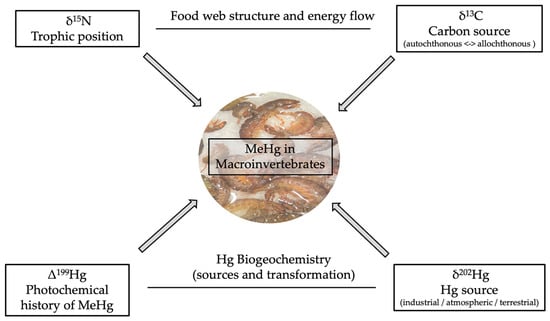
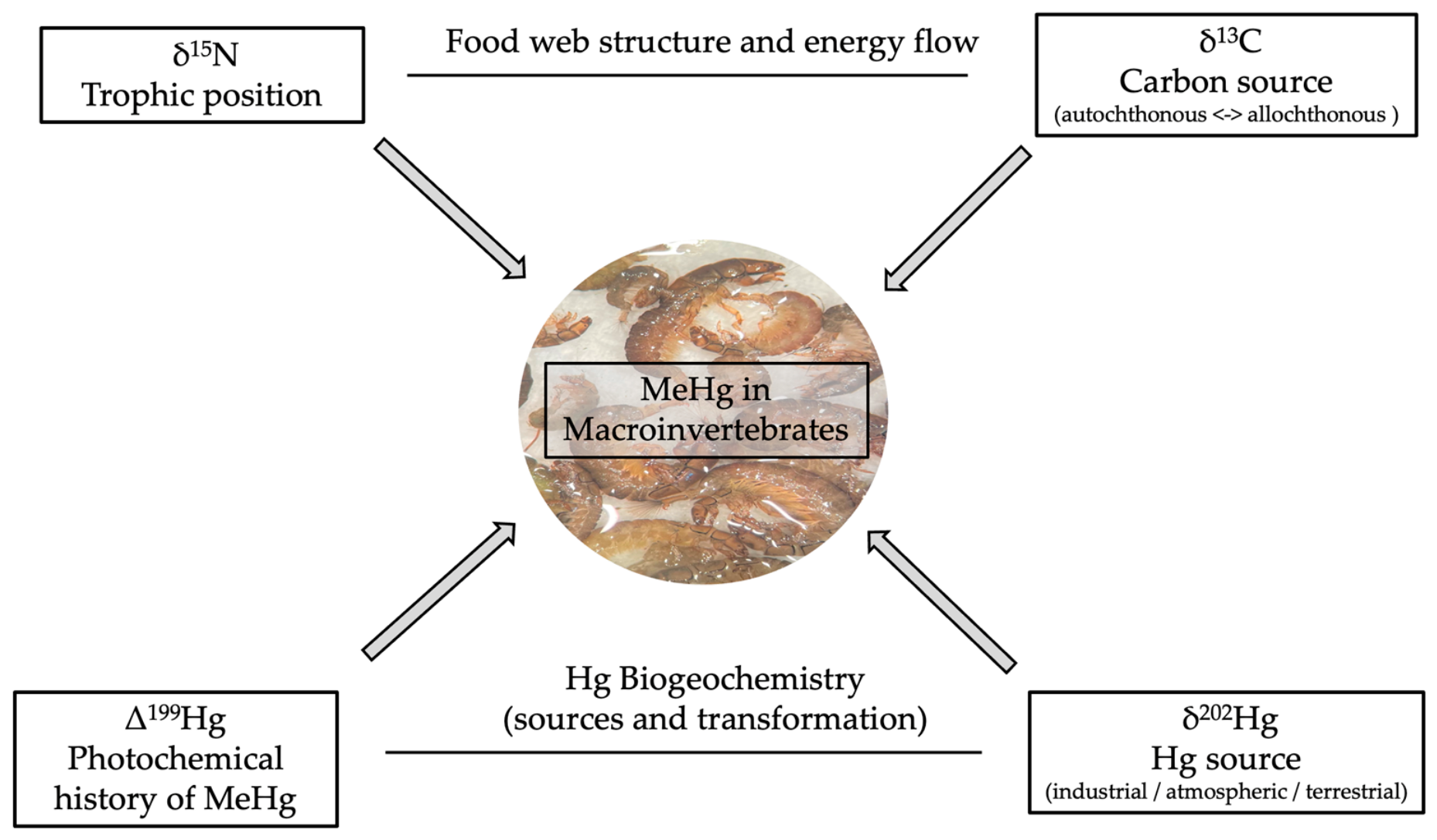
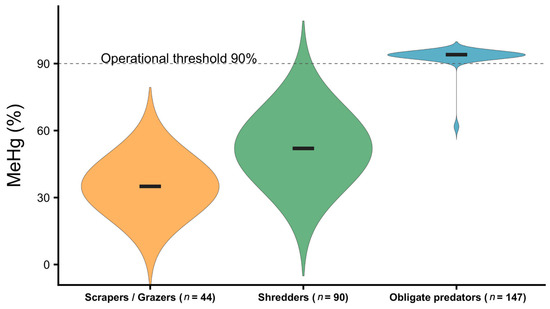
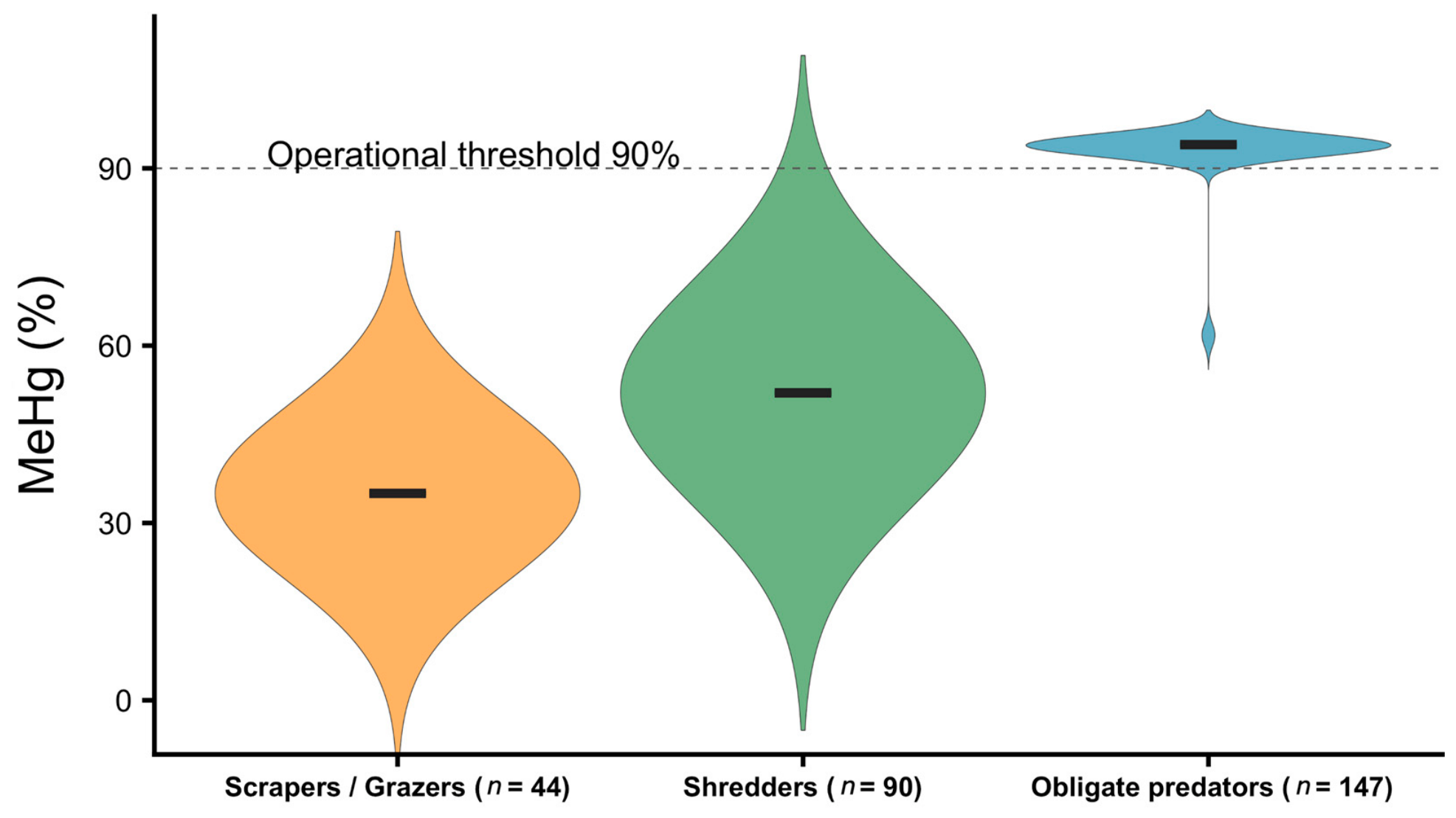
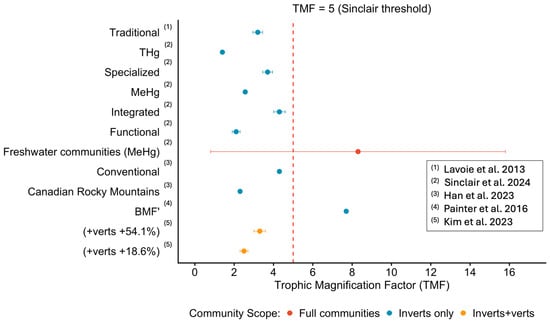
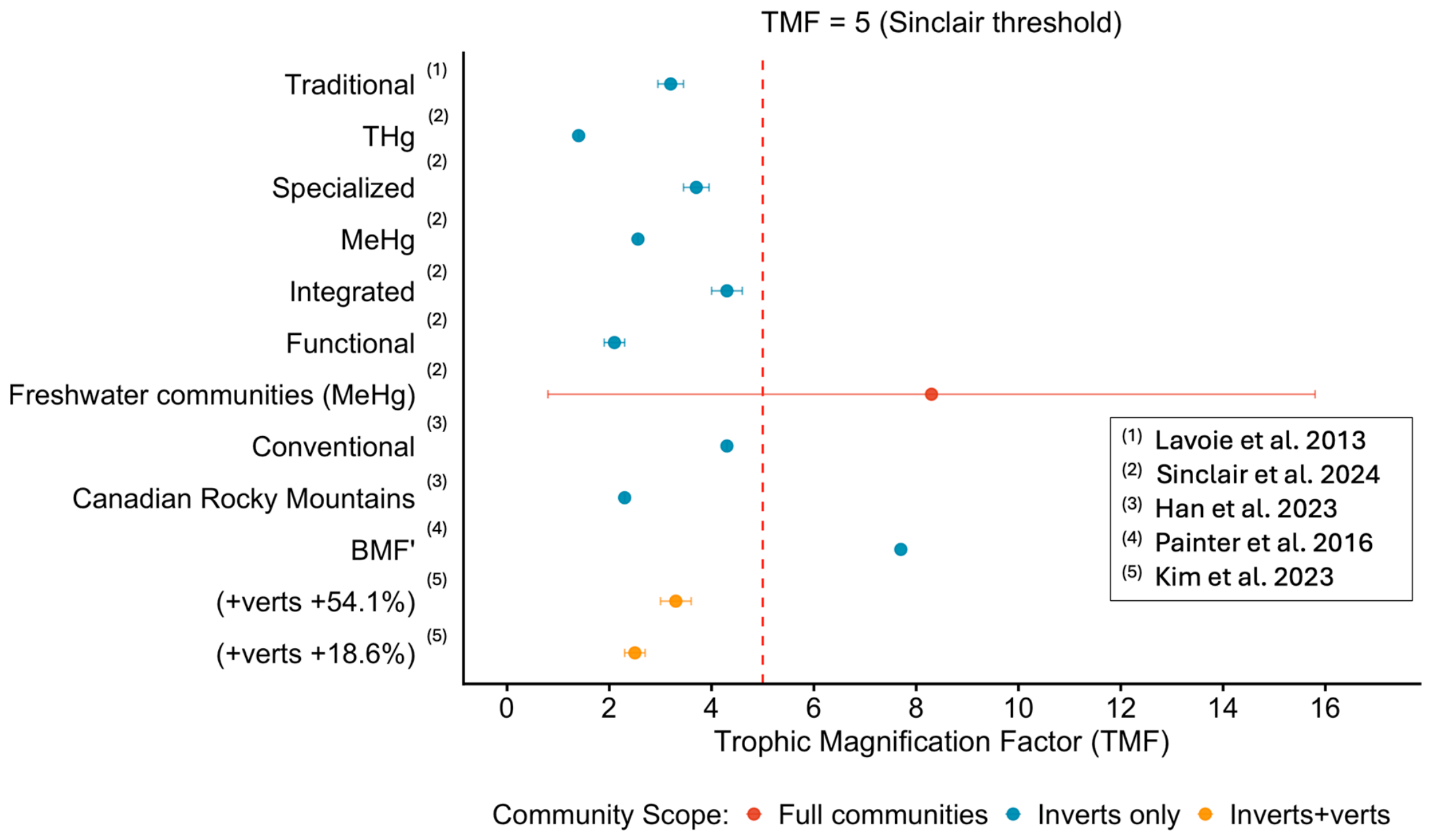
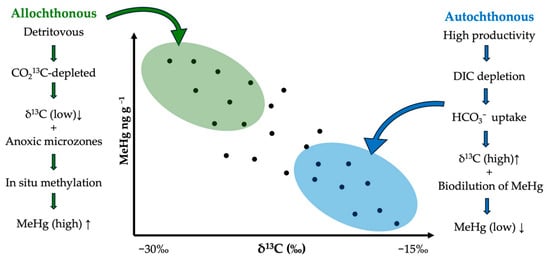
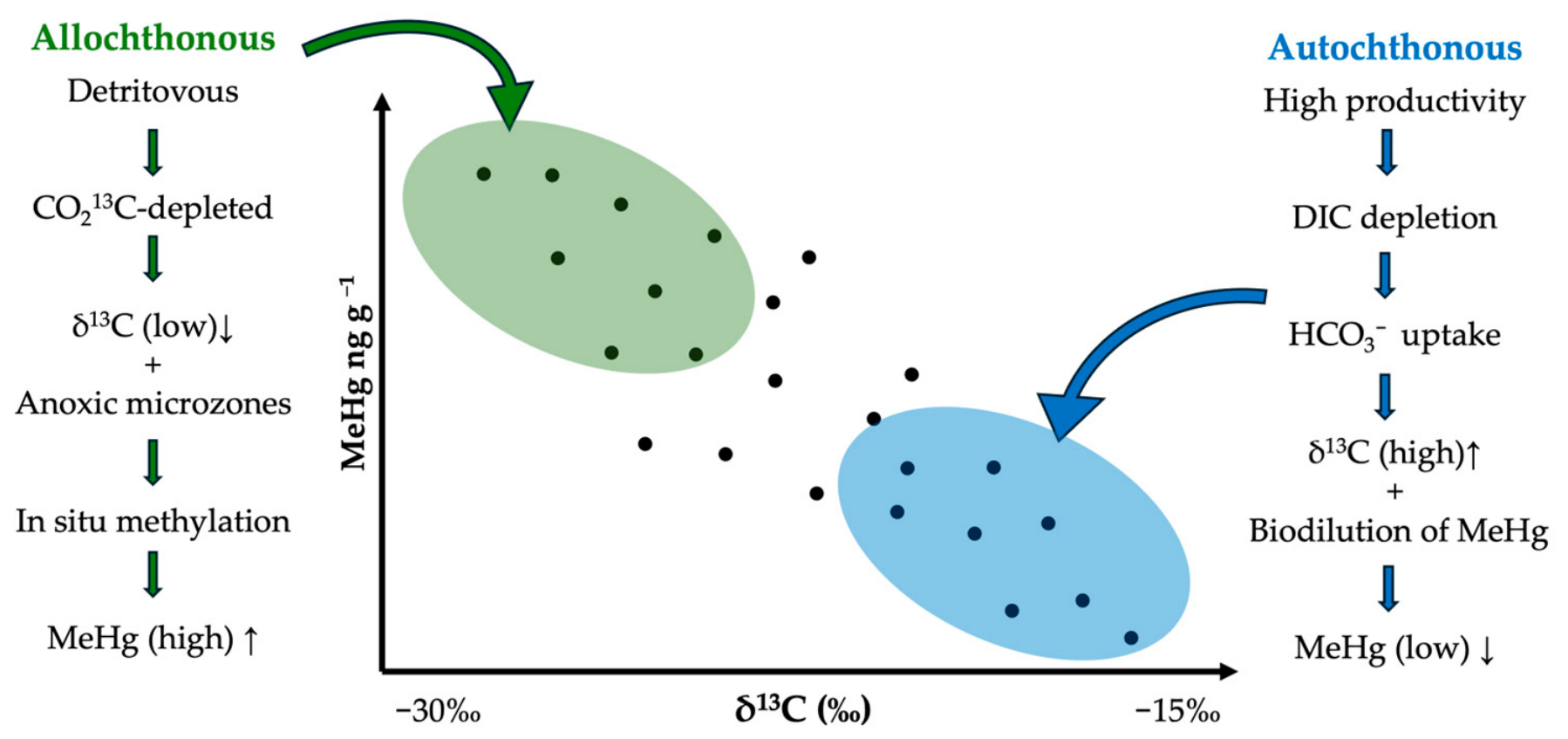

Disclaimer/Publisher’s Note: The statements, opinions and data contained in all publications are solely those of the individual author(s) and contributor(s) and not of MDPI and/or the editor(s). MDPI and/or the editor(s) disclaim responsibility for any injury to people or property resulting from any ideas, methods, instructions or products referred to in the content. |
© 2026 by the authors. Licensee MDPI, Basel, Switzerland. This article is an open access article distributed under the terms and conditions of the Creative Commons Attribution (CC BY) license.