


Abstract
Arsenic represents a ubiquitous element in the environment, characterized by high mobility, complex chemical speciation and a strong sensitivity to redox conditions and biological activity, with microbial processes play a central role in its biogeochemical cycling. The present review provides a comprehensive and integrative synthesis of arsenic biogeochemical cycling across terrestrial, freshwater and marine environments, in which chemical speciation is explicitly treated as the central unifying concept controlling arsenic mobility, transformation and bioavailability, linking geological, chemical and biological processes across environmental compartments. Natural processes regulating arsenic distribution are examined from mineralogical sources and soil–water interactions to biologically mediated transformations in aquatic and marine biotic compartments, largely driven by microbial activity, highlighting the contrast between inorganic arsenic dominance in abiotic reservoirs and the prevalence of organoarsenicals in tissues of living organisms. The review further explores arsenic behaviour under natural environmental alterations and in extreme or unconventional ecosystems, where redox constraints, sulphide chemistry or intense fluid–sediment exchanges lead to deviations from the baseline speciation patterns. Against this framework, anthropogenic perturbations are discussed through several documented case studies, illustrating how industrial releases, the long-term effects of mining activities, agricultural practices and the use of synthetic arsenical compounds may change arsenic pathways primarily by altering geochemical and biological controls rather than through a generalized increase in total arsenic content. Overall, the topics covered provide an integrated framework for interpreting arsenic dynamics across environmental systems, emphasizing the complex biogeochemical processes governing arsenic cycling.
1. Introduction
Arsenic (As) represents one of the most fascinating elements in environmental chemistry due to its elevated mobility, complex chemical speciation, widespread natural occurrence, and involvement in highly dynamic biogeochemical cycles [1,2]. Microbial arsenic metabolism is considered an ancient process, with evidence suggesting its occurrence in early Earth environments as far back as about 2.7 billion years ago, highlighting the long-standing role of microorganisms in shaping arsenic cycling [3]. Unlike many other trace elements, arsenic exhibits a remarkably variable environmental behaviour, modulated by geochemical, biological and climatic conditions, which determines its distribution across terrestrial, aquatic, atmospheric and biotic compartments [1,4,5]. Arsenic is relatively abundant in the Earth’s crust, with an estimated average concentration of 1.5–2.0 mg kg−1 dry weight (d.w.) and a marked spatial variability due to local geological factors [6]. It occurs in more than 700 mineralogical species, primarily associated with metal sulphides such as arsenopyrite, realgar, and orpiment, and is released into the environment through natural weathering, erosion, and volcanic activity [7]. These processes form the basis of the global arsenic cycle, which has been substantially modified in more recent times, has been substantially modified by the anthropogenic influence [1,2,5,7].
A distinctive feature of arsenic is represented by its ability to exist in multiple chemical forms, both inorganic and organic, which can coexist within the same environmental compartment [8,9]. Chemical speciation exerts a primary control on arsenic mobility, bioavailability, and toxicity, rendering this element particularly sensitive to variations in redox conditions, pH, biological activity, and organic matter dynamics. The terrestrial ecosystems, soils in particular, represent major reservoirs of arsenic [1]. Global soil concentrations typically range between 0.1 and 40 mg kg−1 but values may exceed these baseline concentrations by orders of magnitude in the proximity of mineral deposits or naturally enriched geological formations. Within soils, arsenic is involved in adsorption, release, and transformation processes mediated by mineral surfaces, organic matter, and microbial communities, directly influencing its transfer to groundwaters, plants and its entry into the terrestrial food webs [10]. In this context, microorganisms play a fundamental and widespread role in regulating arsenic cycling across terrestrial, freshwater and marine environments [11,12,13,14,15,16].
Groundwater constitutes one of the most critical compartments of concern with respect to arsenic due to both its geochemical sensitivity and its relevance to human exposure. Worldwide, millions of people are exposed to groundwater arsenic concentrations exceeding the guideline value of 10 µg L−1 established by the World Health Organization (WHO) for drinking water, with levels in some aquifer systems reaching hundreds or even thousands of µg L−1 as a consequence of natural mobilization processes [1,17,18]. Surface waters generally exhibit lower arsenic levels, most commonly ranging from below detection limits to about 50 µg L−1, but their arsenic dynamics are closely controlled by exchanges with sediments and by biological activity [1,8].
In marine environments, arsenic is typically present at lower and more uniform concentrations than in continental systems, with average dissolved concentrations in ocean waters of approximately 1–3 µg L−1 [19]. Despite this apparent chemical stability, the marine arsenic cycle is strongly influenced by biological processes. Phytoplankton and other marine organisms play a central role in arsenic uptake, transformation, and trophic transfer, mediating the formation of organic arsenic compounds that commonly represent the most abundant chemical species in tissues of the living organisms [9,19]. In this context, arsenic concentrations in marine biota vary within an extremely wide range, from less than 1 µg g−1 d.w. up to several thousand µg g−1 d.w. in selected taxa, often associated with species-specific physiological traits or ecological strategies rather than environmental bioavailability [19,20].
The atmosphere represents a quantitatively minor but dynamically relevant compartment in the global arsenic cycle. Atmospheric arsenic occurs predominantly in the form of particulate and contributes mainly to both regional and long-range transport, facilitating the redistribution of arsenic among terrestrial and aquatic environments. However, the atmosphere does not constitute a domain of biological transformation. In addition, its role in controlling arsenic speciation and bioavailability is indirect, acting primarily as a vector rather than as an active processing compartment [1].
Over the last centuries, human activities have significantly altered arsenic cycling on a global scale. Human activities, including mining activities, industrial emissions, agricultural practices, urban wastewater discharge and the extensive land exploitation have increased arsenic fluxes and modified the physicochemical conditions that regulate arsenic mobility and transformation. Furthermore, global environmental changes have introduced further perturbations since variations in redox regimes, hydrology and salinity significantly influence the behaviour of arsenic in different environmental compartments [1,21].
In light of these considerations, the present review provides a comprehensive and integrative synthesis of arsenic biogeochemical cycling across terrestrial, freshwater and marine environments. A central aspect of this work is the explicit use of chemical speciation as the key element controlling arsenic mobility, transformation and bioavailability, enabling a consistent interpretation of processes occurring across different environmental compartments. Within this perspective, particular attention is given to the relationship between arsenic speciation and biological processes, highlighting how chemical forms are transformed, accumulated and redistributed within biological systems. This approach integrates multiple interconnected processes and scales, capturing the complexity of arsenic biogeochemistry across environmental systems. The review also addresses selected examples of species-dependent metabolism and accumulation patterns, with emphasis on cases in which arsenic biotransformation reflects specific physiological or ecological strategies, including representative marine taxa such as polychaetes. In addition, arsenic biogeochemistry is examined under conditions of strong environmental forcing, including perturbed and extreme systems, where redox constraints, sulphide chemistry and physicochemical gradients induce significant deviations from baseline speciation patterns. Together, these aspects provide a structured interpretation of arsenic dynamics across environmental systems, linking abiotic controls and biological processes.
2. Arsenic-Bearing Minerals and Natural Sources
Arsenic occurs in the lithosphere mainly hosted in a wide range of mineral phases, reflecting its elevated affinity for sulphur and transition metals. More than 700 arsenic-containing minerals have been identified, and in over 200 of these, arsenic is present as a major structural component rather than as a trace substituent. As shown in Table 1, listing the most common and widespread arsenic-bearing minerals, the arsenic content varies over a very wide range, from about 15–25 wt.% in complex arsenates and sulfosalts (e.g., erythrite, mimetite, or proustite) to 100 wt.% in native arsenic and arsenic polymorphs [7]. These arsenic-bearing phases include both primary minerals, formed during magmatic and hydrothermal processes, and secondary minerals resulting from the weathering and alteration of arsenic-rich assemblages under low-temperature oxidative conditions.
Table 1.
List of common and widespread arsenic-bearing minerals. For each mineral, chemical formula, crystal system, typical colour, arsenic content (wt.%), and Mohs hardness (HR) are reported. Secondary minerals formed during weathering and oxidation processes are indicated by the symbol †.
Among the primary arsenic-bearing minerals, arsenopyrite (FeAsS) is the most abundant and geochemically significant, constituting a large fraction of the arsenic present in ore bodies worldwide. With an arsenic content of approximately 46 wt.% (Table 1), arsenopyrite is commonly found in hydrothermal systems associated with gold, copper, lead, and zinc mineralization. Other important primary minerals include various kinds of arsenides (with arsenic occurring in the −3 oxidation state) and sulfosalts, including löllingite (FeAs2), skutterudite-group minerals (CoAs3, NiAs3, FeAs3), enargite (Cu3AsS4), and cobaltite (CoAsS), which are characteristic of magmatic-hydrothermal and epithermal environments [4,7]. Pure arsenic phases (in the 0 oxidation state), including native arsenic, arsenolamprite and pararsenolamprite, although less abundant, indicate that arsenic can occur as a major element under specific geological conditions. The elevated arsenic content and moderate hardness (HR) of many of these minerals (Table 1) influence their reactivity during weathering and arsenic release [4,7].
From a geochemical perspective, mineral HR provides a first-order indication of resistance to mechanical breakdown and surface abrasion, which, in turn, influences the exposure of reactive surfaces during weathering processes [7]. Minerals characterized by low to moderate HR (commonly in the range 1–4 Mohs) are more readily fragmented and altered, promoting faster dissolution kinetics and enhancing the release of structurally bound arsenic into soils and groundwaters. On the contrary, harder phases (>5 Mohs) tend to weather more slowly, potentially delaying arsenic mobilization and favouring its persistence within solid reservoirs [4,7].
Oxidative dissolution of sulphide minerals, particularly arsenopyrite and enargite, represents a key natural process controlling arsenic release. During weathering, arsenic may be temporarily retained through adsorption onto newly formed iron oxides and hydroxides or incorporated into discrete secondary minerals [1,3]. Secondary arsenic minerals, such as scorodite (FeAsO4·2H2O) and erythrite (Co3(AsO4)2·8H2O), are common in the oxidation zones of arsenic-rich deposits and contain substantial arsenic contents (25–33 wt.% As; Table 1, †). Under specific redox and pH conditions, these phases may act as transient sinks for arsenic, while remaining potentially unstable under reducing or alkaline environments. In soils and sediments, arsenic is more frequently associated with poorly crystalline or amorphous phases rather than well-defined minerals, reflecting the predominance of surface complexation processes under typical oxic-to-mildly reducing conditions [1,7,10].
Natural arsenic fluxes from the lithosphere to surface environments are primarily controlled by mineralogical composition, weathering intensity and physical redistribution processes. Chemical erosion of arsenic-rich minerals provides a continuous source of arsenic to soils, groundwater, and surface waters, with a release rate strongly dependent on mineral type and environmental conditions [4,5,10]. Physical erosion and sediment transport commonly redistribute arsenic-bearing particles from source ores into alluvial, lacustrine, and coastal environments, where arsenic may be further mobilized or immobilized [1]. In addition, volcanic and geothermal activity represents an additional natural source, contributing to the arsenic input through gas emissions, hydrothermal fluids, and ash deposition [17]. At a global scale, these processes establish background arsenic levels typically below 10 µg L−1 in surface waters and around 0.1–10 mg kg−1 in soils, although marked spatial heterogeneity is often observed [1,2,10].
3. Chemical Speciation and Environmental Reactivity of Arsenic
Arsenic occurs in the environment in various chemical forms, both inorganic and organic, characterized by different structures, stabilities, and distributions. Representative molecular structures of the main inorganic, methylated, and more complex organic species discussed in the present section are shown in Figure 1 [5,8,9,19,22].
Figure 1.
Common inorganic and organic chemical forms of arsenic in the environment and biota.
Inorganic arsenic (iAs) occurs predominantly in the trivalent and pentavalent oxidation states, as arsenite (As(III)) and arsenate (As(V)). In aqueous systems, As(III) is mainly present as arsenious acid and its conjugate species (H3AsO3, H2AsO3−), while As(V) occurs as arsenate oxyanions (H2AsO4−, HAsO42−), with relative abundances controlled primarily by redox conditions and pH. A wide range of microorganisms, including bacteria and archaea, mediate arsenic redox transformations through enzymatic systems such as dissimilatory As(V) reductases (Arr) and As(III) oxidases (Aio), enabling the use of arsenic species as terminal electron acceptors or donors under both aerobic and anaerobic conditions [11,12,13,14,23,24,25].
From a thermodynamic perspective, As(V) represents the more stable oxidation state of iAs. It therefore tends to dominate in abiotic matrices under typical oxic environmental conditions [1,8,9]. These inorganic forms constitute the primary precursors from which more complex arsenic species may be generated through physical and biological processes. A significant fraction of iAs is associated with solid phases, including iron and manganese oxides and hydroxides, sulphide minerals, and mixed Fe–As–S assemblages. In these associations, arsenic may be adsorbed onto mineral surfaces, incorporated in the mineral structures, or present as surface complexes. The continuous exchange between dissolved inorganic species and solid-associated arsenicals results in a dynamic partitioning that strongly influences arsenic mobility and persistence in environmental matrices [22,26].
It is well known that iAs undergoes extensive biological transformation in natural systems, resulting in the formation of a range of methylated compounds. The most common methylated arsenic compounds are constituted by monomethylarsenical (MMA) and dimethylarsenical (DMA) groups, which are often detected in soils, waters, and biological samples [1,8,15]. These compounds are primarily produced through enzymatic methylation pathways mediated by microorganisms and plants. On the contrary, abiotic contributions to methylation may arise from redox-driven transformations at mineral–water interfaces, particularly under strongly reducing or oxidizing conditions and in the presence of reactive organic matter or sulphide-rich environments [13].
In natural systems, biological arsenic methylation occurs through a sequence of redox-coupled transformations. These processes link the uptake of iAs to the formation of progressively more substituted organoarsenic species. This metabolic capability is widely distributed among environmental microorganisms and represents a key detoxification and transformation pathway, contributing to the redistribution of arsenic species across environmental compartments [11,12,13,14,23,25,27]. In oxidizing environments, thermodynamically stable As(V), which is structurally analogous to phosphate, can be readily accumulated by microorganisms and plants via phosphate transport systems. However, only trivalent arsenicals represent a suitable substrate for enzymatic methylation.
The initial intracellular conversion of As(V) to As(III) is therefore catalysed by arsenate reductases (ArsC) through thiol-dependent electron transfer systems, commonly involving glutaredoxin–glutathione (Grx/GSH) or thioredoxin (Trx) pathways [13,15]. Subsequently, methylation is mediated by S-adenosylmethionine (SAM) dependent arsenic methyltransferases (ArsM/AS3MT), which utilize SAM as methyl-group donor. In this pathway, As(III) is first converted to monomethylarsonic acid (MMA(V)), which can undergo reduction to the trivalent intermediate monomethyl-arsenite (MMA(III)) and further methyl transfer to produce dimethylarsinic acid (DMA(V)). Overall, arsenic methylation proceeds through alternating cycles of reduction and methyl transfer, with trivalent methylated intermediates acting as key substrates in the transformation sequence [13,15,24,27,28,29,30,31]. Although often described as a sequential pathway, microbial arsenic methylation may vary among organisms and environmental conditions, reflecting differences in enzymatic systems, metabolic strategies and ecological context [24,27,28]. Therefore, reduced methylated intermediates such as MMA(III) and dimethyl-arsenite (DMA(III)), which are generally short-lived and difficult to detect and are thought to play an important role in the overall transformation pathway. Further methylation of DMA leads to trimethylated species, with trimethylarsine oxide (TMAO) representing a key metabolic endpoint of the conventional methylation sequence (Figure 2) [8,13,27,30]. These metabolic capabilities are widely distributed among diverse microbial taxa, including members of Proteobacteria (e.g., Shewanella spp., Pseudomonas spp.), Firmicutes (e.g., Clostridium spp.) and extremophilic archaea (e.g., Halobacterium spp.), and are particularly relevant in redox-stratified environments such as sediments, hydrothermal systems and anoxic waters, where microbial activity exerts a primary control on arsenic speciation [11,12,15,23,24].
Figure 2.
Microbial arsenic methylation pathway showing the transformation of inorganic arsenic into methylated species via ArsC- and ArsM-mediated reactions. Sequential reduction and methylation steps produce mono-, di-, and trimethylated arsenicals, including TMAO and TMA(III), which represent key intermediates for the formation of stable organic arsenicals accumulated in marine biota across different trophic levels.
Reduction of TMAO can generate volatile trimethylarsine (TMA(III)), while further methylation or structural rearrangement can lead to the formation of tetramethylarsonium (TETRA) or incorporation into more complex organoarsenic compounds. In aquatic systems, particularly those dominated by algal and microbial activity, TMA(III)/TMAO intermediates are further transformed into arsenobetaine (AsB), arsenocholine (AsC), arsenosugars (AsSs) and arsenolipids, thereby resulting in the redistribution of methylated arsenic into more stable, biologically associated forms that predominate in the tissues of most of the marine organisms [13,19,22].
These divergent transformation pathways provide the chemical basis for the predominance of complex organoarsenic species observed in aquatic and marine environments. Following primary production, arsenosugars produced by marine phytoplankton, particularly diatoms such as Skeletonema spp. and Chaetoceros spp., are transferred through planktonic food webs, where they undergo progressive transformation into simpler methylated arsenicals. Experimental and field studies on marine diatoms and planktonic systems demonstrate that arsenic biotransformation begins in primary producers and continues during trophic transfer, leading to the appearance of arsenobetaine in zooplankton and its subsequent accumulation in higher trophic levels, although the specific pathways and organisms involved remain only partially resolved [32,33,34,35]. Consistently with these transformation pathways, AsB is the most widespread and abundant organoarsenic compound in tissues of marine organisms, often accounting for almost the totality of the arsenic in higher trophic levels, while AsC is more commonly detected in lower trophic organisms [9,19,20].
Primary producers and macroalgae play a central role in this context, acting as major sources of AsS, a diverse group of compounds that include glycerol-, phosphate-, sulfonate-, and sulphate-AsS [9,19]. These species are formed during biological uptake and intracellular processing of iAs and constitute key intermediates in the transfer of arsenic through aquatic food webs. In addition to AsS, more specialized organoarsenic metabolites such as dimethylarsinoyl-acetate (DMAA) and dimethylarsinoyl-ethanol (DMAE) have been identified in aquatic organisms, including brown algae and molluscs, where they are interpreted as products of further biochemical modification of methylated arsenic species [9,19].
In addition to these compounds, arsenic can also be incorporated into lipid-soluble organoarsenic species, collectively referred to as arsenolipids, including arsenic fatty acids (AsFA), arsenic hydrocarbons (AsHC) and arsenic phospholipids (AsPL). These compounds have been principally reported in algae and higher-trophic-level consumers and represent a distinct pool of biologically bound arsenic.
Although typically occurring at lower concentrations than AsB or AsS, arsenolipids are of increasing interest due to their structural diversity and potential implications for arsenic bioaccumulation and trophic transfer [19]. A substantial proportion of environmental arsenic is associated with particulate matter, including suspended particles, sediments, and biological material. Particulate-bound arsenic represents an important reservoir that can act as both a sink and a source of dissolved arsenic, depending on environmental conditions such as redox state, pH, and organic matter dynamics. Under strongly reducing conditions, arsenic may also occur in volatile forms. Arsine (AsH3) and methylated volatile arsines, including MMA(III), DMA(III) and TMA(III), can be produced through microbial activity or abiotic reactions. Although these species generally represent a minor fraction of total arsenic, they provide a pathway for arsenic transfer from soils and sediments to the atmosphere [13].
In specific environments, arsenic can form less common chemical species that reflect local geochemical conditions. Thioarsenates are characteristic of sulfidic systems, where arsenic interacts with reduced sulphur species, and are particularly relevant in anoxic sediments and geothermal environments. Additional unusual or polyarsenic species, such as As–As bonded clusters and polymeric arsenic sulphide complexes, have been reported in hydrothermal and highly mineralized settings [36,37].
Although a detailed discussion of arsenic toxicology lies beyond the scope of the present review, it is nonetheless important to acknowledge that the environmental and biological relevance of arsenic species is closely linked to their markedly different toxicological properties. In general, iAs forms are associated with the highest toxicity, with As(III) being the most reactive and potentially hazardous species, followed by As(V). Toxicity then tends to decrease with increasing molecular complexity, with simple methylated arsenicals such as MMA and DMA typically considered as moderately toxic, and more highly substituted species such as TMA(III), TMAO and TETRA exhibiting substantially lower biological reactivity. In contrast, complex organoarsenic compounds that dominate aquatic and marine food webs, including AsB, AsC and AsS, are generally considered to exhibit low toxicological relevance under typical exposure scenarios. Notably, AsB, which represents the major arsenic species in most of the marine organisms, has been shown to be rapidly excreted in humans largely unchanged following dietary intake, typically within 24–48 h, indicating minimal metabolic transformation and biological interaction [13,19,30]. Although toxicological aspects are not addressed further in the present review, this broad hierarchy in arsenic species toxicity provides an essential contextual framework for the discussion that follows.
4. Arsenic in Terrestrial Environments: Soil, Groundwater and Biogeochemical Controls
Terrestrial environments represent one of the major reservoirs and dynamic regulators of arsenic on the Earth surface. Within soils, groundwaters, surface waters, and terrestrial biota, arsenic distribution and mobility are governed by the interplay between mineralogical sources, chemical speciation, redox conditions, and biological processes. A synthesis of typical arsenic concentrations, dominant chemical forms, and key controlling processes across the main terrestrial environmental compartments is provided in Table 2 [1,38,39].
Table 2.
Summary of common arsenic concentrations, dominant speciation, and controlling processes in soils, waters, and terrestrial biota.
Soils constitute a primary storage compartment for arsenic in terrestrial systems, with concentrations reflecting both geogenic background levels and localized enrichment associated with mineralized or volcanogenic settings [6,7,10,17]. Typical arsenic concentrations in uncontaminated soils range globally from approximately 0.1 to 10 mg kg−1 [6,10,38]. On the other hand, arsenic concentrations ranging from approximately 20 to 500 mg kg−1 have been reported in areas influenced by arsenic-rich lithologies or natural mineralization, including major alluvial basins, volcanic and geothermal regions, and mineralized terrains in Asia, the Americas and Europe [1,10,17,38,40].
The chemical speciation of arsenic in soils is closely linked to redox potential, pH, and the availability of reactive mineral surfaces. A substantial fraction of soil arsenic is associated with iron and manganese oxides and hydroxides, which represent the dominant sorbents for both As(V) and As(III) [1,8,10,38]. Adsorption processes are typically strong under acidic to neutral pH conditions and decrease at higher pH, where desorption, mobilization and leaching may occur [1,10]. Although As(V) is normally the predominant species in well-aerated soils, in the presence of localized reducing microenvironments, the proportion of As(III) can increase compared to background conditions, particularly in water-saturated soils or within organic-rich aggregates where oxygen availability is limited.
Competition with other anions, particularly phosphate and silicate, plays a critical role in controlling arsenic retention in soils. Due to its chemical similarity to phosphate, As(V) competes for sorption sites on mineral surfaces. Increases in phosphate availability, whether natural or anthropogenic, can therefore enhance arsenic mobility by displacing As(V) [10,26,41,42]. Soil organic matter further modulates arsenic behaviour through complexation, alteration of redox conditions, and indirect effects on microbial activity. Depending on its composition and degree of humification, organic matter can promote arsenic immobilization or facilitate its release into soil porewater [8,10,17,26]. Furthermore, soil microbial communities mediate redox transformations between As(V) and As(III), playing a central role in regulating arsenic mobility and bioavailability. These processes are often coupled to the microbial metabolism of organic matter and iron cycling, with reductive dissolution of Fe oxides releasing previously adsorbed arsenic into soil porewaters [1,10,23,25]. Although biological methylation of arsenic can occur in soils, the diversity and abundance of methylated and complex organoarsenic species are generally lower than in aquatic systems due to differences in microbial communities and environmental conditions [13,14].
Arsenic concentrations in groundwater exhibit considerable variability, primarily controlled by geogenic factors [17,18]. In aquifers affected by arsenic-rich lithologies or natural mineralization, concentrations generally range between about 100 and 1000 µg L−1, with locally higher values reported in specific areas. Such conditions are widely documented in regions such as the Ganges–Brahmaputra–Meghna Basin, the Mekong Delta, northern Chile, and mineralized areas of China [1,17,18,21,40,43]. In some aquifer systems, elevated arsenic levels result from the reductive dissolution of iron oxides and hydroxides that host adsorbed or coprecipitated arsenic, resulting in the release of the element into solution [1,17,21]. In many aquifer systems, these reducing conditions are sustained by microbial respiration processes (e.g., representative Fe- and sulfate-reducing genera such as Geobacter spp., Shewanella spp., and Desulfovibrio spp.), in which microorganisms utilize organic substrates as electron donors, promoting the reductive dissolution of iron oxyhydroxides and the consequent release of arsenic into groundwater [1,17,21,24].
Under such reducing conditions, As(III) generally predominates in the dissolved phase, reflecting both thermodynamic stability and microbial reduction processes [13]. Arsenic in groundwater is strongly influenced by hydrological connectivity with soils and surface environments [17]. Vertical transport from soil horizons, lateral migration within aquifers, and exchange with river systems collectively contribute to the dynamics of arsenic mobility across terrestrial compartments [1,17]. In surface waters, arsenic concentrations are typically lower than in groundwater, often ranging from <1 to 50 µg L−1. Distribution between dissolved and particulate phases is controlled by water chemistry, suspended sediment load, and interactions with bottom sediments, which may act as temporary sinks or secondary sources [8,17,22].
Terrestrial biota, and plants in particular, play an important role in arsenic cycling by mediating uptake, internal transformation, and transfer within food webs [10,15,39]. Plant uptake of arsenic is strongly influenced by its chemical speciation. As previously noted, As(V) is accumulated primarily via phosphate transporters, while As(III) may be transported through aquaporin channels [10,39,44]. Once internalized, arsenic may undergo reduction, chelation, and compartmentalization, limiting its interference with essential metabolic processes [15,39,44,45]. In parallel, microbial communities in the rhizosphere and surrounding soils actively influence arsenic availability through coupled redox transformations and competitive interactions at the soil–root interface, including the reduction of As(V) to As(III) and the modulation of sorption–desorption equilibria via iron and organic matter cycling processes [10,15,39,44]. These transformations are sustained by metabolically diverse microorganisms (e.g., representative arsenic-transforming genera such as Pseudomonas spp., Bacillus spp. and Rhizobium spp.) capable of utilizing arsenic species within their energy metabolism or detoxification pathways, a functional capacity that has been documented from modern soil systems to ancient microbial ecosystems [3,11,12].
In most terrestrial plants, arsenic speciation is predominantly characterized by inorganic forms, with limited conversion to organic species relative to aquatic organisms [10,15]. Nevertheless, substantial interspecific variability exists in arsenic uptake efficiency and tolerance [39,44,45]. Of particular relevance are arsenic-hyperaccumulating plant species, which can concentrate arsenic to extraordinarily high levels without exhibiting phytotoxic effects [39,46]. The most widely studied example is Pteris vittata, a fern capable of accumulating arsenic in the aerial parts of the plant at concentrations typically ranging from approximately 1000 to 5000 mg kg−1 (d.w.) in naturally enriched soils, with reported values frequently reaching up to about 8000 mg kg−1 in mineralized terrains. Related species such as P. cretica and P. multifida also display enhanced arsenic accumulation, although generally to a lesser extent [39,44,46]. Hyperaccumulation in these species has been associated with sequestration within vacuole compartments [39,44]. These mechanisms minimize arsenic interference with cellular metabolism and allow sustained growth under high-arsenic conditions. From an environmental perspective, arsenic-hyperaccumulating plants influence arsenic redistribution at the soil–plant interface and have received attention for their potential role in phytoremediation [39,46]. Arsenic accumulated by plants can be transferred to higher trophic levels, although terrestrial food webs typically exhibit lower diversity of organoarsenic compounds than aquatic systems.
The predominance of iAs in plants markedly contrasts with the prevalence of complex organoarsenic species observed in marine ecosystems, highlighting fundamental differences in arsenic biogeochemistry between terrestrial and aquatic environments [10,19,20,35].
5. Arsenic in Marine Environments: Abiotic Matrices, Bioaccumulation Patterns and Species-Specific Features
In marine environments, arsenic levels reflect the combined influence of geological background, large-scale biogeochemical cycling and local environmental conditions [1,22]. In open seawater, dissolved arsenic concentrations are relatively low and remarkably stable, typically between 1 and 3 µg L−1, with As(V) being the most thermodynamically stable and abundant chemical species under oxic conditions [9,19,22]. Minor contributions of As(III) may occur in reducing microenvironments, stratified water columns or in proximity to sediments, often associated with intense organic matter degradation. In these settings, microbial communities play a central role in arsenic transformation through processes tightly linked to the marine microbial loop. Heterotrophic bacteria and picocyanobacteria (e.g., Synechococcus spp. and Prochlorococcus spp.) actively mediate the interconversion between As(V) and As(III) in surface and subsurface waters, contributing to the regulation of arsenic speciation and bioavailability [1,11,13,15,22]. These transformations are closely associated with organic matter degradation and regeneration processes, which maintain a dynamic cycling of arsenic between dissolved and particulate phases.
In addition to microbial transformations in the water column, marine phytoplankton represents the primary entry point of arsenic into marine food webs and a key driver of its biochemical transformation. Due to the structural similarity between arsenate (As(V)) and phosphate, phytoplankton cells take up As(V) via phosphate transport systems. Once internalized, arsenic is rapidly reduced to As(III) and subsequently transformed into methylated and more complex organoarsenic compounds as part of intracellular detoxification processes. This metabolic behaviour is well documented in marine microalgae (e.g., diatoms such as Skeletonema spp. and Chaetoceros spp.), where it leads to the formation of arsenosugars that dominate arsenic speciation in primary producers and constitute the main source of organic arsenic entering marine food webs [9,19,24].
In contrast, marine sediments exhibit a greater variability in total arsenic concentrations, with values from typically <1 up to about 50 µg g−1 (d.w.), depending on lithology, redox regime, sediment texture and the abundances of iron and manganese phases [8,40].
In coastal and estuarine ecosystems on continental shelves, arsenic in sediments is predominantly present as inorganic species, typically accounting for 60–90% of total arsenic, and is largely associated with Fe/Mn oxides and hydroxides or, under reducing conditions, incorporated into sulphide phases [8,40]. Similar associations between arsenic and iron- or manganese-containing phases are consistently observed in both temperate, tropical estuaries and mangrove wetlands, even in the absence of identifiable anthropogenic sources of arsenic. This indicates that relatively high arsenic concentrations in coastal sediments may primarily reflect natural sediment composition and redox-controlled partitioning processes, rather than direct contamination inputs [1,21]. However, the environmental relevance of sedimentary arsenic is closely linked to its potential mobility since variations in redox conditions, salinity, hydrodynamics or pH can transiently increase the amount of labile arsenic species available to the water column and ultimately bioavailable to biota [8,26].
In estuarine and coastal mixing zones, the transition from fluvial to marine conditions promotes the rapid oxidation of dissolved Fe(II) and the formation of poorly crystalline Fe(III) oxides and hydroxides, which effectively capture dissolved arsenic through adsorption and coprecipitation. This flocculation process is enhanced by increasing salinity and pH and is particularly effective for As(V), while Mn oxides can further contribute by oxidizing the more mobile As(III) to As(V). Together, these processes act as efficient natural sinks for fluvial arsenic, limiting its direct transfer to open marine waters. However, within estuarine sediments, subsequent reductive dissolution of Fe and Mn oxides can remobilize arsenic previously processed during early diagenesis. In subsurface estuaries, similar reactions can give rise to so-called “iron curtains”, where Fe precipitation locally limits arsenic fluxes to the ocean [8,21,40].
Despite the predominance of iAs in abiotic matrices, marine organisms exhibit a markedly different and highly conserved pattern of arsenic accumulation. In most of the marine species, total arsenic concentrations range from about 5 to 200 µg g−1 (d.w.) [20,47], with chemical speciation largely characterized by organoarsenic compounds [9,19,22,48]. Under baseline environmental conditions, iAs typically represents less than 1–5% of the total arsenic burden in tissues, while AsB constitutes the main arsenic species, often accounting for 60–95% of total arsenic. Secondary contributions of AsC, DMA, TMAO and TETRA are commonly observed, with relative proportions varying among taxa [19,49]. A synoptic overview of typical arsenic concentrations, dominant chemical forms and controlling processes across marine abiotic and biotic compartments is reported in Table 3 [1,8,9,19,20,47,48].
Table 3.
Summary of common arsenic concentrations range, arsenic speciation forms, and controlling processes in seawater, marine sediments and selected marine taxa.
This general pattern has been documented across a wide range of marine organisms, including invertebrates and fish, and appears to be largely independent of latitude, as well as broad geographical setting [20,47]. Comparative surveys have shown that organisms collected from polar, temperate, and tropical environments often display overlapping arsenic concentrations and similar speciation profiles, whereas substantial differences are frequently observed among species inhabiting the same site [20,50,51]. These observations may suggest that species-specific physiological and metabolic traits override environmental gradients in determining arsenic accumulation and speciation in marine biota [48,49].
Bivalve molluscs provide one of the most informative examples of this behaviour. In species such as Mytilus galloprovincialis, Crassostrea virginica or Meretrix meretrix, total arsenic concentrations typically range between about 10 and 40 µg g−1 (d.w.), although seasonal variations may reach 30–50 µg g−1 (d.w.) or higher [20,47,50,52]. Long-term field studies have shown that arsenic in bivalves exhibits pronounced seasonal and inter-annual variability, often differing from patterns observed for other trace elements [47,50]. Unlike elements such as cadmium or zinc, whose tissue concentrations commonly decrease during gametogenesis due to biological dilution, arsenic frequently follows independent temporal patterns, showing weak or absent correlation with reproductive cycles [48,50].
A key environmental driver of this variability is represented by salinity gradients, particularly in estuarine and semi-enclosed basins [53,54]. Along estuarine–marine transitions, bivalves consistently exhibit increasing arsenic concentrations with increasing salinity, even in the absence of identifiable anthropogenic sources [50,53]. This pattern has been documented, for example, in the Adriatic Sea (Mediterranean, Italy), which is characterized by a pronounced north–south salinity gradient driven by the substantial freshwater input from the Po River in its northern sector. Along this gradient, M. galloprovincialis exhibits progressively higher arsenic concentrations moving from the low-salinity, river-influenced northern Adriatic toward the more saline central and southern basins [47,50]. Importantly, this spatial trend is not accompanied by similar increases in other trace elements, supporting the interpretation that arsenic bioaccumulation may reflect salinity-dependent physiological processes related to biological regulation [48,50]. The salinity dependence of arsenic accumulation has been linked to the predominance of AsB, which has been proposed to represent an adventitiously accumulated compound potentially contributing to osmotic regulation. According to this hypothesis, AsB is not actively synthesized by bivalves but is accumulated through the diet and retained because it contributes to osmotic balance under seawater salinity [53,55].
Crustaceans often exhibit higher arsenic concentrations than bivalves, with values commonly ranging from 30 to 150 µg g−1 (d.w.), and occasionally exceeding this range [20,51]. This pattern has been repeatedly observed in temperate species such as the Mediterranean crab Carcinus mediterraneus, the mantis shrimp Squilla mantis, the Norway lobster Nephrops norvegicus, and penaeid shrimps like Melicertus (Penaeus) kerathurus, which typically show arsenic concentrations markedly higher than those measured in co-occurring bivalves. In contrast, tropical crustaceans such as Callinectes sapidus, Farfantepenaeus notialis and Litopenaeus schmitti generally display lower arsenic levels, often below 30 µg g−1 (d.w.), despite inhabiting environments with comparable environmental arsenic levels [20,51,56]. Chemical speciation in crustaceans is largely characterized by AsB, frequently accounting for more than 80–90% of total arsenic, although DMA, TETRA and AsC may represent variable secondary contributions in selected taxa (Table 3) [9,19,20,22,48]. As observed for other marine organisms, these interspecific and latitudinal differences cannot be readily explained by environmental exposure alone. It is worth noting that similar temperature gradients appear to produce no comparable effects on arsenic concentrations in marine fish tissues or bivalve molluscs, suggesting that temperature per se is unlikely to be the determining factor in arsenic accumulation in crustaceans [20,51].
An alternative and intriguing explanation may involve crustacean-specific physiological and structural features, particularly those related to the formation, mineralization and periodic turnover of the chitinous carapace. Experimental and comparative studies have shown that temperature-dependent differences in cuticle permeability, composition and moulting dynamics can significantly influence the accumulation and regulation of several trace elements in crustaceans, including zinc, copper, cadmium and cobalt [56,57,58]. On this basis, a similar mechanism may be hypothesized for arsenic. The exoskeleton represents a major interface for ion exchange and trace element incorporation, and arsenic, predominantly accumulated as AsB, may be temporarily or partially associated with carapace components or with tissues involved in moulting processes. Differences in moulting frequency, cuticle composition, and metabolic regulation of osmolytes between temperate and tropical crustaceans could therefore contribute to the higher arsenic burdens observed in temperate species [57,58]. While this hypothesis remains to be fully explored, it is consistent with the recurrent observation that arsenic exhibits accumulation patterns distinct from those of most trace elements, and enrichment in crustaceans may reflect the influence of intrinsic biological traits in regulating arsenic accumulation [20,51,56].
In marine fish, arsenic concentrations in muscle tissues are generally lower than those observed in many invertebrates, typically ranging from about 2 to 35 µg g−1 (d.w.), although higher values may occur in specific species or tissues. Studies on pelagic and demersal fish such as Gadus morhua, Merluccius merluccius, Scomber scombrus, Clupea harengus and Pleuronectes platessa have consistently shown that arsenic concentrations in muscle are relatively homogeneous across taxa and habitats, despite differences in diet and trophic position [19,51,56]. By contrast, internal organs involved in metabolism and detoxification, particularly the liver and gastrointestinal tissues, may contain substantially higher arsenic levels, in some cases exceeding those in muscle tissue by one order of magnitude, reflecting tissue-specific partitioning rather than enhanced whole-body accumulation [19,51]. Chemical speciation in fish tissues is largely dominated by AsB, which generally accounts for 85–95% or more of total arsenic in muscle, while iAs or methylated arsenicals typically represents only minor fractions. Simple methylated species such as DMA may occur preferentially in liver and bile, indicating active metabolic processing without resulting in progressive concentration increases along trophic levels [19,51,56]. As a consequence, arsenic concentrations in marine fish do not display a biomagnification pattern, and species occupying different trophic levels often exhibit overlapping concentration ranges (Table 3) [19,51].
While the general AsB-dominated pattern characterizes most of the marine organisms (Table 3), selected taxa exhibit markedly different arsenic accumulation and speciation profiles, reflecting specialized and species-specific metabolic strategies rather than deviations from biological control [19,35,47,48]. A clear example is represented by the sabellid polychaete Sabella spallanzanii, a sedentary tube-dwelling worm that lives permanently enclosed within a self-constructed protective tube and exposes to the surrounding water column only its branchial crown for filter-feeding and respiration activities [49,59]. In this species, arsenic accumulates to extraordinarily high concentrations in the branchial crowns, frequently exceeding 1000 µg g−1 (d.w.), and is almost entirely present as DMA, which typically accounts for 80–95% of total arsenic, while AsB represents only a minor fraction [49,59,60,61].
Following stress-induced autotomy, S. spallanzanii is able to rapidly regenerate branchial tissues and re-accumulate arsenic to restore baseline concentrations of approximately 1000 µg g−1 (d.w.), even when ambient arsenic levels in the surrounding water column remain within typical marine background values (about 1 µg L−1). Experimental observations further show that both tissue growth and arsenic re-accumulation proceed more rapidly under natural field conditions than under laboratory housing, probably reflecting differences in nutrient and trace-element availability [59]. In addition, controlled exposure experiments provide mechanistic insight into the metabolic basis of this behaviour. When S. spallanzanii is exposed to iAs, bioaccumulation of DMA was observed in the branchial crowns of the organisms, suggesting the involvement of a rapid methylation pathway. Direct exposure to DMA results in its preferential accumulation without any transformation, while exposure to more complex organoarsenicals such as AsB and TETRA leads to their active degradation and conversion to DMA [60]. Worthy to note, the biological breakdown of highly stable organoarsenic compounds represents one of the first experimental demonstrations of such processes occurring in a marine invertebrate under environmentally realistic conditions. Such observations suggest that S. spallanzanii may possess metabolic pathways enabling both iAs methylation and the degradation of organoarsenicals, supporting a biological role of DMA in the branchial crown [59,61]. The branchial appendages, which are the only tissues exposed outside the protective tube and accessible to predators, have been shown to be unpalatable for benthic consumers; accordingly, the pronounced accumulation of DMA in these structures has been associated with a biologically mediated antipredatory strategy [59,60,61].
The unusual arsenic accumulation and speciation pattern documented in S. spallanzanii is also observed in other polychaetes inhabiting coastal and shelf environments, although expressed through species-specific metabolic strategies and degrees of modulation [49,62]. For example, the cirratulid polychaete Aphelochaeta (Tharyx) marioni has been reported to accumulate exceptionally high total arsenic concentrations, approaching 1000 µg g−1 (d.w.) at the whole-body scale and reaching up to about 6000 µg g−1 (d.w.) in highly exposed tissues such as the palps [63]. While chemical speciation data are not available for this species, the occurrence of such extraordinarily elevated arsenic levels represents a clear similarity with S. spallanzanii, indicating a remarkable capacity for arsenic enrichment in specialized appendages. In contrast, deposit-feeding polychaetes such as Arenicola marina, Hediste (Nereis) diversicolor and Neanthes (Nereis) virens are characterized by a relatively lower total arsenic concentrations under natural conditions, typically in the range of about 10–50 µg g−1 (d.w.) [49,64,65].
However, these polychaetes exhibit unusually high proportions of iAs or methylated arsenic species, as well as MMA, DMA and TETRA. In addition, H. diversicolor and N. virens, exhibit the ability to actively methylate iAs, leading to the formation of TETRA [49,64,65] (Table 3), thus supporting previous hypotheses regarding possible biological roles of selected arsenic species in polychaetes [49]. Organoarsenic compounds such as DMAA, DMAE, arsenosugars (AsS) and arsenolipids are closely associated with trophic transfer within marine food webs, originating from primary producers and organic matter and contributing to arsenic accumulation patterns in selected marine organisms depending on species-specific metabolic processing [19,66]. These compounds are particularly abundant in macroalgae, microalgae and planktonic organisms, where arsenic is actively transformed from inorganic forms into complex organic molecules through cellular metabolic processes [8,66]. In many marine algae, including brown macroalgae such as Laminaria digitata and Fucus vesiculosus, AsS constitute the dominant arsenic species, often accounting for more than 80–90% of total arsenic, with concentrations reaching about 50–200 µg g−1 (d.w.) [19,66]. These compounds are readily transferred to herbivorous and detritivores invertebrates, where they are often partially transformed into simpler methylated arsenicals through metabolic processing [19,48,49]. For example, bivalves such as M. galloprovincialis and Cerastoderma edule typically contain low but detectable levels of DMAA and DMAE (generally <1–5 µg g−1 d.w.), indicating metabolic processing of dietary AsS following trophic transfer (Table 3) [19,66].
Arsenolipids, including AsHC and AsFA, have been reported mainly in marine fish, where they form a chemically distinct, lipid-associated arsenic pool that can reach concentrations of approximately 1–20 µg g−1 (d.w.) in lipid-rich tissues of species such as Scomber scombrus, Clupea harengus and Salmo salar [19,66,67]. These compounds are generally derived from planktonic primary producers and are transferred through marine food webs, reflecting their hydrophobic character and limited metabolic processing in higher trophic levels [66,68]. Worthy to note, although these compounds are transferred through marine food webs largely unmodified, no evidence of biomagnification has been reported for arsenolipids or other complex organoarsenic species. In this context, it is therefore plausible to hypothesize that organoarsenic compounds may be subject to tissue-level regulation and turnover at multiple trophic levels, governed by species-specific metabolic traits and physiological constraints rather than by passive accumulation processes [19,66,67,68]. Among the arsenolipids identified to date, those containing a dimethylarsinoyl group, such as 1-dimethylarsinoylpentadecane (AsHC 332) and the dimethylarsinoylhexadecanoic acid (AsFA 362), reported as representative examples in Figure 1, are among the most common and widely documented forms, together with structurally related homologues differing in chain length and degree of unsaturation [66,68].
Overall, the evidence presented in this section indicates that arsenic distribution and speciation in marine environments are controlled by natural geochemical settings, trophic interactions and species-specific metabolic traits [19,48,56,69,70,71,72]. The predominance of AsB in most of the marine organisms, together with the occurrence of distinct arsenic speciation strategies in selected polychaetes and the trophic transfer of complex organoarsenic compounds, highlights that arsenic biogeochemistry in marine systems is strongly mediated by biological processes rather than simply reflecting abiotic availability. This intrinsic biological control results in a wide natural variability of arsenic concentrations and chemical forms, which provides the essential baseline against which any perturbation of arsenic cycling in marine environments must be interpreted. In this respect, assessments of arsenic dynamics in marine systems require explicit consideration of biological context and chemical forms in addition to total concentrations [19,48,66].
6. Arsenic in Perturbed or Extreme Environments
In marine environments, arsenic distribution and chemical speciation reflect a dynamic balance between environmental forcing and biological regulation [8,19,48,69,70]. Growing evidence indicates that changes in key environmental drivers, including pH, redox state, temperature, and water-column stratification, can significantly modulate arsenic behaviour. These effects may occur even in the absence of changes in external arsenic inputs [36,37,60,72,73]. These drivers may act both directly, by altering arsenic speciation and mobility in seawater and sediments, and indirectly, by influencing organism physiology, metabolic rates, and detoxification pathways. As a result, their effects are often subtle and primarily expressed through changes in chemical forms and tissue distribution rather than through uniform increases in concentration levels [9,19,48,60,73].
To date, direct field evidence documenting systematic shifts in arsenic levels and speciation in tissues of marine organisms along natural gradients of pH, oxygen availability or water-column stratification is largely lacking, representing a knowledge gap to be further investigated. Controlled laboratory experiments, nevertheless, indicate that arsenic speciation in marine organisms is sensitive to specific environmental drivers that interfere with intracellular transformation pathways [69,73]. In cultures of marine diatoms (Asteroplanus karianus, Thalassionema nitzschioides, Nitzschia longissima, Skeletonema spp., Ditylum brightwellii and Chaetoceros didymus), temperature departures from physiological optima induced marked shifts in arsenic speciation, including altered As(V)-to-As(III) conversion rates and a decline in arsenic methylation efficiency. Under thermal stress conditions, the contribution of methylated species typically decreased by about 40–70% and was accompanied by reduced growth and cellular performance [32].
At the same time, experimental simulations of ocean acidification in shallow marine systems demonstrated that environmentally realistic pH decreases (moderated acidification, pH = 7.5, pCO2 = 2500 ppm, corresponding to about 2500 µatm; elevated acidification, pH = 7.0, pCO2 = 5000 ppm, corresponding to about 5000 µatm) can significantly alter iAs speciation and mobility, promoting the release of dissolved iAs from sediments and favouring the relative persistence of As(III) over As(V). Under progressively lower pH conditions, both total dissolved iAs concentrations and the As(III) fraction increased, while the As(V)/As(III) ratio declined, highlighting pH-driven geochemical controls on arsenic speciation and bioavailability in coastal waters [73]. Along controlled arsenic exposure experiments in simplified marine food chains involving the flagellated microalga Diacronema lutheri and the blue mussel Mytilus edulis further demonstrated that tissue-level arsenic speciation is metabolically regulated rather than passively inherited from the exposure source. In blue mussels, arsenic speciation patterns diverged markedly from those of the microalgal diet and evolved over time, reflecting strong organism-specific metabolic regulation [74]. On the other hand, these experimental findings suggest that while arsenic speciation is tightly controlled through both geochemical and biological mechanisms under baseline marine conditions, this regulatory balance may become increasingly vulnerable when key environmental parameters, such as pH, redox conditions, or exposure intensity, depart from the physiological ranges [32,73,74].
A similar acidification-driven modification of arsenic speciation has also been reported for S. spallanzanii in a natural CO2-vent system in Ischia (Gulf of Naples, Italy), where organisms have been exposed in situ to reduced pH and elevated pCO2 conditions (pH 7.5–7.8, pCO2 400–1000 µatm, with local variability). In this context, S. spallanzanii exhibited the reappearance of iAs together with altered proportions of methylated species in the branchial tissues [60]. As mentioned above, DMA in the branchial crown of S. spallanzanii has been associated with a chemical deterrence against predation; therefore, the shift in arsenic speciation observed under naturally acidified conditions is more consistent with a disruption of function-oriented methylation processes, leading to a depletion of this biological defence role. Given that S. spallanzanii does not naturally inhabit persistently acidified environments, these changes may be interpreted as a stress-induced disruption of physiological regulation rather than an adaptive response [60].
Such speciation shifts were accompanied by increased energetic costs associated with the maintenance of arsenic processing pathways, suggesting that acidification influences arsenic dynamics not only through changes in chemical equilibria and uptake competition, but also by constraining metabolic efficiency and intracellular transformation capacity. Under reduced pH conditions, the ability of organisms to finely regulate internal arsenic cycling may therefore be compromised, rendering arsenic speciation more susceptible to modulation by additional environmental drivers acting concurrently in natural systems [60].
Marine environments characterized by extreme physicochemical conditions represent natural laboratories in which the limits of biological control over arsenic bioaccumulation and speciation can be explored [36,37,70,72,73,75]. Extreme environments expose organisms to persistent and often simultaneous stressors that approach or exceed physiological tolerance thresholds. Under these conditions, arsenic biogeochemistry frequently departs from common patterns, giving rise to accumulation levels, chemical forms and tissue distributions that cannot be fully explained by classical models developed for coastal and shelf ecosystems [19,36,72,73,75].
Among extreme marine environments, deep-sea hydrothermal vents provide the most emblematic examples of uncommon arsenic behaviour. These systems are characterized by steep gradients in temperature, redox potential and chemical composition, with vent fluids enriched in reduced sulphur species, transition metals and metalloids, including arsenic [36,37,71,73,75]. Although dissolved arsenic concentrations in vent fluids and surrounding seawater may vary widely among vent fields, reported values typically range from about 5 to 200 µg L−1 in vent effluents and immediately adjacent waters, thus exceeding by one to two orders of magnitude the relatively uniform concentrations of approximately 1–3 µg L−1 typical of the open ocean. Under these conditions, resident fauna experience chronic exposure to elevated and chemically variable arsenic availability, coupled with extreme gradients in temperature and redox state [19,22,37,69,75].
The biological communities inhabiting hydrothermal vents are taxonomically distinct from those of shallow-water marine systems and are dominated by a limited number of highly specialized taxa, including polychaetes and bivalves hosting chemosynthetic symbionts, vent-associated crustaceans and fishes [75,76,77]. Data compiled from multiple vent sites across the Pacific and Atlantic oceans indicate that arsenic concentrations in vent-associated fauna span several orders of magnitude, but follow coherent, group-specific patterns. Despite the markedly elevated arsenic availability characterizing hydrothermal vent fluids and surrounding mixing zones, not all vent-associated invertebrates exhibit proportionally enhanced arsenic accumulation. In particular, bivalves such as bathymodiolins (Bathymodiolus spp.) and vesicomyids (Calyptogena spp., Archivesica spp.), as well as vent-associated crustaceans including alvinocaridid shrimps (Alvinocaris spp., Rimicaris spp.) and bythograeid crabs (Bythograea spp.), generally display arsenic concentrations comparable to those reported for related taxa inhabiting temperate or tropical coastal environments [75,76,77,78,79,80]. For instance, data from multiple hydrothermal vent systems worldwide suggest that arsenic concentrations in selected bivalves and crustaceans show considerable site- and tissue-specific variability but nonetheless remain relatively constrained, with levels often below 30 µg g−1 (d.w.) and only sporadically approaching about 50 µg g−1 in specific tissues or localities [75].
Selective hydrothermal vent endemic polychaetes represent a clear departure from the common arsenic accumulation patterns observed in most vent invertebrates. For instance, species belonging to the genus Alvinella, including A. pompejana and A. caudata, exhibit some of the most extreme arsenic accumulation and speciation patterns reported from hydrothermal vent ecosystems. Despite A. pompejana and A. caudata occupying different zones along vent chimneys and thus experiencing potentially distinct fluxes from the vent, both species exhibit comparably elevated arsenic concentrations, generally ranging from about 400 to up to 1500 µg g−1 (d.w.), with the highest values consistently observed in branchial appendages directly exposed to vent effluents. In both species, arsenic was mainly present in a weakly insoluble form, while chemical speciation revealed a major contribution of methylated arsenicals, including DMA(V) and, to a lower extent, MMA(V) and TMAO [75]. Worthy to note, the vestimifera Riftia pachyptila shows a chemical speciation of arsenic very similar to that of the alvinellids, with high and predominant rates of insoluble species and DMA, although it never exhibits total arsenic concentrations exceeding 10 µg g−1 (d.w.) in its tissues [75]. A recent study has highlighted a further unusual arsenic related feature in Paralvinella hessleri [77]. This species is able to accumulate arsenic as mineral particles, including orpiment (As2S3), associated with exposed tissues such as the branchial appendages and chaetal structures. Concentrations of arsenic in these tissues can reach or exceed 1000 µg g−1 (d.w.), with a substantial fraction occurring in insoluble, particulate form. This result is partly similar to what was previously observed for alvinellids, which share extremely high concentrations in specific tissues and are able to accumulate insoluble forms of arsenic, although the mineral composition of such deposits has not been investigated in A. pompejana and A. caudata [75,77]. Overall, hydrothermal vents illustrate how extreme physicochemical forcing can weaken the link between environmental arsenic availability and biological accumulation, while enabling highly specialized arsenic bioaccumulation and biotransformation strategies in selected vent-endemic polychaetes.
Beyond hydrothermal vent systems, a range of marine environments characterized by strong redox gradients, sulphide enrichment or fluid migration exhibit closely related controls on arsenic mobility and speciation. Large-scale anoxic and euxinic basins, including the Black Sea and the Cariaco Basin, illustrate how stable stratification promotes a transition from oxidized to reduced arsenic species across the redoxcline, with relatively constant dissolved concentrations but marked speciation shifts toward As(III) and sulphur-associated forms under sulfidic conditions [81,82,83,84,85,86]. Comparable patterns have been reported in other stratified systems such as the Baltic Sea, where anthropogenic inputs and diagenetic processes further influence arsenic partitioning [83,86]. Similar controls operate in hypersaline and evaporative environments, such as the lagoons of the Atacama Desert and saline basins of the Andean Altiplano (northern Chile, southwestern Bolivia and northwestern Argentina), where arsenic concentrations may reach 100–1000 µg L−1 or higher and speciation is dominated by inorganic and reduced sulphur-bearing species, reflecting the predominance of geochemical forcing over biological processing [86,87,88,89].
At smaller spatial scales, localized fluid-escape environments—including pockmark fields in the North Sea, Mediterranean Sea and NW Atlantic margins; cold seeps and methane-rich seepage systems in the Gulf of Mexico, eastern Mediterranean and South China Sea; and deep-sea methane hydrate provinces—show consistent redox-driven arsenic mobilization associated with reductive dissolution and sulphide production. In these systems, arsenic is predominantly controlled by sedimentary redox gradients and microbial processes, commonly occurring as As(III) or in association with sulphur species, with significant modifications in chemical form and lability despite often limited changes in bulk concentrations [90,91,92,93,94,95,96,97]. Overall, these environments highlight a common mechanistic framework in which variations in redox conditions, sulphide availability and sediment–water interactions govern arsenic speciation across diverse environmental settings, constraining biological regulation and emphasizing the dominant role of geochemical forcing under non-baseline conditions [36,37,73,75,98,99,100].
7. Anthropogenic Perturbation of Arsenic Mobility, Speciation and Bioavailability
Human activities can influence the environmental arsenic cycle both by directly increasing concentration levels and by altering the physicochemical and biological mechanisms that regulate its mobility, chemical speciation, and bioavailability [1,48,73]. In many polluted systems, anthropogenic perturbations act by destabilizing naturally regulated arsenic species, shifting redox conditions, modifying sorption equilibria, and redistributing legacy arsenic associated with historical mining and industrial activities, particularly in long-impacted coastal and shelf regions such as the Mediterranean Sea [47,83]. In this context, a series of well-documented case studies is examined to reconstruct the links between anthropogenic forcing, environmental modification and the resulting biogeochemical response of arsenic across marine and terrestrial systems [47,73].
A paradigmatic example of acute anthropogenic perturbation is provided by the accidental arsenic release in Cienfuegos Bay (southern Cuba) in December 2001 [48]. The event involved the discharge of approximately 3.7 tonnes of arsenic, predominantly as As(V) oxides, from a nitro-fertilizer plant located within the urban area of Cienfuegos. Within days to weeks, this single-point release altered arsenic levels and speciation across multiple environmental compartments, including seawater, sediments and marine biota. Total arsenic concentrations in fish muscle tissues collected fifteen days after the event reached exceptionally high values of about 500 µg g−1 (d.w.) in species such as Caranx latus and Lutjanus synagris sampled at the most impacted sites, values an order of magnitude higher than those of reference organisms [48]. Most notably, chemical speciation analysis revealed a near-complete dominance of iAs in exposed fish, representing about 97–99% of total arsenic in muscle tissues, in sharp contrast to the AsB predominance profiles (>85–90%) observed in fish from reference sites and generally considered common for marine organisms. In algae and crustaceans collected from the same bay, total arsenic concentrations remained within typical background ranges (approximately 5–25 µg g−1 d.w.), and arsenic occurred predominantly as organic forms, indicating that the impact was highly species- and habitat-specific. This episode illustrates how acute anthropogenic inputs can temporarily overwhelm biological regulation of arsenic speciation [48].
Historical mining and metallurgical activities represent well-documented examples of chronic anthropogenic perturbations, in which arsenic mobility and chemical speciation are modified over decades to centuries without discrete release events. In these systems, prolonged exposure of arsenic-bearing sulphides, mine wastes, and tailings progressively alters sediment geochemistry through redox-driven processes that regulate arsenic partitioning and availability [23,25,47,73,83,98,99].
In the Andean mining districts of northern Chile (Antofagasta–Atacama), more than a century of copper, gold, and polymetallic mining has resulted in extensive exposure of arsenic-bearing sulphides. Oxidative weathering and long-term storage of poorly contained mine wastes have generated sustained arsenic release to soils, river sediments, and alluvial deposits [101]. Mine tailings and contaminated sediments typically contain total arsenic concentrations of approximately 200–1500 mg kg−1 (d.w.), with arsenic occurring predominantly as As(V) adsorbed to iron oxides and hydroxides under oxic conditions [101,102]. Episodic flooding, burial, or hydrological confinement may locally induce reducing conditions, promoting partial remobilization of arsenic as As(III) through reductive dissolution of iron phases [73,83].
In southwest China, particularly the Guizhou and Yunnan mining provinces, long-term exploitation of gold, antimony, and base-metal deposits has produced extensive arsenic-rich tailings and mine-affected sediments [23]. Reported solid-phase arsenic concentrations commonly range between 100 and 1000 mg kg−1, with arsenic largely associated with amorphous and poorly crystalline iron oxides and hydroxides under oxic conditions [23,102]; by contrast, hydrological confinement and reducing conditions promote the reductive dissolution of iron phases and associated arsenic release as As(III) into porewaters, where dissolved concentrations may locally reach values in the range of 100 to 500 µg L−1, highlighting the dominant role of redox dynamics rather than ongoing inputs [73,83,102].
In Central Europe, including Germany (Ore Mountains, Saxony), the Czech Republic, Slovakia, Austria, and parts of Poland and Romania, legacy arsenic contamination reflects historical waste disposal and long-term interaction between tailings, mine workings, and groundwater systems [25]. At decommissioned sites, arsenic concentrations in solid materials and mine-affected sediments typically range between approximately 50 and 500 mg kg−1 (d.w.), with mobility regulated by iron-controlled redox cycling rather than ongoing anthropogenic loading [25,73,83]. In the Mediterranean basin, the legacy of mining activities is most evident in coastal and near-shore marine environments where terrestrial tailings have been transported or disposed of. In these settings, restricted circulation, semi-enclosed basins, and long sediment residence times promote the persistence of arsenic in marine sediments long after mining activities have ceased [47]. Mediterranean case studies document that mine tailings deposited in marine settings retain elevated arsenic contents (typically about 20–80 mg kg−1 d.w.), with arsenic predominantly hosted by sedimentary phases and interacting with benthic ecosystems via sediment–water exchange regulated by redox conditions and early diagenesis [47,73,103].
In several regions of the world, naturally elevated arsenic concentrations in groundwater have long constituted a major environmental and public-health concern, particularly in large alluvial basins such as the Ganges–Brahmaputra–Meghna delta, as well as in parts of Southeast Asia, South America and China [1,17,21,40]. In these settings, arsenic enrichment originates from geogenic processes affecting young, Holocene sedimentary aquifers and frequently results in groundwater arsenic levels far exceeding the WHO guideline value of 10 µg L−1 [1,17,21,43].
Critically, however, widespread human intervention has been the key factor driving the transition from natural geochemical conditions to large-scale environmental contamination. In Bangladesh and adjacent regions, the extensive installation of tube wells since the 1970s, promoted to avoid pathogen-rich surface waters, has led to the systematic extraction and use of arsenic-rich groundwater for drinking and domestic purposes, in the absence of adequate chemical monitoring [1,17]. This anthropogenic shift in water sourcing has resulted in chronic exposure of tens of millions of people and, importantly, has progressively extended arsenic contamination from groundwater to agricultural soils through irrigation practices. Against this background, diffuse agricultural activities provide a particularly instructive example of anthropogenic control over arsenic behaviour. In irrigated rice-growing regions of South and Southeast Asia, including the Bengal Basin (Bangladesh and eastern India) and parts of the Mekong Delta (Vietnam and Cambodia), the combined use of arsenic-rich groundwater for irrigation and intensive phosphate fertilization has profoundly altered arsenic cycling and speciation at the soil–water–plant interface [10,21,38,104,105]. Flooded paddy soils rapidly develop reducing conditions, favouring the microbial reduction of As(V) to As(III) and its release into soil porewaters at concentrations commonly ranging from 50 to 200 µg L−1 [13,15,16,17,106]. Competition between phosphate and As(V) for sorption sites further enhances mobilization [26,41,42], while As(III), being neutrally charged at circumneutral pH, exhibits higher mobility and plant uptake efficiency [10,39]. As a consequence, arsenic accumulation in rice grains typically reaches 0.1–2 mg kg−1 (d.w.), with iAs constituting 40–80% of total arsenic in polished rice, depending on cultivar and local conditions [15,21,39,107]. Importantly, these speciation patterns occur even where total soil arsenic concentrations remain within moderate ranges (often <15–25 mg kg−1), indicating that anthropogenic alteration of hydrology and nutrient regimes plays a key role in controlling arsenic bioavailability and dietary exposure [10,38,106].
A particularly illustrative class of anthropogenic perturbations involves synthetic organoarsenic compounds deliberately introduced into the environment. Roxarsone (4-hydroxy-3-nitrophenylarsonic acid), extensively used as a feed additive in poultry and swine production from the 1950s until the early 2000s in the United States, China, and parts of Southeast Asia, exemplifies this mechanism [108,109]. Although roxarsone was originally considered less toxic than iAs, environmental investigations demonstrated its rapid transformation following animal excretion and land application of contaminated manure [93,95]. Under aerobic conditions, photochemical and microbial degradation pathways convert roxarsone predominantly into As(V), while under reducing conditions partial conversion to As(III) has been documented [108,109,110]. In poultry-impacted soils of the southeastern United States, repeated manure application increased total arsenic concentrations from background levels of approximately 3–5 mg kg−1 (d.w.) to 15–40 mg kg−1 (d.w.), with iAs accounting for more than 70% of the total soil arsenic pool within a few years [108,109,110].
Recent studies have clarified the microbial degradation pathways of organoarsenicals such as roxarsone, highlighting the role of specific enzymatic systems involved in C–As bond cleavage. In particular, the identification of the arsI gene encoding an arsenic resistance protein I (ArsI), a C–As lyase has provided a mechanistic basis for the transformation of methylated and aromatic arsenicals into inorganic arsenic species. These processes, widely distributed among environmental microorganisms, including soil bacteria such as Bacillus sp. and aquatic species such as Shewanella oneidensis and Cellulomonas sp., further support the role of biotic degradation in controlling the environmental fate of roxarsone and related compounds [31,111,112,113].
Runoff from these amended soils resulted in dissolved arsenic concentrations of 10–30 µg L−1 in adjacent surface waters during high-flow events, thereby enhancing off-site transport and exposure [108]. Similar environmental transformation pathways have been documented for related organoarsenic feed additives and veterinary compounds, including arsanilic acid (4-Aminobenzenearsonic acid) and nitarsone (4-Nitrobenzenearsonic acid), which progressively convert to iAs species following soil application [109,110]. These findings indicate that synthetic organic arsenic compounds may generate a persistent environmental presence through post-application transformation processes, resulting in the secondary release of environmentally mobile and bioavailable iAs [108,109,110,114].
Finally, the historical production, deployment, and disposal of arsenic-based chemical weapons represent a distinctive source of long-term arsenic contamination whose environmental relevance is increasingly recognized in post-conflict settings. Large quantities of arsenic-containing warfare agents, notably lewisite (2-chlorovinyl dichloroarsine), adamsite (10-chloro-5,10-dihydrophenarsazine), and the arsenical irritants Clark I (diphenylchloroarsine) and Clark II (diphenylcyanoarsine), were manufactured during the First and Second World Wars and subsequently disposed of at sea as part of post-war demilitarization practices.
These activities resulted in well-documented legacy contamination in the Baltic Sea, as well as in parts of the Mediterranean basin, with arsenic release from corroding munitions persisting over decadal time scales [115,116]. In Italian marine waters, the most comprehensive reconstruction of these practices is provided by the RED COD project [117]. Archival records and post-war remediation activities indicate that approximately 20,000 chemical weapons were dumped, predominantly in the Adriatic Sea, with a significant fraction containing arsenic-based agents.
The main documented dumping areas include the southern Adriatic Sea off Bari, Molfetta, Manfredonia, and Brindisi (Apulia, Italy), at distances of 20–40 nautical miles from the coast and depths ranging from roughly 300 to over 1000 m. Recovered or identified ordnance comprised aerial bombs, artillery shells, and chemical containers filled with lewisite, adamsite, and arsenical irritants, often in association with sulphur mustard mixtures [117]. Although these sites were initially considered isolated, the RED COD investigations indicate that long-term corrosion of thin-cased munitions has promoted intermittent release of arsenic compounds to surrounding sediments. Measurements conducted in the late 1990s and early 2000s reported sediment arsenic concentrations on the order of 20–40 mg kg−1 (d.w.) in proximity to confirmed dumping areas, exceeding regional background values, with arsenic predominantly present in inorganic forms following hydrolysis and oxidation of parent organoarsenicals [117]. In addition to the documented Adriatic and Ionian dumping areas, historical accounts suggest that arsenic-based chemical ordnance may also have been scuttled offshore of other sections of the Italian coast, including the central Adriatic sector off Pesaro (Marche, Italy). However, in these latter cases no dedicated environmental investigations are presently available, and the presence and condition of such munitions remain inferred from military archives rather than direct analytical evidence [117]. The compounds summarized in Table 4 illustrate how synthetic organic arsenic formulations, developed for agronomic, veterinary, or military purposes, converge in the environment to a limited set of iAs species, thereby generating persistent and spatially decoupled contamination regardless of their original intended use.
Table 4.
Selection of synthetic arsenical compounds deliberately produced and released into the environment for specific agricultural, veterinary or military purposes. The compounds listed represent some of the most environmentally relevant examples in terms of documented use, spatial distribution and long-term impact.
8. Overview of Analytical Methods for Arsenic Speciation
Although a detailed discussion of analytical methodologies is beyond the scope of the present review, a brief overview is provided here for completeness. The determination of arsenic speciation is a vast and complex field that has been extensively and systematically reviewed in the literature [9,118,119,120,121,122]. Current analytical approaches are largely based on hyphenated techniques combining separation methods, such as high-performance liquid chromatography (HPLC), ion chromatography (IC), or gas chromatography (GC), with element-specific detectors, most commonly inductively coupled plasma (ICP) mass spectrometry (MS). These techniques offer high sensitivity and the ability to discriminate among multiple arsenic species, but often require advanced instrumentation, specialized expertise, and are not always readily accessible in routine laboratories [118,119,120,121]. Complementary methods, including hydride generation (HG) coupled to Atomic Absorption Spectrometry (AAS), Atomic Fluorescence Spectrometry (AFS) or optical ICP-based detection, are still employed for selective determination of iAs species, although their applicability to complex organic forms is limited [119,122].
Sample preparation represents a critical step in arsenic speciation analysis, particularly for solid environmental matrices. Extraction procedures typically include conventional techniques such as Soxhlet extraction, as well as more modern approaches based on pressurized liquid extraction, microwave-assisted extraction, and ultrasound-assisted extraction, often employing aqueous, buffer or weakly acidic systems designed to preserve species integrity; however, no universally applicable protocol exists due to matrix heterogeneity [118,120]. A major limitation arises from the potential alteration of the original redox state during sampling, storage and extraction, with oxidation of trivalent to pentavalent arsenicals being one of the most common sources of bias. Additional transformations, including ligand exchange, methylation/demethylation, or decomposition of organoarsenic compounds, may further compromise analytical accuracy [9,118,122]. Consequently, careful control of experimental conditions, such as temperature, pH and redox environment, is essential, and results must be interpreted with awareness of the inherent uncertainties associated with species stability in complex systems.
9. Conclusions
The present review highlights arsenic as an element whose environmental behaviour is largely governed by a complex interplay of mineralogical, geochemical and biological processes rather than by concentration alone. Across terrestrial, freshwater and marine systems, arsenic mobility, bioavailability and toxicity emerge as properties intrinsically linked to chemical speciation, redox dynamics and biological processing, often not directly proportional to total arsenic levels [1,5,8,9,48]. Human activities alter this balance not only by introducing additional arsenic into the environment, but also by perturbing the physicochemical controls that regulate its speciation and partitioning. Industrial releases, mining legacies, agricultural practices and synthetic organoarsenic compounds all contribute to reshaping arsenic pathways, frequently increasing the fraction of labile and reactive species without proportional changes in total concentrations [1,23,25,48,73]. Accordingly, the interpretation of arsenic dynamics requires a process-based perspective that integrates speciation, redox conditions and biological regulation.
Within this context, integrating geological, chemical and biological processes provides a consistent framework for interpreting arsenic cycling across environmental compartments. The evidence discussed highlights how biological processing and species-dependent metabolism modulate arsenic speciation and accumulation patterns, particularly in marine systems where organismal control often overrides environmental variability [19,35,48,56]. At the same time, observations from perturbed and extreme environments demonstrate that deviations from baseline conditions, such as shifts in redox state, sulphide availability or physicochemical gradients, can profoundly alter arsenic speciation and mobility. These systems provide critical insight into the limits of biological regulation and the conditions under which geochemical forcing becomes dominant [36,37,71,73,75]. Overall, arsenic emerges as a highly sensitive tracer of the interactions between geochemical conditions and biological regulation across environmental systems. Its biogeochemical cycle reflects the combined effects of interconnected processes operating across solid, dissolved and biological compartments, shaping its chemical form, environmental distribution and ecological relevance [1,5,19,35,48]. Framing arsenic within this integrated perspective enables a more coherent and robust interpretation of its dynamics, particularly in the context of increasingly complex and changing environmental conditions.
Funding
This research received no external funding.
Data Availability Statement
No new data were created or analyzed in this study. Data sharing is not applicable to this article.
Conflicts of Interest
The author declares no conflict of interest.
Abbreviations
The following abbreviations are used in this manuscript:
| AAS | Atomic Absorption Spectrometry |
| AFS | Atomic Fluorescence Spectrometry |
| Aio | Arsenite oxidases |
| Arr | Arsenate reductase |
| ArsC | Arsenate reductase |
| ArsI | Arsenic resistance protein I |
| ArsM | Arsenite S-adenosylmethionine methyltransferase |
| As(III) | Trivalent inorganic arsenic (arsenite) |
| As(V) | Pentavalent inorganic arsenic (arsenate) |
| As3MT | Arsenite methyltransferase |
| AsB | Arsenobetaine |
| AsC | Arsenocholine |
| AsFA | Arsenic fatty acid |
| AsFA 362 | Dimethylarsinoylhexadecanoic acid |
| AsHC | Arsenic hydrocarbon |
| AsHC 332 | 1-Dimethylarsinoylpentadecane |
| AsPL | Arsenic phospholipid |
| AsS | Arsenosugars |
| d.w. | Dry weight |
| DMA | Dimethylarsenicals |
| DMA(III) | Dimethyl-arsenite |
| DMA(V) | Dimethyl-arsonate |
| DMAA | Dimethylarsinoylacetic acid |
| DMAE | Dimethylarsinoylethanol |
| GC | Gaschromatography |
| Grx | Glutaredoxin |
| GSH | Glutathione |
| HG | Hydride generation |
| HPLC | High-performance liquid chromatography |
| HR | Hardness |
| iAs | Inorganic arsenic |
| IC | Ion chromatography |
| ICP | Inductively coupled plasma |
| MMA | Monomethylarsenical |
| MMA(III) | Monomethyl-arsenite |
| MMA(V) | Monomethylarsonic acid |
| MS | Mass spectrometry |
| SAM | S-adenosylmethionine |
| TETRA | Tetramethylarsonium |
| TMA(III) | Trimethylarsine |
| TMAO | Trimethylarsine oxide |
| Trx | Thioredoxin |
| WHO | World Health Organization |
| wt.% | Weight percent |
References
- Smedley, P.L.; Kinniburgh, D.G. A review of the source, behaviour and distribution of arsenic in natural waters. Appl. Geochem. 2002, 17, 517–568. [Google Scholar] [CrossRef] [Scilit]
- Mandal, B.K.; Suzuki, K.T. Arsenic round the world: A review. Talanta 2002, 58, 201–235. [Google Scholar] [CrossRef] [Scilit] [PubMed]
- Sforna, M.C.; Philippot, P.; Somogyi, A.; van Zuilen, M.A.; Medjoubi, K.; Schoepp-Cothenet, B.; Nitschke, W.; Visscher, P.T. Evidence for arsenic metabolism and cycling by microorganisms 2.7 billion years ago. Nat. Geosci. 2014, 7, 811–815. [Google Scholar] [CrossRef] [Scilit]
- Vaughan, D.J. Arsenic. Elements 2006, 2, 71–75. [Google Scholar] [CrossRef] [Scilit]
- Schlesinger, W.H.; Klein, E.M.; Vengosh, A. The global biogeochemical cycle of arsenic. Glob. Biogeochem. Cycles 2022, 36, e2022GB007515. [Google Scholar] [CrossRef] [Scilit]
- Wedepohl, K.H. The composition of the continental crust. Geochim. Cosmochim. Acta 1995, 59, 1217–1232. [Google Scholar] [CrossRef] [Scilit]
- Ralph, J.; Von Bargen, D.; Martynov, P.; Zhang, J.; Que, X.; Prabhu, A.; Morrison, S.M.; Li, W.; Chen, W.; Ma, X. Mindat.org: The open access mineralogy database to accelerate data-intensive geoscience research. Am. Mineral. 2025, 110, 833–844. [Google Scholar] [CrossRef] [Scilit]
- Cullen, W.R.; Reimer, K.J. Arsenic speciation in the environment. Chem. Rev. 1989, 89, 713–764. [Google Scholar] [CrossRef] [Scilit]
- Francesconi, K.A.; Kuehnelt, D. Determination of arsenic species: A critical review of methods and applications, 2000–2003. Analyst 2004, 129, 373–395. [Google Scholar] [CrossRef] [Scilit] [PubMed]
- Smith, E.; Naidu, R.; Alston, A.M. Arsenic in the soil environment: A review. Adv. Agron. 2009, 64, 149–195. [Google Scholar] [CrossRef] [Scilit]
- Oremland, R.S.; Stolz, J.F. The ecology of arsenic. Science 2003, 300, 939–944. [Google Scholar] [CrossRef] [Scilit]
- Zhu, Y.-G.; Xue, X.-M.; Kappler, A.; Rosen, B.P.; Meharg, A.A. Linking genes to unravelling the microbial biogeochemical cycling of arsenic. Environ. Sci. Technol. 2017, 51, 724–735. [Google Scholar] [CrossRef] [Scilit] [PubMed]
- Bentley, R.; Chasteen, T.G. Microbial methylation of metalloids: Arsenic, antimony, and bismuth. Microbiol. Mol. Biol. Rev. 2002, 66, 250–271. [Google Scholar] [CrossRef] [Scilit]
- Hemmat-Jou, M.H.; Liu, S.; Liang, Y.; Chen, G.; Fang, L.; Li, F. Microbial arsenic methylation in soil–water systems and its environmental significance. Sci. Total Environ. 2024, 944, 173873. [Google Scholar] [CrossRef] [Scilit]
- Di, X.; Beesley, L.; Zhang, Z.; Zhi, S.; Jia, Y.; Ding, Y. Microbial arsenic methylation in soil and uptake and metabolism of methylated arsenic in plants: A review. Int. J. Environ. Res. Public Health 2019, 16, 5012. [Google Scholar] [CrossRef] [Scilit]
- Zecchin, S.; Wang, J.; Martin, M.; Romani, M.; Planer-Friedrich, B.; Cavalca, L. Microbial communities in paddy soils: Differences in abundance and functionality between rhizosphere and pore water, and contribution to arsenic mobility and speciation. FEMS Microbiol. Ecol. 2023, 99, fiad121. [Google Scholar] [CrossRef] [Scilit] [PubMed]
- Nordstrom, D.K. Worldwide occurrences of arsenic in ground water. Science 2002, 296, 2143–2145. [Google Scholar] [CrossRef] [Scilit]
- Podgorski, J.; Berg, M. Global threat of arsenic in groundwater. Science 2020, 368, 845–850. [Google Scholar] [CrossRef] [Scilit] [PubMed]
- Francesconi, K.A. Arsenic species in seafood: Origin and human health implications. Pure Appl. Chem. 2010, 82, 373–381. [Google Scholar] [CrossRef] [Scilit]
- Fattorini, D.; Notti, A.; Regoli, F. Characterization of arsenic content in marine organisms from temperate, tropical and polar environments. Chem. Ecol. 2006, 22, 405–414. [Google Scholar] [CrossRef] [Scilit]
- Ravenscroft, P.; Brammer, H.; Richards, K. Arsenic Pollution: A Global Synthesis; Wiley-Blackwell: Chichester, UK, 2009; ISBN 978-1-4051-8602-5. [Google Scholar]
- Wang, N.; Ye, Z.; Huang, L.; Zhang, C.; Guo, Y.; Zhang, W. Arsenic occurrence and cycling in the aquatic environment: A comparison between freshwater and seawater. Water 2023, 15, 147. [Google Scholar] [CrossRef] [Scilit]
- Zhuang, F.; Huang, J.; Li, H.; Peng, X.; Xia, L.; Zhou, L.; Zhang, T.; Liu, Z.; He, Q.; Luo, F.; et al. Biogeochemical behavior and pollution control of arsenic in mining areas: A review. Front. Microbiol. 2023, 14, 1043024. [Google Scholar] [CrossRef] [Scilit] [PubMed]
- William, V.U.; Magpantay, H.D. Arsenic and microorganisms: Genes, molecular mechanisms, and recent advances in microbial arsenic bioremediation. Microorganisms 2024, 12, 74. [Google Scholar] [CrossRef] [Scilit] [PubMed]
- Rafique, V.; Grimmer, M.; Scheermann, F.; Roscher, M.; Hoth, N. Integrated hydrological and hydrochemical analysis of arsenic and iron behavior in waters of a decommissioned tin mine in Ehrenfriedersdorf, Germany. Hydrology 2024, 11, 51. [Google Scholar] [CrossRef] [Scilit]
- Dixit, S.; Hering, J.G. Comparison of arsenic(V) and arsenic(III) sorption onto iron oxide minerals: Implications for arsenic mobility. Environ. Sci. Technol. 2003, 37, 4182–4189. [Google Scholar] [CrossRef] [Scilit]
- Roy, N.K.; Murphy, A.; Costa, M. Arsenic methyltransferase and methylation of inorganic arsenic. Biomolecules 2020, 10, 1351. [Google Scholar] [CrossRef] [Scilit]
- Chen, J.; Rosen, B.P. Arsenite methyltransferase diversity and optimization of methylation efficiency. Environ. Sci. Technol. 2023, 57, 9754–9761. [Google Scholar] [CrossRef] [Scilit]
- Chen, J.; Rosen, B.P. Ligand- and environment-dependent methylation of arsenic by ArsM. Front. Environ. Sci. 2020, 8, 43. [Google Scholar] [CrossRef] [Scilit]
- Thomas, D.J. Arsenic methylation—Lessons from three decades of research. Toxicology 2021, 457, 152800. [Google Scholar] [CrossRef] [Scilit]
- Nadar, V.S.; Kandavelu, P.; Sankaran, B.; Rosen, B.P.; Yoshinaga, M. The ArsI C–As lyase: Elucidating the catalytic mechanism of degradation of organoarsenicals. J. Inorg. Biochem. 2022, 232, 111836. [Google Scholar] [CrossRef] [Scilit]
- Papry, R.I.; Ishii, K.; Al Mamun, M.A.; Miah, S.; Naito, K.; Mashio, A.S.; Maki, T.; Hasegawa, H. Arsenic biotransformation potential of six marine diatom species: Effect of temperature and salinity. Sci. Rep. 2019, 9, 10226. [Google Scholar] [CrossRef] [Scilit]
- Alam, M.S.; Fujisawa, S.; Zuka, M.; Zai, Y.; Mashio, A.S.; Rahman, I.M.M.; Wong, K.H.; Hasegawa, H. Cellular uptake and biotransformation of arsenate by freshwater phytoplankton under salinity gradient revealed by single-cell ICP-MS and CT-HG-AAS. Environ. Chem. 2023, 20, 183–195. [Google Scholar] [CrossRef] [Scilit]
- Xue, X.-M.; Ye, J.; Raber, G.; Rosen, B.P.; Francesconi, K.A.; Xiong, C.; Zhu, Z.; Rensing, C.; Zhu, Y.-G. Identification of steps in the pathway of arsenosugar biosynthesis. Environ. Sci. Technol. 2019, 53, 634–641. [Google Scholar] [CrossRef] [Scilit]
- Rehman, M.U.; Khan, R.; Khan, A.; Qamar, W.; Arafah, A.; Ahmad, A.; Ahmad, A.; Akhter, R.; Rinklebe, J.; Ahmad, P. Fate of arsenic in living systems: Implications for sustainable and safe food chains. J. Hazard. Mater. 2021, 417, 126050. [Google Scholar] [CrossRef] [Scilit]
- Stauder, S.; Raue, B.; Sacher, F. Thioarsenates in sulfidic waters. Environ. Sci. Technol. 2005, 39, 5933–5939. [Google Scholar] [CrossRef] [Scilit]
- Planer-Friedrich, B.; London, J.; McCleskey, R.B.; Nordstrom, D.K.; Wallschläger, D. Thioarsenates in Geothermal Waters of Yellowstone National Park: Determination, Preservation, and Geochemical Importance. Environ. Sci. Technol. 2007, 41, 5245–5251. [Google Scholar] [CrossRef] [Scilit]
- Irwin, C.; Gudka, S.; De Meyer, S.; Dennekamp, M.; Netherway, P.; Moslehi, M.; Chaston, T.; Mikkonen, A.; Martin, J.; Taylor, M.P.; et al. Arsenic in Soil: A Critical and Scoping Review of Exposure Pathways and Health Impacts. Environments 2025, 12, 161. [Google Scholar] [CrossRef] [Scilit]
- Abbas, G.; Murtaza, B.; Bibi, I.; Shahid, M.; Niazi, N.K.; Khan, M.I.; Amjad, M. Arsenic uptake, toxicity, detoxification, and speciation in plants: Physiological, biochemical, and molecular aspects. Int. J. Environ. Res. Public Health 2018, 15, 59. [Google Scholar] [CrossRef] [Scilit] [PubMed]
- Fattorini, D.; Sarkar, S.K.; Regoli, F.; Bhattacharya, B.D.; Rakshit, D.; Satpathy, K.K.; Chatterjee, M. Levels and chemical speciation of arsenic in representative biota and sediments of a tropical mangrove wetland, India. Environ. Sci. Process. Impacts 2013, 15, 435–446. [Google Scholar] [CrossRef] [Scilit] [PubMed]
- Violante, A.; Pigna, M. Competitive sorption of arsenate, phosphate, and oxalate by aluminum oxides. Soil Sci. Soc. Am. J. 2002, 66, 1788–1796. [Google Scholar] [CrossRef] [Scilit]
- Fayiga, A.O.; Ma, L.Q. Using phosphate rock to immobilize metals in soil and increase arsenic uptake by hyperaccumulator Pteris vittata. Sci. Total Environ. 2006, 359, 17–25. [Google Scholar] [CrossRef] [Scilit]
- World Health Organization (WHO). Guidelines for Drinking-Water Quality, 4th ed.; WHO: Geneva, Switzerland, 2017. [Google Scholar]
- Pietrini, F.; Iori, V.; Pietrosanti, L.; Zacchini, M.; Massacci, A. Evaluation of Multiple Responses Associated with Arsenic Tolerance and Accumulation in Pteris vittata L. Plants Exposed to High As Concentrations under Hydroponics. Water 2020, 12, 3127. [Google Scholar] [CrossRef] [Scilit]
- Yuan, X.; Zhou, J.; Peng, C.; Qiao, J.; Xia, S.; Fan, Y.; Yao, L.; Qi, K.; Chen, D.; Guo, Z.; et al. Effects of Varied Forms of Arsenic Stress on Seedling Growth and Arsenic Distribution in Honeysuckle Plants. Processes 2023, 11, 1980. [Google Scholar] [CrossRef] [Scilit]
- Huslina, F.; Khudur, L.S.; Shah, K.; Surapaneni, A.; Netherway, P.; Ball, A.S. Mine site restoration: The phytoremediation of arsenic-contaminated soils. Environments 2024, 11, 99. [Google Scholar] [CrossRef] [Scilit]
- Fattorini, D. Bioaccumulation of trace elements in mussels as sentinels of environmental pollution in the Mediterranean Sea: A review. Explor. Environ. Resour. 2025, 2, 8078. [Google Scholar] [CrossRef] [Scilit]
- Fattorini, D.; Alonso-Hernandez, C.M.; Diaz-Asencio, M.; Munoz-Caravaca, A.; Pannacciulli, F.G.; Tangherlini, M.; Regoli, F. Chemical speciation of arsenic in different marine organisms: Importance in monitoring studies. Mar. Environ. Res. 2004, 58, 845–850. [Google Scholar] [CrossRef] [Scilit] [PubMed]
- Fattorini, D.; Notti, A.; Halt, M.N.; Gambi, M.C.; Regoli, F. Levels and chemical speciation of arsenic in polychaetes: A review. Mar. Ecol. 2005, 26, 255–264. [Google Scholar] [CrossRef] [Scilit]
- Fattorini, D.; Notti, A.; Di Mento, R.; Cicero, A.M.; Gabellini, M.; Russo, A.; Regoli, F. Seasonal, spatial and inter-annual variations of trace metals in mussels from the Adriatic Sea: A regional gradient for arsenic and implications for monitoring the impact of off-shore activities. Chemosphere 2008, 72, 1524–1533. [Google Scholar] [CrossRef] [Scilit]
- Meador, J.P.; Ernest, D.W.; Kagley, A. Bioaccumulation of arsenic in marine fish and invertebrates from Alaska and California. Arch. Environ. Contam. Toxicol. 2004, 47, 223–233. [Google Scholar] [CrossRef] [Scilit] [PubMed]
- Tu, N.P.C.; Ha, N.N.; Agusa, T.; Ikemoto, T.; Tuyen, B.C.; Tanabe, S.; Takeuchi, I. Concentrations of trace elements in Meretrix spp. (Mollusca: Bivalvia) along the coasts of Vietnam. Fish. Sci. 2010, 76, 677–686. [Google Scholar] [CrossRef] [Scilit]
- Clowes, L.A.; Francesconi, K.A. Uptake and elimination of arsenobetaine by the mussel Mytilus edulis is related to salinity. Comp. Biochem. Physiol. C 2004, 137, 35–42. [Google Scholar] [CrossRef] [Scilit]
- Larsen, E.H.; Francesconi, K.A. Arsenic concentrations correlate with salinity for fish taken from the North Sea and Baltic waters. J. Mar. Biol. Assoc. UK 2003, 83, 283–284. [Google Scholar] [CrossRef] [Scilit]
- Francesconi, K.A.; Gailer, J.; Edmonds, J.S.; Goessler, W.; Irgolic, K.J. Uptake of arsenic-betaines by the mussel Mytilus edulis. Comp. Biochem. Physiol. C 1999, 122, 131–137. [Google Scholar] [CrossRef] [Scilit]
- Rainbow, P.S. Trace metal accumulation in aquatic invertebrates: Why and so what? Environ. Pollut. 2002, 120, 497–507. [Google Scholar] [CrossRef] [Scilit]
- Rainbow, P.S.; White, S.L. Comparative strategies of heavy metal accumulation by crustaceans: Zinc, copper and cadmium in a decapod, an amphipod and a barnacle. Hydrobiologia 1989, 174, 245–262. [Google Scholar] [CrossRef] [Scilit]
- Rainbow, P.S.; White, S.L. Comparative accumulation of cobalt by three crustaceans: A decapod, an amphipod and a barnacle. Aquat. Toxicol. 1990, 16, 113–126. [Google Scholar] [CrossRef] [Scilit]
- Fattorini, D.; Regoli, F. Arsenic speciation in tissues of the Mediterranean polychaete Sabella spallanzanii. Environ. Toxicol. Chem. 2004, 23, 1881–1887. [Google Scholar] [CrossRef] [Scilit]
- Ricevuto, E.; Lanzoni, I.; Fattorini, D.; Regoli, F.; Gambi, M.C. Arsenic speciation and susceptibility to oxidative stress in the fanworm Sabella spallanzanii (Gmelin) (Annelida, Sabellidae) under naturally acidified conditions: An in situ transplant experiment in a Mediterranean CO2 vent system. Sci. Total Environ. 2016, 544, 765–773. [Google Scholar] [CrossRef] [Scilit] [PubMed]
- Notti, A.; Fattorini, D.; Razzetti, E.M.; Regoli, F. Bioaccumulation and biotransformation of arsenic in the Mediterranean polychaete Sabella spallanzanii: Experimental observations. Environ. Toxicol. Chem. 2007, 26, 1186–1191. [Google Scholar] [CrossRef] [Scilit]
- Waring, J.; Maher, W. Arsenic bioaccumulation and species in marine polychaeta. Appl. Organomet. Chem. 2005, 19, 883–898. [Google Scholar] [CrossRef] [Scilit]
- Gibbs, P.E.; Langston, W.J.; Burt, G.R.; Pascoe, P.L. Tharyx marioni (Polychaeta): A remarkable accumulator of arsenic. J. Mar. Biol. Assoc. UK 1983, 63, 313–325. [Google Scholar] [CrossRef] [Scilit]
- Geiszinger, A.E.; Goessler, W.; Francesconi, K.A. The marine polychaete Arenicola marina: Its unusual arsenic compound pattern and its uptake of arsenate from seawater. Mar. Environ. Res. 2002, 53, 37–50. [Google Scholar] [CrossRef] [Scilit]
- Geiszinger, A.E.; Goessler, W.; Francesconi, K.A. Biotransformation of arsenate to the tetramethylarsonium ion in the marine polychaetes Nereis diversicolor and Nereis virens. Environ. Sci. Technol. 2002, 36, 2905–2910. [Google Scholar] [CrossRef] [Scilit]
- Francesconi, K.A.; Edmonds, J.S. Arsenic and Marine Organisms. In Advances in Inorganic Chemistry; Elsevier: Amsterdam, The Netherlands, 1996; Volume 44, pp. 147–189. [Google Scholar] [CrossRef] [Scilit]
- Sele, V.; Sloth, J.J. Arsenolipids in marine oils and fats: A review of occurrence, chemistry and future research needs. Food Chem. 2012, 133, 618–630. [Google Scholar] [CrossRef] [Scilit]
- Rainbow, P.S. Trace metal bioaccumulation: Models, metabolic availability and toxicity. Environ. Int. 2007, 33, 576–582. [Google Scholar] [CrossRef] [Scilit] [PubMed]
- Partensky, F.; Hess, W.R.; Vaulot, D. Prochlorococcus, a marine photosynthetic prokaryote of global significance. Microbiol. Mol. Biol. Rev. 1999, 63, 106–127. [Google Scholar] [CrossRef] [Scilit] [PubMed]
- Flombaum, P.; Gallegos, J.L.; Gordillo, R.A.; Rincón, J.; Zabala, L.L.; Jiao, N.; Karl, D.M.; Li, W.K.W.; Lomas, M.W.; Veneziano, D.; et al. Present and future global distributions of the marine Cyanobacteria Prochlorococcus and Synechococcus. Proc. Natl. Acad. Sci. USA 2013, 110, 9824–9829. [Google Scholar] [CrossRef] [Scilit]
- Sadee, B.A.; Galali, Y.; Zebari, S.M.S. Recent developments in speciation and determination of arsenic in marine organisms using different analytical techniques: A review. RSC Adv. 2024, 14, 21563–21589. [Google Scholar] [CrossRef] [Scilit]
- Zitoun, R.; Marcinek, S.; Hatje, V.; Sander, S.G.; Völker, C.; Sarin, M.; Omanović, D. Climate change driven effects on transport, fate and biogeochemistry of trace element contaminants in coastal marine ecosystems. Commun. Earth Environ. 2024, 5, 560. [Google Scholar] [CrossRef] [Scilit]
- Zhang, J.; Du, J.; Zhang, S.; Yang, S.; Xu, Q. The effects of acidification on arsenic concentration and speciation in offshore shallow water systems. Mar. Pollut. Bull. 2022, 181, 113930. [Google Scholar] [CrossRef] [Scilit]
- Tibon, J.; Gomez-Delgado, A.I.; Agüera, A.; Strohmeier, T.; Silva, M.S.; Lundebye, A.-K.; Larsen, M.M.; Sloth, J.J.; Amlund, H.; Sele, V. Arsenic speciation in a low-trophic marine food chain: An arsenic exposure study on microalgae (Diacronema lutheri) and blue mussels (Mytilus edulis L.). Environ. Pollut. 2023, 334, 122176. [Google Scholar] [CrossRef] [Scilit] [PubMed]
- Di Carlo, M.; Giovannelli, D.; Fattorini, D.; Le Bris, N.; Vetriani, C.; Regoli, F. Trace elements and arsenic speciation in tissues of tube-dwelling polychaetes from hydrothermal vent ecosystems (East Pacific Rise): An ecological role as an antipredatory strategy? Mar. Environ. Res. 2017, 132, 1–13. [Google Scholar] [CrossRef] [Scilit] [PubMed]
- Demina, L.L.; Holm, N.G.; Galkin, S.V.; Lein, A.Y. Some features of the trace metal biogeochemistry in the deep-sea hydrothermal vent fields (Menez Gwen, Rainbow, Broken Spur at the MAR and 9°50′N at the EPR): A synthesis. J. Mar. Syst. 2013, 126, 94–105. [Google Scholar] [CrossRef] [Scilit]
- Wang, H.; Cao, L.; Zhang, H.; Zhong, Z.; Zhou, L.; Lian, C.; Wang, X.; Chen, H.; Wang, M.; Zhang, X.; et al. A deep-sea hydrothermal vent worm detoxifies arsenic and sulfur by intracellular biomineralization of orpiment (As2S3). PLoS Biol. 2025, 23, e3003291. [Google Scholar] [CrossRef] [Scilit] [PubMed]
- Maher, W.A.; Duncan, E.; Dilly, G.; Foster, S.; Krikowa, F.; Lombi, E.; Scheckel, K.; Girguis, P. Arsenic concentrations and species in three hydrothermal vent worms, Ridgeia piscesae, Paralvinella sulficola and Paralvinella palmiformis. Deep-Sea Res. Part I 2016, 116, 41–48. [Google Scholar] [CrossRef] [Scilit]
- Cosson, R.P. Bioaccumulation of mineral elements within the vestimentiferan tube worm Riftia pachyptila (Jones): A review. Oceanol. Acta 1996, 19, 163–176. [Google Scholar]
- Shmelev, I.P.; Kuznetsov, A.A.; Galkin, S.V. Heavy metals in the benthic animals from hydrothermal vents: Results of neutron activation analysis. Oceanology 2009, 49, 429–431. [Google Scholar] [CrossRef] [Scilit]
- Eckert, S.; Brumsack, H.-J.; Severmann, S.; Schnetger, B.; März, C.; Fröllje, H. Establishment of euxinic conditions in the Holocene Black Sea. Geology 2013, 41, 431–434. [Google Scholar] [CrossRef] [Scilit]
- Andreae, M.O.; Froelich, P.N. Arsenic, antimony, and germanium biogeochemistry in the Black Sea. Tellus B 1984, 36, 101–117. [Google Scholar] [CrossRef] [Scilit]
- Li, L.; Pohl, C.; Ren, J.-L.; Schulz-Bull, D.; Cao, X.-H.; Nausch, G.; Zhang, J. Revisiting the biogeochemistry of arsenic in the Baltic Sea: Impact of anthropogenic activity. Sci. Total Environ. 2018, 613–614, 557–568. [Google Scholar] [CrossRef] [Scilit]
- Ho, T.-Y.; Taylor, G.T.; Astor, Y.; Varela, R.; Müller-Karger, F.E.; Scranton, M.I. Vertical and temporal variability of redox zonation in the water column of the Cariaco Basin: Implications for organic carbon oxidation pathways. Mar. Chem. 2004, 86, 89–104. [Google Scholar] [CrossRef] [Scilit]
- Scranton, M.I.; Taylor, G.T.; Thunell, R.C.; Benitez-Nelson, C.R.; Muller-Karger, F.E.; Fanning, K.A.; Lorenzoni, L.; Montes, E.; Varela, R.; Astor, Y. Interannual and subdecadal variability in the nutrient geochemistry of the Cariaco Basin. Oceanography 2014, 27, 148–159. [Google Scholar] [CrossRef] [Scilit]
- Li, X.; Cutter, G.A.; Thunell, R.C.; Tappa, E.; Gilhooly, W.P., III; Lyons, T.W.; Astor, Y.; Scranton, M.I. Stable sulfur isotopes in the water column of the Cariaco Basin. Geochim. Cosmochim. Acta 2010, 74, 6764–6778. [Google Scholar] [CrossRef] [Scilit]
- Li, X.; Cutter, G.A.; Thunell, R.C.; Lyons, T.W.; Astor, Y.; Scranton, M.I. Biogeochemistry of sulfur cycling in the Cariaco Basin. Geochim. Cosmochim. Acta 2011, 75, 593–608. [Google Scholar] [CrossRef] [Scilit]
- Risacher, F.; Alonso, H.; Salazar, C. The origin of brines and salts in Chilean salars: A hydrochemical review. Earth-Sci. Rev. 2003, 63, 249–293. [Google Scholar] [CrossRef] [Scilit]
- Helz, G.R.; Tossell, J.A. Thermodynamic model for arsenic speciation in sulfidic waters: A novel use of ab initio computations. Geochim. Cosmochim. Acta 2008, 72, 4468. [Google Scholar] [CrossRef] [Scilit]
- Zhang, Z.; Shan, H.; Feng, X.; Jia, Z.; Jiang, L.; Wang, S.; Zhu, C. Review of Research Progress on the Impact of Submarine Groundwater Discharge on Pockmark Formation and Evolution. J. Mar. Sci. Eng. 2025, 13, 1070. [Google Scholar] [CrossRef] [Scilit]
- Zhang, C.; Liu, X.; Shi, L.-D.; Li, J.; Xiao, X.; Shao, Z.; Dong, X. Unexpected genetic and microbial diversity for arsenic cycling in deep sea cold seep sediments. npj Biofilms Microbiomes 2023, 9, 13. [Google Scholar] [CrossRef] [Scilit]
- Koseki, Y.; Yamaguchi, A.; Owaki, K.; Ueda, A.; Kawamura, K.; Tsunogai, U. Vertical profiles of arsenic and arsenic species transformations in deep-sea sediment, Nankai Trough, offshore Japan. Prog. Earth Planet. Sci. 2019, 6, 38. [Google Scholar] [CrossRef] [Scilit]
- Nyman, A.; Rinne, H.; Salovius-Laurén, S.; Vallius, H. The distribution and characterization of gas domes in Lumparn Bay, Åland Islands, northern Baltic Sea. J. Mar. Syst. 2020, 208, 103359. [Google Scholar] [CrossRef] [Scilit]
- Li, J.; Dong, X.; Liu, S.; Chen, W.; Liao, J.; Zhang, C.; Bai, S.; Xu, H.; Zhang, J.; Chen, S.; et al. Methane-Driven Arsenic Biogeochemical Cycling in Deep-Sea Cold Seeps: Implications for Oceanic Arsenic Geochemistry. Geophys. Res. Lett. 2025, 52, e2025GL115957. [Google Scholar] [CrossRef] [Scilit]
- Lapham, L.L.; Lloyd, K.G.; Fossing, H.; Flury, S.; Jensen, J.B.; Alperin, M.J.; Rehder, G.; Jørgensen, B.B. Methane leakage through the sulfate–methane transition zone of the Baltic seabed. Nat. Geosci. 2024, 17, 1277–1283. [Google Scholar] [CrossRef] [Scilit]
- Chen, C.; Wu, X.; Wan, Z.; Shang, J.; Huang, W.; Zhang, W.; Liang, J.; Xiao, Z.; Zhou, W.; Zhong, L. Geochemical characteristics of sediment and pore water affected by cold seeps in southern South China Sea. Front. Mar. Sci. 2023, 10, 1167578. [Google Scholar] [CrossRef] [Scilit]
- Smrzka, D.; Lin, Z.; Monien, P.; Chen, T.; Bach, W.; Peckmann, J.; Bohrmann, G. Pyrite-based trace element fingerprints for methane and oil seepage. Geochem. Perspect. Lett. 2024, 29, 33–37. [Google Scholar] [CrossRef] [Scilit]
- Borowski, W.S.; Paull, C.K.; Ussler, W., III. Global and local variations of interstitial sulfate gradients in deep-water, continental margin sediments: Sensitivity to underlying methane and gas hydrates. Mar. Geol. 1999, 159, 131–154. [Google Scholar] [CrossRef] [Scilit]
- Malinverno, A.; Pohlman, J.W. Modeling sulfate reduction in methane hydrate-bearing continental margin sediments: Does a sulfate–methane transition require anaerobic oxidation of methane? Geochem. Geophys. Geosyst. 2011, 12, Q07006. [Google Scholar] [CrossRef] [Scilit]
- Lu, Y.; Yang, H.; Xue, Y.; Tang, Y.; Xu, C.; Lu, H. Geochemical characteristics of gas hydrate-bearing sediments: Insights from a multi-proxy approach. Front. Mar. Sci. 2025, 12, 1747886. [Google Scholar] [CrossRef] [Scilit]
- Alam, M.A.; Mukherjee, A.; Bhattacharya, P.; Bundschuh, J. An appraisal of the principal concerns and controlling factors for arsenic contamination in Chile. Sci. Rep. 2023, 13, 11168. [Google Scholar] [CrossRef] [Scilit]
- Zhang, C.P.; Wu, P.; Tang, C.Y.; Xie, H.H.; Zeng, Z.C.; Yang, S.Z. Geochemical behavior of arsenic in reducing sulfidic sediments of a reservoir contaminated by acid mine drainage. Environ. Earth Sci. 2014, 71, 4341–4351. [Google Scholar] [CrossRef] [Scilit]
- Mestre, N.C.; Rocha, T.L.; Canals, M.; Cardoso, C.; Danovaro, R.; Dell’Anno, A.; Gambi, C.; Regoli, F.; Sanchez-Vidal, A.; Bebianno, M.J. Environmental hazard assessment of a marine mine tailings deposit site and potential implications for deep-sea mining. Environ. Pollut. 2017, 228, 169–178. [Google Scholar] [CrossRef] [Scilit] [PubMed]
- Islam, M.S.; Mostafa, M.G. Influence of chemical fertilizers on arsenic mobilization in the alluvial Bengal delta plain: A critical review. AQUA—Water Infrastruct. Ecosyst. Soc. 2021, 70, 948–970. [Google Scholar] [CrossRef] [Scilit]
- Huang, Y.; Miyauchi, K.; Endo, G.; Don, L.D.; Manh, N.C.; Inoue, C. Arsenic contamination of groundwater and agricultural soil irrigated with groundwater in the Mekong Delta, Vietnam. Environ. Earth Sci. 2016, 75, 757. [Google Scholar] [CrossRef] [Scilit]
- Herath, I.; Lin, C.; Bundschuh, J. Arsenic Dynamics in Paddy Rice Ecosystems and Human Exposure. In Global Arsenic Hazard; Niazi, N.K., Bibi, I., Aftab, T., Eds.; Environmental Science and Engineering; Springer: Cham, Switzerland, 2023; pp. 99–127. [Google Scholar] [CrossRef] [Scilit]
- Reid, M.C.; Asta, M.P.; Falk, L.; Maguffin, S.C.; Pham, V.H.C.; Le, H.A.; Bernier-Latmani, R.; Vo, P.L. Associations between inorganic arsenic in rice and groundwater arsenic in the Mekong Delta. Chemosphere 2020, 265, 129092. [Google Scholar] [CrossRef] [Scilit] [PubMed]
- Garbarino, J.R.; Bednar, A.J.; Rutherford, D.W.; Beyer, R.S.; Wershaw, R.L. Environmental Fate of Roxarsone in Poultry Litter. I. Degradation of Roxarsone during Composting. Environ. Sci. Technol. 2003, 37, 1509–1514. [Google Scholar] [CrossRef] [Scilit]
- Nachman, K.E.; Baron, P.A.; Raber, G.; Francesconi, K.A.; Navas-Acien, A.; Love, D.C. Roxarsone, inorganic arsenic, and other arsenic species in chicken: A U.S.-based market basket sample. Environ. Health Perspect. 2013, 121, 818–824. [Google Scholar] [CrossRef] [Scilit] [PubMed]
- Jackson, B.P.; Bertsch, P.M. Determination of Arsenic Speciation in Poultry Wastes by IC-ICP-MS. Environ. Sci. Technol. 2001, 35, 4868–4873. [Google Scholar] [CrossRef] [Scilit]
- Yoshinaga, M.; Rosen, B.P. A C–As lyase for degradation of environmental organoarsenical herbicides and animal husbandry growth promoters. Proc. Natl. Acad. Sci. USA 2014, 111, 7701–7706. [Google Scholar] [CrossRef] [Scilit]
- Liu, Y.; Tian, X.; Cao, S.; Li, Y.; Dong, H.; Li, Y. Pollution characteristics and health risk assessment of arsenic transformed from feed additive organoarsenicals around chicken farms on the North China Plain. Chemosphere 2021, 278, 130438. [Google Scholar] [CrossRef] [Scilit]
- Liu, Y.; Wen, M.; Wu, L.; Cao, S.; Li, Y. Environmental Behavior and Remediation Methods of Roxarsone. Appl. Sci. 2022, 12, 7591. [Google Scholar] [CrossRef] [Scilit]
- Gulz, P.; Gupta, S.K.; Schulin, R. Arsenic accumulation of common plants from contaminated soils. Plant Soil 2005, 272, 337–347. [Google Scholar] [CrossRef] [Scilit]
- Glasby, G.P. Disposal of chemical weapons in the Baltic Sea. Sci. Total Environ. 1997, 206, 267–273. [Google Scholar] [CrossRef] [Scilit] [PubMed]
- Beddington, J.; Kinloch, A. Munitions Dumped at Sea: A Literature Review; Imperial College London Consultants: London, UK, 2005; Available online: https://www.environet.eu/pub/pubwis/rura/000ic_munitions_seabed_rep.pdf (accessed on 1 April 2026).
- Amato, E. (Ed.) R.E.D. C.O.D. Project—Research on Environmental Damage Caused by Chemical Ordnance Dumped at Sea; Final Scientific Report; ICRAM–ISPRA: Rome, Italy, 2006. Available online: https://www.isprambiente.gov.it/public_files/REDCOD.pdf (accessed on 1 April 2026).
- Reid, M.S.; Stürup, S.; Larsen, E.H. Arsenic speciation analysis: A review with an emphasis on chromatographic separations. Trends Anal. Chem. 2019, 116, 74–90. [Google Scholar] [CrossRef] [Scilit]
- Ardini, F.; Soggia, F.; Rugi, F.; Udisti, R.; Grotti, M. Arsenic speciation analysis of environmental samples. J. Anal. At. Spectrom. 2019, 34, 2034–2050. [Google Scholar] [CrossRef] [Scilit]
- Yu, X.; Shi, L.; Wei, X.; Zhang, D.; Su, Q.; Wang, J. Speciation analysis of trace arsenic, mercury, selenium and antimony in environmental and biological samples based on hyphenated techniques. Molecules 2019, 24, 926. [Google Scholar] [CrossRef] [Scilit]
- Van Acker, T.; Theiner, S.; Bolea-Fernandez, E.; Vanhaecke, F.; Koellensperger, G. Inductively coupled plasma mass spectrometry. Nat. Rev. Methods Primers 2023, 3, 52. [Google Scholar] [CrossRef] [Scilit]
- Tanaka, Y.-K.; Matsuhashi, K.; Ogra, Y. Analytical techniques for arsenic speciation. Anal. Sci. 2025, 41, 317–321. [Google Scholar] [CrossRef] [Scilit] [PubMed]
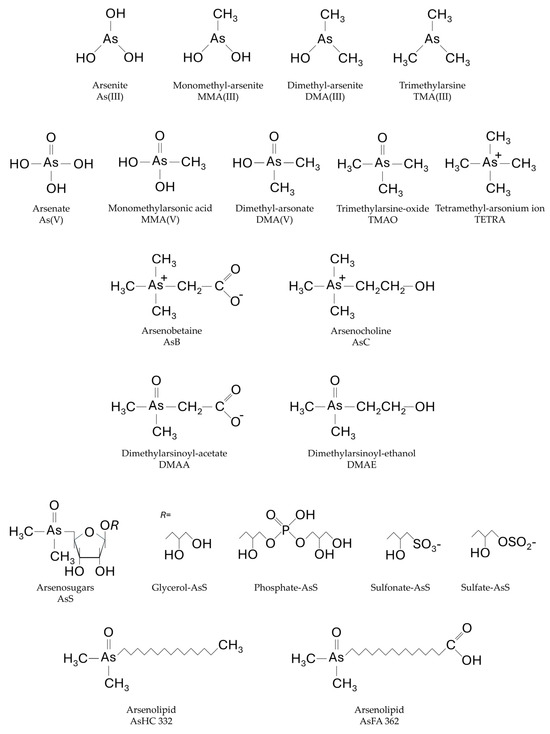
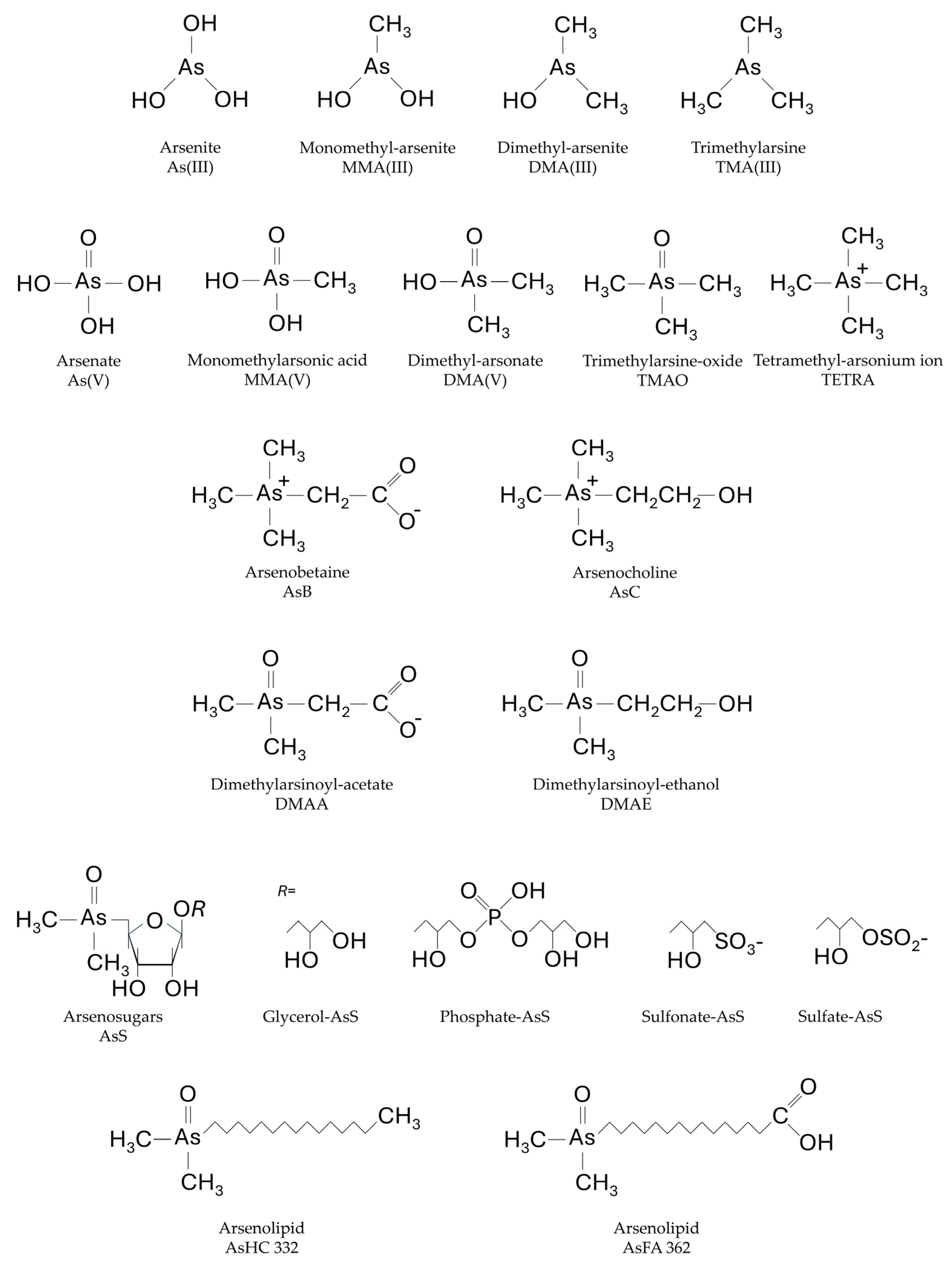
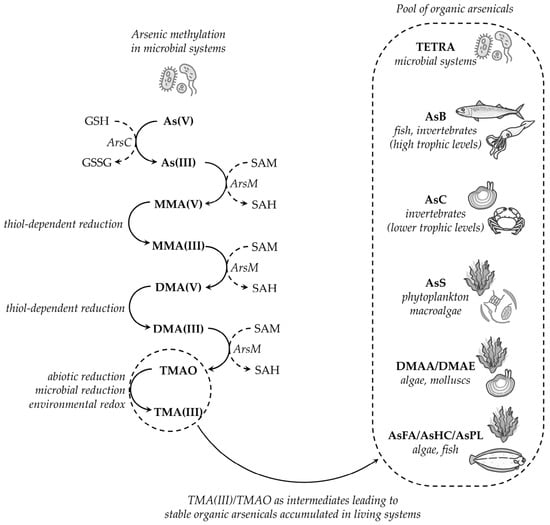
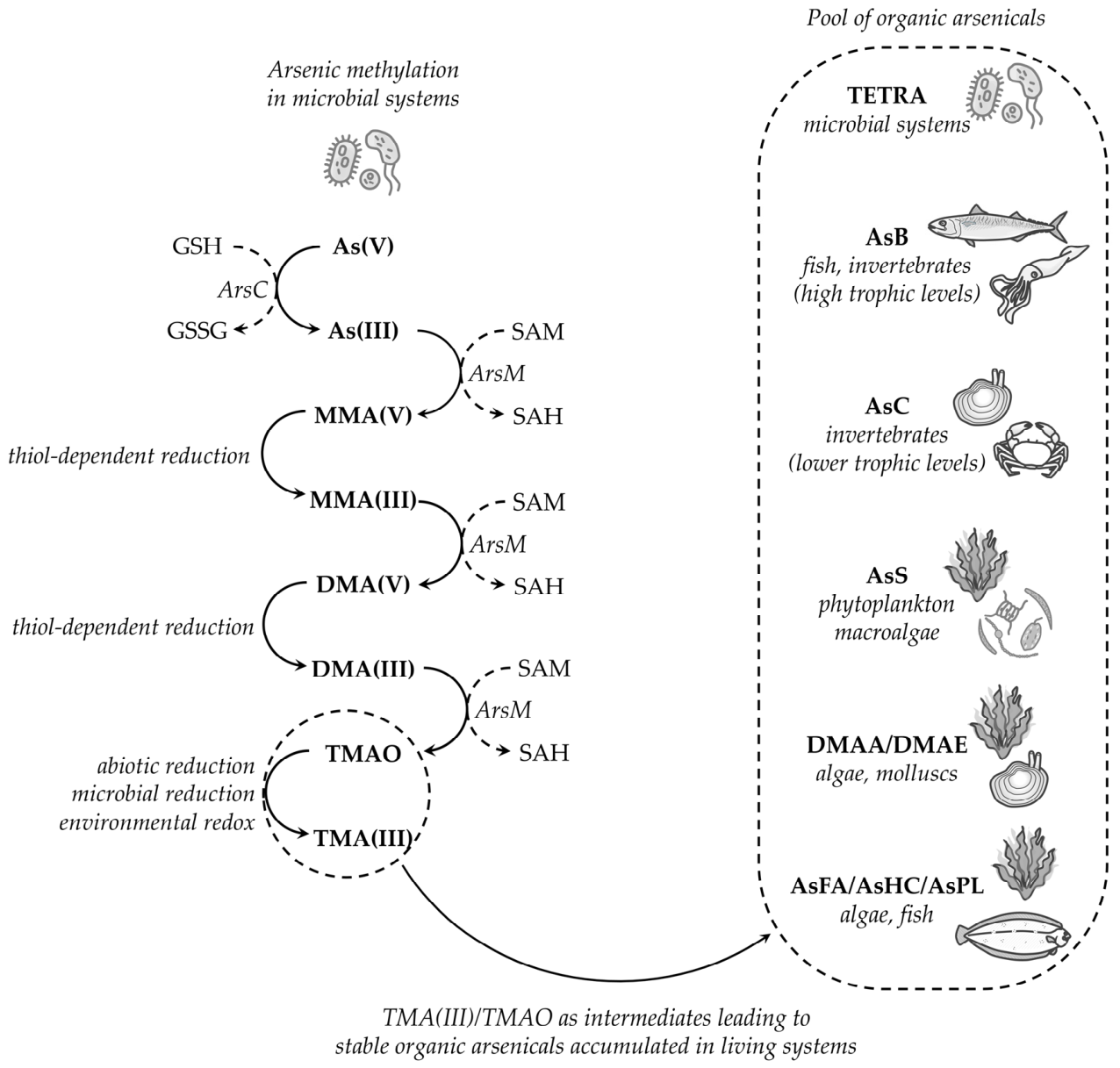

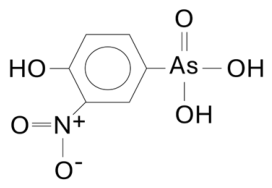
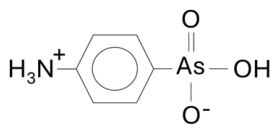
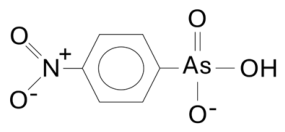
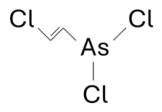
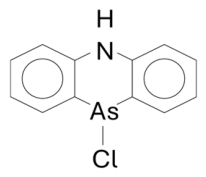
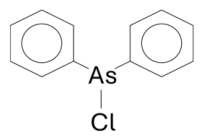
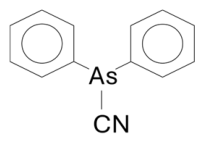
Disclaimer/Publisher’s Note: The statements, opinions and data contained in all publications are solely those of the individual author(s) and contributor(s) and not of MDPI and/or the editor(s). MDPI and/or the editor(s) disclaim responsibility for any injury to people or property resulting from any ideas, methods, instructions or products referred to in the content. |
© 2026 by the author. Licensee MDPI, Basel, Switzerland. This article is an open access article distributed under the terms and conditions of the Creative Commons Attribution (CC BY) license.