
Review

The Use of Biochar for the Reclamation of Oil-Contaminated Soils: Possibilities and Limitations of Biostimulation and Bioaugmentation Strategies

by
Aleksandra V. Kim
*,
Elena A. Bogatyrenko
,
Tatiana I. Dunkai
,
Olga V. Nesterova
and
Anastasia V. Brikmans
Institute of the World Ocean, Far Eastern Federal University, Vladivostok 690922, Russia
*
Author to whom correspondence should be addressed.
Environments 2026, 13(6), 334; https://doi.org/10.3390/environments13060334
Submission received: 7 April 2026 / Revised: 8 June 2026 / Accepted: 10 June 2026 / Published: 11 June 2026
(This article belongs to the Special Issue Advanced Research on the Removal of Emerging Pollutants)

Abstract

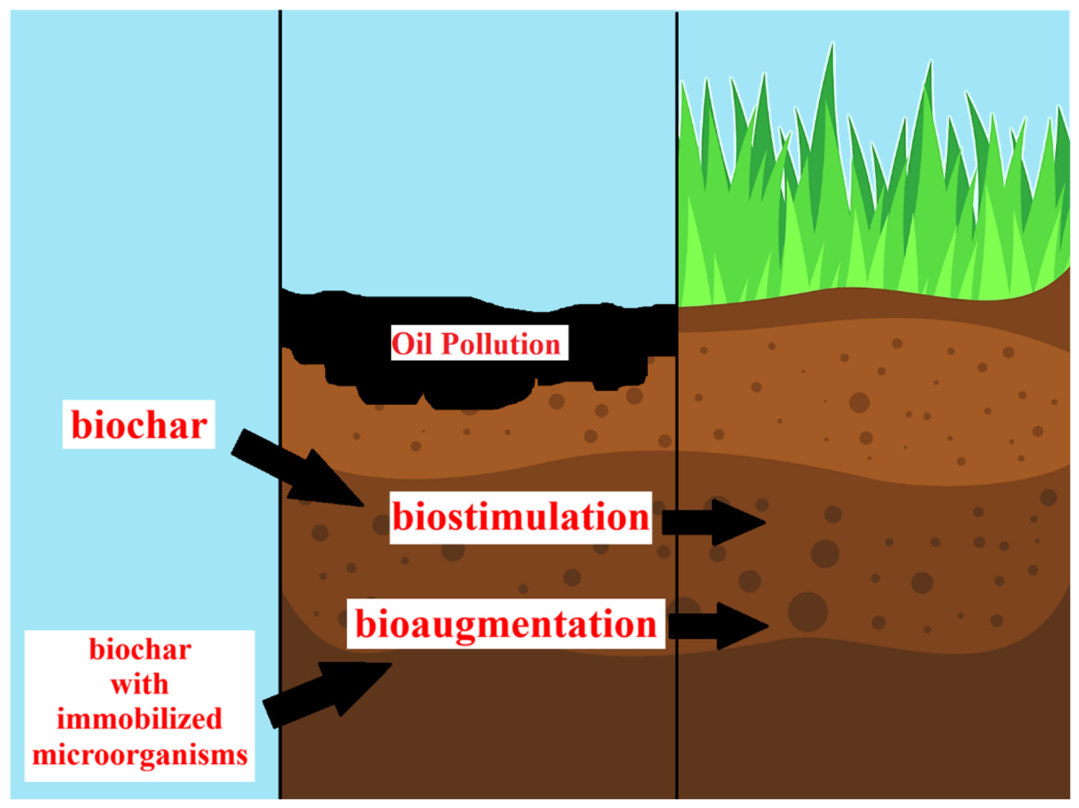
This review summarizes current data on the use of biochar for the reclamation of soils contaminated with petroleum hydrocarbons. The main focus is on the role of biochar in implementing two bioremediation strategies: bioaugmentation involving the introduction of specialized hydrocarbon-degrading microorganisms, and biostimulation aimed at activating indigenous microflora. Special attention is given to the promising technology of using biochar as a carrier for immobilizing specialized hydrocarbon-oxidizing microorganisms, which enhances the efficiency of petroleum hydrocarbon cleanup. Along with the advantages, the review discusses limitations that restrict the widespread practical application of biochar in oil-contaminated soils.

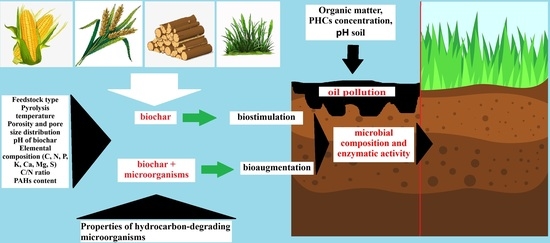
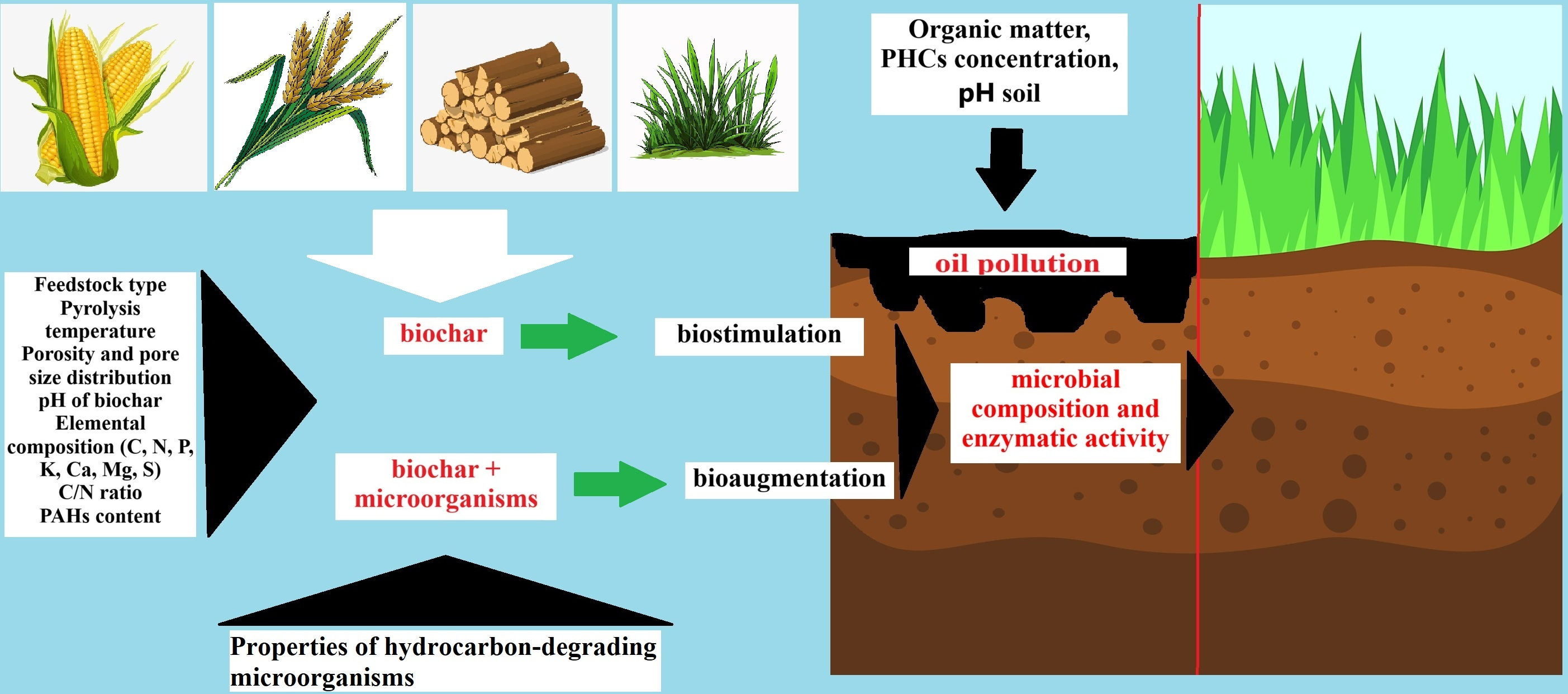
Graphical Abstract

1. Introduction

Modern scientific research indicates that soil pollution by petroleum hydrocarbons (PHCs) is one of the most acute environmental problems on a global scale. The annual volume of uncontrolled leaks of natural oil spills reaches 600,000 tons [1]. The total anthropogenic intake of crude oil and petroleum products ranges from several hundred thousand to several million tons [2]. According to official data from Canada’s Federal Contaminated Sites Inventory, more than 50% of known cases of soil and groundwater contamination are caused by the presence of PHCs [3]. At the same time, the Environmental Protection Agency noted that about 45% of all polluted habitats in Europe are areas where an increased content of hydrocarbons exceeds the maximum permissible concentrations [1]. In Nigeria, over the past two decades, more than 4000 incidents related to onshore crude oil and petroleum product spills have been recorded, totaling 25,000 barrels [4]. According to the report presented at the International Symposium on Soil Pollution in the Russian Federation, about 730,000 hectares of land are contaminated with PHCs. In the petroleum regions of Western Kazakhstan and the Turgay plateau cross an area exceeding 500,000 hectares has been recorded the presence of a wide range of pollutants, including PHCs [5].
The introduction of crude oil and petroleum products into soils occurs both as a result of anthropogenic impact and as a result of natural processes. Key anthropogenic sources include accidental spills during extraction and transport, industrial discharges from refineries (such as inadequately treated wastewater), disposal of oil-containing waste, and operational leaks at petrochemical facilities. Municipal and household activities contribute to soil pollution through unauthorized disposal of used lubricants, leakage of technical fluids from motor vehicles, and improper disposal of petroleum products. Concurrently with anthropogenic sources, there are natural mechanisms of hydrocarbon entry into the soil, including oil escapes through tectonic faults and cracks, migration from oil-bearing rocks, and mud volcanism processes accompanied by hydrocarbon removal [6,7,8,9,10]. However, anthropogenic sources pose the greatest ecological threat due to their high intensity and localized concentration, leading to severe soil ecosystem degradation and necessitating targeted remediation efforts [7,8,9].
The degradation of soil ecosystems under the influence of PHCs is manifested in changes in physical and chemical properties and biological activity of soils that lead to a loss of soil fertility and the ability to self-purify. The stability of hydrocarbons causes a long-term persistence of pollution even after the elimination of the primary source. Long-term restoration of soil functions, which takes decades, is a serious environmental problem requiring the development of effective remediation methods [6,7,8,9,10].
As a result, the search for an effective method to clean soil from oil pollution continues to be a pressing issue.
Contemporary strategies for the bioremediation of oil-contaminated soils are primarily based on biostimulation and bioaugmentation, which are regarded as the most ecologically sustainable and cost-effective approaches [11,12,13]. However, the effectiveness of these technologies is not universally applicable and directly correlates with the initial physical, chemical, and microbiological characteristics of the soil, including microbial abundance and metabolic activity, the content of biogenic elements, pH, and oxygen regime [14].
This dependence necessitates a technological solution capable of optimizing the conditions for microbial degradation of oil hydrocarbons, regardless of contamination level and initial soil agrochemical properties. The use of biochar is considered a promising approach that meets this need, as its incorporation into the soil provides comprehensive modulation of physicochemical properties and targeted regulation of the metabolic activity of native microbiota.
During reclamation of soils contaminated with PHCs, biochar can perform several key functions: biostimulation (activation of indigenous microbiota and intensification of degradation), sorption (immobilization of pollutants with a decrease in their migration, leaching and bioavailability) and immobilization (creation of a matrix for targeted delivery of specialized microorganisms to the source of contamination) [15,16].
Despite the extensive evidence base supporting the effectiveness of biochar in the bioremediation of oil-contaminated soils [7,9,11,12,14,17,18,19,20], information regarding its limitations and potential negative effects remains fragmented and insufficiently systematized.
In this regard, the purpose of this literature review is to provide a comprehensive critical analysis of the use of biochar in the bioremediation of soils contaminated with oil and petroleum products, with an emphasis on identifying shortcomings that hinder its widespread practical application. Because the microbial factor is crucial for the removal of hydrocarbons from soil, we have given focused attention to the effects of biochar addition on soil microbial communities. This review will analyze: (1) the properties of biochars and soils that affect the biostimulation of bacterial communities; (2) changes in bacterial composition and enzymatic activity following biochar application; and (3) bioaugmentation of oil-contaminated soils using biochar-immobilized bacteria. In each of the sections listed, special attention is given to the features and disadvantages of the considered approach, which limit its large-scale implementation in the remediation of oil-contaminated soils.

2. Methodology of Literature Search

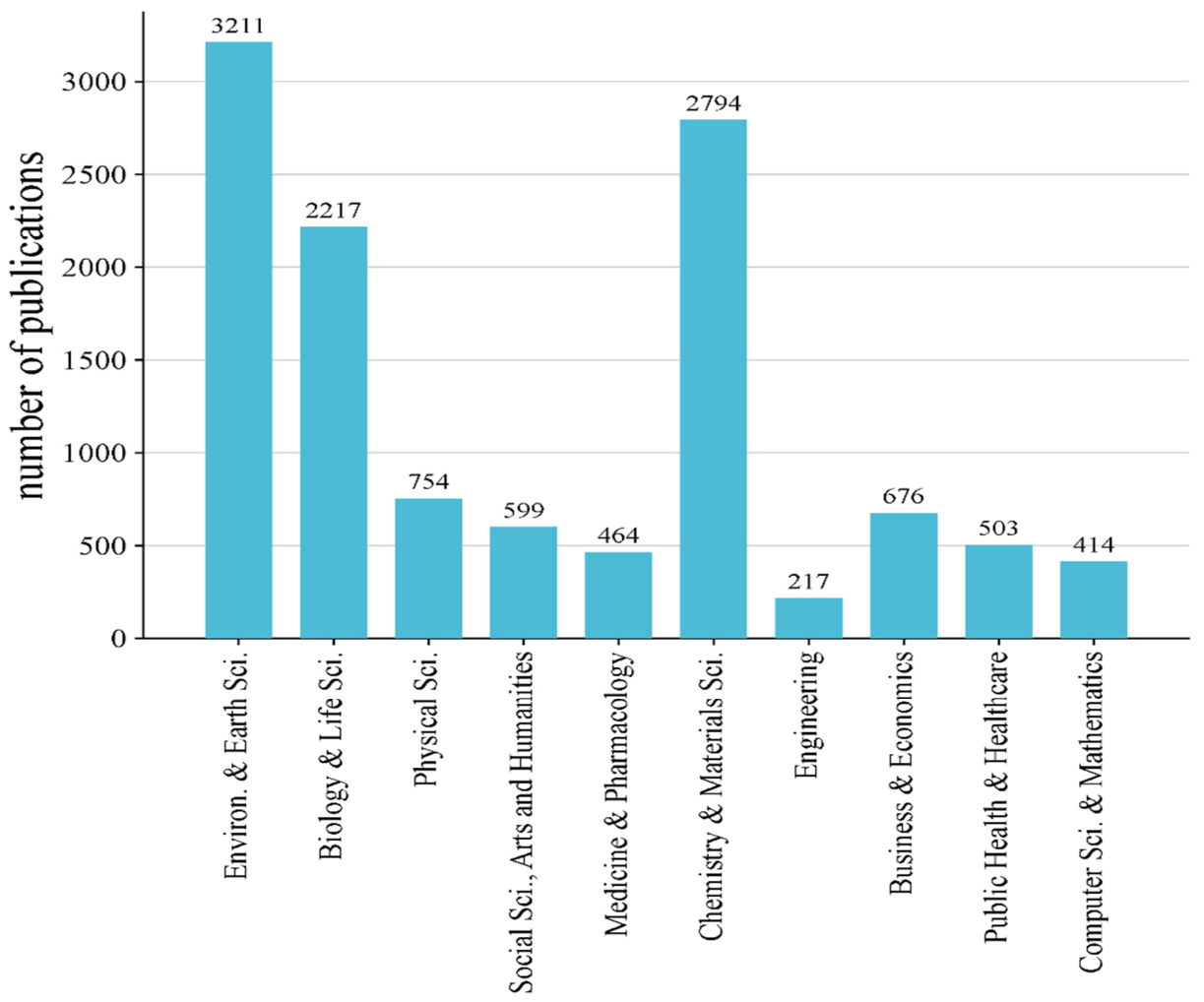
The search for relevant scientific reviews and original articles on the study of biochar was conducted using the Multidisciplinary Digital Publishing Institute (MDPI) database. The choice of this platform is due to the fact that the publications posted on it are publicly available to researchers (open access), and the list of journals covers almost all scientific areas related to the use of biochar and the assessment of their effects over the past 17 years. Moreover, MDPI platform publications are indexed in the Scopus and Web of Science abstract databases. According to the MDPI database, over the past 17 years (2009–2025), 4445 scientific papers have been published using the keyword “biochar”. For comparison, the Web of Science Core Collection database has published more than 7000 articles over the same period [21]. This indicates that a significant proportion of the world’s publications on biochar are concentrated in MDPI journals. The distribution of these studies by scientific field is shown in Figure 1.
As can be seen from the diagram, most of the works related to the study of biochar were published in journals covering the fields of ecology, biology, and Earth sciences. This suggests that the study of biochar is an interdisciplinary topic, and the purpose of assessing the effects of biochar application on its inclusion in specific scientific sections will depend on the research objective: assessing the effect of biochar on soil fertility, heavy metal content, reducing greenhouse gas emissions, comparative analysis of biochar production methods, etc.
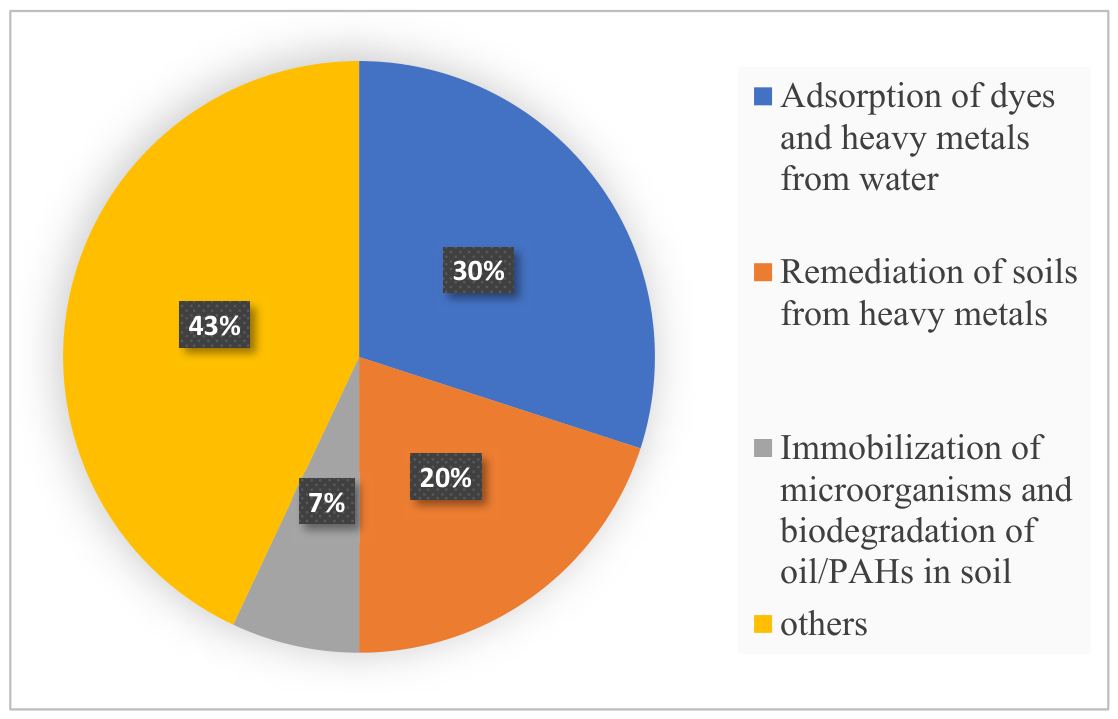
To assess the specific effect of biochar application or its properties, it is necessary to use the MDPI platform filters or to formulate a more accurate keyword query. For example, refining the query using the phrase “biochar and pollution” allowed us to obtain results regarding the use of biochar in polluted ecosystems (water, soil, etc.), as shown in Figure 2.
It follows from the search query results that the bulk of the research focuses on the use of biochar for the removal of various pollutants from the aquatic environment. Regarding soil ecosystems, there are works that study the ability of biochar to immobilize heavy metals. Only a small part of the publications concerns the use of biochar for the remediation of soils contaminated with oil and petroleum products. It is noted that since 2020, the number of works on this topic has increased dramatically, which underscores the relevance of developing technologies for soil remediation from hydrocarbon pollution.
For a more detailed classification of published articles, it is necessary to refine the query by adding filters such as publication date, publication type, journal name, author, and other parameters. Overall, such a preliminary analysis of publications makes it possible to assess the relevance of the topic under study, as well as the contribution of scientists from different countries and regions.
All the publications used in this review can be broadly divided into two groups: (1) studies on biochar for biostimulation of native microflora in oil-contaminated soils, and (2) studies on biochar as a carrier material for bacterial immobilization in bioaugmentation (Figure 3).

2.1. Application of Biochar in Biostimulation Strategies

Research in the field of remediation of oil-contaminated soils is increasingly turning to the use of biochar, a highly porous carbon material produced by pyrolysis of organic substrates. Numerous scientific papers confirm the high efficiency of this material in the restoration of contaminated soils due to its unique physicochemical properties [7,9,11,18,19,20]. Biochar has a complex positive effect on the soil ecosystem: it prevents the leaching of nutrients, increases their bioavailability, and improves plant growth [22].
In addition, the microporous structure and high specific surface area of biochar create favorable conditions for microorganisms, protecting them from environmental stress factors [23]. This is attributed to its high sorption capacity, as well as its ability to accumulate and retain moisture and nutrients, thereby forming an optimal environment for the development of microbial communities [24].
Type of feedstock and pyrolysis temperature. When assessing the ability of biochar to stimulate the microbial community in oil-contaminated soils, several parameters are of key importance: the type of feedstock and the pyrolysis temperature, among others. The main sources of raw materials for biochar production include animal manure, agricultural and forest waste, industrial bio-waste, as well as marine and aquatic organisms, among others [25]. Under similar pyrolysis conditions, different feedstock types can produce biochars with distinct physicochemical properties due to variations in their content of cellulose, hemicellulose, lignin, and inorganic minerals [26].
For example, biochar derived from pine wood obtained at 900 °C significantly stimulates the microbial decomposition of crude oil, whereas biochar derived from walnut shells synthesized at the same temperature, in contrast, suppresses the biodegradation of hydrocarbons [27].
According to literature reports, biochar derived from raw materials with a high content of lignin and cellulose is typically characterized by a high specific surface area and a well-developed microporous structure, which accounts for its high adsorption capacity for polycyclic aromatic hydrocarbons (PAHs) and other PHCs [28]. Such biochar is ideally suited for remediation scenarios aimed at pollutant immobilization and long-term pollution stability [21].
A comparative analysis of the efficiency of the removal of PHCs from soils has shown that biochars derived from wood demonstrate the best results in reducing total petroleum hydrocarbon (TPH) content. In addition, some authors note the high efficiency of biochar from industrial waste, particularly oil sludge, as well as from agricultural waste (rice husks, corn cobs, grain straw, etc.). It is important to note that biochar from industrial waste is used relatively rarely for the remediation of hydrocarbon-contaminated soils. This is due to concerns about the possible presence of secondary pollutants such as residual PAHs and heavy metals [29]. At the same time, biochar derived from agricultural waste typically contains far fewer hazardous pollutants, and its production generates minimal greenhouse gas emissions while solving the problem of household waste recycling. This makes biochar a more economical, low-carbon, and environmentally sustainable adsorbent compared to alternative materials [30].
Biochars derived from agricultural waste are actively used for the remediation of oil-contaminated soils; however, their adsorption properties depend largely on the pyrolysis temperature [18,20]. At low temperatures (300 °C), an undeveloped porous structure and an uneven surface are formed, which limits adsorption. An increase in temperature from 600–700 °C and above leads to the destruction of the carbon skeleton and blockage of pores by ash particles, which also reduces the adsorption capacity [18,20,31]. According to literature data, the optimal pyrolysis temperature range for substrates such as rice, reed and corn straw, wheat, corn cobs, as well as vegetable and fruit waste, is in the range of 500–600 °C. At such temperatures, an optimal structure with evenly distributed micropores is formed. Biochars obtained in this range are able to effectively remove PHCs from the soil and have a beneficial effect on the activity and abundance of soil microorganisms [28]. For the same substrates as pine wood and oil sludge, the optimal pyrolysis temperature of biochar suitable for reclamation of oil-contaminated soils is 900 °C [27,28].
Morphological properties of biochar. As we mentioned earlier, different temperature conditions of pyrolysis can create biochars with different morphological properties. The effectiveness of biochar in bioremediation processes is due to the synergy of its sorption properties and the ability to stimulate microbial activity [32]. Of particular importance is the mechanism of chemotaxis of hydrocarbon-oxidizing microorganisms, which, together with the adsorption of PHCs on the surface of biochar, creates conditions for effective spatial convergence of destructors with the substrate, significantly enhancing the processes of biodegradation [33].
However, the high sorption capacity of biochar can lead to excessive immobilization of pollutants, which reduces their bioavailability and slows down microbial degradation [34]. This effect occurs due to the exceptionally high porosity and huge specific surface area of biochar. Its structure is riddled with countless macro-, meso- and micropores that act as molecular traps. When PHC molecules enter these pores, strong bonds can form between them and the surface of the biochar, which leads to a strong “adhesion” of pollutants to the biochar [35].
A study showed that biochar derived from peanut shells obtained at different temperatures can have a similar sorption capacity but different adsorption kinetics. Specifically, low-temperature biochars adsorb quickly but form fragile bonds with pollutants, whereas high-temperature biochars exhibit developed microporosity (<2 nm), which ensures strong binding of the contaminant and consequently complicates its subsequent desorption. However, it is precisely this developed microporosity that gives rise to another problem: the size of bacterial cells and enzymes exceeds the diameter of the micropores; therefore, the contaminant “trapped” in the pores becomes inaccessible to biodegradation. Moreover, microorganisms residing inside the pores expend additional energy on their metabolism. Thus, if the desorption rate is lower than the rate of pollutant consumption, desorption becomes the limiting stage of the pollutant biodegradation process [36].
In addition, a well-developed porous structure, while enhancing adsorption surface area, can also immobilize degrading bacteria, thereby restricting their migration within the contaminated zone [37].
The content of PAHs in biochars. Despite the fact that biochar is derived from biomass of natural origin, it may contain potentially hazardous substances formed either from the raw materials themselves or generated during pyrolysis, which poses certain environmental risks. Such harmful components include organic compounds (volatile organic compounds, PAHs, dioxins), as well as inorganic pollutants, including heavy metals and per- and polyfluoroalkyl substances (PFAS). When biochar is introduced into soil, these compounds can leach into the environment, transform into new polluting species, and exert negative effects on plants and soil microorganisms [27].
PAHs are formed in biochars during pyrolysis. Depending on the feedstock and pyrolysis conditions, their concentration may exceed the permissible levels set. The content of bioavailable PAHs in biochar can range from 0.17 to 81 ng/L. The total PAH concentration serves as one of the key indicators of the material’s environmental hazard. According to the standards of the International Biochar Initiative (IBI, 2015), the permissible limit for total PAH content is 6–20 mg/kg, whereas the European Biochar Certificate (EBC, 2015) establishes a stricter range of 4–12 mg/kg. Available evidence suggests that upon biochar application to soil, soil biochemical processes can alter its physicochemical properties, potentially leading to the release of previously immobilized PAHs. Consequently, biochar itself may act as a secondary source of PAH input into the soil. Importantly, even compliance with IBI and EBC standards does not eliminate environmental risks, and the addition of biochar that meets established limits may still be accompanied by adverse consequences for the soil ecosystem [38,39].
PAHs associated with biochar can migrate into surface soil layers and groundwater under the influence of precipitation and irrigation. Additionally, root exudates can trigger their release from biochar, further elevating PAH levels in the soil. Being toxic compounds, their accumulation in the soil solution may inhibit microorganisms and diminish their capacity to degrade PHCs [40].
For any type of feedstock, there is a direct relationship between the pyrolysis temperature and PAH content: as temperature increases, the yield of volatile gases rises; upon recondensation on the biochar surface, these gases increase the PAH content [38]. Temperature also affects the molecular weight of PAHs: low-temperature conditions (<500 °C) promote the accumulation of low-molecular-weight PAHs, whereas high-temperature conditions (>500 °C) favor the accumulation of high-molecular-weight PAHs. The type of feedstock also plays a role: at 600 °C, biochars derived from agricultural, wood, and green waste contain significantly more PAHs than those derived from industrial waste, poultry litter, or food waste [39].
A number of main approaches for reducing PAHs in biochar have been described in the literature: thermal treatment, thermal oxidation, chemical modification, and co-pyrolysis of biomass [39]. Nevertheless, their application is associated with several limitations. The mechanisms of PAHs removal remain unclear, and their fate after treatment is poorly understood, whereas the risk of secondary pollution persists. Furthermore, no approach that can effectively minimize PAHs content without compromising biochar’s adsorption properties currently exists.
The elemental composition of biochar. The elemental composition of biochar depends on the pyrolysis temperature and the type of feedstock [41]. Nevertheless, there are general patterns: with an increase in temperature from 300 to 700 °C, the carbon content increases by 15–25%, and oxygen decreases by 20–40%. At the same time, the absolute values are determined by the initial biomass: lignocellulosic materials form a more carbonaceous biochar than organic waste. As for nitrogen, an increase in pyrolysis temperature contributes to its partial loss. Other elements (calcium, magnesium, phosphorus, potassium, etc.) are characterized by wide variability in content, depending on the composition of the feedstock and the pyrolysis regime [42,43,44,45,46]. For example, biochars from manure and municipal solid waste contain more calcium, magnesium, and sulfur than biochars from industrial and agricultural waste [45].
Thus, biochar can significantly contribute to soil enrichment with macro- and microelements that are essential for proper microbial metabolic function [47]. It acts either as a direct supplier or as a retaining sorbent that holds these nutrients for their gradual release into the soil solution [48,49]. Research has demonstrated that adding biochar to oil-polluted soils improves the bioavailability of such nutrients, thereby promoting the proliferation and raising the hydrocarbon-degrading activity of indigenous bacterial communities [50,51].
However, in some cases, the opposite effect is observed: as the pyrolysis temperature decreases, the content of labile fractions in biochar increases, and they can become the dominant substrate for microbial metabolism. The high content of labile carbon switches the metabolic activity of microorganisms from PHCs to the more accessible carbon of biochar, which reduces the efficiency of degradation of pollutants [52].
Also, one of the significant problems of using biochar is the ability to cause nitrogen immobilization. Although the stable carbon of high-temperature biochar remains inaccessible to microorganisms, low-temperature pyrolysis (300–400 °C) produces a significant amount of labile carbon, which is easily absorbed by microbial cells. To metabolize this carbon, microorganisms intensively consume available nitrogen from the soil solution, creating a shortage of it. Reducing the concentration of bioavailable nitrogen inhibits the development of microbial biomass and, as a result, reduces the efficiency of hydrocarbon degradation. One of the solutions to this problem is the addition of supplemental nitrogen sources together with biochar [28].
The C/N ratio in biochars. Optimization of the C/N ratio in the soil is of considerable importance for the stimulation of hydrocarbon-destroying microorganisms. According to literature data, the optimal condition stimulating the development of the microbial community is the ratio C/N = 25/1 [53]. However, some articles have recommended a C/N/P ratio of 100/10/1 or 100/5/1 for a biostimulation strategy [54]. In general, this indicator depends on the type of soil, the amount and quality of soil organic matter, soil formation conditions for natural soils, or agricultural engineering conditions for soils on agricultural land.
As for the properties of biochars themselves, the value of the C/N ratio in them varies widely. According to some studies, this indicator can range from 7/1 to 303/1, depending on the type of feedstock and pyrolysis temperature [11,19,20,55].
Although biochar helps provide soil microorganisms with nutrients, it cannot completely replace external nutrient sources, especially in the case of biochar with a high C/N ratio. Oil-contaminated soils tend to be deficient in nitrogen, as crude oil and petroleum products consist primarily of carbon and hydrogen. The addition of biochar (often with a high C/N ratio) can further increase this ratio in the soil and cause nitrogen immobilization, leading to nitrogen deficiency. The high C/N ratio and the aromatic nature of most of the carbon in biochar lead to poor microbial development and, as a result, lower efficiency of PHCs removal. A solution to this problem may be the joint application of nutrients or fertilizers to contaminated soils treated with biochar [27].
The content of organic matter in the soil. Since biochars are introduced into the soil, their effects will also depend on the parameters of the soil itself. The efficiency of PHC adsorption from soils is largely determined by the content of organic matter in the soil. According to literature data, organic matter is able to compete with petroleum hydrocarbons for sorption centers on the surface of biochar. In addition, organic matter can condense at the mouths of pores, blocking the outlets and thereby reducing the absorption capacity of biochar. It has been experimentally established that when the organic matter content in the soil is higher than 20 g/kg, significant PHCs adsorption by biochar does not occur, whereas with a lower organic matter content, adsorption is effective [30]. The reduction of adsorption of PHCs by biochar in the presence of organic matter can lead to several negative consequences: the maintenance of a high concentration of hydrocarbons in the soil, which exerts a toxic effect on microorganisms, including hydrocarbon-degrading microorganisms; the spatial dispersion of hydrocarbons, which disrupts the spatial convergence of bacteria with the pollutants and, as a result, may reduce the efficiency of biodegradation.
In addition, the total organic matter content in the soil should correspond to the optimal C/N/P ratio to ensure the metabolic activity of microorganisms in relation to PHCs, as discussed earlier.
The introduction of biochar into the soil can change the C/N ratio, bringing it closer to the optimal one. For example, after processing powdered biochars from reed straw and soybeans, the C/N ratio decreased to 13/1 and 18/1, respectively, and when using granular biochars from the same raw materials, to 20/1 and 24/1. Under these conditions, the degree of destruction of petroleum hydrocarbons reached 70%. Thus, the addition of biochar reduced the initially high C/N ratio, and the optimal C/N ratio achieved created more favorable conditions for the growth and metabolism of destructive microorganisms [54].
PHC concentration in the soil. The PHC concentration of soil is an important factor influencing microbial activity in oil-contaminated soils. According to literature data, high levels of contamination can have a toxic effect on microorganisms. This is confirmed by the results of studies on the microbial destruction of phenanthrene: the biodegradation rate in highly polluted soil was only 50.53%, whereas in slightly polluted soil it reached 77.75%. This difference is presumably attributable to the toxicity of high phenanthrene concentrations, which inhibits the growth and activity of the microbial community—a finding further supported by the observed decrease in bacterial abundance and diversity [56].
Reducing the toxic effects of PHs and increasing their microbial degradation can be achieved by selecting not only the type but also the concentration of biochar, depending on the level of soil contamination [7,28].
pH soil. An important parameter affecting the activity of microorganisms is soil pH. The pH of biochar can vary widely—from 4 to 11—depending on the pyrolysis temperature and feedstock type. Most biochars are alkaline in nature; therefore, when applied to acidic soils, they can neutralize them or render them slightly acidic. This reduction in soil acidity upon biochar addition is attributed to its alkaline properties and the presence of negatively charged functional groups (phenolic, carboxyl, and hydroxyl) on its surface, which bind protons from the soil solution. Consequently, the pH of acidic soils shifts towards neutrality, which favorably affects the metabolic activity of microorganisms [29]. Most studies on the biodegradation of petroleum hydrocarbons using biochar have been conducted on acidic and neutral soils, where the efficiency of TPH degradation reached 80% [9,11,12,14,16,19,20,52,55,56]. In these studies, the pH of the soil shifted to the neutral or alkaline side, which contributed to the development of hydrocarbon-oxidizing microorganisms.
However, there are exceptions to this pattern. For example, biochar obtained from sewage sludge exhibits complex behavior [57]. On the one hand, carbonates, bicarbonates, and silicates contained in such biochar bind hydrogen ions (H+) in the soil solution, thereby reducing their concentration and shifting the pH toward alkalinity. On the other hand, when introduced into the soil, these compounds can hydrolyze, consuming large amounts of hydroxyl ions (OH). This process, in contrast, acidifies both the biochar itself and the soil [58].
Soil acidification can be caused not only by the direct action of biochar but also by microbial activity. During the degradation of petroleum hydrocarbons, microorganisms produce acidic metabolites capable of shifting the soil pH toward acidity [14,59]. Consequently, the net pH change is determined by the balance between the alkaline effect of biochar and the acidification resulting from degradation products.
Understanding how biochar influences soil pH is important not only for assessing overall soil health but also for predicting the effectiveness of PHCs bioremediation. It is known that pH directly influences the persistence of hydrocarbons in soil. Furthermore, the rate and completeness of their decomposition are likewise dependent on the soil’s acid–base balance [29,60].
Table 1 provides summary data on experimental studies of the use of biochar for bioremediation of soils contaminated with THC and other petroleum hydrocarbons. For each of the experiments considered, the type and initial characteristics of the soil (pH, organic matter content), the type of feedstock and the pyrolysis temperature of biochar, its main properties (pH, C/N ratio), as well as the duration of cultivation and the achieved degree of utilization of pollutants (TPH, PAHs, phenanthrene, and benzopyrene) are indicated.
As summarized in Table 1 and based on the analysis of all the literature used in this review, Chinese scientists have published the largest number of studies on the use of biochar for the bioremediation of oil-contaminated soils. This is likely due to the high degree of oil pollution in China’s soils, which poses a substantial threat to ecosystems and requires prompt intervention [13]. Addressing the consequences of this pollution demands environmentally sound technologies. Biochar has already proven to be an effective sorbent and stimulator of microbial hydrocarbon degradation. Furthermore, China’s feedstock base has the capacity to produce biochar on a large scale—up to 335.5 million tons per year [64]. Consequently, the development of a biochar-based bioremediation strategy for oil-contaminated soils represents a promising and scientifically justified research direction for the country.
In contrast to China, similar studies are less prevalent in other countries. Nevertheless, there is a steady trend in the global scientific literature toward growing interest in the use of biochar for the remediation of oil-contaminated soils.
Based on the data summarized in Table 1, it is evident that biochar significantly enhances the degradation of petroleum products in the soil environment. However, the effectiveness of petroleum hydrocarbon biodegradation depends strongly on the feedstock type, pyrolysis temperature, carbon-to-nitrogen ratio (C/N), initial soil organic matter content, and pH. The compiled data indicate that biochar application stimulates the destruction of petroleum hydrocarbons: TPH content can be reduced by 25–78%, PAHs—by up to 50–60%, benzopyrene—by up to 6.6%, and phenanthrene—by up to 77.75%.
The effect of biochar on bacterial composition and enzymatic activity. The ability of biochar to modulate the activity of soil enzymes plays an important role in bioremediation processes [65].
The majority of studies have investigated the effect of biochar on the activity of enzymes such as dehydrogenase and polyphenol oxidase, which are involved in the degradation of petroleum hydrocarbons. These studies demonstrate an ambiguous effect of biochar on these targets. Dehydrogenase and polyphenol oxidase activities usually increase following biochar addition, and this increase correlates with the enhanced removal of oil pollutants. However, in some cases, the suppression of enzymatic activity is observed, which is attributed to the sorption of either the enzymes or the substrates by biochar [28]. It was also found that biochar application can suppress the activity of microbial lignin peroxidase, manganese-dependent peroxidase, catechol-2,3-dioxygenase, and laccase in oil-contaminated soils [66].
In some studies, molecular genetic analysis was used to identify how biochar is able to modulate the expression of genes encoding enzymes for the degradation of PHCs. In particular, one study recorded a significant increase in the copy numbers of the narAa, phdA/pdoA2, nidA/pdoA1, and nidA3/fadA1 genes responsible for the degradation of two- and four-ring PAHs (naphthalene, phenanthrene, pyrene, anthracene, fluoranthene, benzo[a]pyrene). These genes were detected using PAH-RHDα-GP primers. The copy number of the PAH-RHDα-GP gene after biochar addition significantly exceeded control values, and this increase correlated with the efficiency of PAH degradation. The results showed that the bacteria degraded two- and four-ring PAHs more effectively (up to 37%), whereas the degradation rate for five- and six-ring PAHs was approximately 12% lower. T-RFLP profile analysis revealed that biochar addition leads to a significant restructuring of the bacterial community structure and an increase in the proportion of PAH-degrading bacteria [33].
Another study found that biochar addition contributed to an increase in the copy numbers of the functional genes AJ025, xylX, CYP450, and alkM compared with the control. Quantitative PCR results showed that the increase in the copy numbers of these genes correlated with a decrease in the content of both aliphatic and aromatic hydrocarbons in the soil. In biochar-treated soil, the microbial community was predominantly represented by the phyla Actinobacteriota and Pseudomonadota (their combined proportion exceeded 50%), both of which increased in abundance compared to the control without biochar [59]. Representatives of these two phyla are known to possess the widest range of enzymes capable of cleaving aliphatic and aromatic hydrocarbons [67]. Thus, biochar stimulated the proliferation of bacteria that naturally carry the AJ025, xylX, CYP450, and alkM genes, ensuring high efficiency in the degradation of PHCs. According to the analysis of literature data, the use of biochar in oil-contaminated soils can lead to both a decrease [52] and an increase [68] in the taxonomic diversity of microbial communities.
The introduction of biochar into oil-contaminated soil initiates several key changes in the structure of the microbial community, the most important of which is a shift in the assembly mechanism from stochastic (random) to deterministic (directional). That is to say, biochar does not merely create an environment for random microorganisms but rather actively selects beneficial groups and directs community development in a favorable direction, which typically leads to enrichment with specific bacterial taxa [16,52,68].
The main factors driving variations in soil microbial community structure are soil pH, TPH content, and the C/N ratio. Microbial community size and composition depend on these parameters. However, an analysis of current research demonstrates the complex and often ambiguous nature of biochar’s influence on bacterial communities in oil-contaminated soils [61].
Changes most often occur at the genus level, whereas the diversity of phyla in petroleum hydrocarbon-contaminated soils typically does not differ substantially between soils with and without biochar treatment [9,16]. The dominant phyla in oil-contaminated soils are Actinobacteriota, Pseudomonadota, Bacteroidota, and Bacillota [16,49,63,68,69], whose representatives are ubiquitous and possess a wide range of metabolic capabilities. Studies confirm that genes encoding key hydrocarbon-degrading enzymes are widespread among representatives of these phyla [67]. However, despite the relative stability at the phylum level and within their limits, there are changes in the abundance of key taxa depending on the types of biochar, for example, at the phylum level, the response of Pseudomonadota depends on the type of biochar: biochars from corn cobs (400 °C) and rice straw (600 °C) reduced the abundance of their numbers increased by 3.9% and 9.4%, respectively, while repeated use of other variants increased by 2.1–2.8% [49].
It was also found that the abundance of phyla may vary depending on the experimental duration. Over a 24-week period, the dynamics of seven dominant phyla (Pseudomonadota, Bacillota, Acidobacteriota, Gemmatimonadota, Chloroflexota, Actinomycetota, and Bacteroidota) were observed in both the control and biochar-treated samples. The most significant changes were recorded at week 12: specifically, Bacillota reached its peak abundance by this time in the biochar-treated soil, whereas the control group exhibited a delayed peak, reaching maximum abundance only at week 24. By the end of the experiment, the abundance of Bacteroidota, Actinomycetota and Gemmatimonadota had also increased significantly in the biochar treatments [68].
More noticeable changes occur at the genus level, which is explained by a number of reasons. Phyla are overly large taxa that group together species with different ecological strategies, so both active hydrocarbon degraders and pollution-sensitive species may be present within the same phylum. The ability to decompose PHCs is unevenly distributed and taxon-specific: different genera specialize in different types of pollutants and exhibit different ecological strategies. For example, in oil contamination soil representatives of the genera Pseudomonas and Alcanivorax are r-strategists that react quickly to the appearance of a PHCs, whereas Rhodococcus and Mycobacterium are K-strategists adapted to low-nutrient conditions [70]. Horizontal gene transfer of functional genes between genera also contributes to generic diversity. Oil pollution acts as an ecological filter, selecting for genera that possess the necessary enzymatic systems. Therefore, analysis of changes at the genus level provides a more informative picture for assessing bioremediation than analysis at the phylum level.
For example, the use of rice straw biochar (600 °C) led to the formation of a unique bacterial community dominated by the Classes of Solibacteria and Acidobacteriota, which were absent in the control, as well as by specific genera (H16, Nocardioides, Gaiella, Faecalibaculus, Fallowjicoccus) and showed an increased abundance of Variibacter, Acidibacter, Lysobacter, Blastococcus and Bacillus. This treatment provided the maximum rate of PAH degradation, which the authors attribute to the formation of a unique bacterial consortium [49]. In contrast, another study showed that corn straw biochar (500 °C) stimulated an increase in the abundance of other hydrocarbon-degrading types Terrimonas, Flavihumibacter, Chryseolinea, Ohtaekwangia, Pseudomonas, Stenotrophomonas, Rhizobacter, Massilia and Paucimonas [63].
It is noteworthy that even when taxonomic shifts occur in the structure of the microbial community, the practical efficiency of hydrocarbon biodegradation in the presence of biochar can, in some cases, remain comparable to that of control samples (without biochar) [66]. This finding suggests that changes in microbial diversity induced by biochar do not always correlate with accelerated pollutant degradation and highlights the need for a more in-depth investigation of the functional plasticity of microbial communities. Table 2 summarizes the positive effects as well as the negative effects/risks of using biochar in oil-contaminated soils.

2.2. Application of Biochar in Bioaugmentation Strategies

To date, the use of biochar with immobilized microorganisms for the remediation of soils contaminated with oil and its derivatives represents a relatively new but promising research direction that has demonstrated its potential to improve the condition of contaminated soils (Table 3).
According to numerous studies, the efficiency and rate of degradation of PHCs when using biochar immobilized by hydrocarbon-degrading bacteria is higher than when using biochar alone or free microbial cells [18,20,61,69,74].
Many authors have found that the effectiveness of using biochar with immobilized microorganisms for remediation of oil-contaminated soils is determined by a complex interaction of three key factors: the characteristics of biochar itself, the biological properties of microorganisms and the specifics of soil conditions [19,20,80].
Properties of biochars that affect bacterial immobilization. Successful immobilization of bacteria on biochar depends on its physicochemical properties. The high porosity and large specific surface area provide physical space for attachment and serve as a shelter, protecting bacteria from adverse conditions. In this context, the volume and size of the pores are of key importance: optimal conditions for immobilization are created when the pore diameter is approximately five times greater than the size of a bacterial cell. The chemical composition of the surface, including carboxyl (-COOH) and hydroxyl (-OH) groups, participates in electrostatic interactions and forms hydrogen bonds with the bacterial cell wall, thereby accelerating adhesion. The negative charge of the biochar surface attracts positively charged regions of bacteria, which also promotes immobilization. Hydrophobic interactions affect initial adhesion and subsequent colonization. In addition, biochar serves as a source of nutrients (carbon, nitrogen, and trace elements), creating a nutrient-rich “oasis” that stimulates the growth and metabolic activity of immobilized bacteria. Its alkaline nature increases local pH, acting as a buffer and creating more favorable conditions for microorganisms, especially in acidic environments. Thus, the combination of physical (porosity, surface area) and chemical (functional groups, charge, nutrients, pH) properties makes biochar an effective carrier for bacterial immobilization, enabling its use in various agroecological and environmental applications [60,81].
The expression of these properties and, consequently, the suitability of biochar for the immobilization of bacteria and the effective degradation of petroleum hydrocarbons are largely determined by two key factors: the type of feedstock and the pyrolysis temperature. It is these parameters that set specific values for porosity, surface area, array of functional groups, charge, pH, and nutrient content, which together form a carrier with specified characteristics.
If we compare biochar immobilized by bacteria from the same initial substrate, but pyrolyzed at different temperatures, the results of PHCs utilization may differ significantly. When studying the efficiency of PHCs oxidation by immobilized bacteria on biochar from wheat bran synthesized at 500 °C, it was shown that the loss of PHCs reached 60%, which is 15–21% higher than for samples obtained at 300 °C and 700 °C [18]. A similar pattern is observed in the case of the use of biochar from corn cobs, where the maximum degree of PHCs oxidation (70%) was achieved using a carrier obtained at 500 °C, which is 10% higher than the efficiency of biochar synthesized at 300 °C and 600 °C [20]. The results obtained can be explained by the fact that biochar of agricultural waste, pyrolyzed at 500 °C, has optimal physicochemical properties for the immobilization of microorganisms [82]. In addition, the adsorption of PHCs on the surface of such biochar promotes spatial convergence of destructive bacteria with the substrate, which significantly enhances the biodegradation processes [33].
Studies show that effective adhesion of hydrocarbon-degrading microorganisms is possible on biochars with fundamentally different properties. An illustrative example in this regard is the bacterium Pseudomonas putida, immobilized on biochars obtained from fundamentally different feedstock: rice husk (500 °C) and oil sludge (800 °C). Despite the fact that biochar from rice husks is characterized by a more developed porous structure, a high specific surface area and an increased concentration of oxygen-containing functional groups, which theoretically should provide better conditions for the sorption of pollutants and adhesion of microorganisms, the difference in the efficiency of biodegradation was not so significant. Thus, the utilization rate of crude oil and PAHs by the Pseudomonas putida strain immobilized on biochar from rice husk and oil sludge was 54.80%, 47.09%, 63.42% and 62.18%, respectively [61].
Properties of hydrocarbon-degrading bacteria. For the successful use of immobilized microorganisms on biochar for remediation of oil-polluted soils, it is necessary to take into account the biological characteristics of the microorganisms themselves, such as the size and shape of microbial cells, for example, larger cells can be adsorbed mainly on the outer surface of biochar [83], the hydrophobicity and charge of the cell surface, the ability to synthesize extracellular polymeric substances, as well as metabolic activity [82].
For example, studies have shown that the immobilization of the hydrocarbon-oxidizing bacterium Azospirillum brasilense on the surface of biochar can reduce its sorption capacity in relation to PHCs in liquid medium. This is due to the fact that microbial cells prevent direct contact of the contaminant with the sorbent, producing biosurfactants and initiating biotransformation of oil components [84,85]. These processes lead to modification of the key characteristics of both the PHCs themselves and the biochar surface. As a result, the hydrophobicity of the interacting components decreases, their surface charges and the polarization of the molecules change. The combination of these changes weakens the hydrophobic and electrostatic interactions that play an important role in the adsorption of PHCs on the sorbent surface. However, these interactions can be fundamentally different in the soil environment. On solid surfaces (as opposed to liquid media), Azospirillum brasilense has higher hydrophobicity and a different surface charge, which can significantly affect the efficiency of PHCs oxidation [86].
The ability to synthesize biosurfactants by bacteria immobilized on biochar does not inherently hinder the overall efficiency of petroleum hydrocarbon (PHC) biodegradation in aquatic systems. On the contrary, in the case of the marine bacterium Vibrio sp. immobilized on biochar from corn straw, a high degree of degradation of diesel fuel (94,7%) was recorded, significantly exceeding the result achieved with the use of planktonic cells (57%) [77].
The effect of biochar with immobilized bacteria on soil microbiomes. Yu X. and colleagues (2025) [69] demonstrated that the addition of biochar alone and biochar immobilized with Bacillus licheniformis Y effectively promoted the degradation of petroleum hydrocarbons. However, a marked difference in efficiency was observed: biochar with immobilized bacteria achieved a 93.89% degradation rate of PHCs, whereas biochar alone resulted in only 39.5%.
This discrepancy is likely explained by the protective role of biochar, which provides immobilized bacteria with a competitive advantage over the native microflora. The indigenous microbial community may be suppressed by environmental toxicity and interspecific competition, whereas immobilized bacteria are shielded by the biochar matrix. This protective effect likely contributed to the substantially higher hydrocarbon removal efficiency observed in the treatments with immobilized biochar compared to biochar alone [8,61,69,72,74].
Consistently, similar results regarding the effectiveness of biochar-immobilized bacteria for the remediation of oil-contaminated soils have been reported by other researchers as well. However, the degree of PHC degradation varies considerably (from 36% to 93.89%), which may depend on multiple factors, including biochar properties, microbial characteristics, the stability of bacterial immobilization on biochar, and soil conditions (see Table 3).
When biochar with immobilized bacteria is introduced into oil-contaminated soil, the resulting changes in microbial composition are similar to those observed with biochar alone. The main changes are also clearly observed at the genus level [16,49,63,68,69]. At the same time, it has been repeatedly reported that the introduction of biochar-immobilized microorganisms during oil degradation can induce notable changes in the diversity and taxonomic richness of the bacterial community. When biochar and an introduced strain are applied together, the growth rate and reproduction of the strain may be enhanced, leading to an increase in the abundance of the inoculant. Consequently, this may lead to a reduction in the relative abundance of the native soil microbiota [61].
The introduction of biochar with immobilized microorganisms into oil-contaminated soils exerts a dual effect: it alters both the microbial composition of the soil itself and the microbial community within the biochar. For example, microbial community analysis showed that as early as day 25 of the experiment, the proportion of immobilized Bacillus licheniformis Y in the biochar accounted for only 10.8% of the total microorganisms. This result suggests that soil microorganisms that prefer to grow in biochar gradually colonized the carrier and survived inside, successfully competing with the immobilized bacteria [69]. In contrast, in a study using biochar immobilized with Sphingobium abikonense for the remediation of phenanthrene-contaminated soils, the proportion of immobilized bacteria remained at about 80% [79].
Despite the advantages of bacterial immobilization on biochar, the stability of this system under field conditions remains a critical concern. Unstable immobilization of degrading microorganisms on biochar can lead to their desorption under the action of soil moisture, their washout from the carrier, and a decrease in the local concentration of the biodegraders within the contamination zone. This disrupts the synergy between adsorption and biodegradation, thereby limiting the efficiency of hydrocarbon removal. Concurrently, desorbed cells may be outcompeted by the native microflora, thus losing their functional activity, while the biochar becomes colonized by indigenous microorganisms. Consequently, this effectively transforms bioaugmentation into biostimulation.
One of the possible reasons for the instability of bacterial immobilization on biochar may be the choice of a method for fixing microorganisms. The method of immobilization is able to influence the stabilization of cells in biochar: various mechanisms—surface adsorption, electrostatic interactions, polymerization and the formation of an ion grid—can have different effects on the activity and stability of immobilized cells. In addition, the effectiveness of immobilization is also influenced by the properties of biochar itself and the characteristics of microorganisms (cell size, surface charge, biofilm formation ability) [87].
According to the literature data, the technology of using immobilized microorganisms on biochar is effective for mixed soil contamination with PHCs and heavy metals. From the biochar perspective, the mitigation of heavy metal toxicity is driven by two primary pathways: physical adsorption of pollutants in the porous structure of biochar and their chemical transformation with the participation of functional groups of the sorbent surface, through transformation into less mobile and toxic forms due to various processes, including complexation, ion exchange and precipitation [88]. Microorganisms, toward heavy metals, also demonstrate multilevel detoxification mechanisms, including extracellular adsorption, binding on the cell surface, and intracellular transformation through metabolic reactions [89].
In particular, several studies have evaluated the effectiveness of using immobilized Citrobacter sp. strains attached to corn cob biochar for the remediation of oil-contaminated soils in the presence of nickel and cadmium. The results showed that the immobilized microorganisms achieved up to 50% degradation of PHCs, which significantly exceeded the performance of free cells. Concurrently, the transformation of mobile forms of nickel and cadmium into stable compounds occurred without the formation of toxic byproducts, confirming the ability of immobilized systems to simultaneously detoxify both organic and inorganic pollutants [89,90].
In a separate study, an immobilized strain of Sphingobium abikonense on fungal biochar was shown to oxidize up to 96% of phenanthrene in soil, even under conditions of high copper concentrations. This strain also enhanced the sorption capacity of the carrier, promoting the effective binding of copper ions on the biochar surface [79].
However, despite these promising results, the effectiveness of immobilized systems is not always stable under changing pollution conditions. For instance, there is evidence in the literature that the efficiency of pyrene biodegradation by Escherichia sp. bacteria immobilized on biochar decreased when only 1 mg/kg of cadmium was added to the soil [91]. It is assumed that the high adsorption capacity of biochar, with respect to cadmium, in this case, paradoxically increased its toxicity to the immobilized bacteria, which, in turn, slowed the biotransformation of pyrene [92].
Consequently, although the use of bacteria immobilized on biochar has already shown some success in treating mixed pollutants, the identified limitations indicate the need to refocus future research. The study and immobilization of microorganisms resistant to multiple pollutants should be a priority.

2.3. Limitations and Constraints on the Use of Biochar for the Remediation of Petroleum-Contaminated Soils

After analyzing the main publications assessing the effects of biochar application on bioremediation, it should be noted that most of the results described in the literature were obtained from model laboratory experiments, whereas natural soil conditions may not confirm the observed effects due to the influence of external factors and the complexity of the soil ecosystem as a whole. In the field, biochar undergoes aging processes (physical destruction, leaching, photooxidation, and formation of oxygen-containing groups), which change its properties over months and years [93]. Laboratory conditions do not reproduce the leaching regime, seasonal temperature fluctuations, or the activity of soil fauna and plant root systems. As a result, reliable predictions of the long-term effects of biochar application on soils and soil microbial communities are lacking.
In the laboratory, soil parameters (moisture, temperature, pH) that affect microbial activity are easily controlled, whereas in the field, they are subject to constant fluctuation. For example, drought or waterlogging can dramatically alter microbial activity and thus the effectiveness of bioremediation. A biochar that is effective in microcosms at 25 °C and 60% moisture may prove ineffective or even toxic under real-world conditions involving freezing temperatures or desiccating winds [93].
The effects observed on scales of tens of grams or kilograms of soil are often not reproduced when scaling up to tons of soil due to spatial heterogeneity, uneven distribution of biochar, the inability to maintain ideal conditions, and the influence of neighboring plots [60]. Consequently, laboratory data systematically overestimate the actual effectiveness of biochar.
There are currently no generally recognized standards or unified methods for assessing the long-term effectiveness and safety of using biochar for bioremediation, a situation that stems from the great heterogeneity of both the biochars themselves and the soil and climatic conditions [94]. Therefore, regional guidelines for feedstock selection, biochar production, and field application should likely be developed.
The economic benefit of applying biochar is not always obvious, since the cost of its production and transport may exceed the expected profit. Furthermore, some researchers have noted a decrease in the positive effects of biochar application on soils after 1–2 years (e.g., desorption of bacteria, loss of sorption capacity), rendering the investment economically unjustifiable [94].

3. Conclusions

A number of authors have noted the effectiveness of biochar in biostimulation and bioaugmentation strategies for oil-contaminated soils. Several studies have evaluated the efficiency of PHCs degradation depending on the type of biochar, whose properties are determined by feedstock characteristics, pyrolysis temperature, biogenic element content, pH, and other parameters. However, an analysis of the scientific literature indicates that the use of biochar for bioremediation of oil-contaminated soils remains insufficiently studied and faces several limitations, many of which directly affect the effectiveness of microbial hydrocarbon degradation.
Another problem is the lack of results from long-term field experiments, which prevents definitive conclusions about the effect of biochar on bioremediation: the data obtained so far are preliminary and may not be confirmed when processes are scaled up under real natural and climatic conditions. Furthermore, the high spatial heterogeneity of the soil cover necessitates assessing the effect of biochar on the remediation of soils contaminated with various types of pollutants across contrasting soil types. The latter may differ significantly in the basic characteristics that determine the structure and activity of the soil microbiome: pH, water and temperature regimes, organic matter content, soil texture, and other parameters. Consequently, despite the available positive data, a systematic study of biochar as a bioremediation agent for oil-contaminated soils requires further research, taking into account the identified limitations and the heterogeneity of natural conditions.
Thus, the successful use of biochar to enhance the biodegradation of PHCs requires not only consideration of all the aforementioned limitations but also individual optimization of the carrier’s properties, immobilization methods, and application conditions for each specific contamination scenario.

Author Contributions

A.V.K.: Conceptualization, investigation, writing—original draft, review and editing; E.A.B.: Conceptualization, review and editing, supervision; T.I.D.: Conceptualization, investigation, writing—original draft; A.V.B.: Conceptualization, writing—original draft, review and editing; O.V.N.: Conceptualization, funding acquisition, review and editing, supervision. All authors have read and agreed to the published version of the manuscript.

Funding

The work was supported by the Russian Science Foundation (grant No. 25-14-20066) and co-financed by a subsidy from the Primorsky Krai regional budget (Subsidy No. 26-810-62470-2-0063-000010, Agreement No. 30-2026-002414) as part of the scientific project “Biomatrix for soil remediation susceptible to oil pollution”.

Institutional Review Board Statement

Not applicable.

Informed Consent Statement

Not applicable.

Data Availability Statement

The original contributions presented in this study are included in the article. Further inquiries can be directed to the corresponding author.

Conflicts of Interest

The authors declare no conflicts of interest.

References

  1. Falih, K.T.; Mohd Razali, S.F.; Abdul Maulud, K.N.; Abd Rahman, N.; Abba, S.I.; Yaseen, Z.M. Assessment of petroleum contamination in soil, water, and atmosphere: A comprehensive review. Int. J. Environ. Sci. Technol. 2024, 21, 8803–8832. [Google Scholar] [CrossRef]
  2. Lari, K.S.; Davis, G.B.; Bastow, T.; Rayner, J.L. On quantifying global carbon emission from oil contaminated lands over centuries. Sci. Total Environ. 2024, 907, 168039. [Google Scholar] [CrossRef]
  3. Treasury Board of Canada Secretariat. Federal Contaminated Sites Inventory. 2022. Available online: https://www.tbs-sct.gc.ca/fcsi-rscf/home-accueil-eng.aspx (accessed on 5 June 2026).
  4. Nigerian Oil Spill Monitor. National Oil Spill Detection and Response Agency. 2022. Available online: https://oilspillmonitor.ng/ (accessed on 7 April 2026).
  5. FAO. Proceedings of the Global Symposium on Soil Pollution 2018; Food and Agriculture Organization of the United Nations: Rome, Italy, 2018. [Google Scholar]
  6. Varjani, S.J.; Gnansounou, E.; Pandey, A. Comprehensive review on toxicity of persistent organic pollutants from petroleum refinery waste and their degradation by microorganisms. Chemosphere 2017, 188, 280–291. [Google Scholar] [CrossRef]
  7. Dike, C.C.; Hakeem, I.G.; Rani, A.; Surapaneni, A.; Khudur, L.; Shah, K.; Ball, A.S. The co-application of biochar with bioremediation for the removal of petroleum hydrocarbons from contaminated soil. Sci. Total Environ. 2022, 849, 157753. [Google Scholar] [CrossRef] [PubMed]
  8. Dike, C.C.; Rani Batra, A.; Khudur, L.S.; Nahar, K.; Ball, A.S. Effect of the application of Ochrobactrum sp.-immobilised biochar on the remediation of diesel-contaminated soil. Toxics 2024, 12, 234. [Google Scholar] [CrossRef]
  9. Dike, C.C.; Krohn, C.; Khudur, L.S.; Batra, A.R.; Nnorom, M.A.; Surapaneni, A.; Shah, K.; Ball, A.S. Impact of biosolids-derived biochar on the remediation and ecotoxicity of diesel-impacted soil. Soil Syst. 2024, 8, 40. [Google Scholar] [CrossRef]
  10. Li, Y.; Li, C.; Xin, Y.; Huang, T.; Liu, J. Petroleum pollution affects soil chemistry and reshapes the diversity and networks of microbial communities. Ecotoxicol. Environ. Saf. 2022, 246, 114129. [Google Scholar] [CrossRef] [PubMed]
  11. Aziz, S.; Ali, M.I.; Farooq, U.; Jamal, A.; Liu, F.J.; He, H.; Guo, H.; Urynowicz, M.; Huang, Z. Enhanced bioremediation of diesel range hydrocarbons in soil using biochar made from organic wastes. Environ. Monit. Assess. 2020, 192, 569. [Google Scholar] [CrossRef]
  12. Guo, J.; Yang, S.; He, Q.; Chen, Y.; Zheng, F.; Zhou, H.; Hou, C.; Du, B.; Jiang, S.; Li, H. Improving benzo (a) pyrene biodegradation in soil with wheat straw-derived biochar amendment: Performance, microbial quantity, CO2 emission, and soil properties. J. Anal. Appl. Pyrolysis 2021, 156, 105132. [Google Scholar] [CrossRef]
  13. Li, Q.; Bulavka, Y.A. Technologies for combating oil pollution of the environment in the People’s Republic of China. Her. Polotsk State Univ. Ser. B Ind. Appl. Sci. 2026, 2, 62–68. (In Russian) [Google Scholar] [CrossRef]
  14. Zhang, B.; Zhang, L.; Zhang, X. Bioremediation of petroleum hydrocarbon-contaminated soil by petroleum-degrading bacteria immobilized on biochar. RSC Adv. 2019, 9, 35304–35311. [Google Scholar] [CrossRef] [PubMed]
  15. Liu, Y.; Lonappan, L.; Brar, S.K.; Yang, S. Impact of biochar amendment in agricultural soils on the sorption, desorption, and degradation of pesticides: A review. Sci. Total Environ. 2018, 645, 60–70. [Google Scholar] [CrossRef] [PubMed]
  16. Wei, Z.; Wang, J.J.; Gaston, L.A.; Li, J.; Fultz, L.M.; DeLaune, R.D.; Dodla, S.K. Remediation of crude oil-contaminated coastal marsh soil: Integrated effect of biochar, rhamnolipid biosurfactant and nitrogen application. J. Hazard. Mater. 2020, 396, 122595. [Google Scholar] [CrossRef]
  17. Sui, X.; Wang, X.; Li, Y.; Ji, H. Remediation of petroleum-contaminated soils with microbial and microbial combined methods: Advances, mechanisms, and challenges. Sustainability 2021, 13, 9267. [Google Scholar] [CrossRef]
  18. Guo, S.; Liu, X.; Tang, J. Enhanced degradation of petroleum hydrocarbons by immobilizing multiple bacteria on wheat bran biochar and its effect on greenhouse gas emission in saline-alkali soil. Chemosphere 2022, 286, 131663. [Google Scholar] [CrossRef]
  19. Saeed, M.; Ilyas, N.; Bibi, F.; Shabir, S.; Jayachandran, K.; Sayyed, R.Z.; Shati, A.A.; Alfaifi, M.Y.; Show, P.L.; Rizvi, Z.F. Development of novel kinetic model based on microbiome and biochar for in-situ remediation of total petroleum hydrocarbons (TPHs) contaminated soil. Chemosphere 2023, 324, 138311. [Google Scholar] [CrossRef] [PubMed]
  20. Ren, H.Y.; Wei, Z.J.; Wang, Y.; Deng, Y.P.; Li, M.Y.; Wang, B. Effects of biochar properties on the bioremediation of the petroleum-contaminated soil from a shale-gas field. Environ. Sci. Pollut. Res. 2020, 27, 36427–36438. [Google Scholar] [CrossRef]
  21. Tang, K.H.D. Biochar amendments for soil restoration: Impacts on nutrient dynamics and microbial activity. Environments 2025, 12, 425. [Google Scholar] [CrossRef]
  22. Tang, J.; Zhu, W.; Kookana, R.; Katayama, A. Characteristics of biochar and its application in remediation of contaminated soil. J. Biosci. Bioeng. 2013, 116, 653–659. [Google Scholar] [CrossRef]
  23. Quilliam, R.S.; Glanville, H.C.; Wade, S.C.; Jones, D.L. Life in the ‘charosphere’–Does biochar in agricultural soil provide a significant habitat for microorganisms? Soil Biol. Biochem. 2013, 65, 287–293. [Google Scholar] [CrossRef]
  24. Gul, S.; Whalen, J.K.; Thomas, B.W.; Sachdeva, V.; Deng, H. Physico-chemical properties and microbial responses in biochar-amended soils: Mechanisms and future directions. Agric. Ecosyst. Environ. 2015, 206, 46–59. [Google Scholar] [CrossRef]
  25. Ravindiran, G.; Rajamanickam, S.; Janardhan, G.; Hayder, G.; Alagumalai, A.; Mahian, O.; Lam, S.S.; Sonne, C. Production and modifications of biochar to engineered materials and its application for environmental sustainability: A review. Biochar 2024, 6, 62. [Google Scholar] [CrossRef]
  26. Hassan, M.; Liu, Y.; Naidu, R.; Parikh, S.J.; Du, J.; Qi, F.; Willett, I.R. Influences of feedstock sources and pyrolysis temperature on the properties of biochar and functionality as adsorbents: A meta-analysis. Sci. Total Environ. 2020, 744, 140714. [Google Scholar] [CrossRef] [PubMed]
  27. Vadakkan, K.; Sathishkumar, K.; Raphael, R.; Mapranathukaran, V.O.; Mathew, J.; Jose, B. Review on biochar as a sustainable green resource for the rehabilitation of petroleum hydrocarbon-contaminated soil. Sci. Total Environ. 2024, 941, 173679. [Google Scholar] [CrossRef]
  28. Dike, C.C.; Shahsavari, E.; Surapaneni, A.; Shah, K.; Ball, A.S. Can biochar be an effective and reliable biostimulating agent for the remediation of hydrocarbon-contaminated soils? Environ. Int. 2021, 154, 106553. [Google Scholar] [CrossRef]
  29. Li, D.; Su, P.; Tang, M.; Zhang, G. Biochar alters the persistence of PAHs in soils by affecting soil physicochemical properties and microbial diversity: A meta-analysis. Ecotoxicol. Environ. Saf. 2023, 266, 115589. [Google Scholar] [CrossRef]
  30. Valizadeh, S.; Lee, S.S.; Choi, Y.J.; Baek, K.; Jeon, B.H.; Lin, K.Y.A.; Park, Y.K. Biochar application strategies for polycyclic aromatic hydrocarbons removal from soils. Environ. Res. 2022, 213, 113599. [Google Scholar] [CrossRef]
  31. Tomczyk, A.; Sokołowska, Z.; Boguta, P. Biochar physicochemical properties: Pyrolysis temperature and feedstock kind effects. Rev. Environ. Sci. Bio/Technol. 2020, 19, 191–215. [Google Scholar] [CrossRef]
  32. Qin, G.; Gong, D.; Fan, M.Y. Bioremediation of petroleum-contaminated soil by biostimulation amended with biochar. Int. Biodeterior. Biodegrad. 2013, 85, 150–155. [Google Scholar] [CrossRef]
  33. Liu, L.; Chen, P.; Sun, M.; Shen, G.; Shang, G. Effect of biochar amendment on PAH dissipation and indigenous degradation bacteria in contaminated soil. J. Soils Sediments 2015, 15, 313–322. [Google Scholar] [CrossRef]
  34. Xiong, B.; Zhang, Y.; Hou, Y.; Arp, H.P.H.; Reid, B.J.; Cai, C. Enhanced biodegradation of PAHs in historically contaminated soil by M. gilvum inoculated biochar. Chemosphere 2017, 182, 316–324. [Google Scholar] [CrossRef] [PubMed]
  35. Ahmad, M.; Rajapaksha, A.U.; Lim, J.E.; Zhang, M.; Bolan, N.; Mohan, D.; Vithanage, M.S.; Lee, S.S.; Ok, Y.S. Biochar as a sorbent for contaminant management in soil and water: A review. Chemosphere 2014, 99, 19–33. [Google Scholar] [CrossRef]
  36. Zhao, L.; Xiao, D.; Liu, Y.; Xu, H.; Nan, H.; Li, D.; Kan, Y.; Cao, X. Biochar as simultaneous shelter, adsorbent, pH buffer, and substrate of Pseudomonas citronellolis to promote biodegradation of high concentrations of phenol in wastewater. Water Res. 2020, 172, 115494. [Google Scholar] [CrossRef] [PubMed]
  37. Guo, S.; Liu, X.; Zhao, H.; Wang, L.; Tang, J. High pyrolysis temperature biochar reduced the transport of petroleum degradation bacteria Corynebacterium variabile HRJ4 in porous media. J. Environ. Sci. 2021, 100, 228–239. [Google Scholar] [CrossRef] [PubMed]
  38. Alharbi, H.A.; Alotaibi, K.D.; El-Saeid, M.H.; Giesy, J.P. Polycyclic aromatic hydrocarbons (PAHs) and metals in diverse biochar products: Effect of feedstock type and pyrolysis temperature. Toxics 2023, 11, 96. [Google Scholar] [CrossRef]
  39. Yao, C.; Wang, B.; Zhang, J.; Faheem, M.; Feng, Q.; Hassan, M.; Zhang, X.; Lee, X.; Wang, S. Formation mechanisms and degradation methods of polycyclic aromatic hydrocarbons in biochar: A review. J. Environ. Manag. 2024, 357, 120610. [Google Scholar] [CrossRef]
  40. Shen, X.; Meng, H.; Shen, Y.; Ding, J.; Zhou, H.; Cong, H.; Li, L. A comprehensive assessment on bioavailability, leaching characteristics and potential risk of polycyclic aromatic hydrocarbons in biochars produced by a continuous pyrolysis system. Chemosphere 2022, 287, 132116. [Google Scholar] [CrossRef]
  41. Chen, S.H.; Jiang, M.Y.; Huang, X. Application of B/Ti-based composite catalyst in synthetic borneol production. Biomass Chem. Eng. 2010, 44, 36–39. [Google Scholar]
  42. Palaniveloo, K.; Amran, M.A.; Norhashim, N.A.; Mohamad-Fauzi, N.; Peng-Hui, F.; Hui-Wen, L.; Kai-Lin, Y.; Jiale, L.; Chian-Yee, M.G.; Jing-Yi, L.; et al. Food waste composting and microbial community structure profiling. Processes 2020, 8, 723. [Google Scholar] [CrossRef]
  43. Purakayastha, T.J.; Bera, T.; Bhaduri, D.; Sarkar, B.; Mandal, S.; Wade, P.; Kumari, S.; Biswas, S.; Menon, M.; Pathak, H.; et al. A review on biochar modulated soil condition improvements and nutrient dynamics concerning crop yields: Pathways to climate change mitigation and global food security. Chemosphere 2019, 227, 345–365. [Google Scholar] [CrossRef]
  44. Xiao, K.; Li, Y.; Sun, Y.; Liu, R.; Li, J.; Zhao, Y.; Xu, H. Remediation performance and mechanism of heavy metals by a bottom up activation and extraction system using multiple biochemical materials. ACS Appl. Mater. Interfaces 2017, 9, 30448–30457. [Google Scholar] [CrossRef] [PubMed]
  45. Xiao, F.; Pignatello, J.J. π+–π Interactions between (Hetero) aromatic Amine cations and the graphitic surfaces of pyrogenic carbonaceous materials. Environ. Sci. Technol. 2015, 49, 906–914. [Google Scholar] [CrossRef]
  46. Al-Wabel, M.I.; Al-Omran, A.; El-Naggar, A.H.; Nadeem, M.; Usman, A.R. Pyrolysis temperature induced changes in characteristics and chemical composition of biochar produced from conocarpus wastes. Bioresour. Technol. 2013, 131, 374–379. [Google Scholar] [CrossRef]
  47. Joseph, S.; Graber, E.R.; Chia, C.; Munroe, P.; Donne, S.; Thomas, T.; Nielsen, S.; Marjo, C.; Rutlidge, H.; Pan, G.X.; et al. Shifting paradigms: Development of high-efficiency biochar fertilizers based on nano-structures and soluble components. Carbon Manag. 2013, 4, 323–343. [Google Scholar] [CrossRef]
  48. Anyika, C.; Abdul Majid, Z.; Ibrahim, Z.; Zakaria, M.P.; Yahya, A. The impact of biochars on sorption and biodegradation of polycyclic aromatic hydrocarbons in soils—A review. Environ. Sci. Pollut. Res. 2015, 22, 3314–3341. [Google Scholar] [CrossRef]
  49. Zhang, G.; He, L.; Guo, X.; Han, Z.; Ji, L.; He, Q.; Han, L.; Sun, K. Mechanism of biochar as a biostimulation strategy to remove polycyclic aromatic hydrocarbons from heavily contaminated soil in a coking plant. Geoderma 2020, 375, 114497. [Google Scholar] [CrossRef]
  50. Wang, Y.; Li, F.; Rong, X.; Song, H.; Chen, J. Remediation of petroleum-contaminated soil using bulrush straw powder, biochar and nutrients. Bull. Environ. Contam. Toxicol. 2017, 98, 690–697. [Google Scholar] [CrossRef]
  51. Wang, Y.; Li, F.; Rong, X. Remediation of petroleum-contaminated soils by combined application of biomass materials and nutrients. J. Agric. Environ. Sci. 2018, 37, 232–238. [Google Scholar] [CrossRef]
  52. Kong, L.; Gao, Y.; Zhou, Q.; Zhao, X.; Sun, Z. Biochar accelerates PAHs biodegradation in petroleum-polluted soil by biostimulation strategy. J. Hazard. Mater. 2018, 343, 276–284. [Google Scholar] [CrossRef]
  53. Geng, S.; Mao, S.; Xu, G.; Ding, A.; Chen, F.; Dou, J.; Fan, F. Performance evaluation of modified biochar as a polycyclic aromatic hydrocarbon adsorbent and microbial-immobilized carrier. Processes 2024, 12, 2939. [Google Scholar] [CrossRef]
  54. Wang, Y.; Wang, Q.; Wang, M.; Lei, H.; Chen, J. Biochar particle size modulates the microbial degradation of petroleum hydrocarbons in contaminated soil. Agronomy 2025, 15, 2874. [Google Scholar] [CrossRef]
  55. Mukome, F.N.; Buelow, M.C.; Shang, J.; Peng, J.; Rodriguez, M.; Mackay, D.M.; Pignatello, J.J.; Sihota, N.; Hoelen, T.P.; Parikh, S.J. Biochar amendment as a remediation strategy for surface soils impacted by crude oil. Environ. Pollut. 2020, 265, 115006. [Google Scholar] [CrossRef]
  56. Wang, Z.; Li, J.; Kang, Y.; Ran, J.; Song, J.; Jiang, M.; Li, W.; Zhang, M. Effects of wheat straw-derived biochar on soil microbial communities under phenanthrene stress. Agriculture 2025, 15, 77. [Google Scholar] [CrossRef]
  57. Liu, H.; Zeng, X.; Huang, J.; Yuan, X.; Wang, Q.; Ma, L. Dietary fiber extracted from pomelo fruitlets promotes intestinal functions, both in vitro and in vivo. Carbohydr. Polym. 2021, 252, 117186. [Google Scholar] [CrossRef]
  58. Li, Z.; Hafeez, F.; Zhang, J.; Chen, K.; Zeng, B.; Qi, F.; Yang, L.; Zhu, H. Effect of anaerobic digested sludge biochar on soil quality improvement: An insight into mechanisms, microbial composition, and toxicity risk assessment. Chemosphere 2025, 370, 143948. [Google Scholar] [CrossRef]
  59. Zhang, X.; Wu, M.; Zhang, T.; Gao, H.; Ou, Y.; Li, M. Effects of biochar immobilization of Serratia sp. F4 OR414381 on bioremediation of petroleum contamination and bacterial community composition in loess soil. J. Hazard. Mater. 2024, 470, 134137. [Google Scholar] [CrossRef]
  60. Bolan, S.; Hou, D.; Wang, L.; Hale, L.; Egamberdieva, D.; Tammeorg, P.; Li, R.; Wang, B.; Xu, J.; Wang, T.; et al. The potential of biochar as a microbial carrier for agricultural and environmental applications. Sci. Total Environ. 2023, 886, 163968. [Google Scholar] [CrossRef]
  61. Li, X.; Ma, J.; Niu, Y.; Ling, T.; Xia, X.; Zhang, X.; Cheng, H. Synergistic biochar-microbe interactions enhance petroleum contaminant removal and microbial community succession. Environ. Technol. Innov. 2025, 40, 104465. [Google Scholar] [CrossRef]
  62. Zhang, X.; Wu, M.; Liu, Z.; Ou, Y.; Zhang, T.; Li, M. Comprehensive effects of biochar-assisted nitrogen and phosphorus bioremediation on hydrocarbon removal and microecological improvement in petroleum-contaminated soil. Bioresour. Technol. 2025, 418, 131852. [Google Scholar] [CrossRef]
  63. Li, X.; Song, Y.; Wang, F.; Bian, Y.; Jiang, X. Combined effects of maize straw biochar and oxalic acid on the dissipation of polycyclic aromatic hydrocarbons and microbial community structures in soil: A mechanistic study. J. Hazard. Mater. 2019, 364, 325–331. [Google Scholar] [CrossRef]
  64. Xia, L.; Chen, W.; Lu, B.; Wang, S.; Xiao, L.; Liu, B.; Yang, H.; Huang, C.-L.; Wang, H.; Yang, Y.; et al. Climate mitigation potential of sustainable biochar production in China. Renew. Sustain. Energy Rev. 2023, 175, 113145. [Google Scholar] [CrossRef]
  65. Yang, X.; Liu, J.; McGrouther, K.; Wang, H.; Lu, K.; Cao, X.; Sun, K.; Yuan, G.; Wang, H. Effect of biochar on the extractability of heavy metals (Cd, Cu, Pb, and Zn) and enzyme activity in soil. Environ. Sci. Pollut. Res. 2016, 23, 974–984. [Google Scholar] [CrossRef]
  66. Zhang, G.; Guo, X.; Zhu, Y.; Liu, X.; Han, Z.; Sun, K.; Ji, L.; He, Q.; Han, L. The effects of different biochars on microbial quantity, microbial community shift, enzyme activity, and biodegradation of polycyclic aromatic hydrocarbons in soil. Geoderma 2018, 328, 100–108. [Google Scholar] [CrossRef]
  67. Somee, M.R.; Amoozegar, M.A.; Dastgheib, S.M.M.; Shavandi, M.; Maman, L.G.; Bertilsson, S.; Mehrshad, M. Genome-resolved analyses show an extensive diversification in key aerobic hydrocarbon-degrading enzymes across bacteria and archaea. BMC Genom. 2022, 23, 690. [Google Scholar] [CrossRef]
  68. Song, Y.; Bian, Y.; Wang, F.; Xu, M.; Ni, N.; Yang, X.; Gu, C.; Jiang, X. Dynamic effects of biochar on the bacterial community structure in soil contaminated with polycyclic aromatic hydrocarbons. J. Agric. Food Chem. 2017, 65, 6789–6796. [Google Scholar] [CrossRef]
  69. Yu, X.; Zhou, G.; Zhang, Y.; Xu, Y. Effect of biochar-immobilized Bacillus licheniformis Y on the remediation of soils contaminated with petroleum hydrocarbons. J. Environ. Manag. 2025, 393, 127221. [Google Scholar] [CrossRef]
  70. Brzeszcz, J.; Steliga, T.; Kapusta, P.; Turkiewicz, A.; Kaszycki, P. R-strategist versus K-strategist for the application in bioremediation of hydrocarbon-contaminated soils. Int. Biodeterior. Biodegrad. 2016, 106, 41–52. [Google Scholar] [CrossRef]
  71. Muratova, A.Y.; Panchenko, L.V.; Dubrovskaya, E.V.; Golubev, O.V.; Burov, A.M.; Kireev, M.N.; Vydryakova, I.V.; Chernyshova, M.P.; Shigaeva, S.U.; Turkovskaya, O.V. Bioremediation potential of biochar-immobilized cells of Azospirillum brasilense. Microbiology 2022, 91, 514–522. [Google Scholar] [CrossRef]
  72. Minnikova, T.V.; Kolesnikov, S.I.; Minin, N.S. Assessment of dehydrogenase and invertase activity of oil-contaminated chernozem when applying biochar and a bacterial preparation [Otsenka aktivnosti degidrogenaz i invertazy neftezagryaznennogo chernozema pri vnesenii biochara i bakterial’nogo preparata]. Biosfera 2024, 16, 36–44. (In Russian) [Google Scholar]
  73. Zhang, H.; Tang, J.; Wang, L.; Liu, J.; Gurav, R.G.; Sun, K. A novel bioremediation strategy for petroleum hydrocarbon pollutants using salt tolerant Corynebacterium variabile HRJ4 and biochar. J. Environ. Sci. 2016, 47, 7–13. [Google Scholar] [CrossRef]
  74. Li, M.; Yin, H.; Zhu, M.; Yu, Y.; Lu, G.; Dang, Z. Co-metabolic and biochar-promoted biodegradation of mixed PAHs by highly efficient microbial consortium QY1. J. Environ. Sci. 2021, 107, 65–76. [Google Scholar] [CrossRef]
  75. Chen, B.; Yuan, M.; Qian, L. Enhanced bioremediation of PAH-contaminated soil by immobilized bacteria with plant residue and biochar as carriers. J. Soils Sediments 2012, 12, 1350–1359. [Google Scholar] [CrossRef]
  76. Song, L.; Niu, X.; Zhang, N.; Li, T. Effect of biochar-immobilized Sphingomonas sp. PJ2 on bioremediation of PAHs and bacterial community composition in saline soil. Chemosphere 2021, 279, 130427. [Google Scholar] [CrossRef]
  77. Zhou, H.; Jiang, L.; Li, K.; Chen, C.; Lin, X.; Zhang, C.; Xie, Q. Enhanced bioremediation of diesel oil-contaminated seawater by a biochar-immobilized biosurfactant-producing bacteria Vibrio sp. LQ2 isolated from cold seep sediment. Sci. Total Environ. 2021, 793, 148529. [Google Scholar] [CrossRef]
  78. Yu, T.; Wang, L.; Ma, F.; Wang, Y.; Bai, S. A bio-functions integration microcosm: Self-immobilized biochar-pellets combined with two strains of bacteria to remove atrazine in water and mechanisms. J. Hazard. Mater. 2020, 384, 121326. [Google Scholar] [CrossRef]
  79. Zhang, Y.; Liu, S.; Niu, L.; Su, A.; Li, M.; Wang, Y.; Xu, Y. Sustained and efficient remediation of biochar immobilized with Sphingobium abikonense on phenanthrene-copper co-contaminated soil and microbial preferences of the bacteria colonized in biochar. Biochar 2023, 5, 43. [Google Scholar] [CrossRef]
  80. Okunev, R.V.; Smirnova, E.V.; Giniyatullin, K.G. Evaluation of the content and degradation rates of PAHs in biochars, in terms of assessing the environmental risks of their application for soil remediation. Georesursy 2023, 25, 227–235. [Google Scholar] [CrossRef]
  81. Zhang, S.; Wang, J. Removal of chlortetracycline from water by immobilized Bacillus subtilis on honeysuckle residue–derived biochar. Water Air Soil Pollut. 2021, 232, 236. [Google Scholar] [CrossRef]
  82. Schommer, V.A.; Nazari, M.T.; Melara, F.; Braun, J.C.A.; Rempel, A.; Santos, L.F.d.; Ferrari, V.; Colla, L.M.; Dettmer, A.; Piccin, J.S. Techniques and mechanisms of bacteria immobilization on biochar for further environmental and agricultural applications. Microbiol. Res. 2024, 278, 127534. [Google Scholar] [CrossRef]
  83. Petuhov, O.; Lupaşcu, L.; Vlase, T.; Timbaliuc, N.; Boldurescu, N.; Lupascu, T.; Rotaru, A. Enhanced surface accessibility and adsorption of Bacillus subtilis and Candida albicans on porous hierarchically ordered bio-based carbon materials. Hybrid Adv. 2026, 13, 100645. [Google Scholar] [CrossRef]
  84. Gorovtsov, A.V.; Minkina, T.M.; Mandzhieva, S.S.; Perelomov, L.V.; Soja, G.; Zamulina, I.V.; Rajput, V.D.; Sushkova, S.N.; Mohan, D.; Yao, J.; et al. The mechanisms of biochar interactions with microorganisms in soil. Environ. Geochem. Health 2020, 42, 2495–2510. [Google Scholar] [CrossRef]
  85. Bondarenkova, A.D.; Muratova, A.Y.; Turkovskaya, O.V. Influence of oil on associative rhizobacterium Azospirillum brasilense [Vliyanie nefti na assotsiativnuyu rizobakteriyu Azospirillum brasilense]. Vestn. Sarat. Gosagrouniv. Im. N.I. Vavilova 2009, 9, 5–10. (In Russian) [Google Scholar]
  86. Castellanos, T.; Ascencio, F.; Bashan, Y. Cell-surface hydrophobicity and cell-surface charge of Azospirillum spp. FEMS Microbiol. Ecol. 1997, 24, 159–172. [Google Scholar] [CrossRef]
  87. Saravanan, A.; Swaminaathan, P.; Kumar, P.; Yaashikaa, P.R.; Kamalesh, R.; Rangasamy, G. A comprehensive review on immobilized microbes-biochar and their environmental remediation: Mechanism, challenges and future perspectives. Environ. Res. 2023, 236, 116723. [Google Scholar] [CrossRef]
  88. Chaudhary, H.; Dinakaran, J.; Notup, T.; Vikram, K.; Rao, K.S. Comparison of adsorption performance of biochar derived from urban biowaste materials for removal of heavy metals. Environ. Manag. 2024, 73, 408–424. [Google Scholar] [CrossRef]
  89. Chen, Y.; He, X.; Gao, J.; Wang, F.; Hou, Y.; Cai, Q.; Liu, Q. Biochar assisted bioremediation of soils with combined contamination of petroleum hydrocarbons and heavy metals: A review. Appl. Soil Ecol. 2024, 204, 105720. [Google Scholar] [CrossRef]
  90. Li, X.; Wang, Y.; Luo, T.; Ma, Y.; Wang, B.; Huang, Q. Remediation potential of immobilized bacterial strain with biochar as carrier in petroleum hydrocarbon and Ni co-contaminated soil. Environ. Technol. 2022, 43, 1068–1081. [Google Scholar] [CrossRef]
  91. Yang, M.; Zhang, H.; Ni, J.; Chen, W.; Yang, L.; Wei, R. Effect of cadmium on pyrene biodegradation in solution and soil using free and immobilized Escherichia sp. on biochar. Appl. Soil Ecol. 2020, 150, 103472. [Google Scholar] [CrossRef]
  92. Wang, Y.; Ren, Q.; Li, T.; Zhan, W.; Zheng, K.; Liu, Y.; Chen, R. Influences of modified biochar on metal bioavailability, metal uptake by wheat seedlings (Triticum aestivum L.) and the soil bacterial community. Ecotoxicol. Environ. Saf. 2021, 220, 112370. [Google Scholar] [CrossRef]
  93. Wang, L.; O’Connor, D.; Rinklebe, J.; Ok, Y.S.; Tsang, D.C.; Shen, Z.; Hou, D. Biochar aging: Mechanisms, physicochemical changes, assessment, and implications for field applications. Environ. Sci. Technol. 2020, 54, 14797–14814. [Google Scholar] [CrossRef]
  94. Xiang, L.; Liu, S.; Ye, S.; Yang, H.; Song, B.; Qin, F.; Shen, M.; Tan, C.; Zeng, G.; Tan, X. Review Potential hazards of biochar: The negative environmental impacts of biochar applications. J. Hazard. Mater. 2021, 420, 126611. [Google Scholar] [CrossRef]
Figure 1. Quantitative distribution of biochar research across scientific fields based on MDPI database.
Environments 13 00334 g001
Figure 2. Distribution of biochar applications in polluted ecosystems.
Environments 13 00334 g002
Figure 3. Bioremediation strategies.
Environments 13 00334 g003
Table 1. Impact of biochar on the efficiency of biostimulation strategies in oil-contaminated soils («–» no data available).
Sampling SitespH SoilOrganic Matter, g/kgBiochar, Pyrolysis T °CpH BiocharpH After Biochar TreatmentC/N
Biochar
Cultivation Period, % of PHCs UtilizationReference
Soil from the contaminated site of the Shengli oil field located in Dongying City, Shandong Province, China8.4210.40rice husk (500)8.38.2350 days
TPH—42.74
PAHs—52.96
[61]
oil sludge (500)8.68.3150 days
TPH—43.86.
PAHs—45.13
Soil sampled in northern Shaanxi Province, China, artificially contaminated with TPH8.730.068maize straw (400)8.27.6934.490 50 days
TPH—up to 78
[62]
The surface layer of soil obtained by sampling soils contaminated with heavy hydrocarbons provided by Chevron718walnut shells (Juglans californica) (900)9.930860 days
TPH ((light crude)—up to 25
[55]
ponderosa pine (Pinus ponderosa) (900)9.7117.760 days
TPH ((light crude)—up to 70
Soil contaminated with petroleum hydrocarbons, taken from 20 cm layer at the Liaohe oil field in northeast China8.25powder biochar from bulrush straw (500)8.1780 days
TPH—56.18
[54]
powder biochar from soybean straw (500)8.1380 days
TPH—52.19
granular biochar from bulrush straw (500)8.1580 days
TPH—73.35
granular biochar from soybean straw (500)8.2180 days
TPH—63.68
Soil contaminated with petroleum hydrocarbons, taken from the top 20 cm layer at the Shengli oil field, China7.399.85mushroom substrate (550)11.38.81 60 days
TPH—13.66
[14]
Clean pasture soil was artificially polluted with diesel fuel (Caltex, Melbourne, Australia)7.6biosolids (350–900) + fertiliser6.75–7.547.18–25.0384 days
TPH—up to 53–69
[9]
Uncontaminated soil sampled from the top 20 cm layer on the territory of Chengdu University of Information Technology, China, artificially contaminated with benzopyrene6.28≈14wheat straw (500)9.457.912.730 days
Benzopyrene—up to 66
[12]
Uncontaminated soil samples taken from an agricultural field in Nanjing, Jiangsu Province, China, artificially contaminated with phenanthrene6.58wheat straw (300–500)6.59– 6.8649.5–59.221 days
Phenanthrene ≈ up to 65–77.75
[56]
Soil samples taken from the top 20 cm layer near an abandoned petroleum hydrocarbons production site at the Dagan oil field in Tianjin, China7.61wheat straw (300–500)52.04–65.8180 days
PAHs ≈ up to 50–60
[52]
sawdust (300–500)48.1–94.4180 days
PAHs ≈ up to 50–60
Petroleum hydrocarbon-contaminated soil sampled at the Changning shale gas field in Yibin City, Sichuan Province, China7.4153.9corncob
(300–600)
82.7–139.3TPH ≈ up to 61–71[20]
straw (300–600)46.2–201TPH ≈ up to 49–58
sawdust (300–600)221.8–306.7TPH ≈ up to 46–57
Soil contaminated with diesel fuel taken from the top 20 cm layer on the railway washing lines located at the Rawalpindi Locomotive Depot, Pakistan6.78fruit/vegetable waste (550)7.124180 days
TPH—72
[11]
sewage sludge (550)6.67.9180 days
TPH—75.6
Soil samples taken from the top 20 cm layer of an agricultural field contaminated with PAHs more than 40 years ago in Nanjing, Jiangsu Province, China6.6218.22maize straw (500)9.6676.721 days
TPH—up to 50
[63]
Petroleum hydrocarbon-contaminated soil sampled from the top 30 cm layer at the site of an oil spill near a reservoir at the Shengli oil field, China6.55.42rice straw (500)21.4120 days
TPH—77.8
n-alkanes—88.6
[32]
Petroleum hydrocarbon-contaminated soil samples taken from the top 15 cm layer in Rawalpindi, Pakistan7.418.05mixture of leaves, pine needles and sawdust (300–400)11.17.2360 days
TPH—up to 40
[19]
Soil of saline marshes (Skatlake silt; very fine-grained, smectite, non-acidic, hyperthermic, alkali-saturated hydrate), selected in Golden Meadow, Louisiana7.310.2cord grass (Spartina alterniflora) (900)8.671.850 days
TPH—65.7
[16]
Table 2. Mechanisms of biochar action in oil-contaminated soil.
MechanismPositive EffectNegative Effect/Risk
Sorption of petroleum hydrocarbonsReduction in toxic concentration of PHC, concentrates the pollutant near bacteriaExcessive sorption in micropores
(<2 nm) makes PHCs unavailable
Protection of microorganismsRefuge from stress
(salinity, heavy metals)
May trap bacteria, limiting their migration
Source of nutrientsProvides C, N, P, trace elementsHigh C/N ratio nitrogen immobilization (N deficiency)
pH regulationNeutralizes acidic soils
(alkaline biochar)
Some biochars (e.g., from sewage sludge) can acidify soil
Effect on microbial communityShift from stochastic to deterministic selection, growth of hydrocarbon degradersUnpredictable changes in diversity, suppression of enzymatic activity
Toxic impuritiesPAHs, heavy metals, etc. secondary contamination
Table 3. The use of immobilized bacteria on biochar for soil remediation from oil pollution.
The Material for BiocharPyrolysis Mode, T °CImmobilized MicroorganismsConcentration of the PollutantEfficiency of PHCs Utilization, %Reference
Birch wood commercial biochar (DianAgro LLC, Russia)800Azospirillum brasilenseTPH—15 g/kg36[71]
Bacillus amyloliquefaciens, Paenibacillus polymyxa, Paenibacillus peoriae and Paenibacillus jamilaeTPH—50 g/kg79[72]
Wheat bran300–700Bacterial consortium (Pseudomonas, Acinetobacter, Sphingobacterium)TPH—5.815 g/kg36.91–58.31[18]
Corn cobs500Bacterial strains isolated from the oil-contaminated territory of the Changning shale gas field in Sichuan Province, ChinaTPH—48 g/kg70.7[20]
Straw50058.3
Sawdust60057.4
Wood chips700Corynebacterium variabileTPH—(n -C16—0.1%, n -C18—0.1%, n -C19—0.1%, n -C26—0.05%, n-C28—0.05%). naphthalene–0.05%) and pyrenees–0.05%78.9[73]
Water Hyacinth500The QY1 microbial consortium, consisting of bacteria from the genera Methylobacterium, Burkholderia, StenotrophomonasPhenanthrene—0.5 g/L94.5[74]
Rice straw500Mycobacterium gilvumPAHs—0.677 g/kgPhenanthrene—62.6
Fluoranten—52.1
Pyrenees—62.1
[34]
Pine needles700PseudomonasputidaPhenanthrene—0.001 g/L
Pyrenees—0.1 mL/L
Phenanthrene—92–100
Pyrenees—96–100
[75]
400 -600Sphingomonas sp.PAHs—0.00194 g/kg50–58[76]
Oil sludge800Pseudomonas putidaTPH—6.333 g/kg
PAHs—0.00151 g/kg
TPH—47.09
PAHs—62.18
[61]
Rice husks500Pseudomonas putidaTPH—54.80
PAHs—63.42
Corn straw500Vibrio sp.Diesel fuel—10 g/kg94.7[77]
400Serratia sp.TPH—10.133 g/kg82.5[59]
700Arthrobacter sp.Atrazine—0.05 g/L100[78]
Fungal substrate400Sphingobium abikonensePhenanthrene—0.2486 g/kg96[79]
Bacillus licheniformisTPH—0.65 g/kg93.89[69]
Biosolids900Ochrobactrum sp.Diesel—62 g/kg42[8]
Disclaimer/Publisher’s Note: The statements, opinions and data contained in all publications are solely those of the individual author(s) and contributor(s) and not of MDPI and/or the editor(s). MDPI and/or the editor(s) disclaim responsibility for any injury to people or property resulting from any ideas, methods, instructions or products referred to in the content.