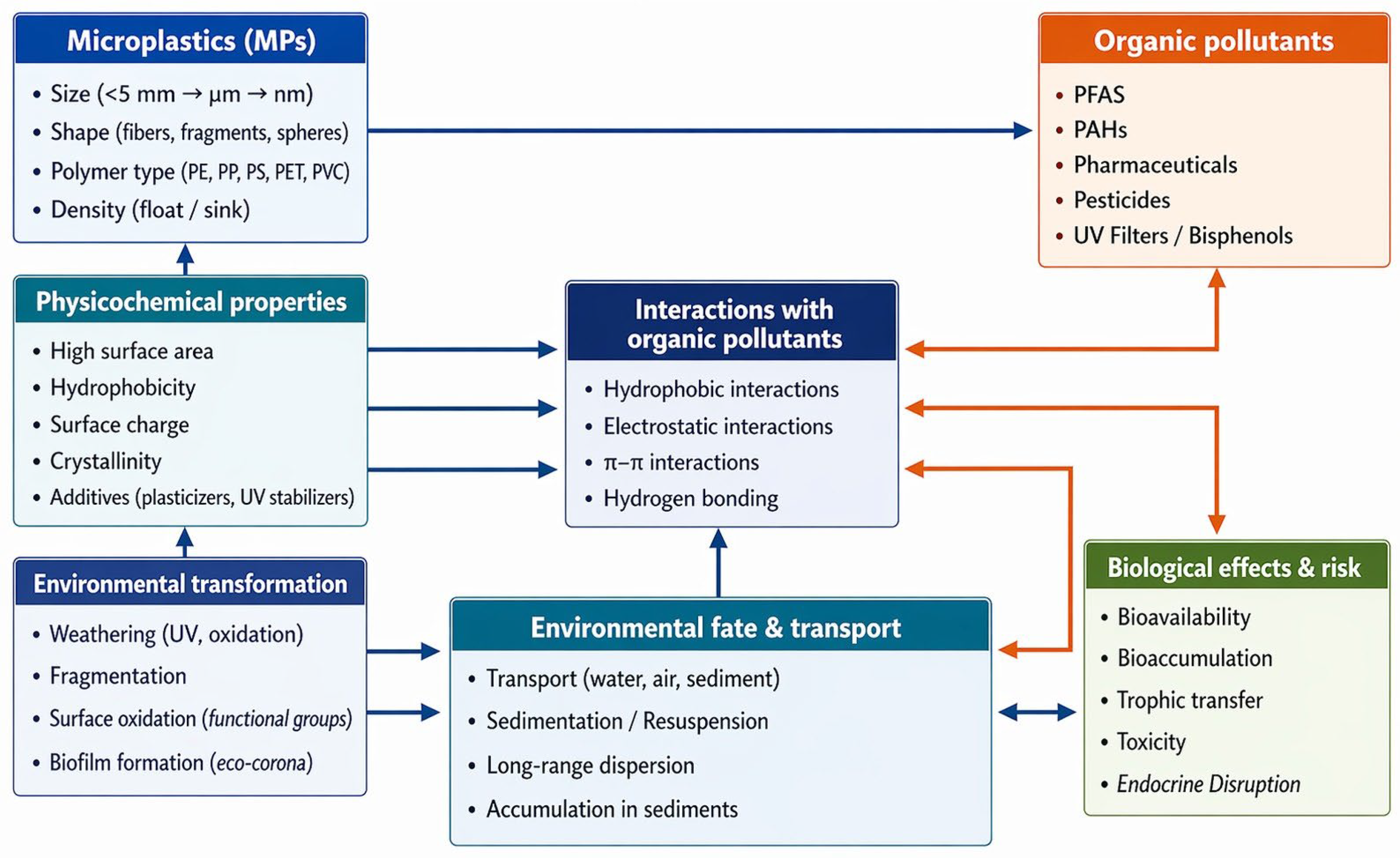

Interactions Between Microplastics and Organic Pollutants in Aquatic Systems: Impacts on Environmental Fate, Transport, and Risk Assessment




Abstract
1. Introduction
2. Literature Search and Selection Criteria
3. MPs and Organic Pollutants: Characteristics, Occurrence and Interactions
3.1. MPs—Characteristics and Behavior in the Environment
3.2. Organic Compounds Associated with MPs
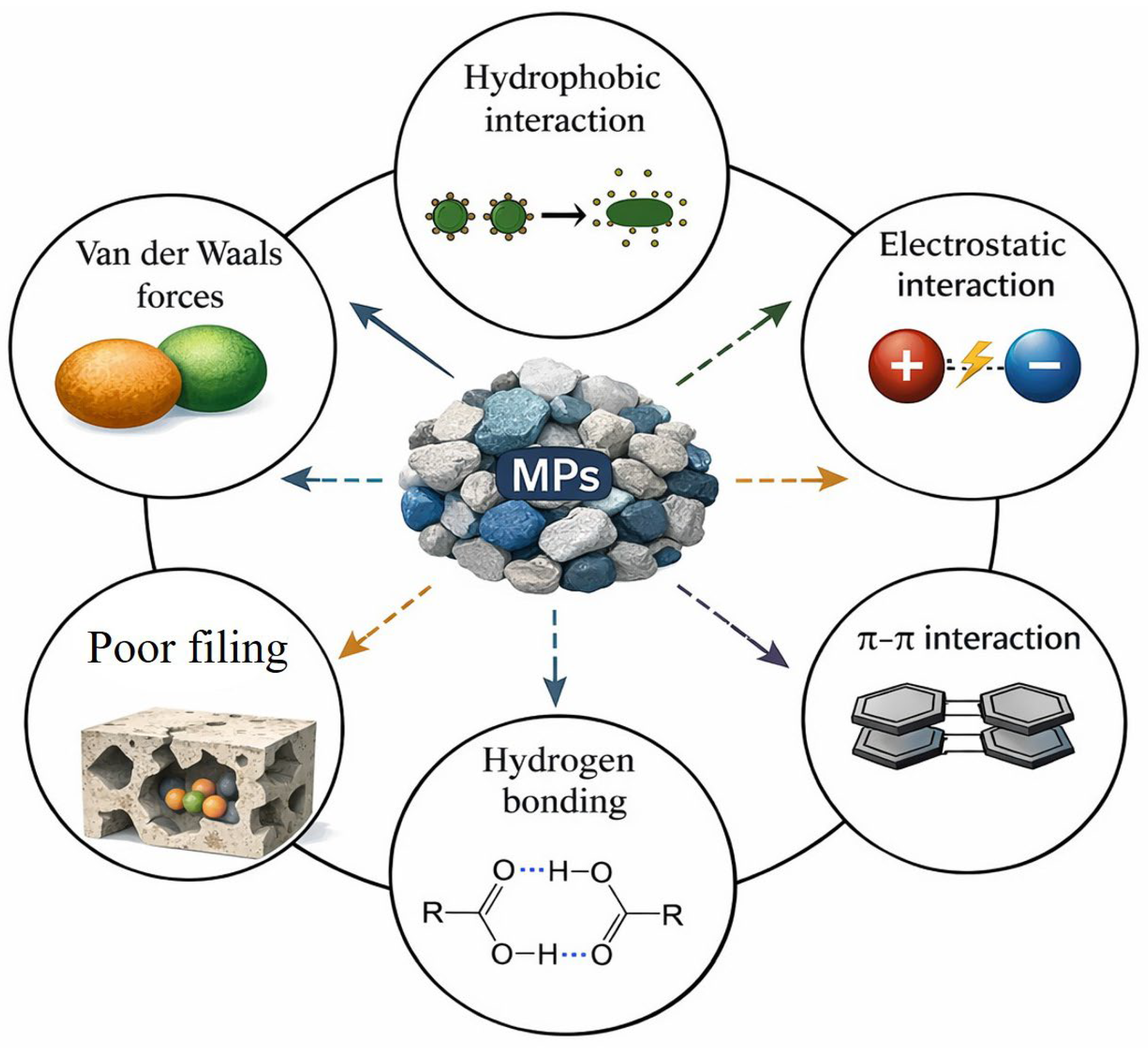
3.3. Mechanisms of Microplastic–Organic Compound Interaction
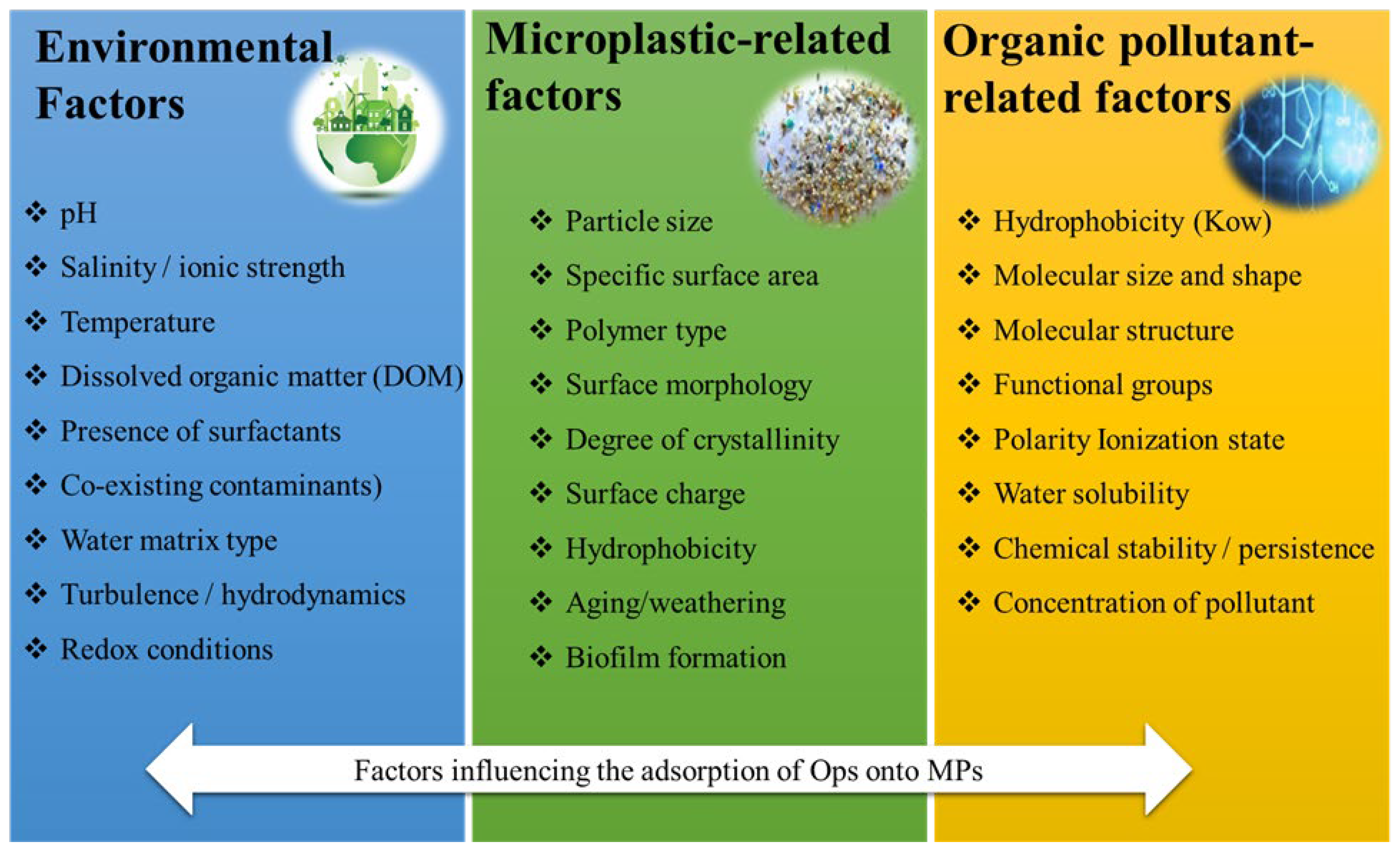
3.4. Factors Affecting the Adsorption of OPs onto MPs
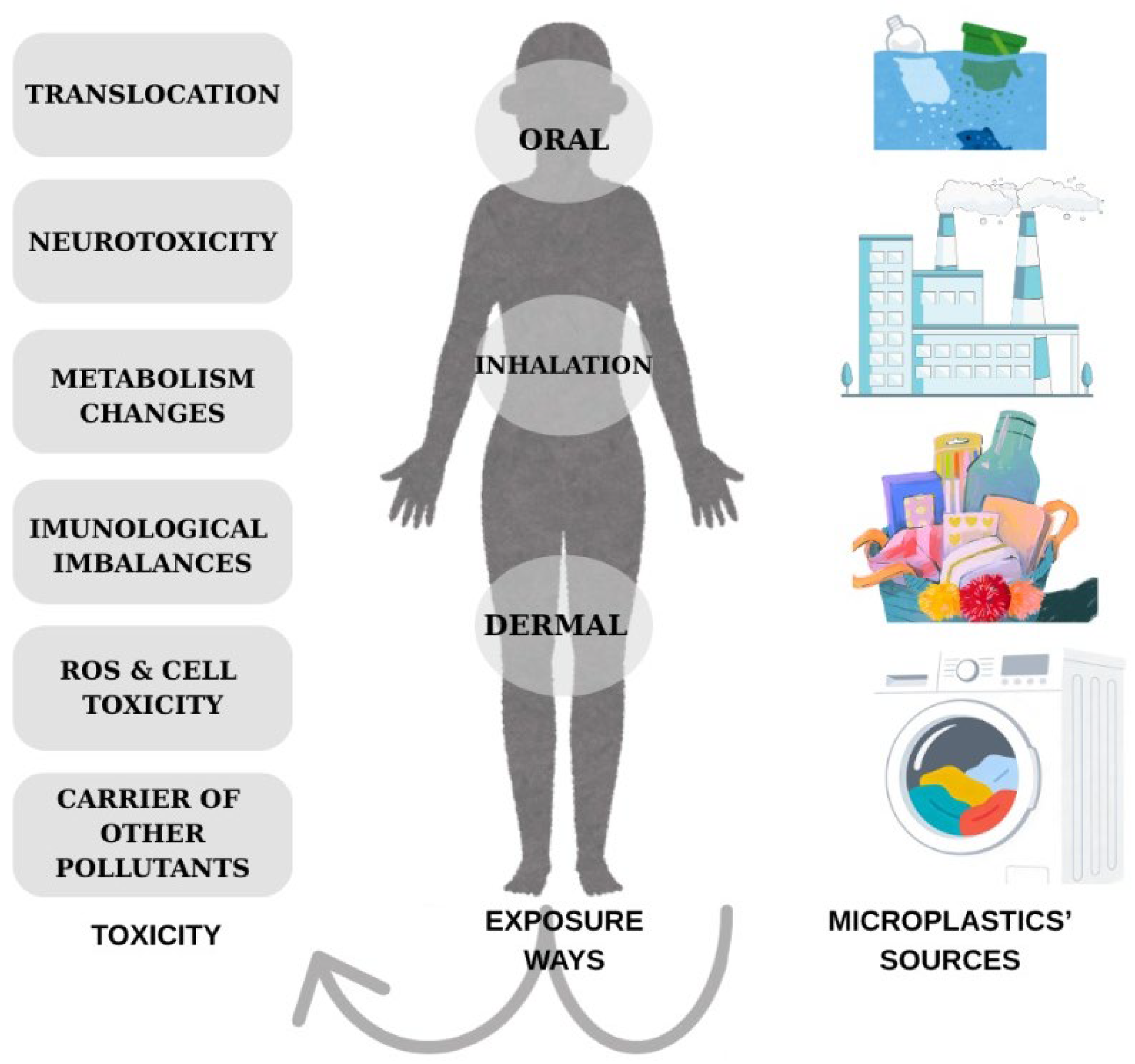
4. Ecotoxicological Implications and Health Risks
5. Identification and Quantification of MPs
6. Knowledge Gaps, Challenges and Future Perspectives
7. Conclusions
Author Contributions
Funding
Data Availability Statement
Acknowledgments
Conflicts of Interest
References
- Thushari, G.G.N.; Senevirathna, J.D.M. Plastic pollution in the marine environment. Heliyon 2020, 6, e04709. [Google Scholar] [CrossRef] [Scilit]
- Barbieri, M.V.; González, M.P.; Piqué, V.A.; Blasco, J.; Eljarrat, E. Contaminants in fish and seafood from the marine environment: A global overview of current status and future perspective. Mar. Pollut. Bull. 2025, 219, 118319. [Google Scholar] [CrossRef] [Scilit]
- Nawaz, F.; Islam, Z.U.; Ghori, S.A.; Bahadur, A.; Ullah, H.; Ahmad, M.; Khan, G.U. Microplastic and nanoplastic pollution: Assessing translocation, impact, and mitigation strategies in marine ecosystems. Water Environ. Res. 2025, 97, e70032. [Google Scholar] [CrossRef] [Scilit] [PubMed]
- Islam, F.S. The effects of plastic and microplastic waste on the marine environment and the ocean. Eur. J. Environ. Earth Sci. 2025, 6, 1–9. [Google Scholar] [CrossRef] [Scilit]
- Welden, N.A. The environmental impacts of plastic pollution. In Plastic Waste and Recycling; Academic Press: London, UK, 2020; pp. 195–222. [Google Scholar]
- Albaseer, S.S.; Al-Hazmi, H.E.; Kurniawan, T.A.; Xu, X.; Abdulrahman, S.A.; Ezzati, P.; Saeb, M.R. Microplastics in water resources: Global pollution circle, possible technological solutions, legislations, and future horizon. Sci. Total Environ. 2024, 946, 173963. [Google Scholar] [CrossRef] [Scilit]
- Song, X.; Zhuang, W.; Cui, H.; Liu, M.; Gao, T.; Li, A.; Gao, Z. Interactions of microplastics with organic, inorganic and bio-pollutants and the ecotoxicological effects on terrestrial and aquatic organisms. Sci. Total Environ. 2022, 838, 156068. [Google Scholar] [CrossRef] [Scilit]
- Cole, M.; Lindeque, P.; Halsband, C.; Galloway, T.S. Microplastics as contaminants in the marine environment: A review. Mar. Pollut. Bull. 2011, 62, 2588–2597. [Google Scholar] [CrossRef] [Scilit]
- Razaviarani, V.; Saudagar, A.; Gallage, S. Comprehensive investigation on microplastics from source to sink. Clean Technol. Environ. Policy 2024, 26, 1755–1782. [Google Scholar] [CrossRef] [Scilit]
- Jolaosho, T.L.; Rasaq, M.F.; Omotoye, E.V.; Araomo, O.V.; Adekoya, O.S.; Abolaji, O.Y.; Hungbo, J.J. Microplastics in freshwater and marine ecosystems: Occurrence, characterization, sources, distribution dynamics, fate, transport processes, potential mitigation strategies, and policy interventions. Ecotoxicol. Environ. Saf. 2025, 294, 118036. [Google Scholar] [CrossRef] [Scilit]
- Lovett, A.P.; Browning-Samoni, L.; Freeman, C. Fashion to Dysfunction: The Role of Plastic Pollution in Interconnected Systems of the Environment and Human Health. Textiles 2025, 5, 21. [Google Scholar] [CrossRef] [Scilit]
- United Nations Environment Programme. Turning Off the Tap: How the World Can End Plastic Pollution and Create a Circular Economy; United Nations Environment Programme: Nairobi, Kenya, 2023. [Google Scholar]
- Thompson, R.C.; Courtene-Jones, W.; Boucher, J.; Pahl, S.; Raubenheimer, K.; Koelmans, A.A. Twenty years of microplastic pollution research—What have we learned? Science 2024, 386, eadl2746. [Google Scholar] [CrossRef] [Scilit]
- Debnath, R.; Prasad, G.S.; Amin, A.; Malik, M.M.; Ahmad, I.; Abubakr, A.; Faggio, C. Understanding and addressing microplastic pollution: Impacts, mitigation, and future perspectives. J. Contam. Hydrol. 2024, 266, 104399. [Google Scholar] [CrossRef] [Scilit]
- Gaylarde, C.C.; Baptista Neto, J.A.; da Fonseca, E.M. Atmospheric microplastics: Inputs and outputs. Micro 2025, 5, 27. [Google Scholar] [CrossRef] [Scilit]
- Lim, C.; Kim, N.; Lee, J.; Yoon, Y. Potential of adsorption of diverse environmental contaminants onto microplastics. Water 2022, 14, 4086. [Google Scholar] [CrossRef] [Scilit]
- Yu, F.; Wu, J.; Wang, H.; Bao, Y.; Xing, H.; Ye, W.; Huang, M. Interaction of microplastics with perfluoroalkyl and polyfluoroalkyl substances in water: A review of the fate, mechanisms and toxicity. Sci. Total Environ. 2024, 948, 175000. [Google Scholar] [CrossRef] [Scilit]
- Cimpean, I.-A.; Chiriac, F.L.; Stefan, D.S. Preliminary assessment of bisphenol A adsorption on microplastics: Capacity, efficiency and control factors. UPB. Sci. Bull. Ser. B 2026, 88, 1. [Google Scholar]
- Al-Emran, M.; Nayem, M.J. Vector effects of microplastics on organic pollutants: Sorption-desorption and bioaccumulation kinetics. Chemosphere 2025, 388, 144698. [Google Scholar] [CrossRef] [Scilit] [PubMed]
- Cojocaru, V.C.; Cristea, I.N.; Paris, I.A.; Ionescu, I.A.; Chiriac, F.L. Exploring sustainable solutions: Dynamic adsorption, isotherm models, and kinetics of organic contaminants on polystyrene microplastics. Sustainability 2024, 16, 7743. [Google Scholar] [CrossRef] [Scilit]
- Rafa, N.; Ahmed, B.; Zohora, F.; Bakya, J.; Ahmed, S.; Ahmed, S.F.; Almomani, F. Microplastics as carriers of toxic pollutants: Source, transport, and toxicological effects. Environ. Pollut. 2024, 343, 123190. [Google Scholar] [CrossRef] [Scilit] [PubMed]
- Tenea, A.G.; Dinu, C.; Rus, P.A.; Ionescu, I.A.; Gheorghe, S.; Iancu, V.I.; Chiriac, F.L. Exploring adsorption dynamics of heavy metals onto varied commercial microplastic substrates: Isothermal models and kinetics analysis. Heliyon 2024, 10, 15. [Google Scholar] [CrossRef] [Scilit]
- Ogbeh, G.O.; Ogunlela, A.O.; Akinbile, C.O.; Iwar, R.T. Adsorption of organic micropollutants in water: A review of advances in modelling, mechanisms, adsorbents, and their characteristics. Environ. Eng. Res. 2025, 30, 230733. [Google Scholar] [CrossRef] [Scilit]
- Pirvu, F.; Pascu, L.F.; Paun, I.; Stoica, C.; Iancu, V.I.; Niculescu, M.; Chiriac, F.L. Sorption of PAHs onto microplastics in Romanian surface waters and sediments: Environmental toxicity and human health risk with emphasis on pediatric exposure. Water Res. 2025, 287, 124483. [Google Scholar] [CrossRef] [Scilit]
- Xia, Y.; Niu, S.; Yu, J. Microplastics as vectors of organic pollutants in aquatic environment: A review on mechanisms, numerical models, and influencing factors. Sci. Total Environ. 2023, 887, 164008. [Google Scholar] [CrossRef] [Scilit]
- Tourinho, P.S.; Kočí, V.; Loureiro, S.; van Gestel, C.A. Partitioning of chemical contaminants to microplastics: Sorption mechanisms, environmental distribution and effects on toxicity and bioaccumulation. Environ. Pollut. 2019, 252, 1246–1256. [Google Scholar] [CrossRef] [Scilit] [PubMed]
- Prapanchan, V.N.; Kumar, E.; Subramani, T.; Sathya, U.; Li, P. A global perspective on microplastic occurrence in sediments and water with a special focus on sources, analytical techniques, health risks, and remediation technologies. Water 2023, 15, 1987. [Google Scholar] [CrossRef] [Scilit]
- Zaini, N.; Kasmuri, N.; Mojiri, A.; Kindaichi, T.; Nayono, S.E. Plastic pollution and degradation pathways: A review on the treatment technologies. Heliyon 2024, 10, 7. [Google Scholar] [CrossRef] [Scilit]
- Hartmann, N.B.; Huffer, T.; Thompson, R.C.; Hassellov, M.; Verschoor, A.; Daugaard, A.E.; Rist, S.; Karlsson, T.; Brennholt, N.; Cole, M. Are we speaking the same language? Recommendations for a definition and categorization framework for plastic debris. Environ. Sci. Technol. 2019, 53, 1039–1047. [Google Scholar] [CrossRef] [Scilit]
- Besseling, E.; Redondo-Hasselerharm, P.; Foekema, E.M.; Koelmans, A.A. Quantifying ecological risks of aquatic micro-and nanoplastic. Crit. Rev. Environ. Sci. Technol. 2019, 49, 32–80. [Google Scholar] [CrossRef] [Scilit]
- Gatidou, G.; Arvaniti, O.S.; Stasinakis, A.S. Review on the occurrence and fate of microplastics in Sewage Treatment Plants. J. Hazard. Mater. 2019, 367, 504–512. [Google Scholar] [CrossRef] [Scilit]
- Mutuku, J.; Yanotti, M.; Tocock, M.; Hatton MacDonald, D. The abundance of microplastics in the world’s oceans: A systematic review. Oceans 2024, 5, 398–428. [Google Scholar] [CrossRef] [Scilit]
- Crawford, C.B.; Quinn, B. Plastic production, waste and legislation. Microplastic Pollut. 2017, 30, 39–56. [Google Scholar]
- Jha, S.; Akula, B.; Enyioma, H.; Novak, M.; Amin, V.; Liang, H. Biodegradable biobased polymers: A review of the state of the art, challenges, and future directions. Polymers 2024, 16, 2262. [Google Scholar] [CrossRef] [Scilit] [PubMed]
- Kataoka, T.; Nihei, Y.; Kudou, K.; Hinata, H. Assessment of the sources and inflow processes of microplastics in the river environments of Japan. Environ. Pollut. 2019, 244, 958–965. [Google Scholar] [CrossRef] [Scilit]
- Peng, G.; Xu, P.; Zhu, B.; Bai, M.; Li, D. Microplastics in freshwater river sediments in Shanghai, China: A case study of risk assessment in mega-cities. Environ. Pollut. 2018, 234, 448–456. [Google Scholar] [CrossRef] [Scilit]
- Chen, G.; Feng, Q.; Wang, J. Mini-review of microplastics in the atmosphere and their risks to humans. Sci. Total Environ. 2020, 703, 135504. [Google Scholar] [CrossRef] [Scilit]
- Liu, K.; Wu, T.; Wang, X.; Song, Z.; Zong, C.; Wei, N.; Li, D. Consistent transport of terrestrial microplastics to the ocean through atmosphere. Environ. Sci. Technol. 2019, 53, 10612–10619. [Google Scholar] [CrossRef] [Scilit]
- Dris, R.; Gasperi, J.; Saad, M.; Mirande, C.; Tassin, B. Synthetic fibers in atmospheric fallout: A source of microplastics in the environment? Mar. Pollut. Bull. 2016, 104, 290–293. [Google Scholar] [CrossRef] [Scilit]
- Hemond, H.F.; Fechner, E.J. Chemical Fate and Transport in the Environment; Academic Press: London, UK, 2022. [Google Scholar]
- Thanh, N.T.; Minh, H.V.T.; Lavane, K.; Vo Chau Ngan, N.; Toan, P.V.; Ty, T.V.; Kumar, P. From River to Sea: Tracking Plastic Waste Transport via the Hau River, Mekong Delta, Vietnam. Water 2025, 17, 2438. [Google Scholar] [CrossRef] [Scilit]
- Wang, C.; Tang, J.; Yu, H.; Wang, Y.; Li, H.; Xu, S.; Zhou, Q. Microplastic pollution in the soil environment: Characteristics, influencing factors, and risks. Sustainability 2022, 14, 13405. [Google Scholar] [CrossRef] [Scilit]
- Shikwambana, P.; Foxcroft, L.C.; Taylor, J.C.; Bouwman, H. Microplastic concentrations in sediments and waters do not decrease in two rivers flowing through the Kruger National Park, South Africa. Water Air Soil Pollut. 2024, 235, 675. [Google Scholar] [CrossRef] [Scilit]
- Zhang, L.; Li, X.; Li, Q.; Xia, X.; Zhang, H. The effects of land use types on microplastics in river water: A case study on the mainstream of the Wei River, China. Environ. Monit. Assess. 2024, 196, 349. [Google Scholar] [CrossRef] [Scilit] [PubMed]
- Ashrafy, A.; Liza, A.A.; Islam, M.N.; Billah, M.M.; Arafat, S.T.; Rahman, M.M.; Rahman, S.M. Microplastics pollution: A brief review of its source and abundance in different aquatic ecosystems. J. Hazard. Mater. Adv. 2023, 9, 100215. [Google Scholar] [CrossRef] [Scilit]
- Chen, Y.; Chen, Q.; Zhang, Q.; Zuo, C.; Shi, H. An overview of chemical additives on (micro)plastic fibers: Occurrence, release, and health risks. Rev. Environ. Contam. Toxicol. 2022, 260, 22. [Google Scholar] [CrossRef] [Scilit]
- Li, M.; Ma, W.; Fang, J.K.H.; Mo, J.; Li, L.; Pan, M.; Lai, K.P. A review on the combined toxicological effects of microplastics and their attached pollutants. Emerg. Contam. 2025, 11, 100486. [Google Scholar] [CrossRef] [Scilit]
- Kye, H.; Kim, J.; Ju, S.; Lee, J.; Lim, C.; Yoon, Y. Microplastics in water systems: A review of their impacts on the environment and their potential hazards. Heliyon 2023, 9, e14359. [Google Scholar] [CrossRef] [Scilit] [PubMed]
- Wu, X.; He, F.; Xu, X.; Wu, L.; Rong, J.; Lin, S. Environmental health and safety implications of the interplay between microplastics and the residing biofilm. Environ. Health 2024, 3, 118–132. [Google Scholar] [CrossRef] [Scilit]
- Smídova, K.; Svobodova, M.; Hofman, J. Toxicokinetics of hydrophobic organic compounds in oligochaeta: A critical review. Environ. Pollut. 2021, 289, 117743. [Google Scholar] [CrossRef] [Scilit]
- Tatarus, A.; Puiu, D.; Scutariu, R.; Simion, M.; Niculescu, M.A.; Galaon, T. PCB congeners occurrence in sewage sludge from municipal wastewater treatment plants in Romania. In Proceedings Book International Symposium “The Environment and the Industry”; SIMI: Aegean Sea, Turkey, 2019; pp. 310–317. [Google Scholar]
- Bolan, N.; Sarkar, B.; Yan, Y.; Li, Q.; Wijesekara, H.; Kannan, K.; Tsang, D.C.; Schauerte, M.; Bosch, J.; Noll, H.; et al. Remediation of poly- and perfluoroalkyl substances (PFAS) contaminated soils—to mobilize or to immobilize or to degrade? J. Hazard. Mater. 2021, 401, 123892. [Google Scholar] [CrossRef] [Scilit]
- Dai, Y.; Zhao, J.; Sun, C.; Li, D.; Liu, X.; Wang, Z.; Yue, T.; Xing, B. Interaction and combined toxicity of microplastics and per- and polyfluoroalkyl substances in aquatic environment. Front. Environ. Sci. Eng. 2022, 16, 136. [Google Scholar] [CrossRef] [Scilit]
- Li, X.; Shen, X.; Jiang, W.; Xi, Y.; Li, S. Comprehensive review of emerging contaminants: Detection technologies, environmental impact, and management strategies. Ecotoxicol. Environ. Saf. 2024, 278, 116420. [Google Scholar] [CrossRef] [Scilit]
- Cui, W.; Hale, R.C.; Huang, Y.; Zhou, F.; Wu, Y.; Liang, X.; Chen, D. Sorption of representative organic contaminants on microplastics: Effects of chemical physicochemical properties, particle size, and biofilm presence. Ecotoxicol. Environ. Saf. 2023, 251, 114533. [Google Scholar] [CrossRef] [Scilit] [PubMed]
- Fox, S.; Stefánsson, H.; Peternell, M.; Zlotskiy, E.; Ásbjörnsson, E.J.; Sturkell, E.; Konrad-Schmolke, M. Physical characteristics of microplastic particles and potential for global atmospheric transport: A meta-analysis. Environ. Pollut. 2024, 342, 122938. [Google Scholar] [CrossRef] [Scilit]
- Ayman, F.M.F.; Taha, M.; Farghali, A.A.; Abdelhameed, R.M. Synthesis and applications of porphyrin-based MOFs in removal of pesticide from wastewater: Molecular simulations and experimental studies. CrystEngComm 2023, 25, 6697–6709. [Google Scholar] [CrossRef] [Scilit]
- Pal, D.; Prabhakar, R.; Barua, V.B.; Zekker, I.; Burlakovs, J.; Krauklis, A.; Vincevica-Gaile, Z. Microplastics in aquatic systems: A comprehensive review of its distribution, environmental interactions, and health risks. Environ. Sci. Pollut. Res. 2025, 32, 56–88. [Google Scholar] [CrossRef] [Scilit]
- Fu, L.; Li, J.; Wang, G.; Luan, Y.; Dai, W. Adsorption behavior of organic pollutants on microplastics. Ecotoxicol. Environ. Saf. 2021, 217, 112207. [Google Scholar] [CrossRef] [Scilit]
- Yu, Y.; Mo, W.Y.; Luukkonen, T. Adsorption behaviour and interaction of organic micropollutants with nano and microplastics—A review. Sci. Total Environ. 2021, 797, 149140. [Google Scholar] [CrossRef] [Scilit] [PubMed]
- Liu, Z.; Qin, Q.; Hu, Z.; Yan, L.; Ieong, U.I.; Xu, Y. Adsorption of chlorophenols on polyethylene terephthalate microplastics from aqueous environments: Kinetics, mechanisms and influencing factors. Environ. Pollut. 2020, 265, 114926. [Google Scholar] [CrossRef] [Scilit] [PubMed]
- Li, J.; Zhang, K.; Zhang, H. Adsorption of antibiotics on microplastics. Environ. Pollut. 2018, 237, 460–467. [Google Scholar] [CrossRef] [Scilit]
- Ma, J.; Zhao, J.; Zhu, Z.; Li, L.; Yu, F. Effect of microplastic size on the adsorption behavior and mechanism of triclosan on polyvinyl chloride. Environ. Pollut. 2019, 254, 113104. [Google Scholar] [CrossRef] [Scilit]
- Wiśniowska, E.; Włodarczyk-Makuła, M. Evaluation of the adsorption efficiency of carcinogenic PAHs on microplastic (polyester) fibers—Preliminary results. Appl. Water Sci. 2022, 12, 119. [Google Scholar] [CrossRef] [Scilit]
- Wu, P.; Cai, Z.; Jin, H.; Tang, Y. Adsorption mechanisms of five bisphenol analogues on PVC microplastics. Sci. Total Environ. 2019, 650, 671–678. [Google Scholar] [CrossRef] [Scilit]
- Xia, Y.; Zhou, J.J.; Gong, Y.Y.; Li, Z.J.; Zeng, E.Y. Strong influence of surfactants on virgin hydrophobic microplastics adsorbing ionic organic pollutants. Environ. Pollut. 2020, 265, 115061. [Google Scholar] [CrossRef] [Scilit]
- Zhang, H.; Wang, J.; Zhou, B.; Zhou, Y.; Dai, Z.; Zhou, Q.; Chriestie, P.; Luo, Y. Enhanced adsorption of oxytetracycline to weathered microplastic polystyrene: Kinetics, isotherms and influencing factors. Environ. Pollut. 2018, 243, 1550–1557. [Google Scholar] [CrossRef] [Scilit] [PubMed]
- Zhang, Q.; Chen, J.; Gao, X.; Che, H.; Ao, Y.; Wang, P. Understanding the mechanism of interfacial interaction enhancing photodegradation rate of pollutants at molecular level: Intermolecular π–π interactions favor electrons delivery. J. Hazard. Mater. 2022, 430, 128386. [Google Scholar] [CrossRef] [Scilit] [PubMed]
- Du, H.; Zhang, Y.; Jiang, H.; Wang, H. Adsorption of rhodamine B on polyvinyl chloride, polystyrene, and polyethylene terephthalate microplastics in aqueous environments. Environ. Technol. Innov. 2022, 27, 102495. [Google Scholar] [CrossRef] [Scilit]
- Elizalde-Velázquez, A.; Subbiah, S.; Anderson, T.A.; Green, M.J.; Zhao, X.; Cañas-Carrell, J.E. Sorption of three common nonsteroidal anti-inflammatory drugs (NSAIDs) to microplastics. Sci. Total Environ. 2020, 715, 136974. [Google Scholar] [CrossRef] [Scilit]
- Guo, X.; Wang, J. The chemical behaviors of microplastics in marine environment: A review. Mar. Pollut. Bull. 2019, 142, 1–14. [Google Scholar] [CrossRef] [Scilit]
- Liu, N.; Yu, F.; Wang, Y.; Ma, J. Effects of environmental aging on the adsorption behavior of antibiotics from aqueous solutions in microplastic-graphene coexisting systems. Sci. Total Environ. 2022, 806, 150956. [Google Scholar] [CrossRef] [Scilit]
- Wang, F.; Zhang, M.; Sha, W.; Wang, Y.; Hao, H.; Dou, Y.; Li, Y. Sorption behavior and mechanisms of organic contaminants to nano and microplastics. Molecules 2020, 25, 1827. [Google Scholar] [CrossRef] [Scilit] [PubMed]
- Sun, P.; Liu, X.; Zhang, M.; Li, Z.; Cao, C.; Shi, H.; Yang, Y.; Zhao, Y. Sorption and leaching behaviors between aged MPs and BPA in water: The role of BPA binding modes within plastic matrix. Water Res. 2021, 195, 116956. [Google Scholar] [CrossRef] [Scilit]
- Zhang, J.; Chen, H.; He, H.; Cheng, X.; Ma, T.; Hu, J.; Yang, S.; Li, S.; Zhang, L. Adsorption behavior and mechanism of 9-nitroanthracene on typical microplastics in aqueous solutions. Chemosphere 2020, 245, 125628. [Google Scholar] [CrossRef] [Scilit]
- Wang, J.; Liu, X.; Liu, G.; Zhang, Z.; Wu, H.; Cui, B.; Bai, J.; Zhang, W. Size effect of polystyrene microplastics on sorption of phenanthrene and nitrobenzene. Ecotoxicol. Environ. Saf. 2019, 173, 331–338. [Google Scholar] [CrossRef] [Scilit]
- Ge, J.; Wang, M.; Liu, P.; Zhang, Z.; Peng, J.; Guo, X. A systematic review on the aging of microplastics and the effects of typical factors in various environmental media. Trends Anal. Chem. 2023, 162, 117025. [Google Scholar] [CrossRef] [Scilit]
- Miri, S.; Saini, R.; Davoodi, S.M.; Pulicharla, R.; Brar, S.K.; Magdouli, S. Biodegradation of microplastics: Better late than never. Chemosphere 2022, 286, 131670. [Google Scholar] [CrossRef] [Scilit] [PubMed]
- Müller, A.; Becker, R.; Dorgerloh, U.; Simon, F.G.; Braun, U. The effect of polymer aging on the uptake of fuel aromatics and ethers by microplastics. Environ. Pollut. 2018, 240, 639–646. [Google Scholar] [CrossRef] [Scilit]
- Mejías, C.; Martín, J.; Santos, J.L.; Aparicio, I.; Alonso, E. Adsorption of perfluoroalkyl substances on polyamide microplastics: Effect of sorbent and influence of environmental factors. Environ. Res. 2023, 216, 114834. [Google Scholar] [CrossRef] [Scilit]
- Mei, W.; Chen, G.; Bao, J.; Song, M.; Li, Y.; Luo, C. Interactions between microplastics and organic compounds in aquatic environments: A mini review. Sci. Total Environ. 2020, 736, 139472. [Google Scholar] [CrossRef] [Scilit]
- Tsuchida, K.; Imoto, Y.; Saito, T.; Hara, J.; Kawabe, Y. Effect of solution pH on nanoplastic adsorption onto soil particle surface and the aggregation of soil particles. Sci. Total Environ. 2025, 975, 178712. [Google Scholar] [CrossRef] [Scilit]
- Zhao, Y.; Chen, H.; Liang, H.; Zhao, T.; Ren, B.; Li, Y.; Liang, H.; Liu, Y.; Cao, H.; Cui, N. Combined toxic effects of polyethylene microplastics and lambda-cyhalothrin on gut of zebrafish (Danio rerio). Ecotoxicol. Environ. Saf. 2024, 276, 116296. [Google Scholar] [CrossRef] [Scilit] [PubMed]
- Shahriar, S.I.M.; Islam, N.; Emon, F.J.; Nepal, V.; Khan, S.; Shahjahan, M. Combined impacts of organophosphate pesticide and polyamide microplastics on growth, hematology, and immune responses in juvenile striped catfish (Pangasianodon hypophthalmus). Emerg. Contam. 2025, 11, 100520. [Google Scholar] [CrossRef] [Scilit]
- Brenckman, C.M.; Borgaonkar, A.D.; Pennock, W.H.; Meegoda, J.N. Combined environmental impacts and toxicological interactions of per- and polyfluoroalkyl substances (PFAS) and microplastics. Environments 2026, 13, 38. [Google Scholar] [CrossRef] [Scilit]
- Sun, N.; Shi, H.; Li, X.; Gao, C.; Liu, R. Combined toxicity of micro/nanoplastics loaded with environmental pollutants to organisms and cells: Role, effects, and mechanism. Environ. Int. 2023, 171, 107711. [Google Scholar] [CrossRef] [Scilit] [PubMed]
- Rehse, S.; Kloas, W.; Zarfl, C. Microplastics reduce short-term effects of environmental contaminants. Part I: Effects of bisphenol A on freshwater zooplankton are lower in presence of polyamide particles. Int. J. Environ. Res. Public Health 2018, 15, 280. [Google Scholar] [CrossRef] [Scilit]
- Yi, X.; Wang, J.; Li, Z.; Zhang, Z.; Chi, T.; Guo, M.; Li, W.; Zhou, H. The effect of polystyrene plastics on the toxicity of triphenyltin to the marine diatom Skeletonema costatum—Influence of plastic particle size. Environ. Sci. Pollut. Res. 2019, 26, 25445–25451. [Google Scholar] [CrossRef] [Scilit]
- Yoon, D.S.; Lee, Y.; Park, J.C.; Lee, M.C.; Lee, J.S. Alleviation of tributyltin-induced toxicity by diet and microplastics in the marine rotifer Brachionus koreanus. J. Hazard. Mater. 2021, 402, 123739. [Google Scholar] [CrossRef] [Scilit] [PubMed]
- Almeda, R.; Rodriguez-Torres, R.; Rist, S.; Winding, M.H.; Stief, P.; Hansen, B.H.; Nielsen, T.G. Microplastics do not increase bioaccumulation of petroleum hydrocarbons in Arctic zooplankton but trigger feeding suppression under co-exposure conditions. Sci. Total Environ. 2021, 751, 141264. [Google Scholar] [CrossRef] [Scilit]
- Bussolaro, D.; Wright, S.L.; Schnell, S.; Schirmer, K.; Bury, N.R.; Arlt, V.M. Co-exposure to polystyrene plastic beads and polycyclic aromatic hydrocarbon contaminants in fish gill (RTgill-W1) and intestinal (RTgutGC) epithelial cells derived from rainbow trout (Oncorhynchus mykiss). Environ. Pollut. 2019, 248, 706–714. [Google Scholar] [CrossRef] [Scilit]
- Devriese, L.I.; De Witte, B.; Vethaak, A.D.; Hostens, K.; Leslie, H.A. Bioaccumulation of PCBs from microplastics in Norway lobster (Nephrops norvegicus): An experimental study. Chemosphere 2017, 186, 10–16. [Google Scholar] [CrossRef] [Scilit]
- Bringer, A.; Thomas, H.; Dubillot, E.; Le Floch, S.; Receveur, J.; Cachot, J.; Tran, D. Subchronic exposure to high-density polyethylene microplastics alone or in combination with chlortoluron significantly affected valve activity and daily growth of the Pacific oyster. Crassostrea gigas. Aquat. Toxicol. 2021, 237, 105880. [Google Scholar] [CrossRef] [Scilit]
- Wang, T.; Wang, L.; Chen, Q.; Kalogerakis, N.; Ji, R.; Ma, Y. Interactions between microplastics and organic pollutants: Effects on toxicity, bioaccumulation, degradation, and transport. Sci. Total Environ. 2020, 748, 142427. [Google Scholar] [CrossRef] [Scilit]
- Gouin, T.; Whelan, M.J. Evaluating microplastic particles as vectors of exposure for plastic additive chemicals using a food web model. Microplastics Nanoplastics 2024, 4, 21. [Google Scholar] [CrossRef] [Scilit]
- Hirt, N.; Body-Malapel, M. Immunotoxicity and intestinal effects of nano- and microplastics: A review of the literature. Part. Fibre Toxicol. 2020, 17, 57. [Google Scholar] [CrossRef] [Scilit]
- Liu, S.; Guo, J.; Liu, X.; Yang, R.; Wang, H.; Sun, Y.; Chen, B.; Dong, R. Detection of various microplastics in placentas, meconium, infant feces, breastmilk and infant formula: A pilot prospective study. Sci. Total Environ. 2023, 854, 158699. [Google Scholar] [CrossRef] [Scilit]
- Tan, S.; Liang, S.; Zhao, Y.; Pan, X.; Wang, W.; Liao, W.; Yang, X.; Wu, W.; He, Q. The evolving interface of aged microplastics and heavy metals: Implications for environmental fate and toxicity. Environ. Geochem. Health 2026, 48, 98. [Google Scholar] [CrossRef] [Scilit]
- Winiarska, E.; Jutel, M.; Zemelka-Wiacek, M. The potential impact of nano- and microplastics on human health: Understanding human health risks. Environ. Res. 2024, 251, 118535. [Google Scholar] [CrossRef] [Scilit]
- Ibrahim, N.; Rahman, A.M.N.A.A.; Shafiq, M.D.; Lockman, Z.; Jaafar, M.; Kameda, Y. Microplastic pollution: Sources, degradation mechanisms, analytical advances, and mitigation strategies for environmental sustainability. Rev. Environ. Contam. Toxicol. 2025, 263, 27. [Google Scholar] [CrossRef] [Scilit]
- Käppler, A.; Fischer, D.; Oberbeckmann, S.; Schernewski, G.; Labrenz, M.; Eichhorn, K.J.; Voit, B. Analysis of environmental microplastics by vibrational microspectroscopy: FTIR, Raman or both? Anal. Bioanal. Chem. 2016, 408, 8377–8391. [Google Scholar] [CrossRef] [Scilit]
- Huppertsberg, S.; Knepper, T.P. Instrumental analysis of microplastics—Benefits and challenges. Anal. Bioanal. Chem. 2018, 410, 6343–6352. [Google Scholar] [CrossRef] [Scilit] [PubMed]
- Iwanowicz, D.D.; Baldwin, A.K.; Barber, L.B.; Blazer, V.S.; Corsi, S.R.; Duris, J.W.; Spanjer, A.R. Integrated Science for the Study of Microplastics in the Environment—A Strategic Science Vision for the US Geological Survey (Circular 1521); U.S. Geological Survey: Reston, VA, USA, 2024. [CrossRef] [Scilit]
- Lin, J.T.; Chung, Y.P.; Lee, Y.Y.; Wu, T.L.; Huynh, T.T.T.; Nguyen, P.T.; Lin, W.C. Emerging analytical frontiers in microplastic detection: From spectroscopy to smart sensor technologies. Talanta Open 2025, 12, 100514. [Google Scholar] [CrossRef] [Scilit]
- Li, D.; Li, P.; Shi, Y.; Sheerin, E.D.; Zhang, Z.; Yang, L.; Xiao, L.; Hill, C.; Gordon, C.; Ruether, M.; et al. Stress-induced phase separation in plastics drives the release of amorphous polymer micropollutants into water. Nat. Commun. 2025, 16, 3814. [Google Scholar] [CrossRef] [Scilit]



| Category | Description |
|---|---|
| Databases | Web of Science, Scopus, ScienceDirect |
| Time period | 2015–2025 (focus on recent advances) |
| Keywords | “microplastics”, “organic pollutants”, “PFAS”, “pharmaceuticals”, “UV filters”, “adsorption”, “sorption mechanisms”, “environmental fate”, “transport”, “bioavailability”, “risk assessment” |
| Search strategy | Combination of keywords using Boolean operators; screening of titles, abstracts and full texts |
| Additional sources | Cross-referencing of cited literature |
| Inclusion criteria | (i) MPs occurrence in aquatic systems; (ii) MPs–OP interactions; (iii) environmental fate, transport and risk |
| Study types | Experimental studies and review articles |
| Priority criteria | Mechanistic insights, adsorption data, environmental or biological relevance |
| Exclusion criteria | Non-peer-reviewed articles (except key reports from UNEP, GESAMP) |
| Pollutant Class | Examples | Key Properties | Main Sources | Interaction with MPs | References |
|---|---|---|---|---|---|
| PAHs | BaP, Fluoranthene | Hydrophobic, persistent, toxic | Combustion, oil spills | Strong adsorption via hydrophobic interactions | [24] |
| PCBs | PCB-28, PCB-153 | Highly persistent, lipophilic | Industrial fluids, plastics | Strong sorption, vector transport via MPs | [51] |
| PFAS | PFOA, PFOS | Amphiphilic, highly mobile, persistent | Firefighting foams, wastewater, landfills | Electrostatic + hydrophobic interactions | [52,53] |
| Pharmaceuticals | Diclofenac, Ibuprofen | Polar to semi-polar, bioactive | Wastewater, hospitals | Sorption influenced by polarity and pH | [54] |
| Pesticides | Atrazine, Chlorpyrifos | Variable polarity, toxic | Agricultural runoff | Sorption depends on hydrophobicity and polymer type | [54] |
| UV filters | Oxybenzone (BP-3) | Lipophilic, endocrine disruptors | Personal care products | Adsorption onto MPs surfaces | [54] |
| Bisphenols | BPA, BPS | Endocrine disruptors | Plastics, industrial waste | Hydrophobic and π–π interactions | [54] |
| MPs Type | Co-Pollutant | Test Organism | Observed Effect | Key Implication |
|---|---|---|---|---|
| PE | Lambda-cyhalothrin | Zebrafish | Increased acute toxicity, oxidative stress, intestinal immune dysregulation, gut microbiota alteration | MPs enhanced pesticide toxicity; aged MPs showed stronger effects [83] |
| PA | Fenitrothion | Juvenile striped catfish | Reduced growth and survival, hematological alterations, histopathological damage, immune gene dysregulation | Combined exposure amplified physiological and tissue-level toxicity [84] |
| MPs | PFOS/F-53B | Zebrafish | Enhanced liver oxidative stress, immune disturbance, metabolic disruption, gut microbiota changes | Co-exposure intensified hepatotoxicity and microbiome-mediated effects [85] |
| PS-MPs | PFOS/PFOA | Oyster | Oxidative stress, immune gene upregulation, gut microbiota alteration | Enhanced PFAS toxicity and microbiome disruption [86] |
| PA | BPA | Zooplankton | Reduced toxicity (sorption effect) | Decreased bioavailability of BPA [87] |
| PS | Triphenyltin (TPT) | Marine diatom | Reduced toxicity | Adsorption limits pollutant bioavailability [88] |
| MPs | Tributyltin (TBT) | Rotifer | Reproductive toxicity, oxidative stress | Multigenerational effects [89] |
| PE | PAHs (crude oil) | Arctic copepod | Reduced feeding, increased PAH uptake | Trophic transfer risk [90] |
| PS | 3-NBA, BaP | Trout cells | DNA damage, oxidative stress | Genotoxic risk in food webs [91] |
| PE, PS | Polychlorinated biphenyls (PCBs) | Norway lobster | Limited uptake | Low transfer but uncertain real-world risk [92] |
| HDPE | Herbicide (chlortoluron) | Pacific oyster | Reduced growth, physiological effects | Impact on aquaculture and food supply [93] |
| Method | Principle | Size Range | Output Type | Advantages | Limitations | References |
|---|---|---|---|---|---|---|
| Visual inspection/stereomicroscopy | Optical observation based on color, shape, size | >300–500 µm | Particle count, morphology | Simple, low cost, rapid screening | Subjective, high error rate, cannot confirm polymer type | [33,58] |
| μFTIR (micro-FTIR) | Infrared absorption spectra (functional groups) | ~10–20 µm to mm | Polymer identification (particle-based) | Widely used, reliable libraries, non-destructive | Limited for very small particles, time-consuming for large datasets | |
| ATR-FTIR | Surface IR absorption | >500 µm | Polymer identification | Simple, fast for larger particles | Not suitable for small MPs, limited spatial resolution | |
| Raman spectroscopy | Inelastic light scattering (molecular vibrations) | ~1 µm to <1 µm (submicron) | Polymer identification (high resolution) | High spatial resolution, detects very small MPs | Fluorescence interference, slower analysis | |
| SEM-EDS | Electron imaging + elemental analysis | ~nm–µm | Morphology + elemental composition | High-resolution imaging, surface characterization | Cannot directly identify polymer type, expensive | [100] |
| Hyperspectral imaging (HSI) | Spectral imaging across wavelengths | ~10–100 µm | Spatial distribution + classification | Rapid mapping, suitable for large areas | Requires chemometrics, lower specificity than FTIR/Raman | [100] |
| Pyr-GC-MS | Thermal decomposition → GC-MS analysis | No size limitation (bulk) | Polymer type + mass quantification | Highly sensitive, quantitative, suitable for complex matrices | Destructive, no particle info (size/shape) | [58,101] |
| TED-GC-MS | Thermal desorption of volatiles | No size limitation (bulk) | Polymer identification (semi-quantitative) | Faster than Pyr-GC-MS, minimal prep | Lower structural detail, still destructive | [58,102] |
| Nile Red staining + fluorescence microscopy | Dye adsorption on hydrophobic plastics | ~20 µm–mm | Particle visualization, semi-quantification | Rapid screening, low cost | Non-specific (false positives), requires confirmation | [58] |
| LC/GC-MS (for additives) | Chemical analysis of additives | Dissolved phase | Additives (BPA, phthalates, etc.) | Complements MP analysis (indirect evidence) | Does not identify particles directly | [24,103,104] |
Disclaimer/Publisher’s Note: The statements, opinions and data contained in all publications are solely those of the individual author(s) and contributor(s) and not of MDPI and/or the editor(s). MDPI and/or the editor(s) disclaim responsibility for any injury to people or property resulting from any ideas, methods, instructions or products referred to in the content. |
© 2026 by the authors. Licensee MDPI, Basel, Switzerland. This article is an open access article distributed under the terms and conditions of the Creative Commons Attribution (CC BY) license.
Share and Cite
Cimpean, I.-A.; Stefan, D.S.; Chiriac, F.L. Interactions Between Microplastics and Organic Pollutants in Aquatic Systems: Impacts on Environmental Fate, Transport, and Risk Assessment. Environments 2026, 13, 238. https://doi.org/10.3390/environments13050238
Cimpean I-A, Stefan DS, Chiriac FL. Interactions Between Microplastics and Organic Pollutants in Aquatic Systems: Impacts on Environmental Fate, Transport, and Risk Assessment. Environments. 2026; 13(5):238. https://doi.org/10.3390/environments13050238
Chicago/Turabian StyleCimpean, Ioana-Antonia, Daniela Simina Stefan, and Florentina Laura Chiriac. 2026. "Interactions Between Microplastics and Organic Pollutants in Aquatic Systems: Impacts on Environmental Fate, Transport, and Risk Assessment" Environments 13, no. 5: 238. https://doi.org/10.3390/environments13050238
APA StyleCimpean, I.-A., Stefan, D. S., & Chiriac, F. L. (2026). Interactions Between Microplastics and Organic Pollutants in Aquatic Systems: Impacts on Environmental Fate, Transport, and Risk Assessment. Environments, 13(5), 238. https://doi.org/10.3390/environments13050238