


Abstract
The Taklamakan Desert Edge-Locking Project constitutes a vital component of China’s Three-North Shelter Forest Program. As the project advances in depth, scientifically evaluating its comprehensive benefits has emerged as a core issue for the management and decision-making of this ecological initiative. Based on multi-source remote sensing data, land surface model outputs and socio-economic statistical datasets, this study assesses the ecological, economic and social benefits generated by the Taklamakan Desert Edge-Locking Project for the period 2000–2024. The results reveal substantial ecological improvement within the project zone. Annual average soil wind erosion decreased by 739 tons, and the windbreak and sand fixation service value reached approximately 15 million CNY in 2024. The carbon sequestration and oxygen release value increased significantly (p < 0.01), rising from 65 million CNY per year during 2000–2004 to 120 million CNY per year for 2020–2024. Remarkable economic gains have been achieved in the project zone. In 2024, the output value of agriculture, forestry, animal husbandry and fisheries (AFAHF) reached 132.3 billion CNY, while revenues from desert tourism, photovoltaic power generation, and characteristic fruit forest industries were 69.6 billion CNY, 15.2 billion CNY and 56 billion CNY, respectively. However, those economic benefits cannot be fully attributed to the desert edge-locking project. In terms of social benefits, the construction, maintenance and management of the project have absorbed a large local labor force, considerably lifting the disposable income of rural residents in the zone, with the total output value of desert-related industries exceeding 300 billion CNY. Overall, the Taklamakan Desert Edge-Locking Project delivers coordinated ecological, economic and social benefits, with its economic and social returns far outweighing its ecological benefits. It plays an irreplaceable role in safeguarding the ecological security of the Tarim Basin, boosting regional economic growth and enhancing people’s livelihoods and well-being.
1. Introduction
Desertification is one of the most serious ecological and environmental problems in the world. It affects 24% of the global land area across 126 countries and threatens the livelihoods of 35% of the global population [1,2,3]. Consequently, large-scale ecological restoration and desertification-control programs have become essential components of global efforts to achieve land degradation neutrality, strengthen climate resilience, and promote sustainable development in drylands [4,5], such as Africa’s Great Green Wall of the Sahara and the Sahel Initiative, as well as the Great Plains Shelterbelt in North America [6,7]. As one of the countries most severely affected by desertification, China has implemented the “Desert Edge Protection Forest” project over the past few decades to protect oasis farmland [8]. Numerous studies show that China has achieved land degradation neutrality ahead of the 2030 target, and the net land restoration area accounts for 18.24% of the world’s total, ranking first in the world, and contributing greatly to global land degradation neutrality [9,10,11].
Launched in 1978, the Three-North Shelter Forest Program (TNSP) is one of the most important shelter forest system projects in China, covering Northeast, North and Northwest China, targeting desertification, sandstorms and soil erosion, and is planned to run until 2050 [12]. As the most iconic local implementation of TNSP in southern Xinjiang, the Taklamakan Desert Edge-Locking Project plays a vital role in curbing desertification and stabilizing regional ecosystems. On 28 November 2024, the completion of governance work on the final 285 km unprotected gap section in Yutian County marked the full closure of the green sand-blocking shelterbelt encircling the Taklamakan Desert. Stretching for a total length of 3046 km, this shelterbelt constitutes the world’s longest desert-surrounding ecological barrier. Beyond its ecological achievements in curbing desertification, this long-term initiative has forged a synergistic social–ecological system, realizing the dual goals of ecosystem restoration and livelihood improvement, and setting a paradigm for sustainable development in global arid regions.
The governance measures adopted under the Taklamakan Desert Edge-Locking Project mainly include engineering sand fixation, photovoltaic sand control, supporting shelterbelts, biological sand control, irrigation by flood diversion, and facility agriculture on the Gobi Desert. Among these, biological sand control dominated by artificial vegetation and support for shelterbelt construction account for over 85% of the whole project.
Existing research on the Taklamakan Desert Edge-Locking Project predominantly focuses on individual dimensions, such as ecological remote sensing monitoring and photovoltaic sand control [13,14,15]. Current benefit assessments of the project are limited to quantitative analysis of ecological benefits such as sand fixation volume and desertified land area [16,17]. Although these studies provide important evidence regarding specific restoration outcomes, relatively few have developed an integrated framework capable of simultaneously assessing ecological improvement, economic returns, and social welfare. As the project moves forward, a multidimensional and quantitative assessment is therefore required to determine whether the edge-locking project generates coordinated and sustainable benefits.
Accordingly, this study conducts a quantitative evaluation of the integrated ecological, economic and social benefits brought by the desert edge-locking project from the perspectives of windbreak and sand fixation, carbon sequestration and oxygen release, agricultural income growth, photovoltaic industry and desert tourism. It scientifically verifies the governance effects of the project and provides data support for follow-up shelterbelt management and maintenance, high-quality ecological restoration and optimized layout of desert industries. Meanwhile, the research results can offer references for the second-phase desert edge-locking project, ecological security construction around the Tarim Basin and the formulation of ecological compensation policies in arid regions. Additionally, it delivers a replicable Chinese practical paradigm for extreme desert governance across the globe.
2. Materials and Methods
The Taklamakan Desert is the largest desert in China, located between 36°50′–41°10′ N and 77°40′–88°20′ E, with a total area of 337,600 km2. Situated deep in the hinterland of the Eurasian continent, the study area is plagued by extreme aridity (annual precipitation of <100 mm, potential evaporation of 2500–3400 mm) and high dune mobility (over 85% of dunes are mobile) [18,19]. Water supply is highly dependent on glacial meltwater from the Kunlun and Tianshan Mountains. It has long suffered severe sand hazards including mobile dunes, which swallow oases, bury roads and farmlands, and erode oil and gas pipelines, making it a key priority region for national desertification prevention and control.
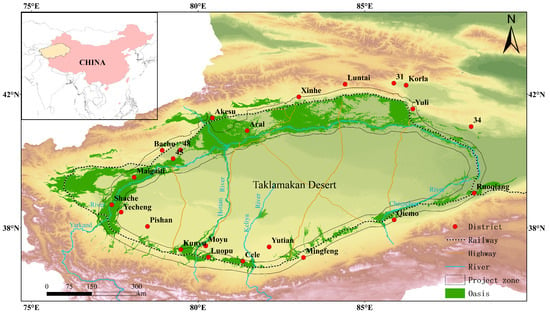
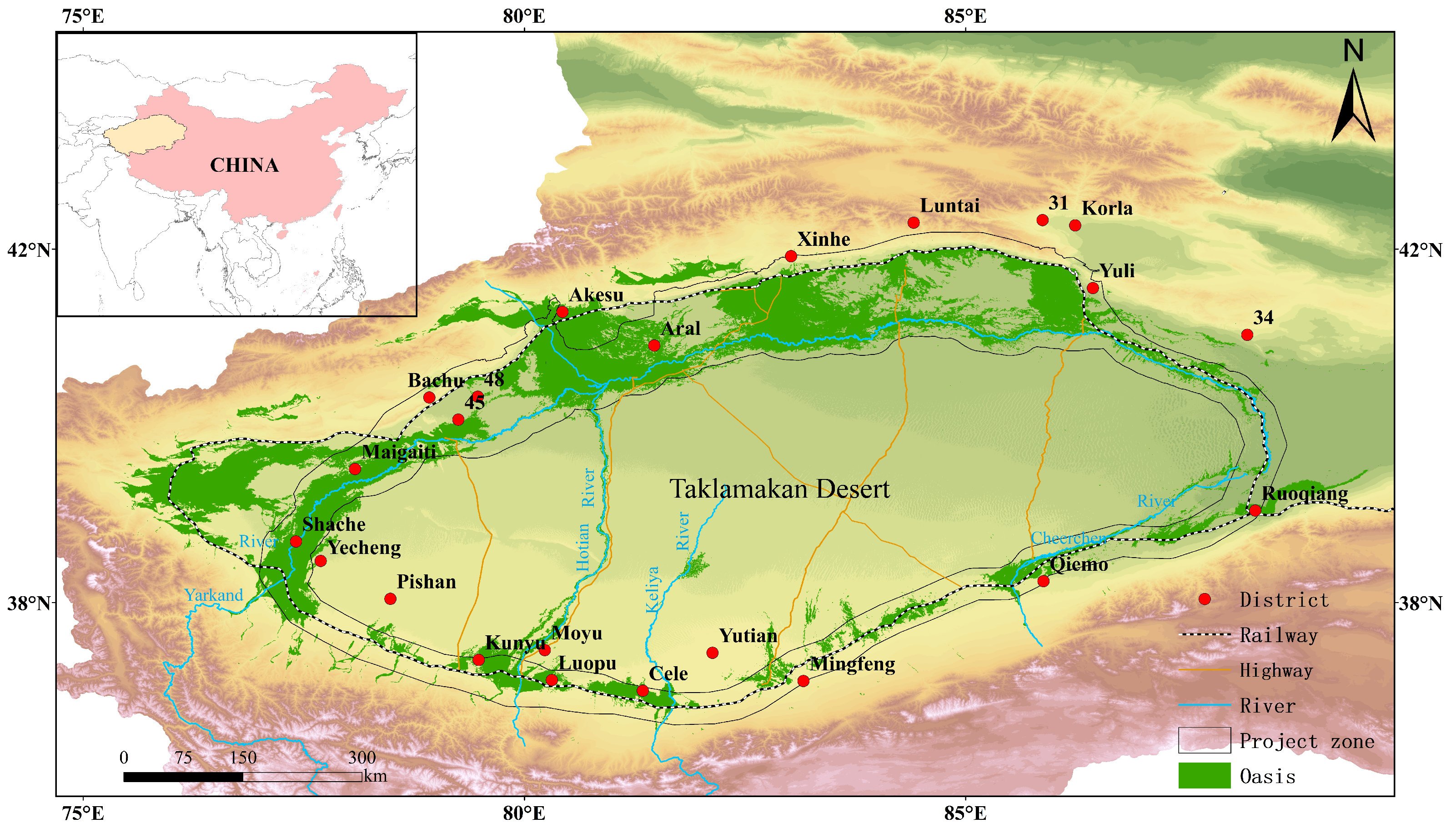
The core zone of the desert edge-locking project covers 21 counties and cities (Figure 1). It has expanded the barrier by 8.9 million mu (approximately 593,400 hectares), increasing its width by 110 m to 7500 m. In this study, ArcGIS10.8.1 was used to construct 10 km internal and external buffer zones along railways, highways and water systems encircling the Taklamakan Desert, which were defined as forming the core zone of the project area.
Figure 1.
Location of the study area (the approval number of the China base map is GS(2020)4619).
Methods
Ecological quality assessment serves as a fundamental step in identifying the evolutionary trends of ecological environments [20,21]. In this study, the Ecological Quality Index (EQI) is adopted as a quantitative indicator for comprehensively evaluating the ecological quality status of the desert edge-locking project. EQI is widely used in environmental monitoring, policy-making, and regional ecological assessments. It is developed based on the technical specifications for national ecological status survey and assessment, and integrated with multi-source remote sensing data, including Fractional Vegetation Cover (FVC), Leaf Area Index (LAI), and Gross Primary Productivity (GPP). All variables are normalized between 0 and 1, with larger EQI indicating superior ecological conditions. [22]. Meanwhile, the benefits of windbreak and sand fixation, as well as carbon sequestration and oxygen release, are investigated for the period 2000–2024. In accordance with the assessment criteria of desert ecosystem services in China [23], the calculation formula for windbreak and sand fixation benefits is as follows:
where Csf denotes the dust cleaning cost or economic loss caused by sandstorms in the base year (CNY/t); this study adopts 140 CNY/t as the unit value price of sand fixation. Ai refers to the area of the i-th evaluation unit (km2); Qi represents the windbreak and sand fixation capacity of the i-th evaluation unit (t/(km2·a)). In this study, the annual windbreak and sand fixation (wind erosion) data of the project zone from 2000 to 2024 were derived from the 30 m resolution dataset of windbreak and sand fixation capacity across China produced by the Earth Resource Data Cloud based on the Revised Wind Erosion Equation (RWEQ) model. The RWEQ model comprehensively incorporates multiple factors including climatic conditions, vegetation coverage, soil erodibility, soil crust, surface roughness, and social driving forces. Featuring a straightforward simulation workflow and limited input parameters, it is one of the most widely used empirical models worldwide for quantifying soil wind erosion and formulating windbreak and sand fixation strategies at present [24].
The benefits of carbon sequestration and oxygen release were calculated using the net ecosystem productivity method:
where stands for the carbon sequestration amount in desert ecosystems (t∙CO2/a); NEP denotes net ecosystem productivity (t∙C/a); Qop refers to the oxygen release quantity from plant photosynthesis; is the molecular weight ratio of carbon dioxide to carbon, equal to 44/12; and represents the conversion coefficient for transforming carbon dioxide into oxygen, which is 32/44. The total value of carbon sequestration and oxygen release benefits equals the sum of carbon sequestration value and oxygen release value:
where Vcf and Vop denote the carbon sequestration value and oxygen release value of desert ecosystems (CNY/a), respectively. and stand for the prices of carbon dioxide and industrial oxygen. Their assigned values are 96 CNY/t (the average price of China’s national carbon market in 2024) and 430 CNY/t (the price of industrial oxygen production) [25].
Economic benefits refer to the gross output value of farming, forestry, animal husbandry and fishery, photovoltaic power generation, desert tourism and characteristic industries (such as rose and Cistanche cultivation) in the 21 key counties and cities covered by the desert edge-locking project from 2000 to 2024. The output value of photovoltaic power generation is calculated by the formula:
where Pvalue represents electricity generation revenue, Pic is the installed grid-connected capacity (kW), H is annual equivalent utilization hours (h), and F is feed-in tariff (CNY/kWh) [26,27].
Pvalue = Pic × H × F
Social benefits encompass the livelihood values of desert industries, including job creation and increased disposable income for rural residents. All the data used in this study are listed in Table 1.
Table 1.
Indicators, methods and data sources for comprehensive benefit evaluation.
3. Results
3.1. Ecological Benefit
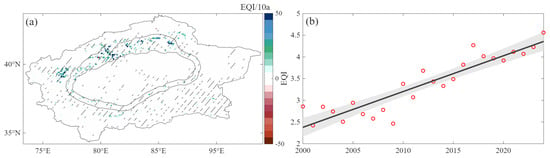
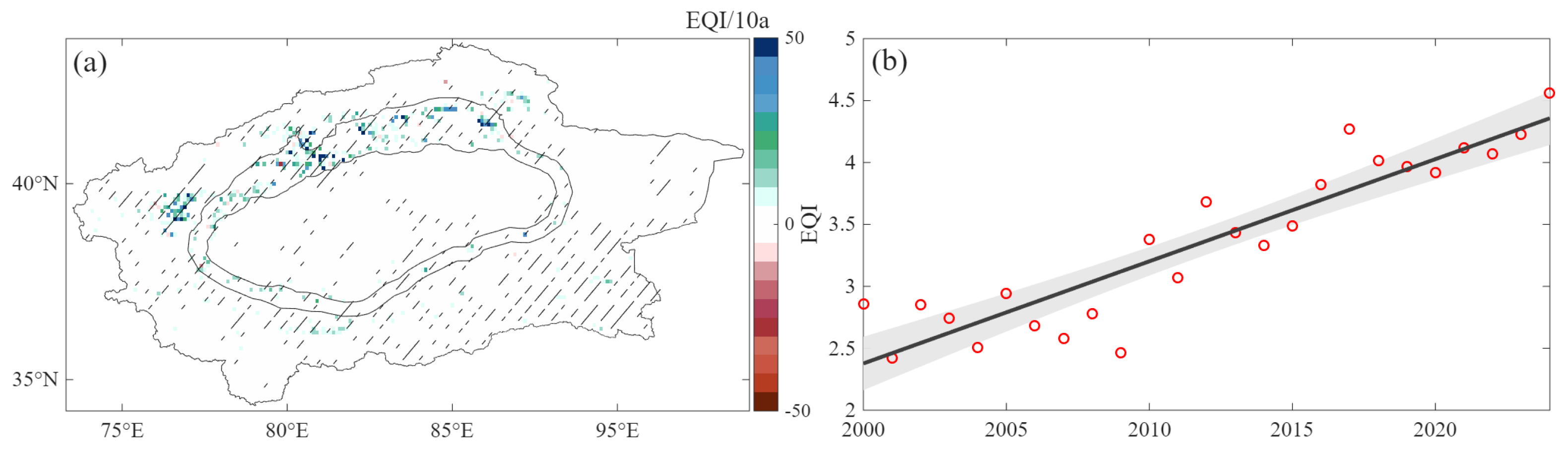
Figure 2a presents the spatial patterns of annual EQI trends for the Tarim Basin. Significant EQI improvements were observed on the northern fringe of the Tarim Basin from 2000 to 2024. Similarly, the core zone of the desert edge-locking project yielded a marked upward EQI trend over the same period (Figure 2b). This indicates marked improvements in ecological quality from the early 21st century.
Figure 2.
(a) Spatiotemporal distribution of EQI changes in the Tarim Basin from 2000 to 2024 (the shaded areas denote regions passing the 95% significance test; (b) the linear regression plot with 95% confidence intervals (shaded areas) denotes EQI changes in the core zone of the desert edge-locking project).
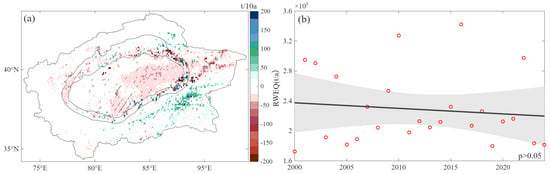
Soil wind erosion is a critical process triggering land degradation, eco-environmental deterioration and sandstorm disasters, and its quantitative assessment constitutes an essential component of the ecological benefit evaluation for the desert edge-locking project. From 2000 to 2024, the wind erosion modulus within the project zone exhibited a declining trend, except for the southeastern margin of the Taklamakan Desert, with an average annual reduction of 739 tons. Modelled total annual wind erosion in the project zone declined from 244,410 tons per year during 2000–2004 to 218,210 tons per year during 2020–2024 (Figure 3), which demonstrates that the project has achieved preliminary outcomes in windbreak and sand fixation. Taking the north bank of the Niya River in Minfeng County as an example, rolling sand dunes have been covered by vegetation, including Haloxylon ammodendron, Tamarix ramosissima, Populus euphratica and Elaeagnus angustifolia. After the construction of a ten-thousand-mu ecological shelter system, the protective efficiency of forest land improved remarkably, biodiversity indicators were continuously optimized, and the stability and shelter function of local ecosystems gradually strengthened.
Figure 3.
(a) Spatiotemporal distribution of windbreak and sand fixation amount changes in the Tarim Basin from 2000 to 2024 (the shaded areas denote regions passing the 95% significance test; (b) the linear regression plot with 95% confidence intervals (shaded areas) denotes windbreak and sand fixation amount changes in the core zone of the desert edge-locking project).
This study adopted the net ecosystem productivity (NEP) method to calculate the carbon sequestration and oxygen release benefits in the desert edge-locking project area. As the residual value of Gross Primary Productivity (GPP) minus autotrophic respiration and heterotrophic respiration, net ecosystem productivity (NEP) directly characterizes the net carbon exchange between ecosystems and the atmosphere, serving as a core indicator to judge whether a region acts as a carbon source or carbon sink.
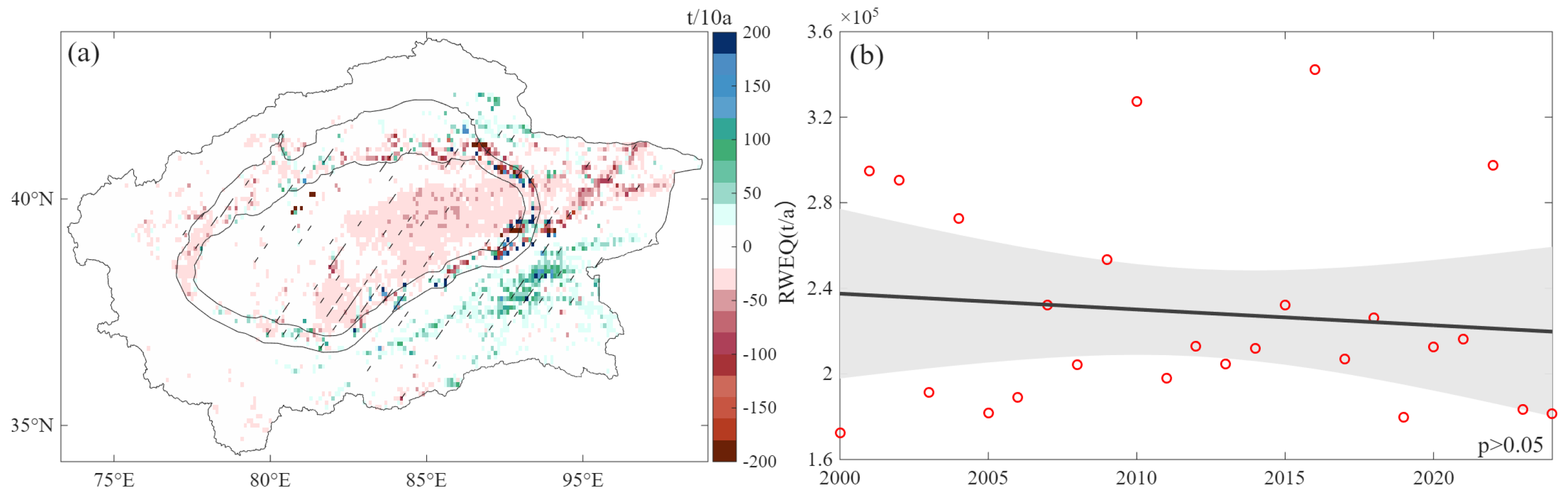
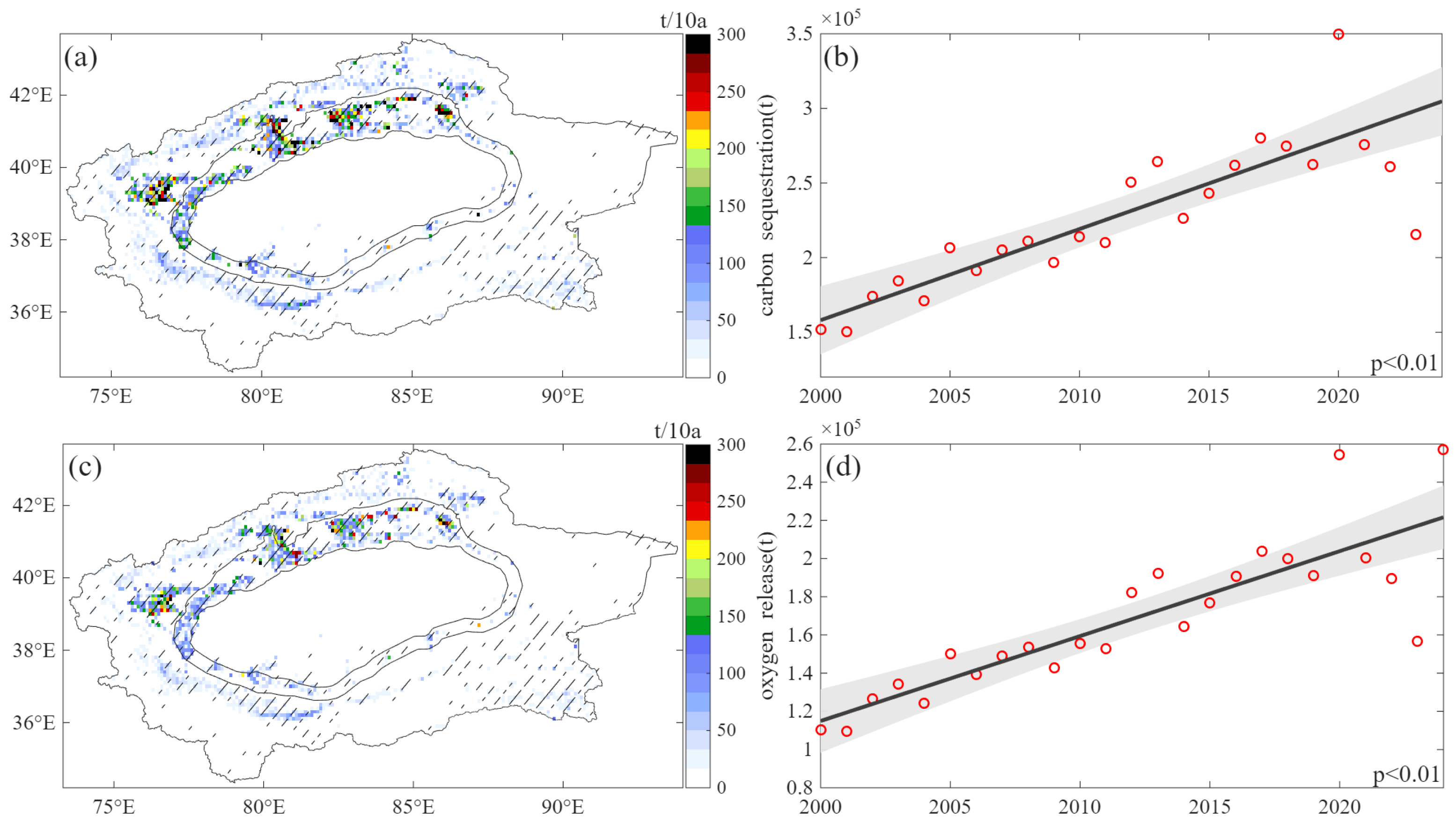
Figure 3 shows the spatiotemporal distribution of variations in carbon sequestration and oxygen release amounts within the desert edge-locking project from 2000 to 2024. Over the past 25 years, both carbon sequestration and oxygen release amounts in the project area exhibited a statistically significant increasing trend (p < 0.01). Specifically, the annual carbon sequestration amount rose from 16.63 million tons during 2000–2004 to 29.10 million tons during 2020–2024 (Figure 4a,b). Meanwhile, the annual oxygen release amount increased from 12.09 million tons (2000–2004) to 21.15 million tons (2020–2024) (Figure 4c,d). Regions with pronounced growth in carbon sequestration and oxygen release are all distributed along the northern margin of the Tarim Basin.
Figure 4.
Spatiotemporal distribution of (a) carbon sequestration and (c) oxygen release changes in the Tarim Basin from 2000 to 2024 (the shaded areas in the left panel denote regions passing the 95% significance test; the linear regression plot with 95% confidence intervals (shaded areas) in the right panel denotes (b) carbon sequestration and (d) oxygen release changes in the core zone of the desert edge-locking project).
In terms of monetary value, the annual value of carbon sequestration and oxygen release in the desert edge-locking project area increased from 65 million yuan per year during 2000–2004 to 120 million yuan per year in 2020–2024, showing a significant upward trend with an annual increment of 2.36 million yuan. Overall, by constructing a three-dimensional shelterbelt system integrating arbors, shrubs and herbs, the desert edge-locking project has strengthened the carbon sequestration and oxygen release capacity of oasis–desert ecosystems.
3.2. Economic Benefit
Over the past 25 years, with the continuous advancement in the desert edge-locking project, a sand-blocking protective belt composed of farmlands, shelterbelts, characteristic fruit forests, photovoltaic panels and straw checkerboards has taken shape around the Taklamakan Desert. The cultivated land area expanded from 1.83 million hectares in 2000 to 2.77 million hectares in 2024, while the planting area of characteristic fruit trees (including jujube, walnut, apple, fragrant pear, etc.) grew from 0.23 million hectares in 2000 to 1.04 million hectares.
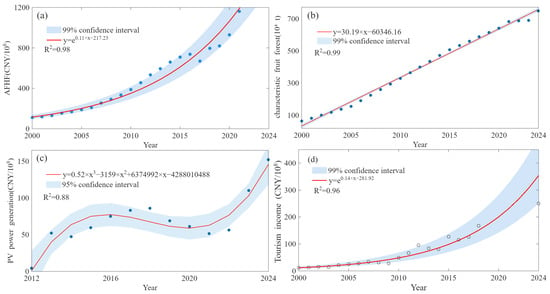
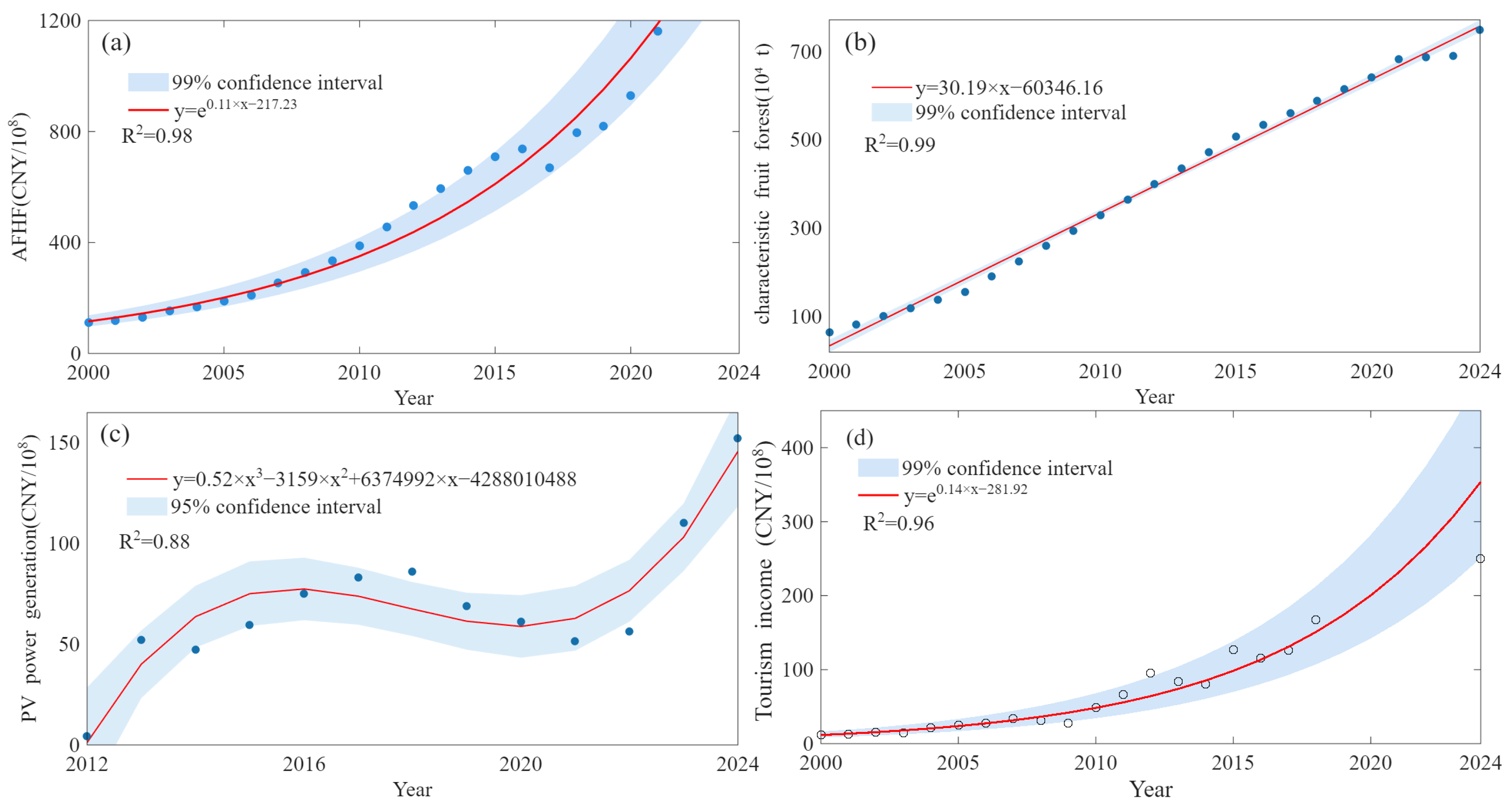
By the end of 2024, the total output value of agriculture, forestry, animal husbandry and fishery reached 132.3 billion yuan. The full industrial chain output value of characteristic fruit forests hit 56 billion yuan, and their output surged from 0.72 million tons in 2000 to 7.49 million tons in 2024 (Figure 5a,b). The cumulative installed capacity of grid-connected photovoltaic power generation stood at 36.69 gigawatts, generating an output value of 15.2 billion yuan in 2024. The installed photovoltaic capacity has shown an exponential growth trend over the latest five years (Figure 5c). A number of landmark projects have been completed in Ruoqiang, Luopu, Shaya and other regions, with the largest single-project installed capacity reaching 4 gigawatts. These projects have rehabilitated more than 420,000 mu (approximately 28,000 hectares) of desertified land, produced over 10 billion kilowatt-hours of electricity annually, saved more than 3 million tons of standard coal per year, and cut carbon dioxide emissions by over 8 million tons annually.
Figure 5.
Benefits of (a) agriculture, forestry, animal husbandry and fishery; (b) characteristic fruit industry; (c) photovoltaic power generation; and (d) desert tourism in the desert edge-locking project area.
Photovoltaic panels can also lower surface temperature, effectively improve the regional microclimate and stabilize the ecological barrier in sandy areas, thereby integrating ecological restoration, clean energy development and industrial empowerment.
In addition to improving the ecological environment, the desert edge-locking project has boosted desert tourism. The total revenue from desert tourism reached 25.1 billion yuan in 2024 (Figure 5d). Among relevant scenic spots, the N39° Desert Scenic Area in Makit County received more than 2.41 million tourists in 2024, driving an accommodation and catering revenue of 935 million yuan. The Hotan Rose Festival attracted 3 million tourists, generating a comprehensive income of 500 million yuan.
3.3. Social Benefit
Through large-scale afforestation across the whole region, sand fixation and soil conservation, as well as industrial empowerment, the desert edge-locking project has not only consolidated the ecological security barrier encircling the Tarim Basin, but also delivered all-round and long-term social benefits in boosting residents’ income, maintaining social stability, advancing regional development and promoting ecological civilization construction.
In terms of employment and income growth, the construction and daily maintenance of the desert edge-locking project have absorbed a large number of local laborers throughout all stages. Since 2024 alone, 705,400 people in Hotan Prefecture have participated in afforestation work, creating jobs for 80,000 residents and generating a total income increase of 836 million yuan for local people.
Meanwhile, relevant policies on contracted management of desertified land have been rolled out. Land parcels are allocated to villages, contracted to households, and registered under individual names, with 70-year land use right certificates issued to fully mobilize local residents’ internal initiative. To date, 589,400 mu (approximately 39,293 hectares) of sandy land has been assigned to 795 administrative villages, with land rights confirmed for 12,600 households covering 54,400 people. This model delivers triple gains: greener deserts, higher collective revenues, and greater benefits for farmers. Reliable livelihood guarantees and promising development prospects provide solid support for long-term peace, harmony and stability across the region.
In terms of regional development, the desert edge-locking project protects 6600 km2 of oasis farmlands, highways, railways, West–East Gas Transmission pipelines and oilfield bases within the Tarim Basin, cutting fiscal expenditures on year-round sand clearance and facility maintenance. It narrows regional development gaps and consolidates the foundation of borderland stability.
Relying on the project, all counties and cities have vigorously developed characteristic sandy planting industries including desert rose, Cistanche, trichosanthes, apocynum venetum and Chinese medicinal herbs. At present, the planting area of characteristic cash crops in the project zone reaches 6.24 million mu (approximately 416,000 hectares), the total area of sand industries exceeds 10.83 million mu (approximately 722,000 hectares), and the total output value tops 30 billion yuan.
Hotan Prefecture has innovatively promoted integrated sand control models including photovoltaic sand remediation, engineering sand fixation and biological sand control. It has completed 34,000 mu (approximately 2266.67 hectares) of photovoltaic sand remediation, 140,600 mu (approximately 9373.33 hectares) of engineering sand fixation and 5.711 million mu (approximately 380,733 hectares) of biological sand control, with an additional 73,400 mu (approximately 4893.33 hectares) of newly built enclosed protected areas, delivering remarkable sand control outcomes. The annual output value of its sand industries hits 765 million yuan [28].
Yutian County has established a benefit-sharing mechanism for desertification prevention and control featuring the model of “enterprises + cooperatives + farmers”. Market-oriented industrial chains integrating planting, processing and sales have been fully established. Its ten-thousand-mu desert rose project has absorbed a total of 230,000 person-times of seasonal labor and driven over 20,000 farming households to generate more than 60 million yuan in revenue. The county boasts nearly 4000 hectares of rose plantations with a yield of over 180 kg per mu. Deep processing enables the formation of an integrated product chain covering rose tea, rose jam and essential oil, bringing an average benefit of 52,500–60,000 yuan per hectare [29].
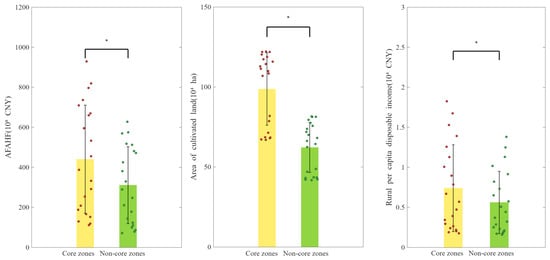
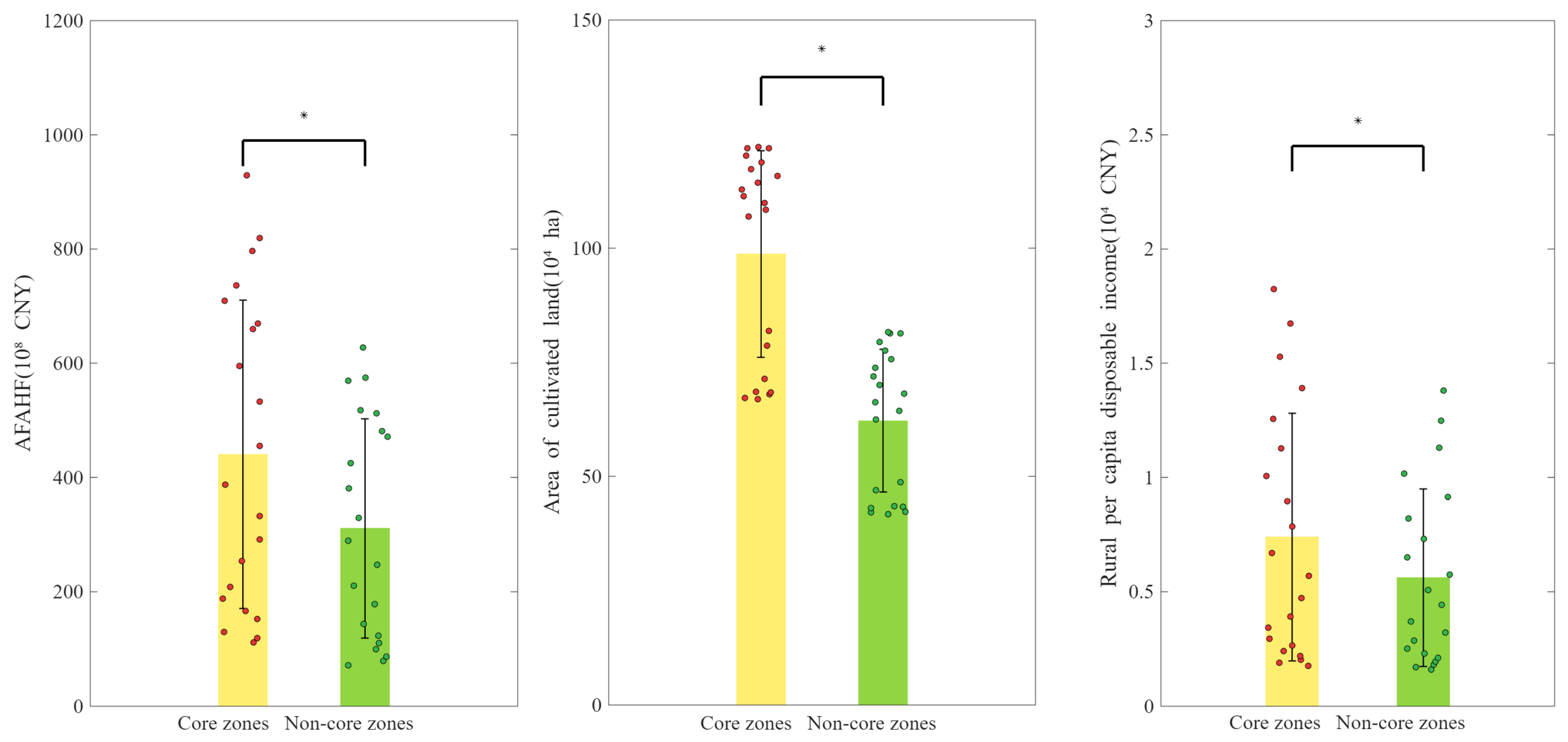
The desert edge-locking project has expanded the space for sustainable development and the scope of livelihood security around the Tarim Basin. The output value of agriculture, forestry, animal husbandry and fishery; cultivated land area; and per capita disposable income of rural residents in the core zones of the project are markedly higher than those in non-core zones (Figure 6). For counties that develop sandy economic forests and characteristic fruit industries relying on the Taklamakan Desert Edge-Locking Project, both the business income and wage income of farming households have increased substantially. In 2024, the per capita disposable income of rural residents in the core zones registered a net 12.18-fold increase compared with the year 2000, demonstrating the project’s strong capacity to absorb labor and create jobs.
Figure 6.
Comparison of variations in output value of agriculture, forestry, animal husbandry and fishery; cultivated land area; and per capita disposable income of rural residents between core and non-core zones of the desert edge-locking project (2000–2024). * denotes the two groups showing significant differences.
The desert edge-locking project has fundamentally reversed the long-term historical pattern of desert expansion accompanying human retreat across the desert fringes of the Tarim Basin, generating multi-layered and long-term social benefits and comprehensively upgrading rural living environments and agricultural production conditions. Via diverse pathways including sand control work, ecological forest guarding, sand industry operations and photovoltaic supporting industries, the project enables farmers and herdsmen to secure stable local employment, substantially raises rural residents’ disposable income and narrows the urban–rural income gap.
Meanwhile, the project innovates in determining the mechanism of confirming sandy land rights and contracted management, fosters new business forms such as rural tourism and Chinese medicinal herb processing, expands village collective economies, and transforms residents’ perceptions of ecological development. It plays a pivotal role in alleviating conflicts between water, soil and human land use in the Tarim Basin; absorbing local labor forces; and enabling people of all ethnic groups to share the dividends of prosperity. The initiative consolidates the foundations of ecological security and social stability in the borderlands, achieving synergistic gains in multiple social values: ecological improvement, industrial efficiency growth, income growth for local residents and lasting stability in border regions.
4. Discussion
In fact, numerous studies have demonstrated that the desert edge-locking project has achieved remarkable effects in ecological protection and restoration. For example, based on the Wind Erosion Prediction System (WEPS), Yu et al. revealed that the wind erosion modulus in the core zone of the Taklamakan Desert Border Defense Belt exhibited a decreasing trend (41 t·km−2·10a−1) during 2000–2023 [30]. However, the total wind erosion amounts of the basin derived from different models (e.g., RWEQ, WEPS) and study domains vary significantly [31,32]. Future studies may adopt ensemble or Bayesian approaches to partition uncertainty arising from input data, parameters, and model structures, thereby mitigating discrepancies in regional wind erosion estimates.
Noor et al. (2026) found that artificial oases and shelterbelts of the desert edge-locking project along the periphery of the Taklamakan Desert shifted from carbon emission sources to stable, seasonal net carbon dioxide sinks during 2001–2024. Zones with enhanced carbon sinks highly overlap with the implementation scope of the desert edge-locking project [33]. Actually, vegetation coverage within the project area rises year by year, regional green biomass keeps increasing, and surface ecological landscapes have been markedly improved. The capacity of the region to regulate the local microclimate has been strengthened, the frequency of sandstorm hazards has declined, and the expansion of desertification toward oases has been effectively curbed [16,34]. However, Gao et al. warn that pursuing maximal carbon sink capacity through afforestation in the Taklamakan Desert can mislead the public regarding their awareness of the intended objectives of TNSP and potentially lead to an impractical policy [35].
In terms of economic benefit, increases in photovoltaic power generation, tourism revenue, and the output of characteristic forest and fruit products cannot be fully attributed to the desert edge-locking project. These benefits are joint outcomes of multiple drivers, including regional infrastructure investment, industrial support policies, market demand changes, and the ecological improvements brought by the project. Meanwhile, all monetary economic indicators over 2000–2024 in this study are expressed at constant 2024 prices to remove inflationary effects and enable interannual comparison. The approach assumes that relative prices for agricultural goods, desert tourism services and photovoltaic power stay unchanged throughout the study period, which may bring uncertainties to the estimation of co-benefits. Future research needs to incorporate inflation-adjusted historical prices, quantify the water balance of irrigated crops via simulation, and carry out detailed cost–benefit analysis using Net Present Value (NPV) and Benefit–Cost Ratio (BCR) indicators.
It is worth noting that large-scale arid-zone shelterbelt programs have widely demonstrated the capacity to mitigate wind erosion and sand hazards and improve agroecological resilience [12,36]. Nevertheless, their hydrological and ecological sustainability remains debated. Several studies warn that intensive afforestation and large-scale photovoltaic installations in water-limited basins may elevate evapotranspiration, deplete groundwater, compete with agricultural water use and trigger vegetation die-off under prolonged drought [14,37,38,39,40]. At present, the battle against desertification along the fringe of the Taklamakan Desert has shifted from an initial intensive tackling phase with high starting standards to a normalized stage of high-quality advancement. The focus of project construction is no longer confined to expanding vegetation coverage and blocking shifting sand, but has gradually transitioned to a multidimensional coordinated development stage featuring ecological quality improvement, functional efficiency enhancement, industrial empowerment and inclusive benefits for people’s livelihoods. Against this backdrop, scientifically quantifying the ecological, economic and social benefits of the desert edge-locking project and systematically evaluating its long-term governance value carry important practical implications for advancing normalized desert ecological management around the Tarim Basin, consolidating oasis ecological security, and promoting integrated development of ecological industrialization and rural revitalization in sandy areas.
5. Conclusions
The Taklamakan Desert Edge-Locking Project has improved the ecological environment surrounding the Tarim Basin. Model simulations based on the RWEQ model demonstrate that regional wind erosion volume has presented a declining trend since 2000, with an average annual reduction of 739 tons. Such mitigation of aeolian erosion helps curb sandstorms and reduces sand sedimentation into oases. Meanwhile, carbon sequestration and oxygen release capacity within the project area exhibited a statistically significant increasing trend (p < 0.01), highlighting the dual ecological functions of the protective green belt in both erosion regulation and terrestrial carbon sink enhancement.
The Taklamakan Desert Edge-Locking Project has boosted the comprehensive economic transformation and upgrading across the Tarim Basin periphery through multiple sectors, including increased agricultural revenue, characteristic crop cultivation, photovoltaic power development and sustainable ecotourism. In 2024, the output values of agriculture, forestry, animal husbandry and fishery (AFAHF); desert tourism; photovoltaic power generation and characteristic fruit industries reached 132.3 billion yuan, 69.6 billion yuan, 15.2 billion yuan and 56 billion yuan respectively. Counties and cities covered by the project have actively explored coordinated pathways that integrate ecological desertification control with economic development. This practice enables mutual reinforcement between ecological protection and industrial revitalization in sandy regions, breaking the traditional trade-off between desertification control and local development and delivering a tangible win–win outcome for ecology and the economy.
The implementation and maintenance of the desert edge-locking project have also yielded prominent social benefits, expanded the space for sustainable development and the coverage of livelihood security around the Tarim Basin, and boosted rural residents’ entrepreneurship, household income growth, and the scaled development of specialized planting industries adapted to arid conditions. In 2024, the total output value of sand industries exceeded 30 billion yuan. As a socially inclusive sand-governance model, the project helps consolidate ecological poverty alleviation outcomes and promotes equitable and stable development in remote arid border regions.
Furthermore, this study identifies four landmark achievements of the Taklamakan Desert Edge-Locking Project. First, it realizes the establishment of the world’s longest continuous protective green belt at the desert margin, forming a giant aeolian sand barrier for the oasis in the Tarim Basin. Second, the results provide solid empirical evidence for the superiority of the project’s core zone in sand fixation and ecological service supply (Figure 6), which supports differentiated zoning management of desert control. Third, an innovative legal and institutional framework for land guarantee has been formed, which explicitly integrates the social dimension of land use and balances ecological goals, local livelihood demands and land tenure arrangements. Fourth, the project reveals a promising synergy between renewable energy deployment and biological land reclamation, providing a replicable pathway for arid-region desertification control.
Author Contributions
Y.L.: Writing—review and editing, Writing—original draft, Visualization. X.G.: Writing—review and editing, Supervision, Project administration. J.X.: Supervision, Methodology, Investigation. H.T.: Visualization, Resources, Validation. All authors have read and agreed to the published version of the manuscript.
Funding
This study was supported by the Major Science and Technology Special Project of Xinjiang Uygur Autonomous Region (Nos. 2024A03009-1 and 2024A03009-4), the Top-notch Scientific and Technological Innovation Talent Project of High-level Talent Cultivation Program of Tacheng Prefecture and the Tianchi Talents Program of Xinjiang Uygur Autonomous Region (E5358525).
Data Availability Statement
The data presented in this study are available on request from the corresponding author.
Conflicts of Interest
The authors declare that they have no known competing financial interests or personal relationships that could have appeared to influence the work reported in this paper.
Abbreviations
The following abbreviations are used in this manuscript:
| UNCCD | United Nations Convention to Combat Desertification |
| AFAHF | agriculture, forestry, animal husbandry and fishery |
| EQI | Environmental Quality index |
| CNY | Chinese Yuan |
| LAI | Leaf Area Index |
| FVC | Fractional Vegetation Cover |
| GPP | Gross Primary Productivity |
References
- Leal Filho Walter, A.A.M.; Brandli, L.; Lange, S.A.; Wall, T. Life on Land; Springer: Berlin/Heidelberg, Germany, 2021. [Google Scholar]
- Wang, X.; Geng, X.; Sun, F.; Han, M.; Chen, F.; Chen, S.; Penuelas, J.; Gao, L.; Bryan, B.A.; Li, C.; et al. Strategies reimagined: SDG-driven solutions for combating global desertification. Proc. Natl. Acad. Sci. USA 2026, 123, e2515470123. [Google Scholar] [CrossRef] [Scilit]
- Jiang, K.; Teuling, A.J.; Chen, X.; Huang, N.; Wang, J.; Zhang, Z.; Gao, R.; Men, J.; Zhang, Z.; Wu, Y.; et al. Global land degradation hotspots based on multiple methods and indicators. Ecol. Indic. 2024, 158, 111462. [Google Scholar] [CrossRef] [Scilit]
- Elouafi, I. Drylands under pressure: Science and solutions for global stability. Science 2025, 387, eadv6563. [Google Scholar] [CrossRef] [Scilit]
- Martínez-Valderrama, J.; Guirado, E.; Maestre, F.T. Desertifying deserts. Nat. Sustain. 2020, 3, 572–575. [Google Scholar] [CrossRef] [Scilit]
- Zhu, A.L.; Ndiaye, A.; Dahm, R.; Mauclaire, M.; Boas, I. Africa’s Great Green Mirage? Assessing the disconnect between global finance and local implementation in Africa’s Great Green Wall. Land Use Policy 2025, 157, 107670. [Google Scholar] [CrossRef] [Scilit]
- Howlader, A. Determinants and consequences of large-scale tree plantation projects: Evidence from the Great Plains Shelterbelt Project. Land Use Policy 2023, 132, 106785. [Google Scholar] [CrossRef] [Scilit]
- Bian, J.; Zhao, J.; Li, A.; Lei, G.; Nan, X.; Zhang, Z.; Deng, Y.; Khan, T.A.; Naboureh, A. Near-zero land degradation in China’s mountains driven by restoration and climate dynamics. Commun. Earth Environ. 2026, 7, 770. [Google Scholar] [CrossRef] [Scilit]
- Li, X.; Lu, Q.; Jia, X. Harnessing Big Earth Data to Facilitate Land Degradation Neutrality Goals—Practices and Prospects. Bull. Chin. Acad. Sci. 2021, 36, 896–903. [Google Scholar] [CrossRef]
- Guo, H. Big Earth Data in Support of the Sustainable Development Goals (2023)—The Belt and Road; Springer Nature: Berlin/Heidelberg, Germany, 2025. [Google Scholar]
- Chand, A. Desertification reversal strategies in China. Nat. Food 2026, 7, 121. [Google Scholar] [CrossRef] [Scilit]
- Zhai, J.; Wang, L.; Liu, Y.; Wang, C.; Mao, X. Assessing the effects of China’s Three-North Shelter Forest Program over 40 years. Sci. Total Environ. 2023, 857, 159354. [Google Scholar] [CrossRef] [Scilit]
- Mao, D.; Wang, Z.; Wu, B.; Zeng, Y.; Luo, L.; Zhang, B. Land degradation and restoration in the arid and semiarid zones of China: Quantified evidence and implications from satellites. Land Degrad. Dev. 2018, 29, 3841–3851. [Google Scholar] [CrossRef] [Scilit]
- Xie, T.; Lu, Z.; Huang, W.; Tang, J.; Ou, T.; Chen, D.; Chen, F. Large-scale photovoltaic deployment in the Taklamakan Desert could intensify regional water stress. Sci. Bull. 2026, 71, 3107–3117. [Google Scholar] [CrossRef] [Scilit]
- Xia, Z.; Li, Y.; Zhang, W.; Chen, R.; Guo, S.; Zhang, P.; Du, P. Solar photovoltaic program helps turn deserts green in China: Evidence from satellite monitoring. J. Environ. Manag. 2022, 324, 116338. [Google Scholar] [CrossRef] [Scilit]
- Yang, M.; Tian, C.; Guo, B.; Hao, X. The Taklamakan Desert has shrunk over the last two decades. GISci. Remote Sens. 2025, 62, 2574122. [Google Scholar] [CrossRef] [Scilit]
- Xu, J.; Xiao, Y.; Xie, G.; Wang, Y.; Lei, G. Assessment of the benefit diffusion of windbreak and sand fixation service in National Key Ecological Function areas in China. Aeolian Res. 2021, 52, 100728. [Google Scholar] [CrossRef] [Scilit]
- Tang, S.; Zhou, T.; Zhang, L.; Zou, L.; Zhang, W.; Liu, S. Moisture sources for the unprecedented precipitation event in the heart of Taklimakan desert. Weather Clim. Extrem. 2024, 46, 100739. [Google Scholar] [CrossRef] [Scilit]
- Chen, B.; Yang, X.; Jiang, Q.; Liang, P.; Lattin Mackenzie, L.; Zhou, Y. Geochemistry of aeolian sand in the Taklamakan Desert and Horqin Sandy Land, northern China: Implications for weathering, recycling, and provenance. CATENA 2022, 208, 105769. [Google Scholar] [CrossRef] [Scilit]
- Yang, X.; Meng, F.; Fu, P.; Zhang, Y.; Liu, Y. Spatiotemporal change and driving factors of the Eco-Environment quality in the Yangtze River Basin from 2001 to 2019. Ecol. Indic. 2021, 131, 108214. [Google Scholar] [CrossRef] [Scilit]
- Tian, Y.; Wu, Z.; Liu, K.; Li, M. Dynamic assessment of ecological quality in China from 2000 to 2024 based on artificial intelligence. J. Hydrol. 2026, 666, 134849. [Google Scholar] [CrossRef] [Scilit]
- HJ1172-2021; Technical Specifications for National Ecological Status-Ecosystem Quality Assessment. Ministry of Ecology and Environment of the People’s Republic of China: Beijing, China, 2021.
- LY/T 2006-2026; Assessment Criteria of Desert Ecosystem Services in China. National Forestry and Grassland Administration of China: Beijing, China, 2026.
- Sun, R.; He, H.; Jing, Y.; Leng, S.; Yang, G.; Lü, Y.; Borrelli, P.; Chen, L.; Fu, B. Global Wind Erosion Reduction Driven by Changing Climate and Land Use. Earth’s Future 2024, 12, e2024EF004930. [Google Scholar] [CrossRef] [Scilit]
- Ministry of Ecology and Environment of the People’s Republic of China. Progress Report of China’s National Carbon Market; Ministry of Ecology and Environment of the People’s Republic of China: Beijing, China, 2025.
- Wang, C.; Chen, H.; Wang, Z.; Gao, Y.; Zhang, G. Economic assessment and grid parity analysis of photovoltaic power generation considering tradable green certificate. Appl. Energy 2025, 382, 125282. [Google Scholar] [CrossRef] [Scilit]
- Wang, Y.; Lee, S.; Li, C.; Umair, M.; Yakhyaeva, I. Techno-economic evaluation of solar photovoltaic power production in China for sustainable development and the environment. Environ. Dev. Sustain. 2024, 28, 21815–21844. [Google Scholar] [CrossRef] [Scilit]
- Department of Natural Resource Xinjiang Uygur Autonomous Region. Technology-Driven Desertification Control to Harness the “Sea of Death”—The Border Shelterbelt Enclosure Project Along the Southern Margin of the Taklamakan Desert. Available online: https://zrzyt.xinjiang.gov.cn/xjgtzy/gzdt/202508/44260fcdebd14f2a8edbd3d548899f0d.shtml (accessed on 21 August 2025).
- National Forestry and Grassland Administration. Review of Forestry and Grassland Development during the 14th Five-Year Plan Period. Available online: https://www.forestry.gov.cn/c/www/zxdt/658629.jhtml (accessed on 15 July 2026).
- Yu, X.; Benli, L.; Tao, M.; Yimeng, W. Wind erosion and dust emission in the core area of Hexi Corridor-Taklimakan Desert edge in 2000–2023. J. Desert Res. 2024, 44, 330–341. [Google Scholar]
- Pi, H.; Sharratt, B.; Lei, J. Windblown sediment transport and loss in a desert–oasis ecotone in the Tarim Basin. Sci. Rep. 2017, 7, 7723. [Google Scholar] [CrossRef] [Scilit]
- Zhou, C.; Yang, F.; Huo, W.; Pan, H.; Meng, L.; Mamtimin, A.; Li, H.; Yang, X. Evaluation of wind erosion in the Tarim Basin based on parameter localization. Theor. Appl. Climatol. 2020, 140, 1071–1080. [Google Scholar] [CrossRef] [Scilit]
- Noor, S.; Jiang, X.; Wang, X.; Yang, J.; Newman, S.; Li, K.F.; Li, L.; Yu, L.; Li, X.; Yung, Y.L. Human-induced biospheric carbon sink: Impact from the Taklamakan Afforestation Project. Proc. Natl. Acad. Sci. USA 2026, 123, e2523388123. [Google Scholar] [CrossRef] [Scilit]
- Song, W.; Feng, Y.; Wang, Z. Ecological restoration programs dominate vegetation greening in China. Sci. Total Environ. 2022, 848, 157729. [Google Scholar] [CrossRef] [Scilit]
- Gao, T.; Zhu, J.; Zheng, X.; Song, L.; Sun, Y.; Teng, D.; Zhou, X. Misattributed biospheric carbon sink to the Three-North Program in the Taklamakan Desert may lead to an impractical policy: A commentary. Proc. Natl. Acad. Sci. USA 2026, 123, e2607916123. [Google Scholar] [CrossRef] [Scilit]
- Kędziora, A. Windbreak and Shelterbelt Functions. In Encyclopedia of Agrophysics; Gliński, J., Horabik, J., Lipiec, J., Eds.; Springer: Dordrecht, The Netherlands, 2011; pp. 1000–1004. [Google Scholar]
- Cai, D.; Ge, Q.; Wang, X.; Liu, B.; Goudie, A.S.; Hu, S. Contributions of ecological programs to vegetation restoration in arid and semiarid China. Environ. Res. Lett. 2020, 15, 114046. [Google Scholar] [CrossRef] [Scilit]
- Middleton, N. Rangeland management and climate hazards in drylands: Dust storms, desertification and the overgrazing debate. Nat. Hazards 2018, 92, 57–70. [Google Scholar] [CrossRef] [Scilit]
- Wu, C.; Lin, Z.; Shao, Y.; Liu, X.; Li, Y. Drivers of recent decline in dust activity over East Asia. Nat. Commun. 2022, 13, 7105. [Google Scholar] [CrossRef] [Scilit]
- Zhang, D.; Huang, Y.; Xiong, J.; Yang, Y. Vegetation Restoration Potential and Its Hydrological Trade-Offs in Global Drylands Under Historical and Future Climate Scenarios. Earth Space Sci. 2025, 12, e2025EA004564. [Google Scholar] [CrossRef] [Scilit]

Disclaimer/Publisher’s Note: The statements, opinions and data contained in all publications are solely those of the individual author(s) and contributor(s) and not of MDPI and/or the editor(s). MDPI and/or the editor(s) disclaim responsibility for any injury to people or property resulting from any ideas, methods, instructions or products referred to in the content. |
© 2026 by the authors. Licensee MDPI, Basel, Switzerland. This article is an open access article distributed under the terms and conditions of the Creative Commons Attribution (CC BY) license.