


Abstract
Urban Nature-based Solutions (NbSs) provide ecological, hydrological, cultural and wellbeing benefits; however, conventional economic appraisal often privileges monetised, short-term outcomes and overlooks a broader range of benefits. This study demonstrates the application of an economic valuation Decision Support Framework (DSF) using four rain garden typologies identified in Auckland, New Zealand. The DSF’s complexity-aware decision pathway, adapted from Cynefin, guided the selection of context-appropriate valuation methods. Benefits were assessed qualitatively and semi-quantitatively using the More Than Water (MTW) Tool, alongside a quantitative life cycle costing (LCC) evaluation. MTW results showed that rain garden typologies exhibited clear differences in assessed benefit potential. Although hydraulic and water-quality outcomes were broadly comparable, greater surface area, soil and vegetation volume, vegetation complexity and landscape integration were associated with higher assessed levels of ecological, resilience and wellbeing benefits. LCC results indicated that larger typologies achieved lower costs per unit area through economies of scale. The case study demonstrates that the DSF provides a practical method for combining monetised and non-monetised values within stormwater appraisal. Its application reveals differences in potential benefit realisation that conventional cost-efficiency analysis may overlook, supporting more comprehensive NbS investment decisions in New Zealand, and offering a transferable model for other jurisdictions, subject to local calibration of costs and benefit data.
1. Introduction
The concept of Nature-based Solutions (NbSs) has gained significant attention in recent years as an approach to address complex societal challenges, particularly in the context of climate change and urbanisation [1]. NbSs are increasingly promoted as multifunctional interventions capable of addressing ecological, hydrological, climatic and social challenges within urban environments. In the context of stormwater management, rain gardens (bioretention systems) are among the most widely adopted NbSs in New Zealand due to their ability to attenuate runoff, improve water quality, and contribute to broader urban amenity and ecological outcomes. They support infiltration and evapotranspiration, and can also be designed to support baseflow and moderate urban heat island effects. Some provide habitat, enhance aesthetics and safety, and create spaces that support mental and physical wellbeing when suitably maintained [2]. In New Zealand, NbSs can also be designed and assessed in ways that recognise Te Ao Māori values, linking water (wai) and wellbeing (ora) [3,4].
Despite these recognised advantages, the mainstreaming of NbSs remains uneven and constrained. Prevailing decision frameworks and appraisal approaches privilege monetised, short-term, and readily quantifiable outputs. Cost Benefit Analysis (CBA) can incorporate non-market benefits [5,6,7]; however, the benefits included in practice are often incomplete, with bioretention assessments predominantly capturing stormwater management outcomes [8,9]. Beyond monetary valuation, assessments of water-related urban NbSs remain fragmented and narrowly focused, highlighting a broader need for approaches that explicitly consider a variety of benefit domains [10]. This contributes to decision-making processes that favour narrowly focused interventions addressing water quantity or quality, or conventional ‘grey’ infrastructure solutions. Where CBA omits broader outcomes, design trade-offs may constrain multifunctionality by privileging readily quantified objectives, with wider benefits perceived as ancillary and consequently reduced or removed during value engineering [9,11]. Although research increasingly recognises the ecological and social contributions of NbSs, they are not consistently incorporated into infrastructure appraisal frameworks [2,11]. Some approaches seek to address this gap through improved monetisation techniques [12,13,14], while others question whether monetary values can adequately represent all relevant outcomes [3,15,16]. This reflects an ongoing debate regarding the most appropriate basis for infrastructure valuation.
A limitation of existing approaches is their inadequate consideration of the complexity of NbS decision contexts. Rain gardens, for example, are often treated as a homogeneous intervention class [17], despite substantial variation in their form, scale, landscape integration and urban context [18]. In practice, these variations can deliver markedly different economic, social and ecological services depending on their design configuration and urban context. Conventional appraisal approaches typically apply uniform evaluation methods, regardless of this variability or the underlying complexity of the decision problem [19]. This creates a mismatch between the nature of the decision context and the valuation methods applied, limiting their ability to capture the full range of NbS benefits.
Recognising these limitations, Ira and Jayawardena [20] developed an economic valuation Decision Support Framework (DSF) to guide the selection of context-appropriate valuation methods for stormwater NbSs. The DSF integrates life cycle planning, plural valuation approaches and complexity-informed decision logic to support infrastructure appraisal. Aligning valuation methods with the characteristics of the decision context provides a structured and transparent basis for considering both monetised and non-monetised benefits.
This study demonstrates the application of the DSF through an empirical case study of rain garden typologies in Auckland, New Zealand. Four rain garden typologies were identified through field surveys of urban greenfield developments and differentiated by size, configuration and landscape integration. The aims of this paper are, first, to compare assessed benefit potential and life cycle costs across the four typologies, and second, to demonstrate how a structured, complexity-informed valuation framework can support context-appropriate appraisal for urban stormwater NbSs. To achieve this, the DSF is applied to the typologies using a combination of qualitative and semi-quantitative benefit assessment (the More Than Water Tool) and quantitative life cycle costing (LCC) analysis. This approach enables a comparison of their assessed performance across multiple domains of value.
2. Materials and Methods
2.1. Study Context
Auckland, New Zealand, has used rain gardens extensively as part of its stormwater management approach since the early 2000s, particularly within greenfield growth areas where water quality treatment is required under regional stormwater design guidance [21]. Rain gardens have been installed in a wide range of geographic locations and configurations that reflect site constraints and opportunities, developer and council preferences, governance arrangements, engineering interpretations and landscape design approaches. This has resulted in substantial variability in rain garden form and performance across the urban environment.
This study focuses on rain gardens implemented within recent (less than 10 years old at the time of the field surveys) greenfield developments across the Auckland region. The developments represent contemporary design and consenting practices and provide a suitable context for examining typological variation under real-world implementation conditions. The empirical basis for this analysis is a set of rain garden typologies developed in an earlier review of rain garden performance across Auckland’s greenfield developments [22].
2.2. Rain Garden Typology Development
Field surveys were undertaken across Auckland greenfield developments to identify and characterise rain garden typologies. The surveys covered approximately 300 rain gardens across four residential and light commercial development areas within Auckland’s northern and southern growth corridors. Sites captured a range of development scales, design approaches, and landscape contexts. These observations informed the identification of four typologies and their representative design characteristics in terms of physical scale, shape, hydraulic configuration, landscape integration and implementation risks across the NbS life cycle. The field survey was used to derive representative typologies rather than to estimate their relative prevalence; individual rain gardens were therefore not enumerated by typology for the present analysis.
All four typologies were designed in accordance with Auckland Council’s stormwater design guideline (Stormwater Management Devices in the Auckland Region-GD01) [17]. GD01 requires rain gardens to be sized to treat the first-flush water quality flow generated by a rainfall intensity of 10 mm/hour (approximately 90% of annual rainfall). It specifies a minimum ponding footprint equivalent to 2% of the contributing impervious catchment area, a minimum ponding depth of 200 mm and a standard media depth of 500 mm. Selected plant species must tolerate alternating dry and inundated conditions.
An inductive classification approach was adopted, whereby recurring patterns in rain garden design and implementation were identified through comparative analysis of field observations, supported by design documentation and prior review findings [22]. This process enabled rain gardens to be grouped based on shared characteristics, rather than predefined categories. The resulting typologies were discussed with local authority staff, engineers, ecologists and landscape designers involved in design, consenting and implementation, collectively referred to here as the practitioner review group, to assess their alignment with current practice.
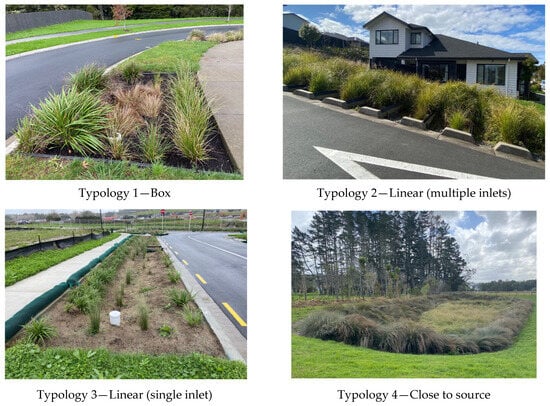
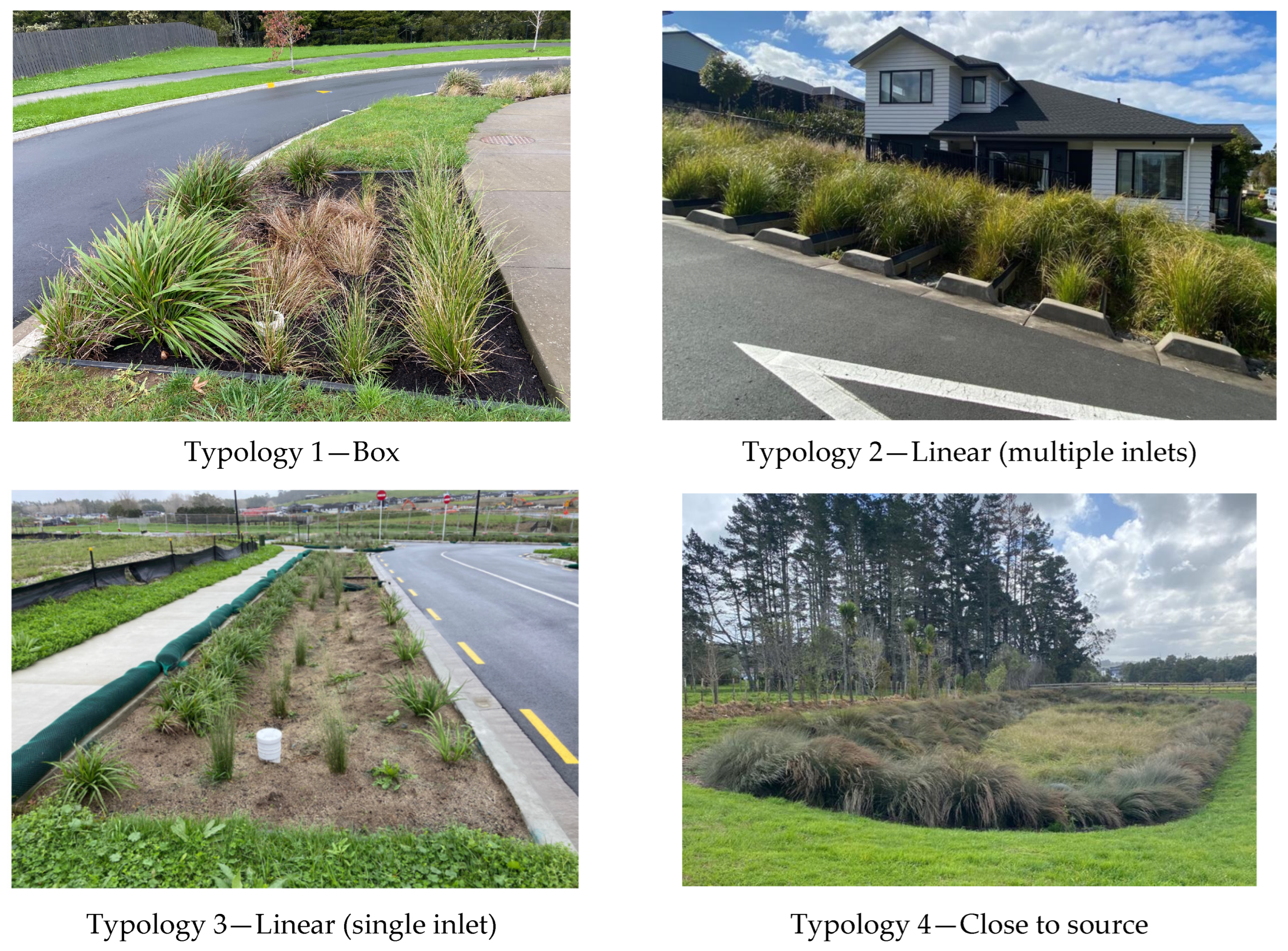
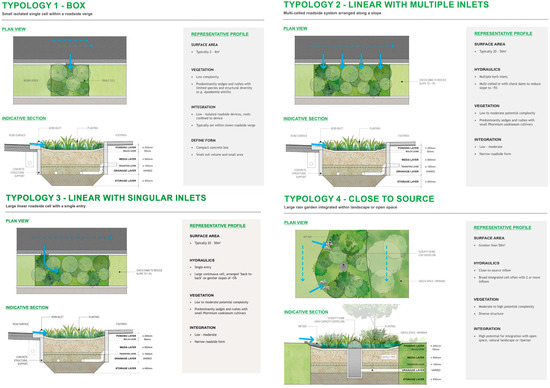
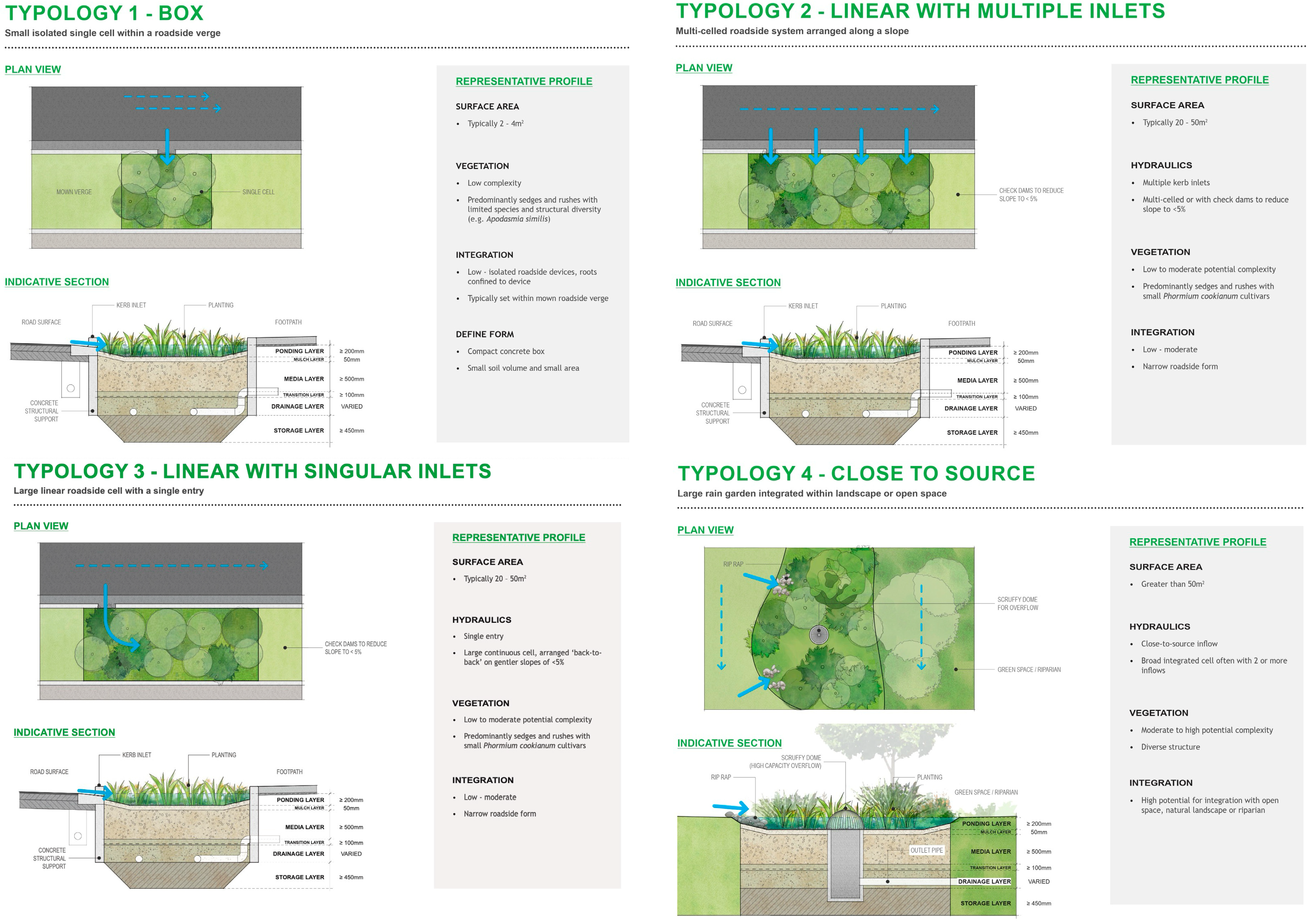
Four principal typologies were identified for detailed assessment (Figure 1):
Figure 1.
Rain garden typologies in the Auckland region, New Zealand.
- Typology 1 (Box): Isolated, single-celled rain gardens.
- Typology 2 (Linear—multiple inlets): Multi-celled roadside rain gardens on slopes with many inlets and retaining boards.
- Typology 3 (Linear—single inlet): Large, linear roadside rain gardens with large, single-entry cells, arranged ‘back-to-back’ on gentler slopes.
- Typology 4 (Close to source): Large, non-linear rain gardens with a low perimeter-to-area ratio, located within or adjacent to riparian landscaping or within mown grass.
For each typology, representative dimensions, planting characteristics, media depths, and landscape context were documented. These characteristics were used to define the representative design profiles used in the subsequent assessments.
The study applies the DSF as an overarching framework for classifying the decision context and selecting appropriate valuation methods. For this application, the More Than Water (MTW) Tool (v1.0) was used to assess environmental and social benefits, while LCC was used to quantify whole-of-life costs. These assessments were undertaken for the representative typology profiles rather than separately for each of the approximately 300 surveyed gardens. The survey count therefore describes the evidence base for typology development, not the number of individual MTW or LCC assessments.
The outputs of both assessments were considered together to compare typology performance across multiple dimensions of value.
2.3. Decision Support Framework
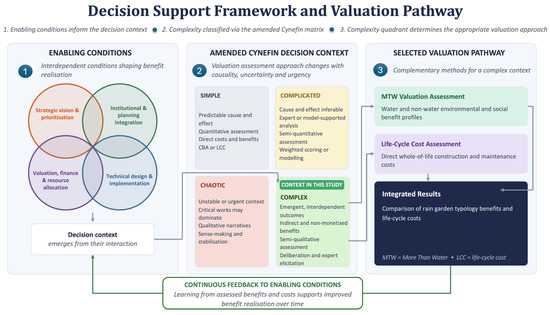
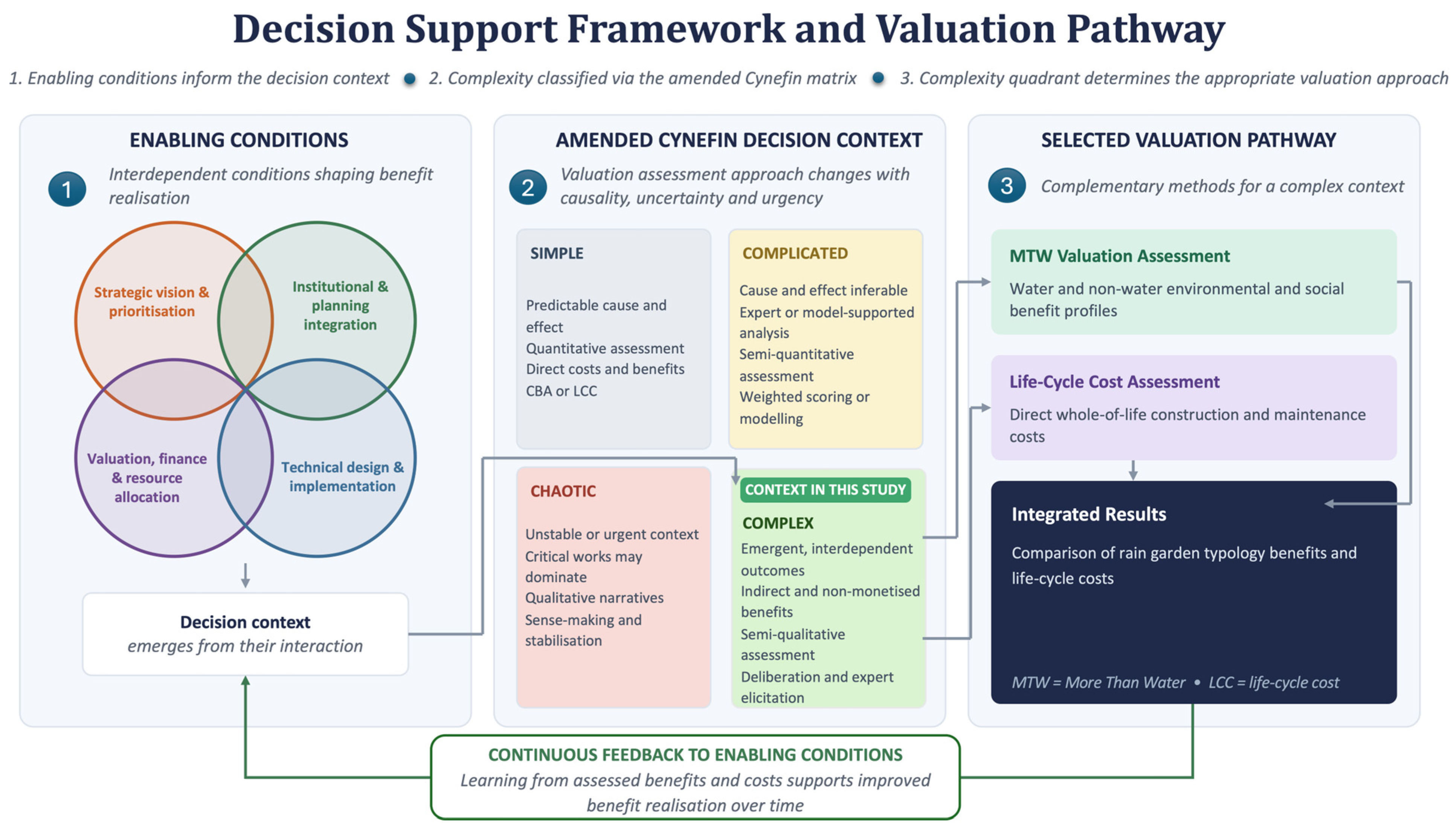
The DSF (Figure 2) guides the selection of context-appropriate valuation methods for the rain garden typology comparison.
Figure 2.
Economic valuation DSF developed by the authors, including benefit realisation feedback loops. Grey arrows show information flow through the decision framework; the green arrow shows feedback from the integrated assessment to the enabling conditions, supporting benefit realisation over time. Colours distinguish the framework components and decision contexts. Source: adapted from Ira and Jayawardena, 2025 [20].
The structured framework links decision-making with implementation across the full life cycle of NbSs (Table 1). The DSF is not an additional benefit or cost calculation tool. Its contribution is to structure the decision process that precedes tool selection by identifying the decision context, considering the conditions that affect whether benefits can be realised, and determining which forms of evidence are appropriate. The classification applies to the decision problem rather than to rain gardens as a device type.
Table 1.
Key assessment stages across the life cycle of rain garden implementation (original table prepared by the authors).
The DSF integrates four interdependent enabling conditions to characterise the decision context and the factors affecting benefit realisation:
- (i)
- Strategic vision and prioritisation;
- (ii)
- Technical design and implementation;
- (iii)
- Institutional governance and planning integration;
- (iv)
- Valuation, finance, and resource allocation.
It also incorporates complexity-informed decision logic based on the Cynefin framework [23]. The Cynefin framework distinguishes between simple, complicated, complex and chaotic decision contexts, according to the nature of the relationships between cause and effect [23]. Simple contexts involve predictable and repeatable relationships; complicated contexts require expert analysis. Complex contexts are characterised by uncertainty, emergence and multiple interacting variables, making outcomes difficult to predict in advance. Chaotic contexts lack stable relationships and require rapid response. Where cause-and-effect relationships are predictable, direct quantitative assessment may be sufficient; where they require specialist interpretation, expert modelling may be appropriate. In a complex context, uncertain and interacting benefit pathways call for complementary quantitative, semi-quantitative and qualitative evidence. This adapted Cynefin logic informed the classification and selection of valuation methods described below.
In this study, the DSF was applied through a structured four-step process:
- (1)
- Mapping typologies to enabling conditions:Each rain garden typology was assessed against the four enabling conditions, i.e., how design, governance, and implementation processes influenced performance across the NbS life cycle. This assessment drew on field observations, design documentation, and stakeholder insights.
- (2)
- Classification of decision context:The rain garden typology comparison was evaluated using the adapted Cynefin matrix to determine the nature of the decision context. Given the interactions among design, ecological processes, governance arrangements and social context, together with the uncertainty in the pathways through which benefits are realised, the decision context was classified as complex.
- (3)
- Selection of valuation methods:The DSF used this classification to guide the selection of plural valuation methods appropriate to a complex decision context. The selected methods were:
- Semi-quantitative and qualitative assessment of benefits using the MTW Tool (v1.0) [16];
- Quantitative assessment of direct costs using LCC [24].
- (4)
- Integration of results:Outputs from the MTW and LCC analyses were considered together to enable comparison of typology performance across environmental and social benefit domains and whole-of-life costs. The outputs were presented alongside one another rather than aggregated into a single score.
The application of the DSF therefore provided a structured basis for aligning decision context with appropriate valuation methods and supported consistent and transparent consideration of both monetised and non-monetised evidence.
2.4. Benefit Assessment
The MTW Tool (v1.0) [16] was used to assess the relative benefit potential of each rain garden typology across environmental and social domains. MTW is an Excel-based, structured qualitative and semi-quantitative assessment tool developed for New Zealand water-sensitive design projects. It enables the assessment of both water-related and non-water-related benefits.
For each typology, benefit criteria were assessed within four categories: water-related environmental benefits, water-related social benefits, non-water–environmental benefits and non-water–social benefits (Table 2). Use of MTW involves evaluating the level, importance and reliability of each benefit criterion, drawing on the guidance and rating descriptors provided with the tool. While assessments rely on expert judgement, they are informed by supporting evidence (e.g., hydrological modelling, stream assessments, water quality modelling, life cycle cost calculations), where available.
Table 2.
Benefit criteria assessed in the MTW Tool [16].
The MTW assessment is underpinned by a detailed evaluation matrix, with benefit-specific descriptors provided in the accompanying MTW report [16]. Readers are referred to the report and its supporting assessment matrix (https://www.landcareresearch.co.nz/discover-our-research/environment/sustainable-society-and-policy/activating-water-sensitive-urban-design-for-healthy-resilient-communities/research-outputs, accessed on 19 November 2025) [16] for the complete rating and criteria descriptors. In the present application, these criteria were interpreted alongside the physical characteristics and supporting evidence for each rain garden typology. For example, hydrology ratings were informed by available modelling of runoff-management performance; whereas, criteria such as natural character and connectedness with nature were evaluated using qualitative descriptors and photographic examples. This allowed quantitative evidence to inform ratings where available while retaining structured qualitative assessment for benefits that were not readily quantified.
In this study, the MTW assessment was undertaken by two of the authors, drawing on domain expertise in stormwater engineering, ecology and water-sensitive design. Benefit categories and assessment criteria were drawn from the MTW Tool and its supporting evaluation matrix [16]. Hydraulic and water-quality performance ratings were informed by approved engineering designs and associated modelling undertaken in accordance with Auckland Council’s GD01 guidance [17]. Ratings relating to stream ecological functions were informed by available watercourse assessment reports. Qualitative benefit ratings were guided by the descriptors within the MTW matrix, supplemented by photographic examples illustrating the different benefit levels. These descriptors and examples provided a common basis for interpreting the criteria and helped reduce ambiguity between rating categories. The two authors initially assigned the benefit ratings independently, without access to each other’s ratings. They then compared their assessments and resolved differences through discussion, referring to the supporting evidence, MTW descriptors and photographic examples to agree on the appropriate rating. The resulting benefit profiles were presented to the practitioner review group for feedback and validation. The ‘importance’ weighting for all benefit criteria was held constant at a medium level. Within MTW, importance would ordinarily be informed by stakeholder or community engagement to reflect local values or priorities. Because such engagement was outside the scope of this study, a consistent medium weighting was adopted to enable comparison across typologies without introducing unsubstantiated differences in stakeholder priorities.
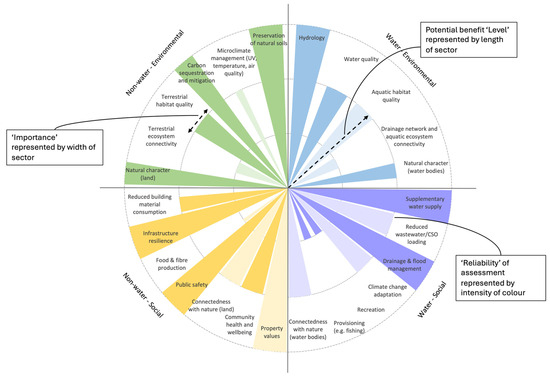
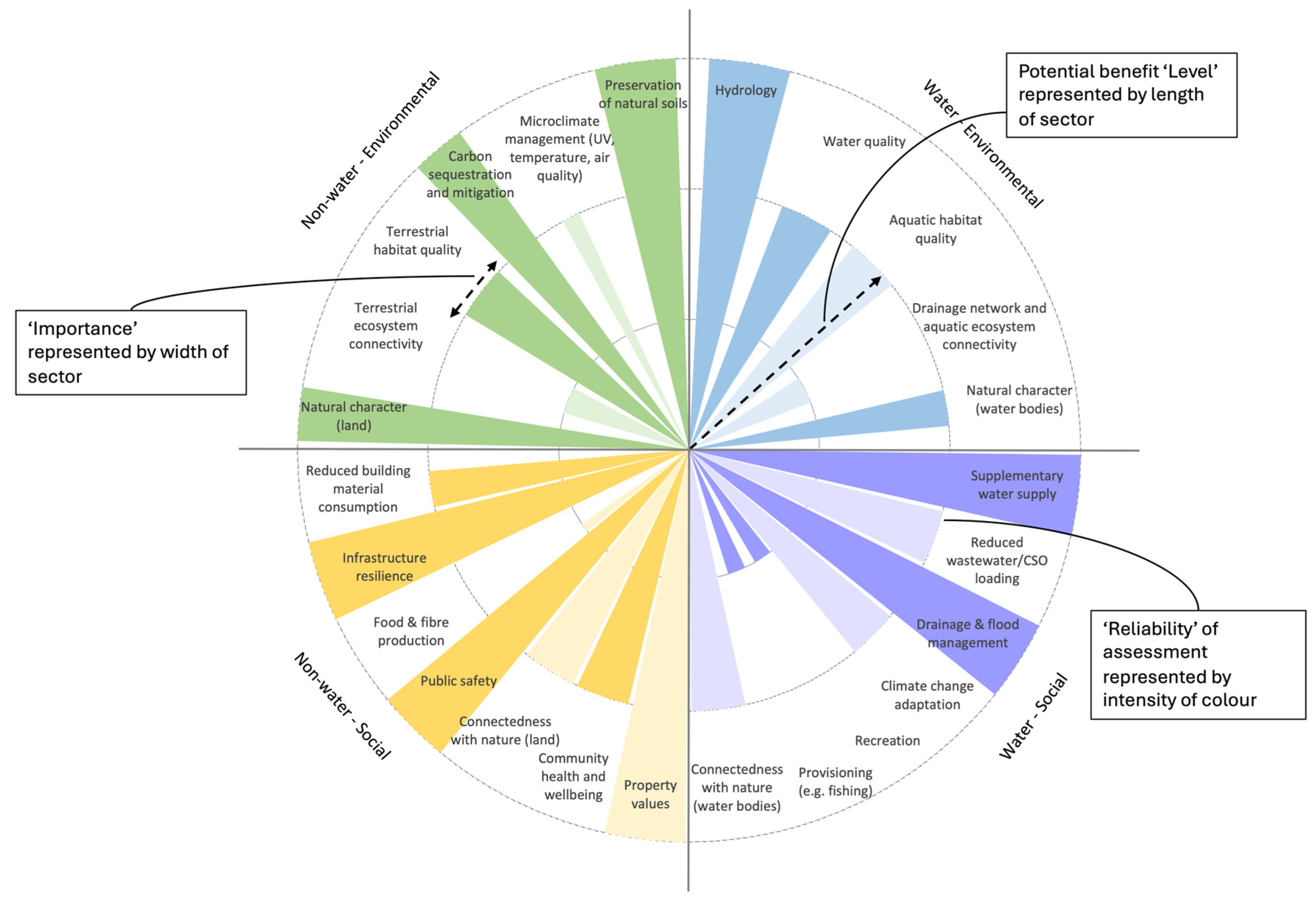
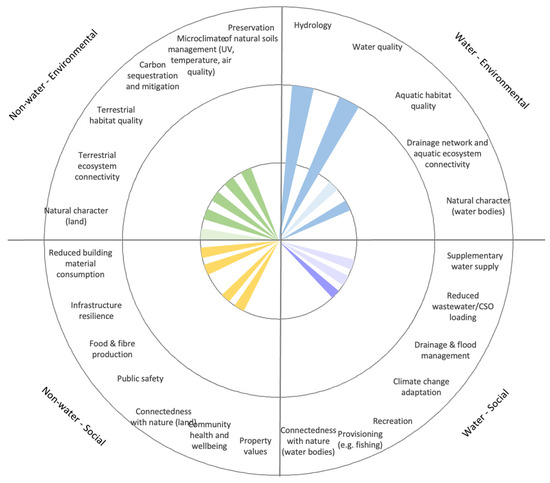
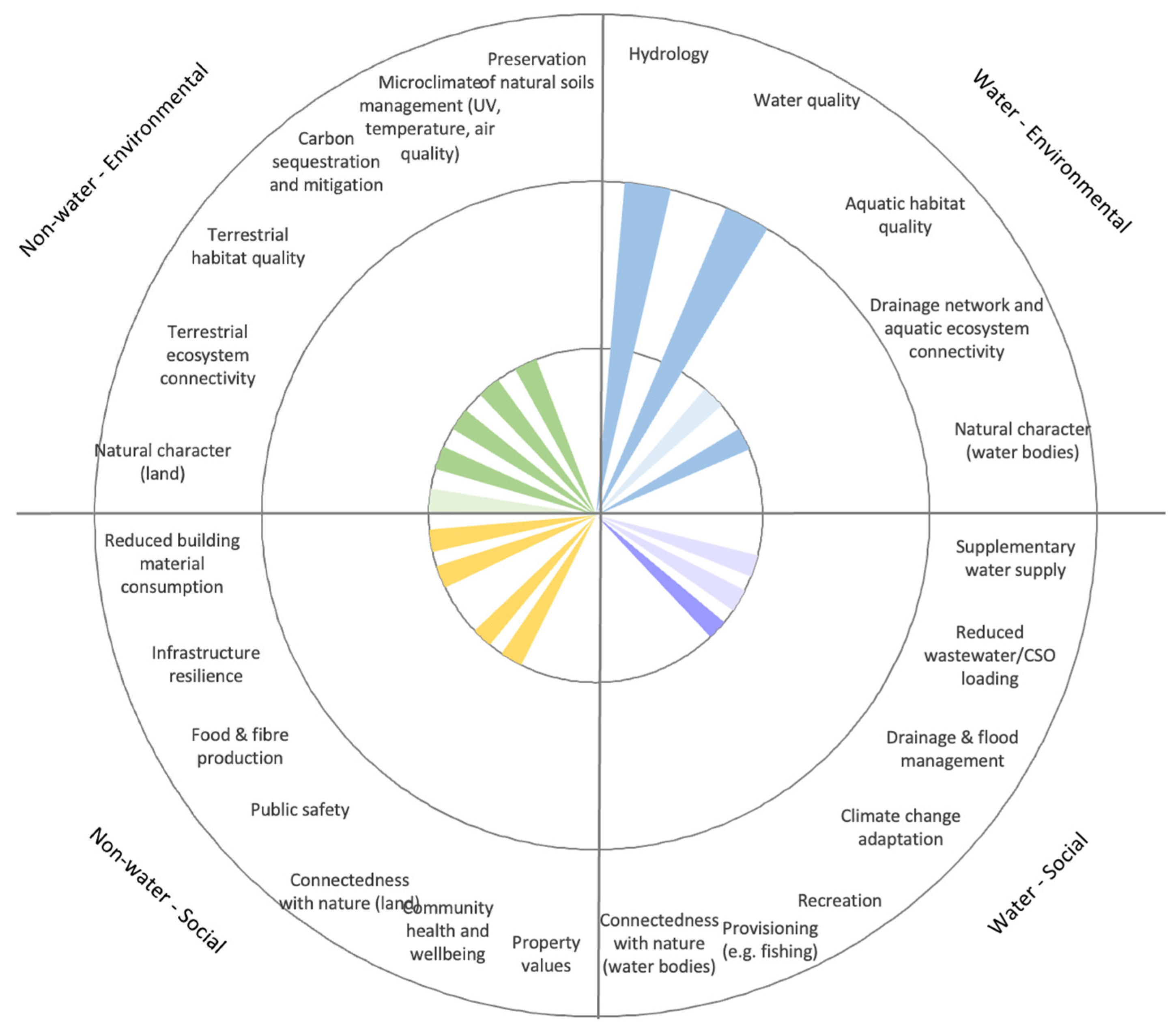
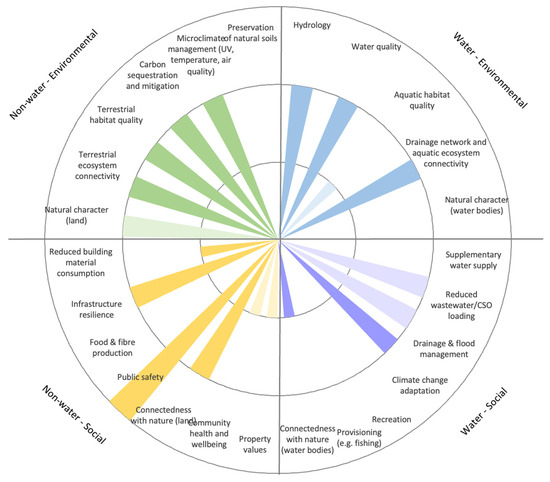
Each sector in the circular diagram represents a specific benefit or cost criterion. Sectors coloured blue represent water–environmental benefits. Purple sectors represent water–social benefits, green sectors non-water–environmental benefits and yellow sectors non-water–social benefits. The level, importance and reliability of each criterion are represented as follows (Figure 3):
Figure 3.
Illustrative example of an MTW benefit profile, illustrating how the three factors of ‘level’, ‘importance’ and ‘reliability’ are represented [16].
- The level of a given benefit is reflected in the length of its sector from the centre of the chart;
- The importance of a given benefit is reflected in the width of its sector;
- The reliability of the assessment of a given benefit is reflected in the intensity of the colour of its sector.
The MTW approach enables structured comparison of diverse benefit types without requiring full monetisation. By retaining separate benefit criteria and presenting results in non-monetary form, the approach reduces reliance on monetary discounting and temporal benefit estimation.
2.5. Cost Assessment
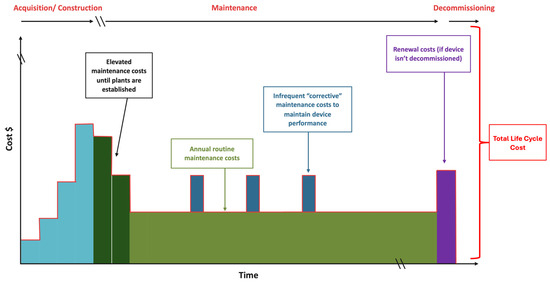
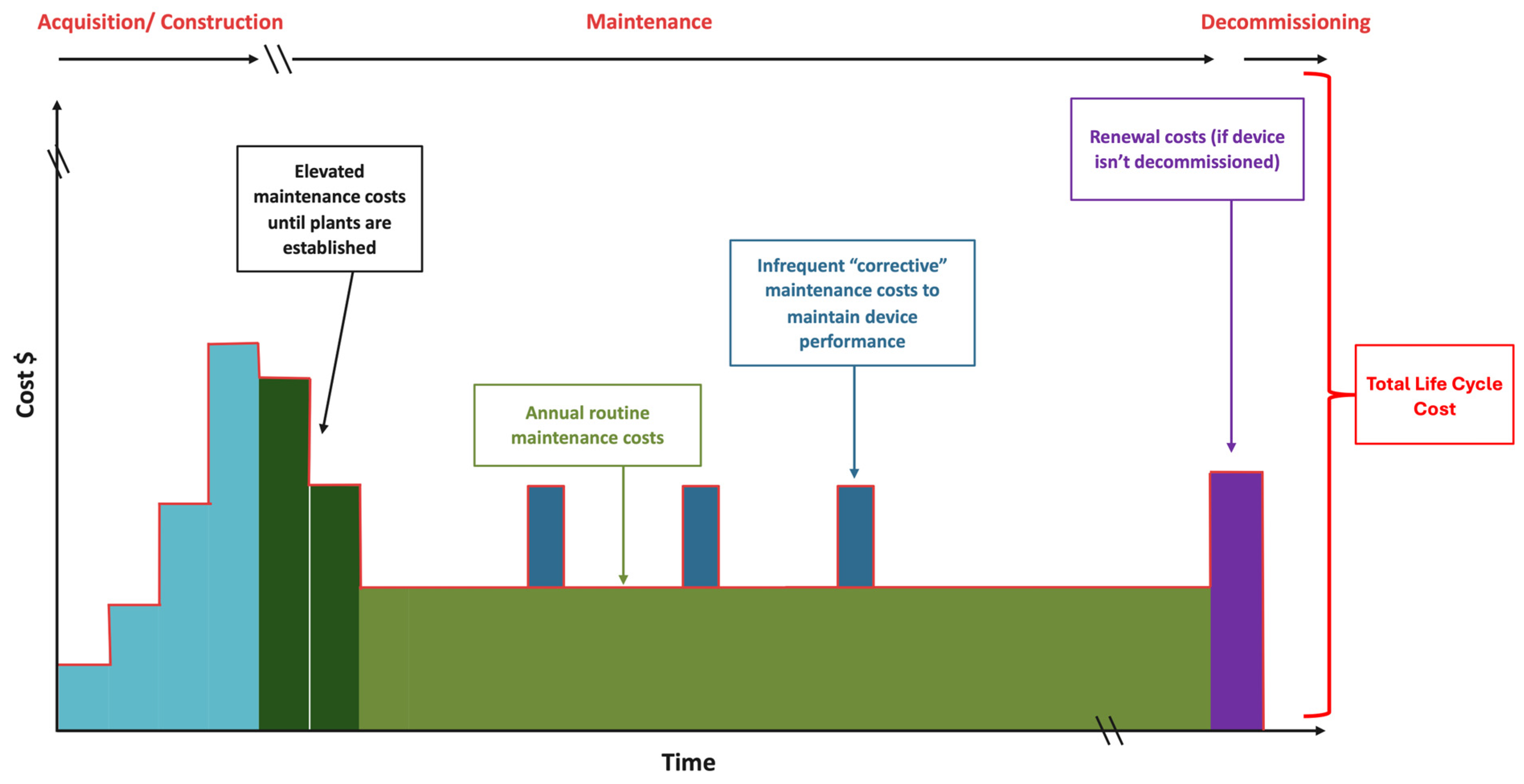
Life cycle costing is a method for estimating the costs incurred over the life cycle of an asset and expressing future costs in present-value terms [25]. In this study, LCC was used to estimate the direct whole-of-life costs associated with the representative design profile for each rain garden typology. The assessment included the following cost elements (Figure 4):
Figure 4.
Phases of the life cycle of an NbS stormwater management device and potentially associated costs [24].
- Total acquisition costs, including design, consenting and construction;
- Routine maintenance costs;
- Corrective maintenance costs;
- Renewal costs.
LCC modelling followed the joint Australian/New Zealand life cycle costing standard [26]. The standard and analytical assumptions were applied consistently across all typologies to enable comparative analysis. The analysis used a base date of 2018, a 50-year analysis period and a 4% discount rate, consistent with commonly applied public sector infrastructure appraisal practices in New Zealand [27]. Sensitivity analyses used 2% and 6% discount rates and an extended 100-year analysis period.
A bespoke, unit-cost, Excel-based rain garden LCC model developed (v1.0) specifically for New Zealand conditions was applied [24]. The model was populated using New Zealand construction and maintenance cost data collected over a 14-year period [24,28]. Maintenance regimes (activities, cost and frequency) were defined using standard stormwater asset management practices and, where available, observed maintenance practices. A standardised maintenance activity data collection protocol was used to ensure consistency across all typologies (Table 3).
Table 3.
Rain garden maintenance activity and frequency assumptions used within the LCC model [24] (adapted from Ira and Simcock [28]).
3. Results
3.1. Rain Garden Typology Characteristics
The assessed rain garden typologies exhibit marked differences in scale, planting complexity, hydraulic connectivity and integration with surrounding urban landscapes (Figure 5). Small (approximately 2–4 m2) boxed rain gardens are typically isolated devices set into road verges. Boxes provide limited planting area and root zones. Larger integrated typologies provide greater contiguous soil volume and allow more diverse vegetation. They also improve separation of pedestrians from vehicles and strengthen landscape connectivity and coherence. All four typologies share a common hydraulic design basis and a standard media depth of 500 mm. These differences in scale, vegetation and landscape integration form the physical basis for the MTW and LCC assessments.
Figure 5.
Representative design characteristics of the four rain garden typologies. Surface-area ranges and vegetation characteristics are derived from the field surveys and typology assessment reported by Ira and Simcock [22].
3.2. DSF Application and Valuation Pathway
To confirm the nature of the decision context and identify the appropriate valuation pathway, evidence from the rain garden review was assessed against the four DSF enabling conditions. The assessment considered the extent to which each condition supported implementation of the four typologies and the potential realisation of wider benefits across their life cycles.
The assessment (Table 4) draws on the data presented in Ira and Simcock [22]. The ratings are not quantitative performance measures; the circular indicators provide an ordinal summary of the extent to which each condition is fulfilled, shown in 25% increments. Separate ratings were assigned where the evidence differed between typologies (strategic vision and prioritisation), and a single rating was applied where the institutional and implementation context was common to all typologies.
Table 4.
Assessment of rain garden typologies across the enabling conditions framework. Circular indicators represent the relative fulfilment of each condition in 25% increments.
The assessment reveals a marked imbalance between the four enabling conditions. Technical design and implementation are relatively well fulfilled, because all typologies met the applicable stormwater design requirements and were generally well constructed. However, this technical compliance is accompanied by weaker strategic alignment for the smaller, less integrated typologies, fragmented institutional responsibility for long-term maintenance, and limited formal consideration of wider benefits in valuation and resource allocation.
These findings are consistent with the classification of the decision context as complex (Section 2.3). Outcomes are not determined by technical design alone, but emerge from interactions among device form, landscape context, regulatory objectives, construction practices, maintenance responsibilities and the treatment of non-market benefits. Accordingly, the DSF directs the use of plural valuation methods, combining semi-quantitative and qualitative benefit assessment using MTW with quantitative LCC analysis.
3.3. More than Water Benefit Assessment
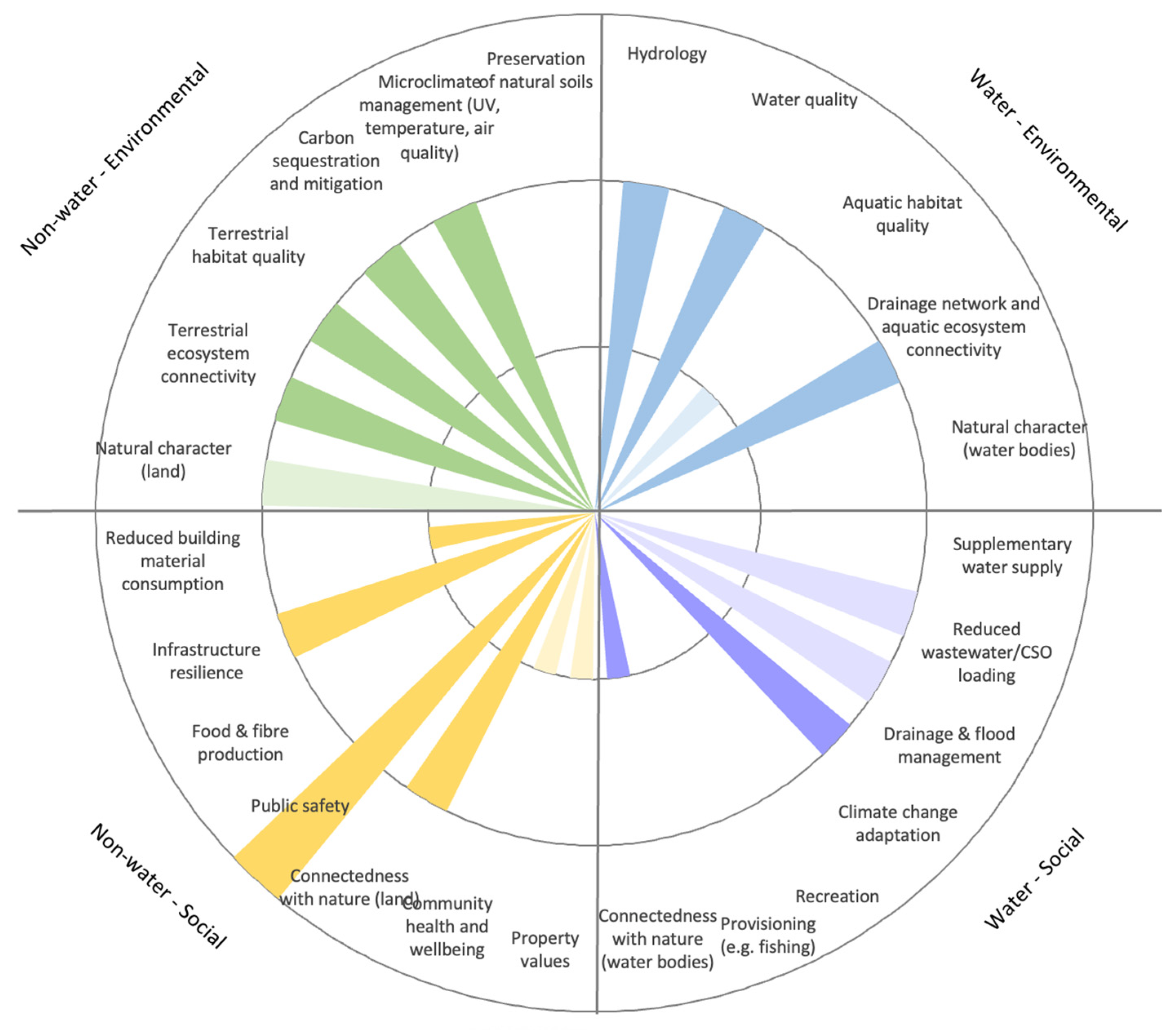
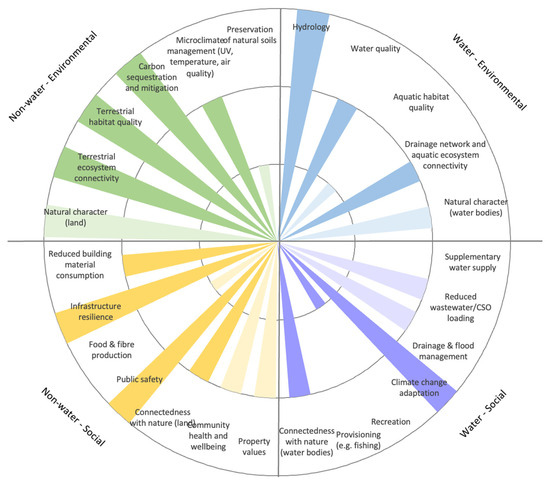
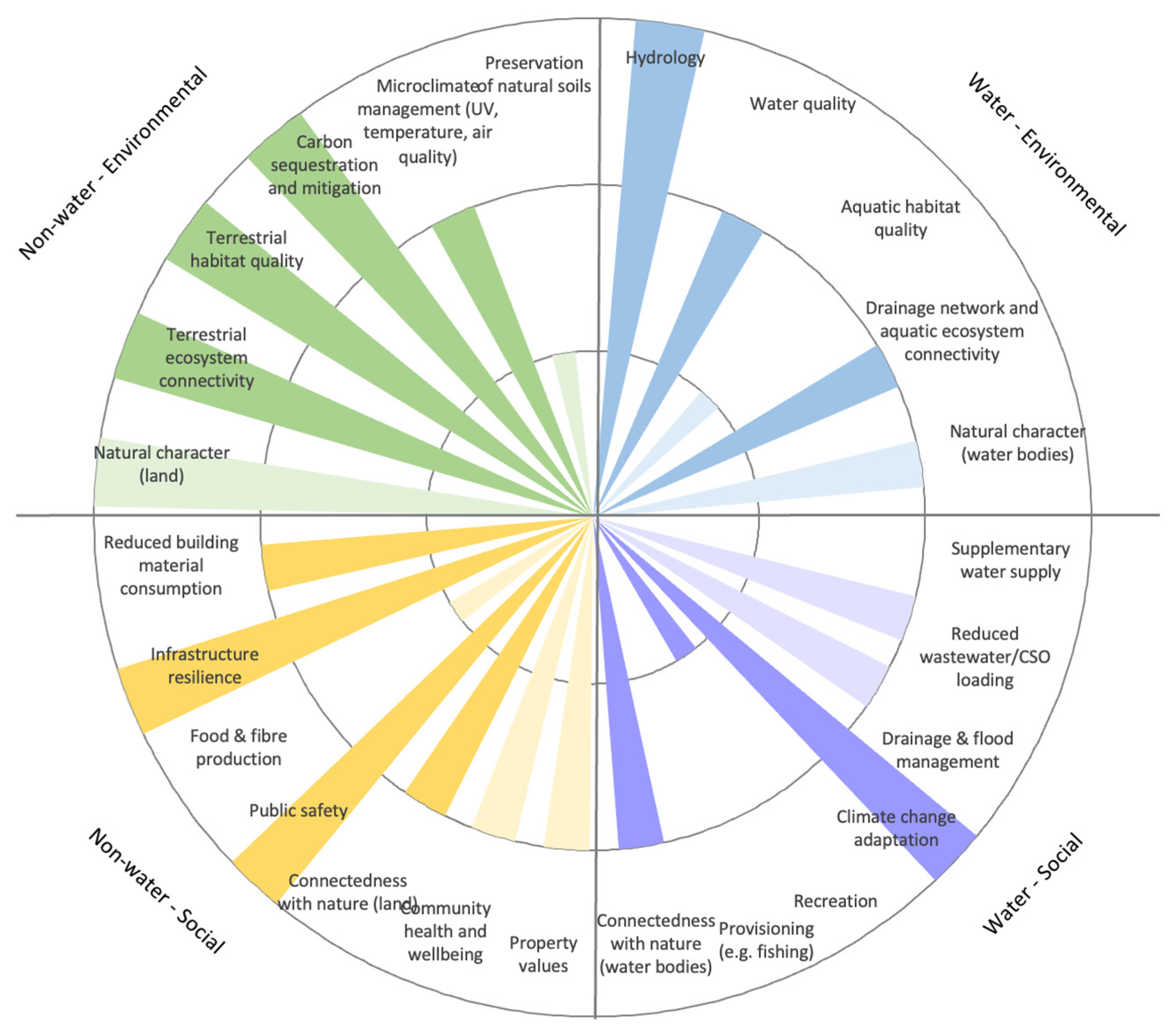
The MTW assessment criteria were applied to each typology as described in Section 2.4, to examine how the physical differences identified in Section 3.1 translate into differences in assessed benefit potential. Figure 6, Figure 7 and Figure 8 present categorical assessments rather than measured quantities or monetary values. Sector length shows the benefit-level category (none, low, medium or high) and importance was held constant at medium across all criteria; sector dimensions should therefore not be interpreted as proportional measures of physical benefit. The MTW Tool deliberately does not aggregate the individual criteria into a single overall score; consequently, references below to broader or stronger performance describe the overall benefit profile rather than a composite numerical result. Tabulated results can be seen in the Supplementary Materials provided.
Figure 6.
MTW results for Typology 1. Sector length shows benefit level, sector width shows importance (held constant at medium) and colour intensity shows assessment reliability.
Figure 7.
MTW results for Typologies 2 and 3.
Figure 8.
MTW results for Typology 4.
The assessed benefits of Typology 1 (box rain gardens; Figure 6) are concentrated in the water-related domains. Water quality and hydrology were rated medium, whereas most non-water–environmental and social criteria were rated low. This reflects the small device area, isolated roadside location, restricted soil and root volumes, and simple, low-growing vegetation described in Section 3.1. A relatively high proportion of the perimeter adjoins roads and footpaths, which requires vegetation to be trimmed regularly. Together, these characteristics limit the potential contribution to microclimate management, carbon sequestration, terrestrial habitat quality, ecosystem connectivity, natural character and connectedness with nature.
Typologies 2 and 3 (Figure 7) are assessed together because both comprise linear roadside rain gardens of similar scale, vegetation and landscape context. Their principal physical difference is the inlet configuration: Typology 2 has multiple inlets, whereas Typology 3 has a single inlet. Accordingly, the two typologies exhibit similar assessed benefit profiles. Both show greater benefit potential than Typology 1 across non-water and water–social domains. Most water–environmental benefits were assessed as medium, as for Typology 1. The higher non-water and water–social ratings reflect the larger rain garden area (typically 20–50 m2), greater planted area and soil volume, and more varied planting. Social benefits, including public safety and infrastructure resilience, were also assessed to be higher; however, the narrow form typical of these typologies limits these gains. The roadside configuration can further restrict vegetation diversity and structure, limiting the level of non-water benefits that can be realised.
Typology 4 has the broadest benefit profile across the non-water–environmental and social domains (Figure 8). Its larger area, off-road location, greater contiguous soil and root volume, scope for more complex vegetation (in both species and structure) and a lower proportion of hard edges increase its contribution to carbon sequestration, microclimate management, terrestrial habitat quality, ecosystem connectivity, natural character and connectedness with nature.
Overall, the MTW assessment provides a consistent basis for comparing both the type and level of benefits across all typologies. It indicates that compliance with common stormwater design requirements is associated with broadly comparable core stormwater management benefits, but highly variable assessed non-water benefits. Device scale, vegetation complexity and landscape integration strongly influence the range and level of additional benefits that can be realised.
3.4. Life Cycle Costing Assessment
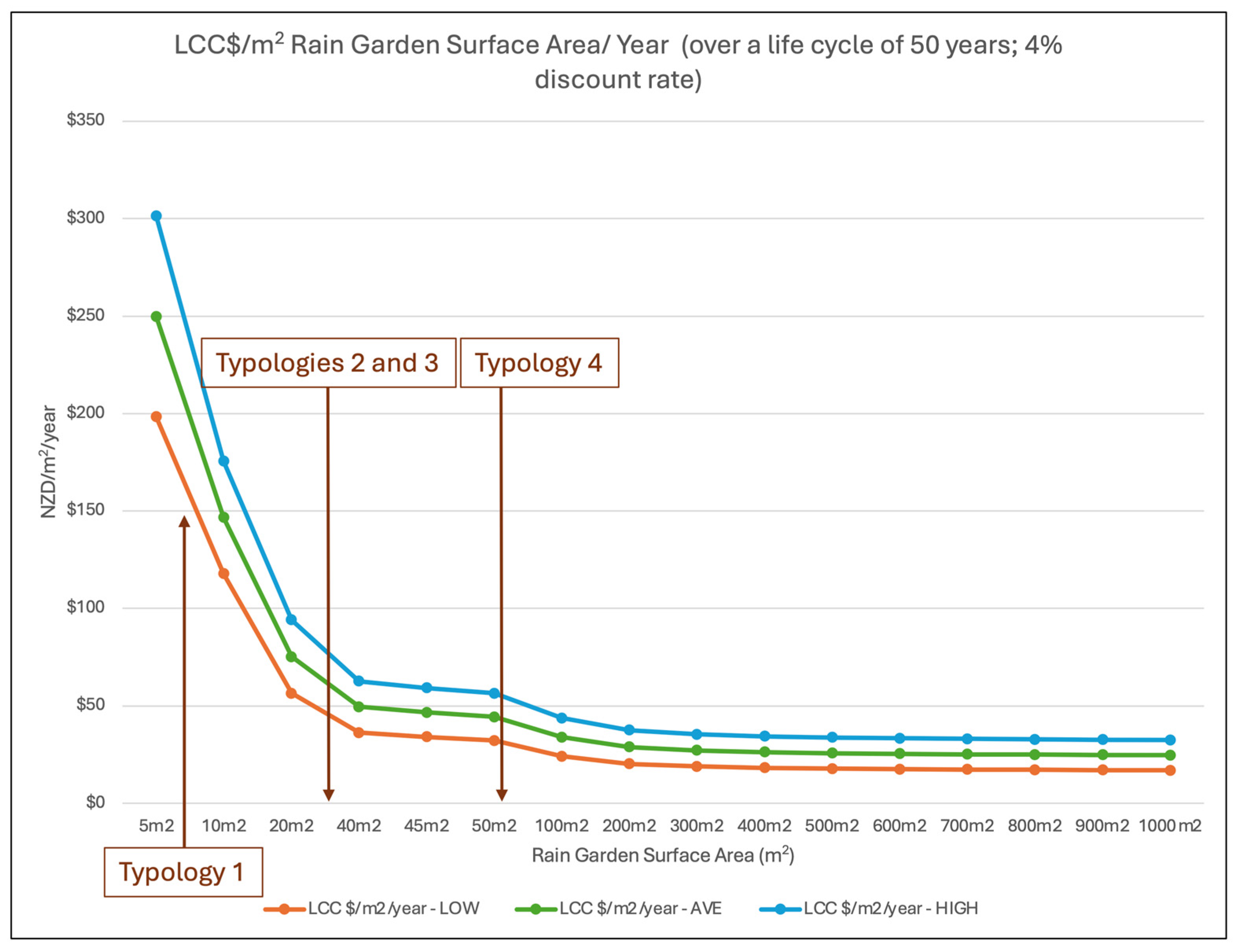
The LCC analysis identifies clear differences among the typologies (Figure 9). Costs are expressed in New Zealand Dollars (NZD) per m2 of rain garden surface area per year. Typology 1 has the highest cost, with a mean of approximately $150/m2/year. Typologies 2 and 3 have a mean of approximately $65/m2/year. Typology 4 has the lowest, with a mean of approximately $45/m2/year. The sensitivity analyses did not alter this ranking, indicating that it is robust across the alternative discount rates and analysis periods tested. Larger rain gardens generally have lower costs per unit of surface area, because fixed and edge-related construction and maintenance requirements are distributed across a larger treatment area.
Figure 9.
LCC comparison across typologies (NZD/m2/year, with a 4% discount rate and base date of 2018).
3.5. Combined Benefit and Cost Comparison
The MTW and LCC analyses complement the DSF-directed assessment: MTW describes the range and relative level of environmental and social benefits in non-monetary terms; whereas, LCC quantifies the direct whole-of-life costs of delivering and maintaining each typology. Table 5 brings these two assessments together.
Table 5.
Summary of MTW benefit levels * and life cycle costs across rain garden typologies.
4. Discussion
A key finding of this study is that rain garden typology is associated with clear differences in both assessed benefit potential and life cycle cost outcomes. Smaller, isolated systems (Typology 1) primarily deliver core hydrological functions, while the largest and most integrated typology (Typology 4) is assessed as offering substantially broader environmental and social benefit potential, including potential contributions to ecological quality, carbon sequestration, habitat connectivity and climate-related functions. Results indicate that rain gardens should not be treated as a homogeneous intervention within infrastructure appraisal frameworks, as typological variation materially affects both the type and assessed level of benefit.
These findings align with a growing body of literature recognising the multifunctional nature of NbSs and the limitations of conventional appraisal approaches in capturing their full value [29,30]. However, there is a gap between this recognition and its application in practice. The limited coverage of wider benefits in bioretention CBAs [8], together with the fragmented assessment of water-related urban NbSs [10], highlights the importance of making water and non-water benefits explicit when comparing stormwater options. In the present study, MTW complements direct life cycle costing by retaining non-monetised environmental and social benefit criteria, making differences in assessed benefit potential visible alongside cost differences. Conventional stormwater appraisal approaches may overlook differences in broader value where these cannot readily be monetised. Valuation approaches that extend beyond traditional cost–benefit frameworks are needed to overcome this shortfall.
The DSF offers one practical way forward. By aligning valuation methods with the nature of the decision context, the framework supports the consideration of both monetary and non-monetary evidence. This is particularly important in complex decision contexts, where benefits are distributed across environmental, social and economic domains and cannot be fully represented through a single metric. The framework’s emphasis on enabling conditions is consistent with international literature that identifies systemic barriers in governance, finance and planning [29]. Related research supports calls for a broader framework that reflects environmental and human wellbeing, and complex systems thinking to support the understanding and management of wicked problems [7,30]. The integration of the Cynefin framework [31] within the DSF is central to this process, as it provides a basis for recognising the inherent complexity of NbS decision-making and selecting appropriate evaluation methods. Rather than treating all infrastructure decisions as simple or linear, this approach enables a more nuanced assessment of benefits and costs based on their measurability and uncertainty.
The results also highlight the importance of design integration. Typologies that incorporate fewer hard edges, larger soil volumes, greater vegetation diversity and structural complexity (particularly trees), and stronger connections to surrounding landscapes (through integration with landscaped or riparian areas dominated by perennial plants rather than mown grass) were consistently assessed as offering enhanced benefit potential. This supports the role of ecological design principles in enhancing the contribution of urban stormwater NbSs [29,30,32]. These findings also indicate that decisions made at the design stage have long-term implications for both functionality and value generation, reinforcing the importance of considering life cycle outcomes in infrastructure planning.
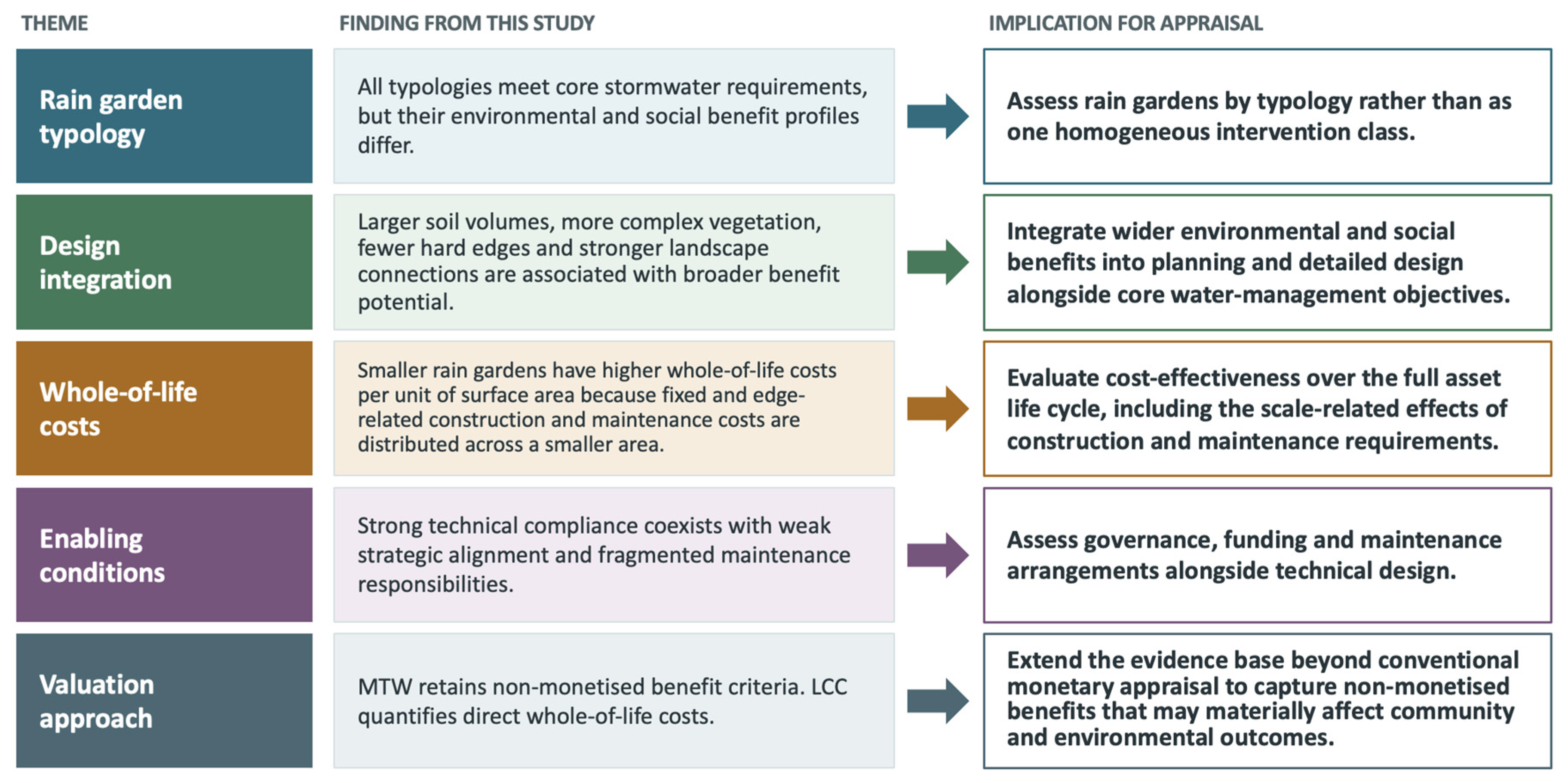
Beyond design considerations, the study identifies several systemic factors influencing rain garden performance. The principal findings and their implications for NbS appraisal and implementation are synthesised in Figure 10. The assessment of enabling conditions indicates that wider environmental and social benefits are not consistently prioritised during design and consenting processes for urban stormwater management, and that fragmented governance arrangements can affect long-term performance and maintenance outcomes. These findings are consistent with previous research identifying institutional and regulatory barriers to effective NbS implementation [29]. Unclear responsibilities and inadequate long-term funding have been identified as key barriers to ongoing maintenance of NbSs [33], reinforcing the rationale for the DSF’s assessment of institutional and financial enabling conditions alongside LCC estimates, which quantify expenditure but do not establish who will fund, coordinate and undertake the work. While the DSF provides a structured approach for integrating valuation and decision-making, its practical value ultimately depends on the extent to which these broader system conditions support its application.
Figure 10.
Synthesis of principal findings and their implications for NbS appraisal and implementation.
Decision-making tends to favour direct costs and monetised benefits, sidelining indirect and less readily quantified benefits [34]. While tools such as value-of-information analysis [35] or multi-criteria assessment offer theoretical solutions, in the authors’ experience, they can often be overly technical and resource-intensive for practical governance. The DSF offers potential practical advantages for decision-makers by providing a relatively accessible method that incorporates multiple forms of value into infrastructure appraisal. By combining structured qualitative assessment (MTW) with quantitative life cycle costing, it enables transparent comparison across typologies while preserving the distinction between different forms of evidence. This may make it useful in applied planning and engineering contexts, where decision-making must balance complexity with practicality.
Several limitations should be acknowledged. The MTW assessment relies on expert judgement, which introduces a degree of subjectivity, although this was reduced through structured rating criteria, independent initial assessments, consensus discussions and practitioner review. The rain garden typologies analysed represent generalised design configurations rather than individual site-specific systems. Results should therefore be interpreted as indicative rather than definitive. In addition, while the underlying valuation approach is intended to be transferable, benefit ratings and cost estimates reported here are specific to the Auckland context; applying the DSF elsewhere would require local adaptation of costs, design standards and benefit expectations. Ultimately, the DSF’s effectiveness depends on data quality and the willingness of decision-makers to engage with complexity and plural valuation, conditions that cannot be assumed.
The transferable element of the DSF is its four-step process for framing the decision for economic valuation: mapping the enabling conditions, classifying the decision context, selecting proportionate valuation methods and integrating the results. The Auckland typology ratings, benefit expectations and cost estimates should not, however, be transferred unchanged to another city. Application elsewhere would require locally defined NbS typologies and decision objectives; appropriate ecological, social and cultural benefit criteria; relevant design and regulatory requirements; and local construction, maintenance and renewal costs. The classification and assessment would also need to reflect local governance responsibilities, available evidence and stakeholder priorities. These requirements are particularly important where benefits depend on place-specific social or cultural relationships. The present study demonstrates how the DSF can be applied to one comparison, but does not establish that it improves decisions relative to other appraisal processes, or that its indicative benefit ratings predict measured outcomes at individual sites.
Future research should test the DSF across a broader range of NbS types and urban contexts, supported by empirical monitoring and stakeholder input, and compare decisions supported by its application with those reached through narrower, predominantly monetised cost–benefit assessment frameworks.
5. Conclusions
This study indicates that rain garden typology is associated with clear differences in assessed benefit potential and life cycle costs. Larger and more integrated systems exhibit broader environmental and social benefit profiles and lower whole-of-life costs per unit of rain garden surface area than smaller, isolated systems. These findings indicate that appraisal focused primarily on hydraulic performance and initial costs may obscure material differences among rain garden designs, creating a risk that NbSs are undervalued and/or poorly matched to their intended objectives.
The application of the DSF demonstrates how classification of the decision context can guide the selection of proportionate valuation methods. In this application, the complexity-informed use of qualitative and semi-quantitative MTW assessment alongside quantitative LCC enables transparent comparison of non-monetised benefit potential and direct whole-of-life costs without reducing them to a single metric.
The DSF therefore provides a structured approach to NbS appraisal and selection. Although the process has potential application beyond Auckland, its use elsewhere would require adaptation to local typologies, objectives, design standards, costs, governance arrangements and stakeholder priorities. Applied in this way, the DSF can support decisions that account more explicitly for environmental and social benefit potential alongside whole-of-life costs.
Supplementary Materials
The following supporting information can be downloaded at: https://www.mdpi.com/article/10.3390/environments13100544/s1.
Author Contributions
Conceptualisation, S.I.; methodology, S.I.; validation, S.I. and R.S.; formal analysis, S.I. and R.S.; investigation, S.I. and R.S.; resources, S.I. and R.S.; data curation, S.I. and R.S.; writing—original draft preparation, S.I.; writing—review and editing, S.I., R.S., I.J. and E.A.-R.; visualisation, E.A.-R. and I.J.; supervision, E.A.-R.; project administration, S.I.; funding acquisition, S.I. All authors have read and agreed to the published version of the manuscript.
Funding
The original rain garden field research reported in Ira and Simcock [22], which provided source information for the present study, was funded by Auckland Council, 135 Albert Street, Auckland 1010, New Zealand (Contract No. CW192225). The DSF development, MTW and life cycle cost assessments, analysis and preparation of this manuscript were undertaken independently by S.I. as part of her doctoral research at Waipapa Taumata Rau, the University of Auckland, supported by a scholarship from Ngā Ara Whetū—Climate, Biodiversity and Society, University of Auckland, Auckland 1010, New Zealand.
Data Availability Statement
The source information supporting this study is reported in Ira and Simcock [22]. The subsequent MTW model and life cycle cost data are available from the corresponding author upon reasonable request.
Acknowledgments
The authors gratefully acknowledge Ngā Ara Whetū—Climate, Biodiversity and Society at Waipapa Taumata Rau, the University of Auckland, for the interdisciplinary research environment and wider support provided during the doctoral research within which this study was undertaken. The authors also acknowledge Auckland Council, the Bioeconomy Science Institute and Koru Environmental Consultants Ltd. for the professional advice and in-kind support provided during the research and preparation of this manuscript. During the preparation of this manuscript, the authors used generative artificial intelligence (Microsoft 365 Copilot (based on GPT-5 chat model) and Anthropic Claude Opus 5.5) to assist in refining, restructuring and proofreading text for this manuscript, specifically to adapt content from a PhD thesis into a journal paper format. The authors have reviewed and edited the output and take full responsibility for the content of this publication.
Conflicts of Interest
S.I. is a director of Koru Environmental Consultants Ltd., St Johns, Auckland 1072, New Zealand, through which the original Auckland Council-funded research reported in Ira and Simcock [22] was undertaken. The DSF development, assessments, analysis, interpretation of results and preparation of the present manuscript were undertaken independently by S.I. as part of her doctoral research. The remaining authors declare no conflicts of interest.
Abbreviations
The following abbreviations are used in this manuscript:
| NbSs | Nature-based Solutions |
| DSF | Decision Support Framework |
| MTW | More Than Water |
| LCC | Life Cycle Costing |
| CBA | Cost Benefit Analysis |
| NZD | New Zealand Dollar |
References
- Raspati, G.S.; Bruaset, S.; Azrague, K.; Ugarelli, R.M.; Muthanna, T.M.; Time, B.; Sivertsen, E. Framework for the documentation of nature-based solutions for stormwater management. Blue-Green Syst. 2023, 5, 135–151. [Google Scholar] [CrossRef] [Scilit]
- Moores, J.; Batstone, C. Assessing the Full Benefits of WSUD: Activating WSUD for Healthy Resilient Communities; Building Better Homes, Towns and Cities National Science Challenge: Auckland, New Zealand, 2019.
- Harmsworth, G.; Awatere, S. Indigenous Māori knowledge and perspectives of ecosystems. In Ecosystem Services in New Zealand; Dymond, J.R., Ed.; Manaaki Whenua Press: Lincoln, New Zealand, 2013; pp. 274–286. [Google Scholar]
- Ministry for the Environment. National Policy Statement for Freshwater Management; Ministry for the Environment: Wellington, New Zealand, 2020.
- The Treasury. CBAx Tool; The Treasury: Wellington, New Zealand, 2019.
- HM Treasury. The Green Book: Central Government Guidance on Appraisal and Evaluation; HM Treasury: London, UK, 2022.
- Stiglitz, J.E.; Sen, A.; Fitoussi, J.-P. Report by The Commission on the Measurement of Economic Performance and Social Progress; The Commission: Paris, France, 2010.
- Chelli, A.; Brander, L.; Geneletti, D. Cost-benefit analysis of urban nature-based solutions: A systematic review of approaches and scales with a focus on benefit valuation. Ecosyst. Serv. 2025, 71, 101684. [Google Scholar] [CrossRef] [Scilit]
- Lähde, E.; Khadka, A.; Tahvonen, O.; Kokkonen, T. Can we really have it all?—Designing multifunctionality with sustainable urban drainage system elements. Sustainability 2019, 11, 1854. [Google Scholar] [CrossRef] [Scilit]
- Dubois, E.; Loghmani-Khouzani, T.; Ottaviani, S.; Serrao, L.; Starkey, E. Are water-related nature-based solutions (NbS) assessed for their full multi-benefit potential? A review from an urban perspective. Sustain. Nexus Forum 2025, 33, 22. [Google Scholar] [CrossRef] [Scilit]
- U.S. Environmental Protection Agency. Guidelines for Preparing Economic Analyses; U.S. Environmental Protection Agency: Washington, DC, USA, 2014.
- Construction Industry Research and Information Association. Benefits of SuDS Tool (B£ST): Guidance and Tool; Construction Industry Research and Information Association: London, UK, 2015. [Google Scholar]
- Centre for Neighbourhood Technology; American Rivers. The Value of Green Infrastructure: A Guide to Recognizing Its Economic, Environmental and Social Benefits; Centre for Neighbourhood Technology: Chicago, IL, USA, 2011. [Google Scholar]
- Cooperative Research Centre for Water Sensitive Cities. INFFEWS—An Overview; Cooperative Research Centre for Water Sensitive Cities: Melbourne, Australia, 2017. [Google Scholar]
- Afoa, E.; Brockbank, T. Te Ao Māori and Water Sensitive Urban Design: Activating WSUD for Healthy Resilient Communities; Building Better Homes, Towns and Cities National Science Challenge: Auckland, New Zealand, 2019. [Google Scholar]
- Moores, J.; Ira, S.; Batstone, C.; Simcock, R. The ‘More Than Water’ WSUD Assessment Tool: Assessing the Full Benefits of WSUD: Activating WSUD for Healthy Resilient Communities; Building Better Homes, Towns and Cities National Science Challenge: Auckland, New Zealand, 2019. [Google Scholar]
- Cunningham, A.; Colibaba, A.; Hellberg, B.; Roberts, G.; Simcock, R.; Vigar, N.; Woortman, W. Stormwater Management Devices in the Auckland Region GD01; Auckland Council: Auckland, New Zealand, 2017.
- Bąk, J.; Barjenbruch, M. Benefits, Inconveniences, and Facilities of the Application of Rain Gardens in Urban Spaces from the Perspective of Climate Change—A Review. Water 2022, 14, 1153. [Google Scholar] [CrossRef] [Scilit]
- Utkina, K.; Ashley, R.M.; Sun, Z.; Adhikari, U.; Kali, S.E.; Deak Sjöman, J.; Randrup, T.B.; Viklander, M.; Blecken, G.T. Valuing structured alternatives for retrofitting blue-green infrastructure at a catchment scale using the Benefit Estimation Tool (B£ST). Blue-Green Syst. 2025, 7, 139–155. [Google Scholar] [CrossRef] [Scilit]
- Ira, S.; Jayawardena, I. Beyond single outcomes: Capturing multiple benefits in an economic valuation decision support framework for urban stormwater nature-based solutions. In Proceedings of the Smart and Sustainable Built Environment, University of Auckland, Auckland, New Zealand, 1–3 December 2025. [Google Scholar]
- Simcock, R. Water sensitive design in Auckland, New Zealand. In Sustainable Surface Water Management: A Handbook for SUDS; Charlesworth, S., Booth, C., Eds.; John Wiley & Sons Ltd.: London, UK, 2017; pp. 380–392. [Google Scholar] [CrossRef] [Scilit]
- Ira, S.; Simcock, R. An Independent Review of Rain Garden Implementation in the Auckland Region; Auckland Council: Auckland, New Zealand, 2023.
- Snowden, D.J.; Boone, M.E. A leader’s framework for decision making. Harv. Bus. Rev. 2007, 85, 68–76. [Google Scholar] [PubMed]
- Ira, S.; Walsh, P.; Batstone, C. Freshwater Management Tool: A Total Economic Valuation Approach to Understanding Costs and Benefits of Intervention Scenarios—Part 1 Urban Devices; Auckland Council: Auckland, New Zealand, 2021.
- Brown, N.; Ira, S.; Walsh, P.; Porter, T.; Moores, J. A total economic valuation approach to the assessment of water quality interventions within the Auckland Region. In Proceedings of the Water New Zealand Conference, Auckland, New Zealand, 17–19 November 2020. [Google Scholar]
- AS/NZS 4536:1999; Life Cycle Costing: An Application Guide. Standards Australia: Homebush, NSW, Australia; Standards New Zealand: Wellington, New Zealand, 1999.
- Auckland Council. Auckland Council Cost Benefit Analysis Primer (Version 2.0); Auckland Council: Auckland, New Zealand, 2013.
- Ira, S.; Simcock, R. Understanding Costs and Maintenance of WSUD in New Zealand: Activating WSUD for Healthy Resilient Communities; Building Better Homes, Towns and Cities National Science Challenge: Auckland, New Zealand, 2019. [Google Scholar]
- Frantzeskaki, N. Seven lessons for planning nature-based solutions in cities. Environ. Sci. Policy 2019, 93, 101–111. [Google Scholar] [CrossRef] [Scilit]
- Kenter, J.O.; Martino, S.; Buckton, S.J.; Waddock, S.; Agarwal, B.; Anger-Kraavi, A.; Costanza, R.; Hejnowicz, A.P.; Jones, P.; Lafayette, J.O.; et al. Ten principles for transforming economics in a time of global crises. Nat. Sustain. 2025, 8, 837–847. [Google Scholar] [CrossRef] [Scilit]
- Kurtz, C.F.; Snowden, D.J. The new dynamics of strategy: Sense-making in a complex and complicated world. IBM Syst. J. 2003, 42, 462–483. [Google Scholar] [CrossRef] [Scilit]
- Kõiv, K.; Annus, I.; Kändler, N.; Kaur, K.; Suits, K.; Truu, M. Methodology for multi-benefit analysis of nature-based solutions. Blue-Green Syst. 2025, 7, 287–304. [Google Scholar] [CrossRef] [Scilit]
- Knapik, E.; Brandimarte, L.; Usher, M. Maintenance in sustainable stormwater management: Issues, barriers and challenges. J. Environ. Plan. Manag. 2025, 68, 2769–2795. [Google Scholar] [CrossRef] [Scilit]
- Atkinson, G.; Mourato, S. Environmental cost-benefit analysis. Annu. Rev. Environ. Resour. 2008, 33, 317–344. [Google Scholar] [CrossRef]
- Pannell, D.J.; Johnston, R.J.; Burton, M.P.; Iftekhar, M.S.; Rogers, A.A.; Day, C. The value of a value: The benefits of improved decision making informed by non-market valuation. J. Environ. Econ. Manag. 2025, 131, 103148. [Google Scholar] [CrossRef] [Scilit]



Disclaimer/Publisher’s Note: The statements, opinions and data contained in all publications are solely those of the individual author(s) and contributor(s) and not of MDPI and/or the editor(s). MDPI and/or the editor(s) disclaim responsibility for any injury to people or property resulting from any ideas, methods, instructions or products referred to in the content. |
© 2026 by the authors. Licensee MDPI, Basel, Switzerland. This article is an open access article distributed under the terms and conditions of the Creative Commons Attribution (CC BY) license.