


Abstract
Plastic debris in river ecosystems provides persistent surfaces for microbial colonization, forming complex plastic-associated biofilm communities known as the riverine plastisphere. Despite the growing number of studies on plastic-associated microorganisms, current knowledge remains strongly biased toward marine environments, whereas riverine plastisphere communities are still comparatively understudied. This mini-review critically examines the current state of knowledge on the riverine plastisphere, focusing on microbial community composition, ecological drivers, biofilm development, ecological significance, and microbiological aspects related to pathogens and antibiotic resistance genes (ARGs). Current evidence indicates that riverine plastisphere communities are influenced by a complex interplay of environmental conditions, anthropogenic pressures, and substrate-related factors. The available literature suggests that these plastic-associated biofilms may support distinct microbial assemblages and microbial traits linked to nutrient cycling, pollutant transformation, pathogen occurrence, and ARG persistence. However, current knowledge remains largely focused on community composition and occurrence patterns, whereas evidence linking plastisphere communities to ecosystem-level processes remains limited. Recent studies have also highlighted the importance of considering the plastisphere as a biofilm system developing at the interface between plastic substrates and the surrounding environment, where biological, chemical, and physical processes interact. Information on ecological relevance, microbial viability, virulence, and gene mobility remains comparatively scarce. The mini-review also highlights the challenges associated with methodological heterogeneity, limited comparability among studies, and the absence of harmonized indicators capable of supporting robust ecological and public health risk assessments. Overall, the riverine plastisphere represents a rapidly developing research field that offers new opportunities to investigate the interactions among plastic pollution, microbial ecology, and lotic ecosystem processes. Future progress will depend on methodological harmonization and on the development of approaches capable of linking microbial occurrence to ecosystem processes and translating occurrence data into ecologically meaningful information and comparable risk assessments.
Keywords:
plastisphere; rivers; plastic contamination; microplastics; ARGs; pathogens; methodological gap 1. Introduction
Thanks to its lightness, chemical resistance, durability, and low cost, plastic has become an indispensable product in everyday life. For this reason, global production is constantly increasing; in 2024, over 400 million tons of polymeric materials were produced [1]. Their extensive use, persistence, and inadequate management have resulted in widespread contamination of aquatic environments. Plastic debris enters rivers through multiple pathways, including littering, urban and agricultural runoff, wastewater discharges, and sewage sludge application. Once released, its transport, retention, accumulation, and degradation are influenced by hydrological, geomorphological, and climatic processes [2].
Depending on their origin, microplastics (MPs) can be classified as primary or secondary MPs. Primary MPs are manufactured for domestic or industrial applications and are therefore commonly found in textiles, pharmaceuticals, personal care products (i.e., toothpastes and facial and body scrubs), and industrial pellets and abrasives. Secondary MPs result from the fragmentation of larger plastic items in the environment, driven by photolysis, thermo-oxidation, thermo-degradation, or mechanical abrasion [2]. Based on their shape, MPs are commonly categorized as pellets, foams, fibers, fragments, and films; color is an additional descriptor often considered during environmental monitoring activities. Plastic debris in aquatic ecosystems has become a pervasive environmental threat, not only due to its persistence and fragmentation but also because it provides a ubiquitous substrate for microbial colonization. These plastic-associated biofilms, collectively termed the “plastisphere” [3], are increasingly recognized as complex microbial assemblages whose development is influenced by both substrate characteristics and environmental conditions. While early studies mainly focused on describing their taxonomic composition, recent research has progressively shifted toward understanding the ecological processes associated with biofilm formation, succession, and functioning. Recent research has increasingly focused on the role of plastic-associated biofilms at the interface between plastic substrates and the surrounding environment, where microbial colonization, environmental drivers, and substrate characteristics interact. Interest in the plastisphere has consequently expanded beyond microbial diversity to include potential implications for biogeochemical cycling, contaminant dynamics, and microbial risks, including the occurrence of opportunistic pathogens and antibiotic resistance genes (ARGs) [4,5,6].
Rivers are dynamic, unidirectional systems characterized by steep physicochemical gradients and high hydrological variability. These lotic features fundamentally differentiate plastisphere dynamics, such as plastic residence time, surface conditioning, and microbial colonization, from those observed in lentic freshwater or marine environments [7,8].
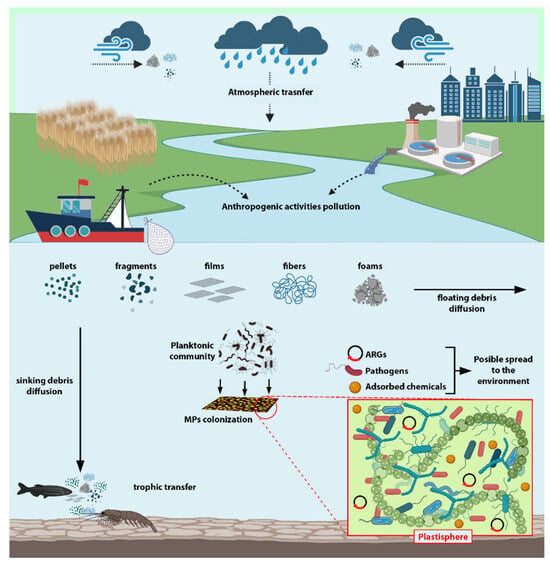
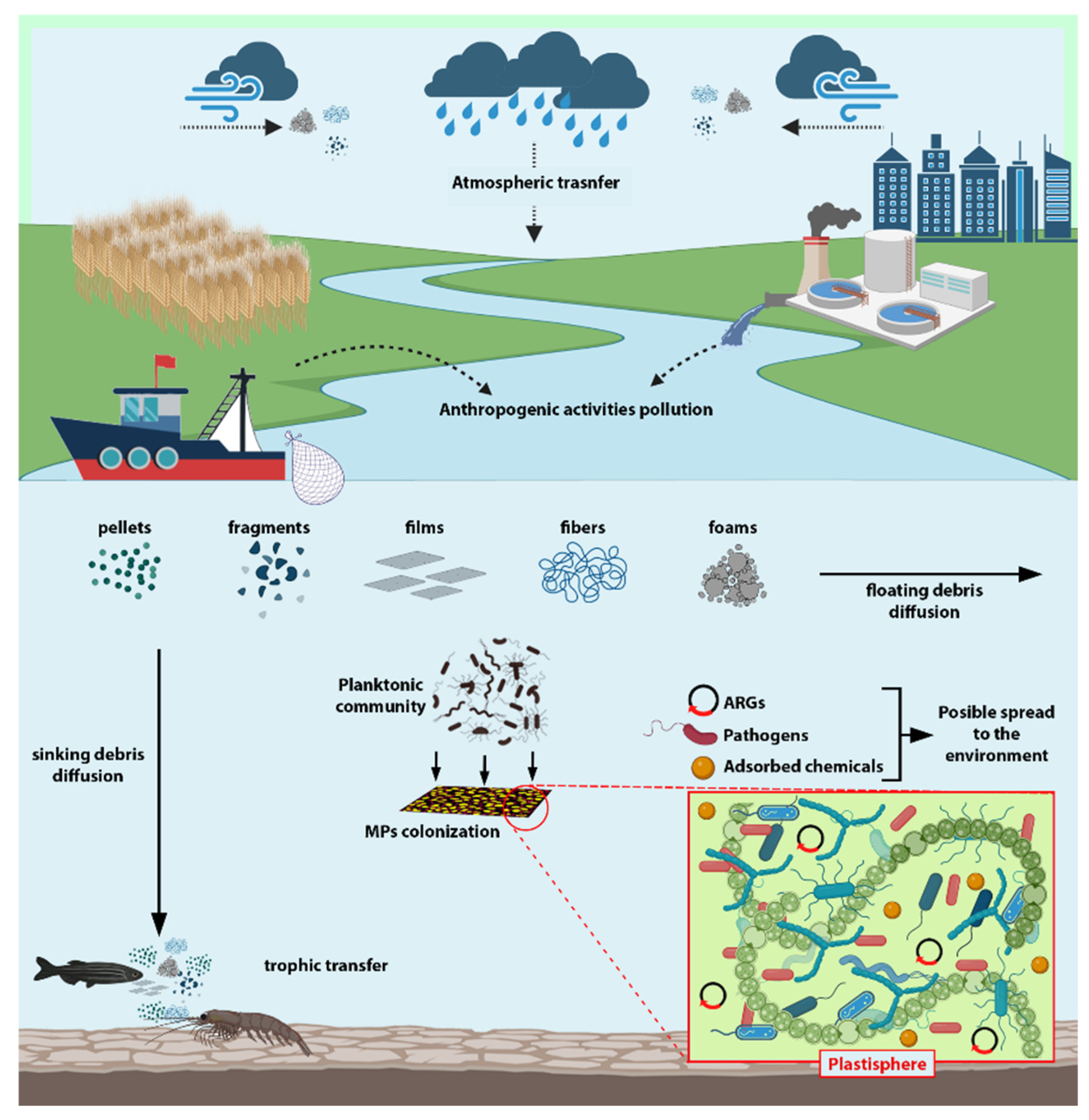
Current model projections highlight the growing need to address riverine plastic pollution, as riverine plastic emissions are estimated to double by 2060, reaching ~3.6 Mt yr−1 under current policies [9]. Despite this, the existing literature often aggregates rivers, lakes, and reservoirs under the broad category of the “freshwater plastisphere”, an approach that obscures the specific ecological processes operating in lotic systems [10]. Microbial succession, functional roles, associated risks, and the broader ecological significance of riverine plastisphere communities remain insufficiently resolved. Moreover, although substantial progress has been made in understanding plastisphere ecology, much of the available knowledge still derives from marine environments, lentic freshwater systems, and experimental studies, whereas direct evidence from riverine ecosystems remains comparatively scarce. A conceptual overview of the main sources, environmental pathways, and ecological implications of the riverine plastisphere is presented in Figure 1.
Figure 1.
Conceptual representation of the riverine plastisphere. MPs originating from urban and industrial activities, wastewater treatment plants, agricultural runoff, fishing activities, and atmospheric deposition enter river ecosystems, where their transport and environmental fate depend on particle characteristics and hydrodynamic conditions. Plastic surfaces are colonized by microorganisms from surrounding communities, leading to biofilm formation and plastisphere development. The plastisphere may host pathogens, ARGs, and adsorbed contaminants, potentially influencing their persistence, transport, and transfer through aquatic food webs.
The main objective of this review is to provide a critical overview of current knowledge on the riverine plastisphere. We analyzed the composition and structure of these biofilms and the key ecological drivers that shape their assembly. Particular attention was given to their functional and biogeochemical roles, as well as potential risks associated with pathogens and ARGs. This review primarily focused on evidence derived from riverine environments and on the ecological characteristics of lotic systems. Given the limited availability of riverine studies for several aspects of plastisphere ecology, evidence from marine, lacustrine, and experimental systems was also considered where relevant to support mechanistic interpretations and identify current knowledge gaps. Furthermore, we addressed methodological heterogeneity across studies, emphasizing the need for standardized approaches to facilitate the integration of plastisphere assessments into environmental monitoring and risk evaluation frameworks.
2. Materials and Methods
2.1. Bibliographic Collection
The literature search was conducted using SCOPUS and Google Scholar to identify studies investigating the riverine plastisphere and related topics. Moreover, ResearchGate was used as an additional platform to retrieve full texts when necessary. No temporal restrictions were applied, and all publications available up to June 2026 were considered.
The literature search was performed using the following search string: (“riverine ecosystems” OR “lotic” OR “freshwater” OR “rivers”) AND (“microplastics” OR “plastisphere”) AND (“microbial community” OR “antibiotic resistance” OR “antibiotic resistance genes” OR “pathogens”). Boolean operators were used to combine related search terms, with OR connecting alternative terms within each conceptual group and AND combining the three main concepts addressed by this review.
To improve the transparency of the literature selection process, explicit inclusion and exclusion criteria were applied. Studies addressing the riverine plastisphere, plastic-associated microbial communities, pathogens, ARGs, biodegradation processes, and related ecological aspects were considered. Given the limited amount of riverine evidence currently available, studies performed in other aquatic environments (e.g., lakes, marine systems, and experimental settings) were also considered when they provided mechanistic information relevant to riverine processes.
Following the literature search, duplicate records retrieved from different databases were manually removed. Titles and abstracts were screened for relevance, followed by full-text evaluation of potentially relevant publications prior to inclusion in this review. Editorials, conference abstracts, and publications not relevant to the scope of this review were excluded.
2.2. Study Categorization and Data Synthesis
Information extracted from the selected publications included the study location, year of publication, study area, environmental compartment investigated (e.g., water, sediment, and plastic surface), MP characteristics (when reported), microbial communities, reported MP concentrations, and the analytical approaches used for microbial characterization. The extracted information was subsequently organized according to the main themes addressed in this review. Specifically, the literature was synthesized to (i) summarize the occurrence and characteristics of MPs in riverine ecosystems; (ii) describe the structure, development, and ecological significance of the riverine plastisphere; (iii) evaluate the environmental and substrate-related factors shaping plastisphere communities; and (iv) critically assess current evidence regarding pathogen occurrence, ARGs, mobile genetic elements (MGEs), methodological limitations, and future research needs.
No quantitative meta-analysis was performed. Instead, the available evidence was critically synthesized to identify recurring patterns, inconsistencies among studies, major knowledge gaps, and priorities for future research. Given the broad scope of the literature considered, selected studies are reported in the text and tables as illustrative examples of the main findings and patterns discussed, rather than as an exhaustive study-by-study compilation.
3. Results and Discussion
3.1. Bibliographic Data
The bibliographic search identified 216 articles related to MPs and microbial communities in riverine ecosystems. Although research on the plastisphere has expanded considerably over the past decade, previous reviews have highlighted that research efforts have predominantly focused on marine environments, while the freshwater plastisphere remains comparatively understudied. This knowledge gap is particularly relevant for riverine ecosystems, which act not only as major transport pathways but also as sites of plastic retention, transformation, and biological interactions [11].
3.2. MPs in Riverine Ecosystems
Understanding the occurrence, characteristics, and environmental distribution of MPs is essential because these properties influence the availability, persistence, and surface properties of plastic substrates for microbial colonization. MPs enter rivers from multiple sources, including urban and agricultural runoff, atmospheric deposition, fragmentation of larger plastic items, and wastewater discharges [12,13,14]. Wastewater-derived MPs originate from sources such as industrial effluents, personal care products, and synthetic textiles [15], making rivers particularly susceptible to primary MP inputs due to their proximity to point sources of pollution [16].
MP concentrations vary widely among river systems as a result of differences in anthropogenic pressures, hydrodynamics, retention processes, and, importantly, methodological approaches used for sampling and particle detection [17,18,19,20]. An overview of MP concentrations, characteristics, and polymer composition reported across riverine environments is provided in Table 1 and Table 2. However, direct comparisons among the reported values should be made with caution, as substantial differences in sampling methods, mesh sizes, and lower particle size limits can strongly influence the resulting MP concentrations. This methodological heterogeneity represents a broader challenge in MP research, limiting the comparability of results across studies and highlighting the need for greater harmonization of sampling and analytical approaches.
The environmental fate of MPs is strongly influenced by polymer density, particle size, and morphology. Low-density polymers such as PE and PP are commonly associated with surface waters, whereas denser polymers such as PET and PVC tend to accumulate more readily in sediments [21,22,23]. Fibers and fragments are among the most frequently reported morphologies in riverine environments [24,25,26,27]. However, these distributions are not static, as processes such as biofilm formation can modify particle density and promote the settling of initially buoyant plastics. These particle characteristics are also relevant to plastisphere development, as morphology, surface area, and degradation state can affect microbial attachment and biofilm establishment. Environmental aging processes, including photo-oxidation and mechanical weathering, can further modify plastic surface properties and influence microbial colonization [28,29].
Collectively, these physical and chemical characteristics determine the residence time, environmental distribution, and suitability of substrates for riverine plastisphere communities.
Table 1.
Summary of MPs concentrations and polymer compositions reported in riverine water samples across different geographical scales. The data are selected to highlight the wide variability in quantification methodologies and environmental concentrations observed in global, European, and Italian studies. Mean values are reported where available; otherwise, punctual ranges are provided.
Table 2.
Summary of MP concentrations and polymer compositions reported in riverine sediment samples across different geographical scales. Data points illustrate the variability in sampling techniques and concentrations recorded at global, European, and Italian sites. Mean values are reported where available; otherwise, punctual ranges are provided. For polymer acronyms, see Table 1.
3.3. The Riverine Plastisphere: Structure, Development, and Ecological Significance
3.3.1. Plastisphere Structure and Microbial Communities
The plastisphere is generally described as a biofilm developing on plastic surfaces after their introduction into aquatic environments. Similar to other freshwater biofilms, it consists of microbial assemblages embedded within an extracellular polymeric substance (EPS) matrix that contributes to surface adhesion, spatial organization, and the establishment of heterogeneous microenvironments. Before microbial attachment, plastic surfaces become rapidly covered by a conditioning layer formed through the adsorption of dissolved organic matter, inorganic compounds, and other constituents present in the surrounding environment. This layer, currently referred to as the eco-corona, modifies the physicochemical properties of the polymer surface and may influence subsequent biofilm development [41].
Assessing the riverine plastisphere requires a multidisciplinary analytical approach. Bacterial diversity and composition are typically evaluated through 16S rRNA gene amplicon sequencing integrated with bioinformatic pipelines for OTU/ASV clustering and diversity analyses [7,42]. The diversity of eukaryotic microorganisms, including microalgae, protists, and fungi, is generally investigated using 18S rRNA and ITS sequencing approaches, although studies addressing these components remain less common than those focused on bacterial communities [42]. To characterize biofilm architecture and spatial organization at the polymer interface, advanced microscopy techniques, including scanning electron microscopy (SEM) and confocal laser scanning microscopy, combined with fluorescence in situ hybridization techniques (FISH-CLSM), are employed [43,44,45]. More recently, metagenomic, metatranscriptomic, and metaproteomic approaches have been applied to investigate the functional potential and activity of plastisphere communities, although studies available for riverine ecosystems are still relatively limited [46].
Most studies indicate that microbial communities associated with MPs differ from those found in the surrounding water column and sediments. However, the identification of consistent ecological patterns across riverine systems remains challenging. The riverine plastisphere is predominantly colonized by Proteobacteria, Bacteroidetes, and Firmicutes (e.g., [47,48,49,50,51]). These groups are also common components of freshwater biofilms and particle-associated communities, suggesting that their occurrence should not be interpreted as evidence of plastisphere-specific selection. Rather, their frequent detection may reflect the ability of these microorganisms to colonize submerged surfaces and to form complex biofilm communities under dynamic environmental conditions. At a finer taxonomic resolution, members of the Pseudomonadaceae, Burkholderiaceae, Rhodobacteraceae, and Flavobacteriaceae families are frequently reported on MP surfaces [7,42,47], while Moraxellaceae and Enterobacteriaceae often vary according to local environmental conditions [47,52]. Although differences in taxonomic composition between the plastisphere and surrounding environments have been reported in several studies [7,43,47,48], most available information is still derived from taxonomic surveys, whereas studies directly addressing microbial functions and ecological processes in riverine plastisphere communities remain scarce [5]. It is therefore difficult to determine whether the observed patterns primarily reflect characteristics associated with plastic substrates or broader environmental processes affecting biofilm development in river ecosystems.
3.3.2. Environmental Factors That Shape the Plastisphere
Riverine plastisphere communities seem to be shaped by the interaction between environmental conditions and substrate-associated properties. However, compared with marine environments, little is known about rivers, and the contribution of the different factors involved remains poorly understood. Riverine environments are characterized by strong spatial and temporal variability, which may affect both biofilm development and microbial community composition. From an ecological perspective, the river continuum concept provides a conceptual framework for understanding longitudinal changes in physical habitat, resource availability, and biological communities along river networks. These longitudinal gradients are also expected to shape plastisphere development by influencing microbial colonization, biofilm succession, and community functioning, although this hypothesis remains largely unexplored. Therefore, flow conditions, organic matter availability, and pollutant inputs have all been suggested as important factors shaping plastisphere communities [53,54]. As in other natural freshwater biofilms, community assembly within the plastisphere results from the interaction between local environmental conditions and substrate-associated characteristics, making it difficult to identify a single dominant driver across different river systems. For instance, available riverine studies suggest that plastisphere communities are enriched in taxa specialized in rapid organic matter degradation (e.g., Proteobacteria and Bacteroidetes), whereas the marine plastisphere may include groups associated with more oligotrophic conditions, including Cyanobacteria and Planctomycetes [55,56]. Furthermore, freshwater systems impacted by urban and agricultural runoff select for functional traits linked to xenobiotic metabolism and rapid biofilm formation, allowing microbial communities to persist under high contaminant loads and unstable hydrological conditions [57].
Among the environmental variables considered, hydrodynamics is likely one of the main factors influencing riverine plastisphere communities. Flow velocity and turbulence modulate nutrient fluxes, oxygen availability, and the physical stability of the biofilm. High-flow conditions may limit biofilm development through erosion and detachment processes, whereas low-flow conditions may favor biofilm persistence and colonization [27]. Recent field observations suggest that flow velocity can affect both biofilm biomass and community composition under natural river conditions [58]. Hydrological variability may also affect the residence time of plastic particles within different river compartments, thereby influencing opportunities for biofilm establishment and maturation.
Temperature may influence plastisphere communities by affecting microbial activity and biofilm development. Although seasonal patterns have been described in marine systems [59], information available for rivers remains limited. Evidence from the Yangtze River suggests that temporal variations in temperature may contribute to shifts in MP-associated bacterial communities [60]. These observations are consistent with broader ecological patterns reported for freshwater biofilms, where temperature influences colonization dynamics, microbial growth rates, and community succession.
Nutrient availability has also been proposed as a factor influencing plastisphere composition. In particular, nitrogen and phosphorus inputs may favor the growth of fast-growing microbial populations under eutrophic conditions. However, little information is available regarding the relationship between nutrient availability and specific ecological functions within riverine plastisphere communities [61]. Similarly, dissolved organic matter may influence both microbial colonization and biofilm development, although its specific role in shaping plastisphere communities remains poorly resolved.
Finally, the physicochemical properties of the polymer, such as surface roughness, hydrophobicity, and chemical additives, may affect microbial colonization. While several laboratory and marine studies have reported differences among polymer types (e.g., [62,63,64,65]), only a few have specifically addressed this aspect in riverine environments. Recent work comparing PET and PLA in riverine systems indicates that polymer type may influence both community networks and nutrient-cycling potential [66]. Emerging evidence also suggests that biodegradable and conventional polymers may differ in their capacity to shape plastisphere assembly. In particular, biodegradable substrates may favor the enrichment of polymer-associated degraders and more specialized microbial interactions, potentially reflecting differences in substrate availability and carbon release at the polymer surface [41]. However, current knowledge remains insufficient to determine whether polymer biodegradability represents a major driver of plastisphere assembly under natural riverine conditions.
At the same time, environmental conditions, including watershed land use and pollutant inputs, are also known to affect microbial community composition [67].
Overall, current findings indicate that riverine plastisphere communities’ assembly can be affected by the combined effect of hydrological conditions, water chemistry, nutrient availability, and substrate properties. Because these factors interact continuously under natural river conditions, disentangling the specific contribution of single drivers remains difficult. Further studies integrating long-term field observations with controlled experiments are needed to evaluate their impact and identify the mechanisms driving plastisphere assembly and functioning.
3.3.3. Plastisphere Development: From Primary Colonization to Biofilm Maturation
The processes leading to biofilm development on plastic surfaces are assumed to be similar to those described for other submerged substrates. Following their release into aquatic environments, plastic particles undergo a sequence of physicochemical changes that progressively influence microbial colonization and community assembly. After entering aquatic environments, plastic surfaces become covered by organic and inorganic compounds adsorbed from the surrounding water, resulting in a conditioning layer that may facilitate microbial attachment [68,69]. Although this process has been widely described for aquatic biofilms, only a limited number of studies have specifically investigated its role in riverine plastisphere formation.
Current knowledge suggests that plastisphere communities undergo temporal changes following the initial colonization of plastic surfaces. In general, early biofilm development is characterized by the attachment of pioneer microorganisms capable of surface colonization and EPS production, followed by the establishment of more complex and structured microbial communities [70,71]. However, most available evidence comes from laboratory studies or from marine and lacustrine environments [72,73,74,75]. While direct observations from riverine ecosystems remain limited, there is currently no evidence suggesting that the fundamental mechanisms underlying plastisphere succession differ substantially from those described for other aquatic biofilm systems.
Several studies have reported that early plastisphere communities are commonly dominated by members of Proteobacteria and Bacteroidetes [49,74,76,77], which are also frequently observed among pioneer colonizers of natural freshwater biofilms [78,79]. During biofilm development, increases in structural complexity and the occurrence of phototrophic microorganisms are commonly observed [80,81,82]. Similar patterns have been described in freshwater plastisphere studies [77,83]. A progressive transition from pioneer heterotrophic communities to more mature biofilms, characterized by the presence of cyanobacteria and microalgae and a well-developed EPS matrix, has been observed in a recent long-term field study performed in a temperate lake [77]. These observations suggest that plastisphere succession may involve progressive changes in community composition and biofilm organization comparable to those described for periphyton and other freshwater biofilm communities. However, most available evidence comes from lentic or lab-based experiments, whereas equivalent long-term investigations in riverine environments remain scarce.
It is therefore still not clear whether similar patterns occur in riverine environments. Rivers are characterized by continuous hydrological disturbance, variable residence times, and strong temporal fluctuations in environmental conditions, all of which may influence biofilm development and succession. Flow variability may influence biofilm development and persistence through recurrent detachment and recolonization processes, potentially affecting community succession compared with lentic environments. At present, only a limited number of studies have investigated plastisphere dynamics under natural river conditions [4,42,49,54,74,84], and most available data are based on short-term observations. Long-term field-based studies are therefore needed to better understand the temporal development of riverine plastisphere communities and to determine whether the ecological patterns described for other freshwater systems may also be applied to lotic environments.
3.3.4. From Functional Potential to Ecosystem Processes in the Riverine Plastisphere
Several studies have reported the occurrence of microbial taxa and functional genes associated with the transformation of organic matter and nutrient cycling within plastisphere communities in freshwater and riverine ecosystems [41,65,85,86]. In particular, plastisphere biofilms have been found to harbor microbial groups involved in key nitrogen and sulfur transformations, including ammonia- and nitrite-oxidizing bacteria such as Nitrosomonas and Nitrobacter, denitrifying bacteria, and sulfate-reducing taxa such as Desulfovibrio spp. [87]. These observations suggest that riverine plastisphere communities may engage in nutrient-cycling processes within biofilm-associated microhabitats. Nitrogen-fixing microorganisms may convert atmospheric nitrogen into ammonia and ammonium, whereas nitrifying microorganisms oxidize ammonium to nitrate and denitrifying taxa reduce nitrate to nitrogen gas, thereby potentially supporting multiple steps of nitrogen turnover within plastisphere biofilms. Similarly, sulfur transformations may occur within plastisphere-associated microhabitats, where sulfate-oxidizing and sulfate-reducing microorganisms may coexist and contribute to localized redox dynamics. Sulfate-oxidizing microorganisms may generate sulfate, whereas sulfate-reducing taxa such as Desulfovibrio spp. may reduce sulfate to hydrogen sulfide, potentially contributing to the establishment of localized redox gradients within plastisphere biofilms [41].
These observations are further supported by metagenomic analyses identifying genes and metabolic pathways associated with nitrification, denitrification, anammox, and other nutrient transformation processes, as well as functions related to the degradation of organic compounds and contaminant transformation [41,87]. Plastisphere biofilms are also typically enriched in heterotrophic microorganisms capable of utilizing dissolved organic matter and adsorbed compounds, suggesting a possible involvement in carbon processing [41]. The structural complexity of the biofilm matrix may promote the development of localized oxygen, nutrient, and redox gradients, generating heterogeneous microhabitats that support multiple microbial processes within the same biofilm. Such physicochemical heterogeneity may favor the coexistence of aerobic and anaerobic processes, potentially creating localized biogeochemical micro-zones where nutrient transformations occur under conditions that differ from those of the surrounding aquatic environment [41].
Plastisphere communities frequently also include microorganisms potentially involved in plastic transformation processes, including bacterial taxa such as Pseudomonas, Acinetobacter, Aeromonas, and Rhodococcus, as well as filamentous fungi capable of producing oxidative and hydrolytic enzymes [56,88]. Enzymatic depolymerization has been most extensively documented for PET, whereas the transformation of more recalcitrant polymers, such as PE and PP, appears to involve the combined action of abiotic weathering and microbial metabolism. Biofilm development may further promote these processes through EPS accumulation and localized physicochemical modifications at the polymer surface [41]. However, despite the increasing number of studies describing biodegradation-related taxa, enzymes, and metabolic pathways, evidence derived specifically from riverine ecosystems remains comparatively limited, with most information originating from marine environments or other freshwater systems.
Although these observations collectively support the view that plastisphere communities may function as localized metabolic hotspots [41], the ecological significance of these processes remains difficult to assess. Most available evidence derives from taxonomic surveys, metagenomic analyses, and laboratory-based experiments, whereas direct measurements linking plastisphere-associated microbial activity to ecosystem-level processes under natural river conditions remain scarce.
Therefore, a major unresolved question is whether the functional traits identified within plastisphere communities translate into measurable ecosystem processes, or whether they primarily reflect the functional potential commonly associated with biofilm communities developing on submerged surfaces. This issue is closely linked to another fundamental question emerging from recent plastisphere research, which is whether the riverine plastisphere represents a functionally distinct ecological compartment or simply an additional substrate available for biofilm development.
Indeed, there is currently no clear consensus as to whether plastisphere-associated functional traits differ substantially from those occurring in biofilms colonizing natural particles, sediments, and other submerged substrates.
Addressing this question will require moving beyond the description of microbial communities and their functional potential towards approaches capable of directly linking plastisphere-associated processes with measurements of ecosystem functioning under natural river conditions.
Future research should therefore focus on linking plastisphere microbial communities and ecosystem processes through the integration of molecular, microbiological, and process-based approaches. Direct measurements of ecosystem metabolism, including gross primary production, ecosystem respiration, and net ecosystem metabolism, together with assessments of organic matter decomposition and nutrient uptake, could provide a more robust evaluation of the ecological significance of the plastisphere in river systems.
Particular attention should be devoted to riverine ecosystems, where direct measurements remain comparatively scarce. Long-term field experiments are needed to investigate plastisphere development and microbial activities under natural river conditions and to evaluate whether the functional potential observed on plastic surfaces translates into measurable changes in ecosystem functioning. In this context, combining community composition analyses and functional molecular approaches with direct measurements of ecosystem processes may help bridge the gap between microbial observations and ecosystem-level responses. Lotic mesocosms may further complement field observations by providing environmentally realistic experimental conditions in which specific hypotheses can be tested and causal relationships explored. Ultimately, such approaches may help to determine whether the riverine plastisphere represents a functionally distinct ecological compartment or simply an additional substrate for biofilm development, while also identifying potential functional thresholds associated with plastic accumulation in river ecosystems.
3.4. Microbial Concerns Associated with the Riverine Plastisphere
3.4.1. Pathogen Occurrence
In riverine ecosystems, plastic debris may provide persistent surfaces for the attachment and transport of microbial taxa, including species of potential health concern. Several studies have reported the occurrence of genera such as Acinetobacter, Aeromonas, Pseudomonas and Flavobacterium on MPs collected from rivers, particularly in catchments affected by urban activities and wastewater discharges [4,84]. Similar observations have been reported from other freshwater environments, where plastic-associated biofilms have been shown to harbor a variety of taxa of potential health concern, including Escherichia, Klebsiella, Legionella, Mycobacterium, and Vibrio species [89,90]. Although these findings suggest that plastic surfaces may contribute to the occurrence and dispersal of microorganisms introduced from anthropogenic sources, it remains unclear whether riverine plastisphere communities differ substantially from those associated with other natural particles and biofilms present in the same environments.
The occurrence of these taxa on MPs has raised questions about the potential role of plastic-associated biofilms in promoting the persistence of microorganisms of health concern. Studies performed in marine environments and controlled experiments have shown that plastic-associated biofilms may protect microorganisms from environmental stressors such as UV radiation and desiccation, increasing their survival compared to planktonic cells [91,92,93,94]. Similar mechanisms may occur in freshwater environments, although there is a lack of direct evidence from riverine systems. Plastic particles may be viewed as ecological interfaces that could also influence the persistence of potential pathogens. However, the extent to which this occurs in riverine environments remains poorly understood.
Furthermore, while the presence of potentially pathogenic taxa on MPs is now well documented, information on their viability, persistence, and ecological relevance is limited. In most studies, the identification of potential pathogens is based on taxonomic assignments, often at the genus level, which does not provide direct evidence of pathogen occurrence, infectivity, or virulence [95,96]. As a consequence, it remains difficult to establish whether plastic-associated biofilms simply reflect the microbial contamination already present in the surrounding environment or whether they alter the environmental fate of specific microorganisms. Similarly, evidence directly linking plastic-associated microorganisms to disease transmission under environmental conditions is still lacking [96,97].
Moreover, although laboratory studies have shown that plastics and plastic leachates may influence microbial stress responses and, in some cases, virulence-associated gene regulation [96], evidence demonstrating increased pathogenicity under natural environmental conditions is scarce. It remains difficult to determine whether microorganisms associated with plastic surfaces show a greater pathogenic potential than those occurring in surrounding freshwater environments.
Most available studies have focused on bacterial communities, whereas information on viral, fungal, and protozoan pathogens associated with riverine plastisphere communities remains scarce. Nevertheless, recent studies from freshwater and marine environments suggest that plastic debris may also host fungi of potential clinical relevance, including members of the genera Candida, Aspergillus, and Fusarium [90,96]. Expanding the investigation of these microbial groups may contribute to a more comprehensive understanding of the potential health implications associated with riverine plastisphere communities.
3.4.2. Antibiotic Resistance Genes in the Riverine Plastisphere
ARGs are increasingly reported in plastisphere biofilms, particularly in riverine systems subject to urban and wastewater influence. In such catchments, MPs-associated communities host a diverse array of resistance determinants, including β-lactam (bla), sulfonamide (sul1, sul2), tetracycline (tetA, tetW), aminoglycoside (aadA), and macrolide (ermB) genes. Reported ARG abundances vary considerably among studies depending on environmental conditions, analytical approaches, and normalization procedures, making direct quantitative comparisons difficult. Nevertheless, several studies reported enrichment of ARGs on plastic-associated biofilms compared with the surrounding water column and, in some cases, levels comparable to those observed in impacted sediments [4,32,47,98]. Importantly, evidence consistently suggests that these ARG profiles are driven primarily by anthropogenic loading, particularly WWTP discharges, rather than by the intrinsic properties of the plastic substrate itself.
In addition to ARGs, several studies have reported the occurrence of MGEs, including class 1 integrons (intI1) and plasmid-associated markers, within plastisphere biofilms [32,90,98]. Because biofilms promote close physical proximity among bacterial cells, the plastisphere has been proposed as a potential environment favoring genetic exchange. Current knowledge from aquatic plastisphere research suggests that several characteristics typically associated with biofilm communities could contribute to the maintenance and dissemination of ARGs. These include high microbial cell density, prolonged cell-to-cell contact, retention of extracellular DNA within the EPS matrix, and the frequent co-occurrence of ARGs and MGEs within the same microbial assemblages. Such conditions are generally considered favorable for horizontal gene transfer in biofilm systems and have led to the hypothesis that plastisphere communities may represent potential hotspots for resistance dissemination [41]. However, most of the evidence supporting these mechanisms originates from marine environments, estuarine systems, wastewater-associated plastisphere communities, or laboratory experiments, whereas direct demonstrations under natural riverine conditions remain scarce. Although the co-occurrence of ARGs and MGEs suggests the possibility of genetic exchange within plastisphere communities, the extent to which plastic-associated biofilms enhance resistance dissemination in natural river systems remains poorly understood. The occurrence of ARGs and MGEs within plastisphere biofilms does not necessarily indicate active gene transfer, and evidence directly demonstrating enhanced resistance dissemination under environmental conditions is still limited.
Furthermore, while co-selection mechanisms, whereby metal and organic pollutants adsorb to MPs and promote resistance, are well documented in marine and wastewater plastispheres [85,99], their relevance under natural river conditions remains largely unresolved. Most evidence derives from laboratory studies, mesocosm experiments, or highly impacted environments, whereas observations from riverine ecosystems are still limited. Recent studies have further suggested that plastic-associated biofilms may contribute to ARG persistence by providing physically stable habitats that protect microorganisms from environmental stressors and facilitate long-distance transport through aquatic networks. Under this conceptual framework, plastics may act not only as substrates for microbial colonization but also as mobile carriers of resistance determinants and their microbial hosts. Nevertheless, whether these processes occur at rates sufficiently high to influence resistance dissemination at the ecosystem scale remains unknown, particularly in riverine environments where empirical evidence is still limited. An additional unresolved question concerns whether the riverine plastisphere constitutes a functionally distinct environment for antimicrobial resistance dynamics or simply represents another colonizable substrate supporting processes that already occur in natural biofilms, suspended particles, and sediments. Current evidence is insufficient to distinguish between these alternative hypotheses. Further studies should therefore complement ARG surveys with approaches capable of assessing gene expression, mobility, and transfer under environmental conditions, in order to better understand the ecological significance of ARG occurrence within riverine plastisphere communities.
3.4.3. From Occurrence to Risk Assessment: Methodological Challenges and Future Directions
Despite the growing number of studies reporting pathogens, ARGs, and MGEs in riverine plastisphere communities, translating these observations into robust ecological or public health risk assessments remains challenging. A major limitation is not the detection of microorganisms or resistance genes themselves, but the lack of harmonized approaches capable of assessing their biological relevance, persistence, and potential contribution to microbial risk under environmental conditions.
Current molecular techniques provide complementary but often non-equivalent information. Quantitative PCR and droplet digital PCR remain among the most robust approaches for the sensitive detection and quantification of selected microbial markers and ARGs. However, although these techniques provide reliable quantitative data, they do not discriminate between viable, dormant, or inactive cells and genetic material, nor do they provide direct information on infectivity, gene expression, or transfer. As discussed in Section 3.4.1 and Section 3.4.2, the detection of pathogens, ARGs, or MGEs does not necessarily indicate active infectious risk, active gene transfer, or enhanced resistance dissemination. Similarly, amplicon sequencing approaches provide valuable information on microbial community composition and diversity, but their capacity to identify pathogenic microorganisms and infer functional traits is often limited by taxonomic resolution and the indirect nature of functional predictions.
Shotgun metagenomics provides a broader characterization of microbial communities, resistome diversity, and potential host associations [46]. More advanced approaches, including metatranscriptomics and process-based analyses, can further provide information on microbial activity and ecosystem functioning, while metagenomic approaches contribute to the characterization of ARGs, MGEs, virulence genes, and their potential associations. Because different analytical approaches provide distinct and often non-comparable types of information, their suitability for ecological and microbial risk assessment varies considerably. Table S1 summarizes the principal approaches currently used in plastisphere research, highlighting the information provided by each method, their main strengths and limitations, and their potential contribution to ecological and microbial risk assessment. Nevertheless, the information obtained by these approaches remains highly dependent on sequencing depth, bioinformatic pipelines, and reference databases, often complicating comparisons among studies.
Culture-based approaches and viability-oriented methods can provide information on microbial viability and persistence, but they are affected by cultivation biases and often capture only a small fraction of environmental microbial diversity. Likewise, microscopy-based approaches can reveal biofilm structure and spatial organization but provide limited information on microbial functions and associated risks.
Differences in MP size fractions, biofilm extraction procedures, target genes, normalization strategies, and reporting units frequently limit inter-study comparability and hinder the identification of consistent environmental patterns. Consequently, the development of robust ecological and public health risk assessment approaches remains problematic. For example, variations in ARG normalization procedures, differences in polymer size fractions analyzed, or the absence of appropriate comparator substrates may substantially influence the interpretation of reported enrichment patterns.
At present, no widely accepted framework or standardized index is available to evaluate microbial risks associated with riverine plastisphere communities. Most studies report individual microbial markers, pathogens, or ARGs, but few approaches attempt to integrate microbial occurrence, viability, ARG abundance, mobility, and environmental context into comparable risk metrics.
Furthermore, key methodological information is often inconsistently reported across studies, further limiting data comparability. Although a universally accepted reporting framework is not yet available, the ecological interpretation of plastisphere community patterns requires the integration of microbial data with information on plastic characteristics, biofilm development, and environmental conditions. Variations in community composition, diversity, and taxon enrichment can only be adequately contextualized when associated with polymer type, particle size, weathering status, and the environmental factors governing microbial colonization and biofilm assembly. Likewise, the interpretation of pathogen- and ARG-associated patterns remains limited in the absence of information on microbial viability, ARG normalization strategies, MGEs, gene–host associations, and virulence-related markers. Consideration of these elements may also support the future development of more robust and comparable ecological and public health risk assessment approaches.
Moving forward, greater methodological harmonization, together with the integration of quantitative, viability-based, and functional approaches, will be essential to improve data comparability and interpretation. Such efforts may help move beyond the simple detection of pathogens and ARGs and support a more realistic evaluation of their persistence, mobility, and potential contribution to microbial risks in riverine ecosystems. Future studies should therefore combine complementary analytical approaches rather than relying on single-method assessments, integrating occurrence data with information on viability, functional activity, gene mobility, and the environmental context in order to develop more robust ecological and public health risk assessment frameworks.
4. Conclusions
The riverine plastisphere should be viewed as a dynamic ecological interface linking plastic substrates, microbial communities, and the surrounding river environment rather than simply as a biofilm developing on plastic surfaces.
Current evidence suggests that environmental conditions play a major role in shaping plastisphere communities, although the relative contribution of substrate properties remains incompletely understood.
Despite increasing knowledge of plastisphere taxonomic composition, major uncertainties remain regarding its ecological significance. In particular, the contribution of plastisphere communities to ecosystem functioning, biogeochemical cycling, and organic matter processing under natural river conditions is still largely unresolved.
Likewise, although pathogens, ARGs, and MGEs are frequently reported in plastic-associated biofilms, their occurrence alone does not provide direct evidence of persistence, mobility, transmission, or ecological risk.
Further research should move beyond descriptive studies by integrating molecular approaches with direct measurements of ecosystem processes, long-term field observation, and methodological harmonization to better resolve the ecological significance of the riverine plastisphere.
Ultimately, one of the key unresolved questions is not whether plastic hosts microorganisms, but whether the riverine plastisphere represents a functionally distinct ecological compartment capable of altering ecosystem processes beyond those occurring on natural substrates.
Supplementary Materials
The following supporting information can be downloaded at: https://www.mdpi.com/article/10.3390/environments13100534/s1, Table S1: Main approaches used in plastisphere research and their relevance for ecological and microbial risk assessment.
Author Contributions
Conceptualization, F.D.P., L.P., V.B., G.C. and C.V.; methodology, F.D.P. and L.P.; validation, S.R., M.L.C., F.D.P. and L.P., data collection, C.V., V.B., P.M., S.C., G.D.G. and G.C., investigation, C.V. and P.M.; data curation, F.D.P., C.V. and V.B.; writing—original draft preparation, C.V., F.D.P. and L.P.; writing—review and editing, C.V., V.B., S.R., L.P., P.M., F.D.P., M.L.C., S.C., G.D.G. and G.C. All authors have read and agreed to the published version of the manuscript.
Funding
This research received no external funding.
Institutional Review Board Statement
Not applicable.
Data Availability Statement
The original contributions presented in this study are included in the article. Further inquiries can be directed to the corresponding author.
Conflicts of Interest
The authors declare no conflicts of interest.
References
- Plastics Europe. The Circular Economy for Plastics—A European Analysis 2026. Available online: https://plasticseurope.org/wp-content/uploads/2026/07/CER26-fullreport.pdf (accessed on 29 July 2026).
- Pietrelli, L. Fate of the biofilm chips overflowed from a wastewater treatment plant. Mar. Pollut. Bull. 2024, 200, 116142. [Google Scholar] [CrossRef] [Scilit]
- Zettler, E.R.; Mincer, T.J.; Amaral-Zettler, L.A. Life in the “Plastisphere”: Microbial Communities on Plastic Marine Debris. Environ. Sci. Technol. 2013, 47, 7137–7146. [Google Scholar] [CrossRef] [Scilit]
- Silva, I.; Rodrigues, E.T.; Tacão, M.; Henriques, I. Microplastics Accumulate Priority Antibiotic-Resistant Pathogens: Evidence from the Riverine Plastisphere. Environ. Pollut. 2023, 332, 121995. [Google Scholar] [CrossRef] [Scilit]
- Yang, L.-Y.; Huang, X.-R.; Neilson, R.; Zhou, S.-Y.-D.; Li, Z.-L.; Yang, X.-R.; Su, X.-X. Characterization of Microbial Community, Ecological Functions and Antibiotic Resistance in Estuarine Plastisphere. Sci. Total Environ. 2023, 866, 161322. [Google Scholar] [CrossRef] [Scilit]
- Titov, I.; Semerád, J.; Boháčková, J.; Beneš, H.; Cajthaml, T. Microplastics Meet Micropollutants in a Central European River Stream: Adsorption of Pollutants to Microplastics under Environmentally Relevant Conditions. Environ. Pollut. 2024, 360, 124616. [Google Scholar] [CrossRef] [Scilit]
- Oberbeckmann, S.; Kreikemeyer, B.; Labrenz, M. Environmental Factors Support the Formation of Specific Bacterial Assemblages on Microplastics. Front. Microbiol. 2018, 8, 2709. [Google Scholar] [CrossRef] [Scilit]
- Van Emmerik, T.; Schwarz, A. Plastic Debris in Rivers. WIREs Water 2020, 7, e1398. [Google Scholar] [CrossRef] [Scilit]
- OECD. Global Plastics Outlook: Policy Scenarios to 2060; OECD Publishing: Paris, France, 2022; ISBN 978-92-64-83202-2. [Google Scholar]
- Horton, A.A.; Dixon, S.J. Microplastics: An Introduction to Environmental Transport Processes. WIREs Water 2018, 5, e1268. [Google Scholar] [CrossRef] [Scilit]
- Schmidt, C.; Krauth, T.; Wagner, S. Export of Plastic Debris by Rivers into the Sea. Environ. Sci. Technol. 2017, 51, 12246–12253. [Google Scholar] [CrossRef] [Scilit]
- Bellasi, A.; Binda, G.; Pozzi, A.; Galafassi, S.; Volta, P.; Bettinetti, R. Microplastic Contamination in Freshwater Environments: A Review, Focusing on Interactions with Sediments and Benthic Organisms. Environments 2020, 7, 30. [Google Scholar] [CrossRef] [Scilit]
- Thompson, R.C.; Courtene-Jones, W.; Boucher, J.; Pahl, S.; Raubenheimer, K.; Koelmans, A.A. Twenty Years of Microplastic Pollution Research—What Have We Learned? Science 2024, 386, eadl2746. [Google Scholar] [CrossRef] [Scilit]
- Shi, X.; Ma, Y.; Ma, Y.; Lin, W.; Zhu, L.; Li, D.; Tong, Y.; Lin, Y. A Comprehensive Modeling of Microplastic Emission from Wastewater Treatment Plants to the Sea via Rivers in China. Environ. Sci. Technol. 2025, 59, 3679–3690. [Google Scholar] [CrossRef] [Scilit]
- Napper, I.E.; Thompson, R.C. Release of Synthetic Microplastic Plastic Fibres from Domestic Washing Machines: Effects of Fabric Type and Washing Conditions. Mar. Pollut. Bull. 2016, 112, 39–45. [Google Scholar] [CrossRef] [Scilit]
- Owowenu, E.K.; Nnadozie, C.F.; Akamagwuna, F.; Noundou, X.S.; Uku, J.E.; Odume, O.N. A Critical Review of Environmental Factors Influencing the Transport Dynamics of Microplastics in Riverine Systems: Implications for Ecological Studies. Aquat. Ecol. 2023, 57, 557–570. [Google Scholar] [CrossRef] [Scilit]
- Bhan, C.; Kumar, N.; Elangovan, V. Microplastics Pollution in the Rivers, Its Source, and Impact on Aquatic Life: A Review. Int. J. Environ. Sci. Technol. 2025, 22, 1937–1952. [Google Scholar] [CrossRef] [Scilit]
- Pojar, I.; Stănică, A.; Stock, F.; Kochleus, C.; Schultz, M.; Bradley, C. Sedimentary Microplastic Concentrations from the Romanian Danube River to the Black Sea. Sci. Rep. 2021, 11, 2000. [Google Scholar] [CrossRef] [Scilit]
- Gao, S.; Orlowski, N.; Bopf, F.K.; Breuer, L. A Review on Microplastics in Major European Rivers. WIREs Water 2024, 11, e1713. [Google Scholar] [CrossRef] [Scilit]
- Koelmans, A.A.; Redondo-Hasselerharm, P.E.; Mohamed Nor, N.H.; Kooi, M. Solving the Nonalignment of Methods and Approaches Used in Microplastic Research to Consistently Characterize Risk. Environ. Sci. Technol. 2020, 54, 12307–12315. [Google Scholar] [CrossRef] [Scilit]
- He, B.; Smith, M.; Egodawatta, P.; Ayoko, G.A.; Rintoul, L.; Goonetilleke, A. Dispersal and Transport of Microplastics in River Sediments. Environ. Pollut. 2021, 279, 116884. [Google Scholar] [CrossRef] [Scilit]
- Lofty, J.; Ouro, P.; Wilson, C.A.M.E. Microplastics in the Riverine Environment: Meta-Analysis and Quality Criteria for Developing Robust Field Sampling Procedures. Sci. Total Environ. 2023, 863, 160893. [Google Scholar] [CrossRef] [Scilit]
- Barra, E.; Cicero, F.; Magliocchetti, I.; Menegoni, P.; Sighicelli, M.; Di Ludovico, A.; Le Foche, M.; Pietrelli, L. High Density of Microplastics in the Caddisfly Larvae Cases. Environments 2025, 12, 368. [Google Scholar] [CrossRef] [Scilit]
- Rios Mendoza, L.M.; Balcer, M. Microplastics in Freshwater Environments: A Review of Quantification Assessment. TrAC Trends Anal. Chem. 2019, 113, 402–408. [Google Scholar] [CrossRef] [Scilit]
- Li, C.; Busquets, R.; Campos, L.C. Assessment of Microplastics in Freshwater Systems: A Review. Sci. Total Environ. 2020, 707, 135578. [Google Scholar] [CrossRef] [Scilit]
- Menegoni, P.; Pietrelli, L. The Role of Posidonia oceanica Spheroids in Assessing Microplastic Contamination in Coastal Ecosystems. Environments 2026, 13, 71. [Google Scholar] [CrossRef] [Scilit]
- Hoellein, T.J.; Shogren, A.J.; Tank, J.L.; Risteca, P.; Kelly, J.J. Microplastic Deposition Velocity in Streams Follows Patterns for Naturally Occurring Allochthonous Particles. Sci. Rep. 2019, 9, 3740. [Google Scholar] [CrossRef] [Scilit]
- Wagner, M.; Scherer, C.; Alvarez-Muñoz, D.; Brennholt, N.; Bourrain, X.; Buchinger, S.; Fries, E.; Grosbois, C.; Klasmeier, J.; Marti, T.; et al. Microplastics in Freshwater Ecosystems: What We Know and What We Need to Know. Environ. Sci. Eur. 2014, 26, 12. [Google Scholar] [CrossRef] [Scilit]
- Rabek, J.F. Photodegradation of Polymers: Physical Characteristics and Applications; Springer Science & Business Media: Berlin, Germany, 2012. [Google Scholar]
- Buwono, N.R.; Risjani, Y.; Soegianto, A. Contamination of Microplastics in Brantas River, East Java, Indonesia and Its Distribution in Gills and Digestive Tracts of Fish Gambusia affinis. Emerg. Contam. 2021, 7, 172–178. [Google Scholar] [CrossRef] [Scilit]
- Pariatamby, A.; Hamid, F.S.; Bhatti, M.S.; Anuar, N.; Anuar, N. Status of Microplastic Pollution in Aquatic Ecosystem with a Case Study on Cherating River, Malaysia. J. Eng. Technol. Sci. 2020, 52, 222–241. [Google Scholar] [CrossRef] [Scilit]
- Mughini-Gras, L.; Van Der Plaats, R.Q.J.; Van Der Wielen, P.W.J.J.; Bauerlein, P.S.; De Roda Husman, A.M. Riverine Microplastic and Microbial Community Compositions: A Field Study in the Netherlands. Water Res. 2021, 192, 116852. [Google Scholar] [CrossRef] [Scilit]
- Hildebrandt, L.; Zimmermann, T.; Primpke, S.; Fischer, D.; Gerdts, G.; Pröfrock, D. Comparison and Uncertainty Evaluation of Two Centrifugal Separators for Microplastic Sampling. J. Hazard. Mater. 2021, 414, 125482. [Google Scholar] [CrossRef] [Scilit]
- Campanale, C.; Stock, F.; Massarelli, C.; Kochleus, C.; Bagnuolo, G.; Reifferscheid, G.; Uricchio, V.F. Microplastics and Their Possible Sources: The Example of Ofanto River in Southeast Italy. Environ. Pollut. 2020, 258, 113284. [Google Scholar] [CrossRef] [Scilit]
- Serranti, S.; Bonifazi, G.; Cocozza, P.; Cucuzza, P.; Palmieri, R.; Benzi, M.; Lezzi, M.; Mazziotti, C.; Riccardi, E.; Barbieri, E.; et al. Comparison of Hyperspectral Imaging and FTIR Spectroscopy for Microplastic Polymer Identification: Proposal of a Scalable Protocol Validated in a 12-Month River Survey. Talanta 2026, 302, 129361. [Google Scholar] [CrossRef] [Scilit]
- He, B.; Goonetilleke, A.; Ayoko, G.A.; Rintoul, L. Abundance, Distribution Patterns, and Identification of Microplastics in Brisbane River Sediments, Australia. Sci. Total Environ. 2020, 700, 134467. [Google Scholar] [CrossRef] [Scilit]
- Mani, T.; Primpke, S.; Lorenz, C.; Gerdts, G.; Burkhardt-Holm, P. Microplastic Pollution in Benthic Midstream Sediments of the Rhine River. Environ. Sci. Technol. 2019, 53, 6053–6062. [Google Scholar] [CrossRef] [Scilit]
- Scherer, C.; Weber, A.; Stock, F.; Vurusic, S.; Egerci, H.; Kochleus, C.; Arendt, N.; Foeldi, C.; Dierkes, G.; Wagner, M.; et al. Comparative Assessment of Microplastics in Water and Sediment of a Large European River. Sci. Total Environ. 2020, 738, 139866. [Google Scholar] [CrossRef] [Scilit]
- Gallitelli, L.; Cesarini, G.; Cera, A.; Sighicelli, M.; Lecce, F.; Menegoni, P.; Scalici, M. Transport and Deposition of Microplastics and Mesoplastics along the River Course: A Case Study of a Small River in Central Italy. Hydrology 2020, 7, 90. [Google Scholar] [CrossRef] [Scilit]
- Ghinassi, M.; Michielotto, A.; Uguagliati, F.; Zattin, M. Mechanisms of Microplastics Trapping in River Sediments: Insights from the Arno River (Tuscany, Italy). Sci. Total Environ. 2023, 866, 161273. [Google Scholar] [CrossRef] [Scilit]
- Ormsby, M.J.; Quilliam, R.S. The Aquatic Plastisphere: Ecology, Pathogen Dissemination and Antimicrobial Resistance. Nat. Rev. Microbiol. 2026, 24, 446–462. [Google Scholar] [CrossRef] [Scilit]
- Martínez-Campos, S.; González-Pleiter, M.; Rico, A.; Schell, T.; Vighi, M.; Fernández-Piñas, F.; Rosal, R.; Leganés, F. Time-Course Biofilm Formation and Presence of Antibiotic Resistance Genes on Everyday Plastic Items Deployed in River Waters. J. Hazard. Mater. 2023, 443, 130271. [Google Scholar] [CrossRef] [Scilit]
- Di Pippo, F.; Venezia, C.; Sighicelli, M.; Pietrelli, L.; Di Vito, S.; Nuglio, S.; Rossetti, S. Microplastic-Associated Biofilms in Lentic Italian Ecosystems. Water Res. 2020, 187, 116429. [Google Scholar] [CrossRef] [Scilit]
- Li, S.; Liu, J.; Su, L.; Qiu, J.; Lin, L.; Kovács, Á.T.; Lin, Y. Synergistic Biodegradation of Polyethylene by Experimentally Evolved Bacterial Biofilms. ISME J. 2025, 19, wraf223. [Google Scholar] [CrossRef] [Scilit]
- Wu, H.; Li, H.; Li, Z.; Liu, X.; Li, Q.; Cheng, M.; Gong, J. Interfacial Engineering-Based Colonization of Biofilms on Polyethylene Terephthalate (PET) Surfaces: Implications for Whole-Cell Biodegradation of Microplastics. Sci. Total Environ. 2025, 958, 178002. [Google Scholar] [CrossRef] [Scilit]
- Messer, L.F.; Lee, C.E.; Wattiez, R.; Matallana-Surget, S. Novel Functional Insights into the Microbiome Inhabiting Marine Plastic Debris: Critical Considerations to Counteract the Challenges of Thin Biofilms Using Multi-Omics and Comparative Metaproteomics. Microbiome 2024, 12, 36. [Google Scholar] [CrossRef] [Scilit]
- Yang, G.; Gong, M.; Mai, L.; Zhuang, L.; Zeng, E.Y. Diversity and Structure of Microbial Biofilms on Microplastics in Riverine Waters of the Pearl River Delta, China. Chemosphere 2021, 272, 129870. [Google Scholar] [CrossRef] [Scilit]
- Nguyen, H.T.; Choi, W.; Kim, E.-J.; Cho, K. Microbial Community Niches on Microplastics and Prioritized Environmental Factors under Various Urban Riverine Conditions. Sci. Total Environ. 2022, 849, 157781. [Google Scholar] [CrossRef] [Scilit]
- Xu, C.; Lu, J.; Shen, C.; Wang, J.; Li, F. Deciphering the Mechanisms Shaping the Plastisphere Antibiotic Resistome on Riverine Microplastics. Water Res. 2022, 225, 119192. [Google Scholar] [CrossRef] [Scilit]
- Wu, J.; Ye, Q.; Sun, L.; Liu, J.; Huang, M.; Wang, T.; Wu, P.; Zhu, N. Impact of Persistent Rain on Microplastics Distribution and Plastisphere Community: A Field Study in the Pearl River, China. Sci. Total Environ. 2023, 879, 163066. [Google Scholar] [CrossRef] [Scilit]
- Lin, W.; Cao, S.; Wu, Q.; Xu, F.; Li, R.; Cui, L. Size Effects of Microplastics on Antibiotic Resistome and Core Microbiome in an Urban River. Sci. Total Environ. 2024, 919, 170716. [Google Scholar] [CrossRef] [Scilit]
- Parida, D.; Dhali, S.L.; Bala, K.; Nogueira, R. Early Microbial Colonization Study of Daily-Use Plastics Exposed to River Water. World J. Microbiol. Biotechnol. 2026, 42, 218. [Google Scholar] [CrossRef] [Scilit]
- McCormick, A.; Hoellein, T.J.; Mason, S.A.; Schluep, J.; Kelly, J.J. Microplastic Is an Abundant and Distinct Microbial Habitat in an Urban River. Environ. Sci. Technol. 2014, 48, 11863–11871. [Google Scholar] [CrossRef] [Scilit]
- Silva, I.; Rodrigues, E.T.; Tacão, M.; Henriques, I. Plastisphere in a Low-Pollution Mountain River: Influence of Microplastics on Survival of Pathogenic Bacteria. Chemosphere 2024, 368, 143800. [Google Scholar] [CrossRef] [Scilit]
- Tang, K.H.D. Terrestrial and Aquatic Plastisphere: Formation, Characteristics, and Influencing Factors. Sustainability 2024, 16, 2163. [Google Scholar] [CrossRef] [Scilit]
- Philip, L.; Chapron, L.; Barbe, V.; Burgaud, G.; Calvès, I.; Paul-Pont, I.; Thiébeauld, O.; Sperandio, B.; Navarro, L.; Ter Halle, A.; et al. A Pan-European Study of the Bacterial Plastisphere Diversity along River-to-Sea Continuums. Environ. Sci. Pollut. Res. 2024, 32, 10164–10180. [Google Scholar] [CrossRef] [Scilit]
- Nava, V.; Leoni, B.; Arienzo, M.M.; Hogan, Z.S.; Gandolfi, I.; Tatangelo, V.; Carlson, E.; Chea, S.; Soum, S.; Kozloski, R.; et al. Plastic Pollution Affects Ecosystem Processes Including Community Structure and Functional Traits in Large Rivers. Water Res. 2024, 259, 121849. [Google Scholar] [CrossRef] [Scilit]
- Khaleel, R.; Rolf, M.; Wagenhofer, J.; Jaax, L.-M.; Lu, Y.; Laermanns, H.; Nitsche, F.; Bogner, C. Hydrodynamics Shape Riverine Biofilms on Microplastics: Insights from an in-Situ Incubation Study. Environ. Syst. Res. 2025, 14, 22. [Google Scholar] [CrossRef] [Scilit]
- Pinnell, L.J.; Turner, J.W. Temporal Changes in Water Temperature and Salinity Drive the Formation of a Reversible Plastic-Specific Microbial Community. FEMS Microbiol. Ecol. 2020, 96, fiaa230. [Google Scholar] [CrossRef] [Scilit]
- Nyaga, M.P.; Zhang, W.; Osman, D.M.; Shabaka, S.; Yang, Q.; Peng, S.; Yang, Y. Seasonal Variations of Microplastics and Plastisphere Bacterial Communities along Wuhan Reaches of Yangtze River. River 2026, 5, 69–81. [Google Scholar] [CrossRef] [Scilit]
- Fortin, S.G.; Uhlig, K.; Hale, R.C.; Song, B. Microplastic Biofilms as Potential Hotspots for Plastic Biodegradation and Nitrogen Cycling: A Metagenomic Perspective. FEMS Microbiol. Ecol. 2025, 101, fiaf035. [Google Scholar] [CrossRef] [Scilit]
- Hansen, J.; Melchiorsen, J.; Ciacotich, N.; Gram, L.; Sonnenschein, E.C. Effect of Polymer Type on the Colonization of Plastic Pellets by Marine Bacteria. FEMS Microbiol. Lett. 2021, 368, fnab026. [Google Scholar] [CrossRef] [Scilit]
- Guo, X.; Chen, Y.-R.; Sun, X.; Li, C.; Hou, L.; Liu, M.; Yang, Y. Plastic Properties Affect the Composition of Prokaryotic and Eukaryotic Communities and Further Regulate the ARGs in Their Surface Biofilms. Sci. Total Environ. 2022, 839, 156362. [Google Scholar] [CrossRef] [Scilit]
- Kelly, M.R.; Whitworth, P.; Jamieson, A.; Burgess, J.G. Bacterial Colonisation of Plastic in the Rockall Trough, North-East Atlantic: An Improved Understanding of the Deep-Sea Plastisphere. Environ. Pollut. 2022, 305, 119314. [Google Scholar] [CrossRef] [Scilit]
- Zhai, X.; Zhang, X.-H.; Yu, M. Microbial Colonization and Degradation of Marine Microplastics in the Plastisphere: A Review. Front. Microbiol. 2023, 14, 1127308. [Google Scholar] [CrossRef] [Scilit]
- Song, X.; Ding, J.; Tian, W.; Xu, H.; Zou, H.; Wang, Z. Effects of Plastisphere on Phosphorus Availability in Freshwater System: Critical Roles of Polymer Type and Colonizing Habitat. Sci. Total Environ. 2023, 870, 161990. [Google Scholar] [CrossRef] [Scilit]
- Proia, L.; Von Schiller, D.; Sànchez-Melsió, A.; Sabater, S.; Borrego, C.M.; Rodríguez-Mozaz, S.; Balcázar, J.L. Occurrence and Persistence of Antibiotic Resistance Genes in River Biofilms after Wastewater Inputs in Small Rivers. Environ. Pollut. 2016, 210, 121–128. [Google Scholar] [CrossRef] [Scilit]
- Bhagwat, G.; O’Connor, W.; Grainge, I.; Palanisami, T. Understanding the Fundamental Basis for Biofilm Formation on Plastic Surfaces: Role of Conditioning Films. Front. Microbiol. 2021, 12, 687118. [Google Scholar] [CrossRef] [Scilit]
- Rummel, C.D.; Lechtenfeld, O.J.; Kallies, R.; Benke, A.; Herzsprung, P.; Rynek, R.; Wagner, S.; Potthoff, A.; Jahnke, A.; Schmitt-Jansen, M. Conditioning Film and Early Biofilm Succession on Plastic Surfaces. Environ. Sci. Technol. 2021, 55, 11006–11018. [Google Scholar] [CrossRef] [Scilit]
- Dang, H.; Lovell, C.R. Microbial Surface Colonization and Biofilm Development in Marine Environments. Microbiol. Mol. Biol. Rev. 2016, 80, 91–138. [Google Scholar] [CrossRef] [Scilit]
- Amaral-Zettler, L.A.; Zettler, E.R.; Mincer, T.J. Ecology of the Plastisphere. Nat. Rev. Microbiol. 2020, 18, 139–151. [Google Scholar] [CrossRef] [Scilit]
- Miao, L.; Li, W.; Adyel, T.M.; Yao, Y.; Deng, Y.; Wu, J.; Zhou, Y.; Yu, Y.; Hou, J. Spatio-Temporal Succession of Microbial Communities in Plastisphere and Their Potentials for Plastic Degradation in Freshwater Ecosystems. Water Res. 2023, 229, 119406. [Google Scholar] [CrossRef] [Scilit]
- Zhang, W.; Bhagwat, G.; Palanisami, T.; Liang, S.; Wan, W.; Yang, Y. Lacustrine Plastisphere: Distinct Succession and Assembly Processes of Prokaryotic and Eukaryotic Communities and Role of Site, Time, and Polymer Types. Water Res. 2024, 248, 120875. [Google Scholar] [CrossRef] [Scilit]
- Zhao, Z.; Wang, Y.; Wei, Y.; Peng, G.; Wei, T.; He, J.; Li, R.; Wang, Y. Distinctive Patterns of Bacterial Community Succession in the Riverine Micro-Plastisphere in View of Biofilm Development and Ecological Niches. J. Hazard. Mater. 2024, 480, 135974. [Google Scholar] [CrossRef] [Scilit]
- You, H.; Qian, Q.; Liu, M.; Luo, T.; Huang, Y.; Zhou, Y.; Wang, J.; Wang, C.; Cai, M. Longterm Dynamics of Plastisphere Succession and Polymer Degradation Mechanisms in Marine Environments: A 12-Month in-Situ Study with Machine Learning Applications. J. Clean. Prod. 2026, 565, 148555. [Google Scholar] [CrossRef] [Scilit]
- Wallbank, J.A.; Lear, G.; Kingsbury, J.M.; Weaver, L.; Doake, F.; Smith, D.A.; Audrézet, F.; Maday, S.D.M.; Gambarini, V.; Donaldson, L.; et al. Into the Plastisphere, Where Only the Generalists Thrive: Early Insights in Plastisphere Microbial Community Succession. Front. Mar. Sci. 2022, 9, 841142. [Google Scholar] [CrossRef] [Scilit]
- Bocci, V.; De Vivo, M.; Pietrelli, L.; Martinelli, A.; Crognale, S.; Tonanzi, B.; Levantesi, C.; Amalfitano, S.; Congestri, R.; Rossetti, S.; et al. Freshwater Plastisphere Structure and Succession on Diverse Polymer Surfaces: Linking Plastisphere Ecology and Surface Alterations in a 210-Day Field Experiment. J. Hazard. Mater. 2026, 510, 142087. [Google Scholar] [CrossRef] [Scilit]
- Besemer, K.; Peter, H.; Logue, J.B.; Langenheder, S.; Lindström, E.S.; Tranvik, L.J.; Battin, T.J. Unraveling Assembly of Stream Biofilm Communities. ISME J. 2012, 6, 1459–1468. [Google Scholar] [CrossRef] [Scilit]
- Besemer, K. Microbial biodiversity in natural biofilms. In Aquatic Biofilms: Ecology, Water Quality and Wastewater Treatment, 1st ed.; Romaní, A., Guasch, H., Balaguer, M.D., Eds.; Caister Academic Press: Norfolk, UK, 2016; pp. 63–87. [Google Scholar]
- Roeselers, G.; Van Loosdrecht, M.C.M.; Muyzer, G. Heterotrophic Pioneers Facilitate Phototrophic Biofilm Development. Microb. Ecol. 2007, 54, 578–585. [Google Scholar] [CrossRef] [Scilit]
- Bharti, A.; Velmourougane, K.; Prasanna, R. Phototrophic Biofilms: Diversity, Ecology and Applications. J. Appl. Phycol. 2017, 29, 2729–2744. [Google Scholar] [CrossRef] [Scilit]
- Mehdizadeh Allaf, M.; Peerhossaini, H. Cyanobacteria: Model Microorganisms and Beyond. Microorganisms 2022, 10, 696. [Google Scholar] [CrossRef] [Scilit]
- Di Pippo, F.; Bocci, V.; Amalfitano, S.; Crognale, S.; Levantesi, C.; Pietrelli, L.; Di Lisio, V.; Martinelli, A.; Rossetti, S. Microbial Colonization Patterns and Biodegradation of Petrochemical and Biodegradable Plastics in Lake Waters: Insights from a Field Experiment. Front. Microbiol. 2023, 14, 1290441. [Google Scholar] [CrossRef] [Scilit]
- Çelik, I.; Fırat, M.; Çırak, T.; Başaran Kankılıç, G.; Dalgıç, A.; Ürker, O.; Keskin, E.; Tavşanoğlu, Ü.N. Microplastic-Associated Biofilms in a River Catchment: Diversity, Public Health Impact, and Ecosystem Risks. J. Hazard. Mater. 2025, 496, 139264. [Google Scholar] [CrossRef] [Scilit]
- Arias-Andres, M.; Klümper, U.; Rojas-Jimenez, K.; Grossart, H.-P. Microplastic Pollution Increases Gene Exchange in Aquatic Ecosystems. Environ. Pollut. 2018, 237, 253–261. [Google Scholar] [CrossRef] [Scilit]
- Meng, L.; Liang, L.; Shi, Y.; Yin, H.; Li, L.; Xiao, J.; Huang, N.; Zhao, A.; Xia, Y.; Hou, J. Biofilms in Plastisphere from Freshwater Wetlands: Biofilm Formation, Bacterial Community Assembly, and Biogeochemical Cycles. J. Hazard. Mater. 2024, 476, 134930. [Google Scholar] [CrossRef] [Scilit]
- Yu, Y.; Miao, L.; Adyel, T.M.; Waldschläger, K.; Wu, J.; Hou, J. Aquatic Plastisphere: Interactions between Plastics and Biofilms. Environ. Pollut. 2023, 322, 121196. [Google Scholar] [CrossRef] [Scilit]
- Chen, X.; Chen, X.; Zhao, Y.; Zhou, H.; Xiong, X.; Wu, C. Effects of Microplastic Biofilms on Nutrient Cycling in Simulated Freshwater Systems. Sci. Total Environ. 2020, 719, 137276. [Google Scholar] [CrossRef] [Scilit]
- Bocci, V.; De Vivo, M.; Alfano, S.; Rossetti, S.; Di Pippo, F.; Pietrelli, L.; Martinelli, A. Biodegradation in Freshwater: Comparison Between Compostable Plastics and Their Biopolymer Matrices. Polymers 2025, 17, 2236. [Google Scholar] [CrossRef] [Scilit]
- McCormick, A.R.; Hoellein, T.J.; London, M.G.; Hittie, J.; Scott, J.W.; Kelly, J.J. Microplastic in Surface Waters of Urban Rivers: Concentration, Sources, and Associated Bacterial Assemblages. Ecosphere 2016, 7, e01556. [Google Scholar] [CrossRef] [Scilit]
- Di Pippo, F.; Crognale, S.; Levantesi, C.; Vitanza, L.; Sighicelli, M.; Pietrelli, L.; Di Vito, S.; Amalfitano, S.; Rossetti, S. Plastisphere in Lake Waters: Microbial Diversity, Biofilm Structure, and Potential Implications for Freshwater Ecosystems. Environ. Pollut. 2022, 310, 119876. [Google Scholar] [CrossRef] [Scilit]
- Ormsby, M.J.; White, H.L.; Metcalf, R.; Oliver, D.M.; Quilliam, R.S. Clinically Important E. coli Strains Can Persist, and Retain Their Pathogenicity, on Environmental Plastic and Fabric Waste. Environ. Pollut. 2023, 326, 121466. [Google Scholar] [CrossRef] [Scilit]
- Ormsby, M.J.; White, H.L.; Metcalf, R.; Oliver, D.M.; Feasey, N.A.; Quilliam, R.S. Enduring Pathogenicity of African Strains of Salmonella on Plastics and Glass in Simulated Peri-Urban Environmental Waste Piles. J. Hazard. Mater. 2024, 461, 132439. [Google Scholar] [CrossRef] [Scilit]
- Ormsby, M.J.; Woodford, L.; White, H.L.; Fellows, R.; Oliver, D.M.; Quilliam, R.S. Toxigenic Vibrio cholerae Can Cycle between Environmental Plastic Waste and Floodwater: Implications for Environmental Management of Cholera. J. Hazard. Mater. 2024, 461, 132492. [Google Scholar] [CrossRef] [Scilit]
- Ormsby, M.J.; Woodford, L.; White, H.L.; Fellows, R.; Quilliam, R.S. The Plastisphere Can Protect Salmonella Typhimurium from UV Stress under Simulated Environmental Conditions. Environ. Pollut. 2024, 358, 124464. [Google Scholar] [CrossRef] [Scilit]
- Beloe, C.J.; Browne, M.A.; Johnston, E.L. Plastic Debris As a Vector for Bacterial Disease: An Interdisciplinary Systematic Review. Environ. Sci. Technol. 2022, 56, 2950–2958. [Google Scholar] [CrossRef] [Scilit]
- Bocci, V.; Galafassi, S.; Levantesi, C.; Crognale, S.; Amalfitano, S.; Congestri, R.; Matturro, B.; Rossetti, S.; Di Pippo, F. Freshwater Plastisphere: A Review on Biodiversity, Risks, and Biodegradation Potential with Implications for the Aquatic Ecosystem Health. Front. Microbiol. 2024, 15, 1395401. [Google Scholar] [CrossRef] [Scilit]
- Liu, B.; Zheng, D.; Zhou, S.; Chen, L.; Yang, J. VFDB 2022: A General Classification Scheme for Bacterial Virulence Factors. Nucleic Acids Res. 2022, 50, D912–D917. [Google Scholar] [CrossRef] [Scilit]
- Yang, Y.; Liu, G.; Song, W.; Ye, C.; Lin, H.; Li, Z.; Liu, W. Plastics in the Marine Environment Are Reservoirs for Antibiotic and Metal Resistance Genes. Environ. Int. 2019, 123, 79–86. [Google Scholar] [CrossRef] [Scilit]
Disclaimer/Publisher’s Note: The statements, opinions and data contained in all publications are solely those of the individual author(s) and contributor(s) and not of MDPI and/or the editor(s). MDPI and/or the editor(s) disclaim responsibility for any injury to people or property resulting from any ideas, methods, instructions or products referred to in the content. |
© 2026 by the authors. Licensee MDPI, Basel, Switzerland. This article is an open access article distributed under the terms and conditions of the Creative Commons Attribution (CC BY) license.