


Abstract
Academic burnout remains a widespread concern in higher education because it impairs students’ learning progress and psychological well-being. Using cross-sectional questionnaire data from 1431 full-time undergraduates, this study examined the association between academic self-efficacy and academic burnout and tested whether self-control and learning engagement statistically mediated this relationship in sequence. The measurement model showed acceptable fit (χ2/df = 2.84, CFI = 0.958, TLI = 0.947, RMSEA = 0.036, SRMR = 0.031). Regression-based path analysis indicated that academic self-efficacy was positively associated with self-control (β = 0.48, p < 0.001) and learning engagement (β = 0.33, p < 0.001), and negatively associated with academic burnout (β = −0.24, p < 0.001). Self-control was positively related to learning engagement (β = 0.31, p < 0.001) and negatively related to academic burnout (β = −0.20, p < 0.001), while learning engagement showed the strongest direct association with academic burnout (β = −0.50, p < 0.001). Bootstrap analyses showed significant indirect associations through self-control (Estimate = −0.096, 95% CI [−0.135, −0.062]), learning engagement (Estimate = −0.165, 95% CI [−0.218, −0.117]), and the serial pathway through self-control and learning engagement (Estimate = −0.074, 95% CI [−0.104, −0.049]). The total indirect association accounted for 58.26% of the total association. These findings suggest that academic self-efficacy is linked to lower burnout partly through stronger self-regulatory capacity and deeper learning involvement. Given the cross-sectional and self-report design, the results should be interpreted as evidence of theoretically informed associations rather than causal effects.
1. Introduction
Academic burnout remains a persistent concern in higher education because it is closely related to students’ study adjustment, emotional health, and academic development (Abraham et al., 2024; W. Liu et al., 2024; X.-C. Wang et al., 2024). Rather than a brief response to temporary academic pressure, it refers to a sustained dysfunctional learning state marked by emotional exhaustion, detached or negative attitudes toward study, and a weakened sense of academic capability (Jagodics & Szabó, 2023). Its consequences may extend beyond emotional discomfort by undermining learning motivation, classroom involvement, academic achievement, and continued participation in university life (Olson et al., 2025; J. Wang et al., 2021). Clarifying the psychological processes associated with academic burnout, therefore, has both theoretical and practical significance.
Although academic self-efficacy, self-control, learning engagement, and academic burnout have each been widely examined (Reyes-de-Cózar et al., 2023; Tang & He, 2025; Y.-D. Yang et al., 2024), several gaps remain. First, many studies have tested pairwise relationships or parallel mediation models, which are useful for identifying associations but provide limited explanation of the order in which cognitive beliefs, regulatory capacity, and learning participation may operate. Second, engagement and self-regulation have often been treated as separate explanatory variables, leaving insufficient attention to the theoretically meaningful sequence from efficacy beliefs to self-control and then to learning engagement. Third, most existing models emphasize average relationships among composite scores, whereas student functioning may differ across demographic and academic subgroups. The present study therefore examines an average-process model while acknowledging the need for more differentiated subgroup, moderation, latent-profile, and dimension-level analyses in future research.
To address these gaps, this study proposes a serial mediation framework in which academic self-efficacy is associated with academic burnout through self-control and learning engagement. Social Cognitive Theory suggests that efficacy beliefs shape how students appraise academic demands, set goals, mobilize effort, and regulate behavior (Bandura, 1997; Zimmerman, 2000). Students with stronger efficacy beliefs may be more likely to interpret academic difficulties as manageable and to maintain planning, monitoring, persistence, and behavioral adjustment. These regulatory behaviors are reflected in self-control, which may help translate efficacy beliefs into sustained learning involvement. Learning engagement, as a more proximal form of behavioral, cognitive, and emotional participation in study, is expected to be inversely associated with burnout symptoms. Thus, the proposed model clarifies an ordered pathway from cognitive belief to regulatory capacity, from regulatory capacity to learning involvement, and from learning involvement to burnout-related risk.
This study makes three main contributions. First, it specifies a staged process in which academic self-efficacy is linked to burnout-related risk through regulatory capacity and learning participation, rather than presenting the four variables as isolated predictors. Second, it compares the relative magnitudes of the direct association, the two single-mediator pathways, and the serial pathway, thereby clarifying whether learning engagement is a more proximal correlate of academic burnout than self-control in the proposed framework. Third, it documents sample classification variables and adds supplementary analyses to examine whether the main pathways remain stable after demographic characteristics are considered. Practically, the findings suggest that burnout-related interventions should not focus only on symptoms, but should also strengthen students’ academic confidence, self-regulatory capacity, and active learning engagement.
2. Theoretical Background and Research Hypotheses
Academic burnout has become an important topic in higher education because it is closely linked to students’ academic adjustment, psychological condition, and long-term development (Madigan et al., 2024; Pérez-Jorge et al., 2025; Wei et al., 2025; Zhu et al., 2023). It is not merely a temporary emotional response to study stress, but a relatively stable negative learning state marked by exhaustion, detachment from study, and a weakened sense of academic capability. This condition may impair both mental and physical well-being, while also reducing motivation, weakening involvement in learning, lowering academic performance, and increasing the risk of withdrawal from study. Accordingly, recent research has suggested that academic burnout should be interpreted not only from external circumstances, but also from students’ internal psychological functioning (Pérez-Jorge et al., 2025; Wei et al., 2025).
Social Cognitive Theory provides the central explanatory logic of the present model. The theory views student functioning as a reciprocal system in which personal beliefs, self-regulatory behavior, learning actions, and academic environments influence one another (Bandura, 1997; Zimmerman, 2000). In this system, academic self-efficacy is a key personal belief because it shapes how students appraise academic demands, how much effort they are willing to mobilize, and whether they persist when difficulties arise. Self-control represents the behavioral self-regulatory component of the system: it transforms efficacy beliefs into planning, monitoring, inhibition of distraction, persistence, and adjustment of learning behavior. Learning engagement then represents the observable learning-participation state that emerges when students are able to sustain behavioral involvement, cognitive investment, and emotional attachment to study. Academic burnout, by contrast, reflects a negative academic state characterized by exhaustion, cynicism, and reduced efficacy when students perceive prolonged academic demands as difficult to manage.
From this perspective, academic self-efficacy is not merely a general positive belief; it is a task-specific judgment about whether students believe they can organize and execute the actions required for academic success (Bandura, 1997; Lin, 2025; Y. Yang et al., 2025). When students believe that they can understand course content, complete assignments, and cope with academic difficulties, they are more likely to interpret demanding tasks as controllable challenges rather than uncontrollable threats. This appraisal is theoretically linked to stronger persistence, more adaptive emotional regulation, and lower burnout-related risk. Conversely, students with weak efficacy beliefs may interpret ordinary academic demands as beyond their control, which may be associated with avoidance, reduced academic confidence, emotional exhaustion, and cynicism (Lin, 2025; Y. Yang et al., 2025). Existing empirical findings also indicate a significant negative link between academic self-efficacy and academic burnout (Lin, 2025; Y. Yang et al., 2025). Therefore, the following hypothesis is proposed:
H1.
Academic self-efficacy is negatively associated with academic burnout.
Self-control refers to the ability to regulate thoughts, emotions, and behaviors in accordance with long-term goals. Within the logic of Social Cognitive Theory, efficacy beliefs may support self-control because students who believe that academic success is attainable are more willing to plan, monitor, and adjust their learning behaviors. In academic settings, this ability is particularly important because students must resist distraction, delay immediate gratification, organize their time, and sustain effort in demanding study tasks (Guo et al., 2024). Previous studies suggest that academic self-efficacy is closely associated with self-regulation and self-control, meaning that students with greater confidence in their academic ability are more likely to manage their behavior effectively in learning situations (Guo et al., 2024). At the same time, stronger self-control has been associated with lower academic burnout, because it helps students maintain goal-directed action and cope more effectively with academic demands (Sarwer et al., 2025). Accordingly, the following hypotheses are proposed:
H2.
Academic self-efficacy is positively associated with self-control.
H3.
Self-control is negatively associated with academic burnout.
H4.
Self-control statistically mediates the relationship between academic self-efficacy and academic burnout.
Learning engagement is generally understood as a positive and sustained state of involvement in academic activities, commonly reflected in behavioral participation, cognitive investment, and emotional attachment to learning (Fredricks et al., 2004; Jiang et al., 2025; B. Liu et al., 2025; Rho et al., 2025). In the proposed model, learning engagement is treated as the more proximal academic-functioning variable linking psychological resources to burnout. Students with higher academic self-efficacy may be more willing to invest effort, cope with challenges, and participate actively in study, which in turn is likely to strengthen learning engagement (Wu et al., 2025). Because engaged students are more behaviorally involved, cognitively invested, and emotionally connected to learning, they may report fewer symptoms of exhaustion, cynicism, and reduced academic efficacy. Based on this reasoning, the following hypotheses are proposed:
H5.
Academic self-efficacy is positively associated with learning engagement.
H6.
Learning engagement is negatively associated with academic burnout.
H7.
Learning engagement statistically mediates the relationship between academic self-efficacy and academic burnout.
The key theoretical issue in this study is not whether self-control and learning engagement are beneficial, but why self-control should precede learning engagement in the explanatory sequence. In Social Cognitive Theory, efficacy beliefs provide motivational and cognitive readiness, but they do not automatically become stable learning participation unless students can regulate their behavior. Self-control performs this bridging function by helping students inhibit distractions, manage time, monitor goal progress, and correct ineffective learning strategies. Once these regulatory behaviors are activated, students are more likely to invest sustained effort, attention, and emotion in learning tasks, thereby showing higher behavioral, cognitive, and emotional engagement (Demir & Kuşcu Karatepe, 2025; Fredricks et al., 2004; Guo et al., 2024; Sarwer et al., 2025; Wu et al., 2025). Engagement is then expected to be inversely associated with burnout because engaged students experience more academic energy, meaning, and involvement, whereas burned-out students experience exhaustion, detachment, and reduced efficacy (Fredricks et al., 2004; Jiang et al., 2025; B. Liu et al., 2025; Rho et al., 2025; Schaufeli et al., 2002). Therefore, the proposed sequence of self-control leading to learning engagement is not a mechanical ordering of variables; it reflects a theoretically meaningful transition from self-regulatory capacity to actual academic participation. Existing evidence supports the separate links among self-control, adaptive academic functioning, engagement, and burnout (Demir & Kuşcu Karatepe, 2025; Fredricks et al., 2004; Guo et al., 2024; Jiang et al., 2025; B. Liu et al., 2025; Rho et al., 2025; Sarwer et al., 2025; Schaufeli et al., 2002; Wu et al., 2025), but the sequential ordering among these variables still requires explicit empirical examination.
Building on this logic, the present study proposes that academic self-efficacy is associated with academic burnout through a serial pathway involving self-control and learning engagement. This pathway is theoretically important because it distinguishes a relatively distal cognitive resource, a regulatory process, and a proximal learning-participation state. Therefore, the following hypotheses are proposed:
H8.
Self-control is positively associated with learning engagement.
H9.
Self-control and learning engagement statistically play a chain-mediating role in the relationship between academic self-efficacy and academic burnout.
Based on the above reasoning, this study establishes an integrated framework connecting academic self-efficacy, self-control, learning engagement, and academic burnout. In this framework, academic self-efficacy reflects students’ beliefs about their academic capability, self-control represents the regulatory capacity needed for sustained goal-directed learning, learning engagement captures active participation in study, and academic burnout represents the negative academic state associated with prolonged academic strain. By bringing these constructs together in one model, the present study moves beyond isolated pairwise relationships and provides a more systematic explanation of how cognitive belief may be linked to self-regulation, active learning involvement, and lower burnout-related risk.
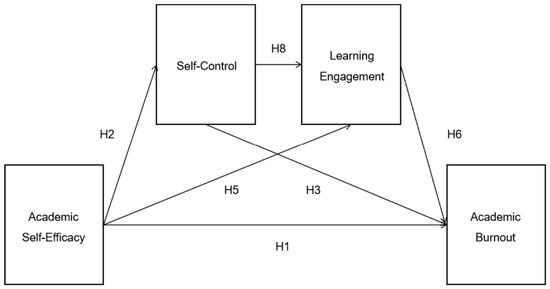
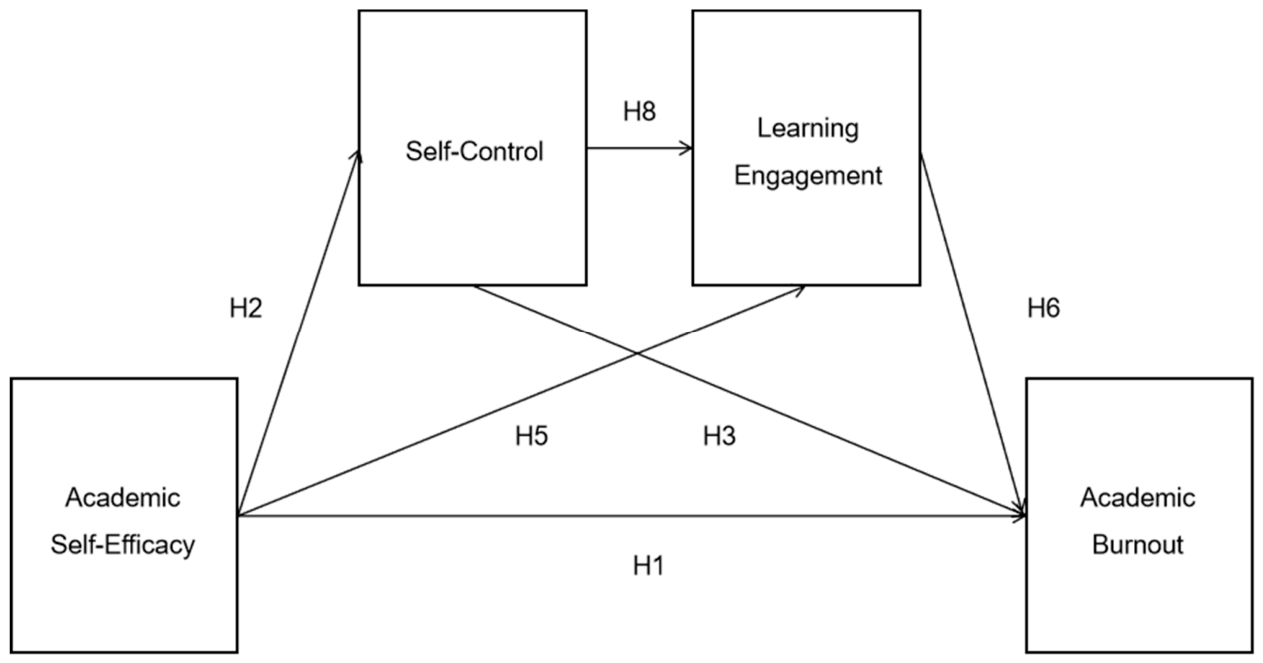
Figure 1 illustrates the proposed analytical framework and shows the direct pathway, the two single-mediator pathways, and the sequential pathway through self-control and learning engagement.
Figure 1.
Conceptual framework of the study. Notes: H4 indicates the indirect association between academic self-efficacy and academic burnout through self-control; H7 indicates the indirect association between academic self-efficacy and academic burnout through learning engagement; H9 indicates the serial indirect association through self-control and learning engagement between academic self-efficacy and academic burnout.
Specifically, the model proposes that academic self-efficacy is positively associated with self-control and learning engagement and negatively associated with academic burnout. Self-control is expected to be positively associated with learning engagement and negatively associated with academic burnout. Learning engagement is expected to be negatively associated with academic burnout. Thus, the model examines whether academic self-efficacy is linked to academic burnout directly and indirectly through the sequential mechanism of self-control and learning engagement.
3. Research Design
3.1. Sample Selection and Data Sources
The data used in this study were collected through a questionnaire survey targeting full-time undergraduate students from several universities in eastern and central China. To increase sample diversity and improve the external applicability of the results, the survey covered different types of universities as well as students from multiple disciplinary backgrounds. Questionnaires were distributed through both online channels and anonymous classroom administration. Participation was voluntary, and each respondent was allowed to complete the survey only once. After removing incomplete questionnaires, mechanically repeated responses, and other invalid cases, 1431 valid questionnaires were retained from 1677 returned questionnaires, yielding an effective response rate of 85.33%.
The retained sample showed a relatively balanced demographic structure. It included 689 male students (48.15%) and 742 female students (51.85%). Respondents were also classified by university type, grade level, disciplinary background, place of origin, and student leadership experience. These variables were not the main theoretical focus of the serial mediation model, but they provide important contextual information for evaluating sample diversity and for positioning the present study within more differentiated research on student functioning and academic burnout. The classification results are summarized in Table A1.
3.2. Variable Measurement
The core variables were measured using established scales and a five-point Likert format ranging from 1 (“strongly disagree”) to 5 (“strongly agree”), as presented in Table 1. Higher values indicated higher levels of the relevant construct. For academic burnout, the reduced efficacy items were reverse-coded before calculating the overall score. Because Likert-type responses are ordinal at the item level, reliability and validity were evaluated in a way that considered both the ordinal response format and the composite-score strategy used in the mediation analysis. Cronbach’s alpha was retained for comparability with previous studies, while McDonald’s omega (McDonald, 1999) and ordinal alpha were also considered as supplementary reliability indicators. The full adapted item wording and item-retention status are provided in Table A6, Table A7, Table A8 and Table A9 in Appendix B.
Table 1.
Measurement of key variables.
Before the formal analyses, the measures that required contextual adaptation were subjected to item purification. Items were considered for deletion when they met at least one of the following criteria: corrected item-total correlation below 0.40, standardized loading below 0.60, theoretically unjustified cross-loading above 0.30, or wording that weakened conceptual consistency in the Chinese undergraduate context. Item removal was carried out only when it improved reliability or structural clarity while preserving the theoretical meaning of the scale. The Academic Self-Efficacy Scale and the College Student Self-Control Questionnaire were retained in their original structures. Limited refinement was applied to the University Student Engagement Inventory and the Maslach Burnout Inventory-Student Survey. The deleted item codes, deletion criteria, and psychometric consequences are reported in Table A2, and the full item list is provided in Appendix B to improve transparency and reproducibility.
Academic self-efficacy was measured with a Chinese-adapted instrument derived from the self-efficacy framework of Pintrich and De Groot (1990). The scale included 22 items covering two dimensions, namely learning ability self-efficacy and learning behavior self-efficacy, with 11 items in each dimension. The original structure of the scale was retained because the preliminary assessment showed satisfactory internal consistency, acceptable omega reliability, and conceptual stability. Higher scores reflected stronger confidence in one’s academic capability and learning behavior.
Self-control was assessed using the College Student Self-Control Questionnaire developed by Yu (2004). This scale conceptualizes self-control as a multidimensional construct composed of self-awakening, self-planning, self-execution, self-evaluation, self-motivation, and self-correction. The dimensional framework was preserved because the initial item analysis suggested that the retained dimensions met the expected requirements of reliability and conceptual appropriateness. A higher score indicated a stronger level of self-regulatory capacity in both academic and daily life contexts. The overall reliability of the scale was high, and the internal consistency of each subdimension exceeded 0.80.
Learning engagement was measured by the University Student Engagement Inventory (USEI; Maroco et al., 2016; She et al., 2023). The original scale consists of 15 items and covers three components, namely behavioral engagement, cognitive engagement, and emotional engagement, with five items assigned to each component. During the preliminary purification process, two items were removed because they showed comparatively weak item-total associations and lower standardized loadings in the adapted sample. As a result, the final version contained 13 items, including 5 items for behavioral engagement, 4 for cognitive engagement, and 4 for emotional engagement. Higher scores indicated greater involvement in learning activities.
Academic burnout was assessed using the Maslach Burnout Inventory-Student Survey (MBI-SS; López-Gómez et al., 2025; Portoghese et al., 2018). The original version contains 15 items distributed across three dimensions: exhaustion, cynicism, and reduced efficacy. During item refinement, three items with comparatively weaker psychometric performance were removed in order to improve internal consistency and create a more balanced dimensional structure while maintaining the conceptual meaning of the measure. The final version therefore retained 12 items, with 4 items for each dimension. Higher overall scores indicated more severe academic burnout.
The psychometric consequences of item refinement were also examined. For the learning engagement measure, deleting USEI-CE5 and USEI-EE5 improved the clarity of the three-dimensional structure and increased the reliability of the cognitive and emotional engagement dimensions without changing the conceptual scope of behavioral, cognitive, and emotional engagement. For the academic burnout measure, deleting MBI-SS EX5, MBI-SS RE5, and MBI-SS RE6 produced a more balanced structure with four retained items per dimension and improved the stability of the exhaustion and reduced-efficacy dimensions after reverse coding. These decisions were therefore made for psychometric transparency and parsimony, not to alter the theoretical meaning of either scale. The retained and deleted item wordings are reported in Appendix B so that the refinement process can be reproduced and evaluated by readers.
In the subsequent assessment of the measurement model, the latent constructs were represented by theoretically grounded dimensions in order to preserve model parsimony and improve estimation efficiency. For hypothesis testing, the study adopted a two-step analytical procedure. First, confirmatory factor analysis (CFA) was conducted to evaluate the measurement quality of the four main constructs, especially their convergent and discriminant validity. Because the observed item responses were ordinal, a parallel ordinal CFA based on polychoric correlations and a robust weighted least squares estimator was considered as a sensitivity check (Flora & Curran, 2004). The reported model used dimension-level indicators and robust standard errors, which is consistent with the composite-variable mediation framework used later in the analysis. Second, after the adequacy of the measurement model had been confirmed, composite scores for academic self-efficacy, self-control, learning engagement, and academic burnout were computed based on the retained items. Accordingly, the hypothesized relationships were not estimated through a full latent-variable structural equation model, but through a composite-variable path framework built on prior measurement validation.
3.3. Model Specification
To test the proposed hypotheses, this study applied a regression-based serial mediation approach using composite scores. In this model, academic self-efficacy was treated as the independent variable, academic burnout as the outcome variable, and self-control together with learning engagement as sequential mediators. This framework allowed the study to assess the direct statistical association between academic self-efficacy and academic burnout and the indirect pathways operating through the two mediators.
The analytical procedure followed the same two-step sequence outlined above. In the first step, CFA was used to examine whether the retained indicators adequately represented the target constructs. In the second step, after the measurement model was shown to be acceptable, composite scores were calculated for each variable and then entered into the serial mediation analysis. Therefore, the hypothesis testing in this study relied on observed composite indicators rather than a full latent-variable structural equation modeling approach. This decision supports model parsimony, but it also means that the results should be interpreted as associations among validated composite scores.
More concretely, the specified path model included six direct statistical paths: academic self-efficacy being associated with self-control, learning engagement, and academic burnout; self-control being associated with learning engagement and academic burnout; and learning engagement being associated with academic burnout. On the basis of these paths, three indirect associations were further defined, namely the indirect association through self-control, the indirect association through learning engagement, and the serial indirect association through self-control and then learning engagement.
The model can be written as follows:
where ASE denotes academic self-efficacy, SC denotes self-control, LE denotes learning engagement, and AB denotes academic burnout. In this specification, the direct coefficient represents the residual association between academic self-efficacy and academic burnout after accounting for the two mediators, while the product terms represent the three indirect associations.
SC = α1 + β1ASE + ε1
LE = α2 + β2ASE + β3SC + ε2
AB = α3 + β4ASE + β5SC + β6LE + ε3
All parameters were estimated through regression-based path analysis. The significance of the indirect paths was tested with a bias-corrected Bootstrap method based on 5000 resamples. An indirect association was considered statistically significant when the 95% confidence interval did not contain zero. Because the data were cross-sectional, the mediation model is interpreted as a theoretically informed statistical mediation model rather than as evidence of temporal or causal mediation.
Demographic variables were handled as supplementary controls rather than as core theoretical variables. The primary model was estimated without controls in order to test the proposed Social Cognitive Theory pathway as parsimoniously as possible. However, because gender, grade level, university type, disciplinary background, place of origin, and student leadership experience may be related to student functioning, a robustness analysis was also conducted with these variables entered as controls. This supplementary analysis was used to evaluate whether the main direct and indirect associations remained consistent after accounting for observed demographic differences.
4. Results and Discussion
Since all principal variables were measured through self-reported questionnaires at a single time point, common method variance was assessed through both procedural and statistical approaches. Procedurally, participation was anonymous, respondents were informed that there were no right or wrong answers, and items from different constructs were presented in a psychologically separated manner to reduce evaluation apprehension and consistency motives. Statistically, Harman’s single-factor test was first conducted by entering all items related to academic self-efficacy, self-control, learning engagement, and academic burnout into an exploratory factor analysis. The analysis extracted six factors with eigenvalues greater than 1, and the first unrotated factor accounted for 18.74% of the total variance. Because Harman’s test is only a preliminary diagnostic and has recognized limitations (Podsakoff et al., 2003), two complementary checks were also considered. A one-factor CFA model showed poor fit (χ2/df = 10.22, CFI = 0.638, TLI = 0.602, RMSEA = 0.081, SRMR = 0.096), and the inclusion of an unmeasured latent method factor did not materially change the substantive path coefficients. These results suggest that common method bias was unlikely to fully account for the observed relationships, although it cannot be completely eliminated in a cross-sectional self-report design.
Accordingly, the common method bias results should be interpreted cautiously. Harman’s single-factor test alone is insufficient as a definitive diagnostic, and the additional one-factor CFA and latent method factor checks cannot fully substitute for stronger research designs. Future studies should incorporate temporal separation between predictor, mediator, and outcome measures, marker-variable techniques, multi-source reports, or behavioral indicators such as attendance records and learning analytics. These approaches would provide a more rigorous basis for distinguishing substantive associations from potential method-related covariance.
Before evaluating the hypothesized structural relationships, CFA was carried out to test the adequacy of the measurement model. Consistent with the theoretical structure of the study, academic self-efficacy was represented by two dimensions, self-control by six dimensions, learning engagement by three dimensions, and academic burnout by three dimensions. The four-factor model showed an acceptable fit to the data (Kline, 2023), with χ2/df= 2.84, CFI = 0.958, TLI = 0.947, RMSEA = 0.036, and SRMR = 0.031. These fit indices indicate that the proposed measurement model corresponded well to the observed data. In addition, the ordinal sensitivity check based on polychoric correlations produced the same substantive conclusion that the four constructs were empirically distinguishable. It should be noted that CFA was used here to verify the adequacy of the retained measures, whereas the formal hypothesis tests were conducted later through regression-based serial mediation analysis using composite variables.
As shown in Table 2, all standardized factor loadings were statistically significant and above 0.70, ranging from 0.74 to 0.86. The composite reliability (CR) values ranged from 0.80 to 0.92, exceeding the recommended minimum level of 0.70. Similarly, the average variance extracted (AVE) values fell between 0.62 and 0.68, all above the conventional cutoff of 0.50. Overall, these results indicate that the measurement model had satisfactory convergent validity.
Table 2.
Confirmatory factor analysis, standardized factor loadings, composite reliability, and average variance extracted.
Following the analytical strategy described above, the CFA results were used to verify the adequacy of the measurement model, whereas the subsequent hypothesis testing was conducted through regression-based serial mediation analysis with composite variables.
Discriminant validity was further evaluated using the Fornell–Larcker criterion (Fornell & Larcker, 1981). As shown in Table 3, the square root of each construct’s AVE exceeded its correlations with the remaining constructs. This pattern indicates that the four key variables demonstrated satisfactory discriminant validity; that is, although they were conceptually related, they could still be empirically differentiated as distinct aspects of students’ academic functioning.
Table 3.
Discriminant validity based on the Fornell–Larcker criterion.
Although learning engagement and academic burnout were strongly correlated (r = −0.76), the Fornell–Larcker results still supported satisfactory discriminant validity. Because this correlation was close to the conventional threshold for construct overlap, additional evidence was examined through HTMT ratios (Henseler et al., 2015; Table A3) and alternative measurement models (Table A4). The highest HTMT value was observed between learning engagement and academic burnout, but it remained below the conservative 0.85 criterion. Moreover, the four-factor model fit substantially better than models in which learning engagement and academic burnout were collapsed into a single factor. These results support the empirical distinctiveness of the two constructs while also indicating that their strong negative association deserves theoretical interpretation.
The strong negative association between learning engagement and academic burnout should therefore be interpreted as evidence of close conceptual proximity rather than empirical redundancy. Learning engagement describes the presence of energy, effort, attention, and emotional connection in academic activities, whereas academic burnout describes exhaustion, cynicism, and reduced academic efficacy under sustained academic strain. The two constructs are negatively related because they represent contrasting aspects of student functioning, but they are not simple mirror images. A student may be low in engagement because of weak interest or poor learning habits without necessarily experiencing high exhaustion or cynicism, while a student may experience burnout despite maintaining some behavioral participation. The HTMT ratios and alternative-model comparisons therefore provide statistical support for distinctiveness, and the theoretical distinction supports retaining engagement and burnout as separate constructs in the mediation model.
Table 4 reports the descriptive statistics and Pearson correlation coefficients for the main study variables. Overall, academic self-efficacy (M = 3.74, SD = 0.56), self-control (M = 3.61, SD = 0.52), and learning engagement (M = 3.41, SD = 0.61) all scored above the midpoint of the scale, whereas academic burnout was at a moderate level (M = 2.86, SD = 0.58). This distribution generally accords with earlier studies, which have likewise found moderate academic self-efficacy and learning engagement alongside a meaningful level of academic burnout among university students.
Table 4.
Descriptive statistics and correlation matrix of the main variables.
The correlation results showed that academic self-efficacy had a significant positive relationship with self-control (r = 0.48, p < 0.001) and learning engagement (r = 0.52, p < 0.001), but a significant negative relationship with academic burnout (r = −0.55, p < 0.001). Self-control was likewise positively associated with learning engagement (r = 0.39, p < 0.001) and negatively associated with academic burnout (r = −0.43, p < 0.001). Learning engagement also showed a significant inverse relationship with academic burnout (r = −0.76, p < 0.001). The magnitude of the correlation between engagement and burnout was particularly strong, indicating that students who were more behaviorally, cognitively, and emotionally involved in learning tended to report substantially lower burnout symptoms.
In addition, all pairwise correlations were below 0.80 in absolute value, suggesting that multicollinearity was not a serious issue in the present analysis. The strong but not redundant relationship between learning engagement and academic burnout indicates that the two constructs should be interpreted as closely connected but empirically distinguishable aspects of student functioning: engagement reflects active involvement in academic activity, whereas burnout reflects exhaustion, cynicism, and reduced efficacy under prolonged academic strain. The overall correlation pattern provided preliminary empirical support for the proposed framework and justified the subsequent examination of direct, mediating, and serial mediating associations.
To evaluate the direct relationships among academic self-efficacy, self-control, learning engagement, and academic burnout, a regression-based model using composite variables was estimated. As shown in Table 5, academic self-efficacy was significantly and positively associated with self-control (β = 0.48, p < 0.001) and learning engagement (β = 0.33, p < 0.001), and was significantly and negatively associated with academic burnout (β = −0.24, p < 0.001). Self-control had a significant positive relationship with learning engagement (β = 0.31, p < 0.001) and a significant negative relationship with academic burnout (β = −0.20, p < 0.001). Learning engagement, in turn, also showed a significant negative relationship with academic burnout (β = −0.50, p < 0.001).
Table 5.
Direct associations and hypothesis testing.
The results for the direct paths were consistent with the proposed theoretical expectations. Academic self-efficacy not only showed a direct negative association with academic burnout, but was also positively associated with both self-control and learning engagement. In addition, self-control functioned as a positive regulatory factor by being linked to higher learning engagement and lower academic burnout. Among all direct relationships, learning engagement displayed the largest negative coefficient with academic burnout, implying that active involvement in learning may be the most proximal protective correlate of burnout in the present framework. Therefore, H1, H2, H3, H5, H6, and H8 were supported.
To further investigate the statistical mechanism through which academic self-efficacy was related to academic burnout, both the mediation association and the serial mediation association were tested using a bias-corrected Bootstrap method with 5000 resamples. An indirect association was considered significant when the corresponding 95% confidence interval did not include zero.
As reported in Table 6, the overall indirect association between academic self-efficacy and academic burnout was statistically significant (Estimate = −0.335, 95% CI [−0.408, −0.271]). At the same time, after self-control and learning engagement were included in the model, the direct association between academic self-efficacy and academic burnout remained significant (Estimate = −0.240, 95% CI [−0.307, −0.175]). This result suggests that self-control and learning engagement partially, rather than completely, accounted for the association between academic self-efficacy and academic burnout.
Table 6.
Mediation and chain mediation associations.
More specifically, the indirect pathway through self-control reached statistical significance (Estimate = −0.096, 95% CI [−0.135, −0.062]), supporting H4. The indirect pathway through learning engagement was also significant (Estimate = −0.165, 95% CI [−0.218, −0.117]), supporting H7. In addition, the serial mediation pathway through self-control and learning engagement was significant as well (Estimate = −0.074, 95% CI [−0.104, −0.049]), thereby supporting H9.
In terms of effect size, the indirect pathway via learning engagement accounted for the largest share of the total association (28.70%), followed by the pathway via self-control (16.70%) and the sequential pathway through self-control and learning engagement (12.87%). Altogether, the indirect associations explained 58.26% of the total association, whereas the direct association explained the remaining 41.74%. These findings indicate that the relationship between academic self-efficacy and academic burnout was not limited to a direct link; it was also statistically represented through regulatory capacity and learning involvement, especially through learning engagement.
As shown in Table A5, the substantive pattern of results remained stable after the demographic variables were entered as controls. All six direct associations retained the same direction and statistical significance, and the three indirect associations remained significant because the corresponding bootstrap confidence intervals did not include zero. The coefficients in the controlled model were only slightly smaller than those in the primary model. These findings indicate that the proposed serial mediation pattern was not simply a by-product of gender, grade level, university type, disciplinary background, place of origin, or student leadership experience, although future work should examine whether these demographic variables also operate as moderators or define distinct latent profiles of student functioning.
Table 7 provides a consolidated overview of the hypothesis-testing results. The findings show that all hypothesized relationships were supported by the empirical evidence. Specifically, academic self-efficacy was significantly and positively associated with self-control and learning engagement, while being significantly and negatively associated with academic burnout. Self-control also showed a significant negative association with academic burnout, and learning engagement likewise showed a significant negative association with burnout. In addition, self-control had a significant positive association with learning engagement.
Table 7.
Summary of hypothesis testing.
Regarding the indirect mechanisms, both self-control and learning engagement served as significant statistical mediators linking academic self-efficacy to academic burnout. Moreover, the sequential mediating pathway through self-control and learning engagement was also statistically significant. Taken as a whole, these results offer empirical support for the proposed conceptual model, while the cross-sectional design requires that the mechanisms be interpreted as theoretically plausible pathways rather than confirmed causal processes.
The fact that learning engagement explained the largest proportion of the indirect association suggests that direct involvement in academic activities may be the closest protective correlate of burnout in the present framework. Although academic self-efficacy provides the cognitive basis for confidence and persistence, and self-control supports behavioral regulation, sustained participation in learning appears to be the channel through which these psychological resources are most strongly linked to lower burnout. The strong relationship between engagement and burnout is theoretically meaningful rather than merely statistical: engagement reflects energy, dedication, and absorption in learning, whereas burnout reflects depletion, alienation, and reduced efficacy. They are therefore opposite in valence but not identical in content. This distinction implies that universities should not treat burnout-related risk reduction only as symptom management; they should also build learning environments that make active engagement possible through clear academic goals, manageable task structures, timely feedback, and support for self-regulated learning.
The pattern of coefficients also clarifies the practical meaning of the serial model. The association between academic self-efficacy and self-control (β = 0.48) suggests that students’ confidence in handling academic tasks is closely linked to their capacity to regulate learning behavior. The path from self-control to learning engagement (β = 0.31) indicates that regulatory capacity is not only protective in itself but is also associated with more active learning participation. Finally, the large negative coefficient from learning engagement to burnout (β = −0.50) shows that engagement is the most proximal correlate of burnout in the model. This means that interventions should not stop at improving students’ confidence; they should also help students translate confidence into daily regulatory routines and then into sustained engagement with learning activities.
Because the present study relied on composite scores, it primarily explains average relationships among constructs. This strategy is appropriate for testing the proposed serial mediation model, and the supplementary control-variable analysis suggests that the main pathways remain stable after demographic characteristics are considered. Nevertheless, average associations may still conceal heterogeneity among students. The sample classification reported in Table A1 indicates that future analyses could examine whether the model differs by gender, grade level, discipline, place of origin, leadership experience, or latent profiles of self-control and engagement. Dimension-level analyses may also clarify whether behavioral, cognitive, or emotional engagement is most strongly associated with particular burnout dimensions. These extensions would give greater density to the findings and help develop more nuanced models of student functioning.
5. Conclusions
This study explored the relationship between academic self-efficacy and academic burnout among college students, with particular attention to the sequential mediating roles of self-control and learning engagement. The results showed that academic self-efficacy was significantly and negatively associated with academic burnout. In addition, self-control and learning engagement functioned not only as separate statistical mediators, but also as a significant serial mediation pathway. These findings indicate that the association between academic self-efficacy and academic burnout can be interpreted through both direct and indirect statistical pathways, especially through the sequence of self-regulation and active learning involvement.
The study provides two main contributions. At the theoretical level, it clarifies a specific gap in the literature by distinguishing a distal cognitive belief, a regulatory capacity, and a proximal engagement state within one explanatory framework. This helps explain why the sequence from self-control to learning engagement is theoretically meaningful rather than merely an additional mediation test. At the practical level, the findings suggest that burnout prevention should go beyond focusing only on burnout symptoms. It is also important to enhance students’ confidence in their academic ability, strengthen their self-regulatory capacity, and promote learning environments that sustain behavioral, cognitive, and emotional engagement.
Several limitations should be noted. First, the cross-sectional design prevents causal and temporal conclusions. Although the model is theoretically grounded in Social Cognitive Theory, the empirical evidence supports associations among variables rather than confirmed causal mechanisms. This means that the order from academic self-efficacy to self-control, learning engagement, and academic burnout should be understood as a theoretically plausible statistical pathway, not as proof that changes in earlier variables necessarily produce changes in later variables. Second, because the data relied entirely on self-report measures collected at a single time point, common method variance, social desirability, and subjective response bias cannot be completely ruled out, even though procedural controls and complementary statistical checks were used. Third, demographic variables were included in a supplementary robustness analysis, but they were not fully modeled as moderators or grouping variables. Therefore, the present findings show that the main associations are stable after basic demographic controls, but they do not establish whether the pathway operates equally across all student groups. Fourth, the use of composite scores improves model parsimony but may conceal heterogeneity within the sample and within the multidimensional constructs. The strong negative association between learning engagement and academic burnout also indicates conceptual proximity, making it important for future research to continue testing their discriminant validity at the item and dimension levels. Fifth, some scale refinement decisions were made after contextual adaptation, and future studies should further evaluate the stability of the retained item structure across different student populations.
Future studies could address these limitations by using longitudinal, cross-lagged, or experimental designs to evaluate temporal ordering more rigorously. Researchers should also incorporate multi-informant or behavioral indicators, such as learning analytics, attendance records, academic performance records, or teacher evaluations, to reduce reliance on self-report measures. In addition, future research should move beyond simple control-variable adjustment by testing subgroup analyses, moderation effects, latent profile analysis, and dimension-level models. Such analyses could examine whether the serial mediation pathway differs across gender, grade level, disciplinary background, place of origin, student leadership experience, or distinct patterns of engagement and burnout. This would help move the field from average-process models toward more differentiated explanations of student academic functioning and burnout risk.
Author Contributions
Conceptualization, Y.N.; methodology, Y.N. and O.B.T.; validation, O.B.T. and Z.B.I.; formal analysis, Y.N.; investigation, Y.N.; data curation, Y.N.; writing—original draft preparation, Y.N.; writing—review and editing, Y.N., O.B.T., Z.B.I., H.W.-H.P. and X.D.; visualization, H.W.-H.P.; formal analysis, X.D.; supervision, O.B.T. and Z.B.I.; project administration, Y.N. All authors have read and agreed to the published version of the manuscript.
Funding
This research received no external funding.
Institutional Review Board Statement
The study was conducted in accordance with the Declaration of Helsinki and approved by the Ethics Committee of Nanyang Technician College (protocol code NYTC-ER-2025-121, approval date: 26 September 2025).
Informed Consent Statement
Informed consent was obtained from all subjects involved in the study.
Data Availability Statement
The datasets used and/or analyzed during the current study are available from the corresponding author on reasonable request.
Acknowledgments
I would like to express my sincere gratitude to all those who have contributed to this study with their support and assistance.
Conflicts of Interest
The authors declare no conflicts of interest.
Appendix A
Table A1.
Sample classification of the retained respondents.
Table A2.
Item purification decisions for the adapted learning engagement and academic burnout measures.
Table A3.
HTMT ratios for discriminant validity.
Table A4.
Comparison of alternative measurement models.
Table A5.
Supplementary mediation results after controlling for demographic variables.
Appendix B. Questionnaire Items Used in the Study
The following appendix lists the adapted English translations of the questionnaire items used in the survey. All items were rated on a five-point Likert scale from 1 (strongly disagree) to 5 (strongly agree). Reverse-coded academic burnout items are marked with “(R)”. Deleted items are listed to document the purification process; they were not used in the final composite scores.
Table A6.
Academic self-efficacy items.
Table A7.
Self-control items.
Table A8.
Learning engagement items and retention status.
Table A9.
Academic burnout items and retention status.
References
- Abraham, A., Chaabna, K., Sheikh, J. I., Mamtani, R., Jithesh, A., Khawaja, S., & Cheema, S. (2024). Burnout increased among university students during the COVID-19 pandemic: A systematic review and meta-analysis. Scientific Reports, 14, 2569. [Google Scholar] [CrossRef] [Scilit] [PubMed]
- Bandura, A. (1997). Self-efficacy: The exercise of control. W. H. Freeman. [Google Scholar]
- Demir, S., & Kuşcu Karatepe, H. (2025). The effect of academic procrastination on life satisfaction among nursing and midwifery students: The serial mediation role of academic self-efficacy and self-control. Behavioral Sciences, 15(11), 1434. [Google Scholar] [CrossRef] [Scilit] [PubMed]
- Flora, D. B., & Curran, P. J. (2004). An empirical evaluation of alternative methods of estimation for confirmatory factor analysis with ordinal data. Psychological Methods, 9(4), 466–491. [Google Scholar] [CrossRef] [Scilit] [PubMed]
- Fornell, C., & Larcker, D. F. (1981). Evaluating structural equation models with unobservable variables and measurement error. Journal of Marketing Research, 18(1), 39–50. [Google Scholar] [CrossRef] [Scilit]
- Fredricks, J. A., Blumenfeld, P. C., & Paris, A. H. (2004). School engagement: Potential of the concept, state of the evidence. Review of Educational Research, 74(1), 59–109. [Google Scholar] [CrossRef] [Scilit]
- Guo, Y. F., Yue, F. Y., Lu, X. Y., Sun, F. Y., Hu, X. L., & Jia, Y. N. (2024). Roles of self-efficacy and self-control in the association between relative deprivation and psychological well-being among undergraduate students during COVID-19. Scientific Reports, 14, 24361. [Google Scholar] [CrossRef] [Scilit] [PubMed]
- Henseler, J., Ringle, C. M., & Sarstedt, M. (2015). A new criterion for assessing discriminant validity in variance-based structural equation modeling. Journal of the Academy of Marketing Science, 43, 115–135. [Google Scholar] [CrossRef] [Scilit]
- Jagodics, B., & Szabó, É. (2023). Student burnout in higher education: A demand-resource model approach. Trends in Psychology, 31, 757–776. [Google Scholar] [CrossRef] [Scilit]
- Jiang, Y., Zhang, J., Zheng, W., Guo, G., & Yang, W. (2025). Reflecting emotional intelligence: How mindsets navigate academic engagement and burnout among college students. Behavioral Sciences, 15(9), 1261. [Google Scholar] [CrossRef] [Scilit] [PubMed]
- Kline, R. B. (2023). Principles and practice of structural equation modeling (5th ed.). The Guilford Press. [Google Scholar]
- Lin, Y. (2025). How does academic self-efficacy influence learning anxiety and academic burnout in Chinese characters learning among international students in China? Frontiers in Psychology, 16, 1555063. [Google Scholar] [CrossRef] [Scilit] [PubMed]
- Liu, B., Zou, W., Guo, F., Zhao, Y., & Wang, J. (2025). Metacognitive ability and learning burnout in college students: Chain mediation through learning engagement. SAGE Open, 15(4), 1–16. [Google Scholar] [CrossRef] [Scilit]
- Liu, W., Zhang, R., Wang, H., Rule, A., Wang, M., Abbey, C., Singh, M. K., Rozelle, S., She, X., & Tong, L. (2024). Association between anxiety, depression symptoms, and academic burnout among Chinese students: The mediating role of resilience and self-efficacy. BMC Psychology, 12, 335. [Google Scholar] [CrossRef] [Scilit] [PubMed]
- López-Gómez, E., González-Fernández, R., & Khampirat, B. (2025). Psychometric study of the maslach burnout inventory-student survey on thai university students. Scientific Reports, 15(1), 1802. [Google Scholar] [CrossRef] [Scilit] [PubMed]
- Madigan, D. J., Kim, L. E., & Glandorf, H. L. (2024). Interventions to reduce burnout in students: A systematic review and meta-analysis. European Journal of Psychology of Education, 39, 931–957. [Google Scholar] [CrossRef] [Scilit]
- Maroco, J., Maroco, A. L., Campos, J. A. D. B., & Fredricks, J. A. (2016). University student’s engagement: Development of the university student engagement inventory (USEI). Psicologia: Reflexão e Crítica, 29, 21. [Google Scholar] [CrossRef] [Scilit]
- McDonald, R. P. (1999). Test theory: A unified treatment. Lawrence Erlbaum Associates. [Google Scholar]
- Olson, N., Oberhoffer-Fritz, R., Reiner, B., & Schulz, T. (2025). Stress, student burnout and study engagement—A cross-sectional comparison of university students of different academic subjects. BMC Psychology, 13, 293. [Google Scholar] [CrossRef] [Scilit] [PubMed]
- Pérez-Jorge, D., Boutaba-Alehyan, M., González-Contreras, A. I., & Pérez-Pérez, I. (2025). Examining the effects of academic stress on student well-being in higher education. Humanities and Social Sciences Communications, 12, 449. [Google Scholar] [CrossRef] [Scilit]
- Pintrich, P. R., & De Groot, E. V. (1990). Motivational and self-regulated learning components of classroom academic performance. Journal of Educational Psychology, 82(1), 33–40. [Google Scholar] [CrossRef]
- Podsakoff, P. M., MacKenzie, S. B., Lee, J.-Y., & Podsakoff, N. P. (2003). Common method biases in behavioral research: A critical review of the literature and recommended remedies. Journal of Applied Psychology, 88(5), 879–903. [Google Scholar] [CrossRef] [Scilit] [PubMed]
- Portoghese, I., Leiter, M. P., Maslach, C., Galletta, M., Porru, F., D’Aloja, E., Finco, G., & Campagna, M. (2018). Measuring burnout among university students: Factorial validity, invariance, and latent profiles of the Italian version of the maslach burnout inventory student survey (MBI-SS). Frontiers in Psychology, 9, 2105. [Google Scholar] [CrossRef] [Scilit] [PubMed]
- Reyes-de-Cózar, S., Merino-Cajaraville, A., & Salguero-Pazos, M. R. (2023). Avoiding academic burnout: Academic factors that enhance university student engagement. Behavioral Sciences, 13(12), 989. [Google Scholar] [CrossRef] [Scilit] [PubMed]
- Rho, J., Nam, G., Shin, Y., Byeon, Y., Lee, J. Y., Kim, Y. J., & Ihm, J. (2025). Exploring the interplay of personality traits, academic burnout, and academic engagement in dental students. BMC Medical Education, 25(1), 593. [Google Scholar] [CrossRef] [Scilit] [PubMed]
- Sarwer, S., Abid, M. N., Chao, H., Siming, L., & Dukhaykh, S. (2025). Examining the impact of positive psychological attributes on emotional stability and academic burnout among undergraduate students: A cross-sectional study. BMC Psychology, 13, 614. [Google Scholar] [CrossRef] [Scilit] [PubMed]
- Schaufeli, W. B., Martinez, I. M., Marques-Pinto, A., Salanova, M., & Bakker, A. B. (2002). Burnout and engagement in university students: A cross-national study. Journal of Cross-Cultural Psychology, 33(5), 464–481. [Google Scholar] [CrossRef] [Scilit]
- She, L., Khoshnavay Fomani, F., Marôco, J., Allen, K. A., Sharif Nia, H., & Rahmatpour, P. (2023). Psychometric properties of the university student engagement inventory among Chinese students. Asian Association of Open Universities Journal, 18(1), 46–60. [Google Scholar] [CrossRef] [Scilit]
- Tang, Y., & He, W. (2025). Impact of social media addiction on college students’ academic procrastination: A chain mediated effect of lack of self-control and fear of missing out. Frontiers in Psychology, 16, 1668567. [Google Scholar] [CrossRef] [Scilit] [PubMed]
- Wang, J., Bu, L., Li, Y., Song, J., & Li, N. (2021). The mediating effect of academic engagement between psychological capital and academic burnout among nursing students during the COVID-19 pandemic: A cross-sectional study. Nurse Education Today, 102, 104938. [Google Scholar] [CrossRef] [Scilit] [PubMed]
- Wang, X.-C., Zhang, M., & Wang, J.-X. (2024). The effect of university students’ academic self-efficacy on academic burnout: The chain mediating role of intrinsic motivation and learning engagement. Journal of Psychoeducational Assessment, 42(7), 798–812. [Google Scholar] [CrossRef] [Scilit]
- Wei, Z., Hassan, N. C., Hassan, S. A., Ismail, N., & Gu, X. (2025). The relationship between Internet addiction and academic burnout in undergraduates: A chain mediation model. BMC Public Health, 25, 1523. [Google Scholar] [CrossRef] [Scilit] [PubMed]
- Wu, W., Jiang, L., Fang, L., Xu, Y., & Zhou, H. (2025). The relationship between digital learning resource quality, attention control, academic self-efficacy, and college students’ learning engagement. Asia Pacific Journal of Education, 46, 1–19. [Google Scholar] [CrossRef] [Scilit]
- Yang, Y., Liu, S., Zhou, M., Miao, L., & Liu, X. (2025). Association between family functioning and academic burnout among vocational college nursing students: Mediating role of academic self-efficacy. Frontiers in Medicine, 12, 1590280. [Google Scholar] [CrossRef] [Scilit] [PubMed]
- Yang, Y.-D., Zhou, C.-L., & Wang, Z.-Q. (2024). The relationship between self-control and learning engagement among Chinese college students: The chain mediating roles of resilience and positive emotions. Frontiers in Psychology, 15, 1331691. [Google Scholar] [CrossRef] [Scilit] [PubMed]
- Yu, G. Q. (2004). A research on college students’ self-control [Master’s thesis, East China Normal University]. [Google Scholar]
- Zhu, P., Xu, T., Xu, H., Ji, Q., Wang, W., & Qian, M. (2023). Associations between anxiety, depression and learning burnout among nursing undergraduates after the COVID-19 epidemic: The mediating role of academic self-efficacy. International Journal of Environmental Research and Public Health, 20(5), 4194. [Google Scholar] [CrossRef] [Scilit] [PubMed]
- Zimmerman, B. J. (2000). Attaining self-regulation: A social cognitive perspective. In M. Boekaerts, P. R. Pintrich, & M. Zeidner (Eds.), Handbook of self-regulation (pp. 13–39). Academic Press. [Google Scholar] [CrossRef] [Scilit]

Disclaimer/Publisher’s Note: The statements, opinions and data contained in all publications are solely those of the individual author(s) and contributor(s) and not of MDPI and/or the editor(s). MDPI and/or the editor(s) disclaim responsibility for any injury to people or property resulting from any ideas, methods, instructions or products referred to in the content. |
© 2026 by the authors. Licensee MDPI, Basel, Switzerland. This article is an open access article distributed under the terms and conditions of the Creative Commons Attribution (CC BY) license.