


Abstract
Mindfulness experience has been associated with altered responses to unfairness, yet little is known about its relation to decisions affecting both oneself and a powerless third party. In a cross-sectional design, we compared 26 experienced mindfulness-oriented meditation (MOM) practitioners and 26 non-meditating controls in a modified three-person Ultimatum Game. Acceptance decisions were combined with post-decision assessments of forgiveness or gratitude toward the proposer, compassion or appreciative joy toward the third player, and task-related thoughts. Relative to controls, meditators were less likely to accept offers when the third player was disadvantaged and when their own outcome was fair or kind. Meditators reported higher forgiveness and compassion, both positively associated with cooperativeness. Group differences in acceptance, forgiveness, and compassion were supported by offer-adjusted mixed models, but their robustness depended on questionnaire adjustment. Groups did not differ in thought frequency, target, or valence. Exploratory analyses revealed group differences in thought-valence-emotional coupling, suggesting a weaker coupling of forgiveness with negative thoughts. These findings associate mindfulness experience with differences in socially contextualized acceptance decisions and social emotions involving a powerless third party and, exploratively, in how ongoing cognition relates to positive social emotions.
1. Introduction
The Ultimatum Game (UG; Güth et al., 1982) is a decision-making paradigm in which a proposer decides how to divide a sum of money between players, while the responder player decides whether to accept or reject the proposed allocation. If the responder accepts, both players receive the proposed amounts; if the responder rejects, neither player receives anything.
Decision-making in the UG often deviates from the predictions of classical economic theories based on monetary utility maximization (von Neumann & Morgenstern, 1947), according to which a rational responder should accept any positive offer rather than receiving nothing. Instead, typical responders frequently reject unfair offers to punish the proposer, sacrificing a certain monetary gain rather than accepting an inequitable division (a phenomenon known as altruistic punishment; Fehr & Gächter, 2002). However, in one study, rejection of unfair offers in the dyadic UG was unrelated to the same participants’ prosocial behaviors in other games (Yamagishi et al., 2012).
Experimental economics and cognitive psychology have shown that this binary decision reflects the interplay of multiple cognitive, emotional, social, and cultural factors (Tomasino et al., 2013; Chowdhury et al., 2026). For example, greater rejection of unfair offers has been associated with negative affect (Liu et al., 2016) and the need to express it (Xiao & Houser, 2005), anger (Gilam et al., 2019; Gröndal et al., 2024), angry facial expression of the proposer (Mussel et al., 2013), depressive symptoms (Weiß et al., 2020), intuitive processing (Calvillo & Burgeno, 2015), greater effort invested in earning the endowment (Dannenberg et al., 2012), and inequity aversion (Capraro, 2018; Civai et al., 2012). Conversely, greater acceptance of unfair offers has been associated with positive affect (Riepl et al., 2016), empathic concern for proposers in need (A. Wang et al., 2022; W. Wang, 2025), trait gratitude (Park et al., 2021), extraversion (Chowdhury et al., 2026), reflective thinking (Calvillo & Burgeno, 2015), and higher cognitive ability (Kawamura & Ogawa, 2019).
One theoretical framework for interpreting acceptance and rejection UG decisions draws on Kahneman’s distinction between fast, intuitive processing (System 1) and slower, more deliberative processing (System 2; Kahneman, 2011; Chowdhury et al., 2026). In the dyadic UG, responders tended to accept mildly unfair offers and reject severely unfair ones when responding quickly (Ferguson et al., 2014). Within the dual-process account, deliberation may incorporate personal outcomes, fairness norms, and consequences for others. These considerations can favor either acceptance (e.g., favored by altruism, empathy, and gratitude) or rejection (e.g., favored by adherence to social norms and concern for fairness; Chowdhury et al., 2026). However, in this study, acceptance and rejection alone cannot identify System 1 or System 2 involvement, and here, the dual-process account remains a theoretical framework rather than a tested mechanism.
Notably, mindfulness has been proposed to modulate the balance between intuitive and deliberative processing (Good et al., 2016), motivating a theoretical proposal that it may be related to more reflective and cognitively flexible decision-making (Cantarelli, 2025), even if the present task cannot establish such a processing shift. Consistent with this account, evidence across both cross-sectional (Kirk et al., 2011) and longitudinal studies (Kirk et al., 2016) have shown that mindfulness meditation is associated with greater acceptance of unfair UG offers, possibly reflecting a weaker coupling between neural emotional responses to unfairness and subsequent behavior rather than simply reduced sensitivity to unfairness itself.
However, whether this pattern extends to decisions in which acceptance also determines the outcome of another person remains unclear.
This question becomes particularly relevant in the three-person Ultimatum Game (TUG), a variant of the dyadic UG in which the proposer allocates resources among three players. A responder then decides whether to accept or reject the proposed allocation on behalf of all players, while a passive third player has no decisional power (Güth & van Damme, 1998). In the classic two-person UG, accepting an unfair offer may reflect reduced reactivity to a personally experienced injustice, whereas in the TUG, acceptance may also entail endorsing an allocation that disadvantages a passive third player. The TUG therefore introduces an additional social and ethical dimension, requiring responders to consider not only their own outcome but also how resources are distributed to others. Indeed, responders have been shown to evaluate allocations beyond their own personal gain, exhibiting inequity aversion by rejecting offers that disadvantage the third player. An ERP study found that early responses to unfairness were not sensitive to third-player outcomes, suggesting that sensitivity to third-player inequality may recruit later, more deliberative, and higher-order cognitive processes (Alexopoulos et al., 2012). To our knowledge, whether mindfulness experience is associated with differences in this more complex form of social decision-making remains unexplored.
Although to a lesser extent than in the dyadic UG, several studies have investigated the factors that influence acceptance and rejection decisions involving the passive third player in the TUG. For example, women and older participants tend to reject more offers in favor of more equitable allocations (Güth et al., 2007). These decisions can also be influenced by characteristics of the third player. For instance, acceptance of allocations that are unfair toward the responder but fair toward the passive third player increases with the attractiveness of the latter (Ma & Hu, 2015).
Emotional processes may also contribute to these decisions. Pfister and Böhm (2012) distinguished between different affective reactions to unequal allocations, showing that perceived unfairness and anger are associated with rejection, whereas envy elicited by distributions favoring the third player does not necessarily translate into rejection. In particular, responders may refrain from rejecting such allocations because doing so would punish a passive third player who bears no responsibility for the offer. However, other social emotions may also shape responses to allocations involving the third player, such as compassion when the passive player is disadvantaged. In vignette studies, observers’ compassion was more sensitive than their anger to the outcome for the person affected by a moral violation (Landmann & Hess, 2017). More broadly, the third player’s outcome may influence not only emotions elicited by their disadvantage, but also emotions toward the proposer, as the proposer’s treatment of a powerless other may provide socially relevant cues about their moral character.
Despite the potential role of emotions directed to the third player in modulating decision-making, relatively few studies have examined positive emotions in the UG, and even fewer have done so in the TUG. In a three-person social interaction, positive social emotions may differ both according to their target and to the social meaning of the allocation: gratitude may arise toward a kind or fair proposer, forgiveness toward an unfair proposer, compassion toward a disadvantaged third player, and appreciative joy toward a third player receiving a kind outcome.
Interestingly, experimentally induced negative emotions, including disgust, sadness (see Harlé & Sanfey, 2007), anger, and fear, have been shown to increase rejection rates in the UG compared with neutral emotional states, an effect not observed for positive emotional states (Liu et al., 2016). Focusing specifically on gratitude, its experimental induction did not alter acceptance rates, whereas higher trait gratitude was associated with greater acceptance of unfair offers (Park et al., 2021). In a different decision-making paradigm, however, experimentally induced gratitude increased monetary giving even at the expense of individual gain (DeSteno et al., 2010). Gratitude has therefore been proposed to promote more prosocial and less immediately self-interested choices by down-regulating negative emotions elicited by unfairness and increasing patience, thereby facilitating decisions that favor broader or longer-term benefits over immediate individual gain (DeSteno et al., 2010; Dickens & DeSteno, 2016; Park et al., 2021). Thus, although gratitude appears to be associated with greater acceptance of unfair offers in the dyadic UG (Park et al., 2021), its role when unfairness concerns a passive third player remains unclear.
Forgiveness has received even less attention in the UG. Previous studies have operationalized forgiving behavior by asking participants to subsequently act as proposers in a Dictator Game, in which one player unilaterally decides how to divide a monetary amount with another player, after having first experienced unfair treatment as responders, with fair allocations following unfair treatment interpreted as forgiving choices. Agreeableness emerged as a significant predictor of such behavior, suggesting that forgiveness may involve cognitive decision-making processes rather than being driven solely by emotional reactions (J.-C. A. Li & Chen, 2012). Neural evidence is consistent with this interpretation: whereas most participants responded in a tit-for-tat fashion accompanied by striatal activation, forgiving responses were associated with greater activation of the right DLPFC, consistent with the involvement of cognitive-control processes that may inhibit emotional reactions elicited by unfair treatment (Brüne et al., 2013). However, using a similar role-reversal task to infer forgiveness from subsequent monetary allocations, highly impulsive participants did not give significantly more to previously unfair partners after active stimulation of the right DLPFC than after sham stimulation (Maier et al., 2021).
Turning to emotions directed toward the third player, empathy and compassion may be particularly relevant. Empathy involves sharing or understanding another person’s emotional state, whereas compassion additionally entails concern for a suffering other, together with a motivation to alleviate their suffering, making it a potential emotional antecedent of altruistic behavior (Weng et al., 2015). In the dyadic UG, responders accepted disadvantageous offers more often from proposers presented as being in financial need, a condition intended to elicit empathic concern (A. Wang et al., 2022; W. Wang, 2025). In the TUG, a greater tendency to reject unfair allocations toward a third party was observed, a behavioral pattern widely interpreted as reflecting sensitivity to unfair outcomes affecting others and reduced tolerance for inequity (Casal et al., 2019; Alexopoulos et al., 2012). Empathic concern for the disadvantaged party and broader cooperative norms may contribute to this pattern (Chowdhury et al., 2026). Thus, empathy and compassion may be associated with different responses to unfairness across contexts that vary in who is the focus of concern and who is disadvantaged by the offer.
Finally, when the passive third player receives a kinder outcome than the responder, envy (Pfister & Böhm, 2012) is not the only possible emotional response: such an outcome may also elicit appreciative joy, namely a positive response to another person’s good fortune. To our knowledge, appreciative joy has not yet been investigated in the TUG. Nevertheless, Ng et al. (2019) showed that a brief Appreciative Joy Meditation increased acceptance of unfair offers directed at the participant, providing preliminary evidence that this emotion may influence responses to inequitable allocations.
Notably, Kim et al. (2024) measured affective dimensions, including valence and arousal, on each trial of a dyadic UG to predict individual differences. However, to our knowledge, positive social emotions such as forgiveness, gratitude, compassion, and appreciative joy have not been investigated at the trial level within the TUG.
Accordingly, the present study addressed three main aims. First, to our knowledge, this is the first study to investigate TUG decision-making in experienced mindfulness meditators. We examined acceptance and rejection decisions as a function of the outcomes experienced by both the responder and the passive third player and tested whether these decisions differed between meditators and non-meditating controls. We hypothesized that experienced MOM practitioners would show greater sensitivity than controls to allocations affecting a powerless third player. This expectation was motivated by evidence that TUG decisions incorporate others’ outcomes (Güth et al., 2007; Alexopoulos et al., 2012) and by research on meditation and other-oriented behavior (Donald et al., 2019; Berry et al., 2020). Second, we investigated positive social emotions on a trial-by-trial basis, assessing gratitude or forgiveness toward the proposer, and compassion or appreciative joy toward the passive third player. We examined differences in emotions across the offer configurations in which the third-player outcome was probed, and whether these patterns differed between mindfulness-oriented meditators and controls. Drawing on evidence linking meditation to compassion and empathy (e.g., Kreplin et al., 2018; Silveira et al., 2023; Weng et al., 2015), we also expected higher positive social emotion ratings overall among meditators. Third, given that mindfulness meditation has been associated with changes in mind-wandering occurrence and a more accepting relationship with this experience during ongoing tasks (Sorella et al., 2026a), we examined whether meditation experience was associated with differences in the target of task-related thoughts (i.e., the self, the proposer, or the third player) and their affective valence during the game. Thought–emotion analyses were exploratory, although prior work on mindfulness made a weaker association between thought valence and emotion a plausible possibility (Fuochi & Voci, 2024). Finally, exploratory analyses investigated the relationships between task-related thoughts and positive social emotions, as well as group differences in questionnaire scores and their associations with emotional ratings, with broad expectations of fewer emotion-regulation difficulties and greater cooperativeness among meditators.
2. Materials and Methods
2.1. Participants
An a priori sample-size estimation was conducted in G*Power 3.1 (Faul et al., 2009) using the repeated-measures ANOVA framework corresponding to the main mixed designs. Assuming a medium effect size (f = 0.25), α = 0.05, power = 0.80, two groups, and a correlation among repeated measures of 0.50, the required total sample size was 44 participants for models with three repeated measurements under the most conservative nonsphericity correction for a three-level within-subject factor (ε = 0.50). This scenario approximated the main acceptance analyses, the forgiveness and gratitude analyses involving three-level outcome factors, and the thought-frequency analyses involving three thought targets. For analyses involving two repeated measurements, such as compassion (i.e., unfair vs. fair third-player outcomes) and appreciative joy (i.e., fair vs. kind third-player outcomes), sphericity is automatically satisfied (ε = 1), and the required total sample size was 34 participants. After applying the exclusion criteria, including self-reported psychiatric or neurological disorders, the final sample of 52 participants exceeded the minimum required sample size under both scenarios.
A supplementary sensitivity analysis using the same ANOVA assumptions and N = 52 indicated approximate minimum detectable effects of f = 0.229 for a three-level group × within-subject interaction (ε = 0.50) and f = 0.198 for a two-level interaction (ε = 1), at 80% power and α = 0.05. These calculations concern ANOVA-type interactions and do not estimate the power of the trial-level logistic or linear mixed-effects models, nor that of the three-way interaction or multiplicity-adjusted tests; thus, smaller or more complex effects may remain imprecisely estimated.
The final sample included 26 controls and 26 mindfulness meditators. Controls were a convenience sample including 18 women and 8 men and were 46.92 years old, on average (SD = 13.41, range = 27–69), whereas meditators included 16 women and 10 men and were 50.58 years old, on average (SD = 11.92, range = 30–70). The two groups did not differ significantly in age, W = 269.50, p = 0.213, or gender distribution, χ2(1, N = 52) = 0.34, p = 0.560. Age and gender were nevertheless included in adjusted analyses because prior research indicates that both can influence Ultimatum Game responses (Güth et al., 2007; S. Li et al., 2018), and groups were not individually matched. To evaluate the sensitivity of conclusions to this choice, corresponding analyses without these covariates were also performed.
Meditators reported an average of 7.31 years of meditation practice (SD = 6.54, range = 1–25), with a mean weekly practice frequency of 5.73 days per week (SD = 1.36, range = 2–7) and a mean daily practice duration of 32.69 min (SD = 10.98, range = 15–70).
Meditators were recruited among individuals with previous experience in mindfulness-oriented meditation (MOM; Fabbro & Crescentini, 2017), including former attendees of MOM courses offered by our research group, as well as through word of mouth and personal networks. MOM is an eight-week mindfulness-based program derived from Kabat-Zinn’s Mindfulness-Based Stress Reduction approach and includes practices aimed at cultivating awareness of breathing, bodily sensations, thoughts, and other ongoing mental events. The curriculum covered an introduction to mindfulness and what mindfulness is not, facing pain, present-moment awareness, awareness of making mistakes, disidentification, deautomatization, or letting go. It did not include explicit compassion or loving-kindness instruction or practices. The program has previously been investigated in both clinical and non-clinical populations using behavioral, psychological, and neurophysiological measures (see, for example: Crescentini et al., 2015, 2018).
Participants provided written, informed consent to participate in the study, which was performed in accordance with the 1964 Declaration of Helsinki and was approved on 22 December 2022 by the Institutional Review Board of the Department of Languages and Literatures, Communication, Education and Society of the University of Udine [CGPER-2022-12-22-02].
2.2. Experimental Design
The task was a modified TUG. In the standard UG, one player proposes how to divide a monetary amount, and the responder decides whether to accept or reject the offer; if the offer is rejected, neither player receives anything (Güth et al., 1982). This paradigm was extended to three-person interactions by adding a powerless third player, whose payoff depends on the responder’s decision, but who has no decision power in the interaction (Güth et al., 2007).
In the present task, participants always played as responders. On each trial, a proposer (X) divided €12 among themselves, the participant/responder (Y), and a passive third player (Z). Participants decided whether to accept or reject the proposed division. If they accepted, the proposed allocation was implemented; if they rejected, all three players received nothing for that trial.
The allocation structure was informed by previous two- and three-person UG paradigms using low, intermediate, and high monetary outcomes (Tomasino et al., 2013; Ma & Hu, 2015), where the boundaries of fairness encompass perfectly even proposals (Biella et al., 2025). We extended these paradigms by including additional allocations in which the proposer retained a relatively low amount and one or both of the other players received relatively high amounts. This extension was introduced to sample not only responses to disadvantageous or self-serving allocations, but also responses to comparatively generous allocations that could elicit positive social emotions.
Each offer was classified using a three-letter code referring to the outcome status of X, Y, and Z, respectively. Building on previous studies distinguishing low, intermediate, and high offers (Tomasino et al., 2013), outcomes were categorized into low (€0–2), intermediate (€3–5), and high (€6–8) ranges. For the responder (Y) and the third player (Z), these ranges were coded as unfair (U), intermediate/fair (F), and kind (K), respectively. For the proposer (X), the coding was reversed to reflect the social meaning of the retained amount: high allocations (€6–8) were coded as unfair/self-serving (U), intermediate allocations (€3–5) as intermediate/fair (F), and low allocations (€0–2) as kind/generous (K). Thus, for example, UUU indicated a self-serving offer in which both Y and Z received less than the equal share, FFF indicated an equal split, and KFK indicated a generous offer in which the proposer retained less than the equal share, the responder received the equal share, and the third player received more than the equal share. The final stimulus set comprised 19 allocations spanning self-serving, intermediate/equal, and generous configurations. The complete set of allocations, their U/F/K classifications and probe assignment and emotion-specific counts are reported in Supplementary Tables S1–S5. Each of the 19 allocations was presented four times, resulting in 76 trials per participant. Out of these four presentations, two occurred without probes, one was followed by a thought probe and a proposer-directed emotion probe (forgiveness or gratitude), and one by a thought probe and a third-player-directed emotion probe (compassion or appreciative joy).
The thought and emotion probe was configured as follows. After acceptance or rejection of the offer, participants reported whether they had any thoughts at that moment (“Did I have any thoughts?”) and indicated whether they had no thoughts, or they classified them as task-unrelated, thoughts directed toward the proposer, thoughts directed toward themselves, or thoughts directed toward the passive third player. When thoughts were present, participants rated their valence on a 9-point scale from very negative (1) to very positive (9), with the midpoint indicating neutral thoughts. Then, depending on the block and allocation described below, they rated forgiveness or gratitude toward the proposer, or compassion or appreciative joy toward the third player, on a 7-point scale from 1 “not at all” to 7 “very much”. The original Italian instructions, English translations, scale anchors, and supplied emotion definitions are reported in Supplementary Table S6 and pp. 4–5.
The task was divided into two emotion-rating blocks. In one block, emotion probes concerned the proposer and assessed forgiveness or gratitude toward X. In the other block, emotion probes concerned the passive third player and assessed compassion or appreciative joy toward Z. OpenSesame randomized trial order within each of the two blocks. The order of the two blocks was counterbalanced by alternating successive participants between proposer-emotion-first and third-player-emotion-first sequences.
The rationale for the emotion probes was to assess each positive emotion only in the offer contexts in which it was theoretically meaningful (see Table S3). In the proposer’s emotion block, forgiveness was assessed in configurations in which the proposer’s behavior could be experienced as unfair or insufficiently generous, whereas gratitude was mainly assessed in configurations in which the proposer’s behavior was fair or generous. In the third player’s emotion block, compassion was assessed in configurations in which the third player received an unfair or relatively fair outcome, whereas appreciative joy was mainly assessed in configurations in which the third player received a fair or kind outcome. In the proposer’s emotion block, forgiveness was assessed in 7 trials and gratitude in 12 trials. In the third player’s emotion block, compassion was assessed in 7 trials and appreciative joy in 12 trials. This imbalance reflected the allocation-specific assignment of emotions based on their theoretical relevance (e.g., compassion was mainly assessed when the third player was disadvantaged, whereas appreciative joy was more appropriate to assess when the third player received a fair or kind outcome), rather than numerical balancing across emotions. Across the final sample, this yielded 3952 acceptance/rejection decisions and 1976 probe trials.
Across the full dataset, every allocation was presented four times to each of the 52 participants (208 acceptance decisions per offer). The two scheduled emotion-probe presentations per allocation produced 104 ratings per offer in total, 52 in each emotion-rating block. For each participant, the four allocation-specific emotion outcomes were not measured in all possible Z categories; exact counts are tabulated in Tables S4 and S5.
2.3. Procedure
Participants were tested individually in a quiet laboratory room at the University of Udine, under standardized environmental conditions. Upon arrival, they were welcomed by the experimenter and received general information about the study, without being informed of the specific hypotheses. After providing written informed consent and demographic information, they were seated comfortably in front of a computer screen at a distance of approximately 60 cm.
Before starting the task, participants received written and oral instructions for the TUG. They were told that they would play as responders and that, on each trial, they would evaluate offers allegedly made by previous participants who had played in the role of proposers. They were also told that the final compensation of each player would be proportional to the amount of money obtained in one randomly selected trial of the game. However, at the end, all participants received the same compensation independently of task performance, namely a €15 gift card for a local bookstore. This procedure was used to preserve the credibility and motivational relevance of the task while ensuring equal compensation across participants. This simulation was based on previous UG studies using preprogrammed offers, where participants were led to believe that the proposals had been generated by real previous participants, although the offers and the final compensations were in fact defined a priori by the experimenter (e.g., Tomasino et al., 2013).
Participants then completed the modified TUG. The entire laboratory session lasted approximately one hour. At the end of the session, participants were debriefed and thanked for their participation.
Personality and emotion regulation abilities were assessed through self-report questionnaires completed after the experimental session. Personality was assessed using the Italian version of the Temperament and Character Inventory (TCI; Cloninger et al., 1993; Delvecchio et al., 2016). The 125-item TCI assesses four temperament dimensions—Novelty Seeking, Harm Avoidance, Reward Dependence, and Persistence—and three character dimensions—Self-Directedness, Cooperativeness, and Self-Transcendence. Difficulties in emotion regulation were assessed using the Difficulties in Emotion Regulation Scale (DERS; Gratz & Roemer, 2004; Italian version: Sighinolfi et al., 2010). The DERS comprises six dimensions: Nonacceptance of Emotional Responses, Difficulties Engaging in Goal-Directed Behavior, Impulse Control Difficulties, Lack of Emotional Awareness, Limited Access to Emotion Regulation Strategies, and Lack of Emotional Clarity. Cognitive emotion-regulation strategies were assessed using the Cognitive Emotion Regulation Questionnaire (CERQ; Garnefski et al., 2001; Italian adaptation: Ubbiali et al., 2012). The CERQ assesses nine cognitive strategies used in response to negative events: Self-Blame, Acceptance, Rumination, Positive Refocusing, Refocus on Planning, Positive Reappraisal, Putting into Perspective, Catastrophizing, and Other-Blame.
2.4. Statistical Analyses
All 3952 acceptance decisions (52 participants × 76 trials) were analyzed, while 1976 probe trials were used for analyses of emotion ratings and task-related thought reports. Analyses of acceptance and the four emotion outcomes were designated the main outcome analyses; thought-frequency comparisons constituted a further main study question. The thought-valence–emotion coupling models and questionnaire associations were exploratory. Age and gender were included as covariates given previous evidence that both may influence UG responses (Güth et al., 2007; S. Li et al., 2018). Corresponding unadjusted models were fitted as sensitivity analyses. The exact allocation configurations and emotion-specific trial counts are documented in Supplementary Tables S3–S5.
For the subject-level ANCOVAs, Type III sums of squares with sum-to-zero contrasts were used. Greenhouse–Geisser corrections were applied when appropriate, and partial eta squared was reported as an effect-size estimate. Generalized linear mixed models were assessed with Type III Wald χ2 tests; linear mixed models were assessed with Type III F tests and denominator degrees of freedom approximations.
2.4.1. Acceptance Rate
Each acceptance decision was treated as a binary response in a binomial mixed-effects logistic regression. Fixed effects were group (controls, meditators), responder outcome status (Y_status: U, F, K), third-player outcome status (Z_status: U, F, K), and their interaction, with age and gender added to the adjusted model.
Random intercepts for participants (N = 52) and exact offer configurations (19 distinct allocations) accounted for repeated observations and variation across offers. The primary GLMM included all 3952 decisions (1976 trials with probes and 1976 without). We fitted the model with glmer (lme4) and tested omnibus effects using Type III Wald χ2 tests (Table S7); the subject-level ANCOVA sensitivity results are reported in Table S8.
Group contrasts within each Y and each Z level (six comparisons; Table S9) were FDR-corrected together; group contrasts within the nine Y × Z combinations (Table S10) were FDR-corrected as a separate family. An additional subject-level mixed ANCOVA of acceptance proportions was included (Table S8), together with a GLMM without age and gender variables, as sensitivity analyses.
Because the three-way interaction was not robust across the GLMM and ANCOVA specifications, these detailed contrasts were interpreted cautiously. Finally, probe presence and its interaction with group were tested only in a separate supplementary GLMM that included exact offer and block as fixed factors, age and gender as covariates, and a participant random intercept (Table S11).
2.4.2. Emotion Ratings by Third-Player Outcome Configurations
Because the central theoretical question concerned sensitivity to the passive third player’s outcome, positive emotion ratings were analyzed using third-player-outcome-aligned ANCOVAs. For each emotion, subject-level means were computed within the third-player categories in which the emotion was assessed. Group was included as a between-subject factor, third-player outcome status as a within-subject factor, and age and gender as covariates.
These ANCOVAs estimate differences across the selected configurations associated with Z status, rather than effects of Z isolated from every characteristic of the offer. To examine this design sensitivity, separate trial-level linear mixed-effects models were additionally fitted for all four emotions, using rating ~ group × Z status + age + gender + (1|participant) + (1|exact offer configuration). See Table S12.
For the emotion ANCOVAs, FDR correction was applied across the four emotions within each family of theoretically relevant effects (group, third-player status, and group × third-player status), while age and gender were treated as covariates of no theoretical interest.
When a significant group × third-player status interaction was found, post-hoc comparisons were conducted using estimated marginal means and FDR correction.
The sensitivity mixed models were used to assess whether the findings survived adjustment for heterogeneity between the exact offer configurations, recognizing that this adjustment cannot isolate a causal effect of Z from the allocation itself. Corresponding ANCOVAs without age and gender were also examined.
2.4.3. Thought-Frequency Analysis
Thought reports were analyzed at the participant level. For each participant, the number of reported thoughts was counted separately for each thought target and valence category. Thoughts directed toward the self, the proposer, and the third player were included as thought-target factors. Thought valence was categorized as negative versus non-negative. Frequencies were computed by dividing the number of thoughts in each target-by-valence cell by the total number of probe trials.
Thought frequency was analyzed using a mixed ANCOVA with group as a between-subject factor, thought target and thought valence as within-subject factors, and age and gender as covariates. Follow-up comparisons for significant thought-target effects were conducted using estimated marginal means, with FDR correction across pairwise contrasts. An otherwise identical ANOVA without age and gender was conducted as a sensitivity check (Table S14).
2.4.4. Thought Valence-Emotion Coupling
To test whether the association between task-related thought valence and positive social emotions differed between groups, separate exploratory linear mixed-effects models were fitted for forgiveness, compassion, gratitude, and appreciative joy. In each model, emotion rating was predicted by group, continuous thought valence, and their interaction. The original 1–9 valence scale remained continuous in these models; dichotomization into negative versus non-negative thoughts was used only for the thought-frequency analysis. Thought target, offer configuration, age, and gender were included as adjustment variables. Random intercepts were included for participants.
The model formula was:
Emotion rating ~ Group × Thought valence + Thought target + Offer
configuration + Age + Gender + (1|Participant)
Fixed effects in the linear mixed-effects models were evaluated using Type III F tests as implemented in lmerTest. FDR correction was applied across the four exploratory group × thought valence interactions (Table S15). For emotions showing significant group × thought valence interactions, group-specific slopes were estimated using marginal trends, with nominal 95% confidence intervals (Table S16). The four models were also refitted without age and gender (Table S15). Because both thought reports and emotion ratings were collected after the choice, these models cannot establish temporal precedence or an influence on decision-making.
2.4.5. Questionnaire Analyses
Group differences in questionnaire scores were assessed using two-sided permutation tests (100,000 permutations) based on Welch’s t statistic, with Cohen’s d reported as an effect-size estimate. FDR correction was applied across questionnaire comparisons. Associations between questionnaire scores and mean emotion ratings were assessed using Pearson correlations with permutation-based p-values (100,000 permutations) and bootstrap 95% confidence intervals (100,000 bootstrap resamples). FDR correction was applied separately within each emotion.
Exploratory sensitivity models additionally adjusted for DERS Nonacceptance, Impulse, and Strategies or, in a separate model, TCI Self-Directedness, Cooperativeness, and Self-Transcendence. The two questionnaire blocks were entered separately, and base models were refitted to the same complete-case sample for comparison (Table S17). These models describe how group estimates depend on adjustment for measured individual differences; they cannot establish whether these characteristics preceded meditation, resulted from it, or mediated an effect.
All statistical analyses were performed in R version 4.5.0 (R Core Team, 2025), using the afex (v1.4.1), lme4 (v1.1-37), lmerTest (v3.1-3), and emmeans (v1.11.0) packages. OpenAI ChatGPT (GPT-5.6 Sol) was used for English-language editing and to assist with the presentation of statistical results. All AI-assisted content was reviewed and verified by the authors.
3. Results
3.1. Acceptance Rate
The trial-level logistic mixed model included 3952 binary decisions from 52 participants and 19 offer configurations. Type III Wald tests showed a significant main effect of group, χ2(1) = 5.45, p = 0.020, indicating that overall acceptance rates were higher in controls compared to meditators. The effect of responder outcome status (Y) was significant, χ2(2) = 12.30, p = 0.002, as was the effect of third-player outcome status (Z), χ2(2) = 9.39, p = 0.009, although both effects were qualified by interactions with group. The group × Y interaction was significant, χ2(2) = 73.36, p < 0.001. The group × Z interaction was also significant, χ2(2) = 42.41, p < 0.001. The Y × Z interaction was not significant, while the three-way group × Y × Z interaction was significant in the GLMM, χ2(4) = 11.51, p = 0.021, but not in the subject-level ANCOVA (p = 0.173, Table S8). Thus, both models supported group × Y and group × Z, whereas the Y × Z and three-way interactions were model-dependent. Age and gender were not significant (all ps ≥ 0.221).
Follow-up group comparisons averaged over the other outcome factor showed that controls had higher acceptance rates than meditators when the responder’s own outcome was fair, OR = 8.80, 95% CI [2.44, 31.69], pFDR = 0.003, or kind, OR = 8.00, 95% CI [2.19, 29.13], pFDR = 0.003 (see Figure 1A). Groups did not differ when the responder’s own outcome was unfair, OR = 1.25, 95% CI [0.35, 4.49], pFDR = 0.737.
Figure 1.
Observed mean acceptance rates as a function of responder (Y) and third-player (Z) outcomes in controls and mindfulness meditators. (A) Acceptance rates according to the responder’s outcome (unfair, fair, or kind). Controls showed significantly higher acceptance rates than meditators for fair and kind outcomes, whereas no group difference emerged for unfair outcomes. (B) Acceptance rates according to the passive third player’s outcome. Controls showed significantly higher acceptance rates than meditators when the third player received an unfair outcome, whereas no significant group differences emerged for fair or kind outcomes. Points represent observed mean acceptance rates across participants; error bars indicate ±1 standard error of the mean. Inferential comparisons are from the trial-level logistic mixed model and are presented as OR in the Results. Circles and solid lines indicate controls. Triangles and dashed lines indicate meditators.
Controls also showed higher acceptance rates than meditators when the third player received an unfair outcome, OR = 11.67, 95% CI [3.22, 42.32], pFDR = 0.001 (see Figure 1B). Group differences did not survive FDR correction when the third player received a fair outcome, OR = 3.39, 95% CI [0.94, 12.14], pFDR = 0.092, or a kind outcome, OR = 2.22, 95% CI [0.61, 8.05], pFDR = 0.272. The nine group contrasts within specific Y × Z combinations are reported in Supplementary Table S10; they warrant caution given the non-significant interaction in the ANCOVA. The other behavioral patterns were supported by both the subject-level ANCOVA and trial-level GLMM, indicating that acceptance decisions were shaped by both the responder’s own outcome and the third player’s outcome. Compared with controls, meditators were less likely to accept offers when their own outcome was fair or kind and, especially, when the third player was disadvantaged.
The pattern of significant and nonsignificant omnibus effects was unchanged when age and gender were excluded from the GLMM (Table S7).
A supplementary probe-presence GLMM found neither a significant main effect of probe presence (χ2(1) = 1.82, p = 0.177) nor a group × probe-presence interaction (χ2(1) = 0.99, p = 0.320; Table S11). These null tests do not establish equivalence, and subsequent probes cannot resolve whether emotion preceded the choice.
3.2. Positive Emotion Ratings by Third-Player Outcome Configurations
Each analysis compares ratings within the offer configurations in which that emotion was probed.
For forgiveness (Figure 2A), the ANCOVA showed a significant main effect of group, F(1, 48) = 7.89, p = 0.007, pFDR = 0.029, ηp2 = 0.141, even when removing age and gender (p = 0.013). Meditators (M = 4.70, SD = 1.10) reported higher forgiveness than controls (M = 3.76, SD = 1.50); the adjusted controls—meditators difference was −1.03 rating points, 95% CI [−1.76, −0.29]. The main effect of third-player outcome status was not significant, F(1.91, 91.63) = 2.39, p = 0.100. The group × third-player status interaction was significant, but did not survive correction, F(1.91, 91.63) = 3.22, p = 0.047, pFDR = 0.094, and was not interpreted as a reliable interaction.
Figure 2.
Positive social emotions by group and third-player outcome within the offer configurations assessed for each emotion. Observed means ± SE are shown for controls and meditators. (A) Forgiveness: a significant main effect of group was observed, with higher forgiveness among meditators. The group × third-player outcome interaction was significant at the uncorrected level but did not remain significant after FDR correction. (B) Gratitude: a significant main effect of third-player outcome and a significant group × third-player outcome interaction were observed. Gratitude was higher for fair than for unfair and kind outcomes in both groups, while only meditators also reported higher gratitude for kind than unfair outcomes. (C) Compassion: significant main effects of group and third-player outcome were observed, with higher compassion among meditators and for unfair than fair third-player outcomes. (D) Appreciative joy: only a significant main effect of third-player outcome was observed, with higher appreciative joy for kind than fair outcomes. Inferential statements refer to the subject-level ANCOVAs; offer-adjusted sensitivity results and their limitations are reported in the text and Table S12. U = unfair; F = fair; K = kind. Circles and solid lines indicate controls. Triangles and dashed lines indicate meditators.
For gratitude (Figure 2B), the main effect of group was not significant, F(1, 48) = 0.23, p = 0.637. The main effect of third-player outcome status was significant, F(1.75, 84.10) = 21.52, p < 0.001, pFDR < 0.001, ηp2 = 0.310, even when removing age and gender (p < 0.001). The group × third-player status interaction was also significant, F(1.75, 84.10) = 5.13, p = 0.011, pFDR = 0.042, ηp2 = 0.097, even when removing age and gender (p = 0.013). The between-group contrast of the U–K difference was 1.018 rating points (controls–meditators), 95% CI [0.274, 1.762], p = 0.008; the corresponding U–F and F–K contrast-of-contrasts were not significant (Table S13).
Follow-up comparisons for the group × third-player status interaction showed that, in controls, gratitude was higher in offer configurations where the third player received a fair rather than an unfair outcome, U–F estimate = −0.720, SE = 0.229, p = 0.003, pFDR = 0.004. Gratitude was also higher in offer configurations where the third player received a fair rather than a kind outcome, F–K estimate = 1.050, SE = 0.194, p < 0.001, pFDR < 0.001. In controls, unfair and kind third-player outcomes did not differ significantly, U–K estimate = 0.330, SE = 0.270, p = 0.228, pFDR = 0.228.
Meditators showed a different pattern. Gratitude was higher for fair than unfair third-player outcome configurations, U–F estimate = −1.313, SE = 0.222, p < 0.001, pFDR < 0.001. It was also higher for kind than unfair third-player outcomes, U–K estimate = −0.688, SE = 0.262, p = 0.011, pFDR = 0.014, and higher for fair than kind third-player outcomes, F–K estimate = 0.624, SE = 0.189, p = 0.002, pFDR = 0.004. Thus, both groups showed the highest gratitude in fair third-player-outcome contexts, whereas only meditators significantly differentiated kind from unfair third-player outcomes.
For compassion (Figure 2C), the ANCOVA showed a significant effect of group, F(1, 48) = 5.99, p = 0.018, pFDR = 0.036, ηp2 = 0.111, even when removing age and gender (p = 0.036). Meditators (M = 4.64; SD = 1.32) reported higher compassion than controls (M = 3.85; SD = 1.48), adjusted controls–meditators difference = −0.924, 95% CI [−1.680, −0.165]. The main effect of third-player outcome status was significant, F(1, 48) = 43.69, p < 0.001, pFDR < 0.001, ηp2 = 0.476, even when removing age and gender (p < 0.001). Compassion was higher in offer configurations where the third player received an unfair rather than a fair outcome, estimate = 1.023, SE = 0.155, p < 0.001, 95% CI [0.711, 1.330]. The group × third-player status interaction was not significant, F(1, 48) = 0.45, p = 0.506, ηp2 = 0.009.
For appreciative joy (Figure 2D), the main effect of group was not significant, F(1, 48) = 0.35, p = 0.555. The main effect of third-player outcome status was significant, F(1, 48) = 11.16, p = 0.002, pFDR = 0.002, ηp2 = 0.189, even when removing age and gender (p = 0.001). Appreciative joy was higher in offer configurations where the third player received a kind rather than a fair outcome, F-K estimate = −0.376, SE = 0.112, p = 0.002, 95% CI [−0.602, −0.150]. The group × third-player status interaction was not significant, F(1, 48) = 0.13, p = 0.717, ηp2 = 0.003.
Age and gender effects were not significant (all ps > 0.071).
In the ANCOVAs, gratitude, compassion, and appreciative joy differed across the sampled Z-category configurations. Meditators reported higher forgiveness and compassion overall. Gratitude showed a group × third-player status interaction, suggesting group differences in configurations where gratitude toward the proposer varied with the proposer’s treatment of the passive third player.
In the trial-level sensitivity models, each exact offer had a fixed Z status. Comparisons across Z categories therefore concern the configurations in which each emotion was probed. In these trial-level sensitivity models with participant and exact-offer random intercepts, the Z main effect was significant for compassion (p = 0.022), but not for forgiveness (p = 0.269), gratitude (p = 0.077), or joy (p = 0.116). The forgiveness and compassion group effects and the gratitude group × Z interaction were also significant in the LMMs (p = 0.005, p = 0.022, and p < 0.001, respectively; Table S12).
All such comparisons concern the offer configurations in which each emotion was assessed, rather than an isolated effect of third-player payoffs.
3.3. Thought Frequency
Thought-frequency analyses were conducted on a complete 3 × 2 within-subject structure: three thought targets by two valence categories for each participant.
The mixed ANCOVA showed no main effect of group, F(1, 48) = 0.02, p = 0.900. The main effect of thought target was significant, F(1.84, 88.24) = 46.75, p < 0.001, ηp2 = 0.493. Follow-up comparisons showed that thoughts directed toward the proposer were more frequent than thoughts directed toward the self, estimate = 0.124, SE = 0.017, pFDR < 0.001, and more frequent than thoughts directed toward the third player, estimate = 0.122, SE = 0.014, pFDR < 0.001. Thoughts directed toward the self and the third player did not differ, estimate = −0.002, SE = 0.013, pFDR = 0.879.
The main effect of thought valence was also significant, F(1, 48) = 12.94, p < 0.001, ηp2 = 0.212. Non-negative thoughts (M = 0.148, SD = 0.067) were more frequent than negative thoughts (M = 0.090, SD = 0.062). The group × thought valence interaction was not significant, F(1, 48) = 0.80, p = 0.374, ηp2 = 0.016, and the group × thought target interaction was also not significant, F(1.84, 88.24) = 0.75, p = 0.464, ηp2 = 0.015. The three-way group × thought target × thought valence interaction was not significant, F(1.90, 91.05) = 1.46, p = 0.239, ηp2 = 0.029.
There was a significant age × thought valence interaction, F(1, 48) = 4.97, p = 0.030, ηp2 = 0.094, suggesting a slight age-related shift in thought valence (i.e., older participants tended to report somewhat more negative thoughts and somewhat fewer non-negative thoughts). However, this covariate-related effect was small and not central to the study aims.
Overall, thought reports were most frequently directed toward the proposer, and non-negative thoughts were more frequent than negative thoughts. These patterns did not differ reliably between meditators and controls. An ANOVA omitting age and gender reproduced this pattern (Table S14).
3.4. Exploratory Thought Valence and Emotion Coupling
Exploratory mixed-effects models examined whether the association between thought valence and emotion ratings differed between groups, controlling for thought target, exact offer configuration, age, and gender. Thought valence was modeled continuously.
For forgiveness (see Figure 3A), there was a significant main effect of thought valence, F(1, 251.93) = 43.26, p < 0.001. The group × thought valence interaction was also significant, F(1, 253.96) = 15.17, p < 0.001, and remained significant after FDR correction across the four emotion models, pFDR < 0.001. The main effect of group was not significant after adjustment for thought valence, thought target, offer configuration, age, and gender, F(1, 48.25) = 2.50, p = 0.120.
Figure 3.
Exploratory associations between thought valence and positive social emotions in controls and meditators. Points show observed group means ± SE at each recorded integer rating; lines represent predictions from linear mixed-effects models fitted with thought valence as a continuous predictor on the original 1–9 scale. (A) Forgiveness: a significant group × thought valence interaction was observed, with forgiveness showing a markedly stronger positive association with thought valence in controls than in meditators. (B) Compassion: a significant group × thought valence interaction was also observed; the association tended to be negative in controls and positive in meditators, although neither group-specific slope was significantly different from zero. Gratitude and appreciative joy did not show significant group × thought valence interactions. The horizontal axis shows thought valence relative to the neutral midpoint of the original scale (original rating-5). For display, each score was shifted by five points (1 = −4, 5 = 0, 9 = +4). Each plotted position corresponds to a single response option. Circles and solid lines indicate controls. Triangles and dashed lines indicate meditators.
Estimated slopes showed that forgiveness was positively associated with thought valence in controls, slope = 0.553, SE = 0.067, 95% CI [0.421, 0.684]. In meditators, the association was weaker, although still positive, slope = 0.170, SE = 0.084, 95% CI [0.003, 0.336]. The slope difference between groups was significant, estimate = 0.383, SE = 0.102, p < 0.001, 95% CI [0.183, 0.583]. These exploratory findings suggest that forgiveness ratings in controls were more strongly coupled with the valence of task-related thoughts than were forgiveness ratings in meditators.
For compassion (see Figure 3B), the main effect of group was not significant, F(1, 52.18) = 3.90, p = 0.054. The main effect of thought valence was not significant, F(1, 245.75) = 0.01, p = 0.943. However, the group × thought valence interaction was significant, F(1, 245.19) = 5.52, p = 0.020, and survived FDR correction, pFDR = 0.039. Compassion ratings also varied by exact offer configuration, F(6, 214.61) = 8.99, p < 0.001, and by thought target, F(2, 232.92) = 8.32, p < 0.001, with higher compassion when thoughts concerned the third player than the self (p < 0.001) or proposer (p = 0.016), whereas self- and proposer-directed thoughts did not differ (p = 0.083).
Estimated slopes showed a small negative association between thought valence and compassion in controls, slope = −0.107, SE = 0.060, 95% CI [−0.226, 0.012], and a small positive association in meditators, slope = 0.100, SE = 0.072, 95% CI [−0.041, 0.241]. Neither group-specific slope was clearly different from zero, while the exploratory between-group slope contrast was significant, estimate = −0.207, SE = 0.091, p = 0.023, 95% CI [−0.385, −0.028]. This suggests that the thought valence–compassion association differed between groups, with opposite descriptive directions. However, this exploratory contrast warrants caution since the specific slopes were not clearly different from zero.
For gratitude, the main effect of thought valence was significant, F(1, 452.19) = 88.33, p < 0.001, with more positive valence associated with higher gratitude ratings (slope = 0.342, 95% CI [0.269, 0.416]). Gratitude also varied by exact offer configuration, F(11, 409.12) = 6.56, p < 0.001 and by thought target, F(2, 433.18) = 11.25, p < 0.001, with lower ratings when thoughts concerned the third player than the self (pFDR = 0.014) or proposer (pFDR < 0.001), whereas self- and proposer-directed thoughts did not differ (pFDR = 0.198). However, the group × thought valence interaction was not significant, F(1, 453.00) = 2.90, p = 0.089.
For appreciative joy, the main effect of thought valence was significant, F(1, 409.47) = 76.16, p < 0.001, with more positive valence associated with higher appreciative joy ratings (slope = 0.299, 95% CI [0.230, 0.368]). Appreciative joy also varied by exact offer configuration, F(11, 385.65) = 9.00, p < 0.001. The group × thought valence interaction was not significant, F(1, 402.80) = 2.31, p = 0.130.
Overall, the coupling between thought valence and emotion ratings differed between groups for forgiveness and compassion, but not for gratitude or appreciative joy after FDR correction. The conclusions did not change when age and gender were omitted: the corresponding unadjusted pFDR values were < 0.001, 0.034, 0.126, and 0.131 (Table S15). For forgiveness, the association between more positive task-related thoughts and higher forgiveness was stronger in controls than in meditators. For compassion, the association differed between groups, but this result should be considered tentative given the small individual slopes. In addition, these associations were measured after the choice and cannot establish a process that led to acceptance or rejection.
3.5. Exploratory Questionnaire Group Differences and Associations with Emotion Ratings
Questionnaire scores were compared between groups at an exploratory level using two-sided permutation tests based on Welch’s t statistic, with FDR correction across questionnaire comparisons. Cohen’s d was reported as an effect-size estimate (Table 1).
Table 1.
Between-group differences in questionnaire scores. Values are reported as mean (M) and standard deviation (SD). Group differences were assessed using two-sided permutation tests (100,000 permutations) based on Welch’s t statistic. Cohen’s d is reported as an effect-size estimate, with positive values indicating higher scores in controls and negative values indicating higher scores in meditators. Benjamini–Hochberg false discovery rate (FDR) correction was applied across questionnaire comparisons.
Seven questionnaire variables differed significantly between groups after FDR correction. Controls scored higher than meditators on DERS Nonacceptance, t = 2.88, p = 0.006, pFDR = 0.028, d = 0.80; DERS Impulse, t = 2.95, p = 0.004, pFDR = 0.028, d = 0.82; DERS Strategies, t = 3.07, p = 0.003, pFDR = 0.028, d = 0.86; and CERQ positive refocusing, t = 2.57, p = 0.013, pFDR = 0.046, d = 0.71. Meditators scored higher than controls on self-directedness, t = −2.97, p = 0.005, pFDR = 0.028, d = −0.83; cooperativeness, t = −2.80, p = 0.006, pFDR = 0.028, d = −0.78; and self-transcendence, t = −2.54, p = 0.015, pFDR = 0.047, d = −0.71.
DERS Goals (p = 0.039, pFDR = 0.085), CERQ positive reappraisal (p = 0.045, pFDR = 0.089), CERQ catastrophizing (p = 0.020, pFDR = 0.054), and persistence (p = 0.023, pFDR = 0.057) showed nominal between-group differences that did not survive FDR correction. No other questionnaire comparisons were significant after FDR correction.
Pearson correlations between questionnaire scores and mean emotion ratings were assessed using permutation-based p-values, with FDR correction applied separately within each emotion (Table 2). Six associations remained significant after FDR correction. Forgiveness was positively associated with cooperativeness, r = 0.427, 95% CI [0.198, 0.639], p = 0.002, pFDR = 0.042. Compassion was positively associated with CERQ rumination, r = 0.383, 95% CI [0.056, 0.613], p = 0.006, pFDR = 0.031; cooperativeness, r = 0.373, 95% CI [0.019, 0.650], p = 0.007, pFDR = 0.031; and self-transcendence, r = 0.428, 95% CI [0.197, 0.620], p = 0.002, pFDR = 0.016. Compassion was negatively associated with DERS Awareness, r = −0.558, 95% CI [−0.751, −0.272], p < 0.001, pFDR < 0.001, and DERS Clarity, r = −0.418, 95% CI [−0.625, −0.137], p = 0.002, pFDR = 0.016. No associations with gratitude or appreciative joy survived FDR correction.
Table 2.
Exploratory associations between questionnaire scores and mean emotion ratings. Pearson correlations (r) are reported with percentile-bootstrap 95% confidence intervals (CI). Statistical significance was assessed using two-sided permutation tests based on 100,000 permutations. Benjamini–Hochberg false discovery rate (FDR) correction was applied separately within each emotion. pFDR denotes the FDR-adjusted permutation p-value, whereas p denotes the uncorrected permutation p-value.
Several additional associations were significant at the uncorrected level but did not survive FDR correction. These included DERS Clarity with forgiveness (r = −0.326, p = 0.020, pFDR = 0.216); CERQ acceptance (r = 0.283, p = 0.046, pFDR = 0.251), CERQ self-blame (r = 0.318, p = 0.023, pFDR = 0.251), DERS Goals (r = 0.362, p = 0.009, pFDR = 0.189), and DERS Impulse (r = 0.289, p = 0.041, pFDR = 0.251) with gratitude; Reward Dependence with compassion (r = 0.311, p = 0.026, pFDR = 0.094); and CERQ positive reappraisal (r = 0.308, p = 0.028, pFDR = 0.202), CERQ self-blame (r = 0.288, p = 0.041, pFDR = 0.223), DERS Awareness (r = −0.383, p = 0.005, pFDR = 0.119), and self-transcendence (r = 0.335, p = 0.017, pFDR = 0.183) with appreciative joy.
Overall, questionnaire analyses indicated no FDR-corrected differences in temperament dimensions, whereas meditators showed higher scores across the three character dimensions, related to personal and social effectiveness (Cloninger et al., 1993, Campanella et al., 2014) and previously linked to well-being, social support, and positive affect (Cloninger & Zohar, 2011), together with lower scores on several dimensions of emotion-regulation difficulties. At the correlational level, compassion showed the broadest pattern of associations across questionnaire measures, whereas forgiveness was specifically associated with cooperativeness.
Exploratory mixed models further examined group-related effects after separate adjustment for emotion-regulation and character dimensions (Table S17). The group × Y and group × Z acceptance interactions remained nominally significant after both DERS and TCI adjustment (all ps < 0.001). For the overall acceptance group effect, the complete-case base-model p-value was 0.033, compared with 0.047 after DERS adjustment and 0.191 after TCI adjustment. For forgiveness, the corresponding p-values were 0.006, 0.026, and 0.104; for compassion, they were 0.030, 0.054, and 0.842. The gratitude group × Z interaction remained nominally significant in all three models (ps < 0.001). Thus, the overall group effects on acceptance, forgiveness, and compassion were no longer nominally significant after TCI adjustment. These exploratory tests do not quantify changes in effect size or establish whether the questionnaire differences preceded or followed meditation experience.
4. Discussion
The present study used a modified TUG to investigate social decision-making in experienced mindfulness meditators and non-meditating controls. To assess positive social emotions, we extended the usual fair–unfair allocation structure by including kind allocations in which the proposer retained a relatively low amount and one or both other players received a relatively high amount. To assess task-related thoughts, thought probes were embedded in half of the trials; on these probe trials, participants also provided emotional evaluations. By varying the outcomes of both the responder and a powerless third player, the paradigm allowed us to examine how acceptance decisions were modulated by which player was relatively advantaged or disadvantaged by the allocation, while also assessing socially oriented emotions and ongoing cognition on a trial-by-trial basis.
Results showed that acceptance varied with both responder and third-player outcomes (see Figure 1). In both the trial-level logistic analysis and the ANCOVA, meditators displayed lower acceptance rates particularly when the passive third player was disadvantaged and when their own outcome was fair or kind, whereas groups did not differ when the responder was personally disadvantaged. Meditators also reported higher forgiveness toward the proposer and higher compassion toward the third player. In the ANCOVAs, compassion ratings were higher in configurations in which the third player was disadvantaged, and appreciative joy ratings were higher in configurations in which the third player received a kind outcome. Gratitude toward the proposer also varied according to the third player’s outcome configurations, supporting the intended use of the task to capture distinct positive social emotions across the probed unfair, fair, and kind allocation contexts. However, in offer-adjusted trial-level models, the Z main effects for gratitude and appreciative joy were not significant, whereas the compassion Z effect, the forgiveness and compassion group effects, and the gratitude group × Z interaction remained significant. In contrast, the frequency, target, and valence of task-related thoughts did not reliably differ between groups. Exploratory analyses nevertheless revealed group differences in the coupling between thought valence and both forgiveness and compassion, with forgiveness in particular being less strongly linked to thought valence among meditators. Finally, at an exploratory level, while groups did not differ on temperament dimensions, meditators showed higher self-directedness, cooperativeness, and self-transcendence, character dimensions related to personal and social effectiveness (Cloninger et al., 1993) and previously associated with well-being, perceived social support, and positive affect, respectively (Cloninger & Zohar, 2011; Campanella et al., 2014), together with lower scores on several dimensions of emotion-regulation difficulties compared with controls. In exploratory correlations, compassion was positively associated with cooperativeness, self-transcendence, and CERQ rumination and negatively associated with DERS Awareness and Clarity, whereas forgiveness was positively associated with cooperativeness.
The association of both responder and third-player outcome categories with acceptance is consistent with the view that TUG decisions transcend pure self-interest (e.g., Güth et al., 2007; Alexopoulos et al., 2012; Pfister & Böhm, 2012; Ma & Hu, 2015), departing from the classical economic hypotheses examined in early studies (Güth & van Damme, 1998; von Neumann & Morgenstern, 1947). Our findings further suggest that concern for the third player may differ between meditators and controls.
At first sight, the lower acceptance observed among meditators appears to contrast with previous mindfulness research. In dyadic UG, meditators accepted personally unfair offers more frequently than controls (Kirk et al., 2011), and mindfulness training produced a similar increase in acceptance (Kirk et al., 2016). These effects have been interpreted by the authors as reflecting a reduced coupling between negative emotional reactions to unfairness and behavior: meditators may recognize unfairness without automatically translating this response into retaliation. These interpretations can be considered within a dual-process framework (Cantarelli, 2025; Chowdhury et al., 2026), but neither automaticity nor deliberative processing was directly measured here.
However, the meaning of acceptance changes when a powerless third player is introduced. In a dyadic UG, accepting an unfair offer may reflect reduced retaliatory responding to a personally experienced injustice inflicted by the proposer (Gilam et al., 2019). In contrast, in the TUG, acceptance also determines the outcome implemented for another person. Thus, accepting an offer may entail tolerating an allocation that disadvantages a passive third-party player who has no opportunity to intervene, whereas rejecting it may reflect inequity aversion and concern for that person’s outcome (Casal et al., 2019; Güth et al., 2007; Capraro, 2018). Alexopoulos et al. (2012) showed that early, automatic brain responses (i.e., medial frontal negativity) are modulated strictly by self-relevant unfairness, whereas considerations of the third player’s outcome emerge only during later, higher-order cognitive processing.
In the marginal comparisons averaged across Z categories, meditators did not differ from controls in their rejection of offers that assigned them an unfair outcome. Instead, group differences in rejection rates emerged when meditators themselves received a fair or kind outcome and when the third player was disadvantaged. This pattern suggests that meditators may have greater sensitivity to unfair outcomes affecting a powerless third player, although future studies are needed to understand the motives underlying rejection, ideally distinguishing between prosocial behaviors, inequity aversion, or norm enforcement (see also Qu et al., 2026, for a framework separating punitive norm enforcement from compensatory prosocial motives in third-party contexts). Interestingly, Kay et al. (2023) found that measured mindfulness was associated with greater moral outrage among witnesses of injustice.
Related evidence comes from an adapted Dictator Game, where experienced meditators punished unfair behavior less than novices when they themselves were victims, while showing comparable punishment when observing unfairness toward somebody else (McCall et al., 2014). However, the correspondence with the present findings is only partial, given that their compensation result concerns an option absent from our TUG. Exploratory cell-specific contrasts showed lower acceptance among meditators even when both the responder and the third player received unfair outcomes. Group differences also emerged in some configurations in which the third player received fair or kind outcomes (Supplementary Table S10). A possible alternative interpretation is broader inequity aversion, reflecting sensitivity to the overall distribution rather than concern exclusively for a disadvantaged third player. Moreover, the group × Y × Z interaction was significant in the trial-level GLMM but not in the aggregate ANCOVA. Thus, the detailed configuration-specific pattern should be interpreted cautiously, and further studies are needed to distinguish between the contributions of prosocial behavior, fairness sensitivity, and inequity aversion or costly norm enforcement.
Related intervention studies have also shown that mindfulness training can reduce self-serving dishonesty and attenuate the tendency to prioritize monetary gain over the avoidance of harm to others (Feruglio et al., 2023; Du et al., 2023). Therefore, reduced monetary reward salience and other-oriented motivation are possible accounts (Feruglio et al., 2022) that cannot be distinguished in our task. More broadly, meta-analyses have reported modest-to-moderate effects of mindfulness meditation on prosocial behavior, particularly compassionate helping, although these effects vary across outcomes and methodological quality (Donald et al., 2019; Berry et al., 2020; Kreplin et al., 2018).
Our results show that compassion was greater when the third player was disadvantaged and, overall, among meditators (see Figure 2C). This resembles evidence that empathic and compassionate motivation can lead people to incur personal costs on behalf of others rather than maximize their own outcome (Scaffidi Abbate et al., 2022; Weng et al., 2015). This provides a possible context for comparison with the classic literature on altruistic punishment, in which costly responses to unfairness have been closely linked to negative emotions toward defectors (Fehr & Gächter, 2002; Nelissen & Zeelenberg, 2009). Notably, Civai et al. (2010) found that increased physiological arousal during rejection was particularly evident for self-directed unfairness, suggesting that rejection on behalf of others need not rely on the same self-related negative emotional response. In an fMRI study, responders rejected unfair offers equally often when playing for themselves and for another person, although medial prefrontal activation during rejection was specific to decisions about their own payoff (Corradi-Dell’Acqua et al., 2013). These studies support distinguishing possible retaliatory and other-regarding responses to unfairness. However, in our paradigm, rejection gave zero to all three players and compassion was measured after the choice. Therefore, these emotional findings cannot independently demonstrate that a disadvantaged third player’s outcome caused greater compassion or that compassion prompted an earlier rejection. The possible link with costly responses to unfairness remains a theoretical interpretation rather than a tested mechanism.
When considering exploratory correlational analyses, compassion was positively associated with self-transcendence and cooperativeness and negatively associated with DERS Awareness and Clarity. Cooperativeness was also positively associated with forgiveness toward the proposer, which was higher in meditators (see Figure 2A). A possible interpretation is that social emotions may shape behavior in different directions depending on their target: compassion toward the disadvantaged third player may be associated with a greater reluctance to accept an inequitable allocation, possibly reflecting concern about the victim’s outcome (Casal et al., 2019; Pfattheicher et al., 2019; Weng et al., 2015), whereas forgiveness toward the proposer may be associated with reduced retaliatory responses and a more social orientation (Kirk et al., 2016; J.-C. A. Li & Chen, 2012).
The coexistence of higher forgiveness ratings (overall group effect) and greater rejection among meditators when the third player was disadvantaged further suggests that rejecting an allocation need not imply a more hostile emotional stance toward the proposer. Conversely, forgiveness toward the proposer and rejection of a distribution may coexist in a three-person social interaction, potentially involving complementary possible speculations: forgiveness may reduce revenge against the individual, whereas concern for the disadvantaged third player may still motivate rejection of the allocation itself. However, the present post-decision ratings cannot establish the psychological sequence connecting these responses: the temporal ordering and motivational relationship between these ratings and decisions cannot be established here. In addition, rejection gave zero to the disadvantaged third player and should not be equated with compensation or direct helping.
Gratitude showed a different pattern. There was no overall group difference, but the group × Z interaction indicated that gratitude toward the proposer varied across the offer configurations grouped by the third player’s outcome differently in the two groups. Both groups reported greater gratitude when the third player received a fair rather than an unfair outcome; only meditators additionally reported greater gratitude for kind than unfair outcomes for the third player (see Figure 2B).
Unlike previous dyadic work linking trait gratitude to greater acceptance of unfair offers (Park et al., 2021), the present measure captured a post-decision, trial-specific gratitude toward the proposer when a third passive player is involved. One possible explanation is that these ratings incorporated moral appraisals of the proposer’s treatment of all players. Gratitude can depend on evaluations of the benefactor and the moral acceptability of their actions, including whether benefits to oneself involve harm to others (Yu et al., 2024). In this interpretation, gratitude toward the proposer may plausibly reflect evaluation of how the proposer treated another person, rather than only the responder’s own benefit. In other words, the proposer’s treatment of a powerless third party may serve as a morally relevant cue about the proposer’s character, which could shape gratitude. A responder might therefore feel less grateful for a personally beneficial offer if it left the third player at a disadvantage. The direct between-group U–K contrast-of-contrasts supports relatively higher gratitude for kind versus unfair third-player outcomes among meditators compared with controls (Table S13). These explanations remain tentative because third-player outcomes were not varied independently of proposer and responder outcomes.
Appreciative joy did not differ between groups (see Figure 2D). Although it is an other-oriented state, appreciative joy is closely grounded in the basic positive affective experience of joy, namely being happy for another person’s good fortune (Ng et al., 2019). In contrast, compassion requires the recognition of another person’s suffering together with concern for its alleviation, whereas forgiveness additionally presupposes an offense and regulation of the response toward the responsible agent. These latter emotions may involve more elaborate social appraisal, although their relative cognitive demands were not measured here.
The exploratory positive association between compassion and CERQ rumination, a subscale that largely captures sustained attention to and reflection on one’s emotional responses to experienced events, may be consistent with the relatively elaborate affective processing involved in compassion. Speculatively, the more elaborate social appraisal involved in compassion and forgiveness also parallels the exploratory findings on the relationship between ongoing cognition and emotion. Although groups did not differ in the overall frequency, target, or valence of task-related thoughts, exploratory group differences emerged in how thought valence was associated with forgiveness and compassion.
Exploratory analyses showed that more negative thoughts were associated with lower forgiveness in both groups, but this association was significantly stronger in controls (see Figure 3A). Thus, meditators’ forgiveness was less tightly associated with reported thought valence. Compassion also showed an exploratory group × thought valence interaction (see Figure 3B), although neither within-group slope reached significance, and this weak pattern should therefore be interpreted cautiously. Nevertheless, the exploratory group differences in forgiveness may reflect a different relationship between ongoing cognition and complex social emotion rather than differences in thought content itself.
This pattern is consistent with evidence suggesting that mindfulness may alter the relationship between evaluative and emotional states, rather than their overall intensity. van der Schans et al. (2022), for example, found inconsistent effects of trait mindfulness on UG acceptance but some evidence of reduced dependence of emotional responses on offer fairness, while experience-sampling findings suggest that mindfulness-related dispositions and decentering can alter thought–emotion coupling (Fuochi & Voci, 2024). Recent psychophysiological findings from our group similarly suggest that meditation-related differences may emerge in how mind-wandering episodes are experienced, monitored, and physiologically regulated, rather than simply in their occurrence (Sorella et al., 2026a, 2026b). These parallels offer possible interpretations of the observed associations. One possibility is that meditation experience may be associated with a less automatic translation of momentary cognitive evaluations into complex social emotions, speculatively involving a shift from intuitive to deliberative mechanisms. Reduced reward salience, fairness and equity preferences, stable individual differences, and post-decision evaluation offer alternative explanations that should be established and distinguished in future studies.
Several limitations are present in this study. First, the meditator–control comparison was cross-sectional and involved a convenience sample of experienced MOM practitioners. The groups also differed on several questionnaire measures, including all three character dimensions (TCI), CERQ positive refocusing, and several dimensions of emotion-regulation difficulties (DERS), although temperament dimensions did not differ between groups. In exploratory models, the overall group effects on acceptance, forgiveness, and compassion were not statistically significant after adjustment for character dimensions, whereas the group-related interactions in acceptance and the group × Z interaction in gratitude remained significant after adjustment (Supplementary Table S17). These analyses suggest the possibility that self-selection, practice-related character differences, or broader individual differences contribute to the group contrasts. People who take up meditation may already differ in character from those who do not. For example, openness and agreeableness have been associated with having tried meditation (Ryakhovskaya et al., 2025). Character may also change with practice, in which case adjustment could remove some of the variation associated with practice. Because MOM included no explicit compassion or loving-kindness training, the higher compassion ratings could also reflect self-selection or participants’ broader practice histories. These points require caution because character and emotion-regulation measures overlap conceptually with the processes under investigation and may reflect both pre-existing differences and characteristics associated with meditation experience. Conditioning on these measures may therefore remove relevant shared variance. Nevertheless, the findings do not establish that the observed group differences are specifically attributable to meditation experience. Longitudinal and randomized training studies are needed to distinguish selection effects from changes associated with practice.
Second, the sample size was relatively modest for a behavioral study involving multiple outcomes, covariates, and interaction effects. The a priori G*Power calculation and the ANOVA-based sensitivity calculation do not establish adequate power for the logistic three-way interaction, exploratory mixed models, or FDR-adjusted inference. Several OR confidence intervals were broad. The three-way acceptance interaction was significant in the trial-level GLMM but not in the original ANCOVA, and some emotional findings were sensitive to model specification or covariate adjustment. With few participants per group, effect estimates may also be inflated and should be replicated. Therefore, higher-order estimates and null findings should be interpreted cautiously, and larger samples will be needed to replicate and more precisely characterize the present pattern of results.
Third, the four positive emotions were intentionally assessed only in configurations selected for their theoretical relevance rather than in a fully crossed factorial design. The Z categories corresponded to partially different sets of offers for each emotion. Trial-level sensitivity models accounted for random offer-level variation but cannot create within-offer comparisons of Z status because each exact offer has one fixed Z status. Emotion-specific effects must be interpreted as context-specific associations within the allocation configurations in which each emotion was measured; third-player status was not isolated from every other characteristic of the offer.
Fourth, emotion ratings followed the acceptance decision. Thus, the measured ratings may reflect post-decision appraisals or rationalization as well as earlier emotional reactions; these alternatives cannot be separated with the current data. The supplementary probe-presence analysis (Table S11) found no reliable difference in acceptance between trials scheduled to include versus omit probes, but it does not resolve the direction of causality between emotion ratings and the preceding choices. We therefore cannot determine whether compassion or forgiveness contributed to the choice or partly reflected the emotional consequences of having made it. Future studies should assess key emotions before the decision or combine ratings with time-sensitive physiological or neural measures.
Finally, rejection did not compensate the third player since all players received zero when the offer was rejected. The meditators’ lower acceptance when Z was disadvantaged is therefore compatible with greater third-party-sensitive fairness concern or costly norm enforcement rather than direct helping. In addition, different variables may influence choices. For example, in other third-party games, observers’ choices between compensation and punishment varied with their own prior experience of unfairness (Xie et al., 2022) and with acute stress (H. Wang et al., 2024). Paradigms allowing separate punishment and compensation responses, as in McCall et al. (2014), would be particularly useful for examining whether meditation practice is associated with different patterns of retaliatory and restorative responses.
5. Conclusions
In this cross-sectional convenience sample, experienced MOM practitioners were less likely than controls to accept allocations when their own outcome was fair or kind and when a powerless third player was disadvantaged. However, rejection eliminated everyone’s payoff and is compatible with costly norm enforcement or inequity aversion, while compensation and prosocial behaviors should be assessed in future studies with other paradigms. Meditators also showed higher compassion and forgiveness scores. However, these results should be interpreted cautiously since overall group effects attenuated after TCI adjustment and the findings are associational in a convenience sample. Because ratings followed decisions, they cannot distinguish antecedent emotions from emotional consequences of choice. Exploratory thought–emotion findings showed weaker association between negative thought ratings and forgiveness ratings among meditators. Taken together, these findings are compatible with the interpretation of an association between mindfulness experience and a higher weight assigned to the allocation’s consequences for others, together with a different relationship between cognitive and emotional processes.
However, these associations do not establish causal effects of meditation or a shift toward deliberative processing. Larger longitudinal or randomized studies, with direct measures of processing before choice and explicit intuitive vs. deliberative measures, are needed.
Supplementary Materials
The following supporting information can be downloaded at: https://www.mdpi.com/article/10.3390/bs16122271/s1. Tables S1–S6 describe the allocations, probe assignments, trial counts, and thought-response options. Tables S7–S11 report acceptance analyses. Tables S12, S12b, and S13 report emotion analyses. Tables S14–S16 cover thought frequency and thought–emotion associations. Table S17 reports questionnaire-adjusted models.
Author Contributions
Conceptualization, S.S. and C.C.; methodology, S.S., A.M., and C.C.; software, S.S.; formal analysis, S.S.; investigation, S.S., A.M., and G.P.; resources, G.P. and C.C.; data curation, S.S.; writing—original draft preparation, S.S.; writing—review and editing, S.S., A.M., G.P., and C.C.; visualization, S.S.; supervision, C.C.; project administration, C.C.; funding acquisition, C.C. All authors have read and agreed to the published version of the manuscript.
Funding
This research was funded by a BIAL Foundation Grant for Scientific Research (No. 244/22).
Institutional Review Board Statement
The study was conducted in accordance with the Declaration of Helsinki and approved by the Institutional Review Board of the Department of Languages and Literatures, Communication, Education and Society of the University of Udine [CGPER-2022-12-22-02] for studies involving humans.
Informed Consent Statement
Informed consent was obtained from all subjects involved in the study.
Data Availability Statement
Data and analysis code are available upon request at https://doi.org/10.5281/zenodo.22748125.
Conflicts of Interest
The authors declare no conflicts of interest.
Abbreviations
The following abbreviations are used in this manuscript:
| UG | Ultimatum Game |
| TUG | Three-person Ultimatum Game |
References
- Alexopoulos, J., Pfabigan, D. M., Lamm, C., Bauer, H., & Fischmeister, F. P. S. (2012). Do we care about the powerless third? An ERP study of the three-person ultimatum game. Frontiers in Human Neuroscience, 6, 59. [Google Scholar] [CrossRef] [Scilit] [PubMed]
- Berry, D. R., Hoerr, J. P., Cesko, S., Alayoubi, A., Carpio, K., Zirzow, H., Walters, W., Scram, G., Rodriguez, K., & Beaver, V. (2020). Does mindfulness training without explicit ethics-based instruction promote prosocial behaviors? A meta-analysis. Personality and Social Psychology Bulletin, 46(8), 1247–1269. [Google Scholar] [CrossRef] [Scilit] [PubMed]
- Biella, M., Hennig, M., & Oswald, L. (2025). Investigating the social boundaries of fairness by modeling Ultimatum Game responders’ decisions with multinomial processing tree models. Games, 16(1), 2. [Google Scholar] [CrossRef] [Scilit]
- Brüne, M., Juckel, G., & Enzi, B. (2013). “An eye for an eye”? Neural correlates of retribution and forgiveness. PLoS ONE, 8(8), e73519. [Google Scholar] [CrossRef] [Scilit] [PubMed]
- Calvillo, D. P., & Burgeno, J. N. (2015). Cognitive reflection predicts the acceptance of unfair ultimatum game offers. Judgment and Decision Making, 10(4), 332–341. [Google Scholar] [CrossRef] [Scilit]
- Campanella, F., Crescentini, C., Urgesi, C., & Fabbro, F. (2014). Mindfulness-oriented meditation improves self-related character scales in healthy individuals. Comprehensive Psychiatry, 55(5), 1269–1278. [Google Scholar] [CrossRef] [Scilit] [PubMed]
- Cantarelli, C. C. (2025). Kahneman’s legacy in project management: Improving decision-making and performance. International Journal of Project Management, 43(4), 102697. [Google Scholar] [CrossRef] [Scilit]
- Capraro, V. (2018). Social versus moral preferences in the ultimatum game: A theoretical model and an experiment (SSRN Scholarly Paper No. 3155257). Social Science Research Network. [Google Scholar] [CrossRef] [Scilit]
- Casal, S., Fallucchi, F., & Quercia, S. (2019). The role of morals in three-player ultimatum games. Journal of Economic Psychology, 70, 67–79. [Google Scholar] [CrossRef] [Scilit]
- Chowdhury, A., Rangaswamy, M., & Kolte, A. (2026). Characterizing Ultimatum Game responders: A scoping review of factors that influence decision-making through an evolutionary lens. Frontiers in Psychology, 17, 1713778. [Google Scholar] [CrossRef] [Scilit] [PubMed]
- Civai, C., Corradi-Dell’Acqua, C., Gamer, M., & Rumiati, R. I. (2010). Are irrational reactions to unfairness truly emotionally-driven? Dissociated behavioural and emotional responses in the Ultimatum Game task. Cognition, 114(1), 89–95. [Google Scholar] [CrossRef] [Scilit] [PubMed]
- Civai, C., Crescentini, C., Rustichini, A., & Rumiati, R. I. (2012). Equality versus self-interest in the brain: Differential roles of anterior insula and medial prefrontal cortex. NeuroImage, 62(1), 102–112. [Google Scholar] [CrossRef] [Scilit] [PubMed]
- Cloninger, C. R., Svrakic, D. M., & Przybeck, T. R. (1993). A psychobiological model of temperament and character. Archives of General Psychiatry, 50(12), 975–990. [Google Scholar] [CrossRef] [Scilit] [PubMed]
- Cloninger, C. R., & Zohar, A. H. (2011). Personality and the perception of Health and Happiness. Journal of Affective Disorders, 128(1–2), 24–32. [Google Scholar] [CrossRef] [Scilit] [PubMed]
- Corradi-Dell’Acqua, C., Civai, C., Rumiati, R. I., & Fink, G. R. (2013). Disentangling self- and fairness-related neural mechanisms involved in the ultimatum game: An fMRI study. Social Cognitive and Affective Neuroscience, 8(4), 424–431. [Google Scholar] [CrossRef] [Scilit] [PubMed]
- Crescentini, C., Matiz, A., & Fabbro, F. (2015). Improving personality/character traits in individuals with alcohol dependence: The influence of mindfulness-oriented meditation. Journal of Addictive Diseases, 34(1), 75–87. [Google Scholar] [CrossRef] [Scilit] [PubMed]
- Crescentini, C., Paschetto, A., Matiz, A., Cimenti, M., Pascoli, E., Eleopra, R., & Fabbro, F. (2018). Effect of mindfulness meditation on personality and psychological well-being in patients with multiple sclerosis. International Journal of MS Care, 20(3), 101–108. [Google Scholar] [CrossRef] [Scilit] [PubMed]
- Dannenberg, A., Riechmann, T., Sturm, B., & Vogt, C. (2012). Inequality aversion and the house money effect. Experimental Economics, 15(3), 460–484. [Google Scholar] [CrossRef] [Scilit]
- Delvecchio, G., Garzitto, M., Fagnani, C., Fornasari, L., Stazi, M. A., Picardi, A., Ciappolino, V., Fabbro, F., Altamura, A. C., & Brambilla, P. (2016). Normative data and effects of age and gender on temperament and character dimensions across the lifespan in an Italian population: A cross-sectional validation study. Journal of Affective Disorders, 204, 83–91. [Google Scholar] [CrossRef] [Scilit] [PubMed]
- DeSteno, D., Bartlett, M. Y., Baumann, J., Williams, L. A., & Dickens, L. (2010). Gratitude as moral sentiment: Emotion-guided cooperation in economic exchange. Emotion, 10(2), 289–293. [Google Scholar] [CrossRef] [Scilit] [PubMed]
- Dickens, L., & DeSteno, D. (2016). The grateful are patient: Heightened daily gratitude is associated with attenuated temporal discounting. Emotion, 16(4), 421–425. [Google Scholar] [CrossRef] [Scilit] [PubMed]
- Donald, J. N., Sahdra, B. K., Van Zanden, B., Duineveld, J. J., Atkins, P. W. B., Marshall, S. L., & Ciarrochi, J. (2019). Does your mindfulness benefit others? A systematic review and meta-analysis of the link between mindfulness and prosocial behaviour. British Journal of Psychology, 110(1), 101–125. [Google Scholar] [CrossRef] [Scilit] [PubMed]
- Du, W., Yu, H., Liu, X., & Zhou, X. (2023). Mindfulness training reduces slippery slope effects in moral decision-making and moral judgment. Scientific Reports, 13, 2967. [Google Scholar] [CrossRef] [Scilit] [PubMed]
- Fabbro, F., & Crescentini, C. (2017). La meditazione orientata alla mindfulness (MOM) nella ricerca psicologica. Ricerche di Psicologia, 39(4), 457–472. [Google Scholar] [CrossRef] [Scilit]
- Faul, F., Erdfelder, E., Buchner, A., & Lang, A.-G. (2009). Statistical power analyses using G*Power 3.1: Tests for correlation and regression analyses. Behavior Research Methods, 41(4), 1149–1160. [Google Scholar] [CrossRef] [Scilit] [PubMed]
- Fehr, E., & Gächter, S. (2002). Altruistic punishment in humans. Nature, 415, 137–140. [Google Scholar] [CrossRef] [Scilit] [PubMed]
- Ferguson, E., Maltby, J., Bibby, P. A., & Lawrence, C. (2014). Fast to forgive, slow to retaliate: Intuitive responses in the Ultimatum Game depend on the degree of unfairness. PLoS ONE, 9(5), e96344. [Google Scholar] [CrossRef] [Scilit] [PubMed]
- Feruglio, S., Panasiti, M. S., Crescentini, C., Aglioti, S. M., & Ponsi, G. (2022). The impact of mindfulness meditation on social and moral behavior: Does mindfulness enhance other-oriented motivation or decrease monetary reward salience? Frontiers in Integrative Neuroscience, 16, 963422. [Google Scholar] [CrossRef] [Scilit] [PubMed]
- Feruglio, S., Panasiti, M. S., Crescentini, C., Aglioti, S. M., & Ponsi, G. (2023). Training the moral self: An 8-week mindfulness meditation program leads to reduced dishonest behavior and increased regulation of interoceptive awareness. Mindfulness, 14, 2757–2779. [Google Scholar] [CrossRef] [Scilit]
- Fuochi, G., & Voci, A. (2024). How mindfulness, decentering, nonattachment and rumination interact with the temporal associations between emotions and thoughts: An experience sampling study. International Journal of Psychology, 59(6), 1111–1120. [Google Scholar] [CrossRef] [Scilit] [PubMed]
- Garnefski, N., Kraaij, V., & Spinhoven, P. (2001). Negative life events, cognitive emotion regulation, and emotional problems. Personality and Individual Differences, 30, 1311–1327. [Google Scholar] [CrossRef] [Scilit]
- Gilam, G., Abend, R., Shani, H., Ben-Zion, Z., & Hendler, T. (2019). The anger-infused ultimatum game: A reliable and valid paradigm to induce and assess anger. Emotion, 19(1), 84–96. [Google Scholar] [CrossRef] [Scilit] [PubMed]
- Good, D. J., Lyddy, C. J., Glomb, T. M., Bono, J. E., Brown, K. W., Duffy, M. K., Baer, R. A., Brewer, J. A., & Lazar, S. W. (2016). Contemplating mindfulness at work: An integrative review. Journal of Management, 42(1), 114–142. [Google Scholar] [CrossRef] [Scilit]
- Gratz, K. L., & Roemer, L. (2004). Multidimensional assessment of emotion regulation and dysregulation: Development, factor structure, and initial validation of the difficulties in emotion regulation scale. Journal of Psychopathology and Behavioral Assessment, 26(1), 41–54. [Google Scholar] [CrossRef] [Scilit]
- Gröndal, M., Ask, K., & Winblad, S. (2024). An evaluation of the Ultimatum Game as a measure of irritability and anger. PLoS ONE, 19(8), e0304038. [Google Scholar] [CrossRef] [Scilit] [PubMed]
- Güth, W., Schmidt, C., & Sutter, M. (2007). Bargaining outside the lab—A newspaper experiment of a three-person ultimatum game. The Economic Journal, 117(518), 449–469. [Google Scholar] [CrossRef] [Scilit]
- Güth, W., Schmittberger, R., & Schwarze, B. (1982). An experimental analysis of ultimatum bargaining. Journal of Economic Behavior & Organization, 3(4), 367–388. [Google Scholar] [CrossRef] [Scilit]
- Güth, W., & van Damme, E. (1998). Information, strategic behavior, and fairness in ultimatum bargaining: An experimental study. Journal of Mathematical Psychology, 42(2–3), 227–247. [Google Scholar] [CrossRef] [Scilit] [PubMed]
- Harlé, K. M., & Sanfey, A. G. (2007). Incidental sadness biases social economic decisions in the Ultimatum Game. Emotion, 7(4), 876–881. [Google Scholar] [CrossRef] [Scilit] [PubMed]
- Kahneman, D. (2011). Thinking, fast and slow. Farrar, Straus and Giroux. [Google Scholar]
- Kawamura, T., & Ogawa, K. (2019). Cognitive ability and human behavior in experimental ultimatum games. Research in Economics, 73(1), 97–106. [Google Scholar] [CrossRef] [Scilit]
- Kay, A. A., Masters-Waage, T. C., Reb, J., & Vlachos, P. A. (2023). Mindfully outraged: Mindfulness increases deontic retribution for third-party injustice. Organizational Behavior and Human Decision Processes, 176, 104249. [Google Scholar] [CrossRef] [Scilit]
- Kim, J., Bong, S. H., Yoon, D., & Jeong, B. (2024). Prosocial emotions predict individual differences in economic decision-making during ultimatum game with dynamic reciprocal contexts. Scientific Reports, 14(1), 11397. [Google Scholar] [CrossRef] [Scilit] [PubMed]
- Kirk, U., Downar, J., & Montague, P. R. (2011). Interoception drives increased rational decision-making in meditators playing the ultimatum game. Frontiers in Neuroscience, 5, 49. [Google Scholar] [CrossRef] [Scilit] [PubMed]
- Kirk, U., Gu, X., Sharp, C., Hula, A., Fonagy, P., & Montague, P. R. (2016). Mindfulness training increases cooperative decision making in economic exchanges: Evidence from fMRI. NeuroImage, 138, 274–283. [Google Scholar] [CrossRef] [Scilit] [PubMed]
- Kreplin, U., Farias, M., & Brazil, I. A. (2018). The limited prosocial effects of meditation: A systematic review and meta-analysis. Scientific Reports, 8, 2403. [Google Scholar] [CrossRef] [Scilit] [PubMed]
- Landmann, H., & Hess, U. (2017). What elicits third-party anger? The effects of moral violation and others’ outcome on anger and compassion. Cognition and Emotion, 31(6), 1097–1111. [Google Scholar] [CrossRef] [Scilit] [PubMed]
- Li, J.-C. A., & Chen, Y.-C. (2012). Personality, affects, and forgiving behavior in games (RAND Working Paper WR-952). RAND Corporation. [Google Scholar] [CrossRef] [Scilit]
- Li, S., Qin, X., & Houser, D. (2018). Revisiting gender differences in ultimatum bargaining: Experimental evidence from the US and China. Journal of the Economic Science Association, 4(2), 180–190. [Google Scholar] [CrossRef] [Scilit]
- Liu, C., Chai, J. W., & Yu, R. (2016). Negative incidental emotions augment fairness sensitivity. Scientific Reports, 6, 24892. [Google Scholar] [CrossRef] [Scilit] [PubMed]
- Ma, Q., & Hu, Y. (2015). Beauty matters: Social preferences in a three-person ultimatum game. PLoS ONE, 10(5), e0125806. [Google Scholar] [CrossRef] [Scilit] [PubMed]
- Maier, M. J., Rosenbaum, D., Brüne, M., Fallgatter, A. J., & Ehlis, A.-C. (2021). The impact of TMS-enhanced cognitive control on forgiveness processes. Brain and Behavior, 11(5), e02131. [Google Scholar] [CrossRef] [Scilit] [PubMed]
- McCall, C., Steinbeis, N., Ricard, M., & Singer, T. (2014). Compassion meditators show less anger, less punishment, and more compensation of victims in response to fairness violations. Frontiers in Behavioral Neuroscience, 8, 424. [Google Scholar] [CrossRef] [Scilit] [PubMed]
- Mussel, P., Göritz, A. S., & Hewig, J. (2013). The value of a smile: Facial expression affects ultimatum-game responses. Judgment and Decision Making, 8(3), 381–385. [Google Scholar] [CrossRef] [Scilit]
- Nelissen, R. M. A., & Zeelenberg, M. (2009). Moral emotions as determinants of third-party punishment: Anger, guilt, and the functions of altruistic sanctions. Judgment and Decision Making, 4(7), 543–553. [Google Scholar] [CrossRef] [Scilit]
- Ng, G. T. T., Lai, D. C. K., Zeng, X., & Oei, T. P. (2019). Appreciative joy meditation enhances acceptance of unfair offer in ultimatum game. Mindfulness, 10(8), 1673–1683. [Google Scholar] [CrossRef] [Scilit]
- Park, G., vanOyen-Witvliet, C., Barraza, J. A., & Marsh, B. U. (2021). The benefit of gratitude: Trait gratitude is associated with effective economic decision-making in the ultimatum game. Frontiers in Psychology, 12, 590132. [Google Scholar] [CrossRef] [Scilit] [PubMed]
- Pfattheicher, S., Sassenrath, C., & Keller, J. (2019). Compassion magnifies third-party punishment. Journal of Personality and Social Psychology, 117(1), 124–141. [Google Scholar] [CrossRef] [Scilit] [PubMed]
- Pfister, H.-R., & Böhm, G. (2012). Responder feelings in a three-player three-option ultimatum game: Affective determinants of rejection behavior. Games, 3(1), 1–29. [Google Scholar] [CrossRef] [Scilit]
- Qu, J., Drewes, J., He, Y., & Yuan, J. (2026). Emotion matters: The pathways and the consequence of third-party intervention triggered by unfairness perception. Acta Psychologica, 262, 106119. [Google Scholar] [CrossRef] [Scilit] [PubMed]
- R Core Team. (2025). R: A language and environment for statistical computing. R Foundation for Statistical Computing. Available online: https://www.R-project.org/ (accessed on 1 September 2026).
- Riepl, K., Mussel, P., Osinsky, R., & Hewig, J. (2016). Influences of state and trait affect on behavior, feedback-related negativity, and P3b in the ultimatum game. PLoS ONE, 11(1), e0146358. [Google Scholar] [CrossRef] [Scilit] [PubMed]
- Ryakhovskaya, Y., Van Dam, N. T., & Smillie, L. D. (2025). Who wants to be mindful? Personality predictors of meditation practice. Mindfulness, 16(2), 525–543. [Google Scholar] [CrossRef] [Scilit]
- Scaffidi Abbate, C., Misuraca, R., Roccella, M., Parisi, L., Vetri, L., & Miceli, S. (2022). The role of guilt and empathy on prosocial behavior. Behavioral Sciences, 12(3), 64. [Google Scholar] [CrossRef] [Scilit] [PubMed]
- Sighinolfi, C., Norcini Pala, A., Chiri, L., Marchetti, I., & Sica, C. (2010). Difficulties in emotion regulation scale (DERS): Traduzione e adattamento italiano. Psicoterapia Cognitiva e Comportamentale, 16, 141–170. [Google Scholar]
- Silveira, S., Godara, M., & Singer, T. (2023). Boosting empathy and compassion through mindfulness-based and socioemotional dyadic practice: Randomized controlled trial with app-delivered trainings. Journal of Medical Internet Research, 25, e45027. [Google Scholar] [CrossRef] [Scilit] [PubMed]
- Sorella, S., Matiz, A., Chittaro, L., Malinowski, P., & Crescentini, C. (2026a). Cardiac and ocular correlates of mind wandering in meditators and non-meditators during a sustained attention to response task. Current Psychology, 45, 1386. [Google Scholar] [CrossRef] [Scilit]
- Sorella, S., Matiz, A., & Crescentini, C. (2026b). Heart and ocular correlates of self-caught and probe-caught mind wandering during focused mindfulness meditation in meditators and controls. Scientific Reports, 16, 37890. [Google Scholar] [CrossRef] [Scilit]
- Tomasino, B., Lotto, L., Sarlo, M., Civai, C., Rumiati, R., & Rumiati, R. I. (2013). Framing the ultimatum game: The contribution of simulation. Frontiers in Human Neuroscience, 7, 337. [Google Scholar] [CrossRef] [Scilit] [PubMed]
- Ubbiali, A., Chiorri, C., & Donati, D. (2012). Struttura fattoriale e validità di costrutto della versione italiana del Cognitive Emotion Regulation Questionnaire (CERQ). In Atti del IX congresso nazionale sulla ricerca in psicoterapia. Momento Medico. [Google Scholar]
- van der Schans, K. L., Kiggen, M. H. H., Tziafetas, K., Holland, R. W., & Karremans, J. C. (2022). Exploring the links between trait mindfulness and emotional and behavioral responses in the ultimatum game. Mindfulness, 13, 2047–2058. [Google Scholar] [CrossRef] [Scilit]
- von Neumann, J., & Morgenstern, O. (1947). Theory of games and economic behavior. Princeton University Press. [Google Scholar]
- Wang, A., Zhu, L., Lyu, D., Cai, D., Ma, Q., & Jin, J. (2022). You are excusable! Neural correlates of economic neediness on empathic concern and fairness perception. Cognitive, Affective, & Behavioral Neuroscience, 22(1), 99–111. [Google Scholar] [CrossRef] [Scilit] [PubMed]
- Wang, H., Wu, X., Xu, J., Zhu, R., Zhang, S., Xu, Z., Mai, X., Qin, S., & Liu, C. (2024). Acute stress during witnessing injustice shifts third-party interventions from punishing the perpetrator to helping the victim. PLoS Biology, 22(5), e3002195. [Google Scholar] [CrossRef] [Scilit] [PubMed]
- Wang, W. (2025). The Altruism Prioritization Engine: How Empathic Concern Shapes Children’s Inequity Aversion in the Ultimatum Game. Behavioral Sciences, 15(8), 1034. [Google Scholar] [CrossRef] [Scilit] [PubMed]
- Weiß, M., Rodrigues, J., Boschet, J. M., Pittig, A., Mussel, P., & Hewig, J. (2020). How depressive symptoms and fear of negative evaluation affect feedback evaluation in social decision-making. Journal of Affective Disorders Reports, 1, 100004. [Google Scholar] [CrossRef] [Scilit]
- Weng, H. Y., Fox, A. S., Hessenthaler, H. C., Stodola, D. E., & Davidson, R. J. (2015). The role of compassion in altruistic helping and punishment behavior. PLoS ONE, 10(12), e0143794. [Google Scholar] [CrossRef] [Scilit] [PubMed]
- Xiao, E., & Houser, D. (2005). Emotion expression in human punishment behavior. Proceedings of the National Academy of Sciences of the United States of America, 102(20), 7398–7401. [Google Scholar] [CrossRef] [Scilit] [PubMed]
- Xie, E., Liu, M., Liu, J., Gao, X., & Li, X. (2022). Neural mechanisms of the mood effects on third-party responses to injustice after unfair experiences. Human Brain Mapping, 43(12), 3646–3661. [Google Scholar] [CrossRef] [Scilit] [PubMed]
- Yamagishi, T., Horita, Y., Mifune, N., Hashimoto, H., Li, Y., Shinada, M., Miura, A., Inukai, K., Takagishi, H., & Simunovic, D. (2012). Rejection of unfair offers in the ultimatum game is no evidence of strong reciprocity. Proceedings of the National Academy of Sciences of the United States of America, 109(50), 20364–20368. [Google Scholar] [CrossRef] [Scilit] [PubMed]
- Yu, H., Zhou, Y., & Nussberger, A.-M. (2024). Gratitude Is Morally Sensitive. Personality and Social Psychology Bulletin, 50(3), 406–422. [Google Scholar] [CrossRef] [Scilit] [PubMed]
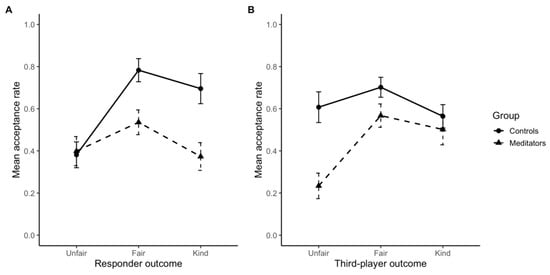
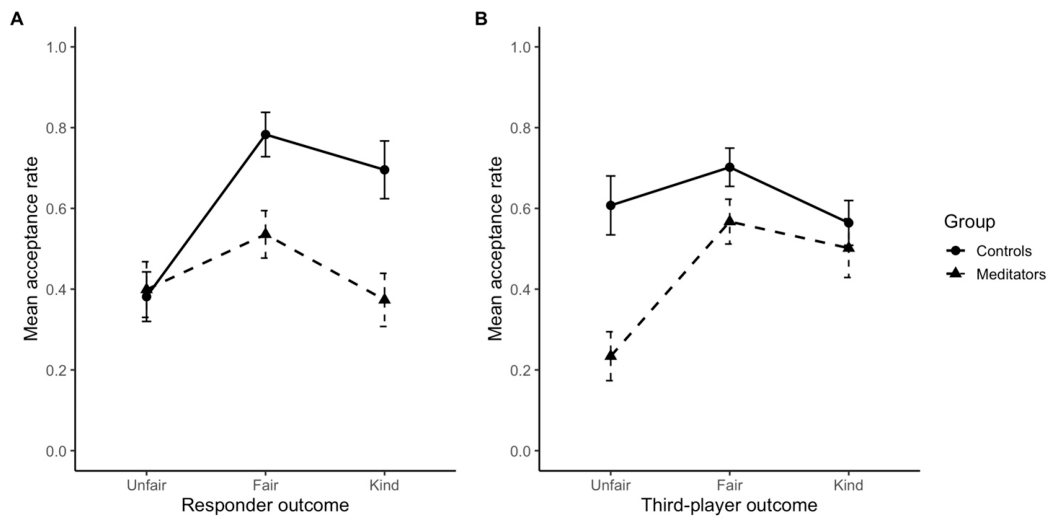
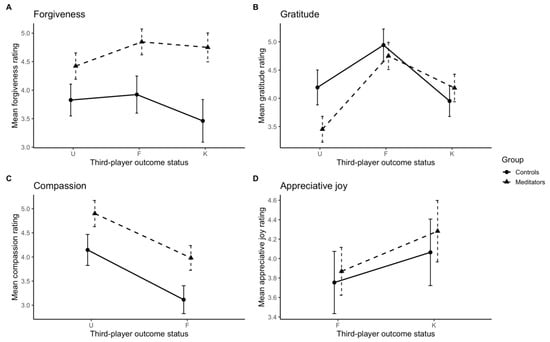
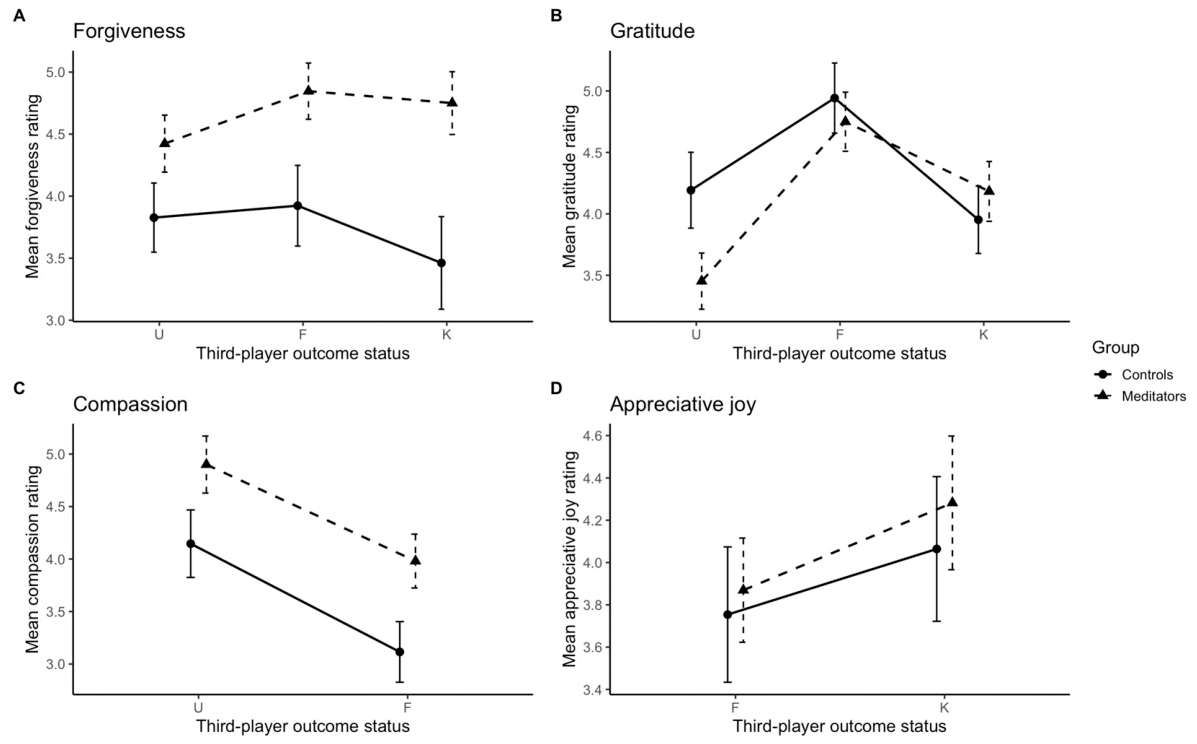
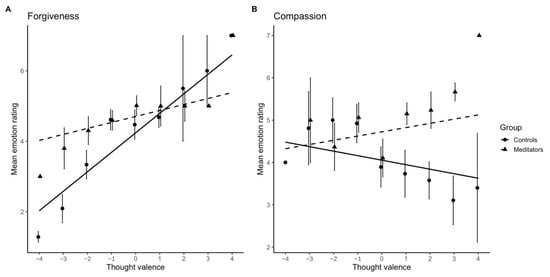
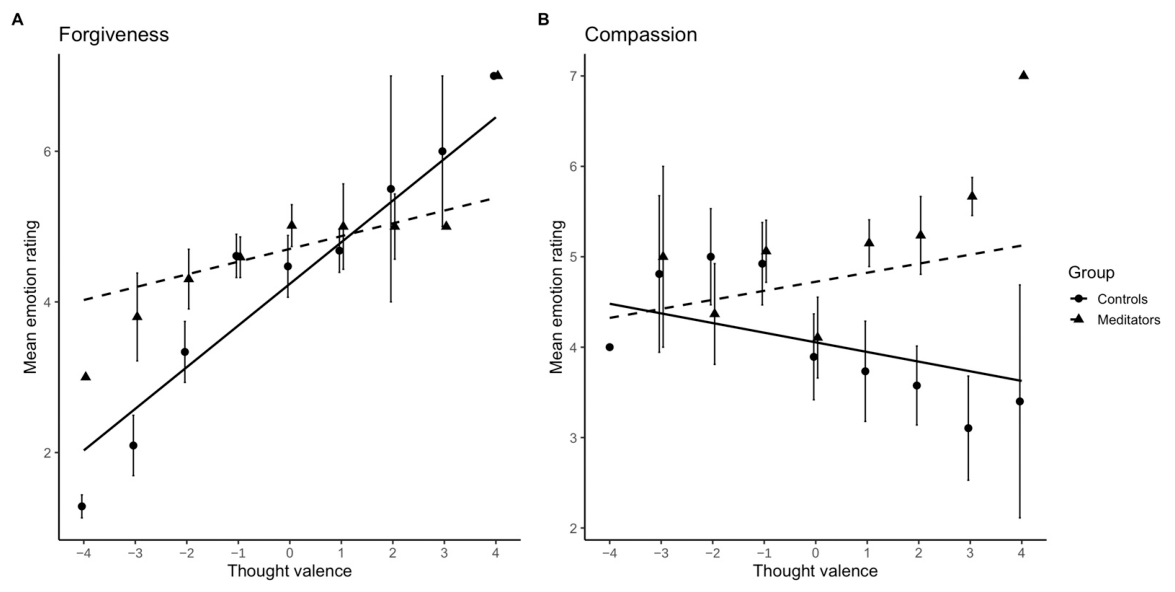

Disclaimer/Publisher’s Note: The statements, opinions and data contained in all publications are solely those of the individual author(s) and contributor(s) and not of MDPI and/or the editor(s). MDPI and/or the editor(s) disclaim responsibility for any injury to people or property resulting from any ideas, methods, instructions or products referred to in the content. |
© 2026 by the authors. Licensee MDPI, Basel, Switzerland. This article is an open access article distributed under the terms and conditions of the Creative Commons Attribution (CC BY) license.