


Abstract
Background: Prediabetes affects a huge global population and markedly increases subsequent cardiovascular risk. Despite the growing burden, comprehensive evidence on the cardiovascular effects of various interventions remains limited. This systematic review aims to evaluate the cardiovascular benefits of a broad range of interventions conducted in randomized controlled trials in patients with prediabetes. Methods: We systematically searched MEDLINE, Embase, and Cochrane Library from inception to 13 August 2026 for randomized controlled trials (≥12 weeks follow-up) conducted in patients with prediabetes. Studies involving pregnant women or individuals under 18 years of age were excluded. The primary outcomes were any cardiovascular events, including coronary heart disease, myocardial infarction, stroke, heart failure, peripheral vascular disease, acute coronary syndromes, revascularization, atrial fibrillation, and CVD hospitalization or death. Two investigators independently conducted study selection, data extraction, and risk of bias assessment. Given substantial heterogeneity across studies, narrative synthesis was performed instead of meta-analysis. Results: We identified 22 studies (25 publications), with sample sizes ranging from 20 to 11,696 participants (median age 63 years) followed up for a median of 3.3 years. Interventions encompassed glucose-lowering, antihypertensive, lipid-lowering, lifestyle, and nutritional approaches. SGLT-2 inhibitors reduced hospitalization for heart failure compared with placebo, including dapagliflozin (RR 0.75, 95% CI 0.58–0.98, p = 0.036) and empagliflozin (RR 0.75, 95% CI 0.60–0.93, p = 0.010) in patients with prediabetes and heart failure. Semaglutide reduced major adverse cardiovascular events in patients with prediabetes, pre-existing cardiovascular disease, and overweight. Evidence on acarbose treatment remained inconclusive. Antihypertensive drugs showed no significant cardiovascular benefits in patients with prediabetes with comorbid hypertension, CVD, or other risk factors, whereas lipid-lowering therapy with pravastatin significantly reduced cardiovascular events in patients with prediabetes with a history of myocardial infarction or unstable angina (RR 0.81, 95% CI 0.70–0.95, p = 0.008). Lifestyle and nutritional interventions lacked sufficient evidence to reduce CVD risk. Conclusion: Current evidence suggests that cardiovascular benefits of interventions in adults with prediabetes are modest and dependent on both comorbidity profiles and intervention types, with some benefits observed for SGLT2 inhibitors, semaglutide and pravastatin in reducing cardiovascular events for secondary prevention. These findings highlight substantial evidence gaps and the need for dedicated cardiovascular outcome trials in patients with prediabetes.
1. Introduction
Prediabetes, a critical health condition that often precedes type 2 diabetes, is a metabolic state where blood glucose levels are higher than normal but do not yet meet the diagnostic criteria for diabetes. Globally, 9.2% (487 million) of adults had impaired fasting glucose (IFG) and 12% (634 million) had impaired glucose tolerance (IGT) in 2024, based on World Health Organization diagnostic criteria [1]. In addition, the prevalence of IGT has increased from 6.5% to 12% over the past decade [1]. Based on the American Diabetes Association criteria, the prevalence of prediabetes among adults has been estimated at over 30% both in the US in 2023 [2] and in China in 2018 [3]. Over a median follow-up of 9.8 years (IQR 5.8–12.5), individuals with prediabetes had a 12.5% probability of progressing to type 2 diabetes [4]. This substantial and growing population represents a major public health challenge.
The clinical significance of prediabetes extends well beyond its role as a precursor to overt diabetes. Accumulating evidence indicates that individuals with prediabetes already experience a significantly higher risk of cardiovascular disease (CVD) compared with those with normoglycaemia [5], even in the absence of progression to type 2 diabetes [6]. This elevated risk might be linked to early endothelial dysfunction and microvascular damage [7]. A nationwide registry study demonstrated that cardiovascular events were two-fold as frequent several years preceding a formal diagnosis of diabetes [8]. Consistent with this, a meta-analysis of 53 cohort studies showed that CVD risk begins to rise at a fasting plasma glucose level as low as 5.6 mmol/L [9], highlighting that the pathogenic window for cardiovascular risk opens early within the prediabetic range.
Despite this well-established association, the current clinical guidelines provide limited evidence-based recommendations for cardiovascular risk management specifically in individuals with prediabetes. As a result, a critical opportunity for early cardiovascular prevention in these high-risk individuals may be missed [10,11].
Existing systematic reviews addressing cardiovascular prevention have largely focused on heterogeneous populations, often conflating prediabetic and diabetic cohorts [12], thereby obscuring population-specific effects. Furthermore, even systematic reviews specifically targeting prediabetes have predominantly focused on glucose-lowering drugs [13,14], with limited consideration of other intervention strategies and comorbidities, which can importantly influence cardiovascular outcomes. Consequently, a comprehensive synthesis of evidence evaluating the cardiovascular effects of the full spectrum of interventions—including lifestyle modifications, various pharmacological agents, and nutritional supplements—in prediabetic populations, while accounting for comorbidity conditions, is currently lacking.
To address this gap, we conducted a systematic review to comprehensively evaluate the cardiovascular efficacy of various interventions (mainly including pharmacological and lifestyle interventions) in patients with prediabetes, with particular attention to variation across comorbidity profiles, to inform guideline development and future research.
2. Methods
2.1. Eligibility Criteria
We included randomized controlled trials comparing any drugs or lifestyle interventions (exercise, nutrition, or both) with placebos or standard care. To ensure the comprehensiveness of this review, we did not restrict interventions to any specific type. Included studies involved adults over 18 years of age with prediabetes, regardless of definition (impaired fasting glucose or impaired glucose tolerance). A minimum follow-up duration of 12 weeks was required. Exclusion criteria included pregnancy, duplicate publications, and conference abstracts or studies not reporting the specific outcome data after contacting the corresponding authors. The primary outcomes were any cardiovascular events, including coronary heart disease, myocardial infarction, stroke, heart failure, peripheral vascular disease, acute coronary syndromes, revascularization, atrial fibrillation, and cardiovascular hospitalization or death. The protocol was registered at PROSPERO (CRD42024578125).
2.2. Search Strategy and Selection Criteria
Cochrane Library (from 1996), Ovid MEDLINE (from 1946), and Embase (from 1974) were searched for randomized controlled trials (RCTs) that investigated any intervention in patients with prediabetes, with the final search update conducted on 13 August, 2026. The search strategy incorporated Medical Subject Headings (MeSH) and keywords including “Prediabetic State”, “Glucose Intolerance”, “randomized controlled trial”, and “randomly”. The search was restricted to human studies, with no language limitations imposed. Detailed search strategies [15] are provided in the Supplementary Table S1.
Every reference’s title and abstract were examined by two separate investigators based on predefined inclusion and exclusion criteria. Subsequently, the full texts of potentially relevant articles were retrieved and assessed for eligibility. Any discrepancies in the selection process were resolved through negotiation or the involvement of a third reviewer if necessary.
2.3. Data Extraction
Trial information was manually gathered by two independent reviewers using a standardized extraction form. Collected variables included trial characteristics (author, publication year, trial name), participant demographics, number of participants, intervention details, follow-up time, and diagnostic definitions and clinical outcomes. Outcomes sought were the cardiovascular events specified in Section 2.1. For all outcomes, event counts were extracted at the trial endpoint, and effect estimates were expressed as relative risk (RR) with 95% confidence intervals. Disagreements between the two reviewers were resolved through discussion, with a third reviewer consulted for unresolved disagreements.
2.4. Risk of Bias Assessment
The Cochrane risk of bias assessment tool was used to evaluate the risk of bias for each study, which consists of seven domains: random sequence generation, allocation concealment, blinding of participants and personnel, blinding of outcome assessment, incomplete outcome data, selective reporting, and other potential sources of bias [16]. Risk of bias for each domain was categorized as low, high, or unclear [16] according to the criteria detailed in Table S3. Any disagreements on the quality assessment were resolved by discussion and mutual consent. A third independent reviewer adjudicated unresolved disagreements.
2.5. Evidence Synthesis
Due to significant heterogeneity regarding outcome definitions, patient populations, and intervention protocols across the included studies, a quantitative meta-analysis was not feasible. Specifically, the included studies differed substantially in how outcomes were defined and measured, in the clinical characteristics and eligibility criteria of their patient populations, and in the design and delivery of the interventions examined (e.g., variation in the type, dosage, and duration of interventions). These differences meant that the studies were not estimating a common effect, and pooling their results would have produced a misleading summary estimate. Consequently, a narrative synthesis of the evidence was conducted, reported in accordance with the Preferred Reporting Items for Systematic Reviews and Meta-Analyses (PRISMA) 2020 statement (Supplementary PRISMA 2020 checklist). Included studies were grouped by intervention category (glucose-lowering, antihypertensive, lipid-lowering, and lifestyle/nutritional interventions), and individual study effect estimates and confidence intervals within each category were displayed using summary plots to visually compare the direction and magnitude of effect across studies. All cardiovascular disease outcomes were presented as relative risks (RRs) along with their corresponding p-values and 95% confidence intervals (CIs). A p-value of less than 0.05 was considered statistically significant.
2.6. Certainty of Evidence
We assessed certainty of evidence using the Grading of Recommendations Assessment, Development and Evaluation (GRADE) approach for RCTs with GRADEpro GDT software (https://gdt.gradepro.org/app/#projects, accessed on 15 July 2026) across five domains: risk of bias, inconsistency, indirectness, imprecision, and publication bias [17]. Independent reviewers performed the GRADE assessment, with any discrepancies resolved by discussion and adjudication by a third independent reviewer if necessary. The full GRADE assessment is presented in Supplementary Table S4.
3. Results
3.1. Flow of the Literature Screening
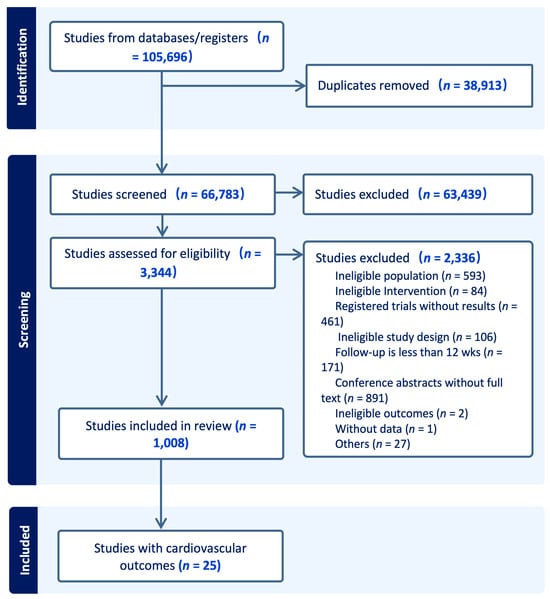
Data sources were searched from inception to 13 August 2026 for RCTs that investigated interventions for the prevention of diabetes or any other disease among individuals with prediabetes. An initial set of 105,696 records was identified. After deduplication, 66,783 were screened by title and abstract, and 3344 full-text articles were assessed for eligibility. A total of 1008 full-text articles were included and extracted for the study outcomes. Twenty-five publications with cardiovascular outcomes were ultimately included in the final review (Figure 1).
Figure 1.
Literature Screening Process Overview.
3.2. Trial Characteristics
The characteristics of the 22 trial comparisons reported in 25 publications are summarized in Table 1 and Table S2. The sample size ranged from 20 to 11,696 participants. The median follow-up period was 3.3 years (ranging from 0.5 to 6.2 years). They were largely elderly (median age 63 years, range 50.6–73 years). Participants were generally overweight or obese, as evidenced by a median BMI of 29.15. At baseline, participants had a median Hemoglobin A1c (HbA1c) of 5.9% (range 5.47–6.29%).
Table 1.
Trial characteristics and baseline information.
Numerous pharmaceutical classes and lifestyle-based strategies were the main types of interventions assessed in the included trials. These encompassed glucose-lowering drugs (Acarbose, Metformin, Insulin, Rosiglitazone, Voglibose, Nateglinide, Pioglitazone, Vildagliptin, Empagliflozin, Semaglutide and Dapagliflozin), blood pressure-lowering drugs (Ramipril and Valsartan), lipid-lowering drugs (Pravastatin, Niacin, Bempedoic Acid, and Alirocumab), lifestyle change (diet restriction and exercising 150 min per week) and nutritional approaches (vitamin D3 supplement). Almost all these interventions, except one, were compared to placebo or standard care.
3.3. Risk of Bias
Figures S1 and S2 show the Cochrane Risk of Bias assessments for the included trials. The most significant methodological limitation identified among the included studies might be inadequate blinding. A certain proportion of the trials were assigned a high risk of bias for both performance bias and detection bias. Conversely, the studies generally maintained a low risk of bias across the remaining methodological domains.
3.4. Glucose-Lowering Drugs
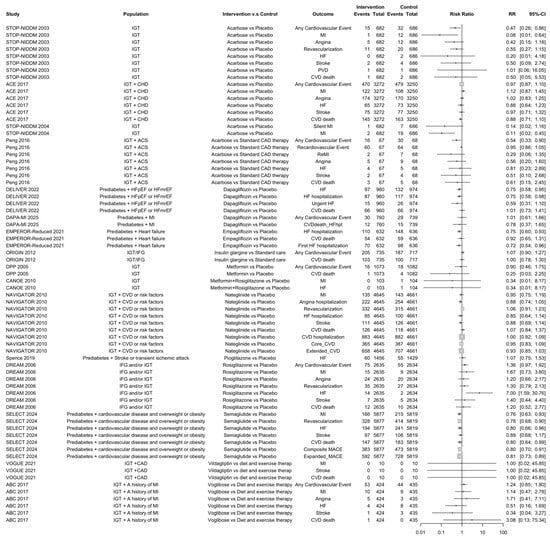
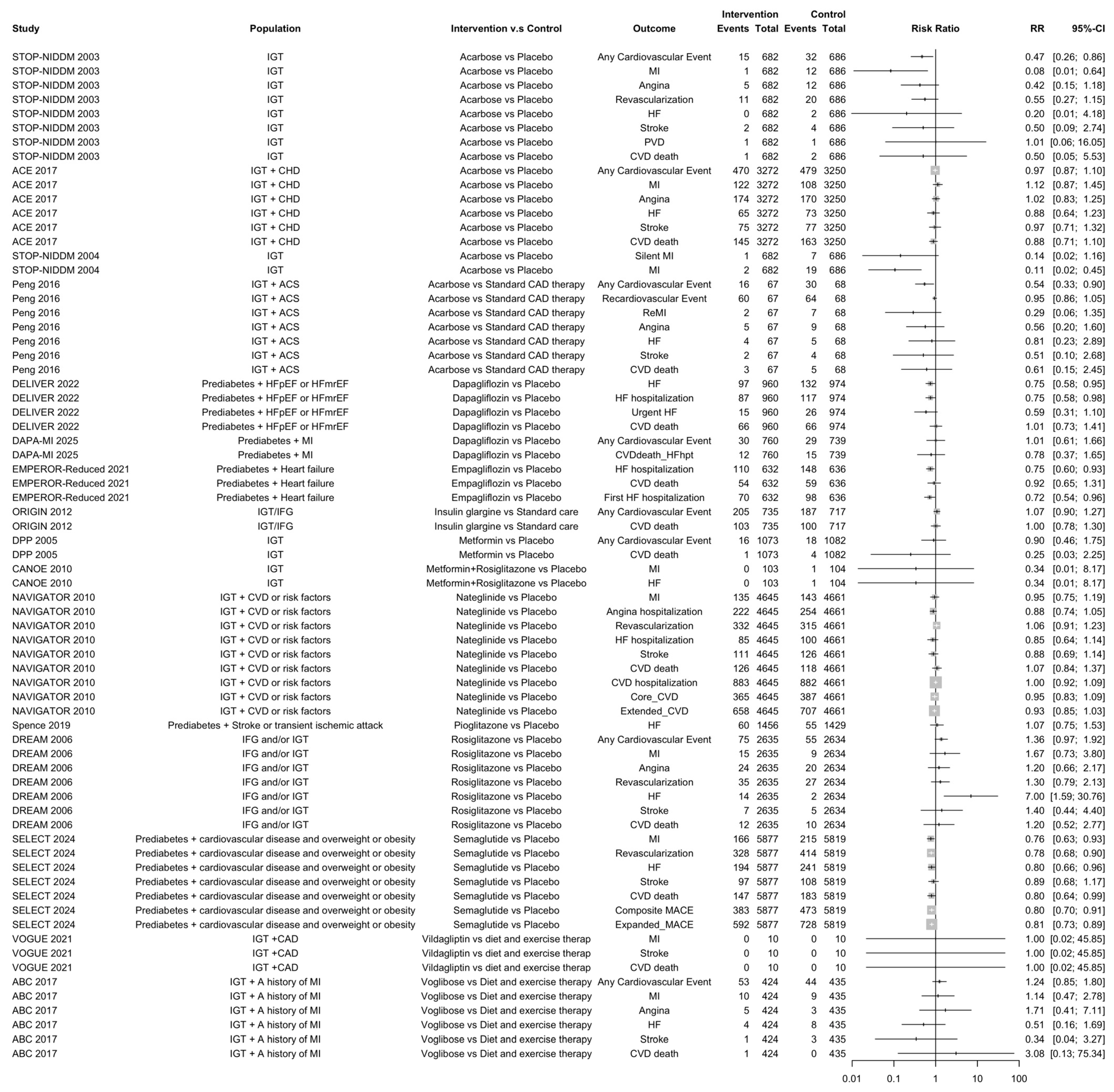
Analysis of glucose-lowering drugs revealed varied effects on cardiovascular outcomes across multiple RCTs (Figure 2). A median of 1499 participants (range: 20–11,696) in studies assessing glucose-lowering drugs were included. The median age in these studies was 63 years and the median follow-up period was 3.2 years. In the STOP-NIDDM studies, acarbose compared with placebo reduced the risk of any cardiovascular event (RR 0.47, 95% CI 0.26–0.86, p = 0.015). Acarbose also showed a protective effect for myocardial infarction (RR 0.08, 95% CI 0.01–0.64, p = 0.017). In addition, in the Peng 2016 trial, acarbose significantly reduced any cardiovascular event (RR 0.54, 95% CI 0.33–0.90, p = 0.017), though the sample size is small. However, in the larger ACE 2017 trial, acarbose did not significantly affect the risk of any cardiovascular event (RR 0.97, 95% CI 0.87–1.10, p = 0.668) or specific outcomes, including myocardial infarction, stroke, heart failure (HF), and cardiovascular death.
Figure 2.
Summary plot of the effect of glucose-lowering drugs on cardiovascular outcomes. Note: Effect estimates shown are from individual studies only; no pooled estimate was calculated. IGT: Impaired Glucose Tolerance; IFG: Impaired Fasting Glucose; CHD: Coronary Heart Disease; ACS: Acute coronary syndromes; HFpEF: Heart Failure with Preserved Ejection Fraction; HFmrEF: Heart Failure with Mildly Reduced Ejection Fraction; CVD: Cardiovascular Disease; CAD: Coronary Artery Disease; MI: Myocardial Infarction; ReMI: Recurrent Myocardial Infarction; HF: Heart Failure; PVD: Peripheral Vascular Disease; MACE: Major Adverse Cardiovascular Events; Extended_CVD, a composite of death from cardiovascular causes, nonfatal myocardial infarction, nonfatal stroke, hospitalization for heart failure, arterial revascularization, or hospitalization for unstable angina [18,19,21,22,23,24,25,28,31,33,35,36,38,39,40,41].
SGLT2 inhibitors demonstrated a specific benefit regarding heart failure outcomes. In DELIVER 2022, dapagliflozin lowered the risk of heart failure events (RR 0.75, 95% CI 0.58–0.95, p = 0.020) and hospitalization for heart failure (RR 0.75, 95% CI 0.58–0.98, p = 0.036). In EMPEROR-Reduced 2021, empagliflozin significantly reduced the risk of hospitalization for heart failure (RR 0.75, 95% CI 0.60–0.93, p = 0.010). Semaglutide showed protective effects against myocardial infarction, revascularization, heart failure, CVD, and major adverse cardiovascular events.
Conversely, some drugs were associated with harm: rosiglitazone (DREAM 2006) showed an elevated risk solely for heart failure events (RR 7, 95% CI 1.59–30.76, p = 0.010) after a median 3-year follow-up, but showed no benefit for overall cardiovascular outcomes. The remaining glucose-lowering drugs—including insulin glargine (ORIGIN 2012), metformin (DPP 2005), nateglinide (NAVIGATOR 2010), pioglitazone (Spence 2019), metformin and rosiglitazon (CANOE 2010), and vildagliptin and voglibose (VOGUE 2021, ABC 2017)—showed no significant differences in cardiovascular outcomes when compared to control groups.
3.5. Antihypertensive Drugs
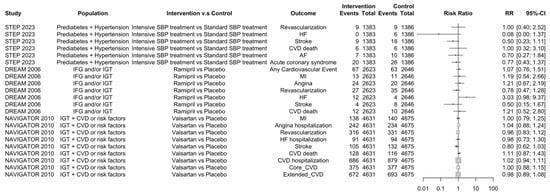
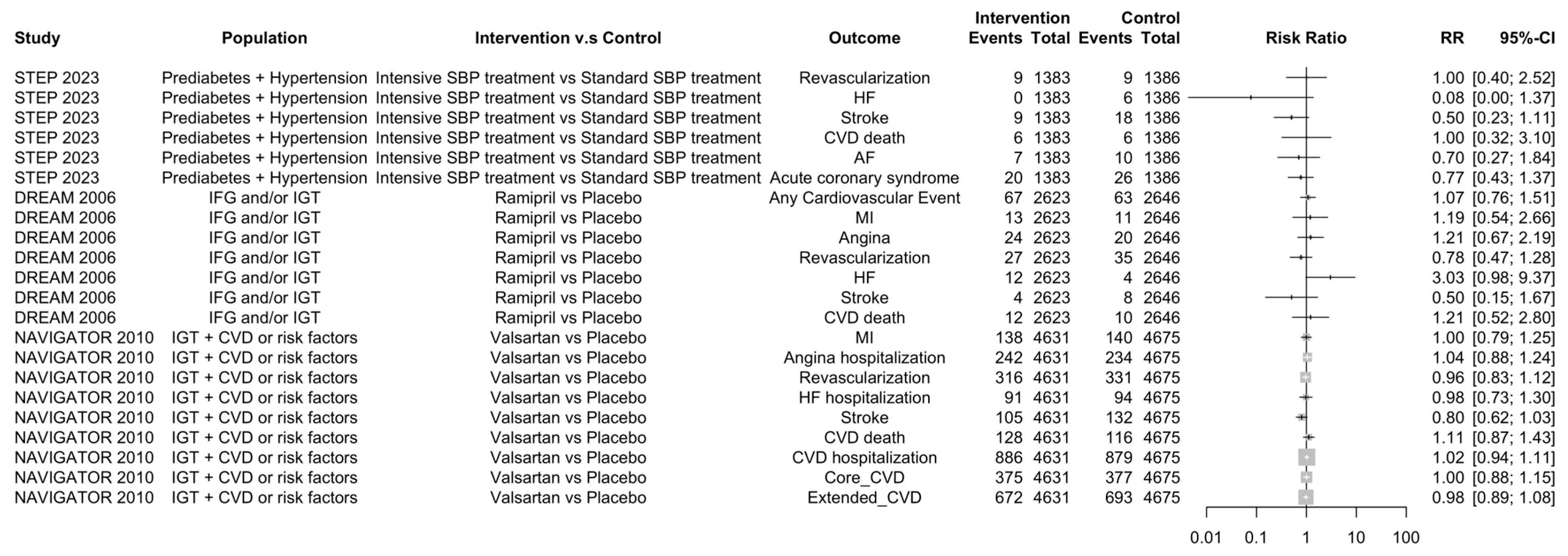
Antihypertensive drugs, evaluated across three large trials (STEP 2023, DREAM 2006, and NAVIGATOR 2010), consistently showed no statistically significant benefit or harm in this high-risk population (Figure 3). These trials enrolled 2769 to 9306 participants and followed them for 3 to 5 years. Despite large sample sizes and relatively long follow-up durations, antihypertensive drugs provided no additional cardiovascular protection. Notably, the DREAM 2006 trial (ramipril vs. placebo) reported a trend toward increased risk for heart failure (12 vs. 4 cases; RR 3.03, 95% CI, 0.98–9.37, p = 0.055), though this did not reach statistical significance.
Figure 3.
Summary plot of the effect of antihypertensive drugs on cardiovascular outcomes. Note: Effect estimates shown are from individual studies only; no pooled estimate was calculated. IGT: Impaired Glucose Tolerance; IFG: Impaired Fasting Glucose; SBP: Systolic Blood Pressure; CVD: Cardiovascular Disease; MI: Myocardial Infarction; HF: Heart Failure; AF: Atrial fibrillation; Extended_CVD, a composite of death from cardiovascular causes, nonfatal myocardial infarction, nonfatal stroke, hospitalization for heart failure, arterial revascularization, or hospitalization for unstable angina. The ALLHAT study did not report the specific number of events. However, amlodipine besylate and lisinopril had no cardiovascular benefits compared with chlorthalidone, according to the RR values reported in the study [29,30,31,35,36].
3.6. Lipid-Lowering Drugs
In the analysis of lipid-lowering drugs (ODYSSEY 2019, CLEAR Outcomes 2024, CDP 2013, LIPID 2003), results were heterogeneous (Figure 4). The median age in these studies was 61 years and the median follow-up period was 4.2 years. The LIPID 2003 trial, which included 940 participants (mean age 63 years) with a median follow-up of 6 years, demonstrated significant reductions in any cardiovascular event (RR 0.81, 95% CI 0.70–0.95, p = 0.008) and coronary heart disease death or nonfatal myocardial infarction (RR 0.66, 95% CI 0.48–0.91, p = 0.010) with pravastatin compared with placebo. In contrast, other lipid-lowering drugs, including alirocumab (ODYSSEY 2019, n = 8246), bempedoic acid (CLEAR Outcomes 2024, n = 5796), and niacin (CDP 2013, n = 1242), showed no significant reductions in cardiovascular mortality or major adverse cardiovascular events compared with placebo, despite substantial sample sizes and follow-up periods ranging from 2.8 to 5 years.
Figure 4.
Summary plot of the effect of lipid-lowering drugs on cardiovascular outcomes. Note: Effect estimates shown are from individual studies only; no pooled estimate was calculated. IFG: Impaired Fasting Glucose; ACS: Acute Coronary Syndromes; CVD: Cardiovascular Disease; MI: Myocardial Infarction; CHD: Coronary Heart Disease; MACE: Major Adverse Cardiovascular Events; MACE-3, which is the composite of death from cardiovascular causes, non-fatal myocardial infarction, and non-fatal stroke; MACE-4, which is the composite of death from cardiovascular causes, non-fatal myocardial infarction, non-fatal stroke, or coronary revascularization [26,32,34,37].
3.7. Other Interventions
Regarding lifestyle and vitamin interventions, evidence for cardiovascular protection remains weak (Figure 5). Interestingly, lifestyle-modifying interventions were only examined in the Diabetes Prevention Program (DPP) study, which enrolled 2161 participants with a median age of 50.6 years and a female proportion of approximately 67%. In this study, eating less fat and restricting calorie intake as well as exercising 150 min per week, did not show any effect on cardiovascular-related outcomes when compared with placebo group participants who were provided standard advice about diet and physical activity over a mean follow-up of 3.2 years. The risk ratios for any cardiovascular event (RR 1.34, 95% CI 0.73–2.45, p = 0.347) and cardiovascular death (RR 0.50; 95% CI 0.09–2.73, p = 0.425) were non-significant.
Figure 5.
Summary plot of the effect of lifestyle and vitamin D on cardiovascular outcomes. Note: Effect estimates shown are from individual studies only; no pooled estimate was calculated. IGT: Impaired Glucose Tolerance; CVD: Cardiovascular Disease [19,27].
4. Discussion
Our comprehensive review of randomized controlled trials evaluating the effects of many pharmacological and lifestyle interventions on cardiovascular outcomes in prediabetic populations highlights several key insights. Among glucose-lowering drugs, acarbose showed a potential protective effect for overall cardiovascular events and myocardial infarction in some smaller trials, though this was not consistently observed in larger studies. SGLT2 inhibitors, including dapagliflozin and empagliflozin, demonstrated a specific and robust benefit in reducing heart failure events and hospitalizations. Semaglutide reduced cardiovascular events. Conversely, rosiglitazone was associated with an increased risk of heart failure, whereas other glucose-lowering drugs, including metformin, voglibose, pioglitazone, nateglinide, and dipeptidyl peptidase-4 inhibitors, did not show a significant cardiovascular benefit. Antihypertensive drugs yielded no consistent protective effect, and in some cases, trends toward increased heart failure risk were observed. Lipid-lowering therapy results were heterogeneous: pravastatin significantly reduced overall cardiovascular events and coronary heart disease outcomes, whereas other agents, including alirocumab, bempedoic acid, and niacin, failed to demonstrate benefit despite large sample sizes. Evidence for lifestyle modification and vitamin D supplementation was limited and did not show significant cardiovascular protection. Collectively, these findings underscore that among patients with prediabetes, some pharmacological interventions, particularly SGLT2 inhibitors, semaglutide, and certain statins, have shown some cardiovascular benefits for secondary prevention, highlighting a critical gap in effective strategies for comprehensive cardiovascular prevention in this high-risk group.
4.1. Glucose-Lowering Drugs Except Metformin
Although acarbose has been proposed to exert cardioprotective effects by attenuating postprandial glycemic excursions and downstream inflammatory and endothelial pathways [42,43,44], current randomized evidence does not support a consistent cardiovascular benefit across prediabetic populations. The STOP-NIDDM studies showed significant reductions in overall cardiovascular events and myocardial infarction, findings that were supported by the smaller Peng 2016 trial. In contrast, the larger ACE 2017 trial did not demonstrate any benefit for overall or specific cardiovascular outcomes, highlighting substantial heterogeneity in the available evidence.
Differences in baseline cardiovascular risk may partly explain these discrepant results. Participants in STOP-NIDDM and Peng’s trial generally had higher blood pressure and more prevalent dyslipidemia than those in the ACE cohort, suggesting that the observed benefit of acarbose may be confined to higher-risk individuals. However, this interpretation is limited by the smaller sample sizes and shorter follow-up of the trials reporting benefit, compared with the larger and longer ACE trial.
SGLT2 inhibitors consistently reduced the risk of hospitalization for heart failure in patients with prediabetes, with comparable effect estimates observed for dapagliflozin and empagliflozin (certainty of evidence: moderate). These findings extend evidence from the DELIVER and EMPEROR-Reduced trials, suggesting that the heart failure benefit of SGLT2 inhibitors is preserved even in the absence of overt diabetes. In contrast, no statistically significant reduction in cardiovascular mortality was observed. This dissociation between benefits on heart failure outcomes and cardiovascular death is notable and likely reflects the relatively low mortality and limited follow-up duration in prediabetic populations, which reduce statistical power to detect mortality differences. In addition, the intensive background medical care inherent to randomized trials may further attenuate between-group differences in fatal cardiovascular outcomes, particularly in lower-risk populations.
The selective benefit on heart failure–related outcomes is biologically plausible, given that SGLT2 inhibitors exert multiple cardioprotective effects beyond glucose lowering [45], including improvements in hemodynamics, myocardial energetics, and inflammatory pathways [46]. These mechanisms are thought to operate early in the course of cardiometabolic disease and may preferentially translate into reductions in heart failure events rather than mortality in patients with prediabetes [46]. Taken together, our findings suggest that SGLT2 inhibitors may offer heart failure prevention in in patients with prediabetes and pre-existing heart failure, while their impact on cardiovascular mortality remains uncertain and warrants further investigation, particularly in real-world settings with longer follow-up durations.
While previous studies have demonstrated the cardiovascular benefits of semaglutide, most studies focused on patients with diabetes and a history of cardiovascular events [47]. In this review, although Semaglutide showed a cardiovascular benefit, this evidence was only from a single trial’s subgroup analysis. Furthermore, the population is limited to patients with prediabetes who are overweight and have pre-existing cardiovascular disease. So, whether these effects extend to patients without a history of cardiovascular disease remains unknown.
4.2. Antihypertensive Drugs
In contrast to their well-established cardiovascular benefits in patients with type 2 diabetes or established high cardiovascular risk, no evidence suggested antihypertensive drugs could confer additional cardiovascular protection in prediabetic populations with concomitant hypertension or cardiovascular disease. Across three large randomized trials (STEP 2023, DREAM 2006, and NAVIGATOR 2010) [29,30,36] enrolling individuals with prediabetes who also had elevated blood pressure or established cardiovascular conditions, neither Angiotensin-Converting Enzyme Inhibitors nor Angiotensin II Receptor Blockers demonstrated a statistically significant reduction in cardiovascular outcomes, despite substantial sample sizes and follow-up durations of up to five years. Notably, in the DREAM trial, ramipril was associated with a non-significant trend toward increased heart failure risk, although the number of events was small.
These neutral findings may reflect the fact that blood pressure was already actively managed in both intervention and control groups, as indicated by the high prevalence of background antihypertensive therapy in certain studies, which may have limited the incremental benefit attributable to specific antihypertensive drugs. In addition, although patients with prediabetes and coexisting hypertension or CVD represent a high-risk subgroup, renin–angiotensin–aldosterone system activation may still be insufficient to yield measurable cardiovascular benefit beyond standard care and mild hypertension [48].
4.3. Lipid-Lowering Drugs
In this review, only pravastatin demonstrated a significant reduction in cardiovascular risk (certainty of evidence: very low), while no evidence of similar benefits was found for other lipid-lowering drugs. The neutral results for alirocumab and bempedoic acid may be attributed to their lower relative efficacy compared to statins [49], alongside the short follow-up periods and insufficient statistical power of the trials included. Furthermore, consistent with previous systematic reviews, niacin failed to provide cardiovascular protection and was associated with an increased risk of hyperglycemia, which may further exacerbate cardiovascular risk [50]. The cardiovascular efficacy of these agents in prediabetic population should be further investigated.
4.4. Lifestyle and Metformin
Current guidelines primarily recommend lifestyle modification and Metformin for preventing progression from prediabetes to diabetes [51]. However, evidence for their cardiovascular benefit in this population remains inconclusive. Trials evaluating metformin in prediabetic cohorts have not shown significant effects on cardiovascular outcomes, potentially due to low baseline risk and limited follow-up. Similarly, intensive lifestyle changes like better diet and more exercise, despite consistently improving intermediate surrogate markers such as body weight, glycemic control, and lipid profiles [52,53], have not demonstrated a reduction in CVD outcomes in prediabetes. These findings highlight an important evidence gap regarding cardiovascular risk reduction in prediabetes and underscore the need for adequately powered studies with longer follow-up durations focusing on hard cardiovascular endpoints.
4.5. Future Research
Future research may take several directions. First, due to the limited number of studies and heterogeneity within interventions, a network meta-analysis comparing all interventions was not feasible in the present review. As more trials accumulate, a network meta-analysis may become methodologically appropriate within a single intervention category, such as comparing different glucose-lowering drugs. However, based on this review, a major challenge for these analyses is the marked heterogeneity in how studies define prediabetes and cardiovascular outcomes, as well as differences in baseline comorbidities across study populations. Second, real-world head-to-head comparative studies with extended follow-up would be a valuable next step once network meta-analyses evaluate comparative effectiveness among interventions. These studies could address the relatively short follow-up duration of most randomized controlled trials and provide evidence on long-term cardiovascular outcomes under real-world conditions.
4.6. Strengths and Limitations
The study’s main strength is its inclusive scope, covering comprehensive major intervention categories (pharmacological, lifestyle, and supplements) relevant to prediabetic adults, a significant improvement over existing reviews that focus on a single drug class. However, the systematic review is subject to several methodological limitations inherent to the field and the review process. Firstly, despite our comprehensive search strategy, the potential for publication bias remains, as studies with null or non-significant findings are less likely to be published. We have at least included results from relevant trials registered in international registries (e.g., ClinicalTrials.gov), even when full publications were unavailable, thereby enhancing the robustness of our evidence base. Secondly, prioritizing high methodological rigor required a trade-off with comprehensiveness; the strict exclusion of conference abstracts, short-term trials, and studies reporting cardiovascular outcomes solely as adverse events ensures high data quality but limits the overall available breadth. Finally, a meta-analysis was not possible because clinical and methodological heterogeneity among the included studies resulted from variations in prediabetes definitions, CVD outcomes, comorbidities, and intervention protocols. This precluded a single pooled effect estimate and necessitated a narrative synthesis. Although these sources of heterogeneity may have influenced the results, the small number of trials available for the same participants, interventions, comparators, and outcomes prevented us from investigating their impact through subgroup analysis or meta-regression.
5. Conclusions
In conclusion, this systematic review found that certain interventions showed some cardiovascular benefits in specific subgroups of individuals with prediabetes. The evidence of cardiovascular benefit from guideline-recommended first-line interventions for preventing diabetes progression (e.g., metformin/lifestyle) was limited. Whether cardiovascular risk management in prediabetes requires a strategy distinct from that in established type 2 diabetes remains uncertain. While specific drugs including SGLT-2 inhibitors, semaglutide, and pravastatin may offer targeted cardioprotection in prediabetes with established CVD, the lack of a clear benefit from antihypertensive drugs may challenge the routine extrapolation of diabetes guidelines to this population. Clinical management may therefore shift towards precise, risk-stratified interventions, and future research should prioritize long-term trials to clarify the benefits of these interventions in individuals with prediabetes, particularly those without established CVD.
Supplementary Materials
The following supporting information can be downloaded at: https://www.mdpi.com/article/10.3390/medsci14070795/s1, Supplementary PRISMA 2020 Main Checklist; Table S1: Search strategy for randomized controlled trials assessing the effects of different interventions in prediabetic adults; Table S2: Baseline characteristics of included trials; Table S3: Criteria for judging risk of bias using the Cochrane Risk of Bias Assessment Tool; Table S4: Summary of GRADE assessment for certainty of evidence across included studies; Figure S1: Summary of the methodological quality for each risk of bias domain across all included trials; Figure S2: Risk of bias graph presented as percentages across all studies.
Author Contributions
Conceptualization, Z.Y., S.L. and W.M.; formal analysis, S.L. and J.L.; writing—original draft preparation, S.L.; writing—review and editing, S.L., J.L., S.C., J.C., Y.L., Q.T., Y.H., H.H., Z.Y. and W.M.; visualization, S.L. and J.L.; supervision, Z.Y. and W.M.; funding acquisition, Z.Y. All authors have read and agreed to the published version of the manuscript.
Funding
This work was supported by Shenzhen Medical Research Fund (A2403063), Shenzhen Science and Technology Program (JCYJ20220530154409021), and National Natural Science Foundation of China (72274193).
Institutional Review Board Statement
Not applicable.
Informed Consent Statement
Not applicable.
Data Availability Statement
No new data were created or analyzed in this study. Data sharing is not applicable to this article.
Acknowledgments
Declaration of generative AI and AI-assisted technologies in the manuscript preparation process: During the preparation of this work the author(s) used Gemini 3/ChatGPT-5 in order to improve the language and readability of the text. After using this tool/service, the author(s) reviewed and edited the content as needed and take(s) full responsibility for the content of the published article.
Conflicts of Interest
The authors declare no conflicts of interest.
Abbreviations
| Abbreviation | Definition |
| ACS | Acute Coronary Syndromes |
| AF | Atrial Fibrillation |
| BMI | Body Mass Index |
| CAD | Coronary Artery Disease |
| CHD | Coronary Heart Disease |
| CIs | Confidence Intervals |
| CVD | Cardiovascular Disease |
| FPG | Fasting Plasma Glucose |
| FSG | Fasting Serum Glucose |
| HbA1c | Hemoglobin A1c |
| HF | Heart Failure |
| HFmrEF | Heart Failure with Mildly Reduced Ejection Fraction |
| HFpEF | Heart Failure with Preserved Ejection Fraction |
| IFG | Impaired Fasting Glucose |
| IGT | Impaired Glucose Tolerance |
| MACE | Major Adverse Cardiovascular Events |
| MeSH | Medical Subject Headings |
| MI | Myocardial Infarction |
| OGTT | Oral Glucose Tolerance Test |
| PRISMA | Preferred Reporting Items for Systematic Reviews and Meta-Analyses |
| PVD | Peripheral Vascular Disease |
| RCTs | Randomized Controlled Trials |
| ReMI | Recurrent Myocardial Infarction |
| RRs | Relative Risks |
| SBP | Systolic Blood Pressure |
| SGLT2 | Sodium-Glucose Co-transporter 2 Inhibitors |
References
- IDF Diabetes Atlas 2025. Available online: https://diabetesatlas.org/resources/idf-diabetes-atlas-2025/ (accessed on 19 December 2025).
- The National Diabetes Statistics Report Provides Up-to-Date Information on the Prevalence and Incidence of Diabetes and Prediabetes, Risk Factors for Complications, Acute and Long-Term Complications, Death, and Costs. 2026. Available online: https://usdss.cdc.gov/diabetes/report.html (accessed on 30 August 2026).
- Li, Y.; Teng, D.; Shi, X.; Qin, G.; Qin, Y.; Quan, H.; Shi, B.; Sun, H.; Ba, J.; Chen, B.; et al. Prevalence of diabetes recorded in mainland China using 2018 diagnostic criteria from the American Diabetes Association: National cross sectional study. BMJ 2020, 369, m997. [Google Scholar] [CrossRef] [Scilit] [PubMed]
- Davoodian, N.; Lotfaliany, M.; Huxley, R.R.; Lee, C.M.Y.; Pasco, J.A.; Adams, R.J.; Azizi, F.; Bertoni, A.G.; Björkelund, C.; Colagiuri, S.; et al. Prediabetes transitions to normoglycaemia or type 2 diabetes and associated risk factors in the Obesity, Diabetes and Cardiovascular Disease Collaboration: An individual-level pooled analysis of 19 prospective cohort studies. Lancet Glob. Health 2025, 13, e1533–e1542. [Google Scholar] [CrossRef] [Scilit] [PubMed]
- Cai, X.; Zhang, Y.; Li, M.; Wu, J.H.; Mai, L.; Li, J.; Yang, Y.; Hu, Y.; Huang, Y. Association between prediabetes and risk of all cause mortality and cardiovascular disease: Updated meta-analysis. BMJ 2020, 370, m2297. [Google Scholar] [CrossRef] [Scilit] [PubMed]
- Rooney, M.R.; Wallace, A.S.; Echouffo Tcheugui, J.B.; Fang, M.; Hu, J.; Lutsey, P.L.; Grams, M.E.; Coresh, J.; Selvin, E. Prediabetes is associated with elevated risk of clinical outcomes even without progression to diabetes. Diabetologia 2025, 68, 357–366. [Google Scholar] [CrossRef] [Scilit] [PubMed]
- Lamprou, S.; Evangelidis, N.; Koletsos, N.; Zografou, I.; Stoimeni, A.; Mintziori, G.; Gkolias, V.; Trakatelli, C.-M.; Savopoulos, C.; Doumas, M.; et al. Microvascular Dysfunction in Patients with Prediabetes: Novel Methods Identify Impaired Microcirculation. Life 2026, 16, 326. [Google Scholar] [CrossRef] [Scilit] [PubMed]
- Gyldenkerne, C.; Kahlert, J.; Thrane, P.G.; Olesen, K.K.W.; Mortensen, M.B.; Sørensen, H.T.; Thomsen, R.W.; Maeng, M. 2-Fold More Cardiovascular Disease Events Decades Before Type 2 Diabetes Diagnosis: A Nationwide Registry Study. J. Am. Coll. Cardiol. 2024, 84, 2251–2259. [Google Scholar] [CrossRef] [Scilit] [PubMed]
- Huang, Y.; Cai, X.; Mai, W.; Li, M.; Hu, Y. Association between prediabetes and risk of cardiovascular disease and all cause mortality: Systematic review and meta-analysis. BMJ 2016, 355, i5953. [Google Scholar] [CrossRef] [Scilit] [PubMed]
- Marx, N.; Rydén, L.; Federici, M.; Marx-Schütt, K.; Verket, M.; Müller-Wieland, D.; Gerstein, H.C.; Chan, J.; Cosentino, F.; Holman, R.R.; et al. Great debate: Pre-diabetes is not an evidence-based treatment target for cardiovascular risk reduction. Eur. Heart J. 2024, 45, 5117–5126. [Google Scholar] [CrossRef] [Scilit] [PubMed]
- Echouffo-Tcheugui, J.B.; Perreault, L.; Ji, L.; Dagogo-Jack, S. Diagnosis and Management of Prediabetes: A Review. JAMA 2023, 329, 1206–1216. [Google Scholar] [CrossRef] [Scilit] [PubMed]
- Ghosh-Swaby, O.R.; Goodman, S.G.; Leiter, L.A.; Cheng, A.; Connelly, K.A.; Fitchett, D.; Jüni, P.; Farkouh, M.E.; Udell, J.A. Glucose-lowering drugs or strategies, atherosclerotic cardiovascular events, and heart failure in people with or at risk of type 2 diabetes: An updated systematic review and meta-analysis of randomised cardiovascular outcome trials. Lancet Diabetes Endocrinol. 2020, 8, 418–435. [Google Scholar] [CrossRef] [Scilit] [PubMed]
- Hopper, I.; Billah, B.; Skiba, M.; Krum, H. Prevention of diabetes and reduction in major cardiovascular events in studies of subjects with prediabetes: Meta-analysis of randomised controlled clinical trials. Eur. J. Cardiovasc. Prev. Rehabil. 2011, 18, 813–823. [Google Scholar] [CrossRef] [Scilit] [PubMed]
- Zhu, J.; Yu, X.; Zheng, Y.; Li, J.; Wang, Y.; Lin, Y.; He, Z.; Zhao, W.; Chen, C.; Qiu, K.; et al. Association of glucose-lowering medications with cardiovascular outcomes: An umbrella review and evidence map. Lancet Diabetes Endocrinol. 2020, 8, 192–205. [Google Scholar] [CrossRef] [Scilit] [PubMed]
- Hemmingsen, B.; Krogh, J.; Metzendorf, M.; Richter, B. Sodium-glucose cotransporter (SGLT) 2 inhibitors for prevention or delay of type 2 diabetes mellitus and its associated complications in people at risk for the development of type 2 diabetes mellitus. Cochrane Database Syst. Rev. 2016, CD012106. [Google Scholar] [CrossRef] [Scilit] [PubMed]
- Higgins, J.P.; Altman, D.G.; Gøtzsche, P.C.; Jüni, P.; Moher, D.; Oxman, A.D.; Savovic, J.; Schulz, K.F.; Weeks, L.; Sterne, J.A. The Cochrane Collaboration’s tool for assessing risk of bias in randomised trials. BMJ (Clin. Res. Ed.) 2011, 343, d5928. [Google Scholar] [CrossRef] [Scilit] [PubMed]
- Balshem, H.; Helfand, M.; Schünemann, H.J.; Oxman, A.D.; Kunz, R.; Brozek, J.; Vist, G.E.; Falck-Ytter, Y.; Meerpohl, J.; Norris, S.; et al. GRADE guidelines: 3. Rating the quality of evidence. J. Clin. Epidemiol. 2011, 64, 401–406. [Google Scholar] [CrossRef] [Scilit] [PubMed]
- Chiasson, J.-L.; Josse, R.G.; Gomis, R.; Hanefeld, M.; Karasik, A.; Laakso, M. for The STOP-NIDDM Trial Research Group Acarbose Treatment and the Risk of Cardiovascular Disease and Hypertension in Patients with Impaired Glucose ToleranceThe STOP-NIDDM Trial. JAMA 2003, 290, 486–494. [Google Scholar] [CrossRef] [Scilit] [PubMed]
- The Diabetes Prevention Program Research Group Impact of Intensive Lifestyle and Metformin Therapy on Cardiovascular Disease Risk Factors in the Diabetes Prevention Program. Diabetes Care 2005, 28, 888–894. [Google Scholar] [CrossRef] [Scilit] [PubMed]
- Whelton, P.K.; Barzilay, J.; Cushman, W.C.; Davis, B.R.; IIamathi, E.; Kostis, J.B.; Leenen, F.H.H.; Louis, G.T.; Margolis, K.L.; Mathis, D.E.; et al. Clinical Outcomes in Antihypertensive Treatment of Type 2 Diabetes, Impaired Fasting Glucose Concentration, and Normoglycemia: Antihypertensive and Lipid-Lowering Treatment to Prevent Heart Attack Trial (ALLHAT). Arch. Intern. Med. 2005, 165, 1401–1409. [Google Scholar] [CrossRef] [Scilit] [PubMed]
- Zinman, B.; Harris, S.B.; Neuman, J.; Gerstein, H.C.; Retnakaran, R.R.; Raboud, J.; Qi, Y.; Hanley, A.J. Low-dose combination therapy with rosiglitazone and metformin to prevent type 2 diabetes mellitus (CANOE trial): A double-blind randomised controlled study. Lancet 2010, 376, 103–111. [Google Scholar] [CrossRef] [Scilit] [PubMed]
- The ORIGIN Trial Investigators Basal Insulin and Cardiovascular and Other Outcomes in Dysglycemia. N. Engl. J. Med. 2012, 367, 319–328. [Google Scholar] [CrossRef] [Scilit] [PubMed]
- Asakura, M.; Kim, J.; Asanuma, H.; Hamasaki, T.; Tsukahara, K.; Higashino, Y.; Ishikawa, T.; Nakama, Y.; Koba, S.; Maruyama, Y.; et al. Does Treatment of Impaired Glucose Tolerance Improve Cardiovascular Outcomes in Patients with Previous Myocardial Infarction? Cardiovasc. Drugs Ther. 2017, 31, 401–411. [Google Scholar] [CrossRef] [Scilit] [PubMed]
- Holman, R.R.; Coleman, R.L.; Chan, J.C.N.; Chiasson, J.-L.; Feng, H.; Ge, J.; Gerstein, H.C.; Gray, R.; Huo, Y.; Lang, Z.; et al. Effects of acarbose on cardiovascular and diabetes outcomes in patients with coronary heart disease and impaired glucose tolerance (ACE): A randomised, double-blind, placebo-controlled trial. Lancet Diabetes Endocrinol. 2017, 5, 877–886. [Google Scholar] [CrossRef] [Scilit] [PubMed]
- Yun, P.; Du, A.; Chen, X.; Liu, J.; Xiao, H. Effect of Acarbose on Long-Term Prognosis in Acute Coronary Syndromes Patients with Newly Diagnosed Impaired Glucose Tolerance. J. Diabetes Res. 2016, 2016, 1602083. [Google Scholar] [CrossRef] [Scilit] [PubMed]
- Ray, K.K.; Colhoun, H.M.; Szarek, M.; Baccara-Dinet, M.; Bhatt, D.L.; Bittner, V.A.; Budaj, A.J.; Diaz, R.; Goodman, S.G.; Hanotin, C.; et al. Effects of alirocumab on cardiovascular and metabolic outcomes after acute coronary syndrome in patients with or without diabetes: A prespecified analysis of the ODYSSEY OUTCOMES randomised controlled trial. Lancet Diabetes Endocrinol. 2019, 7, 618–628. [Google Scholar] [CrossRef] [Scilit] [PubMed]
- Desouza, C.; Chatterjee, R.; Vickery, E.M.; Nelson, J.; Johnson, K.C.; Kashyap, S.R.; Lewis, M.R.; Margolis, K.; Pratley, R.; Rasouli, N.; et al. The effect of vitamin D supplementation on cardiovascular risk in patients with prediabetes: A secondary analysis of the D2d study. J. Diabetes Its Complicat. 2022, 36, 108230. [Google Scholar] [CrossRef] [Scilit] [PubMed]
- Inzucchi, S.E.; Claggett, B.L.; Vaduganathan, M.; Desai, A.S.; Jhund, P.S.; de Boer, R.A.; Hernandez, A.F.; Kosiborod, M.N.; Lam, C.S.P.; Martinez, F.; et al. Efficacy and safety of dapagliflozin in patients with heart failure with mildly reduced or preserved ejection fraction by baseline glycaemic status (DELIVER): A subgroup analysis from an international, multicentre, double-blind, randomised, placebo-controlled trial. Lancet Diabetes Endocrinol. 2022, 10, 869–881. [Google Scholar] [CrossRef] [Scilit] [PubMed]
- Yang, R.; Wang, Y.; Tong, A.; Yu, J.; Zhao, D.; Cai, J. The Influence of baseline glycemic status on the effects of intensive blood pressure lowering: Results from the STEP randomized trial. Eur. J. Intern. Med. 2023, 113, 75–82. [Google Scholar] [CrossRef] [Scilit] [PubMed]
- The DREAM Trial Investigators Effect of Ramipril on the Incidence of Diabetes. N. Engl. J. Med. 2006, 355, 1551–1562. [Google Scholar] [CrossRef] [Scilit] [PubMed]
- DREAM (Diabetes REduction Assessment with ramipril and rosiglitazone Medication) Trial Investigators; Gerstein, H.C.; Yusuf, S.; Bosch, J.; Pogue, J.; Sheridan, P.; Dinccag, N.; Hanefeld, M.; Hoogwerf, B.; Laakso, M.; et al. Effect of rosiglitazone on the frequency of diabetes in patients with impaired glucose tolerance or impaired fasting glucose: A randomised controlled trial. Lancet 2006, 368, 1096–1105. [Google Scholar] [CrossRef] [Scilit] [PubMed]
- Keech, A.; Colquhoun, D.; Best, J.; Kirby, A.; Simes, R.J.; Hunt, D.; Hague, W.; Beller, E.; Arulchelvam, M.; Baker, J.; et al. Secondary Prevention of Cardiovascular Events with Long-Term Pravastatin in Patients with Diabetes or Impaired Fasting Glucose: Results from the LIPID trial. Diabetes Care 2003, 26, 2713–2721. [Google Scholar] [CrossRef] [Scilit] [PubMed]
- Anker, S.D.; Butler, J.; Filippatos, G.; Khan, M.S.; Marx, N.; Lam, C.S.P.; Schnaidt, S.; Ofstad, A.P.; Brueckmann, M.; Jamal, W.; et al. Effect of Empagliflozin on Cardiovascular and Renal Outcomes in Patients with Heart Failure by Baseline Diabetes Status. Circulation 2021, 143, 337–349. [Google Scholar] [CrossRef] [Scilit] [PubMed]
- Ray, K.K.; Nicholls, S.J.; Li, N.; Louie, M.J.; Brennan, D.; Lincoff, A.M.; Nissen, S.E. CLEAR OUTCOMES Committees and Investigators Efficacy and safety of bempedoic acid among patients with and without diabetes: Prespecified analysis of the CLEAR Outcomes randomised trial. Lancet Diabetes Endocrinol. 2024, 12, 19–28. [Google Scholar] [CrossRef] [Scilit] [PubMed]
- The NAVIGATOR Study Group Effect of Nateglinide on the Incidence of Diabetes and Cardiovascular Events. N. Engl. J. Med. 2010, 362, 1463–1476. [Google Scholar] [CrossRef] [Scilit] [PubMed]
- The NAVIGATOR Study Group Effect of Valsartan on the Incidence of Diabetes and Cardiovascular Events. N. Engl. J. Med. 2010, 362, 1477–1490. [Google Scholar] [CrossRef] [Scilit] [PubMed]
- Sazonov, V.; Maccubbin, D.; Sisk, C.M.; Canner, P.L. Effects of niacin on the incidence of new onset diabetes and cardiovascular events in patients with normoglycaemia and impaired fasting glucose. Int. J. Clin. Pract. 2013, 67, 297–302. [Google Scholar] [CrossRef] [Scilit] [PubMed]
- Spence, J.D.; Viscoli, C.M.; Inzucchi, S.E.; Dearborn-Tomazos, J.; Ford, G.A.; Gorman, M.; Furie, K.L.; Lovejoy, A.M.; Young, L.H.; Kernan, W.N.; et al. Pioglitazone Therapy in Patients with Stroke and Prediabetes: A Post Hoc Analysis of the IRIS Randomized Clinical Trial. JAMA Neurol. 2019, 76, 526–535. [Google Scholar] [CrossRef] [Scilit] [PubMed]
- Yamamoto, H.; Konishi, A.; Shinke, T.; Otake, H.; Kuroda, M.; Osue, T.; Sawada, T.; Takaya, T.; Kawai, H.; Hashimoto, N.; et al. The impact of vildagliptin on the daily glucose profile and coronary plaque stability in impaired glucose tolerance patients with coronary artery disease: VOGUE—A multicenter randomized controlled trial. BMC Cardiovasc. Disord. 2021, 21, 92. [Google Scholar] [CrossRef] [Scilit] [PubMed]
- Storey, R.F.; Deanfield, J.; James, S.; Ajjan, R.A.; Eriksson, N.; Erlinge, D.; de Belder, M.; Gale, C.P.; Zaman, A.; Hofmann, R.; et al. Impact of Dapagliflozin on Cardiometabolic Outcomes After Acute Myocardial Infarction According to Baseline Glycemic Status and Body Mass Index: Subanalyses of the DAPA-MI Trial. J. Am. Heart Assoc. 2025, 14, e040327. [Google Scholar] [CrossRef] [Scilit] [PubMed]
- Semaglutide and Cardiovascular Outcomes by Baseline HbA1c and Change in HbA1c in People with Overweight or Obesity but Without Diabetes in SELECT|Diabetes Care|American Diabetes Association. Available online: https://diabetesjournals.org/care/article/47/8/1360/156810/Semaglutide-and-Cardiovascular-Outcomes-by (accessed on 14 September 2026).
- Hanefeld, M. Cardiovascular benefits and safety profile of acarbose therapy in prediabetes and established type 2 diabetes. Cardiovasc. Diabetol. 2007, 6, 20. [Google Scholar] [CrossRef] [Scilit] [PubMed]
- Azuma, K.; Toyofuku, Y.; Iesaki, T.; Otsuka, A.; Tanaka, A.; Mita, T.; Hirose, T.; Tanaka, Y.; Daida, H.; Kawamori, R.; et al. Acarbose, an α-glucosidase inhibitor, improves endothelial dysfunction in Goto-Kakizaki rats exhibiting repetitive blood glucose fluctuation. Biochem. Biophys. Res. Commun. 2006, 345, 688–693. [Google Scholar] [CrossRef] [Scilit] [PubMed]
- Li, X.-X.; Ling, S.-K.; Hu, M.-Y.; Ma, Y.; Li, Y.; Huang, P.-L. Protective effects of acarbose against vascular endothelial dysfunction through inhibiting Nox4/NLRP3 inflammasome pathway in diabetic rats. Free Radic. Biol. Med. 2019, 145, 175–186. [Google Scholar] [CrossRef] [Scilit] [PubMed]
- Cowie, M.R.; Fisher, M. SGLT2 inhibitors: Mechanisms of cardiovascular benefit beyond glycaemic control. Nat. Rev. Cardiol. 2020, 17, 761–772. [Google Scholar] [CrossRef] [Scilit] [PubMed]
- Preda, A.; Montecucco, F.; Carbone, F.; Camici, G.G.; Lüscher, T.F.; Kraler, S.; Liberale, L. SGLT2 inhibitors: From glucose-lowering to cardiovascular benefits. Cardiovasc. Res. 2024, 120, 443–460. [Google Scholar] [CrossRef] [Scilit] [PubMed]
- Sadraei, S.; Aarabi, A.; Rajai Firouzabadi, S.; Alinejadfard, M.; Mohammadi, I.; Jolfayi, A.G. Cardiovascular benefits of semaglutide: A systematic review and meta-analysis of randomized controlled trials. BMC Cardiovasc. Disord. 2025, 25, 881. [Google Scholar] [CrossRef] [Scilit] [PubMed]
- Silva-Velasco, D.L.; Cervantes-Pérez, L.G.; Sánchez-Mendoza, A. ACE inhibitors and their interaction with systems and molecules involved in metabolism. Heliyon 2024, 10, e24655. [Google Scholar] [CrossRef] [Scilit] [PubMed]
- Koskinas, K.C.; Siontis, G.C.M.; Piccolo, R.; Mavridis, D.; Räber, L.; Mach, F.; Windecker, S. Effect of statins and non-statin LDL-lowering medications on cardiovascular outcomes in secondary prevention: A meta-analysis of randomized trials. Eur. Heart J. 2018, 39, 1172–1180. [Google Scholar] [CrossRef] [Scilit] [PubMed]
- Dugré, N.; Lindblad, A.J.; Perry, D.; Allan, G.M.; Braschi, É.; Falk, J.; Froentjes, L.; Garrison, S.R.; Kirkwood, J.E.M.; Korownyk, C.S.; et al. Lipid-lowering therapies for cardiovascular disease prevention and management in primary care: PEER umbrella systematic review of systematic reviews. Can. Fam. Physician 2023, 69, 701–711. [Google Scholar] [CrossRef] [Scilit] [PubMed]
- American Diabetes Association Professional Practice Committee 3. Prevention or Delay of Diabetes and Associated Comorbidities: Standards of Care in Diabetes—2025. Diabetes Care 2024, 48, S50–S58. [Google Scholar] [CrossRef] [Scilit] [PubMed]
- Zucatti, K.P.; Teixeira, P.P.; Wayerbacher, L.F.; Piccoli, G.F.; Correia, P.E.; Fonseca, N.K.O.; Moresco, K.S.; Guerra, B.A.; Maduré, M.G.; Farenzena, L.P.; et al. Long-term Effect of Lifestyle Interventions on the Cardiovascular and All-Cause Mortality of Subjects with Prediabetes and Type 2 Diabetes: A Systematic Review and Meta-analysis. Diabetes Care 2022, 45, 2787–2795. [Google Scholar] [CrossRef] [Scilit] [PubMed]
- Mudaliar, U.; Zabetian, A.; Goodman, M.; Echouffo-Tcheugui, J.B.; Albright, A.L.; Gregg, E.W.; Ali, M.K. Cardiometabolic Risk Factor Changes Observed in Diabetes Prevention Programs in US Settings: A Systematic Review and Meta-analysis. PLoS Med. 2016, 13, e1002095. [Google Scholar] [CrossRef] [Scilit] [PubMed]





Disclaimer/Publisher’s Note: The statements, opinions and data contained in all publications are solely those of the individual author(s) and contributor(s) and not of MDPI and/or the editor(s). MDPI and/or the editor(s) disclaim responsibility for any injury to people or property resulting from any ideas, methods, instructions or products referred to in the content. |
© 2026 by the authors. Licensee MDPI, Basel, Switzerland. This article is an open access article distributed under the terms and conditions of the Creative Commons Attribution (CC BY) license.