


Abstract
The Lower Anti-Atlas Supergroup (LAAS) constitutes a major Proterozoic sedimentary archive exposed along the northern margin of the West African Craton (WAC), yet its age, internal stratigraphy, and regional correlations remain controversial. This study integrates detailed sedimentological investigations, lithostratigraphic correlations, petrography, and new LA-ICP-MS U–Pb zircon geochronology from the Igherm Inlier (western Anti-Atlas, Morocco) to refine the evolution of the LAAS. Three representative stratigraphic sections allow subdivision of the succession into five lithostratigraphic units: the Coarse-Grained Quartz Sandstone, Lower Siliciclastic–Carbonate, Quartz Sandstone, Upper Siliciclastic–Carbonate, and Volcanic units. These units are correlated, from base to top, with the Tasserda Formation, Ifrane n’Taghatine Formation, Oumoula (Mimount) Formation, Tizi n’Taghatine Group, and Tachdamt Formation recognized elsewhere in the Anti-Atlas. Sedimentological data indicate deposition within a long-lived shallow-water system that evolved from tide-influenced braided fluvial channels, through mixed tidal-flat and peritidal platform environments, to extensional basaltic volcanism. Newly identified reworked volcanic tuffs from the Lower Siliciclastic–Carbonate Unit yield a maximum depositional age of 1857 ± 33 Ma, providing the first direct temporal constraint for this interval. Additional maximum depositional ages of 1880 ± 30 Ma for the Oumoula Formation and 1970 ± 29 Ma and 1904 ± 41 Ma for the Tizi n’Taghatine Group are consistent with previously published constraints. Detrital zircon populations with predominantly Paleoproterozoic and subordinate Archean dates were likely derived from the WAC. Correlation of zircon age spectra with those of the Taoudeni Basin supports the existence of extensive intracratonic depositional systems that evolved across the WAC during the Nuna and Rodinia supercontinent cycles, culminating in Tonian syn-rift magmatism represented by the ca. 883 Ma Tachdamt Formation.
1. Introduction
Sedimentology and U–Pb geochronology constitute fundamental tools for investigating Precambrian sedimentary successions and their tectonic significance (e.g., [1,2,3,4,5]). The sedimentological analyses provide critical insights into depositional environments, basin evolution, paleoclimate, and tectonic settings through the study of facies associations, stratigraphic architecture, and sedimentary structures (e.g., [6,7,8]). These approaches are particularly important in Precambrian successions where biostratigraphic constraints are generally absent or poorly preserved. In parallel, U–Pb zircon geochronology offers robust temporal constraints on sedimentation, magmatism, and tectonic events, thereby establishing a reliable chronostratigraphic framework for basin evolution (e.g., [9,10]). Detrital zircon age spectra additionally provide valuable information on sediment provenance, crustal evolution, and paleogeographic reconstructions (e.g., [5,10,11,12,13]). The integration of sedimentological, stratigraphic, and geochronological datasets has therefore become a powerful multidisciplinary approach for deciphering Precambrian earth evolution, continental growth, and the assembly and breakup of supercontinents such as Nuna and Rodinia (e.g., [3,4,14,15,16,17,18,19]).
Within this context, the Anti-Atlas belt of Morocco represents one of the most complete and best exposed Precambrian domains along the northern margin of the West African Craton (WAC) (Figure 1A,B). Since the pioneering works of [20,21,22,23,24], the Proterozoic lithostratigraphic subdivision of the Anti-Atlas has been the subject of continuous investigation and progressive refinement. Among its major lithostratigraphic entities, the Lower Anti-Atlas Supergroup (LAAS) is a key sedimentary succession for reconstructing the Paleoproterozoic to Neoproterozoic evolution of this cratonic domain. Exposed in several inliers of the central and western Anti-Atlas, the LAAS records a protracted history of sedimentary and volcano-sedimentary processes that predated the Pan-African Orogeny (885–550 Ma) [25]. Deposited in tectonically and environmentally dynamic settings, the LAAS provides an important archive for understanding the formation and breakup of the supercontinents Nuna (Columbia) and Rodinia.
Over the last two decades, substantial advances in stratigraphy, sedimentology, tectonics, geochemistry, and particularly U–Pb geochronology have significantly improved the understanding of the Proterozoic evolution of the Anti-Atlas (e.g., [25,26,27,28,29,30,31,32,33,34,35,36,37,38]). Nevertheless, several fundamental questions concerning the depositional range, internal stratigraphic organization, and regional correlations of the LAAS remain unresolved. Correlations between formations exposed in different Anti-Atlas inliers are still problematic because of strong lateral facies variations, the scarcity of reliable biostratigraphic markers, and the uneven distribution of high-quality geochronological data. Most previous studies have concentrated on the Zenaga, Bou Azzer, Kerdous, and Sidi Ifni inliers, whereas other important sectors remain comparatively poorly constrained.
In addition, the depositional ages of several LAAS formations remain controversial. Existing chronological constraints are largely based on detrital zircon datasets, resulting in broad and sometimes ambiguous age interpretations ranging from the Paleoproterozoic to the Cryogenian. Available U–Pb data indicate a Paleoproterozoic age for the Tasserda–Taghatine Group (ca. 2030–1706 Ma) and the Oumoula Formation (ca. 1745–1650 Ma), a Paleoproterozoic to Neoproterozoic age (ca. 1650 to >883 Ma) for the Tizi n’Taghatine Group, and a Neoproterozoic magmatic age for the Tachdamt Formation (ca. 883 Ma) and the overlying Bleida Formation (ca. 700 Ma) [37,38]. These broad age intervals highlight the need for additional direct constraints on both sedimentation and volcanism.
Figure 1.
((A), inset) Location of the Anti-Atlas Belt at the northern margin of the West African Craton (WAC). (B) Geological sketch map of the Anti-Atlas Belt in southern Morocco showing the distribution of the Lower Anti-Atlas Supergroup (LAAS) and the location of the Igherm Inlier (red frame), the focus of this study. Modified after [25], with revisions from [33,37]. Names of inliers/local geological areas are shown in the figure (e.g., Iguerda Taïfast). Abbreviations: CAMP, Central Atlantic Magmatic Province; CIMP, Central Iapetus Magmatic Province; SAF, South Atlas Fault.
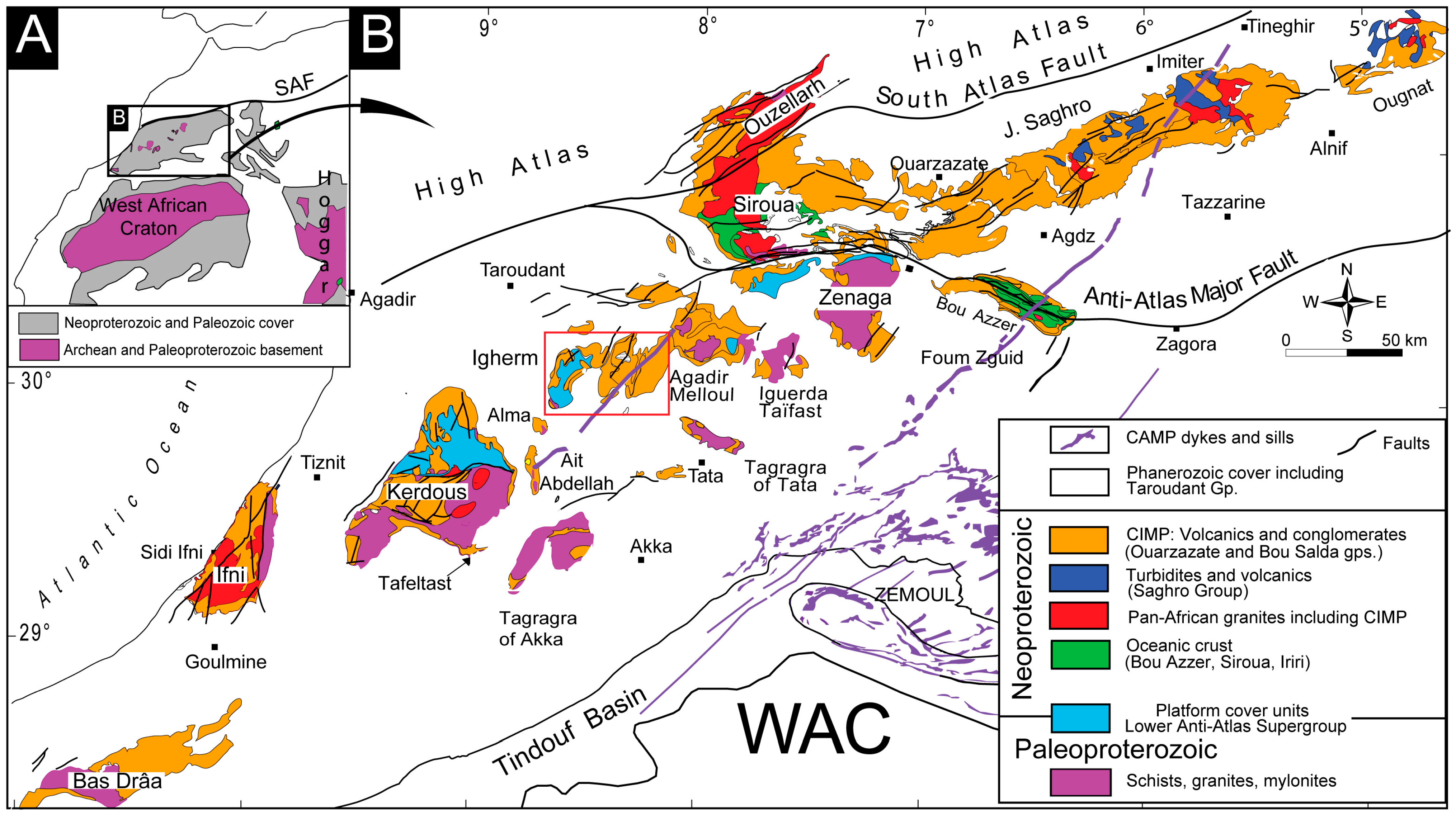
Recent advances in U–Pb geochronology of both detrital and magmatic zircons, when combined with detailed sedimentological and stratigraphic analyses, offer a powerful tool to resolve these longstanding uncertainties. Such an integrated approach has begun to clarify the timing of sedimentation, the nature of sediment sources, and the tectonic setting of basins developed in the Anti-Atlas. However, several inliers, notably the Igherm Inlier, still lack a formally defined lithostratigraphic framework supported by robust geochronological control. In this study, we integrate new sedimentological and stratigraphic observations with U–Pb zircon geochronology for tuffaceous and siliciclastic rocks of the LAAS in the Igherm Inlier. This multidisciplinary approach allowed us to refine depositional environments, constrain the timing of sedimentation and volcanism, and establish more reliable stratigraphic correlations for the LAAS. By combining our new data with the previously published results, we refine the lithostratigraphic framework for the LAAS, clarify its chronostratigraphic relationships with other Anti-Atlas inliers, and strengthen regional correlations with the Taoudeni basin. These results contribute to a model of Paleoproterozoic to Neoproterozoic intracratonic basin development across the WAC.
2. Geological Background
2.1. West African Craton (WAC) and Anti-Atlas Belt
The study area is located in the Moroccan Anti-Atlas, on the northern margin of the WAC (Figure 1A). The WAC is a major Precambrian cratonic entity of northwestern Africa and comprises Archean (3.5–2.7 Ga) and Paleoproterozoic (2.35–2.00 Ga) domains, unconformably overlain by Meso- to Neoproterozoic formations and younger sedimentary successions. Archean basement rocks are exposed in two major shields: the Reguibat Shield to the north and the Leo–Man Shield to the south, which are separated by the extensive Taoudeni Basin, filled with the Mesoproterozoic to Paleozoic sedimentary sequences (e.g., [39,40,41,42,43,44,45,46]).
Within the WAC, Archean terranes are commonly juxtaposed with Paleoproterozoic assemblages dominated by greenstone belts and voluminous tonalite–trondhjemite–granodiorite (TTG) plutons (e.g., [26,47,48,49]). The basement is in turn overlain by Meso- to Neoproterozoic and younger supracrustal sedimentary successions (e.g., [3,33,41,50,51,52,53,54]). Proterozoic rocks are also exposed as tectonic inliers in several regions, notably within the Anti-Atlas, which constitutes the focus of the present study.
The WAC has largely remained tectonically stable since ca. 2.0 Ga [55,56], although its early evolution involved several major orogenies. These include: (1) the Leonian Orogeny (ca. 3.4–3.1 Ga; [44]); (2) the Liberian Orogeny (ca. 2.85–2.7 Ga; [45,57,58,59,60]); (3) the Paleoproterozoic Eburnean Orogeny (ca. 2.15–2.07 Ga; [39,45,55,61,62,63]); and (4) the Birimian Orogeny (ca. 2.27–1.96 Ga; [49,59]). The late Neoproterozoic Pan-African Orogeny (ca. 885–550 Ma; [25,28,29,36,37,38,40]) only had an impact on the continental margins of the WAC.
One of the defining features of the WAC has been the apparent absence of Mesoproterozoic tectono-magmatic events and sedimentary successions, implying a prolonged tectonically quiescent interval between ca. 1.7 and 1.0 Ga (e.g., [41]). Accordingly, the scarcity of Mesoproterozoic detrital zircons has been regarded as a diagnostic signature of the WAC provenance (e.g., [64,65]). However, this long-standing interpretation has been increasingly questioned with recent U–Pb geochronological data [32,35,36,37,66,67,68,69], which document significant intracratonic magmatic activity at ca. 1.79–1.75, 1.65, 1.52–1.51, 1.41–1.38 and 1.28–1.24 Ga, based on U–Pb baddeleyite dating of mafic dykes. In addition, Re–Os geochronology of sedimentary units within the Atar Group of the Taoudeni Basin (Mauritania) yielded depositional ages between 1109 ± 22 and 1105 ± 37 Ma [52]. The Mesoproterozoic age of this succession is further corroborated by chemostratigraphic constraints [70] and microfossil evidence [71].
The Anti-Atlas of Morocco (Figure 1B) represents the largest and most prominent segment of the Neoproterozoic Pan-African Belt in the northern part of the WAC (Figure 1). This ENE–WSW-trending mountain belt extends for approximately 800 km in length and 200 km in width. Although affected by Variscan deformation [72,73], its present-day topography, locally exceeding 1 km in elevation, mainly reflects Cenozoic uplift and associated erosion [74,75]. These processes have resulted in extensive exposure of Precambrian basement rocks within a series of WSW–ENE-trending erosional inliers (“boutonnières”), which are unconformably overlain by Ediacaran and Phanerozoic, predominantly lower Paleozoic, sedimentary successions (Figure 1).
The main Precambrian inliers include the Bas Drâa, Ifni, Kerdous, Tagragra of Akka and Tata, Igherm, Siroua, Zenaga, Bou Azzer, Saghro, and Ougnat (Figure 1). Their distribution is largely controlled by two major crustal-scale fault systems: the South Atlas Fault (SAF) and the Anti-Atlas Major Fault (AAMF), which played a key role in the structural organization and exhumation of the belt. Stratigraphically, the Anti-Atlas comprises a Paleoproterozoic basement affected by early orogenic processes and unconformably overlain by Neoproterozoic volcano-sedimentary successions and post-orogenic supracrustal cover sequences.
Two major Proterozoic tectonothermal events related to crustal accretion and growth are recorded in the Anti-Atlas. The Paleoproterozoic Eburnean Orogeny (ca. 2.15–2.07 Ga) is mainly recorded by the basement rocks exposed southwest of the AAMF [23], although similar crustal components may underlie the Pan-African domain to the northeast [25,76,77]. The Eburnean basement consists of metasedimentary units, granites, paragneisses, and migmatites, yielding U–Pb zircon ages between 2200 and 2030 Ma (e.g., [25,26,28,31,49,78,79,80]). This basement is unconformably overlain by the LAAS, informally referred to as the Lkest–Taghdout Group (sensu [29]).
The Neoproterozoic tectonic evolution of the Anti-Atlas is linked to the Pan-African Orogeny (e.g., [23,40,49,81]), during which the belt experienced a complex history of subduction, accretion, collision, and post-collisional extension. The Neoproterozoic basement units underlying the Ouarzazate Supergroup are subdivided into lower and upper groups with distinct tectonic histories. The lower units (part of the LAAS, Bou Azzer, and Iriri groups; see Figure 1) were affected by all tectonic phases of the Pan-African Orogeny, whereas the upper units (Saghro and Bou Salda groups; see Figure 1B) record only the final stages of orogenic deformation (e.g., [25,26,29,31,34,40]).
These Pan-African orogenic cycle units are unconformably overlain by the Ouarzazate Group, a thick volcano-sedimentary succession deposited during post-collisional extension. This group forms part of the Central Iapetus Magmatic Province (CIMP) and is characterized by widespread felsic to mafic volcanic and associated sedimentary units [82,83,84,85,86,87,88,89]. Together, these stratigraphic and structural elements record the long-lived Proterozoic evolution of the Anti-Atlas, from Paleoproterozoic crustal growth to Neoproterozoic orogenesis and post-collisional magmatism.
2.2. Lower Anti-Atlas Supergroup (LAAS)
This study focuses on the LAAS, a heterogeneous volcano-sedimentary succession widely exposed in the central and western Anti-Atlas (Figure 1B). In the literature, this supergroup has been described under multiple lithostratigraphic names that vary among inliers, reflecting uncertain inter-inlier correlations and the lack of a sequence-stratigraphic framework.
Lithostratigraphic correlations between the Siroua–Zenaga and Bou Azzer inliers led [90] to define the Tizi n’Taghatine Group, with the Tizi n’Taghatine pass section as the stratotype. Subsequent studies placed this succession into the Lkest–Taghdout Group [25,34]. However, recent work has demonstrated that the latter group comprises genetically unrelated successions deposited in distinct basins and separated by regional unconformities. Consequently, following [37], we adopt the term LAAS, which better reflects its composite nature.
Deposition of the LAAS occurred along the northern margin of the WAC and shows a broad SW–NE proximal-to-distal facies transition. Coarse conglomerates, sandstones and quartz-rich sandstones dominate in the Ifni and Kerdous inliers, whereas more distal facies of quartz sandstones, carbonates, shales, turbidites, and basaltic lava flows (the “Série des Calcaires et Quartzites” of [23]) characterize the Igherm, Siroua, Zenaga and Bou Azzer Inliers.
In the Igherm Inlier, the studied Supergroup corresponds to the Ourty Series, which consists of sedimentary successions of quartzites, carbonates, and heterolithic facies, intruded by mafic magmatic rocks [91,92,93,94,95,96] (Figure 2). These magmatic rocks are subdivided by [97] into three types: (1) gabbros and tholeiitic dolerites with anorogenic and intra-plate affinities; (2) calc-alkaline dolerites exhibiting geochemical signatures typical of subduction-related magmatism; and (3) alkaline dolerites of intra-plate tectonic settings. Detrital zircon U–Pb dating of the quartzites formations indicates a maximum depositional age (MDA) of <2095 Ma [98]. Furthermore, U–Pb ID-TIMS dating on baddeleyite from dolerite sill gives an age of approximately 1710 Ma [35].
Figure 2.
Geological map of the Igherm Inlier (Western Anti-Atlas, Morocco). (Modified after [35,91,92,93,94], showing the locations of the studied stratigraphic sections and U–Pb zircon-dated samples: (A–B) Tagadirt n’Igzouln–Ikhfis–Touzlimt section, (C–D) Ourty-Taghaout section, (E–F) Tagragra-Ifssfass section. Previously published U–Pb zircon age data are from [35,78,98]. Abbreviation: CAMP, Central Atlantic Magmatic Province.
Based on regional mapping, stratigraphic relationships, and U–Pb geochronology, [37] subdivided the LAAS into five unconformity-bounded units: (i) the Tasserda–Taghatine Group (ca. 2030–1706 Ma), deposited in intracratonic basins following the Eburnean Orogen collapse; (ii) the Oumoula (Mimount) Formation (ca. 1745–1650 Ma), representing quartz sandstone-dominated deposition in extensional basins; (iii) the Tizi n’Taghatine Group (ca. 1706–883 Ma), comprising the Ifarkhs-n-Tirsal, Wanimzi, Tamgarda, Agoummy, and Imi n’Tizi formations, related to intracratonic rifting during the Rodinia assembly; (iv) the Tachdamt Formation (ca. 883 Ma), reflecting advanced rifting; and (v) the Bleida Formation (ca. 700 Ma), deposited in a Pan-African foreland basin.
3. Materials and Methods
3.1. Lithostratigraphy/Sedimentology
Detailed lithostratigraphic investigations were carried out through systematic field mapping and sedimentological logging of representative stratigraphic sections. Fieldwork focused on documenting lithological variations, bed geometry, stratigraphic contacts, sedimentary structures, and vertical facies successions. Measured sections were established using a Jacob’s staff, measuring tape, and Global Positioning System (GPS) positioning to ensure accurate stratigraphic correlation between outcrops. Lithological units were differentiated based on grain size, color, mineralogical composition, sedimentary structures, bed thickness, and weathering characteristics. Particular attention was devoted to the identification of primary depositional features, including planar and trough cross-bedding, ripple marks, graded bedding, mud cracks, lamination, channel structures, and soft-sediment deformation features. Stratigraphic correlations between sections were established using key marker horizons, facies associations, and major discontinuities. The resulting lithostratigraphic framework was integrated with regional geological maps and previously published stratigraphic data in order to refine the subdivision and interpretation of the studied succession.
Sedimentological analyses were conducted to characterize depositional processes and reconstruct paleoenvironmental conditions. Representative rock samples were collected from the different lithofacies for petrographic and textural analyses. Grain-size variations, sediment composition, sedimentary structures, and facies architecture were systematically documented both in the field and laboratory. Facies classification followed standard sedimentological criteria based on lithology, texture, sedimentary structures, fossil content (where present), and bed geometry. Individual facies were subsequently grouped into facies associations reflecting specific depositional environments and sedimentary processes. The resulting facies associations range from fluvial–deltaic systems to intertidal and shallow-subtidal settings, indicating variable fluvial, tidal, and marine influences.
Approximately 60 thin sections were prepared from selected volcanic tuff and siliciclastic samples for petrographic examination using a Zeiss polarized light microscope (Carl Zeiss Microscopy GmbH, Jena, Germany). Petrographic analyses focused on mineral composition, grain morphology, sorting, roundness, matrix content, and diagenetic features. These observations provided insights into sediment provenance, transport history, depositional energy, and post-depositional alteration.
To achieve the objectives of this study, three detailed geological sections were measured within the LAAS of the Igherm Inlier: (i) the Tagadirt n’Igzouln–Ikhfis–Touzlimt section, (ii) the Ourty–Taghaout section, and (iii) the Tagragra–Ifssfass section (Figure 2). These sections were strategically distributed across the study area to ensure comprehensive documentation of the complete stratigraphic succession of the supergroup.
3.2. U–Pb Geochronology
A total of five samples were collected from different stratigraphic units of the LAAS in the Igherm Inlier for zircon U–Pb geochronological analyses. One sample corresponds to a reworked volcanic tuff (sample Ti-41), whereas the remaining samples consist of quartz sandstone (samples IGH-08 and IGH-32) and siltstone lithologies (samples C-70 and C-75). The complete LA-ICP-MS U–Th–Pb isotopic data for all analyzed grains are provided in Table S2 (Supplementary Materials).
The U–Pb dating on zircon was carried out at the Ministry of Natural Resources (MNR) Key Laboratory of Paleomagnetism and Tectonic Reconstruction, Institute of Geomechanics, Chinese Academy of Geological Sciences, Beijing, using an inductively coupled plasma mass-spectrometry system with laser ablation (LA-ICP-MS). The zircons were separated using classical methods including grinding, density, and magnetic separation, followed by manual sorting under a binocular microscope based on crystal morphology. The analyses were carried out with a GeoLas 2005 laser ablation system and an Agilent 7900 ICP-MS instrument (Agilent Technologies, Santa Clara, CA, USA). The ablation spots, with a diameter of 32 µm, were placed on unaltered, internal domains of the grains, previously screened with cathodoluminescence (CL) imaging. Laser ablation was performed at a repetition rate of 5 Hz and an energy density of 5.6 J/cm2. Helium was used as the carrier gas (0.4 L/min). The ICP-MS was operated at 1550 W with 6.0 mm sampling depth. Each spot analysis included 20 s of background acquisition, 50 s of ablation, and 30 s of washout.
Uranium, thorium and lead isotope concentrations were calibrated using 29Si as the internal standard and NIST SRM 610 (Gaithersburg, MD, USA) as the external standard. The processing of isotopic data, including corrections for instrumental bias, drift and depth-related fractionation, was carried out with ICPMSDataCal (version 8.3) [99]. A common-Pb correction based on a 3D linear regression method in U-Th-Pb isotope space [100] was carried out where necessary. Harvard zircon 91500 served as an external standard for calibration of isotope ratios [101], while the Plešovice standard was used to ensure quality control of analyses [102].
Concordia diagrams and weighted mean ages were generated using Isoplot 4.15 software [103]. For age interpretation, 207Pb/206Pb ages were used for zircon grains older than 1000 Ma, and analyses showing more than 10% discordance were excluded [9]. MDAs were estimated from the youngest concordant zircon grains. For samples IGH-32, Ti-41, and IGH-08, the MDA is given by the youngest single concordant grain. For samples C-70 and C-75, where no single grain could be reliably isolated, the MDA is given by the weighted mean of the youngest cluster of concordant grains.
Statistical analyses of the detrital zircon age data were carried out using DensityPlotter 8.4 following the approach of [104]. Age distributions were represented using both binned frequency histograms and kernel density estimation (KDE) curves. Histograms were constructed using 40 Ma bins and provide a first-order visualization of the relative abundance of zircon age populations. Although this method is straightforward and intuitive, the resulting distribution may be influenced by bin width and bin placement.
To complement the histograms, KDE curves were calculated using an adaptive bandwidth of 40 Ma. KDE is a non-parametric approach that converts discrete U–Pb ages into a continuous probability density function by applying a symmetric probability kernel, commonly Gaussian, to each individual age and summing the resulting distributions. Compared with histograms, KDE curves reduce the influence of arbitrary binning and more effectively highlight the main age populations while preserving the overall structure of the dataset.
The average ages of the principal detrital zircon populations were determined using the mixture-modeling function implemented in DensityPlotter 8.4 software. This method decomposes polymodal zircon age spectra into statistically significant age components and facilitates identification of the dominant provenance-related populations. All analytical uncertainties are reported at the 1σ level.
Quantitative comparison of detrital zircon age distributions was carried out using the DZstats software, version 2.30 [105]. For each pair of formations, we computed the likeness metric [106], the cross-correlation coefficient (R2), and the similarity coefficient [105], together with the two-sample Kolmogorov–Smirnov test. The likeness, similarity, and cross-correlation coefficients range between 0 and 1, with higher values indicating greater “sameness” between two age populations. The complete results are reported in Table S3 (Supplementary Materials).
4. Results
4.1. Field Observations: Lithostratigraphy and Sedimentology
The lithostratigraphic and sedimentological framework presented in this study is based on detailed field observations carried out within the Igherm Inlier (Figure 2, Figure 3 and Figure 4). In the absence of a formally established and detailed lithostratigraphic scheme for the LAAS in this area, we propose a subdivision based on systematic field investigations integrating lithological characteristics, facies associations, and stratigraphic relationships (Table S1, Supplementary Material). Three detailed geological cross-sections were measured within the LAAS of the Igherm Inlier (Figure 2 and Figure 3): (i) the Tagadirt n’Igzouln–Ikhfis–Touzlimt section (A–B), (ii) the Ourty–Taghaout section (C–D), and (iii) the Tagragra–Ifssfass section (E–F). Correlation of the measured sections allows the LAAS to be subdivided into five lithostratigraphic units, listed from base to top as follows: (1) the Coarse-Grained Quartz Sandstone Unit, equivalent to the Tasserda Formation sensu [37,38]; (2) the Lower Siliciclastic–Carbonate Unit, equivalent to the Ifrane n’Taghatine Formation sensu [37]; (3) the Quartz Sandstone Unit, equivalent to the Oumoula or Mimount Formation sensu [37] (Figure 4A); (4) the Upper Siliciclastic–Carbonate Unit, equivalent to the Tizi n’Taghatine Group of [37]; and (5) the Volcanic Unit, equivalent to the Tachdamt Formation (Figure 3). The Tizi n’Taghatine Group is further subdivided into five formations: the Ifarkhs-n-Tirsal Formation (carbonates), the Wanimzi Formation (siliciclastics), the Tamgarda Formation (carbonates), the Agoummy Formation (quartzites), and the Imi n’Tizi Formation (siliciclastics).
Figure 3.
Lithostratigraphic subdivision of the Lower Anti-Atlas Supergroup (LAAS) in the Igherm Inlier, showing the correlation of the measured sections at Tagadirt n’Igzouln–Ikhfis–Touzlimt (A–B), Ourty–Taghaout (C–D), and Tagragra–Ifssfass (E–F). Section locations are shown in Figure 2. Previously published geochronological constraints shown in the figure are from [35,98].
Figure 4.
Photographs of representative outcrops of the LAAS in the Igherm Inlier. (A) General view showing the stratigraphic contact between the Lower Siliciclastic–Carbonate Unit and the overlying Quartz Sandstone Unit. (B) Herringbone cross-bedding in coarse-grained quartz sandstones of the Coarse-Grained Quartz Sandstone Unit; beds are separated by thin argillite–siltstone seams. (C) Intercalated tuff beds within the siliciclastic facies of the Lower Siliciclastic–Carbonate Unit. (D) Coarse-grained quartz sandstone facies of the Coarse-Grained Quartz Sandstone Unit (Tasserda Formation) showing planar cross-stratification foresets with well-developed tidal bundles (1), conglomerate beds with erosive bases (2), and sharp basal surface overlain by a ~1 cm thick horizontal mud drape (3). (E) Exposed bedding plane of fine- to medium-grained quartz sandstone of the Quartz Sandstone Unit (Oumoula Formation) displaying the well-preserved coexistence of symmetrical wave ripple marks with bifurcating crests (1) and asymmetrical current ripple marks with interference patterns (2), recording combined oscillatory and unidirectional flow conditions diagnostic of a shallow wave- and tide-dominated tidal flat environment. Scale: Hammer = 35 cm; House = 3 m.
4.1.1. Coarse-Grained Quartz Sandstone Unit
This unit, equivalent to the Tasserda Formation sensu [37,38], is well exposed in the Tagadirt n’Igzouln–Touzlimt section (Section A–B, Figure 3), where it unconformably overlies the Paleoproterozoic Ait Makhlouf Complex, composed of metasedimentary rocks, gneisses, migmatites, and granites. The Ait Makhlouf granite yielded a zircon U–Pb age of 2050 ± 6 Ma [78]. The unit is conformably overlain by the Lower Siliciclastic–Carbonate Unit (Figure 3A), equivalent to the Ifrane n’Taghatine Formation sensu [37].
The Coarse-Grained Quartz Sandstone Unit comprises quartzites, sandstones, conglomerates, pelites, and siltstones. Quartzites and sandstones constitute the dominant lithofacies, forming successions 25–50 m thick. These deposits are characterized by coarse-grained textures, with clasts reaching up to 15 cm in diameter and generally displaying subrounded to rounded shapes. The sedimentary structures include compound cross-stratified coarse- to very coarse-grained sandstones, tabular cross-stratified medium- to coarse-grained sandstones, trough cross-stratified medium- to very coarse-grained sandstones and conglomerates, and low-angle cross-bedded fine- to medium-grained sandstones. Some beds display superimposed sets with herringbone cross-stratification, tidal bundles, and mud drapes (Figure 4B). Tidal bundles consist of cyclic sedimentary layers produced by alternating tidal currents and are commonly associated with mud drapes and cross-stratification (Figure 4D). Mud drapes are thin mud layers deposited during low-energy or slack-water phases of tidal flow and are commonly interbedded within sandy cross-strata. Toward the top of the section, asymmetrical ripples and subhorizontal laminations occur locally.
Pelites and siltstones, typically 2–5 cm thick, are interbedded within the quartzite beds. Conglomerates, ranging from 5 cm to 1 m in thickness, occur as laterally extensive bars and lenticular channelized bodies. These deposits commonly contain imbricated clasts and display low-angle cross-stratification (Figure 4D).
4.1.2. Lower Siliciclastic–Carbonate Unit
This unit, equivalent to the Ifrane n’Taghatine Formation sensu [37], is 400–470 m thick and is well exposed in the Tagadirt n’Igzouln–Touzlimt section (Figure 2 and Figure 3, A–B section), near the village of Tagadirt n’Igzouln. It conformably overlies the Coarse-Grained Quartz Sandstone Unit (Tasserda Formation) and is conformably overlain by the Quartz Sandstone Unit (Oumoula Formation). The unit comprises several distinct lithofacies associations (Figure 3).
The basal part of the unit, approximately 80 m thick, is characterized by a rhythmic heterolithic alternation of gray sandstone beds and finer-grained siltstone to pelite intervals. Sandstone beds are generally tabular to slightly lenticular and range from a few centimeters to 0.5 m in thickness. The interbedded siltstone and pelite layers are significantly thinner, varying from millimeter-scale laminae to beds up to 5 cm thick. This regular vertical alternation locally produces well-developed wavy and lenticular bedding. Bedding surfaces commonly preserve a variety of sedimentary structures, particularly on the upper surfaces of the pelitic intervals, which are frequently marked by well-preserved desiccation cracks. These mudcracks form dense polygonal networks ranging from millimeter- to centimeter-scale, with orthogonal to sub-orthogonal intersections. Ripple marks are also locally preserved on bedding planes.
Upsection, the succession grades into a mixed siliciclastic–carbonate interval, 80–100 m thick. The transition is marked by the appearance of very thin carbonate stringers (mm- to cm-scale) intercalated within the siliciclastic succession, defining a progressive thickening-upward trend. Upward, these carbonate layers evolve into prominent, massive grainstone beds ranging from 5 cm to 1 m in thickness and displaying a brownish-gray weathering patina. The carbonate beds alternate rhythmically with fine- to medium-grained siliciclastic strata, including sandstone beds 2 cm to 0.5 m thick and thinner siltstone and shale layers ranging from a few millimeters to 5 cm. The grainstone beds are locally amalgamated and commonly bounded by internal reactivation surfaces. Internally, they vary from massive to strongly structured and frequently display horizontal stratification, planar cross-stratification, trough cross-stratification, and bidirectional herringbone cross-stratification. The associated siliciclastic beds preserve wavy to lenticular bedding, cross-stratification, and wavy ripple marks on their upper surfaces.
The overlying interval, approximately 40 m thick, defines a distinct facies association composed of rhythmic alternations of fine- to very fine-grained sandstone beds, 1–10 cm thick, and siltstone to pelite beds ranging from a few millimeters to about 3 cm in thickness. These fine-grained deposits are well stratified and contain abundant soft-sediment deformation structures, including slump folds and load casts. Flaser and lenticular bedding, wavy lamination, and ripple marks are widespread throughout the interval. Toward the upper part of this succession, thin intercalations of reworked volcanic tuff occur within the siliciclastic strata (Figure 4C). These tuffs are fine-grained, pale green to beige in color, and exhibit sharp contacts with the enclosing sediments, indicating contemporaneous volcanic activity during sediment deposition.
The uppermost part of the unit consists of a renewed alternation of carbonate and siliciclastic facies, reaching 200–250 m in thickness and broadly comparable to the mixed facies interval described below. In this upper interval, however, the carbonate beds become increasingly sandy and commonly display planar cross-stratification, horizontal lamination, and occasional herringbone cross-stratification. The intercalated siliciclastic horizons, dominated by fine-grained sediments such as pelites and siltstones, are notably thicker than in the lower mixed interval. A progressive upward thickening of the siliciclastic beds is clearly observed, with bed thicknesses exceeding those recorded at the base of the unit. The succession is also locally intruded by mafic dykes and sills.
4.1.3. Quartz Sandstone Unit
This unit, equivalent to the Oumoula Formation sensu [37,38], is 700 to 900 m thick and is well exposed in the Ourty-Taghaout sections (Figure 2 and Figure 3, C–D section), where it unconformably overlies the Eburnean basement of the Ait Makhlouf Complex, which is crosscut by a granite dated at 2050 ± 6 Ma (U–Pb; [78]). In the Tagadirt n’Igzouln–Touzlimt section (Figure 2 and Figure 3, A–B section), the unit conformably overlies the Lower Siliciclastic–Carbonate Unit, equivalent to the Ifrane n’Taghatine Formation sensu [37].
Lithologically, the formation comprises a variety of sedimentary facies associations, described as follows:
- (i)
- Conglomerates occur as lenticular beds up to 4 m thick, poorly stratified, and often with poorly developed normal grading. They contain subangular to rounded clasts reaching up to 12 cm in diameter, with both clast-supported and matrix-supported textures; the matrix is composed of granules and coarse sand grains. Trough cross-stratification and horizontal stratification are occasionally developed. They also appear as thin stratified beds (1–10 cm thick), clast-supported, with subangular to rounded pebbles less than 4 cm in diameter. These thin beds are commonly intercalated with other facies;
- (ii)
- Coarse-grained sandstones exhibit planar to very-low-angle cross-stratification, occasionally tangential, with foresets inclined 10–30° and having variable lateral extent. Basal scouring of foresets and toesets, and reactivation surfaces are sometimes developed. Laminae are arranged in bundles. Desiccation cracks (2–8 cm in size, irregular to hexagonal), current and wave ripples, and frequent imbricated pebbles are present. Beds often contain eroded clasts of sandstones and pelites, indicative of erosional events. Some sandstones appear dark or black, likely due to elevated concentrations of iron oxides (e.g., hematite and magnetite);
- (iii)
- Medium- to fine-grained sandstones display tabular cross-stratification with foresets varying in color or grain size, reflecting cyclic sedimentation. Herringbone cross-stratification and mud drapes along laminae and reactivation surfaces are observed. Wave and current ripples frequently coexist (Figure 4E), and desiccation cracks are preserved on bedding planes;
- (iv)
- Fine-grained sandstones occur as continuous beds or lenticular bodies with horizontal to very low-angle stratification. Some beds contain fine-grained, slightly wavy laminae or small, symmetrical ripples. Rhythmically arranged, light and dark beds indicate repetitive sedimentary cycles. Herringbone cross-stratification, wavy laminations, and wave and current ripple marks are common in these facies;
- (v)
- Pelite, shale, and very fine-grained sandstone are the least abundant facies, forming thin beds ranging from a few millimeters to 40 cm, interbedded with other facies. These facies are rich in desiccation cracks, current ripples, and raindrop impressions. Hummocky cross-stratification, generated by periodic storm activity, is rare. Rip-up clasts of these facies are occasionally found in sandstones. Some beds are enriched in quartz, chlorite, and muscovite.
4.1.4. Upper Siliciclastic–Carbonate Unit
The Upper Siliciclastic–Carbonate Unit, equivalent to the Tizi n’Taghatine Group sensu [37], is exposed in the northwestern and southeastern parts of the Igherm In-lier and was logged in the Ourty–Taghaout and Tagragra–Ifssfass sections (Figure 2 and Figure 3, C–D and E–F sections). It comprises a 300–600 m thick succession of heterolithic quartzite and carbonate facies. This unit unconformably overlies the Quartz Sandstone Unit (Oumoula Formation) and is unconformably overlain by the Volcanic Unit (Tachdamt Formation). In the Igher N’Islane region, the unit rests directly on the Eburnean granitic basement along a thrust contact and locally overlies Neoproterozoic conglomerates, as observed in the Ignane area. The unit is subdivided into several lithofacies association stacked into a stratigraphic succession marked by alternating carbonate and siliciclastic deposits:
- (i)
- Lower Carbonate-Siliciclastic Lithofacies. This basal interval starts with hetero-lithic beds comprising alternating fine-grained sandstones (1–15 cm thick), siltstones, and shales (few mm to 2 cm thick). Deformation has obscured some sedimentary structures, but locally preserved features in sandstones include desiccation cracks, horizontal lamination, and wavy bedding. Upsection, carbonate intercalations become more abundant, displaying planar cross-stratification, wavy bedding, microbial lami-nations, and planar and occasional small domal stromatolites.
- (ii)
- Middle Heterolithic Lithofacies. This lithofacies is approximately 100 to 150 m thick and corresponds to a predominantly siliciclastic unit dominated by heterolithic deposits. It includes locally developed storm-related deposits and exhibits significant deformation, expressed by folding and the development of schistosity. The succession is characterized by a rhythmic alternation of fine-grained siliciclastic sediments. It consists mainly of fine-grained sandstone beds, ranging from 0.2 to 10 cm in thickness, interbedded with thinner siltstone and argillite layers, typically a few millimeters to 1 cm thick. This interval displays a variety of sedimentary structures, including desiccation cracks, current- and wave-generated ripple marks, wavy and lenticular bedding, and locally developed hummocky cross-stratification, as well as mud and sand intra-clasts.
- (iii)
- Quartz Sandstone Lithofacies. This lithofacies consists of a 10–30 m thick unit of fine- to medium-grained quartz sandstones interbedded with thin beds of fine-grained argillite, typically a few mm to 2 cm thick. The quartz sandstones are characterized by rhythmically arranged light and orange beds (a few mm to 5 cm in thickness). This lithofacies occurs intercalated with the other lithofacies. The sedimentary structures include well-preserved wave ripple marks, horizontal laminations, wavy bedding, and planar cross-stratification.
- (iv)
- Upper Carbonate-Siliciclastic Lithofacies. This lithofacies is 150–250 m thick and begins with a 15 m thick heterolithic interval. It is dominated by interbedded carbonates, green shales, and heterolithic intervals, punctuated by a distinct 4 m thick quartz-sandstone bed midway through. The lower part is carbonate-rich, with abundant columnar and domal stromatolites (Figure 3 and Figure 4) and current ripples. Upsection, siliciclastic content increases, and sandstone beds thicken, while planar stromatolites and microbial laminations remain common. Key sedimentary structures include planar and hummocky cross-stratification, wavy bedding, flat-pebble conglomerates within carbonate beds, wave ripples laminations, and tepee structures in siliciclastic intervals. Stromatolites are only rarely observed in siliciclastic layers. A small volcanic feeder dyke intruded the upper part of this lithofacies.
- (v)
- Upper Heterolithic Lithofacies. The succession is capped with a ~100 m thick heterolithic unit composed of alternating fine-grained sandstone, siltstone, and shale. Sedimentary structures include horizontal stratification, wavy bedding, desiccation cracks, and cross-bedding. The top of the unit is marked by a 3 m thick quartz-sandstone bed.
4.1.5. Volcanic Unit
This unit, equivalent of the Tachdamt Formation sensu [37,38,90], is mainly exposed in the northwestern part of the Igherm Inlier, where it reaches its greatest extent in the Ourty area (Figure 2 and Figure 3). Its stratigraphic relationship with the Upper Siliciclastic–Carbonate Unit is locally complex, occurring either in normal stratigraphic continuity at the top of the succession or along faulted contacts.
In the Ourty area, the unit consists of a thick and laterally extensive volcanic succession composed predominantly of pahoehoe lava flows, locally associated with pyroclastic breccias, tuffs, carbonate layers, and siliciclastic interbeds. The succession attains an estimated thickness of 350–400 m. In contrast, in the southeastern part of the inlier (Tagragra–Ifssfass region), the igneous rocks occur mainly as smaller feeder dykes and sills, generally around 40 m thick, which locally intrude the carbonates of the Upper Siliciclastic–Carbonate Unit (Figure 3F). Primary igneous mineralogy and texture are typically preserved, with lamellar plagioclase and larger clinopyroxene grains in an ophitic to sub-ophitic relationship, with accessory opaque mineral (often skeletal to embayed ilmenite). Granophyric quartz–K-feldspar mesostasis is locally seen, suggesting tholeiitic composition.
The volcanic rocks are predominantly massive, dark, fine-grained basalts and basaltic andesites that locally exhibit vesicular textures. Fresh samples show a prominent intergranular and porphyritic texture comprising plagioclase, clinopyroxene, and devitrified glass matrix. Sporadic sedimentary intercalations in the volcanic sequence, including both carbonate and siliciclastic beds, likely record intervals of volcanic quiescence. Basaltic pyroclastic breccias and tuffs are also locally present.
4.2. U–Pb Geochronology
Five samples from different units of the LAAS in the Igherm Inlier were selected for zircon U–Pb geochronological analysis (Table S1, Supplementary Materials). The dataset includes a reworked volcanic tuff (Ti-41), two quartz sandstones (IGH-08 and IGH-32), and two siltstone samples (C-70 and C-75) (Table 1).
Table 1.
Summary of the studied samples, including geographic coordinates, lithology, stratigraphic assignment, analytical method, number of zircon analyses, and summary detrital zircon U–Pb age data. Unit and formation nomenclature follow [37,38].
Sample IGH-32 was collected from the coarse-grained quartz sandstone unit exposed in the Tagadirt n’Igzouln–Ikhfis–Touzlimt section (Section A–B; Figure 2 and Figure 3). Petrographically, the sample is composed predominantly of quartz (>95%), forming a coarse-grained polygonal mosaic. The quartz grains are tightly interlocked and display sutured to lobate grain boundaries, indicative of solid-state recrystallization. Accessory minerals are rare and consist mainly of fine-grained micas (muscovite and sericite) and opaque minerals (Figure 5A).
Figure 5.
Thin-section photomicrographs of the studied samples. (A) Medium- to coarse-grained quartz sandstone from the Coarse-Grained Quartz Sandstone Unit (sample IGH-32). (B) Reworked volcanic tuff from the Lower Siliciclastic–Carbonate Unit (sample Ti-41). (C,D) Fine-grained siltstone from the Upper Siliciclastic–Carbonate Unit (samples C-70 and C-75). Light-colored laminae (LL) are composed mainly of fine-grained quartz and feldspar, whereas dark-colored laminae (DL) are enriched in phyllosilicates (mica, chlorite, and/or sericite). All images were acquired under cross-polarized light. Abbreviations: Qz = quartz; Mm = micaceous matrix; Opq = opaque minerals; Fsp = feldspar. Mineral abbreviations follow the nomenclature of [107].
The zircon grains are generally sub-euhedral to euhedral, with an average length of 125 μm and width of 40 μm. Internal structures revealed by cathodoluminescence imaging show well-developed oscillatory, concentric, sector, and banded zoning patterns (Figure S1, Supplementary Materials), consistent with an igneous origin. A total of 100 zircon grains were analyzed. Thorium-to-uranium (Th/U) ratios are predominantly <1 (91% of the analyzed grains), whereas 8% of the grains have Th/U values between 1 and 1.5, and only one grain exhibits a Th/U ratio > 1.5 (Figure 6).
Figure 6.
Variation in Th/U ratios as a function of concordant U–Pb ages for detrital zircon grains from the LAAS of the Igherm Inlier. The Th/U fields discriminating metamorphic, felsic, transitional, and mafic zircon domains are shown after [108,109,110,111].
U–Pb ages range from 1794 ± 50 Ma to 2709 ± 24 Ma, with a dominant age peak at ca. 2032 Ma. Only one grain is more than 10% discordant, whereas the remaining 99 grains are concordant. These concordant ages define five age populations: 69% Orosirian, 27% Rhyacian, 2% Siderian, 1% Statherian, and 1% Neoarchean (Figure 7A). The predominance of Paleoproterozoic ages indicates that the sediment was derived mainly from Paleoproterozoic crustal sources.
Figure 7.
U–Pb ages for detrital zircon grains from samples IGH-32 (coarse-grained quartz sandstone of the Coarse-Grained Quartz Sandstone Unit) and IGH-08 (medium- to coarse-grained quartz sandstone of the Quartz Sandstone Unit succession) of the LAAS in the Igherm Inlier. (A,C) Combined binned frequency and probability density plots of detrital zircon grains; (B,D) concordia and weighted mean age diagrams. Red ellipses and white dots represent individual zircon analyses; blue and red rectangles highlight the selected youngest concordant grains and weighted mean age intervals, respectively; green lines indicate the weighted mean age values. Abbreviations: Wtd by data-pt errs only. = Weighted by data-point errors only.
The youngest zircon population yields a weighted mean age of 1940 ± 16 Ma (n = 3, Mean Square Weighted Deviation (MSWD) = 0.37, probability = 0.69; Figure 7B). In addition, one concordant zircon grain (95% concordance; spot 85, Table S1, Supplementary Materials) yielded the youngest individual age of 1794 ± 50 Ma, which is interpreted as providing the MDA for the coarse-grained quartz sandstone unit.
Sample Ti-41 was collected from the Lower Siliciclastic–Carbonate Unit, which conformably overlies the coarse-grained quartz sandstone unit. This unit contains white, reworked volcanic tuff beds interbedded with sandstone and sandy siltstone. The tuffs are characterized by a fine-grained felsic groundmass composed of microcrystalline quartz and feldspar, whereas dark, irregular patches correspond to volcanic lithic fragments and opaque minerals (Figure 5B).
The zircon grains have an average length of 120 μm and an average width of 70 μm. Most grains are sub-rounded, although a few are sub-euhedral to euhedral in morphology. Cathodoluminescence images reveal oscillatory, concentric, sector, and banded zoning patterns (Figure S2, Supplementary Materials). Notably, grains 36 and 40 display well-developed concentric zoning, a feature commonly associated with magmatic or plutonic zircon growth. A total of 40 zircon grains were analyzed, all of which are concordant. Thorium-to-uranium (Th/U) values are predominantly <1 (95% of the analyzed grains), whereas the remaining 5% have values between 1 and 1.5. Overall, 98% of the grains exhibit Th/U ratios between 0.15 and 1.31 (Figure 6).
The U–Pb ages are exclusively Paleoproterozoic, ranging from 1857 ± 33 Ma to 2478 ± 17 Ma, with a dominant age population centered around the Paleoproterozoic (Figure 8A). The youngest coherent age population, comprising five zircon grains, yields a weighted mean age of 1942 ± 15 Ma (n = 5, MSWD = 1.03, Probability = 0.39; Figure 8B). In addition, a single concordant zircon grain (96% concordance; spot 36, Table S1, Supplementary Materials) produced the youngest individual age of 1857 ± 33 Ma. This age is interpreted as an MDA of the Lower Siliciclastic–Carbonate Unit.
Figure 8.
U–Pb ages for zircon grains from samples Ti-41 (fine-grained reworked tuff of the Lower Siliciclastic–Carbonate Unit). (A) Combined binned frequency and probability density plots of detrital zircon grain dates. (B) U–Pb concordia diagrams of the analyzed zircon grains and weighted mean age plot indicate a weighted mean age of 1942 ± 15 Ma. Red ellipses and white dots represent individual zircon analyses; blue and red rectangles highlight the selected youngest concordant grains and weighted mean age intervals, respectively; green lines indicate the weighted mean age values. Abbreviations: Wtd by data-pt errs only. = Weighted by data-point errors only.
Sample IGH-08 was collected from the base of the quartz sandstone unit in the Tagadirt n’Igzouln–Ikhfis–Touzlimt section (Section A–B; Figure 2 and Figure 3). The zircon grains have an average length of 130 μm and an average width of 40 μm. Their morphology is predominantly sub-rounded to rounded, although a few euhedral crystals are present (Figure S3, Supplementary Materials). Most grains display well-developed oscillatory zoning, indicating a predominantly igneous provenance.
Thorium-to-uranium (Th/U) values are less than 1 for 97% of the analyzed zircons, whereas the remaining 3% have values between 1 and 1.5 (Figure 6). The predominance of low Th/U values is consistent with the geochemical characteristics observed in the other detrital zircon populations from the LAAS. A total of 100 zircon grains were analyzed, of which 98 are concordant. The concordant grains define five age populations: 68% Orosirian, 22% Rhyacian, 8% Siderian, 1% Statherian, and 1% Neoarchean (Figure 7D). The dominance of Paleoproterozoic ages points to a source region largely composed of Paleoproterozoic crustal rocks. The youngest coherent age population yields a weighted mean age of 1957 ± 11 Ma (n = 7, MSWD = 0.68, probability = 0.65; Figure 7C). In addition, one concordant zircon grain (97% concordance; spot 46, Table S1, Supplementary Materials) produced the youngest individual age of 1880 ± 30 Ma. This age is interpreted as the MDA of the Quartz Sandstone Unit.
Samples C-70 and C-75. Samples C-70 and C-75 were collected from the lower (Ifarkhs-n-Tirsal Formation) and middle (Tamgarda Formation) parts, respectively, of the Upper Siliciclastic–Carbonate Unit, from thin sandstone and siltstone beds interbedded within carbonate strata. Both samples consist of medium- to fine-grained siltstone lithologies.
Petrographic observations reveal a framework dominated by quartz grains ranging from silt to fine sand size. These grains are generally sub-angular to sub-rounded and exhibit straight to slightly concave grain contacts. Opaque minerals are present, whereas feldspars are rare and commonly strongly sericitized. The matrix consists of fine silty- to mud-sized material. Micas occur as fine-grained flakes, typically aligned parallel to bedding and forming distinct micaceous laminae. Overall, the rocks display a well-developed alternation of quartz-rich and mica-rich laminae, reflecting primary sedimentary layering (Figure 5C,D). The zircon grains have an average length of approximately 65 μm and a width of 35 μm. They range in morphology from sub-rounded to euhedral and predominantly exhibit concentric zoning patterns (Figures S4 and S5, Supplementary Materials). U–Pb analyses reveal Paleoproterozoic and Archean age populations. Concordant analyses account for 87.5% of the grains in sample C-70 and 97.5% in sample C-75.
Thorium-to-uranium (Th/U) ratios indicate a predominance of magmatic zircon grains. In sample C-70, 78% of the grains have Th/U values between 0.1 and 1.0, 18% between 1.0 and 1.5, and 4% greater than 1.5. In sample C-75, 65% of the grains have Th/U values between 0.1 and 1.0, 22% between 1.0 and 1.5, and 13% greater than 1.5 (Figure 6). These distributions are consistent with a predominantly igneous origin for the zircon populations, although a minor proportion of grains may have experienced metamorphic overprinting or hydrothermal modification [108,112].
For sample C-70, concordant zircon ages range from 1965 ± 27 Ma to 3031 ± 28 Ma. The age spectrum is dominated by Paleoproterozoic zircons (88.6%), with subordinate Neoarchean (8.6%) and Mesoarchean (2.9%) populations (Figure 9A). The youngest coherent population yields a weighted mean age of 1970 ± 29 Ma (n = 4, MSWD = 0.71, Probability = 0.55; Figure 9B).
Figure 9.
U–Pb ages for detrital zircon grains from samples C-70 (medium- to fine-grained siltstone of the Upper Siliciclastic–Carbonate Unit) and C-75 (medium- to fine-grained siltstone of the Upper Siliciclastic–Carbonate Unit) of the LAAS in the Igherm Inlier. (A,C) are combined binned frequency and probability density plots of detrital zircon grain dates; (B,D) are concordia and weighted mean age diagrams. Red ellipses and white dots represent individual zircon analyses; blue and red rectangles highlight the selected youngest concordant grains and weighted mean age intervals, respectively; green lines indicate the weighted mean age values. Abbreviations: Wtd by data-pt errs only. = Weighted by data-point errors only.
For sample C-75, concordant zircon ages range from 1885 ± 25 Ma to 3017 ± 27 Ma. The zircon population comprises 82.1% Paleoproterozoic, 12.8% Neoarchean, and 5.1% Mesoarchean grains (Figure 9C). The youngest coherent population yields a weighted mean age of 1904 ± 41 Ma (n = 2, MSWD = 0.92, Probability = 0.34; Figure 9D), interpreted as a MDA.
The youngest zircon populations from samples C-70 and C-75 provide an MDA of 1970 ± 29 Ma and 1904 ± 41 Ma, respectively, thereby constraining the deposition of the Upper Siliciclastic–Carbonate Unit to younger than ca. 1.97–1.90 Ga.
5. Discussion
5.1. Depositional Environment
5.1.1. Coarse-Grained Quartz Sandstone Unit
The Coarse-Grained Quartz Sandstone Unit is characterized by a heterogeneous assemblage of conglomerates, quartzites, sandstones, pelites, and siltstones, dominated by coarse-grained quartzose sandstones and quartzites. Based on the lithofacies classification of [113,114,115], several lithofacies can be identified within the succession. Massive to weakly stratified conglomerates with imbricated clasts correspond to facies (Gm) and record longitudinal gravel bars and channel lag deposits formed under high-energy flow conditions. Low-angle cross-stratified conglomerates (Gl) represent gravel-sheet and bar-top accretion deposits associated with upper-flow regime conditions. Trough cross-stratified conglomerates and coarse-grained sandstones (Gt) reflect the migration of three-dimensional subaqueous dunes within active channels, whereas tabular cross-stratified medium- to coarse-grained sandstones (St) indicate the migration of two-dimensional dunes and transverse bars. Compound cross-stratified coarse- to very coarse-grained sandstones (Sp/St) are interpreted as large compound dunes or sandy bars influenced by reversing tidal currents. Low-angle cross-bedded sandstones (Sl) and planar-laminated sandstones (Sh) record upper-flow regime plane-bed deposition and sand-sheet accretion under high-energy shallow-water conditions. Ripple-laminated sandstones with asymmetrical ripples (Sr) indicate lower-flow regime ripple migration. Thin pelitic and siltstone interbeds correspond to facies Fl and reflect suspension settling during low-energy or slack-water conditions.
Several sedimentary structures provide compelling evidence for tidal influence within the depositional system. Herringbone cross-stratification records bipolar paleocurrent directions produced by alternating ebb and flood tidal currents, while tidal bundles and mud drapes reflect cyclic fluctuations in current energy associated with tidal periodicity. Mud drapes, consisting of thin mud layers interbedded within sandy cross-strata, formed during slack-water intervals when fine-grained particles settled from suspension. The occurrence of laterally extensive conglomeratic bars and lenticular channelized bodies further suggests deposition within active channels subjected to strong and variable hydrodynamic conditions.
The facies association indicates deposition within a high-energy tidally influenced braided to shallow-marine depositional system. The abundance of coarse-grained quartzose sandstones and conglomerates with imbricated clasts suggests sediment transport and deposition under energetic channelized flows, typical of braided fluvial channels, distributary channels, or proximal shoreface settings. The dominance of trough and planar cross-stratification reflects the migration of sandy and gravelly bedforms under strong currents. The recurrent occurrence of tidal indicators, including herringbone cross-stratification, tidal bundles, and mud drapes, demonstrates the important role of bidirectional tidal currents and episodic slack-water conditions. Thin pelitic interbeds indicate intermittent low-energy suspension settling between energetic depositional events. Altogether, the facies assemblage is interpreted as representing a tide-influenced braidplain to estuarine channel complex developed within a shallow-marine coastal setting, where braided fluvial processes interacted with strong tidal reworking [116,117,118,119,120,121,122,123,124].
5.1.2. Lower Siliciclastic–Carbonate Unit
The Lower Siliciclastic–Carbonate Unit records the evolution of a mixed siliciclastic–carbonate shallow-marine system dominated by tidal processes and strong environmental variability. The vertical organization of facies associations, from heterolithic siliciclastic deposits at the base to mixed carbonate–siliciclastic intervals and renewed siliciclastic-dominated successions upward, reflects systematic changes in hydrodynamic energy, sediment supply, and accommodation conditions within a tidally influenced marginal-marine setting.
The basal heterolithic interval is characterized by rhythmic alternations of sandstone and finer-grained siltstone to pelite deposits, forming flaser, wavy, and lenticular bedding. According to the siliciclastic lithofacies scheme of [113,114,115], these deposits correspond mainly to heterolithic facies (Fh), ripple cross-laminated sandstone (Sr), and subordinate horizontally laminated sandstone (Sh) and fine-grained laminated mudstone/siltstone facies (Fl). The presence of abundant mud drapes, ripple structures, and pervasive desiccation cracks indicates repeated alternations between subaqueous deposition and subaerial exposure. This facies association is therefore interpreted as deposition in an intertidal to supratidal tidal-flat environment, where sedimentation was controlled by fluctuating tidal currents and periodic exposure during low tide. The development of desiccation polygons further supports episodic emergence and evaporation on supratidal flats.
Upsection, the transition to a mixed siliciclastic–carbonate interval marks a significant change in depositional conditions, with the progressive appearance and thickening of carbonate beds intercalated with siliciclastic strata. This interval is characterized by planar and trough cross-stratified sandstone (Sp and St facies), ripple-laminated deposits (Sr), and carbonate grainstone facies. The carbonate deposits, dominated by grainstones, locally show internal reactivation surfaces, cross-bedding, and herringbone structures, indicating strong bidirectional currents. These sedimentary structures are diagnostic of tidal influence and are commonly associated with tidal channels, sand shoals, and bar complexes in shallow-marine settings. The coexistence of siliciclastic and carbonate facies reflects a mixed-energy system where carbonate production occurred contemporaneously with siliciclastic input, suggesting a shallow, open-marine to restricted platform setting with efficient water circulation and periodic reworking by tidal currents.
The overlying fine-grained heterolithic interval, enriched in soft-sediment deformation structures and locally containing volcanic tuff horizons, reflects a decrease in hydrodynamic energy and a shift toward more restricted depositional conditions. The dominance of flaser, lenticular, and wavy bedding, together with slump structures and load casts, suggests rapid sediment accumulation under high water content, likely within a low-energy tidal-flat to lagoonal environment. The occurrence of reworked volcanic tuffs indicates episodic volcanic ash input during sedimentation, implying that sedimentation was contemporaneous with active volcanism in the surrounding region. This volcaniclastic contribution may have temporarily modified sediment properties and enhanced instability within the unconsolidated substrate.
The uppermost part of the unit records a renewed alternation of carbonate and siliciclastic facies, broadly similar to the earlier mixed interval but with notable vertical trends. The carbonate beds become increasingly sandy and commonly display planar cross-stratification and subordinate herringbone structures, while siliciclastic intervals progressively thicken upward. This evolution suggests a return to more open, higher-energy conditions within a shallow subtidal to intertidal mixed tidal platform, followed by a gradual increase in siliciclastic influence. Such a trend may reflect progradation of siliciclastic systems over carbonate-producing environments, potentially driven by relative sea-level fluctuations, climatic control on terrigenous supply, or tectonically induced changes in sediment routing.
Overall, the Lower Siliciclastic–Carbonate Unit records deposition on a tidally dominated mixed siliciclastic–carbonate coastal platform, ranging from intertidal–supratidal flats to shallow subtidal tidal channels and shoal complexes, locally evolving into restricted lagoonal environments. The repeated vertical alternations of facies, abundance of tidal sedimentary structures (including herringbone cross-stratification, mud drapes, and reactivation surfaces), and episodic emergence features collectively demonstrate strong tidal control on sedimentation. The unit thus reflects a dynamic coastal system characterized by frequent shifts in energy conditions, sediment supply, and accommodation space, likely linked to relative sea-level oscillations within a shallow epicontinental margin setting.
5.1.3. Quartz Sandstone Unit
The Quartz Sandstone Unit is composed of conglomeratic, sandy and fine-grained lithofacies that can be assigned to the lithofacies codes Gmm, Gcm, Gh, Gt, Gp, Sp, St, Sh, Sl, Sr, Fl, Fsm and Fm, following the lithofacies classification of [113,114,115]. This lithofacies coding scheme is widely used to describe gravel, sandstone and fine-grained deposits based on grain size, sedimentary structures and bedding organization.
The conglomeratic facies, including poorly stratified, clast-supported and matrix-supported conglomerates, correspond mainly to Gmm, Gcm, Gh, Gt and Gp facies. These deposits are interpreted as high-energy channel-lag deposits, longitudinal and transverse gravel bars, and episodic sheet-flood deposits, typical of proximal braided-channel systems sensu [113,114,115]. The associated erosive bases, normal grading, pebble imbrication and lenticular geometry support deposition under fluctuating, high-energy current conditions. The coarse- to medium-grained sandstones, characterized by planar, low-angle and trough cross-stratification, horizontal stratification, reactivation surfaces and erosional scours, are assigned to Sp, Sl, St and Sh facies. These facies record migration of sandy bedforms, dunes, sand bars and upper-flow-regime plane beds within shallow channels or tidal channels, following the interpretations proposed by [115] and later fluvial facies applications. The presence of herringbone cross-stratification, mud drapes, reactivation surfaces, wave and current ripples, and rhythmic sand–mud alternations indicates a significant tidal influence. These structures are commonly used as diagnostic criteria for tidal channels, tidal bars and mixed sand–mud tidal flats, as discussed by [125,126,127,128]. Fine-grained sandstones, pelites and shales, assigned mainly to Sr, Fl, Fsm and Fm facies, contain wave ripples, current ripples, desiccation cracks, raindrop impressions and rare hummocky cross-stratification. These features suggest deposition in low-energy intertidal to supratidal flats, locally affected by storm reworking in a shallow-marine setting. Similar facies associations are typical of clastic coastal and tidal-flat systems described by [124,126].
Overall, the facies association of the Quartz Sandstone Unit suggests deposition in a shallow siliciclastic coastal system, ranging from proximal braided-fluvial or tidal-channel environments to intertidal–supratidal tidal flats, with episodic storm influence. The vertical and lateral association of conglomeratic channel deposits, cross-stratified sandstones, tidal indicators and periodically exposed fine-grained facies supports a transition from high-energy continental to tide-influenced coastal depositional conditions.
5.1.4. Upper Siliciclastic–Carbonate Unit
The quartz sandstone facies association consists of fine- to medium-grained quartz sandstones locally interbedded with thin argillite layers. These sandstones display horizontal lamination, wavy bedding, wave ripple marks and planar cross-stratification, and can be assigned mainly to the Miall lithofacies codes Sh, Sr, Sp and locally Fl. These structures indicate deposition under relatively higher-energy conditions than the surrounding heterolithic facies. Planar cross-stratification reflects the migration of sandy bedforms under traction currents, whereas wave ripples indicate oscillatory flow in shallow water. This facies association is interpreted as tidal sand-flat, tidal-bar, or shallow shoreface sand-sheet deposits, possibly reworked during storm events [114,115,124,129].
The microbial laminated carbonate facies association comprises carbonate beds with microbial laminations and planar stromatolites. These deposits can be described as laminated microbial boundstone and locally carbonate mudstone to wackestone, following carbonate facies terminology based on depositional texture and microbial fabric. Microbial laminations and planar stromatolites indicate stabilization of the sediment surface by microbial mats in low-energy shallow-water settings. Their association with desiccation cracks, heterolithic siliciclastic deposits and tidal-flat structures suggests deposition on low-gradient peritidal carbonate flats, mainly from intertidal to shallow subtidal environments. Such microbial carbonate facies commonly develop where clastic input is reduced and where shallow-water conditions favor microbial mat growth and carbonate precipitation [130,131,132,133].
The stromatolitic carbonate facies association is particularly well developed in the carbonate-rich intervals of the unit and includes planar, domal and columnar stromatolites. These deposits correspond to stromatolitic boundstone in the carbonate classification of [134]. Planar stromatolites and microbial laminations generally reflect low-relief microbial mats developed in intertidal to supratidal flats, whereas domal and columnar stromatolites suggest more persistent subaqueous conditions, commonly in shallow subtidal to lower intertidal zones. The presence of current ripples associated with stromatolitic beds indicates that microbial growth occurred in shallow waters affected by weak to moderate currents. This facies association is therefore interpreted as a shallow stromatolitic peritidal platform, ranging from shallow subtidal zones to intertidal flats [130,131,132,135,136].
The flat-pebble conglomerate and tepee-bearing facies association records episodes of early lithification, desiccation, erosion and reworking. Flat-pebble conglomerates within carbonate beds likely formed through the fragmentation of early-lithified carbonate muds or microbial mats, followed by reworking by tidal currents or storm waves. Tepee structures indicate expansion, early cementation and repeated exposure of sediment surfaces, commonly in upper intertidal to supratidal settings. The occurrence of these features, together with desiccation cracks and microbial laminites, supports repeated subaerial exposure of the carbonate platform. This facies association therefore represents exposure-related upper intertidal to supratidal deposits within the peritidal system [131,132,133,137].
Locally developed hummocky cross-stratification and storm-related beds define a storm-influenced shallow-marine facies association. Although hummocky cross-stratification is not a standard Miall lithofacies code, it is an important descriptive sedimentary structure because it is commonly produced by storm-generated combined flows in shallow-marine environments. Its association with ripple-marked sandstones, heterolithic deposits, carbonate intraclasts and flat-pebble conglomerates suggests episodic storm reworking of tidal-flat and shallow subtidal sediments. These deposits probably formed between fair-weather wave base and storm wave base, or in very shallow platform areas temporarily affected by storm waves [129,138].
In the southern Siroua Inlier, [139,140] described siliciclastic units with sedimentary structures and microbially induced sedimentary features characteristic of peritidal systems. The observed sedimentary structures include current and wave ripples, planar and wavy laminations, desiccation cracks, Kinneyia-type wrinkle structures, domal stromatolites, mud and sand chips, and erosional features. Kinneyia-type wrinkle structures are small-scale, flat-topped to rounded crests and troughs (typically millimeter- to centimeter-scale) that form at the interface between microbial mats and fine-grained sediment, and are widely regarded as microbially induced sedimentary structures diagnostic of low-energy, periodically exposed peritidal settings. These sedimentary structures indicate deposition within intertidal to lower supratidal zones under frequent subaerial exposure and marine inundation, in a tidally and fluvially influenced coastal plain with rhythmic sedimentation due to fluctuating hydrodynamic energy.
Overall, the vertical stacking of these facies associations indicates that the Upper Siliciclastic–Carbonate Unit was deposited on a mixed siliciclastic–carbonate peritidal platform. The lower and middle parts of the unit are dominated by heterolithic sand–mud tidal-flat deposits, reflecting significant siliciclastic input and repeated emergence. Quartz sandstone beds represent higher-energy episodes related to tidal bars, sand flats or shallow shoreface sand sheets. Carbonate-rich intervals with microbial laminations and stromatolites record phases of reduced siliciclastic supply and enhanced microbial carbonate production. The occurrence of flat-pebble conglomerates, tepee structures, and desiccation cracks indicates repeated early lithification and subaerial exposure, whereas hummocky cross-stratification records episodic storm influence. Therefore, the unit records a tide- and wave-influenced mixed coastal platform evolving between intertidal sand–mud flats, shallow subtidal stromatolitic zones, supratidal exposure surfaces and storm-reworked shallow-marine environments.
5.1.5. Volcanic Unit
The Volcanic Unit records the development of a predominantly subaerial to shallow-marine basaltic volcanic system associated with extensional tectonic activity. The abundance of pahoehoe lava flows, together with the dominance of massive basaltic facies, indicates emplacement of low-viscosity basaltic lavas through relatively effusive eruptions. The lateral continuity and significant thickness of the volcanic succession in the Ourty area suggest sustained volcanic activity and the construction of an extensive lava field or volcanic plateau.
The presence of feeder dykes and sills in the Tagragra–Ifssfass region reflects synsedimentary magmatic intrusion and indicates that this area likely represented part of the volcanic plumbing system. Local intrusive relationships with the carbonates of the Upper Siliciclastic–Carbonate Unit further support contemporaneous volcanism and sedimentation. Interbedded carbonate and siliciclastic layers indicate intermittent pauses in volcanic activity, during which sedimentation resumed under relatively low-energy conditions. These sedimentary intervals suggest that volcanic eruptions occurred in a shallow continental to marginal-marine environment, where volcanic and sedimentary processes alternated. In addition, the occurrence of basaltic pyroclastic breccias and tuffs reflects episodes of more explosive volcanic activity, probably related to magma–water interaction in a shallow-water or coastal setting.
Overall, the Volcanic Unit, equivalent of the Tachdamt Formation sensu [37,38,90], is interpreted as the product of an extensional volcanic environment characterized by predominantly effusive basaltic eruptions, locally accompanied by explosive phases, within a shallow continental to marginal-marine basin.
Independent constraints on the depositional age of the Tachdamt Formation are provided by tuff beds in the Siroua Inlier, interbedded with lava flows and dated at 885 ± 5.9 Ma and 883 ± 2.3 Ma (Sensitive High-Resolution Ion Microprobe (SHRIMP) U–Pb zircon; [38]), as well as by its associated plumbing system. This includes N30-trending dyke swarms from the Zenaga and Iguerda–Taïfast inliers, which yield Thermal Ionization Mass Spectrometry (TIMS) baddeleyite and zircon ages ranging from 884 ± 28 Ma to 857 ± 11 Ma and 885 ± 13 Ma to 875 ± 19 Ma, respectively, thereby confirming a Tonian age [32,141]. The close temporal agreement between volcanic rocks and their feeder dykes, together with geochemical characteristics comparable to continental flood basalts in the Siroua and Bou Azzer inliers [28,142], supports the interpretation of a widespread intraplate magmatic event between 884 and 857 Ma. This event, referred to as the Iguerda–Taïfast Large Igneous Province [32,141,143], provides an important magmatic “barcode” for the WAC.
The Tachdamt Formation is dominated by tholeiitic flood basalts related to extensional tectonics and lithospheric thinning [37,38,142]. These basalts exhibit geochemical signatures typical of intraplate magmatism, including high MgO contents, Light Rare Earth Element (LREE) enrichment, relatively flat Heavy Rare Earth Element (HREE) patterns, and positive εNd(t) values, all of which indicate derivation from a juvenile mantle source [143]. The 884–857 Ma Iguerda–Taïfast magmatic event, which includes the ~883 Ma Tachdamt Formation, is broadly coeval with Munali magmatism (~880–860 Ma) in the Greater Congo Craton [144,145] and the ~867–860 Ma Manso dyke swarm in southern Ghana within the West African Craton [18,69]. Although a direct geodynamic link remains uncertain, the temporal coincidence and shared intraplate geochemical signatures suggest that all these events may collectively represent a Tonian large igneous province formed during a regionally extensive Neoproterozoic extensional phase, potentially associated with either the breakup or failed breakup of Rodinia [3,146,147,148].
5.2. Lithostratigraphy and U–Pb Geochronology of the LAAS in the Igherm Inlier: Implications for Stratigraphy and Regional Correlations in the Anti-Atlas
The LAAS exposed in the Igherm Inlier corresponds to the Ourty Series, as originally defined by [91,92,93,94,95,96]. Reference [95] subdivided this metasedimentary succession into three formations, from base to top: (i) a Lower Siliciclastic–Carbonate Formation, (ii) a Quartzite Sandstone Formation, and (iii) an Upper Schist–Carbonate Formation. All formations are intruded by mafic dykes and sills.
The age of the LAAS remains poorly constrained due to limited geochronological data. It has been tentatively assigned a Neoproterozoic age [23,95], but robust constraints are lacking. The succession unconformably overlies the Eburnean basement, including the post-tectonic 2050 ± 6 Ma Ait Makhlouf granite [78], and is unconformably overlain by the Late Ediacaran (ca. 610–543 Ma) Ouarzazate Supergroup, comprising the Anzi Group (Tiddiline Formation/Bou Salda Group; 610–580 Ma) and the Ouarzazate Group (580–543 Ma) [29,43,86,88,89] (Figure 10).
The LAAS also records a low-grade Pan-African tectonometamorphic overprint dated at 663 ± 13 Ma [28] and 647.2 ± 1.7 Ma [149] in the nearby Siroua Inlier. Accordingly, its depositional age is broadly constrained between 2050 ± 6 Ma and 663 ± 13/647.2 ± 1.7 Ma.
U–Pb baddeleyite geochronology from a mafic sill (sample IM3) emplaced within the Lower Siliciclastic–Carbonate Formation (equivalent to the Tasserda Formation sensu [37,38]) in the Ilmaten area, southwestern Igherm Inlier, yields a Concordia upper intercept age of 1706 ± 7 Ma, interpreted as the crystallization age, while the lower intercept age of 460 ± 100 Ma reflects Paleozoic Pb loss during tectonothermal overprinting [35]. This ~1.71 Ga intrusion provides a robust minimum age for the host succession. Complementary detrital zircon data from sample 16DL25 in the Quartzite Sandstone Formation (equivalent to the Oumoula/Mimount Formation [37]) near Doubhar, southwestern Igherm Inlier, show a dominant age peak at 2095 Ma, indicating derivation from Paleoproterozoic sources and constraining maximum depositional age [98]. Together, these results indicate Paleoproterozoic sedimentation predating 1706 Ma and support attribution of the older Igherm Inlier succession (“Taghdout Group” or “Lkest Group”) to the Paleoproterozoic, revising previous Neoproterozoic interpretations (ca. 800–1000 Ma) and favoring basin development during Paleoproterozoic extension along the northern margin of the West African Craton.
Based on detailed lithostratigraphic logging in the Igherm Inlier, combined with new U–Pb detrital zircon data and published constraints [35,98], we propose a refined subdivision of the LAAS and a revised depositional framework for the Igherm Inlier.
At the base, a coarse-grained quartz sandstone unit rests unconformably on the Eburnean basement, including the 2050 Ma post-tectonic Ait Makhlouf granite (Figure 10), and correlates with the Tasserda Formation sensu [37,38] in the Zenaga Inlier. Detrital zircon data from sample IGH-32 yield an MDA of 1794 ± 50 Ma, younger than previously reported MDAs from the Zenaga Inlier (ca. 2049–2022 Ma [37,98]); Th/U ratios indicate mixed metamorphic and felsic source contributions [108,109,111]. This basal unit is intruded by doleritic sills dated at 1706 ± 7 Ma in the Igherm Inlier [35], providing a robust minimum age constraint.
The overlying lower siliciclastic–carbonate unit (equivalent to the Ifrane n’Taghatine Formation sensu [37] and the Taghdout Formation sensu [38,90]) conformably overlies the basal unit, consistent with stratigraphic contacts documented in the Zenaga and Tata inliers (Figure 10), with no evidence for a regional unconformity or significant depositional hiatus as suggested by [37] and [38]. Detrital zircon data from reworked tuffaceous levels (sample Ti-41) yield an MDA of 1857 ± 33 Ma (spot 36), with internal zoning locally suggestive of magmatic growth. Th/U ratios indicate predominantly felsic, subordinate intermediate, and minor mafic source contributions [109,110].
The reworked volcanic tuff (sample Ti-41) shows strong lithological and stratigraphic affinities with the “tuffite” horizons of the Ifrane n’Taghatine Formation described in detail by [98] in the Zenaga Inlier. In that study, these distinctive greenish to cream-colored, very fine-grained layers have been variably interpreted in earlier literature as metasomatic carbonates, skarns, volcaniclastic deposits, or hydrothermal silica-rich rocks (“adinolites”, [150]), volcanoclastic rocks (“cinerites”, [151]), or hydrothermal quartz deposits (chert, “jaspilite”, [28,34]). However, [98] reinterpreted them as metamorphosed and metasomatized reworked volcanic tuffs (“Taghdout tuffites”), based on a combination of field relationships, mineralogical composition, bulk-rock geochemistry, and zircon geochronology. Field evidence indicates sharp, well-defined contacts with surrounding sedimentary carbonates, suggesting limited physical mixing and discrete volcanic input events into a shallow-marine setting. Mineralogically, these rocks are characterized by assemblages dominated by microcline, Ca-Fe garnet (andradite), epidote, and a significant X-ray amorphous component, while notably lacking quartz and carbonates despite their abundance in the host sediments. Their bulk chemistry, consisting of high K2O and Al2O3 but relatively low SiO2 levels, points to derivation from silica-undersaturated, potassic alkaline magmatic sources, potentially comparable to nepheline syenite–related volcanic systems. Zircon U–Pb data further support a volcanic contribution, with well-defined age populations interpreted as synsedimentary volcanic inputs. Sample 14DL07, collected near the base of the sedimentary succession, yields a narrow age peak at ca. 2038 Ma, whereas sample 15DL29, from a higher stratigraphic level, shows a broader distribution with a dominant peak at ca. 1972 Ma [98]. The subordinate scatter of ages in 15DL29 is interpreted to reflect minor detrital input or inherited xenocrystal zircon components. These ages (ca. 2.04–1.97 Ga) are interpreted as maximum depositional constraints rather than precise crystallization ages due to the reworked nature of the material [98]. Overall, the similarities in lithology, stratigraphic occurrence, geochemical signature, and zircon age populations strongly suggest that sample Ti-41 likely represents a comparable reworked volcanic tuff (“tuffite”), recording episodic alkaline volcanic activity within a shallow-marine depositional system during the Paleoproterozoic.
Figure 10.
Regional correlation scheme of the LAAS and its stratigraphic equivalents across the Anti-Atlas inliers. U1–U5 denote major unconformities. U–Pb geochronological data are from (1) [78], (2) [28], (3) [26], (4) [64], (5) [79], (6) [27], (7) [152,153,154], (8) [155], (9) [156], (10) [35], (11) [98], (12) [157], (13) [158], (14) [38,141], (15) [37], (16) [4], and (17) this study.
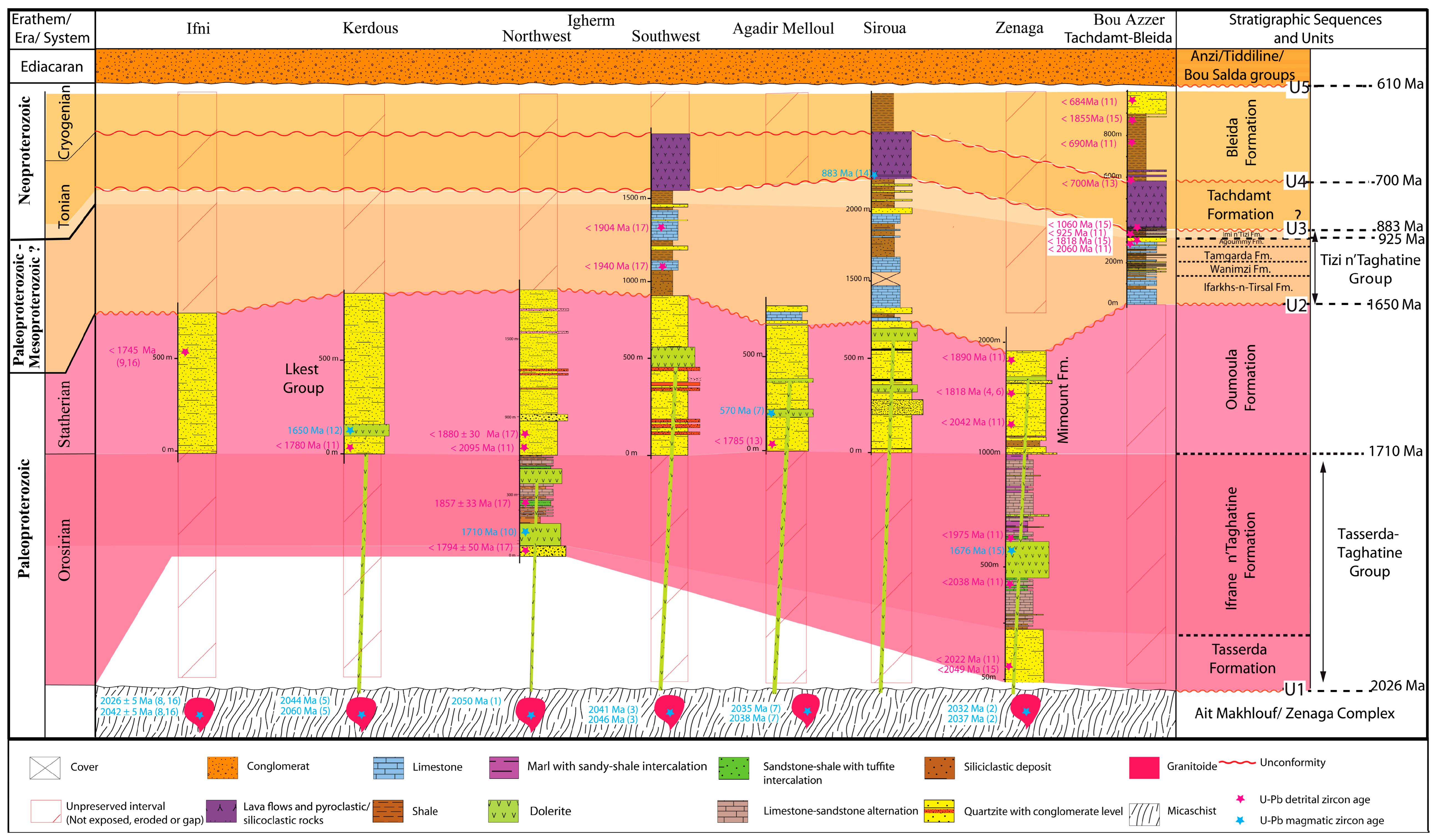
Above the Ifrane n’Taghatine Formation, a thick quartz sandstone unit (equivalent to the Oumoula Formation sensu [37,38,90], also termed the Mimount Formation sensu [26,27]) either conformably overlies the Ifrane n’Taghatine Formation or locally rests unconformably on the Eburnean basement. In places, the contact between the two units is tectonized and reworked into shear zones. This sandstone unit is widely distributed across the Anti-Atlas (Figure 10) and correlates with the Mimount Formation in the Zenaga Inlier [28], the Oumoula Formation in the Siroua Inlier [90], the Jbel Lkest Group in the Kerdous Inlier [79,159], the Azarhar Formation in the Alma–Aït Abdellah inliers [160], and the Quartzite Group in the Ifni Inlier [161].
Although extensively studied, its depositional age remains debated. In the Igherm Inlier, a basal sample yields an MDA of 1880 ± 30 Ma (this study), younger than the 2095 Ma age reported by [98] for the same unit in the same inlier. Across the Anti-Atlas, reported MDAs range widely from ca. 2095–2042 Ma ([98]; Igherm and Zenaga inliers), 1890 Ma ([98]; Zenaga Inlier), 1818 Ma ([64]; Zenaga Inlier), 1785 Ma ([158]; Agadir Melloul Inlier), 1780 Ma ([98]; Kerdous Inlier), to 1745 Ma ([4,156]; Ifni Inlier). The youngest MDAs cluster around ca. 1745 Ma, while dolerite sills intruding this unit dated at ca. 1706 Ma in the Igherm Inlier [35] and 1650 Ma in the Kerdous Inlier [157] constrain its deposition to between ca. 1706–1650 Ma.
Upsection, the upper siliciclastic–carbonate unit shows strong lithological affinities with the Ifarkhs-n-Tirsal, Wanimzi, Tamgarda, Agoummy, and Imi n’Tizi formations (sensu [90]), grouped within the Tizi n’Taghatine Group (sensu [37]). These correlations (Figure 10) are supported by similar sedimentary characteristics, including stromatolite occurrence and morphology, siliciclastic facies, and quartz sandstone bar structures. Detrital zircon data from this unit in the Igherm Inlier yield age clusters at 1970 ± 29 Ma and 1904 ± 41 Ma, broadly comparable to U–Pb data from the Agoummy Formation of Bou Azzer Inlier (2060 Ma and 1818 Ma; [37,98]). This Paleoproterozoic spectrum closely matches that of both the underlying Oumoula/Mimount Formation and the Tizi n’Taghatine Group (Ifarkhs-n-Tirsal to Agoummy formations), all of which are dominated by Eburnean-aged populations (ca. 2050–1900 Ma) derived from the West African Craton basement. Whereas the lower formations of the Tizi n’Taghatine Group (Ifarkhs-n-Tirsal, Wanimzi, Tamgarda, and Agoummy) yield Paleoproterozoic ages, the youngest constraints are confined to the uppermost Imi n’Tizi Formation, which records an MDA of ca. 925 Ma [98], together with an MDA of ca. 1060 Ma from siliciclastic horizons intercalated with volcanic rocks [37] and a direct magmatic crystallization age of ca. 883 Ma from the overlying Tachdamt Formation [38]. Collectively, these data bracket the deposition of the Imi n’Tizi Formation between ca. 925 and 883 Ma, indicating that its top reached a late Tonian depositional age, consistent with intracratonic rifting during the assembly of Rodinia.
Notably, doleritic dyke swarms and sill complexes dated at ca. 1706 Ma, 1676 Ma, and 1650 Ma intrude both the Tasserda and Oumoula formations [35,37,157]. These intrusions are part of the 1.68–1.64 Ga Zenaga Event, defined by U–Pb ages from dolerite sills and dykes across the Anti-Atlas Belt, including the 1676 ± 37 Ma Great Taghdout sill in the Zenaga Inlier [32,33,37]. This SHRIMP zircon age is consistent with numerous intrusions in the Zenaga, Kerdous, and Agadir Melloul inliers, where baddeleyite and zircon dating yields tightly clustered ages between ~1640 and 1656 Ma [32]. Together with coeval Rb–Sr ages from granitic bodies [162], these data indicate a widespread late Paleoproterozoic bimodal magmatic event.
This magmatism post-dates the ~2.04 Ga Tagragra of Tata large igneous province [26,32] and reflects a polycyclic magmatic evolution of the Anti-Atlas. The ~1650 Ma intrusions are grouped within a single large igneous province known as the Zenaga Event [32,33], characterized by continental flood basalt–type geochemistry and a bimodal signature, consistent with lithospheric extension in a rifting context during Nuna supercontinent evolution. Correlations at the global scale further indicate coeval ~1.64–1.68 Ga magmatism across Laurentia (Melville Bugt dyke swarm and Narakay Volcanic Complex), Baltica (Finnish dyke swarms), and Siberia (Nersa sill complex), suggesting a widespread magmatic episode potentially linked to mantle plume activity during Nuna supercontinent assembly.
The 1.68–1.64 Ga Zenaga Event does not cut the upper siliciclastic–carbonate unit (Figure 10), implying that this succession may be younger than the main phase of this magmatism. In addition, the upper siliciclastic–carbonate unit is overlain by a mafic volcanic succession corresponding to the Tachdamt Formation, which is well documented in the Siroua and Bou Azzer inliers [37,38,90]. Independent constraints on the depositional age of the Tachdamt Formation are provided by tuff beds in the Siroua Inlier, interbedded with lava flows and dated at 885 ± 5.9 Ma and 883 ± 2.3 Ma (SHRIMP U–Pb zircon; [38]), as well as by its associated plumbing system. This includes N30-trending dyke swarms from the Zenaga and Iguerda–Taïfast inliers, which yield TIMS baddeleyite and zircon ages ranging from 884 ± 28 Ma to 857 ± 11 Ma and 885 ± 13 Ma to 875 ± 19 Ma, respectively, thereby confirming a Tonian age [32,141]. The close temporal agreement between volcanic rocks and their feeder dykes, together with geochemical characteristics comparable to continental flood basalts in the Siroua and Bou Azzer inliers [28,142,143], supports the interpretation of a widespread intraplate magmatic event between 884 and 857 Ma. This event, referred to as the Iguerda–Taïfast Large Igneous Province [32,141], provides an important magmatic “barcode” for the WAC.
The Tachdamt Formation is dominated by tholeiitic flood basalts related to extensional tectonics and lithospheric thinning [37,38,142,143]. These basalts exhibit geochemical signatures typical of intraplate magmatism, including high MgO contents, LREE enrichment, relatively flat HREE patterns, and positive εNd(t) values, all of which indicate derivation from a juvenile mantle source [143]. The 884–857 Ma Iguerda–Taïfast magmatic event, which includes the ~883 Ma Tachdamt Formation, is broadly coeval with Munali magmatism (~880–860 Ma) in the Greater Congo Craton [144,145,163,164] and the ~867–860 Ma Manso dyke swarm in southern Ghana within the West African Craton [18,69]. Although a direct geodynamic link remains uncertain, the temporal coincidence and shared intraplate geochemical signatures suggest that all these events may collectively represent a Tonian large igneous province formed during a regionally extensive Neoproterozoic extensional phase, potentially associated with either the breakup or failed breakup of Rodinia [3,146,147] (Figure 11).
Figure 11.
Paleomagnetically and geologically informed reconstruction of WAC in Rodinia at 880 Ma (modified after [147]), showing the distribution of early Tonian (~885–850 Ma) rift-related magmatism (red symbols). Robinson projections centered on 100 degrees E with 30 degrees gridlines. Colors distinguish different cratons/continental blocks; black lines with triangular teeth indicate subduction zones. Paleomagnetic poles, color-coded to their host cratons, are shown by their 95% uncertainty cones: Ro, Rogaland Igneous Complex pole (Baltica, nominal age 903 Ma); Hy, Huaibei group younger sills pole (North China, nominal age 890 Ma); SV, Sailajiazitage Volcanic Group pole (Tarim, nominal age 880 Ma) (see Table 17.2 of [147]). Magmatic occurrences: Tachdamt Formation volcanism (~883 Ma; [38]); Iguerda–Taïfast dykes (884 ± 28 Ma to 857 ± 11 Ma; [32,141]); Munali magmatism (~880–860 Ma; [144,145,163,164]); Espinhaço dykes (854 ± 23 Ma; [165]); Manso dyke swarm (867–860 Ma; [18,69]); Hunnedalen dykes (848 ± 27 Ma; [166]). Assabet, source area of the Assabet el Hassiane Group and correlatives (e.g., Imi n’Tizi–Tachdamt Group) [3]. Abbreviations: Am, Amazonia; Au, Australian cratons including Antarctic Mawsonland; Ba, Baltica; Ca, Cathaysia; Co, Congo; In, India; Ka, Kalahari; Laur, Laurentia; NC, North China; RP, Rio Plata; SF, São Francisco; Sib, Siberia; Sv, Svalbard; Ta, Tarim; WAC, West African Craton; Ya, Yangtze.
5.3. Detrital Zircon Age Spectra as a Provenance “Barcode” for the LAAS
Detrital zircon U–Pb geochronology has become one of the most powerful tools for reconstructing sediment provenance and constraining the stratigraphic evolution and paleogeography of sedimentary basins. Owing to its exceptional resistance to chemical and physical weathering and its ability to preserve primary crystallization ages, zircon retains a robust record of source terranes through multiple sedimentary cycles. When large zircon populations are analyzed, their age distributions can be represented as probability density plots or kernel density estimates that typically display multiple age peaks corresponding to distinct episodes of magmatism, metamorphism, and crustal growth within the source regions [2,3,5,10,167].
The concept of a detrital zircon “barcode” refers to the characteristic distribution of zircon age populations preserved within a sedimentary succession. Individual age peaks record specific crust-forming or tectonothermal events in the source regions, whereas the combined age spectrum forms a distinctive provenance signature. Comparisons of these age distributions provide powerful constraints on sediment provenance, stratigraphic correlations, basin connectivity, paleogeographic reconstructions, tectonic evolution, and maximum depositional ages. This approach is particularly valuable in Precambrian successions, where fossils and other conventional stratigraphic markers are generally absent [2,3,5,10,167].
The utility of this approach is well illustrated in the Taoudeni Basin of the WAC. Reference [3] identified several regionally persistent detrital zircon age signatures, including the widely recognized Assabet barcode. This provenance signature is characterized by prominent Mesoproterozoic zircon populations (ca. 1.8–1.0 Ga), accompanied by distinctive age gaps and subordinate Paleoproterozoic populations within Neoproterozoic sedimentary strata of Mauritania. The occurrence of abundant Mesoproterozoic zircons, which are not typical of the exposed WAC basement, was interpreted to reflect sediment input from distal or exotic source terranes. Consequently, the Assabet barcode records long-distance sediment transport and paleogeographic connections between the WAC and cratonic regions containing Mesoproterozoic crustal sources. Other barcodes identified within the basin, including the Char, Téniagouri, and Oujeft signatures, document temporal variations in sediment provenance associated with changing tectonic regimes and the progressive influence of Pan-African orogenic sources.
The detrital zircon age spectrum of the LAAS provides an opportunity to evaluate provenance variations, basin evolution, and paleogeographic relationships across the Paleoproterozoic–Neoproterozoic sedimentary successions of the Anti-Atlas. In this section, we will examine the detrital zircon signatures of the different formations that constitute the LAAS of the Anti-Atlas using both newly acquired U–Pb zircon data (this study) and published datasets [4,27,37,38,64,98,156,158]. By comparing the age distributions among stratigraphic units and with potential source terranes, we aim to identify distinctive provenance “barcodes,” assess temporal changes in sediment supply, and refine correlations between the Anti-Atlas successions and coeval sedimentary basins elsewhere in the West African Craton and adjacent cratonic regions.
5.3.1. Tasserda Formation
The detrital zircon age spectrum (barcode) of the Tasserda Formation is dominated by Paleoproterozoic ages, with minor Paleoarchean to Neoarchean contributions (Figure 12A). The oldest component is represented by a small Archean population centered at ca. 2725 Ma (3.4%), followed by Siderian peaks at ca. 2493 Ma (5.9%) and 2366 Ma (6.1%). The age spectra are overwhelmingly dominated by Paleoproterozoic zircons, characterized by a major peak at ca. 2011 Ma (70.8%) and a subordinate peak at ca. 2175 Ma (13.8%).
Figure 12.
Histograms and Kernel Density Estimate (KDE) plots of detrital zircon U–Pb age distributions for the principal formations of the LAAS exposed in the Anti-Atlas inliers: (A) Tasserda Formation; (B) Ifrane n’Taghatine Formation; (C) Oumoula Formation; (D) Tizi n’Taghatine Group; (E) the Imi n’Tizi Formation and siliciclastic rocks interbedded within lava flows at the base of the Tachdamt Formation; and (F) Bleida Formation. The mean ages of the principal zircon populations in each sample are indicated in bold. Age spectra were constructed using 207Pb/206Pb ages for zircons older than 1000 Ma and 206Pb/238U ages for zircons younger than 1000 Ma, with uncertainties reported at the 1σ level. Both histograms and KDE curves were generated using DensityPlotter 8.4 [104].
The Archean and earliest Paleoproterozoic zircon populations are interpreted to reflect sediment input from ancient cratonic basement exposed within the Reguibat and Leo–Man shields, where rocks of comparable ages record major episodes of crustal growth, magmatism, and high-grade metamorphism predating the Birimian–Eburnean orogenic cycles [57,60,79,168,169,170,171]. In particular, the ca. 2493 Ma and 2366 Ma populations correspond to crust-forming events recognized throughout the Archean nuclei of the West African Craton and may also be related to pre-Eburnean granitoid and volcanic assemblages documented in the Leo–Man Shield [58,59,172].
In contrast, the dominant zircon populations at ca. 2175–2011 Ma record erosion of Eburnean crustal domains and constitute the principal provenance signal of the formation. Zircons of this age are consistent with widespread magmatic and metamorphic activity associated with the Eburnean orogeny, which is well documented throughout the Anti-Atlas and along the northern margin of the West African Craton [57,60,79,168,169,170,171]. The overwhelming abundance of these ages indicates that Eburnean granitoids, volcanic rocks, and associated metamorphic terranes represented the dominant sediment source during deposition.
The dominant detrital zircon population at ca. 2010 Ma indicates that sedimentation was sourced largely from Eburnean crust shortly after the culmination of Eburnean tectonism and crustal growth. Together with the strong predominance of late Rhyacian zircon populations (ca. 2175 Ma), this age indicates that the Tasserda Formation records one of the earliest post-Eburnean sedimentary cycles in the Anti-Atlas region. The detrital zircon barcode therefore points to a relatively proximal provenance, largely derived from the erosion of recently exhumed Eburnean magmatic and metamorphic rocks exposed along the northern margin of the West African Craton.
5.3.2. Ifrane N’Taghatine Formation
The detrital zircon age spectrum (barcode) of the Ifrane n’Taghatine Formation (Taghdout Formation sensu [38,90]) is characterized by three principal age populations (Figure 12B). A minor Archean component is represented by a peak at ca. 3185 Ma (2.5%), whereas a subordinate Siderian population peaks at ca. 2356 Ma (16.2%). The spectrum is overwhelmingly dominated by Rhyacian–Orosirian zircons, which define major age peaks at ca. 2166 Ma (16.9%), 2038 Ma (35.6%), and 1948 Ma (28.8%).
The predominance of Paleoproterozoic ages between ca. 2166 and 1948 Ma reflects extensive magmatic and tectonic activity associated with the Eburnean Orogeny across the WAC. The prominent peak at ca. 2040 Ma corresponds to the main phase of Eburnean magmatism, whereas the younger peak at ca. 1950 Ma likely records late- to post-orogenic magmatic activity (e.g., [26,32,162]). The subordinate Siderian (ca. 2500–2300 Ma) population indicates limited contributions from older pre-Eburnean crustal sources.
The minor Archean component, represented by the ca. 3185 Ma peak, is interpreted as reflecting erosion and recycling of Archean basement terranes within the Reguibat and Leo–Man shields of the WAC [57,60,79,168,169,170,171]. Overall, the detrital zircon barcode of the Ifrane n’Taghatine Formation indicates a provenance dominated by Eburnean-aged source rocks, with only minor input from older Archean and Paleoproterozoic crust, consistent with derivation from relatively proximal source regions within the West African Craton.
The major zircon population at ca. 1948 Ma indicates that sedimentation post-dated ca. 1.95 Ga and was broadly contemporaneous with the waning stages of Eburnean magmatism and tectonism. This age supports derivation from recently exhumed Eburnean source terranes and reinforces the interpretation of a predominantly local WAC provenance.
5.3.3. Oumoula Formation
The detrital zircon age spectrum (barcode) of the Oumoula Formation (Mimount Formation sensu [28]) is broadly similar to that of the Ifrane n’Taghatine Formation (Figure 12C), but includes an additional younger population between ca. 1911 and 1760 Ma. The youngest grains of this composite spectrum yield an MDA of ca. 1760 Ma for the formation across the Anti-Atlas. The spectrum is overwhelmingly dominated by Paleoproterozoic zircons, with major age peaks at ca. 2157 Ma (22%), 2030 Ma (50%), 1911 Ma (14%), and 1760 Ma (5%). These populations indicate a dominant contribution from the Eburnean basement of the WAC. A minor Archean component, represented by ages around ca. 3200 Ma, suggests limited recycling of material derived from the Reguibat and Leo–Man shields [57,60,79,168,169,170,171].
Overall, the detrital zircon signature of the Oumoula Formation points to a predominantly Eburnean provenance, with only a minor contribution from older Archean crust. The strong predominance of zircons between ca. 2157 and 2030 Ma reflects erosion of widespread Paleoproterozoic magmatic and tectonic terranes formed during the Eburnean Orogeny, consistent with sediment supply from the proximal WAC basement.
Comparable detrital zircon age spectra are recognized in several Paleoproterozoic sedimentary successions of the West African Craton and Amazonia, including the Char–Douik Group, the lower Bombouaka Group, the São Joaquim Formation, and the basal Roraima Supergroup ([4] and references therein). The similarity of these age distributions, combined with comparable stratigraphic and sedimentological characteristics, has been interpreted as evidence for a large interconnected depositional system, referred to as the Roraima–Taoudeni Basin [4]. This basin likely extended across much of West Africa and Amazonia and was supplied mainly by erosion of Eburnean–Birimian crust. The widespread occurrence of this distinctive zircon signature supports continental-scale sediment dispersal and reinforces paleogeographic models that place West Africa and Amazonia in close proximity during the assembly of the Paleoproterozoic supercontinent Columbia (Nuna) (Figure 13).
Figure 13.
Paleomagnetically and geologically informed reconstruction of WAC, Amazonia, and Baltica cratons (SAMBA, South America–Baltica, connection) along with Laurentia and Siberia in the core of the Nuna supercontinent (modified after [16]); additional ca. 1640–1680 Ma dyke swarms include the 1641 ± 8 Ma Nersa sill complex of Southern Siberia (U–Pb baddeleyite TIMS age; [173,174]), 1635.0 ± 2.7 to 1622.1 ± 3.2 Ma Melville Bugt dykes of western Greenland (U–Pb baddeleyite TIMS age; [175,176]), 1663 ± 8 Ma bimodal Narakay Volcanic Complex of Canada (U–Pb zircon TIMS age; [177]), and 1642 ± 2 Ma dyke swarms of Häme, Sipoo, and Suomenniemi of the Fennoscandian Shield in southeast Finland (U–Pb ID-TIMS baddeleyite age; [178,179]). Star locates mantle plume center, proposed for the Melville Bugt swarm by [176]. Dotted lines indicate inferred connections in the reconstruction.
5.3.4. Tizi N’Taghatine Group
Detrital zircon age spectra from the Tizi n’Taghatine Group (sensu [37]), excluding the Imi n’Tizi Formation, are dominated by Paleoproterozoic zircons and exhibit a characteristic barcode composed of three major age populations (Figure 12D): a predominant Rhyacian–Orosirian population with peaks at ca. 2185 Ma (16%), ca. 2051 Ma (47%), and ca. 1844 Ma (8.3%), a substantial Siderian population centered at ca. 2486 Ma (20.5%), and a minor Neoarchean population peaking at ca. 2797 Ma (8.2%). This age distribution is remarkably similar throughout the group, indicating persistent sediment supply from the same crustal source regions.
The dominance of the Orosirian–late Statherian zircon population indicates a predominantly Eburnean–Birimian provenance, reflecting widespread magmatic and metamorphic activity throughout the Anti-Atlas and the broader WAC. Subordinate Neoarchean to Siderian age populations, marked by peaks at ca. 2797 Ma and 2486 Ma [57,60,79,168,169,170,171], record minor contributions from older crustal domains, likely derived from the Reguibat and Leo–Man shields [57,60,168]. Overall, the detrital zircon barcode of the Tizi n’Taghatine Group indicates sediment supply mainly from Eburnean–Birimian basement sources, with limited recycling of Archean terranes, consistent with derivation from proximal regions of the West African Craton.
5.3.5. Imi N’Tizi and Tachdamt Formations
The detrital zircon age spectrum of a quartz sandstone from the Imi n’Tizi Formation [98] is dominated by Mesoproterozoic zircons, with major age peaks at ca. 1535 Ma and 1240 Ma, accompanied by a subordinate Paleoproterozoic population centered at ca. 2015 Ma. The youngest zircon population is of early Neoproterozoic age and constrains a maximum depositional age of ca. 925 Ma. This age distribution contrasts markedly with those of the underlying formations, reflecting a significant shift in sediment provenance and the introduction of Mesoproterozoic source terranes into the sediment-routing system.
The Tachdamt Formation is the only formation within the LAAS that has been directly dated. Independent constraints on its depositional age are provided by tuff beds from the Siroua Inlier, interbedded with lava flows and dated at 885 ± 5.9 Ma and 883 ± 2.3 Ma (SHRIMP U–Pb zircon), as well as by associated magmatic plumbing systems, including N30-trending dyke swarms in the Zenaga and Iguerda–Taïfast inliers, which yield ages of 884 ± 28 to 857 ± 11 Ma and 885 ± 13 to 875 ± 19 Ma (TIMS baddeleyite and zircon). Collectively, these datasets consistently constrain the Tachdamt Formation to the Tonian period [32,37,38].
The detrital zircon age spectrum (“barcode”) of the Imi n’Tizi Formation and the siliciclastic rocks interbedded within lava flows at the base of the Tachdamt Formation [37,98] exhibits a complex multimodal distribution characterized by five principal age populations (Figure 12E). These include a minor Mesoarchean component, a Neoarchean population with a peak at ca. 2535 Ma (5.8%), an Orosirian population centered at ca. 2005 Ma (27.2%), a dominant Mesoproterozoic population with peaks at ca. 1563 Ma (29.1%), 1340 Ma, and 1277 Ma (30.6%), and a Tonian population peaking at ca. 910 Ma. The latter define the MDA of the formation and is broadly coeval with, or only slightly older than, its true depositional age.
The youngest detrital zircon grains or age populations in (meta)sedimentary rocks are widely used to constrain MDAs (e.g., [180]). Although geochronology of interbedded volcanic layers and biostratigraphic data provide more direct constraints on depositional age, detrital zircon MDAs can serve as reliable proxies where such data are unavailable. In sedimentary systems receiving syndepositional volcanic input, MDAs may closely approximate true depositional ages (TDAs). More commonly, however, MDAs predate the actual time of deposition, with the degree of offset depending on factors such as sediment-routing systems, source-to-sink distances, and the palaeogeographic setting of the basin [180].
The coexistence of Paleoproterozoic, Mesoproterozoic, and Neoproterozoic zircon populations indicates sediment derivation from multiple crustal provinces during deposition. The Mesoproterozoic population (ca. 1600–1000 Ma) is particularly noteworthy because zircons of this age are rare within the WAC [41,66,181], yet are widespread throughout the Amazonian Craton [182,183,184]. During deposition of the Imi n’Tizi and Tachdamt formations, the WAC and Amazonian cratons were likely juxtaposed within the Rodinia supercontinent [3,17,18,69,146,147], raising the possibility that part of the sediment supply was sourced from the Amazonian Craton (Figure 14). A similar Mesoproterozoic zircon population has been reported from the Assabet Formation, considered correlative with the Tachdamt Formation, where [3] suggested derivation from the Amazonian Craton. Transport of these sediments to the WAC was interpreted to have occurred through continent-scale fluvial systems.
The occurrence of abundant Mesoproterozoic zircons, accompanied by subordinate Tonian populations, in the Imi n’Tizi Formation and the siliciclastic strata interbedded with basal Tachdamt volcanic rocks strongly suggests sediment input from the Amazonian Craton, consistent with the provenance model of [3]. The Tonian grains were likely derived from Grenvillian-age orogenic belts, recording long-distance sediment transport into the evolving rift basin during the initial phases of Rodinia fragmentation [38].
5.3.6. Bleida Formation
The detrital zircon age spectrum (“barcode”) of the Bleida Formation is characterized by five principal age populations (Figure 12F), with peaks at ca. 2642 Ma (3%), 2102 Ma (59%), 1888 Ma (11%), 1340 Ma (20%), and 699 Ma (6%) (Figure 12F). The age distribution is dominated by Paleoproterozoic zircons (ca. 2300–1700 Ma), reflecting extensive erosion of Eburnean crustal domains within the Anti-Atlas and the WAC. A subordinate Archean component records limited recycling of older basement terranes from the Reguibat and Leo–Man shields.
The Mesoproterozoic population (ca. 1600–1000 Ma) most likely reflects either recycling of sedimentary rocks of the Tachdamt Formation or sediment input derived from distant Grenvillian-age orogenic belts [38,185,186,187,188,189,190]. In contrast, the Tonian to Ediacaran population, represented by a peak at ca. 699 Ma, corresponds to Neoproterozoic magmatic events documented in the Siroua and Bou Azzer inliers [43,149,154,191,192,193,194,195,196,197], indicating a significant contribution from local volcanic and plutonic sources.
Overall, the detrital zircon barcode of the Bleida Formation records a mixed provenance dominated by Paleoproterozoic Eburnean sources, with subordinate contributions from Archean basement terranes, recycled Mesoproterozoic material, and locally derived Neoproterozoic zircons.
The compilation of detrital zircon age spectra from the LAAS (n = 1850) records a fundamental shift in sediment provenance, sediment-routing systems, and paleogeographic configuration from the Paleoproterozoic to the Neoproterozoic (Figure 14). The zircon age distributions define two distinct provenance stages: an older stage dominated by Paleoproterozoic zircons derived from the WAC, and a younger stage characterized by significant Mesoproterozoic and Tonian contributions that imply the involvement of more distal source regions.
Figure 14.
Binned frequency histograms and probability density distribution plots of U–Pb detrital zircon ages from the different formations of the LAAS of the Anti-Atlas (Morocco), illustrating variations in sediment provenance and age populations through time (modified from [198]). Data sources are provided in the text and summarized in Figure 10.
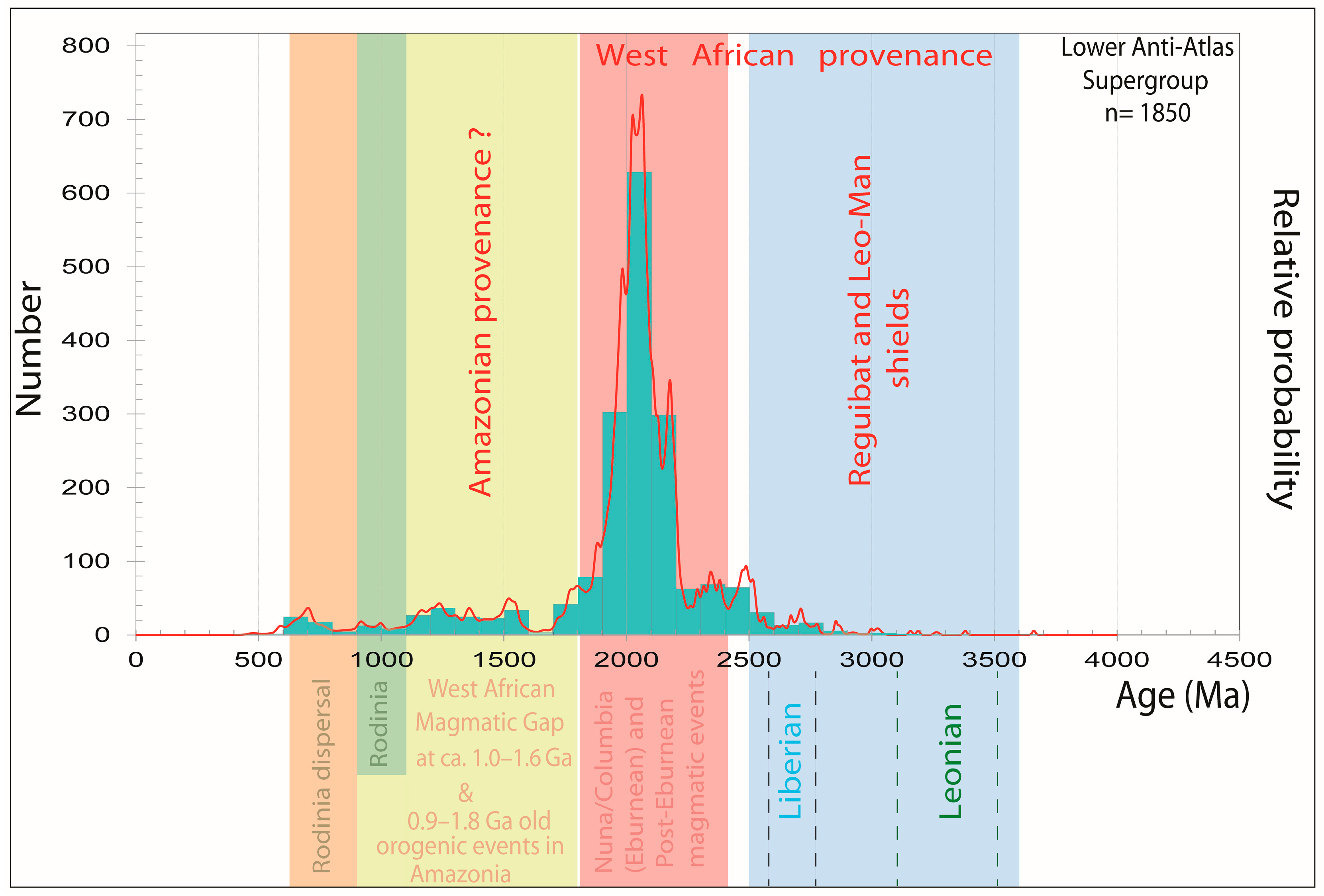
The lower part of the succession, represented by the Tasserda, Ifrane n’Taghatine, Oumoula, and most of the Tizi n’Taghatine Group, is dominated by Eburnean-aged zircons with minor Archean components. The remarkable similarity of these spectra across multiple formations indicates prolonged erosion of the Eburnean basement and persistent sediment-routing systems confined largely to proximal WAC sources. The limited contribution of Archean zircons suggests only minor recycling from the Reguibat and Leo–Man shields.
A marked provenance change is recorded in the Imi n’Tizi and Tachdamt formations by the appearance of abundant Mesoproterozoic and subordinate Tonian zircons. Given the scarcity of Mesoproterozoic crust within the WAC, these populations are difficult to reconcile with exclusively local sources and instead point to sediment derivation from extra-cratonic terranes, most plausibly Amazonian and Grenvillian-age provinces. This shift coincides with Tonian extensional tectonism and supports paleogeographic reconstructions that place the WAC in close proximity to Amazonia during the evolution and subsequent fragmentation of Rodinia. The data therefore indicate a major reorganization of regional sediment-dispersal pathways and basin connectivity.
The Bleida Formation records the transition to a Pan-African tectonic setting. Its mixed zircon population reflects the continued recycling of older cratonic material together with the introduction of juvenile Neoproterozoic zircons derived from contemporaneous magmatic activity within the Anti-Atlas. The increasing contribution of these young grains documents the progressive incorporation of Pan-African volcanic and plutonic sources into the sediment-routing system and marks the evolution from relatively stable intracratonic sedimentation to tectonically active basin development. The Bleida Formation was interpreted as a foreland basin [37,38].
Taken together, the detrital zircon record of the LAAS documents the transition from post-Eburnean cratonic sedimentation to Neoproterozoic rift-related and subsequently Pan-African basin systems. Beyond constraining sediment provenance, these zircon age spectra provide important evidence for changing basin connectivity, continental-scale sediment dispersal, and the paleogeographic relationships between the West African Craton, Amazonia, and the evolving northern margin of Gondwana.
5.4. Potential Regional Correlations with the Taoudeni Intracratonic Basins
The results of this study, together with published stratigraphic, geochronological, and provenance data, indicate that the LAAS records a prolonged history of intracratonic sedimentation extending from the Paleoproterozoic to the Neoproterozoic [4,27,37,38,64,98,156,158]. These sedimentary successions are associated with episodic magmatic activity ranging from mafic to felsic compositions and are interpreted to have developed during repeated phases of lithospheric extension within the WAC. Such extensional events may have been linked to large-scale geodynamic processes, including supercontinent assembly and breakup cycles and/or mantle plume activity [32,33,35,37,38].
The LAAS is exposed almost exclusively within the cratonic domain of the Anti-Atlas, south of the Anti-Atlas Major Fault (Figure 1). Its location, distant from the Neoproterozoic suture zone exposed along the Siroua–Bou Azzer axis, indicates deposition within intracratonic basins largely isolated from contemporaneous orogenic systems. This interpretation is further supported by detrital zircon age spectra, which reveal sediment derivation predominantly from the adjacent Birimian–Eburnean basement of the WAC, with subordinate contributions from Archean crustal domains and, locally, more distal Mesoproterozoic Grenvillian sources from the Amazonia Craton. These characteristics provide a basis for comparing the LAAS with the Taoudeni Basin, the largest and best-preserved intracratonic basin of the WAC.
The Taoudeni Basin extends from the Reguibat Shield in the north to the Leo–Man Shield in the south and lies approximately 500 km south of the Anti-Atlas Belt (Figure 15). Its sedimentary succession is subdivided into the Hodh and Adrar supergroups [3,54]. The Hodh Supergroup comprises the Char, Atar, and Assabet el Hassiane groups, which together preserve a record of Mesoproterozoic–Neoproterozoic basin development on the WAC [3,5,51,199,200].
Figure 15.
Distribution of Neoproterozoic detrital zircon samples characterized by dominant Mesoproterozoic age populations on a generalized geological map of West Africa. The map shows the West African Craton, composed of an Archean–Paleoproterozoic basement partly overlain by a Mesoproterozoic–Phanerozoic sedimentary cover and surrounded by Neoproterozoic (Pan-African) orogenic belts (after [36]). The restored positions of the São Luís Craton and the Gurupi Belt are from [201]. Red dashed lines indicate country outlines; circles and numbered symbols indicate localities or referenced areas. Numbered localities are: (1) Bou Azzer (Morocco); (2) Igherm (Morocco); (3) Cheikhia Group (Algeria); (4) Bombouaka Group (Ghana); (5) Togo Structural Unit, Dahomeyide Orogen (Ghana); and (6) Vila Cristal Formation, Gurupi Belt (Brazil). Arrows indicate paleocurrent directions associated with Neoproterozoic sedimentary successions containing detrital zircon assemblages dominated by Mesoproterozoic ages. Modified after [3].
5.4.1. Paleoproterozoic Intracratonic Sedimentation: Tasserda–Taghatine Group and Char Group
The oldest basin-fill successions recognized in both regions are represented by the Tasserda–Taghatine Group in the Anti-Atlas and the Char Group in the Taoudeni Basin. The Char Group consists of mixed siliciclastic and carbonate deposits accumulated in fault-controlled basins developed on a deeply weathered Eburnean basement. The succession records a transition from continental fluvial and aeolian red beds to tidally influenced shallow-marine deposits and contains abundant evidence of deposition under warm and arid climatic conditions.
Similar lithofacies associations, depositional environments, and climatic indicators characterize the Tasserda–Taghatine Group. Provenance data further support a correlation between these successions, as both are dominated by detrital zircons derived from Eburnean crustal sources (Figure 16A,B). The Anti-Atlas succession additionally records input from younger Paleoproterozoic crustal domains (ca. 2005–1780 Ma), reflecting a somewhat broader source region. The proposed correlation is supported by quantitative comparison of the detrital zircon spectra (Table S3, Supplementary Materials).
Figure 16.
Histograms and probability plots (KDE) of detrital zircon U–Pb age distributions from stratigraphic units of the LAAS and the Taoudeni Basin. (A) Tasserda-Ifrane n’Taghatine Formations, (B) Char Group, (C) Tizi n’Taghatine Group, and (D) Atar Group. Probability density curves (KDE) and Histograms were generated using DensityPlotter 8.4 [104].
The Tasserda and Ifrane n’Taghatine formations share very high coefficients with each other (similarity = 0.95, likeness = 0.79, cross-correlation R2 = 0.86), reflecting an essentially identical Eburnean-dominated provenance, and both display moderate similarity with the Char Group (similarity = 0.62 and 0.56, respectively). These values are consistent with sediment derivation from comparable Paleoproterozoic source regions following post-Eburnean crustal stabilization, while the lower coefficients with the Char Group, relative to the internal Anti-Atlas correlations, are compatible with a more distal or partly distinct source contribution. Although the depositional age of the Char Group remains poorly constrained, its stratigraphic position beneath the Atar Group suggests deposition prior to ca. 1107 Ma [3,54].
We tentatively correlate these successions and interpret them as products of basin formation following post-Eburnean crustal stabilization and collapse. They may represent remnants of the extensive Paleoproterozoic intracratonic basin system recognized across both the West African and Amazonian cratons.
A notable difference between the two regions is the occurrence of the Oumoula Formation in the Anti-Atlas. This unit records an episode of mafic magmatism and associated sedimentation between ca. 1706 and 1650 Ma that has no known equivalent in the Taoudeni Basin. We interpret this event as reflecting localized intracratonic extension and possible large igneous province (LIP) emplacement during the final stages of Nuna assembly [32,33].
5.4.2. Mesoproterozoic Basin Development: Tizi N’Taghatine Group and Atar Group
A second phase of basin development is represented by the Tizi n’Taghatine Group in the Anti-Atlas and the Atar Group in the Taoudeni Basin. Both successions comprise mixed carbonate–siliciclastic deposits accumulated in broad intracratonic settings under warm and arid climatic conditions [142,199].
The provenance signatures of these units are remarkably similar (Figure 16C,D). The youngest detrital zircons from the Agoummy Formation of Tizi n’Taghatine Group (ca. 1818 Ma) closely match those reported from the Atar Group (1804 ± 33 Ma; [54,202,203]), suggesting derivation from comparable source regions dominated by Paleoproterozoic crust. These affinities are confirmed quantitatively (Table S3, Supplementary Materials): the Tizi n’Taghatine Group yields high coefficients with both the Atar Group (similarity = 0.88, likeness = 0.63, cross-correlation R2 = 0.54) and the Char Group (similarity = 0.76, likeness = 0.53, R2 = 0.55), consistent with derivation from a common Paleoproterozoic, Eburnean-dominated source region. We emphasize, however, that these high spectral similarities reflect shared provenance and do not by themselves require direct physical connectivity between the two basins, particularly given the limited number of dated grains in the Char Group (n = 50).
Nevertheless, independent geochronological constraints indicate that deposition of the Atar Group occurred much later, during the late Mesoproterozoic. Re–Os ages from black shales yield values of 1107 ± 12 Ma, 1109 ± 22 Ma, and 1105 ± 37 Ma [52], consistent with evidence from microfossils [71] and chemostratigraphy [70].
Carbon isotope data provide additional support for a broad correlation. Carbonates of the Tizi n’Taghatine Group display δ13C values between −5.0‰ and +1.5‰ [34], whereas those of the Atar Group range from −6.0‰ to +4.0‰ [70,204,205]. These isotopic signatures are compatible with secular variations in late Mesoproterozoic to early Neoproterozoic seawater composition.
5.4.3. Neoproterozoic Basin Reactivation: Imi N’Tizi-Tachdamt Formations and the Assabet El Hassiane Group
The youngest intracratonic depositional episode recognized in both regions occurred during the Neoproterozoic and is represented by the Imi n’Tizi and Tachdamt formations in the Anti-Atlas and the Assabet el Hassiane Group in the Taoudeni Basin.
The Assabet el Hassiane Group contains youngest detrital zircon populations of 965 ± 29 Ma and 952 ± 38 Ma [3,54,202], closely matching the youngest zircon ages of approximately 925 Ma reported from the Imi n’Tizi Formation [37,98]. More significantly, both successions record the appearance of abundant Mesoproterozoic detrital zircons, indicating a major change in sediment provenance compared to older units (Figure 17A,B). This correlation is strongly supported by quantitative comparison of the detrital zircon spectra (Table S3, Supplementary Materials). The Tachdamt–Imi n’Tizi interval shows the highest correlation of the entire dataset with the Assabet el Hassiane Group (similarity = 0.93, likeness = 0.74, cross-correlation R2 = 0.57), confirming that both successions share the same distinctive Mesoproterozoic (Amazonian–Grenvillian) provenance signal. In contrast, this interval correlates negligibly with the older, Eburnean-dominated Char and Atar groups (R2 < 0.01), demonstrating that the Mesoproterozoic input is restricted to the youngest, Tonian successions and marks a genuine provenance shift rather than a sampling artifact.
Figure 17.
Histograms and probability density plots (KDE) of detrital zircon U–Pb age distributions from stratigraphic units of the LAAS and the Taoudeni Basin characterized by dominant Mesoproterozoic zircon populations. (A) The Imi n’Tizi Formation and siliciclastic rocks interbedded within lava flows at the base of the Tachdamt Formation. (B) The Assabet el Hassiane Group. Probability density curves (KDE) and Histograms were generated using DensityPlotter 8.4 [104]. Data sources are provided in the text.
This influx of Mesoproterozoic zircons is interpreted as reflecting erosion of Grenvillian-age orogenic belts following the Grenville Orogeny. Similar provenance shifts have been documented in contemporaneous Laurentian basins, where continent-scale river systems transported detritus from the Grenville Belt into the interior of the Rodinia supercontinent [206,207]. The widespread occurrence of Grenvillian detritus across the WAC is therefore consistent with Rodinia reconstructions that indicate extensive intracontinental drainage networks and sediment dispersal pathways within the supercontinent interior.
Whether the ca. 883 Ma Tachdamt Formation has a direct stratigraphic equivalent in the Taoudeni Basin remains uncertain. The provenance similarities between the Imi n’Tizi Formation and the siliciclastic rocks interbedded within lava flows at the base of the Tachdamt Formation and the Assabet el Hassiane Group nevertheless suggest that these basins responded to common regional-scale tectonic and paleogeographic controls during the Rodinia cycle. In contrast, the younger Bleida Formation records a fundamentally different tectonic setting. Previous studies have interpreted the Bleida Formation as a foreland-basin succession developed in response to Pan-African tectonic loading and crustal shortening along the northern margin of the West African Craton [37,38]. Consequently, the Bleida Formation is not considered part of the intracratonic basin system discussed here but rather represents the onset of syn-orogenic sedimentation associated with the Pan-African orogeny and the assembly of Gondwana.
5.4.4. Implications for the Evolution of Intracratonic Basins on the WAC
The correlations proposed above support the recognition of two major episodes of intracratonic basin development across the WAC. The first corresponds to the Paleoproterozoic Roraima–Taoudeni basin system (ca. 2250–1740 Ma), which developed following the Eburnean Orogeny and extended across large parts of the West African and Amazonian cratons. The second corresponds to a Mesoproterozoic–Neoproterozoic successor basin system (ca. 1300–700 Ma), which formed during renewed phases of intracratonic subsidence, extension, and sediment accumulation associated with the Rodinia supercontinent cycle ([4] and references within).
Viewed within this framework, the LAAS provides a unique record of long-lived basin evolution on the WAC, spanning from the aftermath of the Eburnean Orogeny to the Pan-African assembly of Gondwana. The succession records repeated episodes of crustal stabilization, extension, magmatism, and sedimentation linked to successive supercontinent cycles, including Nuna and Rodinia. This prolonged intracratonic history culminated with deposition of the Imi n’Tizi and Tachdamt formations during Neoproterozoic extension. The subsequent development of the Bleida foreland basin marks a major geodynamic transition from intracratonic basin evolution to syn-orogenic sedimentation associated with Pan-African convergence. As such, the LAAS preserves an exceptional archive of the tectonic and sedimentary evolution of the northern margin of the West African Craton over more than 1.5 billion years.
6. Conclusions
This study provides a refined lithostratigraphic, sedimentological, geochronological, and paleogeographic framework for the Lower Anti-Atlas Supergroup (LAAS) in the Igherm Inlier of the western Anti-Atlas. Integration of detailed field observations, petrographic analyses, and new LA-ICP-MS U–Pb zircon data demonstrates that the succession can be subdivided into five lithostratigraphic units, namely the Coarse-Grained Quartz Sandstone, Lower Siliciclastic–Carbonate, Quartz Sandstone, Upper Siliciclastic–Carbonate, and Volcanic units. These units are correlated, from base to top, with the Tasserda Formation, the Ifrane n’Taghatine Formation, the Oumoula (Mimount) Formation, the Tizi n’Taghatine Group, and the Tachdamt Formation recognized elsewhere in the Anti-Atlas.
The sedimentological record indicates deposition within a long-lived shallow-water intracratonic basin that evolved from tide-influenced braided systems to mixed siliciclastic–carbonate tidal flats, stromatolitic peritidal platforms, and shallow subtidal environments before being affected by extensional basaltic volcanism. Newly recognized reworked volcanic tuffs within the Lower Siliciclastic–Carbonate Unit yield a maximum depositional age of 1857 ± 33 Ma, providing the first direct geochronological constraint for this interval. Additional maximum depositional ages of 1880 ± 30 Ma for the Oumoula Formation and 1970 ± 29 Ma and 1904 ± 41 Ma for the Tizi n’Taghatine Group further support the Paleoproterozoic age of the lower succession and strengthen regional stratigraphic correlations.
Detrital zircon populations are dominated by Paleoproterozoic and subordinate Archean age components derived mainly from the West African Craton, indicating prolonged sediment recycling from Eburnean and older crustal sources. Combining these new data with previously published detrital zircon datasets for the LAAS, the integrated age spectra were compared with published datasets from the Taoudeni Basin. This comparison reveals strong provenance similarities between the Anti-Atlas and Taoudeni successions, suggesting that both formed parts of extensive intracratonic depositional systems that developed across the West African Craton during successive Nuna and Rodinia supercontinent cycles. The overlying Tachdamt Formation records Tonian (~883 Ma) syn-rift magmatism associated with regional lithospheric extension and the development of the Iguerda–Taïfast Large Igneous Province, marking the final stage of LAAS evolution prior to Pan-African tectonism.
Overall, the LAAS of the Igherm Inlier preserves an exceptional record of nearly one billion years of intracratonic basin development, documenting the transition from post-Eburnean stabilization and Paleoproterozoic sedimentation to Rodinia-related basin reactivation and Tonian extensional magmatism along the northern margin of the West African Craton.
Supplementary Materials
The following supporting information can be downloaded at: https://www.mdpi.com/article/10.3390/geosciences16070251/s1, Figure S1 Supplementary Material. (A) Cathodoluminescence (CL), (B) transmitted-light optical, and (C) reflected-light optical images of zircon grains obtained from sample IGH-32 (Coarse-grained quartz sandstone collected from the Coarse-Grained Quartz Sandstone Unit; equivalent of the Tasserda Formation) showing their internal texture, spots (red circles), and (D) apparent ages in Ma (1σ error). Figure S2 Supplementary Material. (A) Cathodoluminescence (CL), (B) transmitted-light optical, and (C) reflected-light optical images of zircon grains obtained from sample Ti-41 (reworked volcanic tuff collected from the Lower Siliciclastic–Carbonate Unit; equivalent of the Ifrane n’Taghatine) showing their internal texture, spots (red circles), and (D) apparent ages in Ma (1σ error). Figure S3 Supplementary Material. (A) Cathodoluminescence (CL), (B) transmitted-light optical, and (C) reflected-light optical images of zircon grains obtained from sample IGH-08 (Medium to coarse-grained quartzite collected from the Quartz Sandstone Unit; equivalent of the Oumoula Formation) showing their internal texture, spots (red circles), and (D) apparent ages in Ma (1σ error). Figure S4 Supplementary Material. (A) Cathodoluminescence (CL), (B) transmitted-light optical, and (C) reflected-light optical images of zircon grains from sample C-70 (medium- to fine-grained siltstone collected from the lower part of the Upper Siliciclastic–Carbonate Unit, Ifarkhs-n-Tirsal Formation, Tizi n’Taghatine Group), showing their internal texture, spots (red circles), and (D) apparent ages in Ma (1σ error). Figure S5 Supplementary Material. (A) Cathodoluminescence (CL), (B) transmitted-light optical, and (C) reflected-light optical images of zircon grains from sample C-75 (medium- to fine-grained siltstone collected from the middle part of the Upper Siliciclastic–Carbonate Unit, Tamgarda Formation, Tizi n’Taghatine Group), showing their internal texture, spots (red circles), and (D) apparent ages in Ma (1σ error). Table S1 Supplementary Material. Summary of lithology, lithofacies, sedimentary structures, and depositional environments of the Lower Anti-Atlas Supergroup (LAAS) lithostratigraphic units in the Igherm Inlier. Siliciclastic facies codes and terminology follow [114,115,208], whereas carbonate facies classification follows [131,209,210,211]. Table S2 Supplementary Material. LA-ICP-MS zircon U-Th-Pb data for the studied dated samples of the LAAS of Igherm inlier. Sample IGH-32 (Coarse-grained quartz sandstone collected from the Coarse-Grained Quartz Sandstone Unit; equivalent of the Tasserda Formation, sample Ti-41 (reworked volcanic tuff collected from the Lower Siliciclastic–Carbonate Unit; equivalent of the Ifrane n’Taghatine), sample IGH-08 (Medium to coarse-grained quartzite collected from the Quartz Sandstone Unit succession; equivalent of the Oumoula Formation), sample C-70 (Medium to fine-grained siltstone collected from the lower of the Upper Siliciclastic–Carbonate Unit; equivalent of the Ifarkhs n’Tirsal Formation of the Tizi n’Taghatine Group), and sample C-75 (Medium to fine-grained siltstone collected from the middle of the Upper Siliciclastic–Carbonate Unit; equivalent of the Tamgarda Formation of the Tizi n’Taghatine Group). Table S3 Supplementary Material. Quantitative comparison of detrital zircon U–Pb age distributions among the lithostratigraphic units of the Lower Anti-Atlas Supergroup (LAAS) and the Taoudeni Basin. For each pair of units, four metrics are reported: the cross-correlation coefficient (R2) and the similarity coefficient [105], the likeness coefficient [106], and the two-sample Kolmogorov–Smirnov test (D statistic and p-value). The cross-correlation, likeness and similarity coefficients range from 0 to 1, higher values indicating greater similarity between two age populations. All statistics were computed with the DZstats software [105]. The complete source dataset used for these computations is provided in the accompanying sheets (one per unit), listing for every analysis the formation, sample, age (Ma), 1σ uncertainty (Ma) and original reference. New ages (this study) are integrated with previously published data [4,27,37,38,54,64,98,158,202].
Author Contributions
Conceptualization, H.O. and N.Y.; methodology, H.O., N.Y., H.H., M.O., M.E.-N., M.H. and Y.A.; software, H.O. and A.A.L.; validation, N.Y., A.A.L., S.-H.Z. and A.B.; formal analysis, H.O., A.A.L., S.-H.Z. and Y.-J.J.; investigation, H.O., N.Y., Y.-J.J., H.H., M.O., M.E.-N., M.H., Y.A. and A.B.; resources, S.-H.Z. and Y.-J.J.; writing—original draft preparation, H.O., N.Y. and A.A.L.; writing—review and editing, H.O., N.Y., A.A.L., S.-H.Z., H.H., M.O., M.E.-N., M.H., Y.A., M.A.B., E.H.C. and A.B.; visualization, H.O.; supervision, N.Y., A.A.L., M.A.B., E.H.C. and A.B.; project administration, H.O. All authors have read and agreed to the published version of the manuscript.
Funding
This research was partially supported by the National Natural Science Foundation of China (U2244213, 41920104004).
Data Availability Statement
Data is contained within the article and Supplementary Materials.
Acknowledgments
This work forms part of the doctoral dissertation of Hassane Oubaassine, conducted under the supervision of Nasrrddine Youbi, and submitted to the Department of Geology, Faculty of Sciences Semlalia, Cadi Ayyad University, Marrakech, Morocco. The study is the result of a collaboration between the Department of Geology, Faculty of Sciences Semlalia, Cadi Ayyad University (Marrakech, Morocco); the Institute of Geomechanics, Chinese Academy of Geological Sciences (Beijing, China); the Key Laboratory of Paleomagnetism and Tectonic Reconstruction, Ministry of Natural Resources (Beijing, China); and the Department of Earth and Planetary Sciences, University of California, Riverside (CA, USA). Nasrrddine Youbi gratefully acknowledges the valuable discussions with David Evans and Jikai Ding concerning the reconstruction of the Nuna and Rodinia supercontinents. We also thank three anonymous reviewers for their constructive and detailed comments, which significantly improved the manuscript. Finally, we acknowledge the handling and editorial oversight provided by the Geosciences MDPI Editorial Office.
Conflicts of Interest
Author Hassane Oubaassine was employed by the Ministry for Energy Transition and Sustainable Development, and author Mohamed Hamouyahia was employed by Managem Group; neither institution had any input in the research processes or results presented. All other authors declare no conflicts of interest.
Abbreviations
The following abbreviations are used in this manuscript:
| AAMF | Anti-Atlas Major Fault |
| CAMP | Central Atlantic Magmatic Province |
| CIMP | Central Iapetus Magmatic Province |
| CL | Cathodoluminescence |
| Conc. | Concordance |
| Decay-const. errs. | Decay-constant errors |
| DL | Dark-colored laminae |
| Fsp | Feldspar |
| GPS WGS84 | Global Positioning System (GPS) using the World Geodetic System 1984 (WGS84) |
| HREE | Heavy Rare Earth Element |
| ID | Identification |
| ID-TIMS | Isotope Dilution–Thermal Ionization Mass Spectrometry |
| KDE | Kernel Density Estimation |
| LA-ICP-MS | Laser Ablation Inductively Coupled Plasma Mass Spectrometry |
| LAAS | Lower Anti-Atlas Supergroup |
| LIP | Large Igneous Province |
| LL | Light-colored laminae |
| LREE | Light Rare Earth Element |
| MDA | Maximum Depositional Age |
| Mm | Micaceous matrix |
| MSWD | Mean Square Weighted Deviation |
| Opq | Opaque minerals |
| Qz | Quartz |
| SAF | South Atlas Fault |
| SHRIMP | Sensitive High-Resolution Ion Microprobe |
| TDA | True Depositional Age |
| Th/U | Thorium-to-uranium ratio |
| TIMS | Thermal Ionization Mass Spectrometry |
| TTG | Tonalite–Trondhjemite–Granodiorite |
| U–Pb | Uranium–Lead |
| U1–U5 | Unconformities 1 to 5 |
| WAC | West African Craton |
References
- Fedo, C.M.; Sircombe, K.N.; Rainbird, R.H. Detrital Zircon Analysis of the Sedimentary Record. Rev. Mineral. Geochem. 2003, 53, 277–303. [Google Scholar] [CrossRef] [Scilit]
- Cawood, P.A.; Hawkesworth, C.J.; Dhuime, B. Detrital Zircon Record and Tectonic Setting. Geology 2012, 40, 875–878. [Google Scholar] [CrossRef] [Scilit]
- Bradley, D.C.; Evans, D.A.D.; O’Sullivan, P.; Taylor, C.D.; Eglington, B.M. The Assabet Barcode: Mesoproterozoic Detrital Zircons in Neoproterozoic Strata from Mauritania, West Africa. Am. J. Sci. 2022, 322, 939–992. [Google Scholar] [CrossRef] [Scilit]
- Boger, S.D.; Schulte, B.; Benziane, F.; Yazidi, A.; Fanning, C.M. Paleoproterozoic Intrusive and Sedimentary Rocks of the Sidi Ifni Inlier (Anti-Atlas Mountains, Morocco) and Their Correlatives in West Africa–Amazonia. J. Geol. Soc. 2025, 182, jgs2024-219. [Google Scholar] [CrossRef] [Scilit]
- Borrego, R.J.; Poyatos, D.M.; Azor, A.; Accotto, C.; Jabaloy-Sánchez, A.; Lodeiro, F.G.; Sabar, M.S.; Hamoud, A.; Ely Lekouyrie, A.O. Persistent Amazonian and West African Detrital Zircon Signature in the Northern Mauritanide Belt. Gondwana Res. 2026, 149, 1–16. [Google Scholar] [CrossRef] [Scilit]
- Reading, H.G. Sedimentary Environments: Processes, Facies and Stratigraphy, 3rd ed.; Blackwell: Oxford, UK, 1996. [Google Scholar]
- Nichols, G. Sedimentology and Stratigraphy, 2nd ed.; Wiley-Blackwell: West Sussex, UK, 2009. [Google Scholar]
- Catuneanu, O.; Martins-Neto, M.A.; Eriksson, P.G. Precambrian Sequence Stratigraphy. Sediment. Geol. 2005, 176, 67–95. [Google Scholar] [CrossRef] [Scilit]
- Spencer, C.J.; Kirkland, C.L.; Taylor, R.J.M. Strategies towards Statistically Robust Interpretations of in Situ U–Pb Zircon Geochronology. Geosci. Front. 2016, 7, 581–589. [Google Scholar] [CrossRef] [Scilit]
- Gehrels, G. Detrital Zircon U-Pb Geochronology Applied to Tectonics. Annu. Rev. Earth Planet. Sci. 2014, 42, 127–149. [Google Scholar] [CrossRef] [Scilit]
- Sun, Y.; Ouyang, Q.; Pang, K.; Wu, C.; Chen, Z.; Yuan, X.; Zhou, C. Detrital Zircon Geochronology and Stratigraphy of the Proterozoic Strata in the Olongbuluke Terrane of Northwest China: Implications for the Great Unconformity. Precambrian Res. 2022, 376, 106684. [Google Scholar] [CrossRef] [Scilit]
- Karaoui, A.; Linnemann, U.; Breitkreuz, C.; Karaoui, B.; Yajioui, Z.; Mahmoudi, A.; Zieger-Hofmann, M.; Gärtner, J.; Zieger, J.; Gärtner, A.; et al. Coupled U-Hf Isotopes and Trace Elements of Detrital Zircon Grains from the Lower Ediacaran Turbidites in the Skoura Inlier (Central High Atlas, Morocco): Implications for Crustal Evolution of the North-Western Gondwana Margin. Precambrian Res. 2023, 384, 106935. [Google Scholar] [CrossRef] [Scilit]
- Rainbird, R.H.; Davis, W.J. U-Pb Detrital Zircon Geochronology and Provenance of the Late Paleoproterozoic Dubawnt Supergroup: Linking Sedimentation with Tectonic Reworking of the Western Churchill Province, Canada. Geol. Soc. Am. Bull. 2007, 119, 314–328. [Google Scholar] [CrossRef] [Scilit]
- Li, Z.X.; Bogdanova, S.V.; Collins, A.S.; Davidson, A.; De Waele, B.; Ernst, R.E.; Fitzsimons, I.C.W.; Fuck, R.A.; Gladkochub, D.P.; Jacobs, J.; et al. Assembly, Configuration, and Break-up History of Rodinia: A Synthesis. Precambrian Res. 2008, 160, 179–210. [Google Scholar] [CrossRef] [Scilit]
- Evans, D.A.D. The Palaeomagnetically Viable, Long-Lived and All-Inclusive Rodinia Supercontinent Reconstruction. Geol. Soc. Lond. Spec. Publ. 2009, 327, 371–404. [Google Scholar] [CrossRef] [Scilit]
- Evans, D.A.D.; Mitchell, R.N. Assembly and Breakup of the Core of Paleoproterozoic-Mesoproterozoic Supercontinent Nuna. Geology 2011, 39, 443–446. [Google Scholar] [CrossRef] [Scilit]
- Johansson, Å. Baltica, Amazonia and the SAMBA Connection—1000 Million Years of Neighbourhood during the Proterozoic? Precambrian Res. 2009, 175, 221–234. [Google Scholar] [CrossRef] [Scilit]
- Antonio, P.Y.J.; D’Agrella-Filho, M.S.; Nédélec, A.; Poujol, M.; Sanchez, C.; Dantas, E.L.; Dall’Agnol, R.; Teixeira, M.F.B.; Proietti, A.; Martínez Dopico, C.I.; et al. New Constraints for Paleogeographic Reconstructions at ca. 1.88 Ga from Geochronology and Paleomagnetism of the Carajás Dyke Swarm (Eastern Amazonia). Precambrian Res. 2021, 353, 106039. [Google Scholar] [CrossRef] [Scilit]
- Kwayisi, D.; Lehmann, J.; Elburg, M. Provenance and Depositional Setting of the Buem Structural Unit (Ghana): Implications for the Paleogeographic Reconstruction of the West African and Amazonian Cratons in Rodinia. Gondwana Res. 2022, 109, 183–204. [Google Scholar] [CrossRef] [Scilit]
- Neltner, L. Etudes Géologiques Dans Le Sud Marocain; Notes et Mémoires; Service Géologique du Maroc: Rabat, Morocco, 1938; p. 296.
- Choubert, G. L’accident Majeur de l’Anti-Atlas. Comptes Rendus Hebd. Séances l’Académie Sci. 1947, 224, 1172–1173. [Google Scholar]
- Choubert, G. Note Sur La Géologie de l’Anti-Atlas; Service Géologique du Maroc: Rabat, Morocco, 1948; pp. 29–44.
- Choubert, G. Histoire Géologique de l’Anti-Atlas de L’archeen à l’aurore Des Temps Primaires; Notes et Mémoires; Service Géologique du Maroc: Rabat, Morocco, 1963; pp. 350–352.
- Choubert, G.; Faure Muret, A. Essai de Reconstitution de La Chaîne Des Anti-Atlasides (Précambrien II). Comptes Rendus l’Académie Sci. 1976, 283, 741–744. [Google Scholar]
- Gasquet, D.; Ennih, N.; Liégeois, J.-P.; Soulaimani, A.; Michard, A. The Pan-African Belt. In Continental Evolution: The Geology of Morocco; Michard, A., Saddiqi, O., Chalouan, A., Lamotte, D.F.D., Eds.; Lecture Notes in Earth Sciences; Springer: Berlin/Heidelberg, Germany, 2008; Volume 116, pp. 33–64. ISBN 978-3-540-77075-6. [Google Scholar]
- Walsh, G.J.; Aleinikoff, J.N.; Benziane, F.; Yazidi, A.; Armstrong, T.R. U–Pb Zircon Geochronology of the Paleoproterozoic Tagragra de Tata Inlier and Its Neoproterozoic Cover, Western Anti-Atlas, Morocco. Precambrian Res. 2002, 117, 1–20. [Google Scholar] [CrossRef] [Scilit]
- Walsh, G.J.; Benziane, F.; Aleinikoff, J.N.; Harrison, R.W.; Yazidi, A.; Burton, W.C.; Quick, J.E.; Saadane, A. Neoproterozoic Tectonic Evolution of the Jebel Saghro and Bou Azzer—El Graara Inliers, Eastern and Central Anti-Atlas, Morocco. Precambrian Res. 2012, 216–219, 23–62. [Google Scholar] [CrossRef] [Scilit]
- Thomas, R.J.; Chevallier, L.P.; Gresse, P.G.; Harmer, R.E.; Eglington, B.M.; Armstrong, R.A.; De Beer, C.H.; Martini, J.E.J.; De Kock, G.S.; Macey, P.H.; et al. Precambrian Evolution of the Sirwa Window, Anti-Atlas Orogen, Morocco. Precambrian Res. 2002, 118, 1–57. [Google Scholar] [CrossRef] [Scilit]
- Thomas, R.J.; Fekkak, A.; Ennih, N.; Errami, E.; Loughlin, S.C.; Gresse, P.G.; Chevallier, L.P.; Liégeois, J.-P. A New Lithostratigraphic Framework for the Anti-Atlas Orogen, Morocco. J. Afr. Earth Sci. 2004, 39, 217–226. [Google Scholar] [CrossRef] [Scilit]
- Michard, A.; Saddiqi, O.; Chalouan, A.; Lamotte, D.F.D. (Eds.) Continental Evolution: The Geology of Morocco: Structure, Stratigraphy, and Tectonics of the Africa-Atlantic-Mediterranean Triple Junction; Lecture Notes in Earth Sciences; Springer: Berlin/Heidelberg, Germany, 2008; Volume 116, ISBN 978-3-540-77075-6. [Google Scholar]
- Gasquet, D.; Chevremont, P.; Baudin, T.; Chalot-Prat, F.; Guerrot, C.; Cocherie, A.; Roger, J.; Hassenforder, B.; Cheilletz, A. Polycyclic Magmatism in the Tagragra d’Akka and Kerdous–Tafeltast Inliers (Western Anti-Atlas, Morocco). J. Afr. Earth Sci. 2004, 39, 267–275. [Google Scholar] [CrossRef] [Scilit]
- Kouyaté, D.; Söderlund, U.; Youbi, N.; Ernst, R.; Hafid, A.; Ikenne, M.; Soulaimani, A.; Bertrand, H.; El Janati, M.; R’kha Chaham, K. U–Pb Baddeleyite and Zircon Ages of 2040Ma, 1650Ma and 885Ma on Dolerites in the West African Craton (Anti-Atlas Inliers): Possible Links to Break-up of Precambrian Supercontinents. Lithos 2013, 174, 71–84. [Google Scholar] [CrossRef] [Scilit]
- Youbi, N.; Kouyaté, D.; Söderlund, U.; Ernst, R.E.; Soulaimani, A.; Hafid, A.; Ikenne, M.; El Bahat, A.; Bertrand, H.; Rkha Chaham, K.; et al. The 1750Ma Magmatic Event of the West African Craton (Anti-Atlas, Morocco). Precambrian Res. 2013, 236, 106–123. [Google Scholar] [CrossRef] [Scilit]
- Álvaro, J.J.; Pouclet, A.; Ezzouhairi, H.; Soulaimani, A.; Bouougri, E.H.; Imaz, A.G.; Fekkak, A. Early Neoproterozoic Rift-Related Magmatism in the Anti-Atlas Margin of the West African Craton, Morocco. Precambrian Res. 2014, 255, 433–442. [Google Scholar] [CrossRef] [Scilit]
- Ikenne, M.; Söderlund, U.; Ernst, R.E.; Pin, C.; Youbi, N.; El Aouli, E.H.; Hafid, A. A c. 1710 Ma Mafic Sill Emplaced into a Quartzite and Calcareous Series from Ighrem, Anti-Atlas-Morocco: Evidence That the Taghdout Passive Margin Sedimentary Group Is Nearly 1 Ga Older than Previously Thought. J. Afr. Earth Sci. 2017, 127, 62–76. [Google Scholar] [CrossRef] [Scilit]
- Ait Lahna, A.; Tassinari, C.C.G.; Youbi, N.; Admou, H.; Mata, J.; Bouougri, E.H.; Chaib, L.; Ernst, R.E.; Söderlund, U.; Boumehdi, M.A.; et al. Refining the Stratigraphy of the Taghdout Group by Using the U-Pb Geochronology of the Taghdout Sill (Zenaga Inlier, Anti-Atlas, Morocco). Acta Geol. Sin. 2016, 90, 1. [Google Scholar] [CrossRef] [Scilit]
- Ait Lahna, A.; Youbi, N.; Tassinari, C.C.G.; Basei, M.A.S.; Ernst, R.E.; Chaib, L.; Barzouk, A.; Mata, J.; Gärtner, A.; Admou, H.; et al. Revised Stratigraphic Framework for the Lower Anti-Atlas Supergroup Based on U–Pb Geochronology of Magmatic and Detrital Zircons (Zenaga and Bou Azzer-El Graara Inliers, Anti-Atlas Belt, Morocco). J. Afr. Earth Sci. 2020, 171, 103946. [Google Scholar] [CrossRef] [Scilit]
- Bouougri, E.H.; Lahna, A.A.; Tassinari, C.C.G.; Basei, M.A.S.; Youbi, N.; Admou, H.; Saquaque, A.; Boumehdi, M.A.; Maacha, L. Time Constraints on Early Tonian Rifting and Cryogenian Arc Terrane-Continent Convergence along the Northern Margin of the West African Craton: Insights from SHRIMP and LA-ICP-MS Zircon Geochronology in the Pan-African Anti-Atlas Belt (Morocco). Gondwana Res. 2020, 85, 169–188. [Google Scholar] [CrossRef] [Scilit]
- Boher, M.; Abouchami, W.; Michard, A.; Albarede, F.; Arndt, N.T. Crustal Growth in West Africa at 2.1 Ga. J. Geophys. Res. 1992, 97, 345–369. [Google Scholar] [CrossRef] [Scilit]
- Gasquet, D.; Levresse, G.; Cheilletz, A.; Azizi-Samir, M.R.; Mouttaqi, A. Contribution to a Geodynamic Reconstruction of the Anti-Atlas (Morocco) during Pan-African Times with the Emphasis on Inversion Tectonics and Metallogenic Activity at the Precambrian–Cambrian Transition. Precambrian Res. 2005, 140, 157–182. [Google Scholar] [CrossRef] [Scilit]
- Ennih, N.; Liégeois, J.-P. The Boundaries of the West African Craton, with Special Reference to the Basement of the Moroccan Metacratonic Anti-Atlas Belt. Geol. Soc. Lond. Spec. Publ. 2008, 297, 1–17. [Google Scholar] [CrossRef] [Scilit]
- Villeneuve, M. Review of the Orogenic Belts on the Western Side of the West African Craton: The Bassarides, Rokelides and Mauritanides. Geol. Soc. Lond. Spec. Publ. 2008, 297, 169–201. [Google Scholar] [CrossRef] [Scilit]
- Hefferan, K.; Soulaimani, A.; Samson, S.D.; Admou, H.; Inglis, J.; Saquaque, A.; Latifa, C.; Heywood, N. A Reconsideration of Pan African Orogenic Cycle in the Anti-Atlas Mountains, Morocco. J. Afr. Earth Sci. 2014, 98, 34–46. [Google Scholar] [CrossRef] [Scilit]
- Thiéblemont, D. An Updated Geological Map of Africa at 1:10,000,000 Scale. In Proceedings of the 35th International Geological Congress (IGC 2016), Cape Town, South Africa, 27 August–4 September 2016. [Google Scholar]
- Baratoux, L.; Metelka, V.; Naba, S.; Jessell, M.W.; Grégoire, M.; Ganne, J. Juvenile Paleoproterozoic Crust Evolution during the Eburnean Orogeny (∼2.2–2.0Ga), Western Burkina Faso. Precambrian Res. 2011, 191, 18–45. [Google Scholar] [CrossRef] [Scilit]
- Baratoux, L.; Jessell, M.W.; Kouamelan, A.N. The West African Craton. In The Geology of North Africa; Hamimi, Z., Chabou, M.C., Errami, E., Fowler, A.-R., Fello, N., Masrouhi, A., Leprêtre, R., Eds.; Regional Geology Reviews; Springer International Publishing: Cham, Switzerland, 2024; pp. 47–68. ISBN 978-3-031-48298-4. [Google Scholar]
- Bonzi, W.M.-E.; Vanderhaeghe, O.; Van Lichtervelde, M.; Wenmenga, U.; André-Mayer, A.-S.; Salvi, S.; Poujol, M. Petrogenetic Links between Rare Metal-Bearing Pegmatites and TTG Gneisses in the West African Craton: The Mangodara District of SW Burkina Faso. Precambrian Res. 2021, 364, 106359. [Google Scholar] [CrossRef] [Scilit]
- Ikenne, M. La Boutonnière Précambrienne Du Bas Draa (Anti-Atlas Occidental, Maroc): Caractérisation Pétrologique et Géochimique Des Roches Magmatiques et Métamorphiques et Leurs Relations Avec La Déformation. Ph.D. Thesis, Université Ibn Zohr, Agadir, Morocco, 1997. [Google Scholar]
- Askkour, F.; Ikenne, M.; Chelle-Michou, C.; Cousens, B.L.; Markovic, S.; Ousbih, M.; Souhassou, M.; El Bilali, H.; Ernst, R. Geochronology and Petrogenesis of Granitoids from the Bas Draa Inlier (Western Anti-Atlas, Morocco): Revived Debate on the Tectonic Regime Operating during Early Paleoproterozoic at the NW Edge of the West African Craton. Geochemistry 2024, 84, 126044. [Google Scholar] [CrossRef] [Scilit]
- Barth, M.G.; Rudnick, R.L.; Carlson, R.W.; Horn, I.; McDonough, W.F. Re-Os and U-Pb Geochronological Constraints on the Eclogite–Tonalite Connection in the Archean Man Shield, West Africa. Precambrian Res. 2002, 118, 267–283. [Google Scholar] [CrossRef] [Scilit]
- Deynoux, M.; Affaton, P.; Trompette, R.; Villeneuve, M. Pan-African Tectonic Evolution and Glacial Events Registered in Neoproterozoic to Cambrian Cratonic and Foreland Basins of West Africa. J. Afr. Earth Sci. 2006, 46, 397–426. [Google Scholar] [CrossRef] [Scilit]
- Rooney, A.D.; Selby, D.; Houzay, J.-P.; Renne, P.R. Re-Os Geochronology of a Mesoproterozoic Sedimentary Succession, Taoudeni Basin, Mauritania: Implications for Basin-Wide Correlations and Re-Os Organic-Rich Sediments Systematics. Earth Planet. Sci. Lett. 2010, 289, 486–496. [Google Scholar] [CrossRef] [Scilit]
- Berger, J.; Diot, H.; Lo, K.; Ohnenstetter, D.; Féménias, O.; Pivin, M.; Demaiffe, D.; Bernard, A.; Charlier, B. Petrogenesis of Archean PGM-Bearing Chromitites and Associated Ultramafic–Mafic–Anorthositic Rocks from the Guelb El Azib Layered Complex (West African Craton, Mauritania). Precambrian Res. 2013, 224, 612–628. [Google Scholar] [CrossRef] [Scilit]
- Bradley, D.C.; O’Sullivan, P.; Cosca, M.A.; Motts, H.A.; Horton, J.D.; Taylor, C.D.; Beaudoin, G.; Lee, G.K.; Ramezani, J.; Bradley, D.B.; et al. Synthesis of Geological, Structural, and Geochronologic Data (Phase V, Deliverable 53). In Second Projet de Renforcement Institutionnel du Secteur Minier de la République Islamique de Mauritanie (PRISM-II); Open-File Report; U.S. Geological Survey: Reston, VA, USA, 2015; p. 328. [Google Scholar]
- Schofield, D.I.; Horstwood, M.S.A.; Pitfield, P.E.J.; Crowley, Q.G.; Wilkinson, A.F.; Sidaty, H.C.O. Timing and Kinematics of Eburnean Tectonics in the Central Reguibat Shield, Mauritania. J. Geol. Soc. 2006, 163, 549–560. [Google Scholar] [CrossRef] [Scilit]
- Jessell, M.W.; Begg, G.C.; Miller, M.S. The Geophysical Signatures of the West African Craton. Precambrian Res. 2016, 274, 3–24. [Google Scholar] [CrossRef] [Scilit]
- Key, R.M.; Loughlin, S.C.; Gillespie, M.; Del Rio, M.; Horstwood, M.S.A.; Crowley, Q.G.; Darbyshire, D.P.F.; Pitfield, P.E.J.; Henney, P.J. Two Mesoarchaean Terranes in the Reguibat Shield of NW Mauritania. Geol. Soc. Lond. Spec. Publ. 2008, 297, 33–52. [Google Scholar] [CrossRef] [Scilit]
- Parra-Avila, L.A.; Belousova, E.; Fiorentini, M.L.; Baratoux, L.; Davis, J.; Miller, J.; McCuaig, T.C. Crustal Evolution of the Paleoproterozoic Birimian Terranes of the Baoulé-Mossi Domain, Southern West African Craton: U-Pb and Hf-Isotope Studies of Detrital Zircons. Precambrian Res. 2016, 274, 25–60. [Google Scholar] [CrossRef] [Scilit]
- Grenholm, M.; Jessell, M.; Thébaud, N. A Geodynamic Model for the Paleoproterozoic (ca. 2.27–1.96 Ga) Birimian Orogen of the Southern West African Craton—Insights into an Evolving Accretionary-Collisional Orogenic System. Earth-Sci. Rev. 2019, 192, 138–193. [Google Scholar] [CrossRef] [Scilit]
- Koffi, G.R.-S.; Kouamelan, A.N.; Allialy, M.E.; Coulibaly, Y.; Peucat, J.-J. Re-Evaluation of Leonian and Liberian Events in the Geodynamical Evolution of the Man-Leo Shield (West African Craton). Precambrian Res. 2020, 338, 105582. [Google Scholar] [CrossRef] [Scilit]
- Abouchami, W.; Boher, M.; Michard, A.; Albarede, F. A Major 2.1 Ga Event of Mafic Magmatism in West Africa: An Early Stage of Crustal Accretion. J. Geophys. Res. 1990, 95, 17605–17629. [Google Scholar] [CrossRef] [Scilit]
- Egal, E.; Thiéblemont, D.; Lahondère, D.; Guerrot, C.; Costea, C.A.; Iliescu, D.; Delor, C.; Goujou, J.-C.; Lafon, J.M.; Tegyey, M.; et al. Late Eburnean Granitization and Tectonics along the Western and Northwestern Margin of the Archean Kénéma–Man Domain (Guinea, West African Craton). Precambrian Res. 2002, 117, 57–84. [Google Scholar] [CrossRef] [Scilit]
- McFarlane, H.B.; Ailleres, L.; Betts, P.; Ganne, J.; Baratoux, L.; Jessell, M.W.; Block, S. Episodic Collisional Orogenesis and Lower Crust Exhumation during the Palaeoproterozoic Eburnean Orogeny: Evidence from the Sefwi Greenstone Belt, West African Craton. Precambrian Res. 2019, 325, 88–110. [Google Scholar] [CrossRef] [Scilit]
- Abati, J.; Aghzer, A.M.; Gerdes, A.; Ennih, N. Detrital Zircon Ages of Neoproterozoic Sequences of the Moroccan Anti-Atlas Belt. Precambrian Res. 2010, 181, 115–128. [Google Scholar] [CrossRef] [Scilit]
- Gärtner, A.; Villeneuve, M.; Linnemann, U.; El Archi, A.; Bellon, H. An Exotic Terrane of Laurussian Affinity in the Mauritanides and Souttoufides (Moroccan Sahara). Gondwana Res. 2013, 24, 687–699. [Google Scholar] [CrossRef] [Scilit]
- El Bahat, A.; Ikenne, M.; Söderlund, U.; Cousens, B.; Youbi, N.; Ernst, R.; Soulaimani, A.; El Janati, M.; Hafid, A. U–Pb Baddeleyite Ages and Geochemistry of Dolerite Dykes in the Bas Drâa Inlier of the Anti-Atlas of Morocco: Newly Identified 1380 Ma Event in the West African Craton. Lithos 2013, 174, 85–98. [Google Scholar] [CrossRef] [Scilit]
- Söderlund, U.; Ibanez-Mejia, M.; El Bahat, A.; Ernst, R.E.; Ikenne, M.; Soulaimani, A.; Youbi, N.; Cousens, B.; El Janati, M.; Hafid, A. Reply to Comment on “U–Pb Baddeleyite Ages and Geochemistry of Dolerite Dykes in the Bas-Drâa Inlier of the Anti-Atlas of Morocco: Newly Identified 1380Ma Event in the West African Craton” by André Michard and Dominique Gasquet. Lithos 2013, 174, 101–108. [Google Scholar] [CrossRef] [Scilit]
- Tapsoba, B.; Lo, C.-H.; Wenmenga, U.; Iizuka, Y.; Chung, S.-L.; Shellnutt, G. Chemical and Sr-Nd Compositions and 40Ar/39Ar Ages of NW-Trending Dolerite Dikes of Burkina Faso: Evidence for a Mesoproterozoic Magmatism in the West African Craton. Geosci. Front. 2018, 9, 1957–1980. [Google Scholar] [CrossRef] [Scilit]
- Baratoux, L.; Söderlund, U.; Ernst, R.E.; De Roever, E.; Jessell, M.W.; Kamo, S.; Naba, S.; Perrouty, S.; Metelka, V.; Yatte, D.; et al. New U–Pb Baddeleyite Ages of Mafic Dyke Swarms of the West African and Amazonian Cratons: Implication for Their Configuration in Supercontinents Through Time. In Dyke Swarms of the World: A Modern Perspective; Srivastava, R.K., Ernst, R.E., Peng, P., Eds.; Springer Geology; Springer: Singapore, 2019; pp. 263–314. ISBN 978-981-13-1665-4. [Google Scholar]
- Kah, L.C.; Bartley, J.K.; Teal, D.A. Chemostratigraphy of the Late Mesoproterozoic Atar Group, Taoudeni Basin, Mauritania: Muted Isotopic Variability, Facies Correlation, and Global Isotopic Trends. Precambrian Res. 2012, 200–203, 82–103. [Google Scholar] [CrossRef] [Scilit]
- Beghin, J.; Storme, J.-Y.; Blanpied, C.; Gueneli, N.; Brocks, J.J.; Poulton, S.W.; Javaux, E.J. Microfossils from the Late Mesoproterozoic–Early Neoproterozoic Atar/El Mreïti Group, Taoudeni Basin, Mauritania, Northwestern Africa. Precambrian Res. 2017, 291, 63–82. [Google Scholar] [CrossRef] [Scilit]
- Burkhard, M.; Caritg, S.; Helg, U.; Robert-Charrue, C.; Soulaimani, A. Tectonics of the Anti-Atlas of Morocco. Comptes Rendus Géosci. 2006, 338, 11–24. [Google Scholar] [CrossRef] [Scilit]
- Soulaimani, A.; Burkhard, M. The Anti-Atlas Chain (Morocco): The Southern Margin of the Variscan Belt along the Edge of the West African Craton. Geol. Soc. Lond. Spec. Publ. 2008, 297, 433–452. [Google Scholar] [CrossRef] [Scilit]
- Missenard, Y.; Zeyen, H.; Frizon De Lamotte, D.; Leturmy, P.; Petit, C.; Sébrier, M.; Saddiqi, O. Crustal versus Asthenospheric Origin of Relief of the Atlas Mountains of Morocco. J. Geophys. Res. 2006, 111, 2005JB003708. [Google Scholar] [CrossRef] [Scilit]
- Gouiza, M.; Charton, R.; Bertotti, G.; Andriessen, P.; Storms, J.E.A. Post-Variscan Evolution of the Anti-Atlas Belt of Morocco Constrained from Low-Temperature Geochronology. Int. J. Earth Sci. 2017, 106, 593–616. [Google Scholar] [CrossRef] [Scilit]
- Ennih, N.; Liégeois, J.-P. The Moroccan Anti-Atlas: The West African Craton Passive Margin with Limited Pan-African Activity. Implications for the Northern Limit of the Craton. Precambrian Res. 2001, 112, 289–302. [Google Scholar] [CrossRef] [Scilit]
- Liégeois, J.-P.; Fekkak, A.; Bruguier, O.; Errami, E.; Ennih, N. The Lower Ediacaran (630–610 Ma) Saghro Group: An Orogenic Transpressive Basin Development during the Early Metacratonic Evolution of the Anti-Atlas (Morocco). In Proceedings of the IGCP485 4th Meeting, Algiers, Algeria, 2–3 December 2006; p. 57. [Google Scholar]
- Aït Malek, M.; Gasquet, D.; Bertrand, J.-M.; Leterrier, J. Géochronologie U-Pb sur zircon de granitoïdes éburnéens et panafricains dans les boutonnières protérozoïques d’Igherm, du Kerdous et du Bas Drâa (Anti-Atlas occidental, Maroc). Comptes Rendus l’Académie Sci.-Ser. IIA-Earth Planet. Sci. 1998, 327, 819–826. [Google Scholar] [CrossRef] [Scilit]
- O’Connor, E.A.; Barnes, R.P.; Beddoe Stephens, B.; Fletcher, T.; Gillespie, M.; Hawkins, M.P.; Loughlin, S.C.; Smith, M.; Smith, R.M.; Waters, C.N.; et al. Geology of the Drâa, Kerdous, and Boumalne Districts, Anti Atlas, Morocco; British Geological Survey: Nottingham, UK, 2010; p. 324. [Google Scholar]
- Blein, O.; Chevremont, P.; Baudin, T.; Hafid, A.; Admou, H.; Soulaimani, A.; Ouanaimi, H.; Bouabdelli, M.; Gasquet, D.; Padel, M. Contrasting Paleoproterozoic Granitoids in the Kerdous, Tagragra d’Akka, Agadir-Melloul and Iguerda Inliers (Western Anti-Atlas, Morocco). J. Afr. Earth Sci. 2022, 189, 104500. [Google Scholar] [CrossRef] [Scilit]
- Blein, O.; Baudin, T.; Chevremont, P.; Gasquet, D. Petrogenesis of Late Ediacaran Volcanic Rocks of the Kerdous and Tagragra d’Akka Inliers (Anti-Atlas Morocco): Involvement of Slab-Failure. J. Afr. Earth Sci. 2023, 199, 104831. [Google Scholar] [CrossRef] [Scilit]
- Doblas, M.; López-Ruiz, J.; Cebriá, J.-M.; Youbi, N.; Degroote, E. Mantle Insulation beneath the West African Craton during the Precambrian-Cambrian Transition. Geology 2002, 30, 839. [Google Scholar] [CrossRef] [Scilit]
- Maloof, A.C.; Schrag, D.P.; Crowley, J.L.; Bowring, S.A. An Expanded Record of Early Cambrian Carbon Cycling from the Anti-Atlas Margin, Morocco. Can. J. Earth Sci. 2005, 42, 2195–2216. [Google Scholar] [CrossRef] [Scilit]
- Ernst, R.E.; Youbi, N. How Large Igneous Provinces Affect Global Climate, Sometimes Cause Mass Extinctions, and Represent Natural Markers in the Geological Record. Palaeogeogr. Palaeoclimatol. Palaeoecol. 2017, 478, 30–52. [Google Scholar] [CrossRef] [Scilit]
- Tuduri, J.; Chauvet, A.; Barbanson, L.; Labriki, M.; Dubois, M.; Trapy, P.-H.; Lahfid, A.; Poujol, M.; Melleton, J.; Badra, L.; et al. Structural Control, Magmatic-Hydrothermal Evolution and Formation of Hornfels-Hosted, Intrusion-Related Gold Deposits: Insight from the Thaghassa Deposit in Eastern Anti-Atlas, Morocco. Ore Geol. Rev. 2018, 97, 171–198. [Google Scholar] [CrossRef] [Scilit]
- Youbi, N.; Ernst, R.E.; Söderlund, U.; Boumehdi, M.A.; Lahna, A.A.; Tassinari, C.C.G.; Moume, W.E.; Bensalah, M.K. The Central Iapetus Magmatic Province: An Updated Review and Link with the ca. 580 Ma Gaskiers Glaciation. In Mass Extinctions, Volcanism, and Impacts: New Developments; Adatte, T., Bond, D.P.G., Keller, G., Eds.; Geological Society of America: Boulder, CO, USA, 2020; pp. 35–66. ISBN 978-0-8137-2544-4. [Google Scholar]
- Ousbih, M.; Ikenne, M.; Cousens, B.; Chelle-Michou, C.; El Bilali, H.; Gaouzi, A.; Markovic, S.; Askkour, F.; Mouhajir, M.; El Mouden, S.; et al. Stratigraphy, Geochronology, Geochemistry and Nd Isotopes of the Ouarzazate Group, Anti-Atlas, Morocco: Evidence of a Late Neoproterozoic LIP in the Northwestern Part of the West African Craton. Lithos 2024, 474–475, 107593. [Google Scholar] [CrossRef] [Scilit]
- Mediany, M.A.; Youbi, N.; Ben Chra, M.; Moutbir, O.; Hadimi, I.; Mata, J.; Wotzlaw, J.-F.; Madeira, J.; Doblas, M.; Khalaf, E.E.D.A.H.; et al. Volcanic Response to Post-Pan-African Orogeny Delamination: Insights from Volcanology, Precise U-Pb Geochronology, Geochemistry, and Petrology of the Ediacaran Ouarzazate Group of the Anti-Atlas, Morocco. Minerals 2025, 15, 142. [Google Scholar] [CrossRef] [Scilit]
- Oukhro, R.; Youbi, N.; Kalderon-Asael, B.; Evans, D.A.D.; Pierce, J.; Wotzlaw, J.-F.; Ovtcharova, M.; Mata, J.; Mediany, M.A.; Ounar, J.; et al. Volcanic Stratigraphy, Petrology, Geochemistry and Precise U-Pb Zircon Geochronology of the Late Ediacaran Ouarzazate Group at the Oued Dar’a Caldera: Intracontinental Felsic Super-Eruptions in Association with Continental Flood Basalt Magmatism on the West African Craton (Saghro Massif, Anti-Atlas). Minerals 2025, 15, 776. [Google Scholar] [CrossRef] [Scilit]
- Bouougri, E.H.; Saquaque, A. Lithostratigraphic Framework and Correlation of the Neoproterozoic Northern West African Craton Passive Margin Sequence (Siroua–Zenaga–Bouazzer Elgraara Inliers, Central Anti-Atlas, Morocco): An Integrated Approach. J. Afr. Earth Sci. 2004, 39, 227–238. [Google Scholar] [CrossRef] [Scilit]
- Choubert, G.; Faure Muret, A. Nouvelles Données Sur Les Massifs Précambriens Des Ida Ou-Zeddoute et Des Ida Ou-Zekri; NW d’Igherm, Anti-Atlas (Maroc). Comptes Rendus l’Académie Sci. 1973, 277, 477–480. [Google Scholar]
- Choubert, G.; Faure Muret, A. La Tectonique Post-Archéenne Des Massifs Des Ida Ou Zekri et Des Ida Ou Zeddout; Nord-Ouest d’Igherm; Anti-Atlas (Maroc). Comptes Rendus l’Académie Sci. Série D 1973, 276, 1397–1400. [Google Scholar]
- Choubert, G.; Faure Muret, A. Carte Géologique du Maroc: Notice Explicative de la Feuille d’Igherm; Service Géologique du Maroc: Rabat, Morocco, 1983.
- Choubert, G.; Faure Muret, A. Carte Géologique du Maroc: Notice Explicative de la Feuille de Taroudant; Service Géologique du Maroc: Rabat, Morocco, 1983.
- Oudra, M.; Beraaouz, H.; Ikenne, M.; Gasquet, D.; Soulaimani, A. La Tectonique Panafricaine Du Secteur d’Igherm: Implication Des Dômes Extensifs Tardi a Post-Orogeniques (Anti-Atlas Occidental, Maroc). Estud. Geol. 2005, 61, 177–189. [Google Scholar] [CrossRef]
- Oubaassine, H.; En-nasiry, M.; Ousbih, M.; Youbi, N.; Chellai, E.H.; Bekker, A. Sedimentological Study and Revised Lithostratigraphic Framework of the Lower Anti-Atlas Supergroup: Ourty Series (Igherm Inlier, Western Anti-Atlas, Morocco). Presented at the 21 st International Sedimentological Congress (21 st ISC), Bejing, China, 22–26 August 2022. [Google Scholar]
- El Aouli, E.H.; Gasquet, D.; Ikenne, M. Le Magmatisme Basique de La Boutonniere d’Igherm (Anti-Atlas Occidental, Maroc); Un Jalon Des Distensions Neoproterozoiques Sur La Bordure Nord Du Craton Ouest-Africain. Bull. Société Géologique Fr. 2001, 172, 309–317. [Google Scholar] [CrossRef] [Scilit]
- Letsch, D. The Anti-Atlas Belt (Morocco) During the Proterozoic—A Sedimentary Perspective. Ph.D. Thesis, ETH Zurich, Zurich, Switzerland, 2018. [Google Scholar]
- Liu, Y.; Hu, Z.; Zong, K.; Gao, C.; Gao, S.; Xu, J.; Chen, H. Reappraisement and Refinement of Zircon U-Pb Isotope and Trace Element Analyses by LA-ICP-MS. Chin. Sci. Bull. 2010, 55, 1535–1546. [Google Scholar] [CrossRef] [Scilit]
- Andersen, T. Correction of Common Lead in U–Pb Analyses That Do Not Report 204Pb. Chem. Geol. 2002, 192, 59–79. [Google Scholar] [CrossRef] [Scilit]
- Wiedenbeck, M.; Allé, P.; Corfu, F.; Griffin, W.L.; Meier, M.; Oberli, F.; Quadt, A.V.; Roddick, J.C.; Spiegel, W. Three Natural Zircon Standards For U-Th-Pb, Lu-Hf, Trace Element and Ree Analyses. Geostand. Newsl. 1995, 19, 1–23. [Google Scholar] [CrossRef] [Scilit]
- Sláma, J.; Košler, J.; Condon, D.J.; Crowley, J.L.; Gerdes, A.; Hanchar, J.M.; Horstwood, M.S.A.; Morris, G.A.; Nasdala, L.; Norberg, N.; et al. Plešovice Zircon—A New Natural Reference Material for U–Pb and Hf Isotopic Microanalysis. Chem. Geol. 2008, 249, 1–35. [Google Scholar] [CrossRef] [Scilit]
- Ludwig, K.R. User’s Manual for Isoplot/Ex, version 4.15; A Geochronological Toolkit for Microsoft Excel; Berkeley Geochronology Center: Berkeley, CA, USA, 2011. [Google Scholar]
- Vermeesch, P. On the Visualisation of Detrital Age Distributions. Chem. Geol. 2012, 312–313, 190–194. [Google Scholar] [CrossRef] [Scilit]
- Saylor, J.E.; Sundell, K.E. Quantifying Comparison of Large Detrital Geochronology Data Sets. Geosphere 2016, 12, 203–220. [Google Scholar] [CrossRef] [Scilit]
- Satkoski, A.M.; Wilkinson, B.H.; Hietpas, J.; Samson, S.D. Likeness among Detrital Zircon Populations—An Approach to the Comparison of Age Frequency Data in Time and Space. Geol. Soc. Am. Bull. 2013, 125, 1783–1799. [Google Scholar] [CrossRef] [Scilit]
- Whitney, D.L.; Evans, B.W. Abbreviations for Names of Rock-Forming Minerals. Am. Mineral. 2010, 95, 185–187. [Google Scholar] [CrossRef] [Scilit]
- Hoskin, P.W.O. The Composition of Zircon and Igneous and Metamorphic Petrogenesis. Rev. Mineral. Geochem. 2003, 53, 27–62. [Google Scholar] [CrossRef] [Scilit]
- Hoskin, P.W.O.; Black, L.P. Metamorphic Zircon Formation by Solid-state Recrystallization of Protolith Igneous Zircon. J. Metamorph. Geol. 2000, 18, 423–439. [Google Scholar] [CrossRef] [Scilit]
- Xiang, W.; Griffin, W.L.; Jie, C.; Pinyun, H.; Xiang, L. U and Th Contents and Th/U Ratios of Zircon in Felsic and Mafic Magmatic Rocks: Improved Zircon-Melt Distribution Coefficients. Acta Geol. Sin. 2011, 85, 164–174. [Google Scholar] [CrossRef] [Scilit]
- Schaltegger, U.; Fanning, C.M.; Günther, D.; Maurin, J.C.; Schulmann, K.; Gebauer, D. Growth, Annealing and Recrystallization of Zircon and Preservation of Monazite in High-Grade Metamorphism: Conventional and in-Situ U-Pb Isotope, Cathodoluminescence and Microchemical Evidence. Contrib. Miner. Pet. 1999, 134, 186–201. [Google Scholar] [CrossRef] [Scilit]
- Möller, A.; O’Brien, P.J.; Kennedy, A.; Kröner, A. Linking Growth Episodes of Zircon and Metamorphic Textures to Zircon Chemistry: An Example from the Ultrahigh-Temperature Granulites of Rogaland (SW Norway). Geol. Soc. Lond. Spec. Publ. 2003, 220, 65–81. [Google Scholar] [CrossRef] [Scilit]
- Miall, A.D. A Review of the Braided-River Depositional Environment. Earth-Sci. Rev. 1977, 13, 1–62. [Google Scholar] [CrossRef] [Scilit]
- Miall, A.D. Lithofacies Types and Vertical Profile Models in Braided River Deposits: A Summary. In Fluvial Sedimentology; Canadian Society of Petroleum Geologists, Memoir 5; Canadian Society of Petroleum Geologists: Calgary, AB, Canada, 1978; pp. 597–625. [Google Scholar]
- Miall, A.D. The Geology of Fluvial Deposits: Sedimentary Facies, Basin Analysis, and Petroleum Geology; Springer: Berlin/Heidelberg, Germany, 1996; ISBN 978-3-540-59186-3. [Google Scholar]
- Eriksson, K.A. Transitional Sedimentation Styles in the Moodies and Fig Tree Groups, Barberton Mountain Land, South Africa: Evidence Favouring an Archean Continental Margin. Precambrian Res. 1980, 12, 141–160. [Google Scholar] [CrossRef] [Scilit]
- Heubeck, C.; Lowe, D.R. Depositional and Tectonic Setting of the Archean Moodies Group, Barberton Greenstone Belt, South Africa. Precambrian Res. 1994, 68, 257–290. [Google Scholar] [CrossRef] [Scilit] [PubMed]
- Collinson, J.D. Alluvial Sediments. In Sedimentary Environments: Processes, Facies and Stratigraphy; Blackwell Science: Oxford, UK, 1996; pp. 37–81. [Google Scholar]
- Eriksson, P.G.; Bumby, A.J.; Popa, M. Sedimentation through Time. In The Precambrian Earth: Tempos and Events; Eriksson, P.G., Altermann, W., Nelson, D.R., Mueller, W.U., Catuneanu, O., Eds.; Development in Precambrian Geology; Elsevier: Amsterdam, The Netherlands, 2004; pp. 593–680. [Google Scholar]
- Mazumder, R.; Van Kranendonk, M.J. Palaeoproterozoic Terrestrial Sedimentation in the Beasley River Quartzite, Lower Wyloo Group, Western Australia. Precambrian Res. 2013, 231, 98–105. [Google Scholar] [CrossRef] [Scilit]
- Homann, M.; Heubeck, C.; Airo, A.; Tice, M.M. Morphological Adaptations of 3.22 Ga-Old Tufted Microbial Mats to Archean Coastal Habitats (Moodies Group, Barberton Greenstone Belt, South Africa). Precambrian Res. 2015, 266, 47–64. [Google Scholar] [CrossRef] [Scilit]
- Van Den Berg, J.H.; Boersma, J.R.; Van Gelder, A. Diagnostic Sedimentary Structures of the Fluvial-Tidal Transition Zone–Evidence from Deposits of the Rhine and Meuse. Neth. J. Geosci. 2007, 86, 287–306. [Google Scholar] [CrossRef] [Scilit]
- Levell, B.K.; Johnson, H.D.; Collins, D.S.; Van Cappelle, M. Deposition and Preservation of Fluvio-tidal Shallow-marine Sandstones: A Re-evaluation of the Neoproterozoic Jura Quartzite (Western Scotland). Sedimentology 2020, 67, 173–206. [Google Scholar] [CrossRef] [Scilit]
- Reading, H.G.; Collinson, J.D. Clastic Coasts. In Sedimentary Environments: Processes, Facies and Stratigraphy; Blackwells: Cornwall, UK, 1996; pp. 154–231. [Google Scholar]
- Dalrymple, R.W. Tidal Depositional Systems. In Facies Models: Response to Sea Level Change; Geological Association of Canada: St. John’s, NL, Canada, 1992; pp. 195–218. [Google Scholar]
- Dalrymple, R.W. Tidal Depositional Systems. In Facies Models 4; GEOtext 6; Geological Association of Canada: St. John’s, NL, Canada, 2010. [Google Scholar]
- Dalrymple, R.W.; Choi, K. Morphologic and Facies Trends through the Fluvial–Marine Transition in Tide-Dominated Depositional Systems: A Schematic Framework for Environmental and Sequence-Stratigraphic Interpretation. Earth-Sci. Rev. 2007, 81, 135–174. [Google Scholar] [CrossRef] [Scilit]
- Longhitano, S.G.; Mellere, D.; Steel, R.J.; Ainsworth, R.B. Tidal Depositional Systems in the Rock Record: A Review and New Insights. Sediment. Geol. 2012, 279, 2–22. [Google Scholar] [CrossRef] [Scilit]
- Walker, R.G.; Plint, A.G. Wave- and Storm-Dominated Shallow Marine Systems. In Facies Models: Response to Sea Level Change; Walker, R.G., James, N.P., Eds.; Geological Association of Canada: St. John’s, NL, Canada, 1992; pp. 219–238. [Google Scholar]
- Riding, R. Microbial Carbonates: The Geological Record of Calcified Bacterial–Algal Mats and Biofilms. Sedimentology 2000, 47, 179–214. [Google Scholar] [CrossRef] [Scilit]
- Flügel, E. Microfacies of Carbonate Rocks: Analysis, Interpretation and Application; Springer: Berlin/Heidelberg, Germany, 2010; ISBN 978-3-642-03795-5. [Google Scholar]
- Tucker, M.E.; Wright, V.P. Carbonate Sedimentology, 1st ed.; Wiley: Hoboken, NJ, USA, 1990; ISBN 978-0-632-01472-9. [Google Scholar]
- Pratt, B.R. Peritidal Carbonates. In Facies Models 4; GEOtext 6; Geological Association of Canada: St. John’s, NL, Canada, 2010; pp. 401–420. [Google Scholar]
- Embry, A.F.; Klovan, J.E. A Late Devonian Reef Tract on Northeastern Banks Island, Northwest Territories. Bull. Can. Pet. Geol. 1971, 19, 730–781. [Google Scholar]
- Logan, B.W.; Rezak, R.; Ginsburg, R.N. Classification and Environmental Significance of Algal Stromatolites. J. Geol. 1964, 72, 68–83. [Google Scholar] [CrossRef] [Scilit]
- Walter, M.R. Stromatolites; Developments in Sedimentology; Elsevier: Amsterdam, The Netherlands, 1976. [Google Scholar]
- Shinn, E.A. Tidal Flat Environment. In Carbonate Depositional Environments; Scholle, P.A., Bebout, D.G., Moore, C.H., Eds.; AAPG Memoir; American Association of Petroleum Geologists: Tulsa, OK, USA, 1983; pp. 171–210. [Google Scholar]
- Dott, R.H.; Bourgeois, J. Hummocky Stratification: Significance of Its Variable Bedding Sequences. Geol. Soc. Am. Bull. 1982, 93, 663. [Google Scholar] [CrossRef] [Scilit]
- Bouougri, E.; Porada, H. Mat-Related Sedimentary Structures in Neoproterozoic Peritidal Passive Margin Deposits of the West African Craton (Anti-Atlas, Morocco). Sediment. Geol. 2002, 153, 85–106. [Google Scholar] [CrossRef] [Scilit]
- Bouougri, E.H.; Porada, H. Biolaminated Siliciclastic Deposits. In Advances in Stromatolite Geobiology; Lecture Notes in Earth Sciences; Springer: Berlin/Heidelberg, Germany, 2011; Volume 131, pp. 507–524. ISBN 978-3-642-10414-5. [Google Scholar]
- Youbi, N.; Bouougri, E.H.; Ait Lahna, A.; Kouyaté, D.; Tassinari, C.C.G.; Admou, H.; Mata, J.; Boumehdi, M.A.; Bensalah, M.K.; Basei, M.A.S.; et al. A Grande Província Ígnea de Iguerda-Taifast (ca. 885 Ma) No Anti-Atlas (Marrocos–Cratão Oeste Africano): Os Enxames de Diques Máficos de Ifzwane e Os Vulcanitos Máficos Do Grupo Tizi n’Taghatine. In Proceedings of the X Congresso Nacional de Geologia, Açores, Portugal, 9–13 July 2018; Volume 2, p. 21. [Google Scholar]
- Leblanc, M.; Moussine-Pouchkine, A. Sedimentary and Volcanic Evolution of a Neoproterozoic Continental Margin (Bleida, Anti-Atlas, Morocco). Precambrian Res. 1994, 70, 25–44. [Google Scholar] [CrossRef] [Scilit]
- Jabbour, M.; Ikenne, M.; Cousens, B.; El Bilali, H.; Ernst, R.; Souhassou, M.; El-Masoudy, A.; Bouskri, I.; BenHammou, A.; Bajddi, A. Petrology of the Early Neoproterozoic Bou Azzer–El Graara Tachdamt–Bleida Igneous Formations (Central Anti-Atlas, Morocco): Geodynamic Evidence for NW Gondwana. Int. Geol. Rev. 2026, 68, 679–705. [Google Scholar] [CrossRef] [Scilit]
- Ernst, R.E.; Bond, D.P.G.; Zhang, S.; Buchan, K.L.; Grasby, S.E.; Youbi, N.; El Bilali, H.; Bekker, A.; Doucet, L.S. Large Igneous Province Record Through Time and Implications for Secular Environmental Changes and Geological Time-Scale Boundaries. In Large Igneous Provinces; Geophysical Monograph Series; Ernst, R.E., Dickson, A.J., Bekker, A., Eds.; Wiley: Hoboken, NJ, USA, 2021; pp. 1–26. ISBN 978-1-119-50745-1. [Google Scholar]
- Djeutchou, C.; De Kock, M.; Ernst, R.E.; Ossa Ossa, F.G.; Bekker, A. A Review of the Intraplate Mafic Magmatic Record of the Greater Congo Craton. Earth-Sci. Rev. 2024, 249, 104649. [Google Scholar] [CrossRef] [Scilit]
- Li, Z.-X.; Liu, Y.; Ernst, R. A Dynamic 2000—540 Ma Earth History: From Cratonic Amalgamation to the Age of Supercontinent Cycle. Earth-Sci. Rev. 2023, 238, 104336. [Google Scholar] [CrossRef] [Scilit]
- Evans, D.A.D. Meso-Neoproterozoic Rodinia Supercycle. In Ancient Supercontinents and the Paleogeography of Earth; Elsevier: Amsterdam, The Netherlands, 2021; pp. 549–576. ISBN 978-0-12-818533-9. [Google Scholar]
- Ding, J.; Zhang, S.; Zhao, H.; Xian, H.; Li, H.; Yang, T.; Wu, H.; Wang, W. A Combined Geochronological and Paleomagnetic Study on ∼1220 Ma Mafic Dikes in the North China Craton and the Implications for the Breakup of Nuna and Assembly of Rodinia. Am. J. Sci. 2020, 320, 125–149. [Google Scholar] [CrossRef] [Scilit]
- Inglis, J.D.; Hefferan, K.; Samson, S.D.; Admou, H.; Saquaque, A. Determining Age of Pan African Metamorphism Using Sm-Nd Garnet-Whole Rock Geochronology and Phase Equilibria Modeling in the Tasriwine Ophiolite, Sirwa, Anti-Atlas Morocco. J. Afr. Earth Sci. 2017, 127, 88–98. [Google Scholar] [CrossRef] [Scilit]
- Choubert, G.; Termier, H.; Termier, G. Les calcaires précambriens de Taghdout et leurs organismes problématiques. Notes Mém. Serv. Géol. Maroc 1951, 85, 9–34. [Google Scholar]
- De Kock, G.S.; Chevalier, L.P.; De Beer, C.H.; Gresse, P.G. Notice Explicative de la Carte Géologique du Maroc au 1/50,000, Feuille Taghdout; Service Géologique du Morocco: Rabat, Morocco, 2000.
- Soulaimani, A.; Blein, O.; Chevremont, P.; Ouanaimi, H.; Hafid, A.; Admou, H.; Baudin, T.; Bouabdelli, M.; Razin, P.; Abia, E.H.; et al. Notice Explicative de La Carte Géologique Du Maroc (1:50,000), Feuille Agadir Melloul; Notes et Mémoires; Service Géologique du Maroc: Rabat, Morocco, 2013.
- Hafid, A.; Blein, O.; Admou, H.; Soulaimani, A.; Razin, P.H.; Simon, B.; Ouanaimi, H.; El Janati, M.; Chevremont, P.; Baudin, T.; et al. Carte Géologique Du Maroc–Notice Explicative de La Feuille Assaragh; Service Géologique du Maroc: Rabat, Morocco, 2013.
- Blein, O.; Baudin, T.; Soulaimani, A.; Cocherie, A.; Chèvremont, P.; Admou, H.; Ouanaimi, H.; Hafid, A.; Razin, P.; Bouabdelli, M.; et al. New Geochemical, Geochronological and Structural Constraints on the Ediacaran Evolution of the South Sirwa, Agadir-Melloul and Iguerda Inliers, Anti-Atlas, Morocco. J. Afr. Earth Sci. 2014, 98, 47–71. [Google Scholar] [CrossRef] [Scilit]
- Schulte, B.; Benziane, F.; Yazidi, A.; Boger, S.; Stockhammer, S.; Lehmann, A.; Saadane, A.; Yazidi, M. Carte Géologique Du Maroc Au 1/50,000, Feuille Arbaa Sahel; Service Géologique du Maroc: Rabat, Morocco, 2016.
- Benziane, F.; Yazidi, A.; Schulte, B.; Boger, S.; Stockhammer, S.; Lehmann, A.; Saadane, A.; Yazidi, M. Carte Géologique Du Maroc, Feuille Au 1/50,000 Tlata Al Akhçaç; Service Géologique du Maroc: Rabat, Morocco, 2016.
- Youbi, N.; Söderlund, U.; Ernst, R.E.; Aït Malek, M.; Barzouk, A.; Ait Lahna, A.; Palassia, M.; Gong, Z.; Evans, D.A.D.; Wen, B.; et al. Ca. 1.65 Ga Mafic Sills Emplaced into the Quartzite of Jbel Lkest from the Kerdous Inlier, Anti-Atlas, West African Craton, Morocco: Additional Evidence That the Basal Part of the Taghdout Group Is Nearly 1 Ga Older Than Previously Thought. In Proceedings of the Large Igneous Provinces Through Earth History—LIP 2019: 7th International Conference, Tomsk, Russia, 28 August–8 September 2019; p. 165. [Google Scholar]
- Soulaimani, A.; Ouanaimi, H.; Michard, A.; Montero, P.; Bea, F.; Corsini, M.; Molina, J.-F.; Rjimati, E.-C.; Saddiqi, O.; Hefferan, K. Quartzite Crests in Paleoproterozoic Granites (Anti-Atlas, Morocco); a Hint to Pan-African Deformation of the West African Craton Margin. J. Afr. Earth Sci. 2019, 157, 103501. [Google Scholar] [CrossRef] [Scilit]
- Hassenforder, B. La Tectonique Panafricaine et Varisque de l’Anti-Atlas Dans Le Massif de Kerdous (Maroc). Ph.D. Thesis, Université de Strasbourg, Strasbourg, France, 1987. [Google Scholar]
- Massacrier, P. Adoudounienne (Protérozoïque Supérieur et Terminal de l’Anti-Atlas Occidental, Maroc). Étude Cartographique, Lithostratigraphique et Structurale. Master’s Thesis, Université d’Aix–Marseille, Aix–Marseille, France, 1980. [Google Scholar]
- Jeannette, D.; Benziane, F.; Yazidi, A. Lithostratigraphie et datation du Proterozoique de la boutonniere d’Ifni (Anti-Atlas, Maroc). Precambrian Res. 1981, 14, 363–378. [Google Scholar] [CrossRef] [Scilit]
- Charlot, R. The Precambrian of the Anti-Atlas (Morocco): A Geochronological Synthesis. Precambrian Res. 1976, 3, 273–299. [Google Scholar] [CrossRef] [Scilit]
- Holwell, D.A.; Mitchell, C.L.; Howe, G.A.; Evans, D.M.; Ward, L.A.; Friedman, R. The Munali Ni Sulfide Deposit, Southern Zambia: A Multi-Stage, Mafic-Ultramafic, Magmatic Sulfide-Magnetite-Apatite-Carbonate Megabreccia. Ore Geol. Rev. 2017, 90, 553–575. [Google Scholar] [CrossRef] [Scilit]
- Johnson, S.P.; De Waele, B.; Evans, D.; Banda, W.; Tembo, F.; Milton, J.A.; Tani, K. Geochronology of the Zambezi Supracrustal Sequence, Southern Zambia: A Record of Neoproterozoic Divergent Processes along the Southern Margin of the Congo Craton. J. Geol. 2007, 115, 355–374. [Google Scholar] [CrossRef] [Scilit]
- Danderfer, A.; De Waele, B.; Pedreira, A.J.; Nalini, H.A. New Geochronological Constraints on the Geological Evolution of Espinhaço Basin within the São Francisco Craton—Brazil. Precambrian Res. 2009, 170, 116–128. [Google Scholar] [CrossRef] [Scilit]
- Walderhaug, H.J.; Torsvik, T.H.; Eide, E.A.; Sundvoll, B.; Bingen, B. Geochronology and Palaeomagnetism of the Hunnedalen Dykes, SW Norway: Implications for the Sveconorwegian Apparent Polar Wander Loop. Earth Planet. Sci. Lett. 1999, 169, 71–83. [Google Scholar] [CrossRef] [Scilit]
- Vermeesch, P. Maximum Depositional Age Estimation Revisited. Geosci. Front. 2021, 12, 843–850. [Google Scholar] [CrossRef] [Scilit]
- Montero, P.; Haissen, F.; El Archi, A.; Rjimati, E.; Bea, F. Timing of Archean Crust Formation and Cratonization in the Awsard-Tichla Zone of the NW Reguibat Rise, West African Craton: A SHRIMP, Nd–Sr Isotopes, and Geochemical Reconnaissance Study. Precambrian Res. 2014, 242, 112–137. [Google Scholar] [CrossRef] [Scilit]
- Lahondère, D.; Thiéblemont, D.; Goujou, J.C.; Roger, J.; Moussine-Pouchkine, A.; Le Metour, J.; Cocherie, A.; Guerrot, C. Notice Explicative Des Cartes Géologiques et Gîtologiques à 1/200 000 et 1/500,000 Du Nord de La Mauritanie; Direction des Mines et de la Géologie (DMG): Nouakchott, Mauritania, 2003.
- Thiéblemont, D.; Goujou, J.C.; Egal, E.; Cocherie, A.; Delor, C.; Lafon, J.M.; Fanning, C.M. Archean Evolution of the Leo Rise and Its Eburnean Reworking. J. Afr. Earth Sci. 2004, 39, 97–104. [Google Scholar] [CrossRef] [Scilit]
- Schofield, D.I.; Horstwood, M.S.A.; Pitfield, P.E.J.; Gillespie, M.; Darbyshire, F.; O’Connor, E.A.; Abdouloye, T.B. U–Pb Dating and Sm–Nd Isotopic Analysis of Granitic Rocks from the Tiris Complex: New Constaints on Key Events in the Evolution of the Reguibat Shield, Mauritania. Precambrian Res. 2012, 204–205, 1–11. [Google Scholar] [CrossRef] [Scilit]
- Hayman, P.C.; Bolz, P.; Senyah, G.; Tegan, E.; Denyszyn, S.; Murphy, D.T.; Jessell, M.W. Physical and Geochemical Reconstruction of a 2.35–2.1 Ga Volcanic Arc (Toumodi Greenstone Belt, Ivory Coast, West Africa). Precambrian Res. 2023, 389, 107029. [Google Scholar] [CrossRef] [Scilit]
- Metelkin, D.V.; Ernst, R.E.; Hamilton, M.A. A ca. 1640 Ma Mafic Magmatic Event in Southern Siberia, and Links with Northern Laurentia. Presented at the Geological Society of America Annual Meeting, Minneapolis, MN, USA, 20–23 August 2011. [Google Scholar]
- Ernst, R.E.; Hamilton, M.A.; Söderlund, U.; Hanes, J.A.; Gladkochub, D.P.; Okrugin, A.V.; Kolotilina, T.; Mekhonoshin, A.S.; Bleeker, W.; LeCheminant, A.N.; et al. Long-Lived Connection between Southern Siberia and Northern Laurentia in the Proterozoic. Nat. Geosci. 2016, 9, 464–469. [Google Scholar] [CrossRef] [Scilit]
- Halls, H.C.; Hamilton, M.A.; Denyszyn, S.W. The Melville Bugt Dyke Swarm of Greenland: A Connection to the 1.5-1.6 Ga Fennoscandian Rapakivi Granite Province? In Dyke Swarms: Keys for Geodynamic Interpretation; Springer: Berlin/Heidelberg, Germany, 2011; pp. 509–535. ISBN 978-3-642-12495-2. [Google Scholar]
- Klausen, M.B.; Nilsson, M.K.M. The Melville Bugt Dyke Swarm across SE Greenland: A Closer Link to Mesoproterozoic AMCG-Complexes. Precambrian Res. 2019, 329, 88–107. [Google Scholar] [CrossRef] [Scilit]
- Bowring, S.A.; Ross, G.M. Geochronology of the Narakay Volcanic Complex: Implications for the Age of the Coppermine Homocline and Mackenzie Igneous Events. Can. J. Earth Sci. 1985, 22, 774–781. [Google Scholar] [CrossRef] [Scilit]
- Vaasjoki, M.; Rämö, O.T.; Sakko, M. New U–Pb Ages from the Wiborg Rapakivi Area: Constraints on the Temporal Evolution of the Rapakivi Granite–Anorthosite–Diabase Dyke Association of Southeastern Finland. In Precambrian Granitoids—Petrogenesis, Geochemistry and Metallogeny; Haapala, I., Condie, K.C., Eds.; Precambrian Research; Elsevier: Amsterdam, The Netherlands, 1991; Volume 51, pp. 227–243. [Google Scholar]
- Salminen, J.; Klein, R.; Mertanen, S. New Rock Magnetic and Paleomagnetic Results for the 1.64 Ga Suomenniemi Dyke Swarm, SE Finland. Precambrian Res. 2019, 329, 195–210. [Google Scholar] [CrossRef] [Scilit]
- Sharman, G.R.; Malkowski, M.A. Needles in a Haystack: Detrital Zircon U Pb Ages and the Maximum Depositional Age of Modern Global Sediment. Earth-Sci. Rev. 2020, 203, 103109. [Google Scholar] [CrossRef] [Scilit]
- Linnemann, U.; Gerdes, A.; Hofmann, M.; Marko, L. The Cadomian Orogen: Neoproterozoic to Early Cambrian Crustal Growth and Orogenic Zoning along the Periphery of the West African Craton—Constraints from U–Pb Zircon Ages and Hf Isotopes (Schwarzburg Antiform, Germany). Precambrian Res. 2014, 244, 236–278. [Google Scholar] [CrossRef] [Scilit]
- Cordani, U.G.; Teixeira, W.; D’Agrella-Filho, M.S.; Trindade, R.I. The Position of the Amazonian Craton in Supercontinents. Gondwana Res. 2009, 15, 396–407. [Google Scholar] [CrossRef] [Scilit]
- Cordani, U.G.; Teixeira, W. Proterozoic Accretionary Belts in the Amazonian Craton. In Geological Society of America Memoirs; Geological Society of America: Boulder, CO, USA, 2007; Volume 200, pp. 297–320. ISBN 978-0-8137-1200-0. [Google Scholar]
- Pepper, M.; Gehrels, G.; Pullen, A.; Ibanez-Mejia, M.; Ward, K.M.; Kapp, P. Magmatic History and Crustal Genesis of Western South America: Constraints from U-Pb Ages and Hf Isotopes of Detrital Zircons in Modern Rivers. Geosphere 2016, 12, 1532–1555. [Google Scholar] [CrossRef] [Scilit]
- Bogdanova, S.V.; Bingen, B.; Gorbatschev, R.; Kheraskova, T.N.; Kozlov, V.I.; Puchkov, V.N.; Volozh, Y.A. The East European Craton (Baltica) before and during the Assembly of Rodinia. Precambrian Res. 2008, 160, 23–45. [Google Scholar] [CrossRef] [Scilit]
- Nance, R.D.; Murphy, J.B.; Strachan, R.A.; Keppie, J.D.; Gutiérrez-Alonso, G.; Fernández-Suárez, J.; Quesada, C.; Linnemann, U.; D’lemos, R.; Pisarevsky, S.A. Neoproterozoic-Early Palaeozoic Tectonostratigraphy and Palaeogeography of the Peri-Gondwanan Terranes: Amazonian v. West African Connections. Geol. Soc. Lond. Spec. Publ. 2008, 297, 345–383. [Google Scholar] [CrossRef] [Scilit]
- Johansson, Å. From Rodinia to Gondwana with the ‘SAMBA’ Model—A Distant View from Baltica towards Amazonia and Beyond. Precambrian Res. 2014, 244, 226–235. [Google Scholar] [CrossRef] [Scilit]
- Merdith, A.S.; Williams, S.E.; Müller, R.D.; Collins, A.S. Kinematic Constraints on the Rodinia to Gondwana Transition. Precambrian Res. 2017, 299, 132–150. [Google Scholar] [CrossRef] [Scilit]
- Murphy, J.B.; Nance, R.D.; Keppie, J.D.; Dostal, J. Role of Avalonia in the Development of Tectonic Paradigms. Geol. Soc. Lond. Spec. Publ. 2019, 470, 265–287. [Google Scholar] [CrossRef] [Scilit]
- Rino, S.; Kon, Y.; Sato, W.; Maruyama, S.; Santosh, M.; Zhao, D. The Grenvillian and Pan-African Orogens: World’s Largest Orogenies through Geologic Time, and Their Implications on the Origin of Superplume. Gondwana Res. 2008, 14, 51–72. [Google Scholar] [CrossRef] [Scilit]
- Samson, S.D.; Inglis, J.D.; D’Lemos, R.S.; Admou, H.; Blichert-Toft, J.; Hefferan, K. Geochronological, Geochemical, and Nd–Hf Isotopic Constraints on the Origin of Neoproterozoic Plagiogranites in the Tasriwine Ophiolite, Anti-Atlas Orogen, Morocco. Precambrian Res. 2004, 135, 133–147. [Google Scholar] [CrossRef] [Scilit]
- D’Lemos, R.S.; Inglis, J.D.; Samson, S.D. A Newly Discovered Orogenic Event in Morocco: Neoproterozic Ages for Supposed Eburnean Basement of the Bou Azzer Inlier, Anti-Atlas Mountains. Precambrian Res. 2006, 147, 65–78. [Google Scholar] [CrossRef] [Scilit]
- Hodel, F.; Triantafyllou, A.; Berger, J.; Macouin, M.; Baele, J.-M.; Mattielli, N.; Monnier, C.; Trindade, R.I.F.; Ducea, M.N.; Chatir, A.; et al. The Moroccan Anti-Atlas Ophiolites: Timing and Melting Processes in an Intra-Oceanic Arc-Back-Arc Environment. Gondwana Res. 2020, 86, 182–202. [Google Scholar] [CrossRef] [Scilit]
- Triantafyllou, A.; Berger, J.; Baele, J.-M.; Diot, H.; Ennih, N.; Plissart, G.; Monnier, C.; Watlet, A.; Bruguier, O.; Spagna, P.; et al. The Tachakoucht–Iriri–Tourtit Arc Complex (Moroccan Anti-Atlas): Neoproterozoic Records of Polyphased Subduction-Accretion Dynamics during the Pan-African Orogeny. J. Geodyn. 2016, 96, 81–103. [Google Scholar] [CrossRef] [Scilit]
- Triantafyllou, A.; Berger, J.; Baele, J.-M.; Bruguier, O.; Diot, H.; Ennih, N.; Monnier, C.; Plissart, G.; Vandycke, S.; Watlet, A. Intra-Oceanic Arc Growth Driven by Magmatic and Tectonic Processes Recorded in the Neoproterozoic Bougmane Arc Complex (Anti-Atlas, Morocco). Precambrian Res. 2018, 304, 39–63. [Google Scholar] [CrossRef] [Scilit]
- Triantafyllou, A.; Berger, J.; Baele, J.-M.; Mattielli, N.; Ducea, M.N.; Sterckx, S.; Samson, S.; Hodel, F.; Ennih, N. Episodic Magmatism during the Growth of a Neoproterozoic Oceanic Arc (Anti-Atlas, Morocco). Precambrian Res. 2020, 339, 105610. [Google Scholar] [CrossRef] [Scilit]
- Chaib, L.; Ait Lahna, A.; Admou, H.; Youbi, N.; El Moume, W.; Tassinari, C.C.G.; Mata, J.; Basei, M.A.S.; Sato, K.; Marzoli, A.; et al. Geochemistry and Geochronology of the Neoproterozoic Backarc Basin Khzama Ophiolite (Anti-Atlas Mountains, Morocco): Tectonomagmatic Implications. Minerals 2021, 11, 56. [Google Scholar] [CrossRef] [Scilit]
- Linnemann, U.; Zweig, M.; Zieger-Hofmann, M.; Vietor, T.; Zieger, J.; Gärtner, A.; Haschke, J.; Krause, R.; Mende, K.; Knolle, F. The Harz Mountains and the Flechtingen Hills (Germany)—Geotectonic Processes on the Southwestern Margin of Avalonia. In The Variscan Orogen of Central Europe; Linnemann, U., Ed.; Regional Geology Reviews; Springer Nature: Cham, Switzerland, 2025; pp. 157–171. ISBN 978-3-031-82910-9. [Google Scholar]
- Moussine-Pouchkine, A.; Bertrand-Sarfati, J. Tectonosedimentary Subdivisions in the Neoproterozoic to Early Cambrian Cover of the Taoudenni Basin (Algeria-Mauritania-Mali). J. Afr. Earth Sci. 1997, 24, 425–443. [Google Scholar] [CrossRef] [Scilit]
- Benan, C.A.A.; Deynoux, M. Facies Analysis and Sequence Stratigraphy of Neoproterozoic Platform Deposits in Adrar of Mauritania, Taoudeni Basin, West Africa. Geol. Rundsch. 1998, 87, 283–302. [Google Scholar] [CrossRef] [Scilit]
- Klein, E.L.; Moura, C.A.V. São Luís Craton and Gurupi Belt (Brazil): Possible Links with the West African Craton and Surrounding Pan-African Belts. Geol. Soc. Lond. Spec. Publ. 2008, 294, 137–151. [Google Scholar] [CrossRef] [Scilit]
- Straathof, G.B. Neoproterozoic Low Latitude Glaciations: An African Perspective. Ph.D. Thesis, University of Edinburgh, Edinburgh, UK, 2011. [Google Scholar]
- Nicoll, G.; Straathof, G.; Tait, J.; Lo, K.; Ousmane, N.; El Moctar Dahmada, M.; Berndt, J.; Key, R. Provenance Analysis and Tectonic Setting of the Neoproterozoic Sediments within the Taoudeni Basin, Northern Mauritania. In Proceedings of the EGU General Assembly 2010, Vienna, Austria, 2–7 May 2010; p. 7094. [Google Scholar]
- Fairchild, I.J.; Marshall, J.D.; Bertrand-Sarfati, J. Stratigraphic Shifts in Carbon Isotopes from Proterozoic Stromatolitic Carbonates (Mauritania): Influences of Primary Mineralogy and Diagenesis. Am. J. Sci. 1990, 290-A, 46–79. [Google Scholar]
- Shields, G.A.; Deynoux, M.; Strauss, H.; Paquet, H.; Nahon, D. Barite-Bearing Cap Dolostones of the Taoudéni Basin, Northwest Africa: Sedimentary and Isotopic Evidence for Methane Seepage after a Neoproterozoic Glaciation. Precambrian Res. 2007, 153, 209–235. [Google Scholar] [CrossRef] [Scilit]
- Rainbird, R.; Cawood, P.; Gehrels, G. The Great Grenvillian Sedimentation Episode: Record of Supercontinent Rodinia’s Assembly. In Tectonics of Sedimentary Basins; Busby, C., Azor, A., Eds.; Wiley: Hoboken, NJ, USA, 2011; pp. 583–601. ISBN 978-1-4051-9465-5. [Google Scholar]
- Rainbird, R.H.; McNicoll, V.J.; Thériault, R.J.; Heaman, L.M.; Abbott, J.G.; Long, D.G.F.; Thorkelson, D.J. Pan-Continental River System Draining Grenville Orogen Recorded by U-Pb and Sm-Nd Geochronology of Neoproterozoic Quartzarenites and Mudrocks, Northwestern Canada. J. Geol. 1997, 105, 1–17. [Google Scholar] [CrossRef] [Scilit]
- Miall, A.D. Architectural-Element Analysis: A New Method of Facies Analysis Applied to Fluvial Deposits. Earth-Sci. Rev. 1985, 22, 261–308. [Google Scholar] [CrossRef] [Scilit]
- Wilson, J.L. Carbonate Facies in Geologic History; Springer: New York, NY, USA, 1975; ISBN 978-0-387-90343-9. [Google Scholar]
- Grotzinger, J.P. Facies and Evolution of Precambrian Carbonate Depositional System: Emergence of the Modern Platform Archetype. In Controls on Carbonate Platform and Basin Development; Crevello, P.D., Read, J.F., Sarg, J.F., Wilson, J.L., Eds.; SEPM Special Publication; SEPM (Society for Sedimentary Geology): Tulsa, OK, USA, 1989; pp. 79–106. [Google Scholar]
- Dunham, R.J. Classification of Carbonate Rocks According to Depositional Texture. In Classification of Carbonate Rocks—A Symposium; Ham, W.E., Ed.; AAPG Memoir; American Association of Petroleum Geologists: Tulsa, OK, USA, 1962; pp. 108–121. [Google Scholar]
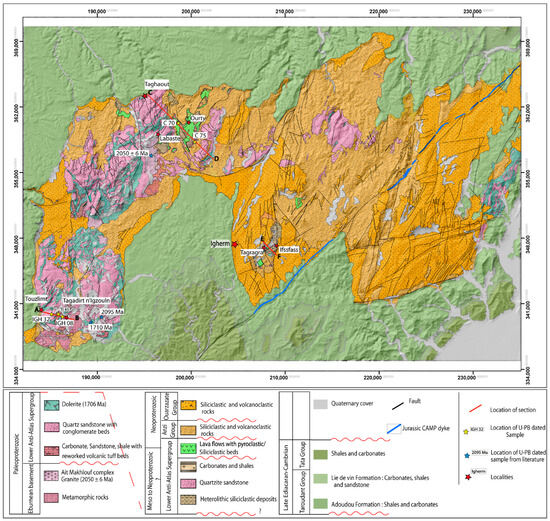
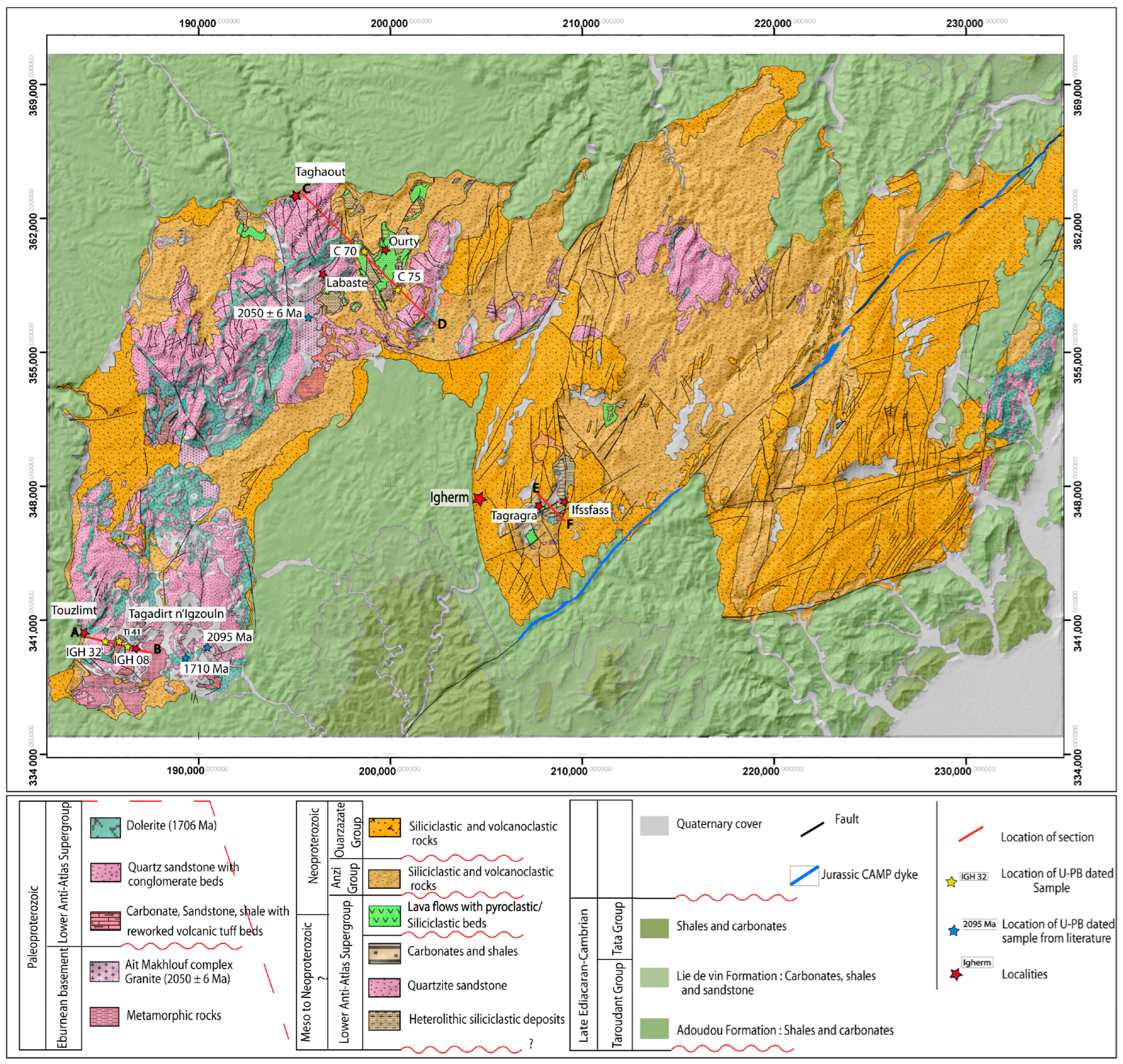
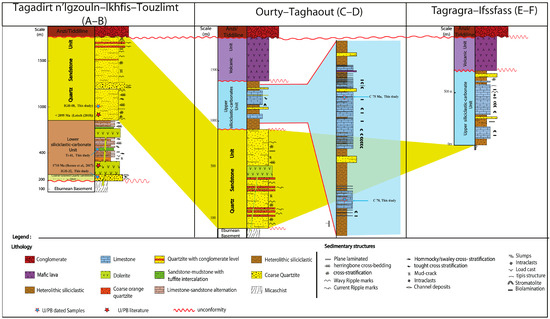
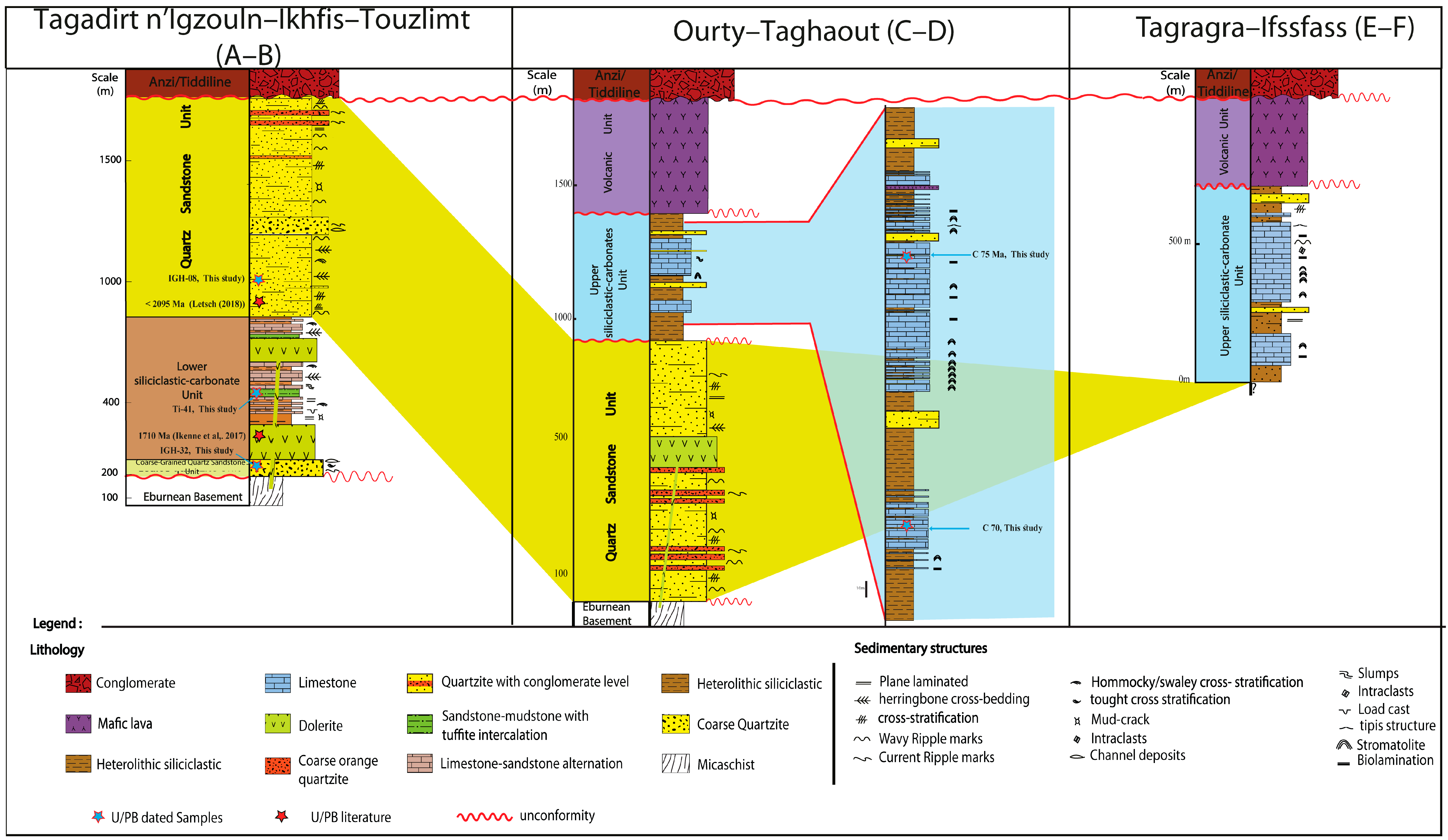
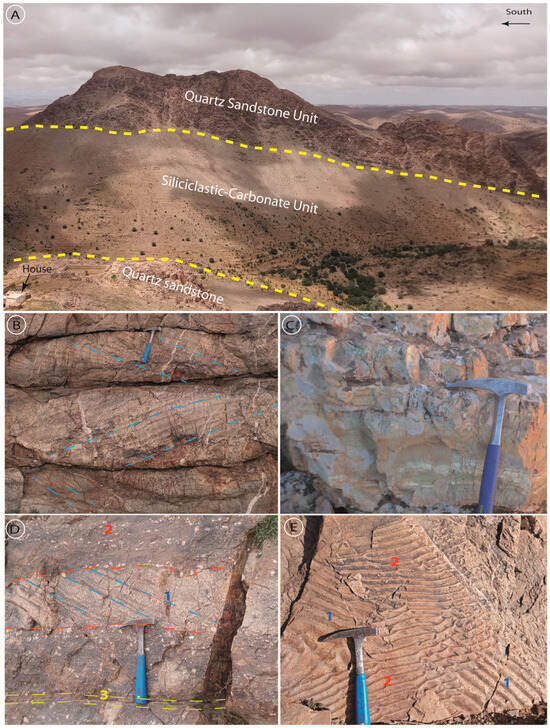
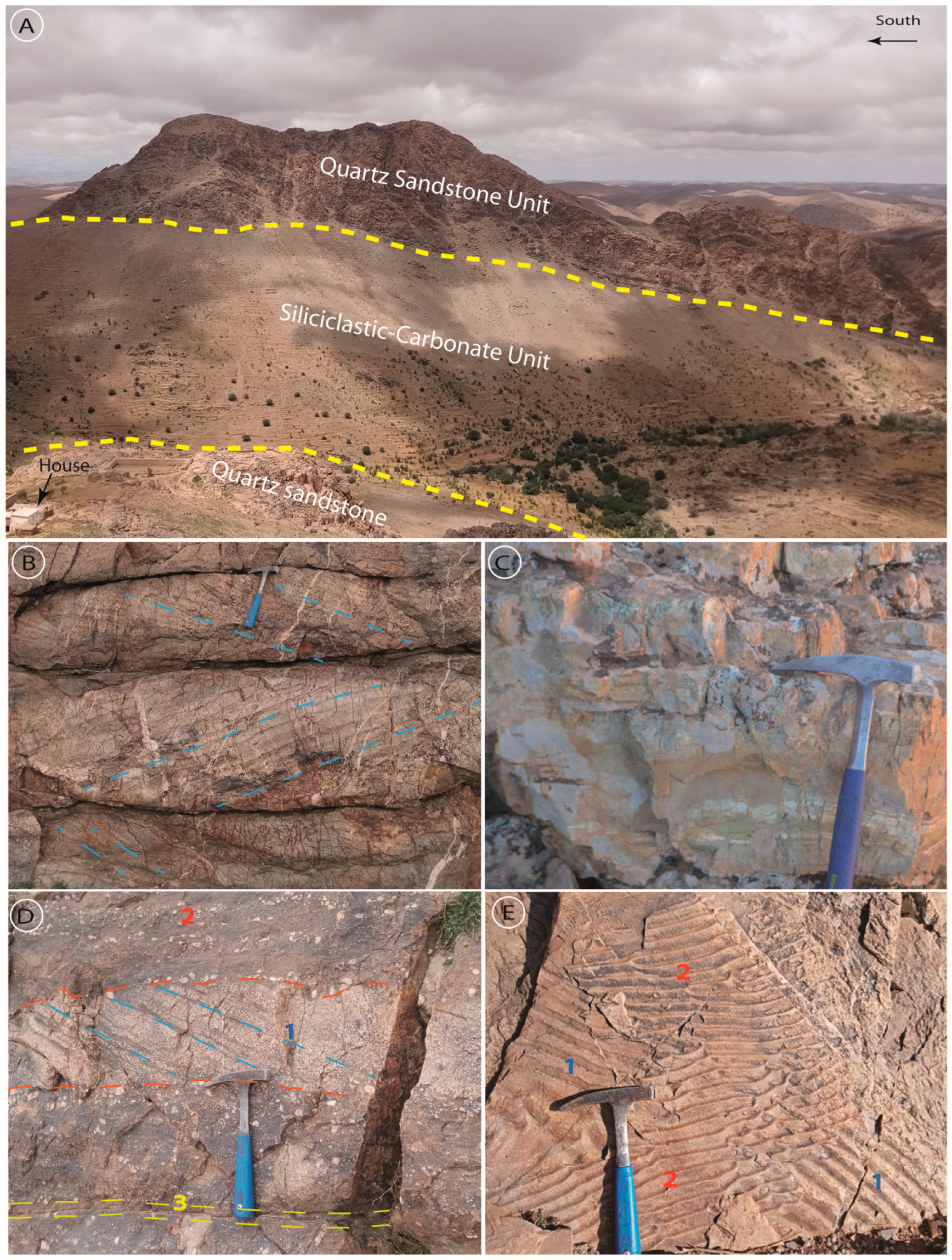
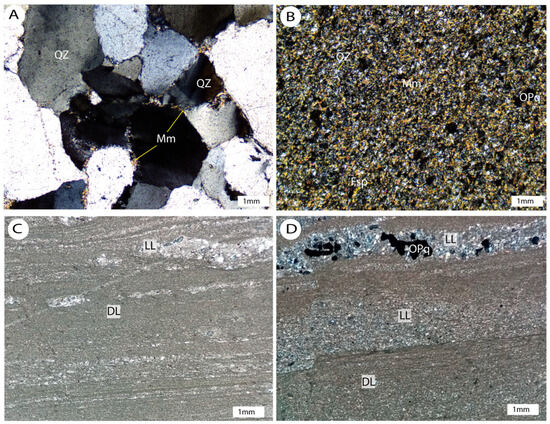
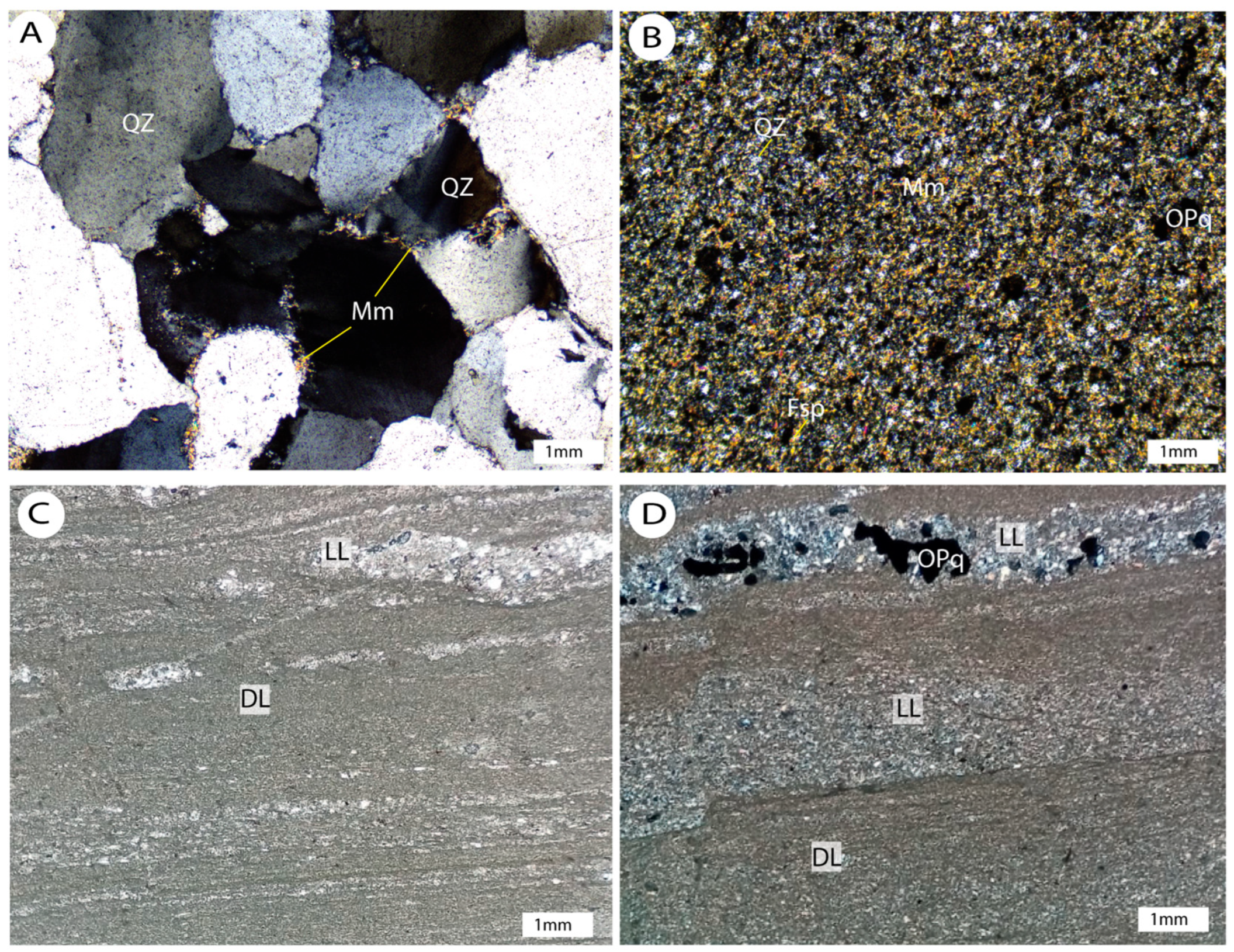
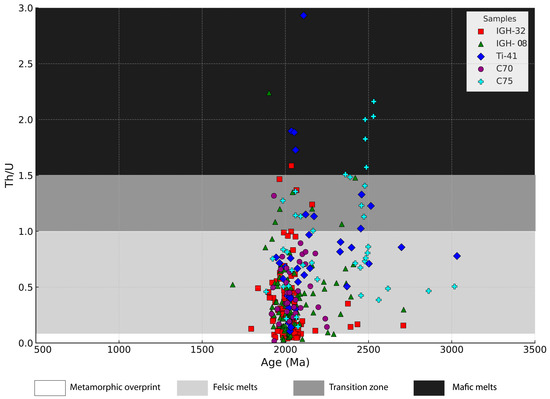
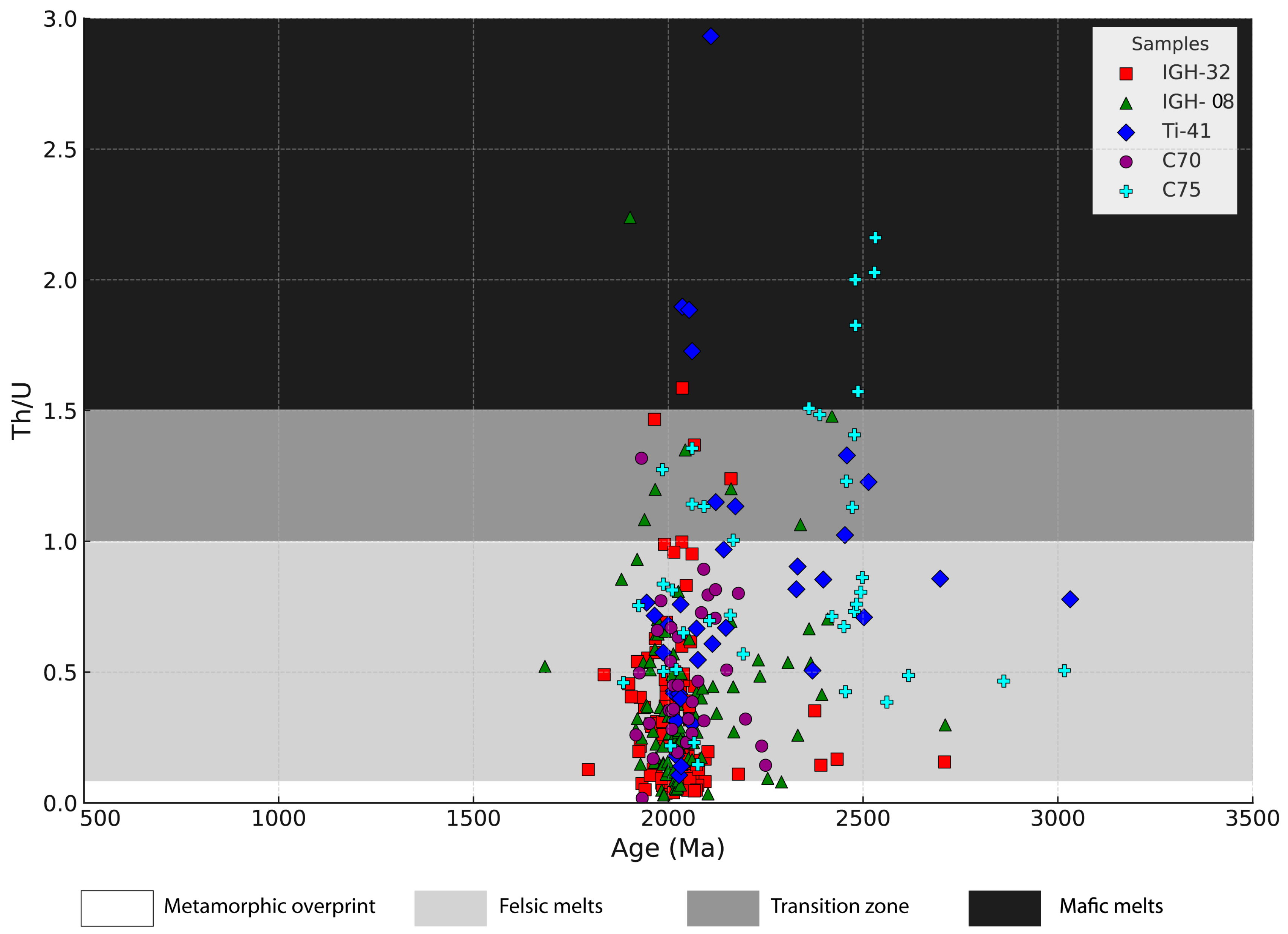
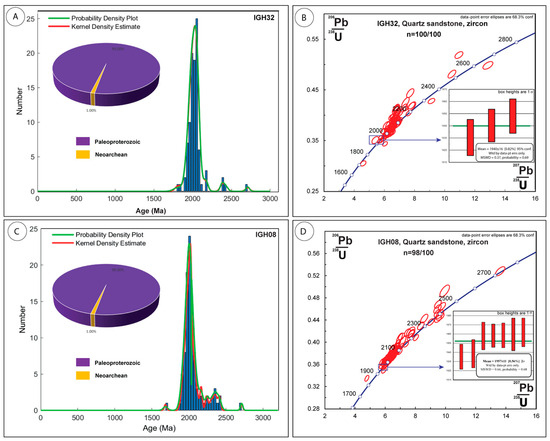
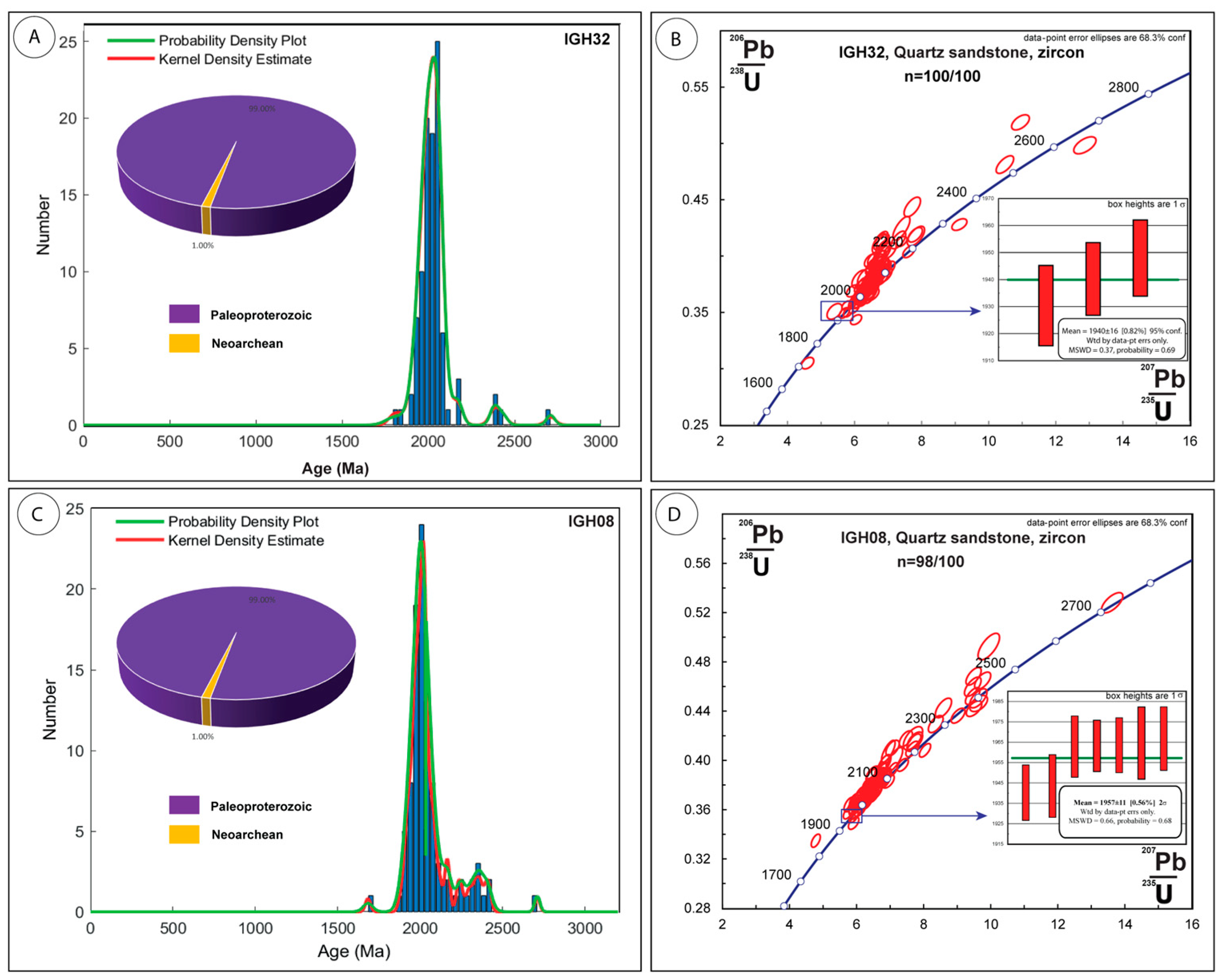
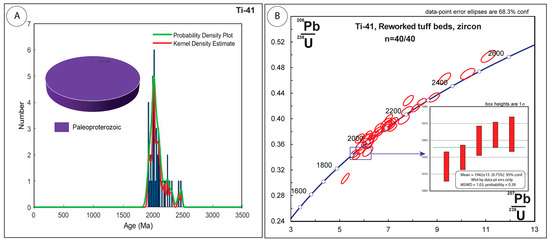
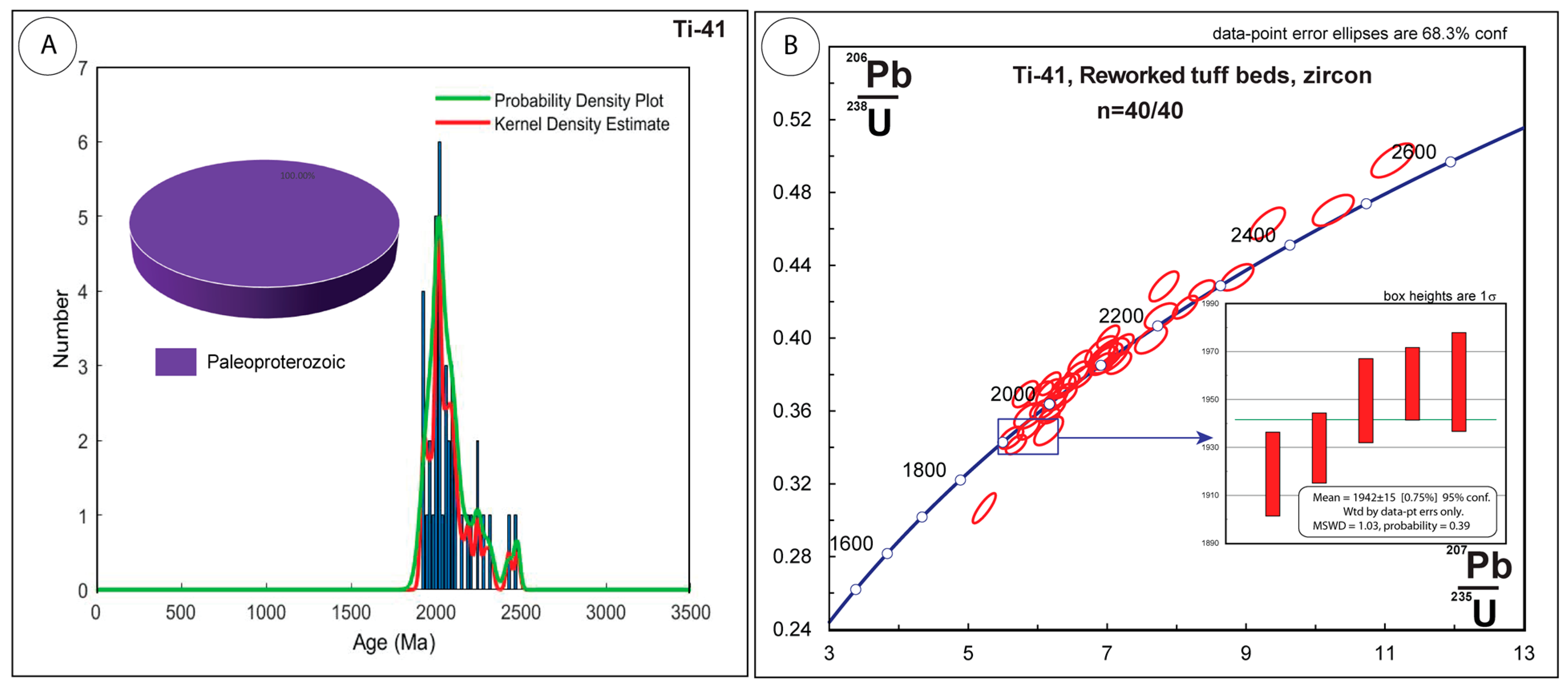
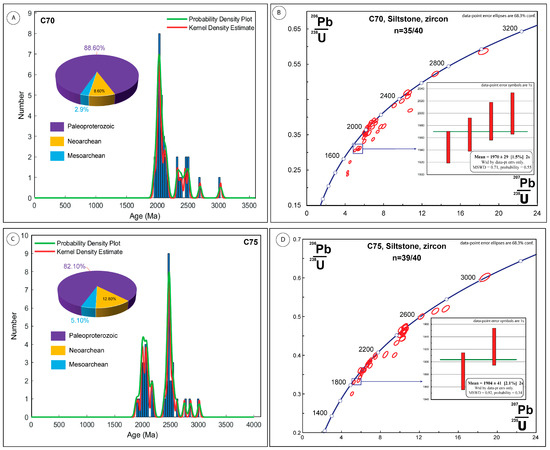
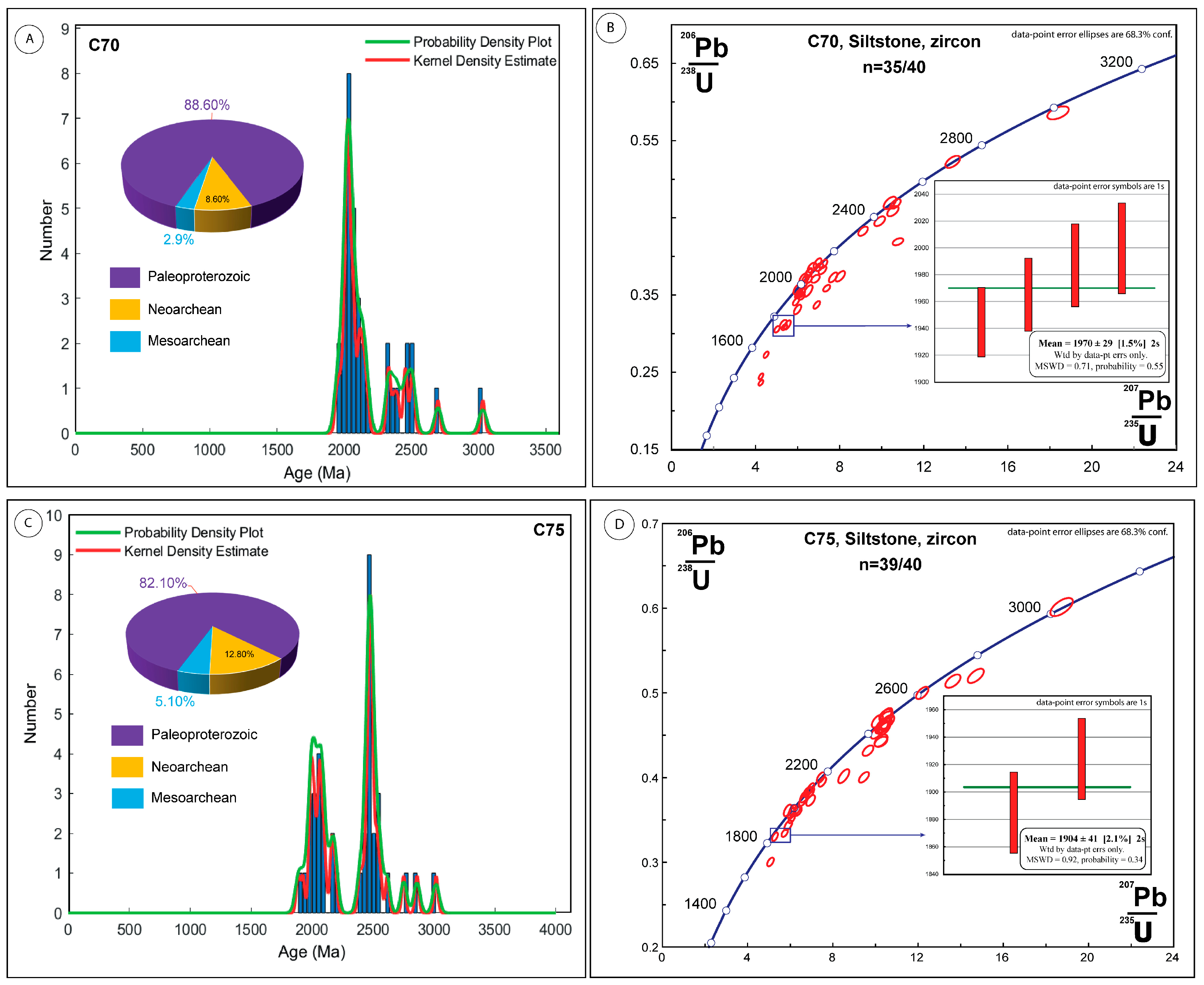
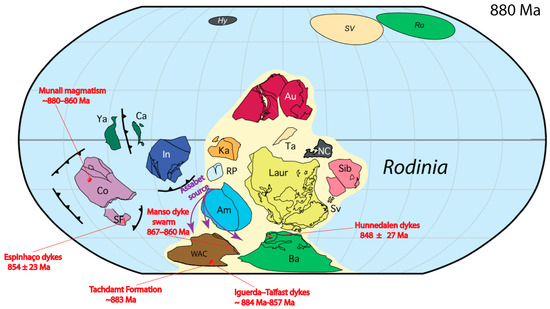
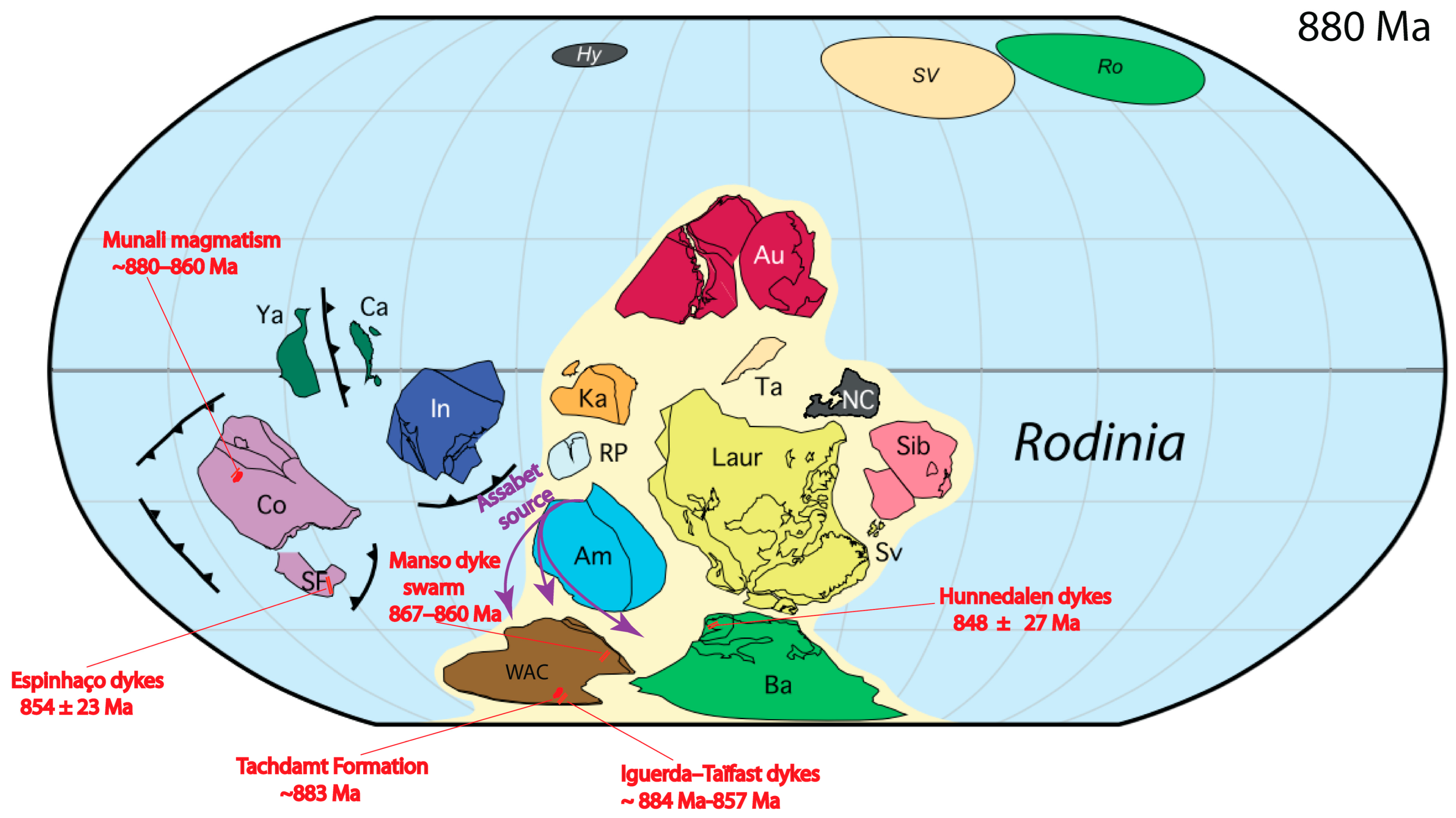
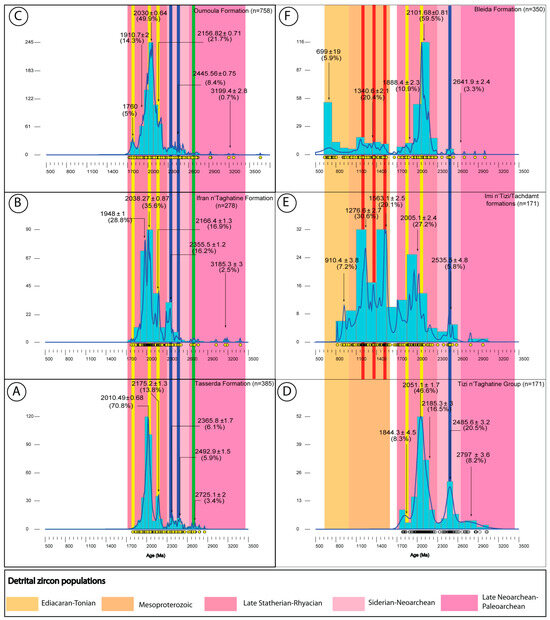
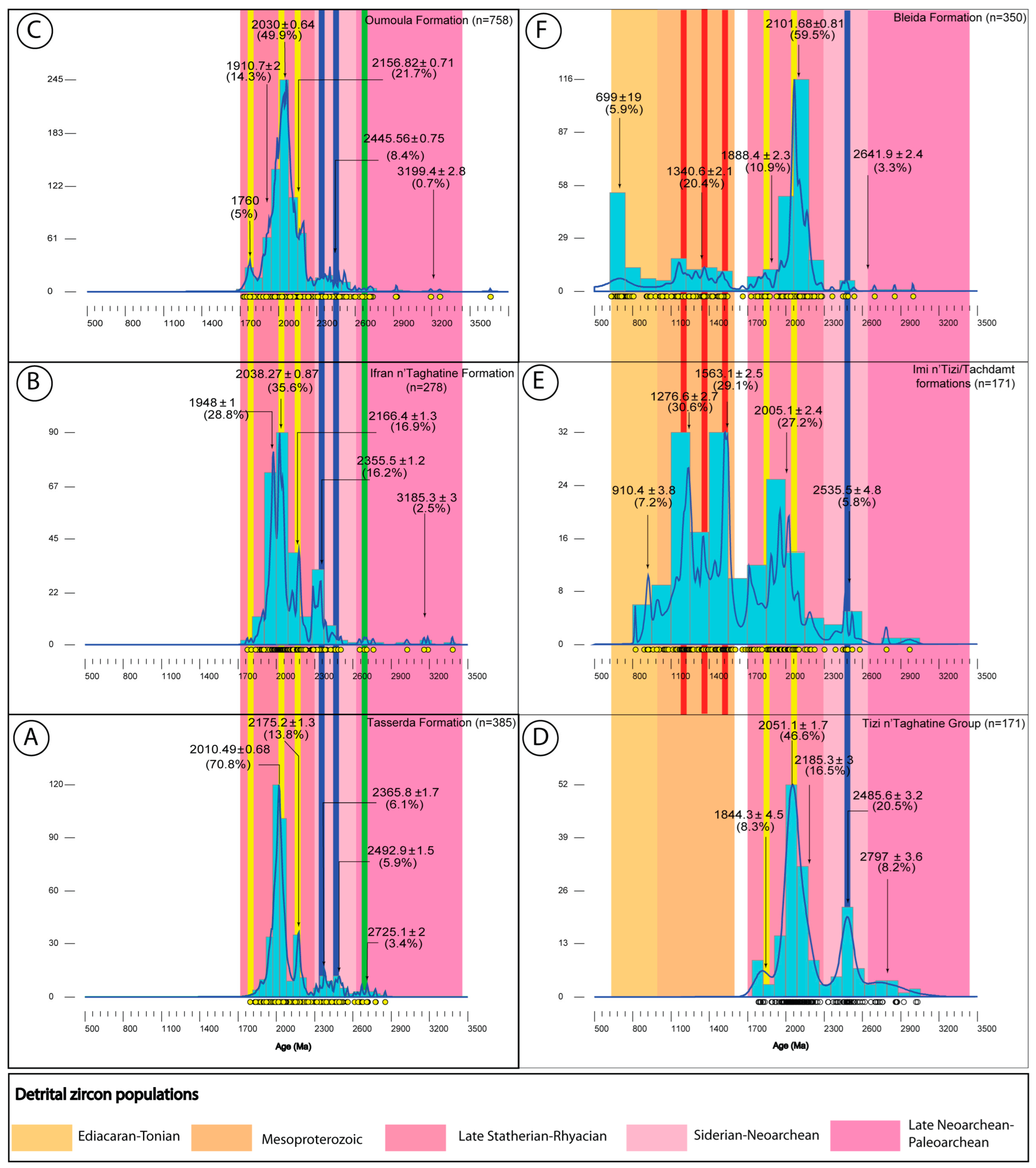
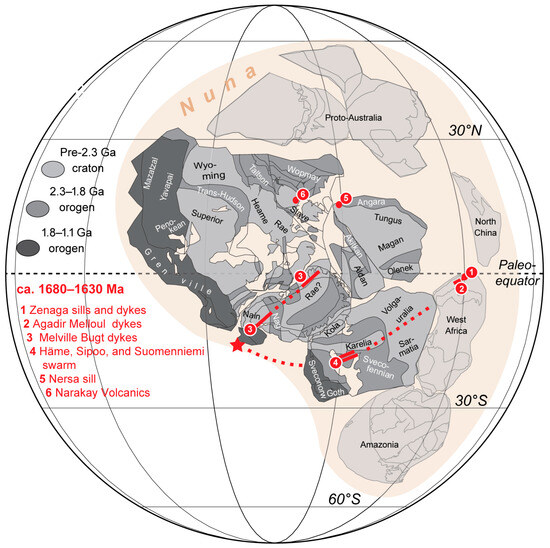
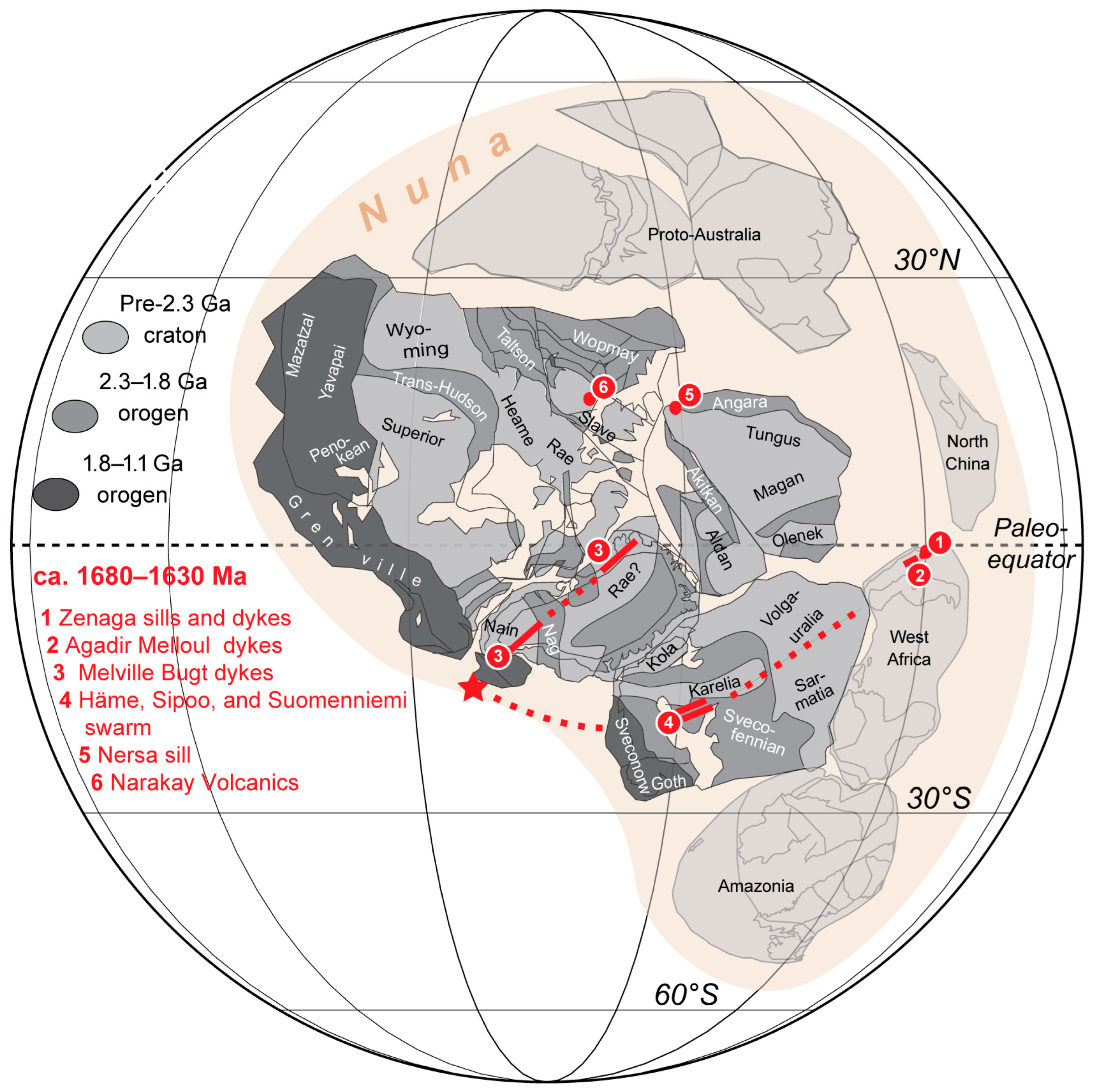
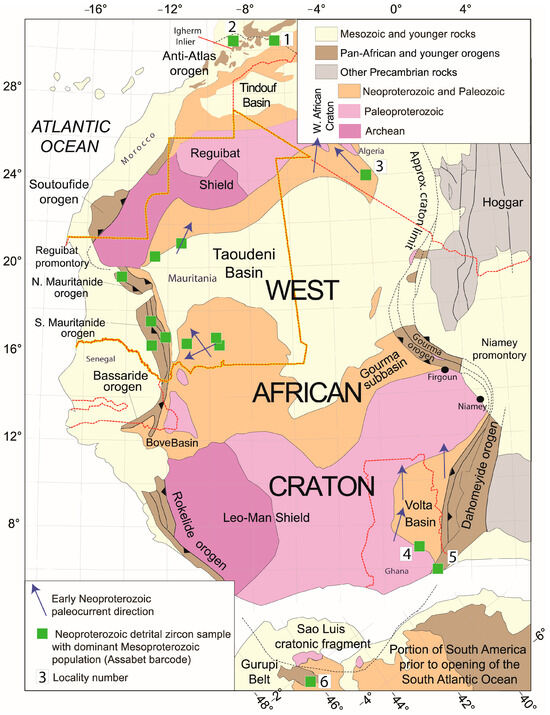
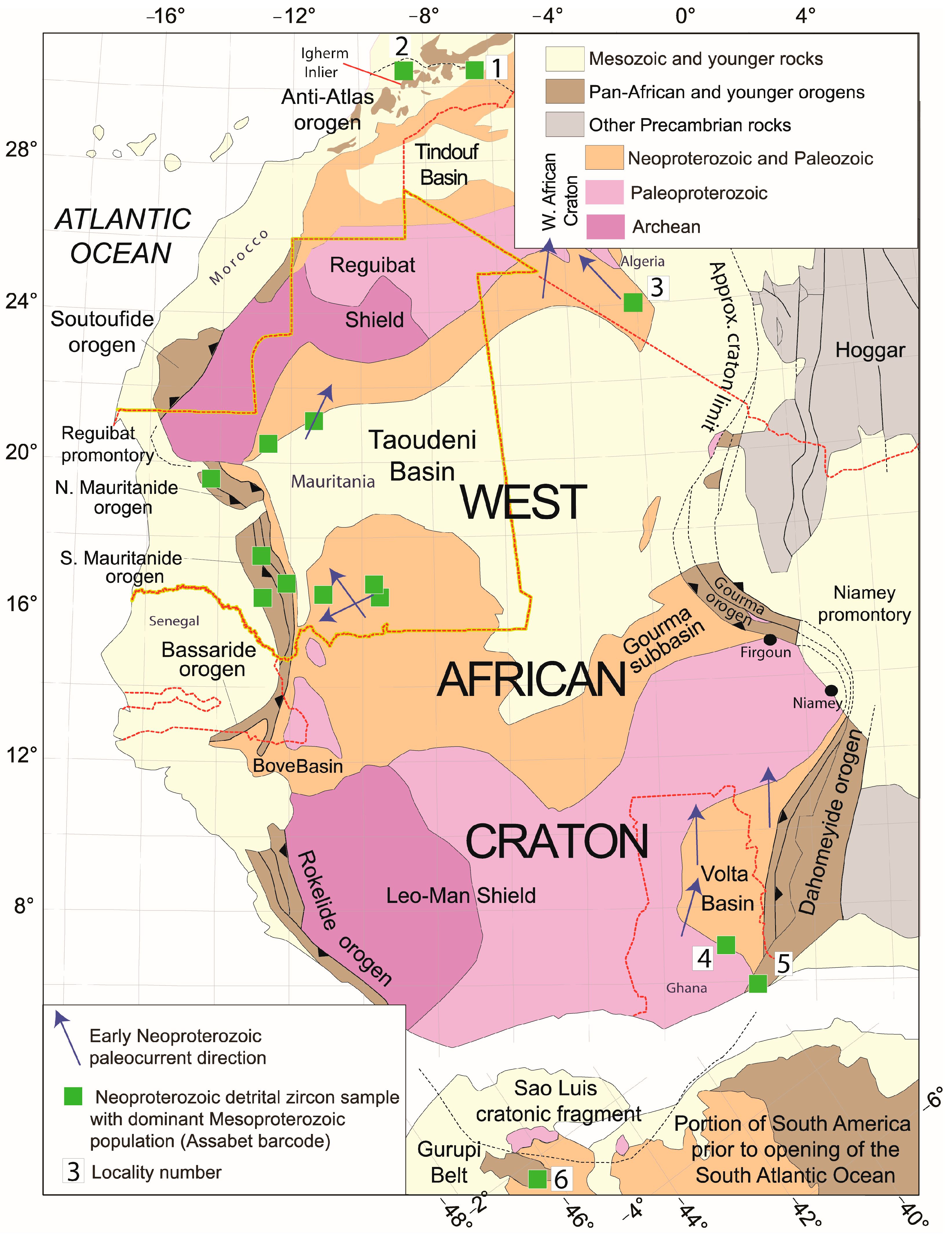
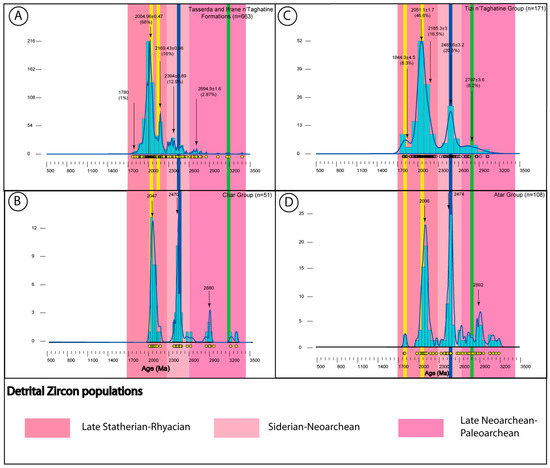
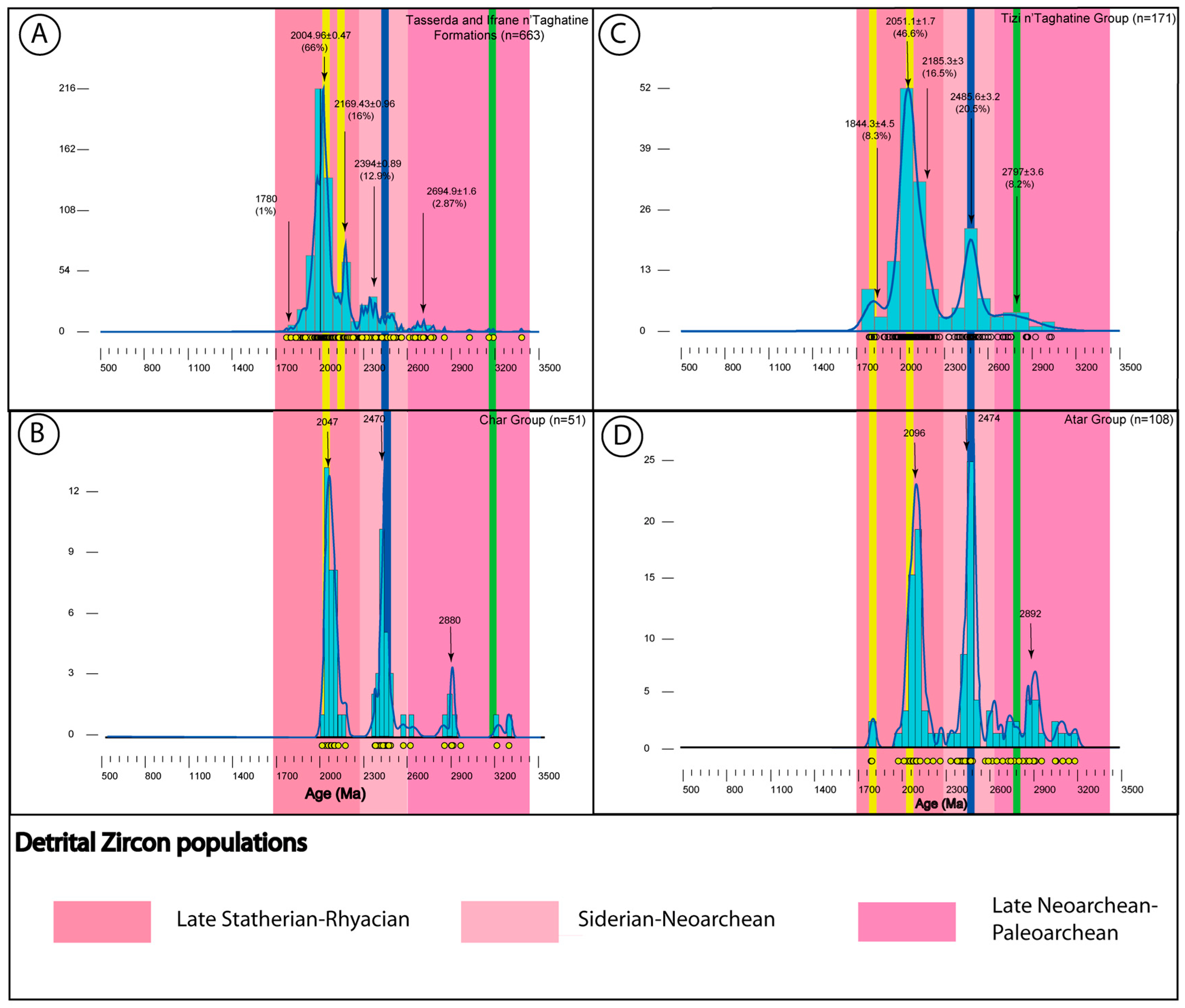
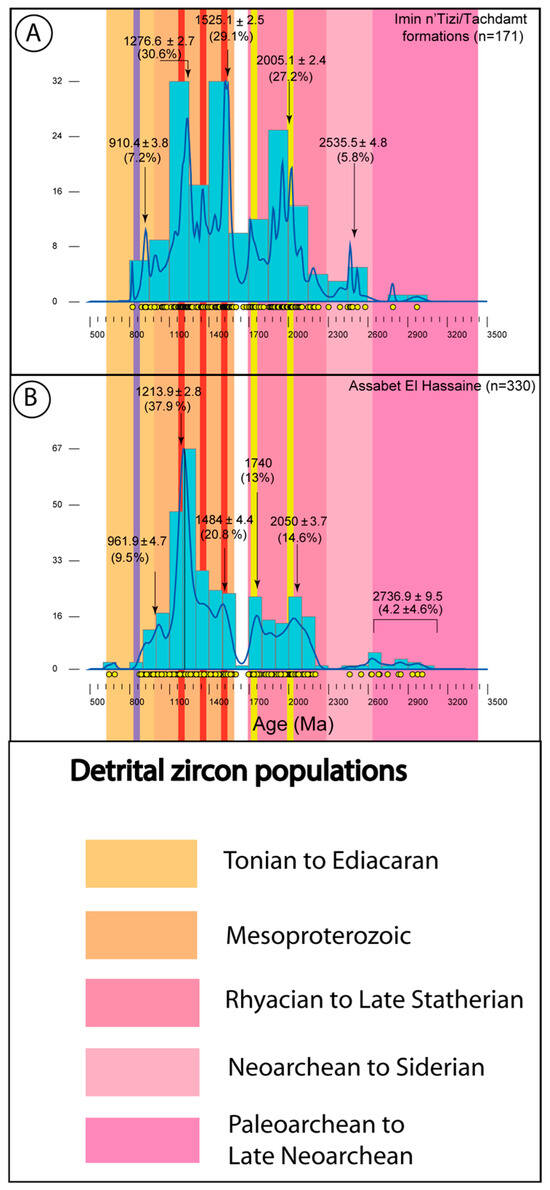
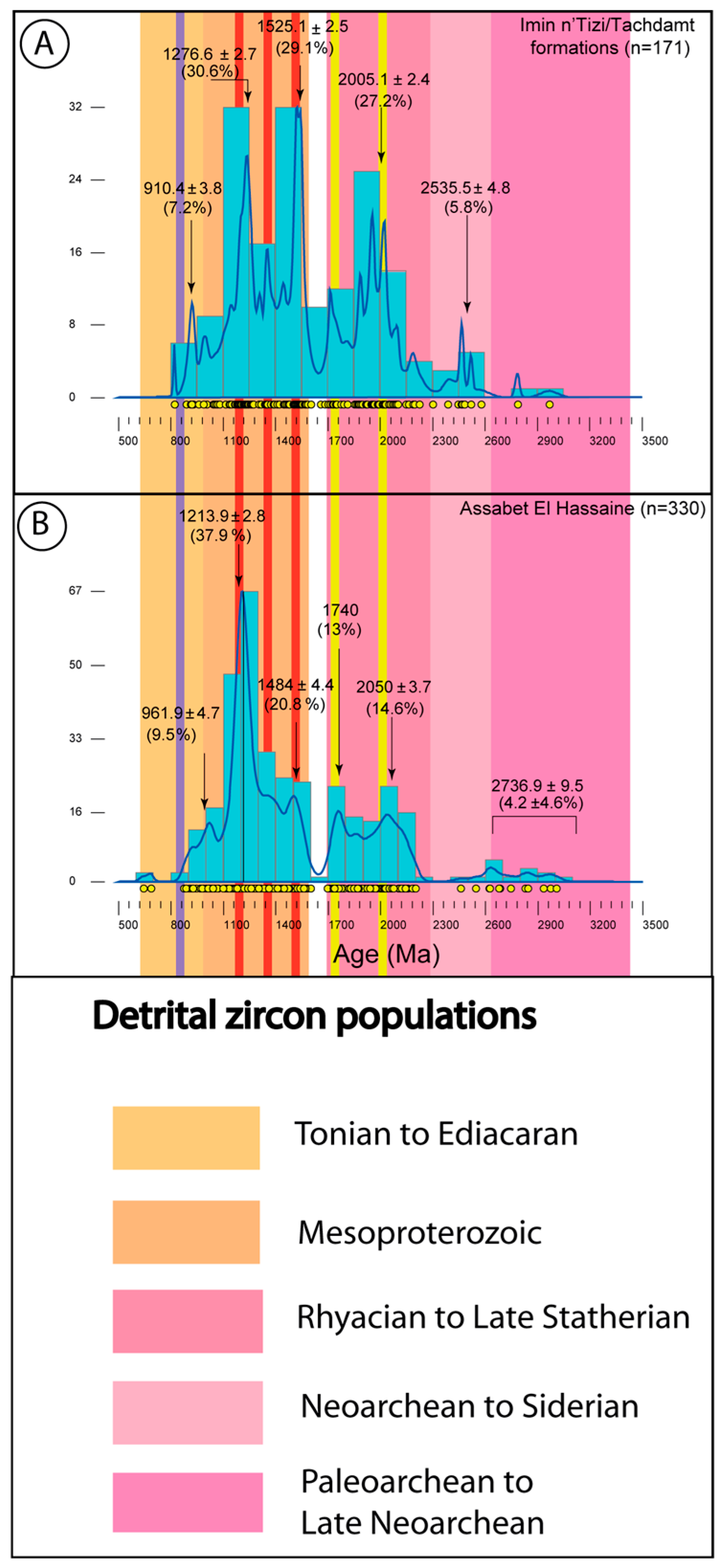

Disclaimer/Publisher’s Note: The statements, opinions and data contained in all publications are solely those of the individual author(s) and contributor(s) and not of MDPI and/or the editor(s). MDPI and/or the editor(s) disclaim responsibility for any injury to people or property resulting from any ideas, methods, instructions or products referred to in the content. |
© 2026 by the authors. Licensee MDPI, Basel, Switzerland. This article is an open access article distributed under the terms and conditions of the Creative Commons Attribution (CC BY) license.