


Abstract
Natural fractures play an important role in the heterogeneity and potential fluid-flow behavior of carbonate reservoirs, yet their spatial distribution and geological controls remain challenging to characterize across different scales. This study focuses on the Lower Triassic Feixianguan Formation in the T area, northeastern Sichuan Basin, China. An integrated dataset, including core observations, borehole image logs, outcrop measurements, and three-dimensional seismic data, was used to systematically characterize natural fracture systems and to constrain their principal controlling factors. The results indicate that natural fractures are predominantly tectonic in origin, comprising both shear and tensile fractures, whereas diagenetic fractures are of subordinate importance. The fracture systems are mainly steeply dipping and display multiple orientation sets, with dominant NE–SW and ENE–WSW trends. Approximately 77% of the observed fractures are unfilled or partially filled, suggesting their potential contribution to fluid flow, although their actual hydraulic effectiveness remains uncertain. Fault-related deformation is associated with lateral variations in fracture development, whereas mechanical stratigraphy is associated with vertical variations; folding and sedimentary facies also influence fracture heterogeneity. These findings provide new insights into the mechanisms governing fracture development in low-permeability carbonate reservoirs and provide a geological basis for fracture characterization and prediction.
1. Introduction
Low-permeability carbonate reservoirs represent important targets for hydrocarbon exploration and development because of their considerable resource potential [1,2,3]. These reservoirs commonly exhibit heterogeneous pore systems and relatively limited matrix permeability, making natural fractures potentially important pathways for fluid migration and reservoir connectivity [4,5,6]. However, the distribution and hydraulic significance of natural fractures depend on their geometrical characteristics, connectivity, and filling conditions. Therefore, understanding the spatial characteristics of natural fracture systems and their geological controls is essential for reservoir characterization and fracture prediction.
Natural fractures in carbonate reservoirs exhibit pronounced heterogeneity in orientation, density, and connectivity, which exerts a significant control on fluid flow behavior and production performance [2]. Previous studies have shown that fractures may function either as effective fluid conduits or as flow barriers, depending on their geometry, degree of filling, and spatial distribution [7,8].
The development of natural fractures is generally governed by multiple factors, including tectonic deformation, lithologic heterogeneity, and diagenetic processes [9,10]. Among these, tectonic processes, particularly faulting and folding, play a primary role in controlling fracture distribution, whereas rock mechanical properties and diagenetic modification exert important controls on fracture initiation, propagation, and preservation [11,12,13]. Despite considerable advances, the scale-dependent influences of these factors and their coupled interactions remain incompletely constrained.
The northeastern Sichuan Basin has undergone a complex tectonic evolution, characterized by multiple phases of deformation and diagenetic overprinting [14]. Reservoirs of the Lower Triassic Feixianguan Formation in this region are typified by complex pore systems and generally low permeability, representing typical low-permeability carbonate reservoirs dominated by fracture–pore networks with well-developed natural fractures [2,3,15]. Previous studies in this area have primarily focused on lithofacies paleogeography, sedimentary facies architecture, reservoir characterization, and hydrocarbon accumulation processes [3,16,17,18]. However, systematic investigations into the characteristics of natural fracture systems and their controlling mechanisms in low-permeability carbonate reservoirs remain limited.
The Lower Triassic Feixianguan Formation in the northeastern Sichuan Basin forms an important part of a marine carbonate petroleum system. Hydrocarbons were mainly derived from underlying marine source rocks, particularly the Upper Permian Longtan Formation, with potential contributions from the Lower Silurian Longmaxi Formation [19]. The Feixianguan Formation comprises oolitic limestone and dolomite reservoirs, whereas overlying evaporites and tight carbonate intervals provide effective sealing conditions. Previous studies suggest that natural gas accumulation involved early hydrocarbon charging, subsequent thermal cracking of accumulated oil, and later tectonic modification [19]. Faults and natural fractures may have provided important pathways for hydrocarbon migration and redistribution, highlighting the significance of understanding fracture characteristics and their geological controls.
Previous studies have provided important insights into natural fracture characteristics and controlling mechanisms in the Feixianguan Formation [20]. However, the spatial variations in fracture development and the coupled influences of different geological factors across multiple observational scales remain insufficiently constrained in the T area. Building on previous research, this study integrates core observations, borehole image logs, outcrop investigations, and three-dimensional seismic attributes to characterize natural fracture systems and their geological controls. In particular, the fracture development index (FDI) approach is applied to investigate lateral variations in fault-related fracture development, while outcrop and core observations are used to evaluate the relationships between fracture intensity, mechanical stratigraphy, sedimentary facies, and fold-related deformation. The main contribution of this study is to provide an integrated, multiscale assessment of fracture distribution and the scale-dependent influences of different geological controls, thereby improving the geological basis for fracture prediction in heterogeneous carbonate reservoirs.
2. Geological Setting
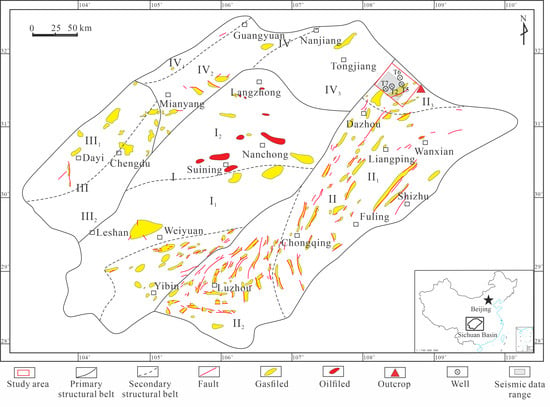
The Sichuan Basin, located in southwestern China, is a typical intracratonic sedimentary basin covering an area of approximately 260,000 km2 (Figure 1) and represents one of the largest petroliferous basins in China [14]. The basin developed on the Yangtze Craton and exhibits a rhombic geometry, underlain by a Precambrian metamorphic–volcanic basement [21]. Based on its structural framework, the basin can be subdivided into four first-order tectonic units: the central Sichuan gentle fold belt, the eastern Sichuan high-steep fold belt, the western Sichuan thrust–nappe fold belt, and the northern Sichuan low-relief fold belt (Figure 1).
Figure 1.
Geographic location and tectonic framework of the Sichuan Basin (modified from [22]. Character I represents Central Sichuan gentle fold belt, I1 represents Weiyuan Longnvsi massive uplift structural belt, I2 represents Central Sichuan ladder low flat structural belt, I3 represents Zigong low and medium fold structural belt; Character II represents East Sichuan high-steep fold belt, II1 represents East Sichuan high steep structural belt, II2 represents East Sichuan high and medium complex structural belt, II3 represents Northeast Sichuan imbricated complex structural belt; Character III represents West Sichuan nappe fold belt, III1 represents Guanxian–Mingshan high and medium structural belts, III2 represents Longquanshan-Xiongpo nappe belt; Character IV represents Northern Sichuan low-relief fold belt, IV1 represents Longmenshan piedmont nappe belt, IV2 represents Zitong gentle structural belt, IV3 represents Tongjiang low flat structural belt.
Since its formation, the Sichuan Basin has undergone multiple phases of tectonic evolution, including the Tongwan, Caledonian, Indosinian, Yanshanian, and Himalayan orogenies [15,21]. The superposition of these tectonic events has resulted in a complex structural architecture characterized by the widespread development of faults and folds. The study area is structurally situated within a superimposed zone between the eastern Sichuan high-steep fold belt and the Tongjiang low-relief fold belt (Figure 1).
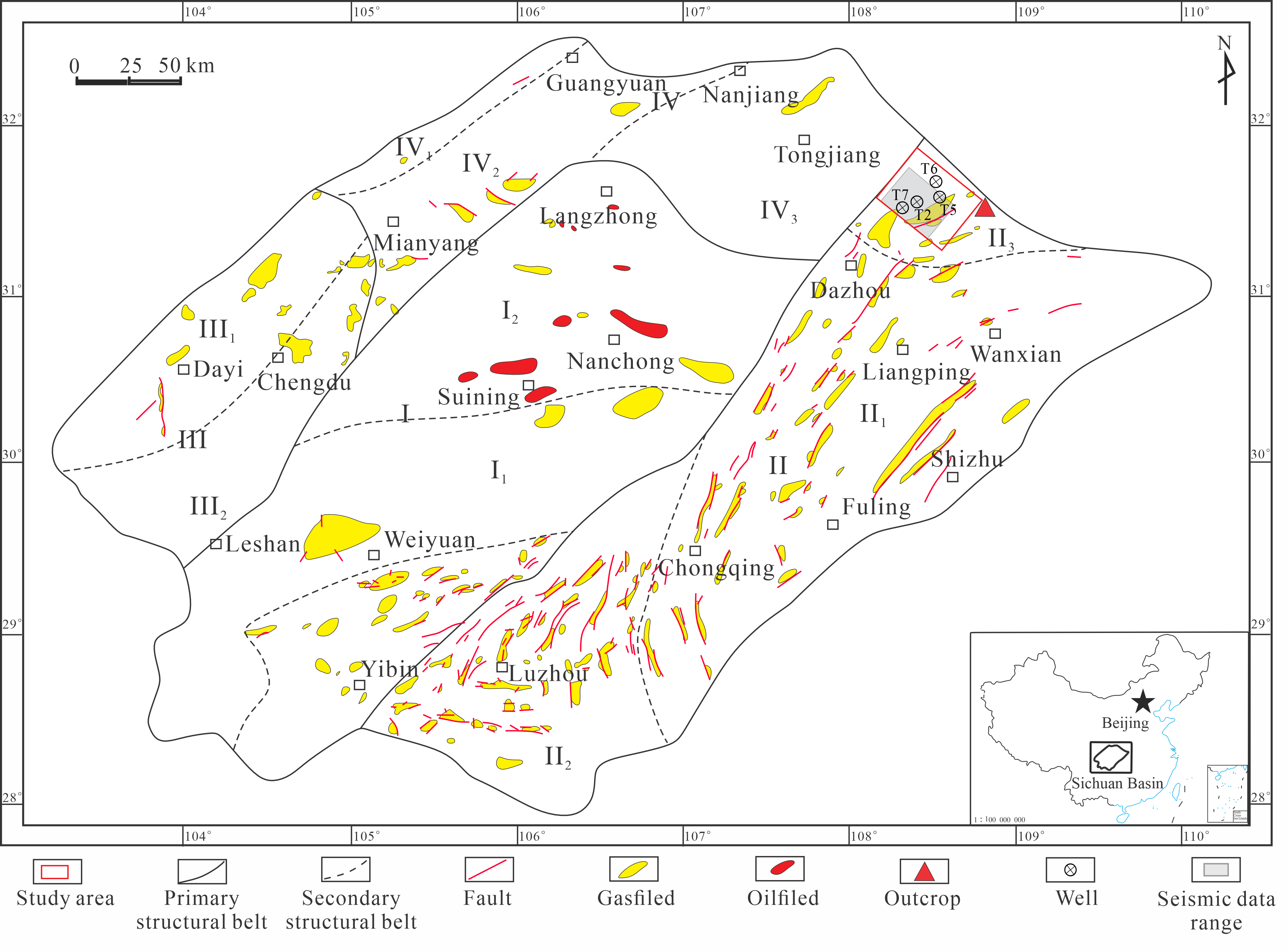
From the Sinian to the Middle Triassic, the basin was dominated by marine sedimentation [22], whereas since the Late Triassic, depositional systems have progressively transitioned to transitional and continental environments. Within the Paleozoic succession, parts of the Upper Silurian, Devonian, and Carboniferous strata are absent, whereas other intervals are relatively well preserved [23,24]. The target interval of this study is the Lower Triassic Feixianguan Formation in the T area, which exhibits a relatively stable thickness of approximately 400 m (Figure 2).
Figure 2.
Stratigraphic framework and timing of major tectonic events in the Sichuan Basin (modified from [15]). The yellow highlighted box marks the target interval of this study.
Reservoir rocks of the Feixianguan Formation in the T area mainly comprise residual oolitic dolomicrite, dissolution-enhanced porous dolomicrite to fine-crystalline dolomite, and oolitic limestone [23]. Extensive dolomitization and recrystallization have significantly modified the original depositional textures, resulting in the widespread obliteration of primary fabrics [24]. The reservoir space consists of a combination of primary and secondary pores, vugs, and natural fractures, forming a complex pore–fracture–vug network that is predominantly fracture–pore type [22,25,26,27,28,29,30,31,32,33,34,35,36]. The Feixianguan Formation reservoirs in the T area exhibit considerable heterogeneity in petrophysical properties. According to the available petrophysical data, reservoir porosity ranges from 0.72% to 21.76%, with an average of 5.74%, whereas permeability ranges from approximately 0.00133 to 171.2 mD, with an average of approximately 8.38 mD. These characteristics indicate relatively low average permeability, although locally higher-porosity and higher-permeability intervals are present. Given the heterogeneous matrix properties, natural fractures may provide additional storage space and potentially enhance fluid-flow pathways by connecting pores and vugs. However, the actual hydraulic effectiveness of these fractures depends on their aperture, connectivity, and filling characteristics.
3. Materials and Methods
This study focuses on the Lower Triassic Feixianguan Formation in the T area and adjacent regions. A total of 19 wells were systematically analyzed, with a cumulative core length of approximately 780 m. Detailed core descriptions were conducted to characterize natural fractures in terms of type, occurrence, density, and filling characteristics. Fracture linear density was used as a quantitative proxy for fracture intensity. Core descriptions and petrographic thin-section observations were integrated to identify the principal carbonate lithofacies and characterize their sedimentary and diagenetic features. On this basis, fracture occurrences identified from core observations were associated with the corresponding sedimentary subfacies, and fracture linear densities were statistically compared among different subfacies. Core-derived fracture density statistics were then summarized by sedimentary subfacies.
Building on core-based observations, field investigations were conducted on representative Feixianguan Formation carbonate outcrops in the northeastern Sichuan Basin. Systematic structural measurements were performed to document fracture types and spatial distributions. Fracture orientations were measured using a geological compass, and statistical analyses were carried out for different fracture sets. In addition, the spatial distribution of fractures and their relationship with structural elements were evaluated, with particular emphasis on the control exerted by vertical mechanical stratigraphy on fracture intensity. For the fold-related outcrop comparison, areal fracture intensity was defined as the cumulative fracture trace length per unit mapped area (m/m2). This measure was evaluated separately from core-based fracture linear density (fractures/m).
At the borehole scale, borehole image logs from five wells were used to characterize fracture development. Natural fractures were identified and interpreted from image log datasets, and key parameters, including fracture orientation, density, and filling characteristics, were extracted. These results were used to complement and validate core- and outcrop-based observations.
At the regional scale, high-resolution three-dimensional seismic data with a dominant frequency of approximately 30 Hz were used to interpret fault systems and fault-related fracture networks. The interval P-wave velocity of the carbonate rocks in the Feixianguan Formation is approximately 5000 m/s, corresponding to an estimated vertical resolution of approximately 42 m based on the quarter-wavelength criterion and a nominal lateral resolution of approximately 83 m based on the half-wavelength approximation for migrated seismic data.
Key stratigraphic horizons were carefully mapped and correlated by integrating regional geological and geophysical datasets. Well-to-seismic ties were established using synthetic seismograms to calibrate seismic reflections with stratigraphic boundaries, thereby improving the reliability of seismic interpretation.
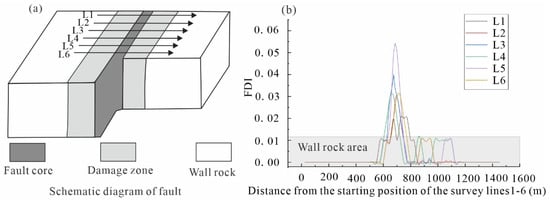
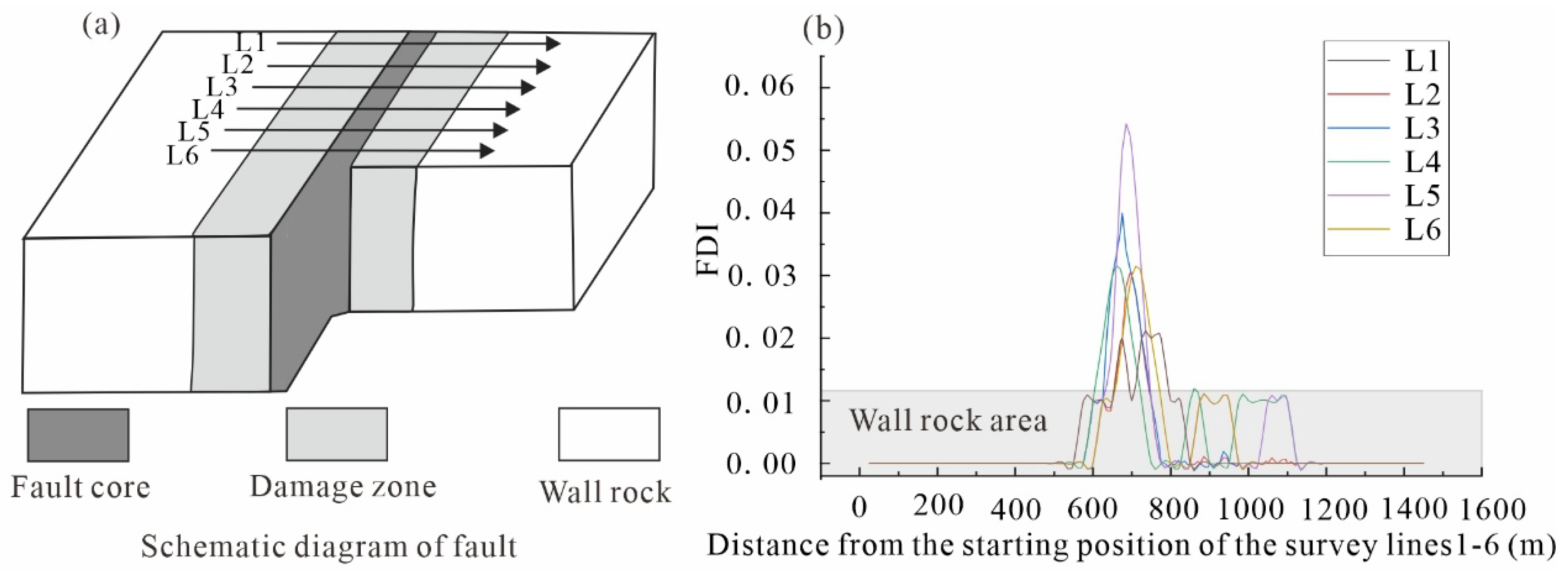
Following the quantitative workflow proposed by Yao et al. [20], seismic coherence attributes were extracted to identify fault systems and associated damage zones, and a fracture development index (FDI) was constructed to characterize spatial variations in fracture development at different stratigraphic levels (Figure 3). Seismic profiles perpendicular to fault strike were selected, and FDI values were resampled at 25 m intervals to quantify lateral variations in fracture intensity along each profile (Figure 3a).
Figure 3.
Schematic diagram of analyzing the fault zone width using the fracture development index (FDI) method [20]. (a) Schematic diagram of the fault. Survey lines are arranged perpendicular to the fault strike. (b) Variations in FDI on different survey lines. L1 to L6 are the survey line numbers in Figure 3a.
However, the actual lateral resolution also depends on acquisition geometry, seismic processing and migration procedures, and target depth. Importantly, the 25 m FDI resampling interval represents the spatial sampling step rather than the effective seismic resolution and does not imply that damage zone boundaries can be resolved with an accuracy of 25 m.
Given the structural complexity of fault damage zones and the uncertainties associated with seismic attribute interpretation, damage zone boundaries cannot always be precisely delineated (Figure 3b). To reduce subjectivity, cumulative FDI distributions and variations in their slopes were analyzed to identify transitions in fracture intensity between damage zones and surrounding host rocks, following the cumulative fracture intensity approach described by Choi et al. [27]. Although the interpreted damage zone widths are substantially greater than the nominal lateral seismic resolution, attribute smoothing and coherence-related smearing may affect the apparent positions of FDI inflection points. Accordingly, these inflection points were interpreted as approximate transitions in fracture intensity rather than sharply defined geological boundaries.
Core observations and image log interpretations were integrated to provide independent geological constraints on the seismically inferred damage zones. Fracture intensity variations derived from available well data were compared with the corresponding FDI patterns to assess the consistency between seismic-scale fracture anomalies and well-scale fracture development. This integrated approach helps constrain the spatial extent of fault-related damage zones while acknowledging the uncertainties inherent in seismic-based boundary delineation.
Finally, core, borehole image-log, outcrop, and seismic observations were integrated to qualitatively discuss the scale-dependent and coupled associations between geological factors and natural fracture development. Indicators obtained from different measurement types were not combined to calculate percentage contributions.
4. Results
4.1. Types of Natural Fractures
Based on their interpreted origins and geometrical characteristics, the natural fracture-related features observed in the Feixianguan Formation reservoirs of the T area are grouped into two principal categories, tectonic fractures and diagenetic features, following the general genetic classification framework discussed by Lavenu et al. [28]. Tectonic fractures are predominant and can be further subdivided into shear and tensile fractures according to their failure mechanisms. Diagenetic features mainly include bedding-related discontinuities and stylolites associated with pressure dissolution.
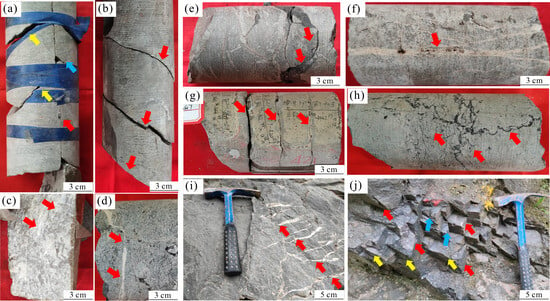
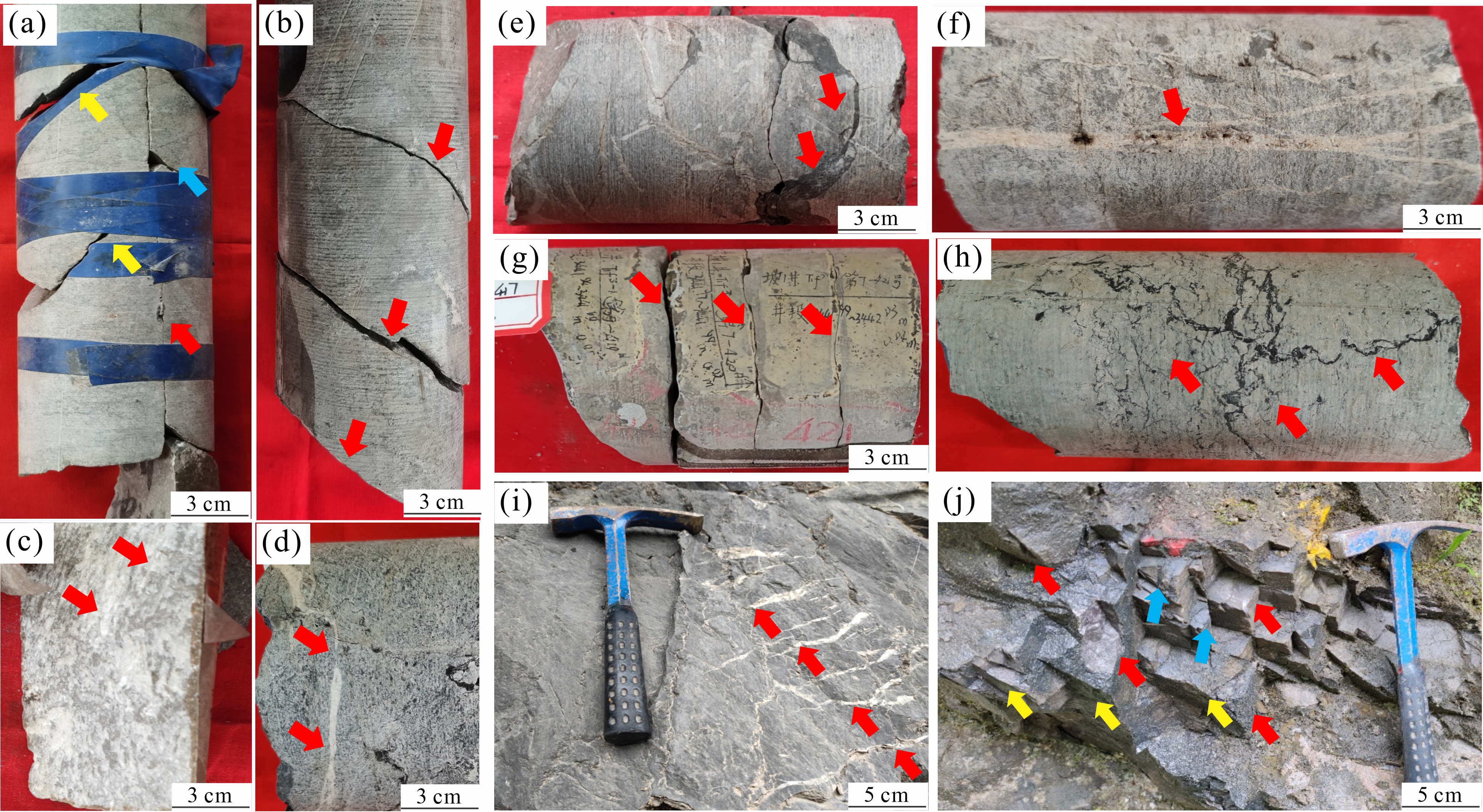
Tectonic shear fractures constitute the most abundant fracture type in the study area. They commonly occur in systematic sets and are often arranged in en echelon arrays. These fractures are characterized by relatively long trace lengths, consistent orientations, and smooth planar surfaces (Figure 4a,b,j). Core observations indicate that some early-formed high-angle shear fractures have undergone significant dissolution enhancement due to later fluid–rock interactions, particularly within medium- to coarse-crystalline dolomite. This dissolution modification has effectively enhanced pore structure and improved fracture connectivity within the reservoir system (Figure 4f).
Figure 4.
Fracture characteristics from cores and outcrops of the Feixianguan Formation. (a) Coexisting fracture sets comprising two high-angle fracture sets and one low-angle fracture set, Well T4, 3376.25 m. (b) Moderate-angle tectonic shear fractures, Well T4, 3366.55 m. (c) Slickensides on fracture surfaces indicating shear displacement, Well T4, 3453.41 m. (d) Tectonic tensile fractures, Well T6, 3521.50 m. (e) Mud-filled tensile fractures, Well T2, 4067.41 m. (f) Dissolution-enhanced calcite-filled shear fractures, Well T5, 5191.04 m. (g) Multiple sub-parallel bedding-parallel fractures, Well T2, 3441.90 m. (h) Two nearly orthogonal stylolites, Well T5, 5028.17 m. (i) Sub-parallel tensile fracture set in the Feixianguan Formation at the Dishuiya outcrop, northeastern Sichuan Basin. (j) Intersecting high-angle tectonic shear fracture sets at the Panlongdong outcrop, northeastern Sichuan Basin. Arrows of different colors represent different fracture sets.
Core and outcrop observations reveal the coexistence of multiple fracture sets with contrasting geometrical characteristics. In Well T4, two high-angle fracture sets and one low-angle fracture set are observed within the same core interval (Figure 4a). Similarly, three distinct high-angle fracture sets are identified at the Panlongdong outcrop (Figure 4j). These fracture assemblages demonstrate considerable geometrical complexity at both core and outcrop scales. The coexistence of multiple fracture sets is consistent with a complex deformation history, potentially involving successive fracture formation and modification. However, the relative formation sequence of these fracture sets cannot be unequivocally determined from their geometrical characteristics alone.
In contrast, tensile fractures are less continuous and exhibit more variable orientations, shorter trace lengths, and irregular geometries. They commonly display lens-shaped morphologies with rough, uneven surfaces and variable aperture widths (Figure 4c–e,i).
Diagenetic fractures are mainly represented by bedding-parallel fractures and stylolites. Bedding-parallel fractures typically develop along stratification planes and are characterized by discontinuous occurrence, curved geometries, and frequent branching (Figure 4g). Stylolites exhibit serrated to irregular wavy morphologies, predominantly occurring as low-angle features, whereas high-angle stylolites are relatively rare. In some cases, low-angle stylolites intersect with high-angle stylolites. Their apertures are highly variable, and localized bitumen fillings are occasionally observed (Figure 4h).
4.2. Characteristics of Natural Fractures
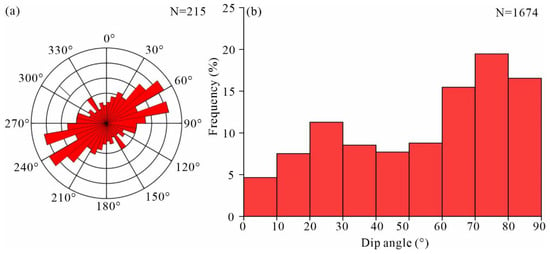
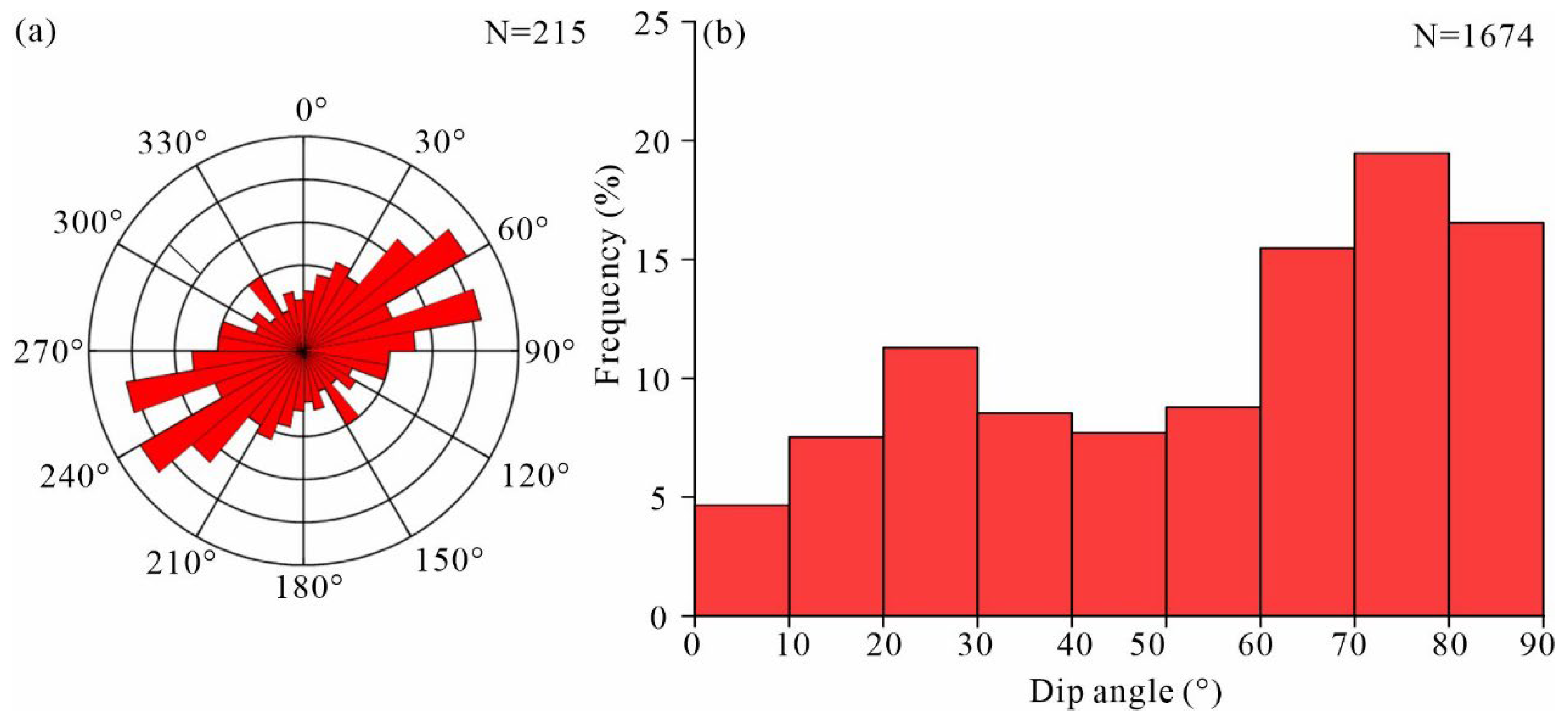
Natural fractures in the study area exhibit multiple orientation sets and can be grouped into four principal trends: NE–SW, ENE–WSW, E–W, and NW–SE. Among these, the NE–SW and ENE–WSW sets are dominant, accounting for the majority of observed fractures (Figure 5).
Figure 5.
Fracture orientation characteristics of the Feixianguan Formation in the T area. (a) Fracture strike distribution derived from borehole image log data. (b) Fracture dip-angle distribution derived from borehole image logs and core data.
Based on dip angle, fractures are classified into high-angle (60–90°), moderate-angle (30–60°), and low-angle (0–30°) categories. Core-based statistical analysis indicates that high-angle fractures are predominant, accounting for 52% of the total population, whereas moderate- and low-angle fractures account for 25% and 23%, respectively. Overall, the fracture system is dominated by steeply dipping fractures (>60°), indicating a strong tectonic control on fracture development.
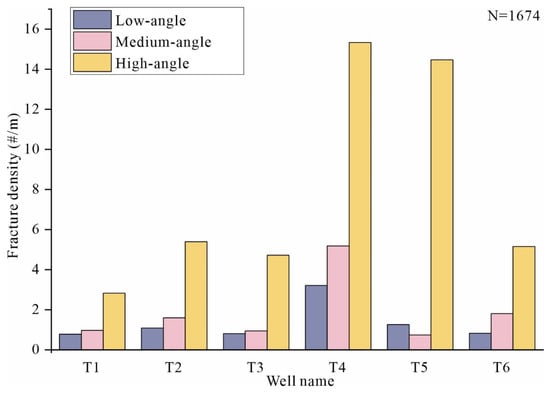
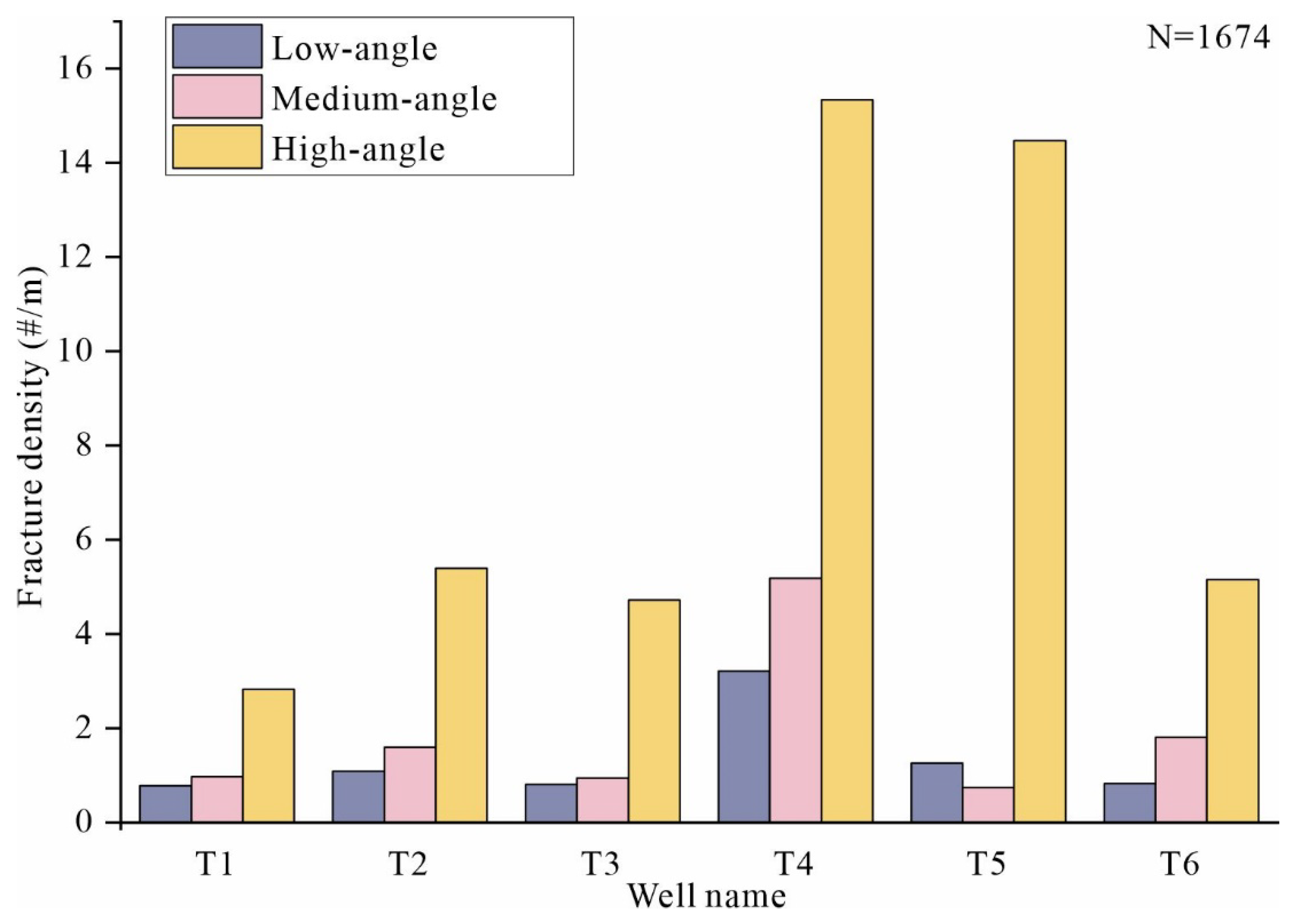
Fracture intensity is generally high across the study area, with fracture linear densities exceeding 5 fractures/m in most wells. Among them, Well T4 exhibits the highest fracture intensity (23.7 fractures/m), followed by Well T5 (16.5 fractures/m), whereas Well T1 shows relatively poor fracture development, with a density of 4.6 fractures/m (Figure 6).
Figure 6.
Fracture density variations with dip angle across different wells in the Feixianguan Formation, T area. Well locations are shown in Figure 1.
Significant variations in fracture density are observed among different dip-angle populations. High-angle fractures exhibit the highest densities (2.8–15.3 fractures/m), followed by moderate-angle fractures (0.7–5.2 fractures/m), whereas low-angle fractures show the lowest values (0.8–3.2 fractures/m) (Figure 6). These results further confirm that high-angle fractures constitute the dominant fracture population in the T area.
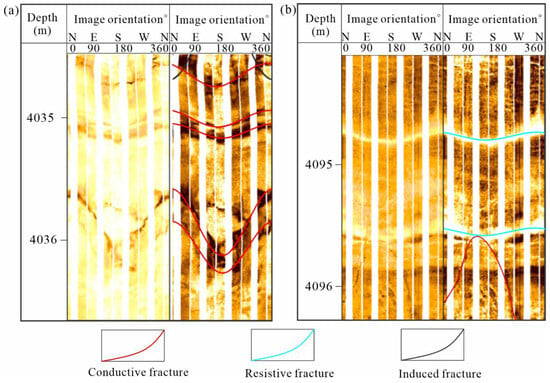
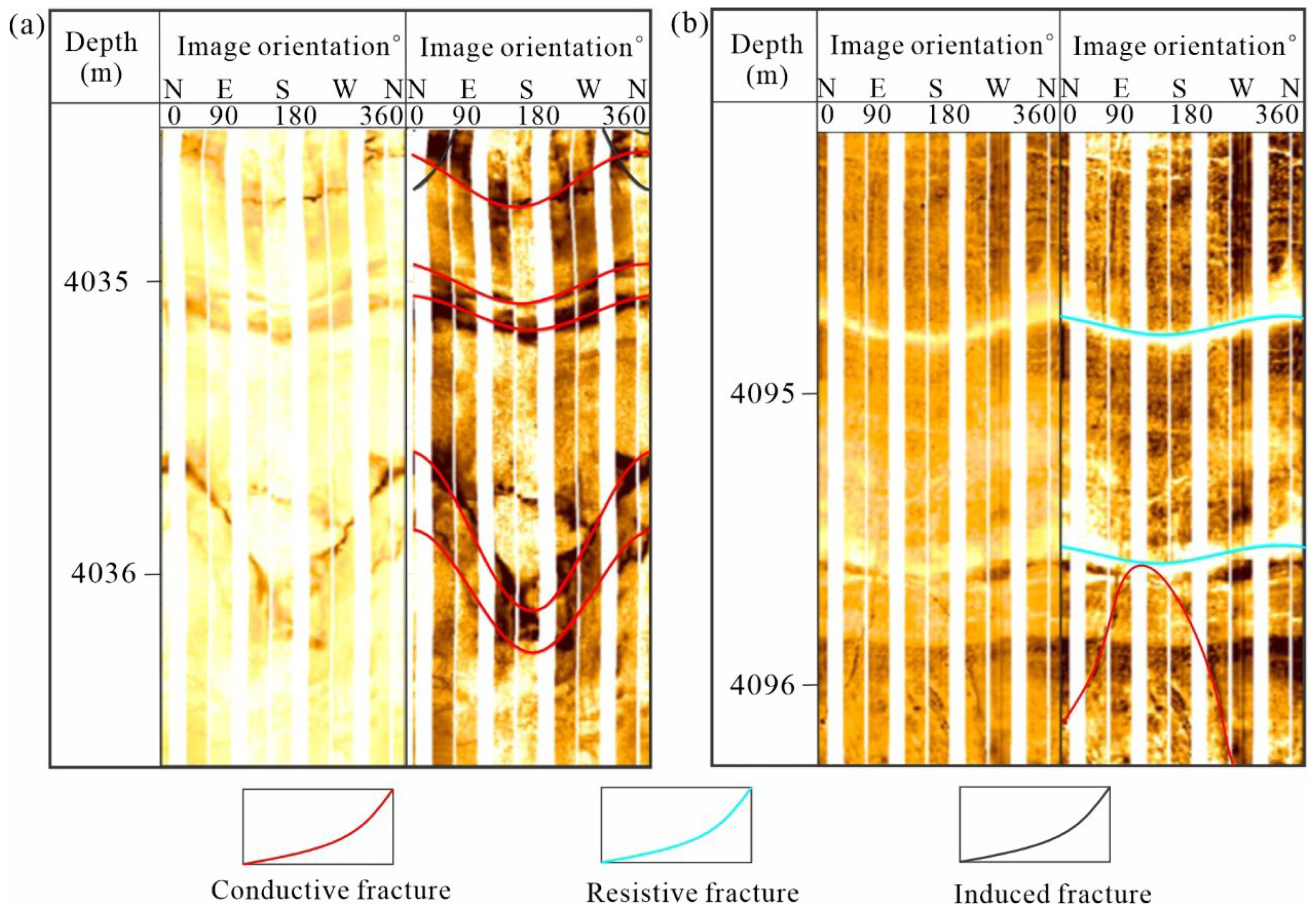
In borehole image logs, natural fractures are typically expressed as sinusoidal features. Based on the electrical response of fracture fillings, filled fractures can be classified into conductive (low-resistivity) and resistive (high-resistivity) types [29,30]. Conductive fractures are commonly associated with clay-rich infillings and appear as dark sinusoidal features on image logs (Figure 7a), whereas resistive fractures are typically filled with calcite and are represented by bright sinusoidal responses (Figure 7b).
Figure 7.
Fracture characteristics from borehole image logs of the Feixianguan Formation in the T area. (a) Conductive fractures. (b) Conductive fracture and resistive fracture.
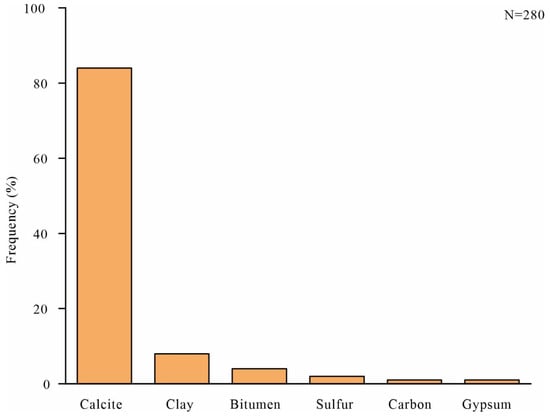
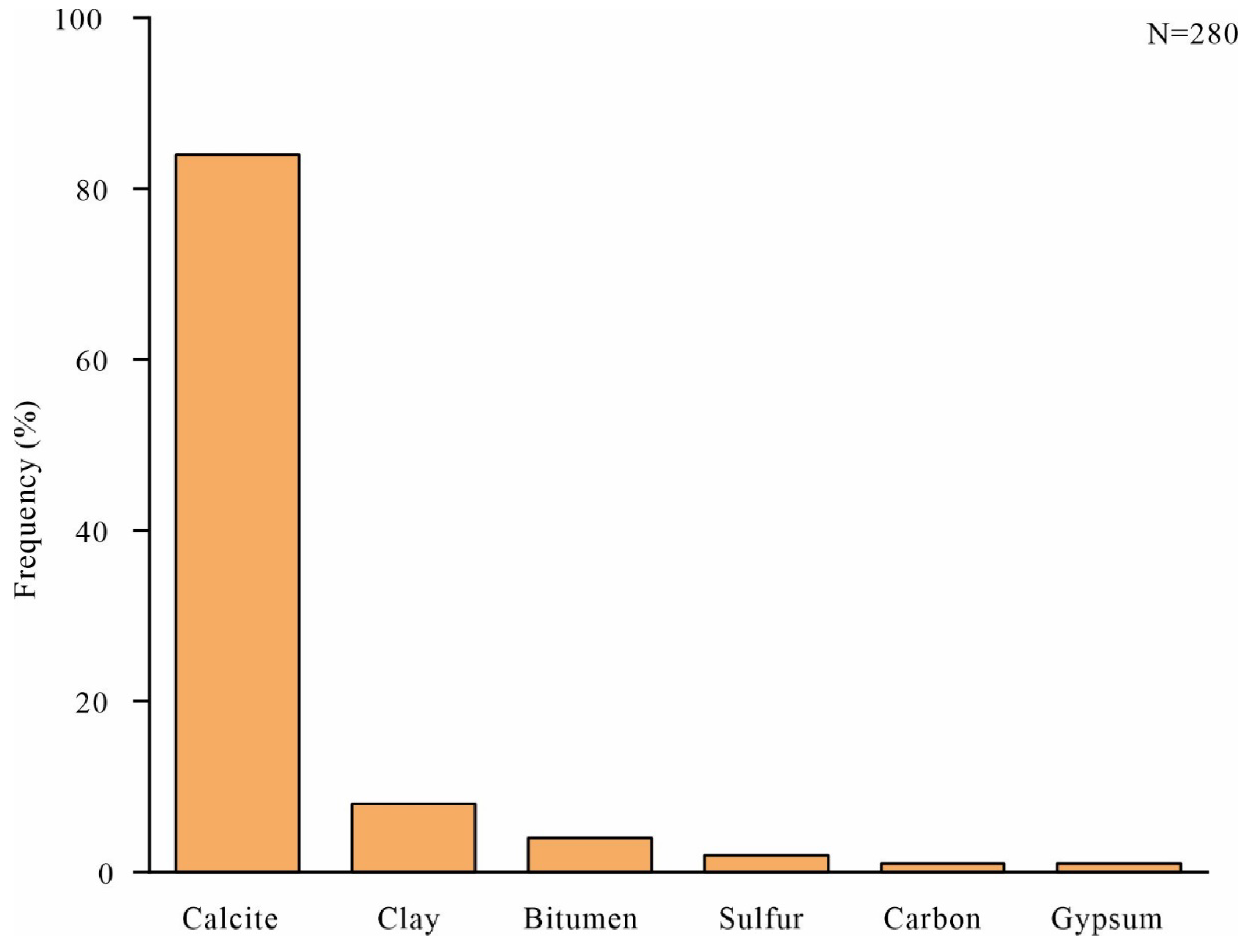
In terms of filling characteristics, unfilled fractures dominate the fracture population, accounting for approximately 60%. Partially filled fractures constitute 17%, whereas filled fractures account for 23%. Thus, approximately 77% of the observed fractures are unfilled or partially filled, suggesting that a substantial proportion of the fracture population may potentially contribute to fluid flow. However, fracture filling characteristics alone cannot determine hydraulic effectiveness, which also depends on fracture aperture and connectivity. Therefore, the proportion of unfilled and partially filled fractures should not be directly equated with the proportion of hydraulically effective fractures. Calcite is the dominant fracture-filling mineral, followed by clay minerals and bitumen, with minor occurrences of sulfur, carbonaceous material, and gypsum (Figure 8).
Figure 8.
Fracture filling characteristics of the Feixianguan Formation in the T area.
4.3. Fracture Intensity Across Sedimentary Subfacies
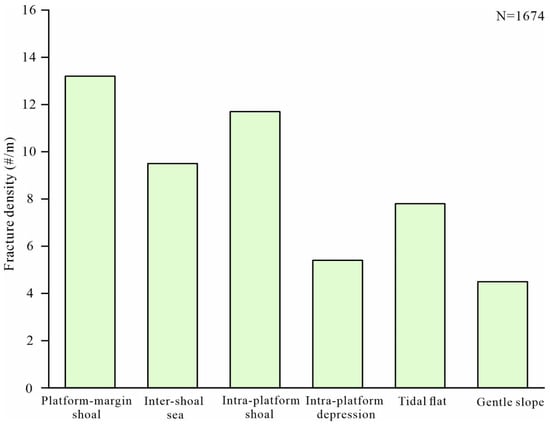
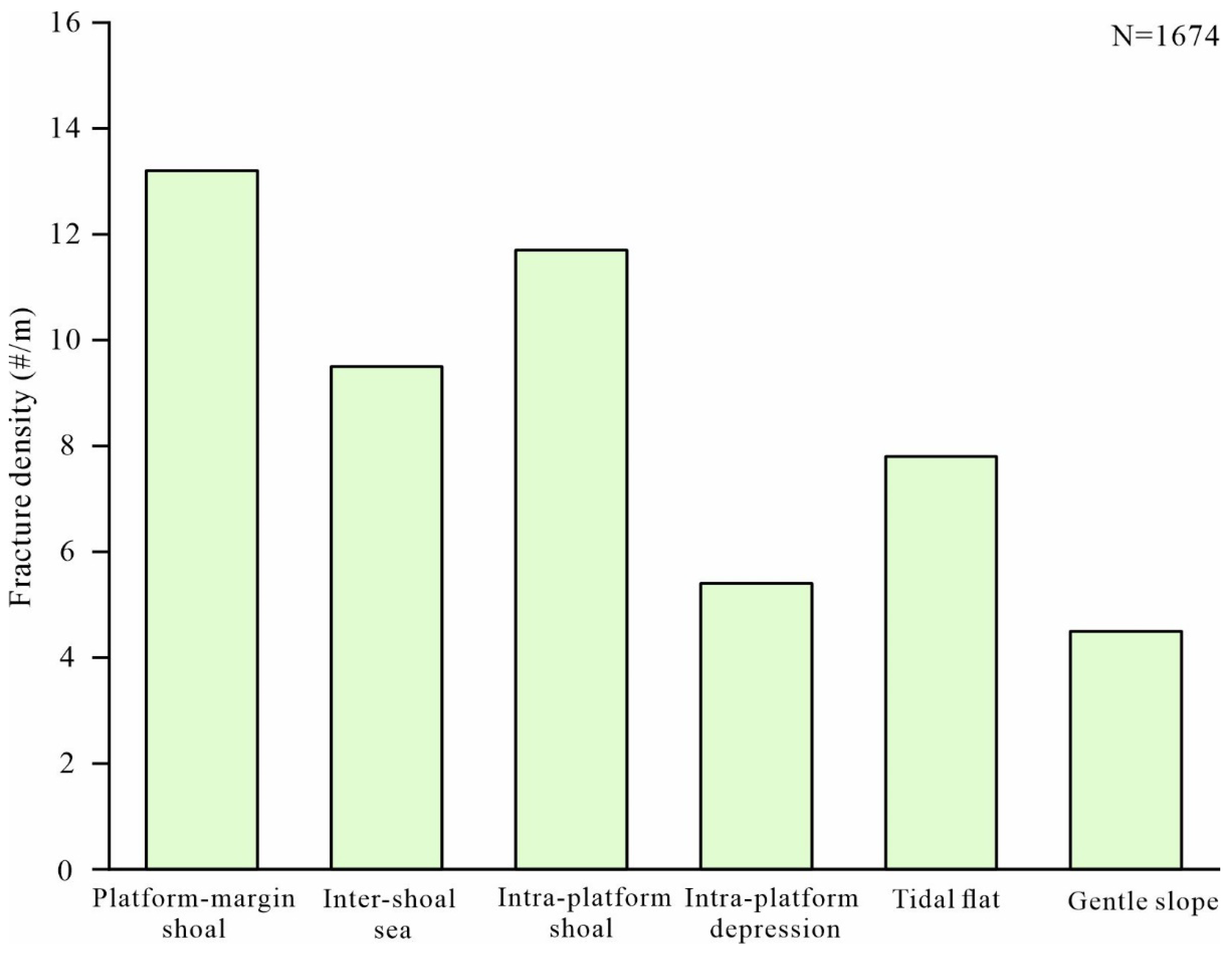
Integrated core and petrographic thin-section observations provide the lithological basis for evaluating the relationship between sedimentary facies and natural fracture development. The principal sedimentary subfacies exhibit differences in rock composition, depositional textures, and diagenetic modification, which may influence their mechanical properties and susceptibility to fracturing. Fracture linear densities obtained from core observations were therefore compared among the identified sedimentary subfacies to investigate the association between sedimentary facies and fracture development (Figure 9).
Figure 9.
Variations in fracture density among different Sedimentary subfacies.
Fractures are most well developed in the platform-margin shoal and intra-platform shoal subfacies, with fracture densities of 13.2 fractures/m and 11.7 fractures/m, respectively, both exceeding 10 fractures/m (Figure 9). Moderate fracture development is observed in the intershoal sea and tidal flat subfacies, with densities of 9.5 fractures/m and 7.8 fractures/m. In contrast, fractures are least developed in the intra-platform depression and gentle slope subfacies, where fracture densities are 5.4 fractures/m and 4.5 fractures/m, respectively, both below 6 fractures/m. The maximum-to-minimum fracture linear density ratio across the investigated subfacies is approximately 2.9 (Figure 9).
4.4. Fracture Variations with Mechanical Layer Thickness
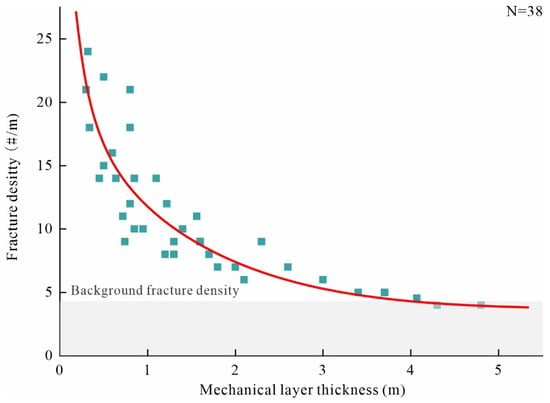
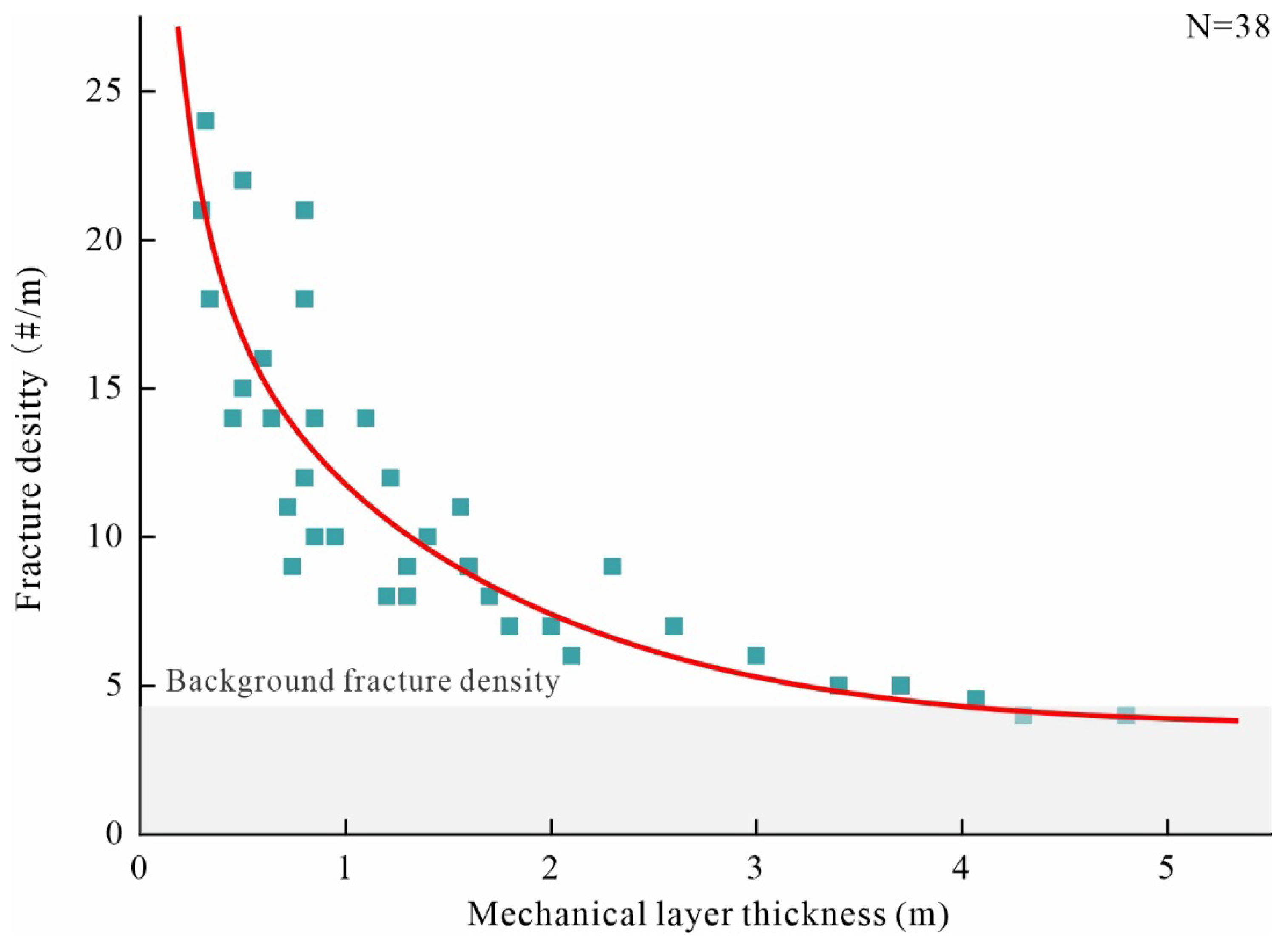
Outcrop analysis reveals a decreasing relationship between fracture density and mechanical layer thickness (Figure 10). When the mechanical layer thickness is less than 3 m, fracture density decreases rapidly with increasing thickness. When the thickness exceeds 3 m, the decreasing trend becomes significantly gentler and gradually approaches a background level. Fracture linear density varies from 24.2 fractures/m to 4.1 fractures/m, corresponding to a maximum-to-minimum ratio of approximately 5.9 within the sampled mechanical layers.
Figure 10.
Relationship between mechanical layer thickness and fracture density in outcrops of the Feixianguan Formation, northeastern Sichuan Basin. The grey shading represents the background fracture density.
4.5. Fracture Variations Associated with Faults
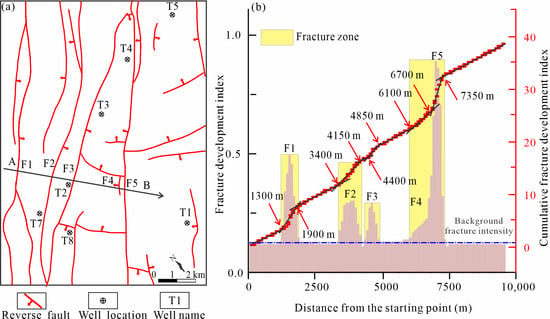
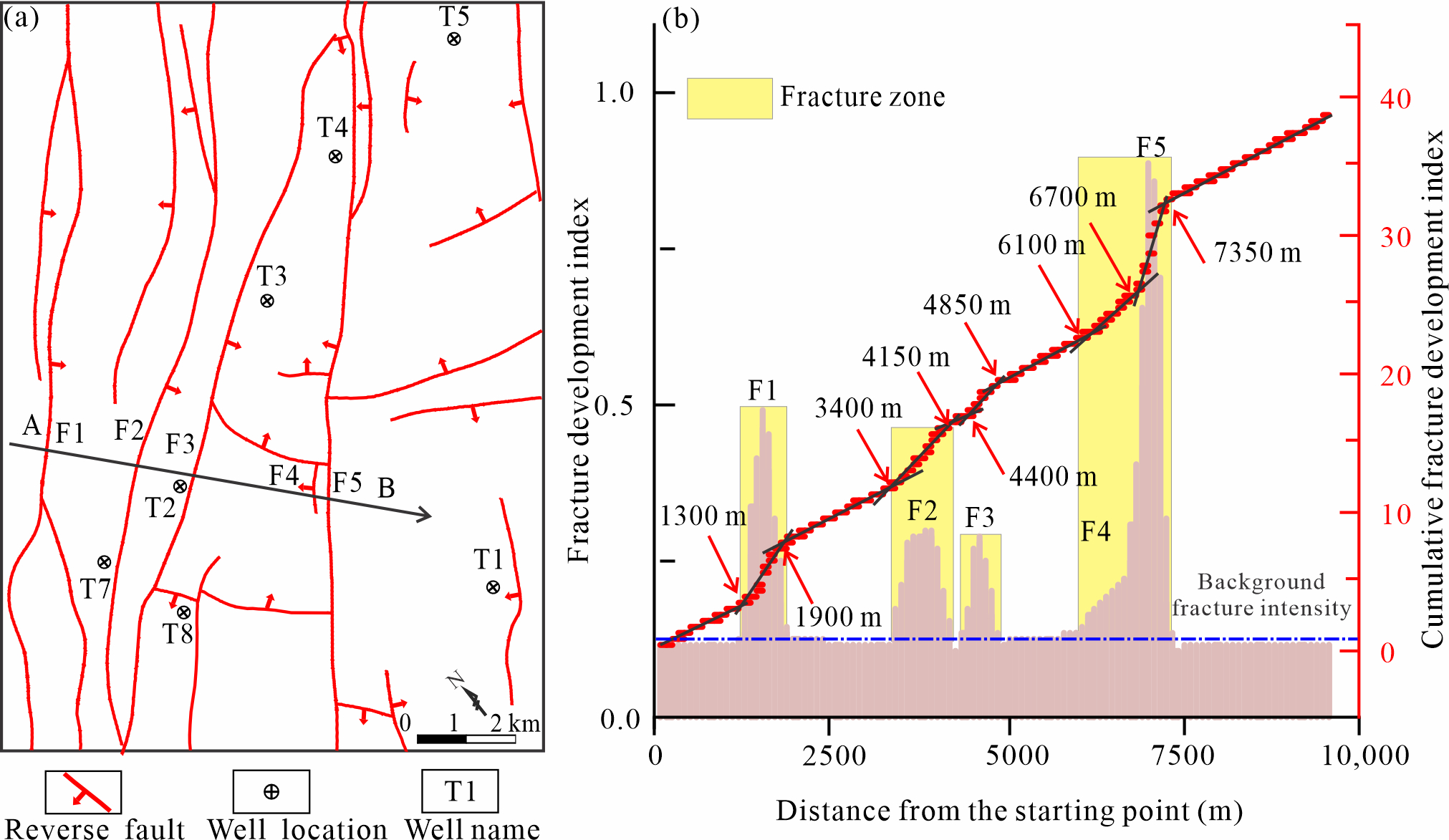
Seismic-derived FDI values show a background value of 0.137 and a maximum value of 1.0, corresponding to a maximum-to-background FDI ratio of approximately 7.3.
Along the analyzed profile, the F1 fault exhibits distinct slope changes at approximately 1300 m and 1900 m, which are interpreted as the boundaries between the fracture zone and the surrounding host rock. These inflection points indicate that the width of the F1-related fracture zone is approximately 600 m (Figure 11). The F2 fault shows slope variations at 3400 m and 4150 m, corresponding to an approximate fracture zone width of 750 m. For F3, slope changes occur between 4150 m and 4850 m, indicating an approximate width of 700 m. These values represent the approximate extents of seismic FDI anomalies (Figure 11). Along the F4–F5 fault segment, two slope intervals are identified at 6100–6700 m and 6700–7350 m. Together, they define a composite FDI anomaly with an approximate width of 1250 m (Figure 11).
Figure 11.
Variation in fracture intensity with distance from faults based on seismic data. (a) Fault distribution map. (b) Variation in FDI.
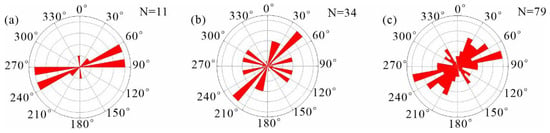
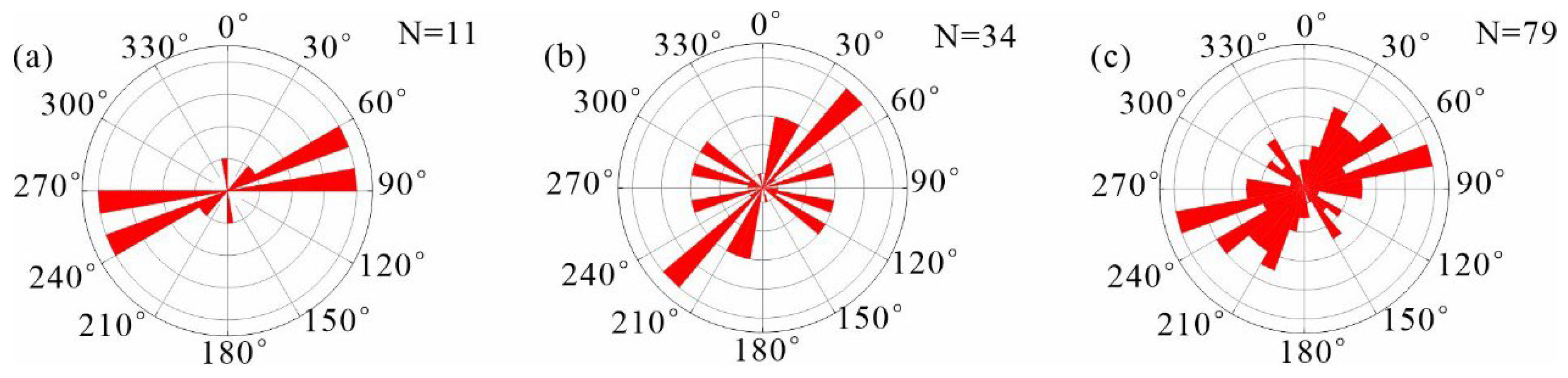
Borehole image-log interpretations indicate different fracture orientation distributions among Wells T8 (N = 11), T7 (N = 34), and T2 (N = 79) (Figure 12). In fault-intersecting Well T2, NE–SW- and ENE–WSW-trending fractures are more common than NW–SE-trending fractures. These distributions are descriptive; the limited and unequal sample sizes, particularly for Well T8, constrain comparisons between structural settings.
Figure 12.
Fracture orientation distributions derived from borehole image logs in different structural settings of the Feixianguan Formation, T area. (a) Well T8 (N = 11). (b) Well T7 (N = 34). (c) Well T2 (N = 79), located within the fault zone. N represents the number of interpreted fractures in each well.
4.6. Fracture Variations Associated with Folding
In the T anticline, Well T4 near the hinge of the northern segment has a fracture linear density of 23.7 fractures/m (Figure 6), whereas Well T3 on the limb has 6.5 fractures/m. In Wells T7 and T8, fractures show NE–SW and ENE–WSW orientation populations together with a subordinate NW–SE set (Figure 12a,b). These observations describe local well-scale variations rather than demonstrating a dominant fold control.
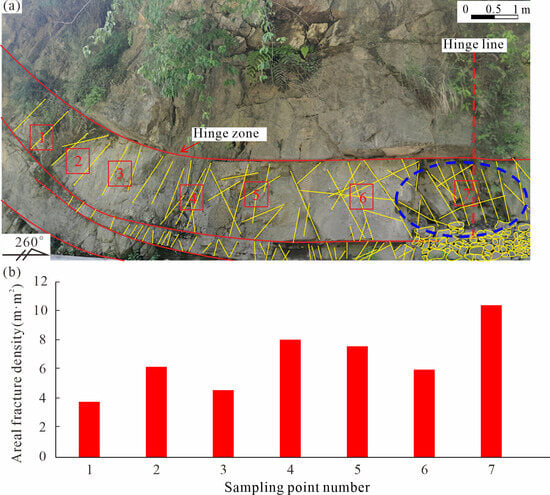
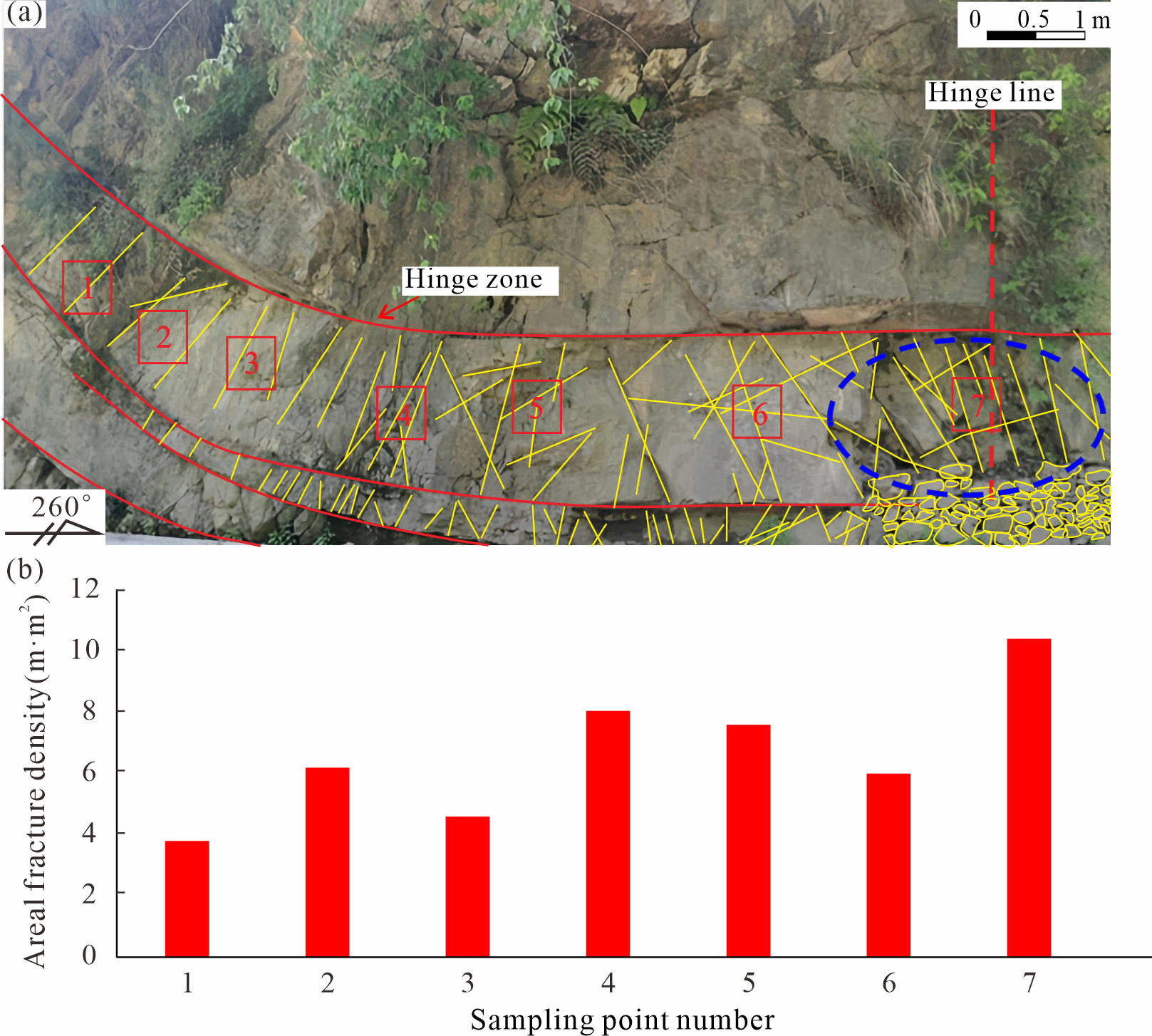
At the Guanyindong syncline outcrop in the Bailixia area, areal fracture intensity is 2.9 m/m2 in relatively undeformed surrounding rocks, 3.8 m/m2 on the syncline limbs, 7.9 m/m2 in the hinge zone, and 10.1 m/m2 in the most intensely fractured hinge-region exposure (Figure 13). The maximum-to-minimum ratio within this outcrop dataset is approximately 3.5.
Figure 13.
Variations in areal fracture intensity across different structural positions of the syncline at the Guanyindong outcrop, northeastern Sichuan Basin. (a) Field Photograph of the Outcrop and Fracture Distribution.The blue dotted area denotes the syncline core, and the yellow lines represent fractures. (b): Bar Chart of Areal Fracture Intensity. Areal fracture intensity is expressed as cumulative fracture trace length per unit area (m/m2).
5. Discussion
5.1. Sedimentation-Diagenesis Control on Fracture Development
The development of natural fractures is fundamentally governed by rock mechanical properties, which are jointly controlled by sedimentation and diagenesis. Sedimentary processes determine the primary material composition and depositional framework of carbonate successions by controlling mineral composition, grain texture, and sedimentary structures [20]. On this basis, diagenetic processes, including dolomitization, cementation, and dissolution, further modify pore systems and mineral assemblages, thereby altering rock brittleness and mechanical stratification [31].
The superposition of sedimentation and diagenesis results in pronounced vertical mechanical heterogeneity within carbonate successions. Under similar tectonic stress conditions, such heterogeneity exerts a first-order control on fracture development. Brittle layers preferentially accommodate tensile and shear failure, whereas more ductile intervals tend to dissipate strain through plastic deformation, resulting in relatively limited fracture development [32,33,34].
Therefore, sedimentary facies and diagenesis do not directly control fracture formation; instead, they exert an indirect control by regulating rock mechanical properties and mechanical heterogeneity, which ultimately govern fracture initiation, propagation, and spatial distribution.
5.1.1. Sedimentary Facies
Sedimentary facies exert an indirect but systematic control on fracture development by influencing lithology, diagenetic pathways, and mechanical properties [20]. The measured variations among sedimentary subfacies (Figure 9) are interpreted in this context.
These variations are primarily controlled by differences in mineral composition and diagenetic intensity. Shoal facies commonly experienced strong dolomitization, resulting in increased dolomite content and enhanced rock brittleness. Consequently, these intervals are more prone to brittle failure under tectonic stress [35,36]. In contrast, weaker dolomitization in other facies results in reduced brittleness and suppressed fracture development.
These associations suggest a measurable influence of sedimentary facies, but the relative causal contribution of facies cannot be isolated from other geological factors using the available data.
5.1.2. Mechanical Layer
The negative relationship between fracture density and mechanical layer thickness (Figure 10) suggests that thinner mechanical layers are more prone to stress concentration and thus tend to develop higher fracture densities.
This behavior reflects the direct influence of mechanical heterogeneity—ultimately derived from sedimentation and diagenesis—on fracture nucleation and propagation [37,38]. Mechanical layering governs strain partitioning and stress concentration, thereby controlling fracture intensity distribution in carbonate successions.
5.2. Tectonic Control on Fracture Development
Tectonic processes provide the fundamental stress conditions for fracture initiation and exert important controls on the orientation, distribution, and scale of fracture systems [39]. Under regional compressional stress regimes, faulting and folding can induce stress concentration and differential deformation, promoting the development of systematic fracture sets [40,41].
The northeastern Sichuan Basin has undergone a complex tectonic evolution involving successive deformation events during the Indosinian, Yanshanian, and Himalayan periods [15,21]. The superposition of these tectonic events has contributed to the development and modification of regional fault and fold systems, potentially influencing the formation, orientation, and reactivation of natural fractures in the Feixianguan Formation. Therefore, the present-day fracture systems may record the cumulative effects of polyphase tectonic deformation rather than a single compressional event.
Previous studies have provided important evidence for the polyphase development of natural fractures in the Feixianguan Formation. Guan et al. (2023) identified three principal stages of tectonic fracture formation in the northeastern Sichuan Basin, corresponding to the Late Indosinian–Early Yanshanian, Late Yanshanian–Early Himalayan, and Late Himalayan periods [42]. Their results also indicated that NW–SE-trending fractures were associated with relatively early tectonic deformation, whereas NE–SW- and approximately E–W-trending fractures were significantly influenced by later tectonic events, particularly during the Himalayan period. These findings provide a regional geological framework for interpreting the possible formation and modification of natural fractures in the T area.
The coexistence of multiple fracture sets in cores and outcrops (Figure 4a,j), together with the four principal fracture orientations (Figure 5), is consistent with a complex deformation history involving possible successive fracture formation and modification.
By comparison with the regional tectonic fracture evolution documented by Guan et al. [42], the NW–SE-trending fractures in the T area may include relatively early-formed fracture populations, whereas the NE–SW-, ENE–WSW-, and approximately E–W-trending fractures may have been influenced by subsequent Yanshanian and Himalayan deformation. Nevertheless, these correlations remain tentative because fracture orientations and dip angles alone are insufficient to establish formation ages. Multiple fracture sets may develop simultaneously under a single stress regime, and pre-existing fractures may also be reactivated during later tectonic events. Therefore, the present-day fracture network is interpreted as a possible product of successive fracture formation, modification, and reactivation during polyphase tectonic deformation, rather than being attributed exclusively to a single compressional stress field.
5.2.1. Fault
Fault-related deformation is an important influence on fracture development in the study area. The cumulative FDI method provides an attribute-based means of approximating fault-associated fracture zones (Figure 11). The pronounced FDI contrast suggests substantial spatial variability associated with fault-related fracturing; however, FDI is a seismic-derived attribute rather than a directly measured fracture density.
The relatively distinct anomalies around F1–F3 and the wider composite anomaly around F4–F5 (Figure 11) suggest that fracture zone width is influenced by structural position and the superposition of fault-related deformation. The wider F4–F5 anomaly may reflect interactions between adjacent fault systems. These inferred zone boundaries remain approximate because of seismic resolution and attribute smoothing.
Variations in the well-scale fracture orientation populations (Figure 12) suggest a possible influence of fault-related deformation, particularly in Well T2. However, the small sample size in Well T8 (N = 11) and unequal sample sizes among wells limit the robustness of comparisons; the data do not establish a unique dominant structural control.
This fracture orientation pattern indicates an important influence of compressional deformation associated with thrust faulting. However, considering the polyphase tectonic evolution of the northeastern Sichuan Basin, the observed fracture orientations cannot be attributed exclusively to a single compressional stress regime. Successive tectonic events may have generated new fracture sets, modified pre-existing fractures, or promoted their reactivation under changing stress conditions. The predominance of NE–SW- and ENE–WSW-trending fractures near the fault zone may therefore reflect the combined effects of fault-related deformation and inherited structural fabrics. Although compression approximately perpendicular to the fault strike may explain some of the observed fracture orientations, the orientations of the principal stresses during individual tectonic episodes cannot be uniquely determined from the available data. Accordingly, the present-day fracture configuration is interpreted as the possible cumulative result of polyphase tectonic deformation rather than the product of a single compressional stress field.
5.2.2. Fold
The higher fracture intensities near hinge positions in the T anticline and the Guanyindong syncline (Figure 6 and Figure 13) are consistent with an influence of fold-related deformation. However, these well and outcrop observations are based on different structural settings and measurement metrics and should not be combined to quantify a single fold contribution. The limited T8 fracture orientation sample also does not establish folding as the dominant control on fracture orientation.
The observed variation in areal fracture intensity across different fold positions indicates a strong association between fracture development and fold-related deformation. During compressional folding, variations in layer curvature, strain partitioning, and local stress distribution may promote fracture development, particularly in hinge zones where deformation is concentrated [41]. However, considering the polyphase tectonic evolution of the northeastern Sichuan Basin, the present-day fracture assemblages may also preserve the effects of earlier deformation episodes and subsequent reactivation of pre-existing fractures. Therefore, the observed fracture distribution is interpreted as the possible cumulative result of fold-related strain localization and polyphase tectonic deformation, rather than being attributed solely to a single regional compressional stress field.
5.3. Distribution of Different Factors to Fractures
Identifying the controlling factors of natural fractures is critical for understanding the origin of reservoir heterogeneity, clarifying fracture development patterns, and constraining their spatial distribution. The available observations suggest prominent associations between fracture development and fault proximity as well as mechanical layer thickness. Folding and sedimentary facies also correlate with fracture heterogeneity, but the present heterogeneous datasets do not support numerical apportionment of causal contributions.
These observations highlight a multiscale control system. Mechanical stratigraphy is strongly associated with vertical variations in fracture intensity, whereas fault-related deformation is closely related to lateral variations in fracture development. Folding and sedimentary facies also contribute to fracture heterogeneity at different spatial scales.
Overall, natural fracture development in the northeastern Sichuan Basin is controlled by a coupled system in which tectonic deformation provides first-order stress conditions, while sedimentation and diagenesis indirectly regulate fracture development through mechanical heterogeneity.
The petrophysical characteristics of the Feixianguan Formation reservoirs provide additional context for understanding the potential significance of natural fractures. Although reservoir porosity and permeability exhibit considerable variability, the relatively low average permeability suggests that natural fractures may play an important role in providing additional fluid-flow pathways. In particular, unfilled and partially filled fractures may contribute to reservoir connectivity by linking pores and vugs. Nevertheless, the proportion of potentially conductive fractures inferred from filling characteristics does not directly represent their hydraulic effectiveness. Because fracture aperture and connectivity were not quantitatively evaluated, the contribution of natural fractures to bulk reservoir permeability remains uncertain.
6. Conclusions
This study integrates geological and geophysical datasets to characterize natural fracture systems and to constrain their controlling mechanisms in the Feixianguan Formation of the T area. The main conclusions are as follows:
- Natural fractures are predominantly tectonic in origin, comprising shear and tensile fractures, whereas diagenetic fractures are mainly represented by bedding-parallel fractures and stylolites. Fracture systems exhibit multiple orientation sets, with dominant NE–SW and ENE–WSW trends. High-angle fractures (>60°) are most abundant, accounting for more than 50% of the total population. Unfilled and partially filled fractures account for approximately 77% of the observed fractures, suggesting that these fractures may potentially contribute to fluid flow and reservoir connectivity.
- Fracture development is governed by a multi-factor control system. Sedimentary facies exert an indirect control by influencing lithology and diagenetic evolution, thereby establishing the mechanical framework for fracture formation. Mechanical stratigraphy exerts strong control on fracture intensity in the vertical dimension, with fracture density decreasing systematically with increasing layer thickness. Tectonic structures, particularly faults and folds, are closely associated with spatial variations in fracture orientation and intensity.
- The available observations indicate that faults and mechanical stratigraphy are the principal factors associated with fracture development, whereas folds and sedimentary facies exert additional influences. The coexistence of multiple fracture sets in cores and outcrops, together with the diversity of fracture orientations and the regional polyphase tectonic history, suggests that the present-day fracture systems may reflect successive episodes of fracture formation, modification, and reactivation. Although the precise formation timing of individual fracture sets remains uncertain, these results highlight a coupled control system in which tectonic deformation governs the regional fracture architecture, while sedimentation and diagenesis influence fracture distribution through mechanical heterogeneity.
Author Contributions
Conceptualization, Y.Y. and C.G.; Methodology, E.X., D.L. and D.G.; Formal analysis, Y.Y., C.G. and H.W.; Investigation, Y.Y., C.G. and D.L.; Resources, H.Z. and L.Z.; Writing—original draft, Y.Y. and J.Q.; Writing—review & editing, Y.Y.; Visualization, J.W. and M.Z.; Supervision, L.Z.; Project administration, L.Z.; Funding acquisition, J.Q. All authors have read and agreed to the published version of the manuscript.
Funding
This work was supported by the National Science and Technology Major Project of China (Grant No. 2025ZD1400805).
Data Availability Statement
Data are contained within the article.
Acknowledgments
The authors highly appreciate the information and support from the Northeastern Sichuan Oil and Gas District, PetroChina Southwest Oil and Gas Field Company. Thanks are expressed to the editor and two anonymous reviewers for their constructive comments, which have greatly enhanced the quality of this article.
Conflicts of Interest
Author Hang Zhang was employed by the Exploration and Development Research Institute of PetroChina Southwest Oil & Gas Field Company. Huaguo Wen was employed by Chengdu University of Technology. Lianbo Zeng, Dong Liang, and Cong Guan were employed by China University of Petroleum (Beijing). The remaining authors declare that the research was conducted in the absence of any commercial or financial relationships that could be construed as a potential conflict of interest.
References
- Li, H.; Tang, H.M.; Qin, Q.R.; Zhou, J.L.; Qin, Z.J.; Fan, C.H.; Su, P.D.; Wang, Q.; Zhong, C. Characteristics, formation periods and genetic mechanisms of tectonic fractures in the tight gas sandstones reservoir: A case study of Xujiahe Formation in YB area, Sichuan Basin, China. J. Pet. Sci. Eng. 2019, 178, 723–735. [Google Scholar] [CrossRef] [Scilit]
- Zeng, L.; Gong, L.; Guan, C.; Zhang, B.; Wang, Q.; Zeng, Q.; Lyu, W. Natural fractures and their contribution to tight gas conglomerate reservoirs: A case study in the northwestern Sichuan Basin, China. J. Pet. Sci. Eng. 2022, 210, 110028. [Google Scholar] [CrossRef] [Scilit]
- Yang, S.; Yang, H.Z.; Peng, X.; Lan, X.M.; Yang, Y.F.; Zhao, Y.; Zhang, K.; Chen, H.D. Research of influencing factors on permeability for carbonate rocks based on LBM simulation: A case study of low-permeability gas reservoir of Sinian Dengying Formation in Sichuan Basin. Front. Earth Sci. 2023, 11, 1091431. [Google Scholar] [CrossRef] [Scilit]
- Xu, S.; Gou, Q.Y.; Hao, F.; Zhang, B.Q.; Shu, Z.G.; Zhang, Y.Y. Multiscale faults and fractures characterization and their effects on shale gas accumulation in the Jiaoshiba area, Sichuan Basin, China. J. Pet. Sci. Eng. 2020, 189, 107026. [Google Scholar] [CrossRef] [Scilit]
- Huang, J.; Ma, C.Q.; Zhang, S.H.; Xu, M.Y.; Lou, D.; Leng, C.B.; Qin, M.T.; Li, H.J. Characteristics, distribution patterns, and classification of volcanic reservoirs in the Huanghua Depression, Bohai Bay Basin, China. J. Earth Sci. 2024, 35, 1464–1481. [Google Scholar] [CrossRef] [Scilit]
- Hussain, S.; Fernandes, B.R.B.; Delshad, M.; Sepehrnoori, K. Understanding tight naturally fractured carbonate reservoir architecture for subsurface gas storage. Appl. Sci. 2026, 16, 2278. [Google Scholar] [CrossRef] [Scilit]
- Hu, X.Y.; Zhao, X.Y.; Su, Y.X.; Xiao, K.H.; Deng, M.Z.; Wang, Q.X.; Liu, R.M. Formation mechanism of fractures in the carbonate reservoir of the 4th Member of Middle Triassic Leikoupo Fm in Longmenshan piedmont, Sichuan Basin. Nat. Gas Ind. 2018, 38, 15–25. [Google Scholar] [CrossRef]
- Yao, Y.T.; Zeng, L.B.; Mao, Z.; Song, Y.C.; Tan, X.L.; Lin, B.; Liu, G.P.; Cao, D.S.; Ostadhassan, M.; Zhang, Q.; et al. Strike-slip fault architecture and its control on fractured carbonate reservoirs: Insight from outcrops in the North-western Tarim Basin, NW China. Acta Geol. Sin. (Engl. Ed.) 2025, 99, 568–581. [Google Scholar] [CrossRef] [Scilit]
- Mahmood, B.S.; Khoshnaw, F.A.; Abdalqadir, M.O.; Gomari, S.R. Correction to: Natural fracture characterization and in situ stress orientation analysis using Fullbore Formation Micro Imager (FMI): A case study on the X oil field, Kurdistan Region, Iraq. Arab. J. Geosci. 2023, 16, 113. [Google Scholar] [CrossRef] [Scilit]
- Xiong, L.; Dong, X.X.; Xiong, Y.; Wang, T.; Luo, S.C.; Wang, B.B.; Shi, K.B.; Yao, Y.J.; Wang, E.Z.; Liu, B. Types and con-trolling factors of tight carbonate reservoirs in the Member 1 of Permian Maokou Formation in southern Sichuan Basin. Acta Pet. Sin. 2025, 46, 1875–1891, (In Chinese with English abstract). [Google Scholar] [CrossRef]
- Laubach, S.E.; Ward, M.E. Diagenesis in porosity evolution of opening-mode fractures, Middle Triassic to lower Jurassic La Boca formation, NE Mexico. Tectonophysics 2006, 419, 75–97. [Google Scholar] [CrossRef] [Scilit]
- Blenkinsop, T.G. Relationships between faults, extension fractures and veins, and stress. J. Struct. Geol. 2008, 30, 622–632. [Google Scholar] [CrossRef] [Scilit]
- Mobasher, K.; Babaie, H.A. Kinematic significance of fold- and fault-related fracture systems in the Zagros mountains, southern Iran. Tectonophysics 2008, 451, 156–169. [Google Scholar] [CrossRef] [Scilit]
- Liu, S.G.; Yang, Y.; Deng, B.; Zhong, Y.; Wen, L.; Sun, W.; Li, Z.W.; Jansa, L.; Li, J.X.; Song, J.M.; et al. Tectonic evolution of the Sichuan Basin, Southwest China. Earth-Sci. Rev. 2021, 213, 103470. [Google Scholar] [CrossRef] [Scilit]
- Sun, T.J.; Luo, X.P.; Mi, W.T.; Woods, A.; Chiarella, D.; Qing, H.R.; Ma, Y.S.; Kou, X.L.; Shen, Z.M.; Xu, G.S.; et al. Characterization of ultra-deeply buried middle Triassic Leikoupo marine carbonate petroleum system (!) in the Western Sichuan depression, China. Mar. Pet. Geol. 2023, 150, 106099. [Google Scholar] [CrossRef] [Scilit]
- Li, P.P.; Zou, H.Y.; Yu, X.Y.; Hao, F.; Wang, G.W. Source of dolomitizing fluids and dolomitization model of the upper Permian Changxing and Lower Triassic Feixianguan formations, NE Sichuan Basin, China. Mar. Pet. Geol. 2021, 125, 104834. [Google Scholar] [CrossRef] [Scilit]
- Xie, R.C.; Luo, Z.W.; Zhang, M.Y.; Wang, Y.F.; Chen, J.; Zhu, M. Factors controlling tight oil and gas reservoir devel-opment in the Jurassic siliciclastic-carbonate rocks in Sichuan Basin, China. Energy Geosci. 2022, 3, 453–464. [Google Scholar] [CrossRef] [Scilit]
- Wang, X.; Wang, M.; Zhao, C.; Yang, X.Y.; Jia, Y.D.; Wu, R.; Li, T.Y.; Zhao, X.B.; Tang, Y.L. Reservoir characteristics and controlling factors of the middle–high maturity multiple lithofacies reservoirs of the Lianggaoshan Formation shale strata in the northeastern Sichuan basin, China. Mar. Pet. Geol. 2024, 161, 106692. [Google Scholar] [CrossRef] [Scilit]
- Zheng, Z.Y.; Zuo, Y.H.; Wen, H.G.; Li, D.-M.; Luo, Y.; Zhang, J.-Z.; Yang, M.-H.; Zeng, J.-C. Natural gas characteristics and gas-source comparisons of the Lower Triassic Feixianguan Formation, Eastern Sichuan Basin, China. Pet. Sci. 2023, 20, 1458–1470. [Google Scholar] [CrossRef] [Scilit]
- Yao, Y.T.; Zeng, L.B.; Zhang, H.; Zhang, J.W.; Guan, C.; Liang, D. Fracture development laws of Feixianguan Formation carbonate reservoirs in Huanglongchang-Qilibei area, Northeast Sichuan. Earth Sci. 2023, 48, 2643–2651, (In Chinese with English abstract). [Google Scholar] [CrossRef]
- Li, J.; Xie, Z.Y.; Dai, J.X.; Zhang, S.C.; Zhu, G.Y.; Liu, Z.L. Geochemistry and origin of sour gas accumulations in the northeastern Sichuan Basin, SW China. Org. Geochem. 2005, 36, 1703–1716. [Google Scholar] [CrossRef] [Scilit]
- Ma, Y.S.; Cai, X.Y.; Zhao, P.R. Characteristics and formation mechanism of Changxing Formation-Feixianguan Formation reef-shoal reservoirs in Yuanba Gasfield. Pet. Res. 2016, 1, 123–134. [Google Scholar] [CrossRef] [Scilit]
- Ma, Y.S.; Mou, C.L.; Guo, X.S.; Yu, Q.; Tan, Q.Y. Sedimentary facies and distribution of reservoir rocks from the feixianguan formation in the Daxian-Xuanhan region, NE Sichuan. Acta Geol. Sin. (Engl. Ed.) 2010, 80, 137–151. [Google Scholar] [CrossRef] [Scilit]
- He, Y.L.; Fu, X.Y.; Liu, B.; Zhou, M.H.; Zhang, X.F.; Gao, J.X.; Yang, Y.K.; Shi, K.B. Control of oolitic beaches sedi-mentation and diagenesis on the reservoirs in Feixianguan Formation, northeastern Sichuan Basin. Pet. Explor. Dev. 2012, 39, 466–475. [Google Scholar] [CrossRef] [Scilit]
- He, Y.; Hu, D.F.; Zhang, J.; Li, P.; Pan, C.L.; Wang, Y.; Liu, D.C. Reservoir rock characteristics and main controlling factors of the Feixianguan Formation in the Maoba-Dawan-Tieshanpo area, Sichuan basin. Geol. China 2008, 35, 922–939, (In Chinese with English abstract). [Google Scholar] [CrossRef]
- Chen, P.Y.; Yang, H.T.; Jia, Z.Y. Comparison and analysis on carbonate reservoirs of Triassic Feixianguan Formation of Puguang gasfield and Cretaceous Mishrif Formation of Missan oilfield. China Offshore Oil Gas 2018, 30, 31–39, (In Chinese with English abstract). [Google Scholar] [CrossRef]
- Choi, J.H.; Edwards, P.; Ko, K.; Kim, Y.S. Definition and classification of fault damage zones: A review and a new methodological approach. Earth-Sci. Rev. 2016, 152, 70–87. [Google Scholar] [CrossRef] [Scilit]
- Lavenu, A.P.C.; Lamarche, J.; Gallois, A.; Gauthier, B.D.M. Tectonic versus diagenetic origin of fractures in a naturally fractured carbonate reservoir analog (Nerthe Anticline, southeastern France). AAPG Bull. 2013, 97, 2207–2232. [Google Scholar] [CrossRef] [Scilit]
- Zhao, J.F.; Ji, Y.L.; Chen, H.L.; Wang, Q. Application of EMI in evaluation of fractured sandstone reservoirs in the Dongpu Sag. Oil Gas Geol. 2008, 29, 383–390, (In Chinese with English abstract). [Google Scholar]
- Al-mohsen, N.A.Q.; Handhal, A.M. A comprehensive assessment of natural fractures in the Mishrif formation: Slide studies, core sampling, borehole imaging, and logging techniques. Iraqi J. Sci. 2025, 66, 1605–1619. [Google Scholar] [CrossRef] [Scilit]
- Lahiri, S. Estimating effective permeability using connectivity and branch length distribution of fracture network. J. Struct. Geol. 2021, 146, 104314. [Google Scholar] [CrossRef] [Scilit]
- Chester, F.; Logan, J.M. Implications for mechanical properties of brittle faults from observations of the Punchbowl fault zone, California. Pure Appl. Geophys. 1986, 124, 79–106. [Google Scholar] [CrossRef] [Scilit]
- Abbas, A.K.; Flori, R.E.; Alsaba, M.; Dahm, H.; Alkamil, E.H.K. Integrated approach using core analysis and wireline measurement to estimate rock mechanical properties of the Zubair Reservoir, Southern Iraq. J. Pet. Sci. Eng. 2018, 166, 406–419. [Google Scholar] [CrossRef] [Scilit]
- Dashti, R.; Rahimpour-Bonab, H.; Zeinali, M. Fracture and mechanical stratigraphy in naturally fractured carbonate reservoirs-A case study from Zagros region. Mar. Pet. Geol. 2018, 97, 466–479. [Google Scholar] [CrossRef] [Scilit]
- Korneva, I.; Bastesen, E.; Corlett, H.; Eker, A.; Hirani, J.; Hollis, C.; Gawthorpe, R.L.; Rotevatn, A.; Taylor, R. The effects of dolomitization on petrophysical properties and fracture distribution within rift-related carbonates (Hammam Faraun Fault Block, Suez Rift, Egypt). J. Struct. Geol. 2018, 108, 108–120. [Google Scholar] [CrossRef] [Scilit]
- Aghli, G.; Motra, H.B.; Saberi, M.R.; Nikbin, M.; Ostadhassan, M. Fracture development and characterization from field data in a dolomite-limestone sequence. Rock Mech. Rock Eng. 2025, 58, 6559–6583. [Google Scholar] [CrossRef] [Scilit]
- Narr, W.; Suppe, J. Joint spacing in sedimentary rocks. J. Struct. Geol. 1991, 13, 1037–1048. [Google Scholar] [CrossRef] [Scilit]
- Laubach, S.E.; Eichhubl, P.; Hilgers, C.; Lander, R. Structural diagenesis. J. Struct. Geol. 2010, 32, 1866–1872. [Google Scholar] [CrossRef] [Scilit]
- Nelson, R. Geologic Analysis of Naturally Fractured Reservoirs; Elsevier: Oxford, UK, 2001. [Google Scholar]
- Peacock, D.C.P. The temporal relationship between joints and faults. J. Struct. Geol. 2001, 23, 329–341. [Google Scholar] [CrossRef] [Scilit]
- Bergbauer, S.; Pollard, D.D. A new conceptual fold-fracture model including prefolding joints, based on the Emigrant Gap anticline, Wyoming. GSA Bull. 2004, 116, 294–307. [Google Scholar] [CrossRef] [Scilit]
- Guan, C.; Zeng, L.B.; Yao, Y.T.; Zhang, H.; Zhang, J.W.; Liang, D. Natural fractures and their contribution to natural gas migration and accumulation in marine carbonate reservoirs: Lower Triassic Feixianguan Formation, Northeast Sichuan Basin, China. Sustainability 2023, 15, 16155. [Google Scholar] [CrossRef] [Scilit]
Disclaimer/Publisher’s Note: The statements, opinions and data contained in all publications are solely those of the individual author(s) and contributor(s) and not of MDPI and/or the editor(s). MDPI and/or the editor(s) disclaim responsibility for any injury to people or property resulting from any ideas, methods, instructions or products referred to in the content. |
© 2026 by the authors. Licensee MDPI, Basel, Switzerland. This article is an open access article distributed under the terms and conditions of the Creative Commons Attribution (CC BY) license.