


Simple Summary
Where chickens originated, when people first kept them, and how modern populations formed are central questions in the study of animal domestication. This review combines genetic, archaeological, radiocarbon-dating, and ancient DNA evidence to trace that history. Current genetic evidence generally favors a single domestication origin followed by dispersal. Domestic chickens derive their principal ancestry from red junglefowl in southwestern China and mainland Southeast Asia. The clearest early evidence that people kept chickens comes from Thailand approximately 3500 years ago. As domestic chickens spread through South and Southeast Asia, hybridization with local wild junglefowl introduced additional ancestry into regional populations. Human uses of chickens varied among regions and periods. In parts of Europe, early chickens appeared in burials and other special contexts before becoming common food animals. After dispersal, adaptation to local climates and high altitude, selection under traditional husbandry, and modern intensive breeding changed reproduction, body size, behavior, and plumage. Gene flow among wild red junglefowl, local chickens, and commercial lines continues today, and genes from commercial chickens have probably already reached wild red junglefowl. This history helps explain how modern chicken diversity formed and provides a basis for conserving wild red junglefowl and local chickens.
Abstract
The origins of domestic chickens and their subsequent evolution remain debated. This review integrates genomic, zooarchaeological, direct-dating, and ancient DNA evidence to examine ancestry, domestication, dispersal, selection, and gene flow. Current genetic evidence generally favors a single domestication origin followed by dispersal. Populations related to Gallus gallus spadiceus in southwestern China and mainland Southeast Asia provided the principal ancestry of domestic chickens, whereas other red junglefowl subspecies and junglefowl species contributed smaller segments, mainly through introgression as domestic chickens dispersed. The clearest early archaeological evidence of chicken husbandry comes from Ban Non Wat in Thailand at approximately 1650–1250 BCE, after cereal agriculture arrived. Possibly older records from Caiyuanzi and Dadunzi in Yunnan await specimen review and direct dating. Skeletal reassessment and direct dating have revised early chicken records and dispersal chronologies across Eurasia, Africa, and the Pacific. In parts of Europe, routine consumption followed burial and other special uses. Ancient DNA from Europe shows the derived thyroid-stimulating hormone receptor (TSHR) allele rising from the medieval period, and modern breeding changed production traits within decades. Most sampled modern G. g. spadiceus carry substantial domestic ancestry; commercial ancestry has probably reached them through local chickens and may also enter directly.
Keywords:
domestic chicken; red junglefowl; domestication; zooarchaeology; ancient DNA; dispersal; selection; gene flow 1. Introduction
Domestic chickens (Gallus gallus domesticus) are the world’s most numerous domestic animals, numbering approximately 27.68 billion in 2024 [1], and are a major source of meat and eggs. Across diverse geographical and ecological settings, they have diversified into many local populations and commercial lines [2]. Human relationships with chickens have changed over time. In parts of Europe, early chicken remains occur in burials and other special contexts, whereas routine consumption emerged later [3,4]. The beginning of this history has long been debated: whether chickens spread from a single domestication origin or were independently domesticated in several regions, and where and when husbandry began. Early mitochondrial studies supported a single origin on the basis of limited sequence divergence [5], whereas the regional distribution of haplogroups was later taken as evidence for multiple origins [6]. Ancient mitochondrial DNA from early bird remains in northern China was once used to argue for independent domestication there [7]. Since then, whole-genome comparisons, skeletal reassessments, and direct radiocarbon dating have revised earlier interpretations of principal ancestry, early remains, and dispersal chronology [3,4,8,9]. Domestication is best reconstructed by combining genetic relationships with the dates and husbandry contexts of archaeological remains [10,11].
Chicken phenotypes and genetic composition continued to change long after initial domestication. Ancient DNA from Europe shows that the derived thyroid-stimulating hormone receptor (TSHR) allele increased rapidly in frequency only during the medieval period [12,13]. Hybridization and backcrossing continue to introduce domestic genomic segments into wild junglefowl [14]. Previous reviews have addressed chicken domestication through archaeological, genetic, and modern biological approaches [15,16] and have synthesized chicken origins, distribution, and adaptation [2]. These reviews were published in 2011 and 2021, before the systematic direct dating of chicken bones from Europe and northwestern Africa [3] and the reassessment of early chicken remains worldwide [4], and before genomic studies that used century-old museum specimens to separate wild genotypes from domestic introgression [14]. Building on earlier syntheses, this review evaluates early records by species identification, dating basis, and management evidence, and compares origin models. We also use dated evidence to order post-domestication trait changes and examine how introgression alters the reference populations used in domestication research and genetic conservation. From the documented gene flow among wild red junglefowl, local chickens, and commercial lines, we further argue that commercial ancestry has probably already reached wild red junglefowl through local chickens and may also enter them directly from free-range and village flocks of yellow-feathered broilers.
2. Literature Search and Evidence Assessment
Literature on the origin, dispersal, and post-domestication evolution of domestic chickens was searched in Web of Science, PubMed, and Google Scholar, with a search cutoff date of 12 November 2026. The species terms “chicken”, “chickens”, “junglefowl”, “jungle fowl”, or “Gallus” were combined separately with the following thematic terms: “origin”, “ancestry”, “domestication”, “domesticated”, and “dispersal” for origin and dispersal; “zooarchaeology”, “zooarchaeological”, “zooarcheology”, “ancient DNA”, “radiocarbon”, and “direct dating” for archaeology and chronology; “local adaptation”, “artificial selection”, “selective breeding”, and “selective sweep” for adaptation and selection; and “introgression”, “gene flow”, “admixture”, “hybridization”, and “hybridisation” for genetic exchange.
Additional topic-specific searches used “TSHR”, “genetic load”, “feral”, “feralization”, and “feralisation”. Each theme was searched separately, with fields and query syntax adapted to the rules of each platform. Broad terms such as “origin” and “hybridization” were combined with terms related to ancestry, population genetics, or genomics to restrict the search context. For example, the search string for archaeology and chronology was (chicken OR chickens OR junglefowl OR “jungle fowl” OR Gallus) AND (zooarchaeology OR zooarchaeological OR zooarcheology OR “ancient DNA” OR radiocarbon OR “direct dating”).
Included studies provided primary evidence, such as nuclear genomic or mitochondrial data, skeletal identifications, direct dates, ancient DNA, selection mapping, or analyses of gene flow, and were mainly peer-reviewed journal articles. Papers in archaeological journals, book chapters, and theses were also consulted for zooarchaeological evidence, site chronologies, and historical information. Reference lists of key studies and reviews were traced, and statistical data were taken from sources including FAOSTAT. Most cited works are in English; others are in Chinese, Russian, German, and Spanish. Archaeological evidence was assessed with attention to species identification, dating basis, and evidence of human management; genetic evidence was assessed with attention to distinctions among ancestry, gene flow, selection signals, and functional evidence. Where studies disagreed, the original evidence and subsequent reassessments were considered together.
3. Genetic Evidence for the Origin of Domestic Chickens
The genus Gallus comprises red junglefowl (G. gallus), grey junglefowl (G. sonneratii), Sri Lankan junglefowl (G. lafayettii), and green junglefowl (G. varius). Red junglefowl includes five subspecies: G. g. gallus, G. g. spadiceus, G. g. jabouillei, G. g. murghi, and G. g. bankiva [8]. A single domestication origin in this review means that domestic chickens derive their principal ancestry, the largest genome-wide contribution, from one wild population and acquired ancestry from other junglefowl through introgression after dispersal. This definition concerns the source of ancestry; where domestication took place and how many founding events occurred are separate questions. Current genomic data cannot yet distinguish one founding event from several within the same population; genomes can only delimit the candidate region, and the specific place of domestication must be established archaeologically.
3.1. Maternal Lineages and Their Geographical Distribution
Domestic chickens have close maternal affinities with mainland Asian red junglefowl, although regional maternal distributions once supported models of multiple domestication origins. Limited divergence between domestic chickens and Thai G. g. gallus in mitochondrial control-region (D-loop) sequences originally supported a single domestication origin within the range of that subspecies [5]. Mitochondrial clustering of domestic chickens with G. g. gallus and G. g. spadiceus, separate from G. g. bankiva, also supports maternal ancestry from mainland Asian red junglefowl [17]. Within domestic chickens, maternal lineages show regional structure. Haplogroups A, B, and E occur across Eurasia, C occurs mainly in Japan and southeastern China, F and G are concentrated in Yunnan, and D corresponds broadly to regions with cockfighting traditions [6]. Some studies interpreted these regional patterns as evidence for multiple domestication origins across South and Southeast Asia [6]. Maternal distributions also record later breeding: subhaplogroup C1 and haplogroup A are most diverse in the Yellow–Huai River basin and common in East Asian gamecocks, so their recent expansion may have accompanied gamecock breeding and dispersal [18].
Regional concentrations of maternal lineages can also arise through introgression after dispersal, without independent domestication. Researchers have used restricted lineages to propose independent domestication, including E2 and E3 in South Asia, I in northeastern India, and H in southwestern China and neighboring Southeast Asia [19]. G. g. murghi haplotypes in Indian chickens and separate mitochondrial clustering of some local chickens have been taken as additional maternal evidence for independent domestication in India [20,21]. Nuclear genomic comparisons instead show that Indian chickens derive their principal ancestry from populations related to G. g. spadiceus and acquired local G. g. murghi ancestry after domestic chickens reached South Asia [8]. The most frequent maternal haplogroups of South Asian chickens, D and E, resemble those of Southeast Asian and Chinese chickens and are seldom detected in G. g. murghi [8]. Where local maternal lineages do occur in domestic chickens, hybridization between introduced domestic chickens and local wild females can account for them. Domestic chickens share the common haplogroups A–G with red junglefowl [18,19]. Their maternal diversity reflects ancestral polymorphism as well as dispersal, hybridization, feralization, and recent breeding [18,19]. Mitochondrial selection and sex-biased gene flow can also produce discordance between mitochondrial and nuclear relationships [22,23]. We therefore infer principal ancestry from genome-wide nuclear data and use maternal lineages to interpret regional differences.
3.2. Nuclear Genetic Evidence for Principal Ancestry
Nuclear genome comparisons can distinguish principal ancestry from later introgression. Microsatellite and intron data could not settle this question: Chinese local chickens were closer to Chinese G. g. spadiceus than to Thai G. g. gallus [24], Thai local chickens were similar to both subspecies [25], and shared intron haplotypes can reflect either retained polymorphism or introgression [26]. At the whole-genome scale, red junglefowl provided the principal ancestry of domestic chickens, whereas other junglefowl species contributed smaller genomic segments through introgression [27]. Within red junglefowl, most sampled domestic chickens form a monophyletic clade with some G. g. spadiceus individuals [8]. Population structure and TreeMix [28] models also support populations related to G. g. spadiceus as the source of principal ancestry [8]. Because modern wild red junglefowl have received domestic introgression, century-old museum specimens provide an earlier reference, and these specimens likewise place G. g. spadiceus closest to domestic chickens [14].
After dispersal, domestic chickens acquired ancestry from local red junglefowl subspecies through introgression. South Asian chickens derive most of their nuclear genomes from populations related to G. g. spadiceus and carry 3.8–22.4% G. g. murghi ancestry [8]. Relatively long haplotypes shared with G. g. murghi support later introgression of this local ancestry. Demographic models also favor hybridization between introduced domestic chickens and local G. g. murghi over independent domestication followed by replacement. Other regional populations likewise carry ancestry from other subspecies, including G. g. bankiva and G. g. gallus ancestry in Indonesian chickens, G. g. jabouillei ancestry in Chinese chickens, and mosaic ancestry in commercial White Leghorn lines [8]. Shared principal ancestry and later introgression explain why domestic chickens cluster with G. g. spadiceus while retaining regional genetic differences [8,14].
3.3. Introgression from Other Junglefowl Species
Other junglefowl species contributed smaller genomic segments, mainly through introgression after dispersal. In yellow-skinned chickens, the genomic segment containing the beta-carotene oxygenase 2 gene (BCO2) closely matches grey junglefowl sequences, whereas mitochondrial DNA and other nuclear sequences group with red junglefowl. This discordance indicates that the yellow-skin allele came from grey junglefowl [29]. Gene flow between domestic chickens and grey junglefowl has occurred in both directions. Most detected signals run from domestic chickens or red junglefowl into grey junglefowl [27], and candidate regions introgressed in the opposite direction also occur in domestic chickens [27,30,31]. Sri Lankan and green junglefowl contributed only small fractions of ancestry to some local chickens [27,32].
Nuclear genomic studies establish that the principal ancestry of domestic chickens derives from red junglefowl populations related to G. g. spadiceus [8,14,27]. The remaining ancestry was most plausibly acquired from other subspecies and junglefowl species through introgression after dispersal [8,27,29], whereas the number of founding events and the specific place of domestication remain unresolved.
4. Early Domestication: Regions, Chronology, and Processes
Populations related to G. g. spadiceus inhabit parts of southwestern China and mainland Southeast Asia. While nuclear genomes identify the source population of principal ancestry, establishing where and when husbandry began requires evaluating species identification, dating basis, and evidence of human management together [16].
4.1. Candidate Domestication Regions and Early Archaeological Evidence
Early claims of chicken domestication in northern China and the Indus Valley have not withstood morphological, chronological, and paleoclimatic reassessment. Ancient mitochondrial DNA reported from bird bones in northern China dated to approximately 10,000 years ago [7] was disputed on grounds of sequence authenticity and specimen reliability [33,34,35,36]. Paleoclimatic reconstructions also do not support a wild red junglefowl distribution in northern China during the Early Holocene [37]. Morphological reassessments did not confirm early candidate bones from northern and central China as chickens, and the bird bones from Dadiwan were identified as pheasants [9,38]. Key specimens from Mohenjo-daro and Harappa in the Indus region were either misidentified or too large to be confidently assigned to domestic chickens [4]. Gallus remains become abundant only in Early Jorwe contexts at Daimabad at approximately 1500–1200 BCE [4]. That chronological pattern matches the nuclear genomic evidence that domestic chickens arrived in South Asia from elsewhere and later acquired local G. g. murghi ancestry through introgression [8].
The earliest candidate archaeological records lie within the range of G. g. spadiceus, but Ban Non Wat in Thailand and Caiyuanzi and Dadunzi in Yunnan differ substantially in evidential strength. At Ban Non Wat, dated to approximately 1650–1250 BCE in Neolithic phase 1 [39], Gallus accounts for over 95% of bird bones and a very high proportion of bones are juvenile [4]. High Gallus abundance and juvenile representation provide the clearest early archaeological evidence for chicken husbandry, and Bronze Age graves in which chickens were buried alongside pigs, dogs, and cattle suggest human management in a later phase [4]. Morphology could not separate domestic chickens from wild red junglefowl among these bones, and the Neolithic specimens still need direct dating [40].
In Yunnan, reported chicken bones come from Caiyuanzi in Yongren at approximately 2475–2205 BCE and from Dadunzi in Yuanmou at approximately 2194–1170 BCE, a date range that overlaps that of Ban Non Wat [41]. However, the original Caiyuanzi report lacks morphological descriptions sufficient for verification, and Dadunzi yielded only one bone described as “possibly domestic” [42]. Both Yunnan records rely on site phasing rather than direct bone dates and await specimen review and direct dating to confirm species presence and human management. None of the records from Ban Non Wat, Caiyuanzi, Dadunzi, Daimabad, and the Late Shang sites of China’s Central Plains (approximately 1320–1046 BCE) has a direct bone date; all are dated by stratigraphic or contextual association. The earliest records with direct bone dates and secure identifications are the chicken bones from Teouma in Vanuatu at 1120–800 BCE, followed by those from Nenumbo, Tongoleleka, and Mezber in the early first millennium BCE [4,43,44,45].
Estimated genetic divergence times and archaeological dates of early husbandry differ by several millennia. Whole-genome models estimate divergence between domestic chickens and sampled G. g. spadiceus at approximately 9500 ± 3300 years ago [8], whereas husbandry evidence at Ban Non Wat dates to approximately 1650–1250 BCE [4,39]. The genomic estimate dates the separation of the lineage ancestral to domestic chickens from the sampled wild populations, and that node need not mark the start of domestication [8]. Whole-genome estimates of wolf and dog divergence likewise precede the accepted archaeological evidence for domestic dogs by about 15,000 years [8]. The chicken estimate also coincides with climate shifts at the Holocene transition, which may have driven diversification within G. g. spadiceus before a specific lineage was domesticated [8]. The archaeological date marks the earliest husbandry identified so far; prehistoric chicken bones are rare in mainland Southeast Asia, and detailed avifaunal studies at prehistoric sites in Yunnan have not yet been carried out [4]. Gallus remains at Daimabad at approximately 1500–1200 BCE have been interpreted as domestic chickens, and Late Shang remains from the Central Plains at approximately 1320–1046 BCE are accepted as such [4]; both date ranges partly overlap that of Ban Non Wat. Domestic chickens were thus present outside the ancestral range by the second half of the second millennium BCE, and husbandry had begun before then. We therefore read the genomic estimate as an upper bound on the age of domestication [4], and the records from Ban Non Wat and beyond the ancestral range as the latest dates by which husbandry had begun.
4.2. Agriculture and the Commensal Pathway to Domestication
Cereal agriculture may have encouraged red junglefowl to approach human settlements [4]. Forest clearance for farming replaced primary forest with secondary growth, and shifting cultivation of rainfed rice and millet created mosaics of fields, fallows, and scrub [4]. Red junglefowl would also have been attracted to kitchen scraps, animal dung, and crop-processing waste in early farming communities [46]; modern wild red junglefowl use cleared land and eat cultivated grain [47]. Cereal agriculture spread across much of mainland Southeast Asia by approximately 2000 BCE, before the early chicken remains at Ban Non Wat [4,39]. In Yunnan, farmers cultivated rice, foxtail millet, and broomcorn millet at Baiyangcun by approximately 2650 BCE [48], and cereal remains also occur at Dadunzi [49]. Southwestern China thus offered comparable agricultural habitats that red junglefowl could exploit during the third millennium BCE. If domestication followed this pathway, it would postdate the arrival of cereal agriculture, approximately 2650 BCE in Yunnan and approximately 2000 BCE across much of mainland Southeast Asia, and would therefore lie much closer to the archaeological record than to the genomic divergence estimate [4,48].
Domestication is the transformation of wild populations into domestic ones under human management. It required a transition from commensal foraging around settlements to husbandry, in which people kept birds in captivity and managed their breeding (Figure 1). At Dadiwan in northern China, pheasants ate substantial amounts of millet, but there is no evidence that they were penned or under direct human control [38]. Reliance on agricultural food therefore does not by itself establish domestication. Selection for tameness may have carried birds that already relied on agricultural food into captivity and managed breeding, and dietary and ancient DNA evidence from early chicken remains could show when this transition occurred. Archaeologically, such breeding is usually inferred from juvenile bones and medullary bone in female skeletons [16]; the high proportion of juvenile bones at Ban Non Wat is evidence of this kind [4].
Figure 1.
A conceptual framework for human–chicken relationships and population change. Rainfed rice and millet agriculture may have encouraged red junglefowl to approach settlements, with captive keeping and reproductive management initiating domestication [4,46]. Dispersal, local diversification, and breeding then continued to modify chicken populations. The bottom bar indicates that selection, genetic drift, and gene flow operate throughout post-domestication evolution. Populations related to G. g. spadiceus provided the principal ancestry, while introgression from other subspecies and junglefowl species, together with gene flow among domestic populations, continues to modify genetic composition [8,27,29,50].
4.3. Development and Comparison of Origin Models
Models of chicken origins have been repeatedly revised as new kinds of evidence became available (Table 1). Based on similarities in structure, plumage, and voice and on crossing experiments, Darwin concluded that all domestic chicken breeds probably descended from red junglefowl [26,29,51,52], and early debate centered on how many ancestral species were involved [29]. Twentieth-century zooarchaeology shifted attention to time and place, and the Indus Valley and northern China were successively proposed as centers of domestication, but later skeletal reassessments and genetic studies do not support these proposals [4,8,9,18,38]. Mitochondrial studies then asked which red junglefowl populations were involved and how many domestication origins existed, yet maternal lineages can move through hybridization, so geographical distributions alone cannot answer this question [5,6,8,22,23]. Whole-genome studies separated principal ancestry from later introgression, supporting a single domestication origin and changing the source population of principal ancestry from the initially inferred Thai G. g. gallus to populations related to G. g. spadiceus [5,8,14,27]. Earlier studies reached conflicting conclusions partly because they relied on different evidence: single-locus maternal markers versus genome-wide nuclear data, modern introgressed references versus historical specimens, and stratigraphic context dates versus direct bone dates [3,4,8,14].
Table 1.
Development and comparison of major models for the origin and domestication of domestic chickens.
The source of principal ancestry identified by nuclear genomes and the locations of the reassessed early sites together support an origin of domestic chickens within the range of populations related to G. g. spadiceus [4,8,14]. Both Ban Non Wat and the Yunnan sites lie within this range; they differ in where and when they place the earliest husbandry. If the Caiyuanzi record is confirmed, the earliest evidence of husbandry would move back by more than five centuries. Until the Yunnan records are verified, the case for early husbandry within this range rests on Ban Non Wat. If direct dating places its Neolithic bones later, the earliest evidence of husbandry within the range would be the later Bronze Age burials, and only nuclear genomes would delimit the candidate region.
Skeletal and chronological reassessments establish that the early claims for domestication in northern China and the Indus Valley do not hold [4,9,38]. Current evidence best supports husbandry at Ban Non Wat at approximately 1650–1250 BCE, and a commensal pathway after the arrival of cereal agriculture is most consistent with the archaeological and ecological record [4,39]. Earlier husbandry in Yunnan remains a hypothesis that awaits specimen review and direct dating [41,42]. Figure 2 places the genomic, agricultural, and archaeological constraints on a common time axis.
Figure 2.
Chronology of genomic, agricultural, archaeological, and post-domestication evidence. Filled boxes are direct dates on bone or eggshell; open boxes are dated by site phasing or associated material; and dashed boxes are records whose identification is unconfirmed. The line with a central point shows the genomic divergence estimate and its uncertainty, the capped line shows the period of increasing body size in London chickens, and lines with arrowheads mark processes that continued after the date shown. The bracket extends from the earliest record of cereal farming in Yunnan to the end of the Ban Non Wat date range, the interval in which husbandry would have begun if domestication followed the commensal pathway. The time axis is compressed before 3000 BCE.
5. Dispersal and Changes in Human Use
Reliable species identifications and dates establish when chickens are known to appear in each region, whereas genetic affinities and historical records indicate connections between regions. Direct dates show that many bones from presumed early European and northwestern African contexts are later intrusions [3]. Table 2 summarizes candidate early records, regional appearances, dating bases, and management evidence, and Figure 3 maps these records by dating basis together with the general directions of dispersal.
5.1. Dispersal Across Mainland Asia, Europe, and Africa
Chickens are first recorded beyond the ancestral range in the second half of the second millennium BCE. Domestic chickens were present at Late Shang sites in China’s Central Plains at approximately 1320–1046 BCE [4]. At Daimabad in India, Gallus remains increase abruptly in Early Jorwe deposits at approximately 1500–1200 BCE and have been interpreted as domestic chickens on the basis of the farming context [4]. In Mesopotamia, visual depictions appear by approximately 1200 BCE, and occasional bones occur in twelfth–tenth-century BCE contexts [4]. Domestic chickens reached Europe in the first millennium BCE. Directly dated chicken bones from the Etruscan sites of Forcello and Orvieto in Italy provide the earliest secure European records; a plateau in the calibration curve broadens their date ranges into the eighth century BCE, whereas the archaeological contexts date to the sixth and fifth centuries BCE [3]. By the late sixth to early fifth centuries BCE, chickens had reached the upper Rhine and Danube regions and southeastern England [3,4], although the earliest directly dated British chicken bone has a calibrated date of 407–232 BCE [3]. Greek and Phoenician maritime trade may have been a major means of dispersal around the Mediterranean [4].
Northward expansion was slower: the oldest radiocarbon-dated chicken bone from Finland, found in the Åland Islands, dates to 266–541 CE (Table 2) [54]. Chickens were present north of the Black Sea by the last centuries BCE [4] and in the Middle Volga by the mid-first millennium CE [55]. Zooarchaeological and mitochondrial data from Russia support an introduction into the Volga region from the Black Sea or Europe, and the appearance of chickens in Siberia is associated with Russian trading settlements of the sixteenth and seventeenth centuries [56]. Farther east the record is sparser. Chicken bones occur at thirteenth-century Karakorum in Mongolia [4] and at the eighth–tenth-century Bohai town of Kraskino on the Russian Pacific coast [57]. Three fragments from the Xiongnu-culture settlement of Nizhne Mangirtuy in Transbaikalia lack a secure date [58,59], so a northward route from China remains untested.
Archaeological and genetic records indicate multiple introduction routes into Africa. Directly dated chicken bones from Mezber in Ethiopia at 820–595 BCE document an early presence in the Horn of Africa, where chickens may have arrived from southern Arabia across the Red Sea [43]. In Lower Egypt, deposits with chicken remains at Buto span the Saite to Roman periods, and local husbandry apparently began in the Greco-Roman period [4,60]. Datable bones from Tell el-Maskhuta belong to the Hellenistic and Roman periods [61]. Domestic chickens may have spread into West Africa along the North African coast or across the Sahel [62]. Inland sites such as Kirikongo in Burkina Faso and Jenne-jeno in Mali had chicken bones by the second half of the first millennium CE, earlier than records from the northern Sahel. Chickens may therefore also have reached the West African coast by sea from northwestern Africa and then moved inland along rivers [4]. Bones from Jenne-jeno that were distinguished from guinea fowl and large francolins date to approximately 600–800 CE [4,62]. At the Indian Ocean ports of Unguja Ukuu on Zanzibar and Mahilaka on Madagascar, ancient DNA confirmed chicken bones dated by associated seeds to the seventh–eighth and eleventh–thirteenth centuries CE [63].
Maternal lineages in modern local chickens also differ between regions reached overland and by sea. Local chickens from the Middle East, North Africa, the Horn of Africa, and Pakistan are dominated by haplogroup E, a pattern interpreted as overland spread from the Indian subcontinent [64]. Haplogroup D has instead been associated with Indian Ocean maritime trade [64]. Competing models for the introduction of chickens to Madagascar depend on how maternal lineages are grouped across Indian Ocean populations. Maternal affinities between Malagasy and South Asian local chickens initially supported an introduction through East Africa [65]. A later study found that Malagasy chickens belong mainly to subhaplogroup C2, a lineage also found in East and North Africa, India, and West Asia [66]. Within this subhaplogroup, Malagasy samples mainly occupy basal positions and are more diverse than East African samples. Model comparison favors separate introductions to Madagascar and East Africa from a source group combining West Asian, Indian, and North African populations [66]. Subhaplogroup C2 was absent from the analyzed island Southeast Asian populations, including Borneo, so maternal data do not support introduction by Austronesian voyagers from island Southeast Asia [66].
5.2. Introductions to Japan and the Pacific Islands
Direct dates place chickens in Japan and the southwestern Pacific by the first millennium BCE. At Karako-Kagi in Nara, two juvenile chicken bones, one directly dated to 381–204 BCE, establish chicken presence by the Middle Yayoi period and suggest local breeding [67]. At Karakami in Nagasaki, the adult bones are mostly male and no juvenile chicken bones were identified, so local breeding is not directly evidenced [68]. Population genomic analyses of modern Japanese breeds indicate multiple introductions from mainland Asia [69]. In the southwestern Pacific, direct dates for chicken bones from Lapita sites in the Solomon Islands, Vanuatu, and Tonga span the late second to early first millennium BCE [4,44,45,70]. Early chicken remains in Hawai‘i date to approximately 1240–1500 CE [4]. Authenticated ancient mitochondrial sequences from Niue, Hawai‘i, and Rapa Nui belong to haplogroup D, which characterizes ancestral Polynesian chickens [71]. Modern Philippine local chickens form a mitochondrial subclade with ancient and modern Pacific haplogroup D chickens, which supports the Philippines as a possible source [72].
5.3. Introductions to the Americas and Australia
The proposed pre-Columbian Polynesian introduction of chickens to South America rests on candidate specimens whose dating and ancient DNA sequences have been challenged and whose species identifications have largely been overturned. A bone from El Arenal-1 in Chile, originally identified as chicken, yielded a direct date of 1304–1424 CE and a mitochondrial sequence shared with ancient Polynesian chickens [73]. Subsequent analyses showed that the sequence belongs to a globally widespread mitochondrial lineage and that marine carbon intake may have made the radiocarbon age appear too old [74]. Authenticated ancient Pacific chickens belonged to haplogroup D, and none of the early South American samples carries the diagnostic Polynesian haplotypes [71]. Renewed excavations at El Arenal-1 confirmed a pre-Columbian occupation but recovered no chicken bones. DNA analysis identified three candidate specimens from the new excavations as tinamous, and morphological reassessment reclassified 66 previously reported chicken specimens as tinamous [75]. No material remained from the bone dated and sequenced in 2007, so it could not be reanalyzed [75].
Verified early chickens in the Americas instead come from European colonial sites. Sixteenth–seventeenth-century bones from Haiti and Florida share a mitochondrial haplotype with medieval Iberian chickens [53]. Spanish colonization then carried chickens inland, and bones occur in Conquest-period and early colonial deposits at Xochimilco in the Basin of Mexico, in deposits of 1557–1671 CE at Cuenca in the Ecuadorian highlands, and in large numbers in early seventeenth-century contexts at Tarapaya in highland Bolivia [76,77,78]. European maritime networks later brought chickens to Australia: British colonial ships took on poultry at the Cape of Good Hope, and the Port Jackson settlement listed live chickens in May 1788 [4,79]. No earlier record has been reported.
5.4. Regional Changes in Cultural and Dietary Uses
Archaeological assemblages show that routine dietary use of chickens developed at different times across regions. In Britain, Italy, and other parts of Europe, routine consumption followed earlier use in burials and other special contexts [3]. In Iron Age Britain, unbutchered individual chicken burials and a well-healed leg fracture indicate special treatment and possible care, whereas Roman Fishbourne preserves butchery marks and the earliest evidence in Britain for high levels of chicken consumption [3,80,81]. In Anatolia, an adult rooster at late ninth-century BCE Arslantepe may represent a rare bird kept for display or symbolic purposes [82]. In the Horn of Africa and East Asia, chickens became food early. The Mezber chicken bones in Ethiopia came from domestic food refuse and bear cut marks and human tooth marks [43]. In northern China, chickens entered the food economy in the Late Shang period and occurred in burials from the Late Shang through the Han dynasty [37].
Routine meat and egg production developed in West and Central Asia during the first millennium BCE. At Maresha in the southern Levant, chicken remains from the fourth–second centuries BCE comprise approximately 29% of domestic animal bones [83]. The high proportion of adult females, together with medullary bone and butchery marks, supports substantial chicken husbandry for eggs and meat [83]. At several Central Asian settlements, chicken eggshells occur repeatedly across long occupation sequences, with the earliest direct dates at 515–392 BCE [84]. These finds suggest that eggs were a common food and that the laying season may have lengthened [84]. By the medieval period, consumption of chicken meat and eggs had increased markedly in Europe [13].
Taken together, early records from Italy, Ethiopia, Japan, and the southwestern Pacific are supported by direct dates. Archaeological assemblages show that routine dietary use followed special uses in parts of Europe, whereas chickens were eaten from the time of their earliest records in the Horn of Africa and East Asia. Routes across the Red Sea, through the Philippines, and by sea into West Africa remain candidates, and a pre-Columbian Polynesian introduction to South America lacks reliable support.
Figure 3.
Dated records and general directions of chicken dispersal. Points show the records in Table 2: filled circles are directly dated; open circles are dated by site phasing, associated material, or documents; and dashed circles are unconfirmed or comparative records. Arrow color follows the time scale in the key and gives the period of the earliest known record in the region to which each arrow points. Solid arrows connect regions with archaeological chicken records at both ends; dashed arrows of the same colors are reconstructed mainly from genetic data, historical sources, or regional models [4,43,53,62,64,72,79,85]; and gray dotted arrows denote disputed or untested connections [58,59,71,73,74,75]. The two segments marked A form a single route from colonial Iberia to the Caribbean [53]. Shading approximates the present-day range of G. g. spadiceus [8]. Numbers correspond to Table 2, and only selected sites are named; 16a/16b indicate Unguja Ukuu/Mahilaka, and 17a/17b indicate Nenumbo/Tongoleleka. Coastlines use publicly available Natural Earth data.
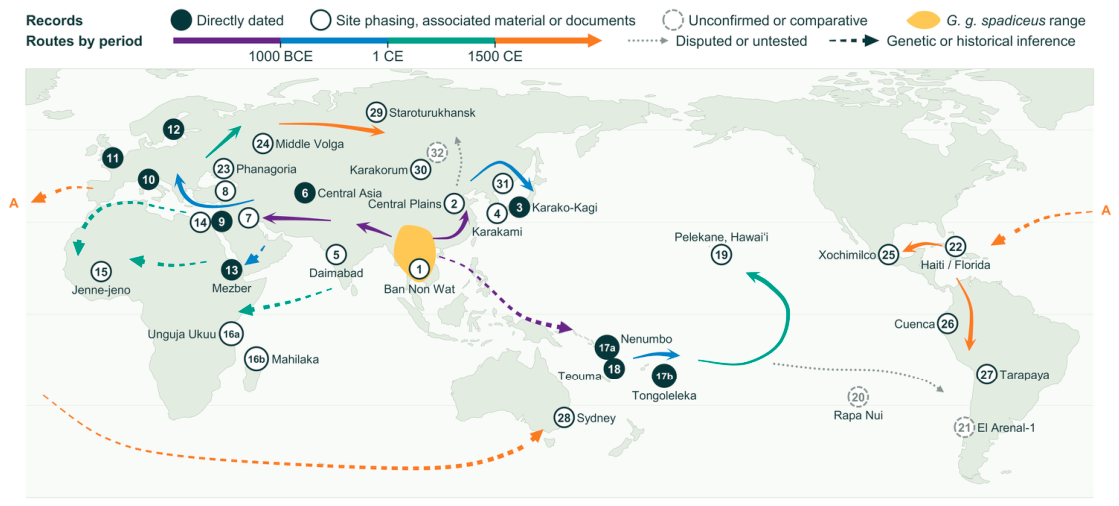
Table 2.
Early and regional chicken records, dating basis, and status.
6. Selection and Phenotypic Diversification After Domestication
Environmental adaptation, selection under traditional husbandry, and modern intensive breeding modified chicken phenotypes after dispersal. Table S1 summarizes major post-domestication traits and variants.
6.1. Environmental Adaptation
High-altitude adaptation involves embryonic development, oxygen transport, and cellular signaling. At 2900 m elevation, Tibetan chickens have higher hatchability than lowland dwarf chickens [86]. Hemoglobin variation and function in Tibetan chicken embryos have been linked to hypoxia adaptation [87,88]. Selection signals, that is, genomic patterns consistent with past selection, occur at ARNT and in calcium signaling pathways in Tibetan chickens [89,90] and in calcium signaling and hypoxia-inducible factor pathways in Ethiopian highland local chickens [91]. Tibetan chickens derive ancestry from northwestern China, the Sichuan–Yunnan border region, and the southern Himalayan foothills; these components arrived on the plateau at different times and carry selected genes with different functions, a pattern suggesting that high-altitude adaptation was assembled in stages as people brought chickens onto the plateau from different directions [92].
Adaptation to cold and heat varies geographically, and populations differ in pathogen resistance. Bashang Long-tail chickens lay more eggs than Rhode Island Reds under cold conditions, whereas the reverse occurs under warm conditions [93,94]. Candidate cold-tolerance regions in Canadian Chantecler chickens differ from those in northern Chinese chickens [95,96], so similar cold-adapted phenotypes can emerge on different genetic backgrounds. The pea-comb phenotype reduces comb and wattle size and may reduce heat loss and frostbite [97]. Tropical–temperate differentiation involves the TSHR Gly558Arg variant, whose derived allele is more frequent in tropical local chickens and is associated with lower serum markers of tissue damage under heat stress [98], and Wenchang chickens also show selection signals at TSHR [95]. Major histocompatibility complex (MHC) haplotypes affect resistance to Marek’s disease [99,100], and local chickens and commercial lines differ in pathogen resistance [101]. Mapping of coccidiosis resistance and Newcastle disease virus responses shows that populations retain disease-related variation [102,103,104].
6.2. Selection Under Traditional Husbandry
Selection under traditional husbandry modified reproductive seasonality, behavior, and appearance. The TSHR region shows a widely shared selective sweep in sampled modern domestic chickens, including commercial lines and local chickens [51,105,106]. The derived allele is associated with a reduced testicular response to short days in males and a faster onset of laying in hens [107]. In red junglefowl–White Leghorn intercrosses, derived-allele homozygous males show less fear of humans and females show less aggression [108]. Ancient European chickens had lower frequencies of the derived TSHR allele and the yellow-skin allele than modern populations [12]. The derived TSHR allele rose rapidly from the tenth century CE alongside medieval husbandry intensification and rising meat and egg consumption [13,109]. The yellow-skin allele spread more recently, possibly through introductions of Asian chickens [12,13]. The derived TSHR allele was uncommon in ancient chickens from the Åland Islands, Estonia, and Lithuania, and modern Finnish and Estonian local chickens mostly carry the ancestral allele [54]. Its low frequency in northern Europe contrasts with its higher frequency in tropical local chickens [98], so selection at this locus may relate to both reproductive seasonality and climate.
Some loci associated with behavior, reproduction, and morphology overlap, so selection for one use may change several traits. One broodiness locus overlaps the TSHR sweep region [110], and overlapping quantitative trait loci (QTL) for comb size, medullary bone deposition, and reproduction suggest that selection on laying may alter morphology [111]. Some tameness loci in experimentally selected red junglefowl overlap brain-composition loci found in red junglefowl–domestic chicken intercrosses [112]. Much of the variation in plumage color, feather structure, and comb morphology is associated with a small number of large-effect structural and regulatory variants (Table S1) [113,114,115,116,117,118,119]. These include the variants underlying dermal hyperpigmentation, crest, rose comb, and frizzle feathering [120,121,122,123,124,125]. Gamecocks from different regions fall into separate genetic clusters but share features that distinguish them from other chickens [126]. This pattern supports a shared origin followed by admixture with local chickens and selective retention of some ancestry [126].
6.3. Modern Intensive Breeding
Since the mid-twentieth century, specialized breeding has rapidly increased growth, feed efficiency, and egg production. Under identical conditions, commercial broilers from 2005 grew more than 400% faster than a preserved 1957 line and had a 50% lower feed conversion ratio [127]. In layers, a 1993 commercial White Leghorn line reached 50% production 28 days earlier than a 1950 control line and laid more eggs [128]. Broiler sweep regions involve growth, appetite, and metabolism [105], and a high-growth haplotype was already present in broiler founders [129]. In the Virginia body-weight lines, selected regions carrying standing variation explain at least 40% of the difference between lines, and epistasis enlarges the selection response [130,131]. Selection experiments and association studies have also examined residual feed intake, heat tolerance, body size, sex-linked dwarfism, abdominal fat deposition, and laying parameters (Table S1) [132,133,134,135,136,137,138,139,140,141,142].
Breeding for production traits also requires managing genetic load and reproductive trade-offs. Sampled domestic chickens carry more predicted deleterious variants than G. g. spadiceus, many in heterozygous states that may be hard to remove through breeding, and the relative contributions of early domestication and later breed improvement to this burden are unresolved [143]. Sexual maturity is delayed in body-weight selection lines, whereas reproductive performance can recover after selection is relaxed [144]. Skeletal health, immunity, and breeder management are recognized priorities for future broiler breeding [127], and the modern broiler morphotype can be maintained only with intensive human management [145].
6.4. Sequence and Pace of Post-Domestication Changes
The post-domestication changes that can currently be dated all come from ancient DNA, eggshell, and bone records outside the ancestral range and therefore postdate dispersal. Trait changes during early domestication, and environmental adaptations known from modern genomes and experiments, lack ancient DNA or archaeological dates [92,95,98]. Under traditional husbandry, Central Asian eggshell assemblages suggest that the local laying season may have lengthened by the Hellenistic period [84]. In Europe, the derived TSHR allele rose from approximately the tenth century CE, more than a millennium after the Central Asian evidence for a longer laying season, and the yellow-skin allele became widespread only within the past 500 years [12,13,109]. The European timing of selection on TSHR therefore cannot be assumed for other regions. Chicken bones from London show that body size increased between 1340 and 1650 CE and then remained broadly stable until 1900 CE [145]. Phenotypic change accelerated under modern breeding: body size in London chickens increased over about three centuries, whereas specialized breeding since the mid-twentieth century has increased growth rate, feed efficiency, and egg production within decades (Figure 2) [127,128].
7. Gene Flow Among Wild, Domestic, and Feral Populations
Gene flow, the movement of genetic material between populations through interbreeding, has accompanied chicken dispersal and breeding and continues today. Three processes alter the genetic composition of modern populations: bidirectional gene flow between domestic chickens and wild junglefowl, admixture and introgression between local chickens and commercial lines (Figure 4), and the combination of older and recent ancestry in feral populations.
Figure 4.
Gene flow among red junglefowl, local chickens, and commercial lines. Arrow color indicates the donor population (red, red junglefowl; green, local chickens; blue, commercial lines; gray, domestic chickens), and arrows point from donor to recipient. Solid lines show connections documented by population genetic data and historical records: ancestral inheritance and post-dispersal introgression from red junglefowl into local chickens [8,27,146], introgression from domestic chickens into red junglefowl [14,147,148], admixture during the formation of breeds and commercial lines [149,150,151], and commercial introgression into local chickens [50,152,153,154,155,156,157,158,159,160,161,162,163]. The dashed line shows entry of commercial ancestry into wild red junglefowl via local chickens, inferred from the documented steps [14,50,152]. Dotted lines show hypothetical or experimental connections: direct entry of commercial ancestry from commercial flocks [148] and targeted introgression of red junglefowl alleles into commercial lines, for which backcrossing experiments in White Leghorn backgrounds exist [106,164]. The gray arrow represents domestic introgression, for which the source study did not distinguish local chickens from commercial lines [14].
7.1. Bidirectional Gene Flow Between Domestic Chickens and Junglefowl
Bidirectional gene flow links wild red junglefowl and domestic chickens. In Ha Giang Province, Vietnam, local chickens coexist with wild red junglefowl and show high microsatellite diversity and admixture with wild birds [146]. In the opposite direction, domestic introgression has altered wild red junglefowl. Compared with museum specimens collected approximately a century ago, red junglefowl in Singapore form a gradient from wild to feral genomic profiles, with varying levels of domestic admixture across subpopulations [148]. Global ancestry analyses estimate 20–50% domestic ancestry in most sampled modern G. g. spadiceus individuals and document changes in wild genetic composition over the past century [14]. Some wild red junglefowl in India also carry domestic ancestry [147]. Older interspecific gene flow also occurred within the genus Gallus [165], and domestic chickens have contributed ancestry to green junglefowl [26]. Morphology alone cannot reliably identify unadmixed wild junglefowl, and captive populations may experience both admixture and bottlenecks. Crossbreeding experiments show that descendants of red junglefowl and domestic chickens can retain morphological traits used to diagnose wild purity after successive backcrossing [166]. Captive grey junglefowl carry approximately 10% autosomal ancestry from the red junglefowl lineage, a signal absent from wild references [167]. Captive red junglefowl show reduced diversity consistent with severe bottlenecks [168]. Provenance records and historical museum specimens are therefore important for interpreting captive and wild ancestry.
7.2. Admixture and Introgression Between Local Chickens and Commercial Lines
Commercial lines originated through admixture among differentiated local chickens, so their genomes combine ancestry from several sources. The scattered occurrence of East Asian maternal haplotypes in Dutch traditional breeds and Western commercial lines reflects repeated introductions of Asian chickens [149]. Modern broilers in both Eastern and Western populations derive much of their ancestry from heavy Asian breeds [150], and population models suggest an ancestry contribution from Chinese gamecocks to Rhode Island Reds [151]. In southern China, gene flow between local chickens and commercial lines runs in both directions: Shalan chickens have contributed to commercial Mahuang chickens, and commercial Xiaobai chickens to Yangshan and Huiyang Bearded chickens [152]. More broadly, as commercial lines expanded, their ancestry entered local chickens through introgression. Commercial introgression is widespread in Chinese local chickens [50,153,154,155,156,157,158], and white plumage in Wenchang chickens derives from introgression from white-feathered layers [157]. In Chinese local chickens, introgression from commercial lines could strongly confound selection signals for cold adaptation [169]. Across Africa and South America, the extent of commercial introgression varies with regional breeding and dissemination histories. Commercial ancestry occurs in parts of North, Central, and East Africa and in South America but is less evident in parts of West Africa [159,160,161,162,163]. These differences may reflect regional promotion of crossbred chicks, line adaptability, and consumer preferences [159].
7.3. Admixture and Adaptation in Feral Chickens
On Kaua‘i in Hawai‘i, feral chickens combine ancestry from earlier Polynesian chickens and recently introduced domestic chickens. A less common maternal lineage is shared with pre-European ancient samples and red junglefowl, whereas the common maternal lineage derives from modern domestic chickens, and nuclear genome data are consistent with admixture between these sources [170]. One inferred admixture event occurred in approximately 1981, close to the period when storms destroyed chicken enclosures [171]. The recent domestic component is most closely related to White Leghorn-derived layer lines [171]. Feral adaptation is not a simple reversal of domestication. Most candidate selected regions in Kaua‘i feral chickens differ from those identified in domestic populations, and derived TSHR and yellow-skin alleles continue to segregate there [172]. Independently established feral populations in Bermuda and Hawai‘i share some selected regions, and this overlap indicates a degree of repeatability in feral adaptation [173]. Introgression from G. g. gallus into feral chickens in Sulawesi further shows that feral chickens can acquire genetic variants by hybridizing with wild relatives [174].
7.4. Implications for Ancestry Inference, Conservation, and Breeding
Continuing gene flow alters the reference populations used in domestication research and can cause misattribution of introgression sources. Using modern red junglefowl that have received domestic introgression as wild references may underestimate genetic differences between domestic chickens and their wild ancestors and obscure some selection signals [14]. Admixture and bottlenecks in captive populations [167,168] and commercial introgression into local chickens [50,169] likewise affect inferences of ancestry and adaptation. The composition of domestic reference panels also restricts source attribution. The domestic reference used to compare historical and modern red junglefowl included both local chickens and commercial lines [14], so detected domestic ancestry could derive from either. Comparisons that include historical museum specimens alongside modern wild red junglefowl and separate panels of local chickens and commercial lines can separate ancestral divergence from recent introgression and identify its source.
Documented gene flow links commercial lines to wild red junglefowl through local chickens. Red junglefowl gave rise to local chickens [8], admixture among local chickens formed the commercial lines [149,150,151], commercial lines have introgressed into local chickens [50,153,154,155,156,157,158], and domestic chickens have introgressed into wild red junglefowl [14,147,148]. Because local chickens within the range of red junglefowl now carry commercial segments, commercial ancestry has probably already reached wild red junglefowl through them (Figure 4). Domestic ancestry in modern red junglefowl remained detectable when only commercial lines served as the domestic reference [14], although the ancestry shared by commercial lines and local chickens prevents this result from isolating a commercial source.
Commercial chickens could also enter wild populations directly. In China, yellow-feathered broilers include developed lines and commercial crosses that carry ancestry from local chickens [175]. Commercial chickens remain genetically close to local chickens [152], and some crosses keep most local-chicken phenotypic characteristics [50]. Their flavor is also close to that of local chickens, and some are raised in forest free-range systems [176]. In Yunnan, red junglefowl sometimes forage with domestic chickens near villages [177], and in India, wild red junglefowl and domestic chickens often feed in the same flocks near forests, with directional gene flow from domestic chickens into free-ranging wild red junglefowl [147]. Where forest free-range flocks lie near red junglefowl habitat, escaped birds are likely to mate with wild birds. Farmers living in red junglefowl habitat also buy chicks to raise at home, sometimes without knowing that the birds are yellow-feathered broilers or their crosses, and birds in village flocks escape easily.
Descendants of escaped birds that continue breeding in the wild would carry commercial ancestry into wild gene pools without a feral population forming first. In Singapore, two free-roaming birds resembling farm chickens were identified as probable escapees by comparison with references that included commercial layer lines [148]. Whether such contributions persist depends on descendant survival and reproduction; Kaua‘i feral chickens shared more haplotypes with White Leghorn-derived layer lines than with broiler lines, and the original study suggested that constraints on broiler survival and reproduction may limit feral establishment [171]. Sampling commercial stocks, free-range and village flocks, local chickens, and wild red junglefowl in the same region and tracing parentage and ancestry tracts could separate the indirect and direct routes.
Domestic introgression makes wild red junglefowl gene pools more similar to domestic populations [14,148], and commercial introgression erodes the genetic distinctiveness of local chickens [50,152]. Because backcrossed hybrids can retain wild-type appearance [166], genomic assessment is needed alongside morphological identification to detect admixed individuals and identify ancestral variation retained in wild populations and local chickens [148,168]. Historical specimens and records of provenance, introductions, and mating in conservation populations connect ancestry changes to management history [14,167,168]. Keeping wild red junglefowl genetically distinct preserves variation for future screening.
Breeding companies could also bring red junglefowl variation directly into commercial lines, a use distinct from wild conservation that requires evaluating breeding trade-offs, animal welfare, and hybridization risks. A closed red junglefowl flock carries microsatellite alleles absent from seven commercial lines [178]. Backcrossing experiments have transferred the ancestral TSHR allele [106] and the ancestral BCO2 allele [164] from red junglefowl into White Leghorn backgrounds to assess gene expression, carotenoid metabolism, physiology, and behavior. These wild alleles have not yet been evaluated in commercial breeding trials. In the BCO2 experiment, the derived domestic allele buffered yolk lutein allocation after carotenoid supplementation was withdrawn [164], so the value of an introduced allele depends on nutritional context. The ancestral TSHR allele is associated with a stronger response to day length [107] and with more fear or aggression in intercross birds [108], so its effects on animal welfare in intensive housing need assessment. Uncontrolled hybridization with wild birds would also move domestic alleles into wild populations. Conservation of wild red junglefowl requires reducing unplanned hybridization, while breeding applications should use controlled crosses with documented pedigrees.
Taken together, introgression from domestic chickens into wild red junglefowl and from commercial lines into local chickens is established by genomic data [14,50,148,152]. The view that feral adaptation differs from a reversal of domestication is a plausible generalization from a few island populations [172,173]. The indirect route through local chickens is probable; direct entry from commercial flocks and the breeding value of wild variants remain hypotheses [148,178].
8. Conclusions and Future Directions
The evidence best supports a single domestication origin of chickens followed by continued differentiation after dispersal. Populations related to G. g. spadiceus in southwestern China and mainland Southeast Asia provided the principal ancestry, and later regional introgression explains the genetic links between domestic chickens and other junglefowl. Remains from Ban Non Wat at approximately 1650–1250 BCE provide the clearest current evidence of early husbandry, and domestication began after the genomic divergence and before this record. Commensalism fostered by cereal agriculture, followed by a gradual shift to husbandry, is the explanation most consistent with current archaeological and ecological evidence. Records dated by site phasing place chickens beyond the ancestral range by the second half of the second millennium BCE. Directly dated bones place them in the southwestern Pacific in the late second to early first millennium BCE and in the Horn of Africa and Europe during the first millennium BCE. Verified records in the Americas begin with European colonization. After dispersal, the uses of chickens, environmental adaptation, and the direction of selection diverged among regions. In Europe, ancient DNA shows the derived TSHR allele rising rapidly from approximately the tenth century CE, and modern breeding has compressed phenotypic change from centuries to decades. Continuing gene flow alters both wild and domestic populations: commercial ancestry has probably already reached wild red junglefowl through local chickens, and yellow-feathered broilers raised in forest free-range systems and village flocks may also introduce it directly. Inferring the genetic composition of the wild ancestor therefore requires historical specimens that predate recent introgression.
The most pressing task is to tie the genomic source population to dated archaeological evidence of husbandry. Whether the Yunnan candidate remains predate Ban Non Wat, and what genetic composition early managed flocks had, bear directly on where and when domestication took place. Research should give priority to species reassessment of the Caiyuanzi and Dadunzi specimens, direct dating of these specimens and of the Neolithic bones from Ban Non Wat, and ancient nuclear genomes from remains with clear management contexts. Such evidence would test chronology and ancestry together; if the principal ancestry of directly dated early domestic chickens does not derive from populations related to G. g. spadiceus, the current inference of ancestry will need revision. Beyond this, ancient DNA time series across the main dispersal regions are needed to distinguish movements of chickens, local introgression, and trait selection, and to determine whether the sequence of changes known from Europe holds elsewhere; for example, whether TSHR was involved in the earlier lengthening of the laying season in Central Asia. Conserving the genetic distinctiveness of wild red junglefowl and local chickens preserves a reference for reconstructing this evolutionary history and retains genetic variation that future breeding can evaluate.
Supplementary Materials
The following supporting information can be downloaded at: https://www.mdpi.com/article/10.3390/ani16223656/s1, Table S1: Major post-domestication evolutionary processes, representative traits, associated variants, and types of evidence in chickens. References [179,180,181] are cited in the Supplementary Materials.
Author Contributions
Conceptualization, Y.D., T.D., C.G. and K.W.; Investigation, Y.D.; Data curation, Y.D., Y.Z., Y.H. and H.W.; Writing—original draft preparation, Y.D. and L.T.; Writing—review and editing, Y.D., L.T., Y.Z., Y.H., H.W., T.D., C.G. and K.W.; Visualization, Y.D. and L.T.; Supervision, T.D., C.G. and K.W.; Project administration, C.G. and K.W.; Funding acquisition, C.G. and K.W. All authors have read and agreed to the published version of the manuscript.
Funding
This work was supported by the Young Talent Special Project of the Xingdian Talent Program, Department of Human Resources and Social Security of Yunnan Province, grant number XDYC-QNRC-2023-0416.
Institutional Review Board Statement
Not applicable. This review is based on published literature and involved no new experiments on humans or animals.
Informed Consent Statement
Not applicable.
Data Availability Statement
No new experimental data were generated in this review. The studies supporting the synthesis are listed in the references.
Acknowledgments
Conflicts of Interest
The authors declare no conflicts of interest. The funders had no role in the design of the study; in the collection, analyses, or interpretation of data; in the writing of the manuscript; or in the decision to publish the results.
References
- FAO. FAOSTAT: Crops and Livestock Products; Food and Agriculture Organization of the United Nations: Rome, Italy, 2025; Available online: https://www.fao.org/faostat/en/#data/QCL (accessed on 11 October 2026).
- Lawal, R.A.; Hanotte, O. Domestic chicken diversity: Origin, distribution, and adaptation. Anim. Genet. 2021, 52, 385–394. [Google Scholar] [CrossRef] [Scilit] [PubMed]
- Best, J.; Doherty, S.; Armit, I.; Boev, Z.; Büster, L.; Cunliffe, B.; Foster, A.; Frimet, B.; Hamilton-Dyer, S.; Higham, T.; et al. Redefining the timing and circumstances of the chicken’s introduction to Europe and north-west Africa. Antiquity 2022, 96, 868–882. [Google Scholar] [CrossRef] [Scilit]
- Peters, J.; Lebrasseur, O.; Irving-Pease, E.K.; Paxinos, P.D.; Best, J.; Smallman, R.; Callou, C.; Gardeisen, A.; Trixl, S.; Frantz, L.; et al. The biocultural origins and dispersal of domestic chickens. Proc. Natl. Acad. Sci. USA 2022, 119, e2121978119. [Google Scholar] [CrossRef] [Scilit] [PubMed]
- Fumihito, A.; Miyake, T.; Sumi, S.; Takada, M.; Ohno, S.; Kondo, N. One subspecies of the red junglefowl (Gallus gallus gallus) suffices as the matriarchic ancestor of all domestic breeds. Proc. Natl. Acad. Sci. USA 1994, 91, 12505–12509. [Google Scholar] [CrossRef] [Scilit] [PubMed]
- Liu, Y.P.; Wu, G.S.; Yao, Y.G.; Miao, Y.W.; Luikart, G.; Baig, M.; Beja-Pereira, A.; Ding, Z.L.; Palanichamy, M.G.; Zhang, Y.P. Multiple maternal origins of chickens: Out of the Asian jungles. Mol. Phylogenet. Evol. 2006, 38, 12–19. [Google Scholar] [CrossRef] [Scilit] [PubMed]
- Xiang, H.; Gao, J.; Yu, B.; Zhou, H.; Cai, D.; Zhang, Y.; Chen, X.; Wang, X.; Hofreiter, M.; Zhao, X. Early Holocene chicken domestication in northern China. Proc. Natl. Acad. Sci. USA 2014, 111, 17564–17569. [Google Scholar] [CrossRef] [Scilit] [PubMed]
- Wang, M.S.; Thakur, M.; Peng, M.S.; Jiang, Y.; Frantz, L.A.F.; Li, M.; Zhang, J.J.; Wang, S.; Peters, J.; Otecko, N.O.; et al. 863 genomes reveal the origin and domestication of chicken. Cell Res. 2020, 30, 693–701. [Google Scholar] [CrossRef] [Scilit] [PubMed]
- Eda, M.; Lu, P.; Kikuchi, H.; Li, Z.; Li, F.; Yuan, J. Reevaluation of early Holocene chicken domestication in northern China. J. Archaeol. Sci. 2016, 67, 25–31. [Google Scholar] [CrossRef] [Scilit]
- Larson, G.; Piperno, D.R.; Allaby, R.G.; Purugganan, M.D.; Andersson, L.; Arroyo-Kalin, M.; Barton, L.; Climer Vigueira, C.; Denham, T.; Dobney, K.; et al. Current perspectives and the future of domestication studies. Proc. Natl. Acad. Sci. USA 2014, 111, 6139–6146. [Google Scholar] [CrossRef] [Scilit] [PubMed]
- Frantz, L.A.F.; Bradley, D.G.; Larson, G.; Orlando, L. Animal domestication in the era of ancient genomics. Nat. Rev. Genet. 2020, 21, 449–460. [Google Scholar] [CrossRef] [Scilit] [PubMed]
- Girdland Flink, L.; Allen, R.; Barnett, R.; Malmström, H.; Peters, J.; Eriksson, J.; Andersson, L.; Dobney, K.; Larson, G. Establishing the validity of domestication genes using DNA from ancient chickens. Proc. Natl. Acad. Sci. USA 2014, 111, 6184–6189. [Google Scholar] [CrossRef] [Scilit] [PubMed]
- Loog, L.; Thomas, M.G.; Barnett, R.; Allen, R.; Sykes, N.; Paxinos, P.D.; Lebrasseur, O.; Dobney, K.; Peters, J.; Manica, A.; et al. Inferring allele frequency trajectories from ancient DNA indicates that selection on a chicken gene coincided with changes in medieval husbandry practices. Mol. Biol. Evol. 2017, 34, 1981–1990. [Google Scholar] [CrossRef] [Scilit] [PubMed]
- Wu, M.Y.; Forcina, G.; Low, G.W.; Sadanandan, K.R.; Gwee, C.Y.; van Grouw, H.; Wu, S.; Edwards, S.V.; Baldwin, M.W.; Rheindt, F.E. Historic samples reveal loss of wild genotype through domestic chicken introgression during the Anthropocene. PLoS Genet. 2023, 19, e1010551. [Google Scholar] [CrossRef] [Scilit] [PubMed]
- Tixier-Boichard, M.; Bed’hom, B.; Rognon, X. Chicken domestication: From archeology to genomics. C. R. Biol. 2011, 334, 197–204. [Google Scholar] [CrossRef] [Scilit] [PubMed]
- Eda, M. Origin of the domestic chicken from modern biological and zooarchaeological approaches. Anim. Front. 2021, 11, 52–61. [Google Scholar] [CrossRef] [Scilit] [PubMed]
- Fumihito, A.; Miyake, T.; Takada, M.; Shingu, R.; Endo, T.; Gojobori, T.; Kondo, N.; Ohno, S. Monophyletic origin and unique dispersal patterns of domestic fowls. Proc. Natl. Acad. Sci. USA 1996, 93, 6792–6795. [Google Scholar] [CrossRef] [Scilit] [PubMed]
- Huang, X.H.; Wu, Y.J.; Miao, Y.W.; Peng, M.S.; Chen, X.; He, D.L.; Suwannapoom, C.; Du, B.W.; Li, X.Y.; Weng, Z.X.; et al. Was chicken domesticated in northern China? New evidence from mitochondrial genomes. Sci. Bull. 2018, 63, 743–746. [Google Scholar] [CrossRef] [Scilit] [PubMed]
- Miao, Y.W.; Peng, M.S.; Wu, G.S.; Ouyang, Y.N.; Yang, Z.Y.; Yu, N.; Liang, J.P.; Pianchou, G.; Beja-Pereira, A.; Mitra, B.; et al. Chicken domestication: An updated perspective based on mitochondrial genomes. Heredity 2013, 110, 277–282. [Google Scholar] [CrossRef] [Scilit] [PubMed]
- Kanginakudru, S.; Metta, M.; Jakati, R.D.; Nagaraju, J. Genetic evidence from Indian red jungle fowl corroborates multiple domestication of modern day chicken. BMC Evol. Biol. 2008, 8, 174. [Google Scholar] [CrossRef] [Scilit] [PubMed]
- Kanakachari, M.; Chatterjee, R.N.; Reddy, M.R.; Dange, M.; Bhattacharya, T.K. Indian Red Jungle fowl reveals a genetic relationship with South East Asian Red Jungle fowl and Indian native chicken breeds as evidenced through whole mitochondrial genome sequences. Front. Genet. 2023, 14, 1083976. [Google Scholar] [CrossRef] [Scilit] [PubMed]
- Ballard, J.W.O.; Whitlock, M.C. The incomplete natural history of mitochondria. Mol. Ecol. 2004, 13, 729–744. [Google Scholar] [CrossRef] [Scilit] [PubMed]
- Toews, D.P.L.; Brelsford, A. The biogeography of mitochondrial and nuclear discordance in animals. Mol. Ecol. 2012, 21, 3907–3930. [Google Scholar] [CrossRef] [Scilit] [PubMed]
- Bao, W.; Chen, G.; Li, B.; Wu, X.; Shu, J.; Wu, S.; Xu, Q.; Weigend, S. Analysis of genetic diversity and phylogenetic relationships among red jungle fowls and Chinese domestic fowls. Sci. China Ser. C Life Sci. 2008, 51, 560–568. [Google Scholar] [CrossRef] [Scilit] [PubMed]
- Hata, A.; Nunome, M.; Suwanasopee, T.; Duengkae, P.; Chaiwatana, S.; Chamchumroon, W.; Suzuki, T.; Koonawootrittriron, S.; Matsuda, Y.; Srikulnath, K. Origin and evolutionary history of domestic chickens inferred from a large population study of Thai red junglefowl and indigenous chickens. Sci. Rep. 2021, 11, 2035. [Google Scholar] [CrossRef] [Scilit] [PubMed]
- Sawai, H.; Kim, H.L.; Kuno, K.; Suzuki, S.; Gotoh, H.; Takada, M.; Takahata, N.; Satta, Y.; Akishinonomiya, F. The Origin and Genetic Variation of Domestic Chickens with Special Reference to Junglefowls Gallus g. gallus and G. varius. PLoS ONE 2010, 5, e10639. [Google Scholar] [CrossRef] [Scilit] [PubMed]
- Lawal, R.A.; Martin, S.H.; Vanmechelen, K.; Vereijken, A.; Silva, P.; Al-Atiyat, R.M.; Aljumaah, R.S.; Mwacharo, J.M.; Wu, D.D.; Zhang, Y.P.; et al. The wild species genome ancestry of domestic chickens. BMC Biol. 2020, 18, 13. [Google Scholar] [CrossRef] [Scilit] [PubMed]
- Pickrell, J.K.; Pritchard, J.K. Inference of population splits and mixtures from genome-wide allele frequency data. PLoS Genet. 2012, 8, e1002967. [Google Scholar] [CrossRef] [Scilit] [PubMed]
- Eriksson, J.; Larson, G.; Gunnarsson, U.; Bed’hom, B.; Tixier-Boichard, M.; Strömstedt, L.; Wright, D.; Jungerius, A.; Vereijken, A.; Randi, E.; et al. Identification of the Yellow Skin Gene Reveals a Hybrid Origin of the Domestic Chicken. PLoS Genet. 2008, 4, e1000010. [Google Scholar] [CrossRef] [Scilit] [PubMed]
- Zhao, X.; Wen, J.; Zhang, X.; Zhang, J.; Zhu, T.; Wang, H.; Yang, W.; Cao, G.; Xiong, W.; Liu, Y.; et al. Significant genomic introgression from grey junglefowl (Gallus sonneratii) to domestic chickens (Gallus gallus domesticus). J. Anim. Sci. Biotechnol. 2024, 15, 45. [Google Scholar] [CrossRef] [Scilit] [PubMed]
- Xu, N.; Zhang, L.; Chen, F.; Feng, Z.; Zheng, J.; Li, D.; Zhao, Y.; Kang, X. Population structure, selection signal and introgression of gamecocks revealed by whole genome sequencing. J. Anim. Sci. Biotechnol. 2025, 16, 22. [Google Scholar] [CrossRef] [Scilit] [PubMed]
- Ulfah, M.; Kawahara-Miki, R.; Farajallah, A.; Muladno, M.; Dorshorst, B.; Martin, A.; Kono, T. Genetic features of red and green junglefowls and relationship with Indonesian native chickens Sumatera and Kedu Hitam. BMC Genom. 2016, 17, 320. [Google Scholar] [CrossRef] [Scilit] [PubMed]
- Peng, M.-S.; Shi, N.-N.; Yao, Y.-G.; Zhang, Y.-P. Caveats about interpretation of ancient chicken mtDNAs from northern China. Proc. Natl. Acad. Sci. USA 2015, 112, E1970–E1971. [Google Scholar] [CrossRef] [Scilit] [PubMed]
- Xiang, H.; Hofreiter, M.; Zhao, X. Reply to Peng et al.: Archaeological contexts should not be ignored for early chicken domestication. Proc. Natl. Acad. Sci. USA 2015, 112, E1972–E1973. [Google Scholar] [CrossRef] [Scilit] [PubMed]
- Peters, J.; Lebrasseur, O.; Best, J.; Miller, H.; Fothergill, T.; Dobney, K.; Thomas, R.M.; Maltby, M.; Sykes, N.; Hanotte, O.; et al. Questioning new answers regarding Holocene chicken domestication in China. Proc. Natl. Acad. Sci. USA 2015, 112, E2415. [Google Scholar] [CrossRef] [Scilit] [PubMed]
- Xiang, H.; Gao, J.; Yu, B.; Hofreiter, M.; Zhao, X. Reply to Peters et al.: Further discussions confirm early Holocene chicken domestication in northern China. Proc. Natl. Acad. Sci. USA 2015, 112, E2416. [Google Scholar] [CrossRef] [Scilit] [PubMed]
- Peters, J.; Lebrasseur, O.; Deng, H.; Larson, G. Holocene cultural history of Red jungle fowl (Gallus gallus) and its domestic descendant in East Asia. Quat. Sci. Rev. 2016, 142, 102–119. [Google Scholar] [CrossRef] [Scilit]
- Barton, L.; Bingham, B.; Sankaranarayanan, K.; Monroe, C.; Thomas, A.; Kemp, B.M. The earliest farmers of northwest China exploited grain-fed pheasants not chickens. Sci. Rep. 2020, 10, 2556. [Google Scholar] [CrossRef] [Scilit] [PubMed]
- Higham, C.; Higham, T. A new chronological framework for prehistoric Southeast Asia, based on a Bayesian model from Ban Non Wat. Antiquity 2009, 83, 125–144. [Google Scholar] [CrossRef] [Scilit]
- Eda, M.; Shoocongdej, R.; Auetrakulvit, P.; Kachajiwa, J. The history of chicken and other bird exploitation in Thailand: Preliminary analysis of bird remains from four archaeological sites. Int. J. Osteoarchaeol. 2019, 29, 231–237. [Google Scholar] [CrossRef] [Scilit]
- Peng, M.S.; Han, J.L.; Zhang, Y.P. Missing puzzle piece for the origins of domestic chickens. Proc. Natl. Acad. Sci. USA 2022, 119, e2210996119. [Google Scholar] [CrossRef] [Scilit] [PubMed]
- Peters, J.; Fuller, D.Q.; Irving-Pease, E.K.; Lebrasseur, O.; Best, J.; Smallman, R.; Larson, G. Reply to Peng et al.: Chicken tessellation requires more pieces. Proc. Natl. Acad. Sci. USA 2022, 119, e2213678119. [Google Scholar] [CrossRef] [Scilit] [PubMed]
- Woldekiros, H.S.; D’Andrea, A.C. Early Evidence for Domestic Chickens (Gallus gallus domesticus) in the Horn of Africa. Int. J. Osteoarchaeol. 2017, 27, 329–341. [Google Scholar] [CrossRef] [Scilit]
- Steadman, D.W.; Pregill, G.K.; Burley, D.V. Rapid prehistoric extinction of iguanas and birds in Polynesia. Proc. Natl. Acad. Sci. USA 2002, 99, 3673–3677. [Google Scholar] [CrossRef] [Scilit] [PubMed]
- Petchey, F.; Spriggs, M.; Bedford, S.; Valentin, F. The chronology of occupation at Teouma, Vanuatu: Use of a modified chronometric hygiene protocol and Bayesian modeling to evaluate midden remains. J. Archaeol. Sci. Rep. 2015, 4, 95–105. [Google Scholar] [CrossRef] [Scilit]
- Larson, G.; Fuller, D.Q. The Evolution of Animal Domestication. Annu. Rev. Ecol. Evol. Syst. 2014, 45, 115–136. [Google Scholar] [CrossRef] [Scilit]
- Collias, N.E.; Saichuae, P. Ecology of the Red Jungle Fowl in Thailand and Malaya with Reference to the Origin of Domestication. Nat. Hist. Bull. Siam Soc. 1967, 22, 189–209. [Google Scholar]
- Dal Martello, R.; Min, R.; Stevens, C.; Higham, C.; Higham, T.; Qin, L.; Fuller, D.Q. Early agriculture at the crossroads of China and Southeast Asia: Archaeobotanical evidence and radiocarbon dates from Baiyangcun, Yunnan. J. Archaeol. Sci. Rep. 2018, 20, 711–721. [Google Scholar] [CrossRef] [Scilit]
- Jin, H.; Liu, X.; Min, R.; Li, X.; Wu, X. Early Subsistence Practices at Prehistoric Dadunzi in Yuanmou, Yunnan: New Evidence for the Origins of Early Agriculture in Southwest China. In The Crescent-Shaped Cultural-Communication Belt: Tong Enzheng’s Model in Retrospect; Hein, A., Ed.; BAR International Series 2679; Archaeopress: Oxford, UK, 2014; pp. 133–140. [Google Scholar]
- Zhang, C.; Lin, D.; Wang, Y.; Peng, D.; Li, H.; Fei, J.; Chen, K.; Yang, N.; Hu, X.; Zhao, Y.; et al. Widespread introgression in Chinese indigenous chicken breeds from commercial broiler. Evol. Appl. 2019, 12, 610–621. [Google Scholar] [CrossRef] [Scilit] [PubMed]
- Lawal, R.A.; Al-Atiyat, R.M.; Aljumaah, R.S.; Silva, P.; Mwacharo, J.M.; Hanotte, O. Whole-Genome Resequencing of Red Junglefowl and Indigenous Village Chicken Reveal New Insights on the Genome Dynamics of the Species. Front. Genet. 2018, 9, 264. [Google Scholar] [CrossRef] [Scilit] [PubMed]
- Darwin, C. The Variation of Animals and Plants under Domestication; John Murray: London, UK, 1868. [Google Scholar]
- Storey, A.A.; Athens, J.S.; Bryant, D.; Carson, M.; Emery, K.; deFrance, S.; Higham, C.; Huynen, L.; Intoh, M.; Jones, S.; et al. Investigating the Global Dispersal of Chickens in Prehistory Using Ancient Mitochondrial DNA Signatures. PLoS ONE 2012, 7, e39171. [Google Scholar] [CrossRef] [Scilit] [PubMed]
- Olli, S.; Gustavsson, R.; Kivikero, H.; Lõugas, L.; Mannermaa, K.; Piličiauskienė, G.; Rannamäe, E.; Searle, J.B.; Kvist, L.; Honka, J. Ancient DNA unravels the history of chickens in the Baltic Sea region and the continuity of landrace lineages. Heredity 2026, 135, 397–408. [Google Scholar] [CrossRef] [Scilit] [PubMed]
- Askeyev, I.V.; Galimova, D.N.; Askeyev, O.V. Birds of the Middle Volga Region in the 5th–18th Centuries AD (Based on Archaeological Excavations). Povolzhskaya Arkheologiya 2013, 3, 116–144. (In Russian) [Google Scholar] [CrossRef] [Scilit]
- Lebrasseur, O.; Shaymuratova, D.N.; Askeyev, A.O.; Asylgaraeva, G.S.; Frantz, L.; Larson, G.; Askeyev, O.V.; Askeyev, I.V. A Zooarchaeological and Molecular Assessment of Ancient Chicken Remains from Russia. Povolzhskaya Arkheologiya 2021, 1, 216–231. [Google Scholar] [CrossRef] [Scilit]
- Omelko, V.E.; Gelman, E.I.; Gasilin, V.V.; Vinokurova, M.A. Wild and Domestic Animals in the Subsistence of the Bohai City of Yanzhou. Ross. I ATR 2020, 4, 161–174. (In Russian) [Google Scholar] [CrossRef]
- Miyagashev, D.A. Livestock Breeding in the Subsistence System of the Nizhne Mangirtuy Settlement. Multidiscip. Stud. Archaeol. 2022, 2, 68–76. (In Russian) [Google Scholar] [CrossRef]
- Miyagashev, D.A.; Bazarov, B.A. The Nizhne Mangirtuy Settlement and the Emergence of Sedentary Xiongnu Complexes in Transbaikalia. Multidiscip. Stud. Archaeol. 2020, 2, 107–124. (In Russian) [Google Scholar] [CrossRef] [Scilit]
- von den Driesch, A. Tierreste aus Buto im Nildelta. Archaeofauna 1997, 6, 23–39. [Google Scholar] [CrossRef] [Scilit]
- Boessneck, J. Vogelknochenfunde aus dem alten Ägypten. Ann. Naturhistorischen Mus. Wien. Ser. B 1986, 88/89, 323–344. [Google Scholar]
- MacDonald, K.C. The domestic chicken (Gallus gallus) in sub-Saharan Africa: A background to its introduction and its osteological differentiation from indigenous fowls (Numidinae and Francolinus sp.). J. Archaeol. Sci. 1992, 19, 303–318. [Google Scholar] [CrossRef] [Scilit]
- Prendergast, M.E.; Buckley, M.; Crowther, A.; Frantz, L.; Eager, H.; Lebrasseur, O.; Hutterer, R.; Hulme-Beaman, A.; Van Neer, W.; Douka, K.; et al. Reconstructing Asian faunal introductions to eastern Africa from multi-proxy biomolecular and archaeological datasets. PLoS ONE 2017, 12, e0182565. [Google Scholar] [CrossRef] [Scilit] [PubMed]
- Al-Jumaili, A.S.; Boudali, S.F.; Kebede, A.; Al-Bayatti, S.A.; Essa, A.A.; Ahbara, A.; Aljumaah, R.S.; Alatiyat, R.M.; Mwacharo, J.M.; Bjørnstad, G.; et al. The maternal origin of indigenous domestic chicken from the Middle East, the north and the horn of Africa. BMC Genet. 2020, 21, 30. [Google Scholar] [CrossRef] [Scilit] [PubMed]
- Herrera, M.B.; Thomson, V.A.; Wadley, J.J.; Piper, P.J.; Sulandari, S.; Dharmayanthi, A.B.; Kraitsek, S.; Gongora, J.; Austin, J.J. East African origins for Madagascan chickens as indicated by mitochondrial DNA. R. Soc. Open Sci. 2017, 4, 160787. [Google Scholar] [CrossRef] [Scilit] [PubMed]
- Yonezawa, T.; Mannen, H.; Honma, K.; Matsunaga, M.; Rakotondraparany, F.; Ratsoavina, F.M.; Wu, J.; Nishibori, M.; Yamamoto, Y. Origin and spatial population structure of Malagasy native chickens based on mitochondrial DNA. Sci. Rep. 2024, 14, 569. [Google Scholar] [CrossRef] [Scilit] [PubMed]
- Eda, M.; Izumi, H.; Yoneda, M.; Fujita, S. The earliest evidence of domestic chickens in the Japanese Archipelago. Front. Earth Sci. 2023, 11, 1104535. [Google Scholar] [CrossRef] [Scilit]
- Eda, M.; Izumi, H.; Matsumi, Y. Exploring the Possibility of Successive Breeding of Chickens in the Yayoi Culture, Japan. Int. J. Osteoarchaeol. 2025, 35, 392–400. [Google Scholar] [CrossRef] [Scilit]
- Matsuda, Y.; Matsumoto, Y.; Higashiura, Y.; Bendesky, A.; Tsudzuki, M.; Shimmura, T. Population genomics elucidates the trajectory of chicken domestication from Asia to Japan. Poult. Sci. 2025, 104, 105060. [Google Scholar] [CrossRef] [Scilit] [PubMed]
- Storey, A.A.; Spriggs, M.; Bedford, S.; Hawkins, S.C.; Robins, J.H.; Huynen, L.; Matisoo-Smith, E. Mitochondrial DNA from 3000-year old chickens at the Teouma site, Vanuatu. J. Archaeol. Sci. 2010, 37, 2459–2468. [Google Scholar] [CrossRef] [Scilit]
- Thomson, V.A.; Lebrasseur, O.; Austin, J.J.; Hunt, T.L.; Burney, D.A.; Denham, T.; Rawlence, N.J.; Wood, J.R.; Gongora, J.; Girdland Flink, L.; et al. Using ancient DNA to study the origins and dispersal of ancestral Polynesian chickens across the Pacific. Proc. Natl. Acad. Sci. USA 2014, 111, 4826–4831. [Google Scholar] [CrossRef] [Scilit] [PubMed]
- Godinez, C.J.P.; Dadios, P.J.D.; Espina, D.M.; Matsunaga, M.; Nishibori, M. Population Genetic Structure and Contribution of Philippine Chickens to the Pacific Chicken Diversity Inferred From Mitochondrial DNA. Front. Genet. 2021, 12, 698401. [Google Scholar] [CrossRef] [Scilit] [PubMed]
- Storey, A.A.; Ramírez, J.M.; Quiroz, D.; Burley, D.V.; Addison, D.J.; Walter, R.; Anderson, A.J.; Hunt, T.L.; Athens, J.S.; Huynen, L.; et al. Radiocarbon and DNA evidence for a pre-Columbian introduction of Polynesian chickens to Chile. Proc. Natl. Acad. Sci. USA 2007, 104, 10335–10339. [Google Scholar] [CrossRef] [Scilit] [PubMed]
- Gongora, J.; Rawlence, N.J.; Mobegi, V.A.; Jianlin, H.; Alcalde, J.A.; Matus, J.T.; Hanotte, O.; Moran, C.; Austin, J.J.; Ulm, S.; et al. Indo-European and Asian origins for Chilean and Pacific chickens revealed by mtDNA. Proc. Natl. Acad. Sci. USA 2008, 105, 10308–10313. [Google Scholar] [CrossRef] [Scilit] [PubMed]
- Buhring, K.; McAlister, A.; Kneebone, B.; Calás, E.; Gajardo, J.; Roa, C.; Delgado, A.; Olguin, L.; Fernandez, M.; Moreira, R.; et al. Revisiting the evidence of the Arenal 1 site: Chronologies and human interactions in central southern Chile. J. Isl. Coast. Archaeol. 2025, 20, 399–422. [Google Scholar] [CrossRef] [Scilit]
- deFrance, S.D. Dieta y uso de animales en el Potosí colonial. Chungara Rev. Antropol. Chil. 2012, 44, 9–24. [Google Scholar] [CrossRef] [Scilit]
- Jamieson, R.W. De Tomebamba a Cuenca: Arquitectura y Arqueología Colonial; Ediciones Abya-Yala: Quito, Ecuador, 2003. [Google Scholar]
- Corona, M.E. “El Japón”, Xochimilco: Análisis arqueozoológico de un sitio en la época de la Conquista. Arqueología 1996, 16, 95–107. [Google Scholar]
- Phillip, A. The Voyage of Governor Phillip to Botany Bay, with an Account of the Establishment of the Colonies of Port Jackson and Norfolk Island; John Stockdale: London, UK, 1789. [Google Scholar]
- Allen, M.G. Animalscapes and Empire: New Perspectives on the Iron Age/Romano-British Transition. Ph.D. Thesis, University of Nottingham, Nottingham, UK, 2011. [Google Scholar]
- Maltby, M.; Allen, M.; Best, J.; Fothergill, B.T.; Demarchi, B. Counting Roman chickens: Multidisciplinary approaches to human-chicken interactions in Roman Britain. J. Archaeol. Sci. Rep. 2018, 19, 1003–1015. [Google Scholar] [CrossRef] [Scilit]
- Siracusano, G.; Manuelli, F.; Masseti, M. When did roosters start singing at Arslantepe? A preliminary assessment of the presence and spread of Gallus gallus (Linnaeus, 1758) in Iron Age Eastern Anatolia. Anthropozoologica 2021, 56, 241–251. [Google Scholar] [CrossRef] [Scilit]
- Perry-Gal, L.; Erlich, A.; Gilboa, A.; Bar-Oz, G. Earliest economic exploitation of chicken outside East Asia: Evidence from the Hellenistic Southern Levant. Proc. Natl. Acad. Sci. USA 2015, 112, 9849–9854. [Google Scholar] [CrossRef] [Scilit] [PubMed]
- Peters, C.; Richter, K.K.; Wilkin, S.; Stark, S.; Mir-Makhamad, B.; Fernandes, R.; Maksudov, F.; Mirzaakhmedov, S.; Rahmonov, H.; Schirmer, S.; et al. Archaeological and molecular evidence for ancient chickens in Central Asia. Nat. Commun. 2024, 15, 2697. [Google Scholar] [CrossRef] [Scilit] [PubMed]
- Piper, P.J. The Origins and Arrival of the Earliest Domestic Animals in Mainland and Island Southeast Asia: A Developing Story of Complexity. In New Perspectives in Southeast Asian and Pacific Prehistory; Piper, P.J., Matsumura, H., Bulbeck, D., Eds.; ANU Press: Canberra, Australia, 2017; pp. 251–274, Terra Australis 45. [Google Scholar] [CrossRef] [Scilit]
- Zhang, H.; Zhang, H.; Wang, X.T.; Chamba, Y.; Ling, Y.; Wu, C.X. Influences of hypoxia on hatching performance in chickens with different genetic adaptation to high altitude. Poult. Sci. 2008, 87, 2112–2116. [Google Scholar] [CrossRef] [Scilit] [PubMed]
- Gou, X.; Li, N.; Lian, L.; Yan, D.; Zhang, H.; Wei, Z.; Wu, C. Hypoxic adaptations of hemoglobin in Tibetan chick embryo: High oxygen-affinity mutation and selective expression. Comp. Biochem. Physiol. B Biochem. Mol. Biol. 2007, 147, 147–155. [Google Scholar] [CrossRef] [Scilit] [PubMed]
- Liu, C.; Zhang, L.F.; Song, M.L.; Bao, H.G.; Zhao, C.J.; Li, N. Highly efficient dissociation of oxygen from hemoglobin in Tibetan chicken embryos compared with lowland chicken embryos incubated in hypoxia. Poult. Sci. 2009, 88, 2689–2694. [Google Scholar] [CrossRef] [Scilit] [PubMed]
- Liu, X.; Wang, X.; Liu, J.; Wang, X.; Bao, H. Identifying Candidate Genes for Hypoxia Adaptation of Tibet Chicken Embryos by Selection Signature Analyses and RNA Sequencing. Genes 2020, 11, 823. [Google Scholar] [CrossRef] [Scilit] [PubMed]
- Wang, M.S.; Li, Y.; Peng, M.S.; Zhong, L.; Wang, Z.J.; Li, Q.Y.; Tu, X.L.; Dong, Y.; Zhu, C.L.; Wang, L.; et al. Genomic Analyses Reveal Potential Independent Adaptation to High Altitude in Tibetan Chickens. Mol. Biol. Evol. 2015, 32, 1880–1889. [Google Scholar] [CrossRef] [Scilit] [PubMed]
- Kebede, F.G.; Derks, M.F.L.; Dessie, T.; Hanotte, O.; Barros, C.P.; Crooijmans, R.P.M.A.; Komen, H.; Bastiaansen, J.W.M. Landscape genomics reveals regions associated with adaptive phenotypic and genetic variation in Ethiopian indigenous chickens. BMC Genom. 2024, 25, 284. [Google Scholar] [CrossRef] [Scilit] [PubMed]
- Zhao, Z.; Nie, R.; Fan, H.; Ngodroup, T.; Zhu, L.; Pan, H.; Zhang, B.; Zhang, H. Large-Scale Genomics Reveals Three-Source Ancestry and Layered Adaptation to High Altitude in Tibetan Chickens. Adv. Sci. 2026, 13, e22994. [Google Scholar] [CrossRef] [Scilit] [PubMed]
- Xie, S.; Yang, X.; Gao, Y.; Jiao, W.; Li, X.; Li, Y.; Ning, Z. Performance differences of Rhode Island Red, Bashang Long-tail Chicken, and their reciprocal crossbreds under natural cold stress. Asian-Australas. J. Anim. Sci. 2017, 30, 1507–1514. [Google Scholar] [CrossRef] [Scilit] [PubMed]
- Xie, S.; Yang, X.; Wang, D.; Zhu, F.; Yang, N.; Hou, Z.; Ning, Z. Thyroid transcriptome analysis reveals different adaptive responses to cold environmental conditions between two chicken breeds. PLoS ONE 2018, 13, e0191096. [Google Scholar] [CrossRef] [Scilit] [PubMed]
- Shi, S.; Shao, D.; Yang, L.; Liang, Q.; Han, W.; Xue, Q.; Qu, L.; Leng, L.; Li, Y.; Zhao, X.; et al. Whole genome analyses reveal novel genes associated with chicken adaptation to tropical and frigid environments. J. Adv. Res. 2023, 47, 13–25. [Google Scholar] [CrossRef] [Scilit] [PubMed]
- Xu, N.Y.; Si, W.; Li, M.; Gong, M.; Larivière, J.M.; Nanaei, H.A.; Bian, P.P.; Jiang, Y.; Zhao, X. Genome-wide scan for selective footprints and genes related to cold tolerance in Chantecler chickens. Zool. Res. 2021, 42, 710–720. [Google Scholar] [CrossRef] [Scilit] [PubMed]
- Wright, D.; Boije, H.; Meadows, J.R.S.; Bed’hom, B.; Gourichon, D.; Vieaud, A.; Tixier-Boichard, M.; Rubin, C.J.; Imsland, F.; Hallböök, F.; et al. Copy Number Variation in Intron 1 of SOX5 Causes the Pea-comb Phenotype in Chickens. PLoS Genet. 2009, 5, e1000512. [Google Scholar] [CrossRef] [Scilit] [PubMed]
- Guo, X.; Xing, C.H.; Wei, W.; Zhang, X.F.; Wei, Z.Y.; Ren, L.L.; Jiang, J.J.; Li, M.; Wang, J.X.; He, X.X.; et al. Genome-wide scan for selection signatures and genes related to heat tolerance in domestic chickens in the tropical and temperate regions in Asia. Poult. Sci. 2022, 101, 101821. [Google Scholar] [CrossRef] [Scilit] [PubMed]
- Han, L.; Wu, S.; Zhang, T.; Peng, W.; Zhao, M.; Yue, C.; Wen, W.; Cai, W.; Li, M.; Wallny, H.J.; et al. A Wider and Deeper Peptide-Binding Groove for the Class I Molecules from B15 Compared with B19 Chickens Correlates with Relative Resistance to Marek’s Disease. J. Immunol. 2023, 210, 668–680. [Google Scholar] [CrossRef] [Scilit] [PubMed]
- Goto, R.M.; Wang, Y.; Taylor, R.L.; Wakenell, P.S.; Hosomichi, K.; Shiina, T.; Blackmore, C.S.; Briles, W.E.; Miller, M.M. BG1 has a major role in MHC-linked resistance to malignant lymphoma in the chicken. Proc. Natl. Acad. Sci. USA 2009, 106, 16740–16745. [Google Scholar] [CrossRef] [Scilit] [PubMed]
- Schou, T.W.; Labouriau, R.; Permin, A.; Christensen, J.P.; Sørensen, P.; Cu, H.P.; Nguyen, V.K.; Juul-Madsen, H.R. MHC haplotype and susceptibility to experimental infections (Salmonella Enteritidis, Pasteurella multocida or Ascaridia galli) in a commercial and an indigenous chicken breed. Vet. Immunol. Immunopathol. 2010, 135, 52–63. [Google Scholar] [CrossRef] [Scilit] [PubMed]
- Pinard-van der Laan, M.H.; Bed’hom, B.; Coville, J.L.; Pitel, F.; Feve, K.; Leroux, S.; Legros, H.; Thomas, A.; Gourichon, D.; Repérant, J.M.; et al. Microsatellite mapping of QTLs affecting resistance to coccidiosis (Eimeria tenella) in a Fayoumi x White Leghorn cross. BMC Genom. 2009, 10, 31. [Google Scholar] [CrossRef] [Scilit] [PubMed]
- Walugembe, M.; Amuzu-Aweh, E.N.; Botchway, P.K.; Naazie, A.; Aning, G.; Wang, Y.; Saelao, P.; Kelly, T.; Gallardo, R.A.; Zhou, H.; et al. Genetic Basis of Response of Ghanaian Local Chickens to Infection With a Lentogenic Newcastle Disease Virus. Front. Genet. 2020, 11, 739. [Google Scholar] [CrossRef] [Scilit] [PubMed]
- Walugembe, M.; Mushi, J.R.; Amuzu-Aweh, E.N.; Chiwanga, G.H.; Msoffe, P.L.; Wang, Y.; Saelao, P.; Kelly, T.; Gallardo, R.A.; Zhou, H.; et al. Genetic Analyses of Tanzanian Local Chicken Ecotypes Challenged with Newcastle Disease Virus. Genes 2019, 10, 546. [Google Scholar] [CrossRef] [Scilit] [PubMed]
- Rubin, C.J.; Zody, M.C.; Eriksson, J.; Meadows, J.R.S.; Sherwood, E.; Webster, M.T.; Jiang, L.; Ingman, M.; Sharpe, T.; Ka, S.; et al. Whole-genome resequencing reveals loci under selection during chicken domestication. Nature 2010, 464, 587–591. [Google Scholar] [CrossRef] [Scilit] [PubMed]
- Fallahshahroudi, A.; Johnsson, M.; Sorato, E.; Ubhayasekera, S.J.K.A.; Bergquist, J.; Altimiras, J.; Jensen, P. Effects of the domestic thyroid stimulating hormone receptor (TSHR) variant on the hypothalamic-pituitary-thyroid axis and behavior in chicken. Genetics 2021, 217, iyaa050. [Google Scholar] [CrossRef] [Scilit] [PubMed]
- Karlsson, A.C.; Fallahshahroudi, A.; Johnsen, H.; Hagenblad, J.; Wright, D.; Andersson, L.; Jensen, P. A domestication related mutation in the thyroid stimulating hormone receptor gene (TSHR) modulates photoperiodic response and reproduction in chickens. Gen. Comp. Endocrinol. 2016, 228, 69–78. [Google Scholar] [CrossRef] [Scilit] [PubMed]
- Karlsson, A.C.; Svemer, F.; Eriksson, J.; Darras, V.M.; Andersson, L.; Jensen, P. The Effect of a Mutation in the Thyroid Stimulating Hormone Receptor (TSHR) on Development, Behaviour and TH Levels in Domesticated Chickens. PLoS ONE 2015, 10, e0129040. [Google Scholar] [CrossRef] [Scilit] [PubMed]
- Lyu, W.; Dai, X.; Beaumont, M.; Yu, F.; He, Z. Inferring the timing and strength of natural selection and gene migration in the evolution of chicken from ancient DNA data. Mol. Ecol. Resour. 2022, 22, 1362–1379. [Google Scholar] [CrossRef] [Scilit] [PubMed]
- Basheer, A.; Haley, C.S.; Law, A.; Windsor, D.; Morrice, D.; Talbot, R.; Wilson, P.W.; Sharp, P.J.; Dunn, I.C. Genetic loci inherited from hens lacking maternal behaviour both inhibit and paradoxically promote this behaviour. Genet. Sel. Evol. 2015, 47, 100. [Google Scholar] [CrossRef] [Scilit] [PubMed]
- Johnsson, M.; Gustafson, I.; Rubin, C.J.; Sahlqvist, A.S.; Jonsson, K.B.; Kerje, S.; Ekwall, O.; Kämpe, O.; Andersson, L.; Jensen, P.; et al. A Sexual Ornament in Chickens Is Affected by Pleiotropic Alleles at HAO1 and BMP2, Selected during Domestication. PLoS Genet. 2012, 8, e1002914. [Google Scholar] [CrossRef] [Scilit] [PubMed]
- Guerrero-Bosagna, C.; Pértille, F.; Moradinour, Z.; Katajama, R.; Martin Cerezo, M.L.; Henriksen, R.; Jensen, P.; Wright, D. Selection for tameness in red junglefowl recapitulates genetic loci associated with domestication-related brain composition. Mol. Ecol. 2025, 34, e17788. [Google Scholar] [CrossRef] [Scilit] [PubMed]
- Ma, C.; Liebing, A.D.; Kleinau, G.; Kamprad, A.; Calabrese, L.; Szczepek, M.; Li, Z.; Larsson, M.; Scheerer, P.; Stäubert, C.; et al. Ultrarapid MC1R protein and associated plumage color evolution in the domestic chicken. Proc. Natl. Acad. Sci. USA 2026, 123, e2605288123. [Google Scholar] [CrossRef] [Scilit] [PubMed]
- Chang, C.M.; Coville, J.L.; Coquerelle, G.; Gourichon, D.; Oulmouden, A.; Tixier-Boichard, M. Complete association between a retroviral insertion in the tyrosinase gene and the recessive white mutation in chickens. BMC Genom. 2006, 7, 19. [Google Scholar] [CrossRef] [Scilit] [PubMed]
- Kerje, S.; Sharma, P.; Gunnarsson, U.; Kim, H.; Bagchi, S.; Fredriksson, R.; Schütz, K.; Jensen, P.; von Heijne, G.; Okimoto, R.; et al. The Dominant white, Dun and Smoky color variants in chicken are associated with insertion/deletion polymorphisms in the PMEL17 gene. Genetics 2004, 168, 1507–1518. [Google Scholar] [CrossRef] [Scilit] [PubMed]
- Gunnarsson, U.; Hellström, A.R.; Tixier-Boichard, M.; Minvielle, F.; Bed’hom, B.; Ito, S.; Jensen, P.; Rattink, A.; Vereijken, A.; Andersson, L. Mutations in SLC45A2 cause plumage color variation in chicken and Japanese quail. Genetics 2007, 175, 867–877. [Google Scholar] [CrossRef] [Scilit] [PubMed]
- Li, J.; Lee, M.O.; Chen, J.; Davis, B.W.; Dorshorst, B.J.; Siegel, P.B.; Inaba, M.; Jiang, T.X.; Chuong, C.M.; Andersson, L. Cis-acting mutation affecting GJA5 transcription is underlying the Melanotic within-feather pigmentation pattern in chickens. Proc. Natl. Acad. Sci. USA 2021, 118, e2109363118. [Google Scholar] [CrossRef] [Scilit] [PubMed]
- Feng, C.; Gao, Y.; Dorshorst, B.; Song, C.; Gu, X.; Li, Q.; Li, J.; Liu, T.; Rubin, C.J.; Zhao, Y.; et al. A cis-Regulatory Mutation of PDSS2 Causes Silky-Feather in Chickens. PLoS Genet. 2014, 10, e1004576. [Google Scholar] [CrossRef] [Scilit] [PubMed]
- Li, J.; Lee, M.; Davis, B.W.; Lamichhaney, S.; Dorshorst, B.J.; Siegel, P.B.; Andersson, L. Mutations Upstream of the TBX5 and PITX1 Transcription Factor Genes Are Associated with Feathered Legs in the Domestic Chicken. Mol. Biol. Evol. 2020, 37, 2477–2486. [Google Scholar] [CrossRef] [Scilit] [PubMed]
- Dorshorst, B.; Molin, A.M.; Rubin, C.J.; Johansson, A.M.; Strömstedt, L.; Pham, M.H.; Chen, C.F.; Hallböök, F.; Ashwell, C.; Andersson, L. A Complex Genomic Rearrangement Involving the Endothelin 3 Locus Causes Dermal Hyperpigmentation in the Chicken. PLoS Genet. 2011, 7, e1002412. [Google Scholar] [CrossRef] [Scilit] [PubMed]
- Ma, C.; Andersson, L. Population genomic analysis identifies the complex structural variation at the fibromelanosis (FM) locus in chicken. Sci. Rep. 2025, 15, 9239. [Google Scholar] [CrossRef] [Scilit] [PubMed]
- Li, J.; Lee, M.O.; Davis, B.W.; Wu, P.; Hsieh Li, S.M.; Chuong, C.M.; Andersson, L. The crest phenotype in domestic chicken is caused by a 197 bp duplication in the intron of HOXC10. G3 Genes Genomes Genet. 2021, 11, jkaa048. [Google Scholar] [CrossRef] [Scilit] [PubMed]
- Imsland, F.; Feng, C.; Boije, H.; Bed’hom, B.; Fillon, V.; Dorshorst, B.; Rubin, C.J.; Liu, R.; Gao, Y.; Gu, X.; et al. The Rose-comb Mutation in Chickens Constitutes a Structural Rearrangement Causing Both Altered Comb Morphology and Defective Sperm Motility. PLoS Genet. 2012, 8, e1002775. [Google Scholar] [CrossRef] [Scilit] [PubMed]
- Ng, C.S.; Wu, P.; Foley, J.; Foley, A.; McDonald, M.L.; Juan, W.T.; Huang, C.J.; Lai, Y.T.; Lo, W.S.; Chen, C.F.; et al. The Chicken Frizzle Feather Is Due to an α-Keratin (KRT75) Mutation That Causes a Defective Rachis. PLoS Genet. 2012, 8, e1002748. [Google Scholar] [CrossRef] [Scilit] [PubMed]
- Dong, J.; He, C.; Wang, Z.; Li, Y.; Li, S.; Tao, L.; Chen, J.; Li, D.; Yang, F.; Li, N.; et al. A novel deletion in KRT75L4 mediates the frizzle trait in a Chinese indigenous chicken. Genet. Sel. Evol. 2018, 50, 68. [Google Scholar] [CrossRef] [Scilit] [PubMed]
- Bendesky, A.; Brew, J.; Francis, K.X.; Tello Corbetto, E.F.; González Ariza, A.; Nogales Baena, S.; Shimmura, T. The main genetic locus associated with the evolution of gamecocks is centered on ISPD. G3 Genes Genomes Genet. 2024, 14, jkad267. [Google Scholar] [CrossRef] [Scilit] [PubMed]
- Zuidhof, M.J.; Schneider, B.L.; Carney, V.L.; Korver, D.R.; Robinson, F.E. Growth, efficiency, and yield of commercial broilers from 1957, 1978, and 2005. Poult. Sci. 2014, 93, 2970–2982. [Google Scholar] [CrossRef] [Scilit] [PubMed]
- Jones, D.R.; Anderson, K.E.; Davis, G.S. The effects of genetic selection on production parameters of single comb White Leghorn hens. Poult. Sci. 2001, 80, 1139–1143. [Google Scholar] [CrossRef] [Scilit] [PubMed]
- Dunn, I.C.; Meddle, S.L.; Wilson, P.W.; Wardle, C.A.; Law, A.S.; Bishop, V.R.; Hindar, C.; Robertson, G.W.; Burt, D.W.; Ellison, S.J.H.; et al. Decreased expression of the satiety signal receptor CCKAR is responsible for increased growth and body weight during the domestication of chickens. Am. J. Physiol. Endocrinol. Metab. 2013, 304, E909–E921. [Google Scholar] [CrossRef] [Scilit] [PubMed]
- Sheng, Z.; Pettersson, M.E.; Honaker, C.F.; Siegel, P.B.; Carlborg, Ö. Standing genetic variation as a major contributor to adaptation in the Virginia chicken lines selection experiment. Genome Biol. 2015, 16, 219. [Google Scholar] [CrossRef] [Scilit] [PubMed]
- Carlborg, Ö.; Jacobsson, L.; Åhgren, P.; Siegel, P.; Andersson, L. Epistasis and the release of genetic variation during long-term selection. Nat. Genet. 2006, 38, 418–420. [Google Scholar] [CrossRef] [Scilit] [PubMed]
- Zou, X.; Liu, T.; Li, Y.; Chen, P.; Yan, X.; Ma, J.; Ji, J.; Qu, H.; Cai, M.; He, Y.; et al. Long-term divergent selection for residual feed intake in Chinese broiler chickens. Poult. Sci. 2023, 102, 102298. [Google Scholar] [CrossRef] [Scilit] [PubMed]
- Li, W.; Zheng, M.; Zhao, G.; Wang, J.; Liu, J.; Wang, S.; Feng, F.; Liu, D.; Zhu, D.; Li, Q.; et al. Identification of QTL regions and candidate genes for growth and feed efficiency in broilers. Genet. Sel. Evol. 2021, 53, 13. [Google Scholar] [CrossRef] [Scilit] [PubMed]
- Wilson, H.R.; Wilcox, C.J.; Voitle, R.A.; Baird, C.D.; Dorminey, R.W. Characteristics of White Leghorn chickens selected for heat tolerance. Poult. Sci. 1975, 54, 126–130. [Google Scholar] [CrossRef] [Scilit] [PubMed]
- Cahaner, A.; Ajuh, J.A.; Siegmund-Schultze, M.; Azoulay, Y.; Druyan, S.; Zárate, A.V. Effects of the genetically reduced feather coverage in naked neck and featherless broilers on their performance under hot conditions. Poult. Sci. 2008, 87, 2517–2527. [Google Scholar] [CrossRef] [Scilit] [PubMed]
- Wang, K.; Hu, H.; Tian, Y.; Li, J.; Scheben, A.; Zhang, C.; Li, Y.; Wu, J.; Yang, L.; Fan, X.; et al. The Chicken Pan-Genome Reveals Gene Content Variation and a Promoter Region Deletion in IGF2BP1 Affecting Body Size. Mol. Biol. Evol. 2021, 38, 5066–5081. [Google Scholar] [CrossRef] [Scilit] [PubMed]
- Agarwal, S.K.; Cogburn, L.A.; Burnside, J. Dysfunctional growth hormone receptor in a strain of sex-linked dwarf chicken: Evidence for a mutation in the intracellular domain. J. Endocrinol. 1994, 142, 427–434. [Google Scholar] [CrossRef] [Scilit] [PubMed]
- Hermier, D.; Quignard-Boulangé, A.; Dugail, I.; Guy, G.; Salichon, M.R.; Brigant, L.; Ardouin, B.; Leclercq, B. Evidence of enhanced storage capacity in adipose tissue of genetically fat chickens. J. Nutr. 1989, 119, 1369–1375. [Google Scholar] [CrossRef] [Scilit] [PubMed]
- Wang, Q.; Guan, T.; Li, H.; Bernlohr, D.A. A novel polymorphism in the chicken adipocyte fatty acid-binding protein gene (FABP4) that alters ligand-binding and correlates with fatness. Comp. Biochem. Physiol. B Biochem. Mol. Biol. 2009, 154, 298–302. [Google Scholar] [CrossRef] [Scilit] [PubMed]
- Shen, L.; Bai, X.; Zhao, L.; Zhou, J.; Chang, C.; Li, X.; Cao, Z.; Li, Y.; Luan, P.; Li, H.; et al. Integrative 3D genomics with multi-omics analysis and functional validation of genetic regulatory mechanisms of abdominal fat deposition in chickens. Nat. Commun. 2024, 15, 9274. [Google Scholar] [CrossRef] [Scilit] [PubMed]
- Ni, A.; Bovenhuis, H.; Calus, M.P.L.; Li, Y.; Yuan, J.; Sun, Y.; Chen, J. Identifying candidate genetic variants for egg number by analyzing over 1,000 fully sequenced layers. GigaScience 2025, 14, giaf064. [Google Scholar] [CrossRef] [Scilit] [PubMed]
- Lin, D.Y.; Chu, C.T.; Lin, M.Y.; Tsai, M.Y.; Tzeng, S.J.; Wu, M.C.; Chang, H.L. Heritability and Genetic Correlation of Age at First Egg and Egg Number up to 40 Weeks of Age After Long-Term Selection in Taiwan Indigenous Chicken. Animals 2025, 15, 1534. [Google Scholar] [CrossRef] [Scilit] [PubMed]
- Wang, M.S.; Zhang, J.J.; Guo, X.; Li, M.; Meyer, R.; Ashari, H.; Zheng, Z.Q.; Wang, S.; Peng, M.S.; Jiang, Y.; et al. Large-scale genomic analysis reveals the genetic cost of chicken domestication. BMC Biol. 2021, 19, 118. [Google Scholar] [CrossRef] [Scilit] [PubMed]
- Jambui, M.; Honaker, C.F.; Siegel, P.B. Correlated responses to long-term divergent selection for 8-week body weight in female White Plymouth Rock chickens: Sexual maturity. Poult. Sci. 2017, 96, 3844–3851. [Google Scholar] [CrossRef] [Scilit] [PubMed]
- Bennett, C.E.; Thomas, R.; Williams, M.; Zalasiewicz, J.; Edgeworth, M.; Miller, H.; Coles, B.; Foster, A.; Burton, E.J.; Marume, U. The broiler chicken as a signal of a human reconfigured biosphere. R. Soc. Open Sci. 2018, 5, 180325. [Google Scholar] [CrossRef] [Scilit] [PubMed]
- Berthouly, C.; Leroy, G.; Van, T.N.; Thanh, H.H.; Bed’Hom, B.; Nguyen, B.T.; Vu, C.C.; Monicat, F.; Tixier-Boichard, M.; Verrier, E.; et al. Genetic analysis of local Vietnamese chickens provides evidence of gene flow from wild to domestic populations. BMC Genet. 2009, 10, 1. [Google Scholar] [CrossRef] [Scilit] [PubMed]
- Thakur, M.; Fernandes, M.; Sathyakumar, S.; Singh, S.K.; Vijh, R.K.; Han, J.; Wu, D.D.; Zhang, Y.P. Understanding the cryptic introgression and mixed ancestry of Red Junglefowl in India. PLoS ONE 2018, 13, e0204351. [Google Scholar] [CrossRef] [Scilit] [PubMed]
- Wu, M.Y.; Low, G.W.; Forcina, G.; van Grouw, H.; Lee, B.P.Y.; Oh, R.R.Y.; Rheindt, F.E. Historic and modern genomes unveil a domestic introgression gradient in a wild red junglefowl population. Evol. Appl. 2020, 13, 2300–2315. [Google Scholar] [CrossRef] [Scilit] [PubMed]
- Dana, N.; Megens, H.J.; Crooijmans, R.P.; Hanotte, O.; Mwacharo, J.; Groenen, M.A.; van Arendonk, J.A. East Asian contributions to Dutch traditional and western commercial chickens inferred from mtDNA analysis. Anim. Genet. 2011, 42, 125–133. [Google Scholar] [CrossRef] [Scilit] [PubMed]
- Guo, Y.; Ou, J.H.; Zan, Y.; Wang, Y.; Li, H.; Zhu, C.; Chen, K.; Zhou, X.; Hu, X.; Carlborg, Ö. Researching on the fine structure and admixture of the worldwide chicken population reveal connections between populations and important events in breeding history. Evol. Appl. 2022, 15, 553–564. [Google Scholar] [CrossRef] [Scilit] [PubMed]
- Ren, X.; Zhao, X.; Li, H.; Wang, H.; Cheng, X.; Wang, G.; Li, X.; Qu, L. The origin patterns, admixture, and selection signatures of the global gamecock populations. Poult. Sci. 2025, 104, 105738. [Google Scholar] [CrossRef] [Scilit] [PubMed]
- Qi, L.; Xiao, L.; Fu, R.; Nie, Q.; Zhang, X.; Luo, W. Genetic characteristics and selection signatures between Southern Chinese local and commercial chickens. Poult. Sci. 2024, 103, 103863. [Google Scholar] [CrossRef] [Scilit] [PubMed]
- Huang, X.; Zhang, J.; He, D.; Zhang, X.; Zhong, F.; Li, W.; Zheng, Q.; Chen, J.; Du, B. Genetic diversity and population structure of indigenous chicken breeds in South China. Front. Agric. Sci. Eng. 2016, 3, 97–101. [Google Scholar] [CrossRef] [Scilit]
- Nie, C.; Almeida, P.; Jia, Y.; Bao, H.; Ning, Z.; Qu, L. Genome-Wide Single-Nucleotide Polymorphism Data Unveil Admixture of Chinese Indigenous Chicken Breeds with Commercial Breeds. Genome Biol. Evol. 2019, 11, 1847–1856. [Google Scholar] [CrossRef] [Scilit] [PubMed]
- Xu, D.; Zhu, W.; Wu, Y.; Wei, S.; Shu, G.; Tian, Y.; Du, X.; Tang, J.; Feng, Y.; Wu, G.; et al. Whole-genome sequencing revealed genetic diversity, structure and patterns of selection in Guizhou indigenous chickens. BMC Genom. 2023, 24, 570. [Google Scholar] [CrossRef] [Scilit] [PubMed]
- Chen, L.; Wang, X.; Cheng, D.; Chen, K.; Fan, Y.; Wu, G.; You, J.; Liu, S.; Mao, H.; Ren, J. Population genetic analyses of seven Chinese indigenous chicken breeds in a context of global breeds. Anim. Genet. 2019, 50, 82–86. [Google Scholar] [CrossRef] [Scilit] [PubMed]
- Gu, L.; Peng, C.; Chen, A.; Chen, K.; Zheng, X.; Yu, D.; Wang, Z.; Fang, L.; Liu, G.E.; Zhao, P. Haplotype-resolved genome and pan-genome graphs reveal the impacts of structural variation on functional genome and feather colors in chickens. iMetaOmics 2025, 2, e70027. [Google Scholar] [CrossRef] [Scilit] [PubMed]
- Wang, H.; Liu, T.; Wang, G.; Zhao, X.; Wang, C.; Li, F.; Muhatai, G.; Qu, L. Research on the Historical Dynamics of Baicheng Oil Chicken Populations. Animals 2025, 15, 1952. [Google Scholar] [CrossRef] [Scilit] [PubMed]
- Leroy, G.; Kayang, B.B.; Youssao, I.A.; Yapi-Gnaoré, C.V.; Osei-Amponsah, R.; Loukou, N.E.; Fotsa, J.C.; Benabdeljelil, K.; Bed’hom, B.; Tixier-Boichard, M.; et al. Gene diversity, agroecological structure and introgression patterns among village chicken populations across North, West and Central Africa. BMC Genet. 2012, 13, 34. [Google Scholar] [CrossRef] [Scilit] [PubMed]
- Mahammi, F.Z.; Gaouar, S.B.; Laloë, D.; Faugeras, R.; Tabet-Aoul, N.; Rognon, X.; Tixier-Boichard, M.; Saidi-Mehtar, N. A molecular analysis of the patterns of genetic diversity in local chickens from western Algeria in comparison with commercial lines and wild jungle fowls. J. Anim. Breed. Genet. 2016, 133, 59–70. [Google Scholar] [CrossRef] [Scilit] [PubMed]
- Mwacharo, J.M.; Nomura, K.; Hanada, H.; Han, J.L.; Amano, T.; Hanotte, O. Reconstructing the origin and dispersal patterns of village chickens across East Africa: Insights from autosomal markers. Mol. Ecol. 2013, 22, 2683–2697. [Google Scholar] [CrossRef] [Scilit] [PubMed]
- Mujyambere, V.; Adomako, K.; Ntawubizi, M.; Nyinawamwiza, L.; Uwihirwe, J.; Kena, A.W. Genetic diversity and relationship of Bugesera and Rwamagana indigenous chicken populations with SASSO chickens using DArTseq SNPs. PLoS ONE 2025, 20, e0331316. [Google Scholar] [CrossRef] [Scilit] [PubMed]
- Luzuriaga-Neira, A.; Pérez-Pardal, L.; O’Rourke, S.M.; Villacís-Rivas, G.; Cueva-Castillo, F.; Escudero-Sánchez, G.; Aguirre-Pabón, J.C.; Ulloa-Núñez, A.; Rubilar-Quezada, M.; Vallinoto, M.; et al. The Local South American Chicken Populations Are a Melting-Pot of Genomic Diversity. Front. Genet. 2019, 10, 1172. [Google Scholar] [CrossRef] [Scilit] [PubMed]
- Fallahshahroudi, A.; Sorato, E.; Altimiras, J.; Jensen, P. The Domestic BCO2 Allele Buffers Low-Carotenoid Diets in Chickens: Possible Fitness Increase Through Species Hybridization. Genetics 2019, 212, 1445–1452. [Google Scholar] [CrossRef] [Scilit] [PubMed]
- Tiley, G.P.; Pandey, A.; Kimball, R.T.; Braun, E.L.; Burleigh, J.G. Whole genome phylogeny of Gallus: Introgression and data-type effects. Avian Res. 2020, 11, 7. [Google Scholar] [CrossRef] [Scilit]
- Brisbin, I.L.; Peterson, A.T. Playing chicken with red junglefowl: Identifying phenotypic markers of genetic purity in Gallus gallus. Anim. Conserv. 2007, 10, 429–435. [Google Scholar] [CrossRef] [Scilit]
- Mariadassou, M.; Suez, M.; Sathyakumar, S.; Vignal, A.; Arca, M.; Nicolas, P.; Faraut, T.; Esquerré, D.; Nishibori, M.; Vieaud, A.; et al. Unraveling the history of the genus Gallus through whole genome sequencing. Mol. Phylogenet. Evol. 2021, 158, 107044. [Google Scholar] [CrossRef] [Scilit] [PubMed]
- Matsuda, Y.; Eda, M.; Ito, S.; Shimmura, T. Genomic origin and consequence of captive red junglefowl in zoological parks. BMC Genom. 2025, 26, 1138. [Google Scholar] [CrossRef] [Scilit] [PubMed]
- Luo, W.; Luo, C.; Wang, M.; Guo, L.; Chen, X.; Li, Z.; Zheng, M.; Folaniyi, B.S.; Luo, W.; Shu, D.; et al. Genome diversity of Chinese indigenous chicken and the selective signatures in Chinese gamecock chicken. Sci. Rep. 2020, 10, 14532. [Google Scholar] [CrossRef] [Scilit] [PubMed]
- Gering, E.; Johnsson, M.; Willis, P.; Getty, T.; Wright, D. Mixed ancestry and admixture in Kauai’s feral chickens: Invasion of domestic genes into ancient Red Junglefowl reservoirs. Mol. Ecol. 2015, 24, 2112–2124. [Google Scholar] [CrossRef] [Scilit] [PubMed]
- Martin Cerezo, M.L.; López, S.; van Dorp, L.; Hellenthal, G.; Johnsson, M.; Gering, E.; Henriksen, R.; Wright, D. Population structure and hybridisation in a population of Hawaiian feral chickens. Heredity 2023, 130, 154–162. [Google Scholar] [CrossRef] [Scilit] [PubMed]
- Johnsson, M.; Gering, E.; Willis, P.; Lopez, S.; Van Dorp, L.; Hellenthal, G.; Henriksen, R.; Friberg, U.; Wright, D. Feralisation targets different genomic loci to domestication in the chicken. Nat. Commun. 2016, 7, 12950. [Google Scholar] [CrossRef] [Scilit] [PubMed]
- Gering, E.; Johnsson, M.; Theunissen, D.; Martin Cerezo, M.L.; Steep, A.; Getty, T.; Henriksen, R.; Wright, D. Signals of selection and ancestry in independently feral Gallus gallus populations. Mol. Ecol. 2024, 33, e17336. [Google Scholar] [CrossRef] [Scilit] [PubMed]
- Ashari, H.; Liu, L.S.; Dagong, M.I.A.; Cai, Z.F.; Xie, G.L.; Yin, T.T.; Zhang, Y.P.; Han, J.L.; Peng, M.S. Genome sequencing and assembly of feral chickens in the wild of Sulawesi, Indonesia. Anim. Genet. 2025, 56, e13497. [Google Scholar] [CrossRef] [Scilit] [PubMed]
- Wen, J. Yesterday, Today and Tomorrow of the Broiler Breeding Industry. Department of Seed Industry Management, Ministry of Agriculture and Rural Affairs of the People’s Republic of China. 2021. Available online: https://zys.moa.gov.cn/mhsh/202104/t20210412_6365599.htm (accessed on 12 November 2026). (In Chinese)
- Zhang, X.; Wei, R.; Wang, X.N.; Sun, Y.H. Effects of forest free-range rearing on growth performance, carcass traits and meat quality of yellow-feathered broilers. China Feed 2025, 18, 17–20. (In Chinese) [Google Scholar] [CrossRef]
- Kunming Institute of Zoology, Chinese Academy of Sciences. Red Junglefowl. Yunnan Bird Database. Available online: https://datacenter.kiz.ac.cn/DataBase/BirdDetail/383 (accessed on 12 November 2026). (In Chinese)
- Tadano, R.; Kinoshita, K.; Mizutani, M.; Tsudzuki, M. Comparison of microsatellite variations between Red Junglefowl and a commercial chicken gene pool. Poult. Sci. 2014, 93, 318–325. [Google Scholar] [CrossRef] [Scilit] [PubMed]
- Guo, L.; Zhang, S.; Xu, Y.; Huang, Y.; Luo, W.; Wen, Q.; Liu, G.; Huang, W.; Xu, H.; Chen, B.; et al. A missense mutation in ISPD contributes to maintain muscle fiber stability. Poult. Sci. 2022, 101, 102143. [Google Scholar] [CrossRef] [Scilit] [PubMed]
- Endo, H.; Tsunekawa, N.; Kudo, K.; Oshida, T.; Motokawa, M.; Sonoe, M.; Wanghongsa, S.; Tirawattanawanich, C.; Phimphachanhvongsod, V.; Sasaki, T.; et al. Comparative morphological study of skeletal muscle weight among the red jungle fowl (Gallus gallus) and various fowl breeds (Gallus domesticus). J. Exp. Zool. B Mol. Dev. Evol. 2022, 338, 542–551. [Google Scholar] [CrossRef] [Scilit] [PubMed]
- Shimmura, T.; Kurachi, T.; Matsuda, Y.; Rafati, N.; Shimura, K.; Goto, T.; Kawakami, S.I.; Maeda, R.; Yamada, Y.; Pettersson, M.E.; et al. Genomic and neurobiological bases of variation in fighting strategies in gamecocks. Mol. Biol. Evol. 2026, 43, msag007. [Google Scholar] [CrossRef] [Scilit] [PubMed]
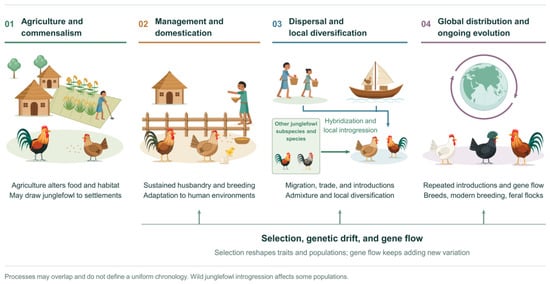
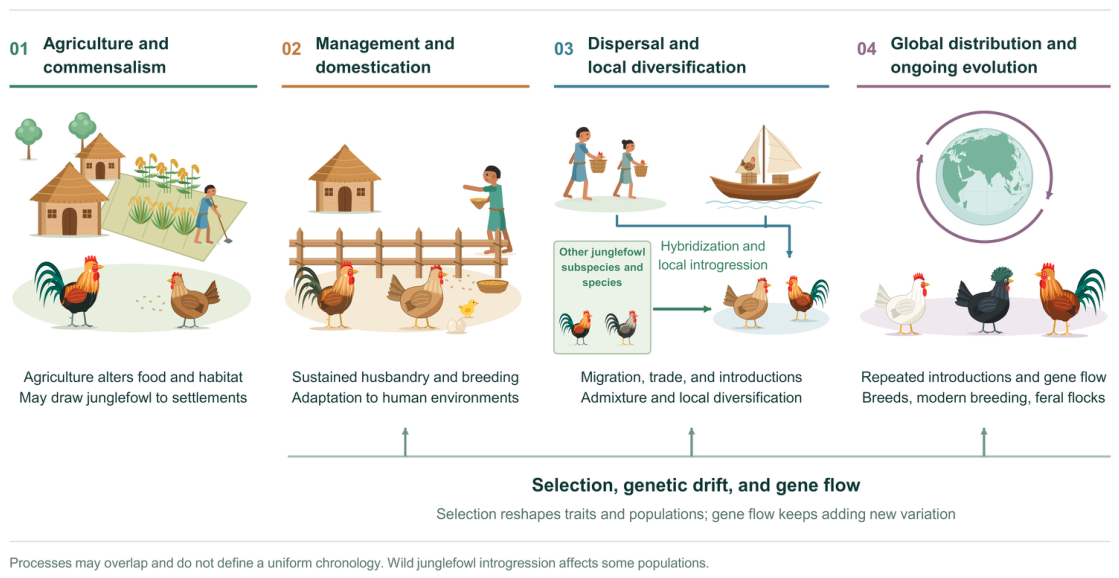
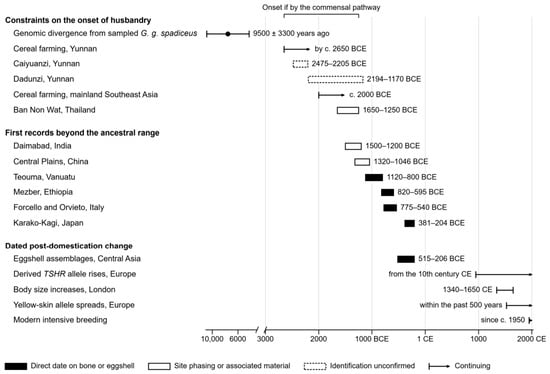
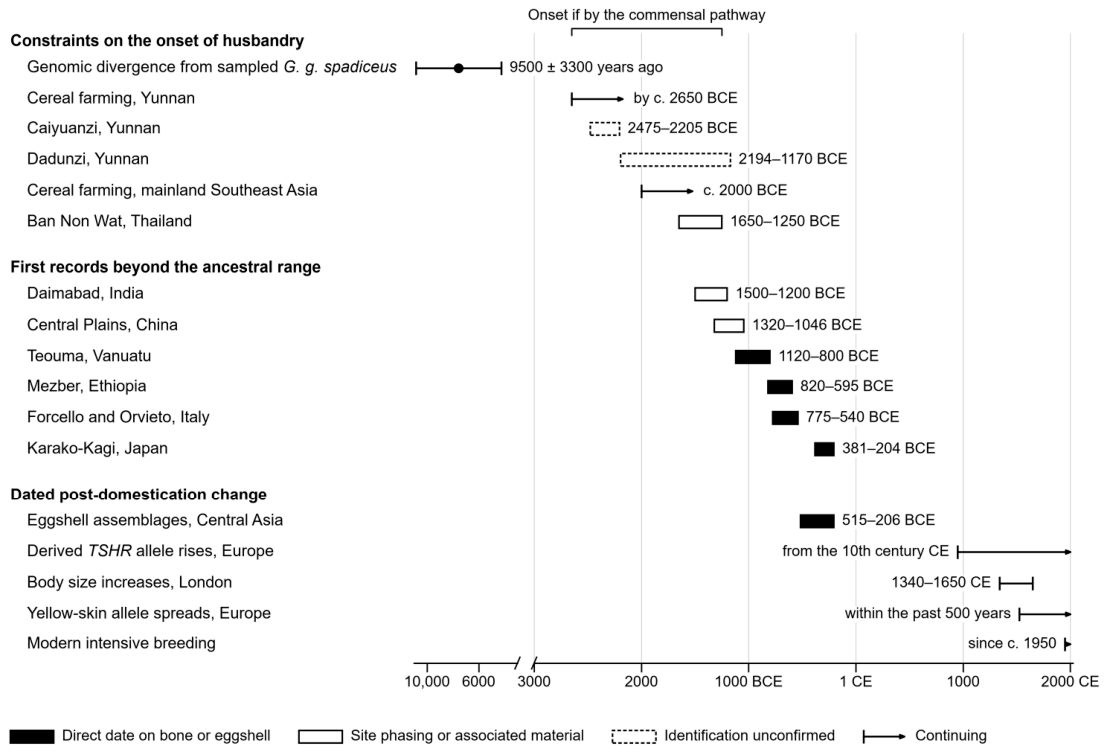
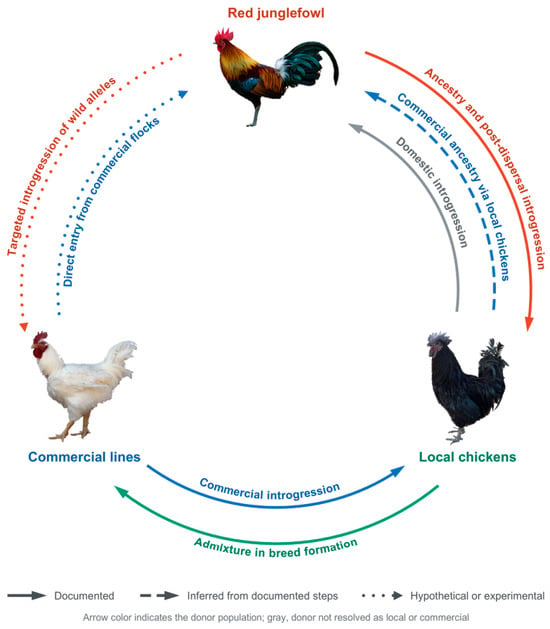
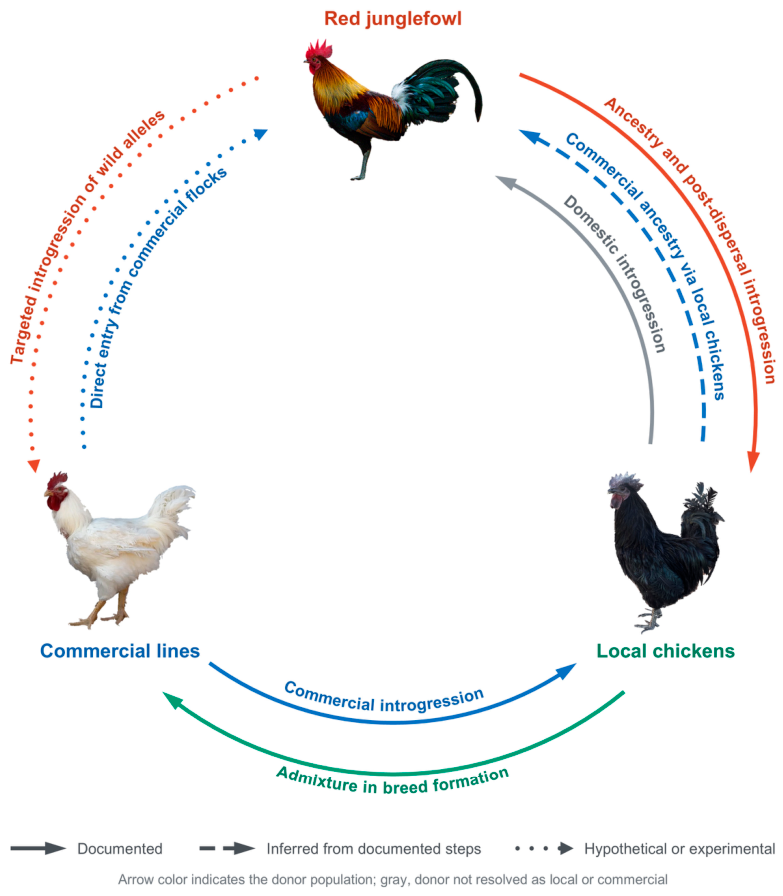

Disclaimer/Publisher’s Note: The statements, opinions and data contained in all publications are solely those of the individual author(s) and contributor(s) and not of MDPI and/or the editor(s). MDPI and/or the editor(s) disclaim responsibility for any injury to people or property resulting from any ideas, methods, instructions or products referred to in the content. |
© 2026 by the authors. Licensee MDPI, Basel, Switzerland. This article is an open access article distributed under the terms and conditions of the Creative Commons Attribution (CC BY) license.