


Simple Summary
Millions of people in low- and middle-income countries rely on work carried out using horses, donkeys, and mules to survive. This includes generating income, saving time and money, and reducing labour. However, these equids’ welfare is often poor, and they receive little consideration in policy and funding decisions. This scoping review examined two areas: the economic and social importance of working equids and the effectiveness of educational interventions and training programmes designed to improve equid welfare. Five databases were searched for studies published since 2014, and over 3500 sources were screened. In total, 84 studies met the criteria: 61 on socioeconomic value and 23 on educational interventions. The findings show that working equids perform wide-ranging roles, such as agriculture, domestic tasks, and transport of people and goods. They provide significant support to their owners’ livelihoods and contribute to achieving sustainable development goals. Educational interventions were generally successful in improving owner/user knowledge and behaviour and/or equid welfare. Approaches developed with input from target communities and that addressed the issue on multiple levels may be more effective. The terminology used and study quality varied. This review highlights the importance of considering working equids in policy and funding decisions and provides recommendations to improve future research.
Abstract
Working equids support millions of people globally, especially in low-income, lower-middle-income, and upper-middle-income countries. However, they commonly suffer from poor welfare and are typically overlooked in policy and funding decisions. This scoping review aimed to collate evidence on two topics related to working equid use in low- and middle-income countries: their socioeconomic value to their owners and the impact of educational interventions for owners/handlers aiming to improve equid welfare. Original research published from 2014 onwards was eligible for inclusion. This scoping review followed the JBI methodology and PRISMA-ScR framework. One search strategy encompassing both topics was applied to five databases (CAB Abstracts, MEDLINE, Embase, Web of Science, and IBSS) on 24.04.24. Key characteristics and findings of eligible studies were charted. In total, 3514 sources were independently screened by two reviewers. In total, 61 socioeconomic value studies (47 journal articles, 2 reports, and 12 conference contributions) and 23 educational intervention studies (11 journal articles and 12 conference contributions) were included. Working equids supported their owners’ livelihoods in wide-ranging ways and contributed to the United Nations’ Sustainable Development Goals. Educational interventions employed varied approaches, and most reported success. Multilevel initiatives and those developed through participatory engagement may be more likely to directly improve equid welfare in the long term. These aspects should be prioritised during intervention development. The included studies used inconsistent terminology and were of variable quality. This review highlights the importance of including working equids within policy and funding strategies and provides recommendations to increase the discoverability, quality, and impact of working equid research.
1. Introduction
There are an estimated 120 million equids globally, with 87% of these residing in low- and middle-income countries (LMICs) [1]. The vast majority of equids in LMICs perform working roles [2,3], and they are often referred to as ‘working equids’. Although accurate data on the number of these animals is lacking [4], working equids in LMICs are often essential to the livelihoods of their owners. Working equids (horses/ponies, donkeys, and their hybrids (mules and hinnies)) can provide their owners with a route out of debt and extreme poverty [5,6], generating income through means such as transport, tourism, and agriculture [7,8,9,10]. They also contribute to domestic tasks, which typically fall to women, including transporting water and firewood [11]. Equid ownership can also have social benefits, such as providing transport to visit family, allowing the use of equids in cultural events, and improving social status and relationships when equids are loaned to others [11,12,13]. Women can also gain respect in their community by being seen to handle their equid [11]. Therefore, working equids can have a significant socioeconomic contribution to their owners and the wider communities in which they are kept. However, working equids have not been prioritised in policy-making and funding decisions from government bodies and funding agencies [14,15]. Grace et al., 2022 [9] posit that working equids are not sufficiently recognised as contributing to the United Nations’ Agenda 2030 Sustainable Development Goals (SDGs) [16] and outline the contributions they make to many of the SDGs. Socioeconomic data is required to fully understand and recognise working equids’ importance and contributions to their owners and communities. Research has been carried out to systematically map the available evidence in the context of the socioeconomic impact of working equid disease [12,17,18]. However, this systematic mapping has not been conducted for research into the wider socioeconomic impact of working equid ownership, which would provide a more comprehensive picture of the value of working equids in LMICs.
Working equids often have poor welfare, with common issues including lameness, poor body condition, wounds, colic, infectious disease, and parasites [7,12,19,20,21]. Many factors contribute to compromised welfare, such as a lack of access to veterinary services, and a lack of knowledge of equine husbandry and how to recognise and treat disease and injuries [22]. Long work hours, limited rest opportunities, overloading, unsuitable tack and equipment, and a lack of access to suitable food, water, and shelter are further examples [23,24]. Poor equid welfare can have negative socioeconomic implications for their owners due to the reduced ability to produce income and alleviate household burden, and the social stigma associated with certain diseases [12]. Nor should humans overlook the discomfort, pain, or distress of their equid helpers. This highlights equids’ role in One Health [25] and One Welfare [26]. To overcome these challenges, equine non-governmental organisations and other groups such as research institutions often develop or provide interventions, such as educational and practical training programmes and veterinary services [27]. Establishing the impact of these interventions is important, as this would enable initiatives to be improved or further tailored to the target population and the most effective methods identified. Yet published information focusing on evaluating interventions within the context of working equid welfare is lacking. Upjohn et al., 2014 [27] reviewed and summarised the published literature on the monitoring and evaluation of evidence-based interventions, including educational initiatives, for working equids in LMICs. However, a more recent review has not been conducted, nor one using a systematic search with a structured strategy. Therefore, a scoping review of recent publications assessing the impact of educational interventions in this setting would allow the available evidence to be mapped and could also help inform the design and implementation of future interventions aiming to improve working equid welfare.
2. Study Aims and Objectives
This study aimed to use the JBI scoping review methodology to systematically map the literature on two broad topics relating to working equids in low-income, lower-middle-income, and upper-middle-income countries. Throughout this review, these will be grouped and referred to as low- and middle-income countries and abbreviated to LMICs. The first topic was the socioeconomic value of working equids to the livelihoods of their owners and owners’ communities. The second was the impact of educational interventions designed to improve working equid welfare and/or the knowledge, attitudes, and practices of owners and their wider communities relating to working equid care.
2.1. Socioeconomic Value Objectives
- This study has created an overview of currently available research on the socioeconomic value of working equids in LMICs, which could be used to inform policy and funding decisions of organisations with an interest in working equids, their owners, and their communities.
- This review has highlighted the socioeconomic value of working equids through their contributions to sustainable development goals.
- Gaps in the literature regarding the socioeconomic impact of working equid ownership have been identified.
- Finally, recommendations have been developed for future studies to aid their discovery and interpretation by researchers, policymakers, and other audiences.
2.2. Educational Intervention Objectives
- This study has created an overview of the currently available research on the impact of educational interventions for working equid owners in LMICs on owner knowledge, attitudes, and practices; equid welfare; and any other relevant outcomes.
- This review has highlighted educational intervention strategies that have been successful in achieving their outcomes within this setting.
- Gaps in the literature regarding the evaluation of educational interventions developed for working equid owners have been identified.
- Finally, guidance has been provided for future studies and to inform researchers and other audiences.
3. Materials and Methods
3.1. Protocol and Registration
The protocols for these two scoping reviews were drafted using the Preferred Reporting Items for Systematic reviews and Meta-Analyses extension for Scoping Reviews (PRISMA-ScR) [28]. This review followed the JBI methodology [29], for which S.L.F had completed the accredited training programme. A.C. had also previously conducted and published a scoping review according to this methodology [30]. The final protocols for each review topic were registered prospectively with Open Science Framework (Socioeconomic Value Registration: https://osf.io/7xb2z/overview?view_only=0db3f8ec115b4a7298b8b52a8b3106c5, accessed on 2 December 2025; Educational Interventions Registration: https://osf.io/mk2xu/overview?view_only=9ceda4cca4ee444cafe247c0dbd47ec8, accessed on 2 December 2025).
3.2. Eligibility Criteria
3.2.1. Socioeconomic Value
The eligibility criteria for the socioeconomic value search are described in Table 1. For the purposes of this project, ‘socioeconomic value’ was defined as any impact of working equid ownership on economic factors (including generating and saving money, saving time, and reducing labour) and social factors (including access to education, improving health, building relationships, social status/respect, cultural activities, and leisure activities) and the interactions between these. Publications focusing specifically on the socioeconomic impact of diseases of working equids were excluded, as recent scoping reviews have already been published on this topic [12,17,18].
Table 1.
Inclusion and exclusion criteria used for the socioeconomic value literature search.
3.2.2. Educational Interventions
The eligibility criteria for the educational interventions search are described in Table 2. For the purposes of this project, educational interventions included any initiative aiming to improve equid welfare and/or owner/handler safety when working with and caring for equids through the provision of education. To qualify for inclusion, this intervention must be evaluated to assess the impact, if any, on outcomes relating to owner/handler/equine professional/community member knowledge, attitudes, and/or practices relating to equid management, equid welfare, owner injury rates, or socioeconomic factors.
Table 2.
Inclusion and exclusion criteria used for the educational interventions literature search.
3.3. Publication Inclusion
For both topic searches, publications were included if the full text could be obtained from any of the University of Nottingham libraries or e-libraries, as well as from free online Open Access and legal deposit libraries. Grey literature was only included if it reported a relevant study that had not also been published in a peer-reviewed scientific journal and the full text was available. The decision was made to include research published within the last 10 years (from anytime in 2014 onwards) to build on the educational interventions review conducted by Upjohn et al., 2014 [27] and increase the likelihood that socioeconomic information was relevant and up to date.
3.4. Information Sources
To identify potentially relevant publications, the following electronic databases were searched on 24 April 2024:
- CAB Abstracts (Ovid): 1973–present;
- Ovid MEDLINE: 1946–present;
- Embase (Ovid): 1974–present;
- Web of Science (Core Collection): 1900–present;
- International Bibliography of the Social Sciences (IBSS): 1951–present.
3.5. Search Strategy
The search strategy was drafted by the research team, and feedback was provided by an experienced University of Nottingham librarian. The same search strategy was used for both review topics. A summary of the search strategy for CAB Abstracts is shown below. The full search strategy used for each database can be found on Open Science Framework (https://osf.io/7xb2z/files/tdnpe?view_only=0db3f8ec115b4a7298b8b52a8b3106c5, accessed on 2 December 2025). A filter was applied to limit the search to publications from or about LMICs. This filter was based on the Cochrane Effective Practice and Organisation of Care (EPOC) LMIC filter from February 2023 [32] and was adapted slightly based on some of the suggestions from the School of Health and Related Research (ScHARR) LMIC filter [33]. These adaptations included expanding the database fields that were searched. Additionally, as the focus of this review was only on studies published from the last 10 years, previous LMICs that became categorised as high income before 2014 and have since stayed in this category, according to data from The World Bank 2024 [34], were removed from the filter. Data published by The World Bank 2024 [34] were also assessed to identify any changes in country classifications since the publication of the filter that would require additional countries to be added; no additions were needed.
Forwards and backwards citation searching were undertaken for all publications identified and included through the database searches. This was carried out on 22 August 2025 using citationchaser [35]. Any publications not found on citationchaser had their reference lists manually screened during backwards citation searching. For forwards citation searching, Google Scholar and Web of Science were searched to identify publications that had cited them. This process of citation searching was repeated with new publications which met eligibility criteria until no further new publications were identified.
3.6. CAB Abstracts Search Strategy Summary
(((exp horse/or exp donkey/or exp mule/or (equus or equid*2 or horse*2 or equine* or donkey* or pony or ponies or mule or mules or hinny or hinnies or ass or asses).mp.) and (cart* or draught* or draft* or pack*3 or plough* or plow* or transport or traction* or carriage*1 or “horse drawn” or working or labour*).mp.)
OR
(“work* equid*” or “work* horse*” or “work* mule*” or “work* donkey*” or “work* hinn*” or “work* ass” or “work* asses” or “work* pony” or “work* ponies” or “work* equine*” or carthorse* or cart-horse*).mp.
OR
((exp working animals/or exp draught animals/or LL060.cc.) and (equus or equid*2 or horse*2 or equine* or donkey* or pony or ponies or mule or mules or hinny or hinnies or ass or asses).mp.))
AND
[LMIC Filter]
AND
[Publication date 2014–2024]
3.7. Study Selection
To validate the screening approach, the same 50 titles and abstracts from a pilot search were reviewed by two researchers. The results were discussed to determine whether it was necessary to amend the inclusion and exclusion criteria before the full screening for this review. As a result, the following specifications were added to the criteria to increase clarity: socioeconomic value publications must report a measure of socioeconomic impact in the methods and results; for educational interventions, publications must sufficiently describe the intervention and methods of evaluation; for both topics, conference contributions must be >300 words. References were downloaded into EndNote X9 (Thomson Reuters), and duplicates were removed before being imported into Covidence (an online collaborative systematic review tool) [36]. Two researchers independently reviewed titles and abstracts for agreement with the eligibility criteria, with any ambiguous publications being retained for the next stage where the full text was reviewed. Any disagreements were discussed until a consensus was reached. If a consensus was not reached, then the opinion of a third reviewer was enlisted. This process was repeated during the review of full texts. Each publication was screened to assess eligibility to be included in the socioeconomic value review, educational interventions review, or both. Where a publication could be excluded for multiple reasons, it was listed as excluded by the first reason that became apparent.
3.8. Charting Process and Synthesis of Results
Publications which met the inclusion criteria for each search were read in full and assessed so relevant information could be extracted and charted. This task was split between the authors, who each independently charted their allocated studies into pre-agreed forms. Socioeconomic value studies and educational intervention studies were charted separately. The study characteristics charted were authors, year published, study methods, main study aims, country of focus, income classification of country (according to their status for the 2024 fiscal year [34]), human population, equid species, equid use, and number of equids. The key findings were charted in separate tables for both journal articles and reports; conference papers were not charted due to providing limited detail. For socioeconomic studies, the socioeconomic measures used were also charted. For educational intervention studies, the intervention strategy and evaluation measures used were also charted.
4. Results
4.1. Selection of Evidence Sources
A total of 4462 publications were identified through the five database searches. After the removal of duplicates, 3075 remained and were screened by title and abstract, after which 139 studies were retained for full-text screening, and 67 met the inclusion criteria. Through forwards and backwards citation searching, after the removal of duplicates and sources published before 2014, 439 additional publications were identified. After title and abstract screening, 22 underwent full-text review, and 17 met the inclusion criteria. Therefore, a total of 84 studies met the eligibility criteria and were included in either of the review topics. This was 61 for the socioeconomic value scoping review and 23 for the educational interventions scoping review. Of the full texts screened, 12 were written in a language other than English and were translated to English using DeepL before screening [31]. Most studies excluded during full-text screening were due to them not focusing on the topic of interest (n = 57). Four publications were excluded due to inaccessible full texts. One publication was excluded as it was assessed by reviewers to contain data and text plagiarised from an earlier published study, which was included in the review. The full list of exclusion reasons can be found in Figure 1, along with the screening process for both the socioeconomic value and educational interventions reviews.
Figure 1.
Study selection process for both the socioeconomic value and the educational interventions scoping reviews.
Broad search terms were applied due to the inconsistent terminology used across publications. Several publications identified through citation searching did not contain work-related terms in the title, abstract, keywords, or other database fields searched, and one did not include equid-related terms. A range of terms were also used to describe educational interventions and the socioeconomic contributions of working equids. The term “livelihood(s)” was most commonly used when describing the socioeconomic value of working equids, appearing in the titles and/or abstracts of 39/61 publications. Other terms used included “socioeconomic”, “economic”, “income”, and “social” (or associated variations). Five studies did not include any of these terms. Of the included educational intervention studies, the initiatives introduced were often described using terms other than “intervention”. However, all but one of the included publications contained at least one of the following terms (or associated variations) within the title or abstract: “intervention”, “initiative”, “education”, or “training”. In addition, five studies did not include the country of focus within these commonly searched database fields.
4.2. Synthesis of Results
4.2.1. Socioeconomic Value
The key study characteristics of the 61 eligible publications are presented in Table 3 and split by publication type. Forty-seven publications were journal articles, twelve were conference contributions, and two were reports from non-governmental organisations (NGOs). All but two of the conference contributions were from a single conference, the 7th International Colloquium on Working Equids, held by World Horse Welfare in 2014 [37]. Most studies were conducted in one country only, while three were conducted in multiple countries. Studies were most commonly conducted in Ethiopia (15, including 1 multi-country study), followed by India (11, including 2 multi-country studies), and Kenya (10, including 2 multi-country studies). Other countries were represented in a maximum of four studies. Lower-middle-income countries were most represented (34, including multi-country studies). All but three included studies were published in English. These were conducted in Brazil and published in Portuguese [38,39,40]. Forty-two studies focused on only one species of equid, while thirteen covered horses, donkeys, and mules. Donkeys were the most represented species across all studies (45/61). Four of the conference contributions did not specify the species of working equid studied. Working equids were used for income generation, saving time/labour/money, and cultural purposes. In the majority of studies, working equids were used for multiple purposes and were most commonly described as being used for transport of people, goods, or other items (40/61); cart pulling (24/61); agriculture (24/61); pack carrying (21/61); or domestic tasks (17/61). The human population studied was typically working equid owners or users, and some studies also included other stakeholders, such as veterinary professionals, animal health care providers, local community members, tourists, and children. Studies employed a range of methods, but social science methods such as surveys, interviews, and focus groups were common. Of the 47 peer-reviewed journal articles, 35 were published from 2020 onwards. The quality and clarity of the included studies were variable.
The key results from the 47 journal articles and two reports relating to the socioeconomic value of working equids are presented in Table 4. A wide range of measures were used to capture the socioeconomic impact working equids had on their owners and owners’ wider communities, with some being measured quantitatively and others qualitatively. The most commonly used socioeconomic measure was impact on income generation, with 46/47 publications reporting that income generation was an important contribution of working equids. Sixteen publications reported that for the majority of their participants, their sole or primary income was generated through their working equid. Not all studies collected data on the primary source of income, so this cannot be directly compared between all sources. However, a further 30 studies emphasised the importance of the income generated both directly and indirectly through working equids, which was often essential in supporting participants’ livelihoods, even if they were not stated as the primary income source. Fourteen publications reported the mean, median, or range of actual incomes equid owners generated from their equid(s), with the range of average monthly incomes across all studies being USD 18.15 [41]–664.70 [42] (daily incomes were multiplied by 30 and annual incomes were divided by 12 to approximate monthly income). Ten publications reported the mean or median income (as opposed to just the range), and the mean average monthly income generated from equid use across these studies was USD 217.26. However, income figures are not directly comparable across studies due to differences in how income was measured and reported, inflation over time, and varying purchasing power across countries. Additionally, 14 of the 47 publications discussed the crucial role working equids had in reducing physical labour. This was described as leading to improved health for their owners and saving time which could be spent on other activities, such as income generation or social interests. Twelve publications highlighted that working equids were especially valuable to women. Equids were often described as playing essential roles in women’s lives and contributing to female empowerment. Thirteen publications reported that owning a working equid could increase an owner’s social status within their community.
Table 3.
Characteristics of studies identified in a scoping review investigating the socioeconomic value of working equids to their owners and communities. Country income status according to The World Bank 2024 [34].
Table 4.
Key findings from studies identified in a scoping review investigating the socioeconomic value of working equids to their owners and communities.
4.2.2. Educational Interventions
The key features of the 23 eligible publications are presented in Table 5, split by publication type. Eleven publications were journal articles, and twelve were conference contributions. All conference contributions were from a single conference, the 7th International Colloquium on Working Equids, held by World Horse Welfare in 2014 [37]. All studies were conducted in a single country. Ethiopia and India were the most represented countries, with five studies conducted in each, while there were four studies conducted in both Mexico and Pakistan. Lower-middle-income countries were most represented (12/23). All studies were published in English. The interventions in 14 studies were targeted towards only one species of equid, while two targeted horses, donkeys, and mules. Donkeys were included within the intervention target in most studies (10/23). Six of the conference contributions did not specify the species the intervention was targeted towards, which may indicate that these interventions were intended for any equid species. The equids targeted by the interventions were often used for multiple purposes. Twelve studies (12/23) did not specify equid purpose, suggesting interventions targeted working equids broadly within the communities. The majority of interventions were aimed at educating working equid owners and users and sometimes also included other stakeholders such as farriers and members of the local community, including children. Only three did not include owners/users as specifically targeted groups. One of these was aimed at farriers, while one targeted children only, and one targeted children and adult members of the public. Studies employed a range of methods to evaluate the effectiveness of the interventions, with surveys, focus groups, interviews, and equid health and welfare assessments being common. In total, 6 of the 11 peer-reviewed journal articles were published after 2020.
The key results from the 11 journal articles relating to the educational interventions used and their impact are presented in Table 6. Five of these studies assessed the impact of the intervention on the knowledge, attitudes, and/or practices (KAP) of the target population. While the other six directly assessed the impact on the health and welfare of equids, typically in conjunction with human KAP and behaviour change. The latter typically involved more complex and longer-term interventions. Studies targeting KAP typically aimed to improve knowledge of how to care for equids, such as their basic needs, how to prevent and treat injury and disease, or requirements and limits during work. They also promoted positive attitudes towards equids and recognition that they can feel pain and emotions. Participants were encouraged to apply their new knowledge to improve management and work practices. Where specific aspects of equid health and welfare were targeted by the educational interventions, the most common were wounds (5/11), lameness (5/11), and body condition (3/11). Of the studies directly assessing the impact on equid welfare, three aimed to improve overall welfare, including body condition, wounds, lameness, behaviour, and other signs of illness, two focused on lameness only, and one aimed to reduce the prevalence of Epizootic Lymphangitis. Both Reix et al., 2015 [94] and Whay et al., 2015 [95] describe the same intervention, but the former reports the impact on horses’ lameness scores, while the latter explores owner-reported changes in management and lameness. The interventions took on a diverse range of forms, aiming to provide education and encourage change not only through workshops, training programmes, participatory exercises, and village meetings, but also media such as film, audio, handouts, and theatre. Ten studies reported that the intervention had been successful in achieving either some or all of the intended aims. Seven studies involved a participatory element in either the content or design of the intervention or both. Only Makki et al., 2016 [96] reported that the intervention evaluated had not been successful. This was a training programme developed and delivered by the local administration of agriculture, and the authors suggested that training should be tailored to the needs identified by equid users themselves to have a positive impact [96].
Table 5.
Characteristics of studies identified in a scoping review investigating the impact of educational interventions aimed at improving working equid welfare and/or owner/user knowledge and attitudes. Country income status according to The World Bank 2024 [34].
Table 6.
Key findings from studies identified in a scoping review investigating the impact of educational interventions aimed at improving working equid welfare and/or owner/user knowledge and attitudes.
5. Discussion
5.1. Overview
This scoping review has comprehensively mapped the available recently published research on both the socioeconomic impact of working equid ownership and the impact of educational interventions targeting working equid owners and users in LMICs. A diverse range of publications were identified for both topics, featuring varying research methodologies and study designs. This reflects the diverse settings in which working equids perform essential roles globally. Donkeys were the most represented species of equid in both review topics, which aligns with data indicating that donkeys are the most populous equid species on average across LMICs [1]. The physical labour of working equids socioeconomically benefited their owners and communities in wide-ranging ways. Those who used equids were typically reliant on them for their livelihoods and survival, including through income generation and labour reduction. The aims and approaches of educational interventions differed, but most reported success. Multilevel initiatives and those developed through participatory engagement may be more likely to be able to demonstrate a direct impact on equid welfare. Varying terminology was used to describe working equids and the topics of interest. Adoption of standardised terms by authors would increase the discoverability and impact of future publications.
5.2. Increasing Research Visibility
The search strategy developed for this review included broad search terms to increase the chances of identifying potentially relevant publications. Diverse language was used to describe working equids. Therefore, it was essential to combine equid-related terms with a variety of work-related terms, identified as being used during trial searching and exploration of the wider literature. Several publications found through citation searching did not contain work-related terms in searchable areas of the publication, while one lacked equid-related terms. This explains why these papers were not identified through the databases and demonstrates the importance of additional search streams for research areas that lack consistent terminology. The lack of universally accepted definitions to describe working equids has been identified as a potential challenge for undertaking and identifying research, policy development, resource allocation, and equine welfare programmes [119]. Raw et al., 2024 [119] investigated the terminology used to describe working equids within peer-reviewed literature, finding significant differences in the terminology used according to the World Bank income classification of the country of focus. Using attributes identified in the literature, Raw et al., 2024 [119] proposed that a working equid should be defined as follows: “any equid engaged in physical labour that provides a significant or direct contribution to the economic livelihood, sustenance or support of the owner/user’s family, typically within a low resource setting”. To increase the discoverability of evidence by researchers, policy makers, and other stakeholders, authors should include the term “working equid” in their title, abstract, or keywords when equids featuring within their publication meet this definition.
Similarly, diverse terminology was used to describe educational interventions and the socioeconomic contributions of working equids. It is also recommended that the terms “socioeconomic”, “economic”, or “social” be included within the title, abstract, or key terms of publications exploring socioeconomic aspects. For those searching for evidence on this topic, the term “livelihood” should be included, as this was commonly used within the included publications. For publishing studies discussing educational interventions, it is recommended to include the term “intervention” and a term related to either “education” or “training” within these same sections. When searching for such studies, it is recommended to also include the term “initiative”, which was also commonly used in publications included in this review. In addition, the country of focus should be included within the title, abstract or key terms. Including standardised terms will increase the chance of the publication being found by interested parties.
A sizeable proportion of the publications included in both review topics were conference contributions, with the vast majority originating from the 7th International Colloquium on Working Equids [37]. Conference contributions were included and had their key study characteristics charted to provide a more comprehensive view when mapping the available literature for both topics [120]. However, these sources often did not include full details of methods and findings, so they did not have their key findings charted as was carried out for studies published in full as scientific papers or reports. The conference contributions identified demonstrate the wide variety of work being undertaken across the world, with the involvement and support of many groups and organisations. Yet only a small proportion of this work seems to be published. Over 10 years later, most of these conference contributions have not been published in full. Where relevant research is conducted but not published in full or at all, it cannot contribute to the available scientific evidence base, limiting its wider impact and the ability for others to benefit from the knowledge generated. The 7th International Colloquium on Working Equids appears to be the last one held. It would be valuable for events such as this to be held in the future, as a wide range of research was showcased, even if not in full, that would otherwise not have been discovered. In addition, similar events in the future should aim to support contributing authors to report their research in full, either as a peer-reviewed publication or as a detailed report if resources are not available for the former.
5.3. Socioeconomic Value
The socioeconomic impacts reported in the identified studies included both direct and indirect contributions of working equids. The majority of working equids had essential direct socioeconomic roles, such as transport of firewood and water, crops, and building materials [5,23]. These met fundamental needs for owners and communities and relate directly to the United Nations’ Sustainable Development Goals (UN SDGs) with respect to no poverty, zero hunger, and clean water and sanitation [16]. Other roles had indirect impacts, such as the transport of rubbish, which generated income for the owner and improved sanitation for communities [51], or pulling carriages for tourism, providing a source of income for families [61], which again relate directly to UN SDGs. There were regional differences in the roles described for working equids, with studies documenting their use for brick transport primarily from India [5,68,76], and working equid roles in Africa often focused on agricultural use and the transport of water and firewood [6,8]. The role of the working equids in different countries is also aligned with UN SDG priorities for each country. In Ethiopia, for example, a significant proportion of resources is allocated to SDG2, ‘Zero Hunger’ [121]. The most commonly reported roles for equids in Ethiopia relate to agriculture (e.g., transporting crops, cereals and water and crop threshing), again reinforcing the link between working equids and SDGs. The study conducted by Gichure et al., 2020 [58] reported that 93% of smallholder farmers in central Kenya relied on donkeys as their primary source of income, with the daily income from donkeys reported to be five times that from other livestock. The study conducted by Maggs et al., 2021 [6] in Ghana described that donkeys contributed up to 60% of the household income. These studies highlight how working equids have a major role in agriculture in these regions and are essential to the care and farming of other animals.
Most studies reported how working equids were used and/or their economic value. Other studies investigated the social impacts on owners and communities, with several of these having a specific focus on how this affected women and children. The social benefits described included alleviating physical labour, freeing time for other roles and activities, and also enabling access to health care and education (either directly through transport, or indirectly through income generated from the equid) [57,65,67,70]. These impacts relate to a range of other UN SDGs, including good health and wellbeing, quality education, and gender equality [16]. The study conducted by Kubasiewicz et al., 2024 [64] on mules in Nepal directly related their roles to the UN SDGs and identified contributions to the following SDGs: no poverty; zero hunger; quality education; decent work; industry, innovation, and infrastructure; sustainable cities and communities. Although not directly linked to the UN SDGs by the authors, the findings of many other included studies also provide evidence of working equids’ contributions to the same SDGs as Kubasiewicz et al., 2024 [64] and some additional ones. For example, equids in brick kilns in India contributed to no poverty, good health, quality education, and decent work through income generated through their labour, which supported owners and their families [60,63,76]. Equids used for transport and agriculture in Africa also contributed to the following SDGs: no poverty, zero hunger, good health, gender equality, and decent work [41,53,57,65]. Charting the studies for this scoping review has clearly highlighted the importance and value of working equids internationally. This has documented that working equids make major contributions to at least eight of the UN SDGs across several countries. It is also important to note that these impacts are primarily focused on families and communities with low incomes and/or who live in challenging environments, areas where need is often greatest.
The publications on the socioeconomic value of working equids varied widely in their approach and scope, ranging from an ethnographic study of one cart driver and horse [72] to a survey of over 1500 working equid owners across several continents [21]. The variables measured and the reporting of socioeconomic value differed between research studies. This ranged from frequency percentage data on working equid roles to calculations of financial value and qualitative descriptions of their impact on an owner or community [41,53,61]. These reflect the diverse methods of capturing socioeconomic value, but very few studies used similar variables or measures, resulting in a heterogeneous dataset. There were also very few studies which used the same methods to collect and compare data across multiple countries, with only one journal article and two reports carrying this out [13,21,79]. Due to the diverse data types generated, making direct comparisons of working equid socioeconomic contributions between study areas and countries, as well as combining and collating data across different studies and countries, is currently not possible. This contributed to the rationale for performing a scoping review instead of a systematic review for this study. However, this method limits the ability to generate a higher level of evidence. Triangulation between studies and meta-analysis of data from several studies are important to identify areas of consistent large-scale findings. Systematic reviews and meta-analyses combine data to form the highest levels of evidence and should be the goal for future work [122]. However, this will not be achievable unless there is more homogeneity in how data is captured, analysed, and reported.
5.4. Educational Interventions
Several interventions aimed to improve working equid health and welfare in general, but wounds and lameness were the most common issues specifically targeted. This aligns with existing research that has identified these as particularly prevalent welfare problems, affecting working equids in a range of countries and settings [19,20,123,124]. One intervention programme, based in Ethiopia, aimed to reduce the incidence of Epizootic Lymphangitis (EZL) [99]. This also aligns with current research, as EZL is highly prevalent in Ethiopia, which has been the focal country of studies demonstrating the disease’s negative impact [18]. The majority of educational interventions targeted working equid owners or users, which was expected, as owners and handlers spend the most time interacting with equids. Therefore, they are likely to have a strong influence over their welfare, be most affected if the equid cannot work due to poor health, and also be most likely to be injured due to unsafe handling/interactions. Some interventions either included or solely focused on children as the target group [99,101,103,104]. Children often have roles caring for equids, and they were found to positively influence the behaviour of their parents and other adults in their communities in relation to donkey welfare after participating in an educational intervention [99]. This suggests that interventions aiming to improve working equid welfare within target communities should consider including children within their design as well as adults. Other studies have also found that children can positively influence the attitudes and behaviours of their parents. For example, one qualitative Maltese study found that many (though not all) children who had received environmental education at school had influenced their parents to adopt more environmentally friendly behaviours, such as recycling, saving water, and turning off unnecessary lights [125].
There were a range of intervention designs with differing aims. Some interventions consisted of a single event, and these were more likely to evaluate the impact on knowledge and attitudes [101,102,103]. However, those that aimed to investigate the impact on equid health and welfare and on human behaviour change tended to be multifaceted and implemented over longer periods of time [94,95,98,99,100,104]. A systematic review assessing interventions aiming to increase pro-environmental behaviour found that single intervention types were typically not very successful at achieving long-term behaviour change and that providing information alone appeared to increase knowledge and change attitudes, but this often did not result in behaviour change [126]. This could be due to a ‘value-action gap’, where people may have positive intentions to change their behaviour but are constrained by barriers such as lack of money, time, or peer support [127,128]. Future interventions should aim to address barriers that could lead to a value-action gap, for example, by consulting members of the target population to identify barriers to behaviour change and potential ideas to overcome these. Interventions should be context-appropriate, using materials, equipment, and treatments that are affordable and readily available to the target population [129]. Additionally, time management and financial strategies could be built into interventions to increase their long-term sustainability, as well as recruiting influential community ambassadors to encourage and support change [130]. The most effective interventions were found to have multiple levels and targets, such as involving education, feedback, improving infrastructure, and enabling strategies [126]. Similarly, a systematic review of interventions aimed at shifting attitudes and behaviour related to gendered stereotypes identified that multi-session educational interventions and those targeting multiple structural levels were more likely to be successful [131]. Due to the varying aims and evaluation measures used by the included studies, it was not possible to provide a direct comparison of which intervention types were most effective. Follow-up studies would be required to investigate whether positive impacts on knowledge, attitudes, and/or practices (KAP) resulting from educational interventions persisted long term and led to improved equine welfare. However, those able to evaluate the impact on human behaviour and equid welfare tended to share the qualities of successful interventions applied in other fields. Additionally, animal and equid welfare non-governmental organisation (NGO) staff have also identified holistic intervention approaches as the most sustainable [129]. This suggests that, where possible, novel educational interventions aiming to change human behaviour to improve working equid welfare should adopt a multifaceted approach as described here.
Some of the identified interventions involved participatory engagement and co-creation with community members and stakeholder groups [94,95,97,98,99,101,102], which Upjohn et al., 2014 [27] previously recommended in this context. NGO staff with experience developing working equid welfare initiatives have also reported that in order to deliver interventions that achieve long-term success, these should be developed with the target community and tailored to the local context [129]. This included ascertaining priority issues identified by the community, adapting approaches in line with cultural norms, and using available resources when providing training, for example, for wound management [129]. Participatory engagement interventions have been shown to be effective at changing behaviour and improving health outcomes in human health care: for example, reducing neonatal and maternal mortality [132]. Additionally, a systematic review found that interventions of this design type increased child vaccination rates in LMICs, with those involving higher levels of embedded community engagement showing the most consistent positive outcomes [133]. All but 1 of the 11 studies reported in full described that the intervention had achieved either some or all of its aims. Regarding the intervention reported to be unsuccessful, working equid users participating in the evaluation study were reportedly dissatisfied with the content of the training, as well as its quality and the knowledge of staff [96]. Engaging with local working equid users to identify their training priorities and course format preferences may have led to increased engagement and outcomes. Meaningful community involvement throughout intervention design, implementation, and evaluation is recommended when developing future initiatives to increase the likelihood of sustained changes in KAP and improved equid welfare.
6. Limitations
There is the possibility that some relevant studies may have been missed if they did not contain the combination of search terms used in their title, abstract, keywords, or indexed terms. There may have also been other studies not indexed within the databases searched, which were also not identified through forwards and backwards citation searching. Databases were only searched using English search terms, meaning that publications in other languages that did not have an English translation of the title and/or abstract would not have been discovered. It was beyond the scope of this study to systematically search the grey literature outside of the database searches. Carrying this out could have increased the number of included studies.
The variation in quality and clarity of some studies, particularly within the socioeconomic impact review, increased the difficulty in identifying and charting key findings. Studies where findings were structured and presented less clearly were more often published in LMICs. However, it was important to include and chart these studies’ results as LMICs were the countries of focus in this scoping review and are where people and communities are most reliant on working equids [1,2,3]. It was also considered important to prevent a bias towards including proportionally more publications from high-income countries. Practices and expectations for presenting scientific research may vary between countries and may differ from what this review’s authors are accustomed to. Nevertheless, future authors should take care to describe their study methods in full and report their findings clearly. This includes indicating which results described are their own, and which are comparisons from other research, particularly when the results and discussion are presented together. Reporting guidelines and checklists are freely available for a wide variety of study designs [134], and their use has been found to improve the reporting quality of publications [135,136]. It is recommended that future researchers identify the most appropriate guidelines and follow the structure outlined to present all relevant study information to allow improved interpretation and replication of the research.
7. Conclusions and Recommendations
Key data on two important topics relating to working equid use in LMICs have been collated and charted, providing a resource to support researchers, policymakers, and other stakeholders in search of relevant evidence. Working equids have historically been overlooked during policy and funding decisions. This scoping review has brought together the available evidence on the essential roles working equids play in supporting the livelihoods of their owners/users, their families, and wider communities. The identified studies demonstrate equids’ role in the UN SDGs in LMICs, including no poverty, zero hunger, good health and well-being, quality education, gender equality, clean water and sanitation, decent work, industry, innovation and infrastructure, and sustainable cities and communities. Many of the studies also highlighted the contributions of working equids to women’s empowerment. Therefore, the findings of this review should be used as evidence when lobbying governments and other policymaking bodies to include working equids and their owners within resource and funding allocations and the development of health and welfare programmes. Additionally, this scoping review presents the designs and outcomes of recent educational interventions aimed at improving working equid welfare and/or owner/handler KAP. Researchers and other groups aiming to develop novel interventions should consider the features of previous successful initiatives during the design process. Participatory approaches that involve co-creation of the intervention with members of the target community should be prioritised. Interventions that address multiple structural levels and stakeholder groups and that are conducted and evaluated over a longer period may also have the highest chances of long-term success. Due to the broad search strategy applied, this review included some potentially difficult-to-identify studies which do not contain expected key terms or are not indexed on commonly searched databases. Key terms have been suggested that should be included in the title, abstract, and/or keywords of future publications on these topics to aid discoverability and potential impact.
Future Recommendations
- We recommend that a database is established to summarise the findings of completed working equid research, and current and proposed studies should be registered. This would increase the accessibility of conducted research for relevant stakeholders, especially for those based outside of research and academia. It could also avoid duplication of work, enable collaboration between different groups, and increase the opportunity for recommendations of previous research to be used to enhance the design of future studies. This will enhance the strength and impact of the evidence base.
- Future publications should include the suggested key terms within commonly searched fields to increase their discoverability.
- We recommend the establishment of a database of key health and welfare issues that commonly affect working equids, including preventative measures and treatment options.
- We recommend that easily understandable and accessible advice for designing and presenting research on the topics covered in this review should be developed. This could be used to aid future authors to conduct and publish high-quality research to strengthen the available evidence base.
- The proceedings from international colloquia and conferences focused on or featuring working equids should be published in journals or on sites which are registered with key searchable scientific databases. Such conferences and events should encourage and support authors to publish the details and findings of their studies in full.
Author Contributions
Conceptualization, A.C., S.L.F., I.W. and K.B.; methodology, A.C., S.L.F. and K.B.; validation, A.C., S.L.F., J.B. and K.B.; formal analysis, A.C., S.L.F., J.B. and K.B.; investigation, A.C., S.L.F., I.W., J.B. and K.B.; data curation, A.C., S.L.F., I.W. and K.B.; writing—original draft preparation, A.C. and S.L.F.; writing—review and Editing, A.C., S.L.F., I.W., J.B. and K.B.; visualization, A.C., S.L.F., I.W. and K.B.; supervision, S.L.F. and K.B.; project administration, A.C., S.L.F. and K.B.; funding acquisition, S.L.F., I.W. and K.B. All authors have read and agreed to the published version of the manuscript.
Funding
This study was funded by World Horse Welfare, project number 26221006.
Institutional Review Board Statement
This study was reviewed and approved by the Committee for Animal Research and Ethics (CARE), School of Veterinary Medicine and Science, University of Nottingham (Review Number: 4076 240222, 22 February 2024).
Informed Consent Statement
Not applicable.
Data Availability Statement
No new data were created or analyzed in this study.
Acknowledgments
The authors would like to thank the University of Nottingham librarians, Alison Ashmore and Kate Freeman, for providing feedback on the scoping review search strategy used.
Conflicts of Interest
The authors declare no conflicts of interest.
References
- FAO (Food and Agriculture Organization of the United Nations). Crops and Livestock Products. Available online: https://www.fao.org/faostat/en/#data/QCL (accessed on 15 February 2024).
- Sommerville, R.; Brown, A.F.; Upjohn, M. A standardised equine-based welfare assessment tool used for six years in low and middle income countries. PLoS ONE 2018, 13, e0192354. [Google Scholar] [CrossRef] [Scilit]
- Mekuria, S.; Abebe, R. Observation on major welfare problems of equine in Meskan district, Southern Ethiopia. Livest. Res. Rural. Dev. 2010, 22, 48. [Google Scholar]
- Allan, F. A Landscaping Analysis of Working Equid Population Numbers in LIMCs, with Policy Recommendations. Available online: https://www.pure.ed.ac.uk/ws/portalfiles/portal/412697677/Equid_Population_Landscaping_Analysis.pdf (accessed on 5 January 2025).
- Kubasiewicz, L.M.; Watson, T.; Norris, S.L.; Chamberlain, N.; Nye, C.; Perumal, R.K.; Saroja, R.; Raw, Z.; Burden, F.A. One welfare: Linking poverty, equid ownership and equid welfare in the brick kilns of India. Anim. Welf. 2022, 31, 517–528. [Google Scholar] [CrossRef] [Scilit]
- Maggs, H.C.; Ainslie, A.; Bennett, R.M. Donkey Ownership Provides a Range of Income Benefits to the Livelihoods of Rural Households in Northern Ghana. Animals 2021, 11, 3154. [Google Scholar] [CrossRef] [Scilit]
- Haddy, E.; Burden, F.; Prado-Ortiz, O.; Zappi, H.; Raw, Z.; Proops, L. Comparison of working equid welfare across three regions of Mexico. Equine Vet. J. 2021, 53, 763–770. [Google Scholar] [CrossRef] [Scilit]
- Gichure, M.; Onono, J.; Wahome, R.; Gathura, P. Analysis of the benefits and production challenges of working donkeys in smallholder farming systems in Kenya. Vet. World 2020, 13, 2346–2352. [Google Scholar] [CrossRef] [Scilit]
- Grace, D.C.; Diall, O.; Saville, K.; Warboys, D.; Ward, P.; Wild, I.; Perry, B.D. The Global Contributions of Working Equids to Sustainable Agriculture and Livelihoods in Agenda 2030. EcoHealth 2022, 19, 342–353. [Google Scholar] [CrossRef] [Scilit]
- Pritchard, J.C.; Lindberg, A.C.; Main, D.C.J.; Whay, H.R. Assessment of the welfare of working horses, mules and donkeys, using health and behaviour parameters. Prev. Vet. Med. 2005, 69, 265–283. [Google Scholar] [CrossRef] [Scilit]
- Vasanthakumar, M.A.; Upjohn, M.M.; Watson, T.L.; Dwyer, C.M. ‘All My Animals Are Equal, but None Can Survive without the Horse’. The Contribution of Working Equids to the Livelihoods of Women across Six Communities in the Chimaltenango Region of Guatemala. Animals 2021, 11, 1509. [Google Scholar] [CrossRef] [Scilit]
- Bonsi, M.; Anderson, N.E.; Carder, G. The Socioeconomic Impact of Diseases of Working Equids in Low and Middle-Income Countries: A Critical Review. Animals 2023, 13, 3865. [Google Scholar] [CrossRef] [Scilit]
- Valette, D. Invisible Helpers: Women’s Views on the Contributions of Working Donkeys, Horses and Mules to Their Lives; The Brooke: London, UK, 2014. [Google Scholar]
- Stringer, A.; Lunn, D.P.; Reid, S. Science in brief: Report on the first Havemeyer workshop on infectious diseases in working equids, Addis Ababa, Ethiopia, November 2013. Equine Vet. J. 2015, 47, 6–9. [Google Scholar] [CrossRef] [Scilit]
- Pritchard, J.C. Animal traction and transport in the 21st century: Getting the priorities right. Vet. J. 2010, 186, 271–274. [Google Scholar] [CrossRef] [Scilit]
- United Nations. The Sustainable Development Goals Report. Available online: https://unstats.un.org/sdgs/report/2025/The-Sustainable-Development-Goals-Report-2025.pdf (accessed on 27 November 2025).
- Bonsi, M.; Anderson, N.; Carder, G. The socioeconomic impact of health problems of working equids in low and middle-income countries: A scoping review on the female-gender perspectives. CABI One Health 2023, 2, 23. [Google Scholar] [CrossRef] [Scilit]
- Bonsi, M.; Anderson, N.E.; Carder, G. The socioeconomic impact of equine epizootic lymphangitis in working equids in low and middle-income countries: A scoping review. J. Equine Vet. Sci. 2024, 132, 104981. [Google Scholar] [CrossRef] [Scilit]
- Burn, C.C.; Dennison, T.L.; Whay, H.R. Environmental and demographic risk factors for poor welfare in working horses, donkeys and mules in developing countries. Vet. J. 2010, 186, 385–392. [Google Scholar] [CrossRef] [Scilit]
- Merridale-Punter, M.S.; Wiethoelter, A.K.; El-Hage, C.M.; Hitchens, P.L. Prevalence and Factors Associated with Working Equid Lameness in Low- and Middle-Income Countries: A Systematic Review and Meta-Analysis. Animals 2022, 12, 3100. [Google Scholar] [CrossRef] [Scilit]
- Wild, I.; Gedge, A.; Burridge, J.; Burford, J. The impact of COVID-19 on the working equid community: Responses from 1530 individuals accessing ngo support in 14 low- and middle-income countries. Animals 2021, 11, 1363. [Google Scholar] [CrossRef] [Scilit]
- Upjohn, M.; Wells, K. Working equids: The welfare of those worked to their limit. In Are We Pushing Animals to Their Biological Limits? Welfare and Ethical Implications; Grandin, T., Whiting, M., Eds.; CAB International: Wallingford, UK, 2018; pp. 28–48. [Google Scholar]
- Gelaye, A.; Fesseha, H. Assessment of socio-economic importance and major constraints of working equines in and around debre berhan town, Central Ethiopia. Vet. Med.-Open J. 2020, 5, 30–38. [Google Scholar] [CrossRef] [Scilit]
- Norris, S.L.; Kubasiewicz, L.M.; Watson, T.L.; Little, H.A.; Yadav, A.K.; Thapa, S.; Raw, Z.; Burden, F.A. A new framework for assessing equid welfare: A case study of working equids in Nepalese brick kilns. Animals 2020, 10, 1074. [Google Scholar] [CrossRef] [Scilit]
- Lönker, N.S.; Fechner, K.; Abd El Wahed, A. Horses as a Crucial Part of One Health. Vet. Sci. 2020, 7, 28. [Google Scholar] [CrossRef] [Scilit]
- Pinillos, R.G.; Appleby, M.C.; Manteca, X.; Scott-Park, F.; Smith, C.; Velarde, A. One Welfare—A platform for improving human and animal welfare. Vet. Rec. 2016, 179, 412–413. [Google Scholar] [CrossRef] [Scilit]
- Upjohn, M.M.; Pfeiffer, D.U.; Verheyen, K.L.P. Helping working Equidae and their owners in developing countries: Monitoring and evaluation of evidence-based interventions. Vet. J. 2014, 199, 210–216. [Google Scholar] [CrossRef] [Scilit]
- Tricco, A.C.; Lillie, E.; Zarin, W.; O’Brien, K.K.; Colquhoun, H.; Levac, D.; Moher, D.; Peters, M.D.J.; Horsley, T.; Weeks, L.; et al. PRISMA Extension for Scoping Reviews (PRISMA-ScR): Checklist and Explanation. Ann. Intern. Med. 2018, 169, 467–473. [Google Scholar] [CrossRef] [Scilit]
- Peters, M.D.J.; Godfrey, C.; McInerney, P.; Munn, Z.; Tricco, A.C.; Khalil, H. Scoping Reviews (2020 Version). In JBI Manual for Evidence Synthesis; Aromataris, E., Lockwood, C., Porritt, K., Pilla, B., Jordan, Z., Eds.; JBI: Adelaide, SA, Australia, 2024. [Google Scholar]
- Cameron, A.; Pollock, K.; Wilson, E.; Burford, J.; England, G.; Freeman, S. Scoping review of end-of-life decision-making models used in dogs, cats and equids. Vet. Rec. 2022, 191, e1730. [Google Scholar] [CrossRef] [Scilit]
- DeepL. Available online: https://www.deepl.com/translator (accessed on 25 June 2024).
- Cochrane EPOC (Effective Practice and Organisation of Care). LMIC Filters. Available online: https://zenodo.org/records/8019937 (accessed on 9 February 2024).
- Sutton, A.; Campbell, F. The ScHARR LMIC filter: Adapting a low- and middle-income countries geographic search filter to identify studies on preterm birth prevention and management. Res. Synth. Methods 2022, 13, 447–456. [Google Scholar] [CrossRef] [Scilit]
- The World Bank. World Bank Country and Lending Groups: Current Classification by Income in XLSX Format. Available online: https://datahelpdesk.worldbank.org/knowledgebase/articles/906519-world-bank-country-and-lending-groups (accessed on 23 February 2024).
- Haddaway, N.R.; Grainger, M.J.; Gray, C.T. Citationchaser: An R Package and Shiny App for Forward and Backward Citations Chasing in Academic Searching, 0.0.3; Zenodo: Geneva, Switzerland, 2021. [Google Scholar]
- Covidence. Available online: https://www.covidence.org/ (accessed on 28 October 2025).
- Wade, J.F. How do we demonstrate the importance of working equid welfare to human livelihoods? In Proceedings of the 7th International Colloquium on Working Equids, Egham, UK, 1–3 July 2014; p. i-230. [Google Scholar]
- Barbosa, S.N.; Ribeiro, D.L.d.S.; Lima, R.d.S.; Costa, C.d.J.P.; Tavares, T.d.L. Characterization of the management and driver of wagon equine in the urban area of Sao Luis, Maranhao. Caracterizacao do manejo e condutor de equideos de carroca na area urbana de Sao Luis, Maranhao. Pubvet 2020, 14, 615. [Google Scholar] [CrossRef] [Scilit]
- Sangioni, L.A.; Cadore, G.C.; Botton, S.d.A.; Vogel, F.S.F.; Fialho, S.d.S.; Pivotto, F.L.; Lazzari, M. Welfare of draught horses and economic social aspects of the carters of Santa Maria, Rio Grande do Sul state. Bem estar de equinos de tracao e perfil socio-economico dos carroceiros de Santa Maria, Rio Grande do Sul. Veterinária Zootec. 2016, 23, 679–687. [Google Scholar]
- Teixeira, E.d.M.; Araujo, G.D.d.; Silveira, J.G.d.; Kremer, C.J.; Rodrigues, R.O.; Bertagnolli, A.C. Portraits of wagon drivers’ communities in southern Brazil. Retratos de comunidades de carroceiros do sul do Brasil. Pubvet 2022, 16, 1183. [Google Scholar] [CrossRef] [Scilit]
- Avornyo, F.K.; Teye, G.A.; Bukari, D.; Salifu, S. Contribution of donkeys to household food security: A case study in the Bawku Municipality of the Upper East Region of Ghana. Ghana J. Sci. Technol. Dev. 2015, 3, 15–24. [Google Scholar]
- Koko, F.; Shuiep, E. The Socioeconomic Value of Rearing Different Ecotype of Donkeys (Equus asinus) in South Darfur State, Sudan. J. Sci. Technol. 2016, 17, 74–84. [Google Scholar]
- Abdifatah Ahmed, Z.; Sheikh Mohamed, M.O.; Abdi Mohamed, A.; Busuri Mio, J. Factors influencing the performance of donkey welfare a case study in benadir region, Somalia. Int. J. Avian Wildl. Biol. 2023, 7, 60–65. [Google Scholar] [CrossRef] [Scilit]
- Alam, M.P.; Bhuiyan, M.S.A.; Bhuiyan, A.K.F.H. The socio-economic status of horse owners in rural areas of Bangladesh. Agriculturists 2015, 13, 46–52. [Google Scholar] [CrossRef] [Scilit]
- Asfaw, H.; Tadesse, G. Economic Contribution of Cart Horses to the Livelihoods of Families in Gondar Town Ethiopia. Momona Ethiop. J. Sci. 2020, 12, 135–147. [Google Scholar] [CrossRef] [Scilit]
- Asrat, S.; Amene, F.; Bereket, M.; Desie, S. The prevalence of foot related problems in working donkeys and its implication on the livelihood of donkey owners in Hawassa City, Southern Ethiopia. Int. J. Livest. Prod. 2019, 10, 86–93. [Google Scholar]
- Asteraye, G.B.; Pinchbeck, G.; Knight-Jones, T.; Saville, K.; Temesgen, W.; Hailemariam, A.; Rushton, J. Population, distribution, biomass, and economic value of Equids in Ethiopia. PLoS ONE 2024, 19, e0295388. [Google Scholar] [CrossRef] [Scilit]
- Badmos, A.A.; Akewusola, G.O.; Bah, T.; Yusuff, A.T.; Okukpe, K.M.; Lawal, A.O. Welfare challenges in the use of the donkey for economic empowerment in The Gambia. Wayamba J. Anim. Sci. 2019, 11, 1852–1857. [Google Scholar]
- Carder, G.; Ingasia, O.; Ngenoh, E.; Theuri, S.; Rono, D.; Langat, P. The Emerging Trade in Donkey Hide: An Opportunity or a Threat for Communities in Kenya? Agric. Sci. 2019, 10, 1152–1177. [Google Scholar] [CrossRef]
- Cousquer, G.; Alyakine, H.; Lindsay-McGee, V. The history and welfare of working mules in the valleys of the Toubkal massif, in the High Atlas of Morocco. Front. Vet. Sci. 2023, 10, 1256501. [Google Scholar] [CrossRef] [Scilit]
- de Klerk, J.N.; Quan, M.; Grewar, J.D. Socio-economic impacts of working horses in urban and peri-urban areas of the Cape Flats, South Africa. J. S. Afr. Vet. Assoc. 2020, 91, 2009. [Google Scholar] [CrossRef] [Scilit]
- Desta, T.T. Maintaining traditional values and looking for novel uses assure equines’ survival as a species. Equine Vet. Educ. 2023, 36, 307–316. [Google Scholar] [CrossRef] [Scilit]
- Geiger, M.; Hovorka, A.J. Animal performativity: Exploring the lives of donkeys in Botswana. Environ. Plan.-Soc. Space 2015, 33, 1098–1117. [Google Scholar] [CrossRef] [Scilit]
- Geiger, M.; Hockenhull, J.; Buller, H.; Tefera Engida, G.; Getachew, M.; Burden, F.A.; Whay, H.R. Understanding the Attitudes of Communities to the Social, Economic, and Cultural Importance of Working Donkeys in Rural, Peri-urban, and Urban Areas of Ethiopia. Front. Vet. Sci. 2020, 7, 60. [Google Scholar] [CrossRef] [Scilit]
- Geiger, M.; Hockenhull, J.; Buller, H.; Kedir, M.J.; Engida, G.T.; Getachew, M.; Burden, F.A.; Whay, H.R. Comparison of the socio-economic value and welfare of working donkeys in rural and urban Ethiopia. Anim. Welf. 2021, 30, 269–277. [Google Scholar] [CrossRef] [Scilit]
- Geiger, M.; Hockenhull, J.; Buller, H.; Engida, G.T.; Kedir, M.J.; Goshu, L.; Getachew, M.; Banerjee, A.; Burden, F.A.; Whay, H.R. Being with donkeys: Insights into the valuing and wellbeing of donkeys in central Ethiopia. Soc. Anim. Soc. Sci. Stud. Hum. Exp. Other Anim. 2023, 32, 602. [Google Scholar] [CrossRef] [Scilit]
- Geiger, M.R. Hoof Work: The Feminisation of Donkeys in Ethiopia. Sociol. Res. Online 2023, 29, 842–860. [Google Scholar] [CrossRef] [Scilit]
- Gichure, M.; Onono, J.; Wahome, R.; Gathura, P. Factors associated with level of income derived from working donkeys for smallholder farmers in the central highlands of Kenya. East Afr. J. Sci. Technol. Innov. 2020, 1, 26. [Google Scholar] [CrossRef] [Scilit]
- Gina, T.G.; Tadesse, B.A. The Role of Working Animals toward Livelihoods and Food Security in Selected Districts of Fafan Zone, Somali Region, Ethiopia. Adv. Life Sci. Technol. 2015, 33, 88–94. [Google Scholar]
- Gupta, A.K.; Kumar, S.; Pal, Y.; Chauhan, M.; Kumar, B.; Prince. Phenotypic characteristics and general managemental practices for working donkey populations in South Western Bihar region of India. Indian J. Anim. Sci. 2017, 87, 1414–1417. [Google Scholar] [CrossRef] [Scilit]
- Gursoy, I.T. Horse-drawn carriages: Sustainability at the nexus of human-animal interaction. Sustain. Transp. 2020, 28, 204–221. [Google Scholar]
- Kithuka, J.M.; Wachira, T.M.; Onono, J.O.; Gichure, M.N. Assessing environmental factors and human practices on the welfare of working donkeys in Kenya. Discov. Anim. 2025, 2, 25. [Google Scholar] [CrossRef] [Scilit]
- Kubasiewicz, L.M.; Watson, T.; Nye, C.; Chamberlain, N.; Perumal, R.K.; Saroja, R.; Norris, S.L.; Raw, Z.; Burden, F.A. Bonded labour and donkey ownership in the brick kilns of India: A need for reform of policy and practice. Anim. Welf. 2023, 32, e8. [Google Scholar] [CrossRef] [Scilit]
- Kubasiewicz, L.M.; Watson, T.; Thapa, S.; Nye, C.; Chamberlain, N. Mule trains to mountain roads: The role of working mules in supporting resilient communities in the Himalayas. Front. Vet. Sci. 2024, 11, 1390644. [Google Scholar] [CrossRef] [Scilit]
- Maggs, H.C.; Ainslie, A.; Bennett, R.M. The value of donkeys to livelihood provision in northern Ghana. PLoS ONE 2023, 18, e0274337. [Google Scholar] [CrossRef] [Scilit]
- Merridale-Punter, M.S.; Elias, B.; Wodajo, A.L.; El-Hage, C.M.; Zewdu, H.; Tesfaye, R.; Hailegebreal, G.; Sori, T.; Wiethoelter, A.K.; Hitchens, P.L. Putting the cart before the horse: Mixed-methods participatory investigation of working equid harnessing practices in three selected towns of the Oromia national regional state in Ethiopia. BMC Vet. Res. 2024, 20, 113. [Google Scholar] [CrossRef] [Scilit]
- Merridale-Punter, M.S.; Zewdu, H.; Tefera, G.; El-Hage, C.M.; Wiethoelter, A.K.; Hitchens, P.L. “The health of my donkey is my health”: A female perspective on the contributions of working equids to One Health in two Ethiopian communities. CABI One Health 2024, 3, 23. [Google Scholar] [CrossRef] [Scilit]
- Narayanan, Y. Animal Suffering in Global Development and Antipoverty Praxis: Enforced Animal Labor in the Peripheral Capitalism of Indian Brick Kilns. Ann. Am. Assoc. Geogr. 2024, 114, 2068–2084. [Google Scholar] [CrossRef] [Scilit]
- Nguekeng, C.L.; Hako, T.B.A.; Motsa’a, J.S.; Tangomo, A.N.; Fonteh, F.A.; Keambou, C.T. Socio-economic and technical characteristics of donkeys in the far Northern region of Cameroon. Appl. Anim. Husb. Rural. Dev. 2022, 15, 19–31. [Google Scholar]
- Oduori, D.O.; Kirui, G.; Ofwete, R.; Sang, R.K.; Were, C.; Kubasiewicz, L.M. Social and economic impacts of the donkey skin trade on donkey-dependent women and communities in Kenya. Hum.-Anim. Interact. 2025, 13, 13. [Google Scholar] [CrossRef] [Scilit]
- Onono, J.O.; Kithuka, J. Assessment of Provision of Extension Services and Advocacy on Donkey Health and Welfare in Kenya. Asian J. Agric. Ext. Econ. Sociol. 2020, 38, 15–28. [Google Scholar] [CrossRef] [Scilit]
- Rink, B.; Crow, J. Horse/power: Human–animal mobile assemblage in the contemporary city. Contemp. Soc. Sci. 2021, 16, 84–95. [Google Scholar] [CrossRef] [Scilit]
- Shah, S.Z.A.; Nawaz, Z.; Nawaz, S.; Carder, G.; Ali, M.; Soomro, N.; Compston, P.C. The Role and Welfare of Cart Donkeys Used in Waste Management in Karachi, Pakistan. Animals 2019, 9, 159. [Google Scholar] [CrossRef] [Scilit]
- Tuaruka, L.; Agbolosu, A.A. Assessing Donkey Production and Management in Bunkpurugu/Yunyoo District in the Northern Region of Ghana. J. Anim. Husb. Dairy Sci. 2019, 3, 1–5. [Google Scholar] [CrossRef] [Scilit]
- Wani, A.Y.; Abdullah, M.; Kirmani, N.R.; Khan, H.M.; Arif, O.; Banday, M.T.; Paul, M.A. Socio-economic status of ponywallas associated with Shri-Amarnath Yatra and ecotourism in Kashmir valley. Indian J. Anim. Sci. 2021, 91, 976–978. [Google Scholar] [CrossRef] [Scilit]
- Watson, T.L.; Kubasiewicz, L.M.; Chamberlain, N.; Nye, C.; Raw, Z.; Burden, F. Cultural “Blind Spots,” Social Influence and the Welfare of Working Donkeys in Brick Kilns in Northern India. Front. Vet. Sci. 2020, 7, 214. [Google Scholar] [CrossRef] [Scilit]
- Watson, T.; Kubasiewicz, L.M.; Nye, C.; Thapa, S.; Norris, S.L.; Chamberlain, N.; Burden, F.A. “Not all who wander are lost”: The life transitions and associated welfare of pack mules walking the trails in the Mountainous Gorkha Region, Nepal. Animals 2022, 12, 3152. [Google Scholar] [CrossRef] [Scilit] [PubMed]
- Watson, T.; Kubasiewicz, L.M.; Nye, C.; Thapa, S.; Chamberlain, N.; Burden, F.A. The welfare and access to veterinary health services of mules working the mountain trails in the Gorkha region, Nepal. Austral. J. Vet. Sci. 2023, 55, 9–22. [Google Scholar] [CrossRef] [Scilit]
- Valette, D. Invisible Workers: The Economic Contributions of Working Donkeys, Horses and Mules to Livelihoods; The Brooke: London, UK, 2015. [Google Scholar]
- Abbas, N.S. Voices from women. In Proceedings of the 7th International Colloquium on Working Equids, Egham, UK, 1–3 July 2014; pp. 25–26. [Google Scholar]
- Asmamaw, K.; Alemayehu, T.; Alemayehu, R.; Bojia, E. A preliminary study of the socioeconomic contribution of working equids in Dalocha District, Southern Ethiopia. In Proceedings of the 7th International Colloquium on Working Equids, Egham, UK, 1–3 July 2014; p. 27. [Google Scholar]
- Bekele, M.; Leggese, G.; Teshome, W.; Nahom, W.; Anteneh, K.; Tewodros, T. Socioeconomic impact of epizootic lymphangitis in cart mules in Bahir Dar city, North West Ethiopia. In Proceedings of the 7th International Colloquium on Working Equids, Egham, UK, 1–3 July 2014; pp. 10–15. [Google Scholar]
- Doumbia, A. The contribution of working donkeys to the livelihoods of the population in Mali. In Proceedings of the 7th International Colloquium on Working Equids, Egham, UK, 1–3 July 2014; p. 35. [Google Scholar]
- Kandpal, D.K.; Zaman, S.F.; Kumar, A. Study on the contribution of equids to the livelihoods of landless people in Indian brick kilns. In Proceedings of the 7th International Colloquium on Working Equids, Egham, UK, 1–3 July 2014; pp. 37–38. [Google Scholar]
- Kendagor, M.; Njoroge, P. The contribution of donkeys to the livelihoods of the marginalised population in Kenya. In Proceedings of the 7th International Colloquium on Working Equids, Egham, UK, 1–3 July 2014; pp. 39–40. [Google Scholar]
- Lane, J. Links between working equid health and human livelihoods and health. In Proceedings of the 61st Annual Convention of the American Association of Equine Practitioners, Las Vegas, NV, USA, 5–9 December 2015; pp. 301–304. [Google Scholar]
- Mwasame, D.B.; Otieno, D.J.; Nyang’ang’a, H. Quantifying the Contribution of Donkeys to Household Livelihoods; Evidence from Kiambu county, Kenya. In Proceedings of the 6th African Conference of Agricultural Economists, Abuja, Nigeria, 23–26 September 2019; p. 259. [Google Scholar]
- Rodriguez Rodas, D.; Perez, J. Identification of equid-owner-community profiles as a tool for equine welfare programme sustainability in Guatemala. In Proceedings of the 7th International Colloquium on Working Equids, Egham, UK, 1–3 July 2014; pp. 47–48. [Google Scholar]
- Warboys, D.; Robles, M.; Chapman, A.; Blessing, O.G.L. Cross-sectional survey on the importance of the role of working equids in Honduras. In Proceedings of the 7th International Colloquium on Working Equids, Egham, UK, 1–3 July 2014; pp. 7–9. [Google Scholar]
- Zaman, S.; Kumar, A.; Compston, P. Contribution of working equids to the livelihoods of their owners in Uttar Pradesh, India. In Proceedings of the 7th International Colloquium on Working Equids, Egham, UK, 1–3 July 2014; pp. 19–23. [Google Scholar]
- Zaman, S.F.; Upjohn, M.; Valette, D. Working equids and women: A new paradigm in animal welfare. In Proceedings of the 7th International Colloquium on Working Equids, Egham, UK, 1–3 July 2014; pp. 159–161. [Google Scholar]
- United Nations. Transforming Our World: The 2030 Agenda for Sustainable Development. Available online: https://sdgs.un.org/2030agenda (accessed on 2 October 2025).
- Google. Google Finance. Available online: https://www.google.com/finance/ (accessed on 30 December 2025).
- Reix, C.E.; Dikshit, A.K.; Hockenhull, J.; Parker, R.M.A.; Anindo, B.; Burn, C.C.; Pritchard, J.C.; Whay, H.R. A two-year participatory intervention project with owners to reduce lameness and limb abnormalities in working horses in Jaipur, India. PLoS ONE 2015, 10, e0124342. [Google Scholar] [CrossRef] [Scilit] [PubMed]
- Whay, H.R.; Dikshit, A.K.; Hockenhull, J.; Parker, R.M.; Banerjee, A.; Hughes, S.I.; Pritchard, J.C.; Reix, C.E. Evaluation of changes in equine care and limb-related abnormalities in working horses in Jaipur, India, as part of a two year participatory intervention study. PLoS ONE 2015, 10, e0126160. [Google Scholar] [CrossRef] [Scilit] [PubMed]
- Makki, E.K.; Eltayeb, F.E.; Badri, O.A. Effect of extension and training on farmers’ husbandry and management practices and field performance when using draught horses in ploughing. J. Agric. Ext. Rural Dev. 2016, 8, 89–98. [Google Scholar]
- Brown, M.; O’Leary, M.J.; Joshi, H. Film ethnography and critical consciousness: Exploring a community-based action research methodology for Freirean transformation. Vis. Stud. 2023, 39, 291–306. [Google Scholar] [CrossRef] [Scilit]
- Duguma, B.E.; Tesfaye, T.; Kassaye, A.; Kassa, A.; Blakeway, S. Control and Prevention of Epizootic Lymphangitis in Mules: An Integrated Community-Based Intervention, Bahir Dar, Ethiopia. Front. Vet. Sci. 2021, 8, 648267. [Google Scholar] [CrossRef] [Scilit]
- Duguma, B.E.; Price, S.J.; Blakeway, S. Improving donkey welfare in Ethiopia: Using a sustainable scalable integrated community-based approach. CABI One Health 2025, 4, 9. [Google Scholar] [CrossRef] [Scilit]
- Haddy, E.; Burden, F.; Fernando-Martínez, J.A.; Legaria-Ramírez, D.; Raw, Z.; Brown, J.; Kaminski, J.; Proops, L. Evaluation of long-term welfare initiatives on working equid welfare and social transmission of knowledge in Mexico. PLoS ONE 2021, 16, e0251002. [Google Scholar] [CrossRef] [Scilit] [PubMed]
- Haddy, E.; Proops, L.; Bradley, T.; Bowyer, C.; Sing’Oei, O. Forum theatre as a tool to promote positive donkey welfare on Lamu Island, Kenya. Anim. Welf. 2025, 34, e16. [Google Scholar] [CrossRef] [Scilit] [PubMed]
- Stringer, A.P.; Christley, R.M.; Bell, C.E.; Gebreab, F.; Tefera, G.; Reed, K.; Trawford, A.; Pinchbeck, G.L. Evaluating the efficacy of knowledge-transfer interventions on animal health knowledge of rural working equid owners in central Ethiopia: A cluster-randomized controlled trial. Front. Vet. Sci. 2018, 5, 282. [Google Scholar] [CrossRef] [Scilit]
- Tadich, T.A.; de Aluja, A.; Cagigas, R.; Huerta, L.A.; Galindo, F. Children’s recognition of working donkeys’ needs in Tuliman, Mexico: Preliminary observations. Vet. Mex. 2016, 3, 404. [Google Scholar] [CrossRef] [Scilit]
- Yalew, A.; Darge, D.; Melake, B.M. Assessment of community-based intervention approaches to improve the health and welfare of working donkeys in selected areas of Sidama region, Southern Ethiopia. Front. Vet. Sci. 2023, 10, 1253448. [Google Scholar] [CrossRef] [Scilit]
- Demissie, T.D.; Desalegn, T. Including the excluded: Use of government extension services to improve equine welfare. In Proceedings of the 7th International Colloquium on Working Equids, Egham, UK, 1–3 July 2014; pp. 88–89. [Google Scholar]
- Gogoi, P.; Pradhan, S.K.; Venkata, P. Nurturing a community-led tetanus toxoid vaccination programme: The synthesis and learning. In Proceedings of the 7th International Colloquium on Working Equids, Egham, UK, 1–3 July 2014; pp. 94–96. [Google Scholar]
- Granillo, A.; Reyes, V. Training and education of local farriers working with equids owned by rubbish collectors. In Proceedings of the 7th International Colloquium on Working Equids, Egham, UK, 1–3 July 2014; pp. 97–101. [Google Scholar]
- Hassib, M.A. Animal welfare improvement through cooperation with El Ahlame Elnesaia Development Association in Egypt. In Proceedings of the 7th International Colloquium on Working Equids, Egham, UK, 1–3 July 2014; pp. 102–104. [Google Scholar]
- Madariaga-Najera, M.; Torres-Sevilla, M.A. Perception and relationship changes of owners towards their mules to improve animal-human welfare in Tlaxcala, Mexico. In Proceedings of the 7th International Colloquium on Working Equids, Egham, UK, 1–3 July 2014; pp. 120–121. [Google Scholar]
- Nawaz, S.; Shah, S.Z.A.; Laghari, H.; Shafi, M. Increasing mass awareness of equine welfare through free medium radio in Jacobabad, Pakistan. In Proceedings of the 7th International Colloquium on Working Equids, Egham, UK, 1–3 July 2014; pp. 122–123. [Google Scholar]
- Nawaz, S.; Soomro, N.; Shah, S.Z.A.; Khan, S.; Shah, N.A.; Shafi, M.; Memon, M. Improvement in body condition and decrease in wounds of working equids through enhanced knowledge, attitude and practice in Karachi, Pakistan. In Proceedings of the 7th International Colloquium on Working Equids, Egham, UK, 1–3 July 2014; pp. 124–126. [Google Scholar]
- Parai, S.; Nath, S.; Perumal, R.K. Improving welfare of working donkeys in Delhi and NCR, India, by facilitating changes in community feeding practice. In Proceedings of the 7th International Colloquium on Working Equids, Egham, UK, 1–3 July 2014; pp. 128–129. [Google Scholar]
- Pothipongsathorn, T.; Chunekamrai, S. Human behaviour changes as a sustainable model for improved welfare of working ponies in Thailand. In Proceedings of the 7th International Colloquium on Working Equids, Egham, UK, 1–3 July 2014; pp. 131–134. [Google Scholar]
- Qureshi, M.Z.; Khan, A. Role of community-based animal health workers in the treatment of working equids in District Mardan in Pakistan. In Proceedings of the 7th International Colloquium on Working Equids, Egham, UK, 1–3 July 2014; p. 138. [Google Scholar]
- Shah, S.Z.A.; Nawaz, S.; Laghari, H.; Shafi, M.; Upjohn, M.; Eager, R. Minimising cart donkeys’ foot conditions through community awareness-raising, capacity-building and linking relevant stakeholders in Jacobabad, Pakistan. In Proceedings of the 7th International Colloquium on Working Equids, Egham, UK, 1–3 July 2014; pp. 147–149. [Google Scholar]
- Yadav, H.K. Impact assessment of owner-level foot care training: A holistic approach to improve foot health in working equids in India. In Proceedings of the 7th International Colloquium on Working Equids, Egham, UK, 1–3 July 2014; pp. 157–158. [Google Scholar]
- Stringer, A.P.; Bell, C.E.; Christley, R.M.; Gebreab, F.; Tefera, G.; Reed, K.; Trawford, A.; Pinchbeck, G.L. A cluster-randomised controlled trial to compare the effectiveness of different knowledge-transfer interventions for rural working equid users in Ethiopia. Prev. Vet. Med. 2011, 100, 90–99. [Google Scholar] [CrossRef] [Scilit]
- Stringer, A.P.; Christley, R.M.; Bell, C.E.; Gebreab, F.; Tefera, G.; Reed, K.; Trawford, A.; Pinchbeck, G.L. Owner reported diseases of working equids in central Ethiopia. Equine Vet. J. 2017, 49, 501–506. [Google Scholar] [CrossRef] [Scilit]
- Raw, Z.; Collins, J.A.; Burden, F.A. What Is a Working Equid? Analysis of Current Terminology and a Suggested Definition. Animals 2024, 14, 2026. [Google Scholar] [CrossRef] [Scilit]
- Arksey, H.; O’Malley, L. Scoping studies: Towards a methodological framework. Int. J. Soc. Res. Methodol. 2005, 8, 19–32. [Google Scholar] [CrossRef] [Scilit]
- United Nations Ethiopia. Our Work on the Sustainable Development Goals in Ethiopia. Available online: https://ethiopia.un.org/en/sdgs (accessed on 1 December 2025).
- OCEBM Levels of Evidence Working Group. The Oxford Levels of Evidence 2. Available online: https://www.cebm.ox.ac.uk/resources/levels-of-evidence/ocebm-levels-of-evidence (accessed on 27 November 2025).
- Merridale-Punter, M.S.; Wiethoelter, A.K.; El-Hage, C.M.; Patrick, C.; Hitchens, P.L. Common clinical findings identified in working equids in low- and middle-income countries from 2005 to 2021. PLoS ONE 2024, 19, e0304755. [Google Scholar] [CrossRef] [Scilit]
- Broster, C.E.; Burn, C.C.; Barr, A.R.S.; Whay, H.R. The range and prevalence of pathological abnormalities associated with lameness in working horses from developing countries. Equine Vet. J. 2009, 41, 474–481. [Google Scholar] [CrossRef] [Scilit]
- Spiteri, J. Too Young to Know? A Multiple Case Study of Child-to-Parent Intergenerational Learning in Relation to Environmental Sustainability. J. Educ. Sustain. Dev. 2020, 14, 61–77. [Google Scholar] [CrossRef] [Scilit]
- Rau, H.; Nicolai, S.; Stoll-Kleemann, S. A systematic review to assess the evidence-based effectiveness, content, and success factors of behavior change interventions for enhancing pro-environmental behavior in individuals. Front. Psychol. 2022, 13, 901927. [Google Scholar] [CrossRef] [Scilit] [PubMed]
- Chai, A.; Bradley, G.; Lo, A.; Reser, J. What time to adapt? The role of discretionary time in sustaining the climate change value–action gap. Ecol. Econ. 2015, 116, 95–107. [Google Scholar] [CrossRef] [Scilit]
- Kennedy, E.H.; Beckley, T.M.; McFarlane, B.L.; Nadeau, S. Why We Don’t “Walk the Talk”: Understanding the Environmental Values/Behaviour Gap in Canada. Hum. Ecol. Rev. 2009, 16, 151–160. [Google Scholar]
- Haddy, E.; Brown, J.; Burden, F.; Raw, Z.; Kaminski, J.; Proops, L. Sustainability in NGO Programming: A Case Study of Working Equid Welfare Organizations. Sage Open 2023, 13, 21582440231218523. [Google Scholar] [CrossRef] [Scilit]
- Walker, D.; Wilne, S.; Grundy, R.; Kennedy, C.; Dickson, N.; Dickson, A.; Lindsell, S.; Trusler, J.; Evans, A.; Dudley, J.; et al. A new clinical guideline from the Royal College of Paediatrics and Child Health with a national awareness campaign accelerates brain tumor diagnosis in UK children—“HeadSmart: Be Brain Tumour Aware”. Neuro Oncol. 2015, 18, 445–454. [Google Scholar] [CrossRef] [Scilit]
- Stewart, R.; Wright, B.; Smith, L.; Roberts, S.; Russell, N. Gendered stereotypes and norms: A systematic review of interventions designed to shift attitudes and behaviour. Heliyon 2021, 7, e06660. [Google Scholar] [CrossRef] [Scilit]
- Manandhar, D.S.; Osrin, D.; Shrestha, B.P.; Mesko, N.; Morrison, J.; Tumbahangphe, K.M.; Tamang, S.; Thapa, S.; Shrestha, D.; Thapa, B.; et al. Effect of a participatory intervention with women’s groups on birth outcomes in Nepal: Cluster-randomised controlled trial. Lancet 2004, 364, 970–979. [Google Scholar] [CrossRef] [Scilit]
- Jain, M.; Shisler, S.; Lane, C.; Bagai, A.; Brown, E.; Engelbert, M. Use of community engagement interventions to improve child immunisation in low-income and middle-income countries: A systematic review and meta-analysis. BMJ Open 2022, 12, e061568. [Google Scholar] [CrossRef] [Scilit] [PubMed]
- EQUATOR Network. Enhancing the Quality and Transparency of Health Research. Available online: https://www.equator-network.org/ (accessed on 29 December 2025).
- Han, S.; Olonisakin, T.F.; Pribis, J.P.; Zupetic, J.; Yoon, J.H.; Holleran, K.M.; Jeong, K.; Shaikh, N.; Rubio, D.M.; Lee, J.S. A checklist is associated with increased quality of reporting preclinical biomedical research: A systematic review. PLoS ONE 2017, 12, e0183591. [Google Scholar] [CrossRef] [Scilit] [PubMed]
- Plint, A.C.; Moher, D.; Morrison, A.; Schulz, K.; Altman, D.G.; Hill, C.; Gaboury, I. Does the CONSORT checklist improve the quality of reports of randomised controlled trials? A systematic review. Med. J. Aust. 2006, 185, 263–267. [Google Scholar] [CrossRef] [Scilit] [PubMed]
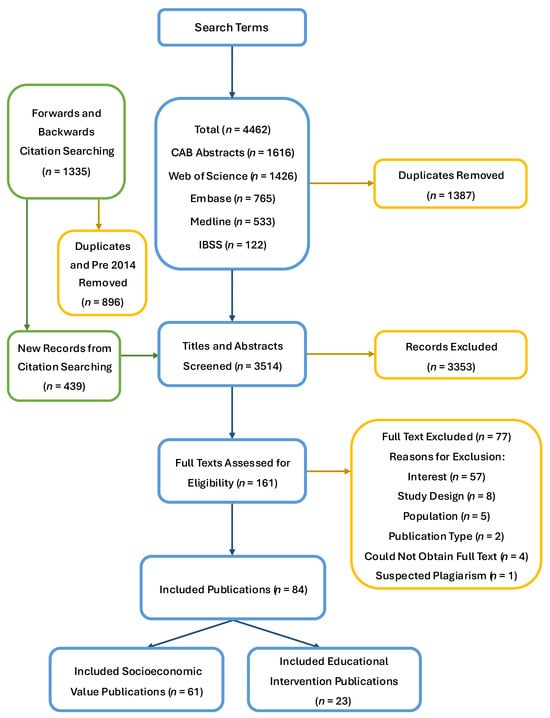

Disclaimer/Publisher’s Note: The statements, opinions and data contained in all publications are solely those of the individual author(s) and contributor(s) and not of MDPI and/or the editor(s). MDPI and/or the editor(s) disclaim responsibility for any injury to people or property resulting from any ideas, methods, instructions or products referred to in the content. |
© 2026 by the authors. Licensee MDPI, Basel, Switzerland. This article is an open access article distributed under the terms and conditions of the Creative Commons Attribution (CC BY) license.