


Simple Summary
Calliptamus barbarous is a major grasshopper pest in the grasslands of Xinjiang, China, posing a substantial threat to local agriculture and livestock. The survival of this insect depends on its ability to detect chemical signals from food and mates. In this study, we identified 422 genes involved in this sensing process. By comparing C. barbarous with five other orthopteran species, we found that genes responsible for smelling have increased in number, while genes used for tasting have decreased to only nine. Despite these differences, the most essential genes for basic sensing remain very similar to those found in other related insects. Our results suggest that this grasshopper has evolved a specialized sense of smell to help it locate resources. These findings provide molecular insights for developing sustainable ways to manage pest outbreaks.
Abstract
Calliptamus barbarus (Costa, 1836) is a dominant grasshopper species in Xinjiang, characterized by high fecundity, polyphagy, and strong dispersal abilities. To investigate the molecular basis of its environmental sensing, we identified its chemosensory gene repertoire and performed a comparative analysis across six orthopteran species. We obtained 422 sequences across six major families: odorant receptors (ORs), ionotropic receptors (IRs), gustatory receptors (GRs), odorant-binding proteins (OBPs), chemosensory proteins (CSPs), and sensory neuron membrane proteins (SNMPs). Analysis of gene family dynamics identified 74 chemosensory genes associated with significant expansion events, including 40 ORs, 14 IRs, and 20 CSPs. Functional enrichment analysis revealed that these expanded gene families are associated with chemosensory behavior and olfactory transduction. Notably, core functional components such as Orco, SNMP1, and certain antennal IRs remain highly conserved across the six species. These variations in gene family size may represent molecular adaptations for environmental recognition. Our findings identify potential targets for future behavioral interference and sustainable pest management.
1. Introduction
Calliptamus barbarus (Costa, 1836) is a dominant grasshopper species in the grasslands of Xinjiang, China [1]. Its high fecundity, polyphagous feeding habits, and strong dispersal abilities allow it to maintain high population densities across the heterogeneous landscapes of both northern and southern Xinjiang [2]. These biological traits make C. barbarus a major threat to regional agriculture and livestock production [3]. Historically, locust management in Xinjiang has relied heavily on the intensive application of chemical pesticides, a practice that has spurred the development of insecticide resistance and compromised the integrity of the grassland ecosystem [4]. Consequently, there is an urgent need for sustainable green control strategies. Insect behavioral modulators represent a globally recognized frontier in eco-friendly pest management because they offer high sensitivity and target specificity with minimal environmental impact [5]. Deciphering the molecular mechanisms underlying chemoreception in C. barbarus is a critical prerequisite for identifying olfactory targets and developing novel behavioral interference technologies.
The insect chemosensory system serves as the primary interface for navigating complex environments, enabling vital activities such as host localization, mate-seeking, and predator avoidance [6]. This sensory machinery relies on the orchestrated action of several specialized protein families, including odorant-binding proteins (OBPs), chemosensory proteins (CSPs), odorant receptors (ORs), gustatory receptors (GRs), ionotropic receptors (IRs), and sensory neuron membrane proteins (SNMPs) [7,8]. These families exhibit distinct functional specialization, where OBPs and CSPs facilitate the capture and transport of hydrophobic odorants, while ORs, IRs, and GRs govern the detection of volatile chemicals and non-volatile gustatory cues. Additionally, SNMPs play an essential role in the recognition of pheromones [9,10,11,12]. The evolutionary refinement of these gene families provides the molecular foundation that allows insects to adapt to diverse ecological niches.
Recent genomic and transcriptomic breakthroughs have provided profound mechanistic insights into the nature of insect chemoreception. Structural analyses have elucidated the ion channel gating mechanisms of the Orco heterotetramer [13], confirming its indispensable role in pheromone detection and host selection [14,15]. Furthermore, functional studies have demonstrated that gene duplications can simultaneously enhance host localization and mate recognition [16]. The co-expression of ORs and IRs has also been shown to increase olfactory sensitivity [17], while specific IRs mediate critical avoidance behaviors [18]. Beyond sensory perception, CSPs and OBPs are increasingly implicated in physiological resilience. Certain CSPs contribute to insecticide resistance by sequestering toxic molecules and facilitating metabolic detoxification [19,20,21]. In the gustatory realm, the structural characterization of GRs has clarified how insects perceive dietary sugars and bitter compounds [22,23].
In locusts, chemosensory genes are central to the regulation of foraging, mating, and phase polyphenism. Extensive repertoires of OBP and CSP genes have been identified across various species, including Locusta migratoria (Linnaeus, 1758) and Schistocerca gregaria (Forskål, 1775) [24,25,26,27,28,29,30]. During phase transition, CSPs and TO1 genes modulate the shift between conspecific attraction and repulsion [31]. In Locusta migratoria, the expression of LmigOBP4 correlates with population density and specifically regulates gregarious behavior [32,33]. Notably, the locust olfactory system exhibits lower redundancy compared to other insect orders [34,35,36]. The aggregation pheromone 4VA triggers swarming via the specific receptor OR35, and its disruption can effectively reverse the gregarious phenotype [37,38]. Furthermore, receptors such as OR70a and OR5 govern complex social behaviors like cannibalism and predator avoidance [36]. Functional differentiation between SNMP1 and SNMP2 further underscores the sophisticated regulation occurring within olfactory sensilla [39,40].
Despite these global advancements, the chemosensory system of C. barbarus remains poorly characterized. This study utilizes bioinformatic mining to identify six major chemosensory gene families in C. barbarus and subjects them to a comparative phylogenomic analysis within the context of five other orthopteran species. By integrating divergence time estimation (MCMCTree) and gene family evolution modeling, our research aims to: (1) determine the composition and diversity of the chemosensory repertoire in C. barbarus and (2) characterize the evolutionary dynamics and functional enrichment of these gene families within a phylogenomic framework. By establishing this molecular framework, we provide a foundation for understanding the environmental adaptation of this species and identifying potential targets for eco-friendly management.
2. Materials and Methods
Adult specimens of C. barbarus were collected in September 2024 from a desert and semi-desert steppe habitat in Urumqi, Xinjiang, China (43.53° N, 87.95° E). Individuals exhibiting vigorous locomotor activity were selected for the study. To ensure sufficient RNA yield and representative gene expression, antennae were dissected and pooled from 30–40 adult individuals (including both males and females) as a single biological sample. For the thorax, tissues were collected and combined from three adult individuals into a single sample. All tissue separation procedures were performed on ice to prevent RNA degradation. The isolated tissues were immediately stored at −80 °C for subsequent analysis.
Total RNA was extracted from the newly collected pooled antennae and thorax samples separately using TRIzol reagent (Tiangen, Beijing, China) following the manufacturer’s instructions. Independent cDNA libraries were constructed for these two tissue pools using the Clontech SMARTer PCR cDNA Synthesis Kit (Takara Bio USA, Inc., Mountain View, CA, USA). Sequencing was performed on the Illumina NovaSeq 6000 platform (San Diego, CA, USA) in 150 bp paired-end (PE150) mode. Additionally, the whole-body transcriptomic data of C. barbarus (accession number: SRR37687004), which were previously generated as part of our related research, were integrated into this study to ensure maximum coverage of the chemosensory gene repertoire. Following quality control and pooling of these datasets, a total of 171.33 million filtered reads (approximately 25.50 Gb of clean data) were obtained and used for subsequent de novo assembly and gene identification.
To obtain a comprehensive repertoire of chemosensory genes in C. barbarus, the raw reads from the newly sequenced tissues and the SRA dataset were pooled, filtered for quality, and de novo assembled using Trinity version 2.15.2 [41] with default parameters, yielding 527,600 transcripts with an N50 value of 2210 bp. To minimize sequence redundancy, these transcripts were clustered using CD-HIT-est version 4.8.1 [42] at a 95% similarity threshold, and the longest sequence from each cluster was selected as the representative unigene. Subsequently, open reading frames (ORFs) were predicted using TransDecoder version 5.7.1, with coding potential determined by the “longest ORF” rule. Finally, the completeness and integrity of the assembled transcriptome were evaluated using BUSCO version 5.7.1 [43] against the insecta_odb10 database. The assessment demonstrated a high level of transcriptome completeness, with 97.3% of the 1367 expected insect orthologs identified as complete.
To investigate the evolutionary dynamics of C. barbarus, we performed a comparative phylogenomic analysis using six orthopteran species (Locusta migratoria; Schistocerca gregaria; Gryllus bimaculatus De Geer, 1773; Eucriotettix oculatus Bolívar, 1898; Laupala kohalensis Otte, 1994; and C. barbarus). Detailed information regarding the data sources and assembly quality (BUSCO scores) for these six species is provided in Supplementary Table S1. Orthologous groups (OGs) were identified using OrthoFinder version 2.5.5 [44] with default parameters. A total of 308 single-copy orthologous genes were utilized for species tree reconstruction via IQ-TREE version 2.3.6 [45]. The divergence time was estimated using MCMCTree (clock = 3, RootAge ≤ 2.92, rgene gamma = 1 13.20498, sigma2 gamma = 1 4.5) from PAML version 4.10.0 [46] with the approximate likelihood method (usedata = 2). Two calibration times based on previous studies [47,48] from the TIMETREE database (www.timetree.org) were utilized for estimation: G. bimaculatus–Locusta migratoria (median: 292 Mya) and Locusta migratoria–E. oculatus (115.0–224.4 Mya).
Gene family expansion and contraction were analyzed using CAFE version 5.0 [49] based on the time-calibrated tree. Phylogenetic tree topology and branch lengths were considered when inferring the significance of changes to gene-family size in each branch. Families with conditional p-values lower than 0.05 were considered to have had a significantly accelerated rate of expansion or contraction. GO and KEGG enrichment analyses were performed for these significantly changed gene families using TBtools-II version 2.446 [50], and the results were visualized using the R package GOplot version 1.0.2 [51].
To identify the chemosensory gene family in C. barbarus, a dual-verification strategy based on sequence homology and structural conservation was implemented. First, protein sequences of known chemosensory genes from the representative orthopteran Locusta migratoria and Schistocerca gregaria were retrieved from the NCBI database and used as queries for BLAST v2.12.0 [52] searches against the C. barbarus protein with an E-value threshold of 10−5. Simultaneously, HMMER v3.0 [53] was employed to identify candidate sequences containing family-specific conserved domains by searching against the Pfam database. Finally, the intersection of the results from both BLAST and HMMER analyses was defined as the final set of candidate genes, ensuring high-confidence identification for subsequent analysis.
To investigate the phylogenetic relationships of the identified chemosensory gene subfamilies, protein sequences from the aforementioned five orthopteran species (Locusta migratoria, S. gregaria, G. bimaculatus, E. oculatus, and Laupala kohalensis) were used as references. Multiple sequence alignments (MSAs) of the candidate protein sequences were performed using MAFFT v7.525 [54]. The alignments were subsequently trimmed with trimAl v1.5.rev0 [55]. Maximum-likelihood (ML) phylogenetic trees were then constructed using IQ-TREE v2.3.6 [45]. The optimal substitution model for each gene family was automatically selected by ModelFinder based on the Bayesian Information Criterion (BIC). The specific models used were: JTT+G4 for ORs, Q.pfam+G4 for IRs, WAG+I+G4 for OBPs, Q.pfam+I+G4 for CSPs, Q.pfam+I+G4 for GRs, and Q.pfam+I+G4 for SNMPs. The optimal substitution model was automatically selected using the -m TEST option. Branch support was assessed with 1000 ultrafast bootstrap replicates (-bb 1000) and the SH-like approximate likelihood ratio test (-alrt 1000). The final trees were visualized via the iTOL online platform (https://itol.embl.de/, accessed on 18 July 2026).
3. Results and Discussion
3.1. Phylogenetic Relationships and Functional Enrichment of Gene Families
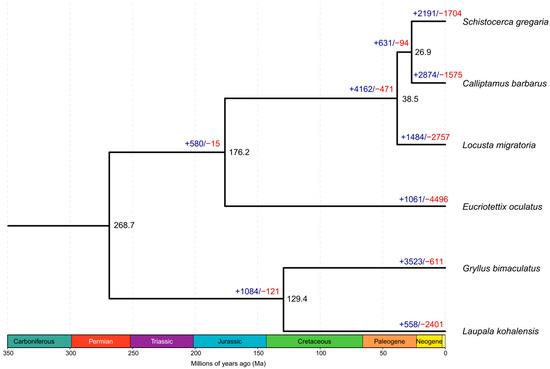
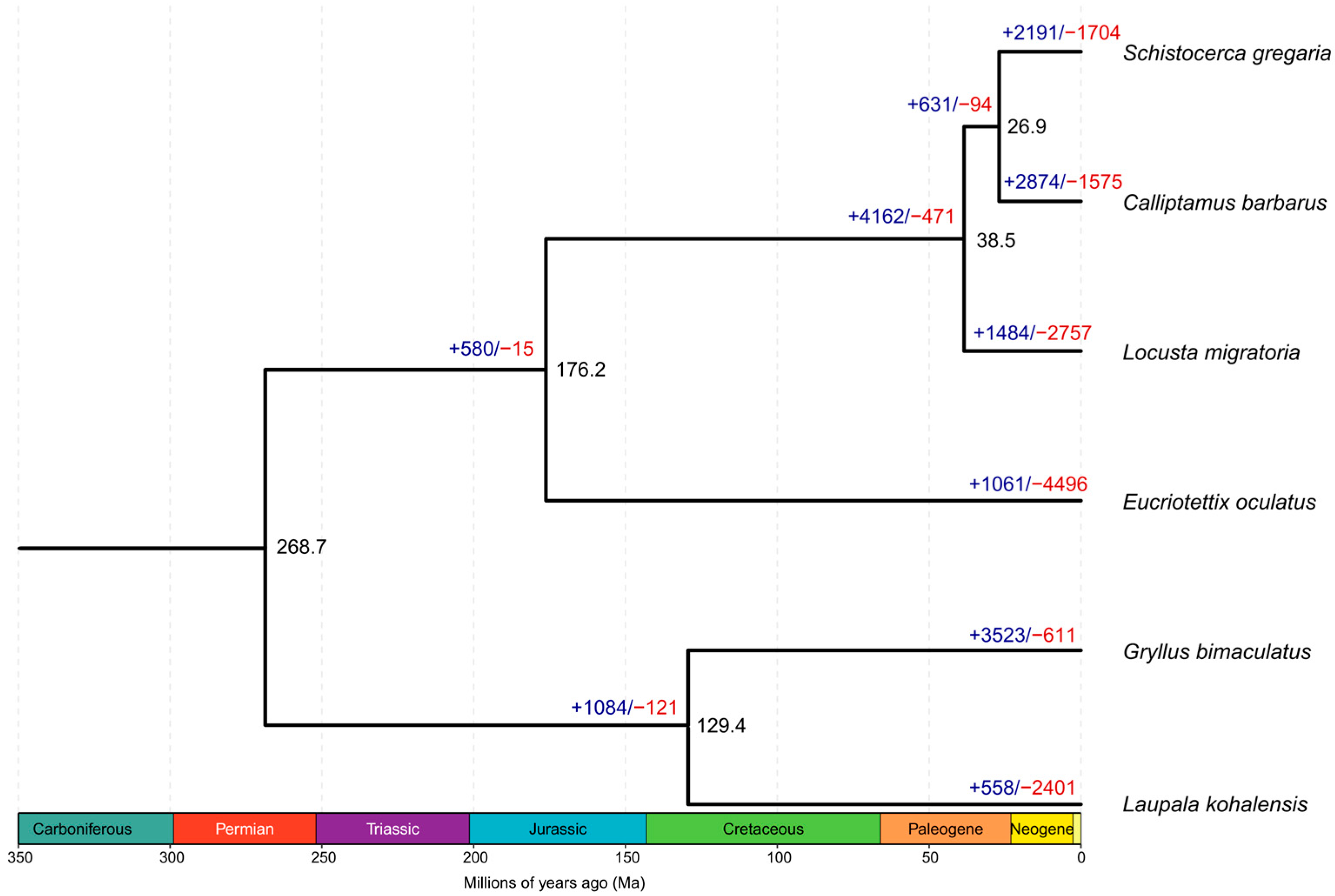
A time-calibrated phylogenetic tree was reconstructed using single-copy orthologs from six orthopteran species (Figure 1). The results indicated that the suborder Ensifera (represented by G. bimaculatus and Laupala kohalensis) diverged from Caelifera by approximately 268.7 Ma. This estimate is highly consistent with our calibration constraint (median 292 Ma) and falls within the previously reported divergence range for these suborders [47,48]. Within the Caelifera, the divergence between Locusta migratoria and the C. barbarus/S. gregaria clade was estimated to be 38.5 Ma, while C. barbarus diverged from S. gregaria by approximately 26.9 Ma. These divergence estimates align with the rapid radiation of Acrididae during the Cenozoic and provide a temporal framework for the subsequent gene family analysis. Based on the analysis of gene family dynamics, the C. barbarus lineage exhibited 2874 expanded and 1575 contracted gene families (p < 0.05) (Figure 1).
Figure 1.
Phylogenetic tree and divergence times of the six orthopteran species. The chronogram was reconstructed using single-copy orthologs. The numbers at the nodes represent the estimated divergence times (Ma, millions of years ago) inferred by MCMCTree. Blue and red numbers on the branches indicate the counts of significantly expanded and contracted gene families (p < 0.05). The geological time scale at the bottom illustrates the evolutionary timeframe from the Permian to the Neogene.
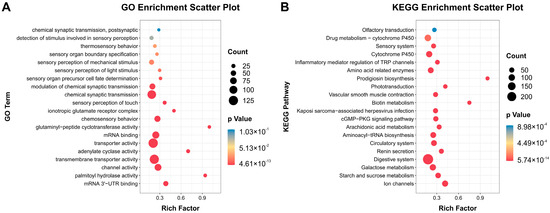
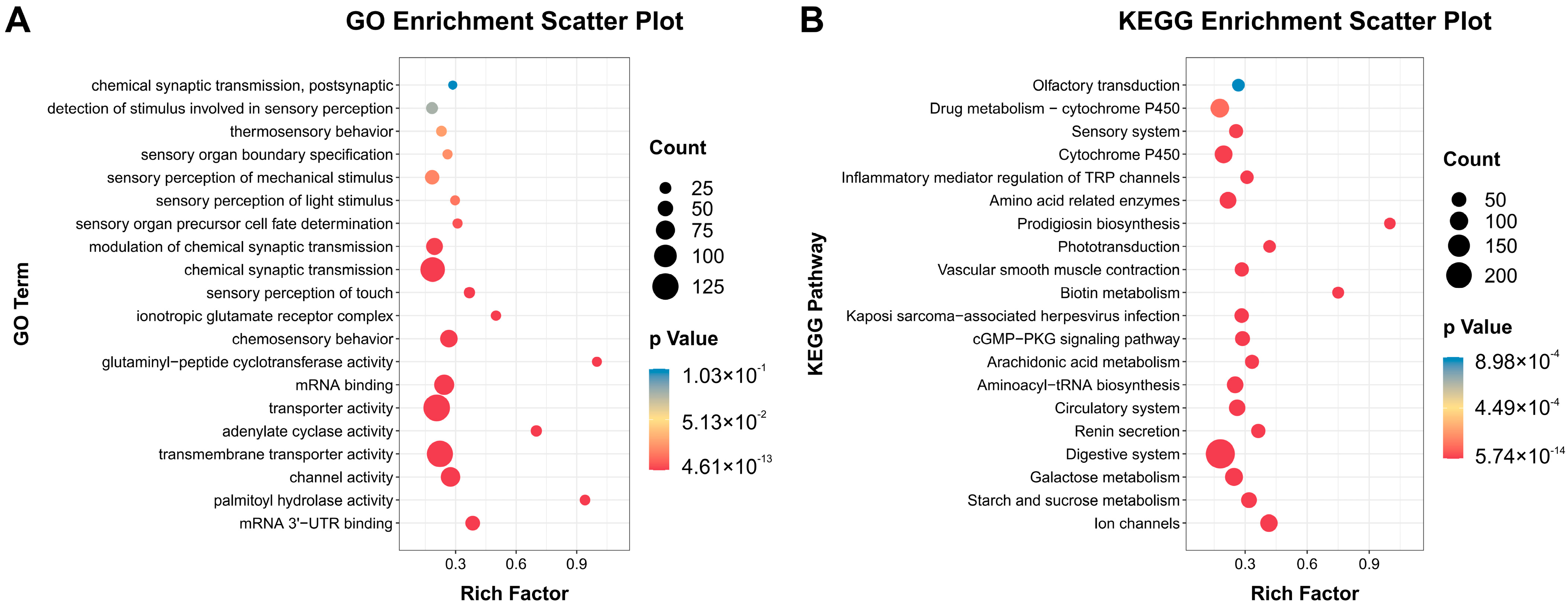
To characterize the functional distribution of these expanded families, GO and KEGG enrichment analyses were performed. In the GO analysis, expanded gene families were associated with several sensory-related terms, including chemosensory behavior (GO:0007635, p = 3.17 × 10⁻⁸), sensory perception of touch (GO:0050975, p = 1.82 × 10⁻⁵), and ionotropic glutamate receptor complex (GO:0008328, p = 1.69 × 10⁻⁶) (Figure 2A, Table S3). KEGG pathway analysis revealed enrichment in ion channels (ko04040, p = 5.74 × 10⁻¹⁴), phototransduction (ko04744, p = 2.90 × 10⁻⁷), cytochrome P450 (ko00199, p = 6.33 × 10⁻⁶), and olfactory transduction (ko04740, p = 8.98 × 10⁻⁴) (Figure 2B, Table S4). Other enriched categories included thermosensory behavior (GO:0040040) and inflammatory mediator regulation of TRP channels (ko04750) (Figure 2B, Table S4). In the GO analysis, contracted gene families were enriched in categories related to enzymatic activities and cellular components, such as protein kinase activity (GO:0004672, p = 0.00097) and structural constituent of muscle (GO:0008307, p = 1.58 × 10⁻⁹) (Supplementary Figure S1A, Table S5). Similarly, KEGG pathway analysis identified several pathways associated with basic physiological and metabolic processes, including galactose metabolism (ko00052, p = 1.71 × 10⁻¹⁴) and carbohydrate digestion and absorption (ko04973, p = 2.57 × 10⁻¹⁴) (Supplementary Figure S1B, Table S6).
Figure 2.
GO and KEGG enrichment of expanded gene families in Calliptamus barbarus. (A) Scatter plot of enriched GO terms in the Biological Process category. (B) Scatter plot of enriched KEGG pathways. In both panels, the x-axis represents the Rich Factor, which indicates the degree of enrichment. The size of the bubbles corresponds to the number of expanded genes associated with each term, while the color gradient represents the p-value.
3.2. Comparative Analysis of Chemosensory Gene Families
In this study, six major chemosensory gene families were identified in C. barbarus: ORs, IRs, GRs, OBPs, CSPs, and SNMPs. We characterized the repertoire sizes of these families through a comparative analysis with five other orthopteran species across three families: Acrididae, Tetrigidae, and Gryllidae (Table 1). The OR family in C. barbarus consists of 287 candidate genes, which is higher than the counts for Locusta migratoria (146) and S. gregaria (208) and exceeds the numbers identified in the crickets G. bimaculatus (31) and Laupala kohalensis (19). In contrast, the SNMP family remains relatively uniform across the six species, with C. barbarus possessing 16 members, a count comparable to those for Locusta migratoria (13) and Laupala kohalensis (18). Within other receptor families, IRs and GRs show different patterns. The IR repertoire in C. barbarus (55 genes) is similar to those of S. gregaria (59) and E. oculatus (63) but higher than in Locusta migratoria (30). Conversely, the GR repertoire in C. barbarus is limited to nine genes, which is fewer than in Locusta migratoria (16) and lower than in the tetrigid E. oculatus (52). Regarding soluble carrier proteins, the C. barbarus OBP family includes 32 members, the highest count among the six species. Meanwhile, the CSP family in C. barbarus (23 genes) is larger than in Locusta migratoria (15) but smaller than in S. gregaria (39) (Table 1). In summary, the chemosensory gene families in C. barbarus exhibit variations in repertoire size that are broadly consistent with the lineage-specific expansions and contractions identified in our phylogenomic analysis. To further resolve these evolutionary trends, the intersection between the globally expanded/contracted gene sets and the chemosensory repertoire was visualized using Venn diagrams (Supplementary Figures S2 and S3). Through this cross-referencing, we identified 74 expanded chemosensory genes (40 ORs, 14 IRs, and 20 CSPs) and four contracted genes (one GR and three SNMPs). The list of these genes, including their orthogroup IDs and p-values, is provided in Supplementary Table S2.
Table 1.
Numbers of each chemosensory-related gene subfamily in six orthopteran species.
3.3. Phylogenetic Analysis of Candidate Odorant Receptors (ORs)
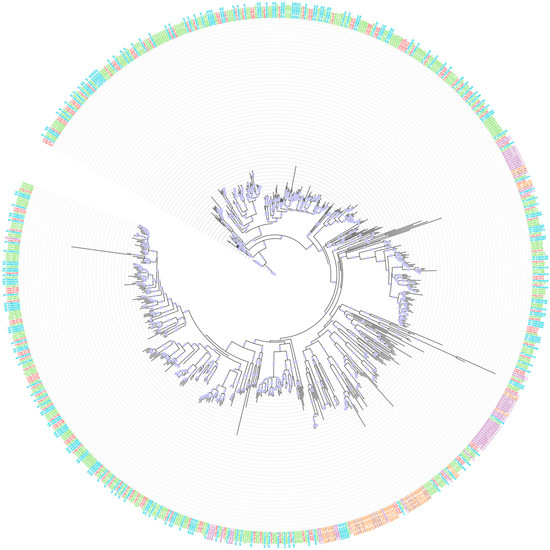
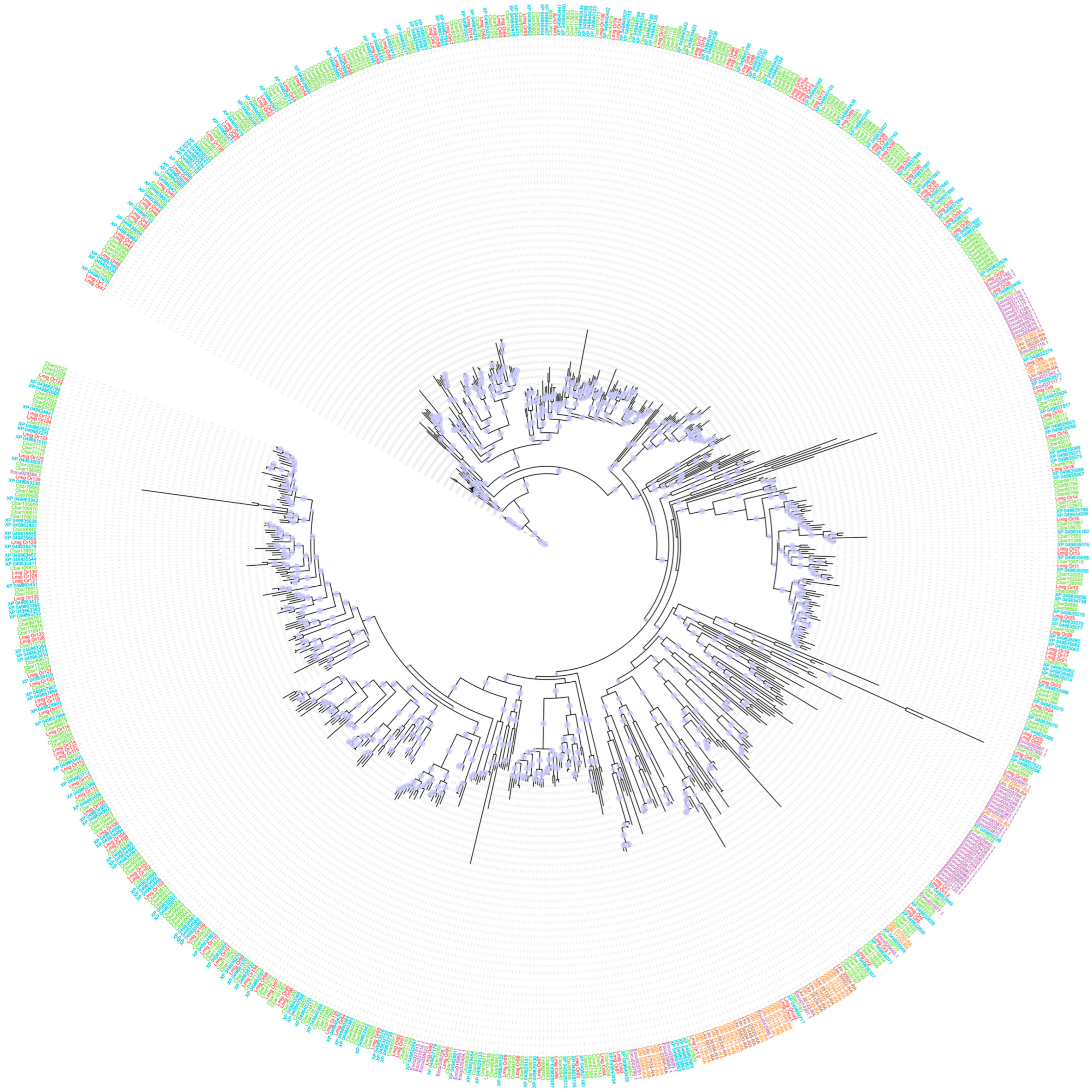
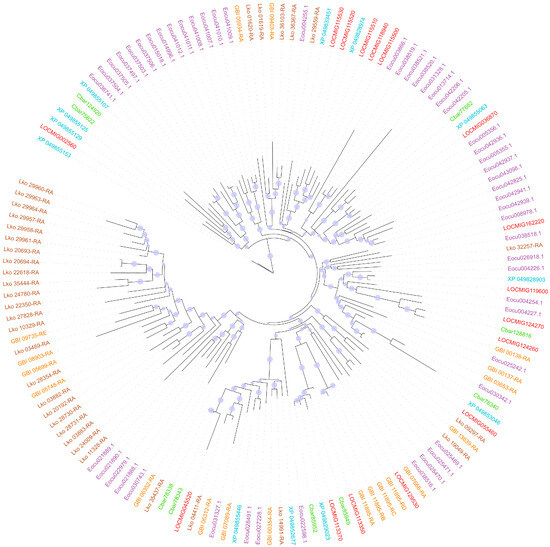
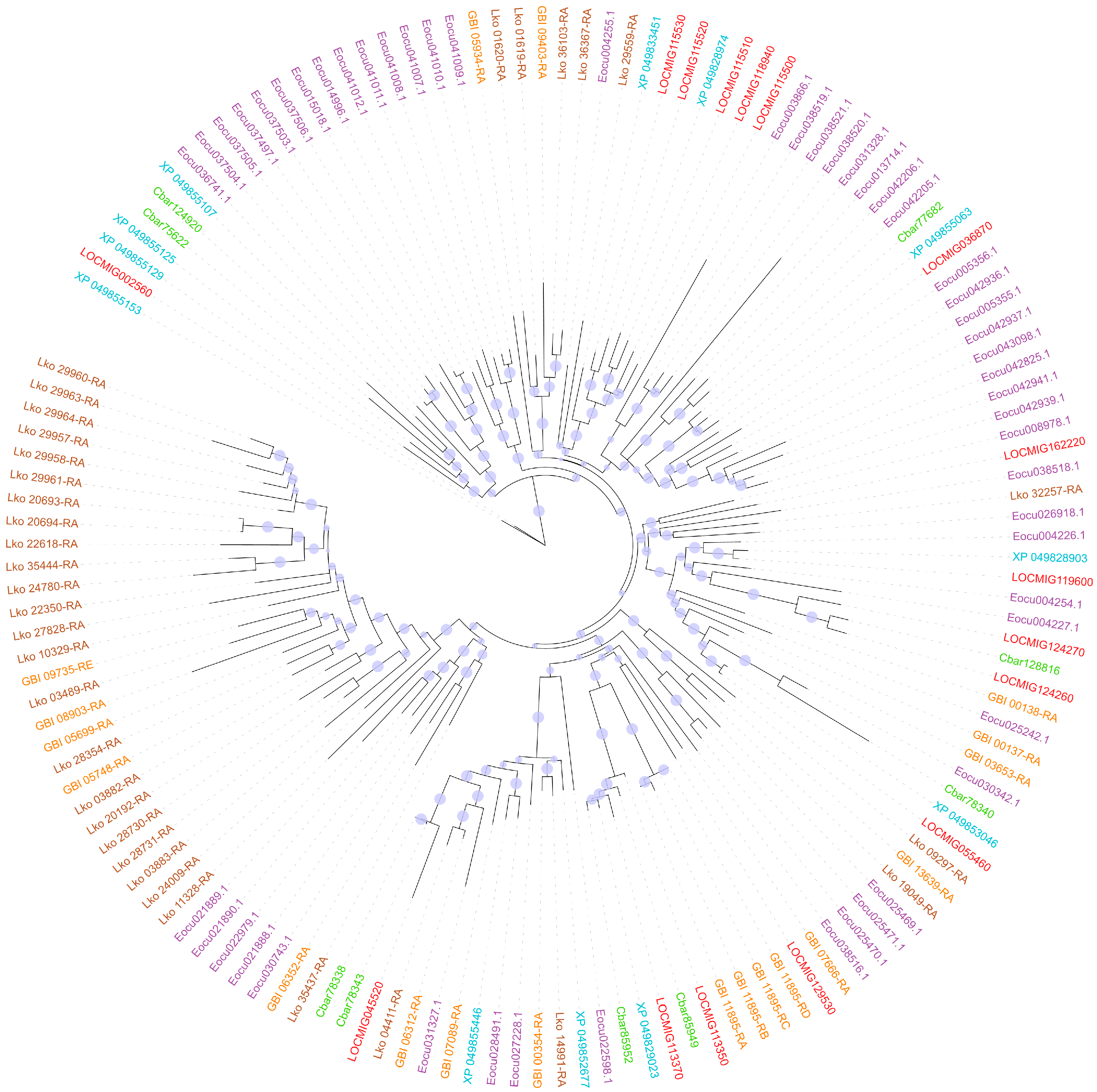
We performed a phylogenetic analysis of the 287 candidate ORs identified in C. barbarus. A maximum-likelihood (ML) tree was constructed using these sequences along with the OR repertoires from five other orthopteran species (Locusta migratoria, S. gregaria, G. bimaculatus, E. oculatus, and Laupala kohalensis) (Figure 3). The phylogenetic tree showed a highly supported Orco clade (bootstrap = 100). Within this group, Cbar7781 clustered with orthologs from the other five species, including Lmig_Orco, Eocu014201.1, and GBI_14130-RA. Larsson et al. previously confirmed that Orco is highly conserved across diverse insect orders and serves as the core component of functional receptor complexes [56]. Our results indicate that the fundamental olfactory transduction mechanism remains stable in C. barbarus, and this conservation confirms the reliability of our phylogenetic reconstruction.
Figure 3.
Phylogenetic tree of putative odorant receptors (ORs). Maximum-likelihood tree of putative ORs from Calliptamus barbarus and other representative orthopteran species. Branch support was estimated using 1000 bootstrap replicates. Colors indicate species origin as follows: C. barbarus (green), Locusta migratoria (red), Schistocerca gregaria (cyan), Gryllus bimaculatus (gold), Laupala kohalensis (brown), and Eucriotettix oculatus (purple).
Compared to the other surveyed species, the C. barbarus OR repertoire exhibits substantial variation in size. The 287 candidate ORs identified in this study are more numerous than those in Locusta migratoria (146) and S. gregaria (208) and notably exceed the counts in E. oculatus (57), G. bimaculatus (31), and Laupala kohalensis (19) (Table 1). Among these candidate ORs in C. barbarus, 40 genes belong to significantly expanded orthogroups (p < 0.05; Supplementary Table S2). This diversity in repertoire size follows the “birth-and-death” model of chemosensory gene evolution, where gene duplication and loss events shape species-specific receptor sets [57].
Calliptamus barbarus is a dominant species in the arid and semi-arid grasslands of Xinjiang, characterized by a wide distribution of and exposure to complex vegetation. Robertson noted that the scale of receptor family expansion generally correlates with the width of a species’ chemosensory niche [8]. Therefore, such an extensive OR repertoire may provide the molecular basis for detecting diverse host plants and their secondary metabolites, which is consistent with the polyphagous feeding habits of this species.
The 40 expanded OR genes are predominantly organized into dense, lineage-specific clusters in the ML tree (e.g., clades containing Cbar72990–Cbar72999 and Cbar89617–Cbar89629), suggesting relatively recent and rapid divergence. Olfactory evolution is often driven by a species’ specific ecological requirements [58]. For C. barbarus, which exhibits strong dispersal capabilities and high reproductive rates, efficient long-range olfaction potentially aids in locating suitable host patches within vast habitats. Furthermore, these divergent OR clades may be involved in mate recognition and oviposition site selection. This functional differentiation potentially supports the species’ ability to maintain population dominance in the patchy and fluctuating environments of Xinjiang. In summary, the expansion and divergence of the C. barbarus OR family are consistent with its polyphagy and dispersal capacity, representing a possible evolutionary adaptation to complex and heterogeneous arid environments.
3.4. Phylogenetic Analysis of Candidate Ionotropic Receptors (IRs)
We analyzed the evolutionary relationships of the 55 candidate IRs identified in C. barbarus by constructing a maximum likelihood (ML) tree alongside repertoires from six orthopteran species (Figure 4). As established in previous studies, chemosensory gene repertoires are shaped by the interplay between evolutionary “chance” and biological “necessity” [59]. Phylogenetic analysis identified three highly supported clades corresponding to the conserved insect IR co-receptors: Cbar133101 (IR25a), Cbar61908 (IR8a), and Cbar63246 (IR76b). This finding aligns with recent genome-wide identifications in other insects, which highlight the functional requirement of these co-receptors in forming multimeric sensing complexes [60]. These core components represent stable dimensions in chemosensory genetics, maintaining high sequence conservation to safeguard fundamental sensory integrity [61].
Figure 4.
Phylogenetic tree of putative ionotropic receptors (IRs). Maximum-likelihood tree of putative IRs from Calliptamus barbarus and other representative orthopteran species. Branch support was estimated using 1000 bootstrap replicates. Colors indicate species origin as follows: C. barbarus (green), Locusta migratoria (red), Schistocerca gregaria (cyan), Gryllus bimaculatus (gold), Laupala kohalensis (brown), and Eucriotettix oculatus (purple).
Notably, a subset of C. barbarus IRs clustered within the “antennal IR” subgroup, exhibiting clear orthologous relationships with receptors from Locusta migratoria and S. gregaria (e.g., Cbar7317 clustered with Lmig_IR24 and Eocu039762.1). These conserved lineages typically perform stable olfactory functions across different orthopteran families. The conservation of this repertoire suggests that C. barbarus retains essential sensory pathways for detecting common environmental chemical cues.
In contrast to the conserved core, a substantial portion of the C. barbarus IR repertoire belongs to the “divergent IR” group. Specifically, 14 IR genes were found to belong to orthogroups that underwent significant expansion (p < 0.05; Supplementary Table S2). This expansion is prominent in several lineage-specific clusters, such as the Cbar41497–Cbar41534 cluster (Figure 4). This group shows prominent lineage-specific expansion within the Acrididae branch. Such chemosensory restructuring is often a hallmark of local adaptation [62], as these divergent sets evolve dynamically through frequent gene gain and loss [63]. Recent genomic analyses of the orthopteroid pest Gryllotalpa orientalis also indicate that niche-specific expansions provide the sensory flexibility necessary for specialized habitats [64]. For C. barbarus, the expansion of these divergent IR genes potentially facilitates the navigation of the complex chemical ecology in arid grassland ecosystems.
3.5. Phylogenetic Analysis of Candidate Odorant-Binding Proteins (OBPs)
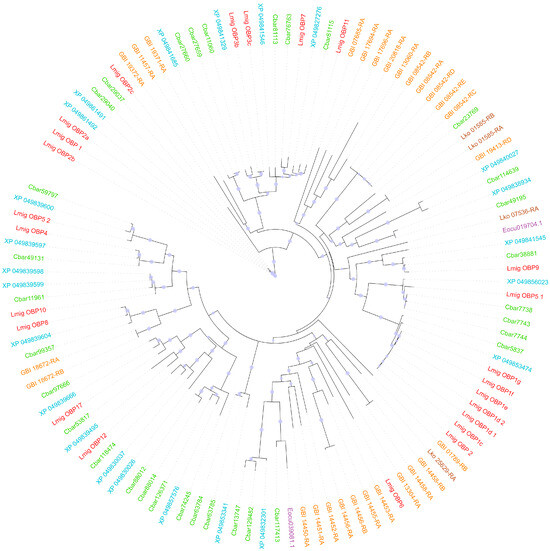
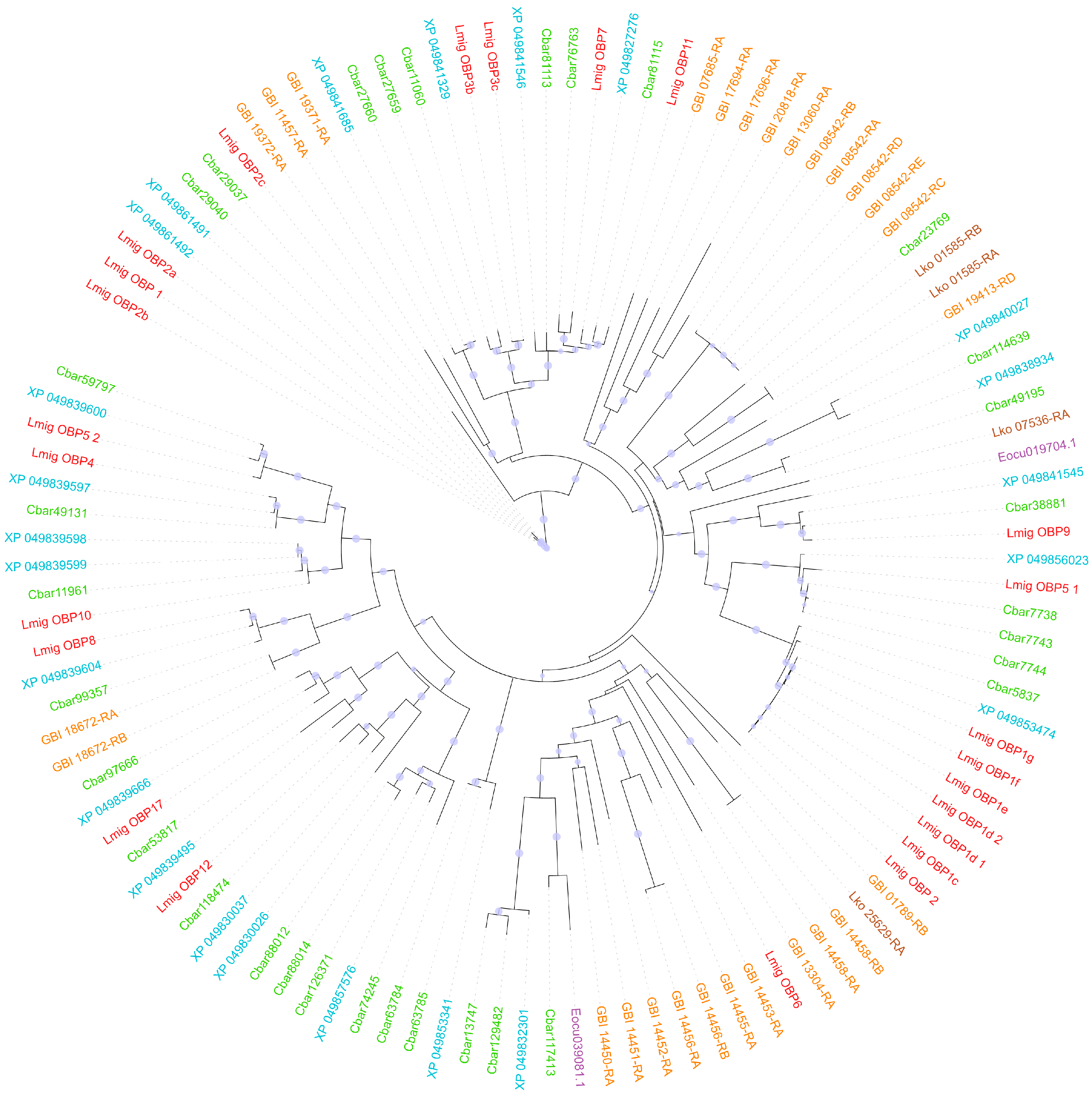
We constructed a maximum-likelihood (ML) tree to analyze the evolutionary relationships of the 32 candidate OBPs identified in C. barbarus alongside repertoires from five other species (Figure 5). OBPs are small, soluble proteins that transport hydrophobic odorants from the environment to membrane-bound receptors [65,66]. Phylogenetic analysis showed that several C. barbarus OBPs clustered with those of Locusta migratoria in highly supported clades. For instance, Cbar29037 and Cbar29040 exhibited high homology with the Lmig_OBP2 group, and Cbar11060 clustered with Lmig_OBP3b/c. These stable orthologous relationships indicate that certain OBP lineages have been conserved within the Orthoptera, likely performing fundamental physiological roles in detecting common chemical signals.
Figure 5.
Phylogenetic tree of putative odorant-binding proteins (OBPs). Maximum-likelihood tree of putative OBPs from Calliptamus barbarus and other representative orthopteran species. Branch support was estimated using 1000 bootstrap replicates. Colors indicate species origin as follows: C. barbarus (green), Locusta migratoria (red), Schistocerca gregaria (cyan), Gryllus bimaculatus (gold), Laupala kohalensis (brown), and Eucriotettix oculatus (purple).
The C. barbarus OBP repertoire (32 genes) is the largest among the six studied species, exceeding the counts for Locusta migratoria (24), S. gregaria (23), G. bimaculatus (27), Laupala kohalensis (4), and E. oculatus (2) (Table 1). Notably, the OBP family has not expanded as substantially as the OR family. This asymmetric expansion between binding proteins and receptors suggests that a relatively small set of OBPs may support a diverse receptor repertoire by utilizing broad ligand-binding spectra [67]. Within the LUSH (also known as OBP76a) clade, we identified a C. barbarus ortholog, Cbar38881, which clustered with Lmig_OBP9. Studies in Drosophila Fallén, 1823, confirmed that LUSH is required for the activation of pheromone-sensitive neurons [68]. The presence of this ortholog suggests that C. barbarus retains specialized mechanisms for intra-specific chemical communication.
The variation in the C. barbarus OBP repertoire size is consistent with its polyphagous feeding strategy. As a dominant species across the grasslands of Xinjiang, this species encounters a wide array of plant secondary metabolites. A more diverse OBP set potentially provides the biochemical flexibility necessary to effectively solubilize and transport various hydrophobic ligands. This sensory adaptation works in coordination with the expanded receptor system and might be associated with the ecological success and dispersal capabilities of the species in heterogeneous environments.
3.6. Phylogenetic Analysis of Candidate Chemosensory Proteins (CSPs)
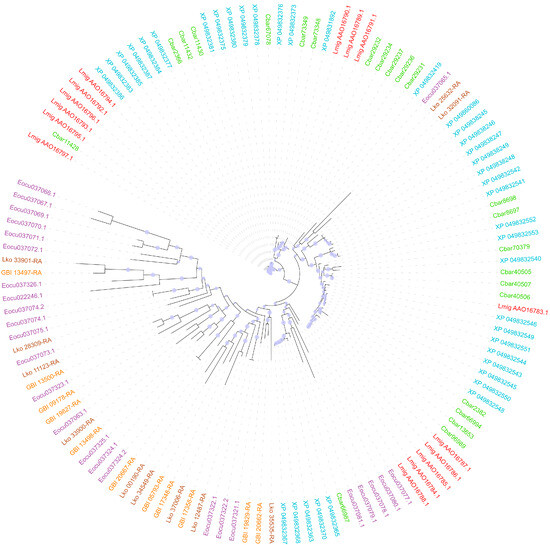
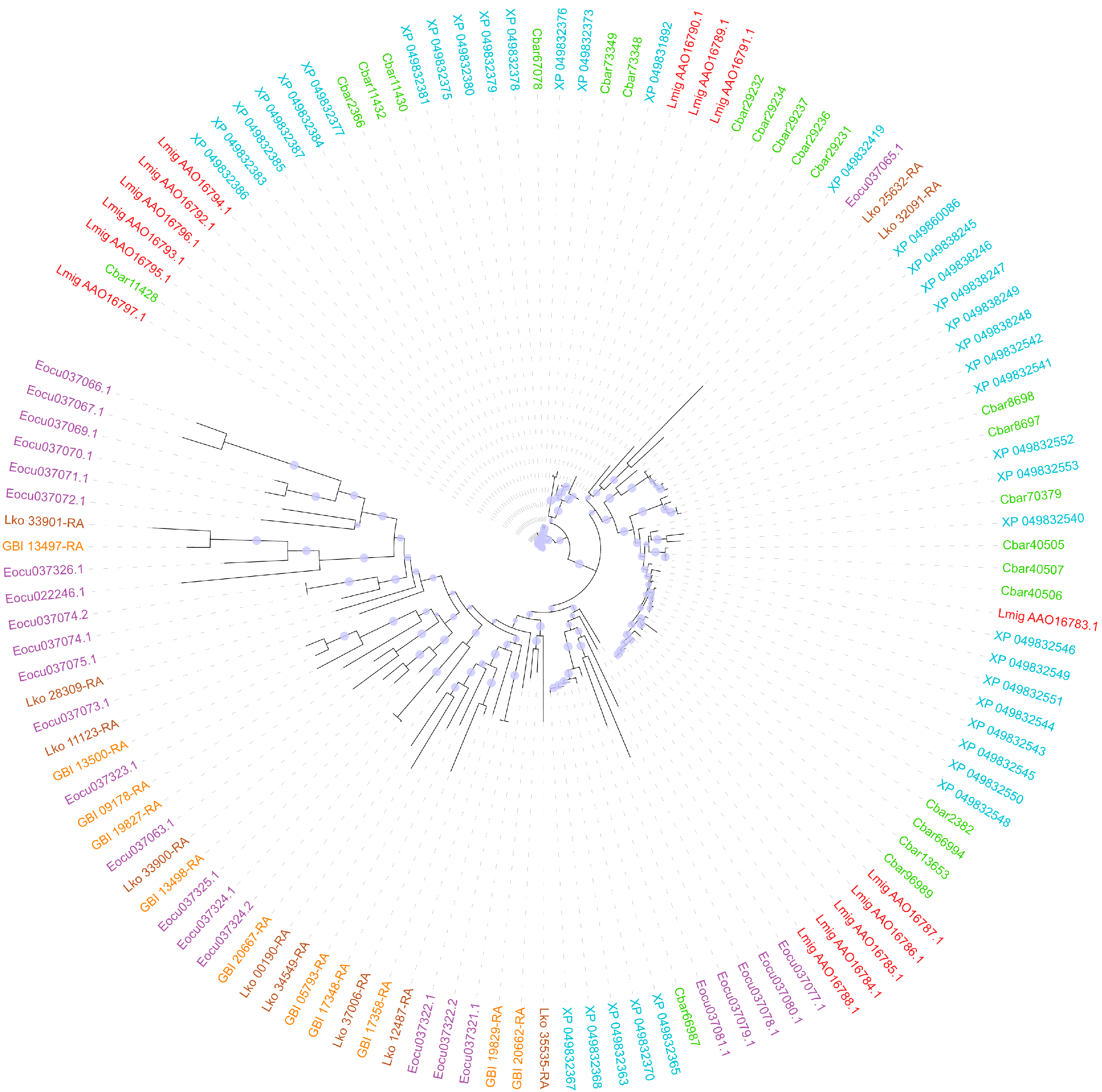
We constructed a maximum-likelihood (ML) tree to analyze the evolutionary relationships of the 23 candidate CSPs identified in C. barbarus, comparing them with five other orthopteran species (Figure 6). CSPs, originally identified as the OS-D-like gene family, are characterized by a conserved four-cysteine motif and represent a class of highly stable soluble proteins [69]. Phylogenetic analysis showed that several C. barbarus CSPs formed highly supported orthologous clades with sequences from other species, such as the pair involving Cbar2366 and Lmig_CSP_AAO16797.1. These conserved lineages likely represent an ancestral protein set performing fundamental physiological functions across diverse orthopteran species. The C. barbarus CSP repertoire (23 genes) is larger than those of Locusta migratoria (15), G. bimaculatus (11), and Laupala kohalensis (11), though it remains smaller than the count for S. gregaria (39) (Table 1). Notably, 20 out of the 23 identified CSP genes (87%) were associated with significant expansion signals (p < 0.05; Supplementary Table S2). In the ML tree, this expansion is manifested in several dense, species-specific clusters, most notably the Cbar29231–Cbar29237, Cbar40505–Cbar40507, and Cbar11428–Cbar11432 clades (Figure 6). While OBP and CSP families in other insects often exhibit adaptive patterns linked to their ecological niches [70], the nearly family-wide expansion in C. barbarus is striking. Previous studies have indicated that CSPs are frequently involved in host plant recognition and environmental sensing [71]. The expansion of these specific CSP lineages potentially enhances the sensory adaptation of C. barbarus. This genomic feature may be associated with the species’ high reproductive rates and dispersal capabilities, potentially facilitating efficient host and mate localization across the diverse and heterogeneous arid habitats of Xinjiang.
Figure 6.
Phylogenetic tree of putative chemosensory proteins (CSPs). Maximum-likelihood tree of putative CSPs from Calliptamus barbarus and other representative orthopteran species. Branch support was estimated using 1000 bootstrap replicates. Colors indicate species origin as follows: C. barbarus (green), Locusta migratoria (red), Schistocerca gregaria (cyan), Gryllus bimaculatus (gold), Laupala kohalensis (brown), and Eucriotettix oculatus (purple).
3.7. Phylogenetic Analysis of Candidate Gustatory Receptors (GRs)
We analyzed the evolutionary relationships of the nine candidate GRs identified in C. barbarus by constructing a maximum-likelihood (ML) tree including repertoires from five other orthopteran species (Figure 7). Although the C. barbarus GR family is substantially smaller than those of E. oculatus (52 genes) and Laupala kohalensis (34 genes), these genes represent a core repertoire of functionally critical receptors [72]. Phylogenetic analysis identified several orthologs associated with fundamental sensory functions. Cbar85949 and Cbar85952 clustered within the conserved CO2 receptor clade, which mediates carbon dioxide detection in insects [10]. Within the sugar receptor group, we identified Cbar78338 and Cbar78343 (Figure 7), which are involved in perceiving sweet compounds [23]. Notably, Cbar128816 was identified as an ortholog of the Gr28a/b complex, which is associated with the avoidance of aversive compounds [73]. Additionally, Cbar77682 and Cbar78340 were identified as orthologs within the fructose receptor lineage [11].
Figure 7.
Phylogenetic tree of putative gustatory receptors (GRs). Maximum-likelihood tree of putative GRs from Calliptamus barbarus and other representative orthopteran species. Branch support was estimated using 1000 bootstrap replicates. Colors indicate species origin as follows: C. barbarus (green), Locusta migratoria (red), Schistocerca gregaria (cyan), Gryllus bimaculatus (gold), Laupala kohalensis (brown), and Eucriotettix oculatus (purple).
The overall contraction of the C. barbarus GR repertoire is prominent compared to the expansion of its OR and CSP families. Beyond these core nutrient and CO2 sensors, C. barbarus lacks the extensive bitter receptor radiations found in some other insect lineages [12,74]. This streamlined receptor set is consistent with a sensory strategy that prioritizes primary nutrient detection and internal homeostasis over a complex array of bitter compounds [9]. Notably, Cbar124920 was identified within a significantly contracted orthogroup (p < 0.05; Supplementary Table S2), indicating a targeted reduction within this family in the C. barbarus lineage. The retention of essential pathways for detecting common toxins or aversive stimuli suggests that C. barbarus maintains a functional baseline for gustatory perception in arid and semi-arid environments.
3.8. Phylogenetic Analysis of Candidate Sensory Neuron Membrane Proteins (SNMPs)
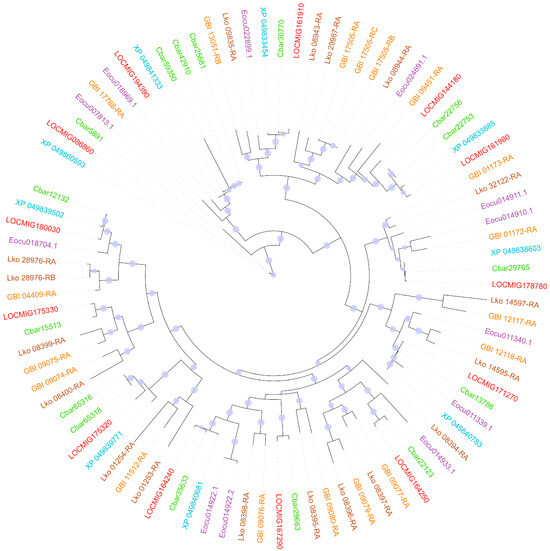
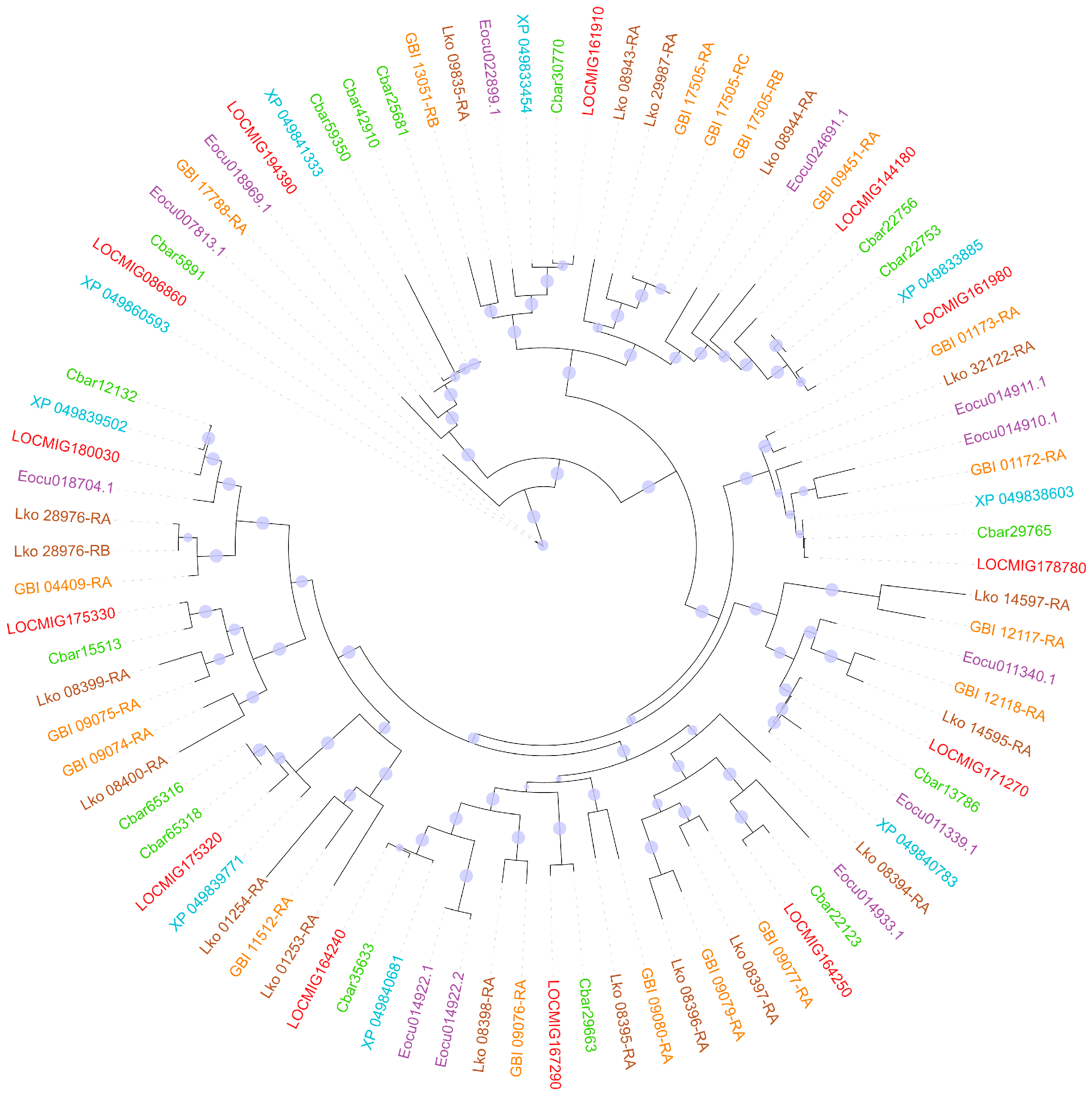
We analyzed the evolutionary relationships of the 16 candidate SNMPs identified in C. barbarus by constructing a maximum-likelihood (ML) tree including repertoires from five other orthopteran species (Figure 8). SNMPs represent a specialized group within the CD36 gene superfamily [75]. Phylogenetic analysis accurately categorized the C. barbarus SNMPs into established subgroups. Specifically, Cbar25681, Cbar42910, and Cbar59350 clustered within the SNMP1 clade with high bootstrap support (Figure 8). Studies in other insects have confirmed that SNMP1 is essential for detecting lipid-derived pheromones [76], and these proteins are typically localized in pheromone-sensitive neurons [77]. The remaining C. barbarus sequences clustered with the SNMP2 lineage or other CD36-like proteins, which are often involved in broader metabolic functions [78].
Figure 8.
Phylogenetic tree of putative sensory neuron membrane proteins (SNMPs). Maximum-likelihood tree of putative SNMPs from Calliptamus barbarus and other representative orthopteran species. Branch support was estimated using 1000 bootstrap replicates. Colors indicate species origin as follows: C. barbarus (green), Locusta migratoria (red), Schistocerca gregaria (cyan), Gryllus bimaculatus (gold), Laupala kohalensis (brown), and Eucriotettix oculatus (purple).
In contrast to the lineage-specific expansions observed in the OR and CSP families, the SNMP family remains relatively uniform across the six compared orthopteran species. C. barbarus possesses 16 SNMPs, while the counts in Locusta migratoria (13), G. bimaculatus (12), and Laupala kohalensis (18) are comparable (Table 1). This numerical stability suggests that SNMPs are under strong selective constraints and experience lower rates of gene gain and loss compared to other chemosensory families [79]. Within this family, three genes (Cbar22753, Cbar22756, and Cbar30770) were associated with significant contraction signals (p < 0.05; Supplementary Table S2). This indicates that while the essential SNMP repertoire is well-maintained, certain lineage-specific variants have been lost in C. barbarus. Overall, the conservation of core SNMP lineages suggests that C. barbarus retains the fundamental molecular mechanisms necessary for pheromone signaling and lipid metabolism.
3.9. Limitations and Future Prospects
Although this study provides a comprehensive overview of the C. barbarus chemosensory repertoire, several limitations remain. The use of transcriptomic data can under-represent genes with low expression levels or those restricted to specific developmental stages. Furthermore, the reliance on transcriptomes for C. barbarus versus genomic datasets for reference species could introduce systematic bias in estimating gene family expansion and contraction rates. To address these gaps, future research incorporating chromosome-level genome sequencing will be important for a more definitive characterization. Moreover, functional validation through techniques such as RNA interference and electrophysiology is still necessary to confirm the specific roles of these candidate genes in environmental sensing.
4. Conclusions
In this study, we identified a repertoire of 422 candidate chemosensory genes in C. barbarus. Repertoire sizes varied among gene families, with the OR and CSP families exhibiting clear lineage-specific expansions, while the GR family contained only nine members. Despite these differences, core chemosensory genes such as Orco, SNMP1, and certain antennal IRs remain highly conserved across the six studied species. This combination of a stable molecular core and a diversified peripheral gene set suggests that C. barbarus has retained fundamental sensory pathways while adapting its environmental recognition capabilities. These genomic traits may contribute to the ecological success of C. barbarus in the arid and semi-arid grassland ecosystems of Xinjiang. The expansion of specific OR and CSP lineages points to an enhanced capacity for recognizing host plant volatiles, which potentially facilitates efficient resource localization across heterogeneous landscapes. Overall, our findings provide a molecular framework for understanding the sensory evolution of C. barbarus and identify potential targets for future behavioral interference and sustainable pest management.
Supplementary Materials
The following supporting information can be downloaded at https://www.mdpi.com/article/10.3390/ani16142251/s1, Figure S1. GO and KEGG enrichment of contracted gene families in Calliptamus barbarus. (A) Scatter plot of enriched GO terms in the Biological Process category. (B) Scatter plot of enriched KEGG pathways. In both panels, the x-axis represents the Rich Factor, which indicates the degree of enrichment. The size of the bubbles corresponds to the number of contracted genes associated with each term, while the color gradient represents the p-value. Figure S2. Overlap between expanded gene families and chemosensory subfamilies. Figure S3. Overlap between contracted gene families and chemosensory subfamilies. Table S1. Data sources and BUSCO assessment of six orthopteran species. Table S2. Identification of expanded and contracted chemosensory genes in Calliptamus barbarus. Table S3. GO enrichment of expanded gene families in Calliptamus barbarus. Table S4. KEGG enrichment of expanded gene families in Calliptamus barbarus. Table S5. GO enrichment of contracted gene families in Calliptamus barbarus. Table S6. KEGG enrichment of contracted gene families in Calliptamus barbarus.
Author Contributions
Conceptualization, Y.X., A.L. and R.J.; methodology, Y.X.; formal analysis, Y.X.; investigation, Y.X. and Y.Z.; writing—original draft preparation, Y.X.; writing—review and editing, Y.X., A.L. and R.J.; supervision, A.L. and R.J. All authors have read and agreed to the published version of the manuscript.
Funding
This research was funded by the International (Regional) Cooperation and Exchange Project (grant number W2412134); Xinjiang Uygur Autonomous Region Key R&D Project (grant number 2024B03043-1); “Tianshan Talent” Leading Talents in Science and Technology Innovation (grant number TSYCLJ0016); “Tianchi Talents” Young Doctoral Program of the Xinjiang Uygur Autonomous Region, Scientific Research Project of Universities in Xinjiang Uygur Autonomous Region (grant number XIEDU2025P067); and the Key Project of Doctoral Research Startup Fund of Xinjiang Normal University (grant number XJNUZBS2405).
Institutional Review Board Statement
Ethical review and approval were waived for this study due to the fact that the study involved insects.
Informed Consent Statement
Not applicable.
Data Availability Statement
The raw transcriptomic data for Calliptamus barbarus generated in this study have been deposited in the NCBI Sequence Read Archive (SRA) under BioProject accession number PRJNA1447077. Specifically, the datasets for the thorax and antennae are available under the accession numbers SRR37899237 and SRR37899238, respectively.
Conflicts of Interest
The authors declare no conflicts of interest.
References
- Ding, X.; Fu, Y.; Zhou, X.; Yang, S.; Cao, Y.; Hou, F.; Liu, X.; Sun, T. Complete mitogenome of Calliptamus barbarus Costa (Orthoptera: Acrididae) and its phylogeny in Acridoidea. Zootaxa 2022, 5213, 427–440. [Google Scholar] [CrossRef] [Scilit] [PubMed]
- Rouibah, M.; López-López, A.; Presa, J.J.; Doumandji, S. A Molecular Phylogenetic and Phylogeographic Study of Two Forms of Calliptamus barbarus (Costa 1836) (Orthoptera: Acrididae, Calliptaminae) from Two Regions of Algeria. In Annales de la Société Entomologique de France (NS); Taylor & Francis: London, UK, 2016. [Google Scholar]
- Peng, W.; Ma, N.L.; Zhang, D.; Zhou, Q.; Yue, X.; Khoo, S.C.; Yang, H.; Guan, R.; Chen, H.; Zhang, X. A review of historical and recent locust outbreaks: Links to global warming, food security and mitigation strategies. Environ. Res. 2020, 191, 110046. [Google Scholar] [CrossRef] [Scilit] [PubMed]
- Zhang, L.; Lecoq, M.; Latchininsky, A.; Hunter, D. Locust and grasshopper management. Annu. Rev. Entomol. 2019, 64, 15–34. [Google Scholar] [CrossRef] [Scilit] [PubMed]
- Panopoulou, C.; Tsagkarakis, A. From surveillance to sustainable control: A global review of strategies for locust management. Agronomy 2025, 15, 2268. [Google Scholar] [CrossRef] [Scilit]
- Kaupp, U.B. Olfactory signalling in vertebrates and insects: Differences and commonalities. Nat. Rev. Neurosci. 2010, 11, 188–200. [Google Scholar] [CrossRef] [Scilit] [PubMed]
- Eyun, S.I.; Soh, H.Y.; Posavi, M.; Munro, J.B.; Hughes, D.S.T.; Murali, S.C.; Qu, J.; Dugan, S.; Lee, S.L.; Chao, H.; et al. Evolutionary history of chemosensory-related gene families across the Arthropoda. Mol. Biol. Evol. 2017, 34, 1838–1862. [Google Scholar] [CrossRef] [Scilit] [PubMed]
- Robertson, H.M. Molecular evolution of the major Arthropod chemoreceptor gene families. Annu. Rev. Entomol. 2019, 64, 227–242. [Google Scholar] [CrossRef] [Scilit] [PubMed]
- Fujii, S.; Yavuz, A.; Slone, J.; Jagge, C.; Song, X.; Amrein, H. Drosophila sugar receptors in sweet taste perception, olfaction, and internal nutrient sensing. Curr. Biol. 2015, 25, 621–627. [Google Scholar] [CrossRef] [Scilit] [PubMed]
- Jones, W.D.; Cayirlioglu, P.; Kadow, I.G.; Vosshall, L.B. Two chemosensory receptors together mediate carbon dioxide detection in Drosophila. Nature 2007, 445, 86–90. [Google Scholar] [CrossRef] [Scilit] [PubMed]
- Miyamoto, T.; Slone, J.; Song, X.; Amrein, H. A fructose receptor functions as a nutrient sensor in the Drosophila brain. Cell 2012, 151, 1113–1125. [Google Scholar] [CrossRef] [Scilit] [PubMed]
- Shim, J.; Lee, Y.; Jeong, Y.T.; Kim, Y.; Lee, M.G.; Montell, C.; Moon, S.J. The full repertoire of Drosophila gustatory receptors for detecting an aversive compound. Nat. Commun. 2015, 6, 8867. [Google Scholar] [CrossRef] [Scilit] [PubMed]
- Wang, Y.; Qiu, L.; Wang, B.; Guan, Z.; Dong, Z.; Zhang, J.; Cao, S.; Yang, L.; Wang, B.; Gong, Z.; et al. Structural basis for odorant recognition of the insect odorant receptor OR-Orco heterocomplex. Science 2024, 384, 1453–1460. [Google Scholar] [CrossRef] [Scilit] [PubMed]
- Fan, X.B.; Mo, B.T.; Li, G.C.; Huang, L.Q.; Guo, H.; Gong, X.L.; Wang, C.Z. Mutagenesis of the odorant receptor co-receptor (Orco) reveals severe olfactory defects in the crop pest moth Helicoverpa armigera. BMC Biol. 2022, 20, 214. [Google Scholar] [CrossRef] [Scilit] [PubMed]
- Fandino, R.A.; Haverkamp, A.; Bisch-Knaden, S.; Zhang, J.; Bucks, S.; Nguyen, T.A.T.; Schröder, K.; Werckenthin, A.; Rybak, J.; Stengl, M.; et al. Mutagenesis of odorant coreceptor Orco fully disrupts foraging but not oviposition behaviors in the hawkmoth Manduca sexta. Proc. Natl. Acad. Sci. USA 2019, 116, 15677–15685. [Google Scholar] [CrossRef] [Scilit] [PubMed]
- Wan, F.; Yin, C.; Tang, R.; Chen, M.; Wu, Q.; Huang, C.; Qian, W.; Rota-Stabelli, O.; Yang, N.; Wang, S.; et al. A chromosome-level genome assembly of Cydia pomonella provides insights into chemical ecology and insecticide resistance. Nat. Commun. 2019, 10, 4237. [Google Scholar] [CrossRef] [Scilit] [PubMed]
- Herre, M.; Goldman, O.V.; Lu, T.C.; Caballero-Vidal, G.; Qi, Y.; Gilbert, Z.N.; Gong, Z.; Morita, T.; Rahiel, S.; Ghaninia, M.; et al. Non-canonical odor coding in the mosquito. Cell 2022, 185, 3104–3123. [Google Scholar] [CrossRef] [Scilit] [PubMed]
- Guo, J.M.; Wei, Z.Q.; Hou, J.H.; He, Y.; Luan, X.P.; Zhang, Y.Y.; Liu, X.L.; Zhang, X.T.; Zhang, J.; Yan, Q.; et al. Ionotropic receptor IR75q.2 mediates avoidance reaction to nonanoic acid in the fall armyworm Spodoptera frugiperda (Lepidoptera, Noctuidae). J. Agric. Food Chem. 2023, 71, 20602–20612. [Google Scholar] [CrossRef] [Scilit] [PubMed]
- Bautista, M.A.; Bhandary, B.; Wijeratne, A.J.; Michel, A.P.; Hoy, C.W.; Mittapalli, O. Evidence for trade-offs in detoxification and chemosensation gene signatures in Plutella xylostella. Pest Manag. Sci. 2015, 71, 423–432. [Google Scholar] [PubMed]
- Deng, M.; Xu, X.; Xiao, T.; Huang, X.; Wang, W.; Zhao, X.; Li, J.; Jiang, Y.; Pan, B.; He, Z.; et al. Chemosensory proteins protect Nilaparvata lugens from imidacloprid by sequestering the insecticide and facilitating metabolic detoxification. J. Agric. Food Chem. 2025, 73, 3951–3966. [Google Scholar] [CrossRef] [Scilit] [PubMed]
- Xuan, N.; Guo, X.; Xie, H.Y.; Lou, Q.N.; Lu, X.B.; Liu, G.X.; Picimbon, J.F. Increased expression of CSP and CYP genes in adult silkworm females exposed to avermectins. Insect Sci. 2015, 22, 203–219. [Google Scholar] [PubMed]
- Chen, Y.; Wang, P.C.; Zhang, S.S.; Yang, J.; Li, G.C.; Huang, L.Q.; Wang, C.Z. Functional analysis of a bitter gustatory receptor highly expressed in the larval maxillary galea of Helicoverpa armigera. PLoS Genet. 2022, 18, e1010455. [Google Scholar] [CrossRef] [Scilit] [PubMed]
- Ma, D.; Hu, M.; Yang, X.; Liu, Q.; Ye, F.; Cai, W.; Wang, Y.; Xu, X.; Chang, S.; Wang, R.; et al. Structural basis for sugar perception by Drosophila gustatory receptors. Science 2024, 383, eadj2609. [Google Scholar] [CrossRef] [Scilit] [PubMed]
- Ban, L.; Scaloni, A.; D’Ambrosio, C.; Zhang, L.; Yahn, Y.; Pelosi, P. Biochemical characterization and bacterial expression of an odorant-binding protein from Locusta migratoria. Cell. Mol. Life Sci. 2003, 60, 390–400. [Google Scholar] [CrossRef] [Scilit] [PubMed]
- Cui, Y.; Kang, C.; Wu, Z.; Lin, J. Identification and expression analyses of olfactory gene families in the rice grasshopper, Oxya chinensis, from antennal transcriptomes. Front. Physiol. 2019, 10, 1223. [Google Scholar] [CrossRef] [Scilit] [PubMed]
- Li, H.; Wang, P.; Zhang, L.; Xu, X.; Cao, Z.; Zhang, L. Expressions of olfactory proteins in locust olfactory organs and a palp odorant receptor involved in plant aldehydes detection. Front. Physiol. 2018, 9, 663. [Google Scholar] [CrossRef] [Scilit] [PubMed]
- Pregitzer, P.; Zielonka, M.; Eichhorn, A.S.; Jiang, X.; Krieger, J.; Breer, H. Expression of odorant-binding proteins in mouthpart palps of the desert locust Schistocerca gregaria. Insect Mol. Biol. 2019, 28, 264–276. [Google Scholar] [PubMed]
- Yu, Y.; Cui, X.; Jiang, Q.; Jin, X.; Guo, Z.; Zhao, X.; Bi, Y.; Zhang, L. New isoforms of odorant-binding proteins and potential semiochemicals of locusts. Arch. Insect Biochem. Physiol. 2007, 65, 39–49. [Google Scholar] [CrossRef] [Scilit] [PubMed]
- Yuan, H.; Chang, H.; Zhao, L.; Yang, C.; Huang, Y. Sex- and tissue-specific transcriptome analyses and expression profiling of olfactory-related genes in Ceracris nigricornis Walker (Orthoptera: Acrididae). BMC Genom. 2019, 20, 808. [Google Scholar] [CrossRef] [Scilit]
- Zhang, S.; Pang, B.; Zhang, L. Novel odorant-binding proteins and their expression patterns in grasshopper, Oedaleus asiaticus. Biochem. Biophys. Res. Commun. 2015, 460, 274–280. [Google Scholar] [CrossRef] [Scilit] [PubMed]
- Guo, W.; Wang, X.; Ma, Z.; Xue, L.; Han, J.; Yu, D.; Kang, L. CSP and takeout genes modulate the switch between attraction and repulsion during behavioral phase change in the migratory locust. PLoS Genet. 2011, 7, e1001291. [Google Scholar] [CrossRef] [Scilit] [PubMed]
- Jiang, X.; Krieger, J.; Breer, H.; Pregitzer, P. Distinct subfamilies of odorant binding proteins in locust (Orthoptera, Acrididae): Molecular evolution, structural variation, and Sensilla-specific expression. Front. Physiol. 2017, 8, 734. [Google Scholar] [CrossRef] [Scilit] [PubMed]
- Guo, W.; Ren, D.; Zhao, L.; Jiang, F.; Song, J.; Wang, X.; Kang, L. Identification of Odorant-binding proteins (OBPs) and functional analysis of Phase-related OBPs in the migratory locust. Front. Physiol. 2018, 9, 984. [Google Scholar] [CrossRef] [Scilit] [PubMed]
- Wang, Z.; Yang, P.; Chen, D.; Jiang, F.; Li, Y.; Wang, X.; Kang, L. Identification and functional analysis of olfactory receptor family reveal unusual characteristics of the olfactory system in the migratory locust. Cell. Mol. Life Sci. 2015, 72, 4429–4443. [Google Scholar] [CrossRef] [Scilit] [PubMed]
- Wang, X.; Fang, X.; Yang, P.; Jiang, X.; Jiang, F.; Zhao, D.; Li, B.; Cui, F.; Wei, J.; Ma, C.; et al. The locust genome provides insight into swarm formation and long-distance flight. Nat. Commun. 2014, 5, 2957. [Google Scholar] [CrossRef] [Scilit] [PubMed]
- Chang, H.; Unni, A.P.; Tom, M.T.; Cao, Q.; Liu, Y.; Wang, G.; Llorca, L.C.; Brase, S.; Bucks, S.; Weniger, K.; et al. Odorant detection in a locust exhibits unusually low redundancy. Curr. Biol. 2023, 33, 5427–5438. [Google Scholar] [CrossRef] [Scilit] [PubMed]
- Yang, J.; Yu, Q.; Yu, J.; Kang, L.; Guo, X. 4-Vinylanisole promotes conspecific interaction and acquisition of gregarious behavior in the migratory locust. Proc. Natl. Acad. Sci. USA 2023, 120, e2306659120. [Google Scholar] [CrossRef] [Scilit] [PubMed]
- Guo, X.; Yu, Q.; Chen, D.; Wei, J.; Yang, P.; Yu, J.; Wang, X.; Kang, L. 4-Vinylanisole is an aggregation pheromone in locusts. Nature 2020, 584, 584–588. [Google Scholar] [CrossRef] [Scilit] [PubMed]
- Cassau, S.; Sander, D.; Karcher, T.; Laue, M.; Hause, G.; Breer, H.; Krieger, J. The sensilla-specific expression and subcellular localization of SNMP1 and SNMP2 reveal novel insights into their roles in the antenna of the desert locust Schistocerca gregaria. Insects 2022, 13, 579. [Google Scholar] [CrossRef] [Scilit] [PubMed]
- Pregitzer, P.; Jiang, X.; Grosse-Wilde, E.; Breer, H.; Krieger, J.; Fleischer, J. In search for pheromone receptors: Certain members of the odorant receptor family in the desert locust Schistocerca gregaria (Orthoptera: Acrididae) are Co-expressed with SNMP1. Int. J. Biol. Sci. 2017, 13, 911–922. [Google Scholar] [CrossRef] [Scilit] [PubMed]
- Haas, B.J.; Papanicolaou, A.; Yassour, M.; Grabherr, M.; Blood, P.D.; Bowden, J.; Couger, M.B.; Eccles, D.; Li, B.; Lieber, M.; et al. De novo transcript sequence reconstruction from RNA-seq using the Trinity platform for reference generation and analysis. Nat. Protoc. 2013, 8, 1494–1512. [Google Scholar] [CrossRef] [Scilit] [PubMed]
- Li, W.; Godzik, A. Cd-hit: A fast program for clustering and comparing large sets of protein or nucleotide sequences. Bioinformatics 2006, 22, 1658–1659. [Google Scholar] [CrossRef] [Scilit] [PubMed]
- Seppey, M.; Manni, M.; Zdobnov, E.M. BUSCO: Assessing genome assembly and annotation completeness. Methods Mol. Biol. 2019, 1962, 227–245. [Google Scholar] [CrossRef] [Scilit] [PubMed]
- Emms, D.M.; Kelly, S. OrthoFinder: Solving fundamental biases in whole genome comparisons dramatically improves orthogroup inference accuracy. Genome Biol. 2015, 16, 157. [Google Scholar] [CrossRef] [Scilit] [PubMed]
- Minh, B.Q.; Schmidt, H.A.; Chernomor, O.; Schrempf, D.; Woodhams, M.D.; von Haeseler, A.; Lanfear, R. IQ-TREE 2: New models and efficient methods for phylogenetic inference in the genomic era. Mol. Biol. Evol. 2020, 37, 1530–1534. [Google Scholar] [CrossRef] [Scilit] [PubMed]
- Yang, Z. PAML 4: Phylogenetic analysis by maximum likelihood. Mol. Biol. Evol. 2007, 24, 1586–1591. [Google Scholar] [CrossRef] [Scilit] [PubMed]
- Chang, H.; Qiu, Z.; Yuan, H.; Wang, X.; Li, X.; Sun, H.; Guo, X.; Lu, Y.; Feng, X.; Majid, M.; et al. Evolutionary rates of and selective constraints on the mitochondrial genomes of Orthoptera insects with different wing types. Mol. Phylogenet. Evol. 2020, 145, 106734. [Google Scholar] [CrossRef] [Scilit] [PubMed]
- Song, H.; Amédégnato, C.; Cigliano, M.M.; Desutter-Grandcolas, L.; Heads, S.W.; Huang, Y.; Otte, D.; Whiting, M.F. 300 million years of diversification: Elucidating the patterns of orthopteran evolution based on comprehensive taxon and gene sampling. Cladistics 2015, 31, 621–651. [Google Scholar] [CrossRef] [Scilit] [PubMed]
- De Bie, T.; Cristianini, N.; Demuth, J.P.; Hahn, M.W. CAFE: A computational tool for the study of gene family evolution. Bioinformatics 2006, 22, 1269–1271. [Google Scholar] [CrossRef] [Scilit] [PubMed]
- Chen, C.; Wu, Y.; Li, J.; Wang, X.; Zeng, Z.; Xu, J.; Liu, Y.; Feng, J.; Chen, H.; He, Y.; et al. TBtools-II: A “one for all, all for one” bioinformatics platform for biological big-data mining. Mol. Plant 2023, 16, 1733–1742. [Google Scholar] [CrossRef] [Scilit] [PubMed]
- Walter, W.; Sánchez-Cabo, F.; Ricote, M. GOplot: An R package for visually combining expression data with functional analysis. Bioinformatics 2015, 31, 2912–2914. [Google Scholar] [CrossRef] [Scilit] [PubMed]
- McGinnis, S.; Madden, T.L. BLAST: At the core of a powerful and diverse set of sequence analysis tools. Nucleic Acids Res. 2004, 32, W20–W25. [Google Scholar] [CrossRef] [Scilit] [PubMed]
- Potter, S.C.; Luciani, A.; Eddy, S.R.; Park, Y.; Lopez, R.; Finn, R.D. HMMER web server: 2018 update. Nucleic Acids Res. 2018, 46, W200–W204. [Google Scholar] [CrossRef] [Scilit] [PubMed]
- Katoh, K.; Standley, D.M. MAFFT multiple sequence alignment software version 7: Improvements in performance and usability. Mol. Biol. Evol. 2013, 30, 772–780. [Google Scholar] [CrossRef] [Scilit] [PubMed]
- Capella-Gutierrez, S.; Silla-Martinez, J.M.; Gabaldon, T. trimAl: A tool for automated alignment trimming in large-scale phylogenetic analyses. Bioinformatics 2009, 25, 1972–1973. [Google Scholar] [CrossRef] [Scilit] [PubMed]
- Larsson, M.C.; Domingos, A.I.; Jones, W.D.; Chiappe, M.E.; Amrein, H.; Vosshall, L.B. Or83b encodes a broadly expressed odorant receptor essential for Drosophila olfaction. Neuron 2004, 43, 703–714. [Google Scholar] [CrossRef] [Scilit] [PubMed]
- Sánchez-Gracia, A.; Vieira, F.G.; Rozas, J. Molecular evolution of the major chemosensory gene families in insects. Heredity 2009, 103, 208–216. [Google Scholar] [CrossRef] [Scilit] [PubMed]
- Hansson, B.S.; Stensmyr, M.C. Evolution of insect olfaction. Neuron 2011, 72, 698–711. [Google Scholar] [CrossRef] [Scilit] [PubMed]
- Nei, M.; Niimura, Y.; Nozawa, M. The evolution of animal chemosensory receptor gene repertoires: Roles of chance and necessity. Nat. Rev. Genet. 2008, 9, 951–963. [Google Scholar] [CrossRef] [Scilit] [PubMed]
- Liu, H.; Di, Z.; Wu, C.; Fu, Y.; Gong, C.; Ma, L.; Luo, C. Genome-wide identification of ionotropic receptors and functional analysis of ionotropic co-receptors in Bemisia tabaci. Pest Manag. Sci. 2025, 81, 5985–5992. [Google Scholar] [CrossRef] [Scilit] [PubMed]
- Talross, G.J.S.; Carlson, J.R. New dimensions in the molecular genetics of insect chemoreception. Trends Genet. 2025, 41, 706–715. [Google Scholar] [CrossRef] [Scilit] [PubMed]
- Arguello, J.R.; Cardoso-Moreira, M.; Grenier, J.K.; Gottipati, S.; Clark, A.G.; Benton, R. Extensive local adaptation within the chemosensory system following Drosophila melanogaster’s global expansion. Nat. Commun. 2016, 7, ncomms11855. [Google Scholar] [CrossRef] [Scilit] [PubMed]
- Balart-García, P.; Bradford, T.M.; Beasley-Hall, P.G.; Polak, S.; Cooper, S.J.B.; Fernández, R. Highly dynamic evolution of the chemosensory system driven by gene gain and loss across subterranean beetles. Mol. Phylogenet. Evol. 2024, 194, 108027. [Google Scholar] [CrossRef] [Scilit] [PubMed]
- Chudhary, A.; Guan, D.L.; Xu, Y.; Jiang, T.; Yang, L.; Chen, M.; Khan, M.S.; Zhu, W.; Xu, S.Q. Characterization of chemosensory genes in the subterranean pest Gryllotalpa orientalis based on genome assembly and transcriptome comparison. BMC Genom. 2025, 26, 33. [Google Scholar] [CrossRef] [Scilit]
- Pelosi, P.; Calvello, M.; Ban, L. Diversity of odorant-binding proteins and chemosensory proteins in insects. Chem. Senses 2005, 30, i291–i292. [Google Scholar] [CrossRef] [Scilit] [PubMed]
- Rihani, K.; Ferveur, J.F.; Briand, L. The 40-year mystery of insect odorant-binding proteins. Biomolecules 2021, 11, 509. [Google Scholar] [CrossRef] [Scilit] [PubMed]
- Vieira, F.G.; Rozas, J. Comparative genomics of the odorant-binding and chemosensory protein gene families across the Arthropoda: Origin and evolutionary history of the chemosensory system. Genome Biol. Evol. 2011, 3, 476–490. [Google Scholar] [CrossRef] [Scilit] [PubMed]
- Xu, P.; Atkinson, R.; Jones, D.N.; Smith, D.P. Drosophila OBP LUSH is required for activity of pheromone-sensitive neurons. Neuron 2005, 45, 193–200. [Google Scholar] [CrossRef] [Scilit] [PubMed]
- Wanner, K.W.; Willis, L.G.; Theilmann, D.A.; Isman, M.B.; Feng, Q.; Plettner, E. Analysis of the insect os-d-like gene family. J. Chem. Ecol. 2004, 30, 889–911. [Google Scholar] [CrossRef] [Scilit] [PubMed]
- Pang, X.Y.; Liu, S.Y.; Yu, Q.Y.; Fang, S.M. Adaptive evolution of odorant-binding and chemosensory protein gene families in genus Drosophila Fallén, 1823 (Diptera, Drosophilidae). Biomolecules 2026, 16, 330. [Google Scholar] [CrossRef] [Scilit] [PubMed]
- Qu, S.X.; Ma, L.; Li, H.P.; Song, J.D.; Hong, X.Y. Chemosensory proteins involved in host recognition in the stored-food mite Tyrophagus putrescentiae. Pest Manag. Sci. 2016, 72, 1508–1516. [Google Scholar] [PubMed]
- Scott, K. Gustatory Processing in Drosophila melanogaster. Annu. Rev. Entomol. 2018, 63, 15–30. [Google Scholar] [CrossRef] [Scilit] [PubMed]
- Sang, J.; Rimal, S.; Lee, Y. Gustatory receptor 28b is necessary for avoiding saponin in Drosophila melanogaster. EMBO Rep. 2019, 20, e47328. [Google Scholar] [CrossRef] [Scilit] [PubMed]
- Poudel, S.; Kim, Y.; Gwak, J.S.; Jeong, S.; Lee, Y. Gustatory receptor 22e is essential for sensing chloroquine and strychnine in Drosophila melanogaster. Insect Biochem. Mol. Biol. 2017, 88, 30–36. [Google Scholar] [CrossRef] [Scilit] [PubMed]
- Vogt, R.G.; Miller, N.E.; Litvack, R.; Fandino, R.A.; Sparks, J.; Staples, J.; Friedman, R.; Dickens, J.C. The insect SNMP gene family. Insect Biochem. Mol. Biol. 2009, 39, 448–456. [Google Scholar] [CrossRef] [Scilit] [PubMed]
- Benton, R.; Vannice, K.S.; Vosshall, L.B. An essential role for a CD36-related receptor in pheromone detection in Drosophila. Nature 2007, 450, 289–293. [Google Scholar] [CrossRef] [Scilit] [PubMed]
- Zhang, J.; Liu, Y.; Walker, W.B.; Dong, S.L.; Wang, G.R. Identification and localization of two sensory neuron membrane proteins from Spodoptera litura (Lepidoptera: Noctuidae). Insect Sci. 2015, 22, 399–408. [Google Scholar] [PubMed]
- Nichols, Z.; Vogt, R.G. The SNMP/CD36 gene family in Diptera, Hymenoptera and Coleoptera: Drosophila melanogaster, D. pseudoobscura, Anopheles gambiae, Aedes aegypti, Apis mellifera, and Tribolium castaneum. Insect Biochem. Mol. Biol. 2008, 38, 398–415. [Google Scholar] [CrossRef] [Scilit] [PubMed]
- Zhang, H.J.; Xu, W.; Chen, Q.M.; Sun, L.N.; Anderson, A.; Xia, Q.Y.; Papanicolaou, A. A phylogenomics approach to characterizing sensory neuron membrane proteins (SNMPs) in Lepidoptera. Insect Biochem. Mol. Biol. 2020, 118, 103313. [Google Scholar] [CrossRef] [Scilit] [PubMed]



Disclaimer/Publisher’s Note: The statements, opinions and data contained in all publications are solely those of the individual author(s) and contributor(s) and not of MDPI and/or the editor(s). MDPI and/or the editor(s) disclaim responsibility for any injury to people or property resulting from any ideas, methods, instructions or products referred to in the content. |
© 2026 by the authors. Licensee MDPI, Basel, Switzerland. This article is an open access article distributed under the terms and conditions of the Creative Commons Attribution (CC BY) license.