


Simple Summary
High-Andean Creole cattle have become an endemic resource of great socioeconomic interest in remote regions due to their adaptability and phenotypic–genotypic diversity, which should be conserved and sustainably utilized. The objective of this study was to carry out a morphostructural characterization of Creole cows in the districts of Chuschi and Chipao, Ayacucho, Peru, at 3800 m above sea level, through the recording of body measurements and qualitative traits. Three Creole cattle biotypes were identified that were not associated with the district and specific qualitative traits. Biotype 1 consisted of more compact and heavier cows with a greater tendency toward beef production aptitude, followed by Biotypes 2 and 3, which were slimmer cows but with a stronger skeletal structure. In addition, a higher percentage predominance of the callejón coat color was observed in Biotype 1, qosne and the group of less frequent coat colors in Biotype 2 and dark roan and jet black in Biotype 3.
Abstract
Morphostructural characterization of Creole cattle is essential for assessing the diversity and productive potential in the highland livestock systems. The study was conducted in Chuschi and Chipao districts, at 3800 m above sea level, with the objective of morphostructurally characterizing 154 Creole cows. Seventeen phaneroptic variables and twenty-one morphometric variables were recorded. The multivariate analysis identified three cattle biotypes. Based on proportionality, compactness, and cannon bone load indices, Biotype 1 (16.9%) comprised more compact, robust, and heavier animals with a greater tendency toward meat production aptitude, followed by Biotype 2 (48.1%) and Biotype 3 (35.1%), which were more slender but with a stronger bone structure. No association was found between biotypes and phaneroptic characteristics, except for teat type (p < 0.05). The proportions of red, black, dull black, qosca, and roan coat colors were common across all biotypes; however, Biotype 1 predominated in callejón (15.38%), Biotype 2 in qosne (8.11%) and in other less frequent coat colors (10.81%), while Biotype 3 predominated in dark roan (16.67%) and jet black (11.11%). In the high-Andean region of Ayacucho, three subpopulations of Creole cattle were identified with potential for beef production, dual-purpose use, and adaptation to rugged terrain, highlighting the need to investigate their genetic diversity.
1. Introduction
Cattle were introduced to the American continent during the Spanish colonization beginning in the 15th century, and since then they have adapted over many generations with relatively efficient productive performance, higher fertility rates, greater longevity, and tolerance to diseases and harsh conditions. This adaptation has occurred across a wide range of geographic environments characterized by low-quality pastures and extreme temperature and humidity conditions [1,2]. Creole cattle are therefore considered a zoogenetic resource of broad diversity.
Creole cattle are of great socioeconomic and cultural importance for rural subsistence-based communities, as they are versatile in the production of milk, meat, and draft power in steep terrains where agricultural machinery cannot operate. Despite exhibiting modest productive levels, they show good potential in intensive fattening systems and represent an alternative for concentrating genes to develop a local biotype with high productive capacity, while contributing genetic traits such as hardiness, maternal ability, adaptation to high altitude [3], and high digestive efficiency [4].
However, Creole cattle are increasingly experiencing genetic erosion due to the introduction of highly productive exotic breeds with high management requirements and low adaptability to harsh environments [5], often through crossbreeding implemented without specific genetic improvement plans [1]. Many South American countries have opted to introduce specialized breeds with the expectation of improving meat or milk production efficiency; nevertheless, this trend may lead to the loss of the genetic richness of locally adapted cattle, potentially reaching the point of genotype extinction, as reported in El Salvador [6]. Furthermore, there is limited information regarding the zoogenetic valuation of Creole cattle and their phenotypic characteristics and productivity level. However, field experience suggests that production is minimal due to their adaptation to challenging environmental conditions, but that this adaptation represents an advantage for this animal byotipe [7], contributing to its survival.
It is therefore essential to consider the appropriate use of specialized breed genotypes in Creole cattle in order to ensure their sustainable utilization. Phenotypic characterization based on physical and morphological description constitutes one of the initial stages for effective management of zoogenetic resources [8]. Morphometric characterization of Creole cattle is useful for assessing their diversity and productive potential. At the regional level, several studies have reported the characterization of Creole cattle, describing a wide diversity of traits [9,10,11,12,13]. Others report traits shaped by selection and crossbreeding [14,15,16,17,18,19,20]. Furthermore, a comprehensive morphostructural characterization must also consider the harmony and uniformity of the population. Harmony reflects the proportional relationship among body regions in accordance with the productive aptitude of the animal, while uniformity indicates the degree of phenotypic homogeneity that defines a breed or biotype [21]. Both criteria are essential for objectively interpreting morphostructural data and determining the degree of adaptive consolidation of a local population such as Creole cattle.
Under the high Andean conditions of Peru, Creole cattle have been naturally selected for their adaptability and hardiness; however, their phenotypic variability and morphostructural characteristics have not yet been fully described. The objective of the present study was to perform a morphostructural characterization, based on body measurements and zoometric indices, of Creole cows of reproductive age in the high Andean region of Peru.
2. Materials and Methods
2.1. Ethical Statement
No activities that could cause unnecessary stress to the animals were carried out in this study; therefore, approval from an institutional ethics committee was not required. Nevertheless, the study adhered to the recommendations of the Peruvian Animal Protection and Welfare Law (Law No. 30407) and to the guidelines of the ARRIVE 2.0 Ethical Code for animal experiments, available at http://www.nc3rs.org.uk/ARRIVEchecklist (accessed on 15 January 2026).
2.2. Study Area
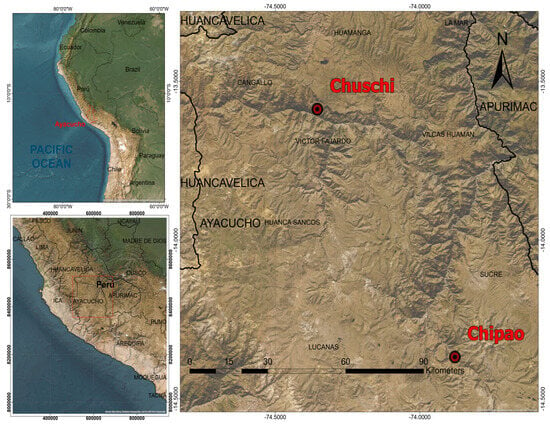
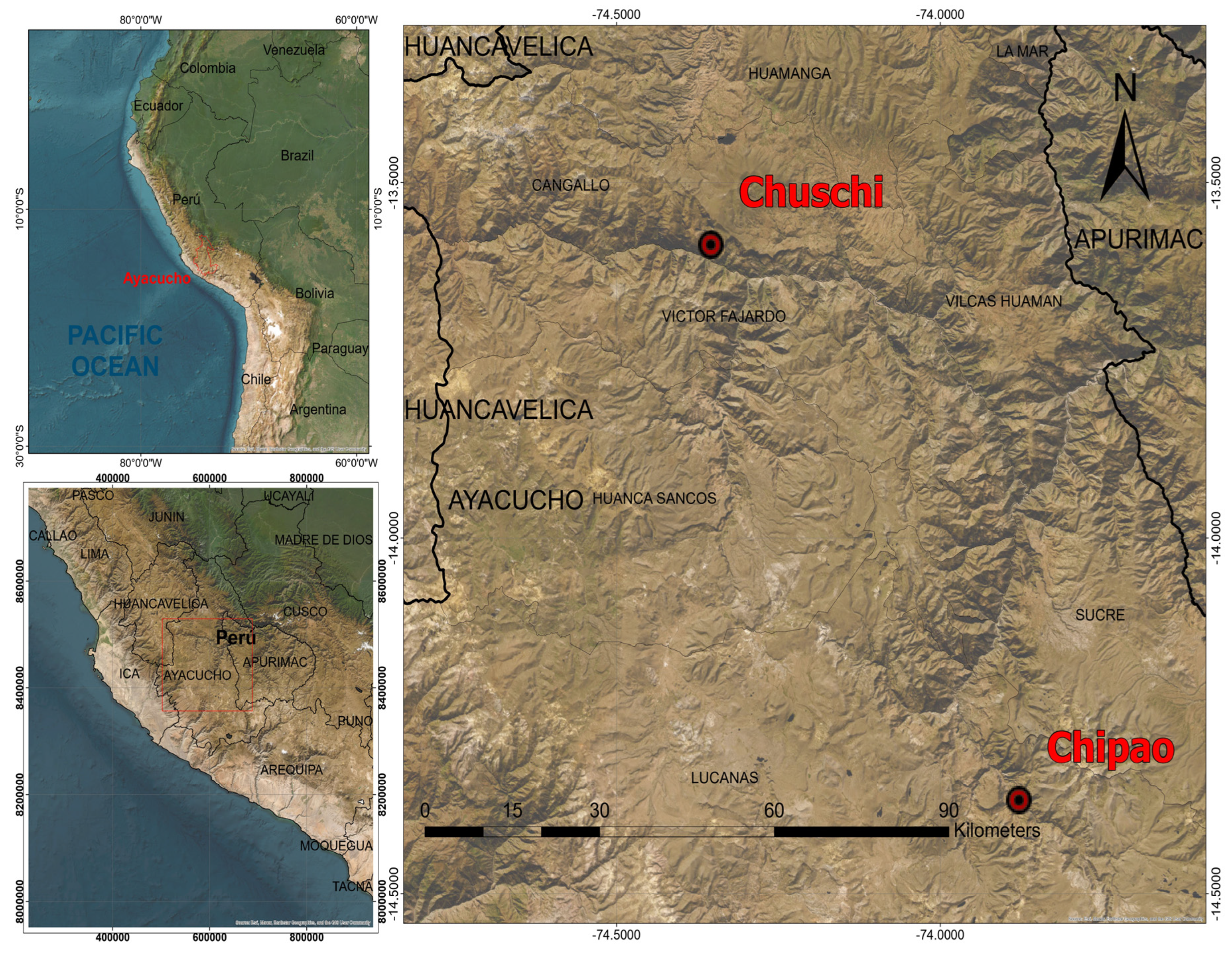
The study was conducted in the districts of Chuschi and Chipao, geographically located between 2680 and 5500 m above sea level in the Ayacucho Department in Peru (Figure 1). The districts of Chuschi and Chipao concentrate cattle populations of 10,052 and 12,000 heads, respectively. The regional climate is mainly divided into two seasons: the rainy season (December to March) and the dry season (May to September). The area records a mean annual temperature of 9.96 °C and a relative humidity of 73.4%.
Figure 1.
Location of the study area in the Department of Ayacucho. Chipao District in the Lucanas Province, and Chuschi District in the Cangallo Province.
2.3. Breading System
In this study, animals were considered Creole cattle based on phenotypic, historical, and management criteria for Andean Creole cattle, according to Rojas-Espinoza et al. [13]. Specifically, animals were identified by their long-term adaptation to high-altitude Andean conditions, their maintenance under extensive production systems with natural pasture feeding, the absence of controlled crossbreeding with specialized foreign breeds, and the presence of characteristic phenotypic traits, including diverse coat color patterns and body conformation typical of Creole populations.
Farmers wean calves at six months of age and do not apply any selection criteria for mating, which occurs mainly through natural service. Regular vaccination programs are not implemented, except for immunization against blackleg and occasional internal deworming campaigns. Cattle are mainly used for meat production, milk production (ranging from 450 to 1500 L per lactation), and draft power.
2.4. Population, Sample and Design
The Ayacucho Department has a total of 430,462 heads of cattle [22]; however, the specific population size of Creole cattle in the study areas, with characteristics described in the previous paragraph, is unknown. The sample size was determined using the formula for an unknown population [23]:
where n = sample size, Z = 95% confidence level (1.96), p = probability of occurrence of the event (50%), q = probability of non-occurrence of the event (50%), and e = margin of error (8%). The resulting sample size was 154 Creole cattle.
The study followed a descriptive–explanatory cross-sectional design. Samples were distributed between the districts of Chuschi (n = 95 females) and Chipao (n = 59 females) and were randomly selected, ensuring that all cattle in the total population had the same probability of being included in the sample. Because breeders in the region do not keep records, animal age was determined by dentition, including adult females with more than four permanent teeth (over three years of age), while females younger than two years with positive pregnancy status were excluded.
2.5. Phaneroptic Traits
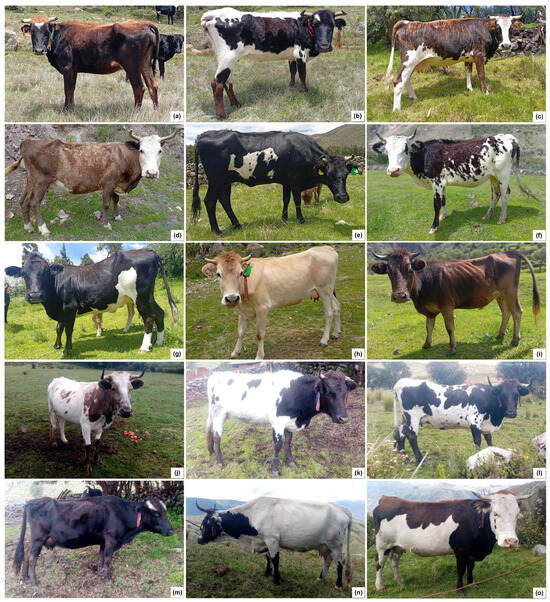
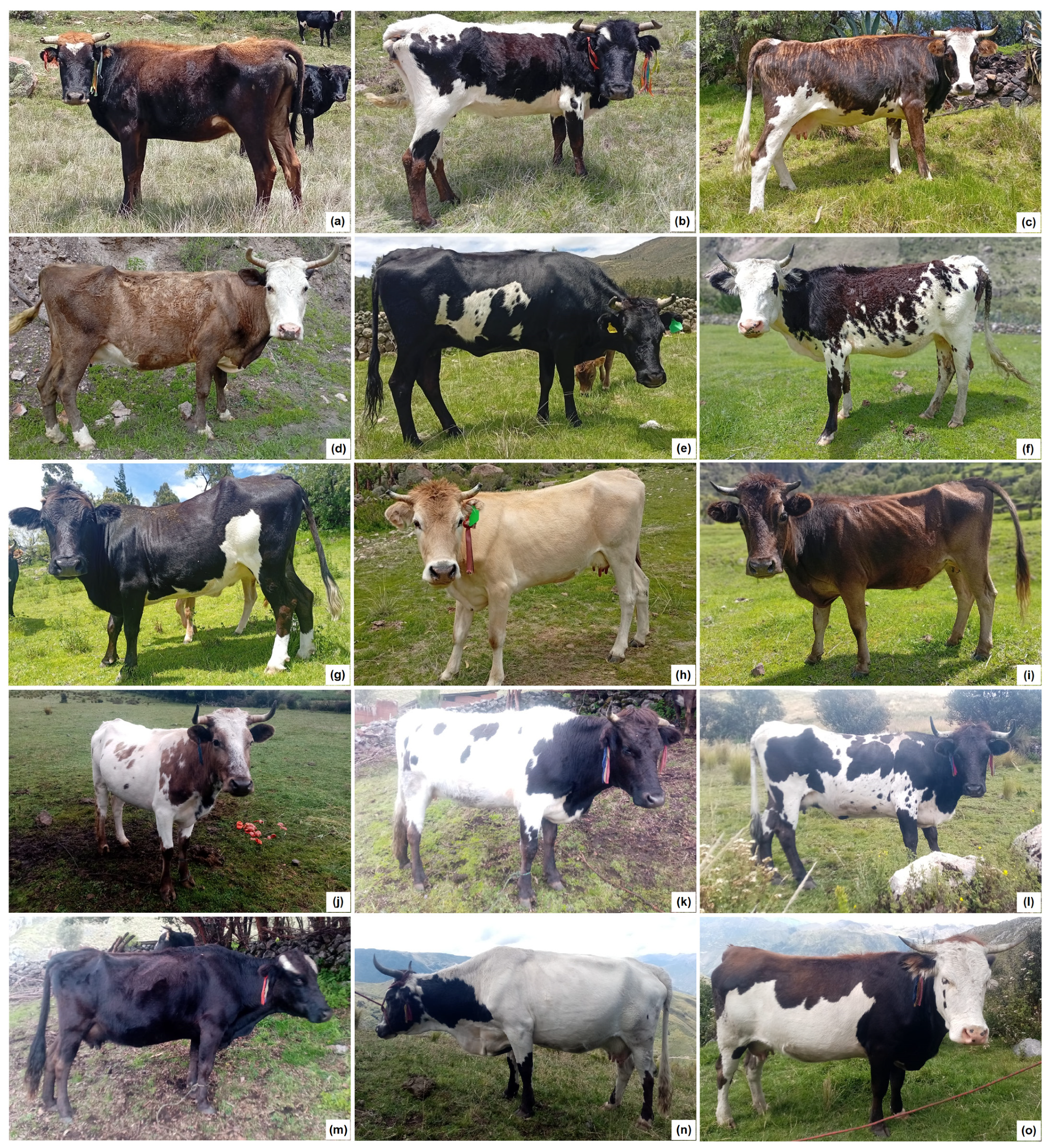
Seventeen phaneroptic characteristics were recorded, including coat color variability (Table 1, Figure 2).
Table 1.
Phaneroptic characteristics recorded in Creole cattle.
Figure 2.
Coat colors of Creole cattle from the high Andean region of Ayacucho: Qosca frontino (a), Black callejón lucero (b), Roman frontino (c), Qosne mascorona (d), Black bragado (e), Roan mascorona (f), Black bragado (g), Bayo (h), Red (i), Qosne omara (j), White omara (k), Mora callejón (l), black (m), White omara (n), Qosca Callejona mascarona (o).
2.6. Zoometric Variables
Twenty-one zoometric variables were recorded (Table 2). Live weight was estimated using a bovine weight tape 0405, while zoometric measurements were recorded in centimeters (cm) using a measuring tape (Anvil, model 96405; Beijing, China) and a zoometric measuring stick. The latter followed an ad hoc design consisting of a 155 cm × 10 cm × 1 cm board fixed perpendicularly to the end of a second board measuring 30 cm × 5 cm × 2 cm, forming an “L” shape, and a third board of 30 cm × 5 cm × 2 cm that slid along the scale of measurements on the second board. Animals were firmly restrained on a flat, level surface, standing squarely on all four limbs with the head lowered, so that the poll and the withers were at the same height.
Table 2.
Zoometric measurements and their descriptions based on anatomical landmarks in Creole cattle.
2.7. Zoometric Indices
From the zoometric measurements obtained, nine zoometric indices were calculated [26] mendez. Ethnological indices were calculated to describe body proportions and general conformation (Body Index, Pelvic Index, and Proportionality Index), productive indices are associated with productive aptitude, particularly meat or dual-purpose potential (Compactness Index, and Dactylo-Thoracic Index), and functional indices that provide information related to skeletal strength, locomotion, and the animal’s capacity to support body weight under specific environmental conditions (Transversal Pelvic Index, Longitudinal Pelvic Index, Relative Cannon Thickness Index, and Cannon Load Index) (Table 3). These indices were analyzed in order to identify the productive orientation of the animal biotypes.
Table 3.
Calculation of zoometric indices in Creole cattle.
2.8. Statistical Analysis
The database was organized and initially analyzed using descriptive statistics. Zoometric variables were subjected to descriptive analysis to determine the mean and standard error (SE) according to district of origin. The coefficient of variation (CV) was calculated to assess the uniformity of the animals within the population. Data were tested for normality by the Kolmogorov–Smirnov test and homoscedasticity by the Levene test. Differences according to district of origin were analyzed using ANOVA, and mean comparisons were performed using the Duncan test. Data that did not meet normality and homoscedasticity assumptions were analyzed using the nonparametric Kruskal–Wallis test, and mean comparisons were performed using the Mann–Whitney U test. These analyses were carried out using the IBM SPSS v.15.0 program.
Spearman correlation coefficients were calculated between fifteen zoometric variables of the morphostructure and nine indices separately, to evaluate the level of harmony of the animals within the population by means of the proportion of positive and significant correlations (p < 0.05). A principal component analysis (PCA) was conducted to reduce the dimensionality of the 15 zoometric variables. The Kaiser–Meyer–Olkin (KMO) test value (0.85) and Bartlett’s test of sphericity (p < 0.001) were used to verify the suitability and reliability of the factor analysis. Subsequently, a K-means cluster analysis was performed to group animals according to their zoometric measurements, and clusters were validated using permutational analysis of variance (p < 0.001).
Finally, descriptive statistics of zoometric variables between identified biotypes were analyzed using ANOVA with Duncan’s test or the Kruskall–Wallis and Mann–Whitney U tests with Bonferroni correction, according to the goodness of fit of the variables. Associations between biotypes and district of origin and body condition were evaluated using the χ2 test to rule out clustering bias based on these variables. Phaneroptic variables were analyzed using contingency tables and also evaluated using the χ2 test. All multivariate analyses were performed in the R v.4.4.3 statistical software.
3. Results
3.1. Zoometric Characterization
Twenty-one zoometric variables were analyzed in 154 Creole cows from the districts of Chuschi and Chipao in the Ayacucho Department (Table 4). Animals exhibited high variability in Horn Length (26.32%), Neck Length (13.0%), Withers Width (13.92%), Chest Width (10.36%), Udder Depth (18.23%), Teat Length (26.94%), Teat Diameter (22.57%), Thigh Width (20.32%), and Live Weight (21.41%), pero eran más uniformes en el resto de variables (<10%). The zoometric measurements Neck Length, Neck Circumference, Withers Height, Withers Width, Thoracic Perimeter, Teat Length, Front Cannon Bone Circumference, Rear Cannon Bone Circumference, and Live weight, showed significant differences between districts (p < 0.05). The district of Chuschi concentrates heavier Creole cattle with good thoracic development and well-developed fore and hind cannons that provide adequate skeletal support. In contrast, cattle from Chipao showed greater stature, body length, and a larger rump area, but lower live weight.
Table 4.
Mean ± SE of zoometric variables of Creole adult cows from the districts of Chuschi and Chipao, Ayacucho Department.
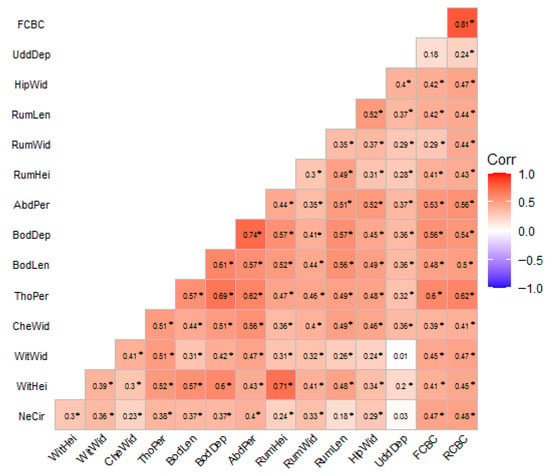
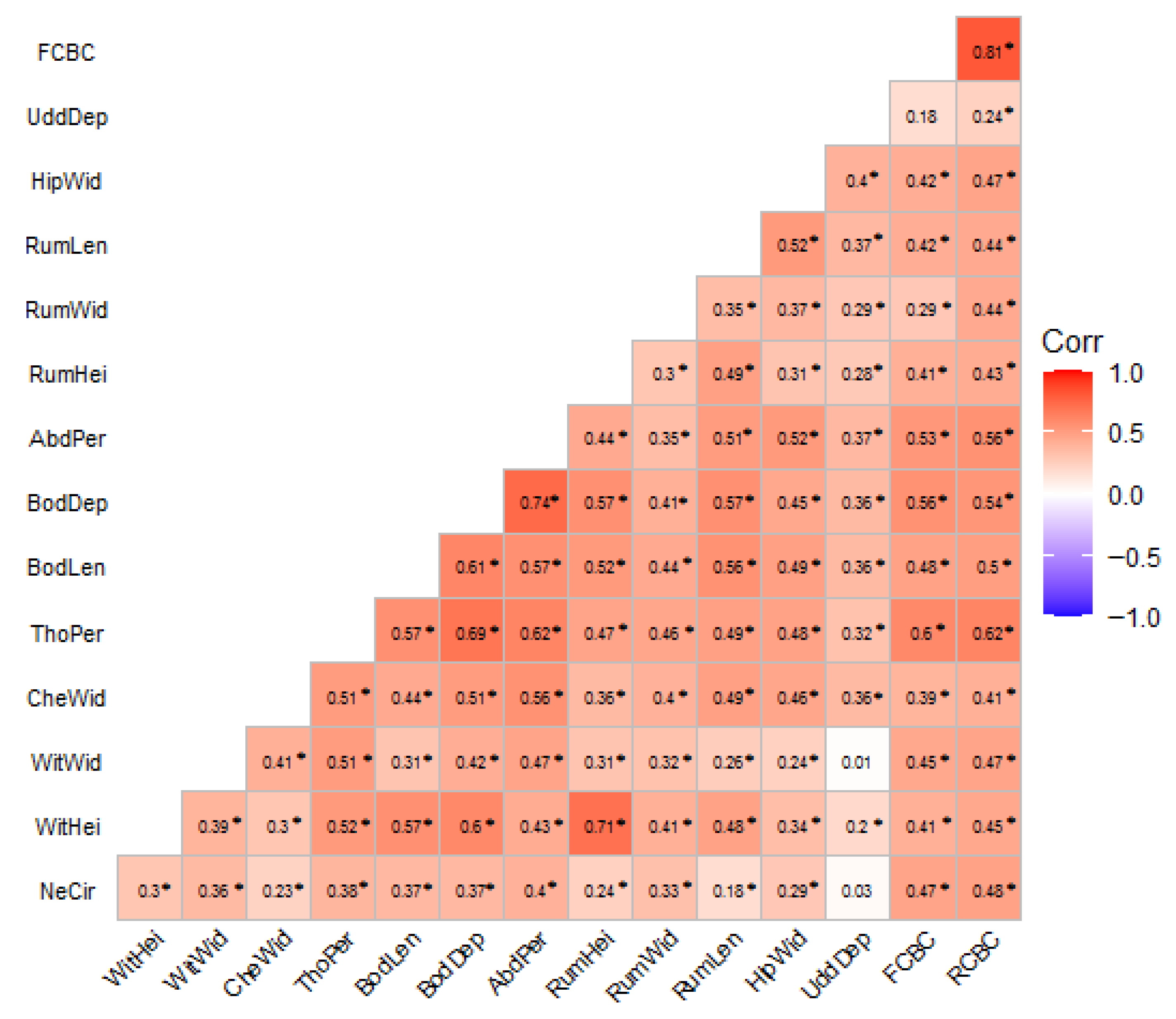
In Figure 3, the correlation coefficients ranged from 0.01 to 0.81, representing positive relationships. The 15 morphostructural variables generated 105 correlations, of which 97.14% (103/105) were positive and statistically significant (p < 0.05), suggesting a high degree of morphostructural harmony in the studied population. The highest correlation was observed between FCBC with RCBC (r = 0.81) and Body Depth (BodDep) with Abdominal Perimeter (AbdPer) (r = 0.74). The zoometric measurements, Withers Height (WitHei), Withers Width (WitWid), Chest Width (CheWid), Thoracic Perimeter (ThoPer), Body Length (BodLen), Body Depth (BodDep), Abdominal Perimeter (AbdPer), Rump Height (RumHei), Rump Width (RumWid), Rump Length (RumLen), Hip Width (HipWid), FCBC, and RCBC showed strong correlations among themselves. These variables exhibited moderate correlations with Udder Depth (UddDep) and Neck Circumference (NeCir).
Figure 3.
Correlation among zoometric variables of Creole cows using Spearman correlation coefficients. Neck Circumference (NeCir), Withers Height (WitHei), Withers Width (WitWid), Chest Width (CheWid), Thoracic Perimeter (ThoPer), Body Length (BodLen), Body Depth (BodDep), Abdominal Perimeter (AbdPer), Rump Height (RumHei), Rump Width (RumWid), Rump Length (RumLen), Hip Width (HipWid), Udder Depth (UddDep), Front Cannon Bone Circumference (FCBC), Rear Cannon Bone Circumference (RCBC). (*) The correlation is significant at the p < 0.05 level.
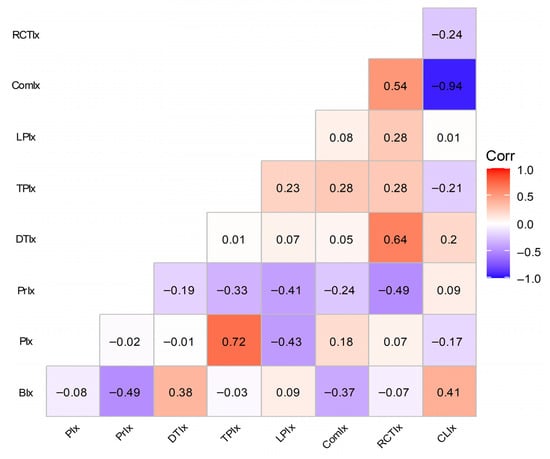
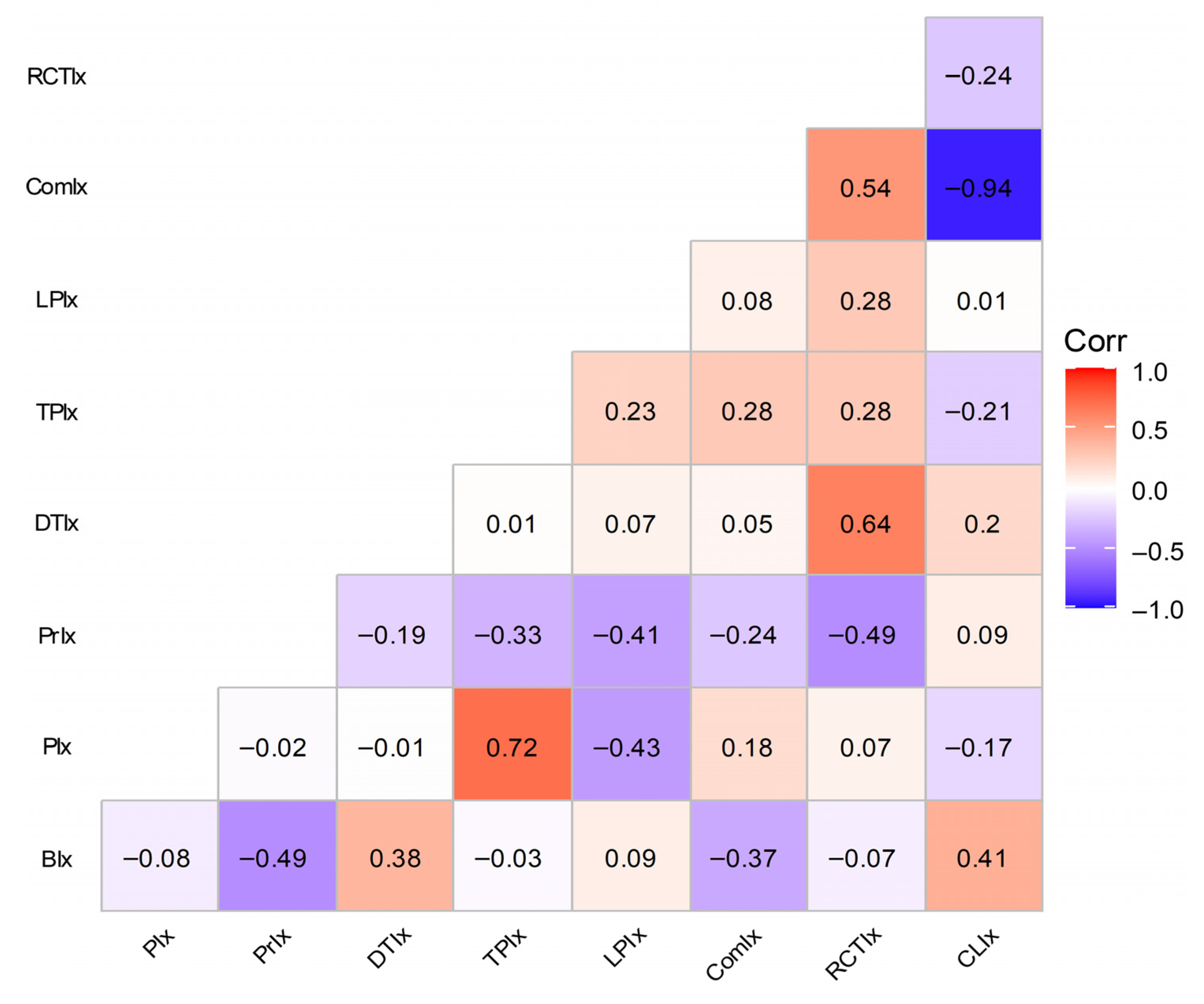
Regarding the correlations among zoometric indices, a strong positive correlation was found between the Pelvic Index (PIx) and the Transversal Pelvic Index (TPIx) (r = 0.72), while a strong negative correlation was observed between the Compactness Index (ComIx) and the Cannon Load Index (CLIx) (r = −0.94) (Figure 4).
Figure 4.
Correlation among zoometric indices of Creole cows using Spearman correlation coefficients. Body Index (Bix), Pelvic Index (Pix), Proportionality Index (PrIx), Dactylo-Thoracic Index (DTIx), Transversal Pelvic Index (TPIx), Longitudinal Pelvic Index (LPIx), Compactness Index (ComIx), Relative Cannon Thickness Index (RCTIx), Cannon Load Index (CLIx).
3.2. Principal Components Analysis and Clustering
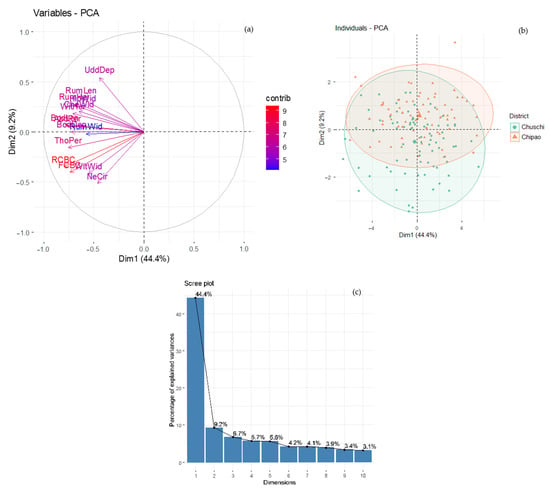
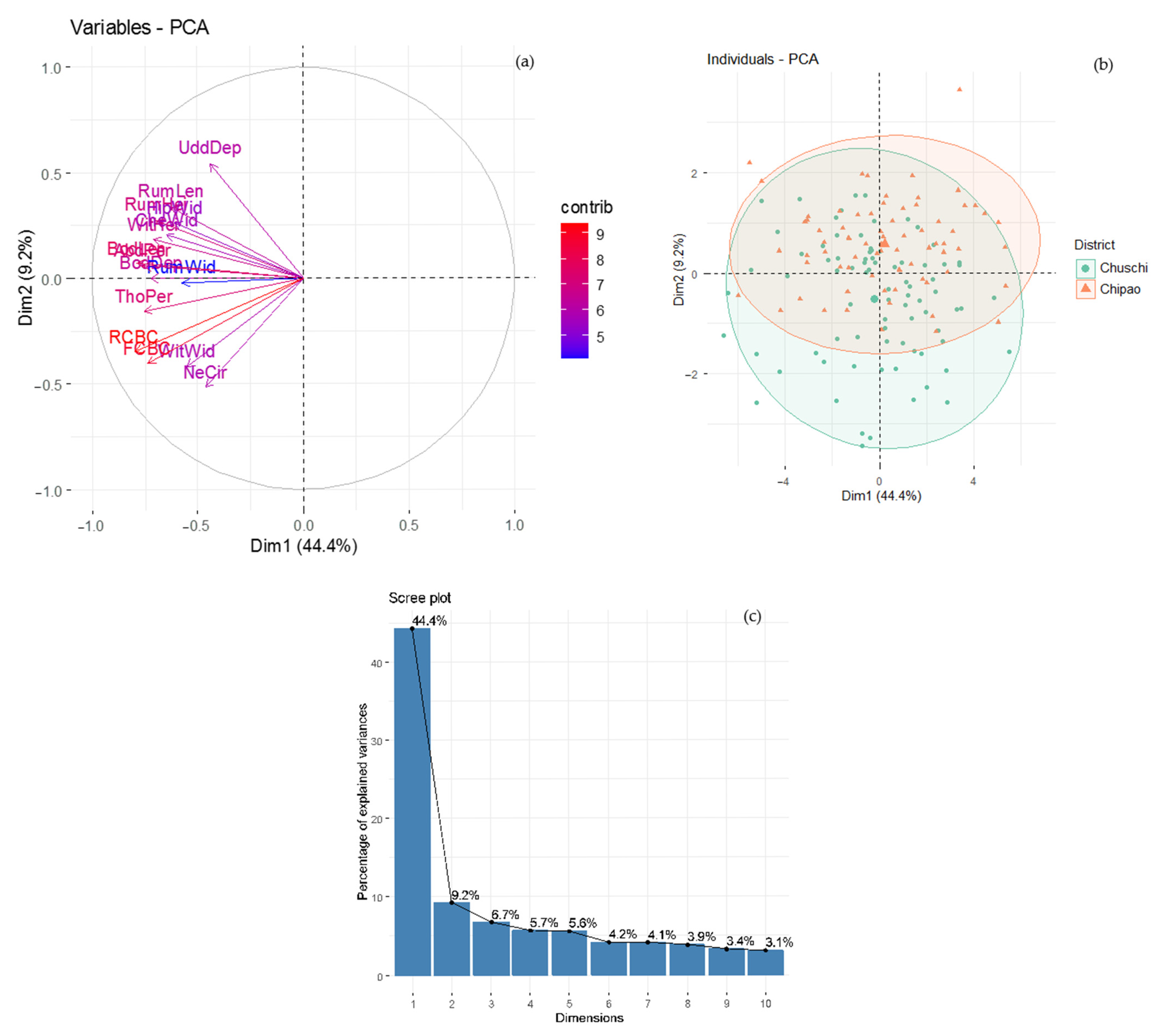
A principal component analysis (PCA) was performed to reduce the dimensionality of 15 zoometric variables, excluding Horn Length, Neck Length, Teat Length, Teat Diameter, and Thigh Width due to their lower contribution and relevance to data variability. The adequacy of the data for factor analysis was confirmed by the Kaiser–Meyer–Olkin (KMO) test (0.85) and Bartlett’s test of sphericity (p < 0.001). Fifteen dimensions were identified, of which the first five explained 71.6% of the cumulative variance (Figure 5a–c).
Figure 5.
Contribution of 15 zoometric variables to the variability of Creole cows (a), Projection of Creole cows in multivariate space (b), and Cumulative explained variance of zoometric measurements of Creole cows obtained by PCA (c).
Accordingly, the rotated component matrix of the first five dimensions was extracted to determine the contribution of each zoometric variable to each dimension (Table 5). Thoracic Perimeter, Body Length, and RCBC defined Dimension 1, representing variables related to overall robustness; Neck Circumference, Rump Length, and FCBC defined Dimension 2, representing neck and pelvic robustness; Withers Height, Rump Height, and Udder Depth defined Dimension 3, representing general body size; Rump Width and Hip Width defined Dimension 4, representing pelvic development; and Withers Width, Chest Width, Body Depth, and Abdominal Perimeter defined Dimension 5, representing body depth and width.
Table 5.
Rotated component matrix of the first five dimensions of explained variance of zoometric variables in Creole cows.
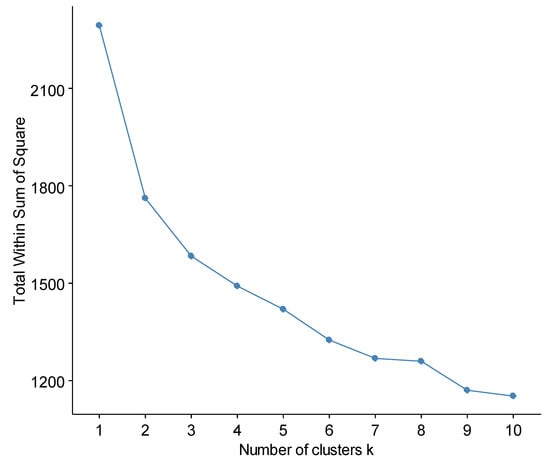
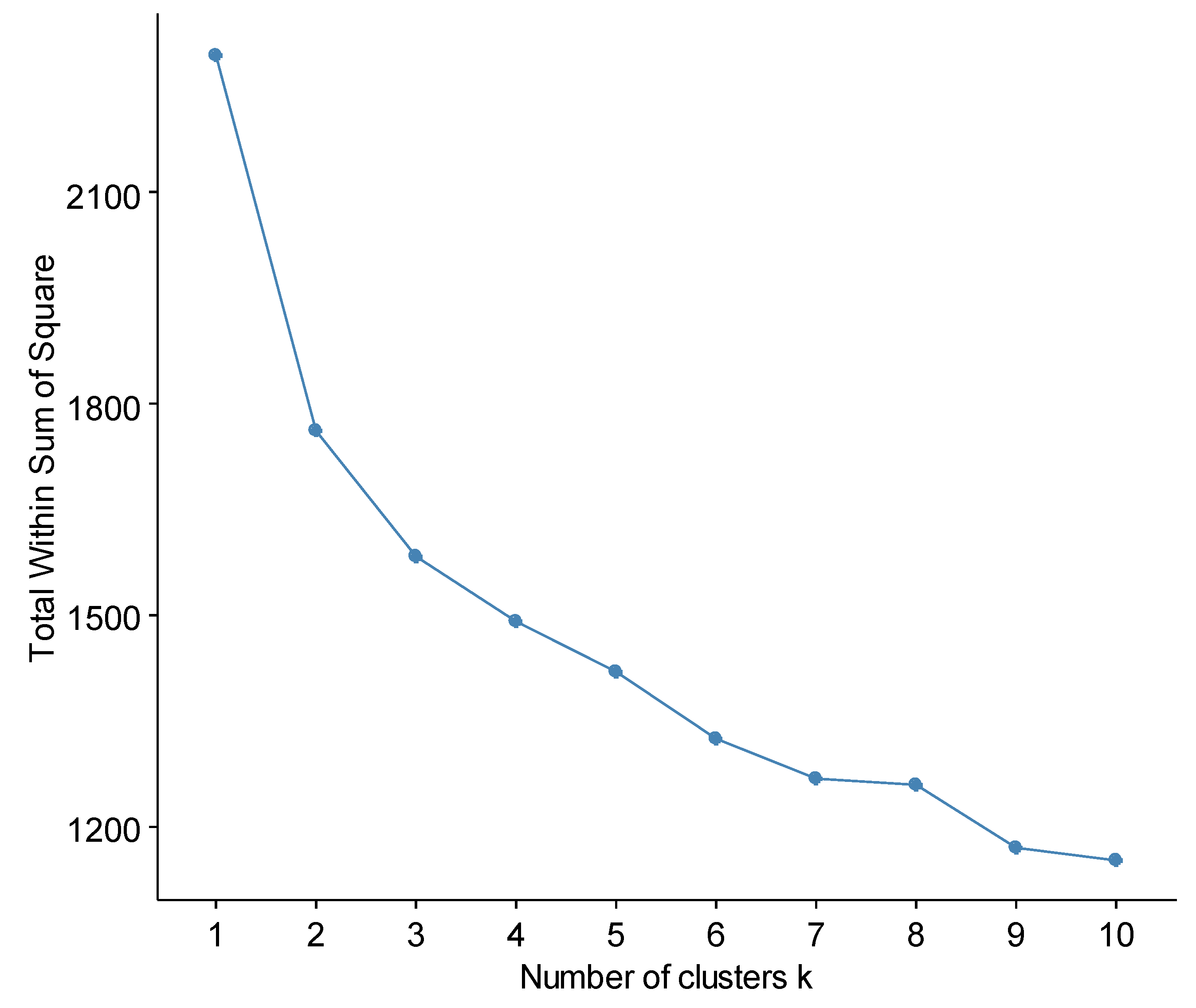
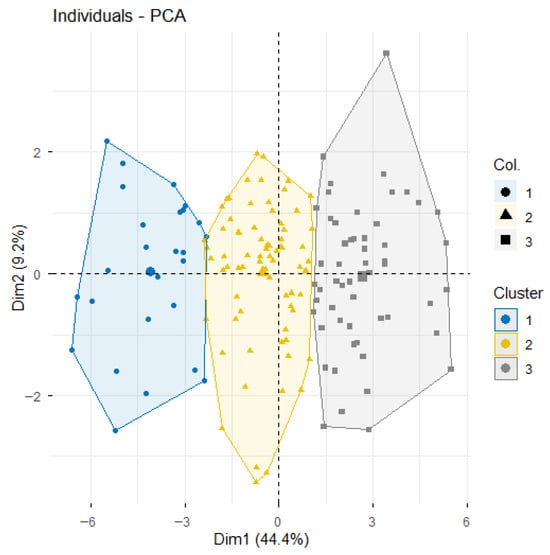
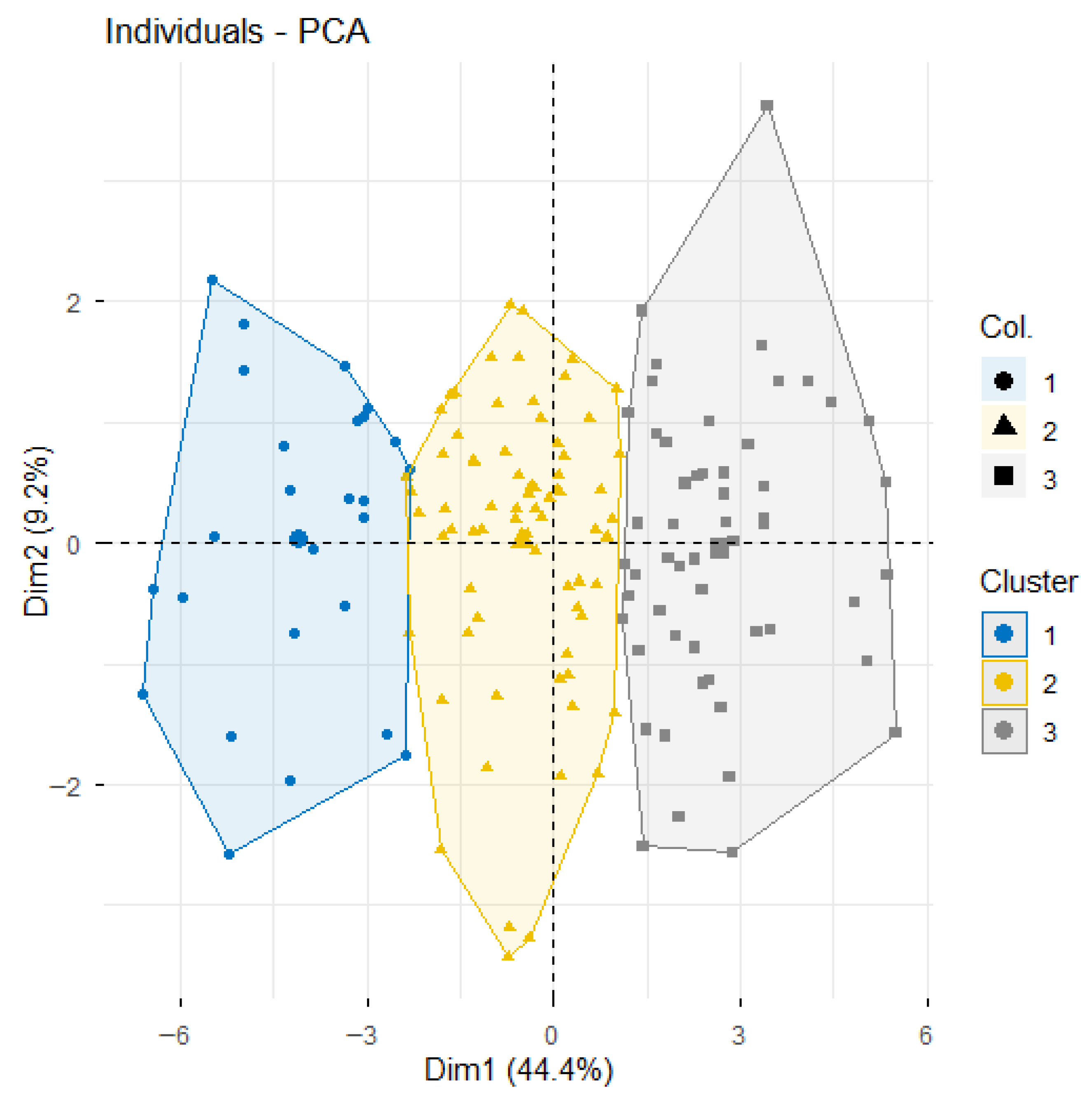
To classify individuals, the optimal number of clusters was determined using the elbow method (Figure 6), and classification into three clusters was performed using the k-means method (Figure 7). A permutational multivariate analysis of variance (PERMANOVA) was conducted to evaluate the effectiveness of the k-means clustering in classifying individuals based on their zoometric traits, yielding a p-value < 0.001 with 999 permutations (Table 6).
Figure 6.
Elbow plot for determining the optimal number of clusters.
Figure 7.
Clusters formed by the k-means method in Creole cows from the high Andean region of Ayacucho Department.
Table 6.
PERMANOVA analysis of clusters or biotypes formed by Creole cows according to their zoometric variables.
According to Table 7, of the 154 individuals evaluated, 26 cows formed Cluster or Biotype 1 (16.9%), 74 cows formed Biotype 2 (48.1%), and 54 cows formed Biotype 3 (35.1%). Mean values of zoometric variables for each biotype are also presented. All variables showed significant differences among biotypes (p < 0.05 and p < 0.01), except for Horn Length, Neck Length, and Teat Diameter (p > 0.05). Cows classified as Biotype 1 were heavier and longer animals with well-developed thoracic and pelvic regions and greater stature, whereas Biotype 2 showed similarities in neck and pelvic robustness. Biotype 3 consisted of lighter cows with smaller body proportions compared to the other two biotypes (p < 0.05 and p < 0.01).
Table 7.
Zoometric variables (mean ± SE) of biotypes of Creole cows from the high Andean region of Ayacucho Department.
Based on the zoometric variables, zoometric indices were calculated for the three identified biotypes (Table 8), of which only ComIx and CLIx showed significant differences among groups (p < 0.05). According to the Body Index (BIx), cows of Biotypes 2 and 3 were more brevilinear (<85) than those of Biotype 1; meanwhile, Biotypes 1 and 3 exhibited a pelvis wider than long compared to Biotype 2. The Dactylo-Thoracic Index (DTIx) suggested greater meat production aptitude in Biotype 1 compared to Biotypes 2 and 3. The Transversal Pelvic Index (TPIx) and Longitudinal Pelvic Index (LPIx) indicated greater meat aptitude in Biotypes 1 and 2. The Relative Cannon Thickness Index (RCTIx) indicated greater limb robustness in Biotype 1 compared to Biotypes 2 and 3, although these differences were not significant (p > 0.05). According to the Compactness Index (ComIx) and the Cannon Load Index (CLIx), Biotype 1 comprised more compact, heavier, and more robust animals, but with a relatively lighter bone structure and a lower threshold for supporting high specific weights. In contrast, Biotype 3 consisted of more slender animals with lower relative body weight but stronger bones to support their body mass (p < 0.01). According to Table 8, of the 154 individuals evaluated, 26 cows formed Cluster or Biotype 1 (16.9%), 74 cows formed Biotype 2 (48.1%), and 54 cows formed Biotype 3 (35.1%). All variables showed significant differences among biotypes (p < 0.05 and p < 0.01), except for Horn Length, Neck Length, and Teat Diameter (p > 0.05).
Table 8.
Zoometric indices of biotypes of Creole cows from the high Andean region of the Ayacucho Department.
No significant association was found between the identified biotypes and categorical variables such as district of origin, body condition score, and number of calvings per cow, suggesting that biotype classification is independent of these categorical factors (Table 9).
Table 9.
Association between categorical variables and identified biotypes of Creole cows from the high Andean region of Ayacucho Department.
3.3. Phaneroptic Characteristics According to Biotypes
The association between biotypes and the recorded phaneroptic variables of Creole cows was analyzed. Most variables were not significantly associated with the identified biotypes (p > 0.05), except for teat type (p < 0.05). Cylindrical teats predominated in Biotype 1 (53.8%) and 2 (53.1%), whereas funnel-shaped teats were more frequent in Biotype 3 (40.7%) (Table 10). Overall, 30.5% of Creole cattle exhibited a solid coat pattern, 62.3% were bicolor, and 7.1% were tricolor. Animals with a straight frontonasal profile, short-horn type, dark mucosa, and light-colored udders and teats predominated.
Table 10.
Frequency of phaneroptic variables of biotypes of Creole cows from the high Andean region of Ayacucho Department.
Coat color frequencies were determined according to the identified biotypes, and the association was significant (p = 0.009). Similar proportions of Red, Black, Dull Black, Qosca, and Roan coat colors were observed across the three biotypes (Table 11). However, Biotype 1 showed predominance of the Callejón coat color (15.38%), whereas Biotype 2 showed predominance of the Qosne coat color (8.11%) and other less frequent coat colors (10.81%), including Bayo, Pillco, Qallawa, Puca moro, Umara, and Tres Pelos. In Biotype 3, in addition to the common coat colors, Dark roan (16.67%) and Jet Black (11.11%) predominated.
Table 11.
Frequency of coat colors of biotypes of Creole cows from the high Andean region of Ayacucho Department.
4. Discussion
4.1. Zoometric Characteristics
Phenotypic characterization based on morphological and phaneroptic descriptions constitutes the first step toward implementing conservation programs and the sustainable use of animal genetic resources to develop genotypes and/or breeds specialized in milk production, meat production, or dual-purpose sustainable systems [8,13]. In this study, the average live weight of Creole cattle was 368.76 ± 6.45 kg, which is slightly lower than that reported for Creole cattle from the Puno region [13] and Amazonas [12], but higher than values reported for Creole cattle from Ancash [10]. These lower weights compared with other latitudes may be attributed to differences in environmental conditions, management systems, or feeding practices. In the high-Andean region, Creole cattle generally graze on pastures with low nutritional value. In comparable studies, cows from the present study were heavier than Creole cattle from Cusco [30], Creole cattle from Ecuador [31], and Mexican Mixteco Creole bulls [20], and showed similar weights to Sanmartinero Creole cattle [32]. However, they were lighter than Blanco Ojinegro Creole cattle [17].
Creole cattle from Puno [13] and Amazonas [12] were slightly larger and longer than those evaluated in this study. Likewise, Creole cattle from Santa Elena Province in Ecuador exhibited greater height at withers and a finer conformation [7]; similarly, Patagonian Creole cattle [33] and Blanco Ojinegro Creole cattle [17] were reported to have greater thoracic girth and body length. In contrast, Creole cattle from Loja Province in Ecuador [31] and Ethiopian indigenous cattle [27] showed smaller body dimensions.
The rump surface of the Creole cattle evaluated in this study was narrower (39.49 ± 0.26 cm) and shorter (44.74 ± 0.27 cm) than that reported for cattle from Puno [13] and Amazonas [12] in Peru, as well as for Creole cattle from Santa Elena Province in Ecuador [7]. These differences may be attributed to variations in management and feeding practices, as well as to selection and breeding processes, since these traits show moderate to high heritability [3]. Conversely, Creole cattle from Ancash [10] and Loja Province in Ecuador [31] exhibited similar proportions to those observed in the present study. Meanwhile, Creole cattle from Mexico [20] and indigenous cattle from Ethiopia [27] and Indonesia [28] showed slimmer and shorter rumps. Although studies on indigenous cattle from Ethiopia [27] and Indonesia [28] provide useful references regarding morphostructural variability under different environmental conditions, these populations are not classified as Creole cattle. The term “Creole cattle” is exclusively used for populations derived from Iberian cattle introduced into the Americas. Therefore, these comparisons should be interpreted with caution. These morphostructural differences among American [20,31], Asian and African populations [26,27] are related to non-standardized genetic manipulation by farmers and adaptive strategies under variable agroecological, functional, nutritional, and genetic conditions [34,35,36,37].
4.2. PCA and Cluster Analysis
Creole cattle are present in most South American countries, where they have evolved and adapted to diverse agroecological environments such as mountainous and Patagonian steppes, and tropical and subtropical forests [38]. Several studies report high genetic diversity and phenotypic variability in Creole cattle [13,31,39]; however, studies focused on population characterization and identification of morphostructural aptitudes as a basis for conservation remain scarce. In the present study, three Creole cattle biotypes were identified in the high-Andean region. Biotype 1 was characterized by greater body weight and size, followed by Biotypes 2 and 3, which were lighter and smaller. Similar classifications have been reported in Amazonas [12], Puno [13], and Ecuador [31], where three and four biotypes were identified, respectively, including coat color and hair characteristics.
Creole cattle from the high-Andean region can be classified as a medium-sized biotype, similar to those from Puno and Amazonas, although these populations exhibit greater body length. Only Creole cattle from Santa Elena Province, Ecuador [7], may be considered large-sized biotypes. Whereas Creole cattle from Ancash [10], Ecuador [31], Mexico [20], Ethiopia [27], and Indonesia [28] can be classified as small- to medium-sized biotypes, similar to those observed in this study. This wide zoometric variability may be associated with genetic selection [40], adaptation to environmental and nutritional conditions [34], and the use of external genetic material without structured breeding programs.
Based on the body index, animals can be classified as brevilineal (<85), mesolineal (86–89), or longilineal (>90), with lower values indicating more compact animals [20]. In this study, the animals were classified as brevilineal with a meat-oriented conformation. Brevilineal animals are characterized by greater longitudinal dimensions with respect to height, resulting in a rectangular body shape [21]. Similar classifications have been reported for Puno Creole cattle [13], Cusco Creole cattle [30], Santa Elena Peninsula Creole of Ecuador [7], Mexican Mixteco Creole [20], Venezuelan Limonero Creole [2], Colombian Blanco Ojinegro Creole [17], Sanmartinero Creole [32], and the Guatemalan Barroso Salmeco Creole [41]. In contrast, Creole cattle from Ancash, Peru [10] and Creole cattle of Southern Ecuador [28] were considered dual-purpose biotypes as mesosolineal classification, while Patagonian and Northeastern Argentine Creole cattle were regarded as dairy-oriented due to their longilineal body index [33].
Higher pelvic and dactylo-thoracic index values indicate meat-oriented biotypes with good maternal aptitude, and values above 33 are associated with a tendency toward beef production [20,21]. The Creole cattle in this study showed slightly lower indices than those reported for the Puno, Cusco, and Ancash Creole cattle [10,13,30], Venezuelan Limonero Creole [2], Blanco Ojinegro Creole [17], and the Argentine Patagonian Creole [33], but showed similar values to the Mexican Mixteco [20] and Guatemalan Barroso Salmeco Creole cattle [41]. Overall, these cattle can be considered brachypelvic, with a pelvis longer than wide, which is associated with greater muscle mass and ease of calving [17,21,31].
Lower proportionality index values indicate a compact, rectangular biotype [31,42]. Creole cattle in this study exhibited higher values than those reported for Puno and Ancash. Accordingly, cattle from this region may be classified as a dual-purpose biotype with a tendency toward meat production [35]. However, low dactylo-thoracic index values (<11) indicate a fine skeletal structure, characteristic of dairy-type animals [42]. High relative cannon thickness index values observed in this study suggest robust limbs, typical of beef cattle, with good balance and adaptation to long-distance walking under grazing conditions [31,43,44]. High values for the transverse pelvic index (>33) and longitudinal pelvic index (>37) are associated with a stronger inclination toward meat rather than dairy aptitude [20]. In this study, all identified biotypes may possess a greater meat aptitude, as they exceeded these established thresholds.
Overall, Creole cattle from this region are brevilineal, compact, well-balanced, with a wide and long rump and long limbs that facilitate grazing mobility, corresponding to a dual-purpose biotype with a marked tendency toward meat production. This biotype likely results from several decades of adaptation to diverse altitudinal conditions, including mountainous steppes, inter-Andean valleys, and high-altitude zones, which conditioned the shaping of this structure in order to improve its survival.
4.3. Phaneroptic Traits
Qualitative traits have limited direct influence on production; however, they represent important phenotypic characteristics reflecting centuries of adaptation [45]. Creole cattle are characterized by distinctive phaneroptic traits, including coat color variability, horn types [46], pigmentation, udder and teat types, among others. In this study, composite coat colors predominated, followed by solid colors. In contrast, a similar study in Ecuador reported predominance of all three coat color categories (solid, composite, and mixed) [31]. Bayssa et al. [47] indicate that coat color is associated with climatic adaptation; light-colored cattle exhibit greater heat tolerance and improved productive performance [48,49], whereas dark-coated cattle are more resistant to cold due to greater solar energy absorption [50].
Qualitative traits such as horn and ear characteristics play roles in thermoregulation and defense [51]. Creole cattle in this study were characterized by a straight frontonasal profile, short horns, dark-colored mucosae, and dark hooves. Most animals had rounded, light-colored udders with cylindrical, light-colored teats, although Riera-Nieves et al. [52] recommend funnel-shaped teats as indicators of high milk production. These adaptive traits are related to natural selection, agroecological variability, functional demands, and the management practices employed by local farmers.
Finally, Creole cattle from the Ayacucho region represent an important source of food and draught power, having adapted to local conditions for approximately five centuries. Consequently, these animals are highly resilient to abrupt climatic changes, capable of utilizing low-quality forage, able to move efficiently on steep mountainous terrain, and capable of producing meat and milk efficiently when provided with adequate nutrition, health management, and welfare conditions.
5. Conclusions
The Creole cattle of the department of Ayacucho exhibit high morphological harmony, as evidenced by the positive and significant correlations among the majority of zoometric variables, and moderate uniformity, reflected in the coefficients of variation recorded across body measurements. The morphostructural variability, as evidenced by significant differences in body measurements and zoometric indices among the three identified biotypes, confirms their value as a zoogenetic resource adapted to the diversity of agroecosystems of the Peruvian Andes. Three well-differentiated biotypes were identified, with a predominance of medium- to small-sized animals, demonstrating the presence of subpopulations with distinct conformation and likely different productive aptitudes. Biotype 1 comprises heavier, more compact and robust animals, suggesting a greater beef production aptitude, followed by Biotype 2, which shows a stronger dual-purpose tendency, whereas Biotype 3 includes lighter and more slender animals with relatively strong limbs, indicating greater efficiency for locomotion in rugged terrain. The variability of phaneroptic traits may be associated with low directed selection pressure and a long adaptation period; however, these traits were not associated with the identified biotypes, suggesting that morphostructural differentiation is independent of qualitative traits in this Creole cattle population. Overall, these results highlight the high potential of high-Andean Creole cattle from Ayacucho for conservation programs and the rational use of their diversity in the development of local genotypes, owing to their morphostructural characteristics adapted to high-altitude conditions, low-quality pastures, cold climates, and rugged landscapes.
Author Contributions
Conceptualization, M.C.H., J.K.A.P., C.J.M.L., H.G.S. and W.P.-G.; methodology, M.C.H., J.K.A.P., C.J.M.L., H.G.S. and W.P.-G.; validation, M.C.H. and H.A.Q.-C.; formal analysis, M.C.H. and H.A.Q.-C.; investigation, M.C.H., J.K.A.P., C.J.M.L. and H.G.S.; resources, M.C.H.; data curation, H.A.Q.-C.; writing—original draft preparation, M.C.H. and W.P.-G.; writing—review and editing, M.C.H. and H.A.Q.-C.; visualization, M.C.H. and H.A.Q.-C.; supervision, M.C.H.; project administration, M.C.H.; funding acquisition, M.C.H. All authors have read and agreed to the published version of the manuscript.
Funding
This research was funded by the project “Mejoramiento de los Servicios de Investigación y Transferencia de Tecnología en Ganadería Alto Andina en 33 distritos de los departamentos de Apurímac, Arequipa, Ayacucho, Cusco, Huancavelica, Junín, Moquegua, Pasco, Puno y Tacna” CUI N° 2491159, from the Instituto Nacional de Innovación Agraria (INIA).
Institutional Review Board Statement
The study was based on zoometric measurements and the recording of phenotypic traits of animals for their description; therefore, ethical approval for animal experimentation is not required. However, the study was conducted following the ARRIEV 2.0 guidelines for the handling of research animals and the recommendations of the Peruvian Government’s Animal Protection and Welfare Law (Law 30407).
Informed Consent Statement
Informed consent was obtained from the breeders for the collection of data for this study within the framework of the high Andean livestock project.
Data Availability Statement
The dataset is available from the corresponding author upon reasonable request.
Conflicts of Interest
The authors declare no conflicts of interest.
References
- Martínez, C.G. El ganado criollo colombiano Blanco Orejinegro (BON). Anim. Genet. Resour. 1992, 9, 27–35. [Google Scholar] [CrossRef] [Scilit]
- Contreras, G.; Chirinos, Z.; Zambrano, S.; Molero, E.; Paéz, A. Morphological characterization and zoometric indexes of Criollo Limonero Cows of Venezuela. Rev. Fac. Agrón. Univ. Zulia. 2011, 28, 91–103. [Google Scholar]
- Rosemberg, B.M. Producción de Ganado Vacuno de Carne y de Doble Propósito; CONCYTEC, Universidad Nacional Agraria La Molina: Lima, Peru, 2000; 306p. [Google Scholar]
- Oosting, S.J.; Udo, H.M.J.; Viets, T. Development of livestock production in the tropic: Farm and farmer’s perspectives. Animal 2014, 8, 1238–1248. [Google Scholar] [CrossRef] [Scilit] [PubMed]
- Mapiye, C.; Chikwanha, O.C.; Chimonyo, M.; Dzama, K. Strategies for Sustainable Use of Indigenous Cattle Genetic Resources in Southern Africa. Diversity 2019, 11, 214. [Google Scholar] [CrossRef] [Scilit]
- Martínez-Aguilar, E.A. Review of the Origin and Disappearance of Creole Bovines in El Salvador, the First Step for a Possible Reintroduction. Rev. Agrociencia 2020, 3, 118–129. [Google Scholar] [CrossRef]
- Cabezas Congo, R.; Barba Capote, C.; González Martínez, A.; Cevallos Falquez, O.; León Jurado, J.M.; Aguilar Reyes, J.M.; García Martínez, A. Biometric study of Criollo Santa Elena Peninsula cattle (Ecuador). Rev. Mex. Cienc. Pecu. 2019, 10, 819–836. [Google Scholar] [CrossRef] [Scilit]
- Food and Agriculture Organization of the United Nations [FAO]. The Second Report on the State of the World’s Animal Genetic Resources for Food and Agriculture; FAO Commission on Genetic Resources for Food and Agriculture Assessments: Rome, Italy, 2015; 606p, Available online: http://www.fao.org/3/a-i5077s.pdf (accessed on 15 January 2026).
- Flores, F.; Quispe, S.; Mallma, Y.; Gómez, J.W.; Gómez-Urviola, N.C. Morphologic, morphostructural and Faneroptic Characterization of Creole Bovine (Bos taurus) from Apúrimac-Perú. Actas Iberoam. Conserv. Anim. 2020, 15, 18–22. [Google Scholar]
- Delgado, C.A.; García, B.C.; Allcahuamán, M.D.; Aguilar, G.C.; Estrada, V.P.; Vega, A.H. Phenotypic characterization of Creole cattle in the Huascaran National Park—Ancash, Peru. Rev. Investig. Vet. Perú 2019, 30, 1143–1149. [Google Scholar] [CrossRef] [Scilit]
- Contreras, J.L.; Cordero, A.G.; Curasma, J.; Enriquez, D.; Vilcapaza, L.; Gutiérrez, N.; Solar, J.D. Biometric characterization and estimation of body weight in creole cattle in the community of Chunuranra—Huancavelica (Perú). Arch. Zootec. 2021, 70, 271. [Google Scholar] [CrossRef] [Scilit]
- Encina Ruiz, R.; Saucedo-Uriarte, J.A.; Portocarrero-Villegas, S.M.; Quispe-Ccasa, H.A.; Cayo-Colca, I.S. Zoometric Characterization of Creole Cows from the Southern Amazon Region of Peru. Diversity 2021, 13, 510. [Google Scholar] [CrossRef] [Scilit]
- Rojas-Espinoza, R.; Macedo, R.; Suaña, A.; Delgado, A.; Manrique, Y.P.; Rodríguez, H.; Quispe, Y.M.; Perez-Guerra, U.H.; Pérez-Durand, M.G.; García-Herreros, M. Phenotypic Characterization of Creole Cattle in the Andean Highlands Using Bio-Morphometric Measures and Zoometric Indices. Animals 2023, 13, 1843. [Google Scholar] [CrossRef] [Scilit]
- Espinoza, J.L.; Guevara, J.A.; Palacios, A. Morphometric and faneroptic characterization of mexican criollo chinampo cattle. Arch. Zootec. 2009, 58, 277–279. [Google Scholar]
- Aracena, M.; Mujica, F. Characterization of Chilean Patagonian Creole Cattle. A Case study. Agro Sur 2011, 39, 106–115. [Google Scholar] [CrossRef] [Scilit]
- Ossa, G.; Abuabara, Y.; Pérez García, J.E.; Martínez, G. El ganado criollo colombiano Costeño con Cuernos (CCC). Anim. Genet. Resour. 2011, 48, 101–107. [Google Scholar] [CrossRef] [Scilit]
- Rojas Jiménez, J.S.; Casas Pulido, M.P.; Martínez Correal, G. Characterization and Identification of Indices Morphometric Zoometric of a Pure White Orejinegro (BON) Creole Cattle Herd, in Pacho (Cundinamarca). Rev. Sist. Prod. Agroecol. 2014, 5, 2–16. [Google Scholar] [CrossRef] [Scilit]
- Rizzo Zamora, L.G.; Muñoz Flores, J.E.; Álvarez Fanco, L.A. Morphological characterization of the creole bovine of Puná island in Ecuador. Actas Iberoam. Conserv. Anim. 2018, 12, 16–24. [Google Scholar]
- Contreras, G.; Chirinos, Z.; Molero, E.; Paéz, A. Body measurements and zoometric indexes of the creole Limonero Bulls of Venezuela. Zootec. Trop. 2012, 30, 175–181. [Google Scholar]
- López Aguirre, R.; Montiel Palacios, F.; Carrasco García, A.A.; Ahuja-Aguirre, C.; López de Buen, L.; Severino Lendechy, V.H. Morphometric characterization and zoometric indices of the criollo mixteco cattle from Oaxaca, Mexico. Rev. Bio Cienc. 2023, 10, e1387. [Google Scholar] [CrossRef] [Scilit]
- SEZ (Sociedad Española de Etnólogos). Valoración Morfométrica de los Animales Domésticos; Ministerio de Medio Ambiente y Medio Rural y Marino, Artegraf, Industrias Gráficas S.A.: Madrid, Spain, 2009; 865p. [Google Scholar]
- Ministerio de Desarrollo Agrario y Riego. Anuario Estadístico. Producción Ganadero y Avícola 2024; Dirección General de Estadística, Seguimiento y Evaluación de Políticas/Dirección de Estadística e Informática Agraria: Lima, Peru, 2025; 148p. [Google Scholar]
- Hernández Sampieri, R.; Fernández Collado, C.; Baptista Lucio, P. Metodología de la Investigación, 6th ed; McGraw-Hill/Interamericana Editores S.A. de C.V: Ciudad de México, México, 2014; 632p. [Google Scholar]
- Díaz Ruiz, R.X. Caracterización Morfoestructural y Faneróptico del Bovino Criollo en la Provincia de Manabí. Bachelor’s Thesis, Universidad Técnica Estatal de Quevedo, Los Rios, Ecuador, 2013. [Google Scholar]
- Espinosa-Núñez, Y.; Capdevila-Valera, J.; Ponce-Ceballos, P.; Riera-Nieves, M.; Nieves-Crespo, L. Relationship Between Udder Morphology, Production and Composition of Buffalo Milk. Rev. Cient. Fac. Cienc. Vet. Univ. Zulia. 2013, 23, 220–225. [Google Scholar]
- Méndez, M.; Serrano, J.; Ávila, R.; Rosas, M.; Méndez, N. Morphometric Characterisation of Mixteco Creole Cattle. Arch. Zootec. 2002, 51, 217–221. [Google Scholar]
- Tenagne, A.; Taye, M.; Dessie, T.; Muluneh, B.; Kebede, D.; Tarekegn, G.M. Quantifying morphometric and adaptive characteristics of indigenous cattle genetic resources in northwest Ethiopia. PLoS ONE 2023, 18, e0280640. [Google Scholar] [CrossRef] [Scilit]
- Adinata, Y.; Noor, R.R.; Priyanto, R.; Cyrilla, L.; Sudrajad, P. Morphometric and physical characteristics of Indonesian beef cattle. Arch. Anim. Breed. 2023, 66, 153–161. [Google Scholar] [CrossRef] [Scilit]
- Cortes-Hernández, J.; Ruíz-López, F.; García-Ruiz, A. Conformation traits associated with production and milk composition of Holstein cows. Abanico Vet. 2021, 11, 1–14. [Google Scholar] [CrossRef] [Scilit]
- Ccalta, R.; Huayta Arizaca, R.F.; Salcedo Quispe, E.L.; Valverde, A.; Cucho Dolmos, H.C.; Canaza-Cayo, A.W.; Acuña Leiva, A.Y.; Estrada, R. Morphometric Characterization and Zoometric Indices of High-Andean Creole Cows from Southern Peru. Vet. Sci. 2025, 12, 782. [Google Scholar] [CrossRef] [Scilit]
- Aguirre-Riofrio, E.L.; Abad-Guamán, R.M.; Uchuari-Pauta, M.L. Morphometric Evaluation of Phenotypic Groups of Creole Cattle of Southern Ecuador. Diversity 2019, 11, 221. [Google Scholar] [CrossRef] [Scilit]
- Salamanca-Carreño, A.; Parés-Casanova, P.M.; Vélez-Terranova, M.; Martínez-Correal, G.; Rangel-Pachón, D.E. Early Cannon Development in Females of the “Sanmartinero” Creole Bovine Breed. Animals 2024, 14, 527. [Google Scholar] [CrossRef] [Scilit]
- Fernández, E.N.; Martínez, R.D.; Género, E.R.; Broccoli, A.M. Índices zoométricos en bovinos criollos de origen patagónico y del noreste argentino. Veterinaria 2007, 42, 23–27. [Google Scholar]
- Eding, J.H.; Laval, G. Chapter 3. Measuring genetic uniqueness in livestock. In Genebanks and the Management of Farm Animal Genetic Resources; Oldenbroek, J.K., Ed.; DLO Institute for Animal Science and Health: Lelystad, The Netherlands, 1999; pp. 33–58. [Google Scholar]
- Herrera, G.M. Metodología de caracterización zooetnológica. In La Ganadería Andaluza en el Siglo XXI. Patrimonio Ganadero Andaluz (Volumen I); Junta de Andalucía, Consejería de Agricultura y Pesca, Ed.; Ideas, Exclusivas y Publicidad, S.L.: Sevilla, Spain, 2007; pp. 435–448. [Google Scholar]
- Ortega-Ochoa, C.; Villalobos, C.; Martínez-Nevárez, J.; Britton, C.M.; Sosebee, R.E. Chihuahua’s Cattle Industry and a Decade of Drought: Economical and Ecological Implications. Rangelands 2008, 30, 2–7. [Google Scholar] [CrossRef] [Scilit]
- Xu, Y.; Jiang, Y.; Shi, T.; Cai, H.; Lan, X.; Zhao, X.; Plath, M.; Chen, H. Whole-genome sequencing reveals mutational landscape underlying phenotypic differences between two widespread Chinese cattle breeds. PLoS ONE 2017, 12, e0183921. [Google Scholar] [CrossRef] [Scilit]
- Giovambattista, G.; Takeshima, S.N.; Ripoli, M.V.; Matsumoto, Y.; Franco, L.A.; Saito, H.; Onuma, M.; Aida, Y. Characterization of bovine MHC DRB3 diversity in Latin American Creole cattle breeds. Gene 2013, 519, 150–158. [Google Scholar] [CrossRef] [Scilit]
- Ocampo, R.J.; Martínez, J.F.; Martínez, R. Assessment of genetic diversity and population structure of Colombian Creole cattle using microsatellites. Trop. Anim. Health Prod. 2021, 53, 122. [Google Scholar] [CrossRef] [Scilit]
- Hoffman, P.C.; Brehm, N.M.; Price, S.G.; Prill-Adams, A. Effect of Accelerated Postpubertal Growth and Early Calving on Lactation Performance of Primiparous Holstein Heifers. J. Dairy Sci. 1996, 79, 2024–2031. [Google Scholar] [CrossRef] [Scilit]
- Jáuregui, J.R.; Gutiérrez, C.A.; Cordón, C.L.; Osorio, L.M.; Vásquez, C.L. Determination Morphoestructural Creole Cattle Barroso Salmeco in Guatemala. Actas Iberoam. Conserv. Anim. 2014, 4, 6–8. [Google Scholar]
- Rodríguez, M.; Fernández, G.; Silveira, C.; Delgado, J.V. Estudio étnico de los bovinos criollos el Uruguay: I Análisis Biometrico. Arch. Zootec. 2001, 50, 113–118. [Google Scholar]
- Dauda, A. Morphological indices and stepwise regression for assessment of function and type of Uda sheep. J. Res. Rep. Genet. 2018, 2, 1–4. [Google Scholar]
- Putra, W.P.B.; Ilham, F. Principal component analysis of body measurements and body indices and their correlation with body weight in Katjang does of Indonesia. J. Dairy Vet. Anim. Res. 2019, 8, 124–134. [Google Scholar] [CrossRef] [Scilit]
- Gaughan, J.B.; Sejian, V.; Mader, T.L.; Dunshea, F.R. Adaptation strategies: Ruminants. Anim. Front. 2019, 9, 47–53. [Google Scholar] [CrossRef] [Scilit]
- Rincón, G.; D’angelo, M.; Gagliardi, R.; Kelly, L.; Llambí, S.; Postiglioni, A. Genomic polymorphism in Uruguayan Creole cattle using RAPD and microsatellite markers. Res. Vet. Sci. 2000, 69, 171–174. [Google Scholar] [CrossRef] [Scilit]
- Bayssa, M.; Yigrem, S.; Betsha, S.; Tolera, A. Production, reproduction and some adaptation characteristics of Boran cattle breed under changing climate: A systematic review and meta-analysis. PLoS ONE 2021, 16, e0244836. [Google Scholar] [CrossRef] [Scilit]
- Hagan, J.K.; Apori, S.O.; Bosompem, M.; Ankobea, G.; Mawuli, A. Morphological Characteristics of Indigenous Goats in the Coastal Savannah and Forest Eco-Zones of Ghana. J. Anim. Sci. Adv. 2012, 2, 813–821. [Google Scholar]
- Ofori, S.A.; Hagan, J.K. Characteristics and trait preferences of West African dwarf goat breeders in Ghana. Trop. Anim. Health Prod. 2021, 53, 356. [Google Scholar] [CrossRef] [Scilit]
- Rege, J.E.O.; Tawah, C.L. The state of African cattle genetic resources II. Geographical distribution, characteristics and uses of present-day breeds and strains. Anim. Genet. Resour. 1999, 26, 1–25. [Google Scholar] [CrossRef] [Scilit]
- Sheriff, O.; Alemayehu, K.; Haile, A. Morphological characterization of Arab and Oromo goats in northwestern Ethiopia. Agric. Food Secur. 2021, 10, 49. [Google Scholar] [CrossRef] [Scilit]
- Riera-Nieves, M.; Pérez-Arevalo, M.L.; Vila-Vals, V.; Perozo-Prieto, E.; Rodríguez-Márquez, J.; Crespo, N. Morphological traits of the teats and their relationship with milk yield and milking efficiency carora in cows breed. Rev. Cient. Fac. Cienc. Vet. Univ. Zulia. 2008, 18, 734–738. [Google Scholar]

Disclaimer/Publisher’s Note: The statements, opinions and data contained in all publications are solely those of the individual author(s) and contributor(s) and not of MDPI and/or the editor(s). MDPI and/or the editor(s) disclaim responsibility for any injury to people or property resulting from any ideas, methods, instructions or products referred to in the content. |
© 2026 by the authors. Licensee MDPI, Basel, Switzerland. This article is an open access article distributed under the terms and conditions of the Creative Commons Attribution (CC BY) license.