


Simple Summary
The microbes living in the digestive tract are important for how deer break down plant fiber, absorb nutrients, produce energy, and adapt to different environments. Sika deer and reindeer belong to the same animal family, but they differ in feeding habits and digestive features, which may lead to differences in their gut microbes. In this study, we compared the microbial communities in several digestive tract sections of healthy adult male sika deer and reindeer. We found clear differences both between the two species and among different digestive tract sections. In reindeer, methane-related microbes were more common, while in sika deer, microbes linked to plant fiber breakdown and nutrient use were more abundant. Microbial communities also changed clearly from the foregut to the small intestine and hindgut, showing that digestive tract location strongly influences microbial structure. The predicted roles of these microbes were mainly related to metabolism, especially the use of carbohydrates, amino acids, and energy. These findings provide baseline information that may help improve feeding management, health monitoring, and the understanding of digestive adaptation in deer.
Abstract
Gastrointestinal microbiota are essential for fiber degradation, energy metabolism, nutrient utilization, and environmental adaptation in ruminants. Although sika deer and reindeer both belong to the family Cervidae, they differ in ecology, feeding habits, and digestive physiology, which may be reflected in their gastrointestinal microbiota. Here, we used 16S rRNA amplicon sequencing to characterize the gastrointestinal microbial communities of healthy 5-year-old male sika deer and reindeer, with particular attention to taxonomic composition, diversity patterns, and predicted functional profiles across anatomical segments. Both species were dominated by a limited number of highly abundant taxa, but clear interspecific differences were observed. At the phylum level, Bacillota and Bacteroidota predominated in both species, whereas Methanobacteriota was more abundant in reindeer and Bacillota was relatively more abundant in sika deer. At the genus level, methanogen-associated taxa were more prominent in reindeer, whereas Bacteroides, Prevotellaceae, and fiber-degradation-related taxa were more abundant in sika deer. Distinct segment-specific microbial patterns were observed along the gastrointestinal tract, especially among the foregut, small intestine, and hindgut. Alpha diversity varied across segments, whereas beta diversity showed clear separation among segments. Functional prediction indicated differences mainly in the overall structure of predicted functional profiles rather than in individual pathways. These findings provide baseline information for understanding gastrointestinal microecology and adaptive mechanisms in cervids.
1. Introduction
The gastrointestinal microbiota contributes substantially to ruminant nutrition by participating in fiber breakdown, volatile fatty acid production, energy harvest, and maintenance of gut homeostasis [1,2,3]. Compared with monogastric animals, ruminants rely on complex microbial consortia distributed across the foregut and hindgut to convert structurally complex substrates, including crude fiber and agricultural by-products, that are otherwise indigestible to the host, into absorbable and utilizable nutrients [4]. Therefore, variation in microbial composition and functional potential may influence feed utilization, health status, and environmental adaptability. Cervids occupy distinctive ecological niches and possess unique digestive physiological traits, making them valuable models for studying host adaptation and host-microbe interactions. Among cervids, sika deer and reindeer provide an informative comparison because they differ not only in ecological setting, but also in forage use and likely digestive–microbial adaptation. Sika deer are an economically important species in China and are closely associated with nutrient utilization efficiency, velvet antler production, and intensive farming systems, whereas reindeer are adapted to cold northern environments and seasonal forage availability, and can utilize fibrous and lichen-rich diets during periods when high-quality forage is limited [5,6,7]. Reindeer may consume substantial amounts of lichens and other seasonally variable forage resources, and lichen-based feeding has been shown to alter rumen and cecal microbial communities, including methanogenic archaea [5]. In contrast, studies in sika deer indicate that rumen microbial composition and richness are responsive to dietary conditions and forage shifts, suggesting greater dietary flexibility in host–microbiota interactions [6,8]. More broadly, evidence from cervids maintained under the same feeding conditions still supports interspecific differences in intestinal microbiota, while studies across ruminants show that host factors, diet, and the physiological characteristics of different gastrointestinal niches jointly shape microbial colonization and community structure [7,9]. Sika deer and reindeer were selected in this study because they represent two cervid species with distinct economic uses, ecological adaptations, and feeding strategies. Sika deer are one of the major farmed cervids in China, and their economic value is closely associated with velvet antler production, meat production, and intensive deer farming [10,11]. In contrast, reindeer are economically and culturally important animals in northern and Arctic regions, where reindeer husbandry contributes to meat production, hides, antlers, handicrafts, and the livelihoods of local and Indigenous communities [12]. Compared with red deer or elk, sika deer and reindeer show clearer contrasts in ecological and physiological characteristics: sika deer are commonly maintained under intensive or semi-intensive farming systems, whereas reindeer are highly adapted to cold environments and seasonal forage resources. Therefore, comparing these two species provides a useful model for exploring how host ecological adaptation, feeding strategy, and gastrointestinal physiology may be associated with microbial community structure and potential function.
Current studies on cervid gastrointestinal microbiota have mainly focused on single species or discrete anatomical segments, with fecal materials and rumen contents being the most commonly analyzed sample types. Existing studies have shown that different cervid species may still exhibit distinct gut microbial compositions even under the same or similar conditions, and that marked spatial heterogeneity often exists among different gastrointestinal segments within the same species [7,9,13]. Despite these advances, systematic comparative analyses across multiple gastrointestinal segments in sika deer and reindeer remain limited, and the understanding of differences in microbial structure, diversity, and potential function remains incomplete.
In the present study, 16S rRNA sequencing was used to investigate microbial composition, alpha and beta diversity, differentially abundant taxa, and predicted functional profiles across multiple gastrointestinal segments in sika deer and reindeer. This study aimed to clarify species-associated differences and segmental microbial differentiation in cervids, and to provide baseline information for understanding digestive physiology, nutrient utilization, and ecological adaptation in deer.
2. Materials and Methods
2.1. Experimental Animals and Sample Collection
In this study, three healthy adult male sika deer and three healthy adult male reindeer were selected. All animals were 5 years old and were maintained under comparable feeding and management conditions. The animals were obtained from the Heilongjiang Forest-understory Sika Deer Breeding Base, a farmed cervid breeding facility in Heilongjiang Province, China. The sika deer were farmed animals maintained for velvet antler production, and the reindeer were also farmed animals maintained at the same facility. Because the animals had been raised under human management from an early age, they were accustomed to human contact, which allowed relatively safe handling during sampling. Sampling was conducted on site at the breeding farm in collaboration with farm personnel, whereas subsequent laboratory analyses were performed at Heilongjiang Bayi Agricultural University. Because this study required matched sampling of multiple gastrointestinal segments from healthy adult cervids under comparable management conditions, the number of animals included was limited. Therefore, the present work should be regarded as an exploratory segment-by-segment comparative analysis of the gastrointestinal microbiota.
The animals were maintained within the same area under a combined pen-feeding and grazing system and remained under normal feeding and management conditions before sampling. Feed was withdrawn on the evening before sampling, and gastrointestinal content samples were collected the following morning to minimize the influence of short-term variation in feed intake on microbial composition. Prior to sampling, the animals were first anesthetized outside the enclosure. After they became recumbent and could be safely approached at close range, humane euthanasia was performed by trained personnel via intravenous injection of sodium pentobarbital (Shenyang Congke Chemical Co., Ltd., Shenyang, China), in accordance with the approved animal use protocol of the Ethics Committee of Heilongjiang Bayi Agricultural University (protocol code: DWKJXY2026073). Death was confirmed before sample collection, and every effort was made to minimize handling stress throughout the procedure.
All samples were collected by the same team following a standardized protocol. Sterile gloves, sterile instruments, and sterile cryotubes were used throughout sampling, and instruments were thoroughly disinfected between gastrointestinal segments to prevent cross-contamination and interference from environmental microbes. Samples were immediately frozen in liquid nitrogen after collection and then transferred to a −80 °C freezer until DNA extraction and sequencing analysis.
Sampling covered multiple gastrointestinal segments (Table 1). Specifically, samples from reindeer included the rumen, reticulum, omasum, abomasum, duodenum, jejunum, cecum, colon, and rectum, whereas samples from sika deer included the rumen, reticulum, omasum, abomasum, duodenum, jejunum, ileum, cecum, colon, and rectum. Because ileal samples from reindeer were not successfully retained during the original sampling procedure and could not be retrieved from the liquid-nitrogen sample archive during subsequent sample checking, reindeer ileal contents were not available for DNA extraction and 16S rRNA gene sequencing. Therefore, direct comparisons between reindeer and sika deer were performed only for the gastrointestinal segments shared by both species. The ileal samples from sika deer were included only in the within-species analysis of segmental microbial variation. In total, 27 samples were obtained from reindeer and 30 from sika deer, yielding 57 samples for subsequent 16S rRNA gene sequencing and bioinformatics analysis.
Table 1.
Basic information on the experimental animals and sampling design.
The sample codes used in the figures were defined as follows: X, reindeer; M, sika deer; LW, rumen; WW, reticulum; BW, omasum; ZW, abomasum; SEZC, duodenum; KC, jejunum; HC, ileum; MC, cecum; JC, colon; and ZC, rectum. Ileal samples were available only for sika deer; therefore, the HC group was present only in sika deer.
2.2. DNA Extraction, PCR Amplification, and High-Throughput Sequencing
Microbial genomic DNA was isolated from gastrointestinal contents using the E.Z.N.A.® Soil DNA Kit (Omega Bio-Tek, Norcross, GA, USA), following the manufacturer’s protocol. DNA yield and purity were checked with a NanoDrop 2000 spectrophotometer (Thermo Fisher Scientific, Waltham, MA, USA), and DNA integrity was assessed by 1% agarose gel electrophoresis. Samples showing intact bands without obvious degradation were used for PCR amplification.
The V3-V4 region of the bacterial 16S rRNA gene was amplified with primers 341F and 806R using TransStart FastPfu DNA Polymerase (TransGen Biotech, Beijing, China) on an ABI GeneAmp® 9700 thermal cycler (Applied Biosystems, Foster City, CA, USA). Each 20 μL PCR reaction contained 4 μL of 5× FastPfu Buffer, 2 μL of 2.5 mM dNTPs, 0.8 μL of forward primer (5 μM), 0.8 μL of reverse primer (5 μM), 0.4 μL of FastPfu Polymerase, 0.2 μL of BSA, 10 ng of template DNA, and ddH2O to a final volume of 20 μL.
The PCR cycling conditions were as follows: initial denaturation at 95 °C for 5 min; amplification cycles of 95 °C for 30 s, 58 °C for 30 s, and 72 °C for 45 s; and a final extension at 72 °C for 10 min. For each sample, three PCR replicates were performed and then pooled to reduce amplification bias. Amplicons were checked by 2% agarose gel electrophoresis and purified using the AxyPrep DNA Gel Extraction Kit (Axygen Biosciences, Union City, CA, USA). Purified PCR products were quantified using a Quantus™ Fluorometer (Promega, Madison, WI, USA) and then mixed in appropriate proportions according to the required sequencing depth of each sample.
Sequencing libraries were constructed using the NEBNext® Ultra™ DNA Library Prep Kit (New England Biolabs, Ipswich, MA, USA). High-throughput sequencing was performed on the DNBSEQ-G99 platform (BGI, Shenzhen, China) by Shanghai Biozeron Biotechnology Co., Ltd. (Shanghai, China), using the DNBSEQ-G99RS High-throughput Sequencing Reagent Set (MGI, Shenzhen, China).
2.3. Bioinformatic Analysis
Raw reads were processed using fastp v0.20.0 to remove low-quality sequences and reads containing ambiguous bases. Paired-end reads were assembled with FLASH v1.2.7 according to overlap information. After demultiplexing based on barcode and primer sequences, chimeras were removed using Usearch with both de novo and reference-based filtering against the gold database. The retained high-quality sequences were used for subsequent analyses.
An OTU-based analytical strategy was applied. Effective sequences were clustered into OTUs at 97% similarity, and taxonomic assignment was conducted against the SILVA 16S rRNA database v138 using the uclust algorithm. Taxonomic profiles were then summarized from domain to species level.
Downstream analyses were conducted in R v4.0.2 (R Foundation for Statistical Computing, Vienna, Austria). Alpha diversity was assessed using Observed-species, Chao1, Shannon, and Simpson indices. Bray–Curtis and UniFrac distances were calculated for beta-diversity analysis, and PCoA was used to visualize community separation. PERMANOVA, ANOSIM, MRPP, and NMDS were applied to evaluate community differences among groups. Heatmaps and other visualizations were generated using pheatmap package v1.0.12 and ggplot2 package in R v3.5.0, respectively. LEfSe v1.16.0 was used to identify discriminant taxa, and PICRUSt2 v2.5.14 was applied to infer potential microbial functions based on KEGG annotations.
2.4. Statistical Analysis
All statistical analyses were performed using the corresponding software platforms. Continuous variables are presented as mean values. Student’s t-test was used for direct two-group comparisons of alpha diversity indices between reindeer and sika deer within the same gastrointestinal segment. Because reindeer ileal samples were not available, the ileum was excluded from direct interspecific comparisons. For comparisons among multiple gastrointestinal segments within the same species, one-way analysis of variance (ANOVA) was performed, followed by Tukey’s honestly significant difference (HSD) test. Differences in beta diversity were assessed using PERMANOVA/Adonis based on Bray–Curtis distances, and p < 0.05 was considered statistically significant.
3. Results
3.1. Evaluation of Sequencing Data Quality
A total of 27 samples from reindeer and 30 from sika deer were included in the 16S rRNA high-throughput sequencing analysis (Table 2). In reindeer, the number of effective sequences ranged from 33,244 to 39,030, with a mean of 36,572.52, while the average sequence length ranged from 395.57 to 414.96 bp. In sika deer, the number of effective sequences ranged from 34,097 to 96,381, with a mean of 71,385.03, and the average sequence length ranged from 403.51 to 419.21 bp. The sequencing output and read-length range indicated that the data were suitable for downstream analyses.
Table 2.
Summary of sequencing data.
3.2. Characteristics of Gastrointestinal Microbial Composition
3.2.1. Phylum-Level Composition
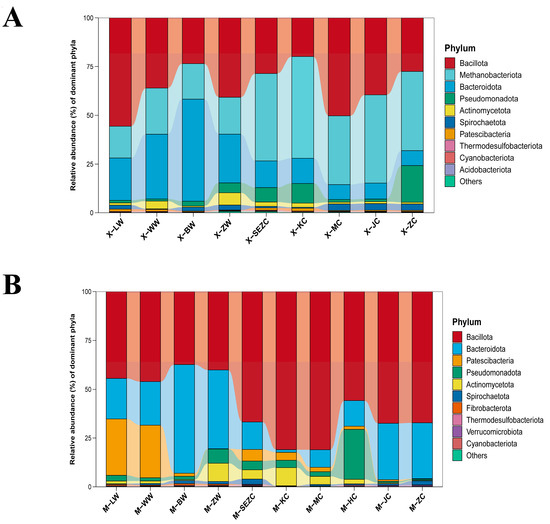
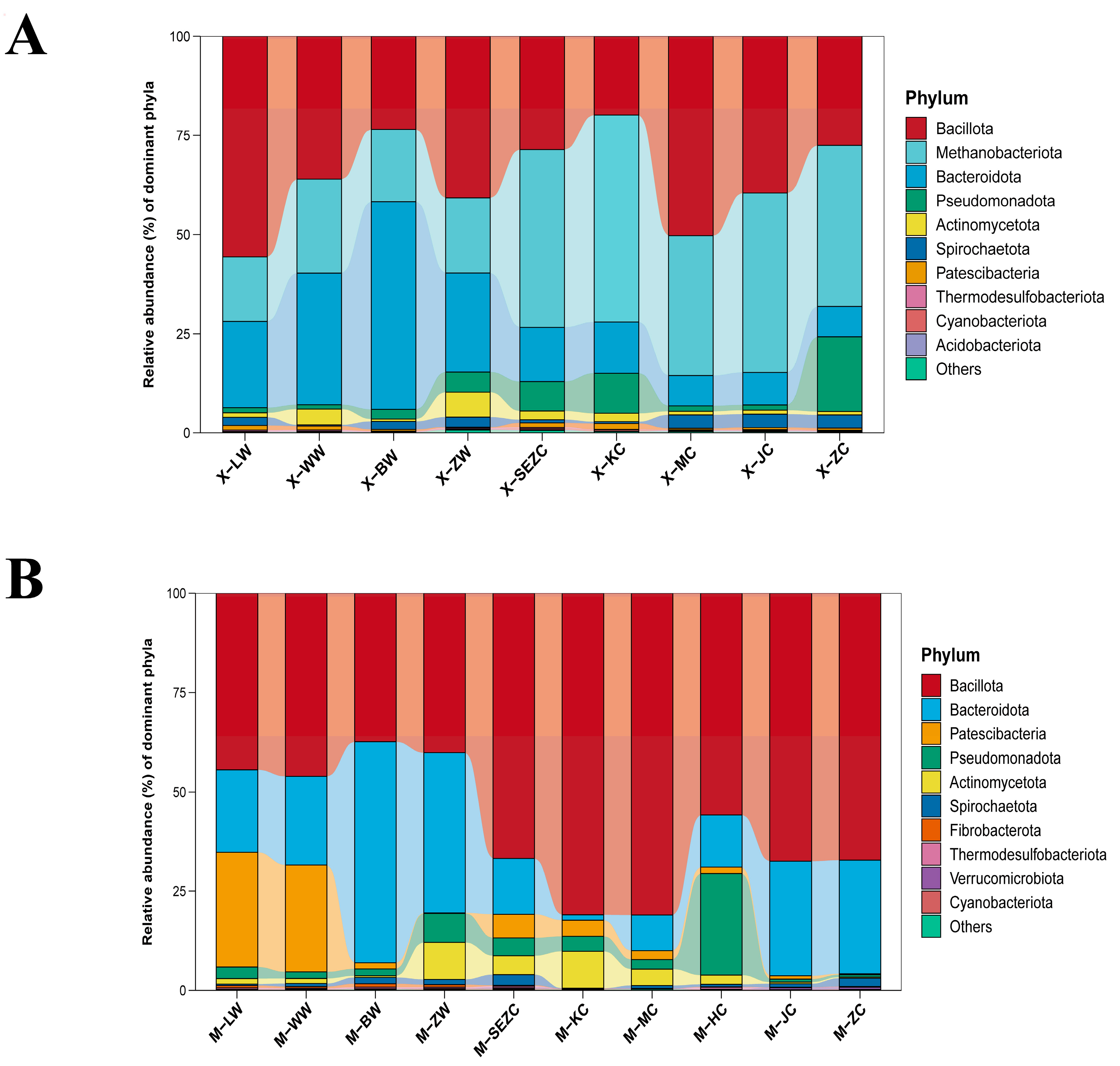
At the phylum-level analysis (Figure 1), the gastrointestinal microbiota of both reindeer and sika deer were dominated by a limited number of major phyla, although the overall microbial structures differed markedly between the two species. In reindeer, Bacillota, Methanobacteriota, and Bacteroidota constituted the dominant phyla, followed by Pseudomonadota, Actinomycetota, and Spirochaetota. In contrast, sika deer were dominated by Bacillota and Bacteroidota, while Patescibacteria, Pseudomonadota, Actinomycetota, and Spirochaetota also accounted for a certain proportion. Notably, Bacillota was more abundant in sika deer, whereas Methanobacteriota was more prominent in reindeer, indicating clear interspecific differences in methanogen-associated communities.
Figure 1.
Phylum-level community composition across gastrointestinal segments in reindeer and sika deer. (A) Reindeer; (B) sika deer. Bars represent the mean relative abundance of dominant bacterial phyla in each gastrointestinal segment. The remaining low-abundance taxa are grouped as “Others”. Sample codes are defined as follows: X, reindeer; M, sika deer; LW, rumen; WW, reticulum; BW, omasum; ZW, abomasum; SEZC, duodenum; KC, jejunum; HC, ileum; MC, cecum; JC, colon; and ZC, rectum. The HC group was present only in sika deer because ileal samples were not available for reindeer.
The phylum-level composition profiles across gastrointestinal segments also revealed marked spatial heterogeneity in microbial structure. In both reindeer and sika deer, the relative abundances of major phyla, including Bacillota, Bacteroidota, Actinomycetota, Spirochaetota, and Pseudomonadota, varied across gastrointestinal segments, indicating clear segment-specific patterns in microbiota composition along the gastrointestinal tract.
3.2.2. Genus-Level Composition
Genus-level profiles showed clear differences in dominant bacterial taxa between reindeer and sika deer. In reindeer, the major genera included Methanobrevibacter, Christensenellaceae R-7 group, NK4A214 group, UCG-005, Escherichia-Shigella, Rikenellaceae RC9 gut group, Xylanibacter, Treponema, Mycoplasmoides, and Romboutsia. Among these, Methanobrevibacter showed relatively high abundance, which was aligned with the elevated representation of methanogen-associated taxa observed at the phylum level. In sika deer, the dominant genera included Candidatus Saccharimonas, Rikenellaceae RC9 gut group, Christensenellaceae R-7 group, Xylanibacter, Ruminococcus, UCG-005, Romboutsia, NK4A214 group, Clostridium, Bifidobacterium, Bacteroides, Muribaculum, Faecalibacterium, Monoglobus, and Treponema, as well as several Lachnospiraceae-related genera. Compared with reindeer, Bacteroidota-associated genera, including Bacteroides, Muribaculum, Prevotellaceae UCG-001, Prevotellaceae UCG-003, and Barnesiella, were more frequently detected in sika deer.
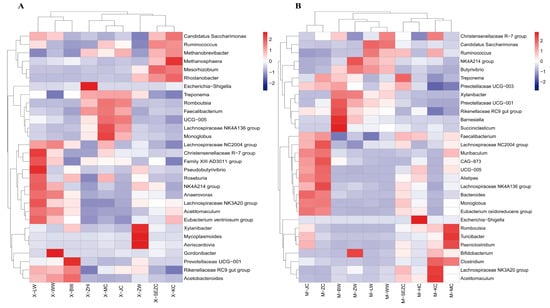
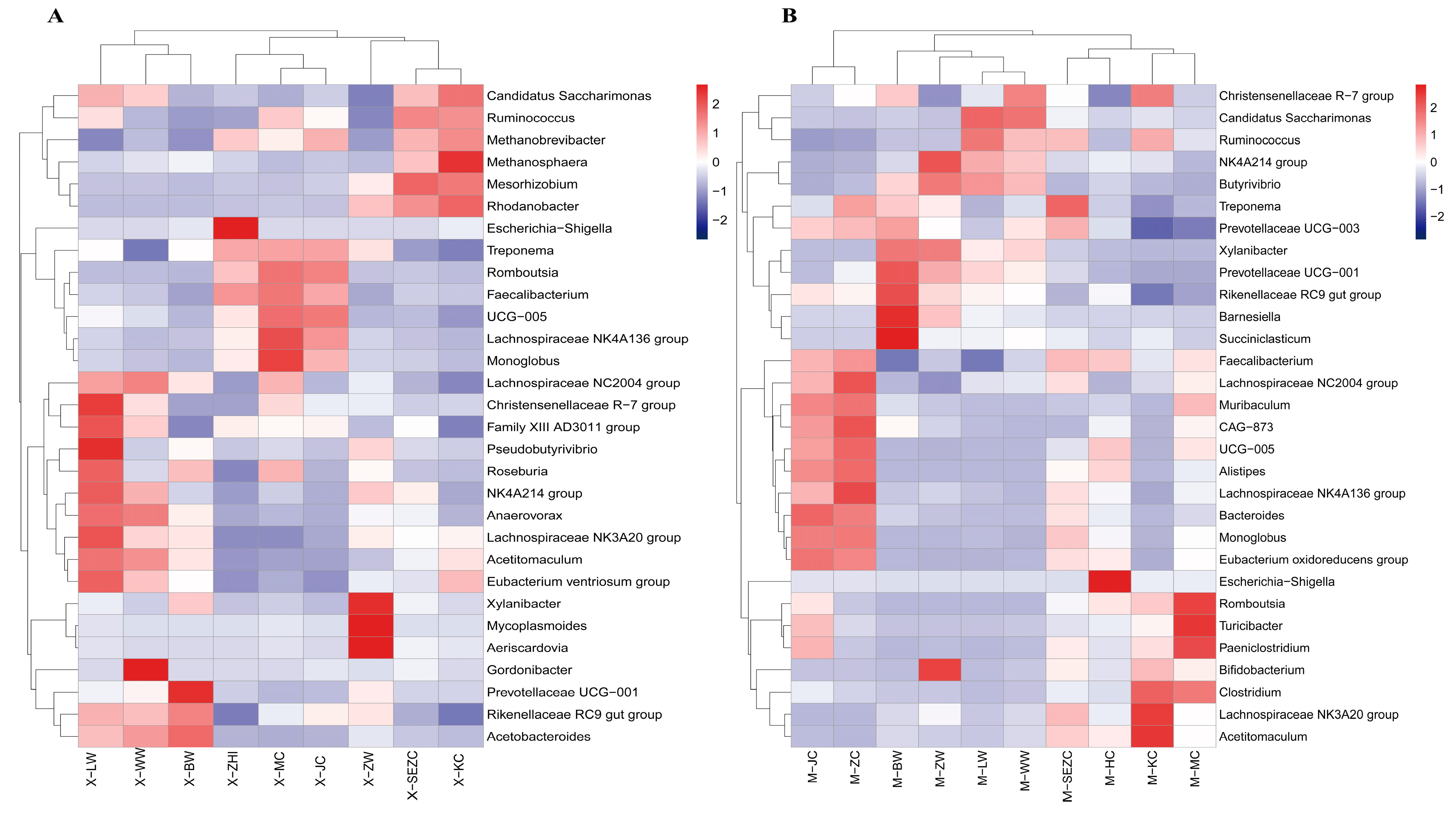
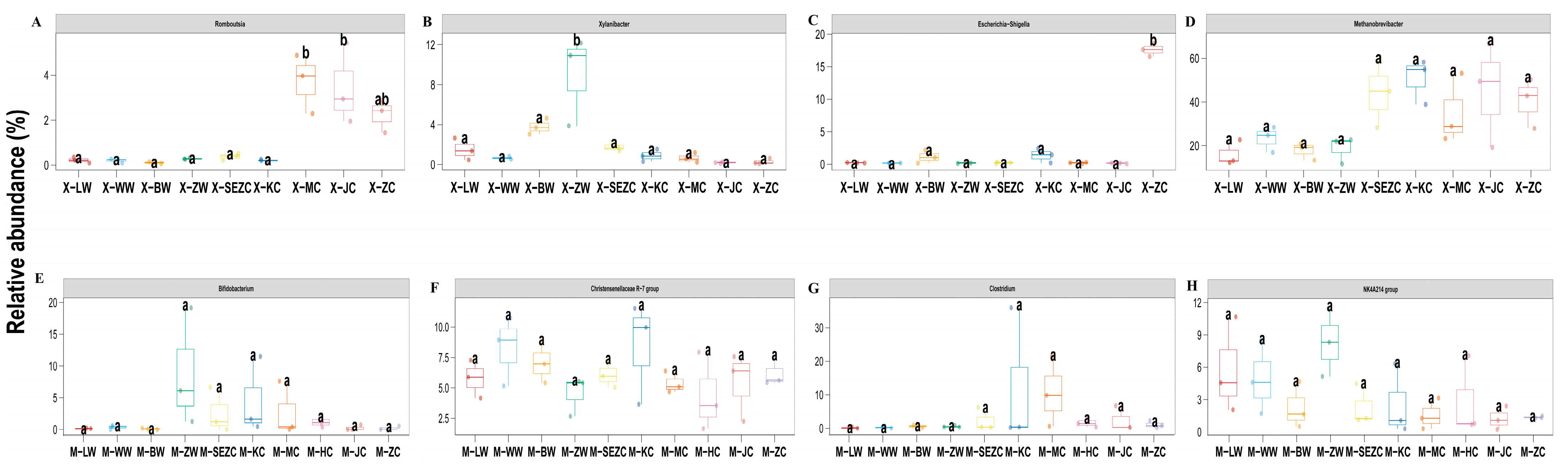
The genus-level heatmaps (Figure 2) and the boxplots of representative differential genera (Figure 3) further revealed clear segment-specific distribution patterns of dominant genera along the gastrointestinal tract in both species. In reindeer, Christensenellaceae R-7 group and NK4A214 group were relatively abundant in the foregut, especially in the rumen and reticulum, whereas Xylanibacter was relatively enriched in the abomasum. Methanobrevibacter showed relatively high abundance in the jejunum, cecum, and rectum, while Escherichia-Shigella increased markedly in the rectum. In addition, Romboutsia and UCG-005 were more common in the cecum, colon, and rectum. Treponema was relatively more abundant in the abomasum and some hindgut segments, suggesting region-specific differences in substrate utilization.
Figure 2.
Genus-level heatmap showing segment-specific distribution patterns of dominant bacteria in reindeer and sika deer. (A) Reindeer; (B) sika deer. Heatmaps are based on the mean relative abundance of dominant genera in each gastrointestinal segment. Colors indicate standardized abundance levels across segments. Sample codes are defined as follows: X, reindeer; M, sika deer; LW, rumen; WW, reticulum; BW, omasum; ZW, abomasum; SEZC, duodenum; KC, jejunum; HC, ileum; MC, cecum; JC, colon; and ZC, rectum. The HC group was present only in sika deer because ileal samples were not available for reindeer.
Figure 3.
Representative differential genera showing segment-specific abundance patterns in reindeer and sika deer. (A–D) Representative differential genera in reindeer; (E–H) representative differential genera in sika deer. Boxes indicate the median and interquartile range, and different lowercase letters indicate significant differences among gastrointestinal segments. Sample codes are defined as follows: X, reindeer; M, sika deer; LW, rumen; WW, reticulum; BW, omasum; ZW, abomasum; SEZC, duodenum; KC, jejunum; HC, ileum; MC, cecum; JC, colon; and ZC, rectum. The HC group was present only in sika deer because ileal samples were not available for reindeer.
In sika deer, Candidatus Saccharimonas was relatively abundant in the rumen and reticulum, indicating a pronounced foregut enrichment pattern. The Christensenellaceae R-7 group was generally more abundant in foregut segments and less abundant in the hindgut. Xylanibacter, UCG-005, and certain Prevotellaceae UCG-003-related taxa were relatively enriched in the omasum and abomasum, and Bifidobacterium showed relatively high abundance in the omasum. By contrast, Muribaculum, Romboutsia, Clostridium, Turicibacter, and Bacteroides were more common in hindgut segments, including the cecum, colon, and rectum, suggesting a greater ecological advantage in the hindgut niche.
Overall, both reindeer and sika deer exhibited clear genus-level segmentation among the foregut, small intestine, and hindgut. However, the combinations of dominant genera and their segment-specific enrichment patterns differed between the two species. Reindeer were characterized by a relatively greater prominence of methanogen-associated genera, particularly Methanobrevibacter, whereas sika deer showed a higher prevalence of Bacteroides, Muribaculum, and several Prevotellaceae-related taxa in specific foregut or hindgut segments. These findings suggest that both host species and gastrointestinal segments contribute to the formation of structured microecological patterns.
3.3. Alpha Diversity Analysis of the Microbiota
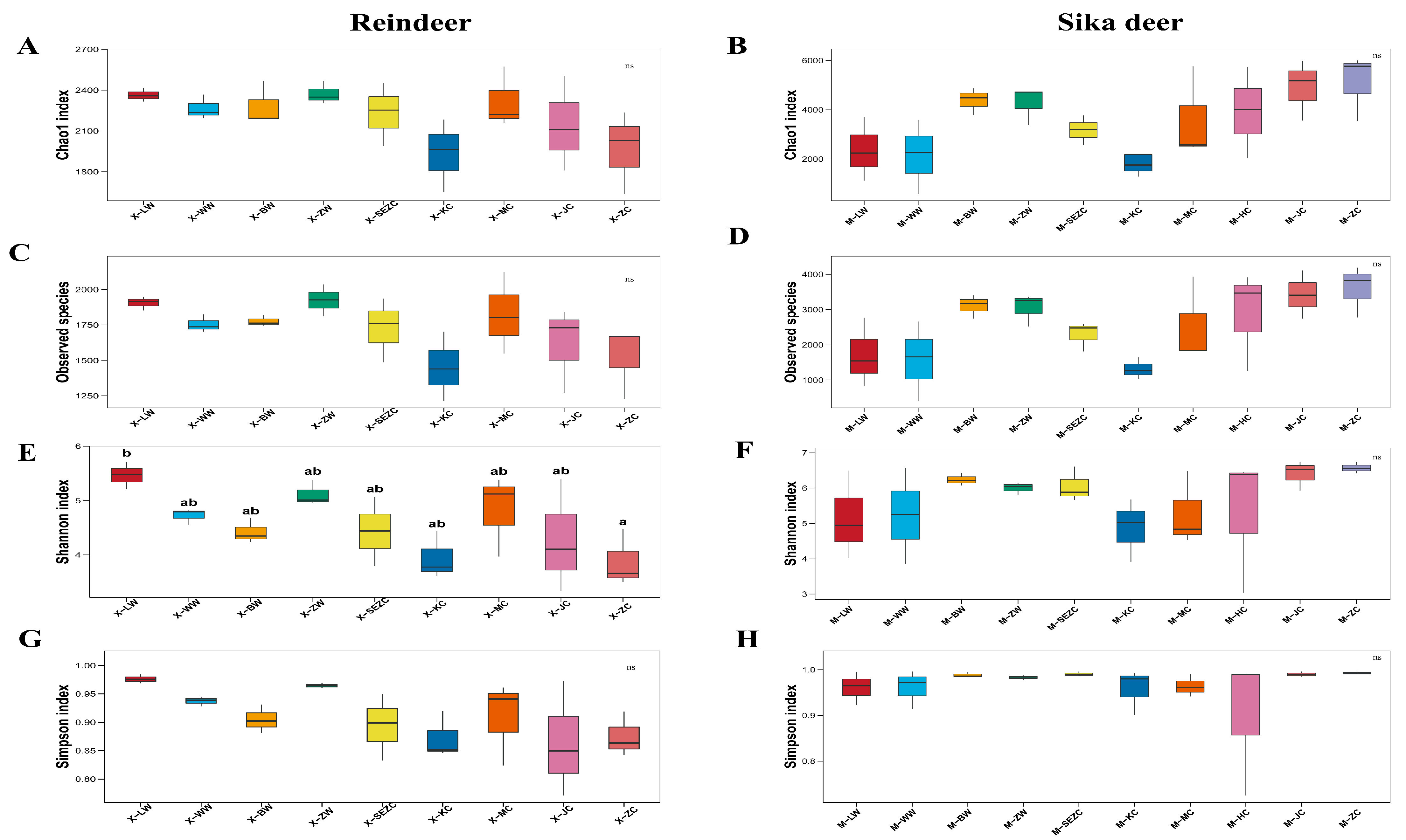
Alpha diversity indices are shown in Figure 4, and detailed numerical values are provided in Supplementary Table S1. Overall, the richness and diversity of microbiota differed to some extent among gastrointestinal segments in both reindeer and sika deer. In reindeer, the Shannon index was relatively high in the rumen and abomasum but relatively low in the jejunum and rectum, with Observed-species displaying a similar trend. In sika deer, the Shannon index was relatively high in the rectum and colon, followed by the omasum and duodenum, whereas it was relatively low in the jejunum; Observed-species was also relatively elevated in the rectum, colon, and omasum. In terms of mean values, alpha diversity indices in most gastrointestinal segments of sika deer were higher than those in reindeer.
Figure 4.
Alpha diversity indices of gastrointestinal microbiota across different segments in reindeer and sika deer. (A,C,E,G) Chao1, Observed-species, Shannon, and Simpson indices in reindeer, respectively; (B,D,F,H) the corresponding indices in sika deer. Boxes indicate the median and interquartile range, and points represent biological replicates. Different lowercase letters indicate significant differences among gastrointestinal segments based on one-way ANOVA followed by Tukey’s HSD test, whereas “ns” indicates no significant difference. Sample codes are defined as follows: X, reindeer; M, sika deer; LW, rumen; WW, reticulum; BW, omasum; ZW, abomasum; SEZC, duodenum; KC, jejunum; HC, ileum; MC, cecum; JC, colon; and ZC, rectum. The HC group was present only in sika deer because ileal samples were not available for reindeer.
Despite these numerical patterns, statistical comparisons indicated that relatively few differences reached significance. In reindeer, significant differences in the Shannon index were detected only between a limited number of segments, indicating some degree of differentiation in microbial diversity among segments. In sika deer, no significant differences were observed among segments for Observed-species, Chao1, Shannon, or Simpson, suggesting that microbial richness and diversity were relatively stable overall and that segmental differentiation was not pronounced. Taken together, alpha diversity analysis indicated that microbial richness and evenness varied to some extent across gastrointestinal segments in both species, but these differences were manifested primarily as numerical fluctuations rather than widespread, statistically significant changes.
For direct interspecific comparisons, Student’s t-test was performed to compare alpha diversity indices between reindeer and sika deer within each shared gastrointestinal segment. Because reindeer ileal samples were not available, the ileum was excluded from this analysis. The detailed pairwise comparison results are provided in Supplementary Table S2. Overall, alpha diversity indices were numerically higher in sika deer than in reindeer in several shared segments, particularly in the omasum, abomasum, colon, and rectum, whereas differences in the rumen, reticulum, jejunum, and cecum were generally not significant. Significant differences were observed for all four alpha diversity indices in the omasum and abomasum, and for most indices in the colon and rectum.
3.4. Beta Diversity Analysis of the Microbiota
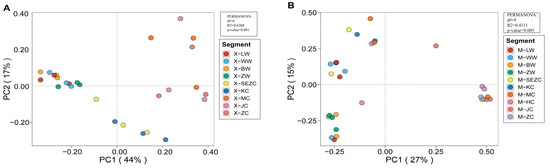
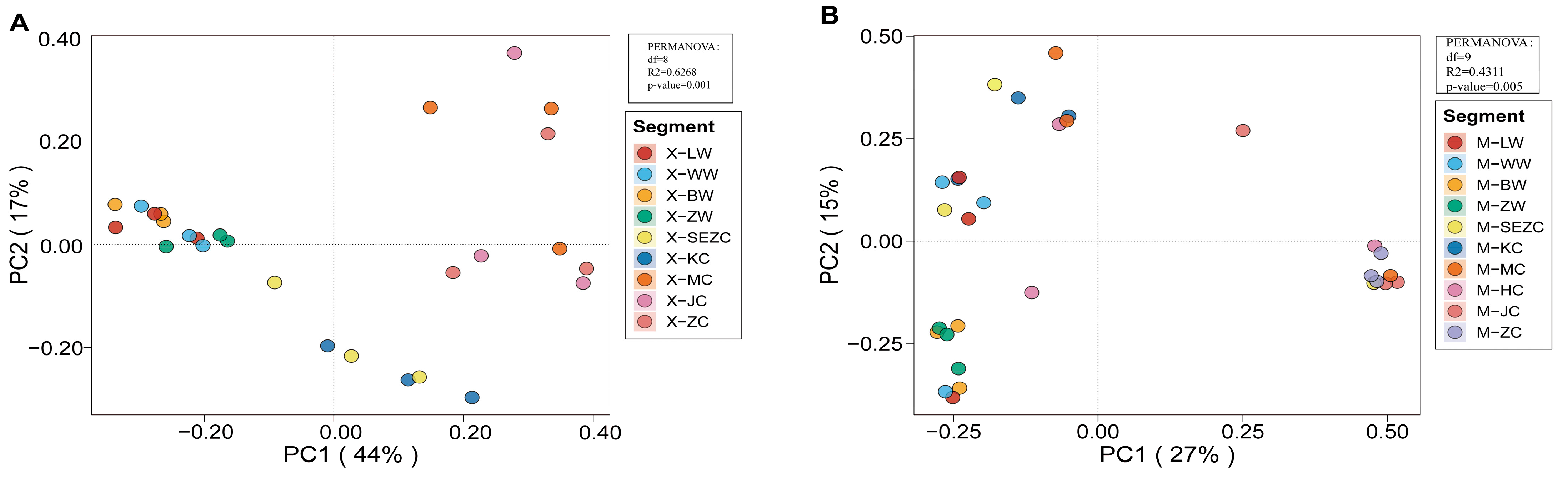
Beta diversity patterns are shown in the PCoA plots (Figure 5) and Table 3. PCoA revealed clear separation of microbial community structures among different gastrointestinal segments in both reindeer and sika deer. Samples from the same segment tended to cluster together, whereas samples from different segments showed distinct distributions. In reindeer, PC1, PC2, and PC3 explained 44%, 17%, and 10% of the community variation, respectively. The PCoA pattern indicated clear separation between foregut and hindgut samples, while small-intestinal samples were positioned intermediately, thereby reflecting a gradual structural transition along the gastrointestinal tract. In sika deer, PC1, PC2, and PC3 explained 27%, 15%, and 10% of the variation, respectively. Samples from different segments also showed a clustering tendency, and clear distributional differences were observed among foregut, small-intestinal, and hindgut samples, although some overlap remained between adjacent segments.
Figure 5.
Principal coordinate analysis (PCoA) of beta diversity across gastrointestinal segments in reindeer and sika deer. (A) Reindeer; (B) sika deer. Each point represents one sample, and colors indicate gastrointestinal segments. Insets show the PERMANOVA results for overall community differences among segments. Sample codes are defined as follows: X, reindeer; M, sika deer; LW, rumen; WW, reticulum; BW, omasum; ZW, abomasum; SEZC, duodenum; KC, jejunum; HC, ileum; MC, cecum; JC, colon; and ZC, rectum. The HC group was present only in sika deer because ileal samples were not available for reindeer.
Table 3.
Between-group differences in beta diversity of microbiota across gastrointestinal segments.
PERMANOVA analysis (Table 3) supported these observations by demonstrating statistically significant differences in microbial community structure among gastrointestinal segments in both reindeer (R2 = 0.62682, F = 3.7793, p = 0.001) and sika deer (R2 = 0.4311, F = 1.684, p = 0.005). The relatively higher R2 value observed in reindeer may indicate that the gastrointestinal segment accounts for a larger proportion of community variation in this species compared with sika deer.
Taken together, the PCoA patterns and between-group statistical tests indicate that segmental differentiation of the gastrointestinal microbiota was generally stronger in reindeer than in sika deer, especially between the foregut and hindgut and between some small-intestinal and hindgut segments. Sika deer also showed replacement of community structure from the foregut to the hindgut, but some overlap persisted between adjacent segments. Overall, beta diversity was more sensitive than alpha diversity in revealing structural differentiation of the microbiota among gastrointestinal segments.
3.5. Differential Taxa Across Gastrointestinal Segments and Between Species
Differential taxon analysis (Figure 3) showed marked differences in the dominant microbiota across gastrointestinal segments between reindeer and sika deer, mainly reflected in shifts in the relative abundance of a limited number of core genera. In reindeer, genera such as Methanobrevibacter, Escherichia-Shigella, Romboutsia, Monoglobus, and Xylanibacter showed obvious abundance differences among segments. In sika deer, Candidatus Saccharimonas, Muribaculum, Bacteroides, Clostridium, and Turicibacter also exhibited strong segmental differentiation.
In reindeer, the Christensenellaceae R-7 group, NK4A214 group, Methanobrevibacter, Escherichia-Shigella, Monoglobus, Romboutsia, Treponema, UCG-005, and Xylanibacter displayed varying degrees of intersegmental differences. The Christensenellaceae R-7 group and NK4A214 group were relatively abundant in foregut segments, suggesting adaptation to the foregut fermentation environment. Escherichia-Shigella increased markedly in the rectum, showing clear enrichment at the distal end of the intestine. Monoglobus and Romboutsia were more common in hindgut segments, including the cecum, colon, and rectum. Methanobrevibacter showed relatively high abundance in the abomasum and some hindgut segments, highlighting strong segmental differentiation of methanogen-associated communities along the reindeer gastrointestinal tract. Overall, differential taxa in reindeer mainly displayed stratified distributions among the foregut, small intestine, and hindgut, with the greatest contrast occurring between the foregut and hindgut.
In sika deer, Candidatus Saccharimonas, Christensenellaceae R-7 group, Bifidobacterium, Muribaculum, Romboutsia, Clostridium, Turicibacter, UCG-005, Xylanibacter, and some Prevotellaceae-related taxa also showed significant differences among gastrointestinal segments. Specifically, Candidatus Saccharimonas was relatively abundant in the rumen and reticulum, showing a tendency toward foregut enrichment. Prevotellaceae UCG-003, Xylanibacter, and some UCG-005-related taxa were relatively more abundant in the omasum and abomasum. By contrast, Muribaculum, Romboutsia, Clostridium, Turicibacter, and Bacteroides were more widely distributed in hindgut segments such as the cecum, colon, and rectum, suggesting their roles in continued fermentation and utilization of residual substrates in the hindgut. In addition, Bifidobacterium and some Christensenellaceae R-7 group taxa showed relatively high abundance in certain small-intestinal or foregut segments, indicating obvious spatial partitioning among the foregut, small intestine, and hindgut in sika deer as well.
For direct interspecific comparison, only the nine gastrointestinal segments shared by reindeer and sika deer were included because reindeer ileal samples were not available. Across these shared segments, reindeer showed a relatively higher abundance of methanogen-associated taxa, especially Methanobrevibacter, whereas sika deer showed higher representation of several Bacteroidota-related and polysaccharide-utilization-associated genera, including Bacteroides, Muribaculum, and several Prevotellaceae-related taxa. These differences were particularly evident in the foregut and hindgut segments, suggesting that reindeer and sika deer may differ in gastrointestinal fermentation patterns and substrate utilization strategies.
Comparison of differential taxa between the two species showed that methanogen-associated genera such as Methanobrevibacter were more prominent in reindeer, whereas Bacteroides, Muribaculum, Turicibacter, Clostridium, and some Prevotellaceae-related taxa displayed more obvious segment-specific variation in sika deer. This suggests that reindeer and sika deer differ to some extent in gastrointestinal microecological composition, substrate utilization patterns, and potential fermentation modes. Overall, differential taxon analysis revealed that both host species identity and gastrointestinal location contribute to the organization of distinct yet structured microecological communities.
LEfSe analysis further identified segment-specific taxa within each species. In sika deer, differentially abundant taxa were mainly enriched in the rumen, reticulum, omasum, abomasum, and duodenum, including Patescibacteria-related taxa, Prevotellaceae, Alloprevotella, Parabacteroides, and Lachnospiraceae UCG-008. In reindeer, a larger number of differentially abundant taxa were detected among gastrointestinal segments, suggesting stronger segmental differentiation of the microbiota. Detailed LEfSe results are provided in Supplementary Table S3. The detailed LEfSe results are provided in Supplementary Table S3, which has been uploaded separately due to its large size.
3.6. Prediction of Potential Functions of the Microbiota
KEGG level 2 functional annotation showed that (Table 4) the predicted microbial functions in both species were concentrated mainly in metabolic pathways, genetic information processing, and environmental information processing. The most represented categories included carbohydrate metabolism, amino acid metabolism, energy metabolism, membrane transport, translation, and nucleotide metabolism. Reindeer showed relatively higher proportions of energy metabolism, translation, and nucleotide metabolism than sika deer, suggesting possible species-related differences in functional allocation within the microbial communities.
Table 4.
Relative abundance of major functional categories.
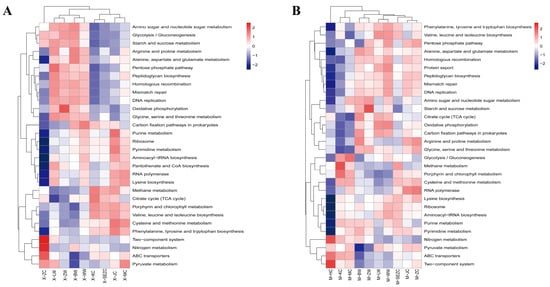
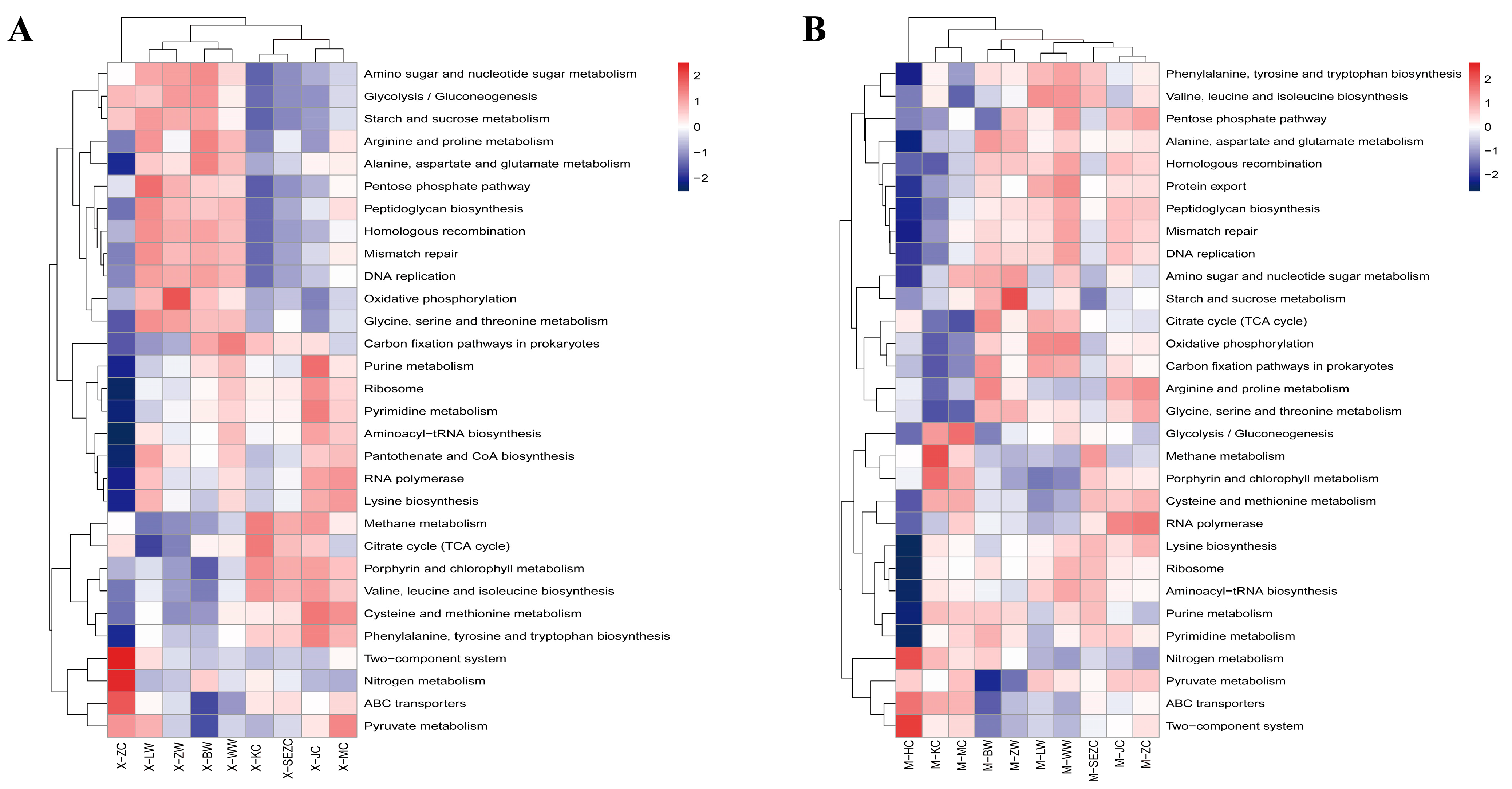
At KEGG level 3 (Figure 6), heatmap-based clustering revealed segment-associated variations in predicted functional profiles in both species. Across different gastrointestinal segments of sika deer, notable variations were observed in several pathways, including glycolysis/gluconeogenesis, amino sugar and nucleotide sugar metabolism, starch and sucrose metabolism, methane metabolism, ABC transporters, two-component systems, ribosome, and pyruvate metabolism. In reindeer, several pathways showed stronger segmental differentiation, namely methane metabolism, the citrate cycle (TCA cycle), carbon fixation pathways in prokaryotes, glycolysis/gluconeogenesis, ABC transporters, two-component systems, and pyruvate metabolism. When the predicted functional profiles were compared between species, reindeer showed relatively higher proportions of energy metabolism, translation, and nucleotide metabolism, whereas sika deer showed relatively higher proportions of carbohydrate metabolism and lipid metabolism. These functional differences correspond to the taxonomic patterns described above, although they should be interpreted as predicted functional potential rather than direct metagenomic evidence.
Figure 6.
Sample-level KEGG level 3 heatmap of predicted functions. (A) The heatmap shows the predicted functional abundance of KEGG level 3 pathways across individual gastrointestinal samples from reindeer. (B) The heatmap shows the predicted functional abundance of KEGG level 3 pathways across individual gastrointestinal samples from sika deer. Sample codes are defined as follows: X, reindeer; M, sika deer; LW, rumen; WW, reticulum; BW, omasum; ZW, abomasum; SEZC, duodenum; KC, jejunum; HC, ileum; MC, cecum; JC, colon; and ZC, rectum. The HC group was present only in sika deer because ileal samples were not available for reindeer.
PERMANOVA analysis of the overall functional profiles (Table 5) indicated significant differences among gastrointestinal segments in both sika deer (R2 = 0.49943, p = 0.004) and reindeer (R2 = 0.46203, p = 0.040), indicating that gastrointestinal location significantly influenced the predicted functional profiles of the microbiota in both species. Combined with the ANOSIM results, functional stratification across segments appeared relatively stable in sika deer (R = 0.2892, p = 0.001), whereas segmental differences in reindeer were present but did not reach significance in ANOSIM (R = 0.1433, p = 0.075). However, when individual KEGG pathways were tested separately, no pathway at KEGG level 1 or level 3 reached the conventional significance threshold (p < 0.05) in either reindeer or sika deer. In other words, functional differences among gastrointestinal segments in both species were reflected more in changes in the overall structure and clustering pattern of the predicted functional profile than in significant shifts in any single pathway.
Table 5.
Between-group differences in overall functional profiles.
4. Discussion
4.1. Differences in Gastrointestinal Microbiota Composition Between Sika Deer and Reindeer and Possible Causes
This study demonstrated that gastrointestinal microbiota communities differ between sika deer and reindeer across multiple anatomical segments, with divergence evident at both the phylum and genus levels. At the phylum level, Bacillota and Bacteroidota were the main dominant phyla in sika deer, whereas reindeer showed relatively high abundance of Methanobacteriota in addition to Bacillota and Bacteroidota. At the genus level, Methanobrevibacter was more prominent in reindeer, whereas Bacteroides and Prevotellaceae-related taxa were relatively more abundant in sika deer. These patterns indicate that, despite their shared classification as cervid ruminants, the two species harbor microbiota that retain discernible host-specific features.
Such differences may be interpreted in relation to host-associated factors, including genetic background, gastrointestinal physicochemical conditions, digestive physiology, digesta transit time, and local redox status, all of which have been reported to contribute to microbial colonization and community stability [9,14,15]. Although sika deer and reindeer belong to the same family, they differ in ecological adaptation, feeding structure, and energy utilization strategy, and these differences may be reflected in the construction of gastrointestinal microbial niches [16,17].
In addition, the relatively high abundance of Methanobacteriota and its representative genus Methanobrevibacter in reindeer suggests that hydrogenotrophic methanogenic archaea may be more abundant in the reindeer gastrointestinal tract. Methanogenic archaea are known to utilize H2 and CO2 generated during microbial fermentation, thereby contributing to redox balance and indirectly influencing fiber degradation efficiency and volatile fatty acid production patterns [5,18]. Therefore, enrichment of methanogen-associated taxa in reindeer may reflect a microecological adaptation strategy for energy metabolism and fermentation regulation that differs from that of sika deer.
In contrast, the higher prevalence of Bacteroides, Prevotellaceae-related taxa, and certain Lachnospiraceae-associated genera in sika deer may indicate a community structure more strongly oriented toward the degradation of polysaccharides, proteins, and complex plant substrates [19,20]. This suggests that the gastrointestinal microbiota of sika deer may have greater potential to utilize carbohydrates and complex organic substrates, consistent with the higher relative abundance of functional categories, such as carbohydrate and lipid metabolism, predicted for sika deer in the present study [21]. The correspondence between taxonomic composition and predicted function should be interpreted with caution, given PICRUSt2’s inferential nature; the observed alignment suggests that differences in microbial structure may be linked to distinct substrate utilization strategies between the two species.
4.2. Patterns of Microbial Differentiation Across Gastrointestinal Segments and Their Biological Significance
This study found clear spatial heterogeneity in the microbiota among gastrointestinal segments in both reindeer and sika deer. At both the phylum and genus levels, microbial communities exhibited segment-specific distributions, with samples from the same anatomical region clustering, whereas those from different segments were more clearly separated. Beta-diversity analyses further confirmed that the gastrointestinal segment is a major source of variation in microbial community structure in both species.
These results are consistent with the basic physiological pattern of the ruminant gastrointestinal tract, often described as foregut fermentation, small-intestinal digestion and absorption, and hindgut re-fermentation [21,22]. Different gastrointestinal regions differ substantially in fermentation substrates, pH, microbial colonization patterns, and nutrient transport modes, so it is expected that different segments form different microbial structures [23]. In the present study, foregut segments in both reindeer and sika deer were enriched with taxa that have been reported to be associated with fiber degradation and anaerobic fermentation, whereas the microbial patterns observed in the small intestine and hindgut may be related to nutrient absorption, bile salt exposure, and continued fermentation of residual substrates. These functional features were inferred from the combined interpretation of taxonomic composition, segment-specific differential taxa, PICRUSt2-based KEGG functional prediction, and previously reported ecological roles of these microbial groups in ruminant gastrointestinal tracts. For example, taxa enriched in the foregut were interpreted in relation to their reported associations with fiber degradation and anaerobic fermentation, whereas microbial patterns in the small intestine and hindgut were interpreted together with the known physiological characteristics of these segments, including bile acid exposure, nutrient absorption, and residual substrate fermentation. Therefore, these interpretations should be regarded as inferred microbial functional potential rather than direct evidence from metagenomic, transcriptomic, or metabolomic measurements. This is consistent with the functional division of labor among different gastrointestinal segments in ruminants.
Notably, the small-intestinal microbiota often showed strong separation from the foregut microbiota in community structure. This may be related to higher bile acid concentration, enhanced digestive enzyme activity, reduced availability of fermentable substrates, and faster digesta flow in the small intestine, all of which exert stronger selective pressure on the microbial community [24,25]. In contrast, the cecum, colon, and rectum are more likely to enrich taxa involved in re-fermentation of residual substrates, short-chain fatty acid production, and mucosal interaction. Therefore, hindgut segments often exhibit both similarity and local differentiation [26,27].
4.3. Ecological Interpretation of Alpha and Beta Diversity
From the perspective of alpha diversity, Shannon and Observed-species exhibited variations across gastrointestinal segments in both reindeer and sika deer, but relatively few comparisons reached statistical significance. In contrast, beta diversity analyses more clearly captured the structural separation of microbial communities across segments.
This pattern suggests that, under the conditions of this study, the main differences among gastrointestinal segments are more likely reflected in turnover of community composition than in abrupt changes in overall diversity [9,13]. In other words, segments may harbor comparable levels of diversity while differing in the identities and relative abundances of their constituent taxa. This is one reason why beta diversity is often more sensitive than alpha diversity. Such observations are consistent with the notion that gastrointestinal regions are differentiated less by the quantity of microbial taxa present than by their functional and ecological composition [28].
In addition, mean alpha diversity values were generally higher in sika deer than in reindeer across corresponding gastrointestinal segments. This may imply that the available substrates in the gastrointestinal segments of sika deer are more diverse, or that the host’s internal environment can accommodate a wider range of microbial groups [29]. It should be noted that the number of effective sequences was higher overall in sika deer than in reindeer, suggesting differences in sequencing depth between the species. However, raw sequence count mainly reflects sequencing yield rather than microbial richness itself. Therefore, interpretations of richness and diversity in this study were based primarily on alpha diversity metrics such as Observed-species, Chao1, and Shannon rather than on raw read counts. The generally higher alpha diversity observed across most sika deer segments may be associated with host substrate utilization, local microenvironmental differences, and the detectability of low-abundance taxa, but this trend still requires validation using standardized analyses and larger sample sizes [30,31].
4.4. Differential Taxa Between Species and Their Potential Functions
Differential taxon analysis in this study showed that the dominant microbiota differed markedly among gastrointestinal segments in reindeer and sika deer, and that the major dominant genera exhibited distinct abundance patterns across segments. Intergroup comparisons of the top 10 dominant genera showed that Methanobrevibacter, Treponema, Romboutsia, UCG-005, and Xylanibacter varied markedly among segments in reindeer, whereas Bifidobacterium, Candidatus Saccharimonas, Muribaculum, Romboutsia, Xylanibacter, and some Prevotellaceae-related taxa showed strong segmental differentiation in sika deer. These findings indicate that the main differences between the two species lie in the segmental distribution patterns and relative abundance levels of core dominant genera.
The biological implications of these taxa warrant careful consideration. For example, Treponema, Xylanibacter, Ruminococcus, Prevotellaceae, and Lachnospiraceae-related taxa are often associated with the degradation and utilization of hemicellulose, cellulose, and other complex polysaccharides and are important members of foregut fermentation communities in ruminants [19,32,33]. In contrast, certain Bacillota members, such as Faecalibacterium, Roseburia, and Eubacterium, have been linked to the production of short-chain fatty acids, particularly butyrate, which may contribute to intestinal ecological stability and host mucosal health [34,35].
The enrichment of methanogenic archaea and related functional groups in the reindeer gastrointestinal tract suggests that its fermentation system may rely more heavily on hydrogen metabolism and methane production to maintain metabolic balance [5]. By contrast, the greater representation of Bacteroidota and certain groups associated with lactic acid bacteria in sika deer may indicate an alternative microecological configuration oriented toward the degradation of complex substrates, the utilization of oligosaccharides, and adaptation to localized acidic environments [36,37]. Therefore, differential taxa reflect not only segmental differences but also distinct host strategies in nutrient utilization, energy metabolism, and environmental adaptation.
The LEfSe results further supported the segment-specific distribution patterns of dominant taxa, indicating that microbial differences in both species were not only reflected in relative abundance changes in dominant genera but also in statistically identified differential taxa.
4.5. Potential Functions of the Microbiota
Functional prediction based on PICRUSt2 indicated that, in both species, microbial communities across gastrointestinal segments were predominantly enriched in pathways associated with metabolism, genetic information processing, and environmental information processing, with particular emphasis on carbohydrate, amino acid, energy, membrane transport, translation, and nucleotide metabolism. This is consistent with the general characteristics of gastrointestinal microbiota in ruminants, which are primarily involved in nutrient degradation, energy conversion, membrane transport, growth, and reproduction [9,38].
Notwithstanding this overall similarity, functional clustering and profile-based analyses indicated that predicted functional capacities varied across gastrointestinal segments in both species. Pathways such as glycolysis/gluconeogenesis, methane metabolism, pyruvate metabolism, ABC transporters, and two-component systems exhibited segment-associated variation in relative abundance, suggesting that metabolic configurations and regulatory processes differ along the gastrointestinal axis. This trend agrees with previous findings that different gastrointestinal segments in ruminants exhibit clear functional partitioning due to differences in substrate type, local microenvironment, and nutrient transport mode [22,39,40].
It should be emphasized that the present results are better suited to interpreting functional differences among segments in terms of overall shifts in functional profile rather than to overinterpretation of single pathways. On the one hand, although microbial composition differs among gastrointestinal segments, strong functional redundancy may allow different taxa to perform similar metabolic tasks, such that changes in individual pathways are not necessarily prominent [41,42]. PICRUSt2-based predictions are derived from 16S rRNA gene profiles and therefore provide indirect estimates of functional potential rather than direct measurements of gene expression or metabolic activity [43].
Therefore, the functional prediction results in this study indicate that potential functions of the microbiota vary among gastrointestinal segments in sika deer and reindeer at the level of the overall functional spectrum, but that these changes are reflected mainly in differences in functional combinations and relative contribution patterns rather than in significant increases or decreases in individual metabolic pathways. Future work integrating metagenomics, metabolomics, volatile fatty acid profiles, and methane emission indices may provide a more direct assessment of the biological significance of these predicted functional differences and help resolve the relationship between microbial composition and host metabolic outcomes [44,45].
A limitation of this study is the absence of reindeer ileal samples, which prevented direct interspecific comparison of the ileal microbiota. Therefore, the ileum was excluded from species-level comparisons and was only included in the within-species analysis of sika deer. Future studies should include matched ileal samples from both species to obtain a more complete view of microbial biogeography along the cervid gastrointestinal tract.
5. Conclusions
Based on 16S rRNA high-throughput sequencing, this study demonstrated distinct patterns in microbial community composition, community stratification, and predicted microbiota functions across different gastrointestinal segments in sika deer and reindeer. At the taxonomic level, methanogen-associated taxa were more prominent in the gastrointestinal tract of reindeer, whereas sika deer exhibited comparatively higher abundance of Bacteroidota-related taxa and fiber-degrading taxa. Meanwhile, both species exhibited obvious segmental differentiation among the foregut, small intestine, and hindgut, confirming that gastrointestinal location is an important factor shaping microbial structure. Differences in predicted functional capacity were expressed primarily through shifts in the overall functional profile and relative contributions of functional categories rather than through consistent changes in individual metabolic pathways. Overall, the microbiota of different gastrointestinal segments in sika deer and reindeer displayed clear species-specific and segment-specific patterns.
Supplementary Materials
The following supporting information can be downloaded at: https://www.mdpi.com/article/10.3390/ani16101476/s1, Table S1: Alpha diversity indices of microbiota across gastrointestinal segments in reindeer and sika deer; Table S2: Student’s t-test results for alpha diversity indices between reindeer and sika deer in shared gastrointestinal segments; Table S3: LEfSe-identified differentially abundant taxa among gastrointestinal segments in sika deer and reindeer.
Author Contributions
Conceptualization, X.P. and H.H.; methodology, X.P. and F.K.; software, X.P.; validation, X.P. and Y.L.; formal analysis, X.P. and R.H.; investigation, X.P., R.H. and Y.L.; resources, H.H. and F.K.; data curation, X.P.; writing—original draft preparation, X.P.; writing—review and editing, H.H., F.K., R.H. and Y.L.; visualization, X.P. and R.H.; supervision, H.H. and F.K.; project administration, H.H.; funding acquisition, H.H. and Y.L. All authors have read and agreed to the published version of the manuscript.
Funding
This work was supported by the Inner Mongolia SenGong Group Science and Technology Project (GSKJ-2023001) and the Heilongjiang Bayi Agricultural University Undergraduate Innovation and Entrepreneurship Program Training Project (S202510223044S, 202510223179S, 202410223151S) funding.
Institutional Review Board Statement
The Animal Use Protocol was reviewed and approved by the Ethics Committee of Heilongjiang Bayi Agricultural University (protocol code DWKJXY2026073).
Informed Consent Statement
Not applicable.
Data Availability Statement
The datasets produced and/or analyzed during the current study are available from the corresponding author upon reasonable request.
Acknowledgments
The authors thank the farm staff and all personnel involved in animal management, sampling, and laboratory assistance.
Conflicts of Interest
The authors declare no conflicts of interest.
References
- Urga; Wang, X.; Wei, H.; Zhao, G. Mechanisms and applications of gastrointestinal microbiota-metabolite interactions in ruminants: A review. Microorganisms 2025, 13, 2880. [Google Scholar] [CrossRef] [Scilit]
- Chen, X.; Yan, F.; Liu, T.; Zhang, Y.; Li, X.; Wang, M.; Zhang, C.; Xu, X.; Deng, L.; Yao, J.; et al. Ruminal microbiota determines the high-fiber utilization of ruminants: Evidence from the ruminal microbiota transplant. Microbiol. Spectr. 2022, 10, e0044622. [Google Scholar] [CrossRef] [Scilit] [PubMed]
- Xu, Q.; Qiao, Q.; Gao, Y.; Hou, J.; Hu, M.; Du, Y.; Zhao, K.; Li, X. Gut microbiota and their role in health and metabolic disease of dairy cow. Front. Nutr. 2021, 8, 701511. [Google Scholar] [CrossRef] [Scilit]
- Silva, É.B.R.d.; Silva, J.A.R.d.; Silva, W.C.d.; Belo, T.S.; Sousa, C.E.L.; Santos, M.R.P.d.; Neves, K.A.L.; Rodrigues, T.C.G.d.C.; Camargo-Júnior, R.N.C.; Lourenço-Júnior, J.d.B. A review of the rumen microbiota and the different molecular techniques used to identify microorganisms found in the rumen fluid of ruminants. Animals 2024, 14, 1448. [Google Scholar] [CrossRef] [Scilit] [PubMed]
- Salgado-Flores, A.; Hagen, L.H.; Ishaq, S.L.; Zamanzadeh, M.; Wright, A.-D.G.; Pope, P.B.; Sundset, M.A. Rumen and cecum microbiomes in reindeer (Rangifer tarandus tarandus) are changed in response to a lichen diet and may affect enteric methane emissions. PLoS ONE 2016, 11, e0155213. [Google Scholar] [CrossRef] [Scilit]
- Eto, M.; Yahara, T.; Kuroiwa, A.; Shioya, K.; Flores, G.E.; Hamamura, N. Dynamics of rumen microbiome in sika deer (Cervus nippon yakushimae) from unique subtropical ecosystem in Yakushima Island, Japan. Sci. Rep. 2022, 12, 21623. [Google Scholar] [CrossRef] [Scilit] [PubMed]
- Wang, Y.; Shi, M.; Wu, J.; Han, X.; Li, M.; Wu, Y.; Jiang, Y.; Zhang, H.; Liu, S.; Hu, D. Variations in intestinal microbiota among three species in the Cervidae family under the same feeding conditions. Vet. Sci. 2025, 12, 438. [Google Scholar] [CrossRef] [Scilit]
- Li, Z.; Wright, A.-D.G.; Liu, H.; Fan, Z.; Yang, F.; Zhang, Z.; Li, G. Response of the rumen microbiota of sika deer (Cervus nippon) fed different concentrations of tannin rich plants. PLoS ONE 2015, 10, e0123481. [Google Scholar] [CrossRef] [Scilit]
- Hu, X.; Wei, Y.; Zhang, T.; Wang, X.; Xu, Y.; Zhang, W.; Zheng, Y. Gastrointestinal biogeography of luminal microbiota and short-chain fatty acids in sika deer (Cervus nippon). Appl. Environ. Microbiol. 2022, 88, e0049922. [Google Scholar] [CrossRef] [Scilit]
- Tang, L.; Wen, X.; Zhang, R.; Xing, X. Current situation and utilization of velvet deer germplasm resources in China. Animals 2022, 12, 3529. [Google Scholar] [CrossRef] [Scilit]
- Ba, H.; Jia, B.; Wang, G.; Yang, Y.; Kedem, G.; Li, C. Genome-wide SNP discovery and analysis of genetic diversity in farmed sika deer (Cervus nippon) in northeast China using double-digest restriction site-associated DNA sequencing. G3 Genes|Genomes|Genet 2017, 7, 3169–3176. [Google Scholar] [CrossRef] [Scilit]
- Loginov, V.G.; Ignatyeva, M.N.; Naumov, I.V. Reindeer husbandry as a basic sector of the traditional economy of indigenous ethnic groups: Present and future. Reg. Sci. Policy Pract. 2022, 14, 187–203. [Google Scholar] [CrossRef] [Scilit]
- Kim, J.H.; Hong, S.W.; Park, B.Y.; Yoo, J.G.; Oh, M.H. Characterisation of the bacterial community in the gastrointestinal tracts of elk (Cervus canadensis). Antonie Van. Leeuwenhoek 2019, 112, 225–235. [Google Scholar] [CrossRef] [Scilit]
- Maritan, E.; Quagliariello, A.; Frago, E.; Patarnello, T.; Martino, M.E. The role of animal hosts in shaping gut microbiome variation. Philos. Trans. R. Soc. B Biol. Sci. 2024, 379, 20230071. [Google Scholar] [CrossRef] [Scilit]
- Martínez-Álvaro, M.; Auffret, M.D.; Duthie, C.A.; Dewhurst, R.J.; Cleveland, M.A.; Watson, M.; Roehe, R. Bovine host genome acts on rumen microbiome function linked to methane emissions. Commun. Biol. 2022, 5, 350. [Google Scholar] [CrossRef] [Scilit] [PubMed]
- Pacheco-Torres, I.; Hernández-Sánchez, D.; García-De la Peña, C.; Tarango-Arámbula, L.A.; Crosby-Galván, M.M.; Sánchez-Santillán, P. Analysis of the intestinal and faecal bacterial microbiota of the Cervidae family using 16s next-generation sequencing: A review. Microorganisms 2023, 11, 1860. [Google Scholar] [CrossRef] [Scilit] [PubMed]
- He, H.; Fang, C.; Liu, L.; Li, M.; Liu, W. Environmental driving of adaptation mechanism on rumen microorganisms of sheep based on metagenomics and metabolomics data analysis. Int. J. Mol. Sci. 2024, 25, 10957. [Google Scholar] [CrossRef] [Scilit] [PubMed]
- Li, Z.; Wang, X.; Zhang, T.; Si, H.; Xu, C.; Wright, A.G.; Li, G. Heterogeneous development of methanogens and the correlation with bacteria in the rumen and cecum of sika deer (Cervus nippon) during early life suggest different ecology relevance. BMC Microbiol. 2019, 19, 129. [Google Scholar] [CrossRef] [Scilit]
- Betancur-Murillo, C.L.; Aguilar-Marín, S.B.; Jovel, J. Prevotella: A key player in ruminal metabolism. Microorganisms 2022, 11, 1. [Google Scholar] [CrossRef] [Scilit]
- Li, B.; Jia, G.; Wen, D.; Zhao, X.; Zhang, J.; Xu, Q.; Zhao, X.; Jiang, N.; Liu, Z.; Wang, Y. Rumen microbiota of indigenous and introduced ruminants and their adaptation to the Qinghai-Tibetan plateau. Front. Microbiol. 2022, 13, 1027138. [Google Scholar] [CrossRef] [Scilit]
- Tardiolo, G.; La Fauci, D.; Riggio, V.; Daghio, M.; Di Salvo, E.; Zumbo, A.; Sutera, A.M. Gut microbiota of ruminants and monogastric livestock: An overview. Animals 2025, 15, 758. [Google Scholar] [CrossRef] [Scilit] [PubMed]
- Liu, Y.; Shu, Y.; Huang, Y.; Tan, J.; Wang, F.; Tang, L.; Fang, T.; Yuan, S.; Wang, L. Microbial biogeography along the gastrointestinal tract of a wild Chinese muntjac (Muntiacus reevesi). Microorganisms 2024, 12, 1587. [Google Scholar] [CrossRef] [Scilit]
- Perez, H.G.; Stevenson, C.K.; Lourenco, J.M.; Callaway, T.R. Understanding rumen microbiology: An overview. Encyclopedia 2024, 4, 148–157. [Google Scholar] [CrossRef] [Scilit]
- Dawson, P.A.; Karpen, S.J. Intestinal transport and metabolism of bile acids. J. Lipid Res. 2015, 56, 1085–1099. [Google Scholar] [CrossRef] [Scilit]
- Li, Z.; Wang, X.; Zhang, T.; Si, H.; Nan, W.; Xu, C.; Guan, L.; Wright, A.-D.G.; Li, G. The development of microbiota and metabolome in small intestine of sika deer (Cervus nippon) from birth to weaning. Front. Microbiol. 2018, 9, 4. [Google Scholar] [CrossRef] [Scilit] [PubMed]
- Song, Y.; Malmuthuge, N.; Steele, M.A.; Guan, L.L. Shift of hindgut microbiota and microbial short chain fatty acids profiles in dairy calves from birth to pre-weaning. FEMS Microbiol. Ecol. 2018, 94, fix179. [Google Scholar] [CrossRef] [Scilit] [PubMed]
- Han, X.; Lei, X.; Yang, X.; Shen, J.; Zheng, L.; Jin, C.; Cao, Y.; Yao, J. A metagenomic insight into the hindgut microbiota and their metabolites for dairy goats fed different rumen degradable starch. Front. Microbiol. 2021, 12, 651631. [Google Scholar] [CrossRef] [Scilit]
- Zhang, Y.; Cheng, J.; Lin, C.; Li, F.; Zhang, X.; Li, C.; Zhang, D.; Yang, X.; Xu, D.; Zhao, Y.; et al. Spatial heterogeneity determines the gastrointestinal microbiome signatures and ecological processes that govern bacterial community assembly in sheep. Microbiol. Spectr. 2025, 13, e01110–e01124. [Google Scholar] [CrossRef] [Scilit]
- Cao, Z.; Wang, D.; Hu, X.; He, J.; Liu, Y.; Liu, W.; Zhan, J.; Bao, Z.; Guo, C.; Xu, Y. Comparison and association of winter diets and gut microbiota using trnL and 16S rRNA gene sequencing for three herbivores in Taohongling, China. Glob. Ecol. Conserv. 2024, 53, e03041. [Google Scholar] [CrossRef] [Scilit]
- Xia, Y. Statistical normalization methods in microbiome data with application to microbiome cancer research. Gut Microbes 2023, 15, 2244139. [Google Scholar] [CrossRef] [Scilit]
- Bokulich, N.A.; Ziemski, M.; Robeson, M.S., 2nd; Kaehler, B.D. Measuring the microbiome: Best practices for developing and benchmarking microbiomics methods. Comput. Struct. Biotechnol. J. 2020, 18, 4048–4062. [Google Scholar] [CrossRef] [Scilit]
- Fu, R.; Han, L.; Li, Q.; Li, Z.; Dai, Y.; Leng, J. Studies on the concerted interaction of microbes in the gastrointestinal tract of ruminants on lignocellulose and its degradation mechanism. Front. Microbiol. 2025, 16, 1554271. [Google Scholar] [CrossRef] [Scilit] [PubMed]
- Weimer, P.J. Degradation of cellulose and hemicellulose by ruminal microorganisms. Microorganisms 2022, 10, 2345. [Google Scholar] [CrossRef] [Scilit] [PubMed]
- Singh, V.; Lee, G.; Son, H.; Koh, H.; Kim, E.S.; Unno, T.; Shin, J.-H. Butyrate producers, “the sentinel of gut”: Their intestinal significance with and beyond butyrate, and prospective use as microbial therapeutics. Front. Microbiol. 2022, 13, 1103836. [Google Scholar] [CrossRef] [Scilit] [PubMed]
- Nie, K.; Ma, K.; Luo, W.; Shen, Z.; Yang, Z.; Xiao, M.; Tong, T.; Yang, Y.; Wang, X. Roseburia intestinalis: A beneficial gut organism from the discoveries in genus and species. Front. Cell. Infect. Microbiol. 2021, 11, 757718. [Google Scholar] [CrossRef] [Scilit]
- Grondin, J.M.; Tamura, K.; Déjean, G.; Abbott, D.W.; Brumer, H. Polysaccharide utilization loci: Fueling microbial communities. J. Bacteriol. 2017, 199, e00860-16. [Google Scholar] [CrossRef] [Scilit]
- Kaplan, H.; Hutkins, R.W. Fermentation of fructooligosaccharides by lactic acid bacteria and bifidobacteria. Appl. Environ. Microbiol. 2000, 66, 2682–2684. [Google Scholar] [CrossRef] [Scilit]
- Douglas, G.M.; Maffei, V.J.; Zaneveld, J.R.; Yurgel, S.N.; Brown, J.R.; Taylor, C.M.; Huttenhower, C.; Langille, M.G.I. Picrust2 for prediction of metagenome functions. Nat. Biotechnol. 2020, 38, 685–688. [Google Scholar] [CrossRef] [Scilit]
- Cao, Y.; Feng, T.; Wu, Y.; Xu, Y.; Du, L.; Wang, T.; Luo, Y.; Wang, Y.; Li, Z.; Xuan, Z.; et al. The multi-kingdom microbiome of the goat gastrointestinal tract. Microbiome 2023, 11, 219. [Google Scholar] [CrossRef] [Scilit]
- Wang, L.; Jin, L.; Xue, B.; Wang, Z.; Peng, Q. Characterizing the bacterial community across the gastrointestinal tract of goats: Composition and potential function. Microbiologyopen 2019, 8, e00820. [Google Scholar] [CrossRef] [Scilit] [PubMed]
- Sun, S.; Jones, R.B.; Fodor, A.A. Inference-based accuracy of metagenome prediction tools varies across sample types and functional categories. Microbiome 2020, 8, 46. [Google Scholar] [CrossRef] [Scilit] [PubMed]
- Gregor, R.; Probst, M.; Eyal, S.; Aksenov, A.; Sasson, G.; Horovitz, I.; Dorrestein, P.C.; Meijler, M.M.; Mizrahi, I. Mammalian gut metabolomes mirror microbiome composition and host phylogeny. ISME J. 2022, 16, 1262–1274. [Google Scholar] [CrossRef] [Scilit]
- Kers, J.G.; Saccenti, E. The power of microbiome studies: Some considerations on which alpha and beta metrics to use and how to report results. Front. Microbiol. 2022, 12, 796025. [Google Scholar] [CrossRef] [Scilit] [PubMed]
- Yan, X.; Si, H.; Zhu, Y.; Li, S.; Han, Y.; Liu, H.; Du, R.; Pope, P.B.; Qiu, Q.; Li, Z. Integrated multi-omics of the gastrointestinal microbiome and ruminant host reveals metabolic adaptation underlying early life development. Microbiome 2022, 10, 222. [Google Scholar] [CrossRef] [Scilit]
- Zhu, Y.; Chai, Y.; Chen, S.; Qian, W.; Si, H.; Li, Z. Distinct rumen microbial features and host metabolic responses in three cervid species. Animals 2026, 16, 116. [Google Scholar] [CrossRef] [Scilit] [PubMed]

Disclaimer/Publisher’s Note: The statements, opinions and data contained in all publications are solely those of the individual author(s) and contributor(s) and not of MDPI and/or the editor(s). MDPI and/or the editor(s) disclaim responsibility for any injury to people or property resulting from any ideas, methods, instructions or products referred to in the content. |
© 2026 by the authors. Licensee MDPI, Basel, Switzerland. This article is an open access article distributed under the terms and conditions of the Creative Commons Attribution (CC BY) license.