


Abstract
This study systematically compared the structural, functional, pathogenic, and assembly-mechanism characteristics of bacterial communities between urban and rural rivers across China, based on integrated water quality data from 421 sampling sites and 16S rRNA gene sequences from 475 sampling sites. The results revealed that urban rivers had significantly higher nutrient concentrations and bacterial α-diversity, along with lower β-diversity. Urban rivers were enriched with organic matter-degrading phyla such as Chloroflexi and Acidobacteriota and might exhibit more complex co-occurrence networks (average degree: 85.41). In contrast, rural rivers were enriched with phyla including Firmicutes and Cyanobacteria, as well as genera such as Exiguobacterium and Limnohabitans, and might display higher network modularity (modularity: 0.59) and greater spatial heterogeneity in community composition. Functional prediction indicated stronger carbon-cycling potential in urban rivers, whereas nitrogen-cycling functions did not differ between the two river types. Regarding pathogen composition, urban rivers contained a higher number of pathogen species than rural rivers. It was suggested that stochastic processes dominated community assembly in both systems; however, heterogeneous selection contributed more strongly in urban rivers (14.7%). Overall, this work elucidated systematic differences in bacterial community structure, function, pathogen profile, and assembly mechanisms between urban and rural rivers, offering a scientific foundation for differentiated watershed management.
1. Introduction
River ecosystems serve as a fundamental basis for safeguarding regional ecological security and achieving sustainable development. Their ecological health is directly linked to water quality and the integrity of biogeochemical cycling processes [1]. Within these ecosystems, planktonic bacteria represent a key biological component. They not only act as a core engine driving the cycling of essential biogenic elements such as carbon and nitrogen [2], but also are widely recognized as effective biological indicators for assessing aquatic ecological status and the degree of anthropogenic disturbance, owing to their high sensitivity and rapid response capability to environmental perturbations [3,4,5].
With the accelerating pace of global urbanization and agricultural intensification, human activities have become the dominant force altering river habitats and their associated microbial community structures. Urban rivers primarily receive point-source discharges such as industrial and domestic wastewater, often leading to nutrient enrichment, decreased dissolved oxygen (DO), and the input of toxic substances [6,7]. In contrast, rural rivers are more influenced by non-point source pollution from cultivation and aquaculture. Their pollutant inputs are characterized by dispersion, seasonality, and pronounced spatial heterogeneity [3,8]. This differential environmental pressure is theoretically expected to shape distinct microbial communities. However, existing research has predominantly focused on single river types or localized regions—for instance, studies confined to urban river sediment bacteria [9] or planktonic bacteria within specific rural watersheds [10]. A systematic, multidimensional, and integrated comparison of planktonic bacterial communities between urban and rural rivers on a large-scale is still lacking. Therefore, clarifying the overall differential patterns of bacterial communities between urban and rural rivers is crucial for revealing how anthropogenic disturbances reshape aquatic microbial ecology.
In recent years, the scope of microbial ecology research has continuously expanded, progressing from early descriptions of community composition to an integrated analysis of community assembly mechanisms, interspecies interaction networks, and ecosystem functions. Regarding mechanistic studies, analytical frameworks combining neutral models with phylogenetic null models can effectively quantify the contributions of stochastic and deterministic processes to community assembly and have been widely applied in ecosystems such as soils and wetlands [11,12]. Nevertheless, the systematic application of this framework in river ecosystems, particularly in comparative studies across urban and rural environments with significant environmental gradients, remains limited. This gap hinders a deeper understanding of the similarities and differences in community assembly mechanisms under these two habitat types. In terms of interspecies relationships, co-occurrence network analysis serves as a powerful tool for revealing microbial interaction patterns and identifying keystone species, and has seen progress in aquatic systems like lakes and reservoirs [13,14]. However, the topological structures and stability differences in microbial networks in urban versus rural rivers have not yet been clearly elucidated. On the functional front, function prediction based on databases (e.g., FAPROTAX) provides a feasible approach to link community structure with ecosystem function. Nevertheless, differences in the functional potential of bacterial communities between urban and rural rivers in key elemental cycles (e.g., carbon and nitrogen), as well as whether such differences correspond to their pollution characteristics, remain to be verified with large-scale datasets. Furthermore, anthropogenic pollution is frequently accompanied by the introduction of pathogenic microorganisms, thereby posing potential ecological and health risks [15]. However, differences in the composition and abundance of pathogens between urban and rural rivers have received relatively little attention.
Based on the above, this study compiled water quality data from 421 sampling sites and 16S rRNA gene sequences from 475 sites nationwide to systematically compare the planktonic bacterial communities between urban and rural rivers. By employing a comprehensive suite of methods, including diversity analysis, co-occurrence network construction, functional prediction, pathogen identification, and community assembly mechanism analysis, such as a neutral model and Infer Community Assembly Mechanisms by Phylogenetic-Bin-Based Null Model (iCAMP), this study aims to: (1) characterize the multidimensional differences in bacterial communities between urban and rural rivers; (2) and elucidate the dominant processes and potential environmental drivers underlying their community assembly mechanisms. These findings provide data support and a theoretical basis for further understanding the impacts of human activities on river microbial ecology, the implementation of differentiated watershed management, and the comprehensive assessment of aquatic ecosystem health.
2. Materials and Methods
2.1. Data Sources and Acquisition
This study compiled published water quality and microbial sequencing data via systematic literature retrieval and screening of river datasets. Literature search was primarily performed using the Web of Science Core Collection and China National Knowledge Infrastructure. The English search strategy was: TS = ((river OR stream) AND (bacteria* OR microbe) AND (community OR diversity OR structure) AND (16S* OR “high-throughput sequencing”) AND AD = (China)), excluding non-target habitats such as soil, marine, and gut environments. Chinese search was supplemented using keywords like “river”, “microbe”, “bacteria”, “community”. Initially, a total of 580 relevant studies were included. To ensure the comparability of water quality and microbial datasets from published studies, screening strategies were subsequently applied to reduce potential spatial and methodological heterogeneity, as described below: (1) Sampling sites could be clearly classified as urban or rural areas; (2) Studies that reported key water quality parameters or deposited raw sequencing data in the National Center for Biotechnology Information (NCBI), along with detailed primer information, were included; (3) For each water quality parameter, studies adopting identical or comparable analytical methods were preferentially retained; (4) For biological data, only datasets generated via Illumina paired-end sequencing platforms were selected to ensure consistent sequencing depth; (5) The hypervariable V4 region of the 16S rRNA gene (covering the V3–V4 and V4–V5 fragments) was targeted to guarantee adequate taxonomic resolution and reduce amplification bias [16]; (6) Samples collected between 2016 and 2025 were included to constrain the temporal scope and enhance comparability among datasets. Finally, a total of 36 eligible studies were retained for subsequent analyses, covering 421 water quality sampling sites and 475 microbial sampling sites [2,7,9,17,18,19,20,21,22,23,24,25,26,27,28,29,30,31,32,33,34,35,36,37,38,39,40,41,42,43,44,45,46,47,48,49] (Table S3). In accordance with the official classification framework issued by the State Council of the People’s Republic of China [50], all sampling sites were further classified into urban or rural categories.
Water quality data were extracted from 421 sampling sites (223 urban and 198 rural). Indicators with an occurrence frequency ≥30 were selected as key water quality parameters, including pH, DO, total organic carbon (TOC), chemical oxygen demand (COD), total phosphorus (TP), total nitrogen (TN), ammonium nitrogen (NH4+-N), nitrate nitrogen (NO3−-N), and nitrite nitrogen (NO2−-N). Their analysis methods and detection limits were summarized in Table S4. Values below the detection limit were excluded in subsequent analysis. Sequencing data were retrieved from NCBI using the SRA accession numbers reported in the published literature, and subsequently downloaded via the SRA Toolkit (v3.0.2). Raw sequence data were finally obtained from 475 samples (321 urban and 154 rural). Detailed information on biological data sources was provided in Table S4. Paired-end reads were merged and quality-filtered with a minimum quality threshold of 20. DADA2 was then used for denoising, chimera removal, and Amplicon Sequence Variants (ASVs) generation at 100% sequence similarity. Taxonomic annotation was performed based on the Silva database (v132) using the classify-sklearn plugin. Non-bacterial sequences were removed. Samples with fewer than 10,000 sequences and ASVs with fewer than 10 sequences were discarded. Rarefaction was performed to a uniform sequencing depth [51]. For subsequent analyses except pathogen identification, taxonomic assignments were aggregated at the genus level. Specifically, ASVs sharing the same full taxonomic lineage (from phylum to genus) were merged into a single genus-level feature, and their abundance sums were calculated accordingly.
2.2. Microbial Analysis
Bacterial community alpha diversity was calculated using Chao1, ACE, Shannon, and Pielou indices, with between group differences assessed for significance using nonparametric tests. Co-occurrence networks were constructed at the genus level using Spearman correlation (|r| > 0.5, p < 0.01), visualized and analyzed in Gephi (v0.10.1) to calculate topological parameters (average degree, modularity, clustering coefficient, etc.). Keystone species were identified based on Zi-Pi values (Zi > 2.5, Pi > 0.62). Differentially abundant taxa were screened using LEfSe analysis (LDA score > 3.5). Community assembly mechanisms were analyzed using both the Neutral Community Model (NCM) and null models: the NCM assessed the contribution of stochastic processes by fitting R2 and Nm; based on βNTI and RC indices calculated from a phylogenetic tree, the iCAMP model quantified the relative contributions of five ecological processes: dispersal limitation, homogeneous dispersal, homogeneous selection, heterogeneous selection, and undominated processes. Bacterial community functions were predicted using the FAPROTAX database. All analyses were performed in the R language environment (v4.3.1), primarily relying on packages such as vegan, microeco, Hmisc, minpack.lm, and igraph.
2.3. Pathogen Identification
According to the method of Yang et al. [52], all pathogen sequence files were downloaded from Microbial Pathogen Database (MBPD), covering a total of 72,685 sequences of animal, plant, and zoonotic pathogens. Local sequence alignments were performed using NCBI BLAST+ (v2.12.0, https://blast.ncbi.nlm.nih.gov (accessed on 1 January 2026)). For each ASV, alignments were conducted using thresholds of 95% similarity and 90% coverage. Only the best matching result was retained for each ASV, and species-level pathogenic data were compiled by consolidating matched results. Due to the limited taxonomic resolution of the 16S rRNA gene, identification is only reliable at the species level. It cannot differentiate between pathogenic and non-pathogenic strains, nor between obligate and opportunistic pathogens. Consequently, all identified pathogenic species were retained in this study. Since MBPD integrate multiple authoritative pathogen databases and exhibits high reliability and validity, cross-validation with other databases was therefore omitted.
3. Result and Analysis
3.1. Comparative Analysis of Water Quality Parameters
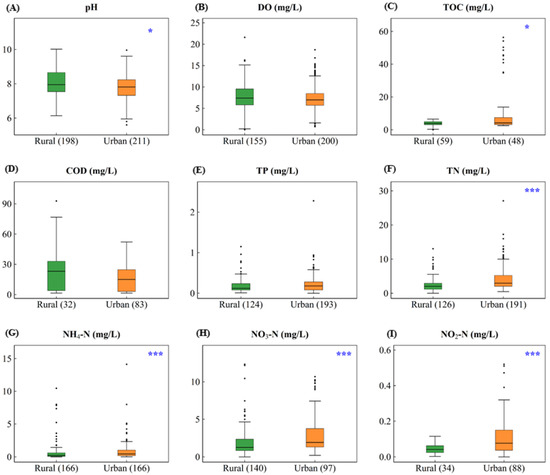
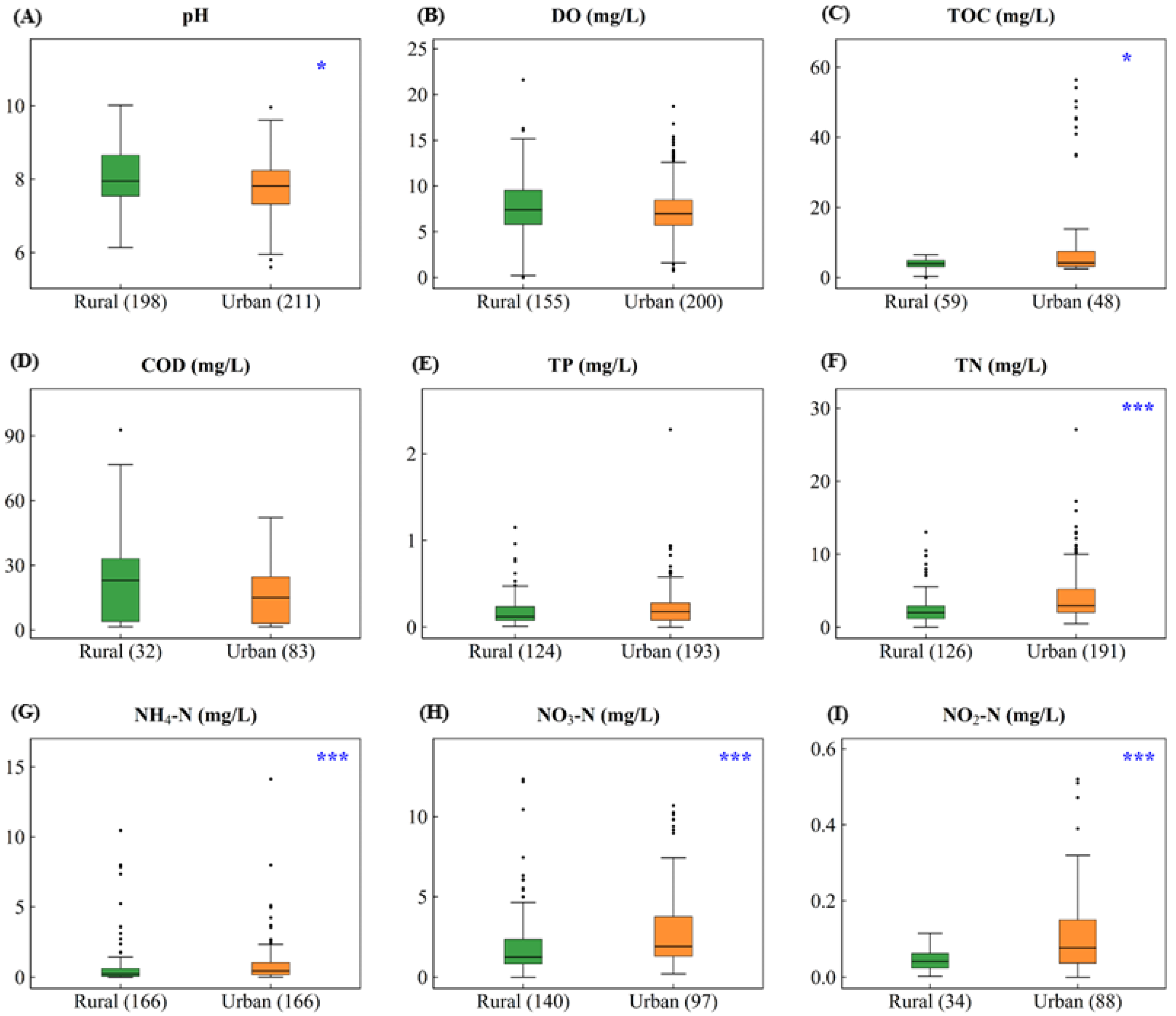
Urban and rural rivers exhibited distinct differences in water quality parameters (Figure 1). Specifically, urban rivers showed significantly higher levels of organic nutrients and nitrogen: the average concentration of TOC reached 12.83 mg/L, significantly higher than the 3.70 mg/L in rural rivers (p < 0.05). The average concentrations of TN, NH4+-N, NO3−-N, and NO2−-N were 4.08 mg/L, 0.93 mg/L, 2.82 mg/L, and 0.120 mg/L, respectively, all significantly higher than those in rural rivers (2.62 mg/L, 0.62 mg/L, 1.93 mg/L, and 0.047 mg/L, respectively) (p < 0.001). The average pH was 7.75 in urban rivers, while it was 7.94 for rural rivers. No significant differences were found between the two river types concerning DO, TP, and COD, although rural rivers exhibited a wider fluctuation range in COD values.
Figure 1.
Comparison of key water quality parameters between urban and rural rivers. (A) pH; (B) DO; (C) TOC; (D) COD; (E) TP; (F) TN; (G) NH4-N; (H) NO3-N; (I) NO2-N. The numbers in parentheses indicate the sample size for each parameter and error bars represent standard deviation. Multiple comparisons are conducted using the Kruskal–Wallis test (* p < 0.05, *** p < 0.001).
3.2. Bacterial Community Composition and Pathogen Distribution
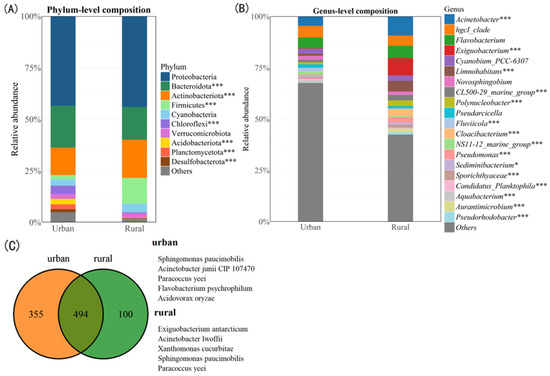
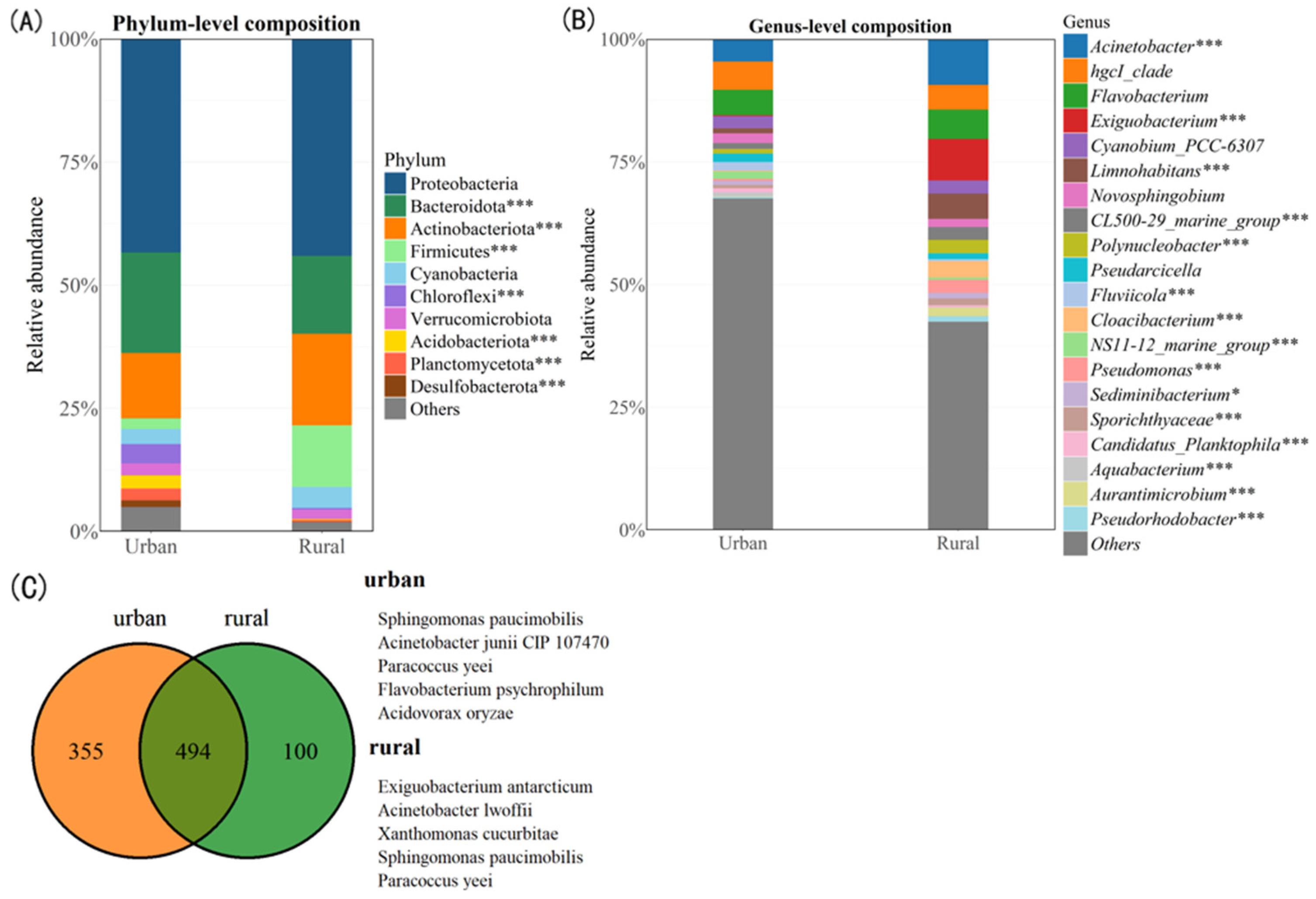
Significant differences in the bacterial community composition at both phylum and genus levels, as well as in pathogen profiles, were observed between urban and rural rivers (Figure 2). At the phylum level, Proteobacteria, Bacteroidota, and Actinobacteriota were the dominant phyla shared by both river types, though their relative abundances differed notably. In urban rivers, the dominant phyla were Proteobacteria (43.37%), Bacteroidota (20.38%), and Actinobacteriota (13.29%), with other phyla present at lower abundances. In rural rivers, the dominant phyla were similarly Proteobacteria (44.06%), Actinobacteriota (18.59%), and Bacteroidota (15.81%). It is noteworthy that the relative abundances of Firmicutes and Cyanobacteria were significantly higher in rural rivers compared with urban rivers (p < 0.05), whereas Chloroflexi and Acidobacteriota were significantly enriched in urban rivers (p < 0.05). At the genus level, Flavobacterium, Acinetobacter, and hgcI_clade were the shared dominant genera. Notably, the relative abundance of Acinetobacter was significantly higher in rural rivers (9.31%) than that in urban rivers (4.54%). Rural rivers were further characterized by Exiguobacterium and Limnohabitans as distinctive dominant genera.
Figure 2.
Differences in bacterial community composition between urban and rural rivers. (A) Relative abundance of the top 10 bacterial phyla; (B) Relative abundance of the top 10 bacterial genera; (C) Venn diagram showing the shared and unique pathogenic bacterial species between urban and rural rivers. Significance levels are denoted as follows: * p < 0.05, *** p < 0.001.
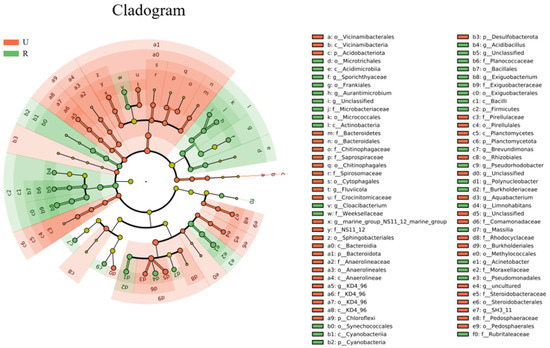
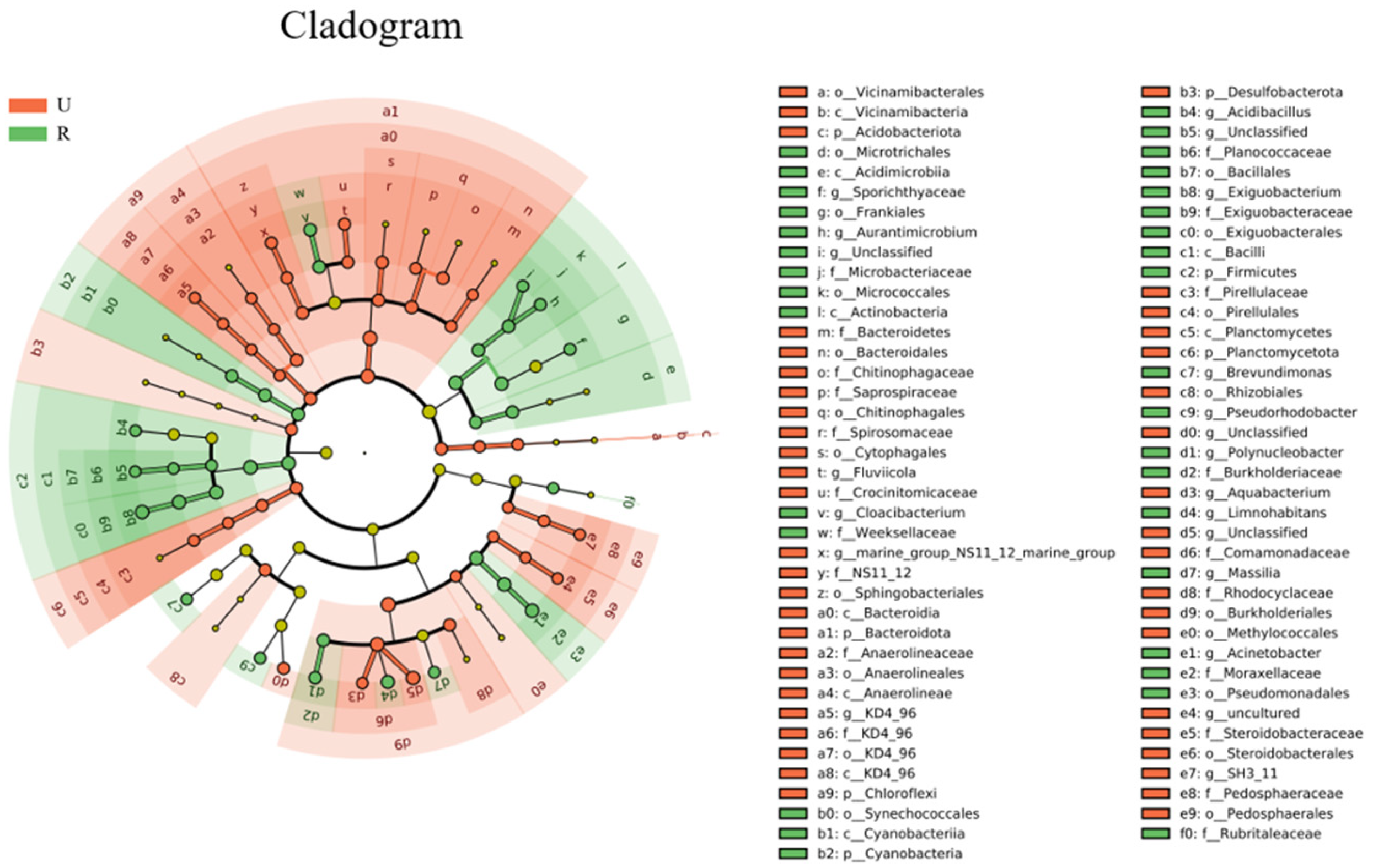
LEfSe analysis further identified 77 differential indicator species (LDA > 3.5). The rural group was mainly enriched with taxa related to Firmicutes, Actinobacteriota, and Cyanobacteria, including genera such as Exiguobacterium, Acinetobacter, Limnohabitans, and Cloacibacterium. In contrast, the urban group was dominated by Chloroflexi, Acidobacteriota, Planctomycetota, and Desulfobacterota (Figure 3), with representative genera including Aquabacterium, Chloroflexi KD4_96, and Pedosphaeraceae SH3_11. Regarding pathogen composition, a total of 849 pathogen species were found in urban rivers and 594 in rural rivers, with 494 species shared between them (Figure 2C). Major pathogens in urban rivers included Sphingomonas paucimobilis, Acinetobacter junii, Paracoccus yeei, Flavobacterium psychrophilum, and Acidovorax oryzae; while rural rivers were dominated by pathogens such as Exiguobacterium antarcticum, Acinetobacter lwoffii, Sphingomonas paucimobilis, and Paracoccus yeei.
Figure 3.
Differential indicator species between urban and rural rivers identified by LEfSe analysis. Linear Discriminant Analysis (LDA) score > 3.5. The cladogram shows taxa significantly enriched in urban or rural rivers from phylum to genus level.
3.3. Alpha and Beta Diversity of Bacterial Communities
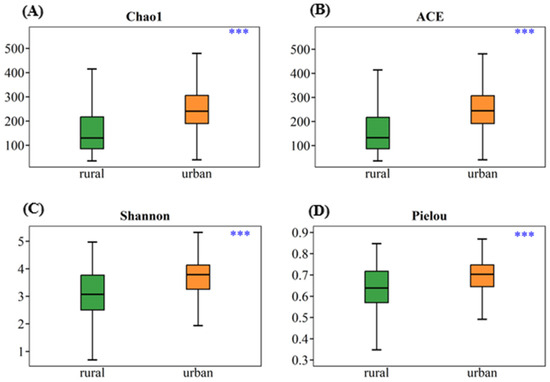
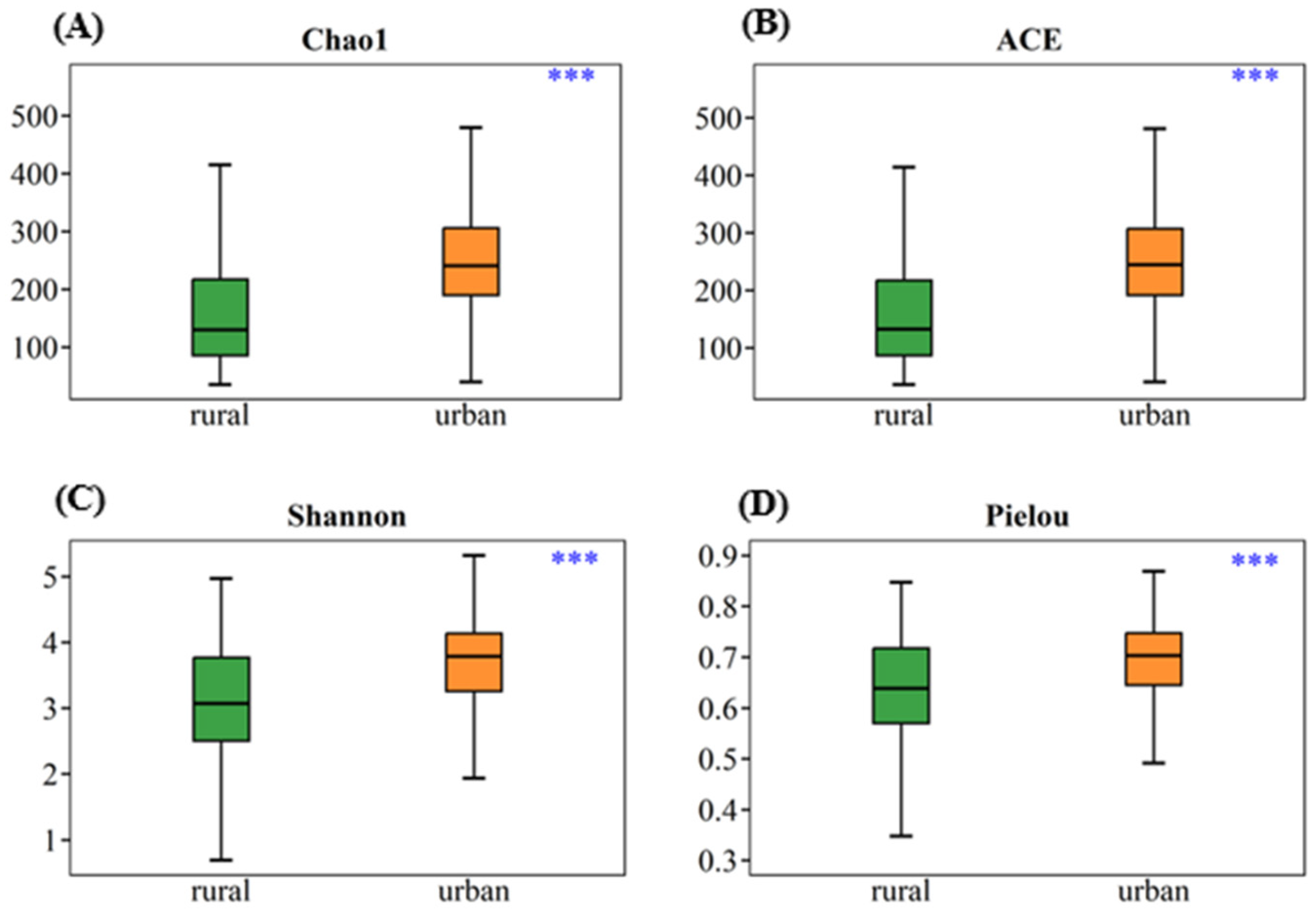
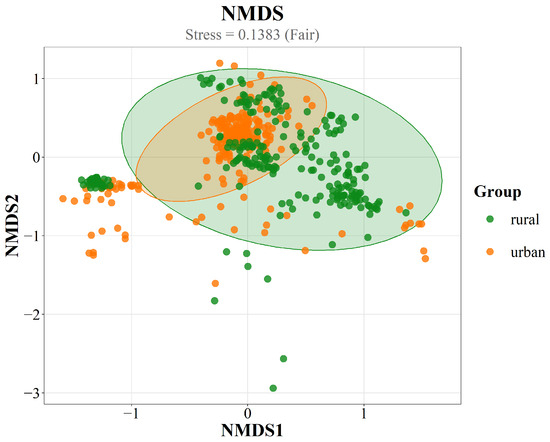
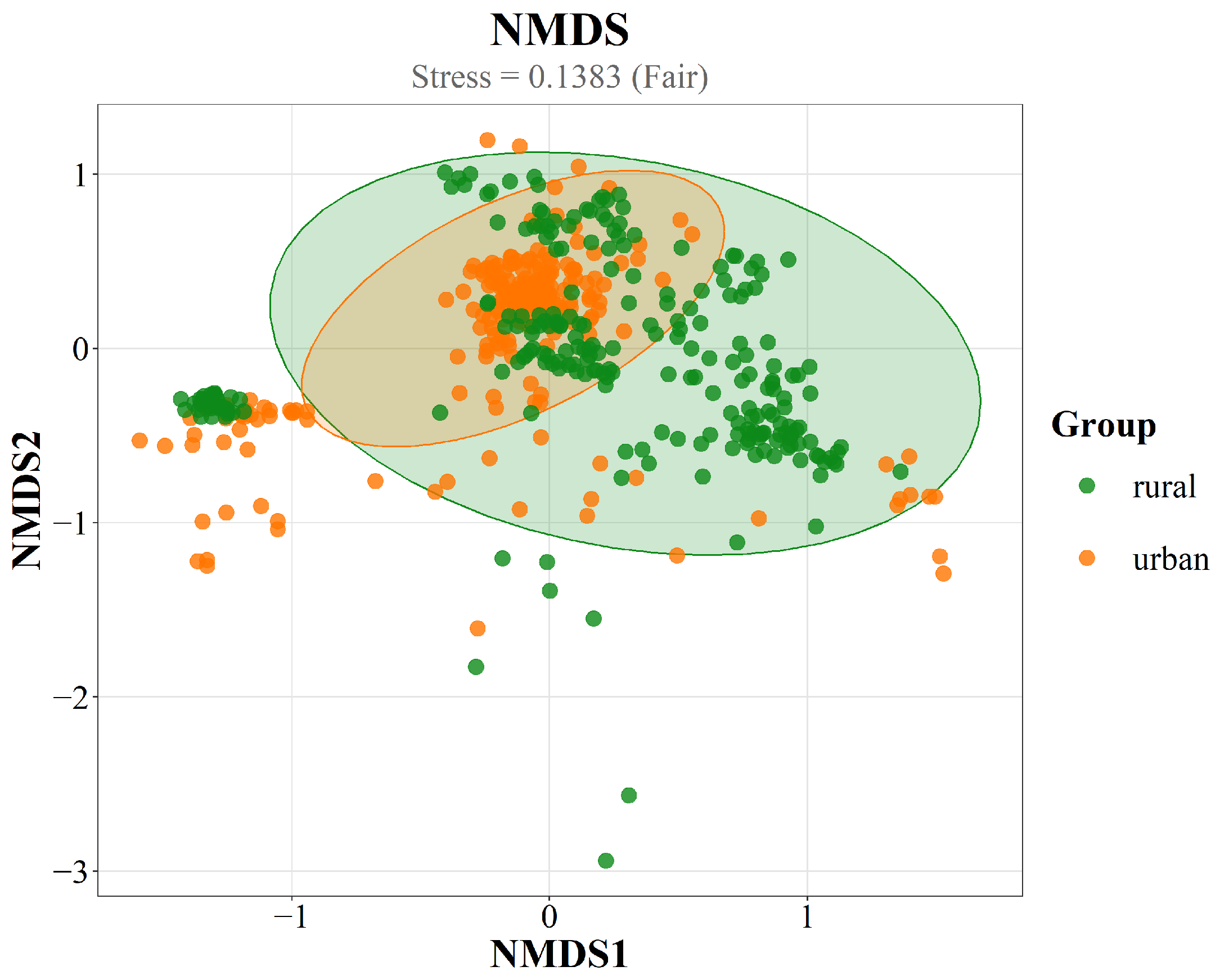
The α-diversity of bacterial communities in urban rivers was significantly higher than that in rural rivers (p < 0.01), and the community structures between the two groups were significantly different (Figure 4 and Figure 5). The mean values of Chao1, ACE, Shannon, and Pielou indices for urban rivers were 253.2, 253.8, 3.67, and 0.68, respectively, all significantly higher than the corresponding mean values of rural rivers (167.4, 168.4, 3.18, 0.64) (p < 0.01). Non-metric Multidimensional Scaling (NMDS) analysis further revealed that community composition among samples from rural rivers was more variable and relatively dispersed; whereas samples from urban rivers clustered more tightly together, indicating greater similarity in bacterial community structure across different sampling sites in urban rivers.
Figure 4.
Comparison of bacterial community alpha diversity between urban and rural rivers. (A) Chao1 richness index; (B) ACE richness index; (C) Shannon diversity index; (D) Pielou evenness index. Multiple comparisons are conducted using the Kruskal–Wallis test (*** p < 0.001).
Figure 5.
NMDS analysis of bacterial community beta diversity between urban and rural rivers. Ellipses represent 95% confidence intervals.
3.4. Co-Occurrence Network Structure and Keystone Species Identification
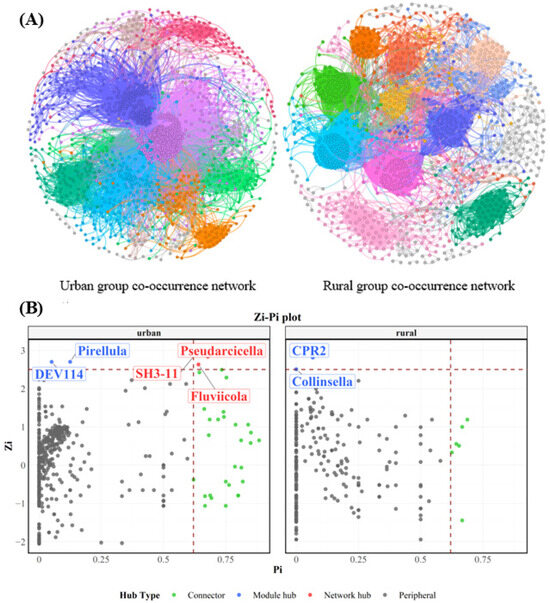
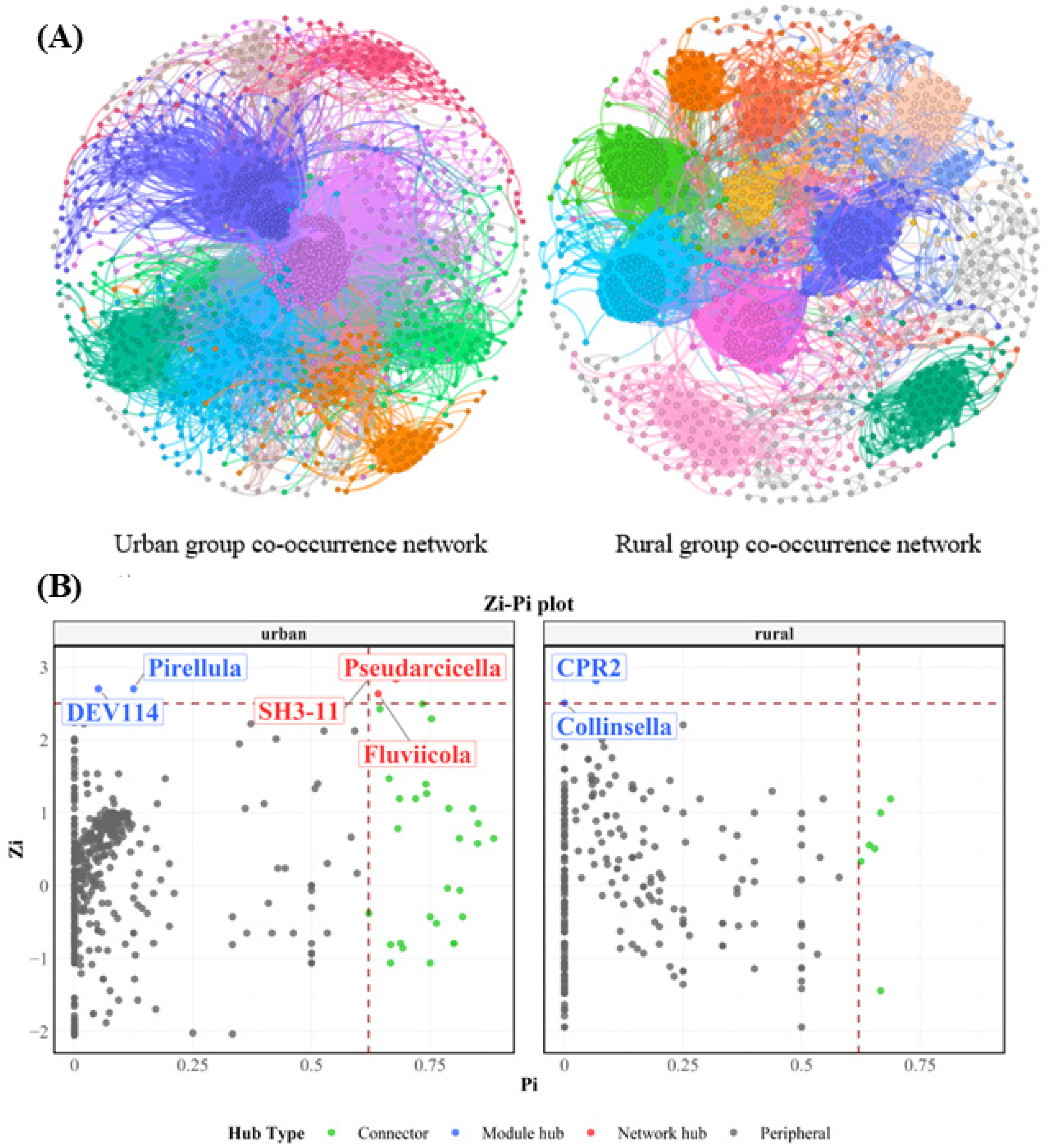
The co-occurrence network structure and ecological functional characteristics of bacterial communities further revealed significant differentiation in microbial interaction patterns and ecosystem processes between urban and rural rivers. Network analysis indicated that bacterial communities of urban river possessed a more complex co-occurrence network (676 nodes and 28,868 edges) (Figure 6A). Its higher average degree (85.41), network density (0.13), and clustering coefficient (0.80) may reflect closer and more frequent interactions among microbial taxa. Keystone species such as Pseudarcicella, SH3-11, and Fluviicola occupied central positions in the network (Figure 6B), playing an important role in maintaining overall structural stability. In contrast, the rural river network exhibited higher modularity (0.59) and lower connectivity (average degree 15.74), indicating a community structure tending towards functional differentiation, with various groups operating within relatively independent modules. Only module hubs like CPR2 and Collinsella were identified.
Figure 6.
Co-occurrence network topology and keystone species of bacterial communities between urban and rural rivers. (A) Microbial co-occurrence networks constructed at the genus level (|r| > 0.6, p < 0.01). Node colors represent module affiliation, and node size is proportional to degree centrality; (B) Identification of keystone species based on Zi-Pi plot. Species are categorized into network hubs, module hubs, connectors, and peripherals according to thresholds (Zi = 2.5, Pi = 0.62).
3.5. Prediction of Community Metabolic Functions
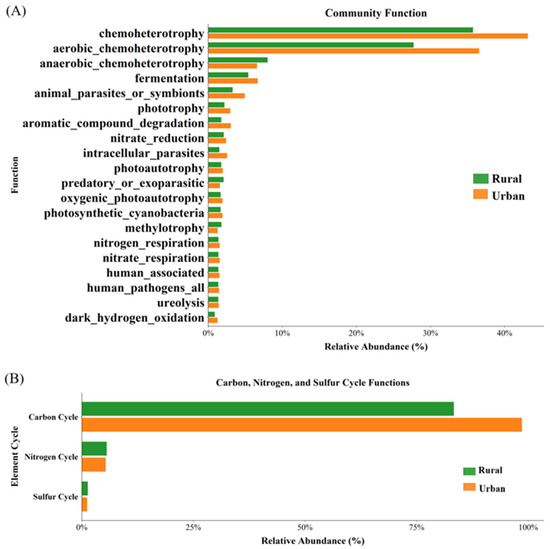
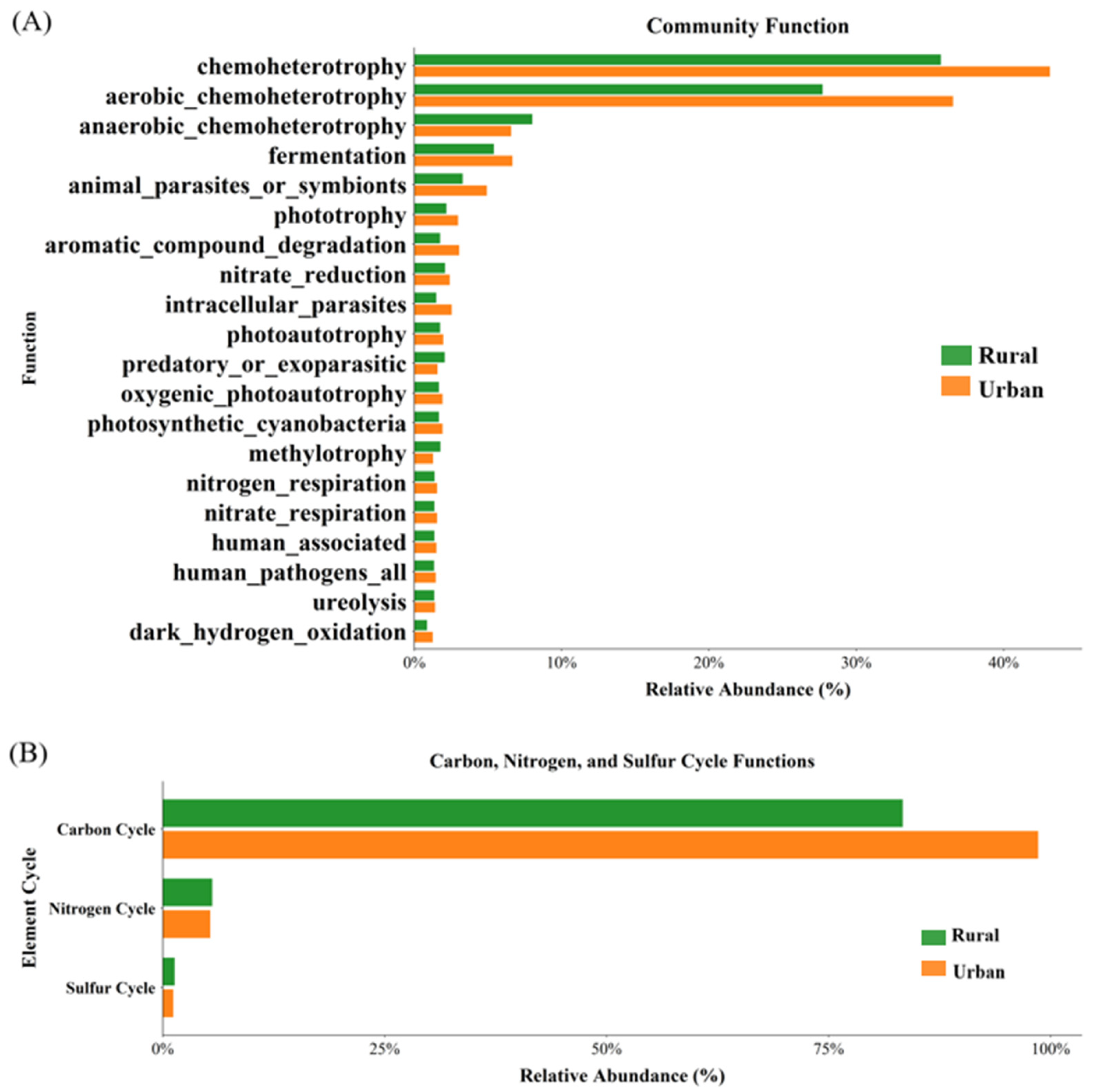
Functional prediction showed that chemoheterotrophy was the core metabolic function shared by both river types. (Figure 7A) However, urban rivers suggested a relatively higher potential for carbon cycle-related functions (e.g., fermentation, aromatic compound degradation), consistent with the degradation functions of enriched phyla like Chloroflexi and Bacteroidota. Although urban rivers had higher nitrogen nutrient concentrations, the predicted potential for nitrogen cycling functions in their bacterial communities showed no significant difference from rural rivers (Figure 7B). This may reflect divergence in nitrogen metabolic pathways: urban river communities might lean more towards oxidative processes like ammonification and nitrification, while taxa enriched in rural rivers, such as Acinetobacter and Limnohabitans, may hold a relative advantage in reductive or removal pathways like denitrification and nitrogen fixation, thus forming distinct nitrogen transformation patterns at the functional level.
Figure 7.
Functional prediction of bacterial communities between urban and rural rivers based on FAPROTAX. (A) Comparison of the top 20 most abundant predict metabolic functions; (B) Differences in the relative abundance of key functions involved in carbon, nitrogen, and sulfur cycles.
3.6. Analysis of Community Assembly Processes
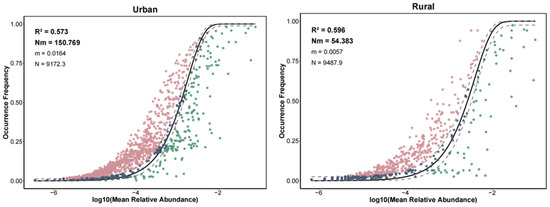
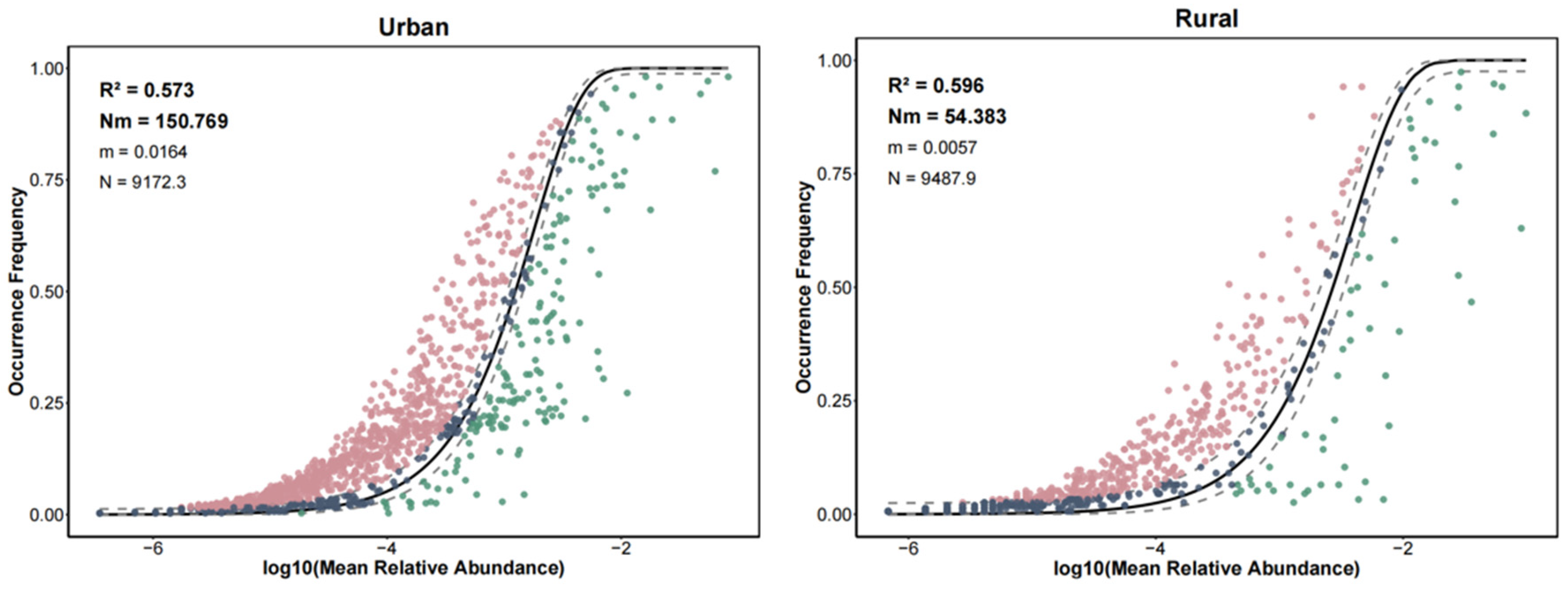
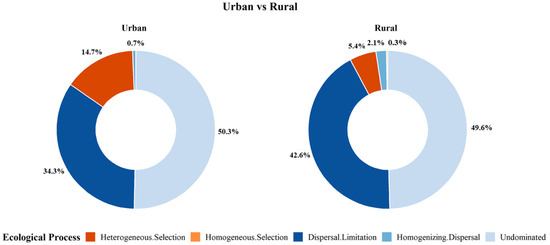
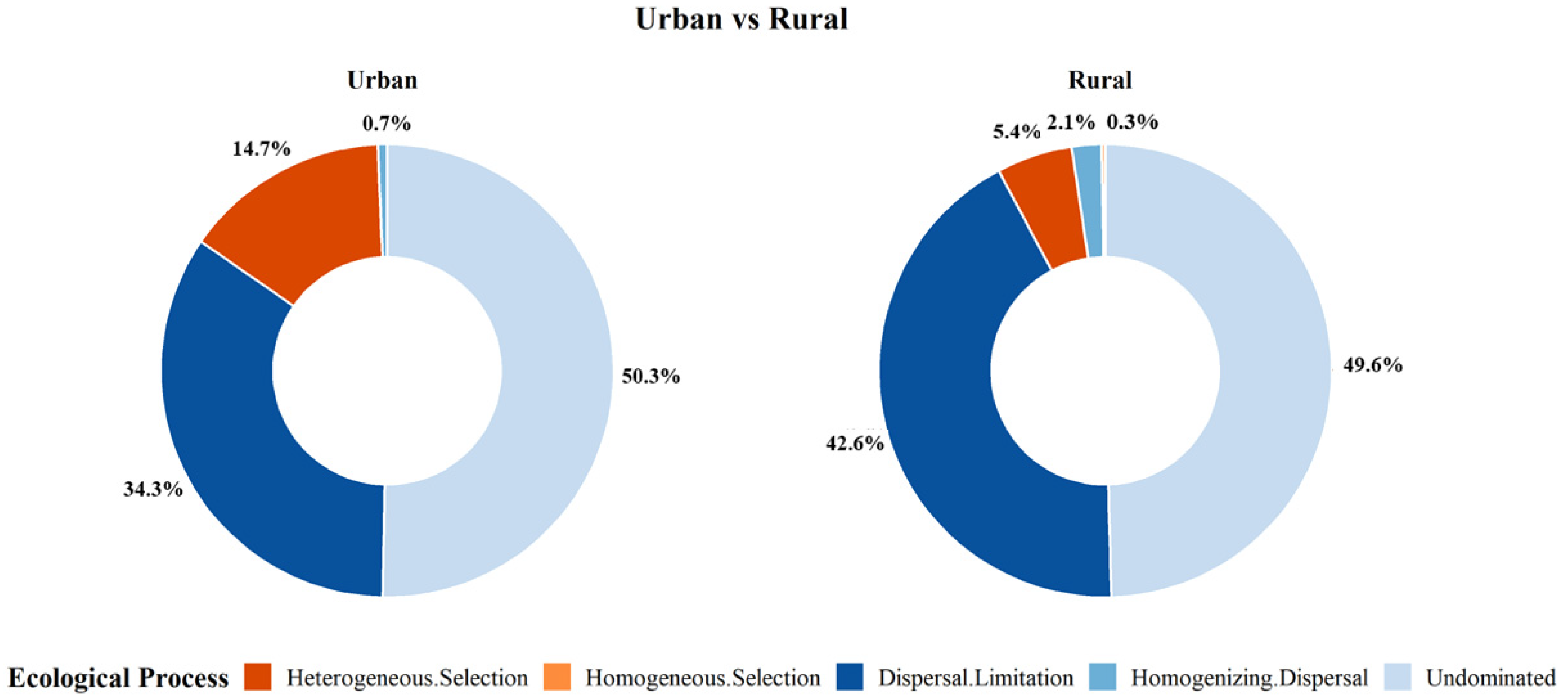
Community assembly is governed by five ecological processes as defined by iCAMP [11,53] specifically: (1) homogeneous selection, where consistent selective pressure under similar environmental conditions leads to community convergence; (2) heterogeneous selection, where divergent selective pressure under different environmental conditions leads to community divergence; (3) dispersal limitation, where low dispersal rates constrain species exchange; (4) homogenizing dispersal, where high dispersal rates promote community similarity; (5) un-dominated processes, where weak selection, weak dispersal, or ecological drift dominates community turnover. The assembly mechanisms of bacterial communities between urban and rural rivers were dominated by stochastic processes, yet the extent of influence from deterministic processes differed significantly (Figure 8 and Figure 9). Fitting based on the neutral model indicated that community assembly in these two rivers exhibited a reasonably high degree of explanation by neutral processes (urban: R2 = 0.573, Nm = 150.769; rural: R2 = 0.596, Nm = 54.383). Further quantification of the contributions of various ecological processes via null model analysis suggested that heterogeneous selection accounted for 14.7% in urban rivers, significantly higher than 5.4% in rural rivers (p < 0.05). In contrast, the proportion of dispersal limitation was greater in rural rivers, reaching 42.6%, compared with 34.3% in urban rivers. The remaining ecological processes, including homogeneous selection, homogeneous dispersal, and undominated processes, contributed relatively lower proportions.
Figure 8.
Fit of NCM to bacterial community assembly between urban and rural rivers. The solid line represents the model fit. R2 indicates the goodness of fit, and Nm represents the metacommunity size time migration rate.
Figure 9.
Quantification of bacterial community assembly processes between urban and rural rivers using the iCAMP model. The bar chart shows the relative percentage contributions of five ecological processes (heterogeneous selection, homogeneous selection, dispersal limitation, homogenizing dispersal, and undominated processes) to community assembly.
4. Discussion
4.1. Water Quality Disparities Between Urban and Rural Rivers
The differences in water quality between urban and rural rivers are likely associated with fundamentally distinct pollution input patterns. Urban rivers are mainly influenced by high-intensity point source pollution, where industrial and domestic wastewater discharges lead to significantly higher concentrations of TOC, TN, and various nitrogen forms (such as NO3−-N and NO2−-N) compared with rural rivers (p < 0.05) [54]. In contrast, rural rivers are predominantly affected by agricultural non-point source pollution, with nutrients such as nitrogen and phosphorus originating from combined inputs of crop cultivation, animal husbandry, and domestic wastewater [8]. Although there is no significant difference in TP concentration between the two river types, studies suggest that the dominant forms of phosphorus may differ: urban rivers are primarily dominated by soluble reactive phosphorus; whereas rural rivers tend to be more influenced by particulate phosphorus [55]. In summary, these water quality differences constitute potential environmental drivers that may shape the distinct microbial community structures between urban and rural rivers.
4.2. Structural and Diversity Differences in Bacterial Communities Between Urban and Rural Rivers
Differences in the structural and diversity of bacterial communities between urban and rural rivers may systematically reflect the environmental selection pressures imposed by distinct anthropogenic disturbance patterns. The identification of 77 differential indicator species (LDA > 3.5) through LEfSe analysis further clarifies that urban and rural rivers are enriched with distinct microbial groups, and implied divergent pollution sources and ecological processes.
The bacterial communities in urban rivers appear to be associated with continuous point-source inputs, characterized by high nutrient levels. At the phylum level, the significant enrichment of Chloroflexi and Acidobacteriota may not only originate from wastewater treatment plant effluents and disturbed soil inputs but also associate with their key roles in degrading complex organic matter and driving carbon cycling [56]. Additionally, Planctomycetota and Desulfobacterota are commonly found in urban rivers. The former is closely linked to anthropogenically disturbed water bodies [54,57], while the latter participates in sulfide oxidation [58], together suggesting active heterotrophic metabolism and sulfur cycling processes in urban waters. At the genus level, Aquabacterium is commonly found in rivers receiving reclaimed water treatment plant effluents [49,59]; while the KD4_96 group has been observed to enrich in rhizosphere environments under high pollution conditions [60]. The enrichment of these groups highlights the direct shaping of microbial composition by urban wastewater discharge and intense anthropogenic pollution.
In contrast, the structure of bacterial communities in rural rivers is more influenced by agricultural non-point source pollution and relatively natural hydrological conditions. The significant enrichment of Firmicutes and Actinobacteriota is a prominent feature. The former strongly indicates pollutant discharge from livestock manure or domestic wastewater [61]; while the latter exhibits higher activity under oligotrophic conditions and may possess a competitive advantage due to the relatively lower nutrient levels in rural rivers [62,63]. The increased proportion of Cyanobacteria suggests better light penetration and a potentially nitrogen-limited ecological state. Genera enriched in rural rivers, including Exiguobacterium, Acinetobacter, and Limnohabitans, are typically associated with agricultural runoff, crop rhizospheres, or oligotrophic freshwater conditions [36,59,64,65]. Meanwhile, the higher abundance of Flavobacterium in rural rivers aligns with its affinity for high DO and low ammonium conditions, as well as its adaptation to fishery-derived and domestic pollution inputs [10,66].
At the diversity level, these habitat differences directly lead to distinct diversity patterns. Urban rivers exhibit significantly higher α-diversity and more homogeneous community structures (lower β-diversity). This is primarily attributed to continuous and relatively homogeneous high nutrient inputs, which create rich ecological niches supporting the coexistence of more taxa [67]. Simultaneously, frequent hydrological disturbances promote microbial dispersal and weaken spatial isolation, resulting in higher and more convergent microbial diversity at the regional scale [68]. In contrast, the lower nutrient levels, more heterogeneous pollution inputs, and more pronounced natural hydrological gradients in rural rivers collectively contribute to lower bacterial diversity and more pronounced spatial differentiation [69,70]. This diversity difference may essentially illustrate the differential restructuring of natural microbial biogeographic patterns by intense, homogeneous anthropogenic disturbances versus dispersed, heterogeneous agricultural activities.
4.3. Co-Occurrence Network and Pathogen Differences Between Urban and Rural Rivers
Network analysis shows that urban river bacterial communities possess more complex co-occurrence networks. This could relate to the relatively homogeneous and resource-rich environment of urban waters, which supports broader niche overlap and competitive-cooperative relationships [71]. Additionally, the diverse functional zones within urban areas may contribute to more complex co-occurrence patterns and potentially influence network stability. In contrast, higher modularity and lower connectivity of rural river networks suggest that their community structure tends toward functional differentiation, with various taxa functioning within relatively independent modules [72]. Only a few module hubs, such as CPR2 and Collinsella, were identified, which are closely associated with scattered pollution inputs and greater spatial heterogeneity in hydrological and nutrient conditions in rural river habitats [73]. It should be noted that the co-occurrence networks are constructed based on statistical correlations, which do not necessarily represent actual ecological interactions. Elucidating genuine biological interactions require further in-depth analysis.
Pathogen analysis further highlights differences in pollution sources. Urban rivers harbor more pathogen species (849 species), dominated by Sphingomonas paucimobilis, Acinetobacter junii, and others commonly found in sewage and human activity-intensive environments [74], suggesting that point-source discharges markedly elevate pathogen-related health risks in urban waters. Rural rivers harbor fewer total pathogens (594 species) yet are enriched in species associated with low-temperature environment or animal intestinal habitats, such as Exiguobacterium antarcticum and Acinetobacter lwoffii, suggesting that agricultural runoff, livestock farming, and cold habitats collectively shape their pathogen composition [75,76]. It should be noted that the number of detected pathogen species may show potential health risks, but their viability and infectivity require further confirmation through more precise experimental data.
These differences in network and functional characteristics collectively demonstrate that intense and homogeneous anthropogenic disturbance in urban rivers suggests highly interconnected bacterial communities with active carbon metabolisms and higher pathogen loads. In contrast, under heterogeneous non-point source influences, rural rivers may develop distinct microbial ecological patterns characterized by pronounced modularity, differentiated nitrogen transformation functions, and pathogen composition closely associated with environmental features.
4.4. Analysis of Assembly Mechanisms and Ecological Processes Between Urban and Rural Rivers
The assembly processes of bacterial communities in urban and rural rivers are both dominated by stochasticity, but the types of deterministic processes that play a leading role are fundamentally different. This may reflect the essential distinctions between the two habitat types in terms of anthropogenic disturbance patterns and natural attributes. By integrating neutral model and phylogenetic null model analyses, this study may confirm that stochastic diffusion and ecological drift serve as the foundational forces maintaining microbial diversity in both river types. However, quantitative analysis further reveals that deterministic processes may shape community structure in distinct ways.
In urban rivers, intense and continuous point-source pollution inputs, such as domestic and industrial wastewater discharges, can generate a relatively stable and homogeneous nutrient environment [77,78]. This condition is associated with a significantly higher contribution of heterogeneous selection observed in this study (14.7%, compared with 5.4% in rural rivers), implying that environmental filtering may play a key role in shaping microbial community assembly. This result aligns with the general characteristics of urban rivers, which typically exhibit high nutrient levels, low DO, and specific organic pollution profiles [79,80]. In other words, bacterial community structure in urban rivers is predominantly shaped by a consistent “environmental filter” that may be driven by anthropogenic pollution. In contrast, rural river habitats may exhibit higher spatial heterogeneity. Their pollution sources are dispersed (non-point agricultural sources), and hydrological conditions are more variable, which may impose stronger constraints on microbial dispersal [81]. Dispersal limitation may contribute more substantially to community assembly in rural rivers (42.6%, compared with 34.3% in urban rivers), highlighting that geographical distance and hydrological connectivity may impose stronger constraints on their community composition. This finding is consistent with the principle that dispersal limitation intensifies with increasing spatial scale [82,83], and partly explains the greater differentiation of microbial communities among rural sampling sites, as reflected by their higher β-diversity and stronger network modularity.
4.5. Limitations of Data Integration
This study conducted a meta-analysis of water quality and biological data (16S rRNA gene sequences) retrieved from multiple published studies. Quality control was strictly implemented for the integration of heterogeneous datasets; nevertheless, several inherent limitations remain in this meta-analysis, which require further discussion. Firstly, the original studies were conducted across inconsistent sampling seasons and hydrological conditions, which might influence microbial community structure and water quality in both rural and urban rivers. Secondly, due to potential publication bias, sampling sites could not be evenly distributed between rural and urban rivers, meaning that the findings of our study reflect potential inferences rather than causal relationships. Thirdly, the 16S rRNA hypervariable regions used for amplification in all samples were V3–V4 and V4–V5. The V3–V4 region offers superior amplification efficiency for dominant bacterial such as Firmicutes and Bacteroidetes, whereas the V4–V5 region is more suitable for the detection of Archaea [84,85]. These two V4 hypervariable regions are widely recognized as among the most robust and informative segments for bacterial diversity analysis [86,87]. Previous studies have demonstrated that sequencing data from these two regions are highly correlated and share strong similarity at the genus and higher taxonomic levers [84,88]. However, different primer sets using for amplification of V3–V4 and V4–V5 may result in variation in taxonomic coverage and resolution, making potential cross-study comparisons difficult, especially for Archaea. Finally, raw individual-level data from all included studies were not accessible, leading this study to rely heavily on secondary data.
5. Conclusions
This study systematically compared the differences in the composition, diversity, co-occurrence networks, functional potential, and assembly mechanisms of planktonic bacterial communities between urban and rural rivers in China by integrating nationwide water quality and microbial sequencing data. The main conclusions are as follows: (1) Urban rivers exhibited significantly higher nutrient loads and bacterial alpha diversity. Their communities were enriched with phyla such as Chloroflexi and Acidobacteriota, and their co-occurrence networks were more complex and tightly connected. In contrast, rural rivers were enriched with Firmicutes, Cyanobacteria, and some genera such as Exiguobacterium and Limnohabitans. Their communities showed higher network modularity and greater spatial heterogeneity. (2) In terms of functional aspects, urban river bacterial communities were predicted to possess a potentially higher capacity for carbon cycling; whereas nitrogen cycling functions showed no significant difference between urban and rural rivers, implying a divergence in elemental cycling pathways between the two systems. Urban rivers may also harbor a greater diversity of pathogenic bacteria than that in rural rivers. (3) Regarding community assembly mechanisms, stochastic processes dominated in both river types; however, the contribution of heterogeneous selection may be significantly stronger in urban rivers. Rural rivers were more influenced by dispersal limitation, highlighting the spatial heterogeneity of their habitats.
This study revealed macro-scale divergence patterns in bacterial communities between urban and rural rivers through data integration. However, limitations in data sources and integration methods, such as inconsistencies in sampling seasons, hydrological conditions, and analytical approaches, may affect the interpretation of some results. Future studies could further combine seasonal monitoring and meta-genomic sequencing to elucidate the metabolic functions and ecological processes of key taxa at higher spatiotemporal resolutions. Additionally, greater emphasis should be placed on tracing and assessing biological risk factors such as pathogenic bacteria to provide more direct microbiological evidence for water quality safety management.
Supplementary Materials
The following supporting information can be downloaded at: https://www.mdpi.com/article/10.3390/microorganisms14061185/s1, Table S1: The information of the relevant points involved in the analysis of biological sequences; Table S2: Water Quality Data Table; Table S3: Source of water quality and microbial data.xlsx; Table S4: Water Quality Index Measurement Method.xlsx.
Author Contributions
L.W.: Writing—reviewing and editing, Funding acquisition, supervision. S.L.: Writing—original draft, conceptualization, visualization, data curation and analysis. F.Y.: data curation. J.L.: formal analysis. X.L.: Conceptualization, Funding acquisition, Project administration. Y.T.: Writing—reviewing and editing, methodology, formal analysis, visualization. All authors have read and agreed to the published version of the manuscript.
Funding
This research was funded by the Open Bidding for Selecting the Best Candidates Project of the Institute of Advanced Materials, Beijing University of Civil Engineering and Architecture, and Natural Science Foundation of Beijing, China (Grant No. 8182058) and the National Natural Science Foundation of China (Grant No. 21306180).
Institutional Review Board Statement
Not applicable.
Informed Consent Statement
Not applicable.
Data Availability Statement
All biological sequence data used in this study are publicly available through the National Center for Biotechnology Information (https://pubmed.ncbi.nlm.nih.gov/ (accessed on 1 January 2026)). All relevant site numbers are provided. The assembled and processed datasets are available from the corresponding author upon reasonable request.
Conflicts of Interest
The authors declare no conflicts of interest.
References
- Dudgeon, D.; Arthington, A.H.; Gessner, M.O.; Kawabata, Z.-I.; Knowler, D.J.; Lévêque, C.; Naiman, R.J.; Prieur-Richard, A.-H.; Soto, D.; Stiassny, M.L.J.; et al. Freshwater biodiversity: Importance, threats, status and conservation challenges. Biol. Rev. 2006, 81, 163–182. [Google Scholar] [CrossRef] [Scilit]
- Fang, W.K.; Fan, T.Y.; Wang, S.; Yu, X.K.; Lu, A.K.; Wang, X.M.; Zhou, W.M.; Yuan, H.J.; Zhang, L. Seasonal changes driving shifts in microbial community assembly and species coexistence in an urban river. Sci. Total Environ. 2023, 905, 167027. [Google Scholar] [CrossRef] [Scilit]
- Sun, H.W.; Giesy, J.P.; Jin, X.W.; Wang, J. Tiered probabilistic assessment of organohalogen compounds in the Han River and Danjiangkou Reservoir, central China. Sci. Total Environ. 2017, 586, 163–173. [Google Scholar] [CrossRef] [Scilit]
- Xiao, J.M.; Zhang, B.W.; Zhang, R.B.; Xiong, F.; Liu, H.; Xiang, Z.C.; Wei, Y.F.; Xia, M.; Wu, N.C. Impact of land use on antibiotic resistance genes and bacterial communities in rivers. Environ. Res. 2025, 276, 121475. [Google Scholar] [CrossRef] [Scilit] [PubMed]
- Jiao, G.H.; Huang, Y.; Tang, H.; Chen, Y.; Zhou, D.; Yu, D.M.; Ma, Z.J.; Ni, S.J. Unveiling the hidden impact: How human disturbances threaten aquatic microorganisms in cities. Sci. Total Environ. 2024, 950, 175305. [Google Scholar] [CrossRef] [Scilit] [PubMed]
- Fan, Y.F.; Chen, K.; Dai, Z.T.; Peng, J.R.; Wang, F.F.; Liu, H.B.; Xu, W.F.; Huang, Q.J.; Yang, S.C.; Cao, W.Z. Land use/cover drive functional patterns of bacterial communities in sediments of a subtropical river, China. Sci. Total Environ. 2024, 947, 174564. [Google Scholar] [CrossRef] [Scilit] [PubMed]
- Huang, H.Q.; Liu, J.H.; Zhang, F.H.; Zhu, K.W.; Yang, C.H.; Xiang, Q.J.; Lei, B. Characteristics of planktonic and sediment bacterial communities in a heavily polluted urban river. PeerJ 2021, 9, e10866. [Google Scholar] [CrossRef] [Scilit]
- Chen, T.; Lu, J.Y.; Lu, T.; Yang, X.D.; Zhong, Z.; Feng, H.J.; Wang, M.Z.; Yin, J. Agricultural non-point source pollution and rural transformation in a plain river network: Insights from Jiaxing city, China. Environ. Pollut. 2023, 333, 121953. [Google Scholar] [CrossRef] [Scilit]
- Zhang, L.; Tu, D.M.; Li, X.C.; Lu, W.X.; Li, J. Impact of long-term industrial contamination on the bacterial communities in urban river sediments. BMC Microbiol. 2020, 20, 254. [Google Scholar] [CrossRef] [Scilit]
- Wu, D.; Xu, Z.; Min, S.; Wang, J.; Min, J. Characteristics of microbial community structure and influencing factors of Yangcheng Lake and rivers entering Yangcheng Lake during the wet season. Environ. Sci. Pollut. Res. 2024, 31, 9565–9581. [Google Scholar] [CrossRef] [Scilit]
- Ning, D.L.; Yuan, M.T.; Wu, L.W.; Zhang, Y.; Guo, X.; Zhou, X.S.; Yang, Y.F.; Arkin, A.P.; Firestone, M.K.; Zhou, J.Z. A quantitative framework reveals ecological drivers of grassland microbial community assembly in response to warming. Nat. Commun. 2020, 11, 4717. [Google Scholar] [CrossRef] [Scilit]
- Zheng, L.; Wang, X.; Ren, M.L.; Yuan, D.D.; Tan, Q.Y.; Xing, Y.Z.; Xia, X.F.; Xie, E.; Ding, A.Z. Comparing with oxygen, nitrate simplifies microbial community assembly and improves function as an electron acceptor in wastewater treatment. Environ. Pollut. 2022, 314, 120243. [Google Scholar] [CrossRef] [Scilit]
- Jiao, C.C.; Zhao, D.Y.; Zeng, J.; Guo, L.; Yu, Z.B. Disentangling the seasonal co-occurrence patterns and ecological stochasticity of planktonic and benthic bacterial communities within multiple lakes. Sci. Total Environ. 2020, 740, 120243. [Google Scholar] [CrossRef] [Scilit] [PubMed]
- Yang, Q.; Yan, Y.F.; Huang, J.H.; Wang, Z.L.; Feng, M.J.; Cheng, H.W.; Zhang, P.Y.; Zhang, H.; Xu, J.; Zhang, M. The impact of warming on assembly processes and diversity patterns of bacterial communities in mesocosms. Microorganisms 2023, 11, 2807. [Google Scholar] [CrossRef] [Scilit]
- García-Aljaro, C.; Martín-Díaz, J.; Viñas-Balada, E.; Calero-Cáceres, W.; Lucena, F.; Blanch, A.R. Mobilisation of microbial indicators, microbial source tracking markers and pathogens after rainfall events. Water Res. 2017, 112, 248–253. [Google Scholar] [CrossRef] [Scilit] [PubMed]
- Tian, L.; Wang, L. A meta-analysis of microbial community structures and associated metabolic potential of municipal wastewater treatment plants in global scope. Environ. Pollut. 2020, 263, 114598. [Google Scholar] [CrossRef] [Scilit]
- Cai, X.L.; Yao, L.; Hu, Y.Y.; Wang, S.Y.; Wang, Z.F.; Dahlgren, R.A. Water temperature and organic carbon control spatio-temporal dynamics of particle-attached and free-living bacterial communities in a hypereutrophic urban river network. Freshw. Biol. 2023, 68, 1627–1645. [Google Scholar] [CrossRef] [Scilit]
- Dan, Y.; Sheng, Z.W.; Yu, F.Q.; Zhang, C.; Ni, C.H.; Li, C. The research on microbial diversity of Hechuan reach for Jialing River in autumn. Freshw. Fish. 2019, 49, 3–8. (In Chinese) [Google Scholar] [CrossRef]
- Du, W.R.; Li, J.C.; Zhang, G.H.; Yu, K.; Liu, S.F. Spatiotemporal variations in Co-Occurrence patterns of planktonic prokaryotic microorganisms along the Yangtze River. Microorganisms 2024, 12, 1282. [Google Scholar] [CrossRef] [Scilit]
- Gao, P.F.; Wang, P.; Huang, Y.; Ding, M.J.; Zhang, H.; Nie, M.H.; Huang, G.X. Bacterioplankton communities and assembly mechanisms in wet season of lakes, Nanchang. Environ. Sci. Technol. 2023, 44, 1475–1483. (In Chinese) [Google Scholar] [CrossRef] [Scilit]
- Geng, J.; Zhang, W.H.; Liang, S.X.; Xue, N.A.; Song, W.J.; Yang, Y.Y. Diversity and biogeography of bacterial community in the Ili River network varies locally and regionally. Water Res. 2024, 256, 121561. [Google Scholar] [CrossRef] [Scilit]
- Guo, Y.S.; Yu, Z.; Hao, W.B.; Meng, F.G. Impacts of treated wastewater on bacterial and fungal microbial communities in receiving rivers. Environ. Sci. 2024, 45, 2246–2258. (In Chinese) [Google Scholar] [CrossRef]
- Hao, J.; Zhang, M.R.; Zhang, Z.X.; Wang, X.; Liu, S.; Zhou, W.Z. Effects of river water quality on bacterioplankton and pathogens communities. J. Shandong Univ. (Eng. Sci.) 2024, 54, 160–170. (In Chinese) [Google Scholar]
- Hou, X.C.; Zhu, Y.N.; Wu, L.; Wang, J.; Yan, W.; Gao, S.Y.; Wang, Y.; Ma, Y.S.; Wang, Y.F.; Peng, Z.Y.; et al. The investigation of the physiochemical factors and bacterial communities indicates a low-toxic infectious risk of the Qiujiang River in Shanghai, China. Environ. Sci. Pollut. Res. 2023, 30, 69135–69149. [Google Scholar] [CrossRef] [Scilit] [PubMed]
- Ji, B.; Liu, C.; Liang, J.C.; Wang, J. Seasonal succession of bacterial communities in three eutrophic freshwater lakes. Int. J. Environ. Res. Public Health 2021, 18, 6950. [Google Scholar] [CrossRef] [Scilit]
- Li, H.K.; Yang, Y.K.; Wang, B.; Chen, S.; Wen, X.Y.; Feng, X.Q.; Tang, Y. Structure-activity relationship between microbial community and endogenous pollution in urban river. Environ. Sci. Technol. 2021, 44, 29–36. (In Chinese) [Google Scholar] [CrossRef]
- Li, J.; Sun, Y.; Zhang, X.; Pan, C.; Zhang, S.; Zheng, B. Water quality and microbial community in the context of ecological restoration: A case study of the Yongding River, Beijing, China. Int. J. Environ. Res. Public Health 2022, 19, 13056. [Google Scholar] [CrossRef] [Scilit]
- Li, Y.S.; Lou, D.M.; Zhou, X.F.; Zhuang, X.C.; Wang, C.D. Alteration of bacterial community composition in the sediments of an urban artificial river caused by sewage discharge. PeerJ 2024, 12, e16931. [Google Scholar] [CrossRef] [Scilit]
- Liao, X.; Wang, H.; Wu, D.; Grossart, H.-P.; Yang, X.; Li, L.; Wang, Y.; Li, S.; Li, J.; Cao, M.; et al. Geographical and environmental factors differentially shape planktonic microbial community assembly and resistomes composition in urban rivers. Glob. Change Biol. 2025, 31, e70211. [Google Scholar] [CrossRef] [Scilit]
- Liu, X.C.; Wang, H.J.; Wang, Y.L.; Wang, Y.J.; Liu, L. Distribution characteristics and influencing factors of bacteria community structure in water and sediments of Fuhe River. Asian J. Ecotoxicol. 2021, 16, 120–135. (In Chinese) [Google Scholar]
- Liu, Y.; Guo, W.; Wei, C.; Huang, H.; Nan, F.; Liu, X.; Liu, Q.; Lv, J.; Feng, J.; Xie, S. Rainfall-induced changes in aquatic microbial communities and stability of dissolved organic matter: Insight from a Fen river analysis. Environ. Res. 2024, 246, 118107. [Google Scholar] [CrossRef] [Scilit]
- Mai, Y.; Peng, S.; Lai, Z.; Wang, X. Seasonal and inter-annual variability of bacterioplankton communities in the subtropical Pearl River Estuary, China. Environ. Sci. Pollut. Res. 2022, 29, 21981–21997. [Google Scholar] [CrossRef] [Scilit]
- Min, S.A.; Xu, Z.P.; Wu, D.; Wang, J.H.; Zhi, Y.; Dai, Y.B.; Ding, W. Characteristics of microbial community structure and influencing factors in rivers flowing into Changdang Lake during the wet season. Chin. J. Environ. Eng. 2024, 18, 471–480. (In Chinese) [Google Scholar]
- Ouyang, L.; Liu, X.Y.; Chen, H.R.; Yang, X.W.; Li, S.F.; Li, S.F. Comparison of the microbial communities affected by different environmental factors in a polluted river. Water 2022, 14, 3844. [Google Scholar] [CrossRef] [Scilit]
- Wang, P.; Chen, B.; Yuan, R.; Li, C.; Li, Y. Characteristics of aquatic bacterial community and the influencing factors in an urban river. Sci. Total Environ. 2016, 569–570, 382–389. [Google Scholar] [CrossRef] [Scilit] [PubMed]
- Qin, H.M.; Jia, X.Y.; Wang, L.; Wang, Z.Y.; Chen, X.L.; Wang, Y.W.; Sun, M.F.; Qi, Q.; Yang, Y.W. Evaluation of the influence of habitat heterogeneity and human activities on the distribution of microbial diversity in a high elevation drop river. Diversity 2023, 15, 698. [Google Scholar] [CrossRef] [Scilit]
- Shu, W.; Wang, P.; Xu, Q.; Zeng, T.; Ding, M.; Zhang, H.; Nie, M.; Huang, G. Coupled effects of landscape structures and water chemistry on bacterioplankton communities at multi-spatial scales. Sci. Total Environ. 2022, 811, 151350. [Google Scholar] [CrossRef] [Scilit]
- Sun, H.; Pan, B.; He, H.; Zhao, G.; Hou, Y.; Zhu, P. Assembly processes and co-occurrence relationships in the bacterioplankton communities of a large river system. Ecol. Indic. 2021, 126, 107643. [Google Scholar] [CrossRef] [Scilit]
- Sun, S.J.; Qiao, Z.Y.; Sun, K.X.; Huo, D. Assembly process and co-occurrence network of microbial community in response to free ammonia gradient distribution. Microbiol. Spectr. 2024, 12, e0105124. [Google Scholar] [CrossRef] [Scilit]
- Tan, Q.Y.; Lyu, J.Y.; Bai, X.Y.; Cheng, L.R.; Li, X.Y.; Zheng, L. Vertical distribution and source tracking analysis of bacteria composition and nitrogen metabolism function of a typical urban inland river. Environ. Sci. 2023, 44, 1497–1507. (In Chinese) [Google Scholar] [CrossRef] [Scilit]
- Wang, L.; Zhang, J.; Li, H.; Yang, H.; Peng, C.; Peng, Z.; Lu, L. Shift in the microbial community composition of surface water and sediment along an urban river. Sci. Total Environ. 2018, 627, 600–612. [Google Scholar] [CrossRef] [Scilit] [PubMed]
- Wu, B.B.; Wang, P.; Ding, M.J.; Huang, G.X.; Zhang, H.; Yan, C.X.; Nie, M.H. Effects of anthropogenic intensity on bacterioplankton community structure in Jinjiang River. Acta Sci. Circumstantiae 2022, 42, 459–473. (In Chinese) [Google Scholar] [CrossRef]
- Zhang, B.H.; Ding, N.; Sun, H.T.; Tian, Y.L.; Fan, R.; Song, J.X.; Guo, J.H. Response of microbial communities in urban river sediments to wastewater treatment plant discharge. South-North Water Transf. Water Sci. Technol. 2022, 20, 1117–1127. (In Chinese) [Google Scholar] [CrossRef]
- Zhang, D.Y.; Zong, Y.C.; Qiao, Y.; Wang, J.; Hu, L.C. Bacterial community structure and its influencing factors in surface sediments of the Nyang River in the dry season, China. Appl. Ecol. Environ. Res. 2023, 21, 2699–2718. [Google Scholar] [CrossRef] [Scilit]
- Zhang, Q.Q.; Jian, S.L.; Li, K.M.; Wu, Z.B.; Guan, H.T.; Hao, J.W.; Wang, S.Y.; Lin, Y.Y.; Wang, G.J.; Li, A.H. Community structure of bacterioplankton and its relationship with environmental factors in the upper reaches of the Heihe River in Qinghai Plateau. Environ. Microbiol. 2021, 23, 1210–1221. [Google Scholar] [CrossRef] [Scilit]
- Zhang, T.; Xu, S.; Yan, R.M.; Wang, R.Y.; Gao, Y.X.; Kong, M.; Yi, Q.T.; Zhang, Y.M. Similar geographic patterns but distinct assembly processes of abundant and rare bacterioplankton communities in river networks of the Taihu Basin. Water Res. 2022, 211, 118057. [Google Scholar] [CrossRef] [Scilit]
- Zhang, Y.; Zhou, C.; Wen, X.; Liu, H.; Jiang, Z.; Wang, Y.; Zhou, Q.; Guo, W.; Zhang, Z. Characteristics of bacterial communities in a rural river water restored by ecological floating beds with Oenathe javanica. Ecol. Eng. 2023, 187, 106823. [Google Scholar] [CrossRef] [Scilit]
- Zhang, Y.T.; Wang, M.; Cheng, W.; Huang, C.; Ren, J.H.; Zhai, H.Q.; Niu, L. Temporal and spatial variation characteristics and influencing factors of bacterial community in urban landscape lakes. Microb. Ecol. 2023, 86, 2424–2435. [Google Scholar] [CrossRef] [Scilit]
- Zhao, X.; Xie, E. Reclaimed water influences bacterioplankton and bacteriobenthos communities differently in river networks. Water Res. 2023, 243, 120389. [Google Scholar] [CrossRef] [Scilit] [PubMed]
- State Council of the People’s Republic of China. Provisions on the Classification of Urban and Rural Areas for Statistical Purposes; Guo Han [2008] No. 60; State Council of the People’s Republic of China: Beijing, China, 2008.
- Li, M.Y.; Li, Q.; Wang, S.R.; Wang, X.J.; Li, Q.S.; Liu, W.; Yu, J.H.; Zhang, G.Q.; Wang, J.J.; Wu, Q.L.; et al. The diversity and biogeography of bacterial communities in lake sediments across different climate zones. Environ. Res. 2024, 263, 120028. [Google Scholar] [CrossRef] [Scilit] [PubMed]
- Yang, X.; Jiang, G.; Zhang, Y.; Wang, N.; Zhang, Y.; Wang, X.; Zhao, F.-J.; Xu, Y.; Shen, Q.; Wei, Z. MBPD: A multiple bacterial pathogen detection pipeline for One Health practices. iMeta 2023, 2, e82. [Google Scholar] [CrossRef] [Scilit]
- Stegen, J.C.; Lin, X.; Fredrickson, J.K.; Chen, X.; Kennedy, D.W.; Murray, C.J.; Rockhold, M.L.; Konopka, A. Quantifying community assembly processes and identifying features that impose them. ISME J. 2013, 7, 2069–2079. [Google Scholar] [CrossRef] [Scilit] [PubMed]
- Xu, X.M.; Wang, J.W.; Zheng, T.; Zhao, X.H.; Wang, Y.C. Human land uses alter the structure and potential function of bacterial communities across an urban river of western China. Environ. Pollut. 2025, 384, 126996. [Google Scholar] [CrossRef] [Scilit] [PubMed]
- Zhang, L.; Shao, S.H.; Liu, C.; Xu, T.T.; Fan, C.X. Forms of nutrients in rivers flowing into Lake Chaohu: A comparison between urban and rural rivers. Water 2015, 7, 4523–4536. [Google Scholar] [CrossRef] [Scilit]
- Wu, G.; Yu, F.F.; Yuan, M.M.; Wang, J.B.; Liu, C.; He, W.Z.; Ge, Z.H.; Sun, Y.X.; Liu, Y. Responses of rhizosphere bacterial and fungal communities to the long-term continuous monoculture of Water Oat. Microorganisms 2022, 10, 2174. [Google Scholar] [CrossRef] [Scilit] [PubMed]
- Numberger, D.; Zoccarato, L.; Woodhouse, J.; Ganzert, L.; Sauer, S.; Marquez, J.R.G.; Domisch, S.; Grossart, H.P.; Greenwood, A.D. Urbanization promotes specific bacteria in freshwater microbiomes including potential pathogens. Sci. Total Environ. 2022, 845, 157321. [Google Scholar] [CrossRef] [Scilit]
- Murphy, C.L.; Biggerstaff, J.; Eichhorn, A.; Ewing, E.; Shahan, R.; Soriano, D.; Stewart, S.; VanMol, K.; Walker, R.; Walters, P.; et al. Genomic characterization of three novel Desulfobacterota classes expand the metabolic and phylogenetic diversity of the phylum. Environ. Microbiol. 2021, 23, 4326–4343. [Google Scholar] [CrossRef] [Scilit]
- Fan, T.Y.; Chen, Y.X.; Wang, Y.L.; Fang, W.K.; Pan, J.H.; Li, C.Q.; Zhou, W.M.; Xu, Q.; Zhang, L. Aquatic microbial community characteristics and influencing factors in urban landscape rivers. Pol. J. Environ. Stud. 2022, 31, 5661–5673. [Google Scholar] [CrossRef] [Scilit]
- Liu, R.L.; Wei, X.; Song, W.Z.; Wang, L.; Cao, J.W.; Wu, J.X.; Thomas, T.; Jin, T.; Wang, Z.X.; Wei, W.X.; et al. Novel chloroflexi genomes from the deepest ocean reveal metabolic strategies for the adaptation to deep-sea habitats. Microbiome 2022, 10, 75. [Google Scholar] [CrossRef] [Scilit]
- Zhang, Q.Q.; Zhao, J.; Wang, G.J.; Guan, H.T.; Wang, S.Y.; Yang, J.C.; Zhang, J.Y.; Jian, S.L.; Ouyang, L.J.; Wu, Z.B.; et al. Differences of bacterioplankton communities between the source and upstream regions of the Yangtze River: Microbial structure, co-occurrence pattern, and environmental influencing factors. Braz. J. Microbiol. 2024, 55, 571–586. [Google Scholar] [CrossRef] [Scilit]
- Allgaier, M.; Brückner, S.; Jaspers, E.; Grossart, H.P. Intra- and inter-lake variability of free-living and particle-associated Actinobacteria communities. Environ. Microbiol. 2007, 9, 2728–2741. [Google Scholar] [CrossRef] [Scilit]
- Tan, Q.Y.; Zhang, G.Y.; Ding, A.Z.; Bian, Z.Y.; Wang, X.; Xing, Y.Z.; Zheng, L. Anthropogenic land-use activities within watersheds reduce comammox activity and diversity in rivers. J. Environ. Manag. 2023, 338, 117841. [Google Scholar] [CrossRef] [Scilit]
- Xiao, P.; Wu, Y.; Zuo, J.; Grossart, H.P.; Sun, R.; Li, G.Y.; Jiang, H.R.; Cheng, Y.; Wang, Z.S.; Geng, R.Z.; et al. Differential microbiome features in lake-river systems of Taihu basin in response to water flow disturbance. Front. Microbiol. 2024, 15, 1479158. [Google Scholar] [CrossRef] [Scilit]
- Liu, L.M.; Wang, S.S.; Chen, J.F. Anthropogenic activities change the relationship between microbial community taxonomic composition and functional attributes. Environ. Microbiol. 2021, 23, 6663–6675. [Google Scholar] [CrossRef] [Scilit]
- Liu, B.; Tian, Z.Y.; Xie, P.H.; Guo, F.; Zhang, W.J.; Zhang, J.X.; Wu, J.F.; Zhu, X.F.; Song, Z.X.; Hu, H.W.; et al. Temporal and spatial dynamic changes of planktonic bacteria community structure in Li River, China: A seasonal survey. Environ. Sci. Pollut. Res. 2023, 30, 111244–111255. [Google Scholar] [CrossRef] [Scilit]
- Wang, J.W.; Tian, Y.C.; Zhang, G.H.; Li, Y.H.; Chen, L. Metagenomic insights into nitrogen and phosphorus metabolisms of bacteria in lakes with distinct nutrient conditions. J. Environ. Manag. 2025, 396, 128121. [Google Scholar] [CrossRef] [Scilit]
- Li, Y.; Geng, M.D.; Yu, J.L.; Du, Y.X.; Xu, M.; Zhang, W.Z.; Wang, J.J.; Su, H.J.; Wang, R.; Chen, F.Z. Eutrophication decrease compositional dissimilarity in freshwater plankton communities. Sci. Total Environ. 2022, 821, 153434. [Google Scholar] [CrossRef] [Scilit]
- Tan, Q.Y.; Wang, X.; Xing, Y.Z.; Tian, Q.; Zhang, Y.X.; Zheng, L.; Zhao, Y.J. Global meta-analysis of river bacterial communities and responses to human activities. J. Environ. Manag. 2025, 395, 127658. [Google Scholar] [CrossRef] [Scilit]
- Liu, J.Y.; Feng, Y.; Zhang, Y.; Liang, N.; Wu, H.L.; Liu, F.D. Allometric releases of nitrogen and phosphorus from sediments mediated by bacteria determines water eutrophication in coastal river basins of Bohai Bay. Ecotoxicol. Environ. Saf. 2022, 235, 113426. [Google Scholar] [CrossRef] [Scilit]
- Yang, J.J.; Li, G.H.; Sheng, Y.Z.; Zhang, F. Response and contribution of bacterial and archaeal communities to eutrophication in urban river sediments. Environ. Pollut. 2022, 306, 119397. [Google Scholar] [CrossRef] [Scilit]
- Yang, J.; Zhang, X.J.; Lü, J.P.; Liu, Q.; Nan, F.R.; Liu, X.D.; Xie, S.L.; Feng, J. Seasonal co-occurrence patterns of bacteria and eukaryotic phytoplankton and the ecological response in urban aquatic ecosystem. J. Oceanol. Limnol. 2022, 40, 1508–1529. [Google Scholar] [CrossRef] [Scilit]
- Han, K.I.; Kim, J.S.; Eom, M.K.; Lee, K.C.; Suh, M.K.; Kim, H.S.; Park, S.H.; Lee, J.H.; Kang, S.W.; Park, J.E.; et al. Collinsella acetigenes sp. nov., an anaerobic Actinobacterium Isolated from human feces, and emended description of the Genus Collinsella and Collinsella aerofaciens. Curr. Microbiol. 2021, 78, 3667–3673. [Google Scholar] [CrossRef] [Scilit]
- Lu, C.; Cheng, W.; Zhang, B.; Wang, J.X.; Ren, J.H.; Ju, K. Relationship between bubble motion, nitrogen removal, and microbial community characteristics in black-odorous water under micro-aeration: Effects of aeration rate. J. Water Process Eng. 2025, 70, 107117. [Google Scholar] [CrossRef] [Scilit]
- Chen, Q.; Zhou, W.S.; Cheng, Y.N.; Wang, G.S.; San, Z.H.; Guo, L.; Liu, L.M.; Zhao, C.Q.; Sun, N. Four novel Acinetobacter lwoffii strains isolated from the milk of cows in China with subclinical mastitis. BMC Vet. Res. 2024, 20, 274. [Google Scholar] [CrossRef] [Scilit]
- Dias, L.M.; Folador, A.R.C.; Oliveira, A.M.; Ramos, R.T.J.; Silva, A.; Baraúna, R.A. Genomic architecture of the two Cold-Adapted genera Exiguobacterium and Psychrobacter: Evidence of functional reduction in the Exiguobacterium antarcticum B7 Genome. Genome Biol. Evol. 2018, 10, 731–741. [Google Scholar] [CrossRef] [Scilit]
- Huang, J.S.; Yin, H.L.; Chapra, S.C.; Zhou, Q. Modelling dissolved oxygen depression in an urban river in China. Water 2017, 9, 520. [Google Scholar] [CrossRef] [Scilit]
- Zhang, D.; Tao, Y.; Liu, X.N.; Zhou, K.Y.; Yuan, Z.H.; Wu, Q.Y.; Zhang, X.H. Spatial and temporal variations of water quality in an artificial urban river receiving WWTP effluent in South China. Water Sci. Technol. 2016, 73, 1243–1252. [Google Scholar] [CrossRef] [Scilit]
- Brion, N.; Verbanck, M.A.; Bauwens, W.; Elskens, M.; Chen, M.; Servais, P. Assessing the impacts of wastewater treatment implementation on the water quality of a small urban river over the past 40 years. Environ. Sci. Pollut. Res. 2015, 22, 12720–12736. [Google Scholar] [CrossRef] [Scilit]
- Cai, S.W.; Zhao, J.; Sheng, E.G.; Fan, L.L.; Shen, Z.W.; Li, Y.F. Similar but different assembly processes of bacterial and micro-eukaryotic communities in an urban river. Sci. Rep. 2025, 15, 6974. [Google Scholar] [CrossRef] [Scilit]
- Xu, W.; Liu, L.; Zhu, S.-j.; Sun, A.-h.; Wang, H.; Ding, Z.-y. Identifying the critical areas and primary sources for agricultural non-point source pollution management of an emigrant town within the Three Gorges reservoir area. Environ. Monit. Assess. 2023, 195, 602. [Google Scholar] [CrossRef] [Scilit]
- Martiny, J.B.H.; Eisen, J.A.; Penn, K.; Allison, S.D.; Horner-Devine, M.C. Drivers of bacterial β-diversity depend on spatial scale. Proc. Natl. Acad. Sci. USA 2011, 108, 7850–7854. [Google Scholar] [CrossRef] [Scilit]
- Lindström, E.S.; Langenheder, S. Local and regional factors influencing bacterial community assembly. Environ. Microbiol. Rep. 2012, 4, 1–9. [Google Scholar] [CrossRef] [Scilit]
- Fadeev, E.; Cardozo-Mino, M.G.; Rapp, J.Z.; Bienhold, C.; Salter, I.; Salman-Carvalho, V.; Molari, M.; Tegetmeyer, H.E.; Buttigieg, P.L.; Boetius, A. Comparison of Two 16S rRNA Primers (V3–V4 and V4–V5) for Studies of Arctic Microbial Communities. Front. Microbiol. 2021, 12, 637526. [Google Scholar] [CrossRef] [Scilit]
- Abellan-Schneyder, I.; Matchado, M.S.; Reitmeier, S.; Sommer, A.; Sewald, Z.; Baumbach, J.; List, M.; Neuhaus, K. Primer, Pipelines, Parameters: Issues in 16S rRNA gene sequencing. mSphere 2021, 6, e01202-20. [Google Scholar] [CrossRef] [Scilit]
- Caporaso, J.G.; Lauber, C.L.; Walters, W.A.; Berg-Lyons, D.; Lozupone, C.A.; Turnbaugh, P.J.; Fierer, N.; Knight, R. Global patterns of 16S rRNA diversity at a depth of millions of sequences per sample. Proc. Natl. Acad. Sci. USA 2011, 108, 4516–4522. [Google Scholar] [CrossRef] [Scilit]
- Sun, D.-L.; Jiang, X.; Wu, Q.L.; Zhou, N.-Y. Intragenomic heterogeneity of 16S rRNA Genes causes overestimation of prokaryotic diversity. Appl. Environ. Microbiol. 2013, 79, 5962–5969. [Google Scholar] [CrossRef] [Scilit]
- Klindworth, A.; Pruesse, E.; Schweer, T.; Peplies, J.; Quast, C.; Horn, M.; Glöckner, F.O. Evaluation of general 16S ribosomal RNA gene PCR primers for classical and next-generation sequencing-based diversity studies. Nucleic Acids Res. 2013, 41, e1. [Google Scholar] [CrossRef] [Scilit]
Disclaimer/Publisher’s Note: The statements, opinions and data contained in all publications are solely those of the individual author(s) and contributor(s) and not of MDPI and/or the editor(s). MDPI and/or the editor(s) disclaim responsibility for any injury to people or property resulting from any ideas, methods, instructions or products referred to in the content. |
© 2026 by the authors. Licensee MDPI, Basel, Switzerland. This article is an open access article distributed under the terms and conditions of the Creative Commons Attribution (CC BY) license.