Adherent-Invasive Escherichia coli (AIEC) in Crohn’s Disease: A Bibliometric Analysis of 25 Years of Research (1999–2025)

 , , , ,
  and
and
Abstract
1. Introduction
2. Materials and Methods
2.1. Data Source
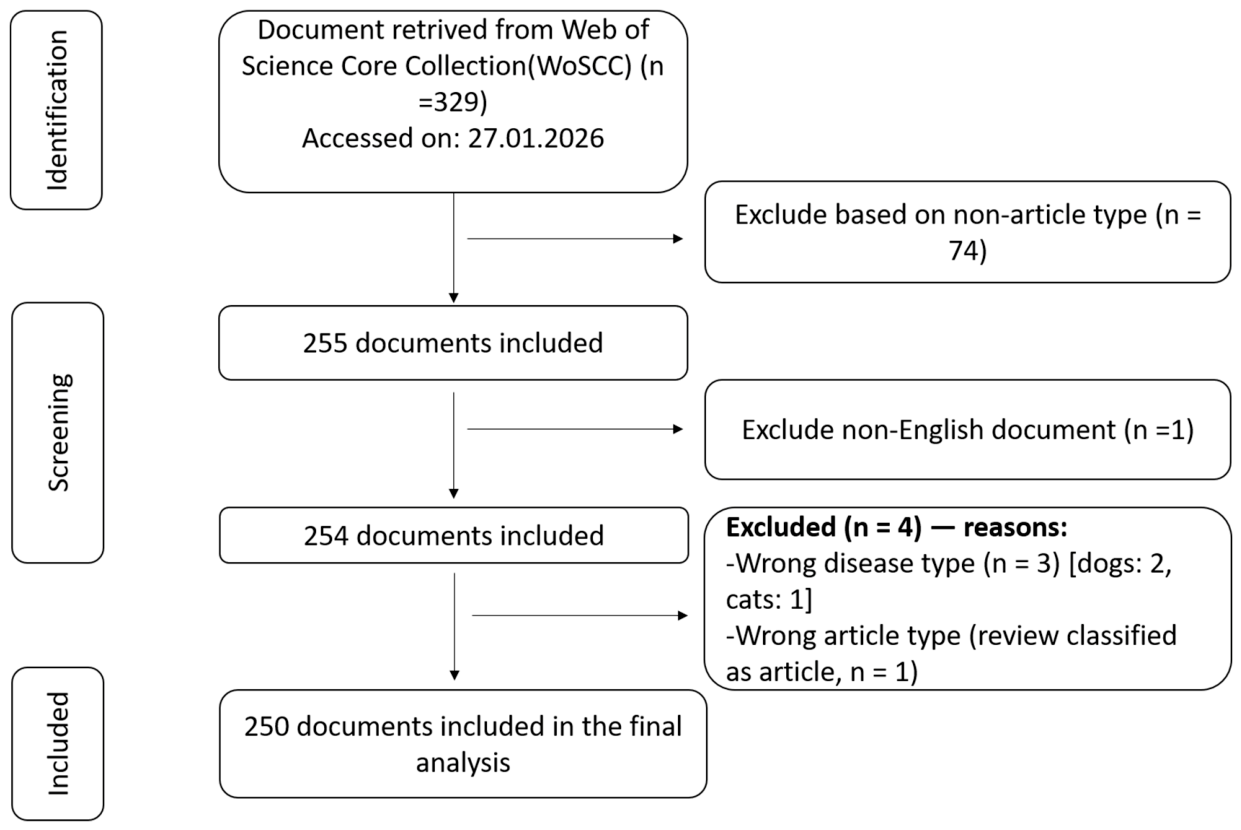
2.2. Search Strategy
2.3. Statistical Analysis
3. Results
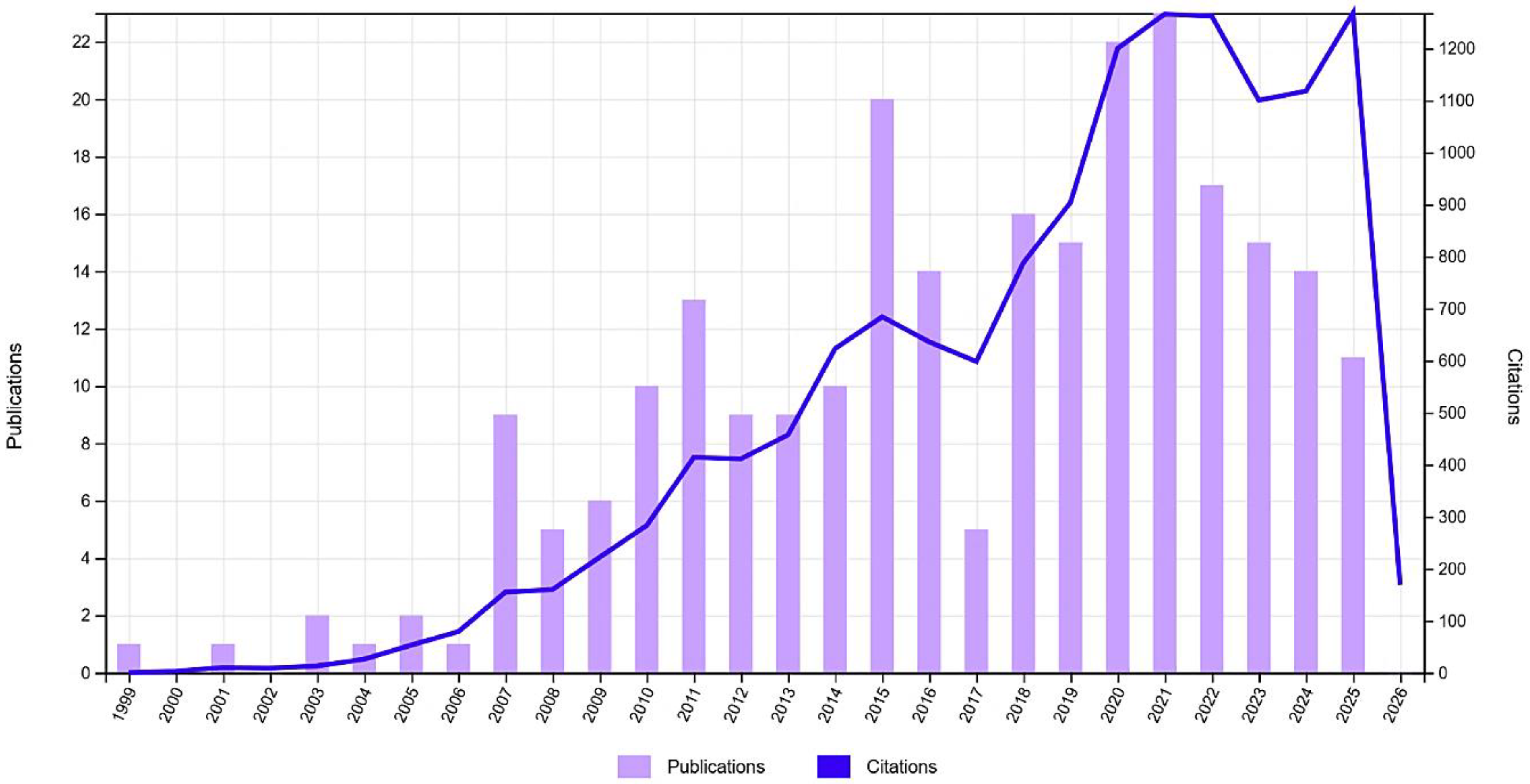
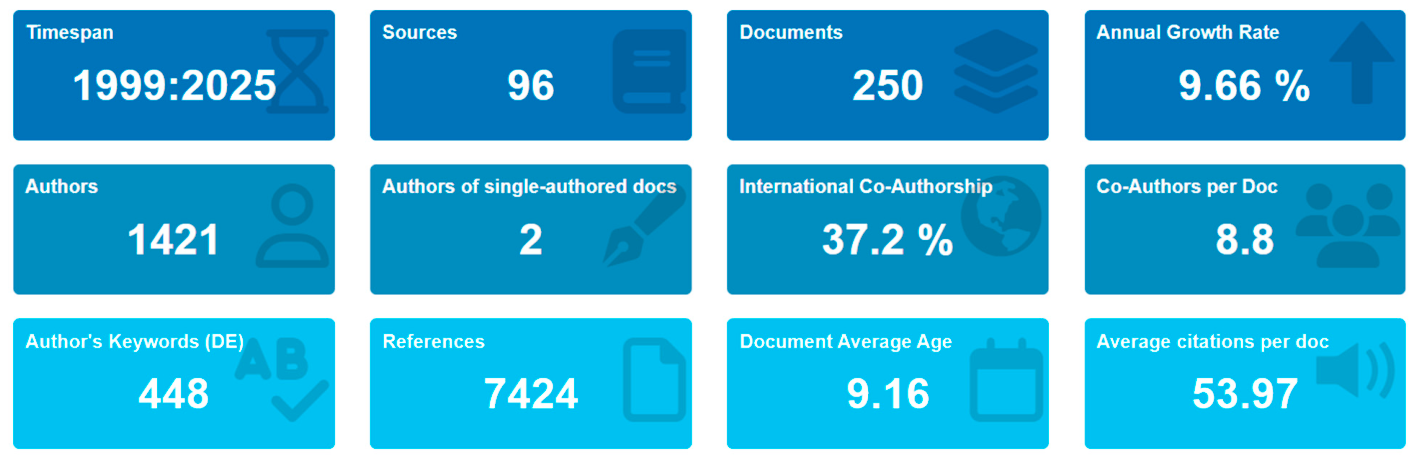
3.1. Basic Characteristics of the Data
3.2. The Top 10 Most Cited Articles
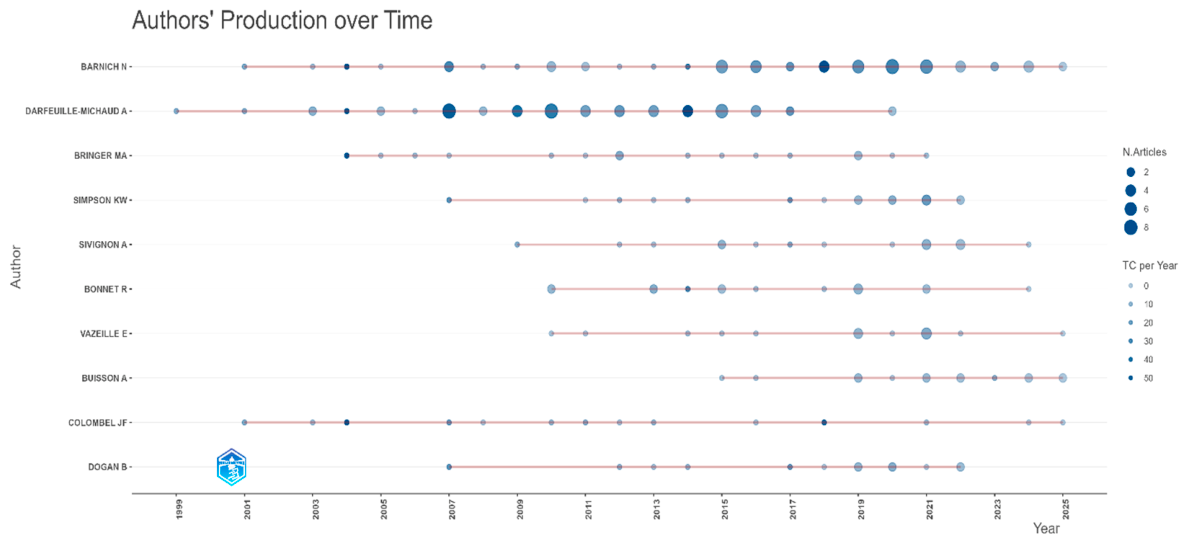
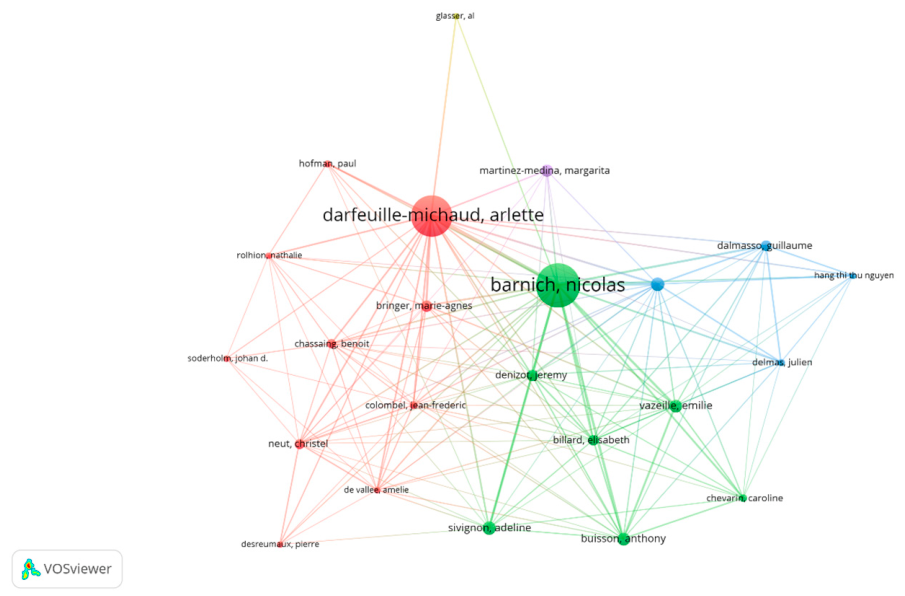
3.3. Analysis of Authors and Their Cooperation Network
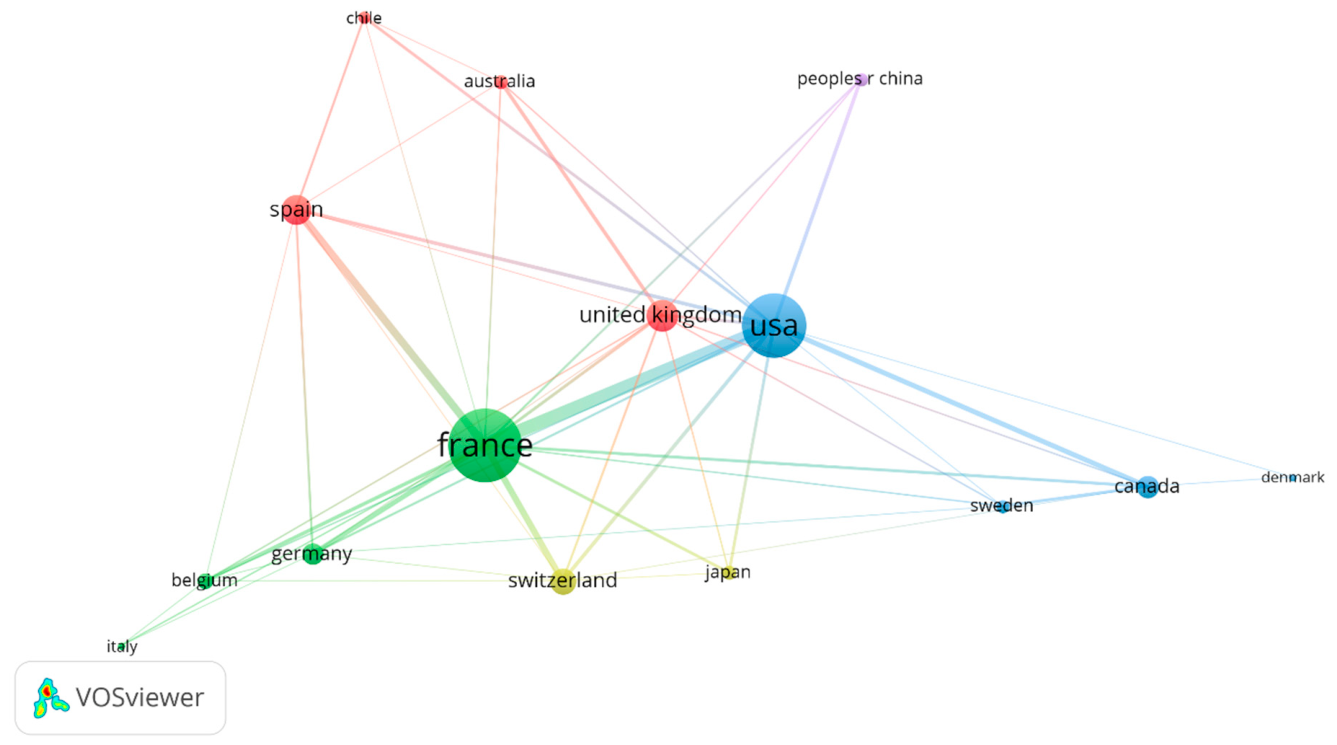
3.4. Analysis of Countries
3.5. Institutions’ Contribution Analysis
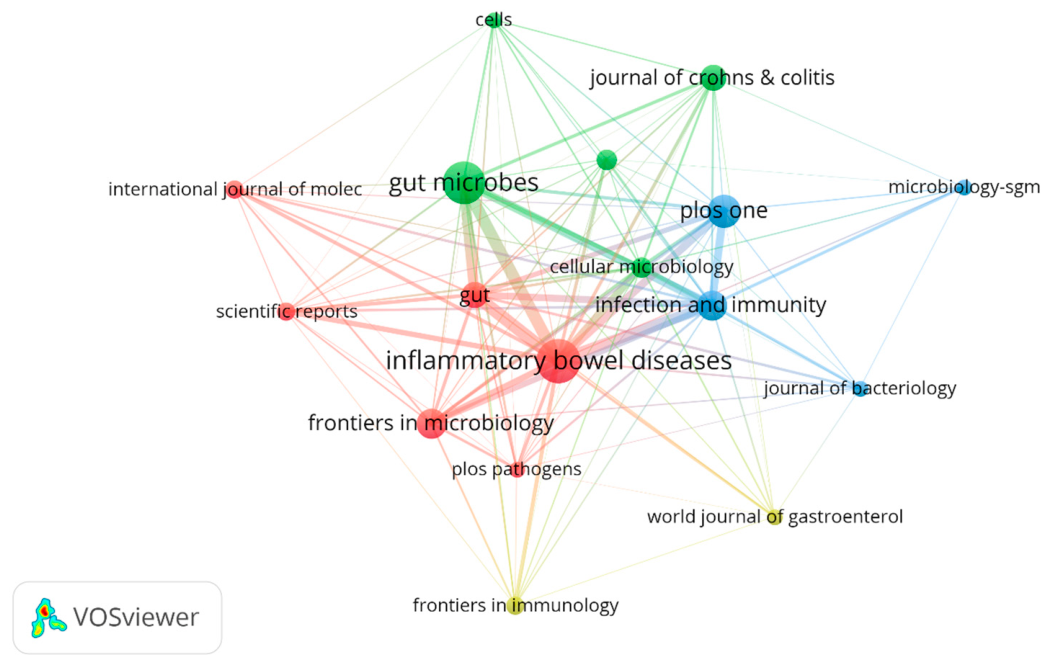
3.6. Analysis of the Top Productive Journals
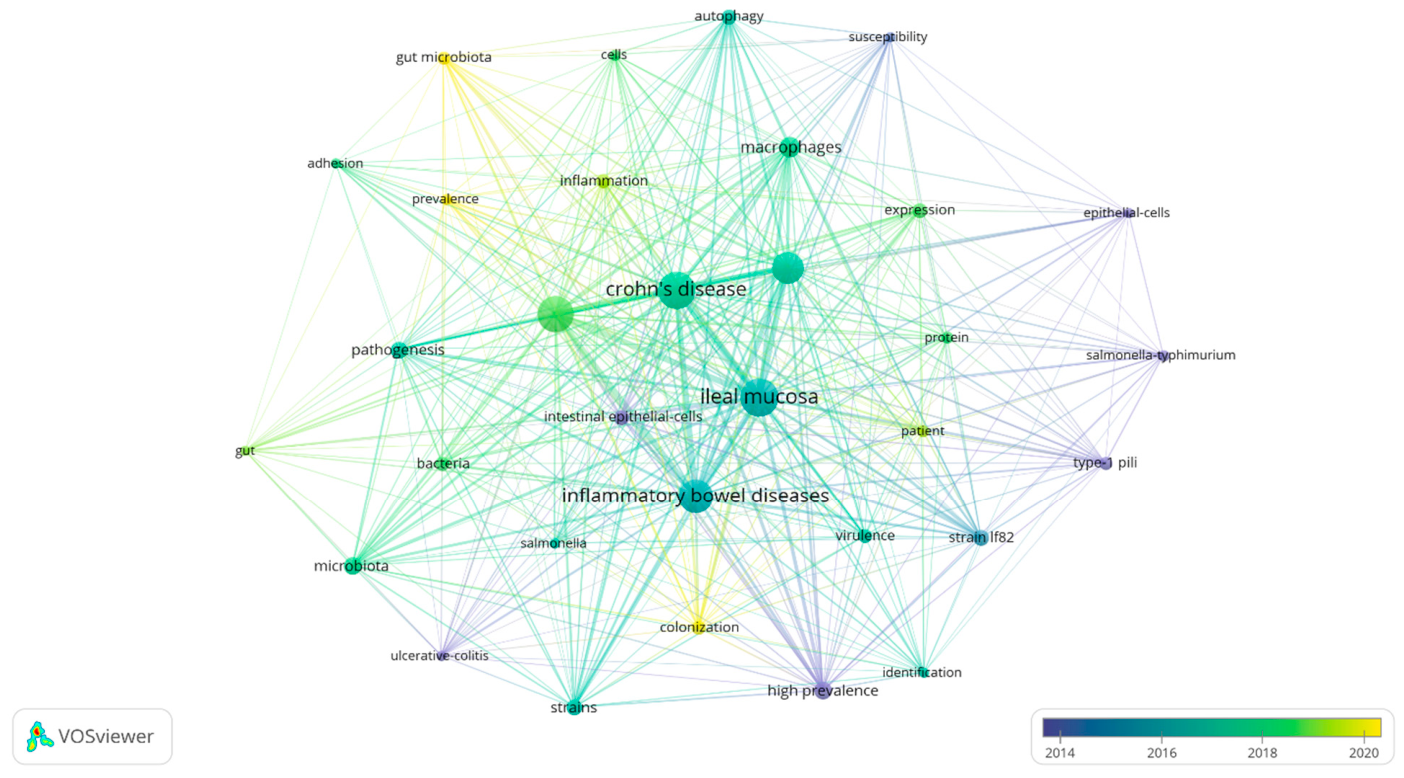
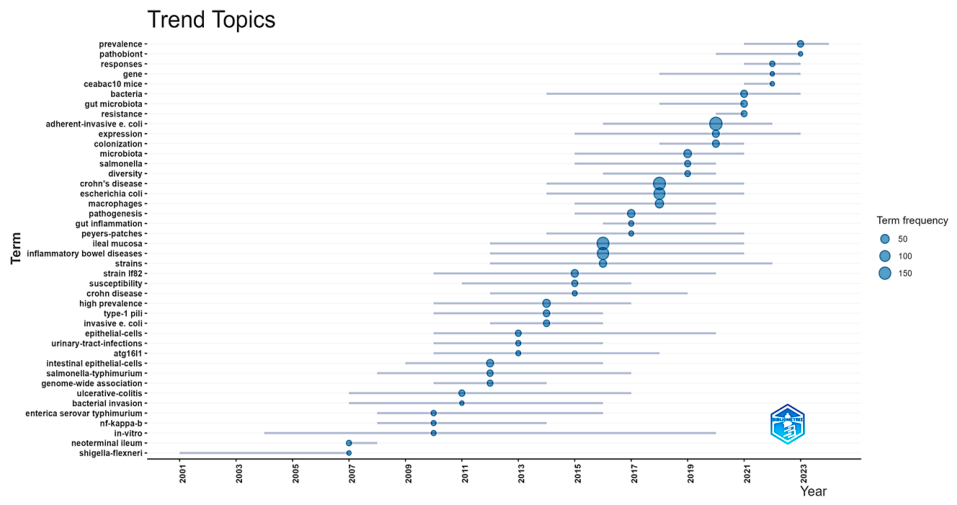
3.7. Co-Word Analysis: Temporal Evolution of Research Themes in AIEC Research
4. Discussion
5. Strengths and Limitations
6. Conclusions
Supplementary Materials
Author Contributions
Funding
Institutional Review Board Statement
Informed Consent Statement
Data Availability Statement
Conflicts of Interest
Abbreviations
| AIEC | Adherent-invasive Escherichia coli |
| CD | Crohn’s Diseases |
| WoS | Web of Science |
| WoSCC | Web of Science Core Collection |
| LCS | Local Citation Scores |
| GCS | Global Citation Scores |
References
- Roda, G.; Chien Ng, S.; Kotze, P.G.; Argollo, M.; Panaccione, R.; Spinelli, A.; Kaser, A.; Peyrin-Biroulet, L.; Danese, S. Crohn’s disease. Nat. Rev. Dis. Primers 2020, 6, 22. [Google Scholar] [CrossRef] [PubMed]
- Darfeuille-Michaud, A.; Boudeau, J.; Bulois, P.; Neut, C.; Glasser, A.L.; Barnich, N.; Bringer, M.A.; Swidsinski, A.; Beaugerie, L.; Colombel, J.F. High prevalence of adherent-invasive Escherichia coli associated with ileal mucosa in Crohn’s disease. Gastroenterology 2004, 127, 412–421. [Google Scholar] [CrossRef]
- Darfeuille-Michaud, A.; Neut, C.; Barnich, N.; Lederman, E.; Di Martino, P.; Desreumaux, P.; Gambiez, L.; Joly, B.; Cortot, A.; Colombel, J.-F. Presence of adherent Escherichia coli strains in ileal mucosa of patients with Crohn’s disease. Gastroenterology 1998, 115, 1405–1413. [Google Scholar] [CrossRef]
- Glasser, A.L.; Boudeau, G.; Barnich, N.; Perruchot, M.H.; Colombel, J.F.; Darfeuille-Michaud, A. Adherent invasive Escherichia coli strains from patients with Crohn’s disease survive and replicate within macrophages without inducing host cell death. Infect. Immun. 2001, 69, 5529–5537. [Google Scholar] [CrossRef]
- Boudeau, J.; Glasser, A.L.; Masseret, E.; Joly, B.; Darfeuille-Michaud, A. Invasive ability of an Escherichia coli strain isolated from the ileal mucosa of a patient with Crohn’s disease. Infect. Immun. 1999, 67, 4499–4509. [Google Scholar] [CrossRef] [PubMed]
- Lopez-Siles, M.; Camprubi-Font, C.; del Pulgar, E.G.M.; Mir, M.S.; Busquets, D.; Sanz, Y.; Martinez-Medina, M. Prevalence, Abundance, and Virulence of Adherent-Invasive Escherichia coli in Ulcerative Colitis, Colorectal Cancer, and Coeliac Disease. Front. Immunol. 2022, 13, 748839. [Google Scholar] [CrossRef]
- Barnich, N.; Darfeuille-Michaud, A. Role of bacteria in the etiopathogenesis of inflammatory bowel disease. World J. Gastroenterol. 2007, 13, 5571–5576. [Google Scholar] [CrossRef] [PubMed]
- Carvalho, F.A.; Barnich, N.; Sivignon, A.; Darcha, C.; Chan, C.H.F.; Stanners, C.P.; Darfeuille-Michaud, A. Crohn’s disease adherent-invasive Escherichia coli colonize and induce strong gut inflammation in transgenic mice expressing human CEACAM. J. Exp. Med. 2009, 206, 2179–2189. [Google Scholar] [CrossRef]
- Rolhion, N.; Barnich, N.; Bringer, M.-A.; Glasser, A.-L.; Ranc, J.; Hébuterne, X.; Hofman, P.; Darfeuille-Michaud, A. Abnormally expressed ER stress response chaperone Gp96 in CD favours adherent-invasive Escherichia coli invasion. Gut 2010, 59, 1355–1362. [Google Scholar] [CrossRef]
- Low, D.; Tran, H.T.; Lee, I.A.; Dreux, N.; Kamba, A.; Reinecker, H.C.; Darfeuille–Michaud, A.; Barnich, N.; Mizoguchi, E. Chitin-binding domains of Escherichia coli ChiA mediate interactions with intestinal epithelial cells in mice with colitis. Gastroenterology 2013, 145, 602–612.e9. [Google Scholar] [CrossRef]
- Martinez-Medina, M.; Naves, P.; Blanco, J.; Aldeguer, X.; Blanco, J.E.; Blanco, M.; Ponte, C.; Soriano, F.; Darfeuille-Michaud, A.; Garcia-Gil, L.J. Biofilm formation as a novel phenotypic feature of adherent-invasive Escherichia coli (AIEC). BMC Microbiol. 2009, 9, 202. [Google Scholar] [CrossRef] [PubMed]
- Evans, B.F.; Dorji, T.; Bigaliyeva, D.; Chan, S.; Schüller, S. Pathogenesis of adherent-invasive Escherichia coli LF82 in human colonic epithelium is characterized by adhesive biofilms, mucus penetration, and contact-dependent cytotoxicity. Gut Microbes 2025, 17, 2573046. [Google Scholar] [CrossRef]
- Yao, L.; Liu, Y.; Wang, T.; Han, C.; Li, Q.; Li, Q.; You, X.; Ren, T.; Wang, Y. Global trends of big data analytics in health research: A bibliometric study. Front. Med. 2025, 12, 1456286. [Google Scholar] [CrossRef]
- Senthil, R.; Anand, T.; Somala, C.S.; Saravanan, K.M. Bibliometric analysis of artificial intelligence in healthcare research: Trends and future directions. Future Healthc. J. 2024, 11, 100182. [Google Scholar] [CrossRef]
- Passas, I. Bibliometric analysis: The main steps. Encyclopedia 2024, 4, 1014–1025. [Google Scholar] [CrossRef]
- Matorevhu, A. Bibliometrics: Application opportunities and limitations. In Bibliometrics—An Essential Methodological Tool for Research Projects; IntechOpen: London, UK, 2024. [Google Scholar] [CrossRef]
- Birkle, C.; Pendlebury, D.A.; Schnell, J.; Adams, J. Web of Science as a data source for research on scientific and scholarly activity. Quant. Sci. Stud. 2020, 1, 363–376. [Google Scholar] [CrossRef]
- Merigó, J.M.; Gil-Lafuente, A.M.; Yager, R.R. An overview of fuzzy research with bibliometric indicators. Appl. Soft Comput. 2015, 27, 420–433. [Google Scholar] [CrossRef]
- Gaviria-Marin, M.; Merigó, J.M.; Baier-Fuentes, H. Knowledge management: A global examination based on bibliometric analysis. Technol. Forecast. Soc. Change 2019, 140, 194–220. [Google Scholar] [CrossRef]
- Arruda, H.; Silva, E.R.; Lessa, M.; Proença, D., Jr.; Bartholo, R. VOSviewer and bibliometrix. J. Med. Libr. Assoc. JMLA 2022, 110, 392–395. [Google Scholar] [CrossRef] [PubMed]
- Aria, M.; Cuccurullo, C. bibliometrix: An R-tool for comprehensive science mapping analysis. J. Informetr. 2017, 11, 959–975. [Google Scholar] [CrossRef]
- Barreiro, E.W. Using HistCite software to identify significant articles in subject searches of the Web of Science. arXiv 2015, arXiv:1512.07069. [Google Scholar] [CrossRef]
- Baumgart, M.; Dogan, B.; Rishniw, M.; Weitzman, G.; Bosworth, B.; Yantiss, R.; Orsi, R.H.; Wiedmann, M.; McDonough, P.; Kim, S.G. Culture independent analysis of ileal mucosa reveals a selective increase in invasive Escherichia coli of novel phylogeny relative to depletion of Clostridiales in Crohn’s disease involving the ileum. ISME J. 2007, 1, 403–418. [Google Scholar] [CrossRef]
- Barnich, N.; Carvalho, F.A.; Glasser, A.L.; Darcha, C.; Jantscheff, P.; Allez, M.; Peeters, H.; Bommelaer, G.; Desreumaux, P.; Colombel, J.F.; et al. CEACAM6 acts as a receptor for adherent-invasive E. coli, supporting ileal mucosa colonization in Crohn disease. J. Clin. Investig. 2007, 117, 1566–1574. [Google Scholar] [CrossRef]
- Martinez-Medina, M.; Denizot, J.; Dreux, N.; Robin, F.; Billard, E.; Bonnet, R.; Darfeuille-Michaud, A.; Barnich, N. Western diet induces dysbiosis with increased E coli in CEABAC10 mice, alters host barrier function favouring AIEC colonisation. Gut 2014, 63, 116–124. [Google Scholar] [CrossRef]
- Zhang, Y.; Chung, H.; Fang, Q.-W.; Xu, Y.-R.; Zhang, Y.-J.; Nakajo, K.; Wong, I.C.-K.; Leung, W.-K.; Qiu, H.; Li, X. Current and forecasted 10-year prevalence and incidence of inflammatory bowel disease in Hong Kong, Japan, and the United States. World J. Gastroenterol. 2025, 31, 105472. [Google Scholar] [CrossRef]
- Lewis, J.D.; Parlett, L.E.; Funk, M.L.J.; Brensinger, C.; Pate, V.; Wu, Q.; Dawwas, G.K.; Weiss, A.; Constant, B.D.; McCauley, M. Incidence, prevalence, and racial and ethnic distribution of inflammatory bowel disease in the United States. Gastroenterology 2023, 165, 1197–1205.e2. [Google Scholar] [CrossRef]
- Ng, S.C.; Shi, H.Y.; Hamidi, N.; Underwood, F.E.; Tang, W.; Benchimol, E.I.; Panaccione, R.; Ghosh, S.; Wu, J.C.; Chan, F.K. Worldwide incidence and prevalence of inflammatory bowel disease in the 21st century: A systematic review of population-based studies. Lancet 2017, 390, 2769–2778. [Google Scholar] [CrossRef]
- Jairath, V.; Feagan, B.G. Global burden of inflammatory bowel disease. Lancet Gastroenterol. Hepatol. 2020, 5, 2–3. [Google Scholar] [CrossRef] [PubMed]
- Ng, S.C. Epidemiology of inflammatory bowel disease: Focus on Asia. Best Pract. Res. Clin. Gastroenterol. 2014, 28, 363–372. [Google Scholar] [CrossRef] [PubMed]
- Quaresma, A.B.; Kaplan, G.G.; Kotze, P.G. The globalization of inflammatory bowel disease: The incidence and prevalence of inflammatory bowel disease in Brazil. Curr. Opin. Gastroenterol. 2019, 35, 259–264. [Google Scholar] [CrossRef] [PubMed]
- Fletcher, S.M.; McLaws, M.-L.; Ellis, J.T. Prevalence of gastrointestinal pathogens in developed and developing countries: Systematic review and meta-analysis. J. Public Health Res. 2013, 2, 42–53. [Google Scholar] [CrossRef]
- Barnich, N.; Boudeau, J.; Claret, L.; Darfeuille-Michaud, A. Regulatory and functional co-operation of flagella and type 1 pili in adhesive and invasive abilities of AIEC strain LF82 isolated from a patient with Crohn’s disease. Mol. Microbiol. 2003, 48, 781–794. [Google Scholar] [CrossRef] [PubMed]
- Chassaing, B.; Rolhion, N.; de Vallée, A.; Salim, S.Y.; Prorok-Hamon, M.; Neut, C.; Campbell, B.J.; Söderholm, J.D.; Hugot, J.P.; Colombel, J.F.; et al. Crohn disease-associated adherent-invasive E. coli bacteria target mouse and human Peyer’s patches via long polar fimbriae. J. Clin. Investig. 2011, 121, 966–975. [Google Scholar] [CrossRef] [PubMed]
- Lapaquette, P.; Glasser, A.L.; Huett, A.; Xavier, R.J.; Darfeuille-Michaud, A. Crohn’s disease-associated adherent-invasive E. coli are selectively favoured by impaired autophagy to replicate intracellularly. Cell Microbiol. 2010, 12, 99–113. [Google Scholar] [CrossRef]
- Lapaquette, P.; Bringer, M.A.; Darfeuille-Michaud, A. Defects in autophagy favour adherent-invasive Escherichia coli persistence within macrophages leading to increased pro-inflammatory response. Cell Microbiol. 2012, 14, 791–807. [Google Scholar] [CrossRef]
- Nguyen, H.T.T.; Dalmasso, G.; Müller, S.; Carrière, J.; Seibold, F.; Darfeuille-Michaud, A. Crohn’s Disease-Associated Adherent Invasive Escherichia coli Modulate Levels of microRNAs in Intestinal Epithelial Cells to Reduce Autophagy. Gastroenterology 2014, 146, 508–519. [Google Scholar] [CrossRef]
- Carrière, J.; Bretin, A.; Darfeuille-Michaud, A.; Barnich, N.; Nguyen, H.T.T. Exosomes Released from Cells Infected with Crohn’s Disease–associated Adherent-Invasive Escherichia coli Activate Host Innate Immune Responses and Enhance Bacterial Intracellular Replication. Inflamm. Bowel Dis. 2016, 22, 516–528. [Google Scholar] [CrossRef]
- Bretin, A.; Lucas, C.; Larabi, A.; Dalmasso, G.; Billard, E.; Barnich, N.; Bonnet, R.; Nguyen, H.T.T. AIEC infection triggers modification of gut microbiota composition in genetically predisposed mice, contributing to intestinal inflammation. Sci. Rep. 2018, 8, 12301. [Google Scholar] [CrossRef]
- Xu, Z.; Dong, X.; Yang, K.; Chevarin, C.; Zhang, J.; Lin, Y.; Zuo, T.; Chu, L.C.; Sun, Y.; Zhang, F. Association of adherent-invasive Escherichia coli with severe gut mucosal dysbiosis in Hong Kong Chinese population with Crohn’s disease. Gut Microbes 2021, 13, 1994833. [Google Scholar] [CrossRef]
- Ormsby, M.J.; Logan, M.; Johnson, S.A.; McIntosh, A.; Fallata, G.; Papadopoulou, R.; Papachristou, E.; Hold, G.L.; Hansen, R.; Ijaz, U.Z.; et al. Inflammation associated ethanolamine facilitates infection by Crohn’s disease-linked adherent-invasive Escherichia coli. EBioMedicine 2019, 43, 325–332. [Google Scholar] [CrossRef] [PubMed]
- Li, X.; Ormsby, M.J.; Fallata, G.; Meikle, L.M.; Walker, D.; Xu, D.M.; Wall, D.M. PF-431396 hydrate inhibition of kinase phosphorylation during adherent-invasive Escherichia coli infection inhibits intra-macrophage replication and inflammatory cytokine release. Microbiology 2023, 169, 001337. [Google Scholar] [CrossRef]
- Viladomiu, M.; Metz, M.L.; Lima, S.F.; Jin, W.B.; Chou, L.C.; Bank, J.L.C.; Guo, C.J.; Diehl, G.E.; Simpson, K.W.; Scherl, E.J.; et al. Adherent-invasive E. coli metabolism of propanediol in Crohn’s disease regulates phagocytes to drive intestinal inflammation. Cell Host Microbe 2021, 29, 607–619.e8. [Google Scholar] [CrossRef]
- Agus, A.; Richard, D.; Faïs, T.; Vazeille, E.; Chervy, M.; Bonnin, V.; Dalmasso, G.; Denizot, J.; Billard, E.; Bonnet, R.; et al. Propionate catabolism by CD-associated adherent-invasive E. coli counteracts its anti-inflammatory effect. Gut Microbes 2021, 13, 1839318. [Google Scholar] [CrossRef]
- Sivignon, A.; Yan, X.; Alvarez Dorta, D.; Bonnet, R.; Bouckaert, J.; Fleury, E.; Bernard, J.; Gouin, S.G.; Darfeuille-Michaud, A.; Barnich, N. Development of heptylmannoside-based glycoconjugate antiadhesive compounds against adherent-invasive Escherichia coli bacteria associated with Crohn’s disease. mBio 2015, 6, 10–1128. [Google Scholar] [CrossRef]
- Sivignon, A.; Yu, S.-Y.; Ballet, N.; Vandekerckove, P.; Barnich, N.; Guerardel, Y. Heteropolysaccharides from S. cerevisiae show anti-adhesive properties against E. coli associated with Crohn’s disease. Carbohydr. Polym. 2021, 271, 118415. [Google Scholar] [CrossRef] [PubMed]
- Titécat, M.; Rousseaux, C.; Dubuquoy, C.; Foligné, B.; Rahmouni, O.; Mahieux, S.; Desreumaux, P.; Woolston, J.; Sulakvelidze, A.; Wannerberger, K. Safety and efficacy of an AIEC-targeted bacteriophage cocktail in a mice colitis model. J. Crohn’s Colitis 2022, 16, 1617–1627. [Google Scholar] [CrossRef] [PubMed]
- Galtier, M.; Sordi, L.D.; Sivignon, A.; De Vallée, A.; Maura, D.; Neut, C.; Rahmouni, O.; Wannerberger, K.; Darfeuille-Michaud, A.; Desreumaux, P. Bacteriophages targeting adherent invasive Escherichia coli strains as a promising new treatment for Crohn’s disease. J. Crohn’s Colitis 2017, 11, 840–847. [Google Scholar] [CrossRef] [PubMed]
- Chevalier, G.; Laveissière, A.; Desachy, G.; Barnich, N.; Sivignon, A.; Maresca, M.; Nicoletti, C.; Di Pasquale, E.; Martinez-Medina, M.; Simpson, K.W. Blockage of bacterial FimH prevents mucosal inflammation associated with Crohn’s disease. Microbiome 2021, 9, 176. [Google Scholar] [CrossRef]
- Gimier, E.; Chervy, M.; Agus, A.; Sivignon, A.; Billard, E.; Privat, M.; Viala, S.; Minet-Quinard, R.; Buisson, A.; Vazeille, E.; et al. Methyl-donor supplementation prevents intestinal colonization by Adherent-Invasive E. coli in a mouse model of Crohn’s disease. Sci. Rep. 2020, 10, 12922. [Google Scholar] [CrossRef]
- Douadi, C.; Vazeille, E.; Chambon, C.; Hébraud, M.; Fargeas, M.; Dodel, M.; Coban, D.; Pereira, B.; Birer, A.; Sauvanet, P.; et al. Anti-TNF Agents Restrict Adherent-invasive Escherichia coli Replication Within Macrophages Through Modulation of Chitinase 3-like 1 in Patients with Crohn’s Disease. J. Crohn’s Colitis 2022, 16, 1140–1150. [Google Scholar] [CrossRef]
- Buisson, A.; Vazeille, E.; Fumery, M.; Pariente, B.; Nancey, S.; Seksik, P.; Peyrin-Biroulet, L.; Allez, M.; Ballet, N.; Filippi, J.; et al. Faster and less invasive tools to identify patients with ileal colonization by adherent-invasive E. coli in Crohn’s disease. United Eur. Gastroenterol. J. 2021, 9, 1007–1018. [Google Scholar] [CrossRef] [PubMed]
- Buisson, A.; Sokol, H.; Hammoudi, N.; Treton, X.; Nachury, M.; Fumery, M.; Hébuterne, X.; Rodrigues, M.; Hugot, J.-P.; Boschetti, G. Role of adherent and invasive Escherichia coli in Crohn’s disease: Lessons from the postoperative recurrence model. Gut 2023, 72, 39–48. [Google Scholar] [CrossRef]
- Chevarin, C.; Xu, Z.L.; Martin, L.; Robin, F.; Beyrouthy, R.; Colombel, J.F.; Sulakvelidze, A.; Ng, S.C.; Bonnet, R.; Buisson, A.; et al. Comparison of Crohn’s disease-associated adherent-invasive Escherichia coli (AIEC) from France and Hong Kong: Results from the Pacific study. Gut Microbes 2024, 16, 2431645. [Google Scholar] [CrossRef] [PubMed]
- Carbonnel, F.; Barnich, N.; Lepage, P.; Hébuterne, X.; Michiels, C.; Gilletta, C.; Wils, P.; Laharie, D.; Altwegg, R.; Allez, M. A randomized controlled trial of antibiotics targeting adherent and invasive Escherichia coli versus placebo in Crohn’s disease: The TEOREM trial. J. Crohn’s Colitis 2025, 19, jjaf093. [Google Scholar] [CrossRef]
- Karabulut, A.; Kaya, M. Crohn’s disease from past to present: Research trends and global outcomes with scientometric analysis during 1980 to 2022. Medicine 2023, 102, e34817. [Google Scholar] [CrossRef] [PubMed]
- Xu, L.; Zou, J.; Sun, C.; Chen, G.; Gao, S. Worldwide research trends in Crohn’s disease treatment over the past 2 decades: A bibliometric analysis. Front. Pharmacol. 2024, 15, 1441785. [Google Scholar] [CrossRef]
- Valderrama-Zurián, J.C.; García-Zorita, C.; Marugán-Lázaro, S.; Sanz-Casado, E. Comparison of MeSH terms and KeyWords Plus terms for more accurate classification in medical research fields. A case study in cannabis research. Inf. Process. Manag. 2021, 58, 102658. [Google Scholar] [CrossRef]



| Rank | First Author, Year | Title | Source Title | TGC |
|---|---|---|---|---|
| 1 | Darfeuille-Michaud, A; et al. 2004. | High prevalence of adherent-invasive Escherichia coli associated with ileal mucosa in Crohn’s disease | Gastroenterology | 1243 |
| 2 | Baumgart, Martin; et al. 2007. | Culture-independent analysis of ileal mucosa reveals a selective increase in invasive Escherichia coli of novel phylogeny relative to depletion of Clostridiales in Crohn’s disease involving the ileum | ISME Journal | 512 |
| 3 | Barnich, Nicolas; et al. 2007. | CEACAM6 acts as a receptor for adherent-invasive E. coli, supporting ileal mucosa colonization in Crohn’s disease | Journal of Clinical Investigation | 444 |
| 4 | Martinez-Medina, Margarita; et al. 2014. | Western diet induces dysbiosis with increased E coli in CEABAC10 mice, alters host barrier function, favoring AIEC colonization | Gut | 430 |
| 5 | Boudeau, J; et al. 1999. | Invasive ability of an Escherichia coli strain isolated from the ileal mucosa of a patient with Crohn’s disease | Infection and Immunity | 382 |
| 6 | Glasser, AL; et al. 2001. | Adherent invasive Escherichia coli strains from patients with Crohn’s disease survive and replicate within macrophages without inducing host cell death | Infection And Immunity | 365 |
| 7 | Martinez-Medina, Margarita; et al. 2009. | Molecular Diversity of Escherichia coli in the Human Gut: New Ecological Evidence Supporting the Role of Adherent-Invasive E. coli (AIEC) in Crohn’s Disease | Inflammatory Bowel Diseases | 313 |
| 8 | Lapaquette, Pierre; et al. 2010 | Crohn’s disease-associated adherent-invasive E. coli are selectively favored by impaired autophagy to replicate intracellularly | Cellular Microbiology | 261 |
| 9 | Carvalho FA et al. 2009 | Crohn’s disease adherent-invasive Escherichia coli colonize and induce strong gut inflammation in transgenic mice expressing human CEACAM | Journal of Experimental Medicine | 251 |
| 10 | Viladomiu, M et al. 2017. | IgA-coated E. coli enriched in Crohn’s disease spondyloarthritis promotes TH17-dependent inflammation | Science Translational Medicine | 249 |
| Rank | Author | Country | Documents | LCS | Average LCS | GCS | Average GCS | H-Index |
|---|---|---|---|---|---|---|---|---|
| 1 | Barnich Nicolas | France | 66 | 697 | 41.2 | 5223 | 38.8 | 52 |
| 2 | Arlette Darfeuille-Michaud | France | 61 | 1197 | 70.8 | 7527 | 55.8 | 63 |
| 3 | Bringer, Marie-Agnes | France | 16 | 214 | 12.7 | 2227 | 16.5 | 29 |
| 4 | Kenneth W. Simpson | USA | 16 | 172 | 10.2 | 1506 | 11.2 | 48 |
| 5 | Sivignon Adeline | France | 16 | 134 | 7.9 | 872 | 6.5 | 18 |
| 6 | Bonnet, Richard | France | 15 | 58 | 3.4 | 1100 | 8.2 | 28 |
| 7 | Vazeille, Emilie | France | 15 | 46 | 2.7 | 440 | 3.3 | 24 |
| 8 | Buisson, Anthony | France | 14 | 54 | 3.2 | 284 | 2.1 | 40 |
| 9 | Colombel, Jean-Frederic | USA | 14 | 332 | 19.6 | 2893 | 21.4 | 138 |
| 10 | Belgin Dogan | USA | 13 | 163 | 9.6 | 1343 | 10.0 | 26 |
| Rank | Country | Publications | Percentage (%) | LCS | Average LCS | GCS | Average GCS |
|---|---|---|---|---|---|---|---|
| 1 | France | 110 | 44.0 | 1268 | 75.0 | 8576 | 63.6 |
| 2 | USA | 66 | 26.4 | 355 | 21.0 | 3965 | 29.3 |
| 3 | Canada | 28 | 11.2 | 221 | 12.7 | 1359 | 10.1 |
| 4 | Spain | 22 | 8.8 | 154 | 9.1 | 1490 | 11.0 |
| 5 | United Kingdom | 22 | 8.8 | 141 | 8.3 | 968 | 7.2 |
| 6 | Italy | 17 | 6.8 | 64 | 3.8 | 446 | 3.3 |
| 7 | Germany | 12 | 4.8 | 14 | 0.8 | 1723 | 12.8 |
| 8 | People’s Republic of China | 12 | 4.4 | 5 | 0.3 | 170 | 1.3 |
| 9 | Belgium | 10 | 4.0 | 137 | 8.1 | 949 | 7.0 |
| 10 | Japan | 10 | 4.0 | 49 | 2.9 | 261 | 1.9 |
| Institution | Country | Articles |
|---|---|---|
| Université Clermont Auvergne (UCA) | France | 180 |
| Institut national de la santé et de la recherche médicale (INSERM) | France | 136 |
| National Research Institute for Agriculture (INRAE) | France | 97 |
| Chu Clermont Ferrand | France | 64 |
| Centre national de la recherche scientifique (CNRS) | France | 55 |
| Université De Lille | France | 39 |
| Cornell University | USA | 38 |
| Université Paris Cité | France | 29 |
| Mcmaster University | Canada | 26 |
| University of North Carolina | USA | 23 |
| Rank | Source | NP | GCS | Average GCS | JIF (2024) | Quartile |
|---|---|---|---|---|---|---|
| 1 | Inflammatory Bowel Diseases | 20 | 1285 | 9.5 | 4.3 | Q1 |
| 2 | Gut Microbes | 19 | 385 | 2.9 | 11.0 | Q1 |
| 3 | PLOS One | 13 | 697 | 5.2 | 2.6 | Q2 |
| 4 | Frontiers In Microbiology | 11 | 267 | 2.0 | 4.5 | Q1 |
| 5 | Infection And Immunity | 11 | 1083 | 8.0 | 2.6 | Q2 |
| 6 | Journal of Crohn’s & Colitis | 9 | 349 | 2.6 | 8.7 | Q1 |
| 7 | Gut | 8 | 893 | 6.6 | 25.8 | Q1 |
| 8 | Cellular Microbiology | 6 | 719 | 5.2 | 1.6 | Q4 |
| 9 | Microorganisms | 6 | 56 | 0.4 | 4.2 | Q2 |
| 10 | Frontiers In Immunology | 5 | 137 | 1.0 | 5.9 | Q1 |
| Keyword | Occurrences | Keyword | Occurrences |
|---|---|---|---|
| adhesion | 161 | Inflammation | 22 |
| epithelial-cells | 148 | Colonization | 21 |
| gut | 142 | Expression | 18 |
| identification | 129 | intestinal epithelial cells | 18 |
| salmonella | 111 | Autophagy | 16 |
| susceptibility | 48 | strain lf82 | 16 |
| ulcerative-colitis | 35 | Strains | 15 |
| cells | 34 | Pathogenesis | 14 |
| salmonella-typhimurium | 32 | high prevalence | 14 |
| prevalence | 29 | Microbiota | 13 |
| patient | 27 | Macrophages | 13 |
| protein | 26 | Escherichia coli | 13 |
| gut microbiota | 25 | inflammatory bowel diseases | 12 |
| type-1 pili | 24 | adherent-invasive E. coli | 12 |
| virulence | 23 | Crohn’s disease | 12 |
| bacteria | 22 | ileal mucosa | 12 |
Disclaimer/Publisher’s Note: The statements, opinions and data contained in all publications are solely those of the individual author(s) and contributor(s) and not of MDPI and/or the editor(s). MDPI and/or the editor(s) disclaim responsibility for any injury to people or property resulting from any ideas, methods, instructions or products referred to in the content. |
© 2026 by the authors. Licensee MDPI, Basel, Switzerland. This article is an open access article distributed under the terms and conditions of the Creative Commons Attribution (CC BY) license.
Share and Cite
Abdelhadi, L.A.M.; Ibrahim, N.A.; Essa, M.O.A.; Ibrahim, S.G.; Basher, N.S.; Mohamed Husien, H.; Zhu, G. Adherent-Invasive Escherichia coli (AIEC) in Crohn’s Disease: A Bibliometric Analysis of 25 Years of Research (1999–2025). Microorganisms 2026, 14, 1183. https://doi.org/10.3390/microorganisms14061183
Abdelhadi LAM, Ibrahim NA, Essa MOA, Ibrahim SG, Basher NS, Mohamed Husien H, Zhu G. Adherent-Invasive Escherichia coli (AIEC) in Crohn’s Disease: A Bibliometric Analysis of 25 Years of Research (1999–2025). Microorganisms. 2026; 14(6):1183. https://doi.org/10.3390/microorganisms14061183
Chicago/Turabian StyleAbdelhadi, Layla Ahmed Mohammed, Nasir A. Ibrahim, Mohammed Osman Abdelrahem Essa, Sheham Guma Ibrahim, Nosiba S. Basher, Hosameldeen Mohamed Husien, and Guoqiang Zhu. 2026. "Adherent-Invasive Escherichia coli (AIEC) in Crohn’s Disease: A Bibliometric Analysis of 25 Years of Research (1999–2025)" Microorganisms 14, no. 6: 1183. https://doi.org/10.3390/microorganisms14061183
APA StyleAbdelhadi, L. A. M., Ibrahim, N. A., Essa, M. O. A., Ibrahim, S. G., Basher, N. S., Mohamed Husien, H., & Zhu, G. (2026). Adherent-Invasive Escherichia coli (AIEC) in Crohn’s Disease: A Bibliometric Analysis of 25 Years of Research (1999–2025). Microorganisms, 14(6), 1183. https://doi.org/10.3390/microorganisms14061183