


Abstract
Plant growth-promoting microorganisms (PGPMs) and microbial biocontrol agents have emerged as key tools for improving crop productivity while maintaining environmental sustainability. However, central questions remain regarding which factors determine their consistent field performance and how these factors interact under real agronomic conditions. Previous research has demonstrated that PGPMs enhance nutrient acquisition, regulate phytohormone balance, improve stress tolerance, and suppress plant pathogens through diverse biochemical and ecological mechanisms. Advances in omics technologies, genome mining, and synthetic microbial communities have further expanded understanding of their functional potential. Nevertheless, many studies rely on laboratory-scale experiments or short-term trials, with limited multi-season and cross-regional validation. This gap contributes to inconsistent field outcomes and restricts large-scale agricultural adoption. Long-term multi-season validation and reproducibility assessment remain essential priorities for improving reliability of microbial agricultural products. This review synthesizes recent advances in PGPM-based biofertilizers and microbial biocontrol technologies, critically examining their mechanisms of action, scalability constraints, formulation challenges, and regulatory limitations. It identifies major translational barriers, including context dependency, mechanistic uncertainties, reproducibility gaps, and insufficient systems-level integration.
1. Introduction
Agriculture is entering a period in which productivity must increase, yet environmental pressure must decrease. For decades, crop yields have been strongly supported by mineral fertilizers and chemical pesticides. While effective, these inputs have also contributed to soil degradation, nutrient imbalances, reduced microbial diversity, and contamination of surrounding ecosystems. As a result, sustainable agricultural systems increasingly rely on biological solutions that work with natural processes rather than replacing them [1,2]. Microorganism-based biological products represent one of the most dynamic directions in this transition [3,4]. Beneficial bacteria and fungi can mobilize nutrients, stimulate plant growth, suppress pathogens, and enhance plant tolerance to environmental stress [5,6]. Unlike synthetic inputs, microbial products function through biochemical transformations and ecological interactions in the soil–plant system. Their activity contributes not only to crop productivity but also to soil health and long-term ecosystem stability [7,8]. The scientific understanding of microbial bioproducts has evolved significantly. Early studies often focused primarily on visible plant growth stimulation [9]. Today, research increasingly emphasizes measurable mechanisms such as nitrogen fixation, phosphorus solubilization, siderophore production, phytohormone synthesis, and Induced systemic resistance (ISR) [10,11,12]. In addition, the potential of certain strains to partially substitute mineral fertilizers is now evaluated using nutrient fraction analysis and agronomic equivalence approaches. This shift reflects a broader movement toward evidence-based integration of microbial inputs into modern nutrient management systems [13,14]. Microorganism-based agricultural products can be grouped into several functional categories, including biofertilizers [15], biopesticides [16], PGPMs, and multistrain microbial consortia [17,18]. Although their mechanisms differ, these products often share interconnected modes of action. For example, a strain selected for nutrient mobilization may simultaneously enhance stress tolerance or pathogen resistance [19,20]. Increasingly, multifunctional formulations are being developed to address complex agronomic challenges under variable field conditions [21]. However, identifying a beneficial microorganism is only the first step. The development of a reliable biological product requires a systematic pathway that includes strain isolation, functional screening, molecular characterization, optimization of cultivation conditions, formulation design, quality control, and regulatory assessment [22,23,24,25]. Genomic and omics technologies now allow for precise taxonomic identification and prediction of functional traits, improving strain selection and reducing biosafety risks [26]. At the same time, industrial production introduces additional challenges related to scalability, genetic stability, stress tolerance during fermentation, and shelf life preservation [27,28]. Bridging the gap between laboratory discovery and consistent field performance remains a central issue. Environmental factors such as soil type, climate, native microbiota composition, and agronomic practices can strongly influence efficacy [29]. Therefore, successful implementation depends on integrating microbiological knowledge with production engineering, formulation science, and practical agronomy. Understanding microorganism-based biological products as complete technological systems from strain selection to production organization and field validation provides a framework for developing stable, effective, and economically viable solutions [30,31]. Such an integrated perspective is essential for advancing sustainable agriculture while maintaining productivity under increasingly complex environmental conditions. This review synthesizes current knowledge on microorganism-based biological products for agriculture, examining their functional categories, sources and criteria for strain selection, molecular and genomic characterization strategies, optimization of cultivation and fermentation processes, formulation and quality control approaches, and production organization models. By connecting biological mechanisms with technological development and practical implementation, the review aims to present a coherent pathway from microbial discovery to scalable and field-validated agricultural applications, while outlining existing limitations and future research directions.
2. Types of Microorganism-Based Biological Products in Agriculture
2.1. Biofertilizers
Biofertilizers are microbial-based products designed to enhance nutrient availability, uptake, and utilization efficiency in plants [32]. Biofertilizer inoculation refers to the deliberate application of beneficial microorganisms to seeds, plant roots, or soil to stimulate nutrient mobilization through biological processes. Their primary function is to supply nutrients through biological processes, such as biological nitrogen fixation, phosphorus solubilization, or mobilization of nutrients already present in soil reserves [33,34]. Unlike general plant growth stimulants, true biofertilizers focus specifically on improving plant nutrition through measurable biochemical and microbiological mechanisms [35,36]. Figure 1 illustrates the main mechanisms and functional pathways through which microbial biofertilizers enhance plant nutrition and soil nutrient availability.
Figure 1.
Conceptual framework of biofertilizer inoculation effects on plant performance and soil biogeochemical processes. PSB, NFC, and AMF enhance nutrient mobilization, nitrogen fixation, and phosphorus uptake, improving nutrient use efficiency and plant growth. Created with BioRender.com (License No. AA29DABWJE).
Recent studies evaluate biofertilizers not only by their ability to stimulate plant growth, but also by quantifying their contribution to nutrient cycling and their potential to substitute mineral fertilizers. For example, Beltran-Medina et al. (2023) [37] demonstrated that inoculation with Rhizobium sp. B02, combined with 50% of the recommended phosphorus (P) fertilizer rate, increased the labile inorganic P fraction in soil by 14% and improved maize growth and grain yield. Yield increased by 696 kg ha−1 compared with the reduced-P control and reached levels comparable to full P fertilization without inoculation.
Nitrogen-fixing cyanobacteria (NFC) represent a complementary biofertilizer approach, capable of partially substituting synthetic nitrogen inputs while influencing nitrogen losses and soil nitrogen dynamics. In a two-year field experiment, Song et al. (2021) compared conventional urea fertilization with graded urea replacement by NFC and quantified ammonium-N, nitrate-N, total dissolved N, and dissolved organic N in percolated irrigation water to assess leaching losses and nitrogen-use efficiency. The study showed that full replacement of urea with NFC resulted in lower yield compared with conventional fertilization. However, replacing 50% of urea with NFC maintained rice yield while reducing total dissolved nitrogen leaching by approximately 37% [38]. Liang et al. (2024) showed that partial substitution of mineral nitrogen fertilizer with NFC altered microbial community composition and enhanced soil carbon utilization dynamics [39].
A two-season field evaluation of a dual-strain phosphate-solubilizing bacterial (PSB) inoculant (Priestia megaterium and Bacillus subtilis) tested its performance under contrasting phosphorus sources and application rates. The results showed that grain yield did not significantly differ between inoculated and non-inoculated treatments, despite clear variations in root traits and microbial responses across seasons. Multivariate analysis indicated that seasonal and climatic variation explained a larger proportion of yield variability than inoculation itself [40].
Beyond bacterial inoculants, fungal biofertilizers also play a significant role. Arbuscular mycorrhizal fungi (AMF) enhance nutrient uptake particularly phosphorus by expanding the effective root absorption zone and can additionally improve soil structure and grain nutritional quality. Akbar et al. (2023) reported that AMF inoculation in wheat increased tillering and was associated with higher soil organic carbon and available P and K, along with improvements in grain nutritional traits [41]. Biofertilizers can significantly improve nutrient cycling and plant productivity. However, their field performance strongly depends on environmental conditions, soil characteristics, and long-term validation across multiple growing seasons.
2.2. Biopesticides and Biocontrol Agents
Microbial biopesticides and biocontrol agents are primarily developed to reduce pest and pathogen pressure in crops [42,43]. They act either through direct mechanisms such as antibiosis, competition for nutrients and space, or parasitism or indirectly by stimulating plant defense responses, including induced systemic resistance (ISR) and defense priming [44,45]. First, it is necessary to identify strains that exhibit stable and strong antagonistic activity under relevant ecological conditions [46]. Second, microbial cells or their bioactive metabolites must be formulated in a way that ensures survival during storage and under field stresses such as ultraviolet radiation, temperature fluctuations, and desiccation [47,48]. Third, product performance must be validated under realistic agronomic conditions, considering infection pressure, application dose, root or leaf colonization capacity, and compatibility with other agricultural inputs [49,50].
At the strain level, Chen et al. (2022) describes Bacillus velezensis SDTB038 as a genomically supported biocontrol candidate. Whole-genome sequencing identified multiple secondary metabolite biosynthesis clusters consistent with antimicrobial activity, and in vitro assays confirmed pathogen inhibition. In pot experiments, optimized application reduced disease severity, decreased ROS accumulation, and upregulated cold-responsive genes, indicating combined biocontrol and plant growth-promoting effects [51].
Du et al. (2026) implemented a pipeline in which pathogen challenge was used to selectively enrich rhizosphere bacteria with antagonistic potential. Bacillus amyloliquefaciens E2 demonstrated strong in vitro inhibition of the target pathogen, effective colonization of roots and stems in pot experiments, and high disease control efficacy [52].
At the formulation stage, fungal biopesticides illustrate that product performance is closely linked to materials engineering. Recent studies on microencapsulation of Beauveria bassiana conidia using polymer-based systems demonstrate how formulation parameters directly influence stability and efficacy. Optimized spray-dried or ionically gelled systems improved conidia loading, controlled moisture and water activity, enhanced resistance to thermal and UV stress, and increased insecticidal performance compared with non-formulated propagules [53].
Kamouni et al. (2025) advances a different encapsulation approach ionic-gelation bead based on carboxymethylcellulose (CMC) cross-linked with Al3+ or Fe3+ and adds a deeper structural characterization toolchain. The paper reports that Al-based beads provided markedly higher conidia loading and strong protection under high UV and extreme heat, illustrating how cross-link chemistry can change microstructure and thereby protective performance. Methodologically, this study is valuable because it treats microencapsulation as an engineered system with measurable physical properties that can be optimized, rather than as a black box carrier [54].
Intana et al. (2023) addresses a complementary formulation challenge focused on operational usability and shelf life under farmer-relevant storage conditions. The study developed an emulsion-based formulation of Trichoderma asperelloides PSU-P1 conidia using a defined oil–emulsifier–water ratio and evaluated antifungal activity in vitro, in vivo disease suppression, and conidial viability during storage under ambient and cool conditions. The formulation maintained antifungal efficacy over several months and demonstrated improved suspension stability compatible with conventional sprayer systems. This work highlights the importance of aligning biological performance with storage stability and practical field application in biopesticide development [55]. Representative studies and methodological advances are summarized in Table 1. These studies demonstrate that successful biopesticide development requires integration of genomics, microbiome-guided strain discovery, and advanced formulation technologies to ensure reliable disease suppression under field conditions.
Table 1.
Integrated research approaches in microbial biocontrol and biopesticide development, from strain validation to formulation engineering.
2.3. Plant Growth-Promoting Microorganisms (PGPM)
Although the terms biofertilizers and PGPM are sometimes used interchangeably, biofertilizers are generally defined as microbial products primarily aimed at improving plant nutrient availability, whereas PGPM represent a broader functional category that includes microorganisms promoting plant growth through multiple mechanisms such as phytohormone production, stress tolerance, and pathogen suppression.
PGPMs, including plant growth-promoting rhizobacteria (PGPR) and beneficial endophytes, are primarily characterized by their ability to improve plant growth, vigor, and tolerance to environmental stress [61,62]. They act by modifying plant physiology through microbe–plant interactions that influence signaling pathways, nutrient allocation, and metabolic balance [63]. Research in this field has identified several key functional mechanisms. These mechanisms include ethylene regulation via ACC deaminase, modulation of phytohormone pathways, VOC-mediated effects on root development and stress responses, maintenance of ion homeostasis under salinity or metal stress, and molecular pathway adjustments detectable through omics analyses [64,65] (Figure 2).
Figure 2.
Functional framework of plant growth-promoting microorganisms. PGPMs enhance plant growth through nitrogen fixation, phytohormone production, nutrient mobilization, and stress modulation. These mechanisms improve nutrient uptake, stress tolerance, and overall plant development, ultimately leading to enhanced crop yield. Created with BioRender.com (License No. GP29E55F25).
Gupta et al. (2021) screened bacterial isolates for ACC deaminase activity, identified two high-activity Bacillus strains, and confirmed the functional gene by PCR. Inoculation mitigated salt stress in pea, improving biomass, biochemical parameters, antioxidant enzyme activity, and expression of stress-related genes. The study demonstrates a clear validation pathway linking enzymatic screening and genetic confirmation to measurable plant physiological and molecular responses [66].
Daraz et al. (2023) isolated PGPR from salt- and cadmium-stressed soils, selected strains tolerant across wide pH/salinity/Cd ranges and tested them on Brassica under single and dual stress. The study reports improved biomass parameters, increased K and Ca uptake with restricted Na and Cd in shoots, and reduced Cd translocation an explicit “ion homeostasis” mechanism rather than a generic growth effect [67]. This advances PGPM product logic by linking strain selection to stress-specific physiological endpoints that are directly relevant to saline or contaminated soils.
Endophytic PGPM can act through deeper host signaling reprogramming, but they also raise higher demands for safety and precise taxonomic characterization. Hwang et al. (2025) examined an endophytic bacterium and showed that inoculated plants experienced less oxidative stress under salt and drought, with lower induction of H2O2, electrolyte leakage, MDA, and proline under stress, consistent with transcriptome findings and improved growth outcomes in both a model plant and a vegetable host. The contribution here is the mechanistic convergence of transcriptomic and biochemical stress markers, making it easier to design QC assays or biomarkers for “stress alleviation” PGPM claims [68].
Proteomic approaches are increasingly used to connect PGPM-induced plant phenotypes with underlying molecular mechanisms. In a recent study, soybean-associated Bacillus strains selected for growth-promoting and biocontrol traits were evaluated using shotgun proteomics. Strain-specific changes in the soybean leaf proteome were identified and linked to observable outcomes such as enhanced germination or increased leaf area. Enriched protein groups were associated with amino acid metabolism and biosynthetic pathways [69].
Volatile organic compounds (VOCs) represent a distinct PGPM mechanism because they can promote plant growth without direct root colonization. Under controlled salinity conditions, bacterial VOCs enhanced root length, lateral root formation, and fresh weight, while also modifying physiological markers such as proline levels and sodium accumulation in plant tissues. Chemical profiling using SPME–GC–MS enabled partial identification of active compounds. This integrated phenotype–physiology–chemistry framework strengthens the mechanistic basis for VOC-mediated growth promotion and supports their potential development into applied PGPM technologies [70]. PGPM research increasingly links microbial traits with measurable physiological and molecular plant responses, enabling the development of strains tailored to specific stress conditions and agricultural environments.
2.4. Microbial Consortia and Multistrain Products
Microbial consortia and multistrain products attempt to solve a core limitation of single-strain inoculants: agricultural environments are heterogeneous, and single organisms often cannot provide stable, multi-functional performance across variable nutrient, water, pest, and microbiome contexts. Consortia therefore aim for complementary functions and ecological robustness [71,72,73].
Cirillo et al. (2023) tested a two-member consortium combining a nitrogen-fixing bacterium, Azotobacter chroococcum 76A, and a beneficial fungus, Trichoderma afroharzianum T22, designed to provide complementary growth-promoting effects. The study assessed tomato performance under reduced water and nitrogen conditions, measuring yield, physiological parameters such as SPAD values and leaf water potential, and rhizosphere microbial diversity. While yield increases were evident under optimal inputs, co-inoculation under reduced inputs improved shoot biomass and plant physiological status and altered rhizosphere microbial composition [74]. Consortia are increasingly explored as strategies to reduce chemical fertilizer inputs while maintaining crop productivity. Open-field trials in tomato demonstrated that synthetic communities composed of free-living nitrogen-fixing bacteria and mycorrhizal–bacterial mixtures can sustain marketable yields under reduced fertilization while enhancing rhizosphere biodiversity. Metabarcoding analyses revealed shifts in resident microbial communities and highlighted methodological limits in species-level resolution [75]. At field scale, consortium performance is often stabilized through integration with non-microbial amendments such as biochar. Multi-year trials combining synthetic communities with AMF reported synergistic improvements in maize physiology and kernel metabolite profiles, without significant disruption of native soil microbial diversity [76]. Consortia have also been evaluated alongside herbicides to reduce chemical inputs while maintaining weed control and crop yield. Field experiments showed that selected synthetic communities, when combined with reduced herbicide doses, suppressed weeds and mitigated negative effects on wheat performance [77,78]. Microbial consortia represent a promising strategy for improving stability and multifunctionality of biological products, but rational design and ecological compatibility remain key challenges.
3. Sources and Selection of Microbial Strains
3.1. Natural Sources of Agricultural Microorganisms
Natural sources of agricultural microorganisms can be viewed as ecological niches that shape microbial traits through specific environmental pressures [79]. These environments influence properties such as colonization capacity, stress tolerance, and interactions with plants and other microbes [80]. Microorganisms isolated from the rhizosphere are typically adapted to root colonization and nutrient mobilization [81,82]. Endophytes are selected for their ability to survive within plant tissues, often under host immune regulation. Phyllosphere microbes must tolerate ultraviolet radiation, desiccation, and competition on leaf surfaces [83,84]. Seed-associated bacteria may be vertically transmitted and can influence early seedling development. In addition, disease-suppressive soils often harbor microbial communities enriched in taxa and metabolic pathways associated with pathogen inhibition [85,86].
A recent study examined drought-adapted rhizosphere environments as targeted sources for isolating stress-tolerant PGPR. Bacterial strains were collected from the rhizosphere of a cactus species growing under semi-arid conditions, and 246 isolates were obtained. All isolates were screened for plant growth-promoting traits, including IAA production, phosphate solubilization, ammonia production, and enzyme activities, followed by assessment of drought tolerance. Selected candidates were then tested on pepper plants under water stress conditions. Only a small proportion of isolates combined drought resistance with multiple beneficial traits, and several Bacillus strains demonstrated improved plant growth under limited moisture [87].
In addition to rhizosphere-derived isolates, seed-associated microbiomes represent another important natural source of beneficial microorganisms. Pal et al. (2022) [88] investigated maize seeds as reservoirs of beneficial endophytic bacteria and evaluated their role in early seedling development and pathogen protection. Twenty-three bacterial strains were isolated from maize seeds and identified by 16S 16S rRNA gene sequencing. Functional profiling assessed auxin production, phosphate solubilization, nitrogen fixation, and antifungal activity using dual-plate assays. Seed treatment with antibiotics reduced seedling growth, whereas reinoculation with selected isolates restored normal development, demonstrating a functional link between seed microbiota and plant performance. Several isolates inhibited fungal pathogens in vitro, and seed inoculation with Bacillus velezensis provided protection against Fusarium verticillioides [88]. The study offers strong experimental evidence that seed-associated microbiomes contribute to plant growth and defense and highlights a robust validation framework combining microbiome depletion and targeted reinoculation.
Building further on distinct ecological niches, the phyllosphere represents another important source of functional biocontrol strains. Shao et al. (2023) investigated bacterial isolates from tomato leaf surfaces for control of major foliar diseases caused by Pseudomonas syringae pv. tomato and Alternaria solani. Seven isolates were screened against multiple tomato pathogens, and two effective strains were identified as Rhizobium sp. and Bacillus subtilis. Both strains reduced disease development in detached-leaf assays and plant trials, and one strain activated the salicylic acid–dependent defense pathway. However, disease suppression varied across tomato cultivars, indicating a strong genotype effect [89].
Endophytes from desert halophytes have been investigated as sources of strains tolerant to saline–alkaline stress. Culturable bacteria isolated from roots of salt-adapted plants were screened for survival under high NaCl concentrations and alkaline pH, as well as for plant growth-promoting traits such as IAA production and phosphate solubilization. Several strains tolerated extreme conditions and improved wheat germination and seedling growth under salt stress [90]. In parallel, comparative analyses of wheat rhizospheres from disease-suppressive and conducive soils have examined whether specific environments uniquely enrich biocontrol traits. Community profiling and whole-genome sequencing of representative isolates revealed differences in microbial structure, but many plant growth-promoting and biocontrol genes were broadly distributed across soils. Although certain antibiotic biosynthesis genes were enriched in suppressive soils, phenotypic assays showed variable expression of predicted traits [91]. These findings indicate that source environment alone does not guarantee functional performance, emphasizing the need to combine community analysis, genomic screening, and phenotypic validation in strain selection.
3.2. Criteria for Strain Selection
Strain selection is a multi-criteria decision process. A microorganism that performs well in laboratory assays may not succeed in field conditions if it cannot persist in soil, compete with native microbiota, or effectively interact with a specific plant genotype [92,93,94]. Modern selection frameworks consider several interconnected factors [95,96]. These include functional potential, such as nutrient mobilization [97], phytohormone modulation, antagonistic activity, and induction of plant defense responses [98,99,100]. Ecological performance is also important, particularly colonization ability, persistence, and compatibility with specific crops or plant compartments. In addition, strains must demonstrate environmental robustness, including tolerance to relevant stresses [101,102]. Practical aspects such as growth characteristics and stability during production are essential for manufacturability, and biosafety and regulatory compliance remain critical components of final strain approval [103,104].
Building on multi-criteria strain selection strategies, Sidorenko et al. (2021) highlighted the importance of local ecological adaptation and functional complementarity in microbial selection. Bacterial isolates from long-term intensively managed soils were screened for nitrogen fixation and phosphate mobilization. Selected strains were tested individually and in binary combinations on wheat and barley seeds. The study showed improved germination energy and early seedling growth, with binary combinations outperforming single strains. The most effective treatments involved locally adapted and functionally complementary isolates [105].
Extending data-driven strain selection approaches, Voronina et al. (2024) evaluated whether laboratory PGP traits could predict wheat growth responses and soil changes. Soil isolates were screened for nitrogen fixation, phosphate solubilization, siderophore production, IAA synthesis, and antifungal activity, then identified by 16S rRNA sequencing. Multivariate analysis grouped strains according to dominant functional profiles, and all candidates were subsequently tested in wheat pot experiments [106].
Tsalgatidou et al. (2023) evaluated two endophytic Bacillus halotolerans strains for their compatibility and effectiveness as a combined biofertilizer–biocontrol consortium. The strains were applied individually and together through seed bio-priming and soil drenching, and their mutual compatibility, rhizosphere persistence, and impact on plant growth and gray mold suppression were assessed. The consortium significantly reduced disease severity compared with controls and was associated with activation of plant defense responses [107].
Beyond functional screening alone, compatibility with crop genotype and colonization persistence have emerged as critical selection filters. A recent study comparing resistant and susceptible soybean varieties used full-length 16S rRNA profiling to identify bacterial taxa enriched in resistant seeds. Isolates identified as Bacillus altitudinis were tested for antifungal activity and inoculated across different soybean genotypes. Disease resistance was restored only in compatible varieties that supported sustained colonization, with persistence in shoots lasting markedly longer in resistant lines than in susceptible ones [108]. The large-scale antagonism screening combined with genome-based analysis represents another modern selection pathway. Thousands of soil-derived isolates were screened for inhibition of Fusarium pseudograminearum, leading to identification of a highly antagonistic Pseudomonas aeruginosa strain. Genomic analysis revealed genes linked to siderophore and pyocyanin production, supporting mechanistic plausibility of disease suppression. While this approach illustrates the power of high-throughput screening coupled with whole-genome sequencing, it also highlights the importance of integrating biosafety and regulatory evaluation into strain selection, as species identity can influence deployment feasibility [109].
3.3. Screening and Validation Approaches
Screening and validation of agricultural microbial strains represent a stepwise and integrated process aimed at reducing uncertainty while maintaining biological relevance and cost efficiency [110,111]. The pipeline typically starts with niche-specific isolation aligned to the target stress or disease, followed by rapid in vitro screening for plant growth–promoting traits and antagonistic activity [112,113]. Selected strains are then tested for stress tolerance, survivability, and stability, and increasingly supported by genome-based analyses to identify functional genes and biosynthetic clusters [111,114]. Validation proceeds through plant-based assays and, in stronger studies, field trials and stability assessments [115]. Robust frameworks quantify effect size, connect phenotypes to mechanistic markers, and evaluate measurable agronomic outcomes [116,117].
In one representative example, Li et al. (2024) implemented a stress-aligned isolation strategy targeting maize grown in saline–alkaline soils. Candidate endophytic bacteria were enriched on medium containing high concentrations of NaHCO3, ensuring that the isolation filter reflected the intended field constraint. After 16S identification and whole-genome sequencing, physiological validation was performed under both normal and saline–alkaline stress conditions. The isolate demonstrated growth tolerance to high NaHCO3, enhanced seed germination under stress, reduced reactive oxygen species compared to stressed controls, increased chlorophyll content, improved root architecture, and confirmed root colonization [118].
A complementary strategy was demonstrated by Zhang et al. (2025), who combined phenotype-driven prioritization with comparative genomics to identify drought-relevant rhizosphere strains from winter wheat. Initial screening focused on classical plant growth–promoting traits such as phosphorus solubilization, nitrogen fixation, indole-3-acetic acid production, ACC deaminase activity, and siderophore synthesis. Pot experiments under normal and drought conditions revealed differential strain performance. Genome sequencing of selected candidates enabled comparative analysis of functional clusters associated with osmotic regulation and trehalose biosynthesis. One strain exhibiting both treXYZ and ostAB clusters uniquely enhanced root elongation under drought stress, supporting a mechanistic link between genomic potential and phenotypic performance [119].
Additional validation frameworks have emphasized quantitative disease metrics alongside genomic inference. In one study, an endophytic strain with antagonistic potential was evaluated through in vitro fungal inhibition assays, multi-trait PGP screening, stress tolerance testing across pH, temperature, and salinity gradients, and whole-genome mining of secondary metabolite clusters. Pot experiments quantified reductions in disease index relative to infected controls and chemical fungicide benchmarks. The integration of antagonistic efficacy, genomic biosynthetic predictions, and measurable reductions in pathogen burden provided a multi-layered validation model linking genotype, biochemical potential, and agronomic outcome [120].
Another investigation focusing on perennial crop systems isolated bacterial candidates from the root surface of date palm and screened them against a major Fusarium pathogen. Following antagonism-based triage, greenhouse trials demonstrated protective effects in seedlings. Genome analysis revealed multiple biosynthetic gene clusters associated with antifungal metabolites and carbohydrate-active enzymes capable of degrading fungal cell walls, as well as genes linked to nutrient mobilization and phytohormone synthesis [121].
A further example extended screening to a multi-level validation cascade culminating in field trials. After broad-spectrum in vitro antagonism testing, cell-free fermentation supernatants were evaluated for stability under heat, ultraviolet exposure, and pH variation, thereby treating laboratory outputs as proto-product attributes. Greenhouse trials demonstrated significant biocontrol efficiency, and field experiments confirmed high efficacy under natural conditions. By incorporating stability testing and real-field validation, this framework directly addresses the frequently observed gap between laboratory screening and agricultural deployment [122]. Current screening strategies favor integrated pipelines that link ecological isolation, functional testing, genomic analysis, and progressive plant validation. Aligning strain selection with target stresses and quantifying clear physiological or disease outcomes improves translational reliability. The addition of stability tests and field trials moves validation closer to practical agricultural application.
4. Molecular, Genomic, and Functional Characterization of Selected Strains
4.1. Taxonomic Identification and Genome Analysis
Taxonomic identification is the first “gate” in the development pipeline, because downstream efficacy, biosafety assessment and IP protection all depend on knowing exactly what organism is being commercialized. Traditionally, bacteria were identified using 16S rRNA gene sequencing, while fungi were often identified using ITS regions and additional loci. However, single markers can lack resolution among closely related taxa and may not reflect the evolutionary history across the whole genome. Recognizing this, the international journal of systematic and evolutionary microbiology community proposed minimal standards for using genome data in prokaryotic taxonomy, including requirements for genome quality and recommendations to use genome-scale metrics alongside phenotypic data [123]. These standards align well with industrial needs: a high-quality genome becomes a permanent reference that can be re-used for comparative analyses, rapid re-identification and regulatory dossiers.
Genome-based species delineation relies heavily on average nucleotide identity (ANI) and digital DNA-DNA hybridization (dDDH). Konstantinidis and Tiedje (2005) showed that genome similarity metrics reveal discontinuities that correspond to microbial species boundaries, supporting the use of whole-genome comparisons as a quantitative basis for defining species [124]. Building on this, Richter and Rosselló-Móra (2009) argued that ANI could act as a genomic “gold standard”, with ~95–96% ANI often approximating the traditional 70% DDH boundary [125]. In practice, developers of microbial inoculants increasingly compute ANI against reference genomes and type strains to confirm identity, avoid mislabeling and detect accidental strain substitution.
Beyond species boundaries, modern taxonomy is increasingly shaped by curated genome databases that standardize ranks from domain to species. The Genome Taxonomy Database (GTDB) proposed a genome-based taxonomy for Bacteria and Archaea that attempts to resolve inconsistencies in classical taxonomy by using standardized phylogenomic methods and relative evolutionary divergence [126]. For applied work, GTDB’s practical value is that it provides consistent placements even for taxa with confusing historical names, and it reduces the risk that a product’s taxonomy becomes outdated as nomenclature evolves. Tools such as GTDB-Tk enable rapid classification of new genomes against this framework and have been updated to be more memory-efficient while maintaining accuracy [127]. These tools are increasingly used in inoculant development workflows, particularly when companies sequence multiple candidate strains and need a standardized way to compare them.
In addition to taxonomy, strain identity for applied products must be “operationalized” into assays usable for QC. A common strategy is to anchor taxonomy using WGS, then design strain-specific markers for PCR/qPCR assays. Even when a strain’s species is correctly identified, regulatory and commercial practice often requires strain-level traceability because efficacy and safety can be strain-specific. In this context, WGS supports both deep phylogenetic classification and the practical design of identity tests that can be performed routinely on production batches (Figure 3). The phylogenetic tree shown in the middle panel of Figure 3 represents the taxonomic verification step used to confirm strain identity prior to functional annotation and downstream characterization. The combination of genome-based taxonomy standards [123], quantitative similarity metrics [124,125], and global genome taxonomies [126,127] has therefore become a foundation for modern microbial product development.
Figure 3.
Workflow for genome-based selection and validation of elite microbial strains. The process includes strain purification and DNA extraction in the wet laboratory, genome sequencing and bioinformatic analysis (assembly, taxonomic identification, and functional gene annotation), followed by validation, quality control, and stability monitoring. The selected strains are then prepared for application and potential commercialization. Created with BioRender.com (License No. XS29DR9E4M).
4.2. Omics-Based Functional Insights
Once a strain is taxonomically anchored, genome analysis becomes a powerful lens for predicting and prioritizing candidate functions relevant to agriculture. This is particularly important because many plant-beneficial phenotypes are conditional: they depend on environmental cues, plant exudates, nutrient availability and competition within the microbiome. Genome sequencing provides a comprehensive inventory of genes, but functional interpretation requires robust annotation and comparative frameworks. Rapid, standardized annotation pipelines such as Prokka (2014) have helped make bacterial genome annotation routine and reproducible at scale [128]. Annotated genomes then support both hypothesis-driven analysis and discovery-driven analysis (mining genomes for novel biosynthetic gene clusters).
A major contribution of genome mining to agricultural microbiology is the systematic identification of biosynthetic gene clusters (BGCs) that encode specialized metabolites. Many successful microbial biocontrol agents (Bacillus and Pseudomonas) produce lipopeptides, polyketides, nonribosomal peptides and ribosomally synthesized peptides that suppress pathogens and help colonize plant surfaces. antiSMASH is a widely used platform for predicting BGCs and comparing them across genomes, and the release of antiSMASH 6.0 expanded supported cluster types and improved detection and comparison features [129]. However, prediction alone is insufficient to interpret novelty and likely activity. The MIBiG repository was created to curate BGCs of known function as a reference set; the MIBiG 2.0 update expanded and standardized these curated records, enabling better benchmarking and comparative analysis [130]. For inoculant development, a practical workflow is to mine candidate genomes with antiSMASH, map predicted BGCs to MIBiG-annotated clusters and then prioritize strains that encode BGCs associated with validated antifungal or antibacterial compounds while avoiding clusters linked to undesirable or regulated metabolites.
Functional gene analysis also supports claims related to plant nutrition and stress tolerance. For example, phosphate solubilization is commonly mediated by organic acid production and phosphatases, Rodríguez and Fraga (1999) reviewed phosphate-solubilizing bacteria and highlighted the role of organic acids and phosphatases in mobilizing mineral and organic phosphorus, respectively [131]. Ethylene modulation through ACC deaminase is another well-established trait that can improve plant tolerance to abiotic stress. Orozco-Mosqueda et al. (2020) [132] reviewed the role of bacterial ACC deaminase in promoting plant growth under salt stress and emphasized its relevance across rhizospheric and endophytic bacteria. Such reviews, combined with comparative genomics, allow developers to check whether candidate strains carry canonical genes (acdS) and associated regulatory elements, which helps explain performance differences among strains that may appear similar in simple in vitro screens [132,133,134,135].
A critical limitation of “gene presence” predictions is that expression and metabolite production depend on growth conditions. This is where omics approaches provide essential validation. Multi-omics reviews have emphasized that transcriptomics and proteomics can reveal how plant-beneficial microbes switch between soil survival, rhizosphere colonization and antagonism, while metabolomics can confirm the actual production of hormones, siderophores and antimicrobial compounds in planta [136]. More broadly, omics data help identify biomarkers that correlate with field efficacy, such as the expression of colonization genes, stress response pathways or production of specific lipopeptides during plant interaction. Wang et al. (2023) reviewed how synthetic microbial communities, and functional pathways can be linked to biological control outcomes, illustrating how mechanistic insights from omics can inform rational strain selection and consortium design [137].
In sum, genome analysis serves both as a “catalogue” of potential functions and as a platform for discovery. Practical inoculant development increasingly integrates standardized annotation [128], BGC mining and curation [129,130], targeted trait gene analysis for nutrient and stress pathways [131,132], and omics validation under plant-relevant conditions [136,137].
4.3. Genetic Stability and Trait Preservation
Even when a strain is correctly identified and its genome suggests valuable functions, commercialization introduces a less visible risk: genetic and phenotypic drift. Repeated subculturing, long fermentation runs, selection pressures in bioreactors, and stress during formulation can lead to mutations, plasmid loss or shifts in gene regulation that affect efficacy. For agricultural products, drift can manifest as reduced colonization, weaker antagonism, altered metabolite profiles or changes in stress tolerance often detected only when field performance declines.
From a microbiological perspective, drift is influenced by the strain’s genome architecture and by the production process. Bacillus biocontrol strains, for instance, often rely on large gene clusters for lipopeptide synthesis; mutations in regulatory networks can reduce metabolite production without strongly affecting growth. Similarly, Pseudomonas strains may lose plasmids carrying key traits if they impose a metabolic burden in rich media. Genome sequencing enables direct surveillance: by comparing WGS data from master cell banks, working cell banks and production batches, developers can detect SNP accumulation, structural variation or loss of genomic regions. The availability of global genome-based taxonomies and standardized genomic methods [123,126] strengthens these comparisons because genomes are evaluated against consistent quality and contamination criteria.
Microbial preservation strategies are also tightly linked to genetic stability. Prakash et al. (2013) reviewed microbial preservation practices and emphasized that preservation is not only about survival but also about maintaining functional characteristics over time; they highlighted that inappropriate storage or repeated passaging can alter phenotypes and recommended controlled banking strategies [133]. In industrial practice, a two-tier banking system combined with defined limits on passage number is commonly used. Genomic confirmation can be performed at critical points: after banking, after scale-up validation, and periodically during routine production.
Stability considerations also connect to the broader challenge of translating a laboratory biocontrol strain into a “bankable” commercial product. Teixidó et al. (2022) discussed production, formulation, packaging and shelf life as integrated aspects of successful biocontrol agent development, noting that conditions during growth and formulation can influence long-term stability and efficacy [134]. Their review underscores that stability is not purely genetic: physiological state, stress history and formulation matrix can all affect performance. This motivates combined genetic–physiological monitoring, where genomics verifies identity and stability while physiological assays quantify traits such as spore percentage, metabolite production, or stress tolerance.
Finally, genetic stability assessment benefits from connecting genomic changes to functional outputs using omics. Multi-omics studies highlight that shifts in gene expression and metabolite production can occur even without large genetic changes, for example due to epigenetic regulation or persistent physiological states. Therefore, stability programs increasingly include not just genotyping but also functional profiling under standardized conditions relevant to product application. Reviews on multi-omics in plant growth-promoting microorganisms emphasize that integrating genomics with transcriptomics/proteomics/metabolomics can reveal “early warning” indicators of performance loss [136]. Overall, published work supports a best-practice framework: establish a high-quality reference genome, maintain controlled banking with minimal passages, monitor genetic integrity with periodic WGS comparisons, and verify that key plant-beneficial functions are preserved through targeted assays and, when feasible, omics-based profiling [133,134].
5. Optimization of Cultivation and Fermentation Processes
5.1. Culture Media and Growth Parameters
Media optimization typically begins with selecting inexpensive, food-grade carbon and nitrogen sources that support high biomass or propagule yield without repressing key traits [9,138]. For Bacillus biocontrol strains, the target is often a high spore percentage combined with sustained production of lipopeptide antimicrobials; for Pseudomonas or other non-spore formers, the goal is high cell density with robust physiological fitness (Figure 4). A consistent theme across studies is that single-factor optimization is inefficient and can miss interactions between nutrients. Design-of-experiments (DoE) methods provide an efficient alternative by screening many factors and quantifying interactions in a limited number of experiments. Mandenius and Brundin (2008) reviewed DoE applications in bioprocess development and argued that factorial designs and response surface methodologies can accelerate optimization while improving process understanding [139]. Their review is particularly relevant for agricultural inoculants because it highlights how DoE can be applied not only to media composition but also to unit operations and downstream handling.
Figure 4.
Strategy for cultivation and fermentation optimization of microbial inoculants. Target outcomes are aligned with ingredient and regulatory constraints, including food-grade substrates, cost, availability, and batch variability risk. Key process factors carbon and nitrogen sources, C/N ratio, pH, temperature, and agitation are optimized using a staged approach that separates biomass growth from trait induction. Downstream compatibility, including drying and storage survival, is incorporated to ensure formulation-ready performance. Created with BioRender.com (License No. MJ29DULUBI).
Recent studies have applied these concepts directly to microbial biocontrol production. Shi et al. (2024) used Plackett–Burman and Box–Behnken designs to optimize medium components and culture parameters for Bacillus velezensis BHZ-29, improving viable counts and antibacterial potency simultaneously [140]. Similarly, Liu et al. (2025) applied response surface methodology to optimize fermentation conditions for Bacillus amyloliquefaciens, demonstrating how statistical optimization can identify balanced conditions that support both growth and bioactivity [141]. Such case studies show that optimization must consider multiple outputs: maximizing CFU alone may not maximize antagonistic activity if metabolite synthesis requires specific nutrient limitations or stress cues.
Optimization also often includes deliberate manipulation of C/N ratio, micronutrients and pH control to steer physiology. For example, sporulation in Bacillus can be promoted by nutrient limitation and controlled pH, while secondary metabolite production can be linked to specific amino acid precursors. Vahidinasab et al. (2022) characterized a Bacillus velezensis strain producing multiple lipopeptide families and reported that amino acid supplementation modulated surfactin, iturin A and fengycin titers, illustrating how targeted nutrient strategies can influence product potency [142]. These findings echo broader industrial fermentation principles: the same medium that maximizes biomass may not maximize the desired functional “payload”. Therefore, optimization frequently uses staged strategies first building biomass, then triggering sporulation or metabolite synthesis.
For non-spore-forming rhizobacteria, media formulation must also consider downstream formulation compatibility. Bisutti and Stephan (2020) demonstrated that fermentation temperature and duration affected survival of a bacterial biocontrol agent during drying and storage, emphasizing that “upstream” choices can strongly influence “downstream” viability [143]. Overall, published work supports an integrated optimization mindset: nutrient composition and culture parameters should be tuned not only for growth but also for physiological robustness and the intended downstream processing route [139,143].
Beyond maximizing yields, media optimization in agricultural biotechnology must consider ingredient availability, price volatility and regulatory acceptability. Many papers report successful replacement of laboratory-grade components with agro-industrial by-products, which can lower costs but also introduce batch variability. DoE-based screening is well suited to these situations because it can evaluate robustness to ingredient variation and identify “forgiving” formulations that maintain performance across expected raw-material ranges (Table 2) [139].
5.2. Scale-Up from Laboratory to Industrial Production
Fermentation technology choices reflect the organism and the intended product form. Submerged fermentation (SmF) in stirred-tank reactors is common for bacteria because it offers tight control of pH, dissolved oxygen (DO) and temperature, and it supports aseptic operation at scale. Solid-state fermentation (SSF) is widely used for fungi (e.g., Trichoderma, Beauveria) because it can generate high conidial yields on low-cost substrates and can mimic natural growth conditions. A comprehensive review by Sala et al. (2019) summarized advances in SSF for fungal biocontrol agents using organic solid waste, highlighting how substrate selection, moisture control and aeration shape spore yields and product quality [144]. More recent SSF work has explored alternative substrates and process configurations: Bulgari et al. (2023) reported SSF of Trichoderma on agricultural digestate mixtures to produce bioactive molecules suitable for biostimulant formulations, illustrating the potential of circular-economy substrates [145]. Narwade et al. (2023) developed a simple earthen-vessel SSF approach for Trichoderma spore production, emphasizing robustness and cost effectiveness for resource-limited settings [146]. Collectively, these studies show that SSF optimization must account for heterogeneous conditions and for downstream drying requirements.
For bacterial SmF, scale-up hinges on oxygen transfer, mixing and heat removal. Garcia-Ochoa and Gómez reviewed oxygen transfer and uptake in stirred-tank bioreactors and described how the volumetric oxygen transfer coefficient (kLa) depends on agitation, aeration and broth rheology parameters that change during growth as cells produce exopolymers or form aggregates [147]. This matters for inoculants because many beneficial bacteria form biofilms or produce surfactants that alter mass transfer, while filamentous fungi create complex morphologies that affect viscosity. Scale-up strategies often rely on maintaining a key engineering parameter to preserve physiological conditions. However, published case studies indicate that a single parameter rarely captures the full complexity; instead, scale-up is frequently iterative, using pilot-scale runs and in-process monitoring.
Industrial production of Bacillus-based products often targets high spore yield and, in some cases, co-production of lipopeptide antimicrobials. Biermann et al. (2023) described bioprocess development for endospore production with high sporulation efficiency in bioreactors, showing that pH control and parameter robustness testing can markedly improve sporulation performance [148]. Soliman et al. (2022) reported stirred-tank production of a Bacillus velezensis strain for biocontrol purposes, illustrating practical challenges such as balancing growth and product formation in batch fermentation [149]. In parallel, Tang et al. (2023) demonstrated that biofilm-based fermentation could increase iturin A productivity compared with suspended cultures, suggesting that engineering strategies exploiting biofilm physiology may enhance metabolite yields for certain Bacillus strains [150].
Taken together, the literature indicates that fermentation and scale-up decisions should be made jointly with the desired product form and mechanism of action. SSF can be advantageous for fungal spore products and for certain bacterial spore processes, while SmF provides control and consistency for bacterial inoculants and metabolite-driven products. Across both platforms, rigorous monitoring of physiological and engineering variables is essential to reduce the risk of scale-up failure and to ensure batch-to-batch consistency [147,148].
Scale-up studies also highlight the importance of selecting an appropriate cultivation mode. Fed-batch strategies, widely used in industrial biotechnology, can help maintain substrates at non-inhibitory levels, avoid overflow metabolism and extend production phases. While the reviewed case studies largely focus on batch fermentations, several authors discuss fed-batch as a logical next step for increasing titers once basic growth and control strategies are established [142]. In practice, implementing fed-batch requires reliable online measurements and control policies that link feeding to DO, pH, off-gas analysis, or biomass estimates [148].
Another recurring theme is that scale-up should preserve not only growth rate but also product-relevant physiological “signatures”, such as a characteristic DO drop linked to secondary metabolism onset or a pH profile associated with sporulation. The oxygen transfer review by García-Ochoa and Gómez (2009) emphasizes that broth properties can change over time and alter effective kLa, so maintaining a target kLa may require dynamic adjustment of agitation and aeration rather than fixed setpoints [147]. Case studies of Bacillus biocontrol production in stirred tanks report common practical solutions: antifoam management, staged aeration, and using DO-stat control to keep cultures within a desired physiological window [149].
5.3. Stress Resistance During Mass Cultivation
The final commercial value of a microbial product depends strongly on its ability to survive downstream processing and to remain viable during storage and transport. Stress resistance is therefore a targeted trait during process development. For spore-forming bacteria, promoting sporulation can dramatically increase stability because spores resist heat, desiccation and UV. Zhao et al. (2019) used a two-stage solid-state fermentation strategy to enhance Bacillus subtilis growth and sporulation, showing that staged nutrient and process control can steer development of resilient propagules [151]. For Bacillus produced in submerged fermentation, optimizing pH control and nutrient limitation can increase spore percentages and reduce the need for harsh drying conditions [148].
For non-spore-formers, stress resistance is often improved by controlling physiological state at harvest and by adding protectants during drying. The work of Bisutti and Stephan (2020) illustrates this connection clearly: changing fermentation temperature and harvest time affected the shelf life and viability of freeze-dried Pseudomonas fluorescens Pf153 and, in bioassays, influenced biocontrol efficacy on leaves [143]. These findings support a broader principle in fermentation science: cell physiology at the time of harvest can determine how well a culture withstands dehydration and oxidative stress during storage.
Downstream stabilization is frequently strengthened by compatible solutes and protein protectants. Krzymińska and Kowalska (2024) evaluated trehalose and monosodium glutamate as additives during freeze-drying and reported improved viability and maintenance of antagonistic properties of yeast biocontrol isolates after storage and rehydration [152]. Although the study focused on yeasts, similar mechanisms—membrane protection, reduced protein denaturation, and improved rehydration—are relevant for many agricultural inoculant organisms. For metabolite-driven Bacillus products, process design can also exploit microbial lifestyle strategies such as biofilm-based fermentation systems.
A key message from the literature is that stress resistance should be treated as an optimization objective, not as an afterthought. Upstream parameters, midstream choices, and downstream steps interact to determine final viability. Studies that integrate these steps optimizing culture conditions specifically for downstream survivability—tend to report more stable CFU counts over storage than studies that optimize biomass alone [139,143]. For product developers, this implies that viability after drying, and storage should be included as a key response variable in DoE and scale-up experiments from the first pilot runs [139].
Table 2.
Key cultivation and fermentation optimization levers for microbial inoculant production and reported effects.
6. Formulation, Quality Control, and Biosafety of Biological Products
6.1. Formulation and Stabilization Strategies
Carrier materials are the physical matrices that deliver microorganisms to the field and help protect them during storage and application. Classic carrier-based inoculants used peat, lignite, talc, vermiculite or compost-like materials; newer formulations include liquid suspensions, polymeric microbeads, and biochar-based carriers. The selection of a carrier is multi-criteria: it must maintain viability during storage, be compatible with the intended application method, allow predictable release of cells or propagules, be safe and acceptable under regulations, and be economical and available at scale [153,154].
Malusá et al. (2012) reviewed technologies used to prepare inocula of beneficial microorganisms and emphasized that carrier choice is closely linked to the microorganism’s physiology and to the target crop and application pathway [153]. For example, spore-forming Bacillus products can tolerate a wider range of low-moisture solid carriers than non-spore-forming Pseudomonas, which often benefits from protective liquids or encapsulation. Khan et al. (2023) further highlighted that bioformulations should be viewed as engineered systems where carriers, additives and microbes are co-designed to improve colonization and plant response, rather than as passive mixtures [155].
A rapidly growing research direction is the evaluation of alternative, sustainable carriers that reduce reliance on peat and enable circular-economy supply chains. Shabir et al. (2026) reviewed alternative carrier materials for plant growth-promoting rhizobacteria (PGPR) and discussed how carriers such as composts, biochar, and agricultural residues can influence microbial survival and functional expression by altering pH, nutrient availability, and water retention [156]. Empirical studies echo this: Sohaib et al. (2020) compared carrier-based, multi-strain biofertilizer formulations and showed that carrier properties can interact with microbial consortia to influence plant responses under stress [157].
Although many carriers can maintain high viable counts shortly after preparation, the critical differentiator is often longer-term stability and release behavior. Reviews emphasize practical carrier attributes that correlate with stability: low water activity (to slow metabolic exhaustion), moderate buffering capacity, low levels of antimicrobial contaminants, and a porous structure that supports oxygen diffusion without excessive drying [154,156]. Therefore, modern carrier selection increasingly includes accelerated aging tests and compatibility tests with seed treatments and adjuvants, in addition to simple initial CFU counts.
6.2. Carrier Materials, Additives, and Shelf Life
Stabilization methods aim to preserve viability and functionality over months rather than days. Approaches controlling physiological state at harvest, drying to a stable water activity using freeze-drying or spray-drying, adding protectants such as sugars and proteins, and physical encapsulation that creates a microenvironment around cells. A central insight from formulation research is that stabilization is rarely universal: the optimal strategy depends on the microorganism, the intended carrier and the application route [158].
Encapsulation in alginate has a long history in inoculant technology and remains a benchmark method for sustained release and protection. Bashan (1986) developed uniform alginate beads as synthetic inoculant carriers and showed that bead hardening treatments could control bead strength, bacterial release rate and survival time in soil, enabling slow and stable delivery of plant-beneficial bacteria [159]. Alginate encapsulation can also facilitate co-formulation with protectants. Bashan and Gonzalez (1999) reported long-term survival of encapsulated Azospirillum in dry alginate beads, demonstrating that, with appropriate drying and storage, encapsulation can support extended shelf life beyond what is typical for simple carrier powders [160].
Later work refined alginate approaches by enriching the bead microenvironment with organic substances. Young et al. (2006) encapsulated a Bacillus subtilis plant growth-promoting isolate in alginate beads enriched with humic acid and observed high viability with minimal loss over several months, alongside steady release of cells across pH conditions relevant to soils [161]. Reviews of encapsulation and microencapsulation for agricultural microorganisms emphasize similar strategies adding humic substances, nutrients, or protective polymers to improve storage stability and release [6]. More recent studies also extend encapsulation to consortia and to targeted bioactive traits. For example, Mushtaq et al. (2025) developed alginate beads containing auxin-producing bacteria and reported improved plant growth responses compared with free-cell applications under their experimental conditions [162].
Drying and packaging are complementary to encapsulation. Freeze-drying typically yields high survival for many bacteria and yeasts but requires protectants to reduce ice and dehydration damage, while spray-drying is cheaper and continuous but can impose higher thermal stress. The packaging study by Costa et al. (2002) on freeze-dried Pantoea agglomerans demonstrated that package type and storage conditions substantially influenced viability and biocontrol efficacy, illustrating that packaging is part of the formulation system, not merely a logistics detail [163]. For agricultural products intended for warm supply chains, this has practical implications: moisture-barrier packaging and desiccants can be as important as the choice of drying method.
6.3. Quality Control and Standardization
Quality control (QC) provides evidence that a microbial product matches its specification: correct strain identity, viable count at release, purity, and predicted shelf life. Herrmann and Lesueur (2013) argued that quality variability is a major reason for inconsistent farmer outcomes and emphasized the need for better QC systems worldwide, including standardized microbial counts and contamination thresholds [154].
Viable count is traditionally measured by plating and CFU enumeration. This is simple and regulatory-friendly, but it can underestimate viable but non-culturable cells and can be slow for spores or slow-growing organisms. As a complement, molecular and cytometric methods have been increasingly explored. Viability PCR approaches using membrane-impermeable dyes combined with qPCR can preferentially quantify intact cells and have been reviewed as practical tools for microbiological quality assessment when plating is limiting [163,164]. For inoculants, the key advantage is speed and potential strain specificity: qPCR primers can target strain-unique markers identified from genome data, enabling simultaneous identity confirmation and approximate viable-load quantification in complex carriers. However, the literature cautions that viability dyes can behave differently across matrices (powders, biochar, alginate) and species, so method validation against plating remains necessary [164].
Flow cytometry offers another route to rapid enumeration and physiological profiling. Although not yet universal in agricultural inoculant QC, microbial flow cytometry is widely used in water and food microbiology and is increasingly proposed for bioproduct monitoring because it can quantify total cells, membrane integrity and metabolic activity within minutes. Where flow cytometry is used, a practical approach is to define acceptance criteria based on a combination of total counts and a viability gate, then correlate these metrics with plating during method development. Such dual approaches can strengthen shelf life studies because they reveal whether losses are due to cell death, aggregation, or loss of culturability.
QC also includes identity assurance beyond counts. For products registered as specific strains, identity can be supported by sequencing-based fingerprints and by strain-specific PCR assays. This is particularly important for consortia, where contamination or drift can change the relative abundance of members. Reviews of bioformulations emphasize that consortium products require additional QC layers: member verification, ratio stability and antagonism testing to ensure compatibility over storage [155,156].
Shelf life testing should be treated as a controlled experiment rather than an afterthought. Accelerated stability studies at elevated temperature and humidity can rapidly compare formulations, but they must be linked to real-time studies under realistic storage conditions. The packaging work of Costa et al. (2002) illustrates that storage environment can dominate stability outcomes even for the same dried biomass, supporting the inclusion of packaging and moisture control in shelf life protocols [163].
6.4. Biosafety and Regulatory Considerations
For microbial biopesticides, many jurisdictions require more formal risk assessment like chemical plant protection products. In the United States, the Environmental Protection Agency (EPA) provides microbial pesticide test guidelines covering product analysis, toxicology, and environmental fate, which have become reference points for developers planning data packages. Even when products are marketed as biologicals, regulators generally expect evidence that the microorganism does not pose unacceptable risks to humans, livestock, beneficial insects or the environment. Reviews also emphasize that secondary metabolites can complicate risk assessment: a strain may be non-pathogenic, yet its metabolite profile may include compounds requiring evaluation depending on concentration and exposure [165]. This connects directly back to earlier sections: genome mining and metabolomics can help anticipate metabolite-related concerns, while stability monitoring helps ensure that a product remains consistent with the strain evaluated in the regulatory dossier. For biofertilizers and plant biostimulants, regulatory approaches differ across countries and are still evolving. Malusá and Vassilev (2014) discussed the need for coherent legal frameworks for biofertilizers and argued that quality standards, labeling rules, and traceability are essential for market development [166,167].
Finally, biosafety is not only about regulatory compliance but also about responsible deployment. Good manufacturing practice (GMP) controls clean facilities, validated sterilization, contamination monitoring reduce the chance of distributing unintended microbes. Clear instructions for use (application rate, timing, storage conditions) reduce misuse that could lead to poor performance or environmental release beyond intended conditions. Across the literature, the consistent recommendation is to integrate biosafety into development rather than treating it as a final hurdle: select strains with clear identity and safe-use precedents, design formulations that reduce contaminant growth, and build QC systems that document identity and purity over the product lifecycle [166,167].
7. Challenges and Knowledge Gaps
Despite rapid progress in PGPMs and microbial biocontrol technologies, several critical challenges continue to limit consistent field-level performance and large-scale adoption [168]. First, context dependency and inconsistent field efficacy remain major bottlenecks. Increasing evidence shows that microbial inoculant performance is strongly influenced by soil type, native microbiome composition, climate, and host genotype. Recent studies emphasize that rhizosphere assembly dynamics and niche preference significantly shape microbial persistence and function [169]. Likewise, microbial community-level interactions determine whether introduced strains integrate, compete, or collapse within native consortia [170]. Although synthetic communities show promise in stabilizing functional outputs [171,172], predictive rules governing community compatibility and long-term resilience remain insufficiently understood (Figure 5). Despite promising experimental results, many microbial products may show inconsistent performance under real agricultural conditions due to variations in soil properties, climate, native microbiota, and crop genotype. Therefore, long-term multi-season validation and improved strategies for selecting strains adapted to specific agroecosystems are required.
Figure 5.
Conceptual overview of major challenges and knowledge gaps limiting the field-level performance and large-scale adoption of PGPMs and microbial biocontrol technologies. Created with BioRender.com (License No. ZE29E2GSIO).
Second, mechanistic resolution is still incomplete. While omics-driven approaches have expanded our understanding of functional traits and secondary metabolite biosynthesis [136,173], translating genomic potential into reproducible phenotypic outcomes under field conditions is still challenging. Genome mining and pathway prediction often overestimate in situ expression, and integrative multi-omics under realistic agronomic conditions remains scarce.
Third, scalability and formulation stability present persistent industrial barriers. Although advances in fermentation optimization and bioformulation strategies have improved cell viability and metabolite production, maintaining biological activity during storage and after soil application is still problematic [155,156]. Encapsulation technologies and alternative carrier materials offer promising solutions, yet standardization of shelf life testing and performance validation is lacking.
Fourth, regulatory harmonization and quality control gaps continue to slow commercialization. Recent analyses highlight inconsistencies in biofertilizer definitions, registration procedures, and efficacy requirements across regions [34,42]. The absence of globally aligned regulatory frameworks complicates market expansion and investor confidence.
Finally, systems-level integration remains underdeveloped. Linking microbiome engineering with precision agriculture, phenotyping platforms, and climate-adaptive management strategies is still in its infancy. Data-driven synthetic microbiology approaches [31,174] represent a promising frontier, yet standardized pipelines for translating computational design into agronomic validation are urgently needed.
Addressing these knowledge gaps requires interdisciplinary integration across microbiology, systems biology, agronomy, bioprocess engineering, and regulatory science to ensure that microbial technologies move from experimental promise to reliable, climate-resilient agricultural solutions.
8. Conclusions and Future Perspectives
Microorganism-based biological products for agriculture require an integrated, systems-level development framework rather than isolated trait optimization. Across biofertilizers, biopesticides, PGPMs, and microbial consortia, functional efficacy depends not only on measurable biochemical traits such as nutrient mobilization, secondary metabolite production, or phytohormone modulation but also on ecological compatibility, colonization persistence, genetic stability, and production scalability. Genome-based taxonomy, comparative genomics, and omics-driven functional analyses provide robust tools for improving strain selection and reducing early-stage uncertainty; however, laboratory validation alone remains insufficient to predict field performance. Reliable biomass production does not arise from strain selection alone. It depends heavily on fermentation optimization, staged cultivation regimes, and statistically informed process design to secure reproducible yields and stress-resistant propagules. Yet even technically optimized cultures may fail without robust formulation engineering and carrier systems, since downstream stability ultimately defines shelf life and agronomic consistency. Quality control systems based on strain-level identity verification, viability assessment, and genetic or phenotypic drift monitoring are increasingly recognized as central determinants of product reliability. Despite technological advances, variability in field performance remains a major constraint, underscoring the need for predictive indicators that connect molecular traits with environmental and host-specific contexts. Future efforts should prioritize integration of genomics, transcriptomics, metabolomics, and ecological modeling to establish predictive strain performance frameworks. Rational consortium design, improved colonization tracking tools, and harmonized regulatory standards will enhance translational robustness. Such rational consortium design should consider functional complementarity among strains, ecological compatibility, and niche differentiation within the rhizosphere. Genome-informed trait analysis, metabolic interaction modeling, and synthetic community experiments are increasingly used to identify synergistic microbial combinations and improve stability under field conditions. In addition, colonization and persistence of introduced strains can be monitored using strain-specific qPCR markers, metagenomic sequencing, fluorescent labeling, and reporter gene systems. Coupling fermentation engineering with formulation science and technology readiness assessment can further accelerate commercialization. Sustained progress in microorganism-based agricultural solutions will therefore depend on coordinated innovation across microbiology, bioinformatics, bioprocess engineering, agronomy, and regulatory science to ensure reproducibility, scalability, and long-term sustainability under diverse agroecosystem conditions.
Author Contributions
Conceptualization, A.K.S. and G.B.; methodology, A.M.B., G.S.A. and B.D.K.; validation, A.K.S., G.B., I.A.R. and I.S.; formal analysis, A.M.B.; investigation, G.S.A., A.K.S., G.B., B.B.B., S.O., I.A.R. and I.S.; resources, B.D.K.; data curation, A.M.B. and G.S.A.; writing—original draft preparation, A.M.B.; writing—review and editing, G.S.A., A.M.B. and B.D.K.; visualization, A.M.B.; supervision, A.K.S.; project administration, A.K.S. and B.B.B.; funding acquisition, A.K.S. and B.B.B. All authors have read and agreed to the published version of the manuscript.
Funding
This research was funded by the Ministry of Science and Higher Education of the Republic of Kazakhstan under the framework of the program BR28713215.
Institutional Review Board Statement
Not applicable.
Informed Consent Statement
Not applicable.
Data Availability Statement
Data are available on request.
Acknowledgments
During the preparation of this manuscript, the authors used [ChatGPT, 5.2] to improve language and readability. The authors reviewed and edited the content as needed and take full responsibility for the content of the publication. The authors thank all collaborators and institutions involved in this study for their support.
Conflicts of Interest
The authors declare no conflicts of interest.
Abbreviations
| ACC | 1-aminocyclopropane-1-carboxylate |
| AMF | Arbuscular Mycorrhizal Fungi |
| CFU | Colony Forming Unit |
| DoE | Design of Experiments |
| EPA | Environmental Protection Agency |
| IAA | Indole-3-Acetic Acid |
| ISR | Induced Systemic Resistance |
| NFC | Nitrogen-fixing cyanobacteria |
| OTR | Oxygen Transfer Rate |
| PGPM | Plant Growth-Promoting Microorganisms |
| PGPR | Plant Growth-Promoting Rhizobacteria |
| PSB | Phosphate-Solubilizing Bacteria |
| SSF | Solid-State Fermentation |
| VOC | Volatile Organic Compounds |
References
- Barros-Rodríguez, A.; Rangseekaew, P.; Lasudee, K.; Pathom-Aree, W.; Manzanera, M. Impacts of agriculture on the environment and soil microbial biodiversity. Plants 2021, 10, 2325. [Google Scholar] [CrossRef] [Scilit]
- Xing, Y.; Xie, Y.; Wang, X. Enhancing soil health through balanced fertilization: A pathway to sustainable agriculture and food security. Front. Microbiol. 2025, 16, 1536524, Erratum in Front. Microbiol. 2025, 16, 1644143. [Google Scholar] [CrossRef] [Scilit] [PubMed]
- Narla, A.V.; Hwa, T.; Murugan, A. Dynamic coexistence driven by physiological transitions in microbial communities. bioRxiv 2024. [Google Scholar] [CrossRef] [Scilit] [PubMed]
- Canon, F.; Nidelet, T.; Guédon, E.; Thierry, A.; Gagnaire, V. Understanding the mechanisms of positive microbial interactions that benefit lactic acid bacteria co-cultures. Front. Microbiol. 2020, 11, 2088. [Google Scholar] [CrossRef] [Scilit]
- De Palma, M.; Scotti, R.; D’Agostino, N.; Zaccardelli, M.; Tucci, M. Phyto-friendly soil bacteria and fungi provide beneficial outcomes in the host plant by differently modulating its responses through (in)direct mechanisms. Plants 2022, 11, 2672. [Google Scholar] [CrossRef] [Scilit]
- Vassilev, N.; Mendes, G.O. Soil fungi in sustainable agriculture. Microorganisms 2024, 12, 163. [Google Scholar] [CrossRef] [Scilit]
- Xiang, S.; Li, B.; Ma, H.; Ma, T.; Lyu, Y. Comparative analysis of suspension fertilizers as alternatives to conventional organic fertilizers in drip irrigation systems. Sci. Rep. 2026, 16, 3771. [Google Scholar] [CrossRef] [Scilit] [PubMed]
- Maron, P.A.; Sarr, A.; Kaisermann, A.; Lévêque, J.; Mathieu, O.; Guigue, J.; Karimi, B.; Bernard, L.; Dequiedt, S.; Terrat, S.; et al. High microbial diversity promotes soil ecosystem functioning. Appl. Environ. Microbiol. 2018, 84, e02738-17. [Google Scholar] [CrossRef] [Scilit] [PubMed]
- Díaz-Rodríguez, A.M.; Parra-Cota, F.I.; Cira-Chávez, L.A.; García-Ortega, L.F.; Estrada-Alvarado, M.I.; Santoyo, G.; de Los Santos-Villalobos, S. Microbial inoculants in sustainable agriculture: Advancements, challenges, and future directions. Plants 2025, 14, 191. [Google Scholar] [CrossRef] [Scilit]
- Ehinmitan, E.; Losenge, T.; Mamati, E.; Ngumi, V.; Juma, P.; Siamalube, B. BioSolutions for green agriculture: Unveiling the diverse roles of plant growth-promoting rhizobacteria. Int. J. Microbiol. 2024, 2024, 6181491. [Google Scholar] [CrossRef] [Scilit]
- Mahmoud, A.M.; Khalaf, M.H.; Reyad, A.M.; Korany, S.M.; Alsherif, E.A.; Shaghaleh, H.; Alhaj Hamoud, Y.; Sheteiwy, M.S.; El-Keblawy, A.; Ulhassan, Z. Sustainable enhancement of basil quality and resilience through biopriming with Pseudomonas JP0825. BMC Plant Biol. 2025, 25, 1058. [Google Scholar] [CrossRef] [Scilit]
- Timofeeva, A.M.; Galyamova, M.R.; Sedykh, S.E. How do plant growth-promoting bacteria use plant hormones to regulate stress reactions? Plants 2024, 13, 2371. [Google Scholar] [CrossRef] [Scilit]
- Chen, Q.; Xie, J.; Li, L.; Khan, K.S.; Wang, L.; Chang, L.; Du, C. Partial substitution of chemical fertilizer with organic fertilizer: A promising circular economy approach for improving soil physical and chemical properties and sustainable crop yields. Front. Plant Sci. 2025, 16, 1565081. [Google Scholar] [CrossRef] [Scilit] [PubMed]
- Huang, C.; Zhang, K.; Guo, W.; Huang, H.; Gou, Z.; Yang, L.; Chen, Y.; Oh, K.; Fang, C.; Luo, L. Effects of partial substitution of fertilizer using different organic materials on soil nutrient condition, aggregate stability and enzyme activity in a tea plantation. Plants 2023, 12, 3791. [Google Scholar] [CrossRef] [Scilit] [PubMed]
- Daniel, A.I.; Fadaka, A.O.; Gokul, A.; Bakare, O.O.; Aina, O.; Fisher, S.; Burt, A.F.; Mavumengwana, V.; Keyster, M.; Klein, A. Biofertilizer: The future of food security and food safety. Microorganisms 2022, 10, 1220. [Google Scholar] [CrossRef] [Scilit] [PubMed]
- Cai, P.; Dimopoulos, G. Microbial biopesticides: A One Health perspective on benefits and risks. One Health 2024, 20, 100962. [Google Scholar] [CrossRef] [Scilit]
- Dhawi, F. The role of plant growth-promoting microorganisms (PGPMs) and their feasibility in hydroponics and vertical farming. Metabolites 2023, 13, 247. [Google Scholar] [CrossRef] [Scilit]
- Jaiswal, D.K.; Verma, J.P.; Belwal, T.; Pereira, A.P.A.; Ade, A.B. Editorial: Microbial co-cultures: A new era of synthetic biology and metabolic engineering. Front. Microbiol. 2023, 14, 1235565. [Google Scholar] [CrossRef] [Scilit]
- Martín-Cardoso, H.; San Segundo, B. Impact of nutrient stress on plant disease resistance. Int. J. Mol. Sci. 2025, 26, 1780. [Google Scholar] [CrossRef] [Scilit]
- Yang, P.; Liu, W.; Yuan, P.; Zhao, Z.; Zhang, C.; Opiyo, S.O.; Adhikari, A.; Zhao, L.; Harsh, G.; Xia, Y. Plant growth promotion and stress tolerance enhancement through inoculation with Bacillus proteolyticus OSUB18. Biology 2023, 12, 1495. [Google Scholar] [CrossRef] [Scilit]
- Alam, M.W.; Junaid, P.M.; Gulzar, Y.; Abebe, B.; Awad, M.; Quazi, S.A. Advancing agriculture with functional nanomaterials: Pathways to sustainable and smart farming technologies. Discover Nano 2024, 19, 197. [Google Scholar] [CrossRef] [Scilit]
- Golnari, M.; Bahrami, N.; Milanian, Z.; Rabbani Khorasgani, M.; Asadollahi, M.A.; Shafiei, R.; Fatemi, S.S. Isolation and characterization of novel Bacillus strains with superior probiotic potential: Comparative analysis and safety evaluation. Sci. Rep. 2024, 14, 1457. [Google Scholar] [CrossRef] [Scilit]
- Aamodt, K.I.; Aramandla, R.; Brown, J.J.; Fiaschi-Taesch, N.; Wang, P.; Stewart, A.F.; Brissova, M.; Powers, A.C. Development of a reliable automated screening system to identify small molecules and biologics that promote human β-cell regeneration. Am. J. Physiol. Endocrinol. Metab. 2016, 311, E859–E868. [Google Scholar] [CrossRef] [Scilit] [PubMed]
- Aljarallah, N.A.; Dutta, A.K.; Sait, A.R.W. A systematic review of genetics- and molecular-pathway-based machine learning models for neurological disorder diagnosis. Int. J. Mol. Sci. 2024, 25, 6422. [Google Scholar] [CrossRef] [Scilit] [PubMed]
- Kavoni, H.; Shahidi Pour Savizi, I.; Gopalakrishnan, S.; Lewis, N.E.; Shojaosadati, S.A. Machine learning-driven optimization of culture conditions and media components to mitigate charge heterogeneity in monoclonal antibody production: Current advances and future perspectives. MAbs 2025, 17, 2547084. [Google Scholar] [CrossRef] [Scilit] [PubMed]
- Martínez-Espinosa, R.M. Special issue “Current research on omics of microorganisms”. Int. J. Mol. Sci. 2025, 26, 8553. [Google Scholar] [CrossRef] [Scilit]
- Arnau, J.; Yaver, D.; Hjort, C.M. Strategies and challenges for the development of industrial enzymes using fungal cell factories. In Grand Challenges in Fungal Biotechnology; Nevalainen, H., Ed.; Springer: Cham, Switzerland, 2019; pp. 179–210. [Google Scholar] [CrossRef] [Scilit]
- Mudoor Sooresh, M.; Willing, B.P.; Bourrie, B.C.T. Opportunities and challenges of understanding community assembly in spontaneous food fermentation. Foods 2023, 12, 673. [Google Scholar] [CrossRef] [Scilit]
- Peddle, S.D.; Hodgson, R.J.; Borrett, R.J.; Brachmann, S.; Davies, T.C.; Erickson, T.E.; Liddicoat, C.; Muñoz-Rojas, M.; Robinson, J.M.; Watson, C.D.; et al. Practical applications of soil microbiota to improve ecosystem restoration: Current knowledge and future directions. Biol. Rev. 2025, 100, 1–18. [Google Scholar] [CrossRef] [Scilit]
- Abbate, E.; Andrion, J.; Apel, A.; Biggs, M.; Chaves, J.; Cheung, K.; Ciesla, A.; Clark-ElSayed, A.; Clay, M.; Contridas, R.; et al. Optimizing the strain engineering process for industrial-scale production of bio-based molecules. J. Ind. Microbiol. Biotechnol. 2023, 50, kuad025. [Google Scholar] [CrossRef] [Scilit]
- Mariam, I.; Rova, U.; Christakopoulos, P.; Matsakas, L.; Patel, A. Data-driven synthetic microbes for sustainable future. NPJ Syst. Biol. Appl. 2025, 11, 74. [Google Scholar] [CrossRef] [Scilit]
- Ammar, E.E.; Rady, H.A.; Khattab, A.M.; Amer, M.H.; Mohamed, S.A.; Elodamy, N.I.; Al-Farga, A.; Aioub, A.A.A. A comprehensive overview of eco-friendly bio-fertilizers extracted from living organisms. Environ. Sci. Pollut. Res. 2023, 30, 113119–113137. [Google Scholar] [CrossRef] [Scilit]
- Chaudhary, P.; Singh, S.; Chaudhary, A.; Sharma, A.; Kumar, G. Overview of biofertilizers in crop production and stress management for sustainable agriculture. Front. Plant Sci. 2022, 13, 930340. [Google Scholar] [CrossRef] [Scilit]
- Santos, F.; Melkani, S.; Oliveira-Paiva, C.; Bini, D.; Pavuluri, K.; Gatiboni, L.; Mahmud, A.; Torres, M.; McLamore, E.; Bhadha, J.H. Biofertilizer use in the United States: Definition, regulation, and prospects. Appl. Microbiol. Biotechnol. 2024, 108, 511. [Google Scholar] [CrossRef] [Scilit]
- Ait Rahou, Y.; Ait Chitt, M.; Oufdou, K.; Mitsui, T.; Hafidi, M.; Meddich, A. Biofertilizers as strategies to improve photosynthetic apparatus, growth, and drought stress tolerance in the date palm. Front. Plant Sci. 2020, 11, 516818. [Google Scholar] [CrossRef] [Scilit]
- Riddech, N.; Theerakulpisut, P.; Ma, Y.N.; Sarin, P. Bioorganic fertilizers from agricultural waste enhance rice growth under saline soil conditions. Sci. Rep. 2025, 15, 8979. [Google Scholar] [CrossRef] [Scilit]
- Beltran-Medina, I.; Romero-Perdomo, F.; Molano-Chavez, L.; Gutiérrez, A.Y.; Silva, A.M.M.; Estrada-Bonilla, G. Inoculation of phosphate-solubilizing bacteria improves soil phosphorus mobilization and maize productivity. Nutr. Cycl. Agroecosyst. 2023, 126, 21–34. [Google Scholar] [CrossRef] [Scilit]
- Song, X.; Zhang, J.; Peng, C.; Li, D. Replacing nitrogen fertilizer with nitrogen-fixing cyanobacteria reduced nitrogen leaching in red soil paddy fields. Agric. Ecosyst. Environ. 2021, 312, 107320. [Google Scholar] [CrossRef] [Scilit]
- Liang, X.; Zhu, Y.; Liu, H.; Xie, Z.; Li, G.; Li, D.; Liang, Y.; Peng, C. Nitrogen-fixing cyanobacteria enhance microbial carbon utilization by modulating microbial community composition in paddy soils of the Mollisols region. Sci. Total Environ. 2024, 929, 172609. [Google Scholar] [CrossRef] [Scilit] [PubMed]
- de Oliveira, R.G.; Lana, U.G.d.P.; de Oliveira-Paiva, C.A.; Campolino, M.L.; de Avelar, J.V.S.A.; Gomes, E.A.; Santos, T.T.; dos Santos, F.C.; Tinôco, S.M.d.S. Phosphate-solubilizing bacteria and phosphorus fertilization shape microbial dynamics in the maize rhizosphere. Diversity 2025, 17, 711. [Google Scholar] [CrossRef] [Scilit]
- Akbar, M.; Chohan, S.A.; Yasin, N.A.; Ahmad, A.; Akram, W.; Nazir, A. Mycorrhizal inoculation enhanced tillering in field-grown wheat, nutritional enrichment and soil properties. PeerJ 2023, 11, e15686. [Google Scholar] [CrossRef] [Scilit] [PubMed]
- Rezaee Danesh, Y.; Mulet, J.M.; Porcel, R. Bridging microbial biocontrol and phytochemical biopesticides: Synergistic approaches for sustainable crop protection. Plants 2025, 14, 3453. [Google Scholar] [CrossRef] [Scilit]
- Ayaz, M.; Li, C.H.; Ali, Q.; Zhao, W.; Chi, Y.K.; Shafiq, M.; Ali, F.; Yu, X.Y.; Yu, Q.; Zhao, J.T.; et al. Bacterial and fungal biocontrol agents for plant disease protection: Journey from lab to field, current status, challenges, and global perspectives. Molecules 2023, 28, 6735. [Google Scholar] [CrossRef] [Scilit]
- Köhl, J.; Kolnaar, R.; Ravensberg, W.J. Mode of action of microbial biological control agents against plant diseases: Relevance beyond efficacy. Front. Plant Sci. 2019, 10, 845. [Google Scholar] [CrossRef] [Scilit]
- Maciag, T.; Kozieł, E.; Rusin, P.; Otulak-Kozieł, K.; Jafra, S.; Czajkowski, R. Microbial consortia for plant protection against diseases: More than the sum of its parts. Int. J. Mol. Sci. 2023, 24, 12227. [Google Scholar] [CrossRef] [Scilit]
- Bonaterra, A.; Badosa, E.; Daranas, N.; Francés, J.; Roselló, G.; Montesinos, E. Bacteria as biological control agents of plant diseases. Microorganisms 2022, 10, 1759. [Google Scholar] [CrossRef] [Scilit]
- Shahzaidi, Z.S.; Tackallou, S.H.; Amjad, L.; Zali, H.; Iranbakhsh, A. Analysis of UV Radiation-Induced Changes: Effects on Morpho-Physiological and Biochemical Traits of Portulaca oleracea. BMC Plant Biol. 2025, 25, 1318. [Google Scholar] [CrossRef] [Scilit] [PubMed]
- Lawal, H.; Gaddafi, M.S.; Jamiu, A.M.; Edo, G.S.; Fremah, O.G.; El-Yakub, A.U.; Mahunu, G.K.; Wang, K.; Zhang, H.; Yang, Q. Biocontrol and nanotechnology strategies for postharvest disease management in fruits and vegetables: A comprehensive review. Foods 2025, 14, 2782. [Google Scholar] [CrossRef] [Scilit] [PubMed]
- Vermelho, A.B.; Moreira, J.V.; Akamine, I.T.; Cardoso, V.S.; Mansoldo, F.R.P. Agricultural pest management: The role of microorganisms in biopesticides and soil bioremediation. Plants 2024, 13, 2762. [Google Scholar] [CrossRef] [Scilit]
- Parveen, G.; Ansari, W.A.; Kumar, N.; Jaiswal, D.K. Harnessing secondary metabolites of endophytic microbes: A next-generation biopesticide for crop disease management. Front. Microbiol. 2026, 16, 1705702. [Google Scholar] [CrossRef] [Scilit] [PubMed]
- Chen, Q.; Qiu, Y.; Yuan, Y.; Wang, K.; Wang, H. Biocontrol activity and action mechanism of Bacillus velezensis strain SDTB038 against Fusarium crown and root rot of tomato. Front. Microbiol. 2022, 13, 994716. [Google Scholar] [CrossRef] [Scilit]
- Du, X.; Zhou, C.; Wang, L.; Dang, Y.; Gao, B.; Zhang, G. Screening biocontrol agents based on pathogen-induced rhizosphere microbiome modulation and synergistic defense response of cotton. Biol. Control 2026, 213, 105959. [Google Scholar] [CrossRef] [Scilit]
- de Jesus Seabra, M.G.; Santos, T.S.; de Souza Varize, C.; Souto, E.B.; Severino, P.; Mendonça, M.d.C. New Beauveria bassiana aerial conidia-based bioinsecticide obtained by spray-dried microencapsulation of the entomopathogenic fungi in biopolymers for crop protection. Egypt. J. Biol. Pest Control 2024, 34, 58. [Google Scholar] [CrossRef] [Scilit]
- Kamouni, A.; Idali, N.; Brik, A.; Qayouh, H.; Dihazi, A.; Vinceković, M.; Youcef, H.B.; Meziane, A.E.; Lahcini, M. Encapsulation of Beauveria bassiana conidia in carboxymethylcellulose beads: Advancing UV protection and thermal resilience in bioinsecticide applications. Int. J. Biol. Macromol. 2025, 330, 148225. [Google Scholar] [CrossRef] [Scilit]
- Intana, W.; Wonglom, P.; Dy, K.S.; Sunpapao, A. Development of a novel emulsion formulation of Trichoderma asperelloides PSU-P1 conidia against stem canker on dragon fruit caused by Neoscytalidium dimidiatum. Microbiol. Res. 2023, 14, 1139–1149. [Google Scholar] [CrossRef] [Scilit]
- Maslennikova, V.S.; Tsvetkova, V.P.; Shelikhova, E.V.; Selyuk, M.P.; Alikina, T.Y.; Kabilov, M.R.; Dubovskiy, I.M. Bacillus subtilis and Bacillus amyloliquefaciens mix suppresses Rhizoctonia disease and improves rhizosphere microbiome, growth and yield of potato (Solanum tuberosum L.). J. Fungi 2023, 9, 1142. [Google Scholar] [CrossRef] [Scilit]
- Martínez, Y.; Heeb, M.; Kalač, T.; Gholam, Z.; Schwarze, F.W.; Nyström, G.; De France, K. Biopolymer-based emulsions for the stabilization of Trichoderma atrobrunneum conidia for biological control. Appl. Microbiol. Biotechnol. 2023, 107, 1465–1476. [Google Scholar] [CrossRef] [Scilit]
- Ling, L.; Luo, H.; Yang, C.; Wang, Y.; Cheng, W.; Pang, M.; Jiang, K. Volatile organic compounds produced by Bacillus velezensis L1 as a potential biocontrol agent against postharvest diseases of wolfberry. Front. Microbiol. 2022, 13, 987844. [Google Scholar] [CrossRef] [Scilit] [PubMed]
- Li, Y.; He, F.; Guo, Q.; Feng, Z.; Zhang, M.; Ji, C.; Xue, Q.; Lai, H. Compositional and functional comparison of the rhizosphere microbial community between healthy and Sclerotium rolfsii-infected monkshood (Aconitum carmichaelii) reveals biocontrol potential. Biol. Control 2022, 165, 104790. [Google Scholar] [CrossRef] [Scilit]
- Li, X.; Liu, Y.; Wang, Z.; Yang, C.; Zhang, R.; Luo, Y.; Ma, Y.; Deng, Y. Microbiome analysis and biocontrol bacteria isolation from rhizosphere soils associated with different sugarcane root rot severity. Front. Bioeng. Biotechnol. 2022, 10, 1062351. [Google Scholar] [CrossRef] [Scilit] [PubMed]
- de Andrade, L.A.; Santos, C.H.B.; Frezarin, E.T.; Sales, L.R.; Rigobelo, E.C. Plant growth-promoting rhizobacteria for sustainable agricultural production. Microorganisms 2023, 11, 1088. [Google Scholar] [CrossRef] [Scilit]
- Vejan, P.; Abdullah, R.; Khadiran, T.; Ismail, S.; Nasrulhaq Boyce, A. Role of plant growth-promoting rhizobacteria in agricultural sustainability—A review. Molecules 2016, 21, 573. [Google Scholar] [CrossRef] [Scilit] [PubMed]
- Laishram, B.; Devi, O.R.; Dutta, R.; Senthilkumar, T.; Goyal, G.; Paliwal, D.K.; Panotra, N.; Rasool, A. Plant–microbe interactions: PGPM as microbial inoculants/biofertilizers for sustaining crop productivity and soil fertility. Curr. Res. Microb. Sci. 2024, 8, 100333. [Google Scholar] [CrossRef] [Scilit] [PubMed]
- Albornoz, F.; Godoy, L. Modulation of root nitrogen uptake mechanisms mediated by beneficial soil microorganisms. Plants 2025, 14, 2729. [Google Scholar] [CrossRef] [Scilit] [PubMed]
- Shahid, M.; Singh, U.B.; Khan, M.S.; Singh, P.; Kumar, R.; Singh, R.N.; Kumar, A.; Singh, H.V. Bacterial ACC deaminase: Insights into enzymology, biochemistry, genetics, and potential role in amelioration of environmental stress in crop plants. Front. Microbiol. 2023, 14, 1132770. [Google Scholar] [CrossRef] [Scilit]
- Gupta, A.; Bano, A.; Rai, S.; Kumar, M.; Ali, J.; Sharma, S.; Pathak, N. ACC deaminase producing plant growth-promoting rhizobacteria enhance salinity stress tolerance in Pisum sativum. 3 Biotech 2021, 11, 514. [Google Scholar] [CrossRef] [Scilit]
- Daraz, U.; Ahmad, I.; Li, Q.-S.; Zhu, B.; Saeed, M.F.; Li, Y.; Ma, J.; Wang, X.-B. Plant growth-promoting rhizobacteria induced metal and salt stress tolerance in Brassica juncea through ion homeostasis. Ecotoxicol. Environ. Saf. 2023, 267, 115657. [Google Scholar] [CrossRef] [Scilit]
- Hwang, H.-H.; Huang, Y.-T.; Chien, P.-R.; Huang, F.-C.; Wu, C.-L.; Chen, L.-Y.; Hung, S.-H.W.; Pan, I.-C.; Huang, C.-C. A plant endophytic bacterium Burkholderia seminalis strain 869T2 increases plant growth under salt stress by affecting several phytohormone response pathways. Bot. Stud. 2025, 66, 7. [Google Scholar] [CrossRef] [Scilit]
- Tariq, H.; Dutilleul, P.; Geddes-McAlister, J.; Geitmann, A.; Smith, D.L. Plant growth-promoting Bacillus strains modulate early soybean development via proteome remodeling. BMC Plant Biol. 2026, 26, 178. [Google Scholar] [CrossRef] [Scilit]
- Salazar-Ramírez, M.T.; Palacio-Rodríguez, R.; Quezada-Rivera, J.J.; Velásquez-Chávez, T.E.; Muro-Pérez, G.; Ortega-Reyes, H.I.; Orozco-Vidal, J.A.; Yescas-Coronado, A.G.; Verástegui-Hernández, G.A.; Sáenz-Mata, J. Volatile organic compounds from candelilla-associated PGPR enhance Arabidopsis thaliana seedling growth under salinity stress. Soil Syst. 2025, 9, 135. [Google Scholar] [CrossRef] [Scilit]
- Wang, S.; Zhan, Y.; Jiang, X.; Lai, Y. Engineering microbial consortia as living materials: Advances and prospectives. ACS Synth. Biol. 2024, 13, 2653–2666. [Google Scholar] [CrossRef] [Scilit]
- Niu, B.; Wang, W.; Yuan, Z.; Sederoff, R.R.; Sederoff, H.; Chiang, V.L.; Borriss, R. Microbial interactions within multiple-strain biological control agents impact soil-borne plant disease. Front. Microbiol. 2020, 11, 585404. [Google Scholar] [CrossRef] [Scilit]
- Meshram, S.; Adhikari, T.B. Microbiome-mediated strategies to manage major soil-borne diseases of tomato. Plants 2024, 13, 364. [Google Scholar] [CrossRef] [Scilit]
- Cirillo, V.; Romano, I.; Woo, S.L.; Di Stasio, E.; Lombardi, N.; Comite, E.; Pepe, O.; Ventorino, V.; Maggio, A. Inoculation with a microbial consortium increases soil microbial diversity and improves agronomic traits of tomato under water and nitrogen deficiency. Front. Plant Sci. 2023, 14, 1304627. [Google Scholar] [CrossRef] [Scilit] [PubMed]
- Novello, G.; Bona, E.; Nasuelli, M.; Massa, N.; Sudiro, C.; Campana, D.C.; Gorrasi, S.; Hochart, M.L.; Altissimo, A.; Vuolo, F.; et al. The impact of nitrogen-fixing bacteria-based biostimulant alone or in combination with commercial inoculum on tomato native rhizosphere microbiota and production: An open-field trial. Biology 2024, 13, 400. [Google Scholar] [CrossRef] [Scilit]
- Gullì, M.; Cangioli, L.; Frusciante, S.; Graziano, S.; Caldara, M.; Fiore, A.; Klonowski, A.M.; Maestri, E.; Brunori, A.; Mengoni, A.; et al. The relevance of biochar and co-applied SynComs on maize quality and sustainability: Evidence from field experiments. Sci. Total Environ. 2025, 968, 178872. [Google Scholar] [CrossRef] [Scilit]
- Hadayat, A.; Zahir, Z.A.; Cai, P.; Gao, C.-H. Integrated application of synthetic community reduces consumption of herbicide in field Phalaris minor control. Soil Ecol. Lett. 2024, 6, 230207. [Google Scholar] [CrossRef] [Scilit]
- Souza, D.T.; Moreira, A.C.S.; Quevedo, H.D.; May, A. Evaluation of microbial transplantation from high-productivity soil to improve soybean performance in less productive farmland. Microorganisms 2025, 13, 1177. [Google Scholar] [CrossRef] [Scilit]
- Antoszewski, M.; Mierek-Adamska, A.; Dąbrowska, G.B. The importance of microorganisms for sustainable agriculture—A review. Metabolites 2022, 12, 1100. [Google Scholar] [CrossRef] [Scilit]
- Tiwari, P.; Bose, S.K.; Park, K.I.; Dufossé, L.; Fouillaud, M. Plant–microbe interactions under extreme habitats and their potential applications. Microorganisms 2024, 12, 448. [Google Scholar] [CrossRef] [Scilit]
- Jalal, R.S.; Alshehrei, F.M. Rhizospheric glycosyltransferase repertoires as a resource for enabling sustainable bioprocessing and green biocatalyst discovery. Sci. Rep. 2026. [Google Scholar] [CrossRef] [Scilit] [PubMed]
- Thepbandit, W.; Athinuwat, D. Rhizosphere microorganisms supply availability of soil nutrients and induce plant defense. Microorganisms 2024, 12, 558. [Google Scholar] [CrossRef] [Scilit]
- Fadiji, A.E.; Babalola, O.O. Elucidating mechanisms of endophytes used in plant protection and other bioactivities with multifunctional prospects. Front. Bioeng. Biotechnol. 2020, 8, 467. [Google Scholar] [CrossRef] [Scilit]
- Moitinho, M.A.; Souza, D.T.; Chiaramonte, J.B.; Bononi, L.; Melo, I.S.; Taketani, R.G. The unexplored bacterial lifestyle on leaf surface. Braz. J. Microbiol. 2020, 51, 1233–1240. [Google Scholar] [CrossRef] [Scilit]
- Matilla, A.J. Exploring the bacterial microbiota of seeds. Microb. Biotechnol. 2025, 18, e70230. [Google Scholar] [CrossRef] [Scilit]
- Priyadarshini, C.; Lal, R.; Yuan, P.; Liu, W.; Adhikari, A.; Bhandari, S.; Xia, Y. Plant disease suppressiveness enhancement via soil health management. Biology 2025, 14, 924. [Google Scholar] [CrossRef] [Scilit] [PubMed]
- Bindels, L.B.; Watts, J.E.M.; Theis, K.R.; Carrion, V.J.; Ossowicki, A.; Seifert, J.; Oh, J.; Shao, Y.; Hilty, M.; Kumar, P.; et al. A blueprint for contemporary studies of microbiomes. Microbiome 2025, 13, 95. [Google Scholar] [CrossRef] [Scilit]
- Pal, G.; Kumar, K.; Verma, A.; Verma, S.K. Seed-inhabiting bacterial endophytes of maize promote seedling establishment and provide protection against fungal disease. Microbiol. Res. 2022, 255, 126926. [Google Scholar] [CrossRef] [Scilit]
- Shao, Z.; Schenk, P.M.; Dart, P. Phyllosphere bacterial strains Rhizobium b1 and Bacillus subtilis b2 control tomato leaf diseases caused by Pseudomonas syringae pv. tomato and Alternaria solani. J. Appl. Microbiol. 2023, 134, lxad139. [Google Scholar] [CrossRef] [Scilit]
- He, X.; Yuan, H.; Li, Y.; Yang, C. Endophytic plant growth-promoting bacteria from two halophytes improve wheat performance under salt stress. Front. Plant Sci. 2026, 17, 1658930. [Google Scholar] [CrossRef] [Scilit] [PubMed]
- Todorović, I.; Abrouk, D.; Kyselková, M.; Rey, M.; López-Mondéjar, R.; Raičević, V.; Jovičić-Petrović, J.; Moënne-Loccoz, Y.; Muller, D. Fluorescent Pseudomonas spp. from suppressive and conducive soils share genomic and functional traits relevant to Fusarium graminearum disease suppression. BMC Genom. 2026, 27, 57. [Google Scholar] [CrossRef] [Scilit] [PubMed]
- Mahalle, S.; Bhende, R.S.; Bokade, P.; Bajaj, A.; Dafale, N.A. Emerging microbial remediation methods for rejuvenation of pesticide-contaminated sites. Total Environ. Microbiol. 2025, 1, 100026. [Google Scholar] [CrossRef] [Scilit]
- Hnini, M.; Rabeh, K.; Oubohssaine, M. Understanding plant–microorganism interactions: The key roles of soil, rhizosphere, and direct and indirect mechanisms. AIMS Microbiol. 2025, 11, 1035–1078. [Google Scholar] [CrossRef] [Scilit]
- Wight, J.; Varin, M.P.; Robertson, G.J.; Huot, Y.; Lang, A.S. Microbiology in the field: Construction and validation of a portable incubator for real-time quantification of coliforms and other bacteria. Front. Public Health 2020, 8, 607997. [Google Scholar] [CrossRef] [Scilit]
- Eren, A.M.; Banfield, J.F. Modern microbiology: Embracing complexity through integration across scales. Cell 2024, 187, 5151–5170. [Google Scholar] [CrossRef] [Scilit]
- Franco-Duarte, R.; Černáková, L.; Kadam, S.; Kaushik, K.S.; Salehi, B.; Bevilacqua, A.; Corbo, M.R.; Antolak, H.; Dybka-Stępień, K.; Leszczewicz, M.; et al. Advances in chemical and biological methods to identify microorganisms—From past to present. Microorganisms 2019, 7, 130. [Google Scholar] [CrossRef] [Scilit]
- Singh, S.K.; Wu, X.; Shao, C.; Zhang, H. Microbial enhancement of plant nutrient acquisition. Stress Biol. 2022, 2, 3. [Google Scholar] [CrossRef] [Scilit] [PubMed]
- Almirón, C.; Petitti, T.D.; Ponso, M.A.; Romero, A.M.; Areco, V.A.; Bianco, M.I.; Espariz, M.; Yaryura, P.M. Functional and genomic analyses of plant growth promoting traits in Priestia aryabhattai and Paenibacillus sp. isolates from tomato rhizosphere. Sci. Rep. 2025, 15, 3498. [Google Scholar] [CrossRef] [Scilit] [PubMed]
- Feichtmayer, J.; Deng, L.; Griebler, C. Antagonistic microbial interactions: Contributions and potential applications for controlling pathogens in aquatic systems. Front. Microbiol. 2017, 8, 2192. [Google Scholar] [CrossRef] [Scilit]
- Nishad, R.; Ahmed, T.; Rahman, V.J.; Kareem, A. Modulation of plant defense system in response to microbial interactions. Front. Microbiol. 2020, 11, 1298. [Google Scholar] [CrossRef] [Scilit]
- Liu, H.; Carvalhais, L.C.; Crawford, M.; Singh, E.; Dennis, P.G.; Pieterse, C.M.J.; Schenk, P.M. Inner plant values: Diversity, colonization and benefits from endophytic bacteria. Front. Microbiol. 2017, 8, 2552. [Google Scholar] [CrossRef] [Scilit]
- Mohedano, M.T.; Konzock, O.; Chen, Y. Strategies to increase tolerance and robustness of industrial microorganisms. Synth. Syst. Biotechnol. 2021, 7, 533–540. [Google Scholar] [CrossRef] [Scilit]
- Fenster, K.; Freeburg, B.; Hollard, C.; Wong, C.; Rønhave Laursen, R.; Ouwehand, A.C. The production and delivery of probiotics: A review of a practical approach. Microorganisms 2019, 7, 83. [Google Scholar] [CrossRef] [Scilit] [PubMed]
- Burnett, L.C.; Lunn, G.; Coico, R. Biosafety: Guidelines for working with pathogenic and infectious microorganisms. Curr. Protoc. Microbiol. 2009, 13, 111–1114. [Google Scholar] [CrossRef] [Scilit] [PubMed]
- Sidorenko, M.L.; Sleptsova, N.A.; Bykovskaya, A.N.; Berezhnaya, V.V.; Klykov, A.G. Effects of nitrogen-fixing and phosphate-solubilizing microorganisms from the Far East agricultural soils on cereal seed germination. Agric. Biol. 2021, 56, 146–157. [Google Scholar] [CrossRef] [Scilit]
- Voronina, E.; Sokolova, E.; Tromenschleger, I.; Mishukova, O.; Hlistun, I.; Miroshnik, M.; Savenkov, O.; Buyanova, M.; Ivanov, I.; Galyamova, M.; et al. Properties of potential plant-growth-promoting bacteria and their effect on wheat growth (Triticum aestivum) and soil characteristics. Microbiol. Res. 2024, 15, 20–32. [Google Scholar] [CrossRef] [Scilit]
- Tsalgatidou, P.C.; Thomloudi, E.-E.; Delis, C.; Nifakos, K.; Zambounis, A.; Venieraki, A.; Katinakis, P. Compatible consortium of endophytic Bacillus halotolerans strains Cal.l.30 and Cal.f.4 promotes plant growth and induces systemic resistance against Botrytis cinerea. Biology 2023, 12, 779. [Google Scholar] [CrossRef] [Scilit]
- Wu, P.-H.; Chang, H.-X. Colonization compatibility with Bacillus altitudinis confers soybean seed rot resistance. ISME J. 2024, 18, wrae142. [Google Scholar] [CrossRef] [Scilit]
- Meng, J.; Zan, F.; Liu, Z.; Zhang, Y.; Qin, C.; Hao, L.; Wang, Z.; Wang, L.; Liu, D.; Liang, S.; et al. Genomics analysis reveals the potential biocontrol mechanism of Pseudomonas aeruginosa QY43 against Fusarium pseudograminearum. J. Fungi 2024, 10, 298. [Google Scholar] [CrossRef] [Scilit]
- Chang, T.; Yang, T.; Ren, M.; Li, X.; Fang, X.; Niu, B.; Yang, H.; Wang, L.; Chen, X. Screening and Validation of Rhizobial Strains for Improved Lentil Growth. Microorganisms 2025, 13, 1242. [Google Scholar] [CrossRef] [Scilit]
- Olicón-Hernández, D.R.; Guerra-Sánchez, G.; Porta, C.J.; Santoyo-Tepole, F.; Hernández-Cortez, C.; Tapia-García, E.Y.; Chávez-Camarillo, G.M. Fundaments and Concepts on Screening of Microorganisms for Biotechnological Applications: Mini Review. Curr. Microbiol. 2022, 79, 373. [Google Scholar] [CrossRef] [Scilit]
- Chowhan, L.B.; Mir, M.I.; Sabra, M.A.; El-Habbab, A.A.; Kiran Kumar, B. Plant growth promoting and antagonistic traits of bacteria isolated from forest soil samples. Iran. J. Microbiol. 2023, 15, 278–289. [Google Scholar] [CrossRef] [Scilit]
- Mis, B.; Karaca, K.; Eltem, R. In vitro antagonistic activity of plant growth promoting rhizobacteria against aggressive biotypes of the green mold. J. Basic Microbiol. 2024, 64, e2400422. [Google Scholar] [CrossRef] [Scilit]
- Tan, Y.S.; Zhang, R.K.; Liu, Z.H.; Li, B.Z.; Yuan, Y.J. Microbial adaptation to enhance stress tolerance. Front. Microbiol. 2022, 13, 888746. [Google Scholar] [CrossRef] [Scilit]
- Singh, D.; Geat, N.; Jadon, K.S.; Verma, A.; Sharma, R.; Rajput, L.S.; Mahla, H.R.; Kakani, R.K. Isolation and characterization of biocontrol microbes for development of effective microbial consortia for managing Rhizoctonia bataticola root rot of cluster bean under hot arid climatic conditions. Microorganisms 2024, 12, 2331. [Google Scholar] [CrossRef] [Scilit] [PubMed]
- Cobb, J.N.; Declerck, G.; Greenberg, A.; Clark, R.; McCouch, S. Next-generation phenotyping: Requirements and strategies for enhancing understanding of genotype–phenotype relationships and relevance to crop improvement. Theor. Appl. Genet. 2013, 126, 867–887. [Google Scholar] [CrossRef] [Scilit] [PubMed]
- Torralbo, A.; Davitte, J.M.; Croteau-Chonka, D.C.; Ytsma, C.; Tomlinson, C.; Fitzpatrick, N.K.; Chung, S.C.; Fatemifar, G.; Cortes, A.S.; Richardson, T.G.; et al. A computational framework for defining and validating reproducible phenotyping algorithms of 313 diseases in the UK Biobank. Sci. Rep. 2025, 15, 24607. [Google Scholar] [CrossRef] [Scilit]
- Li, G.; Shi, M.; Wan, W.; Wang, Z.; Ji, S.; Yang, F.; Jin, S.; Zhang, J. Maize endophytic plant growth-promoting bacteria Peribacillus simplex can alleviate plant saline and alkaline stress. Int. J. Mol. Sci. 2024, 25, 10870. [Google Scholar] [CrossRef] [Scilit] [PubMed]
- Zhang, L.; Pan, Y.; Qi, Y.; Bai, J.; Han, D. Study on the isolation of rhizosphere bacteria and the mechanism of growth promotion in winter wheat in response to drought stress. Front. Plant Sci. 2025, 16, 1595554. [Google Scholar] [CrossRef] [Scilit]
- Wang, Y.; Sun, Z.; Zhao, Q.; Yang, X.; Li, Y.; Zhou, H.; Zhao, M.; Zheng, H. Whole-genome analysis revealed the growth-promoting and biological control mechanism of the endophytic bacterial strain Bacillus halotolerans Q2H2 with strong antagonistic activity in potato plants. Front. Microbiol. 2024, 14, 1287921. [Google Scholar] [CrossRef] [Scilit] [PubMed]
- Diouf, A.M.; Mbaye, A.L.; Deh, M.; Barakate, M.; Rchiad, Z. Whole genome analysis of antagonistic and plant growth-promoting Bacillus halotolerans KFD uncovers its molecular arsenal against the bayoud pathogen Fusarium oxysporum f.sp. albedinis. Biol. Control 2025, 206, 105790. [Google Scholar] [CrossRef] [Scilit]
- Luo, X.; He, P.; Zhang, J.; Wang, P.; Wang, W.; Chen, X.; Cheng, X.; Cui, W. Biocontrol efficiency of native Bacillus sp. HC-9 on honeysuckle leaf spot caused by Alternaria alternata. Curr. Res. Microb. Sci. 2026, 10, 100551. [Google Scholar] [CrossRef] [Scilit]
- Chun, J.; Oren, A.; Ventosa, A.; Christensen, H.; Arahal, D.R.; da Costa, M.S.; Rooney, A.P.; Yi, H.; Xu, X.-W.; De Meyer, S.; et al. Proposed minimal standards for the use of genome data for the taxonomy of prokaryotes. Int. J. Syst. Evol. Microbiol. 2018, 68, 461–466. [Google Scholar] [CrossRef] [Scilit] [PubMed]
- Konstantinidis, K.T.; Tiedje, J.M. Genomic insights that advance the species definition for prokaryotes. Proc. Natl. Acad. Sci. USA 2005, 102, 2567–2572. [Google Scholar] [CrossRef] [Scilit] [PubMed]
- Richter, M.; Rosselló-Móra, R. Shifting the genomic gold standard for the prokaryotic species definition. Proc. Natl. Acad. Sci. USA 2009, 106, 19126–19131. [Google Scholar] [CrossRef] [Scilit]
- Parks, D.H.; Chuvochina, M.; Chaumeil, P.-A.; Rinke, C.; Mussig, A.J.; Hugenholtz, P. A complete domain-to-species taxonomy for Bacteria and Archaea. Nat. Biotechnol. 2020, 38, 1079–1086, Erratum in Nat. Biotechnol. 2020, 38, 1098. [Google Scholar] [CrossRef] [Scilit]
- Chaumeil, P.-A.; Mussig, A.J.; Hugenholtz, P.; Parks, D.H. GTDB-Tk v2: Memory-friendly classification with the Genome Taxonomy Database. Bioinformatics 2022, 38, 5315–5316. [Google Scholar] [CrossRef] [Scilit] [PubMed]
- Seemann, T. Prokka: Rapid prokaryotic genome annotation. Bioinformatics 2014, 30, 2068–2069. [Google Scholar] [CrossRef] [Scilit]
- Blin, K.; Shaw, S.; Kloosterman, A.M.; Charlop-Powers, Z.; van Wezel, G.P.; Medema, M.H.; Weber, T. antiSMASH 6.0: Improving cluster detection and comparison capabilities. Nucleic Acids Res. 2021, 49, W29–W35. [Google Scholar] [CrossRef] [Scilit]
- Kautsar, S.A.; Blin, K.; Shaw, S.; Navarro-Muñoz, J.C.; Terlouw, B.R.; Van Der Hooft, J.J.J.; Van Santen, J.A.; Tracanna, V.; Duran, H.G.S.; Andreu, V.P.; et al. MIBiG 2.0: A repository for biosynthetic gene clusters of known function. Nucleic Acids Res. 2020, 48, D454–D458. [Google Scholar] [CrossRef] [Scilit]
- Rodríguez, H.; Fraga, R. Phosphate solubilizing bacteria and their role in plant growth promotion. Biotechnol. Adv. 1999, 17, 319–339. [Google Scholar] [CrossRef] [Scilit]
- Orozco-Mosqueda, M.C.; Glick, B.R.; Santoyo, G. ACC deaminase in plant growth-promoting bacteria (PGPB): An efficient mechanism to counter salt stress in crops. Microbiol. Res. 2020, 235, 126439. [Google Scholar] [CrossRef] [Scilit]
- Prakash, O.; Nimonkar, Y.; Shouche, Y.S. Practice and prospects of microbial preservation. FEMS Microbiol. Lett. 2013, 339, 1–9. [Google Scholar] [CrossRef] [Scilit]
- Teixidó, N.; Usall, J.; Torres, R. Insight into a successful development of biocontrol agents: Production, formulation, packaging, and shelf life as key aspects. Horticulturae 2022, 8, 305. [Google Scholar] [CrossRef] [Scilit]
- Mendes, R.; Kruijt, M.; de Bruijn, I.; Dekkers, E.; Van Der Voort, M.; Schneider, J.H.; Piceno, Y.M.; DeSantis, T.Z.; Andersen, G.L.; Bakker, P.A.; et al. Deciphering the rhizosphere microbiome for disease-suppressive bacteria. Science 2011, 332, 1097–1100. [Google Scholar] [CrossRef] [Scilit]
- Sahoo, A.; Yadav, G.; Swapnil, P. Omics-driven insights into plant growth-promoting microorganisms for sustainable agriculture. Discover Sustain. 2025, 6, 659. [Google Scholar] [CrossRef] [Scilit]
- Wang, Z.; Liu, J.; Xu, H.; Liu, J.; Zhao, Z.; Gong, X. Core microbiome and microbial community structure in coralloid roots of Cycas in ex situ collection of Kunming Botanical Garden in China. Microorganisms 2023, 11, 2144. [Google Scholar] [CrossRef] [Scilit]
- Singh, V.; Haque, S.; Niwas, R.; Srivastava, A.; Pasupuleti, M.; Tripathi, C.K. Strategies for fermentation medium optimization: An in-depth review. Front. Microbiol. 2017, 7, 2087. [Google Scholar] [CrossRef] [Scilit]
- Mandenius, C.-F.; Brundin, A. Bioprocess optimization using design-of-experiments methodology. Biotechnol. Prog. 2008, 24, 1191–1203. [Google Scholar] [CrossRef] [Scilit] [PubMed]
- Shi, Y.; Niu, X.; Yang, H.; Chu, M.; Wang, N.; Bao, H.; Zhan, F.; Yang, R.; Lou, K. Optimization of the fermentation media and growth parameters for Bacillus velezensis BHZ-29 using Plackett–Burman and Box–Behnken designs. Front. Microbiol. 2024, 15, 1355369. [Google Scholar] [CrossRef] [Scilit]
- Liu, X.; Martin, J.J.; Li, X.; Zhou, L.; Li, R.; Li, Q.; Zhang, J.; Fu, D.; Cao, H. Optimization of the fermentation culture conditions of Bacillus amyloliquefaciens ck-05 using response surface methodology. Front. Microbiol. 2025, 16, 1552645. [Google Scholar] [CrossRef] [Scilit]
- Vahidinasab, M.; Adiek, I.; Hosseini, B.; Akintayo, S.O.; Abrishamchi, B.; Pfannstiel, J.; Henkel, M.; Lilge, L.; Voegele, R.T.; Hausmann, R. Characterization of Bacillus velezensis UTB96 demonstrating improved lipopeptide production compared to strain FZB42. Microorganisms 2022, 10, 2225. [Google Scholar] [CrossRef] [Scilit]
- Bisutti, I.L.; Stephan, D. Influence of fermentation temperature and duration on survival and biocontrol efficacy of Pseudomonas fluorescens Pf153 freeze-dried cells. J. Appl. Microbiol. 2020, 128, 232–241. [Google Scholar] [CrossRef] [Scilit]
- Sala, A.; Barrena, R.; Artola, A.; Sánchez, A. Current developments in the production of fungal biological control agents by solid-state fermentation using organic solid waste. Crit. Rev. Environ. Sci. Technol. 2019, 49, 655–694. [Google Scholar] [CrossRef] [Scilit]
- Bulgari, D.; Alias, C.; Peron, G.; Ribaudo, G.; Gianoncelli, A.; Savino, S.; Boureghda, H.; Bouznad, Z.; Monti, E.; Gobbi, E. Solid-state fermentation of Trichoderma spp. on agricultural digestate substrates to obtain bioactive molecules for biostimulants. Fermentation 2023, 9, 285. [Google Scholar] [CrossRef] [Scilit]
- Narwade, J.; Odaneth, A.; Lele, S. Solid-state fermentation in an earthen vessel: Trichoderma viride spore-based biopesticide production. Biocatal. Agric. Biotechnol. 2023, 49, 102670. [Google Scholar] [CrossRef] [Scilit]
- García-Ochoa, F.; Gómez, E. Bioreactor scale-up and oxygen transfer rate in microbial processes: An overview. Biotechnol. Adv. 2009, 27, 153–176. [Google Scholar] [CrossRef] [Scilit] [PubMed]
- Biermann, R.; Rösner, L.; Beyer, L.; Niemeyer, L.; Beutel, S. Bioprocess development for endospore production by Bacillus coagulans using an optimized chemically defined medium. Eng. Life Sci. 2023, 23, e2300210. [Google Scholar] [CrossRef] [Scilit]
- Soliman, A.; Matar, S.; Abo-Zaid, G. Production of Bacillus velezensis Strain GB1 as a Biocontrol Agent and Its Impact on Bemisia tabaci by Inducing Systemic Resistance in a Squash Plant. Horticulturae 2022, 8, 511. [Google Scholar] [CrossRef] [Scilit]
- Tang, Z.; Zhang, H.; Xiong, J.; Li, Y.; Luo, W. Enhanced iturin A production in a two-compartment biofilm fermentation system by Bacillus. Front. Microbiol. 2023, 14, 1113425. [Google Scholar] [CrossRef] [Scilit]
- Zhao, Z.-M.; Xi, J.-T.; Xu, J.-F.; Ma, L.-T.; Zhao, J. Enhancement of Bacillus subtilis growth and sporulation by two-stage solid-state fermentation strategy. Processes 2019, 7, 644. [Google Scholar] [CrossRef] [Scilit]
- Krzymińska, J.; Kowalska, J. The protective effect of trehalose and monosodium glutamate on yeast viability and antagonistic properties during freeze-drying. J. Plant Prot. Res. 2024, 64, 362–372. [Google Scholar] [CrossRef] [Scilit]
- Malusá, E.; Sas-Paszt, L.; Ciesielska, J. Technologies for beneficial microorganisms inocula used as biofertilizers. Sci. World J. 2012, 2012, 491206. [Google Scholar] [CrossRef] [Scilit]
- Herrmann, L.; Lesueur, D. Challenges of formulation and quality of biofertilizers for successful inoculation. Appl. Microbiol. Biotechnol. 2013, 97, 8859–8873. [Google Scholar] [CrossRef] [Scilit] [PubMed]
- Khan, A.K.A.; Singh, A.V.; Gautam, S.S.; Agarwal, A.A.; Punetha, A.; Upadhayay, V.K.; Kukreti, B.K.; Bundela, V.B.; Jugran, A.K.; Goel, R.G. Microbial bioformulation: A microbial-assisted biostimulating fertilization technique for sustainable agriculture. Front. Plant Sci. 2023, 14, 1270039. [Google Scholar] [CrossRef] [Scilit] [PubMed]
- Shabir, R.; Li, Y.; Rezaei Rashti, M.; Esfandbod, M.; Megharaj, M.; Chen, C. Alternative carrier materials for plant growth-promoting rhizobacteria inoculants and their role in sustainable agriculture. J. Soils Sediments 2026, 26, 39. [Google Scholar] [CrossRef] [Scilit]
- Sohaib, M.; Zahir, Z.A.; Khan, M.Y.; Ans, M.; Asghar, H.N.; Yasin, S.; Al-Barakah, F.N.I. Comparative evaluation of different carrier-based multi-strain bacterial formulations to mitigate the salt stress in wheat. Saudi J. Biol. Sci. 2020, 27, 777–787. [Google Scholar] [CrossRef] [Scilit] [PubMed]
- Szopa, D.; Mielczarek, M.; Skrzypczak, D.; Izydorczyk, G.; Mikula, K.; Chojnacka, K.; Witek-Krowiak, A. Encapsulation efficiency and survival of plant growth-promoting microorganisms in an alginate-based matrix—A systematic review and protocol for a practical approach. Ind. Crops Prod. 2022, 181, 114846. [Google Scholar] [CrossRef] [Scilit]
- Bashan, Y. Alginate beads as synthetic inoculant carriers for slow release of bacteria that affect plant growth. Appl. Environ. Microbiol. 1986, 51, 1089–1098. [Google Scholar] [CrossRef] [Scilit]
- Bashan, Y.; Gonzalez, L.E. Long-term survival of the plant-growth-promoting bacteria Azospirillum brasilense and Pseudomonas fluorescens in dry alginate inoculant. Appl. Microbiol. Biotechnol. 1999, 51, 262–266. [Google Scholar] [CrossRef] [Scilit]
- Young, C.-C.; Rekha, P.D.; Lai, W.-A.; Arun, A.B. Encapsulation of plant growth-promoting bacteria in alginate beads enriched with humic acid. Biotechnol. Bioeng. 2006, 95, 76–83. [Google Scholar] [CrossRef] [Scilit]
- Mushtaq, N.; Iqbal, A.; Batool, S.; Janiad, S.; Ahmed, M.; Al-Asmari, F.; Rahim, M.A.; Ramadan, M.F.; Zongo, E. Alginate beads encapsulated auxin-producing PGPR as a biofertilizer promotes Triticum aestivum growth. ACS Omega 2025, 10, 4303–4314. [Google Scholar] [CrossRef] [Scilit]
- Costa, E.; Usall, J.; Teixidó, N.; Delgado, J.; Viñas, I. Effect of package and storage conditions on viability and efficacy of the freeze-dried biocontrol agent Pantoea agglomerans strain CPA-2. J. Appl. Microbiol. 2002, 92, 1025–1034. [Google Scholar] [CrossRef] [Scilit] [PubMed]
- Fittipaldi, M.; Nocker, A.; Codony, F. Progress in understanding preferential detection of live cells using viability dyes in combination with DNA amplification. J. Microbiol. Methods 2012, 91, 276–289. [Google Scholar] [CrossRef] [Scilit] [PubMed]
- Glare, T.; Caradus, J.; Gelernter, W.; Jackson, T.; Keyhani, N.; Köhl, J.; Marrone, P.; Morin, L.; Stewart, A. Have biopesticides come of age? Trends Biotechnol. 2012, 30, 250–258. [Google Scholar] [CrossRef] [Scilit] [PubMed]
- Malusá, E.; Vassilev, N. A contribution to set a legal framework for biofertilizers. Appl. Microbiol. Biotechnol. 2014, 98, 6599–6607. [Google Scholar] [CrossRef] [Scilit]
- U.S. Environmental Protection Agency (US EPA). Microbial Pesticide Test Guidelines: OPPTS 885 Series; US EPA: Washington, DC, USA, 2012. [Google Scholar]
- El-Saadony, M.T.; Saad, A.M.; Soliman, S.M.; Salem, H.M.; Ahmed, A.I.; Mahmood, M.; El-Tahan, A.M.; Ebrahim, A.A.M.; Abd El-Mageed, T.A.; Negm, S.H.; et al. Plant Growth-Promoting Microorganisms as Biocontrol Agents of Plant Diseases: Mechanisms, Challenges and Future Perspectives. Front. Plant Sci. 2022, 13, 923880. [Google Scholar] [CrossRef] [Scilit]
- Wang, Y.; Zou, Q. Deciphering Microbial Adaptation in the Rhizosphere: Insights into Niche Preference, Functional Profiles, and Cross-Kingdom Co-Occurrences. Microb. Ecol. 2024, 87, 74. [Google Scholar] [CrossRef] [Scilit]
- Iqbal, S.; Begum, F.; Nguchu, B.A.; Claver, U.P.; Shaw, P. The Invisible Architects: Microbial Communities and Their Transformative Role in Soil Health and Global Climate Changes. Environ. Microbiome 2025, 20, 36. [Google Scholar] [CrossRef] [Scilit]
- Wang, Z.; Hu, X.; Solanki, M.K.; Pang, F. A Synthetic Microbial Community of Plant Core Microbiome Can Be a Potential Biocontrol Tool. J. Agric. Food Chem. 2023, 71, 5030–5041. [Google Scholar] [CrossRef] [Scilit]
- Zhou, X.; Wang, J.; Liu, F.; Liang, J.; Zhao, P.; Tsui, C.K.M.; Cai, L. Cross-Kingdom Synthetic Microbiota Supports Tomato Suppression of Fusarium Wilt Disease. Nat. Commun. 2022, 13, 7890, Erratum in Nat. Commun. 2023, 14, 6755. [Google Scholar] [CrossRef] [Scilit]
- Ercole, T.G.; Liviero, R.; Terra, L.A.; Zocolo, G.J.; Klepa, M.S.; Ribeiro, R.A.; Nogueira, M.A.; Hungria, M. Integrated Genome Mining and Phytohormone Profiling of Six Plant Growth-Promoting Elite Bacterial Strains. Arch. Microbiol. 2026, 208, 152. [Google Scholar] [CrossRef] [Scilit] [PubMed]
- Fadiji, A.E.; Adeniji, A.; Lanrewaju, A.A.; Adedayo, A.A.; Chukwuneme, C.F.; Nwachukwu, B.C.; Aderibigbe, J.; Omomowo, I.O. Key Challenges in Plant Microbiome Research in the Next Decade. Microorganisms 2025, 13, 2546. [Google Scholar] [CrossRef] [Scilit] [PubMed]
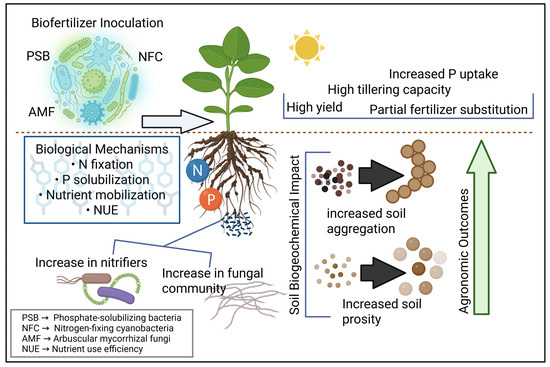
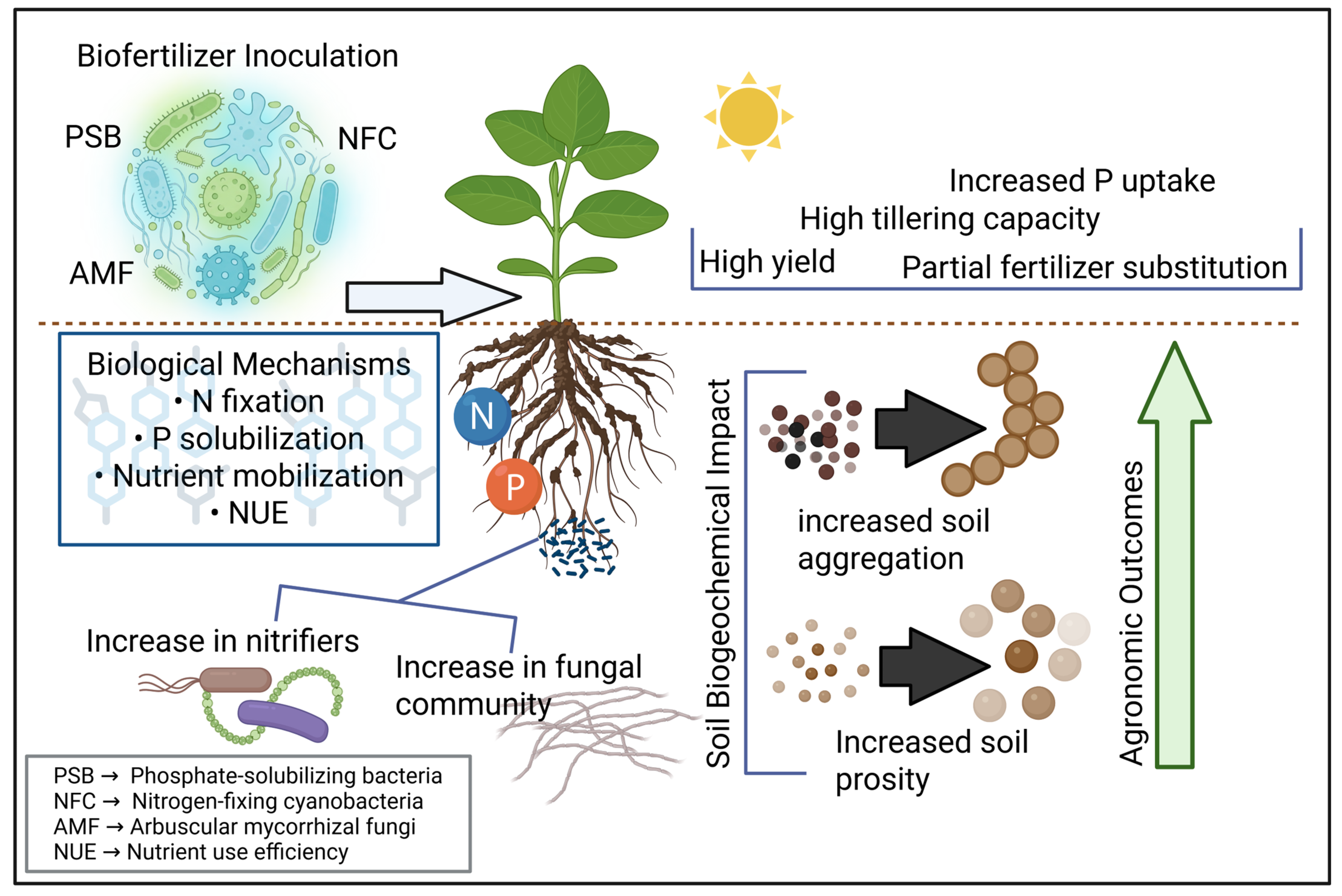
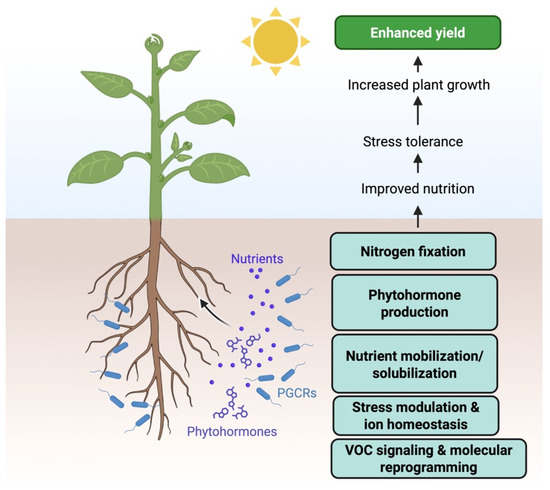
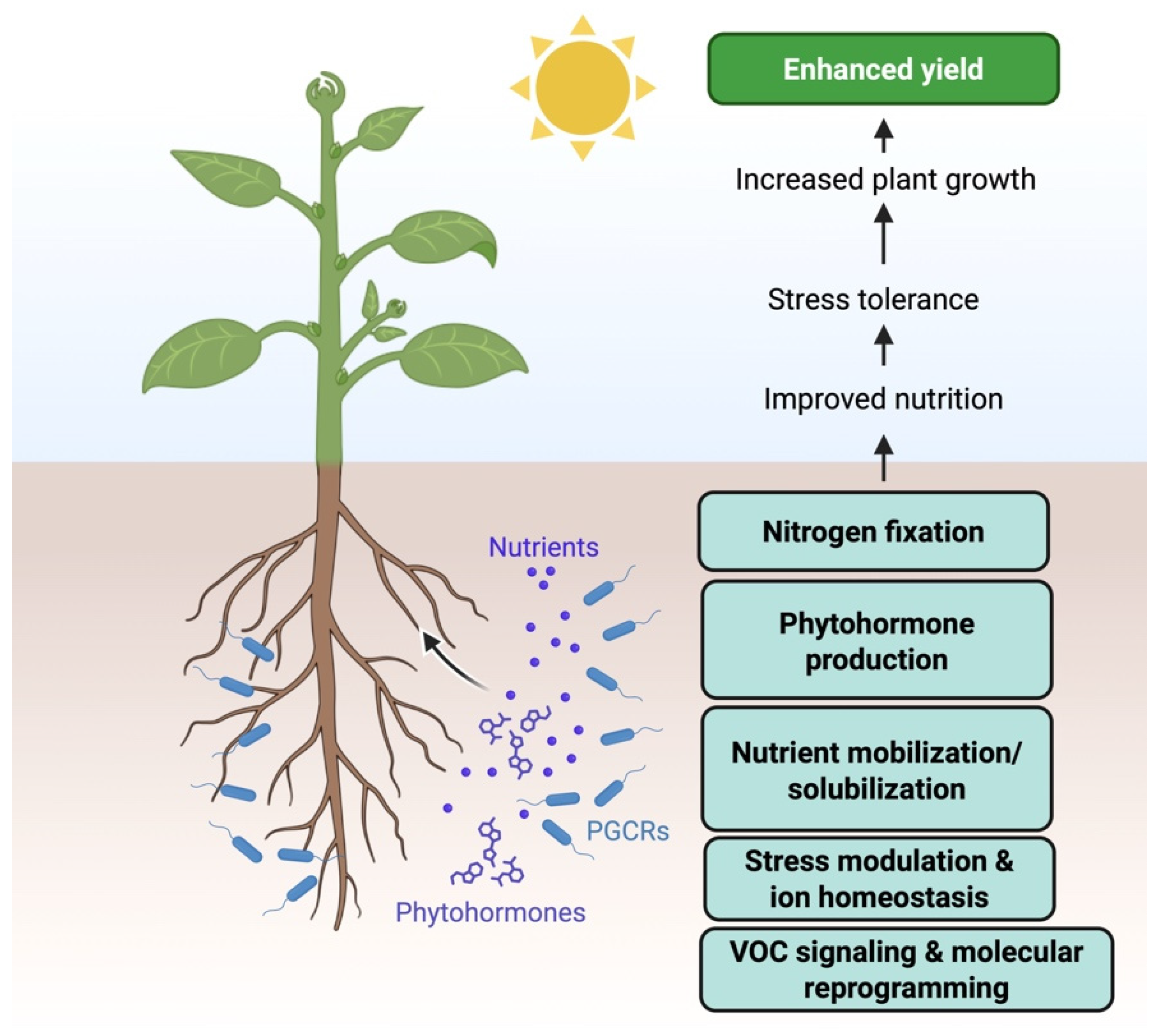
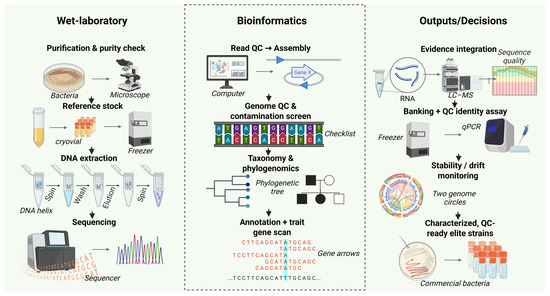
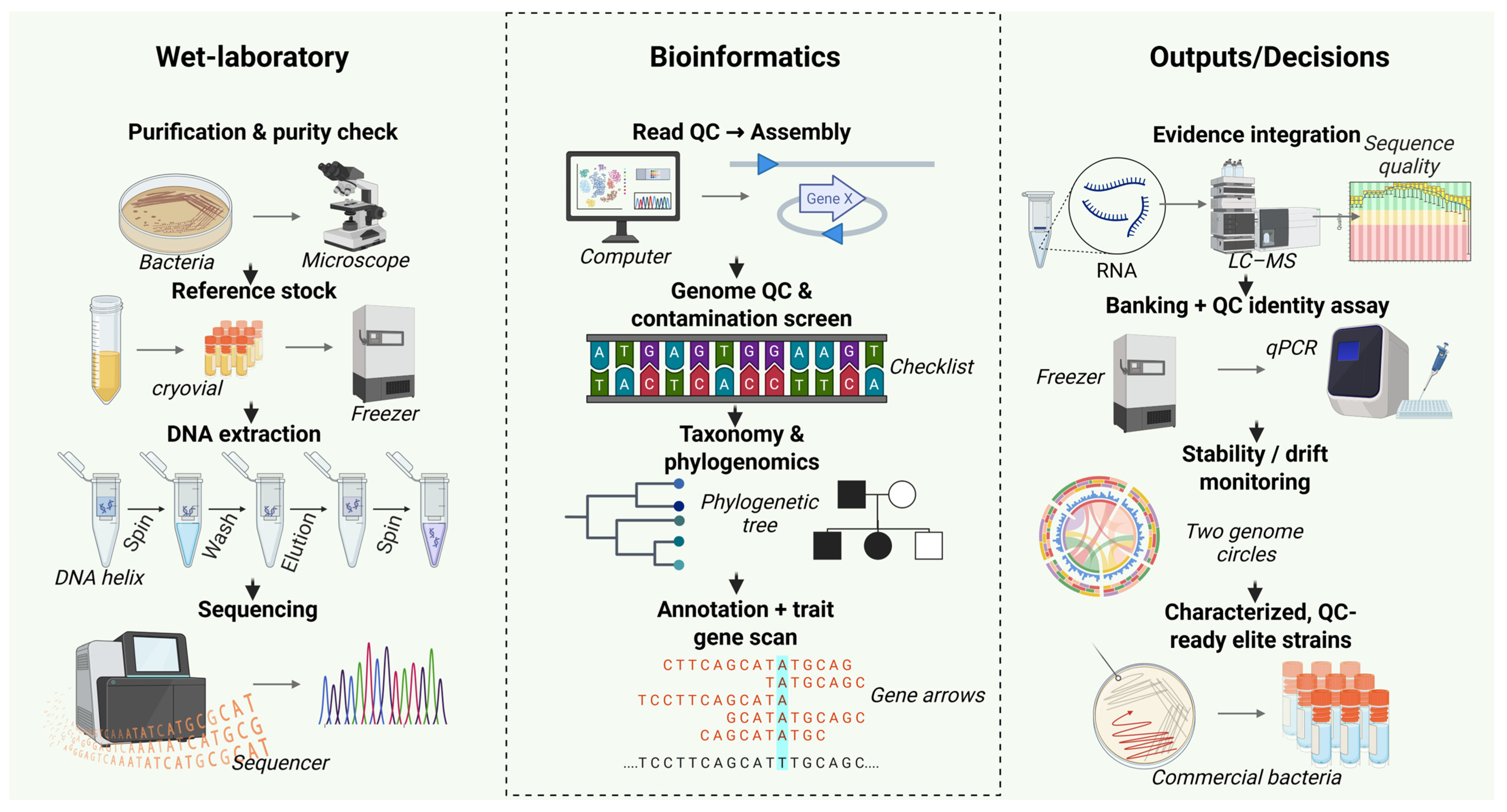
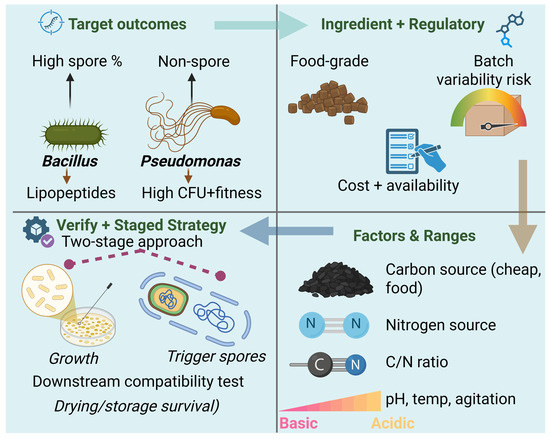
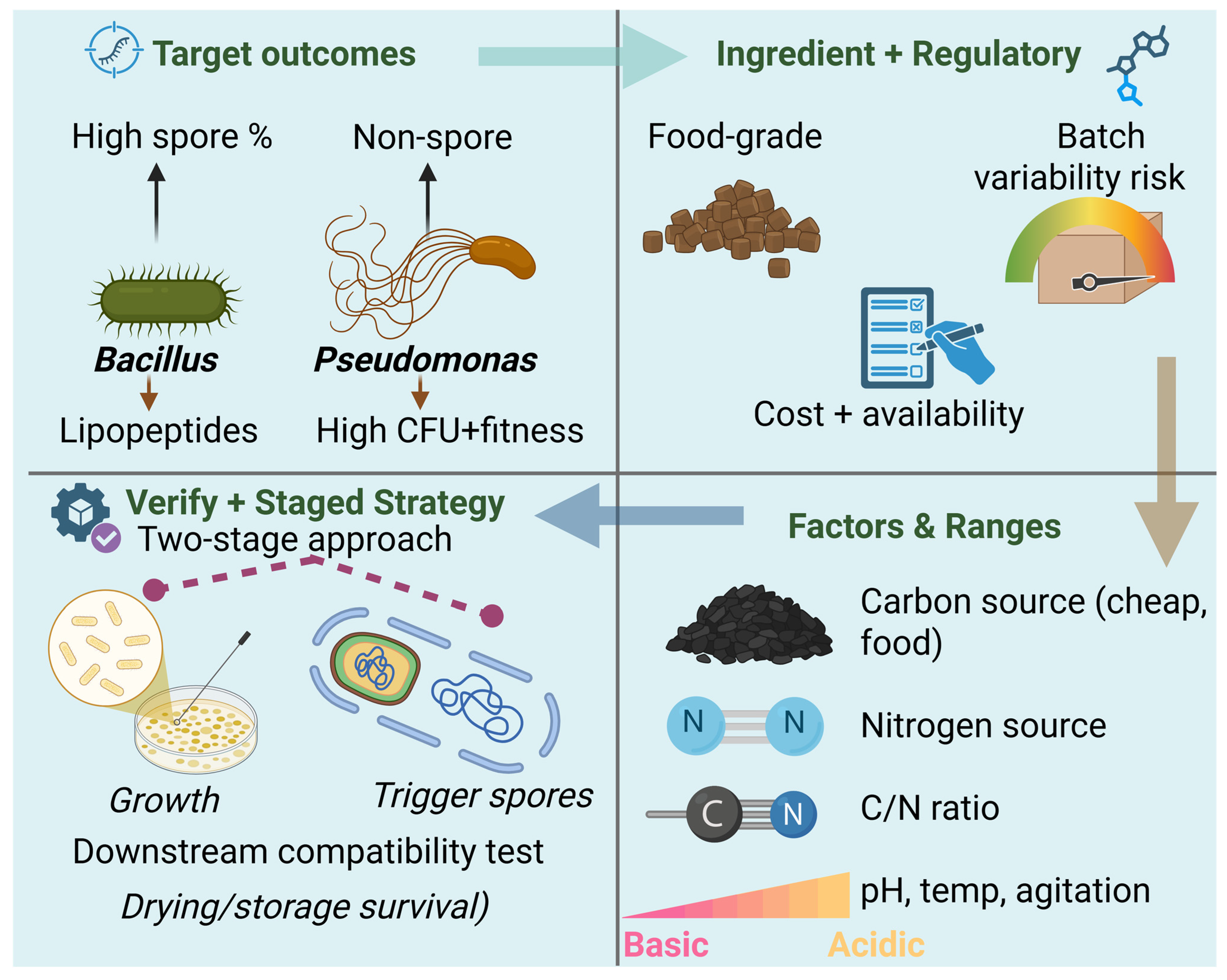
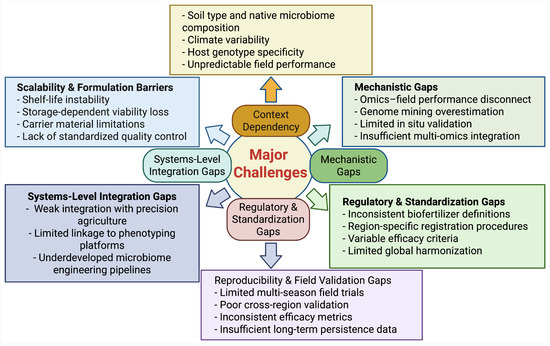
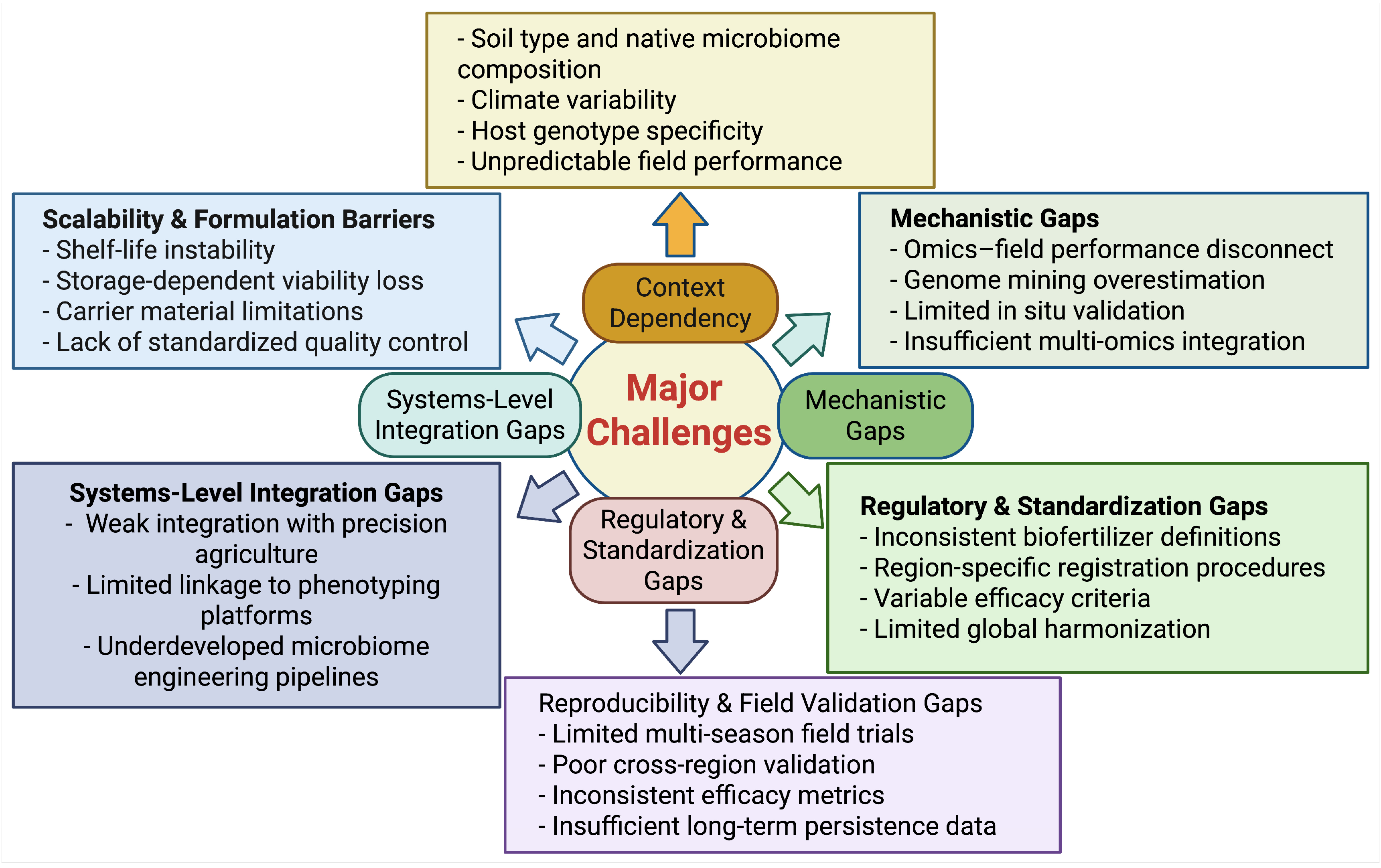

Disclaimer/Publisher’s Note: The statements, opinions and data contained in all publications are solely those of the individual author(s) and contributor(s) and not of MDPI and/or the editor(s). MDPI and/or the editor(s) disclaim responsibility for any injury to people or property resulting from any ideas, methods, instructions or products referred to in the content. |
© 2026 by the authors. Licensee MDPI, Basel, Switzerland. This article is an open access article distributed under the terms and conditions of the Creative Commons Attribution (CC BY) license.