Increased Availability of Selective Trace Elements Enhanced Anaerobic Benzoate Oxidation in Geotalea daltonii

Abstract
1. Introduction
2. Materials and Methods
2.1. Culturing Methods
2.2. Total RNA Extraction
2.3. Primer Design
2.4. Reverse Transcription-Polymerase Chain Reaction (RT-PCR)
2.5. Quantitative Real-Time Reverse Transcription PCR (qRT-PCR)
2.6. Rapid Amplification of 5′ cDNA Ends (5′ RACE)
2.7. Genetic Organization Analysis via Sequence-Overlap PCR (SO-PCR)
2.8. Identification of Anaerobic Benzoate Oxidation Genes and Cobalt Transport Genes
2.9. Protein Domain and Functional Site Prediction
2.10. In Silico Protein–Ligand Binding Affinity Prediction of BamB
2.11. Statistical Analysis
3. Results and Discussion
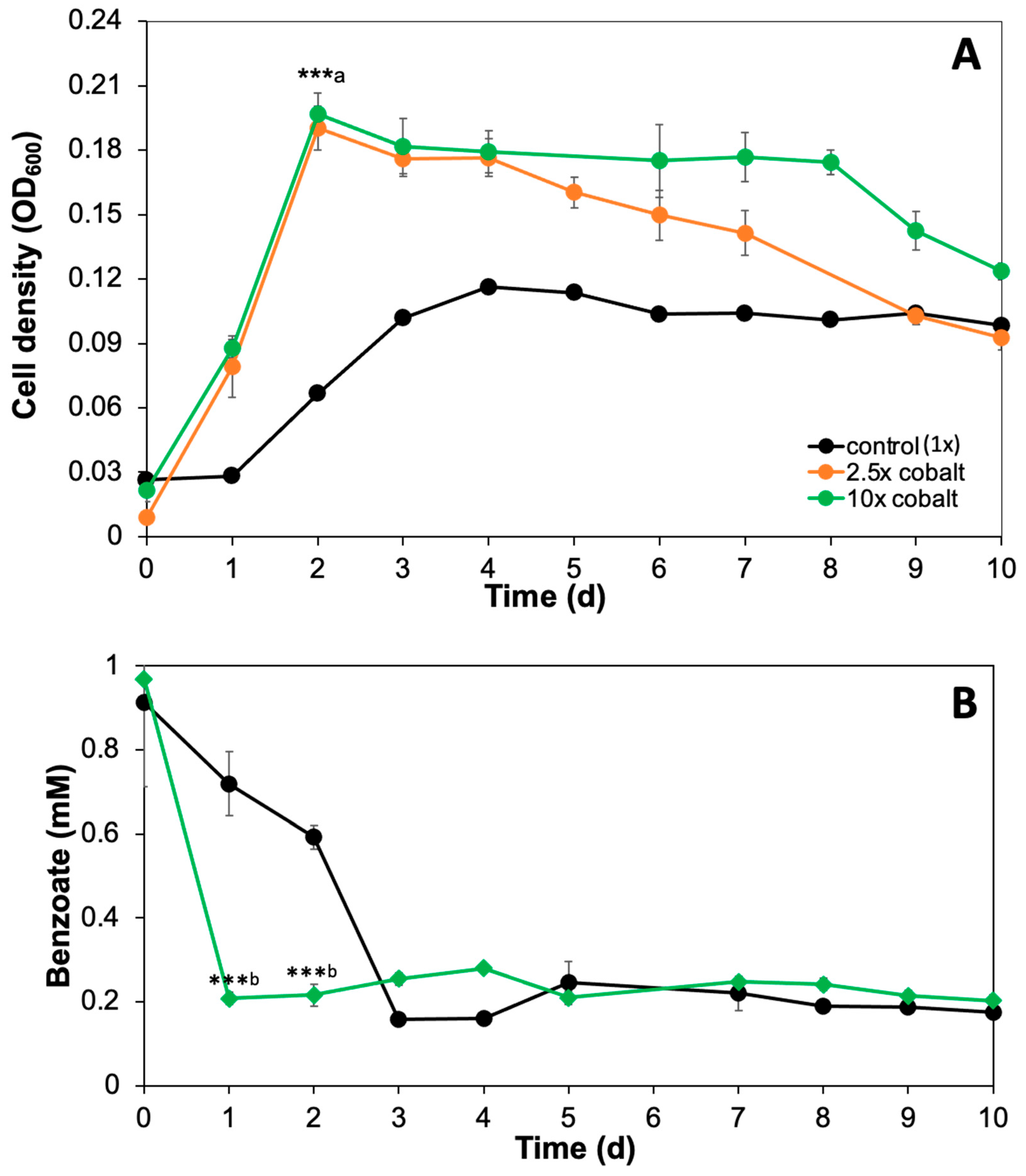
3.1. Increased Cobalt Availability Enhanced Anaerobic Growth and Anaerobic Benzoate Oxidation in G. daltonii
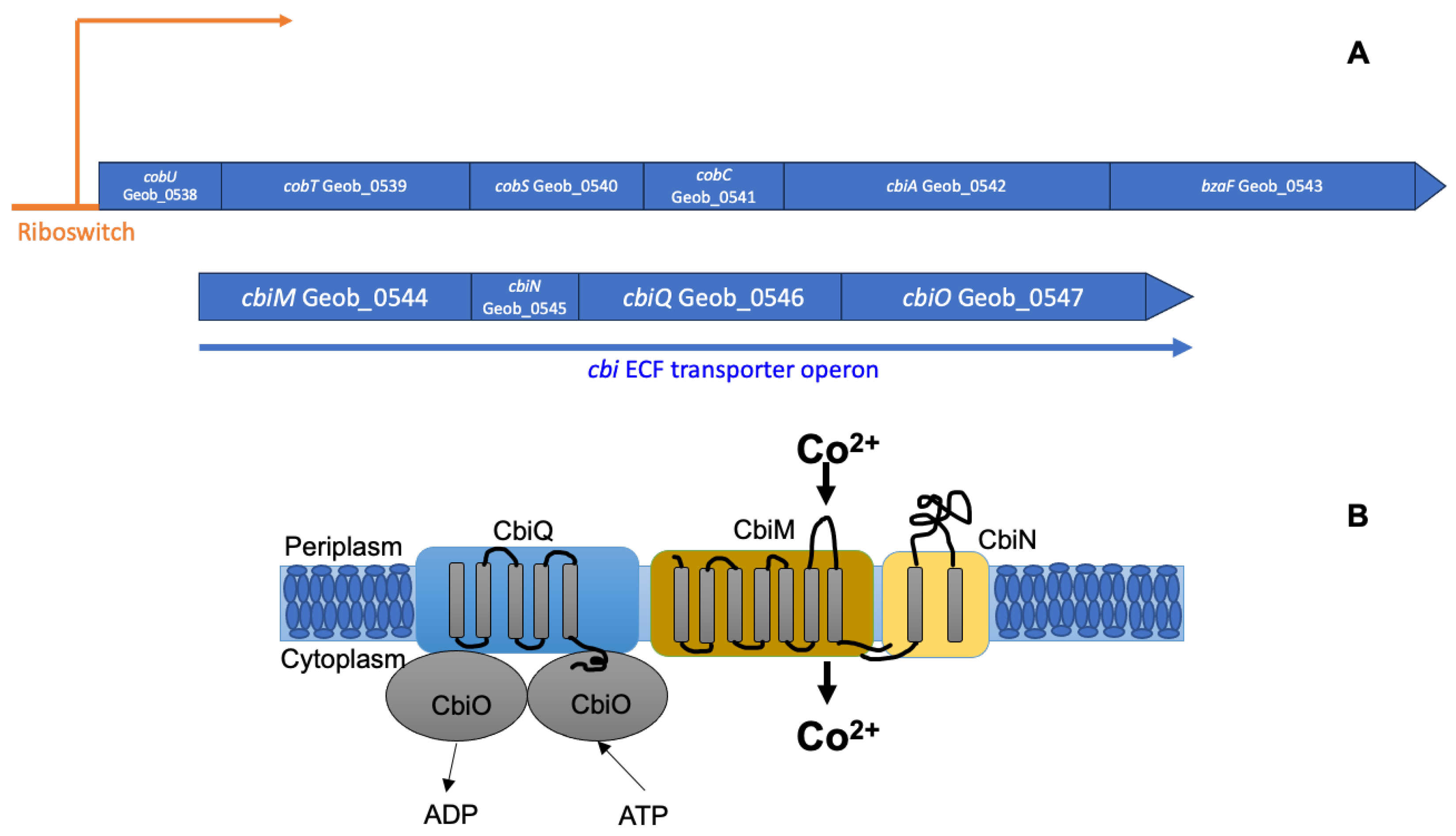
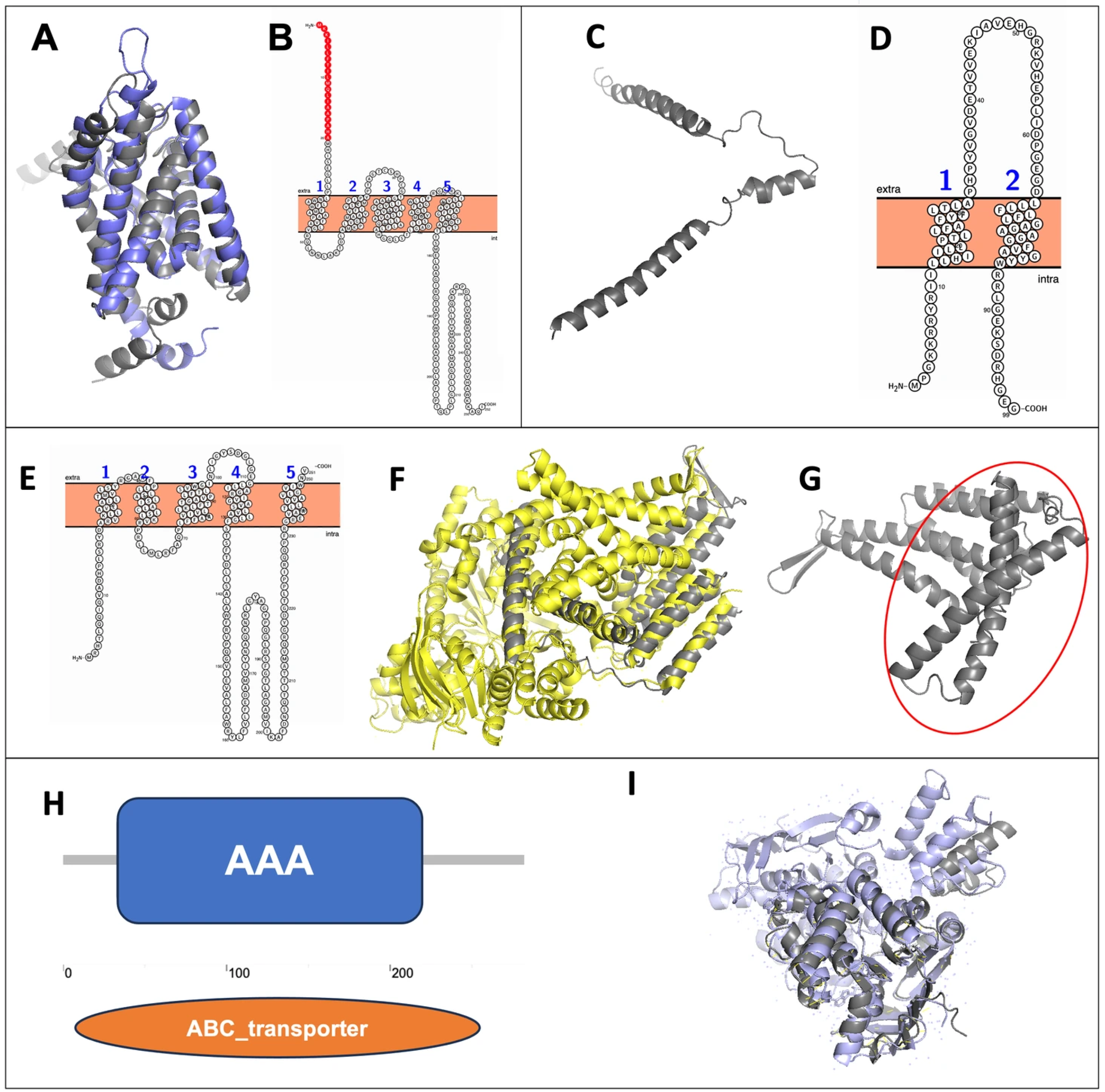
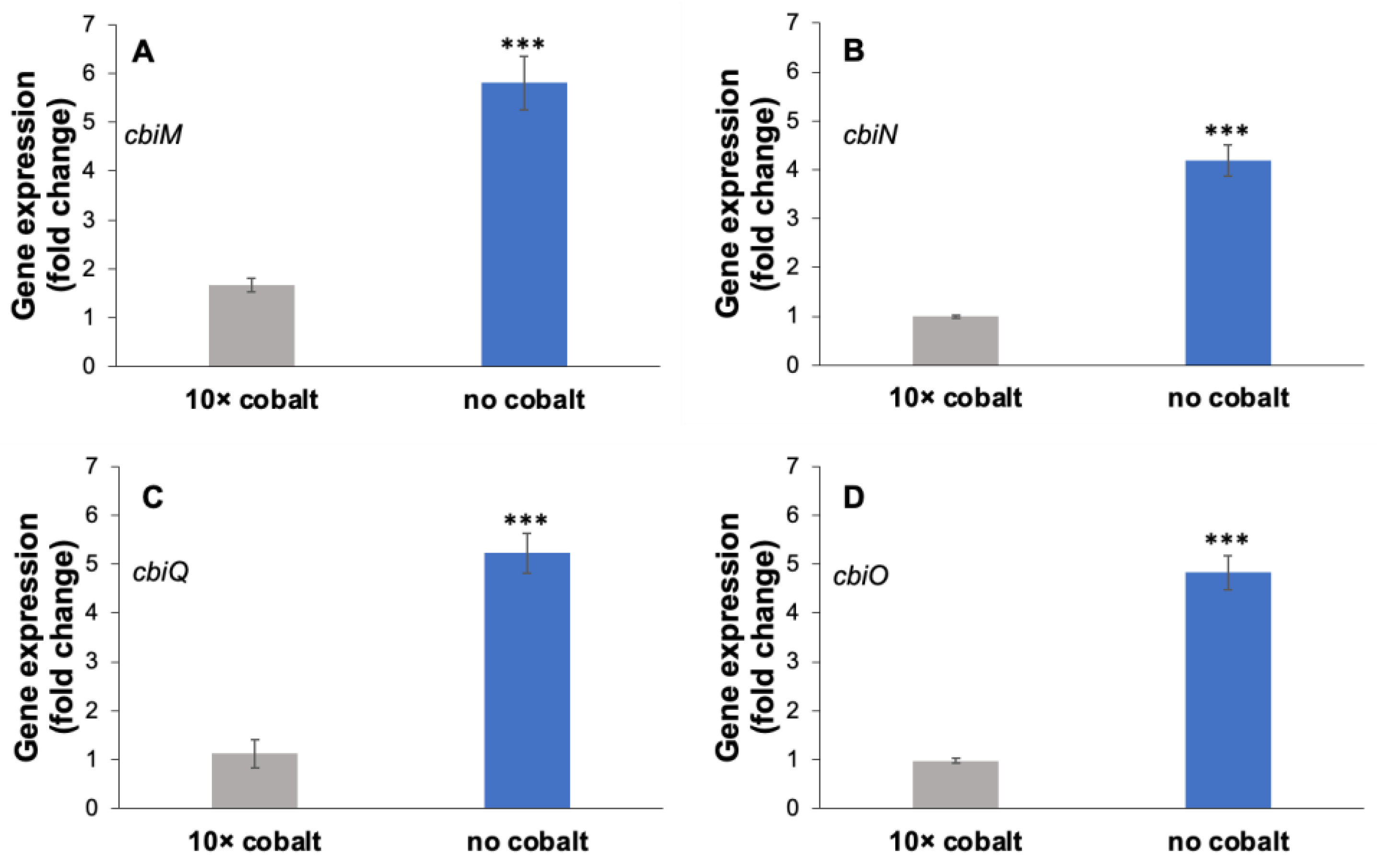
3.2. Identification and Characterization of a Putative Cobalt ECF Transporter in Geotalea daltonii
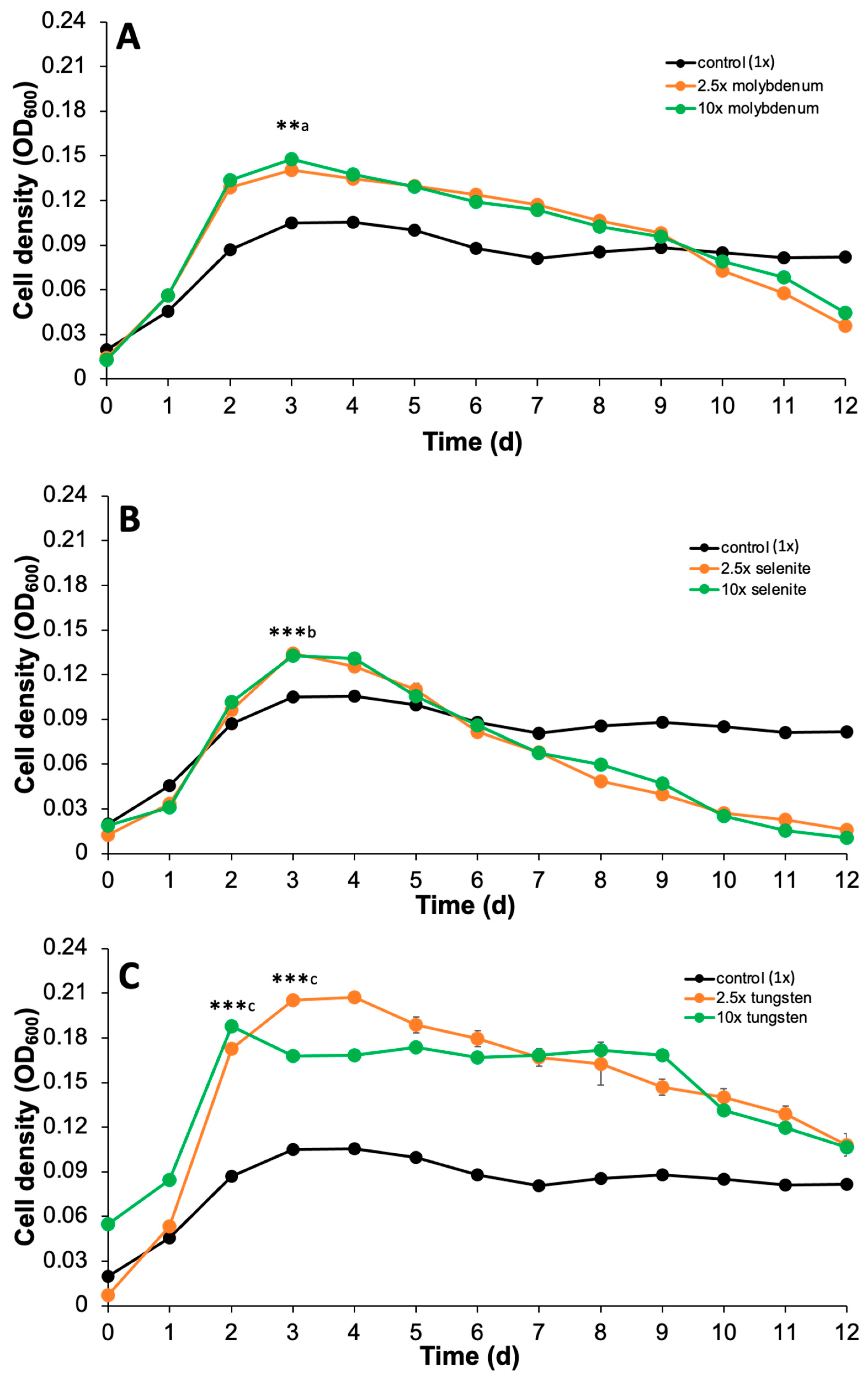
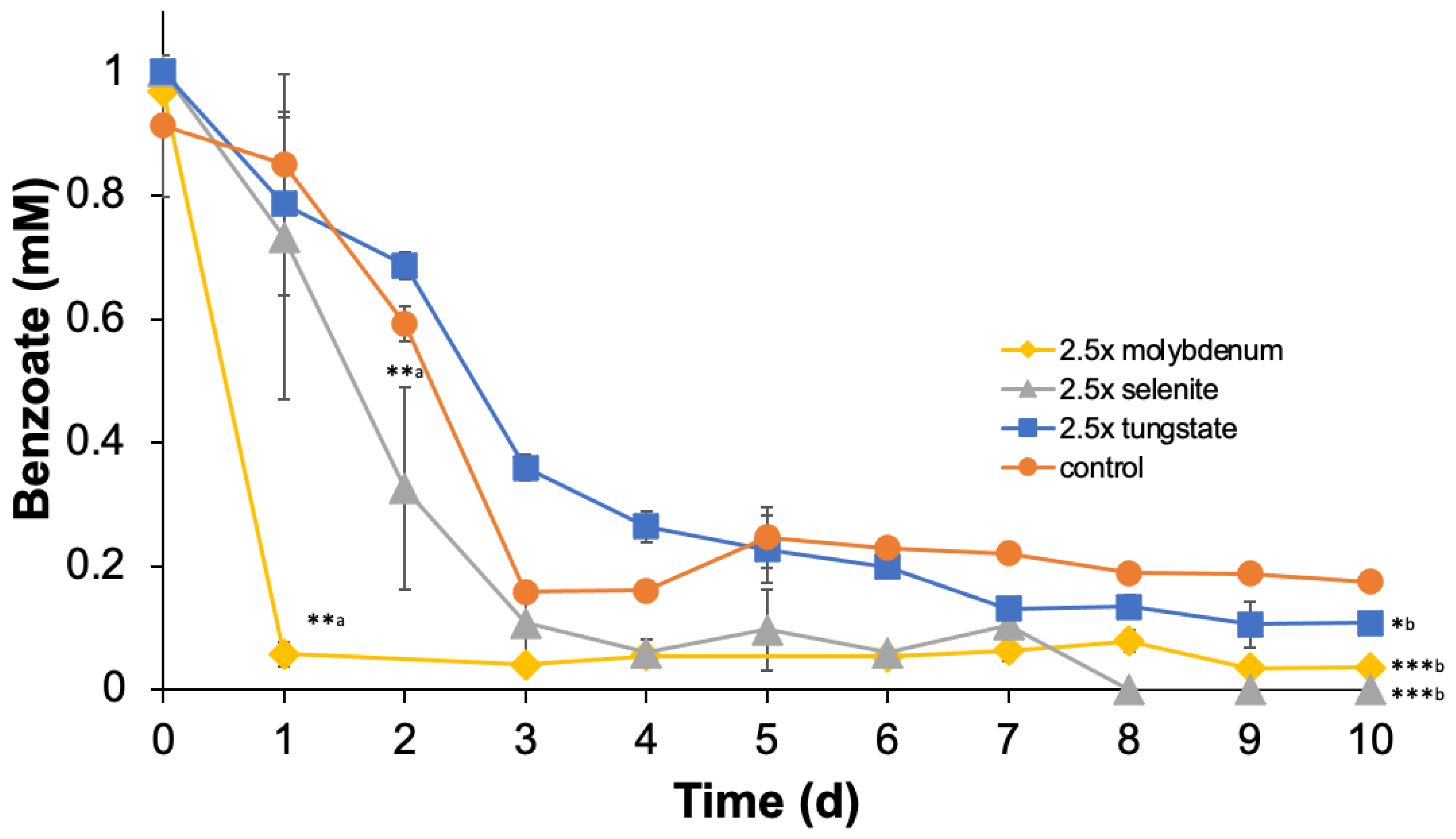
3.3. Increased Availability of Selenite, Tungsten, and Molybdenum-Enhanced Anaerobic Growth and Anaerobic Benzoate Oxidation in G. daltonii
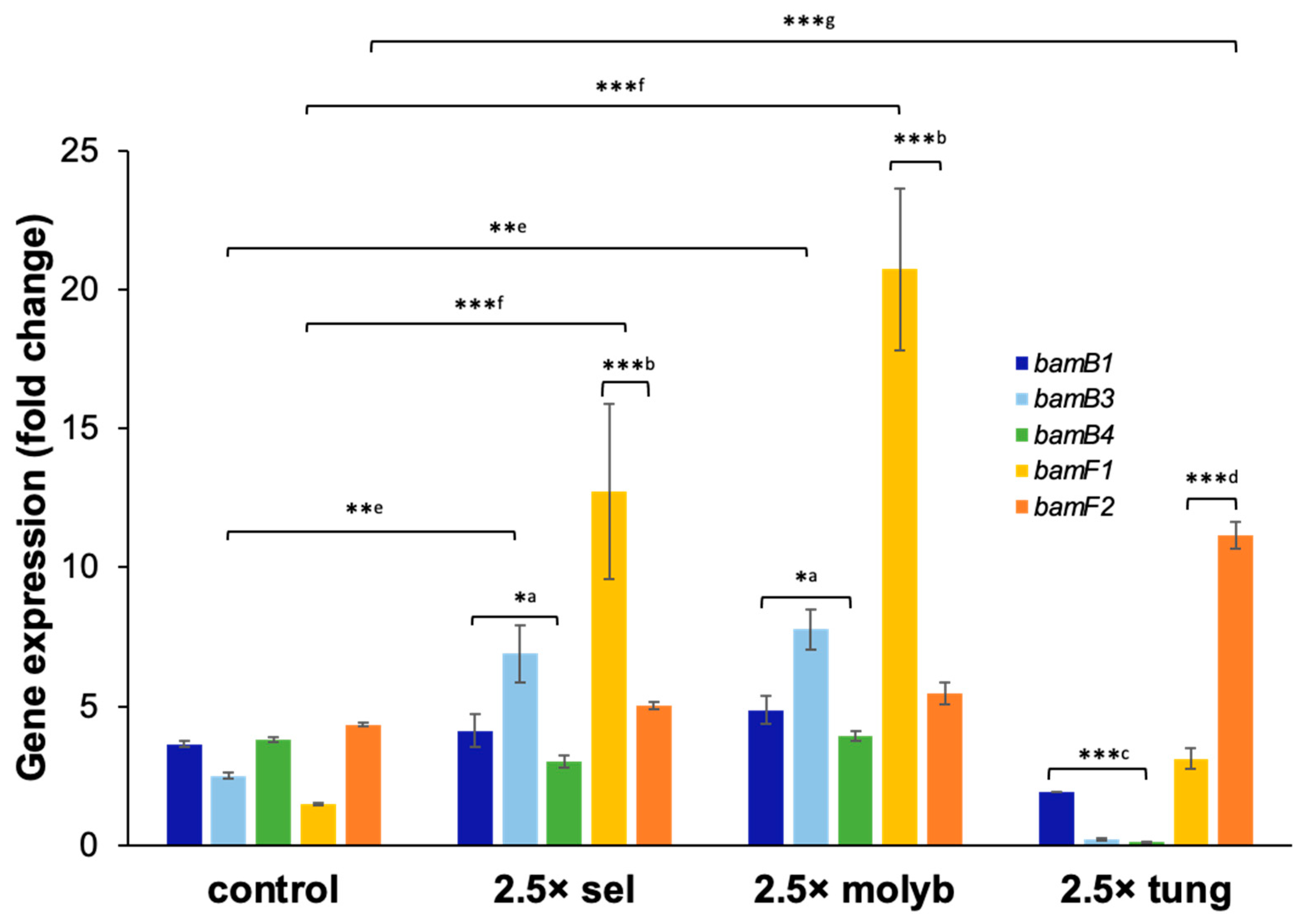
3.4. Differential Regulation of Anaerobic Reductive Dearomatization Genes bamB and bamF in Response to Amendment of Selenite, Molybdenum and Tungsten
4. Conclusions
Supplementary Materials
Author Contributions
Funding
Institutional Review Board Statement
Informed Consent Statement
Data Availability Statement
Acknowledgments
Conflicts of Interest
Abbreviations
| 5′ RACE | Rapid amplification of 5′ cDNA ends |
| ECF | Electron coupling factor |
| IC | Ion chromatography |
| qRT-PCR | Quantitative reverse transcription PCR |
| RMSD | Root mean square deviation |
| SDS-PAGE | Sodium-dodecyl polyacrylamide gel electrophoresis |
| SOPCR | Sequence-overlap PCR |
| TE | Trace elements |
| TEA | Terminal electron acceptor |
References
- Schink, B. Microbially Driven Redox Reactions in Anoxic Environments: Pathways, Energetics, and Biochemical Consequences. Eng. Life Sci. 2006, 6, 228–233. [Google Scholar] [CrossRef]
- Kumar, R.; Verma, A.; Shome, A.; Sinha, R.; Sinha, S.; Jha, P.K.; Kumar, R.; Kumar, P.; Shubham; Das, S.; et al. Impacts of Plastic Pollution on Ecosystem Services, Sustainable Development Goals, and Need to Focus on Circular Economy and Policy Interventions. Sustainability 2021, 13, 9963. [Google Scholar] [CrossRef]
- Morrison, M.; Trevisan, R.; Ranasinghe, P.; Merrill, G.B.; Santos, J.; Hong, A.; Edward, W.C.; Jayasundara, N.; Somarelli, J.A. A growing crisis for One Health: Impacts of plastic pollution across layers of biological function. Front. Mar. Sci. 2022, 9, 980705. [Google Scholar] [CrossRef]
- Singh, P.; Singh, V.K.; Singh, R.; Borthakur, A.; Madhav, S.; Ahamad, A.; Kumar, A.; Pal, D.B.; Tiwary, D.; Mishra, P.K. Chapter 1—Bioremediation: A sustainable approach for management of environmental contaminants. In Abatement of Environmental Pollutants; Singh, P., Kumar, A., Borthakur, A., Eds.; Elsevier: Amsterdam, The Netherlands, 2020; pp. 1–23. [Google Scholar]
- Dennis, S.C.; Noakes, T.D. EXERCISE|Metabolic Requirements. In Encyclopedia of Food Sciences and Nutrition, 2nd ed.; Caballero, B., Ed.; Academic Press: Oxford, UK, 2003; pp. 2217–2222. [Google Scholar]
- Widdel, F.; Knittel, K.; Galushko, A. Anaerobic Hydrocarbon-Degrading Microorganisms: An Overview. In Handbook of Hydrocarbon and Lipid Microbiology; Timmis, K.N., Ed.; Springer Berlin Heidelberg: Berlin/Heidelberg, Germany, 2010; pp. 1997–2021. [Google Scholar]
- Aihara, J.-I. Why aromatic compounds are stable. Sci. Am. 1992, 266, 62–69. [Google Scholar] [CrossRef]
- Hernández-Ospina, D.A.; Osorio-González, C.S.; Miri, S.; Kaur Brar, S. New perspectives on the anaerobic degradation of BTEX: Mechanisms, pathways, and intermediates. Chemosphere 2024, 361, 142490. [Google Scholar] [CrossRef]
- Unites States Environmental Protection Agency. How to Evaluate Alternative Cleanup Technologies for Underground Storage Tank Sites; U.S. Environmental Protection Agency: Washington, DC, USA, 2017.
- Mqambalala, A.; Maleke, M.; Osman, J.R.; Hernandez, J.C. Biodegradation of Emerging Contaminants Controlled by Biological and Chemical Factors. Microorganisms 2025, 13, 2354. [Google Scholar] [CrossRef] [PubMed]
- Afroze, N.; Nakhla, G.; Kim, M.; Yazdanpanah, A. Effects of trace elements on digester performance and microbial community response in anaerobic digestion systems. Environ. Technol. 2023, 44, 4157–4172. [Google Scholar] [CrossRef]
- Choong, Y.Y.; Norli, I.; Abdullah, A.Z.; Yhaya, M.F. Impacts of trace element supplementation on the performance of anaerobic digestion process: A critical review. Bioresour. Technol. 2016, 209, 369–379. [Google Scholar] [CrossRef] [PubMed]
- Boll, M.; Fuchs, G.; Heider, J. Anaerobic oxidation of aromatic compounds and hydrocarbons. Curr. Opin. Chem. Biol. 2002, 6, 604–611. [Google Scholar] [CrossRef] [PubMed]
- Schink, B. Energetics of syntrophic cooperation in methanogenic degradation. Microbiol. Mol. Biol. Rev. 1997, 61, 262–280. [Google Scholar]
- Florencio, L.; Jeniček, P.; Field, J.A.; Lettinga, G. Effect of cobalt on the anaerobic degradation of methanol. J. Ferment. Bioeng. 1993, 75, 368–374. [Google Scholar] [CrossRef]
- Santo, M.; Weitsman, R.; Sivan, A. The role of the copper-binding enzyme—Laccase—In the biodegradation of polyethylene by the actinomycete Rhodococcus ruber. Int. Biodeterior. Biodegrad. 2013, 84, 204–210. [Google Scholar] [CrossRef]
- Eun, H.-M. 6—DNA Polymerases. In Enzymology Primer for Recombinant DNA Technology; Eun, H.-M., Ed.; Academic Press: San Diego, CA, USA, 1996; pp. 345–489. [Google Scholar]
- Green, J.; Rolfe, M.D.; Smith, L.J. Transcriptional regulation of bacterial virulence gene expression by molecular oxygen and nitric oxide. Virulence 2014, 5, 794–809. [Google Scholar] [CrossRef]
- Fleischhacker, A.S.; Kiley, P.J. Iron-containing transcription factors and their roles as sensors. Curr. Opin. Chem. Biol. 2011, 15, 335–341. [Google Scholar] [CrossRef] [PubMed]
- Wischgoll, S.; Heintz, D.; Peters, F.; Erxleben, A.; Sarnighausen, E.; Reski, R.; Van Dorsselaer, A.; Boll, M. Gene clusters involved in anaerobic benzoate degradation of Geobacter metallireducens. Mol. Microbiol. 2005, 58, 1238–1252. [Google Scholar] [CrossRef]
- Peters, F.; Rother, M.; Boll, M. Selenocysteine-Containing Proteins in Anaerobic Benzoate Metabolism of Desulfococcus multivorans. J. Bacteriol. 2004, 186, 2156–2163. [Google Scholar] [CrossRef]
- Osman, D.; Cooke, A.; Young, T.R.; Deery, E.; Robinson, N.J.; Warren, M.J. The requirement for cobalt in vitamin B12: A paradigm for protein metalation. Biochim. Biophys. Acta (BBA)—Mol. Cell Res. 2021, 1868, 118896. [Google Scholar] [CrossRef]
- Eitinger, T.; Rodionov, D.A.; Grote, M.; Schneider, E. Canonical and ECF-type ATP-binding cassette importers in prokaryotes: Diversity in modular organization and cellular functions. FEMS Microbiol. Rev. 2011, 35, 3–67. [Google Scholar] [CrossRef] [PubMed]
- Finkenwirth, F.; Eitinger, T. ECF-type ABC transporters for uptake of vitamins and transition metal ions into prokaryotic cells. Res. Microbiol. 2019, 170, 358–365. [Google Scholar] [CrossRef]
- Voith von Voithenberg, L.; Park, J.; Stübe, R.; Lux, C.; Lee, Y.; Philippar, K. A Novel Prokaryote-Type ECF/ABC Transporter Module in Chloroplast Metal Homeostasis. Front. Plant Sci. 2019, 10, 1264. [Google Scholar] [CrossRef] [PubMed]
- Chakrabarti, T.; Jones, P.H. Effect of molybdenum and selenium addition on the denitrification of waste water. Water Res. 1983, 17, 931–936. [Google Scholar] [CrossRef]
- Chin, K.J.; Ünal, B.; Sanderson, M.; Aboderin, F.; Nüsslein, K. Selective trace elements significantly enhanced methane production in coal bed methane systems by stimulating microbial activity. Microbiol. Spectr. 2024, 12, e0350823. [Google Scholar] [CrossRef]
- Zhang, Y.; Gladyshev, V.N. General trends in trace element utilization revealed by comparative genomic analyses of Co, Cu, Mo, Ni, and Se. J. Biol. Chem. 2010, 285, 3393–3405. [Google Scholar] [CrossRef]
- Szaleniec, M.; Heider, J. Obligately Tungsten-Dependent Enzymes─Catalytic Mechanisms, Models and Applications. Biochemistry 2025, 64, 2154–2172. [Google Scholar] [CrossRef]
- Prakash, O.; Gihring, T.M.; Dalton, D.D.; Chin, K.J.; Green, S.J.; Akob, D.M.; Wanger, G.; Kostka, J.E. Geobacter daltonii sp. nov., an Fe(III)- and uranium(VI)-reducing bacterium isolated from a shallow subsurface exposed to mixed heavy metal and hydrocarbon contamination. Int. J. Syst. Evol. Microbiol. 2010, 60, 546–553. [Google Scholar] [CrossRef]
- Bullows, J.; Kanak, A.; Shedrick, L.; Kiessling, C.; Aklujkar, M.; Kostka, J.; Chin, K.-J. Anaerobic Benzene Oxidation in Geotalea daltonii Involves Activation by Methylation and is Regulated by the Transition State Regulator AbrB. Appl. Environ. Microbiol. 2024, 90, e0085624. [Google Scholar] [CrossRef]
- Brandis-Heep, A.; Gebhardt, N.A.; Thauer, R.K.; Widdel, F.; Pfennig, N. Anaerobic acetate oxidation to CO2 by Desulfobacter postgatei. Arch. Microbiol. 1983, 136, 222–229. [Google Scholar] [CrossRef]
- Miller, T.L.; Wolin, M.J. A serum bottle modification of the Hungate technique for cultivating obligate anaerobes. Appl. Microbiol. 1974, 27, 985–987. [Google Scholar] [CrossRef] [PubMed]
- Lovley, D.R.; Phillips, E.J. Novel mode of microbial energy metabolism: Organic carbon oxidation coupled to dissimilatory reduction of iron or manganese. Appl. Environ. Microbiol. 1988, 54, 1472–1480. [Google Scholar] [CrossRef]
- Kiessling, C.M.; Bullows, J.E.; Ramirez, N.; Li, X.; Chin, K.-J. Role of sigma 54 and bamVW in regulation of anaerobic aromatic degradation via benzoate-CoA ligase by Geotalea daltonii. Microbe 2025, 9, 100601. [Google Scholar] [CrossRef]
- Leibniz Institute DSMZ–German Collection of Microorganisms and Cell Cultures GmbH. Medium 320: Trace Element Solution SL-10. 2022. Available online: https://www.dsmz.de/microorganisms/medium/pdf/DSMZ_Medium320.pdf (accessed on 23 March 2026).
- Linville, J.L.; Shen, Y.; Schoene, R.P.; Nguyen, M.; Urgun-Demirtas, M.; Snyder, S.W. Impact of trace element additives on anaerobic digestion of sewage sludge with in-situ carbon dioxide sequestration. Process Biochem. 2016, 51, 1283–1289. [Google Scholar] [CrossRef]
- Chin, K.J.; Sharma, M.L.; Russell, L.A.; O’Neill, K.R.; Lovley, D.R. Quantifying expression of a dissimilatory (bi)sulfite reductase gene in petroleum-contaminated marine harbor sediments. Microb. Ecol. 2008, 55, 489–499. [Google Scholar] [CrossRef]
- Kiessling, C.M.; Greenlund, S.; Bullows, J.E.; Samuels, C.; Aboderin, F.; Ramirez, N.; Chin, K.J. Differential anaerobic oxidation of benzoate in Geotalea daltonii FRC-32. Microbiol. Spectr. 2025, 13, e0232424. [Google Scholar] [CrossRef]
- Owczarzy, R.; Tataurov, A.V.; Wu, Y.; Manthey, J.A.; McQuisten, K.A.; Almabrazi, H.G.; Pedersen, K.F.; Lin, Y.; Garretson, J.; McEntaggart, N.O.; et al. IDT SciTools: A suite for analysis and design of nucleic acid oligomers. Nucleic Acids Res. 2008, 36, W163–W169. [Google Scholar] [CrossRef]
- Dieffenbach, C.W.; Lowe, T.M.; Dveksler, G.S. General concepts for PCR primer design. PCR Methods Appl. 1993, 3, S30–S37. [Google Scholar] [CrossRef]
- Sievers, F.; Higgins, D.G. Clustal Omega, accurate alignment of very large numbers of sequences. Methods Mol. Biol. 2014, 1079, 105–116. [Google Scholar] [CrossRef]
- Altschul, S.F.; Gish, W.; Miller, W.; Myers, E.W.; Lipman, D.J. Basic local alignment search tool. J. Mol. Biol. 1990, 215, 403–410. [Google Scholar] [CrossRef] [PubMed]
- Aklujkar, M.; Chin, K.-J.; Kanak, A.; Voordeckers, J.W.; Saunders, E.; Han, C.S.; Land, M.L.; Lovely, D.R.; Kostka, J. Geotalea daltonii FRC-32, Complete Genome, Genbank: NC_011979. 2009. Available online: https://www.ncbi.nlm.nih.gov/nuccore/NC_011979.1/ (accessed on 23 March 2026).
- de Castro, E.; Sigrist, C.J.; Gattiker, A.; Bulliard, V.; Langendijk-Genevaux, P.S.; Gasteiger, E.; Bairoch, A.; Hulo, N. ScanProsite: Detection of PROSITE signature matches and ProRule-associated functional and structural residues in proteins. Nucleic Acids Res. 2006, 34, W362–W365. [Google Scholar] [CrossRef]
- Hulo, N.; Bairoch, A.; Bulliard, V.; Cerutti, L.; De Castro, E.; Langendijk-Genevaux, P.S.; Pagni, M.; Sigrist, C.J. The PROSITE database. Nucleic Acids Res. 2006, 34, D227–D230. [Google Scholar] [CrossRef] [PubMed]
- Letunic, I.; Bork, P. 20 years of the SMART protein domain annotation resource. Nucleic Acids Res. 2017, 46, D493–D496. [Google Scholar] [CrossRef] [PubMed]
- Letunic, I.; Khedkar, S.; Bork, P. SMART: Recent updates, new developments and status in 2020. Nucleic Acids Res. 2020, 49, D458–D460. [Google Scholar] [CrossRef] [PubMed]
- Trott, O.; Olson, A.J. AutoDock Vina: Improving the speed and accuracy of docking with a new scoring function, efficient optimization, and multithreading. J. Comput. Chem. 2010, 31, 455–461. [Google Scholar] [CrossRef]
- Eberhardt, J.; Santos-Martins, D.; Tillack, A.F.; Forli, S. AutoDock Vina 1.2.0: New Docking Methods, Expanded Force Field, and Python Bindings. J. Chem. Inf. Model. 2021, 61, 3891–3898. [Google Scholar] [CrossRef] [PubMed]
- Seeliger, D.; de Groot, B.L. Ligand docking and binding site analysis with PyMOL and Autodock/Vina. J. Comput. Aided Mol. Des. 2010, 24, 417–422. [Google Scholar] [CrossRef]
- Ding, Y.; Fang, Y.; Moreno, J.; Ramanujam, J.; Jarrell, M.; Brylinski, M. Assessing the similarity of ligand binding conformations with the Contact Mode Score. Comput. Biol. Chem. 2016, 64, 403–413. [Google Scholar] [CrossRef] [PubMed]
- Kräutler, B. Cobalt: B12 Enzymes and Coenzymes. In Encyclopedia of Inorganic and Bioinorganic Chemistry; Wiley: New York, NY, USA, 2018; pp. 1–26. [Google Scholar]
- Elías-Arnanz, M. Anaerobic bacteria need their vitamin B12 to digest estrogen. Proc. Natl. Acad. Sci. USA 2020, 117, 1833–1835. [Google Scholar] [CrossRef]
- Buccella, D.; Lim, M.H.; Morrow, J.R. Metals in biology: From metallomics to trafficking. Inorg. Chem. 2019, 58, 13505–13508. [Google Scholar] [CrossRef]
- Zhang, Y.; Gladyshev, V.N. Comparative genomics of trace elements: Emerging dynamic view of trace element utilization and function. Chem. Rev. 2009, 109, 4828–4861. [Google Scholar] [CrossRef]
- Finkenwirth, F.; Sippach, M.; Landmesser, H.; Kirsch, F.; Ogienko, A.; Grunzel, M.; Kiesler, C.; Steinhoff, H.-J.; Schneider, E.; Eitinger, T. ATP-dependent conformational changes trigger substrate capture and release by an ECF-type biotin transporter. J. Biol. Chem. 2015, 290, 16929–16942. [Google Scholar] [CrossRef]
- Finkenwirth, F.; Sippach, M.; Pecina, S.N.; Gäde, M.; Ruta, J.; Ricke, A.; Bondarenko, E.; Klare, J.P.; Zinke, M.; Lange, S.; et al. Dynamic interactions of CbiN and CbiM trigger activity of a cobalt energy-coupling-factor transporter. Biochim. Biophys. Acta (BBA)—Biomembr 2020, 1862, 183114. [Google Scholar] [CrossRef]
- Slotboom, D.J. Structural and mechanistic insights into prokaryotic energy-coupling factor transporters. Nat. Rev. Microbiol. 2014, 12, 79–87. [Google Scholar] [CrossRef]
- Neubauer, O.; Reiffler, C.; Behrendt, L.; Eitinger, T. Interactions among the A and T units of an ECF-type biotin transporter analyzed by site-specific crosslinking. PLoS ONE 2011, 6, e29087. [Google Scholar] [CrossRef] [PubMed]
- Wang, T.; Fu, G.; Pan, X.; Wu, J.; Gong, X.; Wang, J.; Shi, Y. Structure of a bacterial energy-coupling factor transporter. Nature 2013, 497, 272–276. [Google Scholar] [CrossRef]
- Bao, Z.; Qi, X.; Hong, S.; Xu, K.; He, F.; Zhang, M.; Chen, J.; Chao, D.; Zhao, W.; Zhang, P. Structure and mechanism of a group-I cobalt energy coupling factor transporter. Cell Res. 2017, 27, 675–687. [Google Scholar] [CrossRef]
- Karpowich, N.K.; Wang, D.N. Assembly and mechanism of a group II ECF transporter. Proc. Natl. Acad. Sci. USA 2013, 110, 2534–2539. [Google Scholar] [CrossRef] [PubMed]
- Josts, I.; Almeida Hernandez, Y.; Andreeva, A.; Tidow, H. Crystal Structure of a Group I Energy Coupling Factor Vitamin Transporter S Component in Complex with Its Cognate Substrate. Cell Chem. Biol. 2016, 23, 827–836. [Google Scholar] [CrossRef]
- Majsnerowska, M.; Hänelt, I.; Wunnicke, D.; Schäfer, L.V.; Steinhoff, H.J.; Slotboom, D.J. Substrate-induced conformational changes in the S-component ThiT from an energy coupling factor transporter. Structure 2013, 21, 861–867. [Google Scholar] [CrossRef]
- Mirdita, M.; Schütze, K.; Moriwaki, Y.; Heo, L.; Ovchinnikov, S.; Steinegger, M. ColabFold: Making protein folding accessible to all. Nat. Methods 2022, 19, 679–682. [Google Scholar] [CrossRef]
- Lu, S.; Wang, J.; Chitsaz, F.; Derbyshire, M.K.; Geer, R.C.; Gonzales, N.R.; Gwadz, M.; Hurwitz, D.I.; Marchler, G.H.; Song, J.S.; et al. CDD/SPARCLE: The conserved domain database in 2020. Nucleic Acids Res. 2020, 48, D265–D268. [Google Scholar] [CrossRef]
- Nahvi, A.; Barrick, J.E.; Breaker, R.R. Coenzyme B12 riboswitches are widespread genetic control elements in prokaryotes. Nucleic Acids Res. 2004, 32, 143–150. [Google Scholar] [CrossRef] [PubMed]
- Reyes, F.E. Structure and Function of Cobalamin Riboswitches. Ph.D. Thesis, University of Colorado at Boulder, Boulder, CO, USA, 2012. [Google Scholar]
- Polaski, J.T.; Kletzien, O.A.; Drogalis, L.K.; Batey, R.T. A functional genetic screen reveals sequence preferences within a key tertiary interaction in cobalamin riboswitches required for ligand selectivity. Nucleic Acids Res. 2018, 46, 9094–9105. [Google Scholar] [CrossRef]
- Padmanabhan, S.; Jost, M.; Drennan, C.L.; Elías-Arnanz, M. A new facet of vitamin B12: Gene regulation by cobalamin-based photoreceptors. Annu. Rev. Biochem. 2017, 86, 485–514. [Google Scholar] [CrossRef]
- Pérez, A.A.; Rodionov, D.A.; Bryant, D.A. Identification and regulation of genes for cobalamin transport in the cyanobacterium Synechococcus sp. strain PCC 7002. J. Bacteriol. 2016, 198, 2753–2761. [Google Scholar] [CrossRef]
- Rodionov, D.A.; Hebbeln, P.; Gelfand, M.S.; Eitinger, T. Comparative and functional genomic analysis of prokaryotic nickel and cobalt uptake transporters: Evidence for a novel group of ATP-binding cassette transporters. J. Bacteriol. 2006, 188, 317–327. [Google Scholar] [CrossRef]
- Santos, J.A.; Rempel, S.; Mous, S.T.; Pereira, C.T.; Ter Beek, J.; de Gier, J.-W.; Guskov, A.; Slotboom, D.J. Functional and structural characterization of an ECF-type ABC transporter for vitamin B12. Elife 2018, 7, e35828. [Google Scholar] [CrossRef] [PubMed]
- Graf, J.; Fresenborg, L.; Seitz, H.M.; Pernil, R.; Schleiff, E. A cobalt concentration sensitive Btu-like system facilitates cobalamin uptake in Anabaena sp. PCC 7120. Microb. Cell 2024, 11, 41–56. [Google Scholar] [CrossRef] [PubMed]
- Martínez-Torró, C.; Torres-Puig, S.; Monge, M.; Sánchez-Alba, L.; González-Martín, M.; Marcos-Silva, M.; Perálvarez-Marín, A.; Canals, F.; Querol, E.; Piñol, J.; et al. Transcriptional response to metal starvation in the emerging pathogen Mycoplasma genitalium is mediated by Fur-dependent and -independent regulatory pathways. Emerg. Microbes Infect. 2020, 9, 5–19. [Google Scholar] [CrossRef] [PubMed]
- Li, J.; Ge, Y.; Zadeh, M.; Curtiss, R.; Mohamadzadeh, M. Regulating vitamin B12 biosynthesis via the cbiM Cbl riboswitch in Propionibacterium strain UF1. Proc. Natl. Acad. Sci. USA 2020, 117, 602–609. [Google Scholar] [CrossRef]
- Widner, F.J.; Khan, N.I.; Deery, E.; Warren, M.J.; Taga, M.; Kraeutler, B. Repression of bacterial gene expression by antivitamin B12 binding to a cobalamin riboswitch. RSC Chem. Biol. 2025, 7, 498–504. [Google Scholar] [CrossRef]
- O’Brian, M.R. Perception and homeostatic control of iron in the rhizobia and related bacteria. Annu. Rev. Microbiol. 2015, 69, 229–245. [Google Scholar] [CrossRef]
- Carmona, M.; Zamarro, M.T.; Blázquez, B.; Durante-Rodríguez, G.; Juárez, J.F.; Valderrama, J.A.; Barragán, M.J.L.; García, J.L.; Díaz, E. Anaerobic Catabolism of Aromatic Compounds: A Genetic and Genomic View. Microbiol. Mol. Biol. Rev. 2009, 73, 71–133. [Google Scholar] [CrossRef]
- Alben, J.O. Kinetics of cofactor-activated enzyme-catalyzed reactions. J. Biol. Chem. 1967, 242, 1827–1832. [Google Scholar] [CrossRef] [PubMed]
- Kilpin, K.J.; Dyson, P.J. Enzyme inhibition by metal complexes: Concepts, strategies and applications. Chem. Sci. 2013, 4, 1410–1419. [Google Scholar] [CrossRef]
- Robinson, P.K. Enzymes: Principles and biotechnological applications. Essays Biochem. 2015, 59, 1–41, Erratum in Essays Biochem. 2015, 59, 75. https://doi.org/10.1042/bse0590001. [Google Scholar] [CrossRef]
- Deng, Y.; Efremov, A.K.; Yan, J. Modulating binding affinity, specificity, and configurations by multivalent interactions. Biophys. J. 2022, 121, 1868–1880. [Google Scholar] [CrossRef]
- Johnson, K.A.; Goody, R.S. The Original Michaelis Constant: Translation of the 1913 Michaelis–Menten Paper. Biochemistry 2011, 50, 8264–8269. [Google Scholar] [CrossRef] [PubMed]
- Bervoets, I.; Charlier, D. Diversity, versatility and complexity of bacterial gene regulation mechanisms: Opportunities and drawbacks for applications in synthetic biology. FEMS Microbiol. Rev. 2019, 43, 304–339. [Google Scholar] [CrossRef]



| 1× (Control) | 2.5× | 10× | |
|---|---|---|---|
| Cobalt | 1.46 μM | 3.65 μM | 14.6 μM |
| Molybdenum | 148.79 nM | 371.975 nM | 1487.9 nM |
| Selenite | 34.69 nM | 86.725 nM | 346.9 nM |
| Tungsten | 0.0272 nM | 0.0675 nM | 0.272 nM |
Disclaimer/Publisher’s Note: The statements, opinions and data contained in all publications are solely those of the individual author(s) and contributor(s) and not of MDPI and/or the editor(s). MDPI and/or the editor(s) disclaim responsibility for any injury to people or property resulting from any ideas, methods, instructions or products referred to in the content. |
© 2026 by the authors. Licensee MDPI, Basel, Switzerland. This article is an open access article distributed under the terms and conditions of the Creative Commons Attribution (CC BY) license.
Share and Cite
Kiessling, C.M.; Samuels, C.; Arko, M.; Li, X.; Chin, K.-J. Increased Availability of Selective Trace Elements Enhanced Anaerobic Benzoate Oxidation in Geotalea daltonii. Microorganisms 2026, 14, 776. https://doi.org/10.3390/microorganisms14040776
Kiessling CM, Samuels C, Arko M, Li X, Chin K-J. Increased Availability of Selective Trace Elements Enhanced Anaerobic Benzoate Oxidation in Geotalea daltonii. Microorganisms. 2026; 14(4):776. https://doi.org/10.3390/microorganisms14040776
Chicago/Turabian StyleKiessling, Christina M., Cayden Samuels, Mary Arko, Xinyan Li, and Kuk-Jeong Chin. 2026. "Increased Availability of Selective Trace Elements Enhanced Anaerobic Benzoate Oxidation in Geotalea daltonii" Microorganisms 14, no. 4: 776. https://doi.org/10.3390/microorganisms14040776
APA StyleKiessling, C. M., Samuels, C., Arko, M., Li, X., & Chin, K.-J. (2026). Increased Availability of Selective Trace Elements Enhanced Anaerobic Benzoate Oxidation in Geotalea daltonii. Microorganisms, 14(4), 776. https://doi.org/10.3390/microorganisms14040776