


Abstract
Arbuscular mycorrhizal (AM) fungi offer opportunities for low-input agriculture, but commercial inoculant performance remains variable. This narrative and conceptual review examines the evidence for this variability and proposes a framework for more reliable development. Three findings emerge. Independent assessments reveal recurrent composition and infectivity deficiencies among tested products, without establishing their market prevalence. Root colonisation does not guarantee host benefit, nor host benefit agronomic value. Provenance effects are context-dependent, so local origin can guide sourcing but confers no universal advantage. We distinguish six performance endpoints and five development bottlenecks, separating documented constraints from hypothesised cultivation-associated trait change. A hypothesis-generating trait–environment matching framework relates establishment and host benefit separately to environmental constraints and resident AM fungal community function. A complementary quality-by-design framework begins by diagnosing whether inoculation is needed and which function is required, then links selection, production, storage validation and batch release to targeted deployment. Practical priorities are to select isolates and consortia on demonstrated function, verify retention through production and storage, and test added value against management alternatives. These frameworks require experimental validation. Verified product quality is necessary but insufficient: the selected function must be expressed where its benefit justifies intervention.
1. Introduction
Arbuscular mycorrhizal (AM) fungi associate with most terrestrial plant species, exchanging host carbon for mineral nutrients acquired beyond root nutrient-depletion zones [1,2,3]. Colonisation can also influence stomatal regulation, osmotic adjustment and antioxidant metabolism, improving performance under water deficit or salinity [4,5]. These properties underpin the worldwide marketing of AM fungi as biofertilisers and biostimulants [6,7]. Their agronomic use nevertheless faces two distinct problems that are often conflated.
The first problem is ecological. Because inoculation introduces a living symbiont into an existing ecological system, agronomic responses range from positive to negative according to soil fertility, host genotype, fungal identity and management [8,9,10,11]. Across 54 Swiss maize fields, for example, growth responses ranged from approximately −12% to +40%, with much of the variation explained by soil and microbiome indicators [12]. Even a fully functional inoculant may therefore provide no benefit where resident fungi already supply the required function or where conditions prevent its expression.
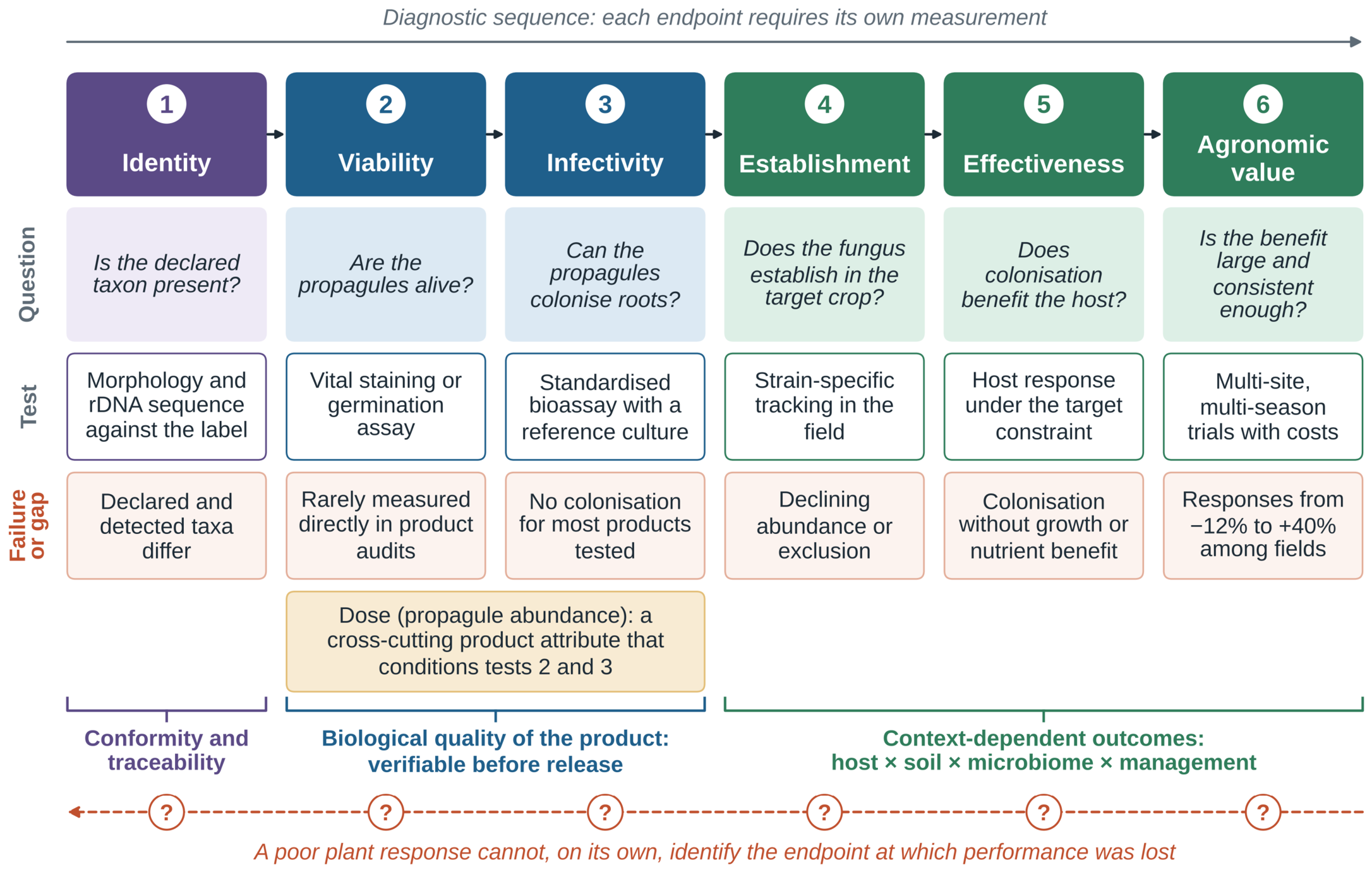
The second problem concerns the product itself. Independent assessments report little or no colonisation, inadequate propagule abundance or infectivity, label discrepancies and inconsistent plant responses [13,14,15,16]. Apparent growth benefits sometimes disappear when formulation-borne nutrients are controlled, and unintended organisms, including potential pathogens, have also been detected [15]. Such products fail before context-dependent symbiotic benefits can arise. Because both problems produce the same symptom, an absent growth response, they can only be distinguished by following a common diagnostic sequence: identity, viability, infectivity, establishment, effectiveness and agronomic value. Table 1 defines these endpoints and distinguishes provenance terms (native, local, sympatric and non-native) from experimentally demonstrated local adaptation; these distinctions underpin the review.
Existing contributions have addressed parts of this problem: quality management [17,18,19], regulation [20], inoculant selection [21], field prediction [12], local adaptation [22] and applied research needs [23]. What remains missing is a framework that connects these elements, linking product measurements to the biological need for inoculation, to the selection of fungi for a specified function, and to verification that this function is retained through production and expressed after deployment. Without such a link, a product may conform to its specification yet be deployed where it cannot help, and fungi may be selected for their provenance or production yield rather than for the function required.
Table 1.
Working definitions of the principal terms used in this review and the sources from which each definition is derived.
The present review builds on Salomon et al. [17] and independent product assessments [13,14,15,16,45]. Salomon et al. already address application-oriented selection, storage, labelling and minimum bioassay quality, and identify field prediction and production stability as research needs. Our contribution is to integrate these concerns into an explicit, testable development sequence. Quality-by-design begins with a diagnosis of whether inoculation is justified and which function is required (stage 0), then links selection to verification during production and storage. Trait–environment matching separates predictions for fungal establishment from those for host benefit and specifies potentially inconsistent results (Section 5.3). The six-endpoint diagnostic sequence (Figure 1) and the distinction between strain qualification, formulation validation, lot release and claim validation (Section 6.6) connect product measurements to targeted deployment and net return (Section 6.7). Section 6.8 compares the emphasis of these complementary contributions; the novelty lies in their operational integration rather than in claiming that each component is new.
Our central hypothesis is that reliable inoculants require identification of the functions needed by a target host–environment system, selection of fungi supplying them, and retention of the relevant properties through production and formulation. Propagule yield matters only insofar as the resulting inoculum establishes and expresses the required function, and provenance guides sourcing rather than substituting for demonstrated performance. To develop this argument, we first examine the limitations documented in commercial products (Section 3), the bottlenecks of the development pipeline (Section 4) and the evidence on provenance effects (Section 5). We then propose the trait–environment matching (Section 5.3) and quality-by-design (Section 6) frameworks; the latter begins with the justification for inoculation and connects selection and verification to ecological suitability and economic value. Research priorities (Section 7) distinguish established findings from relationships requiring validation.
Figure 1.
A diagnostic sequence for AM fungal inoculant performance. For each of six endpoints, the figure gives the diagnostic question, an appropriate test and a documented failure or gap. Identity is a criterion of conformity and traceability; viability, infectivity and establishment are biological prerequisites for effectiveness; agronomic value depends in addition on consistency and cost. Endpoints 1–3 can be verified before release, whereas endpoints 4–6 also depend on host, soil, resident microbiome and management. Propagule abundance (the dose) is a cross-cutting product attribute, not an endpoint. A poor plant response alone cannot identify where performance was lost. Sources: endpoint 1 [14,46]; 2 [13,15]; 3 [13,16]; 4 [27,28]; 5 [47,48]; 6 [12]; dose [15].
2. Literature Search and Scope
This narrative and conceptual review does not undertake a quantitative synthesis. Searches of Web of Science, Scopus, PubMed and Google Scholar were conducted without a lower date limit and completed in September 2026. Search terms combined “arbuscular mycorrhiza*” or “AM fungi” with terms related to inoculant quality, production, storage, provenance and performance, including “inoculant”, “biofertili*”, “quality control”, “infectivity”, “root organ culture”, “monoxenic”, “shelf life”, “native”, “local adaptation”, “establishment” and “field inoculation”. In database syntax supporting truncation, the asterisk (*) retrieves variants of a word stem; for example, biofertili* covers biofertiliser and biofertilizer. Syntax and wildcard behaviour differ among databases.
Exact executed search strings and complete screening logs were not retained during preparation of this narrative review. For transparency, the following approximate queries have been reconstructed retrospectively from its search concepts; they illustrate the strategy and are not archived original queries. In Web of Science topic-field syntax, they are:
Product quality: TS = ((“arbuscular mycorrhiza*” OR “AM fungi” OR AMF) AND (inoculant* OR “commercial product*” OR biofertili* OR biostimulant*) AND (quality OR infectivity OR viability OR coloni* OR label* OR composition OR contamina*)).
Production and storage: TS = ((“arbuscular mycorrhiza*” OR “AM fungi”) AND (“root organ culture” OR monoxenic OR “in vitro” OR aeroponic* OR “on-farm” OR asymbiotic) AND (production OR propagation OR formulation OR storage OR “shelf life”)).
Provenance and field performance: TS = ((“arbuscular mycorrhiza*” OR “AM fungi”) AND (native OR indigenous OR “local adaptation” OR “home-field” OR sympatric) AND (inoculation OR establishment OR yield)).
The numbers of records screened by title and abstract and of full texts assessed cannot be reconstructed reliably and are therefore not reported. The reference list contains 99 publications; this is a citation count, not a screening count. Reference lists of relevant publications were also screened, and only English-language publications were considered.
Study selection prioritised evidence relevant to the six endpoints examined in this review, with particular attention to independently conducted product-quality assessments, meta-analyses, multi-site field trials, studies distinguishing introduced from resident AM fungi, and provenance comparisons conducted under common host and soil conditions. Table 2 summarises the product assessments and field studies informing the analysis. Because study identification and selection were non-systematic, the evidence base is neither exhaustive nor intended to be representative of the commercial inoculant market; consequently, the frequency of quality deficiencies or performance failures cannot be estimated. The conceptual frameworks proposed in this review should therefore be regarded as hypotheses and decision-support approaches requiring further experimental validation.
Table 2 is a purposive summary rather than the output of prospectively specified eligibility criteria. It brings together multi-product assessments of declared or detected composition, propagule abundance, infectivity, root colonisation or plant response, and syntheses of those assessments. Its two field datasets comprise 231 potato trials [49] and 54 maize fields [12], illustrating variation in field outcomes at larger scales; no prospectively defined minimum number of fields was used. Individual-product efficacy studies are discussed elsewhere and are not comprehensively represented in Table 2. Favourable outcomes are included: mean potato yield increased by 9.5%, with profitability in almost 79% of trials [49]; some products increased colonisation or biomass [13,16,46]; and maize growth responses reached +40% [12]. A separate targeted search specifically for favourable product assessments cannot be documented. The table may therefore be imbalanced, because independent product audits often address quality concerns and positive single-product trials are incompletely represented. Meta-analyses reporting positive average responses [9,10] are considered separately in Section 1. These limitations preclude inference about the market-wide frequency of deficiencies or benefits.
Table 2.
Published assessments of commercial AM inoculant quality and of field-scale inoculation outcomes (2004–2025).
3. Evidence for Limitations in Commercial AM Fungal Inoculants
3.1. Viability, Infectivity and Root Colonisation
Infectivity is tested by root colonisation at a defined dose under conducive conditions. Salomon et al. [13] assessed 28 products on three continents, including 25 in greenhouse bioassays with reference Rhizophagus irregularis cultures. In sterilised soil, 84% produced no detectable colonisation; reference cultures reached 48% and 79% in the two bioassays.
Boussageon et al. [16] compared 16 commercial products (nine agricultural and seven gardening) with seven research inocula. Three commercial products colonised roots and one promoted growth. Research inocula colonised consistently and often improved growth, possibly reflecting higher propagule density. Pooling this survey with three earlier ones [13,15,46], the authors reported that 85% of the 64 commercial products tested were of poor quality and did not colonise roots; this pooled figure overlaps with the individual surveys and is not an additional independent dataset.
Earlier nursery tests of ten products by Corkidi et al. [50] found 0–50% colonisation, which did not enhance plant growth; in the evaluation of Faye et al. [46], only three of twelve products increased colonisation above that obtained with an indigenous soil inoculum. Neither an absent growth benefit nor unchanged total colonisation demonstrates absence of infective propagules.
A negative bioassay may reflect insufficient abundance, reduced viability, dormancy, host incompatibility or delayed colonisation, rather than universally dead propagules. Reference cultures demonstrate that the assay supports symbiosis, as also shown by Wiseman et al. [51] and Koziol et al. [15] (Table 2), but not equal suitability for every taxon or formulation.
Thus, many of the tested products showed insufficient infectivity at the tested dose and assay duration. Non-random sampling, heterogeneous assays and possible publication bias prevent market-wide extrapolation. Some products succeeded [13,16]; recurrent tested deficiencies do not establish general commercial ineffectiveness.
3.2. Product Identity, Composition and Label Accuracy
Vahter et al. [14] used DNA metabarcoding on 11 inoculants from four producers: two lacked detectable declared taxa and ten contained undeclared taxa. These discrepancies concern detected composition, not viability; non-detection depends on sampling, marker coverage and taxonomic resolution.
After trap-culture propagation of twelve products, Faye et al. [46] recovered five undeclared species, while four declared species produced no detectable spores. Trap cultures favour compatible taxa, so failed recovery does not establish absence from the original product.
Among 23 commercial, laboratory and field-soil inoculants, Koziol et al. [15] reported discrepancies of up to 100% between declared propagule counts and observed spore concentrations. These are not equivalent measures: propagules include colonised roots and hyphae. Defined units and infectivity assays are therefore needed. Olpidium, a genus including plant pathogens, was also detected.
Declared diversity is narrow. In the analysis of Basiru et al. [24], across 68 products from 28 manufacturers, R. irregularis occurred in 39%, Funneliformis mosseae in 21% and Claroideoglomus etunicatum in 16%; one third listed a single species. Claroideoglomus etunicatum is now Entrophospora etunicata (Entrophosporaceae) [52], contrary to the authors’ assignment of all declared species to the Glomeraceae. Restricted commercial diversity raises questions about functional breadth, but does not itself demonstrate poor quality.
Product evaluation therefore requires complementary identity, abundance, infectivity and contaminant checks. Labels should distinguish declared composition, molecular detection, spore counts and functional capacity (Table 2).
3.3. From Product Quality to Agronomic Value: A Diagnostic Sequence
Figure 1 organises the six endpoints defined in Table 1 into a diagnostic sequence separating conformity, biological performance and practical benefit.
These endpoints are related but serve different diagnostic purposes. Viability is necessary for infectivity, while root colonisation demonstrates that infectivity has been expressed under the conditions of the assay. Establishment concerns colonisation of the target crop by the introduced fungus and must be assessed separately with strain-specific methods: initial colonisation does not demonstrate maintenance during the period of need, although transient colonisation may still affect the host. Identity, by contrast, concerns conformity and traceability. An undeclared fungus may colonise roots and benefit the plant, but an unresolved discrepancy between declared and actual composition limits attribution of the response and reproducibility across products or batches.
Propagule concentration, product amount and placement determine the delivered dose, a cross-cutting attribute rather than an endpoint. Counts establish neither viability nor infectivity; failed colonisation cannot distinguish dead from dormant propagules, insufficient dose or assay incompatibility (Section 3.1).
Failure at a later endpoint does not, by itself, identify the underlying cause. An absence of plant growth response may reflect insufficient infective dose, loss of viability, poor host compatibility, failure to establish, competition with resident fungi or environmental conditions that limit the benefit of the symbiosis. Conversely, a measurable biological benefit may be too small or inconsistent to provide agronomic value once application costs and management requirements are considered. Plant biomass is therefore a useful response variable, but cannot alone diagnose inoculant quality; root colonisation demonstrates infectivity under the test conditions, but does not establish effectiveness or agronomic value. Each endpoint requires an appropriate measurement, with complementary observations used to locate the limitation within the sequence.
3.4. Persistent Gaps in Quality Assurance
Gianinazzi and Vosátka [19] called for accepted quality standards and registration encouraging compliance more than two decades ago. Vosátka et al. [18] subsequently highlighted the need for inexpensive, reproducible purity tests and strain traceability. Salomon et al. [17] proposed composition criteria and standardised bioassays, but recurring deficiencies show that recommendations have not ensured consistency.
Jurisdictions classify products as biostimulants, biofertilisers or plant-protection products according to use and claims [20]. Some require biological criteria or evidence of effects, but requirements remain heterogeneous; registration cannot signify equivalent identity, infectivity or value across jurisdictions.
Specifications and claims therefore need complementary measurements, acceptance rules and batch-consistency checks. Section 6.6 distinguishes release criteria from evidence of deployment performance.
4. Five Bottlenecks in the AM Fungal Inoculant Pipeline
Manufacturing defects occur within a longer pipeline connecting natural communities to deployment. Successive stages may restrict diversity, modify traits or reduce infectivity, but may also maintain or amplify useful fungi. The question is whether retained properties meet application requirements.
Five interacting bottlenecks are distinguished (Figure 2): obligate biotrophy, cultivation of field-derived fungi, scalable production, formulation and storage, and field establishment. Biotrophy constrains cultivation and production across stages; the others describe transitions. Regulation, cost, application and host genotype are cross-cutting influences (Section 3.4 and Section 6.7). This literature-derived classification is neither exhaustive nor systematic.
Figure 2.
The five-bottleneck pipeline in AM fungal inoculant development. Attrition may occur at five bottlenecks (B1–B5) between natural AM fungal diversity and agronomic outcome. The tapering band is schematic: coloured dots denote taxa or functional types (colours have no fixed taxonomic meaning), open dots denote propagules that are no longer viable or infective, and dot numbers are not quantitative. For each bottleneck the principal constraint, its consequence and the level of supporting evidence are indicated (Section 4.1, Section 4.2, Section 4.3, Section 4.4 and Section 4.5). The bottlenecks are interconnected and may require iterative optimisation.
The evidence supporting these bottlenecks varies in strength and scope. Host dependence, differences among production systems, storage-associated losses of infectivity and variable field establishment have experimental support. However, evidence for these individual constraints does not establish that diversity or function declines cumulatively throughout the pipeline. Selective recovery during cultivation provides indirect support for a cultivation filter, while directional changes in fungal traits during prolonged culture, and their consequences for field performance, remain hypotheses to be tested (Section 4.2). Figure 2 distinguishes these levels of evidence and identifies where further validation is needed.
4.1. Bottleneck 1: Obligate Biotrophy
Under natural conditions, AM fungi require living hosts for sustained growth and reproduction. Examined genomes lack conventional multidomain cytosolic fatty-acid synthase and have reduced plant-cell-wall-degrading repertoires [53,54,55,56,57,58]. Host lipids are transferred to fungi; disruption of plant lipid biosynthesis or export impairs arbuscules and function [59,60,61]. Multiplication therefore requires compatible hosts and conditions for both partners.
Defined nutrition and signals can partially bypass this dependence. Myristate supports asymbiotic R. irregularis growth [38], and specific branched-chain or unsaturated fatty acids stimulate secondary spores [39]. Strigolactone, jasmonate, myristate and organic nitrogen yielded infective Rhizophagus clarus HR1 spores without a host [40], opening production possibilities [62].
However, successful growth or sporulation in selected fungi does not establish a broadly applicable production platform. Generalisation across diverse taxa and field-derived isolates, reproducibility over successive production cycles, and the quality and performance of the resulting propagules remain to be established [38,40]. Differences between asymbiotically and symbiotically produced spores also require evaluation rather than being assumed to indicate equivalent or inferior quality. Asymbiotic culture should therefore be viewed as a promising route for reducing host dependence, while host-associated cultivation remains the established basis of AM fungal multiplication.
4.2. Bottleneck 2: Cultivation Filters and Potential Trait Changes
Only a restricted subset of AM taxa is routinely propagated monoxenically; initiating field-derived cultures can be harder than maintaining them [63,64]. Isolation determines the candidates available for selection.
Cultivation may favour readily germinating fungi that colonise and reproduce on the selected host. The commercial dominance of a few species [24] is consistent with this filter, but production yield, formulation and commercial choices provide alternative explanations.
Cultivation-associated trait change is suggested by two R. irregularis studies. Across 14 isolates with zero to >80 in vitro generations, spore dormancy was strongly associated with culture history, whereas the high variation in other asymbiotic traits was unrelated to time in vitro [41]. Among 11 isolates, longer history correlated with greater sporulation and lower host shoot phosphorus [43].
However, both studies compared different isolates rather than following the same lineages through successive generations, and neither assessed field performance. They therefore cannot separate effects of cultivation from pre-existing differences among isolates, demonstrate heritable change within a lineage or establish a general trade-off between production yield and agronomic benefit. Selection during repeated propagation, physiological responses to culture conditions and persistent differences among isolates remain alternative explanations. Systematic domestication towards a ruderal phenotype is consequently a hypothesis rather than a demonstrated outcome.
The potential functional consequences can be considered using the competitor–stress tolerator–ruderal framework adapted to AM fungi [42]. Broad differences in colonisation and biomass allocation have been described, with Glomeraceae often showing rapid intraradical colonisation and Gigasporaceae greater investment in extraradical mycelium [42]. Communities with contrasting strategies can differ in their effects on host nutrient acquisition [65]. Nevertheless, these classifications describe tendencies and cannot substitute for measurements of individual isolates under relevant conditions [66,67]. The key question is therefore which traits are retained, excluded or modified during isolation and propagation, and whether those traits support performance in the intended recipient system.
4.3. Bottleneck 3: Scalable Production
Amplification must provide sufficient infective inoculum at acceptable cost while maintaining identity and quality. Systems differ in hosts, microbial control, yield, labour, infrastructure and isolate compatibility (Table 3); scalability concerns reproducible usable inoculum, not spore yield alone.
Pot and trap cultures accommodate field-derived fungi difficult to culture in vitro [32,68], but may co-propagate organisms from starting material, roots or substrate. Characterising this microbiota is generally harder than characterising that of aseptic root-organ systems.
On-farm systems reduce infrastructure and support decentralised access. Substrates and crop residues require validation; Senegalese work identified substrate sterilisation and irrigation-water salinity as quality determinants [69]. Affordability does not remove verification requirements.
Aeroponics facilitates access to roots and propagule recovery without solid substrate [25]. Suitability depends on fungus–host compatibility, environmental control and operational resources; greater control does not guarantee purity or infectivity.
Monoxenic root-organ culture propagates defined fungi with excised, usually transformed roots under aseptic conditions [35,36,70]. It improves compositional control, subject to contaminant checks, but many field fungi remain difficult to initiate and maintain.
Table 3.
Comparison of arbuscular mycorrhizal fungal production systems against the criteria that determine whether a field isolate can be converted into a defined inoculant.
For an R. irregularis isolate from the date-palm rhizosphere, cultures initiated from colonised root fragments yielded 1414 ± 65 spores per plate at 16 weeks and outperformed spore-initiated cultures in propagule viability, root colonisation and root growth [37]. The in vitro-produced spores also colonised a host plant more extensively than trap-culture spores in the tested assay. Standardised comparisons of roots and isolates are available [63].
Such results support root-organ culture as an option for producing defined inocula from compatible, functionally selected isolates. They do not establish equivalent performance across fungi or demonstrate industrial scalability: throughput, labour, costs and batch consistency require assessment at the intended production scale. A diversity-oriented pipeline should therefore retain multiple production routes and select among them according to isolate compatibility and product requirements. Requiring successful monoxenic cultivation for every candidate would risk excluding useful fungi before their application potential has been evaluated.
4.4. Bottleneck 4: Formulation, Storage and Delivery
Formulation, storage and delivery must retain biological quality until propagules reach recipient roots in a suitable form and dose.
Spores, colonised roots and hyphae can be carried in solid or liquid formulations [71]. Suitability depends on isolate, propagule, carrier and storage conditions. Refrigeration prolonged infectivity in appropriate carriers [25]; formulations preserving monoxenic propagules have been described [72]. These are validated combinations, not universal formulations.
Shelf life is the period of compliance with biological criteria under declared conditions. Recognisable propagules may no longer be functional. Validation requires measurements through expiry; direct viability tests complement, but cannot replace, infectivity testing at the intended dose.
Preparation, placement and application compatibility must translate packaged quality into an adequate infective dose at the roots.
4.5. Bottleneck 5: Establishment in the Field
Field establishment depends on host, soil, management and resident microorganisms; successful colonisation under controlled conditions guarantees neither crop establishment nor maintenance for the required period.
In a five-year vineyard study, inoculum failed to establish despite a priority advantage; high phosphorus was a possible contributor [27]. Reviewed introductions persisted for months to years, with declining abundance in approximately 60% and apparent exclusion in 30% of assessed cases [28]. These are case-series proportions, not general probabilities.
Colonisation after two vineyard seasons yielded no biomass gain [48]; wheat colonisation increased without additional biomass or mycorrhiza-acquired nutrients [47]. Introduced strains may also replace residents without changing total colonisation [26]. Strain-discriminating methods, baselines and repeated sampling are necessary.
Phosphorus affects both establishment and benefit. High availability can suppress host symbiosis programmes [73]; temperate cereals benefited more under reduced fertilisation and nutrient limitation [74]. Yet in Swiss maize fields, establishment of the introduced strain increased with soil phosphorus, which was associated with fewer native fungi, while benefits declined with phosphorus fertilisation [26]. Phosphorus alone predicts neither endpoint.
Residents may compete with, coexist with or complement introduced fungi. Introductions can suppress, stimulate or minimally alter resident AM fungal communities [28,29,75]. In a growth-chamber experiment with grassland soil, some commercial inocula reduced the growth of native species and increased that of invasive species [75], a context-specific ecological concern.
Field establishment should consequently be assessed as an endpoint in its own right. Three temporal outcomes should be distinguished: colonisation of the target crop by the introduced fungus, maintenance during the period when its function is required, and persistence after harvest or between seasons. Activity during a critical growth period may suffice for an annual crop, whereas longer maintenance may be desirable in perennial crops or restoration. Persistence within the treated system and spread beyond it require separate assessment, particularly where introduction into non-target habitats is a concern (Section 5.4).
5. Beyond “Native Versus Exotic”: Towards Trait–Environment Matching
Local sourcing offers additional candidates, but proximity demonstrates neither adaptation nor superiority. Suitability concerns fungal traits matched to the recipient host, environment and function.
Native/non-native denote regional biogeographic status; local denotes proximity; sympatric denotes shared locality. Local adaptation requires comparative performance evidence (Table 1). Fungal growth or sporulation advantages need not benefit hosts.
Local-versus-foreign comparisons test origins in one environment; home-versus-away comparisons test a genotype across environments [30]. Home advantage may reflect environmental quality; reciprocal comparisons help separate effects.
5.1. Evidence for Home-Field Advantage
A meta-analysis of 1170 comparisons from 139 publications linked plant responses to plant, fungal and soil origins [22]. Fully sympatric combinations tended to outperform fully allopatric ones, but local inocula were not consistently favoured and few experiments manipulated all partners. Provenance effects were context-dependent.
A reciprocal inoculation experiment combined Andropogon gerardii ecotypes, soils and AM fungal communities from phosphorus- and nitrogen-limited grasslands [31]. All-home combinations formed more arbuscules and nutrient responses matched source limitations; associations were more mutualistic in phosphorus-limited soils. Greater fungal hyphal production at home represents a separate performance endpoint.
Sympatric semi-arid grass–soil-biota combinations formed more mycorrhizal structures and improved drought performance, particularly under extreme drying [76]. Associated soil organisms prevent attribution solely to AM fungi.
Native inocula from late-successional grasslands improved prairie establishment and diversity over three to four growing seasons [77,78]. Conspecific-host desert communities improved biomass, photosynthesis and foliar nutrients in one of two shrubs [79]. Benefits alone establish neither local adaptation nor superiority over foreign inocula.
Taken together, the evidence supports home-field advantage in some plant–fungus–soil combinations, with outcomes depending on resource availability, host identity and inoculum composition. Demonstrating its fungal basis requires comparisons that distinguish provenance effects from environmental quality and contributions of other soil organisms. Identified isolates, or characterised AM fungal communities with appropriate microbial controls, can support such tests. Local origin is therefore a useful basis for candidate sourcing, while suitability must be demonstrated for the target environment and the intended performance endpoint.
5.2. Evidence Against a Universal Native Advantage
A foreign-isolate mixture outperformed a 14-species local consortium in alfalfa forage yield, nitrogen and phosphorus over two years; introduced strains persisted in roots [80]. In date palm under salinity, a non-native AM fungal complex and an isolate derived from it also outperformed their native counterparts [81]. Both comparisons confound provenance with fungal identity and composition.
Barley yield responses to an indigenous consortium varied with cultivar and year, and developmental stage affected root fungal community structure [82]. Local origin did not ensure a uniform response.
Arable-field communities promoted less growth and greater below-ground carbon transfer than neighbouring grassland communities, but increased phosphorus accumulation and nitrogen transfer [83]. Management history thus affects costs and nutrient delivery, rather than producing uniformly inferior function.
Provenance should guide sourcing, not stand alone as a functional-quality criterion.
5.3. A Hypothesis-Generating Framework for Trait–Environment Matching
Three processes reconcile contrasting outcomes. Adaptation depends on source–recipient correspondence, but chronic exposure alone demonstrates neither adaptation nor host benefit [31,76]. Management shapes local community function [42,83]. Ecological opportunity depends on residents and priority effects [27,28]; depletion may reduce competition while the conditions causing it still inhibit inoculation.
Figure 3 combines abiotic/resource-constraint intensity with resident-community condition, from intact to depleted or functionally disrupted. Tillage, fertilisation, fallow and cropping history drive that condition rather than measure it. The framework generates hypotheses, not calibrated predictions.
Figure 3.
A hypothesis-generating framework for trait–environment matching. The figure is not a predictive model fitted to data; it organises four hypotheses (H1–H4; Table 4). The potential value of inoculation (background shading) is hypothesised to vary with the intensity of abiotic or resource constraint (horizontal axis) and with the depletion or functional disruption of the resident AM fungal community (vertical axis), of which tillage, fertilisation, fallow and cropping history are drivers. The requirement for trait–environment matching is expected to increase with constraint, and the opportunity for establishment with depletion of the resident community, provided that soil conditions and host are compatible. Biotic constraints such as pathogen pressure are not represented. Host genotype and the resident microbiome modulate outcomes in all quadrants.
These dimensions describe the potential need for an additional fungal function and the ecological context in which an inoculant must operate. Both require qualification. The type of environmental constraint matters as well as its intensity, because traits supporting performance under drought may differ from those relevant to phosphorus limitation or salinity. Similarly, resident abundance, infective potential, composition and contribution to plant performance need not vary together. An abundant community may provide limited benefit under the target conditions, while a less abundant community may remain functionally effective. Measurements of resident inoculum potential and composition should therefore be complemented, where feasible, by assessments of the functions relevant to the intended application.
Ecological opportunity is conditional on a compatible host and environment. Depletion of resident fungi may reduce competition, but high phosphorus availability or unsuitable host conditions may still prevent effective symbiosis. Phosphorus also illustrates the interaction between the two dimensions: its availability affects plant nutrient limitation, host regulation of colonisation and resident AM fungal communities [26,73]. Host genotype and responsiveness, together with the wider soil microbiome, further modify outcomes throughout the framework [8,12]. The axes should consequently be interpreted as interacting dimensions rather than independent determinants.
Two limitations define the scope of this framework. First, it represents abiotic and resource constraints more directly than biotic constraints. Aphid herbivory can also alter carbon–nutrient exchange within the symbiosis [34]. In Swiss maize fields, pathogenic fungal abundance predicted inoculation responses better than nutrient availability [12]. A site with weak abiotic limitation but high pathogen pressure can be located on the proposed axes, yet its potential response would remain incompletely represented. Second, neither axis has a common quantitative scale across studies, and thresholds separating the quadrants have not been established. The quadrants therefore identify contrasting scenarios for testing candidate traits and inoculation outcomes, rather than fixed categories or validated recommendations.
Table 4 separates establishment from benefit hypotheses. H1 predicts little added benefit in intact, weakly constrained communities already supplying relevant functions. H2 predicts greater benefit from constraint-matched fungi if established in intact, strongly constrained systems, with competition restricting establishment. H3 predicts that independently measured colonisation traits explain establishment better than provenance in depleted, weakly constrained systems. H4 predicts that trait matching explains benefit better than origin in depleted, strongly constrained systems. All require host–soil compatibility.
Table 4.
Predictions derived from the trait–environment matching framework (Figure 3), given separately for establishment of the introduced fungus and for host benefit, with the experimental design and the results that would be inconsistent with them.
Testing these predictions requires comparisons that distinguish provenance from fungal identity, inoculum composition and infective dose. Effects should be assessed using their magnitude and confidence intervals, with predefined equivalence bounds where equivalence is the question: a non-significant difference alone does not demonstrate comparable performance. The date-palm study of Outamamat et al. [81] illustrates the importance of this distinction. Under salinity, the tested native inocula were outperformed by non-native alternatives, but the comparison does not isolate provenance from differences in fungal identity and composition. The appropriate question is therefore not simply whether native AM fungi are better, but which fungal traits improve performance under specified conditions, and whether local sourcing helps identify and retain those traits.
A practical example illustrates how the two axes could be assessed, without reporting a new experiment. Consider date palm grown in saline oasis soils. Quantify the constraint using soil electrical conductivity and irrigation-water salinity, then grow the same cultivar under controlled salinity levels to assess effects on biomass and leaf Na+/K+ ratio while holding other conditions comparable. Characterise resident abundance by spore density and field-root colonisation, and infective potential with a standardised trap bioassay [33]. To investigate resident function, compare plants in sterilised site soil receiving a characterised resident AM fungal inoculum with plants receiving an equivalent sterilised inoculum; balance carrier and nutrient inputs and add the same AM-propagule-free microbial filtrate to both treatments. Retain intact site soil as an ecological reference. Sterilisation alters soil chemistry, and microbial filtrates do not reproduce the whole non-AM microbiome, so these contrasts provide qualified evidence rather than isolating an AM fungal effect perfectly. Strong salinity effects combined with little resident functional benefit would motivate testing H4, even if spore density were high. Compare multiple salt-tolerant and salt-sensitive isolates from both native and non-native origins, selected using independently measured germination and hyphal-growth responses to NaCl (Table 5) [84], at comparable infective doses. Measure establishment with discriminatory markers and benefit as biomass, ion status and, in subsequent field trials, yield. Comparable designs can address phosphorus limitation or water deficit.
5.4. Ecological Risk and the Rationale for Local Sourcing
Local sourcing also addresses ecological uncertainty. Establishing inocula may persist, colonise non-target hosts or spread off-site [29,75]. Broad host ranges preclude assuming crop confinement, but compatibility alone demonstrates neither dispersal nor off-site establishment.
Outcomes range from failure to persistence with little change or altered resident composition and plant–microbe interactions [29]. Establishment, persistence, spread and ecological effects are separate risk dimensions.
Suitable, documented local isolates may reduce uncertainty from interregional transfers, independently of agronomic superiority. Local origin nevertheless does not guarantee a negligible impact: multiplication, selection and high doses can alter resident interactions. Identity, provenance, suitability and ecological assessment remain necessary [29].
6. A Quality-by-Design Framework for AM Fungal Inoculants
Development should start with intended use, a demonstrated need and the required fungal function. Cultivation, production, formulation and evaluation criteria follow from this objective.
Figure 4 specifies six stages: diagnose biological and practical need (0); source and characterise (1); select on functional performance (2); amplify and verify retained properties (3); validate formulation/storage and release batches (4); and deploy with field evaluation of benefit and costs (5).
Figure 4.
A quality-by-design framework for AM fungal inoculants. A diagnostic step (stage 0; Section 6.1) asks whether inoculation is biologically justified. Stages 1–4 (Section 6.2, Section 6.3, Section 6.4, Section 6.5 and Section 6.6) lead from sourcing to release, and stage 5 (Section 6.7) targets deployment to sites where the selected function can be expressed and the expected benefit exceeds the cost. Key actions and the expected output are shown for each stage, with the bottleneck(s) it addresses (Figure 2). Dashed arrows indicate feedback from re-testing of production strains and from field monitoring. The lower panel lists the quality criteria detailed in Table 6.
The framework applies to both single isolates and designed consortia (Section 6.4). It is iterative: evidence from production, storage or field evaluation can prompt revision of candidate selection, product specifications or the intended use. Quality is therefore built into development through explicit objectives and verification at successive stages, rather than assessed only in the finished product.
6.1. Stage 0: Is Inoculation Biologically Justified?
Better products do not establish a need for inoculation where residents supply the required function (H1). Whether AM abundance/diversity should guide crop management is disputed [85,86]. Stage 0 diagnoses additional functional need rather than maximising colonisation.
Diagnosis asks: what resident infectivity is there; what constraint could fungi alleviate; and can the system support benefit? Bioassays estimate soil inoculum potential, not target-crop functional adequacy [33]. Crop responsiveness [8,82], nutrients [73,74], endpoint, habitat capacity and priority effects inform assessment [87].
In a model fitted to 54 Swiss maize fields, soil and microbiome indicators explained 86% of the variation in growth response [12]. Internal cross-validation supports potential but not transferability to other regions, crops or inocula. Diagnosis can combine indicators, bioassays and targeted field comparisons.
Three decisions follow: avoid unsupported inoculation while maintaining residents; promote resident recovery; or consider inoculation. Across 54 field studies, reduced tillage and winter cover cropping each increased colonisation of the following cash crop by approximately 30% (relative increase) [88], without proving recovered function or equivalent yield benefit.
Inoculation becomes a candidate intervention where an identifiable functional deficit could be addressed by selected fungi and the recipient conditions permit their activity. The rationale may be particularly strong where management alone is unlikely to provide the required function within the available time, although inoculation and management changes may also be combined. Stage 0 should therefore specify the intended function, the evidence supporting intervention and the criteria for judging success. Diagnostic costs and the feasibility of alternative interventions enter the economic assessment (Section 6.7).
Evidence of a functional deficit differs from the evidence used to choose an inoculant in its object, its comparison and its timing. Deficit evidence concerns the recipient system: it asks whether the target crop, in its soil and with its resident community, lacks a function that AM fungi could supply. Potential indicators, which do not individually demonstrate a functional deficit, include low inoculum potential of the site soil, low colonisation of the target crop, nutrient limitation, and a host response in site soil to a well-characterised reference inoculum, compared with non-inoculated controls and, where relevant, with management alternatives. Selection evidence concerns candidate fungi: it compares isolates or consortia with one another on the target host under the identified constraint (stage 2; Table 5), and is interpretable only once the deficit and the required function have been specified. A response to a reference inoculum in site soil therefore indicates scope for inoculation but not which fungus to use; conversely, superior performance of a candidate in a screening assay does not show that the target system needs inoculation.
6.2. Stage 1: Source and Characterise
Sample target or comparable hosts and environments exposed to relevant drought, salinity or nutrient limitation. This guides sourcing; adaptation and host benefit require stage-2 testing.
Combine morphology and molecular identification, as applied to Moroccan date-palm isolates [44,68,89,90]. Document resolution; tracking an isolate among conspecific residents may require discriminatory markers beyond taxonomic identification.
Link unique identifiers to reference cultures and collection, isolation and propagation histories. Record locality, host, soils, management and relevant constraints. Source-soil inoculum potential adds community context where feasible, not isolate infectivity [33].
Stage 1 delivers traceable, characterised candidates for functional comparison, production verification and field monitoring.
6.3. Stage 2: Select on Functional Traits Rather than Provenance or Taxonomy Alone
Selection specifies properties, methods and measurement levels: fungus, association, community or product (Table 5). Host drought growth is an association response, not an intrinsic fungal trait. Minimum tests address standardised infectivity, target-host effectiveness under constraint and compatible production of infective propagules.
Document doses and control carriers, nutrients and microorganisms. Tests with and without the constraint distinguish stress-specific from general benefits. Keep production yield separate from host benefit.
Traits vary across and within species. Families differ in colonisation and biomass allocation [91]. Among 24 isolates of four species, mycelial extension and growth responses varied within species, while phosphorus uptake per unit hyphal length was comparatively constant within species but differed among species [92]. Isolates differ in germination and hyphal growth under NaCl [84]; autochthonous isolates of Glomus intraradices and G. mosseae (names as in the original study) supported greater growth of a drought-stressed host than similar allochthonous strains [93], without proving that tolerance derives from origin.
The predictive value of screening measurements must be established rather than assumed. Table 5 therefore identifies candidate selection criteria whose relationships with field establishment and benefit require validation using the same isolates under relevant recipient conditions. A standardised trait framework for AM fungi provides a basis for comparing measurements among laboratories [67], while tests across representative hosts, soils and management conditions can assess the robustness of candidate performance. The geographic origins and relevant environmental histories of the plant, fungus and soil should also be reported, because their combinations can influence the observed response [22].
Retain candidates with defined functional profiles and feasible production, without substituting ease of multiplication for host benefit.
Table 5.
Candidate functional traits for inoculant selection, with the level at which each is measured, the target situation and a measurable endpoint.
6.4. Single Strains Versus Designed Consortia
Selection can concern single isolates or defined consortia. Mixtures require additional evidence of compatibility, composition and performance.
Complementarity, not richness alone, motivates consortia. Families differ in biomass allocation [91]; cross-family mixtures improved ultramafic-soil host growth, nutrition and metal tolerance over the single-species inoculations tested [95]. Among three isolates and six hosts, dominance did not necessarily indicate benefit [96].
Yet a meta-analysis of 435 comparisons from controlled experiments found larger biomass responses to single-species than to multi-species inocula [94], without demonstrating competition as the cause. A ten-species trait-diverse community gave weak synergy evidence [65]. Complementarity requires combination-, host- and environment-specific testing.
Table 6.
Proposed biological quality criteria for AM fungal inoculants: measurement, decision rule, decision concerned and current status of evidence and standardisation.
Co-propagation may change abundances [96]. Separate production and blending control initial composition, not storage survival or root contributions. Specify abundance measures and acceptable variation; product and root proportions are distinct.
Total colonisation does not prove a contribution by every member. Individual assays establish pre-blend infectivity; root-specific detection supports post-application monitoring. Neither alone proves function in mixtures. Verify intended membership given commercial discrepancies [14].
A claim of added benefit should be tested against the best-performing constituent isolate at a comparable total infective dose, with appropriate carrier and nutrient controls. Superior mixture performance supports a consortium advantage under the tested conditions; a stronger claim of synergy additionally requires a defined expectation against which the observed response is compared. Selection should therefore favour the combination that provides a reproducible benefit and can be produced and formulated consistently, rather than the mixture with the greatest number of members.
6.5. Stage 3: Amplify and Verify Retention of Selected Properties
Choose an amplification system that balances production with retained identity, infectivity and selected function (Table 3). Limited drift evidence warrants monitoring without presuming deterioration (Section 4.2). Record subcultures, duration and conditions; retest periodically and after substantial process changes.
Verification should compare the amplified material with the reference performance established during selection, using standardised hosts, inoculum doses and assay conditions. This allows changes in infectivity or host benefit to be distinguished from variation attributable to the test environment. Acceptance criteria should focus on properties relevant to the intended use rather than requiring every measured trait to remain unchanged. For consortia, amplification must also address retention of the intended members and acceptable variation in composition (Section 6.4).
Compatible isolates benefit from monoxenic control with contaminant checks. Root fragments can improve initiation [37]; comparison protocols exist [63]. These findings are candidate-specific.
Monoxenic culture is optional. Pot/trap systems serve recalcitrant fungi [32,68]; on-farm multiplication may suit decentralised needs [69]. Every route requires identity, infectivity, consistency and unintended-organism checks. Stage 3 supplies sufficient qualified inoculum.
6.6. Stage 4: Formulate, Store and Release Against Explicit Biological Criteria
DNA or propagule detection alone cannot justify release. Table 6 separates qualification, formulation/storage validation, batch release and claim substantiation, linking each to measurements and acceptance rules.
Qualification establishes identity, infectivity and function. Formulation validation verifies their retention in carrier, packaging and storage through shelf life [25,72]. Release checks batch specifications; claims require intended-use evidence. Routine release need not repeat full functional/field validation but remains linked to it.
Criteria require method, unit, sampling and acceptance rules. Limits may be regulatory, protocol-based or product-specific. For their reference bioassay, Salomon et al. [17] propose a positive growth response and at least 20% colonised root length; this is not a universal quality or field threshold, and the framework sets no minimum propagule density and leaves expiry dates to be verified by producers.
Counts, infection units, most-probable-number estimates and molecular/lipid quantification measure different properties [97]. Dose–response, application rate and storage losses inform infectivity specifications. Release criteria should support compliance until expiry under validated conditions.
Contaminant criteria must specify the organisms sought, the sampling procedure, the analytical method and the detection limit. A non-detection result cannot establish the absence of all unintended organisms. Under Regulation (EU) 2019/1009, mycorrhizal fungi are permitted under component material category CMC 7. Annex I, PFC 6(A), specifies microbiological limits for microbial plant biostimulants, including Salmonella spp., Escherichia coli, Listeria monocytogenes, Vibrio spp., Shigella spp., Staphylococcus aureus and Enterococcaceae, and applicable plate-count requirements [98]. These are human-health and hygiene requirements; that microbiological table does not specify plant-pathogen limits. Screening for plant pathogens, such as Olpidium [15], and other organisms relevant to the source material, production system and intended use should therefore be defined separately in the product specification.
Effectiveness claims need defined hosts, constraints and management, with practically relevant effects and adequate precision rather than significance alone. Release connects quality, storage, dose and substantiated use.
6.7. Stage 5: Deploy Where Function Can Be Expressed and Benefit Exceeds Cost
Deployment combines verified products with suitable sites. Lutz et al. [12] illustrate targeting through soil/microbiome indicators, subject to validation for the crop, inoculant and region.
Agronomic value is distinct from biological effectiveness. From the grower’s perspective, the incremental net return is the additional revenue and any input-cost savings attributable to inoculation, minus the additional costs relative to the reference practice. These costs include the product, application, any diagnosis or monitoring required in routine use, and associated management changes. Costs incurred during research and product validation should be distinguished from those borne directly by the user. Benefits that cannot be reliably monetised should be reported separately rather than assigned an unsupported financial value.
Potato inoculation at approximately 71 spores per seed piece broke even at +0.67 t ha−1, attained in almost 79% of 231 trials [49]. These historical prices/costs do not transfer universally. Swiss maize responses [12] likewise require marketable output, price and cost data for profitability.
The dose must deliver benefit, not merely colonisation, and it determines the cost per hectare. Seed coating or other root-proximal delivery may reduce the quantities required, if validated [18,24,99]. Fertilisation/tillage affect compatibility and response [74,88]; refrigeration adds logistics [25]. Control storage losses through specifications rather than routinely increasing dose.
Economic assessment must also account for variation among sites, years and cultivars [12,82]. Mean net return alone does not describe the probability or magnitude of a loss in a particular field and season. Trials should therefore report application dose and method, relevant costs, and the distribution of biological and economic responses. Sensitivity analyses can show how conclusions change with product price, crop value and management costs. Comparisons should include feasible alternatives, such as management of resident fungi and on-farm multiplication [69], with their respective quality-control requirements included. Stage 5 thereby defines where deployment is justified and provides feedback for revising product specifications and recommendations.
6.8. Relation to Existing Quality Frameworks
Table 7 compares the emphasis of the proposed frameworks with Salomon et al. [17] and recent independent assessments [15,16,45]. Existing quality requirements remain part of strain qualification and lot release (Table 6). The proposed integration links diagnosis of need, explicit establishment and benefit predictions, verification across stages, and evaluation of deployment and net return.
Table 7.
Comparison of the elements addressed by an existing quality management framework, by recent independent product assessments and by the frameworks proposed in this review.
7. Conclusions
Reliable arbuscular mycorrhizal fungal inoculants require both verifiable product quality and a recipient system in which the introduced fungi can provide a useful function. Independent assessments reveal recurrent composition and infectivity deficiencies among tested products, but the available evidence cannot establish their prevalence across the commercial market. At the same time, successful root colonisation does not necessarily translate into host benefit or agronomic value. These findings distinguish product deficiencies from ecological mismatch and show why neither propagule abundance nor geographic origin alone is sufficient to guide inoculant development.
The proposed quality-by-design and trait–environment matching frameworks connect these challenges by starting with the need for inoculation and the function required, then linking candidate selection to verification during production, storage and deployment. Their value lies in making the underlying assumptions testable. Inoculation is expected to provide little additional benefit when resident fungi already supply the required function, whereas fungi with traits matched to a strong environmental constraint should outperform unmatched candidates if they establish. In depleted communities under weak constraint, colonisation traits are expected to explain establishment better than provenance. Following the same isolates through production and storage can further test whether retained infectivity and host benefit predict subsequent performance under the intended conditions. These relationships remain hypotheses requiring experimental validation.
Future research should therefore combine reproducible quality measurements with comparisons that distinguish fungal identity, functional traits, provenance and infective dose. Traceable isolates and defined consortia should be followed from screening to field deployment, with mixtures evaluated against their best-performing constituents and inoculation compared with feasible management alternatives. Trials across representative soils, hosts and seasons should measure establishment separately from plant benefit and assess whether the resulting gains justify application costs and ecological exposure. Such evidence would support decisions about whether to inoculate, which fungi to use and where their functions can add value, while revealing when support for resident communities is the more appropriate intervention.
Author Contributions
Conceptualization, E.G., A.H. and M.E.J.; methodology, E.G. and M.E.J.; software, M.B.M. and E.G.; validation, A.H., M.E.J. and K.C.; formal analysis, E.G. and M.B.M.; investigation, E.G. and K.C.; resources, E.G.; data curation, M.B.M.; writing—original draft preparation, E.G. and M.E.J.; writing—review and editing, E.G., M.E.J., K.C. and A.H.; visualization, A.H. and K.C.; supervision, A.H. and M.E.J.; project administration, A.H. and M.E.J. All authors have read and agreed to the published version of the manuscript.
Funding
This research received no external funding.
Institutional Review Board Statement
Not applicable.
Informed Consent Statement
Not applicable.
Data Availability Statement
No new data were created or analyzed in this study. Data sharing is not applicable to this article.
Conflicts of Interest
The authors declare no conflicts of interest.
References
- Kiers, E.T.; Duhamel, M.; Beesetty, Y.; Mensah, J.A.; Franken, O.; Verbruggen, E.; Fellbaum, C.R.; Kowalchuk, G.A.; Hart, M.M.; Bago, A.; et al. Reciprocal rewards stabilize cooperation in the mycorrhizal symbiosis. Science 2011, 333, 880–882. [Google Scholar] [CrossRef] [Scilit] [PubMed]
- Smith, S.E.; Jakobsen, I.; Grønlund, M.; Smith, F.A. Roles of arbuscular mycorrhizas in plant phosphorus nutrition: Interactions between pathways of phosphorus uptake in arbuscular mycorrhizal roots have important implications for understanding and manipulating plant phosphorus acquisition. Plant Physiol. 2011, 156, 1050–1057. [Google Scholar] [CrossRef] [Scilit] [PubMed]
- Brundrett, M.C.; Tedersoo, L. Evolutionary history of mycorrhizal symbioses and global host plant diversity. New Phytol. 2018, 220, 1108–1115. [Google Scholar] [CrossRef] [Scilit] [PubMed]
- Augé, R.M.; Toler, H.D.; Saxton, A.M. Arbuscular mycorrhizal symbiosis alters stomatal conductance of host plants more under drought than under amply watered conditions: A meta-analysis. Mycorrhiza 2015, 25, 13–24. [Google Scholar] [CrossRef] [Scilit] [PubMed]
- Lenoir, I.; Fontaine, J.; Lounès-Hadj Sahraoui, A. Arbuscular mycorrhizal fungal responses to abiotic stresses: A review. Phytochemistry 2016, 123, 4–15. [Google Scholar] [CrossRef] [Scilit] [PubMed]
- Rouphael, Y.; Franken, P.; Schneider, C.; Schwarz, D.; Giovannetti, M.; Agnolucci, M.; De Pascale, S.; Bonini, P.; Colla, G. Arbuscular mycorrhizal fungi act as biostimulants in horticultural crops. Sci. Hortic. 2015, 196, 91–108. [Google Scholar] [CrossRef] [Scilit]
- Salvioli di Fossalunga, A.; Bonfante, P. Arbuscular mycorrhizal fungi as biofertilisers. Curr. Biol. 2023, 33, R462–R463. [Google Scholar] [CrossRef] [Scilit] [PubMed]
- Hoeksema, J.D.; Chaudhary, V.B.; Gehring, C.A.; Johnson, N.C.; Karst, J.; Koide, R.T.; Pringle, A.; Zabinski, C.; Bever, J.D.; Moore, J.C.; et al. A meta-analysis of context-dependency in plant response to inoculation with mycorrhizal fungi. Ecol. Lett. 2010, 13, 394–407. [Google Scholar] [CrossRef] [Scilit] [PubMed]
- Pellegrino, E.; Öpik, M.; Bonari, E.; Ercoli, L. Responses of wheat to arbuscular mycorrhizal fungi: A meta-analysis of field studies from 1975 to 2013. Soil Biol. Biochem. 2015, 84, 210–217. [Google Scholar] [CrossRef] [Scilit]
- Zhang, S.; Lehmann, A.; Zheng, W.; You, Z.; Rillig, M.C. Arbuscular mycorrhizal fungi increase grain yields: A meta-analysis. New Phytol. 2019, 222, 543–555. [Google Scholar] [CrossRef] [Scilit] [PubMed]
- Bennett, A.E.; Groten, K. The costs and benefits of plant–arbuscular mycorrhizal fungal interactions. Annu. Rev. Plant Biol. 2022, 73, 649–672. [Google Scholar] [CrossRef] [Scilit] [PubMed]
- Lutz, S.; Bodenhausen, N.; Hess, J.; Valzano-Held, A.; Waelchli, J.; Deslandes-Hérold, G.; Schlaeppi, K.; van der Heijden, M.G.A. Soil microbiome indicators can predict crop growth response to large-scale inoculation with arbuscular mycorrhizal fungi. Nat. Microbiol. 2023, 8, 2277–2289, Erratum in Nat. Microbiol. 2024, 9, 1630. https://doi.org/10.1038/s41564-023-01577-7. [Google Scholar] [CrossRef] [Scilit] [PubMed]
- Salomon, M.J.; Demarmels, R.; Watts-Williams, S.J.; McLaughlin, M.J.; Kafle, A.; Ketelsen, C.; Soupir, A.; Bücking, H.; Cavagnaro, T.R.; van der Heijden, M.G.A. Global evaluation of commercial arbuscular mycorrhizal inoculants under greenhouse and field conditions. Appl. Soil Ecol. 2022, 169, 104225. [Google Scholar] [CrossRef] [Scilit]
- Vahter, T.; Lillipuu, E.M.; Oja, J.; Öpik, M.; Vasar, M.; Hiiesalu, I. Do commercial arbuscular mycorrhizal inoculants contain the species that they claim? Mycorrhiza 2023, 33, 211–220. [Google Scholar] [CrossRef] [Scilit] [PubMed]
- Koziol, L.; Lubin, T.; Bever, J.D. An assessment of twenty-three mycorrhizal inoculants reveals limited viability of AM fungi, pathogen contamination, and negative microbial effect on crop growth for commercial products. Appl. Soil Ecol. 2024, 202, 105559. [Google Scholar] [CrossRef] [Scilit]
- Boussageon, R.; Eigenmann, M.; Frommenwiler, J.; van der Heijden, M.G.A. Poor quality of commercial arbuscular mycorrhizal inoculants used for agriculture and home gardening. J. Sustain. Agric. Environ. 2025, 4, e70107. [Google Scholar] [CrossRef] [Scilit]
- Salomon, M.J.; Watts-Williams, S.J.; McLaughlin, M.J.; Bücking, H.; Singh, B.K.; Hutter, I.; Schneider, C.; Martin, F.M.; Vosatka, M.; Guo, L.; et al. Establishing a quality management framework for commercial inoculants containing arbuscular mycorrhizal fungi. iScience 2022, 25, 104636. [Google Scholar] [CrossRef] [Scilit] [PubMed]
- Vosátka, M.; Látr, A.; Gianinazzi, S.; Albrechtová, J. Development of arbuscular mycorrhizal biotechnology and industry: Current achievements and bottlenecks. Symbiosis 2012, 58, 29–37. [Google Scholar] [CrossRef] [Scilit]
- Gianinazzi, S.; Vosátka, M. Inoculum of arbuscular mycorrhizal fungi for production systems: Science meets business. Can. J. Bot. 2004, 82, 1264–1271. [Google Scholar] [CrossRef] [Scilit]
- Ghorui, M.; Chowdhury, S.; Balu, P.; Burla, S. Arbuscular mycorrhizal inoculants and its regulatory landscape. Heliyon 2024, 10, e30359. [Google Scholar] [CrossRef] [Scilit] [PubMed]
- Giovannini, L.; Palla, M.; Agnolucci, M.; Avio, L.; Sbrana, C.; Turrini, A.; Giovannetti, M. Arbuscular mycorrhizal fungi and associated microbiota as plant biostimulants: Research strategies for the selection of the best performing inocula. Agronomy 2020, 10, 106. [Google Scholar] [CrossRef] [Scilit]
- Rúa, M.A.; Antoninka, A.; Antunes, P.M.; Chaudhary, V.B.; Gehring, C.; Lamit, L.J.; Piculell, B.J.; Bever, J.D.; Zabinski, C.; Meadow, J.F.; et al. Home-field advantage? Evidence of local adaptation among plants, soil, and arbuscular mycorrhizal fungi through meta-analysis. BMC Evol. Biol. 2016, 16, 122. [Google Scholar] [CrossRef] [Scilit] [PubMed]
- Salomon, M.J.; Watts-Williams, S.J. Realising the promise of arbuscular mycorrhizal fungal biofertilisers through more applied research. New Phytol. 2025, 246, 811–813. [Google Scholar] [CrossRef] [Scilit] [PubMed]
- Basiru, S.; Mwanza, H.P.; Hijri, M. Analysis of arbuscular mycorrhizal fungal inoculant benchmarks. Microorganisms 2021, 9, 81. [Google Scholar] [CrossRef] [Scilit] [PubMed]
- Santana, A.S.; Cavalcante, U.M.T.; Sampaio, E.V.S.B.; Maia, L.C. Production, storage and costs of inoculum of arbuscular mycorrhizal fungi (AMF). Braz. J. Bot. 2014, 37, 159–165. [Google Scholar] [CrossRef] [Scilit]
- Bender, S.F.; Schlaeppi, K.; Held, A.; van der Heijden, M.G.A. Establishment success and crop growth effects of an arbuscular mycorrhizal fungus inoculated into Swiss corn fields. Agric. Ecosyst. Environ. 2019, 273, 13–24. [Google Scholar] [CrossRef] [Scilit]
- Thomsen, C.; Loverock, L.; Kokkoris, V.; Holland, T.; Bowen, P.A.; Hart, M. Commercial arbuscular mycorrhizal fungal inoculant failed to establish in a vineyard despite priority advantage. PeerJ 2021, 9, e11119. [Google Scholar] [CrossRef] [Scilit] [PubMed]
- Basiru, S.; Hijri, M. The potential applications of commercial arbuscular mycorrhizal fungal inoculants and their ecological consequences. Microorganisms 2022, 10, 1897. [Google Scholar] [CrossRef] [Scilit] [PubMed]
- Basiru, S.; Hijri, M. Does commercial inoculation promote arbuscular mycorrhizal fungi invasion? Microorganisms 2022, 10, 404. [Google Scholar] [CrossRef] [Scilit] [PubMed]
- Kawecki, T.J.; Ebert, D. Conceptual issues in local adaptation. Ecol. Lett. 2004, 7, 1225–1241. [Google Scholar] [CrossRef] [Scilit]
- Johnson, N.C.; Wilson, G.W.T.; Bowker, M.A.; Wilson, J.A.; Miller, R.M. Resource limitation is a driver of local adaptation in mycorrhizal symbioses. Proc. Natl. Acad. Sci. USA 2010, 107, 2093–2098. [Google Scholar] [CrossRef] [Scilit] [PubMed]
- El Hilali, R.; Symanczik, S.; El Kinany, S.; Oehl, F.; Ouahmane, L.; Bouamri, R. Cultivation, identification, and application of arbuscular mycorrhizal fungi associated with date palm plants in Drâa-Tafilalet oasis. Rhizosphere 2022, 22, 100521. [Google Scholar] [CrossRef] [Scilit]
- Gagou, E.; Chakroune, K.; Abbas, M.; Lamkami, T.; Hakkou, A. Evaluation of the mycorrhizal potential of date palm (Phoenix dactylifera L.) rhizosphere soils in the Figuig oasis (southeastern Morocco). J. Fungi 2023, 9, 931. [Google Scholar] [CrossRef] [Scilit] [PubMed]
- Charters, M.D.; Sait, S.M.; Field, K.J. Aphid herbivory drives asymmetry in carbon for nutrient exchange between plants and an arbuscular mycorrhizal fungus. Curr. Biol. 2020, 30, 1801–1808.e5. [Google Scholar] [CrossRef] [Scilit] [PubMed]
- Cranenbrouck, S.; Voets, L.; Bivort, C.; Renard, L.; Strullu, D.-G.; Declerck, S. Methodologies for in vitro cultivation of arbuscular mycorrhizal fungi with root organs. In In Vitro Culture of Mycorrhizas; Declerck, S., Strullu, D.-G., Fortin, J.A., Eds.; Soil Biology; Springer: Berlin/Heidelberg, Germany, 2005; Volume 4, pp. 341–375. [Google Scholar] [CrossRef] [Scilit] [PubMed]
- Diop, T.A. In vitro culture of arbuscular mycorrhizal fungi: Advances and future prospects. Afr. J. Biotechnol. 2003, 2, 692–697. [Google Scholar] [CrossRef] [Scilit]
- Gagou, E.; El Yeznasni, H.; Chafai, W.; Chakroune, K.; Abbas, M.; Lamkami, T.; El Jaziri, M.; Hakkou, A. Monoxenic root organ culture enables high-yield production of viable indigenous Rhizophagus irregularis inoculum for arid oasis agroecosystems. Microbiol. Res. 2026, 17, 28. [Google Scholar] [CrossRef] [Scilit]
- Sugiura, Y.; Akiyama, R.; Tanaka, S.; Yano, K.; Kameoka, H.; Marui, S.; Saito, M.; Kawaguchi, M.; Akiyama, K.; Saito, K. Myristate can be used as a carbon and energy source for the asymbiotic growth of arbuscular mycorrhizal fungi. Proc. Natl. Acad. Sci. USA 2020, 117, 25779–25788. [Google Scholar] [CrossRef] [Scilit] [PubMed]
- Kameoka, H.; Tsutsui, I.; Saito, K.; Kikuchi, Y.; Handa, Y.; Ezawa, T.; Hayashi, H.; Kawaguchi, M.; Akiyama, K. Stimulation of asymbiotic sporulation in arbuscular mycorrhizal fungi by fatty acids. Nat. Microbiol. 2019, 4, 1654–1660. [Google Scholar] [CrossRef] [Scilit] [PubMed]
- Tanaka, S.; Hashimoto, K.; Kobayashi, Y.; Yano, K.; Maeda, T.; Kameoka, H.; Ezawa, T.; Saito, K.; Akiyama, K.; Kawaguchi, M. Asymbiotic mass production of the arbuscular mycorrhizal fungus Rhizophagus clarus. Commun. Biol. 2022, 5, 43. [Google Scholar] [CrossRef] [Scilit] [PubMed]
- Kokkoris, V.; Miles, T.; Hart, M.M. The role of in vitro cultivation on asymbiotic trait variation in a single species of arbuscular mycorrhizal fungus. Fungal Biol. 2019, 123, 307–317. [Google Scholar] [CrossRef] [Scilit] [PubMed]
- Chagnon, P.-L.; Bradley, R.L.; Maherali, H.; Klironomos, J.N. A trait-based framework to understand life history of mycorrhizal fungi. Trends Plant Sci. 2013, 18, 484–491. [Google Scholar] [CrossRef] [Scilit] [PubMed]
- Kokkoris, V.; Hart, M.M. The role of in vitro cultivation on symbiotic trait and function variation in a single species of arbuscular mycorrhizal fungus. Fungal Biol. 2019, 123, 732–744. [Google Scholar] [CrossRef] [Scilit] [PubMed]
- Gagou, E.; Bouchentouf, H.; Chakroune, K.; Abbas, M.; Lamkami, T.; El Jaziri, M.; Hakkou, A. Indigenous arbuscular mycorrhizal fungi consortium enhances growth and protects Boufeggous Gharas date palm against Fusarium oxysporum f. sp. albedinis infection in Figuig oasis (Morocco). Int. J. Plant Biol. 2025, 16, 20. [Google Scholar] [CrossRef] [Scilit]
- Koziol, L.; McKenna, T.P.; Bever, J.D. Meta-analysis reveals globally sourced commercial mycorrhizal inoculants fall short. New Phytol. 2025, 246, 821–827. [Google Scholar] [CrossRef] [Scilit] [PubMed]
- Faye, A.; Dalpé, Y.; Ndung’u-Magiroi, K.; Jefwa, J.; Ndoye, I.; Diouf, M.; Lesueur, D. Evaluation of commercial arbuscular mycorrhizal inoculants. Can. J. Plant Sci. 2013, 93, 1201–1208. [Google Scholar] [CrossRef] [Scilit]
- Elliott, A.J.; Daniell, T.J.; Cameron, D.D.; Field, K.J. A commercial arbuscular mycorrhizal inoculum increases root colonization across wheat cultivars but does not increase assimilation of mycorrhiza-acquired nutrients. Plants People Planet 2021, 3, 588–599. [Google Scholar] [CrossRef] [Scilit] [PubMed]
- Rosa, D.; Pogiatzis, A.; Bowen, P.; Kokkoris, V.; Richards, A.; Holland, T.; Hart, M. Performance and establishment of a commercial mycorrhizal inoculant in viticulture. Agriculture 2020, 10, 539. [Google Scholar] [CrossRef] [Scilit]
- Hijri, M. Analysis of a large dataset of mycorrhiza inoculation field trials on potato shows highly significant increases in yield. Mycorrhiza 2016, 26, 209–214. [Google Scholar] [CrossRef] [Scilit] [PubMed]
- Corkidi, L.; Allen, E.B.; Merhaut, D.; Allen, M.F.; Downer, J.; Bohn, J.; Evans, M. Assessing the infectivity of commercial mycorrhizal inoculants in plant nursery conditions. J. Environ. Hortic. 2004, 22, 149–154. [Google Scholar] [CrossRef] [Scilit]
- Wiseman, P.E.; Colvin, K.H.; Wells, C.E. Performance of mycorrhizal products marketed for woody landscape plants. J. Environ. Hortic. 2009, 27, 41–50. [Google Scholar] [CrossRef] [Scilit]
- Błaszkowski, J.; Sánchez-García, M.; Niezgoda, P.; Zubek, S.; Fernández, F.; Vila, A.; Al-Yahya’ei, M.N.; Symanczik, S.; Milczarski, P.; Malinowski, R.; et al. A new order, Entrophosporales, and three new Entrophospora species in Glomeromycota. Front. Microbiol. 2022, 13, 962856. [Google Scholar] [CrossRef] [Scilit] [PubMed]
- Tisserant, E.; Malbreil, M.; Kuo, A.; Kohler, A.; Symeonidi, A.; Balestrini, R.; Charron, P.; Duensing, N.; Frei dit Frey, N.; Gianinazzi-Pearson, V.; et al. Genome of an arbuscular mycorrhizal fungus provides insight into the oldest plant symbiosis. Proc. Natl. Acad. Sci. USA 2013, 110, 20117–20122, Erratum in Proc. Natl. Acad. Sci. USA 2014, 111, 562–563. https://doi.org/10.1073/pnas.1322697111. [Google Scholar] [CrossRef] [Scilit] [PubMed]
- Miyauchi, S.; Kiss, E.; Kuo, A.; Drula, E.; Kohler, A.; Sánchez-García, M.; Morin, E.; Andreopoulos, B.; Barry, K.W.; Bonito, G.; et al. Large-scale genome sequencing of mycorrhizal fungi provides insights into the early evolution of symbiotic traits. Nat. Commun. 2020, 11, 5125. [Google Scholar] [CrossRef] [Scilit] [PubMed]
- Venice, F.; Ghignone, S.; Salvioli di Fossalunga, A.; Amselem, J.; Novero, M.; Xie, X.; Sędzielewska Toro, K.; Morin, E.; Lipzen, A.; Grigoriev, I.V.; et al. At the nexus of three kingdoms: The genome of the mycorrhizal fungus Gigaspora margarita provides insights into plant, endobacterial and fungal interactions. Environ. Microbiol. 2020, 22, 122–141. [Google Scholar] [CrossRef] [Scilit] [PubMed]
- Kobayashi, Y.; Maeda, T.; Yamaguchi, K.; Kameoka, H.; Tanaka, S.; Ezawa, T.; Shigenobu, S.; Kawaguchi, M. The genome of Rhizophagus clarus HR1 reveals a common genetic basis for auxotrophy among arbuscular mycorrhizal fungi. BMC Genom. 2018, 19, 465. [Google Scholar] [CrossRef] [Scilit] [PubMed]
- Lanfranco, L.; Bonfante, P. Lessons from arbuscular mycorrhizal fungal genomes. Curr. Opin. Microbiol. 2023, 75, 102357. [Google Scholar] [CrossRef] [Scilit] [PubMed]
- Wewer, V.; Brands, M.; Dörmann, P. Fatty acid synthesis and lipid metabolism in the obligate biotrophic fungus Rhizophagus irregularis during mycorrhization of Lotus japonicus. Plant J. 2014, 79, 398–412. [Google Scholar] [CrossRef] [Scilit] [PubMed]
- Jiang, Y.; Wang, W.; Xie, Q.; Liu, N.; Liu, L.; Wang, D.; Zhang, X.; Yang, C.; Chen, X.; Tang, D.; et al. Plants transfer lipids to sustain colonization by mutualistic mycorrhizal and parasitic fungi. Science 2017, 356, 1172–1175. [Google Scholar] [CrossRef] [Scilit] [PubMed]
- Luginbuehl, L.H.; Menard, G.N.; Kurup, S.; Van Erp, H.; Radhakrishnan, G.V.; Breakspear, A.; Oldroyd, G.E.D.; Eastmond, P.J. Fatty acids in arbuscular mycorrhizal fungi are synthesized by the host plant. Science 2017, 356, 1175–1178. [Google Scholar] [CrossRef] [Scilit] [PubMed]
- Bravo, A.; Brands, M.; Wewer, V.; Dörmann, P.; Harrison, M.J. Arbuscular mycorrhiza-specific enzymes FatM and RAM2 fine-tune lipid biosynthesis to promote development of arbuscular mycorrhiza. New Phytol. 2017, 214, 1631–1645. [Google Scholar] [CrossRef] [Scilit] [PubMed]
- Rillig, M.C.; Aguilar-Trigueros, C.A.; Anderson, I.C.; Antonovics, J.; Ballhausen, M.-B.; Bergmann, J.; Bielčik, M.; Chaudhary, V.B.; Deveautour, C.; Grünfeld, L.; et al. Myristate and the ecology of AM fungi: Significance, opportunities, applications and challenges. New Phytol. 2020, 227, 1610–1614. [Google Scholar] [CrossRef] [Scilit] [PubMed]
- Goh, D.; Martin, J.G.A.; Banchini, C.; MacLean, A.M.; Stefani, F. RocTest: A standardized method to assess the performance of root organ cultures in the propagation of arbuscular mycorrhizal fungi. Front. Microbiol. 2022, 13, 937912. [Google Scholar] [CrossRef] [Scilit] [PubMed]
- Fernández Bidondo, L.; Pérgola, M.; Silvani, V.; Colombo, R.; Bompadre, J.; Godeas, A. Continuous and long-term monoxenic culture of the arbuscular mycorrhizal fungus Gigaspora decipiens in root organ culture. Fungal Biol. 2012, 116, 729–735. [Google Scholar] [CrossRef] [Scilit] [PubMed]
- Horsch, C.C.A.; Antunes, P.M.; Kallenbach, C.M. Arbuscular mycorrhizal fungal communities with contrasting life-history traits influence host nutrient acquisition. Mycorrhiza 2023, 33, 1–14. [Google Scholar] [CrossRef] [Scilit] [PubMed]
- Camenzind, T.; Aguilar-Trigueros, C.A.; Heuck, M.K.; Maerowitz-McMahan, S.; Rillig, M.C.; Cornwell, W.K.; Powell, J.R. Progressing beyond colonization strategies to understand arbuscular mycorrhizal fungal life history. New Phytol. 2024, 244, 752–759. [Google Scholar] [CrossRef] [Scilit] [PubMed]
- Antunes, P.M.; Stürmer, S.L.; Bever, J.D.; Chagnon, P.-L.; Chaudhary, V.B.; Deveautour, C.; Fahey, C.; Kokkoris, V.; Lekberg, Y.; Powell, J.R.; et al. Enhancing consistency in arbuscular mycorrhizal trait-based research to improve predictions of function. Mycorrhiza 2025, 35, 14. [Google Scholar] [CrossRef] [Scilit] [PubMed]
- Gagou, E.; Guérin, C.; Chakroune, K.; Abbas, M.; Lamkami, T.; El Jaziri, M.; Hakkou, A. Morphological and molecular characterization of arbuscular mycorrhizal fungi from the rhizosphere of date palm (Phoenix dactylifera L.) in the oasis of Figuig, Morocco. Diversity 2025, 17, 710. [Google Scholar] [CrossRef] [Scilit]
- Nadieline, C.V.; le Quéré, A.; Ndiaye, C.; Diène, A.A.; Do Rego, F.; Sadio, O.; Thioye, Y.I.; Neyra, M.; Kébé, C.M.F.; Krasova Wade, T. Development of on-farm AMF inoculum production for sustainable agriculture in Senegal. PLoS ONE 2024, 19, e0310065. [Google Scholar] [CrossRef] [Scilit] [PubMed]
- Srinivasan, M.; Kumar, K.; Kumutha, K.; Marimuthu, P. Establishing monoxenic culture of arbuscular mycorrhizal fungus Glomus intraradices through root organ culture. J. Appl. Nat. Sci. 2014, 6, 290–293. [Google Scholar] [CrossRef] [Scilit]
- Ghorui, M.; Chowdhury, S.; Burla, S. Recent advances in the commercial formulation of arbuscular mycorrhizal inoculants. Front. Ind. Microbiol. 2025, 3, 1553472. [Google Scholar] [CrossRef] [Scilit]
- Rodrigues, K.M.; Rodrigues, B.F. Maximizing the shelf life of monoxenically produced carrier-based AM fungal bio-inocula for maintaining its long-term viability. J. Phytol. 2018, 10, 43–48. [Google Scholar] [CrossRef] [Scilit][Green Version]
- Das, D.; Paries, M.; Hobecker, K.; Gigl, M.; Dawid, C.; Lam, H.-M.; Zhang, J.; Chen, M.; Gutjahr, C. PHOSPHATE STARVATION RESPONSE transcription factors enable arbuscular mycorrhiza symbiosis. Nat. Commun. 2022, 13, 477. [Google Scholar] [CrossRef] [Scilit] [PubMed]
- Prettl, N.; Bíró, B.; Nugroho, P.A.; Kotroczó, Z.; Kabalan, S.; Kovács, F.; Papdi, E.; Juhos, K. Limited effect of mycorrhizal inoculation depending on soil type and fertilization level in a central European field trial. Plant Growth Regul. 2024, 104, 1669–1681. [Google Scholar] [CrossRef] [Scilit]
- Duell, E.B.; Cobb, A.B.; Wilson, G.W.T. Effects of commercial arbuscular mycorrhizal inoculants on plant productivity and intra-radical colonization in native grassland: Unintentional de-coupling of a symbiosis? Plants 2022, 11, 2276. [Google Scholar] [CrossRef] [Scilit] [PubMed]
- Remke, M.J.; Johnson, N.C.; Wright, J.; Williamson, M.; Bowker, M.A. Sympatric pairings of dryland grass populations, mycorrhizal fungi and associated soil biota enhance mutualism and ameliorate drought stress. J. Ecol. 2021, 109, 1210–1223. [Google Scholar] [CrossRef] [Scilit]
- Koziol, L.; Bauer, J.T.; Duell, E.B.; Hickman, K.; House, G.L.; Schultz, P.A.; Tipton, A.G.; Wilson, G.W.T.; Bever, J.D. Manipulating plant microbiomes in the field: Native mycorrhizae advance plant succession and improve native plant restoration. J. Appl. Ecol. 2022, 59, 1976–1985. [Google Scholar] [CrossRef] [Scilit]
- Koziol, L.; McKenna, T.P.; Crews, T.E.; Bever, J.D. Native arbuscular mycorrhizal fungi promote native grassland diversity and suppress weeds 4 years following inoculation. Restor. Ecol. 2023, 31, e13772. [Google Scholar] [CrossRef] [Scilit]
- Guo, X.; Wang, Z.; Zhang, J.; Wang, P.; Li, Y.; Ji, B. Host-specific effects of arbuscular mycorrhizal fungi on two Caragana species in desert grassland. J. Fungi 2021, 7, 1077. [Google Scholar] [CrossRef] [Scilit] [PubMed]
- Pellegrino, E.; Nuti, M.; Ercoli, L. Multiple arbuscular mycorrhizal fungal consortia enhance yield and fatty acids of Medicago sativa: A two-year field study on agronomic traits and tracing of fungal persistence. Front. Plant Sci. 2022, 13, 814401. [Google Scholar] [CrossRef] [Scilit] [PubMed]
- Outamamat, E.; Bourhia, M.; Dounas, H.; Salamatullah, A.M.; Alzahrani, A.A.; Alyahya, H.K.; Albadr, N.A.; Al Feddy, M.N.; Mnasri, B.; Ouahmane, L. Application of native or exotic arbuscular mycorrhizal fungi complexes and monospecific isolates from saline semi-arid Mediterranean ecosystems improved Phoenix dactylifera’s growth and mitigated salt stress negative effects. Plants 2021, 10, 2501. [Google Scholar] [CrossRef] [Scilit] [PubMed]
- Marrassini, V.; Ercoli, L.; Paredes, A.V.A.; Pellegrino, E. Positive response to inoculation with indigenous arbuscular mycorrhizal fungi as modulated by barley genotype. Agron. Sustain. Dev. 2025, 45, 21. [Google Scholar] [CrossRef] [Scilit]
- Buil, P.A.; Jansa, J.; Rozmoš, M.; Kotianová, M.; Bukovská, P.; Grilli, G.; Marro, N.; Janoušková, M. Soil cropping selects for nutrient efficient but more costly indigenous mycorrhizal fungal communities. Biol. Fertil. Soils 2025, 61, 841–859. [Google Scholar] [CrossRef] [Scilit]
- Juniper, S.; Abbott, L.K. Soil salinity delays germination and limits growth of hyphae from propagules of arbuscular mycorrhizal fungi. Mycorrhiza 2006, 16, 371–379. [Google Scholar] [CrossRef] [Scilit] [PubMed]
- Ryan, M.H.; Graham, J.H. Little evidence that farmers should consider abundance or diversity of arbuscular mycorrhizal fungi when managing crops. New Phytol. 2018, 220, 1092–1107. [Google Scholar] [CrossRef] [Scilit] [PubMed]
- Rillig, M.C.; Aguilar-Trigueros, C.A.; Camenzind, T.; Cavagnaro, T.R.; Degrune, F.; Hohmann, P.; Lammel, D.R.; Mansour, I.; Roy, J.; van der Heijden, M.G.A.; et al. Why farmers should manage the arbuscular mycorrhizal symbiosis. New Phytol. 2019, 222, 1171–1175. [Google Scholar] [CrossRef] [Scilit] [PubMed]
- Verbruggen, E.; van der Heijden, M.G.A.; Rillig, M.C.; Kiers, E.T. Mycorrhizal fungal establishment in agricultural soils: Factors determining inoculation success. New Phytol. 2013, 197, 1104–1109. [Google Scholar] [CrossRef] [Scilit] [PubMed]
- Bowles, T.M.; Jackson, L.E.; Loeher, M.M.; Cavagnaro, T.R. Ecological intensification and arbuscular mycorrhizas: A meta-analysis of tillage and cover crop effects. J. Appl. Ecol. 2017, 54, 1785–1793. [Google Scholar] [CrossRef] [Scilit]
- Bouamri, R.; Dalpé, Y.; Serrhini, M.N.; Bennani, A. Arbuscular mycorrhizal fungi species associated with rhizosphere of Phoenix dactylifera L. in Morocco. Afr. J. Biotechnol. 2006, 5, 510–516. [Google Scholar]
- Gagou, E.; Ben Moumen, M.; Chakroune, K.; El Jaziri, M.; Hakkou, A. Underground architects of resilience: Biodiversity and role of arbuscular mycorrhizal fungi in date palm (Phoenix dactylifera L.) productivity and adaptation to arid environments. J. Fungi 2026, 12, 502. [Google Scholar] [CrossRef] [Scilit] [PubMed]
- Hart, M.M.; Reader, R.J. Taxonomic basis for variation in the colonization strategy of arbuscular mycorrhizal fungi. New Phytol. 2002, 153, 335–344. [Google Scholar] [CrossRef] [Scilit]
- Munkvold, L.; Kjøller, R.; Vestberg, M.; Rosendahl, S.; Jakobsen, I. High functional diversity within species of arbuscular mycorrhizal fungi. New Phytol. 2004, 164, 357–364. [Google Scholar] [CrossRef] [Scilit] [PubMed]
- Marulanda, A.; Porcel, R.; Barea, J.M.; Azcón, R. Drought tolerance and antioxidant activities in lavender plants colonized by native drought-tolerant or drought-sensitive Glomus species. Microb. Ecol. 2007, 54, 543–552. [Google Scholar] [CrossRef] [Scilit] [PubMed]
- Van Geel, M.; De Beenhouwer, M.; Lievens, B.; Honnay, O. Crop-specific and single-species mycorrhizal inoculation is the best approach to improve crop growth in controlled environments. Agron. Sustain. Dev. 2016, 36, 37. [Google Scholar] [CrossRef] [Scilit]
- Crossay, T.; Majorel, C.; Redecker, D.; Gensous, S.; Medevielle, V.; Durrieu, G.; Cavaloc, Y.; Amir, H. Is a mixture of arbuscular mycorrhizal fungi better for plant growth than single-species inoculants? Mycorrhiza 2019, 29, 325–339. [Google Scholar] [CrossRef] [Scilit] [PubMed]
- De La Cruz, H.J.; Marro, N.; Caccia, M.; Žďárská, K.; Janoušková, M. Competitive dynamics of arbuscular mycorrhizal fungi as depending on fungal traits and host plant species. Mycorrhiza 2026, 36, 10. [Google Scholar] [CrossRef] [Scilit] [PubMed]
- Agnihotri, R.; Sharma, M.P.; Bücking, H.; Dames, J.F.; Bagyaraj, D.J. Methods for assessing the quality of AM fungal bio-fertilizer: Retrospect and future directions. World J. Microbiol. Biotechnol. 2022, 38, 97. [Google Scholar] [CrossRef] [Scilit] [PubMed]
- European Parliament and Council of the European Union. Regulation (EU) 2019/1009 of the European Parliament and of the Council of 5 June 2019 laying down rules on the making available on the market of EU fertilising products and amending Regulations (EC) No 1069/2009 and (EC) No 1107/2009 and repealing Regulation (EC) No 2003/2003. Off. J. Eur. Union 2019, L 170, 1–114. [Google Scholar]
- Rocha, I.; Ma, Y.; Souza-Alonso, P.; Vosátka, M.; Freitas, H.; Oliveira, R.S. Seed coating: A tool for delivering beneficial microbes to agricultural crops. Front. Plant Sci. 2019, 10, 1357. [Google Scholar] [CrossRef] [Scilit] [PubMed]
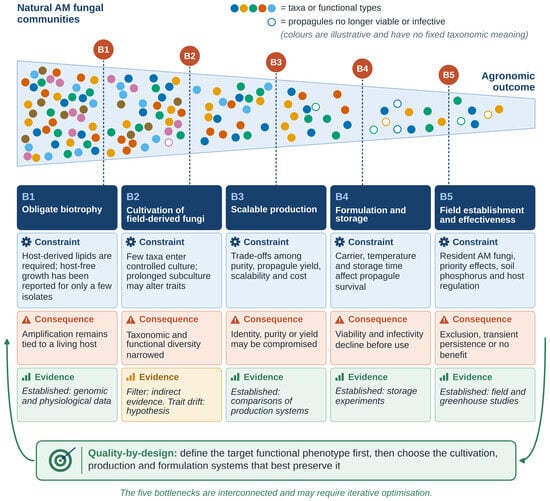
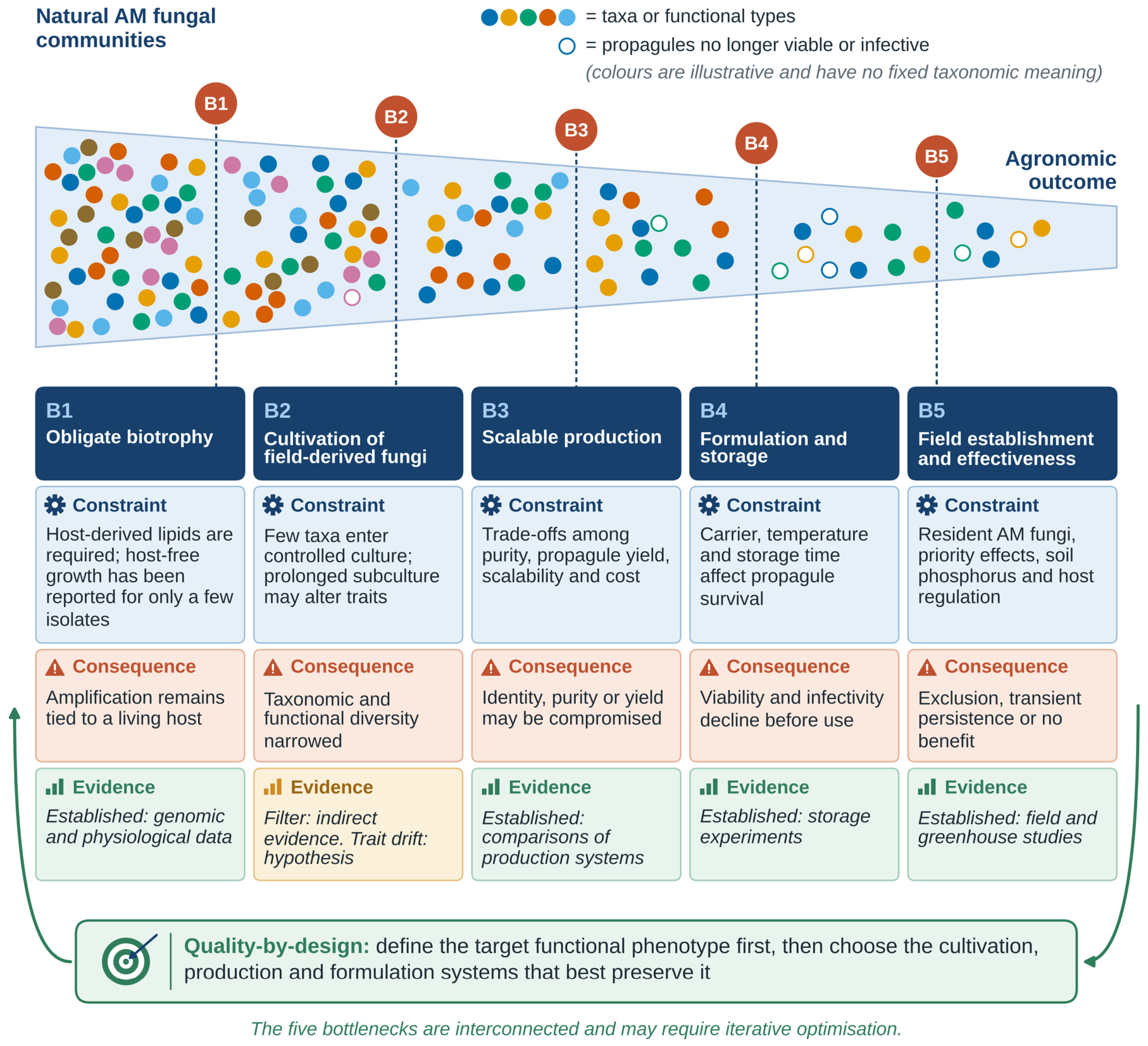
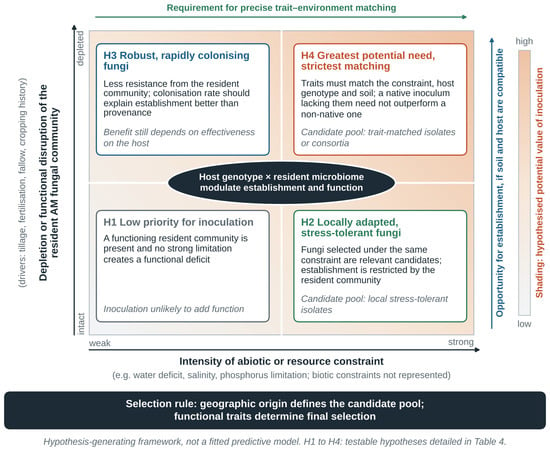
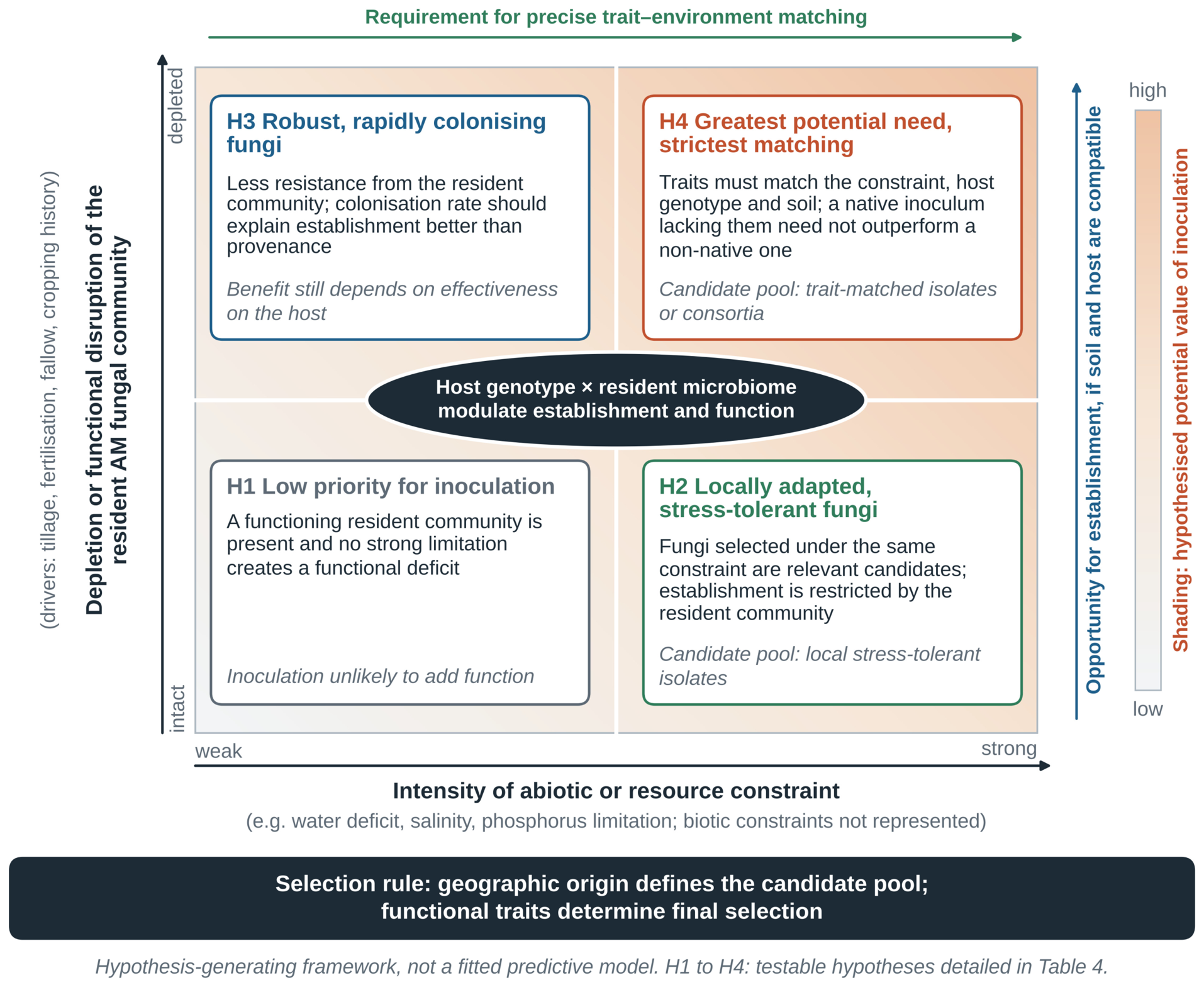
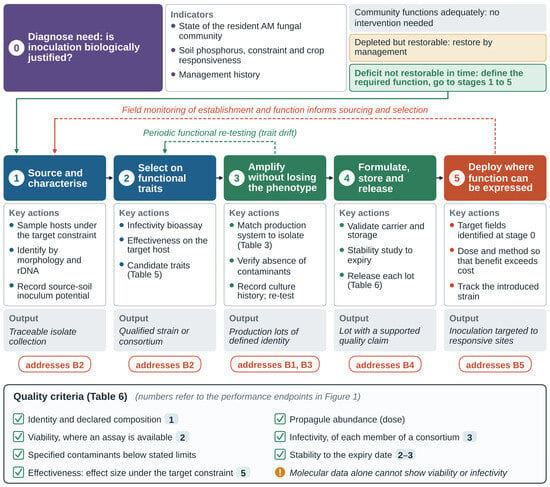
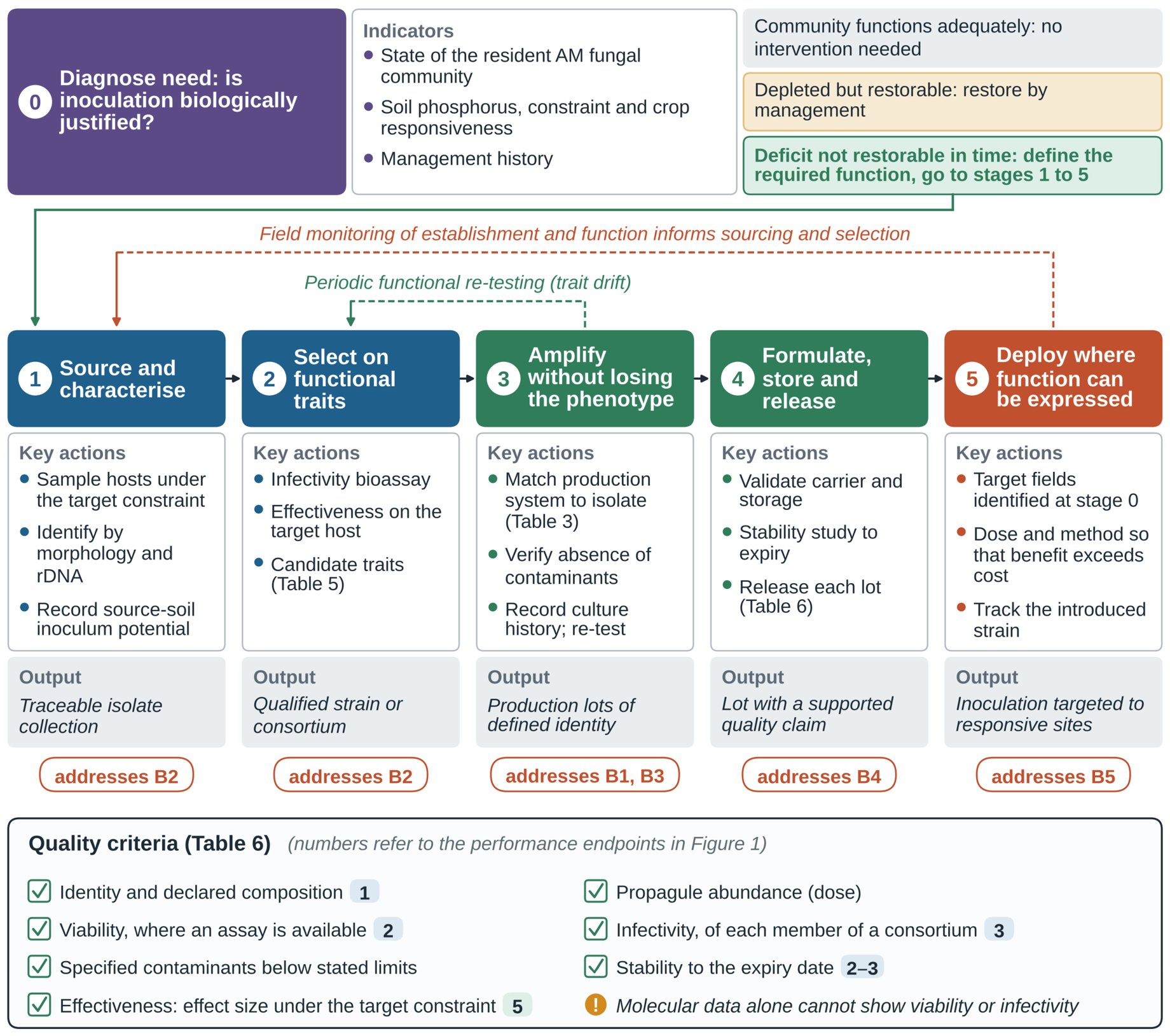

Disclaimer/Publisher’s Note: The statements, opinions and data contained in all publications are solely those of the individual author(s) and contributor(s) and not of MDPI and/or the editor(s). MDPI and/or the editor(s) disclaim responsibility for any injury to people or property resulting from any ideas, methods, instructions or products referred to in the content. |
© 2026 by the authors. Licensee MDPI, Basel, Switzerland. This article is an open access article distributed under the terms and conditions of the Creative Commons Attribution (CC BY) license.