


Abstract
Viable but non-culturable (VBNC) cells represent a reversible, metabolically active state that promotes the survival of bacteria under stressful conditions and their persistence in healthcare facilities and food industry. We conducted a systematic review following PRISMA 2020 guidelines to identify in vitro methodologies for inducing and resuscitating VBNC Enterobacteriaceae and Pseudomonas aeruginosa, and to determine key influencing factors. Eligible studies reported in vitro resuscitation of these species. Searches were performed in MEDLINE (PubMed), Scopus, and Google Scholar up to July 2025. Two independent reviewers screened and extracted data. Exclusion criteria included absence of original experimental data, focus on other species, or lack of clear VBNC definition. Risk of bias was qualitatively assessed. Analyses were descriptive without meta-analysis. Of the 1041 records, 24 articles (27 studies) were included. Resuscitation protocols typically employed standard culture media with additives and moderate incubation temperatures, with most successful recoveries occurring after 24–48 h. P. aeruginosa generally required less supplementation than Enterobacteriaceae. Reported mechanisms involved metabolic reactivation, oxidative stress modulation, nutrient sensing, and ribosome reactivation. The limitations of our study include protocol heterogeneity, lack of standardization, and selective reporting. While simple resuscitation methods were often effective, tailoring conditions to species-specific ecological preferences appears critical. Standardized approaches of VBNC cells will improve detection, risk assessment, and infection control.
1. Introduction
The ability of bacteria to enter a dormant state while remaining viable, referred to as the ‘viable but non-culturable (VBNC)’ state, constitutes a fundamental survival strategy in response to various environmental stresses, such as chemical disinfection, UV irradiation, dehydration [1], and nutrient limitation [2,3,4].
Concurrently, persistent cells (or “persisters”) represent a stress-tolerant subpopulation capable of withstanding hostile conditions without harbouring specific genetic mutations [5,6], whereas certain VBNC bacteria possess distinct mutations in genes such as rpoS, envZ, or fleQ [7,8,9], which regulate stress response pathways and facilitate survival under adverse conditions while preserving the ability to reactivate.
Studies by Yamasaki, Song, and Govers [6,10,11] suggest that the distinction between ‘persistent’ and ‘VBNC’ cells is largely a matter of terminology rather than a difference in fundamental biological characteristics. Persistence, dormancy, and the VBNC state are three bacterial survival strategies under stress, each modulating metabolic activity and growth recovery differently. They share common regulatory pathways, particularly those involving energy metabolism and oxidative stress. These three terms describe dormant, stress-adapted phenotypes capable of surviving and reactivating under appropriate conditions.
In both cases, these dormant states enable the pathogenic bacteria examined in this study to withstand antimicrobial interventions, persist in hospital or industrial environments, and re-emerge unpredictably when favourable conditions are restored [12,13,14]. These bacteria remain undetectable by conventional hospital environmental monitoring methods and their presence may substantially impact the transmission of healthcare-associated infections [15]. Based on the results of the National Survey on the Prevalence of Healthcare-Associated Infections [16], Enterobacteriaceae (notably Klebsiella pneumonia) and Pseudomonas aeruginosa are among the most frequently isolated multidrug-resistant organisms in healthcare-associated infections in the French West Indies. Their persistence in biofilms, combined with multidrug resistance traits, highlights their epidemiological importance and justifies the dual focus of this review.
The transition from dormancy to active growth relies on complex mechanisms that are still poorly characterized. This process involves the restoration of ribosomal activity and intracellular metabolism, as well as the detection and integration of specific environmental signals [10,11,17]. Despite growing interest in these processes, our understanding of them remains incomplete. Existing studies highlight significant heterogeneity, reflecting both the diversity of bacterial species examined and the wide range of experimental conditions employed [18,19,20].
Against this backdrop, the present systematic review aims to address the following question: which methodologies enable the resuscitation of VBNC bacteria and persister cells in vitro?
The primary objective of this work is to systematically analyze the methodologies described in the scientific literature with the aim of defining one or more resuscitation protocols applicable to two bacterial groups highly implicated in healthcare-associated infections: Enterobacteriaceae and Pseudomonas aeruginosa. We assume that these methods will be rather complex.
When data are available, we will also describe the molecular mechanisms involved in the resuscitation process.
Furthermore, this study aims to identify, based on the literature, the main conditions promoting the induction of the VBNC state and the main techniques for quantifying VBNC cells.
2. Material and Methods
This systematic literature review was conducted in accordance with the PRISMA 2020 (Preferred Reporting Items for Systematic Reviews and Meta-Analyses) guidelines.
The research question was as follows: what are the most effective current methods for the in vitro resuscitation of VBNC and which cellular mechanisms are involved in this process?
2.1. Eligibility Criteria
Eligible studies were original, peer-reviewed research articles published in English, French, Spanish, or Italian. To be included, the studies had to focus on Enterobacteriaceae or Pseudomonas aeruginosa and explicitly investigate the viable but non-culturable (VBNC) state. Studies were required to address at least one of the following aspects: the experimental methods and media used to resuscitate VBNC bacteria, the molecular, physiological, or environmental mechanisms involved in resuscitation, the induction or maintenance of the VBNC state under defined laboratory conditions, the characterization of bacterial dormancy at metabolic, structural, or morphological levels, or the quantitative approaches used to detect or enumerate VBNC cells. Articles were considered regardless of their geographic origin, publication year, or laboratory setting, provided that they reported primary experimental data. Both successful and unsuccessful resuscitation attempts were eligible, as long as the VBNC state was confirmed according to accepted criteria such as loss of culturability combined with maintenance of metabolic activity or membrane integrity.
Secondary publications such as reviews, systematic reviews, meta-analyses, commentaries, conference abstracts, or letters to the editor were excluded. We also excluded investigations lacking original experimental data, studies focusing on bacterial groups or species other that Enterobacteriaceae or Pseudomonas aeruginosa and reports that did not clearly define or confirm the VBNC state.
2.2. Information Sources and Search Strategy
An exhaustive literature search was conducted in two major databases, MEDLINE via PubMed and Scopus, and one search engine, Google Scholar. The search period covered publications up to and including July 2025, with no start date specified. Search equations combined the following keywords, individually or with Boolean operators (“AND”, “OR”): Bacterial resuscitation, VBNC (viable but non-culturable), viable but non-cultivable, bacterial dormancy, environmental stress, Enterobacteriaceae, Pseudomonas aeruginosa, and nosocomial infections. Search strategies were adapted for each database to optimize sensitivity and specificity.
2.3. Selection Process
All the references that were identified were imported into the Covidence platform.
Duplicates were removed automatically and verified manually. The selection process was conducted in two stages: first, the titles and abstracts of potentially relevant articles were screened; then, the full texts of these articles were reviewed.
Two reviewers performed each stage independently, and any discrepancies were resolved through discussion and consensus.
2.4. Data Collection Process
Data extraction was performed independently by two reviewers using a standardized form that we created. For each included study, we recorded the following information: bibliographic details (first author, year of publication, journal and country), the bacterial species investigated, and the study objectives. We extracted data regarding resuscitation methods, including the type of culture medium, the nature of supplementation, the incubation conditions, and the time required for recovery. When available, we documented quantification methods and environmental, physiological, or molecular factors associated with resuscitation. The experimental conditions used to induce the VBNC state were also noted. Articles with incomplete data were retained if they met the inclusion criteria.
2.5. Data Items
The primary outcomes of interest were resuscitation success (defined as the recovery of culturability), the time taken for recovery, and the cellular mechanisms involved. The secondary outcomes included the conditions of induction, confirmation of the VBNC state, and the quantification methods.
2.6. Risk of Bias Assessment
Due to the heterogeneity and in vitro methodological nature of the included studies, no formal, validated risk-of-bias tool was applied. However, potential sources of bias were qualitatively appraised, such as incomplete reporting of resuscitation criteria, non-standard confirmation of VBNC status and selective reporting of successful protocols.
2.7. Effect Measures
Given the descriptive nature and heterogeneity of the outcomes across the in vitro studies, no predefined quantitative effect measures were applied. Instead, outcomes were synthesized narratively.
2.8. Data Preparation
Qualitative descriptors (e.g., “rich” vs. “minimal” media) were harmonized by mapping them to reported compositions when available. Time units and temperature ranges were standardized. When outcomes were inconsistently defined (e.g., resuscitation success without culturability), a conservative interpretation was applied.
2.9. Synthesis Methods
The studies were grouped according to the type of bacterial groups (Enterobacteriaceae vs. Pseudomonas aeruginosa) and the resuscitation method used. The results were tabulated and displayed visually in structured tables and figures. A summary table was created and a narrative synthesis was performed to summarize the findings across the studies. Subgroup analyses explored fundamental differences between species and resuscitation approaches.
2.10. Reporting Bias Assessment
As no meta-analysis was undertaken, we did not perform formal tests for reporting bias (e.g., funnel plots). Potential selective reporting was considered qualitatively by noting the absence of protocols/registrations and inconsistencies between methods and reported outcomes.
2.11. Certainty of Evidence
Certainty of evidence was assessed qualitatively by considering the consistency of the results across the studies, the direct relevance of the in vitro outcomes to the review question, and the transparency of methods used to confirm the VBNC status and resuscitation. A formal grade assessment was not applicable due to the absence of pooled effect estimates.
3. Results
3.1. Study Selection
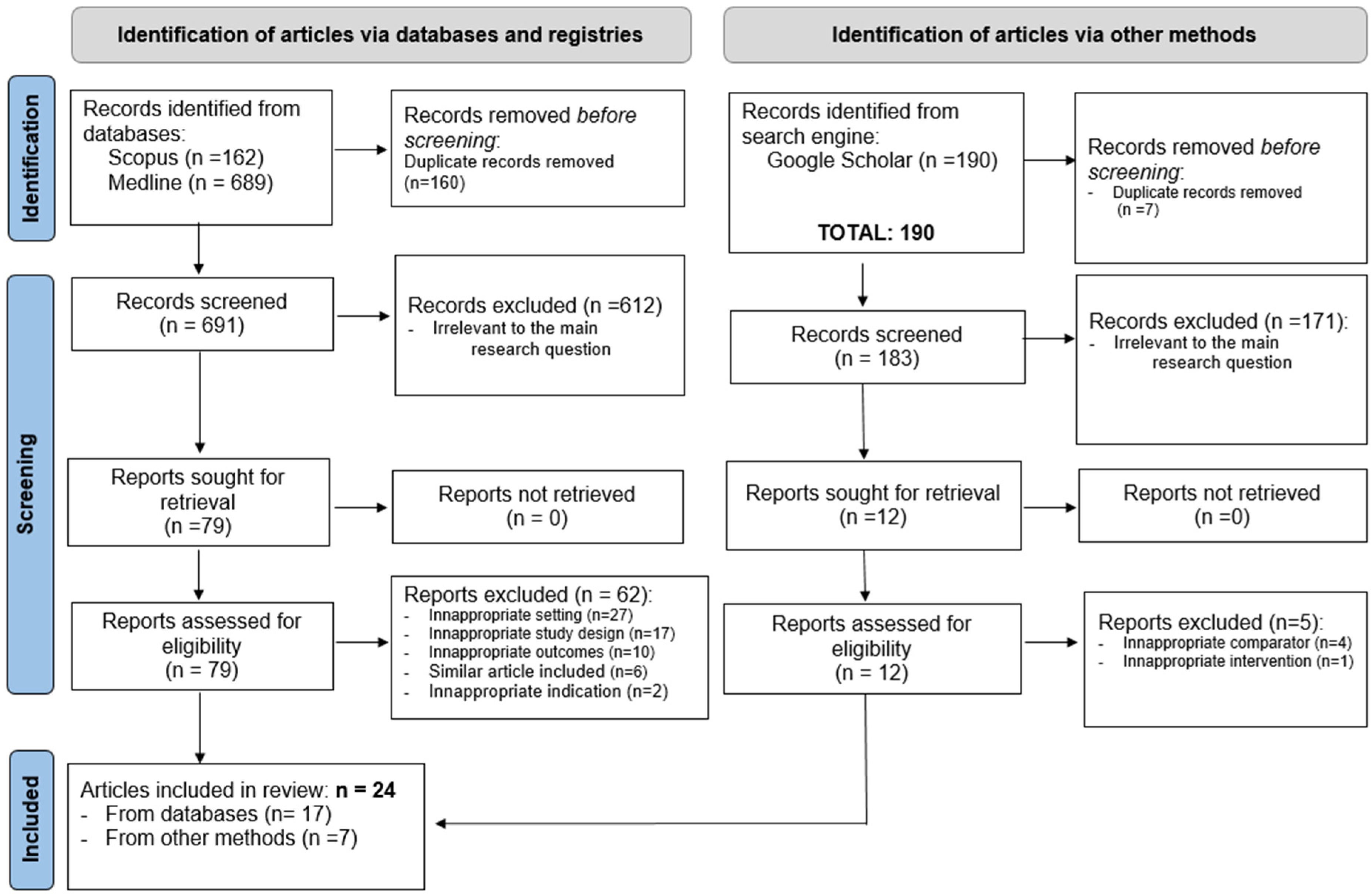
Among 1041 studies identified through our literature search, 167 duplicates were removed. After examining the titles and abstracts, 91 full-text articles were read in their entirety.
Ultimately, 24 articles met the eligibility criteria and were included in the analysis. Of the 24 articles, 3 dealt with both Enterobacteriaceae and Pseudomonas aeruginosa. This brings the total number of included studies to 27.
The different stages of the article selection process are described in PRISMA flow diagram (Figure 1).
Figure 1.
Prisma flow diagram.
Of the ninety-one reports assessed for eligibility, sixty-seven were excluded for the following reasons: Twenty-seven studies were conducted in settings that did not align with the inclusion criteria. Seventeen studies employed designs that were methodologically incompatible with the scope of the review. Ten reports presented outcomes that were not relevant to the research question. Six articles were excluded due to thematic redundancy with articles that had already been included. Two reports addressed indications outside the scope of the review. Furthermore, five studies identified through supplementary methods were excluded due to inappropriate comparators (n = 4) or interventions (n = 1).
3.2. Study Characteristics
The main characteristics of the 24 articles included are summarized in Table 1.
Table 1.
Study characteristics.
All selected articles were published between 2003 and 2025, with a clear increase in the number of publications during the last decade. In fact, 66.6% (n = 16) of the articles analyzed were published after 2018.
The majority of the articles were from Asian and European countries, particularly China (33.3%, n = 8) and the United Kingdom (12.5%, n = 3). Other contributions originated from southern and western Europe, Africa (Egypt), and the United States, which contributed one article each.
Regarding publication outlets, the included articles were primarily published in journals covering environmental and microbiological sciences (41.5%, n = 8), such as Environmental Microbiology, Water Research, Applied and Environmental Microbiology, and Journal of Bacteriology.
In terms of bacterial models, Enterobacteriaceae, particularly Escherichia coli, were the most frequently studied organisms (58.3%, n = 14).
Pseudomonas aeruginosa was the second most investigated species (29.1%, n = 7), followed by Klebsiella pneumonia and Proteus mirabilis.
Three articles investigated both Enterobacteriaceae and Pseudomonas aeruginosa.
3.3. Primary Outcomes
Descriptive analysis of the mechanisms is given in Table 2.
Table 2.
Primary outcomes—VBNC resuscitation methods.
3.4. VBNC Resuscitation Methods
In this subsection, percentages are calculated with reference to the 19 studies summarized in Table 1, which specifically report resuscitation-related data.
Respectively, 15 studies (78.9%) described VBNC cells resuscitation protocols applied to Enterobacteriaceae and 4 studies (21.1%) applied to Pseudomonas aeruginosa.
Of the 19 studies, 3 reported unsuccessful resuscitation [7,21,23]. In Boaretti’s research, the use of solid agar likely hindered the diffusion of extracellular growth factors necessary for resuscitation, thereby preventing the awakening of VBNC cells.
3.4.1. Culture Media
All studies reported at least one type of medium used for resuscitation. Luria–Bertani (LB)-based formulations were the most frequently employed (36.8%, n = 7), appearing in liquid, solid, or agarose pad forms. Other studies employed alternative formulations such as tryptic soy broth (n = 2), M9–Glucose, Yeast–Peptone–Dextrose (YPD), or minimal salt–based media diluted with sea water or phosphate-buffered saline (PBS). Two studies employed the term “nutrient broth” without additional precision.
3.4.2. Additives
Nutrient enrichment was a key strategy for 68.2% (n = 13) of the 19 studies. They included at least one additive to promote VBNC resuscitation. The most common supplements were catalase [21,32] and sodium pyruvate [7,25,27], both of which acting as antioxidants or reactive oxygen species scavengers. Additives such as amino acid mixtures were used by Pinto and Li, occasionally combined with proteorhodopsin activation under green light [32], to stimulate metabolic reactivation. Other chemical agents such as Tween 20 [26], sodium thioglycolate [27], or sodium diethyldithiocarbamate trihydrate (DDTC) served as surfactants or metal chelators to facilitate recovery.
Three studies [19,21,30] used cell culture supernatants or spent media to provide signalling molecules or metabolic by-products conducive to cell recovery. In contrast, four studies [14,23,29,34] performed resuscitation without any supplementation, relying solely on the nutrient content of the base medium.
3.5. Other Experimental Conditions
The incubation temperatures in all 19 studies ranged from 20 °C to 37 °C. The majority of the studies adopted moderate incubation conditions between 30 °C and 37 °C, corresponding to the optimal physiological range for the strains being tested. Lower temperatures (around 20 °C) were chosen in four studies [21,22,24,26]. Depending on the protocol, incubation was carried out either statically or under shaking conditions. In two cases [21,24], experiments were conducted in darkness to avoid photoactivation of pigments or photoreceptors. Some authors also incorporated stress modulation strategies, such as antibiotic protection [7,21,33], metal exposure [22,24], or phage challenge [33], to examine their effect on resuscitation capacity.
3.5.1. Time to Recover
Resuscitation duration times were highly variable, ranging from 6 h [33] to 15 days [19]. Of the 16 studies that reported a resuscitation duration time, the majority (81.2%, n = 13) reported successful resuscitation within 24 to 48 h, usually under moderate temperature and nutrient-supplemented conditions.
The three unsuccessful cases [7,21,23] remained culture-negative despite extended incubation or supplementation attempts, highlighting the persistence of VBNC states under suboptimal conditions.
3.5.2. Comparative Observations
Enterobacteriaceae generally responded more efficiently to nutrient-rich or antioxidant-supplemented media, with long resuscitation duration times (from 24 h to 15 days).
In contrast, Pseudomonas aeruginosa required a shorter resuscitation time of typically 24 h and often needed less nutrient availability to resume growth.
3.6. Cellular Mechanisms During the Resuscitation
A descriptive analysis of the mechanisms is provided in Table 3, which compiles data from eight studies and details the cellular mechanisms involved in resuscitation as well as the supporting evidence of successful resuscitation.
Table 3.
Cellular mechanisms during the resuscitation process—Enterobacteriaceae.
3.6.1. Metabolic Reactivation
This group includes mechanisms that restore or enhance metabolic activity to support the revival of VBNC cells.
Li et al. [32] identified elevated intracellular ATP levels as a key mechanism during resuscitation in Escherichia coli. These elevated levels of ATP provide the energy required for cellular processes to restart, enabling VBNC cells to return to a culturable state.
Zhao et al. [33] indicated that ethanol production is restored in resuscitated K. pneumoniae, with the extent of restoration depending on environmental conditions and bacterial strains. This suggests that metabolic pathways, such as those involved in ethanol production, are reactivated during resuscitation, reflecting the recovery of metabolic functionality.
3.6.2. Stress Response Modulation
The mechanisms in this group reduce environmental or cellular stress to facilitate resuscitation.
Wasfi’s data [26] emphasized the importance of temperature in resuscitation. The study showed that reaching an optimal temperature enhances catalase activity, allowing toxic peroxides to be degraded. This detoxification process is necessary for reviving VBNC cells of Proteus mirabilis, as it reduces oxidative stress that could otherwise bother cellular resuscitation.
3.6.3. Nutrient Sensing and Signalling
This category encompasses the mechanisms involved in sensing environmental signals or nutrient availability in order to promote resuscitation.
Yamasaki’s research [6] identified alanine as a key signal for awakening persister cells in Escherichia coli. Six proteins associated with alanine metabolism (PsiF, PanD, YmgF, YjcF, PptA, and CheY) were found to enhance resuscitation. The study also described mechanisms such as reduced cyclic AMP (c-AMP) levels and activation of hibernating ribosomes to facilitate revival. In the context of VBNC cells, ribosomes often enter a “hibernating” state, where they are temporarily inactive in order to preserve energy under stressfull conditions. The activation of hibernating ribosomes is the process by which these ribosomes are reactivated to resume protein synthesis, which is essential for cellular resuscitation. This mechanism specifically involves releasing of ribosomes from their inactive state, which is often facilitated by environmental signals such as alanine. This enables the translation of proteins necessary for metabolic and cellular functions. This reactivation is a critical step in transitioning VBNC cells back to a culturable state, as it restores the cellular machinery needed for cellular growth and division.
Furthermore, resuscitation is mediated by chemotaxis sensors and phosphotransferase membrane proteins, which are likely to play a role in detecting environmental signals and initiating cellular resuscitation.
Song’s research [11] focused on the phosphate-sensing system as a driver of resuscitation in Escherichia coli. The transcriptional regulator PhoP activates PhoB through the small regulatory protein MgtS. Additionally, PsiF, a regulator associated with the phosphate response, and MgtA, a magnesium transporter regulated by the Pho regulon, were identified as important factors in enhancing resuscitation.
3.6.4. Genomic and Phenotypic Changes
Pinto’s study [19] used csM13 minisatellite-PCR fingerprinting to confirm that resuscitated Escherichia coli cells were genomically identical to their original strains in all the tested media. This suggests that the resuscitation process does not introduce significant genetic alterations, meaning the revived bacteria have the same genetic profile as their pre-VBNC counterparts.
In contrast, Saima’s study [27] examined genomic changes that occur during the VBNC resuscitation cycle. By analyzing genomic distances between resuscitated isolates and their original strains, the study revealed alterations occurring during resuscitation. These findings suggest that while resuscitation restores viability, it may also induce subtle genomic changes that could potentially affect the characteristics of the revived Escherichia coli.
Yadav’s research [30] showed that resuscitated K. pneumoniae exhibited significantly higher resistance to common antibiotics than their original strains.
3.7. Secondary Outcomes
Descriptive analysis of the VBNC state in Enterobacteriaceae and Pseudomonas aeruginosa are given in Table 4 (including 19 studies) and Table 5 (including 8 studies).
Table 4.
Secondary outcomes—Enterobacteriaceae.
Table 5.
Secondary outcomes—Pseudomonas aeruginosa.
3.7.1. VBNC Induction: Culture Media, Additives, and Growth Conditions
For Enterobacteriaceae, a wide variety of culture media were used to induce the VBNC state. However, most studies (63.2%, n = 12) used nutrient-poor liquid environments (i.e., 0.9% NaCl, deionized water) to simulate starvation or osmotic stress.
However, nutrient-rich media (i.e., Luria–Bertani (LB) broth, Yeast Extract Tryptone broth 2XYT) were also used and additives (mainly antibiotics or disinfectants) were frequently employed to improve stress induction. Incubation temperatures ranged from −20 °C to 37 °C.
In contrast, P. aeruginosa studies predominantly utilized nutrient-poor media. Additives were less varied and primarily consisted of disinfectants or copper sulphate. Unlike Enterobacteriaceae studies, those on P. aeruginosa did not report the use of antibiotics or extreme pH to induce the VBNC state. Only 25% (n = 2) of studies used LB broth as nutrient-rich medium. Incubation temperatures were typically moderate (20–37 °C), with the exception of Zhao’s study which specified anaerobic conditions combined with a low temperature of 4 °C.
3.7.2. Duration of VBNC Induction
The time required to induce the VBNC state in Enterobacteriaceae varied widely, ranging from 30 min (e.g., chlorination or antibiotic exposure) to 33 weeks (e.g., starvation in sterile distilled water). Short durations (30 min to 1 day) were associated with chemical disinfectants or antibiotics, while longer durations (14 to 33 weeks) were linked to starvation and low-temperature conditions.
For P. aeruginosa, induction times were generally shorter, ranging from 30 min to 7 days, with most studies reporting durations of 1 to 72 h. These shorter induction times were often associated with exposure to disinfectant (e.g., chlorine, UV, PAA).
3.7.3. Confirmation of VBNC State
Of the 27 studies analyzed (19 for Enterobacteriaceae and 8 for Pseudomonas aeruginosa), 24 (88.89%) confirmed the VBNC state using at least one parameter of Pan’s definition. Specifically, 15 studies (55.56%) demonstrated non-culturability on standard media, 16 studies (59.26%) confirmed maintained metabolic or respiratory activity, 13 studies (48.15%) verified undamaged membrane integrity, and 6 studies (22.22%) reported abnormal morphology. These findings suggest that metabolic and respiratory activity were the most frequently assessed parameters, while abnormal morphology was the least, notably absent from studies on Pseudomonas aeruginosa.
3.7.4. Culturability on Current Media
Culturability tests for Enterobacteriaceae were performed in 57.9% of the studies (n = 11), using current media. Ten studies reported no growth, confirming the VBNC state while one (Ni et al. [13]) did not specify the results of culturability tests.
For P. aeruginosa, culturability was assessed in 50% of studies (n = 4) with no growth observed in most cases, except for one study reporting residual growth after peracetic acid (PAA) treatment.
3.7.5. Metabolic/Respiratory Activity
Of the studies assessed, 66.6% (18 out of 27 in Table 4 and Table 5) examined the metabolic activity of Enterobacteriaceae (n = 13) and P. aeruginosa (n = 5) in the VBNC state, using various techniques such as fluorescence, luminescence, chromatography (GC-MS), Raman spectroscopy, FISH, BacTiter-Glo, and DyeTox13-qPCR. These methods revealed either maintained or reduced metabolic activity, thereby confirming bacterial viability despite non-culturability. In some cases, there were physiological changes like suppressed DNA replication and increased oxidative stress (Li et al. [32]).
Fluorescence and luminescence techniques, as well as chromatography detect VBNC bacterial metabolic activity by assessing substrate utilization (e.g., glucose for ATP) and metabolite production (e.g., fatty acids). Fluorescence techniques (FISH, DyeTox13-qPCR) reveal cellular integrity or enzymatic activity, luminescence techniques (BacTiter-Glo) measure ATP production, and chromatography techniques (GC-MS, Raman) identify metabolites or chemical changes.
Together, these methods confirm bacterial viability and pathogenic potential, even under stressful conditions such as disinfection.
3.7.6. Membrane Integrity
Membrane integrity was assessed in 66.6% of studies (n = 18) involving Enterobacteriaceae and P. aeruginosa studies from Table 4 and Table 5, primarily using the LIVE/DEAD BacLight kit as the reference method and flow cytometry as a complementary technique. The LIVE/DEAD kit uses SYTO 9 (green fluorescence) to stain intact membranes indicating viable cells, and propidium iodide (red fluorescence) to stain damaged membranes, signalling cell death or compromise.
Most studies reported intact or partially damaged membranes, confirming that both Enterobacteriaceae and P. aeruginosa maintain membrane integrity in the VBNC state.
3.7.7. Abnormal Morphology
Abnormal morphology was reported in 36.8% (n = 7) of Enterobacteriaceae studies. Changes such as cell elongation, shortening, or spherical shapes were observed via electron microscopy (SEM, TEM), Gram staining, or the elongation method. Ni’s study did not report abnormal morphology. These morphological changes suggest that stress-induced adaptations occur in the VBNC state. In contrast, none of the P. aeruginosa studies, explicitly reported abnormal morphology.
3.7.8. VBNC Cell Quantification
Quantification of VBNC cells in Enterobacteriaceae and P. aeruginosa was conducted in 70.4% (n = 19) of studies (27 studies from Table 4 and Table 5), employing methods such as flow cytometry, qPCR, PMA-ddPCR, PMA-qPCR, hemocytometry, time-lapse fluorescence microscopy (TLFM), TaqMan-based qPCR targeting the 16S rRNA gene, and DAPI staining with fluorescence microscopy. Specific formulas were reported, with one study [34] providing a shared formula for both species, while another [28] described a subtraction method for P. aeruginosa, enabling precise enumeration of VBNC cells across these bacterial groups.
To completement the detailed extraction tables presented above, we have provided a summary table below which outlines the main operating conditions available for studying VBNC bacteria (Table 6).
Table 6.
Synthesis of operating conditions enabling the study of VBNC bacteria specific to each bacterial group or common to both groups.
4. Discussion
The viable but non-culturable state observed across a wide range of bacterial species represents a compelling link between environmental and medical microbiology. The studies reviewed here confirm that entry into the VBNC state, as well as subsequent resuscitation, involve a complex interplay between environmental signals, cellular integrity, and metabolic regulatory mechanisms. Contemporary research aims not only to demonstrate the existence of VBNC cells but also to elucidate how bacteria enter and exit this state and, above all, how these processes can be manipulated experimentally in vitro to achieve their resuscitation. It should be noted, however, that research on the resuscitation of VBNC cells is still in its infancy, with most studies on this subject dating back fewer than 10 years.
The thorough analysis of these 24 articles has enabled us to identify numerous techniques that could successfully resuscitate VBNC cells. Surprisingly, most of these methods were not overly complex. They mainly consisted of a standard culture medium that was enriched to varying degrees, sometimes in combination with a modified physical parameter. Methods to resuscitate VBNC Pseudomonas aeruginosa were even simpler, achieving results in as little as 24 h.
These observations suggest that potentially less complex techniques could potentially play a key role, prompting us to reconsider the degree of complexity of the methods suggested in our initial hypothesis. According to Stover’s study [35], the complete genome sequence of P. aeruginosa PAO1—the largest bacterial genome sequenced to date, at 6.3 million base pairs—revealed an extensive repertoire of regulatory genes, stress resistance systems, and metabolic pathways that confer remarkable adaptability to nutrient-limited environments [37]. This genetic versatility is likely to be the basis of its ability to recover more efficiently from the VBNC state than Enterobacteriaceae, which generally require richer nutrient availability.
It is important to emphasize that in order to allow resuscitation, cells should not be “overfed” with overly rich media. An excess of nutrients can paradoxically prevent VBNC cells from awakening by disturbing the subtle physiological signals necessary for resuming growth [38]. The inhibitory effect of overly rich media may be explained by the induction of oxidative stress, since excessive metabolic activity leads to the accumulation of reactive oxygen species. Additionally, complex nutrient environments can interfere with signalling pathways essential for VBNC exit, such as those involved in nutrient sensing or ribosomal reactivation. These mechanisms highlight the importance of balanced nutrient conditions, where moderate supplementation supports recovery without overwhelming cellular regulatory systems [3,33].
Choosing the most appropriate technique for resuscitating Enterobacteriaceae involves defining a set of criteria: (i) a culture medium enabling recovery with minimal complexity; (ii) a short resuscitation time; (iii) confirmation of viable yet non-proliferating cells before resuscitation time is initiated (including at least one parameter, supported by Pan et al. [39]).
For example, Boaretti’s study [7] in liquid phase, as well as Kim’s [14] and Zhu’s [29] studies, retained our attention because all three meet the above-defined criteria. In fact, Luria–Bertani broth, whether supplemented with sodium pyruvate or agarose pads or not, represents very simple growth conditions that leads to resuscitation within a very short time. Furthermore, the VBNC status is fully validated in all three studies. In our opinion, these approaches could represent a practical and accessible method for our future in vitro resuscitation experiments.
On the other hand, the complexity of Pinto’s study [19] also caught our attention, due to the extensive optimization of the media, additives, and conditions required for successful bacterial resuscitation.
This thorough screening ultimately concluded that simple techniques could be sufficient for VBNC resuscitation. In fact, the simplest method for resuscitating E. coli VBNC cells, as demonstrated in Pinto’s study [19], is to use TSB (Tryptone Soya Broth) at 37 °C, which effectively revives suspensions induced bu 4 °C without the need for complex additives.
In general, we have observed that resuscitation is most effective when bacteria are reintroduced to environmental conditions that mimic their natural habitats. For example, P. aeruginosa, which is commonly found in aquatic environments, regains viability when exposed to water or minimal nutrient conditions that resemble its ecological niche [22,32,34]. Conversely, Enterobacteriaceae, which typically thrive in the nutrient-rich intestinal environment, appear to require slightly richer growth media [19,26,32]. This is also described in Ziying Lu’s study [40] which found that Salmonella enterica requires a balanced, intestine-like medium to facilitate recovery from the VBNC state. Tailoring resuscitation conditions to the specific ecological preferences of each bacterial species thus seems critical for successfully restoring their metabolic activity and growth [41]. These observations highlight the need for a delicate balance between nutrient supply and gradual stimulation to optimize resuscitation.
The transition to the VBNC state is induced by various stressors that are often associated with disinfection processes or other growth-limiting conditions. These stimuli usually result in a significant decrease in cell size and metabolic activity, as well as triggering oxidative stress protection mechanisms. These adaptations enable cells to survive conditions that would be lethal for culturable populations. This resilience suggests that both Enterobacteriaceae and P. aeruginosa have the potential to enter the VBNC state as a protective mechanism in response to various stressors.
Enterobacteriaceae exhibit greater versatility in VBNC induction than P. aeruginosa. They respond to a broader range of stressors (e.g., antibiotics, extreme pH, high osmotic pressure) and media types, whereas P. aeruginosa is primarily induced by disinfectants and nutrient starvation. The shorter induction times for P. aeruginosa (30 min to 7 days) compared to Enterobacteriaceae (30 min to 33 weeks) suggest that it may more rapidly respond to stress, particularly to chemical disinfectants.
Numerous VBNC detection and quantification approaches are described in our study. Guo et al. [42] mention most of them, describing and evaluating them while pointing out their limitations. The metabolic activity-based method uses the uptake of dyes such as fluorescein diacetate (FDA) to detect viable bacteria by converting them into fluorescent signals via active enzymes. However, limitations such as the quenching effect and pH sensitivity should be noted. The ATP assay measures bioluminescence linked to ATP and is useful for rapid detection, but it is subject to interference from other ATP sources. Methods based on membrane integrity, such as dye exclusion assays (e.g., trypan blue, propidium iodide) and nucleic acid-based techniques (e.g., PMA-qPCR), identify VBNC bacteria via membrane selectivity, though they are limited by an inability to distinguish bacterial species. These methods enable the VBNC fraction to be quantified more accurately and allow predictive models of microbiological risk to be refined [13].
In real life, the conditions favouring VBNC induction are therefore multiple and interdependent. Beyond the chemical and physical stresses already mentioned, biofilm formation [28,42] provides an environment conducive to establishing a microclimate that is not favourable for growth but is favourable for prolonged survival. Nutrient and oxygen gradients within biofilms support differentiated metabolic states, including VBNC cells, which are difficult or even impossible to detect using conventional culture methods. In aqueous environments, such metabolic plasticity challenges the reliability of using E. coli as the sole indicator of contamination, emphasizing the need for complementary physiologically based detection methods [13,27].
Bacterial biofilms have recently been found in dry environments, particularly on dry surfaces in healthcare facilities [31,43]. According to Schapira et al. [44], these dry surface biofilms (DSBs) harbour VBNC bacteria, enhancing their persistence and making them harder to detect, which consequently raises concerns for infection control [44].
These observations lead us to reconsider VBNC state not as static, but as part of a physiological continuum between persistence, dormancy, and cell death.
This systematic review has several limitations that should be acknowledged.
First, VBNC resuscitation is a relatively recent topic, with most studies having been published within the last decade. Consequently, the available evidence is still limited in scope and heterogenenous, which restricts the strength of the conclusions that can be drawn. Second, the methodological variability between studies (including differences in bacterial strains, induction conditions, and resuscitation protocols) makes direct comparisons and synthesis of the findings difficult. Third, most studies were conducted under controlled in vitro conditions, which may not fully reflect the complexity of natural or clinical environments, resulting in interpretative limitations. This explains why this study could not be subjected to a meta-analysis. Consequently, the results should be interpreted as a qualitative synthesis. Future research should aim to harmonize methodologies, expand the range of bacterial species studied, and generate data that can be used in meta-analyses.
5. Conclusions
The VBNC state, which is observed in bacteria such as Enterobacteriaceae and Pseudomonas aeruginosa, is a resilient survival strategy in response to stressors such as disinfectants, nutrient scarcity, or desiccation. Considering VBNC as part of a continuum with persistence and dormancy highlights shared regulatory pathways and provides valuable insights into bacterial survival. Our systematic review reveals that simple resuscitation methods in liquid phase—such as Luria–Bertani broth or Tryptone Soya Broth—used under conditions tailored to the original bacterial ecological niches, can effectively restore viability. This challenges the assumption that complex approaches are necessary. Although modern detection methods such as DyeTox13-qPCR or PMA-qPCR improve VBNC quantification, limitations persist. The hiding of bacteria as VBNC inside DSBs in healthcare facilities greatly complicates their detection, as conventional methods based on culturability are unsuitable. Research is already in progress to explore these mechanisms in these high-risk ecosystems, with the aim of developing targeted interventions to enhance environmental monitoring and infection control.
Author Contributions
Conceptualization, K.M.-S.; methodology, K.M.-S.; validation, C.O.; formal analysis, P.T. and T.L.; investigation, P.T. and T.L.; writing—original draft preparation, P.T.; writing—review and editing, K.M.-S.; visualization, C.O.; supervision, K.M.-S. All authors have read and agreed to the published version of the manuscript.
Funding
This work received no external funding.
Institutional Review Board Statement
Not applicable.
Informed Consent Statement
Not applicable.
Data Availability Statement
No new data were created or analyzed in this study. Data sharing is not applicable to this article.
Conflicts of Interest
The authors declare no conflicts of interest.
References
- Türetgen, I.; Ilhan-Sungur, E.; Cotuk, A. Effects of Short-Time Drying on Biofilm-Associated Bacteria. Ann. Microbiol. 2007, 57, 277–280. [Google Scholar] [CrossRef] [Scilit]
- Chen, S.; Li, X.; Wang, Y.; Zeng, J.; Ye, C.; Li, X.; Guo, L.; Zhang, S.; Yu, X. Induction of Escherichia coli into a VBNC State through Chlorination/Chloramination and Differences in Characteristics of the Bacterium between States. Water Res. 2018, 142, 279–288. [Google Scholar] [CrossRef] [Scilit]
- Zhang, S.; Guo, L.; Yang, K.; Zhang, Y.; Ye, C.; Chen, S.; Yu, X.; Huang, W.E.; Cui, L. Induction of Escherichia coli into a VBNC State by Continuous-Flow UVC and Subsequent Changes in Metabolic Activity at the Single-Cell Level. Front. Microbiol. 2018, 9, 2243. [Google Scholar] [CrossRef] [Scilit] [PubMed]
- Zhu, L.; Shuai, X.; Xu, L.; Sun, Y.; Lin, Z.; Zhou, Z.; Meng, L.; Chen, H. Mechanisms Underlying the Effect of Chlorination and UV Disinfection on VBNC State Escherichia coli Isolated from Hospital Wastewater. J. Hazard. Mater. 2022, 423, 127228. [Google Scholar] [CrossRef] [Scilit] [PubMed]
- Wood, T.K.; Song, S.; Yamasaki, R. Ribosome Dependence of Persister Cell Formation and Resuscitation. J Microbiol. 2019, 57, 213–219. [Google Scholar] [CrossRef] [Scilit]
- Song, S.; Kim, J.; Yamasaki, R.; Oh, S.; Benedik, M.J.; Wood, T.K. Escherichia coli Cryptic Prophages Sense Nutrients to Influence Persister Cell Resuscitation. Environ. Microbiol. 2021, 23, 7245–7254. [Google Scholar] [CrossRef] [Scilit] [PubMed]
- Boaretti, M.; Del Mar Lleò, M.; Bonato, B.; Signoretto, C.; Canepari, P. Involvement of rpoS in the Survival of Escherichia coli in the Viable but Non-culturable State. Environ. Microbiol. 2003, 5, 986–996. [Google Scholar] [CrossRef] [Scilit]
- Darcan, C.; Ozkanca, R.; Idil, O.; Flint, K.P. Viable but Non-Culturable State (VBNC) of Escherichia coli Related to EnvZ under the Effect of pH, Starvation and Osmotic Stress in Sea Water. Pol. J. Microbiol 2009, 58, 307–317. [Google Scholar]
- Cai, J.; Zhou, M.; Zhang, Y.; Ma, Y.; Zhang, Y.; Wang, Q. Identification of Determinants for Entering into a Viable but Nonculturable State in Vibrio alginolyticus by Tn-Seq. Appl. Microbiol. Biotechnol. 2023, 107, 1813–1827. [Google Scholar] [CrossRef] [Scilit]
- Govers, S.K.; Gayan, E.; Aertsen, A. Intracellular Movement of Protein Aggregates Reveals Heterogeneous Inactivation and Resuscitation Dynamics in Stressed Populations of Escherichia coli. Environ. Microbiol. 2017, 19, 511–523. [Google Scholar] [CrossRef] [Scilit]
- Song, S.; Wood, T.K. Persister Cells Resuscitate via Ribosome Modification by 23S rRNA Pseudouridine Synthase RluD. Environ. Microbiol. 2020, 22, 850–857. [Google Scholar] [CrossRef] [Scilit]
- Jeanvoine, A.; Meunier, A.; Puja, H.; Bertrand, X.; Valot, B.; Hocquet, D. Contamination of a Hospital Plumbing System by Persister Cells of a Copper-Tolerant High-Risk Clone of Pseudomonas aeruginosa. Water Res. 2019, 157, 579–586. [Google Scholar] [CrossRef] [Scilit]
- Ni, X.; Yan, C.; Guo, B.; Han, Z.; Cui, C. Occurrence, Predictive Models and Potential Health Risk Assessment of Viable but Non-Culturable (VBNC) Pathogens in Drinking Water. Environ. Pollut. 2025, 368, 125794. [Google Scholar] [CrossRef] [Scilit]
- Kim, J.; Chowdhury, N.; Yamasaki, R.; Wood, T.K. Viable but Non-culturable and Persistence Describe the Same Bacterial Stress State. Environ. Microbiol. 2018, 20, 2038–2048. [Google Scholar] [CrossRef] [Scilit]
- Chiang, E.L.C.; Lee, S.; Medriano, C.A.; Li, L.; Bae, S. Assessment of Physiological Responses of Bacteria to Chlorine and UV Disinfection Using a Plate Count Method, Flow Cytometry and Viability PCR. J. Appl. Microbiol. 2022, 132, 1788–1801. [Google Scholar] [CrossRef] [Scilit]
- Santé Publique France. National Prevalence Survey—Fort-de-France University Hospital Results; Santé Publique France: Fort-de-France, France, 2017. [Google Scholar]
- Akiyama, T.; Williamson, K.S.; Schaefer, R.; Pratt, S.; Chang, C.B.; Franklin, M.J. Resuscitation of Pseudomonas aeruginosa from Dormancy Requires Hibernation Promoting Factor (PA4463) for Ribosome Preservation. Proc. Natl. Acad. Sci. USA 2017, 114, 3204–3209. [Google Scholar] [CrossRef] [Scilit] [PubMed]
- Pienaar, J.A.; Singh, A.; Barnard, T.G. The Viable but Non-Culturable State in Pathogenic Escherichia coli: A General Review. Afr. J. Lab. Med. 2016, 5, 9. [Google Scholar] [CrossRef] [Scilit] [PubMed]
- Pinto, D.; Almeida, V.; Almeida Santos, M.; Chambel, L. Resuscitation of Escherichia coli VBNC Cells Depends on a Variety of Environmental or Chemical Stimuli: E. coli VBNC Resuscitation. J. Appl. Microbiol. 2011, 110, 1601–1611. [Google Scholar] [CrossRef] [Scilit]
- Matilla, M.A. Shedding Light into the Mechanisms of Formation and Resuscitation of Persistent Bacterial Cells. Environ. Microbiol. 2018, 20, 3129–3131. [Google Scholar] [CrossRef] [Scilit] [PubMed]
- Arana, I.; Orruño, M.; Pérez-Pascual, D.; Seco, C.; Muela, A.; Barcina, I. Inability of Escherichia coli to Resuscitate from the Viable but Nonculturable State: Inability of VBNC Escherichia coli Cells to Resuscitate. FEMS Microbiol. Ecol. 2007, 62, 1–11. [Google Scholar] [CrossRef] [Scilit]
- Dwidjosiswojo, Z.; Richard, J.; Moritz, M.M.; Dopp, E.; Flemming, H.-C.; Wingender, J. Influence of Copper Ions on the Viability and Cytotoxicity of Pseudomonas aeruginosa under Conditions Relevant to Drinking Water Environments. Int. J. Hyg. Environ. Health 2011, 214, 485–492. [Google Scholar] [CrossRef] [Scilit]
- Dolezalova, E.; Lukes, P. Membrane Damage and Active but Nonculturable State in Liquid Cultures of Escherichia coli Treated with an Atmospheric Pressure Plasma Jet. Bioelectrochemistry 2015, 103, 7–14. [Google Scholar] [CrossRef] [Scilit]
- Dopp, E.; Richard, J.; Dwidjosiswojo, Z.; Simon, A.; Wingender, J. Influence of the Copper-Induced Viable but Non-Culturable State on the Toxicity of Pseudomonas aeruginosa towards Human Bronchial Epithelial Cells in Vitro. Int. J. Hyg. Environ. Health 2017, 220, 1363–1369. [Google Scholar] [CrossRef] [Scilit] [PubMed]
- Ogane, H.; Sato, T.-A.; Shinokawa, C.; Sawai, J. Low-Concentration Sorbic Acid Promotes the Induction of Escherichia coli into a Viable but Nonculturable State. Biocontrol. Sci. 2019, 24, 67–71. [Google Scholar] [CrossRef] [Scilit] [PubMed]
- Wasfi, R.; Abdellatif, G.R.; Elshishtawy, H.M.; Ashour, H.M. First-time Characterization of Viable but Non-culturable Proteus mirabilis: Induction and Resuscitation. J. Cell. Mol. Med. 2020, 24, 2791–2801. [Google Scholar] [CrossRef] [Scilit] [PubMed]
- Saima, U.; Alam, M.; Akter, S. Survival of Escherichia coli in Water Microcosm Study and Rethinking Its Use as Indicator. Microbiology 2021, 90, 247–260. [Google Scholar] [CrossRef] [Scilit]
- Wilks, S.A.; Koerfer, V.V.; Prieto, J.A.; Fader, M.; Keevil, C.W. Biofilm Development on Urinary Catheters Promotes the Appearance of Viable but Nonculturable Bacteria. mBio 2021, 12, e03584-20. [Google Scholar] [CrossRef] [Scilit]
- Zhu, J.; Zhang, Y.; Xu, Y.; Wang, L.; Wu, Q.; Zhang, Z.; Li, L. Effects of Microplastics on the Accumulation and Neurotoxicity of Methylmercury in Zebrafish Larvae. Mar. Environ. Res. 2022, 176, 105615. [Google Scholar] [CrossRef] [Scilit]
- Yadav, M.; Dhyani, S.; Joshi, P.; Awasthi, S.; Tanwar, S.; Gupta, V.; Rathore, D.K.; Chaudhuri, S. Formic Acid, an Organic Acid Food Preservative, Induces Viable-but-Non-Culturable State, and Triggers New Antimicrobial Resistance Traits in Acinetobacter baumannii and Klebsiella pneumoniae. Front. Microbiol. 2022, 13, 966207. [Google Scholar] [CrossRef] [Scilit]
- Hu, H.; Johani, K.; Gosbell, I.B.; Jacombs, A.S.W.; Almatroudi, A.; Whiteley, G.S.; Deva, A.K.; Jensen, S.; Vickery, K. Intensive Care Unit Environmental Surfaces Are Contaminated by Multidrug-Resistant Bacteria in Biofilms: Combined Results of Conventional Culture, Pyrosequencing, Scanning Electron Microscopy, and Confocal Laser Microscopy. J. Hosp. Infect. 2015, 91, 35–44. [Google Scholar] [CrossRef] [Scilit]
- Li, B.; Chen, X.; Yang, J.-Y.; Gao, S.; Bai, F. Intracellular ATP Concentration Is a Key Regulator of Bacterial Cell Fate. J. Bacteriol. 2024, 206, e00208-24. [Google Scholar] [CrossRef] [Scilit]
- Zhao, S.; Dou, C.; Zhang, J.; Huang, L.; Gao, Y.; Du, B.; Cui, X.; Zhao, H.; Xue, G.; Ke, Y.; et al. Multiple Factors Trigger the Formation and Resuscitation of the VBNC State in Alcohol-Producing Klebsiella pneumoniae. Appl. Environ. Microbiol. 2024, 90, e00557-24. [Google Scholar] [CrossRef] [Scilit]
- Fan, Z.; Zhu, H.; Tao, C.; Deng, N.; Huang, X. Quantitative Detection of VBNC State Pseudomonas aeruginosa Contributing to Accurate Assessment of Microbial Inactivation in Drinking Water Disinfection. Water 2024, 16, 236. [Google Scholar] [CrossRef] [Scilit]
- Kogure, K.; Simidu, U.; Taga, N. A Tentative Direct Microscopic Method for Counting Living Marine Bacteria. Can. J. Microbiol. 1979, 25, 415–420. [Google Scholar] [CrossRef] [Scilit]
- Besnard, V.; Federighi, M.; Cappelier, J.M. Development of a direct viable count procedure for the investigation of VBNC state in Listeria monocytogenes. Lett. Appl. Microbiol. 2000, 31, 77–81. [Google Scholar] [CrossRef] [Scilit]
- Stover, C.K.; Pham, X.Q.; Erwin, A.L.; Mizoguchi, S.D.; Warrener, P.; Hickey, M.J.; Brinkman, F.S.L.; Hufnagle, W.O.; Kowalik, D.J.; Lagrou, M.; et al. Complete Genome Sequence of Pseudomonas aeruginosa PAO1, an Opportunistic Pathogen. Nature 2000, 406, 959–964. [Google Scholar] [CrossRef] [Scilit]
- Albertini, M.C.; Accorsi, A.; Teodori, L.; Pierfelici, L.; Uguccioni, F.; Rocchi, M.B.L.; Burattini, S.; Citterio, B. Use of Multiparameter Analysis for Vibrio alginolyticus Viable but Nonculturable State Determination. Cytom. Part A 2006, 69A, 260–265. [Google Scholar] [CrossRef] [Scilit]
- Pan, H.; Ren, Q. Wake Up! Resuscitation of Viable but Nonculturable Bacteria: Mechanism and Potential Application. Foods 2023, 12, 82. [Google Scholar] [CrossRef] [Scilit] [PubMed]
- Lu, Z.; Xing, T.; Zhao, Z.; Li, Z.; Hou, D.; Ma, Z.; Chen, S.; Yang, Y.; Li, S.; Zhang, H. Induction of Salmonella Enteritidis into a Viable but Nonculturable State by Cinnamaldehyde and Its Resuscitation. Foodborne Pathog. Dis. 2024, 21, 499–507. [Google Scholar] [CrossRef] [Scilit] [PubMed]
- Asakura, H.; Igimi, S.; Kawamoto, K.; Yamamoto, S.; Makino, S. Role of in Vivo Passage on the Environmental Adaptation of Enterohemorrhagic Escherichia coli O157:H7: Cross-Induction of the Viable but Nonculturable State by Osmotic and Oxidative Stresses. FEMS Microbiol. Lett. 2005, 253, 243–249. [Google Scholar] [CrossRef] [Scilit] [PubMed]
- Guo, L.; Ye, C.; Yu, X.; Horn, H. Induction of Bacteria in Biofilm into a VBNC State by Chlorine and Monitoring of Biofilm Structure Changes by Means of OCT. Sci. Total Environ. 2023, 891, 164294. [Google Scholar] [CrossRef] [Scilit] [PubMed]
- Vickery, K.; Deva, A.; Jacombs, A.; Allan, J.; Valente, P.; Gosbell, I.B. Presence of Biofilm Containing Viable Multiresistant Organisms despite Terminal Cleaning on Clinical Surfaces in an Intensive Care Unit. J. Hosp. Infect. 2012, 80, 52–55. [Google Scholar] [CrossRef] [Scilit] [PubMed]
- Schapira, A.-J.; Dramé, M.; Olive, C.; Marion-Sanchez, K. Bacterial Viability in Dry-Surface Biofilms in Healthcare Facilities: A Systematic Review. J. Hosp. Infect. 2024, 144, 94–110. [Google Scholar] [CrossRef] [Scilit] [PubMed]

Disclaimer/Publisher’s Note: The statements, opinions and data contained in all publications are solely those of the individual author(s) and contributor(s) and not of MDPI and/or the editor(s). MDPI and/or the editor(s) disclaim responsibility for any injury to people or property resulting from any ideas, methods, instructions or products referred to in the content. |
© 2026 by the authors. Licensee MDPI, Basel, Switzerland. This article is an open access article distributed under the terms and conditions of the Creative Commons Attribution (CC BY) license.