


Abstract
Additive manufacturing (AM) has expanded the design space for actuator systems by enabling complex internal geometries, multimaterial architectures, functional gradients, embedded channels, and application-specific components that are difficult to realize using conventional fabrication alone. These capabilities are particularly relevant when actuator performance is governed by the coupling between material selection, printed architecture, stimulus response, and system-level integration. This review examines additively manufactured actuators and actuator components using a material-architecture-function-integration framework. The actuator classes considered include soft pneumatic and fluidic actuators, electroactive and piezoelectric polymer actuators, shape-memory and 4D-printed actuators, magnetic and magnetoactive actuators, and printed pneumatic, hydraulic, mechanical, and aerospace-grade actuator components. Representative applications are discussed across biomedical and rehabilitation systems, aerospace and deployable mechanisms, soft robotics, and industrial automation. Beyond summarizing printed actuator demonstrations, the review analyzes the integration barriers that determine whether AM actuators can transition from laboratory prototypes to functional systems. These barriers include material durability, leakage, fatigue, dielectric breakdown, filler dispersion, interfacial failure, dimensional variability, environmental sensitivity, auxiliary hardware requirements, sensing, control, and benchmarking. By organizing recent developments across actuator classes, application domains, and integration strategies, this review clarifies where AM provides a functional advantage over conventional fabrication and where further validation is required for reliable deployment.
1. Introduction
Actuators convert an input signal or external stimulus into controlled mechanical output, including displacement, force, torque, bending, contraction, expansion, or shape transformation. Conventional actuator technologies include electric motors, solenoids, pneumatic cylinders, hydraulic motors, piezoelectric devices, shape-memory alloys, electroactive polymers, magnetostrictive materials, and thermally responsive systems. These actuator classes differ in driving stimulus, output motion, response speed, force generation, scalability, compliance, and suitability for integration into larger engineering systems.
The manufacturing routes used to produce actuators are similarly diverse, including machining, casting, molding, lamination, thin-film processing, composite fabrication, and assembly of discrete components. Although conventional manufacturing methods remain essential for many actuator technologies, they become limiting when actuator performance depends on complex internal geometry, spatially distributed materials, or close integration between structure, sensing, and actuation. Examples include soft robotic grippers with internal pneumatic networks, wearable rehabilitation devices that must conform to the human body, deployable aerospace mechanisms with strict mass and volume constraints, and smart-material actuators in which sensing, actuation, and structural support must be combined within a compact device [1,2,3,4].
Additive manufacturing (AM) provides a fabrication route in which three-dimensional structures are built from digital models by the successive addition of material [5]. For actuator systems, the relevance of AM extends beyond rapid prototyping. AM can define chamber geometry, wall thickness, stiffness gradients, electrode patterns, filler distribution, embedded channels, soft-rigid interfaces, and application-specific form factors [1,6,7,8]. Common AM routes used in actuator research include fused deposition modeling or fused filament fabrication (FDM/FFF), direct ink writing (DIW), stereolithography (SLA), digital light processing (DLP), selective laser sintering (SLS), material jetting, PolyJet printing, and laser powder bed fusion (LPBF). These processes differ in material compatibility, resolution, surface quality, multimaterial capability, mechanical performance, and post-processing requirements.
In actuator design, geometry and material architecture often determine function. In soft pneumatic actuators, chamber geometry, wall thickness, and strain-limiting features govern bending, extension, contraction, or twisting motion [9,10]. In electroactive and piezoelectric polymer actuators, electrode patterning, dielectric thickness, layer uniformity, and poling conditions influence actuation strain, operating voltage, piezoelectric response, and failure behavior [11,12,13,14]. In shape-memory and 4D-printed structures, programmed anisotropy, material distribution, and thermomechanical history determine the final shape transformation [15,16,17]. In magnetoactive actuators, filler loading, particle alignment, matrix stiffness, and encoded magnetic domains govern deformation under magnetic fields [18]. AM can therefore act not only as a fabrication method, but as part of the actuator design strategy.
Beyond structural fabrication, AM also enables smart and stimuli-responsive material systems in which printed geometry is coupled with material chemistry to produce adaptive behavior. Such systems may respond to temperature, light, humidity, pH, electric fields, magnetic fields, or biochemical environments. This capability is relevant to actuator development because motion, stiffness modulation, shape recovery, and environmental response can be programmed through both material selection and printed architecture [17,19].
AM also creates opportunities for integrating sensing and actuation within a single device. Conductive fillers, printed electrodes, embedded channels, multimaterial interfaces, and functional gradients can support self-sensing, feedback control, or adaptive mechanical response [20,21,22]. These capabilities are particularly relevant for soft robotic and biomedical systems, where mechanical compliance and safe interaction with uncertain environments are central design requirements [2,9,23]. However, the transition from printed actuator demonstrations to functional systems remains difficult. Printed actuators suffer from anisotropy, weak interlayer bonding, leakage, dielectric breakdown, filler agglomeration, poor fatigue resistance, dimensional inaccuracy, limited material compatibility, and difficulty integrating power, sensing, and control hardware [7,24,25].
Despite the rapid growth of AM-enabled actuator research, demonstrations remain difficult to compare because they report different performance metrics, validation conditions, and levels of system integration. A printed actuator may show large deformation, high strain, or visually successful motion while still lacking evidence of repeatability, durability, controllability, manufacturability, or deployment readiness. This review therefore focuses on the engineering conditions that determine whether a printed actuator remains a laboratory demonstration or can progress toward a deployable system. The central contribution is to connect actuator performance with system-level readiness, including integration complexity, reliability, durability, validation requirements, auxiliary hardware, and application-specific constraints.
The review first defines the scope and classification approach used to compare actuator technologies. It then summarizes AM processes relevant to actuator fabrication, followed by actuator classes enabled by AM, design trade-offs, application domains, integration challenges, benchmarking requirements, and future research needs.
2. Review Scope, Literature Selection, and Analytical Framework
This review examines additively manufactured actuators and actuator components, with emphasis on how additive manufacturing contributes to actuator function, integration, and application. Rather than attempting an exhaustive systematic review, representative studies were selected to evaluate how printed materials, architectures, and components influence actuation performance, reliability, and system-level implementation. The study was therefore conducted as a structured narrative review and critical engineering synthesis.
The literature search was conducted between February and July 2026, with a final update completed on 18 July 2026. Publications were identified through Web of Science, Scopus, IEEE Xplore, Google Scholar, and ProQuest. The review focused primarily on peer-reviewed studies published between 2014 and 2026, while earlier foundational publications were retained when necessary to establish actuation mechanisms, material platforms, or manufacturing principles. Additional studies were identified through backward and forward citation tracking.
Searches combined terms related to additive manufacturing, actuator class, active material, application domain, and system integration. Representative terms included “additive manufacturing,” “3D printing,” “soft actuator,” “pneumatic actuator,” “electroactive polymer,” “piezoelectric polymer,” “shape-memory polymer,” “4D printing,” “magnetoactive actuator,” “soft robotics,” “biomedical,” “rehabilitation,” “aerospace,” “industrial automation,” “system integration,” “reliability,” and “durability.” Search combinations were adjusted according to the terminology used within each actuator class and application area.
Studies were included when AM contributed directly to actuator function, actuator-component fabrication, active-material placement, architecture-programmed deformation, embedded sensing, system integration, part consolidation, or application-specific customization. Studies were excluded when AM was used only incidentally, when the printed component was passive and unrelated to actuator operation or integration, or when the work focused on general AM processing without clear actuator relevance. Biomedical studies limited to passive scaffolds, anatomical models, or implants were excluded unless they incorporated actuation or stimulus-responsive behavior. Aerospace studies were included only when the printed structure contributed to actuation, deployable mechanisms, robotic mobility, or actuator-system integration.
Primary research articles were prioritized for performance, reliability, integration, and application-oriented evidence, while review articles were used to establish technical context and identify additional studies. Peer-reviewed journal articles and conference papers formed the principal evidence base. Preprints were excluded when a peer-reviewed version was available or when equivalent peer-reviewed evidence could be identified. Standards, technical reports, and manufacturer documentation were used only when required for terminology, engineering specifications, or contextual comparison and were not treated as primary performance evidence.
The selected literature was analyzed using the material-architecture-function-integration framework developed in this review. The framework relates the active material and driving stimulus to the printed architecture, actuator output, auxiliary hardware, sensing and control requirements, reliability evidence, and deployment limitations. Because the reviewed actuator classes differ substantially in stimulus, scale, geometry, boundary conditions, and reported metrics, the literature was not treated as a pooled quantitative dataset. Numerical comparisons were limited to studies with sufficiently comparable test conditions, while the tables and figures were used to identify representative performance evidence, integration barriers, reporting gaps, failure modes, and readiness limitations. The quantitative examples included in the comparative performance table were selected as representative source-level evidence illustrating differences in reported performance, evaluation boundary, integration status, and evidence maturity. They do not represent class averages, statistically typical values, best-reported performance, or a comprehensive meta-analysis.
To distinguish the level of evidence provided by representative studies, five qualitative readiness descriptors were used:
- (i)
- Proof-of-concept demonstration: actuator motion or stimulus-responsive behavior is demonstrated under simplified laboratory conditions.
- (ii)
- Component validation: a functional actuator component incorporating supporting elements, such as joints, seals, transmissions, housings, or embedded interfaces, is characterized using defined inputs and quantitative performance metrics.
- (iii)
- Integrated prototype: the printed actuator is incorporated into a functional prototype with sensing, control, packaging, power delivery, or auxiliary hardware.
- (iv)
- Application-relevant validation: the prototype or integrated system is evaluated under conditions representative of its intended application.
- (v)
- Field-deployable system: reliability, repeatability, safety, environmental robustness, and operational constraints are evaluated under realistic conditions.
These descriptors provide comparative terminology rather than a formal technology-readiness or certification scale. Figure 1 presents the reviewed actuator classes within the material-architecture-function-integration framework.
Figure 1.
Taxonomy of additively manufactured actuator classes within the material-architecture-function-integration framework. The figure relates the driving stimulus and active material to the printed architecture, actuation output, system-integration burden, and principal deployment limitation of each actuator class.
Table 1 complements Figure 1 by summarizing the typical AM routes, distinct AM-enabled contributions, and principal selection trade-offs associated with each actuator class.
Table 1.
Engineering selection framework for additively manufactured actuator classes, highlighting typical AM routes, distinct AM-enabled contributions, and principal design trade-offs.
3. Additive Manufacturing of Actuators: Design Freedom, Materials, and Fabrication Strategies
AM processes differ substantially in material compatibility, resolution, surface quality, mechanical performance, and multimaterial capability [1,6,7,8,36]. For actuator systems, these differences are not secondary processing details. Process selection should therefore be based not only on manufacturing feasibility, but also on actuator-level requirements such as deformation mode, cyclic durability, leakage tolerance, interface robustness, and compatibility with active or sensing materials [9,10,24].
3.1. Material Extrusion: FDM/FFF and Pellet-Based Printing
Fused deposition modeling or fused filament fabrication (FDM/FFF) deposits molten thermoplastic material layer by layer following a programmed toolpath. The process is widely used because it is accessible, low-cost, and compatible with thermoplastics such as PLA, ABS, TPU, TPEs, and composite filaments [36,37]. In actuator fabrication, FDM/FFF has been used to produce compliant bodies, soft pneumatic chambers, flexible joints, strain-limiting layers, shape-memory polymer structures, molds, brackets, and housings [10,21,38,39]. Pellet-based extrusion can expand this material range by processing softer elastomers or more highly filled formulations that are difficult to fabricate as conventional filaments [21].
The main actuator-level advantage of material extrusion is geometric programmability allowing for rapid customization and prototyping. Internal channels, variable wall thicknesses, bending segments, and customized actuator geometries can be fabricated without complex tooling [10,38,40]. However, extrusion-based fabrication also introduces limitations. Interlayer adhesion, raster orientation, porosity, surface roughness, and print-path anisotropy can affect mechanical strength, airtightness, fatigue resistance, and repeatability. These issues are especially important for pneumatic actuators, where leakage can occur through small defects or weak layer interfaces, and for cyclically loaded actuators, where failure may initiate at interlayer boundaries [9,10,24].
3.2. Direct Ink Writing
Direct ink writing (DIW) extrudes shear-thinning viscoelastic inks through a nozzle under controlled pressure or displacement. Unlike FDM/FFF, DIW can process uncured or partially cured soft materials, including silicones, hydrogels, conductive inks, magnetic composites, dielectric elastomers, and other functional formulations [7,41,42]. This makes DIW particularly relevant for soft pneumatic actuators, hydrogel actuators, compliant electrodes, magnetoactive composites, dielectric elastomer systems, and multimaterial soft robotic structures [14,18,20,43].
DIW performance is governed by ink rheology and curing behavior. Printable inks must flow through the nozzle under shear but retain their shape after deposition, making shear-thinning behavior, yield stress, storage modulus, recovery after extrusion, and curing kinetics critical parameters [41,42]. Embedded printing extends this capability by depositing inks into a support matrix, enabling low-viscosity or mechanically weak materials to be printed into freeform soft structures [20,43]. The main limitations are ink formulation complexity, nozzle clogging, resolution limits, drying or curing shrinkage, weak interfaces between dissimilar materials, and difficulty maintaining reproducible filler dispersion in conductive or magnetic inks [18,41,42].
3.3. Vat Photopolymerization: SLA and DLP
Stereolithography (SLA) and digital light processing (DLP) fabricate parts by selectively curing liquid photopolymer resins with light, enabling high resolution, smooth surface finish, and accurate reproduction of small internal features [44,45,46]. For actuator systems, these capabilities are useful when performance depends on precise chamber geometry, thin membranes, microscale compliant mechanisms, smooth sealing surfaces, or integrated microfluidic and pneumatic features. SLA and DLP are also widely used to fabricate molds for elastomer casting and to produce high-resolution actuator components that are difficult to obtain by material extrusion [1,8,47].
The main limitation of vat photopolymerization for actuator applications is not geometric accuracy, but material durability. Many commercial photopolymer resins are relatively stiff, brittle, or poorly suited for repeated large deformation. Even when flexible or elastomeric resins are used, actuator performance may still be limited by fatigue resistance, tear strength, aging, residual monomer content, post-curing sensitivity, swelling, and biocompatibility constraints [44,45,47]. These issues are particularly important for wearable, biomedical, and long-life robotic systems, where high-resolution geometry alone does not ensure safe or durable operation [2,3,24].
Recent work has addressed these limitations through both resin formulation and process optimization. At the material level, flexible segments, modified monomer-oligomer ratios, controlled crosslinking density, and particle reinforcement can be used to reduce brittleness, shrinkage, curling, and premature cracking. Nano- and microfillers, including ceramic particles such as SiO2, can improve tear resistance, stiffness, or fatigue behavior, although high filler loading may reduce optical penetration, increase light scattering, and compromise curing uniformity. Refractive-index matching between the polymer matrix and filler phase has therefore been explored to improve the printability of particle-filled resins [45,46,48]. At the process level, layer thickness, exposure dose, light intensity, printing orientation, and post-curing conditions can be adjusted to improve dimensional accuracy, reduce internal defects, and enhance fatigue performance [49].
For AM-enabled actuators, these material and processing choices should be evaluated at the device level rather than only through standard printed-coupon properties. A resin that produces high-resolution features may still fail as an actuator if it cracks under cyclic bending, loses compliance after post-curing, leaches residual monomer, or cannot maintain sealing under repeated pressurization. Therefore, SLA- and DLP-fabricated actuator studies should report not only print resolution and static mechanical properties, but also cyclic deformation, tear resistance, leakage behavior, dimensional stability, post-curing protocol, and performance after environmental or application-specific aging.
3.4. Selective Laser Sintering and Powder Bed Fusion
Selective laser sintering (SLS) fuses polymer powder layer by layer using a laser, while metal powder bed fusion processes such as laser powder bed fusion (LPBF) extend this approach to metallic materials [50,51]. Because unsintered powder supports the part during fabrication, SLS can produce complex polymer geometries without dedicated support structures. In actuator systems, SLS and LPBF are most relevant for structural components, housings, manifolds, compliant mechanisms, lightweight brackets, hydraulic or pneumatic channels, and aerospace-grade actuator hardware [34,35,52].
The main limitations of powder bed fusion are surface roughness, dimensional tolerance, porosity, post-processing requirements, sealing performance, wear, and fatigue behavior [25,50]. These issues are especially important for pneumatic and hydraulic components, where leakage, friction losses, and surface condition can dominate system performance. In metallic actuator components, residual stress, internal defects, surface quality, fatigue reliability, and qualification remain central concerns, particularly for aerospace or safety-critical applications [25,52].
3.5. Material Jetting and PolyJet Printing
Material jetting deposits droplets of photopolymer or functional ink followed by curing or solidification. PolyJet printing can deposit multiple photopolymer materials within a single build, allowing local control of stiffness and material composition [1,36,53]. This capability is useful for actuators that require soft-rigid interfaces, stiffness gradients, compliant mechanisms, or integrated multimaterial structures [54,55,56].
In soft robotics, material jetting can guide deformation through spatially patterned compliant and rigid regions and can reduce assembly steps in complex actuator architectures. It is also relevant to printed electroactive systems because it can pattern thin layers, electrodes, and layered actuator films [14,57]. Its main limitations are proprietary material sets, support removal, aging of printed photopolymers, limited long-term mechanical durability, and restricted compatibility with highly stretchable or highly functional materials [8,53,55]. Thus, material jetting is powerful for multimaterial actuator prototypes, but material robustness remains a barrier for long-term functional systems.
4. Actuator Classes Enabled by Additive Manufacturing
4.1. Soft Pneumatic and Fluidic Actuators
Pneumatic actuators convert pressurized air into mechanical motion, including linear displacement, rotation, bending, contraction, or expansion. In conventional rigid systems, pneumatic cylinders and rotary actuators are widely used in industrial automation because they provide simple, robust, and rapid motion. In soft robotics, pneumatic actuation has become especially important because pressurized chambers made from compliant materials can generate large deformation while maintaining safe interaction with humans and uncertain environments [9,23].
Soft pneumatic actuators are commonly fabricated by molding elastomers, assembling films, or additively manufacturing flexible structures. Molding involves pouring or casting a liquid elastomer into a negative mold and curing it by heat, ultraviolet light, or chemical crosslinking [58]. AM can support this process by producing high-resolution molds with complex geometries. For example, integrated prototypes of biomimetic soft actuators have been fabricated using 3D-printed molds, silicone materials, and fiber or fabric reinforcement to reproduce worm-like or finger-like motion. These prototypes may combine structural reinforcement, embedded sensing, and closed-loop control within an AM-assisted fabrication strategy [59]. This example is relevant because AM contributes to mold complexity, modular external structures, and actuator-specific reinforcement, even when the final soft body still depends on elastomer casting and manual assembly.
AM can also be used to fabricate pneumatic actuators directly. FDM/FFF is commonly used to print soft pneumatic actuators using flexible thermoplastic materials such as TPU and TPEs. This approach is attractive because it is automated, accessible, and relatively low-cost [38]. Other AM methods, including DIW, SLA, DLP, and PolyJet printing, have also been used, particularly when higher geometric resolution, multimaterial deposition, or compatibility with uncured elastomers is required. Conductive materials such as carbon black-filled polymers can further extend pneumatic actuators by enabling self-sensing or embedded strain monitoring [21]. DIW is particularly useful when actuator fabrication requires soft inks, elastomers, hydrogels, or functional composites whose solidification depends on rheology or curing rather than thermoplastic melting [42].
Despite these advantages, additively manufactured pneumatic actuators still face several integration challenges. Airtightness, fatigue resistance, layer adhesion, material aging, and repeatability remain critical, particularly under cyclic loading. For wearable and biomedical devices, additional constraints include comfort, safety, cleanability, and reliable pressure regulation, whereas industrial and aerospace systems require evaluation under realistic environmental conditions and system-level loads.
In addition to soft bending actuators, AM has been investigated for pneumatic rotary vane actuators and servo-pneumatic actuator components. Rotary vane actuators convert fluid pressure into rotational motion and are useful when compact torque generation or angular positioning is required. Conventional rotary vane actuators often rely on machined housings, molded seals, and assembled chambers, which can limit rapid design iteration and application-specific customization.
AM provides a pathway for producing lightweight and customized pneumatic rotary components, including housings, vanes, seals, chambers, and integrated mechanical features. Previous work investigated multistep prototyping strategies for pneumatic rotary vane actuators intended for lightweight robots and actuation systems. These are integrated prototypes that demonstrate that the actuators are suitable for lightweight robotic applications, although the system was not tested under a complete robotic system operating under representative application conditions [34]. Subsequent work demonstrated a proof of concept of continuous servo-pneumatic actuator fabricated through AM-enabled design and component integration, showing a novel actuation concept with continuous unlimited rotation with closed-loop position control, although it has not been tested in a robot or in a real application [35]. These examples show that AM actuator research is not limited to soft materials or compliant bending bodies.
4.2. Electroactive Polymer Actuators
Electroactive polymer actuators convert electrical input into mechanical deformation through mechanisms such as electrostatic Maxwell stress, electrostriction, ion migration, redox-driven swelling, or piezoelectric coupling. In AM-enabled systems, the actuator response is strongly coupled to material formulation, electrode architecture, dielectric thickness, interfacial adhesion, and multilayer uniformity. Therefore, AM contributes not only by shaping the actuator geometry, but also by defining the spatial arrangement of active layers, compliant electrodes, and functional interfaces.
Electroactive polymers can be broadly divided into electronic EAPs and ionic EAPs according to their actuation mechanism. Electronic EAPs, including dielectric elastomers, ferroelectric polymers, and piezoelectric polymers, are primarily activated by electric fields or polarization effects. Ionic EAPs, in contrast, rely on ion migration, electrochemical reactions, or swelling processes and typically operate at lower voltages. Conducting polymers, including polypyrrole (PPy), polyaniline (PANI), and poly(3,4-ethylenedioxythiophene) (PEDOT), belong to this ionic EAP category. Their actuation arises from reversible oxidation and reduction reactions that drive ion exchange with the surrounding electrolyte, producing volumetric expansion or contraction [27,60,61].
Conducting-polymer actuators, as a subcategory of electroactive polymers, are attractive for soft and biomedical systems because they can operate at relatively low voltages and can be processed as thin films, coatings, printed conductive layers, or hybrid actuator-sensor interfaces. They are therefore relevant to miniaturized soft actuators, bioelectronic devices, drug-delivery systems, microrobotic components, and self-sensing structures. However, their practical deployment remains limited by electrolyte dependence, hydration sensitivity, ion-transport kinetics, overoxidation, dedoping, swelling-induced mechanical degradation, and loss of electrochemical activity during repeated cycling. From an AM perspective, the main challenge is not only to print conducting polymers, but to achieve reproducible film thickness, stable redox response, strong adhesion to soft substrates, and reliable electrochemical performance under repeated deformation.
A representative example of printed electroactive polymer actuation is the fully printed EAP force actuator reported by Thetpraphi et al. The device consisted of a plasticized PVDF-TrFE-CTFE terpolymer layer doped with DINP, sandwiched between two carbon-black-filled terpolymer electrode layers and printed directly onto a glass substrate for active optical mirror control [11]. In this system, additive deposition defined the electrode dimensions, dielectric layer, and multilayer actuator configuration within a fully printed stack. The study provides application-relevant validation because the actuator was evaluated using application-specific optical metrics, including interferometric measurement of mirror-surface deformation, rather than only through material-level characterization. At the same time, the study highlights a central limitation of printed EAP systems: although compliant polymer-composite electrodes improve mechanical and processing compatibility, their conductivity, dielectric losses, filler dispersion, and electrode-dielectric interfacial stability remain critical constraints for reliable actuation.
4.3. Piezoelectric Actuators
Piezoelectric polymers represent a related but distinct class of electrically responsive AM actuators and transducers. For PVDF-based systems, printing the geometry alone is insufficient because piezoelectric functionality depends on crystalline phase transformation and dipole alignment. Lee and Tarbutton introduced electric poling-assisted additive manufacturing (EPAM), in which fused deposition printing is coupled with an electric field so that thermal processing, mechanical drawing, and electric poling occur during fabrication [12]. This approach addresses a key limitation of conventional PVDF processing, where stretching and contact or corona poling are typically required as separate post-processing steps.
Building on this concept, Fan et al. integrated FDM printing with corona poling to fabricate piezoelectrically active PVDF films [13]. Their EPAM-printed samples showed increased -phase content and substantially higher piezoelectric activity than unpoled 3D-printed PVDF films. However, the same study also showed that printing speed, infill orientation, poling conditions, and printed electrodes affect mechanical anisotropy and structural properties. This illustrates a central process–structure-property tradeoff in AM piezoelectric systems: the conditions required to activate the polymer electrically may also alter its mechanical performance and reliability.
4.4. Shape-Memory and 4D-Printed Actuators
Shape-memory and 4D-printed actuators use materials or architectures that change shape after fabrication in response to external stimuli such as heat, light, humidity, pH, electric fields, or magnetic fields. In these systems, AM defines not only the initial geometry of the actuator, but also the programmed deformation pathway. Shape change can be encoded through material selection, anisotropic print paths, residual stress, multilayer design, filler distribution, local stiffness gradients, or embedded active elements. As a result, actuator performance depends on the coupled interaction between stimulus-responsive material behavior, printed architecture, and boundary conditions.
A major advantage of AM in this class is the ability to program motion through architecture rather than relying only on intrinsic material response. Mechanically programmed multistability provides one example. Jeong et al. demonstrated a proof of concept of PolyJet-printed twisting and rotational bistable structures in which ball-and-pin joints enabled complete components to be fabricated without post-assembly [62]. In these structures, two stable configurations are separated by an elastic energy barrier, allowing snap-through switching and mechanically stable final states without continuous energy input. This behavior is relevant for actuator systems because bistability can reduce holding power, simplify control, and provide repeatable deployment states.
In the same work, shape-memory polymer tuning elements were used to adjust the bistability energy landscape after printing, including barrier height, force-displacement slope, transition displacement, and symmetry. This example expands the role of AM from fabricating passive shape-changing structures to programming mechanical memory, preferred motion pathways, and post-print tunability directly into the actuator architecture. It also illustrates a broader design principle for 4D-printed actuators: the functional response is often determined as much by the printed mechanism as by the active material itself.
Shape-memory alloy (SMA) and shape-memory polymer (SMP) hybrids provide another route to programmable actuation. Akbari et al. developed an integrated prototype of a multimaterial PolyJet-printed composite actuator that incorporated Nitinol SMA wires with SMP hinges [15]. The actuator combined variable stiffness, large reversible bending, shape fixation, and shape recovery through controlled Joule heating of the SMA and SMP elements. Similarly, Ladakhan et al. fabricated a 4D-printed bending actuator by embedding Nitinol SMA wires into a PLA matrix using a custom printing system [29]. In that case, bending was generated by Joule-heated SMA recovery within the printed polymer structure. The actuator was evaluated through numerical simulation and experimental measurements of debonding strength, actuation force, response time, and energy consumption. Its functional capability was subsequently demonstrated through the self-assembly of a cube. These examples show that AM can provide the geometric constraint, matrix support, and material placement needed to translate active-material strain into useful actuator motion.
Shape-memory polymers, SMP composites, liquid crystal elastomers, hydrogels, and SMA-polymer hybrids are commonly explored for 4D-printed actuation. Material extrusion, SLA, DLP, DIW, and PolyJet printing have all been used to fabricate shape-changing structures [16,63]. However, the main limitations of shape-memory and 4D-printed actuators remain slow response, limited recovery force, thermal-management burden, incomplete recovery, environmental sensitivity, and cyclic degradation [16,62,64]. For SMPs, cyclic loading and repeated shape-memory programming can reduce deformation resistance, recovery speed, and recovery ratio even when visible damage is limited [64]. For SMA-based systems, repeated thermomechanical cycling can produce residual strain accumulation, fatigue damage, transformation-temperature drift, and loss of recoverable actuation. When SMAs are manufactured by AM, additional concerns arise from process-induced porosity, residual stress, microstructural heterogeneity, surface roughness, and composition-sensitive transformation behavior [65].
Shape-memory and 4D-printed actuators are most compelling when the target function involves morphing, deployment, shape retention, variable stiffness, or low-frequency reconfiguration rather than high-bandwidth actuation. Their deployment potential depends less on whether a single shape transformation can be demonstrated and more on whether recovery force, response time, cyclic stability, thermal management, and environmental robustness can be maintained under realistic operating conditions.
4.5. Magnetic and Magnetoactive Actuators
Magnetic and magnetoactive actuators produce motion or deformation in response to magnetic fields. Printed magnetoactive materials typically consist of magnetic particles embedded within a polymer, elastomer, or hydrogel matrix. AM is useful in this class because it can define actuator geometry, local stiffness, magnetic particle distribution, and, in some cases, programmed magnetic domains.
Magnetoactive polymers, composites, and hydrogels have been explored for soft robots, wearable devices, biomimetic systems, and remotely actuated structures [18]. Their main advantage is that actuation can be triggered without pneumatic lines or direct electrical connections to the moving body. This makes magnetic actuation attractive for enclosed, confined, or minimally accessible environments. For example, magnetically responsive printed soft robots and hydrogel millirobots show how geometry, compliance, and magnetic response can be encoded within the printed body to enable untethered locomotion or manipulation [30,31].
The same features that make magnetoactive actuators attractive also introduce integration constraints. High magnetic filler loading can improve magnetic response but often reduces compliance, worsens rheology, and limits printability. Poor particle dispersion, sedimentation, or nonuniform magnetization can create spatially inconsistent deformation and mechanically weak points. System performance also depends on magnetic field strength, field gradients, actuation distance, and external field-generation hardware. Thus, magnetoactive AM actuators should be evaluated not only by deformation under a magnetic field, but also by filler distribution, repeatability of magnetic programming, matrix fatigue, field requirements, and the scale and portability of the external actuation system.
5. Design Trade-Offs and Integration Strategies
While additive manufacturing (AM) expands the design space of actuator systems, translating printed actuators into functional devices requires trade-offs among actuation performance, manufacturability, material compatibility, reliability, and system integration. In conventional actuator fabrication, material selection, geometry, and assembly are often treated as sequential steps. In AM, these elements can be coupled within a single design-fabrication workflow, enabling the simultaneous definition of structure, material distribution, embedded channels, interfaces, and function [66,67,68,69]. This coupling increases design flexibility, but it also creates competing requirements between compliance, robustness, printability, actuation output, repeatability, and long-term durability.
The practical value of an additively manufactured actuator cannot be established from a single reported output. Bending angle, blocked force, joint motion, grip force, locomotion, and deployment performance describe different physical boundaries and levels of integration. Their interpretation also depends on geometry, loading conditions, auxiliary hardware, and test protocol. Table 2 therefore organizes representative evidence by evaluation level, test context, integration status, and the principal reporting gap that limits deployment-oriented assessment.
Three main patterns emerge from this comparison. First, total system performance is governed by auxiliary hardware (such as valves, high-voltage drivers, or external field generators) rather than the printed element alone. Second, reporting remains inconsistent regarding fatigue life, response bandwidth, leakage, and manufacturing variability. Third, evidence maturity ranges widely from basic material characterization to integrated prototypes. To address these gaps consistently, reported evidence should be distinguished across four physical and system boundaries. Material-level metrics, such as modulus, phase content, dielectric properties, polarization, or transition temperature, characterize the active or structural material independently of a complete actuator. Actuator-level metrics, such as free strain, blocked force, bending angle, curvature, displacement, or actuation speed, describe the response of an individual actuator under defined boundary conditions. Component-level metrics, including torque, valve switching pressure, sealing performance, or response time, describe functional units that incorporate transmissions, joints, seals, or other supporting elements. System-level metrics, such as grip force, locomotion speed, payload, user assistance, or deployment success, reflect the performance of an integrated device and cannot be attributed to the printed actuator alone.
5.1. Material-Level Integration
Material-level integration in AM embeds functional properties (such as mechanical, electrical, thermal, or magnetic) directly into the printable material system, co-designing actuation, sensing, and structural behavior at the microstructural level [21,54,67,69].
The creation of printable functional materials introduces several recurring trade-offs between actuation performance, processability, compliance, durability, and interfacial stability.
Compliance vs. Robustness: Soft elastomeric materials, including TPEs, TPU, silicones, and hydrogels, enable large deformations and safe interaction with uncertain environments, which is why they are central to soft pneumatic actuators, wearable devices, and many biomedical concepts [9,23,70,71]. However, their low modulus limits load capacity and fatigue life. Reinforcement strategies (fibers, constraint layers, graded structures) boost force transmission and stability, but often compromise strain and concentrate stress at interfaces [54,66,70,71].
Table 2.
Representative performance evidence, integration status, and reporting gaps across additively manufactured actuator classes. n/r = not reported.
Functional Fillers and trade-offs: Multimaterial AM incorporates conductive or magnetic fillers (e.g., carbon nanotubes, graphene, liquid metal, magnetic particles) for self-sensing, distributed electrodes, or remote actuation [18,20,21,82]. Higher filler loads improve functional response but risk matrix stiffening, reduced elongation, nozzle clogging, sedimentation, and electromechanical drift/hysteresis [18,21,82].
Interface Vulnerability: Multimaterial AM devices are typically interface-limited rather than bulk-limited; premature failure usually stems from delamination, debonding under cyclic loading, or crack initiation at stiffness transitions [20,47,55,69]. This is particularly important for actuators intended to combine soft bodies with rigid constraints, printed sensors, or embedded conductive paths.
Process-Induced Anisotropy: AM processes (FDM, DIW, SLA, DLP, PolyJet) constrain viscosity, curing, and resolution while introducing process-dependent anisotropy. Interlayer bonds are weaker than intralayer strength, making build orientation and toolpath integral to the material’s constitutive behavior [21,25,47,55]. This anisotropy is especially important for actuators subjected to repeated deformation, pressure cycling, or electrical loading [9,69].
At the material level, the main design decision is therefore not simply whether a material can be printed, but whether the printed material system can preserve its intended function under repeated actuation.
5.2. Component-Level Integration
Component-level AM focuses on passive functional elements,such as housings, manifolds, seals, matrices, and compliant transmission elements,that are assembled with conventional active components to form hybrid actuator units [35,57,67,69]. This category is distinct from AM-integrated conventionally actuated systems, in which the actuator itself remains conventional and AM is limited to external or system-level features such as joints, channels, brackets, supports, packaging, or end-effectors. Figure 2 presents examples of directly additively manufactured bellows actuators and actuator units containing selected AM passive components, including a SCARA robot application designed to reduce weight [34].
Figure 2.
Example of component-level integration of actuators as joints of a SCARA robot. (A) One rotary vane actuator (RVA) with components additively manufactured and (B) its analogous version using conventional manufacturing. (C) Two bellows actuators manufactured through 3D inkjet printing technology. (D) bellows actuators used antagonistically as a rotary actuator. (E) SCARA with additively manufactured joints [34]. (F) Application of a PMSM with additively manufactured components in an active sidestick control system. (G) Components of the additively manufactured PMSM [52].
Advantages: AM reduces part counts, integrates internal fluidic channels, lowers structural mass, and accelerates design iteration for complex geometries [52,57,67,69].
Limitations: Performance is often constrained by dimensional tolerance, surface finish, and sealing quality-critical factors for preventing fluidic leakage and friction losses. Polymer components face wear, fatigue, and torque limits (e.g., printed rotary vane actuators yield 5 Nm versus higher output commercial alternatives). For metallic AM, residual stress, porosity, and surface roughness restrict safety-critical use [35,54,67,69,83].
5.3. Modeling, Design Optimization, and Machine Learning
Modeling is essential for AM actuator design because many printed actuators exhibit nonlinear, anisotropic, hysteretic, and time-dependent behavior. Design optimization and machine learning are increasingly being explored to support geometry selection, material distribution, calibration, inverse design, and controller development [84,85,86]. Supervised ML models can link composition, print settings, and geometry to key outputs such as strain, force, fatigue life, leakage risk, or dielectric breakdown.
These models are particularly useful for multimaterial and functional AM actuators, where the desired response often depends on coupled behavior rather than on a single material parameter. Inverse design workflows may therefore help identify material formulations, print settings, or actuator geometries that are more likely to meet a target property set before physical fabrication. However, ML predictions serve as design guidance rather than substitutes for physical testing. Current datasets remain small, machine-specific, and non-standardized across load profiles and post-processing protocols [85,87]. To be effective, optimization workflows must be paired with rigorous, standardized experimental benchmarking that accounts for batch-to-batch variability and process uncertainty [69,85,87].
6. Application Domains of Additively Manufactured Actuators
6.1. Biomedical and Rehabilitation Systems
Biomedical and rehabilitation systems are among the most demanding application domains for AM actuators because devices must operate at the interface with variable human anatomy while balancing patient-specific fit, functional integration, safety, fatigue resistance, sterilization, pressure delivery, and repeatable use [1,2,3,8,10].
Wearable hand rehabilitation and assistive gloves are among the clearest biomedical examples of AM-enabled soft actuators. Conventional soft robotic gloves have shown that compliant fluidic actuators can assist finger flexion and extension while reducing the alignment constraints associated with rigid exoskeletons [88]. AM provides a route to reduce molding and assembly complexity by directly printing flexible actuator bodies, fold-based pneumatic geometries, adapters, and glove interfaces. Ang and Yeow demonstrated the PIY Glove, a fully 3D-printed soft robotic hand exoskeleton fabricated by FDM using NinjaFlex [79]. At 200 kPa, the device produced a mean maximum grip force of 41.8 ± 3.1 N and weighed approximately 1.5 kg. However, its range of motion remained below that of a healthy hand, with limitations attributed to actuator bulging, reduced force transfer at the finger interface, and thumb-actuator alignment. This integrated prototype illustrates both the promise and the remaining integration barriers of printed wearable pneumatic actuators: AM enables low-cost customization and modular replacement, but system performance still depends on pressure supply, attachment geometry, user-specific fit, and bidirectional motion capability.
Printed chamber architecture is a central design variable in rehabilitation actuators. Fold-based 3D-printed pneumatic actuators generate bending through asymmetric strain when the internal chamber is pressurized, allowing bending profiles to be tuned through fold geometry, wall thickness, chamber layout, and actuator length [40]. Zhao et al. extended this principle by developing a 3D-printed soft pneumatic robotic digit composed of three TPU bellows actuators acting as biomimetic artificial joints [39]. Under 30 kPa, the distal, proximal, and metacarpal joints reached bending angles of 107°, 101°, and 97°, respectively. The prototype experimentally validated joint-level bending performance, although it was not evaluated within a prosthetic or rehabilitation device. Bioinspired and structurally programmed designs, including worm-like pneumatic actuators and structural-gradient soft actuators, further show how AM can encode actuation pathways through architecture, anisotropy, reinforcement, and material distribution [59,89].
For biomedical and rehabilitation systems, actuator-level motion is not enough. To manage nonlinear viscoelastic deformation and hysteresis, multimaterial AM can integrate sensing elements directly into the actuator matrix for feedback and closed-loop control. Conductive, resistive, capacitive, or pneumatic sensing regions may be printed together with the actuator body. Dezaki et al. fabricated soft pneumatic actuators with integrated resistive force and bending sensors using multimaterial FDM with varioShore TPU and conductive TPU. This prototype integrated resistive strain and force sensors in the actuator body, demonstrating simultaneous motion generation and self-sensing [90]. Stano et al. further demonstrated one-shot additive manufacturing of a robotic finger with an embedded SMA spring actuator, a 3D-printed piezoresistive strain gauge, and a 3D-printed capacitive force sensor [91]. Although these systems remain proof-of-concept robotic devices rather than validated rehabilitation technologies, they illustrate a critical pathway for biomedical AM actuators: sensing and control should be designed into the actuator architecture rather than added as external afterthoughts.
AM is also expanding the biomedical actuator material space beyond conventional silicone elastomers and thermoplastic polyurethanes. Müller et al. reported actuator-level validation of biodegradable pneumatic soft actuators based on nanocellulose-reinforced gelatin composites processed by robocasting/direct ink writing [72]. These actuators reached bending angles of 84.5 ± 4.6° and blocked forces of 0.109 ± 0.006 N at 15 kPa, exhibited self-healing after puncture, and disintegrated within eight weeks under simulated soil conditions. However, biodegradability and non-toxicity should not be interpreted as clinical readiness. Medical devices also require assessment of swelling, dehydration, microbial contamination, sterilization, cytocompatibility, mechanical aging, and physiological property drift.
Minimally invasive and implantable actuator concepts impose stricter requirements. In this area, 4D printing is relevant because printed structures can be programmed into temporary shapes for delivery and then recover a functional geometry under physiological or externally applied stimuli. Mahjoubnia et al. demonstrated digital light 4D printing of bioresorbable shape-memory elastomers for personalized biomedical implantation, including in vitro deployment, cell-culture assessment, in vivo grafting, and a patient-specific left atrial appendage occluder proof-of-concept [76]. Similarly, Paunović et al. reported DLP-printed bioresorbable AuNR-polymer composite devices with NIR-responsive photothermal and shape-memory functions, including ex vivo expansion of stent-like structures in porcine intestinal tissue [92]. These studies are strong examples of patient-specific and bioresorbable deployment concepts, but they should not be interpreted as evidence of mature commercial implants or field-deployable systems. Figure 3 summarizes representative additively manufactured and AM-assisted actuators for biomedical and rehabilitation applications.
Regulatory translation is a separate barrier from actuator performance. For biomedical and rehabilitation devices, AM introduces challenges across the device life cycle, including material traceability, biocompatibility, sterilization compatibility, process validation, post-processing control, patient-specific customization, quality assurance, and clinical evaluation. These requirements are especially difficult for customized or patient-specific devices because geometry may vary between patients, while regulatory approval still requires evidence of reproducible manufacturing, risk control, performance evaluation, and safety. Regulatory discussions in China, the United States, and the European Union show that customized AM medical devices must be aligned with quality control, risk management, traceability, clinical evidence, and full life-cycle management requirements [93,94,95].
Figure 3.
Representative additively manufactured and AM-assisted actuators for biomedical and rehabilitation systems. (A) 3D-printed soft-elastic composite actuator integrated into a post-stroke hand rehabilitation device, adapted from Heung et al. [96]. (B) AM-assisted soft pneumatic muscle concept for lower-limb ankle rehabilitation, adapted from Orban et al. [97]. (C) Multimaterial FDM soft pneumatic actuator with integrated resistive bending and force sensors, adapted from Dezaki et al. [90]. (D) Biodegradable gelatin-glycerol-CNF pneumatic actuator fabricated by robocasting/direct ink writing, adapted from Müller et al. [72]. (E) 3D-printed magnetic hydrogel millirobot for untethered manipulation in confined biological environments, adapted from Sun et al. [31]. (F) DLP-printed bioresorbable AuNR-polymer shape-memory stent showing NIR-triggered shape recovery and ex vivo expansion, adapted from Paunović et al. [92].
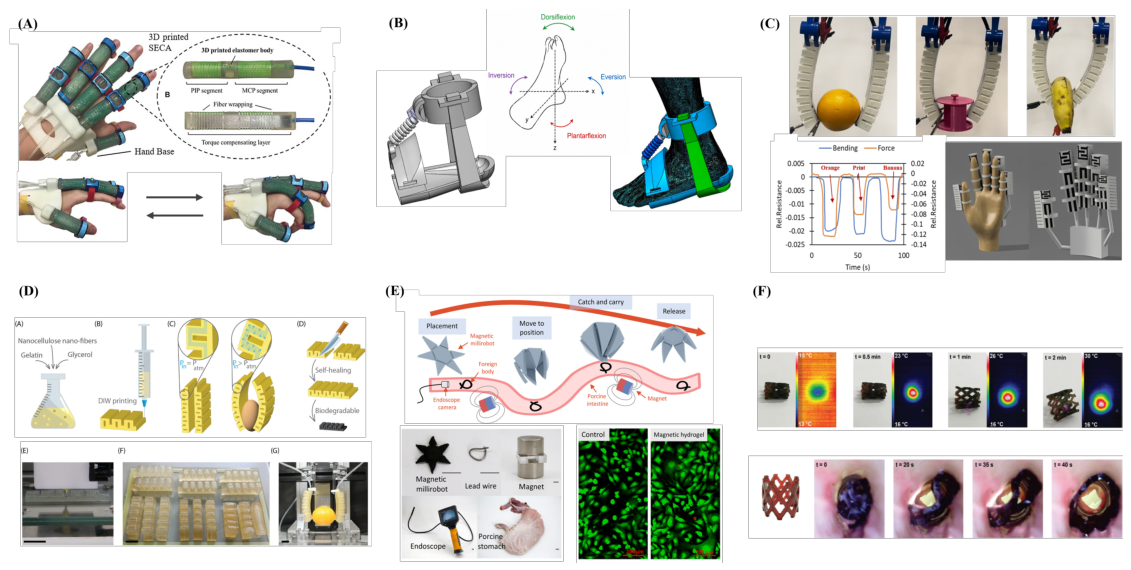
Biomedical and rehabilitation applications therefore highlight the central argument of this review: AM is most impactful when it links material selection, actuator architecture, user-specific geometry and personalized device design, sensing, and system integration. However, at this time many reported biomedical actuator systems remain at the proof-of-concept or integrated-prototype stage, while a smaller subset has reached application-relevant in vitro, ex vivo, in vivo, or user-oriented validation.
6.2. Aerospace and Deployable Systems
Aerospace actuator systems operate under a stricter evidentiary threshold than most laboratory-scale soft robotic demonstrations. Low mass and compact packaging are necessary, but they are not sufficient. Actuators and actuator components must also tolerate dimensional drift, launch-induced vibration, thermal cycling, vacuum exposure, radiation, long storage periods, and delayed or repeated deployment. Within this review, aerospace AM is therefore considered only when the printed structure contributes directly to actuation, actuator-component fabrication, deployable mechanisms, robotic mobility, or system-level actuator integration, rather than serving only as a passive printed housing or generic lightweight part.
The strongest aerospace-relevant use of AM is the integration of active materials, structural load paths, and deployment geometry within a compact architecture. Printed housings, joints, embedded channels, compliant elements, topology-optimized supports, and shape-changing structures can reduce part count and packaging volume, but their value depends on whether they improve force transmission, deployment reliability, thermal management, or mechanical constraint. Shape-memory systems are especially relevant in this context because they can store a programmed configuration and recover a functional geometry without conventional motors or bulky transmission systems. Alves et al. demonstrated the integration of NiTi SMA wires into additively manufactured AlSi7Mg structures, showing how an active element can be embedded within a printed load-bearing architecture. The study provides application-relevant validation because it evaluates the manufacturing process and functional performance in an aerospace context, although the system was not tested in an operational aircraft or space environment [98]. Herath et al. proposed a 4D-printed deployable boom for small spacecraft based on a shape-memory polymer composite containing embedded multi-walled carbon nanotubes [99]. In both cases, the printed structure is not merely a geometric carrier; it defines the active-material placement, mechanical boundary conditions, heat-transfer pathway, and deployment constraint. This is the level at which AM becomes functionally relevant for aerospace actuation.
Manufacturing and operation in space-relevant environments introduce an additional constraint: process-induced defects can become actuator-level failure modes. Long-duration missions motivate in situ manufacturing, autonomous maintenance, and on-demand production of tools and components, but reduced gravity, vacuum, thermal extremes, and radiation can alter both print quality and material performance [4,100]. Reitz et al. showed that gravity level can affect the quality of additively manufactured parts, including internal porosity and defect formation [100]. For actuator systems, porosity and defects are not only manufacturing imperfections. They can change stiffness, sealing behavior, fatigue life, fracture initiation, dimensional repeatability, and deployment reliability. Aerospace AM actuator studies should therefore avoid treating print success as a sufficient result; they must connect process quality to actuator function under representative environmental conditions.
AM-enabled actuation may support planetary exploration, where impact tolerance, compactness, terrain adaptability, and mechanical robustness are critical. Soft-rigid architectures, hopping systems, and adaptive structures can absorb landing energy, recover from deformation, and traverse irregular extraterrestrial surfaces [101,102,103]. In these systems, AM enables programmed stiffness, lightweight structures, protected actuator housings, integrated joints, and mission-specific geometries. However, performance must be demonstrated beyond geometric novelty through metrics such as post-impact force output, cyclic recovery, environmental stability, locomotion reliability, and the mass or power burden of auxiliary hardware. Representative examples are shown in Figure 4, including the force-characterization setup reported by Mack et al. and the controlled shape-morphing mechanism reported by McCue et al. [104,105].
Figure 4.
Representative aerospace and deployable-system contexts for AM-enabled actuators and actuator components. (A) NiTi SMA wire embedded within additively manufactured AlSi7Mg matrices, showing integration of active shape-memory elements within printed load-bearing structures, adapted from Alves et al. [98]. (B) CT-based comparison of parts manufactured under different gravity conditions, emphasizing defect sensitivity and process qualification for space AM, adapted from Reitz et al. [100]. (C) Experimental setup for quantifying retraction and extension forces in a bioinspired soft robotic concept for surface exploration, adapted from Mack et al. [104]. (D) Schematic representation of an AM-enabled deployable aerospace mechanism, from compact storage to controlled release, shape recovery, and deployed configuration, adapted from McCue et al. [105].
Wearable aerospace systems extend this integration problem to astronaut support. Long-duration missions motivate resistive soft exosuits and wearable actuators for mobility assistance and musculoskeletal loading [106,107]. Although many are not yet fully additively manufactured, they define relevant requirements for future printed soft and hybrid aerospace actuators.
6.3. Soft Robotics and Industrial Automation
Soft robotics and industrial automation both leverage additive manufacturing (AM) for custom geometries, compliant contact, and rapid prototyping. However, their principal deployment objectives differ. Soft robotics prioritizes continuous deformation, safe interaction, and untethered or bioinspired motion, whereas industrial automation prioritizes repeatability, extended cycle life, load capacity, rapid response, serviceability, and controller integration.
In both domains, AM is valuable only when fabrication freedom directly translates into functional actuator performance for real-world applications.
One route is multimaterial integration of actuation and variable stiffness. Zhang et al. developed a fast-response, stiffness-tunable soft actuator using a multilayer PolyJet-based architecture [108]. The device shows an application-relevant validation, integrating a pneumatic body, Joule-heating layer, cooling microchannels, and shape-memory polymer layers that modulate stiffness under thermal stimulation. By assembling three actuators into a 3D-printed end-effector mounted on a Universal Robot, the authors demonstrated grasping of objects from 10 g to 1.5 kg. The importance of this example is not only the printed geometry, but the coupling of pneumatic deformation, thermal control, and stiffness tuning within a system-level robotic component. The limitation is the added control and thermal-management burden.
A second route is to use AM as part of locomotion rather than only as pre-operation fabrication. Del Dottore et al. presented FiloBot, a climbing-plant-inspired robot that combines additive manufacturing, sensing, and bioinspired control for autonomous growth and navigation in unstructured environments [109]. The robot continuously extrudes and deposits PLA filament using an FDM-based process, allowing it to construct its body during operation. Differential material deposition generates growth-induced curvature, enabling steering without conventional joints or legged locomotion. This work expands AM from a fabrication method into an actuation and morphogenesis strategy. Its broader relevance lies in showing that material deposition itself can become a mechanism for motion, steering, and structural adaptation. This work is considered an application-relevant validation, using AM for continuous growth while performing environmental sensing, although reliability testing under outdoor conditions is not validated to be considered a field-deployable system.
A complementary bioinspired strategy uses AM to reproduce locomotion mechanisms intended for operation in difficult terrain. Mack et al. evaluated a spider-inspired soft actuator for extraterrestrial surface exploration by quantifying its extension and retraction forces under controlled laboratory conditions [104]. The study links bioinspired actuator geometry with measurable force generation and recovery behavior, providing actuator-level evidence relevant to crawling or terrain-adaptive robotic systems. However, the work remains at the component-validation stage because performance was not assessed under representative extraterrestrial conditions. Vacuum exposure, extreme temperature cycling, abrasive regolith, radiation, reduced gravity, and extended cyclic operation would need to be evaluated before space-relevant reliability or field deployment could be established.
Untethered soft robots demonstrate another AM-enabled pathway by embedding actuation functionality directly into the printed body. Joyee and Pan and Pan et al. developed a monolithic soft robot using magnetic field-assisted projection stereolithography [30]. The robot combined a compliant polymer body with magnetic particle–polymer composite regions, enabling crawling, turning, and magnetically triggered payload release without pneumatic lines, tendons, or the post-assembly of separate actuator modules. Although the demonstrated payload-release function targeted biomedical applications, the underlying actuator principle is broadly relevant to soft robotics because multimaterial AM allows geometry, compliance, magnetic response, and locomotion to be programmed within the same structure. The principal integration tradeoff is therefore shifted from onboard hardware to external magnetic-field generation, field control, and reproducibility of the magnetic composite. Despite the demonstration of targeted drug delivery in representative human stomach and lung models, the system should be classified as application-relevant validation rather than a field-deployable system, because clinical validation and in vivo animal studies have not yet been reported.
High-resolution multimaterial printing addresses a bottleneck in the assembly of soft-rigid robotic systems. Buchner et al. introduced Vision-Controlled Jetting, a multimaterial inkjet AM process that uses real-time optical feedback to fabricate soft-rigid robotic systems without mechanical planarization [56]. The process enables pneumatic actuators, embedded sensors, fluidic channels, and structural components to be printed within a single workflow. Demonstrations included a tendon-driven robotic hand, a walking robot, a bioinspired heart pump, and tunable metamaterials. The critical contribution is the use of closed-loop fabrication to improve the manufacturability of complex soft-rigid robotic assemblies.
In industrial automation, the most direct use of AM-enabled actuation is in customized grippers and end-effectors. Soft grippers are attractive because compliant fingers conform to irregular objects, distribute contact pressure, and reduce damage during handling [110]. AM allows pneumatic chambers, finger geometries, sensorized skins, and mounting interfaces to be tailored to object families or production tasks. Tawk et al. presented an application-relevant validation of a modular soft robotic gripper with reconfigurable pneumatic fingers that can be arranged for different object geometries and manipulation tasks, experimentally validating deformation, tip force, and contact pressure [10]. The industrial relevance of such systems depends not only on conformal grasping, but also on cycle life, pressure stability, replacement strategy, cleaning, and compatibility with existing manipulators. Rigid and hybrid AM grippers remain relevant when compliance is less important than force transmission, dimensional stability, or robust pick-and-place operation. Ligutan et al. developed a 3D-printed three-claw robotic gripper arranged symmetrically to grasp objects up to 300 mm in diameter in application-relevant validation [111]. Although this design does not provide the adaptive contact mechanics of soft pneumatic grippers, it shows the value of AM for rapidly producing task-specific end-effectors and modular robotic interfaces. Taken together, soft, rigid, and hybrid examples show that industrial AM actuator integration should not be framed as a soft-versus-rigid choice. The relevant design question is how geometry, compliance, actuation method, sensing, and mounting interface are matched to the handling task. Representative soft-robotic and industrial-automation examples discussed in this section are shown in Figure 5.
Figure 5.
Applications of additively manufactured actuators in soft robotics and industrial automation. (A) Shape-memory and bistable soft swimming robot, adapted from Chen et al. [77]. (B–D) Climbing-plant-inspired robot in which additive manufacturing becomes part of growth, steering, and navigation, adapted from Del Dottore et al. [109]. (E,F) Monolithic magnetically actuated soft robot with programmed magnetic response and payload-release capability, adapted from Joyee and Pan [30]. (G) Walking robot fabricated using vision-controlled jetting, adapted from Buchner et al. [56]. (H) Modular compliant gripper fingers for conformal grasping, adapted from Tawk et al. [10]. (I) Rigid claw-like gripper for task-specific material handling, adapted from Ligutan et al. [111].
7. Integration of AM Actuators into Real-World Systems
The transition from additively manufactured actuator prototypes to real-world systems requires more than demonstrating large deformation, high blocking force, or visually successful motion. A functional actuator must operate within a complete architecture and real-world environment. This requirement is particularly important for AM actuators because their performance is coupled to the AM process used to fabricate them [7,8,24]. Therefore, integration should be treated as a system-level design problem rather than as a final assembly step.
7.1. Sensor-Actuator Integration
Sensor-actuator integration is central to the deployment of AM actuators. In particular, many soft and smart-material actuators exhibit nonlinear deformation, hysteresis, viscoelastic drift, temperature sensitivity, and environment-dependent boundary conditions. Under these conditions, open-loop actuation is often insufficient for repeatable operation. Integrated sensors can provide feedback on strain, pressure, contact, curvature, force, temperature, displacement, proximity, or electrical state, enabling closed-loop control, fault detection, and safer interaction with humans, objects, or uncertain environments [22,112].
AM can support sensor integration through printed conductive networks, capacitive layers, liquid-metal channels, embedded fibers, resistive composites, piezoelectric regions, magnetic sensing elements, optical fibers, or integrated commercial sensors. Conductive fillers such as carbon black, carbon nanotubes, graphene, metallic particles, and liquid metals can be incorporated into printable inks or polymer matrices to enable self-sensing. Multimaterial printing can also place sensing regions directly within actuator bodies, gripper fingers, wearable interfaces, soft robotic skins, or internal fluidic structures. This is particularly valuable when external sensors would increase bulk, interfere with deformation, reduce comfort, or compromise compliance [7,22].
Recent work also shows that sensor-actuator integration should not be limited to tactile or strain sensing. Touchless and proximity sensing may reduce wear at the sensor-environment interface and provide earlier information about nearby objects, obstacles, or contact conditions [113]. This is relevant for AM actuator systems because many printed soft robots are intended to operate in unstructured environments where repeated contact can damage soft surfaces, delaminate sensors, or introduce signal drift. A practical sensing strategy may therefore combine proprioceptive sensing, such as strain or curvature, with exteroceptive sensing, such as proximity, optical, magnetic, or acoustic feedback.
However, sensor integration introduces additional material and interface trade-offs. Conductive or functional fillers can increase stiffness, reduce elongation at break, alter fatigue behavior, increase hysteresis, or introduce signal drift. Interfaces between soft actuator regions, printed sensors, electrodes, wires, and rigid connectors may become failure sites during repeated bending, stretching, or pressurization. In addition, self-sensing signals are often affected by temperature, humidity, strain rate, loading history, filler distribution, and mechanical coupling between the actuator and its environment. Therefore, AM sensor-actuator studies should report not only sensitivity or proof-of-concept signal output, but also repeatability, drift, hysteresis, calibration stability, cyclic durability, and sensor performance during actual actuator operation [69,112].
7.2. Control, Instrumentation, and Embedded Functionality
Real-world actuator performance depends on the complete actuator-control- instrumentation chain. Supporting components, such as pumps and valves for pneumatics, high-voltage electronics for dielectric elastomers, thermal management for shape-memory alloys, or field-generation hardware for magnetic systems, frequently dominate overall mass, volume, response speed, and energy consumption [7,24]. Reporting isolated performance metrics creates an incomplete picture. Full-system evaluations should report the required input stimulus, useful mechanical output, operating range, response time, energy consumption, auxiliary hardware, and total system mass or footprint.
This distinction is important because many AM actuator demonstrations evaluate the printed actuator in isolation. A soft pneumatic actuator may appear lightweight and compact until the pump, valve system, tubing, and controller are included. A dielectric elastomer actuator may achieve large strain but require high voltage, insulation layers, and failure protection. A shape-memory actuator may be compact and mechanically simple but limited by heating and cooling rates. A magnetically actuated soft robot may be untethered at the robot scale but dependent on large external magnetic actuation systems. Therefore, actuator performance should not be reported only as displacement, bending angle, strain, or blocked force. System-level metrics should also include required pressure, voltage, current, temperature, magnetic field strength, response time, energy consumption, control bandwidth, auxiliary hardware, and total system mass or footprint.
Control is further complicated by nonlinear, time-dependent, and hysteretic behavior. While model-based control relies on accurate constitutive models, data-driven approaches require high-quality training datasets that often struggle to generalize across geometries and manufacturing variations [84,85]. Robust-control approaches further show that uncertainty should be treated explicitly when soft actuators operate under changing loads, environmental conditions, or manufacturing variability [114].
Additive manufacturing helps mitigate system overhead by consolidating parts, embedding fluidic/electrical conduits, and integrating soft–rigid interfaces. However, failure frequently occurs at mechanical and electrical transitions. Connectors, seals, strain relief, and electronic packaging must therefore be co-designed as integral structural elements rather than secondary additions.
7.3. Monolithic and Hybrid System Integration
AM reduces manual assembly by integrating actuation, sensing, structure, and routing into a single workflow. This capability is especially important for small-scale or highly customized systems. Monolithic or quasi-monolithic strategies can also reduce the number of failure-prone interfaces, although they do not eliminate the need to evaluate adhesion, sealing, and interfacial fatigue.
Lee et al. demonstrated this integration logic in millimeter-scale soft-rigid hybrid robots, where actuation, mechanical control, and ionic resistive self-sensing were incorporated into compact laminated robotic modules [69]. In that system, the soft-foldable actuator generated motion, the rigid-flexible mechanical controller encoded the desired degree of freedom, and the ionic resistive sensor enabled shape sensing. Although the fabrication route is not the same as conventional 3D printing, the study is highly relevant to AM actuator integration because it shows that real-world soft robotic performance depends on the co-design of actuator mechanics, sensing pathway, motion constraint, and manufacturing repeatability.
Similarly, multimaterial SLA strategies for microfluidic actuators show how fabrication process design can directly affect integration. Ahmadianyazdi et al. introduced tunable PEGDA-co-PEGMEMA resins with PDMS-like modulus and used a print-pause-print approach to fabricate multimaterial microfluidic actuators, including microvalves, micropumps, and microregulators [47]. This example is important because it links material compliance, printability, membrane mechanics, and actuator performance. It also illustrates a general principle for AM actuators: the integration route is not only the final device architecture, but also the sequence of printing, pausing, material exchange, bonding, and post-processing needed to make the actuator functional.
7.4. Reliability, Durability, and Failure Modes
Reliability remains one of the most important barriers to the adoption of AM actuators [24,25]. Because AM introduces layerwise construction, process-induced anisotropy, print-path dependence, and post-processing sensitivity, actuator reliability cannot be inferred from nominal material properties alone. Actuators fabricated from the same nominal material may exhibit different fatigue behavior, sealing quality, stiffness, or actuation response depending on build orientation, raster pattern, curing conditions, support removal, surface finish, infill strategy, and bonding method. Adequate sample sizes and independently fabricated replicates are therefore essential for distinguishing intrinsic actuator behavior from print-to-print and batch-to-batch variability. Reliability-oriented evaluation should include cyclic testing, repeatability across independently manufactured samples, fabrication yield, environmental exposure, performance degradation, and the resulting failure mode.
Failure mechanisms differ across actuator classes and should therefore be reported in relation to the corresponding material, architecture, stimulus, and operating environment. In pneumatic and fluidic actuators, recurrent failure modes include leakage, seam rupture, interlayer cracking, port failure, pressure-induced creep, and progressive loss of airtightness. Electroactive and piezoelectric systems may fail through dielectric breakdown, electrode cracking, depolarization, hydration loss, electrical drift, or delamination at electrode-active-layer interfaces. Shape-memory and 4D-printed actuators are susceptible to incomplete recovery, residual-strain accumulation, transformation-temperature drift, thermal fatigue, loss of shape fixity, and debonding of embedded active elements. Magnetoactive actuators may exhibit particle sedimentation, nonuniform magnetization, filler-matrix debonding, matrix fatigue, and loss of repeatable field-induced deformation. In rigid AM actuator components, porosity-assisted fatigue cracking, dimensional drift, surface-induced friction, seal degradation, and wear can dominate functional lifetime.
7.5. Benchmarking and Reporting Requirements
A persistent challenge in the AM actuator literature is the lack of standardized benchmarking across actuator classes, materials, printing routes, and operating conditions [7,8,24]. Reported metrics are often meaningful within one actuator family but difficult to compare across systems. Pneumatic actuators commonly report bending angle, blocked force, or displacement at a given pressure; electroactive and piezoelectric actuators report strain, displacement, or force at a given voltage or electric field; shape-memory and 4D-printed actuators report recovery ratio, recovery force, or response time; and magnetoactive actuators report deformation under a specified magnetic field strength or gradient [9,10,11,13,16,18]. These metrics are useful within their respective classes, but they do not establish whether an additively manufactured actuator is repeatable, durable, controllable, energy-efficient, or deployable.
Table 3 therefore summarizes the minimum reporting dimensions required to determine whether an AM actuator is only a successful laboratory demonstration or a candidate for engineering deployment. The purpose is not to impose one universal performance metric across pneumatic, electrical, thermal, and magnetic actuators. Rather, it is to ensure that class-specific performance can be interpreted in relation to stimulus requirements, fabrication variability, integration burden, operating environment, and reliability.
Table 3.
Reporting dimensions required to compare additively manufactured actuator systems across actuator classes.
Without these reporting dimensions, visually successful actuator demonstrations remain difficult to compare or evaluate as deployable engineering systems [25,84,85,114].
8. Current Challenges and Future Perspectives
The benchmarking limitations discussed above point to a broader challenge: AM actuator research must shift from isolated demonstrations toward validated system architectures. Resolution, geometric complexity, and material novelty remain important, but they are insufficient unless they are connected to interface reliability, embedded sensing, control, manufacturability, and validation under application-relevant operating conditions [7,8,24].
Future progress depends on three coupled priorities. The first is material durability: soft materials must resist tearing, leakage, creep, and fatigue; conductive and magnetic composites must retain function without excessive stiffening, sedimentation, nozzle clogging, or signal drift; dielectric materials must combine stretchability with breakdown resistance; and shape-memory or 4D-printed materials must improve recovery force, response speed, thermal management, and cyclic stability [16,105]. The second is interfacial reliability in multimaterial and hybrid systems, where delamination, debonding, cracking at stiffness transitions, electrode fracture, leakage at seams or ports, and connector failure can dominate device lifetime [69,115]. The third is closed-loop operation under uncertainty, since printed actuators are often nonlinear, hysteretic, and sensitive to temperature, humidity, loading history, boundary conditions, and print-to-print variability [84,85,114].
- Validation must move beyond benchtop demonstrations toward domain-specific constraints:
- Biomedical: Biocompatibility, safety, portability, and user repeatability.
- Aerospace: Launch loads, vibration, vacuum, thermal cycling, and radiation.
- Industrial: Cycle life, load capacity, serviceability, and control integration.
- Future AM actuator research should be judged by whether printed systems offer superior integration, reliability, and deployability compared to conventional alternatives.
9. Conclusions
Additive manufacturing has changed actuator development by coupling material selection, printed architecture, stimulus response, and system integration within a single design-fabrication workflow. Across the actuator classes reviewed here, the strongest contributions of AM occur when printing enables functions that are difficult to achieve through conventional fabrication alone, including architecture-programmed deformation, multimaterial integration, embedded sensing, patient- or mission-specific geometry, compact routing, lightweight structures, stiffness gradients, and reduced assembly burden. In contrast, when AM only reproduces a conventional actuator geometry without improving performance, integration, manufacturability, or validation, its contribution remains limited.
The material-architecture-function-integration framework used in this review provides a basis for distinguishing between simple fabrication substitution and actuator designs that are genuinely enabled by AM. This distinction is important because printability alone does not establish actuator maturity. A printed actuator must also be evaluated according to force or displacement output, response time, repeatability, fatigue resistance, environmental stability, interface robustness, auxiliary hardware requirements, sensing and control integration, and performance under application-relevant boundary conditions.
Future AM actuator studies should therefore move from demonstration-driven reporting toward system-level evidence. Progress will depend on printable materials with durable functional response, interfaces that survive repeated mechanical and environmental loading, embedded sensors that remain stable during actuation, compact power and control hardware, validated models that account for process-induced variability, and benchmarking practices that allow comparison across materials, printers, actuator classes, and operating environments. Under these conditions, AM can serve not only as a manufacturing route but also as a design platform for actuator systems whose geometry, material distribution, stimulus response, and integration strategy are co-developed for the constraints of their intended use.
Author Contributions
Conceptualization, D.N. (Diana Narvaez) and B.N.; methodology, D.N. (Diana Narvaez) and B.N.; investigation, D.N. (Diana Narvaez), D.M.-R., C.A.Z.-M. and D.N. (Dimitrios Ntentia); visualization, D.N. (Diana Narvaez); writing—original draft preparation, D.N. (Diana Narvaez), D.M.-R., C.A.Z.-M. and D.N. (Dimitrios Ntentia); writing—review and editing, D.N. (Diana Narvaez), D.M.-R., C.A.Z.-M., D.N. (Dimitrios Ntentia) and B.N.; supervision, B.N.; project administration, B.N. All authors have read and agreed to the published version of the manuscript.
Funding
This research received no external funding.
Institutional Review Board Statement
Not applicable.
Informed Consent Statement
Not applicable.
Data Availability Statement
No new data were created or analyzed in this study. Data sharing is not applicable to this article.
Conflicts of Interest
The authors declare no conflict of interest.
References
- Wallin, T.J.; Pikul, J.; Shepherd, R.F. 3D printing of soft robotic systems. Nat. Rev. Mater. 2018, 3, 84–100. [Google Scholar] [CrossRef] [Scilit]
- Cianchetti, M.; Laschi, C.; Menciassi, A.; Dario, P. Biomedical applications of soft robotics. Nat. Rev. Mater. 2018, 3, 143–153. [Google Scholar] [CrossRef] [Scilit]
- Pan, M.; Yuan, C.; Liang, X.; Dong, T.; Liu, T.; Zhang, J.; Zou, J.; Yang, H.; Bowen, C. Soft Actuators and Robotic Devices for Rehabilitation and Assistance. Adv. Intell. Syst. 2022, 4, 2100140. [Google Scholar] [CrossRef] [Scilit]
- Zhang, Y.; Li, P.; Quan, J.; Li, L.; Zhang, G.; Zhou, D. Progress, Challenges, and Prospects of Soft Robotics for Space Applications. Adv. Intell. Syst. 2023, 5, 2200071. [Google Scholar] [CrossRef] [Scilit]
- ISO/ASTM 52900:2021; Additive Manufacturing—General Principles—Fundamentals and Vocabulary. ISO/ASTM International: Geneva, Switzerland, 2021.
- Stano, G.; Percoco, G. Additive manufacturing aimed to soft robots fabrication: A review. Extrem. Mech. Lett. 2021, 42, 101079. [Google Scholar] [CrossRef] [Scilit]
- Wang, D.; Wang, J.; Shen, Z.; Jiang, C.; Zou, J.; Dong, L.; Fang, N.X.; Gu, G. Soft Actuators and Robots Enabled by Additive Manufacturing. Annu. Rev. Control Robot. Auton. Syst. 2023, 6, 31–63. [Google Scholar] [CrossRef] [Scilit]
- Bliah, O.; Hegde, C.; Tan, J.M.R.; Magdassi, S. Fabrication of Soft Robotics by Additive Manufacturing: From Materials to Applications. Chem. Rev. 2025, 125, 7275–7320. [Google Scholar] [CrossRef] [Scilit] [PubMed]
- Xavier, M.S.; Tawk, C.D.; Zolfagharian, A.; Pinskier, J.; Howard, D.; Young, T.; Lai, J.; Harrison, S.M.; Yong, Y.K.; Bodaghi, M.; et al. Soft Pneumatic Actuators: A Review of Design, Fabrication, Modeling, Sensing, Control and Applications. IEEE Access 2022, 10, 59442–59485. [Google Scholar] [CrossRef] [Scilit]
- Tawk, C.; Mutlu, R.; Alici, G. A 3D Printed Modular Soft Gripper Integrated with Metamaterials for Conformal Grasping. Front. Robot. AI 2021, 8, 799230. [Google Scholar] [CrossRef] [Scilit] [PubMed]
- Thetpraphi, K.; Kanlayakan, W.; Chaipo, S.; Moretto, G.; Kuhn, J.; Audigier, D.; Le, M.Q.; Cottinet, P.J.; Petit, L.; Capsal, J.F. 3D-printed electroactive polymer force-actuator for large and high precise optical mirror applications. Addit. Manuf. 2021, 47, 102199. [Google Scholar] [CrossRef] [Scilit]
- Lee, C.B.; Tarbutton, J.A. Polyvinylidene fluoride (PVDF) direct printing for sensors and actuators. Int. J. Adv. Manuf. Technol. 2019, 104, 3155–3162. [Google Scholar] [CrossRef] [Scilit]
- Fan, J.; Deneke, N.; Xu, S.; Newell, B.; Garcia, J.; Davis, C.; Wu, W.; Voyles, R.M.; Nawrocki, R.A. Electric poling-assisted additive manufacturing technique for piezoelectric active poly(vinylidene fluoride) films: Towards fully three-dimensional printed functional materials. Addit. Manuf. 2022, 60, 103248. [Google Scholar] [CrossRef] [Scilit]
- Pattinson, R.; Ellmer, N.; Hossain, M.; Ortigosa, R.; Martínez-Frutos, J.; Gil, A.J.; Bastola, A. Towards fully 3D printed dielectric elastomer actuators—A mini review. Addit. Manuf. Lett. 2025, 14, 100304. [Google Scholar] [CrossRef] [Scilit]
- Akbari, S.; Sakhaei, A.H.; Panjwani, S.; Kowsari, K.; Ge, Q. Shape memory alloy based 3D printed composite actuators with variable stiffness and large reversible deformation. Sens. Actuators A Phys. 2021, 321, 112598. [Google Scholar] [CrossRef] [Scilit]
- Razzaq, M.Y.; Anhalt, M.; Frormann, L.; Weidenfeller, B. 4D Printing of Multicomponent Shape-Memory Polymer Formulations. Appl. Sci. 2022, 12, 7880. [Google Scholar] [CrossRef] [Scilit]
- Tariq, A.; Arif, Z.U.; Khalid, M.Y.; Hossain, M.; Rasool, P.I.; Umer, R.; Ramakrishna, S. Recent Advances in the Additive Manufacturing of Stimuli-Responsive Soft Polymers. Adv. Eng. Mater. 2024, 26, 2301074. [Google Scholar] [CrossRef] [Scilit]
- Khalid, M.Y.; Arif, Z.U.; Tariq, A.; Hossain, M.; Khan, K.A.; Umer, R. 3D printing of magneto-active smart materials for advanced actuators and soft robotics applications. Eur. Polym. J. 2024, 205, 112718. [Google Scholar] [CrossRef] [Scilit]
- Boydston, A.J.; Cao, B.; Nelson, A.; Ono, R.J.; Saha, S.; Schwartz, J.J.; Thrasher, C.J. Additive Manufacturing with Stimuli-Responsive Materials. J. Mater. Chem. A 2018, 6, 20621–20645. [Google Scholar] [CrossRef] [Scilit]
- Muth, J.T.; Vogt, D.M.; Truby, R.L.; Menguc, Y.; Kolesky, D.B.; Wood, R.J.; Lewis, J.A. Embedded 3D Printing of Strain Sensors within Highly Stretchable Elastomers. Adv. Mater. 2014, 26, 6307–6312. [Google Scholar] [CrossRef] [Scilit] [PubMed]
- Georgopoulou, A.; Egloff, L.; Vanderborght, B.; Clemens, F. A Sensorized Soft Pneumatic Actuator Fabricated with Extrusion-Based Additive Manufacturing. Actuators 2021, 10, 102. [Google Scholar] [CrossRef] [Scilit]
- Hegde, C.; Su, J.; Tan, J.M.R.; He, K.; Chen, X.; Magdassi, S. Sensing in Soft Robotics. ACS Nano 2023, 17, 15277–15307. [Google Scholar] [CrossRef] [Scilit] [PubMed]
- Rus, D.; Tolley, M.T. Design, fabrication and control of soft robots. Nature 2015, 521, 467–475. [Google Scholar] [CrossRef] [Scilit] [PubMed]
- Ambaye, G.; Boldsaikhan, E.; Krishnan, K. Soft Robot Design, Manufacturing, and Operation Challenges: A Review. J. Manuf. Mater. Process. 2024, 8, 79. [Google Scholar] [CrossRef] [Scilit]
- Liu, H.; Yu, H.; Guo, C.; Chen, X.; Zhong, S.; Zhou, L.; Osman, A.; Lu, J. Review on Fatigue of Additive Manufactured Metallic Alloys: Microstructure, Performance, Enhancement, and Assessment Methods. Adv. Mater. 2024, 36, 2306570. [Google Scholar] [CrossRef] [Scilit] [PubMed]
- Schaffner, M.; Faber, J.A.; Pianegonda, L.; Rühs, P.A.; Coulter, F.; Studart, A.R. 3D printing of robotic soft actuators with programmable bioinspired architectures. Nat. Commun. 2018, 9, 878. [Google Scholar] [CrossRef] [Scilit] [PubMed]
- Narvaez, D.; Newell, B. A Review of Electroactive Polymers in Sensing and Actuator Applications. Actuators 2025, 14, 258. [Google Scholar] [CrossRef] [Scilit]
- Waidi, Y.O. Recent Advances in 4D-Printed Shape Memory Actuators. Macromol. Rapid Commun. 2025, 46, 2401141. [Google Scholar] [CrossRef] [Scilit] [PubMed]
- Ladakhan, S.H.; Sreesha, R.B.; Adinarayanappa, S.M. A Study of the Functional Capabilities of Shape Memory Alloy-Based 4D Printed Analogous Bending Actuators. Prog. Addit. Manuf. 2024, 9, 85–105. [Google Scholar] [CrossRef] [Scilit]
- Joyee, E.B.; Pan, Y. Multi-material Additive Manufacturing of Functional Soft Robot. Procedia Manuf. 2019, 34, 566–573. [Google Scholar] [CrossRef] [Scilit]
- Sun, B.; Jia, R.; Yang, H.; Chen, X.; Tan, K.; Deng, Q.; Tang, J. Magnetic Arthropod Millirobots Fabricated by 3D-Printed Hydrogels. Adv. Intell. Syst. 2022, 4, 2100139. [Google Scholar] [CrossRef] [Scilit]
- Truby, R.L.; Lewis, J.A. Printing soft matter in three dimensions. Nature 2016, 540, 371–378. [Google Scholar] [CrossRef] [Scilit] [PubMed]
- Yang, S.; Tang, Y.; Zhao, Y.F. A new part consolidation method to embrace the design freedom of additive manufacturing. J. Manuf. Process. 2015, 20, 444–449. [Google Scholar] [CrossRef] [Scilit]
- Dämmer, G.; Bauer, H.; Neumann, R.; Major, Z. Design, additive manufacturing and component testing of pneumatic rotary vane actuators for lightweight robots. Rapid Prototyp. J. 2022, 28, 20–32. [Google Scholar] [CrossRef] [Scilit]
- Dämmer, G.; Bauer, H.; Lackner, M.; Neumann, R.; Hildebrandt, A.; Major, Z. Design and Additive Manufacturing of a Continuous Servo Pneumatic Actuator. Micromachines 2023, 14, 1622. [Google Scholar] [CrossRef] [Scilit] [PubMed]
- Yap, Y.L.; Sing, S.L.; Yeong, W.Y. A review of 3D printing processes and materials for soft robotics. Rapid Prototyp. J. 2020, 26, 1345–1361. [Google Scholar] [CrossRef] [Scilit]
- Winarso, R.; Anggoro, P.W.; Ismail, R.; Jamari, J.; Bayuseno, A.P. Application of fused deposition modeling (FDM) on bone scaffold manufacturing process: A review. Heliyon 2022, 8, e11701. [Google Scholar] [CrossRef] [Scilit] [PubMed]
- Gonzalez, D.; Garcia, J.; Voyles, R.M.; Nawrocki, R.A.; Newell, B. Characterization of 3D printed pneumatic soft actuator. Sens. Actuators A Phys. 2022, 334, 113337. [Google Scholar] [CrossRef] [Scilit]
- Zhao, S.; Wang, Z.; Lei, Y.; Zhang, J.; Li, Y.; Sun, Z.; Gong, Z. 3D-Printed Soft Pneumatic Robotic Digit Based on Parametric Kinematic Model for Finger Action Mimicking. Polymers 2022, 14, 2786. [Google Scholar] [CrossRef] [Scilit] [PubMed]
- Keong, B.A.W.; Hua, R.Y.C. A Novel Fold-Based Design Approach toward Printable Soft Robotics Using Flexible 3D Printing Materials. Adv. Mater. Technol. 2018, 3, 1700172. [Google Scholar] [CrossRef] [Scilit]
- Tay, R.Y.; Song, Y.; Yao, D.R.; Gao, W. Direct-ink-writing 3D-printed bioelectronics. Mater. Today 2023, 71, 135–151. [Google Scholar] [CrossRef] [Scilit] [PubMed]
- Tagliaferri, S.; Panagiotopoulos, A.; Mattevi, C. Direct ink writing of energy materials. Mater. Adv. 2021, 2, 540–563. [Google Scholar] [CrossRef] [Scilit]
- Wang, Z.; Zhang, B.; Cui, W.; Zhou, N. Freeform Fabrication of Pneumatic Soft Robots via Multi-Material Jointed Direct Ink Writing. Macromol. Mater. Eng. 2022, 307, 2100813. [Google Scholar] [CrossRef] [Scilit]
- Huang, J.; Qin, Q.; Wang, J. A Review of Stereolithography: Processes and Systems. Processes 2020, 8, 1138. [Google Scholar] [CrossRef] [Scilit]
- Chaudhary, R.; Fabbri, P.; Leoni, E.; Mazzanti, F.; Akbari, R.; Antonini, C. Additive Manufacturing by Digital Light Processing: A Review. Prog. Addit. Manuf. 2023, 8, 331–351. [Google Scholar] [CrossRef] [Scilit]
- Bove, A.; Calignano, F.; Galati, M.; Iuliano, L. Photopolymerization of Ceramic Resins by Stereolithography Process: A Review. Appl. Sci. 2022, 12, 3591. [Google Scholar] [CrossRef] [Scilit]
- Ahmadianyazdi, A.; Miller, I.J.; Folch, A. Tunable Resins with PDMS-like Elastic Modulus for Stereolithographic 3D-Printing of Multimaterial Microfluidic Actuators. Lab Chip 2023, 23, 4019–4032. [Google Scholar] [CrossRef] [Scilit] [PubMed]
- Fei, J.; Rong, Y.; Du, X.; Li, H.; Zhang, X.; Cui, P.; Huang, X. Vat photopolymerization printing of strong tear-resistance and stretchable polyurethane elastomer for highly sensitive strain sensors. Polym. Compos. 2024, 45, 2615–2628. [Google Scholar] [CrossRef] [Scilit]
- Hazzazi, F.; Mohsenzadeh, R. Optimizing DLP 3D printing parameters to enhance fatigue performance of photopolymer resins for orthopedic applications. Proc. Inst. Mech. Eng. Part C J. Mech. Eng. Sci. 2025, 239, 9362–9373. [Google Scholar] [CrossRef] [Scilit]
- Han, W.; Kong, L.; Xu, M. Advances in selective laser sintering of polymers. Int. J. Extrem. Manuf. 2022, 4, 042002. [Google Scholar] [CrossRef] [Scilit]
- Bikas, H.; Stavropoulos, P.; Chryssolouris, G. Additive manufacturing methods and modeling approaches: A critical review. Int. J. Adv. Manuf. Technol. 2016, 83, 389–405. [Google Scholar] [CrossRef] [Scilit]
- Lizarribar Carrillo, B.; Prieto, B.; Martínez-Iturralde, M.; García Goikoetxea, J.; Montes, S.; San José, E. Design and additive manufacturing of a lightweight aerospace electric actuator. Open Res. Eur. 2025, 4, 121. [Google Scholar] [CrossRef] [Scilit] [PubMed]
- Muthuram, N.; Madhav, P.S.; Vasan, D.K.; Mohan, M.E.; Prajeeth, G. A review of recent literatures in poly jet printing process. Mater. Today Proc. 2022, 68, 1906–1920. [Google Scholar] [CrossRef] [Scilit]
- Bartlett, N.W.; Tolley, M.T.; Overvelde, J.T.B.; Weaver, J.C.; Mosadegh, B.; Bertoldi, K.; Whitesides, G.M.; Wood, R.J. A 3D-Printed, Functionally Graded Soft Robot Powered by Combustion. Science 2015, 349, 161–165. [Google Scholar] [CrossRef] [Scilit] [PubMed]
- Slesarenko, V.; Rudykh, S. Towards mechanical characterization of soft digital materials for multimaterial 3D-printing. Int. J. Eng. Sci. 2018, 123, 62–72. [Google Scholar] [CrossRef] [Scilit]
- Buchner, T.J.; Rogler, S.; Weirich, S.; Armati, Y.; Cangan, B.G.; Ramos, J.; Twiddy, S.T.; Marini, D.M.; Weber, A.; Chen, D.; et al. Vision-Controlled Jetting for Composite Systems and Robots. Nature 2023, 623, 522–530. [Google Scholar] [CrossRef] [Scilit] [PubMed]
- Zhang, S.; Wang, J.; Hayashi, K.; Sassa, F. Monolithic Processing of a Layered Flexible Robotic Actuator Film for Kinetic Electronics. Sci. Rep. 2021, 11, 20015. [Google Scholar] [CrossRef] [Scilit] [PubMed]
- Ishikawa, Y.; Nabae, H.; Endo, G.; Suzumori, K. In-Vacuum Silicone Rubber Forming Process for Soft Robots. ROBOMECH J. 2025, 12, 9. [Google Scholar] [CrossRef] [Scilit]
- Kladovasilakis, N.; Sideridis, P.; Tzetzis, D.; Piliounis, K.; Kostavelis, I.; Tzovaras, D. Design and Development of a Multi-Functional Bioinspired Soft Robotic Actuator via Additive Manufacturing. Biomimetics 2022, 7, 105. [Google Scholar] [CrossRef] [Scilit] [PubMed]
- Melling, D.; Martinez, J.G.; Jager, E.W.H. Conjugated Polymer Actuators and Devices: Progress and Opportunities. Adv. Mater. 2019, 31, 1808210. [Google Scholar] [CrossRef] [Scilit] [PubMed]
- Qiu, Z.; Hammer, B.A.; Müllen, K. Conjugated polymers—Problems and promises. Prog. Polym. Sci. 2020, 100, 101179. [Google Scholar] [CrossRef] [Scilit]
- Jeong, H.Y.; An, S.C.; Seo, I.C.; Lee, E.; Ha, S.; Kim, N.; Jun, Y.C. 3D printing of twisting and rotational bistable structures with tuning elements. Sci. Rep. 2019, 9, 324. [Google Scholar] [CrossRef] [Scilit] [PubMed]
- Choong, Y.Y.C.; Maleksaeedi, S.; Eng, H.; Wei, J.; Su, P.C. 4D Printing of High Performance Shape Memory Polymer Using Stereolithography. Mater. Des. 2017, 126, 219–225. [Google Scholar] [CrossRef] [Scilit]
- Yu, K.; Li, H.; McClung, A.J.W.; Tandon, G.P.; Baur, J.W.; Qi, H.J. Cyclic Behaviors of Amorphous Shape Memory Polymers. Soft Matter 2016, 12, 3234–3245. [Google Scholar] [CrossRef] [Scilit] [PubMed]
- Dzogbewu, T.C.; de Beer, D.J.; du Preez, W.B.; Yadroitsev, I.; Yadroitsava, I. Additive Manufacturing of NiTi Shape Memory Alloy and Its Industrial Applications. Heliyon 2023, 10, e23369. [Google Scholar] [CrossRef] [Scilit] [PubMed]
- Awada, Z.; Haddab, Y.; Gouttefarde, M. PneuNet Actuators Design: Trade-Offs between Deformation, Force, and Resistance to Buckling. Sens. Actuators A Phys. 2025, 386, 116307. [Google Scholar] [CrossRef] [Scilit]
- Wehner, M.; Truby, R.L.; Fitzgerald, D.J.; Mosadegh, B.; Whitesides, G.M.; Lewis, J.A.; Wood, R.J. An Integrated Design and Fabrication Strategy for Entirely Soft, Autonomous Robots. Nature 2016, 536, 451–455. [Google Scholar] [CrossRef] [Scilit] [PubMed]
- Jones, T.J.; Jambon-Puillet, E.; Marthelot, J.; Brun, P.T. Bubble Casting Soft Robotics. Nature 2021, 599, 229–233. [Google Scholar] [CrossRef] [Scilit] [PubMed]
- Lee, H.C.; Elder, N.; Leal, M.; Stantial, S.; Vergara Martinez, E.; Jos, S.; Cho, H.; Russo, S. A Fabrication Strategy for Millimeter-Scale, Self-Sensing Soft-Rigid Hybrid Robots. Nat. Commun. 2024, 15, 8456. [Google Scholar] [CrossRef] [Scilit] [PubMed]
- Shepherd, R.F.; Ilievski, F.; Choi, W.; Morin, S.A.; Stokes, A.A.; Mazzeo, A.D.; Chen, X.; Wang, M.; Whitesides, G.M. Multigait Soft Robot. Proc. Natl. Acad. Sci. USA 2011, 108, 20400–20403. [Google Scholar] [CrossRef] [Scilit] [PubMed]
- Mosadegh, B.; Polygerinos, P.; Keplinger, C.; Wennstedt, S.; Shepherd, R.F.; Gupta, U.; Shim, J.Y.; Bertoldi, K.; Walsh, C.J.; Whitesides, G.M. Pneumatic Networks for Soft Robotics that Actuate Rapidly. Adv. Funct. Mater. 2014, 24, 2163–2170. [Google Scholar] [CrossRef] [Scilit]
- Müller, O.; Poulin, A.; Aeby, X.; Emma, R.; Kanno, R.; Nagai, T.; Shintake, J.; Nyström, G. 3D Printed Biodegradable Soft Actuators from Nanocellulose Reinforced Gelatin Composites. Adv. Sustain. Syst. 2025, 9, 2400450. [Google Scholar] [CrossRef] [Scilit]
- Willemstein, N.; Imanian, M.E.; van der Kooij, H.; Sadeghi, A. Pellet-based 3D printing of soft thermoplastic elastomeric membranes for soft robotic applications. Mater. Des. 2025, 258, 114589. [Google Scholar] [CrossRef] [Scilit]
- Trümpler, N.; Kanno, R.; David, N.; Huch, A.; Nguyen, P.H.; Jurinovs, M.; Nyström, G.; Gaidukovs, S.; Kovač, M. Low-Cost 3D printed, Biocompatible Ionic Polymer Membranes for Soft Actuators. In Proceedings of the 2025 IEEE 8th International Conference on Soft Robotics (RoboSoft), Lausanne, Switzerland, 22–26 April 2025; pp. 1–6. [Google Scholar] [CrossRef] [Scilit]
- Ikei, A.; Wissman, J.; Sampath, K.; Yesner, G.; Qadri, S.N. Tunable In Situ 3D-Printed PVDF-TrFE Piezoelectric Arrays. Sensors 2021, 21, 5032. [Google Scholar] [CrossRef] [Scilit] [PubMed]
- Mahjoubnia, A.; Cai, D.; Wu, Y.; King, S.D.; Torkian, P.; Chen, A.C.; Talaie, R.; Chen, S.Y.; Lin, J. Digital light 4D printing of bioresorbable shape memory elastomers for personalized biomedical implantation. Acta Biomater. 2024, 177, 165–177. [Google Scholar] [CrossRef] [Scilit] [PubMed]
- Chen, T.; Bilal, O.R.; Shea, K.; Daraio, C. Harnessing bistability for directional propulsion of soft, untethered robots. Proc. Natl. Acad. Sci. USA 2018, 115, 5698–5702. [Google Scholar] [CrossRef] [Scilit] [PubMed]
- Wang, S.; He, L.; Maiolino, P. Design and Characterization of a 3D-Printed Pneumatically-Driven Bistable Valve with Tunable Characteristics. IEEE Robot. Autom. Lett. 2022, 7, 112–119. [Google Scholar] [CrossRef] [Scilit]
- Ang, B.W.K.; Yeow, C.H. Print-it-Yourself (PIY) glove: A fully 3D printed soft robotic hand rehabilitative and assistive exoskeleton for stroke patients. In Proceedings of the 2017 IEEE/RSJ International Conference on Intelligent Robots and Systems (IROS), Vancouver, BC, Canada, 24–28 September 2017; pp. 1219–1223. [Google Scholar] [CrossRef] [Scilit]
- Zhakypov, Z.; Okamura, A.M. FingerPrint: A 3-D Printed Soft Monolithic 4-Degree-of-Freedom Fingertip Haptic Device with Embedded Actuation. In Proceedings of the 2022 IEEE 5th International Conference on Soft Robotics (RoboSoft), Edinburgh, UK, 4–8 April 2022; pp. 938–944. [Google Scholar] [CrossRef] [Scilit]
- Schäffer, K.; Ozkan-Aydin, Y.; Coad, M.M. Soft Wrist Exosuit Actuated by Fabric Pneumatic Artificial Muscles. IEEE Trans. Med. Robot. Bionics 2024, 6, 718–732. [Google Scholar] [CrossRef] [Scilit]
- Stassi, S.; Cauda, V.; Canavese, G.; Pirri, C.F. Flexible Tactile Sensing Based on Piezoresistive Composites: A Review. Sensors 2014, 14, 5296–5332. [Google Scholar] [CrossRef] [Scilit] [PubMed]
- Kinetrol USA. Rotary Actuator Catalog. Product Catalog. n.d. Available online: https://kinetrolusa.com/images/kinetrolusa/catalogs/pdf/Catalogs/Rotary%20Actuator%20Catalog.pdf (accessed on 16 July 2026).
- Della Santina, C.; Duriez, C.; Rus, D. Model-Based Control of Soft Robots: A Survey of the State of the Art and Open Challenges. IEEE Control Syst. 2023, 43, 30–65. [Google Scholar] [CrossRef] [Scilit]
- Chen, Z.; Renda, F.; Le Gall, A.; Mocellin, L.; Bernabei, M.; Dangel, T.; Ciuti, G.; Cianchetti, M.; Stefanini, C. Data-Driven Methods Applied to Soft Robot Modeling and Control: A Review. IEEE Trans. Autom. Sci. Eng. 2025, 22, 2241–2256. [Google Scholar] [CrossRef] [Scilit]
- Yang, W.T.; Kürkçü, B.; Tomizuka, M. Optimized Design of a Soft Actuator Considering Force/Torque, Bendability, and Controllability via an Approximated Structure. J. Mech. Des. 2024, 146, 123301. [Google Scholar] [CrossRef] [Scilit]
- Tang, Z.; Wang, P.; Xin, W.; Laschi, C. Learning to control a soft robotic manipulator under uncertainty and unforeseen changes in robot-environment interaction. Int. J. Robot. Res. 2025, 45, 452–476. [Google Scholar] [CrossRef] [Scilit]
- Polygerinos, P.; Wang, Z.; Galloway, K.C.; Wood, R.J.; Walsh, C.J. Soft Robotic Glove for Combined Assistance and At-Home Rehabilitation. Robot. Auton. Syst. 2015, 73, 135–143. [Google Scholar] [CrossRef] [Scilit]
- Ren, L.; Li, B.; Song, Z.; Liu, Q.; Ren, L.; Zhou, X. 3D printing of structural gradient soft actuators by variation of bioinspired architectures. J. Mater. Sci. 2019, 54, 6542–6551. [Google Scholar] [CrossRef] [Scilit]
- Dezaki, M.L.; Sales, R.; Zolfagharian, A.; Nezhad, H.Y.; Bodaghi, M. Soft pneumatic actuators with integrated resistive sensors enabled by multi-material 3D printing. Int. J. Adv. Manuf. Technol. 2023, 128, 4207–4221. [Google Scholar] [CrossRef] [Scilit]
- Stano, G.; Ovy, S.M.I.; Edwards, J.R.; Cianchetti, M.; Percoco, G.; Tadesse, Y. One-shot additive manufacturing of robotic finger with embedded sensing and actuation. Int. J. Adv. Manuf. Technol. 2023, 124, 467–485. [Google Scholar] [CrossRef] [Scilit]
- Paunović, N.; Marbach, J.; Bao, Y.; Berger, V.; Klein, K.; Schleich, S.; Coulter, F.B.; Kleger, N.; Studart, A.R.; Franzen, D.; et al. Digital Light 3D Printed Bioresorbable and NIR-Responsive Devices with Photothermal and Shape-Memory Functions. Adv. Sci. 2022, 9, 2200907. [Google Scholar] [CrossRef] [Scilit] [PubMed]
- Jin, Z.; He, C.; Fu, J.; Han, Q.; He, Y. Balancing the customization and standardization: Exploration and layout surrounding the regulation of the growing field of 3D-printed medical devices in China. Bio-Des. Manuf. 2022, 5, 580–606. [Google Scholar] [CrossRef] [Scilit] [PubMed]
- Connole, K.; McDermott, O. The Challenges in the Regulatory Approval of Additive-Manufactured Medical Devices: A Quantitative Survey. Ther. Innov. Regul. Sci. 2025, 59, 1160–1170. [Google Scholar] [CrossRef] [Scilit] [PubMed]
- Adalbert, L.; Kanti, S.P.Y.; Jójárt-Laczkovich, O.; Akel, H.; Csóka, I. Expanding Quality by Design Principles to Support 3D Printed Medical Device Development Following the Renewed Regulatory Framework in Europe. Biomedicines 2022, 10, 2947. [Google Scholar] [CrossRef] [Scilit] [PubMed]
- Heung, H.L.; Tang, Z.Q.; Shi, X.Q.; Tong, K.Y.; Li, Z. Soft Rehabilitation Actuator with Integrated Post-stroke Finger Spasticity Evaluation. Front. Bioeng. Biotechnol. 2020, 8, 111. [Google Scholar] [CrossRef] [Scilit] [PubMed]
- Orban, M.; Guo, K.; Yang, H.; Hu, X.; Hassaan, M.; Elsamanty, M. Soft Pneumatic Muscles for Post-Stroke Lower Limb Ankle Rehabilitation: Leveraging the Potential of Soft Robotics to Optimize Functional Outcomes. Front. Bioeng. Biotechnol. 2023, 11, 1251879. [Google Scholar] [CrossRef] [Scilit] [PubMed]
- Alves, B.; Sousa, R.; Coelho, R.; Oliveira, G.; Cacho, L.; Gatões, D.; Teixeira, R.; Rodrigues, P.F. Integration of Shape Memory Alloy Actuators into Sintered Aluminum Structures via Material Extrusion for Aerospace Applications. Actuators 2025, 14, 305. [Google Scholar] [CrossRef] [Scilit]
- Herath, M.; Islam, M.; Epaarachchi, J.; Zhang, F.; Leng, J. 4D Printed Shape Memory Polymer Composite Structures for Deployable Small Spacecrafts. In Proceedings of the ASME 2019 Conference on Smart Materials, Adaptive Structures and Intelligent Systems, Louisville, KY, USA, 9–11 September 2019; p. V001T01A003. [Google Scholar] [CrossRef] [Scilit]
- Reitz, B.; Lotz, C.; Gerdes, N.; Linke, S.; Olsen, E.; Pflieger, K.; Sohrt, S.; Ernst, M.; Taschner, P.; Neumann, J.; et al. Additive Manufacturing Under Lunar Gravity and Microgravity. Microgravity Sci. Technol. 2021, 33, 25. [Google Scholar] [CrossRef] [Scilit]
- Feng, R.; Zhang, Y.; Liu, J.; Zhang, Y.; Li, J.; Baoyin, H. Soft Robotic Perspective and Concept for Planetary Small Body Exploration. Soft Robot. 2022, 9, 889–899. [Google Scholar] [CrossRef] [Scilit] [PubMed]
- Kalita, H.; Diaz-Flores, A.; Thangavelautham, J. Integrated Power and Propulsion System Optimization for a Planetary-Hopping Robot. Aerospace 2022, 9, 457. [Google Scholar] [CrossRef] [Scilit]
- Rahimi Nohooji, H.; Voos, H. Compliant Robotics in Space: A Prospective Review of Soft and Deformable Systems for Space Missions. Adv. Intell. Syst. 2025, 7, 2400785. [Google Scholar] [CrossRef] [Scilit]
- Mack, J.; Gepner, M.; Giorgio-Serchi, F.; Stokes, A.A. An Optimised Spider-Inspired Soft Actuator for Extraterrestrial Exploration. Biomimetics 2025, 10, 455. [Google Scholar] [CrossRef] [Scilit] [PubMed]
- McCue, I.D.; Valentino, G.M.; Trigg, D.B.; Lennon, A.M.; Hebert, C.E.; Seker, D.P.; Nimer, S.M.; Mastandrea, J.P.; Trexler, M.M.; Storck, S.M. Controlled shape-morphing metallic components for deployable structures. Mater. Des. 2021, 208, 109935. [Google Scholar] [CrossRef] [Scilit]
- Pulvirenti, E.; Diteesawat, R.S.; Pavei, G.; Natalucci, V.; Hauser, H.; Minetti, A.; Rossiter, J. A Resistive Soft Robotic Exosuit for Dynamic Body Loading in Hypogravity. Adv. Sci. 2025, 12, e06057. [Google Scholar] [CrossRef] [Scilit] [PubMed]
- Pulvirenti, E.; Diteesawat, R.S.; Stinchcombe, A.; Hauser, H.; Rossiter, J. Advancing space health: Towards a soft wearable hypogravity exosuit for enhanced mobility in Martian conditions. Acta Astronaut. 2025, 235, 83–89. [Google Scholar] [CrossRef] [Scilit]
- Zhang, Y.F.; Zhang, N.; Hingorani, H.; Ding, N.; Wang, D.; Yuan, C.; Zhang, B.; Gu, G.; Ge, Q. Fast-Response, Stiffness-Tunable Soft Actuator by Hybrid Multimaterial 3D Printing. Adv. Funct. Mater. 2019, 29, 1806698. [Google Scholar] [CrossRef] [Scilit]
- Del Dottore, E.; Mondini, A.; Rowe, N.; Mazzolai, B. A growing soft robot with climbing plant-inspired adaptive behaviors for navigation in unstructured environments. Sci. Robot. 2024, 9, eadi5908. [Google Scholar] [CrossRef] [Scilit] [PubMed]
- Blanco, K.; Navas, E.; Emmi, L.; Fernandez, R. Manufacturing of 3D Printed Soft Grippers: A Review. IEEE Access 2024, 12, 30434–30451. [Google Scholar] [CrossRef] [Scilit]
- Ligutan, D.D.F.; Bandala, A.A.; Española, J.L.; Tan Ai, R.J.C.; Vicerra, R.R.P.; Dadios, E.J.P. Design of a 3D-printed three-claw robotic gripper end-effector. ASEAN Eng. J. 2021, 11, 70–79. [Google Scholar] [CrossRef] [Scilit]
- Zhou, S.; Li, Y.; Wang, Q.; Lyu, Z. Integrated Actuation and Sensing: Toward Intelligent Soft Robots. Cyborg Bionic Syst. 2024, 5, 0105. [Google Scholar] [CrossRef] [Scilit] [PubMed]
- Sirithunge, C.; Wang, H.; Iida, F. Soft Touchless Sensors and Touchless Sensing for Soft Robots. Front. Robot. AI 2024, 11, 1224216. [Google Scholar] [CrossRef] [Scilit] [PubMed]
- Volchko, A.; Mitchell, S.K.; Scripps, T.G.; Turin, Z.; Humbert, J.S. Robust Control of Electrohydraulic Soft Robots. Front. Robot. AI 2024, 11, 1333837. [Google Scholar] [CrossRef] [Scilit] [PubMed]
- Jeong, Y.; Majidi, C.; Ko, S.H. Self-Healing Soft Robots: Materials, Sensors and Integrated Systems. Int. J. Precis. Eng. Manuf. 2025, 26, 2781–2801. [Google Scholar] [CrossRef] [Scilit]
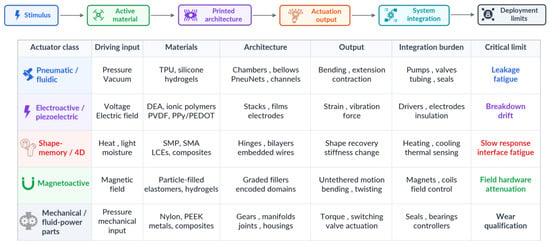
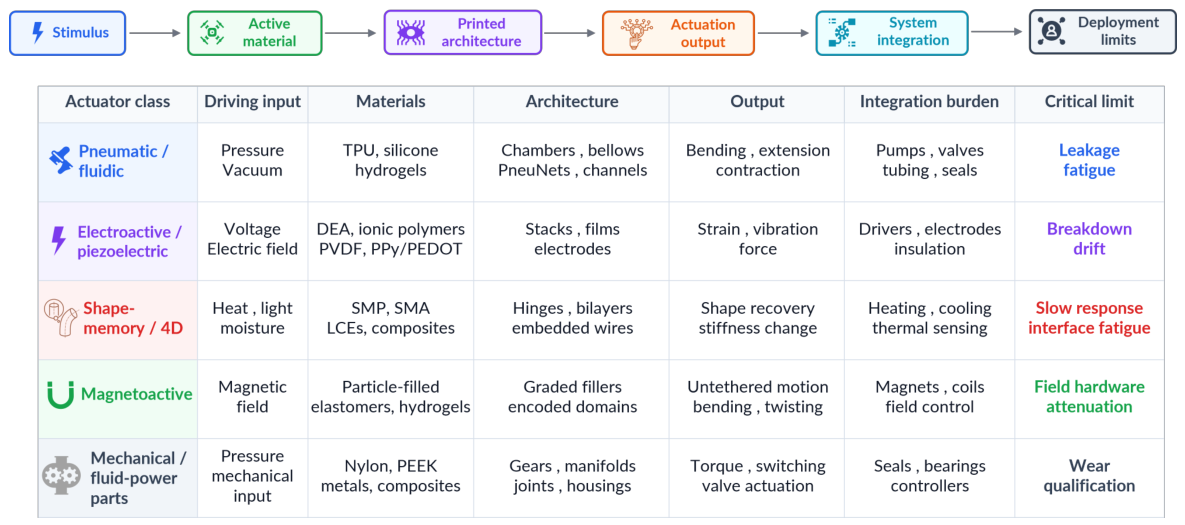
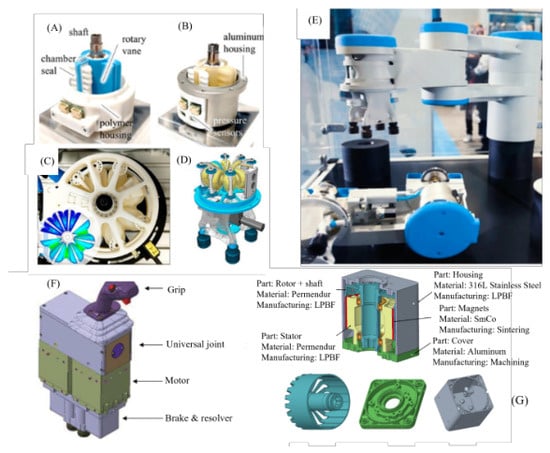
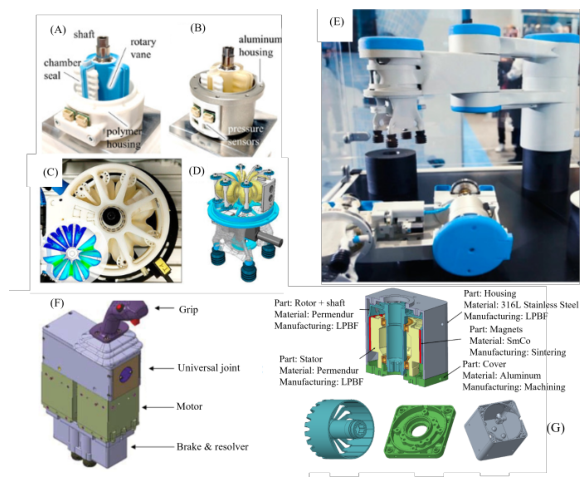
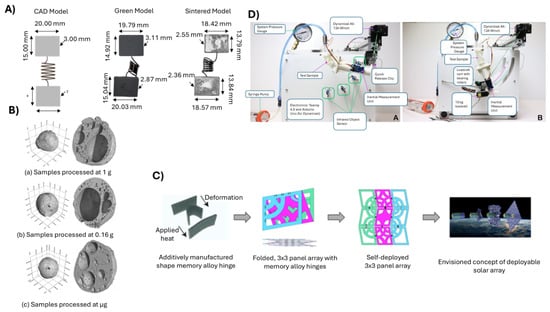
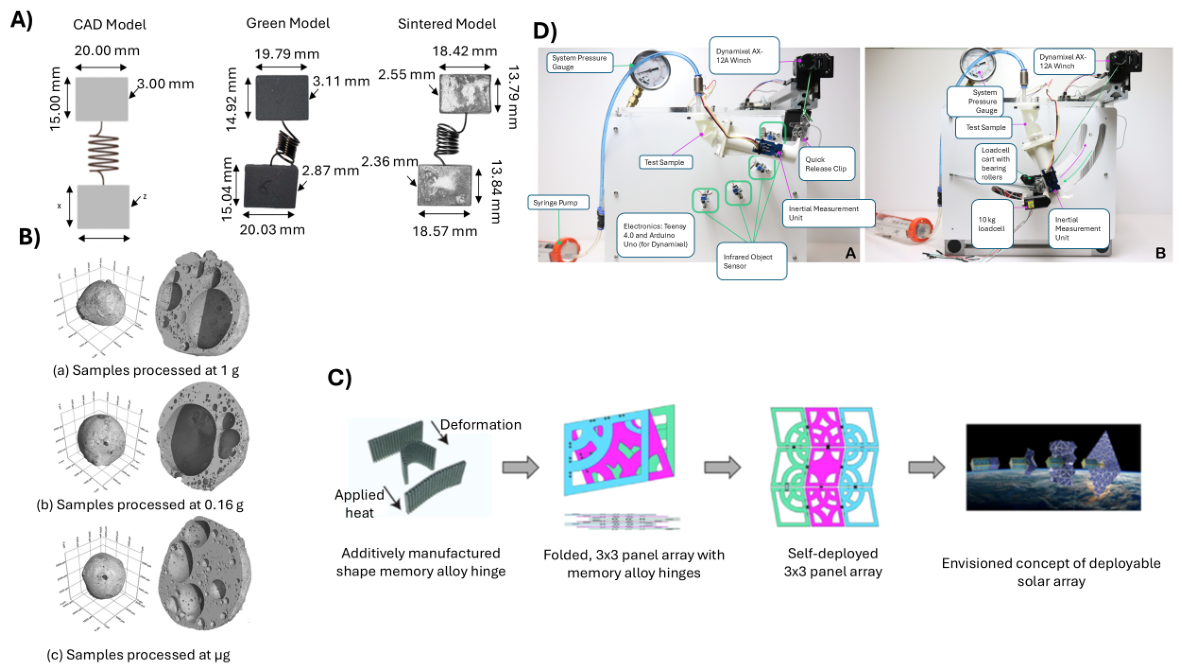
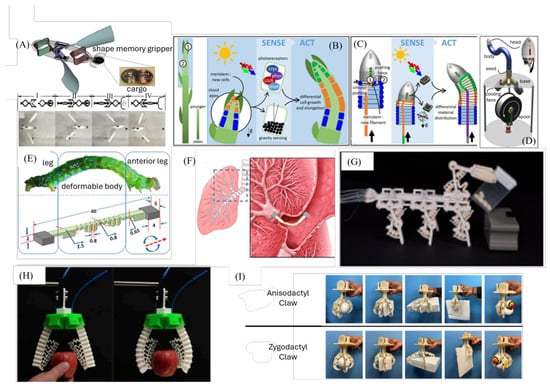
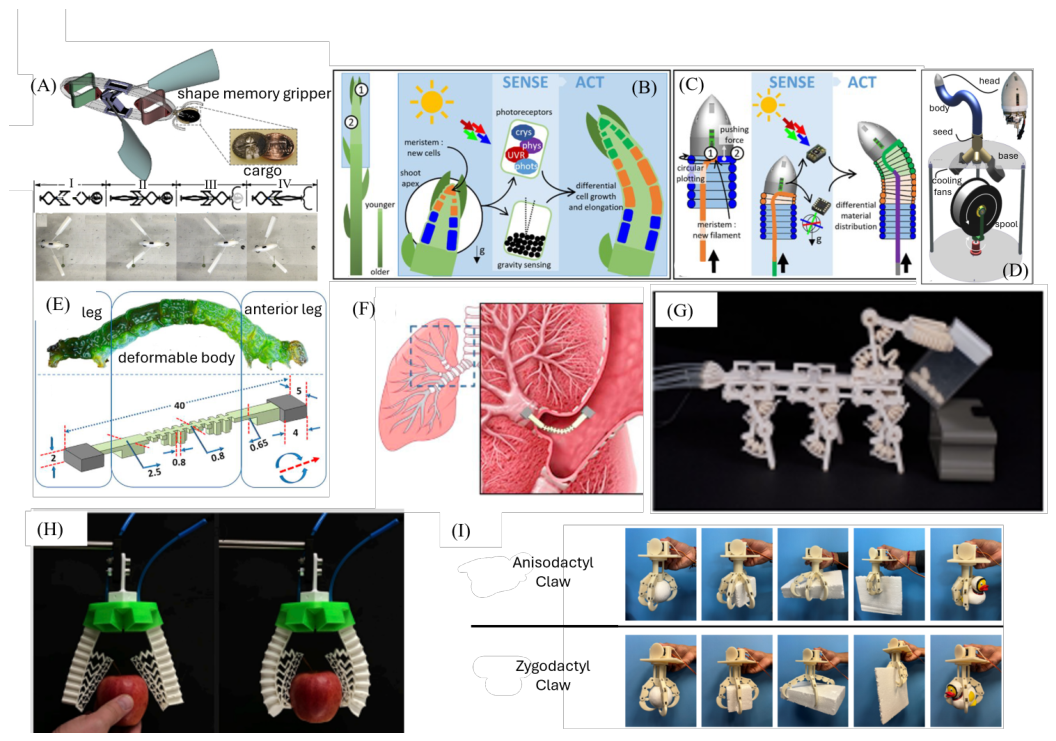

Disclaimer/Publisher’s Note: The statements, opinions and data contained in all publications are solely those of the individual author(s) and contributor(s) and not of MDPI and/or the editor(s). MDPI and/or the editor(s) disclaim responsibility for any injury to people or property resulting from any ideas, methods, instructions or products referred to in the content. |
© 2026 by the authors. Licensee MDPI, Basel, Switzerland. This article is an open access article distributed under the terms and conditions of the Creative Commons Attribution (CC BY) license.