


Abstract
This study presents a novel hierarchical hybrid control architecture for the attitude stabilization of a 3-Degree-of-Freedom (3-DOF) hover system. Operating on a linearized state-space model, a Linear Quadratic Regulator (LQR) is deployed as the optimal inner-loop core to guarantee baseline multi-variable stability. To dramatically improve transient performance and suppress high-frequency oscillations, Sliding Mode Control (SMC) and Super-Twisting Sliding Mode Control (STSMC) are incorporated not as conventional additive inputs, but as dynamic reference-reshaping supervisory mechanisms in the outer loop. This structural decoupling preserves the optimal characteristics of the LQR while effectively attenuating chattering, thereby preventing physical actuator fatigue. Furthermore, the Big Bang–Big Crunch (BB-BC) metaheuristic algorithm is employed to systematically optimize the design parameters of the supervisory layers, enabling effective steady-state error reduction with a remarkably low computational cost. Comparative evaluations demonstrate that the proposed LQR-STSMC framework significantly accelerates system responsiveness, reducing rise times by approximately 80% to 90% and consistently lowering settling times across all operational axes while achieving a reduction of up to two orders of magnitude in overall tracking errors (ITAE) relative to the baseline LQR. Although evaluations involving Model Predictive Control (MPC) demonstrate improvements in transient response and a reduction in total error compared to the standard LQR, the proposed LQR-STSMC architecture exhibits significantly better overall performance and superior disturbance rejection capabilities. Simulation results under continuous aerodynamic perturbations (wind disturbances) confirm that the proposed hierarchical methodology effectively eliminates steady-state offsets, fundamentally outperforming both classical LQR and MPC in terms of robustness, precision, and ultra-fast transient performance.
1. Introduction
Unmanned aerial vehicles (UAVs) have progressively become integral to diverse operational fields owing to their adaptability in executing complex missions. Among various aerial configurations, multirotor platforms are particularly favored for demanding applications, as they inherently provide crucial operational benefits such as high maneuverability, vertical take-off and landing (VTOL) capabilities, precise hovering stability, and structural simplicity [1]. Leveraged by these aerodynamic and mechanical strengths, UAVs are efficiently deployed across a wide spectrum of specialized operations. Current implementations range from tracking moving targets [2] and collecting urban traffic data [3] to managing complex wide-area systems [4] and inspecting critical infrastructure [5]. Furthermore, their rapid deployment capabilities have rendered them essential for military logistics [6] and the delivery of emergency medical supplies in post-disaster scenarios [7], thereby consolidating their significance in both civilian and defense domains [8,9,10].
Despite their widespread utility, the control of UAVs is complicated by three primary challenges: (i) their nature as multi-input, multi-output (MIMO) systems, (ii) the presence of unknown or uncertain parameters, and (iii) the influence of time-varying states and delays [11]. Within this context, quadrotors are particularly notable; these systems, characterized by six degrees of freedom (6-DOF), are inherently underactuated since they rely on only four independent control inputs [12,13,14]. Quadrotor flight dynamics, encompassing both translational and rotational movements, are governed entirely by varying the angular velocities of four fixed-pitch rotors. Compared to traditional helicopters, this configuration eliminates the necessity for complex mechanical linkages, which in turn facilitates superior control responsiveness and agile maneuvering [15].
Maintaining quadrotor stability requires the effective management of nonlinear dynamics and the mitigation of external disturbances, such as those induced by atmospheric conditions [16,17]. The primary objective in quadrotor control is the stabilization of both attitude and altitude while ensuring the vehicle maintains a predefined set point [18,19]. To this end, a diverse range of control methodologies has been developed, including Proportional–Integral–Derivative (PID) control [20,21], feedback linearization, backstepping techniques [22,23], Sliding Mode Control (SMC) [24,25], and adaptive control systems [26,27]. Among these, the Linear Quadratic Regulator (LQR) has been extensively utilized for its ability to provide an optimal control law by minimizing a quadratic cost function, thereby ensuring multi-variable stability for linearized systems [28,29]. Furthermore, Model Predictive Control (MPC) has gained significant prominence due to its capacity to explicitly handle multi-variable systems with state and input constraints by solving an online optimization problem at each sampling interval [30]. However, while LQR and MPC offer high regulation performance under nominal conditions, their inherent sensitivity to modeling uncertainties and sudden external perturbations often necessitates their integration with robust supervisory layers.
To fulfill this critical requirement for robust operation, SMC is widely recognized for its efficacy in managing nonlinear and uncertain high-order systems [31]. Although SMC demonstrates reduced sensitivity to external disturbances, this property may occasionally compromise the accuracy of the system model [32]. Nevertheless, SMC remains a preferred methodology due to its inherent robustness against parameter variations and external perturbations [33].
Building upon the foundations of conventional SMC, the Super-Twisting Sliding Mode Control (STSMC) algorithm has emerged as a promising strategy for enhancing stability while minimizing the chattering phenomenon [34]. STSMC refines control precision on the sliding manifold by leveraging a higher-order sliding mode approach. By mitigating chattering and smoothing control inputs, STSMC not only enhances tracking performance but also contributes to the extension of the system’s operational lifespan by reducing actuator wear [35].
To fully capitalize on these advanced nonlinear techniques, hybrid control strategies for quadrotor systems aim to enhance overall performance and improve robustness against uncertainties by integrating multiple control paradigms [36]. These approaches typically combine traditional control techniques, such as Proportional–Derivative (PD) or PID controllers, with adaptive modern methodologies, including SMC, fuzzy logic, and artificial intelligence-based techniques. By addressing the inherent nonlinear dynamics of quadrotors and increasing their rejection capability against external disturbances, hybrid control systems enable more reliable and stable operation, particularly in applications demanding high maneuverability and precise trajectory tracking.
The implementation of such hybrid strategies significantly augments the operational effectiveness of quadrotors during complex missions and under stochastic environmental conditions, making them indispensable in scenarios requiring both robust and adaptive performance [37].
Beyond the selection of the control strategy itself, the successful deployment of these advanced architectures inherently relies on the mathematical framework utilized to model the vehicle’s spatial orientation and rigid-body dynamics. While traditional Euler angle representations are widely utilized for attitude stabilization, alternative global mathematical representations, particularly unit quaternions, have been explored to model full flight dynamics while circumventing singularity issues, such as gimbal lock. For instance, a passivity-based control (PBC) algorithm utilizing unit quaternions was developed based on an Euler–Lagrange formulation with logarithmic mapping. This methodology successfully stabilizes the full dynamics of micro air vehicles without the necessity of solving complex partial differential equations [38]. Building upon similar mathematical foundations, energy-based control strategies employing an energy-defined Lyapunov function in the quaternion space have also been proposed, demonstrating robust stabilization across all states through both numerical simulations and real-time experimental validations [39]. Nevertheless, although these advanced quaternion-based PBC and energy control laws offer significant advantages for unconstrained 6-Degree-of-Freedom (6-DOF) aerobatic maneuvers, the localized Euler-angle formulation remains highly intuitive, computationally efficient, and technically appropriate for the decoupled rotational dynamics of the 3-Degree-of-Freedom (3-DOF) hover system investigated in this study.
To rigorously validate the efficacy of such advanced hybrid paradigms, the utilization of a standardized and highly accurate dynamic model is essential. Therefore, this study employs the comprehensive mathematical model of the Quanser 3-DOF hover system, the physical representation of which is illustrated in Figure 1, as the primary benchmark for a simulation-based comparative analysis.
Figure 1.
3-DOF hover system [40].
This high-fidelity model faithfully emulates real-world flight dynamics, thereby providing an ideal and controlled simulation environment for the evaluation of complex attitude stabilization frameworks. In the context of this research, the simulated Quanser platform, implemented in MATLAB/Simulink (Release 2022b), is utilized to test the proposed hybrid architecture, wherein the SMC and STSMC components function strictly as a robust supervisory layer in the outer loop. Rather than acting as the primary control signal generators, these sliding mode structures are designed to provide smooth and continuous corrective signals to the underlying LQR-based reference-reshaping mechanism.
To systematically determine the controller gains and avoid the limitations of empirical trial-and-error, the Big Bang–Big Crunch (BB-BC) optimization algorithm is integrated into the control framework. Inspired by the cosmological theory of the universe’s evolution, BB-BC is a powerful metaheuristic technique distinguished by its rapid convergence and minimal computational overhead. Within the proposed architecture, this algorithm is specifically employed for the precise tuning of parameters governing both the SMC and STSMC components, ensuring optimal corrective interventions without imposing an excessive computational burden. Through extensive simulations, this dynamic model facilitates a detailed comparative evaluation, demonstrating the performance superiority and enhanced stability of the integrated control strategy over classical methodologies.
Literature Review
In the literature, the effectiveness of SMC and its advanced derivatives, such as Adaptive SMC (ASMC) and STSMC, in governing nonlinear, underactuated systems characterized by parametric uncertainties has been extensively documented. For instance, in the structural engineering research conducted by Luo et al. [41], SMC-based output feedback control schemes operating with limited measurement data were shown to successfully stabilize nonlinear systems under seismic excitation. Similarly, Chen et al. [42] demonstrated that the ASTSMC method, when applied to distributed-drive electric vehicles, significantly improved trajectory tracking and dynamic stability by substantially reducing chattering compared to conventional SMC. Furthermore, Xu and Ozguner [43] and Lee et al. [44] emphasized the robustness of SMC and ASMC approaches in quadrotor systems against parameter uncertainties, sensor noise, and environmental perturbations, thereby validating the applicability of these methodologies to underactuated and multi-input systems.
These studies collectively confirm that SMC-based control strategies are particularly efficacious in satisfying critical control requirements, including robustness, uncertainty tolerance, and noise immunity. Within this context, the established literature provides a rigorous technical and theoretical foundation for the deployment of the proposed SMC and STSMC-based architectures, especially in scenarios involving nonlinear dynamics and modeling inaccuracies. Moreover, the capacity of STSMC to smooth the discontinuous control term, thereby mitigating chattering, offers a critical advantage for real-time implementations by limiting the adverse impact of high-frequency noise on overall system stability.
To further exploit the inherent benefits of these nonlinear techniques, various hybrid controller combinations have been proposed in the recent literature. For instance, Modirrousta and Khodabandeh [45] developed a hybrid scheme integrating integral backstepping with an adaptive terminal sliding mode control for attitude stabilization, complemented by a robust adaptive PID controller for position control. This structure was validated through Lyapunov-based stability analysis and demonstrated significant robustness against noise and uncertainties in real-time applications.
Similarly, a two-stage hybrid PID-SMC approach was introduced by Mofid et al. [46] for UAV control under external disturbances and sensor faults. Within this framework, the controller is designed to switch between a classical mode, utilized when the upper bound of the disturbance is known, and an adaptive mode for unknown conditions. This mechanism was shown to maintain high levels of position tracking accuracy and system stability. Furthermore, Al-Mahturi et al. [47] enhanced both transient performance and resilience against external factors, such as wind, by integrating a classical PD controller with a fuzzy logic-based autopilot system. Another hybrid architecture was proposed by Zare et al. [48], which combined sliding mode control with fuzzy logic regulation optimized via a genetic algorithm to effectively suppress load oscillations induced by a pendulum.
In this context, the reinforcement learning-based hybrid control architectures proposed by Shen et al. [49,50] represent an advanced evolution of this trend. In their first study, a novel control method was developed for nonlinear servo systems utilizing an event-triggered strategy to ensure fixed-time stability. This architecture integrated the Identifier–Actor–Critic framework with fuzzy logic systems, supported by Prescribed Performance Control and a Switched Event-Triggered Strategy, thereby improving tracking accuracy while reducing communication overhead. In their subsequent work, a fixed-time attitude control algorithm was designed for a two-degree-of-freedom (2-DOF) helicopter system. The controller, optimized under an Actor–Critic Neural Network framework, successfully estimated external disturbances and maintained stable control under input constraints via a sliding-mode-based switching mechanism. Extending this adaptive capability to aerial platforms, reinforcement learning has also proven effective for direct state-to-actuator mapping, enabling quadrotors to recover from extreme initial conditions with minimal computational latency compared to traditional optimization [51]. Furthermore, as the scale of intelligence expands, recent research has proposed tailored hierarchical system architectures to address the critical gap between the intensive computational demands of Large AI Models and the limited onboard resources of UAVs within the low-altitude economy [52]. Collectively, these developments highlight a decisive shift toward the integration of adaptive intelligence with robust and hierarchical control frameworks.
Parallel to these advanced learning-based approaches, the demand for robust operation under external perturbations has driven significant recent advancements in multirotor control architectures, with a particular emphasis on cascaded structures and automated parameter tuning. Contemporary research frequently utilizes system identification techniques and relay feedback experiments to automatically tune cascaded PID controllers, thereby effectively managing the dynamic complexities of both standard quadrotors and energy-efficient heterogeneous multirotor configurations [53,54,55]. Beyond parameter tuning, the mitigation of exogenous atmospheric disturbances remains a critical challenge. Recent literature demonstrates that disturbance rejection can be markedly enhanced through innovative strategies, such as the deployment of predictive control algorithms on fixed-wing platforms with segmented control surfaces [56], or the implementation of specialized motor control loops within cascaded PI frameworks for heterogeneous aerial vehicles operating in turbulent environments [57,58].
Collectively, these studies underscore that while recent contributions across both linear and nonlinear models ranging from classical cascaded structures to advanced learning-based paradigms provide substantial improvements in baseline stability and external disturbance rejection, they frequently present distinct operational trade-offs. Specifically, they predominantly rely on either computationally intensive intelligence models, linear controllers lacking inherent robust margins, or purely additive nonlinear compensators that depend on isolated empirical tuning experiments. In this regard, the hybrid control framework proposed in this study builds upon these fundamental advancements by introducing a cohesive LQR-STSMC architecture. By employing the BB-BC algorithm for systematic parameter optimization rather than conventional relay tuning this work addresses the inherent limitations of standard hierarchical frameworks. This integrated approach successfully synergizes the strengths of multiple control techniques to improve tracking precision, transient response quality, and disturbance rejection capability. Furthermore, these architectures offer considerable practical value, as they are adaptable for optimizing real-time computational loads while maintaining sensitivity to physical constraints such as actuator saturation, sensor noise, and communication limitations. Consequently, their potential for applicability remains remarkably high across fields such as industrial automation, unmanned aerial vehicles, and autonomous robotic systems.
Central to the success and broad applicability of this proposed architecture is the scientific justification for employing a dynamic reference-reshaping mechanism. The strategic decision to utilize the SMC and STSMC units in a reference-reshaping configuration, rather than as direct additive control terms, is driven by both theoretical and practical necessities. From a practical standpoint, the direct injection of discontinuous sliding mode signals into actuator commands inherently induces high-frequency chattering, which is highly detrimental to the brushless DC (BLDC) motors typical of UAV platforms. Theoretically, the proposed reference-reshaping role rigorously preserves the mathematical integrity of the LQR’s optimal state-feedback structure, filtering the robust corrective signals safely through the optimal core.
Furthermore, this hierarchical framework offers considerable practical value, as it is adaptable for minimizing real-time computational loads while maintaining strict sensitivity to physical constraints such as actuator saturation, sensor noise, and communication limitations. Consequently, its potential for widespread applicability remains remarkably high across diverse fields, including industrial automation, unmanned aerial vehicles, and autonomous robotic systems. The key contributions of this study are outlined as follows:
- A novel hierarchical hybrid control architecture is proposed, integrating LQR with SMC and STSMC for 3-DOF quadrotor stabilization. Unlike conventional additive hybrid schemes, the sliding mode component is configured as a supervisory reference reshaping mechanism in the outer loop. This design allows robust corrective actions to be filtered through the optimal LQR core, effectively eliminating high-frequency chattering and protecting physical actuators. Moreover, a rigorous mathematical analysis is provided to formally prove Bounded-Input Bounded-Output (BIBO) stability for the inner loop and Globally Uniformly Ultimately Bounded (GUUB) stability for the outer supervisory loop.
- Systematic parameter optimization of the outer loop supervisory gains is achieved through the BB-BC algorithm, which minimizes steady-state errors with minimal computational overhead. The proposed framework is rigorously validated against a high-performance MPC baseline, explicitly verifying superior dynamic responsiveness and robust stability in a comparative simulation environment.
- Enhanced robustness against external disturbances is systematically demonstrated under continuous wind forces. The LQR-STSMC architecture is shown to achieve exceptional disturbance rejection by eliminating steady-state offsets, outperforming both linear and optimization-based controllers.
- A comprehensive quantitative performance evaluation across multiple metrics (ISE, IAE, and ITAE) confirms that the hybrid approach achieves the fastest rise time, minimal overshoot, and superior long-term tracking accuracy, thereby demonstrating its efficiency for quadrotor control under uncertain and dynamic conditions.
The remainder of this paper is organized as follows: Section 2 delineates the mathematical modeling and dynamic characteristics of the 3-DOF hover didactic plant. Section 3 establishes the theoretical fundamentals of the baseline control strategies, including the LQR, MPC, SMC, and STSMC frameworks. Section 4 formulates the proposed methodology, detailing the design of the novel hybrid LQR-SMC and LQR-STSMC architectures and their integration with the BB-BC algorithm. Section 5 presents a comprehensive analysis of the simulation results, while Section 6 provides a critical discussion of the comparative findings. Finally, Section 7 concludes the study by summarizing the principal outcomes and potential future directions.
2. 3-Degree-of-Freedom Hover Didactic Plant Model Description
The plant utilized in this study is the 3-DOF hover system, which comprises a rigid frame equipped with four independently driven propellers mounted on a central pivot. This mechanical design facilitates free rotation across the yaw, roll, and pitch axes. System kinematics are governed by the aerodynamic thrust and reactive torque generated by the propellers, where the application of a positive voltage to a motor yields a proportional upward force. Specifically, the longitudinal (pitch) movements and their associated yaw effects are dictated by the front and rear motors, driven by input voltages Uf and Ub, respectively. Conversely, the lateral (roll) motion is managed by the right and left motors, controlled by Ur and Ul. By continuously modulating these four input voltages, the net torque acting on the central pivot can be regulated to zero, thereby successfully stabilizing the system’s attitude.
All mathematical modeling and hardware parameters are directly adopted from the manufacturer’s technical specifications [59]. Although the current work evaluates the proposed controllers within a simulation environment, selecting this specific Quanser 3-DOF setup over a standard 6-DOF quadrotor model serves a strategic methodological purpose. The 3-DOF structure effectively isolates rotational dynamics from translational shifts, providing a decoupled framework to rigorously validate the attitude control strategies. Furthermore, utilizing this specific system constrains the simulation to real-world physical limitations, notably exact actuator saturation limits. Consequently, the evaluated control efforts reflect actual hardware capabilities rather than theoretical assumptions, establishing a highly realistic baseline and a direct pathway for future experimental implementations.
State Space Model
Following the linearization of the mathematical model, a state-space representation of the 3-DOF four-rotor system was derived. This model incorporates four independent control inputs and three measured outputs, effectively capturing the essential dynamics of the system. The detailed mathematical formulation of this linearized model is presented in Equations (1)–(9), consistent with established literature [59].
State vector:
where the vector Y, P, R represents the Euler angles corresponding to the yaw, pitch, and roll attitudes of the system, respectively. Consequently, the dotted terms denote the first-order time derivatives of these angles, which represent the rotational angular velocities of the quadrotor around its respective spatial axes.
Control vector:
Output vector:
where
: front motor voltage; : back motor voltage; : right motor voltage; : left motor voltage.
Matrices A, B, C and D of the state space model:
To accurately evaluate the proposed control methodology, the official hardware parameters of the Quanser 3-DOF hover didactic system were integrated into the simulation environment [59]. As comprehensively tabulated in Table 1, these specifications encompass crucial physical and dynamic properties including motor constants, propeller dimensions, system inertia, and friction coefficients which are indispensable for the derivation of a high-fidelity mathematical model. The incorporation of these precise nominal values ensures that the simulated rotational dynamics across the yaw, roll, and pitch axes strictly replicate the real-world behavior of the physical plant. Consequently, a robust and realistic baseline is established for the subsequent control design and performance validation.
Table 1.
Parameters of the 3-DOF hover system [59].
3. Baseline Control Strategies
Before detailing the specific control architectures, it is essential to establish the formal mathematical objective of the attitude stabilization problem for the 3-DOF hover system. Let x(t) = [Y(t) P(t) R(t)]T define the actual rotational state vector representing yaw, pitch and roll angles, respectively, and let xd(t) = [Yd(t) Pd(t) Rd(t)]T denote the desired reference trajectories. The attitude tracking error vector is defined as:
The primary control objective is to design a robust multi-variable control law, u(t) = [Uf Ub Ur Ul]T, such that the closed-loop system is asymptotically stable. Specifically, the controller must ensure that the tracking error converges to zero despite the presence of initial offsets and external disturbances,
while strictly maintaining the control inputs within the physical saturation bounds of the actuators (umin(t) ≤ u(t) ≤ umax(t)). Achieving this objective necessitates a control structure that can effectively handle the dynamically coupled rotational axes, which forms the basis for the subsequent LQR and hybrid sliding mode designs.
3.1. Linear Quadratic Regulators
LQR theory is an extensively utilized framework for the optimal control of linear dynamic systems. This methodology provides a mathematically optimized strategy for systems governed by linear differential equations [28]. The primary objective of the LQR is to derive an optimal control law that minimizes a predefined quadratic cost function while ensuring the system exhibits the desired dynamic characteristics. Typically, this cost function is formulated to achieve a balance between state regulation errors and the control effort expended, thereby penalizing deviations from the target setpoints. The resulting control law is defined as follows in Equation (12) [29].
LQR is a type of optimal control that focuses on minimizing the cost of system dynamics. The cost function is given as a quadratic function in Equation (13) [29].
R represent the weighting matrices assigned to the state and input vectors, respectively, which determine the relative importance of tracking precision versus energy consumption. Within the scope of this study, the LQR methodology serves a dual purpose: it is utilized as a primary benchmark for comparative performance analysis and, more significantly, it constitutes the foundational inner-loop control structure for the proposed hybrid LQR-SMC and LQR-STSMC architectures.
3.2. Model Predictive Control
In this study, a Linear Model Predictive Control (LMPC) algorithm is employed as a sophisticated comparative baseline. LMPC is a prominent model-based approach that optimizes control inputs in real time by utilizing a mathematical model to predict future system behavior, with the objective of minimizing a predefined cost function [30]. Its ability to explicitly incorporate physical system constraints during the decision making process, coupled with its inherent suitability for MIMO systems, renders it highly advantageous for this application [60].
The LMPC implemented in this research relies on a linearized MIMO state-space model of the 3-DOF hover system, featuring four inputs and three outputs. The controller was executed within the MATLAB/Simulink (Release 2022b) environment, configured with the following specific parameters: a sampling time (Ts) of 0.002 s, a prediction horizon (Np) of 400 steps, a control horizon (Nc) of 15 steps, and manipulated variable (MV) limits constrained between 0 and 24 V.
During the control process, the LMPC algorithm regulates system responses to accurately track the desired reference signals. By utilizing the linearized state-space model, the physical limitations of the actuators are strictly managed through the imposed MV constraints. The algorithm operates on the receding horizon principle; at each sampling instant, the current system state is measured, and future behavior is predicted over the defined horizons. Subsequently, only the first calculated control input from the optimized sequence is applied to the plant. This process is iteratively repeated at every sampling instant to dynamically adapt to evolving system states. Through this architecture, the LMPC not only ensures precise reference tracking but also enhances baseline stability by generating optimal, constraint aware control signals. Within the framework of this research, the LMPC serves as a high-performance benchmark, providing a rigorous standard against which the transient response and disturbance rejection capabilities of the proposed hybrid architectures are evaluated.
3.3. Sliding Mode Control
SMC is a highly effective methodology for the regulation of both linear and nonlinear systems. At its core, this approach utilizes switched control signals to drive the system’s state trajectories toward a predefined sliding surface [61]. The technique is extensively recognized for its inherent robustness against parameter perturbations and modeling uncertainties, providing a resilient control structure especially when input disturbances are present. Due to its insensitivity to external perturbations and system variations, SMC remains a prominent choice for robust control applications [61].
The implementation of SMC follows a systematic two-stage strategy: the design of the sliding manifold and the subsequent generation of the control law [61]. The design of the sliding surface is initiated by aligning the system’s motion with the manifold, typically characterized by the slope parameter, lambda. By guiding the system states onto this manifold and maintaining them there, the desired dynamic performance can be strictly enforced. The mathematical formulation governing the SMC algorithm is expressed in Equations (14)–(17) [62]:
Q(t) = [Y(t) P(t) R(t)]T where Q(t) represents the actual angle vector consisting of the yaw, pitch, and roll angles, and Qref denotes the reference angle vector [62].
where s(t) ∊ ℝ3 denotes the sliding surface vector, and λ = diag(λ1 λ2 λ3) is a diagonal matrix of positive gain coefficients.
The control input u(t) ∊ ℝ3 is defined based on a smooth sliding mode control strategy as follows [62]:
where k is a diagonal matrix of positive control gains, and ∅ is a diagonal matrix of small positive constants used to scale the sliding surface components.
In this study, the hyperbolic tangent (tanh) function is employed as a smooth and saturated alternative to the classical discontinuous signum function within the SMC framework. This approach ensures continuity in the control signal particularly as the sliding surface s(t) approaches zero, thereby effectively preventing abrupt transitions and mitigating high-frequency oscillations, commonly referred to as chattering. Notably, in the region where ∣s(t)∣ ≪ , the function tanh(s(t)/∅) exhibits approximately linear behavior. This property enables the controller to apply more precise and smooth corrective actions within small error boundaries while ensuring the control input converges to zero as s(t)→0, thus maintaining the system’s stable equilibrium. The integrated tanh-based control structure not only guarantees convergence toward the sliding manifold even in the presence of modeling uncertainties but also ensures that the system operates within its prescribed input constraints. Consequently, this methodology offers a robust solution to the chattering phenomenon inherent in conventional SMC implementations.
Within the context of the hybrid control framework proposed in this study, the SMC architecture is strategically utilized as a supervisory reference reshaping mechanism rather than a direct additive control component, thereby ensuring that robust corrective actions are integrated without compromising the inner-loop’s optimal characteristics.
3.4. Super Twisted Sliding Mode Control
STSMC is a second-order sliding mode algorithm that has demonstrated superior performance, particularly for systems characterized by a relative degree of one [34]. In the presence of finite-gradient and uniformly bounded disturbances, this algorithm generates a continuous control law capable of driving both the sliding variable and its derivative to zero within a finite time. While STSMC retains a discontinuous element within an integral term, it significantly mitigates the undesirable chattering effect compared to first-order sliding mode implementations [63].
STSMC was specifically engineered for systems with a relative degree of one to attenuate chattering while maintaining high precision. In this methodology, system trajectories converge toward the origin following a characteristic helical structure. A key distinction of this controller is the decomposition of the control effort into two distinct components: a discontinuous term defined under an integral, and a continuous function of the sliding manifold. This specific architecture enhances robustness against external perturbations, thereby improving both the transient stability and the steady-state performance of the system [63]. In the proposed STSMC framework, the tracking error e(t), its time derivative , and the sliding surface s(t) are identical to those defined in the conventional SMC design (see Equations (14)–(15)). Based on the sliding surface given in Equation (16), the super-twisting control input u(t) ∊ ℝ3 is defined based on a smooth STSMC strategy [63] and formulated as in Equation (18):
where k1 and k2 are diagonal matrices of positive gains.
To ensure the generation of continuous control signals, the hyperbolic tangent function is utilized in this study as a smooth alternative to the classical discontinuous signum function. In Equation (18), the first term facilitates rapid convergence of the system trajectories toward the sliding manifold, while the second term ensures that the system remains asymptotically stable once the surface is reached. This architecture yields superior performance during the transient phase and provides high robustness against modeling uncertainties and exogenous disturbances. Furthermore, the smooth definition of the sliding surface via the hyperbolic tangent function enables the generation of more continuous and stable control signals compared to conventional SMC implementations.
In the classical super-twisting algorithm widely documented in the literature, the derivative of the tracking error is often omitted, and the sliding surface is typically defined based solely on the error magnitude. In contrast, the approach adopted in this study proposes a modified sliding surface that explicitly incorporates the error derivative and utilizes a hyperbolic tangent function for smoothing. The associated control law integrates both a square-root-based term and an integral component, resulting in a more sensitive and adaptive response to the system’s dynamic evolution. Compared to the standard STSMC approach, the proposed methodology provides improved transient performance and enhanced stability of the sliding manifold, effectively minimizing the steady-state tracking error.
Within the context of the hybrid control framework proposed in this study, the modified STSMC is strategically implemented in a reference reshaping configuration, where it functions as a robust supervisory layer that dynamically adjusts the reference signals for the underlying LQR to effectively mitigate external perturbations while preserving the integrity of the optimal state-feedback structure.
4. Proposed Methodology
4.1. Integrated LQR and SMC: A Hybrid Control Strategy with Reference Reshaping
In this study, a novel hierarchical control architecture is proposed to address both nominal optimal performance and stringent robustness requirements through two distinct yet interacting layers. The primary novelty of this approach lies in its departure from conventional hybrid schemes; while sliding mode terms are typically incorporated as primary additive components to the control input, the sliding mode units in the proposed framework are configured as a robust supervisory layer situated in the outer loop. Consequently, the overall architecture is defined as a hybrid LQR-SMC optimal control structure with reference reshaping. The decision to utilize this specific configuration, rather than direct additive control terms, is driven by both theoretical and practical considerations that distinguish this work from standard additive control paradigms.
From a practical standpoint, the direct injection of inherently discontinuous signals into actuator commands can induce undesirable chattering effects, which are particularly detrimental to the BLDC motors and electronic speed controllers (ESCs) utilized in UAV platforms. By employing the innovative reference reshaping approach, the reference signal provided to the inner-loop LQR is dynamically modified, allowing the system to benefit from robust corrective actions while minimizing the direct impact of sharp signal changes on the physical actuators. Theoretically, this configuration maintains the integrity of the LQR’s optimal state-feedback structure, as the optimality of the state-feedback gain remains uncompromised within its designated operating region since the modification occurs at the reference level rather than the control input.
This unique synergy integrates the optimal feedback properties of the LQR with the inherent robustness of sliding mode techniques against matched disturbances and parametric uncertainties. Crucially, this hierarchical design is specifically engineered to mitigate the limitations of the simplified linear state-space model used for control synthesis. While the inner-loop LQR manages the nominal linearized dynamics, the outer loop supervisory layer compensates for unmodeled nonlinearities and exogenous perturbations. By assigning these roles, the system’s stability is rendered insensitive to model–plant mismatches. Consequently, the system preserves its optimal performance under nominal conditions while acquiring a directed and bounded corrective capability against external disturbances. This original methodology ensures that the claimed robustness is maintained even when the physical plant deviates from its simplified mathematical representation. To mathematically formalize this hierarchical interaction, the supervisory control law is derived based on the error dynamics of each rotational degree of freedom. In the outer loop, the sliding surface for each axis (i-th axis) is defined as follows:
where λi > 0 determines the slope of the sliding surface. The corrective signal is generated using a continuous hyperbolic tangent function, instead of the conventional sign function, in order to mitigate chattering:
where the positive adaptive gains are represented accordingly, while ∅ denotes the boundary layer thickness (set to 0.99 in this study). Owing to this structure:
Thus, the corrective signal remains bounded under all conditions. When the parameter ∅ is chosen to be sufficiently small, the system can be approximated as follows:
Approaching this behavior, it produces a maximum directional corrective action in regions of large error. The phase-plane interpretation, together with the directional SMC force mechanism, ensures maximum correction in high-error regions, a smooth transition in low-error regions, and the prevention of excessive energy growth. Figure 2 illustrates the LQR-SMC phase plane and the directional SMC force application, with red arrows indicating downward force and green arrows indicating upward force.
Figure 2.
LQR-SMC phase plane and directional SMC force application.
The most critical novelty of the proposed approach lies in the fact that the SMC output is not directly added to the control input. Instead, the user defined nominal reference, rnom, is modified by the corrective signal generated by the SMC, thereby forming a new virtual reference:
This process dynamically shifts the equilibrium point perceived by the linear controller, thereby establishing a virtual operating point that compensates for disturbance effects. Unlike the conventional direct SMC injection widely reported in the literature, this approach can be interpreted as a reference reshaping strategy that preserves the optimal control structure.
In the inner loop, the LQR controller generates the final control input, ui(t), by minimizing the error between the system states and the modified reference.
In this configuration, the LQR gain matrix, KLQR, processes the deviation from the robust virtual reference. As a result, while the LQR preserves its optimal feedback characteristics, the SMC guides the linear controller to apply the necessary offset actions to reject external disturbances and eliminate steady-state errors.
Furthermore, this hierarchical arrangement effectively manages the mapping from the 3-dimensional attitude space to the 4-dimensional actuator space. While the SMC supervisory layers operate on the 3-axis tracking errors (yaw, pitch, and roll) to dynamically reshape the virtual references, the complex control allocation task is handled entirely by the underlying LQR. By processing these reshaped references, the LQR generates the four specific motor voltages required to drive the physical system, ensuring that the robust 3D attitude commands are accurately and optimally mapped onto the 4-motor configuration of the 3-DOF hover platform.
The selection of the design parameters, such as the sliding surface slope λi and the reaching gains ki, is critical as they directly influence the transient response and the convergence dynamics of the sliding manifold. To achieve superior performance, these parameters should be systematically optimized according to the specific requirements of the flight mission. The overall integrated architecture of the proposed hybrid strategy is illustrated in Figure 3.
Figure 3.
Integrated use of LQR and SMC: hybrid control strategy.
4.2. Integrated LQR and STSMC: A Hybrid Control Strategy with Reference Reshaping
Building upon the principles established in the previous section, a novel hierarchical control architecture is also developed for the STSMC integration to address both nominal optimal performance and stringent robustness requirements. In contrast to classical additive sliding mode architectures, the STSMC algorithm in this proposed approach is not directly injected into the control input; instead, it is similarly configured as a robust supervisory layer situated in the outer loop. Consequently, this advanced architecture is defined as a hybrid LQR-STSMC optimal control structure with reference reshaping. The decision to utilize the modified STSMC units in this specific configuration, rather than as direct additive control terms, is driven by the same theoretical and practical considerations that distinguish this work from standard additive paradigms.
From a practical standpoint, although STSMC inherently produces a more continuous control law than first-order SMC, directly injecting these signals into actuator commands may still provoke residual high-frequency micro-vibrations. Such vibrations remain detrimental to the BLDC motors and ESCs utilized in UAV platforms. By employing the innovative reference reshaping approach, the reference signal provided to the inner-loop LQR is dynamically modified. This allows the system to benefit from the second-order sliding mode robustness while minimizing the direct transmission of any residual signal variations to the physical actuators. Theoretically, this configuration maintains the integrity of the LQR’s optimal state-feedback structure, as the optimality of the state-feedback gain remains completely uncompromised since the modification occurs at the reference level rather than the control input.
This unique synergy integrates the optimal feedback properties of the LQR with the superior robustness of second-order sliding mode techniques against matched disturbances and parametric uncertainties. Crucially, this hierarchical design explicitly addresses the potential model–plant mismatch inherent in using a simplified linear state-space representation. While the inner-loop LQR ensures optimal stabilization and precise reference tracking over the known linear dynamics, the STSMC supervisory layer actively compensates for unmodeled nonlinearities and exogenous perturbations. By assigning these roles, the system’s stability is rendered insensitive to model–plant mismatches, effectively decoupling the robustness from the precision of the underlying linear model. This original methodology ensures that the claimed robustness is maintained under adverse conditions, with the STSMC integration almost entirely eliminating the high-frequency chattering, thereby providing exceptionally smooth control signals and enhanced performance. To mathematically formalize this advanced hierarchical interaction, the supervisory control law is derived based on the tracking error dynamics of each rotational degree of freedom. In the outer loop, the sliding surface for each axis (i-th axis) is defined as follows:
The corrective signal is generated using a continuous hyperbolic tangent function, instead of the conventional sign function, in order to mitigate chattering:
In this formulation, k1,i and k2,i denote positive adaptive gains, while ∅ represents the boundary layer thickness (taken as 0.99 in this study). Owing to this structure, a continuous control signal is obtained, chattering is effectively minimized, and second-order sliding behavior is preserved.
The phase-plane interpretation, together with the directional STSMC force mechanism, ensures maximum correction in regions of large error, smooth transitions in regions of small error, and the prevention of excessive energy growth. As previously illustrated in Figure 2, the LQR-STSMC phase plane and the directional STSMC force application follow the same principles, with red arrows indicating downward force and green arrows indicating upward force.
In dynamic reference reshaping, the corrective signal generated by the STSMC is not directly applied to the system. Instead, the nominal reference is modified as follows:
This process dynamically shifts the equilibrium point perceived by the linear optimal controller. Accordingly, the STSMC does not act as a controller that directly imposes switching on the system; rather, it functions as a virtual offset generator that guides the optimal control core. This strategy preserves the stability properties of the LQR, applies sliding mode robustness at the reference level, and reduces actuator saturation as well as mechanical stress.
In the inner loop, the optimal tracking LQR controller follows the modified reference:
where KLQR is the optimal gain matrix obtained based on the nominal model. As a result of this structure, the closed-loop system exhibits an optimal behavior under nominal conditions, while remaining robust under disturbances, free of chattering, and actuator-friendly in operation. Furthermore, this hierarchical arrangement effectively manages the mapping from the 3-dimensional attitude space to the 4-dimensional actuator space. While the STSMC supervisory layers operate on the 3-axis (yaw, pitch, and roll) tracking errors to dynamically reshape the virtual references, the complex control allocation task is handled entirely by the underlying LQR. By processing these reshaped references, the LQR generates the four specific motor voltages required to drive the physical actuators, ensuring that the robust 3D attitude commands are accurately and optimally mapped onto the 4-motor configuration of the 3-DOF hover platform.
In summary, the proposed LQR-STSMC architecture offers a multifaceted advancement over conventional control strategies. It provides superior disturbance rejection capabilities due to its second-order sliding nature, while the reference reshaping mechanism inherently preserves the mathematical integrity of the optimal control core. Most notably, this structure significantly attenuates the chattering phenomenon compared to classical SMC, thereby minimizing mechanical fatigue on the actuators and ensuring a rapid, stable recovery following any dynamic actuator interruptions.
The selection of the controller design parameters, specifically k1,i, k2,i and the sliding surface slope λi, plays a critical role in dictating the overall system performance. As these parameters directly influence the sliding surface dynamics and the transient response of the system, they must be systematically optimized according to the specific operational requirements of the flight platform. The block diagram illustrating the integrated use of the LQR and STSMC strategy is presented in Figure 4.
Figure 4.
Integrated use of LQR and STSMC: hybrid control strategy.
4.2.1. Stability Analysis
It is important to clarify that the modifications introduced to the STSMC formulation specifically the replacement of the discontinuous signum function with a smooth tanh approximation satisfy the classical stability assumptions of the super-twisting algorithm. In this approach, the sliding surface s is processed through the tanh function to ensure a continuous control signal, thereby reducing high-frequency oscillations while retaining the robust disturbance rejection characteristics.
The stability of the proposed hierarchical control structure is examined through the interaction between the inner LQR loop and the outer STSMC loop. , where the LQR controller tracks the modified reference rmod(t). The resulting closed-loop system is asymptotically stable since A-BKLQR is Hurwitz. Therefore, for any bounded rmod(t), the system satisfies BIBO stability.
The outer loop consists of decoupled STSMC structures for each axis. For a representative axis i, the sliding dynamics are defined with a continuous hyperbolic tangent function. Using a standard Lyapunov candidate, the stability condition can be expressed as
where denotes the bounded approximation error introduced by the smoothing function. This implies that the system trajectories are ultimately bounded within a neighborhood of the origin.
Since this condition holds for all axes, the outer loop is GUUB. Consequently, the generated compensation signals and the modified reference remain bounded. Combined with the BIBO stability of the inner loop, the overall hierarchical system is stable. Furthermore, since the STSMC signal is utilized for reference reshaping rather than direct actuation, the overall system stability is governed by this hierarchical Lyapunov analysis. This ensures that as long as the lumped disturbances and their time derivatives remain bounded, the modified STSMC effectively drives the tracking error to a vicinity of the sliding manifold, where the inner LQR loop then maintains optimal regulation. Consequently, the generated compensation signals and the modified reference remain bounded, ensuring the overall stability of the hierarchical system.
4.2.2. Performance Criteria
The integral error equations, used as performance criteria, were applied to evaluate the system’s transient and steady-state responses, and to systematically identify the most effective controller across the three separate axes.
In this context, the system’s performance was comprehensively assessed using three distinct metrics: Integral Square Error (ISE), Integral Absolute Error (IAE), and Integral Time-Weighted Absolute Error (ITAE). Each metric evaluates a different aspect of the tracking performance. ISE strongly penalizes large initial transient errors, serving as a key indicator of the controller’s ability to suppress high-amplitude deviations and rapid fluctuations. IAE calculates the integral of the absolute error, providing a clear and balanced measure of the overall tracking accuracy throughout the response. Furthermore, ITAE weights the absolute error by time, heavily penalizing long-duration steady-state errors. This makes ITAE particularly valuable for evaluating rapid convergence, settling time, and overall long-term stability. The mathematical formulations of the ISE, IAE, and ITAE metrics are given in Equations (30), (31) and (32), respectively.
4.2.3. Parameter Optimization for the Big Bang–Big Crunch Algorithm
The overall performance of any control architecture heavily depends on the precise tuning of its governing parameters, which directly influence the quality of the transient response and the convergence of the system. In this study, the BB-BC algorithm is specifically employed to optimize the design parameters of the supervisory layers in both proposed hybrid architectures. Specifically, the algorithm is utilized to systematically tune the SMC parameters within the LQR-SMC framework, as well as the STSMC parameters within the LQR-STSMC framework, ensuring an optimal balance between robust disturbance rejection and control signal smoothness.
The BB-BC algorithm is a global metaheuristic optimization technique inspired by the cosmological theory describing the formation and evolution of the universe [64]. This algorithm operates systematically through two main phases: the Big Bang phase, where candidate solutions are stochastically dispersed across the search space to explore a wide range of possible parameter combinations, and the Big Crunch phase, where these scattered solutions are aggregated into a single representative point based on a convergence operator [64].
This convergence operator produces only one optimal output vector from the multiple candidate inputs, which is referred to as the center of mass, denoted as xc. Here, the algorithmic “mass” corresponds to the inverse of the cost (or fitness) function value, giving significantly higher weight to more optimal solutions. The spatial coordinates of this center of mass are calculated using the formulation presented in Equation (33), as described by [65].
In the BB-BC algorithm, xi denotes a candidate point in the n-dimensional search space, and fi is its corresponding fitness value. N is the population size in Big Bang phase. The convergence operator used in the Big Crunch phase differs from exaggerated selection as it may generate new solutions that do not directly originate from existing population members. Unlike pairwise combination methods, this single-step convergence approach considers the entire population collectively, acting as a compression operator and eliminating the need for two-by-two calculations. The sequential execution phases and the specific optimization loop of the BB-BC algorithm utilized for tuning the supervisory layers in this study are visually summarized in the flowchart presented in Figure 5.
Figure 5.
Flowchart of the BB-BC optimization algorithm.
The BB-BC algorithm operates through a series of iterative steps summarized as follows [65]:
Step 1:
An initial population of N candidate solutions is randomly generated within the defined boundaries of the search space.
Step 2:
The fitness values of all candidate solutions are evaluated using the predefined objective function.
Step 3:
The center of mass is computed based on Equation (33), which considers the fitness-weighted average of all candidates. Alternatively, the best-performing candidate may be selected directly as the center of mass.
Step 4:
New candidate solutions are generated in the vicinity of the center of mass by adding or subtracting a normally distributed random variable. The magnitude of this perturbation decreases progressively with each iteration step k, ensuring convergence. The new points are constrained within the predefined bounds of the search space. This generation process is defined by Equation (34) [65].
where xnew: member of the new generation; xc: stands for center of mass; l: defined upper value; r: random number value; k: number of iterations.
Step 5:
The process repeats from Step 2 until a stopping criterion such as a maximum number of iterations or a convergence threshold is satisfied.
In this study, the following criteria were applied for optimizing the parameters using the BB-BC optimization algorithm:
- The parameters corresponding to the number of iterations and population size in the algorithm were set identically, with the number of iterations fixed at 100 and the population size set to 10.
In our implementation of the BB-BC algorithm, the population size and the number of iterations were selected based on a combination of empirical tuning and references from prior studies. Specifically, a population size of 10 and a maximum iteration count of 100 were used. These values were found to provide a satisfactory balance between computational efficiency and convergence quality in our control-oriented optimization context. The tuning process involved defining a specific search space for the controller gains, namely the sliding surface slope and switching gains for the SMC, and the multi-variable gains for the STSMC tailored to the physical response limits of the 3-DOF hover system.
The optimization was guided by a cost function based on the ITAE, which was selected to penalize long-duration errors and improve settling time. In this study, the ITAE metric defined previously in Section 4.2.2 was calculated as the aggregate error across the roll, pitch, and yaw axes to serve as the global fitness criterion. The objective function is defined mathematically as follows:
where J is the global cost value to be minimized, T is the total simulation time, and eY(t), eP(t), and eR(t) represent the tracking errors for the yaw, pitch, and roll axes, respectively. During each iteration, the BB-BC algorithm stochastically generated candidate controller parameters within these predefined bounds, evaluated their fitness through closed-loop simulations, and converged toward the global optimum. As the BB-BC algorithm is known for its low-parameter, fast-convergence nature [65], moderate values for population and iteration counts are typically sufficient in engineering applications. Nonetheless, we observed that in some runs where convergence was suboptimal, increasing the number of iterations (e.g., to 100) led to improved results, supporting the need for flexibility depending on system dynamics and initial conditions.
5. Simulation Results
In this section, the performance of the quadrotor stabilized by the proposed control architectures is systematically investigated across the yaw, pitch, and roll axes. To evaluate the tracking capabilities, the system is subjected to square wave reference signals with specific amplitudes and frequencies: a desired yaw angle of ±5 degrees at 0.04 Hz, a pitch angle of ±4 degrees at 0.1 Hz, and a roll angle of ±4 degrees at 0.08 Hz.
To provide a comprehensive and structured analysis, the simulation results are presented in four main stages. First, the step-response characteristics and transient behaviors of the proposed hybrid LQR-SMC and LQR-STSMC controllers are evaluated individually for each axis. Second, a detailed comparative assessment is conducted using quantitative performance criteria (ISE, IAE, and ITAE) to benchmark the proposed methods against baseline control strategies. Third, the control effort and chattering reduction capabilities are analyzed by comparing the generated motor voltage signals (front, back, right, and left) of the LQR-SMC and LQR-STSMC approaches. Finally, the overall robustness of the proposed framework is rigorously validated through a dedicated evaluation of control performance under simulated continuous wind disturbances. The quantitative transient performance metrics proposed LQR-SMC hybrid architecture are systematically summarized in Table 2.
Table 2.
Quantitative transient response characteristics of the proposed LQR-SMC architecture.
Table 2 demonstrates that the LQR-SMC controller achieves rapid convergence and high precision, evidenced by very low rise times (t < 0.07 s) and excellent ITAE scores. While notable mathematical undershoots are observed in the initial phase, our claim of a ‘smooth’ response refers to the chattering-free control input. Since these micro-transients occur in mere milliseconds (PeakTime < 0.03 s), the UAV’s physical inertia and motor bandwidth act as natural low-pass filters, safely absorbing them without compromising flight stability. Figure 6 shows that the quadrotor controller can satisfactorily track reference angles in three axes.
Figure 6.
LQR-SMC. (a) Yaw step response, (b) pitch step response, (c) roll step response.
The quantitative transient performance metrics proposed LQR-STSMC hybrid architecture are systematically summarized in Table 3.
Table 3.
Quantitative transient response characteristics of the proposed LQR-STSMC architecture.
Similarly, Table 3 shows that the LQR-STSMC controller delivers highly robust tracking with superior ITAE values and extremely fast response times. The slightly higher transient undershoots in pitch and roll are a byproduct of the aggressive Super-Twisting reaching law. However, because they occur within an even briefer window (PeakTime < 0.016 s), the physical system easily dampens these dynamics. The result is a highly accurate, stable, and chattering-free operation. Figure 7 shows that the quadrotor controller can satisfactorily track reference angles in three axes. As can be seen, there are no unwanted oscillations. The LQR-STSMC method stands out as the most effective method in both reducing tracking error and ensuring stability.
Figure 7.
LQR-STSMC. (a) Yaw step response, (b) pitch step response, (c) roll step response.
Table 4 summarizes the performance metrics of the control strategies implemented for the yaw axis. A combined qualitative and quantitative analysis reveals distinct strengths and trade-offs among the evaluated controllers.
Table 4.
Performance criteria of control methods in yaw axis.
Quantitatively, the LQR-STSMC controller demonstrates the fastest response, with a rise time of 0.0665 s, representing an approximate 80% reduction compared to the classical LQR and 80% improvement relative to MPC. Settling time is also minimized, reaching 12.6726 s, which corresponds to an improvement of 12–13% over LQR and MPC. Regarding the ITAE, LQR-STSMC achieves a strikingly low value of 0.0089, highlighting its superior overall performance and effectiveness in minimizing both transient and steady-state deviations.
From a qualitative perspective, the MPC controller exhibits the smallest maximum overshoot (0.1916), outperforming all other methods in terms of smoothness and avoidance of excessive transient peaks. In contrast, LQR-STSMC maintains a slightly higher overshoot (2.2325) but achieves a balanced combination of rapid response and robust disturbance rejection, reflecting its capability to ensure both fast convergence and high control accuracy. The classical LQR, while straightforward and stable, lags behind in both transient speed and ITAE performance.
In summary, the LQR-STSMC method offers the best compromise between speed, robustness, and overall control quality, whereas MPC provides an effective alternative when minimizing overshoot is the primary design requirement. This dual assessment, integrating both qualitative behavior and quantitative metrics, underscores the enhanced versatility and robustness of the proposed hybrid approach.
Table 5 presents the performance metrics of the control strategies implemented for the pitch axis, enabling both qualitative and quantitative comparisons.
Table 5.
Performance criteria of pitch axis control methods.
Quantitatively, the LQR-STSMC controller exhibits the fastest response, with a rise time of 0.0528 s, corresponding to approximately 90% reduction relative to classical LQR and a 62% improvement over MPC. The settling time is also minimized at 15.1727 s, representing a modest but consistent improvement of 1–2% over the other methods. The ITAE, a comprehensive measure of overall control quality, is lowest for LQR-STSMC (0.0100), demonstrating its superior ability to minimize cumulative transient and steady-state errors.
From a qualitative perspective, the LQR-SMC controller achieves the lowest maximum overshoot, effectively suppressing transient peaks, while MPC provides a rapid initial response and a notable reduction in ITAE compared to conventional LQR. Although LQR-STSMC exhibits a slightly higher overshoot (6.0276) than LQR-SMC, it delivers the best overall balance between speed, accuracy, and robustness, ensuring fast convergence without sacrificing control stability.
In summary, LQR-STSMC emerges as the most effective strategy for the pitch axis in terms of rise time, settling time, and overall performance. Meanwhile, LQR-SMC and MPC offer complementary advantages, excelling in overshoot suppression and rapid transient response, respectively, highlighting the trade-offs inherent in different control design objectives.
Table 6 summarizes the performance metrics of the control strategies for the roll axis, allowing both qualitative and quantitative comparisons.
Table 6.
Performance criteria of roll axis control methods.
Quantitatively, the LQR-STSMC controller achieves the fastest response, with a rise time of 0.0531 s, representing an approximate 89% reduction relative to classical LQR and a 61% improvement over MPC. The settling time is also minimized at 18.8913 s, which corresponds to an improvement of around 4–5% compared to LQR and MPC. Regarding the ITAE, LQR-STSMC attains the lowest value (0.0076), highlighting its superior overall control performance and robustness in minimizing both transient and steady-state errors.
From a qualitative perspective, the LQR-SMC controller exhibits the smallest maximum overshoot, outperforming the other methods in suppressing transient peaks and ensuring smoother responses. LQR-STSMC, while showing a moderately higher overshoot (6.0297), delivers a balanced combination of rapid response, accuracy, and robust performance, demonstrating its suitability for applications where overall speed and disturbance rejection are prioritized.
In summary, the LQR-STSMC method provides the best overall performance for the roll axis, particularly in terms of speed and cumulative error reduction, whereas LQR-SMC offers advantages in overshoot minimization and transient smoothness, respectively, highlighting the trade-offs between different control objectives.
Although both the classical SMC and the STSMC algorithms were implemented using a continuous approximation of the sign function (specifically, the hyperbolic tangent function), the chattering phenomenon was still observed to be significantly reduced in the STSMC structure. This improvement can be theoretically attributed to the intrinsic design of the super-twisting algorithm, which produces a continuous control input through second-order differential dynamics. Unlike first-order SMC, where the control law is directly proportional to a discontinuous or steep nonlinearity (e.g., u ∝ tanh(.)), the STSMC algorithm decouples the discontinuous influence by distributing it across both the control signal and its derivative. This results in a smoother control action even when continuous approximations like tanh(⋅) are employed. Therefore, STSMC inherently mitigates high-frequency switching effects and yields reduced chattering, as also confirmed by the experimental results obtained in this study.
As also supported by the experimental results in this study, the STSMC method effectively reduces chattering due to its continuous control structure. Unlike conventional SMC, which applies a discontinuous control law directly on the input, the super-twisting algorithm generates a smooth control signal, leading to significantly less high-frequency oscillation, as illustrated in Figure 8.
Figure 8.
Comparison results of front, back, right, and left motor voltages between LQR-SMC and LQR-STSMC.
Evaluation of Control Performance Under Wind Disturbance
In this study, the robustness of the proposed control architecture is systematically examined through a comparative evaluation involving three different control strategies: the conventional LQR, the optimization-based MPC, and the proposed hybrid framework [66]. While MPC is adopted as a high-performance benchmark reflecting contemporary predictive control paradigms, LQR serves as the linear baseline. The main objective of this section is to evaluate the system’s resilience under sustained external disturbances representing steady crosswind conditions, and to highlight the enhanced disturbance rejection and transient recovery performance of the proposed LQR-STSMC approach. Within the simulation setup, constant external step disturbances were introduced along all three axes to emulate worst-case steady wind effects and aerodynamic drag, defined as Fx = 0.3 N, Fy = 0.2 N, and Fz = 0.1 N. These sustained disturbances directly affect both the translational and rotational dynamics of the system. Accordingly, the controller’s capability to maintain stability and preserve transient response quality under such constant perturbations was thoroughly analyzed. The evaluation is supported by time-domain responses of position and attitude variables, along with an examination of the control input signals to provide further insight into control effort and overall system robustness. Table 7 summarizes the performance metrics (ISE, IAE, and ITAE) of the LQR, MPC, and LQR-STSMC controllers under wind disturbance.
Table 7.
Performance metrics (ISE, IAE, ITAE) of LQR, MPC and LQR-STSMC controllers under wind disturbance.
According to Table 7, comprehensive analysis across the yaw, pitch, and roll axes reveals a clear and consistent performance hierarchy, with the proposed hybrid architecture demonstrating a marked superiority over both baseline approaches. In terms of the ISE, which strongly penalizes large transient deviations, the proposed LQR-STSMC controller achieves substantial improvements across all axes. For the yaw axis, ISE is reduced by approximately 88.8% compared to LQR and 83.5% compared to MPC. For the pitch axis, the improvement reaches 97.7% relative to LQR and 93.1% relative to MPC. Similarly, for the roll axis, the reductions are approximately 99.5% and 98.3%, respectively. These results clearly indicate that the proposed method is highly effective in suppressing peak errors and mitigating high-amplitude oscillations induced by wind disturbances.
A similar trend is observed for the IAE, which reflects overall tracking accuracy. On the yaw axis, the LQR-STSMC achieves improvements of approximately 43.2% over LQR and 23.3% over MPC. For the pitch axis, the improvement is particularly significant, reaching 72.9% compared to LQR and 77.3% compared to MPC. The most pronounced enhancement is observed on the roll axis, where the IAE is reduced by approximately 94.9% relative to LQR and 95.0% relative to MPC. These findings demonstrate the strong capability of the proposed controller in minimizing cumulative tracking errors.
The ITAE, which emphasizes long-term error behavior and convergence speed, further highlights the effectiveness of the proposed approach. For the yaw axis, ITAE is reduced by approximately 41.7% compared to LQR and 28.3% compared to MPC. For the pitch axis, the reductions reach 68.9% and 77.6%, respectively. On the roll axis, the improvements are particularly remarkable, with reductions of approximately 95.4% relative to LQR and 95.7% relative to MPC. The significant decrease in ITAE confirms that the proposed hybrid controller ensures faster convergence and effectively suppresses long-duration steady-state errors.
Overall, these percentage-based improvements clearly demonstrate that the LQR-STSMC framework not only enhances transient performance but also provides superior steady-state accuracy and robustness. Compared to both linear and optimization-based controllers, the proposed architecture consistently delivers faster response, reduced oscillatory behavior, and improved disturbance rejection characteristics.
As shown in Figure 9, while the MPC controller achieves a fast initial response, it exhibits notable steady-state offsets under wind disturbances. In contrast, the proposed LQR-STSMC architecture effectively eliminates these errors, providing the most robust performance with reduced oscillation amplitudes and faster settling times compared to both LQR and MPC.
Figure 9.
Time responses of attitude angles under wind disturbance.
6. Discussion
As substantiated by the simulation results, particularly the evaluations conducted under constant wind disturbances (Section 5), the proposed hierarchical architecture exhibits high resilience against external perturbations. Furthermore, the STSMC method effectively attenuates chattering not only due to its inherently continuous control structure but also through its strategic deployment as a reference-reshaping layer. Unlike conventional additive SMC, which applies a discontinuous control law directly to the actuator input, the super-twisting algorithm within this outer loop configuration generates an exceptionally smooth control signal. This leads to a significant reduction in high-frequency oscillations, as clearly illustrated in Figure 8. This chattering-attenuation capability is critical for preventing mechanical fatigue and extending the operational lifespan of physical actuators.
While these empirical and theoretical results strongly highlight substantial performance advantages, it is essential to address the computational complexity associated with real-world UAV deployment. In terms of online execution, the proposed LQR-STSMC framework maintains a remarkably low computational footprint. Because the metaheuristic BB-BC parameter tuning is performed entirely offline, the real-time execution of the control law necessitates only fundamental algebraic operations and small-scale matrix-vector multiplications. This computational efficiency ensures that the algorithm can be seamlessly executed within high-frequency control loops on standard embedded microcontrollers without inducing processing delays.
Nevertheless, transitioning to physical hardware introduces specific implementation constraints. First, the relatively low-parameter nature of the hybrid structure renders it highly suitable for discrete-time execution. Second, physical sensors inherently introduce measurement noise; consequently, practical implementation will require coupling the controller with a robust state estimation algorithm, such as an Extended Kalman Filter. Finally, physical BLDC motors possess strict bandwidth limitations. The proposed outer loop supervisory configuration explicitly respects these hardware constraints by preventing the direct injection of discontinuous signals into the actuators. Overcoming these sensor and hardware challenges through real-time embedded programming and Hardware-in-the-Loop validation constitutes the primary focus of subsequent experimental research.
The operational reliability of the proposed LQR-STSMC architecture is a critical prerequisite for its potential deployment in safety-critical UAV missions. In this study, reliability is established through a rigorous synthesis of formal mathematical guarantees and empirical robustness evaluations. Mathematically, the hierarchical structure ensures BIBO stability for the inner LQR optimal core and GUUB stability for the outer loop supervisory action. These formal proofs guarantee that the system states will not diverge and will remain confined within a predictable error boundary, even under the influence of bounded external disturbances. Empirically, this reliability is validated by the highly consistent performance observed across the simulated test cases. Specifically, the hierarchical methodology maintains its stabilization capability under sustained aerodynamic forces without compromising control precision or inducing chattering-induced actuator fatigue. The systematic minimization of the ISE, IAE, and ITAE performance indices further underscores the capability of the controller to deliver repeatable and dependable responses, solidifying its status as a highly reliable candidate for autonomous aerial stabilization tasks.
7. Conclusions
In this paper, the dynamic state-space equations of a 3-DOF hover quadrotor system, based on the Newton–Euler formulation, were employed. A novel hierarchical hybrid control architecture was proposed, integrating an inner LQR with outer auxiliary classical SMC and STSMC supervisory loops. A rigorous mathematical stability analysis was conducted, formally establishing the BIBO stability of the inner loop and the GUUB stability of the outer layer. Deviating from conventional hybrid approaches, the sliding mode components were introduced not as primary additive controllers, but as corrective reference-reshaping layers. This configuration smoothly dictates the transient response and suppresses exogenous disturbances without inducing mechanical chattering. Specifically, angular position tracking errors were utilized to construct the sliding surfaces, and the nonlinear control terms were dynamically embedded into the overall control structure, thereby enhancing both stability and convergence.
Furthermore, the BB-BC metaheuristic optimization algorithm was employed to systematically fine-tune the design parameters of the supervisory layers. This global optimization strategy enabled the efficient minimization of steady-state errors and improved the overall robust performance with minimal computational overhead.
Comprehensive evaluations of the simulation results, quantified through ISE, IAE, and ITAE metrics, confirmed that the proposed LQR-STSMC architecture delivers superior performance relative to the baseline control strategies. Quantitatively, compared to the classical LQR formulation, the LQR-STSMC configuration achieved a reduction of approximately two orders of magnitude in the overall tracking errors (ITAE) consistently across the yaw, pitch, and roll axes. Beyond these substantial improvements in tracking accuracy, an analysis of the temporal dynamics revealed a dramatic enhancement in the reaction speed of the platform. The initial transient response was drastically accelerated, with the LQR-STSMC achieving exceptional reaction speeds. Rise times were reduced to approximately 0.066 s, 0.052 s, and 0.053 s for the yaw, pitch, and roll axes, respectively. This constitutes an approximate 80% to 90% acceleration in system responsiveness compared to the classical LQR. Furthermore, both proposed hybrid architectures consistently reduced the settling time across all operational axes, ensuring rapid convergence to steady-state conditions.
Regarding the maximum overshoot, the pronounced oscillatory behavior of the classical LQR in the yaw axis was significantly suppressed by the LQR-STSMC, effectively reducing the maximum overshoot from 16.64% to a highly stable 2.23%. Although the ultra-fast transient response and rapid convergence in the pitch and roll axes introduced a slight, bounded increase in overshoot within the STSMC layer; this phenomenon is identified as an optimal and deliberate engineering trade-off. It guarantees an exceptionally rapid transient phase without violating the physical stability limits of the system. Additionally, while the LQR-SMC and MPC-based controller demonstrated overshoot minimization, highlighting its potential when constraint handling is prioritized, the LQR-STSMC exhibited exceptional robustness under continuous external wind disturbances. This hierarchical architecture effectively eliminated steady-state offsets and substantially reduced error fluctuations relative to the standard approaches.
The proposed hybrid control strategies, particularly the LQR-STSMC structure, offer not merely theoretical robustness and fast transient performance, but also high practical applicability for the real-time control of aerial platforms. Due to their attenuated chattering, simplified structural decoupling, and improved tracking precision, these architectures are well-suited for embedded implementation in systems subjected to fast dynamics and external disturbances, which are commonly encountered in UAV-based inspection, surveillance, and delivery operations. These findings indicate that the LQR-STSMC methodology stands out as a highly effective strategy for high-performance quadrotor stabilization, offering an optimal balance of speed, precision, and robustness under uncertain and dynamic conditions. Consequently, the proposed hybrid configuration represents an original contribution to the literature, successfully combining optimal and nonlinear control principles into a cohesive and practically implementable design.
Future work will be directed toward the real-time hardware implementation of the proposed methodology. To benchmark its fundamental adaptability, the proposed control framework will be extended to other core under-actuated electromechanical systems, such as 1-DOF helicopter setups. Furthermore, it is planned to scale and validate this hybrid architecture on aerial platforms characterized by higher degrees of freedom and stronger nonlinearities, thereby demonstrating its broad applicability and structural generalizability beyond the Quanser 3-DOF hover system. Finally, to address highly complex and unpredictable dynamic environments, future research will explore the integration of modern learning-based control paradigms, such as Deep Reinforcement Learning. Fusing the proposed mathematically rigorous architecture with advanced artificial intelligence algorithms would enable adaptive, real-time parameter tuning and continuous policy optimization, ultimately pushing the boundaries of autonomous flight performance.
Author Contributions
S.B. conceived the study, designed the methodology, wrote the main manuscript, developed the simulations, validated the results, and conducted the robustness analysis. C.S. and A.D. contributed to the development of the methodology, conducted theoretical verifications, reviewed and revised the manuscript, and assisted in the validation of the results. All authors have read and agreed to the published version of the manuscript.
Funding
This research received no external funding.
Institutional Review Board Statement
Not applicable.
Informed Consent Statement
Not applicable.
Data Availability Statement
All data are given within the article.
Acknowledgments
This work was supported by The Scientific and Technological Research Council of Turkey (TÜBİTAK), Directorate of Scientist Support Programs (BİDEP), under the 2211-A National PhD Scholarship Program (Application Number: 1649B032001723). The authors also gratefully acknowledge the support of the Robotics Automation Control Laboratory (RACLAB).
Conflicts of Interest
The authors declare no conflicts of interest.
References
- Gupte, S.; Mohandas, P.I.T.; Conrad, J.M. A survey of quadrotor unmanned aerial vehicles. In Proceedings of the 2012 Proceedings of IEEE Southeastcon, Orlando, FL, USA, 15–18 March 2012; pp. 1–6. [Google Scholar]
- Kadouf, H.H.A.; Mustafah, Y.M. Colour-based object detection and tracking for autonomous quadrotor UAV. IOP Conf. Ser. Mater. Sci. Eng. 2013, 53, 012086. [Google Scholar] [CrossRef] [Scilit]
- Chen, Y.; Chen, J.; Zhou, L.; Du, Y. A data gathering approach for wireless sensor network with quadrotor-based mobile sink node. In Advances in Wireless Sensor Networks (CWSN 2012); Wang, R., Xiao, F., Eds.; Communications in Computer and Information Science; Springer: Berlin/Heidelberg, Germany, 2012; Volume 334. [Google Scholar]
- Shraim, H.; Awada, A.; Youness, R. A survey on quadrotors: Configurations, modeling and identification, control, collision avoidance, fault diagnosis and tolerant control. IEEE Aerosp. Electron. Syst. Mag. 2018, 33, 14–33. [Google Scholar] [CrossRef] [Scilit]
- Foudeh, H.A.; Luk, P.C.-K.; Whidborne, J.F. An advanced unmanned aerial vehicle (UAV) approach via learning-based control for overhead power line monitoring: A comprehensive review. IEEE Access. 2021, 9, 130410–130433. [Google Scholar] [CrossRef] [Scilit]
- Lee, H.-W. Research on multi-functional logistics intelligent unmanned aerial vehicle. Eng. Appl. Artif. Intell. 2022, 116, 105341. [Google Scholar] [CrossRef] [Scilit]
- Estrada, M.A.R.; Ndoma, A. The uses of unmanned aerial vehicles (UAVs) in social logistics: Natural disasters response and humanitarian relief aid. Procedia Comput. Sci. 2019, 149, 375–383. [Google Scholar] [CrossRef] [Scilit]
- Shakhatreh, H.; Sawalmeh, A.H.; Al-Fuqaha, A.; Dou, Z.; Almaita, E.; Khalil, I.; Othman, N.S.; Khreishah, A.; Guizani, M. Unmanned aerial vehicles (UAVs): A survey on civil applications and key research challenges. IEEE Access. 2019, 7, 48572–48634. [Google Scholar] [CrossRef] [Scilit]
- Hassanalian, M.; Abdelkefi, A. Classifications, applications, and design challenges of drones: A review. Prog. Aerosp. Sci. 2017, 91, 99–131. [Google Scholar] [CrossRef] [Scilit]
- Agrawal, T.; Manikandan, T.; Sunil, M.P. Drones: Types, use in applications, and design constraints. In Proceedings of the 2023 International Conference on Power Energy, Environment Intelligent Control (PEEIC), Greater Noida, India, 19–23 December 2023; pp. 961–966. [Google Scholar]
- Antonelli, G.; Cataldi, E.; Arrichiello, F.; Giordano, P.R.; Chiaverini, S.; Franchi, A. Adaptive trajectory tracking for quadrotor MAVs in presence of parameter uncertainties and external disturbances. IEEE Trans. Control Syst. Technol. 2018, 26, 248–254. [Google Scholar] [CrossRef] [Scilit]
- Huang, T.; Huang, D.; Wang, Z.; Dai, X.; Shah, A. Generic adaptive sliding mode control for a quadrotor UAV system subject to severe parametric uncertainties and fully unknown external disturbance. Int. J. Control Autom. Syst. 2021, 19, 698–711. [Google Scholar] [CrossRef] [Scilit]
- Rashid, M.I.; Akhtar, S. Adaptive control of a quadrotor with unknown model parameters. In Proceedings of the 2012 9th International Bhurban Conference on Applied Sciences Technology (IBCAST), Islamabad, Pakistan, 9–12 January 2012; pp. 8–14. [Google Scholar]
- Nafia, N.; El Kari, A.; Ayad, H.; Mjahed, M. Robust full tracking control design of disturbed quadrotor UAVs with unknown dynamics. Aerospace 2018, 5, 115. [Google Scholar] [CrossRef] [Scilit]
- Outeiro, P.; Cardeira, C.; Oliveira, P. Multiple-model control architecture for a quadrotor with constant unknown mass and inertia. Mechatronics 2021, 73, 102455. [Google Scholar] [CrossRef] [Scilit]
- Wu, Y.; Xie, Y.; Li, S. Parameter adaptive control for a quadrotor with a suspended unknown payload under external disturbance. IEEE Access. 2021, 9, 139958–139967. [Google Scholar] [CrossRef] [Scilit]
- Mofid, O.; Mobayen, S. Adaptive sliding mode control for finite-time stability of quad-rotor UAVs with parametric uncertainties. ISA Trans. 2018, 72, 1–14. [Google Scholar] [CrossRef] [Scilit]
- Alexis, K.; Nikolakopoulos, G.; Tzes, A. Model predictive quadrotor control: Attitude, altitude and position experimental studies. IET Control Theory Appl. 2012, 6, 1812–1827. [Google Scholar] [CrossRef] [Scilit]
- Raza, S.A. Design and Control of a Quadrotor Unmanned Aerial Vehicle; University of Ottawa: Ottawa, ON, Canada, 2010. [Google Scholar]
- Li, J.; Li, Y. Dynamic analysis and PID control for a quadrotor. In Proceedings of the 2011 IEEE International Conference on Mechatronics and Automation, Beijing, China, 7–10 August 2011; pp. 573–578. [Google Scholar]
- Zhang, Y.; Wu, Z. Survey on anti-disturbance control of quadrotor UAVs landing on moving platform. J. Vib. Control 2025, 10775463251347061. [Google Scholar] [CrossRef] [Scilit]
- Madani, T.; Benallegue, A. Backstepping control for a quadrotor helicopter. In Proceedings of the 2006 IEEE/RSJ International Conference on Intelligent Robots and Systems, Beijing, China, 9–15 October 2006; pp. 3255–3260. [Google Scholar]
- Fang, Z.; Gao, W. Adaptive integral backstepping control of a micro-quadrotor. In Proceedings of the 2011 2nd International Conference on Intelligent Control and Information Processing (ICICIP), Harbin, China, 25–28 July 2011; pp. 910–915. [Google Scholar]
- Yang, P.; Wang, Z.; Zhang, Z.; Hu, X. Sliding mode fault tolerant control for a quadrotor with varying load and actuator fault. Actuators 2021, 10, 323. [Google Scholar] [CrossRef] [Scilit]
- Besnard, L.; Shtessel, Y.B.; Landrum, B. Quadrotor vehicle control via sliding mode controller driven by sliding mode disturbance observer. J. Frankl. Inst. 2012, 349, 658–684. [Google Scholar] [CrossRef] [Scilit]
- Schreier, M. Modeling and adaptive control of a quadrotor. In Proceedings of the 2012 IEEE International Conference on Mechatronics and Automation (ICMA), Chengdu, China, 5–8 August 2012; pp. 383–390. [Google Scholar]
- Nicol, C.; Macnab, C.J.B.; Ramirez-Serrano, A. Robust adaptive control of a quadrotor helicopter. Mechatronics 2011, 21, 927–938. [Google Scholar] [CrossRef] [Scilit]
- Çakan, A. Multi-Objective Grey Wolf Optimizer-Tuned LQR Attitude Control of a Three-DOF Hover System. Biomimetics 2026, 11, 215. [Google Scholar] [CrossRef] [Scilit]
- Ahmed, K.; Aly, A.A.; Elhabib, M.O. Design of adaptive LQR control based on improved grey wolf optimization for prosthetic hand. Biomimetics 2025, 10, 423. [Google Scholar] [CrossRef] [Scilit]
- Hui, N.; Guo, Y.; Han, X.; Wu, B. Robust H-infinity dual cascade MPC-based attitude control study of a quadcopter UAV. Actuators 2024, 13, 392. [Google Scholar] [CrossRef] [Scilit]
- Van, M.; Ge, S.S.; Ren, H. Robust fault-tolerant control for a class of second-order nonlinear systems using an adaptive third-order sliding mode control. IEEE Trans. Syst. Man. Cybern. Syst. 2017, 47, 221–228. [Google Scholar] [CrossRef] [Scilit]
- Chen, F.; Jiang, R.; Zhang, K.; Jiang, B.; Tao, G. Robust backstepping sliding-mode control and observer-based fault estimation for a quadrotor UAV. IEEE Trans. Ind. Electron. 2016, 63, 5044–5056. [Google Scholar] [CrossRef] [Scilit]
- Yu, X.; Kaynak, O. Sliding-mode control with soft computing: A survey. IEEE Trans. Ind. Electron. 2009, 56, 3275–3285. [Google Scholar] [CrossRef] [Scilit]
- Takele, T.; Terefe, T.; Ma, S.S. Super twisting sliding mode controller for trajectory tracking control of autonomous ground vehicle system. In International Conference on Advances of Science and Technology; Springer Nature: Cham, Switzerland, 2022; pp. 272–289. [Google Scholar]
- Noordin, A.; Mohd Basri, M.A.; Mohamed, Z. Position and attitude tracking of MAV quadrotor using SMC-based adaptive PID controller. Drones 2022, 6, 263. [Google Scholar] [CrossRef] [Scilit]
- Hassani, H.; Mansouri, A.; Ahaitouf, A. Robust hybrid controller for quadrotor UAV under disturbances. Int. J. Model. Identif. Control 2022, 40, 195–203. [Google Scholar] [CrossRef] [Scilit]
- Santoso, F.; Garratt, M.A.; Anavatti, S.G.; Petersen, I. Robust hybrid nonlinear control systems for the dynamics of a quadcopter drone. IEEE Trans. Syst. Man. Cybern. Syst. 2020, 50, 3059–3071. [Google Scholar] [CrossRef] [Scilit]
- Guerrero-Sanchez, M.E.; Abaunza, H.; Castillo, P.; Lozano, R.; Garcia-Beltran, C.; Rodriguez-Palacios, A. Passivity-based control for a micro air vehicle using unit quaternions. Appl. Sci. 2016, 7, 13. [Google Scholar] [CrossRef] [Scilit]
- Guerrero-Sanchez, M.E.; Abaunza, H.; Castillo, P.; Lozano, R.; García-Beltrán, C.D. Quadrotor energy-based control laws: A unit-quaternion approach. J. Intell. Robot. Syst. 2017, 88, 347–377. [Google Scholar] [CrossRef] [Scilit]
- Quanser Inc. 3-DOF Hover. 2026. Available online: https://www.quanser.com/products/3-dof-hover (accessed on 9 May 2026).
- Luo, N.; Rodellar, J.; De la Sen, M.; Vehí, J. Output feedback sliding mode control of base isolated structures. J. Frankl. Inst. 2000, 337, 555–577. [Google Scholar] [CrossRef] [Scilit]
- Chen, Q.; Xiong, Z.; Hu, Y.; Huang, L.; Liu, Q.; You, D. AFS control system research of distributed drive electric vehicles by adaptive super-twisting sliding mode control. Trans. Inst. Meas. Control 2024, 46, 1388–1396. [Google Scholar] [CrossRef] [Scilit]
- Xu, R.; Ozguner, U. Sliding mode control of a quadrotor helicopter. In Proceedings of the 45th IEEE Conference on Decision and Control, San Diego, CA, USA, 13–15 December 2006; pp. 4957–4962. [Google Scholar]
- Lee, D.; Kim, H.J.; Sastry, S. Feedback linearization vs. adaptive sliding mode control for a quadrotor helicopter. Int. J. Control Autom. Syst. 2009, 7, 419–428. [Google Scholar] [CrossRef] [Scilit]
- Modirrousta, A.; Khodabandeh, M. A novel nonlinear hybrid controller design for an uncertain quadrotor with disturbances. Aerosp. Sci. Technol. 2015, 45, 294–308. [Google Scholar] [CrossRef] [Scilit]
- Mofid, O.; Mobayen, S.; Wong, W.-K. Adaptive terminal sliding mode control for attitude and position tracking control of quadrotor UAVs in the existence of external disturbance. IEEE Access. 2021, 9, 3428–3440. [Google Scholar] [CrossRef] [Scilit]
- Al-Mahturi, A.; Santoso, F.; Garratt, M.A.; Anavatti, S.G. Modeling and control of a quadrotor unmanned aerial vehicle using type-2 fuzzy systems. In Unmanned Aerial Systems; Academic Press: London, UK, 2021; pp. 25–46. [Google Scholar]
- Zare, M.; Pazooki, F.; Etemadi Haghighi, S. Hybrid controller of Lyapunov-based and nonlinear fuzzy-sliding mode for a quadrotor slung load system. Eng. Sci. Technol. Int. J. 2022, 29, 101038. [Google Scholar] [CrossRef] [Scilit]
- Shen, H.; Zhao, W.; Cao, J.; Park, J.H.; Wang, J. Predefined-time event-triggered tracking control for nonlinear servo systems: A fuzzy weight-based reinforcement learning scheme. IEEE Trans. Fuzzy Syst. 2024, 32, 4557–4569. [Google Scholar] [CrossRef] [Scilit]
- Shen, H.; Yu, X.; Yan, H.; Park, J.H.; Wang, J. Robust fixed-time sliding mode attitude control for a 2-DOF helicopter subject to input saturation and prescribed performance. IEEE Trans. Transp. Electrif. 2025, 11, 1223–1233. [Google Scholar] [CrossRef] [Scilit]
- Hwangbo, J.; Sa, I.; Siegwart, R.; Hutter, M. Control of a quadrotor with reinforcement learning. IEEE Robot. Autom. Lett. 2017, 2, 2096–2103. [Google Scholar] [CrossRef] [Scilit]
- Lyu, Z.; Gao, Y.; Chen, J.; Du, H.; Xu, J.; Huang, K.; Kim, D.I. Empowering intelligent low-altitude economy with large AI model deployment. IEEE Wirel. Commun. 2025, 33, 64–72. [Google Scholar] [CrossRef] [Scilit]
- Hoshu, A.A.; Mustafa Abro, G.E.; Alhussein, M.; Tunio, I.A.; Aurangzeb, K.; Ali, A. Cascaded Control System Design for Quadrotor UAV through Relay with Embedded Integrator-Based Automatic Tuning Approach. Int. J. Aerosp. Eng. 2023, 2023, 6651286. [Google Scholar] [CrossRef] [Scilit]
- Hoshu, A.A.; Wang, L.; Ansari, S.; Sattar, A.; Bilal, M.H.A. System identification of heterogeneous multirotor unmanned aerial vehicle. Drones 2022, 6, 309. [Google Scholar] [CrossRef] [Scilit]
- Hoshu, A.A.; Wang, L.; Sattar, A.; Fisher, A. Auto-tuning of attitude control system for heterogeneous multirotor UAS. Remote Sens. 2022, 14, 1540. [Google Scholar] [CrossRef] [Scilit]
- Sattar, A.; Wang, L.; Ansari, S.; Hoshu, A.A.; Khan, S.K. Disturbance rejection enhancement using predictive control for the fixed-wing UAV with multiple ailerons. Int. J. Adapt. Control Signal Process. 2023, 37, 1072–1101. [Google Scholar] [CrossRef] [Scilit]
- Hoshu, A.A.; Wang, L.; Fisher, A.; Sattar, A. Cascade control for heterogeneous multirotor UAS. Int. J. Intell. Unmanned Syst. 2022, 10, 363–384. [Google Scholar] [CrossRef] [Scilit]
- Hoshu, A.A.; Fisher, A.; Wang, L. Cascaded attitude control for heterogeneous multirotor UAS for enhanced disturbance rejection. In Proceedings of the 2019 Australian New Zealand Control Conference (ANZCC), 27–29 November 2019; pp. 110–115. [Google Scholar]
- Apkarian, J.; Lévis, M. Laboratory Guide: 3 DOF Hover Experiment for Matlab/Simulink Users; Technical Report; Quanser Inc.: Markham, ON, Canada, 2013. [Google Scholar]
- Ren, D.; Sun, G. Decomposed optimal trajectory control of hydraulic actuated quadruped robot based on model prediction. Meas. Control 2025, 00202940251366169. [Google Scholar] [CrossRef] [Scilit]
- Levant, A. Sliding order and sliding accuracy in sliding mode control. Int. J. Control 1993, 58, 1247–1263. [Google Scholar] [CrossRef] [Scilit]
- Utkin, V.; Guldner, J.; Shi, J. Sliding Mode Control in Electro-Mechanical Systems, 2nd ed.; CRC Press: Boca Raton, FL, USA, 2017. [Google Scholar]
- Xu, S.-D. Super-twisting-algorithm-based terminal sliding mode control for a bioreactor system. Abstr. Appl. Anal. 2014, 2014, 495680. [Google Scholar] [CrossRef] [Scilit]
- Yılmaz, S.; Gökaşan, M. Optimal trajectory planning by Big Bang-Big Crunch algorithm. In Proceedings of the 2014 International Conference on Control, Decision and Information Technologies (CoDIT), Metz, France, 3–5 November 2014; pp. 557–561. [Google Scholar]
- Erol, O.K.; Eksin, I. A new optimization method: Big Bang-Big Crunch. Adv. Eng. Softw. 2006, 37, 106–111. [Google Scholar] [CrossRef] [Scilit]
- Budak, S.; Sungur, C.; Durdu, A. Disturbance-tolerant quadrotor control using a hybrid LQR and super-twisting sliding mode approach. Sci. Rep. 2026, 16, 9718. [Google Scholar] [CrossRef] [Scilit]
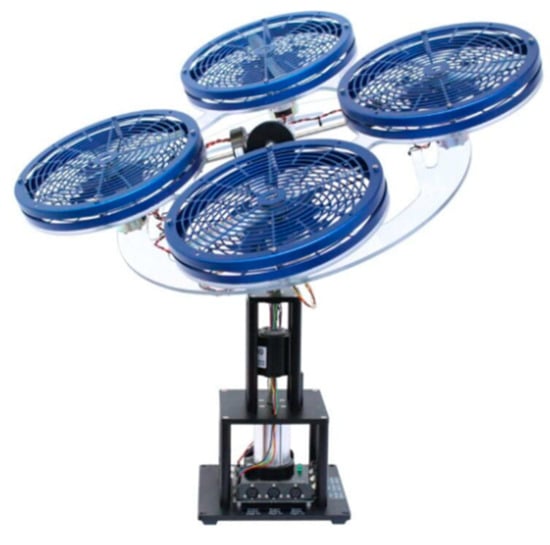
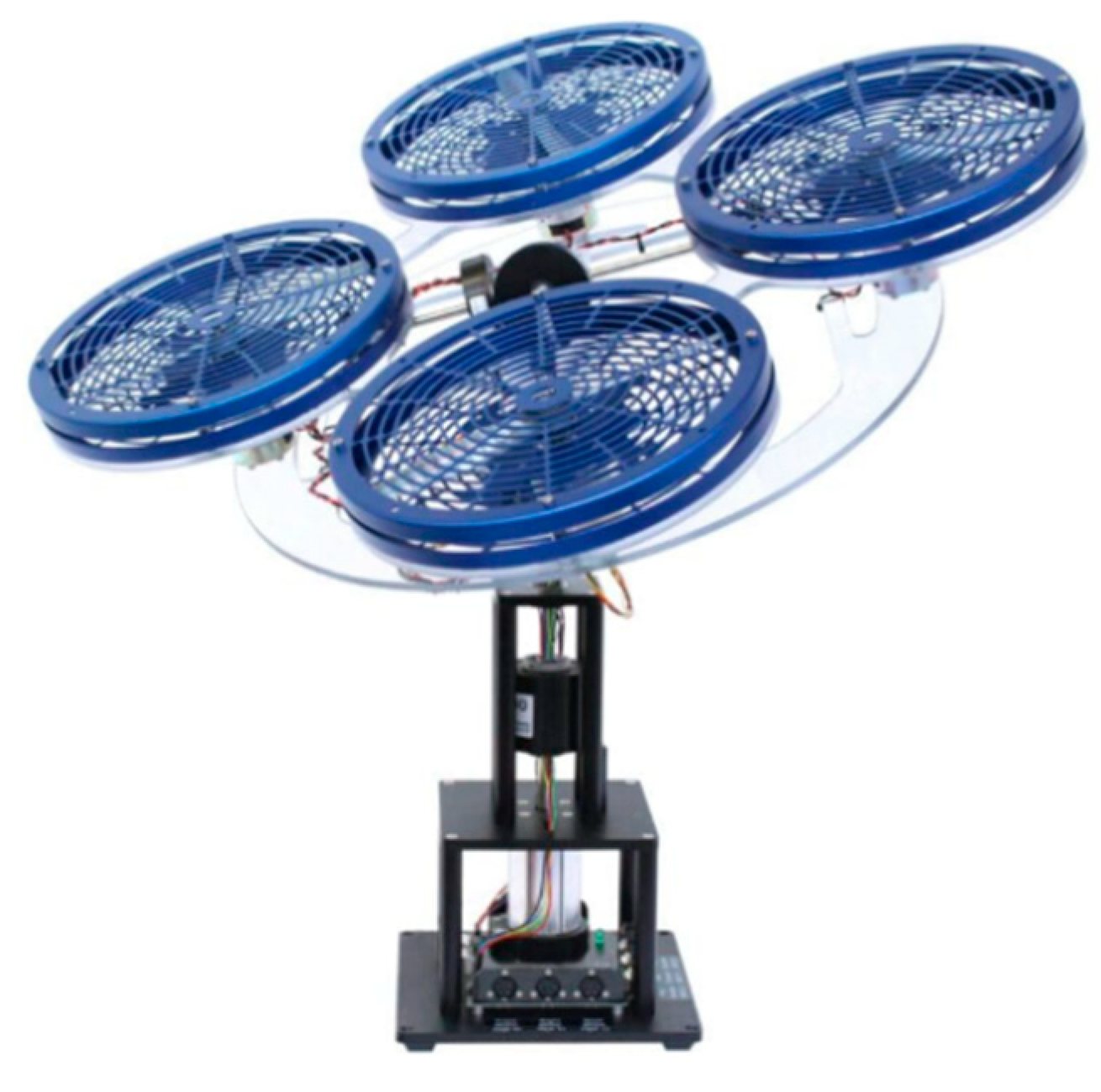
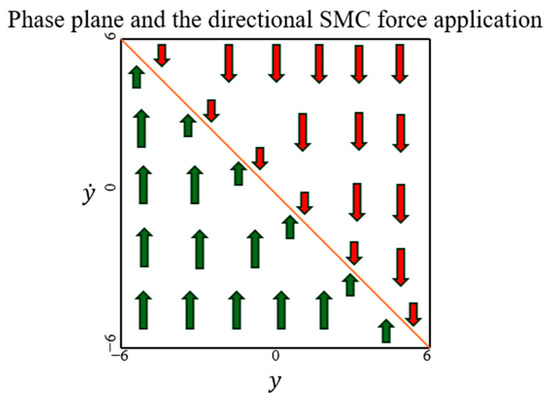
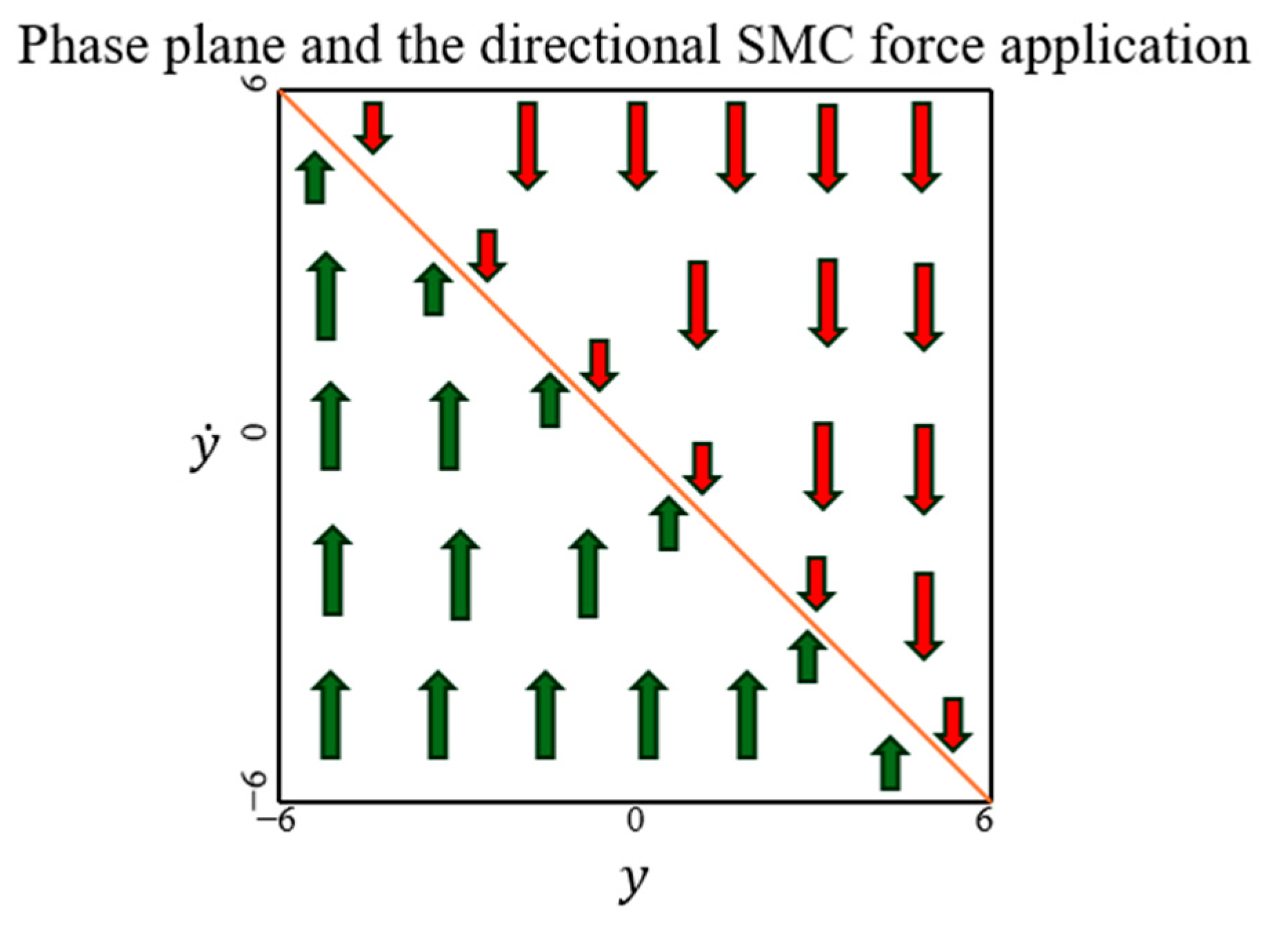
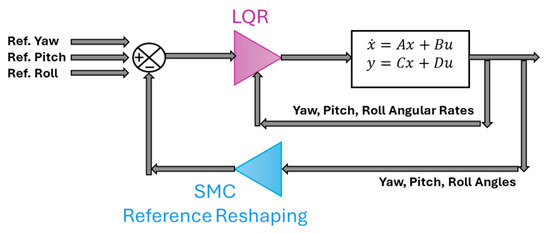
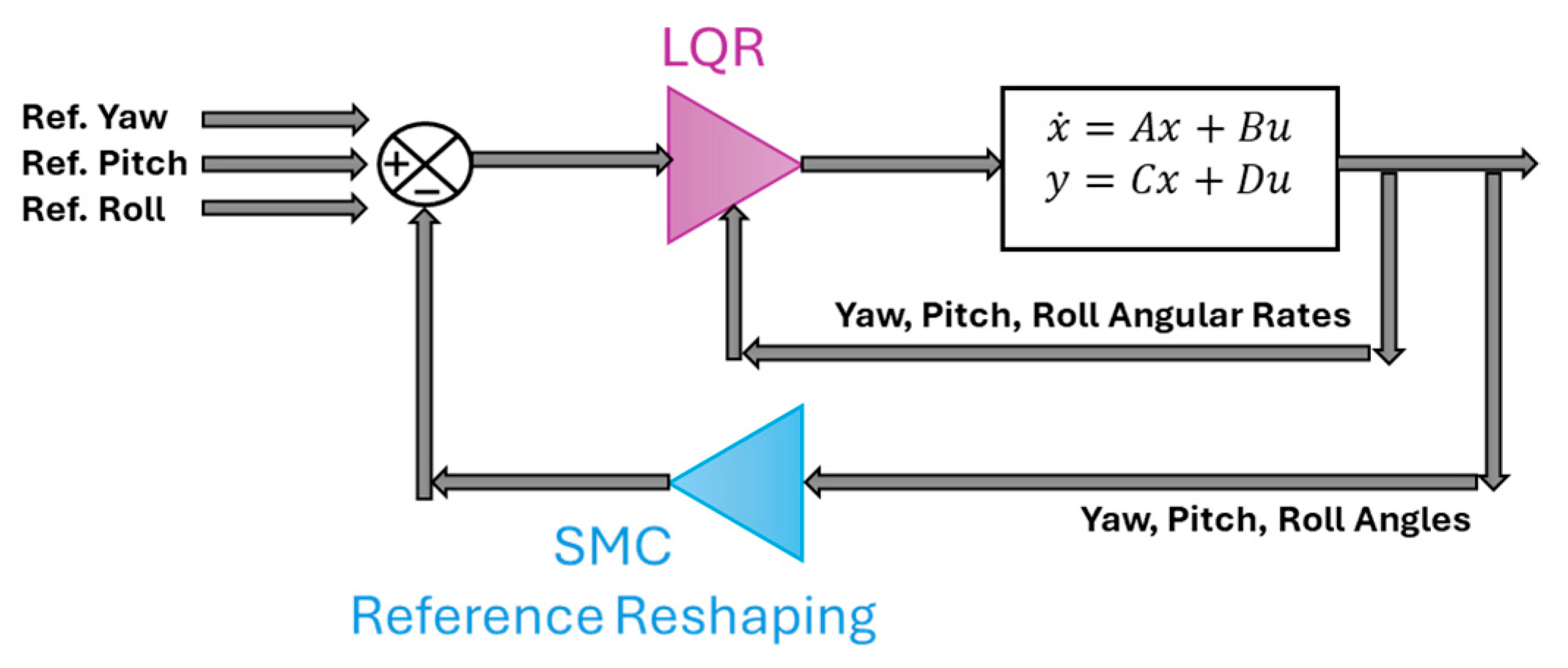
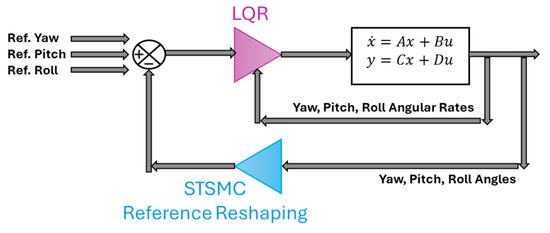
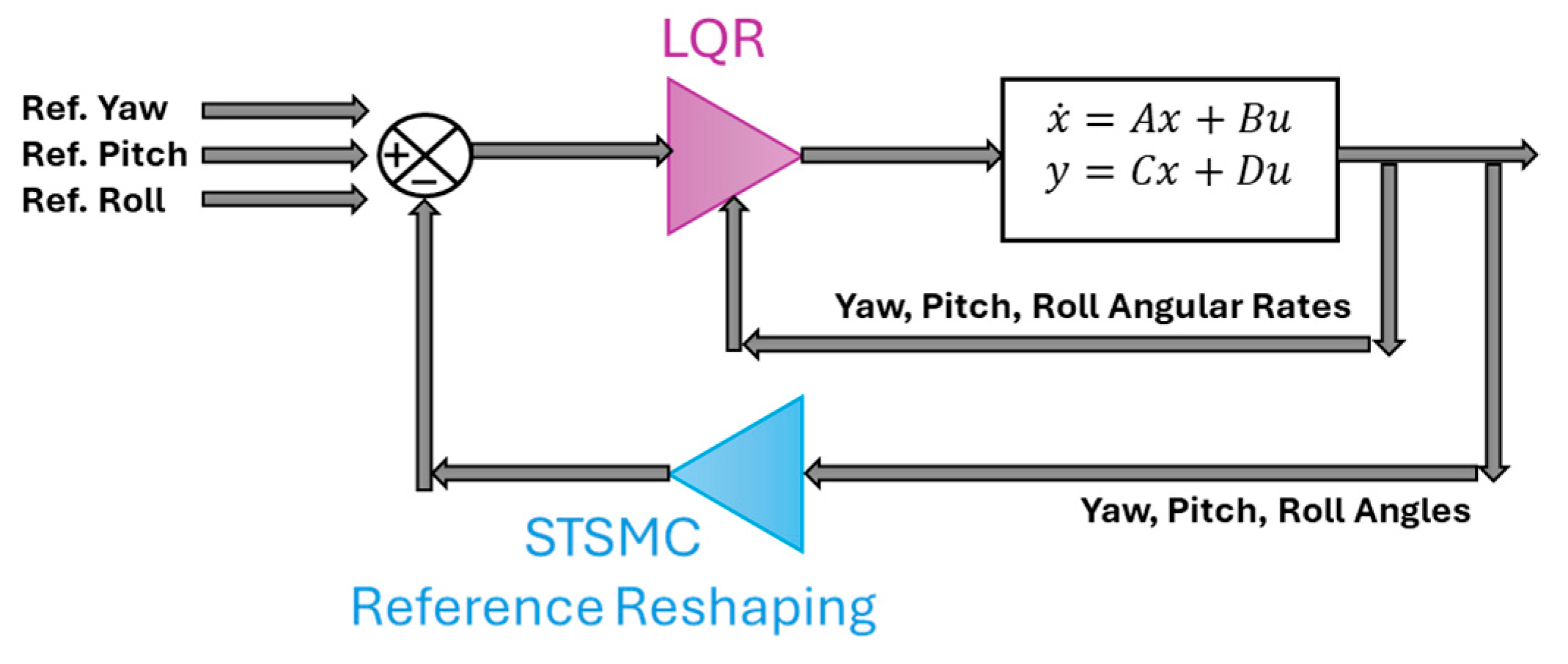
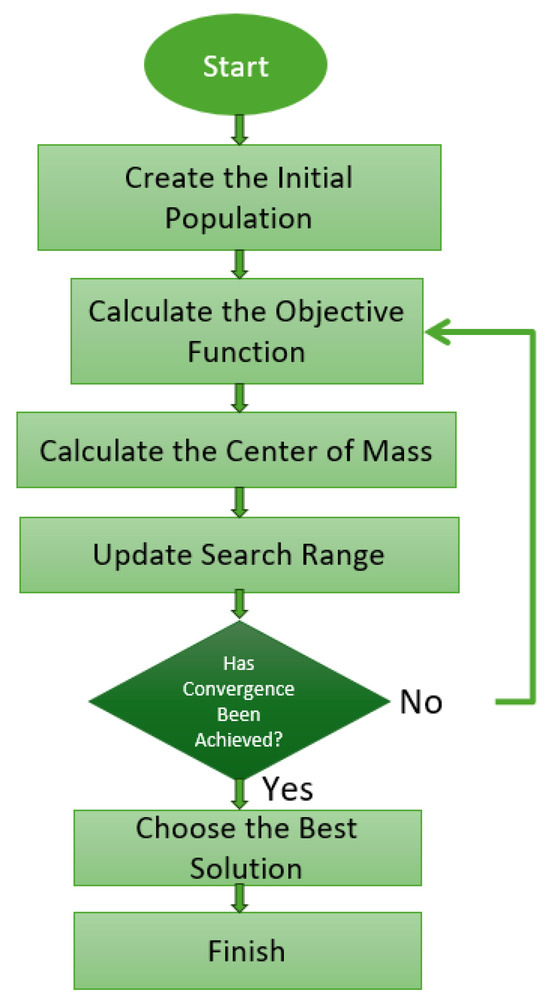
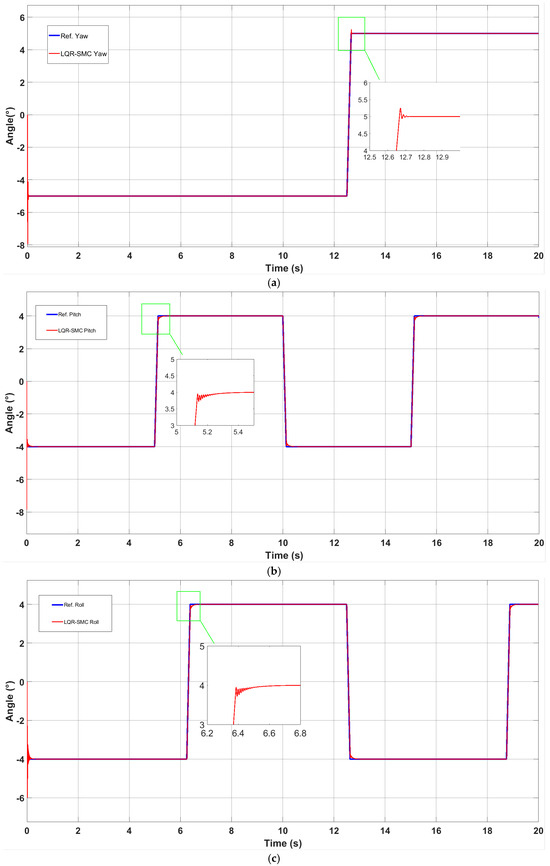
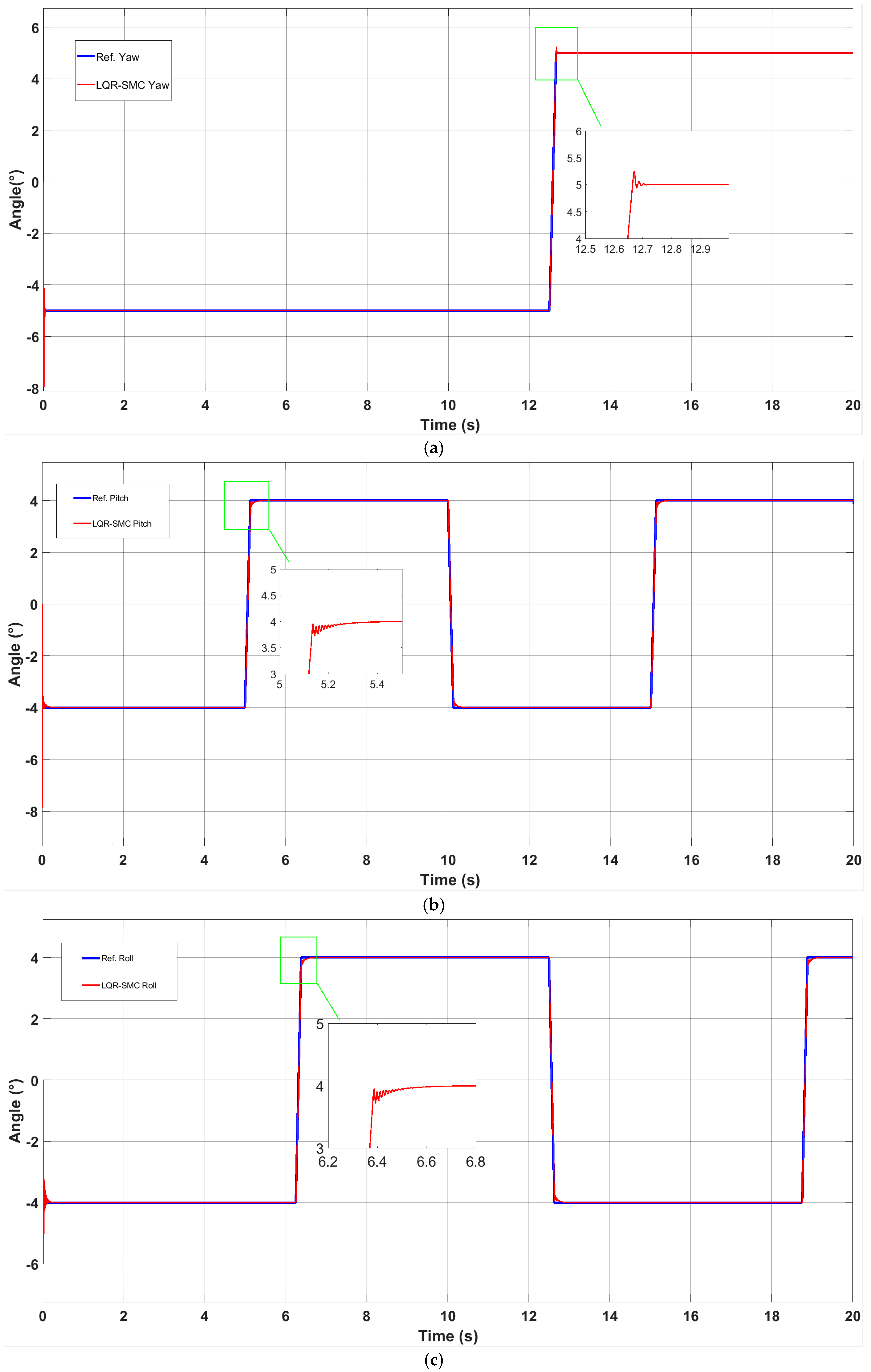
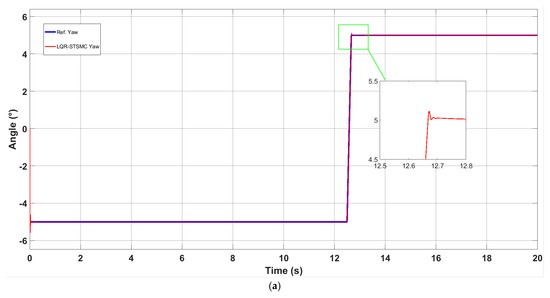
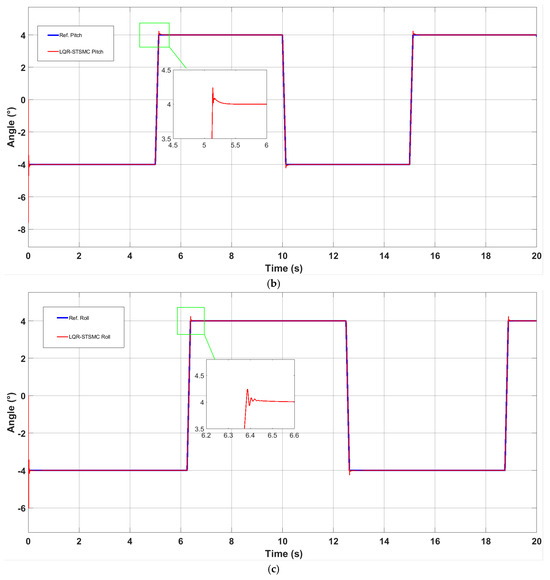
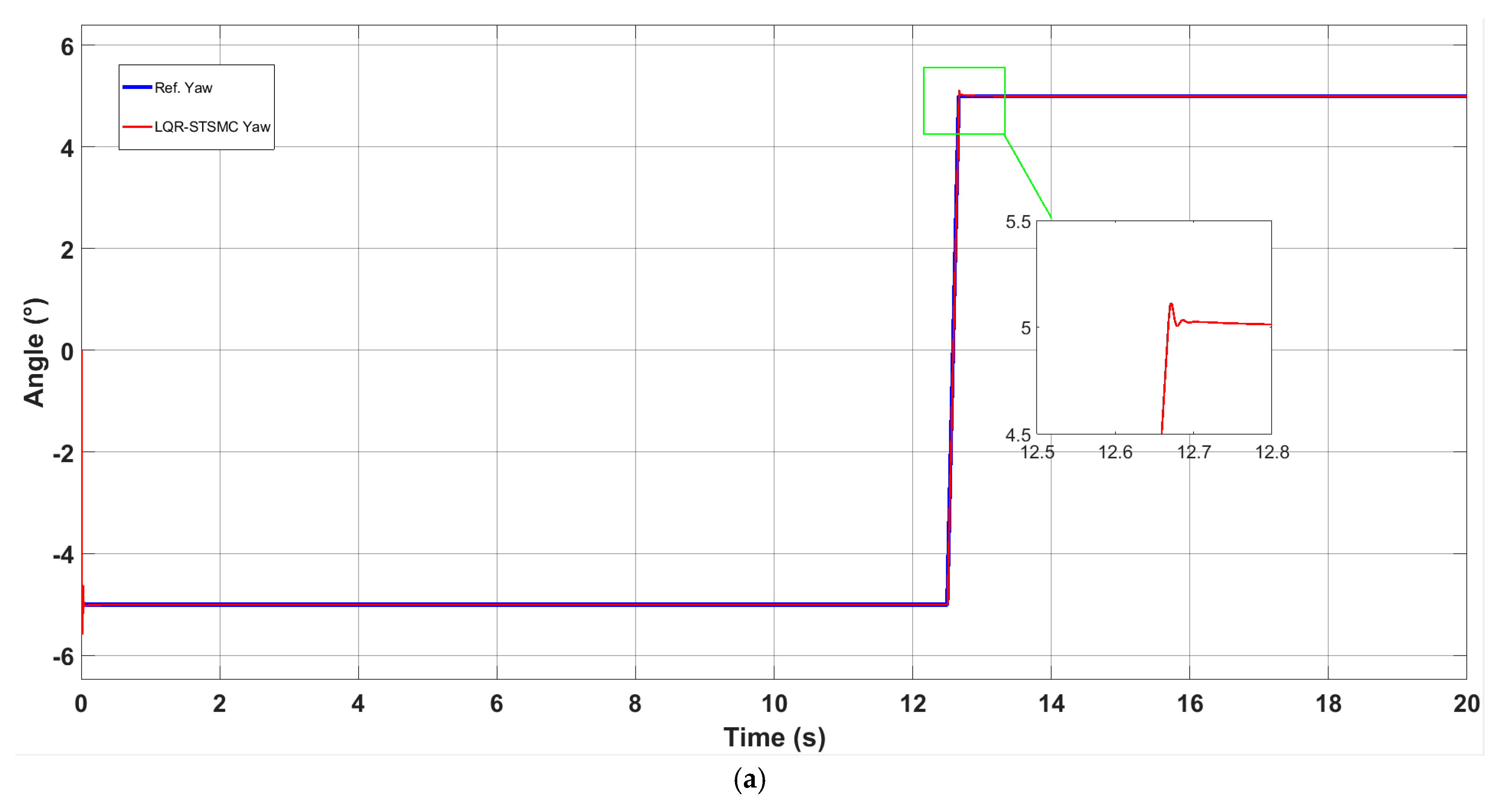
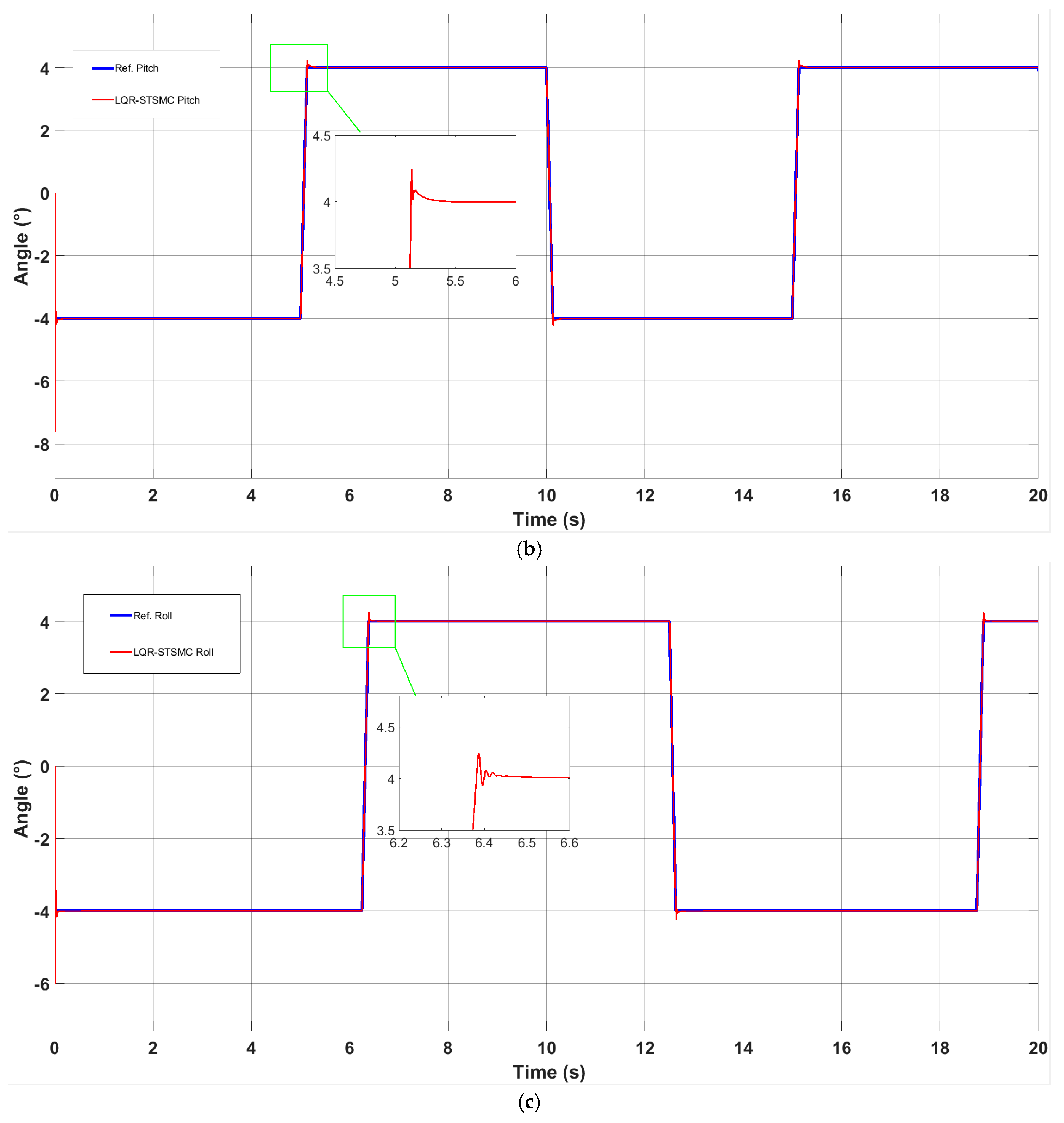
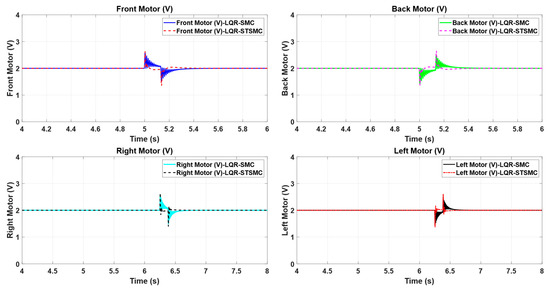
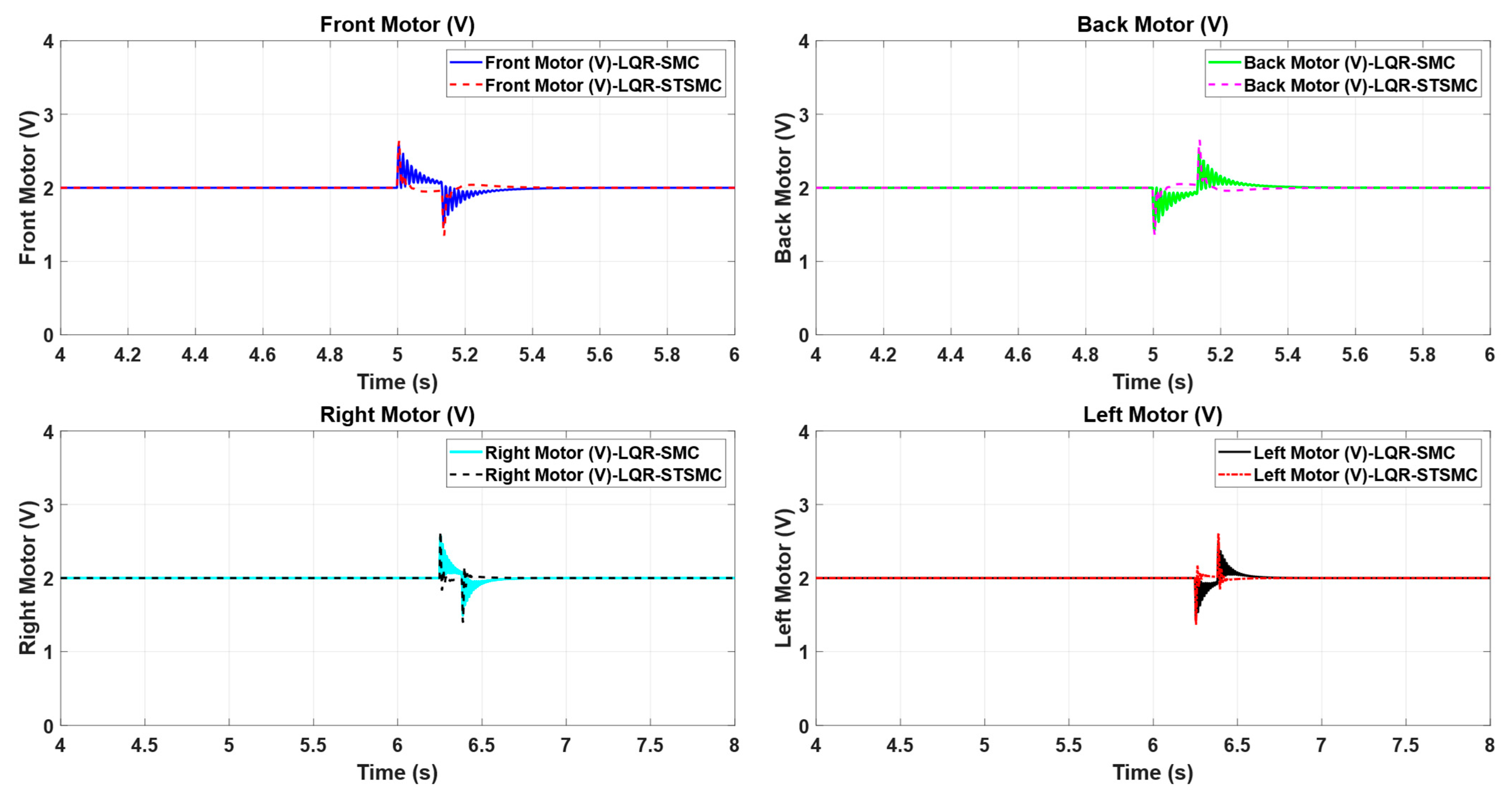
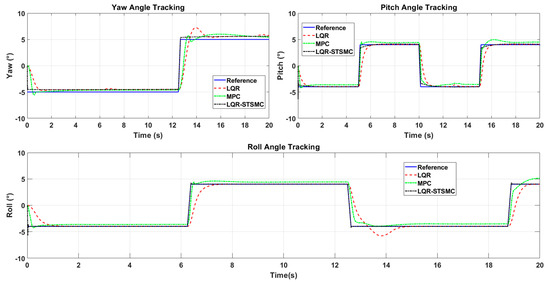
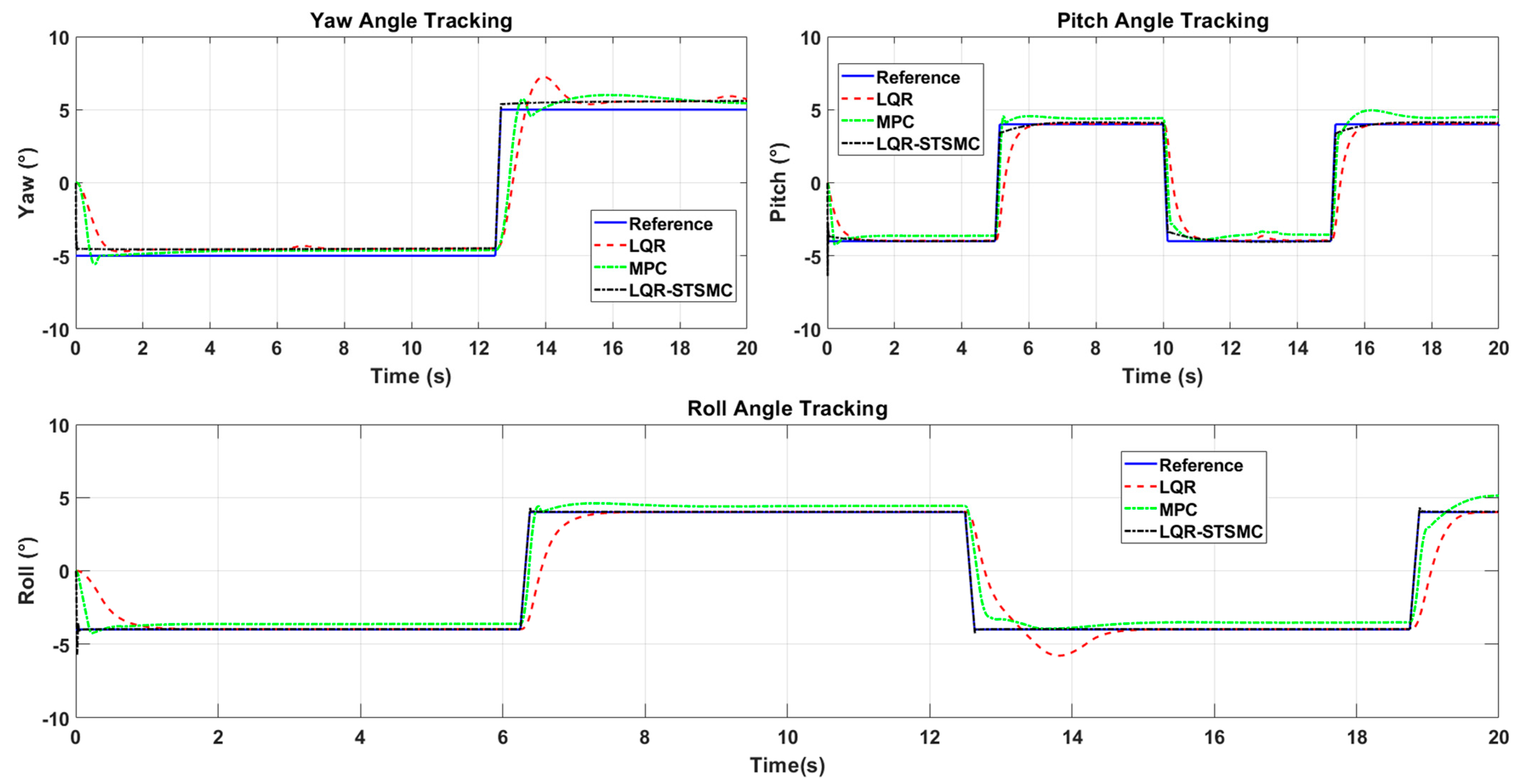

Disclaimer/Publisher’s Note: The statements, opinions and data contained in all publications are solely those of the individual author(s) and contributor(s) and not of MDPI and/or the editor(s). MDPI and/or the editor(s) disclaim responsibility for any injury to people or property resulting from any ideas, methods, instructions or products referred to in the content. |
© 2026 by the authors. Licensee MDPI, Basel, Switzerland. This article is an open access article distributed under the terms and conditions of the Creative Commons Attribution (CC BY) license.