


Abstract
This article examines how institutional arrangements shape exploitative labour conditions among highly skilled international professionals, challenging prevailing assumptions that labour exploitation primarily affects low-skilled or irregular workers. Focusing on international professionals living and working in Vienna, the study addresses a central paradox of contemporary migration governance: while states and cities actively compete for global talent, they simultaneously reproduce exploitative conditions: legal, organisational, and identity-based constraints that limit labour mobility, weaken bargaining power, and suppress rights mobilisation. The analysis draws on Social Identity Theory, the Skill Paradox, and the concept of Legal consciousness to examine how highly skilled migrants experience labour market entry, wage-setting, and workplace inequality under conditions of legal dependency and institutional regulation. Empirically, the study is based on 42 semi-structured interviews with highly skilled international professionals and 17 expert interviews with representatives of Austrian labour market institutions and non-governmental organisations, complemented by secondary institutional data. Using reflexive thematic analysis, the study identifies three interrelated mechanisms sustaining exploitative conditions: (1) conditional labour market entry through the systematic downgrading of foreign qualifications; (2) legal and institutional dependency that discourages rights awareness and rights mobilisation; and (3) intersectional wage penalties disproportionately affecting women and non-national professionals. The findings demonstrate labour market conditions that exhibit several characteristics associated with labour exploitation. Labour conditions among highly skilled international professionals are not primarily the result of overt coercion or illegality but are structurally produced through migration regimes, credential recognition practices, and uneven access to legal protection. These mechanisms position skilled migrants along a continuum of labour exploitation characterised by restricted mobility, economic compulsion, and suppressed labour market conflict. By conceptualizing what can be reasonably interpreted as exploitative labour arrangements as an institutional outcome rather than an individual failure, the article contributes to debates on skilled migration, labour market inequality, and migration governance, highlighting the need for policy reforms that better align talent attraction strategies with labour rights, legal empowerment, and social justice.
1. Introduction
In countries competing for global talent, highly skilled migrants are actively recruited as key contributors to economic growth, innovation, and competitiveness (Shachar 2006; Czaika and Parsons 2017). At the same time, their labour market inclusion is frequently shaped by legal dependency, restricted mobility, and the devaluation of foreign qualifications, creating exploitative conditions that persist without overt force (Anderson 2010; Goldring and Landolt 2011, 2013). This article examines a central paradox of Vienna’s labour market: although international highly skilled professionals are indispensable to economic sustainability and growth (Bock-Schappelwein 2024) and represent a pillar of the Austrian economy—contributing approximately 10% to GDP (Austrian Business Agency 2023)—they continue to experience persistent wage disparities and employment discrimination (Grandner and Gstach 2015; Weichselbaumer 2016, 2017; Weichselbaumer and Schuster 2021; City of Vienna—Integration and Diversity 2023; Schmid et al. 2024).
This contradiction constitutes a key manifestation of the skill paradox (Dietz et al. 2015), a global phenomenon in which higher levels of education and professional qualification do not translate into improved labour market outcomes for highly skilled migrants. On the contrary, elevated qualifications may intensify competition with local workers, thereby increasing the likelihood of underemployment, wage discrimination, or unemployment.
While precarious work and exploitative labour conditions have been extensively studied (Anderson 2010; Skrivankova 2010; Strauss 2012), this article argues that HSIP can experience such conditions and presents the mechanisms of exploitative work conditions. Drawing on the skill paradox (Dietz et al. 2015), this study contends that HSIPs—the so-called global talents actively courted by states and cities competing for mobile human capital (Shachar 2006; Czaika and Parsons 2017)—are equally subject to structural forms of precarity, dependency, and labour exploitation (Goldring and Landolt 2013; Strauss 2012). By shifting analytical attention toward this comparatively privileged yet structurally vulnerable group (Alberti et al. 2013), the article challenges the assumption that education and professional status offer protection against exploitative labour arrangements (Anderson 2010; Skrivankova 2010).
In this article, we use the term highly skilled international professionals (HSIPs) to refer to both EU and non-EU citizens who hold at least a university degree and are employed in an EU Member State other than their country of origin. The choice of this label is informed by ongoing debates surrounding the terms highly skilled migrant and expatriate, which often carry implicit classed, racialised, and political connotations—despite some authors arguing that the terms migrant and expat can be used interchangeably (Kunz 2020; Cranston 2017; Al Ariss and Crowley-Henry 2013). Following the example set by institutions in the City of Vienna (e.g., ABA–Work in Austria, Vienna Business Agency, Talent Hub), which increasingly adopt the more neutral and inclusive term international skilled workers, this article uses HSIPs as an umbrella category to emphasise skills, qualifications, mobility, and cross-border employment rather than country of origin, nationality, or ethnic background.
Focusing on HSIPs in Vienna, the study analyses how migration regimes, organisational practices, and identity-based hierarchies jointly generate exploitative labour conditions while simultaneously preventing open social conflict through the normalisation of inequality and constrained rights mobilisation (LeBaron et al. 2018).
Austria—and Vienna in particular—offers a critical case for examining these dynamics. As a coordinated market economy with a strong welfare state, extensive labour regulation, and an explicit strategy to attract international professionals, Austria presents itself as a model of regulated and socially inclusive labour market governance (Hall and Soskice 2001; Austrian Business Agency 2023). Vienna consistently ranks among the world’s most liveable cities and actively promotes itself as a welcoming hub for global talent (Vienna Business Agency; ABA–Work in Austria). Yet empirical evidence points to a persistent gap between this narrative of attraction and the lived experiences of HSIPs, who continue to face exploitative conditions, systematic underemployment, wage disparities, and unequal access to institutional protection (Grandner and Gstach 2015; Weichselbaumer and Schuster 2021; City of Vienna—Integration and Diversity 2023). Rather than reflecting isolated instances of discrimination or temporary integration challenges, these outcomes are embedded in migration regimes, credential recognition systems, and labour market institutions and organisations that condition entry, restrict mobility, and unevenly distribute legal protection (Nestorovic 2022, 2025; Risberg and Romani 2022). This contradiction positions Vienna as an analytically revealing site for understanding how exploitative labour conditions can emerge within formally regulated, high-income contexts while remaining largely invisible as social conflict.
This study addresses the paradox at the heart of contemporary skilled migration regimes: how highly educated international professionals can be simultaneously positioned as economically indispensable and structurally constrained within labour markets that formally promote equality and mobility. While existing research has documented wage gaps, underemployment, and discrimination among skilled migrants (Alberti et al. 2013; Dietz et al. 2015), less attention has been paid to how these outcomes are produced through institutional arrangements.
The concept of labour exploitation is used throughout this article in a theoretically grounded and empirically specific sense, drawing on scholarship that conceptualises exploitation not as a fixed condition defined by overt coercion or illegality, but as a structurally produced constraint on workers’ capacity to negotiate, refuse, or exit disadvantageous labour arrangements (Skrivankova 2010; Anderson 2010). The conceptual foundations of this approach are developed in the theoretical framework that follows. The article proceeds as follows: Section 2 develops the theoretical and conceptual framework, integrating perspectives on labour market segmentation, the skill paradox, conditional entry, legal consciousness, and intersectionality; Section 3 outlines the research design and methodological approach; Section 4 presents the empirical findings organised around three overarching themes; Section 5 discusses the findings in relation to existing scholarship, addresses the study’s limitations and directions for future research, and proposes Relational Stewardship as a policy framework for addressing the structural mechanisms identified; and Section 6 offers concluding reflections on the broader significance of the study for debates on skilled migration, labour rights, and migration governance in contemporary Europe.
2. Theoretical and Problem Framing
This section integrates relevant empirical and theoretical literature into a unified analytical framework guiding the study.
2.1. Definition of Exploitation and Exploitative Conditions
While the concepts of discrimination, inequality, labour market segmentation, and exploitation are closely related, this article treats them as analytically distinct mechanisms operating at different levels of labour market organisation. Discrimination refers to the unequal treatment of individuals based on characteristics such as nationality, gender, ethnicity, legal status, or foreign qualifications, particularly in hiring, promotion, and wage-setting processes (Arrow 1998; Blau and Kahn 2017). In this study, discrimination functions as a gatekeeping mechanism shaping access to employment and working conditions.
Labour market inequality refers to the uneven distribution of wages, opportunities, occupational status, and institutional protection across groups within the labour market (Tilly 1998). Inequality is therefore understood primarily as an outcome rather than a mechanism in itself.
The article further conceptualises labour market segmentation as the structural organisation of labour markets into differentiated sectors characterised by unequal mobility, protections, and rewards (Doeringer and Piore 2020; Reich et al. 1973). Within segmented labour markets, HSIPs are frequently channelled into precarious positions despite possessing substantial human capital (Borjas 1994). Mechanisms such as non-recognition of qualifications, language requirements, conditional entry regimes, and employer-dependent residence permits contribute to weaker bargaining power, lower wages, and restricted career mobility.
Importantly, exploitation is not defined simply as unequal treatment or poor working conditions. Rather, exploitation is conceptualised as a condition in which workers experience a structural reduction in their capacity to negotiate, refuse, or exit disadvantageous labour arrangements due to legal, institutional, or economic dependency (Skrivankova 2010; Strauss 2012; Anderson 2010). Drawing on Hirschman’s (1972) distinction between ‘exit’ and ‘voice,’ the study argues that employer-bound residence permits, fear of losing legal status, limited institutional knowledge, language barriers, and restricted access to legal and social resources constrain workers’ practical ability either to leave exploitative conditions or to challenge them formally.
Accordingly, discrimination and labour market segmentation operate as structural funnels directing HSIPs into unequal labour market positions, while legal and institutional dependency transforms these unequal positions into exploitative conditions. The article, therefore, shifts attention away from individual vulnerability alone toward the institutional mechanisms through which labour market inequalities become normalised and difficult to contest. In the context of highly skilled migration, exploitative labour dynamics often emerges not through overt coercion or illegality, but through the gradual erosion of bargaining power, mobility, and access to rights within formally regulated labour markets (Anderson 2010; Skrivankova 2010; Strauss 2012).
It is important to acknowledge that the conditions described in this article do not constitute exploitation in its most severe form, such as forced labour (LeBaron et al. 2018; Strauss 2012; Anderson 2010). Rather, following Skrivankova’s (2010) continuum of exploitation, the study positions the experiences of HSIPs toward the less visible end of this spectrum—one characterised by structural constraints on agency, mobility, and rights mobilisation rather than overt coercion (LeBaron et al. 2018; Strauss 2012). Employer-bound residence permits create a form of coercion that is institutional rather than physical: when workers cannot exercise ‘exit’—leaving a disadvantageous employer—or ‘voice’—formally contesting unfair treatment—without risking their legal right to remain in the country, dependency becomes structurally enforced even in the absence of any explicit threat (Hirschman 1972; Anderson 2010; Skrivankova 2010).
2.2. Institutional and Intersectional Dimensions of Skilled Migration Inequality
This study conceptualises labour market inequalities affecting HSIPs through an intersectional lens (Crenshaw 1989, 2019), highlighting how multiple dimensions of social differentiation—such as legal status, nationality, language proficiency, ethnicity, gender, and legal awareness—interact to produce compounded forms of disadvantage. These dimensions do not operate independently; rather, they intersect within institutional and organisational settings to shape migrants’ access to employment, wages, and career progression.
In the Austrian context, these dynamics are particularly evident despite persistent labour shortages, especially in sectors such as tourism and trade. Existing research suggests that these shortages stem less from an absolute lack of qualified labour than from unattractive wages, poor working conditions, and the absence of a coherent federal strategy for skilled migration (Bock-Schappelwein 2024; Schmid et al. 2024). Consequently, highly skilled migrants frequently experience occupational downgrading and earn approximately 15–20% less than comparably qualified native workers (Grandner and Gstach 2015; Hermansen et al. 2025), illustrating how structural labour market conditions translate into systematic inequality.
2.3. The Skill Paradox and Social Identity Theory in Highly Skilled Labour Markets
HSIPs play a critical role in sustaining contemporary labour markets, particularly in countries facing demographic decline and skills shortages (Kohlenberger 2023). Yet empirical evidence consistently shows that these workers experience persistent wage disparities, underemployment, and workplace discrimination (Grandner and Gstach 2015; Weichselbaumer 2017; Weichselbaumer and Schuster 2021; Hermansen et al. 2025). This contradiction—where global talent is economically indispensable yet structurally marginalised—can be conceptualised through the skill paradox (Dietz et al. 2015). The skill paradox captures the counterintuitive pattern whereby discrimination does not diminish with higher levels of education and professional qualification but may instead intensify.
The skill paradox is theoretically grounded in Social Identity Theory (Tajfel and Turner 1986), which explains how labour market actors categorise individuals into in-groups and out-groups. HSIPs are frequently positioned as out-group members whose qualifications challenge established professional hierarchies. Several participants in this study described experiences consistent with such categorisation: being treated as cultural outsiders despite formal credentials, encountering scepticism toward foreign degrees framed as inferior to Austrian standards, and perceiving their national background as a barrier to professional recognition regardless of their qualifications. In competitive labour markets, this perceived threat can intensify exclusionary practices in recruitment, promotion, and wage-setting. Consequently, foreign credentials are systematically devalued, and migrants encounter barriers to accessing positions commensurate with their expertise, even in contexts characterised by formal equality norms and high demand for skilled labour. Social Identity Theory (Tajfel and Turner 1986) is therefore used here not as the primary explanatory lens, but as one analytical element that helps account for the organisational and interpersonal dynamics through which institutional structures are reproduced in everyday workplace interactions.
2.4. Conditional Entry and the Institutionalisation of Downward Mobility
Moving beyond individual-level bias, Risberg and Romani (2022) introduce the concept of conditional entry into the labour market, which captures how organisations normalise migrant underemployment through institutionalised practices. HSIPs are often required to accept positions below their formal qualifications as a precondition for labour market inclusion, a process frequently framed as necessary for ‘integration’ or adaptation to local professional norms (Nestorovic 2022, 2025).
A political economy perspective adds a further structural dimension to understanding the labour market experiences of highly skilled international professionals. Labour market segmentation theory suggests that migrant workers are frequently incorporated into secondary labour market positions characterized by reduced bargaining power and greater vulnerability, even when they possess qualifications comparable to those of native-born workers (Piore 1979; Reich et al. 1973). Within this framework, the devaluation or non-recognition of foreign qualifications can contribute to the reproduction of segmented labour markets by limiting migrants’ access to occupations and wages commensurate with their skills and experience (Bauder 2003; Hermansen et al. 2025). Rather than being solely the result of administrative inefficiencies or bureaucratic barriers, these institutional arrangements may generate outcomes that align with employer interests by increasing labour market flexibility and sustaining wage differentials between national and international workers (Bauder 2003; Anderson 2010; Hermansen et al. 2025). When professional credentials are discounted and legal status constrains mobility and bargaining power, highly skilled migrants may become concentrated in positions below their qualifications, creating a workforce that remains productive yet is less able to secure rewards equivalent to those of comparably qualified native-born workers (Piore 1979; Bauder 2003).
Conditional entry (Risberg and Romani 2022), reflects organisational risk-management strategies that prioritise familiarity, local experience, and perceived cultural fit over formal competence. Even in the absence of explicit discriminatory intent, such practices institutionalise downward mobility and generate long-term wage penalties for international professionals. Over time, conditional entry contributes to segmented labour markets in which migrants remain concentrated in positions below their skill level, thereby reinforcing inequality across career trajectories.
2.5. Legal Status, Reservation Wage, Gender, and Stratified Vulnerabilities
Legal status further structures labour market outcomes and shapes exposure to wage inequality. EU citizens—particularly those from Central and Eastern Europe—often accept lower wages due to comparisons with home-country standards, a pattern explained by the dual frame of reference theory (Suarez-Orozco 1989). Unlike non-EU migrants holding the Red-White-Red (RWR) Card, EU workers lack formal wage-protection mechanisms, increasing their vulnerability to underpayment.
The economic concept of the reservation wage—the minimum wage below which a worker will not accept employment (McCall 1994; Sant 1977)—offers a complementary micro-level explanation for this dynamic. In standard job search theory, workers accept offers above their reservation wage and reject those below it, with that threshold shaped by available alternatives, information, and search costs (McCall 1994). Importantly, Sant (1977) demonstrates that reservation wages are not fixed but adjust through learning behaviour, meaning that workers who repeatedly encounter rejection progressively lower their wage expectations over time. Empirical research on migrants specifically demonstrates that first and second generation migrants consistently exhibit lower reservation wages than native workers, reflecting income comparisons calibrated to home-country rather than host-country standards (Constant et al. 2010). Workers migrating from lower-wage economies are therefore structurally more willing to accept wages that native workers or migrants from higher-wage countries would decline, as their subjective wage floor sits well below prevailing host-country norms (Constant et al. 2010). Crucially, Constant et al. (2010) further show that reservation wages among migrants are shaped not only by origin-country income differentials but also by legal status, labour market integration, and access to institutional support—factors that in the context of highly skilled international professionals are additionally compressed by visa dependency, non-recognition of credentials, and limited knowledge of labour rights. This allows wage suppression to persist across migration streams even without explicit employer coercion, as structurally lowered reservation wages make disadvantageous employment arrangements appear acceptable rather than contestable (McCall 1994; Constant et al. 2010).
For non-EU migrants, wage protection applies primarily to RWR Card holders, who constitute only a small share of total immigration (approximately 2%, according to interviews with WAFF).
Family migrants—predominantly women—often enter the labour market without salary safeguards, placing them at heightened risk of underemployment and wage inequality (Goldring and Landolt 2013; Kofman 2014; Kofman and Raghuram 2006; Salazar-Parreñas 2001). This reflects a broader pattern identified in scholarship on gendered migration regimes, which has long documented that skilled migration frameworks were designed around a male breadwinner model, rendering skilled migrant women systematically invisible in both policy and research (Kofman 2000; Morokvaśic 1984). Women with a migrant background or foreign education are particularly disadvantaged, facing intersecting forms of gender- and migration-based discrimination that cannot be reduced to either dimension alone (Crenshaw 1989; Collins 2022). They earn significantly less than both male migrants—up to EUR 1000 per month—and native-born women, and encounter limited opportunities for professional advancement (City of Vienna—Integration and Diversity 2023; W.I.R. 2023). Racialised forms of discrimination compound these disadvantages in ways that are often subtle and institutionally invisible, consistent with research on everyday racism and gendered discrimination in European labour markets (Weichselbaumer 2016, 2017). These outcomes illustrate how legal status, gender, and race operate not as isolated variables but as mutually reinforcing stratifying mechanisms within the broader structure of skilled migration (Anderson 2010).
2.6. Legal Consciousness and the Suppression of Labour Market Conflict
Despite Austria’s extensive legal framework and the existence of the Chamber of Labour—of which all employees are members by default and through which they are entitled to free legal advice and representation before the Courts—the persistence of labour market inequalities among HSIPs highlights a substantial gap between formal legal protections and lived workplace realities. To account for this discrepancy, this study draws on the concept of legal consciousness (Levitsky 2014; Hirsh and Lyons 2010), understood as individuals’ awareness of their legal rights, their sense of entitlement to fair treatment, and their knowledge of institutional mechanisms for redress (Nestorovic 2025). Legal consciousness shapes whether and how workers interpret adverse treatment as unlawful and whether they mobilise available legal protections.
Empirical research consistently demonstrates that migrants, including highly skilled professionals, often exhibit lower levels of legal consciousness than native workers (Marino et al. 2017; Belavusau and Henrard 2019; Nestorovic 2025). Language barriers, unfamiliarity with national legal systems, uncertainty surrounding residence or employment status, and fear of retaliation discourage engagement with formal complaint mechanisms. As a result, discriminatory practices related to recruitment, pay, and promotion frequently remain unchallenged, allowing inequalities to persist despite robust legal frameworks.
Importantly, limited legal consciousness does not merely reflect individual deficits in legal knowledge but functions as a structural mechanism that suppresses labour market conflict. When discrimination is normalised or interpreted as an inevitable aspect of migration or ‘integration’, affected individuals are less likely to contest unfair treatment. This dynamic benefits employers and institutions by reducing the visibility of inequality and minimising the risk of legal disputes, thereby reinforcing existing power asymmetries within the labour market.
Legal consciousness is also unevenly distributed along intersectional lines. Migrant women, family migrants, and individuals entering the labour market without wage-protection mechanisms—such as non–Red-White-Red Card holders—are particularly unlikely to assert labour rights. Precarious employment, care responsibilities, and limited access to professional networks further constrain their capacity to mobilise legal remedies. Consequently, gendered and migration-based inequalities are reproduced not only through discriminatory practices but also through differential access to legal awareness and institutional support.
By foregrounding legal consciousness, this study links individual experiences of inequality to broader institutional and organisational contexts. The suppression of labour market conflict through limited rights awareness helps explain why wage disparities and occupational downgrading among HSIPs persist even in settings characterised by formal equality norms and advanced regulatory frameworks.
2.7. Integrating Perspectives: A Multi-Level Framework
This study integrates five analytical perspectives into a multi-level framework that collectively explains how a specific and institutionally produced form of exploitative regimes emerges among highly skilled international professionals—a group not typically associated with precarity or labour abuse. The Skill Paradox (Dietz et al. 2015) explains how higher qualifications paradoxically intensify structural vulnerability by placing HSIPs in direct competition with native workers, triggering exclusionary practices that channel them into positions below their skill level. Social Identity Theory (Tajfel and Turner 1986) accounts for the organisational mechanisms through which foreign credentials and migrant identities are systematically devalued, legitimising differential treatment in hiring, wage-setting, and career progression. Conditional Entry (Risberg and Romani 2022) captures how these dynamics become institutionalised, requiring highly qualified professionals to accept downgraded positions as a precondition for labour market inclusion and thereby creating the structural conditions for long-term wage suppression and occupational stagnation. Intersectionality (Crenshaw 1989, 2019) demonstrates that this exploitation is not uniformly experienced but is compounded along lines of gender, legal status, ethnicity, and migration pathway, producing layered and mutually reinforcing disadvantages that are particularly severe among non-EU women and family migrants. Legal Consciousness (Levitsky 2014; Hirsh and Lyons 2010; Nestorovic 2022, 2025) explains the final and perhaps most consequential mechanism: why these conditions persist without open conflict, showing how limited rights awareness, fear of retaliation, and institutional mistrust prevent HSIPs from contesting or exiting exploitative arrangements. Taken together, these five perspectives explain not merely inequality or discrimination in isolation, but the specific form of exploitative conditions identified in this study—one that operates without overt coercion, within formally regulated labour markets, and among the very professionals that receiving states actively compete to attract.
3. Research Design and Methods
Building on the multi-level theoretical framework outlined above, this section details the research design and methodological approach used to examine how HSIPs in Vienna experience and interpret labour market inequality. Vienna is treated as a theoretically relevant rather than a statistically representative case, allowing for analytical generalisation to other regulated, high-income labour markets. Given the study’s focus on institutional practices, intersecting social positions, and legal awareness, a qualitative research design was adopted to capture participants’ lived experiences, perceptions, and strategies of response.
3.1. Researcher Positionality and Reflexivity
Both researchers occupy dual positionality as highly skilled international professionals and academic investigators. This positionality facilitated access to participants and fostered trust during interviews, while simultaneously requiring systematic reflexive engagement to avoid privileging particular narratives or interpretive frames. Reflexive practices included structured self-questioning, such as critically examining how personal migration experiences informed analytical decisions and whether specific accounts were unintentionally foregrounded over others. Reflexivity was maintained throughout all stages of the research process, including data collection, coding, and interpretation, and was supported through ongoing memo-writing and peer debriefing.
3.2. Sample and Data Collection
The primary qualitative dataset consists of 42 semi-structured interviews with HSIPs living and working in Vienna. Participants were recruited through snowball sampling within Vienna’s international community, drawing on professional networks and expatriate platforms (e.g., InterNations). The respondents include 29 women and 13 men, aged between 28 and 62 years, with 6 holding a university degree, 29 holding a Master’s degree, 7 holding a PhD degree obtained across Europe, North America, and Asia, and 7 participants currently enrolled as doctoral candidates (predocs). Participants originate from over 20 countries, including both EU and non-EU contexts (e.g., Germany, Spain, Serbia, India, Nigeria, and Colombia), reflecting substantial geographic diversity. Professionally, they are employed across a wide range of sectors, including academia, IT, engineering, finance, social sciences, arts, and international organisations, with positions ranging from doctoral candidates and researchers to senior consultants and UN employees. Their length of stay in Vienna varies significantly, from less than one year to over three decades, allowing for insights across different stages of labour market integration and institutional exposure. All names were replaced with pseudonyms to ensure anonymity.
Table 1 presents the sample of HSIPs interviewed. The sample consists of 42 HSIPs living and working in Vienna who participated in semi-structured interviews conducted between 2022 and 2024. Participants originated from more than 20 countries and represented both EU and non-EU migration backgrounds. The sample includes professionals employed across diverse sectors, including academia, IT, engineering, banking, international organisations, arts, education, and social sciences. Ages ranged from 28 to 62 years, and participants held university, Master’s, and PhD degrees obtained in Europe, North America, Asia, Africa, and Latin America. To ensure anonymity and confidentiality, all names used in the table are pseudonyms.
Table 1.
Sample of HSIPs (N = 42).
The institutional sample (Table 2) included representatives from public labour market institutions, migration authorities, social partner organisations, equality bodies, non-governmental organisations, and private integration initiatives involved in the regulation, support, and integration of HSIPs in Austria. These interviews were conducted to triangulate the experiences reported by participants and to provide institutional perspectives on labour market integration, qualification recognition, migration governance, wage-setting practices, rights awareness, and workplace inequalities.
Table 2.
Institutional sample (N = 17 interviews).
Interviews were conducted between 2022 and 2024, lasted between 45 and 90 min, and were carried out online via Zoom. All interviews were audio- or video-recorded with informed consent and transcribed verbatim. The interviews were conducted in English.
To triangulate individual experiences and contextualise the findings, 17 additional interviews were conducted with institutional experts from key Austrian organisations involved in labour market regulation and migrant integration. These included representatives from the Chamber of Labour (AK), the Public Employment Service (AMS), the Economic Chamber (WKO), WAFF, ABA–Work in Austria, MA17, the Ombud for Equal Treatment, AST, VSO, and other relevant non-governmental organisations, as well as a professor of labour economics.
3.3. Interview Focus and Data Sources
Interview guides consisted of open-ended questions derived from the existing literature and the study’s theoretical framework. Core topics included labour market access, workplace experiences, wage-setting processes, underemployment, awareness of labour rights, knowledge of support institutions, and willingness to seek legal protection.
In addition to interview data, secondary sources—including institutional reports and a quantitative survey conducted in cooperation with the Vienna Business Agency’s Expat Center—were used to contextualise and corroborate the qualitative findings.
3.4. Data Analysis
All interviews were transcribed using Transkriptor software and analysed with MAXQDA. The analysis followed Braun and Clarke’s (2006) approach to thematic analysis, combining inductive and deductive coding strategies.
The analytical process unfolded in three stages: (1) familiarisation with the data through repeated readings and memo writing; (2) inductive coding, with an emphasis on in vivo codes to preserve participants’ voices; and (3) thematic refinement, linking emergent patterns to the study’s theoretical constructs. In total, 4536 first-order data units were generated and subsequently organised into 35 first-order codes, five second-order categories, and three overarching themes.
First-order data units were generated by coding all interview transcripts at the sentence level, with particular attention to selecting segments most relevant to the research questions. These initial units (N = 4536) were inductively grouped into 35 first-order codes based on shared meaning, recurring language, and common underlying ideas (e.g., non-recognition of qualifications, language barriers, visa-related constraints).
The primary criterion for grouping was conceptual similarity, ensuring that each code captured a distinct yet internally coherent pattern in the data. While this stage was largely data-driven, it was sensitized by the study’s theoretical framework, particularly the Skill Paradox (Dietz et al. 2015), Legal Consciousness (Ewick and Silbey 199; Levitsky 2014; Hirsh and Lyons 2010), and Social Identity Theory (Tajfel and Turner 1986). The analytical process was further guided by the study’s conceptualisation of labour exploitation as a structurally produced condition rather than an individual experience of abuse or coercion—drawing on Skrivankova’s (2010) continuum of exploitation, Anderson’s (2010) framework of immigration controls fashioning precarious workers, and Hirschman’s (1972) distinction between ‘exit’ and ‘voice’—which sensitised the coding process to patterns of constrained mobility, legal dependency, suppressed conflict, and reduced bargaining power as potential indicators of exploitative labour conditions among highly skilled international professionals.
These frameworks guided attention to how highly skilled international professionals experience the devaluation of their human capital, how they perceive and mobilise (or fail to mobilise) their rights, and how identity-based categorisations shape workplace inclusion and exclusion—all understood as contributing mechanisms to the structurally produced exploitative conditions identified in this study (Skrivankova 2010; Anderson 2010; Strauss 2012). In the next analytical step, the first-order codes were iteratively compared and clustered into five second-order categories reflecting broader analytical patterns: systematic underutilisation of highly skilled labour, language- and knowledge-based wage acceptance, legal status dependency, limited rights awareness and suppressed conflict, and gendered inequalities. At this stage, theoretical concepts played a more explicit interpretive role, with each category understood not in isolation but as a distinct mechanism contributing to the broader continuum of exploitation experienced by HSIPs within formally regulated labour markets.
The Skill Paradox (Dietz et al. 2015) informed the interpretation of persistent underemployment and the devaluation of foreign qualifications despite high levels of human capital—understood here as the first structural mechanism channelling HSIPs into unequal labour market positions that create the preconditions for exploitation. Legal Consciousness theory (Ewick and Silbey 1998; Levitsky 2014; Hirsh and Lyons 2010) guided the analysis of participants’ limited awareness of labour rights, low perceived entitlement, and avoidance of formal complaint mechanisms—understood as the structural suppression of conflict that allows exploitative conditions to persist without open contestation (Hirschman 1972). Social Identity Theory (Tajfel and Turner 1986) informed understanding of how national origin, language proficiency, and legal status function as markers of group membership that structure access to opportunities, reinforce hierarchies, and legitimise differential treatment in organisational contexts—reproducing the identity-based exclusions through which exploitation becomes normalised and rendered invisible as a form of social conflict (Anderson 2010; Skrivankova 2010).
Finally, through iterative abstraction and constant comparison, these second-order categories were synthesized into three overarching themes capturing the core structural dynamics of the study: (1) structural and legal barriers to labor market integration, (2) intersectional wage inequalities, and (3) legal dependency as a mechanism of labor control. At this stage, the analysis became explicitly theory integrative.
Structural and legal barriers were interpreted as institutional manifestations of the Skill Paradox (Dietz et al. 2015), where systemic mechanisms prevent the effective utilisation of highly skilled labour and channel HSIPs into unequal labour market positions that constitute the preconditions for exploitation—understood here not as overt coercion but as a structurally produced reduction in workers’ capacity to negotiate, refuse, or exit disadvantageous arrangements (Skrivankova 2010; Anderson 2010; Strauss 2012). Intersectional wage inequalities were understood through the combined lens of Social Identity Theory (Tajfel and Turner 1986) and intersectionality (Crenshaw 1989, 2019), highlighting how overlapping social categories—including gender, legal status, nationality, and ethnicity—produce compounded and unevenly distributed forms of disadvantage that deepen exploitative conditions for specific subgroups within the broader HSIP population. Legal dependency was conceptualised through Legal Consciousness theory (Ewick and Silbey 1998; Levitsky 2014; Hirsh and Lyons 2010) and Hirschman’s (1972) framework of ‘exit’ and ‘voice’ as the critical mechanism through which structurally unequal labour market positions are transformed into exploitative conditions: when visa-related constraints, limited rights awareness, fear of retaliation, and institutional mistrust collectively prevent workers from contesting or leaving disadvantageous employment arrangements, exploitation becomes structurally enforced even in the absence of overt coercion (Anderson 2010; Skrivankova 2010; Strauss 2012) (Figure 1). This iterative movement between data and theory ensured analytical rigour, grounding the study’s theoretical contribution—the conceptualisation of labour exploitation as an institutionally produced outcome among globally recruited highly skilled professionals—in empirical material derived directly from participants’ lived experiences (Table 3). Direct quotations are presented in the results section to anchor the analysis in participants’ own words and to preserve the depth and complexity of their accounts.
Figure 1.
Illustrates how institutional gatekeeping (Conditional Entry) funnels workers into unequal positions, which create conditions that may constrain bargaining power and exhibit characteristics associated with exploitative labour dynamics through Legal Dependency and Intersectional Penalties, effectively constraining the worker’s ability to exercise ‘exit’ or ‘voice’ (Hirschman 1972).
Table 3.
Coding logic: from first-order concepts to overarching themes.
4. Results
The analysis reveals three interrelated mechanisms through which inequality is produced and sustained in the Austrian labour market
Following Braun and Clarke’s reflexive thematic analysis, the 35 first-order codes and five second-order categories presented in Table 3 were consolidated into three overarching themes capturing the core structural dynamics of the data:
- Conditional labour market entry through the systematic downgrading of foreign qualifications, encompassing underutilisation and language- and knowledge-based wage acceptance, and explaining how migrants are channelled into structurally unequal positions (Dietz et al. 2015; Doeringer and Piore 2020; Reich et al. 1973; Tajfel and Turner 1986; Risberg and Romani 2022);
- Legal and institutional dependency discouraging rights mobilisation, combining differential wage protection with limited rights awareness and suppressed conflict, and explaining how these unequal positions become exploitative once workers can no longer effectively exercise “exit” or “voice” (Hirschman 1972; Felstiner et al. 1980–1981; Levitsky 2014; Hirsh and Lyons 2010; Anderson 2010; Skrivankova 2010; Strauss 2012);
- Intersectional wage penalties disproportionately affect women and non-EU nationals, reflecting how these conditions are not experienced equally but vary across gender, nationality, ethnicity, and legal status (Crenshaw 1989, 2019; Tajfel and Turner 1986).
The following sections discuss the three overarching themes in detail. Each theme is organised into second-order categories that capture broader analytical patterns and is supported by first-order codes derived directly from participants’ narratives. This hierarchical structure enables the integration of empirical observations with higher-level conceptual insights while preserving the depth and complexity of participants’ experiences.
4.1. Theme 1. Conditional Labour Market Entry
This theme captures how highly skilled international professionals (HSIPs) experienced labour market entry as conditional upon accepting institutional constraints that frequently devalued their qualifications, prior experience, and labour market position. Participants repeatedly described difficulties in obtaining recognition of foreign qualifications, entering positions corresponding to their expertise, and navigating institutional requirements related to migration and employment. Experiences differed considerably across groups, particularly between EU and non-EU participants and according to legal status.
A recurring pattern concerned the unequal recognition of foreign qualifications and previous work experience. Participants with comparable educational backgrounds and professional trajectories reported substantially different outcomes depending on their legal status and degree of labour market mobility. A central structural distinction shaping these experiences was the difference between EU citizens, who benefit from freedom of movement and retain full labour market mobility regardless of employer, and non-EU nationals, whose legal right to reside and work in Austria is frequently contingent on maintaining a specific employment relationship. Among non-EU respondents, those holding the Red-White-Red (RWR) Card—Austria’s combined residence and work permit designed specifically for highly qualified third-country nationals—faced a particular form of institutional dependency: although the RWR Card formally links wages to qualification levels and offers a pathway to permanent residence, it simultaneously ties the holder to a specific employer for the first two years, meaning that changing jobs requires a new administrative procedure and risks jeopardising legal residence status. This employer dependency significantly reduced participants’ practical capacity to contest disadvantageous arrangements, negotiate wages, or exit unsatisfactory employment conditions. EU participants generally described greater opportunities to challenge administrative decisions, whereas non-EU respondents more frequently reported accepting disadvantageous arrangements due to legal uncertainty and limited alternatives.
One senior scientist described how an Austrian university initially recognised only three years of his nearly twenty years of post-doctoral experience despite his extensive academic background across Spain and Germany. Contesting this decision required union involvement and reference to European legal provisions:
“I have European citizenship, so for me there was no risk in fighting for that… but I know two other cases who were very unhappy with the salary as well, but they couldn’t do anything because they were extra-community researchers. They were afraid to lose even the contract.”(A., Spain/Cuba)
By contrast, participants without comparable legal leverage described more severe consequences associated with qualification recognition. One non-EU participant whose residence status depended on her spouse’s employer-sponsored permit explained that she had no legal right to work in her professional field in Austria for several years despite being a fully qualified clinical psychologist:
“I didn’t have a school that was recognised in Vienna, so I couldn’t even get a job as a waitress.”(S., Serbia)
Institutional actors similarly highlighted the persistence of barriers associated with foreign qualifications and labour market entry. Several experts described institutional scepticism toward qualifications obtained abroad and a tendency to prioritise domestic credentials. One expert referred to a persistent “Not Invented Here” mentality, particularly within universities and professional institutions.
Underemployment also emerged as a recurring experience across both EU and non-EU groups. Participants frequently described accepting positions below their qualifications as an initial strategy for entering the labour market, although many later experienced these arrangements as long-term stagnation rather than temporary compromises. These experiences were particularly pronounced among respondents holding employer-dependent permits.
Participants repeatedly described residence permits as limiting labour mobility and reducing their ability to change employers or negotiate conditions. Non-EU respondents especially reported difficulties associated with employer-tied residence permits and bureaucratic procedures surrounding permit renewal and transfer.
One participant explained:
“The uncertainty of the process was the worst part. […] Losing out on a month’s salary because you’re stuck in the process and not knowing where you are in that process or how long it will take, that’s really painful. The whole thing lacks transparency.”(H., South Africa)
Institutional experts similarly described how legal arrangements could create dependency on employers. A representative from the Chamber of Labour explained:
“Foreign workers in Austria often face subpar working conditions, including unreasonable working hours, unpaid overtime, and low base salaries, particularly those with non-EU status who are tied to their first employer for two years. If they leave before this period, they risk losing their residency status.”
Participants additionally described language requirements and limited institutional knowledge as contributing to downward labour market mobility. These dynamics appeared particularly relevant in regulated professions and among newly arrived professionals unfamiliar with Austrian labour market rules and wage-setting practices.
As one architect explained:
“Understanding local building laws requires a high level of German proficiency. Without this, you may not be able to fully do your job, which can justify being paid less.”
Similarly, participants entering the labour market often reported limited knowledge of collective agreements, salary norms, and negotiation possibilities:
“Initially, many are unaware of fair wages or legal rights… newcomers may lack the confidence or knowledge to negotiate fair pay.”(I., Serbia)
Institutional actors suggested that these difficulties were further intensified by the complexity of Austrian administrative structures:
“The issue is not with the various counseling organizations; it’s with the number of authorities, laws, and regulations involved.”(J., AST)
Taken together, these findings suggest that labour market entry among HSIPs is frequently shaped by institutional arrangements that differentially structure opportunities according to legal status, access to rights, and familiarity with local systems. While these experiences varied across subgroups, recurring patterns indicate that qualification recognition procedures, legal arrangements, language requirements, and institutional complexity collectively contribute to downward mobility and restricted labour market opportunities among highly skilled international professionals.
Experiences varied across groups. EU citizens generally retained greater ability to contest qualification downgrading due to mobility rights, whereas non-EU respondents tied to employer-sponsored permits reported stronger dependency and fewer opportunities to challenge decisions. Women entering through family reunification frequently faced additional barriers because of weaker institutional protections.
4.2. Theme 2. Legal and Institutional Dependency Discouraging Rights Mobilisation
This theme captures how participants experienced legal and institutional arrangements as shaping their ability to navigate the labour market, negotiate working conditions, and seek support when facing disadvantageous situations. Participants repeatedly described legal status, residence regulations, and institutional knowledge as influencing their capacity to change employers, assert workplace rights, and access available support structures. Experiences varied considerably according to migration pathway, legal status, and familiarity with Austrian institutions.
A recurring pattern concerned the role of employer-dependent residence permits in limiting labour market mobility. Non-EU respondents, particularly those holding employer-sponsored permits, frequently described difficulties changing employers due to administrative requirements and uncertainty surrounding residence status. In contrast, EU citizens generally reported greater formal mobility, although they still encountered other barriers related to labour market integration.
One participant explained:
“I cannot leave my current job because my residence and work permit is tied to that particular job. If I leave, there’s the whole transfer process that requires me to change my permit from one to another, which requires permission from different parties.”(A., India)
Institutional actors similarly identified employer-dependent permits as creating constraints for international professionals. A representative from the Ombud for Equal Treatment described how legal dependency could discourage individuals from pursuing complaints:
“She knows if she files a complaint, her work permit relies on having a job, and her permit to stay in Austria depends on this. That’s why, in the end, she decided not to file a complaint.”(C., OMBUD, Pos. 134)
Experiences also differed according to migration pathway. Participants and experts repeatedly distinguished between Red-White-Red (RWR) Card holders, EU migrants, and migrants arriving through family reunification. RWR Card holders benefited from formal wage protections linked to qualifications but simultaneously experienced reduced labour mobility due to employer-dependent permits. Family migrants, who were predominantly women in this sample, entered the labour market without comparable wage protections and frequently described greater difficulty securing employment corresponding to their qualifications.
An AST representative explained:
“Family reunification is the most common legal ground to come to Austria… In practice, it is difficult for them to find positions that match their qualifications.”
Participants repeatedly described how limited formal protections and legal uncertainty weakened their bargaining position and increased pressure to accept less favourable employment conditions. While EU citizens occupied a comparatively more mobile position, they also described accepting lower wages due to limited knowledge of labour market norms and salary expectations, specifically those coming from lower-wage EU member states such as Romania and Bulgaria, whose reservation wages were calibrated to home-country income standards rather than prevailing Austrian norms
Limited awareness of labour rights and salary negotiation opportunities emerged as another recurring pattern across participant groups, although these experiences appeared unevenly distributed. Participants frequently described uncertainty regarding collective agreements, institutional support structures, and possibilities for negotiation. Even within highly regulated sectors such as academia, some participants reported assuming that salary structures were fixed and non-negotiable.
One participant explained:
“I didn’t negotiate because I wasn’t aware it was possible… salaries are determined by public tariff systems.”(O.Russia)
Institutional actors similarly emphasised the importance of rights awareness in navigating labour market institutions. A WAFF representative described a recent interaction with a highly qualified migrant:
“Experience shows that when people know their rights, especially highly qualified workers, they are better able to navigate the system. For example, someone called me last week—an engineer from Iran with two master’s degrees in engineering and bioengineering. I explained to him about the Chamber of Labour—what it does, that he is a member of it, and that he can visit anytime for support. He looked at me as if I were talking about Santa Claus.”(WAFF)
Participants additionally described negative experiences with institutions and authorities as shaping later interactions with support systems. Several respondents reported avoiding institutional contact after earlier experiences that they perceived as discouraging or exclusionary.
One participant stated:
“They treated me poorly, killing my self-esteem and belief in finding a job that fit my skills. Now, I do everything to avoid them.”(M., Ukraine)
Participants also differed in their willingness to challenge workplace conditions. Some respondents, particularly from Western countries, described greater confidence in questioning decisions and pursuing institutional support, while participants from Asian and African countries more often described indirect or cautious approaches to conflict and workplace complaints.
Taken together, these findings suggest that legal and institutional arrangements shape not only formal labour market opportunities but also participants’ practical capacity to access information, negotiate working conditions, and mobilise available rights. Although these experiences varied across subgroups, recurring patterns indicate that legal dependency, uneven rights awareness, and institutional complexity may reduce workers’ ability to challenge disadvantageous situations and navigate labour market institutions effectively.
4.3. Theme 3. Gendered and Intersecting Labour Market Inequalities
This theme captures how participants experienced labour market inequalities shaped by gender in interaction with migration status, legal arrangements, and ethnic background. The gendered dimensions of these inequalities were vividly described across participant accounts, with women consistently reporting more constrained career trajectories, greater difficulty proving discrimination, and stronger exposure to institutional barriers than their male counterparts. Experiences varied substantially according to ethnicity, language proficiency, legal status, and migration pathway.
A recurring pattern concerned occupational segregation and unequal labour market positioning. Female participants more frequently described downward occupational mobility, interrupted career trajectories, and difficulties securing positions matching their qualifications. Male participants, while also reporting qualification recognition challenges and underemployment, were less likely to describe labour market entry as constrained by family responsibilities or dependent migration pathways.
A PhD researcher from Germany captured a tension experienced by many highly skilled women across sectors:
“When I think about my future career in science, I definitely have this feeling that there are certain things I need to decide on that will determine whether I will be successful that I wouldn’t have to take if I were male… the whole topic of family and staying home to take care of the kids or going back to work to advance your career—these are topics that are still super difficult for women, especially in science and technology. No matter how you do it, it’s wrong somehow.”(L., Germany)
A Romanian opera singer, who previously lived and worked in Germany and Canada, similarly observed a persistent gendered expectation in Austrian professional settings, describing how Austria’s labour market continues to reflect an older model of gender relations compared to other contexts she had worked in:
“I can feel that women, there’s still a bit of an older type of mentality here in Austria when it comes to gender roles… I think women are looked at differently here than in Germany or Canada.”(I., Romania)
Differences also emerged between EU and non-EU women. EU-national women generally reported greater labour market mobility and stronger institutional access through freedom of movement rights, whereas non-EU women—particularly those entering through family reunification pathways—described additional constraints related to legal dependency and weaker formal protections. The structured nature of this inequality was explicitly articulated by a German researcher, who acknowledged her own relative advantage while pointing to the compounded barriers faced by others:
“For me, it’s still OK because I’m in Vienna, I’m Caucasian from Germany, I speak the language. But I think that for women who come from different countries that don’t speak the language and that maybe even are people of colour, it’s far worse.”(L., Germany)
Women who entered Austria through dependent migration pathways described particularly constrained starting positions, with their labour market entry determined not by their own professional choices but by the migration decisions of their partners:
“Many wives like me came not because we chose—our husband chose, but not us.”(Y., Mexico)
A further dimension of intersecting disadvantage emerged in comparisons between participants’ home countries and Austria. An Egyptian IT engineer described how her professional identity was fundamentally reframed upon arrival:
“In Egypt, there are a lot of us women in tech… I’m actually treated in a much more special way than I used to be in Egypt because in Egypt, there are a lot of us women in tech. Here I am, a kind of diversity number. I was in the faculty of engineering in Cairo, and the computer specialty was mostly girls… here I found the opposite.”(A., Egypt)
She further noted that her Austrian colleagues explained this imbalance through socialisation rather than structural factors:
“Maybe it’s something in the way we raise children—the girls are not really pushed towards tech or STEM in general in Austria.”(A., Egypt)
Women of colour in particular described difficulties identifying or proving discrimination because unequal treatment frequently operated through informal processes and institutional practices. A Turkish doctoral candidate articulated this frustration directly:
“I feel like nobody will believe me. I need to always prove that… they are not accepting that if I say this is discrimination for me.”(B., Turkey)
One participant explained similarly:
“It is challenging to provide concrete evidence of discrimination because the system doesn’t make it easy for you to prove that you’ve been treated unfairly.”(N., India)
Institutional actors similarly highlighted cumulative disadvantages affecting migrant women, particularly those from non-EU countries. An expert from the City of Vienna explained:
“Women who come from third countries earn less at every level in relation to other women and, of course, men as well. […] They face double discrimination, not only because they are women but also because they are not Austrian.”
These findings suggest that labour market inequalities among highly skilled international professionals are shaped by multiple and overlapping factors rather than by gender alone. Gender interacts with migration status, legal arrangements, ethnic background, language proficiency, and institutional access in ways that produce substantially different labour market experiences across subgroups of women. While the degree and form of disadvantage varied, recurring patterns indicate that these intersecting factors contribute to unequal labour market opportunities, long-term differences in career trajectories, and constrained capacity to identify, name, and contest unfair treatment.
5. Discussion
While discrimination, labour market inequality, segmentation, and exploitation are closely related, the findings demonstrate that they operate through distinct yet interconnected mechanisms within the Austrian labour market (Arrow 1998; Blau and Kahn 2017; Tilly 1998; Doeringer and Piore 2020; Reich et al. 1973). Together, these mechanisms reveal how discrimination and labour market segmentation funnel highly skilled migrants into structurally unequal labour market positions, while legal dependency, restricted mobility, limited rights awareness, and institutional fragmentation transform these inequalities into exploitative conditions characterised by constrained bargaining power, suppressed conflict, and reduced labour market agency (Anderson 2010; Skrivankova 2010; Strauss 2012; Hermansen et al. 2025). Rather than treating exploitation as merely poor working conditions or individual vulnerability, the findings conceptualise it as a structurally produced reduction in workers’ practical ability to negotiate, refuse, contest, or leave disadvantageous employment arrangements within formally regulated labour markets, similarly as described by Hirschman (1972).
Conditional labour market entry through the systematic downgrading of foreign qualifications, encompassing underutilisation and language- and knowledge-based wage acceptance, explains how migrants are channelled into unequal positions (Dietz et al. 2015; Doeringer and Piore 2020; Reich et al. 1973; Tajfel and Turner 1986; Risberg and Romani 2022).
Legal and institutional dependency discouraging rights mobilisation, combining differential wage protection with limited rights awareness and suppressed conflict, explains how these unequal positions become exploitative because workers cannot effectively exercise agency (“exit or voice”) (Hirschman 1972; Felstiner et al. 1980–1981; Levitsky 2014; Hirsh and Lyons 2010; Anderson 2010; Skrivankova 2010; Strauss 2012).
Intersectional wage penalties disproportionately affecting women and non-EU nationals explain why exploitation and inequality are not experienced equally, but vary across gender, nationality, ethnicity, and legal status (Crenshaw 1989, 2019; Tajfel and Turner 1986).
Taken together, the findings expose a central paradox of the Austrian labour market: highly skilled international professionals, despite being essential to Austria’s economic competitiveness and labour supply, frequently encounter structural forms that all contribute to the exploitative nature of their work in a foreign country. Legal, institutional, and organisational arrangements not only shape wage disparities but also constrain migrants’ capacity to negotiate, contest, or leave disadvantageous employment conditions.
5.1. Structural Labour Market Inequality
The first overarching theme, conditional labour market entry through the systematic downgrading of foreign qualifications, can be primarily understood through the Skill Paradox (Dietz et al. 2015) and Labour Market Segmentation Theory (Reich et al. 1973), while Social Identity Theory (Tajfel and Turner 1986) provides a complementary perspective on how foreign qualifications and migrant identities become devalued in organisational contexts. Together, these perspectives explain how highly skilled international professionals are channelled into structurally unequal labour market positions despite possessing substantial human capital (Borjas 1994), The findings demonstrate that underemployment, dequalification, language-based exclusion, and wage concessions are not isolated outcomes of individual deficits, but are institutionally produced through credential recognition systems, organisational practices, and identity-based categorisations that systematically devalue foreign qualifications and restrict labour market mobility (Risberg and Romani 2022), which leads to exploitative work conditions.
This study contributes to existing scholarship on highly skilled migration by demonstrating that labour market inequality among international professionals in Austria is not primarily the result of individual deficits, but rather emerges from structural, legal, and institutional arrangements that systematically shape access to employment, wages, and career mobility, which altogether lead to labour exploitative work conditions of HSIPs. While Austria increasingly positions itself as a destination for international talent, the findings reveal a persistent contradiction between economic demand for skilled migrants and the institutional conditions under which many of these professionals are integrated into the labour market.
A central finding of this study is the systematic underutilisation and devaluation of foreign qualifications and professional experience. Consistent with previous research on dequalification and migrant underemployment (Kohlenberger 2023) highly skilled migrants in Austria frequently experience downward occupational mobility despite possessing advanced education and substantial professional expertise. However, this study extends existing literature by showing how bureaucratic recognition systems, employer-bound residence permits, and institutional scepticism toward foreign qualifications operate together to produce structural dependency and constrained labour market mobility. The findings suggest that underemployment should not be understood merely as a temporary integration challenge, but as a structurally embedded feature of Austria’s migration and labour market governance system.
These conditions of structural dependency and constrained mobility align with Hirschman’s (1972) framework of ‘exit’ and ‘voice’: when workers cannot leave disadvantageous arrangements or effectively challenge them, underemployment becomes an exploitative condition rather than a temporary integration challenge. Anderson (2010) shows precisely this dynamic, arguing that immigration controls actively fashion precarious workers by moulding migration in ways that serve employer interests—a mechanism this study finds operating not only among low-skilled workers but among highly qualified international professionals actively recruited at the global level.
The findings additionally reveal tensions within Austria’s institutional approach to attracting international talent. Policies such as the Red-White-Red Card are formally designed to facilitate the recruitment of highly skilled workers, yet participants and institutional experts consistently described the system as bureaucratic, inflexible, and poorly adapted to the realities of global labour mobility. The low uptake of the RWR Card, combined with recurring difficulties surrounding permit renewals, qualification recognition, and long-term settlement, raises important questions regarding the effectiveness of Austria’s highly skilled migration strategy. While Austria publicly promotes itself as an attractive destination for international professionals, many of the institutional arrangements identified in this study undermine long-term integration and retention.
At a broader level, the findings highlight the importance of analysing highly skilled migration not solely through economic frameworks centred on human capital and labour shortages, but also through perspectives concerned with power, dependency, and inequality. Highly skilled migrants are often portrayed in policy discourse as privileged or economically advantaged compared to other migrant groups. However, this study demonstrates that high levels of education do not necessarily protect migrants from structural forms of vulnerability, discrimination, or labour market exploitation. In many cases, professional status coexists with legal insecurity, limited institutional access, and constrained agency.
5.2. Legal Dependency and Rights Mobilisation
The results further support scholarship emphasising the role of legal status in shaping migrant vulnerability and labour market outcomes (Skrivankova 2010; Kochenov 2018). Residence permits tied to a single employer significantly reduce workers’ bargaining power and create conditions under which exploitative practices can persist. Participants described situations in which leaving an employer could jeopardise their legal residence status, producing forms of dependency that limit workers’ ability to negotiate wages, contest unfair treatment, or seek alternative employment. In this sense, legal status functions not only as an administrative category but also as a mechanism of labour market control. The findings therefore, highlight how migration policy and labour market regulation are deeply interconnected in the production of inequality. Exploitation is understood here not as a fixed condition, but as a structurally produced constraint on labour agency
The study also contributes to debates on legal consciousness (Hirsh and Louie 2015; Hirsh and Lyons 2010). Although Austria has relatively strong formal labour protections and institutional support structures, many participants were either unaware of their rights or hesitant to mobilise them. Fear of retaliation, uncertainty about institutional procedures, language barriers, and negative experiences with authorities collectively discouraged workers from filing complaints or seeking support. Importantly, the findings show that the suppression of labour market conflict is not solely the result of individual reluctance but is reinforced by broader institutional environments that migrants perceive as inaccessible, punitive, or unsupportive. This contributes to the persistence of discriminatory practices, wage inequalities, and exploitative working conditions.
Taken together, these findings support the Legal Consciousness Theory (Felstiner et al. 1980–1981; Levitsky 2014; Hirsh and Lyons 2010) and Hirschman’s (1972) distinction between “exit” and “voice” by demonstrating how legal and institutional dependency constrains highly skilled international professionals’ capacity to negotiate, contest unfair treatment, or leave disadvantageous employment arrangements. The findings further align with scholarship on structural labour exploitation (Anderson 2010; Skrivankova 2010; Strauss 2012), showing that exploitation emerges not solely through unequal treatment itself, but through institutional arrangements that gradually weaken workers’ practical ability to exercise agency within the labour market. Employer-bound residence permits, fear of losing legal status, limited institutional knowledge, language barriers, and mistrust toward authorities collectively reduce migrants’ bargaining power and suppress labour market conflict, thereby transforming structurally unequal labour market positions into exploitative conditions characterised by constrained mobility and limited capacity for “exit or voice” (Hirschman 1972).
5.3. Intersectional Inequalities
A further significant contribution of this study lies in its intersectional analysis of labour market inequality in Vienna. Existing scholarship frequently frames the situation of migrant women through the concept of “double disadvantage,” understood as the compounding effects of gender and migration status (Crenshaw 1989, 2019). While the present findings are broadly consistent with this framework, they also reveal that migrant women constitute a deeply heterogeneous category whose experiences of disadvantage are shaped by the interaction of multiple, overlapping social positions—including ethnicity, nationality, legal status, occupational sector, and migration pathway—rather than by any single axis of exclusion (Crenshaw 2019; Morokvaśic 1984; Kofman 2000, 2014).
These dynamics are particularly pronounced in the Austrian context, where the gender pay gap ranks among the highest in the European Union. As of 2023, Austria’s unadjusted gender pay gap stood at 18.3%, compared to an EU average of 12% (Statistik Austria 2025). In absolute terms, migrant women with a foreign educational background earn significantly less than male migrants—a difference of up to EUR 1000 per month—and also fall below the earnings of native-born women (City of Vienna—Integration and Diversity 2023; W.I.R. 2023). Austria’s labour market reflects broader EU-wide patterns of occupational segregation and underrepresentation of women in leadership, and stands out in particular for its high rate of female part-time employment—among the highest in the EU (Eurostat 2026). Women entering through family reunification schemes were particularly exposed to wage penalties, as they lacked the formal salary protections associated with the Red-White-Red Card system. Women of colour additionally reported subtle and racialised forms of discrimination that proved difficult to challenge through formal mechanisms, consistent with research demonstrating that racialised gender discrimination frequently escapes institutional visibility (Weichselbaumer 2016, 2017; W.I.R. 2023).
More broadly, the findings demonstrate that gender, migration status, and legal dependency do not operate as isolated axes of disadvantage but function as mutually reinforcing mechanisms that deepen occupational segregation and entrench wage penalties. Highly skilled migrant women frequently encountered barriers to career progression, experienced difficulties negotiating salaries, and had limited access to institutional redress—outcomes reflecting both gendered labour market structures and the constrained bargaining power produced by legal dependency (Anderson 2010; Skrivankova 2010). These patterns align with scholarship on gendered migration regimes (Morokvaśic 1984; Kofman 2000, 2014), demonstrating how the institutional design of admission categories reproduces gender hierarchies within labour markets. Labour market inequality among highly skilled migrants, therefore, cannot be fully understood through any single explanatory lens; rather, it requires intersectional frameworks (Crenshaw 1989, 2019) capable of capturing how legal, institutional, and organisational systems interact to produce compounded and differentiated forms of exclusion.
5.4. Limitations and Future Research
This study has several limitations. First, the research focuses primarily on experiences in Vienna and therefore may not fully capture regional differences within Austria. Labour market conditions, institutional support structures, and migrant experiences may differ significantly across regions and sectors.
Second, the qualitative nature of the study does not allow for broad statistical generalisation. However, the depth of the interviews provides important insights into the lived experiences and institutional mechanisms shaping labour market inequality among highly skilled migrants.
Future research could further explore sectoral differences, longitudinal career trajectories, and comparative perspectives across European countries. Additional research examining the experiences of specific migrant groups, particularly women from non-EU countries and migrants employed in highly regulated professions, would further contribute to understanding how structural inequalities are reproduced across different institutional contexts.
5.5. Policy Implications
The findings point to limitations in migration governance frameworks that primarily emphasize labour market attraction while paying less attention to the conditions shaping labour market integration and career progression after arrival. Building on the concept of the “Legal Trap” identified in this study, we propose Relational Stewardship as a conceptual framework for understanding how migration policies can better support the long-term integration and retention of highly skilled international professionals (HSIPs) (Block 1993; Davis et al. 1997; Hernandez 2008; West et al. 2018). Rather than viewing migrants solely as economic resources addressing labour shortages, this perspective highlights the importance of institutional arrangements that protect individual agency, labour market mobility, and access to rights.
Four interrelated dimensions of Relational Stewardship emerge from the empirical findings.
First, the findings underscore the importance of labour market mobility as a mechanism for reducing dependency and vulnerability. The experiences of participants suggest that residence permits tied to specific employment relationships can weaken bargaining power and increase exposure to exploitative conditions. From a stewardship perspective, greater separation between residence status and individual employers may strengthen workers’ capacity to change jobs and improve employment conditions, thereby reducing structural incentives for wage dumping and labour market dependency.
Second, the findings highlight the need to address the persistent underutilisation of migrant qualifications. The evidence presented under the theme of Conditional Labour Market Entry demonstrates how recognition barriers and employer preferences often channel highly qualified migrants into positions below their level of education and experience. A stewardship approach therefore draws attention to competency-based recognition systems and more transparent assessment procedures that facilitate the effective utilisation of migrants’ skills and reduce long-term occupational downgrading.
Third, the results indicate that formal rights alone are insufficient if migrants lack the knowledge, confidence, or institutional support necessary to exercise them. Participants frequently reported uncertainty regarding labour rights, salary negotiations, and available support mechanisms. Relational Stewardship therefore emphasises proactive institutional support, including multilingual information, rights education, and accessible advisory services, as mechanisms for strengthening workers’ capacity to navigate labour market institutions and advocate for fair treatment.
Fourth, the findings demonstrate that labour market inequalities are shaped by intersecting forms of disadvantage related to gender, migration status, ethnicity, and legal position. The experiences of family migrants and women from third countries illustrate how legal and institutional arrangements can generate differentiated outcomes within the broader category of highly skilled migrants. A stewardship perspective consequently requires greater institutional reflexivity and an intersectional approach to policy design that acknowledges the heterogeneous experiences and vulnerabilities of migrant groups.
Taken together, these findings suggest that Relational Stewardship offers a useful framework for understanding how migration governance can move beyond recruitment-oriented approaches toward a broader focus on sustainable labour market inclusion. Such an approach directs attention not only to attracting highly skilled migrants but also to the institutional conditions that shape their ability to secure employment commensurate with their qualifications, exercise labour rights, and pursue long-term career development. In this sense, the framework provides a lens for addressing the structural mechanisms identified in this study, including labour market dependency, qualification underutilisation, limited rights awareness, and intersectional wage inequalities.
6. Conclusions
This article has shown the mechanisms through which highly skilled international professionals—the global talent actively sought after worldwide—can experience exploitative labour conditions. Specifically, three interrelated mechanisms sustain these conditions: conditional labour market entry through the systematic downgrading of foreign qualifications, legal and institutional dependency that discourages rights awareness and mobilisation, and intersectional wage penalties disproportionately affecting women and non-national professionals. Together, these mechanisms position highly skilled migrants along a continuum of labour exploitation characterised by restricted mobility, economic compulsion, and suppressed labour market conflict, produced through migration regimes, credential recognition practices, and uneven access to legal protection. By conceptualising what can be reasonably interpreted as exploitative labour arrangements as an institutional outcome rather than an individual failure, the article contributes to debates on skilled migration, labour market inequality, and migration governance, and, through the Relational Stewardship framework proposed here, points toward policy reforms that better align talent attraction strategies with labour rights, legal empowerment, and social justice.
Author Contributions
Conceptualization, A.N. and M.-T.A.C.; methodology, A.N. and M.-T.A.C.; software, A.N.; validation, M.-T.A.C.; formal analysis, A.N.; investigation, A.N.; resources, A.N. and M.-T.A.C.; data curation, A.N.; writing—original draft preparation, A.N.; writing—review and editing, A.N. and M.-T.A.C.; visualization, A.N. and M.-T.A.C.; supervision, M.-T.A.C.; project admin-istration, A.N.; funding acquisition, M.-T.A.C. All authors have read and agreed to the published version of the manuscript.
Funding
This research was funded by [Stadt Wien Jubliaumsfonds] grant number [27001934].
Institutional Review Board Statement
The study was conducted in accordance with the Declaration of Helsinki, and approved by the Institutional Review Board of Vienna University of Economics and Business (protocol code WU-RP-2025-043, 3 August 2025).
Informed Consent Statement
Informed consent was obtained from all subjects involved in the study.
Data Availability Statement
The original contributions presented in this study are included in the article. Further inquiries can be directed to the corresponding author.
Conflicts of Interest
The authors declare no conflicts of interest.
References
- Al Ariss, Akram, and Marian Crowley-Henry. 2013. Self-initiated expatriation and migration in the management literature: Present theorizations and future research directions. Career Development International 18: 78–96. [Google Scholar] [CrossRef] [Scilit]
- Alberti, Gabriella, Jane Holgate, and Maite Tapia. 2013. Organising migrants as workers or as migrant workers? Intersectionality, trade unions and precarious work. The International Journal of Human Resource Management 24: 4132–48. [Google Scholar] [CrossRef] [Scilit]
- Anderson, Bridget. 2010. Migration, immigration controls and the fashioning of precarious workers. Work, Employment and Society 24: 300–17. [Google Scholar] [CrossRef] [Scilit]
- Arrow, Kenneth J. 1998. What has economics to say about racial discrimination? Journal of Economic Perspectives 12: 91–100. [Google Scholar] [CrossRef] [Scilit]
- Austrian Business Agency. 2023. Work in Austria: Annual Report 2023. Vienna: Austrian Business Agency. [Google Scholar]
- Bauder, Harald. 2003. “Brain abuse”, or the devaluation of immigrant labour in Canada. Antipode 35: 699–717. [Google Scholar] [CrossRef] [Scilit]
- Belavusau, Uladzislau, and Kristin Henrard. 2019. A Bird’s Eye View on EU Anti-Discrimination Law. Cambridge: Cambridge University Press. [Google Scholar]
- Blau, Francine D., and Lawrence M. Kahn. 2017. The gender wage gap: Extent, trends, and explanations. Journal of Economic Literature 55: 789–865. [Google Scholar] [CrossRef] [Scilit]
- Block, Peter. 1993. Stewardship: Choosing Service Over Self-Interest. Oakland: Berrett-Koehler Publishers. [Google Scholar]
- Bock-Schappelwein, Julia. 2024. Fachkräftebedarf und Arbeitskräftemangel in Österreich. Vienna: WIFO. [Google Scholar]
- Borjas, George J. 1994. Ethnicity, Neighborhoods, and Human Capital Externalities. Cambridge: National Bureau of Economic Research. [Google Scholar]
- Braun, Virginia, and Victoria Clarke. 2006. Using thematic analysis in psychology. Qualitative Research in Psychology 3: 77–101. [Google Scholar] [CrossRef] [Scilit]
- City of Vienna—Integration and Diversity. 2023. Integration and Diversity Monitor Vienna 2023. Available online: https://www.wien.gv.at/english/administration/integration/monitor.html (accessed on 1 March 2026).
- Collins, Patricia Hill. 2022. Black Feminist Thought: Knowledge, Consciousness, and the Politics of Empowerment. New York: Routledge. [Google Scholar]
- Constant, Amelie F., Annabelle Krause, Ulf Rinne, and Klaus F. Zimmermann. 2010. Reservation Wages of First and Second Generation Migrants. IZA Discussion Papers No. 5396. Bonn: Institute for the Study of Labor (IZA). [Google Scholar]
- Cranston, Sophie. 2017. Expatriate as a ‘Good’ Migrant: Thinking Through Skilled International Migrant Categories. Popul. Space Place 23: e2058. [Google Scholar] [CrossRef] [Scilit]
- Crenshaw, Kimberlé. 1989. Demarginalizing the intersection of race and sex: A black feminist critique of antidiscrimination doctrine. University of Chicago Legal Forum 1: 139–68. [Google Scholar]
- Crenshaw, Kimberlé. 2019. Difference through intersectionality. In Dalit Feminist Theory. New Delhi: Routledge, pp. 139–49. [Google Scholar]
- Czaika, Mathias, and Christopher R. Parsons. 2017. The gravity of high-skilled migration policies. Demography 54: 603–30. [Google Scholar] [CrossRef] [Scilit] [PubMed]
- Davis, James H., F. David Schoorman, and Lex Donaldson. 1997. Toward a stewardship theory of management. Academy of Management Review 22: 20–47. [Google Scholar] [CrossRef] [Scilit]
- Dietz, Joerg, Chetan Joshi, Victoria M. Esses, Leah K. Hamilton, and Fabrice Gabarrot. 2015. The skill paradox: Explaining and reducing employment discrimination against skilled immigrants. The International Journal of Human Resource Management 26: 1318–34. [Google Scholar] [CrossRef] [Scilit]
- Doeringer, Peter B., and Michael J. Piore. 2020. Internal Labor Markets and Manpower Analysis. New York: Routledge. [Google Scholar]
- Eurostat. 2026. Women in the EU. Statistics Explained, European Commission. Data Extracted February 2026. Available online: https://ec.europa.eu/eurostat/statistics-explained/index.php?title=Women_in_the_EU (accessed on 15 February 2026).
- Ewick, Patricia, and Susan S. Silbey. 1998. The Common Place of Law: Stories from Everyday Life. Chicago: University of Chicago Press. [Google Scholar]
- Felstiner, William L. F., Richard L. Abel, and Austin Sarat. 1980–1981. The Emergence and Transformation of Disputes: Naming, Blaming, Claiming…. Law and Society Review 15: 4. [Google Scholar]
- Goldring, Luin, and Patricia Landolt. 2011. Caught in the work–citizenship matrix: The lasting effects of precarious legal status on work for Toronto immigrants. Globalizations 8: 325–41. [Google Scholar] [CrossRef] [Scilit]
- Goldring, Luin, and Patricia Landolt. 2013. The conditionality of legal status and rights: Conceptualizing precarious non-citizenship in Canada. In Producing and Negotiating Non-Citizenship: Precarious Legal Status in Canada. Toronto: University of Toronto Press, pp. 3–27. [Google Scholar]
- Grandner, Thomas, and Dieter Gstach. 2015. Decomposing wage discrimination in Germany and Austria with counterfactual densities. Empirica 42: 49–76. [Google Scholar]
- Hall, Peter A., and David Soskice. 2001. An introduction to varieties of capitalism. In Debating Varieties of Capitalism: A Reader. Oxford: Oxford University Press, pp. 21–74. [Google Scholar]
- Hermansen, Are Skeie, Andrew Penner, István Boza, Marta M. Elvira, Olivier Godechot, Martin Hällsten, Lasse Folke Henriksen, Feng Hou, Zoltán Lippényi, Trond Petersen, and et al. 2025. Immigrant–native pay gap driven by lack of access to high-paying jobs. Nature 644: 969–975. [Google Scholar] [CrossRef] [Scilit] [PubMed]
- Hernandez, Morela. 2008. Promoting stewardship behavior in organizations: A leadership model. Journal of Business Ethics 80: 121–28. [Google Scholar]
- Hirschman, Albert O. 1972. Exit, Voice, and Loyalty: Responses to Decline in Firms, Organizations, and States. Cambridge: Harvard University Press. [Google Scholar]
- Hirsh, C. Elizabeth, and Patricia Louie. 2015. Legal Consciousness, Mobilization, and Discrimination Disputes at Work. In The Oxford Handbook of Workplace Discrimination. Oxford: Oxford University Press. [Google Scholar] [CrossRef] [Scilit]
- Hirsh, Elizabeth, and Christopher J. Lyons. 2010. Perceiving discrimination on the job: Legal consciousness, workplace context, and the construction of race discrimination. Law and Society Review 44: 269–98. [Google Scholar] [CrossRef] [Scilit]
- Kochenov, Dimitry V. 2018. When equality directives are not enough: Taking an issue with the missing minority rights policy in the EU. In EU Anti-Discrimination Law Beyond Gender. Oxford: Hart Publishing. [Google Scholar]
- Kofman, Eleonore. 2000. The invisibility of skilled female migrants and gender relations in studies of skilled migration in Europe. International Journal of Population Geography 6: 45–59. [Google Scholar] [CrossRef] [Scilit]
- Kofman, Eleonore. 2014. Towards a gendered evaluation of (highly) skilled immigration policies in Europe. International Migration 52: 116–28. [Google Scholar]
- Kofman, Eleonore, and Parvati Raghuram. 2006. Gender and global labour migrations: Incorporating skilled workers. Antipode 38: 282–303. [Google Scholar] [CrossRef] [Scilit]
- Kohlenberger, Judith. 2023. The refugee (tale) paradox: Narratives of vulnerability and aspirationality. European Journal of Life Writing 12: RT23–RT50. [Google Scholar] [CrossRef] [Scilit]
- Kunz, Sarah. 2020. Expatriate, migrant? The social life of migration categories and the polyvalent mobility of race. Journal of Ethnic and Migration Studies 46: 2145–62. [Google Scholar]
- LeBaron, Genevieve, Neil Howard, Cameron Thibos, and P. Kyristis. 2018. Confronting Root Causes: Forced Labour in Global Supply Chains. Sheffield: University of Sheffield. [Google Scholar]
- Levitsky, Sandra R. 2014. Caring for Our Own: Why There Is No Political Demand for New American Social Welfare Rights. Oxford: Oxford University Press. [Google Scholar]
- Marino, Stefania, Rinus Penninx, and Judith Roosblad. 2017. Introduction: How to study trade union action towards immigration and migrant workers? In Trade Unions and Migrant Workers. Cheltenham: Edward Elgar Publishing, pp. 1–20. [Google Scholar]
- McCall, Brian P. 1994. The effect of job heterogeneity on reservation wages. International Economic Review 35: 773–91. [Google Scholar] [CrossRef] [Scilit]
- Morokvaśic, Mirjana. 1984. Birds of passage are also women…. International Migration Review 18: 886–907. [Google Scholar] [CrossRef] [Scilit] [PubMed]
- Nestorovic, Ana. 2022. Perception and knowledge of legal possibilities to address discrimination by highly skilled immigrants from ex-Yugoslavia countries in Austria and Germany. In Diversity, Diversity Management and Intersectionality in a Global Context—Dynamics and Realignments/Diversität, Diversitätsmanagement und Intersektionalität im Globalen Kontext—Dynamiken und Neuausrichtungen, Paper Presented at the WU Gender and Diversity Conference 2022, March 24–25. Edited by Maria-Theresia Claes, Anett Hermann and Andrea Elizabeth Romo Pérez. Vienna: WU Vienna University of Economics and Business, pp. 69–78. [Google Scholar]
- Nestorovic, Ana. 2025. Experiences and Coping Mechanisms of Highly Skilled International Professionals in the City of Vienna. Doctoral dissertation, Vienna University of Economics and Business (WU Vienna), Vienna, Austria. [Google Scholar]
- Piore, Michael J. 1979. Birds of passage. In Migrant Labor and Industrial Societies. Cambridge: Cambridge University Press. [Google Scholar]
- Reich, Michael, David M. Gordon, and Richard C. Edwards. 1973. A theory of labor market segmentation. The American Economic Review 63: 359–65. [Google Scholar]
- Risberg, Annette, and Laurence Romani. 2022. Underemploying highly skilled migrants: An organizational logic protecting corporate ‘normality’. Human Relations 75: 655–80. [Google Scholar]
- Salazar-Parreñas, Rhacel. 2001. Servants of Globalization: Women, Migration and Domestic Work. Stanford: Stanford University Press. [Google Scholar]
- Sant, Donald T. 1977. Reservation wage rules and learning behavior. The Review of Economics and Statistics 59: 43–49. [Google Scholar] [CrossRef] [Scilit]
- Schmid, Gabriele, Martin Schmidhuber, and Marina Laux. 2024. Fachkräfte Offensiv Ausbilden, Aufspüren, Holen. Vienna: Verlag Arbeiterkammer Wien. [Google Scholar]
- Shachar, Ayelet. 2006. The race for talent: Highly skilled migrants and competitive immigration regimes. New York University Law Review 81: 883739. [Google Scholar]
- Skrivankova, Klara. 2010. Between Decent Work and Forced Labour: Examining the Continuum of Exploitation. York: Joseph Rowntree Foundation, vol. 16. [Google Scholar]
- Statistik Austria. 2025. Gender Pay Gap lag 2023 bei 18.3%: Österreich verzeichnet damit im EU-Vergleich die zweithöchste Lohndifferenz und liegt deutlich über dem EU-Durchschnitt von 12.0%. Pressemitteilung 13 555-048/25. March 5. Available online: https://www.statistik.at (accessed on 15 February 2026).
- Strauss, Kendra. 2012. Coerced, forced and unfree labour: Geographies of exploitation in contemporary labour markets. Geography Compass 6: 137–48. [Google Scholar] [CrossRef] [Scilit]
- Suarez-Orozco, Marcelo M. 1989. Central American Refugees and US High Schools: A Psychosocial Study of Motivation and Achievement. Stanford: Stanford University Press. [Google Scholar]
- Tajfel, Henri, and John C. Turner. 1986. The social identity theory of intergroup behaviour. Psychology of Intergroup Relations 2: 7–24. [Google Scholar]
- Tilly, Charles. 1998. Durable Inequality. Berkeley: University of California Press. [Google Scholar]
- Weichselbaumer, Doris. 2016. Discrimination Against Female Migrants Wearing Headscarves. IZA Discussion Papers No. 10217. Bonn: Institute for the Study of Labor (IZA). [Google Scholar]
- Weichselbaumer, Doris. 2017. Discrimination against migrant job applicants in Austria: An experimental study. German Economic Review 18: 237–65. [Google Scholar] [CrossRef] [Scilit]
- Weichselbaumer, Doris, and Julia Schuster. 2021. The effect of photos and a local-sounding name on discrimination against ethnic minorities in Austria. A field experiment. European Sociological Review 37: 867–82. [Google Scholar] [CrossRef] [Scilit]
- West, Simon, L. Jamila Haider, Vanessa Masterson, Johan P. Enqvist, Uno Svedin, and Maria Tengö. 2018. Stewardship, care and relational values. Current Opinion in Environmental Sustainability 35: 30–38. [Google Scholar] [CrossRef] [Scilit]
- Vienna Integration Council. 2023. Migrants and Refugees in the Viennese Labour Market: 5th Statement of the Vienna Integration Council; Vienna: Vienna Integration Council. Available online: https://integrationsrat.wien.gv.at/fuenftes-statement (accessed on 15 February 2026).
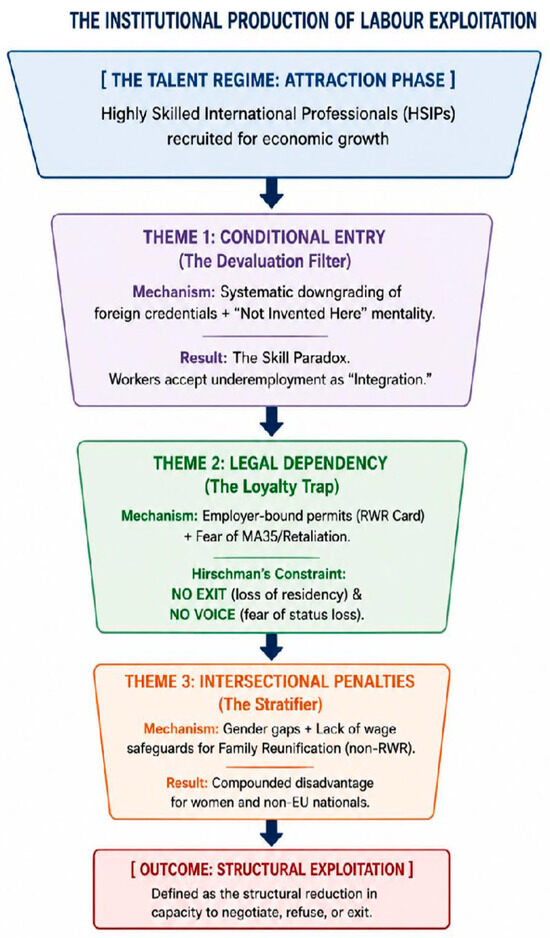
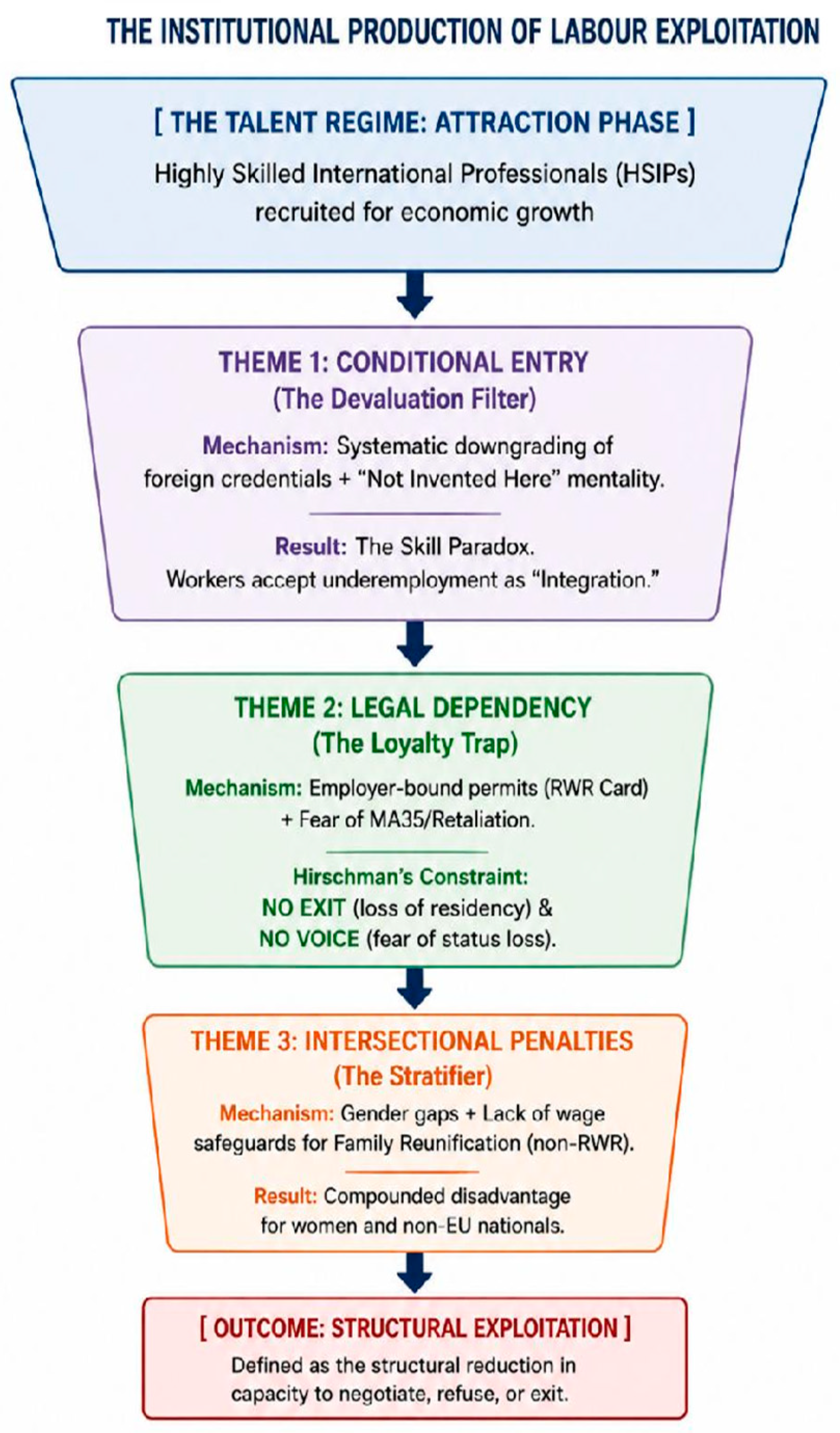

Disclaimer/Publisher’s Note: The statements, opinions and data contained in all publications are solely those of the individual author(s) and contributor(s) and not of MDPI and/or the editor(s). MDPI and/or the editor(s) disclaim responsibility for any injury to people or property resulting from any ideas, methods, instructions or products referred to in the content. |
© 2026 by the authors. Licensee MDPI, Basel, Switzerland. This article is an open access article distributed under the terms and conditions of the Creative Commons Attribution (CC BY) license.