1. Introduction
Social media platforms play a central role in shaping public discourse during moments of crisis, structuring not only what is said but whose voices gain visibility. While often framed as open arenas of participation, these platforms are governed by algorithmic systems that organize attention and amplify certain actors over others. As a result, inequalities in voice and representation are not simply reproduced but actively structured through platform dynamics.
Moments of crisis further intensify these dynamics, amplifying everyday practices of exclusion and Othering. We understand Othering as a process through which social groups are constructed and positioned along axes of superiority and inferiority, drawing symbolic boundaries between “us” and “them” (
Brons 2015;
Falkowska and Linde-Usiekniewicz 2025;
Jensen 2011;
Lister 2006;
Said 1977). Through these boundary-making processes, social distance is produced and maintained, and authority is unevenly distributed.
Othering operates through multiple, overlapping modes, including hostile denigration (
Bonhomme and Alfaro 2022;
Van Dijk 1992), cultural boundary-making (
Balibar 2007;
Weis 1995), paternalistic framing (
Stack and Wilbur 2021), and the erasure or displacement of marginalized voices (
Spivak 2010a;
Thomas-Olalde and Velho 2011). In digital environments, these processes are not only discursive but also infrastructural. Platform architectures shape the distribution of visibility and participation, meaning that online spaces are not neutral arenas of expression but structural environments that organize visibility and voice authority.
Within this landscape, social media—and particularly X (formerly Twitter)—has become a central site of discursive struggle. Rather than functioning as a representative public sphere, X operates as an arena of visibility in which actors disproportionately shape widely circulated narratives. A growing body of research shows that social media both reflects and amplifies offline inequalities, embedding them in algorithmic systems and engagement tools (
Massanari 2015;
Noble 2018;
Sadaf 2024). These systems privilege emotionally charged and polarizing content (
Huszár et al. 2022;
Milli et al. 2025), shaping not only what circulates but whose voices gain prominence.
The COVID-19 pandemic provides a critical context for examining these dynamics. As a global crisis, it exposed structural inequalities. Racialized and migrant communities were disproportionately affected, facing precarious labor conditions, unequal healthcare access, and heightened exposure to misinformation and scapegoating (
Donato et al. 2022;
Leung et al. 2023;
Mahic et al. 2023;
Rai et al. 2023;
Rashid and Saidin 2023). While existing research has documented these material vulnerabilities, less attention has been paid to how these communities are positioned within online public discourse—specifically, whether they appear as speaking subjects or as objects whose experiences are narrated by others.
Canada provides a useful case through which to examine these questions. Often positioned as a multicultural society committed to diversity and inclusion, it offers a context in which tensions between inclusive ideals and everyday practices of exclusion become visible. This study uses the Canadian case during COVID-19 to examine how platform-mediated visibility shapes whose voices are amplified, mediated, or marginalized during moments of crisis. It examines how the distribution of online visibility shapes the representation of marginalized groups.
Drawing on computational analysis of social media discourse on X during the COVID-19 pandemic, it investigates who participates in public conversations, which voices gain prominence, and how different forms of Othering emerge in digitally mediated environments.
Building on sociological theories of Othering, the analysis identifies four established forms—hostile, cultural, sympathetic, and silencing—and introduces a fifth: algorithmic Othering. This concept captures a structural mechanism through which platform infrastructures shape the distribution of visibility, privileging institutional and elite actors while limiting the amplification of marginalized voices. By shifting attention from representation alone to the conditions under which voice becomes visible, the study contributes to broader sociological debates on digital inequality and the determinants of public discourse in digital environments.
2. Theoretical Framework
2.1. Theories of Othering
Theories of Othering provide a critical lens for understanding how racialized and migrant communities are symbolically positioned in society. Drawing on
Said’s (
1977) concept of
Orientalism and
Hall’s (
2024) work on representation, Othering refers to a discursive and social process through which dominant groups define marginalized populations as fundamentally different, inferior, or threatening. Central to this process is boundary-making—what
Lister (
2006) describes as differentiation and demarcation—through which distinctions between “us” and “them” are constructed, hierarchized, and sustained.
To capture how these dynamics unfolded during the COVID-19 pandemic, we distinguish four interrelated forms of Othering identified in the literature and introduce a fifth—algorithmic Othering—to account for online platforms’ processes of distributing visibility and voice.
2.1.1. Hostile Othering: Superiority and Dehumanization
At its most antagonistic form, Othering operates through explicit assertions of superiority that cast marginalized groups as morally, culturally, or intellectually inferior (
Canales 2000;
Said 1977). This includes stereotyping and racialization that strip the Other of humanity (
Crang 2013;
Harmer and Lumsden 2019;
Ladegaard 2022).
Bonhomme and Alfaro (
2022) describe this as “aggressive racism,” characterized by active denigration of racialized groups.
During the COVID-19 pandemic, such hostility manifested in narratives portraying immigrants and racialized minorities as disease carriers, economic burdens, or non-compliant subjects who threaten public health systems (
Poole and Williamson 2023). These portrayals echoed colonial images of the uncivilized Other whose presence destabilizes social order. Hostile Othering may also appear in sanitized forms, such as denial of racism—statements that deny racism or bias while simultaneously reinforcing hostile stereotypes or exclusion (
Van Dijk 1992).
2.1.2. Othering Through Cultural Delineation
Othering also occurs through cultural demarcation rather than overt hostility (
Weis 1995). This mode emphasizes symbolic boundaries of belonging—who fits within the national fabric and who remains outside it.
Balibar’s (
2007) concept of neo-racism captures how cultural difference replaces biological claims as a basis for exclusion.
Research on online spaces shows how cultural delineation is reproduced digitally. For example,
Bonhomme and Alfaro (
2022) demonstrate how rural Facebook groups’ admins construct local identity in ways that implicitly exclude racialized residents, reinforcing cultural incompatibility without explicit aggression. Such discourse distances marginalized groups while preserving a facade of neutrality.
2.1.3. Sympathetic or Paternalistic Othering
Othering can also take benevolent forms. Paternalistic or sympathetic Othering frames racialized and migrant communities as vulnerable, dependent, or in need of protection. While expressed as concern or care, often with goodwill, these narratives deny agency and reinforce hierarchical relationships between dominant actors and marginalized groups. For example, in Canada, asylum seekers were occasionally valorized as heroes fleeing their war-torn countries, but they were rarely depicted as integral members of the national fabric with valuable skills and contributions (
Stack and Wilbur 2021).
During COVID-19, migrants were frequently depicted either as heroic essential workers or as helpless victims—rarely as agents with voice, autonomy, or political capacity (
Avraamidou and Eftychiou 2022;
Chouliaraki et al. 2017). Positive portrayals often sustained hierarchies by emphasizing dependency over participation, making racialized groups visible but not always empowered.
2.1.4. Othering Through Absence of Voice
One of the most insidious forms of Othering occurs through the absence of voice. This is not just a matter of exclusion but of being spoken for, as
Spivak (
2010a) famously poses in her question:
“Can the Subaltern Speak?” In contexts where marginalized groups are the subject of discourse but are denied authorship of their own narratives, Othering occurs through erasure of their own voice. In a later article,
Spivak (
2010b) clarified more how Othering occurs through the concept of “institutional validation”, the subaltern is unable to “speak” in a way that counts unless their voice is mediated or authorized by institutional structures—such as academia, government, or the media.
In digital contexts, this dynamic manifests as symbolic inclusion without real agency. Racialized and migrant communities may appear in hashtags or news coverage, but others often speak for them. Influencers, journalists, and institutions acquire epistemic privilege, reinforcing what
Mezzadra and Nielson (
2014) describe as differential inclusion: marginalized populations are included, but only on terms that sustain their position as perpetual outsiders.
2.2. Social Media and Algorithmic Othering
While theories of Othering emerged within postcolonial and cultural studies, social media introduces dynamics that reshape these processes. Because discourse is central to Othering (
Van Dijk 1997), platforms such as X—organized through hashtags, replies, and algorithmic ranking—provide fertile ground for reproducing inequality.
Extensive scholarship demonstrates that social media discourse reflects and amplifies offline inequalities (
Boyd 2010;
Noble 2018;
Papacharissi 2016;
Tufekci 2015). Platforms often intensify racialized and anti-migrant narratives, framing migrants as either threats or victims (
Chouliaraki et al. 2017;
Cisneros and Nakayama 2015). These dynamics are reinforced by platform architectures—through algorithmic ranking, moderation practices, and the prominence of institutional actors—which shape both the circulation of content and the distribution of attention (
Kerrigan 2019). Taken together, these insights underscore the continued relevance of postcolonial frameworks for analyzing Othering in digital environments.
At the same time, social media enables the emergence of counterpublics. Drawing on
Habermas (
1991) and
Fraser (
1990), we conceptualize X not as a unified public sphere but as a platform-specific, fragmented discursive arena in which multiple, unequal publics coexist and compete for visibility. Participation and influence within this arena are shaped by sociotechnical norms, including algorithmic ranking and engagement-driven amplification.
To capture this process, this study introduces the concept of algorithmic Othering. Unlike the notion of the “algorithmic other,” which centers on human–machine relations (
Gandini et al. 2023), algorithmic Othering refers to human–human marginalization mediated by platform infrastructures. Specifically, it describes the platform-mediated structuring of visibility through which institutional and elite actors disproportionately shape narratives about marginalized groups, while content produced by those groups remains comparatively under-amplified. This process operates through engagement-driven ranking systems—such as likes, retweets, mentions, and follower-based amplification—that privilege already-visible actors or “influencers” in social media terminology. As a result, discourse about marginalized communities is frequently mediated through external voices, reproducing asymmetries of authority and participation in digital space. These dynamics can limit the visibility of racialized and migrant communities or enable others to speak on their behalf—reproducing the asymmetries of institutional validation identified by
Spivak (
2010b).
Building on these insights, this study draws on theories of Othering to examine how racialized and migrant communities are discursively positioned—as agents, victims, threats, or absentees—and the extent to which platform-mediated visibility amplifies or constrains their participation.
2.3. Research Questions
Using Canada as a case study, this research examines how X (formerly Twitter) functioned as a discursive arena during the COVID-19 pandemic, focusing on visibility, framing, and symbolic exclusion in discussions of racialized and migrant communities, including refugees. The study addresses the following research questions:
RQ1: To what extent did racialized and migrant communities appear as speaking subjects in Canadian social media discourse during the COVID-19 pandemic, and which actors dominated their representation?
RQ2: How were the challenges faced by racialized and migrant communities framed in social media discourse, and what do dominant themes and sentiments reveal about the coexistence of agency, sympathy, hostility, and silencing?
RQ3: How did social media narratives about racialized and migrant communities differ from broader Canadian COVID-19 discourse, and how did these differences reflect processes of symbolic exclusion or Othering?
Together, these questions capture distinct but interconnected forms of Othering—absence of voice, paternalistic or hostile framing, and discursive separation. Taken as a whole, the research questions assess whether social media enabled epistemic agency and counter-narratives, or whether racialized and migrant communities remained symbolically included yet effectively silenced.
3. Materials and Methods
We adopt a computational social science approach to examine discourse on X (formerly Twitter) related to racialized and migrant communities in Canada during the COVID-19 pandemic. Computational methods allow for the unobtrusive analysis of large-scale digital communication, enabling the observation of discursive patterns and social interactions as they occur in platformed public spaces.
3.1. Data Collection
We chose X as the platform of study for multiple reasons. First, the platform has become a digital town square for a wide range of issues, including the pandemic. It is primarily used for news and information, with 59.7% of active users aged 16 and older reporting that they use X to keep up to date with news and current events, making it the leading platform for this purpose (
Kemp 2025). This makes the platform particularly relevant to our research objective, as it offers a better reflection of public discourse compared to Facebook, which is more personal in nature, focuses on community-building, and relies more on mutual connections. Second, X is used by a diverse range of actors, from politicians (
Gibson et al. 2025) to governments (
Rita et al. 2025), formal journalists (
Haskell and Molyneux 2025), citizen journalists and NGOs (
de Bruijn et al. 2025). It has also been used by public health experts for communication during the pandemic (
Rao et al. 2025). Third, X is a leading platform for studying racism and racial minorities (
Matamoros-Fernández and Farkas 2021;
Nghia-Nguyen 2025). The platform has been particularly important for discussions around racialized communities, as it reflected on-the-ground sentiment during the Black Lives Matter (BLM) protests in 2020 and President Trump’s discourse on the border wall (
Nguyen et al. 2024).
Moreover, from an empirical perspective, X’s API provides access to data that can be used to construct networks of retweets and mentions, which are central to our analysis. This level of access is not available on platforms such as Facebook and others that restrict data availability.
Publicly available tweets were collected using the X Academic API via the Communalytic platform (
Gruzd and Mai 2026) between 11 March 2020 (when COVID-19 was declared a global pandemic) and 11 March 2022, capturing the full trajectory of pandemic-related discourse, including the introduction and rollout of vaccines.
To capture discourse relevant to racialized and migrant communities in Canada during the pandemic, we developed a search strategy based on three criteria: (1) COVID-19–related keywords, (2) a Canadian geographical context, and (3) terms referencing migration, refugees, and selected racialized identities.
The search query included combinations of the following terms:
COVID-19 terms:
(covid OR coronavirus OR corona OR pandemic OR vaccine OR vaccin OR variant OR delta OR omicron OR pfizer OR moderna OR booster OR AstraZeneca OR janssen OR
Novavax OR Medicago OR Sinovac OR mRNA OR antibodies OR pharma OR
chloroquine OR Fauci OR Plandemic OR vax)
Canadian context:
(Canada OR Ontario OR New Brunswick OR NB OR British Columbia OR Vancouver OR Quebec)
Migration and racialization terms:
(newcomer OR refugee OR immigrant OR marginalized OR Black OR South Asian OR Desi OR Arab OR African OR Filipino)
The keywords used in this study reflect categories commonly employed in the Canadian public, media, and policy debates to reference populations understood as socially and politically marginalized.
A total of 120,623 tweets were initially collected. Of these, 10,662 tweets (~8.83%) did not contain all three categories—(1) COVID-19, (2) Canadian context, and (3) migration and racialization keywords—simultaneously. After removing these tweets
1, the final dataset consisted of 109,961 tweets. Among these, 14,396 tweets (13.1%) were original posts generated by 9315 unique users.
This study does not claim to provide a comprehensive account of all racialized groups. Instead, it focuses on migration-linked racialization as it emerges in English-language Twitter discourse related to labor, borders, and policy debates during the COVID-19 pandemic. The selected keywords reflect forms of Canadian public discourse in which racialized and migrant communities are most frequently represented through institutional and media narratives.
The tweets collected capture public discourse about racialized and migrant communities rather than definitively identifying tweets authored by members of these communities. While some users may self-identify as racialized, refugee, or migrant, the study does not infer personal demographic attributes—such as race, ethnicity, or migration status—from profile information.
3.2. Analytical Strategy
Given that X discourse consists of both networked interactions (e.g., retweets, replies, mentions) and textual content, this study adopts a two-level analytical strategy combining social network analysis and automated content analysis.
First, social network analysis examines who shapes discourse about racialized and migrant communities on X. By identifying highly visible and influential accounts—such as broadcasters and hubs—the analysis assesses which actors dominate conversations and how discursive authority is distributed (RQ1). Influential accounts are classified by institutional or professional role based on publicly available information (e.g., organizational affiliation or self-described roles).
Second, automated content and sentiment analysis examines how racialized and migrant communities are represented within this discursive field, focusing on dominant themes, emotional framing, and patterns of interpretation (RQ2). Together, these levels allow the study to analyze both discourse structure (who dominates) and discourse content (how communities are framed), capturing relational dynamics through which racialized and migrant communities are symbolically positioned in Canadian social media discourse during the pandemic.
This two-level strategy is complemented by a comparative analysis of racialized and non-racialized discourse during key moments of heightened engagement on X, allowing for an examination of how conversations about racialized and migrant communities diverged from broader national COVID-19 narratives (RQ3).
This combined approach enables us to examine the structure of visibility (who is amplified), the content of discourse (how communities are represented), and the position of the narrative about racialized communities relative to the national narrative, allowing for an integrated analysis of how Othering occurs online.
3.2.1. Social Network Analysis
To address Research Question 1, social network analysis was used to identify key actors shaping discourse about racialized and migrant communities. Influence was assessed using degree centrality (
Freeman 1978). High outdegree centrality indicates active content dissemination (broadcasters), while high indegree centrality reflects visibility and engagement from other users (hubs). This approach enabled identification of dominant voices and assessment of how discursive power and visibility was distributed across actors during the pandemic.
3.2.2. Automated Content and Sentiment Analysis
To address Research Question 2, we employed automated topic detection and sentiment analysis. Communalytic’s Natural Language Processing tools were used to identify dominant themes through clustering of semantically similar posts. This process relies on the multilingual-MiniLM-L12-v2 model from Hugging Face, which converts text into vector embeddings that are grouped based on semantic similarity (
Gruzd and Mai 2026).
Sentiment analysis was conducted using the VADER lexicon, optimized for social media text and suitable for multilingual datasets (
Gruzd and Mai 2026). Of the tweets analyzed, 98.23% were in English. Each tweet received a sentiment score ranging from −1 (strongly negative) to +1 (strongly positive), with values between −0.05 and 0.05 classified as neutral. Tweets were categorized as positive, negative, or neutral.
3.2.3. Parallel Content Analysis
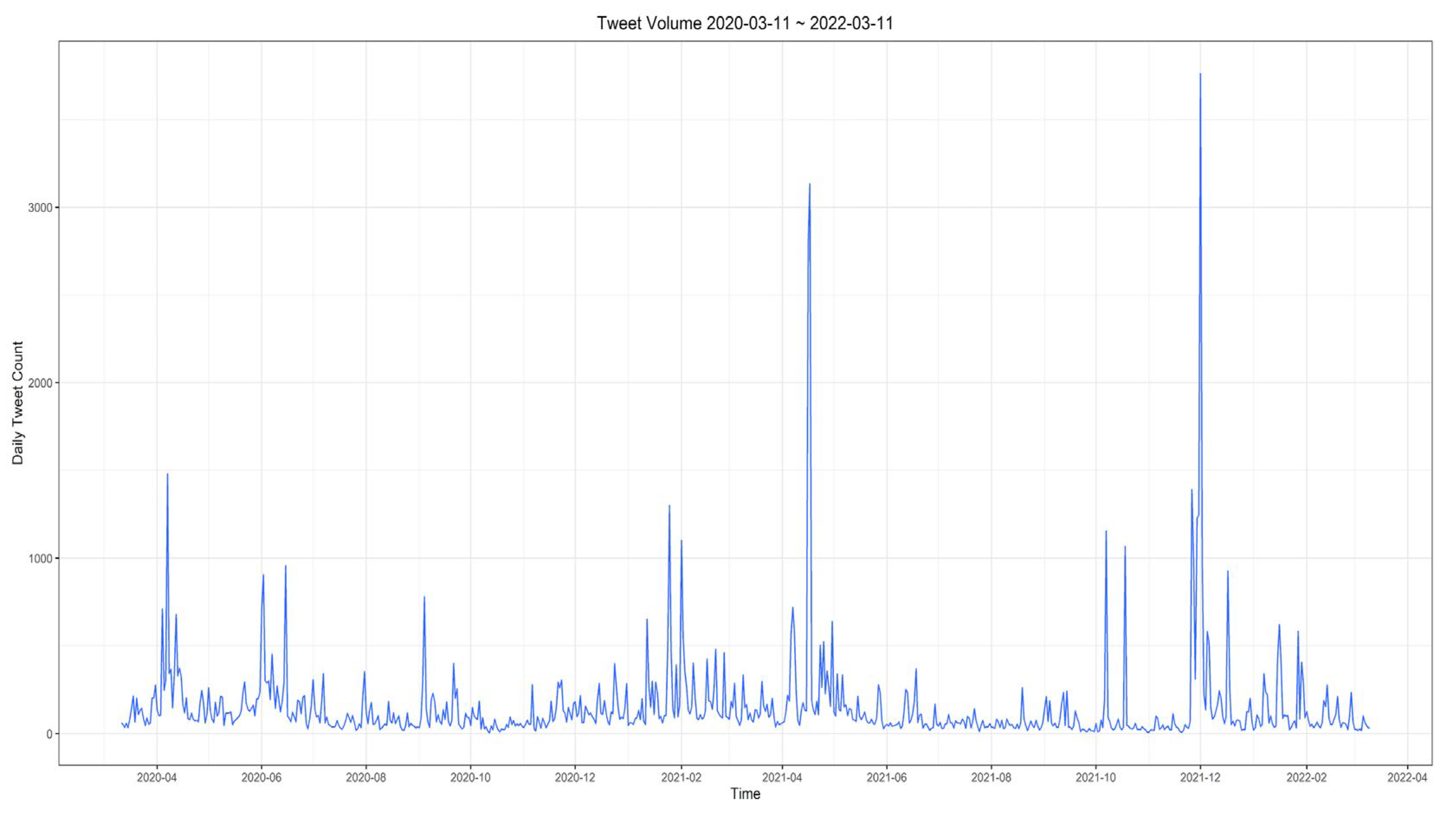
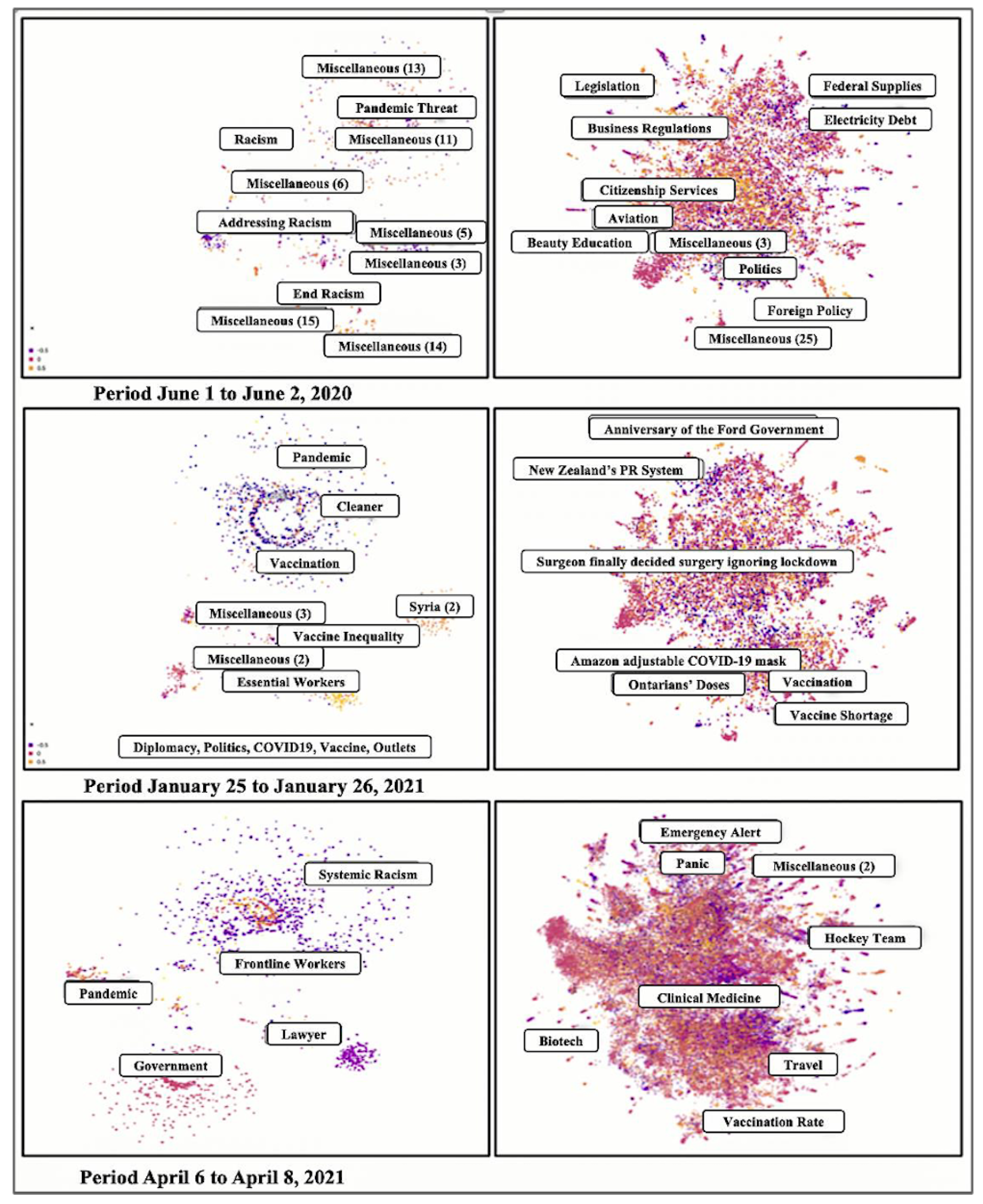
To address Research Question 3, we conducted a parallel content analysis comparing discourse explicitly referencing racialized and migrant communities with broader Canadian COVID-19 discourse. Three peak engagement periods were identified within the racialized and migrant dataset based on a combination of elevated tweet volume and the occurrence of highly impactful events affecting refugees, immigrants, and racialized communities (see
Figure 1):
For each period, we constructed a parallel dataset using the X API that excluded keywords related to race, ethnicity, and migration. This dataset—referred to as the Public Dataset—captures broader Canadian COVID-19 discourse during the same timeframes.
By comparing dominant themes across the two datasets, we assess how racialized and migrant communities’ concerns aligned with or diverged from mainstream narratives. This comparison reveals how Othering can occur not only through overt hostility or erasure, but also through discursive separation and differentiated priorities.
4. Results
4.1. Visibility and Influential Actors in Online Discourse
This section examines patterns of absence of voice, a form of Othering in which racialized and migrant communities remain present in discourse but are not themselves amplified as speaking subjects. Using mention and retweet networks derived from the racialized and migrant communities dataset, we identified popular influential accounts based on indegree centrality (frequently mentioned or retweeted hubs) as well as high-volume original posting. The most visible accounts were categorized into seven groups: (1) Canadian government entities, (2) politicians, (3) non-governmental health professionals, (4) news and media entities, (5) newcomer agencies and community organizations, (6) domain experts outside health, and (7) members of the general public not clearly identified under any of these categories. Categorization was based on account bios, professional labels, embedded URLs, and, when necessary, review of posting histories.
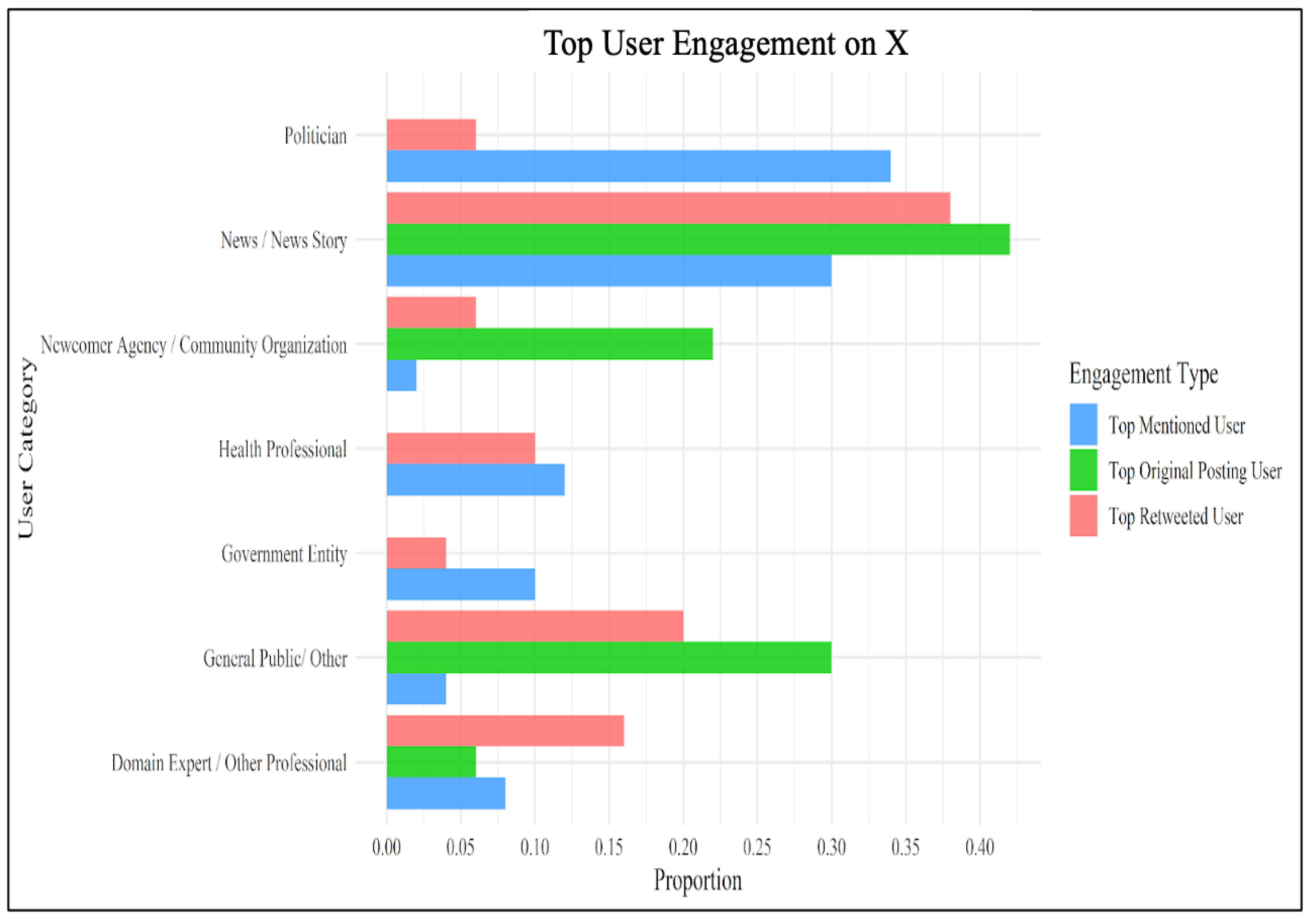
The top 50 most active users in terms of the number of original tweets they post accounted for 9.5% (1368 tweets) of all original tweets, a pattern consistent with the power-law distributions typical of social media discourse (
Huberman et al. 2009;
Xia et al. 2013). News and media accounts constituted the largest share of influential users (42%), with content focusing on vaccines among newcomers, border restrictions linked to African countries, and asylum policies during the pandemic. In these discussions, racialized and migrant communities were primarily spoken about, rather than participating as speakers. Even sympathetic media initiatives, such as the newspaper Toronto Star’s #InTheirOwnVoices series, largely represented these communities through journalistic mediation rather than enabling them to speak on their own terms. Accounts associated with newcomer agencies and community organizations contributed 22% of original content, yet none of the most active posters fell within the categories of government entities or health professionals.
In retweet networks, news and media accounts again were among the most retweeted (38%), followed by general public accounts (20%) and health professionals or other experts (26%). Content from government entities, politicians, and newcomer agencies received comparatively limited amplification through retweets or sharing activity within the network.
Politicians were frequently invoked rather than actively participating: 34% of top discussions mentioned political actors, most commonly Justin Trudeau, Immigration, Refugees and Citizenship Canada (IRCC), and the Chief Public Health Officer of Canada. Highly retweeted posts involving these accounts largely concerned the halted immigration services and delayed refugee and visa processing during the pandemic—issues with disproportionate consequences for migrants and refugees (
Figure A1 in
Appendix A).
While some posts originating from refugee agencies gained some visibility, individuals from racialized communities were largely absent as original posters or sustained retweeters. When racialized individuals did appear among the most retweeted accounts, they were almost exclusively well-established professionals—five Black and Brown physicians, one Brown journalist, and one Black lawyer. Their visibility stemmed from retweet amplification rather than grassroots participation or sustained original posting.
This pattern reflects a broader feature of X’s attention economy, where professional authority and institutional affiliation are central to visibility. As a result, racialized and migrant communities tend to appear in public discourse through credentialed intermediaries rather than through direct community voices. In this sense, discourse on X mirrors existing structural inequalities in Canadian society, reproducing what we conceptualize as algorithmic Othering—a process in which platform visibility privileges institutional legitimacy while marginalizing community-based expression.
Overall, news media accounts played a central role in shaping COVID-19 discourse about racialized and migrant communities, generating both high volumes of content and significant amplification. By contrast, organizations representing these communities contributed original content but achieved limited reach. Across categories, racialized and migrant communities remained largely absent as speaking subjects, appearing instead through mediated or institutionalized voices (
Figure 2).
4.2. Sentiment and the Distribution of Agency
The sentiment analysis reveals how hostile, cultural, and paternalistic forms of Othering emerge through both negative and positive sentiment, shaping how agency is distributed in discourse. The analysis revealed a mixed emotional landscape. Approximately 20% of tweets were neutral, while 46% expressed negative sentiment and 34% positive sentiment. The predominance of negative sentiment reflects the significant challenges racialized and migrant communities faced during the COVID-19 pandemic in Canada.
4.2.1. Extreme Negative Sentiments: Hostile, Cultural, and Paternalistic Othering
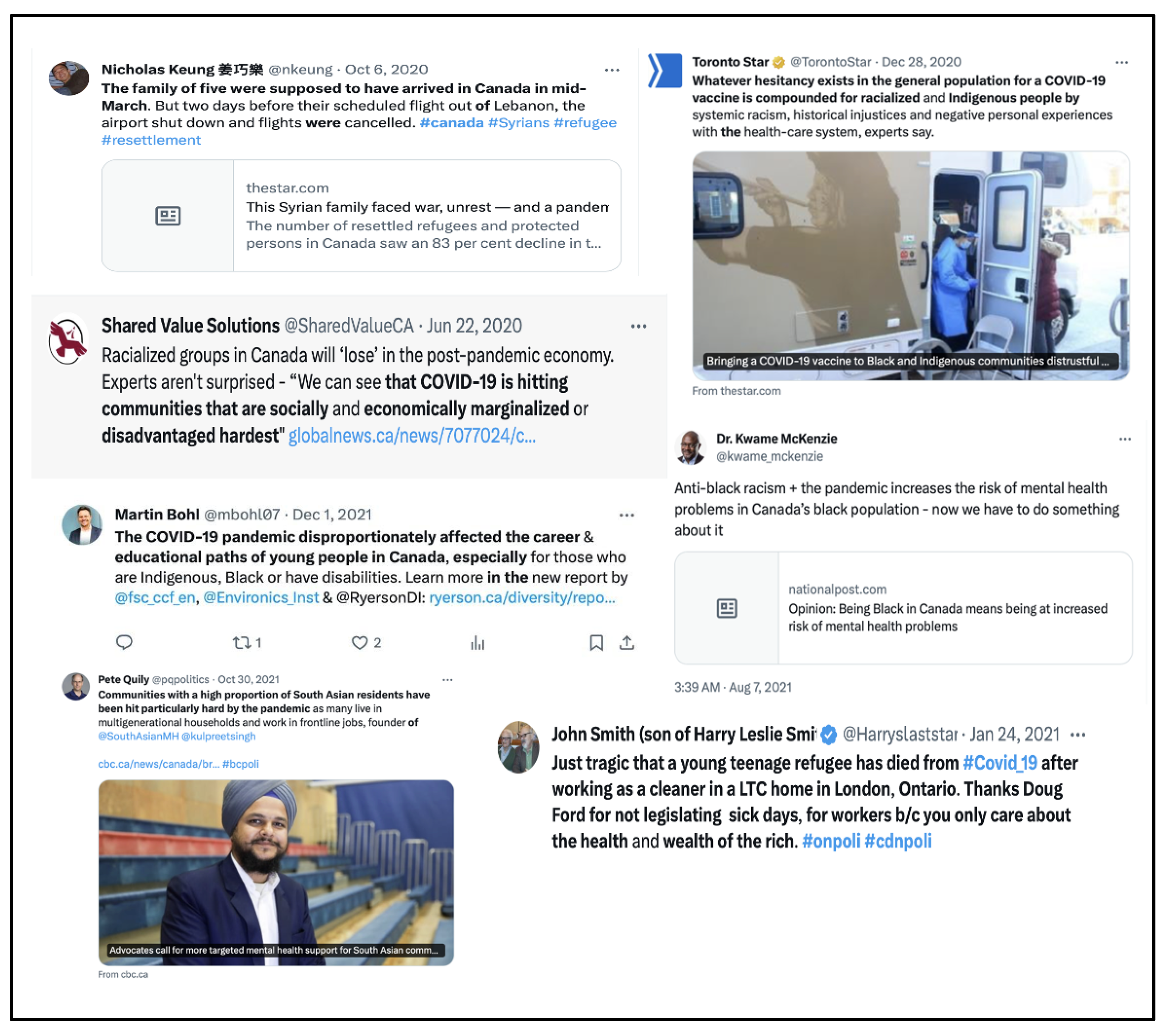
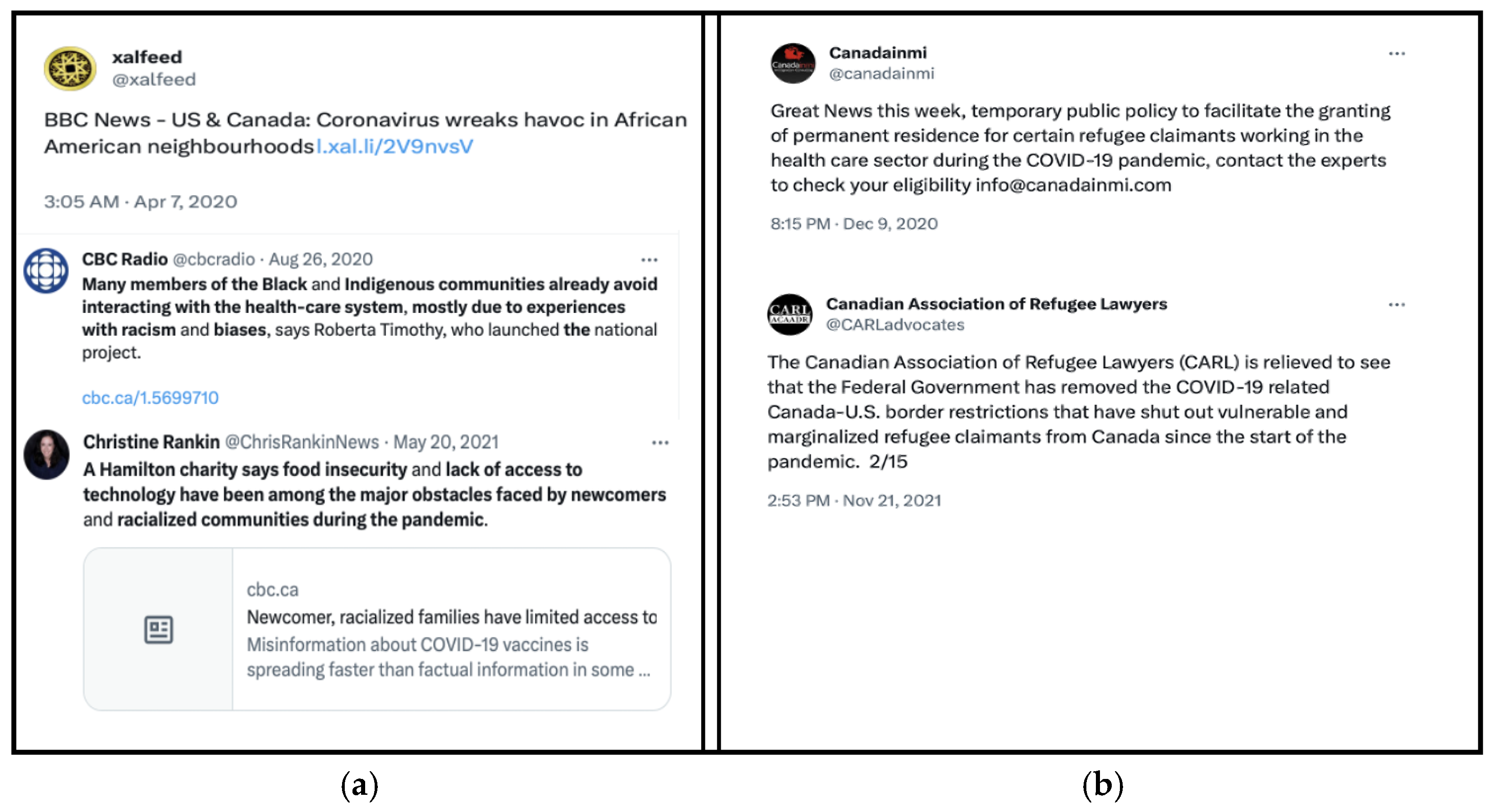
Tweets with extreme negative sentiment frequently highlighted the disproportionate impact of the pandemic on marginalized communities, particularly Black and Indigenous populations. Many of these tweets documented structural inequalities in health outcomes, access to resources, and public trust, reflecting experiences shaped by hostile and cultural Othering rather than enacting exclusionary discourse themselves (
Figure A2a in
Appendix A).
At the same time, negative tweets also reflected sympathetic or benevolent forms of Othering. While acknowledging hardship, these posts framed racialized and migrant communities as inherently vulnerable or lacking agency, emphasizing language barriers, limited technological access, or difficulty navigating public health information. Such framings, although often well-intentioned, positioned migrants as passive recipients of guidance rather than knowledgeable actors.
This pattern aligns with scholarship on paternalistic benevolence, whereby interventions are justified through assumptions of deficiency, reinforcing unequal relations of authority (
Heinemann and Sarabi 2020). For example, a widely circulated CBC article linked in the dataset portrayed newcomers as especially vulnerable to vaccine misinformation due to linguistic and technological barriers. While empirically grounded, such narratives rarely incorporated migrants’ own voices or community-based knowledge practices. As a result, racialized and migrant communities were rendered visible primarily as objects of concern rather than as epistemic agents, illustrating how sympathetic discourse can coexist with symbolic exclusion (
Figure A2a in
Appendix A).
Tweets with the most extreme negative scores (VADER < −0.9) often addressed systemic racism, police brutality, and pandemic-related hardship, reflecting deep distrust in institutional systems (
Figure A3 in
Appendix A).
Importantly, not all negative representations identified in this analysis reflect exclusionary or racist discourse. Many tweets document structural inequalities and lived hardships experienced by racialized and migrant communities during the pandemic. However, even in such cases, these experiences are frequently articulated through institutional or external voices rather than by members of the communities themselves, reinforcing patterns of mediated representation and uneven visibility.
4.2.2. Extreme Positive Sentiments: Agency and Uneven Visibility
Tweets with an extremely positive sentiment were largely posted by refugee-serving organizations and immigration consultancy accounts, reflecting moments of epistemic agency. These tweets often shared positive developments—such as expedited permanent residency pathways for refugee healthcare workers or eased border restrictions—and celebrated policy changes benefiting racialized and migrant communities (
Figure A2b in
Appendix A).
However, some tweets received high positive sentiment scores due to VADER’s lexical weighting despite conveying critical or advocacy-oriented messages. For instance,
Figure A4 in
Appendix A shows a tweet calling for increased COVID-19 funding for Black Canadians; the presence of terms such as “funding” elevated the sentiment score, highlighting the limitations of automated sentiment analysis for capturing contextual nuance.
This tweet, shared by community advocate Sahada Alolo, illustrates how racialized individuals used social media to assert agency and advocate for structural change. Alolo amplified a petition from the Federation of Black Canadians calling for dedicated funding, race-based COVID-19 data collection, and protections for migrant and temporary foreign workers (
Federation of Black Canadians n.d.). While this represents agency and resistance to Othering, its circulation remained limited compared to content amplified by institutional or professional elites. Community advocates such as Alolo were rarely among the most retweeted accounts, underscoring how algorithmic visibility continues to privilege established institutional authority.
Overall, sentiment analysis shows that both negative and positive tweets frequently reproduced hostile, cultural, or sympathetic forms of Othering, while also revealing moments of agency. Although X provided space for advocacy and resistance, algorithmic visibility patterns limited the reach of grassroots actors, reinforcing uneven participation and symbolic exclusion.
4.3. Topics of Discussion and Patterns of Voice
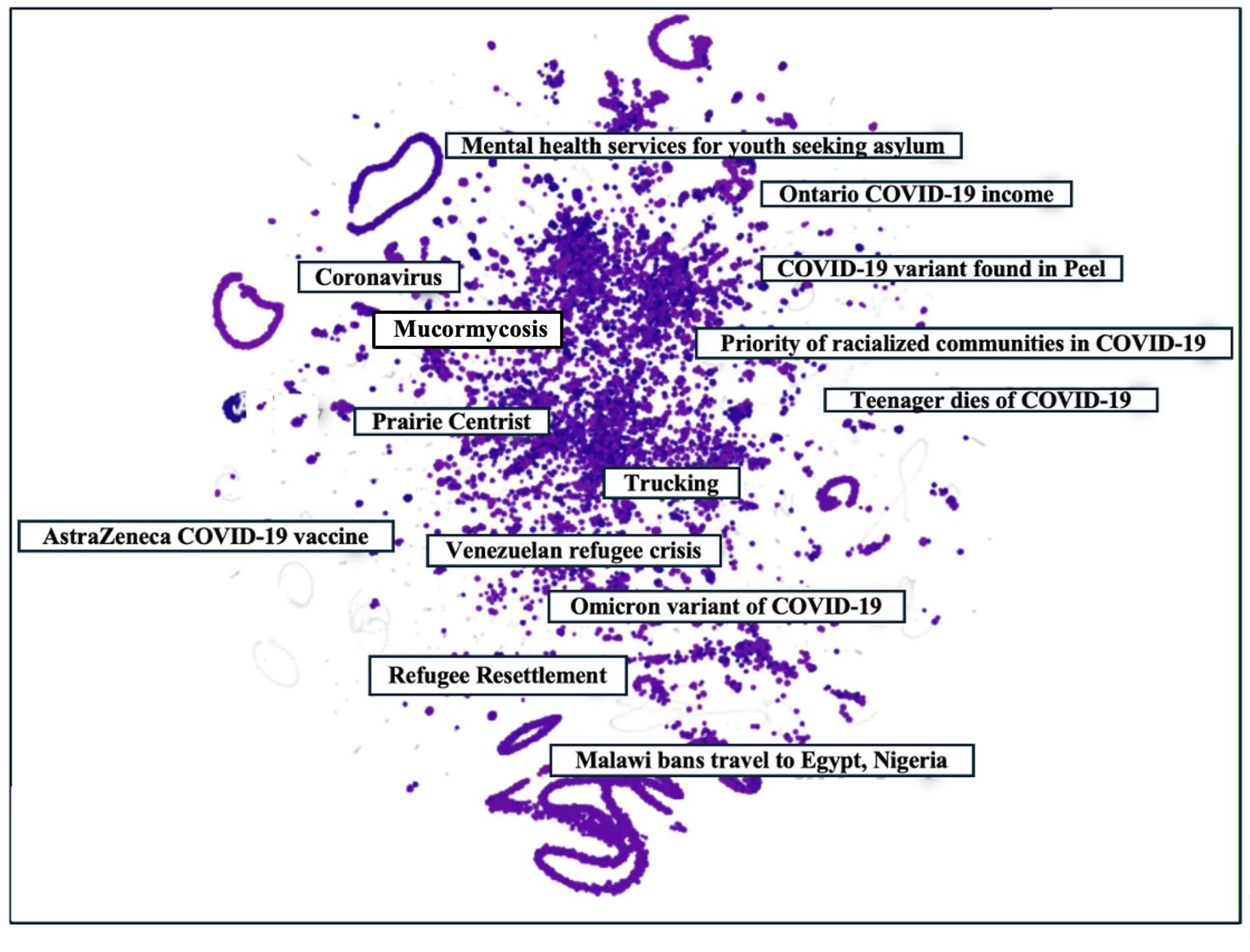
To assess the challenges faced by racialized and migrant communities during the pandemic, we applied topic modeling to tweets with extreme negative sentiment (VADER < −0.5). This approach reveals the range of negative experiences associated with these communities during COVID-19 (
Figure 3).
The analysis identified multiple, intersecting challenges. Refugees faced compounded barriers due to border closures and restricted access to essential goods and services, while asylum seekers attempting to enter Canada from the United States were denied entry, intensifying precarity. Vaccine hesitancy among racialized communities emerged as a prominent theme, rooted in longstanding histories of medical mistreatment and systemic neglect that fueled mistrust in state and healthcare institutions. Economic precarity was also central, as racialized groups experienced disproportionate job loss and financial instability.
Mental health concerns featured prominently, including heightened stress and trauma linked to healthcare neglect and incidents of police violence. Educational disruptions further compounded inequality, with racialized and vulnerable international students facing barriers to online learning due to language constraints and limited technological access, particularly among Indigenous, Black, and refugee communities. South Asian communities—overrepresented in frontline healthcare—were frequently discussed in relation to heightened exposure risk and occupational stress (
Figure A5 in
Appendix A).
One particularly salient narrative concerned the death of Yassin Dabah, a 19-year-old Syrian refugee who died of COVID-19. As Dabeh was the youngest person in the region to die of the disease, his death generated a noticeable spike in discourse, eliciting widespread expressions of grief, solidarity, and calls for accountability. Despite the emotional resonance of this case, the dominant voices amplifying the story came largely from non-racialized, non-migrant actors, reinforcing patterns of Othering through the absence of direct community voice.
Amplified Narratives and Dominant Framing
Amplified narratives in X discussions reveal that sympathetic, hostile, and internalized forms of Othering are amplified through dominant actors who frame discourse on behalf of marginalized groups.
While the negative topics outlined above reflected lived challenges faced by racialized and migrant communities, their circulation on X was shaped by platform-level amplification dynamics. Consistent with the platform’s preferential attachment logic—often described as a “rich-get-richer” effect—visibility accrued to a limited set of highly connected accounts. As a result, these challenges circulated primarily through a small subset of highly retweeted and highly active users, many of whom acted as advocates or intermediaries rather than as directly affected individuals. This concentration of attention illustrates how algorithmic ranking structures who becomes audible in the discourse, reinforcing algorithmic Othering by privileging mediated representations over direct community voice. These dominant accounts articulated a complex mix of sympathy, exclusion, and rejection, shaping how racialized and migrant experiences were publicly interpreted.
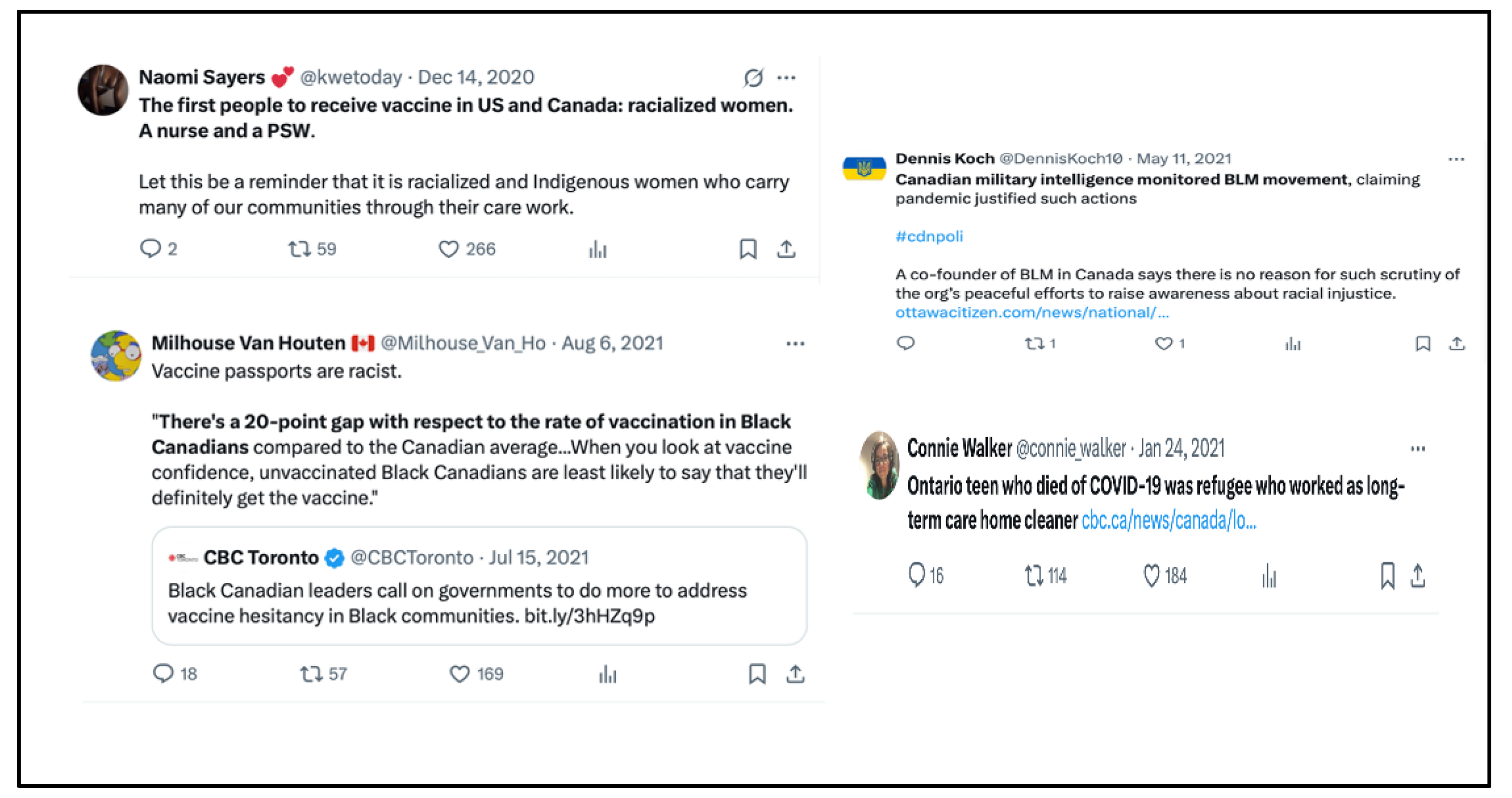
Some of these dominant accounts conveyed support for racialized and migrant communities by recounting their hardships during the pandemic, emphasizing their contributions to care work, and highlighting the systemic inequalities they endured, particularly around public health measures and vaccine access. While these messages were sympathetic, they often reproduced narratives of benevolent superiority and vulnerability without affirming agency or belonging, thereby reinforcing sympathetic Othering (
Figure A6 in
Appendix A).
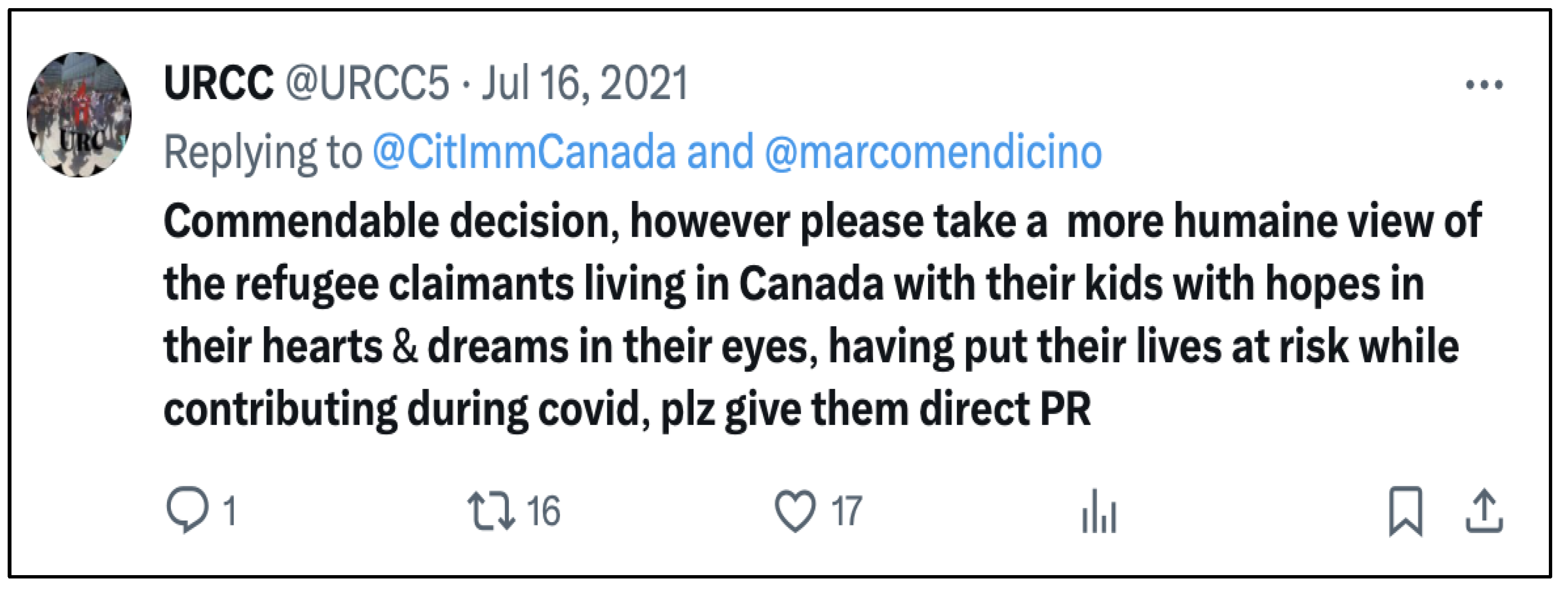
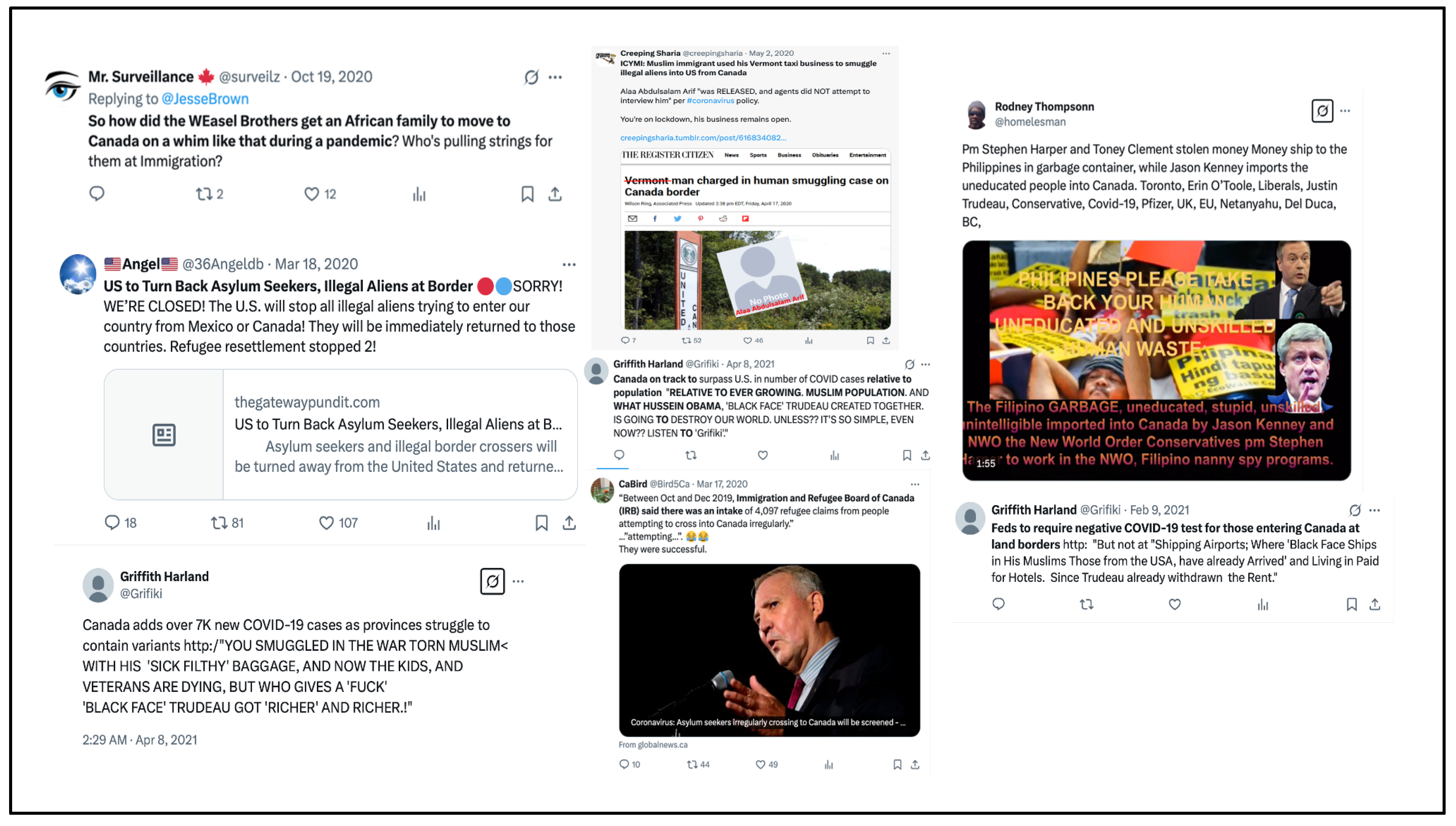
Other influential accounts engaged in overtly hostile Othering, circulating exclusionary and xenophobic narratives that framed migrants as “illegal aliens,” cultural threats bringing “sick filthy baggages,” or “uneducated garbage” who undermined an imagined homogeneous Canadian identity (
Figure A7 in
Appendix A).
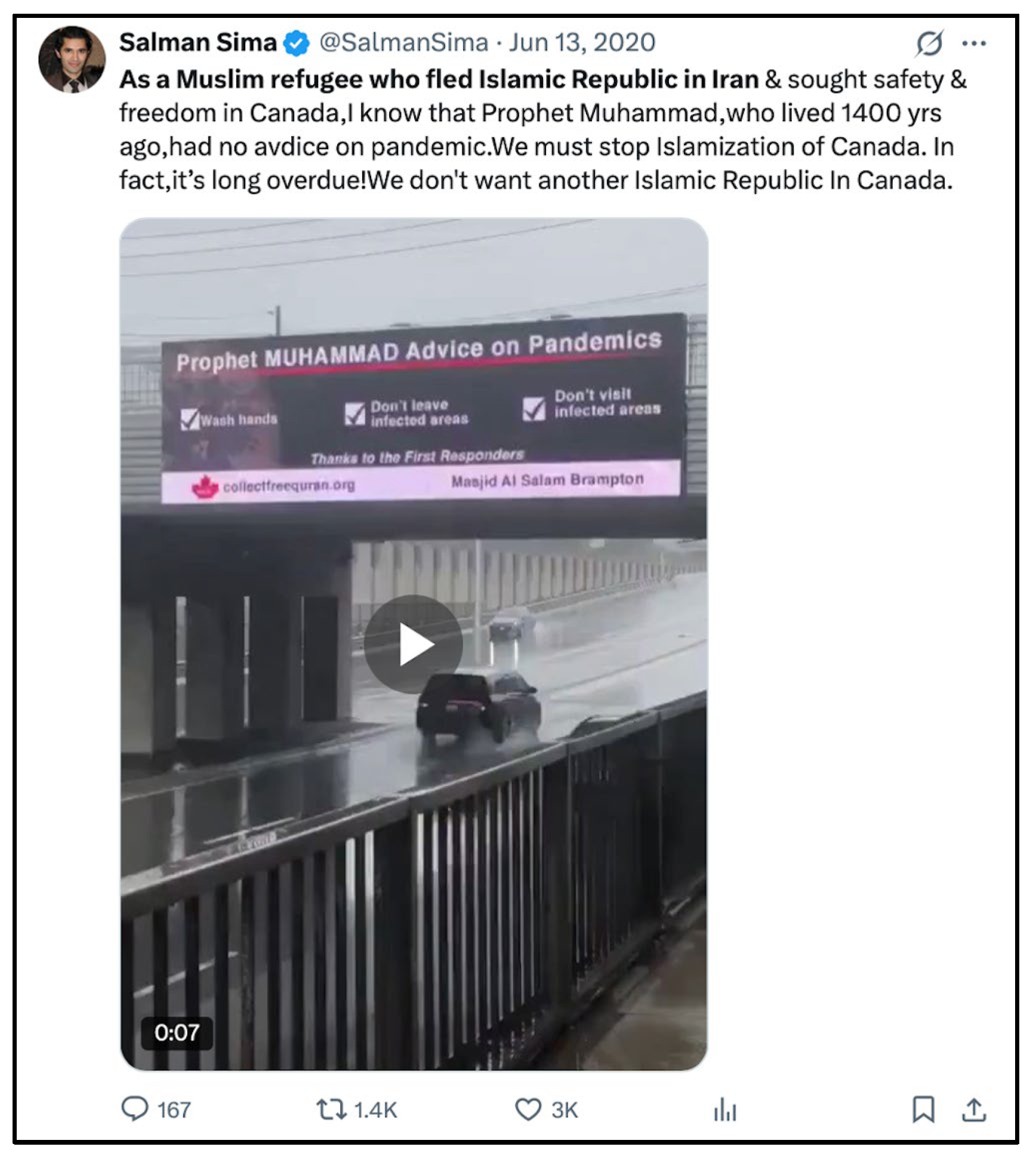
Notably, some rejectionist discourse also emerged from within racialized communities themselves. For instance, one widely retweeted post—shared over 1000 times—was authored by an account identifying as a Persian Muslim refugee who expressed opposition to what he perceived as the Islamization of Canada (
Figure A8 in
Appendix A).
This form of internalized Othering illustrates how dominant exclusionary narratives can be adopted by marginalized individuals, reinforcing racial hierarchies and undermining collective voice and solidarity. Rather than disrupting Othering, such discourse reproduces its logics from within, further complicating the dynamics of representation and agency observed on X.
4.4. Divergent Narratives in Racialized and Mainstream Discourse
To examine how racialized and migrant communities were positioned relative to broader Canadian COVID-19 discourse, we conducted a comparative analysis between two datasets. The “Racialized and Migrants Dataset” captured discourse explicitly referencing migration, refugees, and racialized identities, while a parallel “Public Dataset” captured broader Canadian COVID-19 discourse during the same periods, excluding race, ethnicity, and migration-related terms, to observe what issues were being discussed when racialized communities were not foregrounded.
This comparison highlights how Othering can emerge through differentiated narrative priorities. Distinct concerns circulate in parallel social spheres, limiting opportunities for shared framing and mutual engagement. In this way, Othering operates not only through hostility or erasure, but also through structural separation of narratives—where the lived experiences and challenges of marginalized communities remain peripheral to the dominant national conversation.
4.4.1. Period 1: Structural Racism and Public Health
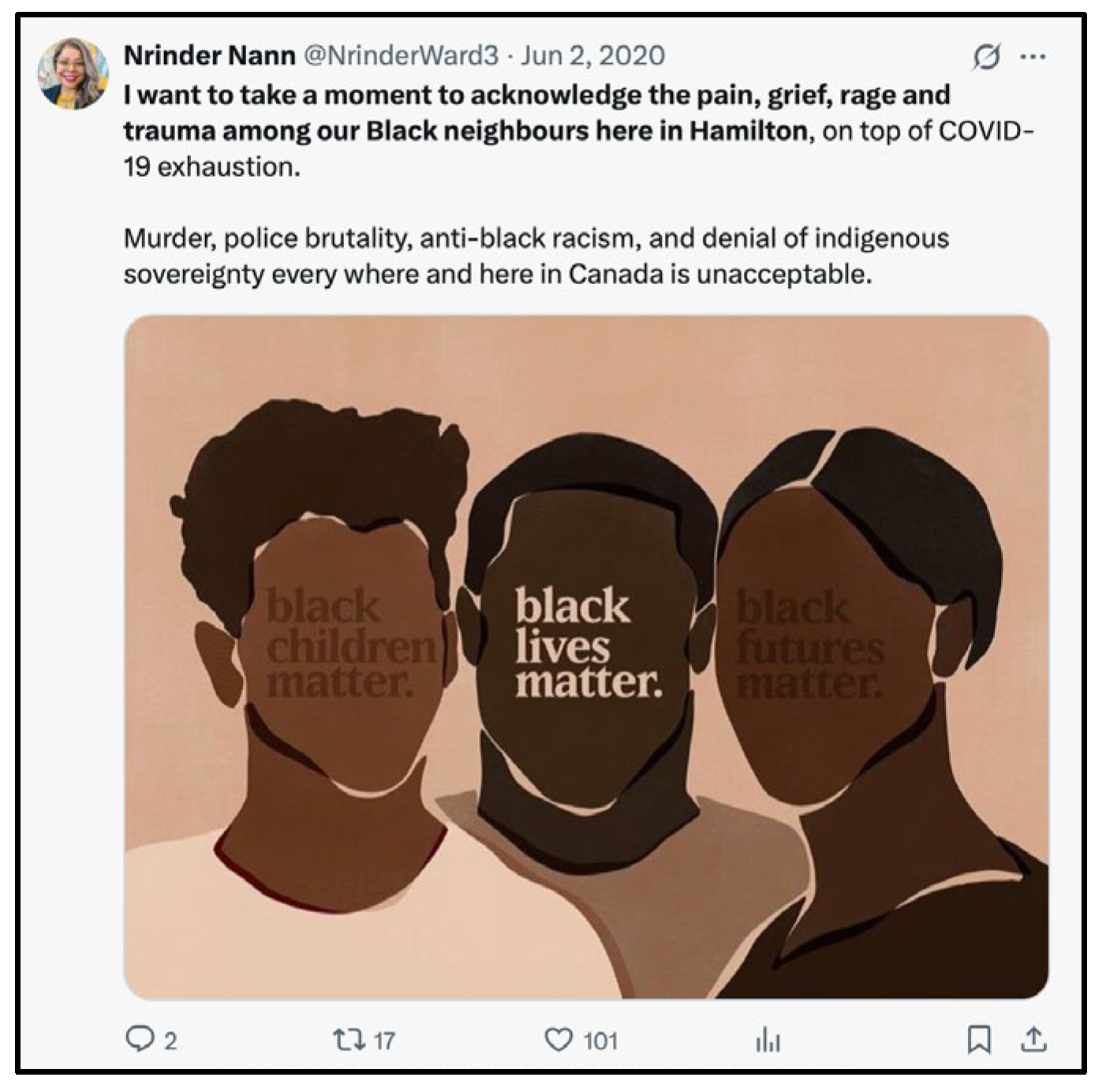
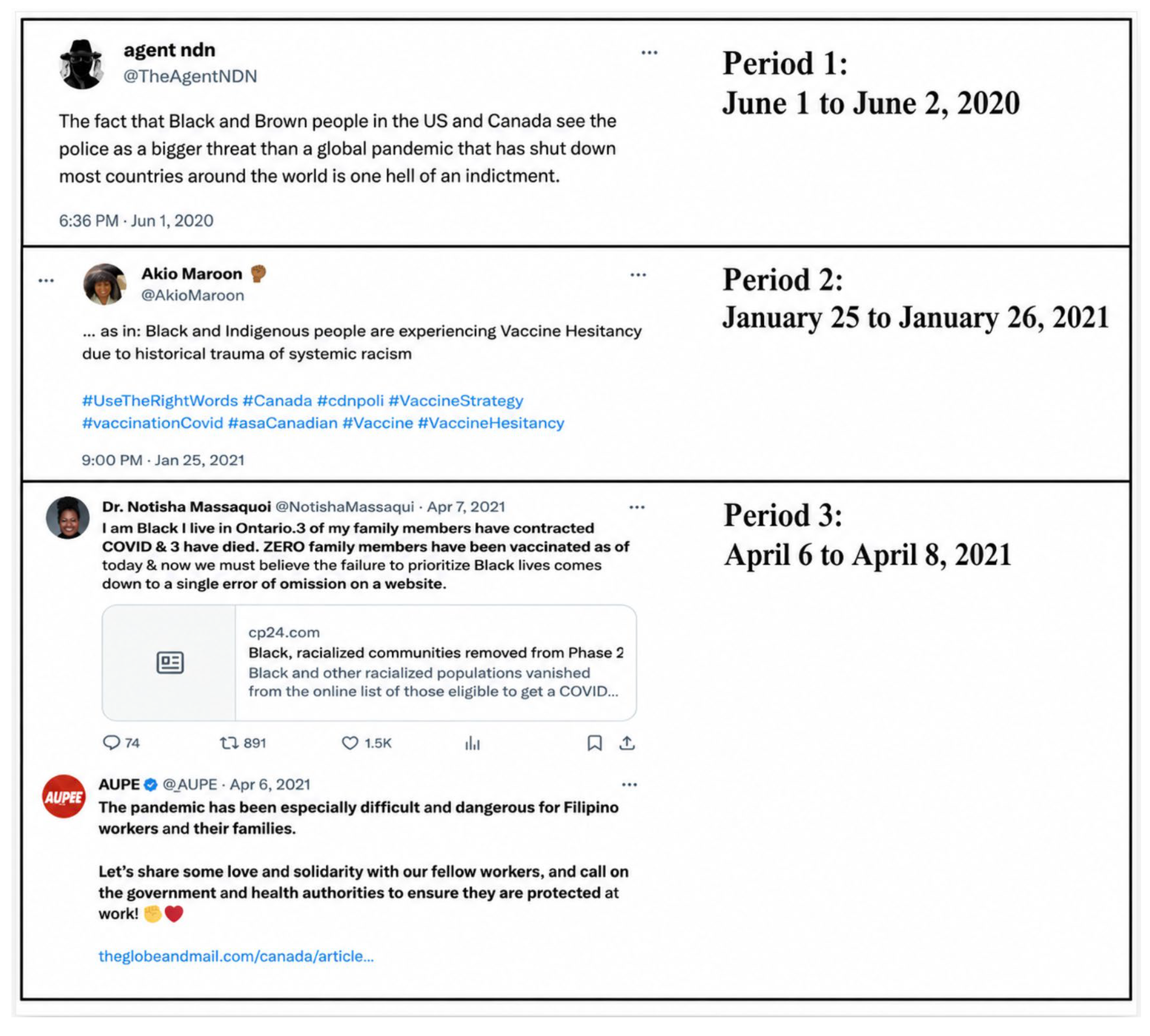
During the first peak (1–2 June 2020), discourse in the Racialized and Migrants Dataset centered on the intersection of racial injustice and public health, following the murder of George Floyd. Tweets emphasized police violence, systemic racism, and institutional mistrust, capturing the dual burden of racism and public health risk, as protests erupted across North America despite the dangers of large gatherings. Widely circulated posts highlighted how Black and Brown communities perceived state violence as a greater threat than COVID-19 itself, reflecting deep-seated mistrust and structural harm (
Figure A9 in
Appendix A).
By contrast, the Public Dataset focused on pandemic management, including reopening plans, emergency aid, and economic relief. While both datasets addressed COVID-19, the mainstream discourse remained largely procedural and policy-focused, reflecting broader public concerns different from those uniquely affecting racialized groups (
Figure 4).
4.4.2. Period 2: Grief, Vulnerability, and Diverging Vaccine Narratives
The second peak in the Racialized and Migrant dataset (25–26 January 2021) was driven by the death of Yassin Dabah, a Syrian refugee and frontline worker. Discourse in the Racialized and Migrants Dataset centered on grief, refugee worker safety, and systemic neglect, alongside discussions of vaccine hesitancy in racialized communities framed through historical mistrust of healthcare institutions. The discourse delved into the roots of distrust in healthcare systems and discussed strategies for encouraging vaccine acceptance within these communities (
Figure A9 in
Appendix A).
In contrast, the Public Dataset during this same period was predominantly concerned with the vaccine rollout. Public discourse during this period reflected the broader population’s anxieties and expectations regarding the pandemic’s management through vaccination efforts (
Figure 4). While vaccines appeared in both datasets, the framing diverged significantly. In the racialized discourse, hesitancy was treated as a cultural and systemic issue, often framed externally without representing the communities’ voices directly. This absence risks reinforcing paternalistic or cultural forms of Othering, where immigrants are seen as needing persuasion rather than as rational actors navigating complex barriers. Meanwhile, the Public Dataset framed vaccination purely as a matter of access and efficiency.
4.4.3. Period 3: Vaccine Access and Systemic Exclusion
The third period (6–8 April 2021) followed the national vaccine rollout. Discourse in the Racialized and Migrants Dataset focused on disparities in vaccine access, particularly the exclusion of racialized communities from Ontario’s Phase 2 eligibility list designed to prioritize old-age and at-risk populations (
Tsekouras 2021). Tweets framed this omission as systemic racism and highlighted disproportionate exposure among frontline workers, including the Filipino community (
Figure A9 in
Appendix A).
Meanwhile, the Public Dataset focused on national benchmarks and high-profile outbreaks, such as COVID-19 cases among the Vancouver Canucks and comparisons between Canadian and U.S. vaccination rates. These conversations remained largely disconnected from discussions of structural inequality and lived experiences of racialized communities (
Figure 4).
Across all three periods, racialized and mainstream discourses addressed the pandemic from markedly different vantage points. Racialized and migrant-focused discourse foregrounded grief, injustice, and exclusion, while mainstream discourse emphasized national management and performance metrics. This discursive separation—where racialized experiences circulate in parallel but disconnected spaces—constitutes a subtle yet pervasive form of Othering. It reflects whose experiences are recognized as part of the collective national narrative and whose remain peripheral, conditional, or context-specific rather than socially shared.
Network analysis further reinforces this pattern of discursive separation. Across all three peak periods, the most retweeted accounts with the highest indegree centrality in both the racialized/migrant and public datasets were overwhelmingly established news organizations (e.g., CBC, CTV, Toronto Star). By contrast, overlap among highly active retweeters across the two datasets was minimal: only a very small number of accounts—approximately two per peak period—appeared as influential retweeters in both spaces. Because influential retweeters function as conduits for cross-network diffusion, this lack of shared influencers limits the circulation of racialized and migrant discourse beyond its own network. Consequently, high levels of engagement within racialized and migrant networks do not translate into comparable levels of visibility in the broader public network.
5. Discussion
This study examined processes of Othering on social media through discourse about racialized and migrant communities in Canada during the COVID-19 pandemic. Using computational analysis, it investigated who shaped discourse on X (formerly Twitter), how these communities were represented, and how platform-level structures of visibility influenced these dynamics. The analysis identified four established forms of Othering—hostile, cultural, sympathetic, and silencing—and introduced a fifth: algorithmic Othering, which emerges from how platform architectures organize attention, legitimacy, and influence.
Across the dataset, discourse was shaped largely by media organizations and other highly visible accounts. Although many tweets addressed the challenges faced by racialized and migrant communities, they were most often authored by users speaking about these communities rather than from within them. Newly arrived refugees and immigrants were particularly underrepresented. A small number of racialized professionals with institutional credibility—most notably Black physicians—appeared among the most amplified voices, suggesting that professional authority functions as a key condition for visibility.
These patterns indicate that participation alone is insufficient for visibility. Structural barriers—including unequal access to platforms, language constraints, and uneven access to institutional credibility—limit the capacity of marginalized users to achieve amplification. As a result, voice gains visibility primarily when mediated through actors who already possess recognized forms of authority.
Othering in this context operates not only through overt hostility but also through the organization of voice. Racialized and migrant communities were positioned primarily as objects of discussion rather than as speaking subjects. Their experiences were frequently acknowledged—often sympathetically—but rarely articulated in their own voices. This pattern reflects what
Spivak (
2010a) describes as epistemic silencing: marginalized groups may speak, yet their speech does not circulate unless it is validated through recognized institutions or actors.
Sentiment analysis further shows that Othering extends beyond negative discourse. While some narratives were explicitly exclusionary, positive and sympathetic representations—while caring— often reproduced paternalistic framings that emphasized vulnerability over agency. In this way, visibility can coexist with symbolic exclusion, rendering marginalized communities present in discourse without enabling meaningful participation.
At the same time, Othering was not uniformly imposed from dominant groups. Instances of exclusionary discourse also emerged within racialized communities, reflecting internalized oppression (
David 2013;
Fanon et al. 1963) and contributing to fragmentation rather than collective representation. These dynamics suggest that polarization operates not only between groups but also within them, complicating assumptions of unified marginal voices.
Comparative analysis of peak engagement periods further revealed a discursive divide. Conversations centered on racialized and migrant communities emphasized inequality, grief, and structural exclusion, while broader public discourse focused on national management issues such as vaccine rollout and economic recovery. This separation left racialized experiences peripheral to dominant narratives, reinforcing Othering through differentiated priorities rather than explicit exclusion.
These patterns have broader implications for how inequality operates in digital environments. When certain voices remain marginal to widely circulated discourse, their concerns are less likely to be recognized as urgent or policy-relevant. In this sense, discursive visibility shapes not only representation but also access to attention, legitimacy, and resources, contributing to a stratified public sphere.
These dynamics point to a form of algorithmic Othering operating through platform-mediated visibility. Even if engagement within marginalized communities is high, their discourse remains structurally disconnected from broader public visibility because algorithms privilege influencers. As a result, narratives about racialized and migrant communities enter wider discourse primarily through mediation rather than direct participation. In this way, social media platforms function not necessarily as sites of expression but as infrastructures of representation that translate existing social hierarchies.
Spivak’s (
2010b) notion of institutional validation can be reinterpreted in this context as platform-mediated credibility. The “institutions” of the digital space are the platform algorithms governing visibility (e.g., what gets recommended, trending topics, engagement-based ranking). Verification marks such as blue checks, follower counts, and perceived credibility signal who is considered an authoritative voice. Influencers function as new institutional figures of authority: their endorsement transforms speech into discourse that “counts.” Through preferential attachment, platform architectures systematically favor already-recognized voices, mirroring how traditional institutions privilege already-legitimized actors.
Algorithmic Othering thus operates in two interrelated ways. First, algorithmic silencing occurs when marginalized users participate in conversations or hashtags like #RefugeesWelcome or #IndigenousLivesMatter but fail to gain traction because they lack algorithmically valued markers of influence. Second, algorithmic amplification privileges voices that reinterpret or speak on behalf of racialized communities—often journalists, influencers, or professionals—whose framing then circulates widely. Social media thus promises agency while simultaneously constraining it through its visibility regimes. Voice is both enabled and constrained by the same infrastructural conditions.
It is important to acknowledge that the discourse captured on X may overrepresent more emotionally charged or polarized content, as such content is more likely to spread and attract engagement (
Maarouf et al. 2022;
Mousavi et al. 2022;
Knutson et al. 2024). While distinct from algorithmic Othering, these dynamics intersect with algorithmic visibility and help explain why certain narratives achieve prominence.
In moments of crisis, social media platforms do more than reflect inequality—they create and reproduce it in a different format. This study shows that despite the apparent openness of digital spaces, visibility remains unevenly distributed, with algorithmic preferred actors disproportionately shaping narratives about marginalized communities. As a result, these communities are often present but not heard—included in discourse yet limited in their capacity to shape it.
These patterns are not unique to Canada. Understanding inequality in digital environments requires moving beyond questions of representation to examine how platforms organize attention and visibility. Ensuring meaningful inclusion therefore depends not only on increasing participation but on addressing the structural conditions that determine whose voices are heard. Future research should examine how algorithmic Othering operates across platforms and contexts, including less public or encrypted spaces—such as WhatsApp—where alternative forms of voice and solidarity may emerge.