


Abstract
This study investigates digital leadership as a networked social process by analyzing how influential actors operating across professional and institutional domains construct leadership discourse and draw on transformational leadership (TFL) principles within Twitter (X) networks, with particular attention to the skill-transfer gaps that persist between formal academic preparation and workforce demands. Social Network Analysis (SNA) using the NodeXL program was used to examine the relational structure of that discourse across a dataset of 1186 Twitter accounts and 1362 relational ties. The analysis identified 27 prominent actors operating within a distinct community cluster whose discourse spanned politics, health, technology, media, and education, with thematically diverse but uneven engagement with leadership topics. Combining semantic cluster analyses, inductive thematic mapping, and a supplementary exploratory factor analysis (EFA), the study finds that the four TFL principles (individualized consideration, intellectual stimulation, inspirational motivation, and idealized influence) are unevenly represented in this discourse. The EFA condensed the co-occurrence structure into three platform-shaped factors, with the strongest support for individualized consideration and no coherent factor for idealized influence, indicating partial rather than comprehensive alignment with the four-dimensional TFL model. The findings position digital leadership as a relational and iterative social process, sustained through repeated interactions, endorsements, and positional recognition within platform-based publics that extend across academic, industry, and socio-political boundaries. The study highlights social media as a networked yet uneven environment for leadership development and the broader social negotiation of skill-transfer challenges across digital professional contexts.
1. Introduction
Leadership development and mentorship have become central mechanisms through which organizations transmit knowledge, build capacity, and reproduce leadership across professional communities (Sons 2016; Moldoveanu and Narayandas 2019). Despite the widespread implementation of such initiatives across academic, industry, and professional sectors, persistent skill-transfer gaps remain, particularly for individuals entering complex, fast-evolving work environments such as retail. These gaps are frequently attributed to the underdevelopment of soft skills, including communication, emotional intelligence, problem-solving, and teamwork, which are critical for effective collaboration and leadership in dynamic organizational contexts (Deming 2017; Succi and Canovi 2020).
In addition, competencies related to digital literacy, technological proficiency, and data analytics have become increasingly important (Nietzel 2025), yet they remain unevenly integrated into formal training and academic programs. Prior research suggests that institutional curricula often emphasize theoretical or technical instruction over the cultivation of adaptive, interpersonal, and leadership-oriented skills, leaving graduates underprepared for cross-functional collaboration and real-time decision-making (Jackson 2010). This challenge is further intensified by the pace of technological change, as institutional training structures often lag behind shifting industry and societal demands (van Laar et al. 2017; Willems et al. 2017). Such misalignment is especially visible in sectors with rapidly evolving consumer behavior, digital platforms, and interconnected supply chains (Skelly and Handrinos 2023). Without addressing emerging challenges such as an omnichannel environment or AI-driven innovation, many professionals enter the workforce with outdated knowledge and limited leadership readiness (Ehlers 2020; Hall et al. 2024).
Skill-transfer gaps refer to the discrepancies between the competencies fostered through leadership development initiatives and those required in contemporary professional contexts. Addressing this gap requires leadership approaches that extend beyond technical skill acquisition to encompass motivation, values, and relational capacity. Transformational leadership (TFL), extended by Bass and Avolio (1990), distinguishes leaders who motivate and inspire others toward shared goals from those who rely primarily on transactional exchanges. TFL emphasizes leadership as a moral, value-driven, and relational process that supports egalitarian influence, collective purpose, and shared transformation (Korejan and Shahbazi 2016). By cultivating commitment, creativity, and intrinsic motivation, transformational leaders promote innovation and professional growth across teams and organizations (Bass and Riggio 2006).
While TFL has traditionally been examined within formal organizational or institutional contexts, its core principles are increasingly observable within social media environments. On platforms such as Twitter (X), leadership unfolds through public-facing discourse, where influence, mentorship, and community learning emerge through ongoing interaction rather than hierarchical authority. These platform-based dynamics shift leadership from a top-down communication model to a networked and reciprocal process shaped by recognition, engagement, and relational positioning among educators, professionals, and learners.
Accordingly, this study examines digital leadership not as a mechanism of information diffusion, but as a networked social process through which influence, legitimacy, and authority are collectively constructed within platform-based communities. Employing social network analysis (SNA) (Wasserman and Faust 2009) using the NodeXL Pro tool, the study addresses the following research questions:
RQ1:
Who are the key actors shaping leadership discourse on Twitter (X)?
RQ2:
How is digital leadership discourse socially constructed and sustained through networked interactions within the Twitter (X) community?
RQ3:
How are the principles of transformational leadership expressed and negotiated within this networked social learning community?
By focusing on patterns of interaction rather than message transmission, this study examines how leadership meaning, influence, and legitimacy take shape within networked publics. As social media increasingly shapes how professional knowledge circulates, situating TFL within digital discourse connects this inquiry to broader social science discussions of networked influence, collective sensemaking, and the social conditions under which authority is produced. The findings are relevant to scholars studying digital publics, networked influence, and how leadership recognition takes shape outside formal institutional structures. This study contributes to digital leadership research by conceptualizing leadership discourse on social media as a networked social process emerging within community clusters rather than diffusing uniformly across a platform.
2. Theoretical Framework
2.1. Transformational Leadership (TFL)
Transformational leadership (TFL) explains how influence is generated through shared purpose, motivation, and relational engagement rather than through formal authority alone (Burns 1978; Bass 1985; Bass and Riggio 2006). Leadership in this tradition is not treated as a fixed role individual trait, but as a social process through which actors shape commitment, interpret collective goals, and encourage change (Fairhurst and Grant 2010). This orientation positions leadership as something enacted through communication and recognition rather than simply possessed by individuals, which is the analytical stance the present study adopts.
TFL originates from Burns (1978), who described transformational leadership as a process in which leaders and followers raise one another to higher levels of motivation and moral purpose. Bass (1985) built on this by specifying the behavioral dimensions that made the theory more directly usable in empirical research. Bass and Riggio (2006, pp. 45–46) later refined these dimensions as individualized consideration, intellectual stimulation, inspirational motivation, and idealized influence. As a set, these dimensions describe how leaders support development, challenge assumptions, articulate vision, and gain legitimacy through ethical and symbolic modeling. Each dimension captures a distinct but related aspect of transformational leadership. Individualized consideration refers to recognizing followers’ unique strengths and offering mentorship and developmental support. Intellectual stimulation challenges assumptions and encourages critical reflection and creative problem-solving. Inspirational motivation refers to articulating a compelling vision that energizes followers toward shared objectives. Idealized influence refers to the demonstration of trustworthiness, credibility, and ethical conduct through which leaders gain respect and legitimacy (Bass and Riggio 2006).
As leadership increasingly operates across distributed networks of interaction, its relational orientation extends beyond hierarchical coordination (Avolio et al. 2001) and treats communication as the primary medium through which influence is established and maintained. Because leadership in networked publics is constituted through communication and recognition rather than formal authority, the four TFL dimensions are useful not as behavioral measures but as analytical categories for identifying which leadership meanings are discursively invoked, contested, and recognized within the network.
2.2. Digital TFL in Networked Social Environments
The rapid emergence of new technologies, platforms, and disruptive business models has intensified questions about how leadership operates within digitally mediated publics (Boston Consulting Group 2023). Digital communication has substantially altered the context in which leadership is enacted and observed. Research on e-leadership shows that communication technologies change how leaders maintain presence and build trust across dispersed settings (Avolio et al. 2001). In these environments, digital media reshape the conditions under which influence becomes visible and socially recognized, rather than simply replicating offline managerial practice through a new channel.
Social media platforms have become consequential venues for knowledge sharing and leadership discourse through ongoing interaction (Yaqub and Alsabban 2023). While organizations and professional associations integrate digital engagement into their communication strategies, leadership discourse often remains institutionally bound and limited in public visibility. Platforms such as Twitter (X) allow users to endorse, amplify, and contest messages across overlapping audiences. As a result, influence is not determined solely by institutional position but also by network location, visibility, and patterns of recognition (Dubois and Gaffney 2014). Social media thus makes it possible to study leadership as a public and relational process rather than as an exclusively organizational one.
Digital TFL is negotiated through networked interaction rather than simple message transmission. Opinion leaders (i.e., users recognized for their visibility and credibility) and information brokers (i.e., users who connect otherwise segmented communities) play distinct relational roles in shaping leadership discourse (Kim and Chakraborty 2024). Their significance lies not only in the messages they produce, but also in their structural capacity to connect communities and frame issues in ways that others adopt or circulate (Dubois and Gaffney 2014). Social media is not merely a channel for leadership communication but a space in which leadership-related meanings are constructed through repeated interaction and networked endorsement.
This interpretive potential, however, requires caution. Platform interactions are shaped by algorithmic amplification, selective participation, and uneven distributions of attention. Online visibility cannot be treated as a direct measure of leadership effectiveness or social influence in a broader sense (Dubois and Gaffney 2014).
2.3. TFL Dimensions as Analytical Categories for Social Media Discourse
Because leadership in a networked public is constituted through communication and recognition rather than through formal authority (DeRue and Ashford 2017; Fairhurst and Grant 2010), the four dimensions of TFL are employed as analytical categories for reading leadership-related discourse rather than as a direct measurement instrument (Blumer 1956). They specify which leadership meanings (such as developmental support, critical engagement, shared vision, and symbolic legitimacy) are discursively invoked, contested, and recognized within the network, without claiming that all visible actors on the platform expressed transformational leadership in a complete or verifiable sense. Treating the dimensions as categories of meaning rather than as behaviors also clarifies the status of the analysis. They function as an a priori lens that the discourse may partially confirm or fail to support, not as properties assumed to be present in advance.
In this way, each dimension corresponds to a recognizable repertoire of leadership, meaning that may circulate in discourse rather than to directly observable behavior. Idealized influence is relevant because public communication depends on credibility and symbolic authority. In networked settings, these qualities may be reflected in repeated endorsement or the construction of an actor as a legitimate voice within a community. Inspirational motivation is pertinent because social media discourse frequently centers on shared purpose and future-oriented language. Messages that frame collective goals or project a compelling vision may be interpreted through this dimension. Intellectual stimulation is important in online settings where discourse involves contestation and the reinterpretation of established perspectives. Social media can function as a space in which assumptions are challenged, and competing understandings are made visible, though the platform context does not guarantee such engagement. Among the four dimensions, individualized consideration requires careful treatment in social media research. In the TFL tradition, it refers to attention to followers’ development and circumstances through mentoring and tailored support (Bass and Riggio 2006), but in platform-based contexts such sustained developmental relationships are harder to observe. It should therefore be interpreted as a limited and indirect signal rather than as direct evidence of developmental leadership.
2.4. Research Gap and Study Positioning
Much of the leadership literature addresses organizational or educational contexts without fully engaging networked publics, while social media research more often focuses on influence, engagement, or opinion leadership without grounding its analysis in TFL. The intersection of TFL and platform-based public discourse therefore remains underdeveloped in the literature.
The present study responds to this by bringing together transformational leadership theory and social network analysis to examine leadership discourse on Twitter (X). The study does not treat social media traces as direct evidence of leadership effectiveness or durable leader-follower relationships, but approaches leadership as a discursive and relational process that becomes visible through interaction, recognition, and networked communication. TFL supplies interpretive vocabulary through which patterns of discourse can be read, while the network perspective makes it possible to examine how such meanings are distributed across a digitally mediated public space.
3. Methods
3.1. Social Network Analysis (SNA)
Social network analysis (SNA) is a methodological approach for visualizing social entities, their relationships, and emergent cluster structures within complex social systems (Wasserman and Faust 2009). SNA operates through two core units: vertices and edges. Vertices (also referred to as actors, nodes, or agents) represent a wide range of social entities, including individuals, brands, affiliations, and even non-human elements such as web pages, keywords, events, or geolocations. Edges (also called links, ties, or connections) depict specific types of relationships, such as communication, collaboration, transactions, investments, friendship, or shared attributes, capturing the relational dynamics among entities (Wasserman and Faust 2009). In the Twitter context, edges also capture interactions such as tweets, retweets, replies, and mentions, highlighting real-time, directional connections among users and reflecting how information and influence flow through the network (Olivares-De la Fuente et al. 2025).
To analyze these Twitter networks, this study employed NodeXL Pro (Social Media Research Foundation, Belmont, CA, USA), an SNA software tool integrated with Microsoft Excel (Microsoft Corporation, Redmond, WA, USA) that enables network computation, graph visualization, and content analysis. Using NodeXL Pro, the study computed key metrics and applied relevant algorithms to examine information diffusion and relational influence within the network (Hansen et al. 2020). Data were collected through the Twitter Application Programming Interface (API) and organized to address the study’s three research questions.
For research question 1 (RQ1), key actors were identified using in-degree, out-degree, and betweenness centrality (BC) metrics, which locate nodes occupying high-connectivity and structurally bridging positions within the network. For RQ2, the structural conditions under which leadership discourse is constructed and sustained were examined through cluster analysis using the Clauset–Newman–Moore (CNM) algorithm and visualized with the Harel–Koren Fast Multiscale (HKFM) layout to map sub-community boundaries and inter-cluster relationships. For RQ3, leadership discourse was analyzed through semantic network analysis and “inductive thematic mapping” to identify keyword co-occurrence patterns and thematic clusters, which were then interpreted against the four TFL dimensions.
Each metric was selected for its correspondence to a specific research question rather than as a generic descriptor. Betweenness centrality operationalizes brokerage and bridging position, making it appropriate for RQ1’s focus on actors who connect otherwise separated conversational clusters; modularity-based community detection (CNM) operationalizes the boundary structure of sub-communities, making it appropriate for RQ2’s focus on how discourse is socially organized; and keyword co-occurrence structure operationalizes the semantic association among leadership concepts, making it appropriate for RQ3’s focus on thematic alignment with TFL. NodeXL was used for network construction and visualization, while the substantive analytic claims for RQ3 rest on the supplementary exploratory factor analysis (EFA) of the semantic co-occurrence data, which adds a quantitative and reproducible layer beyond descriptive centrality and clustering metrics, and reduces the subjectivity of the interpretive mapping (See Section 3.3).
3.2. Data Collection: Detecting the Topic-Specific Twitter Network
Two institutional programs, the National Retail Federation Foundation Student Program (NRF) and the Harvard Business School Leadership Development Program (HBS), served as focal points for network exploration because both are recognized contexts for public discourse on leadership, mentorship, and professional development. To examine online communities engaged in these themes, data were collected over one year from April 2023 to April 2024, allowing the study to capture leadership-related discourse across different periods of professional, academic, and organizational activity on Twitter (X). Data were collected using NodeXL Pro through a keyword-based Boolean search strategy. The logical OR operator was used to broaden the query’s scope across related yet distinct topic areas. The search query “Leadership Development OR Career Mentorship OR Retail OR HBS NRF” (hereafter LMR) was selected to operationalize digital leadership as a discourse spanning formal development programs, relational mentorship, and applied professional settings. “Leadership Development” and “Career Mentorship” capture the developmental and relational vocabulary central to transformational leadership. “Retail” anchors the discourse in an applied, workforce-facing professional sector, while “HBS” and “NRF” represent institutional contexts associated with leadership development, business education, and professional advancement. Combining these complementary terms was intended to generate a sufficiently large yet thematically relevant body of discourse rather than to maximize data volume for its own sake.
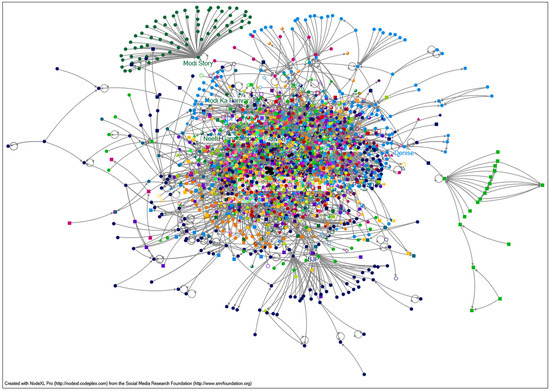
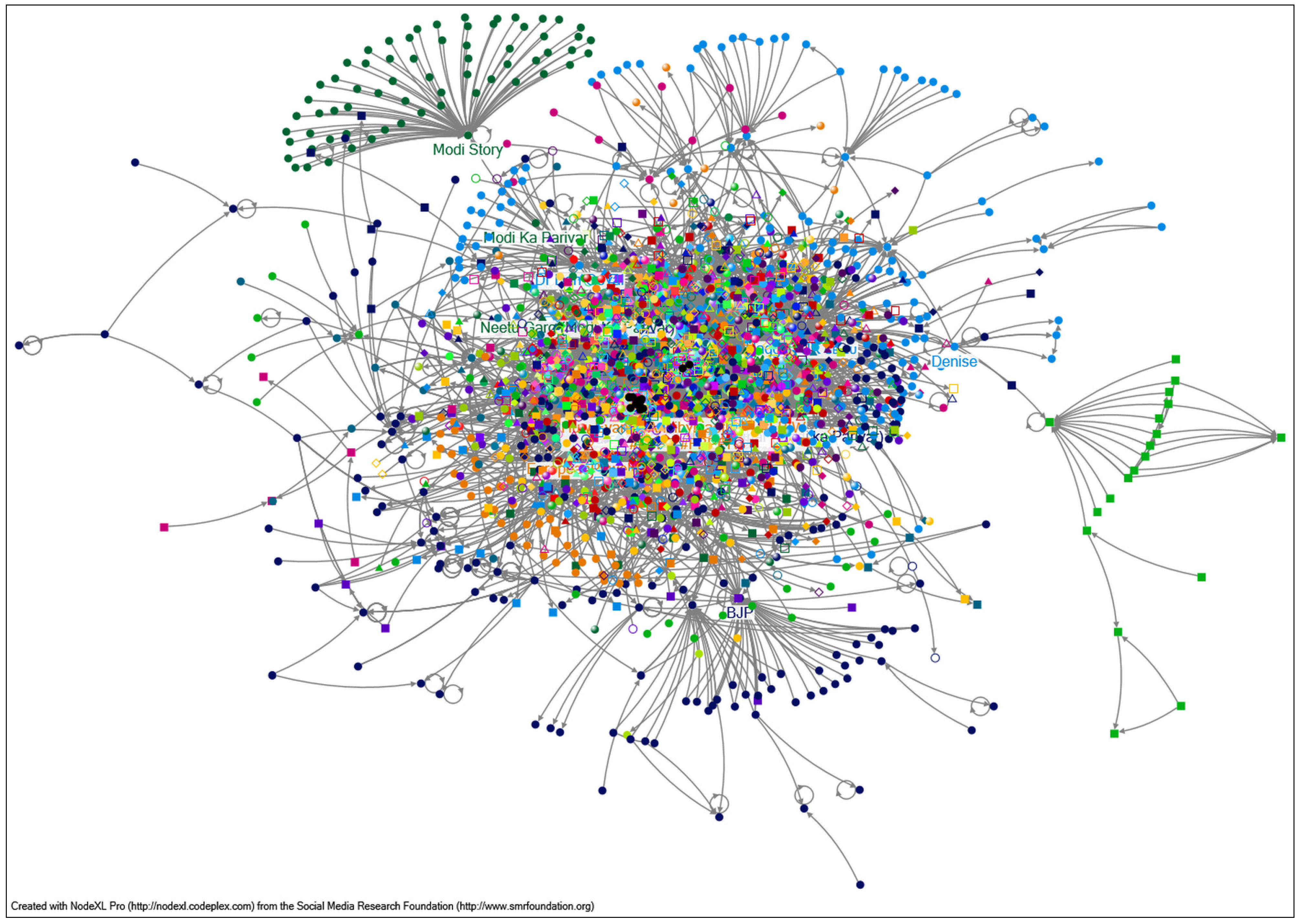
Importantly, the resulting dataset is not intended to represent a single bounded population or all digital leadership discourse on Twitter (X). Rather, the LMR query assembles a keyword-bounded discursive field in which leadership meanings are articulated, circulated, and negotiated across sectors. This approach fits the study’s exploratory purpose of mapping visible actors, interaction structures, and semantic associations within a thematically defined networked public. At the same time, the inclusive keyword strategy necessarily introduces heterogeneity, as some actors may be only indirectly connected to leadership development or mentorship. Accordingly, the findings are interpreted as patterns of discourse visibility and relational positioning within the LMR network, rather than as representative evidence of leadership behavior, mentorship outcomes, or workforce skill transfer. The resulting LMR network included 1186 Twitter users (vertices) whose tweets contained at least one of the designated keywords or who were mentioned, replied to, retweeted, or quoted within those conversations. These interactions generated 1362 relational ties (edges) within the network (see Table 1 and Figure 1).
Table 1.
Overall metrics in the LMR search network.
Figure 1.
Initial mapping of the LMR search network.
It should be emphasized that the LMR network constitutes a topic-specific discourse network rather than a representative sample of any defined population. Vertices were included based on keyword co-occurrence and conversational participation, not through probability sampling, and the network therefore captures one configuration of leadership-related discourse circulating on the platform during the collection window. Accordingly, the heterogeneity of actors (e.g., political, medical, entrepreneurial, and institutional accounts) is treated not as a sampling limitation but as a substantive feature of the platform’s cross-sectoral discourse structure, and findings are interpreted as characterizing this discourse network rather than as generalizable to leadership populations more broadly.
3.3. Supplementary Exploratory Factor Analysis
To complement the inductive thematic mapping and address the potential subjectivity of that interpretive process, a supplementary exploratory factor analysis (EFA) was conducted on the LMR semantic co-occurrence data. A term-by-term co-occurrence matrix was constructed from cleaned word-pair edges derived from the NodeXL semantic network output. Raw co-occurrence counts were aggregated into an 18-term symmetrical matrix after applying a minimum cumulative co-occurrence strength threshold of 30, which excluded semantically diffuse terms (e.g., platform artifacts, proper nouns, and non-conceptual connectors). Co-occurrence profiles were row-normalized, and Pearson correlations were computed across term profiles to generate the input correlation matrix.
Principal Axis Factoring (PAF) with Varimax rotation was applied, with communalities iterating to convergence. The number of factors was specified at three on theoretical grounds. The Kaiser criterion suggested four factors, but the fourth factor contained only two terms loading in isolation, offering no interpretive value beyond a three-factor solution. The three-factor model was therefore selected as more parsimonious and more consistent with the documented structure of TFL in digital leadership contexts (Eitan and Gazit 2025).
Factorability diagnostics indicated KMO = 0.483 and significant Bartlett’s Test of Sphericity, χ2(153) = 6035.93, p < 0.001. The KMO value falls below the conventional threshold of 0.60, reflecting the inherently sparse and fragmented structure of Twitter co-occurrence data. This is consistent with the study’s central finding that TFL discourse on Twitter is unevenly distributed across community clusters. Given this limitation, EFA results are interpreted as supplementary descriptive pattern evidence rather than confirmatory validation. An alternative 26-term model incorporating technology-domain vocabulary (e.g., Coruzant, AI, emerging technology, protege) was evaluated but rejected. The expanded model produced KMO = 0.121, attributable to the near-perfect internal co-occurrence coherence of the technology cluster and its weak integration with the broader leadership and mentorship vocabulary. This result is itself theoretically meaningful, confirming that technology-oriented discourse operates as a structurally isolated community rather than an integrated dimension of the broader leadership semantic network.
4. Results and Discussion
4.1. Digital Influencers in Digital Leadership Discourse (RQ1)
Betweenness centrality (BC) was used to identify key influencers within the LMR search network by measuring how frequently a user appears along the shortest communication paths, an indicator of their control over information flow and influence within the discourse (Hansen et al. 2020). A high BC value reflects a user’s role as an information broker or opinion leader who connects otherwise disconnected clusters. After filtering and ranking by BC scores, Table 2 presents the top 27 influencers. Their relative impacts were evaluated using activity metrics (their numbers of followers, accounts followed, and tweets) and their cluster affiliations, with each representing distinct positions and roles in the network’s dialogue dynamics.
Table 2.
Top 27 Influencers in the LMR search network.
Interestingly, Group 1 (G1) comprised high-BC political and media influencers. Among the 27 identified users, the top three functioned as information brokers due to their notably high BC scores. ‘Rigathi’ (Deputy President of Kenya) led 682,713 followers into the LMR network with a BC of 2391.000, followed by ‘mbuma_ke,’ (digital content creator) with a BC of 383.000 and 35,918 tweets, and ‘cbs_ke,’ (digital journalist and media strategist) with 188,080 followers and 32,116 followed, and a BC of 192.000. In addition, ‘victorkjr32’ (social media influencer) and ‘Augranious’ (youth leadership advocate) acted as opinion leaders, directly shaping the LMR dialogue. Although these political figures and social media influencers were not explicitly engaged with the LMR-specific themes, their positions as information brokers and opinion leaders amplified the visibility and reach of leadership-related discussions across the broader Twitter sphere.
Group 2 (G2) consisted primarily of youth and health advocates, including ‘lucas_fondo’ (youth empowerment activist, 2256 followers, 13,775 tweets) and ‘maxwell_karani4’ (leadership trainer promoting gender equality and youth opportunities). Despite a modest follower base, ‘maxwell_karani4’ exhibited a relatively high BC of 44.000, reflecting the influence of niche experts within specialized leadership communities.
Groups 3 (G3) and 10 (G10) were composed mainly of medical professionals and institutions. Influencers such as ‘pooh_vel’ (cardiologist) and ‘Accintouch’ (American College of Cardiology) illustrated how healthcare experts incorporate TFL-related themes into professional mentorship and education.
Group 5 (G5) featured institutional influencers in technology and business, including ‘Kojiromoriwaka’ (tech CEO), ‘m_francis’ (tech council representative), and alumni accounts such as ‘hbsalumni’ and ‘harvardalumni’, underscoring the role of elite institutions in linking academic and technological leadership networks. Group 8 (G8) included entrepreneurship and business-education influencers such as ‘Tycoonstoryco’ and ‘online_hbs’, representing platforms through which leadership and entrepreneurial discourse reach emerging professionals.
Groups 11 (G11) and 14 (G14) showcased lifestyle and media influencers, including ‘trath2017’ (lifestyle communicator) and major business outlet ‘Forbes’, demonstrating how non-academic actors contribute to shaping public discourse on leadership and mentorship.
These 27 actors occupied structurally significant positions within a cross-sectoral network of TFL communicators, including politicians, youth advocates, medical professionals, technology leaders, entrepreneurs, educators, and media organizations. Their positions within the LMR network show how leadership discourse crosses institutional and professional boundaries, with no single sector dominating its production or circulation. However, it is important to distinguish structural influence from leadership influence. A high BC score indicates that an actor occupies a bridging position in the flow of information and thus enjoys visibility and reach; it does not, in itself, establish that the actor exercises transformational leadership or is recognized as a leadership exemplar by other participants. Several top-ranked accounts (e.g., political and media figures) are structurally central yet only peripherally engaged with leadership development discourse. Network prominence is thus treated here as a measure of discursive position rather than as evidence of leadership effectiveness.
4.2. Social Process of Digital Leadership Discourse on Twitter (RQ2)
On Twitter, communication takes the form of networked social dialogue, with users interacting through replies, mentions, and retweets. These relational exchanges generate distinct topologies shaped by discourse themes and the positioning of influential actors (Kim and Chakraborty 2024). Smith et al. (2014) identified six common structural patterns in social media networks: polarized crowd, tight crowd, brand clusters, community clusters, broadcast network, and support network. Each topology reflects how relational positioning and interaction patterns shape the development of discourse within online communities (Himelboim et al. 2014).
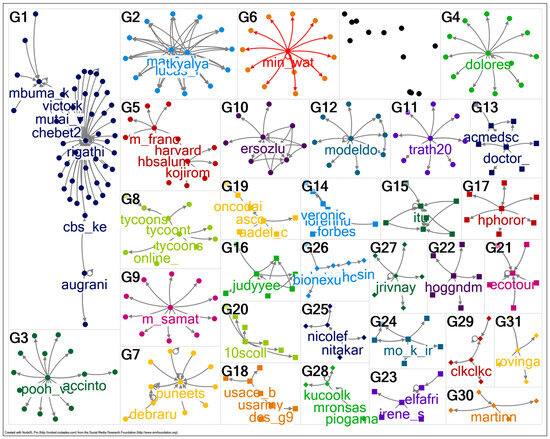
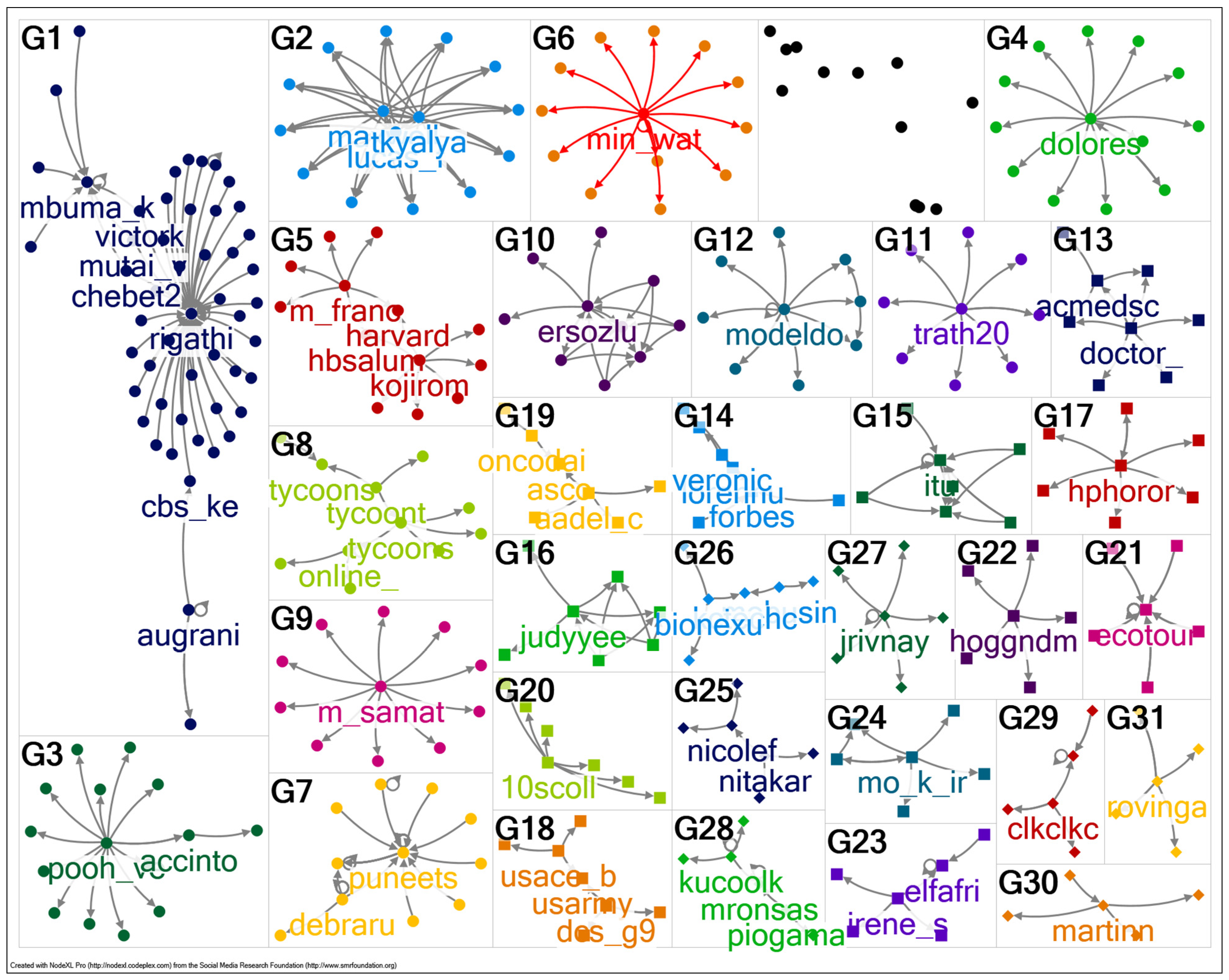
To identify the structural pattern of the LMR network, cluster analysis was conducted using the Clauset–Newman–Moore (CNM) algorithm combined with the Harel–Koren Fast Multiscale (HKFM) layout. Using the Group-in-a-Box (GIB) layout option, Figure 2 clearly illustrates how influencers connect with their audiences within theme-based subgroups, yielding dense interactions within groups and comparatively weaker connections between groups. The GIB map further demonstrates that leadership discourse develops through multiple localized communities rather than through a single centralized network. Of the 182 detected clusters, 31 were visualized after excluding isolated groups with minimal engagement (i.e., groups consisting of a few users who viewed content but did not interact with others). The resulting topology resembles a community cluster structure, with multiple interconnected groups defined by localized influence and thematic focus. Seven dominant groups formed around individual thought leaders, advocacy coalitions, or specialized domains such as healthcare, technology, and education, while smaller clusters functioned as sites of mixed dialogue and peripheral interaction.
Figure 2.
Community clusters in the LMR search network.
For example, Group 1 clustered around political and media brokers (e.g., Rigathi, cbs_ke, mbuma_ke), engaging audiences in leadership and political discourse. Group 2 highlighted youth advocates and community development leaders such as lucas-fondo and maxwell_karani4. Group 3 included medical professionals and institutions (e.g., pooh_vel, Ersozlusara, Accintouch), embedding TFL principles into healthcare mentorship and professional practice. Group 5 centered on TFL-aligned institutions and tech-oriented leaders, including Kojiromoriwaka, m_francis, and alumni accounts such as harvardalumni and hbsalumni. Group 8 featured entrepreneurship influencers like Tycoonstoryco, while Groups 11 and 14 represented lifestyle, communication, and business-media voices.
At least seven groups contained opinion leaders and information brokers who played essential roles in facilitating cross-cluster interactions and relational connectivity. The topology of this community cluster revealed a persistent skill-transfer gap, as fragmentation across inter-group networks limited opportunities for sustained engagement and shared interpretation. As a result, leadership-related discussions often remained situated within specific communities, with only selective recognition beyond cluster boundaries. Notably, the HBS cluster (G5) demonstrated an effort to address this fragmentation by leveraging its alumni network to foster connection, mentorship, and shared meaning around technology and entrepreneurship through TFL-oriented initiatives.
The cluster map shows digital leadership as a networked social process rather than a property of centralized authority. Leadership discourse develops through recurring interactions among digital influencers and their communities, not through top-down diffusion or linear pathways. Digital influencers, including educators, industry experts, community advocates, and thought leaders, position themselves and gain recognition within these networked publics through sustained engagement. While fragmentation across clusters points to the limits of Twitter as a platform for sustaining cross-sector leadership discourse, the dense interaction within individual communities suggests that platform-based TFL discourse develops primarily through localized social learning processes rather than through network-wide integration.
4.3. Discursive Alignment with Core TFL Principles (RQ3)
Semantic network analysis maps how leadership-related keywords co-occur and cluster within the LMR community, revealing the thematic structure of discourse across the dataset. Word pairs were identified based on frequency and salience metrics, producing a semantic network of 1283 vertices (keywords) and 2285 edges (co-occurrence relationships) (see Table 3).
Table 3.
Overall metrics in the LMR semantic network.
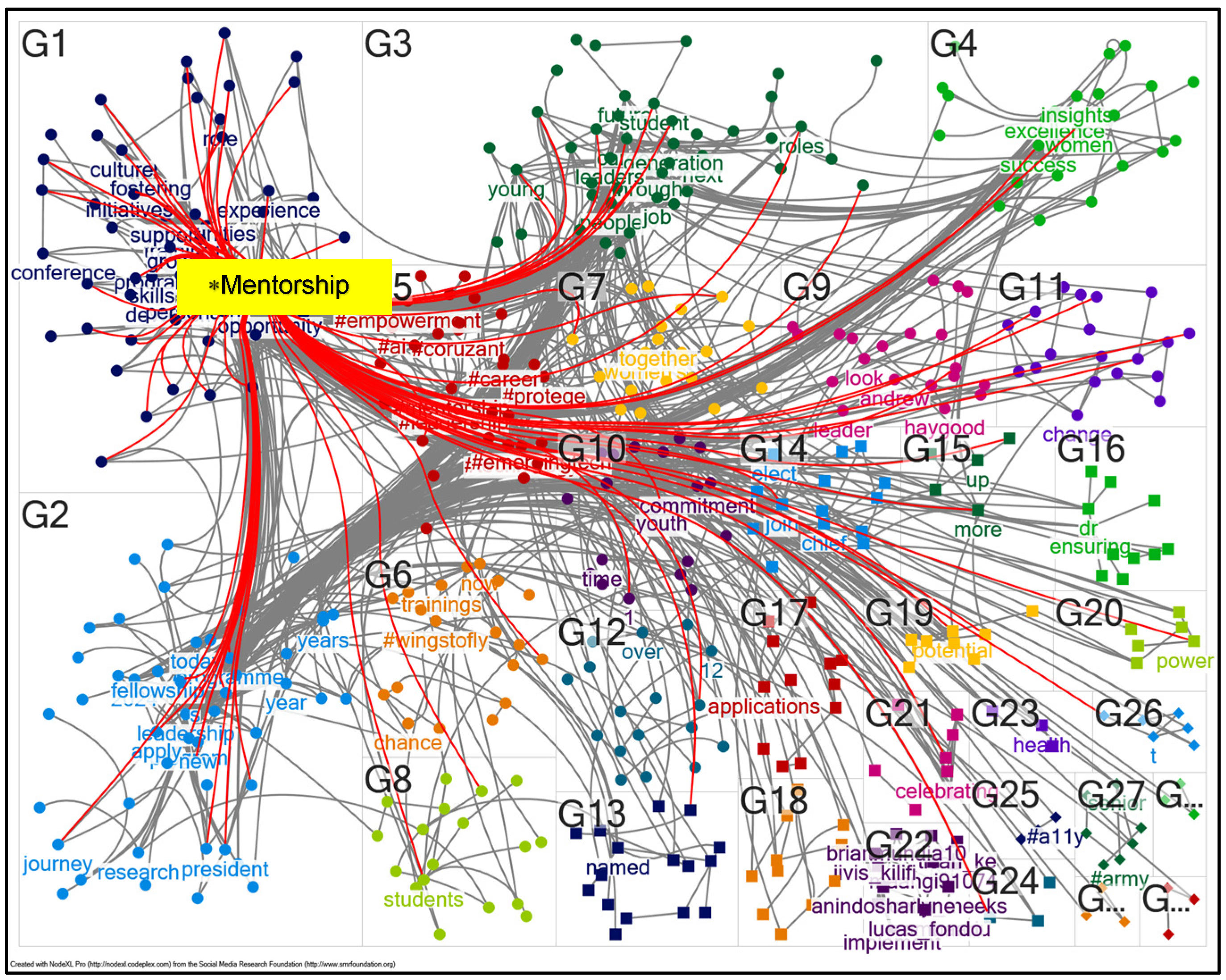
A cluster analysis for the semantic network was conducted and visualized using the Clauset–Newman–Moore (CNM) algorithm and the Harel–Koren Fast Multiscale (HKFM) layout (see Figure 3). Semantic clusters were labeled (e.g., G1, G2) and color-coded to represent thematic groupings, with spatial proximity indicating conceptual closeness and topical alignment.
Figure 3.
Thematic clusters in the LMR semantic network. Note: * The keyword ‘mentorships’ created strong ties (red lines) that bridged dialogue.
Inter-cluster edges revealed cross-theme linkages that illustrate how leadership nodes become connected through shared discourse. For example, the keyword ‘mentorship’ created strong red-line ties across multiple groups, underscoring its bridging role in linking otherwise separate thematic conversations. Within G1, ‘mentorship’ was strongly associated with development, career, women, program, youth, and opportunities, highlighting its integrative function across the network. Meanwhile, the emphasis of G5 on #technology and related tags (ai, #emergingtech, #protegy), associated with Coruzant, reflects a distinct focus on digital leadership within technology-oriented communities. Clusters such as G1 and G2 functioned as discourse hubs where leadership themes were consistently produced through the structural activity of opinion leaders and information brokers within the network.
Following exploratory cluster analysis, an inductive thematic mapping approach was used to identify recurring semantic patterns and group them into qualitative patterns into higher-level conceptual categories. These categories were then interpreted against TFL’s four dimensions, drawing on established qualitative thematic analysis procedures (Braun and Clarke 2006; Miles et al. 2014).
The 50 most salient keywords were identified based on frequency and centrality metrics and analyzed for correspondence with the four dimensions of transformational leadership. ‘Leadership’ was the most salient topic (BC = 296,348.961; count = 924 in G2), with its betweenness centrality score indicating a bridging position across discourse clusters (see Table 4).
Table 4.
The 50 most salient keyword metrics in the LMR semantic network.
The LMR semantic network indicates that leadership discourse engaged unevenly with the core dimensions of TFL. Mentorship and individual development practices strongly reflected Individualized Consideration, while Intellectual Stimulation appeared frequently but was oriented more toward incremental reflection than toward disruptive innovation. Inspirational Motivation emerged as an aspirational theme but remained limited in emotional depth and sustained engagement, whereas Idealized Influence was largely associated with a small number of highly visible actors, suggesting constrained opportunities for broader recognition of leadership exemplars.
To complement this inductive thematic mapping and reduce potential interpretive subjectivity, a supplementary exploratory factor analysis (EFA) was conducted (see Section 3.3 for full methodological detail). The three-factor solution explained 62.4% of rotated variance [KMO = 0.483; Bartlett’s χ2(153) = 6035.93, p < 0.001] and revealed a partial rather than comprehensive semantic alignment with the four canonical TFL dimensions (see Table 5).
Table 5.
Exploratory semantic factor structure and alignment with TFL dimensions.
Factor 1 (Platform-mediated leadership discourse, 30.1%) was the dominant factor, clustering ‘leadership (0.968), software (0.988), career (0.826), program (0.829), opportunity (0.806), professional (0.808), and training (0.592).’ This factor reflects the co-occurrence of leadership discourse with career infrastructure vocabulary (i.e., programs, opportunities, professional development) and aligns most closely with the Inspirational Motivation dimension of TFL, specifically discourse of aspiration, opportunity access, and professional mobilization. The strong loading of software alongside leadership reflects how technology-adjacent vocabulary saturates the same discursive space as leadership on Twitter, consistent with the platform’s cross-sectoral reach documented in RQ1.
Factor 2 (Mentorship and inclusive development, 21.0%) provided the strongest and most theoretically coherent TFL alignment, loading on ‘development (0.988), young (0.973), mentorship (0.849), skill (0.618), and women (0.381).’ This factor directly corresponds to Individualized Consideration, which is concerned with recognizing individual needs, providing mentorship, and supporting developmental growth. The presence of women and young indicates that this discourse is directionally oriented toward underrepresented and emerging professionals, with implications for the skill-transfer gap argument. Mentorship-oriented leadership discourse in Twitter is not uniformly distributed but is specifically targeted toward groups whose workforce readiness has most frequently been identified as underdeveloped (Deming 2017; Succi and Canovi 2020).
Factor 3 (Innovation and future orientation, 11.3%) captured future (1.000) and innovation (0.935), partially consistent with Intellectual Stimulation, which emphasizes challenge, creativity, and forward-looking thinking. The two-term structure limits interpretive depth, and the marginal Heywood case for future (loading = 1.000) is consistent with the well-documented tendency for improper solutions to arise when a factor is defined by very few indicators (Cooperman and Waller 2022). Nevertheless, the directional pattern confirms that aspirational and innovation-oriented vocabulary occupies a distinct discursive space from mentorship and career-opportunity discourse.
Notably, Idealized Influence did not emerge as a coherent factor. Terms most associated with this dimension (i.e., leader and generation) showed communalities below 0.15 (h2 = 0.129 and 0.075, respectively), indicating that leadership-exemplar discourse is semantically diffused across the network rather than concentrated around recognizable figures. This absence is theoretically meaningful in that leadership visibility on Twitter is distributed across many actors and communities rather than consolidated around a small number of idealized exemplars, consistent with the decentralized community cluster topology identified in RQ2. The failure of Idealized Influence to consolidate as a semantic factor thus corroborates the structure finding that cross-cluster recognition of individual leadership figures is limited on the Twitter platform.
Taken together, these findings indicate that transformational leadership within the Twitter (X) community shows partial semantic alignment with the four canonical TFL dimensions. Consistent with the exploratory and low-factorability nature of the analysis, these results are read as indicative patterns rather than as robust validation of the TFL dimensions. The strongest indicative support is for Individualized Consideration; Inspirational Motivation is reflected in the dominant career and opportunity discourse of Factor 1; Intellectual Stimulation appears weak in the innovation/future cluster; and Idealized Influence is absent as a coherent factor. These patterns reflect how platform interaction structures shape the visibility and recognition of leadership practices, dense within communities but fragmented across them, reinforcing the interpretation of digital leadership as a networked social process (Fairhurst and Grant 2010) that is sustained locally but unevenly integrated across the broader platform.
5. Conclusions
This study positions digital leadership on social media as a networked social process that emerges within community clusters rather than through centralized authority. Combining social network and semantic analyses of Twitter (X) discourse, it shows how leadership visibility and influence develop through recurring interaction within platform-based communities. The analysis identified 27 highly visible actors across diverse sectors (politics, youth advocacy, healthcare, technology, entrepreneurship, education, and media) who shaped leadership discourse through sustained positional engagement rather than formal authority.
Although these clusters were fragmented and only loosely tied to formal leadership-education initiatives, the key actors performed a relational bridging function, linking otherwise separate conversational spaces and sustaining a participatory discourse network. Leadership discourse was not concentrated in a single authority structure but developed across 31 interconnected community clusters spanning socio-political actors, institutional participants, grassroots youth advocates, and localized professional conversations. This pattern reinforces the view of digital leadership as a networked social process in which visibility and recognition are produced through interaction rather than granted by institutional position. While this decentralization limited sustained cross-sector integration, it also opens opportunities to connect retail- and business-oriented leadership conversations with the broader discourse already circulating on these platforms.
The supplementary EFA provides additional pattern-level evidence of the same unevenness. Semantic coherence was strong for Individualized Consideration (the mentorship, development, and inclusion discourse of Factor 2), while Idealized Influence did not form a coherent factor. This absence may signal more than network fragmentation. Idealized influence assumes a stable leader-follower relationship in which a recognized figure embodies shared values and is repeatedly treated as an exemplar. Decentralized, multi-community platforms rarely meet this condition: visibility is dispersed, authority is provisional and audience-specific, and recognition seldom settles on durable exemplars. The pattern thus suggests that a core assumption of TFL theory, the centrality of a single, idealized leader, may not carry over to networked digital settings, where leadership meaning is produced collectively rather than vested in identifiable individuals. Together, the network fragmentation observed in RQ2 and the semantic diffusion of leadership-exemplar terms in the EFA are not separate limitations but converging signs of the same dynamic: the way the platform is structured determines which forms of TFL can become established in the discourse. Idealized Influence is not among them, because the platform does not provide the stable, recognized-leader conditions that this dimension requires.
Practically, these patterns suggest, rather than establish, that addressing persistent skill-transfer gaps may benefit from attention to how TFL-related discourse is expressed through mentorship, innovation, and resilience in digital communities, alongside more inclusive leadership models (Nietzel 2025). Because the study examines discourse rather than learning or behavioral outcomes, these implications are offered as directions consistent with the observed patterns, not as validated prescriptions. Theoretically, the findings extend TFL by demonstrating its value for interpreting leadership-related discourse, mentorship, and influence within social-learning communities mediated by social media (Eitan and Gazit 2025), where Twitter networks act as informal yet consequential infrastructures for professional discourse and the negotiation of leadership legitimacy (Olivares-De la Fuente et al. 2025). The findings also bear on how institutions prepare individuals for platform-driven professional ecosystems such as LinkedIn, particularly the extent to which digital literacy, social media strategy, and influence-building are treated as core rather than supplementary competencies. Institutions might strengthen these capacities by engaging alumni through structured mentorship, project-based learning, and leadership coaching that connect academic preparation with professional practice (Bataineh et al. 2025). To reduce fragmentation across communities, TFL initiatives may prioritize cross-sector interaction through public forums and mentorship circles that foster recognition, shared purpose, and inclusive participation rather than unidirectional knowledge transfer (Daher-Armache et al. 2025). Emphasizing emotional intelligence, resilience, and diverse representation remains especially important in professional environments undergoing rapid technological and organizational change (Boston Consulting Group 2023; Bush 2025).
Several limitations should also be considered when interpreting these findings. The LMR dataset reflects a single keyword-based query collected within a defined window, capturing one configuration of leadership discourse rather than a stable or generalizable pattern. Betweenness centrality identifies bridging positions but reflects structural location within the communication graph rather than the content or reach of messages. More fundamentally, platform data are shaped by algorithmic curation, visibility dynamics, bot activity, performative engagement, and uneven participation. Observed ties such as retweets, mentions, and keyword co-occurrences should not be read as transparent indicators of leadership relationships since structurally identical interactions may reflect very different social processes. These constraints are integrated into the interpretation rather than merely noted: the low EFA factorability (KMO = 0.483) and the absence of a coherent Idealized Influence factor are interpreted as properties of a sparse, fragmented, platform-shaped environment, not as direct evidence about individual leadership behavior. Accordingly, the EFA is reported as exploratory and descriptive, and its factor structure should not be taken as a statistical validation of the four-dimensional TFL model. Finally, the study examines only Twitter, whose open, reply-oriented structure differs from platforms such as LinkedIn, YouTube, or closed professional communities. Future research could extend this work through longitudinal network analysis, closer examination of post content, and cross-platform comparisons.
Author Contributions
H.M.K.: Conceptualization, framework development, methods, primary social network and semantic analyses, and results and discussion. S.J.: Corresponding author, literature review, conclusion development, and overall manuscript formatting, including references. C.C.: Idea generation and theoretical orientation. All authors have read and agreed to the published version of the manuscript.
Funding
This research received no external funding.
Institutional Review Board Statement
This study used publicly available Twitter (X) data collected via the platform’s API and did not involve human subject research. Therefore, IRB approval was not required.
Informed Consent Statement
Not applicable. This study analyzed publicly available Twitter (X) data and did not involve direct interaction with human participants.
Data Availability Statement
The data presented in this study are available in a publicly accessible repository. The dataset can be accessed at: https://doi.org/10.6084/m9.figshare.31888621.
Conflicts of Interest
The authors declare no conflicts of interest.
References
- Avolio, Bruce J., Surinder Kahai, and George E. Dodge. 2001. E-leadership: Implications for theory, research, and practice. The Leadership Quarterly 11: 615–68. [Google Scholar] [CrossRef] [Scilit]
- Bass, Bernard M. 1985. Leadership and Performance Beyond Expectations. New York: Free Press. [Google Scholar]
- Bass, Bernard M., and Bruce J. Avolio. 1990. Developing transformational leadership: 1992 and beyond. Journal of European Industrial Training 14: 21–27. [Google Scholar] [CrossRef] [Scilit]
- Bass, Bernard M., and Ronald E. Riggio. 2006. Transformational Leadership, 2nd ed. Mahwah: Lawrence Erlbaum Associates. [Google Scholar] [CrossRef] [Scilit]
- Bataineh, Abdallah Q., Mohammad Alhur, Dhia Qasim, and Ahmed Shuhaiber. 2025. The role of emotional intelligence in enhancing organizational resilience: Examining the moderating impact of transformational leadership. Problems and Perspectives in Management 23: 79–94. [Google Scholar] [CrossRef] [Scilit]
- Blumer, Herbert. 1956. Sociological analysis and the “variable”. American Sociological Review 21: 683–90. [Google Scholar] [CrossRef] [Scilit]
- Boston Consulting Group. 2023. Amid Uncertainty: AI Gives Retailers a Path to Resilience. Brighton: World Retail Congress. Available online: https://www.bcg.com/publications/2023/improving-resilience-with-the-use-of-ai-in-retail (accessed on 5 January 2026).
- Braun, Virginia, and Victoria Clarke. 2006. Using thematic analysis in psychology. Qualitative Research in Psychology 3: 77–101. [Google Scholar] [CrossRef] [Scilit]
- Burns, James MacGregor. 1978. Leadership. New York: Harper and Row. [Google Scholar]
- Bush, John A. 2025. Positive leadership and diversity, equity, and inclusion (DEI) initiatives: An integrative framework. International Journal for Multidisciplinary Research 7: 1–7. [Google Scholar] [CrossRef]
- Cooperman, Allison W., and Niels G. Waller. 2022. Heywood you go away! Examining causes, effects, and treatments for Heywood cases in exploratory factor analysis. Psychological Methods 27: 156–76. [Google Scholar] [CrossRef] [Scilit] [PubMed]
- Daher-Armache, Gaby, Joseph Armache, and Hala N. Ismail. 2025. Leadership development in U.S. higher education: Strategies for lifelong learning and upskilling. Journal of Innovation & Knowledge 10: 100754. [Google Scholar] [CrossRef] [Scilit]
- Deming, David J. 2017. The growing importance of social skills in the labor market. The Quarterly Journal of Economics 132: 1593–640. [Google Scholar] [CrossRef] [Scilit]
- DeRue, Scott D., and Susan J. Ashford. 2017. Who will lead and who will follow? A social process of leadership identity construction in organizations. Academy of Management Review 35: 627–47. [Google Scholar] [CrossRef] [Scilit]
- Dubois, Elizabeth, and Devin Gaffney. 2014. The multiple facets of influence: Identifying political influentials and opinion leaders on Twitter. American Behavioral Scientist 58: 1260–77. [Google Scholar] [CrossRef] [Scilit]
- Ehlers, Ulf Daniel. 2020. Future skills and the future of higher education. In Proceedings of the 2019 ICDE World Conference on Online Learning. Edited by Mark Brown, Mairead Nic Giolla Mhichíl, Elaine Beirne and Eamon Costello. Dublin: Dublin City University, pp. 1–10. [Google Scholar] [CrossRef]
- Eitan, Tom, and Tal Gazit. 2025. Explaining transformational leadership in the digital age: The example of Facebook group leaders. Technology in Society 78: 102637. [Google Scholar] [CrossRef] [Scilit]
- Fairhurst, Gail, and David Grant. 2010. The social construction of leadership: A sailing guide. Management Communication Quarterly 24: 171–210. [Google Scholar] [CrossRef] [Scilit]
- Hall, Brian, Eric Lamarre, Rodney Levin, Jason T. Lorenz, and Paul Simon. 2024. Rewired and Running Ahead: Digital and AI Leaders Are Leaving the Rest Behind. McKinsey Digital. January 12. Available online: https://www.mckinsey.com/capabilities/mckinsey-digital/our-insights/rewired-and-running-ahead-digital-and-ai-leaders-are-leaving-the-rest-behind (accessed on 5 January 2026).
- Hansen, Derek, Ben Shneiderman, Marc A. Smith, and Itai Himelboim. 2020. Analyzing Social Media Networks with NodeXL: Insights from a Connected World, 2nd ed. Cambridge: Morgan Kaufmann. [Google Scholar]
- Himelboim, Itai, Guy Golan, Byeong-Yeon Moon, and Ryan Suto. 2014. A social networks approach to public relations on Twitter: Social mediators and mediated public relations. Journal of Public Relations Research 26: 359–79. [Google Scholar] [CrossRef] [Scilit]
- Jackson, Denise. 2010. An international profile of industry-relevant competencies and skill gaps in modern graduates. International Journal of Management Education 8: 29–58. [Google Scholar] [CrossRef] [Scilit]
- Kim, Hyun-Mi, and Subhajyoti Chakraborty. 2024. Exploring the diffusion of digital fashion and influencers’ social roles in the metaverse: An analysis of twitter hashtag networks. Internet Research 34: 107–28. [Google Scholar] [CrossRef] [Scilit]
- Korejan, Mohammad Mahdi, and Hossein Shahbazi. 2016. An analysis of the transformational leadership theory. Journal of Fundamental and Applied Sciences 8: 452–61. [Google Scholar] [CrossRef] [Scilit]
- Miles, Matthew B., A. Michael Huberman, and Johnny Saldaña. 2014. Qualitative Data Analysis: A Methods Sourcebook, 3rd ed. Thousand Oaks: Sage. [Google Scholar]
- Moldoveanu, Mihnea, and Das Narayandas. 2019. The future of leadership development. Harvard Business Review 97: 40–48. [Google Scholar]
- Nietzel, Michael. 2025. New Report: As Skills Gap Grows, Job Market for College Grads at 5-Year Low. Forbes. September 10. Available online: https://www.forbes.com/sites/michaeltnietzel/2025/09/10/new-report-as-skills-gap-grows-job-market-for-college-grads-at-5-year-low (accessed on 5 January 2026).
- Olivares-De la Fuente, Pablo, Enrique Jiménez-García, and Óscar García-López. 2025. Twitter and YouTube as digital tools in higher education: A systematic review. Frontiers in Education 10: 1625803. [Google Scholar] [CrossRef] [Scilit]
- Skelly, Luke, and Nick Handrinos. 2023. 2023 Retail Industry Outlook: Embrace the Changing Consumer to Bolster Growth in Inflationary Times. Deloitte. Available online: https://tinyurl.com/3m5fh7cp (accessed on 5 January 2026).
- Smith, Marc, Lee Rainie, Ben Shneiderman, and Itai Himelboim. 2014. Mapping Twitter Topic Networks: From Polarized Crowds to Community Clusters. Wilmette: Pew Research Center. Available online: https://www.pewresearch.org/internet/2014/02/20/mapping-twitter-topic-networks-from-polarized-crowds-to-community-clusters/ (accessed on 5 January 2026).
- Sons, Steve. 2016. Facilitating employee socialization through mentoring relationships. Career Development International 21: 554–70. [Google Scholar] [CrossRef] [Scilit]
- Succi, Chiara, and Monica Canovi. 2020. Soft skills to enhance graduate employability: Comparing students’ and employers’ perceptions. Studies in Higher Education 45: 1834–47. [Google Scholar] [CrossRef] [Scilit]
- van Laar, Ester, Alexander J. van Deursen, Jan A. Van Dijk, and Jos De Haan. 2017. The relation between 21st-century skills and digital skills: A systematic literature review. Computers in Human Behavior 72: 577–88. [Google Scholar] [CrossRef] [Scilit]
- Wasserman, Stanley, and Katherine Faust. 2009. Social Network Analysis: Methods and Applications. Cambridge: Cambridge University Press. [Google Scholar]
- Willems, Kim, Annelien Smolders, Malaika Brengman, Kris Luyten, and Jürgen Schonin. 2017. The path-to-purchase is paved with digital opportunities: An inventory of shopper-oriented retail technologies. Technological Forecasting and Social Change 124: 228–42. [Google Scholar] [CrossRef] [Scilit]
- Yaqub, Muhammad Z., and Abdoullah Alsabban. 2023. Knowledge sharing through social media platforms in the silicon age. Sustainability 15: 6765. [Google Scholar] [CrossRef] [Scilit]

Disclaimer/Publisher’s Note: The statements, opinions and data contained in all publications are solely those of the individual author(s) and contributor(s) and not of MDPI and/or the editor(s). MDPI and/or the editor(s) disclaim responsibility for any injury to people or property resulting from any ideas, methods, instructions or products referred to in the content. |
© 2026 by the authors. Licensee MDPI, Basel, Switzerland. This article is an open access article distributed under the terms and conditions of the Creative Commons Attribution (CC BY) license.