


Abstract
Economic crises can deepen the disadvantage faced by persons with disabilities while weakening their services. This study asks whether international aid for disability inclusion rises or falls when recipient countries experience a currency crisis, and through which channels it is delivered. We combine OECD data on aid projects targeting disability inclusion with World Bank inflation and exchange-rate data for ten low- and middle-income countries from 2018 to 2023, comparing each country’s crisis and non-crisis years. We also develop the Disability Financing Resilience Index (DFRI), which combines the share, breadth, and volume of disability-inclusive aid into a 0–100 score used to compare countries. The share of aid targeting disability inclusion tends to rise as inflation increases, most strongly in Lebanon and Türkiye, where crisis years are associated with an increase of about four percentage points. The DFRI reveals wide differences: Lebanon, Zambia, and Türkiye score highest and Argentina lowest, suggesting that neither income level nor crisis severity alone predicts how well disability-inclusive aid is sustained. Non-governmental organizations receive a smaller share of this aid in crisis years (14.0% versus 17.4%), pointing to donors and multilateral agencies, rather than civil society, as leading the response. These patterns are associations, not causal effects.
1. Introduction
Persons with disabilities are consistently among the populations most exposed to economic shocks. Evidence from Lebanon’s post-2019 collapse shows that households containing a person with a disability were significantly more likely than other households to report difficulty covering basic needs during the crisis (Human Rights Watch 2022). The World Bank and International Finance Corporation similarly document that persons with disabilities face systematically worse baseline socioeconomic outcomes—lower employment, poorer health, higher poverty incidence—that leave them with less buffer against shocks (World Bank n.d.; International Finance Corporation n.d.). When a sovereign currency crisis destroys the value of savings, collapses formal-sector employment, and forces state retrenchment in health, education, and social protection, this population’s exposure compounds.
Against this backdrop, the overlapping crises of 2019–2023 brought the vulnerability of persons with disabilities into sharper focus. The COVID-19 pandemic exposed persistent weaknesses in disability-inclusive social protection across low- and middle-income countries, as emergency responses frequently failed to reach persons with disabilities and pre-existing forms of exclusion intensified precisely when needs were greatest (Banks et al. 2021). At the same time, a series of sovereign debt, currency, and inflationary crises, including Lebanon from 2019, Sri Lanka in 2022, and recurrent episodes in Argentina, Türkiye, and Ghana, among others, placed substantial pressure on public finances and on the systems supporting disability-related services. Evidence from Lebanon illustrates the consequences of such compounded shocks: education and healthcare services for persons with disabilities were severely disrupted, while emergency preparedness and accessibility considerations remained limited within the broader crisis response (Shuayb and Doueiry 2023).
These crises coincided with important developments in the international architecture for identifying and monitoring disability-inclusive development financing. The OECD Development Assistance Committee (OECD-DAC) disability marker, introduced for reporting on 2018 activities, has made it possible to identify more systematically the disability-related component of official development assistance. Recent monitoring nevertheless points to substantial unevenness in both reporting and allocation, with disability-tagged financing remaining a relatively small share of total official development assistance (ODA) and varying considerably across donors and recipient countries (CBM Global Disability Inclusion 2024; Sightsavers 2024). Similarly, evaluations of the Inter-Agency Standing Committee Guidelines on the inclusion of persons with disabilities in humanitarian action suggest that formal commitments have advanced more rapidly than their operational implementation (Dijkzeul et al. 2026). Taken together, these developments create both the substantive need and the empirical opportunity to examine whether international financing responds to heightened disability-related vulnerability during periods of macroeconomic crisis.
The relevance of disability-inclusive financing has increased substantially following the adoption of the United Nations Convention on the Rights of Persons with Disabilities (CRPD) and the global commitment to the Sustainable Development Goals’ principle of “Leaving No One Behind”. Despite these commitments, disability inclusion remains chronically underfunded within development cooperation systems. Existing estimates suggest substantial financing gaps in education, healthcare, social protection, accessibility, and livelihood programs targeting persons with disabilities across low- and middle-income countries. During periods of severe macroeconomic instability, these financing gaps may widen further as governments experience declining fiscal capacity and increasing demand for social support. Understanding whether international aid systems compensate for these shocks through increased disability-inclusive financing is therefore both a development effectiveness question and a matter of social justice. Disability-inclusive financing is not only about providing more money during economic crises; it is also about protecting the rights, accessibility, participation, and essential services of persons with disabilities. However, an increase in disability-tagged ODA does not necessarily mean better outcomes for persons with disabilities. The OECD-DAC disability marker measures donor financing priorities, not the quality or impact of programs. Therefore, this study uses disability-tagged ODA mainly to assess how responsive international financing is to disability-related needs during sovereign currency crises.
State capacity and social protection systems fail during currency and banking crises: Lebanon’s Emergency Social Safety Net reached only a fraction of its targeted population (Human Rights Watch 2022). Neither strand of the literature directly examines whether disability-inclusive financing responds systematically to the intensity of macroeconomic crisis or whether this response varies across country contexts. The existing disability-financing literature is either global and cross-sectional, estimating financing gaps in normal times across a handful of case-study countries (UNICEF 2025), or single-country and descriptive, documenting the experiences of persons with disabilities and of the organizations serving them during a single crisis episode, without a comparative frame (Human Rights Watch 2022; Shuayb and Doueiry 2023). Neither asks this paper’s question directly: does disability-inclusive financing rise, fall, or stay flat as a currency crisis intensifies, and does the response differ systematically across countries?
The unresolved issue is therefore not simply whether disability-inclusive financing is insufficient, but whether it is responsive. Existing evidence provides little indication of whether disability-tagged aid systematically adjusts as macroeconomic conditions deteriorate within recipient countries, whether such responsiveness differs across country contexts, or whether crises alter the institutional channels through which disability-related financing is delivered. Addressing these questions requires moving beyond static financing estimates and individual crisis narratives toward a comparative longitudinal framework.
Accordingly, the study addresses three research questions:
- RQ1:
- Does disability-tagged ODA increase as sovereign currency crisis conditions intensify?
- RQ2:
- Does the responsiveness of disability-tagged ODA differ according to recipient-country income classification?
- RQ3:
- Does crisis-related disability financing shift toward non-governmental organization (NGO) and civil-society organizations in a manner consistent with a third-sector substitution mechanism?
These questions distinguish between three related but conceptually different processes: the overall responsiveness of disability-inclusive financing, heterogeneity in that responsiveness across country contexts, and changes in the institutional channels through which financing is delivered.
This paper addresses that gap using the OECD-DAC disability policy marker, which flags the degree to which a bilateral ODA project targets disability inclusion on a three-point ordinal scale (European Disability Forum 2022; CBM Global Disability Inclusion 2024). We construct a ten-country, six-year panel (2018–2023) of disability-tagged ODA merged with World Bank inflation and exchange-rate data, and estimate fixed-effects panel models of the disability-tagged share of ODA as a function of crisis intensity. We further build a Disability Financing Resilience Index (DFRI) that ranks countries by the responsiveness of disability-inclusive financing to crisis conditions.
The contribution is threefold. First, to our knowledge, this study provides the first panel-econometric test of the third-sector-substitution hypothesis for disability-inclusive financing, moving the question from description to inference. Second, it introduces the DFRI, a reusable composite measure extendable to additional countries and years as marker coverage matures. Third, it decomposes the result by channel of delivery and shows that the crisis-period rise in disability-tagged aid is not primarily a third-sector phenomenon—a distinction with direct implications for donors and multilateral coordinators tracking which crisis-hit countries and which delivery channels are at risk of being overlooked.
The study is structured as follows. Section 2 reviews the relevant literature and develops the conceptual framework and hypotheses. Section 3 presents the data and methodology. Section 4 reports the empirical results, while Section 5 discusses the findings, implications, and limitations. Section 6 concludes with policy recommendations and directions for future research.
2. Literature Review
2.1. Disability, Vulnerability, and Economic Crises
Three interconnected strands of literature bear directly on the relationship between economic crises and disability-inclusive development financing. The first concerns the economic and social vulnerability of persons with disabilities. Globally, disability is associated with persistent disadvantages in education, health, employment, income, and access to essential services (World Bank n.d.; United Nations 2024). Persons with disabilities constitute a substantial share of the global population and represent an important but frequently underserved economic constituency, with the disability market estimated at approximately 1.85 billion people and US$1.9 trillion in annual disposable income (International Finance Corporation n.d.).
These disadvantages can become particularly acute during humanitarian emergencies and economic crises. Evidence indicates that persons with disabilities face disproportionate barriers to accessing humanitarian assistance and essential services and may experience substantially higher mortality and exclusion risks during disasters and crises (World Bank n.d.; United Nations Office for Disaster Risk Reduction 2023). Such vulnerabilities arise not only from impairment-related needs but also from structural barriers, including inaccessible infrastructure, weak social protection systems, discrimination, and limited access to information and emergency services (United Nations 2024).
These structural dimensions are central to how disability-related disadvantage is understood in this study. Following the social model of disability and the CRPD, disability is understood not as an individual attribute but as the outcome of the interaction between persons with impairments and attitudinal, environmental, and institutional barriers (Oliver 1990; United Nations 2006). From this perspective, the disadvantage that persons with disabilities experience during economic crises is not simply a matter of reduced individual income or heightened economic vulnerability. It is also produced by the accessibility and inclusiveness of public and private services, by the design of social protection and labor-market institutions, and by the organizational practices that determine who is identified as eligible for support. Evidence from developing countries confirms that the disadvantage associated with disability is multidimensional, extending across education, employment, health, and living conditions rather than being confined to income poverty (Mitra et al. 2013). Critical scholarship further cautions against transferring individualized models of disability developed in high-income countries to contexts in which welfare provision rests heavily on families, communities, and non-state actors (Grech 2009).
In many low- and middle-income countries, welfare is not provided by the state alone but through a broader welfare mix in which households, community and religious organizations, markets, non-governmental organizations, and international donors each play a role (Gough and Wood 2004). International development assistance is therefore not external to domestic welfare arrangements but embedded in them: donor-funded programs often finance or deliver core services, shape eligibility and targeting rules, and influence which groups become visible to public policy. This has two implications for the present analysis. First, a currency crisis affects persons with disabilities not only through falling real incomes but also through the erosion of the public and international institutional structures on which accessible services depend. Second, the response of disability-inclusive financing to a crisis is itself an institutional outcome, reflecting how disability is incorporated into the structures of welfare provision and international development cooperation, rather than only the scale of individual need. Section 2.5 builds this structural perspective into the conceptual framework.
Lebanon provides a particularly relevant illustration of these dynamics. During the country’s prolonged economic and currency crisis, households containing persons with disabilities faced severe difficulties in accessing food, healthcare, education, and other necessities. Evidence from humanitarian and human-rights reporting suggests that persons with disabilities and their households were disproportionately affected by the deterioration in purchasing power and the erosion of public services (Human Rights Watch 2022). These findings are consistent with the broader literature identifying disability as a factor associated with heightened exposure to poverty and economic shocks (Banks et al. 2017; World Bank n.d.).
The COVID-19 pandemic provided a system-wide test of these vulnerabilities. Evidence from low- and middle-income countries shows that persons with disabilities were disproportionately affected by both the health shock and the accompanying economic contraction, while mainstream emergency responses often failed to accommodate disability-related needs. These shortcomings included inaccessible public-information campaigns and social-protection mechanisms that did not adequately account for the additional costs associated with disability (Banks et al. 2021). Lebanon provides a particularly prominent example of this compounding dynamic: the pandemic unfolded alongside an ongoing currency collapse, and existing studies document the combined disruption of education and healthcare services for persons with disabilities under these overlapping shocks (Shuayb and Doueiry 2023). Taken together, this evidence reinforces the view that macroeconomic crises are not distributionally neutral and raises the question of whether international financing responds to the heightened vulnerability of persons with disabilities during periods of severe economic stress.
The second strand concerns the cyclicality and volatility of foreign aid. A substantial finance and development literature has examined whether official development assistance responds systematically to recipient-country economic conditions. Early evidence suggests that aid flows can be volatile and insufficiently aligned with fluctuations in recipient-country needs, with some forms of assistance displaying pro-cyclical characteristics (Pallage and Robe 2001; Bulíř and Hamann 2008). In other words, aid may not necessarily increase when recipient countries experience their greatest economic distress.
The distinction between nominal aid commitments and their real purchasing power is particularly important during severe inflation and currency depreciation. Lebanon’s crisis illustrates this challenge, as the local-currency value and purchasing power of cash assistance could deteriorate rapidly when exchange-rate depreciation and inflation outpaced adjustments in transfer values (UNICEF 2023). Thus, the continued availability of humanitarian funding does not necessarily imply that assistance retains its real value during periods of macroeconomic instability.
The third strand concerns the emerging literature on disability-inclusive development financing and, more specifically, the OECD Development Assistance Committee (DAC) disability policy marker. The marker was introduced to improve the identification and monitoring of development activities that target disability inclusion as either a principal or significant objective (OECD 2022). Civil-society monitoring nevertheless points to substantial variation in the adoption and application of the marker across donors and recipient contexts. Existing assessments suggest that disability-inclusive aid remains unevenly distributed and that the use of a positive disability marker does not necessarily guarantee comprehensive implementation of disability-inclusive or rights-based programming (CBM Global Disability Inclusion 2024; European Disability Forum 2022).
To date, however, this literature has focused primarily on descriptive monitoring and country-specific advocacy rather than on explaining how disability-tagged financing responds to macroeconomic shocks across countries and over time. Consequently, the interaction between economic crisis conditions, aid cyclicality, and disability-inclusive development financing remains largely unexplored.
This study sits at the intersection of these three strands. It combines the literature on disability-related vulnerability, aid cyclicality, and disability-inclusive development financing to examine whether disability-tagged ODA responds systematically to sovereign currency crises. In doing so, the study moves beyond descriptive assessments of disability financing and provides a cross-country panel-econometric test of donor responsiveness during periods when persons with disabilities may face heightened economic vulnerability.
2.2. Disability-Inclusive Development Financing
Disability inclusion has progressively evolved from a specialized welfare concern toward a mainstream priority within international development cooperation. The adoption of the CRPD established an important rights-based framework emphasizing the equal participation of persons with disabilities in social, economic, and political life (United Nations 2006). This perspective implies that disability should be integrated across development sectors rather than addressed exclusively through specialized welfare interventions.
Contemporary frameworks therefore emphasize the importance of mainstreaming disability inclusion across education, healthcare, employment, social protection, infrastructure, humanitarian assistance, and economic development (United Nations 2019; World Health Organization 2022). However, the effective implementation of disability-inclusive development requires dedicated financial resources, accessible delivery mechanisms, and systematic monitoring of whether development programs meaningfully incorporate the needs and rights of persons with disabilities.
The introduction of the OECD-DAC disability policy marker represented an important institutional development in this regard. The marker enables reporting entities to identify development activities for which disability inclusion constitutes either a principal objective or a significant objective, thereby improving the visibility of disability-related financing within official development assistance statistics (OECD 2022).
Despite this progress, concerns remain regarding the scale and consistency of disability-inclusive financing. Civil-society organizations have argued that disability remains insufficiently prioritized within development and humanitarian financing relative to the scale of unmet needs (CBM Global Disability Inclusion 2024; European Disability Forum 2022). Moreover, substantial variation exists in reporting practices across donors, suggesting that observed differences in disability-tagged ODA may reflect both genuine differences in programming priorities and differences in how the OECD-DAC marker is applied.
Recent quantitative monitoring reinforces these concerns. Sightsavers’ (2024) analysis of disability-marker data for 2018–2022 documents substantial cross-donor variation in both reporting coverage and the application of the marker, while disability-relevant ODA remains limited relative to the scale of need among persons with disabilities. Evidence from humanitarian practice points in a similar direction. A scoping review of the implementation of the Inter-Agency Standing Committee (IASC) Guidelines identifies broad formal uptake but comparatively limited evidence that inclusion commitments are consistently translated into operational programming and budgetary allocations (Dijkzeul et al. 2026). Taken together, these findings suggest that improvements in the statistical visibility of disability within aid systems have not necessarily been matched by equivalent changes in resource allocation. This distinction is important for the present study, which interprets marker-based measures as indicators of donor prioritization rather than as measures of program quality or development outcomes.
Consequently, examining the behavior of disability-inclusive financing under conditions of macroeconomic stress represents an important empirical challenge. A currency crisis may simultaneously increase the need for disability-inclusive assistance while constraining the ability of governments and international organizations to deliver effective support.
2.3. Aid Cyclicality and Crisis Financing
A substantial body of literature examines whether foreign aid behaves pro-cyclically or counter-cyclically relative to recipient-country economic conditions. Counter-cyclical aid increases during periods of economic distress and may help stabilize consumption, public services, and social protection systems. Pro-cyclical aid, by contrast, declines during downturns or fails to respond sufficiently to deteriorating economic conditions (Pallage and Robe 2001; Bulíř and Hamann 2008).
More recent evidence adds nuance by distinguishing among different types of official financial flows. Avellán et al. (2024) show that official bilateral lending tends to behave counter-cyclically with respect to recipient-country economic conditions, expanding as those conditions deteriorate, in contrast to the pro-cyclical behavior typically associated with private capital flows. This suggests that the aggregate response of external finance can mask substantial heterogeneity across instruments, donors, and financing objectives. The present study extends this logic to the composition of official development assistance. Even if official flows respond counter-cyclically in aggregate, it remains unclear whether specific thematic components of aid, such as disability-inclusive financing, exhibit a similar response or are instead deprioritized as resources are reallocated during periods of crisis.
The cyclicality of aid is theoretically ambiguous. On the one hand, economic and humanitarian crises may attract increased donor attention and emergency resources, particularly when the crisis is highly visible internationally. Humanitarian financing can therefore increase in response to sudden shocks and widespread humanitarian needs (Development Initiatives 2023). On the other hand, aid commitments may be constrained by donor-country priorities, institutional rigidities, implementation difficulties, and competing international emergencies.
Importantly, responsiveness at the aggregate level does not necessarily imply responsiveness to specific vulnerable groups. A crisis may generate substantial increases in total humanitarian or development assistance while disability-inclusive interventions remain marginal within the broader aid portfolio. Disability concerns may be incorporated unevenly into emergency programming, particularly when rapid response mechanisms prioritize large-scale interventions that do not systematically address accessibility or disability-specific needs (United Nations 2019; World Health Organization 2022).
The absence of longitudinal evidence regarding disability-tagged aid during macroeconomic crises therefore represents a significant gap. Existing research has largely focused on aggregate aid cyclicality, humanitarian financing systems, or the descriptive measurement of disability-inclusive financing. Little is known about whether disability-tagged ODA systematically increases, decreases, or remains unchanged when recipient countries experience severe currency crises.
An additional dimension of aid responsiveness concerns the domestic political environment of donor countries. Foreign assistance is not determined solely by recipient-country needs or macroeconomic conditions; political parties and governments in donor countries can also shape both the level and composition of aid. Comparative evidence indicates that left- and right-leaning governments differ systematically in their orientations toward foreign assistance, with more positive positions toward aid translating into higher aid commitments in some settings (Dietrich et al. 2020). Government ideology may also affect the allocation of aid across delivery channels. Allen and Flynn (2018), for example, find that more liberal donor governments are more inclined to channel assistance through nongovernmental organizations, whereas more conservative governments place greater emphasis on direct government-to-government channels. Related evidence suggests that government ideology can also influence the relative priority assigned to foreign aid compared with defense spending (Wenzelburger and Böller 2020). These findings indicate that donor responsiveness to recipient-country crises may reflect not only changes in humanitarian need but also shifts in donor political priorities and institutional preferences. Consequently, fluctuations in disability-inclusive development assistance may arise from both recipient-country vulnerabilities and changes in donor-country political leadership, priorities, and budgetary preferences1.
2.4. State Capacity and Third-Sector Substitution
The relationship between state capacity and third-sector activity provides an additional theoretical perspective for understanding how disability-inclusive financing may be allocated during crises. When governments experience fiscal distress, declining revenues, inflation, and administrative disruption, their ability to provide healthcare, education, social protection, and other public services may weaken. Civil-society organizations and non-governmental organizations may consequently expand their role in service provision and humanitarian response (Salamon and Anheier 1998; Salamon 2015).
Substitution is, however, only one of several ways in which the state and the third sector can relate to each other. Young (2000) distinguishes supplementary relationships, in which nonprofit organizations fill gaps left by insufficient public provision, from complementary relationships, in which they act as partners of government and are financed by it, and from adversarial relationships, in which they press governments to change policy. Najam (2000) similarly characterizes government–third-sector relations as cooperation, confrontation, complementarity, or co-optation, depending on whether the two sides share goals and preferred means. In aid-dependent settings, these relationships are further shaped by contracting and delegation: donors frequently fund NGOs as implementing partners, an arrangement that can strengthen service delivery while weakening organizational autonomy and orienting accountability upward toward donors rather than toward the communities served (Banks et al. 2015). Contract-based funding can also generate competition among organizations for scarce donor resources, with consequences for how organizations position themselves and which needs they prioritize (Cooley and Ron 2002). Each arrangement implies a different distribution of responsibility for social protection: under substitution, the third sector takes over functions abandoned by the state, whereas under complementarity, contracting, or delegation, it delivers services that remain publicly or donor-financed and coordinated.
In this study, third-sector substitution is therefore used in a specific and testable sense that corresponds to Young’s (2000) supplementary model: as state capacity deteriorates during a currency crisis, donors are expected to redirect disability-inclusive financing away from public-sector channels and toward NGOs and civil-society organizations, so that the NGO share of disability-tagged ODA rises. Complementarity, contracting, and delegation would instead be consistent with stable or even declining NGO shares, because NGOs would be funded alongside, or through, public-sector and multilateral channels. The CRS channel-of-delivery data allow the first possibility to be tested directly but cannot fully distinguish among the alternatives; for example, funds that multilateral agencies sub-grant to NGOs are recorded under the multilateral channel. This limitation is taken into account when interpreting the channel results in Section 4.3 and Section 5.
Subsequent empirical work qualifies the substitution thesis by showing that NGO expansion is neither automatic nor driven by need alone. Brass (2022) shows that service-providing NGOs do not automatically perform the broader civil-society functions attributed to them, and that their role relative to the state is shaped by funding architecture and government relations rather than by need alone. In crisis settings, the capacity of NGOs to absorb and deploy rapidly expanding resources may likewise depend on pre-existing relationships with donors and multilateral intermediaries, including established sub-granting mechanisms and implementation networks that vary substantially across countries.
This substitution mechanism may be particularly relevant in the context of disability. Disability-focused NGOs often possess specialized knowledge, established relationships with affected communities, and experience in delivering accessible and targeted services. These characteristics may enable NGOs to respond more flexibly to disruptions in public service provision and to address needs that are insufficiently incorporated into mainstream humanitarian programs (CBM Global Disability Inclusion 2024; United Nations 2019).
Accordingly, sovereign currency crises may be associated not only with changes in the overall volume of disability-tagged financing but also with changes in the channels through which this financing is delivered. If third-sector substitution occurs, donors may increasingly rely on NGOs when state capacity deteriorates.
However, an alternative perspective suggests that major crises may increase reliance on large multilateral organizations or established government-linked systems capable of rapidly administering substantial volumes of funding. Humanitarian financing structures may therefore favor large implementing partners rather than smaller or specialized NGOs, even when vulnerable populations require targeted support (Development Initiatives 2023).
These competing theoretical expectations imply that the relationship between crisis conditions and the NGO share of disability-tagged financing is ultimately an empirical question.
2.5. Conceptual Framework and Hypothesis Development
The relationship between sovereign currency crises and disability-inclusive financing is theoretically ambiguous. Currency crises can weaken state capacity through declining real public revenues, inflationary pressures, exchange-rate depreciation, shortages of essential goods, and disruptions in public service delivery. Such conditions may disproportionately affect persons with disabilities, who may depend more heavily on healthcare, rehabilitation, assistive technologies, accessible transportation, and social protection systems (World Health Organization 2022; World Bank n.d.). Consistent with the structural perspective outlined in Section 2.1, this heightened exposure reflects not only individual circumstances but also the extent to which health, rehabilitation, transport, and social protection systems are accessible, adequately financed, and inclusive by design, so that institutional retrenchment during a crisis can deepen disability-related disadvantage even where individual needs are unchanged.
From a needs-based and counter-cyclical perspective, worsening economic conditions should increase the demand for international assistance directed toward vulnerable populations. International donors may consequently reprioritize resources toward disability-inclusive programs during periods of severe economic distress. Under this argument, disability-tagged ODA should increase relative to total ODA during sovereign currency crises.
Conversely, crises may generate competing humanitarian priorities. Donors may focus primarily on food security, displacement, health emergencies, or broad-based cash assistance, potentially crowding out targeted disability-inclusive interventions. Disability concerns may therefore receive limited additional attention even when the vulnerability of persons with disabilities increases.
The framework therefore distinguishes between the intensity of economic crisis and the institutional conditions under which financing responses occur. Crisis severity may increase both disability-related needs and pressure on domestic state capacity, but the international financing response may depend on how those needs are identified and incorporated into existing aid architectures. Countries with established humanitarian coordination mechanisms, donor relationships, and systems for identifying vulnerable populations may be better positioned to translate crisis-related disability needs into financing priorities. Conversely, severe economic distress may not generate a comparable disability-inclusive financing response where disability is less visible within humanitarian coordination structures or where donor engagement is limited.
This perspective suggests that the relationship between crisis intensity and disability-tagged ODA should not be interpreted as a purely mechanical response to macroeconomic deterioration. Rather, crisis conditions may create the underlying need for increased financing, while institutional and humanitarian characteristics influence whether and how that need is translated into donor allocations. The present study does not directly estimate these institutional mechanisms, but the empirical patterns are examined with this distinction in mind.
Based on these competing theoretical considerations and the literature reviewed above, the study advances the following hypotheses:
H1.
Disability-tagged ODA, as a share of total ODA, increases during sovereign currency crises.
The expected relationship may also vary according to the recipient country’s level of economic development. Upper-middle-income countries may possess stronger administrative systems and institutional capacity to identify, report, and coordinate disability-inclusive development activities. At the same time, they may receive less conventional concessional assistance and therefore experience sharper changes in the composition of aid during severe crises. By contrast, lower-middle-income countries may already receive substantial levels of humanitarian and development assistance, potentially reducing the relative responsiveness of disability-tagged aid to an individual crisis. Income classification is used here as an observable proxy for these institutional differences rather than as a mechanism. The analysis cannot separate the effect of income status from that of the humanitarian and administrative infrastructure with which it is correlated in this sample.
H2.
The positive relationship between crisis conditions and disability-tagged ODA is stronger in upper-middle-income countries than in lower-middle-income countries.
Finally, deteriorating state capacity may alter the channels through which disability-inclusive assistance is delivered. Under the third-sector substitution perspective, donors may increasingly rely on NGOs during crises because of their specialized expertise, operational flexibility, and proximity to affected communities.
H3.
If third-sector substitution (in the supplementary sense defined in
Section 2.4) occurs during crises, the NGO share of disability-tagged ODA increases during crisis years.
Together, these hypotheses provide a framework for examining not only whether disability-inclusive financing responds to economic crises but also whether this response differs across country-income groups and aid-delivery channels. H1, H2 and H3 correspond directly to the three research questions set out in Section 1, addressing respectively the overall responsiveness of disability-inclusive financing, its variation across recipient-country income classifications, and the institutional channels through which that financing is delivered.
Figure 1 summarizes the conceptual framework underlying the analysis, linking sovereign currency crises to rising disability-related needs and weakened state capacity, and outlining the hypothesized responses in the level of disability-inclusive financing (H1), heterogeneity by recipient-country income classification (H2), and the composition of delivery channels (H3). The framework also recognizes the role of pre-existing humanitarian and aid infrastructure as an institutional condition shaping these relationships.
Figure 1.
Conceptual Framework.
3. Materials and Methods
3.1. Data Sources
Disability-tagged official development assistance (ODA) data are obtained from the OECD Development Assistance Committee (OECD-DAC) Creditor Reporting System (CRS) microdata through the SDMX API for the period 2018–2023. The starting year corresponds to the introduction of the OECD policy marker on the inclusion and empowerment of persons with disabilities, which was approved in 2018, with the first reporting exercise covering 2018 activities. Each CRS activity is assigned a disability marker score of 0, 1, or 2, indicating, respectively, that disability inclusion is not targeted, constitutes a significant objective, or represents the principal objective of the intervention. An activity is classified as disability-tagged when its marker score equals 1 or 2.
Because the marker was introduced only in 2018 and its coverage and application continued to vary considerably across donors in the first reporting years (OECD 2022; Sightsavers 2024), changes in disability-tagged shares over time may partly reflect improvements in reporting compliance rather than genuine reallocation of funds. Three features of the design mitigate this concern. First, the panel begins with the first reporting year, so it contains no pre-marker years in which disability-related activities could not be tagged at all. Second, the year fixed effects absorb improvements in reporting that are common to all recipient countries, such as donors adopting or extending their use of the marker in a given year. Third, the crisis response is identified from within-country changes that coincide with country-specific crisis episodes, whereas a gradual, donor-wide improvement in reporting would be expected to raise disability-tagged shares across recipients irrespective of their crisis status. In addition, the dynamic specifications in Section 4.2.3, which exclude 2018, the first reporting year, continue to show a positive and statistically significant contemporaneous crisis × UMIC association. Recipient-specific changes in reporting practice cannot be ruled out entirely, however, and are discussed further in Section 3.5.
Using the underlying activity-level CRS records, four country-year measures are constructed: total ODA disbursements, disability-tagged ODA disbursements, the total number of ODA projects, and the number of disability-tagged projects. Monetary values are expressed in current US$ millions. The principal outcome measure is the share of disability-tagged ODA in total ODA disbursements, calculated for each country-year.
Macroeconomic indicators capturing crisis conditions are obtained from the World Bank’s World Development Indicators (WDI). Annual consumer price inflation is measured using series FP.CPI.TOTL.ZG. The exchange rate measure is based primarily on the official period-average local-currency-per-US-dollar exchange rate (PA.NUS.FCRF). Where observations from this series were missing in the dataset used for the analysis, the World Bank’s DEC alternative conversion factor (PA.NUS.ATLS) was used.
The empirical analysis employs a crisis-focused sample of ten countries: Argentina, Egypt, Ghana, Lebanon, Nigeria, Pakistan, Sri Lanka, Tunisia, Türkiye, and Zambia. Countries were selected according to three considerations. First, they experienced pronounced currency and/or inflationary stress during or around the study period, thereby providing meaningful variation in macroeconomic crisis intensity. Second, the sample incorporates both lower-middle-income and upper-middle-income economies, allowing the analysis to encompass heterogeneous economic and institutional settings. Third, countries were required to have sufficient reporting under the OECD disability marker to permit consistent aggregation of disability-tagged aid at the country-year level. The sample is therefore designed to examine the behavior of disability-tagged ODA under heterogeneous episodes of macroeconomic stress rather than to constitute a statistically representative sample of all ODA-recipient countries. With ten countries observed annually over six years, the resulting balanced panel comprises 60 country-year observations2.
Table 1 reports the baseline descriptive statistics for the 10-country balanced panel (2018–2023), mapping official development assistance (ODA) distributions against macroeconomic crisis indicators derived from OECD-DAC CRS microdata and World Bank World Development Indicators. Two features stand out. First, disability-tagged financing is small and right-skewed: the mean share of total ODA is 2.49% against a median of 1.44%, with a maximum of 9.38%. Second, the sample captures substantial crisis variation: annual inflation ranges from 2.1 to 221.3% and year-on-year currency depreciation from −15.4 to 820.4%, confirming that the panel spans both stable episodes and extreme currency collapses of the kind the crisis indicator is designed to identify.
Table 1.
Descriptive Statistics.
3.2. Crisis-Year Indicator
To avoid relying solely on a continuous inflation measure—which understates crisis onset in countries with managed or pegged exchange rates, such as Lebanon prior to its 2023 official devaluation—we additionally construct a binary crisis-year indicator, coded 1 if annual CPI inflation exceeds 15 percent or the year-on-year nominal depreciation of the local currency exceeds 25 percent, and 0 otherwise. This threshold follows the spirit of the exchange-market-pressure approach to crisis dating (Kaminsky et al. 1998) while remaining transparent and fully reproducible from the two input series.
The crisis indicator is intentionally designed to balance conceptual validity, transparency, and reproducibility. The inflation threshold of 15 percent identifies episodes of substantial price instability that are likely to affect household purchasing power, public-service provision, and the affordability of disability-related services and supports. The cutoff is also anchored in the empirical literature: it lies above the 11–12 percent range that Khan and Senhadji (2001) identify as the threshold beyond which inflation becomes significantly detrimental to growth in developing countries, and below the 20 percent level that Reinhart and Rogoff (2009) use to date inflation crises. While alternative thresholds exist in the macroeconomic literature, the selected cutoff captures meaningful inflation shocks without restricting the analysis to extreme hyperinflation cases. Because any single cutoff remains a judgment call, Section 4.2.2 re-estimates the main specification with the inflation threshold raised to 20 and 25 percent.
Similarly, the 25 percent exchange-rate depreciation threshold is intended to identify major currency shocks capable of generating significant import-price increases and macroeconomic disruption. This level follows the currency-crash criterion of Frankel and Rose (1996), who define a crash as a nominal depreciation of at least 25 percent that is also at least 10 percentage points larger than in the previous year, and it is stricter than the 15 percent depreciation threshold used by Reinhart and Rogoff (2009). We retain the 25 percent level but not the additional acceleration condition, so that the indicator captures years of sustained, severe depreciation rather than only the onset of a crash, which is the relevant concept for the purchasing power of aid-financed services. Exchange-rate collapses frequently affect the availability and affordability of imported medicines, assistive devices, rehabilitation equipment, and specialized services that are particularly important for persons with disabilities.
The use of an OR condition between inflation and exchange-rate depreciation reduces the risk of under-identifying crises. This approach is particularly appropriate in countries with managed or fixed exchange-rate regimes, where official exchange rates may remain stable despite severe underlying economic deterioration. Lebanon provides a notable example, as rapid inflation emerged well before substantial movements appeared in the official exchange-rate series. The combined threshold therefore captures a wider range of crisis dynamics while maintaining methodological transparency.
3.3. Disability Financing Resilience Index (DFRI)
To complement the regression analysis, we construct a Disability Financing Resilience Index (DFRI) that summarizes, for each country-year, how strongly disability inclusion is represented in the aid a country receives. The index combines three components: (i) the disability-tagged share of total ODA, which captures the priority given to disability inclusion within the aid portfolio; (ii) project intensity, the share of all projects that are disability-tagged, which captures how widely disability inclusion is spread across projects regardless of their size; and (iii) the volume of disability-tagged ODA disbursed, which captures its absolute scale.
The volume component is log-transformed to reduce the influence of highly skewed country-year observations and exceptionally large financing values, while preserving meaningful variation in financing scale across country-years. Each component is then min–max normalized to a common 0–1 scale, and the DFRI is calculated as their equal-weighted average, rescaled to 0–100, with higher values indicating stronger disability-inclusive financing (OECD and JRC 2008). Equal weights are used because the three components capture conceptually distinct dimensions of financing and there is no theoretical basis for treating any one of them as more important.
The index is internally consistent (Cronbach’s alpha = 0.81), and the country ranking is robust to alternative weighting schemes: rank correlations with the baseline ranking range from 0.89 to 0.95 under alternative fixed weights and reach 0.99 under weights derived from principal component analysis (PCA). Full validation results are reported in Appendix A. The DFRI is used descriptively, to compare disability-inclusive financing across countries and over time, while the regression analysis in Section 3.4 uses the disability-tagged share of total ODA as its outcome.
3.4. Econometric Specification
We estimate two-way fixed-effects panel models of the form:
where
- Shareit is the disability-tagged ODA share of total ODA for country i in year t;
- Crisisit is either the continuous inflation rate or the binary crisis-year indicator;
- UMICi is a time-invariant indicator equal to 1 for upper-middle-income countries in the sample (Lebanon, Türkiye, Argentina) and 0 for lower-middle-income countries;
- γi are country fixed effects;
- δt are year fixed effects;
- Standard errors are clustered by country.
The empirical strategy relies on within-country variation over time rather than cross-country comparisons. Country fixed effects remove time-invariant characteristics, including historical donor relationships, geographic factors, institutional structures, and baseline disability-financing patterns that may influence aid allocation independently of crisis conditions. Year fixed effects account for shocks that affect all countries simultaneously, such as global economic disruptions, changes in donor priorities, or internationally coordinated humanitarian responses.
Consequently, the estimated coefficients are identified from changes occurring within individual countries over time. The central question is therefore not whether crisis-prone countries receive more disability-inclusive financing than non-crisis countries, but whether a country’s disability-financing profile changes during its own crisis periods relative to its own non-crisis periods. Clustered standard errors at the country level further account for serial correlation within countries across years.
Cross-country comparisons are not used to estimate the crisis association because differences between countries in historical donor relationships, refugee-hosting status, geography, and the scale of pre-existing humanitarian operations are correlated with both crisis exposure and aid allocation, and cannot be adequately controlled for in a cross-section of ten countries. Such comparisons nevertheless remain informative descriptively: the DFRI ranking and the country trajectories reported in Section 4 document how the level of disability-inclusive financing differs across countries, and these differences inform the interpretation of the within-country results and the directions for future research outlined in Section 6.
This design is well suited to the research question precisely because crisis exposure varies within countries over the sample window: eight of the ten panel countries switch crisis status between 2018 and 2023, and it is these within-country transitions, rather than differences in average financing levels across countries, that identify the estimated crisis response.
3.5. Identification Strategy and Threats to Inference
The empirical strategy is designed to estimate within-country associations between macroeconomic crisis conditions and disability-tagged ODA rather than to establish a fully causal effect of currency crises on donor financing. This distinction is important because sovereign currency crises may occur simultaneously with other economic, political, humanitarian, or institutional shocks that can independently influence aid allocation. The inclusion of country and year fixed effects reduces bias arising from time-invariant country characteristics and common year-specific shocks, but it cannot eliminate all time-varying sources of confounding.
Several additional considerations affect inference. First, the panel contains only ten countries and six years, limiting statistical power, particularly for interaction terms involving income classification. Second, the crisis indicator is based on operational thresholds for inflation and exchange-rate depreciation; alternative thresholds could classify some country-years differently. Third, the OECD-DAC disability marker is reported at the project level and may be subject to variation in reporting practices across donors and recipient contexts. Fourth, crisis periods may overlap with humanitarian emergencies, displacement, natural disasters, or other major events that influence donor priorities. Fifth, currency crises in the sample frequently coincide with IMF-supported programs, sovereign defaults or debt restructurings, and broader fiscal contraction. Lebanon (2020), Zambia (2020), Sri Lanka (2022), and Ghana (2022) defaulted on or suspended service of their external debt during the sample period, while Argentina, Egypt, and Pakistan were under IMF-supported programs. Such events can alter donor engagement, conditionality, and the composition of aid independently of the currency shock itself, and they are not separately controlled for in the models.
The estimates should therefore be interpreted as evidence of systematic within-country associations rather than definitive causal effects. This interpretation is particularly important for the heterogeneous response observed across income groups. The results provide evidence that disability-tagged financing behaves differently during crisis periods, but they do not by themselves establish that macroeconomic deterioration is the sole or direct cause of those changes. Accordingly, throughout Section 4 and Section 5, the estimated coefficients are described as associations under two-way fixed effects rather than as causal effects of currency crises on donor behavior.
Three specific threats deserve explicit discussion. First, reverse causality is an unlikely driver of the headline association: the disability-tagged share of ODA is far too small a component of external finance to influence recipient-country inflation or exchange rates. The more plausible concern is joint determination, currency crises in this sample co-occur with political instability, displacement pressures, and disasters (the Beirut port explosion of 2020; Pakistan’s 2022 floods) that independently attract humanitarian financing with above-average disability content. The estimates should therefore be read as the financing response to crisis episodes in their full real-world complexity, rather than to macroeconomic deterioration in isolation. Second, because the dependent variable is a share, an increase can in principle reflect a falling denominator (total ODA) rather than rising disability-tagged allocations. In the two countries driving the interaction this is not the case: disability-tagged volumes rose substantially in both countries during their crisis years, from US$158 million in 2019 to between US$272 million and US$380 million in 2020–2023 in Lebanon, and from US$207 million in 2020 to between US$849 million and US$1523 million in 2021–2023 in Türkiye, so the share and volume movements point in the same direction. Third, measurement error in the marker is plausibly non-random: donors with stronger humanitarian presence may apply the marker more systematically, which would attribute part of the estimated crisis response to reporting behavior rather than resource allocation. This concern is mitigated, though not eliminated, by the country fixed effects (which absorb time-invariant donor-composition differences) and by the robustness of the result to excluding the countries with the most marker-intensive humanitarian operations (Section 4.2). A related concern is that crises may themselves change programming and reporting practices. As humanitarian programming expands during a crisis, projects may be screened against the marker more systematically, coordinated through humanitarian response plans with explicit inclusion requirements, or reclassified between humanitarian and development purposes. Part of the observed crisis-period change in disability-tagged financing may therefore reflect changes in donor reporting practices or project classification rather than changes in underlying allocations. The data cannot fully separate these possibilities: the rise in disability-tagged volumes, and not only shares, in Lebanon and Türkiye shows that the pattern is not simply an artifact of the denominator, but it does not exclude changes in how projects are tagged. The estimates should be read with this caveat in mind.
Because the panel contains only ten country clusters, conventional cluster-robust inference may be unreliable. We therefore subject the central crisis-year × UMIC interaction to a wild cluster bootstrap, imposing the null hypothesis and enumerating all 210 = 1024 Rademacher sign patterns across clusters. The interaction remains statistically significant under this more demanding procedure (p = 0.034). Moreover, because only three sample countries are upper-middle-income and only two contribute within-country variation in crisis status, the bootstrap is itself likely to be conservative: restricted wild bootstrap procedures are known to under-reject when the number of treated clusters is small (MacKinnon and Webb 2018). The differential crisis response therefore survives inference procedures designed for precisely the small-cluster setting in which this panel sits, although the limited number of clusters warrants caution in interpreting the precise magnitude of the estimated effect.
To assess the sensitivity of the findings, the analysis is complemented by alternative specifications of crisis intensity and alternative measures of disability-inclusive financing where the underlying CRS data permit. Examining disability-tagged ODA volume and disability-tagged project intensity alongside the disability-tagged share of total ODA can help distinguish an actual expansion of disability financing from a compositional change caused by movements in total ODA.
4. Results
4.1. Main Results
Table 2 reports three specifications. Model 1 regresses the disability-tagged ODA share on continuous inflation with two-way fixed effects. The coefficient is positive and statistically significant (beta = 0.028, p < 0.01): within a given country, each additional percentage point of annual inflation is associated with a disability-tagged share about 0.03 percentage points higher. This is a pattern that is inconsistent with a simple donor-retreat account and consistent with counter-cyclical, humanitarian-driven financing, although it does not by itself establish a causal effect.
Table 2.
Panel Fixed-effects Regression Results.
Model 2 interacts continuous inflation with the upper-middle-income (UMIC) indicator. The interaction is positive (0.047) but not statistically significant (p = 0.25) at conventional levels, which we attribute to the small number of entities (10) limiting power for continuous interaction.
Model 3 replaces continuous inflation with the binary crisis-year indicator interacted with UMIC status. Here the pattern sharpens considerably: the crisis-year main effect (lower-middle-income (LMIC) response) is small, negative, and not statistically significant (beta = −0.65, p = 0.48), while the crisis-year × UMIC interaction is large, positive, and statistically significant (beta = 4.956, p < 0.01). This means that, in crisis years, the disability-tagged share in upper-middle-income countries rises by about 4.96 percentage points more than in lower-middle-income countries. Combined with the main effect (−0.652 + 4.956), crisis years in Lebanon and Türkiye are associated with a disability-tagged share about 4.3 percentage points higher than in their own non-crisis years. Because Argentina is classified as in crisis in every year of the sample and therefore contributes no within-country contrast, this interaction effectively compares crisis-period changes in Lebanon and Türkiye with those in the lower-middle-income group. It should therefore be read as a two-country contrast rather than as an estimate that applies to upper-middle-income countries in general (see also Section 4.2.1). The magnitude of this association is also substantively important. The sample mean of disability-tagged ODA is 2.49% of total ODA, meaning that the estimated crisis-period increase of approximately 4.3 percentage points in the upper-middle-income group is large relative to the baseline level of disability-tagged financing observed across the panel. The result should therefore not be interpreted only in terms of statistical significance: within the observed sample, crisis periods in Lebanon and Türkiye are associated with a substantial change in the composition of development assistance toward activities identified as disability-inclusive. At the same time, the concentration of this effect in a small number of countries requires caution when generalizing the magnitude beyond the study sample.
Figure 2 displays the country-level patterns underlying these estimates. It plots the annual disability-tagged share of total ODA from 2018 to 2023 for each of the ten countries, with shaded areas indicating crisis years under the baseline definition of inflation above 15% or currency depreciation above 25%. The crisis-period increases are unmistakable in the two upper-middle-income crisis countries: Lebanon’s disability-tagged share rises from roughly 2 percent before its crisis to 8–9 percent within it, while Türkiye’s increases from below 2 percent through 2020 to a peak of more than 9 percent in 2022. By contrast, the seven lower-middle-income countries show no systematic movement as a group when entering crisis years, and Argentina, in crisis throughout the sample period, remains near zero in every year. The figure thus makes visible the two contrasts that identify the econometric results: within-country changes at crisis onset, present in Lebanon and Türkiye and absent elsewhere.
Figure 2.
Disability-tagged Share of Total ODA by Country.
Increases in the disability-tagged share are not limited to Lebanon and Türkiye. Egypt, Zambia, and Tunisia also show marked increases, but these are largely not aligned with their crisis years. Egypt is the closest analogue to Lebanon and Türkiye: its share remains below 0.5% in 2018–2021, rises to 1.3% in 2022 as inflation accelerates, and reaches 5.0% in 2023, its only crisis year, while disability-tagged volumes increase from US$34 million in 2021 to US$784 million in 2023. This pattern is consistent with the positive association between inflation and the disability-tagged share in Model 1, but because it occurs at the end of the sample period, it contributes little to the crisis-year estimates. In Zambia, the share rises around its 2020 crisis year but falls in 2021, while still in crisis, and rises again in 2023, when it is no longer in crisis. Tunisia never meets the crisis threshold, so its increases in 2019–2021 and 2023 reflect factors other than crisis status as defined here. These cases explain why the crisis-year association for lower-middle-income countries is statistically indistinguishable from zero. The Egyptian case also suggests that a sustained crisis-period increase is not confined to upper-middle-income countries, reinforcing the caution with which the income-group interaction should be interpreted.
The concentration of significant associations within upper-middle-income countries warrants closer examination. Lebanon and Türkiye exhibit substantial increases in disability-tagged aid shares during crisis years, whereas lower-middle-income countries display little systematic response. One possible explanation is the presence of mature humanitarian coordination systems and stronger donor engagement infrastructures in the former group. Both countries hosted large-scale humanitarian operations prior to the observed crisis episodes, potentially increasing the visibility of disability-related needs and facilitating donor reprioritization.
Argentina presents an important contrast. Despite persistent inflation and macroeconomic instability, disability-tagged aid levels remain comparatively low throughout the sample period. This finding suggests that crisis severity alone may be insufficient to trigger disability-inclusive donor responses. Instead, donor behavior may depend on broader humanitarian framing, operational capacity, pre-existing aid architecture, and the visibility of vulnerable populations within international response systems.
The evidence therefore points toward a more nuanced interpretation. Disability-inclusive financing appears to respond not only to economic distress but also to the institutional and humanitarian environments through which donors identify, prioritize, and fund disability-related needs. Lebanon and Türkiye may exhibit stronger responses due to existing humanitarian infrastructure, donor visibility, and established coordination systems. Argentina suggests that crisis severity alone is insufficient to attract disability-focused aid without broader humanitarian framing.
We note a limitation directly: because only three sample countries are classified as upper-middle-income (Lebanon, Türkiye, Argentina), and Argentina contributes no within-country crisis/non-crisis contrast under the stated threshold, the crisis × UMIC interaction is in practice identified from two countries—Lebanon and Türkiye—against the lower-middle-income comparison group. The result is robust to dropping Argentina, but external validity would benefit from an expanded panel including additional upper-middle-income crisis episodes (e.g., Suriname 2020–2021) before the heterogeneity result is treated as a general finding rather than a documented pattern in this sample. Accordingly, the interaction should not be interpreted as a causal effect of income classification itself. Rather, it reflects differential crisis-period financing associations observed within the specific upper-middle-income countries contributing crisis-status variation in the sample.
Figure 3 presents the DFRI ranking, showing the average disability financing responsiveness score (0–100) for each of the ten sample countries over 2018–2023. Countries are ranked from highest to lowest and color-coded by income classification. Lebanon (65.7) and Zambia (54.6) record the highest average levels of responsiveness over 2018–2023, whereas Argentina (6.7) is a clear outlier at the bottom of the distribution. This pattern is consistent with the regression results, which show that the crisis response among LMICs is statistically indistinguishable from zero and that Argentina, in particular, exhibits almost no disability-tagged financing activity throughout the sample period despite persistently high inflation.
Figure 3.
Disability Financing Resilience Index (DFRI) Country Means.
Two additional patterns are noteworthy. First, income classification does not systematically determine the ranking: lower-middle-income Zambia is among the highest-ranked countries, while upper-middle-income Argentina ranks substantially below all other countries in the sample. Second, the gap between Argentina and the rest of the distribution is larger than any other cross-country difference in the ranking. Together, these findings suggest that the severity of macroeconomic distress alone is insufficient to generate a stronger disability-inclusive financing response.
4.2. Robustness Checks
The central finding in Table 2—the substantially higher disability-tagged ODA share during crisis years among upper-middle-income countries—comes from a relatively small country panel. Individual countries could therefore exert disproportionate influence on the estimated crisis-year × UMIC effect. To assess the stability of this result, we conduct three sets of robustness checks corresponding to the main threats to inference discussed in Section 3.5: sensitivity to individual countries, sensitivity to the definition of a crisis, and sensitivity to the timing of the response.
4.2.1. Influential-Country Exclusions
Only three countries in the sample are classified as upper-middle-income: Argentina, Lebanon, and Türkiye. Argentina exceeds the crisis threshold in every year of the sample and therefore provides no within-country variation in crisis status over 2018–2023. Consequently, the within-country change underlying the crisis-year × UMIC interaction is primarily identified by Lebanon and Türkiye. We therefore assess whether the baseline result is sensitive to the inclusion of these countries. This is particularly important given the small size of the panel and the possibility that country-specific experiences could disproportionately influence the estimated differential crisis response.
Table 3 reports Model 3 under three country-exclusion specifications. Excluding Argentina (Model 3b) leaves the interaction coefficient virtually unchanged at 4.993 (p < 0.01): in crisis years, the disability-tagged share in the remaining upper-middle-income countries rises by about 4.99 percentage points more than in lower-middle-income countries, or about 4.2 percentage points relative to their own non-crisis years (−0.799 + 4.993). This indicates that the baseline result is not driven by Argentina, which remains above the crisis threshold throughout the sample period. Excluding Lebanon (Model 3c) reduces the interaction coefficient to 3.644 (p < 0.01). Crisis years in Türkiye are then associated with a disability-tagged share about 3.64 percentage points higher than the lower-middle-income crisis-year response, or about 3.0 percentage points relative to non-crisis years (−0.648 + 3.644). The estimate remains positive and statistically significant at conventional levels. This is particularly informative because Lebanon experiences both an exceptionally severe crisis episode and a comparatively strong disability-financing response. By contrast, excluding Türkiye (Model 3d) increases the interaction coefficient to 6.014 (p < 0.01): crisis years in Lebanon are associated with a disability-tagged share about 6.01 percentage points higher than the lower-middle-income crisis-year response, or about 6.0 percentage points relative to non-crisis years (0.007 + 6.014). This estimate also remains significant at conventional levels.
Table 3.
Re-estimation of Model 3 excluding each upper-middle-income country.
Taken together, the three exclusion tests show that the estimated differential crisis response among upper-middle-income countries remains positive and substantial in magnitude, ranging from 3.644 to 6.014 percentage points, regardless of which upper-middle-income country is removed from the sample. The result therefore does not appear to be attributable to the experience of any single upper-middle-income country. Formal inference within these exclusion specifications should nonetheless be treated with caution. Once either Lebanon or Türkiye is excluded, only one upper-middle-income country with within-sample variation in crisis status remains, and both cluster-robust and bootstrap procedures are known to perform poorly when the number of treated clusters is this small (MacKinnon and Webb 2018). These specifications are therefore best interpreted as evidence on the stability of the estimated magnitude rather than as independent tests of statistical significance. Additional evidence from a larger set of upper-middle-income countries experiencing comparable crisis episodes would be needed to assess whether this pattern extends beyond Lebanon and Türkiye.
4.2.2. Alternative Crisis Thresholds
The baseline crisis indicator classifies a country-year as a crisis when inflation exceeds 15 percent, or the currency depreciates by more than 25 percent. Because any threshold is one defensible choice among several, a natural concern is that the results depend on this particular cutoff. Table 4 re-estimates Model 3 with the inflation threshold raised to 20 and 25 percent, holding the depreciation condition fixed. The stricter definitions reclassify five and six country-years, respectively, as non-crisis, removing the borderline episodes (Nigeria 2021–2022, Sri Lanka 2023, Türkiye 2018–2019, and, at 25 percent, Zambia 2021) and retaining only unambiguous crises.
Table 4.
Re-estimation of Model 3 under alternative crisis thresholds.
The results in Table 4 strengthen rather than weaken under stricter definitions. The interaction rises to 5.997 (p < 0.01) at the 20 percent threshold and 5.750 (p < 0.01) at the 25 percent threshold. In crisis years, the disability-tagged share in upper-middle-income countries therefore rises by about 6.0 and 5.75 percentage points more than in lower-middle-income countries, which corresponds to about 6.2 percentage points (0.180 + 5.997) and 6.25 percentage points (0.497 + 5.750) relative to their own non-crisis years. The within R2 roughly doubles, from 0.24 to 0.50. This pattern suggests that the estimated association is not driven by the specific baseline inflation threshold and remains visible under progressively stricter crisis definitions. It also establishes that the baseline 15 percent threshold is the conservative choice: the reported headline estimate is, if anything, an understatement of the response measured under more demanding crisis definitions.
4.2.3. Timing of the Response: Lagged Specifications
The timing of the financing response carries direct implications for its interpretation. If disability-tagged aid responded to crises with a one-year delay, the pattern would point to slow-moving budget programming cycles; a contemporaneous response, by contrast, indicates reallocation through humanitarian emergency channels within the crisis year itself. Table 5 examines this by introducing lagged crisis measures; because the lag is undefined for 2018, these specifications use the 2019–2023 panel (N = 50).
Table 5.
Lagged specifications.
Replacing contemporaneous inflation with its one-year lag yields a small and insignificant coefficient (0.008, p = 0.331). When current and lagged inflation enter the same specification, only the contemporaneous term is significant (0.041, p < 0.05): within a given country, each additional percentage point of current inflation is associated with a disability-tagged share about 0.04 percentage points higher, while last year’s inflation has no significant association. The dynamic version of Model 3 including both current and lagged crisis terms is the most informative. The contemporaneous crisis-year × UMIC interaction remains positive and significant (3.970, p = 0.002): in crisis years, the disability-tagged share in upper-middle-income countries rises by about 3.97 percentage points more than in lower-middle-income countries. The lagged crisis main effect is negative and significant (−2.320, p = 0.004): in lower-middle-income countries, the disability-tagged share is about 2.32 percentage points lower in the year following a crisis. The lagged crisis-year × UMIC interaction is positive and significant (2.225, p < 0.01): in upper-middle-income countries, it offsets almost all of that post-crisis decline. Because the UMIC interaction terms switch off for lower-middle-income countries, the four coefficients imply four distinct associations. In lower-middle-income countries, the disability-tagged share does not change in the crisis year itself (0.214) but falls by approximately 2.32 percentage points in the following year. In upper-middle-income countries, it rises by approximately 4.18 percentage points in the crisis year (0.214 + 3.970) and returns to roughly its prior level thereafter (−2.320 + 2.225 ≈ −0.1). The association we document is therefore contemporaneous rather than delayed, consistent with reprioritization through humanitarian emergency channels within the crisis year rather than slower multi-year budget programming, and the absence of a positive lagged response suggests that it does not cumulate in the lower-middle-income group. This asymmetry in persistence reinforces the paper’s central heterogeneity finding.
4.3. Channel of Delivery: Is This Actually a Third-Sector Effect?
The regressions above show that the disability-tagged share of ODA is positively associated with crisis intensity. They do not establish that this rise flows through the third sector specifically, as opposed to government-to-government aid or multilateral channels. We test this directly using the CRS channel-of-delivery field for every disability-tagged project in the panel.
Table 6 shows the full-panel channel mix. Public-sector channels (largely government-to-government) account for 48.2% of disability-tagged ODA value, multilateral organizations 31.4%, and NGOs/civil society 15.2%. NGOs are not the dominant channel for disability-inclusive financing in this sample.
Table 6.
Channel of Delivery Distributions.
More directly: pooling all country-years, the NGO/civil-society share of disability-tagged ODA value is 17.4% in non-crisis years and 14.0% in crisis years—a decline, not a rise. At the aggregate level, crisis years are not associated with a shift in disability-inclusive financing toward the third sector; if anything, the NGO share is slightly lower, possibly because emergency budget support and multilateral humanitarian appeals scale faster than NGO sub-granting during acute shocks.
Figure 4 depicts these country-level shifts directly, plotting each country’s NGO/civil-society share of disability-tagged ODA in non-crisis years against the corresponding share in crisis years. The figure makes the dispersion of responses immediately apparent. Three countries move substantially toward NGO delivery during crisis periods: Sri Lanka records the largest shift (2.5 to 34.7 percent), followed by Pakistan (16.0 to 32.0 percent) and Lebanon (22.5 to 34.8 percent). Two countries move in the opposite direction, with Egypt (8.5 to 1.5 percent) and Türkiye (7.0 to 4.3 percent) reducing the NGO share of disability-tagged financing during crisis years, and Nigeria displaying a more moderate decline (28.2 to 23.4 percent). Ghana and Zambia remain essentially unchanged. Argentina and Tunisia appear with a single observation each, as neither country contributes both crisis and non-crisis years over the sample period. The absence of a common direction, rather than the magnitude of any individual shift, is the figure’s central message. Were third-sector substitution a general feature of crisis financing, the crisis-year share would exceed the non-crisis share in every country; instead, the delivery channel through which disability-inclusive financing flows appears to reconfigure in country-specific ways that are not predictable from crisis status alone.
Figure 4.
NGO Delivery Share Configuration.
This result requires us to qualify the paper’s central claim. The rise in disability-tagged aid share during crisis periods (Section 4, Models 1 and 3) is a robust association within this sample, but it is not primarily a story of third-sector organizations substituting for state capacity. It is better described as donor and multilateral reprioritization toward disability inclusion during crisis, which in some countries (Lebanon, Sri Lanka, Pakistan) is delivered increasingly through NGOs and in others (Türkiye, Egypt) is delivered increasingly through public-sector or multilateral channels instead. We revise the paper’s framing accordingly in the Discussion below.
5. Discussion
Two findings must be read together. First, the disability-tagged aid share is positively associated with crisis intensity, concentrated in Lebanon and Türkiye rather than distributed evenly across the panel. Second, this rise is not, at the aggregate level, delivered through the third sector: NGO share of disability-tagged value falls slightly in crisis years pooled across the panel, and moves in opposite directions across countries. Together, these findings replace a simple ‘third sector substitutes for the state’ story with a more specific one: crisis episodes are associated with donor and multilateral reprioritization toward disability inclusion in some contexts, and the channel through which that reprioritization is delivered depends on country-specific operational architecture rather than a general shift toward civil society.
Lebanon and Türkiye entered their crisis windows with substantial pre-existing international humanitarian infrastructure, much of it associated with the regional Syrian displacement crisis. Their shared exposure to large-scale refugee movements and the resulting humanitarian response created established coordination mechanisms, donor relationships, implementing partners, and systems for identifying and responding to vulnerable populations. This regional environment may therefore have contributed to the stronger increases in disability-tagged financing observed in both countries. At the same time, the available data do not allow us to disentangle the contribution of regional humanitarian factors from country-specific macroeconomic conditions, donor priorities, institutional capacity, and other factors discussed above. The findings for Lebanon and Türkiye should therefore be interpreted as consistent with the combined influence of regional humanitarian dynamics and country-specific conditions, rather than as evidence of a single underlying mechanism.
These patterns point to a common interpretation: the counter-cyclical response of disability-inclusive aid appears to be conditional on the visibility and institutional legibility of need. Donor systems may respond to crisis-driven vulnerability more readily where pre-existing structures make disability-related needs identifiable and actionable, including humanitarian coordination mechanisms, experienced implementing partners, needs-assessment systems, and established donor relationships. Where such infrastructure is already in place, as in Lebanon and Türkiye with their extensive refugee-response architectures, macroeconomic shocks may translate more readily into disability-tagged reallocations. By contrast, where these institutional channels are weaker or less developed, as in Argentina, even severe and persistent macroeconomic distress may not generate a comparable financing response. The income classification used in the empirical specification should therefore be understood as a proxy for these institutional differences rather than as an explanation in itself. Argentina is upper-middle-income yet exhibits none of the estimated response, a pattern consistent with the absence of the humanitarian architecture that characterizes Lebanon and Türkiye during their crisis episodes, although this mechanism is not tested directly.
This interpretation brings together three strands of literature that have largely evolved separately: the aid-cyclicality literature, which shows that official development flows can respond counter-cyclically to adverse shocks (Avellán et al. 2024); the humanitarian literature, which documents the gap between formal commitments to inclusion and their operational implementation (Dijkzeul et al. 2026); and the third-sector literature, which emphasizes that NGO capacity depends on relational and institutional infrastructure rather than emerging automatically in response to need (Brass 2022; Salamon 2015). It also yields a clear empirical implication for future research: the disability-financing response to crisis may depend not only on the severity of the shock, but also on the strength of pre-existing humanitarian and implementation infrastructure. An expanded panel could test this proposition directly by interacting crisis indicators with measures of pre-crisis humanitarian presence, such as appeal coverage, coordination-cluster activity, or the density of established implementing organizations.
The channel result adds a second, distinct implication. Where disability-tagged financing does rise during crisis, whether it reaches NGOs and civil-society organizations or is retained within public-sector and multilateral channels is not predictable from crisis severity or income group; it varies by country in ways this paper does not fully explain. Donors aiming to strengthen local disability-led organizations during crisis response cannot assume that a rising disability marker share implies rising NGO funding: in half of this sample it implies the opposite.
The findings also highlight an important distinction between financial responsiveness and substantive disability inclusion. An increase in disability-tagged ODA indicates that donors identify disability inclusion as a principal or significant objective within a larger portfolio of development activities, but it does not establish whether those resources produce accessible, equitable, or rights-consistent outcomes. Financing may increase while barriers to participation, accessibility, information, transportation, rehabilitation, or social protection remain unresolved. Consequently, crisis resilience in disability inclusion should not be assessed exclusively through the volume of resources allocated.
From a disability-rights perspective, the quality and governance of financing are therefore as important as its quantity. Effective crisis response requires that persons with disabilities have meaningful opportunities to participate in the design, implementation, and monitoring of programs that affect them. It also requires that mainstream humanitarian and development interventions incorporate accessibility rather than treating disability as an isolated or specialized program area. The present analysis cannot directly evaluate these dimensions because the CRS data capture financing characteristics rather than implementation outcomes. Nevertheless, the distinction provides an important interpretation of the findings: an increase in disability-tagged financing represents an important signal of donor responsiveness, but should not be equated with the realization of disability rights.
An important implication of the findings is that donor responsiveness may depend not solely on objective measures of crisis severity but also on the visibility of humanitarian needs within international policy networks. Countries such as Lebanon and Türkiye benefited from substantial pre-existing humanitarian infrastructures associated with regional displacement crises, creating mechanisms through which disability concerns could be incorporated into broader response efforts. These infrastructures may have facilitated the translation of disability-related vulnerabilities into funding priorities.
The findings provide only limited support for the third-sector substitution hypothesis. Although several countries experienced notable increases in NGO financing shares during crisis periods, the pooled results indicate a modest decline in NGO participation as a share of disability-tagged financing. This suggests that increases in disability-inclusive aid may often be driven by donor and multilateral reprioritization rather than widespread shifts toward NGO-led delivery. The distinction is important because increased funding does not necessarily imply enhanced support for local disability-focused organizations. In terms of the typology discussed in Section 2.4, the evidence is more consistent with complementary or contractual arrangements, in which NGOs are financed alongside, or through, public-sector and multilateral channels, than with a supplementary model in which they substitute for a retreating state, although the CRS data cannot distinguish among these arrangements directly.
The OECD-DAC disability marker is an ordinal, self-reported measure with a low evidentiary bar (CBM Global Disability Inclusion 2024); a positive marker does not guarantee CRPD-consistent programming, and donors vary widely in how rigorously they apply it. Moreover, because the marker was introduced only in 2018, reporting practices were still maturing during the sample period, and crisis-period programming may have been screened and classified differently from regular development programming; part of the observed changes may therefore reflect reporting rather than allocation (see Section 3.1 and Section 3.5). The panel has only three upper-middle-income entities, which constrains the external validity of the income-classification heterogeneity result, as noted in Section 4.2.1. The crisis × UMIC interaction should therefore be regarded as suggestive evidence of heterogeneity within the countries and period examined, identified in practice from Lebanon and Türkiye, rather than as a broadly generalizable effect of upper-middle-income status. Because the panel is a purposive, crisis-focused sample of ten countries, its results should not be generalized to low- and middle-income countries as a whole. The crisis-year threshold is transparent and reproducible but is one reasonable operationalization among several used in the currency-crisis literature. Finally, the channel-of-delivery results are descriptive rather than causal: the paper documents that the NGO share moves in opposite directions across countries during crisis, but does not model why, which is a direct next step.
6. Conclusions
This study examined whether disability-inclusive development financing responds to sovereign currency crises and whether crisis-related changes in financing are consistent with a third-sector substitution mechanism. Using project-level OECD-DAC disability-marker data and World Bank macroeconomic indicators for a ten-country panel covering 2018–2023, the analysis provides evidence of a qualified counter-cyclical pattern within the ten countries studied. Disability-tagged ODA is positively associated with inflation intensity, while the binary crisis specification indicates a substantially stronger association among the upper-middle-income countries represented in the sample, a contrast that is identified from Lebanon and Türkiye. These estimates are within-country associations under two-way fixed effects. Because currency crises in the sample often coincided with IMF-supported programs, debt restructurings, and fiscal contraction, they should not be interpreted as causal effects of currency crises on donor behavior. The stronger association observed in Lebanon and Türkiye may also partly reflect their shared regional exposure to the Syrian displacement crisis and the substantial humanitarian infrastructure that developed around regional refugee-response operations. However, the present design cannot separately identify the contribution of these regional factors from country-specific macroeconomic conditions, donor priorities, institutional capacity, and the visibility of humanitarian needs. The findings therefore suggest that regional humanitarian context may be an important factor shaping disability-inclusive financing during crises, but they do not establish it as a distinct causal mechanism.
Returning to the three research questions, the evidence provides qualified support for H1. Disability-tagged ODA rises with crisis intensity in the within-country estimates, but this response is not uniform across countries: under the binary crisis specification, no significant increase is observed among lower-middle-income countries. H2 receives qualified support, with the crisis response significantly stronger in the upper-middle-income countries of the sample. Because this result is identified from two countries, Lebanon and Türkiye, with Argentina contributing no within-country variation in crisis status, however, it should be interpreted as a robust pattern within the present sample rather than as a broadly generalizable effect. By contrast, H3 is not supported. The NGO share of disability-tagged financing declines, rather than increases, during crisis years in the pooled specification, while country-level patterns vary in direction.
The findings nevertheless caution against interpreting this pattern as a universal crisis response. Lower-middle-income countries show no statistically significant baseline increase under the binary crisis specification, while Argentina illustrates that persistent and severe macroeconomic instability does not automatically produce a stronger disability-inclusive financing response. The observed heterogeneity suggests that crisis severity alone may not determine donor responsiveness. Existing humanitarian infrastructure, donor engagement, institutional capacity, and the visibility of disability-related needs within broader crisis-response systems may influence whether macroeconomic distress is translated into disability-inclusive financing priorities. These mechanisms remain to be tested directly in future research. More generally, because the panel is a purposive, crisis-focused sample of ten countries rather than a representative sample of ODA recipients, these findings should not be generalized to low- and middle-income countries as a whole.
The analysis also challenges the expectation that crisis-related disability financing systematically shifts toward NGOs and civil-society organizations. NGOs and civil-society organizations account for a minority of disability-tagged ODA in the pooled sample, and their share declines from 17.4% in non-crisis years to 14.0% in crisis years. Country-level variation is substantial, however, with some countries moving strongly toward NGO delivery and others moving away from it. The evidence therefore provides limited support for a generalized third-sector substitution model. Instead, the delivery channel appears to depend on country-specific institutional and humanitarian arrangements.
This finding has an important implication for disability policy. An increase in disability-tagged financing should not automatically be interpreted as an increase in disability participation, empowerment, or rights realization. Financing volume, delivery channel, accessibility, representation, and accountability are distinct dimensions of disability-inclusive crisis response. In particular, the CRS channel classification cannot determine whether NGO financing reaches organizations led by or representative of persons with disabilities. Future monitoring systems should therefore distinguish between broad civil-society delivery and financing that directly strengthens organizations of persons with disabilities and other disability-led actors.
The study makes three contributions. First, it extends disability research by providing longitudinal evidence on disability-inclusive development financing during periods of macroeconomic instability. Second, it contributes to the literature on aid cyclicality by showing that disability-tagged financing can display counter-cyclical characteristics in the crisis episodes studied, although the response is highly uneven across countries. Third, it contributes to crisis-governance research by showing that, in this sample, increased disability-inclusive financing does not necessarily entail greater reliance on third-sector organizations.
The policy implication is that disability inclusion should be monitored as a distinct component of crisis financing rather than assumed to follow automatically from broader humanitarian or development expenditure. Donors and multilateral institutions should monitor both the volume and composition of disability-inclusive financing, while also strengthening systems for assessing accessibility, participation, and accountability. Crisis-resilient disability inclusion requires not only maintaining financial resources but ensuring that persons with disabilities and their representative organizations can meaningfully influence the design and implementation of the responses intended to support them.
Four operational recommendations follow from the analysis. First, donors and multilateral coordinators should treat disability-inclusive financing as an explicit and monitored component of crisis response from the outset, rather than assuming that it will increase automatically as humanitarian budgets expand. The experience of Argentina suggests that crisis severity alone may be insufficient to generate a stronger disability-inclusive financing response. Second, the disability marker should be applied consistently across both crisis and non-crisis programming and accompanied by appropriate monitoring or audit mechanisms. This would help ensure that observed changes in disability-tagged financing reflect genuine allocation decisions rather than variation in reporting practices. Third, because the channels through which disability-inclusive financing is delivered vary across countries, efforts to strengthen local disability actors should include explicit targets for funding that reaches organizations of persons with disabilities. Aggregate NGO financing shares should not, on their own, be interpreted as evidence of meaningful localization or disability inclusion. Fourth, the DFRI, or future refinements of the index, could serve as a relatively low-cost screening tool for identifying crisis-affected countries in which disability-inclusive financing remains weak or fails to respond to rising need. Such a tool could help direct further diagnostic attention toward the institutional and implementation gaps highlighted by the framework developed in this study.
Future research should expand the country and time coverage of the analysis, test alternative crisis definitions, incorporate donor-level characteristics, and directly examine the institutional mechanisms that may explain cross-country differences in financing responsiveness. Linking financing data to program implementation and outcomes would also allow researchers to determine whether increases in disability-tagged ODA translate into improvements in accessibility, service coverage, participation, and socioeconomic well-being. Such work would move the field from measuring whether disability is visible in crisis financing to assessing whether crisis financing is genuinely effective and rights-consistent for persons with disabilities.
Author Contributions
Conceptualization, V.N. and T.K.; methodology, T.K. and T.A.C.; software, T.A.C.; validation, T.K. and V.N.; formal analysis, V.N., T.K. and T.A.C.; investigation, T.K. and T.A.C.; resources, V.N.; data curation, T.K. and T.A.C.; writing—original draft preparation, V.N.; writing—review and editing, T.K. and T.A.C.; visualization, T.A.C.; supervision, V.N. and T.K.; project administration, V.N. All authors have read and agreed to the published version of the manuscript.
Funding
This research received no external funding.
Institutional Review Board Statement
Not applicable.
Informed Consent Statement
Not applicable.
Data Availability Statement
The data analyzed in this study are publicly available from the OECD Creditor Reporting System (https://data-explorer.oecd.org (accessed on 25 August 2026)) and the World Bank World Development Indicators (https://databank.worldbank.org/source/world-development-indicators (accessed on 25 August 2026)). The constructed country-year panel and the R replication code are available from the corresponding author upon reasonable request.
Acknowledgments
Generative AI (Claude Opus 5, Anthropic) was used to assist with R code development (R version 4.5.3), figure preparation, and language editing. All statistical analyses were conducted and checked by the authors, and all interpretations are their own. The authors reviewed and edited all AI-assisted output and take full responsibility for the content of this publication.
Conflicts of Interest
The authors declare no conflicts of interest.
Abbreviations
The following abbreviations are used in this manuscript:
| CPI | Consumer Price Index |
| CRPD | Convention on the Rights of Persons with Disabilities |
| CRS | Creditor Reporting System |
| DAC | Development Assistance Committee |
| DFRI | Disability Financing Resilience Index |
| FE | Fixed effects |
| LCU | Local currency unit |
| LMIC | Lower-middle-income country |
| NGO | Non-governmental organization |
| ODA | Official development assistance |
| OECD | Organisation for Economic Co-operation and Development |
| PCA | Principal component analysis |
| UMIC | Upper-middle-income country |
Appendix A. Construction and Validation of the DFRI
Appendix A.1. Internal Consistency
Because the DFRI is a composite measure, we assess both its internal consistency and the sensitivity of the resulting country ranking to construction choices. Cronbach’s alpha across the three normalized components is 0.81 (N = 60 country-year observations), above the conventional 0.70 threshold, indicating that the components capture a coherent underlying construct. Each component is also positively and substantially correlated with the average of the other two (0.57 to 0.74; Table A1, Panel A). The project-intensity component is the least strongly aligned, and dropping it would raise alpha only marginally (to 0.82). We retain it on substantive grounds: the other two components are both computed from ODA dollar values, whereas intensity captures how widely disability inclusion is spread across a country’s project portfolio regardless of the amounts involved. Because the DFRI is designed to combine complementary dimensions of financing rather than three interchangeable measurements of the same quantity, maximizing internal consistency is not the criterion for its construction; the alpha result serves instead to confirm that the components are coherent rather than contradictory.
Table A1.
DFRI Validation Summary.
Appendix A.2. Sensitivity to Weighting
To test whether the country ranking depends on the equal-weighting assumption, we recomputed the index under alternative weighting schemes. First, each component was assigned a weight of 0.50 in turn, with the remaining weight split equally between the other two. Second, we generated 1000 random weight combinations and recalculated the ranking for each draw. Spearman rank correlations with the baseline ranking range from 0.89 to 0.95 across the fixed-weight alternatives, and the median across the random draws is 0.92 (Table A1, Panel B). The extremes of the distribution are particularly stable: Argentina ranks last under every scheme, while Lebanon ranks first under all fixed-weight alternatives and in 81% of the random draws.
Appendix A.3. Principal Component Weights
Equal weighting is retained as the baseline because the three components capture conceptually distinct and equally relevant dimensions of disability-inclusive financing, and in such cases equal weights are a common and transparent default (OECD and JRC 2008). Weights derived from PCA, by contrast, reflect statistical covariance rather than substantive importance, and in a small panel they are sensitive to the particular sample. As a further check, we construct a PCA-based version of the index. The first principal component explains 72.6% of the variance of the three normalized components and is the only component with an eigenvalue above one. Its loadings are similar across components and imply weights of 0.35, 0.29, and 0.37, close to equal weights (Table A2). The PCA-based index is almost perfectly correlated with the baseline DFRI (r = 0.999), the country ranking is virtually unchanged (Spearman ρ = 0.99, with only Sri Lanka and Ghana exchanging seventh and eighth place), and panel regressions using either index as the dependent variable yield the same pattern of results (Table A3).
Table A2.
Principal component analysis of the DFRI components and comparison with the equal-weighted index.
Table A3.
Panel fixed-effects regressions with the DFRI as the dependent variable: equal-weighted versus PCA-based index.
Notes
| 1 | Recent changes in U.S. foreign-assistance policy under the second Trump administration provide a contemporary illustration of how political leadership can substantially alter aid institutions and funding priorities, including through the restructuring and termination of USAID programs (Congressional Research Service 2025; U.S. Government Accountability Office 2026). Because the present study covers 2018–2023 and examines aggregate ODA across donors, these developments fall outside the empirical period and are not directly tested. Nevertheless, they highlight donor political preferences as a potentially important determinant of aid responsiveness and an avenue for future research on disability-inclusive financing. |
| 2 | The sample is purposive rather than representative of all ODA recipients. Countries were included if they experienced pronounced currency and/or inflationary stress during or around the study period, if they contributed to a mix of lower-middle-income and upper-middle-income economies, and if both disability-marker reporting and the macroeconomic series required to construct the crisis indicator were sufficiently complete to form a balanced country-year panel over 2018–2023. Crisis-affected countries that did not meet these conditions were not included. |
References
- Allen, Susan Hannah, and Michael E. Flynn. 2018. Donor government ideology and aid bypass. Foreign Policy Analysis 14: 449–68. [Google Scholar] [CrossRef] [Scilit]
- Avellán, Leopoldo, Arturo J. Galindo, Tomás Gómez, and Giulia Lotti. 2024. The cyclicality of official bilateral lending: Which cycle do flows follow? Emerging Markets Review 59: 101120. [Google Scholar] [CrossRef] [Scilit]
- Banks, Lena Morgon, Calum Davey, Tom Shakespeare, and Hannah Kuper. 2021. Disability-inclusive responses to COVID-19: Lessons learnt from research on social protection in low- and middle-income countries. World Development 137: 105178. [Google Scholar] [CrossRef] [Scilit] [PubMed]
- Banks, Lena Morgon, Hannah Kuper, and Sarah Polack. 2017. Poverty and disability in low- and middle-income countries: A systematic review. PLoS ONE 12: e0189996, Correction in 2018, PLoS ONE 13: e0204881. [Google Scholar] [CrossRef] [Scilit] [PubMed]
- Banks, Nicola, David Hulme, and Michael Edwards. 2015. NGOs, states, and donors revisited: Still too close for comfort? World Development 66: 707–18. [Google Scholar] [CrossRef] [Scilit]
- Brass, Jennifer N. 2022. Do service provision NGOs perform civil society functions? Evidence of NGOs’ relationship with democratic participation. Nonprofit and Voluntary Sector Quarterly 51: 148–69. [Google Scholar] [CrossRef] [Scilit]
- Bulíř, Aleš, and A. Javier Hamann. 2008. Volatility of development aid: From the frying pan into the fire? World Development 36: 2048–66. [Google Scholar] [CrossRef] [Scilit]
- CBM Global Disability Inclusion. 2024. Tracking Aid for Persons with Disabilities: Why the OECD-DAC Disability Marker Can Be a Powerful Advocacy Tool for Organisations of Persons with Disabilities—And Recommendations on How to Make It Even More Effective. Available online: https://cbm-global.org/wp-content/uploads/2024/06/DAC-Marker-publication-June-2024.pdf (accessed on 25 August 2026).
- Congressional Research Service. 2025. USAID Under the Trump Administration. CRS Insight IN12500; Washington, DC: Congressional Research Service. Available online: https://www.congress.gov/crs_external_products/IN/PDF/IN12500/IN12500.2.pdf (accessed on 10 November 2026).
- Cooley, Alexander, and James Ron. 2002. The NGO scramble: Organizational insecurity and the political economy of transnational action. International Security 27: 5–39. [Google Scholar] [CrossRef] [Scilit]
- Development Initiatives. 2023. Global Humanitarian Assistance Report 2023. Bristol: Development Initiatives. [Google Scholar]
- Dietrich, Simone, Helen V. Milner, and Jonathan Slapin. 2020. From text to political positions on foreign aid: Analysis of aid mentions in party manifestos from 1960 to 2015. International Studies Quarterly 64: 980–90. [Google Scholar] [CrossRef] [Scilit]
- Dijkzeul, Dennis, Sebastian Dempf, Sena Göker, and Carolin Funke. 2026. Implementing the Inter-Agency Standing Committee Guidelines on Inclusion of Persons with Disabilities in Humanitarian Action: A scoping review. Journal of International Humanitarian Action 11: 12. [Google Scholar] [CrossRef] [Scilit]
- European Disability Forum. 2022. OECD DAC Disability Marker. Available online: https://www.edf-feph.org/oecd-dac-disability-marker/ (accessed on 25 August 2026).
- Frankel, Jeffrey A., and Andrew K. Rose. 1996. Currency crashes in emerging markets: An empirical treatment. Journal of International Economics 41: 351–66. [Google Scholar] [CrossRef] [Scilit]
- Gough, Ian, and Geof Wood, eds. 2004. Insecurity and Welfare Regimes in Asia, Africa and Latin America: Social Policy in Development Contexts. Cambridge: Cambridge University Press. [Google Scholar]
- Grech, Shaun. 2009. Disability, poverty and development: Critical reflections on the majority world debate. Disability & Society 24: 771–84. [Google Scholar] [CrossRef] [Scilit]
- Human Rights Watch. 2022. “We Are Still Here”: Lebanon’s Economic Crisis and the Rights of Persons with Disabilities. New York: Human Rights Watch. [Google Scholar]
- International Finance Corporation. n.d. Economic Inclusion of Persons with Disabilities. Available online: https://www.ifc.org/en/what-we-do/sector-expertise/gender/economic-inclusion/persons-with-disabilities (accessed on 25 August 2026).
- Kaminsky, Graciela, Saul Lizondo, and Carmen M. Reinhart. 1998. Leading indicators of currency crises. IMF Staff Papers 45: 1–48. [Google Scholar] [CrossRef] [Scilit]
- Khan, Mohsin S., and Abdelhak S. Senhadji. 2001. Threshold effects in the relationship between inflation and growth. IMF Staff Papers 48: 1–21. [Google Scholar] [CrossRef] [Scilit]
- MacKinnon, James G., and Matthew D. Webb. 2018. The wild bootstrap for few (treated) clusters. The Econometrics Journal 21: 114–35. [Google Scholar] [CrossRef] [Scilit]
- Mitra, Sophie, Aleksandra Posarac, and Brandon Vick. 2013. Disability and poverty in developing countries: A multidimensional study. World Development 41: 1–18. [Google Scholar] [CrossRef] [Scilit]
- Najam, Adil. 2000. The four C’s of third sector–government relations: Cooperation, confrontation, complementarity, and co-optation. Nonprofit Management and Leadership 10: 375–96. [Google Scholar] [CrossRef] [Scilit]
- OECD. 2022. OECD DAC Handbook on the OECD DAC Policy Marker for the Inclusion and Empowerment of Persons with Disabilities. Paris: OECD Publishing. [Google Scholar]
- OECD, and JRC. 2008. Handbook on Constructing Composite Indicators: Methodology and User Guide. Paris: OECD Publishing. [Google Scholar] [CrossRef] [Scilit]
- Oliver, Michael. 1990. The Politics of Disablement. London: Macmillan. [Google Scholar]
- Pallage, Stéphane, and Michel A. Robe. 2001. Foreign aid and the business cycle. Review of International Economics 9: 641–72. [Google Scholar] [CrossRef] [Scilit]
- Reinhart, Carmen M., and Kenneth S. Rogoff. 2009. This Time Is Different: Eight Centuries of Financial Folly. Princeton: Princeton University Press. [Google Scholar]
- Salamon, Lester M. 2015. The Resilient Sector Revisited: The New Challenge to Nonprofit America. Washington: Brookings Institution Press. [Google Scholar]
- Salamon, Lester M., and Helmut K. Anheier. 1998. Social origins of civil society: Explaining the nonprofit sector cross-nationally. Voluntas: International Journal of Voluntary and Nonprofit Organizations 9: 213–48. [Google Scholar] [CrossRef] [Scilit]
- Shuayb, Itab, and Sabine Doueiry. 2023. Impact of COVID-19 on the education and healthcare services of persons with disabilities in Lebanon. Frontiers in Public Health 11: 1111972. [Google Scholar] [CrossRef] [Scilit] [PubMed]
- Sightsavers. 2024. OECD DAC Disability and Gender Markers: Data Analysis 2018–2022. Available online: https://www.sightsavers.org/wp-content/uploads/2024/04/Sightsavers-OECD-DAC-data-analysis.pdf (accessed on 25 August 2026).
- UNICEF. 2023. Humanitarian Action for Children: Lebanon (2023 Revision, August). Available online: https://www.unicef.org/media/145516/file/2023-HAC-Lebanon-revised-August.pdf (accessed on 25 August 2026).
- UNICEF. 2025. Financing Acceleration of Disability Inclusion in Low- and Middle-Income Countries (Global Disability Summit). Available online: https://www.globaldisabilitysummit.org/wp-content/uploads/2025/03/GIP03351-UNICEF-GDS-Financial-Background-Paper-v3.pdf (accessed on 25 August 2026).
- United Nations. 2006. Convention on the Rights of Persons with Disabilities. New York: United Nations. [Google Scholar]
- United Nations. 2019. United Nations Disability Inclusion Strategy. New York: United Nations. [Google Scholar]
- United Nations. 2024. Disability and Development Report: Realizing the Sustainable Development Goals by, for and with Persons with Disabilities. New York: United Nations Department of Economic and Social Affairs. [Google Scholar]
- United Nations Office for Disaster Risk Reduction. 2023. Global Survey Report on Persons with Disabilities and Disasters. Geneva: United Nations. [Google Scholar]
- U.S. Government Accountability Office. 2026. Foreign Assistance: Agencies Made Broad Changes, but State Lacked Guidance for Decisions. GAO-26-108607; Washington, DC: U.S. Government Accountability Office. Available online: https://www.gao.gov/products/gao-26-108607 (accessed on 10 November 2026).
- Wenzelburger, Georg, and Florian Böller. 2020. Bomb or build? How party ideologies affect the balance of foreign aid and defence spending. The British Journal of Politics and International Relations 22: 3–23. [Google Scholar] [CrossRef] [Scilit]
- World Bank. n.d. Disability Inclusion. Available online: https://www.worldbank.org/en/topic/disability (accessed on 25 August 2026).
- World Health Organization. 2022. Global Report on Health Equity for Persons with Disabilities. Geneva: World Health Organization. [Google Scholar]
- Young, Dennis R. 2000. Alternative models of government–nonprofit sector relations: Theoretical and international perspectives. Nonprofit and Voluntary Sector Quarterly 29: 149–72. [Google Scholar] [CrossRef] [Scilit]
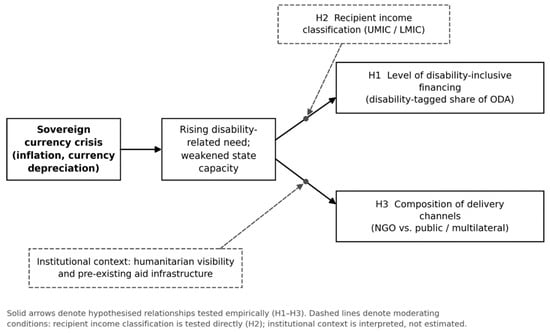
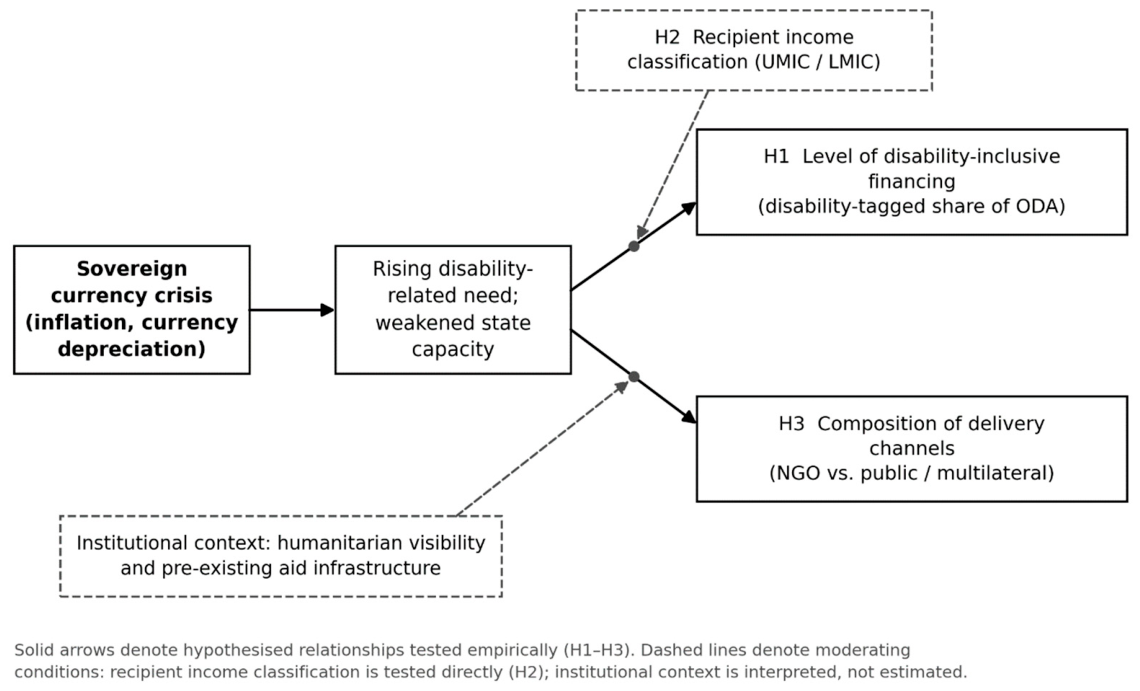
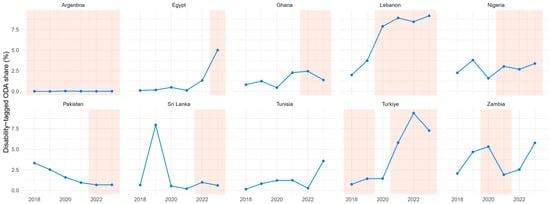
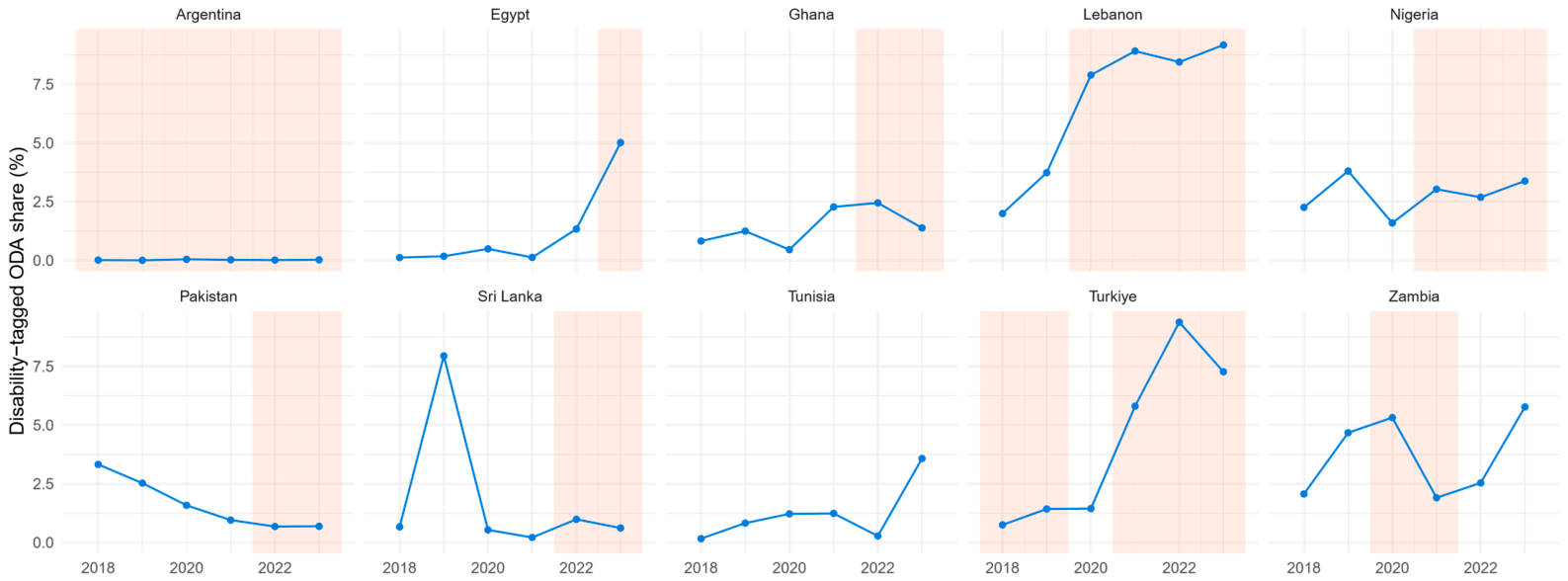
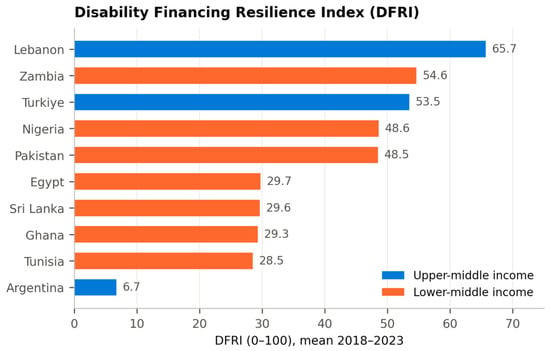
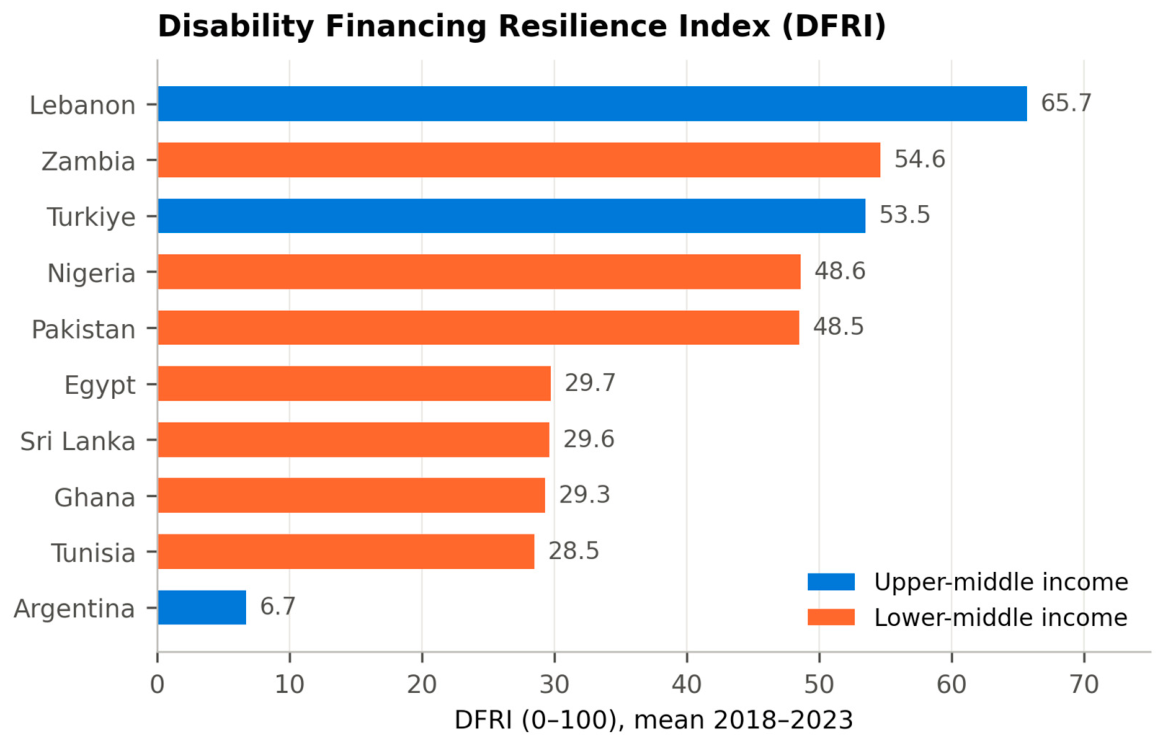
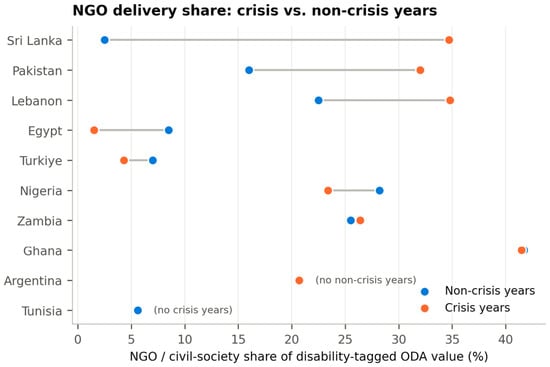
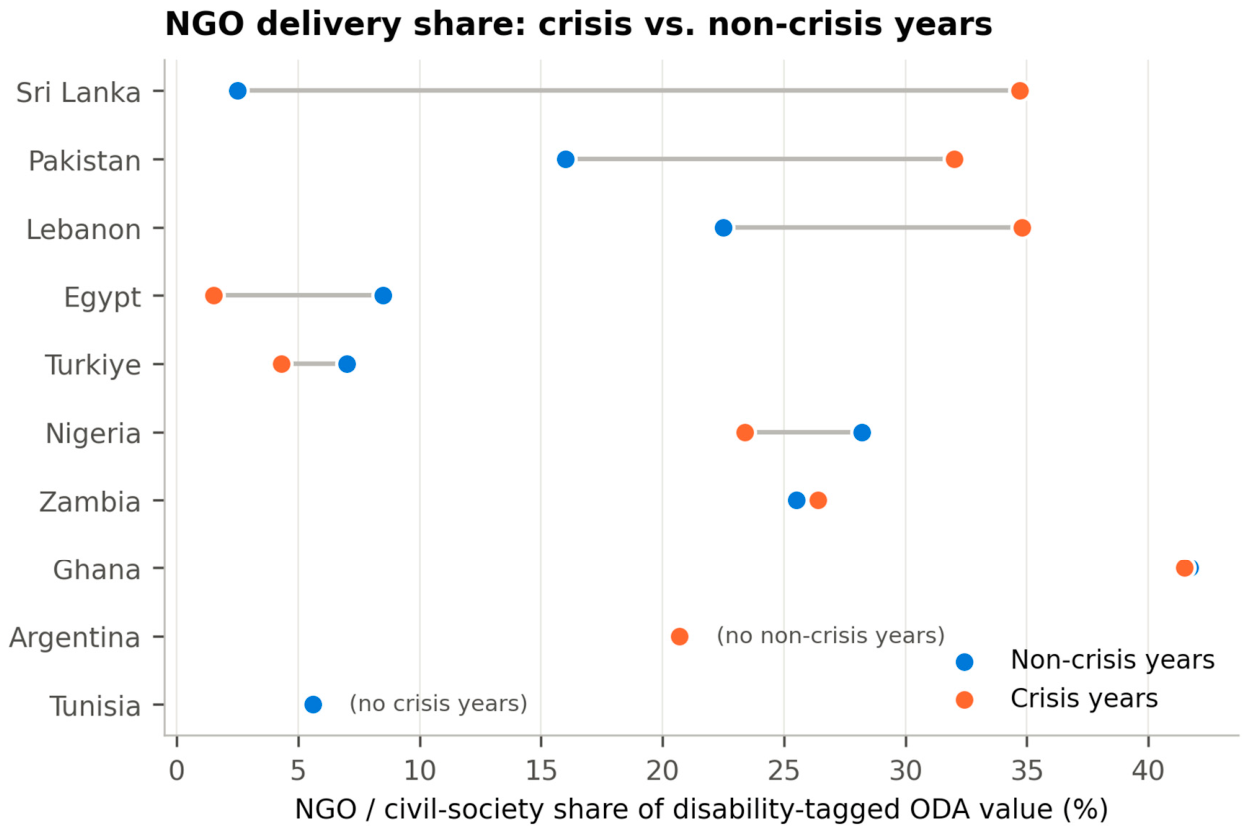

Disclaimer/Publisher’s Note: The statements, opinions and data contained in all publications are solely those of the individual author(s) and contributor(s) and not of MDPI and/or the editor(s). MDPI and/or the editor(s) disclaim responsibility for any injury to people or property resulting from any ideas, methods, instructions or products referred to in the content. |
© 2026 by the authors. Licensee MDPI, Basel, Switzerland. This article is an open access article distributed under the terms and conditions of the Creative Commons Attribution (CC BY) license.