


Abstract
Older lesbian, gay, bisexual, transgender and other sexual and gender minority (LGBT+) individuals have been subject to discrimination throughout their lives, particularly when accessing health and social care services (HSC). A breadth of literature examines the experiences of the LGBT+ population, but research on ageing LGBT+ adults’ experiences in HSC is a gap. This scoping review explores the experiences of older LGBT+ adults regarding the barriers and facilitators when accessing, receiving and navigating health and social care services across settings. Empirical research studies that recruited LGBT+ populations were included, where sexual orientation and gender identity were central to the question. Studies had to have recruited participants with a mean age of 60 years or over to be included. Only studies published in the English language were included due to translation costs. Scopus, CINAHL, Social Services Abstracts, Web of Science Core, Medline, APA PsycINFO, and Social Policy and Practice were searched in August 2026. Rayyan was used to manage the screening process. Data extraction was conducted independently by two authors before finalising the data extraction table. Overall, 5169 hits were identified, which were reduced to 2490 after duplicates were removed. 2490 titles and abstracts were screened, and 813 full texts were screened. Following full-text screening, 82 articles were included from the database searches alongside one article from citation searching. Themes that emerged included the anticipated and directly experienced barriers, the facilitators and the potential solutions to older LGBT+ adults accessing, receiving and navigating health and social care services.
1. Introduction
This scoping review aims to explore the relevant literature relating to the barriers and facilitators experienced by older lesbian, gay, bisexual, transgender and other sexual and gender minority (LGBT+) adults (aged 60 years and over) in accessing, receiving and navigating health and social care (HSC) services. The acronym LGBT+ is used throughout this article as an umbrella term to classify lesbian, gay, bisexual, transgender, queer, intersex, asexual, agender and other sexual and gender minority identities. The article uses the acronym TGD where the literature and evidence relate specifically to transgender and gender diverse people. Other associated acronyms are retained where they directly reflect the language used in specific studies. It is important to highlight that terminology relating to LGBT+ populations has changed over time and the literature does not always reflect or correspond with the terminology currently used by LGBT+ populations (Thelwall et al. 2023). The LGBT+ population is not homogeneous and research on LGBT+ issues does not represent all groups equally. This is also true of research on LGBT+ ageing. Much of the existing literature reports findings from older lesbian and gay adults who are cisgender and White, live in urban areas and are connected to LGBT+ communities; studies are also commonly situated in high-income, English-speaking countries (Fredriksen-Goldsen et al. 2019; Westwood 2020). The literature and evidence addressed in this scoping review therefore need to be considered in the context of these limitations and with the diversity of the LGBT+ population in mind.
For the purposes of this scoping review, older adults are defined as people aged 60 years and over, which is consistent with the age grouping commonly used by the World Health Organization (WHO 2025) when reporting on population ageing. Studies with wider age ranges were also included where the mean participant age was 60 years or over. Consequently, some participants in the included studies may be younger than 60. Based on these age parameters, this scoping review focuses on literature concerned with people’s lived experiences of HSC systems and services in older age. It is particularly concerned with first-hand accounts of seeking, using or being denied appropriate health and social care. HSC refers to a wide range of services, including primary healthcare, mental health services, community care, residential and long-term care, and palliative and end-of-life care.
1.1. Theoretical Frameworks
Three theoretical perspectives are used to contextualise the findings of this scoping review: minority stress theory (Meyer 2003), life course theory (Elder 1998) and intersectionality (Crenshaw 1989). Together, they draw attention to the effects of stigma and discrimination, the importance of historical and biographical factors, and the diversity within the LGBT+ population that is often treated as homogeneous.
1.2. Minority Stress Theory
Meyer’s (2003) minority stress model was designed to explain the additional stresses faced by lesbian, gay and bisexual people as a result of society’s treatment of them. The model distinguishes between distal stressors (discrimination, rejection and victimisation) and proximal processes (expectations of rejection, concealment of identity and internalised stigma) (Meyer 2003). Similar minority stress models have been developed for transgender and gender-diverse populations (Hendricks and Testa 2012). Minority stress and related concepts are directly relevant to understanding experiences of seeking and receiving health and social care. A person’s engagement with services may be impacted by their previous experiences of discrimination, expectations of how care providers will treat them, and concerns about whether it is safe or appropriate to disclose their sexual orientation or gender identity (Johansen et al. 2026). For some, these expectations may have accumulated through repeated experiences over many years, although this is not shared uniformly across the population.
1.3. Life Course Theory
A life course perspective examines how current experiences are shaped by the social conditions and events through which an individual’s life has been lived (Elder 1998). Today’s older LGBT+ people have lived through significant changes in equality laws, policies, rights and public attitudes towards sexual orientation and gender diversity (Fredriksen-Goldsen et al. 2019). Many older LGBT+ people grew up in countries or periods where homosexuality was criminalised or defined as a medical or psychiatric disorder. The American Psychiatric Association removed homosexuality as a diagnosis from the second edition of its Diagnostic and Statistical Manual in 1973 (Drescher 2015). More recently, the World Health Organization’s International Classification of Diseases, 11th Revision (ICD-11), which came into effect in 2022, moved gender incongruence from the chapter on mental and behavioural disorders to a chapter on conditions related to sexual health (WHO 2022). Life course theory suggests that experiences of inequality will not be completely overwritten by changes in equality law, human rights and policy (Elder 1998). Individuals may accumulate experiences over their lives, with long-term effects on their relationships, material resources, support networks and trust in institutions. These experiences may affect disclosure and the use of formal services for some older LGBT+ people later in life (Johansen et al. 2026).
1.4. Intersectionality
The term intersectionality was developed by Crenshaw (1989) to describe the way that different aspects of a person’s identity and systems of inequality intersect, rather than operating in isolation. Age, sexual orientation and gender identity intersect with race, gender, disability and class. For example, an older person who is Black, female and lesbian would not necessarily experience ageism, racism, sexism and homophobia as separate phenomena. In an intersectional approach, it is not only multiple identity characteristics that are considered but also how systems of inequality, such as institutions, policies and social structures, shape access to resources, recognition and care. This is especially relevant when thinking about the experiences of older LGBT+ people and their use of health and social care. Financial resources, disability, racial discrimination and access to family or community support may all intersect with age, sexual orientation and gender identity to shape the options available for seeking and receiving care (Fredriksen-Goldsen et al. 2019; Benbow and Kingston 2022). An intersectional perspective is therefore useful for this review as it encourages us to consider differences within the LGBT+ population and not assume that older LGBT+ people have similar experiences of health and social care. It also highlights who is represented in the existing research, who remains under-researched and how systems of inequality may play a role in these omissions.
The three theoretical perspectives described above provide a useful starting point to understand older LGBT+ people’s experiences of health and social care. Together, they help to explain how experiences and expectations of discrimination may affect older LGBT+ people’s use of services (minority stress theory), place this within the historical and social contexts that they have experienced (life course theory), and draw attention to the differences within the LGBT+ population and the systems of inequality that may impact their experiences of care (intersectionality). These perspectives are used to contextualise the findings in this review and highlight what is explained by the existing evidence and where gaps remain.
1.5. Background
The academic literature about the HSC experiences of older LGBT+ people has been growing. Addis et al. (2009) reviewed the available literature on the health, social care and housing needs of LGBT+ adults and found that it focused on experiences of discrimination but lacked data on bisexual and transgender people. More recent academic research linked to LGBT+ ageing includes a systematic narrative review by Fredriksen-Goldsen et al. (2019), who considered the experiences of adults aged 50 years and over. They observed that, although the knowledge base on LGBT+ ageing has grown, gaps remain, especially among bisexual and non-binary people, people from an ethnic minority background, people living in poverty and older people in the oldest age brackets.
Some recent research has focused specifically on HSC experiences. Kneale et al. (2021) carried out a systematic scoping review of health and care inequalities among LGBT people aged 50 and over in the United Kingdom. Their review highlighted inequalities in physical health, mental health and social care and drew attention to the significance of formal care environments for people whose LGBT+ identities and relationships have developed over the life course. Their focus on the United Kingdom (UK) means that their study cannot show how these experiences fit within different national health, social care and legal contexts. This is important to highlight because legal rights, service structures and the circumstances in which people disclose their LGBT+ identity differ between countries.
Other recent work approaches these issues from a different perspective. One systematic review has focused on LGBT+ people’s experiences of healthcare across Europe, but it considers people from across the adult age range (Mezzalira et al. 2025). Another has looked at the situation from the providers’ point of view, considering mental health practitioners’ knowledge and attitudes towards LGBTQ+ patients (Cruciani et al. 2024). It reports generally positive attitudes but also continued shortcomings in clinical knowledge, preparedness and training. A further study (Cruciani et al. 2026) explores how epistemic stances affect quality of life through healthcare barriers, comparing cisgender with transgender, non-binary and questioning individuals, and proposes a mechanism by which TGD people experience more significant barriers. This is a primary study rather than a review, and it does not focus specifically on older adults. Guidance issued recently also stresses the importance of inclusive communication, provider knowledge and healthcare environments which take account of sexual identity and gender diversity (Mezzalira et al. 2026). Johansen et al. (2026) have also published an integrative review of older LGBT+ adults’ healthcare encounters; this focuses on healthcare rather than the wider range of HSC services considered here.
These publications add to the evidence base but vary in scope, addressing different populations, settings and questions. Fredriksen-Goldsen et al. (2019) included research involving adults aged 50 and over, while Kneale et al. (2021) focused specifically on health and care inequalities in the United Kingdom. Johansen et al. (2026) examined healthcare encounters among LGBT+ adults aged 65 and over but did not consider the wider range of social care services included in the present review. Meanwhile, the European review of LGBT+ healthcare experiences was not restricted to older adults (Mezzalira et al. 2025). This indicates that evidence about the barriers and facilitators experienced by LGBT+ adults aged 60 and over in formal HSC is dispersed across different age groups, services and national contexts. This review brings that evidence together with a specific focus on first-hand accounts of accessing, receiving and navigating, or being denied, formal health and social care.
Focusing particularly on those aged 60 and over is appropriate because people’s interactions with HSC change during old age. As people get older, primary and specialist healthcare may be accessed more often. Services such as home care, residential and long-term care, palliative care and end-of-life support can take on more significance. Unlike a single consultation in primary care, these services may involve sustained dependence and repeated decisions about disclosure (Waling et al. 2019). For some older LGBT+ people, these encounters take place against a background of earlier experiences of discrimination within medical, legal and social systems.
Research on this topic takes many forms, including qualitative descriptions of individual care experiences, surveys, observations and studies focused on specific services or diagnostic categories. It also involves different populations, terms and national and healthcare contexts. The intention in this review is to map the literature rather than to attempt to synthesise a single effect or draw conclusions about the relative effectiveness of one type of care over another. Scoping reviews are an appropriate methodology for questions like these, particularly where the intention is to understand the scope and nature of a diverse body of evidence, examine how the topic has been investigated and highlight where there is little or no research (Munn et al. 2018).
1.6. Aim and Objectives
This scoping review aimed to map the extent and nature of available evidence regarding the barriers and facilitators experienced by older (60+) LGBT+ adults in accessing, receiving and navigating health and social care services across international settings. To achieve this, the following objectives were established:
- To identify literature available on the barriers and facilitators experienced by older (60+) LGBT+ adults in accessing, receiving and navigating health and social care services.
- To identify solutions within the literature to overcome the barriers associated with accessing, receiving and navigating health and social care services.
- To map the methodological approaches and study designs used across the literature.
- To identify findings related to the research question.
- To inform the design of future primary research exploring the barriers and facilitators experienced by older LGBTQ+ adults in health and social care.
2. Materials and Methods
A scoping review goes further than a mapping review by assessing and understanding the extent of knowledge in an emerging field, or it can be used to identify, map, report, or discuss the characteristics or concepts in that field (Bragge et al. 2011; Peters et al. 2020).
2.1. Joanna Briggs Institute
The scoping review was conducted in accordance with the Joanna Briggs Institute (JBI) methodology. The review question and eligibility criteria were developed using the Population-Concept-Context (PCC) framework recommended by JBI (Peters et al. 2020). This framework builds upon the foundational work of Arksey and O’Malley (2005).
2.2. The Review Aim
This scoping review aimed to map the extent and nature of available evidence regarding the barriers and facilitators experienced by older (60+) LGBT+ adults in accessing, receiving and navigating health and social care services across international settings.
2.3. PCC Framework
The population included LGBT+ people, primarily aged 60 and over, where the study authors focused on ageing, older or later life. The concept focused on the experiences associated with accessing, receiving and navigating health and social care services, including barriers and facilitators and the quality of care. Contexts included hospital, outpatient and community care, care homes or supported living. These PCC elements informed the development of the search strategy and the inclusion and exclusion criteria.
2.4. Developing the Search Strategy
Searches were conducted (August 2026) across a variety of databases, including Scopus, CINAHL, Social Service Abstracts, Web of Science Core, Medline, APA PsycINFO, and Social Policy and Practice. A specialist subject librarian helped to create a search string to identify relevant literature. See Supplementary File S1 for additional information regarding the justification of searches. The search strings included:
- ag*ing OR elder* OR “older adult*” OR “older person*” OR “older people” OR geriatric* OR “later life” OR “old age” OR “ageing population” OR “aging population” OR “gerontolog*” OR “senior citi*en” OR midlife OR “mid-life” OR “mid life” OR “mid-to-older life” OR “mid to older life”.
- LGBT* OR GLBT OR 2SLGBTQ* OR intersex OR lesbian* OR gay OR bisexual* OR transgender OR queer OR asexual* OR agender OR pansexual* OR homosexual* OR “same-sex attracted” OR “same sex attracted” OR “gender variant” OR “gender divers*” OR “gender minorit*” OR “sexual minorit*” OR “sexual and gender minorit*” OR nonbinary OR “non-binary” OR “same-gender-loving” OR “same gender loving”.
- “health care” OR healthcare OR “social care” OR “health and social care” OR HSC OR “support service*” OR “care service*” OR “aged care” OR “long-term care” OR “long term care” OR “residential care” OR “care provision” OR “service provision” OR “social service*” OR “nursing home” OR “home care” OR hospice OR “palliative care” OR “social work”.
2.5. Selecting Studies for Inclusion
Table 1 (below) outlines the relevant inclusion and exclusion criteria used when screening the titles and abstracts of studies or during the full-text review.
Table 1.
Inclusion and Exclusion Criteria for Selecting Studies.
Two authors independently screened titles, abstracts and full texts (with blinding) using Rayyan. To improve consistency, a sample of titles and abstracts were screened against inclusion/exclusion criteria before starting. Disagreements around inclusion were resolved by the third author.
2.6. Charting the Data
Following consultation, the data extraction tool was developed in Excel and piloted. It captured the author, aim, sample, methodology, findings and limitations of each included study (see Table S14, Supplementary File S3). After the pilot, a guidance document was created to provide detailed information about what to include for each variable and how to record it, to ensure consistency across researchers undertaking data extraction. This process increased the dependability of the data collection, in line with Lincoln and Guba (1985). Data extraction was conducted independently by two authors and checked by a third author for accuracy and consistency. Regular meetings were held throughout the scoping review to ensure the findings accurately reflected the data extracted and were in line with the aims and objectives.
As the purpose of this scoping review was to explore and to identify what research has been conducted on LGBT+ and ageing and what gaps exist, the included studies were not quality appraised, in keeping with JBI Guidance (Peters et al. 2020). Furthermore, as recommended in JBI methodological guidance for scoping reviews, the data analysis followed a basic qualitative content analysis approach (Elo and Kyngäs 2008).
The Preferred Reporting Items for Systematic Reviews and Meta-Analyses extension for Scoping Reviews (PRISMA-ScR) flow chart (Figure 1) illustrates the identification of 5169 records following searches of seven databases: Scopus (n = 1393), CINAHL (n = 375), Social Service Abstracts (n = 889), Social Policy and Practice (n = 455), MEDLINE (n = 578), APA PsycINFO (n = 710) and Web of Science Core (n = 769). Other searches included backward citation searching using citation Chaser (Haddaway et al. 2021), Google and grey literature. Backward citation searching presented 1 study that was included. Following the removal of duplicates (n = 2679), there were 2490 titles and abstracts screened, and 813 full texts assessed. This resulted in 82 articles from database searches and one article from citation searching being included in this review.
Figure 1.
PRISMA-ScR flow chart of study selection process.
2.7. Collating, Summarising and Reporting the Results
The extracted data were copied into a Word document and read several times to allow authors to familiarise themselves with them before generating initial codes. Through an iterative process, and in discussion with research team members to resolve any disagreements, codes were reviewed and named. These initial codes were merged and refined into a coding framework, which was confirmed by all members of the research team. Codes were then categorised into sub-themes and grouped under three categories (barriers, facilitators and solutions) that reflected the aim and objectives of the review. Discussion and agreement among the research team enhanced the credibility and confirmability of the analysis by ensuring that coding and theme development were grounded in the data extracted from included studies rather than individual researcher interpretation (Lincoln and Guba 1985).
An inductive approach, agreed by the research team at the preparation stage, was used due to the absence of a pre-existing framework suited to mapping barriers, facilitators, and solutions across this evidence base. The findings are reported narratively by category, alongside a descriptive numerical summary of the study characteristics.
3. Findings
This section outlines key findings from the studies included in this scoping review, beginning with a summary of where included studies were conducted, the mean age of participants in those studies, methods of participant recruitment, sample sizes, study type, research methods and the main focus of the study and the population. Findings derived from thematic analysis are presented to illustrate three core themes: barriers, facilitators and solutions.
3.1. Demographic Characteristics
The majority of studies were conducted in the United States of America (USA) (n = 43), followed by Canada (n = 9), the United Kingdom (UK) (n = 8), Australia (n = 8) and Sweden (n = 5). One study each was conducted in Brazil, the Netherlands, Taiwan, New Zealand (NZ), South Africa, Israel, Ireland, Portugal, and Italy, and one multi-site study across Australia, NZ, the UK and the USA (as shown in Table S10, Supplementary File S2).
As outlined in the inclusion criteria (Table 1), studies were required to report a participant mean age of 60 or over. The lowest mean age was 60, found in three studies (Comerford et al. 2004; Crenitte et al. 2023; Hash and Netting 2007); this sits at the WHO (2025) marker of older age. Across the included studies, the oldest individual participant was 98 years of age (Lee et al. 2019).
3.2. Recruitment Methods
Reflecting the challenges of recruiting LGBT+ cohorts (Löf and Olaison 2018), the most common approach was recruitment through community and LGBT+ organisations. For example, studies were recruited through LGBT+ centres, advocacy groups, senior centres and pride events (Boulé et al. 2020; Burton et al. 2020; Jacobs et al. 1999; Loeb et al. 2025; Löf and Olaison 2018). Snowball sampling was frequently used alongside this, often combined with purposive sampling, particularly when accessing hard-to-reach or stigmatised populations (Avendaño et al. 2026; Dunkle 2018). Some authors noted the limitations of snowball and purposive sampling through LGBT+ networks, as they excluded members of the community who were not comfortable disclosing their identity or orientation (Dunkle 2018; Jihanian 2013; Kushner et al. 2013), as well as those living in rural areas or not connected to LGBT+ organisations (Czaja et al. 2016; Devries et al. 2019; Wilson et al. 2018).
In more recently published studies, recruitment was conducted online or through social media, reflecting the growth in digital access among ageing adults (Avendaño et al. 2026; Cummings et al. 2021; Dube et al. 2022; Lyons et al. 2020).
3.3. Sample Size and Study Type
Sample sizes varied across the 83 included studies. The smallest sample size was one person in two studies (Candrian and Cloyes 2021; Jenkins et al. 2010). Candrian and Cloyes (2021) is a case study of one participant drawn from a larger dataset (Candrian et al. 2022), whereas Jenkins et al. (2010) is a standalone case study. The largest sample size was 6693 in a study conducted by Crenitte et al. (2023), though this included both LGBT+ (n = 1332) and non-LGBT+ comparison participants. Studies conducted in the USA had the widest range in sample sizes, with Candrian and Cloyes (2021) being the lowest (n = 1) and Kattari and Hasche (2015) being the highest (n = 5885). The studies conducted in the UK were smaller in scale, with five of the eight studies involving 30 participants or fewer (Clover 2006; Doran et al. 2018; Hammond et al. 2024; Jones et al. 2018; Knocker 2012). However, one larger quantitative study focused on a subgroup of 180 LGB older adults (Makita et al. 2020).
Most studies were qualitative (n = 61), followed by mixed methods (n = 13), with quantitative studies being the lowest number (n = 9) (see Table S11, Supplementary File S2). The earliest included study had a quantitative design (Jacobs et al. 1999); however, qualitative designs predominated over time. For example, all included studies in 2025–2026 were qualitative (n = 6; Avendaño et al. 2026; Lampe et al. 2025; Le 2025; Loeb et al. 2025; McMullen-Roach et al. 2026; Smolle 2025).
3.4. Focus of the Study
There was a diverse range of study aims across the 83 included articles. General healthcare (n = 25) was the largest category, covering topics such as healthcare access, utilisation and disclosure among older LGBT+ individuals. The second largest category focused on experiences, needs and expectations of health and social care in later life (n = 20). The remaining included studies focused on long-term or residential care (n = 15), end-of-life and care planning (n = 14), caregiving (n = 4), dementia care (n = 3) and older LGBT+ housing (n = 2) (Table S12, Supplementary File S2).
3.5. Research Methods
A range of qualitative methods were used across the included studies. Qualitative interviews were the most frequently used method of data collection (n = 58; see Table S13, Supplementary File S2), with thematic analysis being used as the most common analytical approach (e.g., Adan et al. 2021; Loeb et al. 2025). The interviews were carried out by various methods, including in person, online and over the phone.
Focus groups within a community setting were employed to gather qualitative data in 18 studies (see Table S13, Supplementary File S2). Focus groups were used successfully for recruitment by Boulé et al. (2020), who recruited 21 participants across four focus groups, and by Putney et al. (2020), who recruited 50 participants across seven focus groups.
Within the qualitative studies, a range of theoretical frameworks and methodological approaches were used to analyse and interpret findings. Frameworks and approaches used included grounded theory (Dunkle 2018; Furlotte et al. 2016; Lampe 2022; Lampe 2024; Lampe et al. 2025; Pang et al. 2019; Powell 2004; Rivera et al. 2008; Sullivan 2014), Nancy Fraser’s recognition theory (Löf and Olaison 2018), a life course framework (Smolle 2025; Wilson et al. 2018), resilience theory (Mange et al. 2022), and queer theory (Siverskog 2014; Siverskog 2023). Rosati et al. (2020) and Sperling (2024) employed an interpretive phenomenology approach. Doran et al. (2018) used hermeneutic phenomenology, drawing on the Van Manen framework.
Quantitative methods were used to analyse secondary datasets, for example, the National Health, Ageing, Sexuality and Gender Study (NHAS; Lee et al. 2019).
3.6. Population Focus
Studies varied in the LGBT+ subgroup they focused on (see Table 2). The largest proportion of studies (n = 27, 32.5%) recruited participants from across the LGBT+ umbrella. A further 14 studies (16.9%) focused on lesbian and gay older adults, and 9 studies (10.8%) focused on lesbian, gay and bisexual populations without including transgender participants. Notably, only 10 studies (12.0%) explicitly focused on transgender or gender-diverse populations. Research on bisexual individuals was almost entirely absent, with only one study (Jones et al. 2018) focusing on bisexual older adults. A small number of studies examined more specific intersections, including LGB women (Valenti et al. 2021), lesbian and bisexual women together (Grigorovich 2015, 2016), and foreign-born LGBT+ status (Lee et al. 2019).
Table 2.
Included Studies by LGBT+ Subgroup.
3.7. Theme 1: Barriers
3.7.1. Discrimination and Mistreatment
Older LGBT+ individuals anticipated and directly faced discrimination and mistreatment across various settings, including in general healthcare and clinics, long-term care, residential care and in-home care. Discrimination in healthcare or clinical care was a theme identified across 28 included studies (Candrian et al. 2022; Cloyes and Towsley 2024; Doran et al. 2018; Gabrielson 2009; Hoekstra-Pijpers 2020; Hong 2024; Hughes 2007; Jones et al. 2018; Kattari and Hasche 2015; Knocker 2012; Kortes-Miller et al. 2018; Lampe 2024; Lee et al. 2019; Löf and Olaison 2018; Mange et al. 2022; McMullen-Roach et al. 2026; Miller 2023; NSCLC 2011; Oglesby and Hynes 2023; Pang et al. 2019; Pereira et al. 2019; Rivera et al. 2008; Robinson 2016; Rose et al. 2017; Smith et al. 2010; Stein et al. 2010; Williams et al. 2021; Woody 2011). These studies were split fairly evenly between anticipated and directly experienced discrimination and mistreatment. Examples of discriminatory behaviour from providers included the unfair treatment of foreign-born LGBT+ individuals in comparison to US citizens (Lee et al. 2019) and discriminatory comments made to gay men in cancer care settings (Doran et al. 2018; Rose et al. 2017). Quantitative studies such as Oglesby and Hynes (2023) found that in the context of dementia care, 53% of LGBT+ individuals had been denied or had received inadequate healthcare. Similarly, Stein et al. (2010) found that 83% of gay and lesbian participants reported rejection or stigma from providers in relation to their sexual orientation. Such experiences may lead to fears of discrimination and mistreatment when navigating health and social care services, a theme identified in 15 studies (Cloyes and Towsley 2024; Hong 2024; Kortes-Miller et al. 2018; Lampe 2024; Löf and Olaison 2018; Mange et al. 2022; McMullen-Roach et al. 2026; Miller 2023; NSCLC 2011; Pang et al. 2019; Rivera et al. 2008; Robinson 2016; Smith et al. 2010; Williams et al. 2021; Woody 2011).
Beyond general healthcare settings, LGBT+ individuals anticipated discrimination when considering entering long-term care, residential care and aged care (Hash and Netting 2007; Hong 2024; Knochel and Flunker 2021; Kortes-Miller et al. 2018; NSCLC 2011; Pierce 2022; Waling et al. 2019; Waling et al. 2020; Williams et al. 2021). Alba et al. (2020) was the only study in which lesbian and gay participants directly experienced a lack of LGBT professionals and inclusive providers within an aged care setting. Similar findings emerged in home care, with one study reporting the direct experience of homophobia from home care workers (Butler 2017) and another describing anticipated concerns about the quality of care and staff turnover (Waling et al. 2019). TGD individuals were found to have specific fears of transphobia from staff members and residents in long-term care settings (Waling et al. 2020). Knochel and Flunker (2021) similarly found that TGD participants feared misgendering and identity loss within long-term care settings. More broadly, transgender-specific fears of misgendering were reported across multiple health and social care settings (Adan et al. 2021; Knochel and Flunker 2021; NSCLC 2011; Siverskog 2014; Smolle 2025; Sperling 2024).
3.7.2. Disclosure Management as a Burden
Disclosure of gender identity and sexual orientation is ongoing for LGBT+ individuals and has to be managed across different contexts and relationships. LGBT+ older adults chose to conceal their identity or orientation when navigating HSC services, in 14 studies (Butler 2017; Candrian et al. 2022; Clover 2006; Czaja et al. 2016; Jacobs et al. 1999; Loeb et al. 2025; Lyons et al. 2020; Mange et al. 2022; NSCLC 2011; Orel 2013; Pereira et al. 2019; Siverskog 2023; Smolle 2025; Versteeg 2016). Pereira et al. (2019) study found that 71.3% of participants had not disclosed their sexual orientation to health professionals; this finding is a common theme, as nine other studies reported that individuals chose not to come out to providers (Butler 2017; Clover 2006; Lyons et al. 2020; Mange et al. 2022; NSCLC 2011; Orel 2013; Siverskog 2023; Smolle 2025; Versteeg 2016). Reasons included fear of the consequences of coming out in an HSC context (Czaja et al. 2016; Loeb et al. 2025; Versteeg 2016) and negative past experiences (Smolle 2025). In contrast, some members of the older LGBT+ community chose to disclose to their providers (Dunkle 2018; Hoekstra-Pijpers 2020; Kittle 2021; Powell 2004; Rivera et al. 2008; Siverskog 2023; Wilson et al. 2018). Rivera et al. (2008) reported that 54% of lesbian and gay older adults chose to disclose their orientation to a supportive provider. Dunkle (2018) and Hoekstra-Pijpers (2020) found that participants valued being open with carers, as it allowed their needs to be met. Additionally, Siverskog (2023) found that LGBT+ individuals treated openness as a method of challenging homophobia. In the context of end-of-life care planning, disclosure was linked to better support and services (Powell 2004; Wilson et al. 2018).
Furlotte et al. (2016) found that lesbian and gay older adults felt they had to weigh up the risks of disclosing their sexual orientation to their providers. Context-dependent disclosure was a protective strategy for participants in Jenkins et al.’s (2010) study, while Toze et al. (2020) found that LGBTQ+ individuals disclosed to providers only when medically necessary. Similarly, most participants in Woody’s (2011) study found no value in broader disclosure and only felt the need to disclose when needed. Hughes (2007) found that lesbian and gay older adults identified disclosure as relevant in consultations with their general practitioner (GP), for personal care and to assist next-of-kin decisions.
The emotional burden of repeated disclosure is an important thread, as individuals feared having to repeatedly disclose to staff, especially in home care where there is a high staff turnover (Waling et al. 2019). Avendaño et al. (2026) highlight the emotional toll on transgender individuals, who reported feeling increasingly vulnerable when disclosing their identity to HSC providers. This compares to findings from Furlotte et al.’s (2016) study, as lesbian and gay individuals felt that they would have increased energy expenditure when assessing HSC environments, adding to the burden around disclosure. Specific contexts, such as dementia care, offer unique challenges, as some individuals experienced, or anticipated, a progressive loss of control over their disclosure (Barrett et al. 2015; Oglesby and Hynes 2023). Barrett et al. (2015) found that dementia eroded participants’ ability to control their own disclosure, leaving their identity to be managed by others. Additionally, LGBT+ older adults were found to have a fear of dementia, compounded by the fear of returning to a closeted identity (Putney et al. 2018).
3.7.3. Provider Competency Gaps
Provider competency took different forms, predominantly provider willingness to engage with and accept LGBT+ individuals, as shown in six studies (Clover 2006; Czaja et al. 2016; Devries et al. 2019; Grigorovich 2015; Hammond et al. 2024; Rosati et al. 2020). LGBT+ individuals had directly experienced barriers in provider willingness, as some had to initiate their own assessments (Grigorovich 2015), had to identify their symptoms before being taken seriously (Hammond et al. 2024) or perceived a coldness from their GPs (Rosati et al. 2020). For some participants, the fear of such incompetence was associated with discomfort when interacting with their providers (Devries et al. 2019). The next largest subtheme looked at provider competency through an education lens, with five studies addressing this (Avendaño et al. 2026; Lampe and Pfeffer 2024; Rose et al. 2017; Siverskog 2014; Waling et al. 2020). An explicit barrier to LGBT+ individuals receiving competent care was the lack of provider knowledge regarding sexual minority (Rose et al. 2017; Siverskog 2014) and gender minority needs (Avendaño et al. 2026; Lampe and Pfeffer 2024; Waling et al. 2020); such experiences were linked to transgender individuals having to educate their own providers (Siverskog 2014). The lack of provider knowledge expanded into cancer care settings, where gay men were faced with a provider who did not have sufficient knowledge of their specific needs (Rose et al. 2017).
Older LGBT+ adults faced heteronormative assumptions across health and social care contexts, with nine studies recognising it as a perceived or experienced barrier (Hughes 2007; Jones et al. 2018; Kortes-Miller et al. 2018; Le 2025; Orel 2013; Rose et al. 2017; Siverskog 2023; Waling et al. 2019; Wilson et al. 2018). Most commonly, providers assumed patients were heterosexual by default (Hughes 2007; Jones et al. 2018; Orel 2013; Rose et al. 2017). In some circumstances, participants feared that heteronormative assumptions would affect their partner (Le 2025; Waling et al. 2019; Wilson et al. 2018). Waling et al. (2019) found that lesbian women and gay men perceived a sense of loss if the identity of their partner was not recognised in residential care. Additionally, Kortes-Miller et al. (2018) identified that heteronormative assumptions can be built into long-term care programmes, creating a sense of fear among LGBT+ older adults. Heteronormative environments and staff attitudes were linked to LGBT+ individuals feeling that they cannot discuss their gender or sexual orientation (Siverskog 2023).
3.7.4. Legal and Structural Non-Recognition
Legal and structural barriers to partner recognition were identified across 14 studies (Barrett et al. 2015; Clover 2006; Czaja et al. 2016; Dube et al. 2022; Gabrielson 2009; Lampe and Pfeffer 2024; Makita et al. 2020; NSCLC 2011; Oglesby and Hynes 2023; Orel 2013; Pang et al. 2019; Powell 2004; Seelman et al. 2019; Valenti et al. 2021). Older LGBT+ adults identified the lack of legal protection for same-sex partnerships in HSC decision-making (Barrett et al. 2015; Czaja et al. 2016; Gabrielson 2009; Orel 2013; Powell 2004). Several studies found that partners were excluded from clinical conversations and advance care planning (ACP), with families-of-origin or biological relatives taking authority over decision-making (NSCLC 2011; Oglesby and Hynes 2023; Valenti et al. 2021). Additionally, Clover (2006) recognises that partner recognition is still inconsistent after death, even regarding bereavement support. Valenti et al. (2021) found that LGB individuals avoided ACP due to the fear of their partner being denied, while NSCLC (2011) similarly reported that biological family members stepped in to override same-sex partner decisions. To prevent this, LGB older adults were motivated to plan ahead to ensure that their loved ones had a place in their end-of-life care (Seelman et al. 2019). However, some individuals did not engage in ACP (Dube et al. 2022; Makita et al. 2020; Pang et al. 2019), which highlights the structural failures some face, leaving them in an unsustainable position when having to navigate HSC services (Lampe and Pfeffer 2024).
Documentation was another structural barrier, identified across eight studies (Candrian and Cloyes 2021; Doran et al. 2018; Dunkle 2018; Hughes 2007; Knocker 2012; Putney et al. 2018; Rose et al. 2017; Wilson et al. 2018). In the context of cancer care, forms were found to be irrelevant to gay men (Doran et al. 2018), with Rose et al. (2017) reporting that such heteronormative forms had caused distress to 80% of gay and bisexual participants. The lack of inclusive forms was an issue across several health and social care contexts (Dunkle 2018; Hughes 2007; Knocker 2012). Moreover, Wilson et al. (2018) found that the lack of sexual orientation and gender identity data collection on intake forms was linked to perceived institutional invisibility of LGBT+ individuals. In addition, Candrian and Cloyes’ (2021) case study found that sexual orientation and gender identity data collection is only effective if the provider is competent.
3.7.5. Isolation and Network Vulnerability
Support networks are fundamental to how older LGBT+ adults navigate and access HSC, and 19 studies identified the lack of a supportive network as a perceived or experienced barrier (Boulé et al. 2020; Butler 2017; Candrian et al. 2022; Cloyes and Towsley 2024; Cummings et al. 2021; Devries et al. 2019; Dube et al. 2022; Gabrielson 2009; Grigorovich 2015; Hong 2024; Kortes-Miller et al. 2018; Lampe 2024; Mange et al. 2022; Pang et al. 2019; Pereira et al. 2019; Putney et al. 2018; Siverskog 2014; Sperling 2024; Wilson et al. 2018). These included concerns about, and experiences of, estrangement, relating to a lack of support for LGBT+ older adults in times of vulnerability (Gabrielson 2009; Grigorovich 2015; Lampe 2024; Mange et al. 2022). Boulé et al. (2020) found that LGBT+ individuals fear that their support networks decrease with age. Similarly, Pereira et al. (2019) add quantitative evidence, with 34% of LGB participants reporting that they had no one to care for them. Several studies found that such circumstances had led to fear and uncertainty over future care (Cummings et al. 2021; Putney et al. 2018; Siverskog 2014). Even where individuals had chosen family, these networks were less involved in end-of-life care than anticipated (Sperling 2024). In contrast, Bradford et al.’s (2016) study found that lesbian individuals would rather stay close to their community than access healthcare, while rural lesbians in Comerford et al. (2004) feared a loss of independence when considering HSC services.
3.7.6. Mainstream and Specialist Care Leading to Unmet Needs
Mainstream services and environments were identified as unsuitable for older LGBT+ adults across 11 studies (Doran et al. 2018; Hammond et al. 2024; Kortes-Miller et al. 2018; NSCLC 2011; Orel 2013; Rose et al. 2017; Smith et al. 2010; Sullivan 2014; Westwood 2015; Wilson et al. 2018; Woody 2011). Rose et al. (2017) found that cancer care had a ‘one-size-fits-all’ approach that overlooked the specific sexual and psychological needs of gay and bisexual men. Similarly, mainstream cancer support groups were described as unsuitable for gay men, dismissing their specific support needs (Doran et al. 2018). Orel (2013) similarly reported inadequate mainstream care services, while Hammond et al. (2024) identified a lack of signposting to specific services as a barrier. In Smith et al. (2010), 72% of participants felt that assisted living did not meet the community’s needs, and over half viewed nursing homes as not LGBT+-friendly. NSCLC (2011) highlighted transgender-specific challenges, with transgender individuals reporting social exclusion in residential care settings.
Within this theme, there was a prominent fear of mainstream long-term care (Kortes-Miller et al. 2018; Sullivan 2014; Westwood 2015; Wilson et al. 2018; Woody 2011). Sullivan (2014) found that LGBT+ older adults were reluctant to consider nursing homes due to fears of having to conceal their identity. Additionally, the loss of autonomy as a perceived barrier to care was highlighted across three studies (Cloyes and Towsley 2024; Kortes-Miller et al. 2018; McMullen-Roach et al. 2026); this was predominantly around the fear of losing identity in long-term care. Furthermore, participants in Westwood’s (2015) study perceived mainstream aged care as heterosexualised and feared that this would result in exposure to homophobia. There was widespread concern about the lack of inclusivity in long-term care (Wilson et al. 2018). Kortes-Miller et al. (2018) reported that this fear ran deeper than staff discrimination and included other residents. Woody’s (2011) study highlights the consequences for such fears, with lesbian and gay individuals completely rejecting the idea of entering mainstream care homes. In addition, finding specialist LGBT+ services was itself a barrier (Jacobs et al. 1999; Loeb et al. 2025). Kushner et al. (2013) found that participants feared not being able to find gay-friendly residential care, exacerbating the concerns around mainstream care.
3.7.7. Financial and Practical Access
Financial concerns and experiences relating to health and social care were identified across eight studies (Hash and Netting 2007; Hong 2024; Hughes 2007; Kittle 2021; Lampe 2022; Miller 2023; Putney et al. 2018; Rivera et al. 2008). The predominant concern was the perceived lack of affordability of care for older LGBT+ individuals (Hash and Netting 2007; Hong 2024; Kittle 2021; Lampe 2022; Rivera et al. 2008). Hughes (2007) found that lesbian and gay participants were particularly concerned about the high cost of LGBT+-friendly private providers. Miller (2023) found that LGB participants avoided the costs of paid care, preferring to be looked after at home by family and friends. Conversely, older LGBT+ adults without support networks found care unaffordable, as they had no one to help (Putney et al. 2018). In terms of practical access to care, Crenitte et al. (2023) reported that LGBT+ older adults had less access to healthcare than their non-LGBT+ peers, with Black and mixed-race LGBT+ participants least likely to access care. Similarly, Lee et al. (2019) highlighted an intersectional dimension, finding that foreign-born LGBT+ older adults had less access to care, partly due to a lack of transport.
3.8. Theme 2: Facilitators
3.8.1. Chosen Family and Informal Support Networks
Strong support networks were the most common facilitator of accessing, receiving and navigating HSC, identified across 15 studies (Comerford et al. 2004; Dube et al. 2022; Hoekstra-Pijpers 2020; Jones et al. 2018; Knochel and Flunker 2021; Lampe 2022; Lyons et al. 2020; McMullen-Roach et al. 2026; Pang et al. 2019; Pierce 2022; Putney et al. 2020; Rivera et al. 2008; Robinson 2016; Smith et al. 2010; Sullivan 2014). Chosen family was a key facilitator to HSC, offering strong support that participants could depend on (Hoekstra-Pijpers 2020; Jones et al. 2018; McMullen-Roach et al. 2026; Robinson 2016; Sullivan 2014). Rivera et al. (2008) found that all lesbian participants relied on chosen family, often in place of biological family. Putney et al. (2020) similarly found that chosen family acted as a protective factor in relation to care. Older LGBT+ support networks went beyond passive support, assisting with daily tasks (Lampe 2022) and acting as carers (Hoekstra-Pijpers 2020; Pang et al. 2019). In Smith et al. (2010), 50% of LGBT+ participants believed that family and friends would support them in later life. Two studies highlighted that their participants viewed chosen family as a long-term care option, rather than formal services for care in later life (Knochel and Flunker 2021; Robinson 2016). Additionally, having a strong informal network was linked to better wellbeing, as Sullivan (2014) found that informal networks eased older adults’ fears of dying alone, whilst Dube et al. (2022) found that strong relationships helped manage uncertainty. Comerford et al. (2004) offer a rural perspective, finding that lesbian women in rural communities had strong connections with other women, which helped them manage their needs.
3.8.2. Affirming and Competent Providers
In contrast to the barriers experienced with incompetent providers, positive experiences with inclusive providers facilitated older LGBT+ adults in accessing, receiving and navigating HSC services, as identified in eight studies (Avendaño et al. 2026; Hughes 2007; Lampe et al. 2025; Le 2025; NSCLC 2011; Smith et al. 2010; Smolle 2025; Versteeg 2016). Providers’ compassion towards LGBT+ individuals was identified as a facilitator (Avendaño et al. 2026; Versteeg 2016). Lampe et al. (2025) and Smolle (2025) had similar findings, highlighting that accepting and non-judgemental staff were important for TGD individuals when accessing care. Furthermore, Lampe et al. (2025) found that a provider’s knowledge about transgender-specific issues was highly valued, whilst Smith et al. (2010) reported that just over half of LGBT+ older adults felt their provider was knowledgeable about the needs of gender identity and sexual orientation minorities. The Versteeg (2016) study offers a unique finding that LGB participants valued compassionate and competent care over the sexual orientation of their provider; this contrasts with Hughes (2007), who found that lesbian and gay individuals felt more comfortable with openly gay staff. Butler (2017) offered a distinct perspective, finding that lesbian women preferred a provider of the same gender.
3.8.3. Advance Care Planning
ACP was identified as a facilitator of positive health and social care experiences for older LGBT+ adults across five studies (Gabrielson 2009; Hash and Netting 2007; Makita et al. 2020; Powell 2004; Seelman et al. 2019). Gabrielson (2009) found that ACP was protective, giving participants a sense of control over their future needs, while Hash and Netting (2007) similarly reported that planning future care helped individuals feel more secure. In addition, Seelman et al. (2019) highlighted that LGB participants were motivated to engage in ACP as it gave them a sense of agency and control over their health care and end-of-life care. It is important to note that this facilitator was not evenly distributed across the population, as Makita et al. (2020) found that lesbian participants were the most likely subgroup to engage in ACP.
3.8.4. Minor Facilitators
Several smaller sub-themes also emerged. In three studies, older LGBT+ adults reported that they had little direct experience with discrimination within a health and social care context (McMullen-Roach et al. 2026; Rivera et al. 2008; Versteeg 2016). Rivera et al. (2008) provided quantitative support, with 73% of lesbian and gay participants reporting no concern over discrimination. Similarly, Versteeg (2016) found that participants had experienced little to no discrimination from HSC staff; however, there were some reports that they were subject to discrimination from external ancillary service providers. Two further isolated findings are worth noting. Toze et al. (2020) found that partner recognition was the key to disclosure for LGBT+ adults in regard to navigating HSC. Additionally, Alba et al. (2020) found that affordable services facilitated access to care for lesbian and gay individuals. These findings offer a counterpoint to the barriers relating to discrimination, legal recognition and affordability discussed above.
3.9. Solutions
3.9.1. Inclusive Mainstream Care
The most common solution, identified across 19 studies, was the desire for inclusive mainstream care (Adan et al. 2021; Alba et al. 2020; Cummings et al. 2021; Dunkle 2018; Gabrielson 2009; Hammond et al. 2024; Hoekstra-Pijpers 2020; Hughes 2007; Jihanian 2013; Knocker 2012; Kortes-Miller et al. 2018; Loeb et al. 2025; McMullen-Roach et al. 2026; Pereira et al. 2019; Putney et al. 2018; Rivera et al. 2008; Sperling 2024; Toze et al. 2020; Westwood 2015). Participants wanted LGBT+-inclusive policies (Adan et al. 2021; Alba et al. 2020; Cummings et al. 2021; Jihanian 2013) in addition to LGBT+-friendly care settings (McMullen-Roach et al. 2026; Pereira et al. 2019; Putney et al. 2018). Several studies noted that visible cues of inclusivity, such as signage and symbols, helped create LGBT+-friendly environments in HSC settings (Dunkle 2018; Hoekstra-Pijpers 2020; Hughes 2007; Loeb et al. 2025; Kortes-Miller et al. 2018; Toze et al. 2020), with Hughes (2007) adding the usefulness of inclusive forms. Additionally, Knocker (2012) reported that LGBT+ older adults suggested non-judgemental staff as a way of creating inclusive mainstream care. Rivera et al. (2008) found that 47% of lesbian and gay individuals thought that inclusive mainstream care was an appropriate, affirming long-term care option, whilst Westwood (2015) found that most men in the study preferred LGBT+-friendly mainstream services.
In contrast, the second largest subtheme relating to solutions was the preference for LGBT+-specific HSC services, as identified in 17 studies (Doran et al. 2018; Dunkle 2018; Hong 2024; Jacobs et al. 1999; Jihanian 2013; Knochel and Flunker 2021; Kortes-Miller et al. 2018; Kushner et al. 2013; Lampe et al. 2025; Löf and Olaison 2018; Miller 2023; Orel 2013; Pereira et al. 2019; Smith et al. 2010; Sullivan 2014; Waling et al. 2020; Westwood 2015). Notably, preferences were split almost evenly between inclusive mainstream care (19 studies) and LGBT+-specific services (17 studies). There was a general desire for LGBT+-specific care such as dedicated senior centres (Dunkle 2018; Hong 2024; Kushner et al. 2013; Smith et al. 2010). Sullivan (2014) found that acceptance was the main reason LGBT+ participants chose specific services. Additionally, transgender older adults highlighted the need for more transgender-specific services (Jihanian 2013), with Lampe et al. (2025) reporting that participants had benefited from transgender-specific support groups. Jacobs et al. (1999) found that LGB older adults were choosing gay and lesbian-specific services as a solution to non-inclusive mainstream care. Orel (2013) provided quantitative support, with 83% of LGBT+ participants believing that LGBT+-specific providers and social groups were the answer to non-inclusive mainstream HSC services. Waling et al. (2020) also found that participants proposed home modifications and cohousing with other LGBT+ individuals, in line with Miller (2023). More broadly, studies reported mixed views on mainstream services (Knocker 2012; Kortes-Miller et al. 2018; Löf and Olaison 2018).
3.9.2. Provider Training and Affirming Practice
As provider competency was a barrier to older LGBT+ individuals’ experiences of health and social care services, the included studies also proposed solutions. The need for competent providers was identified as a solution across 12 studies (Adan et al. 2021; Grigorovich 2016; Hammond et al. 2024; Hoekstra-Pijpers 2020; Jihanian 2013; Knocker 2012; Kushner et al. 2013; Löf and Olaison 2018; McMullen-Roach et al. 2026; Putney et al. 2018; Smith et al. 2010; Toze et al. 2020). Three studies called for provider training to improve providers’ knowledge of specific LGBT+ needs (McMullen-Roach et al. 2026; Putney et al. 2018; Smith et al. 2010). Furthermore, Knocker (2012) and Kushner et al. (2013) reported that participants thought that non-judgemental staff were the solution to affirming practice, whilst Grigorovich (2016) and Löf and Olaison (2018) recognised the need for respectful and knowledgeable staff. Similarly, Adan et al. (2021) found that transgender older adults wanted providers who were fully competent and offered affirming care. Building on the importance of visible markers noted above, Hammond et al. (2024) highlighted the need for staff themselves to display badges and symbols to create an affirming environment. Moreover, Toze et al. (2020) identified that staff attitudes needed to reflect inclusive strategies to foster an LGBT+-friendly environment; two studies found that LGBT+ individuals thought this could be achieved through neutral language (Hoekstra-Pijpers 2020; Jihanian 2013). Jihanian (2013) went further, highlighting the need for awareness of LGBT+ issues, particularly avoiding stigma around human immunodeficiency virus (HIV).
3.9.3. Recognition of Caregivers and Partners
A smaller subtheme, identified across two studies, was the call for formal recognition of caregiving and partnership relationships within HSC structures. Jihanian (2013) found that LGBT+ partners wanted providers to be more aware of the central role of caregivers and support networks in their care. Similarly, June et al. (2011) highlighted the desire for same-sex partners to be included respectfully, as they played an important role in navigating hospice and palliative care. These findings directly mirror the legal and structural barriers to partner recognition discussed above.
4. Discussion
The findings presented in this scoping review show a range of barriers and facilitators experienced by older LGBT+ adults when engaging with HSC services. Findings show how experiences were shaped by a combination of individual interactions, institutional practices, previous discrimination, finances and community resources. This reflects the interaction between accumulated experiences across the life course (Elder 1998), minority stress (Meyer 2003) and intersecting systems of inequality (Crenshaw 1989).
From a life course perspective (Elder 1998), older LGBT+ adults have experienced very different social contexts during their lives, with some witnessing substantial changes in the social, legal and institutional treatment of LGBT+ people, particularly since decriminalisation in some countries. Although most LGBT+ people may now access services in a legally protective environment, life course theory suggests that experiences of inequality are not completely overwritten by changes in law (Elder 1998). Furthermore, the findings of this review indicate that changes in the legal and policy environment have not resulted in an immediate transformation of lived experience, which mirrors Cruciani et al. (2024), who identified shortcomings in clinical knowledge, preparedness and staff training.
The review suggests that previous discriminatory experiences and fears formed during an era when LGBT+ identities were much less accepted have had a cumulative effect, as they continue to influence the development of trust between participants and service providers, disclosure of LGBT+ identity and expectations of being discriminated against in the future. For example, some people entering residential and long-term care considered concealing their LGBT+ identity or “returning to the closet”, as earlier negative experiences of disclosure were reactivated. This aligns with findings from Johansen et al. (2026), who reported that the accumulation of negative experiences over a lifetime affected the uptake of formal services in later life and disclosure of LGBT+ identity. Although not examined in this review, there is the potential for more nuanced differences between cohorts in their 60s and those in their 80s, given the different historical periods of LGBT+ visibility and life course transitions over time.
Minority stress theory (Meyer 2003) provides another useful framework for interpreting the findings in relation to discrimination, concealment and disclosure. Through this lens, disclosure of LGBT+ identity should not always be viewed as an individual choice, but as a response based on inappropriate treatment, heteronormative assumptions and fears about how disclosure would be received. In some instances, repeated disclosure of LGBT+ identity to different staff was an ongoing emotional burden for participants, which generated stress around the anticipated response or rejection of different professionals. Furthermore, findings indicated that disclosure was not equally voluntary across LGBT+ groups. For example, transgender people faced greater constraints, and in some circumstances disclosure was unavoidable because of documentation or the care required. Cruciani et al. (2026) also reported that transgender people experienced more significant barriers to accessing HSC, affecting their quality of life. Disclosure of LGBT+ identity is therefore relational and context-dependent, influenced by the perceived safety of the environment and the behaviour of the professionals within it. With this in mind, non-disclosure or avoidance of health and social care services should not be interpreted as individual disengagement, but as a rational response to anticipated stigma, prejudice or discrimination. Conversely, disclosure was reported to facilitate more appropriate and personalised care, but only when professionals were affirming and supportive, or organisations demonstrated an openness towards LGBT+ adults.
Concealment and disclosure raise the question of how older LGBT+ adults maintain their LGBT+ identity and relationships when entering institutional care, an issue also highlighted in Kneale et al. (2021). LGBT+ community connections and chosen family were identified as important sources of emotional, practical and social support, which mirrors findings reported by Valenti et al. (2021), who explored the needs of lesbian, gay and bisexual widows. However, our findings illustrated the challenges associated with social isolation, family estrangement, declining social support networks over time, and the lack of recognition of chosen families over biological relatives, particularly around clinical conversations about treatment or care, which have also been reported by Valenti et al. (2021) and others. When institutional policies or procedures do not recognise LGBT+ relationships, staff may defer to estranged biological relatives, who may deliberately exclude long-term partners or who may not know or respect the individual’s ACP or expressed wishes. Bristowe et al. (2022) developed the Acceptance-Disclosure model of LGBT+ bereavement, which highlighted the overt exclusion and invisibility faced by some individuals whose LGBT+ identity was known to biological relatives, family, friends or colleagues. According to Aoun et al. (2015), when the most helpful support systems fail (e.g., family, friends, neighbours, workplaces or community), individuals become isolated from networks central to healthy bereavement support.
Viewed through an intersectional lens (Crenshaw 1989), it cannot be assumed that all LGBT+ people have appropriate community and informal support networks before and after bereavement. Restricted access to finances, family or community support and how it intersects with sexual orientation and gender identity was highlighted by Benbow and Kingston (2022). This means that affordability of care or services, access to transport, social support networks and race or ethnicity can interact with LGBT+ identity. In addition, some service providers or professionals may fail to recognise, value or respect LGBT+ relationships or families of choice. The review indicates that resources and constraints available to an older LGBT+ person are produced through intersecting systems of inequality.
While minority stress theory (Meyer 2003) provides a useful account of how anticipated rejection, concealment and previous discrimination shape engagement with health and social care settings, the findings indicate that these processes are embedded within institutional practices. Examples include the prioritisation of biological relatives in decision-making and exclusion of same-sex partners, mainstream care environments constructed around heterosexual assumptions and inadequate provider knowledge. The failure to capture sexual orientation and gender identity information may also reinforce the invisibility of LGBT+ people in organisational statistics. Guidance published by Mezzalira et al. (2026) stresses the importance of inclusive communication, provider knowledge and healthcare environments that take account of sexual identity and gender diversity. The review therefore supports a shift from understanding minority stress as an individual experience towards recognising the need for HSC to adopt more inclusive practices that uphold the rights of LGBT+ people, value and respect LGBT+ relationships and deliver high-quality care to our ageing population, regardless of their sexual orientation, gender identity or place of care.
5. Recommendations for Policy, Practice and Research
5.1. Recommendations for Policy
Organisations offering health and social care to older LGBT+ people should embed inclusion within mainstream services, with inclusive language and documentation, recognition of chosen family, equality monitoring and collection of sexual orientation and gender identity data, where appropriate.
Being separated from partners or making a “return to the closet” makes entering institutional care in later life more challenging. Organisations should have policies that promote identity continuity, confidentiality and safety around disclosure, LGBT+-inclusive ACP and end-of-life care.
5.2. Recommendations for Practice
The impact of discriminatory experiences of older LGBT+ people should be explored, and professionals should create environments where people can disclose their LGBT+ identity if they wish. HSC professionals should avoid assuming that people are heterosexual or cisgender. Preferred names and pronouns should be confirmed and used to demonstrate respect and inclusion.
Practitioners should ask who the person considers most important in their life, rather than assuming that biological family members should be involved in clinical conversations or decision-making. Given higher levels of family estrangement, isolation and declining social support networks among older LGBT+ people, assessments should explore what access people have to informal support.
5.3. Recommendations for Research
This review included 83 studies, but as most were recruited through LGBT+ organisations and used snowball sampling, the people most visible in the evidence are not necessarily representative of the diversity of older LGBT+ populations. Future research should aim to recruit people who are transgender, bisexual, racially minoritised, disabled, socioeconomically disadvantaged, living in rural areas, or migrant/foreign-born.
Most of the research studies included report individual LGBT+ experiences at a single point in time. Future research should use longitudinal approaches that capture experiences and changes over time. It should also examine organisational systems and the impact of LGBT+ training and inclusive practices at different stages of the life course.
6. Limitations of This Review
The limitations of this review begin with the requirement that included studies be published in English. Due to a lack of resources, it was not possible to translate studies that were not in English; however, the authors made an effort to include international studies where possible. Secondly, the authors acknowledge that seven databases were searched to provide the content for this review, with the exclusion of Embase due to a disproportionately high and imprecise yield. To mitigate this, the first 20 relevant Embase references were checked manually and all were found in the MEDLINE search results. The remaining databases were also selected to cover a breadth of contexts. Thirdly, a protocol was not produced or published prior to this review, which is a recognised limitation for the transparency in evidence synthesis. The research question, search strategy, and the inclusion criteria were agreed with the research team prior to the screening of any data. Fourthly, in line with the JBI methodology, no quality appraisal of the included studies was conducted, as scoping reviews aim to map the extent and nature of existing evidence rather than to evaluate the quality of the literature. The results of this scoping review should be used to represent the current landscape. A more targeted systematic review or critical appraisal would be needed for recommendations based on weighted evidence. Finally, there was no consultation stage; this is recognised as a limitation, as no input was gathered from relevant organisations, practitioners or community members who may have offered additional context or sources. However, Arksey and O’Malley (2005) describe consultation as an optional stage in scoping reviews.
7. Limitations of the Literature
Firstly, recruitment through LGBT+ organisations tends to miss the most marginalised (Löf and Olaison 2018). As a result, those who are not connected with the community or open about their orientation or identity are consistently underrepresented in the literature. Secondly, the limited non-Western representation means that findings may not be transferable to diverse cultural, legal and religious contexts where LGBT+ experiences differ considerably. Thirdly, while this review captured a broad range of LGBT+ experiences, several identities were underrepresented. These included bisexual older adults, transgender and gender-diverse adults and intersex and non-binary adults, which leaves gaps in understanding their HSC needs and experiences. Fourthly, a further limitation is the lack of racial diversity across studies, meaning the intersectional experiences of Black, Asian and minority ethnic LGBT+ older adults are underrepresented. These gaps reinforce the need for future research that captures the full diversity of LGBT+ identities and experiences in later life. Fifthly, qualitative studies predominated; while these provide in-depth insights into the experiences of older LGBT+ individuals, their samples were smaller. There is a need for more longitudinal and quantitative studies to capture the long-term impact of these experiences on health outcomes. Finally, the included studies spanned several decades, during which legislation and cultural attitudes changed considerably, so earlier findings may not reflect more contemporary experiences of LGBT+ adults.
8. Conclusions
This scoping review maps the extent and nature of available evidence regarding the barriers and facilitators experienced by older (60+) LGBT+ adults in accessing, receiving and navigating health and social care services across 83 studies. The findings show a range of barriers and facilitators and identify solutions to these barriers. Older LGBT+ individuals face barriers compounded by a lifetime of discrimination, criminalisation and pathologisation, which shape their experiences and attitudes when accessing, receiving and navigating HSC services. Furthermore, TGD, bisexual, Black and ethnic minority LGBT+ older adults face multiple forms of discrimination, yet are underrepresented in the research.
The review also identified protective factors, such as chosen family networks and LGBT+-specific community support, which facilitated access to inclusive services, and ACP conversations and alleviated isolation or loneliness. Recommendations for good practice included staff training, inclusive administrative practices, partner recognition and the active implementation of LGBT+-inclusive policies across all care settings. However, a gap remains between policy and its implementation in HSC practice. Furthermore, the underrepresentation of non-Western contexts and of intersex, non-binary and racially diverse older LGBT+ adults in the literature suggests the need for future primary research that is geographically diverse, methodologically rigorous and designed to reach the most marginalised members of the LGBT+ community.
Supplementary Materials
The following supporting information can be downloaded at: https://www.mdpi.com/article/10.3390/socsci15100701/s1, Supplementary File S1: Search strategy and justification of searches (Tables S1–S9); Supplementary File S2: Characteristics of the included studies (Tables S10–S13); Supplementary File S3: Data extraction table of included studies (Table S14).
Author Contributions
Conceptualization, L.A.B., A.R. and D.M.; methodology, A.R. and L.A.B.; software, L.A.B.; validation, L.A.B. and A.R.; formal analysis, L.A.B. and A.R.; investigation, L.A.B. and A.R.; resources, L.A.B.; data curation, A.R., L.A.B. and D.M.; writing—original draft preparation, A.R. and L.A.B.; writing—review and editing, L.A.B., A.R. and D.M.; visualization, L.A.B., D.M. and A.R.; supervision, A.R. and D.M.; project administration, L.A.B. and A.R. All authors have read and agreed to the published version of the manuscript.
Funding
This research received no external funding but is part of a PhD studentship funded by the Co-operative Awards in Science and Technology (CAST) c/o Queen’s University Belfast.
Institutional Review Board Statement
Not applicable as this scoping review did not involve humans or animals.
Informed Consent Statement
Not applicable for scoping reviews of academic literature.
Data Availability Statement
The data extraction table contains all data extracted for this scoping review, which is available in Supplementary Materials in Supplementary File S3. No other outputs were generated during this scoping review.
Acknowledgments
The authors have reviewed and edited the manuscript and take full responsibility for the content of this publication. Rayyan was used to manage the different screening stages of the scoping review. AI was not used to conduct the scoping review or write the manuscript. The authors would like to acknowledge Gemma Carney, who joined the PhD student’s supervisory team and helped with the inclusion criteria regarding the mean age of participants in the included studies.
Conflicts of Interest
The authors declare no conflicts of interest.
Abbreviations
The following abbreviations are used in this manuscript:
| ACP | Advance Care Planning |
| HSC | Health and Social Care |
| LGBT+ | Lesbian, Gay, Bisexual, Transgender + |
| LGBTQ | Lesbian, Gay, Bisexual, Transgender and Queer |
| NHAS | National Health, Ageing, Sexuality and Gender study |
| NZ | New Zealand |
| TGD | Transgender and gender diverse |
| USA | United States of America |
| UK | United Kingdom |
References
- Adan, Matthew, Melissa Scribani, Nancy Tallman, Christopher Wolf-Gould, Lisa Campo-Engelstein, and Anne Gadomski. 2021. Worry and Wisdom: A Qualitative Study of Transgender Elders’ Perspectives on Aging. Transgender Health 6: 332–42. [Google Scholar] [CrossRef] [Scilit]
- Addis, Samia, Myfanwy Davies, Giles Greene, Sara MacBride-Stewart, and Michael Shepherd. 2009. The Health, Social Care and Housing Needs of Lesbian, Gay, Bisexual and Transgender Older People: A Review of the Literature. Health & Social Care in the Community 17: 647–58. [Google Scholar] [CrossRef] [Scilit]
- Alba, Beatrice, Anthony Lyons, Andrea Waling, Victor Minichiello, Mark Hughes, Catherine Barrett, Karen Fredriksen-Goldsen, and Samantha Edmonds. 2020. Older Lesbian and Gay Adults Perceptions of Barriers and Facilitators to Accessing Health and Aged Care Services in Australia. Health & Social Care in the Community 29: 918–27. [Google Scholar] [CrossRef] [Scilit]
- Aoun, Samar M., Lauren J. Breen, Denise A. Howting, Bruce Rumbold, Beverley McNamara, and Desley Hegney. 2015. Who Needs Bereavement Support? A Population Based Survey of Bereavement Risk and Support Need. PLoS ONE 10: e0121101. [Google Scholar] [CrossRef] [Scilit]
- Arksey, Hilary, and Lisa O’Malley. 2005. Scoping Studies: Towards a Methodological Framework. International Journal of Social Research Methodology 8: 19–32. [Google Scholar] [CrossRef] [Scilit]
- Avendaño, Jason S., Jessica A. VanderWerf, Jason E. Sumerau, and Nik M. Lampe. 2026. Education, Training, and Desired Qualities in Care for Transgender, Nonbinary, and Gender Expansive Older Adults. Nursing Outlook 74: 102806. [Google Scholar] [CrossRef] [Scilit]
- Barrett, Catherine, Pauline Crameri, Sally Lambourne, Joe R. Latham, and Carolyn Whyte. 2015. Understanding the Experiences and Needs of Lesbian, Gay, Bisexual and Trans Australians Living with Dementia, and Their Partners. Australasian Journal on Ageing 34: 34–38. [Google Scholar] [CrossRef] [Scilit]
- Benbow, Susan Mary, and Paul Kingston. 2022. Older Trans Individuals’ Experiences of Health and Social Care and the Views of Healthcare and Social Care Practitioners: They Hadn’t a Clue. Educational Gerontology 48: 160–73. [Google Scholar] [CrossRef] [Scilit]
- Boulé, Jessica, Kimberley Wilson, Kathy Kortes-Miller, and Arne Stinchcombe. 2020. We Live in a Wonderful Country, Canada, but…: Perspectives From Older LGBTQ Ontarians on Visibility, Connection, and Power in Care and Community. International Journal of Aging & Human Development 91: 235–52. [Google Scholar] [CrossRef] [Scilit]
- Bradford, Judith B., Jennifer M. Putney, Bonnie L. Shepard, Samantha Sass, Sally Rudicel, Holly Lass, and Sean Cahill. 2016. Healthy Aging in Community for Older Lesbians. LGBT Health 3: 109–15. [Google Scholar] [CrossRef] [Scilit]
- Bragge, Peter, Ornella Clavisi, Tari Turner, Emma Tavender, Alex Collie, and Russell L. Gruen. 2011. The Global Evidence Mapping Initiative: Scoping Research in Broad Topic Areas. BMC Medical Research Methodology 11: 92. [Google Scholar] [CrossRef] [Scilit]
- Bristowe, Katherine, Liadh Timmins, Debbie Braybrook, Steve Marshall, Alexandra Pitman, Katherine Johnson, Elizabeth Day, Paul Clift, Ruth Rose, Deokhee Yi, and et al. 2022. LGBT+ Partner Bereavement and Appraisal of the Acceptance-Disclosure Model of LGBT+ Bereavement: A Qualitative Interview Study. Palliative Medicine 37: 221–34. [Google Scholar] [CrossRef] [Scilit]
- Burton, Candace W., Jung-Ah Lee, Anders Waalen, and Lisa M. Gibbs. 2020. Things Are Different Now but: Older LGBT Adults’ Experiences and Unmet Needs in Health Care. Journal of Transcultural Nursing 31: 492–501. [Google Scholar] [CrossRef] [Scilit]
- Butler, Sandra S. 2017. Older Lesbians Receiving Home Care: Formal and Informal Dimensions of Caregiving. Journal of Women & Aging 30: 91–110. [Google Scholar] [CrossRef] [Scilit]
- Candrian, Carey, and Kristin G. Cloyes. 2021. She’s Dying and I Can’t Say We’re Married?: End-of-Life Care for LGBT Older Adults. The Gerontologist 61: 1197–201. [Google Scholar] [CrossRef] [Scilit]
- Candrian, Carey, Leslie Wright, Agnes Callwood, Julia Condolora, Kari Kuka, Janelle Sills, Pamela Thiele, Laurel Tropeano, Danielle Kline, and Rebecca Mullen. 2022. In Her Own Words: Understanding the Health Needs of Older Lesbians. Journal of Women & Aging 34: 596–604. [Google Scholar] [CrossRef] [Scilit]
- Clover, David. 2006. Overcoming Barriers for Older Gay Men in the Use of Health Services: A Qualitative Study of Growing Older, Sexuality and Health. Health Education Journal 65: 41–52. [Google Scholar] [CrossRef] [Scilit]
- Cloyes, Kristin G., and Gail L. Towsley. 2024. Engaging Sexual and Gender Minority Older Adults to Elicit Concerns and Recommendations for Communicating Care Preferences in Long-Term Care: Focus Group Findings. Clinical Gerontologist 47: 950–61. [Google Scholar] [CrossRef] [Scilit]
- Comerford, Susan A., M. Maxwell. Henson-Stroud, Corbett Sionainn, and Elizabeth Wheeler. 2004. Crone Songs: Voices of Lesbian Elders’ on Aging in a Rural Environment. Affilia 19: 418–36. [Google Scholar] [CrossRef] [Scilit]
- Crenitte, Milton Roberto Furst, Leonardo Rabelo de Melo, Wilson Jacob-Filho, and Thiago Junqueira Avelino-Silva. 2023. Transforming the Invisible into the Visible: Disparities in the Access to Health in LGBT+ Older People. Clinics 78: 100149. [Google Scholar] [CrossRef] [Scilit]
- Crenshaw, Kimberle. 1989. Demarginalizing the Intersection of Race and Sex: A Black Feminist Critique of Antidiscrimination Doctrine, Feminist Theory and Antiracist Policies. University of Chicago Legal Forum 1: 139–67. [Google Scholar]
- Cruciani, Gianluca, Maria Quintigliano, Selene Mezzalira, Cristiano Scandurra, and Nicola Carone. 2024. Attitudes and Knowledge of Mental Health Practitioners Towards LGBTQ+ Patients: A Mixed-Method Systematic Review. Clinical Psychology Review 113: 102488. [Google Scholar] [CrossRef] [Scilit]
- Cruciani, Gianluca, Maria Quintigliano, Selene Mezzalira, Cristiano Scandurra, and Nicola Carone. 2026. How Epistemic Stances Shape Quality of Life Through Healthcare Barriers in LGBTQ + Populations: A Comparison Between Cisgender and Transgender, Nonbinary, and Questioning Individuals. Sexuality Research and Social Policy. [Google Scholar] [CrossRef] [Scilit]
- Cummings, Cory R., Jennifer S. Dunkle, Bianca Chanel Mayes, Carolyn A. Bradley, Francesca Petruzzella, and Kerstin Maguire. 2021. As We Age: Listening to the Voice of LGBTQ Older Adults. Social Work in Public Health 36: 509–25. [Google Scholar] [CrossRef] [Scilit]
- Czaja, Sara J., Samir Sabbag, Chin Chin Lee, Richard Schulz, Samantha Lang, Tatiana Vlaholic, Adrienne Jaret, and Catherine Thurston. 2016. Concerns about Aging and Caregiving among Middle-Aged and Older Lesbian and Gay Adults. Aging & Mental Health 20: 1107–18. [Google Scholar] [CrossRef] [Scilit]
- Devries, Brian, Gloria Gutman, Áine Humble, Jacqueline Gahagan, Line Chamberland, Patrick Aubert, Janet Fast, and Steven Mock. 2019. End-of-Life Preparations Among LGBT Older Canadian Adults: The Missing Conversations. The International Journal of Aging and Human Development 88: 358–79. [Google Scholar] [CrossRef] [Scilit]
- Doran, Dawn, Susan Williamson, Karen Margaret Wright, and Kinta Beaver. 2018. It’s Not Just about Prostate Cancer, It’s about Being a Gay Man: A Qualitative Study of Gay Men’s Experiences of Healthcare Provision in the UK. European Journal of Cancer Care 27: e12923. [Google Scholar] [CrossRef] [Scilit]
- Drescher, Jack. 2015. Out of DSM: Depathologizing Homosexuality. Behavioral Sciences 5: 565–75. [Google Scholar] [CrossRef] [Scilit]
- Dube, Denis, Tamara Sussman, Shari Brotman, Brian Devries, and Gloria Gutman. 2022. Advance Care Planning Among Older Gay Men Living with HIV in Montreal, Canada: Challenges to Thinking and Talking About Future Care. Journal of Homosexuality 69: 756–72. [Google Scholar] [CrossRef] [Scilit]
- Dunkle, Jennifer S. 2018. Indifference to the Difference? Older Lesbian and Gay Men’s Perceptions of Aging Services. Journal of Gerontological Social Work 61: 432–59. [Google Scholar] [CrossRef] [Scilit]
- Elder, Glen H. 1998. The Life Course as Developmental Theory. Child Development 69: 1–12. [Google Scholar] [CrossRef] [Scilit]
- Elo, Satu, and Helvi Kyngäs. 2008. The Qualitative Content Analysis Process. Journal of Advanced Nursing 62: 107–15. [Google Scholar] [CrossRef] [Scilit]
- Fredriksen-Goldsen, Karen I., Sarah Jen, and Anna Muraco. 2019. Iridescent Life Course: LGBTQ Aging Research and Blueprint for the Future—A Systematic Review. Gerontology 65: 253–74. [Google Scholar] [CrossRef] [Scilit]
- Furlotte, Charles, James W. Gladstone, Robert F. Cosby, and Kerri-Ann Fitzgerald. 2016. Could We Hold Hands? Older Lesbian and Gay Couples Perceptions of Long-Term Care Homes and Home Care. Canadian Journal on Aging/La Revue Canadienne Du Vieillissement 35: 432–46. [Google Scholar] [CrossRef] [Scilit]
- Gabrielson, Marcena Lynn. 2009. The Long-Term Care Decision Making of Older Lesbians: A Narrative Analysis. Ph.D. dissertation, University of Iowa, Iowa City, IA, USA. [Google Scholar] [CrossRef] [Scilit]
- Grigorovich, Alisa. 2015. Negotiating Sexuality in Home Care Settings: Older Lesbians and Bisexual Women’s Experiences. Culture, Health & Sexuality 17: 947–61. [Google Scholar] [CrossRef] [Scilit]
- Grigorovich, Alisa. 2016. The Meaning of Quality of Care in Home Care Settings: Older Lesbian and Bisexual Women’s Perspective. Scandinavian Journal of Caring Sciences 30: 108–16. [Google Scholar] [CrossRef] [Scilit]
- Haddaway, Neal R., Matthew Grainger, and Cathy Gray. 2021. Citationchaser: An R Package and Shiny App for Forward and Backward Citations Chasing in Academic Searching. Zenodo. Available online: https://zenodo.org/records/4543513 (accessed on 26 September 2026).
- Hammond, John, Ben Hicks, Stephanie Daley, and Sube Banerjee. 2024. An Exploration of the Peri-Diagnostic Experiences of Lesbian, Gay and Bisexual People with Dementia Using the Candidacy Framework. International Journal of Geriatric Psychiatry 39: e6135. [Google Scholar] [CrossRef] [Scilit]
- Hash, Kristina M., and Florence E. Netting. 2007. Long-Term Planning and Decision-Making Among Midlife and Older Gay Men and Lesbians. Journal of Social Work in End-of-Life & Palliative Care 3: 59–77. [Google Scholar] [CrossRef] [Scilit]
- Hendricks, Michael L., and Rylan J. Testa. 2012. A Conceptual Framework for Clinical Work with Transgender and Gender Nonconforming Clients: An Adaptation of the Minority Stress Model. Professional Psychology: Research and Practice 43: 460–67. [Google Scholar] [CrossRef] [Scilit]
- Hoekstra-Pijpers, Roos. 2020. Experiences of Older LGBT People Ageing in Place with Care and Support: A Window on Ordinary Ageing Environments, Home-Making Practices and Meeting Activities. Sexualities 25: 25–44. [Google Scholar] [CrossRef] [Scilit]
- Hong, Hong. 2024. Study on Long-Term Care Service Awareness, Needs, and Usage Intention of Older Adult Male Homosexuals in Taiwan and Their Ideal Long-Term Care Service Model. Healthcare 12: 418. [Google Scholar] [CrossRef] [Scilit]
- Hughes, Mark. 2007. Older Lesbians and Gays Accessing Health and Aged-Care Services. Australian Social Work 60: 197–209. [Google Scholar] [CrossRef] [Scilit]
- Jacobs, Robin J., Lucinda A. Rasmussen, and Melinda M. Hohman. 1999. The Social Support Needs of Older Lesbians, Gay Men, and Bisexuals. Journal of Gay & Lesbian Social Services 9: 1–30. [Google Scholar] [CrossRef] [Scilit]
- Jenkins, David, Charles Walker, Harriet Cohen, and Linda Curry. 2010. A Lesbian Older Adult Managing Identity Disclosure: A Case Study. Journal of Gerontological Social Work 53: 402–20. [Google Scholar] [CrossRef] [Scilit]
- Jihanian, Lila J. 2013. Specifying Long-Term Care Provider Responsiveness to LGBT Older Adults. Journal of Gay & Lesbian Social Services 25: 210–31. [Google Scholar] [CrossRef] [Scilit]
- Johansen, Anders Valentin, Christine Elise Swane, Lotte Evron, Laila Twisttmann Bay, Sinthuja Vasantharajan, and Dorthe Susanne Nielsen. 2026. Healthcare Experiences of Older Adults with an LGBT+ Identity: An Integrative Review. Healthcare 14: 1110. [Google Scholar] [CrossRef] [Scilit]
- Jones, Rebecca L., Kathryn Almack, and Rachael Scicluna. 2018. Older Bisexual People: Implications for Social Work From the Looking Both Ways Study. Journal of Gerontological Social Work 61: 334–47. [Google Scholar] [CrossRef] [Scilit]
- June, Andrea, Daniel L. Segal, Kelli Klebe, and Linda K. Watts. 2011. Views of Hospice and Palliative Care Among Younger and Older Sexually Diverse Women. American Journal of Hospice and Palliative Medicine® 29: 455–61. [Google Scholar] [CrossRef] [Scilit]
- Kattari, Shanna K., and Leslie Hasche. 2015. Differences Across Age Groups in Transgender and Gender Non-Conforming People’s Experiences of Health Care Discrimination, Harassment, and Victimization. Journal of Aging and Health 28: 285–306. [Google Scholar] [CrossRef] [Scilit]
- Kittle, Krystal. 2021. Healthcare of Lesbian, Gay, Bisexual, and Transgender Middle-Aged and Older Adults: The Role of Minority Stress, Sociodemographic Characteristics and Social Resources. Ph.D. dissertation, University of Massachusetts Boston, Boston, MA, USA. [Google Scholar]
- Kneale, Dylan, Josie Henley, James Thomas, and Robert French. 2021. Inequalities in Older LGBT People’s Health and Care Needs in the United Kingdom: A Systematic Scoping Review. Ageing and Society 41: 493–515. [Google Scholar] [CrossRef] [Scilit]
- Knochel, K. Abel, and Dylan Flunker. 2021. Long-Term Care Expectations and Plans of Transgender and Nonbinary Older Adults. Journal of Applied Gerontology 40: 1542–50. [Google Scholar] [CrossRef] [Scilit]
- Knocker, Sally. 2012. Perspectives on Ageing: Lesbians, Gay Men and Bisexuals. York: Joseph Rowntree Foundation. [Google Scholar]
- Kortes-Miller, Katherine, Jessica Boulé, Kimberley Wilson, and Arne Stinchcombe. 2018. Dying in Long-Term Care: Perspectives From Sexual and Gender Minority Older Adults About Their Fears and Hopes for End of Life. Journal of Social Work in End-of-Life & Palliative Care 14: 209–24. [Google Scholar] [CrossRef] [Scilit]
- Kushner, Bernie, Stephen Neville, and Jeffery Adams. 2013. Perceptions of Ageing as an Older Gay Man: A Qualitative Study. Journal of Clinical Nursing 22: 3388–95. [Google Scholar] [CrossRef] [Scilit]
- Lampe, Nik M. 2022. Liminal Lives in Uncertain Times: Health Management During the COVID-19 Pandemic Among Transgender and Non-Binary Older Adults. Gerontology and Geriatric Medicine 8: 23337214221127753. [Google Scholar] [CrossRef] [Scilit]
- Lampe, Nik M. 2024. Satisficing Death: Ageing and End-of-Life Preparation Among Transgender Older Americans. Sociology of Health & Illness 46: 887–906. [Google Scholar] [CrossRef] [Scilit]
- Lampe, Nik M., and Carla A. Pfeffer. 2024. We Grow Older. We Also Have Lots of Sex. I Just Want a Doctor Who Will at Least Ask about It: Transgender, Non-Binary, and Intersex Older Adults in Sexual and Reproductive Healthcare. Social Science & Medicine 344: 116572. [Google Scholar] [CrossRef] [Scilit]
- Lampe, Nik M., Zena E. Rodill, and Alexandra Nowakowski. 2025. My Support Groups… Have Saved My Life.: Facilitators of Positive or Satisfactory Experiences in Behavioral Healthcare for Transgender and Gender Nonconforming Older Adults. Aging & Mental Health 29: 167–75. [Google Scholar] [CrossRef] [Scilit]
- Le, Klara. 2025. The Social Geography of Fear and Acceptance: An Interview Study on Attitudes Toward LGBQ Identities in Residential Aged Care. BMC Geriatrics 25: 562. [Google Scholar] [CrossRef] [Scilit]
- Lee, Jane J., Hyun-Jun Kim, and Karen Fredriksen-Goldsen. 2019. The Role of Immigration in the Health of Lesbian, Gay, Bisexual, and Transgender Older Adults in the United States. The International Journal of Aging and Human Development 89: 3–21. [Google Scholar] [CrossRef] [Scilit]
- Lincoln, Yvonna S., and Egon G. Guba. 1985. Naturalistic Inquiry. Thousand Oaks: SAGE Publications. [Google Scholar]
- Loeb, Aaron J., Stacey M. Crane, Johnny M. Wilkerson, Ann J. Robison, and Constance M. Johnson. 2025. Baby Boomer Gay Men’s Experiences with Primary Healthcare. Journal of Homosexuality 72: 1109–32. [Google Scholar] [CrossRef] [Scilit]
- Löf, Jenny, and Anna Olaison. 2018. I Don’t Want to Go Back into the Closet Just Because I Need Care: Recognition of Older LGBTQ Adults in Relation to Future Care Needs. European Journal of Social Work 23: 253–64. [Google Scholar] [CrossRef] [Scilit]
- Lyons, Anthony, Beatrice Alba, Andrea Waling, Victor Minichiello, Mark Hughes, Catherine Barrett, Karen Fredriksen-Goldsen, Samantha Edmonds, and Christopher Pepping. 2020. Comfort Among Older Lesbian and Gay People in Disclosing Their Sexual Orientation to Health and Aged Care Services. Journal of Applied Gerontology 40: 132–41. [Google Scholar] [CrossRef] [Scilit]
- Makita, Meiko, Alejandro Bahena, and Kathryn Almack. 2020. The Role of Sexual Orientation, Age, Living Arrangements and Self-Rated Health in Planning for End-of-Life Care for Lesbian, Gay and Bisexual (LGB) Older People in the UK. Sexualities 25: 99–116. [Google Scholar] [CrossRef] [Scilit]
- Mange, Thembelani, Neil Henderson, and Nomvuyo Lukelelo. 2022. After 25 Years of Democracy We Are Still Stigmatized and Discriminated against…: Health Care Experiences of HIV Positive Older Black Gay Men in a Township in South Africa. The Journal of Practice Teaching and Learning 19: 87–116. [Google Scholar] [CrossRef] [Scilit]
- McMullen-Roach, Sarah, Saravana Kumar, Maria Inacio, and Carolyn Murray. 2026. A Little Bit of Masking Tape and a Lot of Glitter: Perspectives of Older LGBT+ Australians on Navigating Aged Care. Geriatric Nursing 72: 104148. [Google Scholar] [CrossRef] [Scilit]
- Meyer, Ilan H. 2003. Prejudice, Social Stress, and Mental Health in Lesbian, Gay, and Bisexual Populations: Conceptual Issues and Research Evidence. Psychological Bulletin 129: 674–97. [Google Scholar] [CrossRef] [Scilit]
- Mezzalira, Selene, Gianluca Cruciani, Maria Quintigliano, Cristiano Scandurra, and Nicola Carone. 2026. Primary, Sexual and Reproductive, and Mental Healthcare Providers Treating LGBTQ + Patients: Guidelines for Affirming and Culturally Competent Clinical Practices. Trends in Psychology 34: 465–496. [Google Scholar] [CrossRef] [Scilit]
- Mezzalira, Selene, Nicola Carone, Vincenzo Bochicchio, Gianluca Cruciani, Maria Quintigliano, and Cristiano Scandurra. 2025. The Healthcare Experiences of LGBT + Individuals in Europe: A Systematic Review. Sexuality Research and Social Policy 22: 1668–86. [Google Scholar] [CrossRef] [Scilit]
- Miller, Lisa R. 2023. Queer Aging: Older Lesbian, Gay, and Bisexual Adults’ Visions of Late Life. Innovation in Aging 7: igad021. [Google Scholar] [CrossRef] [Scilit]
- Munn, Zachary, Micah Peters, Cindy Stern, Catalin Tufanaru, Alexa McArthur, and Edoardo Aromataris. 2018. Systematic Review or Scoping Review? Guidance for Authors When Choosing Between a Systematic or Scoping Review Approach. BMC Medical Research Methodology 18: 143. [Google Scholar] [CrossRef]
- National Senior Citizens Law Center. 2011. LGBT Older Adults in Long-Term Care Facilities: Stories from the Field. Washington, DC: National Senior Citizens Law Center. [Google Scholar]
- Oglesby, Megan H., and Sinéad M. Hynes. 2023. Developing Consensus-Based Recommendations for the Delivery of Dementia Services for the LGBTQIA+ Community in the Republic of Ireland. HRB Open Research 5: 19. [Google Scholar] [CrossRef] [Scilit]
- Orel, Nancy A. 2013. Investigating the Needs and Concerns of Lesbian, Gay, Bisexual, and Transgender Older Adults: The Use of Qualitative and Quantitative Methodology. Journal of Homosexuality 61: 53–78. [Google Scholar] [CrossRef] [Scilit]
- Pang, Celeste, Gloria Gutman, and Brian Devries. 2019. Later Life Care Planning and Concerns of Transgender Older Adults in Canada. The International Journal of Aging and Human Development 89: 39–56. [Google Scholar] [CrossRef] [Scilit]
- Pereira, Henrique, Brian Devries, António Serzedelo, Juan Pedro Serrano, Rosa Marina Afonso, Garca Esgaihado, and Samuel Monteiro. 2019. Growing Older out of the Closet: A Descriptive Study of Older LGB Persons Living in Lisbon, Portugal. The International Journal of Aging and Human Development 88: 422–39. [Google Scholar] [CrossRef] [Scilit]
- Peters, Micah D. J., Casey Marnie, Andrea C. Tricco, Danielle Pollock, Zachary Munn, Lyndsay Alexander, Patricia McInerney, Christina Godfrey, and Hanan Khalil. 2020. Updated Methodological Guidance for the Conduct of Scoping Reviews. JBI Evidence Synthesis 18: 2119–26. [Google Scholar] [CrossRef] [Scilit]
- Pierce, Grey. 2022. How Older White Gay Men and Lesbians Leverage Advantages to Navigate Healthcare. Journal of Homosexuality 70: 1743–62. [Google Scholar] [CrossRef] [Scilit]
- Powell, Jean. 2004. Older Lesbian Perspectives on Advance Care Planning for the End of Life. Ph.D. dissertation, University of Rhode Island, Kingston, RI, USA. [Google Scholar]
- Putney, Jennifer M., Nicholas Hebert, Matthew Snyder, Robert O. Linscott, and Sean Cahill. 2020. The Housing Needs of Sexual and Gender Minority Older Adults: Implications for Policy and Practice. Journal of Homosexuality 68: 2375–92. [Google Scholar] [CrossRef] [Scilit]
- Putney, Jennifer M., Sara Keary, Nicholas Hebert, Lisa Krinsky, and Rebekah Halmo. 2018. Fear Runs Deep: The Anticipated Needs of LGBT Older Adults in Long-Term Care. Journal of Gerontological Social Work 61: 887–907. [Google Scholar] [CrossRef] [Scilit]
- Rivera, Edgar, Steven Wilson, and Lisa Jennings. 2008. Long-Term Care and Life Planning Preferences for Older Gays and Lesbians. Journal of Ethnographic and Qualitative Research 5: 157–70. [Google Scholar]
- Robinson, Peter. 2016. Ageing Fears and Concerns of Gay Men Aged 60 and Over. Quality in Ageing and Older Adults 17: 6–15. [Google Scholar] [CrossRef] [Scilit]
- Rosati, Fausta, Jessica Pistella, and Roberto Baiocco. 2020. Italian Sexual Minority Older Adults in Healthcare Services: Identities, Discriminations, and Competencies. Sexuality Research and Social Policy 18: 64–74. [Google Scholar] [CrossRef] [Scilit]
- Rose, Danajia, Jane M. Ussher, and Janette Perz. 2017. Let’s Talk About Gay Sex: Gay and Bisexual Men’s Sexual Communication with Healthcare Professionals After Prostate Cancer. European Journal of Cancer Care 26: e12469. [Google Scholar] [CrossRef] [Scilit]
- Seelman, Kristie L., Terri Lewinson, Lily Engleman, and Alex Allen. 2019. Motivations for Advance Care and End-of-Life Planning Among Lesbian, Gay, and Bisexual Older Adults. Qualitative Social Work 18: 1002–16. [Google Scholar] [CrossRef] [Scilit]
- Siverskog, Anna. 2014. They Just Don’t Have a Clue: Transgender Aging and Implications for Social Work. Journal of Gerontological Social Work 57: 386–406. [Google Scholar] [CrossRef] [Scilit]
- Siverskog, Anna. 2023. Heteronormative Silences and Queer Resistance in Queer People’s Experiences of Eldercare and Home. Sexualities 28: 654–67. [Google Scholar] [CrossRef] [Scilit]
- Smith, Laurie A., Rosemary McCaslin, Janet Chang, Paulina Martinez, and Paula McGrew. 2010. Assessing the Needs of Older Gay, Lesbian, Bisexual, and Transgender People: A Service-Learning and Agency Partnership Approach. Journal of Gerontological Social Work 53: 387–401. [Google Scholar] [CrossRef] [Scilit]
- Smolle, Sofia. 2025. Expectations Through Retrospective Narratives of Aging Trans Women’s Encounters with the Swedish Welfare State. European Journal of Social Work 28: 618–28. [Google Scholar] [CrossRef] [Scilit]
- Sperling, Daniel. 2024. Needs, Experiences, and Hopes for Aging Futures Among Older Adults in the LGBTQ Communities: A Qualitative Study in Israel. Archives of Sexual Behavior 53: 3139–50. [Google Scholar] [CrossRef] [Scilit]
- Stein, Gary L., Nancy L. Beckerman, and Patricia A. Sherman. 2010. Lesbian and Gay Elders’ and Long-Term Care: Identifying the Unique Psychosocial Perspectives and Challenges. Journal of Gerontological Social Work 53: 421–35. [Google Scholar] [CrossRef] [Scilit]
- Sullivan, Kathleen M. 2014. Acceptance in the Domestic Environment: The Experience of Senior Housing for Lesbian, Gay, Bisexual, and Transgender Seniors. Journal of Gerontological Social Work 57: 235–50. [Google Scholar] [CrossRef] [Scilit]
- Thelwall, Mike, Tracey Jayne Devonport, Meiko Makita, Kate Russell, and Lois Ferguson. 2023. Academic LGBTQ+ Terminology 1900–2021: Increasing Variety, Increasing Inclusivity? Journal of Homosexuality 70: 2514–38. [Google Scholar] [CrossRef] [Scilit]
- Toze, Michael, Julie Fish, Trish Hafford-Letchfield, and Kathryn Almack. 2020. Applying a Capabilities Approach to Understanding Older LGBT People’s Disclosures of Identity in Community Primary Care. International Journal of Environmental Research and Public Health 17: 7614. [Google Scholar] [CrossRef] [Scilit]
- Valenti, Korijna G., Leah M. Janssen, Susan Enguidanos, and Kate de Medeiros. 2021. By the Time She Got Sick It Was Just Kind of Too Late: A Qualitative Study on Advanced Care Planning among Bereaved Lesbian, Gay, and Bisexual Older Women. Palliative Medicine 36: 375–85. [Google Scholar] [CrossRef] [Scilit]
- Versteeg, Robert. 2016. Lesbian, Gay and Bisexual Elders’ Perception of Discrimination in Health Care: An Appreciative Inquiry. DSE dissertation, Capella University, Minneapolis, MN, USA. ProQuest Dissertations and Theses, No. 10038432. [Google Scholar]
- Waling, Andrea, Anthony Lyons, Beatrice Alba, Victor Minichiello, Catherine Barrett, Mark Hughes, and Karen Fredriksen-Goldsen. 2019. Experiences and Perceptions of Residential and Home Care Services Among Older Lesbian Women and Gay Men in Australia. Health & Social Care in the Community 27: 1251–59. [Google Scholar] [CrossRef] [Scilit]
- Waling, Andrea, Anthony Lyons, Beatrice Alba, Victor Minichiello, Catherine Barrett, Mark Hughes, Karen Fredriksen-Goldsen, and Samantha Edmonds. 2020. Trans Women’s Perceptions of Residential Aged Care in Australia. The British Journal of Social Work 50: 1304–23. [Google Scholar] [CrossRef] [Scilit]
- Westwood, Sue. 2015. We See It as Being Heterosexualised, Being Put into a Care Home: Gender, Sexuality and Housing/Care Preferences among Older LGB Individuals in the UK. Health and Social Care in the Community 24: e155–63. [Google Scholar] [CrossRef] [Scilit]
- Westwood, Sue. 2020. The Myth of Older LGBT+ People: Research Shortcomings and Policy/Practice Implications for Health/Care Provision. Journal of Aging Studies 55: 100880. [Google Scholar] [CrossRef] [Scilit]
- Williams, Kelly A., Emily K. Dakin, and Audrey Lipschutz. 2021. LGBT+ Older Adults in Rural South Central Appalachia: Perceptions of Current and Future Formal Service Needs. Journal of Gerontological Social Work 65: 217–38. [Google Scholar] [CrossRef] [Scilit]
- Wilson, Kimberley, Katherine Kortes-Miller, and Arne Stinchcombe. 2018. Staying out of the Closet: LGBT Older Adults’ Hopes and Fears in Considering End-of-Life. Canadian Journal on Aging/La Revue Canadienne Du Vieillissement 37: 22–31. [Google Scholar] [CrossRef] [Scilit]
- Woody, Imani. 2011. Lift Every Voice: A Qualitative Exploration of Ageism and Heterosexism as Experienced by Older African American Lesbian Women and Gay Men When Addressing Social Services Needs. Ph.D. dissertation, Capella University, Minneapolis, MN, USA. ProQuest Dissertations and Theses, No. 3481368. [Google Scholar]
- World Health Organization. 2022. ICD-11 2022 Release. Available online: https://www.who.int/news/item/11-02-2022-icd-11-2022-release (accessed on 26 September 2026).
- World Health Organization. 2025. Ageing and Health. World Health Organization. Available online: https://www.who.int/news-room/fact-sheets/detail/ageing-and-health (accessed on 26 September 2026).
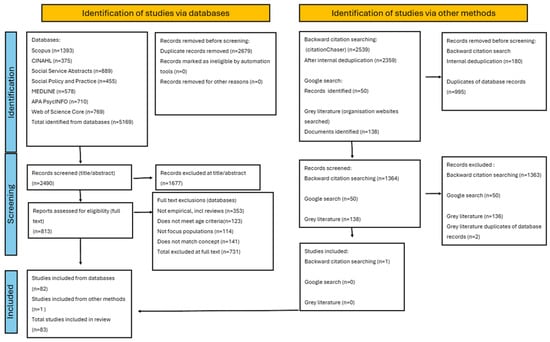
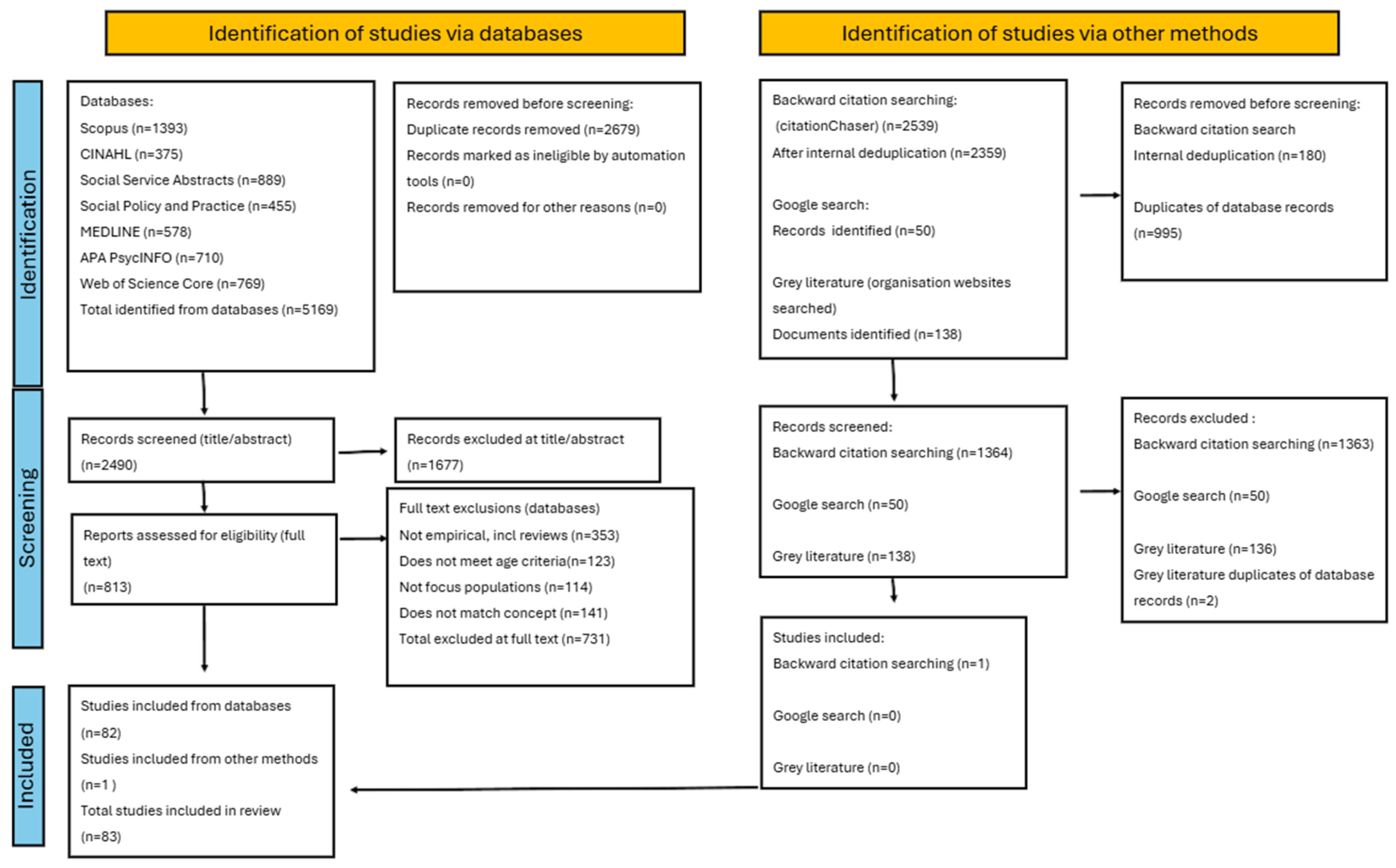

Disclaimer/Publisher’s Note: The statements, opinions and data contained in all publications are solely those of the individual author(s) and contributor(s) and not of MDPI and/or the editor(s). MDPI and/or the editor(s) disclaim responsibility for any injury to people or property resulting from any ideas, methods, instructions or products referred to in the content. |
© 2026 by the authors. Licensee MDPI, Basel, Switzerland. This article is an open access article distributed under the terms and conditions of the Creative Commons Attribution (CC BY) license.