


Abstract
The representation of atmospheric phenomena and, in particular, clouds was a prominent theme for painters during the transition from the eighteenth to the nineteenth centuries. During this period, under the influence of rationalism and encyclopedism, Luke Howard’s cloud classification (1803) was proposed, gaining followers among scientists and artists of the time. Among the latter, Goethe was instrumental, as he intensely promoted this cloud classification, even dedicating his own poems and drawings to it. From then on, some painters depicted cloud studies following the academic principles recommended by Goethe. Caspar David Friedrich did not adopt these principles and depicted clouds as bodies endowed with freedom and feeling, as fragments of soul. The work of P. H. de Valenciennes played a prominent role in this approach; it was translated into German and became a reference manual for Romantic landscape painting. This paper addresses the scientific and cultural context of that historical moment, studies the importance of the landscape, and its aerial aspect, in the painting of the time and details the role of Friedrich as a singular author of German Romanticism, who did not want to participate in the academic ideas of representing clouds, since the sky was, for this painter, a symbol of the transcendent.
1. Introduction
Although C. D. Friedrich’s work in relation to nature has been subject to meticulous scrutiny, no previous work seems to juxtapose Friedrich’s works within a Goethe “versus” P. H. Valenciennes framework focused on clouds and the sublime. By and large, this synthesis, which draws on recent scholarship while adding a critical analysis of the cultural and scientific contexts, represents an original contribution to the study of German Romanticism, the depiction of clouds in art (nephology) and Friedrich’s singular rejection of academic norms. This is the core of our unique contribution, which is implicit throughout the text, filling a gap that reinforces the novelty of this research. Our interest has been to investigate the pictorial representation of clouds by C. D. Friedrich, as it represents a remarkable exception within the historical context in which his work was produced. This context was marked by the emergence of Luke Howard’s ([1803] 1865) scientific classification of clouds and its dissemination within the scientific and cultural circles of the time, a period in which the work of Goethe, a great enthusiast of the atmosphere, played a prominent role. C. D. Friedrich decided to follow his own rules when painting clouds, adhering to the teachings of P. H. Valenciennes. The analysis of his departure from the norm, this divergence from Goethe’s recommendations, is the central idea of this study, which continues the line of research initiated by the authors in their publication on the relationship between Goethe and clouds (Olcina Cantos and Martí Marco 2025).
The objective of this study is to analyse the scientific and cultural context within which Caspar David Friedrich’s work is embodied and to explore the conception of landscape, nature and the clouds for this author of German pictorial Romanticism. As is also the case of other figures of European culture of the time, Friedrich focused on atmospheric aspects, particularly clouds. A critical analysis is made of his ideas based on his teachings learned through the work of Valenciennes (Der Rathgeber für Zeichner und Maler, de Valenciennes and Meynier 1803), and a comparison is made of the ideas of the intellectuals of that period regarding the treatment of clouds in their writing and paintings. The principal objective is to study Friedrich’s relationship with atmospheric elements, particularly clouds and his representation and rejection of using and illustrating the classification of clouds established by Howard in 1803 (Olcina Cantos 2013).
In order to study atmospheric aspects in Friedrich’s work, specifically clouds, various documents and sources have been consulted. As well as analysing the artist’s pictorial works, his letters have also been consulted. Goethe wrote his essay Ruysdael als Dichter (1816) as a programmatic text from which opinions on Friedrich have been implicitly derived. Moreover, specialised texts on Friedrich’s painting have been used. In 2024, to commemorate the 250th anniversary of the birth of the German painter, biographies and specialised research was conducted that has been consulted for this study (Bertsch and Grave 2024; Gleis and Verwiebe 2024; Illies 2024; Wolf 2012).
One text that has been fundamental for this study is the manual of the French artist Pierre Henri de Valenciennes (1750–1819), whose lessons on drawing and painting (Elemens de perspective pratique à l’usage des artistes, suivis de reflexions et conseils à un élève sur la peinture et particulièrement sur le genre du paysage, 17991) rapidly spread across Europe and also Germany in its German translation (Der Rathgeber für Zeichner und Maler, de Valenciennes and Meynier 1803). In this text, Valenciennes recommended artists to directly paint from nature to capture the transience of the atmosphere. Friedrich adapted the suggestions in his paintings and drawings and in different aspects of the representation of different sky conditions, such as the chronology of the days and seasons, the representation of the moon and the atmosphere and its components (water vapour, mist, rain, storms).
The study is based on a hypothetical deductive method, contemplating the objectives indicated in the previous section. The scientific and cultural context prevailing in Europe in the final decades of the eighteenth century and early decades of the nineteenth century favoured the advancement of ideas, thought and proposals for organising science. This led to the publication of literary, scientific and artistic works that reveal the relationship between the humanities and scientific disciplines. C. D. Friedrich developed his pictorial creations within this context; hence, it has been necessary to consult studies addressing this relationship within its unique historical context, one of great activity in terms of European thought (Olcina Cantos 2024, 2025) (Figure 1).
Figure 1.
Different interpretations of the representation of clouds. Late 18th century—early 19th century. Source: Own elaboration. Cover from L. Howard’s book (1803) and cover of P. H. Valenciennes’s book (1799). Free access: https://libraries.ucsd.edu/speccoll/weather/b4164774.html and https://bibliotheque-numerique.inha.fr/collection/item/16438-elemens-de-perspective-pratique-a-l-usage-des-artistes?offset=4 (accessed on 15 September 2025).
2. C. D. Friedrich’s Biography in the Scientific Context: Between Reason and Feeling
In the last third of the eighteenth century and the early decades of the nineteenth century, there was a boom in classic rationalism and Romantic ideas emerged that marked European culture at the turn of the new century. The confluence of ideas of both cultural movements is a constant feature in the authors of reference of the time, including Friedrich (Koerner 2009).
Within this context, Caspar David Friedrich developed his painting works on spiritual reflection, adopting an intimist vision of nature and its components, which he considered to be a part of the soul. Friedrich (1774–1840) was born in the Hanseatic town of Greifswald2 into a family of craftsmen. His childhood was marked by the early death of his two siblings and his mother in 1781, which played a part in the formation of a sensitive personality that was troubled by the scars of life.
He studied drawing with Professor Johann Gottfried Quistrop from the University of Greifswald, who supported him and transmitted his love for landscape to him. Subsequently, he moved to Copenhagen to study drawing at the Royal Academy of Fine Arts, one of the most prestigious of the day, where the painters A. Loretzen and J. Juel taught. He soon developed an interest in all religious elements in general, drawing ruins as a symbol of the transitory nature of life and motifs of Gothic architecture. His attention was also drawn to cemeteries and other burial sites and to Germanic rune stones. The Romantic era was a period when Christianity spread among artists and intellectuals, and many of them were spiritually converted during a surge in religion, especially Catholicism (Jensen 1999, p. 171).
In October 1798, he moved to the city of Dresden, where he continued his systematic education with professors at the Academy of Fine Arts, such as Anton Graff, Josef Grassi and Adrian Zingg. In 1800, he decided to finally specialise in landscape painting, with a language and iconography that was sometimes highly complex—specifically, allegorical painting. In Dresden, he trained in new painting skills, and he was inspired by an arsenal of ideas with prevailing symbolic content, such as the allegory of light as eternal life embodied in some paintings. His first important drawings using a sepia technique date back to 1803. He visibly perfected this technique, together with charcoal and pencil, using blurred shadings, cross-hatching and pointillism. These techniques were later seen in his paintings, where the refined effect is based on sensitive colour modulations. He began to develop a unique visual language and learned how to apply it artistically.
From 1806, within a demanding intellectual environment, he participated in debates on literature, arts and science, hence his friendship with G. H. Schubert, F.G. Wetzel, F. A. Koethe, H. von Kleist and later C. G. Carus and W. A. Schukowski. (Bertsch and Grave 2024, pp. 14–15). He also maintained contact with P. O. Runge, the poet Ludwig Tieck and with representatives of Romantic literature, particularly Novalis, Schelling and the Schlegel brothers. He even wrote a small text on aphorisms on art and the artistic spirit (Über Kunst und Kunstgeist) which was later found in the estate of the painter Dahl.
During his years of artistic maturity, he married Caroline Bommer. His paintings changed and the colours acquired finer tones (Santiago Martín 2007). In his paintings, his wife was a positive and friendly element and the female model. This can be seen in the works titled “Woman before the rising sun”, “Woman on the beach of Ruegen” and “Chalk Cliffs of Rügen”, all three painted precisely in 1818 (Frau von der untergehenden Sonne, Frau am Meer and Kreidefelsen auf Rügen). This period is when his major works that have gone down in the history of universal painting were created (“Chalk Cliffs of Rügen”, “The Wanderer Above the Sea of Fog”, “Meadows near Greifswald”, “The Sea of Ice”).
The censorship measures implemented in the German Confederation with the Karlsbad Decrees prevented his access to a professorship in Landscape Painting at Dresden’s Academy of Fine Arts due to his anti-French political position. This affected Friedrich’s state of mind, as he was prone to discouragement. In the 1820s, he forged a close friendship with the Norwegian painter Johan Christian Dahl (Illies 2024) and the two jointly exhibited their work. From 1830, Friedrich became increasingly introverted. His final years were marked by the effects of a stroke that he suffered in 1835, which left the right side of his body paralysed. The family had to sell several paintings in order to survive. Sunsets and nocturnal paintings dominated his later works. Illness, isolation and sadness followed. Caspar David Friedrich died in Dresden 1840, with hardly any recognition. It was not until the “German Centenary Exhibition” of 1906 in Berlin (Jahrhundertausstellung deutscher Kunst) that the general public came to know his work and acknowledged him as one of the greatest German painters in history, a forerunner of modernism. Later, German National Socialism proceeded to celebrate his work (Illies 2024).
The mark left by the Norwegian painter Dahl on Friedrich’s personal life and work is evident. Earlier, Goethe had an unreciprocated influence, as Friedrich had initially tried to win his favour without receiving any artistic or emotional response. Later, Goethe became more and more discomfited by the attitude of the painter after several of his works were acquired by the royal court and after his visit to Friedrich’s studio in September 1810 (Illies 2024, p. 94). The culminating point of this deteriorating relationship was the negative response of Friedrich in 1816 towards the concretised cloud types described by Howard, admired by Goethe, so much so that it planted the seed for a series of poems (Olcina Cantos and Martí Marco 2025). Friedrich’s main objections were expressed in a letter from Louise Seidler, dated 8th October 1816 and addressed to Goethe, which commented that Friedrich was concerned that the “light and free clouds would be unquestioningly put into these categories”3. In spite of that, after 1817 Friedrich clearly paid more attention to the shape of his clouds.
This period witnessed highly significant contributions to the progress of science, particularly with respect to knowledge of the weather and climate. Interpretations of nature were proposed on the relationship of human beings with the physical environment, based on ideas ranging from environmentalism, which preceded nineteenth-century determinism, to the rationality of scientism, which gradually impregnated the working methods and results of the experimental sciences (Linnaeus, Laplace, Humboldt). Humboldt’s cyanometer, used to measure the blueness of the sky, and his developments on atmospheric phenomena also had a huge impact on the arts at the time. In parallel, authors essential to Western thought, such as Kant, also stood out. Many of them reflected on science via literature, such as Goethe, who published several texts on the importance of nature and its elements for human life. Goethe contributed a theory of nature that sought to bring together the ideas of rationalism and empiricism at the time, impregnating the observer’s capacity to rationalise with a component of subjectivity (Olcina Cantos 2024; Olcina Cantos and Martí Marco 2025).
These decades were decisive for consolidating the meteorological and climate disciplines as sciences that were equivalent to other nature sciences, physics or chemistry. During that period, certain figures emerged who were fundamental for consolidating climate science, which today would be known as the popularisation of atmospheric knowledge. Kant had taught “Physical Geography” in his classes at Königsberg University in the second half of the eighteenth century; at the beginning of the nineteenth century, his notes were published, shaping the first climatology manual in the modern sense. Goethe disseminated Howard’s cloud classification with his own drawings and notes on these hydrometeors. Meanwhile, Humboldt established bases for climate science, thanks to his data processing, his field notes on atmospheric phenomena and the elaboration of the first isotherm map on a global scale (Figure 2).
Figure 2.
The advancement of atmospheric knowledge (1750–1850). Source: Own elaboration.
3. Clouds as Free Elements of the Landscape: Friedrich’s Sublime Nature
3.1. The Uniqueness of C. D. Friedrich’s Cloud Paintings
The painting of air, of the real atmospheric situation, is perhaps one of the most complex themes, for which there are several hermeneutic possibilities of comprehension and interpretation. In the period around 1800, referred to as Sattelzeit in Germany and characterised by a fascination with French art and culture, Friedrich was considered a painter of clouds, as shown by Goethe’s request for him to illustrate his scientific publications on the shapes of clouds. The clouds, air, fog and mist confer an emotive effect to the paintings of the Romantic Friedrich, a form of expression of the visible and invisible in life and the elusive, such as thoughts and feelings. Often, the clouds, fog and mist are darkened in his paintings and the image is blurred.
Friedrich contemplated nature and observed it closely but did not represent it realistically. He adapted the changing nuances of the atmospheric circumstances of the air to the hours of the day, the seasons and meteorology in general like no other artist in Germany. The clouds, the sky, the moon and different light phenomena became significant elements, reflecting his feelings, temper and mood, even becoming visionary declarations. Jensen (1999, p. 65) described him as a “mystic with a paintbrush” due to the religious tenor that he had internalised, his identification of landscapes with the Christian cross and the allegories that addressed profoundly emotive facets, standing out due to the artist’s slow and painstaking work; for example, the painting Tetschener Altar. Das Kreuz im Gebirge (1807–1808) was harshly criticised as a scandalous painting by Basilius von Ramdohr. His melancholic nature and religious convictions enabled him to create an attractive crystallisation of the sky as a real object with notorious meaning (Jensen 1999, p. 49). In this respect, some of his works were considered to be state-of-the-art for their time, such as Das Eismeer (1823–1824) or “The Sea of Ice”, also titled “The Failed Hope” (Die gescheiterte Hoffnung), with a symbolic resonance and transcendence that is derived from the harshness and absolute beauty of the glacial landscape. Furthermore, in the painting Mönch am Meer, a monk beside the sea evokes the parallelism between the immensity and beauty of faith and that of the sea (Bertsch and Grave 2024, p. 23).
Among others, Friedrich followed the theories and suggestions of the French writer and landscape painter Pierre Henri de Valenciennes (1750–1819), whose manual for drawing and painting was disseminated rapidly in French and also its German version (Der Rathgeber für Zeichner und Maler, de Valenciennes and Meynier 1803). Friedrich put many of its proposals into practice, focusing first on luminosity and later on developing a highly original personal style, enabling him to become a reference in terms of Romantic landscape painting. He had access to the German translation of the work in the library of Dresden’s Academy of Fine Arts (Denk 2019, p. 85). The manual seems to have been an accredited source of inspiration for the German landscape painter and for many other of his contemporaries such as C. G. Carus, according to Busch (2024, pp. 75–76), a Senior Fellow of Art at the Freie Universität Berlin, and it provided him with initial guidance when developing this sublime aesthetic in the concept of the wanderer in the emblematic painting Der Wanderer über dem Nebelmeer (1818), the most famous hiker in art history emerging from a sea of clouds.
3.2. The Manual of P. H. de Valenciennes: Inspiration for C. D. Friedrich in His Representation of Landscapes and Clouds
Valenciennes’ landscape painting treatise constituted a significant contribution to art education with a nature-based approach. Today he is considered a fundamental figure, representative of historical landscapes and one of the most influential landscape painters of the nineteenth century (Denk 2019, p. 29). The long tradition of French landscape painting from Claude Lorrain to Nicolas Poussin and Gaspar Duguet, who influenced the generations of Camille Corot, Eugène Delacroix and Camille Pissarro and the impressionists, expanded to European painting and the theoretical writings of Germans such as Sulzer, Hagedorn, Göbner and Runge. Valenciennes’ text contributed to culminating the theory of art and became a benchmark. Valenciennes and his circle of the most outstanding students cooperated significantly to cultural transfer across Europe, highlighting the value of open-air painting with a faithful imitation of nature. His ideas had a major impact through the knowledge networks established in his trips undertaken to Italy, Egypt, Asia Minor and Greece and his membership of international artist groups. Many of the landscape artists of the nineteenth century were considered touring artists, following the indications of Valenciennes’ manual. After a long stay in Italy, Valenciennes continued a constant transmission of artistic knowledge as a professor at the School of Fine Arts (École Polytechnique) in Paris.
The then avant-garde concept of the aerial perspective, so important for painting landscapes, can be attributed to Valenciennes. This concept was not only concerned with lines but also colours, and, due to its novelty, his manual surpassed other works of the moment, such as Hagedorn’s reflections on painting (Betrachtungen über die Malerei, 1762). The manual is a text with instructions for teaching the rules of aerial perspective. Perspective is the science that teaches the placement of lines and the use of colour to represent, on a flat surface, perfect images of objects. Therefore, it is divided into linear perspective and aerial perspective. Everything in nature appears according to certain laws of perspective: clouds, mountains, trees, ground, water. Therefore, one should be familiar with their relationships and gradations in order to embody them in a painting. Three elements should be considered: the lines that determine the contours, the chiaroscuro that highlights the prominent parts and the colour that incarnates them. Drawing consists of lines, but colours in the drawing truly give shape to the art of painting.
Valenciennes identified the knowledge necessary for a painter, such as drawing, perspective, anatomy, architecture, the chemistry of oil paints, physics and natural history (Denk 2019, p. 132). He added ideas on the studies that are required on trees, rocks, plants ruins and, in general, the design and composition of a landscape. He provides the rules that characterise landscapes and the seasons and presents an ideal of open-air painting in a realistic way, for which notes and sketches should be made. He dedicates a specific text to nocturnal pieces that can only be represented by memory after much diligence and reflection, as the darkness prevents the correct observation of the effect of the moonlight. His pioneering reflections on this new approach to landscape painting and perspective include the central role of the natural elements, such as fire, water, the sky and air, and their effects. Valenciennes dedicates a few sections to the landscapes of the four seasons and the different moments of the day. In the second volume of Valenciennes’s work, edited by Denk (2019, p. 153), the author observes the metamorphoses of the clouds.
The translation of his novel theoretical work into German (1803) was undertaken by the Huguenot artist Johann Heinrich Meynier (1764–1825), also the author of a theoretical and practical instruction manual for drawing landscapes (Theoretisch-practische Anleitung zum Zeichnen und Tuschen der Landschaften, 1796). In the preface of the German edition, Meynier conducts a brief bibliographic review of German works. The translation prioritised the section on landscapes, even in the title, relegating the instructions on perspective to an appendix and adding an additional title with advice for drawers and painters (Rathgeber für Zeichner und Maler, besonders in dem Fache der Landschaftsmalerei. Nebst eine ausführlichen Anleitung zur Künstlerperspektive). Furthermore, Meynier also included corrections and added his own texts on the subject. The German target audience for the translated work4 were artists such as C. G. Carus5, J.C. Dahl6 and C. D. Friedrich (Figure 3). Busch indicates that Friedrich used Valenciennes’s work, among other texts, as a learning manual for painting nature, landscapes and the clouds. The numerous practical parallelisms indicate that Friedrich particularly favoured Valenciennes’ text. The German edition resolved Friedrich’s doubts and facilitated his decisions and orientations in the use of modern perspective in landscape design.
Figure 3.
German edition Der Rathgeber für Zeichner und Maler (The guide for draughtsmen and painters, de Valenciennes and Meynier 1803) of the text Elemens de perspective pratique (1799). P. H. de Valenciennes. Source: Digital Staatsbibliothek Berlin. Available at https://digital.staatsbibliothek-berlin.de/werkansicht?PPN=PPN687193826&PHYSID=PHYS_0006 (accessed on 15 September 2025).
Pierre-Henri de Valenciennes, Maler und Theoretiker mit einem großen Schülerkreis, war für Friedrich offensichtlich die wichtigste Quelle für seine Form der Naturaufnahme. Dieser Einfluss soll hier im Detail dargestellt werden. […] Womit nicht gesagt sein soll, dass Friedrich allein das Traktat von Valenciennes benutzt hat. Die eine oder andere Anweisung zu Verfahren findet sich auch andernorts, doch die Fülle ganz praktischer Parallelen spricht für die bevorzugte Nutzung der Arbeit von Valenciennes.(Busch 2024, pp. 75–76)
In Valenciennes’ work, many of the proposals that Friedrich followed are related to elements of nature such as the ocean and waves, rivers and riverbanks, mountains and rocks, trees, the reflection of objects in the water with the moon or sun, optical illusions, the position and relationship of the human figures in the painting and the dark camera method. We will now analyse the indications for painting the sky, clouds and different atmospheric elements7 to evaluate the influence of the manual on Friedrich’s paintings.
For Valenciennes, clouds offer the artist an authentic panorama, both when the sky is serene and when it is covered in clouds that partially eclipse the blue canopy. He defined clouds as masses of water dissolved into vapour, suspended in the air and blown by the wind, which, when they divide, take on different shapes with different thicknesses, lengths and widths. Given that these forms in movement change constantly—that is, they expand, contract, separate or blend with other clouds—it is impossible to put them into perspective in accordance with the usual rules of painting. Therefore, there is a special type of perspective that Valenciennes labelled “sentimental perspective” (de Valenciennes and Meynier 1803, p. 225), in which the artist must carefully study the sky’s forms, observe the position of the lines and masses that move over each other at different levels of the atmosphere and analyse the gradation on the horizon. Through this detailed study, the artist learns to give the sky the concave shape that is so difficult to achieve. In fact, few artists correctly interpret a cloud cycle: the majority observe and copy the form of the clouds, but they have not been trained in perspective. Despite their efforts, their sky is usually convex instead of concave; only a study of perspective leads to the acquisition of this relevant aspect.
The light shines through the different reflections on the clouds. The clouds disintegrate and join together, their shape and effects change constantly and their appearance can alter in an instant. These mobile and powerful masses combine and acquire colours that amaze artists and observers of this marvel of nature (de Valenciennes and Meynier 1803, p. 259). The clouds move in the direction of air currents, so their unequal speed and trajectory, often in opposite directions, create a phenomenal spectacle. Valenciennes’ recommendation is to observe them during the equinox and during storms; only then can the effects of the diffused light that drifting and torn clouds project on objects be admired and the reflections of the light be appreciated. The clouds acquire different colours depending on their size, shape, surface area and proximity to or distance from the sun or the Earth. The colour of the clouds reveals something about the tone of the light that illuminates them. It can be influenced by clouds floating by, reflections of another cloud or even random light that shines on them. The water vapour of which they are composed differs in terms of density; if they are considerably dense clouds, they absorb the rays of light, preventing them from reaching the Earth. A clear or misty sky determines the general tone of the painting, and, on the other hand, the secondary or reflected light constitutes the colour base of the shadows (de Valenciennes and Meynier 1803, p. 260).
Friedrich conducted studies on clouds in which he contemplated sunsets with clouds (Abend mit Wolken, undated), stratiform clouds in movement in the mountains (Ziehende Wolken im Gebirge, 1820), sunrises in abrupt landscapes (Morgen im Riesengebirge, 1810–1811). In several of his works he embodies the sky, fir trees, sandstone rocks and rivers, such as the panorama of the River Elba in a unique landscape called “Sächsische Schweiz” in Ausblick ins Elbtal (1807). His oil painting of a marine landscape in the moonlight (Seestück bei Mondschein, 1830) depicts figures of light that are reflected in the water with abundant blurred and opaque clouds in a diagonal formation through which the moonlight shines. The images of the horizon and the sky are striking elements, and the boat is a focal point of the painting, as are the reflections of the invisible, yet always present moon hidden behind the clouds. This playing with subdued lights and shadows in a sky with medium altocumulus clouds at night, with a scene illuminated by the moonlight, reflecting the rocky forms on the sea, can be observed in Die Nordsee im Mondlicht (1823–1824). Although he did not conduct any studies on the clouds under “academic” principles to promote the dissemination of Howard’s classification in the same way as Constable, in his notebooks, Friedrich drew many sketches of clouds that reveal how he dominated the technique of representing these hydrometeors in their different forms and with changing luminosity (Figure 4).
Figure 4.
Die Nordsee im Mondlicht (“Northern sea in the Moonlight”). C. D. Friedrich (1823–1824). Source: The Met. Exhibitions: Caspar David Friedrich, The Soul of Nature. Available on: https://www.metmuseum.org/es/exhibitions/caspar-david-friedrich-the-soul-of-nature/exhibition-objects (accessed on 15 January 2026).
- A.
- The aerial perspective and its pictorial application by Friedrich
In his work, Valenciennes broadly addresses the facet of the aerial perspective and includes an abundance of concretions on drawing and painting clouds, cloudy skies, fog, water vapour, rain and storms (Chapter 9: Von der Luftperspektive). He described aerial perspective as the enveloping effect of the air existing between objects that, according to its greater or lesser presence, weakens contours and tones. He defines this surrounding air as a fluid, light, elastic, transparent and colourless substance that expands throughout nature and pressures it. The air is also charged with earthy humidity, which gives it a blue colour. In order to reflect this effect, the distance from the back of the painting should be measured with the eye (de Valenciennes and Meynier 1803, p. 242).
After conducting an in-depth study of colours, the peripheral air can be painted, as Tiziano, Rubens and Rembrandt did (de Valenciennes and Meynier 1803, p. 250). The colours truly constitute the base of the aerial perspective. Some of the primary colours are distinguished through a prism, and then all of the others emerge from them in all of their variations and nuances. The harmony of all of the colours in nature is a certitude. Light is a natural material. It is fluid and an essential element that shines directly from the sun, penetrates all transparent bodies and produces all of the colours. Through its shining and modifications, prodigious effects emerge in nature, along with the contrast of shadows. While black absorbs all light, white reflects rays of light. The objects of nature receive light differently depending on their shape, surface area, position and angle. The angle of reflection is always the same as the angle of incidence. However, not all of the colours have the same capacity to reflect light. White reflects light completely and can dazzle due to the full incidence of the rays. It is complex for the artist to imitate this effect on canvas in a pure white colour. Their white would be flat and luminous because it is not easy to imitate the golden light colour irradiated by the focus which it then shines out with (de Valenciennes and Meynier 1803, p. 253). In this respect, Friedrich dared to embody the famous white chalk cliffs in the island of Rügen in two oil paintings on canvas (Kreidefelsen auf Rügen, 1818) and the wanderer above the sea of fog (Der Wanderer über dem Nebelmeer, 1818). We will now contemplate the suggestions that Friedrich adapted in his paintings and drawings and in relation to the aerial perspective.
- B.
- The changes in the state of the sky; chronology of the days and seasons
Friedrich particularly reflects the hours of the day and the seasons. Twilight is one of his hallmark elements, although he also painted many sunrises. He embodies the red colours of the dawn and dusk at the precise moment when night becomes day and day becomes night. The illumination of the sunrise gradually intensifies from a weaker to stronger light while, on the other hand, that of the sunset fades from stronger to weaker. The colour of the light at sunrise is yellow, red or silver. The light at sunset is red, orange-yellow or violet and has a flame-like effect (de Valenciennes and Meynier 1803, p. 254). The sun is usually surrounded by a burning atmosphere. His Romantic-period representations of the sequences of the day and the seasons are impregnated with emotion, including Der Morgen (1820/21), Der Mittag (1822), Der Nachmittag (1822), Der Abend (1820/21), Morgennebel im Gebirge (1808), Morgen im Riesengebirge (1811) and Dorflandschaft bei Morgenbeleuchtung, (1822), the latter with the painting of a solitary tree. The oak, as a symbol of the past connected to the present, is represented in some works as the determination of the German people, who can emerge from the storm (Jensen 1999, p. 104). The sequence of the seasons is also embodied in four sepia works in which the allegorical meaning of Friedrich’s landscapes can be seen.
- C.
- The representation of the moon
The image of the moon (Mond) shining is a sign of profound hope in this artist of unlimited imagination and sensitivity (Jensen 1999, p. 111). Friedrich painted the work Meeresküste bei Monschein (1830), in which he depicts a coastline under the moonlight with a blue-silver, transparent sky and grey clouds which overshadow the sky right up to the top of the image. The moon floats in the area separating the grey clouds from the lower yellow-red illumination. Although it is slightly off-centre, it is clearly the focus of the painting. Moonlight is always clearer in the sea or on the coast due to the multiple reflections irradiating from the water (de Valenciennes and Meynier 1803, p. 255). Friedrich depicts different moons in other oil paintings, such as Zwei Männer in Betrachtung des Mondes (1819–1820), in which two men are contemplating it, or in the appearance of the moon on the marine horizon in Mondaufgang am Meer (1822). Moonlight is secondary, weak and faintly golden. At night, it loses its golden colour and acquires a silver tone that impregnates all objects. The soft effects of moonlight are serenity and tranquillity. Valenciennes reminds us that it is impossible to paint by moonlight as colour tones cannot be discerned. For his nocturnal works, Friedrich was also inspired by the theoretical work of G.H. von Schubert (Ansichten von der Nachtseite der Naturwissenschaften, 1808), whose ideas also influenced Romantic authors such as E.T.A. Hoffmann. Schubert addresses the need to know the language of nature, the need to observe lunar eclipses and the symbolic meaning of the composition of the atmosphere, especially at night and at dusk (Die Ansicht einer wunderbaren klaren Nachtseite einer ewigen Natur, Schubert [1808] 1827, p. 77).
- D.
- The immensity of the sky
The sky (Himmel) is an immense, apparent and transparent dome that encloses the globe at a distance that was then immeasurable, and which is sometimes clear and other times dark. This celestial dome, which is usually blue and evokes serenity, is really a fine fog in which the stars shine. Different types of air occupy the atmosphere depending on their specific gravity; humidities rise in condensed form from the earth and create floating clouds, dragged by the winds (de Valenciennes and Meynier 1803, p. 258). One the most common objects of Friedrich’s paintings is the horizon over which the sky arches and covers more than half of the canvas. The land and the sky always seem to be very close to each other; banks of clouds emerge from this joining point and spread out to the left and right, forming a hyperbole (Jensen 1999, p. 47). Friedrich embodies different skies that darken or become foggy, in which he transmits colour through fine and striped layers, from a bright yellow to orange, flaming red to a brownish, dense and opaque grey. The painting Neubrandenburg (1816–1817) is a good example. The view from the ground of the sky, with the horizon in the central section painted in light colours and the yellow strip that marks the join between the stratocumulus cloud cover and the higher sky, indicates the grandness of the atmosphere represented as a lower layer within a sky that stretches out beyond sight (Figure 5).
Figure 5.
Neubrandenburg. (The immensity of the sky). C. D. Friedrich. (1816–1817). Source: The Met. Exhibitions: Caspar David Friedrich, The Soul of Nature. Available on: https://www.metmuseum.org/es/exhibitions/caspar-david-friedrich-the-soul-of-nature/exhibition-objects (accessed on 15 January 2026).
- E.
- Hydrometeors
Vapour (Dünste) is formed by small water particles that rise from the Earth or the surface of water. The sun raises them into the atmosphere and sublimates them, and they become fog. In their ascent they become clouds that descend depending on their specific gravity. As they are transparent aqueous particles, they allow rays of light to reach all objects. Before the sun appears on the horizon, vapour’s colour is bluish; at the end of the day, it is red or violet and gold, and it spreads across the atmosphere and forms the sunset at dusk (de Valenciennes and Meynier 1803, p. 262). Terrestrial vapour taints the purity of the atmospheric air and alters the colours. The artist attempts to capture this unquestionable air that surrounds all objects after a profound reflection on the effects of nature, aware of the time of the day, and the appearance, amount and local colour of the vapour. This is also the base of aerial perspective.
Fog (Nebel) is a hydrometeor that the heat of the sun raises imperceptibly from the surface of land and water. It is more frequent at the beginning of spring, end of autumn and, particularly, during winter. Light and very dispersed clouds float in the lower regions of the air, and real clouds rise up to a higher altitude. The colour of fog is usually grey, depending on the density; it can be more or less golden, depending on the sun’s rays that penetrate it; if the fog is very thick, shapes and colours are blurred and the sun is bright red; when its density increases, it becomes pale yellow. Fog weakens colours, tricks the gaze on the contours and blue tones are predominant. If the fog is thinner, the solar disc can be seen through it. As the fog dissipates, the torn masses allow the sun’s rays to freely shine through (de Valenciennes and Meynier 1803, p. 265).
Lifting or descending fog is often an uncommon spectacle, which, perhaps due to its originality, is not often painted. This effect was embodied by Friedrich on several occasions. An example is the mountain summits that clearly protrude above the descending mass of fog. This is the case of the oil painting Der Wanderer über dem Nebelmeer (1818). These clouds, formed by orographic ascension, are generated when an air mass clashes against mountains and is forced to rise; the clouds formed on the windward side are called orographic clouds. The higher light emerging from the bank of clouds over the mountains predominates. In other cases, the opposite effect is produced, where the fog is absorbed by the air and the summits are enveloped in fog while the lower part is exposed.
Fog also generates a much stranger effect, whereby everything we see through it seems larger and more distant than it really is, converting it into an optical illusion that can confuse with the calculation of distances, specifically in water. In this case, everything seems closer than it really is (de Valenciennes and Meynier 1803, p. 267).
When fog rises in the air, it transforms into clouds, blown by the wind. When the water of which the clouds are composed becomes heavier than the dense air that transports it, it falls to the ground in the form of drops, which can be large or small, at a higher or lower frequency. This is how rain is formed (Regen). In a storm, large, heavy drops fall impetuously. The rain purifies the air from atmospheric vapours and renders it bright and clean. It becomes easier to distinguish objects through the rain than when they are enveloped in fog. When it is still raining and the clouds open slightly in the sky, rays of light illuminate the drops that fall, generating admirable effects and transforming each particle of water into a precious stone; the colours of the rainbow decorate this mass of water and the sun’s rays, refracted in the raindrops, create a rainbow.
- F.
- The representation of storms and marine tempests
Storms (Ungewitter) are a crisis in nature via which the atmosphere is purified from earthy vapours that impregnate it (dust, salt crystals, bacteria, pollen, ash). Atmospheric water vapour is formed in these small particles that float in the air called condensation nuclei. Storms and their inclemencies exhibit sublime effects that can even instil fear and terror. Thunderstorms usually only occur between the equinoxes in spring and autumn, particularly when the weather is very warm. They are often preceded by a sudden change in the wind. Before a storm breaks out, there is a suffocating calm followed by a furious gale, with gusts of wind and dust swirls; swallows fly fast over the surface of the land; other birds flee in flocks, dragged by the wind. Valenciennes describes the phenomena that we have summarised (de Valenciennes and Meynier 1803, p. 268): the day fades, the sky disappears, the clouds roll over each other, lightning bolts strike one after another amidst a dense darkness, the howling wind rattles the trees and leaves; the roar of the thunder breaks through the clouds; torrents form that sweep away the soil, rocks, trees, animals—everything—and produce fear.
The colours of storm clouds are varied and depend on different circumstances. It is important to draw storms and observe their colours and different effects (de Valenciennes and Meynier 1803, p. 271). The rising or setting sun almost always bestows a pictorial interest to storms when rays of light shine at extreme angles through the clouds and they are framed in bright golden fringes and in different golden and transparent reflections, opposing the force of the dark and gloomy tones and pale and blue shades of other clouds that are closer to the ground from which they get their colour. This variety of colours and shapes is a true spectacle for the observing artist (de Valenciennes and Meynier 1803, p. 272). When a lightning bolt or sudden flash in a storm light up the atmosphere, the background and different shapes of the clouds are much clearer and visible. The colour of the mountains and all other natural objects acquire some of this violet and purple light, whose blinding brightness appears for just a few seconds.
The clouds accumulate on top of one another and adopt unusual shapes, often representing new and beautiful figures. When the storm dies down and recedes, the horizon becomes clear. The clouds that are becoming increasingly distant and disperse allow the sun to shine through them again and to illuminate the many objects against the black background and blue sky in which the colours of the rainbow can be seen, sometimes twice or even three times, but only in a single clearly defined arch (de Valenciennes and Meynier 1803, p. 270). In these circumstances, Friedrich painted a hilly landscape with the optical phenomenon of the rainbow in Gebirglandschaft mit Regenbogen (1810). In the painting, a man with his head uncovered humbly looks at a rainbow and dark mountains (Jensen 1999, p. 91) and experiences the miracle of nature. Friedrich embodies his rainbow as a symbol of reconciliation with God, who promises the man’s redemption in a still threatening environment which is gradually brightening up.
In a sea storm (Sturm), the ocean waves are frothy, brown and green. Fuelled by the violence of the wind, they break against one another and clash with the bodies that resist them; their force can be terrible, although translated to the human level in a powerful metaphor of resilience, they build character. The rocks on the shores and the infrastructures that protect seaports contain the fury of these waves. The colours of lightning are usually reflected in powerful waves; there, we discover with a shiver the terrible depth of the abyss that threatens to swallow everything. After this crisis and the disruptions that nature experienced during the storm, the former calm gradually returns. That is, it is always possible to emerge stronger from tribulations and dangers. The rain has washed away the dust with which the wind had clouded the surface of the objects. Nature rejuvenates via storms, and fresh and clean colours enhance its beauty. In these circumstances, the artist applies a linear perspective, which contributes to rendering the different backgrounds and their colours more realistic (de Valenciennes and Meynier 1803, p. 275). In this respect, we can highlight the painting “After the storm” (Nach dem Sturm, 1817); the parts of the waves that are in the dark show an intense and defined green with blue reflections in the different irregularities of the waves; the rocks, boats and all bodies surrounded and dragged by the water acquire a darker survival tone; the sky is losing its lead tones and acquiring nuances of light in the clouds.
- G.
- The representation of marine landscapes, ports and coasts
One of Friedrich’s principal themes was the sea. Hence, the abundance of port and maritime paintings reflecting the immensity of the sea, the arrivals or departures of the port or a panorama from the shore or the coast from sea. In this way, Friedrich expressed his affection for his native land on the coast of the Baltic Sea, the ports of his childhood and the island of Rügen.
In the second volume of Valenciennes’s work, republished by Denk (2019, p. 187), the method of painting seascapes is addressed, and he suggests that the good artists should particularly have
(…) a precise knowledge of the construction of all types of boats, from liners to life-rafts and skiffs, and be able to distinguish the physiognomy of the vessels of each seafaring nation and elaborate separate studies of each part of the rigging and equipment of a ship. They should make drawings of the instruments, machines and ammunition used in arsenals, ports and on board the ships.[own translation]
He also advises artists to draw the forms of the fractures of the rocks on the coasts and to paint fast so that in just one day they can create the sky, the background and part of the water with the same colour, particularly on foggy and stormy days. Finally, he advises an obligatory tour of the coastlines, to spend time at high sea far from the shore on calm days and to capture the daily scenes of the maritime ports with the arrival of boats or the departure of fishing operations.
In several of Friedrich’s paintings the sky dominates the whole scene. The boats are encrusted in a range of colours; the masts form vertical lines marked against the sky with horizontal stripes that stand out against the water. The foreground is an extension of the water that staggers towards the deeper water. Jensen (1999, p. 29) suggested that the port is a symbol of death, the final destination of life; in comparison with this sign of death, the sky could be a promise, and the crescent moon a sign of hope. One of his last works is significant, in which he represents “The Stages of Life” (Die Lebenstufen, 1835), showing a sunset with the members of a family of different ages contemplating the silhouette of five boats sailing in a bay at different distances, like an allegory of the different stages of life (Wolf 2012). There are children playing on the rocks on the shore. Friedrich presents the image of the return of the boats to home as their place for anchoring. The figures are painted partly from behind, a constant feature of the illustration of human figures by this artist. It is a coastal landscape in which there is a dissolving area between a bank of clouds and the blue sea of the shore. Other emblematic works of the artist show a monk on the coast, Der Mönch am Meer (1808–1809), in which the clouds play a major role (Figure 6), and a panorama of the port of Greifswald, the town where he was born—Ansicht eines Hafens (1815).
Figure 6.
Der Mönch am Meer (“The immense atmosphere before human beings”). C. D. Friedrich (1808–1809). Source: The Met. Exhibitions: Caspar David Friedrich, The Soul of Nature. Available on: https://www.metmuseum.org/es/exhibitions/caspar-david-friedrich-the-soul-of-nature/exhibition-objects (accessed on 15 January 2026).
4. Nature, Landscape, Clouds
The landscape is the essence of nature. To paraphrase Saramago in his work Raised from the Ground (Saramago 1980), “what there is most of on earth is landscape; however much of the rest is lacking, there has always been plenty of landscape, an abundance that can only be explained by an indefatigable miracle, because the landscape is undoubtedly prior to man and, despite existing for so long, it has not yet ended”. The landscape is a sublime expression of nature, in key reference to the origin of our ideas about the sublime and the beautiful in Edmund Burke (Burke 1987)8 (A Philosophical Enquiry into the Origin of Our Ideas of the Sublime and Beautiful, 1757), manifesting a greater or lesser degree of alteration by humans. The representation and description of landscapes and of the elements of which they are composed have been a key preoccupation of human beings since Ancient Times. The landscape, with all of its components, is an element of territorial significance, a hallmark of the societies that inhabit it, and its configuration, formed by geographic events, can be the object of cultural interpretation (Martínez de Pisón 2018). According to the German Romantic painter Philipp Otto Runge, “everything converges on landscape” (Gómez Sánchez 2009).
The aerial parts of landscapes, the atmosphere and its clouds, are shown in changing, variable scenes. This mutable character gives clouds a magical quality that feeds the spiritual interpretation of the environment in which human beings live. In some geographical spaces, clouds are significant features of nature, where orographic formations are accompanied by more or less constant clouds depending on the altitude conditions (condensation) and winds; the fog in the valleys frequently forms a veil during winter, conditioning the activities of their inhabitants; in coastal areas, the breezes generate clouds that are anchored in the nearby mountains, forming characteristic strips. Therefore, clouds are elements that give personality to a landscape. Despite the apparent simplicity of their shapes and colours, the formation process of a cloud is very complex and requires specific conditions of humidity, temperature and air pressure.
In the Latin word for cloud, nubes, -bis comes from the Greek word νεφος referring to darkness; in Ancient Times, clouds were understood as the dark area in the sky, and different explanations can be found for their purpose, from mythology to philosophy and science. This is the case with cloud genres that “darken” the sky as a prelude to a storm. But these dark tones contrast with other types of cloud that are cotton-white when they are arranged like flakes or skeins of yarn in the sky. Other times, the range of grey colours gives way to red tones, depending on the light conditions of the particles that enable the condensation of the water vapour inside them.
With respect to the formation of clouds, until well into the twentieth century, meteorological treatises understood this process as an advanced phase of the creation of fog, in which clouds were considered as “fog at a higher altitude” (Vicuña 1880). In this respect, in his manual Meteorología (1902), Arcimis (1902) indicates that “clouds are fog seen from outside and from a distance; therefore, the constitution of the two phenomena is the same, but differing greatly in their formation process; the difference that exists between fog and clouds resides only in the magnitude of the drops of water, larger in the latter than in the former” [own translation]. In his pamphlet The atmosphere (Flammarion 1875), the French astronomer Camille Flammarion unreservedly claimed that “even when there is no essential difference between fog and clouds, there is, however, a difference in origin: fog is the space in which water vapour transforms from an invisible state to a visible state, while a cloud is an individual object, a group of vapours with a specific shape. The former is immobile; the latter is mobile” [own translation]. In the early decades of the twentieth century, José María Lorente, meteorologist of Spain’s then National Meteorological Service, in this respect indicated in his manual Meteorología (Lorente 1930) that “if the condensation of water vapour occurs in the lower layers of the atmosphere, fog is formed, and if it occurs in the higher layers, clouds form. There is no difference between the two in their essence but they are different in their origin” [own translation]. Today, we understand fog as a cloud type with a base on or close to the land surface with scarce vertical development, forming part of the set of low-level stratiform clouds, and there is a whole interpretation service of clouds to forecast daily meteorological changes.
Aesthetically, clouds are bodies with no surface, although visible and without contours and with the strange ability of almost infinite transformation. They cannot be represented with geometric points (Vogl 2025, p. 52) or described with or reduced to usual coordinates. Theoretically, they do not take up space but they seem to be everywhere. Clouds are also a sign, an indication of a variation or possible perturbation that is about to take place in the atmosphere. They create a whole optical world. This notion is highly interesting for painting and can be found in Aristotle’s Meteorology (Book III), in which the author addresses clouds and the effects of reflection. Aristotle refers to the phenomena of abysses, holes and colours that form in the sky on clear nights or when clouds come close to the sun and this image is reflected on liquid surfaces.
The world of clouds is a space for representing different mechanisms of illusion, iconic elements that position themselves and function. Clouds create images in the sky and are formed spontaneously in accordance with the physical laws of water condensation. Some have anamorphic shapes. That is, they form or mimic confusing and deformed images. Sometimes they are even regular and complete, depending on from where they are contemplated; hence, the relationship between anamorphosis and clouds (Damisch 2013, p. 183). There are no limits to the variations in the shape of clouds; there are clouds that fade and others that formally develop in a constant metamorphosis. Often, these shapes are conceived as a fantasy, as an unattainable illusion Jacob 2013); in this respect we are referring to the imaginary monsters of Greek mythology where animals such as lions, goats and dragons are described. As well as being a curiosity, an anamorphosis can be a chimaera that is prone to interpretation when it is related to disputes or conflicts.
Moreover, clouds represent the arts, particularly within the framework of the hierophant code, that is, as a manifestation of the sacred in reality. Clouds are associated with religious themes such as the Ascension, the transcendence of heaven, the visions and states of ecstasy or the apocalyptic sky. Other times, clouds are immortalised in sequences and are associated with a massive column, usually placed in the centre of the composition, ensuring the communication between heaven and Earth (Damisch 2013, p. 70). The mystic iconography of clouds is particularly well known in Correggio, in Michelangelo’s Sistine Chapel and in Zurbarán, where clouds are related to mysticism9. Some apparitions are manifested among the clouds (nuvola). Celestial bodies and mysterious domes related to the afterlife are also painted in art (Panofsky 2001; Enzensberger 2003).
The overlapping formations of clouds and the intensity of their interweaving is also associated with the close connection and exchange of tensions and competencies between artistic, literary and scientific methods of knowledge. Clouds constantly change their appearance depending on the light and their texture, shape and size. Hence, after the progress made in the meteorological science of nephology in the eighteenth and nineteenth centuries, nineteenth-century painters decided to go further in the theoretical study of the colours and morphology of clouds.
The transition from the eighteenth to the nineteenth century was an interesting time for nephology due to the emergence of proposals for classifying clouds within the context of encyclopaedism and rationalism (Conisbee et al. 2004, p. 120). There was a significant advance in meteorology in the first part of the nineteenth century. After the systematic description of the morphology of clouds conducted by Luke Howard in 1803 (Essay on the Modification of Clouds), which provided a new nomenclature that is still used today, and the publications derived from Goethe (Olcina Cantos and Martí Marco 2025), in 1803 a translation was made of the work of the French academic Pierre-Henri de Valenciennes on landscape painting (Der Rathgeber für Zeichener und Maler, besonders in dem Fache der Landschaftsmalerei). The German Romantic painter Caspar David Friedrich (1774–1840) was inspired by this body of knowledge conceptually constructed to reflect life experiences and fleeting emotional states in different atmospheric horizons with cloud forms. In 1823, the British scientist T. Ignatius María Forster, a member of the Royal Astronomical Society, published the text Researches about atmospheric phaenomena. In the work of Anton Gundinger, Theorie der Wolken oder Nepheleologie was published in Germany in 1840, defining the concept of nephology as the study of the evolution and movement of the clouds (Gundinger 1840). Gundinger was a physicist, specialist in mineralogy and geognosy and a priest and studied the theory of clouds as a doctrine and branch of meteorology, making the most modern advances of his time. His brief manual contemplates data on the composition of clouds; their movements; the influence of heat, altitude, cloud trains and associations; their size, density, expansion and reduction processes; decomposition and dissolution; colours; the influence of the moon phases and phosphorescence; and also speed and gravity depending on their content, wind, electricity and vapours.
Undoubtedly, the scientific consecration of the publication of Luke Howard’s cloud classification (1803) established a new framework for studying and representing this climate element by scientists, writers and painters. Alongside the defenders and promoters of this classification (Goethe, Constable, Dahl), Friedrich stands out for his sensorial conception of clouds, which was unrelated to the academicism of Howard’s cloud classification (Figure 1) (Gedzelman 1989). In Friedrich’s work, clouds and fog on the horizon between the sky and the Earth are usually interpreted as symbols of the communication between the finite and infinite worlds, a transcendental relationship on the border of the immateriality of the religious dimension. Furthermore, clouds marked the frontier of a new physical science. Therefore, for Friedrich, the cloud is a symbol of a world in transition, which is tangible but has regenerative power (Schmitz-Emans 2015, p. 15).
5. Discussion and Conclusions
Valenciennes’ work considerably influenced C. D. Friedrich’s paintings. His way of representing the landscape as a whole, the aerial part (atmosphere, clouds) of the landscape and the colours used are based on the principles established in the theoretical work of Valenciennes and reclaim the Romantic style, in which the emotions and beliefs of the authors have a central role. Friedrich broke away from the corset imposed by the academic classification of clouds because, for him, the clouds were free pieces in a sky with their own soul (Hokanson and Sheers Seidenstein 2025). In this respect, he did not hesitate to reject Goethe’s request to represent the categories established by Luke Howard in his classification of 1803. Friedrich defended the subjectivity of human perception, as opposed to Goethe, who preferred the objectivity of light, favouring the value of science above feelings (Rieger 2023).
Other artists, such as William Turner (1775–1851), embodied their landscapes with a dynamic texture of conflicting shapes that responded to the influence of the new science of clouds; clouds are depicted as being temperamental and majestic within the complexity of nature. Other artists, such as the Englishman John Constable (1776–1837), conducted studies on the clouds according to the altitude criteria in Howard’s classification, although it has not been confirmed whether he directly used Howard’s work. Constable argued that “Painting is a science and should be pursued as an inquiry into the laws of nature. Why, then, may not landscape be considered as a branch of natural philosophy, of which pictures are but the experiments?” (Lambert 2005; Thornes 2000). Gombrich (1982) pondered on whether, in this respect, Constable was a more scientific painter than Friedrich (“There are no more truthful images of clouds than those painted by Constable”); however, he indicated that there is no evidence that Constable knew about Howard’s plan to classify the clouds, unless a word scribbled on the back of one of his canvases was indeed “cirrus”. In this debate, G. C. Carus considered that Howard’s classification was a liberating and illuminating lesson for painting clouds, expressing his incomprehension of Friedrich’s decision not to study clouds as suggested by Goethe (Bätschmann 2002).
Despite this disagreement, which was decisive in the relationship between Goethe and Friedrich, they both shared the idea of a divine influence in the causality of atmospheric phenomena. In a letter addressed to his personal secretary Johann Peter Eckermann in 1829, Goethe reflected on his meteorological ideas, bestowing a superior power to the Deity in his explanation of the phenomena of nature compared to the limited capacity of human beings, who did not always correctly approach the knowledge of the natural processes and phenomena (Olcina Cantos 2024). As previously indicated, Friedrich was profoundly religious and sought to renovate art through the pietistic spirit of Protestantism, and this was embodied in his landscapes, his horizons and his representation of the clouds (Harvey 2022).
The German Romantic painter Friedrich mainly approached the suggestions of an ethereal representation of the clouds via his sensitivity. For Friedrich, studying the clouds was a kind of spiritual contemplation, given his conviction that the sky was a symbol of the transcendental, hence his search for the metaphysical dimension in these manifestations and his giving them an aesthetic order. He was afraid that “Obliging the free and ethereal clouds to fit into an order and rigid classification” would harm their expressive potential and even “undermine the foundations of landscape painting” (Illies 2024). Aside from the debate between science and feeling, or clearly rejecting the first approach, Friedrich embodied the clouds in different situations of atmospheric condensation; some emerge, others fade and others disappear. On canvas, clouds rise, attract one another, expand, inflate, are formed, group together, accumulate, condense, squeeze together, are consumed and dissolve. The forms of the clouds in Friedrich’s works have to be approached from the geniality of his art and as a semiotic matter, not as scientific objects, as this was not his objective.
The German painter knew how to feel his work with emotion. His landscapes or landscape motifs were derived from his creative interior and inspiring experiences. The colours that he uses, both chiaroscuros and white, transmit the profound feelings of the heart, deep joy or pain, and also the lack of acknowledgement in specific vital situations; hence, his work is described as being driven and inspired by his interior life. In his efforts to contemplate and aspire to the highest level, his imagination represented divine motifs, such as two angels in the heaven of clouds (Engel in Anbetung, 1834), where the painter’s perspective and the gaze of the observer are on a higher level of the troposphere or in the sky. All of this shows his visionary contemplation of the divine in nature, but also the difficulty of allegoric interpretation. Sloterdijk (2003) indicated that land territories are exposed to the spatial immensity of the universe that humans cannot dominate. When asked about the significance of Friedrich’s painting Der Mönch am Meer (1808–1810), he affirmed that it is the first image of the dissolution of the subject and substance (Illies 2024, p. 103). For Friedrich, the painting was basically a warning about human vanity, against the excessive search for knowledge, when humans are convinced that they are able to get to the bottom of all things (Safranski 2007).
Friedrich did not form a school or gain followers, despite his friendship with Dahl, his relationship with Carus, who from 1820 had initiated the Realism movement, the uniqueness of his pictorial interpretations and the symbolic language of his work. Friedrich was forgotten in the following years. Finally, at the beginning of the twentieth century, he was rediscovered by the impressionists and French symbolists, particularly his powerful capacity to transmit nature’s moods (Jensen 1999, p. 217).
The balance of the debate between the supporters of the “scientific” painting of clouds and those defending the sentimental and spiritual representation of these hydrometeors clearly swayed towards the former until the Impressionism movement came to highlight the role of the Romantic influence on their representations of nature (Rosenblum 1993). A new stage in artistic interpretation of the clouds began which went beyond the forms classified in meteorological science, which still exists today. The contemporary artist von Lehmann (2015), interested in the representation of clouds, considers that the debate between science and art in terms of these bodies that float in the Earth’s atmosphere is sterile, because both approaches are necessary. Artistic work is an opening, a continuous debate on reality. Friedrich contributed his own way of embodying the clouds in the landscape, which highlights the spiritual dimension as an alternative and necessary way of presenting reality.
Author Contributions
Conceptualization, J.O.C. and M.R.M.M.; methodology, J.O.C. and M.R.M.M.; results, J.O.C. and M.R.M.M.; discussion and conclusions, J.O.C. and M.R.M.M.; writing—original draft preparation, J.O.C. and M.R.M.M.; writing—review and editing, J.O.C. and M.R.M.M. All authors have read and agreed to the published version of the manuscript.
Funding
This research received no external funding.
Institutional Review Board Statement
Not applicable.
Informed Consent Statement
Not applicable.
Data Availability Statement
The original contributions presented in this study are included in the article. Further inquiries can be directed to the corresponding author.
Conflicts of Interest
The authors declare no conflict of interest.
Notes
| 1 | Available at Bibliothèque Nationale de France, Gallica: https://gallica.bnf.fr/ark:/12148/bpt6k5774181n/f6.item.zoom# accessed on 15 September 2025. |
| 2 | https://caspar-david-friedrich-gesellschaft.de/termine.html accessed on 28 July 2025. |
| 3 | Grave et al. (2024) includes an excerpt from Friedrich’s letters. In the first letter from Friedrich to Goethe, written in Dresden on 25.08.1805, he sent Goethe the sepia drawings of Wallfahrt bei Sonnenaufgang (1805) and Fischer am See (1805). He received a shared first prize in a painting competition in Weimar, organised by Goethe, the last such competition after 1799, and upon the express desire of Goethe. This was his first public recognition. It seems significant that Friedrich avoided the substantive guidelines of Goethe’s artistic policy, given the Romantic features of landscape and portrait painting, since Goethe’s policy was essentially aimed at following Classical models for Germany. |
| 4 | In Germany, the theoretical positions on landscape painting from this approach were very scarce. Goethe began to translate Essai sur la peintre (1766) by Diderot and analyse it with long comments. The en-vogue genre of travel and landscape painting spread across Germany, although initially it was considered as a form of popular art practised by amateurs. In terms of landscape drawings, in 1767 Professor Georg Heinrich Werner particularly stood out and was frequently referred to by Valenciennes, together with the artist Christian Eberhard Eberlein (Theoretisch practische Anweisung Landschaften nach Kupferstichen, Gemälden, und nach der Natur, zu zeichnen und zu coloriren, 1804), the engraver Paul Wolfgang Schwarz (1805) and Max Joseph Wagenbauer (Anleitung zur Landschaft-Zeichnung in Handzeichnungs-Manier, 1810). The specialist Denk (2019, pp. 103–4) provides an extensive art bibliography on landscape painting in Germany around 1800 based on theoretical indications in manuals, studies, considerations, research, methods, letters and diaries. |
| 5 | Carl Gustav Carus (1789–1869), German landscape painter and doctor. |
| 6 | Johan Christian Dahl (1788–1857), Norwegian landscape painter, residing in Germany after having previously stayed at the Copenhagen Academy 1811. He was subsequently a professor at Dresden Art Academy. |
| 7 | Valenciennes addresses the painting of the clouds in a seventh sub-chapter that is included in the eighth chapter of the first part of the work and which is dedicated to the use of perspective in painting (“Von den Wolken”, 1803, pp. 217–18). Furthermore, he wrote a new chapter on clouds (“Von der Gewölke”, 1803, pp. 258–60) in which certain ideas are repeated. |
| 8 | See part II, chapter XVII: “Among colours, such as are soft or cheerful (except perhaps a strong red which is cheerful) are unfit to produce grand images. An immense mountain covered with a shining green turf, is nothing, in this respect, to one dark and gloomy; the cloudy sky is more grand than the blue; and night more sublime and solemn than day.” https://en.wikisource.org/wiki/On_the_Sublime_and_Beautiful/Part_II/Chapter_17 accessed on 25 July 2025. |
| 9 | We could add other specific examples when discussing clouds in the Renaissance, e.g., Piero della Francesca, The Baptism of Christ; Masolino da Panicale, The Miracle of the Snow, etc. |
References
- Arcimis, Augusto. 1902. Meteorología. Barcelona: Manuales Soler nº XVIII. [Google Scholar]
- Bätschmann, Oskar. 2002. Carl Gustav Carus (1789–1869): Physician, naturalist, painter, and theoretician of landscape painting. In Nine Letters on Landscape Painting: Written in the Years 1815–1824. Edited by Carl Gustav Carus. Los Angeles: Calif., pp. 1–73. [Google Scholar]
- Bertsch, Markus, and Johannes Grave. 2024. Caspar David Friedrich. Art for a New Age. London: Thames & Hudson. [Google Scholar]
- Burke, Edmund. 1987. Indagación Filosófica Sobre el Origen de Nuestras Ideas Acerca de lo Sublime y lo Bello. Edited and Translated by Edmund de M. Gras Balaguer. Madrid: Technos, p. 61, A Philosophical Enquiry into the Origin of Our Ideas of the Sublime and Beautiful, 1757. [Google Scholar]
- Busch, Werner. 2024. Caspar David Friedrich und Pierre—Henri de Valenciennes. In Caspar David Friedrich. Wo Alles Begann. Edited by Staatlichen Kunstsammlungen, Holger Birkholz, Petra Kuhlmann-Hodick, Stéphanie Buck and Hilke Wagner (Hrsg.). Dresden: Sandstein, pp. 74–89. [Google Scholar]
- Conisbee, Philip, Sara Faunce, and Yukitaka Y. Kohari. 2004–2005. ‘Plein-air painting in Europe 1780–1850’, exh. cat., Shizuoka Prefectural Museum of Art (with Title as ‘The Romantic Prospect’). Sydney: Art Gallery of New South Wales. Melbourne: National Gallery of Victoria. 175p. [Google Scholar]
- Damisch, Hubert. 2013. Theorie der Wolke. Zürich: Diaphanes. [Google Scholar]
- Denk, Claudia. 2019. Valenciennes’ Ratgeber für den Reisenden Ladschaftsmaler. Zirkulierendes Künstlerwissen um 1800. München: Deutscher Kunstverlag. München: Stiftung Christoph Heilmann. [Google Scholar]
- de Valenciennes, Pierre Henri, and Johann Heinrich Meynier, trans. 1803. Der Rathgeber für Zeichner und Maler, besonders in dem Fache der Landschaftmalerey. Nebst einer ausführlichen Anleitung zur Künstlerperspektive. Hof: Gottfried Adolph Grau. [Google Scholar]
- Enzensberger, Hans Magnus. 2003. Die Geschichte der Wolken. In Die Geschichte der Wolken. 99 Meditationen. Frankfurt am Main: Suhrkamp Verlag, pp. 133–43. [Google Scholar]
- Flammarion, Camille. 1875. La Atmósfera: Descripción de los Grandes Fenómenos de la Naturaleza. Translated by Luis Barinaga y Corradi. Madrid: Imprenta y Librería de Gaspar. [Google Scholar]
- Gedzelman, Stanley David. 1989. Cloud Classification before Luke Howard. Bulletin American Meteorological Society 70: 381–95. [Google Scholar] [CrossRef] [Scilit]
- Gleis, Ralph, and Birgit Verwiebe. 2024. Caspar David Friedrich: Infinite Landscapes. New York and London: Prestel. [Google Scholar]
- Gombrich, Ernst H. 1982. Historia del Arte. Madrid: Alianza Editorial. [Google Scholar]
- Gómez Sánchez, Diego. 2009. Sombra Iluminada. La Sombra Como Espejo del Cambio de Paradigma Plástico en la Pintura del Siglo XIX. Cuenca: Universidad de Castilla—La Mancha. [Google Scholar]
- Grave, Johannes, Petra Kuhlmann-Hodick, and Johannes Rößler, eds. 2024. Caspar David Friedrich, Sämtliche Briefe und Schriften. München: C. H. Beck. [Google Scholar]
- Gundinger, Anton. 1840. Theorie der Wolken oder Nepheleologie. Wien: Verlag von Carl Gerold. [Google Scholar]
- Harvey, Arnold D. 2022. Caspar David Friedrich and Iconographies of religious feeling. Critical Quaterly 64: 81–95. [Google Scholar] [CrossRef] [Scilit]
- Hokanson, Alison, and Joanna Sheers Seidenstein. 2025. Caspar David Friedrich. The Soul of Nature. The Metropolitan Museum of Art. New York: Yale University Press. [Google Scholar]
- Howard, Luke. 1865. Essay on the Modification of Clouds, 3rd ed. London: John Churchill and Sons. First published 1803. Available online: https://publicdomainreview.org/collection/essay-on-the-modification-of-clouds/ (accessed on 15 January 2026).
- Illies, Florian. 2024. La Magia del Silencio. El Viaje en el Tiempo de Caspar David Friedrich. Barcelona: Salamandra. [Google Scholar]
- Jacob, Joachim. 2013. Wolken betrachten. Meditation und Zufall in der deutschsprachigen Literatur vom 18. Jahrhundert bis zu Hans Magnus Enzensberger. Paragrana 22: 159–69. [Google Scholar]
- Jensen, Jens Christian. 1999. Caspar David Friedrich. Leben und Werk. Köln: Dumont. [Google Scholar]
- Koerner, Joseph. 2009. Caspar David Friedrich and the Subject of Landscape. Singapore: Reaktion Books. [Google Scholar]
- Lambert, Ray. 2005. John Constable and the Theory of Landscape Painting. Cambridge: Cambridge University Press. [Google Scholar]
- Lorente, José María. 1930. Meteorología. Barcelona: Editorial Labor. [Google Scholar]
- Martínez de Pisón, Eduardo. 2018. Paisaje, Cultura y Sostenibilidad. Madrid: Red Española para el Desarrollo Sostenible. Available online: https://reds-sdsn.es/wp-content/uploads/2018/02/smart_acciona_es-PISON-Paisaje-cultura-y-sostenibilidad.pdf (accessed on 5 September 2025).
- Olcina Cantos, Jorge. 2013. Clasificación de las nubes: De Lamarck y Howard al Atlas Internacional de Nubes. In Clima, Naturaleza y Desastre. España e Hispanoamérica Durante la Edad Moderna. Coordinated by Armando Alberola. Valencia: Publicaciones de la Universidad de Valencia, pp. 193–224. [Google Scholar]
- Olcina Cantos, Jorge. 2024. Goethe y su aportación a la ciencia atmosférica. Contexto científico e institucional. Relaciones. Estudios de Historia Social 45: 102–34. [Google Scholar] [CrossRef] [Scilit]
- Olcina Cantos, Jorge. 2025. Conocimientos climáticos en la Edad Moderna: De lo simple a lo complejo. In La Percepción del Riesgo y la Catástrofe Durante la Pequeña Edad del Hielo. Edited by Adrián García Torres. San Vicente del Raspeig: Publicaciones de la Universidad de Alicante, pp. 23–69. [Google Scholar]
- Olcina Cantos, Jorge, and María Rosario Martí Marco. 2025. Between fascination and science: Goethe and the atmosphere. Cultures of Science 7: 107–25. [Google Scholar] [CrossRef] [Scilit]
- Panofsky, Erwin. 2001. Estudios de Iconología. Madrid: Alianza Editorial. [Google Scholar]
- Rieger, Abu Barkr. 2023. Caspar David Friedrich and his enigmatic work: The beginning of Modern Art? Islamic Times. Available online: https://islamic-times.com/caspar-david-friedrich-enigmatic-art/ (accessed on 15 August 2025).
- Rosenblum, Robert. 1993. La Pintura Moderna y la Tradición del Romanticismo Nórdico. De Friedrich a Rotko. Madrid: Alianza Forma. [Google Scholar]
- Safranski, Rüdiger. 2007. Romantik. Eine Deutsche Affäre. München: Carl Hanser Verlag. [Google Scholar]
- Santiago Martín, Paula. 2007. Sin atributos: El paisajismo de Friedrich como vía de aproximación a la concepción romántica de lo humano. Thémata. Revista de Filosofía 39: 507–12. [Google Scholar]
- Saramago, José. 1980. Levantado del Suelo. Lisboa: Caminho. [Google Scholar]
- Schmitz-Emans, Monika. 2015. Wolken. Zur Einführung. In Wolken. Edited by Kurt Röttgers and Monika Schmitz-Emans. Essen: Die Blaue Eule, pp. 7–28. [Google Scholar]
- Schubert, Gotthilf Heinrich von. 1827. Ansichten von der Nachtseite der Naturwissenschaft, 3rd ed. Dresden: Arnold. First published 1808. [Google Scholar]
- Sloterdijk, Peter. 2003. Esferas I. Burbujas. Madrid: Siruela. [Google Scholar]
- Thornes, John. 2000. Science in culture. Nature 403: 482. [Google Scholar] [CrossRef] [Scilit]
- Vicuña, Gumersindo. 1880. Manual de Meteorología Popular. Madrid: Biblioteca Enciclopédica Popular Ilustrada. [Google Scholar]
- Vogl, Joseph. 2025. Meteor. Versuch über das Schwebende. München: C. H. Beck. [Google Scholar]
- von Lehmann, Katrin. 2015. The Never-Ending Clouds Types. Translation of the Article ‘WissensArten—How Art and Science Discover the World’. Available online: https://www.vonlehmann.com/images/pdf/2016_FAZ-Engl_.pdf (accessed on 8 September 2025).
- Wolf, Norbert. 2012. Caspar David Friedrich, 1774–1840. El Pintor de la Calma. Madrid: Taschen. [Google Scholar]
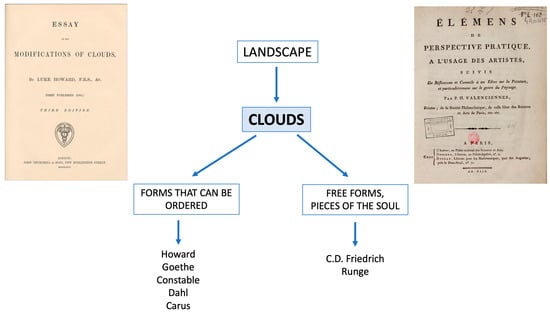
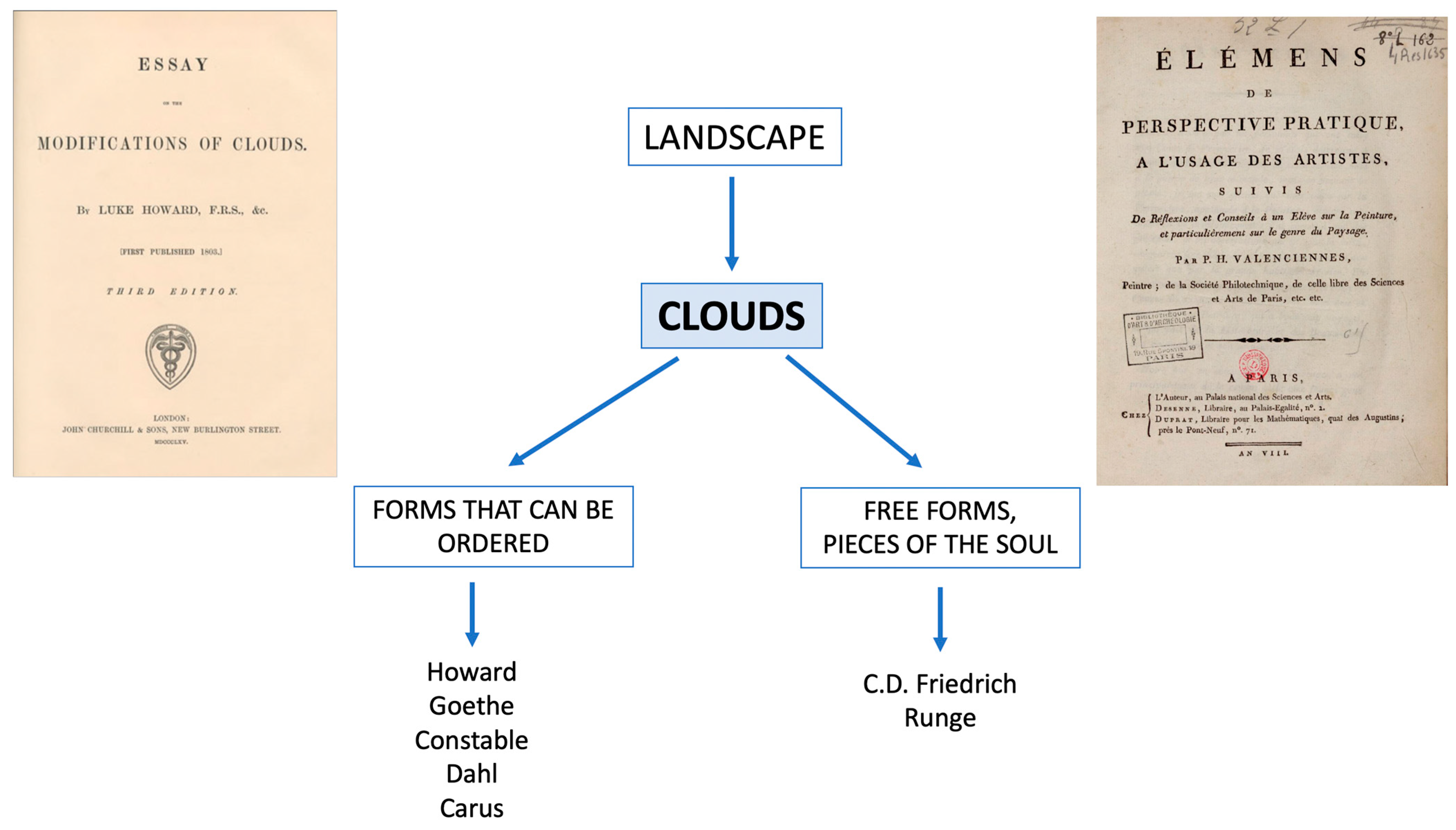
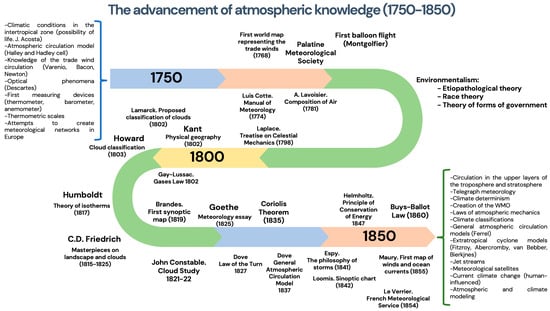
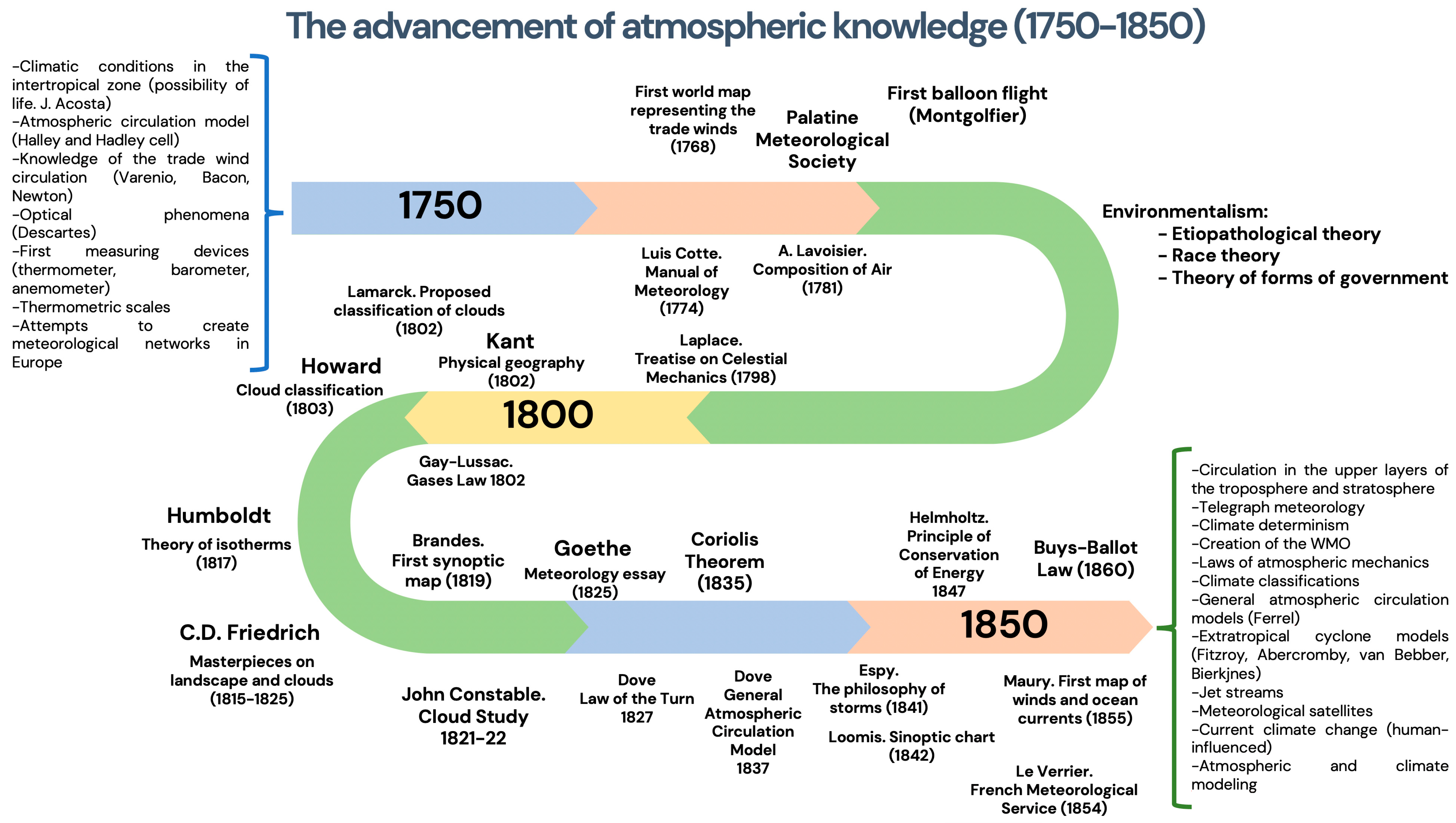
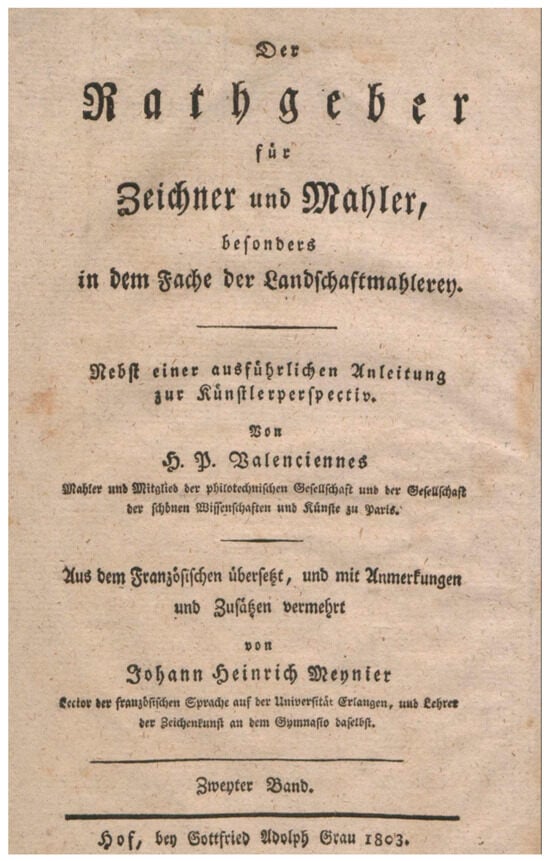
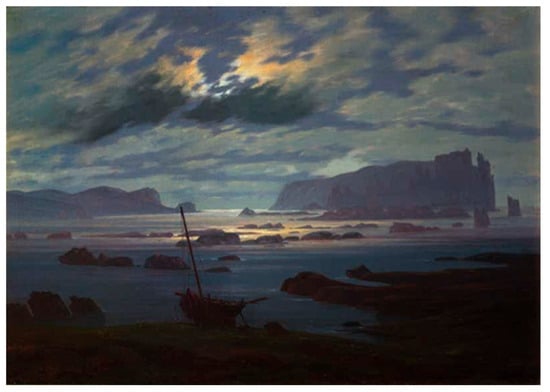
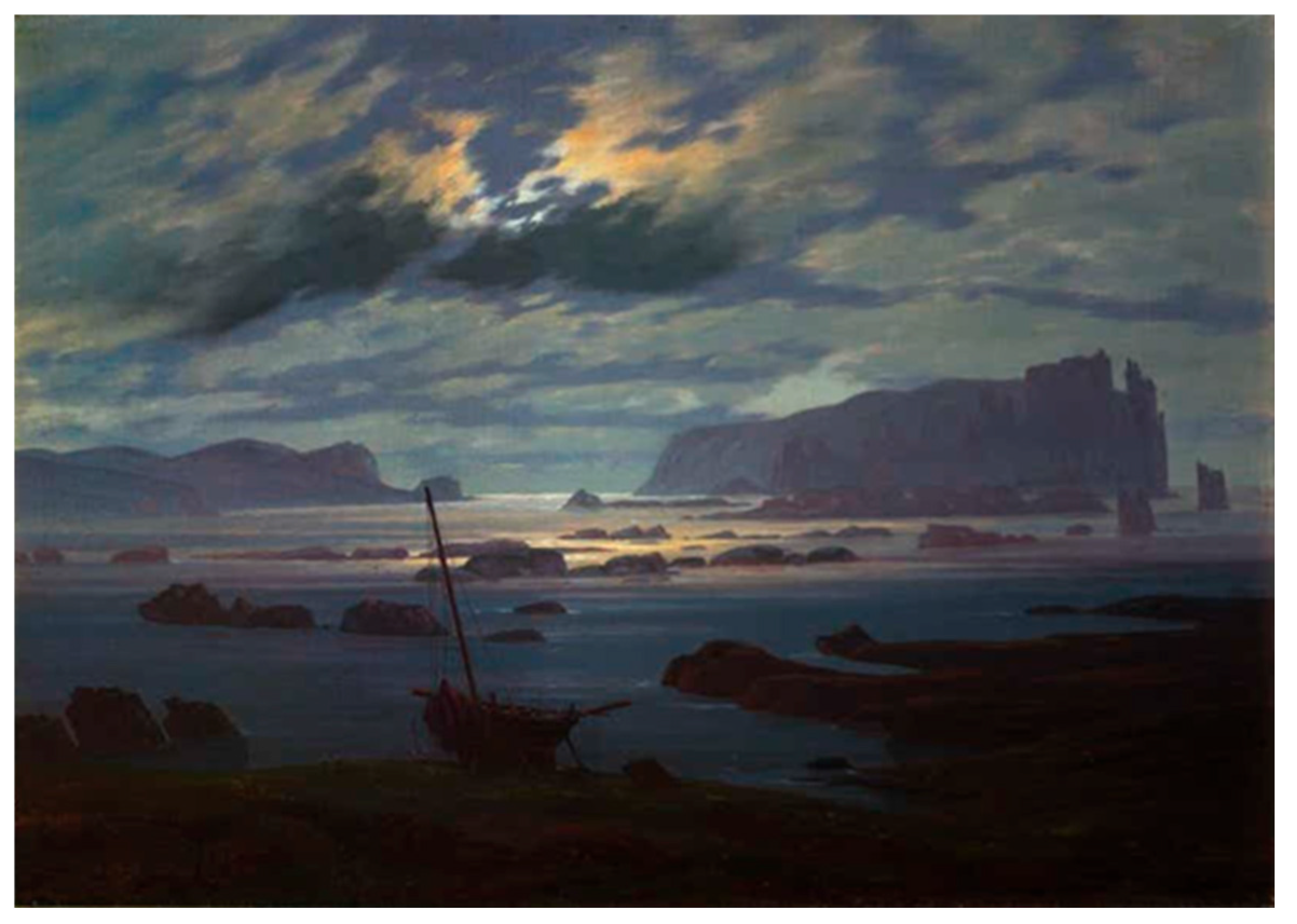
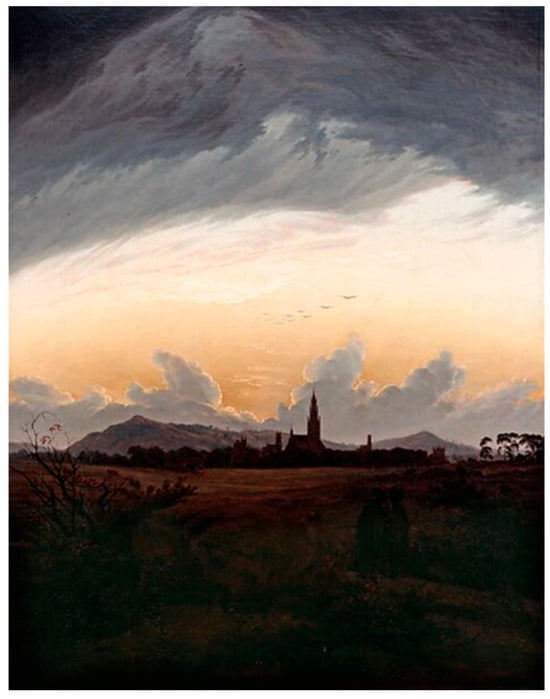
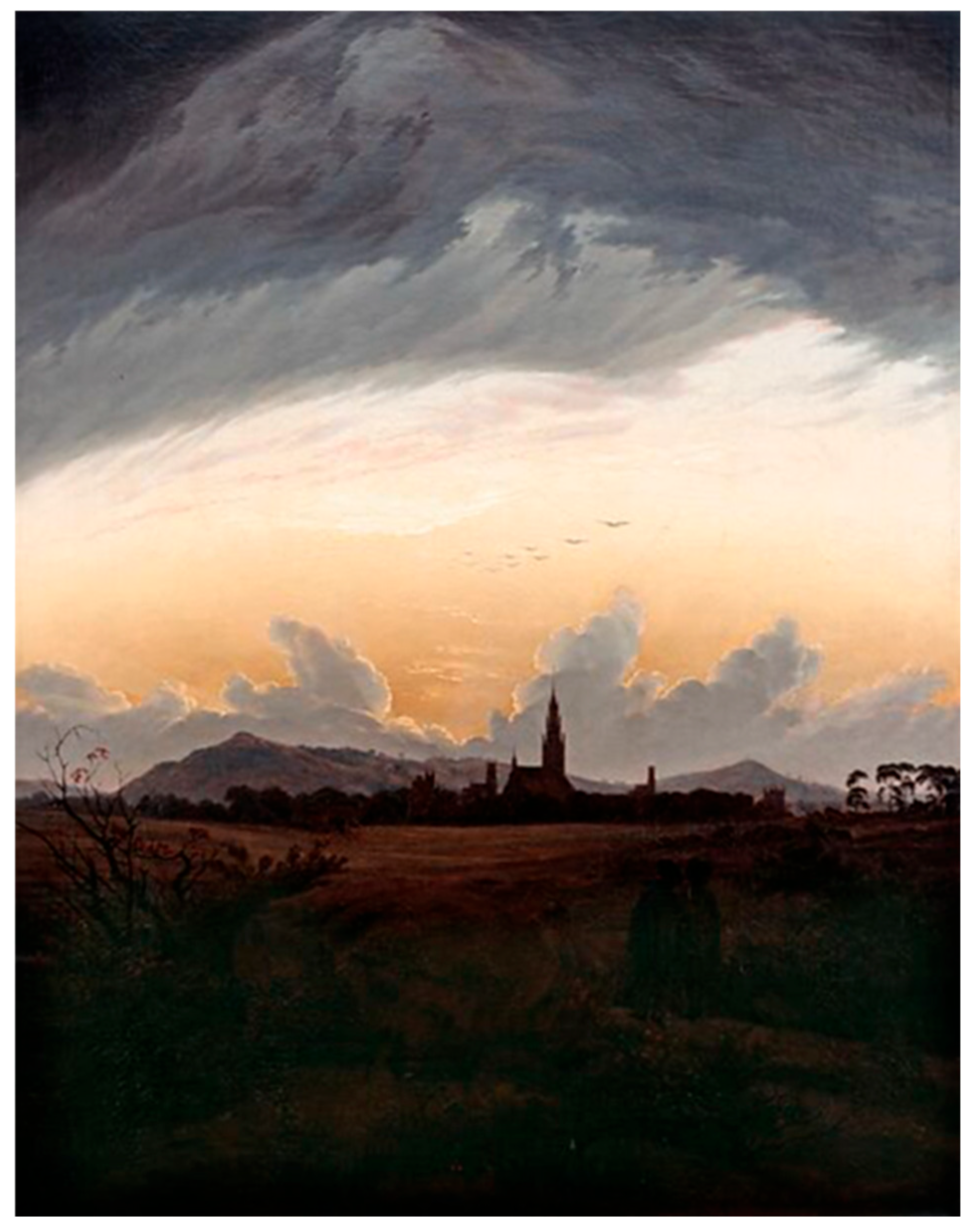
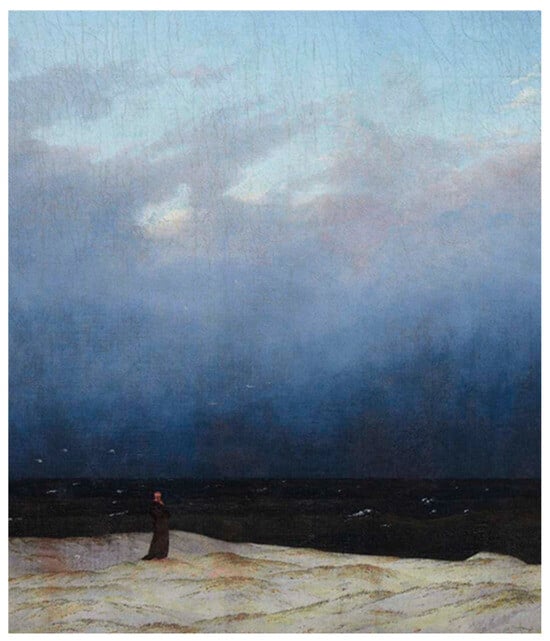
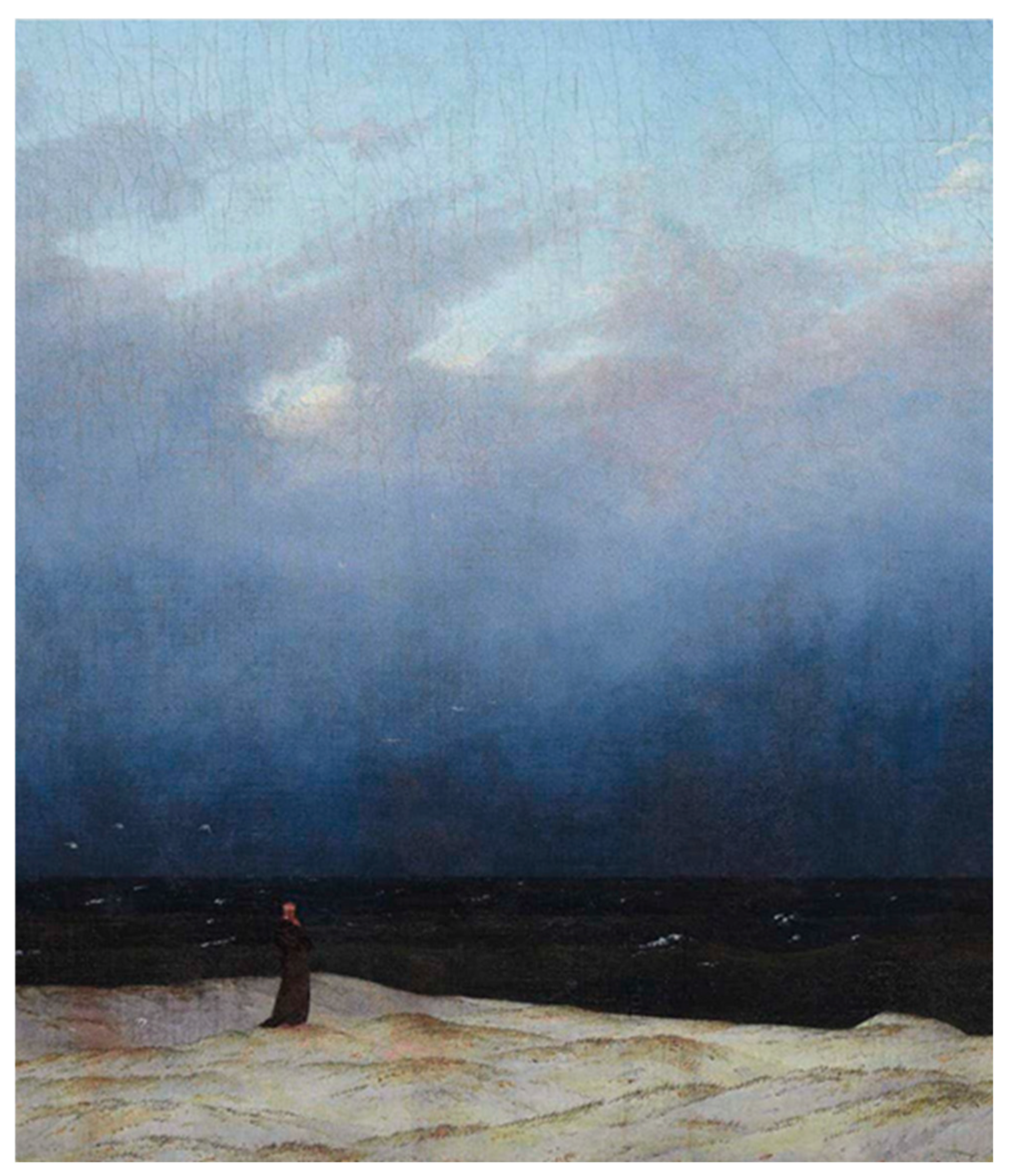
Disclaimer/Publisher’s Note: The statements, opinions and data contained in all publications are solely those of the individual author(s) and contributor(s) and not of MDPI and/or the editor(s). MDPI and/or the editor(s) disclaim responsibility for any injury to people or property resulting from any ideas, methods, instructions or products referred to in the content. |
© 2026 by the authors. Licensee MDPI, Basel, Switzerland. This article is an open access article distributed under the terms and conditions of the Creative Commons Attribution (CC BY) license.