Shear Capacity Prediction of FRP-Strengthened Reinforced Concrete Beams Based on Interpretable Ensemble Deep Learning Model


Abstract
1. Introduction
2. Methodology
2.1. Existing Empirical Methods
- (1)
- The calculation formula for recommended by ACI 440.2R [36] is given as:where is the total cross-sectional area of the FRP strips, is the effective stress of the FRP, is the angle between the direction of the FRP fibers and the longitudinal axis of the beam, is the bonding length of the FRP, is the center-to-center spacing of the FRP strips, is the layers of the FRP, represents the thickness of a single FRP strip, is the width of the FRP strip, is the elastic modulus of the FRP fibers, is the effective strain of the FRP, is the correction coefficient for the effective strain of the FRP, is the ultimate strain of the FRP, is the effective anchorage length of the FRP, is the compressive strength of the concrete, and represents the correction coefficient related to the compressive strength of concrete, and denotes the correction coefficient related to the bonding length of FRP.
- (2)
- European standards of International Federation for Structural Concrete (fib) [37] for calculation is as follows:where denotes the reinforcement ratio of the FRP, and are the web width and effective depth of the RC beam, respectively.
- (3)
- The calculation formula for in the design specifications of the Canadian Standard Association CSA-S806 [38] is as follows:where denotes the effective beam height associated with shear contribution to FRP.
- (4)
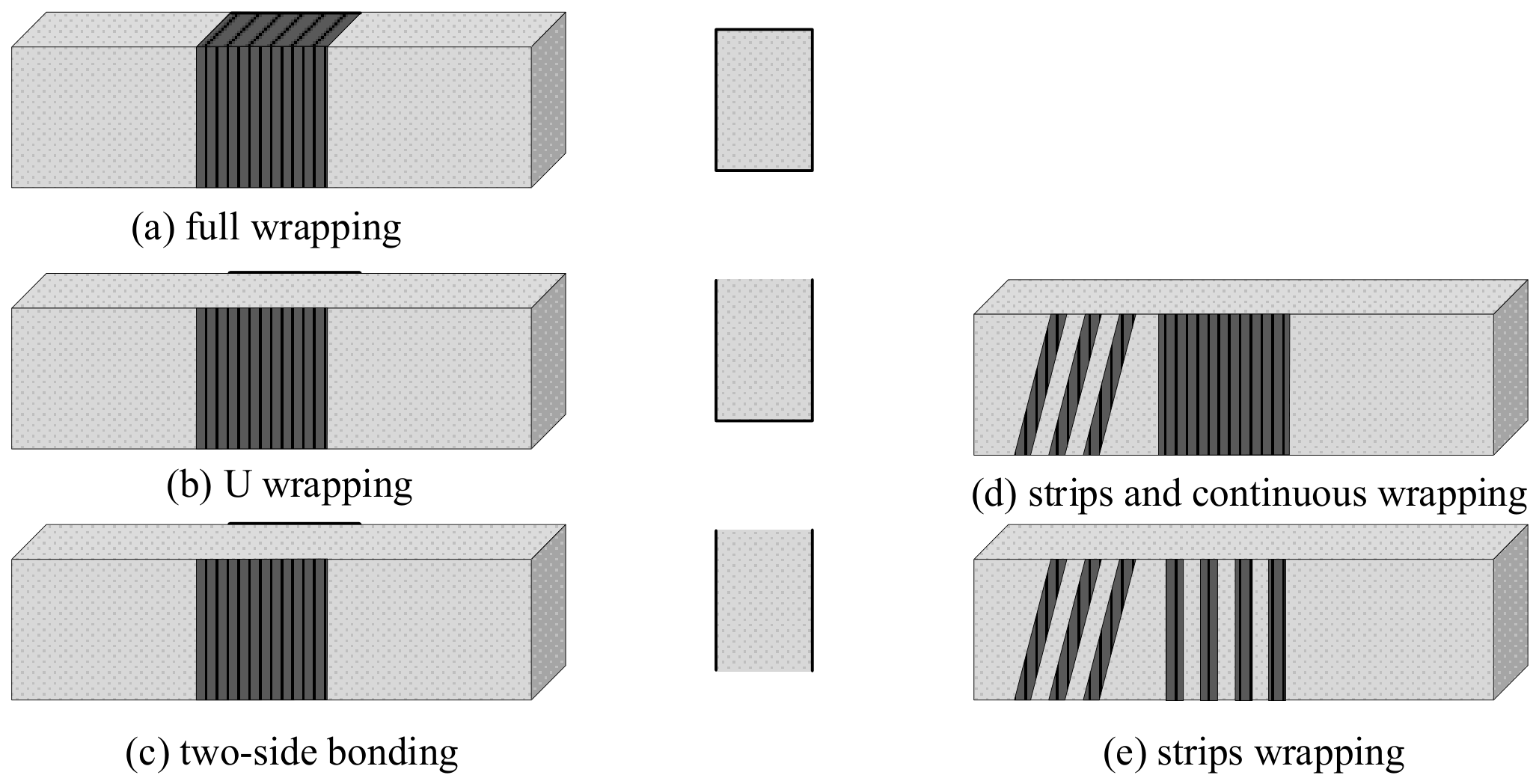
- The recommended calculation formula for in China Association for Engineering Construction Standardization-CECS146-2003 [39] is as follows:where is the strengthening form factor of FRP, and is the shear-span ratio.
- (5)
- Tan [40] fitted the experimental results of U-shaped stirrups reinforcement, and proposed a shear capacity formula as:where represents the strain reduction factor of FRP, h denotes the beam height, is the reinforcement quantity coefficient of FRP, and is the coefficient of spacing ratio of FRP strips.
- (6)
- Lu et al. [41] presented a shear capacity formula as:where represents the shear contribution coefficient of FRP, denotes the shear stress coefficient of FRP, is the effective height of FRP, represents the angle-related coefficient of FRP, is the reinforcement form coefficient, and represents the width-thickness ratio coefficient of FRP strips.
2.2. Existing Machine Learning Models
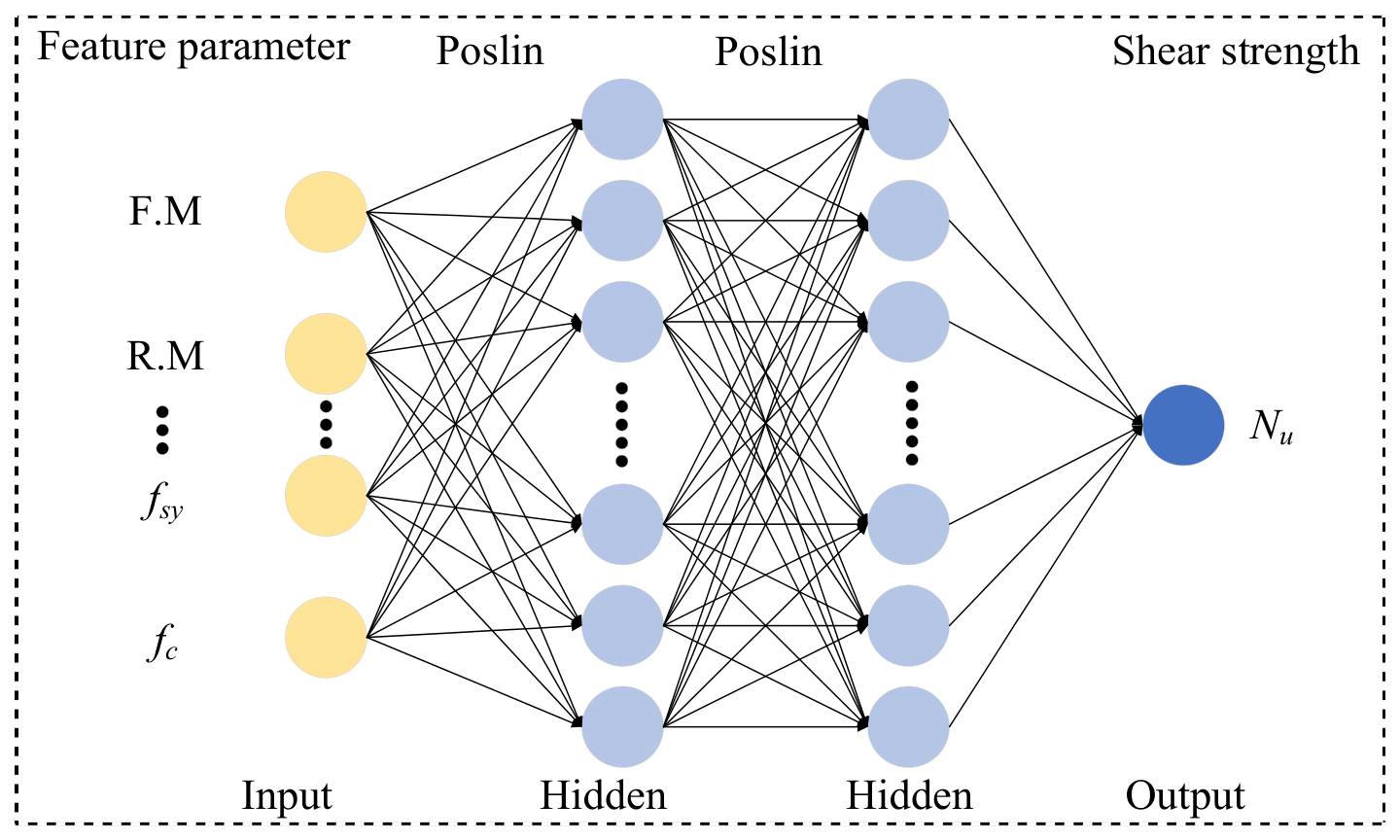
2.2.1. ANN Model
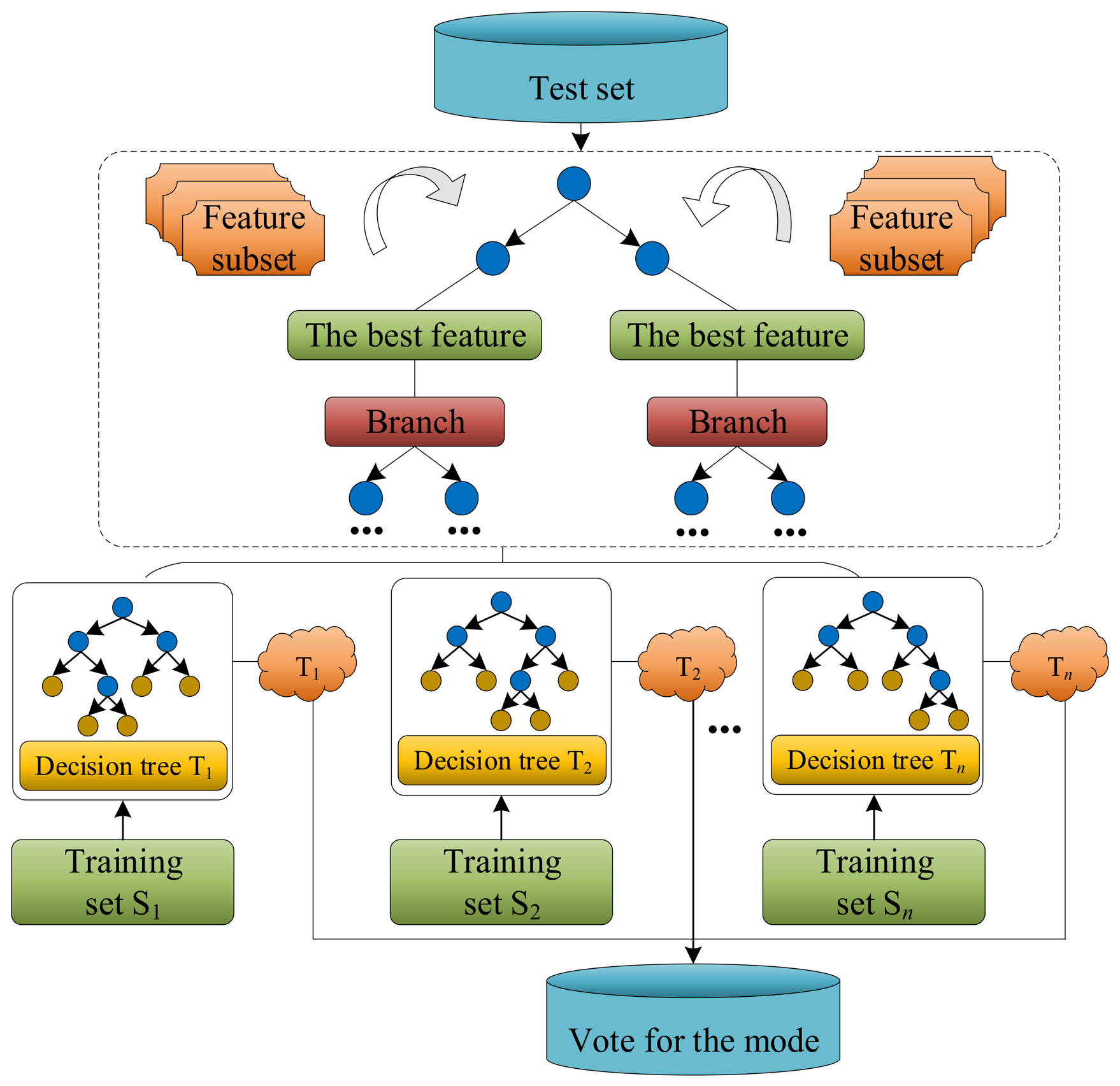
2.2.2. RF Model
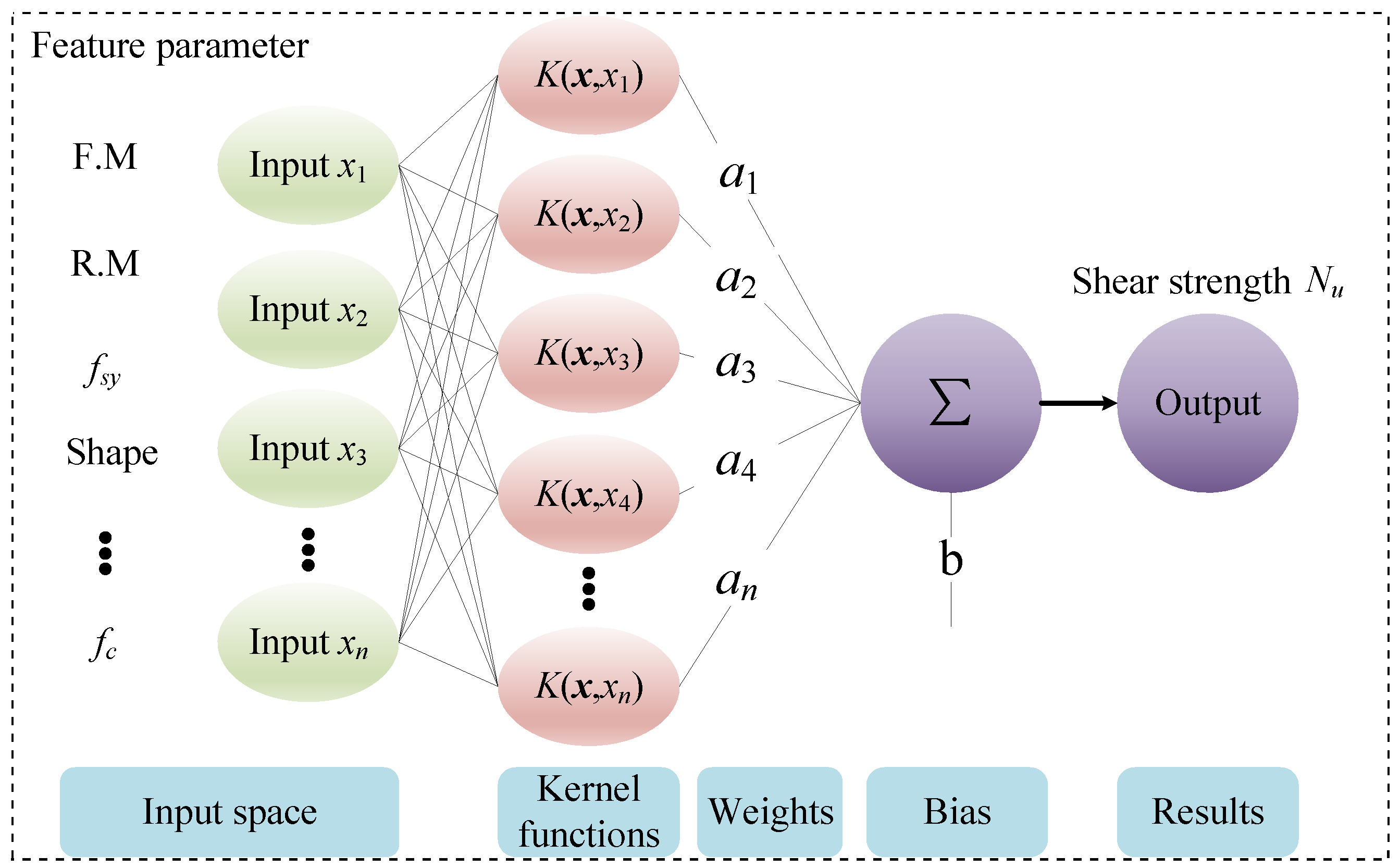
2.2.3. LSSVM Model
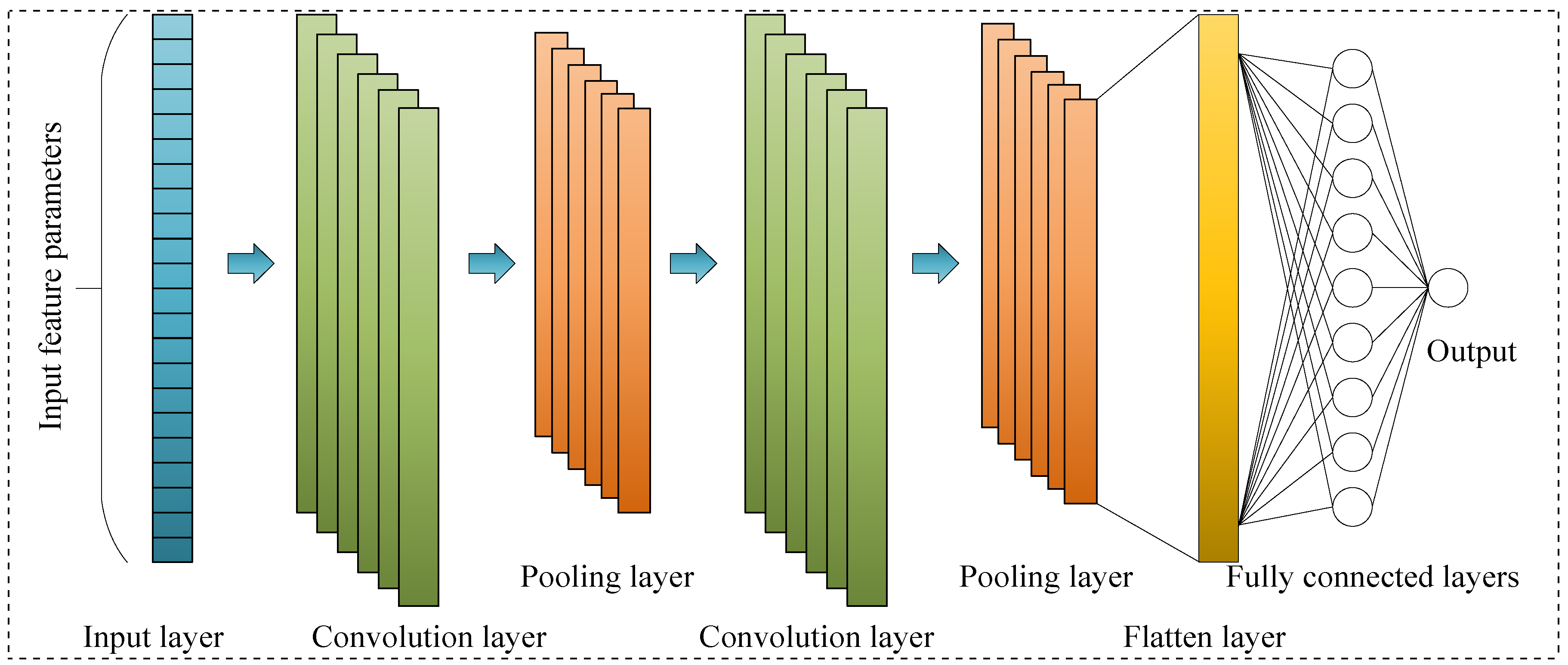
2.2.4. CNN Model
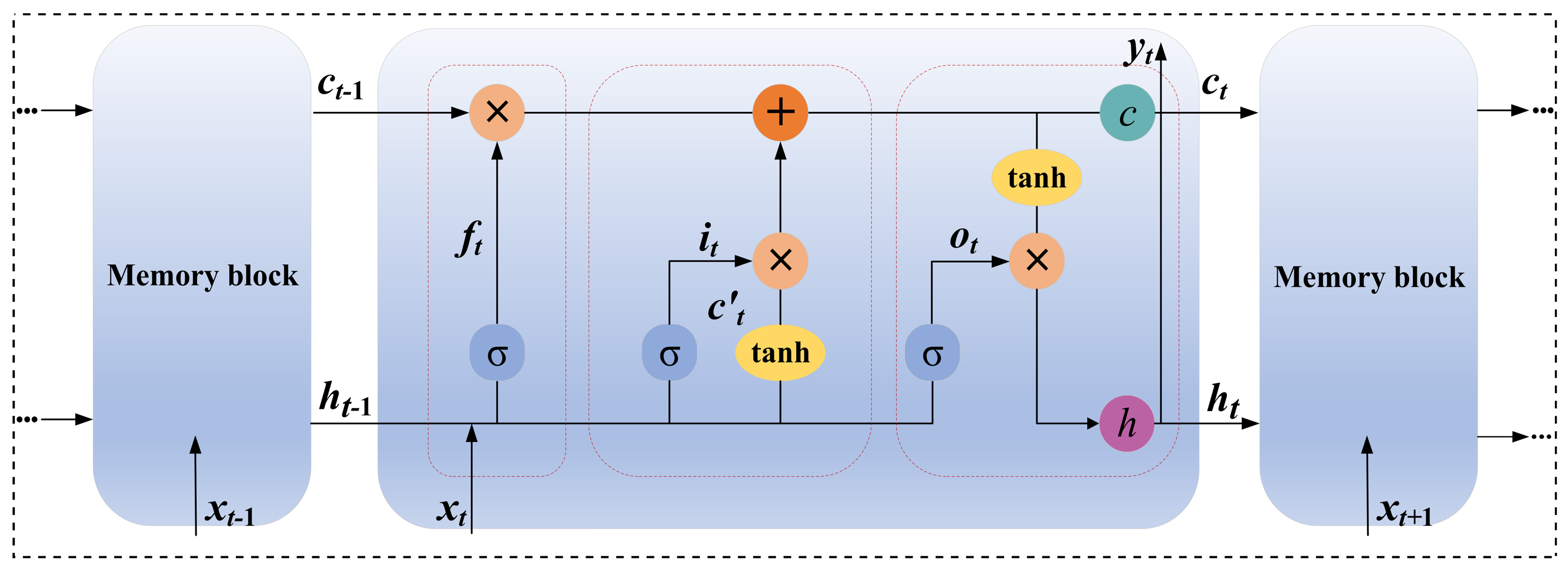
2.2.5. CNN-LSTM Model
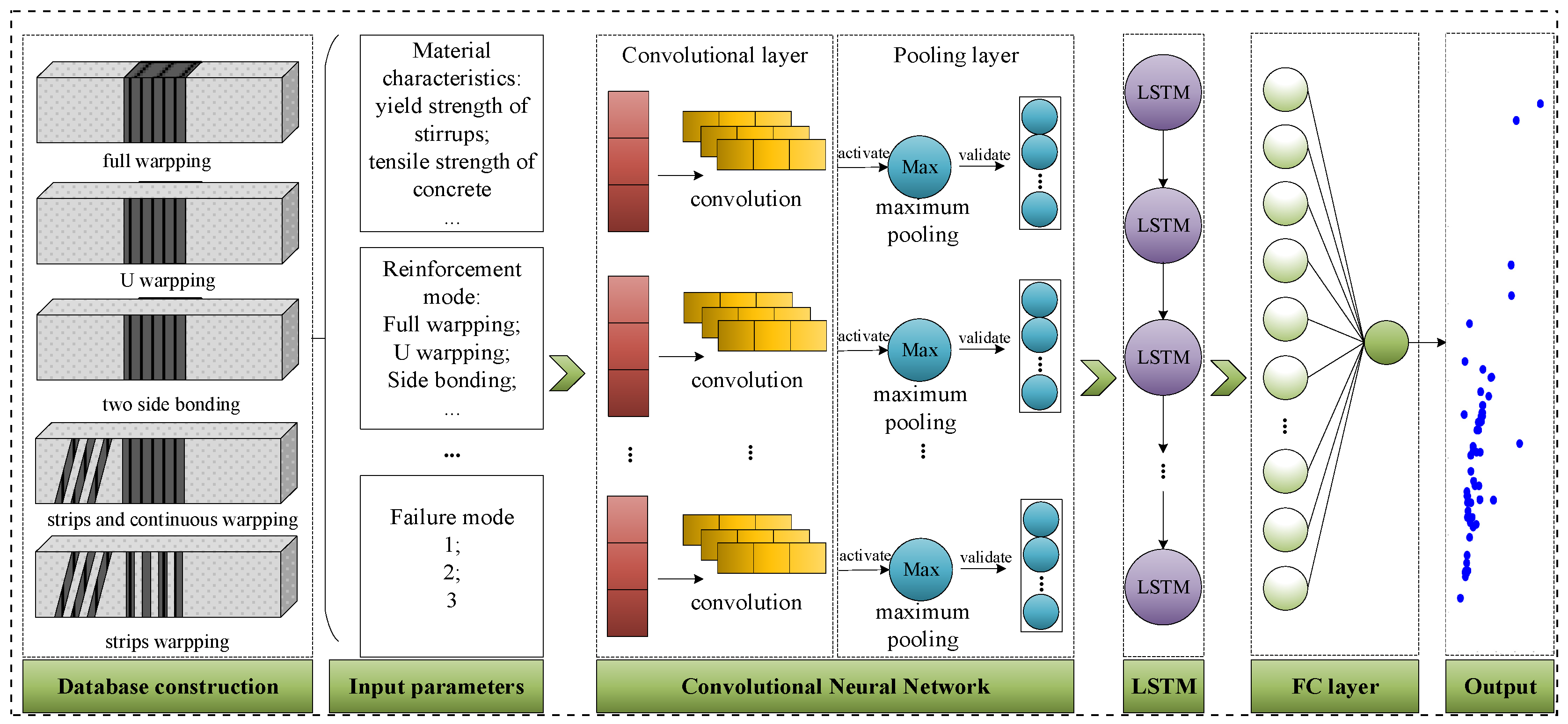
2.3. The Proposed Method
- (1)
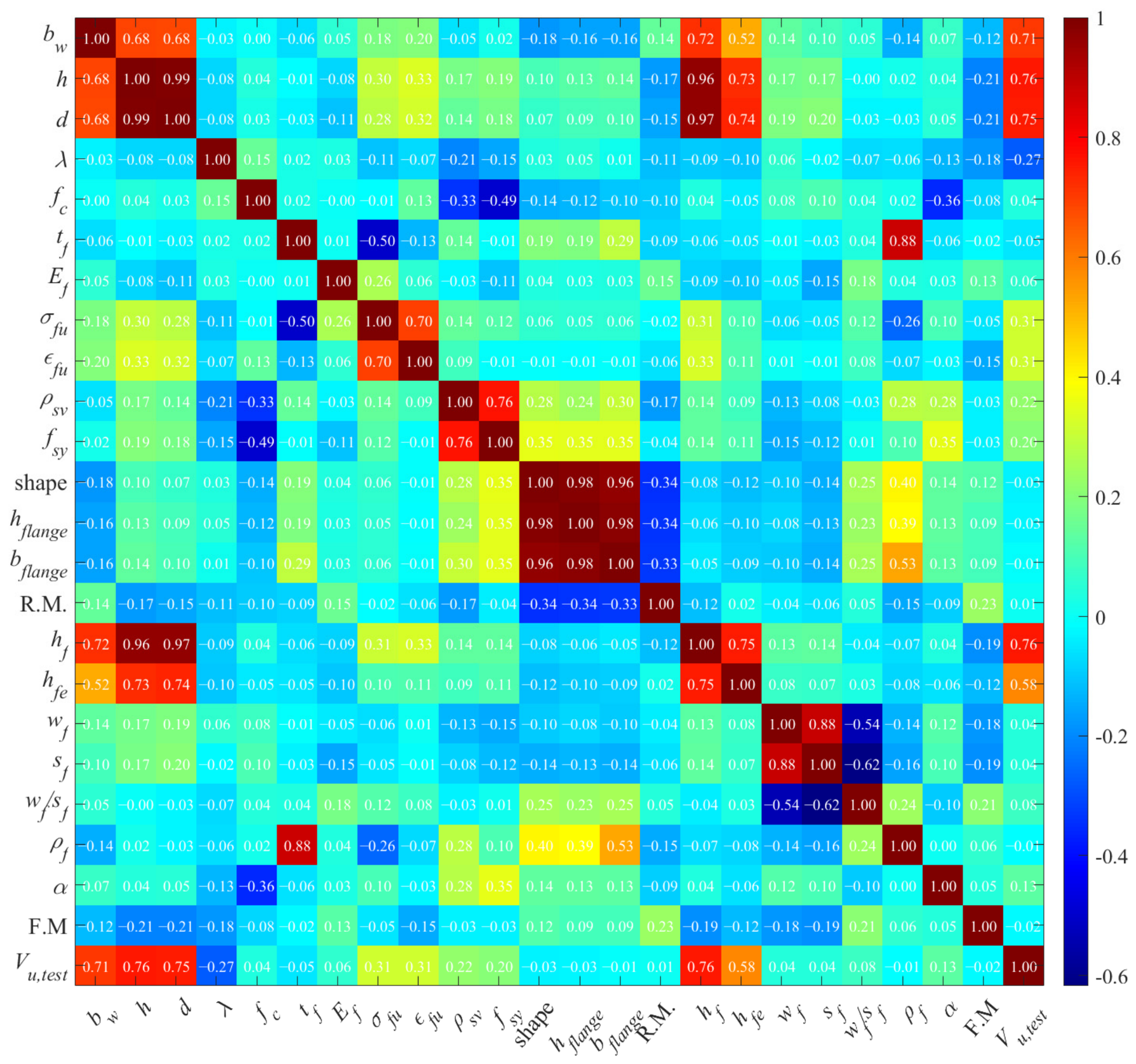
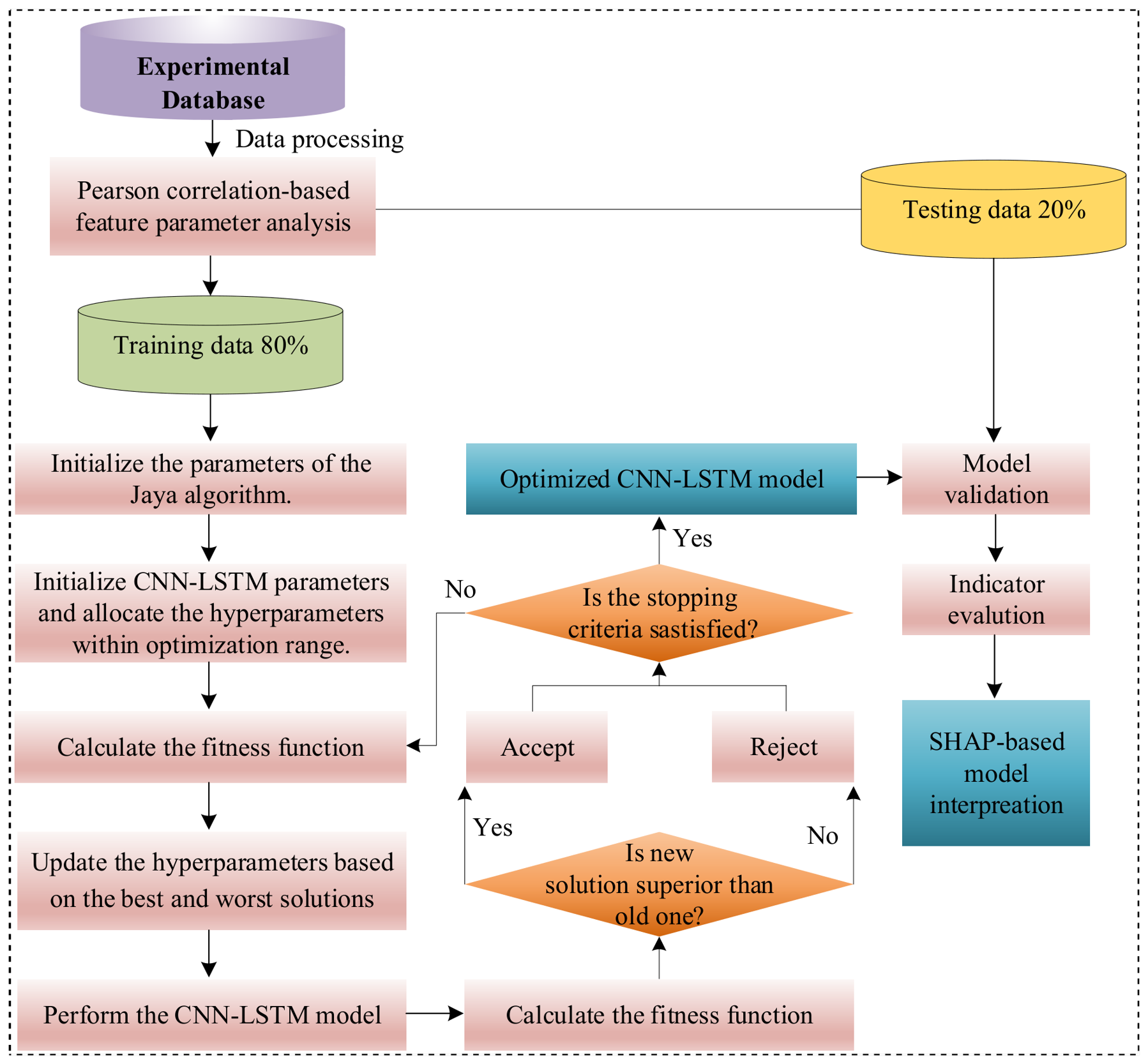
- An experimental database for the shear capacity of FRP-strengthened RC beams is established, encompassing key parameters such as different FRP strengthening schemes, cross-sectional dimensions, and failure modes. The Pearson correlation coefficient method is employed to select key parameters for the shear capacity model. Subsequently, the dataset is randomly divided into a training set (80%) and a test set (20%)
- (2)
- The CNN-LSTM model is constructed with two convolutional layers, two LSTM layers, and two fully connected layers. The parameters to be updated include the number of convolution kernels in the first convolutional layer 16–128, the number of convolution kernels in the second convolutional layer 8–64, the number of neurons in the first LSTM layer 16–128, the number of neurons in the second LSTM layer 8–64, the number of neurons in the first fully connected layer 8–64, the number of neurons in the second fully connected layer 4–32, and the learning rate [0.0001–0.01]. The initial values of the Jaya algorithm are set according to the aforementioned theory, and the popsize and maxgen are set as 5 and 100. With the seven parameters to be optimized defined as the seven dimensions of the population. Upper and lower boundaries are specified for each hyperparameter.
- (3)
- The root mean square error (RMSE) generated by the CNN-LSTM model on the training set is employed as the fitness function. The fitness value is calculated to determine the optimal and worst solutions based on the minimization criteria. The fitness function can be represented as:where and are the experimental and predicted shear capacity, and n represents the total number of the training set.
- (4)
- The current individual is updated according to the Jaya algorithm’s updating Formula (37). Utilizing the best and worst solutions derived in step (3), the individual is steered away from the worst solution towards the optimal solution. The position of each individual in the 7-dimensional space represents the optimal hyperparameter combination for the CNN-LSTM model to be solved.
- (5)
- The Jaya optimization process is iterated until the maximum number of iterations is reached. The optimal solution obtained at this stage represents the best hyperparameter combination for the CNN-LSTM model. Finally, the optimal CNN-LSTM prediction model is established using this hyperparameter combination after the training process concludes, to predict the shear capacity of FRP-strengthened RC beams.
- (6)
- The predicted shear capacity of FRP-strengthened RC beams is compared with the experimental data, and the prediction accuracy is evaluated using several performance indicators.
- (7)
- An interpretability analysis of the proposed model’s input parameters is conducted using the SHAP method to elucidate the influence of individual parameters on the predicted shear capacity of FRP-strengthened RC beams.
2.4. Evaluation Indicators
3. Database for the Shear Capacity of FRP-Reinforced Concrete Beams
3.1. Database Construction
3.2. Statistics Analysis of Database Feature Parameters
4. Evaluation and Comparison
4.1. Performance Verification
4.2. Comparison Analysis with the Existing Empirical Models
5. SHAP-Based Interpretability Analysis
6. Conclusions
- (1)
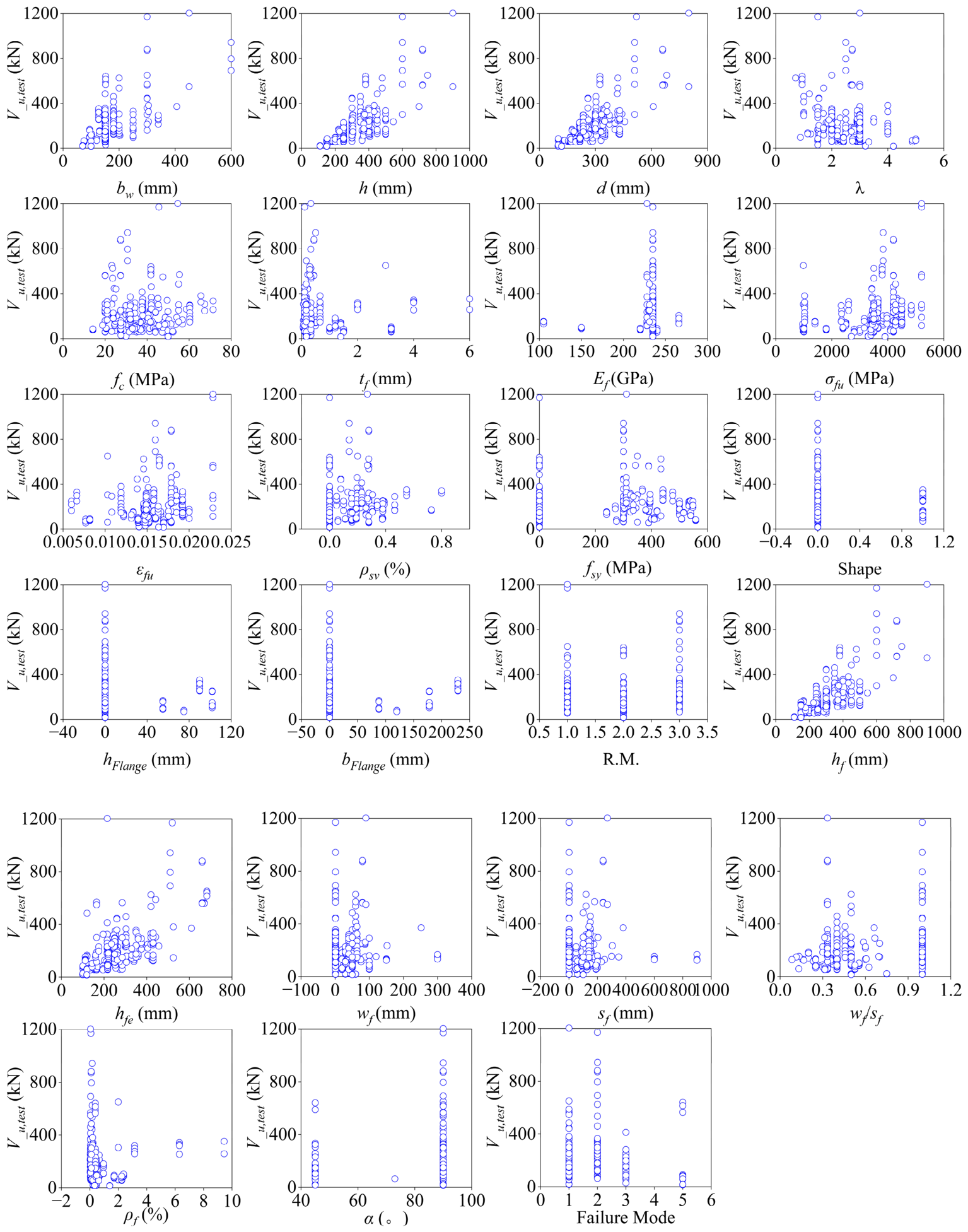
- Seven critical feature parameters have been selected to predict the shear capacity of FRP-strengthened RC beams based on Pearson correlation coefficient analysis. This selection process involved the exclusion of highly correlated feature parameters, leading to a significant reduction in redundancy within the input feature parameters for the prediction machine learning model.
- (2)
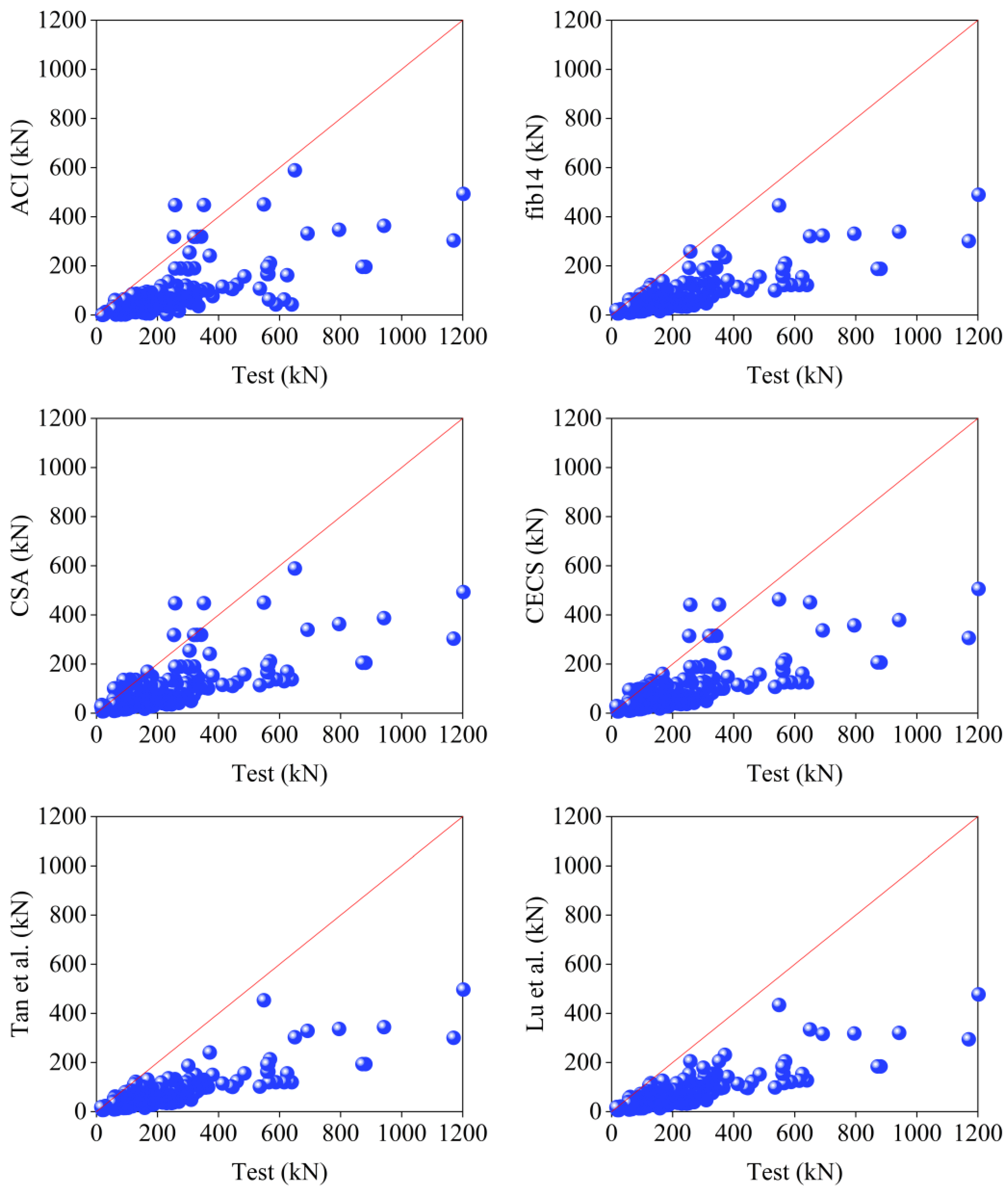
- The accuracy and variability of six empirical theoretical models reported in the literature and design codes have been evaluated. Although these models are theoretically grounded, they exhibit limitations in both accuracy and practicality. The prediction results mostly tend to be conservative, easily underestimating the shear capacity of FRP-strengthened RC beams. The proposed Jaya-CNN-LSTM model demonstrates superior predictive performance compared to the empirical theoretical models, which can contribute to more reliable assessments of shear capacity. This improvement may help reduce excessive conservatism in traditional design approaches while maintaining structural safety, thereby enhancing the efficiency of engineering design.
- (3)
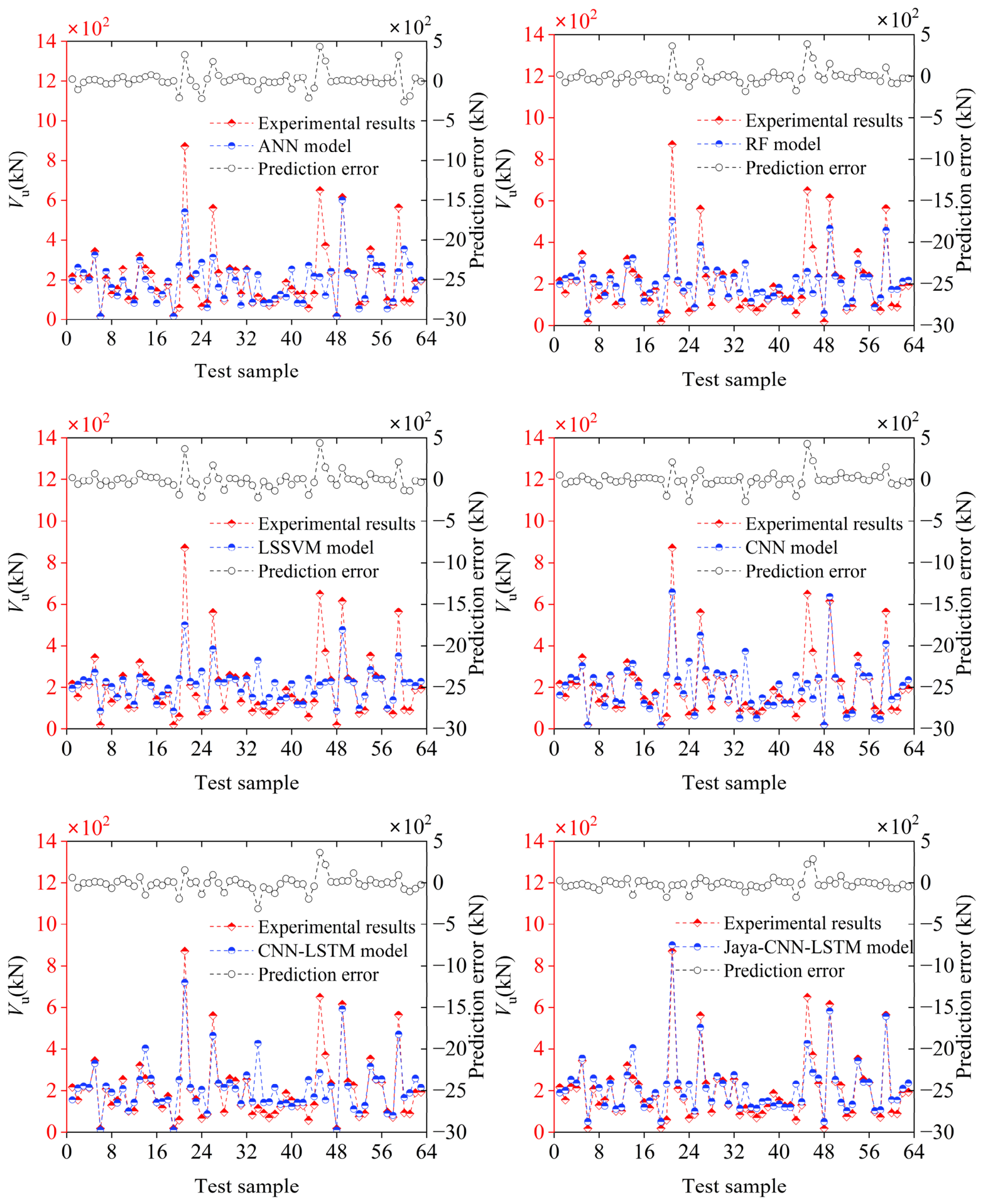
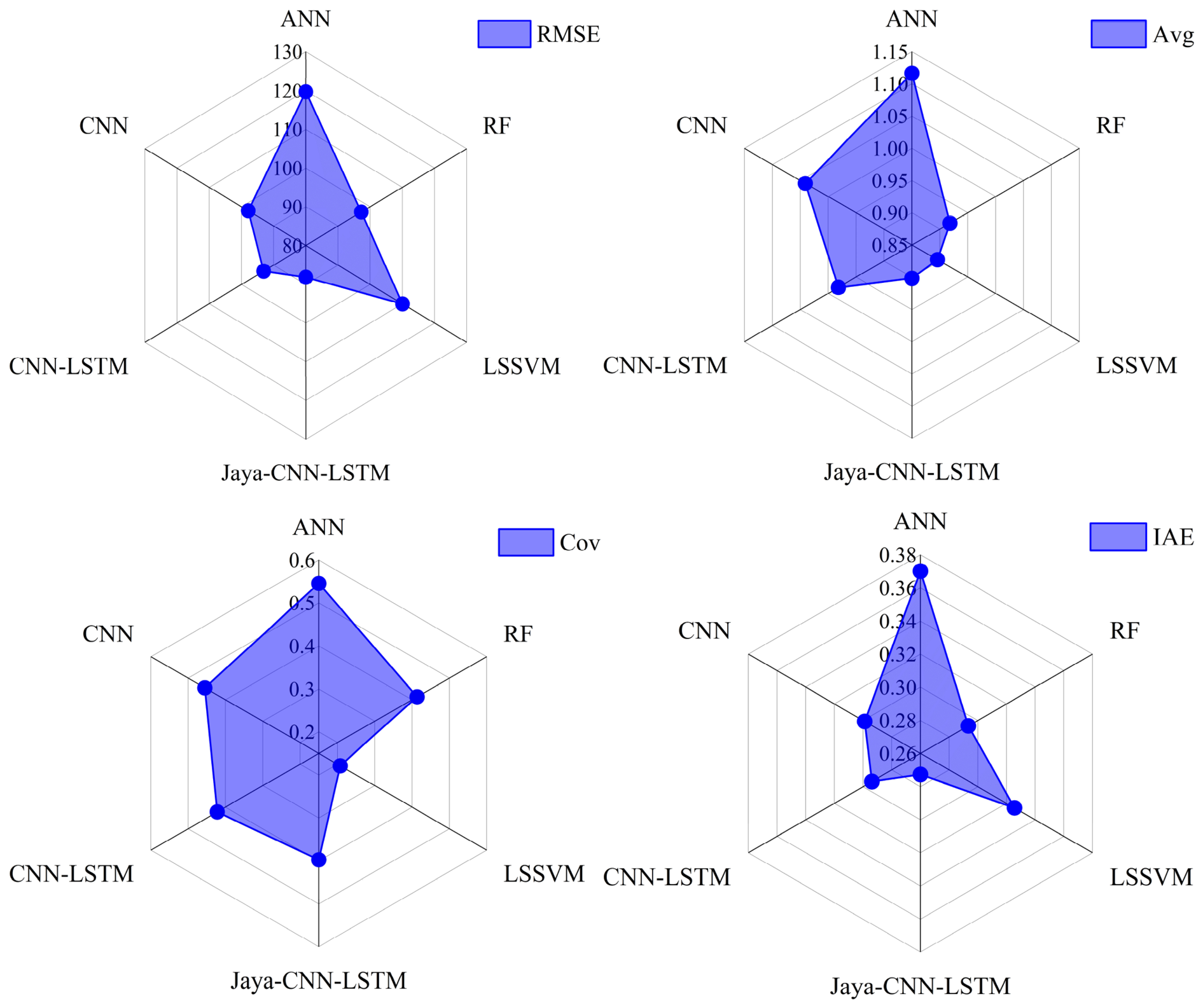
- The proposed Jaya-CNN-LSTM model can adaptively adjust the model’s hyperparameters based on training data, demonstrating high accuracy and strong generalization ability in predicting the shear capacity of FRP-strengthened RC beams. Compared with the other machine learning models, the Jaya-CNN-LSTM model exhibits superior predictive performance.
- (4)
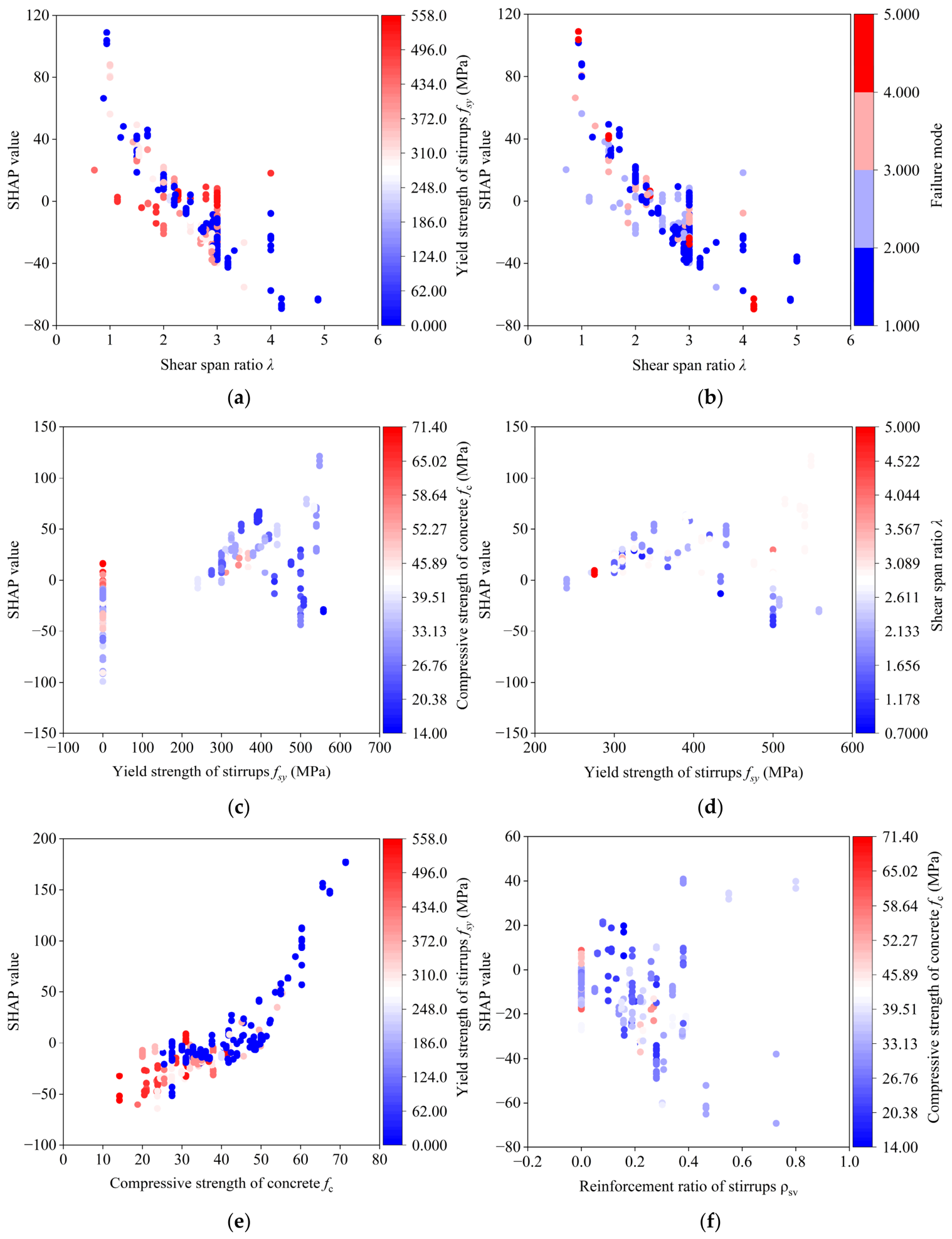
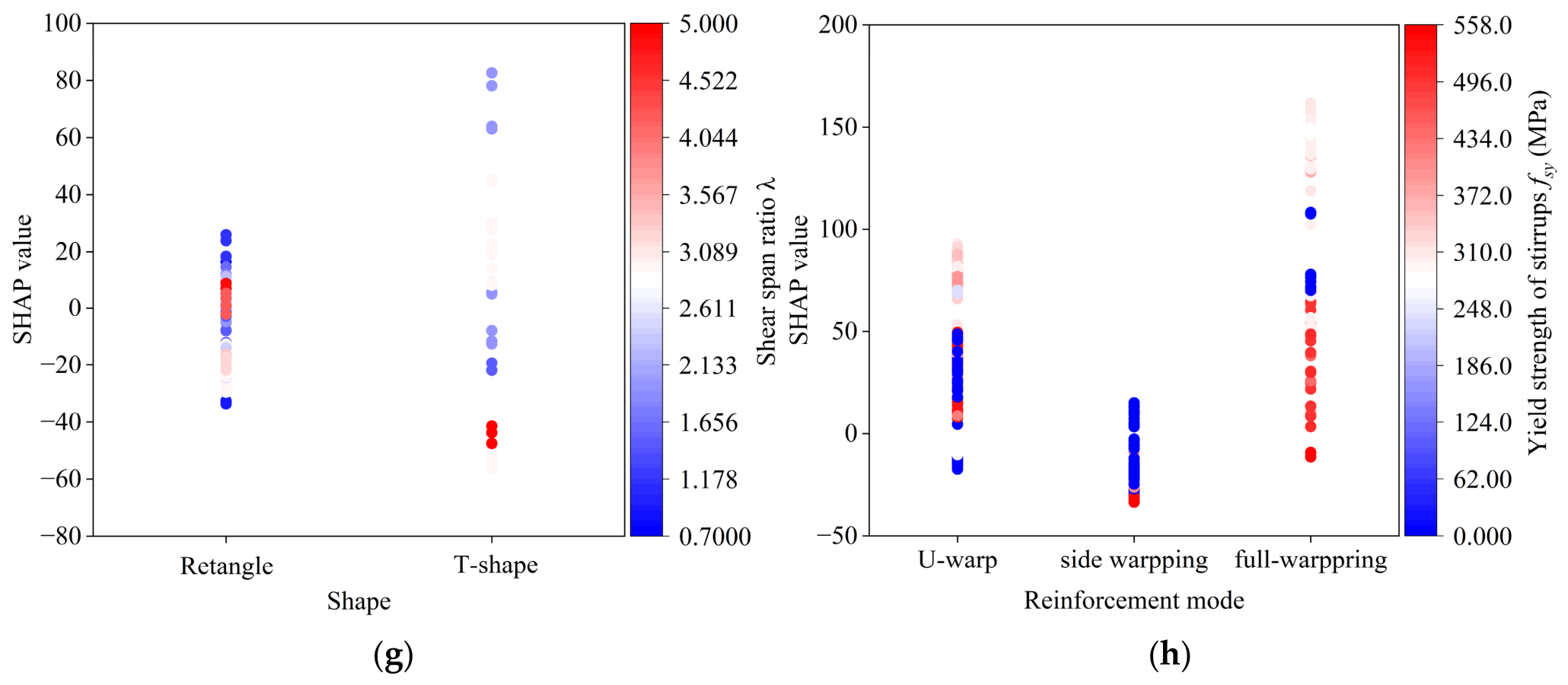
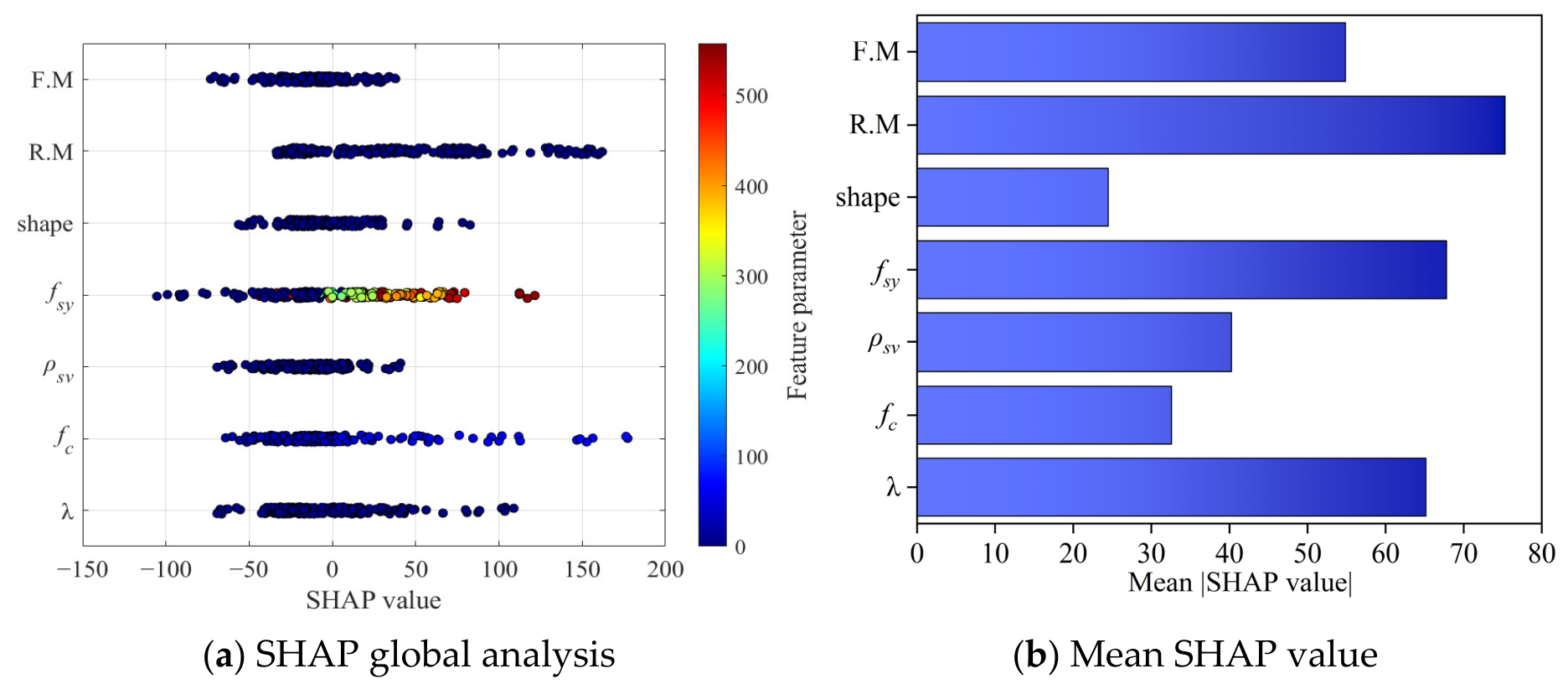
- The SHAP method provides both global and local interpretability for the predicted shear capacity based on input feature parameters. SHAP values quantify the relative importance of these parameters, clearly revealing their contributions to the model’s predictions for FRP-strengthened RC beams. Among the input features, key parameters such as shear-span ratio, concrete compressive strength, and reinforcement mode exhibit a particularly significant influence on shear capacity.
Author Contributions
Funding
Data Availability Statement
Conflicts of Interest
References
- Huang, Y.S.; Lee, M.M.; Kan, Y.C.; Wang, W.C.; Wang, Y.C.; Pan, W.B. Reinforced concrete beams retrofitted with UHPC or CFRP. Case Stud. Constr. Mater. 2022, 17, e01507. [Google Scholar]
- Qian, R.S.; Li, Q.; Fu, C.Q.; Zhang, Y.S.; Wang, Y.X.; Jin, X.Y. Atmospheric chloride-induced corrosion of steel-reinforced concrete beam exposed to real marine environment for 7 years. Ocean Eng. 2023, 286, 115675. [Google Scholar] [CrossRef] [Scilit]
- Zhong, J.H.; Song, C.M.; Xu, J.W.; Cheng, Y.H.; Liu, F. Experimental and numerical simulation study on failure mode transformation law of reinforced concrete beam under impact load. Int. J. Impact Eng. 2023, 179, 104645. [Google Scholar] [CrossRef] [Scilit]
- Li, Q.; Chen, M.C.; Li, Y.; Zhang, M.Y. Shear capacity calculation methods for reinforced concrete structures. Adv. Civ. Eng. 2025, 3, 1–19. [Google Scholar] [CrossRef] [Scilit]
- Yu, F.; Guo, S.Q.; Wang, S.L.; Fang, Y. Experimental study on high pre-cracked RC beams shear-strengthened with CFRP strips. Compos. Struct. 2019, 225, 111163. [Google Scholar] [CrossRef] [Scilit]
- Askar, M.K.; Hassan, A.F.; Al-Kamaki, Y.S.S. Flexural and shear strengthening of reinforced concrete beams using FRP composites: A state-of-the-art review. Case Stud. Constr. Mater. 2022, 17, e01189. [Google Scholar] [CrossRef] [Scilit]
- Kirthiga, R.; Elavenil, S. A review on using inorganic binders in fiber-reinforced polymers under different conditions to strengthen reinforced concrete beams. Constr. Build. Mater. 2022, 352, 129054. [Google Scholar] [CrossRef] [Scilit]
- Zhang, Z.G.; Liu, D.W.; Abdalla, J.A.; Hawileh, R.A.; Qin, F.J.; Xu, X.Q. Flexural behavior of reinforced concrete beams externally strengthened with ECC and FRP grid reinforcement. Constr. Build. Mater. 2024, 446, 137964. [Google Scholar] [CrossRef] [Scilit]
- Chen, J.F.; Teng, J.G. Shear capacity of fiber-reinforced polymer-strengthened reinforced concrete beams: Fiber-reinforced polymer rupture. J. Struct. Eng. 2003, 129, 615–625. [Google Scholar] [CrossRef] [Scilit]
- Chen, J.F.; Teng, J.G. Shear capacity of FRP-strengthened RC beams: FRP debonding. Constr. Build. Mater. 2003, 17, 27–41. [Google Scholar] [CrossRef] [Scilit]
- Nie, X.F.; Zhang, S.S.; Teng, J.G. Strength of RC beams with fiber-reinforced polymer (FRP)-strengthened web openings. Compos. Struct. 2021, 258, 113380. [Google Scholar] [CrossRef] [Scilit]
- Sun, Y.; Fu, W.W.; Chen, X.; Zhang, Z.Q.; Yu, W.G.; Li, S.J. Theoretical and experimental investigations into the flexural behavior of existing reinforced concrete beams strengthened with CFRP bars. J. Build. Eng. 2023, 77, 107528. [Google Scholar] [CrossRef] [Scilit]
- Ye, Z.H.; Zhou, Y.W.; Zhao, D.B. Numerical simulations and simplified design approaches for large-rupture-strain FRP-strengthened reinforced concrete beams under impact loading. J. Compos. Constr. 2023, 27, 04023037. [Google Scholar] [CrossRef] [Scilit]
- Guo, S.S.; He, H.F.; Liu, C.; Cheng, S.S.; Liu, H.Y. Theoretical and experimental study on the shear capacity of concrete beams reinforced with carbon fiber trusses. Compos. Struct. 2021, 258, 113382. [Google Scholar] [CrossRef] [Scilit]
- Mei, S.J.; Bai, Y.L.; Dai, J.G. Shear strengthening of reinforced concrete beams completely wrapped with large-rupture-strain FRP. Eng. Struct. 2024, 314, 118361. [Google Scholar] [CrossRef] [Scilit]
- Sengun, K.; Arslan, G. Parameters affecting the behavior of RC beams strengthened in shear and flexure with various FRP systems. Structures 2022, 40, 202–212. [Google Scholar] [CrossRef] [Scilit]
- Sengun, K.; Arslan, G. Investigation of parameters affecting the behavior of RC beams strengthened with FRP. Front. Struct. Civ. Eng. 2022, 16, 729–743. [Google Scholar] [CrossRef] [Scilit]
- Hammad, M.; Bahrami, A.; Khokhar, S.A.; Khushnood, R.A. A state-of-the-art review on structural strengthening techniques using FRPs: Effectiveness, shortcomings, and future research directions. Materials 2024, 17, 1408. [Google Scholar] [CrossRef] [Scilit] [PubMed]
- Jahami, A.; Issa, C.A. An updated review on the effect of CFRP on the flexural performance of reinforced concrete beams. J. Concr. Struct. Mater. 2024, 18, 14. [Google Scholar] [CrossRef] [Scilit]
- Bhatt, P.P.; Sharma, N.; Kodur, V.K.R.; Naser, M.Z. Machine learning approach for predicting the fire resistance of FRP-strengthened concrete beams. Struct. Concr. 2024, 26, 4143–4165. [Google Scholar] [CrossRef] [Scilit]
- Hu, T.Y.; Zhang, H.; Zhou, J.T. Machine learning-based model for recognizing failure modes of FRP-strengthened RC beams in flexure. Case Stud. Constr. Mater. 2023, 18, e02076. [Google Scholar] [CrossRef] [Scilit]
- Wang, Z.X.; Chen, X.D.; Zhang, J.H.; Huang, H. Machine learning-based prediction and interpretability analysis of flexural capacity for CFRP-strengthened RC beams. Case Stud. Constr. Mater. 2025, 23, e05203. [Google Scholar] [CrossRef] [Scilit]
- Xiang, Z.L.; He, X.H.; Zou, Y.F.; Jing, H.Q. An importance sampling method for structural reliability analysis based on interpretable deep generative network. Eng. Comput. 2024, 40, 367–380. [Google Scholar] [CrossRef] [Scilit]
- Shen, Y.J.; Chen, H.X.; He, L.P.; Wang, Q.L.; Xiang, Z.L. Prediction of compressive strength of concrete after freeze-thaw cycles and high temperature exposure using computer vision and transfer learning. Constr. Build. Mater. 2026, 520, 145985. [Google Scholar] [CrossRef] [Scilit]
- Ombres, L.; Aiello, M.A.; Cascardi, A.; Verre, S. Modeling of steel-reinforced grout composite system-to-concrete bond capacity using artificial neural networks. J. Compos. Constr. 2024, 28, 04024034. [Google Scholar] [CrossRef] [Scilit]
- Zhang, S.Y.; Chen, S.Z.; Jiang, X.; Han, W.S. Data-driven prediction of FRP-strengthened reinforced concrete beam capacity based on interpretable ensemble learning algorithms. Structures 2022, 43, 860–877. [Google Scholar] [CrossRef] [Scilit]
- Abuodeh, O.R.; Abdalla, J.A.; Hawileh, R.A. Prediction of shear strength and behavior of RC beams strengthened with externally bonded FRP sheets using machine learning techniques. Compos. Struct. 2020, 234, 111698. [Google Scholar] [CrossRef] [Scilit]
- Allahyarsharahi, N.; Kiani, A.; Hoseini, S.O. Machine learning-based models for FRP shear contribution of wrapped reinforced concrete beams. Multiscale Multidiscip. Model. Exp. Des. 2025, 8, 51. [Google Scholar] [CrossRef] [Scilit]
- Zhao, J.T.; Zhu, M.M.; Xu, L.D.; Chen, M.; Shi, M.F. Prediction of shear capacity of fiber-reinforced polymer-reinforced concrete beams based on machine learning. Buildings 2025, 15, 1908. [Google Scholar] [CrossRef] [Scilit]
- Ahmed, A.; Uddin, M.N.; Akbar, M.; Salih, R.; Khan, M.A.; Bisheh, H.; Rabczuk, T. Prediction of shear behavior of glass FRP bar-reinforced ultra-high-performance concrete I-shaped beams using machine learning. Int. J. Mech. Mater. Des. 2024, 20, 269–290. [Google Scholar] [CrossRef] [Scilit]
- Naderpour, H.; Haji, M.; Mirrashid, M. Shear capacity estimation of FRP-reinforced concrete beams using computational intelligence. Structures 2020, 28, 321–328. [Google Scholar] [CrossRef] [Scilit]
- Wang, C.X.; Zou, X.X.; Sneed, L.H.; Zhang, F.; Zheng, K.Q.; Xu, H.; Li, G.F. Shear strength prediction of FRP-strengthened concrete beams using interpretable machine learning. Constr. Build. Mater. 2023, 407, 133553. [Google Scholar] [CrossRef] [Scilit]
- Tang, Y.X.; Wang, W.W.; Huang, Q.D.; Cheng, Y.; Zhou, C. Shear performance prediction of RC beams shear-strengthened with FRP sheets: A machine learning-driven design-oriented method. Eng. Struct. 2025, 334, 120240. [Google Scholar] [CrossRef] [Scilit]
- Alam, M.S.; Sultana, N.; Hossain, S.M.Z. Bayesian optimization-based support vector regression for estimating the shear capacity of FRP-reinforced concrete members. Appl. Soft Comput. 2021, 105, 107281. [Google Scholar] [CrossRef] [Scilit]
- Mai, G.H.; Pan, Z.Z.; Zhen, H.; Deng, X.H.; Zheng, C.M.; Qiu, Z.Y.; Xiong, Z.; Li, L.J. Shear performance and capacity of FRP-reinforced concrete beams: A comprehensive review and design evaluation. Adv. Struct. Eng. 2024, 27, 2569–2591. [Google Scholar] [CrossRef] [Scilit]
- ACI Committee 440. Guide for the Design and Construction of Externally Bonded FRP Systems for Strengthening Concrete Structures (ACI 440.2R-02); American Concrete Institute: Farmington Hills, MI, USA, 2022. [Google Scholar]
- Triantafillou, T.; Matthys, S.; Audenaert, K.; Balázs, G.; Blaschko, M.; Blontrock, H.; Czaderski, C.; David, E.; Tomasso, A.D.; Duckett, W.; et al. Externally bonded FRP reinforcement for RC structures. Bull. Fib 2001, 14. [Google Scholar]
- CSA S806; Canadian Standards Association. Design and Construction of Building Structures with Fibre-Reinforced Polymers. CSA: Toronto, ON, Canada, 2002.
- CECS 146:2003; Technical Specification for Strengthening Concrete Structures with Carbon Fiber Reinforced Polymer Laminate. China Association for Engineering Construction Standardization: Beijing, China, 2023.
- Tan, Z. Experimental Study on Stress Performance of GFRP Cloth-Reinforced Concrete Beams. Ph.D. Thesis, Tsinghua University, Beijing, China, 2002. [Google Scholar]
- Lu, X. Research on FRP-Concrete Interface Behavior. Ph.D. Thesis, Tsinghua University, Beijing, China, 2004. [Google Scholar]
- Nehdi, M.; El Chabib, H.; Said, A. Evaluation of shear capacity of FRP-reinforced concrete beams using artificial neural networks. Smart Struct. Syst. 2006, 2, 81–100. [Google Scholar] [CrossRef] [Scilit]
- Hassan, B.R.; Hamid, F.L.; Karim, H.; Hussein, A.B.; Abdulrahman, P.H.; Mohammed, L.M.; Hatim, L.A.; Mahmood, S.S. Predicting shear strength of fiber-reinforced concrete beams reinforced with longitudinal FRP bars using machine learning techniques. Aust. J. Struct. Eng. 2025, 26, 206–221. [Google Scholar] [CrossRef] [Scilit]
- Hou, R.; Hou, Q. Prediction of the shear capacity of ultra-high-performance concrete beams using neural networks and genetic algorithms. Sci. Rep. 2023, 13, 2145. [Google Scholar] [CrossRef] [Scilit]
- Zhang, G.N.; Ali, Z.H.; Aldlemy, M.S.; Salih, S.Q.; Hameed, M.M.; Al-Khafaji, Z.S.; Yaseen, Z.M. Shear strength capacity modeling of reinforced concrete deep beams using an integrative bio-inspired algorithm and artificial intelligence model. Eng. Comput. 2022, 38, 15–28. [Google Scholar] [CrossRef] [Scilit]
- Yu, Z.C.; Li, B. Full response prediction of reinforced concrete beams using a hybrid feature-oriented transformer–LSTM model. Eng. Struct. 2025, 332, 120040. [Google Scholar] [CrossRef] [Scilit]
- Hu, Y.T.; Zhang, Q. A hybrid CNN–LSTM machine learning model for evaluating rock mechanical parameters. Geoenergy Sci. Eng. 2023, 225, 211720. [Google Scholar] [CrossRef] [Scilit]
- Rao, R.V.; Rai, D.P.; Ramkumar, J.; Balic, J. A new multi-objective Jaya algorithm for optimization of modern machining processes. Adv. Prod. Eng. Manag. 2016, 11, 271–286. [Google Scholar] [CrossRef] [Scilit]
- Beber, A.; Campos Filho, A. CFRP composites on the shear strengthening of reinforced concrete beams. Rev. IBRACON Estrut. 2005, 1, 127–143. [Google Scholar]
- Cao, S.Y.; Chen, J.F.; Teng, J.G.; Hao, Z.; Chen, J. Debonding in RC beams shear strengthened with complete FRP wraps. J. Compos. Constr. 2005, 9, 417–428. [Google Scholar] [CrossRef] [Scilit]
- Kim, G.; Sim, J.; Oh, H. Shear strength of strengthened RC beams with FRPs in shear. Constr. Build. Mater. 2008, 22, 1261–1270. [Google Scholar] [CrossRef] [Scilit]
- Teng, J.G.; Chen, G.M.; Chen, J.F.; Rosenboom, O.A.; Lam, L. Behavior of RC beams shear strengthened with bonded or unbonded FRP wraps. J. Compos. Constr. 2009, 13, 394–404. [Google Scholar] [CrossRef] [Scilit]
- Grande, E.; Imbimbo, M.; Rasulo, A. Effect of transverse steel on the response of RC beams strengthened in shear by FRP: Experimental study. J. Compos. Constr. 2009, 13, 405. [Google Scholar] [CrossRef] [Scilit]
- Mofidi, A.; Chaallal, O. Shear strengthening of RC beams with externally bonded FRP composites: Effect of strip-width-to-strip-spacing ratio. J. Compos. Constr. 2011, 15, 732–742. [Google Scholar] [CrossRef] [Scilit]
- Ebead, U.; Saeed, H. Hybrid shear strengthening system for reinforced concrete beams: An experimental study. Eng. Struct. 2013, 49, 421–433. [Google Scholar] [CrossRef] [Scilit]
- Bukhari, I.A.; Vollum, R.; Ahmad, S.; Sagaseta, J. Shear strengthening of short span reinforced concrete beams with CFRP sheets. Arab. J. Sci. Eng. 2013, 38, 523–536. [Google Scholar] [CrossRef] [Scilit]
- Baggio, D.; Soudki, K.; Noel, M. Strengthening of shear critical RC beams with various FRP systems. Constr. Build. Mater. 2014, 66, 634–644. [Google Scholar] [CrossRef] [Scilit]
- Peng, W. Coupling Effect of Shear Failure Mode and Steel Stirrup Ratio on Shear Behavior of RC Beams Externally Bonded with CFRP Strips. Master’s Thesis, Shenzhen University, Shenzhen, China, 2016. [Google Scholar]
- Al-Lebban, Y.F.; Mackie, K.R. Polyurethane-FRP external strengthening of RC beams with no steel stirrups. J. Compos. Constr. 2019, 23, 04018074. [Google Scholar] [CrossRef] [Scilit]








Disclaimer/Publisher’s Note: The statements, opinions and data contained in all publications are solely those of the individual author(s) and contributor(s) and not of MDPI and/or the editor(s). MDPI and/or the editor(s) disclaim responsibility for any injury to people or property resulting from any ideas, methods, instructions or products referred to in the content. |
© 2026 by the authors. Licensee MDPI, Basel, Switzerland. This article is an open access article distributed under the terms and conditions of the Creative Commons Attribution (CC BY) license.
Share and Cite
Li, Q.; Chen, M.; Li, Y. Shear Capacity Prediction of FRP-Strengthened Reinforced Concrete Beams Based on Interpretable Ensemble Deep Learning Model. Buildings 2026, 16, 1815. https://doi.org/10.3390/buildings16091815
Li Q, Chen M, Li Y. Shear Capacity Prediction of FRP-Strengthened Reinforced Concrete Beams Based on Interpretable Ensemble Deep Learning Model. Buildings. 2026; 16(9):1815. https://doi.org/10.3390/buildings16091815
Chicago/Turabian StyleLi, Qi, Mengcheng Chen, and Yi Li. 2026. "Shear Capacity Prediction of FRP-Strengthened Reinforced Concrete Beams Based on Interpretable Ensemble Deep Learning Model" Buildings 16, no. 9: 1815. https://doi.org/10.3390/buildings16091815
APA StyleLi, Q., Chen, M., & Li, Y. (2026). Shear Capacity Prediction of FRP-Strengthened Reinforced Concrete Beams Based on Interpretable Ensemble Deep Learning Model. Buildings, 16(9), 1815. https://doi.org/10.3390/buildings16091815