


Abstract
The decarbonization of existing buildings remains a major challenge, particularly in contexts characterized by high energy demand and heating systems based on fossil fuels. While electrification is widely recognized as a key pathway, its direct application is often limited by building and operating conditions. This study investigates the potential of hybrid heating systems as transitional solutions through a large-scale numerical parametric simulation analysis based on representative models of the Italian residential building stock. The analysis explores the interaction between climatic conditions, system operation, and energy performance under standardized assumptions. The results reveal that hybrid systems achieve significant reductions in non-renewable primary energy (up to 39–44%) and CO2 emissions (approximately 50–58%), primarily through the substitution of natural gas with electricity. Conversely, total primary energy may increase (approximately 2–26%) due to the contribution of renewable energy associated with heat pump operation. Operating cost savings are observed in the 25–40% range, with slight variation depending on climatic conditions. The effectiveness is not uniform, with maximum benefits in intermediate climate zones and reduced performance under more severe conditions. Overall, hybrid systems show stable and reliable performance across heterogeneous building configurations, supporting their role as robust mid-term transition technologies toward building decarbonization.
1. Introduction
The decarbonization of the building sector represents one of the most critical challenges in achieving European climate neutrality targets. In this context, the residential building sector plays a central role, accounting for a significant share of final energy consumption (approximately 40%) and greenhouse gas emissions (around 36%) [1]. The need to reduce fossil-fuel dependency in buildings has been further reinforced by the recent revision of the Energy Performance of Buildings Directive (EPBD), which promotes electrification and the integration of renewable energy sources as key strategies for the transition [2].
However, the implementation of energy retrofit strategies in the existing building stock presents several challenges. In countries such as Italy, a large proportion of residential buildings currently in use were built before the introduction of the first energy performance regulations, resulting in poor thermal envelope performance and high energy demand for space heating [3,4,5,6,7]. Moreover, these buildings are typically equipped with high-temperature emission systems (e.g., radiators) and conventional heating technologies, such as standard or condensing boilers, which still represent the main solutions adopted for space heating and domestic hot water (DHW) production in the national building stock [8,9].
These characteristics significantly constrain the applicability of retrofit strategies, particularly those based on deep envelope renovation or low-temperature heating technologies. In this framework, although deep renovation approaches, including envelope-related and plant system-related interventions, can achieve substantial reductions in energy demand, they are often limited by high investment costs and technical constraints, particularly in existing buildings [10], making large-scale implementation difficult in the short and medium term. As a result, applying only plant system interventions, such as the replacement of the heating systems and the adoption of high-efficiency technologies, has gained increasing attention as a more feasible and cost-effective solution [11].
In fact, several studies have demonstrated that upgrading heating systems can significantly reduce energy consumption even without building envelope improvements, although the achievable savings by retrofitting depend strongly on building characteristics and climate conditions [10]. Among these, condensing boilers represent a consolidated technological improvement over standard systems, providing higher efficiencies but still relying on fossil fuels. On the other hand, electric heat pumps, which use outside air as a heat source, are widely recognized as a key technology for building decarbonization [12,13].
However, the direct replacement of boilers with heat pumps is not always optimal in poorly insulated buildings [14]. The performance of heat pumps adopted in existing buildings can be significantly affected by operating conditions [15,16]. In particular, the efficiency of heat pumps (mainly with outside air as a heat source) strongly depends on the outdoor air temperature and on the required supply temperature (depending on the emission systems): in buildings with high heat demand and high-temperature emission systems, such as radiators, the coefficient of performance (COP) may decrease substantially under real operating conditions [17,18], especially in colder climates. As a result, the replacement of standard boilers with heat pumps may lead to limited energy and economic benefits in a significant portion of the existing stock. Therefore, buildings with high heat demand and high-temperature emission systems may limit the efficiency of heat pumps [19], leading to increased electricity consumption and reduced economic feasibility.
These limitations highlight the need for flexible and adaptive solutions capable of balancing efficiency, feasibility, and decarbonization targets. Hybrid systems, combining electric heat pumps with condensing boilers, represent a transition and mid-term strategy. By dynamically selecting the most suitable energy source (outdoor air or fossil fuel) according to operating conditions, hybrid configurations can optimize energy use, reduce fossil-fuel consumption, and maintain compatibility with existing building characteristics and heating systems while awaiting the possibility of achieving full decarbonization through more advanced technologies. Several studies have shown that hybrid configurations can achieve substantial reductions in primary energy consumption, CO2 emissions, and operational costs compared to traditional systems while maintaining compatibility with existing infrastructures, even without major improvements to the building envelope [20,21,22].
Furthermore, hybrid systems are often associated with lower investment costs and shorter payback periods compared to full electrification or deep renovation strategies, making them particularly suitable for large-scale deployment in existing building stock [22]. Their flexibility also allows them to adapt to different climatic conditions, building characteristics, and energy price scenarios, supporting both building-level decarbonization and the progressive transition of the heating sector [23].
Despite these advancements, current research still presents significant limitations, focusing on single-building case analyses or specific technologies and limiting the generalizability of the results. Moreover, the interaction between system configurations, climatic conditions, and building characteristics is often not fully addressed in a unified and parametric framework, and hybrid systems are frequently analyzed under specific boundary conditions, without a comprehensive building stock perspective.
To overcome these limitations, a scalable and representative methodology capable of evaluating energy retrofit strategies under consistent and comparable conditions is required. A building stock modeling approach based on reference buildings (archetypes) enables representation of real building variability while adopting systematic and large-scale parametric analyses. This approach has proven effective in assessing energy demand and retrofit potential, as well as in supporting policy-oriented evaluations [24,25,26].
Within this framework, this paper aims to assess the performance of hybrid heating systems as realistic transition solutions for existing residential buildings. In particular, the present work would emphasize the national-scale assessment of hybrid heating systems based on a consistent and robust archetype-based methodology, which enables the representation of the Italian residential building stock across different climatic zones and building typologies. Compared to previous studies, which are typically based on single-building case studies or limited boundary conditions, the present work relies on a large-scale parametric simulation framework, allowing a systematic comparison of different heating system configurations (standard boilers, condensing boilers, and hybrid systems) across a wide range of consistent scenarios. Furthermore, the study aims to investigate the potential role of hybrid systems as transitional technologies in the decarbonization of existing residential buildings, providing quantitative evidence under standardized and comparable conditions. The analysis is carried out on the most representative models of the Italian building stock; adopting standardized calculation methods and conventional climatic and operating conditions, it evaluates the combined effects of climatic conditions, building characteristics, and system configurations.
More specifically, the objectives of the work are:
- (i)
- to model and compare different heating system configurations in representative models of the Italian residential building stock, with particular focus on hybrid systems in substitution of traditional generators, such as standard combustion and condensing boilers;
- (ii)
- to quantify the impact of these solutions in terms of primary energy consumption, operating costs, and CO2 emissions;
- (iii)
- to evaluate the effectiveness of system-level retrofit strategies in the absence of envelope improvements;
- (iv)
- to discuss the results in relation to European decarbonization targets and the progressive reduction in fossil-fuel dependency in the residential sector.
2. Materials and Methods
The core objective is to evaluate the effect of different plant system configurations on the space heating energy performance of existing residential buildings. For that reason, a parametric analysis was adopted, allowing the investigation of a large number of cases by varying geometric, typological, thermophysical, and system characteristics under different climatic conditions. This approach enables the extension of the results to a representative portion of the Italian residential building stock.
To ensure an accurate, reliable, and representative parametric analysis, the methodological workflow, schematically illustrated in Figure 1, was developed. The analysis follows a structured sequence, starting from the analysis of different data sources necessary to define the input data required for the definition of archetypes and progressing through parametric simulations to the evaluation and comparison of different heating system configurations.
Figure 1.
Schematic representation of the methodological workflow: from data sources analysis and archetype definition to parametric simulations, performance evaluation, and comparative analysis of heating systems.
2.1. Step 1
The first core of the analysis is the definition of representative reference buildings, which have to be defined according to the main characteristics of the Italian residential building stock, as reported in previous studies by ENEA [8,9] and CRESME [27] and further developed in [28]. The following key features were taken into account:
- Detached houses are the most common typology (51.7%), while semi-detached houses and apartments in multi-family buildings (with more than three units) are equally common (between 23 and 25%).
- Over 70% of the buildings were built before 1980, i.e., before the first energy consumption reduction legislation came into force.
- Usable floor area varies predominantly between 60 and 120 m2 (approximately 65% of the sample), with values mostly concentrated in the 80 ÷ 99 m2 range for detached and apartment typology.
- Heating systems of the existing residential stock are predominantly based on natural gas systems (standard or condensing boilers), with peaks exceeding 80% in climate zones C, D, and E. These systems are typically coupled with high-temperature emission systems (radiators).
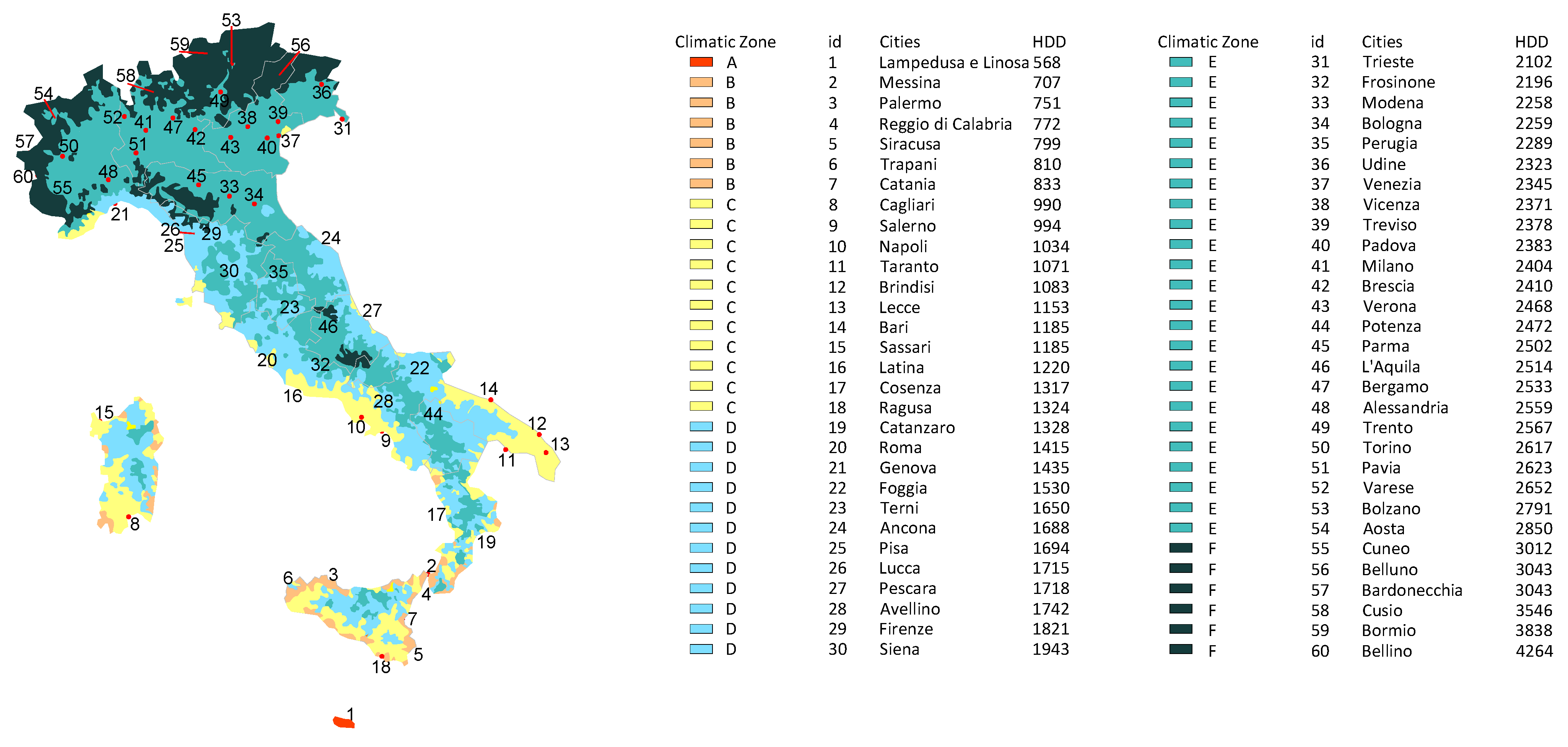
- Climatic variability was adequately represented by selecting sixty Italian cities, i.e., those most representative in terms of building numbers and population (Figure 2), ensuring coverage of all climate zones (A–F).
Figure 2.
Maps of 60 cities selected as representative in the Italian climate zones and their heating degree days (HDD).
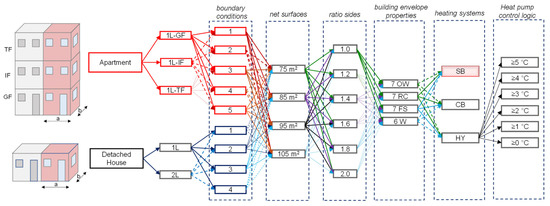
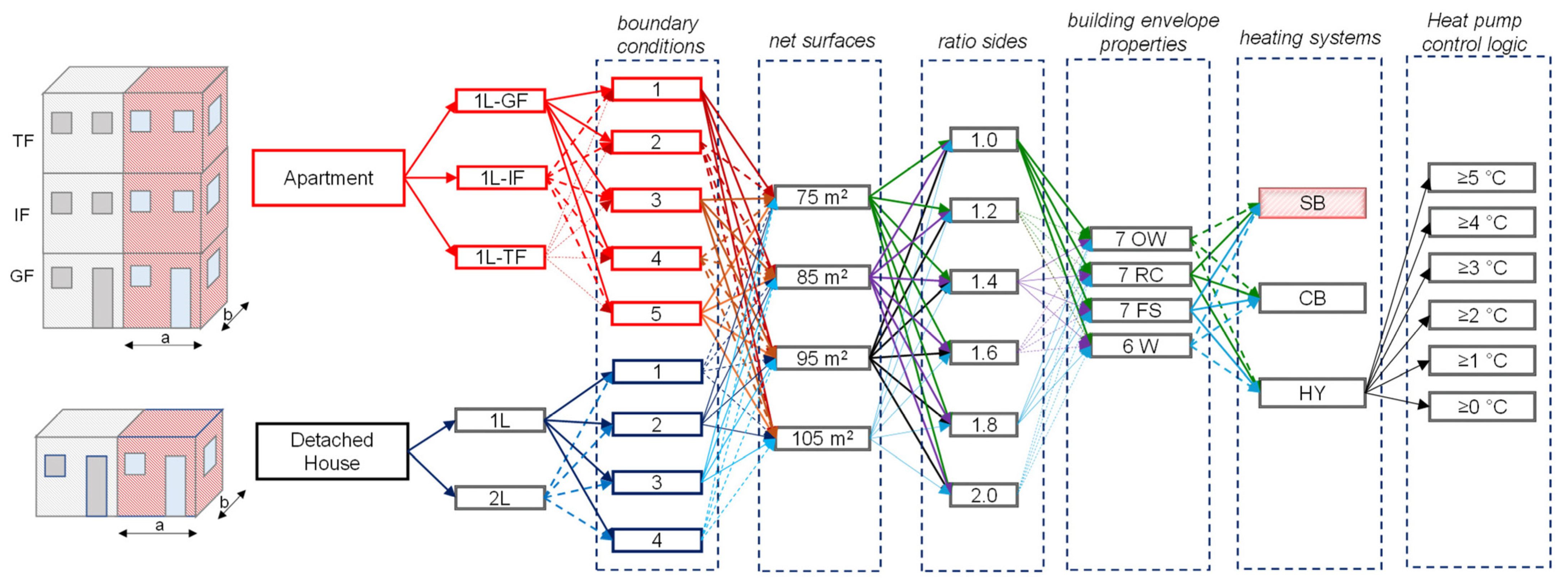
Based on this evidence, reference models were defined for both detached houses and apartments, as shown in Figure 3. Overall, four usable floor area configurations, ranging from 75 m2 to 105 m2 (with a 10 m2 increment), were selected for each typology, representing the most statistically relevant size range in the existing national residential building stock. These values are not intended to be exhaustive but to capture the most representative conditions for the purposes of this study.
Figure 3.
Schematic representation of the adopted framework for building models’ definition, including building typologies (apartment and detached house), boundary conditions, useful surface area, geometric ratio sides, and properties of building envelope components combined with three heating system configurations: standard boiler (SB—reference system), condensing boiler (CB), and hybrid system (HY).
The building geometry was defined as square or rectangular, considering a ratio between the sides (indicated in Figure 3 with a and b) from 1 (therefore square shape) to 2 (rectangular shape).
For each building type, different boundary conditions were also considered (towards outdoor environments, unconditioned areas, and heated areas), resulting in eight different configurations for detached houses and fifteen for apartments. This approach allows for the simulation of conditions ranging from fully exposed units to units partially adjacent to other heated volumes. The boundary conditions were defined to represent the most common thermal exposure conditions for both apartments and detached houses within the Italian residential stock. For the apartments, the configurations were differentiated according to the position of the dwelling within the building, namely ground floor (GF), intermediate floor (IF), and top floor (TF), as illustrated in Figure 3. For detached houses, a smaller but coherent set of configurations was adopted, reflecting the higher exposure of these buildings to the external environment; specifically, buildings on one level (1L) and on two levels (2L) were considered.
For each building unit configuration, thermal boundary conditions were assigned to all envelope components, considering different adjacent types, including outdoor environment, heated spaces, and unheated spaces. This approach allows distinguishing between units with higher exposure (e.g., apartments on the top floor) and those partially surrounded by conditioned volumes (e.g., apartments on the intermediate floors). The purpose of these configurations was to define a physically representative set of boundary conditions capable of capturing the main variability of heat transfer conditions in existing buildings.
The thermophysical properties of the building envelope were determined by using construction materials consistent with the construction period of the residential buildings under analysis (before 1980). In accordance with the literature [8,9], seven configurations of the opaque components (i.e., opaque wall (OW), roof ceiling (RC), and floor slab (FS)) and six for the windows (W) were considered, covering a wide range of thermal transmittance values representative of the existing stock (Table 1) [8,9]. All the envelope components were combined using a full combinatorial approach; specifically, each wall type was coupled with each roof, floor, and window configuration, resulting in 2058 possible thermal property combinations for each geometric and boundary condition. This approach allows a systematic exploration of the variability of the existing building stock. The adopted full combinatorial approach is used to explore a broad and representative parametric space consistent with its main characteristics, as defined by national datasets [3] and previous ENEA studies [8,9]. In this perspective, all combinations are treated with equal weight, since the objective of the work is to assess the comparative performance and robustness of different heating system configurations under consistent boundary conditions. A more detailed statistical discussion on the representativeness of the adopted reference models is provided in [8,9].
Table 1.
Thermal properties for the different building envelope components: thickness (s), thermal transmittance (U), or total solar energy transmittance (Ggl) [8,9,28].
Furthermore, three different heating system configurations were analyzed: standard boiler (SB), condensing boiler (CB), and hybrid system (HY). The technical characteristics of the systems were derived from real commercial technical datasheets. In particular, the same condensing boiler was adopted both in the standalone CB configuration and in the hybrid system, ensuring full consistency and comparability among the analyzed systems. The main characteristics of the selected heating systems are shown in Table 2 (standard and condensing boilers) and Table 3 (heat pump adopted in the hybrid configuration). It is worth noting that the efficiency values reported in Table 2 refer to the lower heating value (LHV) of natural gas, while the data shown in Table 3 is provided by manufacturers’ technical datasheets provided in accordance with relevant European standards (e.g., UNI EN 14511 series [29,30] and UNI EN 14825 [31]). In addition, for all the configurations, radiators were assumed as emission systems operating at high temperatures (75–65 °C), consistent with the typical characteristics of existing buildings built before 1980.
Table 2.
Characteristics of the traditional heating systems (standard and condensing boilers).
Table 3.
Characteristics of the heat pump combined with a condensing boiler in the hybrid system.
Based on the illustrated parameters, Figure 3 illustrates the adopted framework for building models’ definition. In the first steps, building typologies and corresponding boundary conditions are defined, distinguishing between apartment buildings (red lines and boxes) and detached houses (blue lines and boxes). From these steps, a full combinatorial approach is thus applied, integrating the main geometrical, physical, and system-related parameters. In particular, whilst keeping constant the useful floor area, the floor plan of the units (both apartments and detached houses) was varied by adopting six geometric ratios (ranging from 1 to 2). These geometrical configurations are then combined with all the selected thermal properties of opaque and transparent envelope components. Finally, each building model is coupled with the analyzed heating system configurations. As previously described, only for the hybrid system (HY) multiple control logics are adopted, i.e., the application of different switching temperature thresholds. It is worth noting that in this figure, the arrows represent the systematic combination of all parameters, resulting in a comprehensive set of consistent building–system models.
The nominal heat generator power of approximately 24 kW was assumed for all system configurations, ensuring the coverage of the overall energy needs (heating and domestic hot water) of the residential units. This value is representative of typical residential heating systems in the Italian context [8] and was selected to be consistent with the space heating demand and hot water production of the analyzed buildings. However, only the space heating energy demand was taken into account in all the simulations, as it is the most energy-intensive service. Moreover, the adoption of a uniform nominal capacity ensures comparability across the large parametric dataset while maintaining a realistic representation of system sizing.
In the hybrid system configuration, several control logics were defined based on outdoor air temperature thresholds, assuming that the heat pump operates and covers the heating energy needs above a switching temperature ranging between 0 °C and 5 °C, while below this threshold, the condensing boiler covers the entire energy demand. These assumptions reflect realistic operational strategies and avoid inefficient operation of the heat pump at low temperatures. Six different switching conditions were thus analyzed within this range (0 ÷ 5 °C). However, to ensure a representative assessment, the results of the hybrid system are presented as average values. It is worth noting that to isolate the effect of the heating system, all building envelope characteristics and operating conditions were kept constant across the different system configurations.
2.2. Step 2
A full combinatorial approach was used to combine the settings previously described for the building models’ definition. Hence, the adopted methodological approach enabled the analysis of a large number of representative configurations (over 23 million simulations for the detached house configuration and over 44 million for apartments in multi-family configurations, for each heating system configuration), enabling a statistically robust analysis of the parameter space.
For each configuration, the energy performance was assessed using the standard calculation method adopted for the energy performance certification, in accordance with UNI/TS 11300 [32,33,34]. This implies the application of the monthly quasi-state method, standard climatic conditions, and conventional usage profiles. The adopted calculation approach represents a consolidated and widely used framework for building energy performance assessment at the national level. Anyway, it should be noted that this approach is not able to explicitly capture dynamic effects associated with real system operation, such as user behavior, short-term variations in operating conditions, defrost cycles, and detailed heat pump performance at part-load conditions, which are not fully represented. Nevertheless, the use of a standardized method ensures consistency across the large parametric dataset and allows a robust comparative analysis of different system configurations under homogeneous assumptions. Therefore, the adopted approach is considered appropriate for the scope of this study, which focuses on large-scale assessment, allowing for results representative of the energy behavior of buildings and a consistent comparison among different system configurations, independently of specific real operating conditions.
2.3. Step 3
The final step consisted of the performance evaluation and, as a consequence, the heating system comparison.
The performance evaluation was carried out starting from the outcomes of the parametric analysis, reported in terms of:
- (i)
- Total and non-renewable primary energy. In accordance with the national regulation framework, total primary energy (PEtot) is defined as the sum of non-renewable (PEnren) and renewable (PEren) contributions, as shown below.
- (ii)
- Energy carriers’ consumption, namely electricity and natural gas. Moreover, for the natural gas in the post-processing phase, a conversion factor equal to 1.0549 from normal cubic meter (Nm3) to standard cubic meter (Sm3), as well as a lower heating value (LHV) equal to 9.94 kWh/Nm3 were assumed.
- (iii)
- Operating costs. Constant energy costs were considered equal to 0.2829 €/kWh for electricity [35] and 1.0613 €/Sm3 for natural gas [36] according to official market values.
- (iv)
- CO2 emissions.—These are assessed by applying constant emission factors to the final energy consumption of each energy carrier. In particular, an average value of 0.256 kgCO2/kWh for electricity [37] and 0.209 kgCO2/kWh (about 1.99 kgCO2/Sm3) for natural gas [38] were assumed.
The latter outcome was performed in order to provide an overall evaluation of the effects of the different system configurations with a view to EPBD.
Finally, heating systems were compared. Results were analyzed by considering the standard boiler (SB) as a reference system, and the performance of the condensing boiler (CB) and hybrid system (HY) was therefore discussed in comparison to this baseline. This approach allows a consistent assessment of the potential contribution of advanced system configurations in reducing energy consumption and CO2 emissions within decarbonization pathways.
3. Results and Discussion
The results are reported in terms of statistically representative trends derived from the large set of simulated configurations, allowing a systematic assessment of the effects of different heating system solutions across varying climatic conditions, building characteristics, and operating scenarios. The focus is placed on interpreting the underlying physical and energy-related mechanisms, with the aim of providing generalizable insights relevant to large-scale decarbonization strategies.
Before analyzing each energy quantity, to support the interpretation of the results, the performance of the hybrid system under different control logics (switching temperature thresholds) has been first evaluated. Particularly, the variability (from the minimum to the maximum values) of the main energy indicators under different logic controls adopted for the hybrid system is reported in Table 4. Outcomes confirm that the outdoor temperature threshold may influence the primary energy; anyway, it is worth noting that these variations between minimum or maximum values are very similar in each climatic zone, ranging between −1.5% and +3.2% compared with the average values calculated at the same logic control temperature. This trend confirms that the effect of the switching threshold is relatively stable and does not introduce significant variability in the results.
Table 4.
Minimum–maximum range of annual primary energy indicators for the hybrid system under different control logics.
This behavior is also due to the adopted monthly quasi-steady-state calculation approach provided by UNI/TS 11300 [32,33,34], which is not intended to capture detailed hourly control dynamics. As a consequence, the influence of switching thresholds on system performance is partially smoothed at the temporal resolution of the method. For that reason, all the subsequent analyses for the hybrid system are presented in terms of mean values.
On this basis, an overview of the variability range and the overall trend of the main annual energy outcomes (mean values and standard deviation of the main energy indicators and of energy carriers) is summarized in Table 5 and Table 6 across the analyzed system configurations.
Table 5.
Energy parametric results: mean annual value and standard deviation of the primary energy (non-renewable and total) indicators for each climatic zone and for the selected heating systems.
Table 6.
Energy parametric results: mean annual value and standard deviation of the energy carriers (electric energy and natural gas) for each climatic zone and for the selected heating systems.
3.1. Primary Energy
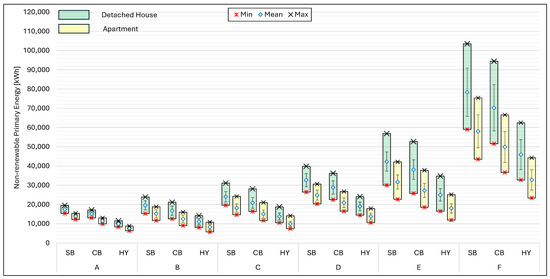
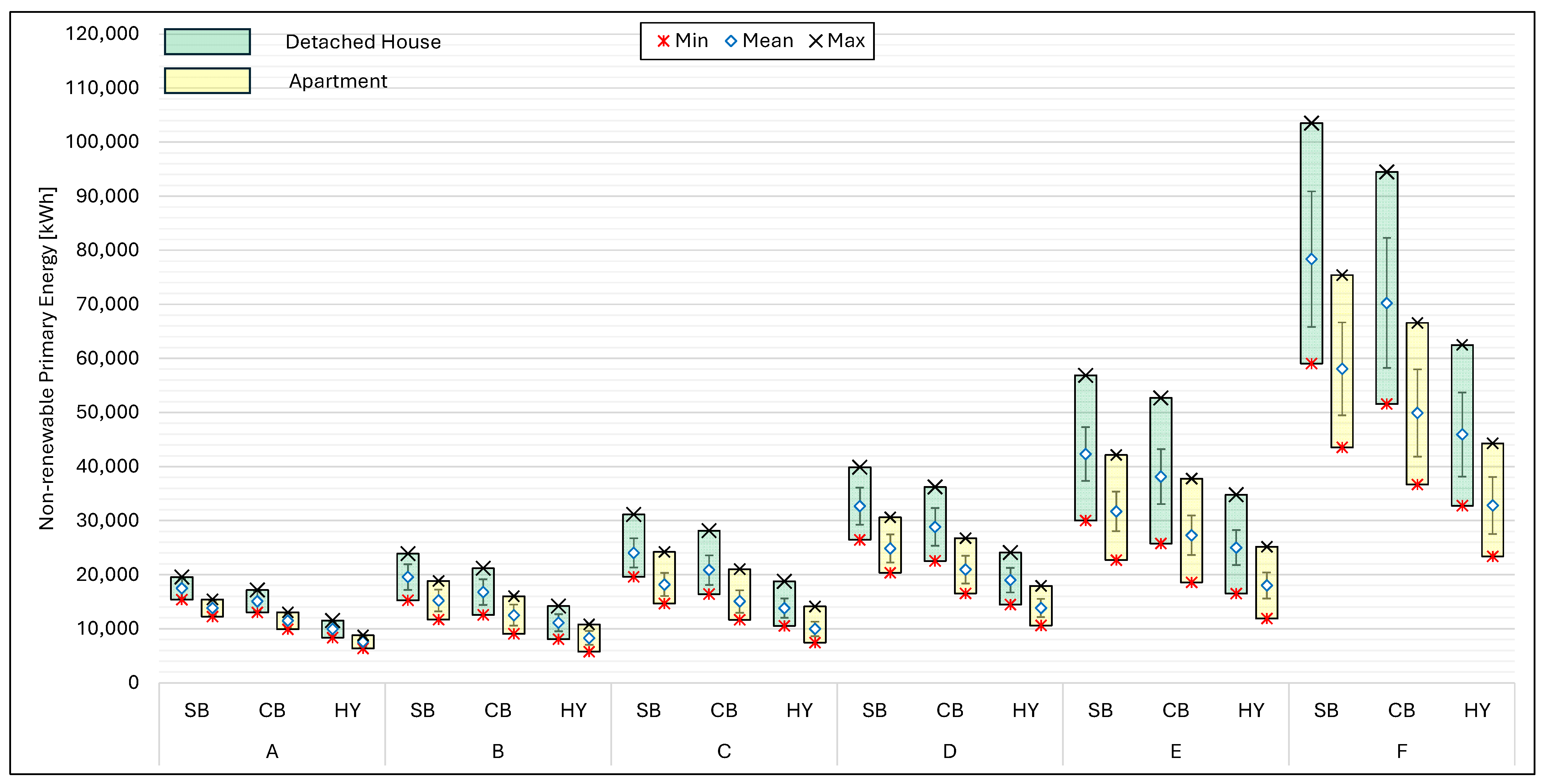
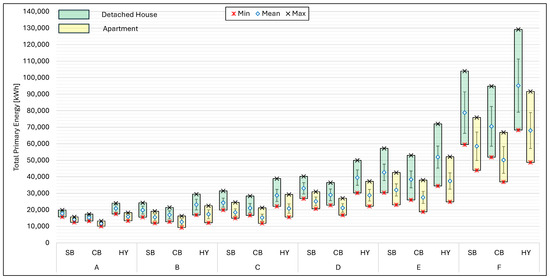
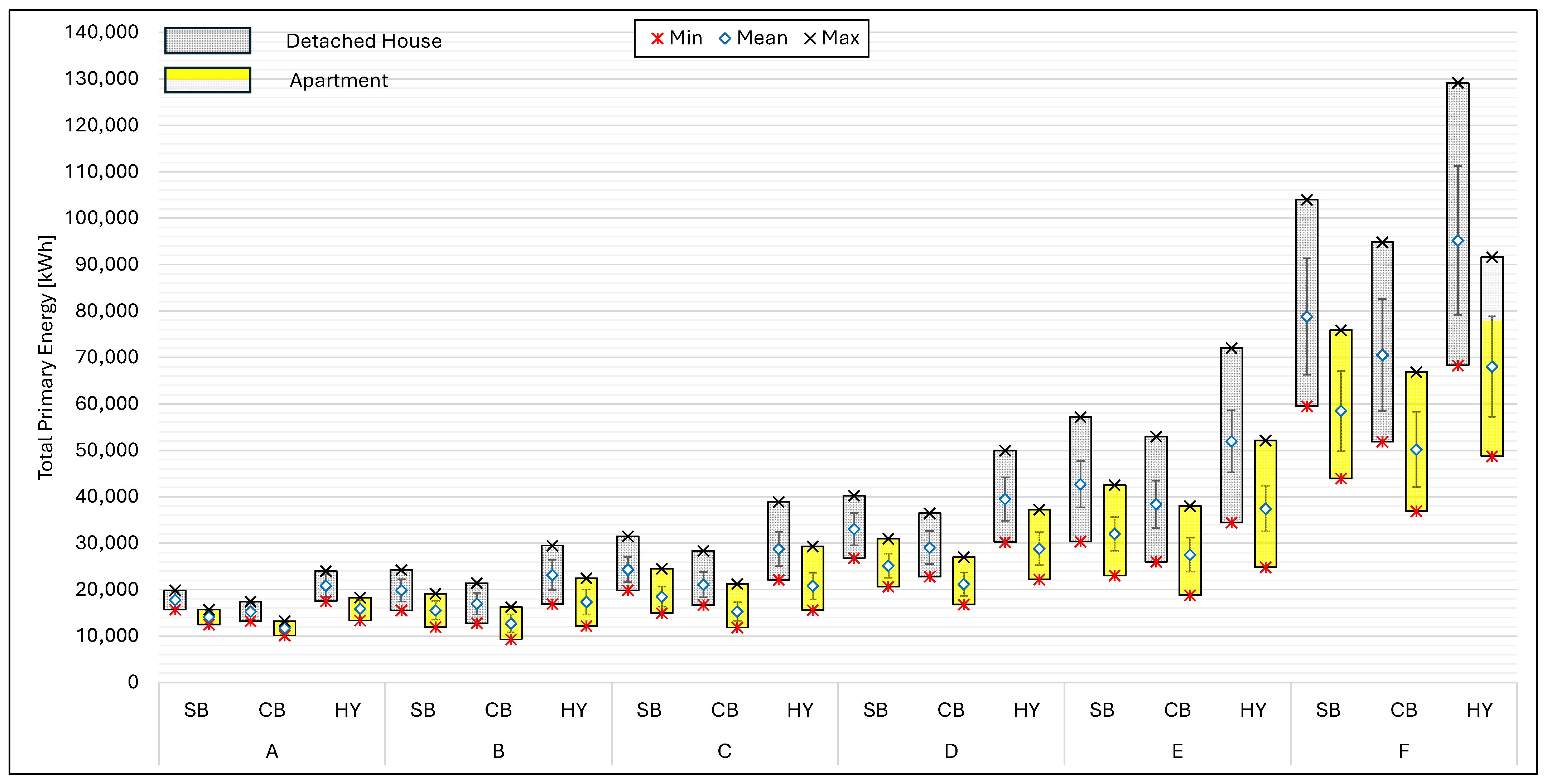
The first analysis in terms of primary energy consumption provides a comprehensive view of the impact of different heating system configurations, distinguishing between non-renewable (Figure 4) and total primary energy (Figure 5) and allowing a deeper understanding of the role of renewable energy integration in hybrid systems.
Figure 4.
Annual non-renewable primary energy in the analyzed configurations: minimum ( ), mean (
 ), and maximum (X) values for detached house and apartment models with standard boilers (SB), condensing boilers (CB), and hybrid systems (HY) in the Italian climatic zones (from A to F).
), mean (), and maximum (X) values for detached house and apartment models with standard boilers (SB), condensing boilers (CB), and hybrid systems (HY) in the Italian climatic zones (from A to F).
Figure 5.
Annual total primary energy in the analyzed configurations: minimum (), mean (), and maximum (X) values for detached house and apartment models with standard boilers (SB), condensing boilers (CB), and hybrid systems (HY) in the Italian climatic zones (from A to F).
), mean (), and maximum (X) values for detached house and apartment models with standard boilers (SB), condensing boilers (CB), and hybrid systems (HY) in the Italian climatic zones (from A to F).
Regarding non-renewable primary energy (PEnren), Figure 4 shows a clear increasing trend when moving from milder to colder climate zones (from A to F), reflecting the progressive increase in heating demand associated with climatic severity. This trend is particularly evident for the SB and CB configurations, although the adoption of more efficient technologies leads to a reduction in absolute values. The condensing boiler (CB) configuration provides a moderate reduction compared to the standard boiler (SB), mainly due to improved generation efficiency. In contrast, hybrid systems (HY) achieve a significantly larger reduction in PEnren across all climate zones, thanks to the contribution of the heat pump, which thereby limits the use of fossil fuels. However, the effectiveness of HY tends to decrease in colder climates. This behavior is mainly linked to two effects: on one hand, lower outdoor temperatures reduce the efficiency of the heat pump; on the other hand, the control strategy adopted in this work limits its operation below the threshold temperature, increasing the reliance on the backup condensing boiler. Moreover, it is worth noting that the differences between detached houses and apartments are mainly attributable to the surface-to-volume ratio, with detached buildings generally exhibiting higher heat losses and, consequently, higher PEnren values.
From a broader perspective, these results highlight a structural limitation of electrification strategies in existing buildings characterized by high heating demand and high-temperature emission systems. While HY remains effective in reducing non-renewable primary energy, its performance is constrained under severe climatic conditions, where the contribution of the electric component becomes progressively less dominant.
Figure 5 shows an increasing trend of the total primary energy (PEtot) across the climate zones analyzed. As expected, PEtot increases from milder to colder climates due to the greater heating demand. This behavior is consistent for all system configurations and reflects the dominant role of climatic severity on overall energy needs. However, unlike what is observed for PEnren, HY exhibits higher values of PEtot compared to both SB and CB configurations. This behavior should not be interpreted as a deterioration in energy performance of HY but rather as the effect of the different composition of the energy carriers involved in this configuration, with a progressive substitution of fossil fuels by electricity and the renewable share from the outdoor environments (outdoor air). In fact, the use of the heat pump involves a significant share of renewable energy contribution, which is explicitly accounted for in the total primary energy balance. As a result, the increase in PEtot is mainly due to the inclusion of this renewable share, which is not present in traditional fossil-fuel-based systems.
Therefore, the comparison between PEnren and PEtot highlights a key aspect of hybrid systems: while they significantly reduce the non-renewable component of primary energy, they also significantly increase the contribution of the renewable one. This behavior is related to the methodological and regulatory framework, in which total primary energy includes both renewable and non-renewable contributions. In hybrid systems, the increased use of heat pumps is associated with a higher contribution of renewable energy, i.e., the aerothermal energy extracted by the outdoor air. As a result, while total primary energy increases, the non-renewable component is significantly reduced. Therefore, this result does not indicate a deterioration of the system behavior but rather reflects a shift from fossil-based energy carriers to electricity and renewable sources.
These results underline the importance of analyzing both renewable and non-renewable primary energy indicators. Focusing solely on total primary energy may lead to misleading conclusions, whereas the combined interpretation provides a more consistent assessment of system performance in the context of decarbonization strategies.
3.2. Energy Consumption by Energy Carriers
The analysis of energy consumption by the carrier provides a deeper understanding of the transition from fossil-fuel-based systems to partially electrified configurations. In particular, the combined evaluation of electricity and natural gas consumption allows the identification of the substitution mechanisms underlying the performance of hybrid systems.
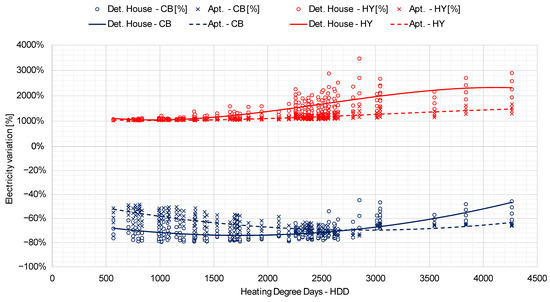
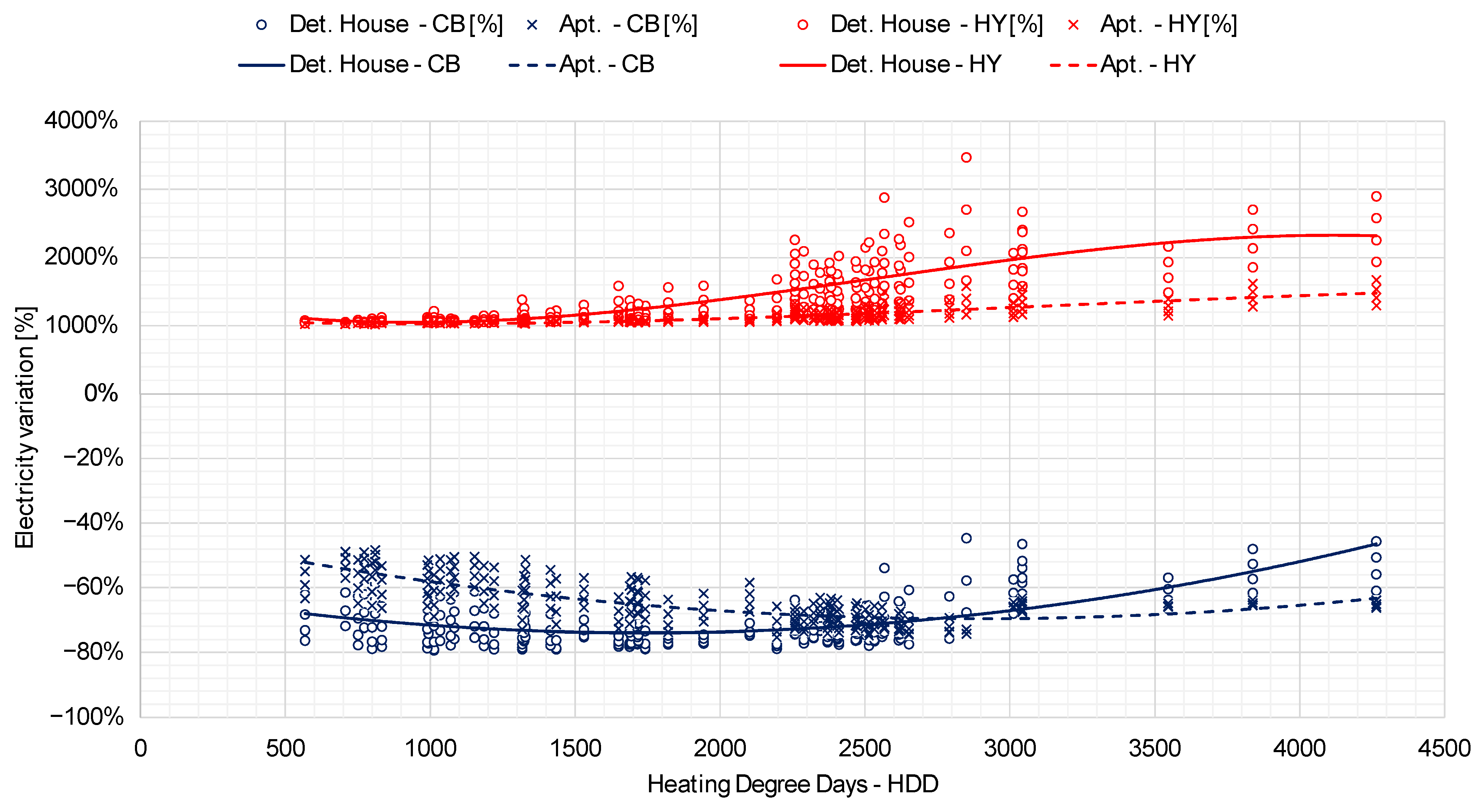
The variation in electricity consumption with respect to the SB configuration (Figure 6) clearly reflects the progressive electrification of the heating system. While the CB case shows only a marginal reduction in electric consumption, mainly associated with auxiliary components, the HY system exhibits a substantial increase in electricity consumption, as the heat pump directly contributes to covering the thermal demand.
Figure 6.
Electric consumption variation referred to the standard boiler configuration for detached house (o) and apartment (x) models with standard boilers (SB), condensing boilers (CB), and hybrid systems (HY), varying heating degree days.
The rising trend observed with HY configurations in colder climate zones reflects the higher heating demand and, consequently, the longer operating hours of the heat pump. However, this growth is not linear with climatic severity, since the adopted control strategy limits heat pump operation below a specific outdoor temperature threshold, resulting in a partial shift back to the condensing boiler.
It is worth noting that the increase in electricity consumption should not be regarded as a negative outcome but rather as a direct indicator of the electrification level of the heating system. This transition represents a fundamental step towards the decarbonization of the building sector, as it enables the progressive replacement of fossil fuels with energy carriers that can be increasingly supplied by renewable sources at the system level.
These results highlight that electricity consumption plays a dual role: on one hand, it represents an additional energy demand at the building level; on the other hand, it constitutes the main energy carrier for reducing fossil-fuel dependency.
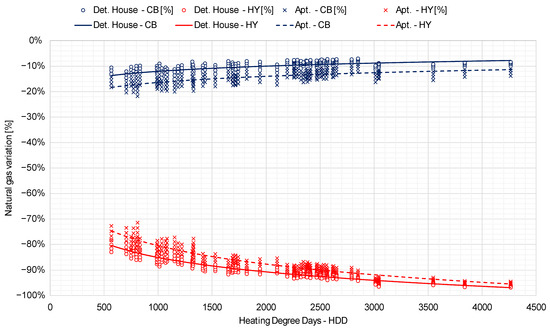
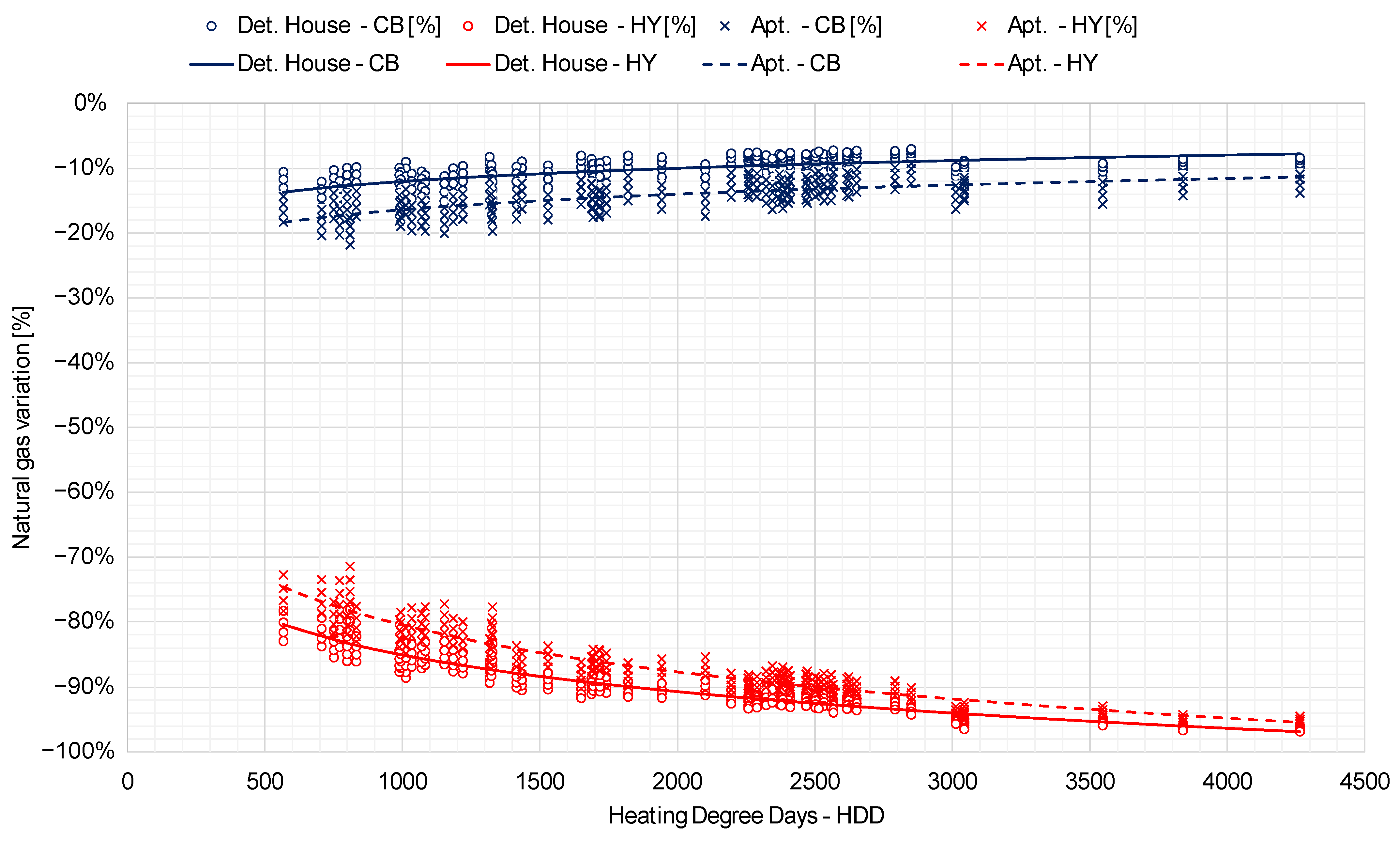
The variation in natural gas consumption with respect to the SB configuration (Figure 7) directly highlights the fossil-fuel substitution effect induced by more efficient technologies. In the CB case, the reduction is limited (approximately 10 ÷ 20%) and can be solely attributed to the higher efficiency of the generation system (i.e., the condensing boiler). In contrast, the HY system allows achieving a more significant decrease, as a substantial share of the heating demand is covered by the heat pump.
Figure 7.
Natural gas consumption variation referred to the standard boiler configuration for detached house (o) and apartment (x) models with standard boilers (SB), condensing boilers (CB), and hybrid systems (HY), varying heating degree days.
It should be noted that this behavior is strongly influenced by the adopted control strategy, according to which the heat pump operates only above a specific outdoor temperature threshold (0 ÷ 5 °C), while the condensing boiler fully covers the demand below these values. As a result, in colder climates, a non-negligible portion of the demand is still satisfied by fossil fuels.
However, the relative reduction in natural gas consumption is greater in colder climate zones. This result is mainly due to significantly higher baseline consumption associated with the SB configuration. Consequently, even a partial substitution of fossil fuel by the heat pump leads to a larger percentage reduction, despite the absolute consumption remaining relatively great.
This finding highlights a critical aspect in the interpretation of performance indicators: relative outcomes may amplify the perceived effectiveness of hybrid systems, especially in high-demand conditions. Therefore, a combined analysis of absolute and relative values is necessary to fully assess the real impact of retrofit strategies.
3.3. Economic Evaluation
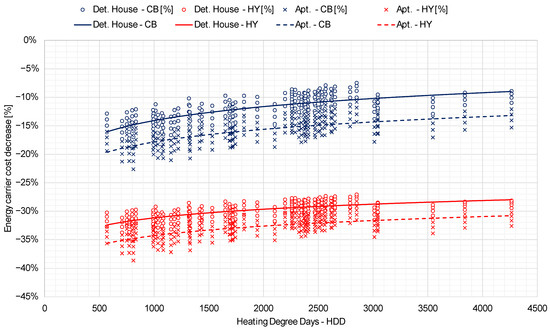
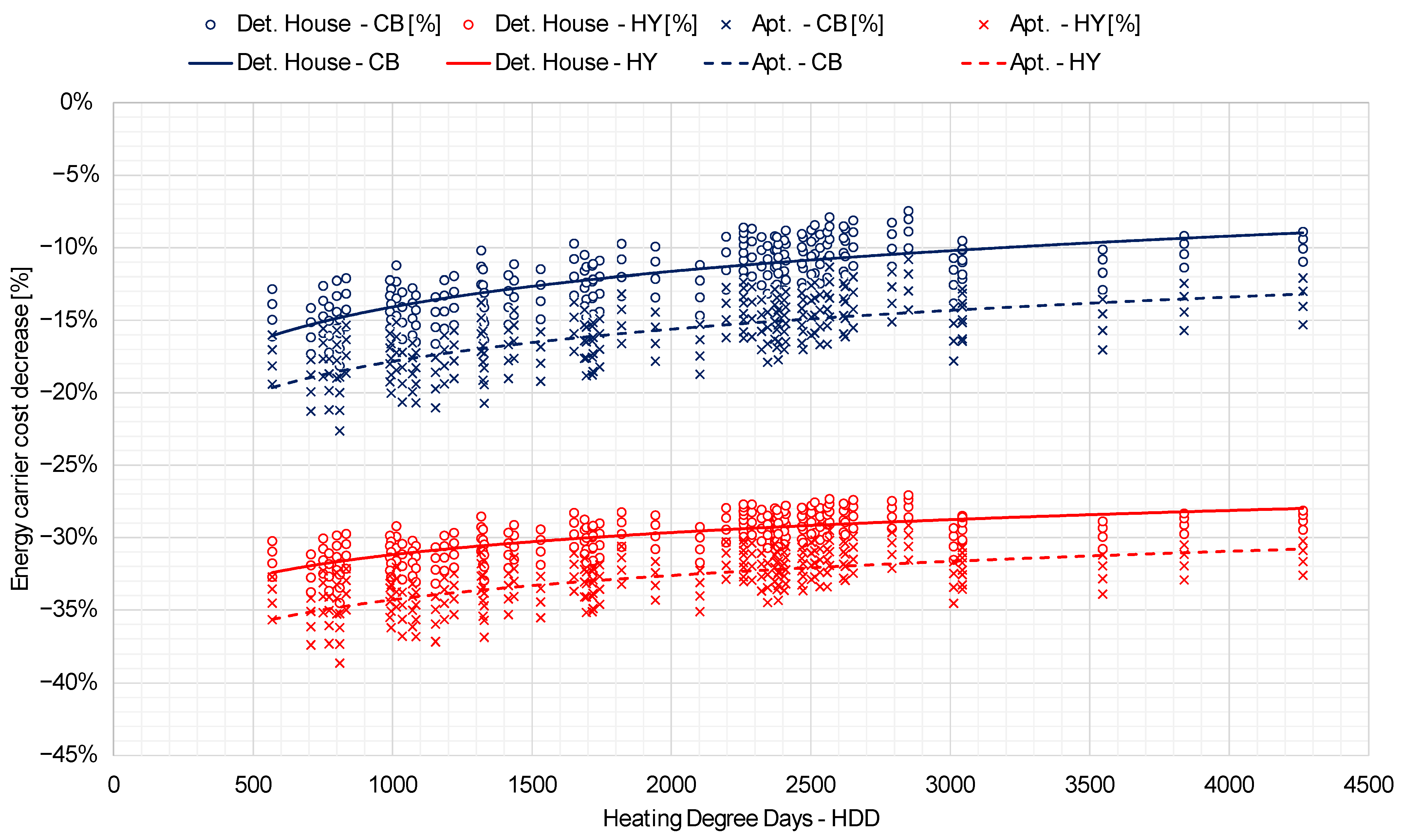
The variation in operating costs with respect to the SB configuration (Figure 8) reflects the combined effects observed for individual energy carriers, highlighting the balance between the reduction in natural gas consumption and the increase in electricity use. It should be noted that the economic results are based on the assumption of constant energy prices. Although this approach ensures a consistent comparison among the analyzed systems, the absolute cost values are sensitive to market conditions and may vary significantly under different energy price scenarios. In the CB case, the cost reduction is moderate and directly linked to the improved efficiency of the system (approximately 10 ÷ 20%) and mainly associated with the improved efficiency of the generation system, which reduces natural gas consumption without significantly affecting electricity use. In contrast, the HY system shows a more pronounced reduction (around 25 ÷ 40%), resulting from the partial substitution of natural gas with electricity. This outcome is not only driven by energy savings but also by the interaction between different energy carriers characterized by distinct unit costs.
Figure 8.
Energy carrier cost reduction referred to the standard boiler configuration for detached house (o) and apartment (x) models with standard boilers (SB), condensing boilers (CB), and hybrid systems (HY), varying heating degree days.
The trend across climate zones cannot, therefore, be attributed solely to energy carriers’ consumption but depends significantly on the balance between electricity and natural gas prices. In colder zones, the greater reduction in gas consumption offsets the increase in electricity use, resulting in economic savings of around 30%. In milder climates, the heat pump operates more efficiently and covers a larger share of the demand, further enhancing the economic benefit.
These outcomes underline that the economic effectiveness of hybrid systems is inherently sensitive to external factors, particularly energy price structures. Therefore, the observed cost reductions should not be interpreted as universally fixed values but rather as context-dependent outcomes that may vary under different market conditions. This aspect is particularly relevant in the context of energy transition strategies, where future developments in electricity decarbonization and pricing mechanisms may further influence the competitiveness of electrified and hybrid solutions.
3.4. CO2 Emissions
The analysis of CO2 emissions provides a comprehensive synthesis of the effects associated with different system configurations, integrating the impacts of energy consumption, energy carrier substitution, and renewable energy contribution.
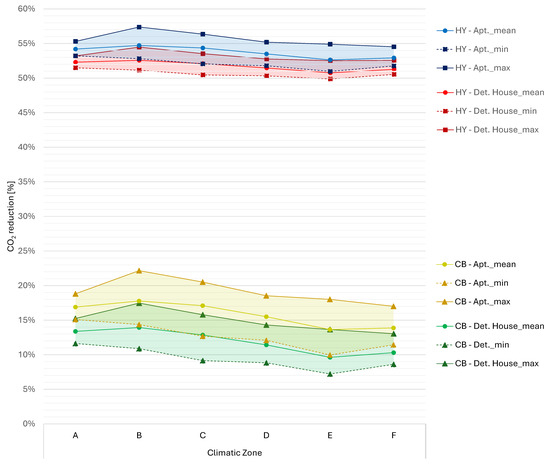
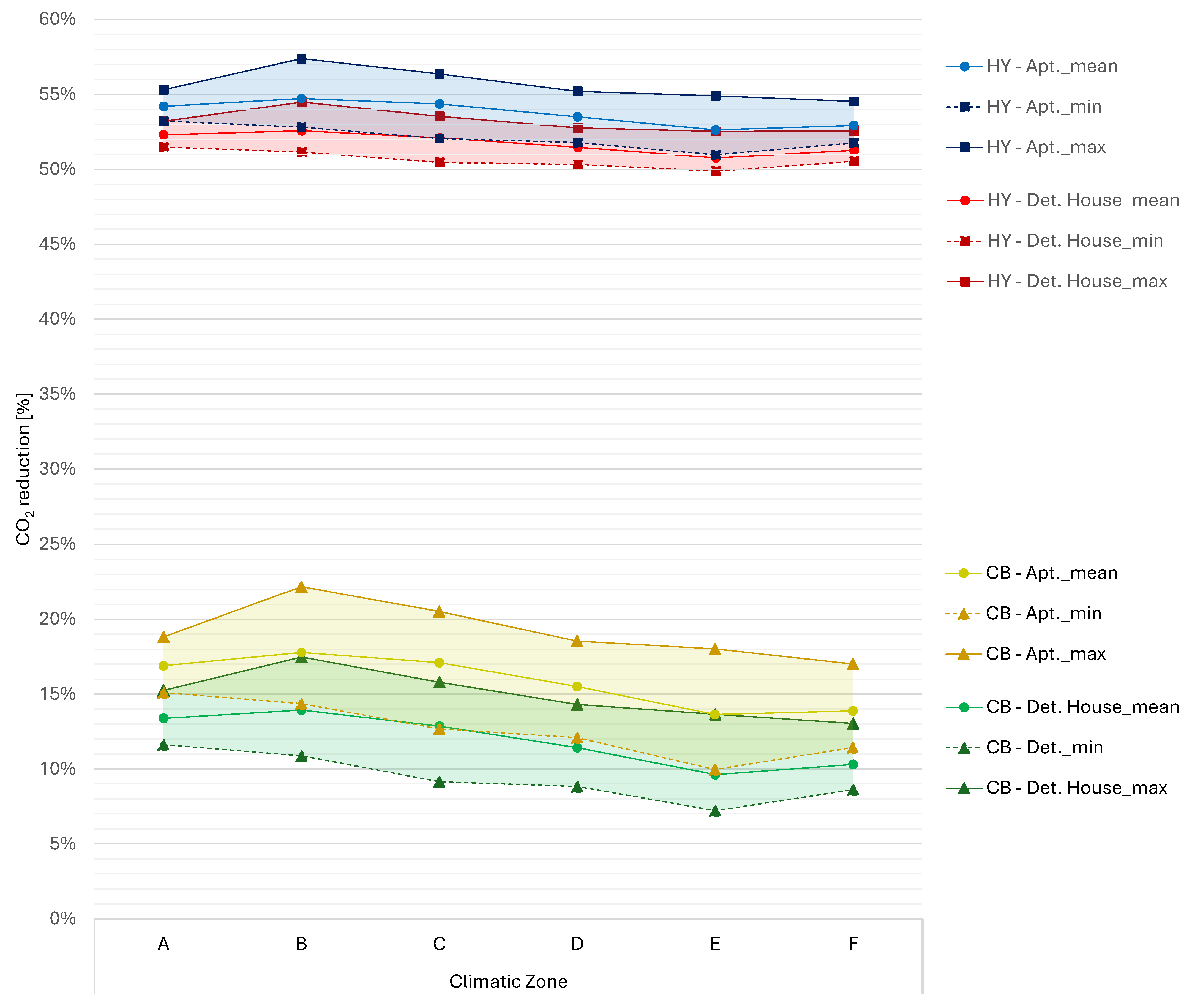
The variation in CO2 emissions with respect to the SB configuration (Figure 9) highlights a significant reduction for all the analyzed solutions, with the hybrid system able to achieve the highest benefits across all climate zones. These results are mainly driven by the combined effects of: (i) reduced natural gas consumption, (ii) the increasing contribution of electricity, (iii) the largest share of renewable energy (especially for heat pumps), and (iv) greater system efficiency.
Figure 9.
CO2 emission reduction referred to the standard boiler configuration for detached house and apartment models with standard boilers, condensing boilers (CB), and hybrid systems (HY) in the Italian climatic zones.
The reduction in CO2 emissions observed in the CB configuration (around 5–23%) is primarily attributable to its higher efficiency compared to the standard boiler, resulting in a greater decrease for apartments in multi-family buildings, characterized by lower energy demand than detached houses. In contrast, HY shows the most significant reductions across all climate zones (more than 50%), due to the progressive replacement of natural gas with electricity and the renewable contribution of the heat pump.
However, the trend across climate zones is not constant. The maximum reduction is observed in intermediate climate conditions, particularly in climate zone B, while lower values are found both in milder and colder climates. This behavior reflects the balance between two mechanisms: on the one hand, in milder climates, the overall energy demand is limited, reducing the potential for absolute emission savings; on the other hand, in colder climates, although the energy demand is significantly higher, the benefits of the heat pump are partially reduced due to lower outdoor temperatures and the increased reliance on the condensing boiler. Therefore, in milder climates, such as zone B, outdoor temperatures allow the heat pump to operate for longer periods under favorable conditions, typically associated with higher COP values. As a result, a larger share of the heating demand is covered by the heat pump, reducing the contribution of the fossil-fuel boiler and leading to lower CO2 emissions. On the contrary, in colder climatic zones (e.g., D, E, and F), the operation of the heat pump is limited by lower outdoor temperatures, which reduces its efficiency and increases the activation of the fossil-fuel boiler. At the same time, in the warmest zone (A), the overall heating demand is lower, which reduces the relative impact of efficiency improvements on total emissions. As a consequence, intermediate climatic conditions (e.g., zones B and C) represent a favorable balance for the hybrid system, where the heat pump is able to operate efficiently while covering a substantial share of the heating demand under relatively high efficiency conditions (higher COP). This leads to a maximization of fossil-fuel substitution and, consequently, to the highest CO2 emission reductions. Therefore, the observed behavior can be interpreted as optimal within the analyzed dataset, resulting from the combined effect of heating demand, outdoor temperature distribution, and system control logic. It should be noted that this result depends on the assumed climatic data and selected cities.
An additional relevant aspect can also be highlighted: the condensing boiler configuration shows a wider spread between minimum and maximum values, indicating a stronger sensitivity to building characteristics and climatic conditions. This involves a less predictable performance across the analyzed scenarios. In contrast, hybrid systems exhibit a more limited variability range, as highlighted by the narrower distribution of results. This behavior suggests that hybrid configurations provide more stable and consistent emission reductions, regardless of the specific boundary conditions. Therefore, hybrid systems not only achieve higher emission reductions on average but also ensure a more robust performance across a wide range of operating conditions. This aspect is particularly relevant in the context of large-scale retrofit strategies, where consistency and reliability of results are as important as absolute performance.
According to these results, the decarbonization potential of hybrid systems is strongly dependent on the interaction between climatic conditions, system performance, and energy demand. The effectiveness of electrification strategies cannot, therefore, be considered uniform across different contexts but must be evaluated within a climate-sensitive framework. This aspect is particularly relevant in the context of the EPBD, which promotes electrification and renewable integration as key pathways for building decarbonization. These findings suggest that hybrid systems can play a crucial role as transitional solutions, especially in climatic conditions where full electrification is not yet technically or economically optimal, ensuring significant emission reductions while maintaining compatibility with existing building characteristics.
4. Conclusions
The present study provides a comprehensive assessment of hybrid heating systems applied to representative models of the existing residential building stock, highlighting their role within decarbonization pathways. The results clearly indicate that the decarbonization of existing residential buildings cannot be achieved through efficiency improvements alone but requires a structural shift in the energy mix used for heating, with a progressive substitution of natural gas with electricity.
In this context, hybrid systems emerge as an effective transition solution, not simply because they improve performance, but because they enable a controlled and progressive substitution of natural gas with electricity. This mechanism represents the main driver of the observed reductions in CO2 emissions and fundamentally distinguishes hybrid configurations from conventional technologies.
However, the effectiveness of this transition is not uniform. The analysis shows that hybrid systems reach their highest potential under intermediate climatic conditions, where the heat pump can operate for longer periods under favorable conditions, covering a significant share of the heating demand, while the condensing boiler ensures demand coverage when energy demand is reduced. This highlights that the adopted strategies towards the decarbonization pathways must be interpreted within a climate-dependent framework.
At the same time, the reduced variability observed in hybrid system performance suggests a higher level of stability compared to condensing boilers, showing a reduced variability of results and a more stable performance across the analyzed conditions. This aspect could be particularly relevant when moving from single-building analyses to building stock applications, where heterogeneity represents a critical factor.
Particular attention should be paid to the interpretation of primary energy indicators. An increase in total primary energy should not be interpreted as a worsening of energy performance in the case of electrification strategies. On the contrary, the significant reduction in non-renewable primary energy highlights the effectiveness of hybrid systems in supporting decarbonization objectives, in line with current European energy policies.
Overall, hybrid systems should be interpreted as enabling technologies within a broader transition pathway, capable of bridging the gap between current building conditions and future fully electrified scenarios. Their role is therefore not to replace electrification but to make it feasible, scalable, and compatible with the existing building stock, also offering practical advantages in existing buildings, such as the possibility of domestic hot water production without requiring dedicated storage systems.
This work represents a first step toward a systematic assessment of hybrid heating systems as transition solutions at the building stock level. Future research may further extend the analysis by adopting dynamic simulation approaches to better capture real operating conditions and system behavior, as well as by considering the impact of evolving energy prices and electricity decarbonization pathways.
Author Contributions
Conceptualization, D.P. and S.D.T.; methodology, D.P. and S.D.T.; software, D.P.; formal analysis, D.P.; investigation, D.P.; resources, N.C., S.D.T., I.N. and D.P.; data curation, D.P.; writing—original draft preparation, S.D.T.; writing—review and editing, S.D.T., I.N. and D.P.; visualization, D.P. and S.D.T.; supervision, D.P., S.D.T., I.N. and N.C.; project administration, D.P., S.D.T., I.N. and N.C.; funding acquisition, D.P., S.D.T., I.N. and N.C. All authors have read and agreed to the published version of the manuscript.
Funding
This research received no external funding.
Data Availability Statement
Data elaboration is from a new design analysis carried out consistently with the aim of the study.
Conflicts of Interest
The authors declare no conflicts of interest.
Abbreviations
The following abbreviations are used in this manuscript:
| Apt | Apartment |
| CB | Condensing boiler |
| CO2 | Carbon dioxide |
| COP | Coefficient of performance |
| Det | Detached |
| DHW | Domestic hot water |
| EPBD | Energy Performance of Buildings Directive |
| FS | Floor slab |
| GF | Ground floor |
| Ggl | Total solar energy transmittance |
| HY | Hybrid system |
| IF | Intermediate floor |
| L | Level |
| LHV | Lower heating value |
| Nm3 | Normal cubic meter |
| OW | Opaque walls |
| PE | Primary energy |
| RC | Roof ceiling |
| s | Thickness |
| SB | Standard boiler |
| Sm3 | Standard cubic meter |
| TF | Top floor |
| U | Thermal transmittance |
| W | Windows |
| footnote | |
| nren | Non-renewable |
| ren | Renewable |
| tot | Total |
References
- European Commission. EU Buildings Factsheet; European Commission: Brussels, Belgium, 2020. [Google Scholar]
- European Parliament; Council of the European Union. Directive (EU) 2024/1275 on the Energy Performance of Buildings (EPBD); Official Journal of the European Union: Brussels, Belgium, 2024. [Google Scholar]
- ISTAT. Censimento Permanente Delle Abitazioni; ISTAT: Rome, Italy, 2011. [Google Scholar]
- Caffari, F.; Calabrese, N.; Murano, G.; Signoretti, P. The Size of the National Building Stock (Italian-La Consistenza del Parco Immobiliare Nazionale); ENEA: Rome, Italy, 2024. [Google Scholar]
- Loga, T.; Stein, B.; Diefenbach, N. TABULA building typologies in 20 European countries—Making energy-related features of residential building stocks comparable. Energy Build. 2016, 132, 4–12. [Google Scholar] [CrossRef] [Scilit]
- Ballarini, I.; Corgnati, S.P.; Corrado, V. Use of reference buildings to assess the energy saving potential of the residential building stock: The experience of TABULA project. Energy Policy 2014, 68, 273–284. [Google Scholar] [CrossRef] [Scilit]
- Ballarini, I.; Corrado, V. A New Methodology for Assessing the Energy Consumption of Building Stocks. Energies 2017, 10, 1102. [Google Scholar] [CrossRef] [Scilit]
- Palladino, D.; Pagliaro, F.; Del Fatto, V.; Lavinia, C.; Margiotta, F.; Colasuonno, L. Stato Dell’arte del Patrimonio Edilizio Nazionale e Analisi Degli Attestati di Prestazione Energetica (APE); Report RdS/PTR2019/037; ENEA: Rome, Italy, 2019. [Google Scholar]
- Palladino, D.; Pagliaro, F. Data source integration approach for the definition of new reference buildings: The Italian case study. Energy Build. 2025, 330, 115302. [Google Scholar] [CrossRef] [Scilit]
- Ma, Z.; Cooper, P.; Daly, D.; Ledo, L. Existing building retrofits: Methodology and state of the art. Energy Build. 2012, 55, 889–902. [Google Scholar] [CrossRef] [Scilit]
- Mukhtar, M.; Ameyaw, B.; Yimen, N.; Zhang, Q.; Bamisile, O.; Adun, H.; Dagbasi, M. Building Retrofit and Energy Conservation/Efficiency Review: A Techno-Environ-Economic Assessment of Heat Pump System Retrofit in Housing Stock. Sustainability 2021, 13, 983. [Google Scholar] [CrossRef] [Scilit]
- Bayer, D.R.; Pruckner, M. Data-driven heat pump retrofit analysis in residential buildings: Carbon emission reductions and economic viability. Appl. Energy 2024, 373, 123823. [Google Scholar] [CrossRef] [Scilit]
- IEA. Tracking Clean Energy Progress 2023 Report. 2023. Available online: https://www.iea.org/reports/tracking-clean-energy-progress-2023 (accessed on 10 March 2026).
- Żelazna, A.; Pawłowski, A. Review of the Role of Heat Pumps in Decarbonization of the Building Sector. Energies 2025, 18, 3255. [Google Scholar] [CrossRef] [Scilit]
- Seo, J.; Jung, D.E.; Shin, D.H.; Kim, T.; Kim, J. Performance gap analysis of air-source heat pumps: From rated specifications to field measurements. J. Build. Eng. 2026, 119, 115382. [Google Scholar] [CrossRef] [Scilit]
- Sezen, K.; Gungor, A. Performance analysis of air source heat pump according to outside temperature and relative humidity with mathematical modeling. Energy Convers. Manag. 2022, 263, 115702. [Google Scholar] [CrossRef] [Scilit]
- Brudermueller, T.; Potthoff, U.; Fleisch, E.; Wortmann, F.; Staake, T. Estimation of energy efficiency of heat pumps in residential buildings using real operation data. Nat. Commun. 2025, 16, 2834. [Google Scholar] [CrossRef] [Scilit] [PubMed]
- Tihana, J.; Ali, H.; Apse, J.; Jekabsons, J.; Ivancovs, D.; Gaujena, B.; Dedov, A. Hybrid Heat Pump Performance Evaluation in Different Operation Modes for Single-Family House. Energies 2023, 16, 7018. [Google Scholar] [CrossRef] [Scilit]
- Kim, J.; James, N.; Maguire, J. Investigation of a high-temperature combination heat pump for lower-cost electrification in multifamily buildings. Appl. Energy 2024, 376, 124225. [Google Scholar] [CrossRef] [Scilit]
- Dongellini, M.; Naldi, C.; Morini, G.L. Influence of sizing strategy and control rules on the energy saving potential of heat pump hybrid systems in a residential building. Energy Convers. Manag. 2021, 235, 114022. [Google Scholar] [CrossRef] [Scilit]
- Bagarella, G.; Lazzarin, R. Annual simulation, energy and economic analysis of hybrid heat pump systems for residential buildings. Appl. Therm. Eng. 2016, 99, 485–494. [Google Scholar] [CrossRef] [Scilit]
- Saffari, M.; Keogh, D.; De Rosa, M.; Finn, D.P. Technical and economic assessment of a hybrid heat pump system as an energy retrofit measure in a residential building. Energy Build. 2023, 295, 113256. [Google Scholar] [CrossRef] [Scilit]
- IEA. Future of Heat Pumps. 2022. Available online: https://www.iea.org/reports/the-future-of-heat-pumps (accessed on 10 March 2026).
- Wüllhorst, F.; Schwarz, S.; Fuchs, N.; Maier, L.; Monti, A.; Müller, D. Impact of hybrid heat pump shares and building envelope retrofit rates on load penetration in German low-voltage grids. Appl. Energy 2025, 388, 125530. [Google Scholar] [CrossRef] [Scilit]
- Swan, L.G.; Ugursal, V.I. Modeling of end-use energy consumption in the residential sector: A review of modeling techniques. Renew. Sustain. Energy Rev. 2009, 13, 1819–1835. [Google Scholar] [CrossRef] [Scilit]
- Mata, É.; Sasic Kalagasidis, A.; Johnsson, F. A modelling strategy for energy, carbon, and cost assessments of building stocks. Energy Build. 2014, 56, 100–108. [Google Scholar] [CrossRef] [Scilit]
- CRESME; Fondazione Symbola. Il Valore Dell’abitare: La Sfida Della Riqualificazione Energetica del Patrimonio Edilizio Italiano; Annual Report; CRESME: Rome, Italy, 2024. [Google Scholar]
- Palladino, D. Energy performance gap of the Italian residential building stock: Parametric energy simulations for theoretical deviation assessment from standard conditions. Appl. Energy 2023, 345, 121365. [Google Scholar] [CrossRef] [Scilit]
- UNI EN 14511-1; Air Conditioners, Liquid Chilling Packages and Heat Pumps for Space Heating and Cooling And Process Chillers, with Electrically Driven Compressors—Part 1: Terms and Definitions. UNI: Milan, Italy, 2022.
- UNI EN 14511-2; Air Conditioners, Liquid Chilling Packages and Heat Pumps for Space Heating and Cooling and Process Chillers, with Electrically Driven Compressors—Part 2: Test Conditions. UNI: Milan, Italy, 2022.
- UNI EN 14825; Air Conditioners, Liquid Chilling Packages and Heat Pumps, with Electrically Driven Compressors, for Space Heating and Cooling, Commercial and Process Cooling—Testing and Rating at Part Load Conditions and Calculation of Seasonal Performance. UNI: Milan, Italy, 2022.
- UNI/TS 11300-1; Energy Performance of Buildings—Part 1: Determination of Thermal Energy Demand for Space Heating and Cooling. UNI: Milan, Italy, 2014.
- UNI/TS 11300-2; Energy Performance of Buildings—Part 2: Determination of Primary Energy Demand and System Efficiencies for Space Heating, Domestic Hot Water, Ventilation and Lighting in Non-Residential Buildings. UNI: Milan, Italy, 2019.
- UNI/TS 11300-4; Energy Performance of Buildings—Part 4: Use of Renewable Energy and Other Generation Methods for Space Heating and Domestic Hot Water Production. UNI: Milan, Italy, 2016.
- Gestore dei Mercati Energetici (GME). Sintesi del Mercato del Giorno Prima (MGP)—Elettricità. Available online: https://www.mercatoelettrico.org/it-it/Home/Esiti/Elettricita/MGP/Statistiche/SintesiMGP (accessed on 15 January 2026).
- Gestore dei Mercati Energetici (GME). Indici GME—Statistiche e Sintesi. Available online: https://www.mercatoelettrico.org/it-it/Home/Pubblicazioni/Indici-GME/IGIndexGmeStatistiche#menuAnchor (accessed on 15 January 2026).
- ISPRA (Italian Institute for Environmental Protection and Research). CO2 Emissions in the National and Regional Electricity Sector; ISPRA: Rome, Italy, 2025. (In Italian) [Google Scholar]
- IPCC (Intergovernmental Panel on Climate Change). 2006 IPCC Guidelines for National Greenhouse Gas Inventories, Volume 2: Energy; Institute for Global Environmental Strategies (IGES): Hayama, Japan, 2006. [Google Scholar]



Disclaimer/Publisher’s Note: The statements, opinions and data contained in all publications are solely those of the individual author(s) and contributor(s) and not of MDPI and/or the editor(s). MDPI and/or the editor(s) disclaim responsibility for any injury to people or property resulting from any ideas, methods, instructions or products referred to in the content. |
© 2026 by the authors. Licensee MDPI, Basel, Switzerland. This article is an open access article distributed under the terms and conditions of the Creative Commons Attribution (CC BY) license.