


Abstract
This study focuses on the argument that greenwashing behavior (GWB) among key stakeholders leads to the degradation of governance networks in large-scale construction projects. Grounded in opportunism theory, a cross-scale computational model is developed by integrating a four-party evolutionary game with differential dynamics to capture the co-evolution of stakeholder strategies and network states. The results indicate that GWB exhibits free-riding and herd-like characteristics, and that governance networks possess a degradation equilibrium. Sensitivity analysis based on 50,000 Monte Carlo simulations shows that the frequency of GWB by subcontractors has the greatest impact on network degradation (sensitivity range: 0 to −0.98), followed by general contractors (0 to −0.38), while the influence of supervisory roles is relatively weaker. In contrast, contractual penalties demonstrate limited effectiveness (sensitivity range: −0.08 to 0.06), whereas reputational loss exerts a stronger inhibitory effect (up to −0.5 during the mid-stage evolution). These findings suggest that contract-based governance alone is insufficient to constrain GWB, thereby challenging the conventional assumption of its effectiveness. The results highlight the necessity of shifting from contract-centric governance toward reputation-based and market-oriented mechanisms to effectively mitigate GWB and enhance the resilience of green construction governance.
1. Introduction
Large-scale projects are often criticized during construction for their severe environmental impacts or failure to achieve anticipated “green” objectives [1]. To meet these green goals, stakeholders must collaboratively work within a governance network model, adhering to the procedures and guidelines stipulated by contracts [2]. Although various countries have established green construction guidelines and promoted green practices through penalties and tax incentives [3], the construction industry still accounts for 40% of global energy consumption, 30% of carbon dioxide emissions, and 40% of solid waste production. The enforcement of environmental regulations remains insufficient [4]. The construction process of large projects is often criticized for the greenwashing behavior (GWB) of stakeholders [5,6,7].
In large-scale construction projects, a critical yet long-overlooked practical issue in green construction practice is the systematic deviation of green construction performance. Specifically, while projects may meet green requirements at the institutional and reporting levels, they often fail to achieve the corresponding environmental performance in actual implementation. This deviation is not merely the result of isolated individual behavior, but is jointly driven by strategic interactions among multiple stakeholders under formal contractual relationships. It is typically manifested in practices such as false commitments, regulatory failure, data manipulation, and information misreporting by project headquarters, supervisors, general contractors, and subcontractors. These behaviors constitute GWB, which makes green performance difficult to measure accurately and further undermines trust and collaborative efficiency within the governance network.
GWB essentially involves stakeholders exploiting contractual loopholes to provide false environmental statements or fabricate green construction results as an opportunistic behavior [8]. Its prevalence and concealment mean that 90% of GWB originates from the strategic interactions and governance network dynamics among stakeholders within formal relationships [9]. In large-scale projects, stakeholders often exploit contractual loopholes and regulatory blind spots, employing methods such as falsifying data and misreporting results, which impacts the achievement of green goals [3,10]. The project command may, due to political performance considerations, pressure the supervisor or general contractor to conceal or alter environmental issues, neglecting their commitment to environmental protection. The supervisor might, to avoid conflicts of interest, collude with the general contractor or subcontractor to relax supervision. The general contractor could falsify green construction records, providing superficial rectifications, while the subcontractor might offer false green materials or fabricated process data. As construction progresses, when the negative consequences of GWB need to be shared by all stakeholders, conflicts usually arise, further exacerbating deviations from green construction goals [11]. GWB often leads to resource misallocation, trust crises, and the degradation of governance networks [1,12], with impacts that are frequently more severe than overt environmental pollution [13]. The degradation of governance networks triggered by GWB confuses stakeholders’ understanding of green value, creating a vicious cycle that leads to adverse selection in the green construction market [14].
This issue is both measurable and practically identifiable. For example, it can be observed through discrepancies between green construction indicators and on-site environmental monitoring data, inconsistencies between the frequency of rectifications and recorded violations, and ambiguity in responsibility attribution during post-project environmental accountability processes. These phenomena indicate that current green construction management practices have not effectively constrained greenwashing behavior (GWB); instead, they have facilitated a latent diffusion mechanism through multi-stakeholder interactions, ultimately inducing structural degradation within the governance network. Although existing studies have examined green construction from the perspectives of contract governance, network analysis, or game theory, three major limitations remain. First, there is a lack of characterization of the “behavior–network” coupling problem: game-theoretic studies focus on strategy selection but overlook the evolution of governance network structures [13], while network-based studies emphasize structural features but fail to explain behavioral motivations under formal contractual relationships [15]. Second, there is insufficient attention to dynamic degradation processes: most existing research remains confined to static performance evaluation or single-stage analysis, and thus cannot explain how governance networks gradually deteriorate over time. Third, there is a lack of a cross-scale analytical framework: no existing study has simultaneously integrated the evolution of individual strategies (micro level) with changes in network states (macro level), thereby failing to reveal how GWB propagates from localized behaviors into systemic risks. Therefore, this issue represents not only a theoretical “mechanism gap,” but also a practical challenge that directly affects the effectiveness of green construction policies and the transformation of the industry. Without uncovering the evolutionary pathways of GWB in multi-stakeholder interactions and its underlying mechanisms of influence on governance networks, it remains difficult to explain why green construction performance continues to deviate from expectations despite stringent regulatory oversight and contractual constraints. Failing to deeply analyze the interaction mechanisms of these stakeholders and the dynamic process of governance network degradation not only risks the loss of “green” value in large-scale projects but may also hinder the green transition in the construction industry [16,17,18].
This study focuses on the following three operational research questions: under the constraints of formal contractual relationships, what are the mechanisms driving the strategic evolution of greenwashing behavior (GWB) among different stakeholders? How does GWB diffuse through multi-actor interactions within the governance network, and how does it drive the transition of the network state from collaboration to distrust? What are the effects of different governance mechanisms (e.g., contractual penalties and reputational constraints) in suppressing GWB and delaying network degradation? To address these questions, this study proposes three specific research objectives: (1) to construct a multi-agent (four-party) evolutionary game model to characterize the formation mechanism of GWB strategies; (2) to develop a coupled model of GWB diffusion and governance network state evolution, enabling cross-scale analysis; and (3) to identify key influencing factors and their pathways through simulation and sensitivity analysis. Overall, this research aims to provide significant insights into understanding the “black box” of governance network degradation in large-scale green construction projects. It addresses the shortcomings in project management research concerning internal collaboration states.
2. Analysis of GWB Among Stakeholders in Large-Scale Projects from Opportunistic Perspective
Opportunism is a critical perspective for explaining individual GWB in project management, emphasizing the analysis of behavior from the angles of opportunity, motivation, and capability [19]. Within governance networks, GWB is viewed as an adaptation of stakeholders to the complex network relationships, arising from interactions between governance behaviors [13]. Therefore, green construction in large-scale projects provides stakeholders with opportunities to engage in GWB.
The information asymmetry increases the motivation for GWB implementation. Stakeholders are neither entirely irrational nor entirely rational, making it challenging to formulate perfect contracts to address all situations [20]. Faced with contractual loopholes, stakeholders may selectively disclose green information, engage in false green marketing, or provide misleading construction information. They attempt to make construction activities appear compliant with green requirements through concealment, distortion of information, falsification of data, or misreporting results, thereby pursuing unilateral benefits.
Contracts define the standards and procedures for stakeholders’ capability investments in construction [21,22]. The level of implementation of the Compact negatively reflects the capability to implement the GWB. Contract enforcement signifies the pursuit of value; if stakeholders shift their focus from achieving green construction performance to pursuing unilateral benefits, the investment in capability will also shift to GWB [19].
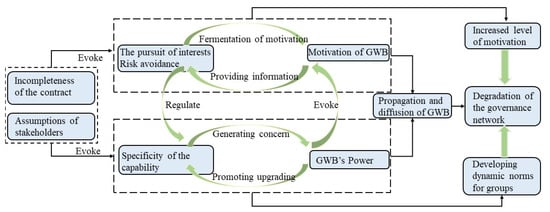
The incompleteness of contracts and the specificity of stakeholders often make GWB latent and ambiguous, rendering it difficult to articulate clearly [23]. Once GWB appears in the governance network, other stakeholders will detect it. If GWB is sufficiently penalized, stakeholders will invest the required capabilities as per the contract to achieve green value; if GWB is not penalized, they will weigh the pros and cons of GWB, attempting to balance the opportunity and benefit gap, leading to governance network degradation. Stakeholders with lower motivation will adjust their strategies based on the actions of higher-power parties, while those with higher power might increase their motivation due to the GWB of others. GWB implies a balance between contract enforcement and benefits, reflecting the level of collaboration among stakeholders in the governance network. Therefore, governance network degradation is a process of the transfer and diffusion of GWB across time and space within formal relationships, achieving a balance between formal relationship norms and opportunistic value [21]. Figure 1 illustrates the mechanism of governance network degradation.
Figure 1.
Degradation mechanism of formation governance network based on GWB.
3. Methodology
To investigate the relationship between GWB and governance network degradation among stakeholders in large-scale projects, the study constructs a nested model combining quadrilateral evolutionary games and the Susceptible-Exposed-Infected (SEI) model.
Although evolutionary game theory and network dynamics have both been applied in existing studies to analyze complex project governance issues, the key challenge lies in the fact that the degradation of governance networks in large-scale projects is essentially a coupled process of “strategy evolution–structure evolution.” This intrinsic mechanism implies that a single method cannot provide a sufficient explanation. From the perspective of individual behavior, greenwashing behavior (GWB) originates from opportunistic decision-making by stakeholders under incomplete contractual constraints, with its core rooted in strategy selection and payoff trade-offs. Evolutionary game theory can effectively capture the process of strategy adjustment among boundedly rational agents through repeated interactions; however, its analytical scope is typically limited to changes in strategy proportions, making it difficult to reflect how such behaviors diffuse through relational networks and reshape overall structures. From the perspective of network structure, governance network degradation manifests as the weakening of trust relationships, the breakdown of collaborative ties, and the spread of distrust states. This process exhibits typical characteristics of “contagion” and “path dependence.” Network-based approaches grounded in diffusion dynamics (e.g., SEI models) can effectively describe the process of state propagation; however, they often treat behavior as an exogenous variable and therefore cannot explain the endogenous mechanisms underlying its emergence.
Therefore, the problem addressed in this study is not a single-level issue of optimization or diffusion, but rather a complex system problem. Based on this, the study integrates a four-party evolutionary game with an SEI model, embedding the strategy evolution outcomes derived from the four-party game as endogenous driving variables into the network state transition process. In doing so, a bidirectional “strategy–structure” coupled modeling framework is established. This approach allows governance network degradation to be understood not as an exogenous shock or a static outcome, but as a dynamic process jointly driven by multi-agent strategic interactions and the evolution of network structure.
3.1. Research Assumptions
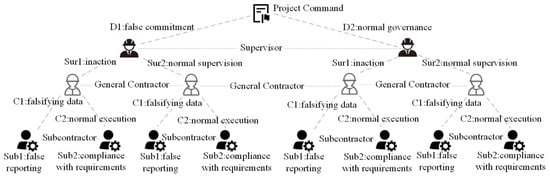
The process of governance network state degradation is shown in Figure 2. The definitions of all parameters in the proposed model are presented in Table 1. These parameters correspond to opportunistic behaviors, contractual governance mechanisms, behavioral decision preferences, and network structural characteristics, respectively. The method for calculating perceived value based on prospect theory is provided in Supplementary S1.
Figure 2.
The game structure of the quadrilateral.
Table 1.
Parameters and their definitions in the model.
The strategy sets for each party are as follows: Project command: {false commitment , normal governance }; Supervisor: {inaction , normal supervision }; General contractor: {falsifying data , normal execution }; Subcontractor: {false reporting , compliance with requirements }. Given this, the probabilities of project command, supervisor, general contractor, and subcontractor choosing false commitment, inaction, falsifying data, and false reporting respectively are denoted as , where .
The stakeholders are assumed to be bounded rational [4]. The project command operates under the assumption of a supervisor by government departments, and implementing GWB may lead to corrective actions being demanded [1]. All instances of GWB are considered opportunistic behavior, influenced by stakeholders’ preferences and perceived value during decision-making.
When the project command, supervisor, and general contracting unit all choose GWB, it results in reputational damage for all stakeholders involved [24];
When the principal party chooses GWB, the agent does not need to rectify GWB. If the supervisor chooses to avoid the GWB strategy, then the general contracting and subcontracting units will need to rectify their GWB.
The governance network connects stakeholders based on formal relationships in construction activities [25]. This study does not consider joint ventures or situations where one entity undertakes multiple construction tasks. Therefore, only the project command units of each section have connections.
The governance network has three states: represents a collaborative state where stakeholders actively negotiate; indicates stakeholders fulfilling their obligations but having motives for implementing GWB, leading to a fragmented state in the governance network; and signifies stakeholders engaging in GWB, causing the governance network to degrade into a state of mistrust [18].
Considering the internalization mechanism, stakeholders are influenced by GWB regardless of whether they are willing to adopt it or not [26]. The evolution of collaborative states in governance networks is a continuous and differentiable function over time , representing an adaptive structural evolution process [1]. Figure 3 illustrates the conceptual diagram of governance network state degradation.
Figure 3.
The conceptual diagram of governance network state degradation.
3.2. Model Construction
3.2.1. Quadrilateral’s Perceived Gains and Losses Model
Due to the manifestation of stakeholders’ behavioral games within contractual relationships through GWB in large-scale projects, this study employs a game tree to represent their game structure, as illustrated in Figure 3. Under different strategy combinations, the analysis of the opportunity gains for stakeholders engaging in GWB is as follows. The perceived gains and losses of stakeholders under different strategy combinations are shown in Table 2.
Table 2.
The perceived gains and losses of stakeholders.
3.2.2. The Replicator Dynamic Equations of Quadrilateral Games
The replicator dynamic equations for “false advertising”, “inaction”, “data fabrication”, and “false reporting” are presented in Equations (1) through (4). The procedure for its calculation is shown in Supplementary S2. The procedure for analyzing the evolutionary stability of the unilateral strategy and portfolio strategy are shown in Supplementary S3 and Supplementary S4, respectively.
3.3. The Governance Network Degradation Model Based on Quadrilateral Games
After identifying the strategy evolution of stakeholders’ GWB, these strategies are integrated into the SEI model to construct the governance network degradation model. It is important to note that, unlike using degree distribution to represent information diffusion in the network, this study uses average closeness centrality and network density to represent the propagation of GWB among stakeholders [50, 51]. Let denote the probability of being connected to a stakeholder in a breach of mistrust state at time ; thus, is given by Equation (5). The process of governance network degradation can be represented by Equation (6). The dynamic equilibrium effects, in which the governance network ultimately falls into discrete and mistrust states, are . Its proof can be found in Supplementary S5.
In which, , .
4. Numerical Simulation
The governance model for green construction has not effectively constrained GWB in large-scale projects, generally adopting the “government enforcement—voluntary corporate actions—market incentives” approach to control GWB [1]. GWB exhibits high complexity and prevalence in large-scale projects worldwide.
To assess the accuracy of the model, this study employs case surveys and literature reviews to investigate the range and characteristics of parameter values. The engineering project from a segment of the Xiji Expressway in Shanxi Province, China, was selected as the case study. This section is a key segment in improving the regional highway network and has clearly defined requirements and measures for green construction. However, the project has been criticized for serious issues such as direct sewage discharge, sludge accumulation, and excessive dust pollution (The parameter values of the case are shown in Supplementary Material S6). Stakeholders adopted GWBs, which resulted in the degradation of the governance network to a state of distrust.
The project is divided into three sections, with a total construction period of 800 days. In addition to the project command office, supervision teams, and general contractors for each section, the first section involves 12 subcontractors, the second section has seven subcontractors, and the third section includes six subcontractors. These parties are interconnected through contractual and quasi-contractual relationships within the network. The overall network structure is consistent with the scale of a large construction project, making this project highly suitable as a case study for this research. The average closeness centrality and density of the network are . It has .
Parameter values were referenced through semi-structured interviews, and the range of parameter values was determined based on the existing literature and theoretical analysis. The parameter value ranges are shown in Table 3.
Different stakeholders exhibit varying attitudes toward potential losses. Based on the “capability-bundled performance” effect [27], all participants tend to avoid risk [28]. The loss aversion coefficient measures each stakeholder’s attitude toward losses in green construction for transportation infrastructure. The project command center is responsible for managing the green construction performance of the entire segment. While the project command center typically oversees the planning, coordination, and supervision of the entire project, its direct exposure to risks and losses may be relatively limited compared to the actual construction operations. The supervisor is tasked with fulfilling the project command center’s requirements, ensuring the quality, safety, and contract compliance of green construction by the general contractor and subcontractors. Due to their unique position and responsibilities in green construction for transportation infrastructure, supervisors are highly alert and sensitive to risk management and loss aversion. The general contractor is responsible for the green construction and management of the entire segment. They tend to adopt a balanced approach, neither overly conservative nor excessively risky, maintaining a moderate attitude toward losses. Since subcontractors are typically responsible for more specific and detailed construction tasks, they are likely to be more focused on potential risks and losses and take corresponding measures to avoid them [29].
Different stakeholders have varying motivations for engaging in greenwashing behavior (GWB). The project command center, as the highest manager in transportation infrastructure green construction, is responsible for the overall progress and image of the project. It also seeks to secure more investment and policy support by demonstrating good green construction performance. Therefore, they are more cautious about GWB [30]. The supervisor’s role is to conduct inspections and supervision of green construction to ensure compliance and quality, rather than focus on the overall project image. Given their relatively smaller scale, their motivation for GWB is higher [31]. The general contractor, aiming to gain more market share in a highly competitive environment, adopts a neutral attitude toward GWB. Subcontractors, on the other hand, are more concerned with specific construction tasks than the overall green outcomes. To secure their immediate interests, their motivation for GWB is relatively high [32].
While GWB is rampant, it occurs less frequently in green construction for transportation infrastructure [33]. Existing research has not provided evidence of project interruptions due to GWB in green construction for transportation infrastructure. Although GWB impacts contract execution, participants generally complete their tasks according to contractual requirements, maintaining progress [30]. Thus, the level of contract completion by participants is linked to their capability configuration [33].
Estimates of the impact on reputation and penalties are based on contract completion levels. Due to the concealed and diverse nature of GWB, penalties for it are not clearly defined. In practice, green construction in transportation infrastructure often imposes explicit fines based on contract completion and adjusts the cooperation model in subsequent stages of construction [1].
Table 3.
Parameter Values for Monte Carlo Simulation.
4.1. Reliability Analysis
To ensure that the model developed in this study sufficiently explains the degradation process of large-scale green construction projects, rather than providing insights specific to a particular case, a Monte Carlo simulation was performed. Random sampling of parameters was conducted to assess the robustness of the model. The random sampling followed a normal distribution, as earlier studies often overlooked the impact of individual heterogeneity [35]. However, when the sample size is sufficiently large, parameter values tend to approximate a normal distribution. It is assumed that in the initial state, the project command, supervisors, and general contractors are in a collaborative state, while the subcontractors are in a discrete state, denoted as .
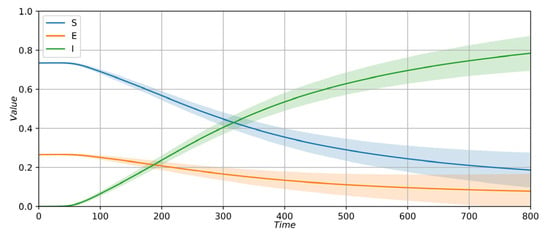
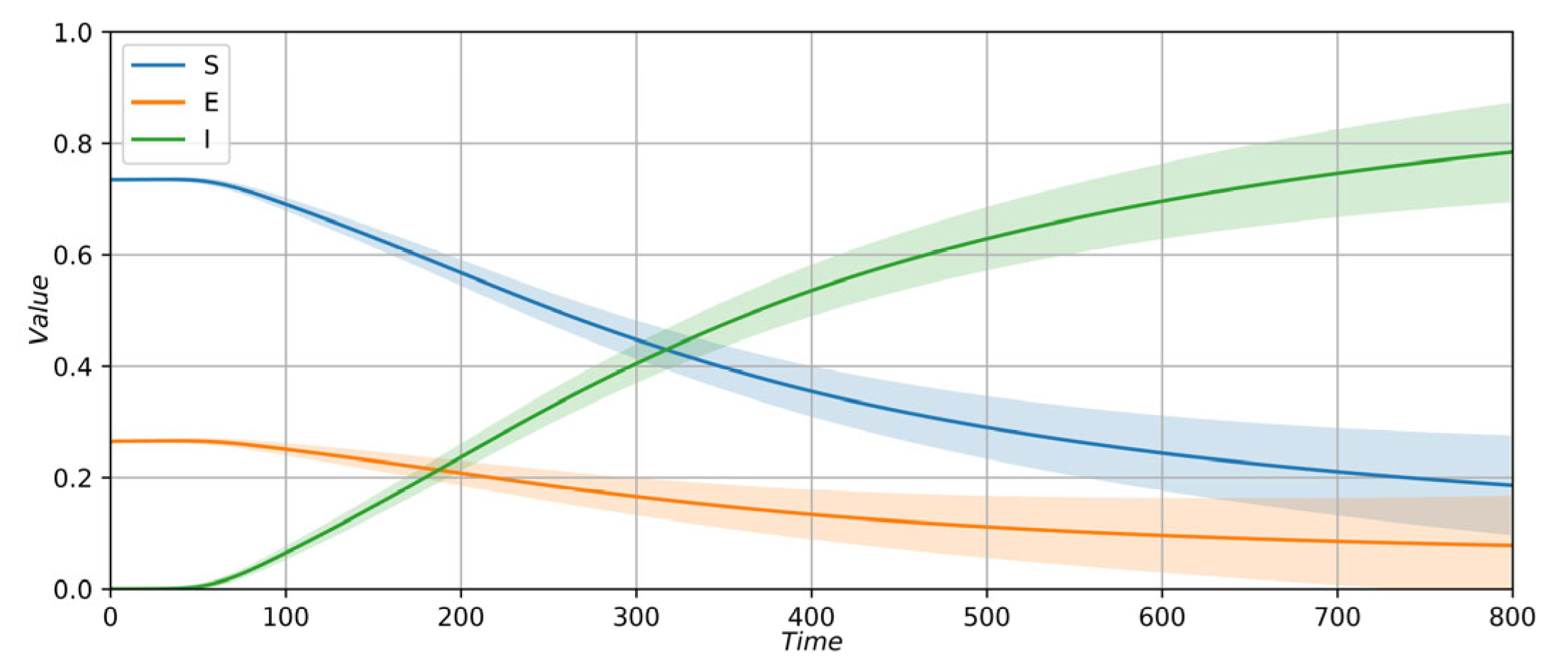
A total of 50,000 Monte Carlo simulations were conducted. Figure 4 presents the results of the Monte Carlo simulation. At the end of the project, the confidence intervals for the proportions of the collaborative, discrete, and distrust states were [0.0965, 0.2756], [0, 0.1672], and [0.6941, 0.8737], respectively. While the Monte Carlo simulation results showed slight deviations from the mathematical inferences and the results shown in Figure 4, both the distrust and collaborative states maintained upward and downward trends, respectively, at the 800th time point. This indicates that the system will continue to evolve and eventually stabilize over time. These findings are largely consistent with the model’s theoretical argument, demonstrating the strong reliability of the proposed degradation model.
Figure 4.
The result of Monte Carlo simulation.
4.2. Global Sensitivity Analysis
Based on the results of the Monte Carlo simulation, the parameters were fitted using time series embedding to analyze their role in the governance network degradation of transportation infrastructure. The global sensitivity of the parameters was analyzed according to Equations (7) and (8) [36].
—Value of the i-th parameter, ;
—Regression coefficient for the i-th parameter at time point t;
—Error at time point t.
—Average sensitivity coefficient for 50,000 simulations of the parameter at time point t.
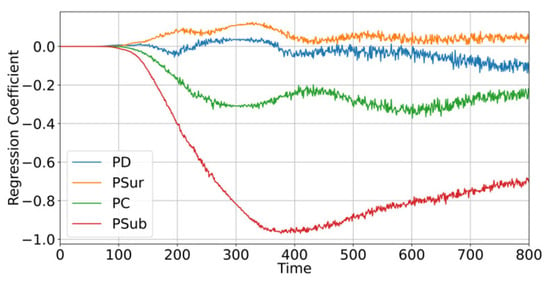
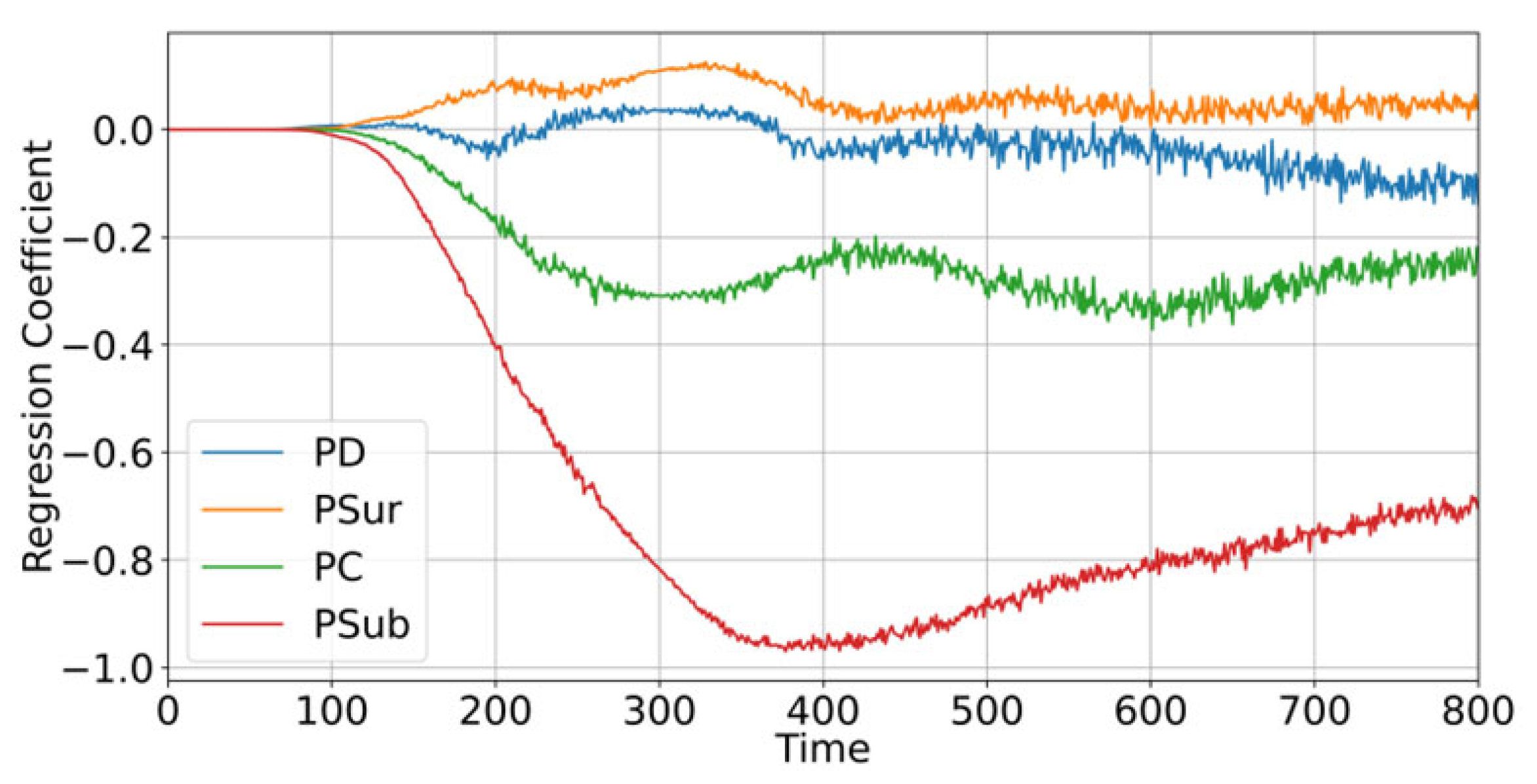
Figure 5 illustrates the global sensitivity of GWB implementation frequency in the governance network degradation. The results show that: (1) the frequency of GWB implementation by subcontractors exhibits the highest sensitivity in governance network degradation (−0.98 to 0), followed by general contractors (−0.38 to 0), then supervisors (0.1 to 0), with the project command gradually showing a more significant influence in the later stages (0.01 to −0.13); and (2) the frequency of GWB implementation by the participants suppresses governance network degradation. The GWB implementation frequency by subcontractors and general contractors negatively impacts governance network degradation, with the project command’s GWB sensitivity also showing a negative effect in the later stages. However, the GWB implemented by supervisors accelerates the degradation process of the governance network.
Figure 5.
Sensitivity Analysis of Implementation Frequency.
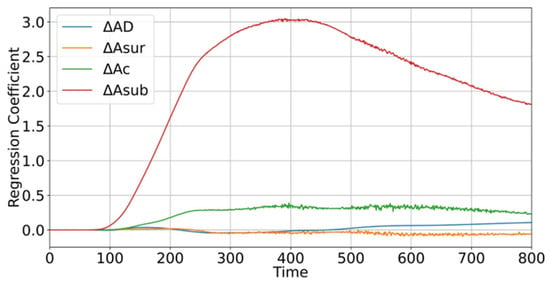
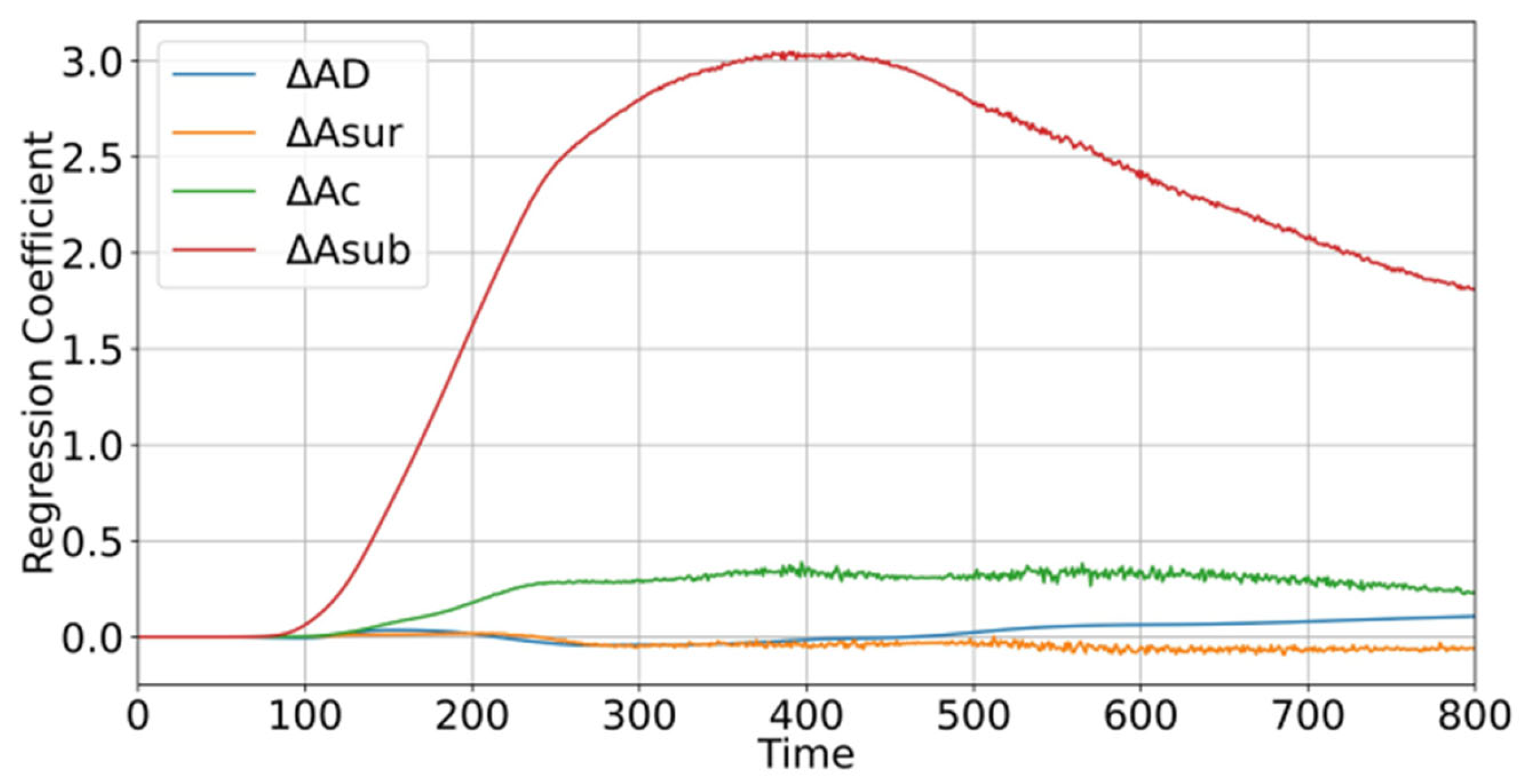
Figure 6 illustrates the impact of contract completion degree by the participants on governance network degradation. The results show that: (1) the contract completion degree of subcontractors has a significant positive impact on governance network degradation, with a global sensitivity level ranging from 0 to 3; (2) the impact of general contractors is weak, with a global sensitivity level ranging from 0 to 0.4; and (3) the project command and supervisors have insignificant effects in this regard, with their global sensitivity levels being very low.
Figure 6.
Sensitivity Analysis of Contract Completion Rate.
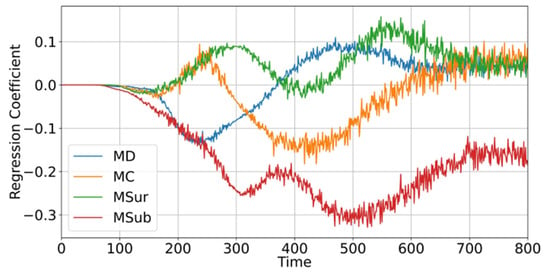
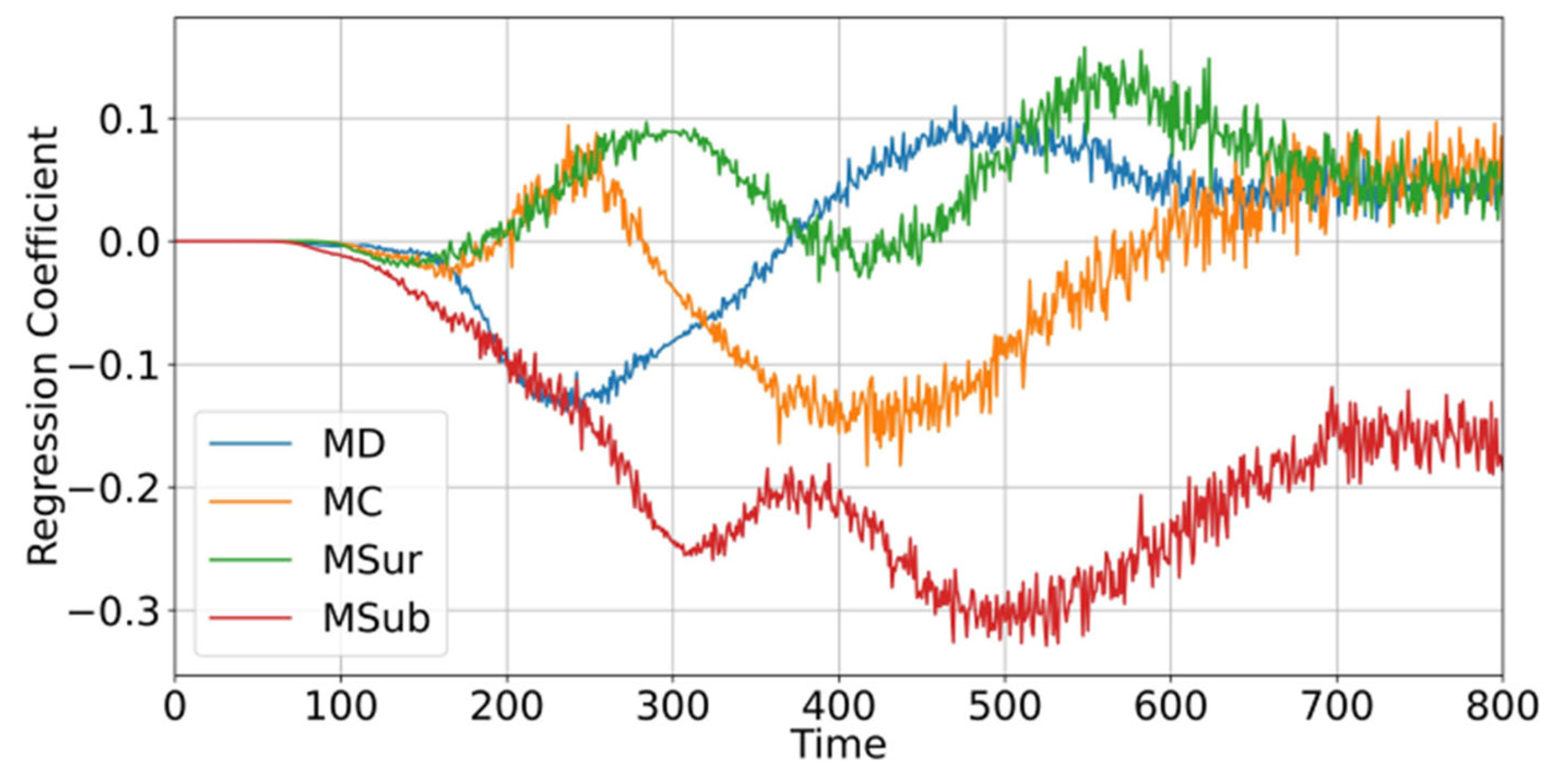
Figure 7 presents the sensitivity analysis results of the motivation levels of participants. The findings indicate: (1) the GWB motivation of participants shows a fluctuating sensitivity regarding governance network degradation; (2) the motivation level of the supervisor demonstrates a global positive impact, with a sensitivity range from −0.01 to 0.15, suggesting that the supervisor’s motivation level promotes governance network degradation; (3) the motivation level of the project command shows a trend of decreasing first and then increasing, with a sensitivity range from −0.13 to 0.1. This implies that their motivation level initially suppresses the process of governance network degradation, but later facilitates it; (4) the general contractor exhibits an opposite trend in sensitivity compared to the project command during the early and mid-stages, with a range from −0.18 to 0.1; and (5) the motivation level sensitivity of the subcontractors also presents a fluctuating trend. However, its global sensitivity shows a negative correlation, with a range from 0 to −0.33.
Figure 7.
Sensitivity Analysis of Motivation Level in GWB.
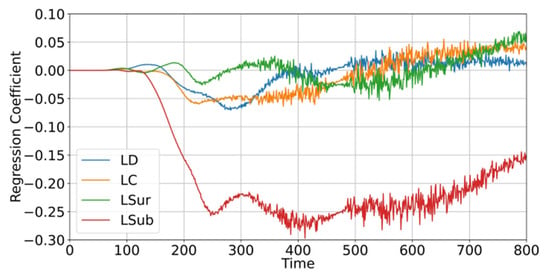
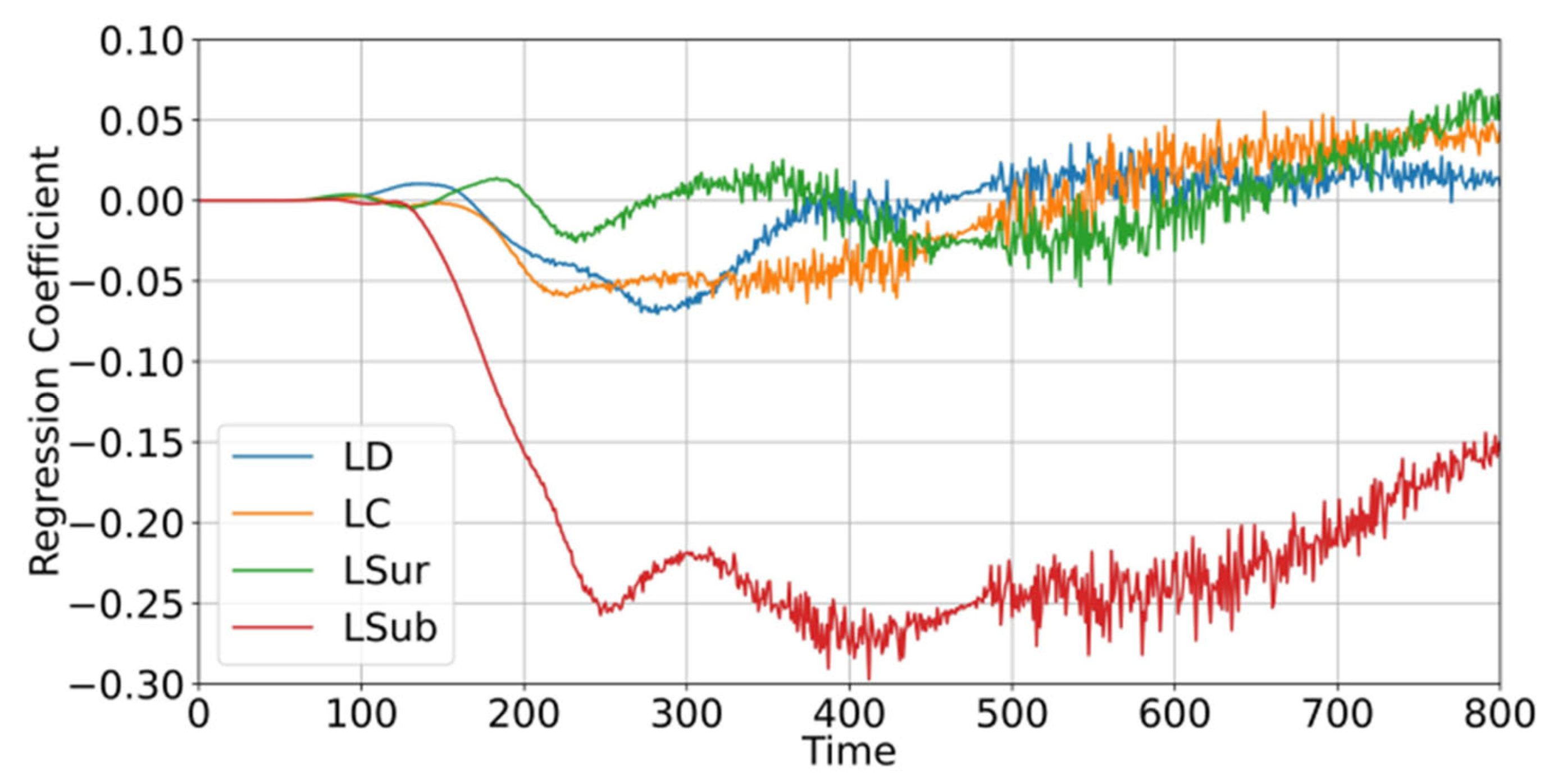
Figure 8 illustrates that the penalties in the contract do not effectively constrain the participants’ GWB. The results indicate that: (1) the sensitivity of penalties in constraining the project command, the supervisor, and the general contractor is extremely low. Their global sensitivity levels are as follows: −0.08 to 0.04, −0.05 to 0.06, and −0.055 to 0.05, respectively; and (2) the penalties for GWB only show relatively high sensitivity in constraining the subcontractors, with a global sensitivity level ranging from 0 to −0.3. Therefore, the penalty measures in the contract are ineffective in constraining the GWB of subcontractors.
Figure 8.
Sensitivity Analysis of Punishment Level.
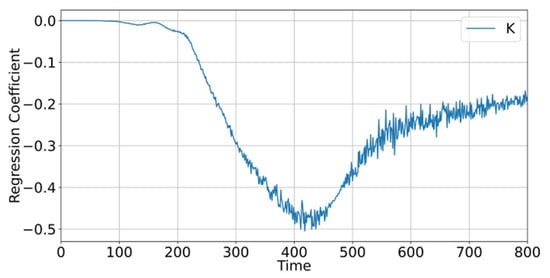
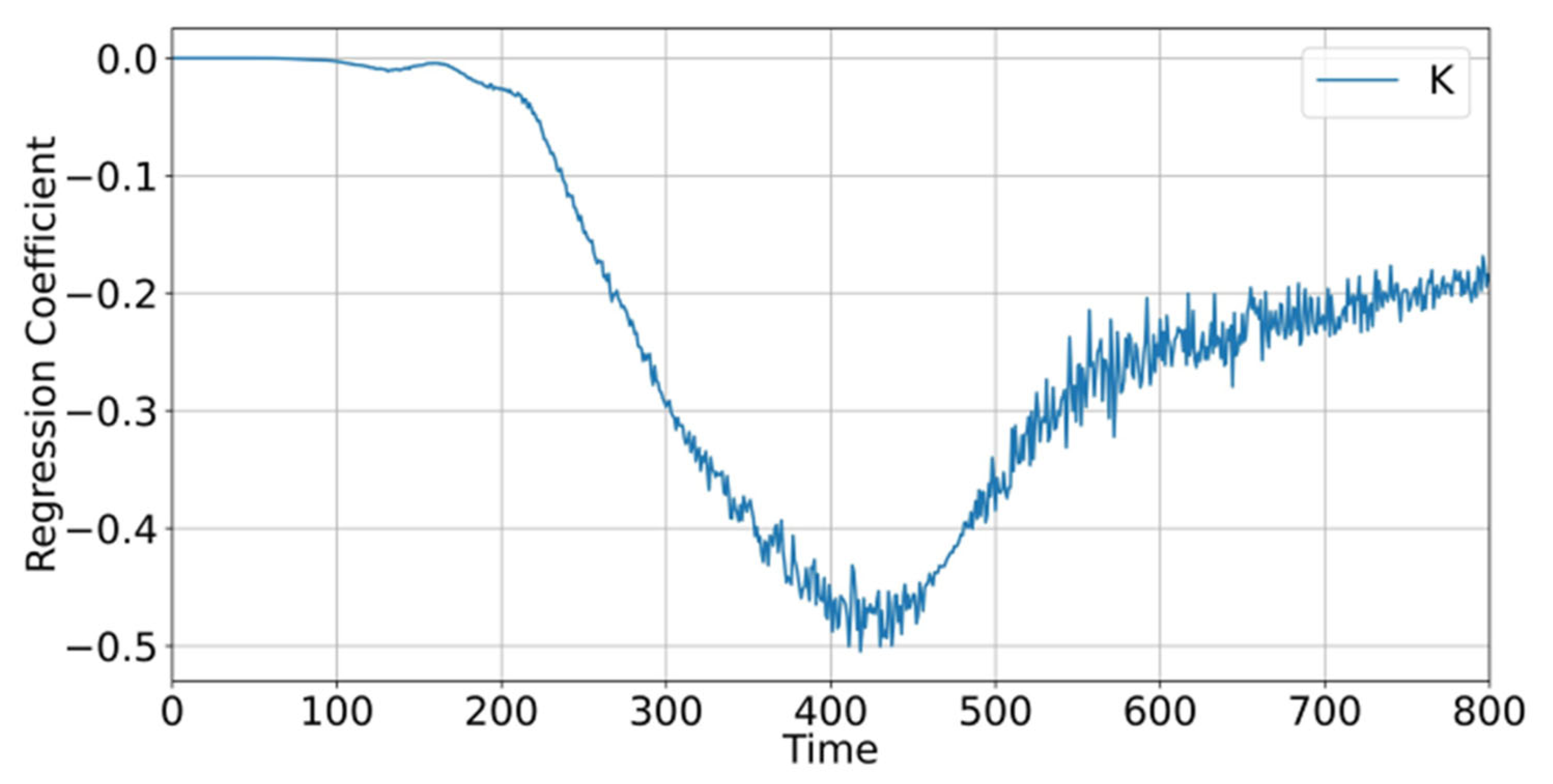
Figure 9 shows the global sensitivity of reputation impacts in governance network degradation. The results indicate that: (1) the impact of reputation is weak in the early stages. Due to the concealed and cumulative nature of GWB, its substantial effect on reputation only begins to emerge gradually in the mid-term; and (2) in the mid-term, the reputation impact exhibits a strong negative sensitivity, which weakens in the later stages. The global sensitivity level ranges from 0 to −0.5.
Figure 9.
Sensitivity Analysis of Reputation Loss.
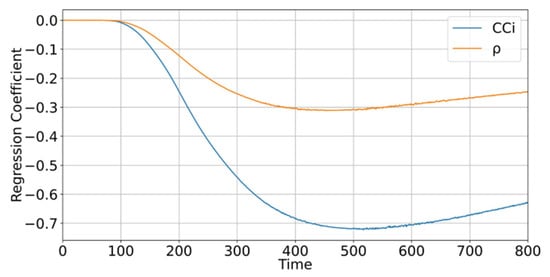
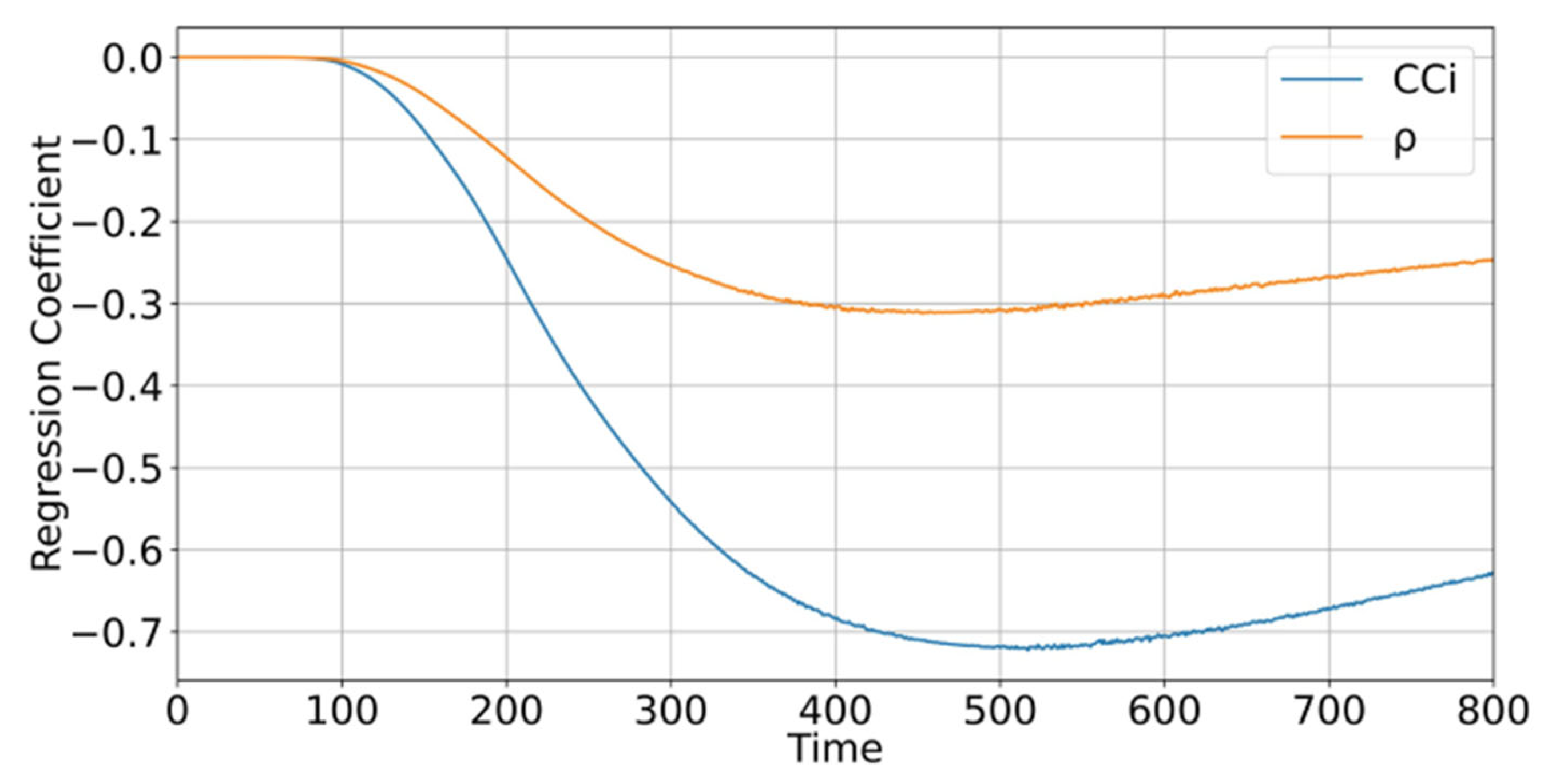
Figure 10 shows the global sensitivity of the governance network’s structure. The results indicate that: (1) both network density and participant centrality demonstrate negative correlations with governance network degradation; and (2) compared to governance network density, the sensitivity of participant tightness centrality is more significant. Their global sensitivity levels range from 0 to −0.305 for network density and 0 to −0.715 for participant centrality.
Figure 10.
Sensitivity Analysis of Governance Network Structure.
5. Discussion
This study, from an opportunistic perspective, offers a novel examination of the formation and diffusion mechanisms of GWB in large-scale green construction projects. By integrating a quadrilateral game model with differential dynamics, we developed a cross-scale governance network degradation model, which was then analyzed for stability, sensitivity, and reliability. The stability analysis confirms the robustness of this model, demonstrating its effectiveness in analyzing governance network degradation in large-scale green construction projects. The sensitivity analysis further elucidates the roles of various stakeholders’ GWB in the degradation process. The reliability analysis, through the project case and random sampling of a large number of samples, estimated all possible scenarios resulting from parameter variations, including the impact of changes in network structure [37]. It proves that the model has sufficient applicability and accuracy.
Unlike previous conceptual discussions that focused solely on GWB and governance network failure, this study extends the examination to the impact of GWB on project governance. We developed a cross-scale research model to investigate GWB evolution and the cross-level connections of governance network degradation within formal relationship interactions. Previous studies on network state evolution often utilized degree distribution to assess stakeholder impacts, which is more suitable for fully connected large-scale networks. However, due to specific patterns in the actual governance network structures of large projects, degree distributions are often discrete, and using probability density functions to construct continuous degree distributions can introduce significant errors [38]. This study addresses these limitations by measuring GWB diffusion using average closeness centrality and network density, aligning more closely with actual project network structures and improving model applicability and accuracy. Furthermore, unlike directed networks that reflect governance relationships, our model emphasizes collaborative efforts under contract governance. Moreover, existing research has extensively discussed project conflicts; however, in engineering practice, conflicts among stakeholders are rare. Current studies fail to provide accurate insights into the governance network degradation process. The key findings of this study are as follows:
- (1)
- The stakeholders’ cautious attitude toward GWB addresses the limitations of previous research on the dark side of projects. In Figure 5, the global sensitivity of the frequency of GWB implementation by all stakeholders, except the supervisor, shows varying degrees of negative impact. Similarly, in Figure 8, the global sensitivity of stakeholders’ motivation levels demonstrates fluctuating negative trends, and in Figure 10, the governance network structure also shows negative global sensitivity. It suggests that stakeholders in large-scale projects green construction exhibit caution when implementing GWB. This cautious approach is explained by the presence of low contractual completion levels within the governance network. The information asymmetry between stakeholders leads to a reevaluation and adjustment of GWB. Since stakeholders tend to adopt conservative strategies to protect their own interests, they may become more cautious when they perceive that GWB could negatively impact their long-term development [39]. In such cases, stakeholders are likely to avoid GWB to minimize risks, which further supports the idea that governance network degradation has a threshold . This observation aligns with the concept that governance network degradation occurs gradually and does not exhibit abrupt transitions, as stakeholders act prudently when faced with potential risks to their reputation and future prospects in the network. This finding bridges the gap in current research on the dark side of projects by addressing the limitations of the conventional assumption regarding the consistency of research subjects.
- (2)
- Punitive measures against stakeholders’ GWB fail to curb governance network degradation, indicating that contractual governance appears ineffective in constraining GWB. This result challenges the prevailing view in contractual governance research. As shown in Figure 8, punitive measures are ineffective in constraining the behavior of stakeholders, except for subcontractors. This supports the observation that, despite explicit penalties in contracts, the performance in green construction remains suboptimal. It also challenges the traditional view of contract governance. Although almost all contracts include penalty clauses to control the behavior of parties, green construction management continues to be criticized by both researchers and industry professionals. This indicates that, in large-scale green construction projects, the conventional governance approach is not applicable. Major stakeholders such as the project command, supervisors, and general contractors possess a strong resource base and risk resilience. For them, penalty clauses, while present, are not significant constraints. Their substantial management capacity, financial strength, and technical reserves allow them to effectively mitigate and avoid potential breach risks. Being at the helm of projects, these stakeholders often engage in negotiation or mediation to alleviate or shift responsibility, thereby circumventing harsh penalties. Additionally, they may reduce the direct constraints of contracts through project visas, construction orders, or formal requests. On the other hand, subcontractors typically have smaller scales, limited resources, and weaker risk resilience. For them, penalty clauses are more impactful, as the economic loss from breaching a contract could threaten their business operations and survival. Subcontractors are more reliant on adhering to policies and contract terms to secure ongoing business and cash flow, making them more susceptible to punitive measures. This suggests that the complexity of relationships in large-scale projects, where interconnected networks replace traditional linear function-based relationships, leads to inefficiencies in the application of conventional governance models [40]. This complexity creates gaps in governance practices that fail to fully address the challenges posed by the broader, more dynamic network of stakeholders in green construction.
- (3)
- A market-oriented operational mechanism based on reputational effects is key to curbing governance network degradation. As shown in Figure 9, reputation influence can help mitigate governance network degradation. Reputation, as a self-assessment made by stakeholders and their relationship with short-term interests, plays a pivotal role in value distribution and opportunities for future cooperation and development in green construction projects. However, its sensitivity weakens over time. This suggests that reputation may lose its effectiveness in the long term due to the inertia of governance network degradation. Over extended periods of collaboration, stakeholders within the network tend to develop a shared set of values regarding green construction, often prioritizing immediate benefits through actions such as implementing GWB at the expense of sustainable cooperation opportunities. In light of the results in Figure 10, it is clear that stakeholders struggle to establish a universal GWB standard. This difficulty stems from stakeholders’ continuous pursuit of self-interest, with a focus on acquiring ongoing support and opportunities for sustainable development. In theory, reputation has a significant constraining effect on GWB, helping to shape stakeholders’ behavior and push them towards more responsible decision-making. Therefore, based on the reputation effect, stakeholders can adopt a reasonable contract model that incorporates sufficient policy support to effectively curtail governance network degradation. Based on reputational effects, stakeholders can formulate appropriate contractual arrangements, fully implement the intensity of policy support, and establish a well-developed market-oriented operational mechanism to curb governance network degradation.
In summary, this study presents a complex governance network degradation model using game theory and differential dynamics, revealing that GWB is a result of multi-party interactive dynamics rather than an isolated behavior. By incorporating game strategies into the differential dynamics model, this study systematically analyzes stakeholder strategies and their impact on network degradation, addressing gaps in existing research and offering new theoretical insights. The cross-level governance network degradation model clarifies the diffusion mechanisms of GWB and the critical roles of different actors, advancing the theoretical development of green construction governance. Additionally, the study highlights the need for comprehensive multi-party game models to address the complexities of real-world projects, presenting new challenges and research directions for project management theories, especially in green construction governance.
6. Conclusions
The globalization of “green” performance has placed pressure on the construction industry to transition towards sustainability. Governments and construction companies around the world are improving corresponding policies and contracts to constrain GWB. Previous studies have developed decision support models based on hindering factors. However, to date, no research has developed a comprehensive approach that can systematically assess the choices of GWB by stakeholders and the process of governance network degradation in large-scale projects.
This study is the first to combine a four-party game and differential dynamics to help project managers evaluate the choices of GWB by stakeholders and the degradation process of the governance network in large-scale green construction projects. First, from an opportunistic perspective, it reveals the formation and diffusion mechanisms of GWB in large-scale green construction projects, showing that GWB originates from stakeholders’ pursuit of economic benefits and the incompleteness of contracts. Then, a four-party game model is constructed among the project command, supervision, general contractor, and subcontractors, and their GWB selection probabilities are embedded into differential equations, developing a cross-scale governance network degradation model. Sensitivity analysis results indicate that subcontractors’ GWB motivations, frequency, and contract enforcement significantly affect the evolution of governance network degradation. However, compared to the punishment mechanisms in contracts, the loss of reputation has a more constraining effect on GWB.
The theoretical contribution of this study lies in revealing the intrinsic mechanisms through which GWB in large-scale green construction projects leads to governance network degradation, enriching the theoretical research in the fields of project management and governance networks. By combining game theory and differential dynamics, it provides a new analytical framework that can more accurately capture the complex interactions and dynamic evolution between stakeholders. Practically, the study offers important insights into the governance of large-scale green construction projects. First, there should be strengthened supervision and constraints on the project command and general contractors to prevent the implementation of GWB, curbing governance network degradation from the source. Second, the management mechanisms for supervisors and subcontractors should be optimized to avoid defensive motivations leading them to choose GWB. Third, the market-based operating mechanism should be improved by introducing a more incentive-driven and binding reputation evaluation mechanism to enhance contract enforcement effectiveness. Finally, promoting information transparency and collaborative cooperation among stakeholders is crucial to building a foundation of trust, enhancing the governance network’s stability, and strengthening its risk resilience, especially between general contractors and subcontractors, and supervisors and subcontractors.
Despite the achievements of this study, several limitations remain. First, the model is constructed based on general green construction practices, which may not fully reflect the more complex and dynamic situations of real situations. It needs to be refined by integrating specific engineering cases. Second, the study mainly focuses on a specific type of large-scale project, and future research could expand to projects of different scales and industries to test the model’s applicability and generalizability. Future research directions can be pursued in the following ways: (1) combining empirical data to validate and revise the model, improving its practical applicability; (2) exploring the differences in the impact of GWB on governance networks across different cultural and institutional backgrounds, deepening understanding of global green construction governance; and (3) introducing more external factors, such as policies, regulations, and market competition, to build a more comprehensive and complex analytical model. In conclusion, this study provides new perspectives and methods for understanding and addressing GWB issues in large-scale green construction projects, and is of significant importance for improving the governance of large-scale green construction and achieving sustainable development goals.
Supplementary Materials
The following supporting information can be downloaded at: https://www.mdpi.com/article/10.3390/buildings16091804/s1.
Author Contributions
Conceptualization, Z.Z. and Y.S.; Methodology, Z.Z.; Formal analysis, X.Y. and J.L.; Visualization, Z.Z. and J.L.; Funding acquisition, X.Y. All authors have read and agreed to the published version of the manuscript.
Funding
This research was funded by [Key Science and Technology Projects in the Transport Sector] grant number [2019-ZD5-028] and [National Key Research and Development Program of China] grant number [2021YFF0602002].
Data Availability Statement
Data generated or analyzed during the study are available from the corresponding author by request.
Conflicts of Interest
All authors declare that they have no conflicts of interest or financial conflicts to disclose.
References
- Gao, X.; Zeng, S.; Zeng, R.; Shi, J.J.; Song, R. Multiple-stakeholders’ game and decision-making behaviors in green management of megaprojects. Comput. Ind. Eng. 2022, 171, 108392. [Google Scholar] [CrossRef] [Scilit]
- Haniff, A.P.; Galloway, L. Modeling strategic alignment in project networks. Int. J. Proj. Manag. 2022, 40, 517–530. [Google Scholar] [CrossRef] [Scilit]
- Yang, Z.; Nguyen, T.T.H.; Nguyen, H.N.; Nguyen, T.T.N.; Cao, T.T. Greenwashing Behaviours: Causes, Taxonomy and Consequences Based on a Systematic Literature Review. J. Bus. Econ. Manag. 2020, 21, 1486–1507. [Google Scholar] [CrossRef] [Scilit]
- He, W.; Zhang, Y.; Li, S.; Li, W.; Wang, Z.; Liu, P.; Zhang, L.; Kong, D. Reducing betrayal behavior in green building construction: A quantum game approach. J. Clean. Prod. 2024, 463, 142760. [Google Scholar] [CrossRef] [Scilit]
- Hwang, B.-G.; Zhao, X.; Tan, L.L.G. Green building projects: Schedule performance, influential factors and solutions. Eng. Constr. Archit. Manag. 2015, 22, 327–346. [Google Scholar] [CrossRef] [Scilit]
- Asghar, R.; Khan, M.A.; Alyousef, R.; Javed, M.F.; Ali, M. Promoting the green Construction: Scientometric review on the mechanical and structural performance of geopolymer concrete. Constr. Build. Mater. 2023, 368, 130502. [Google Scholar] [CrossRef] [Scilit]
- Onubi, H.O.; Yusof, N.; Hassan, A.S. Green construction practices: Ensuring client satisfaction through health and safety performance. Environ. Sci. Pollut. Res. 2022, 29, 5431–5444. [Google Scholar] [CrossRef] [Scilit]
- Chen, Y.; Wang, G.; He, Y.; Zhang, H. Greenwashing behaviors in construction projects: There is an elephant in the room! Environ. Sci. Pollut. Res. Int. 2022, 29, 64597–64621. [Google Scholar] [CrossRef] [Scilit]
- Huang, N.; Du, Q.; Zou, P.X.W.; Huang, Y. Analysis of key factors influencing green highway project development focusing on network interaction and project success: Evidence from China. Eng. Constr. Archit. Manag. 2023, 30, 3203–3223. [Google Scholar] [CrossRef] [Scilit]
- Liu, C.; Cao, J.; Wu, G.; Zhao, X.; Zuo, J. How does network position influence project performance in Chinese megaprojects? An inter-organizational conflict-based perspective. Int. J. Confl. Manag. 2022, 33, 448–474. [Google Scholar] [CrossRef] [Scilit]
- Gondia, A.; Ezzeldin, M.; El-Dakhakhni, W. Dynamic networks for resilience-driven management of infrastructure projects. Autom. Constr. 2022, 136, 104149. [Google Scholar] [CrossRef] [Scilit]
- Wang, Y.; Chong, D.; Liu, X. Evaluating the Critical Barriers to Green Construction Technologies Adoption in China. Sustainability 2021, 13, 6510. [Google Scholar] [CrossRef] [Scilit]
- He, Q.; Wang, Z.; Wang, G.; Zuo, J.; Wu, G.; Liu, B. To be green or not to be: How environmental regulations shape contractor greenwashing behaviors in construction projects. Sustain. Cities Soc. 2020, 63, 102462. [Google Scholar] [CrossRef] [Scilit]
- Johnsson, F.; Karlsson, I.; Rootzen, J.; Ahlback, A.; Gustavsson, M. The framing of a sustainable development goals assessment in decarbonizing the construction industry—Avoiding “Greenwashing”. Renew. Sustain. Energy Rev. 2020, 131, 110029. [Google Scholar] [CrossRef] [Scilit] [PubMed]
- Leon, H.; Osman, H.; Georgy, M.; Elsaid, M. System Dynamics Approach for Forecasting Performance of Construction Projects. J. Manag. Eng. 2018, 34, 04017049. [Google Scholar] [CrossRef] [Scilit]
- Liu, L.; Zhao, M.; Fu, L.; Cao, J. Unraveling local relationship patterns in project networks: A network motif approach. Int. J. Proj. Manag. 2021, 39, 437–448. [Google Scholar] [CrossRef] [Scilit]
- He, Q.; Luo, L.; Hu, Y.; Chan, A.P.C. Measuring the complexity of mega construction projects in China—A fuzzy analytic network process analysis. Int. J. Proj. Manag. 2015, 33, 549–563. [Google Scholar] [CrossRef] [Scilit]
- Shi, Q.; Chen, X.; Xiao, C.; Han, Y. Network Perspective in Megaproject Management: A Systematic Review. J. Constr. Eng. Manag. 2022, 148, 03122002. [Google Scholar] [CrossRef] [Scilit]
- Liu, J.; Wang, Z.; Skitmore, M.; Yan, L. How Contractor Behavior Affects Engineering Project Value-Added Performance. J. Manag. Eng. 2019, 35, 04019012. [Google Scholar] [CrossRef] [Scilit]
- Ilg, P. How to foster green product innovation in an inert sector. J. Innov. Knowl. 2019, 4, 129–138. [Google Scholar] [CrossRef] [Scilit]
- Cuypers, I.R.P.; Hennart, J.F.; Silverman, B.S.; Ertug, G. Transaction cost theory: Past progress, current challenges, and suggestions for the future. Acad. Manag. Ann. 2021, 15, 111–150. [Google Scholar] [CrossRef] [Scilit]
- Avsar, M.M.S.; Onut, S. A Multi-objective model for time-cost-quality-risk tradeoff problems in project management. Int. J. Ind. Eng. 2022, 29, 826. [Google Scholar]
- Xue, J.; Shen, G.Q.; Deng, X.; Ogungbile, A.J.; Chu, X. Evolution modeling of stakeholder performance on relationship management in the dynamic and complex environments of megaprojects. Eng. Constr. Archit. Manag. 2022, 30, 1536–1557. [Google Scholar] [CrossRef] [Scilit]
- Zhang, Q.; Oo, B.L.; Lim, B.T.H. Linking corporate social responsibility (CSR) practices and organizational performance in the construction industry: A resource collaboration network. Resour. Conserv. Recycl. 2022, 179, 106113. [Google Scholar] [CrossRef] [Scilit]
- Lim, B.T.H.; Oo, B.L.; McLeod, C.; Yang, P.Q. Institutional and Actor Network Perspectives of Waste Management in Australia: Is the Construction Industry Prepared for a Circular Economy? Sustainability 2024, 16, 617. [Google Scholar] [CrossRef] [Scilit]
- Wang, L.A.; Chan, D.W.M.; Darko, A.; Oluleye, B.I. A-state-of-the-art review of risk management process of green building projects. J. Build. Eng. 2024, 86, 108738. [Google Scholar] [CrossRef] [Scilit]
- Zheng, Z.; Su, Y.; Liu, J. Unlocking the Potential of Construction Governance: Developing Participants’ Capability Scale. Systems 2024, 12, 497. [Google Scholar] [CrossRef] [Scilit]
- Luo, Y.Z.; Chen, Y.Z. Understanding the Relationship between Asset Specificity and Governance Choices in Construction Projects: Moderating Role of Uncertainty. J. Constr. Eng. Manag. 2023, 149, 04022178. [Google Scholar] [CrossRef] [Scilit]
- Hammond, S.F.; Gajendran, T.; Savage, D.A.; Maund, K. Unpacking the problems behind the limited green construction adoption: Towards a theoretical model. Eng. Constr. Archit. Manag. 2021, 28, 833–844. [Google Scholar] [CrossRef] [Scilit]
- Wang, Z.; He, Q.; Locatelli, G.; Wang, G.; Li, Y. Exploring Environmental Collaboration and Greenwashing in Construction Projects: Integrative Governance Framework. J. Constr. Eng. Manag. 2023, 149, 04023109. [Google Scholar] [CrossRef] [Scilit]
- Li, X.; Li, J.; Shen, Q. Infection mechanism of greenwashing behavior of construction material enterprises under multi-agent interaction. Dev. Built Environ. 2024, 17, 100321. [Google Scholar] [CrossRef] [Scilit]
- Li, X.; Ding, Z. Decision-making mechanisms of greenwashing behaviors of building materials manufacturers: A media disclosure and consumer skepticism perspective. Environ. Technol. Innov. 2024, 35, 103705. [Google Scholar] [CrossRef] [Scilit]
- Zheng, Z.Z.; Su, Y.K.; Liu, J.H.; Zhou, Z.C.; Wang, X. Optimization Study on Stakeholder Capability Configuration in Green Construction. Buildings 2024, 14, 3135. [Google Scholar] [CrossRef] [Scilit]
- Kim, S.; Chin, S.; Han, J.; Choi, C.H. Measurement of Construction BIM Value Based on a Case Study of a Large-Scale Building Project. J. Manag. Eng. 2017, 33, 05017005. [Google Scholar] [CrossRef] [Scilit]
- Nian, F.Z.; Yang, Y. Effects of individual heterogeneity on social contagions. Chin. Phys. B 2024, 33, 058705. [Google Scholar] [CrossRef] [Scilit]
- Zheng, Z.; Su, Y.; Liu, J. Deconstructing synergistic carbon reduction mechanisms in large-scale construction governance: A Monte Carlo simulation based on a cross-scale model. Ain Shams Eng. J. 2025, 16, 103513. [Google Scholar] [CrossRef] [Scilit]
- Bai, X.; Zhao, J. Safety emergency management strategy of industrial building construction projects: Based on analysis methods of polymorphic fuzzy reliability. Int. J. Ind. Eng. 2022, 29, 758. [Google Scholar]
- Moussa, A.; El-Dakhakhni, W. Managing Interdependence-Induced Systemic Risks in Infrastructure Projects. J. Manag. Eng. 2022, 38, 04022048. [Google Scholar] [CrossRef] [Scilit]
- Wang, D.; Wang, Y.; Lu, Y. Impact of Regulatory Focus on Uncertainty in Megaprojects: Mediating Role of Trust and Control. J. Constr. Eng. Manag. 2020, 146, 04020142. [Google Scholar] [CrossRef] [Scilit]
- Xing, C.; Zhang, Y.M.; Tripe, D. Green credit policy and corporate access to bank loans in China: The role of environmental disclosure and green innovation. Int. Rev. Financ. Anal. 2021, 77, 101838. [Google Scholar] [CrossRef] [Scilit]



Disclaimer/Publisher’s Note: The statements, opinions and data contained in all publications are solely those of the individual author(s) and contributor(s) and not of MDPI and/or the editor(s). MDPI and/or the editor(s) disclaim responsibility for any injury to people or property resulting from any ideas, methods, instructions or products referred to in the content. |
© 2026 by the authors. Licensee MDPI, Basel, Switzerland. This article is an open access article distributed under the terms and conditions of the Creative Commons Attribution (CC BY) license.