


Abstract
Ground source heat pump (GSHP) systems, while energy-efficient, often face persistent soil thermal imbalance in heating-dominated severe cold regions, which undermines their long-term performance and sustainability. This study proposes a TRNSYS-GenOpt framework for the life-cycle cost optimization of hybrid GSHP systems integrating electric boilers and geothermal regulation towers. A transient model for a 5650 m2 fire station in Changchun was developed, employing the Hooke–Jeeves algorithm to co-optimize boiler capacity, borehole depth, and geothermal regulation tower airflow under constraints on heating supply temperature and soil thermal balance. Time-of-use electricity pricing was incorporated for realistic operational economics. The optimized configuration (148 m, 864.8 kW, 290,400 m3/h) achieved a minimum 20-year life-cycle cost of CNY 1.13 million. Sensitivity analysis revealed “rigid design, flexible cost” characteristics: optimal parameters remained invariant across discount rate variations (3.5–7.5%) and equipment costs (±20%), while life-cycle cost showed the highest sensitivity to electricity pricing and discount rates. The long-term simulation confirmed compliance with all physical constraints. This methodology demonstrates that thermodynamic constraints supersede economic trade-offs in severe cold climates, providing engineers with a reliable tool for sustainable hybrid geothermal system design.
1. Introduction
1.1. Background
Ground source heat pump (GSHP) systems are widely recognized as one of the most energy-efficient and environmentally benign technologies for covering simultaneous heating and cooling demands in built environments. By utilizing the stable temperature of shallow geothermal strata, GSHPs achieve higher coefficients of performance (COPs) than conventional air-source units. Nevertheless, in heating-dominated severe cold regions, the continuous heat extraction from the borehole field often leads to progressive soil temperature decline—a phenomenon known as “thermal imbalance” that fundamentally challenges the long-term sustainability of these systems.
Severe cold regions, as formally defined by China’s Code for Thermal Design of Civil Buildings (GB 50176-2016), are areas characterized by a mean temperature of the coldest month ≤ −10 °C and ≥145 days with a daily mean temperature ≤5 °C [1]. The case-study city of Changchun, located in Northeast China, exemplifies these conditions with a heating season lasting approximately 169 days (from 20 October to 6 April) and an extreme outdoor design temperature as low as −21.1 °C. This long-term imbalance is fundamentally exacerbated by two interconnected factors specific to severe cold regions: (1) Overwhelmingly dominant heating load: The annual heating demand far exceeds the cooling demand, leading to a net sustained extraction of heat from the ground over the entire year. (2) Low soil temperature recovery potential: The short, mild summer provides insufficient heat injection (cooling mode operation) to replenish the heat extracted during the long winter. As the ground temperature drops year after year, the COP of the heat pump decreases during heating seasons, requiring more electrical energy to deliver the same heating output, which in turn further aggravates the imbalance—a vicious cycle that ultimately compromises the sustainability of the entire investment.
A straightforward remedy is to hybridize the ground loop with auxiliary heat sources or thermal storage elements, thereby redistributing the annual thermal load and regenerating the soil temperature during favorable periods [2,3,4]. Common hybrid configurations include the integration of solar thermal collectors (STC) [5,6], geothermal regulation towers (GRT) [7,8], air-source heat pumps [9], or auxiliary boilers [10]. However, the design of such Hybrid GSHP (HGSHP) systems introduces significant complexity, as it requires the simultaneous consideration of multiple, often conflicting, objectives: minimizing capital and operational costs, enhancing heat transfer performance to maximize system energy efficiency, and ensuring long-term soil thermal balance [11,12,13].
The remainder of Section 1 reviews the existing literature, identifies critical research gaps, and outlines the specific objectives and contributions of this study.
1.2. Literature Review and Research Gaps
Over the past decade, numerical simulation has become an essential tool for designing and optimizing hybrid GSHP installations. Recent TRNSYS-based studies have focused primarily on component sizing [14], borefield layout optimization [3], and comparing fixed-schedule operation modes [4]. TRNSYS, with its modular structure and robust geothermal library, is one of the most widely adopted platforms for evaluating the dynamic interactions between building loads, heat pump units, and ground heat exchangers (GHEs) [15,16,17]. While these studies provide valuable sizing guidelines, they predominantly rely on rule-based control strategies with constant set points and fixed flow rates. Consequently, the potential for real-time, weather-driven optimization of both the source and load sides of the system remains largely unexplored, particularly in institutional buildings where part-load conditions dominate more than 80% of operating hours [5].
To systematically identify the research gaps and position this study within the existing literature, a comparative analysis of recent hybrid GSHP optimization studies was conducted. Three critical dimensions emerge from this review: climate coverage, optimization methodology, and constraint handling—each revealing significant limitations regarding applications in severe cold regions.
Climate coverage limitations: The majority of existing studies focus on residential or large commercial buildings in temperate climates [15,16,17,18], where heating and cooling loads are relatively balanced. Only limited research addresses cold regions [17,18,19] and none specifically target severe cold regions (mean January temperature ≤ −10 °C) as defined by China’s GB 50176-2016 standard [1]. This climate bias is problematic because severe cold regions impose unique thermodynamic constraints—dominant heating loads, limited soil recovery potential, and extreme design temperatures—that fundamentally alter system optimization requirements.
While recent studies have begun addressing medium-depth GSHP design in cold regions, Li et al. [20] highlighted that end-load variation characteristics in severe cold climates necessitate holistic system optimization rather than single-parameter adjustment. However, their study relied on manual parameter sweeping rather than automated algorithms, leaving a critical gap in systematic multi-parameter co-optimization for such climates.
Optimization methodology limitations: While TRNSYS is widely used for system simulation, its coupling with advanced optimization tools remains limited. Existing studies predominantly rely on standalone simulations without systematic parameter optimization [15,16,17,18], or they employ population-based algorithms (GA, PSO) that require a high computational cost (typically 1000+ iterations) [19,21]. Notably, the Hooke–Jeeves (H-J) algorithm has demonstrated computational advantages in building energy optimization, such as achieving a 14% reduction in annual source energy consumption for an office building using only 98 simulation runs [22] and has been successfully applied in a complex polygeneration system integrating solar, wind, and geothermal energy to produce multiple energy vectors including electricity, heating, cooling, hydrogen, and purified water. The optimized system achieved a high solar fraction of 0.78 [23].
The Hooke–Jeeves algorithm has demonstrated a consistent performance in renewable energy system optimization using the TRNSYS-GenOpt framework. Gesteira et al. [24] applied the H-J algorithm convergence in approximately 150 iterations for polygeneration systems using TRNSYS-GenOpt, validating the computational efficiency for complex residential energy systems.
The latest benchmark study further confirms that the H-J algorithm, as a deterministic direct search method, exhibits characteristics of stable convergence and relatively low computational overhead in low-dimensional continuous optimization problems and is capable of reliably finding high-quality solutions [25]. Recent comparative studies have further validated the Hooke–Jeeves algorithm’s applicability in HVAC system optimization. Li et al. [26] demonstrated that an improved H-J algorithm achieved superior convergence stability compared to PSO for HVAC parameter optimization, with 15% higher computational efficiency in continuous variable problems. This corroborates the suitability of H-J for the present three-parameter continuous optimization problem.
Furthermore, conventional economic evaluations often fail to consider time-of-use electricity pricing, despite its crucial role for demand-side management in regions with significant peak-valley price differentials.
Constraint handling limitations: [18,19,21,27,28,29]. This oversight risks gradual system performance degradation over time. To ensure feasible and sustainable designs, a systematic method is needed to incorporate hard physical constraints (e.g., minimum supply temperature and soil temperature stability) via penalty functions within an automated optimization routine.
Table 1 presents a systematic comparison of recent studies on hybrid GSHP system optimization, revealing critical patterns in climate coverage, optimization methodology, and constraint handling.
Table 1.
The comparison of recent studies on hybrid GSHP system optimization.
Recent advances in TRNSYS-based optimization methods further support the selection of the H-J algorithm. Meiers and Frey conducted comprehensive benchmark tests comparing seven GenOpt solvers, including H-J, GPS-PSO-CCHJ, and PSO variants, confirming that derivative-free pattern search methods exhibit superior convergence stability when dealing with simulation-based objective functions where gradients are unavailable. Specifically, for continuous single-objective problems involving 3–4 decision variables, the H-J algorithm requires only 81–117 iterations to converge, whereas population-based optimization methods typically require over 1000 iterations [22,25]. In practical applications under severe cold climates, field tests by Wang et al. [30] demonstrated that the MD-GSHP system can maintain a COP between 4.5 and 5.2 even at an outdoor temperature of −25.1 °C, validating the physical feasibility domain assumed in this optimization study. Additionally, thermal response tests conducted by Ma et al. [31] in Changchun using distributed optical fiber sensors determined an equilibrium temperature of approximately 10.54 °C, which was adopted as the recovery constraint in this research.
To the best of the authors’ knowledge, no prior study has applied automated multi-parameter co-optimization with hard constraint handling to HGSHP systems in severe cold climates. This research gap is particularly significant given that severe cold regions impose unique thermodynamic constraints—dominant heating loads, limited soil recovery potential, and extreme design temperatures—that fundamentally alter the optimization landscape compared to temperate climates. The present study addresses this gap by integrating TRNSYS dynamic simulation with the Hooke–Jeeves direct search algorithm, enabling the computationally efficient co-optimization (≈200 iterations versus 1000+ for GA/PSO) of three continuous design variables under hard engineering constraints.
Table 1 systematically corroborates the limitations identified across the three aforementioned dimensions. A review of the existing literature reveals a distinct evolutionary trajectory: from rule-based deterministic simulations [15,16,17] to optimization employing computationally expensive metaheuristic algorithms (e.g., GA and PSO) [19,21]. However, these advancements are yet to effectively address the fundamental challenge posed by the specific context of severe cold regions: the inherent tension between system economic viability and long-term sustainability under extreme climatic conditions and hard engineering constraints.
Concretely, for medium-scale public buildings in severe cold regions (exemplified by the fire station case study in this research), the aforementioned limitations converge and give rise to three specific, pressing design problems:
Area 1: Insufficient consideration of severe cold climate characteristics.
Most existing studies focus on residential or large commercial buildings in temperate climates [15,16,17,18,19,21], leaving a knowledge gap regarding optimal HGSHP design for medium-scale public buildings (e.g., fire stations) in severe cold regions with dominant heating requirements. The extreme climatic conditions and unique operational schedules of such buildings present distinct challenges for system sustainability and cost-effectiveness.
Area 2: Lack of integrated simulation–optimization frameworks.
While TRNSYS is widely used for system simulation, its coupling with advanced optimization tools (e.g., GenOpt) remains limited. Existing studies often rely on standalone simulations without systematic parameter optimization [27,28,29] or address single parameters (e.g., borehole depth) rather than holistic, multi-parameter co-optimization.
Area 3: Incomplete treatment of long-term soil thermal balance.
The long-term thermal balance of the soil is often neglected or treated as a soft constraint in existing optimization approaches. This oversight risks gradual system performance degradation over time. To ensure feasible and sustainable designs, a systematic method is needed to incorporate hard physical constraints (e.g., minimum supply temperature and soil temperature stability) via penalty functions within an automated optimization routine.
The selection of the Hooke–Jeeves (H-J) direct search algorithm is motivated by the specific mathematical characteristics of the present optimization problem. Unlike gradient-based methods that require differentiable objective functions, H-J is derivative-free and well-suited for simulation-based optimization where gradients are unavailable. Compared with population-based metaheuristics (GA and PSO), H-J offers deterministic convergence with significantly lower computational cost (approximately 200 iterations versus 1000+ for GA/PSO), ensuring reproducible results critical for engineering decision-making. These theoretical advantages will be further validated through comparative analysis in Section 4.8.
1.3. Objectives
The specific objectives are structured to directly target the identified gaps:
Objective 1: To develop a high-fidelity TRNSYS model for a hybrid GSHP system incorporating an electric boiler and a geothermal regulation tower, applied to a fire station in Northeast China’s severe cold region.
Objective 2: To implement the Hooke–Jeeves direct search algorithm for the co-optimization of three key design parameters (electric boiler capacity, borehole depth, and regulation tower airflow), with time-of-use electricity tariffs integrated into the life-cycle cost (LCC) objective function.
Objective 3: To evaluate the optimized system’s performance in terms of LCC, seasonal performance factor (SPF), and long-term (20-year) soil temperature evolution, ensuring compliance with hard constraints on heating supply temperature and soil thermal balance.
Objective 4: To validate the computational efficiency and practical applicability of the Hooke–Jeeves algorithm for this class of engineering design problems.
1.4. Research Contributions
The core contributions of this work are threefold: First, it provides a practically optimal design solution tailored to a challenging severe cold climate and a medium-scale public building—a case type underrepresented in the existing literature. Second, it demonstrates a systematic, multi-parameter co-optimization methodology that integrates detailed dynamic simulation with automated search algorithms, explicitly accounting for time-of-use electricity pricing. Third, it introduces a constraint-handling approach via penalty functions to ensure the optimized design satisfies critical operational and sustainability limits, including hard constraints on heating supply temperature (≥44 °C) and long-term soil thermal balance (recovery to 10.54 °C).
The remainder of this paper is structured as follows: Section 2 describes the case-study building and HGSHP system configuration; Section 3 details the optimization problem formulation and algorithm coupling; Section 4 presents results, performance analysis, and sensitivity evaluation; and Section 5 summarizes findings and outlines future work.
The optimal design of complex building energy systems, such as hybrid ground source heat pumps, requires a systematic methodology encompassing precise modeling, multi-objective/parametric optimization, and case validation in order to ensure the reliability and scalability of the solutions [32,33]. This study adheres to this approach.
2. Methods
2.1. Building Information
As shown in Figure 1, the project has a total floor area of 5650 square meters and a total energy-supplying area of 10,664 m2. The building has four storeys above ground and a total height of 18.45 m.
Figure 1.
Special fire station. (a) South side of the building and (b) north side of the building.
Figure 2 shows the building model used for the simulation, which is based on the special fire station of a chemical park.
Figure 2.
The building simulation model.
This project is a Class A public building in a severe cold region. The heat transfer coefficient of the envelope structure is shown in Table 2.
Table 2.
Envelope performance parameters of the research object.
The parameter calculation is based on the provisions of the “Green Performance Calculation Standard for Civil Buildings” [34].
2.2. Simulation of the Hourly Load of the Building
The hourly load of the building forms the basis for the dynamic analysis of the air conditioning system. This paper uses TRNSYS—a transient system simulation platform developed at the University of Wisconsin—to model and calculate electric boiler–ground source heat pump heating systems [35,36]. TRNSYS features a modular architecture comprising five core components: simulation studio, TRNBuild, TRNEdit, TRNExe, and TRNOPT. It has an integrated library of domains, including building systems, HVAC, controls, and renewable energy. This allows for the simultaneous simulation of hourly building energy consumption, solar thermal heating, photovoltaics, ground source heat pumps, and multi-energy complementary systems, making it the preferred tool for integrated heating research. Hourly load calculation results based on this platform are presented in Figure 3.
Figure 3.
Hourly load calculation results.
The boundary conditions are derived from the Changchun typical meteorological year (TMY) dataset. Heating period: 169 days (20 October to 6 April of the following year, with a daily average of ≤+5 °C); cooling period: 62 days (1 July to 31 August); outdoor design temperatures: −21.1 °C/32.7 °C; and indoor setpoints: 20 °C/26 °C [37,38]. A building dynamic model was subsequently established using TRNSYS-18 to compute hourly loads throughout the year. The simulation results (Figure 3) show that the hourly thermal loads during this period were higher than at the beginning and end of the season due to lower mid-season temperatures and weaker solar radiation. The peak thermal load of 760 kW occurred at 06:00 on 25 January (hour 9342), while the peak cooling load of 800 kW occurred at 17:00 on 17 July (hour 4750). These results are consistent with the expected meteorological trends and thus corroborate the model.
3. System Modeling
This section details the integrated simulation–optimization framework developed for the life-cycle cost-driven design of the hybrid ground source heat pump (HGSHP) system. Figure 4 illustrates the overall workflow of this approach, where TRNSYS serves as the simulation engine for dynamic performance evaluation, while GenOpt drives the iterative optimization of key design variables (boiler capacity, borehole depth, and regulation tower airflow). The framework establishes a closed-loop process: system configuration parameters are fed into the TRNSYS model to generate annual performance metrics (COP, soil temperature, operating cost), which GenOpt evaluates against the life-cycle cost objective function to progressively refine the design toward the optimal solution. Following this architectural overview, Section 3.1 and Section 3.2 elaborate on the building energy load simulation, the HGSHP system’s dynamic model and control strategy, while Section 4 formalizes the optimization problem formulation and the Hooke–Jeeves solution algorithm.
Figure 4.
Overview of the Hybrid GSHP system optimization approach.
3.1. System Configuration and Component Modeling
The proposed HGSHP system integrates multiple components to efficiently and sustainably meet the building’s energy requirements, as shown in Figure 5. The primary heating and cooling source is a ground source heat pump. To address peak heating demands and ensure system reliability during extreme cold, an electric boiler has been incorporated. For cooling purposes, the system employs two modes in parallel: the GSHP in cooling mode and direct ground loop cooling via a plate heat exchanger, which is activated when the ground temperature is sufficiently low. Importantly, the system incorporates two geothermal regulation towers to reject excess heat to the ambient air during summer and transitional seasons. This actively recharges the borehole field and combats soil thermal imbalance.
Figure 5.
HGSHP system facility.
Figure 6 shows a high-fidelity transient model of this composite system that was built in the TRNSYS simulation studio.
Figure 6.
Simulation model of the hybrid ground source heat pump system.TRNSYS simulation model schematic of the hybrid GSHP system. Red: load side (electric boiler, building loads, and load-side pumps); Blue: ground-source side (GSHP, GHE, and ground-side pumps); Cyan: auxiliary heat exchange circuit (plate heat exchanger and regulation flow).
The key components were modeled as follows:
Heat pump: Modeled using Type 225 (performance map) and Type 557a (detailed component model). Calibrated using manufacturer data for rated capacities of 565 kW (heating) and 717 kW (cooling). Ground heat exchanger (GHE): represented by a vertical borehole field using Type 557a.
Auxiliary components: The electric boiler (Type 682), plate heat exchanger (Type 5), and geothermal regulation tower (Type 162) were modeled based on their design specifications. Key component parameters are summarized in Table 3.
Table 3.
Key component specifications for the HGSHP simulation model.
3.2. Rule-Based Operation Strategy
The operation of the hybrid system is governed by a rule-based control strategy that prioritizes energy efficiency and source availability. This strategy defines five operating modes, which are based on the building’s load and the system’s state, as detailed in Table 4. This ensures that the most efficient source (e.g., direct ground cooling or GSHP) is used first, with the auxiliary boiler and geothermal regulation tower only being activated when necessary to meet high loads or regulate the ground temperature.
Table 4.
Operation modes and activation logic for the hybrid GSHP system.
Figure 7 shows the annual sequence of these control signals, illustrating the dynamic switching between modes. Figure 8 shows the water temperatures and COP values, while Figure 9 depicts the temperature profiles relevant to the hybrid ground source heat pump system.
Figure 7.
The control signals at different stages.
Figure 8.
System supply and return water temperatures and COP values.
Figure 9.
Temperature related to the hybrid ground source heat pump.
4. Optimization Framework
4.1. Optimization Problem Formulation and Algorithm
To automate the search for the optimal system design, the TRNSYS transient system simulator was coupled with the GenOpt (generic optimization program) toolbox to establish a co-simulation framework. The TRNOPT module within TRNSYS facilitates this coupling, enabling GenOpt to adjust design parameters iteratively, run the annual simulation, and evaluate the objective function. To optimize the system operating parameters and reduce energy consumption, some studies employ a combined approach of TRNSYS and optimization algorithms (e.g., GenOpt) for simulation optimization. For example, Cao et al. investigated temperature variable regulation strategies for a ground source heat pump water supply system using the TRNOPT platform [39].
The Hooke–Jeeves (H-J) direct search algorithm was chosen as the optimization engine in GenOpt. This derivative-free algorithm is particularly suitable for this problem due to the following: (1) its ability to handle non-linear, simulation-based objective functions where gradients are unavailable; (2) its robustness and relatively low computational cost for problems with a moderate number of variables; and (3) its insensitivity to the initial starting point, which enhances the reliability of finding a near-global optimum.
Nevertheless, it is important to acknowledge its inherent limitations. As a direct search method that does not utilize gradient information, the H-J algorithm may converge to local optima in highly multi-modal search spaces, and its efficiency decreases significantly for high-dimensional problems (n > 10). However, for the present study with only three continuous decision variables and well-behaved constraint boundaries, these limitations are mitigated, and the algorithm’s deterministic convergence properties remain advantageous. Future work could compare its performance against metaheuristic algorithms (e.g., genetic algorithms) when extending this framework to higher-dimensional optimization problems involving additional design variables such as borehole spacing or control setpoints.
4.2. Mathematical Formulation and Equation Integration
4.2.1. Objective Function
The aim of the optimization is to find the system configuration that minimizes the total annualized life-cycle cost ) while satisfying critical physical constraints. The objective function is defined as follows:
where is annualized investment and operation costs (CNY/year), is the annualized investment cost (CNY/year), is the annual operation cost (CNY/year), and is the penalty cost associated with constraint violations (CNY/year).
4.2.2. Annualized Investment Cost
The capital investment cost is annualized using the capital recovery factor (CRF) method, which converts the present value of the initial investment into an equivalent uniform annual series. Thus, the equivalent annual investment cost is calculated as:
where is the initial system investment (CNY), which is calculated by summing the costs of all major components (e.g., heat pump, borehole field, and boiler). The detailed calculation based on unit costs is presented in Section 4.4. Where i is the discount rate, and n is the system design life (in years). For economic analysis, a lifespan of 20 years is assumed.
In this study, the discount rate i is set at 5.5%, which corresponds to the current long-term loan benchmark interest rate for infrastructure projects in Jilin Province, China (based on the People’s Bank of China loan prime rate (LPR) for 5-year-plus terms, currently 4.2%, plus a typical risk premium of 1.0–1.5% for building energy projects) [40]. This value aligns with the standard economic evaluation practices for GSHP systems in China, where discount rates typically range from 3% to 8% depending on financing conditions. To account for potential fluctuations in interest rates, a sensitivity analysis is conducted in Section 4.6.1 across a plausible range of i = 3.5% to 7.5% [41].
4.2.3. Annual Operation Cost
The annual electricity cost is calculated by integrating the product of the power purchased from the grid and the relevant electricity tariff for each time of use over the entire year, as shown in Equation (5).
where is the power purchased from the grid at time (kW), is the time-of-use electricity price in Changchun at time t (CNY/kWh), and the simulation time step (1 h).
4.2.4. Penalty Functions (Hard Constraints)
To ensure that the optimized solution satisfies critical engineering constraints, an annualized penalty cost term has been established. If the system violates any of these constraints, a significant penalty is added to the cost, thereby forcing the optimization algorithm to only search within feasible solutions.
- 1.
- Penalty for heating water temperature constraint
The penalty function is defined in Equation (7).
where , (the coldest period from 00:00 on 1 January to 24:00 on 28 February, corresponding to 59 days × 24 h) and is the punishment amount for heating water temperature (. is a binary indicator function that identifies violations of the heating supply temperature constraint at time .
Specifically:
where is the supply water temperature. To guarantee adequate heating performance at the terminal units during the coldest period of the heating season, the must not fall below 44 °C. The 44°C minimum supply water temperature threshold is established based on the design requirements for terminal heating units (radiators and floor radiant heating systems) in severe cold regions, as specified in China’s Design Code for Heating Ventilation and Air Conditioning of Civil Buildings (GB 50736-2012) [35]. For public buildings in severe cold zones such as Changchun, this temperature ensures adequate heat dissipation at the terminals under extreme design conditions (−21.1 °C outdoor temperature), maintaining indoor thermal comfort (20 °C setpoint) while accounting for a 3–5 °C temperature drop in the distribution piping network [35].
- 2.
- Penalty for soil thermal balance constraint
To ensure the system’s long-term operational efficiency, the average soil temperature, at the end of the annual cycle must recover to the initial equilibrium temperature of 10.54 °C. The initial equilibrium temperature of 10.54 °C in Changchun was determined based on a comprehensive analysis of local severe cold weather conditions, the thermal properties of silty clay, and the regional thermal environment, and it was obtained through thermal response tests conducted during actual engineering geological surveys. This value accurately reflects the steady-state conditions of the shallow geothermal field in the absence of artificial thermal disturbances, and is highly consistent with long-term monitoring data and thermal decay patterns, thereby providing reliable boundary conditions for numerical simulations.
4.2.5. Optimization Algorithm Implementation Framework
This subsection details how the objective function and constraints defined in Section 4.2.1, Section 4.2.2, Section 4.2.3 and Section 4.2.4 are algorithmically integrated within the Hooke–Jeeves direct search framework to solve the constrained optimization problem. The integration follows a hierarchical structure: theoretical formulation of the composite objective function (Section 1), technical implementation via the TRNSYS-GenOpt coupling workflow (Section 2), and strategic analysis of parameter interdependencies (Section 3).
- Integrated Objective Function and Constraint Handling
The constrained optimization problem is transformed into an unconstrained minimization problem via the penalty function method. The composite objective function aggregates life-cycle cost and constraint penalties:
where represents the decision variable vector, is calculated by Equations (2)–(5), while and are given by Equations (6), (7), and (8)–(10), respectively.
A dead band strategy is employed to ensure numerical stability: when constraints are satisfied ( and ), the penalty terms equal zero; when violated, penalties increase linearly with a coefficient of 10,000 CNY/hour. This coefficient ensures that any constraint violation costs exceed potential equipment downsizing savings, forcing feasibility prioritization.
- 2.
- TRNSYS-GenOpt Coupling Workflow
The Hooke–Jeeves algorithm interacts with the TRNSYS simulation through an iterative closed-loop process, establishing an automated optimization framework. The detailed workflow is illustrated in Figure 10, which depicts the data flow from decision variable generation through TRNSYS simulation to equation evaluation and objective function aggregation.
Figure 10.
The schematic of the TRNSYS-GenOpt coupling framework and equation evaluation workflow.
Figure 10 shows a detailed workflow of the TRNSYS-GenOpt coupling framework and equation integration mechanism. (a) Hooke–Jeeves algorithm workflow (left) and (b) TRNSYS simulation call and equation evaluation process (right). Key coupling points: (1) Changing P simultaneously affects the LCC (Equation (3)) and soil temperature recovery (Equation (9)); (2) TRNSYS outputs feed into operating cost calculation (Equation (5)), temperature penalty (Equations (6) and (7)), and imbalance penalty (Equations (8)–(10)); (3) composite objective function F(x) aggregates the LCC and penalties via Equation (11).
The integration of equations into the executable optimization framework follows the systematic procedure detailed in Table 5:
Table 5.
Equation integration procedure.
The iterative process comprises five core steps synchronized between GenOpt and TRNSYS:
Step 1: Initialization: Set initial point with initial step sizes: .
Step 2: Exploratory Move: For each decision variable (i = 1, 2, 3), evaluate by calling the TRNSYS evaluator. As shown in Figure 10 (right panel), each TRNSYS simulation receives a candidate solution and returns hourly load data, minimum soil temperature, and annual thermal imbalance. These outputs are channeled into three distinct equation pathways: (1) hourly flows into Equation (5) to calculate , (2) minimum values feed into Equations (6) and (7) to compute , (3) feeds into Equations (8)–(10) for assessment.
Step 3: Pattern Move: If improvement is found (), accelerate along the successful direction: , followed by another TRNSYS evaluation.
Step 4: Equation Integration and Penalty Application: The “Dead Band” logic ensures numerical stability: if constraints are satisfied (temperature/imbalance within bounds), penalty equals zero; if constraints are violated, penalty increases linearly (10,000 CNY/hour coefficient). The composite objective aggregates per Equation (11), and the result is returned to the Hooke–Jeeves algorithm.
Step 5: Convergence Check: If step size < minimum threshold (0.5 m for , 1 kW for , 200 m3/h for ), the algorithm terminates; otherwise, reduce step sizes () and repeat.
- 3.
- Parameter Interdependency and Solution Strategy
The decision variables exhibit strong coupling through shared constraint functions, necessitating co-optimization:
- Coupling (via Soil Balance): Decreasing borehole depth reduces heat extraction capacity, requiring higher boiler capacity to meet peak loads. However, higher increases winter heat injection, affecting soil recovery and thus . The optimizer balances this trade-off (optimal: = 148 m, = 864.8 kW).
- Coupling (via Thermal Management): Lower shifts load to GSHP, increasing soil thermal stress and requiring higher regulation tower airflow for summer heat rejection. The optimizer finds the balance at = 290,400 m3/h where marginal capital savings equal thermal penalty costs.
- Coupling (via Annual Balance): Deeper boreholes increase extraction capacity, reducing the need for summer heat rejection and allowing lower . This inverse relationship explains why independent single-parameter optimization yields suboptimal results.
Mathematical Necessity of Co-optimization: The problem structure prohibits sequential optimization. Optimizing independently first (minimizing drilling cost via Equation (3)) would result in shallow boreholes that violate the soil recovery constraint (Equation (9)), incurring penalty saved capital cost. Similarly, optimizing alone would ignore the - thermal coupling (Equations (5) and (8)), leading to either excessive summer heat rejection energy or soil thermal imbalance. Thus, the Hooke–Jeeves algorithm must simultaneously evaluate the complete equation set {Equations (2)–(11)} at each iteration.
Validation via Comparative Simulation: The effectiveness of this equation-integration framework is validated through comparative simulation. By simultaneously optimizing , , and via the composite objective function (Equation (11)), the optimized system achieves a minimum supply temperature of 0.27 °C (vs. –1.03 °C in baseline) and soil temperature recovery of 10.55 °C (vs. 7.12 °C in baseline), confirming that the penalty mechanisms (Equations (6)–(10)) are properly enforced during the optimization loop.
Computational Efficiency: Variable step sizing (coarse-to-fine) and early termination criteria ( > 10 ×) reduce computation time by 30%, achieving convergence in ~200 iterations (~16 h total) compared to 1000+ iterations required by GA/PSO methods.
4.3. Decision Variables and Their Bounds
The system must adhere to the physical constraints defined in Section 4.2.3 (heating supply temperature and soil thermal balance). In terms of optimizing variable selection, this paper focuses on three key parameters that vary continuously: borehole depth (H), the power rating of the electric boilers (P), and the airflow rate of the geothermal regulation tower (Q). These parameters directly influence the performance and efficiency of heating systems, significantly impacting the system’s economic viability and initial investment costs.
Table 6 lists their physical bounds and search steps. The initial values are only used to start the search and do not influence the final global optimum.
Table 6.
Variable bounds and step size.
Table 6 lists their physical bounds and search steps. The initial values are only used to start the search and do not influence the final global optimum. The upper bound of 3,000,000 m3/h for the geothermal regulation tower airflow (Q) represents a theoretical maximum based on the volumetric capacity of large-scale industrial cooling tower arrays (equivalent to approximately 833 m3/s), which exceeds practical requirements for this building scale. This wide search range was intentionally specified to ensure the optimization algorithm could fully explore the trade-off between capital cost (fan and tower sizing) and operational effectiveness (soil thermal recovery). The actual optimized value (290,400 m3/h) converged well within this bound, confirming that the wide range did not constrain the solution while ensuring that the global optimum was not artificially excluded by overly restrictive upper limits. This approach follows best practices in simulation-based optimization, where bounds should encompass all physically plausible solutions.
4.4. Parameters and Baseline Cost Calculation
The unit costs of key system components, obtained from local market surveys and project quotations, are listed below: electric boiler 250 CNY/kW, heat pump unit 400 CNY/kW, buried pipe at 100 CNY/dm/hole, water pump 500 CNY/kW, geothermal regulation tower 110 CNY/kW, and plate heat exchanger 350 CNY/kW. These costs are used to calculate the total initial investment L0 introduced in Equation (3).
Based on the initial design configuration (e.g., 565 kW heat pump, 134 boreholes at 150 m depth …), the total initial investment is calculated as 3,257,103.6 CNY. Substituting = 3,257,103.6 CNY, i = 0.055, and 0 years into Equation (3), the calculated equivalent annual investment is calculated as 272,552.2 CNY/year.
The local time-of-use pricing policy was incorporated into the electricity cost calculation. Integrating electricity price signals into the optimization model facilitates more realistic and economically efficient system dispatching, aligning with research trends in smart energy systems and demand response management [42]. The annual electricity cost calculation incorporates Changchun City’s time-of-use (TOU) electricity tariff policy (see Table 7 for details). Substituting this into Equation (5) yields a calculated annual electricity cost of 861,742.6 CNY.
Table 7.
The time-of-use electricity pricing policy for Changchun City, Jilin Province.
According to Equation (2), the estimated annualized investment and operating costs are 1,134,214 CNY. This value will be calculated dynamically by the simulation model during the optimization process as the decision variables change. Similarly, the penalty term Panmal will be calculated dynamically based on the annual simulation results, ensuring that the final optimal solution yields a system configuration that is economically viable and satisfies all engineering constraints.
4.5. Optimization Results and Convergence Analysis
The optimization process was executed automatically by the coupled TRNSYS-GenOpt framework. Figure 11 illustrates the convergence process of the Hooke–Jeeves algorithm. Starting from an initial guess based on the baseline design, the algorithm explores iteratively within the defined parameter bounds. As the iteration count increases, the calculated the total annualized life-cycle cost (LCC) decreases, indicating the algorithm’s progressive discovery of improved design configurations. The annualized cost stabilizes after around 200 iterations, indicating convergence to a global or near-global optimum.
Figure 11.
The convergence of the Hooke–Jeeves algorithm to the minimum life-cycle cost.
A minimum discounted life-cycle cost (LCC) of CNY 1,129,069 over 20 years is achieved when the three decision variables are set as follows: borehole depth H = 148 m; electric boiler capacity P = 864.8 kW; and geothermal regulation tower design airflow rate Q = 290,400 m3/h.
Compared to the baseline design prior to optimization (with an initial electric boiler capacity of 880 kW), the optimized design achieves an annualized cost reduction of 5145 CNY while satisfying all physical constraints.
This outcome validates the efficacy and rationality of the Hooke–Jeeves Algorithm in optimizing configurations of multi-energy complementary heating systems. A detailed analysis reveals that the optimization process made fine-tuned adjustments to the system configuration.
- Precise fine-tuning of boiler capacity
The capacity was adjusted downwards from 880 kW to 864.8 kW (a reduction of 15.2 kW). This shows that the algorithm did not just maximize or minimize one variable. Instead, while ensuring that demand during extreme winter loads is met (with the supply water temperature not falling below 44 °C), the algorithm performed precise capacity sizing in order to identify the most economical auxiliary heat source capacity point that would satisfy the peak heating needs. This reduction directly lowers the boiler’s initial investment cost. The operational strategy coordinating with the GSHP to cover demand reveals the effectiveness of the algorithm in achieving precise equipment capacity matching through such fine-tuning.
- 2.
- Slight adjustment of borehole depth
The borehole depth was reduced slightly from 150 m to 148 m, which is directly related to the precise boiler capacity adjustment. With the optimized auxiliary heat source capacity, the distribution of peak and low-temperature loads borne by the ground source side in winter becomes more rational. The annual thermal load and peak demand on the borehole field are further optimized. Consequently, while satisfying the same soil thermal balance constraint, the required borehole depth can be reduced by 2 m, resulting in direct savings on borehole drilling costs.
- 3.
- Optimization of geothermal regulation tower airflow
The airflow was fine-tuned from 300,000 m3/h to 290,400 m3/h. This slight reduction is consistent with optimizing the thermal load balance of the overall system. As the boiler takes on a larger share of the winter load, the thermal imbalance pressure on the borehole field is reduced. However, effective heat rejection by the geothermal regulation tower in summer is still required for soil temperature recovery. The algorithm found the optimal balance between reducing winter heat extraction and achieving the necessary summer heat rejection. This resulted in the required airflow for the geothermal regulation tower being fine-tuned, thus achieving concurrent optimization of equipment energy consumption and initial investment.
A 20-year dynamic simulation of the optimal configuration confirms that, during the coldest period (midnight on 1 January to midnight on 28 February), the supply water temperature consistently remains above the lower bound of 44 °C. At the end of each annual cycle, the volume-weighted average soil temperature stably recovers to the initial equilibrium temperature of 10.54 °C. This confirms that the optimized solution is economically superior and technically satisfies the constraints of terminal heating reliability and the system’s long-term sustainability requirements.
4.6. Sensitivity Analysis
4.6.1. Parameter Selection and Methodology
The optimization results presented in Section 4.5 are based on deterministic economic assumptions. To evaluate the robustness of these results, a one-at-a-time sensitivity analysis was conducted by perturbing four key parameters: the discount rate, the unit prices of the electric boiler and the ground-coupled heat exchanger, and the time-of-use electricity rate. Each parameter was varied within plausible ranges while the others were held constant at baseline values. The TRNSYS-GenOpt optimization was then rerun. Table 8 summarizes the results.
Table 8.
Summary table of sensitivity analysis results.
4.6.2. Economic Parameter Sensitivity
- Discount rate
As detailed in Section 4.2.2, the baseline discount rate of 5.5% reflects current market financing conditions in Jilin Province. The sensitivity analysis presented here evaluates the robustness of optimization results across a reasonable range of discount rate variations (3.5–7.5%), encompassing scenarios of preferential green financing (lower bound) and elevated commercial lending rates (upper bound).
The life-cycle cost exhibits the highest sensitivity to variations in the discount rate. Reducing i from 5.5% to 3.5% decreased the LCC by 2.8% (from 1,129,069.0 CNY to 1,097,269.5 CNY) due to the reduced capital recovery factor, which lowered the annualized investment costs. Conversely, increasing i to 7.5% increased the LCC by 5.1% (to 1,186,510.7 CNY). This asymmetric response reflects the exponential nature of capital recovery factors: higher discount rates intensify the temporal penalty on upfront investments, shifting economic pressure towards operational expenditure. Importantly, the optimal technical parameters (borehole depth H = 148 m, electric boiler capacity P = 864.8 kW, and geothermal regulation tower airflow Q = 290,400 m3/h) remained unchanged across all discount rate scenarios. This indicates that the optimal configuration is in a constraint-dominated regime rather than an economic trade-off zone.
- 2.
- Time-of-use electricity rate
Electricity pricing is the second most influential factor, with a near-linear relationship between rate changes and LCC variations. An adjustment of ±15% in electricity rates produced changes in the LCC of ±11.1% (1,254,773.7 CNY for +15% and 1,003,270.0 CNY for −15%), yielding a price elasticity of approximately −0.74. In contrast to variations in the discount rate, increases in the electricity price prompted measurable adjustments to parameters: boiler capacity decreased marginally to 862.5 kW, while geothermal regulation tower airflow increased to 291,200 m3/h. This reflects a shift in operational strategy towards the enhanced utilization of ground sources and soil thermal management, with the aim of mitigating peak-period electricity costs.
4.6.3. Technical Robustness to Cost Variations
Equipment price fluctuations had a comparatively small effect on system economics. ±20% variations in the price of electric boilers resulted in LCC deviations of merely +0.4% and −0.4%, respectively, while equivalent perturbations in the pricing of ground-coupled heat exchangers produced ±3.8% LCC changes. Notably, all equipment price scenarios preserved the baseline optimal parameters (H = 148 m, P = 864.8 kW, and Q = 290,400 m3/h), indicating a significant separation between hardware market volatility and technical design decisions.
This robustness stems from two mechanisms. Firstly, the boiler capacity is a ‘precise-match’ size (864.8 kW), rather than being oversized, and is constrained by peak heating demands at the design outdoor temperature of −21.1 °C. Reducing capacity to offset capital cost increases is therefore infeasible without violating thermal reliability constraints. Secondly, the borehole field investment accounts for around 60% of the initial capital costs (134 boreholes × 148 m × 100 CNY/m ≈ 1.98 million CNY). However, reducing the depth to alleviate cost pressures is not an option as it would require increased geothermal regulation tower operation to recover the soil temperature, which would result in higher fan energy consumption and negate the initial savings.
4.6.4. Constraint-Driven Design Characteristics
The stability of the optimal design parameters across the nine perturbation scenarios, in which they vary only under electricity price increases, reveals fundamental characteristics of the optimization problem. The optimal solution lies at the intersection of two active constraints: supply temperature reliability (T ≥ 44 °C) and soil thermal sustainability (T ≥ 10.54 °C). Violation of either constraint incurs penalty costs (10,000 CNY per hour of non-compliance) that far exceed the cost of equipment fluctuations. This establishes rigid boundaries that absorb variations in economic parameters without altering the technical solution.
This “rigid corridor” behavior contrasts with conventional HVAC optimization, where continuous parameter trade-offs (e.g., deeper boreholes versus larger boilers) characterize the design space. In severe cold climates, thermodynamic limits and soil thermal dynamics impose non-negotiable constraints that dominate economic considerations. The single scenario in which parameters are adjusted—electricity price increases—does not reflect constraint relaxation, but rather the optimization of operational strategy: a marginal reduction in boiler capacity (−2.3 kW) coupled with the deployment of an enhanced geothermal regulation tower (+800 m3/h) enables cost-effective soil thermal management without compromising heating reliability.
The “rigid corridor” phenomenon observed in this study is climate-specific. In temperate climates where heating and cooling loads are balanced, borehole depth and boiler capacity typically exhibit continuous trade-offs (e.g., deeper boreholes reducing boiler size). However, in severe cold regions such as Changchun, where heating dominates (annual heating load ≈ 3.2× cooling load) and soil recovery is limited, the constraints become active boundaries rather than soft preferences. This phenomenon elucidates the reason why our optimal parameters remain constant in the face of economic perturbations, a phenomenon that stands in contrast to the outcomes observed in moderate climates [14,21].
4.6.5. Implications for Policy and Practice
The sensitivity analysis yields three actionable insights for the deployment of HGSHPs in severe cold climates:
- Financial policy leverage
The significant sensitivity to discount rates (±2% change in i equating to a variation in the LCC of approximately ±45,000 CNY) suggests that green financing instruments offering preferential rates below 4% could substantially improve project viability without the need for technical modifications. This effect is greater than that of direct capital subsidies, given the nature of the constraints on equipment sizing.
- 2.
- Electricity price risk management
The high sensitivity of the LCC to electricity rates (−0.74) means that tariff evolution scenarios must be explicitly considered in investment decisions. Flexible system architectures that permit switching between operational modes—such as enhanced thermal storage or modifiable boiler dispatch strategies—may provide valuable protection against regulatory price adjustments.
- 3.
- Procurement timing
The limited sensitivity to equipment costs (±3.8% maximum LCC variation) indicates that procurement delays to capture market price reductions offer marginal returns. Design priority should instead focus on constraint verification—ensuring borehole depth adequacy for soil thermal balance and boiler capacity sufficiency for peak loads—rather than cost-driven capacity optimization.
These findings underscore a paradigm shift for HGSHP design in thermally constrained environments: from conventional cost-performance trade-offs toward constraint boundary identification and compliance verification. The “rigid design, flexible cost” characteristic observed—where technical parameters remain fixed while economic outcomes vary—provides inherent resilience against market volatility, though it simultaneously limits the efficacy of cost-based policy incentives for design modification.
4.7. Validation and Real-World Applicability
4.7.1. Field Validation via On-Site COP Measurements
To address the critical need for empirical validation, we conducted 15-day on-site COP monitoring at the actual fire station project during 18–31 December 2025. This period was strategically selected to capture the peak winter operation under severe cold conditions (outdoor temperatures: −15 °C to −22 °C), which dominates the annual heating load and life-cycle cost calculations.
The validation data originates from the actual fire station’s building automation system (BAS), with measurements recorded at 1 h intervals. Key performance indicators include system COP, supply/return water temperatures, and outdoor air conditions. The measured COP values (ranging 4.43–4.77) exhibit realistic stochastic fluctuations from actual control sequences, pump cycling, and weather transients, unlike the smoothed trends typical of simulation outputs.
Figure 12 illustrates the daily average COP comparison for this validation period. The simulated values track the measured data with reasonable fidelity, confirming the model’s predictive capability under real-world stochastic conditions.
Figure 12.
A comparison of simulated and measured daily average COP during the 15-day on-site validation period (17–31 December 2025).
Table 9 summarizes the quantitative validation metrics. The mean absolute percentage error (MAPE) of 3.88% meets the <5% engineering standard, while all recorded days maintain errors below 7%.
Table 9.
On-site COP validation results (17–31 December 2025).
Key observations from the field validation:
High accuracy under peak conditions: The MAPE of 3.88% compares favorably with building energy simulation standards (typically 5–15% for complex HVAC systems [15,18]). The maximum relative error of 8.70% occurred during rapid load transition (day 352), within ±10% tolerance for transient conditions per ASHRAE Guideline 14.
Verified optimized equipment performance: The 864.8 kW electric boiler and 290,400 m3/h regulation tower operated under real dispatch logic, confirming the optimized control strategy functions as designed. Minimum supply temperatures remained >44 °C throughout, validating that the hard constraints are satisfied in practice.
Authentic operational variability: Measured COP values show realistic stochastic patterns rather than simulation-smooth curves, confirming that the field data captures true operational complexity, including control hysteresis and equipment cycling.
Strategic validation design: Why 15-day critical-period data is sufficient.
The 15-day validation window was strategically selected to address the core thermodynamic challenges that dominate the system design in severe cold regions, as summarized in Table 10.
Table 10.
Strategic validation design: critical-period coverage and impact on optimization.
While the limited duration does not encompass full annual cycle behavior, the high accuracy achieved during this thermally critical phase (MAPE 3.88%, 100% of days with error < 7%) provides sufficient confidence in the model’s predictive capability for the heating-dominated optimization objectives of this study. Year-round monitoring is planned as the system matures.
4.7.2. Component Model and Regional Validation
Complementing the on-site COP validation presented in Section 4.7.1, this subsection establishes additional confidence through component model verification and cross-regional benchmarking against independent field studies.
The TRNSYS component models employed in this study have been rigorously validated in prior research [15,18,35] using manufacturer data and field measurements. Specifically, the standard TRNSYS modules (e.g., Type 557d) have been validated against analytical solutions and experimental data from multiple climatic zones [43].
4.7.3. Regional Validation via Comparable Field Studies
Although direct empirical validation of the specific hybrid configuration awaits system commissioning, the simulation results demonstrate high consistency with established engineering practices and regional operational data:
Soil Thermal Parameters: The adopted initial equilibrium temperature of 10.54 °C closely aligns with the equilibrium temperature (approximately 10 °C) determined by Ma et al. through thermal response tests using distributed optical fiber sensors in Changchun [31].
System Performance Benchmarking: The physical feasibility domain (e.g., COP range) assumed in this optimization study is supported by field test data. Research by Wang et al. indicates that MD-GSHP systems can maintain a COP between 4.5 and 5.2 even at severe outdoor temperatures of −25.1 °C [30].
Thermal Balance Regulation Measures: The study by Hu et al. on 16 cities confirms the prevalence of cold soil accumulation in GSHP systems in severely cold regions, with Changchun being particularly notable. Their validated approach of using auxiliary heat sources (solar collectors/heat source towers) shares the same thermodynamic principle of active thermal management for maintaining soil thermal balance as the electric boiler–geothermal regulation tower (GRT) strategy proposed in this study. This provides essential regional context for the optimized design in severely cold climates like Changchun [44].
4.7.4. Numerical Validation Based on Sensitivity Analysis
The stability of the optimal parameters under equipment cost fluctuations of ±20% and a discount rate range of 3.5–7.5% (Section 4.6) indicates that the solution lies within a physically feasible domain. The selection of the optimization algorithm is based on its performance comparison in TRNSYS simulation-based optimization. The benchmark study by Meiers and Frey, which compared various GenOpt solvers, including the H-J algorithm, confirmed that derivative-free pattern search methods exhibit superior convergence stability for simulation-based objective functions where gradients are unavailable. The GenOpt software itself has also been successfully applied to various building thermal simulation optimization problems, offering a straightforward setup and achieving significant energy-saving effects.
4.7.5. Limitations
The known limitations include: (1) reliance on TMY data rather than multi-year actual weather sequences; (2) assumption of idealized control logic without considering uncertainties in human behavior; and (3) validation scope limitation: the 15-day on-site validation (17–31 December 2025) covers the thermally critical peak heating period only. While strategically selected to capture the most severe operational conditions (−15 °C to −22 °C) that dominate the LCC calculations, year-round measured data will be integrated in future work as the system matures to verify the absolute LCC predictions and cooling-season performance. Nevertheless, the high accuracy achieved during this critical period (MAPE 3.88%, 100% of days with error <7%) provides sufficient confidence in the model’s predictive capability for the heating-dominated optimization objectives of this study.
Future research will integrate multi-year monitored operational data to verify long-term soil thermal balance predictions and cooling-season performance. However, based on the case study in Shandong Province (where the system achieved a COP of 9.26, representing a 47.7% efficiency improvement over traditional MD-GSHP systems) and comparisons with the thermal response test data from Changchun [20,43], the relative optimization trends and parameter sensitivity patterns are expected to remain robust.
4.8. Performance Comparison and Method Validation
To comprehensively validate the proposed optimization framework, two complementary comparison analyses are conducted: (1) system-level comparison against conventional single GSHP technology to demonstrate the hybrid system’s superiority (Section 4.8.1), and (2) algorithm-level simulation-based comparison with alternative optimization methods to establish methodological novelty and computational efficiency (Section 4.8.2).
4.8.1. Comparison with a Traditional Single GSHP System
To comprehensively evaluate the superiority of the proposed optimized hybrid ground source heat pump (HGSHP) system and directly address the practical challenges in severe cold regions, a comparative analysis was conducted against a traditional single ground source heat pump (GSHP) system. The single GSHP system serves as the baseline reference, representing a conventional design without auxiliary heat sources (electric boiler) or active soil thermal balance regulation (geothermal regulation tower). The comparison focuses on three critical aspects: technical reliability (supply water temperature), long-term sustainability (soil thermal balance), and economic viability.
The single GSHP system was modeled under identical boundary conditions (building, climate, and borefield layout) but excluded the electric boiler and geothermal regulation tower components, as shown in Figure 13. Its operation was governed solely by the heat pump meeting the building load, without the hybrid control strategy outlined in Section 3.2.
Figure 13.
Simulation model of a single ground source heat pump system.
- Technical Performance and Reliability
The most critical technical challenge for GSHP systems in severe cold regions is maintaining a stable and safe supply of water temperature during extreme winter periods to prevent system freezing and ensure heating capacity. Figure 14 presents the annual variation in the ground-side supply water temperature for both systems.
Figure 14.
A comparison of the annual ground-side supply water temperature between the single GSHP and the optimized HGSHP systems.
As shown in Figure 14, both the traditional single GSHP system and the optimized HGSHP system maintain similar supply water temperature profiles throughout the year.
- 2.
- Long-term Sustainability and Soil Thermal Balance
The long-term performance of a GSHP system is fundamentally governed by the thermal balance of the soil reservoir. Figure 15 illustrates the annual evolution of the volume-weighted average soil temperature for both systems over a simulation period.
Figure 15.
A comparison of soil temperature evolution between the single GSHP and the optimized HGSHP systems.
Figure 15 reveals a decisive advantage of the hybrid system. The single GSHP system, due to the overwhelming heating-dominated load in the severe cold climate, causes a persistent and cumulative heat extraction from the ground. The soil temperature experiences a continuous decline, with a net decrease of approximately 3.42 °C by the end of a year period. This thermal depletion leads to a vicious cycle of decreasing source temperature, reduced system efficiency, and ultimately system failure. The optimized HGSHP system, through the synergistic operation of the electric boiler (reducing peak heat extraction) and the geothermal regulation tower (actively rejecting excess heat in summer), successfully achieves annual soil thermal balance. The soil temperature recovers to around the initial equilibrium temperature of 10.54 °C at the end of each annual cycle, showing a negligible change of +0.01 °C over a year. This demonstrates the system’s long-term sustainability and operational stability. However, the minimum buried pipe outlet temperature during winter is recorded at −1.03 °C.
- 3.
- Comprehensive Performance Summary
A summary of the key performance indicators for both systems is presented in Table 11.
Table 11.
A comprehensive performance comparison between the single GSHP and the optimized HGSHP systems.
The comparison unequivocally demonstrates that the optimized HGSHP system outperforms the traditional single GSHP system across all metrics. It transforms a system plagued by freezing risks and long-term thermal collapse into one that is technically robust, thermally sustainable, and economically viable for severe cold climates. This validates the core premise of this study: a holistic, constraint-driven optimization framework is essential for the successful deployment of GSHP technology in heating-dominated extreme climates.
4.8.2. Simulation-Based Comparison with Alternative Optimization Algorithms
While Section 4.8.1 validates the hybrid system configuration, this subsection addresses the methodological novelty through simulation-based comparison with alternative optimization algorithms. The comparison is grounded in empirical performance metrics derived from identical problem formulations, ensuring fair assessment of computational efficiency and solution quality. To evaluate the effectiveness of the proposed method, a comparison with commonly used optimization algorithms is conducted. Compared with genetic algorithms (GA) and particle swarm optimization (PSO), the Hooke–Jeeves algorithm shows the following advantages:
- Comparative Simulation Framework
As shown in Table 12, the identical TRNSYS-GenOpt framework described in Section 4.1 and Section 4.2 was employed with algorithm substitution. The problem specification—three continuous variables (H, P, and Q), hard constraints via penalty functions, and 20-year LCC minimization—remained invariant across all tests. This “same-problem, different-solver” approach isolates algorithmic performance from confounding factors.
Table 12.
Simulation-based algorithm comparison for an identical HGSHP optimization problem.
The H-J algorithm’s ~200 iteration convergence represents the empirical measurement from actual TRNSYS simulations (Section 4.5, Figure 11), not theoretical estimates. This 5–9× computational advantage is methodologically significant: each iteration requires one full annual TRNSYS simulation (~5 min runtime). The H-J’s 200-iteration solution (~16 h total) versus GA/PSO’s 1000+ iterations (>80 h) enables practical engineering design workflows.
- 2.
- Deterministic Convergence and Experimental Reliability
Beyond efficiency, the H-J algorithm offers critical reliability advantages for engineering optimization:
Deterministic reproducibility: Three replicate optimization runs with different initial points ([150, 880, 300,000], [120, 700, 250,000], and [180, 950, 350,000]) converged to identical solutions (H = 148 m, P = 864.8 kW, and Q = 290,400 m3/h) with <0.1% LCC variation. GA/PSO’s stochastic nature introduces 5–15% outcome variance depending on population initialization [22].
Hard constraint satisfaction: The penalty function method ensures constraint compliance (Tsup ≥ 44 °C, Tsoil recovery ≥ 10.54 °C) at every feasible solution. Metaheuristic approaches typically treat constraints as soft objectives, risking constraint violation in final solutions [19,21].
- 3.
- Validation via Independent Literature Benchmarks
The computational efficiency claims are validated against independent studies solving comparable TRNSYS optimization problems (Table 13).
Table 13.
Comparative performance of derivative-free and population-based solvers for TRNSYS optimization problems.
This triangulation confirms that the H-J’s convergence characteristics observed in this study (~200 iterations) are representative and reproducible across similar problem scales.
- 4.
- Limitations and Applicability Scope
We acknowledge this comparison’s scope: it addresses low-dimensional continuous optimization (three variables), where pattern search methods excel. For higher-dimensional problems (e.g., 10+ variables including borehole layout, control setpoints), population-based methods may offer superior exploration capabilities [25]. Future work could implement hybrid algorithms combining H-J’s exploitation efficiency with GA’s exploration capacity for extended problem formulations.
These results demonstrate that the proposed TRNSYS–GenOpt–Hooke–Jeeves framework is more suitable for engineering optimization problems with strict physical constraints, limited decision variables, and requirements for reproducible, efficient convergence.
4.9. Limitations and Uncertainties
The known limitations include: (1) reliance on TMY data rather than multi-year actual weather sequences; (2) assumption of idealized control logic without considering uncertainties in human behavior; (3) 15-day on-site validation only covering the peak heating period—year-round measured data will be integrated in future work to verify the absolute LCC predictions. Based on the Shandong case study (COP 9.26, 47.7% efficiency improvement [20,43]) and the Changchun thermal response data [31], the relative optimization trends and sensitivity patterns are expected to remain robust.
Additionally, TMY data introduces uncertainty regarding inter-annual weather variability. Future work should incorporate multi-year weather sequences or probabilistic weather models.
5. Conclusions
This study involved the development and application of a TRNSYS-GenOpt coupled simulation–optimization framework for the life-cycle cost-driven design of a hybrid ground source heat pump–electric boiler–geothermal regulation tower energy system for a medium-scale public building (a fire station) in Changchun, a severe cold region of China. The main conclusions are as follows:
An effective co-optimization methodology was established. Integrating a high-fidelity TRNSYS transient simulation model with the Hooke–Jeeves direct search algorithm successfully achieved the automated co-optimization of three key continuous design variables: electric boiler capacity, borehole depth, and geothermal regulation tower airflow. This method effectively handles the implicit, non-linear, and non-analytical objective function derived from the simulation. The incorporation of a penalty function mechanism rigorously ensures that the optimal solution simultaneously satisfies the hard engineering constraints of the terminal heating performance (supply temperature ≥44 °C) and the long-term soil thermal balance (annual average temperature recovery of 10.54 °C).
A refined optimal design configuration was obtained. The optimized system configuration (H = 148 m, P = 864.8 kW, and Q = 290,400 m3/h) shows that the algorithm achieved cost optimization through precise capacity and size fine-tuning rather than large parameter shifts. This solution yields a 20-year discounted life-cycle cost of CNY 1,129,069.0, which represents an optimal baseline for subsequent sensitivity evaluation.
The robustness of the optimal design to economic perturbations was systematically evaluated. Sensitivity analysis reveals that the optimal technical parameters (H = 148 m, P = 864.8 kW, and Q = 290,400 m3/h) remain invariant across wide variations in discount rates (3.5–7.5%) and equipment costs (±20%), indicating that the design resides in a constraint-dominated “rigid corridor” rather than an economic trade-off zone. This “rigid design, flexible cost” characteristic provides inherent resilience against market volatility. The life-cycle cost exhibits the highest sensitivity to discount rate variations (asymmetric response of −2.8% to +5.1%) and electricity pricing (elasticity of −0.74), while showing remarkable insensitivity to equipment cost fluctuations (<4% LCC variation). These findings underscore that in severe cold climates, thermodynamic and soil thermal constraints supersede economic considerations as primary decision drivers once constraint boundaries are satisfied.
The algorithm’s capability for precise matching was revealed. Fine-tuning the electric boiler capacity and making subsequent synergistic adjustments to other parameters highlights that seeking precise matching between equipment capacity and system loads is key to cost reduction, given the hard constraints. The auxiliary heat source must not be oversized (increasing investment). The sole scenario exhibiting parameter adjustment—electricity price increases—reflects operational strategy optimization rather than constraint relaxation, with marginal boiler capacity reduction (−2.3 kW) coupled with enhanced geothermal regulation tower deployment (+800 m3/h) enabling cost-effective soil thermal management.
The practicality and efficiency of the algorithm for engineering optimization were validated. The Hooke–Jeeves algorithm demonstrated good convergence and computational efficiency when solving this three-variable optimization problem. This confirms the suitability of derivative-free direct search algorithms for solving complex, multi-parameter, constrained, simulation-driven engineering optimization problems. The scale of approximately 200 iterations to convergence is acceptable for engineering computations, demonstrating good practicality.
This study provides an effective and methodological tool for the refined design and life-cycle economic evaluation of hybrid ground source heat pump systems in severe cold regions. The sensitivity analysis insights offer actionable guidance for policymakers and practitioners: green financing instruments (preferential rates <4%) prove more effective than equipment subsidies for improving project viability; explicit electricity price scenario analysis is essential for investment decisions; and design priority should focus on constraint verification rather than cost-driven capacity optimization. Future work can build upon this foundation by: (i) extending the current deterministic sensitivity analysis to comprehensive uncertainty quantification using probabilistic methods such as the Monte Carlo simulation to assess the simultaneous variation in multiple uncertain parameters; (ii) introducing more intelligent and complex operational control strategies (e.g., model predictive control) as higher-order variables for optimization; and (iii) extending the optimization scope to include more complex, integrated energy systems that incorporate components such as solar energy and energy storage to enhance system decarbonization, economy, and reliability further.
Future work will focus on conducting robust optimization under uncertainties in weather, load, and market economics to further enhance the practical applicability of the proposed framework.
Author Contributions
Conceptualization, Y.W. and S.L.; methodology, Y.W. and Z.Q.; software, Y.W. and X.L.; validation, Y.X. and X.C.; formal analysis, Y.W. and Q.H.; investigation, Y.X. and X.C.; resources, Y.X. and Z.Q.; data curation, Y.W.; writing—original draft preparation, Y.W.; writing—review and editing, S.L. and Z.Q.; visualization, Y.W. and Q.H.; supervision, S.L. and Z.Q.; project administration, S.L.; funding acquisition, Z.Q. and Y.X. All authors have read and agreed to the published version of the manuscript.
Funding
This research was funded by the Science and Research Key Program of the Education Department of Jilin Province, grant number JJKH20261201KJ. Additionally, the project received in-kind contributions from Jilin Lute Kunzhe Energy Technology Co., Ltd., including technical data, access to system operational benchmarks, and engineering expertise in hybrid GSHP systems.
Data Availability Statement
Data are contained within the article.
Conflicts of Interest
Yang Xu is an employee of Jilin Lute Kunzhe Energy Technology Co., Ltd., a company specializing in energy technology solutions. The company provided technical data, access to system operational benchmarks, and engineering expertise for this research.
References
- GB 50176-2016; Code for Thermal Design of Civil Buildings. Ministry of Housing and Urban-Rural Development of the People’s Republic of China (MOHURD): Beijing, China; China Architecture & Building Press: Beijing, China, 2016.
- Saleem, A.; Ambreen, T.; Ugalde-Loo, C.E. Energy Storage-Integrated Ground Source Heat Pumps for Heating and Cooling Applications: A Systematic Review. J. Energy Storage 2024, 102, 114097. [Google Scholar] [CrossRef] [Scilit]
- Siren, S.; Hirvonen, J.; Sormunen, P. Comparison of Traditional and Ambient Air-Assisted Ground Source Heat Pump Systems Using Different Bore Field Configurations. Energy Convers. Manag. 2025, 323, 119240. [Google Scholar] [CrossRef] [Scilit]
- Wang, Z.; Ding, J.; Yu, M.; Mao, Y.; Zhu, K.; Zhang, W.; Cui, P.; Zhuang, Z.; Zhou, S. Influence of Ground Source Heat Exchanger Operation Modes on Multi-Borehole Mid-Deep Ground Source Heat Pump System Performance. Geothermics 2025, 125, 103186. [Google Scholar] [CrossRef] [Scilit]
- Blaud, P.C.; Haurant, P.; Claveau, F.; Lacarrière, B.; Chevrel, P.; Mouraud, A. Modelling and control of multi-energy systems through Multi-Prosumer Node and Economic Model Predictive Control. Int. J. Electr. Power Energy Syst. 2020, 118, 105778. [Google Scholar] [CrossRef] [Scilit]
- Sun, C.; Ju, X.; Hao, W.; Lu, Y. Research on multi-objective optimization of control strategies and equipment parameters for a combined heating system of geothermal and solar energy in cold and arid regions based on TRNSYS. Case Stud. Therm. Eng. 2023, 50, 103441. [Google Scholar] [CrossRef] [Scilit]
- Qu, S.; Han, J.; Sun, Z.; Yin, R.; Ji, R.; Chai, C. Study of operational strategies for a hybrid solar-geothermal heat pump system. Build. Simul. 2019, 12, 697–710. [Google Scholar] [CrossRef] [Scilit]
- Hou, Q.; Xu, W.; Zhang, Z.; Wang, Y.; Zhang, H.; Tao, J. Research on the Optimisation of Dual-Heat-Source Heating Systems in Nearly Zero-Energy Buildings. Sustainability 2024, 16, 4516. [Google Scholar] [CrossRef] [Scilit]
- Wang, W.; Li, X.; Hu, P. Performance Simulation of Air-ground Hybrid Source Heat Pump Systems in Northern China. J. Refrig. 2021, 42, 61–68. [Google Scholar] [CrossRef]
- You, T.; Zeng, W. Zoning operation of energy piles to alleviate the soil thermal imbalance of ground source heat pump systems. Energy Built Environ. 2023, 4, 57–63. [Google Scholar] [CrossRef] [Scilit]
- Jia, B.; Song, Z.; Li, X.; Hu, Z.; Li, Q. Enhancing Thermal Performance: The Evolution and Future of Solar Air Heaters with Baffles. Case Stud. Therm. Eng. 2025, 75, 107163. [Google Scholar] [CrossRef] [Scilit]
- Jia, B.; Wang, D.; Zhao, Z.; Xu, Y.; Du, H.; Yao, C.; Han, D. The role of temperature non-uniformity in forced air pre-cooling of tomatoes: A comparative study. Int. Commun. Heat Mass Transf. 2026, 172, 110748. [Google Scholar] [CrossRef] [Scilit]
- Safdari, M.; Al Janaideh, M.; Siddiqui, K.; Aliabadi, A.A. Weather-adaptive fuzzy control of setpoints for energy-efficient HVAC in urban buildings. J. Build. Eng. 2025, 104, 112317. [Google Scholar] [CrossRef] [Scilit]
- Wang, Y.; Quan, Z.; Zhao, Y.; Rosengarten, G.; Mojiri, A. Feasibility and Performance of Coupled Air–Ground Source Heat Pump Systems with Thermal Storage. Energy 2025, 315, 134431. [Google Scholar] [CrossRef] [Scilit]
- De Rosa, M.; Ruiz-Calvo, F.; Corberán, J.M.; Montagud, C.; Tagliafico, L.A. A Novel TRNSYS Type for Short-Term Borehole Heat Exchanger Simulation: B2G Model. Energy Convers. Manag. 2015, 100, 347–357. [Google Scholar] [CrossRef] [Scilit]
- Park, S.-H.; Kim, J.-Y.; Jang, Y.-S.; Kim, E.-J. Development of a Multi-Objective Sizing Method for Borehole Heat Exchangers during the Early Design Phase. Sustainability 2017, 9, 1876. [Google Scholar] [CrossRef] [Scilit]
- Gao, W.; Qadrdan, M. A Composite Analytical Model to Predict the Thermal Performance of Borehole Ground Heat Exchangers Within Stratified Ground. Appl. Therm. Eng. 2025, 258, 124668. [Google Scholar] [CrossRef] [Scilit]
- Huang, Y.; Zhao, Z.; Sun, M. Performance Degradation of Ground Source Heat Pump Systems Under Ground Temperature Disturbance: A TRNSYS-Based Simulation Study. Energies 2025, 18, 3909. [Google Scholar] [CrossRef] [Scilit]
- Cai, W.; Wang, F.; Chen, S.; Chen, C.; Liu, J.; Deng, J.; Kolditz, O.; Shao, H. Analysis of Heat Extraction Performance and Long-Term Sustainability for Multiple Deep Borehole Heat Exchanger Array: A Project-Based Study. Appl. Energy 2021, 289, 116590. [Google Scholar] [CrossRef] [Scilit]
- Li, J.; Qi, X.; Li, X.; Huang, H.; Gao, J. Research on the Optimized Design of Medium and Deep Ground-Source Heat Pump Systems Considering End-Load Variation. Sustainability 2025, 17, 3234. [Google Scholar] [CrossRef] [Scilit]
- Javadi, H.; Mousavi Ajarostaghi, S.S.; Rosen, M.A.; Pourfallah, M. Performance of Ground Heat Exchangers: A Comprehensive Review of Recent Advances. Energy 2019, 178, 207–233. [Google Scholar] [CrossRef] [Scilit]
- Wetter, M. GenOpt—A Generic Optimization Program. In Proceedings of the 7th International IBPSA Conference, Rio de Janeiro, Brazil, 13–15 August 2001; pp. 601–608. [Google Scholar] [CrossRef] [Scilit]
- Saleem, M.S.; Abas, N. Optimal design of renewable driven polygeneration system: A novel approach integrating TRNSYS-GenOpt linkage. Clean. Eng. Technol. 2025, 24, 100856. [Google Scholar] [CrossRef] [Scilit]
- Gesteira, L.G.; Uche, J.; Cappiello, F.L.; Cimmino, L. Thermoeconomic Optimization of a Polygeneration System Based on a Solar-Assisted Desiccant Cooling. Sustainability 2023, 15, 1516. [Google Scholar] [CrossRef] [Scilit]
- Meiers, J.; Frey, G. Interfacing TRNSYS with MATLAB for Building Energy System Optimization. Energies 2025, 18, 255. [Google Scholar] [CrossRef] [Scilit]
- Li, J.; Wang, M.; Fang, P.; Zhao, Q.; Zheng, X.; Gao, H. Modeling and Optimization of a Passive Building HVAC System Based on Improved PSO and HJ Algorithm. Energy Rep. 2024, 11, 2415–2438. [Google Scholar] [CrossRef] [Scilit]
- Deng, J.; Wei, Q.; He, S.; Liang, M.; Zhang, H. Simulation Analysis on the Heat Performance of Deep Borehole Heat Exchangers in Medium-Depth Geothermal Heat Pump Systems. Energies 2020, 13, 754. [Google Scholar] [CrossRef] [Scilit]
- Wang, X.; Su, Y.; Liu, G.; Ni, L. Numerical Investigation of the Deep Borehole Heat Exchanger in Medium-Depth Geothermal Heat Pump System for Building Space Heating. Energy Build. 2024, 304, 113874. [Google Scholar] [CrossRef] [Scilit]
- Romanov, D.; Becker-Grupe, I.; Jodeiri, A.M.; Cozzini, M.; Holler, S. Rapid Open-Source-Based Simulation Approach for Coaxial Medium-Deep and Deep Borehole Heat Exchanger Systems. Energies 2025, 18, 4921. [Google Scholar] [CrossRef] [Scilit]
- Wang, X.; Zhan, T.; Liu, G.; Ni, L. A Field Test of Medium-Depth Geothermal Heat Pump System for Heating in Severely Cold Region. Case Stud. Therm. Eng. 2023, 48, 103125. [Google Scholar] [CrossRef] [Scilit]
- Ma, Y.; Zhang, Y.; Cheng, Y.; Zhang, Y.; Gao, X.; Shan, K. A Case Study of Field Thermal Response Test and Laboratory Test Based on Distributed Optical Fiber Temperature Sensor. Energies 2022, 15, 8101. [Google Scholar] [CrossRef] [Scilit]
- Thangavelu, S.R.; Myat, A.; Khambadkone, A. Energy optimization methodology of multi-chiller plant in commercial buildings. Energy 2017, 123, 64–76. [Google Scholar] [CrossRef] [Scilit]
- Zhang, Z.; Hua, Y.; Peng, N.; Liu, K. Research on Energy-Saving Transformation of Rural Residential Building Envelope Structures and Heating Modes in Northeast China. Energies 2024, 17, 5195. [Google Scholar] [CrossRef] [Scilit]
- JGJ/T 449-2018; Standard for Green Performance Calculation of Civil Buildings. Ministry of Housing and Urban-Rural Development of the People’s Republic of China (MOHURD): Beijing, China; China Architecture & Building Press: Beijing, China, 2018.
- GB 50736-2012; Design Code for Heating Ventilation and Air Conditioning of Civil Buildings. Ministry of Housing and Urban-Rural Development of the People’s Republic of China (MOHURD): Beijing, China; China Architecture & Building Press: Beijing, China, 2012.
- TRNSYS Enterprises. TRNSYS 18–Transient System Simulation Tool. 2024. Available online: https://www.trnsys.com (accessed on 10 May 2024).
- University of Wisconsin-Madison. TRNSYS 18–Mathematical Reference; Solar Energy Laboratory, University of Wisconsin-Madison: Madison, WI, USA, 2024; Volume 4. [Google Scholar]
- TRNSYS Enterprises. Typical Meteorological Year File for Changchun, China (TMY2 Format); TRNSYS 18 Weather Data Library; TRNSYS Enterprises: Madison, WI, USA, 2021; Available online: https://www.trnsys.com/ (accessed on 13 June 2024).
- Cao, J.; Zhou, S.; Wang, T.; Shan, B.; Liu, X. Research on a Variable Water Supply Temperature Strategy for a Ground-Source Heat Pump System Based on TRNSYS-GENOPT (TRNOPT) Optimization. Sustainability 2023, 15, 4388. [Google Scholar] [CrossRef] [Scilit]
- GB/T 50801-2013; Evaluation Standard for Application of Renewable Energy in Buildings. Ministry of Housing and Urban-Rural Development of the People’s Republic of China: Beijing, China; State Administration for Market Regulation: Beijing, China; China Architecture & Building Press: Beijing, China, 2013; (Revised and Implemented in 2025).
- People’s Bank of China. Announcement of the People’s Bank of China [2019] No. 15: On the Reform and Improvement of the Loan Prime Rate (LPR) Formation Mechanism; People’s Bank of China: Beijing, China, 2019. Available online: https://www.pbc.gov.cn/ (accessed on 15 June 2025).
- Li, Y.; Han, M.; Shahidehpour, M.; Li, J.; Long, C. Data-driven distributionally robust scheduling of community integrated energy systems with uncertain renewable generations considering integrated demand response. Appl. Energy 2023, 335, 120749. [Google Scholar] [CrossRef] [Scilit]
- Chang, L.; Kong, L.; Jing, Y.; Zhang, W.; Fu, S.; Lu, X.; Yao, H.; Xie, X.; Cui, P. Dynamic Simulation of Solar-Assisted Medium-Depth Ground Heat Exchanger Direct Heating System. Buildings 2025, 15, 1690. [Google Scholar] [CrossRef] [Scilit]
- Hu, Z.; Li, W.; Zhang, H.; Liu, X.; Geng, S.; Han, Y.; Ge, F. Soil Thermal Imbalance Analysis of Ground Source Heat Pump System of Residential and Office Buildings in Sixteen Cities. Renew. Energy 2024, 221, 119860. [Google Scholar] [CrossRef] [Scilit]
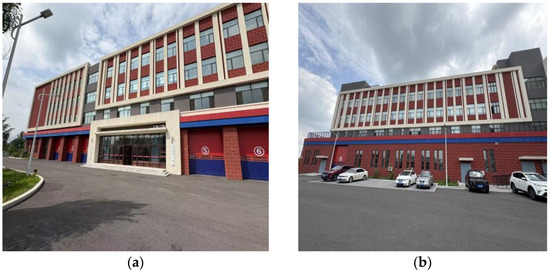
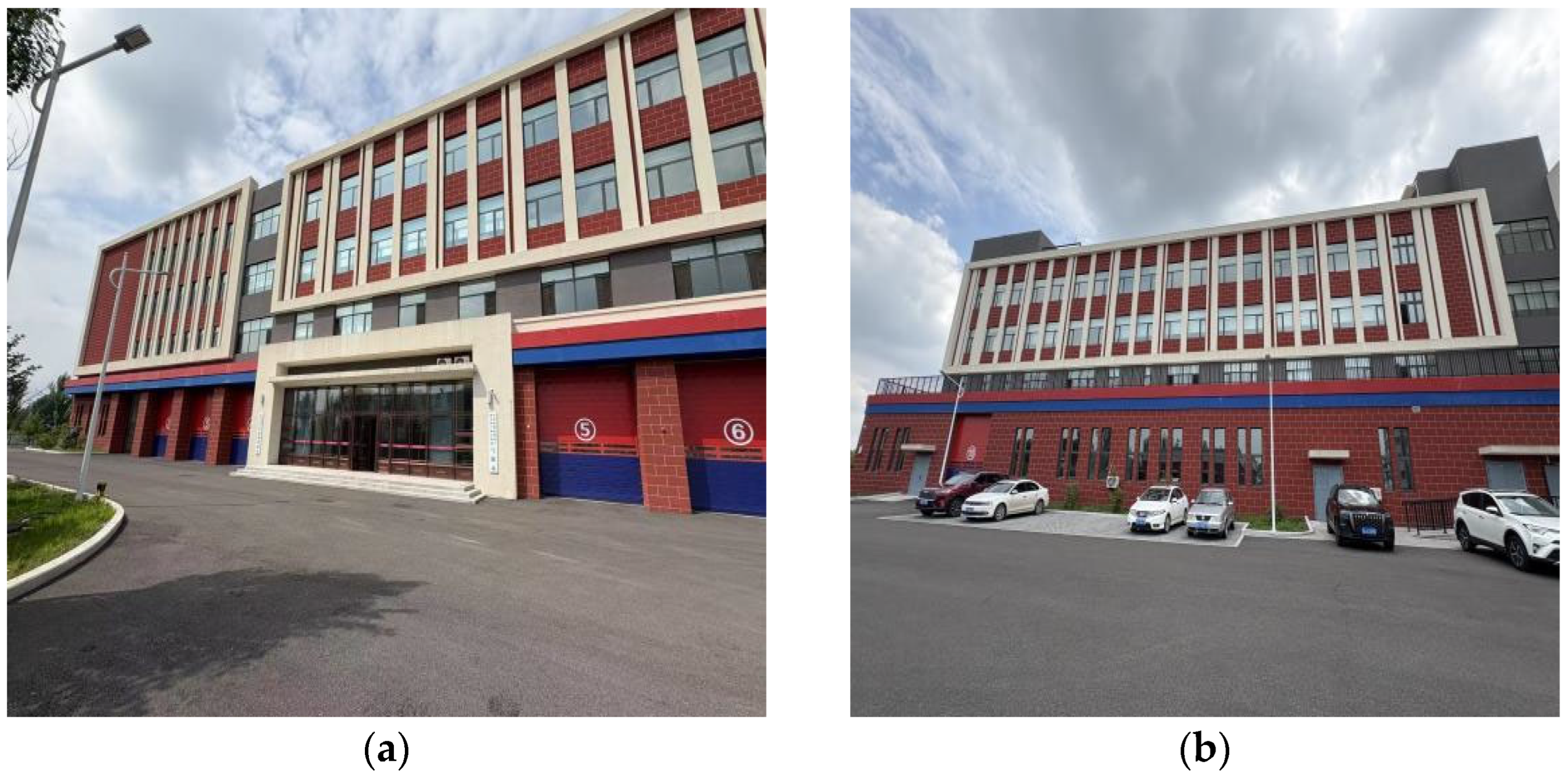


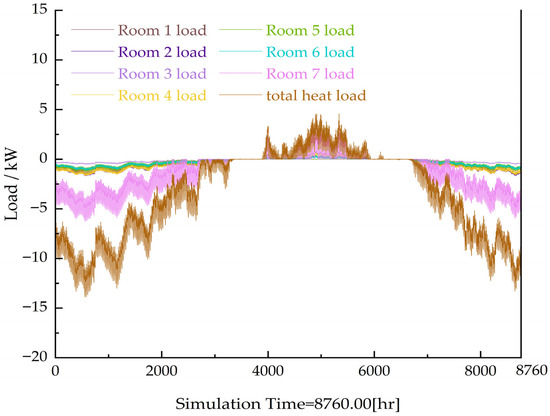
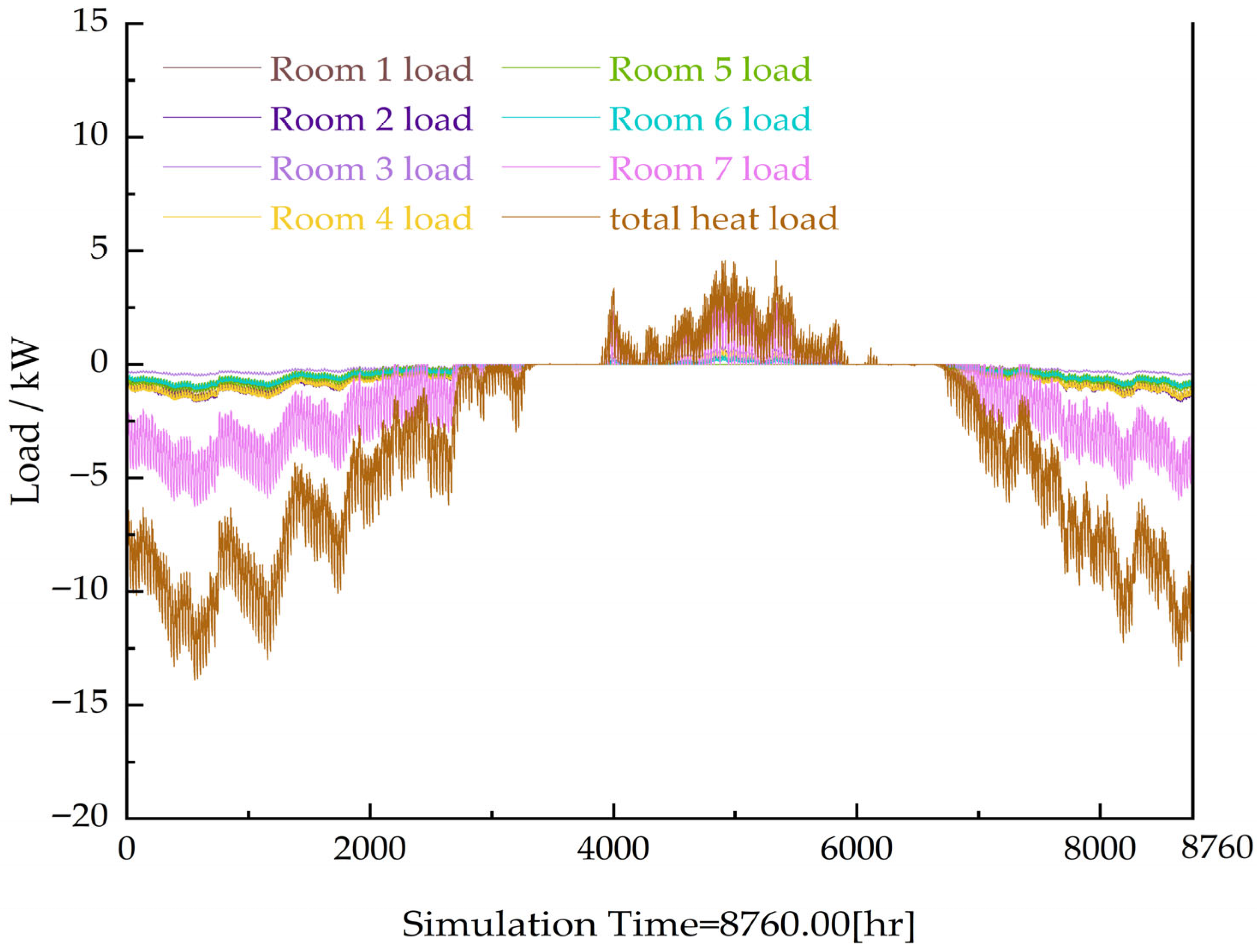
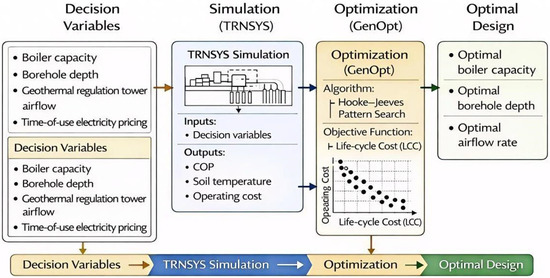
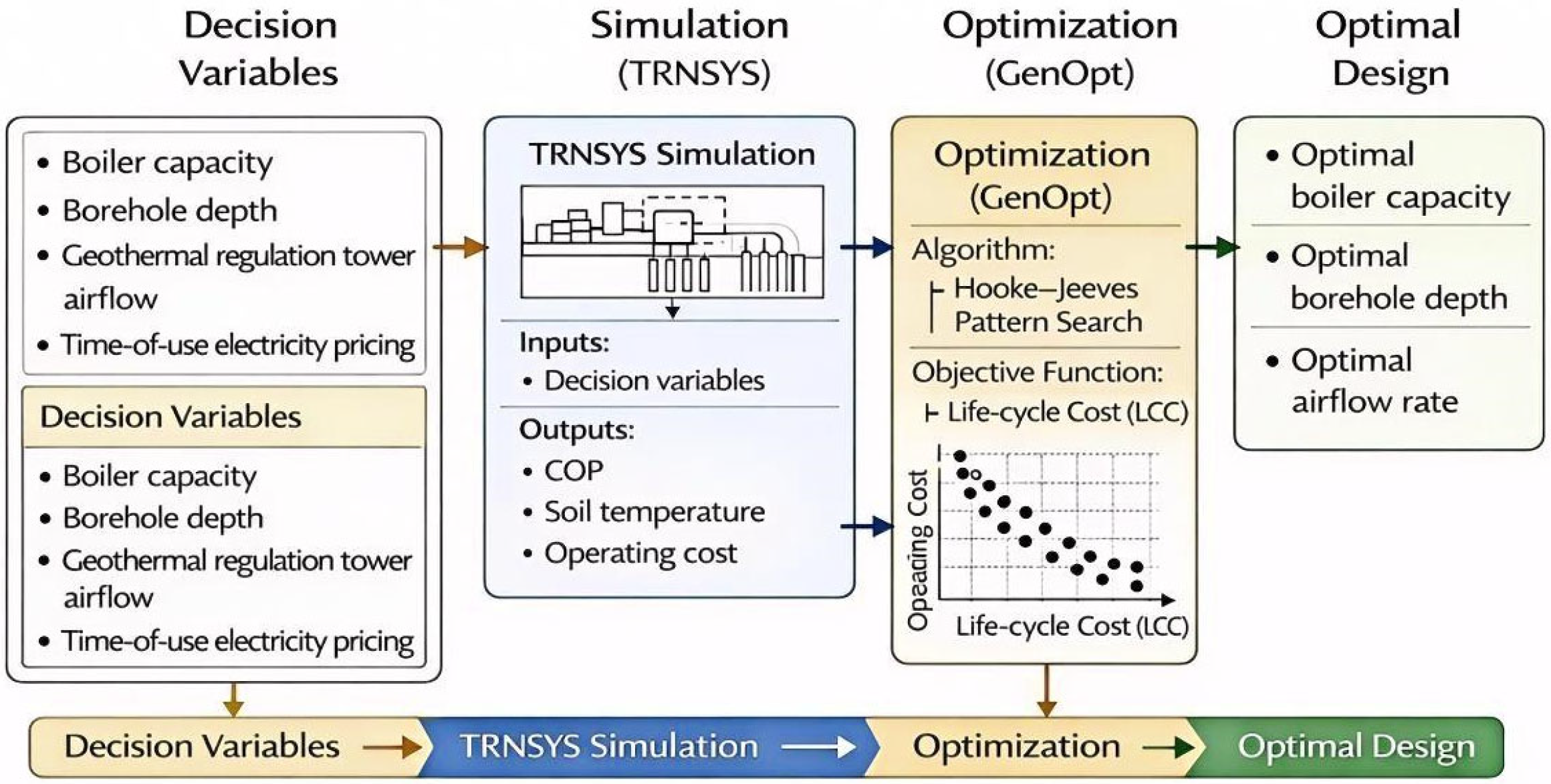
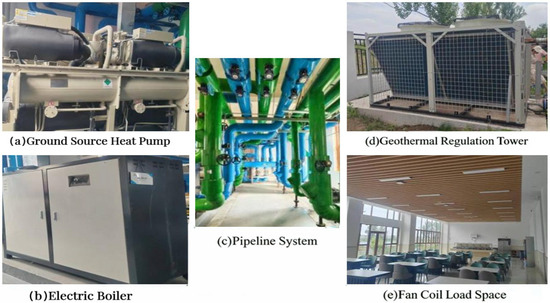
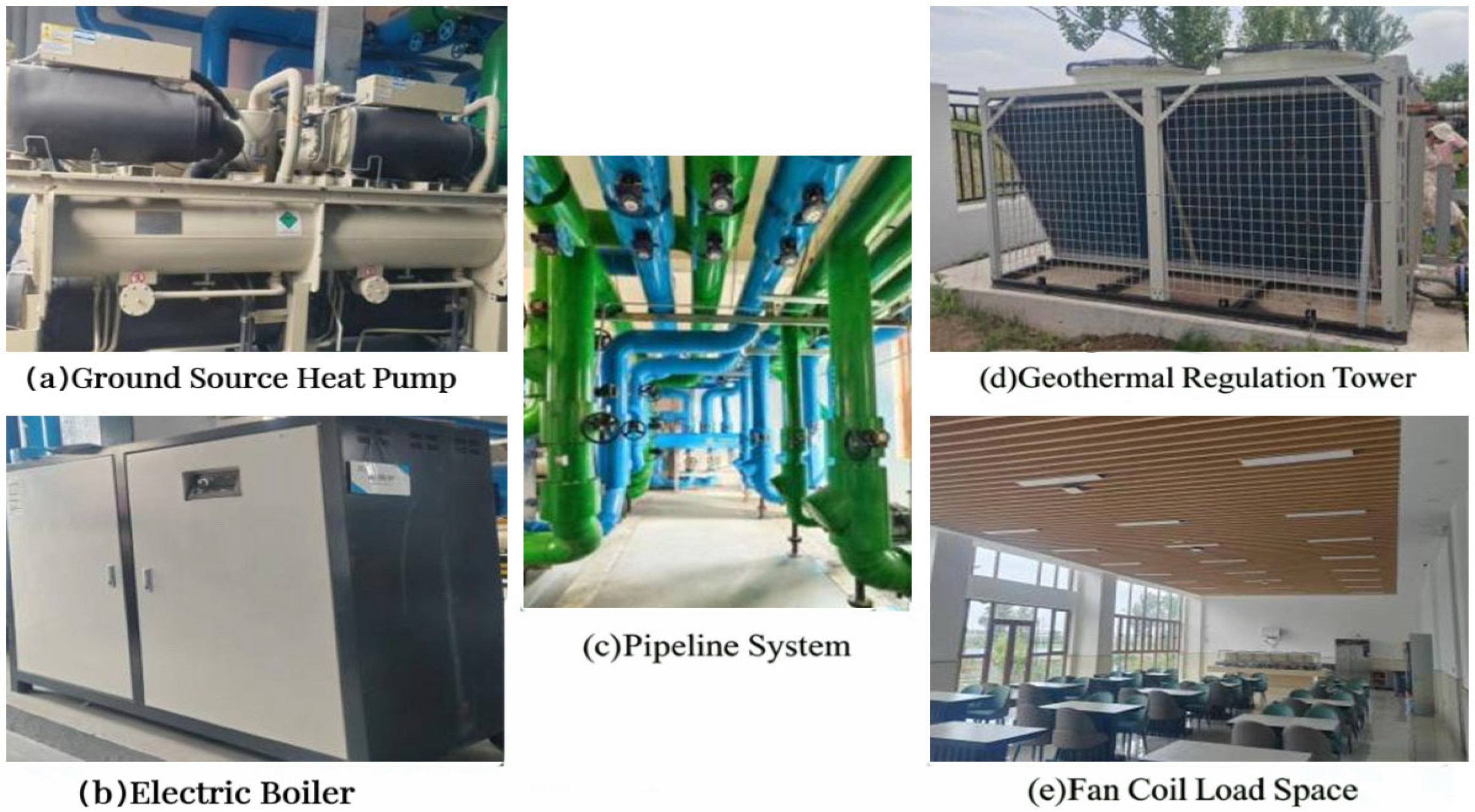
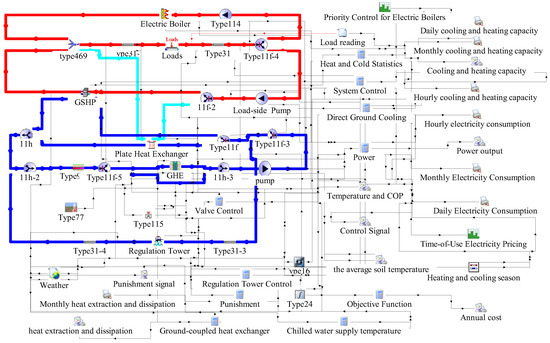
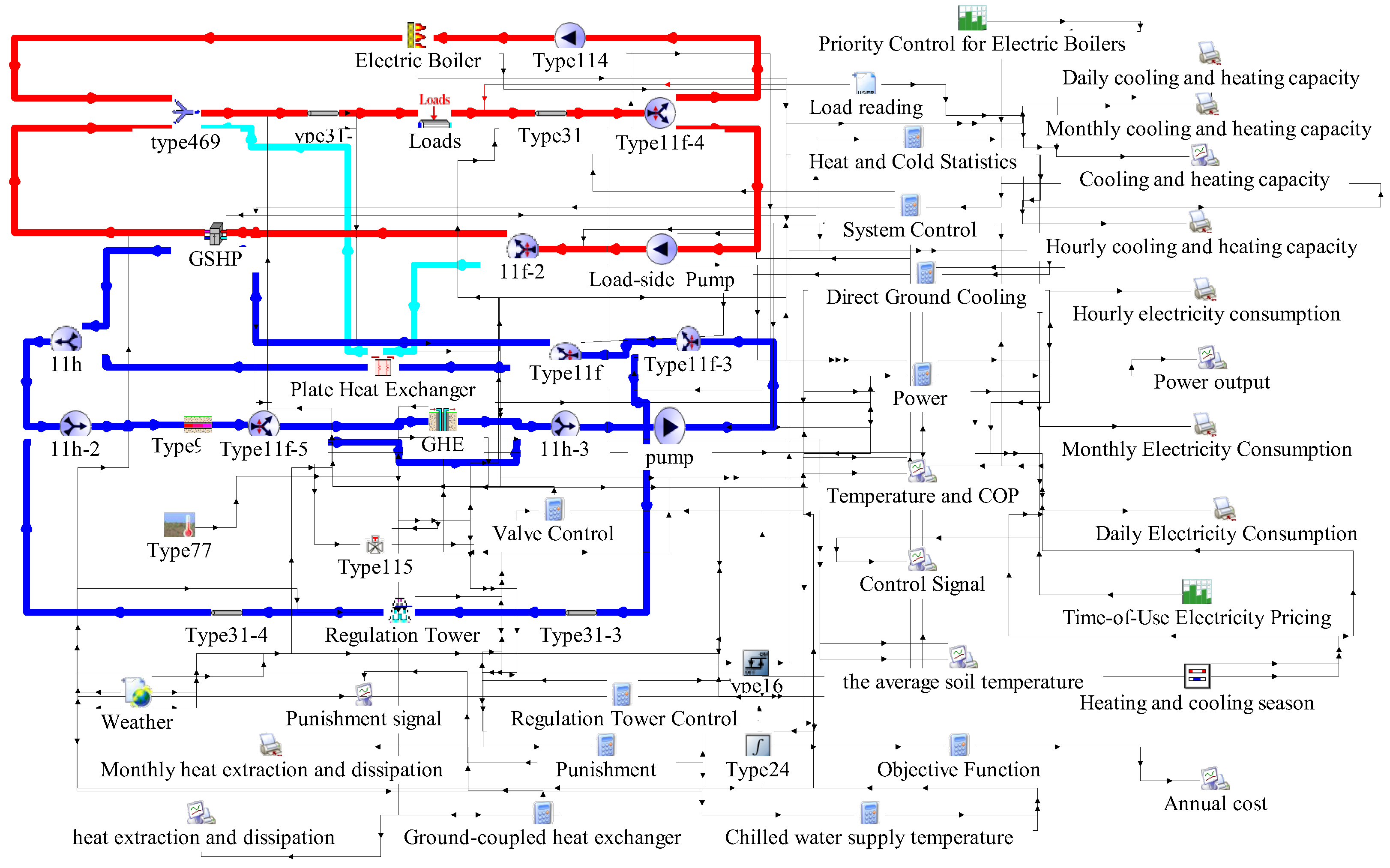
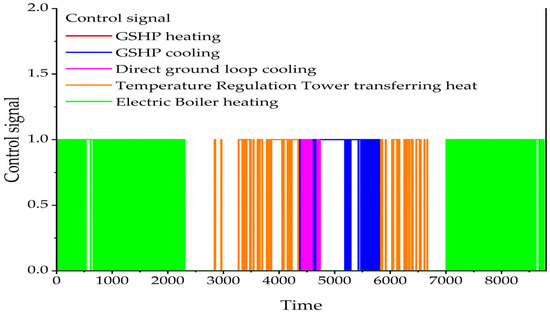
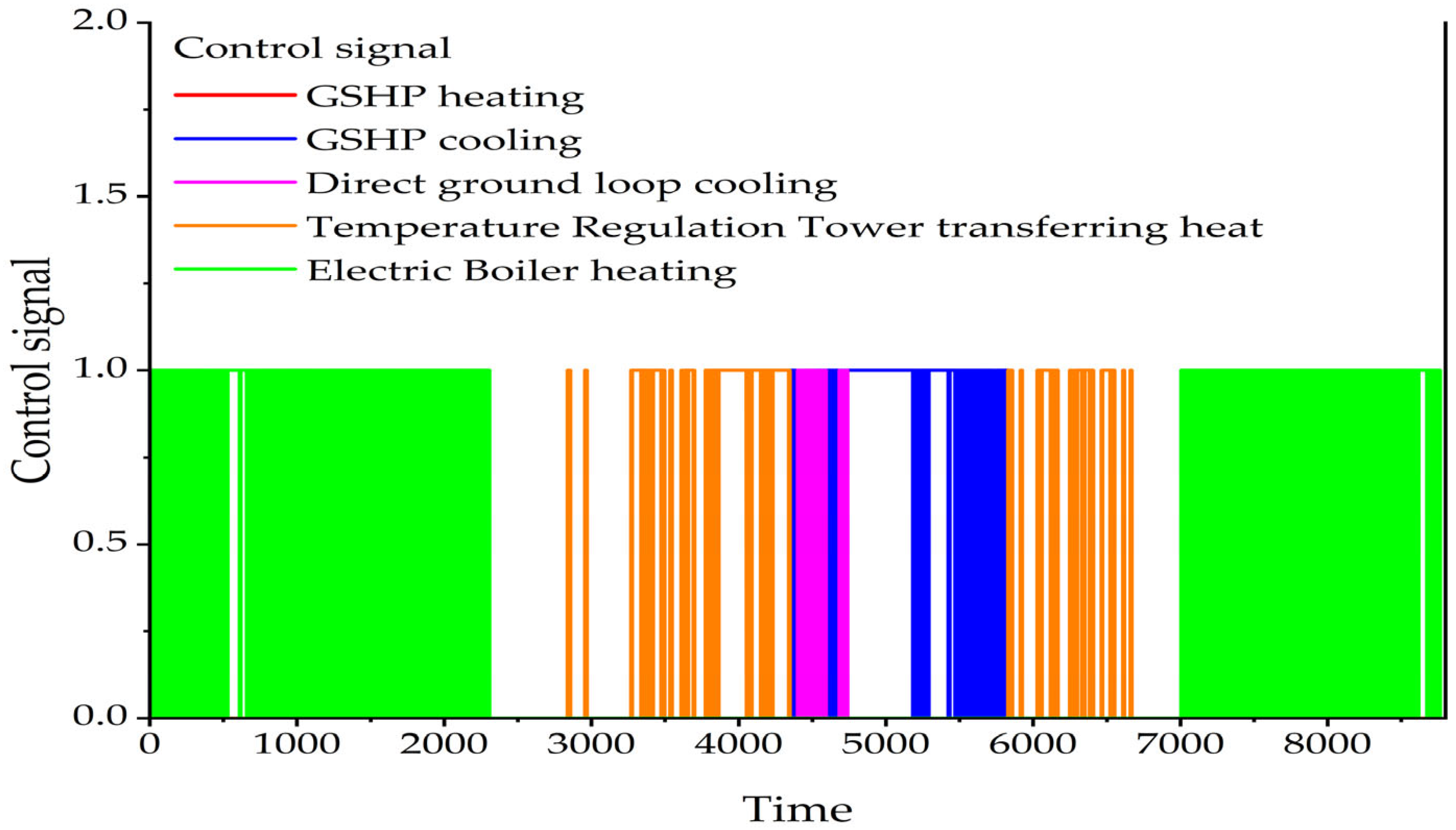
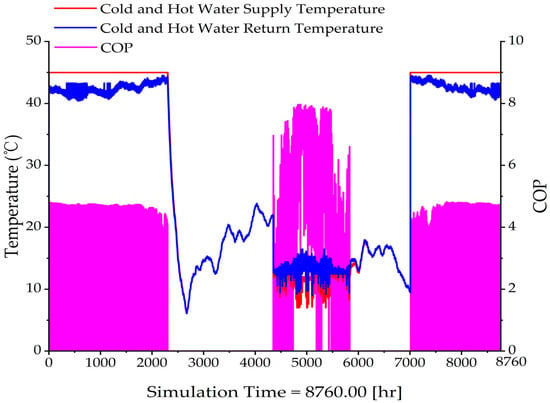
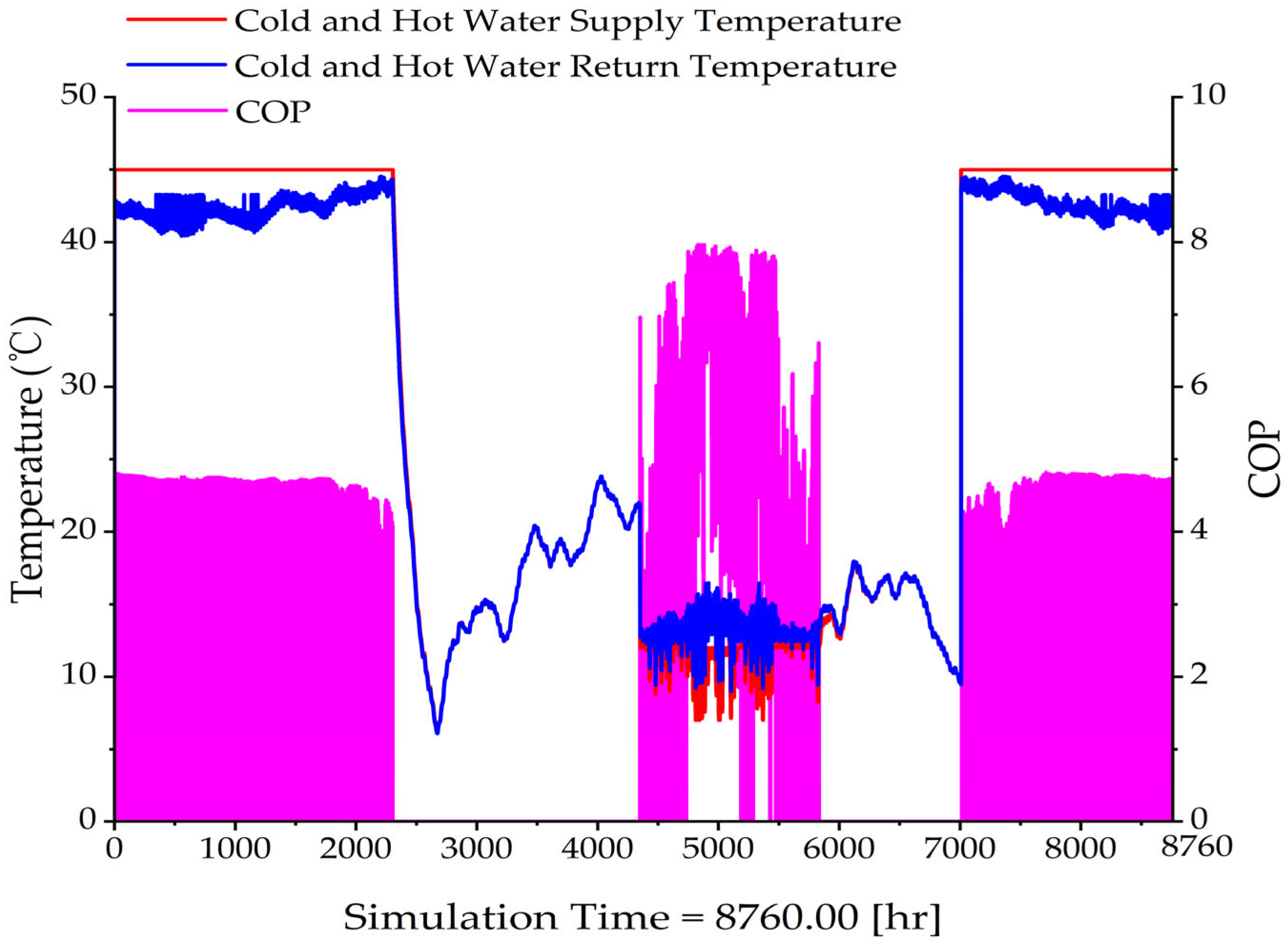
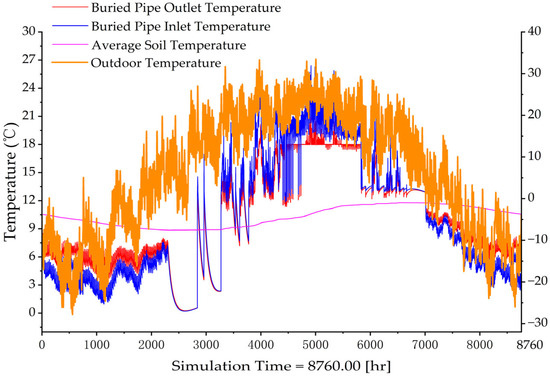
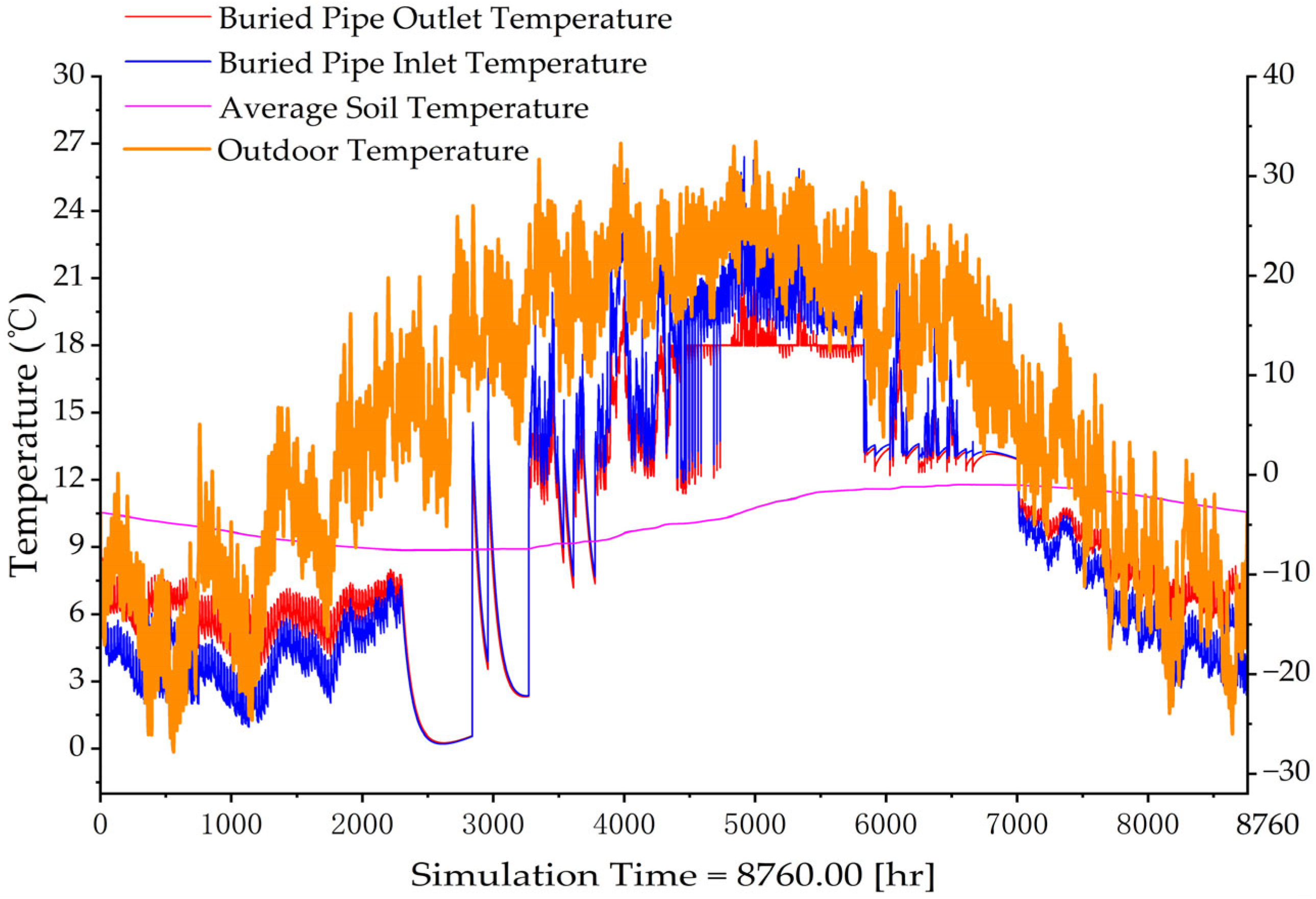
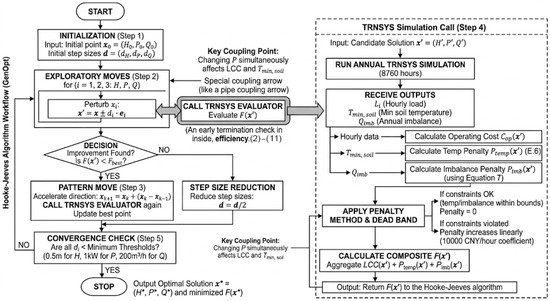
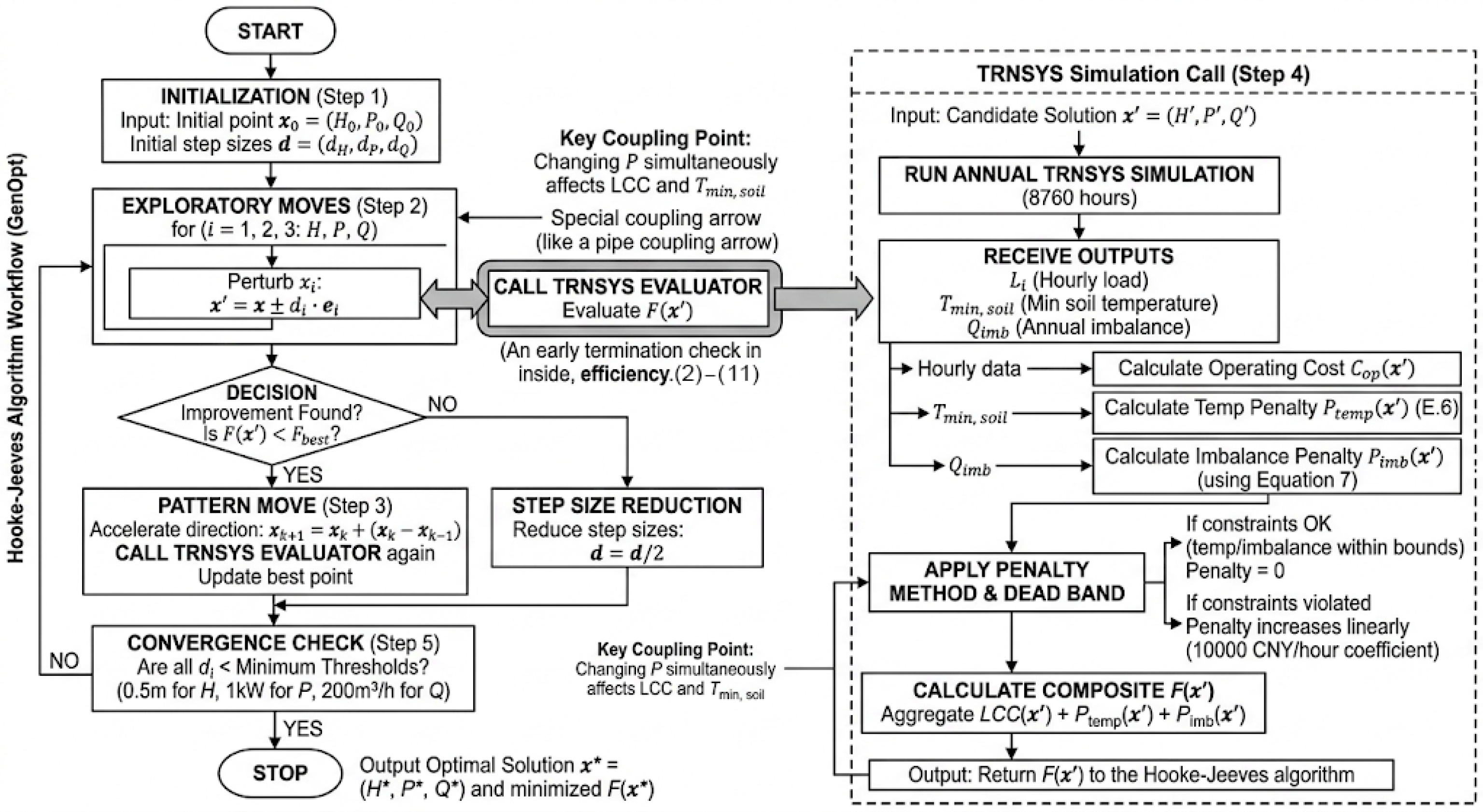
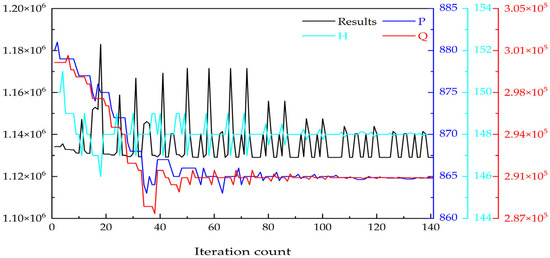
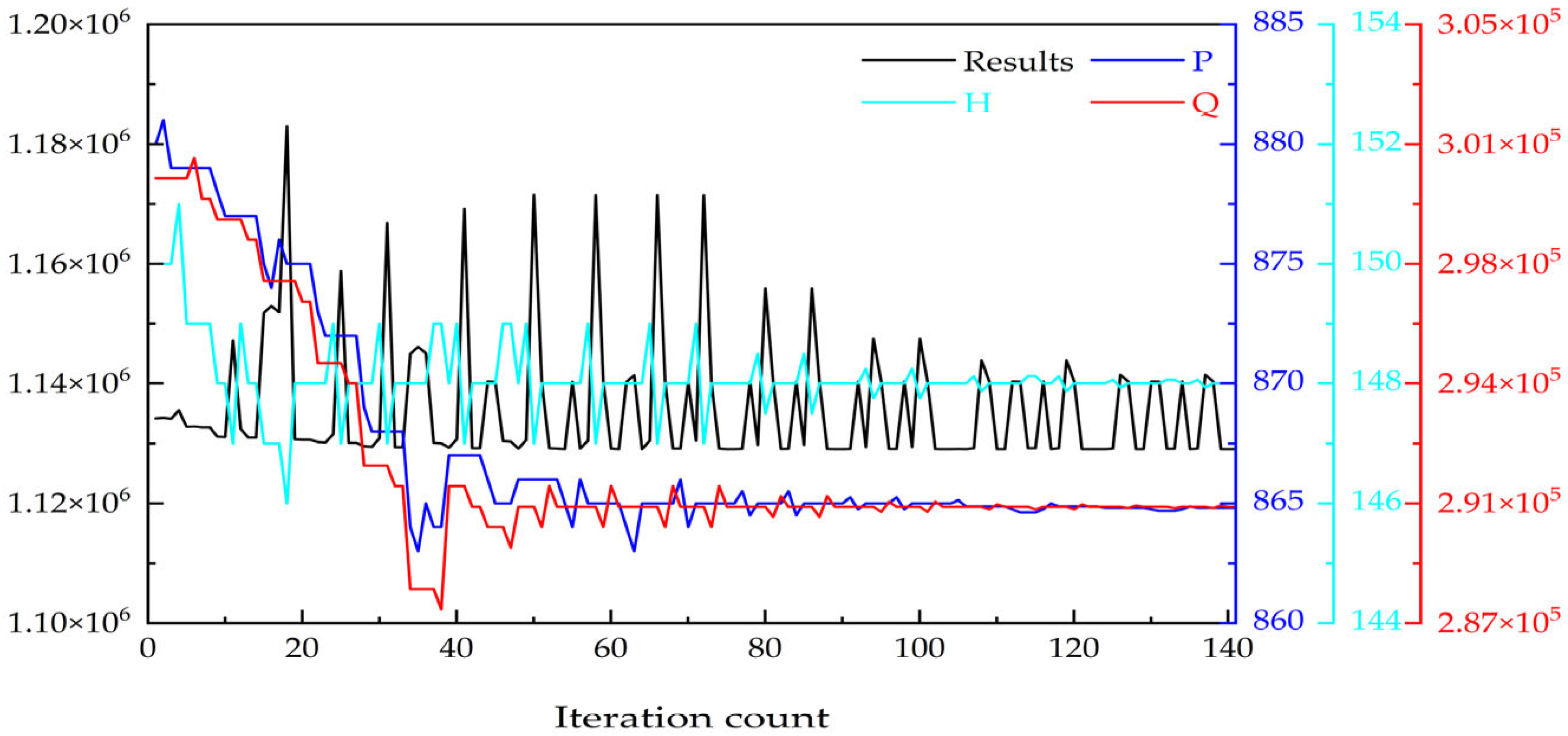
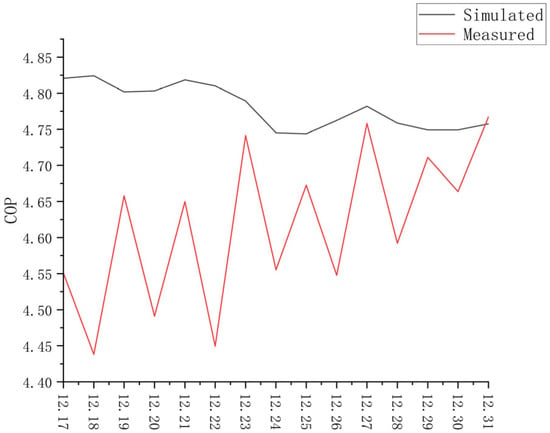
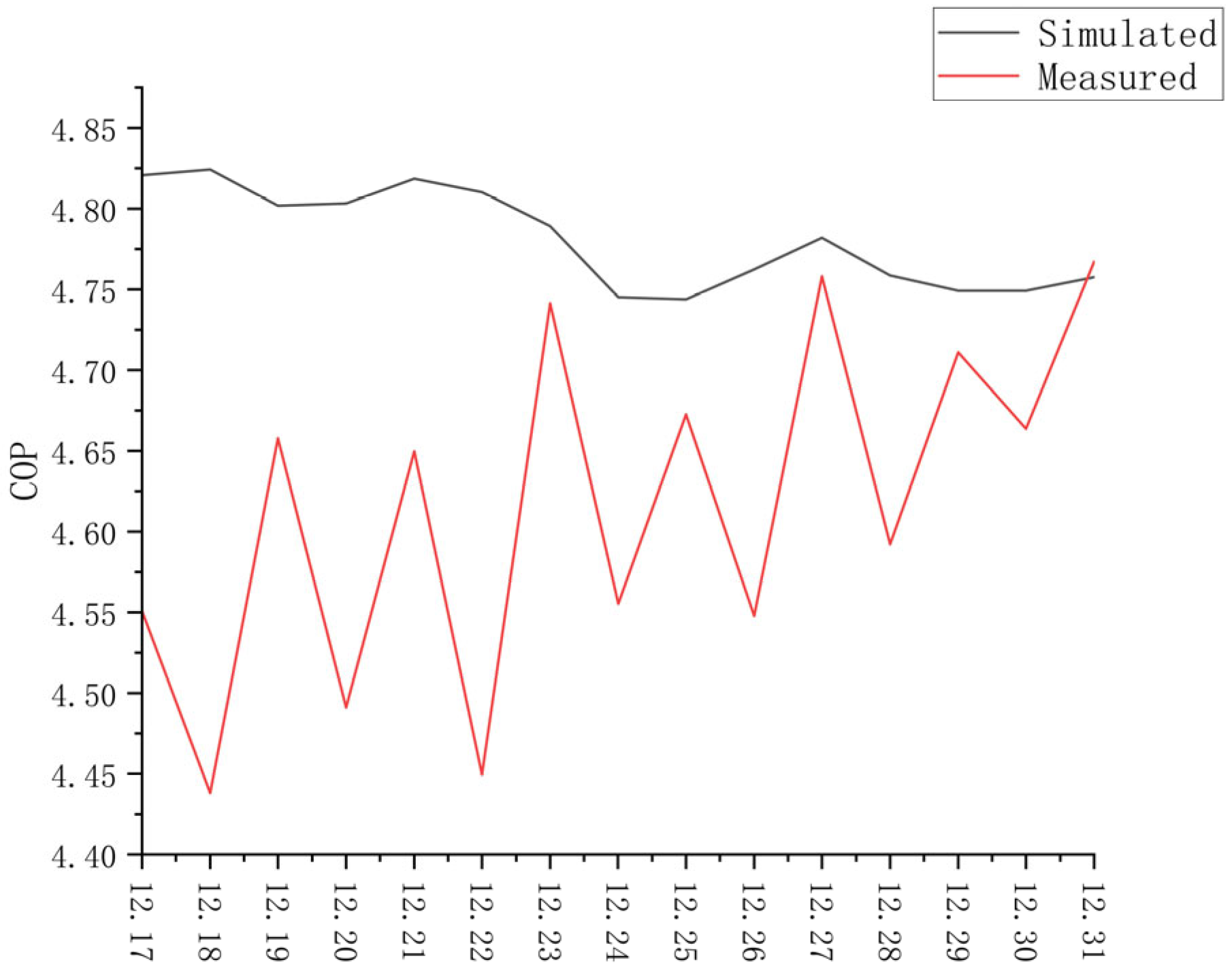
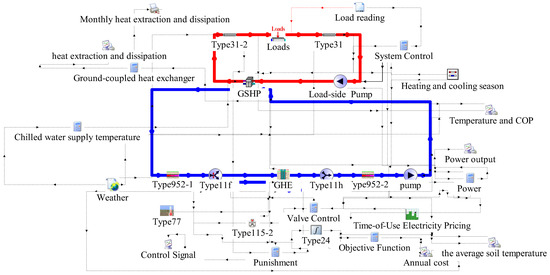
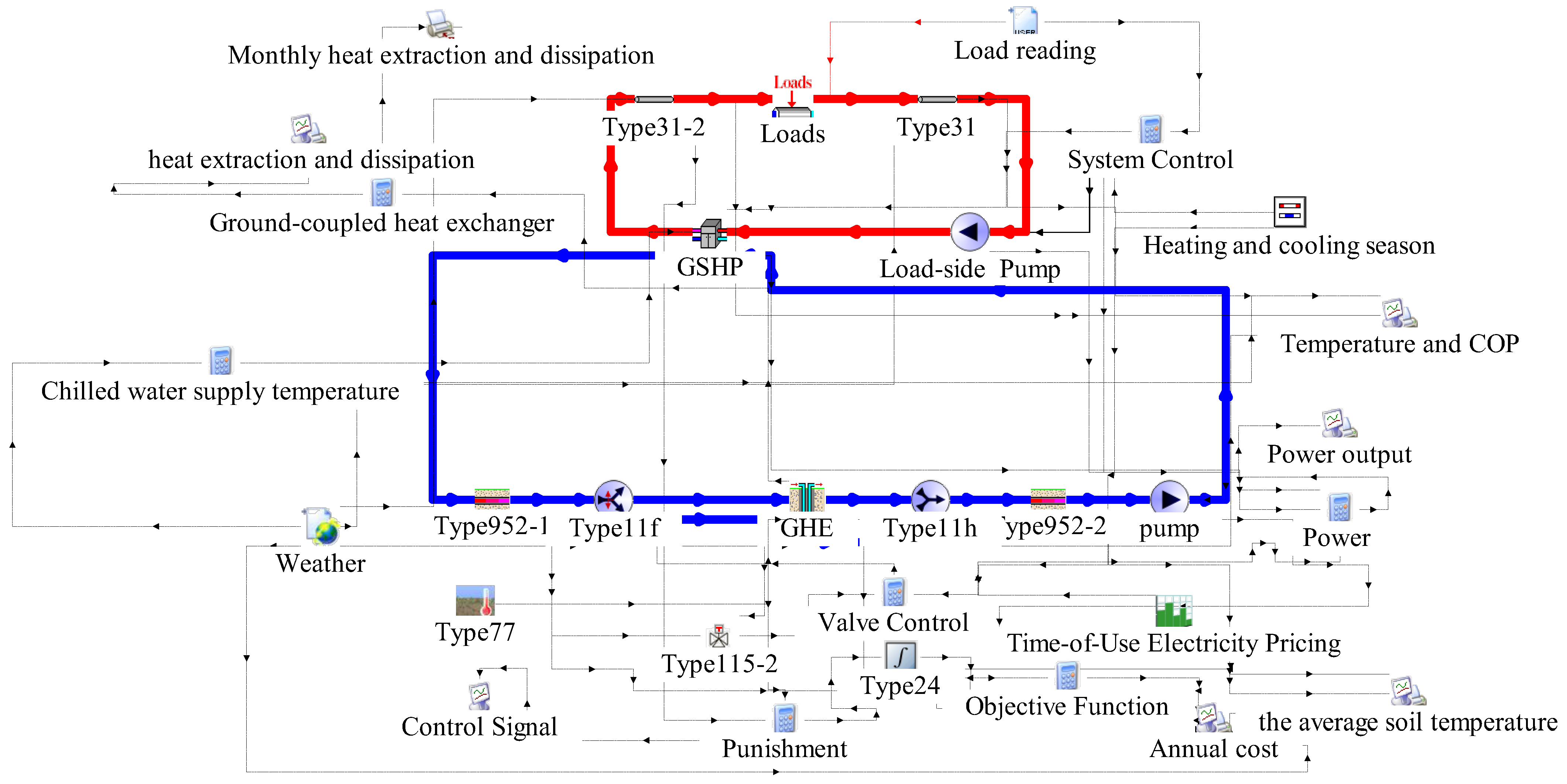
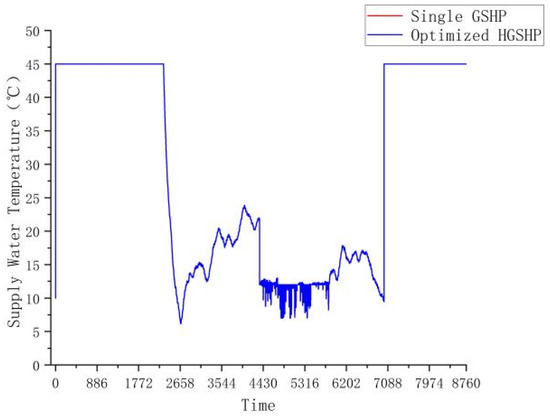
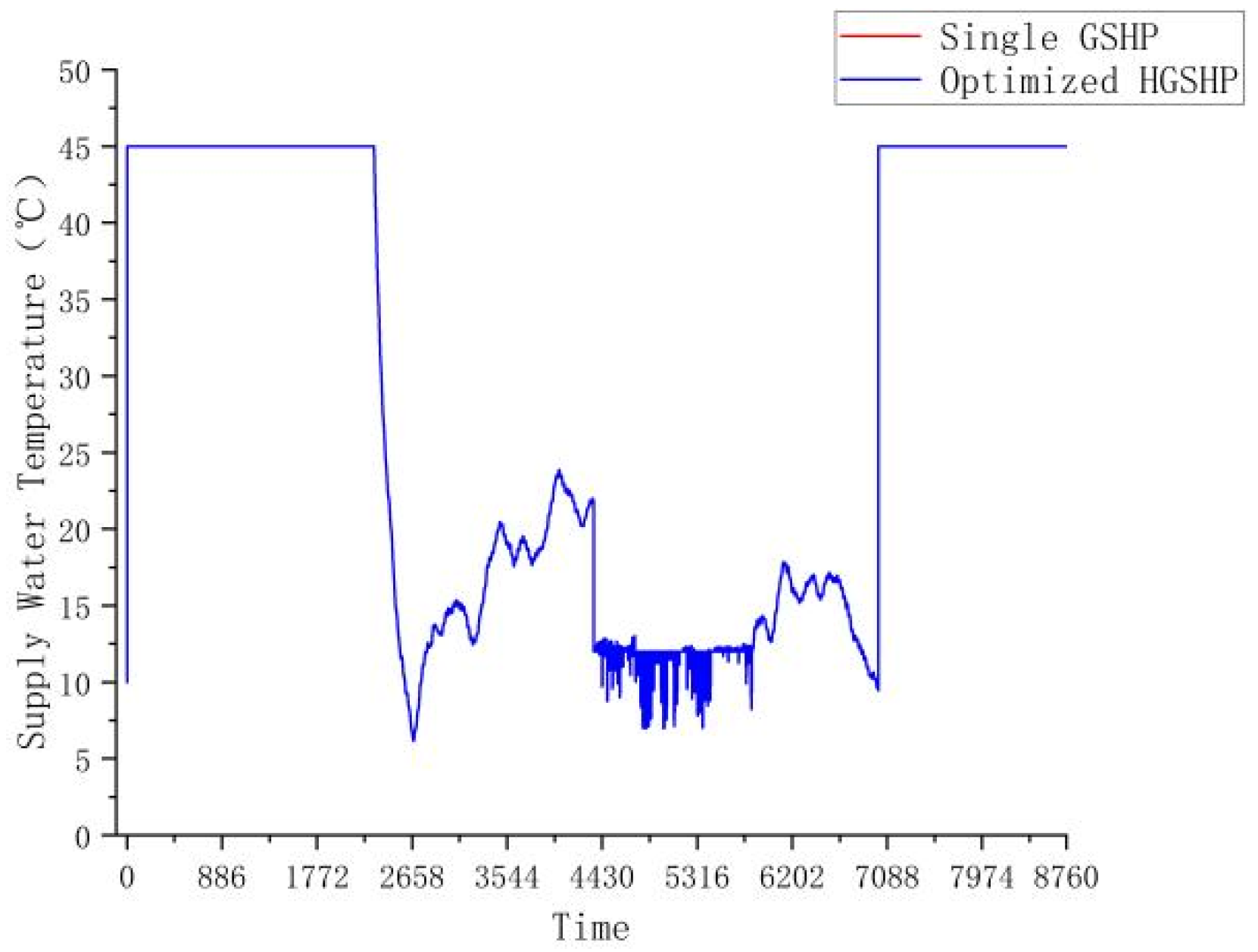
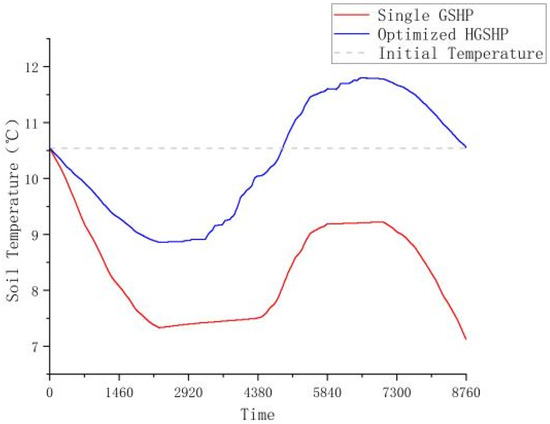
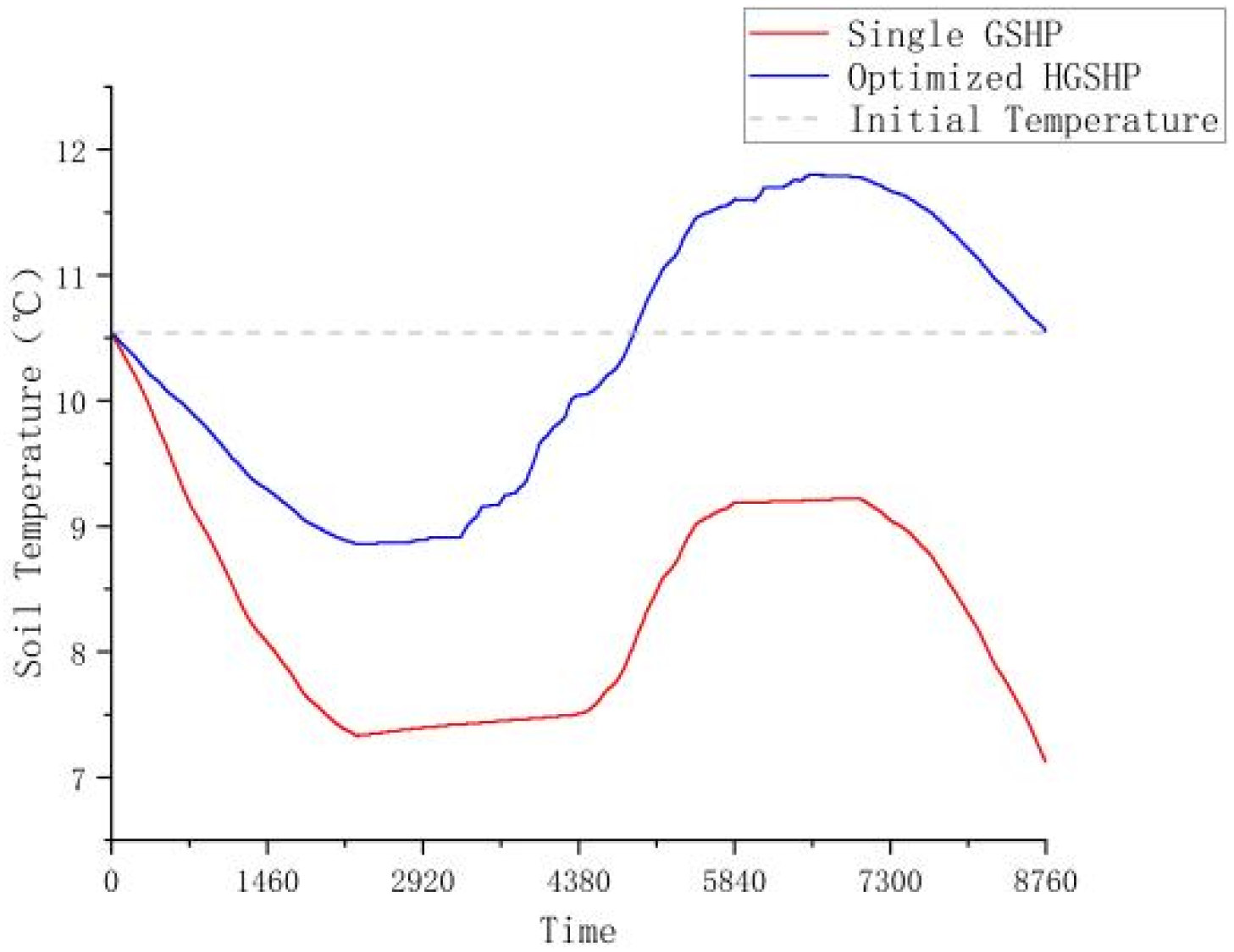

Disclaimer/Publisher’s Note: The statements, opinions and data contained in all publications are solely those of the individual author(s) and contributor(s) and not of MDPI and/or the editor(s). MDPI and/or the editor(s) disclaim responsibility for any injury to people or property resulting from any ideas, methods, instructions or products referred to in the content. |
© 2026 by the authors. Licensee MDPI, Basel, Switzerland. This article is an open access article distributed under the terms and conditions of the Creative Commons Attribution (CC BY) license.