


Abstract
The dynamic response of ancient multi-drum columns, commonly found in historical monuments, is characterized by complex nonlinear mechanisms including rocking, sliding, and wobbling. Unlike modern monolithic columns, these structures consist of large, unbonded stone drums that rotate and interact dynamically during ground motion, resulting in highly nonlinear behavior due to intermittent impacts and evolving contact surfaces. The objective of this study is to evaluate the influence of the friction coefficient at the interfaces on the dynamic response of multi-drum columns. Two structural configurations are considered: (i) simple free-standing multi-drum columns, and (ii) multi-drum columns connected with iron dowels, replicating ancient Greek construction techniques. The columns analyzed are representative of the colonnade system of the Gymnasium of Ancient Messene, Greece. Sinusoidal base excitations with varying characteristics are applied, and parametric study is conducted by varying the interfacial friction coefficient. The results indicate that in the first configuration, low friction promotes interfacial sliding, leading to enhanced energy dissipation, a softened rocking response, and a reduced overturning frequency range. In the second configuration, variations in friction have a limited effect on the collapse frequency range, because at lower friction levels strong excitations lead to dowel reinsertion failure over a wide frequency range.
1. Introduction
The seismic vulnerability of ancient monumental structures has been a subject of sustained research interest, particularly in regions with high seismicity. Many of these structures, such as temples and colonnades, are composed of free-standing stone blocks or drums stacked vertically without the use of mortar. Their seismic behavior differs fundamentally from that of modern monolithic or reinforced constructions due to the prevalence of discontinuities and the potential for relative motion between structural elements.
One of the earliest and most influential contributions in this field was made by Housner [1], who studied the dynamic response of a rigid body on a rigid base subjected to horizontal ground excitation. He demonstrated the existence of a “scale effect” according to which between two geometrically similar objects, the larger one is more stable, and between two excitations of equal acceleration amplitude, the one with lower frequency is more likely to cause overturning.
Subsequent studies based on Housner’s work include additional nonlinear phenomena such as energy dissipation during impact, the role of friction at contact interfaces, and multi-body dynamics. Yim et al. [2] investigated the effects of energy loss due to impact and sliding during rocking motion, highlighting the importance of restitution and interface friction in stability assessments. Spanos and Koh [3] applied stochastic dynamics approaches to model rocking under random excitation, while Makris and Roussos [4] introduced analytical solutions for energy loss mechanisms and highlighted the significance of frequency content in base excitation.
The complexity increases substantially in the case of multi-drum columns, which are common in ancient Greek and Roman architecture. These structures consist of multiple stone drums stacked vertically with or without mechanical connectors such as iron dowels. Psycharis and Papastamatiou [5] were among the first to model a free-rocking two-body system, where one body rests on top of the other. They formulated the equations governing the various oscillation states, the transitions between each state and the initiation criteria for each motion, mentioning that the upper body contributes increasingly to the system’s energy, resulting in a response which is stronger and longer in duration compared to the lower body.
While in the aforementioned works the friction coefficient is assumed to be sufficiently high to prevent sliding at the interfaces, in the studies [6,7] the conditions for the initiation or maintenance of rocking motion, which show the relation between the friction coefficient and the body’s aspect ratio, are introduced. Moreover, the researchers in [8] conclude that when a body is subjected to trigonometric pulses, an increased friction coefficient is required to ensure pure rocking when the pulse acceleration increases. In [9] the rocking response of a rigid body on a flexible base was examined, while in [10] the response of deformable bodies on rigid base was studied. Moreover, the role of viscous damping was investigated in [11].
Subsequent studies focused on geometric parameters. Makris and Vassiliou in [12] examined the required minimum slenderness of free-standing rocking bodies to withstand seismic excitation. In a subsequent investigation [13], researchers reassessed the problem by exploring the effect of increasing the height of a column (while retaining a fixed base dimension) on its seismic stability. Their analysis revealed a subtle competition: although greater height increases slenderness (which would tend to decrease stability), it also increases the overall size of the body (which can enhance stability). The authors concluded that the net effect depends strongly on the characteristics of the ground motion. Finally, in [14] the concept of rocking isolation was introduced as a method to protect slender structures from seismic excitations.
In experimental investigations, the criteria for rocking and overturning were established through comparison between experimental observations, analytical predictions, and numerical simulations employing the Discrete Element Method (DEM). Winkler et al. [15] conducted seismic tests on wooden rigid bodies to assess their dynamic response and stability under controlled excitations. Similarly, the researchers in [16] performed experimental studies on models representing monolithic columns at a 1:20 scale, to further explore the behavior of free-standing structures subjected to seismic loading, contributing valuable insights into the thresholds of rocking initiation and overturning mechanisms.
Investigations into the three-dimensional rocking behavior of rigid bodies have highlighted the limitations of simplified two-dimensional models in accurately capturing the full complexity of the dynamic response. These studies demonstrate that two-dimensional approximations often neglect critical out-of-plane motions and torsional effects, which can significantly influence stability and overturning potential under seismic excitation. Specifically, the researchers in [17] formulated the equations of motion governing the three-dimensional rocking response of a rigid body rotating freely about various edges of its base, while neglecting energy dissipation mechanisms. Based on this formulation, Chatzis and Smyth [18] conducted a numerical investigation of a symmetric three-dimensional rigid block resting on a flexible foundation, demonstrating that the system’s response is inherently three-dimensional and cannot be adequately described by planar assumptions. In the sequence, Zulli et al. [19] derived the equations of motion for a three-dimensional rigid body with an eccentric center of mass subjected to a unidirectional sinusoidal pulse applied from varying orientations. Their results underscore the pronounced influence of the excitation period, geometric configuration, and mass eccentricity on the body’s dynamic response.
The study of the complex three-dimensional rocking behavior of multi-drum columns is particularly challenging since, under seismic excitation, each individual drum can slide and rock independently. This independent motion introduces multiple degrees of freedom and interaction mechanisms, significantly complicating dynamic analysis and requiring advanced modeling approaches to accurately capture the system’s nonlinear response.
Numerical analyses employing the Discrete Element Method (DEM) were performed in [20], in which simulation results were validated against experimental data obtained from 1:3 scale model tests of a Parthenon column. In a subsequent parametric investigation [21], researchers explored the influence of ground motion characteristics on the seismic response of multi-drum columns, identifying the excitation frequency as a critical factor affecting their dynamic behavior. Further numerical analyses [22] highlighted the stabilizing role of inter-drum sliding in multi-drum columns. Notably, this sliding does not require the coefficient of friction to be lower than the acceleration ratio a/g, where a is the peak ground acceleration and g is gravitational acceleration, contrary to the assumption proposed in [23]. Their results demonstrated that the relative slide between drums contributes to energy dissipation and to overall structural stability. For that, the incorporation of dowels, which are typically used to prevent sliding, may not always be beneficial. This observation is consistent with the findings of [21], which also emphasized the positive role of controlled inter-drum movement in the response of multi-drum columns. Extensive parametric studies [24,25] examined the sensitivity of a multi-drum column’s response to both excitation characteristics and the geometrical and mechanical properties of the drums.
The inherently three-dimensional and strongly nonlinear nature of the dynamic response of multi-drum columns has also been demonstrated in [26,27]. Experimental evidence further confirms this complexity. For example, in [28] researchers observed significant out-of-plane displacements in shake-table experiments on multi-drum columns, which were subjected to planar excitation. This apparently chaotic behavior was attributed to the circular cross-section of the drums, which facilitates rolling in multiple directions. Similarly, the researchers in [29] conducted 1:5 scale experimental studies on multi-drum columns and reported consistent findings: despite unidirectional base excitation, notable out-of-plane displacements were recorded. These observations strongly suggest that the accurate representation of multi-drum column dynamics requires three-dimensional numerical analyses that can faithfully reproduce the physics of the problem. In addition, the shake-table investigation presented by Buzov et al. [30] examines the influence of different joint types on the seismic behavior of free-standing multi-drum columns, demonstrating that both the joint configuration and the characteristics of the seismic excitation strongly affect the column response and failure mechanisms.
Psycharis [31] investigated the influence of the friction coefficient on the seismic response of multi-drum columns and observed that, for a given coefficient, the upper drums slide more easily than those near the base. This behavior was attributed to the increase in normal stress, which enhances frictional resistance at lower interfaces. The study also discussed the role of dowels, noting their potential benefits in reducing inter-drum sliding. However, it was observed that at large rocking angles, dowels may become misaligned with their corresponding sockets, thereby disrupting the intended mechanical interlock between adjacent drums and affecting the stability of the column. These findings were confirmed in [32], where it was emphasized that the effectiveness of dowels depends on the excitation’s characteristics. Specifically, under high-frequency excitations, where rocking angles remain small and the out-of-plane response of the columns is limited, the presence of dowels was shown to be advantageous, because it significantly suppresses both inter-drum sliding and torsional rotations about the vertical axis. Moreover, the work of Buzov et al. [33] investigates how parameters such as drum height, joint type, and the presence of bolts influence the bearing capacity of composite multi-drum stone columns under both static and earthquake loads, highlighting the significant role of joints and connection details in the structural response. In this work it was pointed out that the bolt material effect in the considered problem was small because the bolts’ shear capacity was not exceeded in any case and the collapse of all the columns occurred by the bolts pulling out.
Finally, an in situ investigation combined with a systematic review of the literature on vertical connections in ancient Greek monuments is presented in [34] to form the basis for designing an experimental program, while an experimental study of the behavior of iron and titanium connectors is presented in [35].
From these studies it results that the addition of dowels in multi-drum columns introduces another level of complexity. Dowels provide partial mechanical interlock, which can enhance the stability of the columns but may also disrupt it. Despite significant progress in understanding the dynamic response of multi-drum systems, there remains a need for further studies to investigate the influence of interface properties, particularly the coefficient of friction, on the overall structural response in the case of multi-drum columns with mechanical connectors such as dowels between the drums. The objective of this study is to evaluate the influence of the friction coefficient on the three-dimensional dynamic response of: (i) multi-drum columns without any mechanical connection system between the drums, and (ii) multi-drum columns incorporating two iron dowels at each interface. To this end, the dynamic response of standalone multi-drum columns from the colonnade of the Gymnasium of Ancient Messene, Greece is investigated using the finite element code MARC. By assigning different values to the friction coefficient, both column configurations are subjected to sinusoidal base excitations with varying characteristics. The three-dimensional response of each individual drum is analyzed in detail to assess the effects of interface friction and the presence of dowels on the overall dynamic response of the system.
2. Description of the Columns Studied
Ancient Messene represents one of the most well-preserved examples of a planned Hellenistic city in Peloponnese in southern Greece. Extensive excavations and restoration work, directed by Professor P. Themelis, have revealed a large portion of the urban fabric, much of which had been found collapsed and buried [36]. Among its major monuments, the Gymnasium is a prominent complex comprising a stadium and long Doric stoas extending along three sides, while the fourth side is defined by a monumental honorary structure.
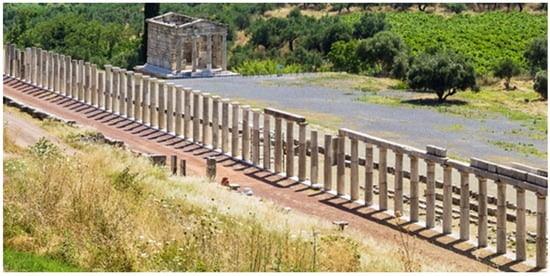
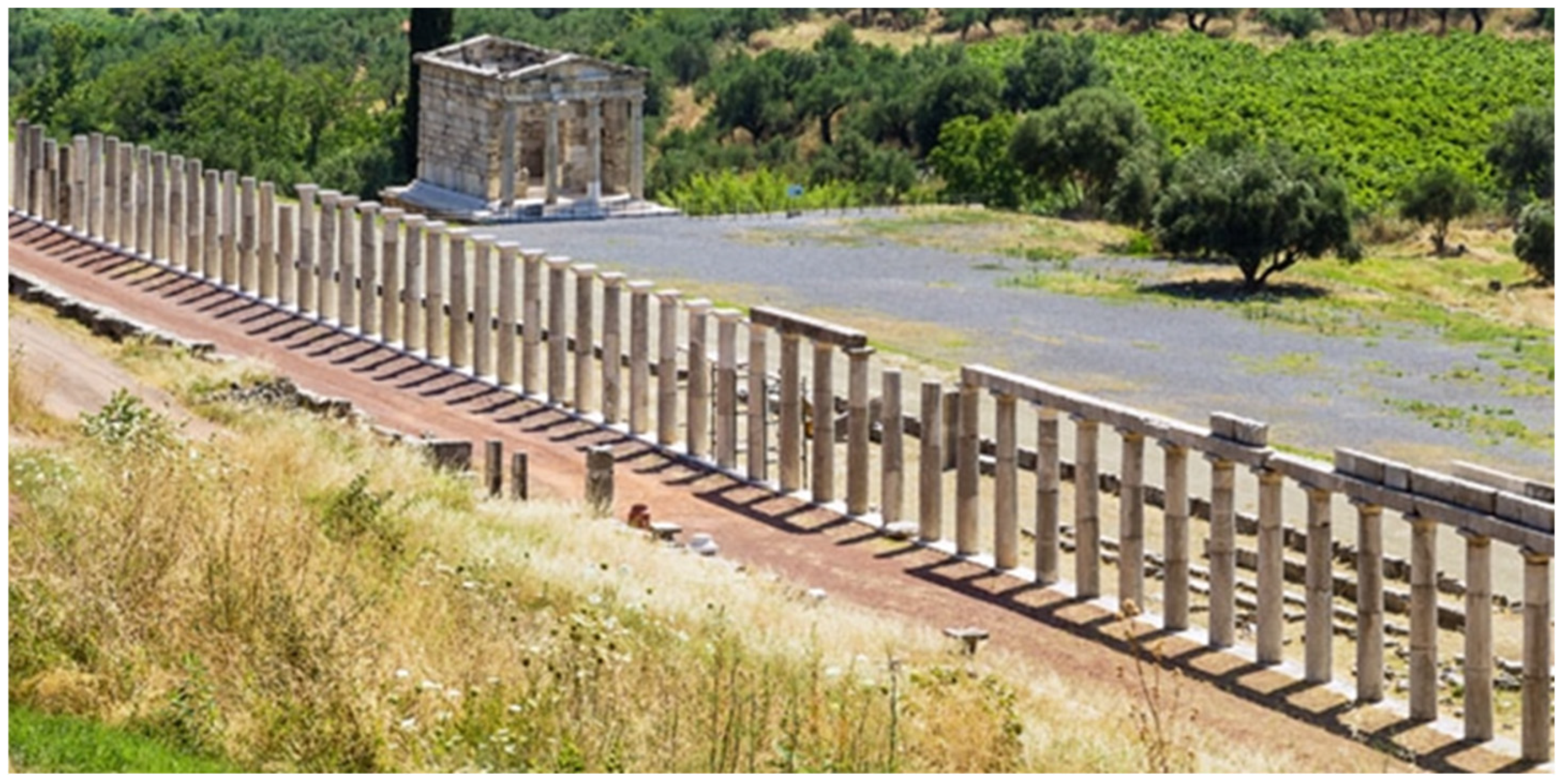
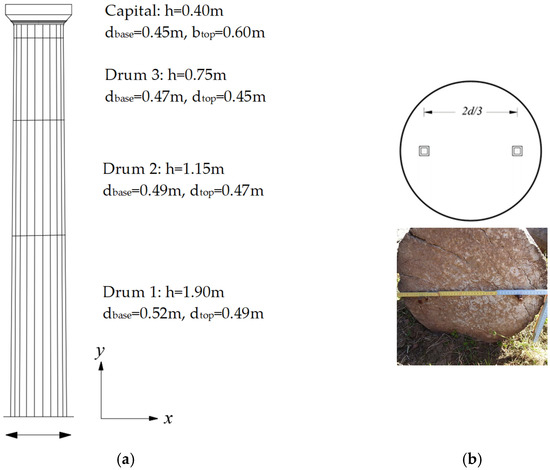
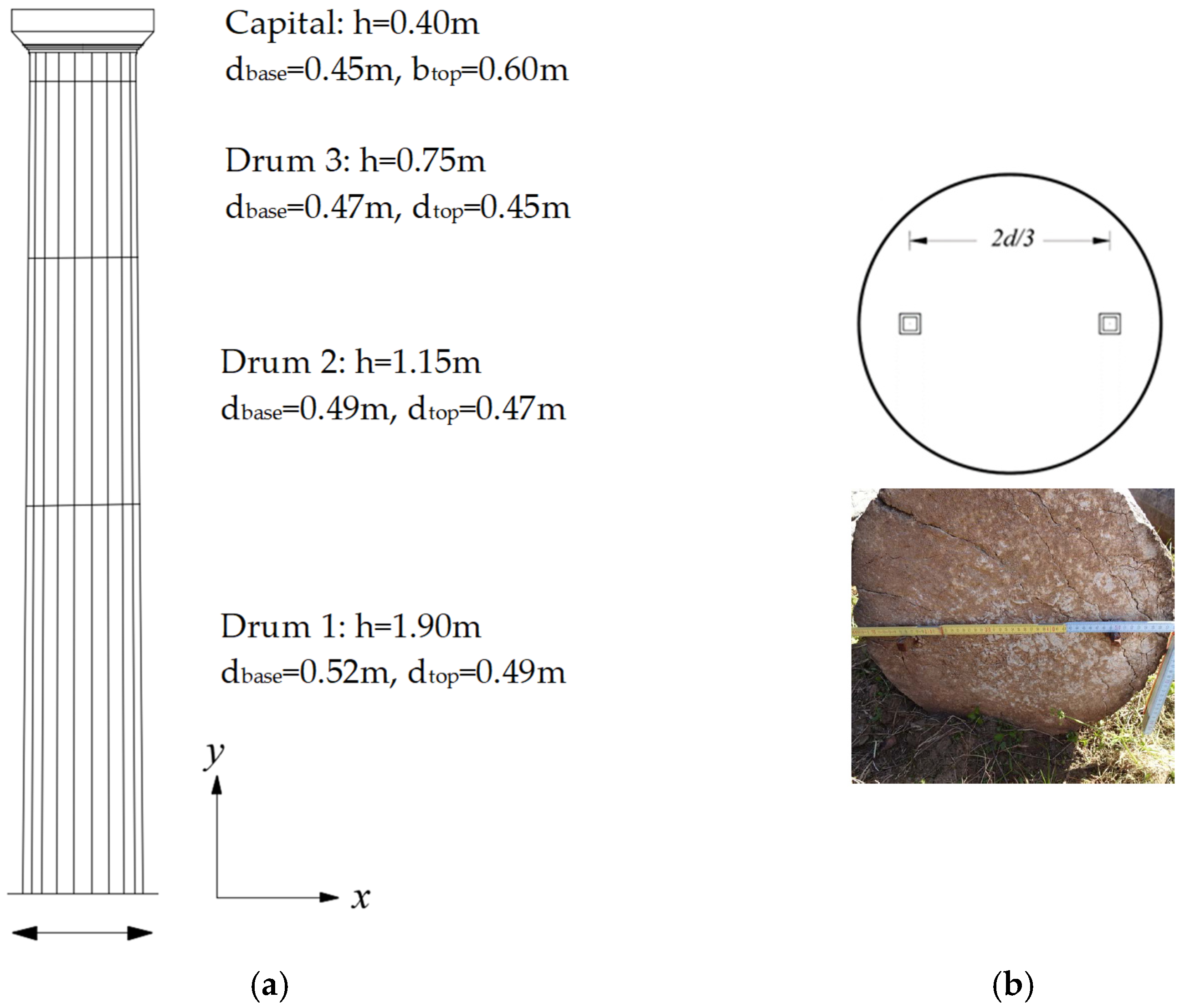
The present structural investigation focuses on the multi-drum columns forming the peristyle of the Gymnasium (Figure 1), particularly those along the western colonnade. The dimensional and geometric characteristics of the columns were derived from the detailed architectural documentation presented in [37]. Each column consists of three limestone drums stacked vertically, with total heights ranging from 3.89 m to 4.24 m (Figure 2a). As is shown in Figure 2a the column diameter decreases with elevation, from dmax = 0.52 m at the base to dmin = 0.45 m at the top. The Doric capital seated above the upper drum exhibits a transitional geometry, evolving from a circular cross-section (dmin = 0.45 m) to a square cross-section of 0.60 m, with a height varying between 0.23 m and 0.55 m. In the column studied here the height of the capital has been taken equal to 0.40 m. Unlike other monuments of similar typology, where column drums were interconnected using a traditional wooden system composed of a central pole and two empolia to ensure precise alignment and contact [38], evidence from the Gymnasium indicates in some cases the use of iron dowels (Figure 2b) at the drum interfaces in certain locations, while in other cases, the drums rest directly upon one another without mechanical connectors. Finaly, the columns are supported by a robust stone krepidoma, allowing them to be reasonably modeled as founded on a rigid base for the purposes of structural analysis.
Figure 1.
Colonnade of the Gymnasium of Ancient Messene, Greece.
Figure 2.
(a) The multi-drum column under study. (b) Positions of the iron dowels.
3. Modeling Assumptions and Boundary Conditions
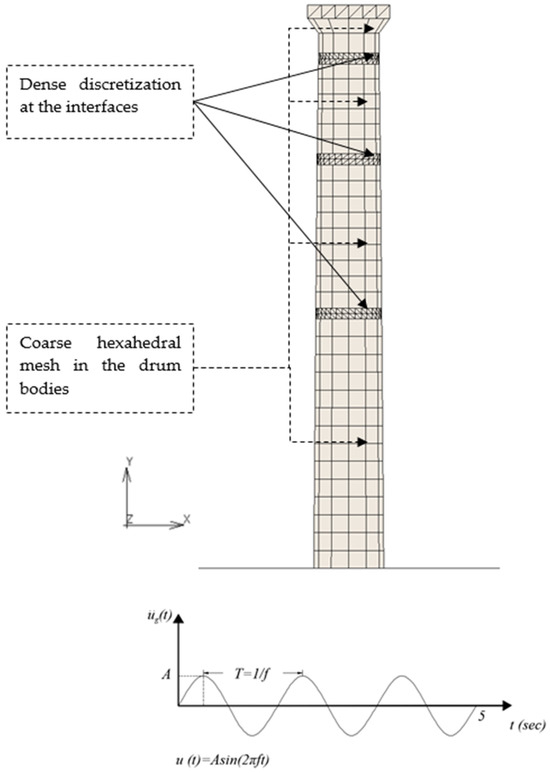
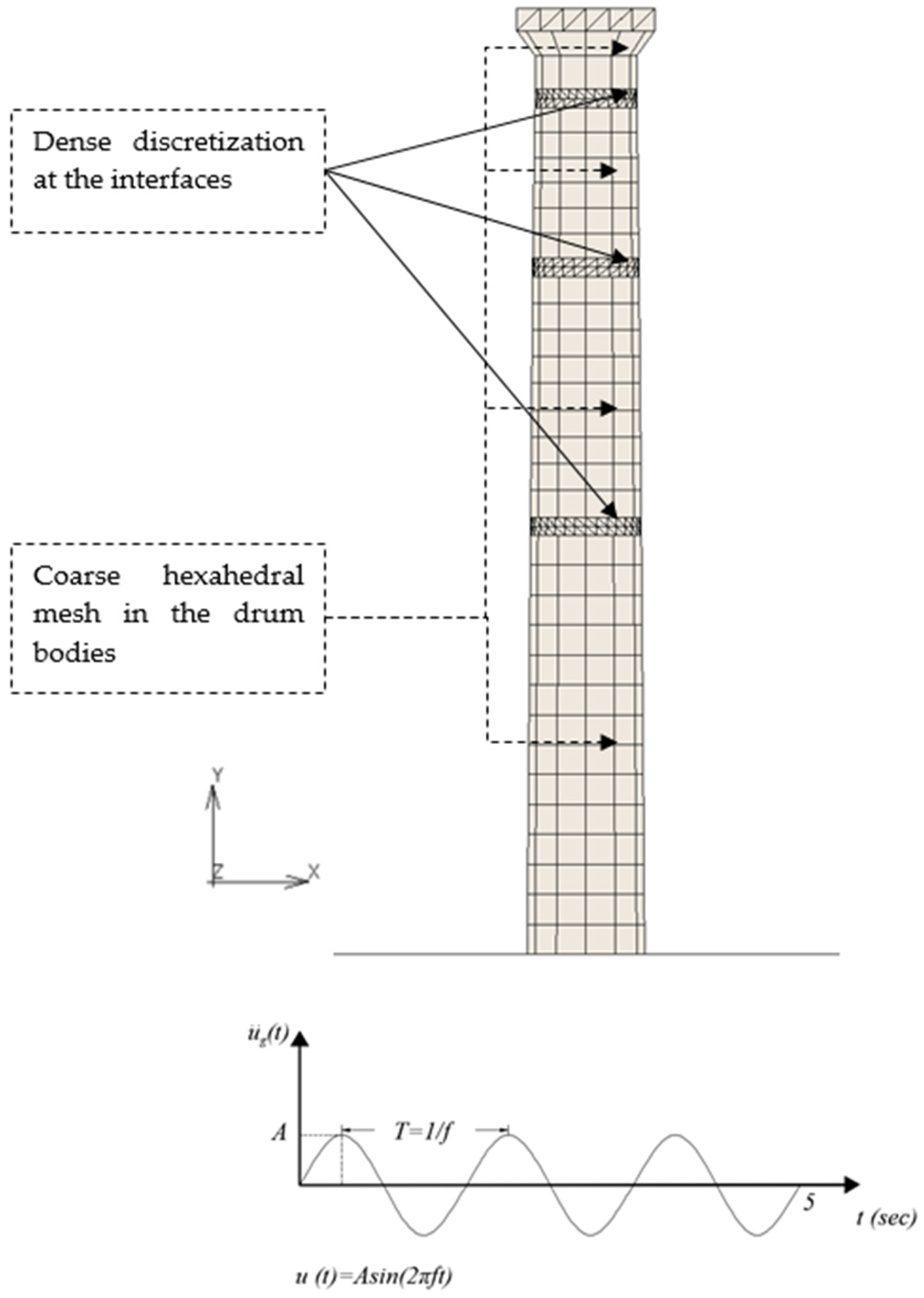
To investigate the dynamic response of the multi-drum columns, three-dimensional (3D) finite element (FE) models, which accurately represent the geometry and contact interfaces between the drums, were developed using the FE code MSC MARC [39]. The limestone material was modeled as an isotropic, linear elastic medium (a common assumption in numerical studies of multi-drum columns, e.g., [40]), with parameters from local Messinian marble, assuming a mean density of ρ = 2700 kg/m3, Young’s modulus E = 40 GPa, and Poisson’s ratio of ν = 0.20. The F.E. models of the columns studied are presented in Figure 3, where the geometric characteristics of the drums and the capital are also given. In the first configuration (Model1), the drums are simply placed in contact and stacked vertically, while in the second configuration (Model2), two vertical iron dowels connect adjacent drums. For the iron dowels, the modulus of elasticity was taken E = 210 GPa and Poisson’s ratio ν = 0.30. To assess the contribution of the dowels to the overall structural resistance, inelastic material behavior was considered. In this regard, the von Mises yield criterion was adopted, with a yield stress of σy = 240 Mpa.
Figure 3.
The 3D finite element representation of the column and the applied ground acceleration.
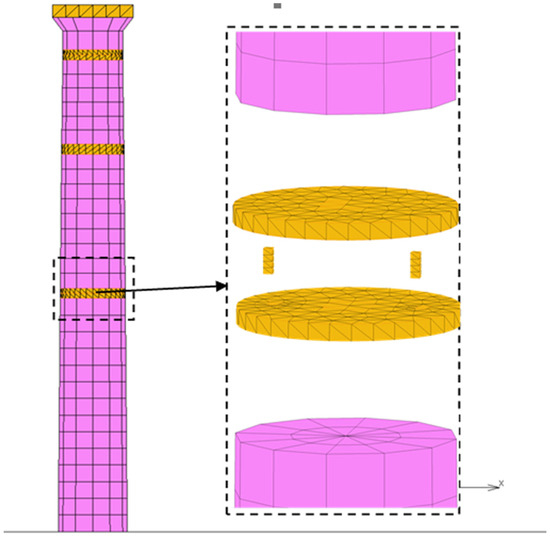
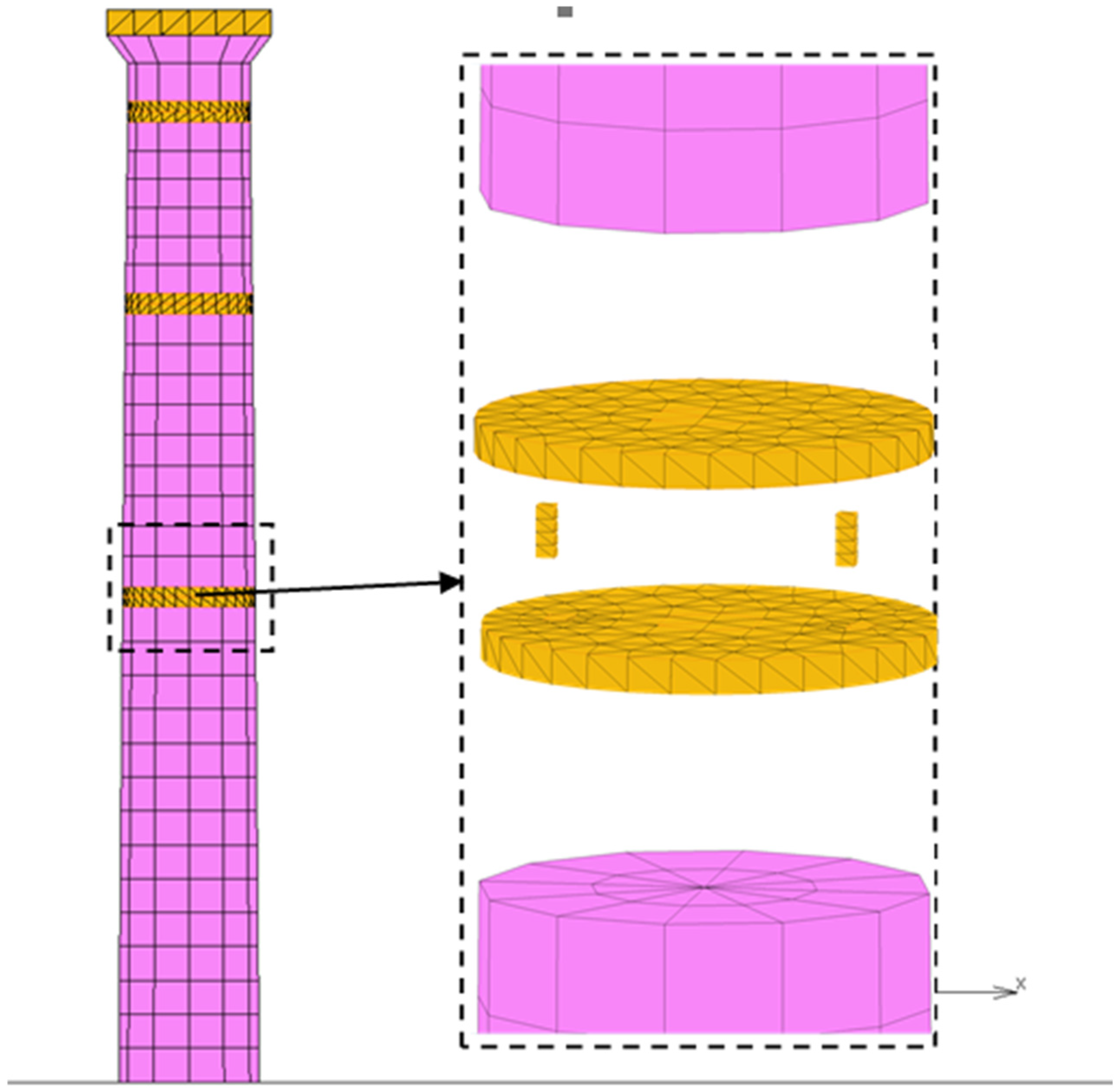
The conical frustum geometry of each drum is modeled using eight-node isoparametric hexahedral elements (Element 7 of MARC’s library). The end regions of the drums, where the geometry becomes complex, are discretized with five-node three-dimensional tetrahedral elements (Element 241), to accurately represent the contact surfaces. At the drum interfaces, 3 cm × 3 cm × 3 cm holes are modeled to accommodate the iron dowels (2 cm × 2 cm × 6 cm) placed vertically (Figure 4).
Figure 4.
Details of the connected faces between the drums.
In the present study, a simplified modeling approach was adopted for dowels to focus primarily on the global structural response of the column and on the influence of dowel misalignment. In this context, each dowel was assumed to be fixed to the lower drum while allowing interaction with the upper drum. This assumption, which allows contact at the dowel–stone interface and limited relative displacements of the drums, was introduced to provide a stable numerical representation of the connection and to avoid additional uncertainties related to the detailed modeling of the dowel–stone interface. To reduce computational cost, a relatively coarse hexahedral mesh was adopted for the drum bodies, as mesh refinement has minimal influence on the overall dynamic behavior of the drums. In contrast, denser discretization was used at the interfaces to adequately capture complex contact phenomena such as rocking, wobbling, sliding, separation, and impact. The transition between hexahedral and tetrahedral regions within the same drum was achieved using MARC’s glue contact option, which enforces kinematic constraints to eliminate relative motion between the two mesh types. The iron dowels were also modeled using tetrahedral elements. Figure 4 illustrates the mesh of the drums near the interfaces, along with the dowel mesh. The same discretization strategy was employed in the model with simply stacked drums to allow a direct comparison between the two configurations.
All interfaces were modeled using the touching contact formulation in MSC MARC, with tangential behavior defined by the Coulomb friction model. In the present study, the values of the friction coefficient μ = 0.40, 0.55, and 0.70 were selected to represent a realistic range of values commonly reported for stone–stone interfaces in masonry structures. These values were adopted based on ranges reported in previous experimental and numerical studies in the literature [29,41,42]. The nonlinear equations of motion were solved using the Single-Step Houbolt integration scheme, suitable for implicit dynamic contact analysis. Due to the method’s inherent damping characteristics, the time step was carefully selected and set to 10−3 s.
For the simulation of the rigid base, it is important to note that MSC MARC provides two modeling approaches: the base can be represented either as a rigid meshed body or as a geometric body. In the latter case, the base is modeled as a surface in three-dimensional (3D) simulations, and the external excitation is applied at the centroid of the surface, whereas for the rigid meshed body, the excitation is imposed simultaneously on the nodes of the base. To verify the appropriate modeling strategy, both approaches were examined and compared in [32] against the experimental results reported in [43]. The numerical findings reported in [32] clearly indicate that representing the rigid base as a geometric body yields significantly improved agreement with experimental observations. The close correlation between experimental and numerical responses confirms the suitability of this modeling approach.
Two loading conditions were considered: (i) the self-weight of the blocks and (ii) a repeated periodic pulse base acceleration applied in the x-direction, defined by a prescribed frequency and amplitude and imposed for a duration of 5 s as is shown in Figure 3. After cessation of the base excitation, the dynamic response of the system was monitored for an additional 5 s. For each excitation frequency, the acceleration amplitude was incrementally increased until either partial or global collapse occurred within the 10 s of simulation. As it is presented in [44,45], this procedure provides a conservative estimate of the critical acceleration corresponding to a given excitation frequency. All frequency–amplitude combinations leading to collapse were identified, together with the associated collapse mechanisms. Furthermore, the translational and rotational responses of each drum and the capital were recorded to capture rocking behavior, as well as out-of-plane motion and wobbling in non-collapse cases. The excitation frequencies examined ranged from 0.5 to 6 Hz, while the base acceleration amplitude varied parametrically from 0.2 g to 0.5 g.
4. Investigation of the Dynamic Response of the Columns
This section presents the representative results of the dynamic response of the two models subjected to sinusoidal ground excitations with different characteristics by considering the different values of the friction coefficient at the interfaces. The analysis focuses on: (i) defining the boundary between stable and unstable response regimes for various combinations of excitation characteristics and friction coefficients; (ii) evaluating the distribution of maximum rotations along the column height under different excitations and interface conditions; and (iii) investigating the in-plane and out-of-plane rocking behavior of individual drums as a function of the friction coefficient and excitation characteristics. It must be mentioned here that collapse was defined based on the loss of the stability of the column, characterized by large rocking angles or large relative displacements between adjacent drums and progressive loss of contact at the interfaces. For the purposes of this study, the column was considered to have collapsed when it could no longer maintain a stable configuration, specifically when at least one drum overturned within the 10 s period analyzed.
4.1. Dynamic Response of the Multi-Drum Column Without Inter-Drum Connections for Different Friction Levels
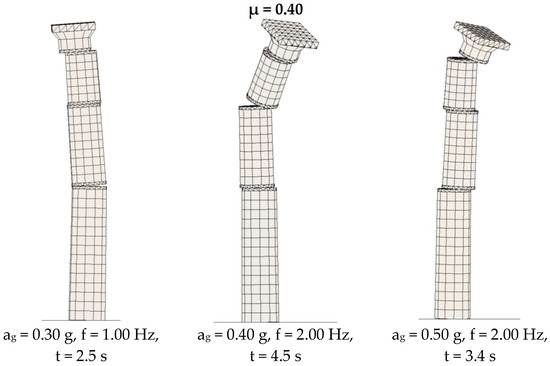
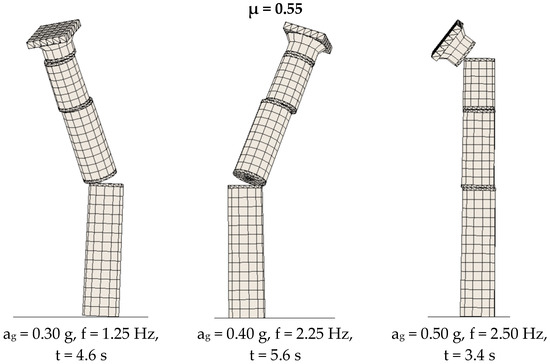
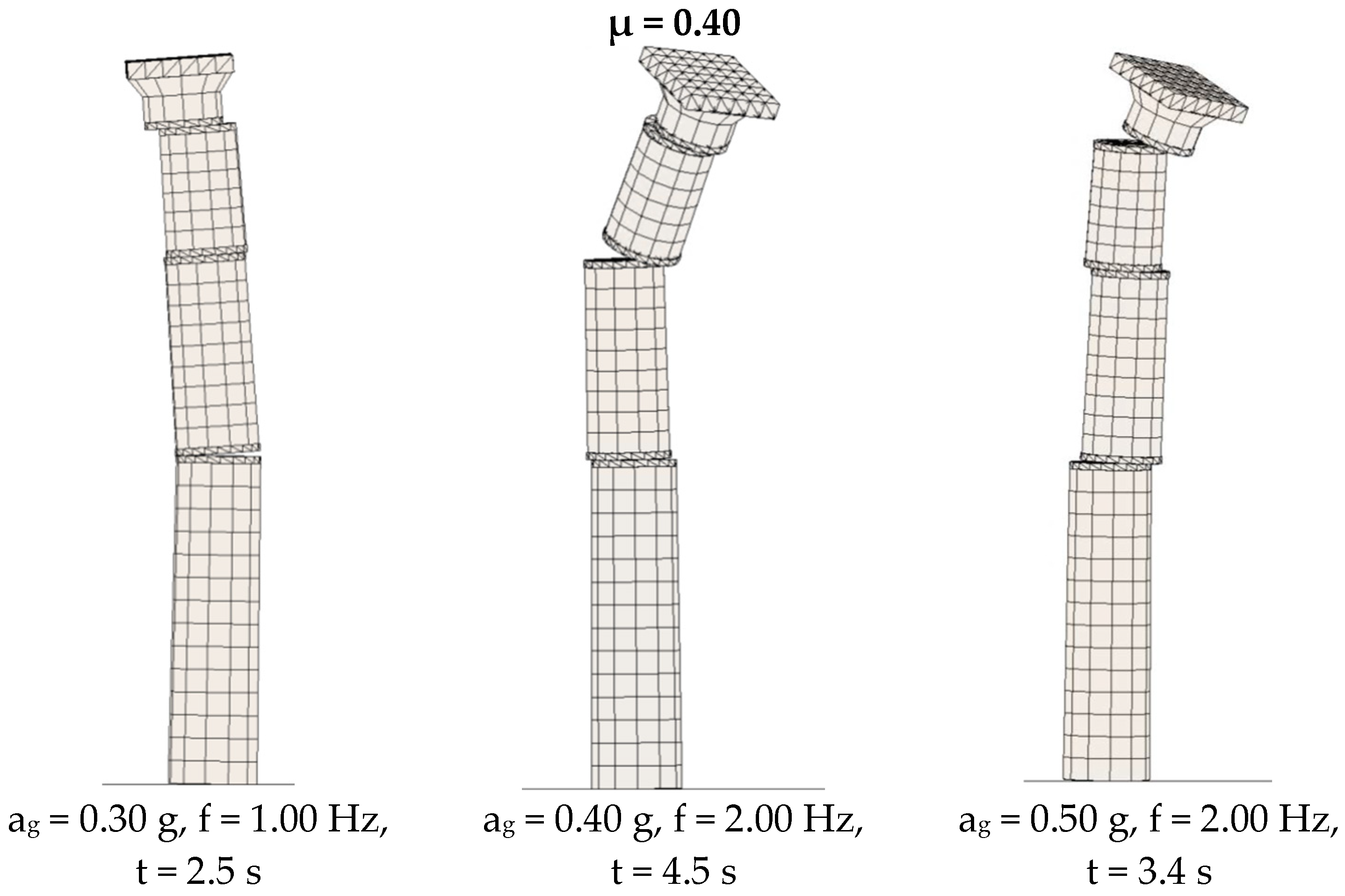
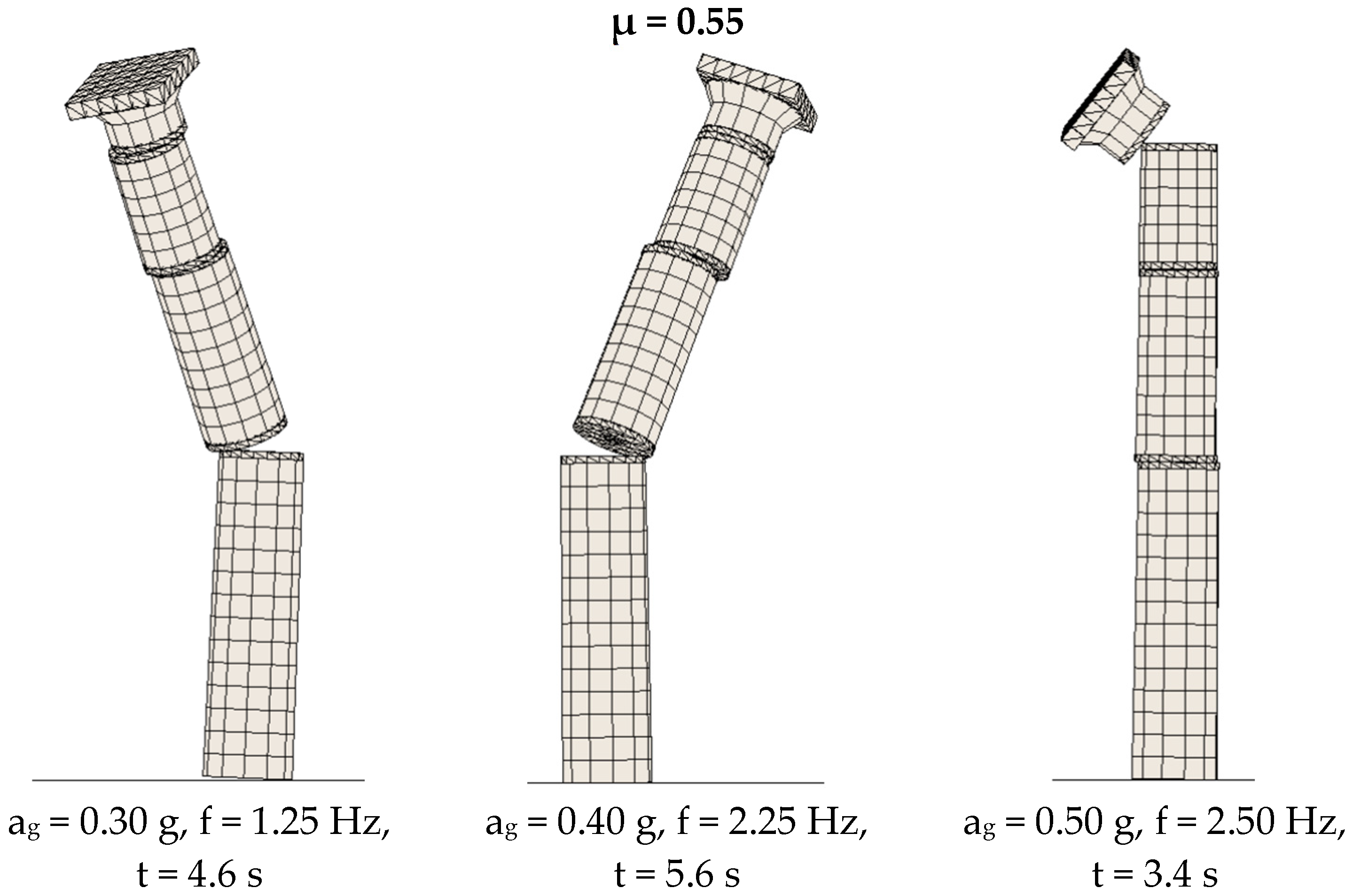
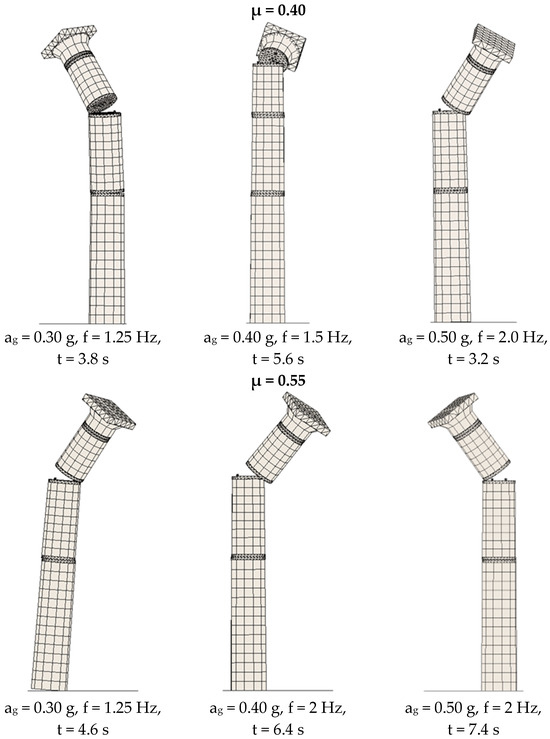
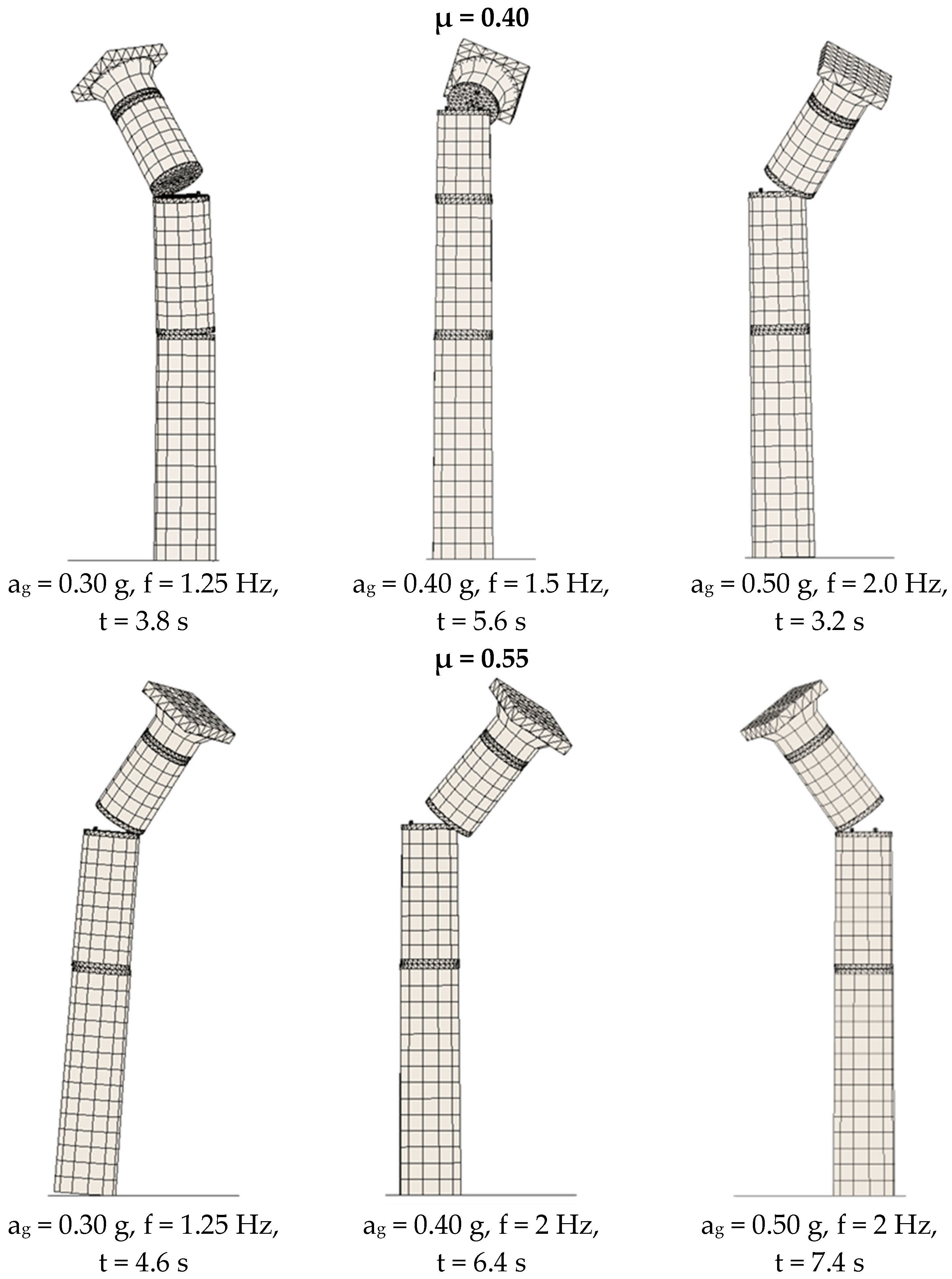
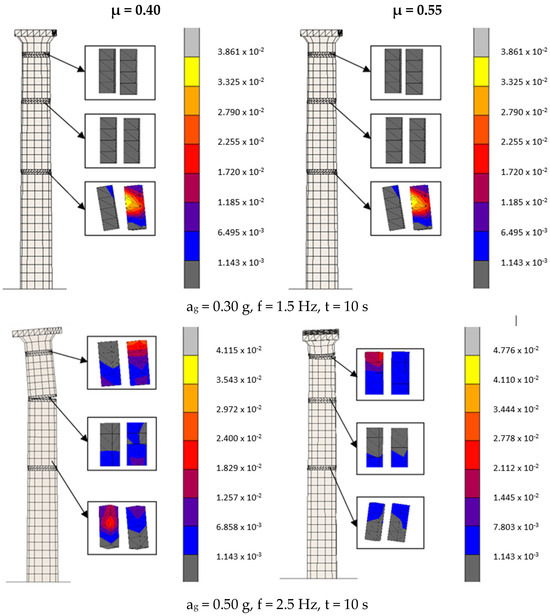
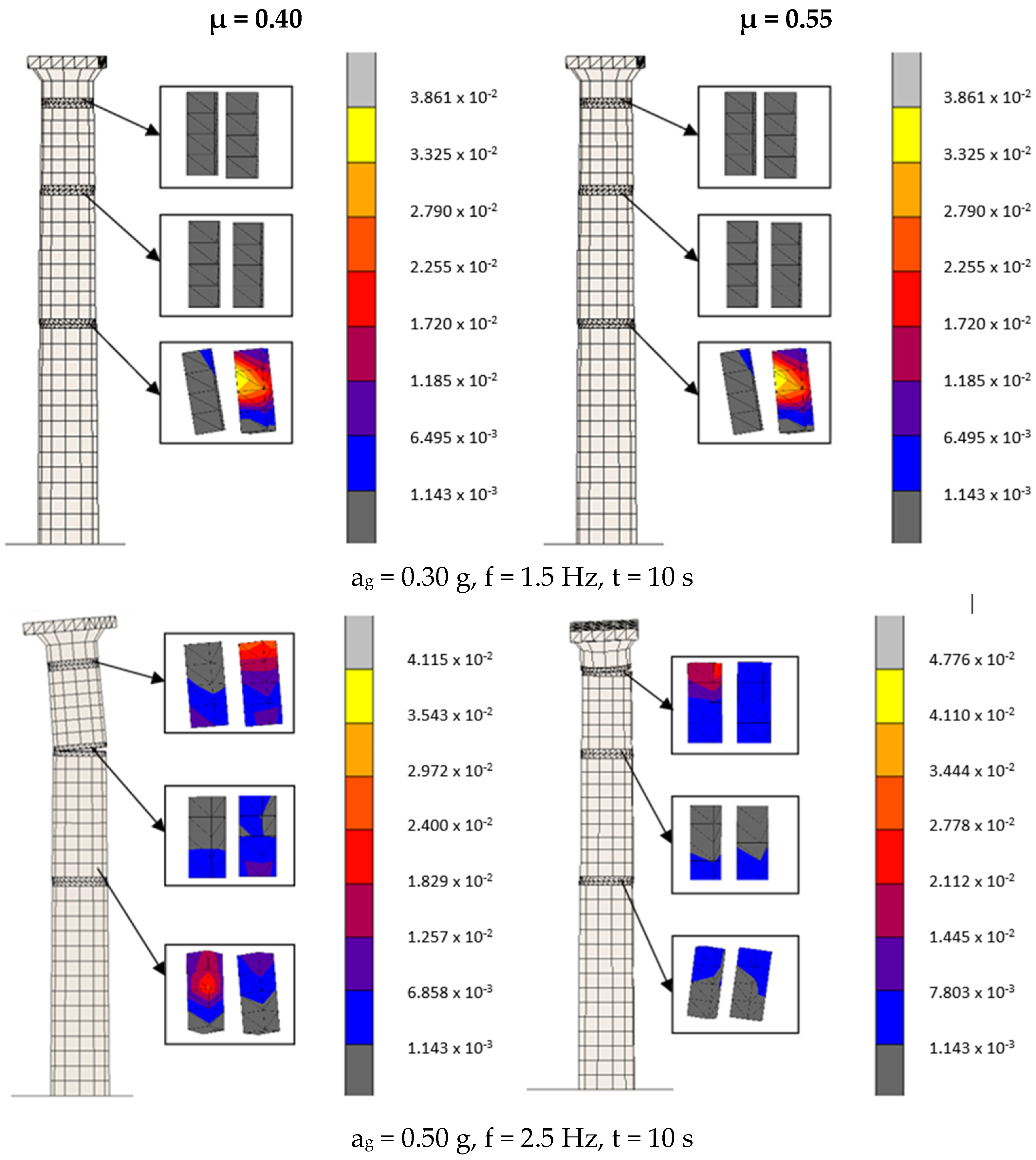
The findings indicate that the characteristics of the base excitation play an important role in the dynamic response and stability of the column. Low-frequency excitations were shown to induce larger rocking amplitudes, highlighting the sensitivity of the system to long-period ground motions. When the friction coefficient is relatively low (μ = 0.40), substantial sliding of the capital occurs even under modest ground accelerations, suggesting a limited capacity for energy dissipation through frictional resistance. As the excitation intensity increases, these sliding phenomena propagate downward, sequentially mobilizing the lower drums and eventually precipitating collapse. Moreover, as is shown in Figure 5, the pronounced interfacial sliding between the drums displaces the instantaneous pivot of rotation from the perimeter of the circular cross section. This displacement reduces the critical rocking angle and consequently promotes drum overturning. Conversely, for higher friction coefficients (μ = 0.55 and μ = 0.70), the collapse mechanism transitions from slip-dominated to rocking-dominated behavior. In these cases, failure arises from complex in-plane and out-of-plane rocking interactions between adjacent drums, involving alternating pivot points along their circular interfaces. These observations emphasize the dual influence of excitation frequency and interfacial friction in dictating both the onset and evolution of instability, highlighting the importance of accurately characterizing contact conditions in the dynamic analyses of multi-drum columns.
Figure 5.
Selected time-step representations of the dynamic response of Model1 under harmonic base excitations with different characteristics and different friction levels.
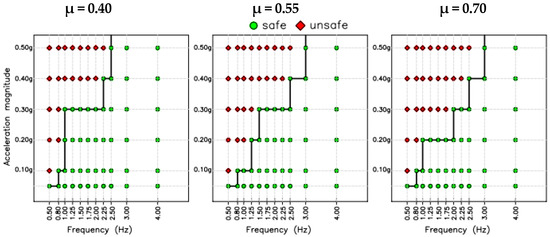
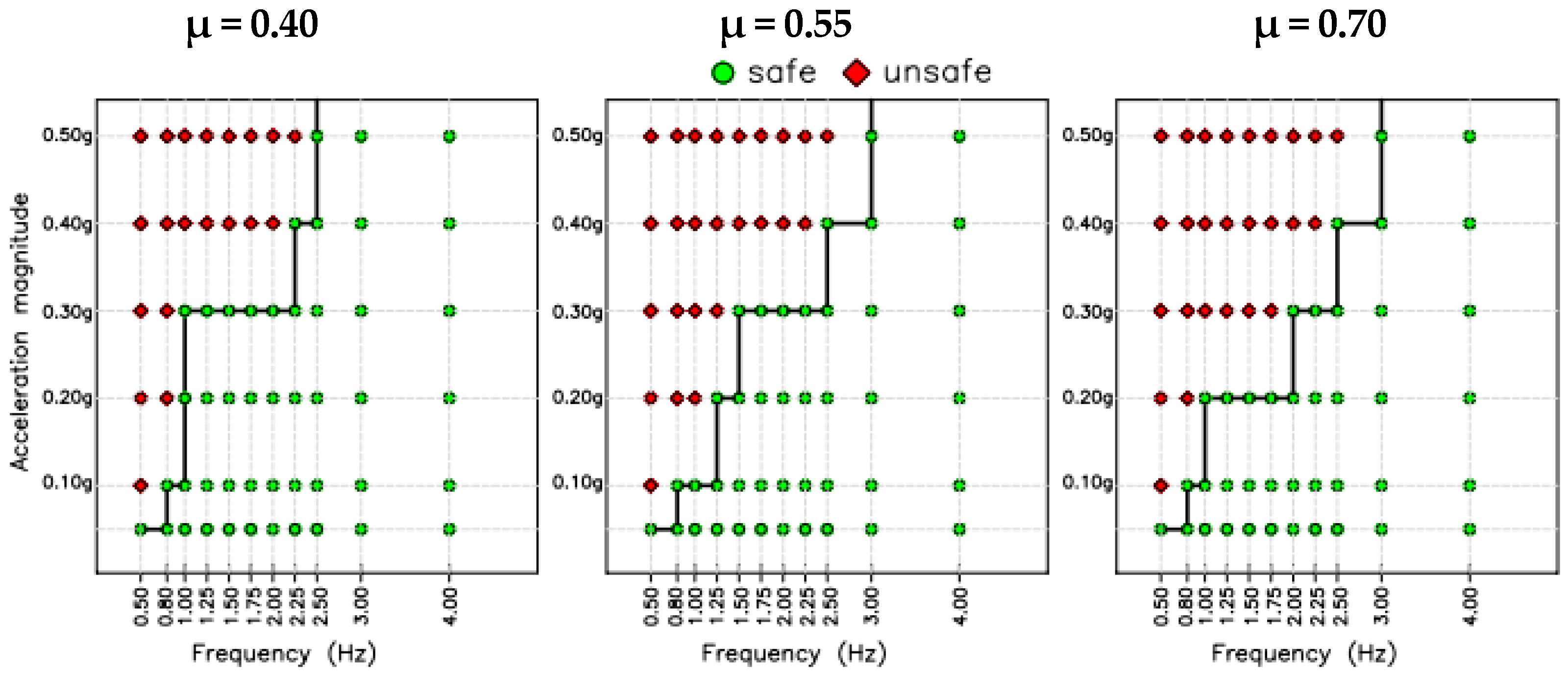
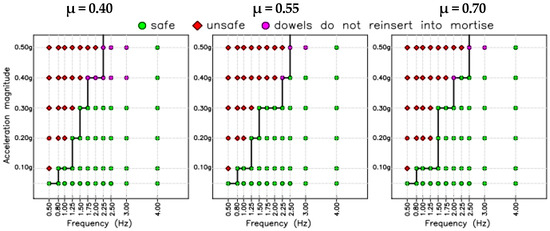
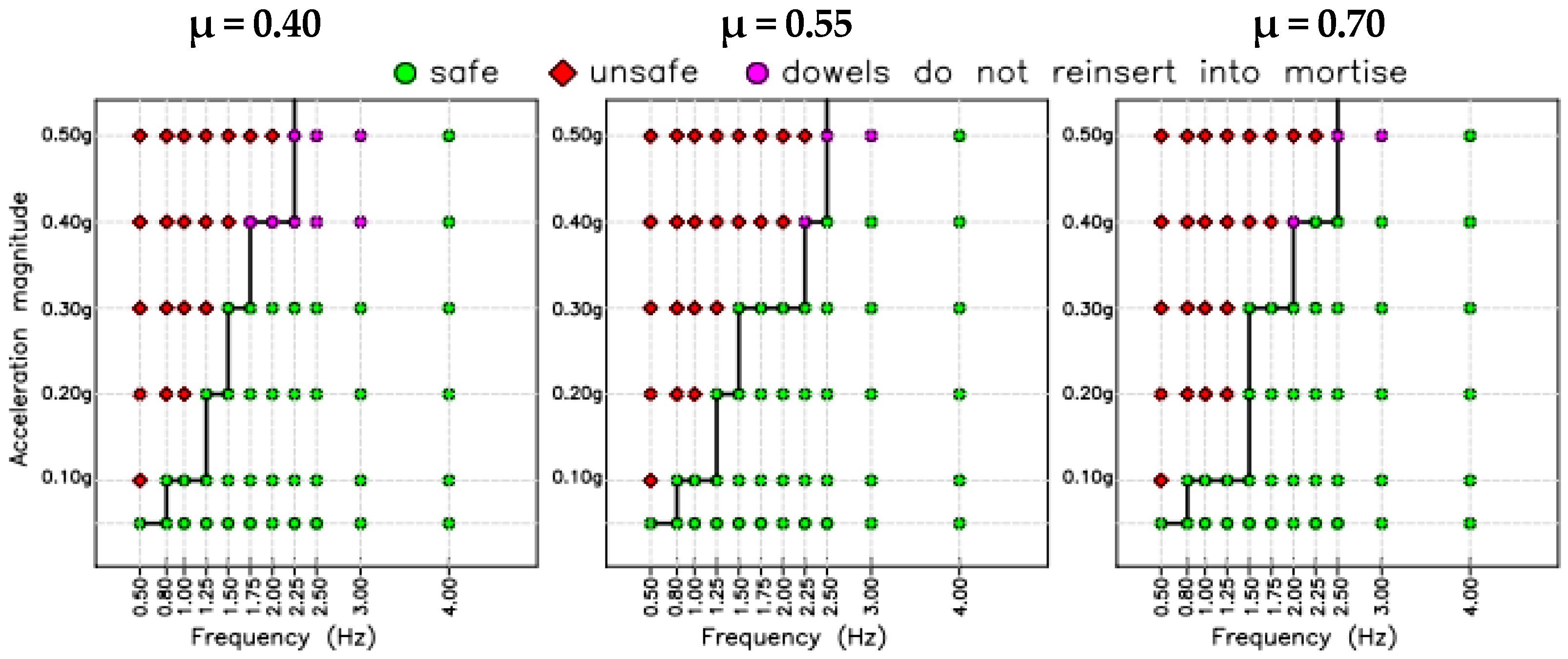
An analysis of the results presented in Figure 6, where the safe–unsafe boundaries for different friction levels and excitation characteristics are given, indicates that increasing the friction coefficient at the drum interfaces broadens the frequency range over which column collapse occurs, regardless of the ground acceleration level. Notably, in cases where the column with higher friction coefficients (μ = 0.55 and μ = 0.70) collapses, the column with a lower friction coefficient (μ = 0.40) remains stable. This behavior can be attributed to enhanced energy dissipation through interfacial sliding when frictional resistance is low. Sliding at the drum interfaces also develops at higher frequencies in the case of μ = 0.55, for all ground acceleration amplitudes. Furthermore, for all friction conditions examined, an increase in ground acceleration leads to a wider frequency range associated with overturning. These results highlight the critical influence of excitation characteristics on the dynamic stability of multi-drum columns and the complex interplay between rocking, wobbling and sliding mechanisms in their response. It must be mentioned here that the beneficial effect of sliding on the minimum amplitude ground acceleration (leading to overturning) has been analytically shown in [46,47] by using an energy variational approach. A key conclusion of this study is that the presence of sliding tends to delay or suppress the onset of rocking by dissipating energy and reducing the effective transfer of overturning moments between blocks. As sliding increases (i.e., with lower friction), the system exhibits reduced uplift and smaller rocking amplitudes, leading in many cases to a more stable overall response. In this sense, sliding can have a stabilizing effect by preventing the accumulation of rotational energy that would otherwise lead to overturning.
Figure 6.
Safe–unsafe boundary for different friction coefficient values (μ) and excitation characteristics in Model1.
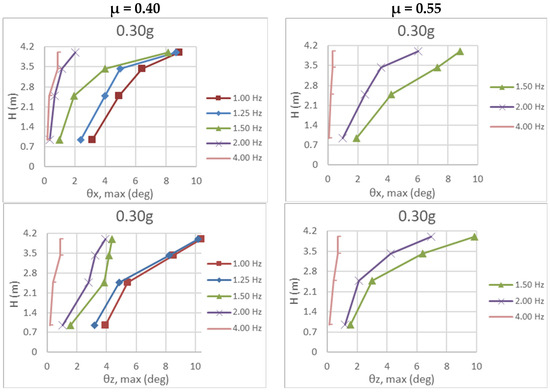
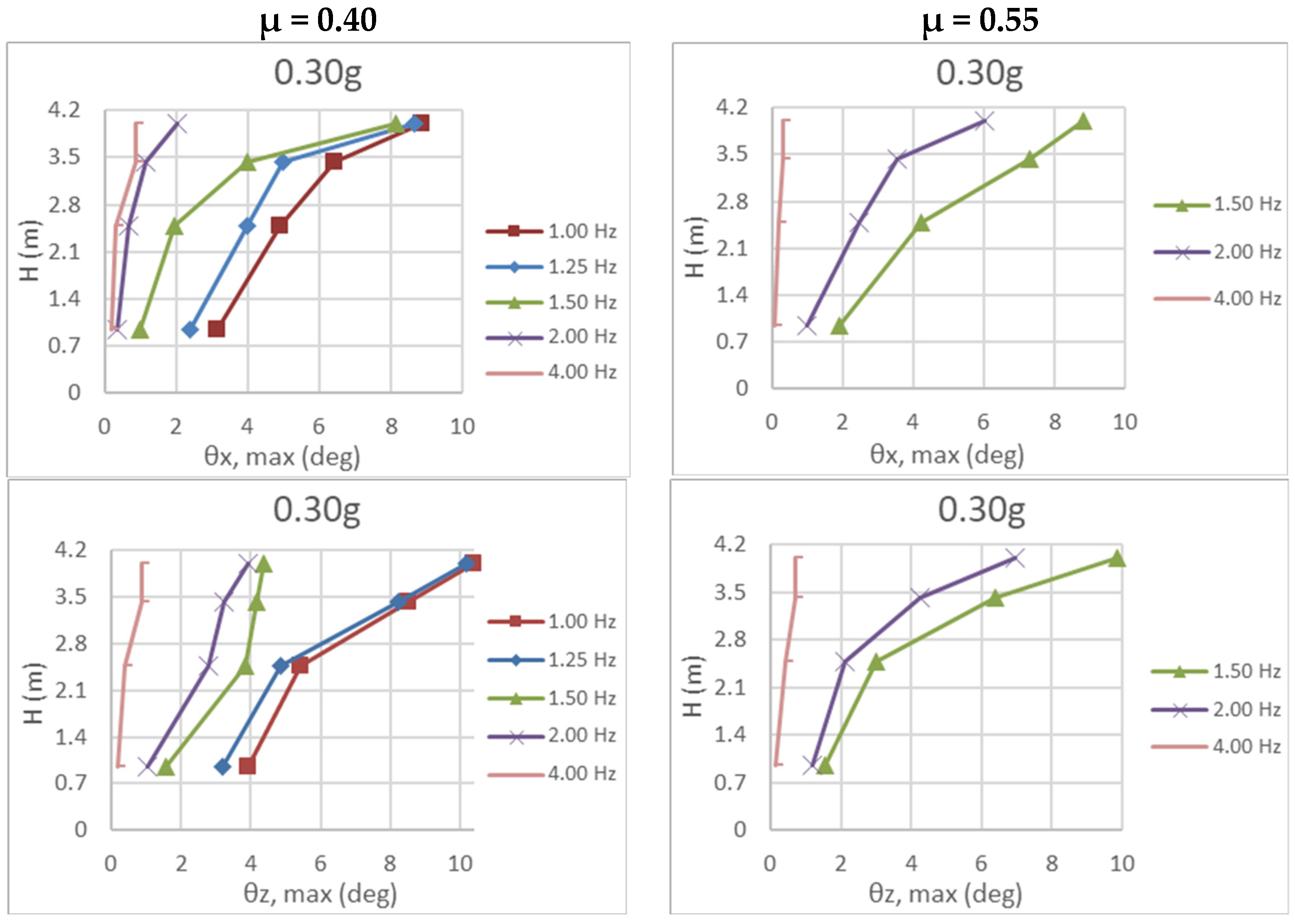
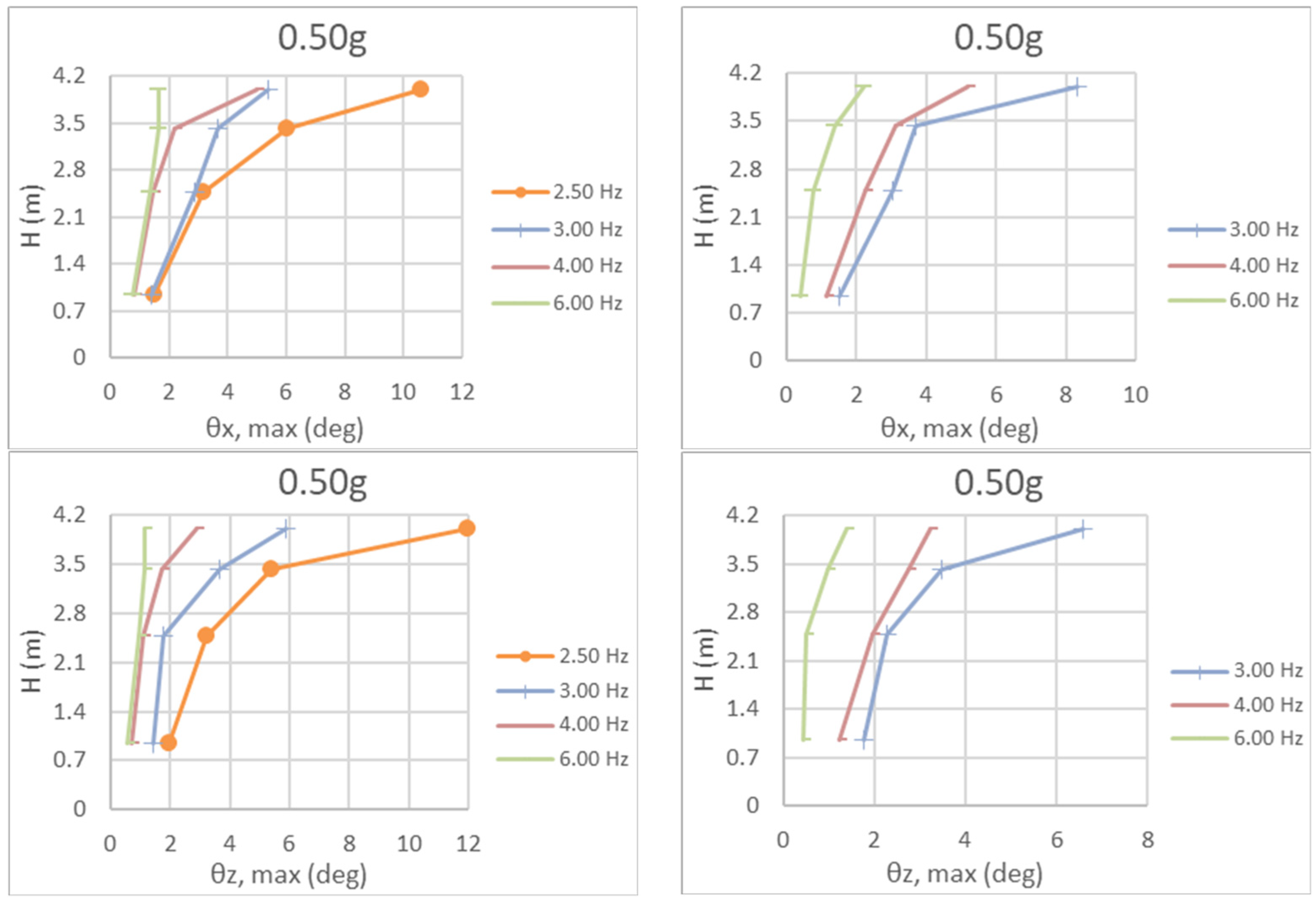
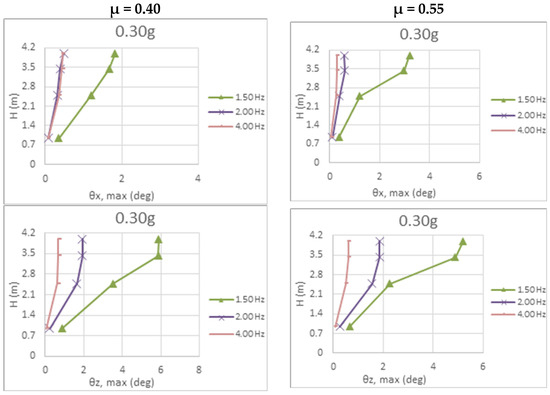
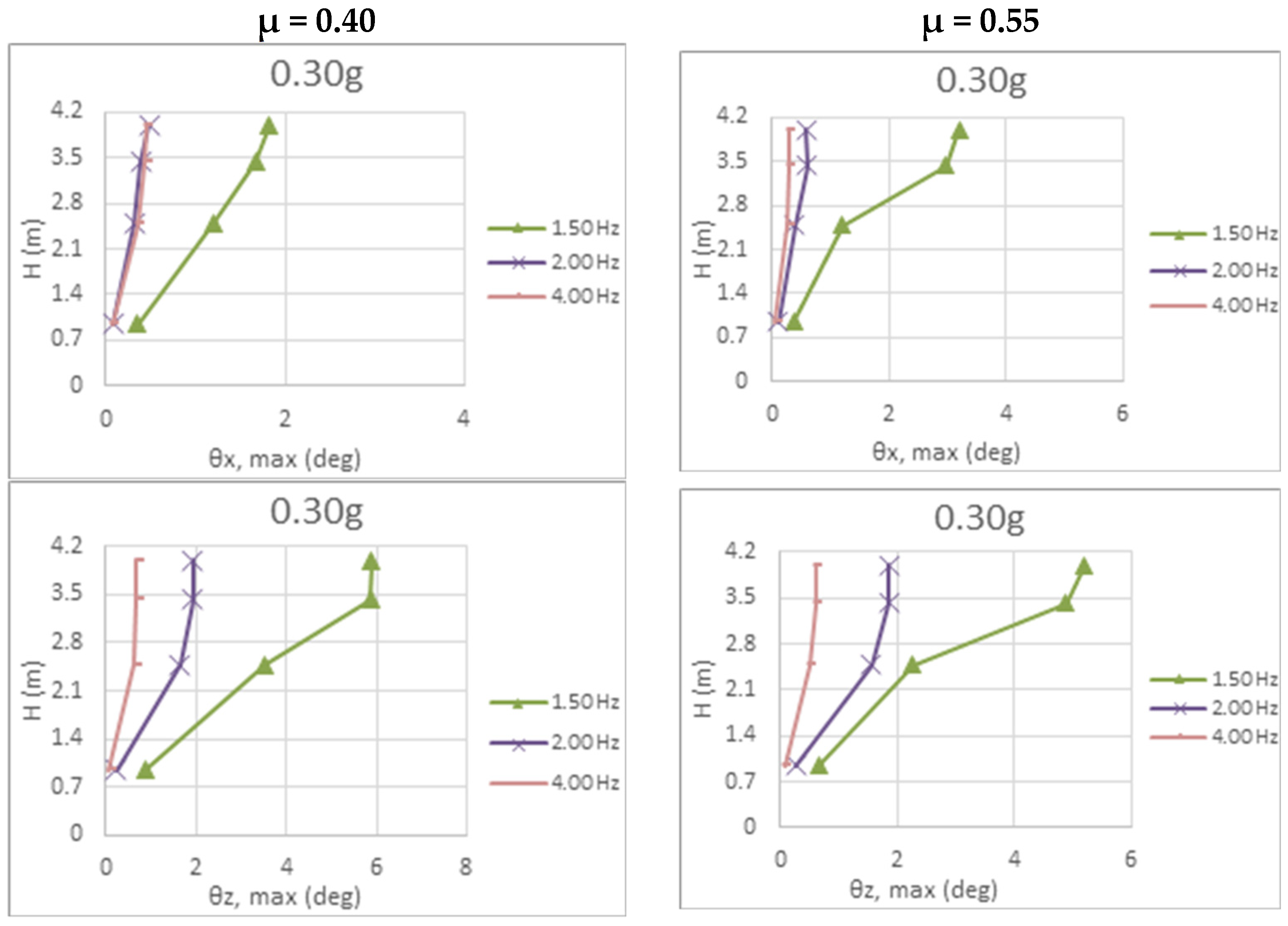
Figure 7 illustrates the in-plane and out-of-plane rocking responses of the column for ground excitations where collapse does not occur. Specifically, the diagrams compare the distribution of the maximum in-plane (θz) and out-of-plane (θx) rotations along the column height under different base excitations, for two distinct values of the friction coefficient. In all cases examined, lower-frequency ground motions produce more pronounced in-plane and out-of-plane rocking of the column. Moreover, it is observed that for ground motions with the same characteristics, an increase in the friction coefficient enhances both the in-plane and out-of-plane rocking responses of the column drums, indicating that higher interface resistance promotes greater rocking motion.
Figure 7.
Vertical distribution of maximum in-plane (θz) and out-of-plane (θx) rocking rotations for Model1.
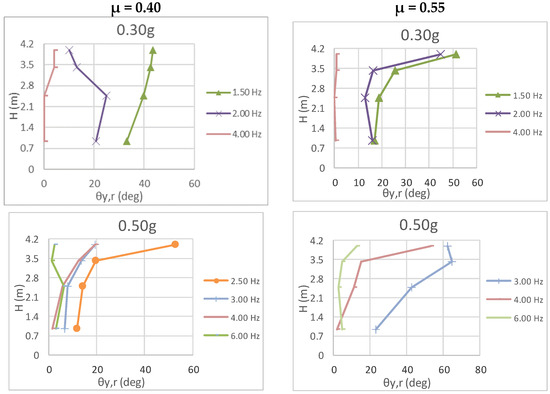
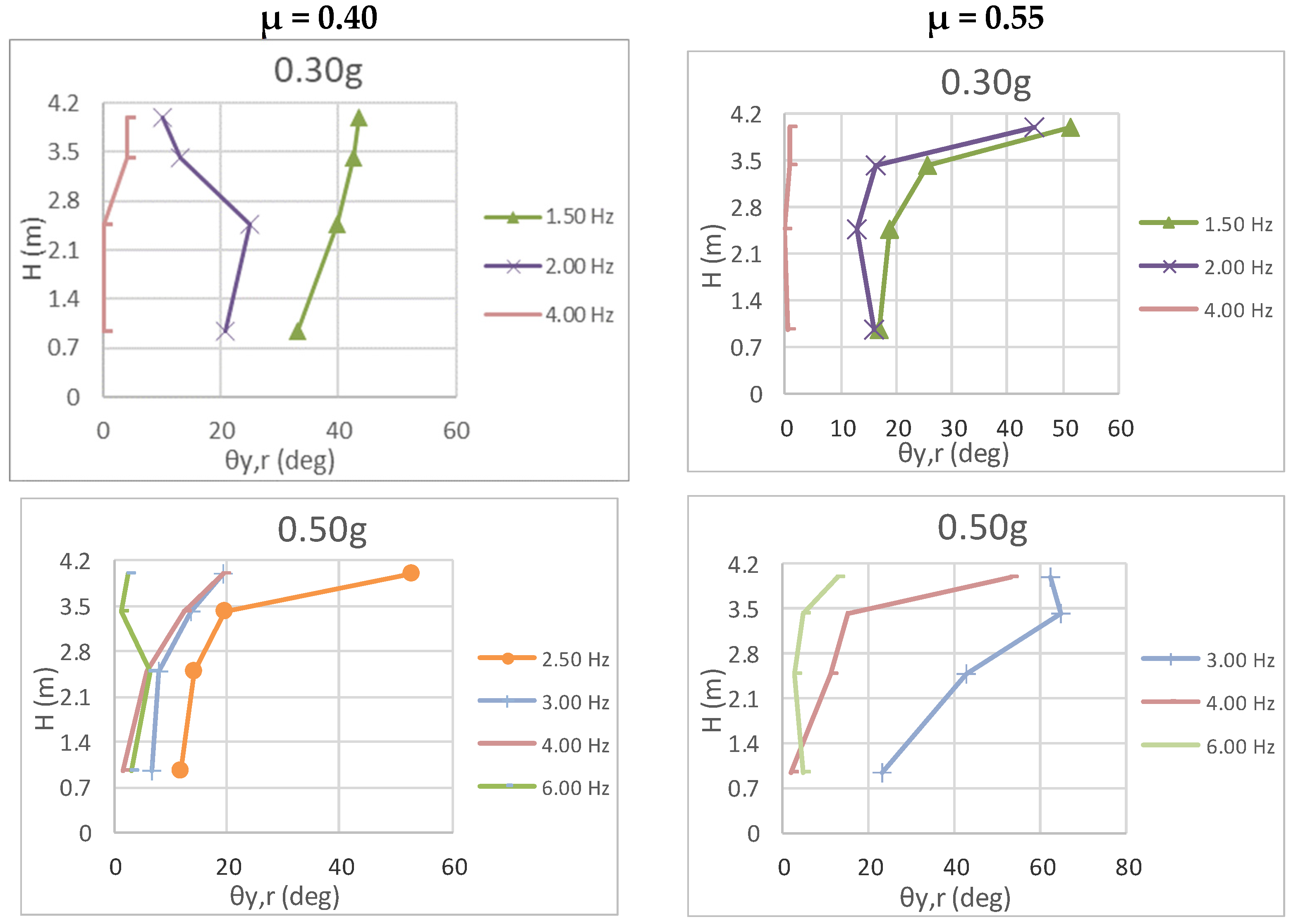
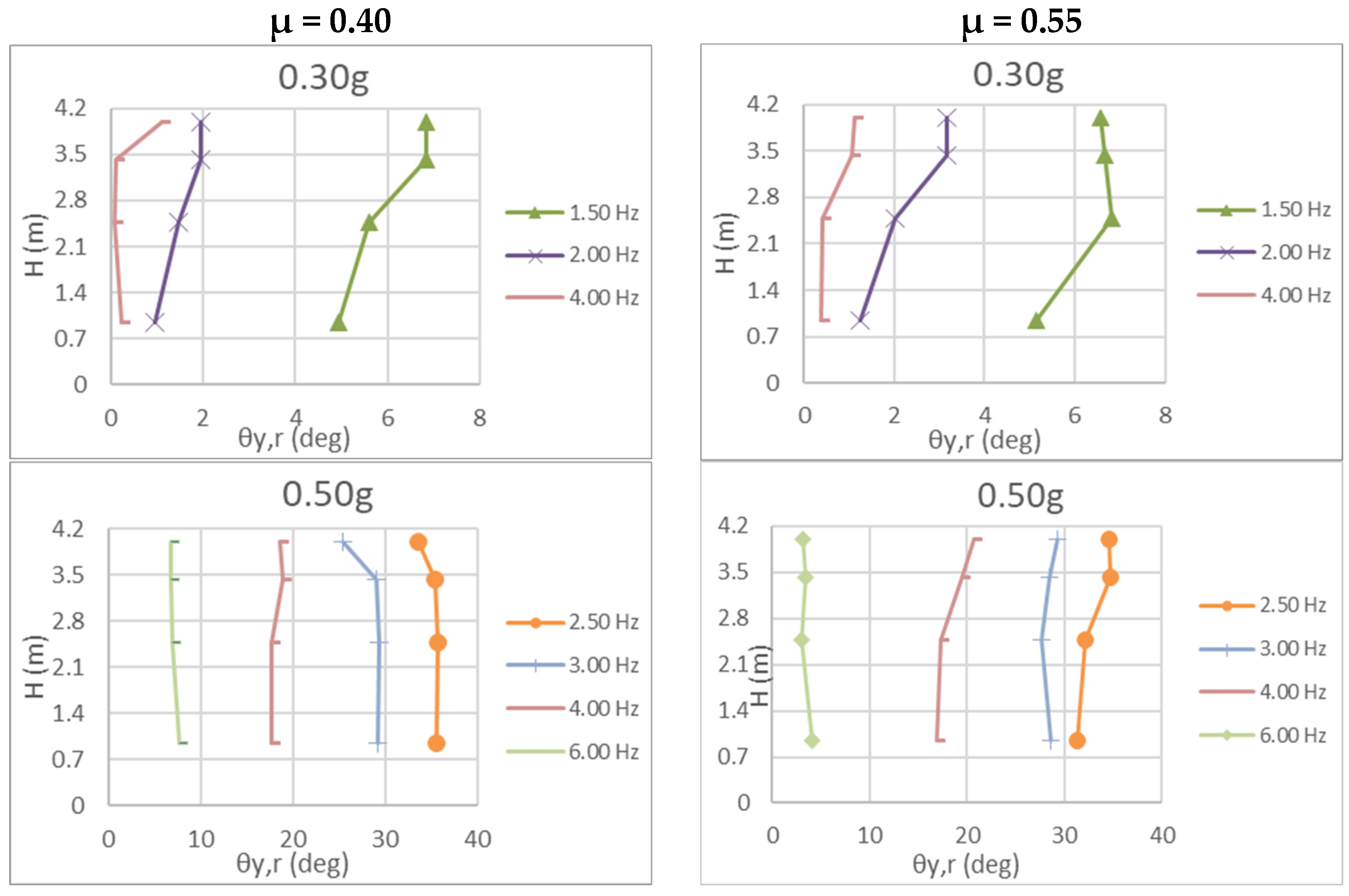
Figure 8 illustrates the distribution of the residual rotations about the vertical y-axis (θy,res) along the column height, for different base excitations and two values of the friction coefficient. In all cases examined, low-frequency ground motions lead to more pronounced rotations about the vertical axis of all drums. In addition, for ground motions with similar characteristics, an increase in the friction coefficient leads to higher values of θy,res, consistent with the trends observed in the rocking response, indicating that enhanced interface resistance amplifies the rotational behavior of the system.
Figure 8.
Vertical distribution of residual rotations around vertical axis-y for Model1.
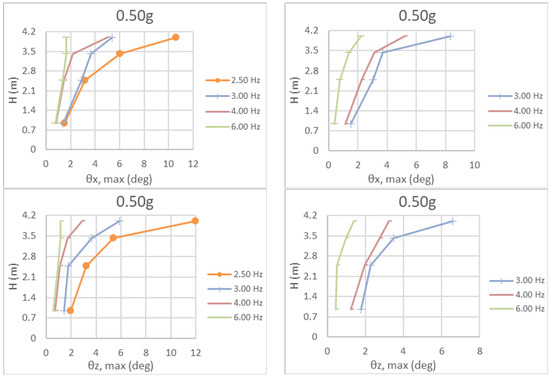
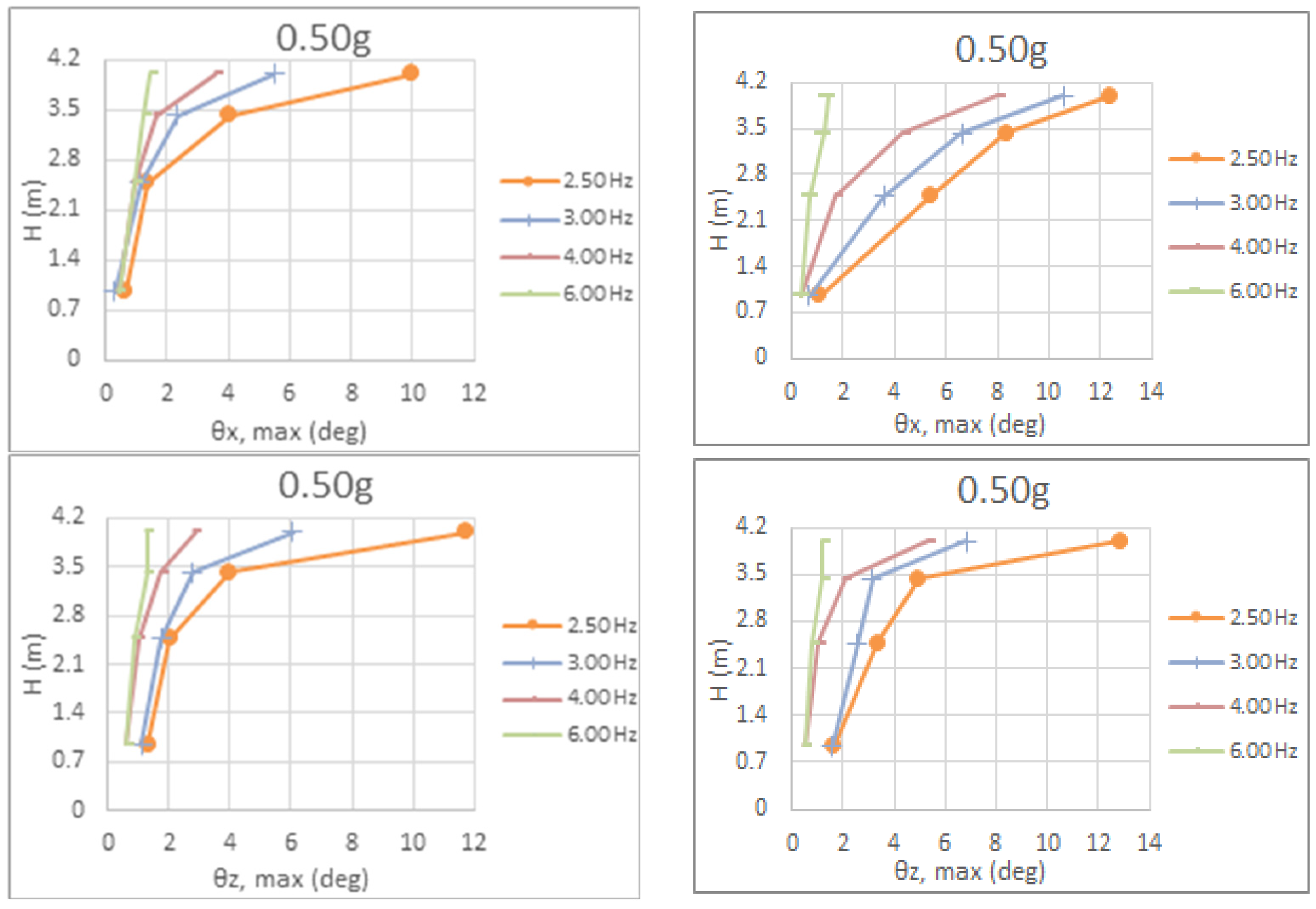
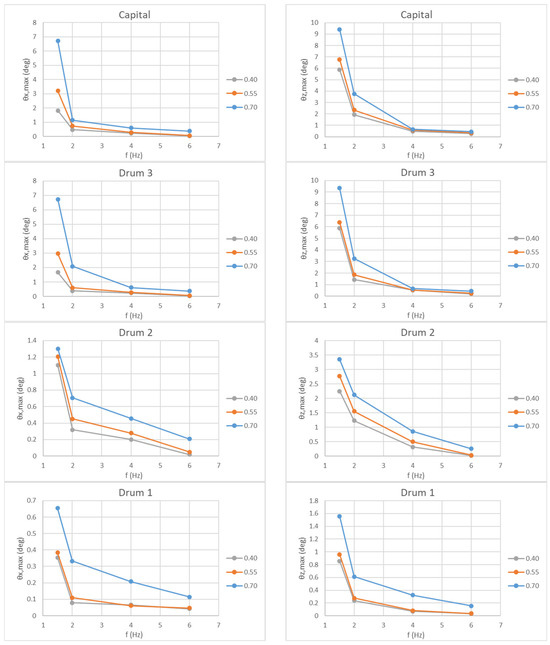
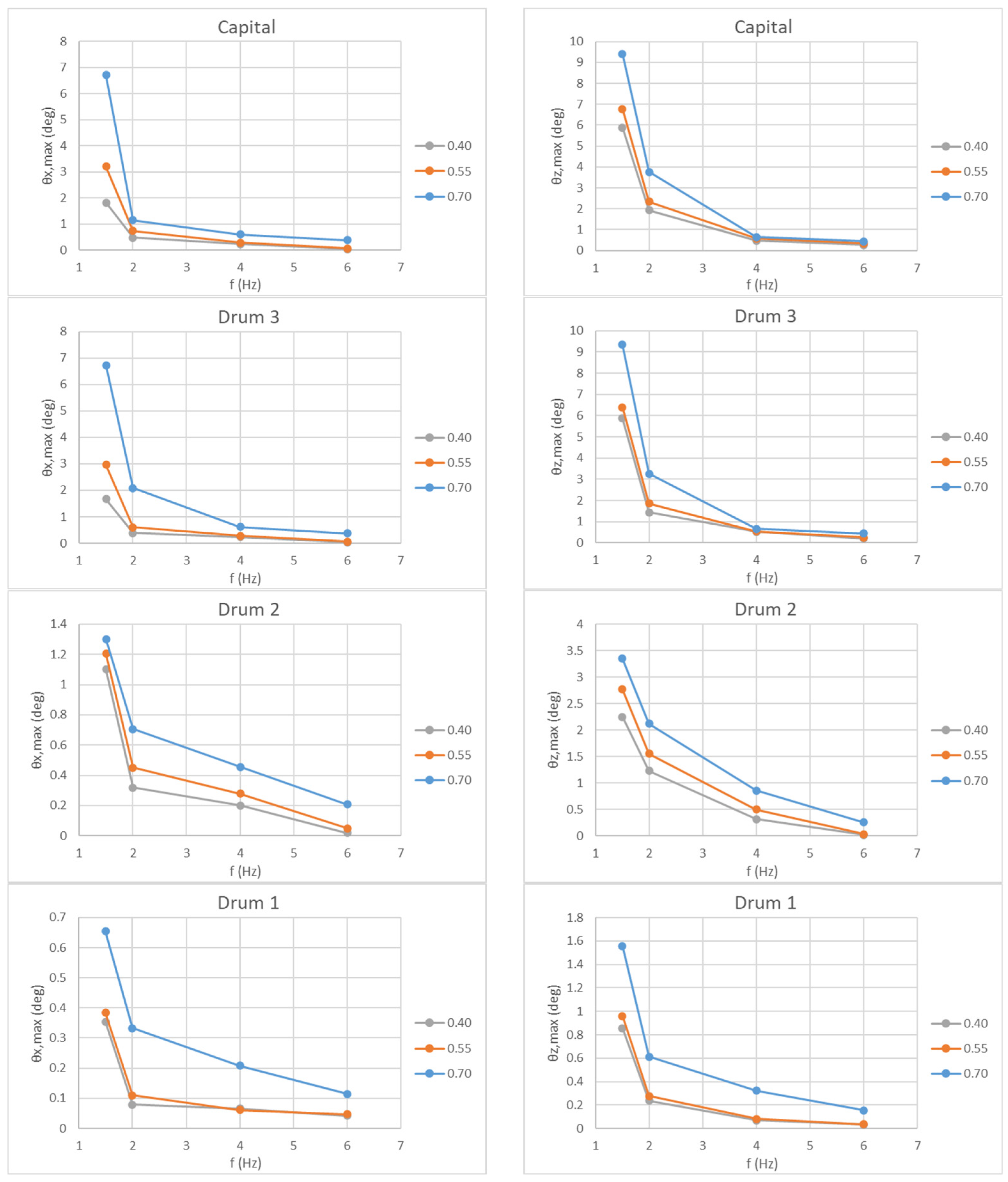
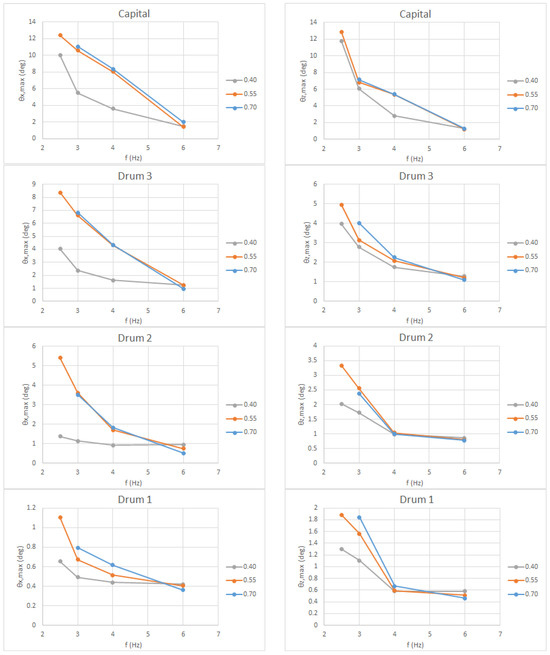
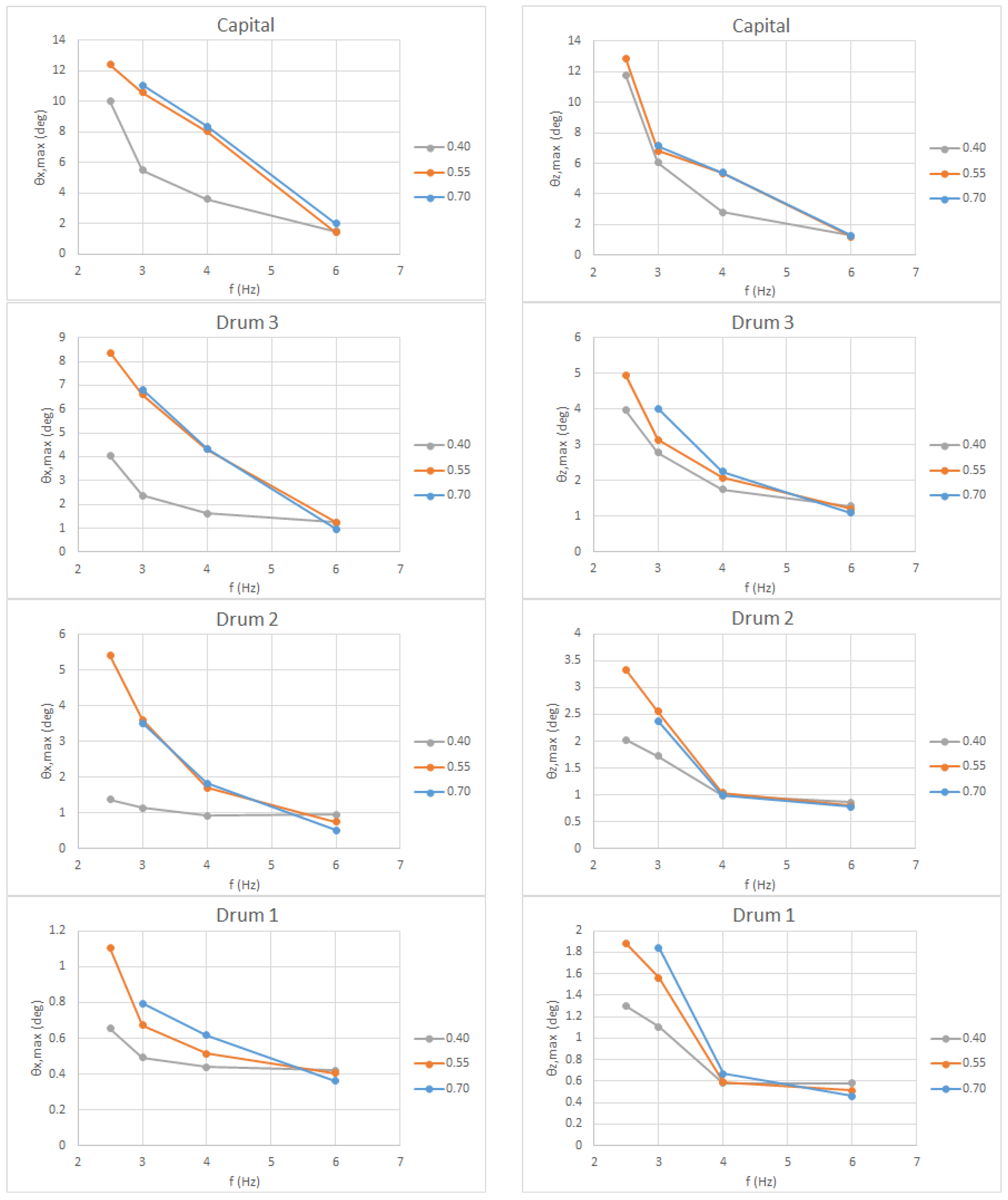
The above observations are also confirmed in Figure 9 and Figure 10, where the in-plane and out-of-plane rocking responses of each drum as a function of excitation frequency for ground motions with ag = 0.30 g and 0.50 g respectively and for different friction levels (μ = 0.40, μ = 0.55, and μ = 0.70) are presented. The results indicate that an increase in the friction coefficient enhances the rocking response of all drums, as higher interface friction restricts sliding and consequently promotes a more dominant rocking motion. The sensitivity of the rocking response to variations in friction is more pronounced at lower excitation frequencies, particularly for the upper drums, where cumulative rotation and reduced sliding amplify the rotational demand. Moreover, the increase in friction not only alters the rocking amplitude but also affects the energy dissipation mechanism, shifting it from predominantly sliding-induced damping to frictional energy loss concentrated at the contact interfaces during uplift and impact cycles.
Figure 9.
Maximum in-plane (θz) and out-of-plane (θx) rocking angles for ag = 0.30 g at different friction levels (Model1).
Figure 10.
Maximum in-plane (θz) and out-of-plane (θx) rocking angles for ag = 0.50 g at different friction levels (Model1).
4.2. Dynamic Response of a Multi-Drum Column with Inter-Drum Connections for Different Friction Levels
In this section, the influence of the friction coefficient is examined for Model2, which incorporates two iron dowels between successive structural members. The numerical investigations demonstrate that, under low-frequency excitation, the system exhibits pronounced in-plane and out-of-plane motions, accompanied by rolling at the interfaces. The combined action of these mechanisms significantly amplifies the destabilizing kinematic response, leading to the overturning of the upper drums, as is shown in Figure 11. It should be noted that the presence of the dowels prevents the overturning of the lower drums, which was common in the case of Μodel1, especially at higher values of the friction coefficient as is shown in Figure 5. Moreover, the study of Figure 12, where the safe–unsafe boundaries for different friction levels and excitation characteristics of Model2 are given, indicates that increasing the friction coefficient at the interfaces of drums does not substantially change the frequency range associated with overturning for the ground accelerations considered here. It should be noted, however, that in some cases and especially for motions with large acceleration amplitudes (0.40 g and 0.50 g), as the iron dowels disengage from the upper drum, they are not able to reinsert in the mortise during the reversed motion. This inability to re-engage is attributed to the enhanced wobbling and sliding of the drums, which disrupts the alignment required for dowel reinsertion, thus increasing the instability of the column. This behavior is observed to be more pronounced at lower friction coefficients, particularly for the ground motions associated with large relative displacements between the drums in the case of Model1.
Figure 11.
Selected time-step representations of the dynamic response of Model2 under harmonic base excitations with different characteristics.
Figure 12.
Safe–unsafe boundary for different friction coefficient values (μ) and excitation characteristics in Model2.
It must be mentioned here that during column collapse, which is due to the pronounced rocking response of the drums, the overturning drums impose increased demands on the dowels connecting them to the underlying drums, leading to the development of severe plastic deformations at these dowels.
Figure 13 illustrates the plastic deformations of the dowels at the time when the free-vibration phase has been terminated, for selected ground excitation characteristics and for two different friction levels (μ = 0.40 and μ = 0.55). More specifically, the selected frequency cases for each ground acceleration level correspond to the lower frequency where collapse does not occur, as is shown in Figure 11.
Figure 13.
Plastic strains of the dowels for selected ground excitation characteristics and for two different friction levels.
Based on the analysis of the results, in most non-collapse scenarios, the presence of dowels restricts both sliding at the drum interfaces and rotation of the drums around the vertical axis, resulting in significant dowel plastifications. In these configurations, the largest plastic deformations are concentrated in the dowels connecting the first and second drums. An exception is observed in cases where the dowels do not properly engage with the corresponding holes, as shown in case of ag = 0.50 g, where significant plastic deformations arise at these dowels because of the self-weight of the overlying drums. Finally, regarding the role of the friction coefficient, the results suggest that lower friction values are associated with increased plastic deformations of the dowels, as reduced interface resistance promotes enhanced relative motion and, consequently, higher deformations of the connection system.
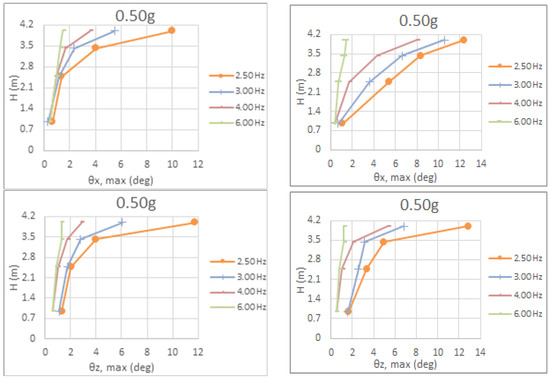
Figure 14 illustrates the in-plane and out-of-plane rocking responses of Model2 when subjected to non-collapse ground excitations. The figure, in correspondence with Figure 7, compares the variation in the maximum in-plane (θz) and out-of-plane (θx) rotations along the height of the column for different base excitation records and for two distinct friction coefficient values. The results indicate that, consistent with the behavior observed for columns without dowels, lower-frequency ground motions also lead to more pronounced in-plane and out-of-plane rocking in the column with inter-drum connections. Moreover, for ground motions characterized by low acceleration amplitudes, the differences in the rocking response of the drums for friction levels μ = 0.40 and μ = 0.55 are small. On the contrary, at higher acceleration amplitudes the drums exhibit a more intense rocking response when the friction coefficient is increased to μ = 0.55.
Figure 14.
Vertical distribution of maximum in-plane (θz) and out-of-plane (θx) rocking rotations for Model2.
The results presented in Figure 15 indicate that the residual rotations about the vertical y-axis (θy,res) of Model2 are primarily influenced by the frequency of the applied ground motions. Low-frequency excitations are associated with increased rotations along the height of the column, suggesting an increased tendency toward torsional response under such excitations. For ground motions with the same characteristics, changes in the friction coefficient result in only marginal variations in the vertical-axis rotations. Within the examined parameter range, this finding implies that the dowel connections provide a significant constraint against torsional motion, thereby reducing the influence of interface friction on this motion. Moreover, it is worth noting here that the presence of metallic dowels significantly restricts the relative rotation of the drums about the vertical axis, resulting in unified rotational behavior in all friction levels examined in this work.
Figure 15.
Vertical distribution of residual rotations around vertical axis-y for Model2.
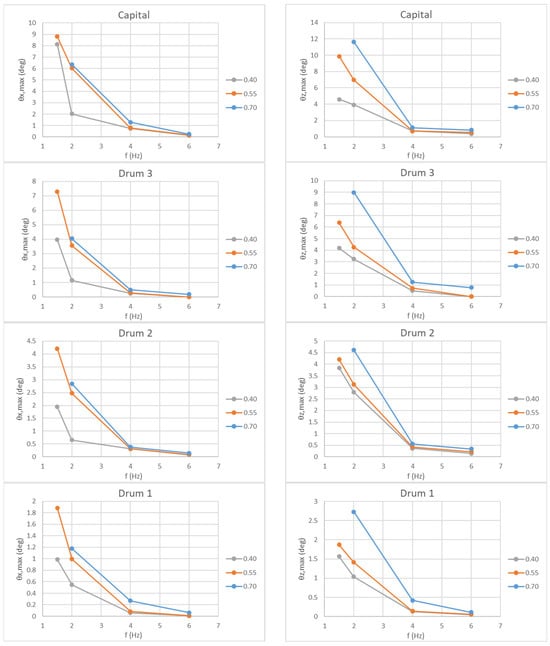
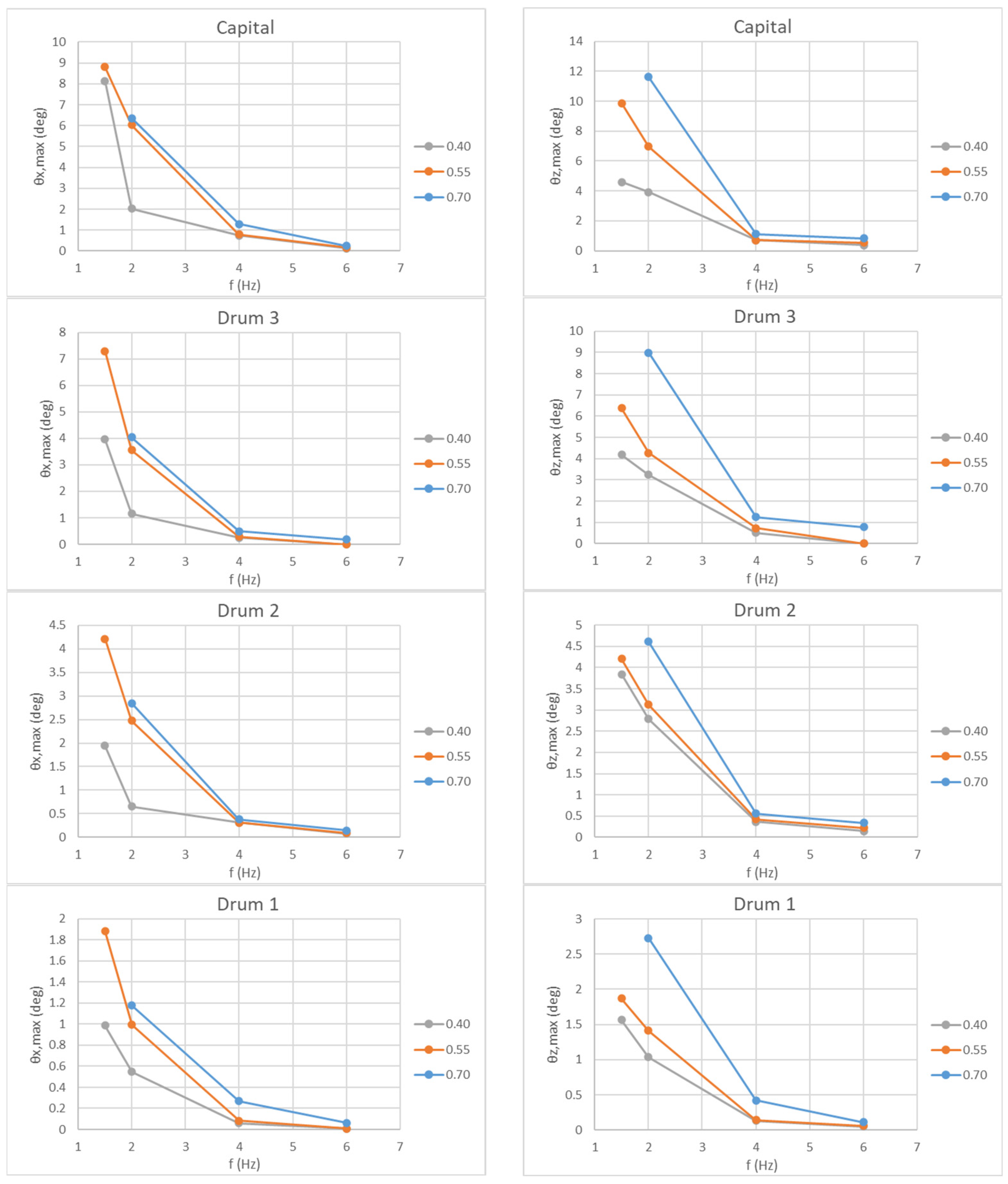
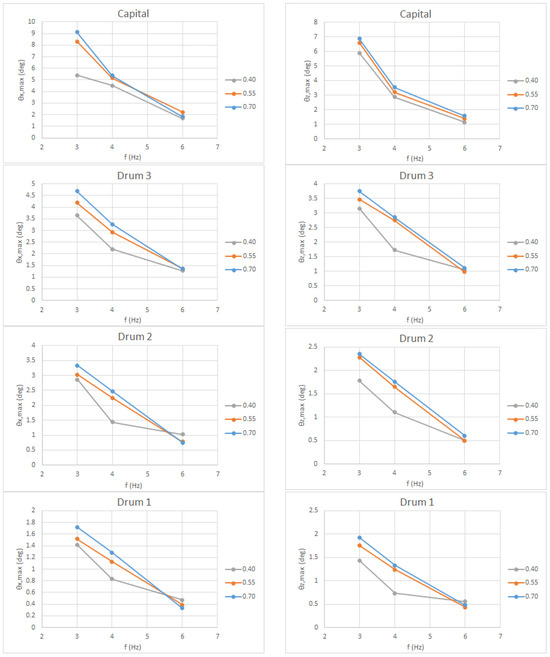
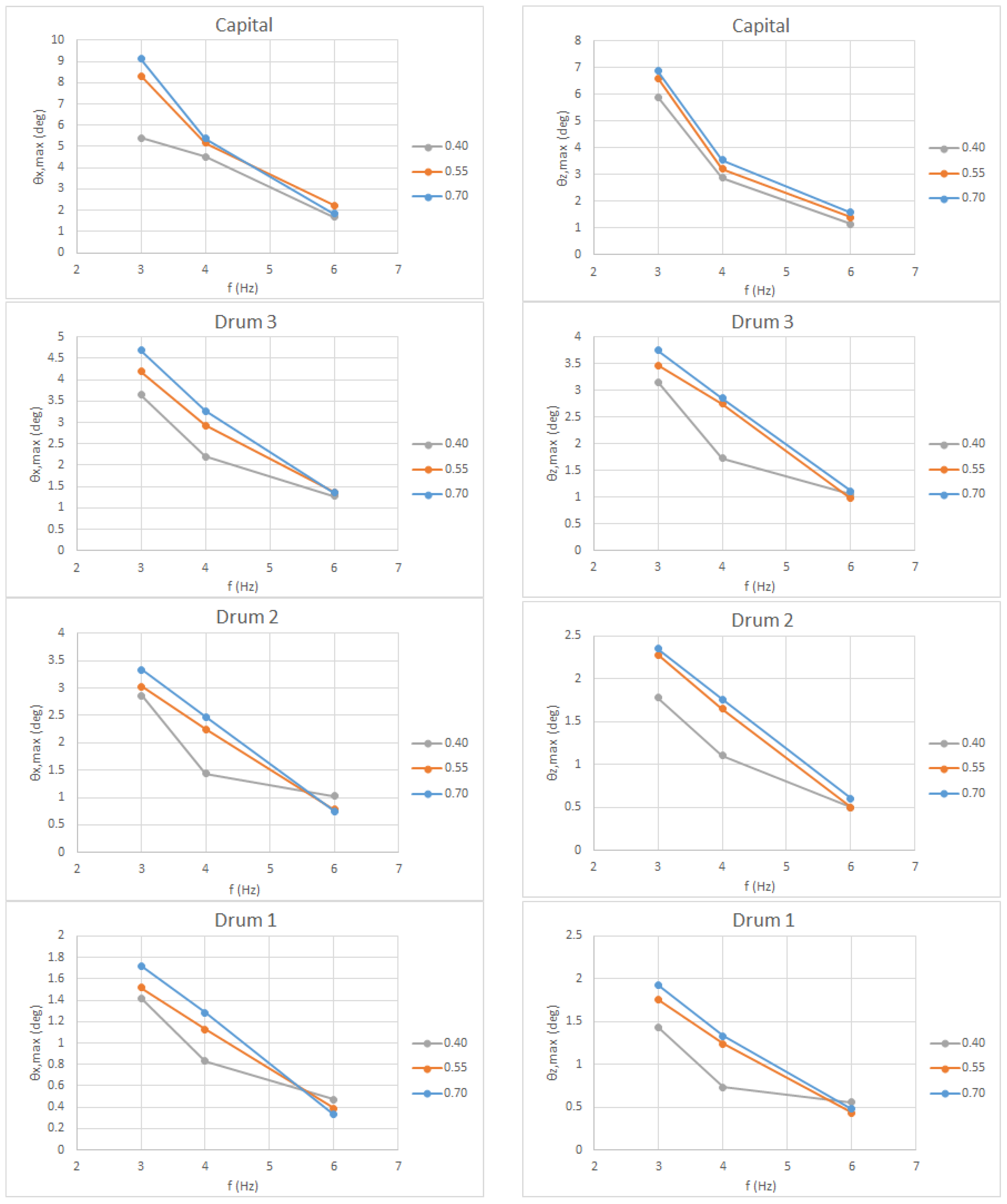
Finally, Figure 16 and Figure 17 depict the frequency-dependent in-plane and out-of-plane rocking responses of the individual drums of Model2, for ground accelerations equal to 0.30 g and 0.50 g respectively and for the three friction coefficients examined. The results indicate that, at low excitation amplitudes (ag = 0.30 g), the rocking response is only weakly affected by variations in the friction coefficient between μ = 0.40 and μ = 0.55. In contrast, a marked amplification of the rocking response is observed in the case where μ = 0.70, particularly in the low-frequency range and predominantly in the upper drums. Conversely, at higher excitation levels (ag = 0.50 g), both the in-plane and out-of-plane rocking responses are significantly smaller for μ = 0.40, indicating a friction-dependent suppression of rocking motion.
Figure 16.
Maximum in-plane (θz) and out-of-plane (θx) rocking angles for ag = 0.30 g at different friction levels (Model2).
Figure 17.
Maximum in-plane (θz) and out-of-plane (θx) rocking angles for ag = 0.50 g at different friction levels (Model2).
5. Conclusions
This study presents a three-dimensional numerical investigation of the influence of the friction coefficient on the dynamic response and the overall stability of a multi-drum column, considering both an unreinforced configuration (Model1) and a reinforced configuration with two iron dowels connecting adjacent drums (Model2). A preliminary version of this investigation was previously presented in [48], while the present study extends and further develops the analysis through a more comprehensive three-dimensional approach. The analyses, which were carried out using the finite element code MARC, were based on the geometric and material characteristics of a standalone column from the Gymnasium of Ancient Messene, Greece. The aim of this study was to systematically evaluate how variations in the friction coefficient at the drum interfaces affect the dynamic response and overall stability of the column, while also investigating the role of iron dowels in modifying this behavior. The findings demonstrate that increased friction significantly influences the load transfer mechanism between drums, which in turn governs the activation of the dowels and the resulting kinematic response of the system. By clarifying this interaction, the study provides new insight into the coupled mechanical behavior of friction and dowel action, contributing to a more comprehensive understanding of the structural performance of such column systems. The results of the parametric analyses lead to the following main conclusions:
Role of the friction coefficient in Model1:
- For low values of the friction coefficient, energy dissipation is observed through sliding between the column drums. Consequently, for almost all ground acceleration records, the frequency range leading to column overturning is reduced compared to cases with higher friction coefficients.
- At lower friction levels (μ = 0.40) when collapse occurs, sliding mechanisms play an important role in the failure process.
- For higher friction coefficients, collapse is mainly associated with the pronounced in-plane and out-of-plane rocking behavior of the drums, occurring at different contact points along the circular cross-section of the underlying drum.
- With increases in the friction coefficient, the rocking response of all column drums becomes more pronounced.
- An increase in the coefficient of friction leads to an increase in the residual rotational angles of the drums about the vertical axis.
Role of the friction coefficient in Model2:
- An increase in the friction coefficient at the drum interfaces does not lead to a significant change in the frequency range associated with collapse.
- For ground motions characterized by low acceleration amplitudes (ag = 0.10–0.30 g), a pronounced intensification of the rocking response is observed only at relatively high friction coefficients (μ = 0.70), particularly in the low-frequency range and predominantly in the upper drums. In this case, both the in-plane and out-of-plane maximum rocking angles of the drums are up to 60% greater compared to the corresponding angles obtained for the lower values of μ (μ = 0.40 and μ = 0.55), indicating a significantly amplified rotational response under higher friction conditions, especially at lower-frequency motions.
- Conversely, for ground motions with higher acceleration amplitudes (ag = 0.40 g), increasing the friction coefficient leads to a progressive amplification of the rocking response.
- For high intensity ground motions (ag = 0.50 g), both the in-plane and out-of-plane maximum rocking angles are significantly (up to 50%) smaller for μ = 0.40 compared to the corresponding angles obtained for the larger values of μ (μ = 0.55 and μ = 0.70), indicating a friction-dependent suppression of rocking motion.
- For higher levels of ground acceleration (ag = 0.40 g, 0.50 g), low friction coefficients are associated with a broad frequency range in which the iron dowels fail to reinsert into the mortises during the reversed motion.
- The presence of dowels is critical in reducing residual rotation angles about the vertical axis, while variations in the friction coefficient do not significantly influence this response. Furthermore, the metallic dowels substantially limit the relative rotation of the drums about the vertical axis, leading to a unified rotational response across all friction levels considered.
Author Contributions
Conceptualization, O.K.P.; methodology, O.K.P.; validation, M.K.; formal analysis, O.K.P.; investigation, O.K.P.; data curation, O.K.P.; writing—original draft, O.K.P.; writing—review and editing, M.K.; supervision, M.K. All authors have read and agreed to the published version of the manuscript.
Funding
The research was conducted in the operating framework of the University of Thessaly Innovation, Technology Transfer Unit and Entrepreneurship Center “One Planet Thessaly”, under the “University of Thessaly Grants for Scientific Publication Support” action, and was funded by the Special Account of Research Grants of the University of Thessaly.
Data Availability Statement
The original contributions presented in this study are included in the article. Further inquiries can be directed to the corresponding author.
Conflicts of Interest
The authors declare no conflicts of interest.
References
- Housner, G.W. The behavior of inverted pendulum structures during earthquakes. Bull. Seismol. Soc. Am. 1963, 53, 403–417. [Google Scholar] [CrossRef] [Scilit]
- Yim, C.S.; Chopra, A.K.; Penzien, J. Rocking response of rigid blocks to earthquakes. Earthq. Eng. Struct. Dyn. 1980, 8, 565–587. [Google Scholar] [CrossRef] [Scilit]
- Spanos, P.D.; Koh, A.C. Rocking of rigid blocks due to random ground motion. J. Eng. Mech. 1984, 110, 1627–1642. [Google Scholar] [CrossRef] [Scilit]
- Makris, N.; Roussos, Y.S. Rocking response of rigid blocks under near-source ground motions. Geotechnique 2000, 50, 243–262. [Google Scholar] [CrossRef] [Scilit]
- Psycharis, I.N.; Papastamatiou, D.Y. Dynamic behavior of rocking two-block systems. Earthq. Eng. Struct. Dyn. 1985, 13, 389–401. [Google Scholar]
- Aslam, M.; Scalise, D.T.; Godden, W.G. Earthquake rocking response of rigid bodies. J. Struct. Div. 1980, 106, 377–392. [Google Scholar] [CrossRef] [Scilit]
- Ishiyama, Y. Motions of rigid bodies and criteria for overturning by earthquake excitations. Earthq. Eng. Struct. Dyn. 1982, 10, 635–650. [Google Scholar] [CrossRef] [Scilit]
- Zhang, J.; Makris, N. Rocking response of free-standing blocks under cycloidal pulses. J. Eng. Mech. 2001, 127, 473–483. [Google Scholar] [CrossRef] [Scilit]
- Psycharis, I.N.; Jennings, P.C. Rocking of slender rigid bodies allowed uplift. Earthq. Eng. Struct. Dyn. 1983, 11, 57–76. [Google Scholar] [CrossRef] [Scilit]
- Acikgoz, S.; Delong, M.J. The rocking response of large flexible structures to earthquakes. Bull. Earthq. Eng. 2014, 12, 875–908. [Google Scholar] [CrossRef] [Scilit]
- Dimitrakopoulos, E.G.; Delong, M.J. Overturning of retrofitted rocking structures under pulse-type excitations. J. Eng. Mech. 2012, 138, 963–972. [Google Scholar] [CrossRef] [Scilit]
- Makris, N.; Vassiliou, M.F. Sizing the slenderness of free-standing rocking columns to withstand earthquake shaking. Arch. Appl. Mech. 2012, 82, 1497–1511. [Google Scholar] [CrossRef] [Scilit]
- Makris, N.; Kampas, G. Size versus slenderness: Two competing parameters in the seismic stability of free-standing rocking columns. Bull. Seismol. Soc. Am. 2016, 106, 104–122. [Google Scholar] [CrossRef] [Scilit]
- Makris, N. A half century of rocking isolation. Earthq. Struct. 2014, 7, 1187–1221. [Google Scholar] [CrossRef] [Scilit]
- Winkler, T.; Meguro, K.; Yamazaki, F. Response of rigid body assemblies to dynamic excitation. Earthq. Eng. Struct. Dyn. 1995, 24, 1389–1408. [Google Scholar] [CrossRef] [Scilit]
- Manos, G.C.; Demosthenous, M. Models of ancient columns and colonnades subjected to horizontal base motion-study of dynamic and earthquake behavior. Int. Ser. Adv. Archit. 1997, 3, 289–298. [Google Scholar]
- Konstantinidis, D.; Makris, N. The dynamics of a rocking block in three dimensions. In Proceedings of the 8th HSTAM International Congress on Mechanics, Patras, Greece, 12–14 July 2007. [Google Scholar]
- Chatzis, M.N.; Smyth, A.W. Modelling of the 3D rocking problem. Int. J. Non-Linear Mech. 2012, 47, 85–98. [Google Scholar] [CrossRef] [Scilit]
- Zulli, D.; Contento, A.; Di Egidio, A. 3D model of rigid block with a rectangular base subject to pulse type excitation. Int. J. Non-Linear Mech. 2012, 47, 679–687. [Google Scholar] [CrossRef] [Scilit]
- Papantonopoulos, C.; Psycharis, I.N.; Papastamatiou, D.Y.; Lemos, J.V.; Mouzakis, H.P. Numerical prediction of the earthquake response of classical columns using the district element method. Earthq. Eng. Struct. Dyn. 2002, 31, 1699–1717. [Google Scholar] [CrossRef] [Scilit]
- Psycharis, I.N.; Lemos, J.V.; Papastamatiou, D.Y.; Zambas, C.; Papantonopoulos, C. Numerical study of the seismic behavior of a part of the Parthenon Pronaos. Earthq. Eng. Struct. Dyn. 2003, 32, 2063–2084. [Google Scholar] [CrossRef] [Scilit]
- Konstantinidis, D.; Makris, N. Seismic response analysis of multi-drum classical columns. Earthq. Eng. Struct. Dyn. 2005, 34, 1243–1270. [Google Scholar] [CrossRef] [Scilit]
- Pompei, A.; Scalia, A.; Sumbatyan, M.A. Dynamics of rigid block due to horizontal ground motion. J. Eng. Mech. 1998, 124, 713–717. [Google Scholar] [CrossRef] [Scilit]
- Papaloizou, L.; Komodromos, P. Planar investigation of the seismic response of ancient columns and colonnades with epistyles using custom-made software. Soil Dyn. Earthq. Eng. 2009, 29, 1437–1454. [Google Scholar] [CrossRef] [Scilit]
- Papaloizou, L.; Polycarpou, P.; Komodromos, P.; Hatzigeorgiou, G.; Beskos, D. Two-dimensional numerical investigation of the effects of multiple sequential earthquake excitation on ancient multi-drum columns. Earthq. Struct. 2016, 10, 495–521. [Google Scholar] [CrossRef] [Scilit]
- Ambraseys, N.; Psycharis, I.N. Earthquake stability of columns and statues. J. Earthq. Eng. 2011, 15, 685–710. [Google Scholar] [CrossRef] [Scilit]
- Stefanou, I.; Psycharis, I.; Georgopoulos, I.O. Dynamic response of reinforced masonry columns in classical monuments. Constr. Build. Mater. 2011, 25, 4325–4337. [Google Scholar] [CrossRef] [Scilit]
- Mouzakis, H.P.; Psycharis, I.N.; Papastamatiou, D.Y.; Carydis, P.G.; Papantonopoulos, C.; Zambas, C. Experimental investigation of the earthquake response of a model of a marble classical column. Earthq. Eng. Struct. Dyn. 2002, 31, 1681–1698. [Google Scholar] [CrossRef] [Scilit]
- Drosos, V.; Anastasopoulos, I. Experimental investigation of the seismic response of classical temple columns. Bull. Earthq. Eng. 2014, 13, 299–310. [Google Scholar] [CrossRef] [Scilit]
- Buzov, A.; Radnić, J.; Grgić, N.; Baloević, G. Effect of the joint type on the seismic behaviour of a free-standing multi-drum column. Constr. Build. Mater. 2019, 214, 121–132. [Google Scholar] [CrossRef] [Scilit]
- Psycharis, I. Ancient monuments under seismic actions: Modelling and analysis. In Encyclopedia of Earthquake Engineering; Beer, M., Kougioumtzoglou, I.A., Patelli, E., Au, S.K., Eds.; Springer: Berlin/Heidelberg, Germany, 2015. [Google Scholar]
- Panagouli, O.K.; Christodoulou, A. Numerical investigation of the contribution of metallic dowels to the stability of multi-drum columns. Dev. Built Environ. 2022, 11, 100082. [Google Scholar] [CrossRef] [Scilit]
- Buzov, A.; Radnić, J.; Grgić, N. Effects of the drum height, joint type and bolts on the bearing capacity of composite multi-drum stone columns under static and earthquake loads. Eng. Struct. 2021, 237, 112230. [Google Scholar] [CrossRef] [Scilit]
- Palieraki, V.; Tavouktsi, E.; Karakike, E.; Arvanitis, C. Documentation of vertical connectors between successive drums in ancient columns-Literature and in-situ investigation. Heritage 2025, 8, 2. [Google Scholar] [CrossRef] [Scilit]
- Tavouktsi, E.; Palieraki, V.; Eleftheriou, V.; Vintzileou, E.; Vrouva, A.; Christodoulopoulou, R.; Pasiou, E. Vertical Connectors in Ancient Monuments: Documentation and Experimental Study of the Behaviour of Iron and Titanium Connectors. Int. J. Archit. Herit. 2025, 19, 609–632. [Google Scholar] [CrossRef] [Scilit]
- Themelis, P. Das Stadion und das Gymnasion von Messene. Nikephoros 2009, 22, 59–74. [Google Scholar]
- Bilis, T.; Magnisali, M. Study for the Restoration Works of the Stadium and the Gymnasium in Ancient Messene, and the Porticos; Archeological Society: Athens, Greece, 2001. [Google Scholar]
- Orlandos, A.K. Construction Materials of the Ancient Greeks; Archaeological Society: Athens, Greece, 1958. [Google Scholar]
- Marc, M.S.C. Nonlinear Finite Element Analysis Software; MSC Software Corporation: Newport Beach, CA, USA, 2011. [Google Scholar]
- Papadopoulos, K.; Vintzileou, E.; Psycharis, I.N. Finite element analysis of the seismic response of ancient columns. Earthq. Eng. Struct. Dyn. 2019, 48, 1432–1450. [Google Scholar] [CrossRef] [Scilit]
- Sarhosis, V.; Baraldi, D.; Lemos, J.; Milani, G. Dynamic behaviour of ancient freestanding multi-drum and monolithic columns subjected to horizontal and vertical excitations. Soil Dyn. Earthq. Eng. 2019, 120, 39–57. [Google Scholar] [CrossRef] [Scilit]
- Baros, D.; Papalou, A. Parametric analysis of the dynamic response of multi-drum columns. J. Earthq. Eng. 2021, 25, 2908–2925. [Google Scholar] [CrossRef] [Scilit]
- Pena, F.; Lourenco, P.B.; Campos-Costa, A. Experimental dynamic behavior of free-standing multi-block structures under seismic loadings. J. Earthq. Eng. 2008, 12, 953–979. [Google Scholar] [CrossRef] [Scilit]
- Psycharis, I.N.; Papastamatiou, D.Y.; Alexandris, A.P. Parametric investigation of the stability of classical columns under harmonic and earthquake excitations. Earthq. Eng. Struct. Dyn. 2000, 29, 1093–1109. [Google Scholar] [CrossRef] [Scilit]
- Dimitri, R.; Lorenzis, L.; Zavarise, G. Numerical study on the dynamic behavior of masonry columns and arches on buttresses with the discrete element method. Eng. Struct. 2011, 33, 3172–3188. [Google Scholar] [CrossRef] [Scilit]
- Kounadis, A. On the rocking–sliding instability of rigid blocks under ground excitation: Some new findings. Soil Dyn. Earthq. Eng. 2015, 75, 246–258. [Google Scholar] [CrossRef] [Scilit]
- Kounadis, A. The effect of sliding on the rocking instability of multi-rigid block assemblies under ground motion. Soil Dyn. Earthq. Eng. 2018, 104, 1–14. [Google Scholar] [CrossRef] [Scilit]
- Panagouli, O.; Kafetsi, M.; Mistakidis, E. The Influence of Friction Coefficient to the Nonlinear Dynamic Response of Multi-drum Columns. In Proceedings of the PROHITECH 2025, Naples, Italy, 26–28 March 2025; Volume 2, pp. 235–243. [Google Scholar]
Disclaimer/Publisher’s Note: The statements, opinions and data contained in all publications are solely those of the individual author(s) and contributor(s) and not of MDPI and/or the editor(s). MDPI and/or the editor(s) disclaim responsibility for any injury to people or property resulting from any ideas, methods, instructions or products referred to in the content. |
© 2026 by the authors. Licensee MDPI, Basel, Switzerland. This article is an open access article distributed under the terms and conditions of the Creative Commons Attribution (CC BY) license.