


Abstract
The construction industry is a significant source of waste generation in any economy. The advancement in construction technologies and methods has brought about the concept of modular construction. Modular construction is considered as a preferred construction method over conventional construction methods mainly due to improved environmental performance and less waste generation. Nonetheless, processes involved in the use of modular construction generate a significant amount of waste though minimal as compared to the traditional mode of construction. Therefore, it is imperative to perform a comprehensive assessment of the factors that lead to waste generation in modular construction. This study aims to identify these factors as outlined in the existing literature and highlight their implications on the benefits of modular construction with an interest in the context of developing countries. A quantitative study was conducted to assess the views of construction professionals on identified factors that lead to waste generation in modular construction. The study targeted construction professionals with major emphasis on professionals with direct roles in the modular construction process. Fifteen factors were identified from the previous literature which were tested to evaluate their significance using the one-sample t-test. All factors proved significant and as such a principal component analysis was carried out to group the factors, evaluate the factor loadings and correlation patterns among the factors. The results specified “Non-conformance to building codes leading to demolition or rework”, “Incorrect assembly leading to module rework or disposal” and “Breakage or deformation of modules in transit” as the top three factors that lead to waste generation in modular construction. The findings of the study are useful to construction stakeholders by developing strategies to mitigate waste generation in modular construction. This study adds to the body of knowledge on modular construction, particularly in a developing-country context where modular construction projects are fewer.
1. Introduction
The construction industry has undergone a complete overhaul in response to the increasingly strong global pressure for curbing environmental impacts and enhancing productivity alongside sustainable building practices. Traditional on-site construction methods have long been blamed for generating excessive waste, utilizing resources in inefficient ways, and polluting the environment. Therefore, the construction industry has become the major blundering force in environmental degradation worldwide [1,2]. In response to these challenges, the construction industry is moving toward modular construction—an innovative construction where building components are prefabricated off site in a controlled factory environment and then assembled on-site. This shift is inspired by the potential of modular construction to improve precision, reduce material waste, bring in superior quality control, and generally enhance project delivery [3,4]. Modular construction offers the further advantage of enabling the integration of building information modeling (BIM) as well as sharing complex digital technologies such as the Internet of Things (IoT) and digital twins. These technologies allow real-time monitoring and prediction of the facility’s health condition while simultaneously optimizing resource allocation [5,6].
Although modularization brings forth great green and operational benefits compared to traditional construction methods, there are disadvantages involved. Particularly noteworthy is the production of the threat of construction and demolition waste (CDW) in the modular construction system despite lower levels than in the orthodox approach. In poor countries, countless logistics challenges such as transportation damages, material defects, inadequate standardization, among others further obstruct the modular construction efforts toward waste generation [7,8]. Supply chain mismanagement, lack of technical skills, and other inefficiencies further dilute whatever the advantage of modular construction is realized under the concept of sustainability [9,10]. These challenges are indicative of a significant gap: although modular construction holds great potential in terms of sustainable development, the industry lacks a comprehensive understanding of how to deal with the issue of waste generation in relation to modular construction projects. This lack of identification and mitigation of the key factors could severely curtail the environmental benefits of the adoption of this technology. Smart technologies, including BIM-supported modeling, automated production facilities, and sensor-based real-time monitoring, represent transformational interventions that can significantly reduce waste, streamline planning in an intelligent manner, and enable circular construction practices [11,12]. As the global construction industry turns toward low-carbon models and resource efficiency, it is imperative that a comprehensive list of waste generation factors is generated to focus on the synthesis of such factors to aid in developing a set of responsive strategies to help achieve the intended environmental goals.
This research addresses this critical need by aiming to (i) systematically identify factors leading to waste generation in modular construction throughout the project life cycle. The paper presents proof of factors leading to waste generation in the modular construction process. The goal is to identify and highlight these factors to stakeholders.
A literature review was conducted to ascertain the current trends in modular construction and generate the factors that lead to waste generation in the modular construction process. A thorough read of recent articles published between 2020 and 2025 on modular construction generated fifteen identified factors. A questionnaire survey was adopted to collect responses from the sample population for the study. Based on responses received, rigorous statistical tests including one-sample t-tests and principal component analysis (PCA) were conducted to evaluate the criticality of the aforementioned factors. The results will be discussed in the context of continuous debates on sustainable modular building and some practical suggestions on how to improve efficiency, minimize waste, and promote environmental performance will be given.
1.1. Waste in Modular Construction Production
The generation of construction waste is a fundamental ecological problem in global construction, especially in developing countries, where waste management systems are frequently in a nascent stage of development [1,2]. The method of modular construction involves constructing components in a controlled factory environment for assembling on-site [3]. Modular construction provides several advantages which are being underutilized in developing countries due to the low adoption rates. Standardized production plants, instead of chaotic operations on building sites, minimize waste accumulation. This fact is significant proof of efficient resource utilization by minimizing material offcuts, rework, and defects [4,13]. One of the benefits of modular construction, consequent to waste reduction, is the precision-driven manner of its construction practices. When carried out in a factory, the fabrication becomes more exact in estimating the quantity of materials, becoming a mechanism to reduce any surplus stock or errors in the assemblies [11,14]. The application of digital technologies in varying forms like BIM, IoT, and digital twins has lent a helping hand to the above characteristics and comparatively offers digital-based modeling, monitoring in real time, and predictive waste management. These technologies somewhat enhance the prefabrication workflow and allow for circular practices involving reuse and recycling of modular components [5,6]. Apart from the benefits of modular building, the challenges associated with this type of construction also contribute to waste generation, especially in developing jurisdictions such as Ghana, Nigeria and Egypt [7,8]. Therefore, there are logistical problems to address, namely, damages during transportation, handling, and design incompatibility and insufficient standardization, all of these cumulatively increasing waste [7,8]. Poor supply chain coordination, local manufacturing inadequacy, and the lack of educated manpower contribute to considerable inefficiencies in terms of material losses [9,10]. This construction and demolition waste (CDW), although usually lower from modular structures, still remains an issue, coupled with weak circular economy strategies in place [15,16].
1.2. Drivers of Waste Generation in Modular Construction Across Project Cycle
Waste generation is a serious issue in the whole project life cycle that influences cost, productivity, time, and the environment [3,8]. The cause of waste generation varies in every stage of a project, yet the most significant stage is construction (Table 1) [4]. Among the major reasons at this level are poor workmanship and inadequate ordering of materials [17]. Planning contributes the least towards waste, and design and finishing stages also do so [9,17]. Countermeasures against high-risk factors have been recommended by researchers [18] to address this issue, and solutions using building information modeling (BIM) have been explored by researchers [17]. Prefabrication has been demonstrated to be an effective way of improving time and quality, while error detection and prediction in the construction and design phases are affordable measures to counter environmental challenges [12,19].
Table 1.
Key contributors to waste generation in modular construction.
2. Materials and Methods
2.1. Research Philosophy, Approach and Strategy
The quantitative research approach was utilized for this study. According to Newman [24], “Quantitative research from a positivistic approach frequently assumes that hypotheses are derived from some theory or hypothetical construct and are therefore deductive in nature and are sometimes referred to as theory testing”. The quantitative research method will be used due to its objective nature and ability to examine the cause-and-effect relationship between variables [25]. According to Taherdoost [26] survey research is a method of quantitative research which aims to measure the qualities of a specific target population by using a sample out of that population with the help of designed instruction recognized as a questionnaire and adopting statistical methods. The most relevant parts of this method of quantitative research involve acquiring a suitable sampling process, questionnaire design, administration of the questionnaire and data analysis process [26]. A structured questionnaire with an interval Likert scale was used to analyze the responses received. One notable limitation of the quantitative research approach is that the scope of the study can be limited to only numerically measured data as it relies strongly on predetermined hypotheses [24].
2.2. Design of Survey Instrument and Administration
A survey approach with questionnaires as the main instrument for data collection was adopted for the study. The variables used in the questionnaire were obtained from a detailed analysis of existing literature on modular construction. To ensure clarity to respondents when answering the questionnaire, the survey was organized into two main sections. The first section was structured to collect basic demographic data on the respondents. This was necessary to ascertain how reliable and credible the data received was. A Likert scale was used to assess respondents in the second section. Respondents were to indicate their level of agreement with the various identified factors leading to waste generation in modular construction throughout the project life cycle using the Likert scale from 1 to 5 (where 1 represents Not important, 2 represents Less important, 3 represents Moderately important, 4 represents Important and 5 represents Highly important). A pilot test was conducted to ensure that the questionnaire was fit for the intended purpose before general distribution [27]. Ten professionals assessed the questionnaire to validate their relevance in achieving the study’s aims. Notable changes such as the wording of the questionnaire were made after the pilot test to help respondents easily assess the factors being analyzed. After making relevant changes and incorporating feedback from the pilot test into the questionnaire, it was distributed to the target population. The population of the study was construction professionals with major emphasis on professionals with direct roles in the modular construction process. Respondents who met at least two of these selection criteria were targeted. Respondents must have: 1. Knowledge of modular construction; 2. Knowledge of smart technologies; 3. First-hand experience in modular construction projects. The purposive sampling technique coupled with a snowballing sampling technique was adopted to reach target respondents. In a study conducted by Amudjie et al. [28] purposive and snowballing sampling techniques were adopted to ensure a valid and effective sample size. This study adopts a similar approach as difficulties in acquiring an appropriate sample size were faced in the initial stages of the design. The purposive technique aided in selecting respondents who had verifiable knowledge expected for this study whilst the snowballing technique assisted in reaching out to other professionals who also satisfied the inclusion criteria through referrals from respondents already identified as satisfying the inclusion criteria. A total of 200 questionnaires were distributed to construction professionals, including architects, site engineers, construction managers, quantity surveyors, project managers and site foremen, who reside in Ghana with in-depth knowledge in modular construction and waste generation in the construction industry. Questionnaires were distributed through online means via emails. To ensure responses received were credible and reliable, selection criteria were predetermined. The criteria focused majorly on the involvement of professionals in modular construction projects. As such professionals were required to have at least a year’s worth of experience in modular construction projects. All respondents met these criteria and as such were administered the survey. A total of 174 questionnaires with valid responses were collected, implying a response rate of approximately 87%. According to Kwak and Kim [29] the statistical analyses of this study hold, despite the relatively small sample size, since the central limit theorem holds when the sample size is 30 or more. Another challenge the study faced was obtaining respondents with experience in modular construction, due to a limited adoption of modular construction in the Ghanaian construction industry [30].
2.3. Data Analysis
After retrieving the questionnaires, the data from the responses were coded into the Statistical Package for Social Sciences (SPSS) version 27 for analysis. Descriptive analysis was conducted using frequencies, mean, percentages and standard deviation to describe respondents’ relevant experiences and knowledge in modular construction. Inferential statistics, comprising one-sample t-tests, exploratory factor analysis (EFA), and principal component analysis (PCA), were utilized to determine the primary factors that lead to waste generation in modular construction. To test the waste generation factors determined statistically, the one-sample t-test compared their mean ratings to a predefined limit (3.5) on a five-point Likert scale. The method is recommended as it shows if the experts in the field view the factor importance as significant rather than moderate. One-sample t-test finds its application in the construction management sector as it is the best-known approach to justify the importance of subjective factors using interval-scale data. Moreover, this method ensures that statistically significant conclusions are not simply the result of random variation.
Once the validation of individual factors was completed, principal component analysis (PCA) was used to reduce the number of variables and to pinpoint the structures hidden among the significant ones. PCA fits the study well since the factors are related and cover different phases of the modular construction life cycle. By collapsing correlated variables into a smaller number of components, PCA leads to a more straightforward interpretation of complex datasets, increases analytical simplicity, and helps in the establishment of a conceptual framework. In addition, PCA also helps in pinpointing the key decision-making dimensions that control waste generation, thereby enhancing the theory and practice value of the research. Cronbach’s Alpha coefficient was used in evaluating the internal consistency of the responses. The analysis produced a Cronbach’s Alpha value of 0.886 for the 15 stated factors implying a reliable dataset [31]. Results are presented in tables to facilitate clear interpretation and visualization of the data.
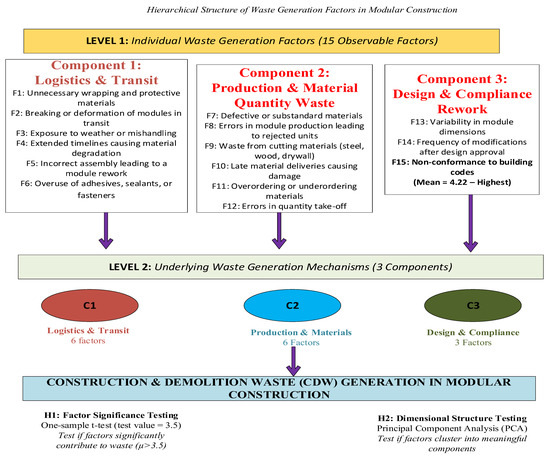
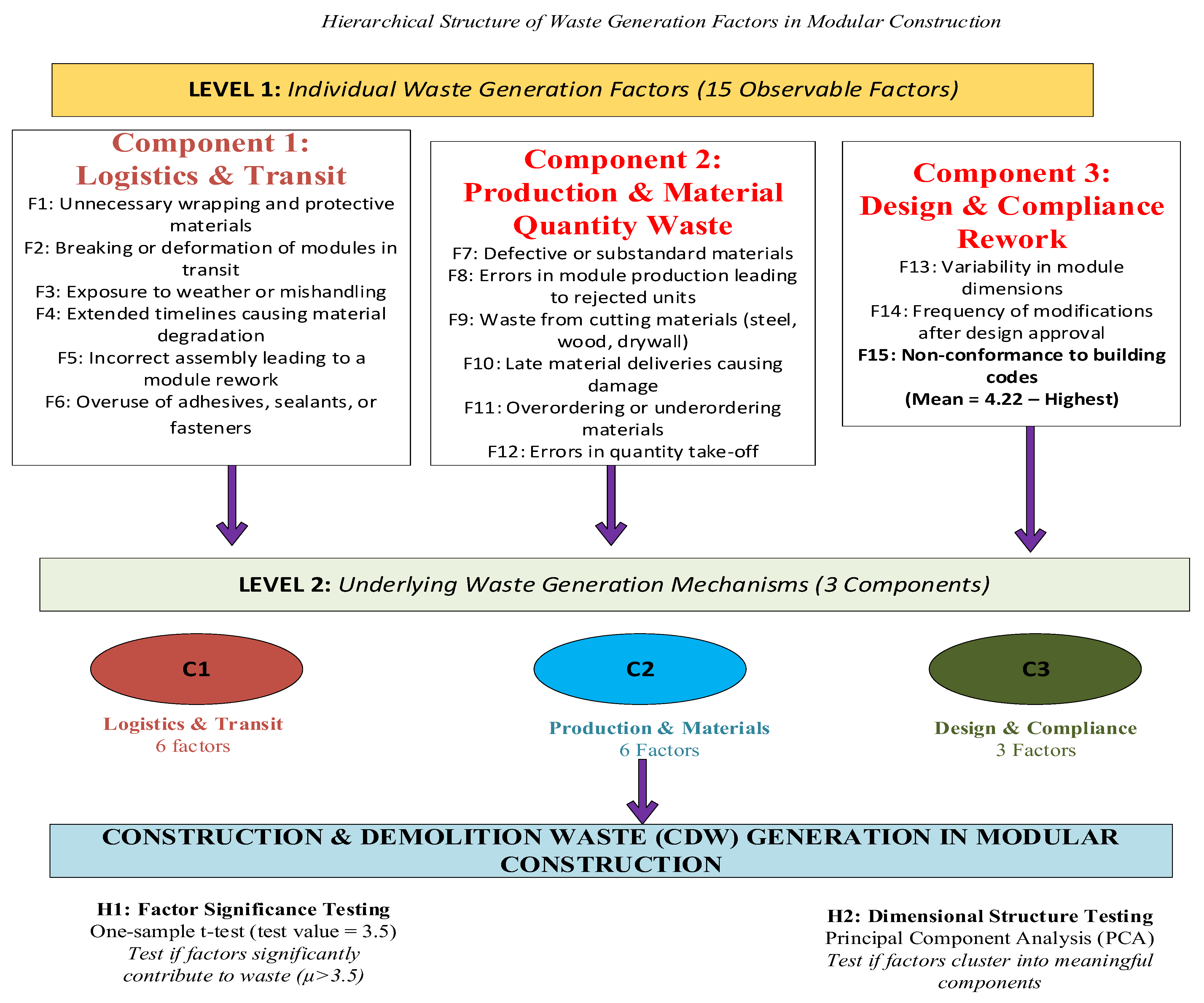
The study workflow is provided in Figure 1, ensuring that all phases are completed in their entirety as part of the research process.
Figure 1.
Conceptual framework.
3. Results
3.1. Background of Respondents
A total of 174 responses were completed and retrieved from the respondents via the Google Forms platform. The highest recorded occupation of respondents was Site Engineer with a percentage of 34.5%. Site Foreman ranked the lowest with a percentage of 6.9%. Table 2 below describes the frequencies and percentages of the remaining occupations of respondents. Twenty-six respondents hold a Higher National Diploma (HND) whilst the remaining respondents have a Bachelor’s Degree or higher as shown in the table below. Only 44 respondents, representing about 25%, have less than 5 years of working experience in the construction industry. A detailed frequency distribution of years of experience of the respondents can be seen in Table 2 below. About 97% of responses received showed that respondents have knowledge of modular construction with only about 7% indicating a below-average level of experience in modular construction.
Table 2.
Background information.
3.2. Factors Leading to Waste Generation in Modular Construction Throughout the Project Cycle
The Cronbach’s Alpha coefficient from the variables as shown in Table 3 below was 0.886. A limit of 0.700 is necessary to prove that responses are reliable as such the 0.886 obtained implies that the results from the analysis are reliable [31]. The mean scores and the rankings of the factors leading to waste generation in modular construction throughout the project cycle as discovered in the study are presented in Table 4. The test value used was 3.5; as such, all the listed factors are deemed significant. The highest ranked factor which is “Non-conformance to building codes leading to demolition or rework” had a mean score of 4.22 with a standard deviation of 0.687. All other significant factors from the results are detailed in the table below. The lowest ranking factor by mean was “Overuse of adhesives, sealants or fasteners” with a mean of 3.85 which is greater than the 3.5 hypothesized mean. Again, it is worth noting that the standard deviation for the variables was below 1, implying a low level of dispersion among responses within the dataset [32].
Table 3.
Reliability statistics.
Table 4.
Factors leading to waste generation in modular construction throughout the project cycle.
A one-sample t-test was conducted to further assess the significance of these factors. With a test value of 3.5, the test determines the relative importance of the factors being analyzed. The difference between the population means weight and the test value (3.5) was estimated at a confidence interval of 95% [33]. According to Ross and Wilson [34], if the p-value is less than 0.05, the null hypothesis is not rejected. All the analyzed factors had a p-value (test significance) below 0.05 as shown in Table 4. Again, as seen in Table 4, all the factors had mean scores exceeding the mean value of 3.5 with positive t-values, implying that all fifteen identified factors leading to waste generation in modular construction are significant.
The principal component analysis tool was used to determine the correlation patterns among the factors. Pallant [35] stated that a correlation matrix is considered factorable if it displays correlations of r = 0.3 or higher. The dataset was found suitable, as all coefficient values exceeded 0.3. The Kaizer–Meyer–Olkin (KMO) Measure of Sampling Adequacy for the study was measured as 0.845, which exceeds the acceptable value of 0.6, confirming that the value distribution is adequate for PCA. Bartlett’s test of sphericity yielded a value of 0.000, which confirms the statistical significance of the variables. Varimax rotation was applied as the rotation method for the PCA. Table 5 illustrates the results of the commonality extraction, the pattern matrix, and the percentage of variance, illustrating the three-component classifications of the variables based on their interrelationships.
Table 5.
PCA extraction for factors leading to waste generation in modular construction throughout the project cycle.
From the analysis, three components were derived out of the factors as shown in Table 5 below. The names given to the derived principal components are based on similar characteristics that the factors share with higher attention paid to variables with the most correlation with the principal components [36].
4. Discussion
4.1. Component One—Logistics and Transit Waste
Six factors from the analysis were grouped under component one as shown in Figure 1: Unnecessary wrapping and protective materials; Breakage or deformation of modules in transit; Exposure to weather or mishandling causing material loss; Extended timelines causing material degradation or spoilage; Incorrect assembly leading to module rework or disposal; and Overuse of adhesives, sealants, or fasteners. The analyzed factor loadings of these outlined factors are 0.839, 0.817, 0.748, 0.705, 0.616 and 0.606 respectively. The unnecessary wrapping of modules and use of protective materials to ensure safety during transit of modules contribute to the challenge of waste generation in modular construction. This implies that the wrapping and protective materials perform no other purpose than to keep the modules safe until delivery on site, and as such become waste once the modules are delivered on site [37]. Breakage of modules in transit stands as one of the leading waste generation factors in modular construction from the analysis. Modules used are size-specific and designed to fit into pre-designated parts [38]. As such any deformed module might not fit into its designated spot and this renders that module wasted. Materials used for modular construction are prefabricated in off-site factories [39]. According to Zohourian et al. [40] one challenge of modular construction is the limited on-site storage for the prefabricated components. The findings of this study align with those of Zohourian et al. [40] by establishing the factor Extended timelines causing material degradation or spoilage. According to Subramanya et al. [38] the procedure of modular construction needs great consideration in coordination and transitioning from one stage of construction to the next. This study, however, agrees with the findings of Subramanya et al. [38] by establishing that incorrect assembly as a result of low coordination leading to module rework or disposal causes waste generation in the modular construction process. A study conducted by Zohourian et al. [40] revealed that “Prefabricated modular construction involves many joints and connections due to the need to assemble the individual structural components into module units or connect multiple modules to expand the entire structure”. The findings align with the factor being analyzed in this study—Overuse of adhesives, sealants, or fasteners.
Among the constraints of such logistics and transit processes where there are incidents of module breakage, over-protection, poor coordination, and elongated delays, waste is a common menace in economies of developing countries that have very inadequate infrastructure facilities, low-efficiency transport systems, and poor supply chain integration [41]. Such challenges usually lead to material loss, extra work ensuing from reworking and discarding damaged modules. Hence, these findings in the context of Ghana are, in fact, typical patterns of behavior in developing nations where systemic issues lead to the generation of waste in the modular construction industry [30].
4.2. Component Two—Production and Material Quantity Waste
Defective or substandard materials leading to replacements; Errors in module production leading to rejected units; Waste from cutting materials like steel, wood, and drywall; Late material deliveries causing damage or waste; Overordering or underordering materials; and Errors in quantity take-off causing excess material orders are the variables that were extracted from the component and loaded with factor loadings of 0.797, 0.777, 0.705, 0.652, 0.609 and 0.470 respectively. The ranking by respondents also revealed that these variables have their mean scores above 4.00. Wuni and Shen [41] stated that poorly produced modules are production risk factors in modular-integrated construction which is in conformity with the findings of this study as defective materials will be rejected because they do not meet the required standards. Again, Wuni and Shen [41] classify “mechanical malfunction of modular production equipment” and “production rework due to discrepancy between drawings” as production risk factors which support the factor Errors in module production leading to rejected units. It is ascertained that the construction industry is a huge contributor to global waste. Waste from cutting materials like steel, wood, and drywall in modular construction also contributes to this. Musarat et al. [37] ranks wastage of wood as a large possible construction waste source. Delay during delivery is also another major factor leading to waste generation in modular construction [42]. Errors in quantity take-off will lead to an overorder or underorder of materials for the construction process. Also, overordering or underordering materials can be as a result of human error or improper communication and planning between the project team and material suppliers which leads to waste of the ordered materials [43].
In developing countries, some causes of waste in modular construction include defective or substandard materials, errors in module production, waste due to cutting materials like steel, wood, and drywall, late deliveries, and errors in quantities of take-offs leading to over- or underordering [43]. These factors reinforce trends observed in Ghana concerning systemic inefficiencies in the supply chain, poor coordination, and too little infrastructure design resulting in material losses and rework, indicating that the generation of such waste is a common challenge across developing economies [41].
4.3. Component Three—Design and Compliance Rework
Design and Compliance Rework is another key factor that leads to waste generation in modular construction throughout the project cycle as shown in Figure 1. Variability in module dimensions leading to material waste; Frequency of modifications after initial design approval; and Non-conformance to building codes leading to demolition or rework are the variables that were extracted from the component and loaded with factor loadings of 0.744, 0.566 and 0.556 respectively. These variables all have a mean score above 4.00 as shown in the ranking by respondents. The one-sample t-test yielded p-values below 0.05 for all variables indicating a statistically proven connection between the variables. Akinradewo et al. [7] stated that the project planning and coordination aspect of modular construction is the greatest challenge of the method. Variability in module dimensions leading to material waste is a very critical factor in waste generation in modular construction. A reactive strategy to make dimensional changes and misalignment in construction is to discard and replace components [44]. The component Frequency of modifications after initial design and approval had a mean of 4.02 after analysis which implies that respondents place a high significance on this factor. However, according to Wuni et al. [45] and Botchway et al. [46] poor design quality which leads to modifications can negatively affect the schedule, cost and quality of the modular construction project which aligns with the findings of this study. In a study conducted by Wuni and Shen [30] the existence of a complex code compliance and inspection process is a latent barrier to the adoption of modular-integrated construction in Ghana. This study also highlights that a factor which leads to waste generation in modular construction is non-conformance to building codes leading to demolition or rework which conforms with the findings of the study done by Wuni and Shen [30].
In developing countries, Design and Compliance Rework becomes a serious waste factor in modular construction throughout the project cycle [41]. The variability in the dimensions of the modules, frequent design modifications, and design non-compliance to building code contributed significantly to material wastage, redoing, or demolition [30]. These issues conveniently find their roots under more systemic development challenges in poor economies, which are wanting in technical skills, with poor enforcement of regulatory obligations and project management acts that react to whatever is found to block the work. In Ghana, material losses arising from defects due to poor designs are met with schedule overrun and project cost escalation, further reinforcing the pattern that lack of an adequate planning, coordination, or compliance mechanism remains a primary cause of construction waste in developing countries [30,43].
5. Contributions
5.1. Theoretical Contributions
This study adds to the body of knowledge on modular construction, particularly in a developing-country context where modular construction projects are less common. Firstly, this article confirms the existence of waste generation factors in modular construction projects despite the general notion that modular construction reduces waste generation as compared to the traditional method of construction. By identifying the waste generation factors and analyzing them in this study, this article extends the literature on waste generation factors in modular construction projects in developing countries.
5.2. Practical Contributions
Practically, this study is significant for construction professionals, construction organizations, and manufacturers of modular construction modules. These stakeholders can adapt the findings of this study to stay informed of the factors that generate waste in the modular construction process. With this information, stakeholders can now develop strategies to mitigate the factors leading to waste generation in modular construction projects.
Construction professionals can use the findings of this study to change their approach to project planning and supervision in modular construction projects. The processes involved in traditional construction differ as compared to that of modular construction. Construction organizations such as building contractors and consultants can use the knowledge obtained from this study to develop an incentive for resident construction professionals who deliver modular construction projects on time and with fewer errors. Again, contractors in modular construction must ensure vehicles transporting modules are well maintained and fit for the intended purpose. Finally, manufacturers of modular construction modules can also use the findings of this study to develop sustainable practices that ensure minimal wastage of materials during production and educate construction organizations on the best practices in handling the modules and their installation on site.
6. Conclusions
The aim of this study was to identify and analyze factors leading to waste generation in modular construction throughout a project cycle. Out of the fifteen variables tested, three principal factors were identified: (1) Logistics and Transit Waste, (2) Production and Material Quantity Waste and (3) Design and Compliance Rework.
The outlined components were further broken down into sub-components, which highlighted the main factors leading to waste generation in modular construction under Logistics and Transit Waste: Unnecessary wrapping and protective materials, Breakage or deformation of modules in transit, Exposure to weather or mishandling causing material loss, Extended timelines causing material degradation or spoilage, Incorrect assembly leading to module rework or disposal and Overuse of adhesives, sealants, or fasteners.
The factors under the component Production and Material Quantity Waste are: Defective or substandard materials leading to replacements, Errors in module production leading to rejected units, Waste from cutting materials like steel, wood, and drywall, Late material deliveries causing damage or waste, Overordering or underordering materials and Errors in quantity take-off causing excess material orders.
Finally, Variability in module dimensions leading to material waste, Frequency of modifications after initial design approval and Non-conformance to building codes leading to demolition or rework constitute the factors under the component Design and Compliance Rework.
To help tackle these identified factors that lead to waste generation in modular construction, it is imperative that construction professionals undergo training in highly effective and sustainable modular construction practices. Factory workers must be well supervised and trained to reduce production waste. In transporting modules, plans must be put in place to ensure minimal or no damage to the modules in transit. Accuracy and intense planning must be prioritized in the design stage of a modular construction project to ensure the right quantities of modules are calculated; the intended timelines for their arrival on site should be known and standardized modules determined to reduce variations during the construction phase. The paper focuses on developing countries and as such reduces the generalizability to other developed countries’ contexts. Again, the results analyzed were from professionals based in Ghana only. Therefore, future studies are recommended to delve deeper into analyzing these factors in other developing countries. Furthermore, future studies can look into strategies to help mitigate the identified waste generation factors in this study. A comparative analysis of existing strategies in developed countries against developing ones can be undertaken. In addition, future research studies must investigate the strategies in digitizing technologies like BIM, the Internet of Things (IoT), and digital twins to mitigate these issues. BIM ensures high design accuracy and low rework. For most other factors, IoT and digital twins give real-time monitoring of materials and modules during production and after each transit. The use of such technologies could improve coordination between parties, reduce network errors, and assist proactively in making decisions to bring about zero waste and achieve efficient modular construction life cycle for pollution control.
Author Contributions
P.O.A.: Conceptualization, introduction write-up; B.B.: conceptualization, reviewing, literature review write-up, supervision; S.B.-S.: data analysis, methodology, discussion, conclusion; P.A.-A.: supervision, reviewing; F.A.G.: Supervision. All authors have read and agreed to the published version of the manuscript.
Funding
This research received no external funding.
Institutional Review Board Statement
The study was conducted in accordance with the Declaration of Helsinki, and approved by the Ethics Committee of the School of Energy, Geoscience, Infrastructure and Society, Heriot-Watt University (protocol code: 2025-10558-14693, date of approval: 18 March 2025).
Informed Consent Statement
Informed consent was obtained from all subjects involved in the study.
Data Availability Statement
The original contributions presented in the study are included in the article, further inquiries can be directed to the corresponding author.
Acknowledgments
A big thank you to the authors of this paper for delivering on time.
Conflicts of Interest
The authors declare no conflicts of interest.
References
- Abubakar, I.R.; Maniruzzaman, K.M.; Dano, U.L.; AlShihri, F.S.; AlShammari, M.S.; Ahmed, S.M.S.; Al-Gehlani, W.A.G.; Alrawaf, T.I. Environmental sustainability impacts of solid waste management practices in the global South. Int. J. Environ. Res. Public Health 2022, 19, 12717. [Google Scholar] [CrossRef] [Scilit]
- Mor, S.; Ravindra, K. Municipal solid waste landfills in lower-and middle-income countries: Environmental impacts, challenges and sustainable management practices. Process Saf. Environ. Prot. 2023, 174, 510–530. [Google Scholar] [CrossRef] [Scilit]
- Loizou, L.; Barati, K.; Shen, X.; Li, B. Quantifying advantages of modular construction: Waste generation. Buildings 2021, 11, 622. [Google Scholar] [CrossRef] [Scilit]
- Hu, R.; Chen, K.; Fang, W.; Zheng, L.; Xu, J. The technology-environment relationship revisited: Evidence from the impact of prefabrication on reducing construction waste. J. Clean. Prod. 2022, 341, 130883. [Google Scholar] [CrossRef] [Scilit]
- Iacovidou, E.; Purnell, P.; Tsavdaridis, K.D.; Poologanathan, K. Digitally enabled modular construction for promoting modular components reuse: A UK view. J. Build. Eng. 2021, 42, 102820. [Google Scholar] [CrossRef] [Scilit]
- Akomea-Frimpong, I.; Ofori, J.N.A.; Botchway, B.; Tumpa, R.J.; Tetteh, P.A. Key success factors towards circular economy in public-private partnership projects. Smart Sustain. Built Environ. 2025, 1–27. [Google Scholar] [CrossRef] [Scilit]
- Akinradewo, O.; Aigbavboa, C.; Aghimien, D.; Oke, A.; Ogunbayo, B. Modular method of construction in developing countries: The underlying challenges. Int. J. Constr. Manag. 2023, 23, 1344–1354. [Google Scholar] [CrossRef] [Scilit]
- Ali, A.H.; Kineber, A.F.; Elyamany, A.; Ibrahim, A.H.; Daoud, A.O. Identifying and assessing modular construction implementation barriers in developing nations for sustainable building development. Sustain. Dev. 2023, 31, 3346–3364. [Google Scholar] [CrossRef] [Scilit]
- Pervez, H.; Ali, Y.; Pamucar, D.; Garai-Fodor, M.; Csiszárik-Kocsir, Á. Evaluation of critical risk factors in the implementation of modular construction. PLoS ONE 2022, 17, e0272448. [Google Scholar] [CrossRef] [Scilit]
- Abdul Nabi, M.; El-adaway, I.H. Understanding the key risks affecting cost and schedule performance of modular construction projects. J. Manag. Eng. 2021, 37, 04021023. [Google Scholar] [CrossRef] [Scilit]
- Hussein, M.; Eltoukhy, A.E.; Karam, A.; Shaban, I.A.; Zayed, T. Modelling in off-site construction supply chain management: A review and future directions for sustainable modular integrated construction. J. Clean. Prod. 2021, 310, 127503. [Google Scholar] [CrossRef] [Scilit]
- Hu, X.; Zhou, Y.; Vanhullebusch, S.; Mestdagh, R.; Cui, Z.; Li, J. Smart building demolition and waste management frame with image-to-BIM. J. Build. Eng. 2022, 49, 104058. [Google Scholar] [CrossRef] [Scilit]
- Gallo, P.; Romano, R.; Belardi, E. Smart green prefabrication: Sustainability performances of industrialized building technologies. Sustainability 2021, 13, 4701. [Google Scholar] [CrossRef] [Scilit]
- Chourasia, A.; Singhal, S. Manivannan Prefabricated volumetric modular construction: A review on current systems, challenges, and future prospects. Pract. Period. Struct. Des. Constr. 2023, 28, 03122009. [Google Scholar] [CrossRef] [Scilit]
- Papamichael, I.; Voukkali, I.; Loizia, P.; Zorpas, A.A. Construction and demolition waste framework of circular economy: A mini review. Waste Manag. Res. 2023, 41, 1728–1740. [Google Scholar] [CrossRef] [Scilit] [PubMed]
- Purchase, C.K.; Al Zulayq, D.M.; O’Brien, B.T.; Kowalewski, M.J.; Berenjian, A.; Tarighaleslami, A.H.; Seifan, M. Circular economy of construction and demolition waste: A literature review on lessons, challenges, and benefits. Materials 2021, 15, 76. [Google Scholar] [CrossRef] [Scilit] [PubMed]
- Sánchez-Garrido, A.J.; Navarro, I.J.; García, J.; Yepes, V. A systematic literature review on modern methods of construction in building: An integrated approach using machine learning. J. Build. Eng. 2023, 73, 106725. [Google Scholar] [CrossRef] [Scilit]
- Pan, W.; Zhang, Z. Benchmarking the sustainability of concrete and steel modular construction for buildings in urban development. Sustain. Cities Soc. 2023, 90, 104400. [Google Scholar] [CrossRef] [Scilit]
- Ali, A.H.; Kineber, A.F.; Elyamany, A.; Hussein Ibrahim, A.; Daoud, A.O. Exploring stationary and major modular construction challenges in developing countries: A case study of Egypt. J. Eng. Des. Technol. 2025, 23, 569–598. [Google Scholar] [CrossRef] [Scilit]
- Wuni, I.Y.; Shen, G.Q.; Mahmud, A.T. Critical risk factors in the application of modular integrated construction: A systematic review. Int. J. Constr. Manag. 2022, 22, 133–147. [Google Scholar] [CrossRef] [Scilit]
- Turner, C.; Oyekan, J.; Stergioulas, L.K. Distributed manufacturing: A new digital framework for sustainable modular construction. Sustainability 2021, 13, 1515. [Google Scholar] [CrossRef] [Scilit]
- Feldmann, F.G.; Birkel, H.; Hartmann, E. Exploring barriers towards modular construction—A developer perspective using fuzzy DEMATEL. J. Clean. Prod. 2022, 367, 133023. [Google Scholar] [CrossRef] [Scilit]
- Tsz Wai, C.; Wai Yi, P.; Ibrahim Olanrewaju, O.; Abdelmageed, S.; Hussein, M.; Tariq, S.; Zayed, T. A critical analysis of benefits and challenges of implementing modular integrated construction. Int. J. Constr. Manag. 2023, 23, 656–668. [Google Scholar] [CrossRef] [Scilit]
- Newman, I. A Conceptualization of Mixed Methods: A Need for Inductive/Deductive Approach to Conducting Research. 2000. Available online: https://files.eric.ed.gov/fulltext/ED443849.pdf (accessed on 13 April 2026).
- Ahmad, S.; Wasim, S.; Irfan, S.; Gogoi, S.; Srivastava, A.; Farheen, Z. Qualitative v/s. quantitative research—A summarized review. J. Evid. Based Med. Healthc. 2019, 6, 2828–2832. [Google Scholar] [CrossRef] [Scilit]
- Taherdoost, H. What are different research approaches? Comprehensive review of qualitative, quantitative, and mixed method research, their applications, types, and limitations. J. Manag. Sci. Eng. Res. 2022, 5, 53–63. [Google Scholar] [CrossRef] [Scilit]
- Bujang, M.A.; Omar, E.D.; Foo, D.H.P.; Hon, Y.K. Sample size determination for conducting a pilot study to assess reliability of a questionnaire. Restor. Dent. Endod. 2024, 49, e3. [Google Scholar] [CrossRef] [Scilit]
- Amudjie, J.; Agyekum, K.; Adinyira, E.; Amos-Abanyie, S.; Kumah, V.M.A. Awareness and practice of the principles of circular economy among built environment professionals. Built Environ. Proj. Asset Manag. 2023, 13, 140–156. [Google Scholar] [CrossRef] [Scilit]
- Kwak, S.G.; Kim, J.H. Central limit theorem: The cornerstone of modern statistics. Korean J. Anesthesiol. 2017, 70, 144–156. [Google Scholar] [CrossRef] [Scilit] [PubMed]
- Wuni, I.Y.; Shen, G.Q. Making a case for modular integrated construction in West Africa: Rethinking of housing supply in Ghana. In Proceedings of the 10th West Africa Built Environment Research (WABER) Conference, Accra, Ghana, 5–7 August 2019; pp. 771–787. [Google Scholar] [CrossRef] [Scilit]
- Taber, K.S. The use of Cronbach’s alpha when developing and reporting research instruments in science education. Res. Sci. Educ. 2018, 48, 1273–1296. [Google Scholar] [CrossRef] [Scilit]
- Khan, M.S.H. Standard deviation. In International Encyclopedia of Statistical Science; Springer: Berlin/Heidelberg, Germany, 2025; pp. 2413–2415. [Google Scholar] [CrossRef] [Scilit]
- Hazra, A. Using the confidence interval confidently. J. Thorac. Dis. 2017, 9, 4125–4130. [Google Scholar] [CrossRef] [Scilit]
- Ross, A.; Willson, V.L. One-sample T-test. In Basic and Advanced Statistical Tests: Writing Results Sections and Creating Tables and Figures; Sense Publishers: Rotterdam, The Netherlands, 2017; pp. 9–12. [Google Scholar] [CrossRef] [Scilit]
- Pallant, J. SPSS Survival Manual: A Step by Step Guide to Data Analysis Using SPSS Version 18, 4th ed.; Open University Press: Maidenhead, UK, 2011; Volume 10, p. 2012. [Google Scholar]
- Korhonen, P.J. Subjective principal component analysis. Comput. Stat. Data Anal. 1984, 2, 243–255. [Google Scholar] [CrossRef] [Scilit]
- Ofori, J.N.A.; Agyekum, A.K.; Khalfan, M.M.A.; Botchway, B.; Antwi-Afari, P. Enabling circular construction: Barriers to zero waste in the Ghanaian construction industry. Int. J. Build. Pathol. Adapt. 2025, 1–23. [Google Scholar] [CrossRef] [Scilit]
- Karthik, S.; Sharareh, K.; Behzad, R. Modular construction vs. traditional construction: Advantages and limitations: A comparative study. In Creative Construction e-Conference 2020; Budapest University of Technology and Economics: Budapest, Hungary, 2020; pp. 11–19. [Google Scholar] [CrossRef] [Scilit]
- Hořínková, D. Advantages and disadvantages of modular construction, including environmental impacts. In IOP Conference Series: Materials Science and Engineering; IOP Publishing: Bristol, UK, 2021; Volume 1203, p. 032002. [Google Scholar] [CrossRef] [Scilit]
- Zohourian, M.; Pamidimukkala, A.; Kermanshachi, S.; Almaskati, D. Modular Construction: A Comprehensive Review. Buildings 2025, 15, 2020. [Google Scholar] [CrossRef] [Scilit]
- Wuni, I.Y.; Shen, G.Q. Exploring the critical production risk factors for modular integrated construction projects. J. Facil. Manag. 2023, 21, 50–68. [Google Scholar] [CrossRef] [Scilit]
- Nagapan, S.; Rahman, I.A.; Asmi, A.; Memon, A.H.; Zin, R.M. Identifying causes of construction waste-Case of central region of Peninsula Malaysia. Int. J. Integr. Eng. 2012, 4, 22–28. [Google Scholar]
- Agyekum, K. Minimizing Materials Wastage at the Construction Stage of a Project Through the Implementation of Lean Construction. Doctoral Dissertation, Kwame Nkrumah University of Science and Technology, Kumasi, Ghana, 2012. [Google Scholar]
- Shahtaheri, Y.; Rausch, C.; West, J.; Haas, C.; Nahangi, M. Managing risk in modular construction using dimensional and geometric tolerance strategies. Autom. Constr. 2017, 83, 303–315. [Google Scholar] [CrossRef] [Scilit]
- Wuni, I.Y.; Shen, G.Q.; Antwi-Afari, M.F. Exploring the design risk factors for modular integrated construction projects. Constr. Innov. 2023, 23, 213–228. [Google Scholar] [CrossRef] [Scilit]
- Botchway, B.; Ghansah, F.A.; Edwards, D.J.; Kumi-Amoah, E.; Amo-Larbi, J. Critical Smart Functions for Smart Living Based on User Perspectives. Buildings 2025, 15, 2727. [Google Scholar] [CrossRef] [Scilit]

Disclaimer/Publisher’s Note: The statements, opinions and data contained in all publications are solely those of the individual author(s) and contributor(s) and not of MDPI and/or the editor(s). MDPI and/or the editor(s) disclaim responsibility for any injury to people or property resulting from any ideas, methods, instructions or products referred to in the content. |
© 2026 by the authors. Licensee MDPI, Basel, Switzerland. This article is an open access article distributed under the terms and conditions of the Creative Commons Attribution (CC BY) license.