Article

The Influences of Shade and Non-Uniform Heating of Building Walls on Micro-Environments Within Urban Street Canyons and Their Planning Implications

1
School of Human Settlement and Civil Engineering, Xi’an Jiaotong University, Xi’an 710049, China
2
School of Teacher Development, Shaanxi Normal University, Xi’an 710062, China
3
College of Pipeline Engineering, Xi’an Shiyou University, Xi’an 710065, China
*
Author to whom correspondence should be addressed.
Buildings 2026, 16(8), 1567; https://doi.org/10.3390/buildings16081567

Submission received: 23 March 2026 / Revised: 12 April 2026 / Accepted: 14 April 2026 / Published: 16 April 2026

Abstract

Urbanization and climate change intensify urban heat islands and air pollution; therefore, street canyon building planning that accounts for road orientation, shading, thermal environment, and ventilation is crucial. This study uses numerical simulations to investigate how non-uniform wall and road heating affects airflow and pollutant dispersion in street canyons under varying Richardson numbers (Ri) and heating scenarios (windward wall, leeward wall, road surface). The results indicate that large wall–atmosphere temperature differences combined with low incoming wind speed (high Ri) make thermal buoyancy a dominant control on canyon flow and pollutant transport. Heating of the leeward wall and road surface enhances ventilation and pollutant removal (prominently when the Ri ≥ 0.49), whereas heating of the windward wall suppresses dispersion and increases concentrations (prominently when the Ri ≥ 0.12). For a north–south street, diurnal solar heating produces strong micro-environmental contrasts. With easterly winds, morning heating of the windward wall elevates pollutant levels, while afternoon heating of the leeward wall promotes dispersion and lowers concentrations. Specifically, compared with the isothermal condition, the turbulent exchange rate at the top of the street canyon is enhanced to 1.71~6.86 times, while the convective exchange rate is suppressed to 58%~83% in the morning and enhanced to 1.21~1.92 times. These findings suggest that urban planning should limit windward wall temperature rises via shading and greening; thus, single-sided sidewalk and greening layouts on the windward side are recommended.

1. Introduction

Urbanization has significantly altered the surface structure and thermal physical properties, therefore creating a unique climate environment within cities and triggering a series of urban environmental issues, such as urban heat island and air pollution [1,2]. Overall, the shielding effect of high-density building clusters reduces wind speed within the urban canopy, which hinders the dispersion of pollutants and waste heat emitted from residents’ production and daily activities [3,4,5,6]. Therefore, how to improve urban ventilation and alleviate environmental issues through rational building layout planning has attracted significant attention from scholars and planners [7,8]. Urban street canyons, as the fundamental unit of urban microclimates, serve as primary exposure sites for pedestrians and major sources of vehicular exhaust emissions, making them critical subjects in urban climate investigations [9,10,11]. In urban planning and architectural layout designing, consideration of road orientation, shading, thermal environment, ventilation, and pollutant dispersion plays a significant role in improving urban climates [12,13].
There are many factors that affect the microclimate within urban street canyons [14], such as the aspect ratio, background wind speed, angle between the background wind direction and street orientation, road greening, heating of walls and road surface, undulation of building heights along the street, building shape, and vehicle-induced turbulence [15,16,17,18,19]. When the background wind speed is weak, the thermal environment characteristics and thermal buoyancy turbulence have a particularly significant impact on the diffusion of pollutants and thermal comfort within street canyons [20,21]. The solar radiation and thermodynamic properties of building surfaces can cause the surface temperature of buildings to exceed the ambient air temperatures [22,23]. This temperature difference will generate a thermal buoyancy, causing upward airflow [5,24]. Offerle et al. [25] conducted a 12-month continuous field experiment in a street canyon in the central area of Gothenburg, Sweden. The results indicated that during sunny days in summer, the temperature difference between the building surfaces and the atmosphere could reach up to 15 °C within the street canyon. Kwak et al. [26] incorporated the effects of solar radiation into numerical simulations to investigate the diurnal variations of NOx and O3 exchange inside–outside a street canyon, finding that, regardless of flow patterns, NOx and O3 exchanges were generally active near building walls in areas with higher wall temperatures. Lin et al. [27] investigated the effects of four types of surface heating conditions on airflow and temperature fields using wind tunnel experiments and particle image velocimetry in three street canyons with different aspect ratios. The results indicate that only under isothermal conditions can stable vortices form within the street canyon, generating typical skimming flow. In the three scenarios with different surface heating conditions, the primary vortex was absent, and the velocity field was generally higher across the entire domain, particularly under the ground heating and roof heating conditions. For deep street canyons (with an aspect ratio reaching 3), temperature variations on building walls still significantly influence wind conditions and pollutant dispersion within the street canyon. Kim et al. [28] used the CFD method to investigate the effect of road surface heating and/or building roof heating on the wind environment within ideal street canyons. The results showed that as the road surface temperature increased, the average kinetic energy of the airflow within the street canyon also increased.
Actually, due to the shading between buildings and differences in building facade materials, the distribution of surface temperature in urban street canyons is usually non-uniform [29,30]. When studying the wind field and ventilation performance within a street canyon, the effect of thermal buoyancy cannot be ignored; thus, the non-uniform temperature distribution on the solid walls should be considered. Yang et al. [31] simulated the airflow and heat transfer in a street canyon with an aspect ratio of 1 under natural solar heating at 9:00, 12:00, and 15:00 local solar time. They found that there was a clockwise vortex within the street canyon under isothermal conditions. However, at 9:00 and 12:00, the wind speed of the original clockwise vortex increased because of the solar radiation heating, while at 15:00, the original flow field was disrupted, and, thus, two main vortices were generated with the wind speed decreased within the street canyon. Chen et al. [31] found that when analyzing whether non-uniform wall temperature caused by solar radiation could be replaced by uniform wall temperature, the non-uniform wall temperature must be considered to ensure accurate results when the incoming wind speed is low. Chen et al. [32] quantified the effects of uniform and non-uniform surface heating on airflow and ventilation performance in street canyons. When wind pressure and thermal buoyancy were combined (the Richardson number, Ri = 3.54), the difference in ventilation performance between the two surface heating conditions reached 27.36%. Tan et al. [33] compared the assumption of uniform ground temperature to non-uniform ground temperature and found a significant change in airflow structure and pollutant diffusion characteristics in a street canyon.
In summary, the heating of building walls and road surfaces is an important factor affecting the micro-environment in urban street canyons, especially when the background inflow wind speed is low. At present, there are insufficient studies on how to reasonably design wall heating conditions and promote urban ventilation in urban road planning, thereby improving the micro-environment within urban street canyons.
To bridge this gap, the current work explicitly highlights the novelty of linking non-uniform thermal buoyancy mechanisms with actionable urban planning strategies. While previous studies have extensively investigated the individual effects of uniform or idealized non-uniform surface heating on airflow structures, a significant knowledge gap remains in translating these complex fluid mechanics findings into practical, location-specific urban design guidelines. Most of the existing literature stops at describing the physical phenomena (e.g., how thermal buoyancy alters vortices), without answering the critical question of how planners should physically manipulate these wall heating conditions in reality. Therefore, the current work aims to systematically investigate the ventilation and pollutant diffusion characteristics within street canyons under non-uniform heating scenarios across different times of the day. More importantly, it moves a step beyond traditional CFD analysis by translating the thermal mechanisms into concrete spatial planning interventions—specifically, proposing tailored, single-sided shading and greening layouts based on local prevailing wind directions (e.g., prioritizing cold facades on windward walls)—to actively design the thermal environment and improve urban ventilation.

2. Materials and Methods

2.1. Numerical Methods

The incompressible fluid assumption was used in the current work, while the large eddy simulation (LES) method was adopted for turbulence simulation with the Smagorinsky subgrid scale (SGS) model [34]. The filtered Navier–Stokes equations are as follows [35,36].
Continuity equation:
u ¯ i x ¯ i = 0
Momentum equation with the Boussinesq approximation [37]:
u i ¯ t + x j u i ¯ u j ¯ = 1 ρ p ¯ x j + x j υ + υ S G S u i ¯ x j + u j ¯ x i + g δ i 3 β T ¯ T r e f 1 + S i
Energy equation:
T ¯ t + x j T ¯ u j ¯ = x j υ P r + υ S G S P r S G S T ¯ x j + S T
Pollutant transport equation:
c ¯ t + x j c ¯ u j ¯ = x j υ + υ S G S S c c ¯ x j + S c
where i, j, and k are tensor indices; u1, u2, and u3 are the velocity components, m∙s−1; t is time, s; p is air pressure, Pa; c is the pollutant concentration, mg∙m−3; Si, ST, and Sc are the equation sources of Equations (2), (3), and (4), respectively; υ and υSGS are the air viscosity and subgrid viscosity, m2∙s−1; Pr and PrSGS are the Prandtl number and subgrid Prandtl number with values of 0.72 and 0.33, respectively; δi3 is the Kronecker function; g is the gravitational acceleration with value of −9.81 m∙s−2; ρ is the reference density of air with a value of 1.26 kg·m−3 in the current work; Tref is the reference air temperature of 296.0 K; and β is the coefficient of thermal expansion, which was set as 0.003, while Sc is the Schmidt number.
The subgrid viscosity is calculated as
υ S G S = C s Δ ¯ 2 S ¯
where C s is the Smagorinsky constant, with a value of 0.08 in the current work, Δ ¯ is the grid scale, and S ¯ is the modulus of the resolved strain rate tensor, which could be calculated by
S ¯ = 2 S ¯ i j S ¯ i j 1 / 2
where S ¯ i j = 1 2 u i ¯ x j + u j ¯ x i is the strain rate tensor.

2.2. Street Canyon Model and Simulation Conditions

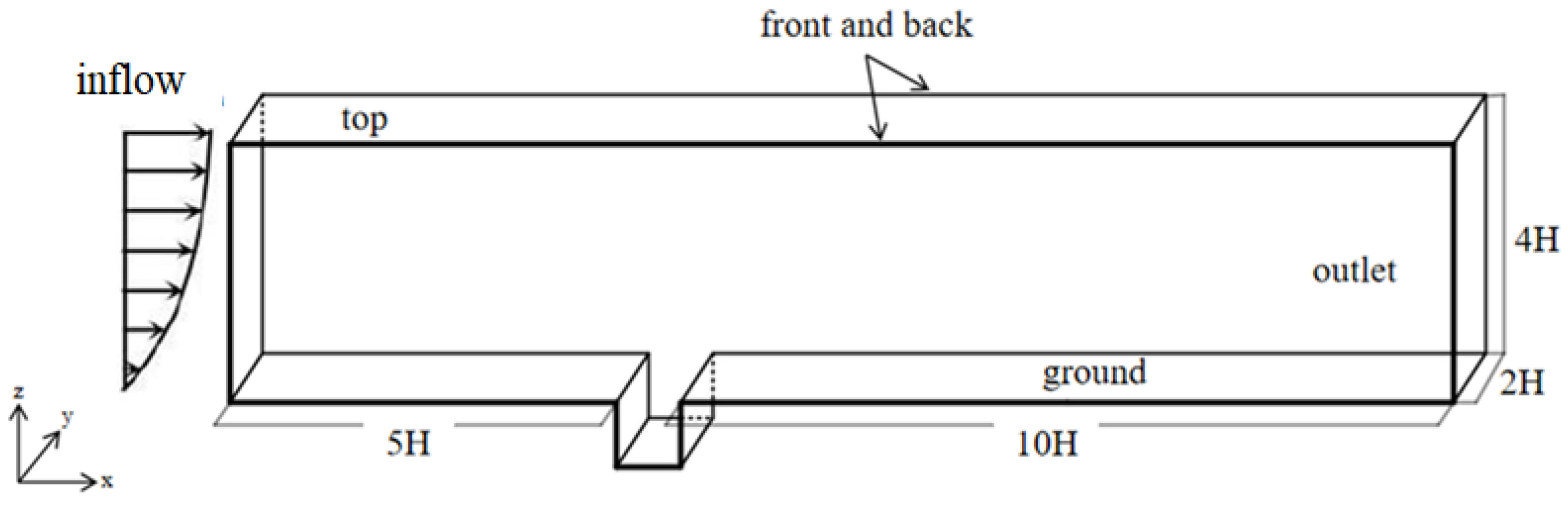
The current work investigated the characteristics of air flow and pollutant diffusion within urban street canyons, focusing on the impact of building walls and road heating conditions on the micro-environment. Therefore, a street canyon model with an aspect ratio of 1 was adopted, and the simulation area included the street canyon and upper air, forming a ‘T’ shape, as shown in Figure 1. According to the research results of the Japan Institute of Architects [38] and the European Organization for Scientific and Technological Research Cooperation [39], the distance between the research street canyon and the upper boundary was set to 4H, the distance from the entrance boundary was set to 5H, and the distance from the exit boundary was set to 10H, assuming that the direction of the street canyon was infinitely long and the direction of the incoming flow was perpendicular to the direction of the street canyon.
The boundary conditions for the computational domain were set as follows: the exit boundary was set as a zero-gradient outflow and the top boundary and the two lateral boundaries of the domain (in the spanwise direction) were set as symmetry planes to represent an infinitely long street canyon and prevent lateral boundary interference. Crucially, the physical surfaces of the street canyon, specifically the building walls and the road, were strictly defined as no-slip walls with assigned temperature conditions, and the inflow inlet was set as a velocity inlet. The inlet wind speed follows an exponential function distribution, as shown in Equation (7).
U ( z ) U r e f = z H α
where U(z) is the wind speed at the height z, Uref is the reference wind speed at the building height H of 18 m, and α is the geomorphic roughness index with a value of 0.25 [40].
In addition to the boundary conditions, a pollutant source was configured to simulate vehicular exhaust emissions. Based on the existing literature, a continuous line source model located at the ground centerline of the street canyon is widely recognized as an effective and reasonable method for representing vehicular emissions and accurately reflecting pollution levels near the pedestrian level. The line source was positioned precisely along the bottom center of the canyon. Carbon monoxide (CO) was selected as the simulated tracer gas because its density is very close to that of ambient air. It avoids introducing additional buoyancy effects that could interfere with the thermal buoyancy driven by wall and road heating. The pollutant source was set as a constant mass flow rate source with an intensity of 0.01 g∙s−1∙m−1.

2.3. The Definitions of Some Parameters

The Richardson number (Ri) is used to characterize the relative strength of incoming wind speed and thermal buoyancy [41]. The Ri is calculated as
R i = g H Δ T T r e f U r e f 2 = g H ( T s u r f T r e f ) T r e f U r e f 2
where g is the gravitational acceleration, H is the height of the building, ΔT = TsurfTref is the temperature difference between the heating wall and the ambient air, and Uref is the reference inflow wind speed.
The dimensionless pollutant concentrations (C*) are calculated as
C * = C i U r e f H Q / l
where Ci is the simulated pollutant concentration in grid cell i and Q/l is the pollutant emission rate per unit length.
The diffusion rate of pollutants from the street canyon to the upper air can be evaluated by the air exchange rate (NACH). The higher the value of NACH, the better the diffusion conditions of pollutants. The NACH consists of the convective exchange rate (NACHm) and the turbulent exchange rate (NACHl). Air exchange rates are calculated by
N A C H m = 1 V o l w ¯ + d A
N A C H l = 1 V o l 1 2 w ¯ w ¯ d A
N A C H = N A C H m + N A C H l
where w+ and w′ are the positive time-averaged velocity and pulsating velocity in the vertical direction, respectively, and A is the area of the horizontal plane at the top of the street canyon.

2.4. Grid Setup and Model Validation

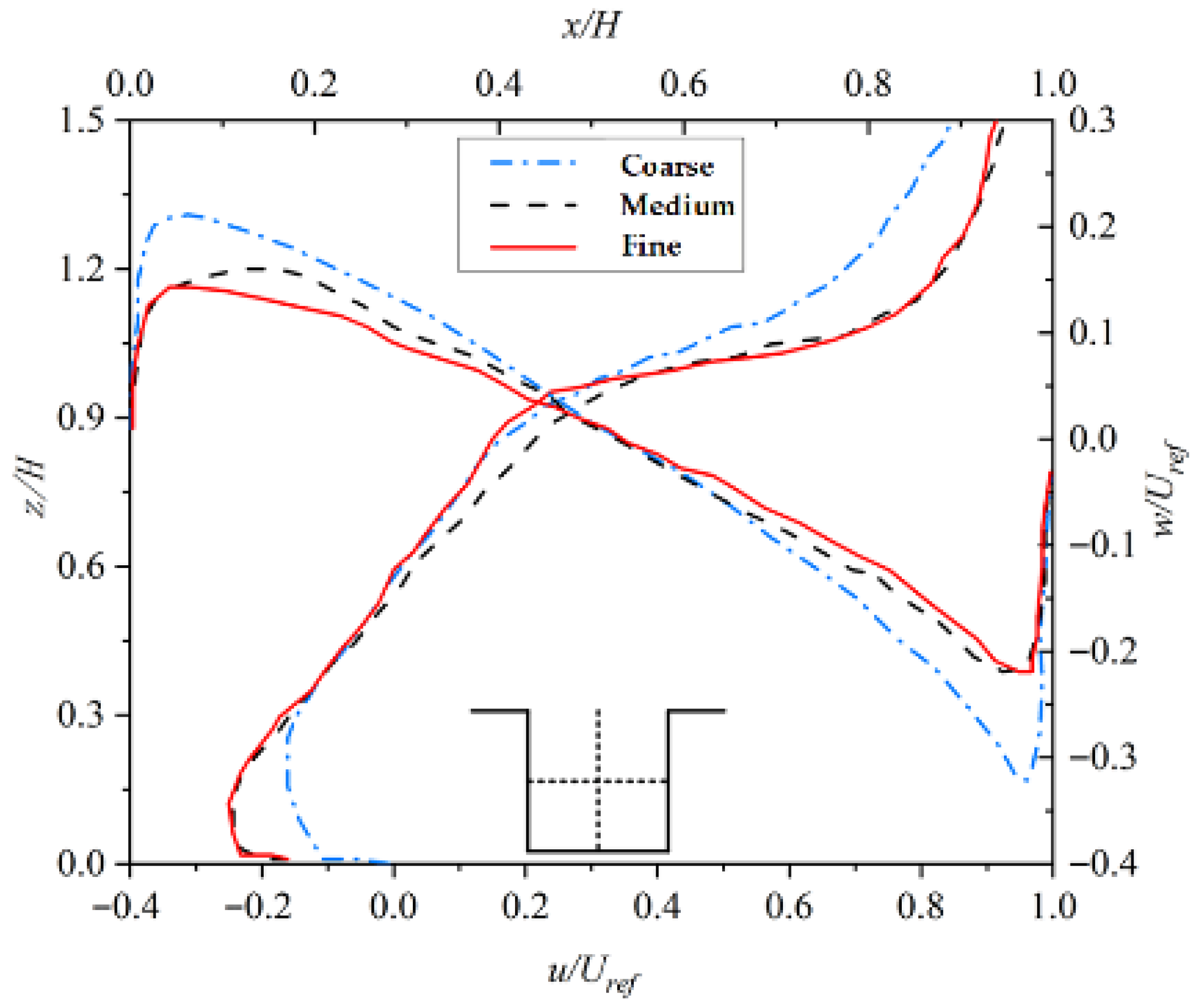
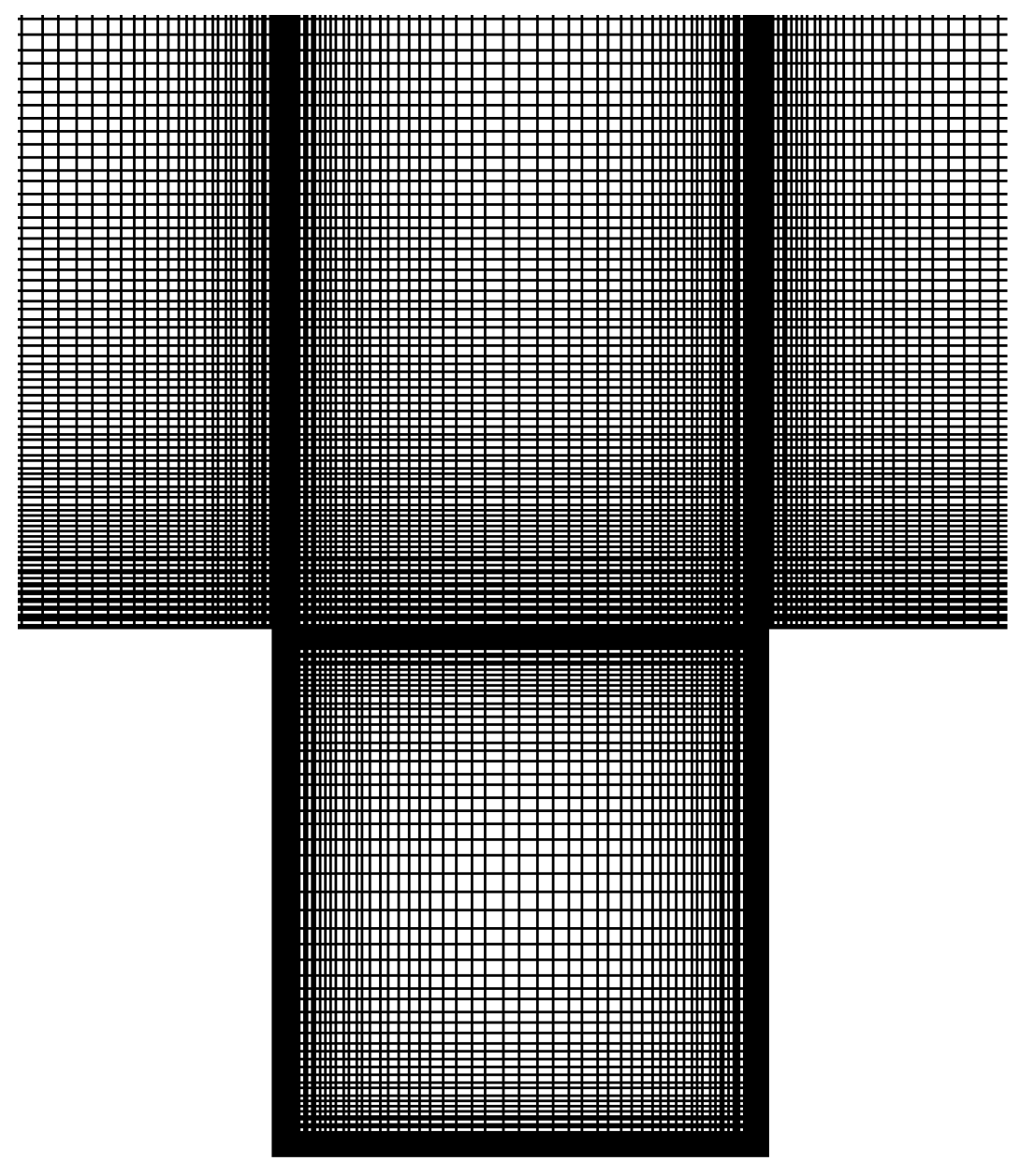
To ensure that the numerical results are not influenced by mesh quality, a grid independence test was strictly conducted on the street canyon model. Since the large eddy simulation (LES) method was adopted and the convective heat transfer between building surfaces and the air significantly affects the canyon flow field, the near-wall grid size was defined as the primary variable for the grid refinement. Three different grid resolutions—coarse, medium, and fine—were tested under a Uref of 1 m/s (with a building height H = 18 m). The specific grid parameters are summarized in Table 1. To evaluate the convergence, the dimensionless vertical velocity along the horizontal centerline (z/H = 0.5) and the dimensionless horizontal velocity along the vertical centerline (x/H = 0.5) were compared among the three grids, as shown in Figure 2. The results indicated that the velocity profiles for the medium and fine grids were nearly identical, demonstrating that the medium grid is sufficiently fine to guarantee computational accuracy. Therefore, to achieve an optimal balance between computational cost and simulation precision, the medium-scale grid was adopted for all subsequent cases in this study, as shown in Figure 2.
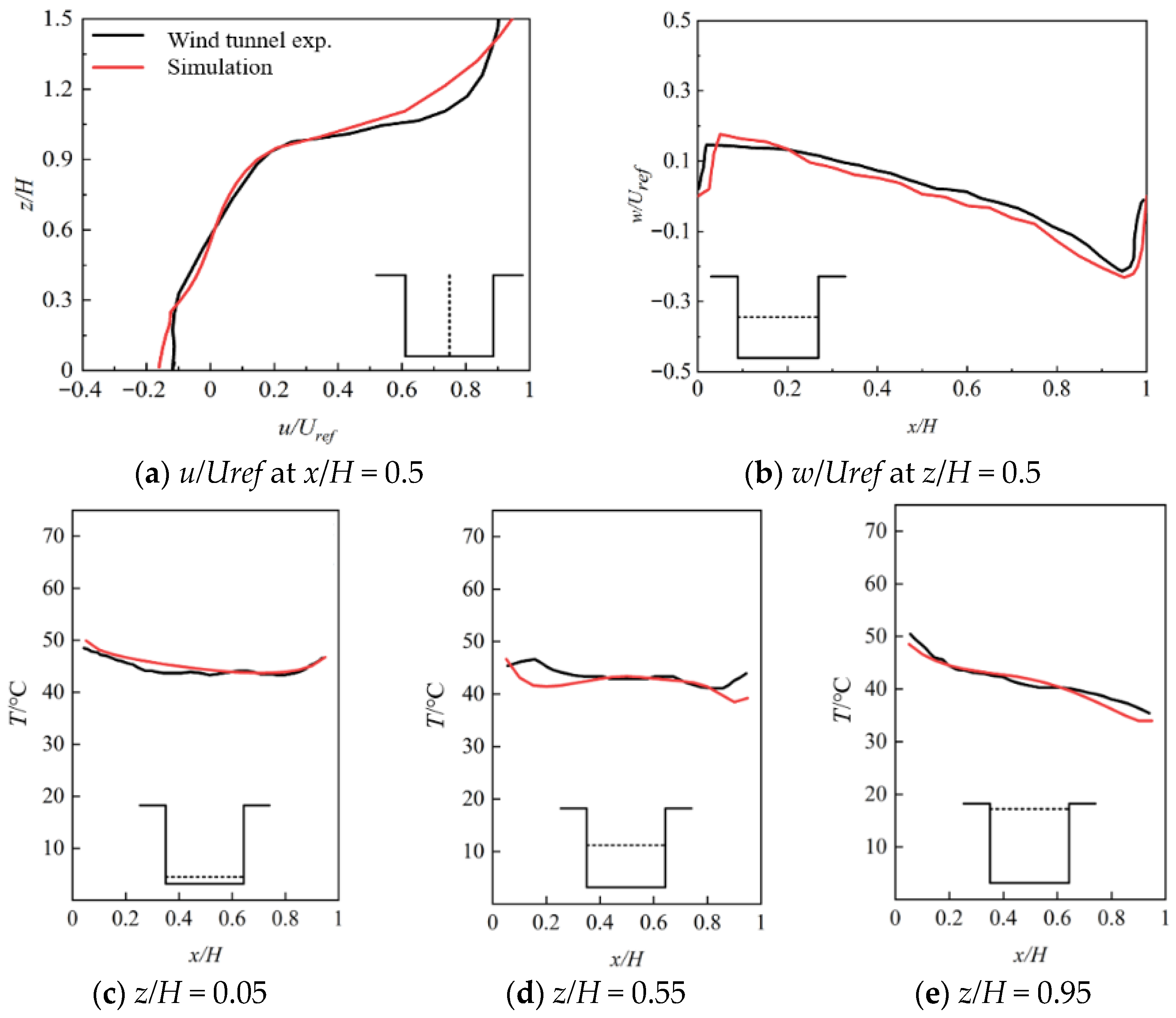
The simulated results were compared with the wind tunnel experimental data from Allegrini et al. [42]. In their experiments, a street canyon model with dimensions of 1.8 m (length) × 0.2 m (width) × 0.2 m (height) was constructed inside the wind tunnel to simulate urban airflow, as shown in Figure 3. The airflow direction was strictly perpendicular to the longitudinal axis of the street canyon. Both the wind tunnel floor and the canyon surfaces were made of aluminum plates. Due to the high thermal conductivity of aluminum, the temperature of the heated surfaces remained almost uniformly distributed. The effects of varying surface temperatures on the airflow within the canyon were investigated in Allegrini et al.’s wind tunnel experiments. In the current study, the experimental scenario where the ground and both building walls were uniformly heated to 70 °C was specifically chosen for comparison. The reference inflow wind speed was 1.45 m/s, directed perpendicular to the canyon, and the ambient air temperature was 23 °C (296.0 K). Under the current conditions, the Ri = 0.15, indicating the joint effects of background incoming flow and weak buoyancy within the street canyon.
Figure 4 compares the simulated results in the current work with Allegrini et al.’s [42] wind tunnel experiment data. Figure 4a,b illustrate the dimensionless wind speed on the horizontal and vertical centerlines of the street canyon, while Figure 4c–e compare the temperatures on the horizontal lines at different heights of the street canyon. The simulated results in the current work are consistent with the wind tunnel experimental data in varying trends. Within the street canyon, the simulated results are in good agreement with the wind tunnel experiments, with an average relative error of less than 8% for wind speed and a maximum relative error of only 5% for temperature, where the relative error is calculated as ( U s i m U exp ) / U exp and ( T s i m T exp ) / T exp .

2.5. Simulation Strategy and Case Setup

To provide a clear roadmap for the subsequent analyses, the step-by-step simulation strategy adopted in this study is summarized as follows. Step 1 (Parametric Study under Idealized Heating) systematically isolated the effect of thermal buoyancy by simulating 20 cases across varying Richardson numbers (Ri from 0.08 to 1.96), comparing three distinct, uniformly heated surfaces (windward wall, leeward wall, and road) against an isothermal baseline to evaluate their individual impacts on airflow and pollutant dispersion. Step 2 (Transient Simulation under Realistic Non-uniform Heating) applied the validated model to a realistic north–south-oriented street canyon in Xi’an, utilizing on-site measured temperature data as thermal boundary conditions to investigate the micro-environmental evolution at four specific local times (9:00, 11:00, 15:00, and 17:00).

3. Results and Discussion

3.1. Influences of Incoming Wind Speed and Wall Heating Scenarios

The incoming wind speed and near-wall thermal buoyancy are the main driving forces for air flow within the street canyon. Under weak incoming wind conditions, the influence of thermal buoyancy is more significant. The larger the Ri, the greater the influence of thermal buoyancy on the micro-environment within the street canyon. In the current work, five different inflow wind speeds and three wall heating scenarios were considered and compared with the isothermal cases (without solid wall heating). Simulation cases and settings are shown in Table 2.
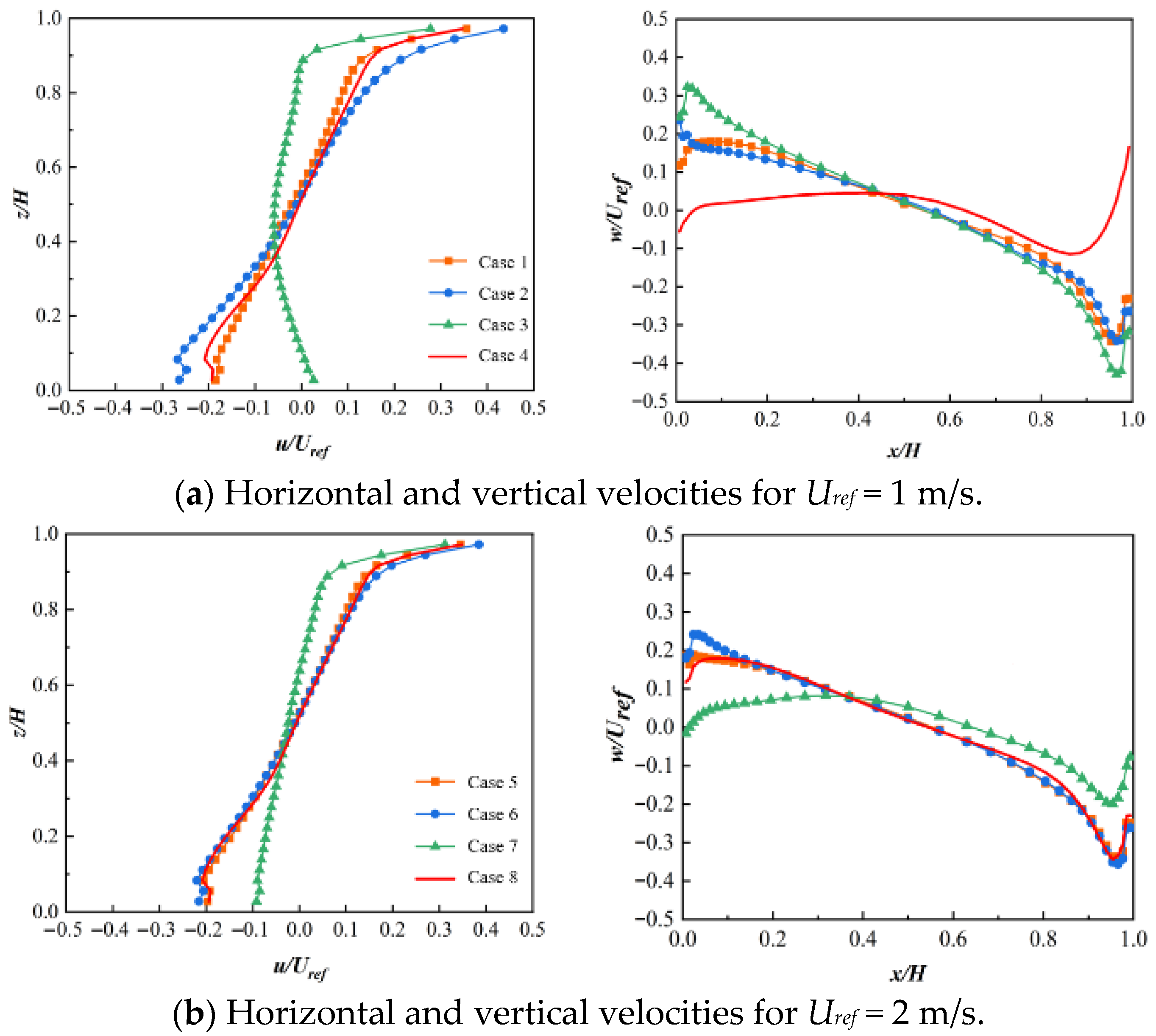
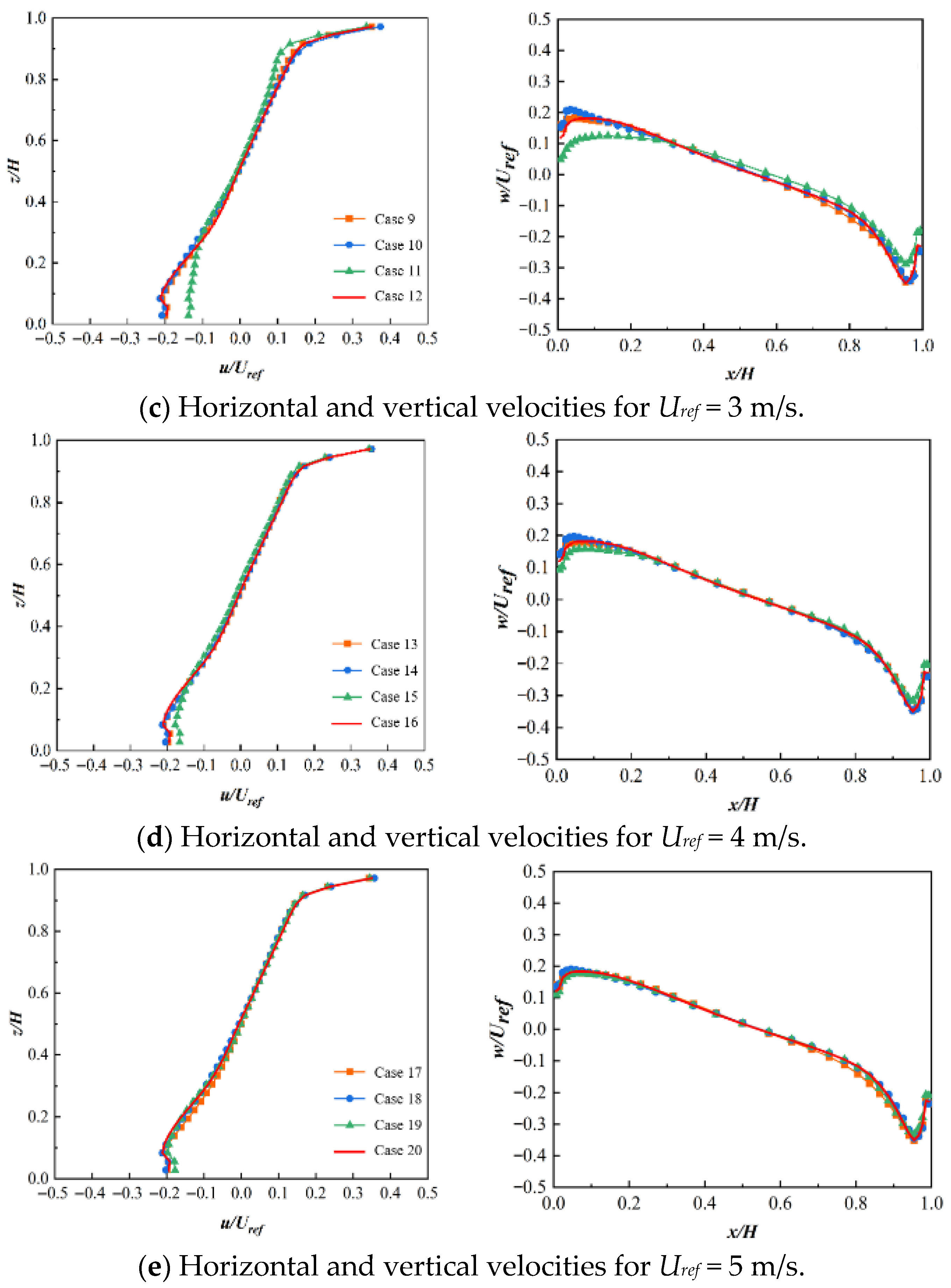
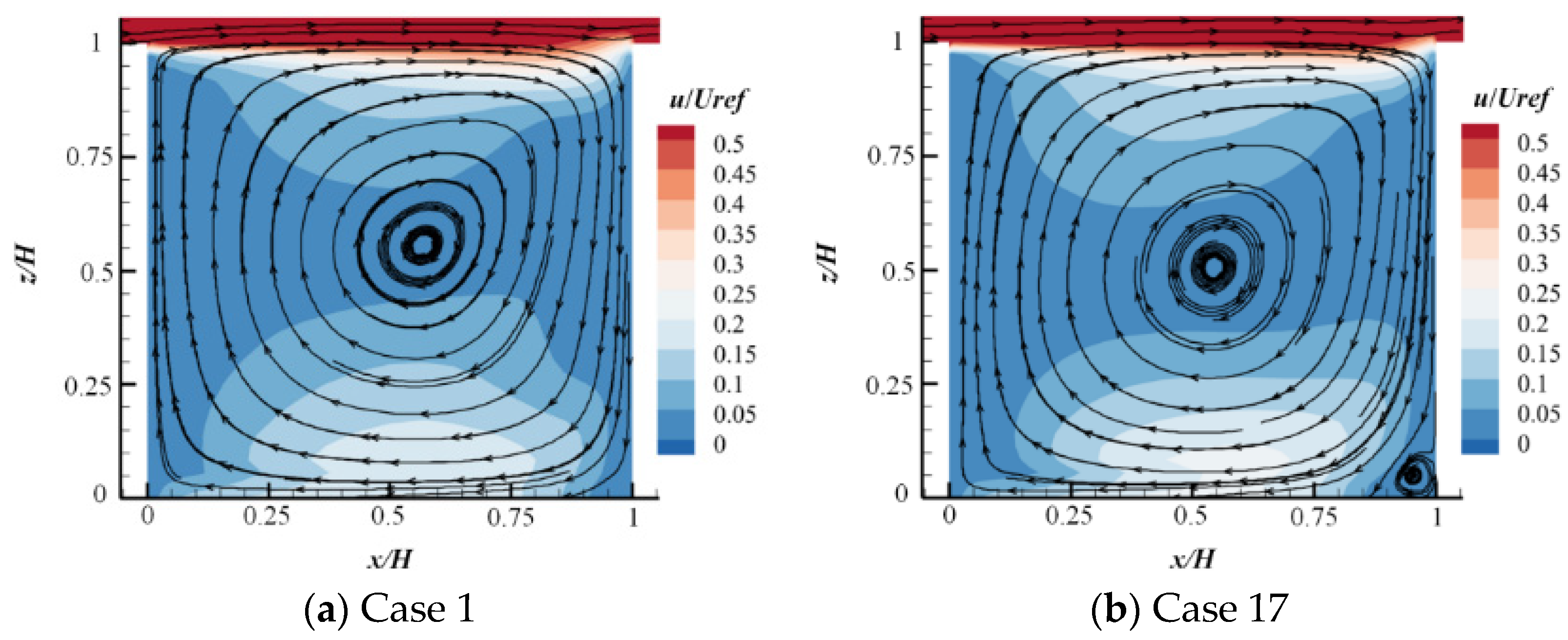
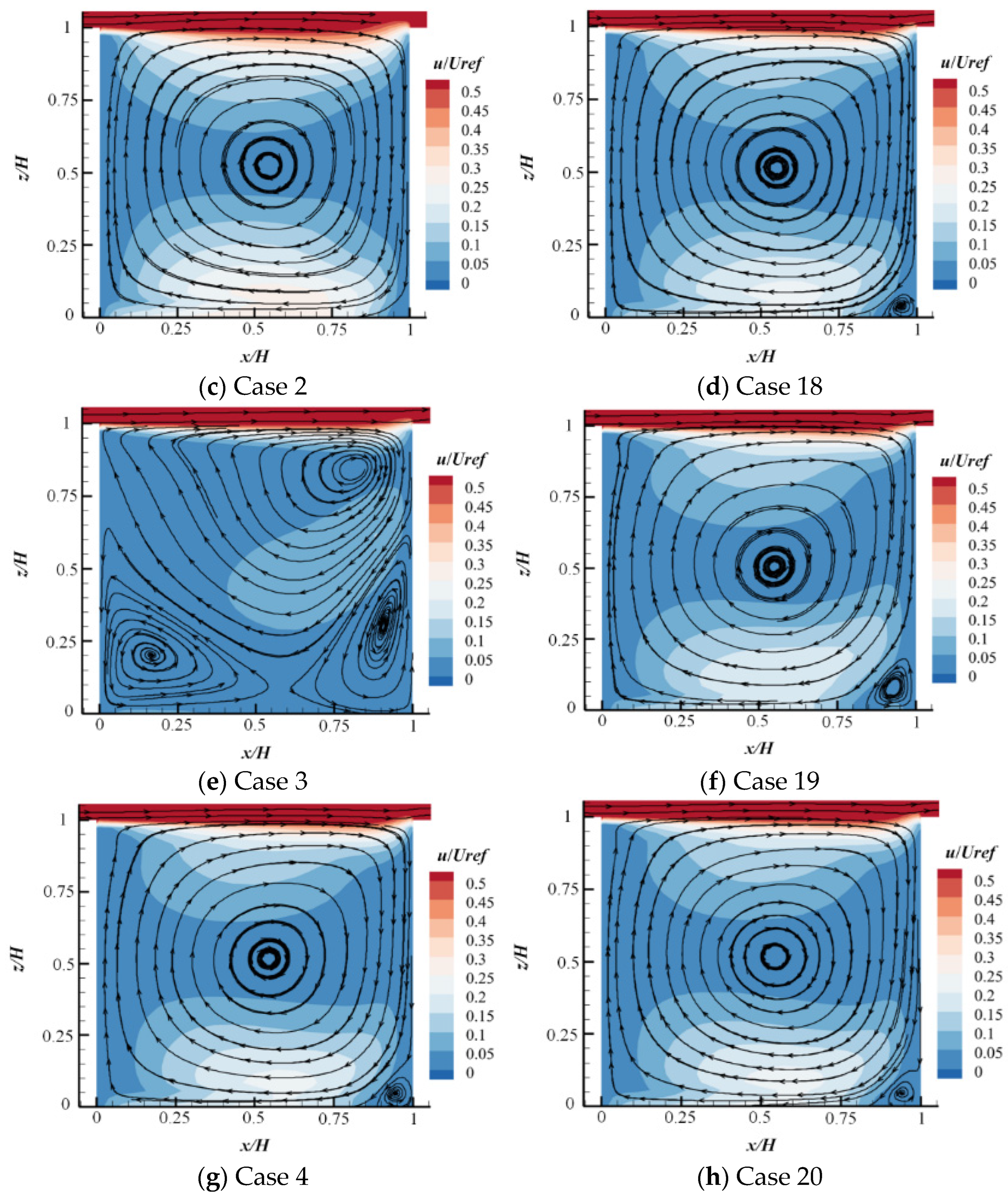
Figure 5 shows the horizontal velocity distribution on the vertical centerline (x/H = 0.5) and the vertical velocity distribution on the horizontal centerline (z/H = 0.5) of the street canyon section under different inflow wind speeds and Ri. Figure 6 compares the flow field within the street canyon under different heating scenarios with high Ri numbers (with Uref = 1 m/s) and low Ri numbers (with Uref = 5 m/s).
Overall, as the inflow wind speed increases, the differences between dimensionless wind velocities decrease on the vertical and horizontal centerlines in the street canyon. When the reference inflow wind speed is 1 m/s and the Ri number is high, the distribution of wind velocities within the street canyon varies greatly under different wall heating scenarios. Thus, the thermal buoyancy near the solid walls has a significant influence on the micro-environment within the street canyon. When the reference inflow wind speed reaches 5 m/s and the Ri number is low, the distribution of wind velocities within the street canyon is almost the same under different wall heating scenarios, and thus the micro-environment within the street canyon is mainly dominated by the inflow wind.
At high Ri, when the windward wall is heated (Case 3), the horizontal wind velocities at the bottom and top of the street canyon decreased, and the wind field within the street canyon is significantly different from other heating scenarios, as shown in Figure 5c. It should be emphasized that the wind field structures with multiple vortices within the street canyon are not conducive to the diffusion of pollutants. When the road surface is heated (Case 2), the wind speeds at the bottom and top of the street canyon are significantly higher than those in the isothermal scenario (Case 4), while the wind field structures are consistent. When the leeward wall is heated (Case 1), the influences on the wind speed and wind field structure within the street canyon are weak.
When the inflow wind speed increases to 2 m/s and the Ri decreases to 0.49, the influence of the leeward wall and road surface heating scenario on the wind field within the street canyon significantly weakens, as shown in Figure 5b. In the windward wall heating scenario (Case 7), wind velocities near the bottom of the street canyon are relatively weaker than in cases with other solid wall heating scenarios. Even when the inflow wind speed increases to 4 m/s and the Ri decreases to 0.12, the windward wall heating still has a certain impact on the wind field within the street canyon. This means that the incoming wind speed is still the main factor affecting the wind field within the street canyon.

3.2. Distribution and Diffusion Characteristics of Pollutants Within the Street Canyon Under Different Ri

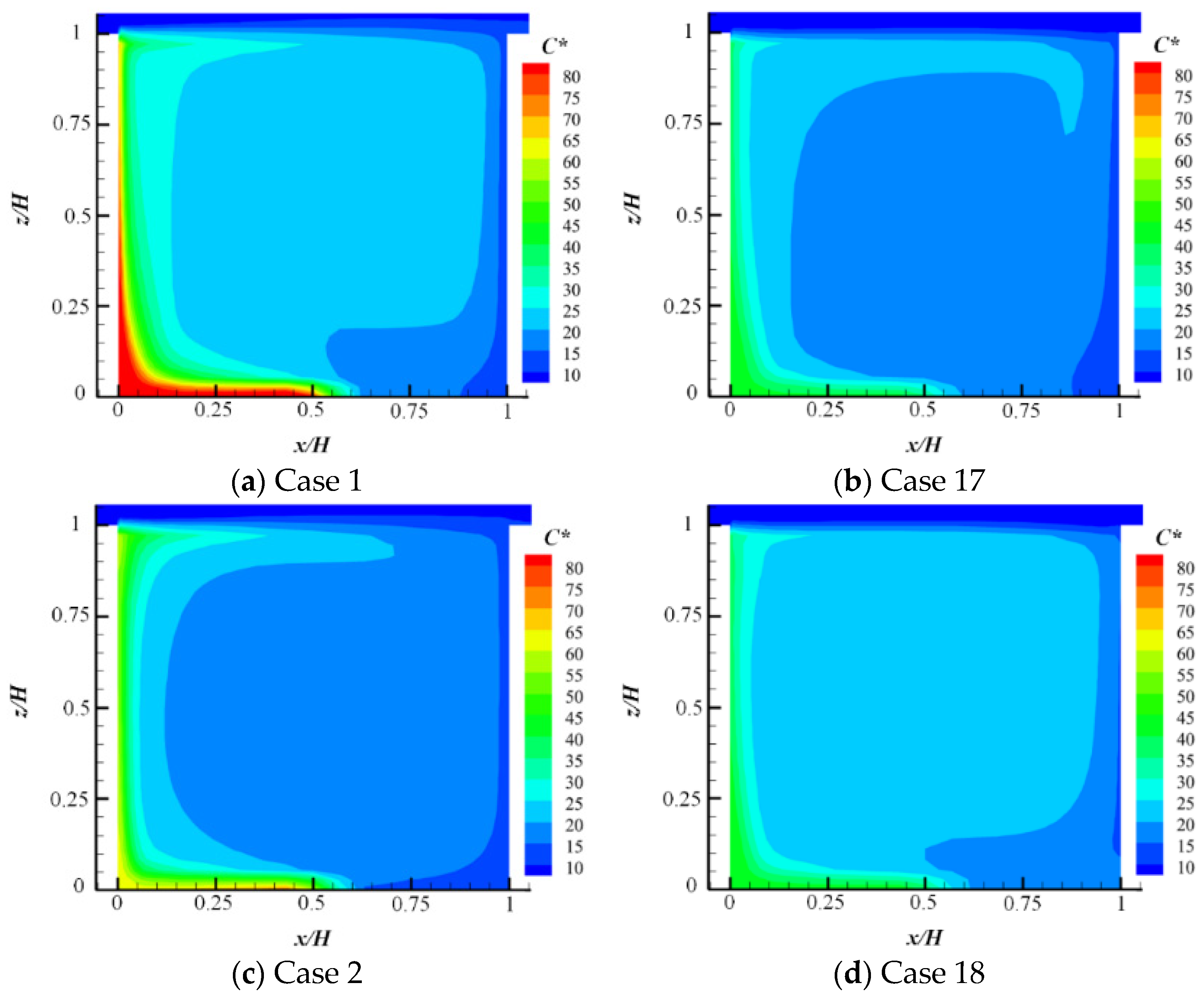
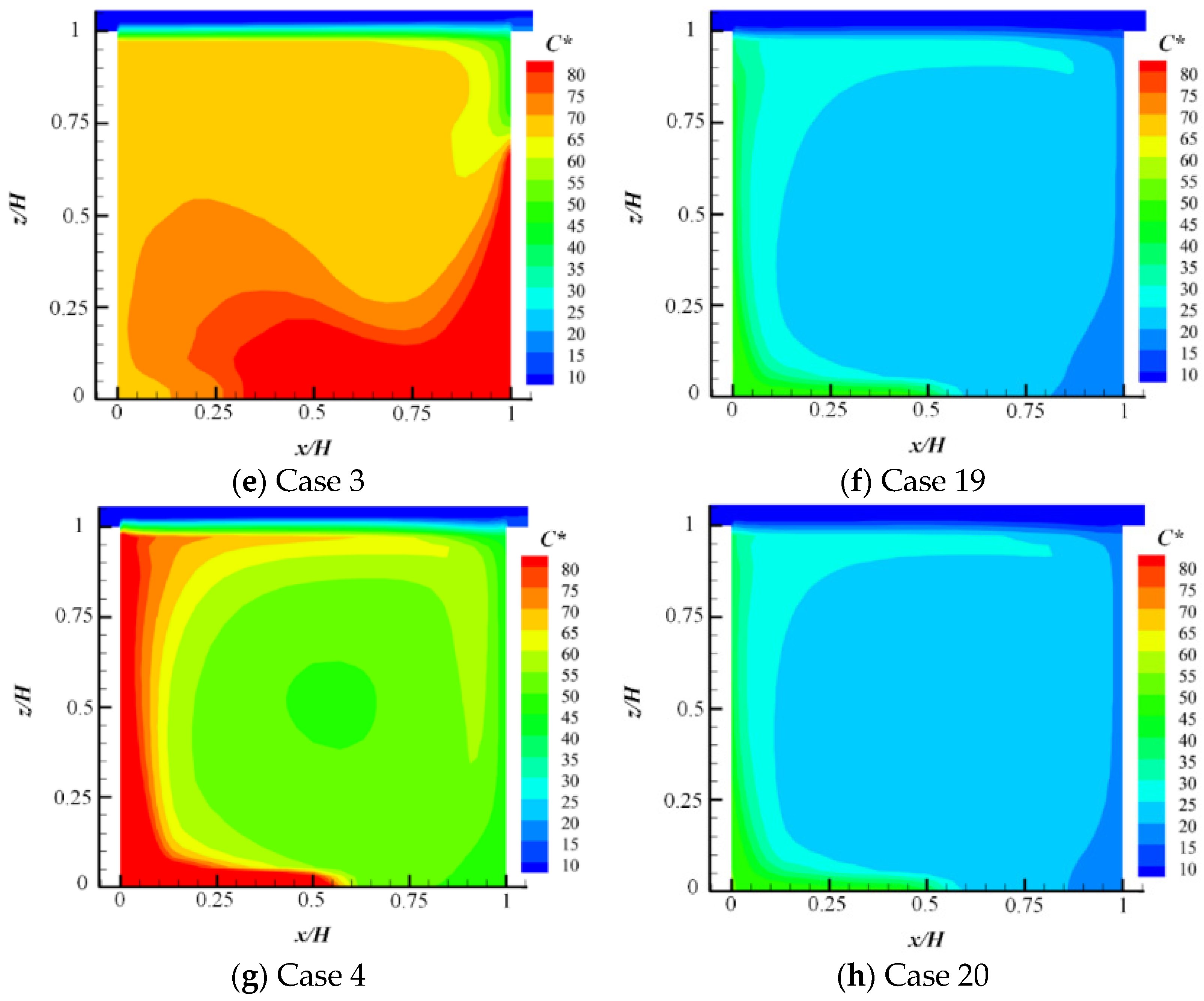
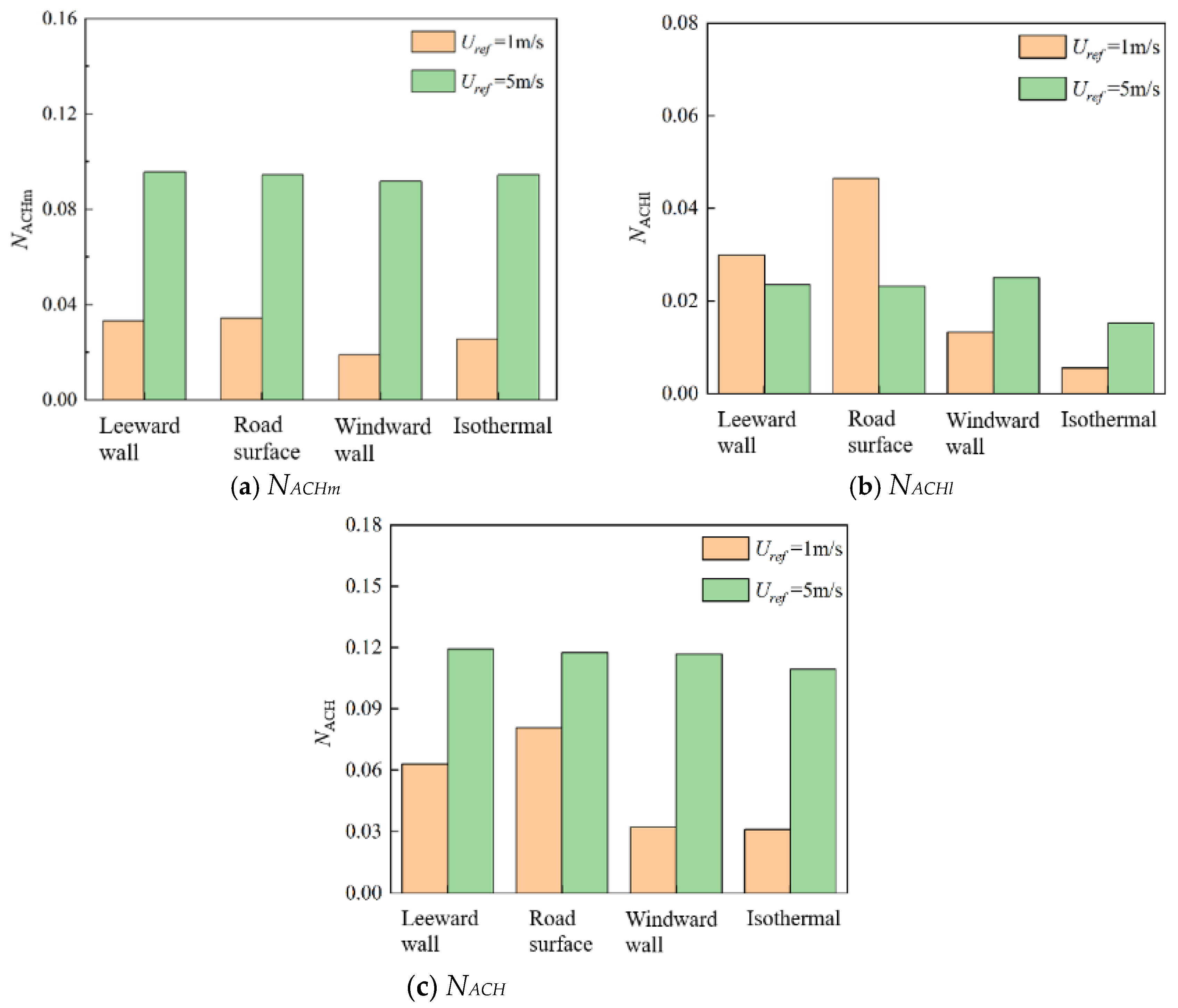
Figure 7 and Figure 8 represent the distribution of dimensionless pollutant concentrations within the street canyon and air exchange rates at the top of the street canyon under different inflow wind speeds and Ri. Under high inflow wind speeds and low Ri, the distribution of pollutant concentration within the street canyons is consistent, with high pollutant concentrations mainly distributed in areas near the leeward wall, as shown in Figure 6b,d,f,h. In these simulation cases, there is only one original clockwise vortex within the street canyon; thus, pollutants released from the sources are transported by the original vortex and accumulate in areas near the leeward wall. Meanwhile, the differences in air exchange rates at the top of the street canyons under different wall heating scenarios are very small, as shown in Figure 8.
For simulation cases with low inflow wind speeds and high Ri, there are significant differences between the distribution of pollutant concentrations within the street canyon and the air exchange rates at the top of the street canyon. In Case 4 (isothermal), high pollutant concentrations are in areas near the leeward wall, as shown in Figure 7g. In comparison, when the leeward wall is heated (Case 1), pollutant concentration decreased in areas near the leeward wall, while the air exchange rate increased at the top of the street canyon. When the road surface is heated (Case 2), the pollutant concentration in areas near the leeward wall significantly decreased and is thus lower than that in Case 1. The road surface heating-induced air exchange rate at the top of the street canyon is also the highest in simulation Cases 1–4. Figure 8 reveals that the increase in the air exchange rate at the top of the street canyon under the leeward wall and the read surface heating conditions are mainly contributed from the turbulence, where the turbulent exchange rates are increased to 5.0 and 7.8 times that in the isothermal condition. When the windward wall is heated (Case 3), the concentration of pollutants within the street canyon increased significantly, and the air exchange rate at the top of the street canyon is significantly lower than in the other two wall heating scenarios. As shown in Figure 6e and Figure 7e, when the windward wall is heated, there is a counterclockwise vortex in the lower right part of the street canyon; meanwhile, the overall wind speeds within the street canyon are low, resulting in weak diffusion and heavy accumulation of pollutants in areas near the windward wall. The severe pollutant accumulation is physically driven by the spatial decoupling between the ground-level source and the main vortex. Strong windward heating forces the primary vortex upward, leaving a low-velocity stagnation zone at the bottom corner. Consequently, the elevated vortex cannot effectively entrain the ground-level pollutant, physically isolating it from the main convective circulation.
Overall, under low wind speed and high Ri, the heating of leeward walls and road surface is beneficial for improving air exchange and pollutant diffusion and thus reducing pollutant concentration within the street canyon, while the heating of windward walls is not conducive to air exchange and pollutant diffusion.

3.3. Micro-Environment Within Street Canyons Under Non-Uniform Wall Heating Scenarios

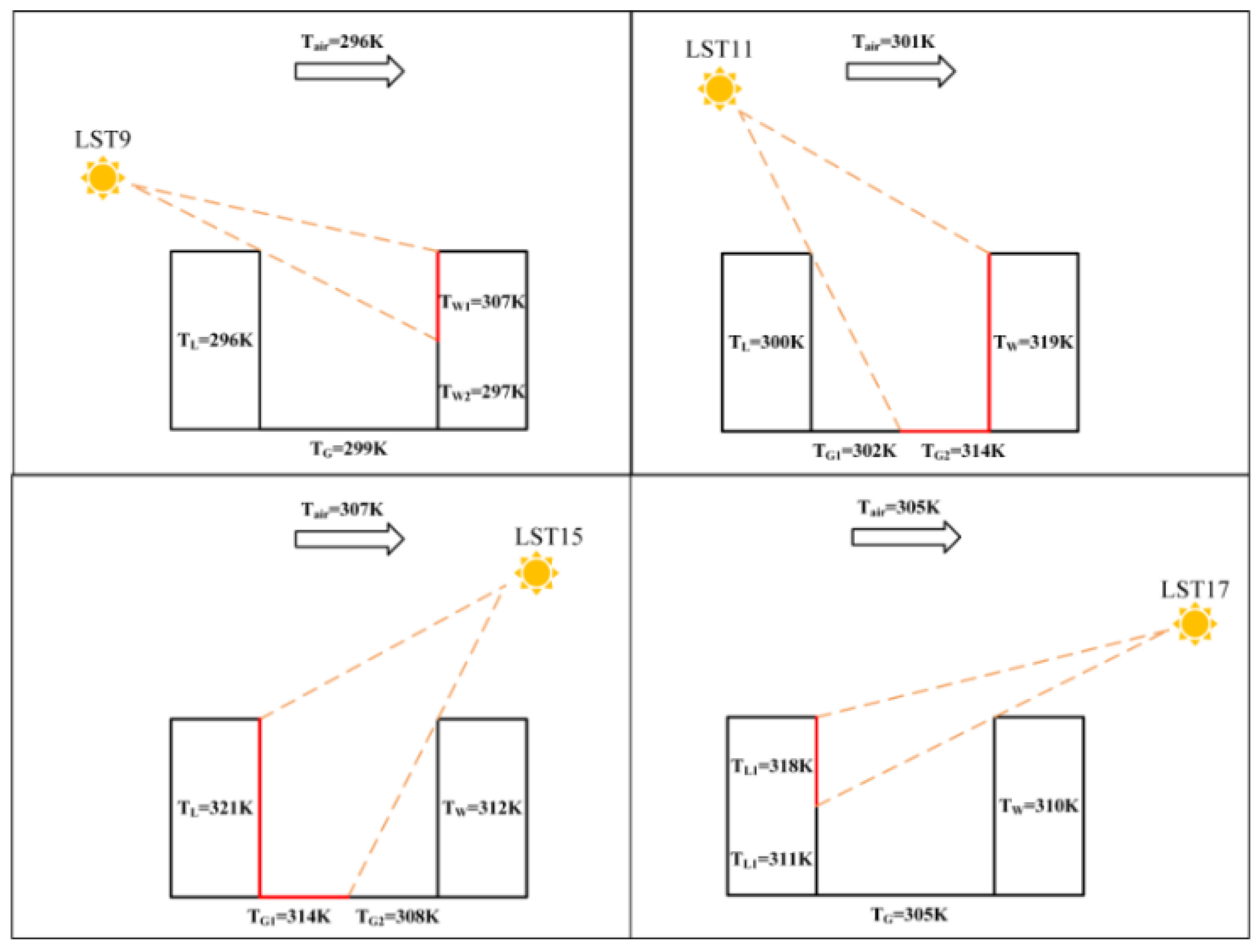
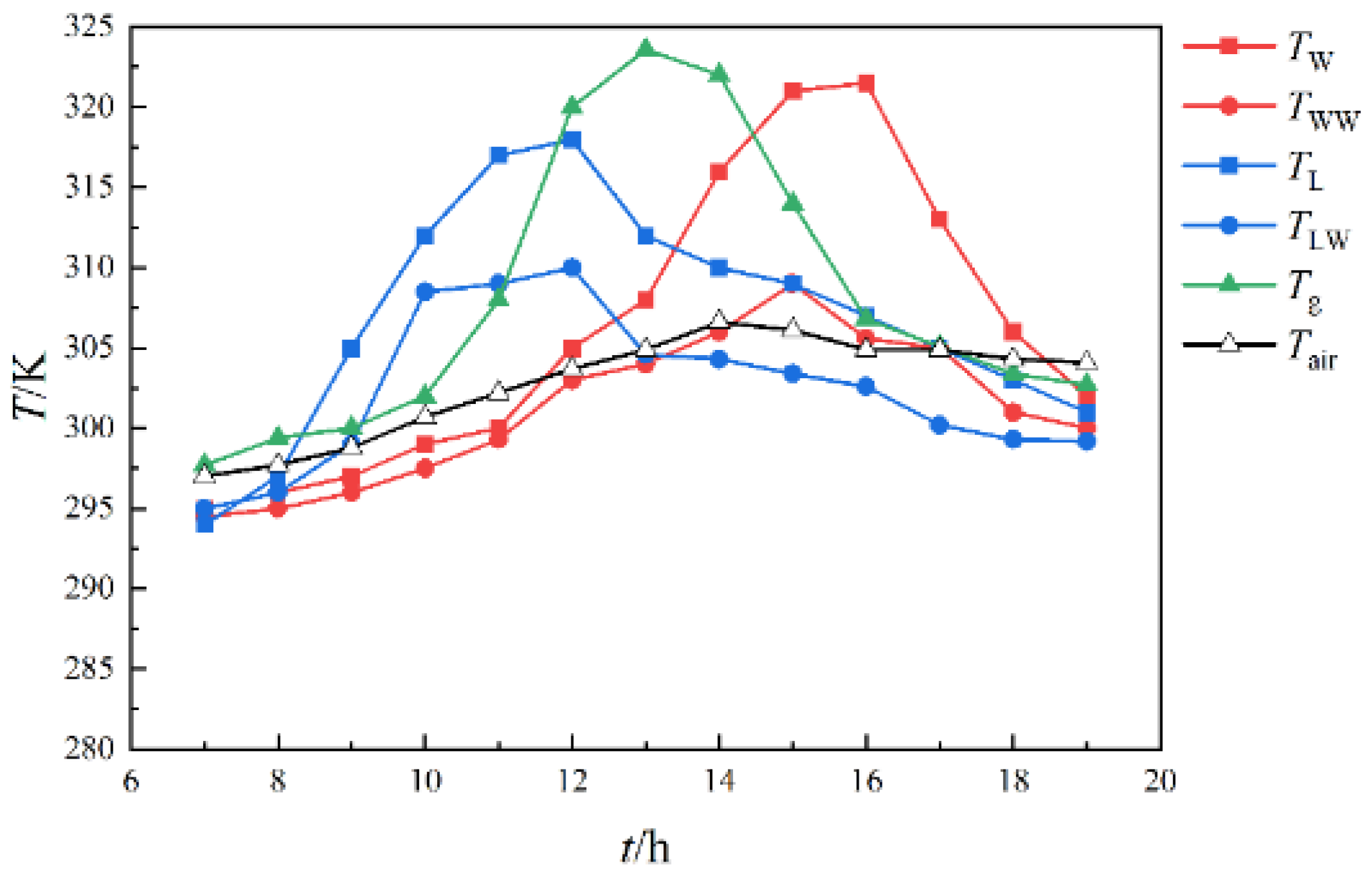
Due to the obstruction of buildings and green trees, the temperature distribution on building walls and road surface within the street canyon is non-uniform and varies with local time, as represented in Figure 9. Taking a north–south-oriented street canyon in Xi’an as an example, the influences of non-uniform heating schemes on the micro-environment within the street canyon at four different local times (9:00, 11:00, 15:00, and 17:00) on a sunny summer day are investigated. The temperatures of solid walls and atmosphere are shown in Figure 10, which are set based on the on-site measurements in a street canyon [43]. The inflow wind speed is 1 m/s and from the east.
The thermal boundary conditions for these diurnal simulations were derived from on-site field measurements conducted on 7 September 2023, in a north–south-oriented street canyon (Zhubashi Street, Xi’an, China). The canyon has a width of approximately 18 m and an aspect ratio close to 1. Under prevailing easterly winds and daily air temperatures ranging from 22 °C to 32 °C, hourly temperatures of the windward wall, leeward wall, road surface, and ambient air were recorded from 7:00 to 19:00 (illustrated in Figure 9). The measuring equipment included a TR-72Ui temperature/humidity data logger (resolution: 0.3 °C, interval: 60 min; T&D Corporation, Tokyo, Japan) for ambient air and a UNI-T UTi220A handheld infrared thermometer (range: −32 °C to 380 °C, resolution: 0.1 °C, accuracy: 1 °C, emissivity set to 0.95; UNI-Trend Technology, Dongguan, China) for surface temperatures. Regarding experimental error estimation, the instrumental systematic error of the IR thermometer is 1 °C. Given that the actual measured wall–atmosphere temperature differences were consistently large (typically > 10 °C), the maximum relative error introduced into the temperature difference calculations is approximately 6.7%. Combined with the minor spatial representativeness error inherent in spot measurements, the overall uncertainty in determining the Richardson number for the boundary conditions remains well below 10%, ensuring sufficient reliability for input into the CFD model.
The selection of a north–south-oriented street canyon was driven by Xi’an’s grid-like road network, which is predominantly composed of orthogonal north–south and east–west streets; under easterly winds, this orientation creates a strict perpendicular canyon where the east and west walls serve definitively as windward and leeward walls, providing the most ideal geometry to isolate thermal buoyancy effects. Furthermore, the chosen simulation hours (9:00, 11:00, 15:00, and 17:00) intentionally avoid the noon period when walls are mostly in shade, specifically capturing the critical diurnal transition from morning windward wall heating to afternoon leeward wall heating to represent the strongest non-uniform thermal scenarios.
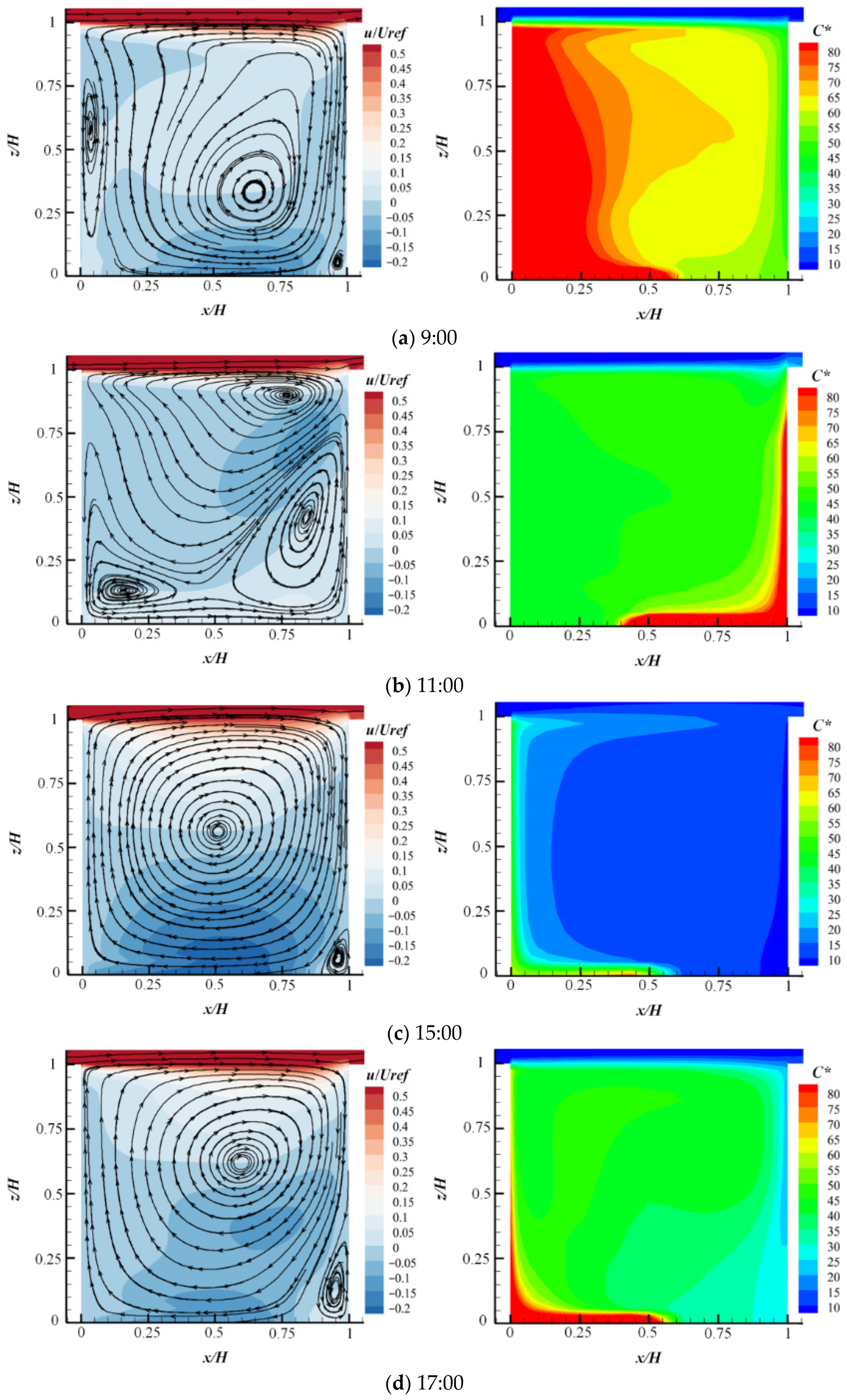
Figure 11 shows the wind field and pollutant concentration distribution within the street canyon at four different local times. At 9:00, the upper part of the windward wall is heated, and the Ri = 1.19, which is lower than the Ri in Case 3 (in which the entire windward wall is heated). The simulation results show that the wind field within the street canyon at 9:00 is different from that in Case 3. The wind field within the street canyon is generally dominated by a primary vortex, but a stable secondary vortex is formed near the leeward wall, which hinders the diffusion of pollutants and leads to an increase in pollutant concentrations near the leeward wall. The maximum dimensionless pollutant concentration at the pedestrian level is as high as 130 near the leeward wall, as shown in Figure 11a.
At 11:00, the windward wall and adjacent road surface are heated, with Ri = 4.69. The results show that the wind field within the street canyon is dominated by three mainstream vortices at 11:00. The wind field structure is similar to that in Case 3, but the vortex velocity in the lower right corner of the street canyon is higher than that in Case 3. Therefore, the distribution of pollutant concentration within the street canyon is different from that in Case 3. The largest dimensionless pollutant concentration at the pedestrian level is 120 near the windward wall, which is slightly lower than that at 9:00. Although there are high pollutant concentrations in areas near the windward wall, the area size is less than that in Case 3.
At 15:00, the leeward wall and adjacent road surface are heated, with Ri = 4.60. Thermal buoyancy near the leeward wall promotes the primary vortex within the street canyon, which is conducive to the diffusion of pollutants. The highest dimensionless pollutant concentration at the pedestrian level is less than 60, which is the lowest among the four local times. At 17:00, the upper part of the leeward wall is heated, with Ri = 2.89. The promotion on the primary vortex by thermal buoyancy within the street canyon is weakened, and the highest dimensionless pollutant concentration at the pedestrian level is about 100.
Table 3 shows the air exchange rates at the top of the street canyon at the four local times compared to the isothermal Case 4. In general, the heating of solid walls can enhance the turbulent exchange rate (NACHl) at the top of the street canyon. However, when the upper part of the windward wall is heated (at 9:00), the convective exchange rate is suppressed, resulting in a lower total exchange rate compared to the isothermal case. At 11:00, the influence of thermal buoyancy is enhanced, but the wind field structure with multiple vortices within the street canyon is not conducive to the diffusion of pollutants. At 15:00 pm and 17:00, the convective and turbulent exchange rates are both increased, while at 17:00, the promotion of the air exchange rate by thermal buoyancy turns weak.

3.4. The Inspiration of Thermal Ventilation Characteristics in Urban Street Canyons for Planning

The simulation results showed that different heating conditions on the walls can significantly affect the micro-environment within urban street canyons. The windward wall heating is not conducive to ventilation and pollutant diffusion, while the leeward wall heating can promote ventilation and pollutant diffusion within the street canyon. Especially, in the morning and afternoon, the temperature difference between the solid walls and atmosphere is large, with higher Ri; therefore, the influence of thermal buoyancy turbulence will be more significant. This means that, in urban planning, the design of heating characteristics of solid walls in urban street canyons can be achieved using shading and building materials according to the prevailing wind direction, thereby improving the thermal environment and ventilation within urban street canyons. This is theoretically feasible by prioritizing the windward walls with cold facades and shading.
Xi’an City is an example, with its northeast prevailing winds and low average wind speed (1.5 m/s). The roads in Xi’an are mainly oriented in north–south and east–west directions. For the east–west-oriented roads, building walls on the north side of the road are the leeward walls, the heating on which will be beneficial for promoting ventilation within the street canyon. In the planning and design of the east–west-oriented roads, obstructions would be withdrawn, while pedestrian and road greening design would be suggested on the south side of the roads. For the north–south-oriented roads, building walls on the east side of the road are the leeward walls, while those on the west side of the road are the windward walls. In the planning and design of the north–south-oriented roads, it is recommended to remove the obstructions on the building walls on the east side of the road; meanwhile, it is suggested to fully utilize technical ways, such as obstruction and building materials, to reduce the temperature of the building walls on the west side of the road. Pedestrian and road greening designs would also be carried out on the west side of the north–south-oriented roads.
At present, there are various methods to achieve occlusion and reduce temperature on building walls at the technical level. Firstly, road greening is an important factor affecting the thermal environment within street canyons. The shading effects of green trees can reduce the temperature of the road surface and the lower part of building walls. In Xi’an, it is recommended to strengthen the road greening on the west side of the roads while reducing the greening on the east side of the roads. For example, adopting a design of single-sided pedestrian walkways and greenways can create favorable non-uniform heating conditions within the street canyon. Secondly, green wall and cold wall technologies have developed rapidly. There is high feasibility and an economy of reducing the temperature of building walls through three-dimensional greening [44], building color [45], and heat reflective materials [46].

4. Conclusions and Prospects

The current work investigated the influences of non-uniform heating scenarios of solid walls and at different local times of the day on the micro-environment in urban street canyons by numerical simulation. It provided a theoretical basis for the use of shading, building materials, etc., to design the heating characteristics of building walls in urban street canyons, thus improving the thermal environment and ventilation within urban street canyons through urban planning. The primary findings are summarized as follows:
(1)
The windward wall heating is not conducive to ventilation and pollutant diffusion in urban street canyons, while the leeward wall heating can promote ventilation and pollutant diffusion. Unfortunately, the wind field within the street canyon is more sensitive to the windward wall heating buoyancy (Ri ≥ 0.12), while the response to the leeward wall heating buoyancy is relatively slow (Ri ≥ 0.49) in the current work.
(2)
In the morning and afternoon, the temperature difference between the solid walls and the atmosphere is large, with higher Ri numbers varying between 1.19 and 4.69 from 9:00 to 17:00. In general, the heating of solid walls can enhance the turbulent exchange rate (NACHl) at the top of the street canyon to 1.71~6.86 times of that under the isothermal condition, while the convective exchange rate (NACHm) is suppressed to 58%~83% in the morning (windward wall heated) and enhanced to 1.21~1.92 times in the afternoon (leeward wall heated) of that under the isothermal conditions. Thus, the influence of thermal buoyancy turbulence is more significant, where the non-uniform distribution of temperature on solid walls should not be ignored for a micro-environment study in urban street canyons.
(3)
Based on the simulations, it is suggested that in urban road planning, techniques such as shading and building materials should be fully utilized to reduce the temperature of windward walls in urban street canyons to carry out suitable pedestrian and road greening design. For the leeward walls in the street canyon, it is recommended to withdraw the obstructions and shading so as to fully utilize the thermal buoyancy near the leeward walls and enhance ventilation and pollutant diffusion in the street canyon.
Although this study provides theoretical guidance for urban planning, certain limitations should be acknowledged. First, the idealized non-uniform heating scenarios were simplified to isolate core physical mechanisms, neglecting real-world complexities such as material thermophysical properties, dynamic shadows, and vegetation effects. Second, the use of discrete static temperature boundaries inevitably underestimates wall thermal inertia and the resulting time lag effects on airflow and dispersion. Future research should integrate these complex dynamic variables into CFD simulations and employ continuous transient boundary conditions to achieve more accurate and comprehensive predictions of real-world urban thermal environments.

Author Contributions

Conceptualization, Y.Z.; methodology, Y.Z. and D.X.; software, W.X., Y.W., and L.W.; validation, Y.W. and L.W.; formal analysis, W.X.; investigation, W.X.; resources, Y.W.; data curation, D.X.; writing—original draft preparation, W.X.; writing—review and editing, W.X. and Y.Z.; visualization, Y.W.; supervision, Z.G.; project administration, Z.G.; funding acquisition, Y.Z. All authors have read and agreed to the published version of the manuscript.

Funding

This research was funded by the National Natural Science Foundation of China, grant number 41977182, and the Science and Technology Plan Project of Yulin, grant number 2024-CXY-170.

Data Availability Statement

The datasets used in the current work are available from the corresponding author upon reasonable request. All data and materials are available for publication.

Acknowledgments

We acknowledge the National Natural Science Foundation of China (Grant No. 41977182) and the Science and Technology Plan Project of Yulin (2024-CXY-170) for their support.

Conflicts of Interest

The authors declare no conflicts of interest.

References

  1. Niu, J.; Mei, S.-J.; Sun, T. Efficient city-scale wind mapping from building morphology: A CFD-based parameterization scheme. Sustain. Cities Soc. 2025, 131, 106688. [Google Scholar] [CrossRef]
  2. Zhu, X.; Li, D.; Zhou, S.; Zhu, S.; Yu, L. Evaluating coupling coordination between urban smart performance and low-carbon level in China’s pilot cities with mixed methods. Sci. Rep. 2024, 14, 20461. [Google Scholar] [CrossRef]
  3. Abbassi, Y.; Ahmadikia, H.; Baniasadi, E. Impact of wind speed on urban heat and pollution islands. Urban Clim. 2022, 44, 101200. [Google Scholar] [CrossRef]
  4. Shen, S.; Wu, W.; Huang, S.; Yan, L.; Zhang, X.; Liu, Y.; Sun, J.; Yang, J.; Xu, J. Impact of surface features on land surface thermal environment in eastern Zhejiang. Adv. Space Res. 2026, 77, 101–117. [Google Scholar] [CrossRef]
  5. Gong, P.; Tan, G.Y.A.; Ng, S.T.T.; Zheng, X. A CFD Investigation of wind- and buoyancy-driven flows in urban street canyons: Assessment of wall-modelled LES and Reynolds number independence. Urban Clim. 2026, 66, 102854. [Google Scholar] [CrossRef]
  6. Moayedi, S.H.; Hassanzadeh, S. An LES study of aerodynamic effect of trees on traffic pollutant dispersion in an ideal street canyon. Eur. Phys. J. Plus 2022, 137, 797. [Google Scholar] [CrossRef]
  7. Zhang, Y.; Gu, Z. Air quality by urban design. Nat. Geosci. 2013, 6, 506. [Google Scholar] [CrossRef]
  8. Namaiti, A.; Zeng, S.; He, W.; Liu, X.; Zeng, J. Exploring diurnal spatiotemporal heterogeneity in urban heat exposure: A novel perspective from urban form-function coupling. Sustain. Cities Soc. 2026, 138, 107161. [Google Scholar] [CrossRef]
  9. Abbasi, S.; Keshavarzi, B. Source identification of total petroleum hydrocarbons and polycyclic aromatic hydrocarbons in PM10 and street dust of a hot spot for petrochemical production: Asaluyeh County, Iran. Sustain. Cities Soc. 2019, 45, 214–230. [Google Scholar] [CrossRef]
  10. Yang, B.; Yang, S.; Zhu, X.; Qi, M.; Li, H.; Lv, Z.; Cheng, X.; Wang, F. Computer Vision Technology for Monitoring of Indoor and Outdoor Environments and HVAC Equipment: A Review. Sensors 2023, 23, 6186. [Google Scholar] [CrossRef]
  11. Chaudhuri, S.; Kumar, A. Urban greenery for air pollution control: A meta-analysis of current practice, progress, and challenges. Environ. Monit. Assess. 2022, 194, 235. [Google Scholar] [CrossRef] [PubMed]
  12. Xue, Y.; Zhao, Y.; Wai, K.; Yuan, C.; Carmeliet, J. Heat and flow dynamics in cities: An experimental comparative study across diverse urban morphologies. Philos. Trans. R. Soc. A Math. Phys. Eng. Sci. 2025, 383, 20240573. [Google Scholar] [CrossRef] [PubMed]
  13. Li, B.; Xing, H.; Cao, D.; Yang, G.; Zhang, H. Exploring the Effects of Roadside Vegetation on the Urban Thermal Environment Using Street View Images. Int. J. Environ. Res. Public Health 2022, 19, 1272. [Google Scholar] [CrossRef] [PubMed]
  14. Fan, J.; Chen, X.; Zhang, W.; Zhao, M.; Yang, X. Comparison of mediating effects of air pollutants on urban morphology and urban heat Island intensity at block scale. Sci. Rep. 2025, 15, 18433. [Google Scholar] [CrossRef]
  15. Che, W.; Zhuang, W. Integrated vegetation effects on thermal environment and air quality in urban street canyons. Urban Clim. 2025, 63, 102593. [Google Scholar] [CrossRef]
  16. Zhu, S.; Chen, M.; Lu, S.; Mai, X. Influence of Urban Geometry on Thermal Environment of Urban Street Canyons in Hong Kong. Buildings 2022, 12, 1836. [Google Scholar] [CrossRef]
  17. Wang, H.; Qiu, K.; Gao, Z.; Hang, J.; Shen, J.; Zhao, Z.; Xu, F. A CFD simulation study on the effect of air-conditioning outdoor units on the wind-thermal environment in street canyons. Urban Clim. 2026, 67, 102875. [Google Scholar] [CrossRef]
  18. Miao, C.-P.; Chen, W.; Cui, A.-W.; Li, P.-P.; Hu, Y.-M.; He, X.-Y. Research progress on air pollutant distribution in urban street canyons. Chin. J. Appl. Ecol. 2021, 32, 3377–3384. [Google Scholar] [CrossRef]
  19. Zhang, Y.; Gu, Z.; Yu, C.W. Impact Factors on Airflow and Pollutant Dispersion in Urban Street Canyons and Comprehensive Simulations: A Review. Curr. Pollut. Rep. 2020, 6, 425–439. [Google Scholar] [CrossRef]
  20. Liu, C.-W.; Mei, S.-J.; Liu, D.; Zhao, F.-Y. Convective dispersion of heat and airborne pollutants inside street canyons under the influence of urban ground heat flows. Indoor Built Environ. 2017, 28, 619–635. [Google Scholar] [CrossRef]
  21. Mei, S.-J.; Yuan, C. Urban buoyancy-driven air flow and modelling method: A critical review. Build. Environ. 2022, 210, 108708. [Google Scholar] [CrossRef]
  22. Chen, G.; Wang, D.; Wang, Q.; Li, Y.; Wang, X.; Hang, J.; Gao, P.; Ou, C.; Wang, K. Scaled outdoor experimental studies of urban thermal environment in street canyon models with various aspect ratios and thermal storage. Sci. Total. Environ. 2020, 726, 138147. [Google Scholar] [CrossRef] [PubMed]
  23. Chen, Y.; Wang, S.; Yang, X.; Fan, Y.; Ge, J.; Li, Y. Temporal variation of wall flow and its influences on energy balance of the building wall. City Built Environ. 2023, 1, 3. [Google Scholar] [CrossRef]
  24. Mohammadi, E.; Jarkeh, M.; Zolfaghari, S.A.; Arbabi, V. Effect of resilient architecture in an ancient windmill in the Sistan region on natural ventilation enhancement. Sci. Rep. 2022, 12, 18240. [Google Scholar] [CrossRef]
  25. Offerle, B.; Eliasson, I.; Grimmond, C.S.B.; Holmer, B. Surface heating in relation to air temperature, wind and turbulence in an urban street canyon. Bound.-Layer Meteorol. 2006, 122, 273–292. [Google Scholar] [CrossRef]
  26. Kwak, K.-H.; Baik, J.-J. Diurnal variation of NOx and ozone exchange between a street canyon and the overlying air. Atmos. Environ. 2014, 86, 120–128. [Google Scholar] [CrossRef]
  27. Lin, Y.; Ichinose, T.; Yamao, Y.; Mouri, H. Wind velocity and temperature fields under different surface heating conditions in a street canyon in wind tunnel experiments. Build. Environ. 2020, 168, 106500. [Google Scholar] [CrossRef]
  28. Kim, J.-J.; Baik, J.-J. Effects of street-bottom and building-roof heating on flow in three-dimensional street canyons. Adv. Atmos. Sci. 2010, 27, 513–527. [Google Scholar] [CrossRef]
  29. Hang, J.; Chen, G. Experimental study of urban microclimate on scaled street canyons with various aspect ratios. Urban Clim. 2022, 46, 101299. [Google Scholar] [CrossRef]
  30. Wen, Y.-B.; Huang, Z.-R.; Tang, Y.-F.; Li, D.-R.; Zhang, Y.-J.; Zhao, F.-Y. Air exchange rate and pollutant dispersion inside compact urban street canyons with combined wind and thermal driven natural ventilations: Effects of non-uniform building heights and unstable thermal stratifications. Sci. Total. Environ. 2022, 851, 158053. [Google Scholar] [CrossRef]
  31. Yang, H.; Chen, G.; Wang, D.; Hang, J.; Li, Q.; Wang, Q. Influences of street aspect ratios and realistic solar heating on convective heat transfer and ventilation in full-scale 2D street canyons. Build. Environ. 2021, 204, 108125. [Google Scholar] [CrossRef]
  32. Chen, G.; Hang, J.; Chen, L.; Lin, Y. Comparison of uniform and non-uniform surface heating effects on in-canyon airflow and ventilation by CFD simulations and scaled outdoor experiments. Build. Environ. 2023, 244, 110744. [Google Scholar] [CrossRef]
  33. Tan, Z.; Dong, J.; Xiao, Y.; Tu, J. A numerical study of diurnally varying surface temperature on flow patterns and pollutant dispersion in street canyons. Atmos. Environ. 2015, 104, 217–227. [Google Scholar] [CrossRef]
  34. Shui, Q.; Wu, X.; Hong, C.; Zhang, Y.; Wong, N.H.; Yu, C.W.; Gu, Z.; Wang, D. Reformulation and improvement of a universal subgrid eddy viscosity model based on the multiscale framework. Comput. Methods Appl. Mech. Eng. 2022, 388, 114216. [Google Scholar] [CrossRef]
  35. Hong, C.; Qu, Z.; Xiao, R.; Wang, Z.; Yang, Y.; Qian, J.; Zhang, C.; Zhang, Y.; Li, X.; Dong, Z.; et al. Vertical thermal environment investigation in different urban zones (LCZ4/LCZ6/LCZA) and heat mitigation evaluation: Field measurements and numerical simulations. Build. Environ. 2024, 262, 111840. [Google Scholar] [CrossRef]
  36. Shen, B.; Yuan, Y.; Zhou, H.; Zhang, Z.; Zhou, T.; Zheng, X.; Yang, Q. Comparative assessment of large eddy simulation and detached eddy simulation in predicting aerodynamic and flow characteristics around a tall building. Phys. Fluids 2025, 37, 095163. [Google Scholar] [CrossRef]
  37. Hu, Z.; Yu, B.; Chen, Z.; Li, T.; Liu, M. Numerical investigation on the urban heat island in an entire city with an urban porous media model. Atmos. Environ. 2012, 47, 509–518. [Google Scholar] [CrossRef]
  38. Tominaga, Y.; Mochida, A.; Yoshie, R.; Kataoka, H.; Nozu, T.; Yoshikawa, M.; Shirasawa, T. AIJ guidelines for practical applications of CFD to pedestrian wind environment around buildings. J. Wind Eng. Ind. Aerodyn. 2008, 96, 1749–1761. [Google Scholar] [CrossRef]
  39. Koo, D.; Kim, T.; Kwon, S.; Kim, J. A Physics-Based CFD and Visualization Framework for Evaluating Urban Heat Island Mitigation Under Climate Change Adaptation Scenarios: A Case Study of Gwacheon City, Republic of Korea. Land 2026, 15, 462. [Google Scholar] [CrossRef]
  40. Xu, W.; Zhao, L.; Zhang, Y.; Gu, Z. Investigation on Air Ventilation within Idealised Urban Wind Corridors and the Influence of Structural Factors with Numerical Simulations. Sustainability 2023, 15, 13817. [Google Scholar] [CrossRef]
  41. Cheng, W.C.; Liu, C.-H.; Leung, D.Y.C. On the comparison of the ventilation performance of street canyons of different aspect ratios and Richardson number. Build. Simul. 2009, 2, 53–61. [Google Scholar] [CrossRef]
  42. Allegrini, J.; Dorer, V.; Carmeliet, J. Buoyant flows in street canyons: Validation of CFD simulations with wind tunnel measurements. Build. Environ. 2014, 72, 63–74. [Google Scholar] [CrossRef]
  43. Zhang, Y.W.; Xu, W.; Wang, Q.R.; Su, J.W.; Huang, Y.; Gu, Z.L. Simulation on diurnal variation of thermal unsteady flow in a north-south orientated street canyon. J. Earth Environ. 2021, 12, 322–332. (In Chinese) [Google Scholar] [CrossRef]
  44. Qi, S.; Utaberta, N.; Kiet, A.L.K.; Yanfang, X.; Xiyao, H. Effects of green façade retrofitting on thermal performance and energy efficiency of existing buildings in northern China: An experimental study. Energy Build. 2025, 335, 115550. [Google Scholar] [CrossRef]
  45. Hong, C.; Yang, Y.; Ge, S.; Chai, G.; Zhao, P.; Shui, Q.; Gu, Z. Is the design guidance of color and material for urban buildings a good choice in terms of thermal performance? Sustain. Cities Soc. 2022, 83, 103927. [Google Scholar] [CrossRef]
  46. Zhang, X.; Li, H.; Xie, N.; Jia, M.; Yang, B.; Li, S. Laboratorial Investigation on Optical and Thermal Properties of Thermochromic Pavement Coatings for Dynamic Thermoregulation and Urban Heat Island Mitigation. Sustain. Cities Soc. 2022, 83, 103950. [Google Scholar] [CrossRef]
Figure 1. Schematic diagram of the simulation area and the street canyon model.
Buildings 16 01567 g001
Figure 2. Grid convergence analysis.
Buildings 16 01567 g002
Figure 3. Grid size within the street canyon.
Buildings 16 01567 g003
Figure 4. Comparison between the numerically simulated and wind tunnel measured results.
Buildings 16 01567 g004
Figure 5. Distribution of wind velocities simulated with different cases on the vertical centerline (x/H = 0.5, the left column) and the horizontal centerline (z/H = 0.5, the right column) of the street canyon.
Buildings 16 01567 g005aBuildings 16 01567 g005b
Figure 6. Streamlines and dimensionless wind velocities (u/Uref) within the street canyon under low (1 m/s, the left column, corresponding to Cases 1–4) and high (5 m/s, the right column, corresponding to Cases 17–20) inflow wind speeds.
Buildings 16 01567 g006aBuildings 16 01567 g006b
Figure 7. Distribution of dimensionless pollutant concentration (C*) within the street canyon under low (1 m/s, the left column, corresponding to Cases 1–4) and high (5 m/s, the right column, corresponding to Cases 17–20) inflow wind speeds.
Buildings 16 01567 g007aBuildings 16 01567 g007b
Figure 8. Air exchange rates at the top of the street canyon under low and high inflow wind speeds.
Buildings 16 01567 g008
Figure 9. The solar radiation areas and wall temperatures in a north–south-oriented street canyon at different local times in Xi’an, China.
Buildings 16 01567 g009
Figure 10. Daily variations of surface temperatures of the street canyon and atmospheric temperature.
Buildings 16 01567 g010
Figure 11. Wind field (the left column) and pollutant concentration distribution (the right column) within a north–south street canyon at different local times.
Buildings 16 01567 g011
Table 1. Grid parameters.
Grid TypeTotal Cell CountFirst-Layer Grid Height (m)Growth Ratio
Coarse404,3520.231.2
Medium715,3920.131.2
Fine940,0320.081.2
Table 2. Setting of simulation cases and the corresponding Ri numbers.
Simulation CasesHeating ScenariosInflow Wind Speed UrefRi Number
Case 1Leeward wall1 m/s1.96
Case 2Road surface1 m/s1.96
Case 3Windward wall1 m/s1.96
Case 4Isothermal1 m/s0
Case 5Leeward wall2 m/s0.49
Case 6Road surface2 m/s0.49
Case 7Windward wall2 m/s0.49
Case 8Isothermal2 m/s0
Case 9Leeward wall3 m/s0.22
Case 10Road surface3 m/s0.22
Case 11Windward wall3 m/s0.22
Case 12Isothermal3 m/s0
Case 13Leeward wall4 m/s0.12
Case 14Road surface4 m/s0.12
Case 15Windward wall4 m/s0.12
Case 16Isothermal4 m/s0
Case 17Leeward wall5 m/s0.08
Case 18Road surface5 m/s0.08
Case 19Windward wall5 m/s0.08
Case 20Isothermal5 m/s0
Table 3. Air exchange rates at the top of the street canyon at different local times.
TimeNACHmNACHlNACH
9:000.0140.0120.026
11:000.0200.0220.042
15:000.0460.0480.094
17:000.0290.0150.043
Case 4 (Isothermal)0.0240.0070.031
Disclaimer/Publisher’s Note: The statements, opinions and data contained in all publications are solely those of the individual author(s) and contributor(s) and not of MDPI and/or the editor(s). MDPI and/or the editor(s) disclaim responsibility for any injury to people or property resulting from any ideas, methods, instructions or products referred to in the content.