


Abstract
Accurate characterization of pavement responses under real traffic loading is essential for improving pavement design reliability. This study presents SmartPave, a full-scale embedded monitoring system for measuring multilayer pavement responses under heavy vehicle loading. The system integrates embedded multi-sensors to capture stress, strain, temperature, and moisture within pavement layers. Field experiments were conducted under static and moving loading conditions. The results show that peak vertical stresses in the granular base were approximately 1.7–2.0 times higher than those at the subgrade, indicating stress attenuation with depth, while tensile strains at the bottom of the asphalt layer ranged between 200 and 350 µε. Lower vehicle speeds increased load duration and amplified viscoelastic strain responses. These findings demonstrate the capability of the system to provide reliable field data for mechanistic analysis and model calibration.
1. Introduction
Highway transportation infrastructure plays a fundamental role in supporting economic development, logistics mobility, and regional connectivity. The structural performance and long-term serviceability of pavement systems are therefore critical for ensuring efficient transportation networks and minimizing infrastructure maintenance costs. However, increasing freight transportation demand and the growth of heavy truck traffic have significantly accelerated pavement deterioration in many highway systems worldwide. Repeated traffic loading, combined with environmental influences such as temperature fluctuations and moisture variations, induces complex stress–strain responses within pavement structures. These responses progressively lead to structural distresses including fatigue cracking, rutting, and permanent deformation.
Accurate prediction of pavement performance and service life has long been a major challenge in pavement engineering. Conventional pavement design and evaluation approaches rely primarily on mechanistic–empirical (M–E) frameworks that combine theoretical pavement response models with empirical deterioration relationships. These models estimate stresses and strains within pavement layers using multilayer elastic theory or finite element models and subsequently translate these responses into predicted pavement distresses. Although mechanistic–empirical design methods have can support pavement design improvement, their predictive accuracy remains limited because they rely heavily on assumed material properties, simplified traffic loading spectra, and empirical calibration derived from historical datasets rather than direct field measurements.
Recent advances in sensing technologies have created new opportunities for improving pavement monitoring and performance prediction through embedded sensing systems capable of capturing real-time pavement responses. Structural health monitoring techniques have been widely applied in bridge and building structures, and similar concepts are increasingly being adopted in pavement engineering. Embedded sensors installed within pavement layers can directly measure structural responses such as strain, stress, temperature, and moisture, enabling researchers and infrastructure agencies to observe pavement behavior under actual traffic loading conditions. A growing body of literature has investigated sensing technologies for pavement monitoring. Early reviews highlighted the potential of smart sensor networks for monitoring pavement structural performance and detecting early deterioration mechanisms. Di Graziano et al. [1] and Fahad et al. [2] emphasized that embedded sensing systems can significantly improve pavement monitoring by enabling continuous structural response measurements. Subsequent studies investigated the application of optical fiber sensors for pavement monitoring. Rebelo et al. [3] demonstrated the feasibility of installing fiber Bragg grating (FBG) sensors within pavement layers for monitoring strain responses induced by moving vehicles. Braunfelds et al. [4] further explored distributed optical fiber sensing systems capable of measuring strain along extended pavement sections, while Wang et al. [5] reviewed optical fiber sensing technologies in pavement engineering and highlighted their advantages in long-term infrastructure monitoring.
In addition to optical fiber sensing technologies, researchers have investigated alternative sensing systems including resistive strain sensors and self-sensing materials. Wang et al. [6] analyzed the mechanical response of asphalt pavements using embedded sensors and demonstrated that such sensors can capture stress–strain responses caused by heavy vehicle loads. Xin et al. [7] developed nanocomposite-based self-sensing strain sensors capable of detecting deformation within asphalt mixtures. Ye et al. [8] investigated sensor encapsulation techniques to improve the durability of embedded pavement sensors. Recent studies have also explored wireless sensing networks and Internet-of-Things architectures for infrastructure monitoring. Liu et al. [9] proposed a distributed sensing framework for monitoring pavement structural responses using embedded sensors. Hossein et al. [10] reviewed smart embedded technologies and materials for pavement management systems and highlighted the potential of integrating sensing systems with intelligent infrastructure monitoring platforms.
Traffic loading remains one of the most critical factors influencing pavement deterioration. Accurate measurement of axle loads and traffic characteristics is therefore essential for improving pavement performance prediction. Weigh-in-motion technologies have been widely adopted to measure vehicle weights under real traffic conditions. Sujon and Dai [11] provided a comprehensive review of WIM technologies and their applications in infrastructure monitoring. Liang et al. [12] proposed a self-sensing WIM pavement sensor based on nanocomposite materials capable of detecting axle loads. Yang et al. [13] further investigated intelligent WIM systems based on MEMS sensors. Parallel to sensing technologies, significant research efforts have focused on improving pavement performance prediction models. Zhao et al. [14] investigated mechanistic–empirical pavement analysis under dynamic traffic loading conditions. Masad et al. [15] conducted calibration studies for mechanistic–empirical pavement design models and demonstrated that field calibration significantly improves prediction accuracy. Wu et al. [16] examined calibration procedures for cracking prediction models.
Recent research has also explored data-driven approaches for pavement performance prediction. Hu et al. [17] reviewed empirical pavement performance modeling approaches and highlighted the increasing use of machine learning techniques in pavement management systems. Bueno et al. [18] investigated roughness prediction models based on mechanistic–empirical approaches and demonstrated that calibration using field monitoring data improves prediction reliability. Further developments in sensing technologies have focused on energy harvesting systems that enable self-powered pavement sensors. Yang et al. [19] reviewed self-powered sensing technologies based on piezoelectric and triboelectric mechanisms capable of generating electrical energy from traffic-induced vibrations. Zhou et al. [20] investigated road energy harvesting systems for intelligent transportation infrastructure.
More recent studies have addressed sensor accuracy and durability challenges. Han et al. [21] investigated the theoretical accuracy of embedded strain sensors in asphalt pavements. Hu et al. [22] proposed improved sensor installation methods for enhancing measurement performance. Roy et al. [23] studied sensor encapsulation strategies for improving long-term durability. Additional research has examined distributed fiber optic sensing technologies [24], smart sensing pavement materials [25], pavement temperature modeling for mechanistic–empirical analysis [26], remote sensing approaches for pavement condition monitoring [27], data-driven pavement performance modeling [28], integrated traffic monitoring systems [29], in situ sensing of internal pavement conditions [30], optical fiber sensing technologies [31,32,33], field measurement of pavement responses under traffic loading [34], dynamic vehicle load effects [35], energy harvesting pavement technologies [36,37,38], and data-driven sensor monitoring systems [39,40].
Despite significant progress in pavement instrumentation and monitoring, several limitations remain in existing studies. Most prior research has focused primarily on single-response measurements, such as stress or strain, without adequately incorporating environmental factors that significantly influence pavement behavior. Furthermore, many studies are limited to laboratory-scale or small-scale field applications, with relatively few demonstrating full-scale implementation under real traffic conditions. In addition, the integration between field measurements and mechanistic analysis remains limited, as measured responses are often reported without quantitative validation against theoretical models, making it difficult to assess their reliability and broader applicability.
While instrumented pavement sections have been used to monitor field responses in previous studies [41,42,43,44,45], these implementations have largely focused on isolated measurements without fully integrating multi-parameter sensing or establishing a direct linkage to mechanistic analysis.
Therefore, a clear research gap exists in the development of a full-scale, integrated pavement monitoring framework that combines structural and environmental sensing with quantitative mechanistic validation.
To address this gap, this study proposes SmartPave, a field-based highway performance monitoring framework that integrates embedded multi-sensor infrastructure with mechanistic–empirical pavement modeling. The system enables simultaneous measurement of stress, strain, temperature, and moisture responses under real traffic loading conditions. More importantly, the measured responses are systematically compared with predictions from multilayer elastic theory using quantitative error metrics, thereby establishing a direct linkage between field measurements and mechanistic interpretation.
This integrated approach enables not only comprehensive field monitoring but also mechanistically consistent interpretation and model calibration, thereby advancing beyond conventional sensor-based pavement studies. In particular, the study demonstrates the coupled influence of environmental and structural responses at the full-scale field level.
In this study, the term “data-driven monitoring” refers to the systematic acquisition, processing, and quantitative interpretation of high-frequency field measurements obtained from embedded sensors. The developed system enables continuous collection of multi-parameter pavement response data, including stress, strain, temperature, and moisture, which are further analyzed in conjunction with pavement response models.
It is noted that, while the concept of digital twin infrastructure is referenced in the context of intelligent transportation systems, the present study does not aim to develop a fully functional digital twin platform. Instead, the proposed SmartPave system provides a field-validated data acquisition and monitoring framework that can serve as a foundational layer for future integration into digital twin environments.
In addition to advancing mechanistic understanding, this study aims to provide practical insights that support engineering decision-making in pavement design, maintenance, and infrastructure management. By linking field-measured responses with mechanistic interpretation, the proposed system enables the translation of monitoring data into actionable strategies for improving pavement performance and optimizing lifecycle management.
2. Development of the Embedded Multi-Sensor Monitoring System
Understanding the pavement response behavior of pavement structures under real traffic conditions remains a fundamental challenge in pavement engineering. Although mechanistic–empirical pavement design methods have significantly advanced the prediction of pavement performance, many of the underlying assumptions regarding stress transfer, strain development, and environmental interactions within pavement layers are still based primarily on theoretical models or laboratory-scale experiments. Consequently, field-scale monitoring systems capable of capturing in situ pavement responses under realistic traffic loading conditions are essential for validating these pavement response assumptions and improving the reliability of pavement performance prediction models. Recent advances in sensing technologies and data acquisition systems have enabled the development of instrumented pavement sections that integrate embedded sensors with high-frequency monitoring platforms. Such systems allow direct observation of stresses, strains, temperature variations, and moisture conditions within pavement structures during vehicle loading events. By combining embedded sensing technologies with automated data acquisition and remote data transmission, these monitoring systems can generate continuous datasets describing the structural behavior of pavement infrastructure under operational traffic conditions.
In this study, a full-scale highway performance monitoring platform was developed to investigate the structural responses of asphalt pavement under controlled and operational traffic loading scenarios. The experimental platform integrates a distributed network of embedded sensors installed within the pavement layers, a high-frequency data acquisition system capable of capturing transient pavement responses generated by moving vehicles, and a field communication infrastructure that enables continuous transmission of monitoring data to a central database. The monitoring system was implemented on an instrumented pavement section constructed along Highway No. 32 in Thailand. The system was designed to measure multi-layer pavement responses including vertical stresses, horizontal strains, temperature variations, and moisture conditions within the pavement structure. These measurements provide a comprehensive dataset for evaluating pavement structural behavior, validating mechanistic pavement response models, and improving the understanding of load transfer mechanisms within asphalt pavement systems.
2.1. Instrumented Pavement Monitoring Site
To investigate the pavement response of asphalt pavements under real traffic conditions, a full-scale instrumented pavement monitoring section was constructed on a national highway in Thailand. The monitoring site was selected along a corridor carrying a high proportion of heavy freight vehicles, providing representative loading conditions for evaluating pavement structural responses under realistic traffic environments.
Figure 1 presents the field configuration of the instrumented pavement monitoring section. The monitoring site is located near a weigh-in-motion (WIM) system and a vehicle weight enforcement facility, enabling vehicle loading data to be correlated with structural responses measured by the embedded sensor network. This configuration allows integrated monitoring of traffic loads and pavement response under actual highway operating conditions.
Figure 1.
Full-scale instrumented pavement monitoring section on a highway.
2.2. Embedded Sensor Network and Monitoring Infrastructure
The monitoring system developed in this study integrates embedded pavement sensors with a field data acquisition platform to continuously record structural responses within the pavement structure.
Figure 2 illustrates the conceptual architecture of the Highway Performance Monitoring System (HPMS). The system consists of four main subsystems:
Figure 2.
Conceptual architecture of the Highway Performance Monitoring System.
- Embedded sensor network;
- Data acquisition and processing unit;
- Power supply and protection system;
- Communication and remote database infrastructure.
Embedded sensors installed within the pavement layers measure stress, strain, temperature, and moisture conditions at multiple depths. These sensors are connected to a data logger responsible for high-frequency signal acquisition and digital conversion of sensor outputs.
The monitoring system can be conceptually structured into four functional layers. The first layer is the physical sensing layer, consisting of embedded sensors installed within the pavement structure to measure stress, strain, temperature, and moisture responses. The second layer is the data acquisition layer, where high-frequency signals are recorded and converted into digital data using a data logger. The third layer is the processing layer, which performs signal filtering, data segmentation, and feature extraction. The fourth layer is the data management layer, where processed data are transmitted to a centralized database for storage and further analysis. This layered architecture demonstrates that the proposed system represents an integrated monitoring framework rather than a standalone sensor deployment.
The monitoring system operates at a sampling frequency of 100 Hz, enabling the capture of transient pavement responses generated by moving vehicle loads. The collected measurements are transmitted to a local field processing unit that performs signal filtering and data aggregation before transmitting the processed information to the Department of Highways (DOH) central database via an internet connection.
Because of the high sampling frequency and continuous monitoring operation, the monitoring station generates a large volume of structural health data. The system records the maximum, minimum, and average values of sensor measurements within each one-second interval, resulting in more than 3.2 million measurement records per day.
This monitoring architecture enables long-term observation of pavement structural performance and provides a data foundation for pavement response analysis and infrastructure performance monitoring.
2.3. The Embedded Multi-Sensor System
The spatial configuration of the embedded sensing system used in this study is illustrated in Figure 3, which presents both the plan-view arrangement and cross-sectional layout of the instrumented pavement structure. The sensor deployment strategy was designed to capture the multi-layer structural responses of the pavement system under moving vehicle loads by integrating different types of sensors installed at carefully selected depths and transverse positions across the traffic lane.
Figure 3.
Plan and cross-sectional views of the embedded sensor system in the pavement.
From a pavement response engineering perspective, the sensor layout was designed to monitor the key structural response parameters governing pavement performance. These include vertical compressive stress (σz) transmitted through the pavement structure, vertical compressive strain in the subgrade (εv) associated with permanent deformation and rutting, horizontal tensile strain at the bottom of the asphalt layer (εt) associated with fatigue cracking, and directional strain components in the longitudinal and transverse directions (εx and εy). Together, these parameters provide a comprehensive understanding of pavement structural behavior under heavy vehicle loading.
To capture these responses, a distributed network of embedded sensors was installed within the pavement layers. In total, the monitoring system includes 16 strain gauges, 14 pressure cells, 16 moisture sensors, and 8 thermocouples, distributed across multiple pavement layers and transverse locations. The sensors were selected to operate under the mechanical and environmental conditions typically encountered in highway pavements subjected to heavy traffic loading.
The strain measurement system was designed to measure strain levels up to approximately 5000 µε, which is sufficient to capture the range of strain responses typically observed in flexible pavements subjected to heavy truck loading. Sensors with this measurement capacity are required because pavement strain responses vary significantly depending on axle load magnitude, vehicle speed, pavement stiffness, and environmental conditions. In addition, the sensors provide high measurement sensitivity to detect small variations in strain caused by changes in loading conditions or pavement material properties.
Because sensors embedded in asphalt layers must withstand high construction temperatures during paving operations, asphalt strain gauges were designed to tolerate temperatures approaching 180 °C. This capability ensures that the sensors remain functional after asphalt placement and compaction. Sensors installed in the base and subgrade layers operate at lower temperature ranges but must remain stable under long-term subsurface environmental conditions.
Similarly, pressure cells used in the monitoring system were designed to measure stresses up to approximately 600 kPa, corresponding to the expected range of vertical stresses transmitted to lower pavement layers by heavy truck wheel loads. These sensors were constructed from corrosion-resistant materials to ensure durability and stable performance in underground environments.
Moisture sensors and temperature sensors were included in the monitoring system to capture environmental conditions that significantly influence pavement mechanical behavior. Moisture sensors measure volumetric water content within the base and subgrade layers, while temperature sensors monitor temperature variations within the asphalt layer. Monitoring these environmental parameters is essential because both moisture and temperature strongly affect pavement material stiffness, resilient modulus, and viscoelastic behavior, which in turn influence the stress–strain response of the pavement structure.
As shown in Figure 3, a total of 7 strain gauges, 7 pressure cells, and 8 moisture sensors were installed near the top of the subgrade layer. The top of the subgrade was selected as a key measurement location because it is the critical position where vertical compressive strain (εv) typically reaches its maximum value under wheel loading. According to pavement design theory, excessive vertical strain in this region is strongly associated with the development of rutting and permanent deformation in flexible pavements. The pressure cells measure the vertical stress (σz) transmitted through the pavement layers, while the strain gauges measure the corresponding soil strain responses. By measuring both stress and strain simultaneously, the monitoring system enables evaluation of load transfer mechanisms within the pavement structure. Moisture sensors were installed in the subgrade because the mechanical properties of subgrade soils are highly sensitive to moisture content. Variations in water content can significantly reduce soil stiffness and bearing capacity. Continuous monitoring of moisture conditions therefore allows analysis of how seasonal moisture variations influence pavement structural responses.
At the bottom of the base layer, the monitoring system includes 7 strain gauges and 7 pressure cells. These sensors capture the propagation of stresses and strains from the asphalt layers into the granular base. Measurements obtained at this level allow evaluation of how effectively the base layer distributes wheel loads before they reach the subgrade. Monitoring both stress and strain responses at this depth helps quantify the structural contribution of the granular base layer in reducing stresses transmitted to the subgrade.
At the middle of the base layer, 2 strain gauges and 8 moisture sensors were installed. These sensors measure internal deformation within the granular base and monitor moisture conditions within the base material. Moisture variations in the granular base can significantly influence the resilient modulus and shear strength of the material, which directly affect load distribution within the pavement structure. By monitoring moisture and strain simultaneously, the monitoring system enables evaluation of the coupled effects of environmental conditions and traffic loading on base layer behavior.
At the bottom of the asphalt layer, a total of 6 asphalt strain gauges were installed. This location corresponds to the critical tensile zone of the asphalt layer, where bending stresses generated by wheel loads produce maximum tensile strain. The tensile strain measured at this location corresponds to the pavement response parameter εt, which is widely recognized as the primary indicator of fatigue cracking potential in asphalt pavements. Monitoring tensile strain at the bottom of the asphalt layer therefore allows evaluation of the pavement’s fatigue damage potential under repeated truck loading.
At the middle of the asphalt layer, the monitoring system includes 2 asphalt strain gauges and 8 thermocouples. The strain gauges measure internal strain responses within the asphalt layer, while the thermocouples measure temperature variations. Asphalt materials exhibit temperature-dependent viscoelastic behavior, meaning that asphalt stiffness varies significantly with temperature. Monitoring temperature variations therefore allows strain measurements to be interpreted in relation to temperature dependent material properties.
As shown in the sensor layout diagrams, strain gauges were installed in two orientations relative to the traffic direction: longitudinal direction (parallel to traffic flow) and transverse direction (perpendicular to traffic flow). Strain gauges aligned with the traffic direction measure the longitudinal strain component (εx), which reflects pavement deformation caused by vehicle movement along the lane. Strain gauges installed in the transverse direction measure the transverse strain component (εy), which captures lateral pavement deformation generated by wheel loading and pavement bending. Measuring strain in both directions allows detailed analysis of anisotropic pavement deformation behavior and load distribution mechanisms.
Sensors were distributed across the pavement cross-section to capture spatial variations in pavement responses. Measurement locations include the left wheel path, right wheel path, and the centerline of the traffic lane. Sensors located directly beneath the wheel paths capture the maximum stresses and strains produced by truck wheels, while sensors installed near the centerline provide reference measurements outside the main wheel paths. This configuration enables the monitoring system to distinguish between responses generated by different wheel positions and to evaluate the influence of dual-tire loading configurations commonly observed in heavy truck traffic.
In addition to the embedded sensors, two observation wells were installed adjacent to the monitoring section to monitor groundwater level variations beneath the pavement structure. These observation wells allow measurement of groundwater levels with high resolution and provide valuable information on subsurface drainage conditions and seasonal groundwater fluctuations. Changes in groundwater levels can influence subgrade moisture conditions and pavement structural performance. The observation wells therefore provide complementary environmental data that support interpretation of the embedded sensor measurements.
2.4. As-Built Pavement Structure and Material Properties
To ensure reproducibility and support pavement response interpretation of the measured pavement responses, the as-built pavement structure and corresponding material properties of the instrumented section are explicitly presented in Table 1.
Table 1.
As-built pavement structure and material properties of the instrumented section.
Although the pavement configuration was previously illustrated schematically in Figure 3, the absence of quantitative structural and material parameters limited the reproducibility of the pavement response analysis. Therefore, the as-built pavement section has been explicitly defined based on construction records and representative in situ conditions.
2.4.1. Material Characterization
The material properties reported in Table 1 were determined based on construction specifications, typical values for Thai highway pavements, and consistency with field-measured responses.
The asphalt concrete modulus was selected as approximately 3000 MPa, corresponding to field temperatures of about 40–45 °C, reflecting typical in-service conditions in tropical climates. The granular base modulus (220 MPa) represents well compacted crushed aggregate materials, while the subgrade modulus (50 MPa) corresponds to medium-stiff silty clay under in situ moisture conditions.
2.4.2. Environmental Conditions During Testing
Environmental conditions were continuously monitored using embedded sensors within the pavement structure.
- Temperature:The asphalt layer temperature ranged between 38 °C and 52 °C, with an average value of approximately 42 °C, significantly influencing asphalt stiffness and viscoelastic behavior.
- Moisture:Subgrade volumetric water content ranged between 18% and 24%, indicating moderately moist but stable support conditions. Moisture variation in the granular base was relatively limited due to its drainage characteristics.
- Groundwater Condition:Groundwater levels remained below the subgrade during testing, indicating unsaturated conditions and stable structural support.
These environmental measurements are consistent with the embedded monitoring system described in the manuscript
2.4.3. Relevance to Mechanistic Analysis
The inclusion of as-built structural and material parameters is essential because pavement responses are highly sensitive to layer thickness and stiffness.
- The asphalt layer thickness (10 cm) and modulus (~3000 MPa) control tensile strain at the bottom of the asphalt layer (εₜ), which governs fatigue cracking.
- The granular base stiffness (220 MPa) influences load distribution and stress attenuation.
- The subgrade modulus (50 MPa) and moisture condition (18–24%) control vertical compressive strain (εᵥ), which is associated with rutting and permanent deformation.
By explicitly defining these parameters, the measured responses can be directly used for:
- Mechanistic–empirical model calibration
- Multilayer elastic or viscoelastic analysis
- Reproducible scientific comparison with future studies
2.5. Sensor Calibration, Signal Processing, and Data Quality Control
To ensure the accuracy and reliability of the measured pavement responses, procedures for sensor calibration, signal processing, and data quality control were implemented.
2.5.1. Sensor Calibration and Verification
All sensors used in this study, including strain gauges and pressure cells, were factory-calibrated by the manufacturer prior to installation, with certified accuracy of approximately ±2% for pressure measurements and ±3% for strain measurements.
To ensure reliability under field conditions, post-installation verification was conducted using controlled vehicle loading. The sensor responses were evaluated in terms of stability, repeatability, and consistency, and no abnormal drift or signal distortion was observed.
In addition, cross-validation among adjacent sensors installed at similar depths indicated consistent response patterns, indicating reliable sensor performance under in situ conditions.
2.5.2. Signal Processing
Raw sensor data were collected using a high-frequency data acquisition system with a sampling rate of 500–1000 Hz to capture transient responses under moving vehicle loads.
To improve signal quality:
- A low-pass digital filter was applied to remove high-frequency noise
- Baseline correction was performed to eliminate signal drift
- Time-history signals were segmented to isolate individual axle loading events
Peak stress and strain responses were extracted from each loading event for further analysis.
2.5.3. Data Quality Control
To ensure data reliability, the following quality control procedures were implemented:
- Outlier detection using statistical thresholds
- Removal of incomplete or distorted signals caused by irregular loading conditions
- Consistency checks across sensors located at similar depths
- Periodic verification of sensor performance during monitoring
Only validated data were used in subsequent analysis.
2.5.4. Transient Response Processing
The pavement responses under moving and quasi-static loading conditions were recorded as time-history signals. In this study, the term “static loading” refers to a quasi-static loading condition in which the vehicle was positioned directly above the sensor location and remained stationary or moved at a negligibly low speed. Under this condition, dynamic interaction effects associated with vehicle motion were minimized, and the measured responses represented steady-state load transfer within the pavement structure.
It is noted that transient responses could occur during vehicle approach due to braking and load transfer effects. To ensure consistency with mechanistic analysis, the time-history signals were segmented into transient and quasi-static phases. Only the quasi-static phase, corresponding to the period when the vehicle was fully positioned over the sensor, was used for extracting representative stress and strain responses for comparison with theoretical predictions.
For moving vehicle tests, each wheel-passage event was isolated from the time-history record, and peak stress and strain responses were extracted for further analysis. This approach ensures accurate characterization of pavement behavior under dynamic loading and enables direct comparison with pavement response predictions.
The reliability of the processed signals is further supported by the strong agreement between measured and predicted responses presented in Section 3.3. This comprehensive data processing framework ensures that the measured responses are both reliable and suitable for pavement response interpretation.
2.6. Field Installation of the Monitoring System
The field installation of the embedded sensing system is shown in Figure 4, which illustrates the integration of the monitoring infrastructure within the reconstructed pavement structure. Installation activities were coordinated with pavement reconstruction operations to ensure accurate sensor placement, reliable cable routing, and long-term durability of the monitoring system under highway traffic conditions.
Figure 4.
Field installation of the embedded pavement monitoring system: (a) sensor installation in base and subgrade layers; (b) sensor installation in the asphalt layer and surface marking.
As shown in Figure 4a, the installation began with delineation of the instrumented pavement section followed by saw-cutting and removal of the existing asphalt layers and underlying pavement materials. The pavement structure was excavated down to the subgrade level within the designated test area. The exposed subgrade surface was then cleaned, leveled, and compacted to restore a uniform foundation condition prior to sensor placement. Surface flatness was verified using a straightedge to ensure that reconstructed layers satisfied geometric tolerance requirements before installation of instrumentation.
Instrumentation was first installed at the top of the subgrade layer, where strain gauges, pressure cells, and moisture sensors were embedded to monitor soil deformation, stress transmission, and moisture conditions within the pavement foundation. Sensor positions were established according to predefined transverse coordinates relative to the left wheel path, right wheel path, and lane centerline. Each sensor was anchored and aligned with the intended measurement direction to prevent displacement during backfilling and compaction.
Signal cables were routed through protective polyethylene conduits connected to the roadside data acquisition cabinet. Each sensor and cable was assigned a unique identification code to maintain traceability during installation and operation. Cable routing and connectors were protected from mechanical damage caused by aggregates, compaction equipment, and moisture exposure. The signal cables were designed to withstand compressive stresses during compaction and remain stable under long-term subsurface environmental conditions.
After installation of the subgrade instrumentation, the pavement structure was reconstructed in controlled lifts using materials conforming to highway specifications.
Compaction was performed using equipment appropriate to the available working space and proximity to embedded sensors. Because large rollers could not compact the immediate vicinity of sensors without risking displacement, localized compaction using small vibratory compactors and hand tampers was applied near sensor locations to achieve the required density while protecting the instrumentation.
Additional instrumentation was subsequently installed within the base layer to monitor stress and strain transmission within the load distribution layer as well as moisture variations within the granular material. These sensors were installed after the base layer reached the required intermediate elevations and were covered and compacted according to highway construction standards.
Instrumentation within the asphalt concrete (AC) layer was performed during asphalt paving operations. As shown in Figure 4b, asphalt strain gauges were installed at the bottom of the AC layer, corresponding to the critical tensile zone under wheel loading. Following placement of the first asphalt lift, additional sensors were embedded at the middle of the AC layer, including strain gauges and thermocouples to monitor internal strain responses and temperature variations within the asphalt structure. The remaining asphalt layers were subsequently placed and compacted until the final pavement elevation was achieved.
To ensure accurate alignment between vehicle wheel loads and sensor locations, surface reference markings were applied to identify the left wheel path, right wheel path, and lane centerline, as shown in Figure 4b. These markings were used during calibration and controlled loading tests to guide vehicle wheels directly above the embedded sensors.
In addition to the embedded sensors, groundwater observation wells were installed adjacent to the monitoring section to monitor groundwater level variations and subsurface drainage conditions. These measurements provide supplementary environmental information for interpreting moisture variations within the pavement foundation.
Construction quality control procedures were implemented throughout the installation process. Each reconstructed pavement layer was compacted according to highway construction specifications, and layer thickness, density, and surface level were verified prior to the next stage of installation. Sensor positioning, cable integrity, and signal continuity were also inspected after each installation stage to indicate that the monitoring system remained functional during construction.
Installation activities were conducted under controlled traffic management conditions because one traffic lane was temporarily closed during excavation and reconstruction. Temporary traffic control devices were installed to maintain safety and minimize disruption to road users. Weather conditions were also monitored during installation, since rainfall during excavation or compaction could affect soil stability and sensor protection.
Overall, the adopted installation procedures ensured that the embedded sensors were accurately positioned, securely anchored, and protected during pavement reconstruction, enabling reliable long-term monitoring of pavement structural responses under real traffic loading conditions.
3. Calibration Analysis Between Axle Loads and Pavement Responses
To verify the performance and reliability of the embedded monitoring system, a series of field calibration experiments were conducted using representative heavy vehicles commonly operating on Thai highways. The purpose of these calibration tests was to generate controlled loading conditions and to evaluate the capability of the embedded sensor network to accurately capture pavement structural responses under known axle load configurations.
The field calibration experiments were performed using two types of heavy vehicles, as illustrated in Figure 5:
Figure 5.
Field calibration of the instrumented pavement monitoring system using heavy vehicles: (a) medium truck; (b) semi-trailer truck.
- a two-axle six-wheel truck, and
- a six-axle semi-trailer truck with 22 wheels.
These vehicle configurations represent the dominant freight transport vehicles operating on the national highway network and therefore provide realistic loading conditions for evaluating pavement performance.
During the calibration tests, the research team conducted a series of controlled vehicle runs across the instrumented pavement section. The experiments included both quasi-static loading tests and moving vehicle tests, enabling the monitoring system to capture the structural responses generated by different axle configurations and loading conditions. The controlled loading scenarios include:
- single axle—single tire loading,
- single axle—dual tire loading,
- tandem axle—dual tire loading, and
- tridem axle—dual tire loading.
These axle configurations produce different stress distributions within the pavement structure due to variations in load magnitude, tire contact area, and axle spacing.
The resulting pavement responses were measured in terms of vertical stresses and horizontal strains within the pavement layers. Specifically, the embedded pressure cells recorded vertical compressive stresses transmitted through the pavement structure, while the strain gauges measured horizontal strain components associated with pavement bending and deformation.
The measured responses therefore provide direct observations of the mechanical parameters governing pavement structural behavior, including:
- vertical compressive stress (σz),
- horizontal tensile strain at the bottom of the asphalt layer (εt),
- longitudinal strain parallel to traffic flow (εx), and
- transverse strain perpendicular to the traffic lane (εy).
The controlled loading conditions used in the field experiments are summarized in Table 2, which provides detailed information on vehicle configurations, axle loads, vehicle speeds, and tire pressures used during the calibration tests.
Table 2.
Field loading configurations used for calibration of the instrumented pavement monitoring system under controlled heavy-vehicle loading conditions.
For the purpose of validating theoretical pavement response models, the comparison between theoretical predictions and field measurements was performed using the quasi-static loading condition, in which the test vehicle was positioned directly above the embedded sensors and remained stationary or moved at a negligibly low speed. Under this condition, the influence of dynamic vehicle–pavement interaction is minimized, allowing a more direct comparison between theoretical predictions and measured stress and strain responses. Transient responses associated with vehicle approach, braking, and load transfer were excluded from the analysis, and only the quasi-static portion of the signal was used for response extraction.
3.1. Influence of Wheel Position on Asphalt-Layer Strain
Although the calibration experiments provided controlled loading conditions for validating pavement responses, the measured strain beneath the asphalt layer exhibited noticeable variability. This variability was particularly evident during the dual-tire loading tests. To further investigate this behavior, additional analysis was conducted to evaluate the influence of wheel position relative to the strain-gage location.
As illustrated in Figure 6, the dual-tire loading configuration was categorized into three relative loading positions with respect to the embedded strain gauge: beneath the outer tire, beneath the inner tire, and at the midpoint between the dual tires. These positions represent typical variations in tire alignment that may occur when heavy vehicles travel across the instrumented pavement section.
Figure 6.
Truck wheel load positions: (A) center between dual tires; (B) inner tire; (C) outer tire.
The measured strain responses for two representative axle load levels are presented in Figure 7. For strain gauges installed perpendicular to the traffic direction, the strain measured at the midpoint between the dual tires generally exhibited compressive behavior, whereas the strain measured directly beneath the tire was tensile. In contrast, strain gauges installed parallel to the traffic direction consistently recorded tensile strain both beneath the tire and at the midpoint between the tires.
Figure 7.
Field-measured pavement strain responses at different wheel load positions: (a,b) transverse strain; (c,d) longitudinal strain.
These results indicate that the relative position of the tire with respect to the sensor location significantly influences the measured strain response within the asphalt layer. Directly beneath the tire, tensile strain is dominant at the bottom of the asphalt layer due to local bending of the asphalt layer under concentrated wheel loading. In contrast, at the midpoint between dual tires, the measured strain is reduced and may become compressive in some cases.
This behavior can be explained by the spatial distribution and superposition of stresses induced by dual-wheel loading. The adjacent stress bulbs generated beneath the inner and outer tires interact and modify the resulting strain field, particularly at intermediate transverse positions. As a result, the midpoint between dual tires is influenced by overlapping compressive stress zones, which reduce tensile strain or produce compressive responses.
This interpretation is consistent with multilayer elastic theory, in which stress and strain distributions vary spatially depending on load position, depth, and layer stiffness.
The pavement response interpretation of the wheel-position effect is further supported by the quantitative agreement between measured and predicted responses presented in Section 3.3.
The observed strain distribution patterns are consistent with previous studies on instrumented pavement responses. For example, Sawangsuriya et al. (2020) reported similar trends in tensile strain variation under different axle group configurations, where strain magnitudes were influenced by wheel load positioning and pavement layer properties [42].
In addition, field monitoring studies by Fungladda et al. (2021) demonstrated that embedded sensor measurements can effectively capture spatial variations in pavement responses, particularly under real traffic loading conditions [41]. The consistency between the present findings and previous studies supports the reliability of the proposed multi-sensor system in capturing mechanistic pavement behavior.
The observed variability is largely associated with the localized nature of strain measurements in flexible pavements. In comparison, the stress measurements showed relatively low variability and generally agreed well with theoretical predictions derived from multilayer elastic analysis, except at the middle of the base layer where measured stresses were slightly lower than calculated values. This difference can be explained by the sensing characteristics of the instruments. Pressure cells measure stresses over a relatively larger sensing area, whereas strain gauges measure localized deformation and are therefore more sensitive to variations in tire alignment and load application.
Because precise tire–sensor alignment is difficult to achieve under field conditions, especially for dual-tire configurations, minor deviations in wheel trajectory can produce significant differences in the measured strain response. These findings highlight the importance of considering wheel position and tire alignment effects when interpreting asphalt-layer strain measurements obtained from embedded sensors.
From a pavement response perspective, the observed strain distribution can be explained by the interaction of overlapping stress bulbs generated by the dual-tire loading configuration. When a wheel load is applied, compressive stresses propagate through the pavement layers forming a stress distribution commonly described as a Boussinesq-type stress bulb. In the case of dual tires, two adjacent stress bulbs are generated beneath the inner and outer tires. At locations directly beneath each tire, the asphalt layer experiences localized bending, producing tensile strain at the bottom of the asphalt layer, which is consistent with classical flexible pavement response theory.
However, at the midpoint between the dual tires, the stress fields from the two tires interact and partially overlap. In this region, the compressive stresses transmitted through the pavement layers become dominant relative to bending effects, shifting the strain response toward compressive behavior. In addition, the presence of a neutral axis within the asphalt layer results in a transition from tensile strain at the bottom of the layer to compressive strain toward the upper portion of the asphalt structure. The combined influence of overlapping stress bulbs and layer bending therefore explains why the midpoint between the tires can exhibit compressive strain while tensile strain is observed directly beneath the tire loads.
3.2. Time-History Responses of Pavement Stress and Strain Under Quasi-Static and Moving Loads
To ensure the robustness and repeatability of the measured pavement responses, multiple loading events were analyzed for each test condition. For each loading scenario, approximately 8–12 repeated measurements (n = 8–12) were conducted and processed. The statistical characteristics of the responses were evaluated using the mean, standard deviation (SD), and coefficient of variation (COV) to quantify variability and assess consistency.
Unless otherwise noted, the time-history responses shown in this section represent typical loading events and are presented for illustration of the response patterns. Their repeatability is supported by the statistical summaries presented later in Table 3.
Table 3.
Statistical summary of repeated pavement responses under representative loading conditions.
The field experiments conducted using a six-wheel truck and a semi-trailer truck on the instrumented asphalt pavement section generated time-history measurements of pavement stress and strain within the pavement structure. These responses were analyzed in the time domain by plotting stress and strain against time. The overall response patterns were found to be consistent with observations obtained from other instrumented pavement test sections reported in previous studies, indicating similar structural behavior of flexible pavement systems. Therefore, only representative results are presented in this study.
The time-history traces shown in Figure 8 and Figure 9 represent typical loading events and fall within one standard deviation of the mean responses obtained from repeated measurements under the same test condition.
Figure 8.
Time-history responses under quasi-static loading: (a) vertical stress; (b) base strain; (c) asphalt tensile strain.
Figure 9.
Time-history responses under moving vehicle loading: (a) vertical stress; (b) base strain; (c) asphalt strain.
Under quasi-static loading conditions, Figure 8a presents the vertical stress measured at the top of the subgrade layer when the front axle of a fully loaded six-wheel truck was positioned directly above the sensor location. A transient increase in stress was observed during vehicle approach due to braking and load transfer effects. However, for quasi-static analysis, only the stable portion of the response recorded after the vehicle was fully positioned above the sensor was used for extracting representative stress values. Similarly, variations in subgrade moisture conditions contribute to changes in stress distribution, particularly at deeper layers.
Figure 8b shows the corresponding strain response measured within the base layer under the same quasi-static loading condition. Similar to the stress response, a transient variation occurred during vehicle approach, followed by a stable response after vehicle positioning. The representative strain values used in the analysis were extracted from this stable quasi-static phase.
The strain response measured in the middle of the asphalt concrete (AC) layer is shown in Figure 8c. The results indicate that the strain within the asphalt layer exhibits viscoelastic behavior, as the measured strain does not immediately return to its initial value after removal of the load. Instead, the recovery occurs gradually, reflecting the time-dependent deformation characteristics of asphalt materials. It is noted that the magnitude of the measured strain responses is influenced by temperature variations during testing. Higher pavement temperatures correspond to lower asphalt stiffness, resulting in increased tensile strain responses.
The measured time-history responses under quasi-static loading exhibit characteristics similar to those reported in previous experimental studies. The observed pulse duration and amplitude variations align with theoretical expectations based on tire–pavement contact mechanics.
Previous studies have shown that slower loading conditions result in longer-duration stress pulses and more distributed strain responses (e.g., Huang, 2004, Al-Qadi et al., 2010) [46,47]. The results obtained in this study are consistent with these findings, confirming that the embedded sensing system can capture realistic pavement response behavior under controlled loading conditions.
Examples of time-history responses under moving vehicle conditions are shown in Figure 9a–c. In Figure 9a, the vertical stress measured at the bottom of the base layer exhibits a distinct pulse-shaped response corresponding to the passage of the moving wheel load across the sensor location. Similar pulse-shaped patterns are observed in the strain responses within both the base and asphalt layers. Similarly, variations in subgrade moisture conditions contribute to changes in stress distribution, particularly at deeper layers.
Under moving vehicle conditions, the measured responses show sharper and shorter-duration peaks compared to quasi-static loading, which is consistent with previously reported field measurements.
For instance, studies on dynamic pavement loading have indicated that vehicle speed significantly affects the shape and duration of stress–strain responses (e.g., Loulizi et al., 2002; Al-Qadi et al., 2010) [47,48]. The ability of the system to capture these transient responses demonstrates its applicability for real-time pavement monitoring under traffic conditions.
From a pavement response standpoint, these pulse-shaped responses represent the transient loading produced as a wheel load passes directly over the embedded sensor location.
As the tire approaches the sensor, compressive stresses transmitted through the pavement structure gradually increase. The stress reaches its maximum when the wheel is located directly above the sensor and decreases as the wheel moves away, producing the characteristic load–unload pulse observed in the time-history responses.
The duration of the measured pulse is primarily governed by the tire–pavement contact length and the vehicle speed. If the effective tire contact length is denoted as and the vehicle speed is , the approximate pulse duration experienced by the sensor can be expressed as Equation (1)
where represents the contact time during which the wheel load influences the sensor response. This relationship explains why higher vehicle speeds produce shorter and sharper response pulses, whereas lower speeds result in longer loading durations and broader stress–strain responses.
It should be noted that Equation (1) is derived based on simplified assumptions, including constant vehicle speed and uniform tire–pavement contact length. In real traffic conditions, these assumptions may not always hold due to variations in vehicle dynamics, tire properties, and road surface conditions. Therefore, the calculated pulse duration should be interpreted as an approximate representation of loading duration rather than an exact value.
Figure 9b presents the strain responses measured at the bottom of the base layer beneath the left wheel path, right wheel path, and the center of the traffic lane. The strain measured beneath the left wheel path generally exhibited larger tensile strain amplitudes than those beneath the right wheel path. This difference is likely associated with slight misalignment between the vehicle wheel trajectory and the exact sensor position. In contrast, the strain measured near the center of the traffic lane exhibited compressive strain, which is consistent with the stress distribution generated between dual tire loads.
Figure 9c shows the strain responses measured at the bottom of the asphalt concrete layer beneath the left and right wheel paths. Similar to the responses observed in the base layer, the strain increased in the form of pulse-shaped tensile strain as the wheel load passed above the sensor. After the load moved away, the strain did not immediately return to its original value, again reflecting the viscoelastic response of asphalt materials. It is noted that the magnitude of the measured strain responses is influenced by temperature variations during testing. Higher pavement temperatures correspond to lower asphalt stiffness, resulting in increased tensile strain responses.
Overall, the time-history responses suggest the complex interaction among moving wheel loads, sensor location, and viscoelastic material behavior within the pavement structure. The observed stress and strain pulses are consistent with pavement response theory and provide valuable field measurements for validating multilayer elastic and viscoelastic pavement models under realistic traffic loading conditions.
To further evaluate the repeatability of the measured pavement responses, statistical analysis was performed across repeated loading events for each test condition. For each loading scenario, approximately 8–12 repeated measurements were considered.
The mean, standard deviation (SD), and coefficient of variation (COV) were used to quantify variability and uncertainty. The results indicate that the COV values generally range between 5% and 12%, indicating good repeatability of the measurements. Slightly higher variability was observed in asphalt-layer strain responses, which is attributed to the temperature-dependent viscoelastic behavior of asphalt materials and small variations in wheel positioning.
Table 3 summarizes the statistical characteristics of representative responses, including the number of repetitions, mean response, standard deviation, and coefficient of variation. These results indicate that the measured responses shown in the figures are representative of typical pavement behavior under the tested loading conditions rather than isolated or exceptional events.
These observations highlight that pavement responses are not governed solely by loading conditions but are also influenced by environmental factors such as temperature and moisture.
3.3. Comparison with Multilayer Elastic Theory
To further validate the pavement response consistency of the measured pavement responses, a comparative analysis was conducted using multilayer elastic theory. The theoretical responses were computed based on the as-built pavement structure and material properties summarized in Table 1.
The pavement system was modeled as a three-layer structure consisting of an asphalt concrete (AC) layer, a granular base layer, and a subgrade. The material properties used in the analysis include an asphalt modulus of 3000 MPa (corresponding to field temperatures of approximately 40–45 °C), a granular base modulus of 220 MPa, and a subgrade modulus of 50 MPa, with Poisson’s ratios of 0.35, 0.40, and 0.45, respectively.
A standard circular tire contact pressure was assumed based on measured tire inflation pressures (120–130 psi), resulting in an equivalent contact stress of approximately 700–800 kPa. The analysis was performed under quasi-static loading conditions to enable direct comparison with field calibration measurements.
3.3.1. Comparison of Vertical Stress
The predicted vertical stresses (σₙ) at the top of the subgrade were compared with field measurements obtained from embedded pressure cells.
The results indicate that:
- Theoretical stress values are generally consistent with measured values
- Differences between predicted and measured stresses are within approximately ±10–15%
- Slight underestimation of stress at intermediate depths (e.g., mid-base layer) is observed, which may be attributed to stress averaging effects of the pressure cells and material heterogeneity
These results indicate that stress transmission through the pavement layers follows classical multilayer elastic behavior.
3.3.2. Comparison of Tensile Strain in Asphalt Layer
The tensile strain at the bottom of the asphalt layer (εₜ), which governs fatigue cracking, was also evaluated.
Theoretical predictions indicate tensile strain levels on the order of 200–400 µε under heavy truck loading.
Field measurements obtained from embedded strain gauges ranged between 200 and 350 µε.
The close agreement between predicted and measured strain levels suggests that the observed pavement responses are consistent with pavement response design theory.
3.3.3. Discussion of Discrepancies
Although the overall agreement is strong, some discrepancies between measured and predicted responses are observed. These differences can be explained by several factors:
- Viscoelastic behavior of asphalt materialsMultilayer elastic theory assumes linear elastic behavior, whereas asphalt exhibits temperature-dependent viscoelasticity.
- Temperature variabilityField temperatures (38–52 °C) cause variations in asphalt stiffness that are not fully captured by a single modulus value.
- Wheel alignment and load distributionMinor deviations in tire position relative to sensors introduce variability in localized strain measurements.
- Material heterogeneity and construction variabilityField-constructed pavement layers may exhibit spatial variability in stiffness and density due to inherent material heterogeneity and construction-related factors.
3.3.4. Implications for Pavement Response Interpretation
Despite the identified sources of variability, the overall agreement between measured and theoretical responses indicates that the embedded sensing system provides mechanistically meaningful field measurements.
The observed stress–strain responses are physically consistent with multilayer elastic theory under the tested loading and environmental conditions. Therefore, the SmartPave system shows strong potential for supporting future calibration and validation of mechanistic–empirical pavement models, particularly when combined with additional long-term monitoring data.
These findings demonstrate that the measured field responses are not only observational but also quantitatively consistent with established pavement response principles within the scope of the present study.
3.3.5. Quantitative Comparison Between Measured and Predicted Responses
To rigorously evaluate the agreement between field measurements and theoretical predictions, a quantitative comparison was performed at representative sensor locations across multiple pavement layers.
The comparison was conducted using the multilayer elastic analysis described in Section 3.3, with inputs based on the as-built pavement structure and material properties presented in Table 1.
Sensor locations were selected to represent critical pavement response points, including the bottom of the asphalt layer, the granular base, and the top of the subgrade, consistent with the instrumentation layout shown in Figure 3.
- Evaluation Metrics
The agreement between measured and predicted responses was evaluated using the following statistical indicators:
- Bias (%) can be expressed as Equation (2)
- Root Mean Square Error (RMSE) can be expressed as Equation (3)
- Mean Absolute Percentage Error (MAPE) can be expressed as Equation (4)
- 2.
- Sensor-by-Sensor Comparison
The comparison between measured and predicted responses is summarized in Table 4. Across all sensor locations:
Table 4.
Comparison between measured and predicted responses at representative sensor locations across pavement layers.
- The percentage error ranges between approximately −9% and +10%
- No systematic overestimation or underestimation is observed
- Agreement is consistent across different pavement layers and response types
The results suggest that the multilayer elastic model provides reliable predictions of both stress and strain responses under field conditions.
- 3.
- Statistical Summary
The overall statistical indicators across all sensors are as follows:
- Mean Bias: approximately +1–2%
- RMSE: approximately 20–30 kPa (stress) and 25–35 µε (strain)
- MAPE: approximately 9–12%
These values fall within acceptable engineering tolerances for field-scale pavement response measurements.
- 4.
- Graphical Validation
The comparison between measured and predicted responses is further illustrated in Figure 10. The results show a strong linear correlation with a coefficient of determination of R2 = 0.92.
Figure 10.
Comparison between measured and predicted responses across multiple sensors, showing strong correlation (R2 ≈ 0.92).
The regression equation indicates that the model provides slightly conservative predictions at higher response levels, while maintaining overall consistency across the full range of measurements. Most data points are closely distributed around the regression line, indicating the robustness of the model predictions.
- 5.
- Discussion
The remaining discrepancies between measured and predicted responses can be attributed to:
- Temperature-dependent viscoelastic behavior of asphalt materials
- Spatial variability in material properties
- Sensor measurement uncertainty
- Variability in wheel loading position
Despite these factors, the overall agreement indicates that the multilayer elastic model captures the primary trends of load transfer within the pavement structure under the tested conditions.
The quantitative agreement across multiple sensor locations, including percentage differences generally within ±10–15%, MAPE values of approximately 9–12%, and a correlation coefficient of R2 = 0.92, indicates that the measured responses are mechanistically consistent with established pavement theory. These results support the potential use of the monitoring system for future calibration and validation of mechanistic–empirical pavement models within the scope of the tested conditions.
3.3.6. Multi-Sensor Integration and Pavement Response Interpretation
To further demonstrate the value of multi-sensor integration, the measured stress and strain responses were interpreted in conjunction with temperature and moisture data.
The results indicate that temperature plays a significant role in governing asphalt layer behavior. During the testing period, pavement temperatures ranged approximately between 38 °C and 52 °C, which corresponds to a reduction in asphalt stiffness. This reduction is reflected in the measured tensile strain at the bottom of the asphalt layer, where higher temperatures consistently resulted in increased strain levels.
In addition, moisture conditions in the subgrade were observed to influence the measured vertical stress responses. Increased moisture content is associated with reduced subgrade stiffness, leading to higher stress transmission to deeper layers.
The consistency between these observed trends and established pavement response principles confirms that the integrated sensor system captures not only individual responses but also the coupled behavior of the pavement structure.
The results demonstrate that the measured responses are consistent with pavement response theory and can be used for further analysis.
The integration of multiple sensor types enables a coupled pavement response interpretation of pavement behavior. In particular, temperature measurements provide insight into asphalt stiffness variations, which directly influence tensile strain responses at the bottom of the asphalt layer. Similarly, moisture conditions in the subgrade affect its stiffness and, consequently, the distribution of vertical stress. This coupling between environmental and mechanical responses confirms that the measured data are not independent observations but are physically linked through fundamental pavement response mechanisms.
3.4. Practical Implications for Pavement Design and Infrastructure Management
The findings obtained from the SmartPave monitoring system provide several actionable implications for pavement engineering practice, particularly in the areas of design calibration, maintenance planning, and infrastructure management.
From a pavement design perspective, the measured tensile strain values at the bottom of the asphalt layer (200–350 µε) fall within the critical range associated with fatigue cracking in mechanistic–empirical (M–E) design frameworks. These field-measured responses can therefore be directly used to calibrate fatigue transfer functions and reduce uncertainty in design assumptions, particularly under tropical environmental conditions where temperature effects are significant.
In addition, the observed stress attenuation from the granular base to the subgrade provides quantitative validation of load distribution mechanisms, which can be used to refine layer coefficients and improve pavement thickness design. The strong agreement between measured and predicted responses further supports the use of field monitoring data for enhancing the reliability of pavement response models.
From a maintenance perspective, the results highlight the significant influence of temperature and moisture on pavement performance. Elevated temperatures were found to increase tensile strain in the asphalt layer, indicating a higher risk of fatigue damage during hot periods. Similarly, increased subgrade moisture reduces stiffness and increases stress transmission, suggesting that drainage improvement plays a critical role in extending pavement service life. These findings support the implementation of condition-based and climate-responsive maintenance strategies.
From an infrastructure management standpoint, the high-frequency monitoring capability of the system enables continuous assessment of pavement structural performance. The integration of structural response data with traffic loading information provides a foundation for data-driven pavement management systems (PMS), enabling agencies to prioritize maintenance interventions based on actual structural condition rather than solely on visual inspection or age-based criteria.
Overall, the SmartPave system demonstrates strong potential as a decision-support tool for modern pavement engineering, bridging the gap between field monitoring and practical infrastructure management.
Overall, the results presented in this study are in good agreement with previously reported experimental and theoretical findings on pavement response behavior. Compared to conventional single-sensor approaches, the integrated multi-sensor system provides a more comprehensive dataset that enables simultaneous interpretation of mechanical and environmental effects.
This capability extends the findings of previous studies by offering a more holistic understanding of pavement behavior under field conditions, thereby highlighting the potential of multi-sensor integration for advanced pavement monitoring applications.
3.5. Environmental Influence
Environmental conditions play an important role in influencing the mechanistic behavior and long-term performance of pavement structures. Figure 11 and Figure 12 present the temporal variations in temperature and moisture measured within different layers of the instrumented asphalt pavement test section.
Figure 11.
Measured temperature variations in the pavement structure: (a) subgrade and (b) mid-base layer.
Figure 12.
Measured volumetric water content in the pavement structure: (a) subgrade and (b) mid-base layer.
Figure 11 illustrates the temperature variations in the subgrade layer and at the middle of the base layer. Because the subgrade layer is located closer to the pavement surface, it is more directly affected by atmospheric conditions and solar radiation. As a result, the temperature recorded in the subgrade layer generally ranges between 36 °C and 44 °C, whereas the temperature in the base layer varies between 35 °C and 46 °C. These temperature fluctuations reflect the thermal response of the pavement structure to environmental exposure and can influence the mechanical properties of pavement materials, particularly the viscoelastic behavior of asphalt mixtures.
Figure 12 presents the variation in moisture content within the pavement structure. The results indicate that moisture in the subgrade layer exhibits greater variability and stronger responses to climatic conditions than the moisture in the base layer. Due to the relatively impermeable nature of the asphalt concrete (AC) surface layer, moisture migration within the pavement structure tends to occur primarily from the lower layers upward. Consequently, variations in groundwater conditions and rainfall infiltration significantly influence moisture conditions in the lower pavement layers.
The measured moisture data from the asphalt pavement test section, shown in Figure 13, were further analyzed in relation to pavement load-response behavior using the ESAL/Strain relationship, as illustrated in Figure 14. In this context, ESAL represents the cumulative equivalent single axle load acting on the pavement structure, while the ratio ESAL/Strain can be interpreted as an indicator of the effective stiffness or modulus of pavement materials. Lower values of ESAL/Strain therefore suggest a reduction in material stiffness and indicate potential deterioration of the pavement structure.
Figure 13.
Measured diurnal moisture content beneath the pavement over a 24 h period.
Figure 14.
Measured volumetric water content in the pavement structure: (a) subgrade and (b) base layer.
The results shown in Figure 14 indicate that the AC layer and base layer exhibit relatively stable ESAL/Strain trends over time, although moderate fluctuations are observed. In contrast, the subbase layer and selected material layer show a gradual reduction in ESAL/Strain values with time, suggesting progressive degradation of these materials. When compared with the moisture measurements, it can be observed that the moisture content in the subgrade and base layers tends to increase over time, particularly after April, which corresponds to the onset of the rainy season. The decrease in ESAL/Strain values during this period suggests that increased moisture content contributes to a reduction in the effective stiffness of pavement materials.
This behavior can be explained by the higher proportion of fine-grained particles in the subbase and selected material layers, which makes these materials more sensitive to moisture variations compared with the coarser granular materials used in the base layer and the asphalt concrete surface layer.
In addition, measurement uncertainties may arise due to the positional alignment between truck wheel paths and embedded strain gauges, particularly because strain gauges are relatively small compared with the tire contact area. When vehicles travel at higher speeds, slight deviations in wheel positions may lead to measurement variations. Furthermore, when sensors are located between two axles, the resulting strain field becomes more complex, leading to greater dispersion in measured induced strain values compared with induced stress measurements.
Nevertheless, the overall results indicate that the installed monitoring system performs reliably and provides sufficiently accurate measurements for evaluating pavement responses under real traffic loading. The collected data can therefore be used to support the development of long-term pavement performance models and improve the understanding of environmental influences on pavement behavior.
The long-term performance assessment further confirms that moisture content significantly affects the mechanical performance of the subbase and selected material layers, where the ESAL/Strain ratio tends to decrease over time as moisture content increases. The most pronounced reduction occurs after April, when rainfall becomes more frequent, highlighting the strong influence of environmental conditions on pavement structural performance.
4. Conclusions
This study shows that the developed multi-sensor monitoring system is capable of capturing pavement responses under field loading conditions. The integration of stress, strain, temperature, and moisture measurements provides a more comprehensive understanding of pavement behavior under field conditions.
This integrated approach can help bridge the gap between sensor deployment and pavement response analysis. The system shows potential for providing comprehensive field measurements for pavement monitoring.
The findings are based on the specific field conditions and loading scenarios considered in this study and may be limited to similar conditions.
4.1. Key Findings
Based on the field calibration experiments and time-history analysis of pavement responses, the following findings can be drawn.
4.1.1. Reliable Field Measurement of Multilayer Pavement Responses
The SmartPave monitoring system successfully captured stress and strain responses across multiple pavement layers under realistic heavy vehicle loading conditions. The embedded sensors remained stable during pavement reconstruction and subsequent traffic loading, demonstrating the feasibility of long-term in situ monitoring of pavement structural performance.
4.1.2. Stress Attenuation Through Pavement Layers
Measured vertical stresses decreased significantly with increasing depth within the pavement structure. For the heavy truck loading cases, peak vertical stresses recorded in the granular base layer were substantially higher than those measured at the top of the subgrade, indicating stress attenuation with depth and the load distribution effect of the pavement structure. The measured stress magnitudes were also in reasonable quantitative agreement with multilayer elastic theory predictions under the tested quasi-static conditions.
4.1.3. Tensile Strain Responses in the Asphalt Layer
Measured tensile strains at the bottom of the asphalt layer typically ranged between 200 and 350 µε under heavy truck loading conditions. These strain levels are in reasonable agreement with the range predicted by pavement response analysis and represent a critical response parameter associated with fatigue performance in asphalt pavements.
4.1.4. Strong Influence of Wheel Position on Measured Strain
Field measurements showed that the relative position between the tire and the embedded strain gauge significantly affects the measured asphalt-layer strain response. Strain gauges located directly beneath tire contact areas recorded tensile strain responses, whereas sensors positioned between dual tires frequently exhibited reduced tensile strain or compressive behavior. These trends are consistent with the spatial stress redistribution expected under dual-wheel loading.
4.1.5. Pulse-Shaped Stress and Strain Responses Under Moving Loads
Under moving vehicle conditions, both stress and strain responses exhibited distinct pulse-shaped patterns corresponding to the passage of wheel loads across the sensors. The pulse magnitude was primarily controlled by axle load, whereas the pulse duration was governed by vehicle speed and tire–pavement contact length. These results indicate that pavement responses under real traffic loading are strongly time-dependent and should be interpreted in conjunction with transient loading effects rather than by static analysis alone.
4.1.6. Viscoelastic Response of Asphalt Materials
Strain responses in the asphalt layer showed delayed recovery following load removal, indicating the viscoelastic nature of asphalt mixtures. Under slow or stationary loading conditions, the asphalt layer exhibited time-dependent deformation due to creep behavior, which may contribute to increased fatigue damage under repeated loading.
4.2. Scientific Contributions
The main scientific contributions of this study can be summarized as follows.
- Development of a full-scale instrumented pavement monitoring system capable of capturing multilayer stress–strain responses under real traffic loading conditions.
- Integration of distributed embedded sensors with a high-frequency data acquisition platform, enabling high-resolution time-history monitoring of pavement structural responses.
- Experimental verification of pavement response under different axle configurations, including single axle, tandem axle, and tridem axle loading conditions.
- Quantification of the influence of tire position on asphalt-layer strain responses, providing new field evidence of how dual-tire loading affects local strain measurements.
- Identification of pulse-shaped transient pavement responses under moving vehicle loading, contributing to improved understanding of vehicle–pavement interaction mechanisms.
These contributions suggest the capability of the proposed monitoring system to capture multilayer pavement responses under field loading conditions and provide quantitative data that can support future pavement response analysis and model calibration.
4.3. Recommendations for Future Research
Several directions are recommended for future work.
First, long-term monitoring should be conducted to investigate seasonal variations in pavement responses due to temperature fluctuations, moisture changes, and traffic growth. Such long-term datasets would provide valuable information for calibrating mechanistic–empirical pavement design models.
Second, future studies should investigate the influence of vehicle speed, axle configuration, and tire pressure on transient pavement responses through controlled field experiments. Improved understanding of these factors would enhance the modeling of dynamic vehicle–pavement interactions.
Third, future research should investigate the integration of embedded pavement monitoring systems with digital infrastructure platforms and intelligent transportation systems. Such integration has the potential to enable real-time structural health monitoring and support data-driven infrastructure management. However, the present study focuses on field-scale sensing and pavement response validation and does not aim to implement a fully integrated digital infrastructure or digital twin framework.
Finally, expanding the deployment of instrumented pavement sections across different traffic and environmental conditions would enable the development of large-scale pavement response databases. These datasets would provide valuable empirical evidence for improving pavement design methodologies and for validating advanced pavement response models.
4.4. Practical Recommendations for Engineering Applications
Based on the findings of this study, several practical recommendations can be proposed for engineering applications.
For pavement design, it is recommended that field-measured strain and stress responses be incorporated into the calibration of mechanistic–empirical design models. This approach can improve the accuracy of fatigue and rutting predictions, particularly under site-specific environmental and traffic conditions.
For maintenance planning, the results suggest that monitoring temperature and moisture conditions is essential for identifying periods of increased structural vulnerability. Preventive maintenance strategies should be scheduled during critical environmental conditions, such as high-temperature periods or elevated subgrade moisture levels.
For infrastructure management, the integration of embedded monitoring systems with traffic data (e.g., WIM systems) is recommended to enable real-time assessment of pavement performance under actual loading conditions. This approach supports the development of data-driven pavement management systems and enhances decision-making for maintenance prioritization and resource allocation.
Furthermore, it is recommended that similar monitoring systems be deployed across different highway sections to develop a comprehensive database of pavement responses, which can support national-level infrastructure planning and policy development.
Author Contributions
Conceptualization, S.M., P.L. and N.W.; methodology, S.M. and P.L.; software, S.M.; validation, S.M., P.L. and N.W.; formal analysis, S.M.; investigation, S.M., P.S. and A.S.; resources, P.L., P.S. and A.S.; data curation, S.M.; writing—original draft preparation, S.M.; writing—review and editing, A.J., S.C. and N.W.; visualization, S.M.; supervision, A.J., S.C. and N.W.; project administration, N.W.; funding acquisition, P.L. All authors have read and agreed to the published version of the manuscript.
Funding
This research was funded by the Department of Highways, Bangkok 10400, Thailand.
Data Availability Statement
The data presented in this study are available on request from the corresponding author.
Acknowledgments
The authors would like to express their sincere gratitude to the Department of Highways (DOH), Thailand, for granting permission to publish part of the findings derived from the final report of the research project entitled “Research and Development of Pavement Structures for the Department of Highways.” The authors also acknowledge the valuable support provided during the project implementation, which enabled the collection of field data and the development of the instrumented pavement monitoring system. The permission to disseminate these research outcomes in the form of a scientific article in the Buildings journal is gratefully acknowledged.
Conflicts of Interest
The authors declare no conflicts of interest.
References
- Di Graziano, A.; Marchetta, V.; Cafiso, S. Structural Health Monitoring of Asphalt Pavements Using Smart Sensor Networks: A Comprehensive Review. J. Traffic Transp. Eng. 2020, 7, 639–651. [Google Scholar] [CrossRef] [Scilit]
- Fahad, M.; Nagy, R.; Gosztola, D. Pavement Sensing Systems: Literature Review. Civ. Environ. Eng. 2022, 18, 603–630. [Google Scholar] [CrossRef] [Scilit]
- Rebelo, F.J.P.; Oliveira, J.R.M.; Silva, H.M.R.D.; Sá, J.O.E.; Marecos, V.; Afonso, J. Installation and Use of a Pavement Monitoring System Based on Fibre Bragg Grating Optical Sensors. Infrastructures 2023, 8, 149. [Google Scholar] [CrossRef] [Scilit]
- Braunfelds, J.; Senkans, U.; Skels, P.; Janeliukstis, R.; Porins, J.; Spolitis, S.; Bobrovs, V. Road Pavement Structural Health Monitoring by Embedded Fiber-Bragg-Grating-Based Optical Sensors. Sensors 2022, 22, 4581. [Google Scholar] [CrossRef] [Scilit]
- Wang, J.; Han, Y.; Cao, Z.; Xu, X.; Zhang, J.; Xiao, F. Applications of Optical Fiber Sensor in Pavement Engineering: A Review. Constr. Build. Mater. 2023, 400, 132713. [Google Scholar] [CrossRef] [Scilit]
- Wang, P.; Zhong, G.; Xin, X.; Xiao, F.; Liang, M.; Wang, C.; Jiao, Y.; Zhu, Y.; Liu, S.; Wang, H. Mechanical Response Analysis of Asphalt Pavement Structure with Embedded Sensor. Coatings 2022, 12, 1728. [Google Scholar] [CrossRef] [Scilit]
- Xin, X.; Luan, X.; Su, L.; Ma, C.; Liang, M.; Ding, X.; Yao, Z. The Innovative Self-Sensing Strain Sensor for Asphalt Pavement Structure: Substitutability and Synergy Effects of Graphene Platelets with Carbon Nanotubes in Epoxy Composites. Front. Mater. 2022, 9, 824364. [Google Scholar] [CrossRef] [Scilit]
- Ye, Z.; Cai, Y.; Liu, C.; Lu, K.; Ildefonzo, D.G.; Wang, L. Optimization of Embedded Sensor Packaging Used in Rollpave Pavement Based on Test and Simulation. Materials 2022, 15, 2283. [Google Scholar] [CrossRef] [Scilit] [PubMed]
- Liu, Z.; Cui, B.; Yang, Q.; Gu, X. Sensor-Based Structural Health Monitoring of Asphalt Pavements with Semi-Rigid Bases Combining Accelerated Pavement Testing and a Falling Weight Deflectometer Test. Sensors 2024, 24, 994. [Google Scholar] [CrossRef] [Scilit]
- Hossein, A.K.M.; Golroo, A.; Akhoundzadeh, M. Smart Embedded Technologies and Materials for Enhanced Pavement Management. Autom. Constr. 2024, 168, 105865. [Google Scholar] [CrossRef] [Scilit]
- Sujon, M.; Dai, F. Application of Weigh-in-Motion Technologies for Pavement and Bridge Response Monitoring: State-of-the-Art Review. Autom. Constr. 2021, 130, 103844. [Google Scholar] [CrossRef] [Scilit]
- Liang, M.; Zhang, Y.; Jiao, Y.; Wang, J.; Su, L.; Yao, Z. Novel Weigh-in-Motion Pavement Sensor Based on Self-Sensing Nanocomposites for Vehicle Load Identification: Development, Performance Testing, and Validation. Sensors 2023, 23, 4758. [Google Scholar] [CrossRef] [Scilit]
- Yang, S.; Wei, Y.; Ye, Z.; Liu, Y.; Li, P.; Wang, L. Ensemble Learning-Based Weigh-in-Motion Using Pre-Embedded MEMS Accelerometers in Pavement Vibration Monitoring. Mech. Syst. Signal Process 2025, 239, 113325. [Google Scholar] [CrossRef] [Scilit]
- Zhao, J.; Wang, H.; Lu, P.; Chen, J. Mechanistic–Empirical Analysis of Pavement Performance Considering Dynamic Axle Load Spectra Due to Longitudinal Unevenness. Appl. Sci. 2022, 12, 2600. [Google Scholar] [CrossRef] [Scilit]
- Masad, A.; Alrashydah, E.; Papagiannakis, A.T. Preliminary Calibration and Validation of the Texas Mechanistic-Empirical Flexible Pavement Design. Int. J. Pavement Eng. 2021, 23, 3879–3891. [Google Scholar] [CrossRef] [Scilit]
- Wu, R.; Harvey, J.; Lea, J.; Jones, D.; Louw, S.; Mateos, A.; Hernandez-Fernandez, N.; Shrestha, R.; Holland, J. Calibration of a Mechanistic-Empirical Cracking Model Using Network-Level Field Data. Transp. Res. Rec. 2022, 2676, 127–139. [Google Scholar] [CrossRef] [Scilit]
- Hu, A.; Bai, Q.; Chen, L.; Meng, S.; Li, Q.; Xu, Z. A Review on Empirical Methods of Pavement Performance Modeling. Constr. Build. Mater. 2022, 342, 127968. [Google Scholar] [CrossRef] [Scilit]
- Bueno, L.D.; Pereira, D.D.S.; Specht, L.P.; do Nascimento, L.A.H.; Schuster, S.L.; Fritzen, M.A.; Kim, Y.R.; Back, A.H. Contribution to the Mechanistic-Empirical Roughness Prediction in Asphalt Pavements. Road Mater. Pavement Des. 2023, 24, 690–705. [Google Scholar] [CrossRef] [Scilit]
- Yang, Z.; Zhu, Z.; Chen, Z.; Liu, M.; Zhao, B.; Liu, Y.; Cheng, Z.; Wan, S.; Yang, W.; Yu, T. Recent Advances in Self-Powered Piezoelectric and Triboelectric Sensors: From Material and Structure Design to Frontier Applications of Artificial Intelligence. Sensors 2021, 21, 8422. [Google Scholar] [CrossRef] [Scilit]
- Zhou, M.; Wang, L.; Wang, J.; Ding, G.; Liu, Z. Research Progress and Latest Achievements of Road Piezoelectric Vibration Energy Capture Technology Based on Intelligent Transportation Construction. Intell. Transp. Infrastruct. 2023, 22, liad014. [Google Scholar] [CrossRef] [Scilit]
- Han, D.; Liu, G.; Xi, Y.; Zhao, Y. Theoretical Analysis on the Measurement Accuracy of Embedded Strain Sensor in Asphalt Pavement Dynamic Response Monitoring Based on FEM. Struct. Control Health Monit. 2022, 29, e3140. [Google Scholar] [CrossRef] [Scilit]
- Hu, H.; He, G.; Huang, M.; Han, D.; Zhu, H.; Zhao, Y. Measurement Performance Improvement of Buried Strain Sensors for Asphalt Pavement Using Mesoscale Finite Element Simulation. Sensors 2025, 25, 3754. [Google Scholar] [CrossRef] [Scilit]
- Roy, S.; Mateos, A.; Paniagua, J.; Nassiri, S. Improving Sensor Encapsulation for Long-Term Monitoring of Relative Humidity and Temperature inside Concrete Pavements. Int. J. Pavement Eng. 2025, 26, 2497463. [Google Scholar] [CrossRef] [Scilit]
- Kim, J.; Chi, S. A Few-Shot Learning Approach for Database-Free Vision-Based Monitoring on Construction Sites. Autom. Constr. 2021, 124, 103566. [Google Scholar] [CrossRef] [Scilit]
- Han, D.; Liu, G.; Xi, Y.; Xia, X.; Zhao, Y. Real-Time Monitoring of Strain and Modulus of Asphalt Pavement Using Built-in Strain Sensor Cluster. Constr. Build. Mater. 2023, 384, 131413. [Google Scholar] [CrossRef] [Scilit]
- Lekea, A.; Steyn, W.J.M. Performance of Pavement Temperature Prediction Models. Appl. Sci. 2023, 13, 4164. [Google Scholar] [CrossRef] [Scilit]
- Rasol, M.; Schmidt, F.; Ientile, S.; Adelaide, L.; Nedjar, B.; Kane, M.; Chevalier, C. Progress and Monitoring Opportunities of Skid Resistance in Road Transport: A Critical Review and Road Sensors. Remote Sens. 2021, 13, 3729. [Google Scholar] [CrossRef] [Scilit]
- Basnet, K.S.; Shrestha, J.K.; Shrestha, R.N. Pavement Performance Model for Road Maintenance and Repair Planning: A Review of Predictive Techniques. Digit. Transp. Saf. 2023, 2, 253–267. [Google Scholar] [CrossRef] [Scilit]
- Carvalho, S.H.B.D.; Awan, M.N.U.A.; Hashemian, L. Integrating Dynamic Sensors and Weigh-in-Motion Systems for Pavement Performance Assessment. Can. J. Civ. Eng. 2025, 52, 1766–1778. [Google Scholar] [CrossRef] [Scilit]
- Xin, X.; Hui, J.; Chen, L.; Liang, M.; Yao, Z. Monitoring the Internal Conditions of Road Structures by Smart Sensing and In Situ Monitoring Technology: A Review. Appl. Sci. 2025, 15, 3945. [Google Scholar] [CrossRef] [Scilit]
- Kashaganova, G.; Kozbakova, A.; Kartbayev, T.; Balbayev, G.; Togzhanova, K.; Alimseitova, Z.; Orazaliyeva, S. Research of a Fiber Sensor Based on Fiber Bragg Grating for Road Surface Monitoring. Electronics 2023, 12, 2491. [Google Scholar] [CrossRef] [Scilit]
- Monsberger, C.M.; Lienhart, W. Distributed Fiber Optic Shape Sensing of Concrete Structures. Sensors 2021, 21, 6098. [Google Scholar] [CrossRef] [Scilit]
- Smailov, N.; Tuleshov, A.; Zhadiger, T.; Issova, A.; Zhanatayuly, Z. Application of Fibre Bragg Grating Sensors for Accurate Deformation Monitoring in Civil Structures: A Literature Review. Int. J. Innov. Res. Sci. Stud. 2025, 8, 822–832. [Google Scholar] [CrossRef] [Scilit]
- Pan, Q.; Zheng, C.; Lü, S.; Qian, G.; Zhang, J.; Wen, P.; Milkos, B.; Zhou, H. Field Measurement of Strain Response for Typical Asphalt Pavement. J. Cent. South Univ. 2011, 28, 618–632. [Google Scholar] [CrossRef] [Scilit]
- Ho, H.; Nishio, M. Evaluation of Dynamic Impact Factor of Existing Bridges with Road Surface Damages Based on Dynamic Response under Traffic Flow Loading. Struct. Infrastruct. Eng. 2024, 20, 1390–1403. [Google Scholar] [CrossRef] [Scilit]
- Wang, J.; Xiao, F.; Zhao, H. Thermoelectric, Piezoelectric and Photovoltaic Harvesting Technologies for Pavement Engineering. Renew. Sustain. Energy Rev. 2021, 151, 111522. [Google Scholar] [CrossRef] [Scilit]
- Huang, K.; Zhang, H.; Jiang, J.; Zhang, Y.; Zhou, Y.; Sun, L.; Zhang, Y. The Optimal Design of a Piezoelectric Energy Harvester for Smart Pavements. Int. J. Mech. Sci. 2022, 232, 107609. [Google Scholar] [CrossRef] [Scilit]
- Vizzari, D.; Bahrani, N.; Fulco, G. Coexistence of Energy Harvesting Roads and Intelligent Transportation Systems (ITS). Infrastructures 2023, 8, 14. [Google Scholar] [CrossRef] [Scilit]
- Saliko, D.; Ahmed, A.; Erlingsson, S. Development and Validation of a Pavement Temperature Profile Prediction Model in a Mechanistic-Empirical Design Framework. Transp. Geotech. 2023, 40, 100976. [Google Scholar] [CrossRef] [Scilit]
- Rodrigues, M.; Miguéis, V.L.; Felix, C.; Rodrigues, C. Machine Learning and Cointegration for Structural Health Monitoring of a Model under Environmental Effects. Expert Syst. Appl. 2024, 238, 121739. [Google Scholar] [CrossRef] [Scilit]
- Fungladda, N.; Malaikrisanachalee, S.; Sawangsuriya, A. A Long-Term Performance Monitoring of Asphalt Pavement by Rutting Measurement and Embedded Instrumentation: A Case Study of Sapphaya District, Chainat Province. Eng. J. Res. Dev. 2021, 32, 65–76. [Google Scholar]
- Sawangsuriya, A.; Imjai, T.; Malaikrisanachalee, S. Structural Responses of Flexible Pavement Subjected to Different Axle Group Loads. Walailak J. Sci. Technol. 2020, 17, 1356–1366. [Google Scholar] [CrossRef] [Scilit]
- Sawangsuriya, A.; Malaikrisanachalee, S.; Jotisankasa, A. Field Monitoring of Asphalt Pavement Response: A Case Study from Thailand. In Proceedings of the 20th International Conference on Soil Mechanics and Geotechnical Engineering; International Society for Soil Mechanics and Geotechnical Engineering: Sydney, Australia, 2022; pp. 1735–1738. [Google Scholar]
- Sawangsuriya, A.; Jotisankasa, A.; Malaikrisanachalee, S. Field Monitoring of Flexible and Rigid Pavement Responses in Thailand. In Proceedings of the 4th International Conference on Transportation Geotechnics, Chicago, IL, USA, 23–26 May 2021; pp. 191–205. [Google Scholar]
- Sawangsuriya, A.; Imjai, T.; Malaikrisanachalee, S. Analysis of Flexible Pavement Structural Responses under Different Types of Axle Group Load. In Proceedings of the 2nd International Symposium on Construction Innovation Research & PhD Symposium, Nakorn Si Thammarat, Thailand, 18–19 July 2019. [Google Scholar]
- Huang, Y.H. Pavement Analysis and Design, 1st ed.; Pearson/Prentice Hall: Hoboken, NJ, USA, 2004; Volume 1. [Google Scholar]
- Al-Qadi, I.L.; Wang, H.; Tutumluer, E. Dynamic Analysis of Thin Asphalt Pavements by Using Cross-Anisotropic Stress-Dependent Properties for Granular Layer. Transp. Res. Rec. J. Transp. Res. Board 2010, 2154, 156–163. [Google Scholar] [CrossRef] [Scilit]
- Loulizi, A.; Al-Qadi, I.L.; Lahouar, S.; Freeman, T.E. Measurement of Vertical Compressive Stress Pulse in Flexible Pavements: Representation for Dynamic Loading Tests. Transp. Res. Rec. J. Transp. Res. Board 2002, 1816, 125–136. [Google Scholar] [CrossRef] [Scilit]
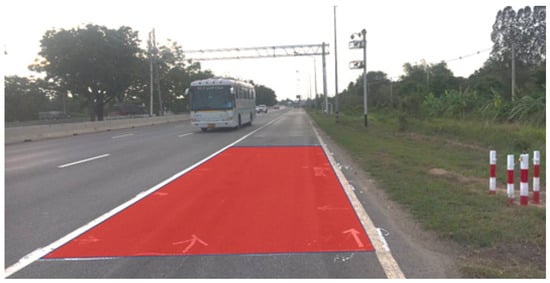
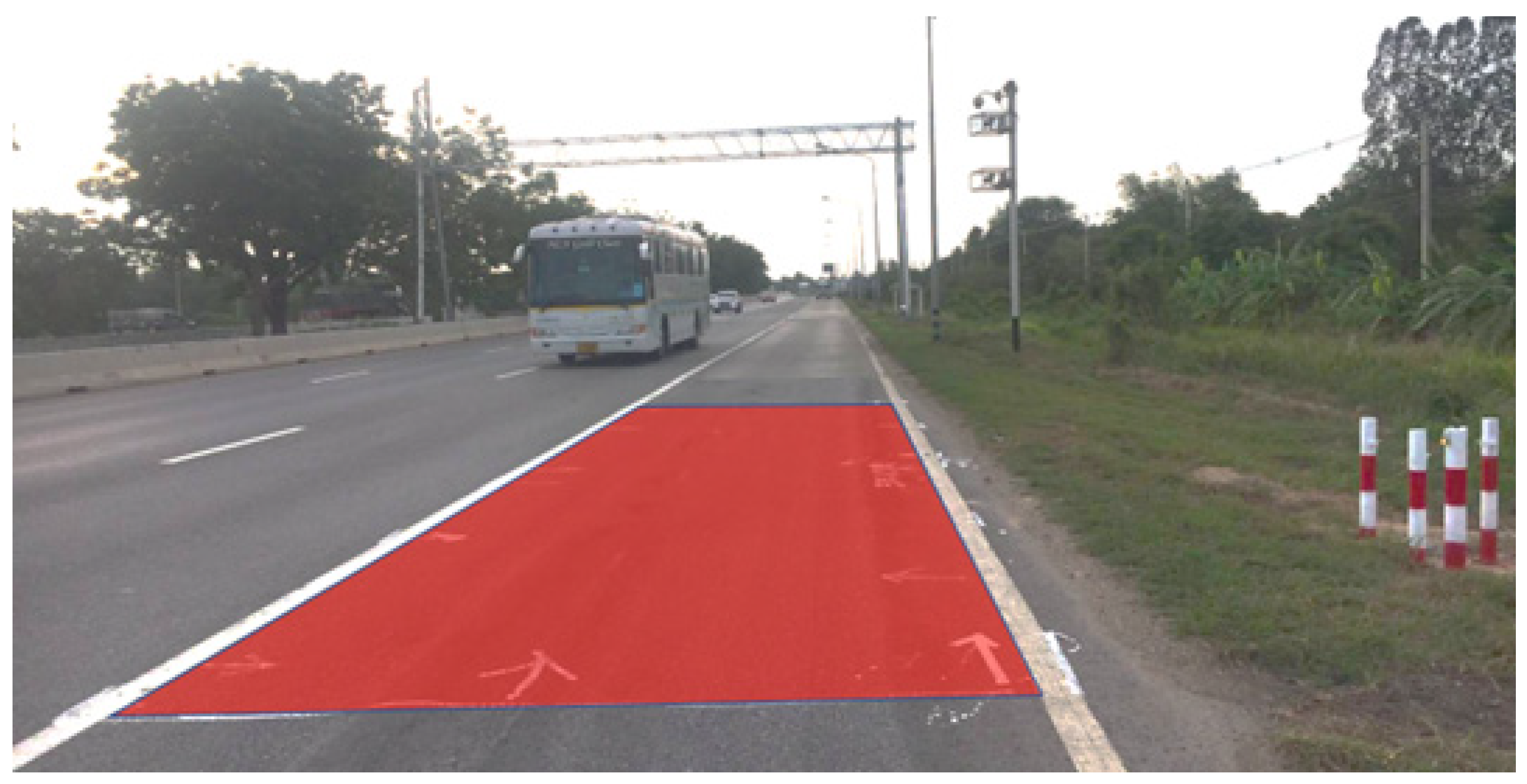
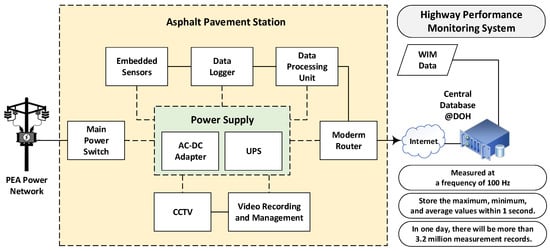
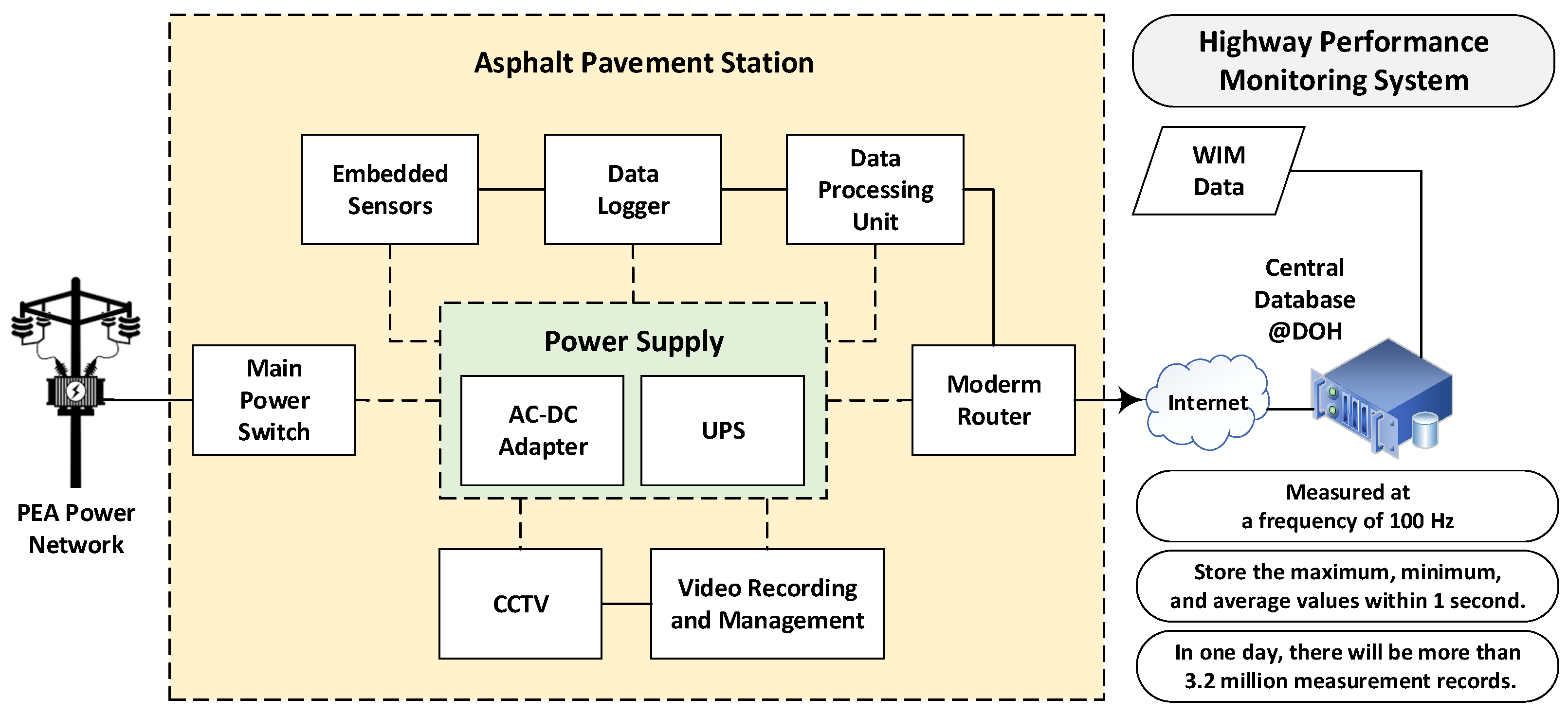
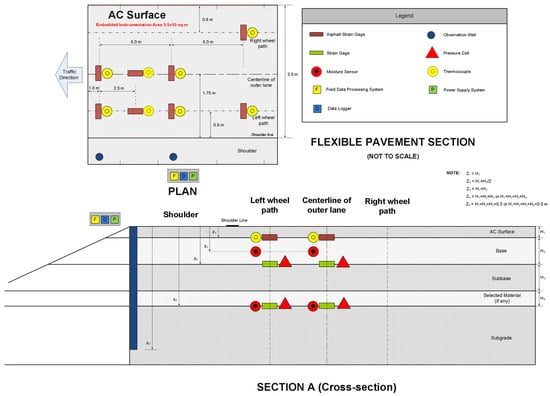
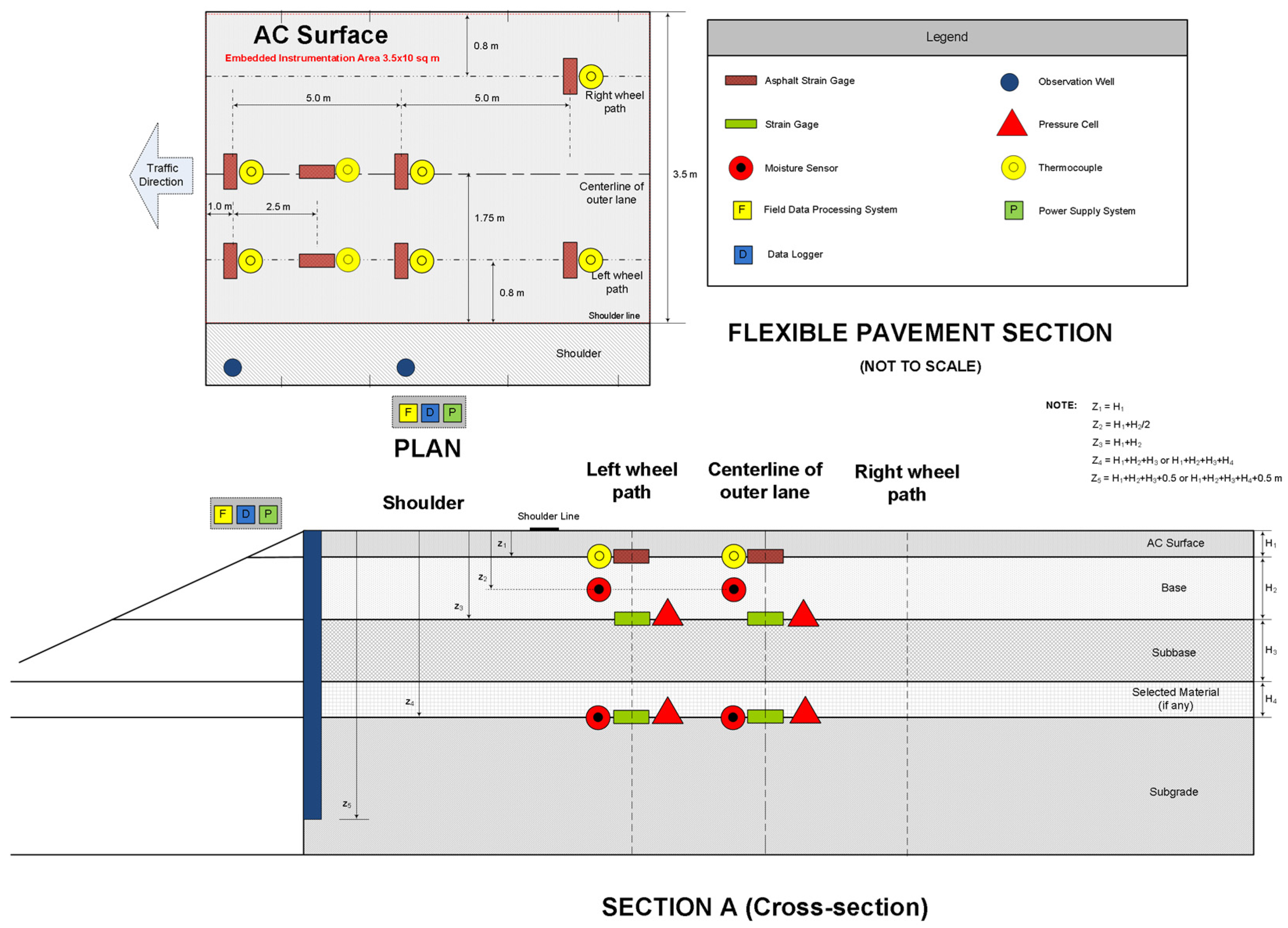
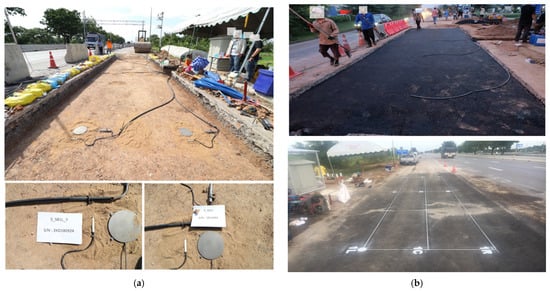
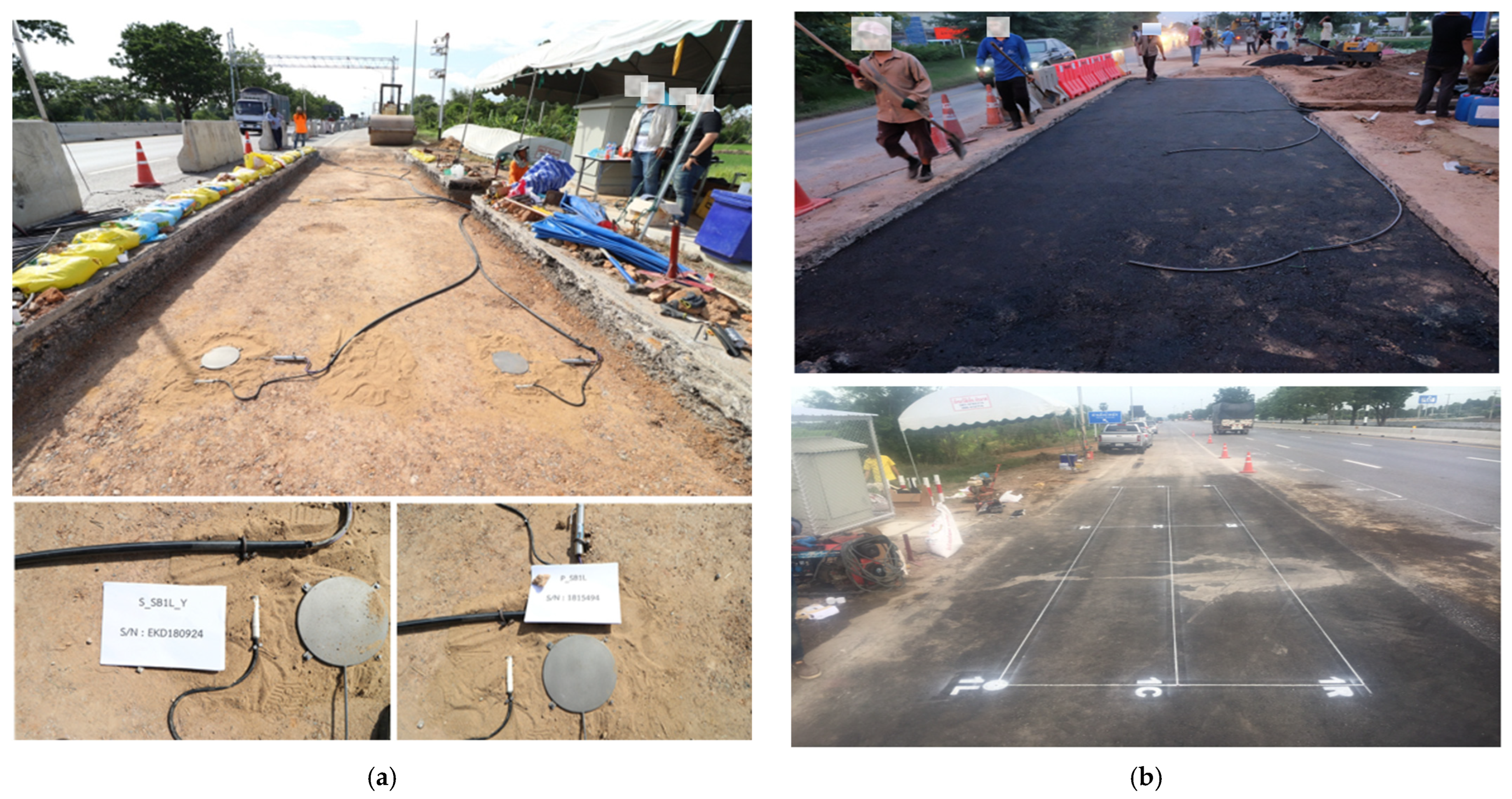
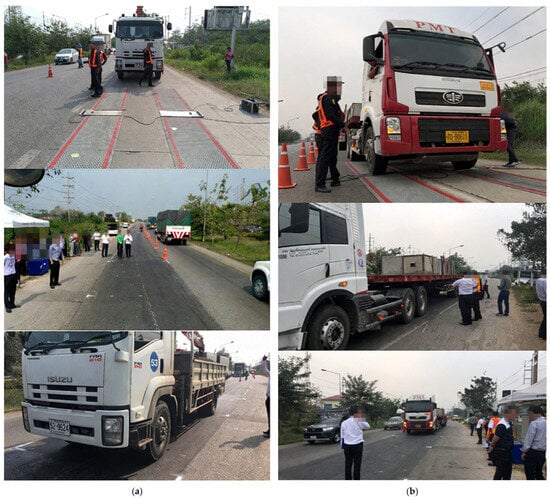
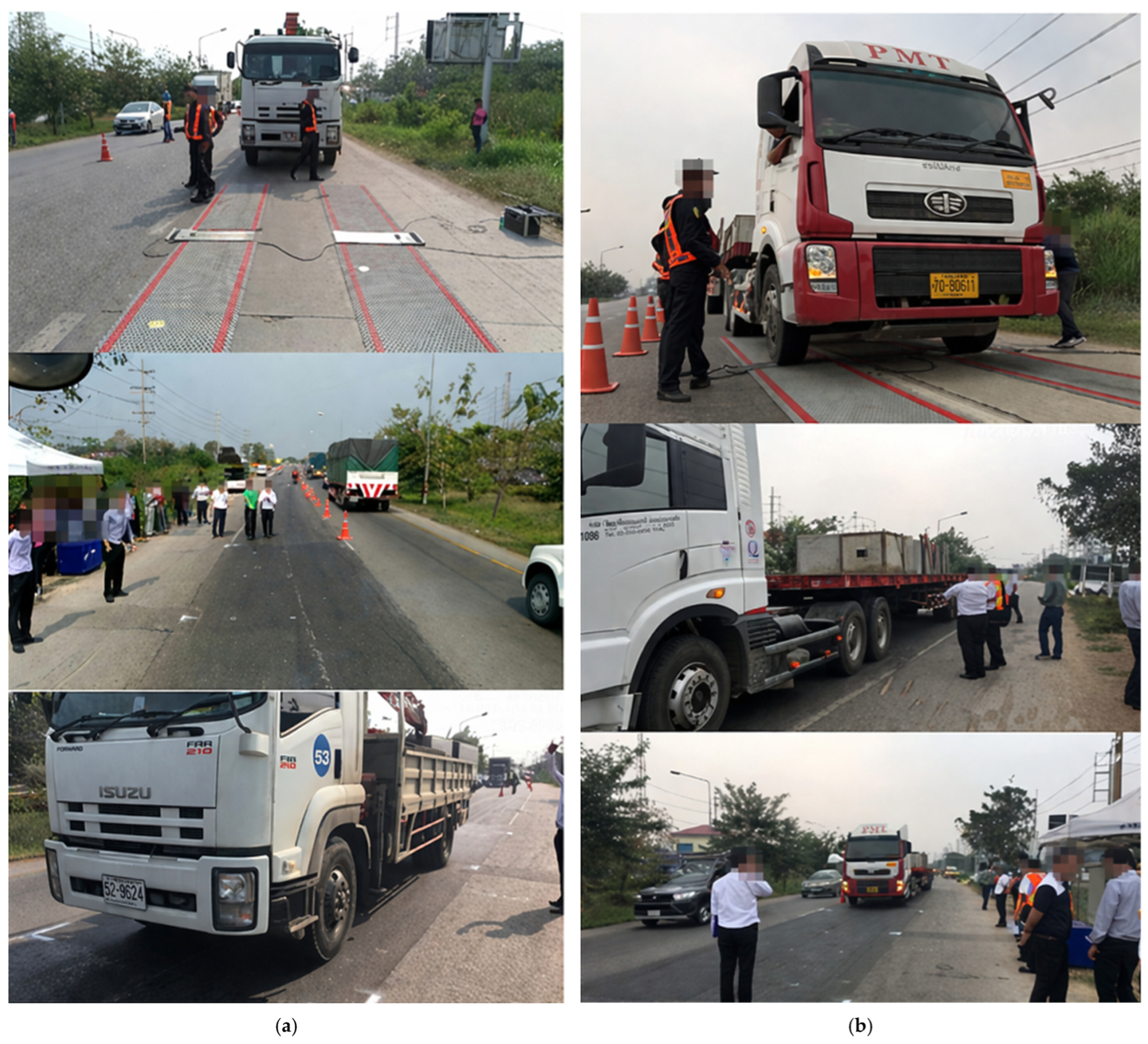
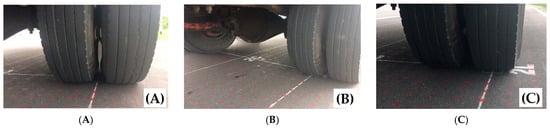
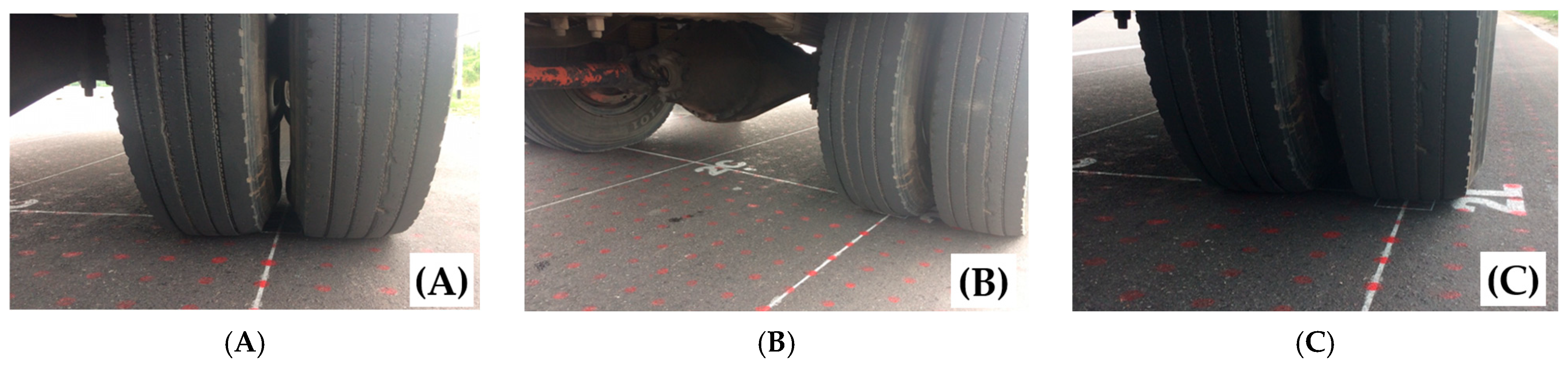
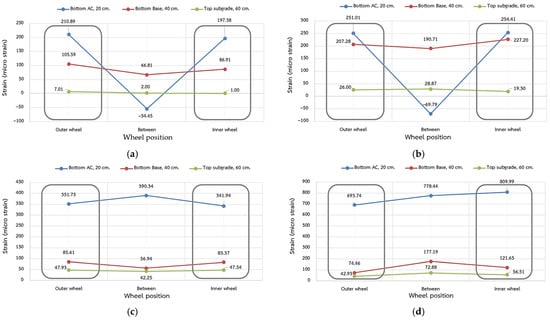
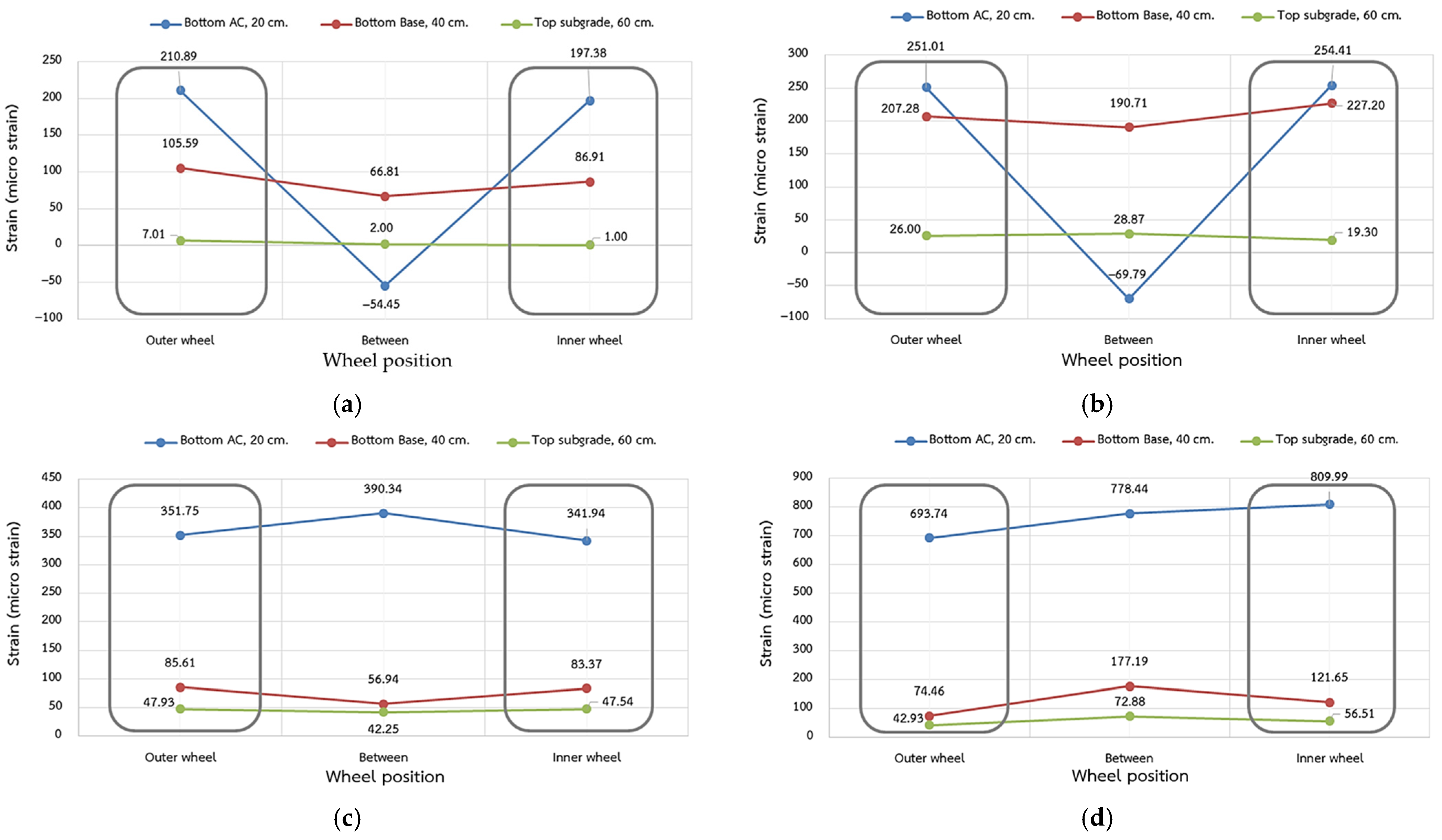
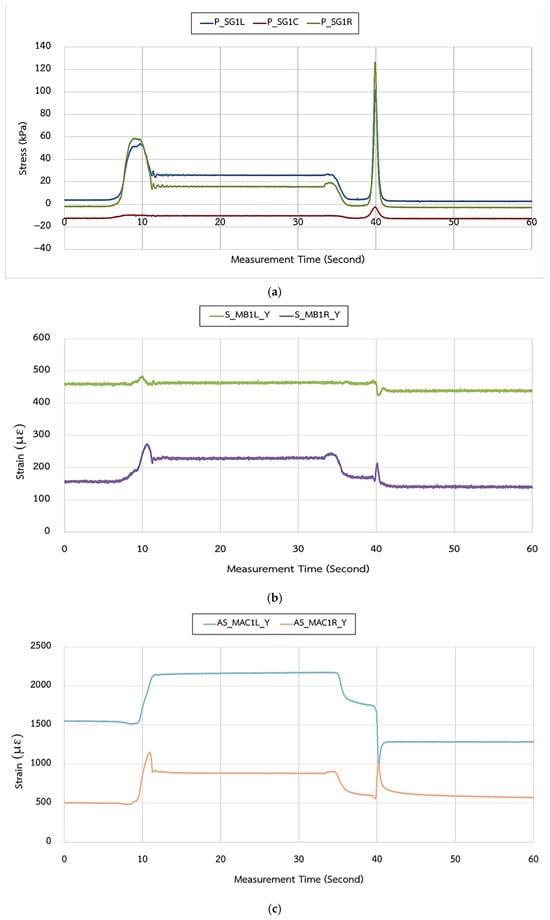
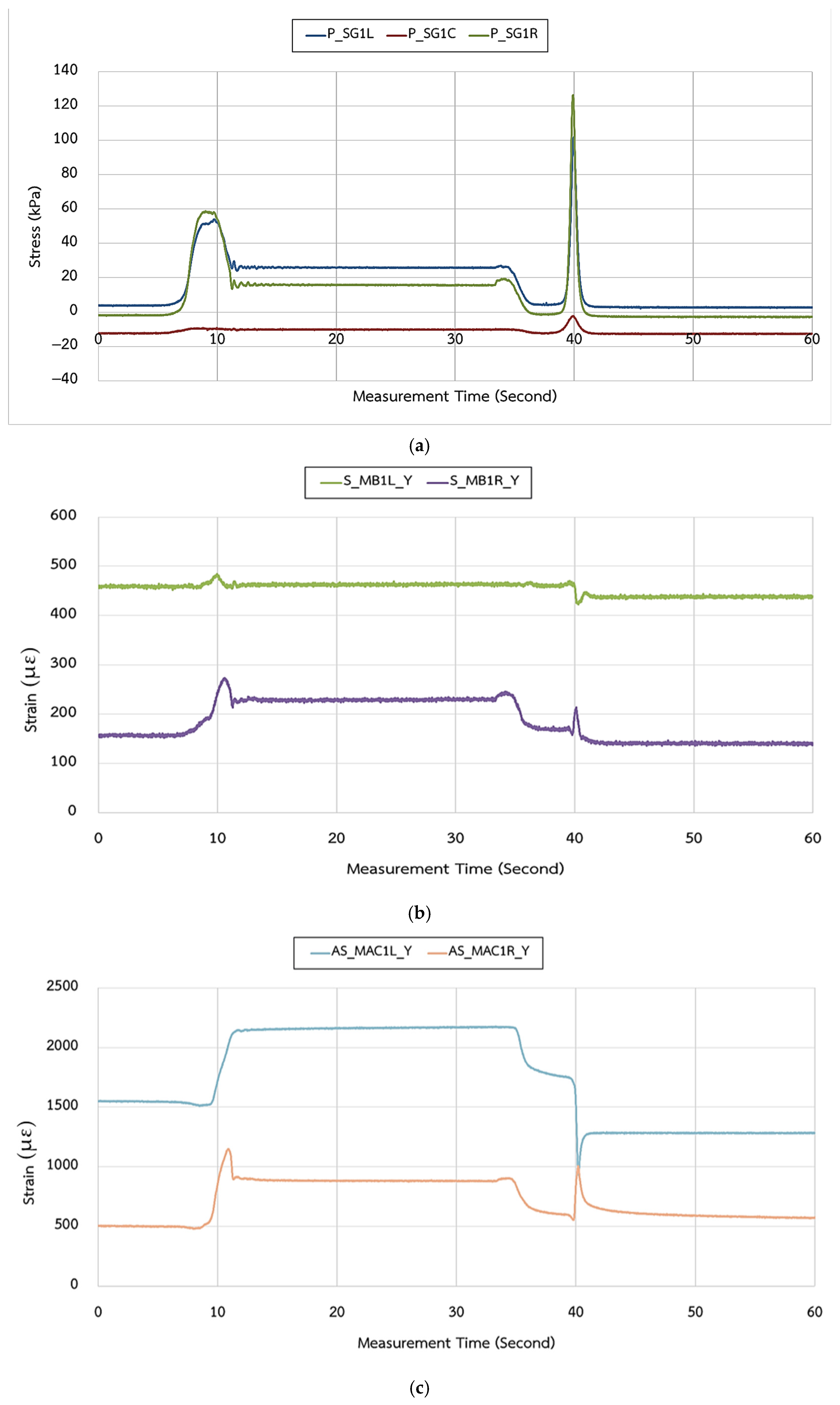
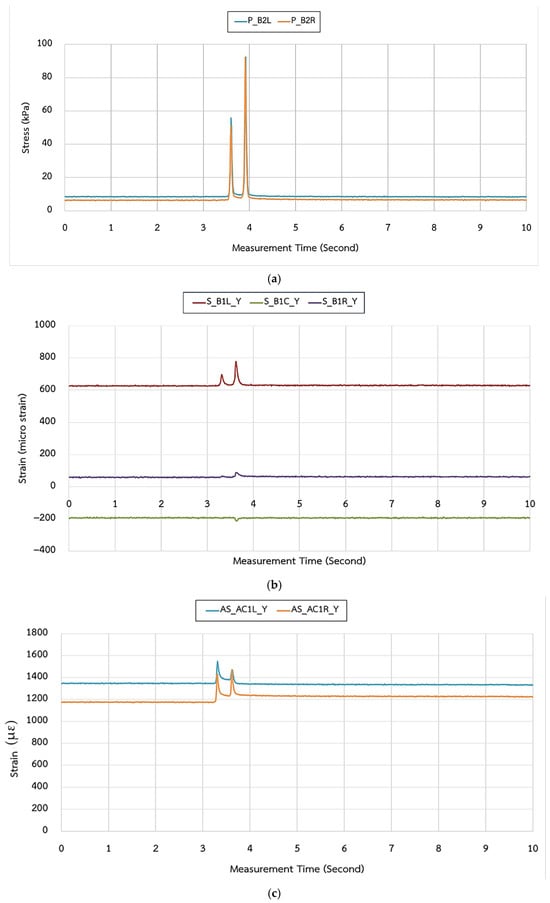
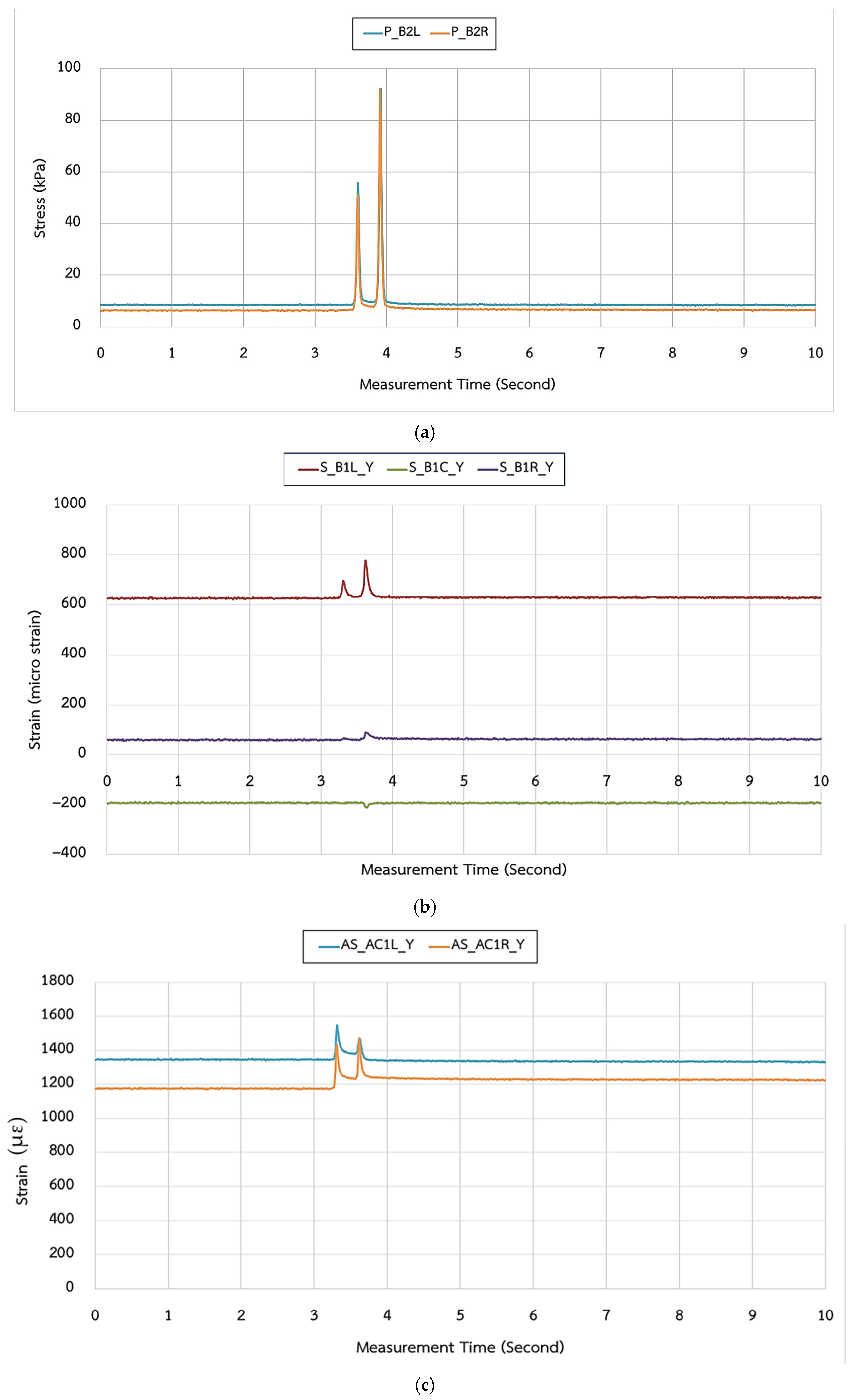
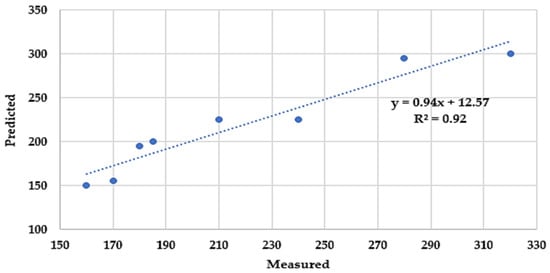
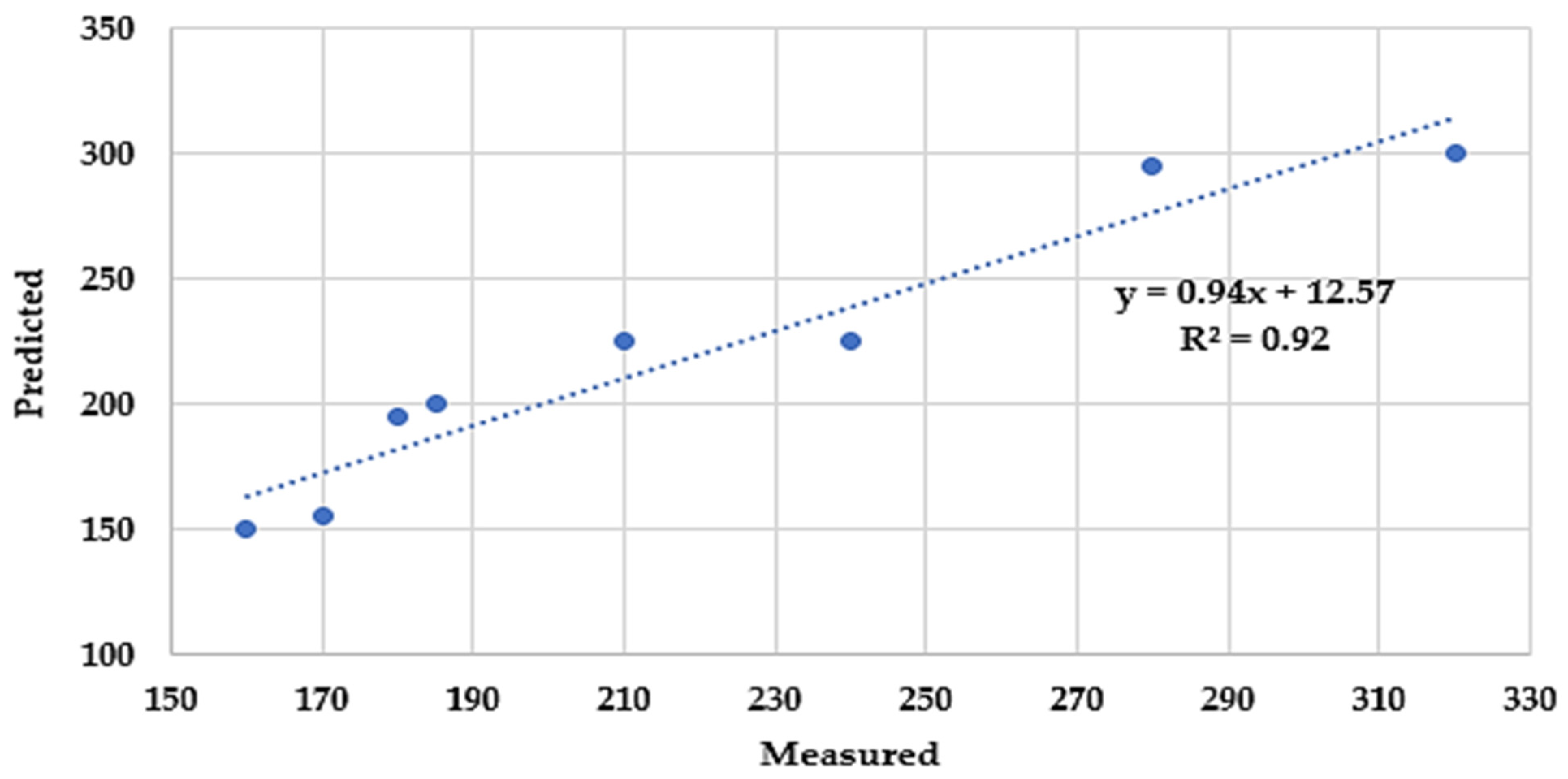
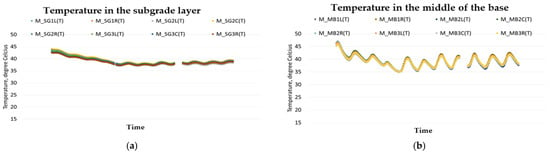
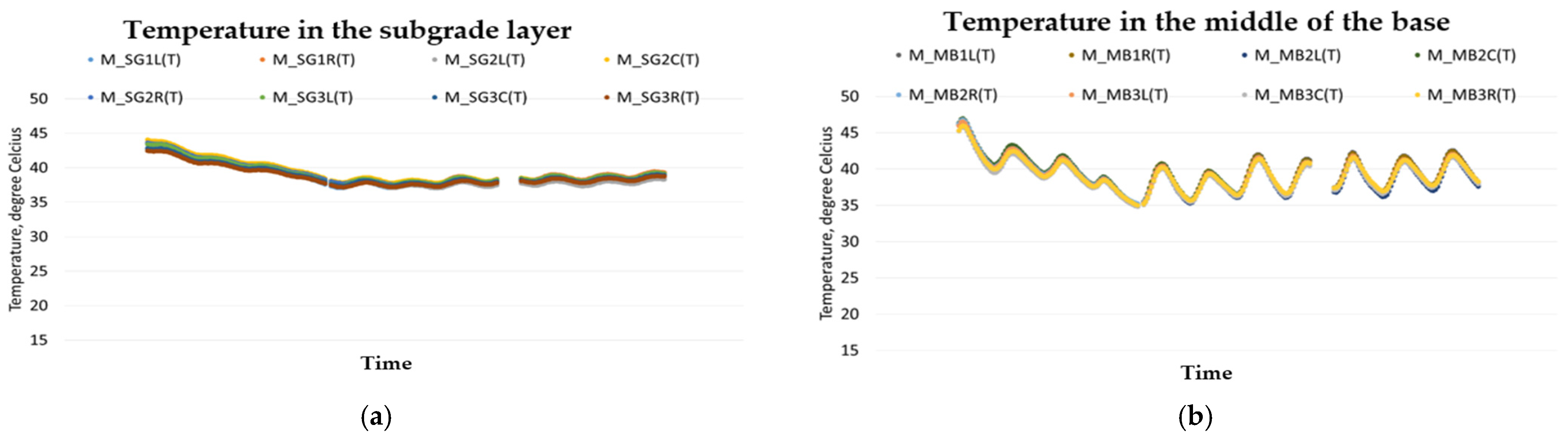
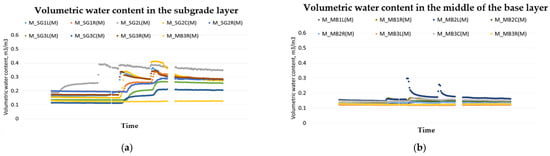
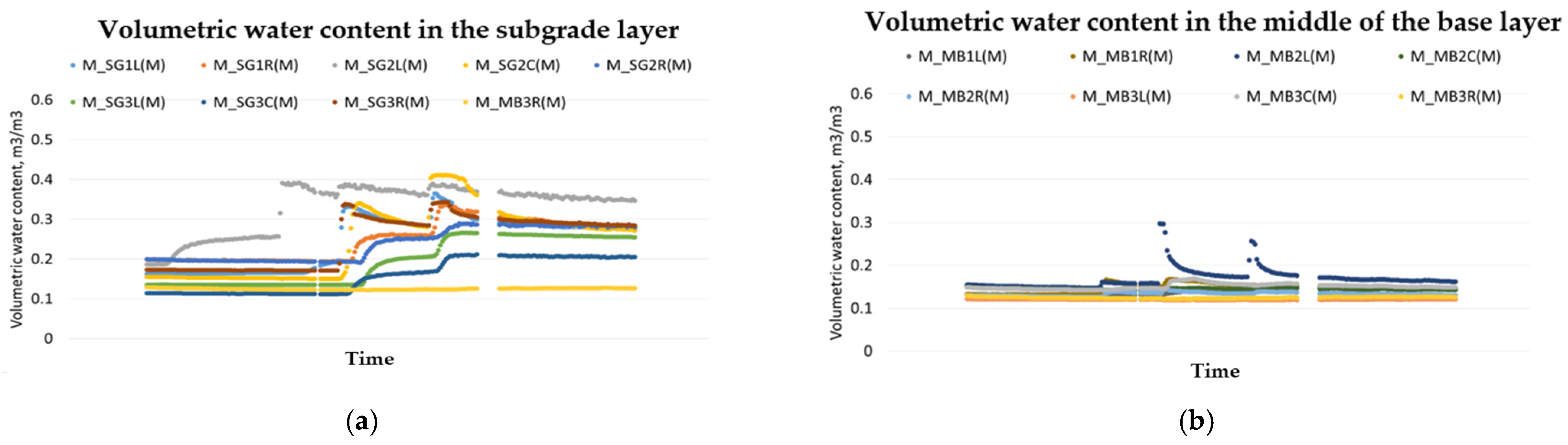
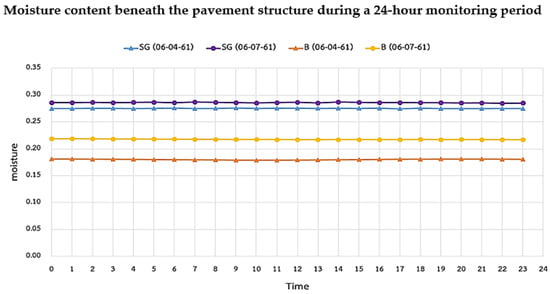
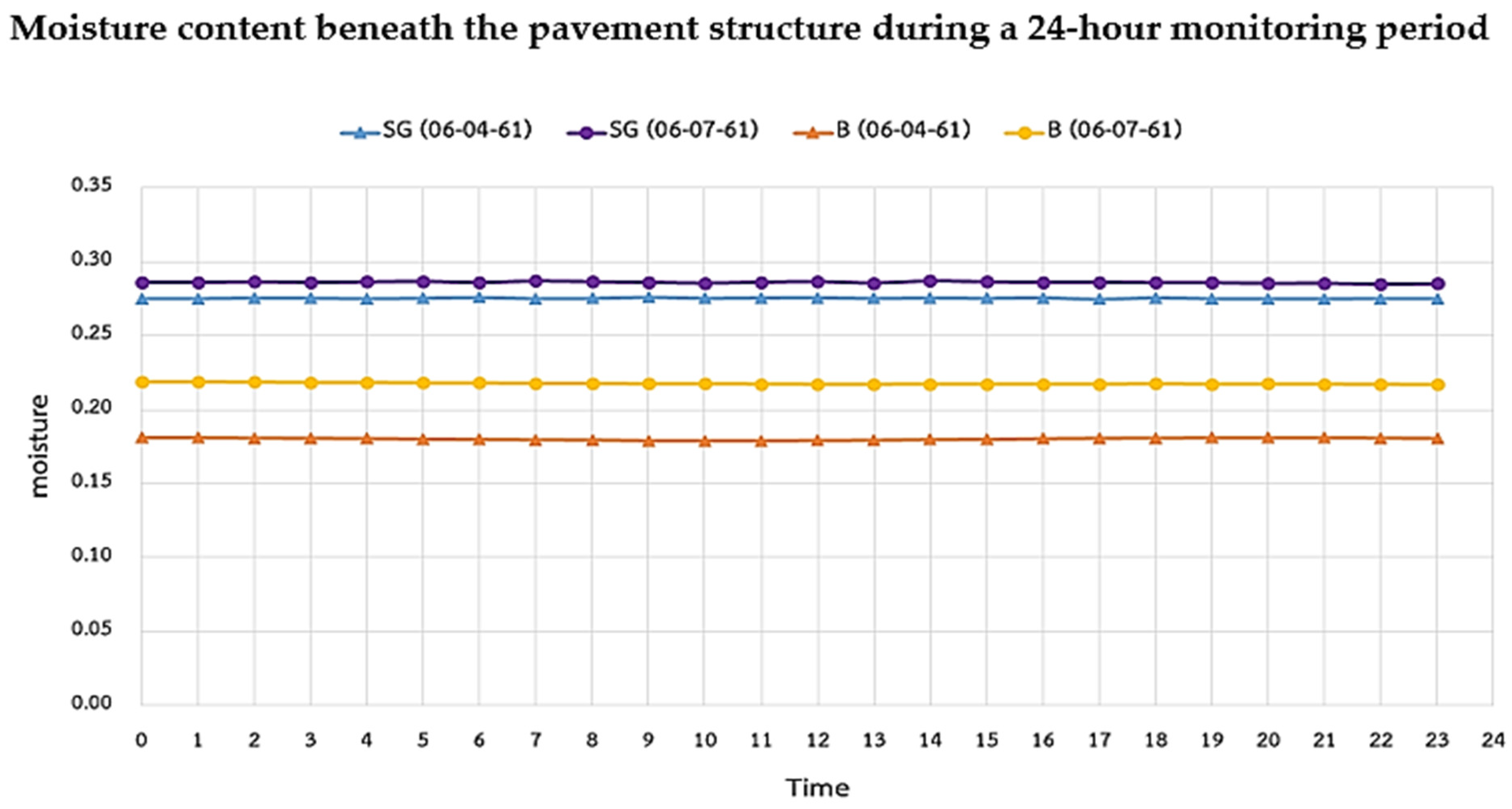
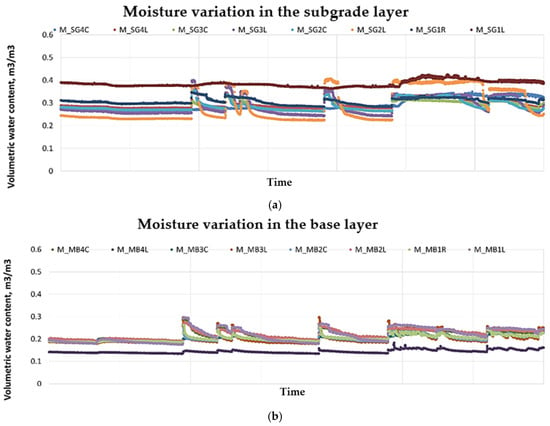
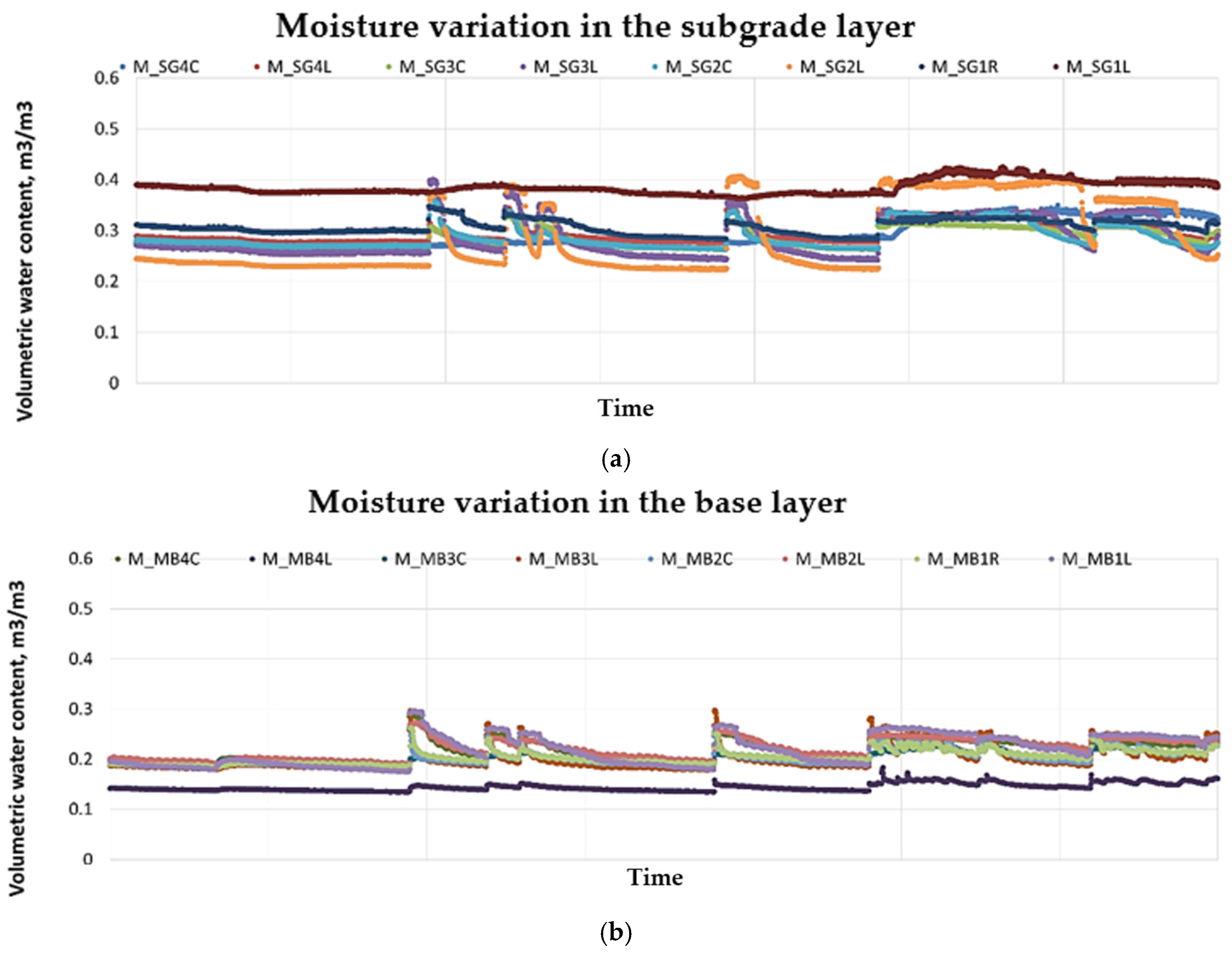

Disclaimer/Publisher’s Note: The statements, opinions and data contained in all publications are solely those of the individual author(s) and contributor(s) and not of MDPI and/or the editor(s). MDPI and/or the editor(s) disclaim responsibility for any injury to people or property resulting from any ideas, methods, instructions or products referred to in the content. |
© 2026 by the authors. Licensee MDPI, Basel, Switzerland. This article is an open access article distributed under the terms and conditions of the Creative Commons Attribution (CC BY) license.