


Abstract
This paper studies the sustainable integration of vernacular construction techniques and natural materials in the context of sustainable development, using Danube Delta UNESCO World Heritage site as case study. Through a comprehensive literature review, this research examines the potential of clay-based composites reinforced with plant fibres such as reed, bulrush, and hemp as environmentally responsible building materials. The methodology, based on a narrative literature review, combines bibliometric analysis with a case study approach to evaluate scientific interest in vernacular construction and to identify locally available natural resources. Results reveal increasing academic attention to sustainable vernacular architecture, highlighting clay-based composite’s favourable hygrothermal properties and the remarkable thermal insulation capabilities of vegetable fibres. The case study shows that most Danube Delta’s natural construction materials—particularly the world’s largest continuous reed vegetation—remain underutilized. The research concludes that revitalizing traditional construction methods, by integrating modern technological innovations, presents significant potential for sustainable rural development, preserving cultural heritage, enhancing regional identity, and reducing environmental impact in construction while supporting local economic growth through culturally authentic tourism.
1. Introduction
The industrial revolutions accelerated economic and social development, but also generated negative impacts on the environment [1,2,3,4,5,6,7], leading to the need for environmental protection policies [8,9,10]. At present, the 8th Environmental Action Programme (EAP) [8,9,10] has played an essential role in supporting this vision, with its main objective being to ensure well-being and a high quality of life for all citizens within the ecological limits of the planet, Figure 1.
Figure 1.
Graphical representation of the 6 priority objectives of MAP 8.
The construction sector accounts for an estimated 21–36% of global greenhouse gas emissions [11,12,13], placing it at the centre of current sustainable development imperatives operationalized through the EU Green Deal, the European Climate Act, and the 8th Environmental Action Programme [8,9,10]. These policy frameworks set targets of a 55% reduction in GHG emissions by 2030 and climate neutrality by 2050, calling for fundamental transformation in how buildings are designed, built, and maintained. In this context, vernacular architecture—evolved over centuries through empirical adaptation to local climates and materials—offers a body of embodied knowledge that aligns with principles of resource efficiency, bioclimatic design, and cultural continuity [14,15,16,17,18,19,20]. The aim of this research is to evaluate the scientific evidence base supporting the reintegration of vernacular construction materials—specifically clay-based composites reinforced with plant fibres—in the ecological and cultural context of the Danube Delta (Figure 2).
Figure 2.
Graphical representation of the aim and objectives of the research approach.
In recent decades, architecture—especially in the context of urban design—has developed a strong orientation toward a “consumable” model, focused on rapid execution, spatial efficiency, user comfort, and cost optimization. This approach has often led to the marginalization of essential aspects such as harmonious integration into the built context, the preservation of local traditions, and the valorization of specific architectural elements, as highlighted in the specialized literature [21,22,23].
The primary solution to address this contemporary crisis is to reconfigure architectural practices through a coherent reintegration with cultural, traditional, environmental and natural dimensions. This approach involves the valorisation of traditional architecture, consolidated over centuries as a result of a process of adaptation to local climatic conditions and the availability of material resources, offering a sustainable and contextualized model of architectural development [15,24]. Moreover, many researchers emphasize the importance of recognizing the significant role that architecture and urban design can play as symbolic forms of expression and representation of national identity. They reflect the collective values, beliefs and aspirations of a society, becoming essential elements of cultural legitimation and tools with the potential to strengthen and preserve national identity [15,25,26].
Consequently, contemporary architecture and sustainable urban design can capitalize on the contextual knowledge of vernacular architecture, in correlation with current scientific advances. The analysis of local climatic conditions and traditional materials enables their integration or reinterpretation through modern technologies, contributing to the development of sustainable models for configuring urban and architectural space [27,28,29,30].
The sustainable development of rural areas involves an integrated and multidisciplinary approach that includes economic, social, and environmental dimensions, alongside architectural characteristics, climatic conditions, and local resources. In this context, Cárdenas Alonso et al. [31] highlight the role of physical, demographic, and socio-economic factors, while the model proposed by Prevolšek et al. [32] structures the relationships between economic, social, and environmental dimensions, providing a coherent framework for analysis and intervention in rural planning.
The literature also offers relevant analytical frameworks and evaluation tools: Gupa [33] proposes indicators for monitoring sustainable rural development, Yang et al. [34] analyze the influence of socio-economic and management factors, and Górecka et al. [35] identify the challenges of the “smart village” concept in the European context. Recent research complements these contributions by defining a set of 79 indicators grouped into seven main categories (basic, social, economic, educational, welfare and health, access to public facilities, and environmental), supporting the need for an integrated and contextualized approach to sustainable development [36,37].
Rural depopulation is a global phenomenon associated with urbanization and socio-economic transformations, affecting the structure of communities and leading to the abandonment of vernacular heritage [38,39]. The migration of young people and population ageing reduce the socio-economic viability of rural areas and contribute to the loss of traditional practices [40,41]. In this context, vernacular architecture and local materials can support rural revitalization through economic development, tourism, and the strengthening of cultural identity, also being supported by the tradition of earthen construction [42,43,44,45,46].
Previous research has highlighted that the conservation and adaptive reuse of vernacular architecture can generate socio-economic benefits through heritage-based tourism, by creating local employment opportunities, and by developing construction practices with a distinct regional identity. In this context, international initiatives such as the VERSUS and VERSUS PLUS projects have emphasized the relevance of vernacular heritage as a model for sustainable architecture and community-based development. Similarly, extensive research [47] on earthen architecture and traditional building techniques demonstrates that the restoration and reinterpretation of vernacular buildings can support both heritage conservation and rural revitalization strategies, especially in areas affected by demographic decline and economic marginalization.
The aim of this research was to contribute to the dissemination of current knowledge in the field of sustainable development by highlighting the potential for implementing the principles of sustainability in rural areas, as shown in Figure 2. The proposed approach is based on the valorisation of vernacular architectural and constructive concepts, providing the premises for outlining new research and development directions in the field of innovative and sustainable building materials. This paper primarily aims to present a bibliometric literature analysis based mainly on works previously published in Web of Science, together with a descriptive case study and a proposed research agenda.
2. Research Methodology
The methodology adopted in this research is based on a comprehensive review of the scientific literature available in the WoS database, focusing on studies directly relevant to the following objectives: to assess the scientific interest in vernacular constructions; to identify the natural resources available for composites for sustainable construction, starting from traditional constructions, and a case study applied to the specific constructions of the Danube Delta.
The research, embodied as a critical literature review, highlights the importance of adopting a comprehensive and interdisciplinary methodology on the use of natural resources as raw materials for sustainable building materials, while providing a sound conceptual framework and relevant insights for future research initiatives, both locally and globally, in line with current environmental protection imperatives.
The literature analysis was conducted using the Web of Science (WoS) Core Collection database, selected due to its relevance for peer-reviewed scientific literature in the fields of architecture, construction engineering, and sustainability. The search strategy included combinations of keywords such as “vernacular architecture”, “traditional architecture”, “natural building materials”, “earthen construction”, “clay materials,” “adobe,” “thermal performance,” “thermal insulation,” “plant fibres,” “straw,” “reed,” “Phragmites australis,” “hemp,” “Cannabis sativa,” “Typha,” “bio-based materials,” “natural building materials,” “sustainable construction,” “sustainable development,” “rural development,” “cultural heritage,” “heritage conservation,” “traditional knowledge,” and “Danube Delta,” used individually or in logical combinations (AND/OR), for example: (1) “vernacular architecture” combined with “sustainable” or “construction”; (2) “clay” OR “earthen material” OR “adobe” combined with “construction” or “thermal”; (3) “reed” OR “Phragmites australis” OR “hemp” OR “Cannabis sativa” OR “Typha” combined with “construction” OR “thermal insulation”; (4) “Danube Delta” combined with “construction” OR “sustainable development”. The search was primarily limited to articles published in the last ten years in order to capture the most recent developments in the field; however, older landmark studies were also included when considered relevant for a better understanding of the overall evolution and trends. Figure 3 schematically presents the research methodology. Retrieved records were filtered to peer-reviewed journal articles and conference papers in English, with a primary temporal scope of 2010–2025; foundational studies from earlier periods were included where directly relevant. Books and book chapters were included when authored by recognized domain authorities. No formal PRISMA-type screening protocol was applied; the present work follows the methodology of a narrative-critical literature synthesis aimed at identifying research trends, documenting reported material properties, and mapping the knowledge gaps relevant to the Danube Delta case study context. The bibliometric analysis was performed on the full WoS export using the Web of Science Analytics tools, with publication year, subject category, and citation metrics as primary sorting criteria.
Figure 3.
Schematic representation of the research methodology.
The literature selection process was carried out in several stages, following a structured approach. In the identification stage, publications resulting from the database query were collected. During the screening stage, the titles, keywords, and abstracts of the articles were analyzed in order to eliminate works that were not directly related to the use of natural materials in construction or to vernacular architecture. In the eligibility stage, the full texts of the selected publications were examined, with a focus on retaining articles published in peer-reviewed journals, review papers, and studies addressing the physical, mechanical, or hygrothermal properties of natural materials used in construction. In the final inclusion stage, the works considered relevant for analyzing current trends in the use of natural materials in vernacular architecture were selected.
The second component of the research consists of a qualitative case study focused on the Danube Delta region. The selection of this case study was determined by the region’s unique ecological and cultural characteristics, the availability of natural resources such as reed, clay, and other plant-based materials, as well as the existence of traditional construction practices specific to vernacular architecture. The case study analysis aims to assess the potential of local natural resources and traditional construction knowledge to support sustainable building strategies and rural development within this specific territorial context. Although this research provides relevant and useful information for understanding the potential of sustainable development in rural buildings, some spatial and temporal limitations must be highlighted. Priority was given to studies carried out in geographical contexts similar to the case study, i.e., the Danube Delta, in order to ensure a more solid foundation for the conclusions regarding the sustainable use of local resources and the adaptability of materials in the specific context of this region. The Danube Delta was selected for the case study for its unique ecological and cultural character, recognized by its inclusion in the United Nations Educational, Scientific and Cultural Organization (UNESCO) World Heritage List and its designation as a wetland of international importance under the RAMSAR Convention of 1991. As indicated in the literature, population growth, increasing consumption of natural resources and the increasingly evident manifestations of climate change are generating significant pressures on ecosystems globally, directly impacting wetlands, including the Danube Delta [46].
Finally, it should be noted that this research has certain limitations. First, the number of scientific publications that directly address the use of natural materials in construction in the Danube Delta is relatively limited. Second, the specialized literature on natural materials used in construction is characterized by methodological diversity and significant variations in the properties of the analyzed materials, determined by differences in composition, construction techniques, and climatic conditions, which may affect the comparability of the results reported in different studies. Overall, 232 bibliographic references were used, over 65% are articles published in WoS-indexed journals (Sustainability, Buildings, Construction and Building Materials, Energy and Buildings, Journal of Cleaner Production, Building and Environment, Renewable and Sustainable Energy Reviews, Applied Sciences, Urban Studies, Habitat International, Environmental Science & Policy, Land, Energies, Materials et al.).
It should be noted that an exact quantification and the calculation of a precise numerical distribution across the thematic sections addressed in this paper represent a challenge from a criteria-based perspective, as most of the selected studies integrate multiple perspectives and address overlapping topics related to vernacular architecture and construction materials—while also encompassing other directions such as economic impact, feasibility, durability, environmental impact, and specific performance characteristics (e.g., fire behaviour).
This highlights, in fact, a defining feature of current research and specialized reporting: a unilateral approach has become obsolete and has been replaced by multidisciplinary approaches, a trend also reflected in the thematic diversity of specialized journals.
3. Vernacular Architecture
The term “vernacular architecture” is used to describe a set of constructions that are realized primarily on an empirical basis. These constructions are developed through an iterative “trial and error” process, which involves the use of available local resources and adaptation to specific geographical and climatic conditions. This architectural style serves as a direct reflection of the cultural values, traditions, and needs of local communities, emphasizing a harmonious relationship between humanity, environment, and materiality [27,47,48,49,50]. Converging views among researchers affirm that edifices designated as “vernacular” or “vernacular architecture” emerge as expressions of adaptation to local conditions, thereby serving as cultural bridges connecting the past to the present and reflecting the cultural identity of respective communities [27].
As stated by Paul Oliver [51], vernacular architecture is defined as “the architecture of the people and by the people,” emphasizing the participatory and profoundly contextualized nature of these forms of construction. This type of architecture integrates unique elements with identity, historical and artistic value, respecting criteria of authenticity and local integrity [52], which are well correlated with the principles of sustainable development, resource exploitation and environmental conservation [53,54]. These aspects are increasingly recognized at the institutional level through the designation of historic or heritage building status. However, it should be noted that these official recognitions encompass only a limited share of vernacular architecture, as the majority of these structures are situated in rural areas, playing a pivotal role in shaping the local collective identity, often referred to as the “identity budget” of the village or region.
In the context of contemporary challenges associated with increasing energy consumption, extensive exploitation of natural resources, and pressing need to reduce carbon dioxide emissions—with the construction sector being a determining factor in generating these effects—current directions of scientific research are shifting to capitalize on an underutilized resource: the heritage of knowledge integrated in vernacular architecture, the result of sustainable adaptation to local conditions over time. The adaptability of such structures to local conditions and their efficiency in terms of resource consumption and environmental integration has led to a significant growth in academic interest in the field, as evidenced by the increase in research publications shown in Figure 4, according to WoS (accessed February 2026). Consequently, extant literature has demonstrated the thermal performance of historic buildings [27,55,56] as well as their efficiency in terms of natural resource consumption and environmental impact [48].
Figure 4.
Graphical representation of the evolution of publications identified in the Web of Science (WoS) database by the keywords “vernacular architecture”. (accessed February 2026).
Nevertheless, the incorporation of vernacular architecture into the framework of modern user demands and in accordance with sustainable development principles requires continuous research and development, a point emphasized by many authors such as J. Zong et al. [49,57,58,59,60,61]. Vernacular architecture, while exhibiting significant cultural and ecological value, is susceptible to challenges arising from the proliferation of modern, industrially produced building materials. These materials are characterized by their low cost, wide availability, and apparent ease of implementation [62,63].
To gain a deeper understanding of research trends in the field of vernacular architecture, a bibliometric keyword-based analysis was conducted on publications identified in the Web of Science database. The authors’ keywords were extracted and grouped into thematic subcategories reflecting the main research directions within vernacular architecture. In addition, a temporal overlay analysis was performed to track the evolution of these keywords over time, visualized as a heatmap (Figure 5a–c), providing a clearer understanding of the thematic evolution of the field and supporting the positioning of the present study within the emerging research interest in sustainable vernacular construction.
Figure 5.
Temporal evolution of keywords visualized through heatmap analysis: (a) Cluster 1”vernacular architecture” AND a keyword related to development, tradition, and sustainability; (b) Cluster 2:”vernacular architecture” AND a keyword related to materials; (c) Cluster 3: “vernacular architecture” AND a keyword related to thermal efficiency.
Thus, Figure 5a highlights a differentiated evolution of scientific interest in vernacular architecture, with a significant increase in research focused on traditional architecture, cultural heritage, and sustainability in recent years. At the same time, a lower and fluctuating representation of topics related to rural development can be observed, as well as a marginal presence of studies dedicated to the Danube Delta, indicating an imbalance between the general interest in the field and its application in specific regional contexts.
Figure 5b shows a progressive increase in scientific interest in natural materials used in vernacular architecture, particularly traditional materials such as earth, adobe, and clay-based materials, as well as the broader concept of “natural building materials.” In contrast, the use of specific plant fibres (straw, reed, hemp) and bio-based materials remains relatively underrepresented, despite a slight increase in recent years. This distribution indicates an imbalance between well-established research on traditional construction techniques and the still emerging interest in bio-based solutions, suggesting significant development potential in this area.
Regarding energy efficiency (Figure 5c), a similarly strong increase in interest can be observed, especially over the past five years.
4. Natural Resources
A defining characteristic of vernacular construction is the predominant use of local resources, adapted to the geographical and cultural specificity of each region. Among these, clay, sand, stone, and diverse plant materials (e.g., reeds, bulrush, hemp, cane, wood, bamboo, etc.) are the most frequently utilized, occasionally accompanied by raw materials of animal origin, either as a standalone material or as additives in various compositions.
4.1. Clay—Binder for Composite Materials Used in Vernacular Constructions
The utilization of clay soils, characterized by their clay or loam composition, has a long and extensive history spanning many millennia. These materials have been employed in the construction of residential dwellings and various structures, including but not limited to dams and walls, since ancient times. Due to their local availability and favourable properties, they have been integrated into various traditional building techniques, the most common of which include:
- production of adobe consisting of small, prefabricated, and naturally dry elements. These elements are then utilized in masonry applications through the integration of compatible mortars;
- superimposition of successive layers of clay earth, rammed into wooden formworks, a technique known as ‘rammed earth’;
- filling of wooden frames with various clay-based compositions, technique known as ‘straw’;
- filling and covering of a woven formwork composed of twigs affixed to a wooden supporting structure, and subsequently covering it with a layer of earth;
- mixing of clay, earth, straw, water, and sand, along with manual shaping during the malleable state, technique referred to as “cobbing.” The subsequent joining or superimposing of these irregularly shaped and sized lumps leads to the formation of the wall. This method enables the creation of diverse shapes, characterized by a wide array of alternating curved lines and wall thicknesses.
Clay buildings have traditionally been recognized for their durability and structural strength, characteristics that have helped to consolidate their status as one of the most valued and widely used vernacular building forms in the world [64]. A substantial body of literature reports the results of research on earthen structures, which vary according to specific geographic, climatic, and traditional characteristics. Therefore, a simple search of the Web of Science Core Collection using the keyword “adobe” yielded no less than 518 papers, of which 39% were indexed in the Construction Building Technology domain, 38.8% in the Civil Engineering domain, and 25% in the Materials Science Multidisciplinary domain. Subsequent searches in the same database using terms such as “rammed earth” and “adobe” returned more than 2200 results with a similar thematic distribution, thereby confirming the growing interest of the scientific community in these traditional building techniques analyzed from a multidisciplinary perspective.
The popularity of rammed-earth construction has increased significantly in recent years, as evidenced by the growing body of literature on the subject. This construction method is valued for its accessibility and simplicity of execution, as well as for its low environmental impact. A primary benefit of this construction method is its capacity to ensure optimal thermal comfort while minimizing energy expenditure. This efficiency is attributed to the high thermal inertia of the walls, which is a consequence of their substantial mass and capacity to accumulate and release thermal energy. Nevertheless, the specific technological process initially involves a high level of moisture in the building elements. This may temporarily affect their thermal and mechanical performance. It should be noted that, under typical conditions, this moisture tends to stabilize over time, ultimately reaching an optimal equilibrium level. However, it is important to emphasize that this process requires a substantial amount of time to reach completion [65,66,67,68,69]. Conversely, research documented by Hall et al. [70] demonstrated that the incorporation of this moisture content and the time to equilibrium establishment in the context of rammed earth can be regulated by adjusting the particle size distribution of the clay-earth based composite.
The capacity of building materials to assist in the regulation of indoor air relative humidity is a particularly relevant aspect in the context of promoting health and environmental comfort. Research has demonstrated that a variety of pathogens, including bacteria, viruses, fungi, and dust mites, have a propensity to proliferate in environments characterized by elevated humidity levels. In this context, maintaining relative humidity (RH) within the optimal range of 40–60%, or preferably below 80%, has been demonstrated to play a pivotal role in mitigating the risks associated with the proliferation of such microorganisms, thereby reducing the subsequent indirect negative impact on human health [71,72,73]. In this context, some authors have proposed the moisture buffering value (MBV) as a quantifiable indicator representing the moisture storage/absorption capacity, reporting values of 1.23–1.88 g/m2% RH according to Liuzzi et al. [74] and 3.23–4.30 g/m2% RH according to Niang et al. [65]. Another quantifiable indicator, the hygroscopic moisture storage, reported by Allison and Hall [75], is estimated to be in the range of 19.19–31.59 kg/m3. The demonstrated permeability to water vapour of building elements made of clay loam, as well as their specific ability to store water in high humidity conditions and to release it in low RH conditions, provide direct benefits on the indoor air quality through natural humidity regulation. Consequently, the incorporation of these materials has been demonstrated to exert a positive influence on the indoor microclimate, thereby enhancing the comfort and overall quality of life for occupants [73,76,77,78,79,80,81,82]. In addition, studies of literature reveal the heterogeneity of the values of the vapour diffusion resistance factor (μ) in close correlation with the material’s density and its compositional characteristics. The maximum reported value in the literature to date is 14.34, as cited in the work by Allison and Hall [66]. In regard to the capillary sorption capacity, Li et al. [83] report a coefficient of 0.031 kg/(m2-s0.5) for untreated rammed earth, untreated for hydrophobicity enhancement, respectively, and 0.0062 kg/(m2-s0.5) for similar samples treated with a hydrophobizing SILRES® BS 1802 hydrophobizing agent SILRES® BS 1802.
The implementation of rammed-earth construction technology requires the utilization of soils with specific characteristics, and it is recommended that these be extracted from a depth of more than 1 m from the surface of the ground to minimize the risk of contamination with organic impurities. The optimal soil composition is characterized by a substantial sand content, ranging from 30% to 50%, with a maximum clay content of 8%. Research indicates that in instances where the available soil does not meet these requirements, it is possible to adapt the material through the implementation of pre-preparation methods and the incorporation of additives, resulting in what is known as “stabilized soil”. Stabilization can be achieved through the incorporation of cement, although this approach is less environmentally preferable due to the substantial carbon footprint associated with its production. Alternatively, there are inorganic and organic binders that are regarded as more sustainable than cement [64,84]. In recent years, there has been notable increase in research focusing on enhancing the execution process of earth constructions. This research aims to reduce the time required for construction and to mitigate the variability in physical-mechanical characteristics, particularly compressive strength, which is often observed in traditional techniques that rely predominantly on manual methods. In this technological landscape, the automation of production processes, the integration of digital technologies, the application of machine learning methodologies, and the utilization of artificial intelligence (AI) within the construction industry are emerging as major research directions with significant potential [64,85]. A particularly eloquent example is the Robotic Rammed Earth (RRE) technology developed at the Institute of Structural Design of the Technical University of Braunschweig (ITE), which integrates formwork forming and material compaction in a single step. This process enables the automation of the manufacturing process of structural elements and ensures increased uniformity of the physical-mechanical properties throughout the entire volume of the structure [86]. The automation of compacted earth construction by robotic systems has been demonstrated to optimize execution and significantly reduce the need for human intervention. This method yields notable economic benefits, including the reduction in labour costs and the acceleration of the fabrication process. It minimizes the necessity for specialized apparatus, such as formworks, and concomitantly ensures environmental sustainability by utilizing a locally sourced, naturally occurring material with a minimal carbon footprint. However, these technological solutions are not without their limitations, particularly with regard to the geometric complexity of the shapes that can be produced and the quality of the finishes obtained. In order to mitigate the utilization of formwork, the slipform technique is frequently adopted. This method utilizes a sliding formwork, which simplifies the execution process. However, it restricts design freedom and may necessitate subsequent surface finishing interventions [64].
The construction methodology that involves the use of naturally dried prefabricated elements, commonly referred to as adobe, entails a set of specific requirements related to the quality of the raw materials. More specifically, these requirements concern the composition of the clay soil employed. In order to ensure the performance and durability of the resulting material, the scientific literature identifies several constraints regarding soil properties. A widely acknowledged criterion, consistently reported across studies conducted in various geographical contexts, is the exclusion of organic matter from the soil composition [87,88]. Furthermore, soil intended for use in adobe production should be collected from beneath the uppermost soil layer, with the recommended extraction depth depending on the consulted literature. A minimum depth of 150 mm is suggested by some authors [89], while others emphasize the importance of extracting material from at least 400 mm to minimize the risk of organic contamination and surface-level compositional inconsistencies [90]. From a chemical, oxide, and mineralogical standpoint, the extant literature [91] indicates that clay soil suitable for the production of adobe should exhibit a predominance of silicon dioxide (SiO2), typically within the range of 50–60%, followed by aluminum oxide (Al2O3) at approximately 10%. Furthermore, it is recommended to limit the concentration of calcium oxide (CaO) to a maximum of 10%, and to maintain ferric oxide (Fe2O3) content below 10%, as these parameters are associated with enhanced physical and mechanical performance of the prefabricated elements. From a mineralogical perspective, the soil should primarily consist of clay minerals, including calcite, feldspar, illite, kaolinite, chlorite, smectite, and montmorillonite quartz. These minerals play a crucial role in enhancing the structural integrity and durability of the resulting material [92,93]. With respect to granulometric distribution, the extant literature suggests that the proportion of aggregates larger than 2 mm should be limited to a maximum of 10%, while sand particles ranging from 0.063 to 2 mm should constitute between 40–80% of the mixture. Furthermore, the recommended range for the silt content is 10–30% (0.002–0.063 mm), with the clay fraction typically ranging from 20–50% [80,82]. However, earlier studies indicate that an acceptable composition may include as little as 15% clay [94,95].
From a physical and mechanical perspective, the achievement of adequate performance in clay-based construction materials is contingent upon adherence to certain technical criteria. To ensure effective thermal insulation—particularly a high degree of thermal inertia, which facilitates the accumulation of heat during warmer periods and its gradual release during colder seasons—the bulk density of the mixture should range between 1800 and 2000 kg/m3 [96]. With regard to mechanical performance, international standards establish minimum compressive strength thresholds that must be met for the material to be considered suitable for use in load-bearing wall constructions. For instance, the ASTM Standard D1633-00 (New Mexico) [97] establishes a minimum compressive strength requirement of 2.07 N/mm2. In Zimbabwe, the construction industry adheres to specific building regulations that stipulate a minimum compressive strength requirement of 1.5 N/mm2 for walls with a thickness of 400 mm in single-storey residential buildings. For buildings with two storeys, the stipulated strength requirement is 2.0 N/mm2. The Australian standard stipulates a minimum value of 1.15 N/mm2, while ASTM E2392/E2392M-10e1:2010 [98] establishes a threshold of 2.068 N/mm2. Furthermore, the American Concrete Institute (ACI) Committee on Materials reports compressive strength values that vary according to the soil type employed, ranging from 2.76 to 6.89 N/mm2 for sandy soils and from 1.72 to 4.14 N/mm2 for clay-based soils. Concurrently, the Peruvian Standard E.080 stipulates a minimum compressive strength requirement of 1.2 N/mm2, accompanied by a minimum tensile strength of 0.4 N/mm2. These values highlight the importance of soil composition and the necessity of its adjustment according to local construction requirements and the specific structural typology of the building [87,99]. Furthermore, the plasticity and workability of the clay mixture are critical factors in ensuring the quality of the resulting structural elements. An excess of water content can lead to the occurrence of cracks and pronounced axial shrinkage during the drying phase. In this context, the extant research recommends maintaining linear shrinkage within the range of 3–12% for bricks produced from mixtures of soft consistency. Conversely, for drier mixtures, a linear shrinkage between 0.4–2% is regarded as adequate for maintaining the integrity of the final elements and for minimizing the likelihood of structural defects [90]. In general, the enhancement of the physical and mechanical performance of adobe elements can be achieved through the application of dispersed reinforcement techniques. In this context, the materials most commonly employed for reinforcing the clay matrix are of vegetable origin, including straw, natural fibres, stems, and other lignocellulosic components. The primary factors contributing to the widespread adoption of these materials are their local availability, ecological compatibility, and their demonstrated efficacy in mitigating cracking and enhancing the mechanical strength of the final components.
The physical and mechanical properties of clay-based materials exhibit substantial heterogeneity, as reported in the scientific literature, largely influenced by factors such as the inherent characteristics of the clay soil, the preparation and testing methodologies, and the type and proportion of additives incorporated into the mixture [92]. For instance, the compressive strength of the material has been shown to vary between 0.5 MPa and over 7 MPa, while the flexural strength typically ranges from 0.25 MPa to 1.25 MPa [83]. Furthermore, the tensile strength of the material has been documented to be approximately 0.16 MPa, as reported in the study by Silveira et al. [100]. In this context, parameters such as particle size distribution, bulk density, mix ratio, and material consistency are critical for assessing performance. These parameters can often be evaluated in situ, particularly in situations where access to specialized laboratories for chemical or mineralogical analysis is limited. However, a comprehensive and rigorous characterization of adobe materials should incorporate both physical and mechanical testing and chemical-mineralogical analysis to ensure accurate performance evaluation.
A comprehensive and objective evaluation requires the acknowledgement that, despite their numerous advantages, unfired clay earth constructions are also subject to certain inherent limitations [101]. Consequently, current research is predominantly focused on addressing these challenges, with the objective of enhancing mechanical properties, reinforcing structural safety, and extending the material’s long-term durability [102,103,104,105,106,107,108,109,110,111,112,113].
The enhancement of flexural strength in hand-moulded clay bricks has been a subject of investigation in the academic literature since the 1970s, particularly through the incorporation of natural plant fibres such as straw and dried grass. The earliest foundational studies in this area were conducted by Hossein-Javaheri (1972) [114] and Hammod (1973) [115]. Among these materials, straw is particularly noteworthy due to its natural abundance, economic accessibility, and minimal environmental impact. Subsequent research—conducted by Vargas (1986) [116], Morris (1993) [117], Warren (1999) [118], Islam (2002) [119], Binici (2005) [120], Ișik (2023) [121], and Islam (2010) [122]—has consistently demonstrated that the incorporation of straw into clay mixtures contributes significantly to the enhancement of flexural strength and elasticity, while also mitigating the risk of cracking. Moreover, the incorporation of fibres has been demonstrated to enhance inter-component adhesion, thereby promoting the overall cohesion and integrity of the composite material. Furthermore, presence of plant fibres in clay-based composite mixtures has been demonstrated to reduce the material’s apparent density, thereby decreasing its thermal conductivity and enhancing both thermal and acoustic insulation performance. In this context, Mohamad Shariful Islam and Kazuyoshi Iwashita [122] carried out a study that examined the effects of incorporating plant-derived fibres—specifically straw, jute, and hemp—alongside mineral additives such as gypsum and cement, on the physical and mechanical properties of clay bricks. The researchers’ primary focus was on straw fibres of varying lengths (1–3 cm) and concentrations (ranging from 0% to 3% by weight). The findings of the study demonstrated that, while an elevated fibre content results in a modest decrease in compressive strength, it concomitantly leads to a substantial enhancement in the material’s elasticity. This, in turn, elevates its overall deformability and resilience. An increase in the straw content of clay-based mixtures resulted in a progressive enhancement of the material’s elasticity up to a threshold of approximately 1.5%, beyond which the elasticity tended to stabilize. This 1.5% straw content also corresponded to the maximum hardness values of the material, which subsequently decreased as the proportion of plant fibres was further increased. In consideration of the impact of fibre length, it was determined that an increase in straw fibre length resulted in a decrease in compressive strength, while maintaining elevated levels of elasticity at a 1.5% straw content. It is noteworthy that the material’s hardness exhibited an increasing trend with fibre length; however, this effect was confined to the optimal proportion of 1.5% fibres within the mixture. A frequently employed construction alternative that incorporates straw involves the use of compressed straw bales for wall construction. Due to their chemical composition, which closely resembles that of wood, these materials are particularly susceptible to damage from rodents, insects, excessive moisture, and mould formation. To address these vulnerabilities, it is recommended that the exterior surfaces be protected with a substantial layer of clay-based plaster. Furthermore, the design of eaves should incorporate an adequate setback, at least 75 cm from the vertical line of the wall, to minimize exposure to precipitation and water infiltration [123].
Despite the fact that this domain remains relatively under-regulated and lacking in standardization—a state of affairs primarily due to the considerable heterogeneity of its primary raw material, clay soil—the academic literature provides several valuable references that can inform the development of sustainable construction practices. One of the most influential normative documents is the Earth Building Code, first developed in Germany in 1944, which subsequently laid the foundation for the DIN 18951 standard. Additionally, significant regulatory frameworks have been established in countries such as New Zealand—namely NZS 4297:1998 [102], NZS 4298:1998 [103], and NZS 4299:1998 [104]—as well as in regions including Australia, New Mexico, and Zimbabwe. At the European level, the establishment of methodological guidelines and specialized educational institutions has also played a crucial role in promoting a coherent set of best practices within this field [87].
The construction technique of the framework, recognized on an international level as a form of wattle and daub, has been employed extensively in Romania and throughout the world. This technique has been utilized in contemporary buildings and archeological contexts dating back to the late Neolithic period. Despite the absence of formally regulated design procedures and standardized documentation in the development of such structures, which were typically constructed based on empirical knowledge, the extant literature [105] indicates that these constructions have exhibited reliable performance over time, including resilience to extreme phenomena such as seismic activity. These structures are typically characterized by timber frames constructed from round or hewn hardwood, foundations made from stone, fired clay bricks, or, in more recent periods, concrete, and wall infill composed of clay-based mixtures incorporating various organic materials of vegetal or animal origin. In certain instances, stone was also utilized as a construction material for walls. The walls were commonly finished with wooden laths and earth-based plaster mortars. The composition of roofing systems varied according to regional traditions and available resources, including the use of vegetal materials such as straw or reed, or processed wood elements such as shingle, split boards (șița), clapboard (dranița), and, in certain cases, fired clay tiles.
An illustrative and architecturally distinctive example of the integration of clay-based and plant-derived materials in contemporary Romanian tourism is the Clay Castle (Castelul de Lut), located in the Valley of the Fairies (Valea Zânelor), Porumbacu de Sus, Sibiu, Figure 6. This structure exemplifies the innovative use of vernacular construction techniques, featuring walls entirely composed of clay with thicknesses of 40 cm and 60 cm, respectively. The building’s foundation is made of cyclopean concrete, and a timber framework was constructed and subsequently encased in cob, a traditional composite consisting of clay, sand, gravel, and straw. The employment of locally sourced and handcrafted materials, including stone, earth, wood, and wooden shingles, contributes not only to the esthetic and structural integrity of the construction but also reinforces the cultural and artisanal identity of the region [111].
Figure 6.
Clay Castle (Castelul de Lut), located in the Valley of the Fairies (Valea Zânelor), Porumbacu de Sus, Sibiu, Romania (photo August 2019).
4.2. Vegetal Resources
A second category of resources frequently employed in vernacular architecture comprises materials derived from plants. These materials are typically classified into two primary subcategories: those serving structural functions—such as high-grade timber utilized in the construction of load-bearing elements, including posts and beams—and those applied in non-structural roles, either in their natural state or as constituents of composite mixtures. The latter category principally includes materials such as straw, stems, and branches, which are commonly used as dispersed reinforcement within composite elements or for their thermal, hygroscopic, and acoustic insulation properties. Furthermore, these vegetal resources are occasionally augmented by animal-derived materials, which are generally incorporated to fulfil complementary functional roles.
A growing body of research explores the potential of plant-based materials—frequently classified as waste [106]—to be repurposed within the framework of sustainability and the circular economy for use in environmentally responsible construction practices. The incorporation of such alternative resources into the building sector aims not only to mitigate landfill accumulation and reduce emissions associated with the production of conventional industrial materials, but also to preserve and promote local geographic and cultural identity. This approach fosters harmonious integration of built structures within their existing architectural and landscape contexts [107,108,109,110].
As a construction material, wood exhibits notable sustainability, rendering it suitable for both structural and non-structural applications [111,112]. The performance characteristics of this material exhibit notable variation depending on the wood species and, more critically, its moisture content. From a chemical perspective, wood is primarily composed of cellulose (40–50%), hemicellulose (15–25%), and lignin (15–30%) [113,114,115,116,117,118,119,120,121,122,123,124].
Reed is an organic construction material that has gained significant popularity in wetland regions, where it is found in abundance, as shown in Figure 7. According to the scientific literature [124,125,126,127,128,129], reed exhibits several advantageous properties, including good water resistance, durability, and flexibility under mechanical stress. However, it is also highly flammable and resistant to insect and rodent infestations due to its high silicon content, which enhances its structural integrity in technical applications. Notwithstanding these benefits, reed retains its status as a highly combustible material. A fire resistance enhancement technique specific to vernacular constructions in Portugal, as reported by Malheiro et al. [125], involves the application of a layer of mortar over the reed roof covering. This mortar layer fulfils dual functions: it acts as a protective barrier and as a levelling surface for the subsequent placement of tiles. A comparable solution is reported by Barreca [130] for the vernacular houses’ characteristic of Italy. With regard to thermal and acoustic insulation performance, the tubular structure of the reed stalk makes it an efficient material, rendering it a valuable resource for the construction of buildings that are both adapted to local climate conditions and energy efficient. A multitude of studies have documented thermal conductivity coefficients for reed panels, with values ranging from 0.071 W/mK [124], while others have indicated even lower coefficients, ranging from 0.045 to 0.065 W/mK [56,131,132,133]. However, other studies [127] have reported higher values, such as 0.101 W/mK for a density of 321.3 kg/m3 and a moisture content of approximately 25.1%. In this context, Conte et al. [134], in agreement with other researchers [129,135,136], indicate that the thermal insulation properties of reed are significantly influenced by water absorption and the hygroscopic moisture content at the time of assessment.
Figure 7.
Global share of reed vegetation cover generated with https://www.mapchart.net/world-advanced.html (accessed on 22 January 2026), based on data from Köbbing et al., 2013 [137]).
Hemp is increasingly recognized as a sustainable material in the construction sector, primarily due to its outstanding hygrothermal performance. In contrast to mineral-based natural aggregates, plant fibres—such as those derived from hemp—have been shown to possess a capacity for water absorption that is up to four times their own weight [138]. This property has been demonstrated to enhance the material’s capacity to regulate moisture and mediate thermal transfer. Furthermore, Nguyen et al. [139] demonstrated that both hemp fibres (FH) and hemp shiv (HH) exhibited rapid and substantial water absorption capabilities, with approximately 50% of their total water absorption capacity being reached within a short time frame. This finding emphasizes the efficacy of these materials in managing humidity. Currently, both hemp fibres and hemp shiv have gained significant attention for their potential application in the fabrication of thermal and acoustic insulation materials, due to their advantageous performance in regulating moisture as well as thermal and sound transfer processes [140]. From the perspective of thermal performance, numerous studies [141,142,143] highlight a direct correlation between the thermal transmittance coefficient (U-value), the apparent density, and the thickness of bio composites incorporating hemp fibres. Specifically, it has been demonstrated that, under conditions of constant density, increasing the thickness of the material by 50% from an initial 200 mm results in an approximate 33% reduction in the U-value, while doubling the thickness leads to a 50% decrease. This indicates a marked enhancement in insulation performance [141].
According to the research literature on the subject, hemp-based materials offer numerous advantages that make them suitable for use in sustainable construction. In addition to their capacity to enhance indoor thermal comfort and reduce energy consumption by limiting heat transfer through the building envelope, these materials are also characterized by low weight, resistance to water, fire, and mould, as well as inherent insulating properties and effective moisture regulation. Furthermore, they facilitate water vapour diffusion, display high resistance to biological degradation caused by pests, and provide favourable structural performance under extreme environmental conditions, including seismic events, flooding, and other natural disasters [144]. Moreover, several studies emphasize their notable capacity for carbon dioxide (CO2) storage, further demonstrating their environmental benefits and reinforcing their alignment with the principles of sustainable development [140,144,145,146,147,148,149,150,151,152,153,154,155]. Presently, hemp processing residues—particularly those resulting from the drying and shredding of the inner core of the stalk—are being used to a greater extent in a variety of manufacturing processes, with their application largely dependent on their particle size. These materials are frequently incorporated into the production of small-scale prefabricated components, either in combination with clay-based binders (referred to as hemp lime) or with lime (known as hempcrete). Furthermore, they serve as functional additives in clay-based composite materials designed for finishing applications, including plasters and caulking mortars (e.g., stucco, plaster, or caulking compounds) [140,156,157,158,159,160,161,162].
As of 2012, hemp fibre-based insulation products constituted less than 1% of the thermal insulation materials market [163]. The sector remains largely niche due to the limited body of scientific research, which has hindered the development of comprehensive product standards. Consequently, there is an absence of clearly defined parameters regarding optimal material composition, appropriate compaction levels during casting or application, and the ideal water-to-binder-to-fibre ratios. Additionally, the water exchange that occurs between the binder and the hemp shiv during the curing process remains challenging to regulate, which may result in inconsistencies in the homogeneity and overall performance of the resulting material [139]. In the contemporary context, manufacturers of construction materials are prioritizing two primary areas of focus. Firstly, there is a pronounced emphasis on the development of hemp fibre-based thermal insulation materials, predominantly in the form of prefabricated panels ready for installation. Secondly, there is a notable focus on the formulation of composite materials that incorporate components of the hemp plant, such as fibres and shiv, for utilization in the construction of partition walls or plasters. The initiative to design hemp-based bio-composites with mineral binders (e.g., clay or lime) is driven by several factors:
- The composition of hemp-based bio-composite materials incorporates the wooden core of the plant’s stem, which accounts for approximately 60–70% of the total mass. This by-product is obtained by processing the fibrous outer husk, which is used in the textile industry, and the seeds, which are utilized in the food industry [164]. The distinguishing qualities of hemp include its rapid growth cycle (70–140 days, depending on sunlight exposure), its capacity to adapt to pedoclimatic conditions, its natural resistance to diseases and pests, and the fact that it is not dependent on chemical fertilizers, pesticides, or herbicides [141]. Throughout its growth cycle, the plant absorbs substantial amounts of carbon dioxide, thereby reducing its environmental impact. Recent research suggests that this CO2 uptake process persists even after the bio-composite material has been implemented, owing to the carbonation of the lime within the composition. It has been estimated that 1 m2 of hemp-based bio-composite can absorb between 14 and 35 kg of CO2 over the course of a 100-year lifecycle, thereby making a substantial contribution to the reduction in greenhouse gas emissions, even during the operational phase of the building [165].
- The core of hemp is defined by a porous internal structure that exerts a substantial influence on the physical and mechanical properties of the composite materials in which it is incorporated. Its employment as a filling material results in a reduction in the apparent density of the composite, a decrease in the thermal conductivity coefficient, and an enhancement in acoustic insulation performance. Additionally, the high porosity of the material contributes to increased permeability to air and water vapour. This, in turn, enhances the material’s natural moisture-regulating capacity within indoor spaces. Consequently, this improvement in moisture regulation leads to enhanced hygrothermal comfort and an overall improvement in the quality of the indoor environment [143,166].
- Lime-based binders are regarded as the optimal choice for the fabrication of hemp-based bio-composites, as they provide both ecological and functional benefits. From an environmental perspective, the production of lime is associated with significantly lower carbon dioxide emissions compared to cement. Specifically, the production of hydrated lime results in approximately 337 kg CO2 per ton, whereas the production of cement results in approximately 819 kg CO2 per ton. In terms of functionality, lime exhibits superior water resistance in comparison to clay, thereby enhancing the durability of composite materials. Although clay is environmentally inert in terms of carbon dioxide emissions, its performance in humid conditions is limited. This provides lime with an additional advantage for use in sustainable construction applications [167].
- From a carbon emissions standpoint, the research findings [130] indicate that hemp fibre-based bio-composites are considered carbon-neutral materials. This conclusion is supported by the observation that the CO2 emissions associated with the production of lime, utilized as a binding agent, are either lower than or approximately equal to the amount of CO2 absorbed by the hemp plant throughout its life cycle, particularly during the growth phase.
4.3. Discussions
It is important to distinguish between plant-based materials used as by-products of agricultural activities and those that can be specifically cultivated for industrial applications. In many traditional vernacular construction systems, plant fibres such as straw represent by-products of agricultural activities, obtained after harvesting cereals intended for food production [168,169]. From a circular economy perspective, their use in construction represents an efficient valorization of agricultural residues which, in the absence of such applications, would be burned or left to decompose.
In contrast, hemp used in construction materials may sometimes be intentionally cultivated for industrial purposes. This raises questions regarding land use, water consumption, and the energy input associated with the production process. However, many hemp-based construction products incorporate the woody core of the stem (hemp shiv), i.e., the inner woody part obtained during fibre processing, which can itself function as a by-product within broader industrial value chains [170,171,172,173]. Consequently, when integrated into biocomposite materials, hemp can contribute to circular economy strategies by valorizing residues resulting from agricultural processing, while also providing favourable hygrothermal properties and carbon storage potential.
An important sustainability distinction must be addressed when comparing hemp with other plant fibres used in vernacular and bioclimatic construction. Agricultural residues such as cereal straw represent circular economy valorization of by-products that would otherwise be discarded or incinerated; their incorporation into earthen composites imposes minimal additional demand on land, water, or agrochemical inputs [174,175]. While life-cycle assessments confirm a net carbon-sequestration advantage for hemp composites over their full service life [176,177], the upstream agricultural stage introduces land use demands not present in straw-based alternatives. In the context of the Danube Delta, where neither hemp cultivation nor local processing infrastructure currently exists at significant scale, locally harvested reed (Phragmites australis) and Typha angustifolia—which grow spontaneously and are already harvested for other purposes—present a more immediately viable circular economy pathway, with hemp representing a longer-term option contingent on the development of a regional bio-economy value chain.
Despite the significant ecological and hygrothermal advantages reported for clay–plant fibre composites, several limitations must be acknowledged when considering their broader application in the contemporary construction sector. Issues related to long-term durability, variability in mechanical performance, fire resistance, and the lack of harmonized technical standards remain major challenges. In addition, the compatibility of these materials with existing building regulations, the development of reliable local supply chains for raw materials, and the capacity for scalable industrial production represent critical aspects that require further research and validation before large-scale implementation can be considered [178,179,180].
To facilitate a synthetic understanding of the role of different plant-based materials used in clay-based composites, Table 1 presents a comparison of the main physico-mechanical and functional characteristics of these natural resources. The specialized literature highlights that plant fibres primarily contribute to reducing material density, improving thermo-acoustic performance, and increasing the ductility of earth-based composites. At the same time, the use of these materials may introduce certain limitations, such as reduced compressive strength, sensitivity to moisture, or the need for additional protective measures against fire and biological degradation. A comparative presentation of the advantages and limitations of different types of plant-based raw materials thus helps to clarify their potential and the conditions for their use in vernacular construction and in contemporary applications based on bio-composite materials.
Table 1.
The main physico-mechanical and functional characteristics of these natural resources.
To highlight the impact of using plant-based materials on the performance of clay-based composites, the specialized literature reports a series of indicative values for the physical and mechanical properties of these materials. Table 2 summarizes representative ranges for parameters such as apparent density, thermal conductivity, and compressive strength—values that may vary depending on the mixture composition, the proportion of plant fibres, and the preparation or testing conditions
Table 2.
Representative examples of physico-mechanical parameters reported in the specialized literature.
5. Case Study—Vernacular Constructions in the Danube Delta
The Danube Delta is recognized as the second largest and, simultaneously, the most well-preserved delta in Europe. The Romanian section of the delta extends across an area of 3446 square kilometres, constituting a fraction of its total expanse, which encompasses 4152 square kilometres. The remaining portion of the delta is situated within the Ukrainian territory. The Chilia Branch, the third primary distributary of the Danube, constitutes a natural border with Ukraine over a span of approximately 86 km. Since 2007, it has also functioned as a component of the European Union’s external frontier. The Danube Delta is not merely a significant ecological zone; it is also a region characterized by multi-ethnic and multicultural diversity [194,195]. The Danube Delta is renowned by its distinctive natural resources, local traditions, and environmental challenges, and it has garnered significant international recognition. The site has been designated a UNESCO World Heritage Site and is part of the international network of biosphere reserves under UNESCO’s Man and the Biosphere (MAB) Programme since 1990. Moreover, the delta has been recognized as a Wetland of International Importance under the RAMSAR Convention (1991), designated as a World Heritage Site under the Convention Concerning the Protection of the World Cultural and Natural Heritage (1990), and formally designated as a biosphere reserve at the national level in Romania. Moreover, the Danube Delta is classified as a national park according to the international classification system established by the International Union for Conservation of Nature (IUCN), thereby emphasizing its exceptional ecological and cultural significance [193,195]. From a social perspective, the region encompasses 32 settlements, the majority of which are rural, with 25 located within the boundaries of the biosphere reserve. The population of these communities is estimated to be approximately 21,243 inhabitants. This context emphasizes the importance of conducting a comprehensive analysis of the region’s local particularities, which makes a significant contribution to the academic literature, particularly in regard to reducing the environmental impact of construction and promoting the sustainable use of natural resources.
In order to ground the case study, the literature review is oriented around three research hypotheses:
Hypothesis 1:
posits that the implementation of conservation policies in the Danube Delta, when grounded in assessments aligned with the principles of sustainable development, will significantly enhance the effectiveness and viability of environmental protection measures. Consequently, this strategy promotes the development of sustainable local communities.
The historical evolution of the Danube Delta reveals that its ecological significance and unique value have not always been fully acknowledged. In previous decades, the region experienced various anthropogenic interventions and resource exploitation practices that were inconsistent with the principles of sustainable development [158]. A report by the World Wildlife Fund (WWF) indicates that, particularly during the communist regime, a substantial portion of the Danube’s wetlands suffered severe degradation as a result of such unsustainable activities [196,197,198].
Currently, the Delta’s territory is managed under a zoning system that is intended to strike a balance between the preservation of natural environments and the sustainable utilization of its natural resources, a management approach guided by data from the Danube Delta Biosphere Reserve Authority. Within this framework, 8.7% of the total area is designated as strictly protected zones, encompassing 20 sites of significant ecological importance. Buffer zones, encompassing 38.5% of the reserve’s surface, have been established to mitigate external pressures on sensitive habitats. The remaining 52.8% is allocated to economic zones, where activities such as agriculture, forestry, reed harvesting, human settlement development, and ecological restoration projects are permitted. These activities are subject to regulation in order to ensure adherence to sustainability principles and to promote environmentally responsible development.
Key milestones in the governance of the Danube Delta illustrate a continuous evolution of the legislative and institutional framework aimed at the protection and sustainable management of this unique ecological area. A significant early step was taken in the 19th century with the establishment of regulations under the European Commission of the Danube, following the authorization of the Danube River Commission through the Treaty of Paris (1856), marking the transition to an international governance framework for the river system. In 1990, the formal declaration of the Danube Delta as a Biosphere Reserve resulted in the introduction of a new set of restrictive policies and regulations designed to preserve the region’s biodiversity and ecological balance. These efforts were further institutionalized with the establishment of the Danube Delta Biosphere Reserve Authority (ARBDD), which continues to oversee the area under a specialized management regime focused on conservation and sustainable development. The mandate of the Danube Delta Biosphere Reserve Authority (ARBDD) encompasses several key objectives. These objectives include the conservation and safeguarding of the biological diversity of natural ecosystems, the promotion of sustainable development within local communities, the alignment of economic activities with the ecological carrying capacity of the region, and the enforcement of environmental legislation and the regulatory framework governing protected areas. A chronological overview of the principal governance documents relevant to these objectives is illustrated in Table 3.
Table 3.
The evolution of the adoption of key legislative documents.
The evolution of the legislative framework concerning the Danube Delta Biosphere Reserve reflects a progressive alignment of national legislation with international environmental conventions, beginning with Romania’s accession to major global treaties on the protection of natural heritage and biodiversity in the 1990s and continuing with the development of a set of domestic regulations governing the management, conservation, and sustainable use of resources in the Danube Delta.
As shown in Table 3, a certain moderate delay can be observed, but more importantly, a process of gradual synchronization between the adoption of international conventions and the development of the national legislative framework. It can be argued that there is no significant delay, but rather a phased transposition process, in which international conventions are adopted relatively early, while domestic implementation legislation develops progressively in the following years.
Thus, international conventions are adopted or ratified relatively quickly after 1990, while the national legislative framework specific to the Danube Delta emerges subsequently, starting with Law no. 82/1993, which establishes the Danube Delta Biosphere Reserve and creates the institutional basis for implementing the principles of these conventions. Following this initial stage, Romanian legislation evolves through sectoral regulations (2003–2010) and through management plans and resource-use regulations (2015–2024), which put into practice the commitments assumed at the international level.
Frequently cited in academic literature [196], the address delivered by Mălin Matei Mușetescu—at the time, Governor and Undersecretary of State of the Danube Delta Biosphere Reserve Authority—emphasizes a prevalent perception of the Danube Delta as primarily a region of strategic importance for fish production and a significant recipient of European funding. This perception overlooks the region’s exceptional and distinctive tourism potential, which remains underappreciated and inadequately utilized. According to analyses of key reference sources [194,195,196,197], it is imperative that the Biosphere Reserve Administration, in conjunction with other relevant authorities, non-governmental organizations, local communities, and policymakers, support initiatives that foster active local engagement in the development of inclusive and sustainable tourism solutions.
In this regard, an integrated and interdisciplinary approach is required to construct a coherent, comprehensive, and realistic understanding of the regional context. Consequently, the present case study proposes a methodical examination of the pivotal function of local natural resources in promoting sustainable construction practices. These practices are intended to minimize ecological impact while fostering regional economic growth, particularly through tourism strategies that emphasize local identity and cultural specificity. In line with analyses highlighted by Kristof Van Assche et al. [199], governance in the Danube Delta is deeply shaped by shifting configurations of knowledge and power that define who is recognized as “local” and whose perspectives are legitimized in decision-making. These dynamics influence not only what forms of development are prioritized but also how local identities are constructed or marginalized. Integrating these insights is essential for ensuring that tourism and sustainability strategies truly reflect the diversity of local experiences and contribute to a more equitable and inclusive governance of the region. In addition, other studies call for a reassessment of the role of local communities and local narratives, as well as the need for comprehensive governance [200,201].
Hypothesis 2:
posits that the distinctive characteristics of local traditional architecture constitute a valuable yet underutilized component of both national and international heritage. Furthermore, traditional buildings are often perceived as outdated and functionally inadequate, a perspective that hinders their preservation and integration into contemporary sustainable development strategies.
At an international level, the quality of housing in the Danube region has been a subject of considerable interest, particularly in the period following Romania’s accession to the European Union. This issue has received significant attention in a series of official reports published by the European Commission [202,203,204,205], which emphasize the comparatively lower standard of living conditions in the region relative to other EU member states. This discrepancy calls for the implementation of sustained efforts aimed at modernizing and improving the built environment. Conversely, both domestic and international policies recognize the paramount importance of the region’s traditional built heritage, whose authenticity and cultural value mandate conservation and protection initiatives centred on the vernacular architectural style [206,207]. Within this framework, the issue of housing emerges as a multifaceted challenge, requiring a balanced approach that reconciles the benefits of modernization with the imperatives of heritage preservation. A promising direction for further research lies in fostering innovation in the field of construction and building materials. Specifically, this innovation should focus on reviving traditional architectural elements and integrating them into contemporary sustainable solutions. This approach has the potential to enhance both the environmental performance and cultural relevance of new construction practices in the region.
Contemporary academic research has placed significant emphasis on the notion that local development initiatives, particularly within rural regions, must be in accordance with the principles of sustainable development. These initiatives should be customized to align with the distinctive cultural characteristics of each respective region. Moreover, they should actively valorise the local heritage assets that are unique to each area [208]. From this perspective, the architectural specificity of traditional buildings in the Danube Delta region is compelling in its expression of regional identity [8]. However, such architectural elements are now seldom observed in contemporary built environments, as they are more frequently preserved in archival records than in current practice. An examination of traditional dwellings reveals remarkable ingenuity in adapting to the flood-prone and climatically diverse conditions of the region. Amphibious houses, stilt houses, and structures constructed with wattle-and-daub walls, which consist of interwoven wooden frameworks filled with clay and straw, supported by timber posts and beams, and roofed with reed and thatch, exemplify this ingenuity [209,210,211]. These vernacular constructions not only embody environmentally responsive design strategies but also represent a valuable cultural resource whose preservation and reinterpretation could contribute meaningfully to sustainable regional development. These traditional structures have become increasingly rare, a trend that enhances their value as symbols of local cultural identity. Concurrently, over the past two decades, there has been a growing tendency to construct new residential buildings using non-native materials and modern architectural styles. These styles are often characterized by disproportionate volumetric elements, complex exterior staircases, and bold, incongruous finishes. These developments have been shown to generate visual dissonance and disrupt the coherence of the traditional built landscape, thereby contributing to the gradual erosion of the area’s authentic character [212]. The transition toward contemporary construction methodologies and materials, despite their frequent absence of contextual integration, can be attributed, at least in part, to the perceived advantages of industrial building systems. These include an increased durability, a reduction in labour requirements, and decreased construction timelines. Nevertheless, this tendency frequently disregards the ecological sensitivity and cultural significance inherent in vernacular architectural practices. Furthermore, the increasing demands of contemporary users—such as the preference for more spacious living environments, enhanced thermal performance, operational safety, and additional modern amenities—have contributed to a growing preference for modern construction solutions, which are often perceived as more effective in meeting these expectations. However, this trend frequently overlooks the substantial advantages offered by traditional building materials, such as clay-based composites with plant fibre additives or other locally sourced natural materials. The use of these traditional materials offers economic and logistical benefits due to their local availability and affordability, while also exhibiting a low environmental footprint. Furthermore, they offer significant potential for sustainable integration into rural architecture, thereby supporting both ecological goals and the preservation of cultural identity [210].
In most cases, traditional homes are built along a longitudinal axis and are typically situated on stone foundations or directly on compacted earth and stone platforms, with an average thickness ranging from 1 to 1.5 m. The spatial organization of these structures generally originates from a functional core consisting of a central hallway—where the main stove is located—flanked by two small-sized rooms. The construction of these structures employs vernacular techniques that have been transmitted through generations, frequently relying on empirical knowledge rather than adherence to formal building codes or established urban and architectural regulations [163]. The climatic particularities of the region—which include strong winds during the winter months, low precipitation, and high summer temperatures—have influenced the evolution of construction solutions designed to enhance the thermal efficiency of traditional living spaces. In order to address this challenge, a solution was devised involving the construction of thick walls, with the use of materials characterized by high thermal inertia. Clay, for instance, was a material that was frequently employed in this manner. These materials possess the capacity to gradually absorb, store, and release heat, thereby contributing to indoor thermal stability. The presence of glazed surfaces was mitigated, with the incorporation of small-sized windows that were fitted with two shutters and flat arches situated at the upper portion of the frames. The orientation of these windows was typically toward the south, and they were equipped with wooden shutters to regulate the heat and solar loads. Moreover, the presence of a porch (pridvor) along the southern façade, aligned with the longitudinal axis of the building, was a common architectural feature. This semi-open space functioned both as a social interaction area and as a buffer zone that offered protection from prevailing winds while enhancing thermal comfort during the warmer months [211,212,213,214].
The finishing elements and decorative features characteristic of traditional architecture in the Danube Delta are distinguished by their simplicity and symbolic value. These elements reflect both functional considerations and esthetic integration within the natural and cultural context of the region. Ornamentation manifests in the form of gables and meticulously carved wooden embellishments, showcasing geometric patterns or stylized floral and zoomorphic motifs—such as fish or fish scales—frequently arranged in circular compositions on the primary façade of the structure. The conventional colour scheme is characterized by whitewashed walls, accomplished through the application of lime-based paint, and various shades of blue utilized for joinery elements, including columns, railings, shutters, doors, and window frames. Roofs are typically constructed with two symmetrical slopes aligned with the longitudinal axis of the house. They are equipped with deep eaves designed to offer protection from both sun and rain, thereby enhancing the building’s environmental adaptability. The prevailing roofing material in the Danube Delta region is thatch, which is typically applied in substantial layers of 30–40 cm, constituting approximately 80% of traditional roof coverings. Conversely, clay tiles are utilized with less frequency. A distinguishing characteristic of these traditional roofs is the presence of a wooden ridge cap, which is affixed along the roof’s ridge line. This element serves a dual purpose, functioning both as a protective barrier and as an esthetic embellishment [214,215]. Another distinctive architectural element found in traditional houses in the Danube Delta is the lijancă, which is a raised earthen platform that serves as a bed. This element is located in close proximity to the household oven. According to the extant literature on the subject [214], this traditional feature optimizes the use of combustion gases by channelling them beneath the platform before release. This design facilitates heat transfer to the clay mass, thereby enhancing the thermal efficiency of the heating system. The traditional household ensembles in the Danube Delta region are distinguished by several other characteristic elements as well, including various functional annexes. These annexes may include a stable, shed, or smokehouse, which are typically constructed from adobe and thatched with reed. Additionally, there is often a dedicated storage area for the fishing boat [216]. These auxiliary structures are typically oriented perpendicularly to the longitudinal axis of the primary building, thereby contributing not only to the functional organization of the household but also serving as protective barriers against the region’s prevailing winds [213].
Figure 8 presents, by way of example, images of a traditional house specific to the Danube Delta area and of an annex with a storage function, photographed in October 2025 at the Village Museum in Bucharest. Figure 9 shows images of traditional houses existing in the Danube Delta, namely Casa Filip (Figure 9a), currently used for tourism purposes, and a single-family dwelling (Figure 9b,c).
Figure 8.
Examples of traditional Danube Delta house (a) and storage annex (b) (Village Museum, Bucharest, October 2025).
Figure 9.
Examples of traditional houses in the Danube Delta: Casa Filip (a) and single-family dwelling (b,c).
The use of wood as a structural material can be observed, along with reed roofing, fences made of woven twigs or wood, and stone and clay used for the plinth. The walls have a smooth appearance, typical of those made from clay-based composites, as well as specific finishing and decorative elements (the blue colour of the paint used for finishing and protection, and the symbols applied on the roof).
Hypothesis 3:
posits that current scientific research available in the specialized literature remains insufficiently represented.
A detailed review of the specialized literature, focusing on the volume and distribution of articles published in high-impact journals indexed in the Web of Science (WoS), reveals a relatively limited academic interest in the Danube Delta, particularly when compared to the global significance of conserving this unique ecosystem. A query of the WoS database using the keyword “Danube Delta” yielded only 1100 articles (Figure 10), a number that can be considered remarkably low given the increasing global emphasis on sustainability and biodiversity protection. Until the year 2000, academic attention to the region remained modest. This was followed by a more pronounced—though still inconsistent—growth in interest beginning in 2007. The thematic distribution of publications reveals a predominant focus in the fields of environmental sciences and multidisciplinary geosciences, while research related to construction and building materials is virtually absent (Figure 11). This underrepresentation highlights a substantial gap in applied research, particularly concerning the sustainable utilization of local resources through the lens of architecture and eco-friendly construction technologies. A subsequent analysis of article distribution based on authors’ geographical affiliations over the past decade (Figure 8) indicates that the majority of studies originate from researchers in Romania, Germany, and Austria. It is noteworthy that other Danube-bordering countries are underrepresented in this scientific discourse, despite their geographical proximity and the potential relevance of Danube ecosystem conservation to their national interests. Nevertheless, the partial location of the Danube Delta on Ukrainian territory appears to have stimulated increased academic interest among Ukrainian researchers, with Ukraine ranking fourth—immediately after France—in terms of academic contributions. A novel hypothesis is thus formulated on the basis of the analysis conducted. The hypothesis posits that academic engagement with the Danube Delta is more prevalent in countries that either exhibit a high level of awareness and implementation of sustainable development principles or share geographic, ecological, or cultural similarities with the Delta region. This trend may be indicative of a synergy between scientific responsibility and national or regional specificities, while also emphasizing the necessity to expand interdisciplinary research initiatives to encompass additional scientific domains that have been underexplored. Figure 11 and Figure 12 illustrate the scientific community’s interest in this area, highlighting the main research domains (Figure 11) and the distribution of publications according to the authors’ country of affiliation (Figure 12). From a scientific production perspective, particularly in terms of patent applications and granted patents, several works have been identified that incorporate traditional materials specific to the vernacular architecture of the Danube Delta.
Figure 10.
Graphical representation of the evolution of publications identified by the keyword “Danube Delta” on the Web of Science platform. (accessed February 2026).
Figure 11.
Graphical representation illustrating the distribution of WoS publications identified by the keyword “Danube Delta” across various research areas (accessed February 2026).
Figure 12.
Graphical illustration of the geographical distribution of WoS publications that have been identified by the keyword “Danube Delta” (accessed February 2026). The numbers on the illustration suggest the numbers of publications identified for each geographical region.
Regarding the use of clay, the database of the Romanian State Office for Inventions and Trademarks (OSIM) indicates the existence of approximately 20 patents and patent applications in which clay is employed as a primary resource for the development of masonry and finishing products. A few examples are RO134241(A2) [217], RO133052 (A0) [218], and RO132868 (A2) [219]. From an academic and technological innovation perspective, the exploitation of local plant-based resources such as reed and bulrush remain limited, with only six relevant patents identified to date. For instance, patent RO132151 (A0) [220] describes thermal and acoustic insulation boards composed of natural fibres, including reed. In a similar vein, patent RO134444 (A2) [221] proposes a formulation for lightweight thermal insulating concrete and anti-condensation mortars that incorporates plant-based materials, coniferous elements, and animal-origin fibres such as sheep wool. A comprehensive overview of the innovative technological processes underlying these systems can be found in the numerous patents associated with the project. RO122645 (B1) [222] details a construction element composed of reed, along with the corresponding mould design. RO97891 (B1) [223] introduces an agglomerated panel derived from aquatic plants, including reed, bulrush, and sedge. Additionally, RO122461 (B1) [224] presents an insulating panel composed of layered reed, and RO121126 (B1) [225] discloses a thermoplastic composition based on synthetic polymers and natural compounds, containing between 30 and 90 mass parts of reed. The material’s primary intended application is in the construction and furniture industries, as well as various technical components, with the objective of replacing traditional wood and plastic materials. A comprehensive overview of the innovative technological processes underlying these systems can be found in the numerous patents associated with the project. RO122645 (B1) [222] details a construction element composed of reed, along with the corresponding mould design. RO97891 (B1) [223] introduces an agglomerated panel derived from aquatic plants, including reed, bulrush, and sedge. Additionally, RO122461 (B1) [224] presents an insulating panel composed of layered reed, and RO121126 (B1) [225] discloses a thermoplastic composition based on synthetic polymers and natural compounds, containing between 30 and 90 mass parts of reed. The material’s primary intended application is in the construction and furniture industries, as well as various technical components, with the objective of replacing traditional wood and plastic materials. These examples signify an emerging scientific interest in the integration of traditional local materials into modern technological processes. However, the relatively limited scale of these initiatives indicates the presence of significant untapped potential. This underutilization carries profound ramifications for the advancement of sustainable development strategies and the promotion of the conservation of regional architectural heritage. Consequently, it identifies the conclusion of the development of research in all fields, and even more so in the field of construction/building materials.
Hypothesis 4:
posits that the trajectory of development and innovation in the Danube Delta area should be predicated on the distinctive characteristics of the region’s indigenous materials.
A comprehensive analysis of traditional local materials employed in vernacular architecture within the Danube Delta reveals the predominant use of natural raw materials such as clay, wood, reed, and, in certain instances, cereal straw. The integration of these resources is achieved through the implementation of various construction techniques, which are adapted to the prevailing climatic conditions, the availability of local resources, and the cultural traditions of the region. Among the identified techniques is the construction of walls using woven oak forks, which are externally covered with tied reed. This method provides both mechanical strength and effective protection against atmospheric deterioration. Another commonly employed approach involves the fabrication of small-scale prefabricated elements composed of a clay-based composite mixed with dispersed vegetal materials (adobe). These bricks are naturally air-dried and subsequently utilized in wall construction, typically assembled with clay- or lime-based mortars and supported by structural frameworks of wooden posts and beams. Furthermore, in the Danube Delta region, traditional construction methods have a long-standing presence. The straw technique, the adobe technique, and the “ceamur” technique are among the most common. These techniques entail the utilization of clay-based binders, which are mixed with additives derived from vegetable or animal sources. These binders are then applied in a variety of methods, either as successive layers or as infill material between wooden planks or woven branch panels. The resulting composites are integrated into load-bearing frameworks constructed from durable and flexible hardwoods, such as oak, hornbeam, or poplar. These hardwoods are traditionally selected for their mechanical resilience and their suitability to the region’s specific climatic conditions [210,214].
The Danube Delta is a geosystemic unit of exceptional uniqueness, a character shaped by its strategic geographical position at the transitional interface between terrestrial and marine environments. This complex geomorphological setting is reflected in a distinctive pedological structure, predominantly composed of soils that are poorly developed and have undergone minimal evolution, with weak differentiation of paedogenetic horizons. Moreover, these soils are frequently subject to high hydrostatic levels, resulting in excessive moisture conditions that inhibit typical soil-forming processes. The notable textural variability, in conjunction with the heterogeneity of sediments and their composition, serves to further amplify the geosystem’s complexity. This dynamic environmental context is characterized by the profound influence of natural processes and ecological factors on the evolution of the landscape [226].
According to the Romanian Soil Taxonomy System (SRTS 2012), developed by the Research Institute for Soil Science and Agrochemistry (ICPA) in Bucharest, the predominant soil types in the Danube Delta include unconsolidated psamosols (sandy-textured soils), gleic alluviosols, marine solonchaks (which may exhibit high clay content), and gleic chernic soils (also characterized by significant clay content). Pedological studies [191] indicate that the upper soil horizons are generally composed of fine to coarse sands, while the deeper layers are dominated by loamy and clayey textures. This stratification supports the natural availability of clay, a key raw material traditionally used in vernacular construction techniques throughout the region. This relationship emphasizes the close connection between the area’s pedological characteristics and its architectural heritage. With regard to stone resources, although local availability within the Danube Delta is limited, the region does have access to rock types such as granite (in shades of grey, blue, or pink), slate, tuff, and various forms of limestone. The nearest significant source of these materials is found in the Dobrogea Mountains. Historically, their use in vernacular architecture has been constrained to specific structural components, primarily foundation elements or isolated construction details, rather than widespread application.
Reed, a plant-based raw material characteristic of the Danube Delta ecosystem, currently occupies an estimated area of approximately 170,000 hectares, according to recent reports [227]. As demonstrated in various academic publications, Romania, through the Danube Delta, possesses the largest continuous expanse of reed vegetation in the world [228]. Notwithstanding its ecological and economic potential, this resource remains largely underutilized in a sustainable way. A fraction of the output is utilized as fodder, while another portion is employed in the construction sector. However, the majority is exported in its raw form, resulting in a limited generation of added value at the local level. The utilization of reeds in the form of roofing materials within the context of vernacular architecture in the Danube Delta, along with its application in other geographical areas, is substantiated by a multitude of technical, economic, and ecological advantages. These include high thermal insulation performance, durability against environmental factors, the elimination of the need for additional insulating materials, renewability, local abundance, and low processing and installation costs. A statistical analysis of the period from 2002 to 2021 reveals that the highest recorded volume of harvesting was attained in 2003, with a total of 129,604 tons harvested. In contrast, the lowest recorded volume was in 2013, with a mere 38,987 tons harvested. Since that time, a gradual increase in harvested quantities has been observed [190]. This trend is nevertheless subject to regulatory control and has been supported by the alignment of national legislation with European Union directives.
According to the findings of recent assessments carried out by the National Institute for Research and Development “Danube Delta” (INCDDD) in Tulcea, which pertained to the sustainable utilization capacity of plant resources within the Danube Delta Biosphere Reserve [229], reed resources have been classified into five primary categories of monodominant reedbeds exhibiting harvestable potential. The establishment of this typology was informed by a set of criteria, encompassing the characteristics of the underlying soil, the extent of vegetative cover, and the presence of associated plant species, as illustrated in Figure 13. As of the year 2024, according to data reported by INCDDD and the Danube Delta Biosphere Reserve Authority (ARBDD) [194], a total of 19 reedbed areas with harvesting potential have been identified. The total area encompassing these regions is estimated to be approximately 11,265 hectares, which is equivalent to one harvesting cycle. It is projected that these regions will collectively yield an annual total of 88,375 tons of harvestable reed. Nevertheless, it is crucial to emphasize that the currently available data pertain exclusively to the assessment of reed resources in terms of biomass availability, without providing specific information on the technical properties relevant to their application in the construction sector. The sole reference to the utilization of reeds in construction within these reports asserts: “The harvesting of monodominant reeds for the purpose of producing construction materials can be executed at intervals ranging from one to two years. In instances where the harvesting interval exceeds two years, the reedbeds must undergo a controlled burn, a practice that facilitates the economically viable collection of the desired resources” [229].
Figure 13.
Graphical representation of the: (a) distribution of various types of reeds (Phragmites australis) and (b) dimensional characteristics of the various types of reeds.
Another notable plant-based resource present in the Danube Delta region is Typha angustifolia, also known as the narrowleaf cat tail. According to data provided by the Danube Delta Biosphere Reserve Authority (ARBDD) for the year 2024, the largest areas covered by harvestable cattail in previous years were identified in the Șontea–Fortuna area. According to official estimations, the total volume is approximately 55,854 tons, distributed across an area of 141,160 hectares [229,230].
However, according to the same sources, despite its potential applications in areas such as weaving, the creation of decorative or functional garden items, roofing, fencing, and other uses, local interest in the exploitation of this resource remains low. A similar phenomenon is observed in other categories of plant-based resources present in the Danube Delta region. This trend underlines the necessity for increased awareness-raising, public education, and applied research aimed at promoting the sustainable use of these locally available materials within the broader framework of sustainable development [229,230].
Overall, although the favourable performances of clay–plant fibre composites are reported in the specialized literature, they do not automatically guarantee their technical, regulatory, or economic feasibility within the specific environmental and socio-economic context of the Danube Delta. Recent studies highlight that the successful implementation of bio-based construction materials depends on local regulatory frameworks, material standardization, supply chains, and construction practices, which may vary significantly from one region to another.
Consequently, in the present study, these materials are discussed primarily from the perspective of their potential for sustainable application, rather than as construction solutions that can be immediately transferred to the context of the Danube Delta [231,232].
6. General Discussion
The results of this review indicate that the scientific literature provides substantial support for the use of clay-based composites reinforced with plant fibres as thermally efficient, hygroscopically functional, and environmentally responsible building materials. The hygrothermal properties of unfired clay—moisture buffering capacity, thermal inertia, and the capacity to regulate indoor relative humidity—are particularly relevant to the climatic conditions of the Danube Delta, characterized by cold winters, hot summers, and persistent seasonal humidity. The traditional construction solutions documented in the Delta—thick adobe walls, wattle-and-daub with clay infill, reed-thatched roofs—represent an empirical convergence with the material behaviour characterized in the contemporary literature.
Reed (Phragmites australis) emerges as the most strategically significant local resource. Romania’s Danube Delta hosts the world’s largest continuous reedbed, with approximately 170,000 hectares under coverage, yet its application in modern construction remains marginal. Published studies report thermal conductivity values for reed panels in the range of 0.045–0.065 W/m·K, comparable to conventional mineral-wool insulation and significantly superior to uninsulated earth-wall constructions. The current practice of exporting reed as a raw commodity foregoes the added value that its conversion into construction-grade insulating panels or fibre-reinforced composite elements could generate within the local economy, undermining both sustainability and regional development objectives.
Typha angustifolia (narrowleaf cattail), identified in the Danube Delta with an estimated harvestable volume of approximately 55,854 tons (ARBDD, 2024), represents a further underutilized vegetal resource. Its hygrothermal properties as a composite reinforcement in clay matrices have been documented in the literature, positioning it as a complementary material that could diversify the portfolio of locally sourced bio-composite systems and extend the application of the region’s natural resources beyond the currently dominant reed.
The bibliometric analysis suggests, in line with Hypothesis 3, that research in the field of construction science specifically addressing the Danube Delta ecosystem is underrepresented in the WoS database. This situation appears to contrast with the broader international literature on clay–hemp and clay–reed composites in other European contexts (France, Portugal, Estonia, Central Europe), which may indicate that the transfer of existing scientific knowledge to this particular geographical and ecological context remains, at least partially, incomplete.
At the same time, the evidence of patents in Romania—although limited—can be interpreted as a sign of emerging local interest, and the development of a targeted and interdisciplinary research programme could represent a relevant direction for correlating existing knowledge on composite materials with the material and architectural heritage of the region.
As also argued by other specialized studies—some of them quite extensive—vernacular architecture is considered capable of serving as a driver of local revitalization, including from a socio-economic perspective. For example, the VERSUS (Vernacular Heritage Sustainable Architecture) and VERSUS PLUS (Heritage for People) research networks have documented, across multiple European contexts, how the reactivation of traditional construction knowledge generates local craft revival, professional training, and heritage tourism, all of which contribute to reversing rural depopulation [233]. Work y by researchers on earthen architecture in Spain demonstrates that targeted investment in vernacular construction competence creates specialized professions, strengthens regional identity, and can serve as a counterweight to rural demographic decline. In the Danube Delta, the UNESCO World Heritage designation provides a uniquely strong platform for culturally grounded tourism; the systematic use of local materials (reed, clay, Typha) in the renovation of traditional buildings and in heritage-compatible new construction could amplify this potential, generating co-benefits that extend well beyond the technical research agenda proposed here by Pardo [234].
Taken together, the findings suggest that the Danube Delta presents a coherent set of enabling conditions—exceptional material availability, documented traditional knowledge, an established institutional governance framework, and growing scientific interest—for the development of a regional vernacular sustainable construction system. Such a system would align with current EU policy objectives on circular economy, embodied carbon reduction, and rural sustainable development, while simultaneously preserving the cultural and architectural identity of one of Europe’s most significant UNESCO World Heritage sites.
Several important limitations of the present study must be acknowledged. (i) Geographic transferability: material properties reviewed here are documented in laboratory conditions or in geographic contexts other than the Danube Delta; site-specific performance under the Delta’s particular combination of humidity, seasonal flooding, salinity, and freeze–thaw cycling has not been studied and cannot be assumed from existing data. (ii) Regulatory barriers: earthen construction in Romania currently lacks a national standard equivalent to NZS 4297–4299 [102,103,104] or DIN 18951 [235]; fire performance and seismic resistance of clay-fibre composites have not been formally evaluated under Romanian regulatory norms, creating a significant barrier to building permit approval for new vernacular constructions. (iii) Supply chain readiness: industrial-scale harvesting, processing, and quality certification infrastructure for reed and Typha does not currently exist in Romania; the conclusions of this review indicate potential rather than deployment readiness. (iv) Durability and long-term performance: unfired earthen materials show greater sensitivity to moisture and mechanical wear than industrial materials; long-term performance data under modern occupancy patterns are limited. (v) Search coverage: the WoS-based search may have missed relevant grey literature, technical reports, and practitioner documentation available in Romanian or in non-indexed regional journals
7. Conclusions
The objective of this research was to provide a comprehensive overview of current research trends in the field of vernacular construction, with a specific focus on the Danube Delta—a wetland of global significance. The study sought to contribute to the broader dissemination of current knowledge related to sustainable development by highlighting the potential for implementing sustainability principles, particularly in rural areas where vernacular architecture is more prevalent compared to urban environments. The thematic approach emphasized the distinctive features and the importance of valuing both architectural concepts and locally specific building materials. Consequently, the study establishes a foundation for the development of new research directions in the field of innovative and sustainable construction materials. The compilation and discussion of recent literature on clay and plant-fibre construction is a topic is relevant to current debates on sustainability and traditional building knowledge.
The analysis reveals a marked increase in global and multidisciplinary interest in advancing research in this area. This trend is evidenced by the steady annual increase in scholarly output related to both architectural studies and the fields of construction, building elements, and materials. The steady increase in publications indicates a growing recognition of the significance of these subjects within the overarching framework of sustainable development and innovation in the built environment.
In addition to their contribution to the preservation of local cultural identity, these emerging trends are reinforced by a series of legally binding international documents, treaties, and policy frameworks that promote sustainable development as the fundamental principle for ensuring quality of life for present and future generations. At the core of these initiatives lies the ESG triad—Economic, Social, and Governance—which equally emphasizes the importance of economic progress, social well-being, and environmental impact reduction. A central focus of these policies is the advancement of Circular Economy principles, aiming to enhance resource efficiency, reduce waste, and promote sustainability across all sectors.
From an architectural perspective, vernacular constructions are characterized by a series of distinctive features that reflect local specificity. Such structures are generally characterized by their modest proportions. They are typically constructed using empirical knowledge rather than formal engineering principles and their primary function is to meet the fundamental needs of the occupants. The design and execution of these structures prioritize the use of readily available local materials, aligning with the environmental, cultural, and economic context of the region.
In consideration of the raw material resources utilized in vernacular construction, both in a general sense and with particular emphasis on the case study presented, the predominant materials can be classified as follows: inorganic binders comprising clay-rich earth, natural aggregates such as river stone, and vegetal or animal-based additives dispersed within the clay composite matrix. These materials are primarily utilized in the fabrication of walls, floors, and ceilings. In regard to structural support, hardwood timber is the primary material employed, a choice that arises from its mechanical strength and durability. Preliminary findings reported in relevant academic literature suggest the necessity of establishing criteria to evaluate the suitability of clay soils intended for use in construction. Such criteria should encompass chemical, mineralogical, and physical and mechanical properties to ensure the consistency and integrity of the materials. Despite its extensive employment, the clay-based earth manifests considerable heterogeneity in its properties. Presently, the regulatory framework encompassing the standards, quality assessment, and performance evaluation of these materials remains deficient, with existing criteria primarily implemented at the national level. Another significant category of resources pertains to materials intended to enhance thermal and acoustic comfort within interior spaces. These materials are characterized by their thermal and sound insulation properties.
Although vernacular constructions have been extensively studied, they are often more susceptible to degradation due to their use of natural, locally sourced raw materials, which often exhibit variable durability and greater sensitivity to climatic factors. Consequently, such structures generally necessitate more frequent maintenance and repair interventions compared to those constructed with industrial materials. This observation emphasizes a pivotal contemporary research direction, namely the development and identification of innovative solutions that are aimed at enhancing the durability and longevity of vernacular structures, while preserving their cultural and environmental integrity.
The four research hypotheses formulated in Section 5 find evidential support as follows:
Evidence supporting Hypothesis 1 was established through analysis of significant milestones in the governance of the Danube Delta have been identified. The analysis indicates a continuous evolution of the legislative and institutional framework toward sustainable management and protection. Presently, the Romanian segment of the Delta is under the administration of the Danube Delta Biosphere Reserve Authority (ARBDD), signifying a methodical approach to harmonizing environmental governance with sustainability objectives.
Support for Hypothesis 2 was identified through a review of the relevant literature, which indicates an increasing acknowledgement of such constructions for their authenticity and cultural significance. Nevertheless, a fundamental challenge remains in achieving a balance between the advantages of modernization and the imperative for heritage conservation. This tension highlights the necessity for integrated strategies that acknowledge the cultural significance of traditional architecture while addressing contemporary functional and sustainability requirements.
Consequently, a novel multidisciplinary research direction has been identified, one that seeks to innovatively utilize traditional elements by integrating them into contemporary sustainable solutions. This emerging research trajectory is further substantiated by Hypothesis 3 (contemporary scientific studies are inadequately represented in the relevant literature). In order to substantiate this hypothesis, it was determined that, despite the existence of several patents related to the topic, an analysis of the available scientific output indexed in the Web of Science (WoS) database reveals a notable thematic imbalance. Specifically, publications related to the Danube Delta are predominantly concentrated in the fields of Environmental Sciences (345 articles) and Geosciences Multidisciplinary (205 articles), while research in the areas of construction and building materials is virtually absent when using the general keyword “Danube Delta.” This discrepancy emphasizes the necessity for additional interdisciplinary investigation, particularly concerning the sustainable development potential of traditional architectural practices and locally available construction materials.
Hypothesis 4 (development and innovation should be grounded in locally available materials) further supports the identified multidisciplinary and innovative research direction. The case study presented in this research highlights the main categories of indigenous raw materials, namely clay-rich soil, reed, stone (occasionally), and wood, with particular emphasis on the substantial availability of reed across the 19 designated harvesting zones. Additionally, Typha angustifolia (narrowleaf cattail), although currently underutilized, is another local vegetal resource with notable potential. In this context, a third possible direction for future research emerges, particularly within the field of composite materials for construction. This involves the exploration of the integration of Typha angustifolia as a dispersed reinforcement additive in clay-based composites, with the objective of enhancing their mechanical and thermal performance while promoting sustainable resource use.
In conclusion, this case study highlights the crucial role of local natural resources in facilitating sustainable development in the construction sector. It highlights their potential to reduce ecological impact while offering a tangible opportunity to support the economic development of the region, particularly through tourism that is rooted in local identity and specificity. Last but not least, the contribution is significant primarily as a conceptual framing and guidance for future research, rather than as a conclusive scientific demonstration or application-oriented validation.
Author Contributions
Conceptualization, A.H., C.P., H.P., A.-V.L., A.C. and T.P.T.; methodology, A.H., C.P., H.P., A.-V.L., A.C. and T.P.T.; validation, A.H.; C.P. and H.P.; formal analysis, A.H., C.P., H.P. and A.C.; investigation, A.H., C.P., H.P., A.-V.L., A.C. and T.P.T.; resources, A.H., C.P., H.P., A.-V.L., A.C. and T.P.T.; data curation, A.H., C.P., H.P., A.-V.L., A.C. and T.P.T.; writing—original draft preparation, A.H. and A.C.; writing—review and editing, C.P., H.P. and A.-V.L.; visualization, A.-V.L.; supervision, C.P. and H.P.; project administration, H.P. All authors have read and agreed to the published version of the manuscript.
Funding
This research received no external funding.
Data Availability Statement
Data is contained within the article.
Acknowledgments
This work has been carried out in the preliminary phase of the project “Revitalizing Buildings through Education, Optimization and Renewable Norms (ReBORN)” financed under agreement no. 81313448 by the European Climate Initiative (EUKI) of the German Federal Ministry for Economic Affairs and Climate Action (BMWK).
Conflicts of Interest
The authors declare no conflicts of interest.
Abbreviations
The following abbreviations are used in this manuscript:
| EAP | Environmental Action Program |
| IPCC | Intergovernmental Panel on Climate Change |
| GHG | Global Greenhouse Gas |
| IIED | International Institute for Environment and Development |
| UN | United Nations |
| SDGs | Sustainable Development Goals |
| UNESCO | United Nations Educational, Scientific and Cultural Organization |
| WoS | Web of Science |
| RH | Relative humidity |
| MBV | Moisture buffering value |
| AI | Artificial intelligence |
| RRE | Robotic Rammed Earth |
| ITE | Institute of Structural Design of the Technical University of Braunschweig |
| ACI | American Concrete Institute |
| FH | Hemp fibres |
| HH | Hemp shiv |
| MAB | Man and the Biosphere |
| IUCN | the International Union for Conservation of Nature |
| WWF | World Wildlife Fund |
| ARBDD | Danube Delta Biosphere Reserve Authority |
| OSIM | Romanian State Office for Inventions and Trademarks |
| SRTS | Romanian Soil Taxonomy System |
| ICPA | Research Institute for Soil Science and Agrochemistry |
| INCDDD | National Institute for Research and Development “Danube Delta” |
| EUKI | European Climate Initiative |
| BMWK | German Federal Ministry for Economic Affairs and Climate Action |
References
- Mealy, P.; Teytelboym, A. Economic complexity and the green economy. Res. Policy 2022, 51, 103948. [Google Scholar] [CrossRef] [Scilit]
- Adamowicz, M. Green Deal, Green Growth and Green Economy as a Means of Support for Attaining the Sustainable Development Goals. Sustainability 2022, 14, 5901. [Google Scholar] [CrossRef] [Scilit]
- Usman, M.; Jahanger, A.; Makhdum, M.S.A.; Balsalobre-Lorente, D.; Bashir, A. How do financial development, energy consumption, natural resources, and globalisation affect Arctic countries’ economic growth and environmental quality? An advanced panel data simulation. Energy 2022, 241, 122515. [Google Scholar] [CrossRef] [Scilit]
- Ministerul Afacerilor Externe. Politica de Mediu. Available online: https://www.mae.ro/node/35846 (accessed on 2 February 2026).
- Parlamentul European. Fișe Descriptive Despre Uniunea Europeană. Politica de Mediu: Principii Generale și Cadrul de Bază. Available online: https://www.europarl.europa.eu/factsheets/ro/sheet/71/politica-de-mediu-principii-generale-si-cadrul-de-baza (accessed on 2 February 2026).
- Dong, K.; Wang, S.; Hu, H.; Guan, N.; Shi, X.; Song, Y. Financial development, carbon dioxide emissions, and sustainable development. Sustain. Dev. 2024, 32, 348–366. [Google Scholar] [CrossRef] [Scilit]
- Rybalkin, O.; Lavrinenko, O.; Danileviča, A.; Lizińska, W. Sustainable Development Green Index: Measuring progress towards sustainable development goals in the European Union. Entrep. Sustain. Issues 2023, 10, 279. [Google Scholar] [CrossRef] [Scilit]
- Comunicare a Comisiei Către Parlamentul European, Consiliul European, Consiliu, Comitetul Economic și Social European și Comitetul Regiunilor Pactul Ecologic European COM/2019/640 Final. Available online: https://eur-lex.europa.eu/legal-content/RO/TXT/?uri=CELEX%3A52019DC0640 (accessed on 3 February 2026).
- Regulamentul (UE) 2021/1119 al Parlamentului European și al Consiliului din 30 Iunie 2021 de Instituire a Cadrului pentru Realizarea Neutralității Climatice și de Modificare a Regulamentelor (CE) nr. 401/2009 și (UE) 2018/1999 (“Legea Europeană a Climei”). Available online: https://eur-lex.europa.eu/legal-content/RO/TXT/?qid=1698248323471&uri=CELEX%3A32021R1119 (accessed on 3 February 2026).
- Environment Action Programme to 2030 the 8th Environment Action Programme (EAP) Will Guide European Environmental Policy Until the End of the Decade. Available online: https://environment.ec.europa.eu/strategy/environment-action-programme-2030_en?prefLang=ro (accessed on 3 February 2026).
- Mirasgedis, S.; Cabeza, L.F.; Vérez, D. Contribution of buildings climate change mitigation options to sustainable development. Sustain. Cities Soc. 2024, 106, 105355. [Google Scholar] [CrossRef] [Scilit]
- Cabeza, L.F.; Bai, Q.; Bertoldi, P.; Kihila, J.M.; Lucena, A.F.P.; Mata, É.; Saheb, Y. Buildings. In Contribution of Working Group III to the Sixth Assessment Report of the Intergovernmental Panel on Climate Change; Cambridge University Press: Cambridge, UK, 2023; pp. 953–1048. [Google Scholar] [CrossRef] [Scilit]
- Marotta, A.; Porras-Amores, C.; Rodríguez Sánchez, A. Are Green Buildings an Indicator of Sustainable Development? Appl. Sci. 2023, 13, 3005. [Google Scholar] [CrossRef] [Scilit]
- Gunnarsdóttir, I.; Davidsdottir, B.; Worrell, E.; Sigurgeirsdóttir, S. Sustainable energy development: History of the concept and emerging themes. Renew. Sustain. Energy Rev. 2021, 141, 110770. [Google Scholar] [CrossRef] [Scilit]
- Jafari Sharami, H.; Hosseini, S.J. Theoretical framework of the Isfahani style: Inspiring sustainable aspects of a vernacular urban development. Front. Archit. Res. 2024, 13, 349–369. [Google Scholar] [CrossRef] [Scilit]
- Hakiminejad, A.; Fu, C.; Mohammadzadeh Titkanlou, H. A critical review of sustainable built environment development in Iran. Proc. Inst. Civ. Eng.-Eng. Sustain. 2015, 168, 105–119. [Google Scholar] [CrossRef] [Scilit]
- Sharifi, A.; Murayama, A. Changes in the traditional urban form and the social sustainability of contemporary cities: A case study of Iranian cities. Habitat Int. 2013, 38, 126–134. [Google Scholar] [CrossRef] [Scilit]
- Shieh, E.; Sharifi, A.; Rafieian, M. Identification of factors that assure quality of residential environments, using environmental assessment indices: A comparative study of Two of Tehran’s neighborhoods (Zafaranieh & Khaniabad). Int. J. Archit. Eng. Urban Plan. 2011, 21, 119–132. [Google Scholar]
- Shirazi, M.R. Compact urban form: Neighbouring and social activity. Sustainability 2020, 12, 1987. [Google Scholar] [CrossRef] [Scilit]
- Shirazi, M.; Falahat, S. Compact urban form, question or solution? Examining the compact city in the Middle Eastern context: Challenges and opportunities. Int. J. Urban Sustain. Dev. 2012, 4, 246–259. [Google Scholar] [CrossRef] [Scilit]
- Almusaed, M.; Almssad, A.; Hong, L.T. Sustainability in Urban Planning and Design; IntechOpen: London, UK, 2021. [Google Scholar] [CrossRef] [Scilit]
- Amiri, N. Investigation of the factors affecting the identity crisis in contemporary designs and architectural styles of Iran. J. Hist. Cult. Art Res. 2017, 6, 1104–1117. [Google Scholar] [CrossRef]
- Bruyns, G.J.; Higgins, C.D.; Nel, D.H. Urban volumetrics: From vertical to volumetric urbanisation and its extensions to empirical morphological analysis. Urban Stud. 2021, 58, 922–940. [Google Scholar] [CrossRef] [Scilit]
- Arbabzadeh, M.; Etessam, I.; Shemirani, M.M. Re-reading Iranian vernacular architecture from a new perspective from 1961 until now. Mon. Sci. J. Bagh-e Naza 2020, 17, 59–74. [Google Scholar] [CrossRef] [Scilit]
- Ettehad, S.; Azeri, A.R.; Kari, G. The role of culture in promoting architectural identity. Eur. Online J. Nat. Soc. Sci. 2014, 3, 410–418. [Google Scholar]
- Torabi, Z.; Brahman, S. Effective factors in shaping the identity of architecture. Middle East J. Sci. Res. 2013, 15, 106–113. [Google Scholar] [CrossRef]
- Rong, W.; Bahauddin, A. A bibliometric review of the development and challenges of vernacular architecture within the urbanisation context. Buildings 2023, 13, 2043. [Google Scholar] [CrossRef] [Scilit]
- Mazraeh, H.M.; Pazhouhanfar, M. Effects of Vernacular Architecture Structure on Urban Sustainability Case Study: Qeshm Island, Iran. Front. Archit. Res. 2018, 7, 11–24. [Google Scholar] [CrossRef] [Scilit]
- Benslimane, N.; Biara, R.W. The Urban Sustainable Structure of the Vernacular City and Its Modern Transformation: A Case Study of the Popular Architecture in the Saharian Region. Energy Procedia 2019, 157, 1241–1252. [Google Scholar] [CrossRef] [Scilit]
- González Martínez, P. The ‘Preservation by Relocation’ of Huizhou Vernacular Architecture: Shifting Notions on the Authenticity of Rural Heritage in China. Int. J. Herit. Stud. 2022, 28, 200–215. [Google Scholar] [CrossRef] [Scilit]
- Cárdenas Alonso, G.; Nieto Masot, A. Towards Rural Sustainable Development? Contributions of the EAFRD 2007-2013 in Low Demographic Density Territories: The Case of Extremadura (SW Spain). Sustainability 2017, 9, 1173. [Google Scholar] [CrossRef] [Scilit]
- Prevolšek, B.; Maksimović, A.; Puška, A.; Pažek, K.; Žibert, M.; Rozman, Č. Sustainable Development of Ethno-Villages in Bosnia and Herzegovina—A Multi Criteria Assessment. Sustainability 2020, 12, 1399. [Google Scholar] [CrossRef] [Scilit]
- Gupta, R. Identification of Suitable Rural Development Indicators. Dev. Sanskriti Interdiscip. Int. J. 2022, 19, 11–22. [Google Scholar] [CrossRef] [Scilit]
- Yang, F.; Chi, G.; Wang, G.; Tang, S.; Li, Y.; Ju, C. Untangle the Complex Stakeholder Relationships in Rural Settlement Consolidation in China: A Social Network Approach. Land 2020, 9, 210. [Google Scholar] [CrossRef] [Scilit]
- Górecka, A.; Jezic, Z.; Kardum, B. Smart villages and rural development. Acta Sci. Pol. Oeconomia 2022, 20, 39–46. [Google Scholar] [CrossRef] [Scilit]
- Harbiankova, A.; Gertsberg, L. Information Model for Sustainable Rural Development. Energies 2022, 15, 4009. [Google Scholar] [CrossRef] [Scilit]
- Saifudeen, A.; Mani, M. Adaptation of buildings to climate change: An overview. Front. Built Environ. 2024, 10, 1327747. [Google Scholar] [CrossRef] [Scilit]
- Li, Y.; Westlund, H.; Liu, Y. Why some rural areas decline while some others not: An overview of rural evolution in the world. J. Rural. Stud. 2019, 68, 135–143. [Google Scholar] [CrossRef] [Scilit]
- Carrasco Cruz, A.; Cruz-Souza, F.; González-Calvo, G. Roots of Rural Youth: A Five-Year Systematic Review of Place Attachment. Soc. Sci. 2025, 14, 554. [Google Scholar] [CrossRef] [Scilit]
- Zamfirescu-Mareș, D.; Corman, S. Depopulation, Ageing, and Social Sus-tainability: Institutionalized Elderly and the Geography of Care Between Rural and Urban Romania. Sustainability 2025, 17, 10419. [Google Scholar] [CrossRef] [Scilit]
- Tenza-Peral, A.; Pérez-Ibarra, I.; Breceda, A.; Martínez-Fernández, J.; Giménez, A. Can local policy options reverse the decline process of small and marginalized rural ar-eas influenced by global change? Environ. Sci. Policy 2022, 127, 57–65. [Google Scholar] [CrossRef] [Scilit]
- Mileto, C.; Vegas, F.; Soriano, L.G.; Cristini, V. (Eds.) Vernacular Architecture: Towards a Sustainable Future; CRC Press: Boca Raton, FL, USA, 2014. [Google Scholar]
- Correia, M.; Carlos, G.; Rocha, S. (Eds.) Vernacular Heritage and Earthen Archi-Tecture; CRC Press: Boca Raton, FL, USA, 2013. [Google Scholar]
- Guillaud, H.; Moriset, S.; Munoz, N.S.; Gutierrez, E.S.; Correia, M.; Carlos, G.D.; Viana, D.; Gomes, F.; Merten, J.; Vegas, F.; et al. Versus: Lessons from Vernacular Heritage to Sustainable Architecture; CRAterre-ENSAG: Grenoble, France, 2014. [Google Scholar]
- Niroumand, H.; Zain, M.F.M.; Jamil, M.; Niroumand, S. Earth architecture from ancient until today. Procedia-Soc. Behav. Sci. 2013, 89, 222–225. [Google Scholar] [CrossRef] [Scilit]
- Mileto, C. Earthen Architecture: Past, Present and Future; Vegas, F., Soriano, L.G., Cristini, V., Eds.; CRC Press: Boca Raton, FL, USA, 2014. [Google Scholar]
- Thappa, A.; Sharma, A.K.; Kumar, S. Understanding Vernacular Architecture in Terms of Sustainability: Lessons from Turkey and India. ISVS e-J. 2022, 9, 1–13. [Google Scholar]
- Ceylan, S. Vernacular Architecture of Turkish Eastern Black Sea Region: A Case Study in Senoz (Büyükdere) Valley. Open House Int. 2022, 47, 513–532. [Google Scholar] [CrossRef] [Scilit]
- Zong, J.; Wan Mohamed, W.S.; Jaafar, M.F.Z.; Ujang, N. Sustainable development of vernacular architecture: A systematic literature review. J. Asian Archit. Build. Eng. 2025, 24, 3558–3574. [Google Scholar] [CrossRef] [Scilit]
- Cocco, G.; Brando, G.; Spacone, E. A review of local construction practices applied on unreinforced adobe buildings in South America. Front. Built Environ. 2022, 8, 974005. [Google Scholar] [CrossRef] [Scilit]
- Oliver, P. Built to Meet Needs: Cultural Issues in Vernacular Architecture; Routledge: London, UK, 2007. [Google Scholar] [CrossRef] [Scilit]
- Murillo Camacho, K.S.; Fouseki, K.; Altamirano, H. Sustainability and Energy Efficiency in the World Heritage Site of the Historic Centre of Mexico City. Heritage 2023, 6, 6343–6357. [Google Scholar] [CrossRef] [Scilit]
- Abdelrazek, H.; Yılmaz, Y. Methodology Toward Cost-Optimal and Energy-Efficient Retrofitting of Historic Buildings. J. Archit. Eng. 2020, 26, 05020009. [Google Scholar] [CrossRef] [Scilit]
- Redden, R.; Crawford, R.H. Valuing the Environmental Performance of Historic Buildings. Australas. J. Environ. Manag. 2021, 28, 59–71. [Google Scholar] [CrossRef] [Scilit]
- Wong, P.F. A Framework of Sustainability Refurbishment Assessment for Heritage Buildings in Malaysia. In IOP Conference Series: Earth and Environmental Science; Tong, C.W., ChinTsan, W., Huat, B.S.L., Eds.; IOP Publishing: Bristol, UK, 2019; Volume 268, p. 012011. [Google Scholar] [CrossRef] [Scilit]
- Fernandes, J.; Malheiro, R.; De Fátima Castro, M.; Gervásio, H.; Silva, S.M.; Mateus, R. Thermal Performance and Comfort Condition Analysis in a Vernacular Building with a Glazed Balcony. Energies 2020, 13, 624. [Google Scholar] [CrossRef] [Scilit]
- Vehbi, B.O.; Günçe, K.; Iranmanesh, A. Multi-Criteria Assessment for Defining Compatible New Use: Old Administrative Hospital, Kyrenia, Cyprus. Sustainability 2021, 13, 1922. [Google Scholar] [CrossRef] [Scilit]
- Grodzka, E.M.; Solbiati, C. The Problem of Assessing the Sustainability of Adapted Historic Buildings with BREEAM Certification Using Examples in Poland and Great Britain. Int. J. Sustain. Eng. 2023, 16, 140–154. [Google Scholar] [CrossRef] [Scilit]
- Agyekum, K.; Kissi, E.; Danku, J.C. Professionals’ Views of Vernacular Building Materials and Techniques for Green Building Delivery in Ghana. Sci. Afr. 2020, 8, e00424. [Google Scholar] [CrossRef] [Scilit]
- Aigwi, I.E.; Ingham, J.; Phipps, R.; Filippova, O. Identifying Parameters for a Performance-Based Framework: Towards Prioritising Underutilised Historical Buildings for Adaptive Reuse in New Zealand. Cities 2020, 102, 102756. [Google Scholar] [CrossRef] [Scilit]
- Djebbour, I.; Biara, R.W. The Challenge of Adaptive Reuse Towards the Sustainability of Heritage Buildings. Int. J. Conserv. Sci. 2020, 11, 519–530. [Google Scholar]
- D’ayala, D.F. Force and Displacement Based Vulnerability Assessment for Traditional Buildings. Bull. Earthq. Eng. 2005, 3, 235–265. [Google Scholar] [CrossRef] [Scilit]
- Foruzanmehr, A.; Vellinga, M. Vernacular Architecture: Questions of Comfort and Practicability. Build. Res. Inf. 2011, 39, 274–285. [Google Scholar] [CrossRef] [Scilit]
- Gomaa, M.; Schade, S.; Bao, D.W.; Xie, Y.M. Automation in rammed earth construction for industry 4.0: Precedent work, current progress and future prospect. J. Clean. Prod. 2023, 398, 136569. [Google Scholar] [CrossRef] [Scilit]
- Niang, I.; Maalouf, C.; Moussa, T.; Bliard, C.; Samin, E.; Thomachot-Schneider, C.; Lachi, M.; Pron, H.; Mai, T.H.; Gaye, S. Hygrothermal performance of various Typha–clay composite. J. Build. Phys. 2018, 42, 316–335. [Google Scholar] [CrossRef] [Scilit]
- Allam, R.; Issaadi, N.; Belarbi, R.; El-Meligy, M.; Altahrany, A. Hygrothermal behavior for a clay brick wall. Heat Mass Transf. 2018, 54, 1579–1591. [Google Scholar] [CrossRef] [Scilit]
- Chauhan, P.; El Hajjar, A.; Prime, N.; Plé, O. Unsaturated behavior of rammed earth: Experimentation towards numerical modelling. Constr. Build. Mater. 2019, 227, 116646. [Google Scholar] [CrossRef] [Scilit]
- Bui, Q.; Morel, J.; Hans, S.; Walker, P. Effect of moisture content on the mechanical characteristics of rammed earth. Constr. Build. Mater. 2014, 54, 163–169. [Google Scholar] [CrossRef] [Scilit]
- Tan, J.; Liang, J.; Wan, L.; Jiang, B. Influence of Non-Constant Hygrothermal Parameters on Heat and Moisture Transfer in Rammed Earth Walls. Buildings 2022, 12, 1077. [Google Scholar] [CrossRef] [Scilit]
- Hall, M.; Djerbib, Y. Moisture ingress in rammed earth: Part 1—The effect of soil particle-size distribution on the rate of capillary suction. Constr. Build. Mater. 2004, 18, 269–280. [Google Scholar] [CrossRef] [Scilit]
- Arundel, A.V.; Sterling, E.M.; Biggin, J.H.; Sterling, T.D. Indirect health effects of relative humidity in indoor environments. Environ. Health Perspect. 1986, 65, 351–361. [Google Scholar] [CrossRef] [Scilit]
- Brzyski, P.; Grudzińska, M. Influence of Linseed Oil Varnish Admixture on Glauconite Clay Mortar Properties. Materials 2020, 13, 5487. [Google Scholar] [CrossRef] [Scilit]
- Su, B.; Jadresin Milic, R.; McPherson, P.; Wu, L. Thermal performance of school buildings: Impacts beyond thermal comfort. Int. J. Environ. Res. Public Health 2022, 19, 5811. [Google Scholar] [CrossRef] [Scilit] [PubMed]
- Liuzzi, S.; Hall, M.R.; Stefanizzi, P.; Casey, S.P. Hygrothermal behaviour and relative humidity buffering of unfired and hydrated lime-stabilised clay composites in a Mediterranean climate. Build. Environ. 2013, 61, 82–92. [Google Scholar] [CrossRef] [Scilit]
- Allinson, D.; Hall, M. Hygrothermal analysis of a stabilised rammed earth test building in the UK. Energy Build. 2010, 42, 845–852. [Google Scholar] [CrossRef] [Scilit]
- El Fgaier, F.; Lafhaj, Z.; Chapiseau, C.; Antczak, E. Effect of sorption capacity on thermo-mechanical properties of unfired clay bricks. J. Build. Eng. 2016, 6, 86–92. [Google Scholar] [CrossRef] [Scilit]
- Kumar, D.; Alam, M.; Doshi, A.J. Investigating the Influence of Thermal Conductivity and Thermal Storage of Lightweight Concrete Panels on the Energy and Thermal Comfort in Residential Buildings. Buildings 2023, 13, 720. [Google Scholar] [CrossRef] [Scilit]
- Jiang, Y.; Phelipot-Mardele, A.; Collet, F.; Lanos, C.; Lemke, M.; Ansell, M.; Hussain, A.; Lawrence, M. Moisture buffer, fire resistance and insulation potential of novel bio-clay plaster. Constr. Build. Mater. 2020, 244, 118353. [Google Scholar] [CrossRef] [Scilit]
- Sun, H.; Calautit, J.K.; Jimenez-Bescos, C. Examining the regulating impact of thermal mass on overheating, and the role of night ventilation, within different climates and future scenarios across China. Clean. Eng. Technol. 2022, 9, 100534. [Google Scholar] [CrossRef] [Scilit]
- Yu, S.; Hao, S.; Mu, J.; Tian, D. Optimization of Wall Thickness Based on a Comprehensive Evaluation Index of Thermal Mass and Insulation. Sustainability 2022, 14, 1143. [Google Scholar] [CrossRef] [Scilit]
- Minke, G. Building with Earth. Design and Technology of a Sustainable Architecture, 4th ed.; Birkhäuser Verlag GmbH: Basel, Switzerland, 2021. [Google Scholar]
- McGregor, F.; Heath, A.; Shea, A.; Lawrence, M. The moisture buffering capacity of unfired clay masonry. Build. Environ. 2014, 82, 599–607. [Google Scholar] [CrossRef] [Scilit]
- Li, X.; Zhong, Q.; Tang, M.; Gao, Y.; Feng, C. Experimental and Numerical Analysis of the Hygric Performance of Earthen Buildings after Façade Hydrophobization Treatment. Case Stud. Constr. Mater. 2023, 19, e02217. [Google Scholar] [CrossRef] [Scilit]
- Barnaś, K. Earth-based construction: A critical review. Teka Kom. Urban. Archit. Oddział PAN Krakowie 2022, 50, 259–269. [Google Scholar] [CrossRef] [Scilit]
- Kozlovska, M.; Klosova, D.; Strukova, Z. Impact of industry 4.0 platform on the formation of construction 4.0 concept: A literature review. Sustainability 2021, 13, 2683. [Google Scholar] [CrossRef] [Scilit]
- Kloft, H.; Salamatian, A.; Gosslar, J.; Dorresteijn, E.; Lowke, D. Robotic Rammed Earth-Concrete (RREC): A Novel Additive Manufacturing Technology to Strengthen Rammed Earth Structures by Integrated Rammed Concrete Parts. In International Conference on Earthen Construction; Springer Nature: Cham, Switzerland, 2024; pp. 60–70. [Google Scholar] [CrossRef] [Scilit]
- Pacheco-Torgal, F.; Jalali, S. Earth construction: Lessons from the past for future eco-efficient construction. Constr. Build. Mater. 2012, 29, 512–519. [Google Scholar] [CrossRef] [Scilit]
- Giyasov, A.; Barotov, U.; Naimov, F. Clay buildings in modern energy efficient construction. E3S Web Conf. 2019, 91, 02023. [Google Scholar] [CrossRef] [Scilit]
- Giada, G.; Caponetto, R.; Nocera, F. Hygrothermal properties of raw earth materials: A literature review. Sustainability 2019, 11, 5342. [Google Scholar] [CrossRef] [Scilit]
- Minke, G. The properties of earth as a building material. In Building with Earth; Birkhäuser Verlag GmbH: Basel, Switzerland, 2006; pp. 19–31. [Google Scholar] [CrossRef] [Scilit]
- Salih, M.M.; Osofero, A.I.; Imbabi, M.S. Critical review of recent development in fiber reinforced adobe bricks for sustainable construction. Front. Struct. Civ. Eng. 2020, 14, 839–854. [Google Scholar] [CrossRef] [Scilit]
- Dormohamadi, M.; Rahimnia, R. Combined effect of compaction and clay content on the mechanical properties of adobe brick. Case Stud. Constr. Mater. 2020, 13, e00402. [Google Scholar] [CrossRef] [Scilit]
- Demir, I. Effect of organic residues addition on the technological properties of clay bricks. Waste Manag. 2008, 28, 622–627. [Google Scholar] [CrossRef] [Scilit]
- Laaroussi, N.; Cherki, A.; Garoum, M.; Khabbazi, A.; Feiz, A. Thermal properties of a sample prepared using mixtures of clay bricks. Energy Procedia 2013, 42, 337–346. [Google Scholar] [CrossRef] [Scilit]
- Boduroglu, M.H. Rural buildings in Turkey that have suffered damages in recent earthquakes that their main causes. Bull. Int. Inst. Seismol. Earthq. Eng. 1989, 23, 359–380. [Google Scholar]
- Burroughs, S. Soil Property Criteria for Rammed Earth Stabilization. J. Mater. Civ. Eng. 2008, 20, 264–273. [Google Scholar] [CrossRef] [Scilit]
- ASTM D1633-00; Standard Test Methods for Compressive Strength of Molded Soil-Cement Cylinders. ASTM International: West Conshohocken, PA, USA, 2000.
- ASTM E2392/E2392M-10e1:2010; Standard Guide for Design of Green Roof Systems. ASTM International: West Conshohocken, PA, USA, 2010.
- Vega, P.; Juan-Valdes, A.; Guerra, M.I.; Moran, J.; Aguado, P.; Llamas, B. Mechanical characterization of traditional adobes from the north of Spain. Constr. Build. Mater. 2011, 25, 3020–3023. [Google Scholar] [CrossRef] [Scilit]
- Silveira, D.; Varum, H.; Costa, A. Influence of the testing procedures in the mechanical characterization of adobe bricks. Constr. Build. Mater. 2013, 40, 719–728. [Google Scholar] [CrossRef] [Scilit]
- Niroumand, H.; Zain, M.F.M.; Jamil, M. A guideline for assessing of critical parameters on Earth architecture and Earth buildings as a sustainable architecture in various countries. Renew. Sustain. Energy Rev. 2013, 28, 130–165. [Google Scholar] [CrossRef] [Scilit]
- NZS 4297:1998; Engineering Design of Earth Buildings. Standards Council: Wellington, New Zealand, 1998.
- NZS 4298:1998; Materials and Workmanship for Earth Buildings. Standards Council: Wellington, New Zealand, 1998.
- NZS 4299:1998; Earth Buildings Not Requiring Specific Design. Standards Council: Wellington, New Zealand, 1998.
- Dutu, A.; Niste, M.; Craifaleanu, I.; Gingirof, M. Construction Techniques and Detailing for Romanian Paiantă Houses: An Engineering Perspective. Sustainability 2023, 15, 1344. [Google Scholar] [CrossRef] [Scilit]
- Popa, I.; Vasile, V.; Lambrache, S. Superior capitalization of vegetable waste and natural agro-industrial by-products by creating innovative products for construction. Socio-economic predictive analyses. Sci. Pap. Ser. E Land Reclam. Earth Obs. Surv. Environ. Eng. 2024, 13, 340–347. [Google Scholar]
- Cintura, E.; Nunes, L.; Esteves, B.; Faria, P. Agro-industrial wastes as building insulation materials: A review and challenges for EuroMediterranean countries. Ind. Crops Prod. 2021, 171, 113833. [Google Scholar] [CrossRef] [Scilit]
- Mubaslat, A. Introduction to Waste Management; International, Youth Ambassadors Foundation: Amman, Jordan, 2021; pp. 1–42. [Google Scholar]
- Nath, M.K. Benefits of Cultivating Industrial Hemp (Cannabis sativa ssp. sativa)—A Versatile Plant for a Sustainable Future. Chem. Proc. 2022, 10, 14. [Google Scholar] [CrossRef] [Scilit]
- Nguyen, D.M.; Grillet, A.C.; Diep, T.M.H.; Bui, Q.B.; Woloszyn, M. Characterization of hygrothermal insulating biomaterials modified by inorganic adsorbents. Heat Mass Transf. 2020, 56, 2473–2485. [Google Scholar] [CrossRef] [Scilit]
- Castelul de Lut Valea Zânelor. Available online: https://www.valeazanelor.ro/ (accessed on 2 February 2026).
- Woolley, T. Natural Building—A Guide to Materials and Techniques; Crowood Press: Marlborough, UK, 2006; ISBN 1-86126-841 6. [Google Scholar]
- Almusaed, A.; Almssad, A. Building materials in eco-energy houses from Iraq and Iran. Case Stud. Constr. Mater. 2015, 2, 42–54. [Google Scholar] [CrossRef] [Scilit]
- Hossein-Javaheri, J. Sun-dried buildings in Khorasan and their resistance to earthquake. Earth Space Phys. 1972, 1, 7–12. [Google Scholar]
- Hammod, A.A. Prolonging the life of earth buildings in the tropics. Build. Res. Pract. 1973, 1, 154–163. [Google Scholar] [CrossRef] [Scilit]
- Vargas, J.; Bariola, J.; Blondet, M.; Mehta, P.K. Seismic strength of adobe masonry. Mater. Struct. 1986, 19, 253–258. [Google Scholar] [CrossRef] [Scilit]
- Morris, H.W. The strength of engineered earth buildings. In Proceedings of the IPENZ Annual Conference, Sustainable Development, Hamilton, New Zealand, 5–9 February 1993; pp. 660–671. [Google Scholar]
- Warren, J. Conservation of Earth Structures; Butterworth-Heinemann: Oxford, UK, 1999. [Google Scholar]
- Islam, M.S. Research on Earthquake Resistant Reinforcement for Adobe Structures. Ph.D. Thesis, Saitama University, Saitama, Japan, 2002. [Google Scholar]
- Binici, H.; Aksogan, O.; Shah, T. Investigation for fiber reinforced mud brick as building material. Constr. Build. Mater. 2005, 19, 313–318. [Google Scholar] [CrossRef] [Scilit]
- Işık, E. Structural failures of adobe buildings during the February 2023 Kahramanmaraş (Türkiye) earthquakes. Appl. Sci. 2023, 13, 8937. [Google Scholar] [CrossRef] [Scilit]
- Islam, M.S.; Iwashita, K. Earthquake Resistance of Adobe Reinforced by Low Cost Traditional Materials. J. Nat. Disaster Sci. 2010, 32, 1–21. [Google Scholar] [CrossRef] [Scilit]
- Xie, Y.; Tong, Q.; Chen, Y.; Liu, J.; Lin, M. Manufacture and properties ultra-low density fiberboard from woodfibre. BioResources 2011, 6, 4055–4066. [Google Scholar] [CrossRef] [Scilit]
- Cheng, X. Ecological construction design and planning based on energy-saving building technology. Int. J. Environ. Technol. Manag. 2022, 25, 467–483. [Google Scholar] [CrossRef] [Scilit]
- Malheiro, R.; Ansolin, A.; Guarnier, C.; Fernandes, J.; Amorim, M.T.; Silva, S.M.; Mateus, R. The potential of the reed as a regenerative building material—Characterisation of its durability, physical, and thermal performances. Energies 2021, 14, 4276. [Google Scholar] [CrossRef] [Scilit]
- Malheiro, R.; Ansolin, A.; Guarnier, C.; Fernandes, J.; Cosentino, L.; Silva, S.; Mateus, R. Reed as a thermal insulation material: Experimental characterisation of the physical and thermal properties. Constr. Technol. Archit. 2022, 1, 676–684. [Google Scholar] [CrossRef] [Scilit]
- Liu, T.; Peng, Y.; Liu, L.; Cai, C.; Wang, S.; Li, H. Experimental Research on a Feasible Building Insulation Material Based Reed in China. J. Therm. Sci. 2025, 34, 176–187. [Google Scholar] [CrossRef] [Scilit]
- Monteiro, A.; Moreira, I.; Moreira, J.F. Controlo de cana (Arundo donax) em zonas ribeirinhas. In Restauro e Gestão Ecológica Fluvial; Manual de Boas Práticas de Gestão de Rios e Ribeiras; ISA Press: Lisbon, Portugal, 2012; pp. 314–324. ISBN 978-972-8669-51-5. [Google Scholar]
- Molari, L.; Coppolino, F.S.; García, J.J. Arundo donax: A widespread plant with great potential as sustainable structural material. Constr. Build. Mater. 2021, 268, 121143. [Google Scholar] [CrossRef] [Scilit]
- Barreca, F. Use of giant reed Arundo donax L. in rural constructions. Agric. Eng. Int. CIGR J. 2012, 14, 46–52. [Google Scholar]
- Miljan, M.; Miljan, M.-J.; Miljan, J.; Akermann, K.; Karja, K. Thermal transmittance of reed-insulated walls in a purpose-built test house. Mires Peat 2014, 13, 07. [Google Scholar] [CrossRef] [Scilit]
- Asdrubali, F.; D’Alessandro, F.; Schiavoni, S. A review of unconventional sustainable building insulation materials. Sustain. Mater. Technol. 2015, 4, 1–17. [Google Scholar] [CrossRef] [Scilit]
- Asdrubali, F.; Bianchi, F.; Cotana, F.; D’Alessandro, F.; Pertosa, M.; Pisello, A.L.; Schiavoni, S. Experimental thermo-acoustic characterization of innovative common reed bio-based panels for building envelope. Build. Environ. 2016, 102, 217–229. [Google Scholar] [CrossRef] [Scilit]
- Conte, P.; Fiore, V.; Valenza, A. Structural and mechanical modification induced by water content in giant wild reed (A. donax L.). ACS Omega 2018, 3, 18510–18517. [Google Scholar] [CrossRef] [Scilit]
- Soliman, M. Arundo donax L. and Its Use in Thermal Insulation in Architecture to Decrease Environmental Pollution; Ain Shams University: Cairo, Egypt, 2009. [Google Scholar]
- García-Ortuño, T. Caracterización de la Caña Común (Arundo donax L.) para su Uso Como Material de Construcción. Ph.D. Thesis, Universidad Miguel Hernández, Alicante, Spain, 2003. (In Spanish) [Google Scholar]
- Köbbing, J.; Thevs, N.; Zerbe, S. The utilisation of reed (Phragmites australis): A review. Mires Peat 2013, 13, 01. [Google Scholar] [CrossRef] [Scilit]
- Bouloc, P.; Allegret, S.; Arnaud, L. Hemp: Industrial Production and Uses; CABI: Wallingford, UK, 2012; ISBN-13 978 1 84593 792 8 (pbk). [Google Scholar]
- Nguyen, T.T.; Picandet, V.; Amziane, S.; Baley, C. Influence of compactness and hemp hurd characteristics on the mechanical properties of lime and hemp concrete. Eur. J. Environ. Civ. Eng. 2009, 13, 1039–1050. [Google Scholar] [CrossRef] [Scilit]
- Crini, G.; Lichtfouse, E.; Chanet, G.; Morin-Crini, N. Applications of hemp in textiles, paper industry, insulation and building materials, horticulture, animal nutrition, food and beverages, nutraceuticals, cosmetics and hygiene, medicine, agrochemistry, energy production and environment: A review. Environ. Chem. Lett. 2020, 18, 1451–1476. [Google Scholar] [CrossRef] [Scilit]
- Ahlberg, J.; Georges, E.; Norlén, M. The Potential of Hemp Buildings in Different Climates: A Comparison Between a Common Passive House and the Hempcrete Building System; Uppsala University: Uppsala, Sweden, 2014. [Google Scholar]
- Arnaud, L.; Gourlay, E. Experimental study of parameters influencing mechanical properties of hemp concretes. Constr. Build. Mater. 2012, 28, 50–56. [Google Scholar] [CrossRef] [Scilit]
- Bruijn, P.B.; Jeppson, K.H.; Sandin, K.; Nilson, C. Mechanical properties of lime–hemp concrete containing shives and fibres. Biosyst. Eng. 2009, 103, 474–479. [Google Scholar] [CrossRef] [Scilit]
- Shahzad, A. Hemp fiber and its composites—A review. J. Compos. Mater. 2012, 46, 973–986. [Google Scholar] [CrossRef] [Scilit]
- Bribián, I.Z.; Capilla, A.V.; Usón, A.A. Life cycle assessment of building materials: Comparative analysis of energy and environmental impacts and evaluation of the eco-efficiency improvement potential. Build. Environ. 2011, 46, 1133–1140. [Google Scholar] [CrossRef] [Scilit]
- Ip, K.; Miller, A. Life cycle greenhouse gas emissions of hemp–lime wall constructions in the UK. Resour. Conserv. Recycl. 2012, 69, 1–9. [Google Scholar] [CrossRef] [Scilit]
- Amziane, S.; Arnaud, L. (Eds.) Bio-Aggregate-Based Building Materials: Applications to Hemp Concretes; John Wiley & Sons: Hoboken, NJ, USA, 2013. [Google Scholar]
- Collet, F.; Chamoin, J.; Pretot, S.; Lanos, C. Comparison of the hygric behaviour of three hemp concretes. Energy Build. 2013, 62, 294–303. [Google Scholar] [CrossRef] [Scilit]
- Dubois, S.; Evrard, A.; Lebeau, F. Modeling the hygrothermal behavior of biobased construction materials. J. Build. Phys. 2014, 38, 191–213. [Google Scholar] [CrossRef] [Scilit]
- Latif, E.; Lawrence, M.; Shea, A.; Walker, P. Moisture buffer potential of experimental wall assemblies incorporating formulated hemp–lime. Build. Environ. 2015, 93, 199–209. [Google Scholar] [CrossRef] [Scilit]
- Jami, T.; Rawtani, D.; Agrawal, Y.K. Hemp concrete: Carbon-negative construction. Emerg. Mater. Res. 2016, 5, 240–247. [Google Scholar] [CrossRef] [Scilit]
- Jiang, Y.; Lawrence, M.; Ansell, M.P.; Hussain, A. Cell wall microstructure, pore size distribution and absolute density of hemp shiv. R. Soc. Open Sci. 2018, 5, 171945. [Google Scholar] [CrossRef] [Scilit]
- Miller, S.A. Natural fiber textile-reinforced bio-based composites: Mechanical properties, creep and environmental impacts. J. Clean. Prod. 2018, 198, 612–623. [Google Scholar] [CrossRef] [Scilit]
- Moujalled, B.; Aït Ouméziane, Y.; Moissette, S.; Bart, M.; Lanos, C.; Samri, D. Experimental and numerical evaluation of the hygrothermal performance of a hemp–lime concrete building: A long-term case study. Build. Environ. 2018, 136, 11–27. [Google Scholar] [CrossRef] [Scilit]
- Pittau, F.; Krause, F.; Lumia, G.; Habert, G. Fast-growing bio-based materials as an opportunity for storing carbon in exterior walls. Build. Environ. 2018, 129, 117–129. [Google Scholar] [CrossRef] [Scilit]
- Elfordy, S.; Lucas, F.; Tancret, F.; Scudeller, Y.; Goudet, L. Mechanical and thermal properties of lime and hemp concrete (hempcrete) manufactured by a projection process. Constr. Build. Mater. 2008, 22, 2116–2123. [Google Scholar] [CrossRef] [Scilit]
- Pretot, S.; Collet, F.; Garnier, C. Life cycle assessment of a hemp concrete wall: Impact of thickness and coating. Build. Environ. 2014, 72, 223–231. [Google Scholar] [CrossRef] [Scilit]
- Walker, R.; Pavía, S. Moisture transfer and thermal properties of hemp–lime concretes. Constr. Build. Mater. 2014, 64, 270–276. [Google Scholar] [CrossRef] [Scilit]
- Walker, R.; Pavía, S.; Mitchell, R. Mechanical properties and durability of hemp–lime concretes. Constr. Build. Mater. 2014, 30, 340–348. [Google Scholar] [CrossRef] [Scilit]
- Kinnane, O.; Reilly, A.; Grimes, J.; Pavía, S.; Walker, R. Effect of water content on the acoustical and thermal properties of hemp concretes. Constr. Build. Mater. 2016, 122, 674–682. [Google Scholar] [CrossRef] [Scilit]
- Gourlay, E.; Gle, P.; Marceau, S.; Foy, C.; Moscardelli, S. Effect of water content on the acoustical and thermal properties of hemp concretes. Constr. Build. Mater. 2017, 139, 513–523. [Google Scholar] [CrossRef] [Scilit]
- Jami, T.; Karade, S.R.; Singh, L.P. A review of the properties of hemp concrete for green building applications. J. Clean. Prod. 2019, 239, 117852. [Google Scholar] [CrossRef] [Scilit]
- Lekavicius, V.; Shipkovs, P.; Ivanovs, S.; Rucins, A. Thermo-insulation properties of hemp-based products. Latv. J. Phys. Tech. Sci. 2015, 1, 38–51. [Google Scholar] [CrossRef] [Scilit]
- Pinkos, J.J. Load and moisture behaviour of Manitoba hemp for use in hempcrete wall systems in a northern prairie climate. In Proceedings of the CSBE/SCGAB 2011 Annual Conference, Winnipeg, MB, Canada, 10–13 July 2011. Paper No. CSBE11-401. [Google Scholar]
- Eboziegbe, P.A.; Mizi, F. Development of wood-crete building materials from sawdust and waste paper. Constr. Build. Mater. 2013, 40, 361–366. [Google Scholar] [CrossRef] [Scilit]
- Sinka, M.; Sahmenko, G. Sustainable thermal insulation biocomposites from locally available hemp and lime. ETR 2015, 1, 73–77. [Google Scholar] [CrossRef] [Scilit]
- Teampău, P. Trouble in paradise: Competing discourses and complex governance in the Romanian Danube Delta. Mar. Policy 2020, 112, 103522. [Google Scholar] [CrossRef] [Scilit]
- Ashour, T.; Georg, H.; Wu, W. Performance of straw bale wall: A case of study. Energy Build. 2011, 43, 1960–1967. [Google Scholar] [CrossRef] [Scilit]
- Koh, C.H.A.; Kraniotis, D. A review of material properties and performance of straw bale as building material. Constr. Build. Mater. 2020, 259, 120385. [Google Scholar] [CrossRef] [Scilit]
- Ye, F.; Wei, H.; Xiao, Y.; Berardi, U.; Quaranta, G.; Demartino, C. Bio-based insulation materials in sustainable constructions: A review of environmental, thermal and acoustic insulation, durability, and mechanical performances. Renew. Sustain. Energy Rev. 2025, 223, 115872. [Google Scholar] [CrossRef] [Scilit]
- Bevan, R.; Woolley, T. Hemp Lime Construction: A Guide to Building with Hemp Lime Composites; IHS BRE Press: Bracknell, UK, 2008. [Google Scholar]
- Heidari, M.D.; Lawrence, M.; Blanchet, P.; Amor, B. Regionalised life cycle assessment of bio-based materials in construction; the case of hemp shiv treated with sol-gel coatings. Materials 2019, 12, 2987. [Google Scholar] [CrossRef] [Scilit] [PubMed]
- Ahmed, A.F.; Islam, M.Z.; Mahmud, M.S.; Sarker, M.E.; Islam, M.R. Hemp as a potential raw material toward a sustainable world: A review. Heliyon 2022, 8, e08753. [Google Scholar] [CrossRef] [Scilit] [PubMed]
- Schluttenhofer, C.; Yuan, L. Challenges towards Revitalizing Hemp: A Multifaceted Crop. Trends Plant Sci. 2017, 22, 917–929. [Google Scholar] [CrossRef] [Scilit]
- Adesina, I.; Bhowmik, A.; Sharma, H.; Shahbazi, A. A Review on the Current State of Knowledge of Growing Conditions, Agronomic Soil Health Practices and Utilities of Hemp in the United States. Agriculture 2020, 10, 129. [Google Scholar] [CrossRef] [Scilit]
- Campiglia, E.; Gobbi, L.; Marucci, A.; Rapa, M.; Ruggieri, R.; Vinci, G. Hemp Seed Production: Environmental Impacts of Cannabis sativa L. Agronomic Practices by Life Cycle Assessment (LCA) and Carbon Footprint Methodologies. Sustainability 2020, 12, 6570. [Google Scholar] [CrossRef] [Scilit]
- Finnan, J.; Styles, D. Hemp: A more sustainable annual energy crop for climate and energy policy. Energy Policy 2013, 58, 152–162. [Google Scholar] [CrossRef] [Scilit]
- Bourbia, S.; Kazeoui, H.; Belarbi, R. A review on recent research on bio-based building materials and their applications. Mater. Renew. Sustain. Energy 2023, 12, 117–139. [Google Scholar] [CrossRef] [Scilit]
- Dams, B.; Maskell, D.; Shea, A.; Allen, S.; Cascione, V.; Walker, P. Upscaling bio-based construction: Challenges and opportunities. Build. Res. Inf. 2023, 51, 764–782. [Google Scholar] [CrossRef] [Scilit]
- Muhit, I.B.; Omairey, E.L.; Pashakolaie, V.G. A holistic sustainability over-view of hemp as building and highway construction materials. Build. Environ. 2024, 256, 111470. [Google Scholar] [CrossRef] [Scilit]
- Benallel, A.; Ouakarrouch, M.; Mellaikhafi, A.; Tilioua, A. Developing New Insulation Building Materials Based on Clay and Ecological Additives. Int. J. Innov. Technol. Explor. Eng. 2020, 9, 885–890. [Google Scholar] [CrossRef] [Scilit]
- Honoré, M.; Lecompte, T.; Pimbert, S. Properties of Phragmites australis for Insulating Concrete Application. Constr. Technol. Archit. 2022, 1, 332–338. [Google Scholar] [CrossRef] [Scilit]
- İtmeç, B.; Pedergnana, M.J.; Akgün, Y. Thermal Performance of Light Clay Materials: A Volume-Based Comparison of Hemp and Straw Fibers. J. Archit. Sci. Appl. 2025, 10, 1049–1061. [Google Scholar] [CrossRef] [Scilit]
- Collet, F.; Pretot, S. Thermal Conductivity of Hemp Concretes: Variation with Formulation, Density and Water Content. Constr. Build. Mater. 2014, 65, 612–619. [Google Scholar] [CrossRef] [Scilit]
- Ashour, T.; Korjenic, A.; Korjenic, S.; Wu, W. Thermal Conductivity of Unfired Earth Bricks Reinforced by Agricultural Wastes with Cement and Gypsum. Energy Build. 2015, 104, 139–146. [Google Scholar] [CrossRef] [Scilit]
- Diallo, P.O.; Coulibaly, D.M.; Coulibaly, D.; Toure, A.S.; Bal, P.H.M.; Gaye, P.S. Study of the Thermal Properties of Clay-Straw Composite Material for Thermal Insulation of Buildings. Int. J. Innov. Technol. Explor. Eng. 2025, 14, 1–4. [Google Scholar] [CrossRef] [Scilit]
- Ouedraogo, M.; Dao, K.; Millogo, Y.; Aubert, J.; Messan, A.; Seynou, M.; Zerbo, L.; Gomina, M. Physical, Thermal and Mechanical Properties of Adobes Stabilized with Fonio (Digitaria exilis) Straw. J. Build. Eng. 2019, 23, 250–258. [Google Scholar] [CrossRef] [Scilit]
- Tallah, N.; Geuttouche, A. Characterization Study of the Earth Bricks Used in the Old Constructions of the Boussaâda Area. Ann. Chim. Sci. Mat. 2024, 48, 373–381. [Google Scholar] [CrossRef] [Scilit]
- Miccoli, L.; Müller, U.; Fontana, P. Mechanical Behaviour of Earthen Materials: A Comparison between Earth Block Masonry, Rammed Earth and Cob. Constr. Build. Mater. 2014, 61, 327–339. [Google Scholar] [CrossRef] [Scilit]
- Dieye, Y.; Toure, P.M.; Bodian, S.; Gueye, P.M.; Faye, M.; Sambou, V. Study of Thermal and Mechanical Properties of Typha Leaf-Clay Panels. J. Sustain. Constr. Mater. Technol. 2021, 6, 135–142. [Google Scholar] [CrossRef] [Scilit]
- Bakkour, A.; Ouldboukhitine, S.E.; Biwole, P.; Amziane, S. A review of multi-scale hygrothermal characteristics of plant-based building materials. Constr. Build. Mater. 2024, 412, 134850. [Google Scholar] [CrossRef] [Scilit]
- Limami, H.; Manssouri, I.; Cherkaoui, K.; Khaldoun, A. Thermal Analysis of Lightweight Clay Bricks with Typha-Fiber Additives. J. Energy Eng. 2021, 147, 04021020. [Google Scholar] [CrossRef] [Scilit]
- Cisse, E.H.A.A.; Traore, P.T.; Ghabo, A.; Ndiaye, M.; Diagne, I. Thermomechanical Characterization of Laterite Matrix Reinforced with Typha Material for Thermal Insulation in Building. Mater. Sci. Appl. 2024, 15, 450–463. [Google Scholar] [CrossRef]
- Văidianu, M.N.; Pavel, O.; Călin, I.E. Promoting arts-based activities for local sustainability: Danube Delta case study. Procedia Soc. Behav. Sci. 2014, 122, 105–109. [Google Scholar] [CrossRef] [Scilit]
- Damian, N.; Mitrică, B.; Mocanu, I.; Grigorescu, I.; Dumitrașcu, M. An index-based approach to assess the vulnerability of socio-ecological systems to aridity and drought in the Danube Delta, Romania. Environ. Dev. 2023, 45, 100799. [Google Scholar] [CrossRef] [Scilit]
- Dincă, A. În vizită la o gospodărie sezonieră din Delta Dunării. Calitatea Vieții 2018, 29, 257–270. (In Romanian) [Google Scholar]
- ARBDD Rezervația Biosferei Delta Dunării. Available online: https://ddbra.ro (accessed on 2 February 2026).
- Mocanu, I.; Mitrică, B.; Damian, N.; Persu, M.R. The quality of dwellings in the Romanian Danube Valley. Hum. Geogr. J. Stud. Res. Hum. Geogr. 2017, 11, 95–109. [Google Scholar]
- Van Assche, K.; Duineveld, M.; Beunen, R.; Teampau, P. Delineating locals: Transformations of knowledge/power and the governance of the Danube Delta. J. Environ. Policy Plan. 2011, 13, 1–21. [Google Scholar] [CrossRef] [Scilit]
- Sella, L.; Rota, F.S.; Pollo, N.; Relu, C.G. Understanding social acceptability in coastal wetland restoration. A socio-ecological perspective of the Danube Delta Biosphere Reserve. Cent. Eur. J. Geogr. Sustain. Dev. 2025, 7, 23–43. [Google Scholar] [CrossRef] [Scilit]
- Mosila, A. What the Danube Delta Taught Me About Planetary Sustainability: Oral Histories of Adaptation and Ecological Change. Space Educ. Strateg. Appl. 2026, 5, 123–128. [Google Scholar] [CrossRef] [Scilit]
- Constantinescu, Ș.; Vaidianu, N.; Teampău, P.; Giugăl, A.; Lopes, P.F. The human and historical tapestry of fisheries in the Danube delta. Discov. Sustain. 2026, 7, 435. [Google Scholar] [CrossRef] [Scilit]
- European Commission. Panorama 37: EU Strategy for the Danube Region. Joint Efforts to Address Common Challenges; European Commission: Brussels, Belgium, 2011; Available online: https://goo.gl/CcGk (accessed on 2 February 2026).
- European Commission. Report from the Commission to the European Parliament, the Council, the European Economic and Social Committee and the Committee of the Regions concerning the European Union Strategy for the Danube Region; COM(2013) 181 Final; European Commission: Brussels, Belgium, 2013. [Google Scholar]
- European Union. Living Conditions in Europe; Eurostat, Publications Office of the European Union: Luxembourg, 2014; Available online: https://ec.europa.eu/eurostat/web/products-statistical-books/-/ks-dz-14-001 (accessed on 2 February 2026).
- Maslov, Y. Transformational aspects of the European Union strategy for the Danube Region. Balt. J. Econ. Stud. 2019, 5, 108–115. [Google Scholar] [CrossRef] [Scilit]
- Lazar, L.; Rodino, S.; Pop, R.; Tiller, R.; D’Haese, N.; Viaene, P.; De Kok, J.-L. Sustainable development scenarios in the Danube Delta—A pilot methodology for decision makers. Water 2022, 14, 3484. [Google Scholar] [CrossRef] [Scilit]
- Dunphy, K. Developing and Revitalizing Rural Communities Through Arts and Creativity: Australia; Creative City Network of Canada: Vancouver, BC, Canada, 2009. [Google Scholar]
- Van Assche, K.; Teampău, P.; Vaidianu, N. Understanding material dependencies, adaptations and livelihoods in the Danube Delta: Implications for adaptive governance and knowledge integration. Ocean Coast. Manag. 2025, 266, 107669. [Google Scholar] [CrossRef] [Scilit]
- Pericleanu, B.D.; Pericleanu, M.; Grămescu, A.M. Restoration and preservation of the authentic traditional housing model: Case study—The peasant house in the Danube Delta area. IOP Conf. Ser. Mater. Sci. Eng. 2021, 1138, 012036. [Google Scholar] [CrossRef] [Scilit]
- Vyshnevskyi, V.; Shevchuk, S. Thermal regime of the Danube Delta and the adjacent lakes. J. Hydrol. Hydromech. 2023, 71, 283–292. [Google Scholar] [CrossRef] [Scilit]
- Meiță, V. Materiale Ecologice pentru Construcțiile din Delta Dunării. Rev. Urbanism Arhit. Constr. 2010, 1, 31–36. (In Romanian) [Google Scholar]
- De Joanna, P.; Dabija, A.M.; Passaro, A.; Vaccaro, G.; Sfinteș, R. The reasons of vernacular architecture for the regulation of contemporary interventions: Two examples of rural architecture in the Danube Delta and the Vesuvius area. Int. Arch. Photogramm. Remote Sens. Spat. Inf. Sci. 2020, 44, 25–32. [Google Scholar] [CrossRef] [Scilit]
- Bucurescu, I. An analysis of some recent statistics of Romanian tourism. J. Tour. 2011, 11, 38–44. [Google Scholar]
- Parau, S. Ethnic communities in the Danube Delta: A cultural dialogue. J. Danub. Stud. Res. 2011, 1, 48–56. [Google Scholar]
- Creangă, E.; Ciotoiu, I.; Gheorghiu, D.; Nash, G. Vernacular architecture as a model for contemporary design. In Eco-Architecture III; WIT Press: Southampton, UK, 2010. [Google Scholar] [CrossRef] [Scilit]
- Călătan, G.A.; Hegyi, A.-C.; Szilagyi, H.; Meiță, V. Sistem de Construcție a Pereților pe Bază de Argilă Nearsă. RO Patent 134241 A2, 30 June 2020. Available online: https://ro.espacenet.com/publicationDetails/biblio?CC=RO&NR=134241A2 (accessed on 3 February 2026).
- Stanciu, G.V.; Stanciu, V.-C.; Basaraba, A.-O. Perete Interior Neportant din Pământ Turnat Pentru Locuințe Ecologice și Procedeu de Fabricație. RO Patent 133052 A0, 30 January 2019. Available online: https://ro.espacenet.com/publicationDetails/biblio?CC=RO&NR=133052A0 (accessed on 3 February 2026).
- Teodor, T. Cărămidă Portantă. RO Patent 132868 A2, 30 October 2018. Available online: https://ro.espacenet.com/publicationDetails/biblio?CC=RO&NR=132868A2 (accessed on 3 February 2026).
- Barbu-Mocănescu, D. Plăci Termoizolatoare și Fonoizolatoare din Fibre Naturale și Procedeu de Obținere. RO Patent 132151 A0, 29 September 2017. Available online: https://ro.espacenet.com/publicationDetails/biblio?CC=RO&NR=132151A0 (accessed on 3 February 2026).
- Tudose, I. Compoziție Pentru Mortar pe Bază de Ciment Portland, Oxid de Calciu (var Dolomitic) și Agregate Organice de Conifere Mineralizate. RO Patent 134444 A2, 30 September 2020. Available online: https://ro.espacenet.com/publicationDetails/biblio?CC=RO&NR=134444A2 (accessed on 3 February 2026).
- Vasiliev-Gheorghe, P. Procedeu de Realizare a unui Element de Construcție din Stuf și Matriță Pentru Realizarea Procedeului. RO Patent 122645 B1, 30 October 2009. Available online: https://ro.espacenet.com/publicationDetails/biblio?CC=RO&NR=122645B1 (accessed on 3 February 2026).
- Georgescu, N.; Danet, P. Placă Aglomerată din Plante Acvatice și Procedeu de Realizare. RO Patent 97891 B1, 30 January 1990. Available online: https://ro.espacenet.com/publicationDetails/biblio?CC=RO&NR=97891B1 (accessed on 3 February 2026).
- Huminiuc, I.C. Panou Izolant Pentru Construcții. RO Patent 122461 B1, 30 June 2009. Available online: https://ro.espacenet.com/publicationDetails/biblio?CC=RO&NR=122461B1 (accessed on 3 February 2026).
- Aslan, V.E.N.T.-M. Compoziție Termoplastică pe Bază de Polimeri Sintetici și Compuși Naturali și Procedeu de Obținere. RO Patent 121126 B1, 29 December 2006. Available online: https://ro.espacenet.com/publicationDetails/biblio?CC=RO&NR=121126B1 (accessed on 3 February 2026).
- Grecu, F. (Ed.) Studiu Integrat al Reliefului: Hazard, Vulnerabilitate, Risc. Lucrări și Rapoarte de Cercetare; Editura Universității din București: Bucharest, Romania, 2008; Volume 2. [Google Scholar]
- Covaliov, S.; Doroftei, M.; Mierlă, M.; Trifanov, C. Natural vegetal resources of the Danube Delta territory—Present status and trends. Sci. Ann. Danube Delta Inst. 2022, 27, 25–34. [Google Scholar] [CrossRef]
- Wichmann, S.; Köbbing, J.F. Common reed for thatching—A first review of the European market. Ind. Crops Prod. 2015, 77, 1063–1073. [Google Scholar] [CrossRef] [Scilit]
- Hafez, H.; El-Mahdy, D.; Marsh, A.T. Barriers and enablers for scaled-up adop-tion of compressed earth blocks in Egypt. Build. Res. Inf. 2023, 51, 783–797. [Google Scholar] [CrossRef] [Scilit]
- Le, D.L.; Salomone, R.; Nguyen, Q.T.; Versele, A.; Piccardo, C. Status and barriers to circular bio-based building material adoption in developed economies: The case of Flanders, Belgium. J. Environ. Manag. 2024, 367, 121965. [Google Scholar] [CrossRef] [Scilit]
- Institutul Național de Cercetare-Dezvoltare “Delta Dunării”. Studiul de Evaluare a Potențialului de Utilizare Durabilă a Resurselor Vegetale pe Teritoriul RBDD Pentru Sezonul 2024–2025; Institutul Național de Cercetare-Dezvoltare “Delta Dunării”: Tulcea, Romania, 2024; Available online: https://ddbra.ro/wp-content/uploads/2025/01/RaportResurse2024_Faza_1_finals.pdf (accessed on 3 February 2026). (In Romanian)
- Institutul Național de Cercetare-Dezvoltare “Delta Dunării”. Studiu de Evaluare a Potențialului de Utilizare Durabilă a Resurselor Vegetale pe Teritoriul RBDD Pentru Sezonul 2024–2025: Faza de Execuție II/2024; Institutul Național de Cercetare-Dezvoltare “Delta Dunării”: Tulcea, Romania, 2024; Available online: https://ddbra.ro/wp-content/uploads/2025/01/RaportResurse2024_Faza02_print.pdf (accessed on 3 February 2026). (In Romanian)
- Correia, M.; Dipasquale, L.; Mecca, S. (Eds.) VERSUS: Heritage for Tomorrow. In Vernacular Knowledge for Sustainable Architecture; Firenze University Press: Firenze, Italy, 2014. [Google Scholar] [CrossRef] [Scilit]
- Pardo, J.M.F. Challenges and current research trends for vernacular architecture in a global world: A literature review. Buildings 2023, 13, 162. [Google Scholar] [CrossRef] [Scilit]
- DIN 18951; Vegetation Technology in Landscaping—Topsoil Materials. Deutsches Institut für Normung (DIN): Berlin, Germany, 2015.
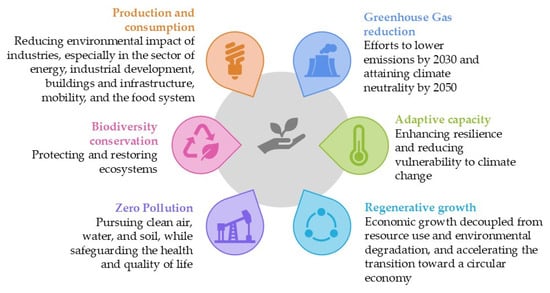
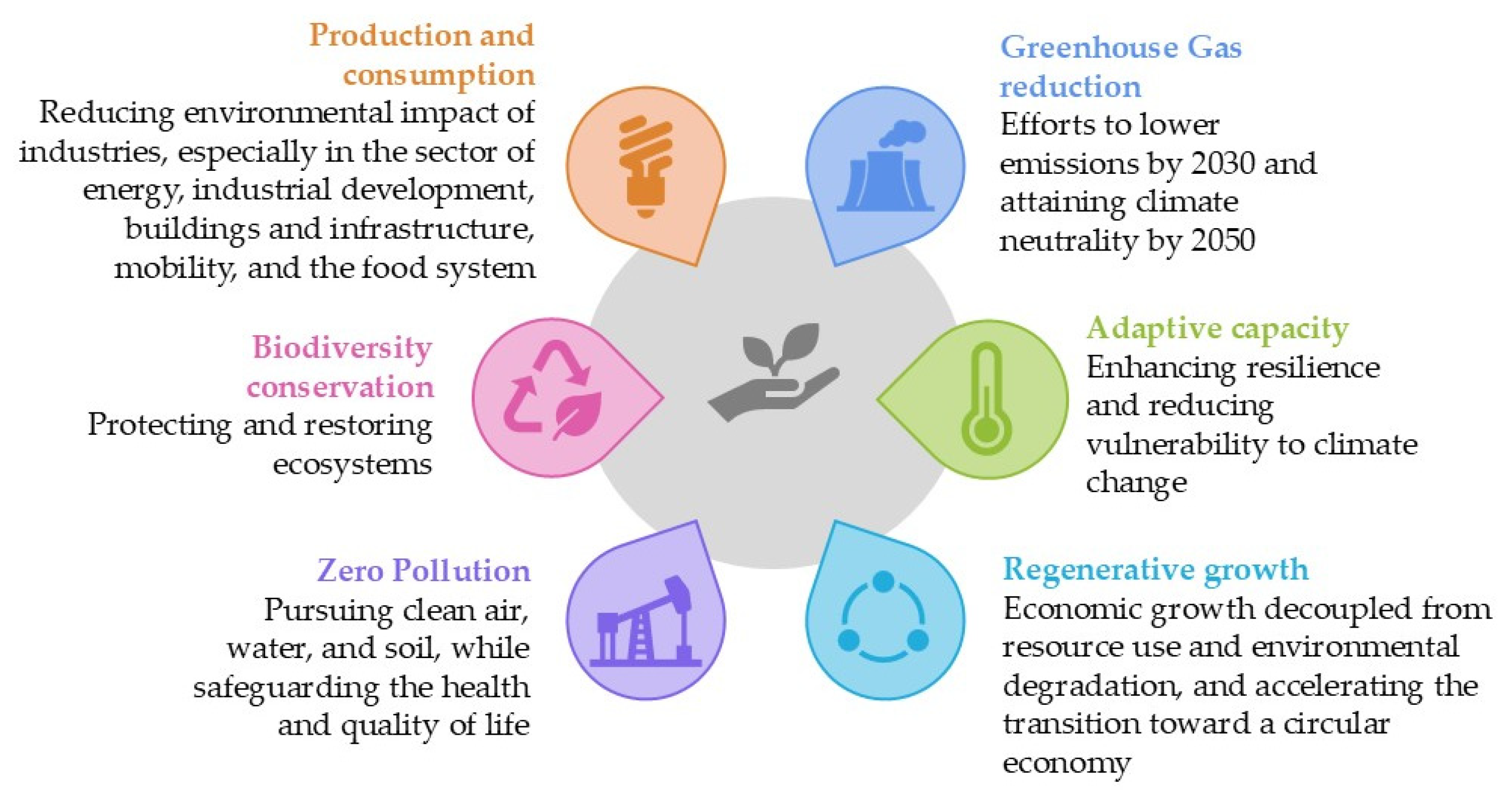
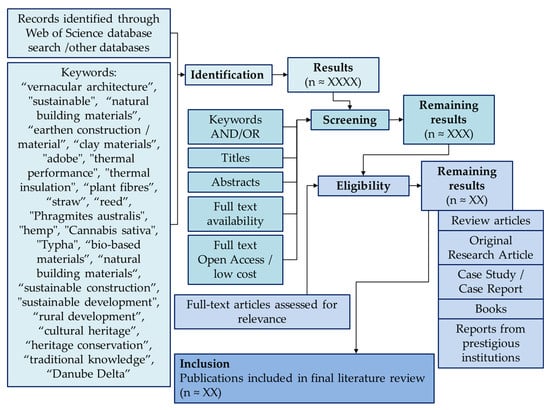
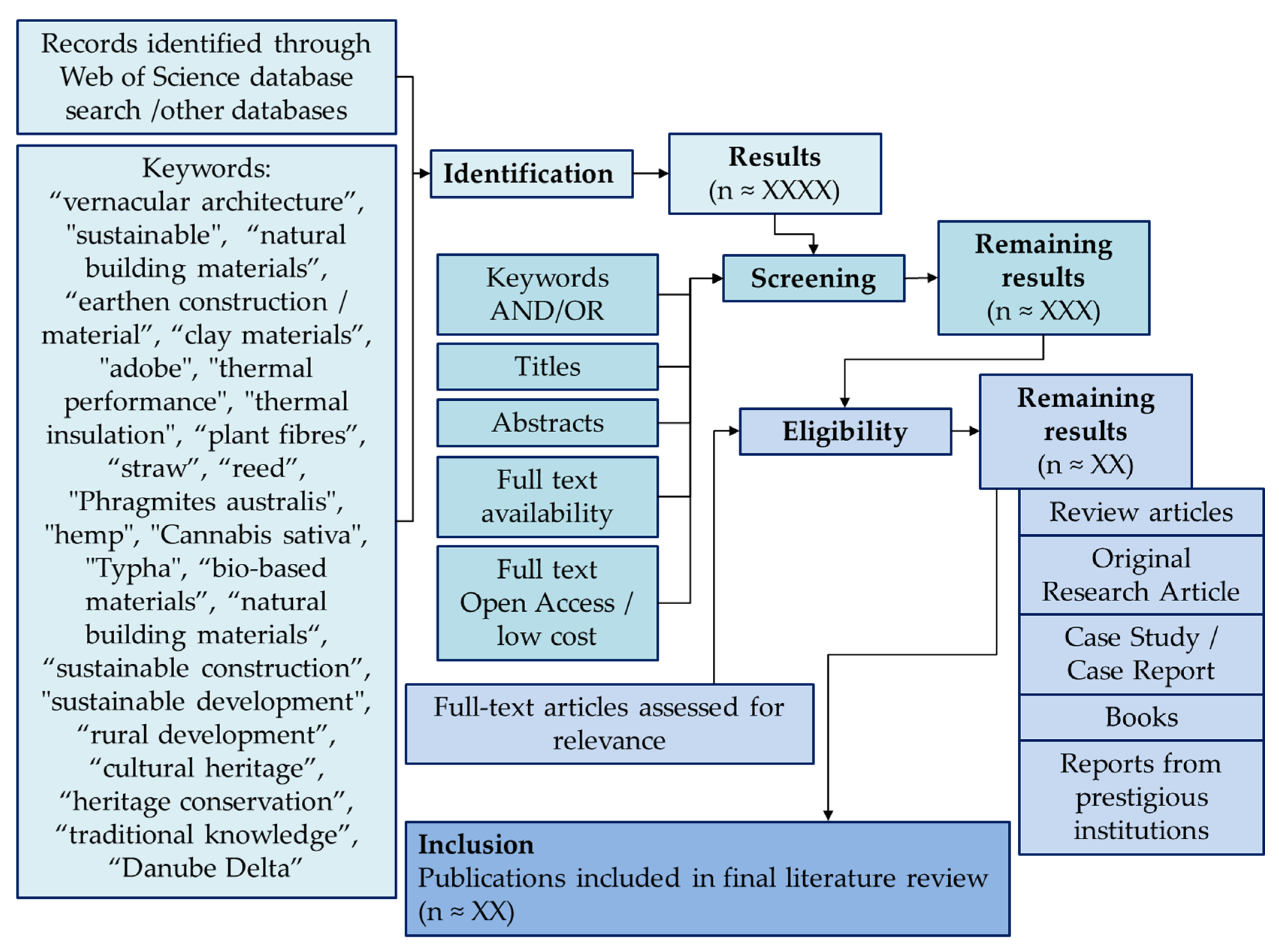
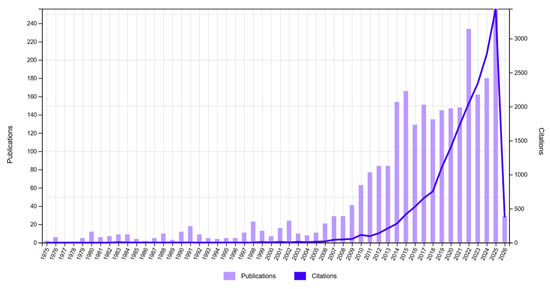
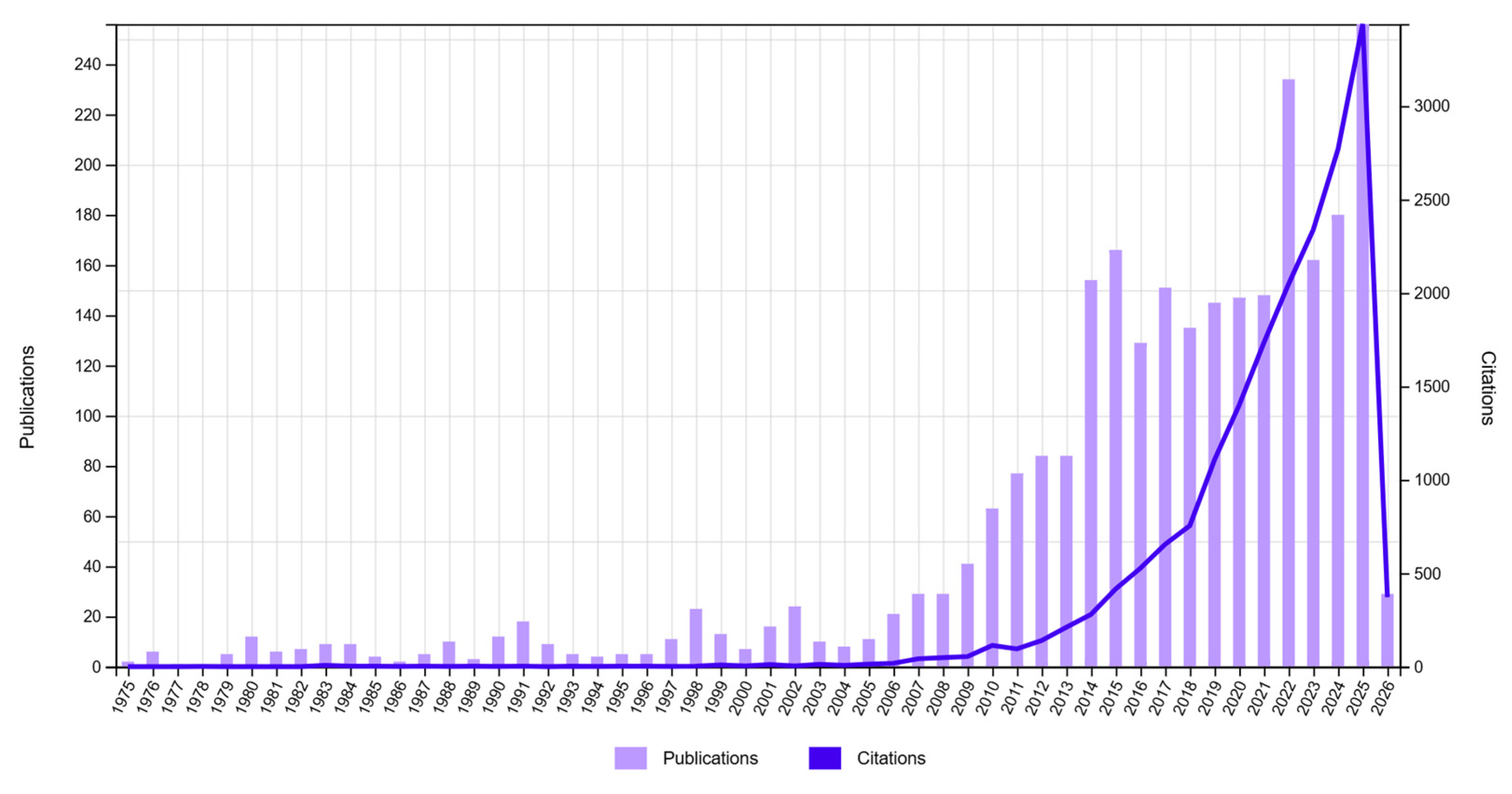
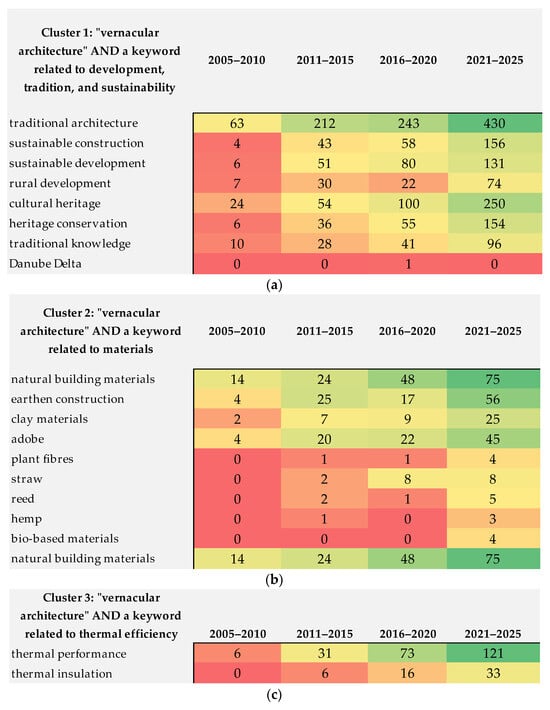
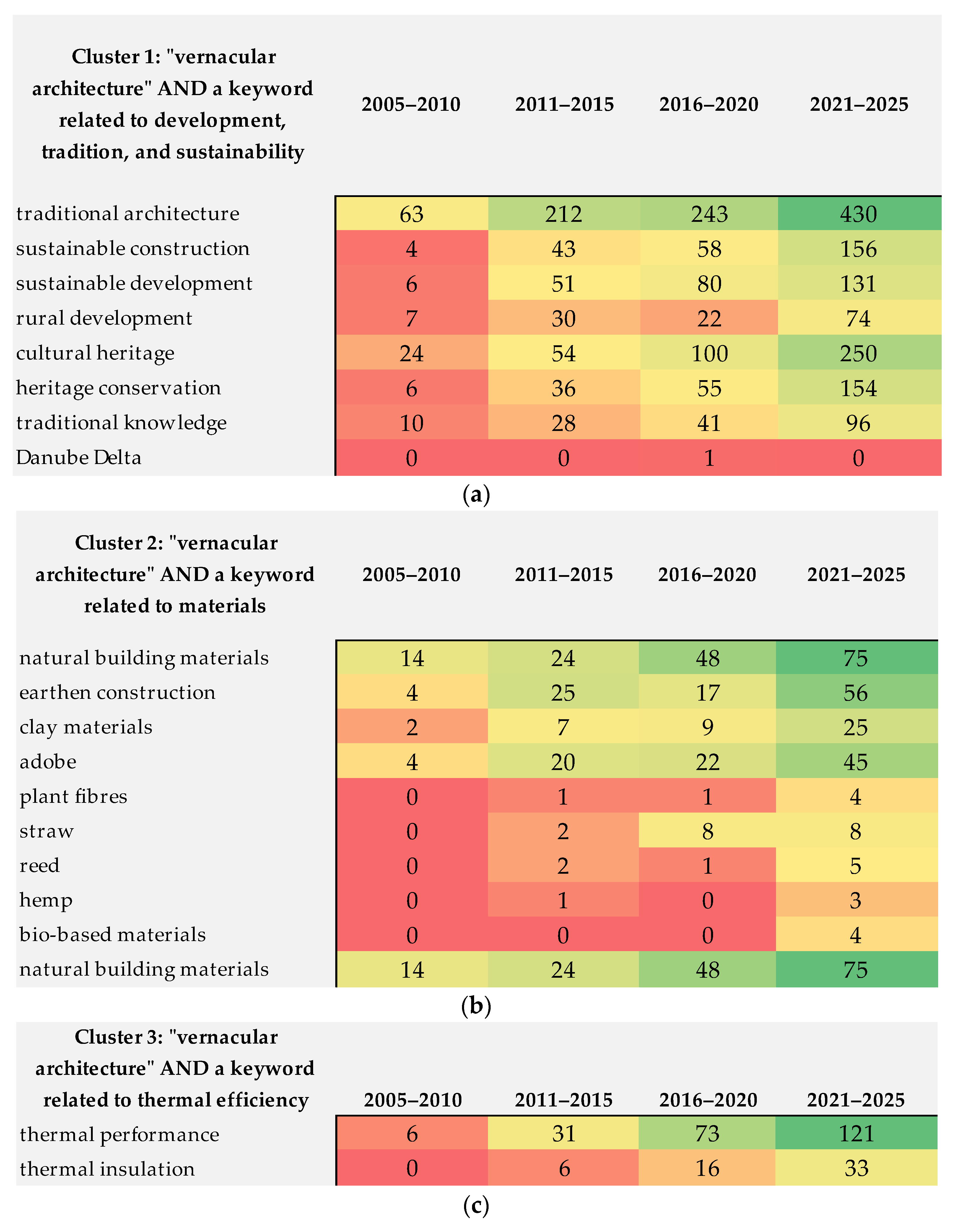
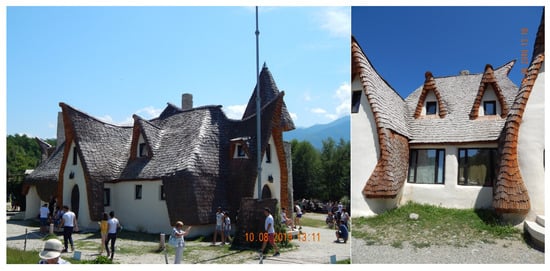
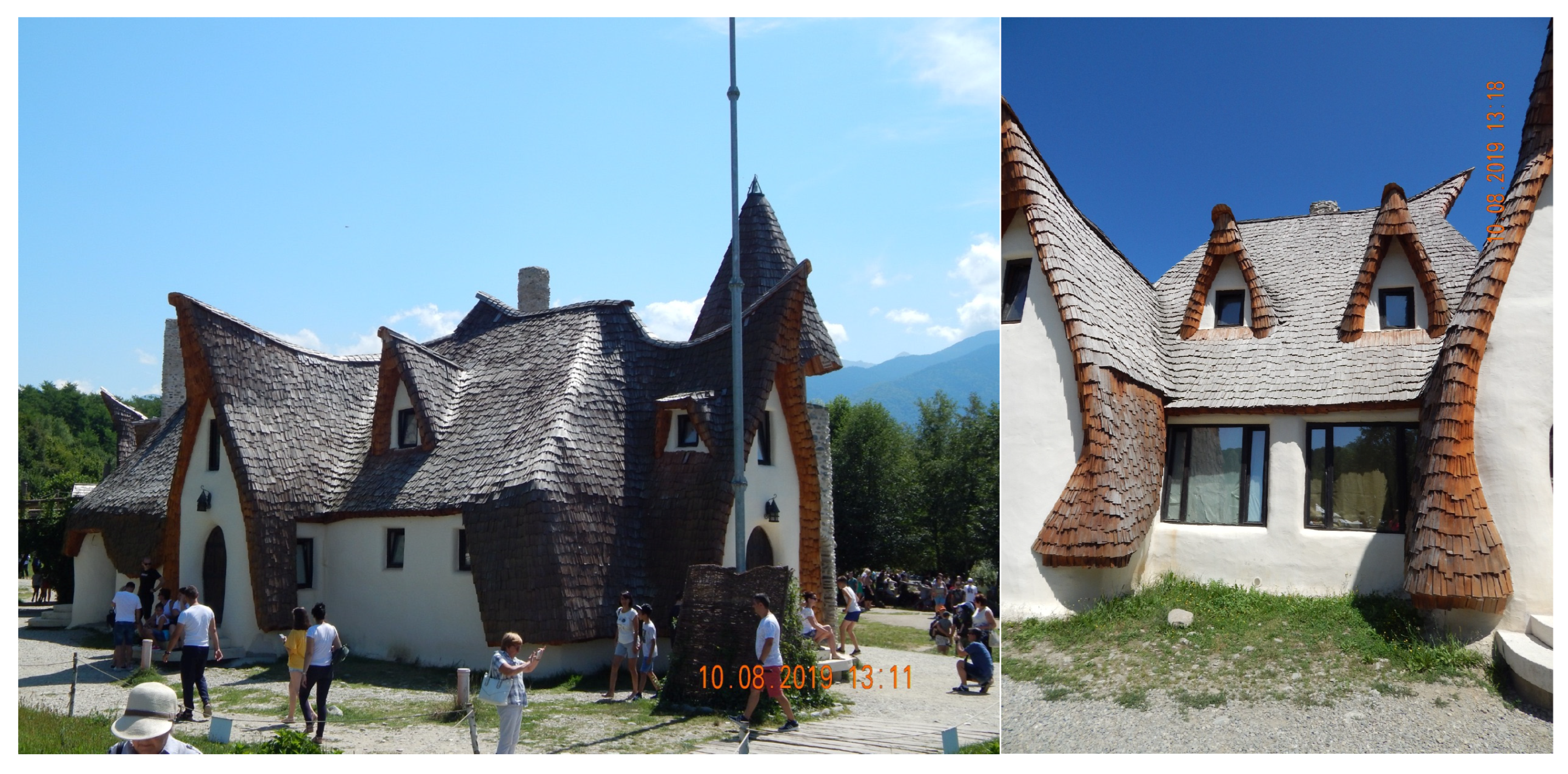
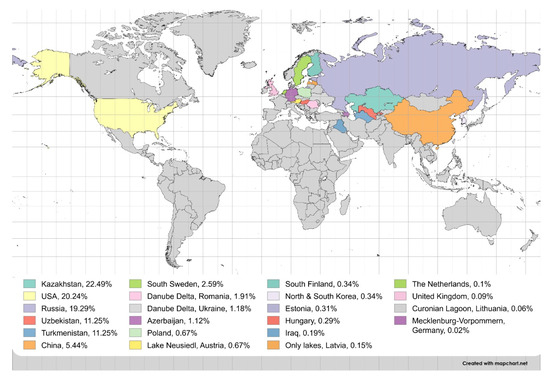
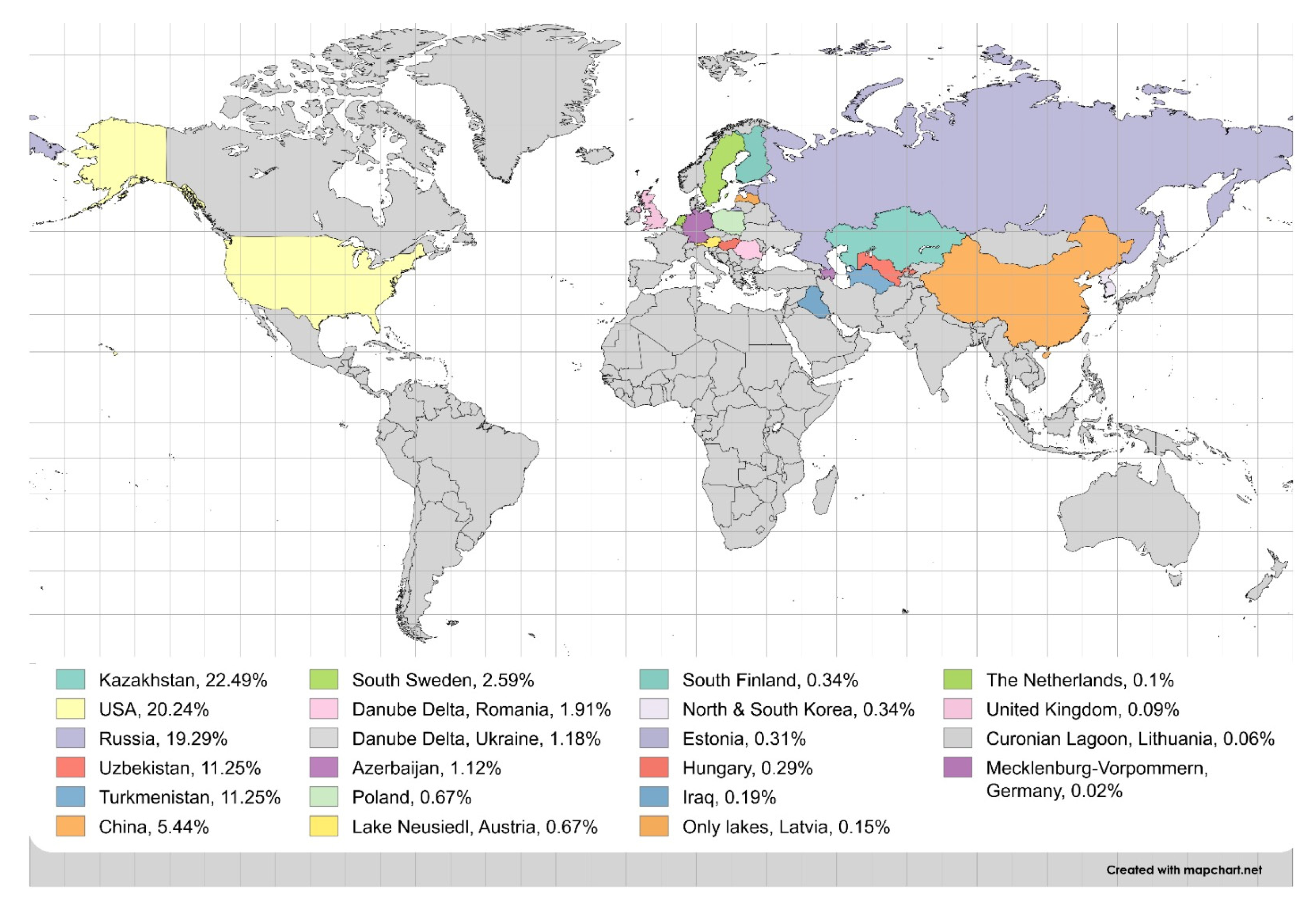
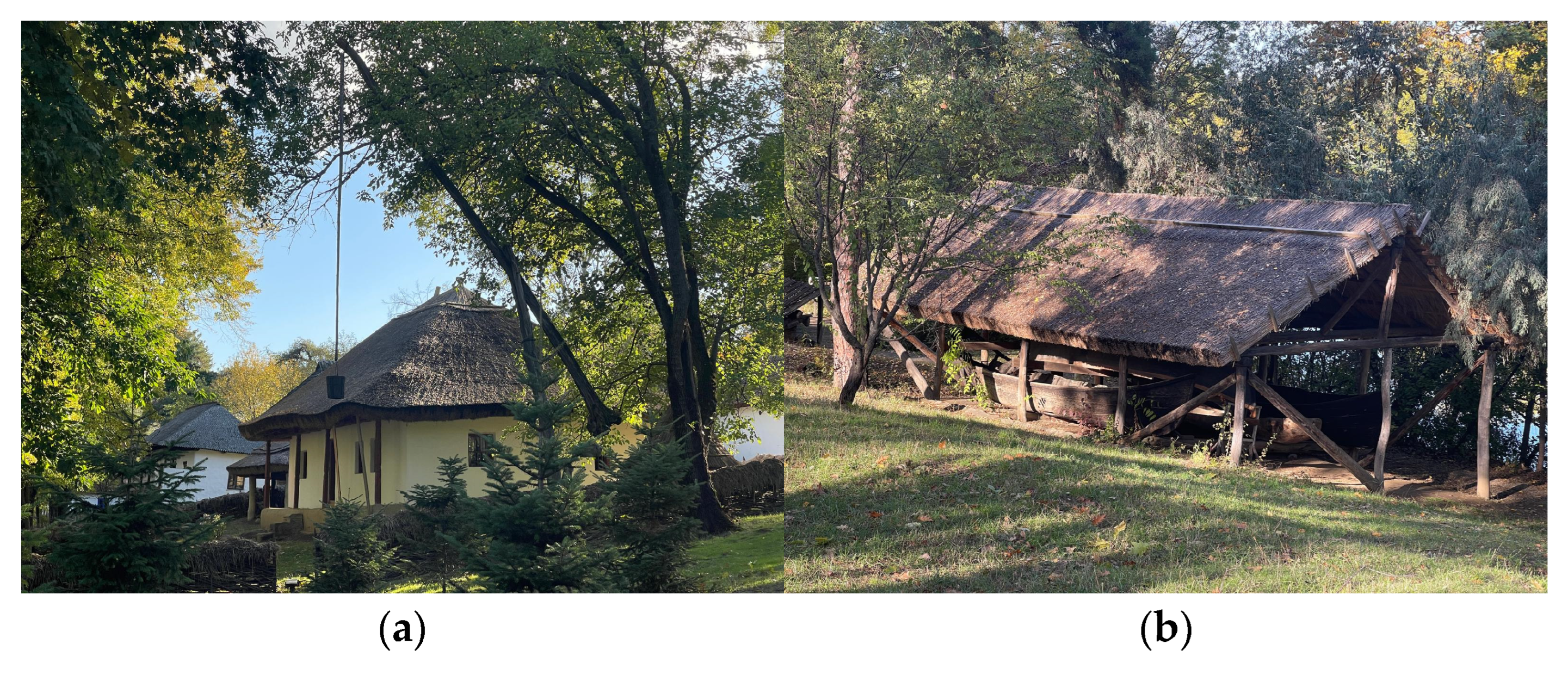
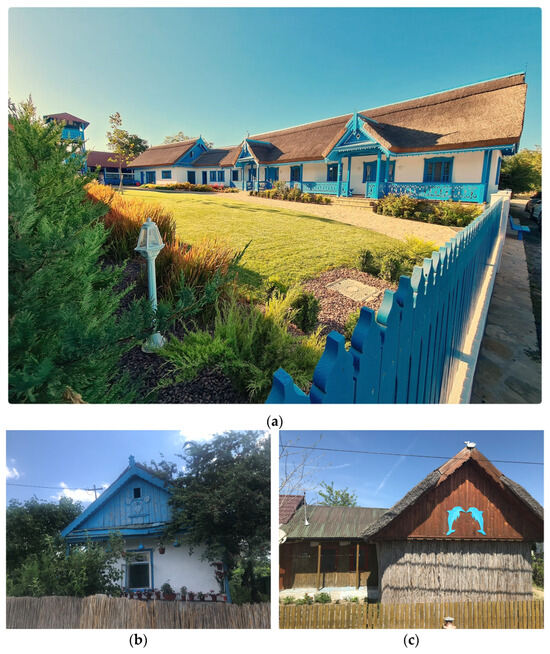
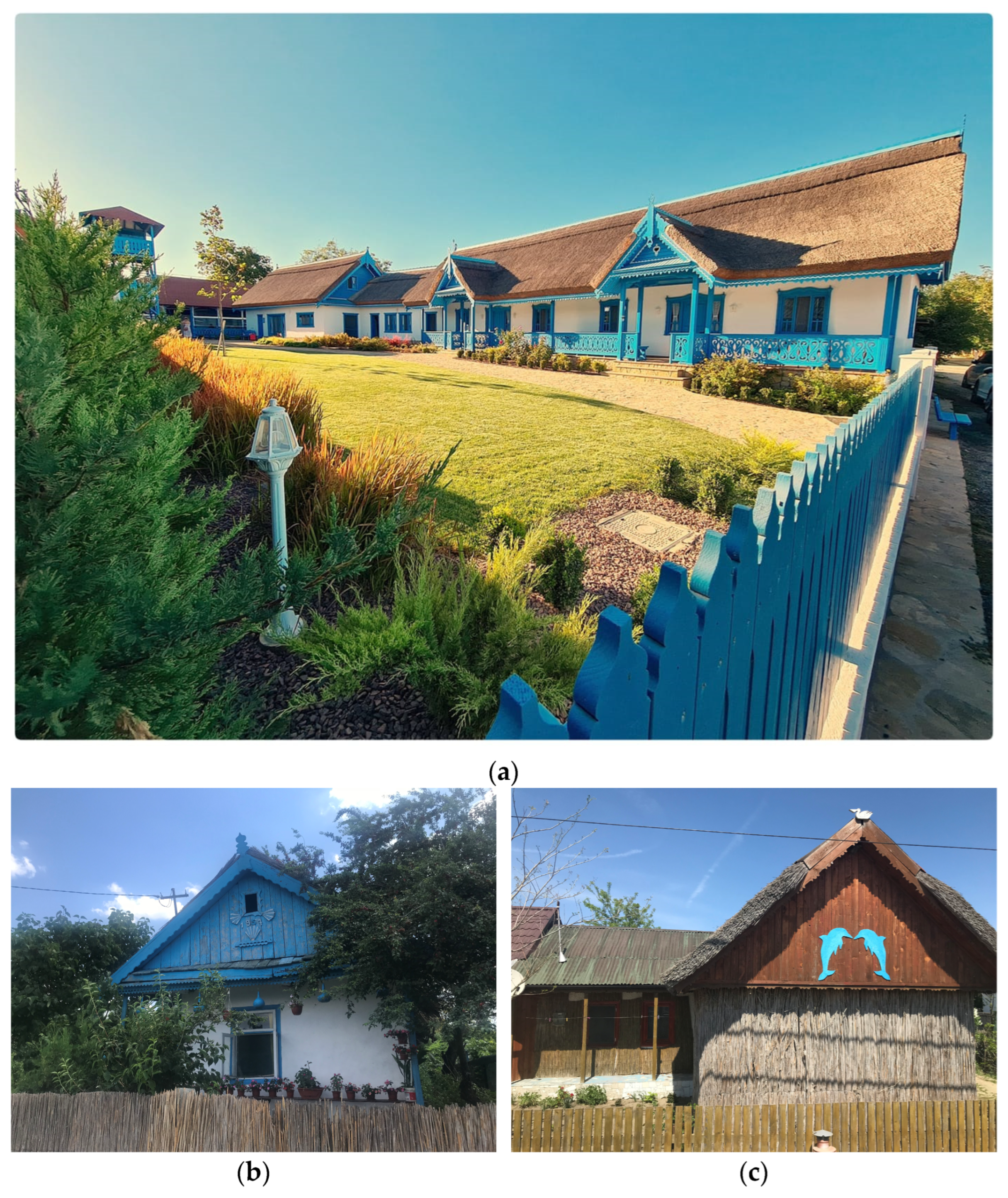
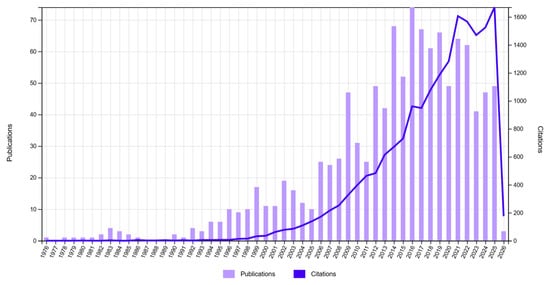
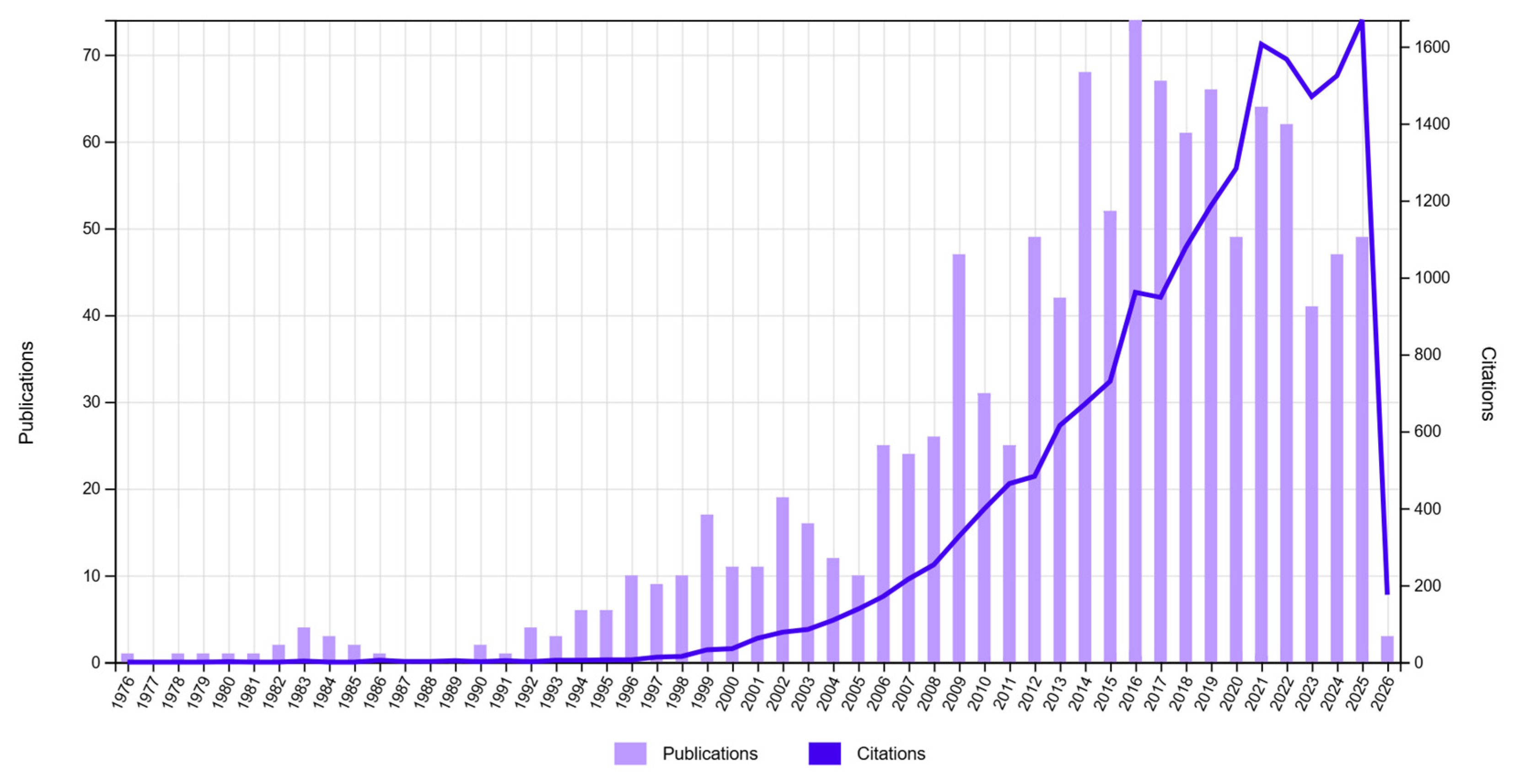
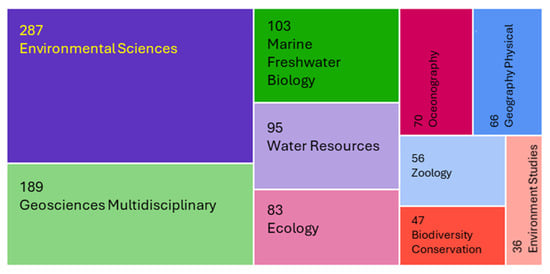
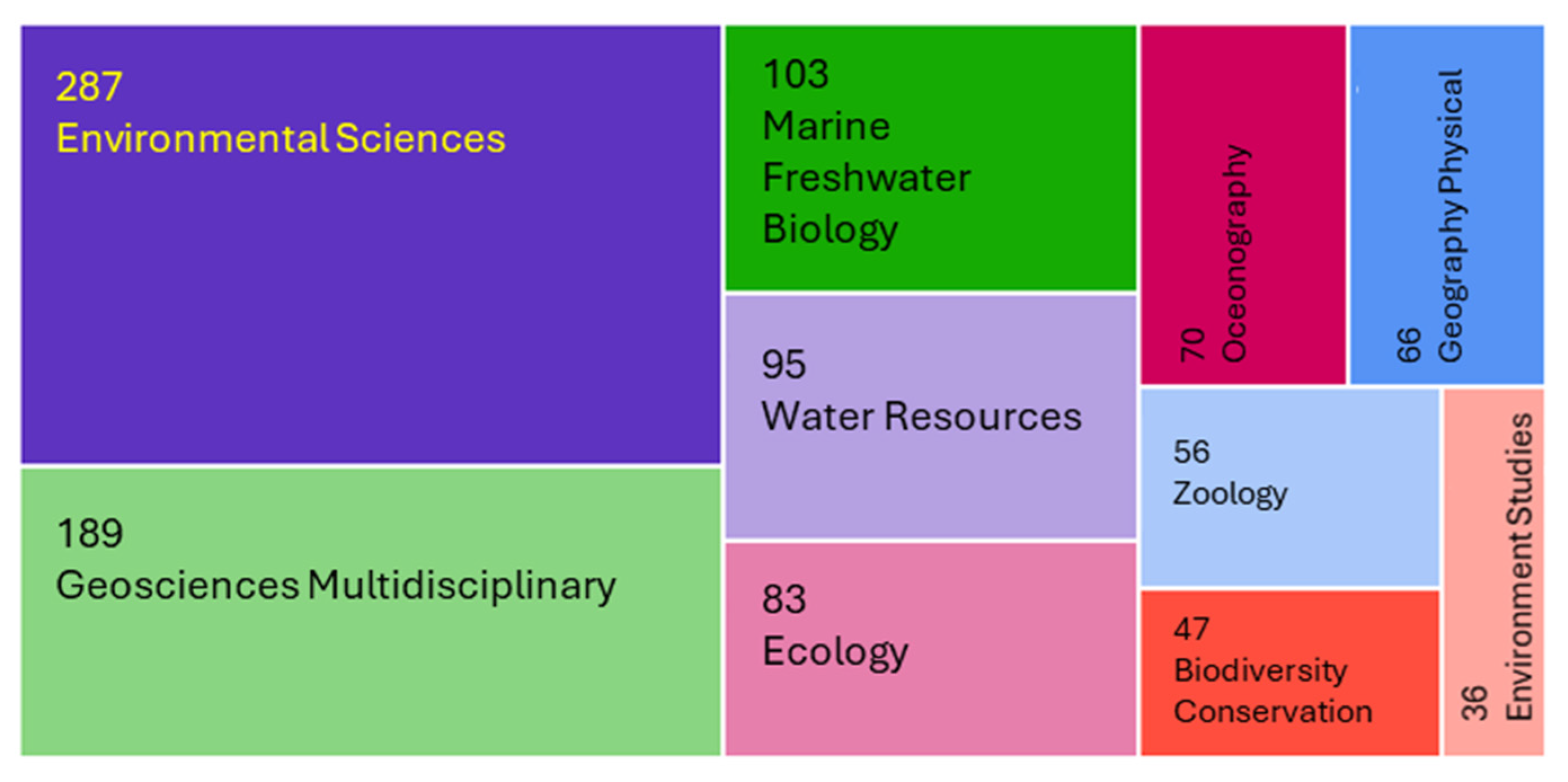
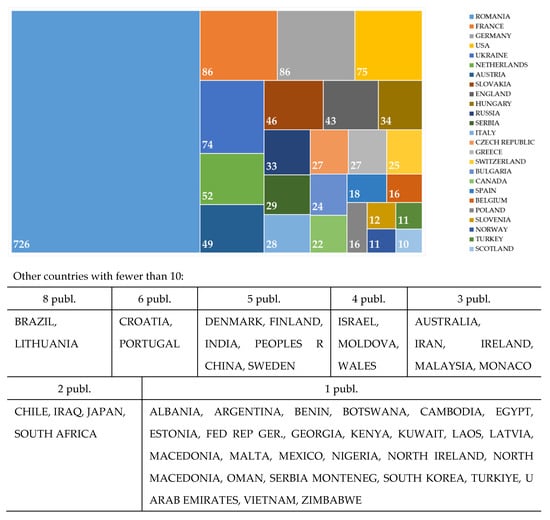
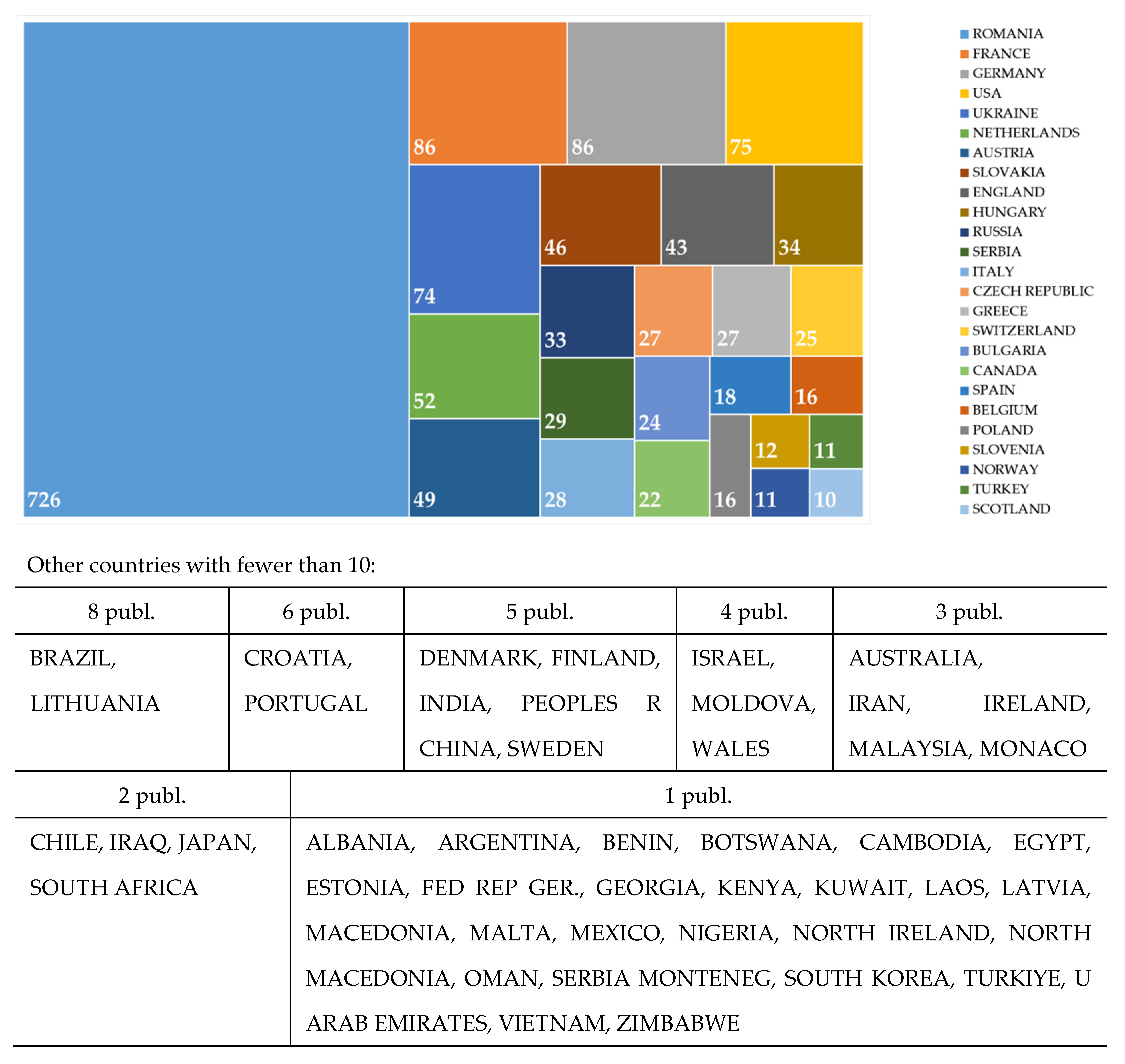
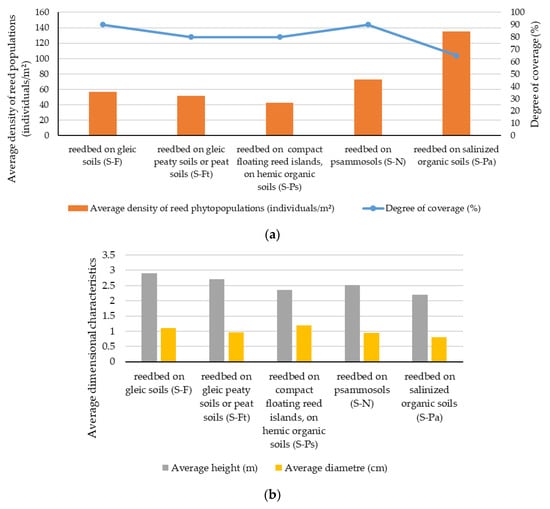
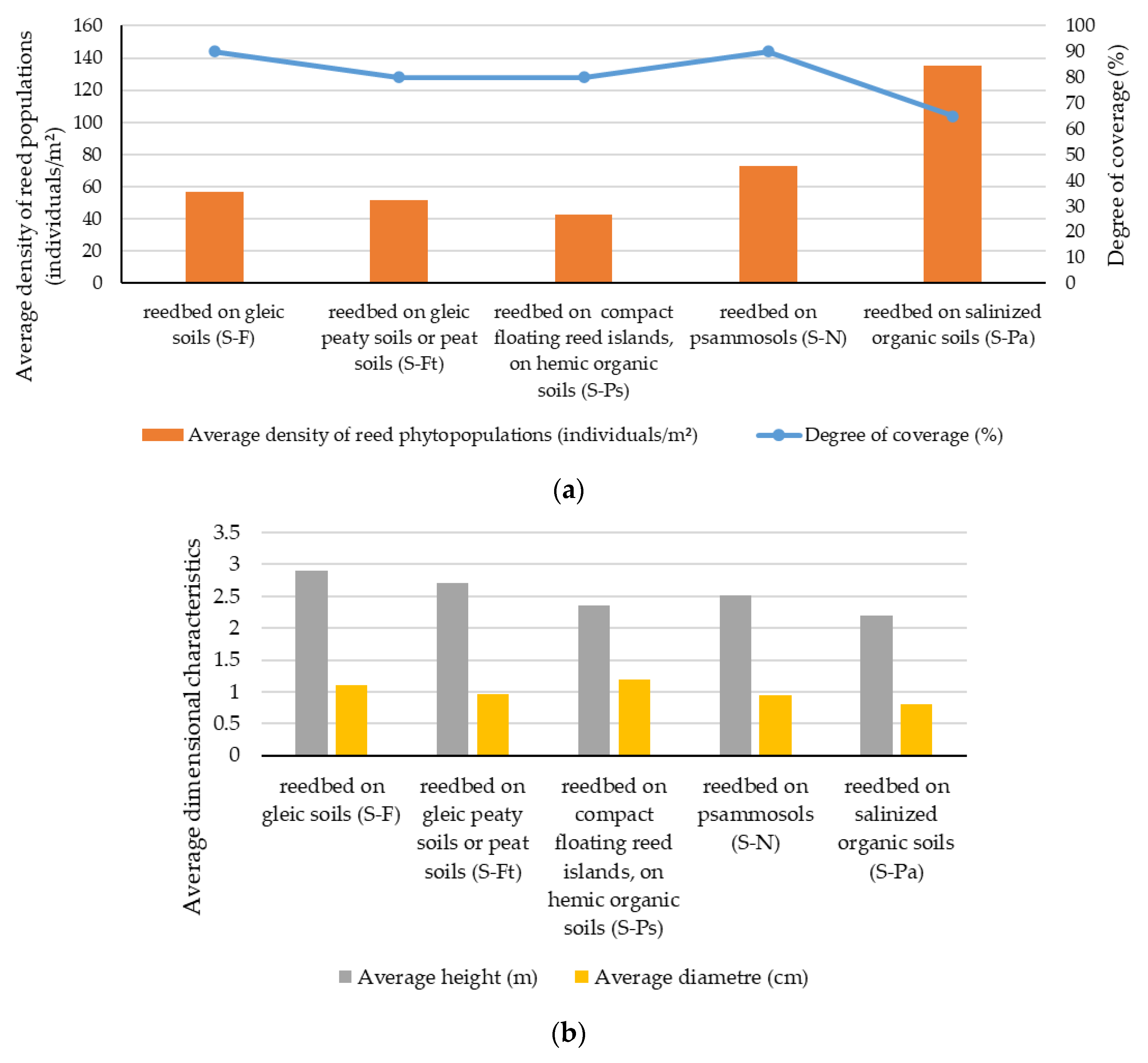

Disclaimer/Publisher’s Note: The statements, opinions and data contained in all publications are solely those of the individual author(s) and contributor(s) and not of MDPI and/or the editor(s). MDPI and/or the editor(s) disclaim responsibility for any injury to people or property resulting from any ideas, methods, instructions or products referred to in the content. |
© 2026 by the authors. Licensee MDPI, Basel, Switzerland. This article is an open access article distributed under the terms and conditions of the Creative Commons Attribution (CC BY) license.