1. Introduction
The worldwide construction industry is changing fundamentally as a result of the intersection of immersive digital technologies and ecological principles [
1,
2,
3]. There are numerous chances to increase efficiency when immersive technology is incorporated into construction operations, reduce environmental impacts, and support sustainable development in the face of accelerating climate and resource pressures. The concept of sustainable development has been clarified using the widely accepted definition from the Brundtland Report, which defines it as meeting present needs without compromising the ability of future generations to meet their own needs. This is further contextualised within construction through environmental, economic, and social dimensions [
4].
Given the sector’s major economic and environmental footprint, managing its sustainability performance has become a critical global priority. Immerging Technologies are increasingly recognised as powerful tools for improving design accuracy, construction efficiency, and environmental performance across the building lifecycle [
4,
5]. Global energy usage, greenhouse gas emissions, and material depletion are all significantly influenced by the building sector. In developing economies such as Nigeria, rapid urbanisation, population growth, and large-scale infrastructure expansion have intensified these environmental pressures. Although the industry is essential to economic growth, it also generates substantial ecological burdens, including pollution and habitat degradation [
6,
7]. Consequently, embedding sustainability principles within architectural design and construction processes has become essential. The use of environmentally friendly materials, waste reduction, energy efficiency, and enhanced building lifespan performance are all prioritised in sustainable construction [
3,
8]. These practices are central to Nigeria’s efforts to meet the Sustainable Development Goals and transition toward a low-carbon built environment.
Nigeria provides a particularly valuable context for examining the sustainability potential of immersive technologies. The sector is characterised by infrastructure deficits, project management inefficiencies, and resource constraints, yet it is simultaneously experiencing increasing digitalisation and technological experimentation. These conditions create improvements for the adoption of VR, AR, and BIM. Studying immersive technologies in Nigeria, therefore, offers important insights into how digital innovation can be leveraged in resource-constrained environments to enhance productivity, improve decision-making, and support sustainability outcomes [
9,
10].
The need to address Nigeria’s escalating environmental challenges associated with construction activities provides the primary motivation for this study. Despite rapid urbanisation and expansion of the construction sector, the industry remains among the least digitised globally, with limited adoption of sustainable and technology-driven practices [
11,
12]. Although immersive technologies such as Building Information Modelling (BIM), Virtual Reality (VR), and Augmented Reality (AR) have demonstrated significant potential to enhance sustainability outcomes, reduce material waste, and improve decision-making, their application in Nigeria remains limited and largely experimental [
13,
14]. Furthermore, existing studies often examine these technologies in isolation, resulting in a lack of integrated empirical evidence on how immersive technologies collectively influence sustainable construction outcomes, particularly in developing country contexts. In addition, persistent challenges, including weak environmental compliance, continued reliance on conventional construction approaches, and limited integration of data-driven tools, indicate an insufficient understanding of the key drivers and barriers influencing technology adoption and performance outcomes [
15,
16]. Consequently, there is a clear need for context-specific empirical research that evaluates the actual contribution of immersive technologies to sustainable construction performance. This study addresses these gaps by developing and empirically validating a multidimensional framework that links immersive technologies to sustainability outcomes within the Nigerian construction sector.
This study aims to develop and empirically validate an integrated framework that evaluates the contribution of immersive digital technologies to sustainable construction performance in Nigeria. Objectives of the study include:
To assess the influence of key sustainability practices such as energy efficiency, use of environmentally friendly materials, waste management, and project management on construction project outcomes.
To examine the role of immersive digital technologies (BIM, VR, and AR) in enhancing sustainable construction practices in Nigeria.
To develop and validate a structural model linking immersive technologies, adoption barriers, and sustainable construction performance.
By addressing these objectives, the study contributes to bridging the gap between global technological advancements and local construction practices, while providing evidence-based insights for policymakers, practitioners, and stakeholders aiming to promote sustainable and digitally enabled construction.
Based on the research objectives, the study tests the following hypotheses:
H1: Energy efficiency, eco-friendly materials, and waste management positively influence construction sustainability performance.
H2: Effective project management practices positively affect construction performance and efficiency.
H3: High costs, limited expertise, and low awareness negatively affect immersive technology adoption.
H4: Immersive technology adoption positively improves construction practices.
H5: Immersive technologies enhance collaboration, knowledge sharing, environmental monitoring, and sustainable integration.
H6: Immersive technology–driven solutions positively influence construction project sustainability.
In this regard, the study makes several important contributions that distinguish it from existing research. Unlike prior studies that primarily focus on single technologies or remain largely conceptual, this research develops an integrated model that combines immersive technologies with construction practices to examine their collective impact on sustainable outcomes. It further strengthens the literature through empirical validation using advanced analytical technique such as PLS-SEM, providing robust and predictive insights. Additionally, by offering context-specific evidence from a developing economy, the study contributes to global discussions on smart and sustainable construction, generating findings that are both context-sensitive and potentially transferable to other regions facing similar challenges.
Furthermore, this study advances knowledge by identifying pathways through which immersive technologies can support improved decision-making, resource efficiency, and environmental performance in construction processes. These insights provide a foundation for scalable and adaptable strategies that align technological innovation with sustainability goals. Thus, the research supports the transition toward evidence-based, sustainable construction practices that are consistent with the United Nations Sustainable Development Goals (SDGs) and Nigeria’s national development priorities. The findings offer practical value for policymakers, industry practitioners, and other stakeholders seeking to foster green innovation, enhance climate resilience, and strengthen the long-term sustainability of the built environment.
The paper is organised in a logical flow. The pertinent literature on the study’s key terms is reviewed in the next section. The research strategy, data collection, and analytical methods used are described in the methodology section. Empirical findings are presented, and their implications are interpreted in the results and discussion section. Future study directions and policy proposals round up the concluding section.
3. Materials and Methods
3.1. Theoretical Framework
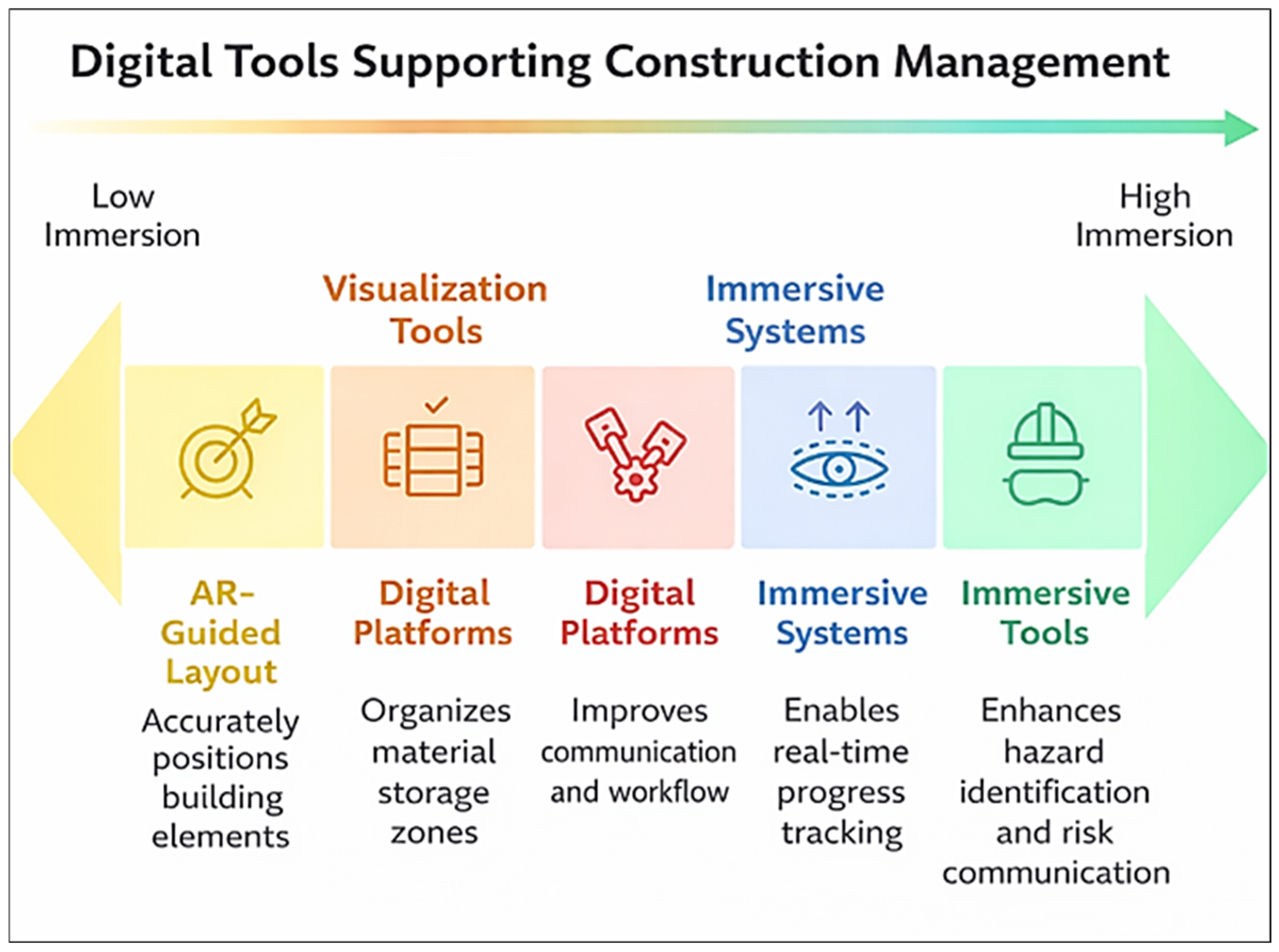
The integration of immersive technologies into the construction industry represents a transformative shift, with the potential to redefine traditional construction practices and advance sustainable development. Emerging digital tools are central to this transformation, offering advanced capabilities for visualisation, simulation, and real-time monitoring of construction activities [
2,
24]. These technologies enhance project planning, facilitate communication among stakeholders, and enable more efficient resource management, thereby addressing common challenges such as project delays, cost overruns, and environmental impacts.
This study is grounded in the concept of digital technology in construction, which emphasises the role of cyber tools in improving efficiency, accuracy, and transparency across construction processes. The adoption of these technologies can be theoretically understood through established frameworks such as the Technology Acceptance Model (TAM), which explains how perceived usefulness and ease of use influence user adoption, and the Diffusion of Innovations (DOI) theory, which highlights the role of innovation characteristics and social influence in technology uptake [
11,
21]. Additionally, the Digital Transformation Framework (DTF) contextualises how immersive technologies drive organisational change and process innovation within construction projects. Collectively, these frameworks inform our conceptualisation of immersive technology adoption and provide a robust theoretical grounding for the study.
The application of digital technologies in project planning and forecasting has been shown to reduce costs and delays by enabling better coordination and faster decision-making [
11,
21,
34]. They also allow for more precise cost estimation and budgeting, enhancing financial efficiency. By standardising procedures and automating tasks, digital technologies minimise human errors and material waste, improving overall project performance and sustainability outcomes [
32,
34,
35].
Immersive technologies, such as virtual reality (VR) and augmented reality (AR), further strengthen construction processes by enabling stakeholders to visualise and interact with building designs in three-dimensional environments before physical construction begins [
17,
28]. This capability supports informed decision-making and reduces costly modifications often associated with traditional construction methods [
26]. For example, AR allows digital models to be superimposed on real-world environments, enabling architects and engineers to evaluate how proposed structures interact with existing infrastructure and environmental conditions [
22,
31]. Early-stage evaluation through immersive technologies helps identify potential conflicts and environmental challenges, reducing construction-related environmental impacts [
7,
15].
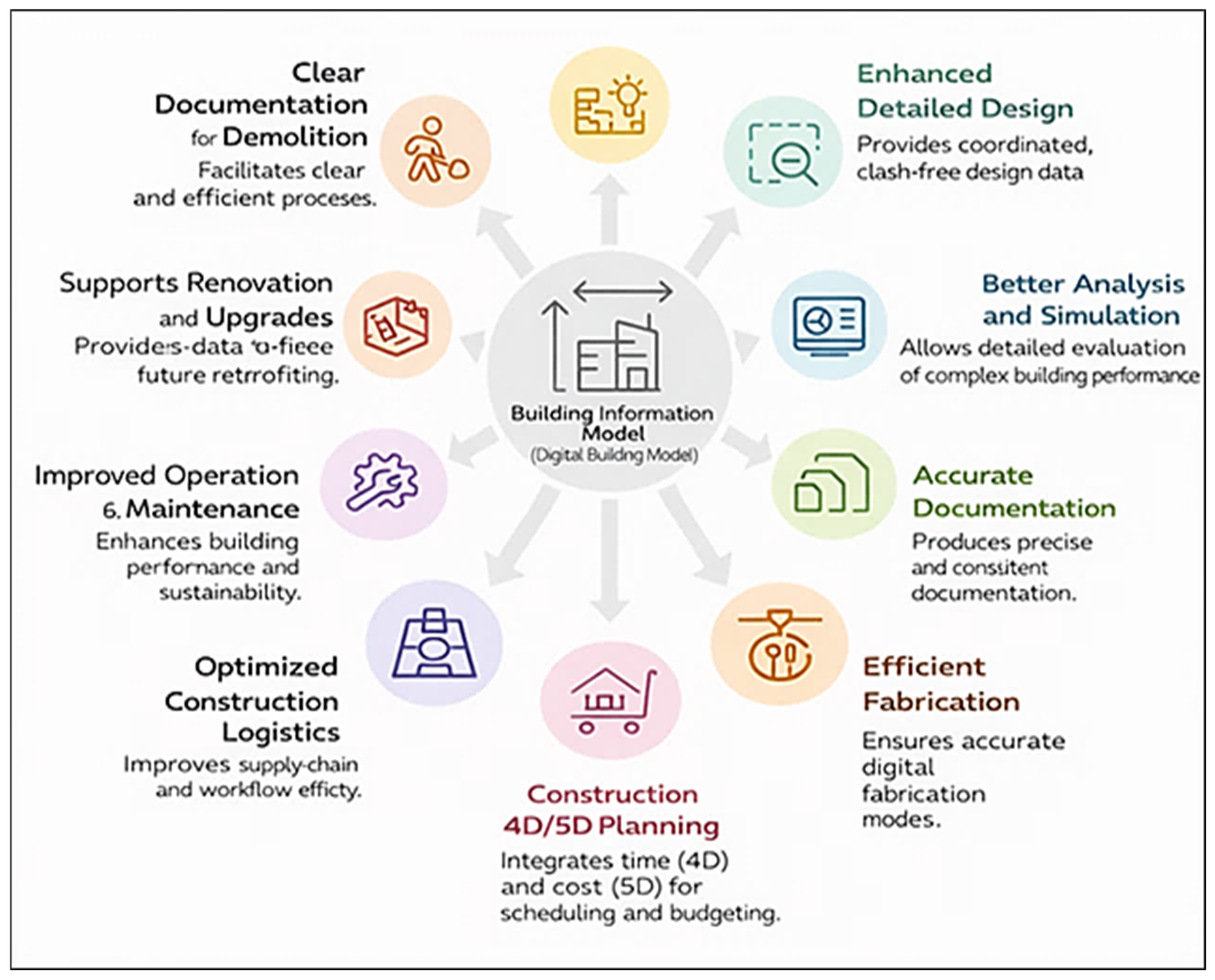
Building Information Modelling (BIM) serves as a centralised platform for managing project information throughout the construction lifecycle. BIM enhances collaboration by providing architects, engineers, contractors, and clients with real-time access to updated project data [
26,
33]. This collaborative approach minimises miscommunication, optimises resource use, and lowers the environmental footprint of construction projects [
7,
15]. Moreover, BIM facilitates the simulation of building performance, including energy consumption and environmental impacts, supporting the design of energy-efficient and sustainable buildings [
3,
18].
The theoretical framework guiding this study examines the multidimensional influence of immersive technologies on sustainable construction. Key components include project efficiency, resource management, environmental performance, and stakeholder collaboration [
23,
26]. Project efficiency reflects how immersive technologies reduce delays, minimise errors, and optimise workflows through advanced simulations and predictive modelling [
3,
28]. Resource management emphasises improved allocation and utilisation of materials, labour, and energy. Environmental performance highlights how immersive technologies support the design of buildings with lower environmental impacts through energy modelling and sustainability analysis [
7,
15]. Stakeholder collaboration underlines improved communication and coordination among project participants, enabled by digital platforms and immersive tools.
Overall, immersive technologies hold significant potential to transform the planning, execution, and management of construction projects. By enhancing efficiency, optimising resource utilisation, reducing environmental impacts, and strengthening collaboration, these technologies contribute substantially to sustainable construction practices [
3,
8]. Anchored in TAM, DOI, and Digital Transformation frameworks, this study provides a theoretically grounded understanding of immersive technology adoption and its role in shaping the future of sustainable building developments [
22,
31]. The study’s conceptual framework is illustrated in
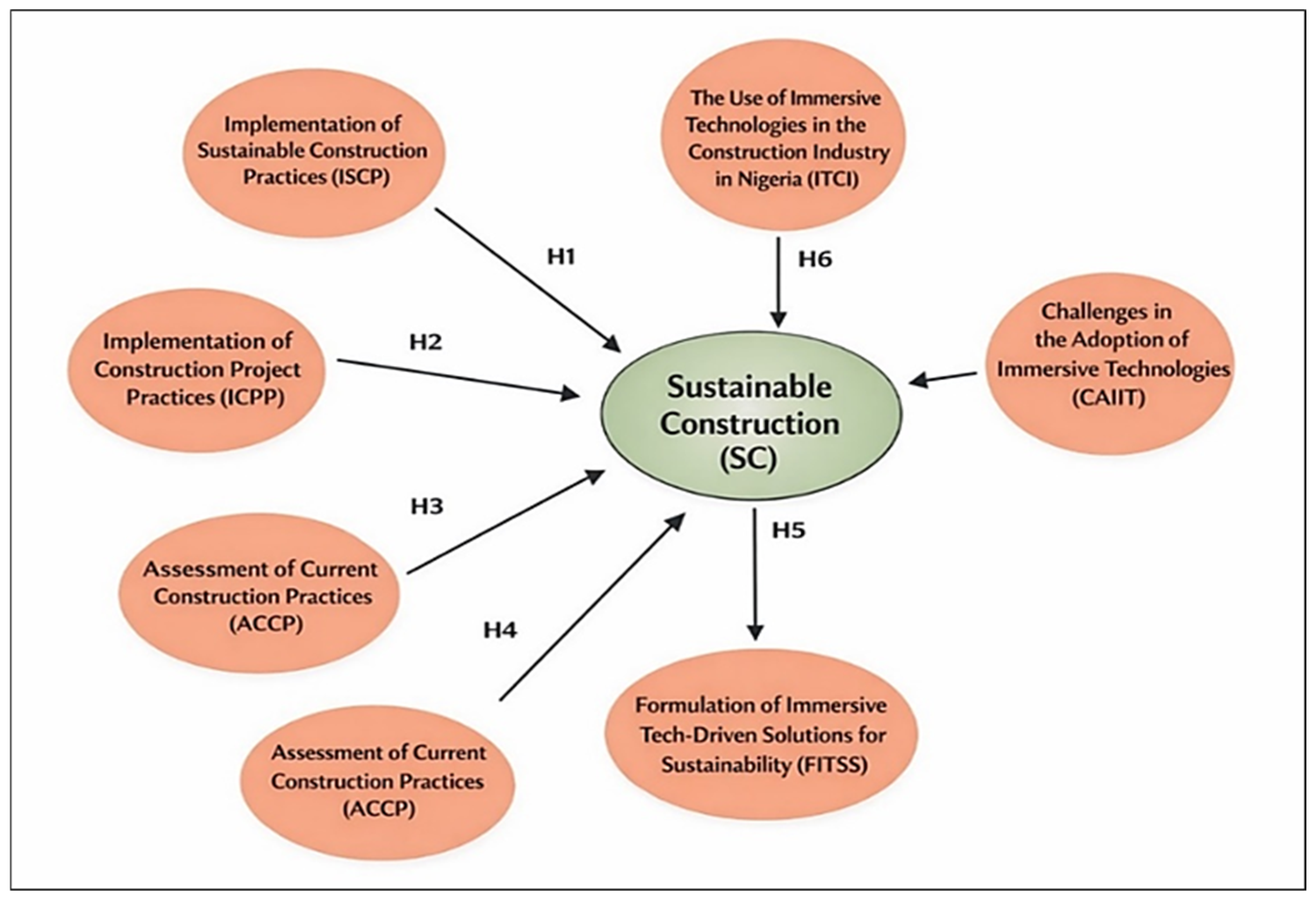
Figure 4. The figure presents the study’s role of immersive technologies in advancing sustainable construction, focusing on key factors such as project efficiency, resource management, and environmental performance. Using a structured questionnaire and a stratified random sample of construction professionals, data were analysed through PLS-SEM and supporting techniques. The results reveal that immersive technologies, including BIM, AR, and VR, significantly enhance sustainability outcomes by improving coordination, reducing waste, and enabling better decision-making. The model demonstrates strong explanatory and predictive power, confirming that digital transformation plays a critical role in promoting sustainable construction practices, particularly within the Nigerian construction sector.
3.2. Hypotheses Development and Measurement
This study develops a theoretically grounded framework linking sustainable construction practices, immersive technologies, and construction performance. The study’s theory-driven measurement framework links six hypotheses to validated constructs that evaluate how immersive technologies support sustainable construction. H1 and H2 address traditional sustainability and project management factors, while H3 captures barriers to technology adoption. H4–H6 extend the model to the digital domain, showing how emerging technologies enhance construction practices, collaboration, environmental monitoring, and life cycle sustainability. Overall, it integrates conventional construction sustainability with immersive technologies into a unified analytical model. The hypotheses are informed by established sustainability theory, digital construction literature, and prior empirical evidence.
3.2.1. Implementation of Sustainable Construction Practices (ISCP) and Sustainable Construction (SC) (H1)
Sustainable construction practices are widely recognised as fundamental to improving environmental performance in the built environment. The use of eco-friendly materials, efficient in terms of energy systems, and efficient waste management techniques greatly lowers emissions, resource consumption, and waste associated with building. Prior studies demonstrate that projects that adopt green materials and energy-saving technologies exhibit superior environmental and operational performance compared to conventional construction approaches [
3,
23,
36]. These practices also support life cycle sustainability by reducing operational energy demand and material depletion. The measurement of this construct was adapted from validated sustainability performance indicators used by [
31,
36], including indicators related to energy efficiency, material sustainability, and waste minimisation. Accordingly, this study proposes:
H1: Energy-efficient systems, green materials, and waste management positively impact Sustainable Construction.
3.2.2. Implementation of Construction Project Practices (ICPP) and Sustainable Construction (SC) (H2)
Efficient project management practices—including planning, scheduling, and quality control—enhance project outcomes and resource efficiency [
7,
26]. These practices facilitate timely completion, cost control, and effective utilisation of materials, thereby promoting Sustainable Construction (SC). The success of an efficient construction project is largely dependent on management, cost control, quality, and sustainability. Optimised practices such as effective scheduling, resource allocation, cost management, safety compliance, and quality control improve productivity and minimise delays, rework, and waste [
15,
19]. In developing construction markets, structured management systems are particularly critical for improving efficiency and reducing environmental and economic losses [
33]. The measurement items for this construct were adopted from [
15,
19,
33]. Thus, this study hypothesises:
H2: Optimised construction project management practices, including project scheduling, resource allocation, cost control, safety compliance, and quality management, positively impact sustainable construction project efficiency.
3.2.3. Obstacles to Immersive Technology Adoption (H3)
Barriers such as lack of technical skills, high costs, and resistance to change can limit the effective use of immersive technologies [
15,
28]. Addressing these challenges is crucial, as unresolved barriers reduce the potential benefits of digital tools in sustainable construction. Aside from the significant contribution of immersive technologies in the construction industry, contextual barriers exist, which include high initial costs, limited skilled personnel, and low awareness of digital tools, that continue to impede their adoption in developing countries [
27,
29,
30]. These barriers reduce firms’ willingness and capacity to adopt digital solutions, thereby slowing technological transformation. The measurement items for these constraints were drawn from [
7,
27,
29]. Therefore, this study proposes:
H3: High initial investment costs, limited technical expertise, and low awareness negatively affect immersive technology adoption in construction.
3.2.4. Immersive Technologies and Sustainable Construction Practices (H4)
Evaluating existing construction processes enables identification of inefficiencies and environmental risks, guiding improvements and innovation [
3,
23]. Accurate assessment supports informed decision-making, optimised resource allocation, and better integration of sustainable practices. Enhanced immersive technologies and design accuracy improve coordination and support decision-making throughout the construction lifecycle. By enabling real-time visualisation and data integration, these tools significantly improve construction workflows and site management [
23,
24]. Their adoption can therefore lead to improved sustainability outcomes. Measurement indicators were adapted from [
23,
24]. Hence, the following hypothesis is advanced:
H4: The adoption and utilisation of immersive technologies have a significant positive effect on sustainable construction practices.
3.2.5. Formulation of Immersive Tech-Driven Solutions for Sustainability (FITSS) and Sustainability Construction (SC) (H5)
The development of immersive technology-based solutions, such as VR simulations and AR-assisted design, enhances stakeholder engagement, design accuracy, and resource optimisation [
17,
28]. These solutions directly contribute to sustainability by reducing errors, waste, and environmental impacts. In addition, immersive technologies enable collaborative environments where stakeholders can visualise designs, share knowledge, monitor environmental performance, and integrate sustainable materials more effectively. VR and AR enhance stakeholder engagement, while BIM supports real-time environmental data integration and sustainability reporting [
28,
30,
32]. These capabilities improve transparency, coordination, and environmentally responsible decision-making. The measurement scale was adapted from [
28,
30,
32]. Accordingly, this hypothesis is proposed:
H5: The use of immersive technologies significantly enhances stakeholder collaboration, knowledge sharing, real-time environmental monitoring, and the incorporation of eco-friendly products and methods into building projects.
3.2.6. The Use of Immersive Technology–Driven Sustainability Solutions (H6)
Direct adoption of immersive tools, including BIM, AR, and VR, enables real-time visualisation, improved coordination, and predictive analysis of building performance [
3,
7,
15]. These technologies enhance decision-making and collaboration, leading to more sustainable construction outcomes. Beyond adoption, the strategic formulation and implementation of immersive technology–driven solutions such as visualisation platforms, energy-efficiency simulations, and life cycle assessment tools are critical for achieving sustainability outcomes. BIM-based energy modelling and LCA tools support informed material selection and operational efficiency [
35,
37]. These digital solutions allow project teams to optimise sustainability across the entire building lifecycle. The measurement items were adapted from [
35,
37]. Thus, this study hypothesises:
H6: The formulation and implementation of immersive technology–driven solutions for visualisation, energy efficiency, and life cycle assessment positively impact the sustainability of construction projects.
3.3. Summary of the Hypotheses and Proposed Construct Justification
The constructs used in this study were adapted from prior research and validated in studies on technology adoption and sustainable construction [
3,
17,
28]. These constructs form the basis for the variables and measurement items used to evaluate the effectiveness of immersive technologies in promoting sustainable construction practices. The study’s hypothetical framework (
Figure 5) illustrates how six key constructs are proposed to influence Sustainable Construction (SC). Five independent variables—(1) Implementation of Sustainable Construction Practices (ISCP), (2) Implementation of Construction Project Practices (ICPP), (3) Challenges in the Adoption of Immersive Technologies (CAIIT), (4) Assessment of Current Construction Practices (ACCP), and (5) Formulation of Immersive Tech-Driven Solutions for Sustainability (FITSS)—were linked to the dependent variable Sustainable Construction (SC) through hypotheses H1 to H5. Additionally, the Use of Immersive Technologies in the Nigerian Construction Industry (ITCI) directly affects SC through H6.
To strengthen the theoretical justification, each relationship is supported by recent empirical and theoretical studies [
3,
7,
15,
23,
26,
28], demonstrating how immersive technologies and construction practices collectively drive sustainable outcomes. Clear distinctions between constructs have also been established:
Project and construction practices (ISCP, ICPP, ACCP) focus on planning, execution, and efficiency of construction activities.
Challenges and solutions (CAIIT, FITSS) address barriers to immersive technology adoption and the formulation of tech-driven sustainability interventions.
Use of immersive technologies (ITCI) emphasises direct engagement with digital tools to enhance decision-making, collaboration, and resource management.
This framework integrates traditional sustainability and project management factors with immersive technology adoption, illustrating a socio-technical model in which both human practices and digital innovations jointly shape sustainable construction outcomes.
3.4. Case Studies Context: Immersion Technology Use in the Nigerian Construction Industry
3.4.1. Analysis and Protocol
To complement the quantitative analysis, this study incorporates case studies as contextual examples and qualitative validation mechanisms to illustrate the practical application of immersive technologies in sustainable construction. The inclusion of case studies enables a deeper understanding of how digital tools are implemented in real-world settings and provides empirical support to influence sustainable construction outcomes [
7,
15]. It also provides an empirical insight into how digital technologies promote sustainable building in Nigerian context.
A structured case study protocol was developed to ensure methodological rigour and consistency. The protocol includes (i) case selection criteria—projects were selected based on their scale, relevance to sustainable construction, and evidence of immersive technology adoption (e.g., BIM, VR, AR); (ii) data sources—secondary data from project reports, industry publications, and documented case evidence, complemented by expert insights where available; (iii) analytical framework—each case was evaluated against key constructs in the study, including resource efficiency, environmental performance, and project coordination; (iv) performance indicators—both qualitative insights and available quantitative metrics (e.g., waste reduction, energy efficiency, cost savings) were used to assess outcomes.
3.4.2. Case Selection Justification
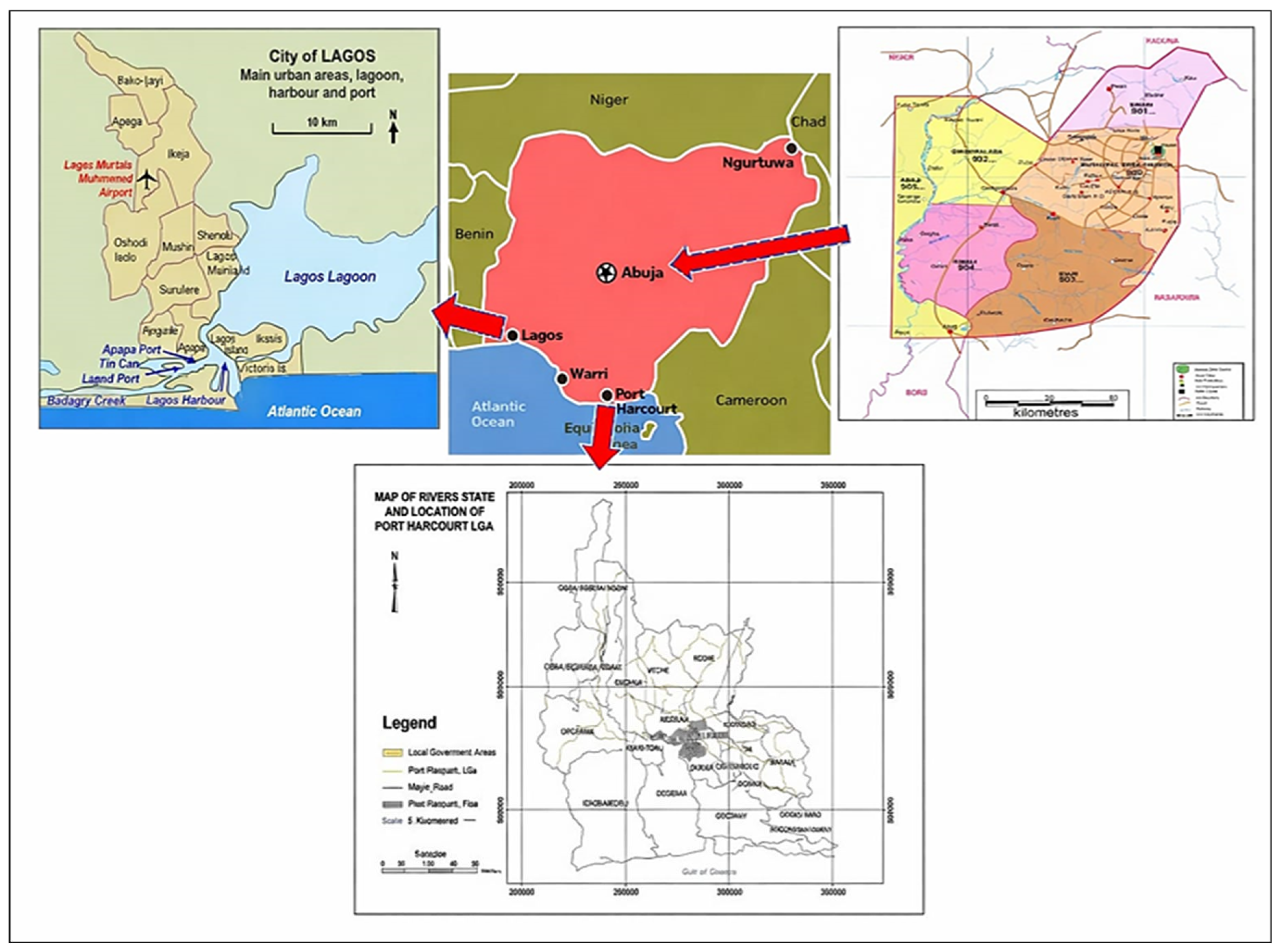
The selected case studies, such as Eko Atlantic City (Lagos), World Trade Centre (Abuja), and Greater Port Harcourt City Development Project, represent major urban, commercial, and industrial developments within Nigeria (
Figure 6 illustrates the case study cities). These cities represent major economic, political, and industrial hubs of Nigeria. Lagos represents a commercial and real estate hub, Abuja reflects institutional and high-rise developments, while Port Harcourt captures industrial and infrastructure-driven construction. This diversity ensures a comprehensive understanding of immersive technology adoption across different construction contexts. Their strategic importance and ongoing large-scale developments make them suitable contexts for examining technology-driven sustainability transitions in the construction sector [
23,
26].
Collectively, the three case studies (
Table 3) serve two key methodological functions. First, they provide contextual grounding, illustrating how the constructs in the conceptual framework manifest in real-world projects. Second, they act as qualitative validation, supporting the hypothesised relationships between immersive technologies and sustainable construction outcomes by demonstrating consistent patterns across diverse project settings [
3,
7,
15,
28].
Table 3.
Summary of Case Studies—Real-World Implementation of Immersive Technologies and Circular Economy in Nigeria’s Construction Industry.
Table 3.
Summary of Case Studies—Real-World Implementation of Immersive Technologies and Circular Economy in Nigeria’s Construction Industry.
| Case Studies | Exploration/Justification | References |
|---|
| 1. Lagos: Eko Atlantic City Project | Adoption of advanced planning and design tools, digital simulations, and smart infrastructure systems. Integration of circular economy strategies, including water recycling, coastal land reclamation using dredged sand, renewable energy initiatives, and centralised waste management systems. Relevance: Demonstrates the large-scale feasibility of immersive digital technologies in Nigerian urban mega-projects, particularly in coastal resilience and sustainable urban development.
| [30,38,39,40] |
| 2. Abuja: World Trade Centre (WTC) Development | Use of smart building systems, energy-efficient HVAC solutions, daylight optimisation, and sustainable material selection, including locally sourced construction materials. Relevance: Validates the applicability of BIM, smart technologies, and sustainability strategies in high-rise commercial developments within Nigeria’s capital city context.
| [13,41,42,43] |
| 3. Port Harcourt: Greater Port Harcourt City Development | Incorporation of circular economy principles through integrated water management, green infrastructure, flood resilience strategies, and sustainable land use planning. Emphasis on resilient construction approaches and environmentally responsive urban design in an oil-producing region. Relevance: Provides a scalable and replicable model for embedding circular economy concepts into urban planning and infrastructure development in Nigeria’s resource-intensive regions.
| [6,44,45] |
Figure 6.
Map of Nigeria depicting Lagos, Abuja, and Portharcourt case study cities. Source: [
38,
46].
Figure 6.
Map of Nigeria depicting Lagos, Abuja, and Portharcourt case study cities. Source: [
38,
46].
One of the most prominent examples is the Eko Atlantic City project in Lagos, a large-scale coastal development constructed on reclaimed land from the Atlantic Ocean. This project demonstrates the application of Building Information Modelling (BIM) and other digital tools in supporting environmental monitoring, infrastructure coordination, and energy optimisation. The integration of sustainability strategies such as water recycling systems, advanced waste management, and renewable energy technologies aligns with broader principles of the circular economy and climate resilience [
7,
15]. As such, the case provides contextual evidence of how immersive and digital technologies contribute to improved environmental performance and resource efficiency.
In Abuja, the World Trade Centre project illustrates the role of BIM and smart building technologies in enhancing energy efficiency, material coordination, and operational performance in high-rise construction. The project integrates digital design platforms with construction processes, enabling improved decision-making, reduced material waste, and optimised lifecycle performance [
3,
26]. This case highlights how immersive technologies can enhance project efficiency and resource management, thereby supporting sustainable construction outcomes.
Similarly, the Greater Port Harcourt City Development Project demonstrates the application of immersive and digital construction technologies in large-scale urban planning. The project incorporates green infrastructure, sustainable land use planning, and advanced water management systems to address rapid urbanisation challenges. Digital tools are used to simulate urban growth scenarios, optimise infrastructure deployment, and minimise environmental impacts [
23,
28]. This case provides further qualitative validation of the role of immersive technologies in improving environmental performance and stakeholder coordination.
Overall, the integration of these case studies strengthens the methodological rigour of the study by triangulating quantitative findings with real-world evidence. This mixed approach enhances the reliability and practical relevance of the research, showing that despite existing challenges, immersive technologies are already enabling resilient, efficient, and environmentally sustainable construction practices across Nigeria’s major urban centres.
3.5. Variables Measurement, Data Collection and Analysis
To ensure the validity, reliability, and robustness of the findings, this study adopted a mixed-methods approach, integrating both qualitative insights and quantitative analysis [
47]. This approach enables a comprehensive understanding of immersive technology adoption and its influence on sustainable construction outcomes by combining empirical measurement with contextual interpretation.
To address the research objectives, the variable constructs were derived from previously validated instruments within the domains of technology adoption and sustainable construction [
3,
17,
28], thereby ensuring strong content validity and measurement reliability. These established scales were carefully adapted to reflect the specific context of the Nigerian construction industry while maintaining their theoretical integrity.
The survey instrument was structured into multiple sections corresponding to the key constructs of the study. These include Implementation of Sustainable Construction Practices (ISCP) comprising three items; Implementation of Construction Project Practices (ICPP) with six items; Challenges in the Adoption of Immersive Technologies (CAIIT) with seven items; Assessment of Current Construction Practices (ACCP) with three items; Formulation of Immersive Tech-Driven Solutions for Sustainability (FITSS) with eight items; and the Use of Immersive Technologies in the Construction Industry (ITCI) with seven items (see
Supplementary Material S1). Each construct was measured using multiple indicators to capture its multidimensional nature, allowing for a more accurate assessment of the relationships within the proposed model. This structured design enhances the robustness of the measurement model and supports subsequent statistical analyses, including PLS-SEM, by ensuring adequate construct representation and internal consistency.
Respondents’ demographic characteristics and their perceptions of the study variation were collected through a structured, closed-ended questionnaire designed to ensure consistency and ease of analysis. All measurement items were assessed using a five-point Likert scale, where ‘1’ = Strongly Disagree, ‘2’ = Disagree, ‘3’ = Neutral, ‘4’ = Agree, and ‘5’ = Strongly Agree (see
Supplementary Material S2). This scaling approach is widely adopted in construction and technology adoption research due to its effectiveness in capturing attitudes, perceptions, and behavioural intentions in a quantifiable manner.
Prior to the main data collection, a pilot study was conducted with a representative sample of industry professionals, including designers, quantity surveyors, engineering professionals, and construction site personnel. The pilot test aimed to assess the clarity, relevance, and reliability of the questionnaire items, as well as to identify potential ambiguities or inconsistencies. Participants were invited to provide detailed feedback on the wording, structure, and overall comprehensibility of the instrument.
The reliability of the pilot instrument was evaluated using Cronbach’s alpha coefficients, which yielded values above the recommended threshold of 0.70 for all constructs, indicating acceptable internal consistency. These results confirmed that the measurement items were reliable and suitable for the main survey. Based on the feedback obtained, minor revisions were implemented, including rephrasing unclear items, refining technical terminology to align with industry practices, and improving the logical flow of the questionnaire. This iterative refinement process enhanced both the face and content validity of the instrument, ensuring that the final questionnaire was robust, contextually relevant, and easily understood by respondents with diverse professional backgrounds. Consequently, the survey instrument provided a reliable foundation for subsequent statistical analyses, including PLS-SEM modelling.
The population for the study was identified as a clearly defined group of 6520 construction experts, representing the total number of professionals relevant to the research context (e.g., engineers, architects, project managers, and other industry practitioners). This population was obtained through industry databases, professional bodies, organisational records, or official registries within the construction sector. To ensure that the sample accurately represents this population, the Yamane (1967) formula was applied [
48]. This formula is commonly used to calculate an appropriate sample size when the population is known, allowing for a specified level of precision (typically a 95% confidence level and 5% margin of error). By substituting the population size (6520) into the formula, a sample size of 353 participants was derived.
This approach provides a statistically robust estimate of the minimum sample size required for a finite population ensuring both representativeness and feasibility. To ensure adequate representation of different stakeholder perspectives, a stratified random sampling technique was adopted. The population was first divided into key professional groups, including architects, engineers, quantity surveyors, project managers, and contractors. This stratification ensured proportional inclusion of relevant expertise. Subsequently, respondents were randomly selected from each stratum using professional directories, institutional affiliations, and industry databases, thereby minimising selection bias and enhancing the generalisability of the findings.
To assess the potential impact of non-response bias, an early–late response comparison test was conducted, following established procedures in survey research. The results showed no statistically significant differences between early and late respondents across key variables, indicating that non-response bias is unlikely to affect the validity of the findings. Furthermore, the achieved sample size exceeds the minimum requirements for advanced multivariate analysis techniques such as Partial Least Squares Structural Equation Modelling (PLS-SEM), which require adequate observations for stable parameter estimation and reliable predictive performance [
49]. This ensures sufficient statistical power to detect meaningful relationships, moderating effects, and nonlinear patterns among the study variables, thereby strengthening the robustness and analytical validity of the study.
Data were collected via Online Google Forms between 1st August and 30th September 2025 among selected professionals in Lagos, Abuja, and Port Harcourt, Nigeria, the case study cities. Ethical standards were upheld throughout the study as participants were provided with informed consent, data were anonymised, and secure data management procedures were implemented to comply with legal requirements [
50]. Participation in the survey was voluntary, and respondents were informed about the purpose of the study. Anonymity and confidentiality were assured, and no personally identifiable information was collected. These measures ensured compliance with established research ethics standards and enhanced the credibility of the data collected.
3.6. Partial Least Squares Structural Equation Modelling (PLS-SEM) and Its Justification
Partial Least Squares Structural Equation Modelling (PLS-SEM) was employed to analyse the relationships among the study constructs. The choice of PLS-SEM is justified by several factors. First, the study adopts an exploratory and predictive research approach aimed at examining complex relationships between multiple latent constructs. PLS-SEM is particularly suitable for such models, as it focuses on maximising explained variance and prediction accuracy rather than model fit alone [
49]. Second, PLS-SEM is appropriate for models that integrate multiple independent variables and constructs, as in this study, where immersive technology adoption and construction practices jointly influence sustainable construction outcomes. Third, the method is robust to violations of normality assumptions and performs well with relatively small to medium sample sizes, making it suitable for the dataset used in this research.
Furthermore, PLS-SEM is widely applied in construction management and technology adoption studies due to its flexibility and ability to handle reflective measurement models [
49]. Unlike covariance-based SEM (CB-SEM), which emphasises model fit and requires large, normally distributed samples, PLS-SEM is robust to non-normal data and smaller sample sizes. It focuses on variance explanation and prediction, making it appropriate for this study’s objectives. Overall, using Partial Least Squares Structural Equation Modelling (PLS-SEM), allows proper tools to interpret the data, providing a robust methodological foundation for evaluating immersive technologies in construction and informing future research in similar contexts.
3.7. Data Screening
Out of the 450 distributed questionnaires, 353 valid responses were recovered, resulting in an overall response rate of 78.4%. According to ref. [
51] response rates above 60% are considered highly satisfactory in social science research, thereby enhancing the representativeness, reliability, and statistical robustness of the findings. Prior to statistical analysis, the dataset underwent a rigorous data screening and cleaning process to ensure accuracy, completeness, and analytical reliability. The first stage involved assessing missing values, as incomplete data can distort parameter estimates and reduce statistical power if left untreated. Diagnostic checks indicated that missing data were minimal and within acceptable thresholds for multivariate analysis.
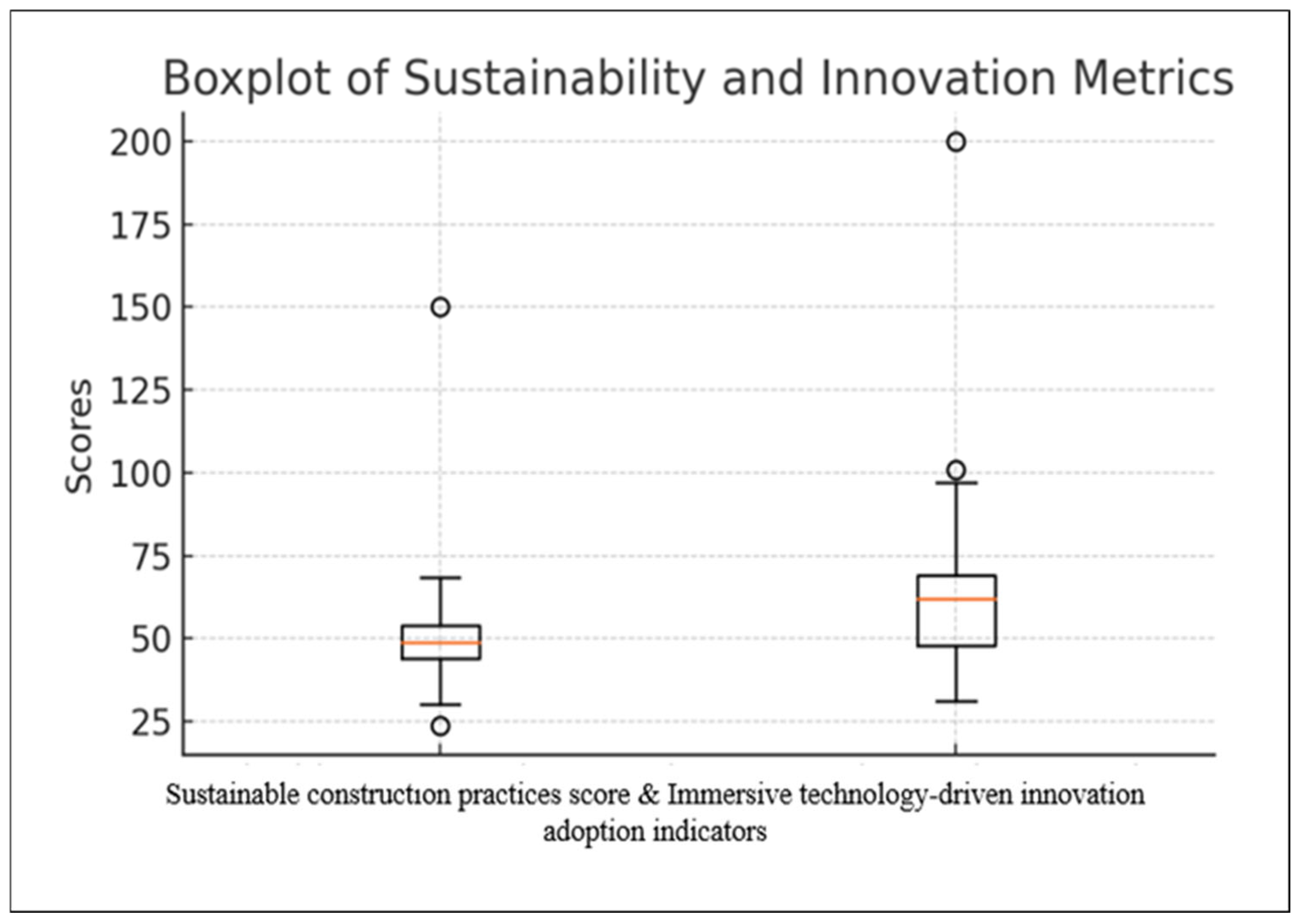
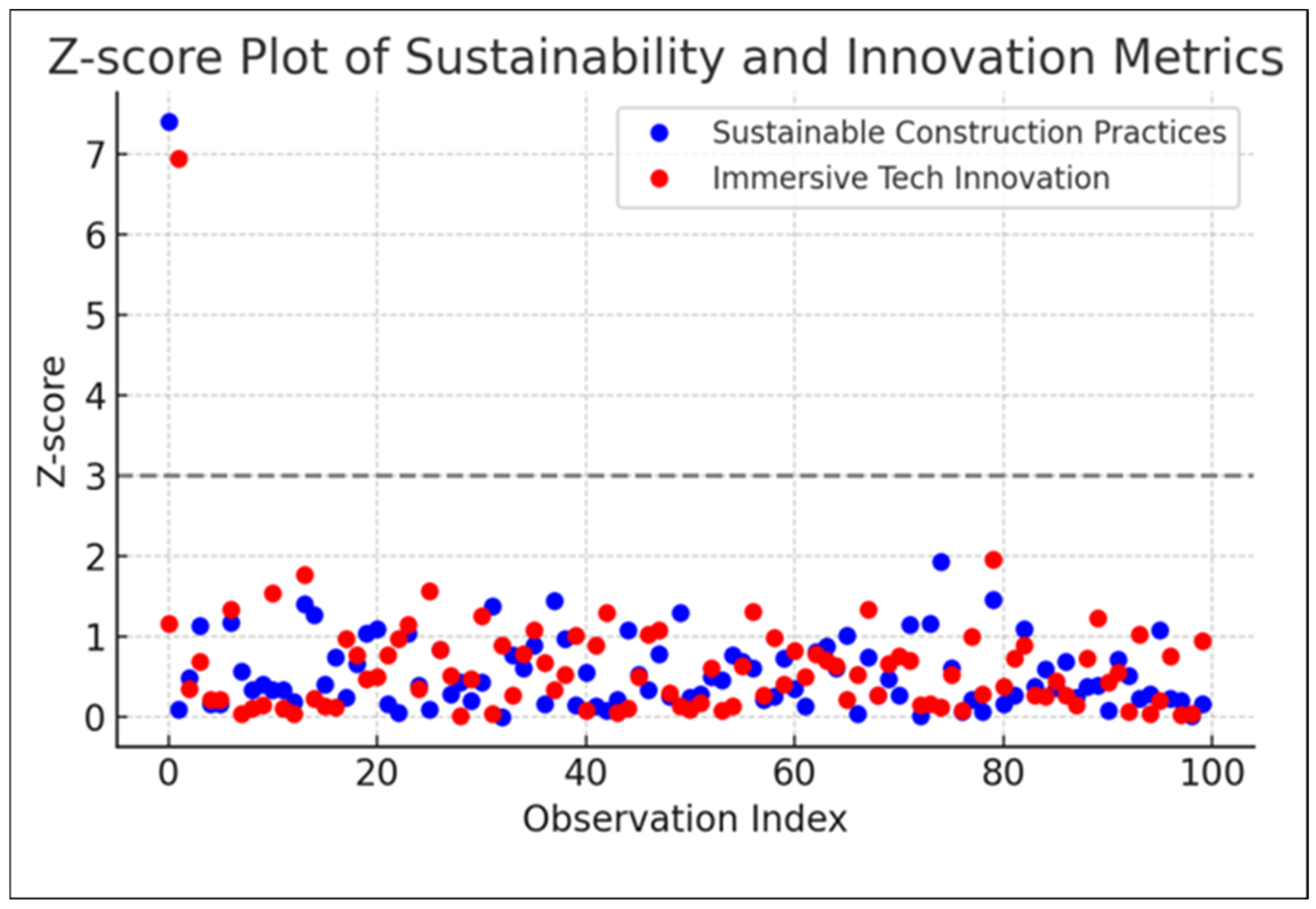
Next, outlier detection was conducted using boxplots and standardised Z-score diagnostics, as illustrated in
Figure 7 and
Figure 8. Observations with Z-scores exceeding ±3.0 were classified as extreme values, as such cases can disproportionately influence parameter estimates and bias model outcomes. These extreme cases were removed to enhance data normality, model stability, and the robustness of subsequent analyses. Following this comprehensive data screening procedure, including checks for completeness, consistency, and outliers, a final set of valid responses was retained for analysis. This cleaned dataset provided a reliable foundation for the application of advanced multivariate techniques, including PLS-SEM and neural network modelling.
The study’s conclusions were more credible because the data screening processes ensured that representative and reliable data were used for subsequent analyses, such as SmartPLS-SEM modelling and EFA. The measuring scales’ inherent consistency was evaluated using Cronbach’s alpha, and
Table 4 displays the findings. Cronbach’s alpha values for all constructs were above the suggested cut-off of 0.70, indicating adequate measurement reliability [
52]. Given these acceptable reliability levels, all measurement items were retained for further analysis.
4. Results
To assess the suitability of the dataset for factor analysis, Bartlett’s Test of Sphericity (BTS) and the Kaiser–Meyer–Olkin (KMO) measure of sampling adequacy were employed. These diagnostic tests are widely recommended to determine whether the underlying correlation matrix is appropriate for factor extraction and to ensure that meaningful latent constructs can be identified from the observed variables [
49]. The results indicated a KMO value of 0.826, which exceeds the recommended threshold of 0.70 and is classified as “meritorious” according to established guidelines [
53]. This high KMO value suggests that the variables share sufficient common variance, confirming that the sample size is adequate and the data structure is suitable for reliable factor analysis.
In addition, Bartlett’s Test of Sphericity was found to be statistically significant (
p < 0.05; df = 369), indicating that the correlation matrix is not an identity matrix. This result confirms the presence of significant intercorrelations among the variables, thereby supporting the assumption that the dataset contains underlying factor structures suitable for extraction. Collectively, these results provide strong statistical evidence that the dataset meets the necessary conditions for factor analysis. This validates the application of both Exploratory Factor Analysis (EFA) and subsequent confirmatory techniques within the PLS-SEM framework, ensuring the robustness and validity of the measurement model [
49].
4.1. Demographics
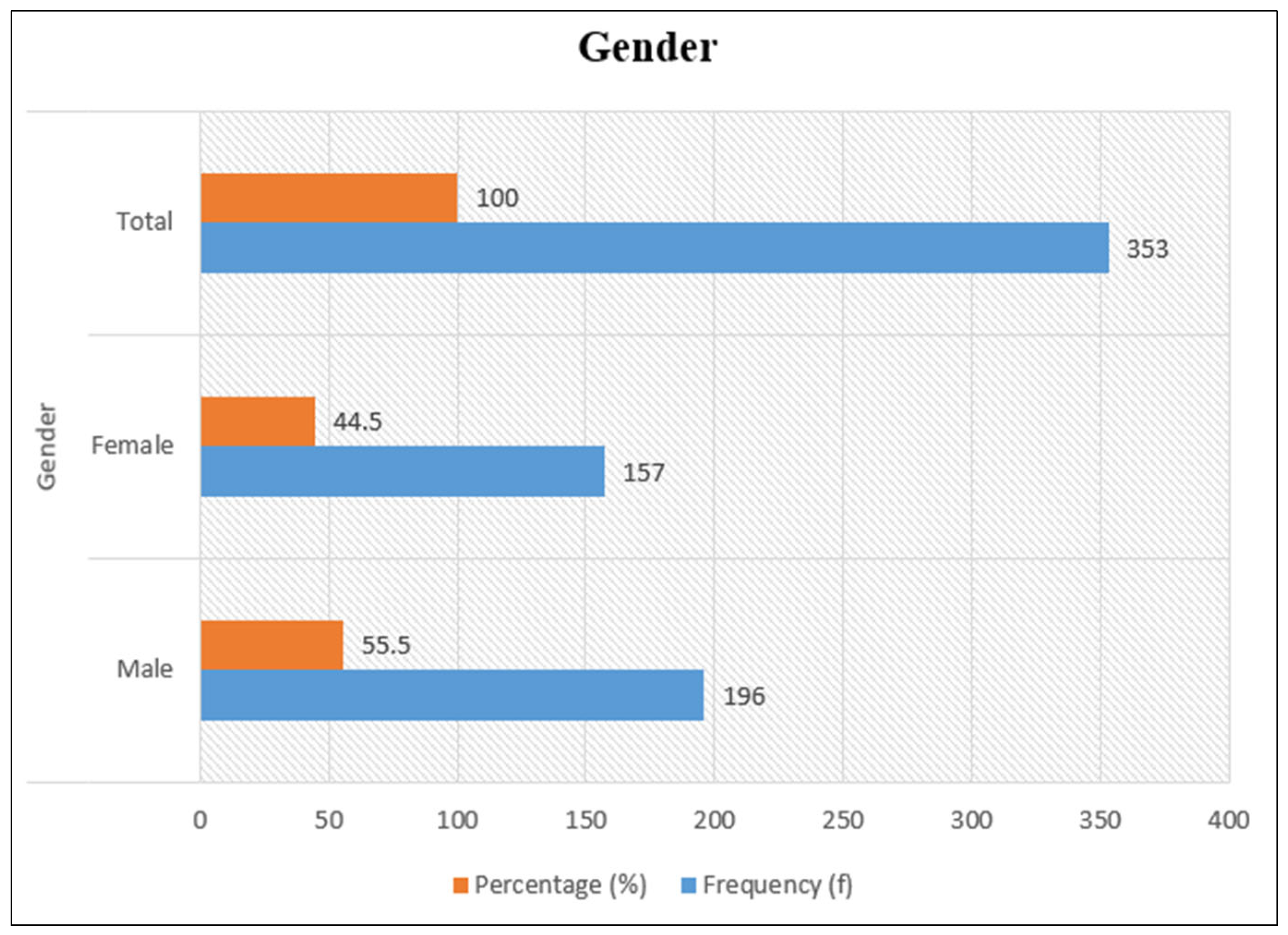
The demographic profile provides critical insights into the structure, skills, and digital readiness of Nigeria’s construction workforce, offering context for understanding perceptions of immersive technology adoption and sustainability outcomes. The 353 respondents’ sample shows a male-dominated industry, with 55.5% male and 44.5% female participants (
Figure 9), reflecting the persistent gender imbalance widely reported in construction sectors across developing economies [
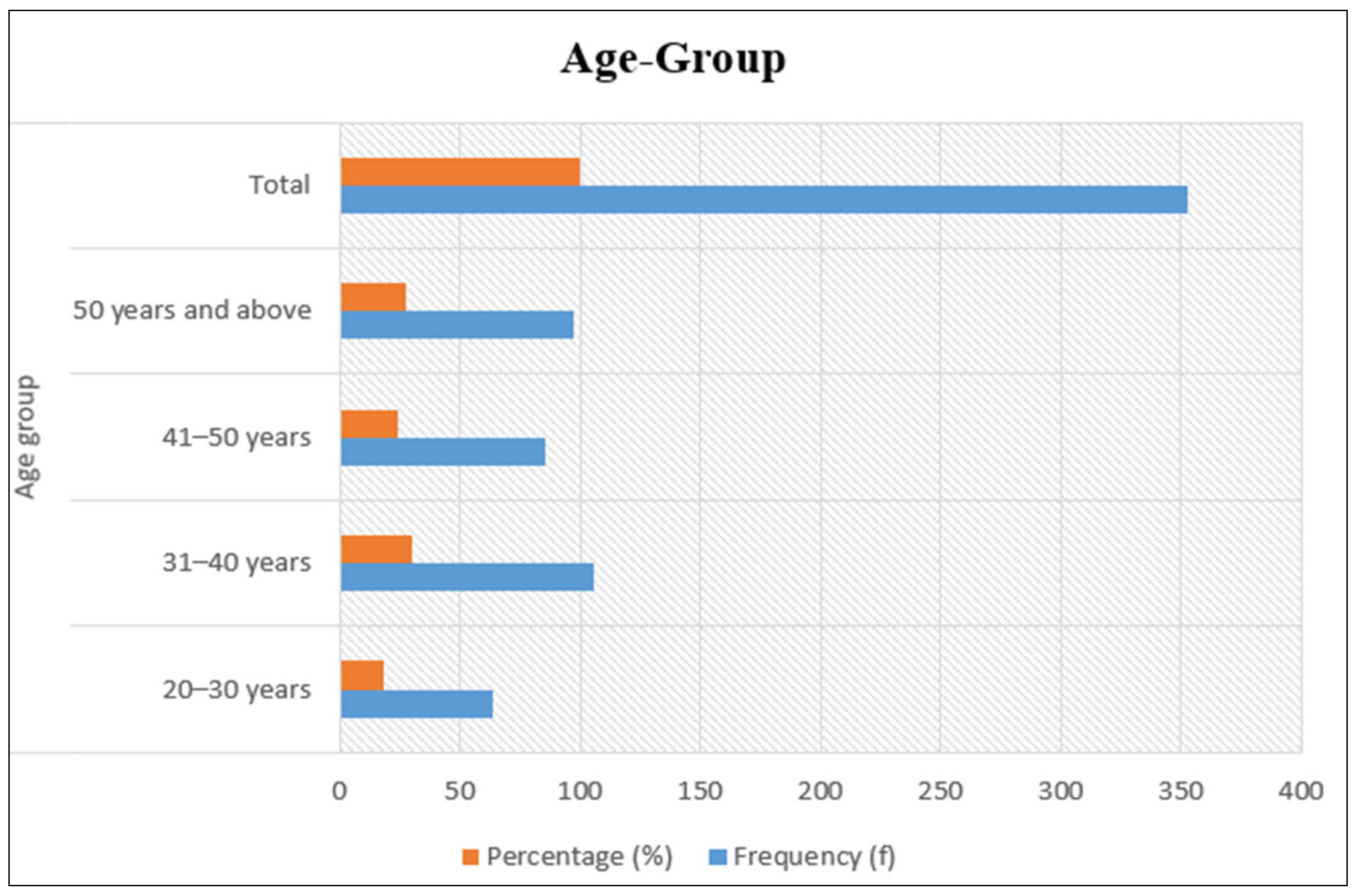
12]. Age distribution is relatively balanced (
Figure 10), with the largest cohort aged 31–40 years (30.0%) followed by 41–50 years (24.4%), indicating a mid-career dominated workforce. Notably, 27.5% of respondents are 50 years or older, highlighting an ageing professional base and underscoring concerns about attracting younger, digitally skilled professionals to support technology-driven sustainability initiatives [
54].
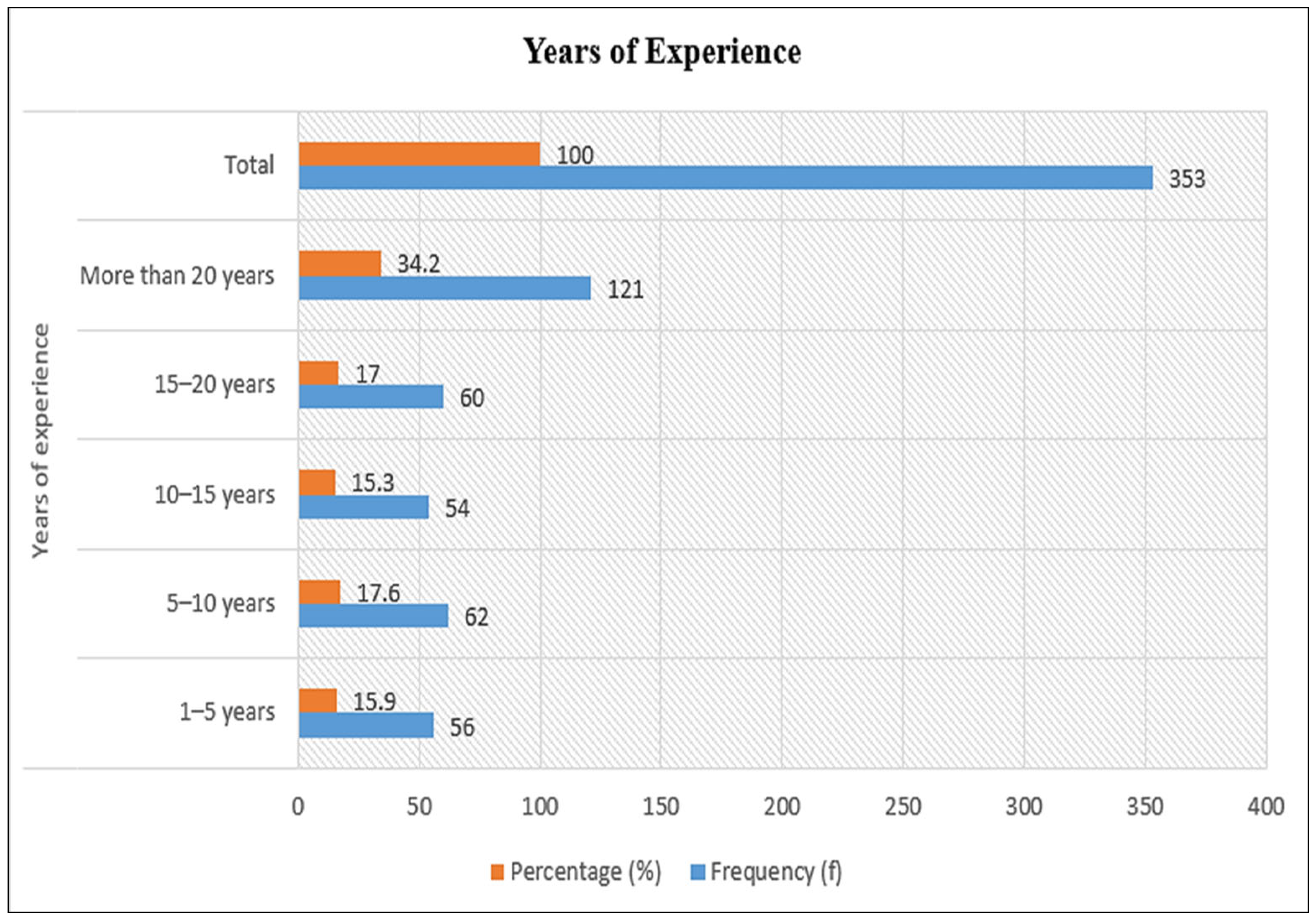
Experience levels further contextualise technology adoption potential. Over one-third of respondents (34.2%) have more than 20 years of industry experience, while only 15.9% have 1–5 years of experience (
Figure 11). While senior professionals bring valuable tacit knowledge, their predominance may slow digital transformation unless complemented by younger, technology-oriented staff [
55,
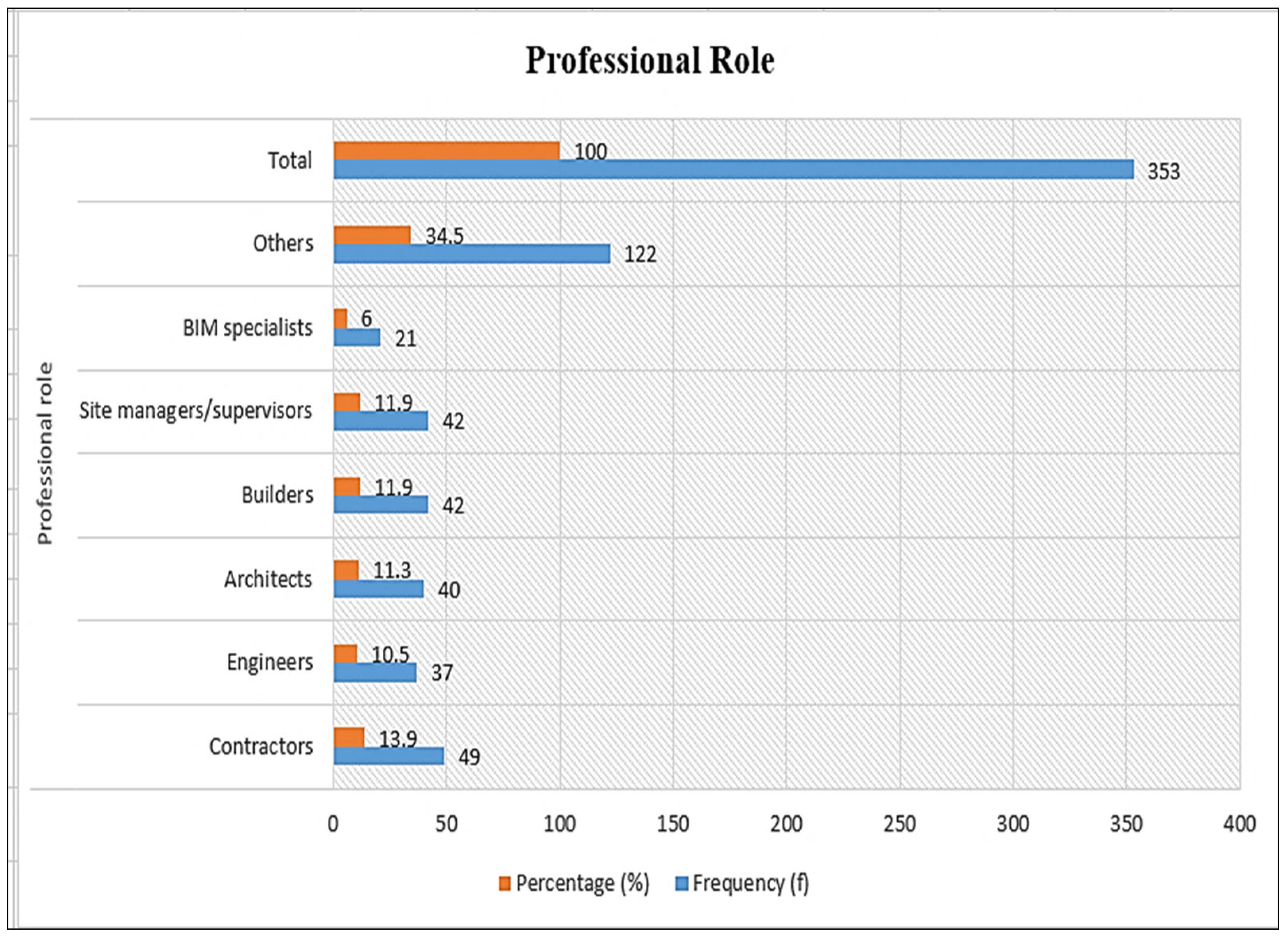
56]. The professional composition (
Figure 12) demonstrates the sector’s multidisciplinary nature, including contractors, engineers, architects, builders, and site managers. However, BIM specialists constitute only 6.0% of respondents, confirming a critical skills gap that aligns with previous Nigerian studies identifying limited technical capacity as a key barrier to immersive technology adoption.
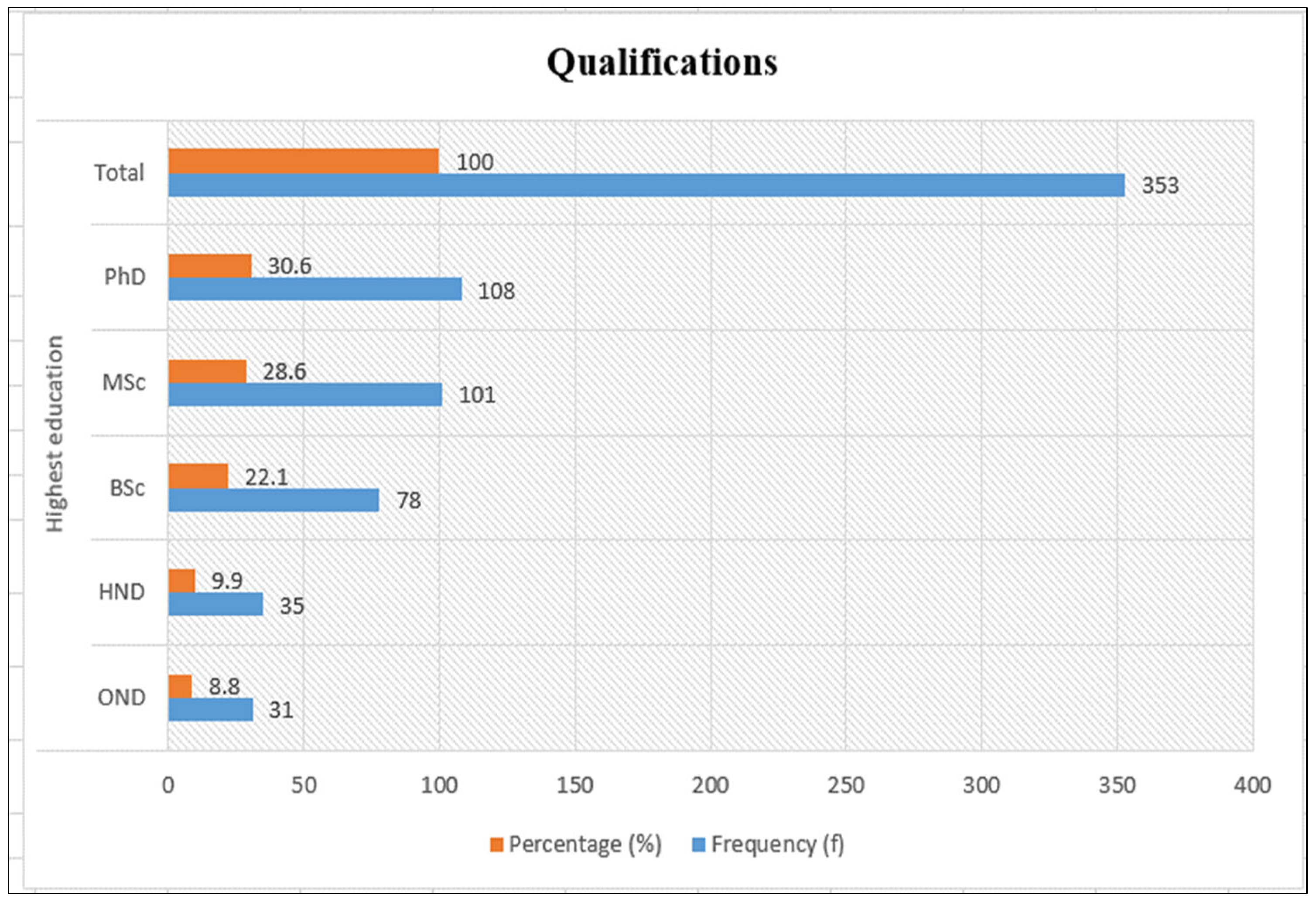
Educational attainment is notably high (
Figure 13), with over 81% of respondents holding at least a bachelor’s degree and 59.2% possessing postgraduate qualifications (MSc or PhD). This strong human capital base indicates a workforce capable of supporting digital innovation, consistent with prior findings that higher education levels enhance BIM readiness [
9,
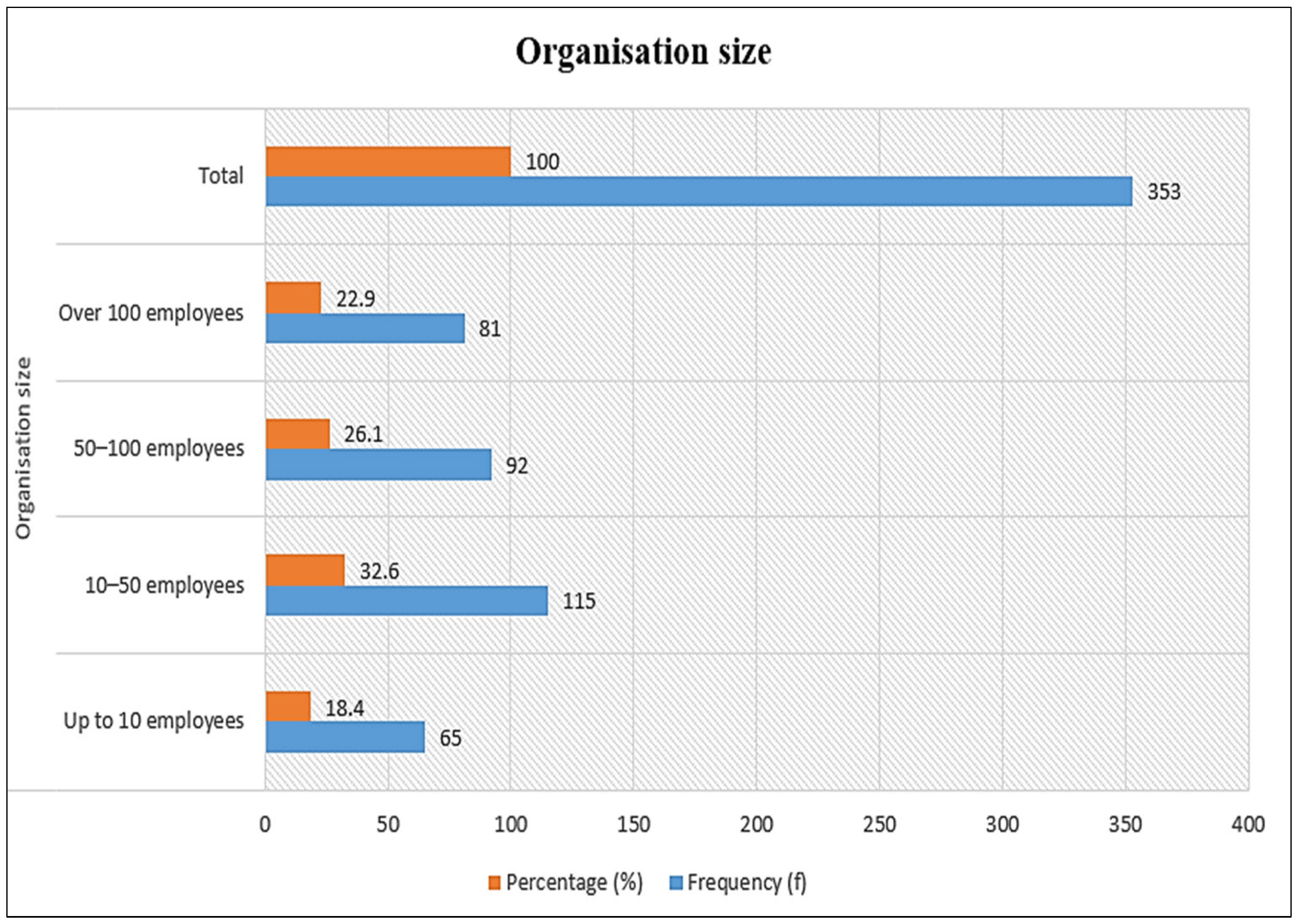
10]. Organisational size (
Figure 14) shows that 51.0% of respondents are employed in small- and medium-sized enterprises (SMEs), highlighting their pivotal role in Nigeria’s construction sector [
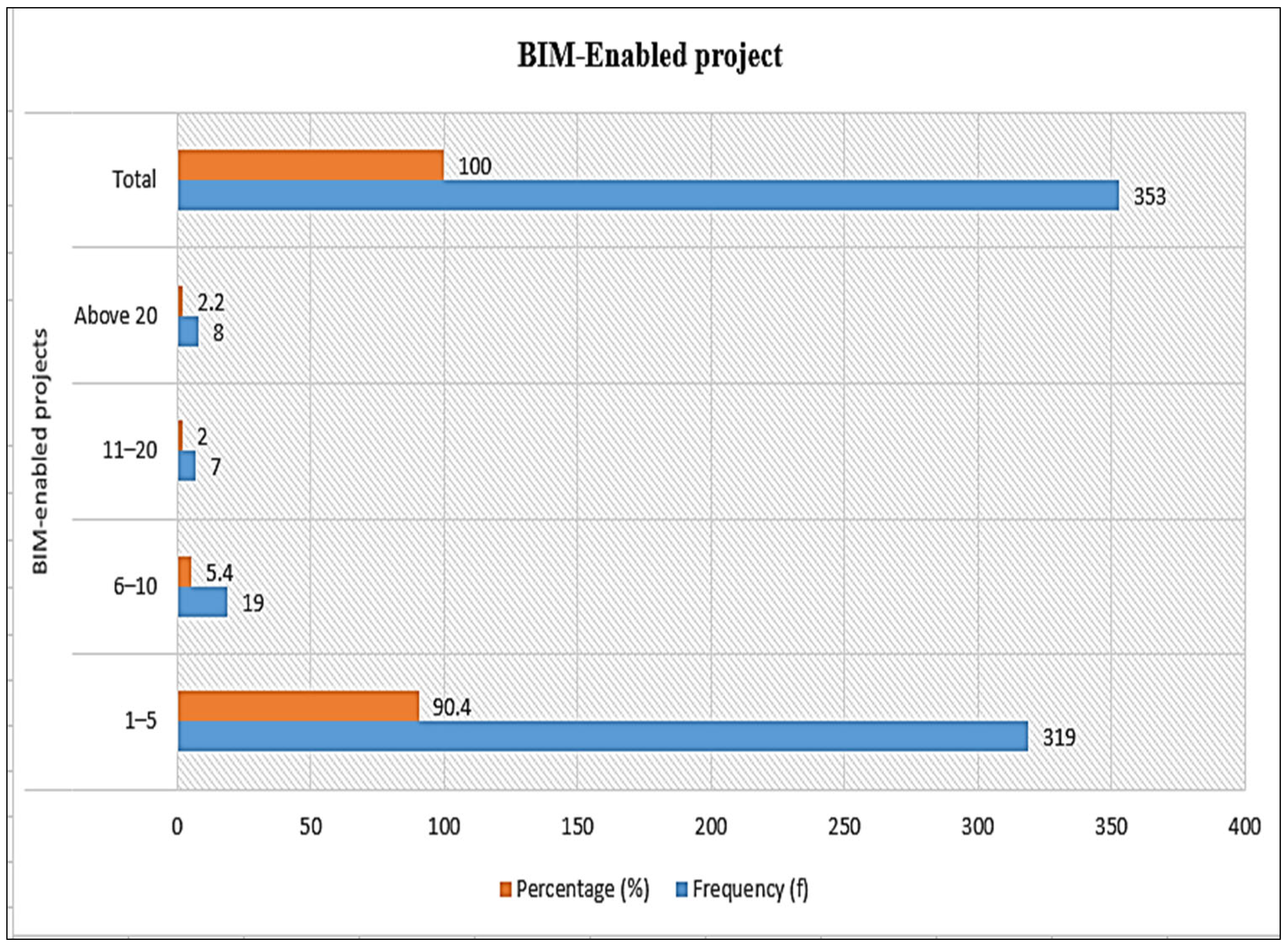
30]. Experience with technology further reflects adoption patterns: 90.4% of respondents participated in 1–5 BIM-enabled projects, while only a minority engaged in larger BIM portfolios (
Figure 15). This indicates that BIM and immersive technologies remain at an early diffusion stage, consistent with the gradual and fragmented nature of digital adoption in developing construction markets [
29,
55].
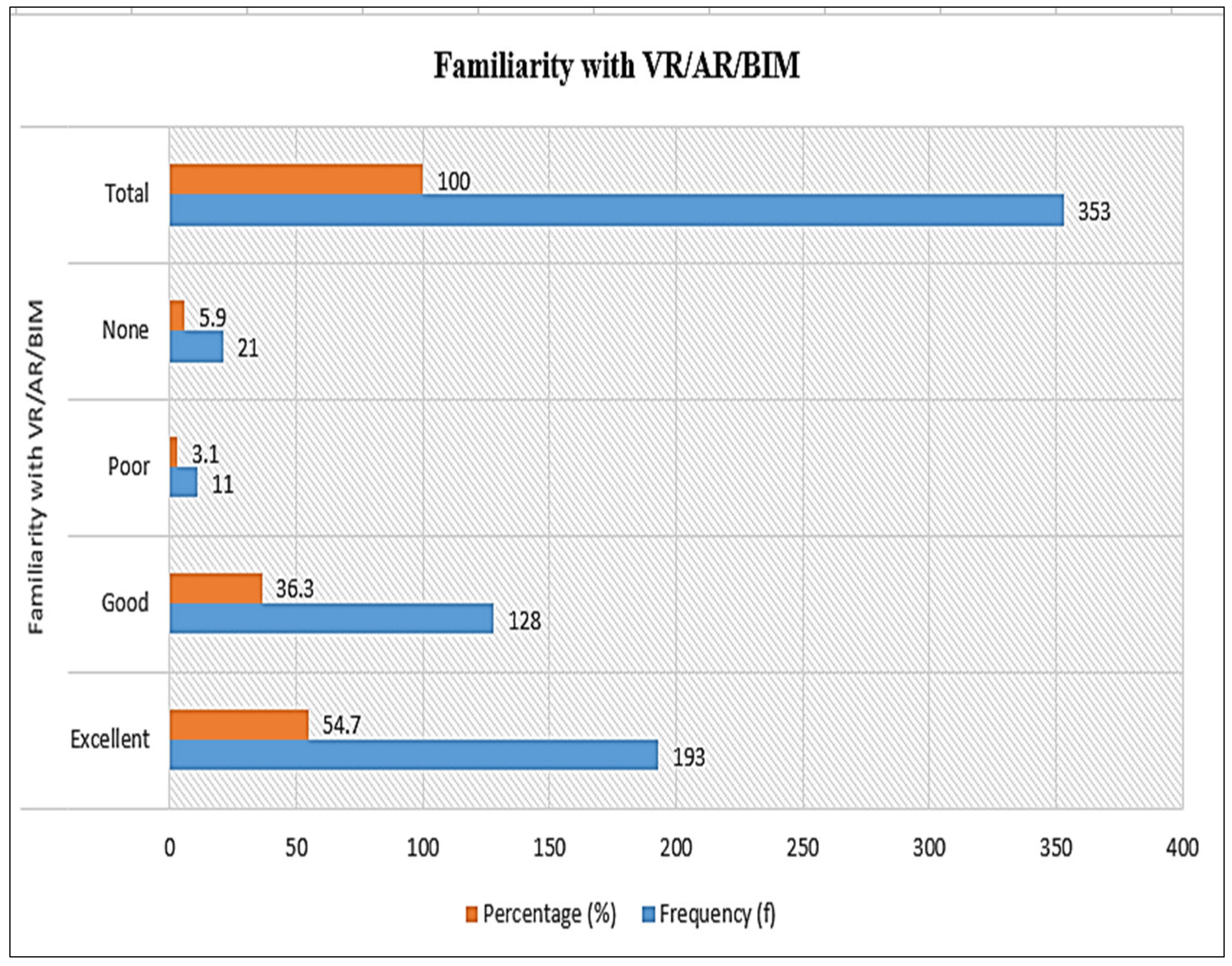
Figure 16 illustrates participants’ familiarity with VR, AR, and BIM, reinforcing the relevance of immersive technologies to sustainable construction outcomes.
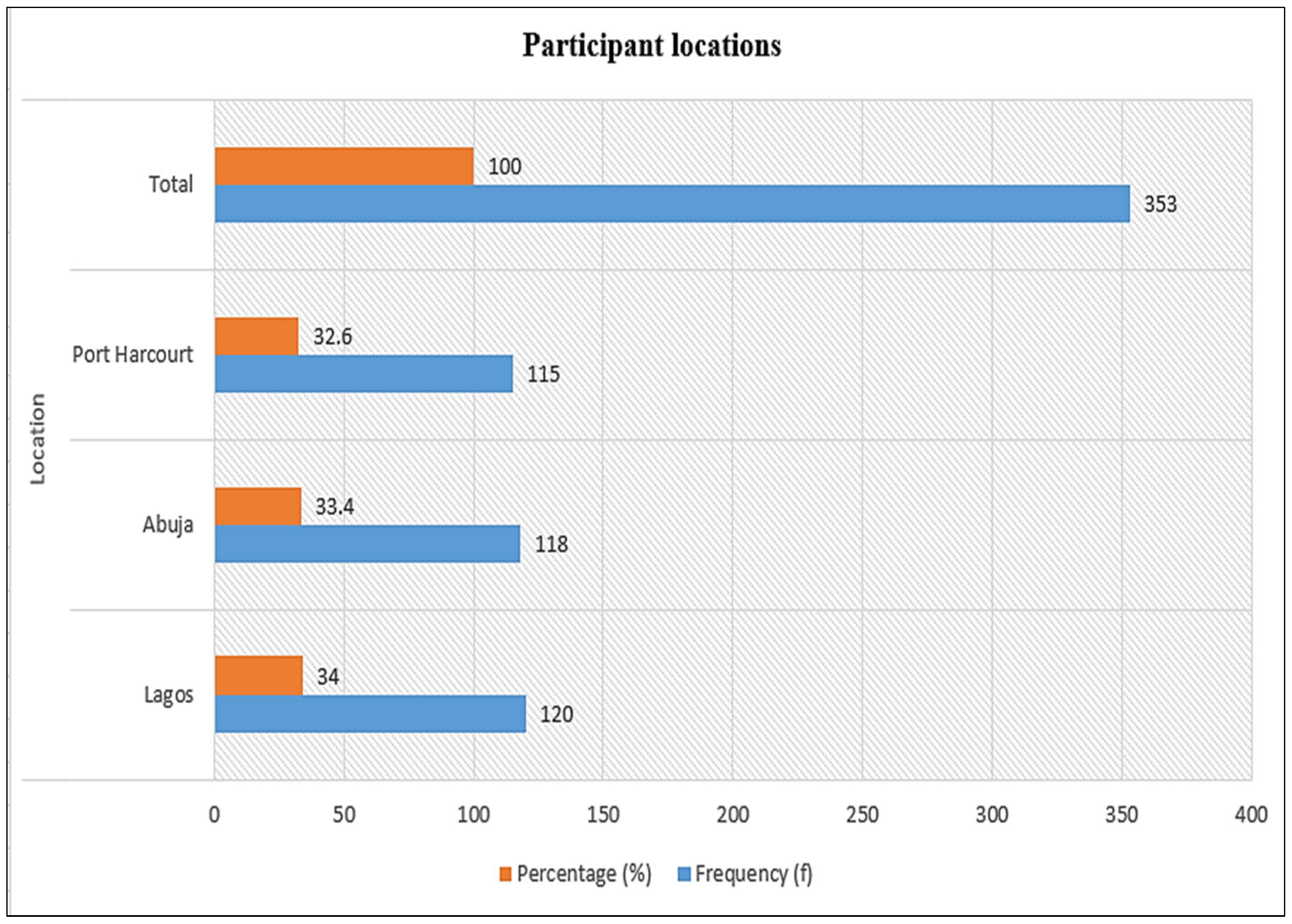
The purposive selection of professionals from three major urban construction hubs Lagos (34.0%), Abuja (33.4%), and Port Harcourt (32.6%) (
Figure 17) ensures contextual relevance. Lagos represents the commercial and real estate sector, Abuja the administrative and institutional sector, and Port Harcourt the industrial and energy-driven built environment. These locations were selected for their concentration of large-scale developments, digital construction initiatives, and sustainability-focused projects, providing a representative sample of regions with significant exposure to immersive technologies.
Overall, the demographic profile provides a meaningful foundation for interpreting the structural model. Age, experience, and professional composition influence participants’ familiarity and engagement with immersive technologies, affecting perceptions of BIM, VR, and AR adoption. High educational attainment and prior BIM exposure indicate a workforce with the technical capacity to support sustainable construction practices [
9,
10,
55]. Representation across organisational sizes and urban hubs ensures diverse perspectives, enhancing the robustness and generalisability of findings. This contextualisation demonstrates how participant characteristics shape responses within the model, supporting reliable interpretation of relationships between immersive technology adoption and sustainability performance outcomes.
4.2. Descriptive Analysis of Immersive Technology Adoption and Sustainable Construction Practices in the Nigerian Construction Industry
The descriptive statistics for the immersive technology constructs are presented in
Table 5. The Challenges in the Adoption of Immersive Technologies (CAIIT) recorded a high mean score (M = 4.83, SD = 0.612), indicating that respondents strongly recognise the barriers affecting adoption, such as cost, skills, and infrastructure. This aligns with previous Nigerian studies that report similar structural and institutional challenges in BIM and in the uptake of digital technologies [
27,
29]. The near-normal distribution of responses (skewness = −0.36; kurtosis = 0.76) and the significant t-value (t = 9.63,
p = 0.002) confirm the robustness of this perception. The Assessment of Current Construction Practices (ACCP) yielded a moderately high mean (M = 4.34, SD = 0.525), reflecting cautious satisfaction with prevailing industry practices. The slight negative skewness suggests a tendency toward favourable evaluations, which is corroborated by previous findings that Nigeria’s construction sector is improving but still constrained by inefficiencies [
10]. The result was statistically significant (t = 9.74,
p = 0.003).
For the Implementation of Sustainable Construction Practices (ISCP), a strong commitment to sustainability was observed (M = 4.68, SD = 0.683), reinforcing prior evidence that environmental performance and material efficiency are increasingly prioritised in Nigerian projects [
31,
36]. Similarly, Implementation of Construction Project Practices (ICPP) showed robust execution levels (M = 4.80, SD = 0.619), suggesting effective integration of project management and quality control systems [
57]. By contrast, the Use of Immersive Technologies in the Construction Industry (ITCI) recorded a comparatively lower mean (M = 4.14, SD = 0.658), indicating that although awareness is high, practical adoption remains cautious, an observation consistent with earlier Nigerian BIM adoption studies [
9]. Nevertheless, the result remains statistically significant (t = 7.51,
p = 0.002). Finally, Formulation of Immersive Tech-Driven Solutions for Sustainability (FITSS) achieved a high mean score (M = 4.68, SD = 0.679), confirming strong professional support for digital and immersive technologies in advancing sustainability and lifecycle performance. This finding aligns with global evidence that VR, AR, and BIM are powerful enablers of sustainable construction and circular economy strategies [
35].
4.3. Model Constructs and Validation
To examine latent structures, inter-construct relationships, and measurement validity, this study employed a two-stage analytical approach combining Exploratory Factor Analysis (EFA) and Partial Least Squares Structural Equation Modelling (PLS-SEM) using SmartPLS [
49]. EFA was first applied to identify the underlying dimensions of the observed variables related to sustainability, construction practices, and immersive technology adoption. This step is particularly important when theoretical structures are still evolving or when constructs are being empirically refined. Before EFA, the dataset obtained from 353 respondents was screened for missing values and outliers to ensure data integrity and minimise estimation bias. Sampling adequacy was assessed using the Kaiser–Meyer–Olkin (KMO) measure and Bartlett’s Test of Sphericity, which are standard prerequisites for factorability [
53]. The KMO value exceeded the recommended threshold of 0.60, indicating adequate shared variance among items, while Bartlett’s test was statistically significant, confirming the suitability of correlation matrix for factor extraction [
49].
EFA was conducted using Principal Component Analysis (PCA) with Varimax rotation, which enhances interpretability by maximising the variance of factor loadings and producing a simpler factor structure [
58]. Factors with eigenvalues greater than 1 were retained following Kaiser’s criterion, and items with factor loadings above 0.50 were considered meaningful indicators of their respective constructs [
49]. The EFA produced key outputs including factor loadings, communalities, and total variance explained, providing a robust basis for construct validation. As reported in
Table 6, six principal components were extracted from the 34 observed indicators, jointly explaining 78.31% of the total variance, which exceeds the recommended threshold for behavioural and construction research. The retained components accounted for 18.57%, 15.58%, 13.53%, 12.07%, 10.33%, and 8.49% of the variance, respectively (
Table 7), indicating strong construct representation and dimensional stability. Following EFA, Confirmatory Factor Analysis (CFA) was conducted within the PLS-SEM framework to validate the conceptual model. All retained indicators exhibited standardised loadings above 0.60 and statistically significant paths at the 5% level, confirming convergent validity and construct reliability [
49]. Together, the combined EFA–PLS-SEM approach provides a rigorous and reliable foundation for analysing how immersive technologies and sustainability practices interact within Nigeria’s construction industry, offering valuable insights for researchers, practitioners, and policymakers.
4.4. The Structural Model’s Results
The results of the measurement model (
Table 8) indicate that all constructs achieved strong reliability and validity, confirming the robustness of the proposed structural framework. Factor loadings, AVE, and CR confirm convergent validity and reliability, consistent with PLS-SEM best practices [
49]. Composite Reliability (CR) values ranged from 0.85 to 0.97, exceeding the recommended threshold of 0.70, thereby demonstrating high internal consistency across all latent variables [
49,
52]. This indicates that the indicators for each construct consistently measure the same underlying concept. Convergent validity was also well established. All indicator loadings exceeded 0.60, satisfying the minimum requirement for acceptable item reliability [
49]. Furthermore, the Average Variance Extracted (AVE) values ranged between 0.62 and 0.88, surpassing the 0.50 benchmark, which confirms that each construct explains more than half of the variance in its observed indicators [
59]. For example, the Implementation of Construction Project Practices (ICPP) construct exhibited an AVE of 0.88, reflecting a strong degree of shared variance among its indicators, while Challenges in the Adoption of Immersive Technologies (CAIIT) also demonstrated robust convergent validity with an AVE of 0.75. In addition to reporting Cronbach’s alpha and composite reliability, variance inflation factors (VIF) were calculated to assess multicollinearity among the latent constructs. All VIF values were below the recommended threshold of 5, confirming that multicollinearity does not threaten the stability of the model estimates [
49].
Discriminant validity (
Table 9), was confirmed using the Fornell–Larcker criterion, whereby the square root of each construct’s AVE exceeded its correlations with other constructs. Additionally, all indicator loadings were higher on their associated constructs than on any other, indicating that each construct is empirically distinct. Collectively, these results validate the reliability and measurement quality of the constructs representing immersive technology adoption, sustainability practices, and construction performance. This strong measurement foundation provides confidence that the subsequent structural model results accurately reflect the relationships between immersive technologies, construction practices, and sustainability outcomes in the Nigerian construction context.
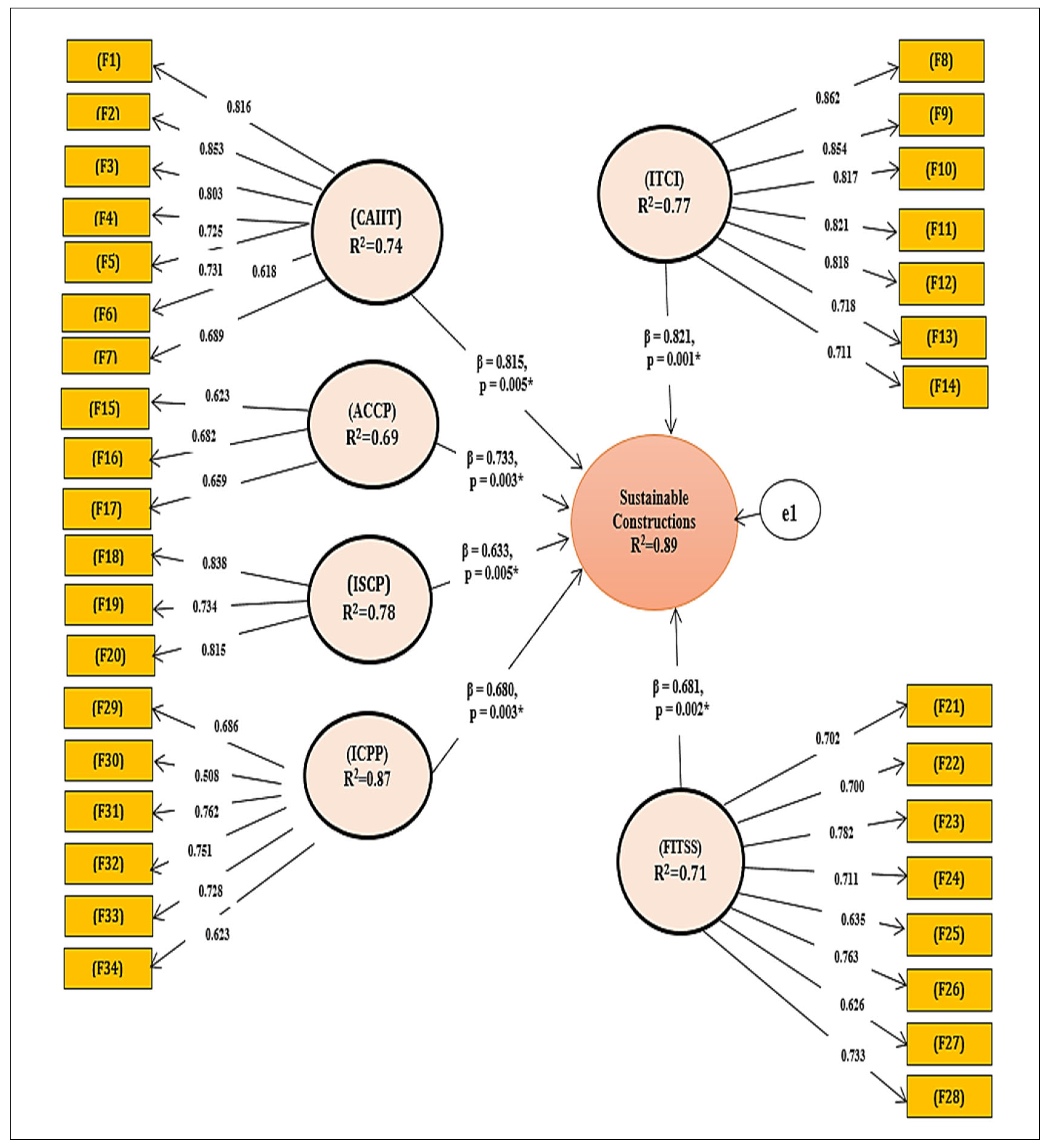
The final measurement and structural model was developed using Partial Least Squares Structural Equation Modelling (PLS-SEM) (
Figure 18) and demonstrates strong predictive and explanatory power. The model explains 89% of the variance (R
2 = 0.89) in sustainable construction outcomes, which exceeds the threshold for substantial predictive accuracy in PLS-SEM studies [
49]. This high R
2 value indicates that the selected constructs, cognitive awareness, affordability and accessibility, innovative methods, immersive technology competency, and infrastructure preparedness jointly provide a robust explanation of sustainability performance in Nigeria’s construction sector. All structural paths were statistically significant (
p < 0.01), confirming the stability and reliability of the proposed framework [
49,
60].
The individual R
2 values ranging from 0.69 to 0.87 further demonstrate strong explanatory power across the endogenous constructs, indicating that immersive technologies and strategic readiness account for a substantial proportion of variation in sustainable construction practices [
18,
30]. Moreover, the path coefficients (β = 0.633 to 0.821) reveal strong and meaningful relationships between immersive technology use, stakeholder awareness, innovation, and sustainability outcomes, highlighting these factors as key drivers of resilient and environmentally responsible construction in Nigeria’s urban environment [
1,
5]. Bootstrapping was employed to estimate T-statistics and confidence intervals, ensuring the statistical significance and reliability of each structural path [
49]. The results show that all T-values were significant at the 95% confidence level, confirming the robustness of the hypothesised relationships.
The model’s goodness-of-fit (GOF) indices (
Table 10) fall within acceptable thresholds, indicating an adequate overall model fit and confirming the suitability of the measurement framework [
61]. Factor extraction and rotation converged after six iterations with significant loadings (
p < 0.05), demonstrating strong construct validity [
49]. Finally, all six hypotheses presented in
Table 11 were supported (
p < 0.05;
p < 0.01), reinforcing the central role of immersive technologies in advancing sustainable construction practices in Nigeria.
4.5. Model Power Results and Validation
In line with established PLS-SEM evaluation procedures, model power analysis evaluates whether the study has sufficient capability to detect meaningful relationships among constructs. It is typically assessed using criteria such as sample size adequacy, effect sizes (f
2), and the model’s explanatory power (R
2). Thus, effect size (f
2) and predictive relevance (Q
2) were assessed to evaluate the robustness and explanatory power of the structural model [
49]. The f
2 statistic provides insight into the relative contribution of each exogenous construct to the endogenous variable, while Q
2 assesses the model’s ability to predict outcomes beyond the estimation sample through a blindfolding procedure. Additionally, moderate to high R
2 values suggest that a substantial proportion of variance in sustainable construction is explained by the model.
The results indicate that the latent constructs, particularly those related to emerging and immersive technologies, make a meaningful contribution to explaining variations in Sustainable Construction outcomes. A substantial f
2 value suggests that these technologies are not only statistically significant but also practically important in influencing sustainability performance within the Nigerian construction sector. This implies that increased adoption and effective implementation of immersive technologies can lead to tangible improvements in construction sustainability. Similarly, the positive Q
2 values confirm that the model possesses strong predictive relevance [
49], demonstrating its capability to reliably forecast sustainability outcomes in contexts beyond the sample used in this study. This predictive strength is essential for supporting data-driven decision-making and aligns with prior research emphasising the role of digital technologies in enhancing sustainability performance in the built environment [
1,
5]. The following equations reflect how the latent constructs, such as Emerging Technologies, impact the outcome variable, such as Sustainable Constructions, within the Nigerian construction sector:
The effect size (f
2) measures the individual contribution of each predictor to the explained variance R
2 of the dependent variable:
The full model explains R
2 = 0.81, and excluding “sustainability indicators” drops R
2 to 0.70:
Thus, a reported f
2 = 0.231 for sustainability indicators indicates a medium-to-large effect size per Cohen’s thresholds:
- 2.
Predictive Relevance (Q2) Equation
Predictive relevance (Q
2) is calculated using the Stone–Geisser test (blindfolding technique) to assess how well observed values are reconstructed by the model:
where
Given:
Q
2 > 0.35 indicates moderate to strong predictive relevance [
49]
Model’s result: Q2 > 0.35 confirms reliable out-of-sample predictive power.
- 3.
Model Implication Summary
Strong path coefficients βi, confirmed by significance (p < 0.05)
Notable effect size f2 = 0.231, indicating practical influence
Predictive relevance Q2 > 0.35, supporting external validity and generalisability
While global goodness-of-fit (GOF) indices are of limited value in PLS-SEM, the model was evaluated using key PLS-SEM criteria, including R
2, f
2, Q
2, and path coefficient significance. These metrics provide a more meaningful assessment of explanatory power and predictive relevance [
49,
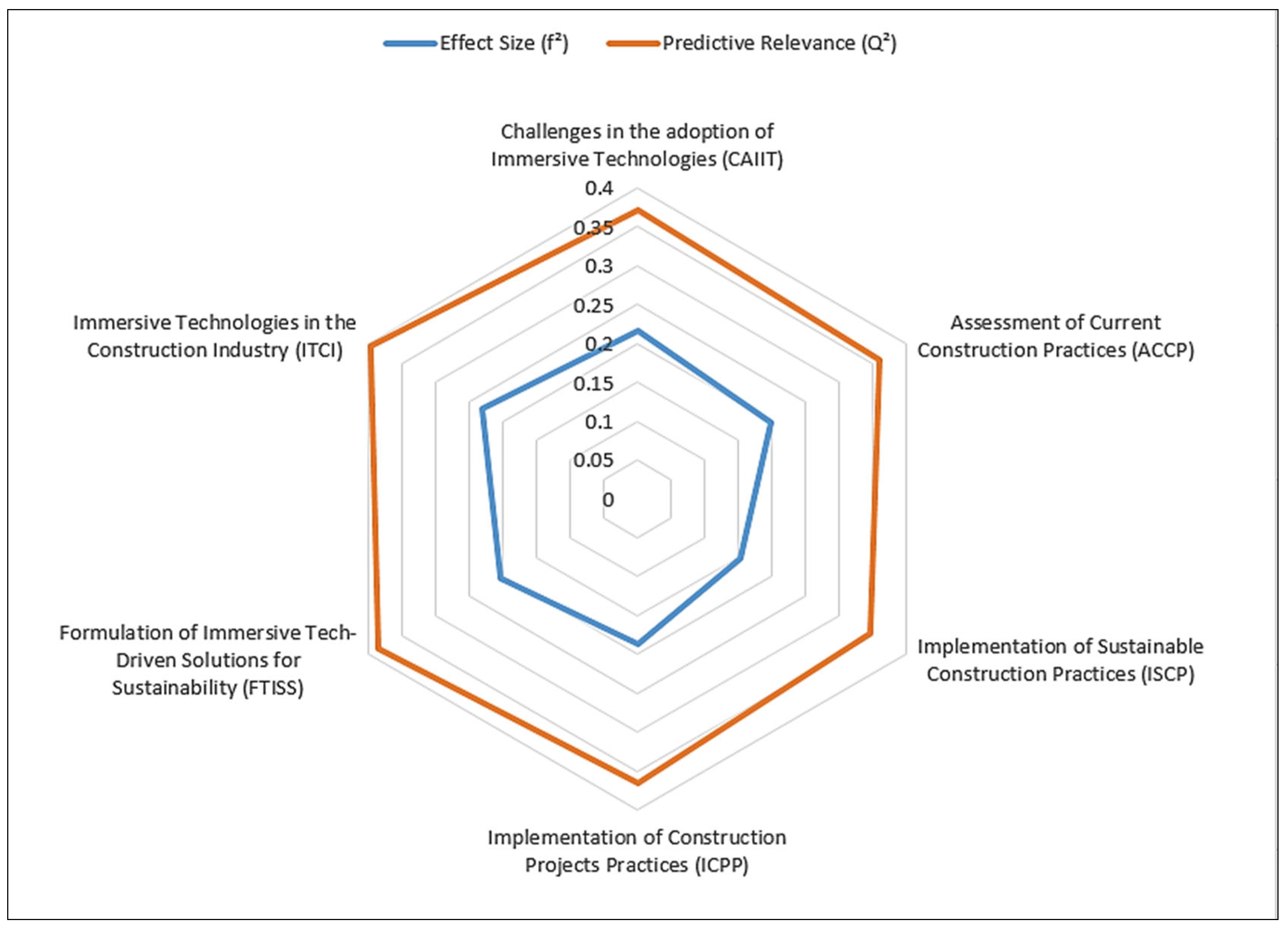
58]. As illustrated in
Figure 19, the effect sizes (f
2) and predictive relevance (Q
2) of the latent constructs providing insight into the practical significance and predictive strength of the model. The findings indicate that several predictor outcome relationships exert a meaningful influence on Sustainable Construction, with sustainability indicators demonstrating a particularly notable effect (f
2 = 0.231). According to established PLS-SEM guidelines, this represents a medium-to-large effect size [
49], suggesting that the included constructs play a substantive role in shaping sustainability outcomes within the Nigerian construction sector. In practical terms, this implies that improvements in these factors such as the adoption of immersive technologies and enhanced construction practices can lead to measurable gains in sustainability performance.
Furthermore, the Q
2 values exceed the recommended threshold of 0.35, indicating moderate to high predictive relevance [
49,
58]. This demonstrates that the model is not only statistically robust but also capable of reliably predicting sustainability outcomes beyond the sample used in this study. Such predictive capability is particularly important in construction research, where decision-makers require dependable tools to forecast the impacts of technological and managerial interventions. These findings are consistent with prior studies that emphasise the growing importance of predictive modelling in achieving sustainable construction and urban development goals [
3,
7,
15].
The combined application of Partial Least Squares Structural Equation Modelling (PLS-SEM) and Exploratory Factor Analysis (EFA) further strengthens the robustness of the results. While PLS-SEM facilitates the examination of complex relationships among latent constructs, EFA ensures dimensional clarity, construct purification, and improved measurement accuracy [
49,
58]. This integrated analytical approach enhances the reliability and validity of the findings, supporting their generalisability and alignment with existing research on technology adoption and sustainability in the built environment.
Overall, these results contribute to the literature by demonstrating that immersive technology-related constructs have not only statistical significance but also practical and predictive value in advancing sustainable construction. This reinforces the argument that digital transformation is critical to enabling more efficient, resilient, and environmentally responsible construction practices. Together, these indicators demonstrate that the model possesses adequate statistical power, ensuring reliable hypothesis testing, robust estimation of path coefficients, and meaningful interpretation of the relationships among variables.
4.6. Cross-Validation of the Model
To further enhance the robustness and generalisability of the proposed model, a cross-validation procedure was conducted by partitioning the dataset into training and testing subsets. Specifically, the full sample was randomly divided into two groups, with approximately 70% of the data used for model estimation (training set) and the remaining 30% reserved for validation (testing set). The PLS-SEM model was first estimated using the training dataset, and the resulting path coefficients and model parameters were then applied to the testing dataset to evaluate predictive consistency.
The comparison of results across the two subsets revealed a high degree of consistency in the model estimates. For instance, the coefficient of determination (R2) for Sustainable Construction (SC) showed only a marginal variation, decreasing slightly from 0.64 in the training dataset to 0.61 in the testing dataset. Similarly, the key path coefficients remained stable, with variations generally within ±0.03, and all significant relationships in the training model remained significant in the testing model.
These results indicate that the model maintains strong explanatory power and predictive accuracy across different data partitions. The minimal differences observed confirm that the structural relationships are stable and not sensitive to sample-specific variations. Therefore, the cross-validation procedure provides strong evidence of the model’s generalisability and predictive reliability, reinforcing its applicability for analysing sustainable construction outcomes in similar contexts. These findings are further supported by the PLSpredict results, which demonstrate that the model achieves satisfactory out-of-sample predictive performance, thereby confirming its robustness and practical applicability.
4.7. Analytical Case Study Findings, Synthesis and Implications
The analysis demonstrates that immersive technologies contribute positively to sustainability performance across all cases, although to varying degrees.
Table 12 summarises the application of immersive technologies across selected Nigerian case studies, highlighting key functions, measurable performance indicators, constructs and their contributions to sustainable construction outcomes. The results presented in the table also demonstrate a clear alignment between immersive technology applications and the study’s conceptual constructs, reinforcing the pathways identified in the structural model. Across all case studies, the use of BIM and related digital tools (ITCI) consistently supports sustainable construction outcomes (SC) through multiple mechanisms, including improved implementation of sustainable practices (ISCP), enhanced project execution (ICPP), and more informed assessment processes (ACCP). The findings also highlight the role of innovation-driven solutions (FITSS) in enabling resource efficiency and environmental performance improvements. However, variations across the cases indicate that adoption challenges (CAIIT), such as infrastructural and organisational constraints, can moderate the extent of these benefits. In sum, the table provides empirical support for the model by demonstrating how immersive technologies translate into measurable sustainability gains within real-world construction contexts.
In view of the aforementioned, across the three cases, immersive technologies demonstrate consistent benefits in improving resource efficiency, reducing waste, enhancing coordination, and supporting environmental performance. However, variations in outcomes reflect differences in technological maturity, organisational capacity, and infrastructure availability. These findings reinforce the study’s quantitative results, confirming that immersive technology adoption positively influences sustainable construction outcomes while also highlighting context-specific constraints.
Overall, the case studies move beyond descriptive illustration by providing analytical and empirical support for the proposed framework, demonstrating how immersive technologies translate into measurable sustainability benefits within real-world construction environments.
6. Conclusions
This study demonstrates that immersive technologies play a decisive role in advancing sustainable and efficient construction practices in Nigeria. The study indicates that immersive technologies have the potential to increase construction project productivity significantly. In a similar vein, the study advances the field by demonstrating practical benefits and potential efficiency gains, thereby promoting the wider adoption of immersive technology in the building sector. By addressing a major gap in the literature on technology-enabled sustainability in developing economies, the study provides robust empirical evidence that moves beyond conceptual discussions to a validated, context-specific framework for sustainable construction transformation.
The findings from Objective 1 show that while Nigerian construction practices are gradually improving, they remain constrained by fragmented workflows, limited digital coordination, and persistent sustainability gaps. Although project planning, scheduling, and quality control tools are increasingly used, traditional and manual processes continue to limit efficiency and environmental performance. This confirms the need for more integrated and digitally driven construction systems.
With respect to Objective 2, the results indicate high levels of professional awareness and increasing use of immersive technologies across the industry. However, adoption is still significantly hindered by high implementation costs, limited technical expertise, and infrastructure and institutional constraints. Despite these challenges, projects that applied emerging technologies demonstrated clear improvements in energy efficiency, waste reduction, stakeholder coordination, and sustainable project delivery.
Addressing Objective 3, the study developed and validated a structural model that shows immersive technologies, sustainable construction practices, and technology-driven solution development are strong predictors of sustainability performance. The model’s high explanatory and predictive power confirms its value as a strategic tool for guiding investment decisions, professional practice, and policy formulation.
From a sustainability perspective, the findings show that BIM enables life-cycle-based material selection, energy modelling, and environmental performance assessment, while VR and AR enhance visualisation, design accuracy, and stakeholder collaboration. Together, these technologies provide an integrated digital foundation to reduce environmental impacts, optimise resources, and improve resilience in construction projects. Overall, the study offers an empirically grounded roadmap for modernising Nigeria’s construction sector and aligning it with global sustainability and digitalisation goals. The framework developed is transferable to other developing economies seeking to achieve low-carbon, resource-efficient, and technologically advanced construction systems.
6.1. Study’s Implications for Sustainable Construction in Nigeria
The findings have important implications for Nigeria’s construction sector. First, immersive technologies provide a powerful mechanism for addressing key sustainability challenges, including high energy consumption, material waste, and poor project coordination. Second, the validated structural model shows that technology adoption, sustainable practices, and innovation-driven solutions are mutually reinforcing, suggesting that digital transformation should be pursued as a systemic strategy rather than isolated technology upgrades. For Nigeria, investing in BIM-based workflows, VR-enabled design reviews, and AR-assisted site operations can significantly improve energy efficiency, material use, and lifecycle performance. At the same time, overcoming adoption barriers will require targeted training programmes, digital infrastructure development, and stronger regulatory frameworks to support BIM and data-driven construction practices. Overall, this study confirms that immersive technologies are not only technical tools but strategic enablers of sustainable, resilient, and modern construction in Nigeria.
6.2. Theoretical and Policy Implications
This study makes a significant contribution to construction and sustainability theory by integrating immersive technologies (VR, AR, and BIM) into a unified, empirically validated framework for sustainable construction. By demonstrating that immersive technology usage, sustainable construction practices, and technology-driven solution formulation jointly explain a very high proportion of variance in sustainability performance (R2 = 0.89), the study advances beyond traditional sustainability models that focus mainly on materials, energy, and management practices. The findings confirm that digitalisation is not merely a supporting tool but a core theoretical driver of sustainable construction performance in developing economies.
Furthermore, the validation of constructs such as ITCI, CAIIT, ISCP, and FITSS extends technology adoption and sustainability theories into the context of the built environment. The results provide empirical support for the idea that immersive technologies function as socio-technical systems that influence organisational behaviour, decision-making, and environmental performance simultaneously. This reinforces and extends innovation diffusion and technology acceptance theories by embedding them within construction sustainability frameworks, particularly in resource-constrained settings such as Nigeria.
At the policy level, this study provides strong evidence that immersive technologies are essential for achieving national and urban sustainability goals in Nigeria. Government agencies and regulatory bodies should incorporate emerging technologies into building codes, public procurement policies, and sustainability assessment frameworks. Mandating BIM for public projects, for example, would improve transparency, lifecycle cost control, and environmental accountability. In addition, policymakers should invest in digital infrastructure, professional training, and certification schemes to support widespread adoption of immersive technologies. Incentives such as tax reliefs, innovation grants, and public–private partnerships can further encourage firms to invest in digital construction tools. By aligning digital construction strategies with climate action plans, energy efficiency targets, and sustainable urban development policies, Nigeria can accelerate the transition toward a resilient, low-carbon, and technologically advanced construction industry.
6.3. Practical Implications
From a practical perspective, the findings provide actionable insights for a wide range of stakeholders, including policymakers, construction firms, project managers, and technology providers. For construction practitioners, the results offer a data-driven roadmap for enhancing sustainability performance through the adoption of immersive technologies. The identified positive relationships between immersive technology usage and sustainable construction outcomes suggest that strategic investments in digital tools can significantly improve energy efficiency, reduce material waste, optimise resource utilisation, and enhance overall project coordination.
In practice, tools such as Building Information Modelling (BIM) enable lifecycle assessment and energy modelling at early design stages, allowing stakeholders to evaluate and mitigate environmental impacts before construction begins. Similarly, Virtual Reality (VR) and Augmented Reality (AR) facilitate improved design visualisation, real-time error detection, and enhanced collaboration among project teams. These capabilities support more informed decision-making, reduce costly rework, and improve project delivery outcomes.
For construction firms and project managers, the findings highlight the importance of integrating immersive technologies into routine workflows, including design coordination, site planning, and sustainability monitoring. However, the study also identifies key barriers such as high implementation costs, limited technical expertise, and low awareness that may hinder adoption. To address these challenges, firms are encouraged to invest in targeted digital training programmes, adopt phased implementation strategies, and establish partnerships with technology providers to facilitate knowledge transfer and reduce financial risks.
From a policy perspective, the results underscore the need for supportive regulatory frameworks and incentives to accelerate digital transformation in the construction sector. Governments and industry bodies can play a critical role by promoting standards for digital construction practices, providing funding or tax incentives for technology adoption, and supporting capacity-building initiatives. For technology providers, the findings offer insights into industry needs and adoption challenges, enabling the development of more accessible, cost-effective, and user-friendly solutions tailored to construction professionals. Overall, the integration of immersive technologies into construction practices presents significant opportunities to enhance productivity, improve environmental performance, and support the transition towards more sustainable and resilient built environments.
6.4. Limitations and Future Research
Despite its contributions, this study has several limitations that should be acknowledged. First, the use of self-reported survey data may introduce response bias, as participants’ perceptions may not fully reflect actual project performance or objectively measured sustainability outcomes. Second, the cross-sectional nature of the study limits the ability to capture dynamic changes over time and constrains the establishment of causal relationships among the constructs. Third, the geographic focus on Nigeria may restrict the generalisability of the findings to other regions with different regulatory environments, economic conditions, and levels of technological maturity.
To address these limitations, future research should adopt longitudinal and mixed-method approaches to track changes in technology adoption and sustainability performance over time, thereby strengthening causal inference. The inclusion of objective performance indicators, such as energy consumption, carbon emissions, productivity improvements, and cost efficiency, would further enhance the robustness and validity of empirical findings.
In addition, future studies could extend the proposed framework by incorporating emerging digital innovations, including artificial intelligence, machine learning, and digital twin technologies, to improve predictive accuracy and enhance generalisability. Finally, cross-country comparative studies are recommended to evaluate the scalability and transferability of the model across different construction and regulatory contexts, thereby providing a more comprehensive understanding of the role of immersive technologies in global sustainable construction practices.