


Abstract
This study investigates the soil thermal imbalance of ground-source heat pump (GSHP) systems in residential buildings in cold regions and evaluates their economic and low-carbon performance. A case study is presented of a two-star green-certified residential building in Qingdao. The building exhibits a high heating load in winter, a low cooling load in summer, a long heating season, and large load fluctuations. To tackle these characteristics, a composite energy system combining a ground-source heat pump, a peak-shaving chiller, and a peak-shaving boiler is proposed. Three scenarios are designed, in which the ground-source heat pump covers 45%, 50%, and 52.6% of the winter peak heating load, respectively. These are compared with a conventional municipal heating scheme. Load simulation, techno-economic analysis, and carbon emission assessment are performed. The results show that the scheme in which the ground-source heat pump handles 50% of the peak heating load achieves the best overall performance. It reduces the soil thermal imbalance rate from 34.47% to 7.1% and obtains the lowest 10-year life-cycle cost. The annual carbon emission reaches 32.58 kgCO2/(m2·a), representing a 33% reduction compared with municipal heating. Seasonal and diurnal optimized operation strategies are further proposed based on the optimal solution. The results provide theoretical and engineering guidance for the design and operation of low-carbon energy systems in green residential buildings in cold regions.
1. Introduction
According to statistics, the construction sector is a key area in addressing the challenges of climate change, accounting for 32% of global energy consumption and generating as much as 34% of carbon dioxide emissions [1]. In 2024, China’s operational energy consumption for civil buildings reached 1.3 billion tce, accounting for 21.8% of the nation’s total energy consumption. Carbon emissions from these buildings totaled 2.47 billion tCO2, accounting for 22.1% of the country’s total energy-related carbon emissions. Residential buildings alone accounted for 730 million tce of energy consumption, representing 56.15% of the nation’s total operational energy consumption in civil buildings. Their carbon emissions totaled 1.41 billion tCO2, accounting for 57.09% of the total carbon emissions from civil buildings nationwide [2]. Residential energy consumption primarily stems from heating, cooling, lighting, and household appliances, with heating accounting for over 50% of building energy use. Therefore, reducing residential heating energy consumption is a critical step in achieving energy conservation and carbon reduction in the building sector. Green building, as a sustainable architectural concept, has become a key direction for development in the construction industry. Green residential buildings not only focus on environmental performance but also emphasize energy efficiency and economic benefits [3], making the adoption of low-carbon, clean, and renewable energy heating methods particularly crucial.
Renewable energy sources such as geothermal and air energy are gradually emerging as clean heating solutions. Among these, geothermal energy harnesses the heat stored within the Earth’s crust. It serves as a heat source for heat pump heating systems during winter while functioning as a cooling source for air conditioning in summer [4]. This clean and highly efficient form of renewable energy delivers significant environmental and economic benefits. Ground-source heat pump technology uses shallow geothermal energy to provide heating and cooling for buildings [5], offering energy-saving, environmentally friendly benefits that have attracted increasing attention. Compared to traditional fossil fuel heating systems, ground-source heat pump systems can significantly improve energy efficiency and reduce carbon emissions during operation. In green buildings, ground-source heat pump systems have become an ideal heating and cooling solution due to their high energy efficiency, low emissions, and safety and reliability. Ground-source heat pumps use environmentally friendly refrigerants, operate quietly, and offer flexible installation with adjustable dimensions to accommodate building requirements [6]. Additionally, ground-source heat pump systems offer advantages such as extended service life and simplified maintenance, thereby contributing significantly to the sustainable development of green buildings [7].
Scholars in China and abroad have conducted extensive research on ground-source heat pump technology, verifying the benefits of utilizing geothermal energy and quantifying its energy efficiency. Smith et al. [8] conducted a comparative analysis of geothermal energy versus other heat sources for district heating applications, proposing that geothermal energy should be utilized wherever possible in the design of district heating infrastructure. Youngsik Kwon et al. [9] developed a dynamic energy consumption simulation model that comprehensively considers occupant status and system operating conditions, and quantitatively analyzes economic viability and system performance. Furthermore, they compared ground-source heat pump systems with conventional systems, district heating (DH), and electric heat pump (EHP) systems. Results indicate that ground-source heat pump systems can enhance heat pump performance by up to 12.6%, reduce annual operating costs by 20.8% to 33.1%, and lower carbon dioxide emissions by 49.1%. Puttige et al. [10] proposed a hybrid model for ground-source heat pump (GSHP) systems, employing analytical and artificial neural network models to accurately represent their long-term performance. They also introduced a method to enhance the system’s operation, enabling it to reduce heating costs for buildings by 64 tons and CO2 emissions by 92 tons, while maintaining stable ground temperatures. Khaleghi et al. [11] propose that ground-source heat pump systems have been shown to be a mature technology for heating and cooling in residential, public, and commercial buildings. Zhang et al. [12] employed numerical simulation methods to predict the evolution of the subsurface temperature field during operation of a ground-source heat pump system. They identified two development approaches capable of mitigating subsurface heat accumulation and, based on these findings, evaluated the potential for deploying ground-source heat pump systems within the study region. Sun [13] analyzed the geothermal and geological conditions and heating/cooling requirements at a hospital in Shangqiu City, proposing a practical solution. The findings indicate that utilizing geothermal energy for building heating and cooling delivers significant long-term economic benefits and environmental advantages. Shen et al. [14] outlined groundwater source heat exchange technology, high-efficiency heat exchange well technology, and ground-source heat pump heat exchange technology for shallow geothermal heating applications. Through case studies analyzing the utilization benefits of shallow geothermal energy, their research demonstrated that geothermal heating delivers favorable social, environmental, and economic benefits. Wang et al. [15] demonstrated through a comparison of the full life-cycle carbon emissions of ground-source heat pump systems versus conventional HVAC (Heating, Ventilation and Air Conditioning) systems in residential buildings that ground-source heat pump systems represent a viable solution for sustainable building design in North China. Their significant potential for emission reduction can be further enhanced through grid decarbonization and integration with renewable energy sources.
Ground-source heat pump heating technology has seen fairly widespread application, but has also revealed certain issues. For instance, in colder regions with extended heating seasons, the heating period typically exceeds the cooling period, resulting in winter heating loads that are considerably greater than summer cooling loads. The application of ground-source heat pump heating technology inevitably results in greater heat extraction from the soil during winter than heat discharge into the soil during summer each year. Prolonged operation consequently reduces the annual average ground temperature. This reduces the available temperature differential for heat extraction, thereby decreasing extraction efficiency. Moreover, this issue will progressively worsen. In response to this issue, some scholars have suggested that a hybrid ground-source heat pump system can resolve the thermal imbalance in the soil; furthermore, the system’s operating strategy can be optimized to achieve the best possible results [16].
Scholars both in China and abroad have confirmed the effectiveness of hybrid energy systems in mitigating thermal imbalance in the ground associated with ground-source heat pumps. Liu et al. [17] conducted a feasibility and performance study of a hybrid ground-source heat pump system for an office building in a cold climate. Three systems were designed and simulated: a ground-source heat pump system (HGSHP) with a boiler as an auxiliary heat source, a ground-source heat pump system (GSHP), and a conventional electric water heater + boiler system (WB). Simulation results indicated that the HGSHP system with boiler auxiliary heating effectively resolved cold accumulation issues and reduced conventional energy consumption. Wang et al. [18] employed an optimized design methodology for ground-source heat pump systems integrated with auxiliary gas-fired boilers, developing specialized software that includes interfaces, internal algorithms, and result analysis. The project demonstrated the practicality of hybrid ground-source heat pump systems with gas boilers and validated the reliability of the design simulation software. Results indicate that gas boilers effectively reduce peak loads on ground heat exchangers (GHEs), thereby shortening the required design length of buried piping, resolving underground thermal imbalance issues, and enhancing overall system efficiency. Hu et al. [19] selected 16 Chinese cities to analyze the thermal imbalance characteristics of different building types and the corresponding optimization strategies, and conducted a detailed examination of the selection criteria and the feasibility of soil cold-storage solutions. Ultimately, they determined the optimal thermal storage solutions to address soil thermal imbalance in residential and office buildings across these sixteen cities.
Other researchers have confirmed that hybrid ground-source heat pump systems are also highly effective at reducing equipment costs and improving system economic efficiency. Li et al. [20] conducted a study on a hotel building in Jinan, utilizing the Geothermal Star numerical simulation platform to simulate and compare the subsurface temperature field for both a standalone ground-source heat pump system and a hybrid system integrating chillers with ground-source heat pumps. Findings revealed that when ground-source heat pumps meet 70% of cooling demand, chillers cover the remaining 30%. This configuration was found not only to effectively reduce investment costs but also to facilitate the recovery of the soil temperature field. Bina et al. [21] used TRNSYS 18 and MATLAB software to model and validate a hybrid ground-source heat pump system installed in an office building in Akita City, Japan. This hybrid system is equipped with auxiliary heating and cooling units, and the study confirmed that such systems can improve performance and reduce operating costs.
Luo et al. [22] systematically reviewed 2754 case studies of ground-source heat pump systems in China between 1989 and 2021. They found that half of the top 20 cities by number of ground-source heat pump systems installed were located in the Yangtze River Delta region, whilst only 30% were in severely cold and cold regions. These figures clearly demonstrate that research into the suitability of ground-source heat pump systems and their engineering applications in cold regions is lagging behind. Although a considerable body of research has explored the issue of thermal imbalance in the ground-source heat pump system, and numerous solutions—such as the integration of composite systems and the optimization of operating strategies—have been proposed, there remain significant gaps and unresolved issues in research specifically targeting green residential buildings in cold regions. These are manifested in the following areas:
1. Cold regions encompass diverse climatic zones with markedly distinct geographical characteristics. Existing research on soil thermal imbalance in ground-source heat pumps has predominantly focused on northern provincial capitals such as Jinan and Beijing. Targeted studies concerning residential buildings in cold Zone A cities like Qingdao remain relatively scarce, making it challenging to precisely match the unique load characteristics of this region—which combines coastal climate features—with its predominantly granitic geothermal geological conditions.
2. Secondly, while existing research has confirmed the effectiveness of hybrid systems combining ground-source heat pumps with peak-shaving equipment in mitigating thermal imbalances, systematic studies on the optimal load distribution ratio between these components remain lacking. It remains unclear how to balance initial investment and long-term operational costs while ensuring both soil thermal equilibrium and system operational stability. Resolving this core issue directly impacts the scientific validity of hybrid system design and the economic viability of engineering implementation.
3. Finally, existing research predominantly focuses on either the technical feasibility or economic viability of ground-source heat pumps in isolation, lacking a comprehensive quantitative assessment that integrates soil thermal balance, whole-life-cycle economics, and operational-phase carbon emissions within a unified framework. This approach struggles to meet the dual objectives of low-carbon energy systems and economic efficiency demanded by green buildings in the context of dual carbon.
Therefore, this study selected a two-star green residential project in Qingdao as its subject. Addressing its load characteristics—namely, an extremely high winter heating load, a low summer cooling load, a prolonged heating season, and significant load fluctuations—it constructs a hybrid energy system comprising a ground-source heat pump, peak-shaving chillers, and peak-shaving boilers. Through detailed load modeling, geothermal condition surveys, and multi-scenario technical–economic comparisons, this study systematically analyses the performance of ground-source heat pumps under peak thermal loads of 45%, 50%, and 52.6%, as well as a municipal heating scheme. This study quantitatively compares full-life-cycle economic costs and operational-phase carbon emissions across options to identify the optimal load allocation scheme for hybrid energy systems in cold regions. It further proposes seasonally and time-segmented optimized operation strategies that balance soil thermal equilibrium, economic viability, and low-carbon benefits. This research provides theoretical underpinnings and practical engineering guidance for designing and operating low-carbon energy systems in green residential buildings within cold climates.
2. Data and Methods
2.1. Case Selection
This study selected a newly constructed two-star green residential project in Qingdao, China, as its subject. The project comprises 13 buildings, including 12 commercial-residential buildings totaling 170,961.69 m2 and 1 apartment building with a floor area of 19,270 m2. The design service life of all buildings is 70 years. Commercial residences use ground-source heat pumps for both heating and cooling in both winter and summer. Apartment residences employ air conditioning for cooling in summer and ground-source heat pumps for heating in winter. Therefore, the cooling area for the ground-source heat pump is 170,961.69 m2, and the heating area is 190,231.69 m2. The heating season for this project runs from 1 November to 20 April of the following year, totaling 171 days. The cooling season runs from 1 May to 30 September, totaling 153 days.
2.2. Boundary Condition Analysis
2.2.1. Design Initial Conditions
According to the “Code for Design of Heating, Ventilation, and Air Conditioning in Civil Buildings” GB 50736-2012 [23], the winter and summer indoor design temperatures and related outdoor design parameters for the project location are shown in Table 1.
Table 1.
Outdoor design calculation parameters.
2.2.2. Design Calculation Parameters for Each Room
The primary functional rooms in the project case include bedrooms, living rooms, kitchens, and bathrooms. The interior design parameters for each room are shown in Table 2.
Table 2.
Room design calculation parameters.
2.2.3. Thermal Performance Parameters of the Project’s Envelope
According to the General Specifications for Building Energy Conservation and Renewable Energy Utilization GB55015-2021 [24], the thermal performance parameter limits for building envelopes in residential structures at the project location (Cold Zone A) are specified in Table 3. During the design phase, this project adheres to the two-star requirements of the China Green Building Evaluation Standard (2019 Edition). To achieve superior thermal insulation and heat retention, the thermal performance of the roof, exterior walls, and exterior windows within the building envelope is enhanced by 10% beyond the mandatory limit standards. The design parameters are detailed in Table 3.
Table 3.
Thermal parameters of envelope components.
2.3. Building Load and Thermal Balance Analysis
2.3.1. Building Load Analysis and Geothermal Conditions Survey
To construct an energy system precisely aligned with the building’s actual requirements, provide a scientific basis for comparing the technical and economic viability of different configuration schemes, accurately quantify the building’s energy consumption characteristics, determine the system’s baseline capacity, and calculate its operational energy consumption, this study employs the DeST 2.0 (Designer’s Simulation Toolkits) building simulation software developed by Tsinghua University to conduct year-round dynamic load simulations for the target building. It aims to achieve ‘time-segmented simulation’, primarily for simulating and forecasting building environments, as well as for assisting in the design and analysis of air-conditioning systems. At present, DeST software fully meets the requirements for assisting in the assessment of building environments and performance. It has received high praise from domestic academics, particularly for its ability to simulate dynamic loads on an hourly basis throughout the year. The software is widely used in major universities, scientific research institutions, and design institutions [19,25,26,27]. Therefore, employing DeST software to conduct dynamic load simulations for the target building throughout the year is entirely feasible and reliable [28]. The meteorological data used in this simulation are based on typical annual meteorological data for Qingdao City provided by the DeST software. A schematic diagram of the architectural model is shown in Figure 1.
Figure 1.
Schematic diagram of an architectural model.
To determine the maximum load capacity of the ground-source heat pump system for this project, the project team conducted geothermal geological surveys and on-site thermal response tests. Based on site conditions, with a minimum well spacing of 4.5 m, the maximum number of wells that can be drilled on the site is 1002. During thermal response testing, the winter supply and return water temperatures were 5/8 °C. A test well depth of 150 m proved optimal for the ground-coupled heat exchanger. The overall heat transfer coefficient for the double-U heat exchange boreholes was 2.1925 W/(m·°C).
2.3.2. Heating and Cooling Balance Analysis
Given the building load characteristics, it is particularly important to quantify further the degree of thermal imbalance within the system [19]. In this project, the heat extraction from the ground source during winter includes both the indoor heating load and the sensible heat load from the fresh air. During summer, the ground-source heat dissipation accounts for the total cooling load of indoor spaces, the cooling load required to condition fresh air to 17 °C/95% humidity, and the heat dissipation from the compressor. The imbalance rate is calculated as follows:
where Qx—Total heat dissipation of ground-source heat pumps in summer, MWh;
Qd—Total heat absorption of ground-source heat pumps in winter, MWh;
Q1—Ground-source heat pumps cumulatively bear the total cooling load during summer, MWh;
Q2—Ground-source heat pumps cumulatively bear the total heating load during winter, MWh;
EER, COP—Coefficient of performance for cooling and heating of the ground-source heat pump (Cooling Energy Efficiency Ratio: EER = 5.6; Heating Performance Coefficient: COP = 4.7);
Qs—Heat/cold loss in the pipeline network during refrigerant/heat transfer (calculated as 5% of the total transferred cold/heat capacity);
R—Unbalance rate.
2.4. Analysis of Composite System Solutions
2.4.1. Auxiliary Heating and Cooling Sources
Analysis of load characteristics and thermal balance reveals that the system suffers from severe thermal imbalance due to its “consistently stable winter loads and persistently low summer loads.” This makes it challenging for a single ground-source heat pump energy system to achieve equilibrium between energy efficiency, economic viability, and long-term sustainability. When a ground-source heat pump system is used as the sole heating and cooling source, the required length of the ground heat exchanger is typically determined by the dominant annual load, which is usually the cooling demand. This results in the heat exchange capacity of the buried pipes during the winter heating season far exceeding the building’s actual thermal load. Not only does this fail to ensure efficient system operation, but it also significantly increases initial investment costs [29]. To achieve long-term economic viability and sustainability of the system, it must effectively respond to sustained medium-to-high loads and transient peak demands during winter, while simultaneously addressing the geothermal recharge–discharge balance issue under prolonged low-load operation during summer. Therefore, the judicious introduction of peak-shaving equipment into the system can maintain the thermal equilibrium of the underground rock mass while reducing initial investment costs and enhancing the system’s economic viability and operational reliability [25].
Given the development potential of ground-source heat pumps and the thermal imbalance issues encountered during their application, numerous scholars have conducted research on the combined operation of ground-source heat pump systems and their coupled peak-shaving equipment. Xu et al. [30] used a ground-source heat pump project in Beijing as a case study to propose three hybrid systems combining ground-source heat pumps with auxiliary heat sources. They conducted comparative analyses of the operational energy consumption and economic viability of each scheme. The conclusion is that, compared to electric boilers and air-source heat pumps, using gas boilers as an auxiliary heat source offers lower initial investment and operating costs, making it a more viable option. Zhang et al. [31] implemented a hybrid system combining “ground-source heat pumps, chillers, and district heating networks” in residential buildings. They conducted technical and economic comparisons between composite ground-source heat pumps and conventional chillers, identifying the most cost-effective solution and validating the superiority of the combined ground-source heat pump system. Li et al. [32] applied a hybrid system combining ground-source heat pumps with auxiliary cooling sources to a passive ultra-low-energy office building in Jinan. A single-cooling chiller was selected as the auxiliary heat source. In contrast, a hybrid system comprising solar energy and ground-source heat pumps provided domestic hot water to meet user demands and maintain thermal balance on the ground-source side. Lu [26] analyzed the load distribution and economic efficiency of a ground-source heat pump system using a gas boiler as an auxiliary heat source, using a Jinan project as a case study. The conclusion was that optimal economic performance is achieved when the gas boiler and ground-source heat pump cover 60% and 40% of the total load, respectively.
Based on existing research and relevant case studies, chillers offer lower initial investment costs, effectively supplement peak cooling loads during summer, and alleviate heat-discharge pressure on the ground-source side [27]. Gas boilers respond quickly and can effectively reduce peak loads on underground pipes during winter [18]. Therefore, this study developed a hybrid energy system comprising “chillers + ground-source heat pumps + gas boilers” to address issues of load matching, economic viability, and long-term thermal balance.
2.4.2. Analysis of Load Proportion Bearing by Ground-Source Heat Pump Systems
In the configuration of composite ground-source heat pump systems, the selection of the proportion of peak heat load handled by the ground-source heat pump requires comprehensive consideration of factors such as the annual load distribution characteristics of the building, the heat exchange capacity of the ground-source side, equipment operating characteristics, and the overall economic efficiency of the system [33]. Based on the annual load simulation results for this project, the ground-source heat pump system can cover 40% to 60% of the load. This range effectively matches the building’s load characteristics—high in winter and low in summer—while ensuring the system’s excellent engineering feasibility and economic rationality. Based on industry engineering practice, 45% and 50% are common configuration options for residential projects in northern cold regions. Among these, 45% represent a more conservative approach, widely applied across various engineering projects. This method effectively controls the number of buried pipe wells, avoids excessive initial investment, and ensures the system’s long-term stable operation. A 50% configuration is commonly used as a balanced setup in hybrid energy system designs, typically achieving a favorable overall balance among the number of ground-coupled heat exchanger wells, the units’ coefficient of performance (COP), and the system’s return on investment.
Based on geothermal survey results and thermal response tests, and taking into account well depth and spatial constraints on underground piping layout, the maximum heat supply capacity on the ground-source side has been calculated. Assuming compliance with geological conditions and operational safety margins, the maximum proportion of peak heat load that ground-source heat pumps can handle is approximately 52.6%. Therefore, based on past engineering experience, three scenarios were analyzed for the project’s ground-source heat pump system to handle 45%, 50%, and 52.6% of the peak thermal load. The load distribution ratios for heating and cooling source equipment under the three scenarios are detailed in Table 4.
Table 4.
Proportion of load bearing by heating and cooling equipment (%).
The operational performance parameters of the equipment under the three schemes, based on the proportion of load it needs to bear, are shown in Table 5.
Table 5.
Equipment operational performance parameters.
2.5. Comparison of Alternatives
2.5.1. Comparative Analysis of Energy System Economics
(1) Initial Investment Analysis
To comprehensively analyze the economic benefits of the energy system, it is necessary to examine the equipment’s initial investment costs. Based on the proportion of different loads handled by the ground-source heat pump, the number of units required should be determined, and their costs further calculated.
(2) Operating Cost Analysis
When evaluating the overall economic viability of a compound ground-source heat pump system, operating costs are another critical decision factor, alongside the initial investment, that directly affects the project’s long-term operational expenses and return on investment. Due to the long service life of building energy systems and the continuous energy consumption during operation, high operating costs may significantly offset or even exceed the competitive advantage gained from lower initial investment over the project’s entire life-cycle. Therefore, conducting scientific and quantitative forecasting and analysis of operating costs is an essential step for evaluating the economic viability of different technical solutions, optimizing energy system configurations, and ensuring their long-term financial sustainability. The calculation method for operating expenses is as follows:
where F—Operating costs, CNY (all costs in this article are presented in CNY);
Ei—Annual consumption of the i-th type of energy, kWh/a;
ei—Unit cost of the i-th energy source (electricity price: CNY/kWh; natural gas price: CNY/m3);
n—Total number of energy types consumed;
Pi—Operating power, kW; or gas consumption, Nm3/h;
a—Operating coefficient;
d—Operating duration, h;
The operating power and operating coefficients of various equipment are shown in Table 6 and Table 7:
Table 6.
Equipment operation during refrigeration conditions.
Table 7.
Equipment operation status during heating conditions.
The electricity portion of this project’s energy charges will be billed at residential rates, while the natural gas portion will be charged at non-residential rates. According to Document No. 349 of the Shandong Provincial Development and Reform Commission (2019), the residential electricity rate is 0.501 CNY/kWh. According to a document issued by the Qingdao Municipal Price Bureau on 27 September 2018, the natural gas price for non-residential users is 3.257 CNY/m3. Assuming that the ground-source heat pump and associated units or boilers provide continuous cooling/heating 24 h a day, calculate the energy operating costs for the three schemes during the heating season and cooling season, respectively, based on Equation (4).
2.5.2. Economic Comparison Analysis of the System’s 10-Year Life-Cycle
HVAC systems in residential buildings typically require an extended service life. Over time, equipment in HVAC systems gradually depreciates during operation, and its performance and efficiency decline. To comprehensively evaluate the long-term economic viability of a project, it is necessary to consider equipment depreciation, maintenance, and replacement costs to overcome the limitations of static economic evaluation. Therefore, the research team employed a compound interest analysis method to calculate the economic investment of this project over its 10-year life-cycle, assuming an annual interest rate of 5.31%, using the following formula [34]:
where FN—Final value of the Nth year’s costs, in ten thousand yuan;
P—Present value (the future value or initial value of the cost in year N − 1);
i—annual interest rate;
N—Year N.
2.5.3. Comparison of Carbon Emissions During Operation Among Four HVAC Solutions
The construction sector accounts for 45.5% of China’s total energy consumption, with the operational phase of buildings accounting for 21.3% [35]. The operational phase is a critical stage in the life-cycle of HVAC systems, accounting for 86% to 94% of total energy consumption and carbon emissions [36]. Against the backdrop of the dual carbon goals, as China gradually enters a new phase of urbanization, the proportion of building energy consumption and carbon emissions within total societal energy consumption and carbon emissions is expected to increase further [37,38]. Geothermal energy, the low-temperature heat source used by ground-source heat pump technology, is considered a resource capable of replacing traditional energy sources such as fossil fuels and coal [39]. As the proportion of renewable energy in the power grid increases, the carbon emission factor of electricity continues to decrease, enabling ground-source heat pump technology to more effectively promote carbon reduction in the HVAC sector [40].
To comprehensively evaluate the environmental impact of this project’s hybrid energy system and support low-carbon decision-making in the building sector, the project must not only consider its economic viability but also conduct a quantitative analysis of its carbon emissions. Based on the operational energy consumption analysis, combined with relevant carbon emission calculation standards (GB/T 51366-2019) [41] and local carbon emission factors, a systematic calculation and comparative analysis of carbon emissions during the operational phase was conducted for the aforementioned three ground-source heat pump hybrid solutions and the municipal heating solution. By quantifying direct and indirect carbon emissions under different energy configurations and operational strategies, this study aims to clarify variations in carbon emissions across scenarios. It provides critical environmental performance data to inform scenario selection, thereby advancing the development of green buildings toward low energy consumption and low emissions.
Carbon emissions during the building operation phase should be determined based on the energy consumption of different types and the carbon emission factors of these energy sources. Carbon emissions during the building operation phase can be calculated using the following formula [41]:
where C—Carbon emissions, kgCO2/a;
Ei—Annual consumption of the i-th energy source, kWh/a;
fi—Carbon emission factor for the i-th energy source, kgCO2/kWh;
Electricity carbon emission factors may be referenced from the latest regional electricity carbon emission factors published by the state, the national grid average emission factor, or the grid emission factors of individual provinces and municipalities. This study referenced the provincial-level average carbon emission factors for electricity released by the Ministry of Ecology and Environment and the National Bureau of Statistics on 12 April 2024. The annual provincial average carbon dioxide emission factor for electricity in Shandong Province is 0.6838 kg CO2/kWh [42]. According to the standard GB/T 51366-2019 “Calculation Standard for Carbon Emissions from Buildings,” the carbon emission factor for coal combustion is 89 kg CO2/GJ.
The heat source for the municipal heating system described in this study is coal-fired heating. Therefore, its energy consumption can be calculated using the formula: “Municipal Heating Energy Consumption = Heating Indicator × Heated Area × Heating Duration”.
2.6. Performance Analysis of Optimization Scheme
The rationality of a heating and cooling source system configuration largely depends on the load matching of various equipment during actual operation. Based on this, analyze the load distribution of the final solution, calculate its imbalance rate, and evaluate its operational performance.
3. Results
3.1. Building Load Analysis Results
Simulation calculations indicate that the project’s total cooling load is 9661.5 MWh, while the total heating load is 22,695.5 MWh. The annual load distribution is shown in Figure 2.
Figure 2.
Annual load distribution chart. In the figure, blue represents heating load, and yellow represents cooling load.
Based on the project’s annual load simulation, the summer peak load is 9904.5 kW, with a cooling load index of 58.4 W/m2. The winter peak load is 9309.2 kW, with a heating load index of 48.85 W/m2.
Analysis indicates that during winter, 74.05% of building thermal loads fall within the 40% to 80% range of peak load. This demonstrates sustained, stable demand for loads exceeding moderate levels. Periods exceeding 80% of peak load account for 13.26% of the entire heating season. During the summer cooling season, the proportion of building cooling loads falling between 40% and 80% of peak load accounts for 27.2%. Periods exceeding 80% of peak load account for only 1.3% of the entire cooling season, while periods below 40% of peak load account for 71.6% of the time, indicating prolonged low-load operation. The load distribution patterns for winter and summer are shown in Figure 3.
Figure 3.
Load distribution ratio.
The core challenge of this project’s energy system lies in the load intensity, which exhibits a “strong in winter, weak in summer” pattern. During winter, there is a long-term, stable demand for heating, while in summer, there are prolonged periods of low-load operation. This results in the ground-source side absorbing significantly more heat than it discharges. Ground-source heat pump systems transfer low-grade heat from underground to high-grade heat via heat pumps, altering the underground temperature field. If the system experiences prolonged imbalance between heat extraction and discharge, its operation will result in persistent alterations in ground temperatures, in turn, affects the efficiency of heat exchangers and the economic performance of heat pump units [43]. Since the project extracts more heat in winter than it dissipates in summer, this can easily lead to a “negative imbalance” phenomenon in the ground-source heat pump system [44]. This reduces the heat pump unit’s heating efficiency, potentially necessitating system retrofits and, consequently, increasing retrofit costs. Furthermore, this may damage the surrounding soil temperature and ecological environment [45,46].
3.2. Geothermal Conditions Investigation Test Results
Survey results indicate that the project site primarily consists of granite strata, with a frost layer thickness of 59 cm and an initial outdoor rock-and-soil temperature of 15.45 °C. The thermal response test results are presented in Table 8. Among these, the heat exchange rates for Test Wells 1 and 2 were 63.649 W/m and 58.963 W/m, respectively. Taking their average yields 61.306 W/m.
Table 8.
Ground-source heat pump project thermal response test.
Considering the thermal response, a supply/return water temperature of 5/8 °C is required during winter, whereas the actual operating conditions necessitate selection based on 5/10 °C. Additionally, the impact of drilling multiple boreholes for buried pipe clusters and the effects of circulation imbalance in the buried pipe water system must also be considered. Therefore, after careful consideration, it was decided to reserve a 20% margin of safety.
3.3. Heat and Cold Balance Analysis Results
Calculations show that under continuous operation, the total heat extraction from the ground source during winter is 14.04 × 10⁶ kWh, while the total heat dissipation during summer is 9.2 × 10⁶ kWh. Therefore, the heat demand in winter far exceeds the heat dissipation in summer, resulting in a thermal imbalance rate of 34.47%. For specific data, please refer to Figure 4.
Figure 4.
Heat and cold balance analysis. Dashed lines indicate heat gain and heat rejection levels. The red arrow shows that heat gain exceeds heat rejection.
In cold regions, winters are long and summers brief. This pronounced climatic disparity results in an extremely high thermal imbalance, causing the soil heat reservoir to lose heat and temperatures to decline year after year. Ultimately, this will lead to a series of issues, including a decline in the heating coefficient of performance of ground-source heat pump units, insufficient heating capacity, and reduced system operational efficiency. Therefore, given the load characteristics of cold regions, researching thermal balance control and designing operational schemes for ground-source heat pump systems is crucial to ensuring long-term, efficient, and stable operation.
3.4. Comparison of Alternative Solutions
3.4.1. Initial Investment Comparison Results for the System
Based on the proportion of load borne by the ground-source heat pump, the number of boreholes required is as follows: Option 1 (ground-source heat pumps covering 45% of peak heat load) requires 857 boreholes; Option 2 (ground-source heat pumps covering 50% of peak heat load) requires 960 boreholes; Option 3 (ground-source heat pumps covering 52.6% of peak heat load) requires 1002 boreholes. Two units of each of the following equipment are installed: ground-source heat pump units, chillers, cooling towers, boilers, and supporting pumps. The number of major equipment units and initial investment for each scheme are shown in Table 9.
Table 9.
Initial equipment investment (RMB 10,000).
Calculation results indicate that the total investment for the ground-source side of Option 1 is 15.978 million yuan, Option 2 is 17.891 million yuan, and Option 3 is 18.832 million yuan. The investment for Option 3 exceeds that of Option 1 by 2.854 million yuan. Regarding peak-shaving equipment and related supporting facilities, the total investments for Options 1, 2, and 3 are 4.227 million yuan, 3.7866 million yuan, and 3.459 million yuan, respectively. Compared to Option 1, the investments for Option 2 and Option 3 are reduced by 768,000 yuan and 1.768 million yuan, respectively. As the proportion of heating load served by ground-source heat pumps increases, the number of ground-source wells and heat pumps rises accordingly, leading to higher initial investment costs for both. Although downsizing auxiliary equipment (such as chillers and boilers) yields modest cost savings, the reduction is insufficient to offset the increased initial investment in ground-source heat pumps and geothermal wells.
Therefore, the overall initial investment in energy systems continues to rise as the proportion of heating increases. However, the level of initial investment alone does not fully reflect the system’s economic viability; operational energy costs must also be comprehensively considered.
3.4.2. Analysis of Operating Costs for Different Ground-Source Heat Pump Schemes
Figure 5.
Operational energy consumption during cooling season.
Figure 6.
Operational energy consumption during the heating season.
According to the calculation results, during the cooling season, the total operating costs are 1.152 million yuan for Option 1, 1.143 million yuan for Option 2, and 1.109 million yuan for Option 3. Option 3 reduces costs by approximately 43,000 yuan compared to Option 1, representing a decrease of about 3.7%. In Option 1, the operating cost of the ground-source heat pump is 700,000 yuan; in Option 2, it is 741,000 yuan; and in Option 3, it is 776,000 yuan, showing a clear upward trend. Compared to Option 1, Option 3’s ground-source heat pump operating costs increased by approximately 76,000 yuan. In Option 1, the chiller unit’s operating cost is 164,000 yuan; in Option 2, it is 124,000 yuan. Option 3 is priced at 88,000 yuan, showing a corresponding downward trend. Option 3 reduces costs by 76,000 yuan compared to Option 1, representing a 46% decrease. The savings are roughly equivalent to the increase in operating expenses for the ground-source heat pump system. As the proportion of base load handled by ground-source heat pumps increases, the operating time of peak-shaving chillers is significantly reduced. This also leads to a corresponding decrease in the operating time of supporting equipment such as cooling towers and cooling water pumps, resulting in lower overall costs.
During the heating season, the total operating costs are 5.399 million yuan for Option 1, 5.179 million yuan for Option 2, and 5.142 million yuan for Option 3. Compared to Plan One, Plan Three reduces costs by approximately 257,000 yuan, representing a decrease of about 4.8%. Regarding gas boiler operating costs, Option 1 amounts to 3.544 million yuan, Option 2 to 3.229 million yuan, and Option 3 to 3.094 million yuan, showing a clear downward trend. Among these, Option 3 reduced costs by approximately 450,000 yuan compared to Option 1, representing a 12.7% decrease. This reduction was the primary driver of the overall cost reduction. In terms of operating costs, solution 1 is 1.342 million yuan, solution 2 is 1.424 million yuan, and solution 3 is 1.509 million yuan. Among these, Option 3 costs approximately 167,000 yuan more than Option 1, representing an increase of about 12.4%.
In summary, as the proportion of base heating load covered by the ground-source heat pump system increases, boiler operating time decreases, resulting in a 450,000 yuan reduction in operating costs. Despite the higher cost of the ground-source heat pump units, overall operating expenses decreased by 257,000 yuan. Therefore, Option 3 offers significant economic advantages during the heating season.
Based on the above analysis, as the proportion of peak load handled by ground-source heat pumps increases, the system’s operating costs decline, particularly during the heating season. This indicates that increasing the proportion of geothermal heat pump load within the system can effectively reduce overall operating costs. However, excessively high ground-source heat pump loads may reduce the system’s peak-shaving flexibility or disrupt the thermal balance on the ground-source side, thereby limiting the system’s economic viability and operational reliability. Therefore, in the design and operation of hybrid heating and cooling source systems, it is necessary to consider the load distribution between ground-source heat pumps and peak-shaving equipment to achieve an optimal balance among economic efficiency, energy performance, and system stability.
3.4.3. Option 4: Analysis of Operating Costs for Municipal Heating System with Gas Boiler Support During Initial and Final Phases
In the cold regions where the project is located, municipal district heating is also a common heating method. Compared with independently installed ground-source heat pump systems in residential communities, municipal district heating networks offer superior operational stability and fault response capabilities. Municipal heating systems maintain stable output throughout the winter heating season, thereby avoiding issues such as efficiency decline, heat exchange imbalance, or frequent equipment cycling that may occur with ground-source heat pumps due to lower soil temperatures in winter. Therefore, the study considered adopting a “Municipal heating” model during winter, supplemented by gas boilers for phased heating at the beginning and end of the heating season. According to Qingdao Energy Group’s heating fee standards, the heating price for residential users is 30.40 yuan per square meter of usable area. According to the calculations, the cumulative and peak heat load data for the transitional season are shown in Table 10 below.
Table 10.
Cumulative heat load and peak heat load during the transition season.
The calculated operating costs for municipal heating and gas boiler heating during the initial and final phases are presented in Table 11 and Table 12, respectively.
Table 11.
Option 4: Operating energy costs during the transition season.
Table 12.
Total operating costs for Option 4.
The total heating area required for the above-ground residential units in this project is 190,000 m2. According to Document No. 20 [2014] issued by the Qingdao Municipal Government Office, the heating infrastructure fee shall be charged at 115 yuan per square meter. Therefore, the initial investment amounts to 21.85 million yuan. Additionally, considering the need for boiler heating during the initial and final stages of the heating season, the associated initial investment is 1.82 million yuan. Consequently, the total initial investment for Option 4 is 23.67 million yuan.
3.4.4. Operating Cost Comparison Analysis per Unit Area
To more clearly illustrate the economic differences among these four options, this study conducted a detailed comparison of their energy systems, including initial equipment investment costs, winter operating expenses, and per-unit-area operating costs. The results are shown in Table 13.
Table 13.
Comparison of initial investment and winter operating costs.
During the initial equipment investment phase, Option 4’s total expenditure amounts to 23.67 million yuan. Its heating-specific initial investment alone far exceeds the combined initial investment of all three options that utilize ground-source heat pumps for heating. In terms of winter operating costs, Option 1 is the highest at 5.3961 million yuan; Option 4 is next at 5.2063 million yuan; however, it remains higher than the operating costs of Options 2 and 3. It can be concluded that as the proportion of thermal load handled by ground-source heat pumps increases, equipment investment increases. However, winter operating costs decrease, and per-unit-area operating costs are optimized. The “municipal heating + gas boiler” solution exhibits distinct characteristics in terms of equipment investment and operating costs: this scheme requires the highest initial investment, while its operating costs are higher than those of GSHP-based systems with 50% and 52.6% peak heating load coverage. Additionally, if the “municipal heating + supplementary heating” model is adopted during winter, with gas boilers used for heating during the initial and final phases, separate cooling equipment must be installed for summer use. This arrangement would result in lower overall economic efficiency.
3.4.5. Comparative Analysis of the 10-Year Life-Cycle Economics of Different Ground-Source Heat Pump Solutions
The comparative economic analysis results of different ground-source heat pump solutions over a 10-year life-cycle are detailed in Table 14.
Table 14.
Economic analysis over a 10-year life-cycle.
According to the analysis results, Option 3 incurred the highest total cost in the first year, at 29.726 million yuan, while Option 1 incurred the lowest, at 27.829 million yuan. However, after a 10-year life-cycle, Option 1 incurred the highest total cost of 117.496 million yuan; Option 2, at 117.044 million yuan, was the most economically advantageous. As shown, although Option 3 (52.6%) has the lowest operating costs, its higher initial investment offsets this advantage. Option 1 (45%) has significant long-term disadvantages due to excessively high operating costs. Option 2 (50%), however, demonstrates the lowest total cost over a 10-year life-cycle, highlighting its substantial long-term economic advantage.
3.4.6. Comparison of Carbon Emissions During Operational Phases Across Four Different Scenarios
Based on the equipment operating parameters discussed earlier, the annual carbon emissions for each piece of equipment in this project can be calculated as shown in Table 15:
Table 15.
Equipment carbon emissions (kgCO2/a).
Through the calculation and comparative analysis of carbon emissions during the operational phase of four different system solutions, the results indicate that different forms of energy systems significantly impact the annual carbon emission intensity of buildings. Under equivalent cooling and heating demands, the carbon emission levels of the energy systems combining ground-source heat pumps and gas boilers (Option 1 to 3) are comparable. with annual emissions totaling 6277.40 tCO2/a, 6197.24 tCO2/a, and 6204.55 tCO2/a, respectively. The corresponding carbon emission intensities per unit area are 33.0 kgCO2/(m2·a), 32.58 kgCO2/(m2·a), and 32.62 kgCO2/(m2·a), respectively. All three options exhibit relatively low carbon-emission intensities, with Option 2 demonstrating the lowest. In contrast, Option 4, which employs traditional municipal coal-fired centralized heating, results in annual carbon emissions totaling 9339.76 tCO2/a. Its carbon emission intensity per unit area reaches 49.1 kgCO2/(m2·a), approximately 1.5 times the average value of the ground-source heat pump scheme.
Calculation results indicate that ground-source heat pumps offer significant environmental advantages over traditional energy sources. The hybrid system that combines ground-source heat pumps with gas boilers produces significantly lower operational carbon emissions than traditional municipal heating systems. This is primarily because ground-source heat pump systems rely on electricity as their primary energy source, resulting in lower carbon emissions intensity than coal-fired heating. Furthermore, by extracting shallow geothermal energy for heating, ground-source heat pump systems achieve significantly higher energy conversion efficiency than coal-fired boiler heating systems.
In summary, through a comprehensive analysis of multiple dimensions, including initial system investment, operating costs, and carbon emission intensity, Option 2 demonstrates the most favorable overall benefits. From an economic perspective, over a 10-year life-cycle, Option 2 saves 451,900 yuan compared to Option 1 and 123,000 yuan compared to Option 3. Regarding environmental benefits, Option 2 achieves an annual carbon emission rate of 32.58 kgCO2/(m2·a) per unit area. This represents a reduction of 16.52 kgCO2/(m2·a) compared to the municipal heating option, 0.42 kgCO2/(m2·a) compared to Option 1, and 0.04 kgCO2/(m2·a) compared to Option 3. Over a 70-year period, the cumulative carbon reduction per unit area is projected to be at least 2.8 kgCO2/(m2·a), with the total cumulative carbon reduction for the project estimated at least than 532.65 tCO2.
Therefore, Option 2 achieves the optimal balance between long-term economic benefits, low-carbon benefits, and system feasibility. The project ultimately selected Option 2 as the energy system implementation plan, with ground-source heat pumps accounting for 50% of the peak thermal load. This solution not only effectively balances initial investment and operating costs but also achieves the lowest carbon emissions under the current configuration. It provides an optimal example for selecting green residential energy systems in cold regions, balancing both economic and low-carbon benefits.
3.5. Performance Analysis Results for the Ground-Source Heat Pump System Covering 50% of Peak Heating Demand
When ground-source heat pumps cover 50% of the winter peak heat load, this study quantitatively analyzes the load-sharing ratios among ground-source heat pump hosts, peak-shaving boilers, and peak-shaving chillers under various load distribution scenarios. The relevant data are shown in Table 16 and Table 17.
Table 16.
Heat load distribution.
Table 17.
Cold load distribution.
Under this scheme, the heat pump system cumulatively handled a total heating load of 13,361.9 MWh, accounting for 59% of the total winter heating load; it also provided a cumulative cooling output of 8308.89 MWh, representing 86% of the total summer cooling load. Compared to a fully heat-pump-based solution, the load-energy system coordination strategy significantly reduces soil heat extraction intensity while effectively increasing ground heat discharge.
The results of the thermal balance analysis show that the thermal imbalance rate has significantly decreased from an initial 34.47% to 7.1%, as illustrated in Figure 7. Based on practical engineering experience, when the thermal imbalance rate is less than 20%, the system can operate stably over the long term [47,48]. This result indicates that by rationally allocating the loads of ground-source heat pumps, peak-shaving boilers, and peak-shaving chillers, not only can the operational efficiency of each piece of equipment be optimized, but the risk of soil heat accumulation can also be effectively reduced. This ensures the long-term dynamic equilibrium of heat on the ground-source side. Additionally, reducing the thermal imbalance rate enhances the system’s ability to regulate during high- and low-load fluctuations, thereby providing a solid foundation for improving overall energy efficiency and extending equipment lifespan.
Figure 7.
Analysis of thermal and refrigeration balance in the coordinated operation scheme of ground-source heat pumps and peak-shaving equipment. Dashed lines indicate heat gain and heat rejection levels. The red arrow shows that heat gain exceeds heat rejection.
3.6. Operational Strategy Optimization
Based on the above analysis results, the following operation plan for the hybrid heating and cooling source system is formulated:
(1) Cooling Season Operating Period
During summer cooling operations, the system prioritizes ground-source heat pumps as the primary cooling source, maintaining them in full-cycle stable operation to achieve high energy efficiency ratios and renewable energy utilization rates. When ground-source heat pump capacity is exceeded, on-demand peak-shaving chillers activate in response to load fluctuations to meet peak cooling demand.
(2) Early stages of the heating season
During the initial phase of the heating season, when outdoor temperatures have not yet reached severe cold, the primary focus of system operation is improving the startup reliability of heating equipment. Therefore, priority is given to initiating boiler operation to ensure it enters a stable operating state ahead of schedule. Simultaneously, ground-source heat pumps can provide auxiliary operation in response to actual load changes, preventing comfort degradation caused by load fluctuations.
(3) Mid-heating season period
During the mid-heating season, building thermal loads stabilize, and the system operates primarily with ground-source heat pumps supplemented by boilers. Ground-source heat pumps run continuously to handle base loads, maximizing their energy efficiency; boilers serve as peak-shaving heat sources, flexibly engaging as load fluctuations occur to meet peak thermal demands and enhance overall system efficiency.
(4) End of the heating season
During the final operational phase, both heating demands and the annual thermal balance of the ground-source side must be considered. To address the imbalance in energy exchange between summer cooling and winter heating, the system will prioritize boiler heating during this phase. This reduces heat extraction from the ground-source side, enabling seasonal regulation of its thermal loads.
(5) Transition Season
During the transitional seasons of spring and autumn, the system primarily handles fresh air processing without performing routine cooling or heating. Based on changes in outdoor meteorological parameters, when indoor dehumidification or humidification is required, the system will prioritize activating the ground-source heat pump to process the fresh air, thereby enhancing indoor air quality and humidity comfort.
4. Discussion
The integrated energy system comprising ground-source heat pumps, chillers, and gas boilers developed in this study specifically addresses the load characteristics of residential buildings in cold regions—characterized by high winter demand and low summer demand—through its technical approach. This system architecture achieves synergistic optimization of energy utilization efficiency and system stability through a tiered response mechanism for base and peak-shaving loads.
A comprehensive quantitative evaluation framework encompassing initial investment, long-term operating costs, and carbon emissions was developed, providing methodological and theoretical support for multi-objective decision-making in residential energy systems for cold regions. Economic analysis reveals that while Option 2 incurs the highest initial investment costs, its significant energy savings during operation result in the lowest total cost over a 10-year life-cycle. Therefore, long-term operational performance must be integrated as a core component of economic evaluations in the design of residential energy systems for cold regions, rather than focusing solely on initial investment.
Analysis of carbon emissions from different energy solutions indicates that the carbon intensity per unit area of ground-source heat pump hybrid systems is approximately 33% lower than that of traditional municipal heating. This conclusion was derived from an economic analysis using static energy prices. In reality, structural shifts in electricity and natural gas prices may occur alongside the energy transition and the development of carbon markets. As China advances its dual carbon strategy and increases the share of renewable energy, accelerating grid decarbonization is expected to drive a sustained decline in electricity carbon emission factors. This implies that the carbon-reduction advantage of ground-source heat pump systems will continue to expand, potentially yielding greater life-cycle environmental benefits than current assessments indicate.
The seasonal and time-based operational strategy proposed in this study not only considers load matching but also accounts for seasonal adjustments to soil thermal equilibrium, thereby embodying an integrated “design-operation” optimization approach. This strategy achieves efficient load matching while actively regulating operating modes during the late heating and early cooling seasons to accommodate seasonal adjustments in soil thermal equilibrium, thereby ensuring long-term, stable system operation.
Although this study achieved synergistic optimization of economic benefits and low-carbon benefits, certain limitations remain. First, the scenario comparison process employed fixed energy prices, failing to fully account for real-world economic factors such as energy market volatility, policy subsidy changes, and inflation. The carbon emissions assessment was limited to the operational phase, excluding embedded carbon emissions associated with equipment manufacturing, transportation, and end-of-life disposal. Furthermore, current operational strategy optimization remains based on preset rules. Future work could integrate real-time monitoring data with predictive algorithms to achieve adaptive optimization control, thereby addressing uncertainties in climate change and usage patterns.
5. Conclusions
This study employs a newly constructed green residential development in Qingdao as a practical case study. Addressing the unique load and geological characteristics of coastal regions within Cold Zone A, this focus is on critical industry challenges: soil thermal imbalance in standalone ground-source heat pump systems and load allocation optimization in hybrid systems. A composite energy system comprising ‘ground-source heat pump + peak-shaving chiller + peak-shaving boiler’ was established. Through detailed load simulation, geothermal surveys, multi-scenario technical–economic comparisons, and quantitative carbon emissions analysis, three hybrid configurations were comprehensively evaluated, in which the ground-source heat pump accounted for 45%, 50%, and 52.6% of the winter peak thermal load, alongside a municipal heating scheme. This study identified the optimal load allocation ratio and proposed refined seasonal and time-of-day operational strategies. The findings address a research gap in optimizing hybrid ground-source heat pump systems for coastal green residential developments in Cold Zone A, providing theoretical underpinnings and practical engineering references for similar projects. Key conclusions are as follows:
(1) Addressing the load characteristics of coastal green residences in cold Zone A—where winter heating demands dominate, summer cooling loads are minimal, heating seasons are prolonged, and load fluctuations are significant—this study quantifies a 34.47% heating–cooling imbalance rate for standalone ground-source heat pump systems. Leveraging Qingdao’s granite geothermal geology and coastal climate, it demonstrates the targeted efficacy of hybrid energy systems in resolving soil thermal imbalance issues in such regions. Through coordinated operation of ground-source heat pumps and peak-shaving equipment to rationally distribute loads, a hybrid system design where ground-source heat pumps shoulder 50% of peak thermal loads reduces the heating–cooling imbalance ratio to 7.1%. This falls significantly below the 20% threshold for stable engineering operation, thereby safeguarding long-term stability of the soil temperature field and system efficiency. This addresses existing research gaps regarding the suitability of ground-source heat pump systems for coastal regions in Cold Zone A.
(2) This study overcomes the limitations of existing research focused solely on single optimization objectives for energy systems. Through a coupled analysis of both life-cycle economic viability and carbon emissions, it establishes that ground-source heat pumps meeting 50% of winter peak thermal loads represent the optimal solution: This configuration yields the lowest total costs over a 10-year life-cycle, achieving savings of ¥451,900 and ¥123,000 compared to the 45% and 52.6% solutions respectively. Its annual carbon emissions per unit area are as low as 32.58 kgCO2/(m2·a), representing a 33% reduction compared to traditional municipal coal-fired heating schemes and demonstrating superior carbon emission levels over the other two hybrid solutions. This achieves synergistic optimization of both economic benefits and low-carbon performance.
(3) This study proposes a multi-objective optimization strategy for the operation of ground-source heat pump hybrid systems in green residential buildings within cold Zone A coastal cities. It establishes a collaborative operational framework in which ‘ground-source heat pumps handle base loads, supplemented by peak-shaving equipment during peak demands’, clarifying the primary–secondary relationships and start–stop logic for equipment under distinct conditions across cooling, heating, and transitional seasons. This strategy achieves precise alignment between load demands and equipment efficiency while proactively regulating thermal balance on the ground-source side by prioritizing boiler heating during the late heating period. It embodies an integrated ‘design-operation’ optimization philosophy, addressing shortcomings in existing operational strategies’ ability to adequately account for the regional characteristics of Cold Zone A and the load profiles of green residential buildings.
(4) The study confirms the technical feasibility and comprehensive benefits of applying ground-source heat pump hybrid systems in coastal green residential buildings within Cold Zone A. Compared to conventional municipal heating solutions, this system not only offers lower initial investment and long-term operational costs but also reduces annual carbon emissions intensity per unit area by 16.52 kgCO2/(m2·a). Over a 70-year project lifespan, cumulative carbon reduction could reach 532.65 tCO2. This fully demonstrates the significant potential of ground-source heat pump technology for energy conservation and carbon reduction in the building sector of cold regions, while also providing a practical model for the large-scale application of renewable energy in green buildings.
This study marks the first optimization research on ground-source heat pump hybrid systems for coastal green residential buildings in cold Zone A regions such as Qingdao, tailored to the unique regional characteristics of granite geology and coastal climate. A three-dimensional comprehensive quantitative assessment framework integrating ‘soil thermal balance–full life-cycle economics–operational phase carbon emissions’ was established, overcoming the limitations of existing single-dimensional evaluations. It identifies the optimal load distribution ratio for ground-source heat pump hybrid systems in coastal green residential buildings in Cold Zone A and proposes refined seasonal and time-segmented operational strategies. This provides concrete, actionable guidance for the design and operation of hybrid energy systems in such geographical contexts.
Subsequent research may further expand the range of sample types to assess the proportion of load borne by ground-source heat pumps, refining the economic assessment model by incorporating practical factors such as fluctuations in energy market prices and changes in policy subsidies. Simultaneously, the carbon emissions assessment boundary should be extended to encompass the entire life-cycle, including equipment manufacturing, transportation, retrofitting, and decommissioning. Furthermore, an adaptive optimization control system should be developed by integrating real-time monitoring data with predictive algorithms. This would enhance the system’s capacity to respond to uncertainties in climate change and building usage patterns, thereby promoting the wider adoption of ground-source heat pump hybrid systems in green residential buildings within cold regions.
Author Contributions
For conceptualization, formal analysis, validation, and writing—original draft, Y.L.; investigation and resources, Y.L. and T.M.; methodology and data curation, Y.X.; data curation, T.M. and Y.Z.; validation, visualization, Y.Z.; writing—review and editing, Y.L. and Y.X. All authors have read and agreed to the published version of the manuscript.
Funding
This research was funded by the National Key R&D Program of China during the 14th Five-Year Plan period, grant number 2024YFC3809201.
Data Availability Statement
The data presented in this study are available on request from the authors.
Acknowledgments
We thank the reviewers and the editors for their helpful comments. The researchers of this study express their gratitude to the project case management team for their assistance in providing access to the case study site and data support.
Conflicts of Interest
Author Yu Liu is employed by Shanghai Academy of Building Research Co., Ltd. The remaining authors declare that this research did not involve any commercial or financial relationships that could constitute a potential conflict of interest.
Nomenclature
The following abbreviations are used in this manuscript:
| Symbols: | |
| DH | District heating |
| EHP | Electric heat pump |
| GSHP | Ground source heat pump |
| HVAC | Heating, Ventilation and Air Conditioning |
| HGSHP | Hybrid ground-source heat pump |
| GHEs | Ground heat exchangers |
| DeST | Designer’s Simulation Toolkits |
| Qx | Total Heat Dissipation of Ground-Source Heat Pumps in Summer (MWh) |
| Qd | Total Heat Absorption of Ground-Source Heat Pumps in Winter (MWh) |
| Q1 | Ground-source heat pumps cumulatively bear the total cooling load during summer (MWh) |
| Q2 | Ground-source heat pumps cumulatively bear the total heating load during winter (MWh) |
| EER | Cooling Energy Efficiency Ratio |
| COP | Heating Performance Coefficient |
| Qs | Heat/cold loss in the pipeline network during refrigerant/heat transfer |
| R | Unbalance rate |
| F | Operating costs (CNY) |
| CNY | Chinese Yuan |
| Ei | Annual consumption of the i-th type of energy (kWh/a) |
| ei | Unit cost of the i-th energy source |
| n | Total number of energy types consumed |
| Pi | Operating power (kW); or gas consumption (Nm3/h) |
| a | Operating coefficient |
| d | Operating duration (h) |
| FN | Final value of the Nth year’s costs (in ten thousand yuan) |
| P | Present value (the future value or initial value of the cost in year N−1) |
| i | annual interest rate |
| N | Year N |
| C | Carbon emissions (kgCO2/a) |
| Ei | Annual consumption of the i-th energy source (kWh/a) |
| fi | Carbon emission factor for the i-th energy source (kgCO2/kWh) |
References
- Zhang, Y.; Mu, T.; Xue, Y. External Temperature Distribution and Characteristics of Building-Integrated Photovoltaics (BIPV) Under Summer High-Temperature Conditions. Buildings 2025, 15, 3415. [Google Scholar] [CrossRef] [Scilit]
- Professional Committee of Building Energy and Emissions; China Association of Building Energy Efficiency. Research Report on Carbon Emissions in China’s Urban-Rural Construction Sector (2025); China Building Energy Efficiency Association: Beijing, China, 2025. [Google Scholar]
- Liu, X. Economic Benefits Analysis of Green Buildings in the Context of a Low-Carbon Economy. Econ. Outlook Bohai Sea 2022, 36, 59–61. [Google Scholar] [CrossRef]
- Li, A.; Zhu, Y.; Li, Y. Proceedings of the 8th International Symposium on Heating, Ventilation and Air Conditioning; Springer: Berlin/Heidelberg, Germany, 2014. [Google Scholar] [CrossRef] [Scilit]
- Zeng, S.; Yan, Z.; Yang, J.; Duan, Z. Thermal performance of energy piles in unsaturated soils: Experiment, simulation, and case study. Energy Build. 2024, 321, 114658. [Google Scholar] [CrossRef] [Scilit]
- Huang, J.; Ding, H.; Chen, X.; Zhai, C. Research on application of ground source heat pump technology. Tianjin Sci. Technol. 2025, 52, 14–17. [Google Scholar] [CrossRef]
- Lv, B. Research on the Application of Ground Source Heat Pump Technology in Green Buildings. Foshan Ceram. 2024, 34, 137–139. [Google Scholar] [CrossRef]
- Smith, D.P. Fitting geothermal energy into the energy transition. Neth. J. Geosci. 2019, 98, e6. [Google Scholar] [CrossRef] [Scilit]
- Kwon, Y.; Bae, S.; Chae, H.; Nam, Y. Economic and performance analysis of ground source heat pump system for high-rise residential buildings considering practical applications. Energy Rep. 2023, 10, 4359–4373. [Google Scholar] [CrossRef] [Scilit]
- Puttige, A.R.; Andersson, S.; Östin, R.; Olofsson, T. Modeling and optimization of hybrid ground source heat pump with district heating and cooling. Energy Build. 2022, 264, 112065. [Google Scholar] [CrossRef] [Scilit]
- Khaleghi, K.; Livescu, S. A review of vertical closed-loop geothermal heating and cooling systems with an Emphasis on the importance of the subsurface. J. Pet. Sci. Eng. 2023, 220, 111137. [Google Scholar] [CrossRef] [Scilit]
- Zhang, Y.; Lu, Z.; Du, J.; Cheng, L.; Lv, Y. Potential Evaluation of Development and Utilization of Ground Source Heat Pump System Based on Heat Balance Principle. Acta Energiae Solaris Sin. 2022, 43, 444–452. [Google Scholar] [CrossRef]
- Sun, Y. Study on Distributed Clean Energy Heating and Cooling Scheme. Energy Energy Conserv. 2023, 19–21. [Google Scholar] [CrossRef]
- Shen, Z.; Li, Z.; Cheng, Y.; Wang, L. Prospect Analysis of Shallow Geothermal Heating Applications: The Case of Zhengzhou City. Green Build. 2023, 15, 78–83. [Google Scholar] [CrossRef]
- Wang, J.; Zhu, K.; Wang, S.; Wang, B.; Lu, H.; Cui, P. Life Cycle Carbon Emissions of GSHP Versus Traditional HVAC System for Residential Building: A Case from Jinan, China. Buildings 2025, 15, 4566. [Google Scholar] [CrossRef] [Scilit]
- Geng, D. Research Status on Optimisation Schemes for Soil Thermal Imbalance in Ground Source Heat Pump Systems. Eng. Constr. 2023, 37, 1414–1416. [Google Scholar] [CrossRef]
- Liu, Z.; Xu, W.; Zhai, X.; Qian, C.; Chen, X. Feasibility and performance study of the hybrid ground-source heat pump system for one office building in Chinese heating dominated areas. Renew. Energy 2017, 101, 1131–1140. [Google Scholar] [CrossRef] [Scilit]
- Wang, X.; Cui, P.; Zhang, W.; Zhou, X.; Li, L. Optimal Design methods and experimental validation for hybrid ground source heat pump system with gas boiler. Procedia Eng. 2017, 205, 4149–4156. [Google Scholar] [CrossRef] [Scilit]
- Hu, Z.; Li, W.; Zhang, H.; Liu, X.; Geng, S.; Han, Y.; Ge, F. Soil thermal imbalance analysis of ground source heat pump system of residential and office buildings in sixteen cities. Renew. Energy 2024, 221, 119860. [Google Scholar] [CrossRef] [Scilit]
- Li, L.; Cui, P.; Gao, Y.; Yuan, W. Optimal Design of Hybrid Ground Source Heat Pumps Systems in a Hotel Building. Build. Energy Environ. 2017, 36, 70–72. [Google Scholar] [CrossRef]
- Bina, S.M.; Fujii, H.; Tsuya, S.; Kosukegawa, H. Comparative study of hybrid ground source heat pump in cooling and heating dominant climates. Energy Convers. Manag. 2022, 252, 115122. [Google Scholar] [CrossRef] [Scilit]
- Luo, J.; Zhang, Q.; Liang, C.; Wang, H.; Ma, X. An overview of the recent development of the Ground Source Heat Pump (GSHP) system in China. Renew. Energy 2023, 210, 269–279. [Google Scholar] [CrossRef] [Scilit]
- GB 50736-2012; Design Code for Heating Ventilation and Air Conditioning of Civil Buildings. China Architecture & Building Press: Beijing, China, 2012.
- GB 55015-2021; General Code for Energy Efficiency and Renewable Energy Application in Buildings. China Architecture & Building Press: Beijing, China, 2021.
- Fan, Y.; Li, G.; Yu, X.; Zhao, E. Using boilers to reduce peak load mainly for heating with buried pipe ground source heat pumps. Jilin Geol. 2024, 43, 86–92. [Google Scholar] [CrossRef]
- Lu, Z. Economic Analysis of Auxiliary Heat Source in the Ground Source Heat Pump System. Master’s Thesis, Shandong Jianzhu University, Jinan, China, 2016. [Google Scholar] [CrossRef]
- Ren, W.H.; He, L.X.; Zhou, X.Z.; Liu, X.Y.; Yang, W.S. Operation control strategy of ground-source heat pump composite system of Qingdao Science and Technology Museum. Refrig. Air-Cond. 2022, 22, 67–72. [Google Scholar] [CrossRef]
- Zhu, D.-D.; Yan, D.; Wang, C.; Hong, T. Comparison of Building Energy Simulation Programs: DeST, EnergyPlus and DOE-2. Build. Sci. 2012, 28, 213–222. [Google Scholar] [CrossRef]
- Zeng, G.; Ma, S.; Liu, R. Design of ground source heat pump cooling and heat supply plan and technical and economic analysis. Dist. Heat. 2018, 65–70. [Google Scholar] [CrossRef]
- Xu, K.; Wei, J.; Sun, L.; Bao, C.; Liu, Q. Comparative Analysis of Multiple Auxiliary Heating Source Schemes Based on Ground-source Heat Pump. Build. Energy Effic. 2023, 51, 73–79+119. [Google Scholar] [CrossRef]
- Zhang, Y.; Wang, Y.; Cao, S. Comparative analysis of cold and heat source schemes for ground-source heat pump systems in residential buildings. Sichuan Build. Mater. 2023, 49, 238–240. [Google Scholar] [CrossRef]
- Li, X.; Yu, X.; Wang, G.; Gao, Y. Application of Hybrid Ground Source Heat Pump Systems in Passive Ultra-Low Energy Public Buildings. Heat. Vent. Air Cond. 2021, 51, 197–201. [Google Scholar] [CrossRef]
- Wang, S. Economical Analysis of Ground Source Proportion in Composite Ground Source Heat Pump System. Energy Energy Conserv. 2020, 73–75. [Google Scholar] [CrossRef]
- Zhong, W. Interpretation of Fundamental Calculations in the Time Value of Money. China Manag. Informationization 2015, 18, 47–48. [Google Scholar] [CrossRef]
- China Association of Building Energy Efficiency. 2022 Research Report of China Building Energy Consumption and Carbon Emissions. Constr. Archit. 2023, 57–69. Available online: http://www.aaachina.org/nd.jsp?id=273 (accessed on 30 March 2026).
- Zhi, C.; Zhang, X.; Hong, X.; Wang, A.; Zhou, X.; Wu, C.; Chen, H. Carbon emission reduction baseline study and case analysis during operation phase of large-scale ground-source heat pump systems. Heat. Vent. Air Cond. 2025, 55, 106–111+158. [Google Scholar] [CrossRef]
- Yang, Z.; Hu, S.; Xu, T.; Yan, D.; Jiang, Y. Method and application of global building operation energy use and carbon emissions comparison in the context of carbon neutrality. Clim. Change Res. 2023, 19, 749–760. [Google Scholar] [CrossRef]
- Dong, J.; Gao, Y.; Sun, D.; Jiang, Y.; Huang, S. Overview of implications, targets and technical paths of carbon neutrality in building sector. Heat. Vent. Air Cond. 2023, 53, 69–78. [Google Scholar] [CrossRef]
- Zhang, H.; Li, Y.; Jin, G.; Hao, N.; Fang, L.; Zhang, H. Research on optimal ratio of solar-ground source heat pump system in severe cold and semi-arid region of Northwest China. Heat. Vent. Air Cond. 2023, 53, 130–135. [Google Scholar] [CrossRef]
- Ma, W.; Chu, S.; Liu, J.; Fu, J.; Shang, Y. Energy saving and carbon reduction paths of residential buildings in Sanjiangyuan area under carbon peak background. Heat. Vent. Air Cond. 2024, 54, 123–130. [Google Scholar] [CrossRef]
- GB/T 51366-2019; Standard for Building Carbon Emission Calculation. China Architecture & Building Press: Beijing, China, 2019.
- Liu, J.; Yu, D.; Li, J.; Zhong, A.; Cen, Y. Analysis of heating energy consumption and carbon emission characteristics of public buildings in severe cold and cold zones based on monitoring data. Heat. Vent. Air Cond. 2025, 55, 155–162. [Google Scholar] [CrossRef]
- Wang, P.; Wang, Y.; Gao, W.; Xu, T.; Wei, X.; Shi, C.; Qi, Z.; Bai, L. Uncovering the Efficiency and Performance of Ground-Source Heat Pumps in Cold Regions: A Case Study of a Public Building in Northern China. Buildings 2023, 13, 1564. [Google Scholar] [CrossRef] [Scilit]
- Zhang, L.; Huang, Y.; Min, X. Characteristics of Long-term Operation of Ground Source Heat Pump in Hot Summer and Cold Winter Zone. Build. Energy Environ. 2017, 36, 1–5. [Google Scholar] [CrossRef]
- Luo, D.Y.; Tian, X.L.; Deng, Y.Q.R.; Zhang, L.; Tang, Z.W. Thermal Imbalance in Buried Pipe Ground-source Heat Pump System. Energy Energy Conserv. 2025, 1–3+47. [Google Scholar] [CrossRef]
- Hao, M. Design and Heat Balance Analysis of Buried Pipe in Ground Source Heat Pump Syste. Master’s Thesis, Anhui University of Science and Technology, Huainan, China, 2022. [Google Scholar] [CrossRef]
- Fang, H.; Li, L. Application of Ground Source Heat Pumps in the Shanghai Natural History Museum. Constr. Sci. Technol. 2009, 79–81. [Google Scholar] [CrossRef]
- Guo, H.; Wang, T.; Cheng, X.; Guan, W.; Zhao, Y.; Yang, J.; Li, J.; Liu, Z. Case Study on the Long-Term Stability and Operational Strategies of Ground Source Heat Pump Systems. J. Tsinghua Univ. (Sci. Technol.) 2024, 64, 801–809. [Google Scholar] [CrossRef]
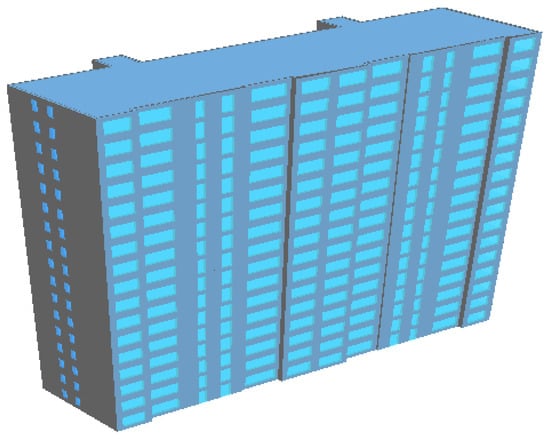
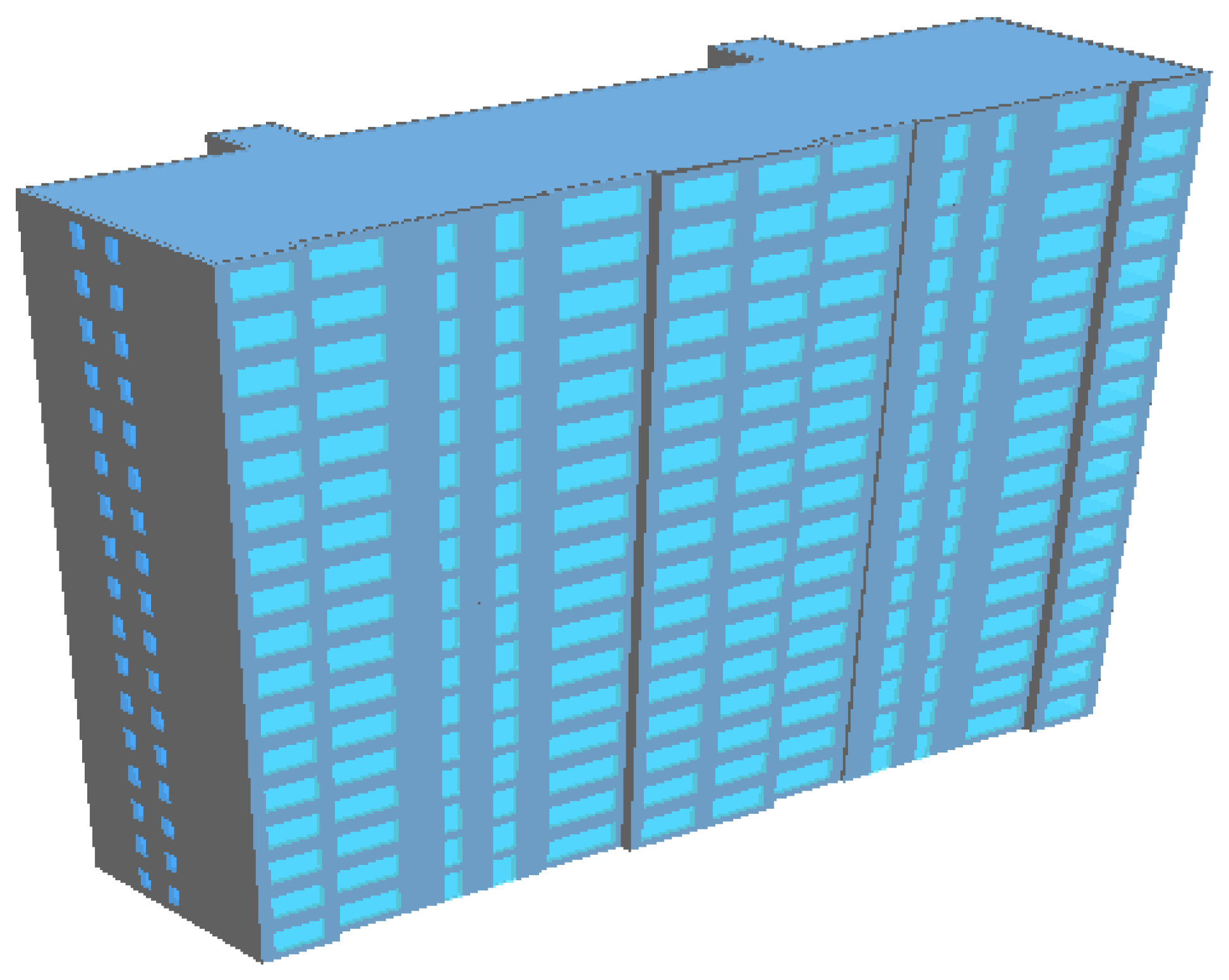
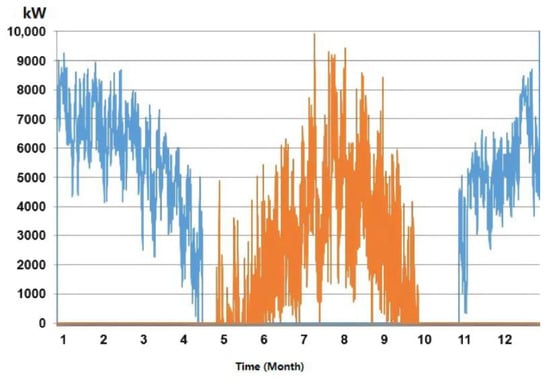
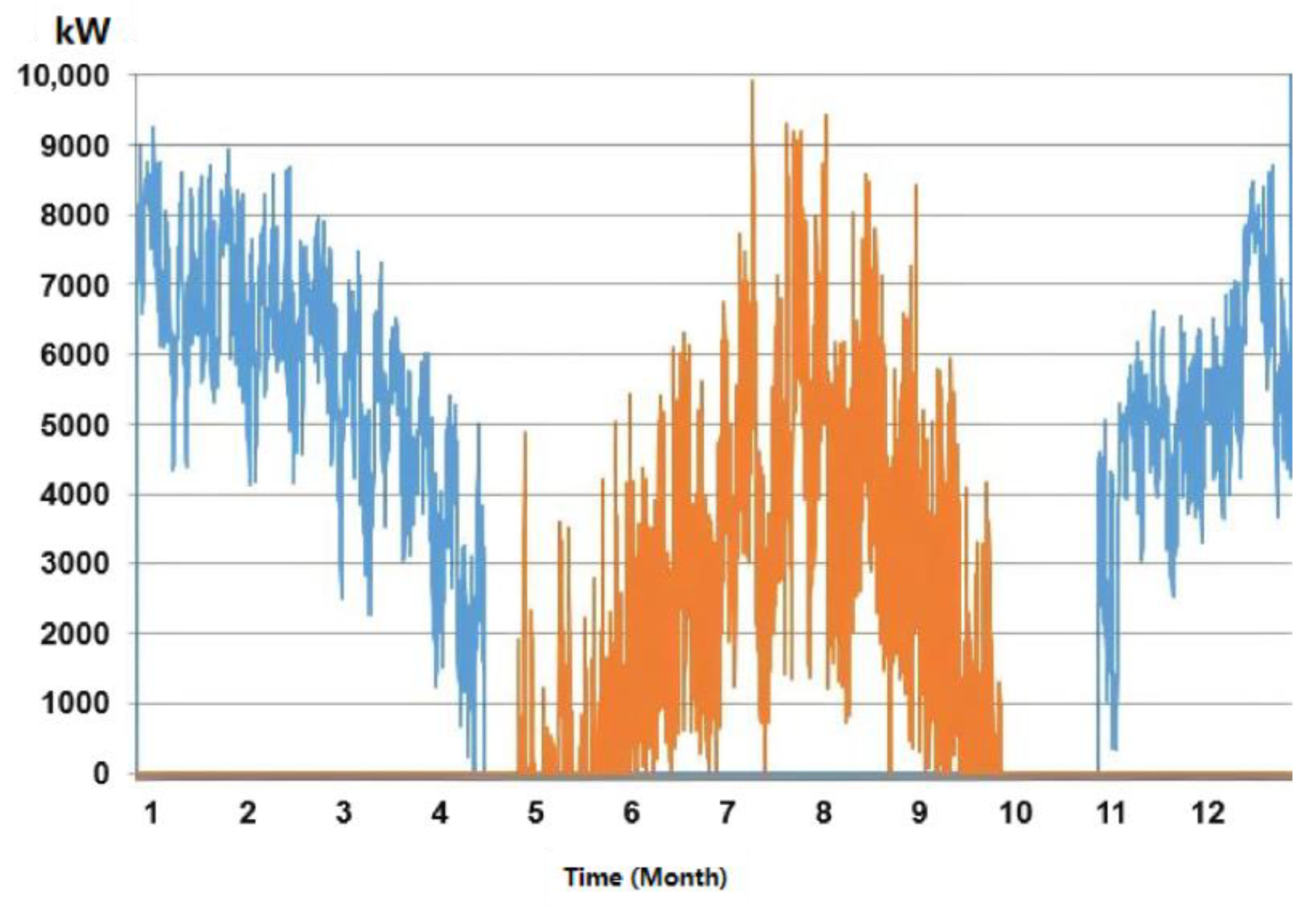
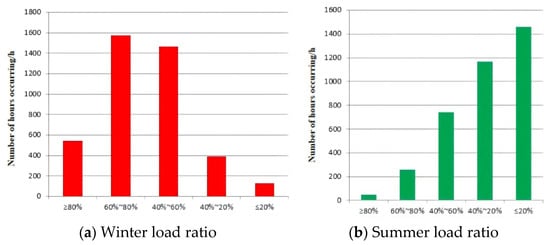
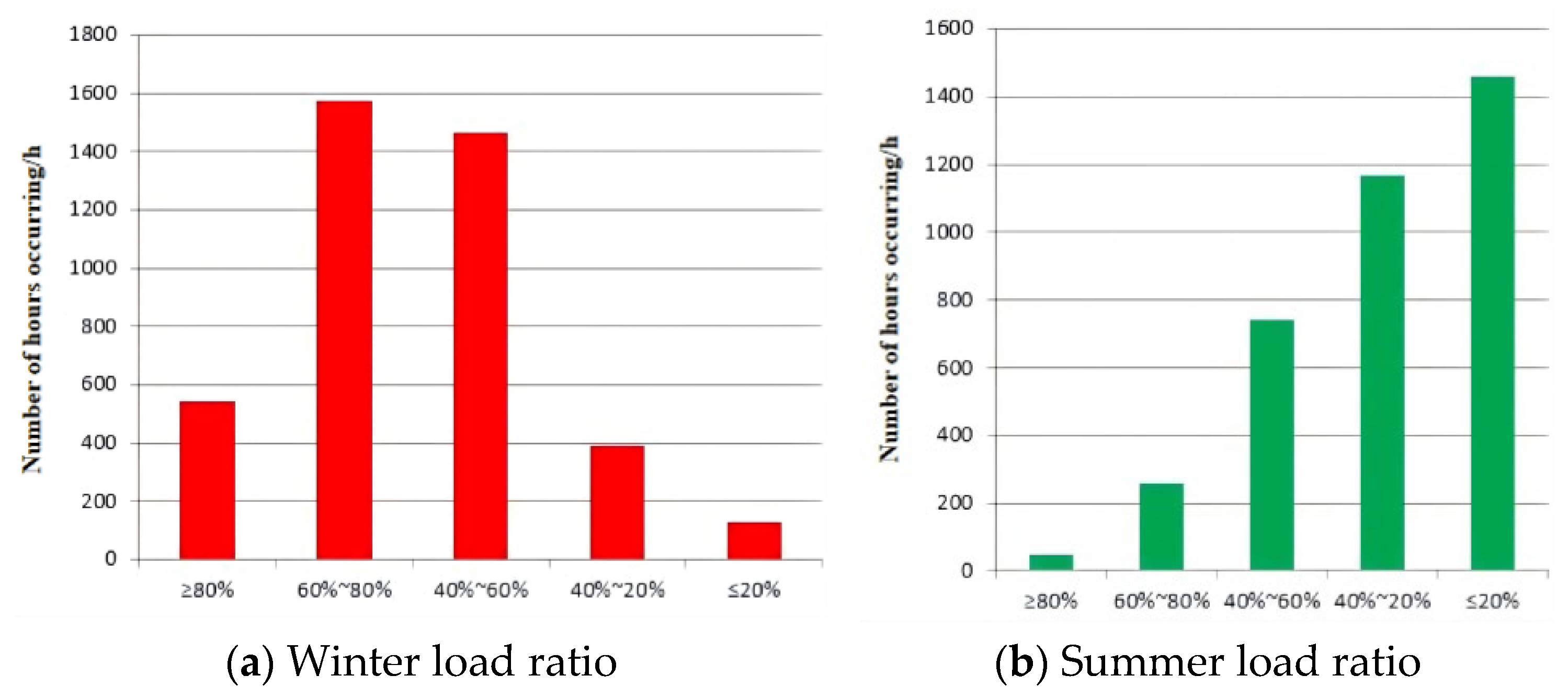
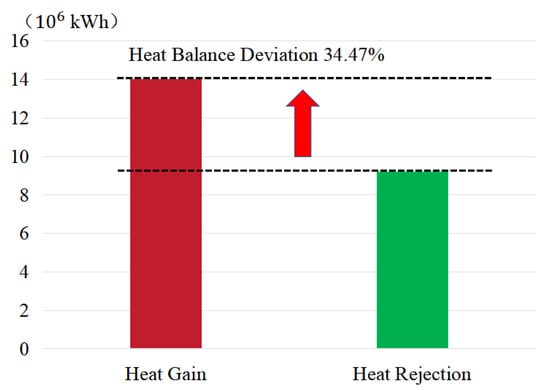
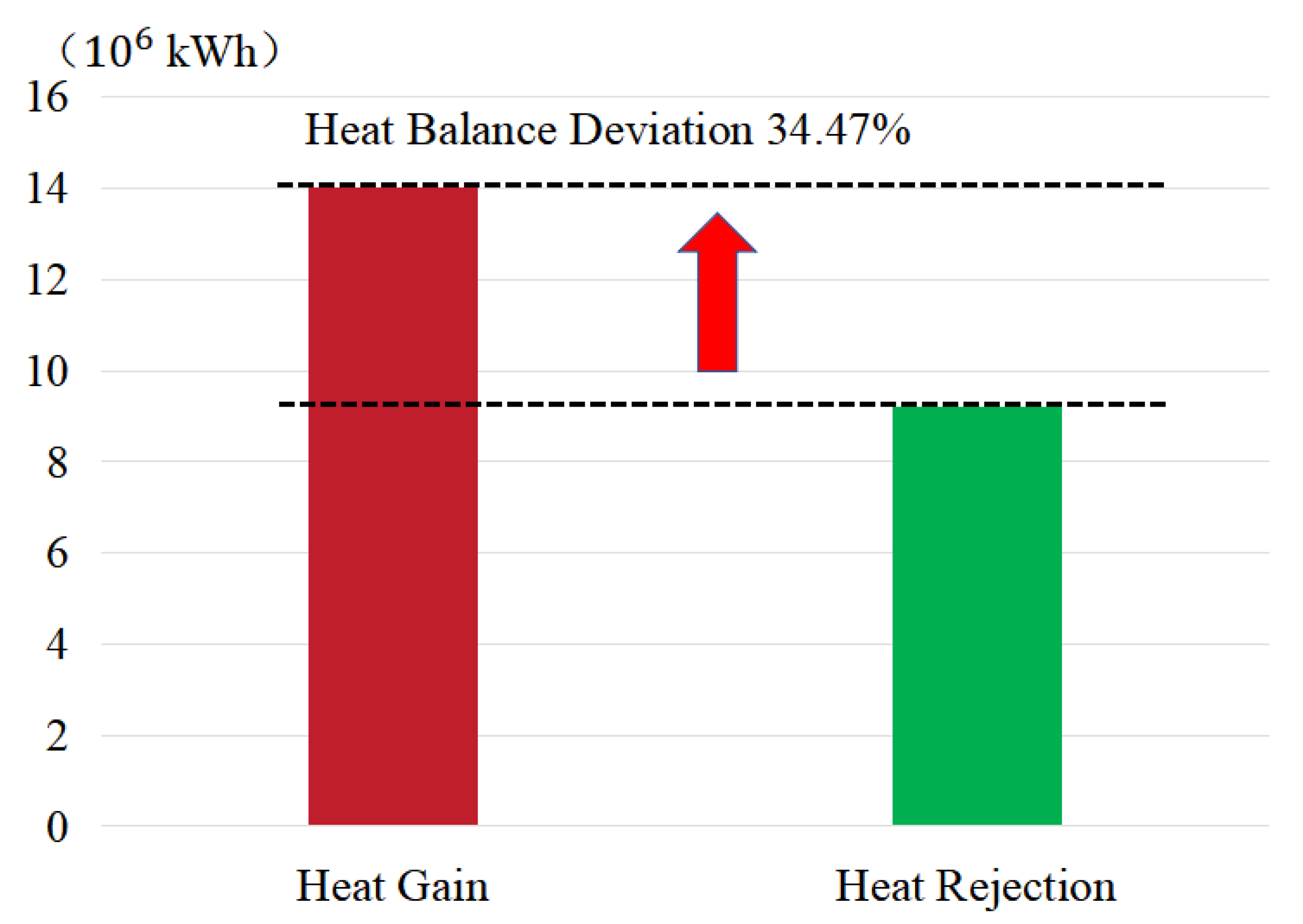
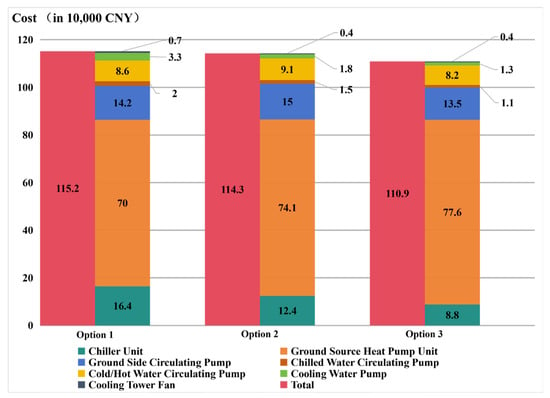
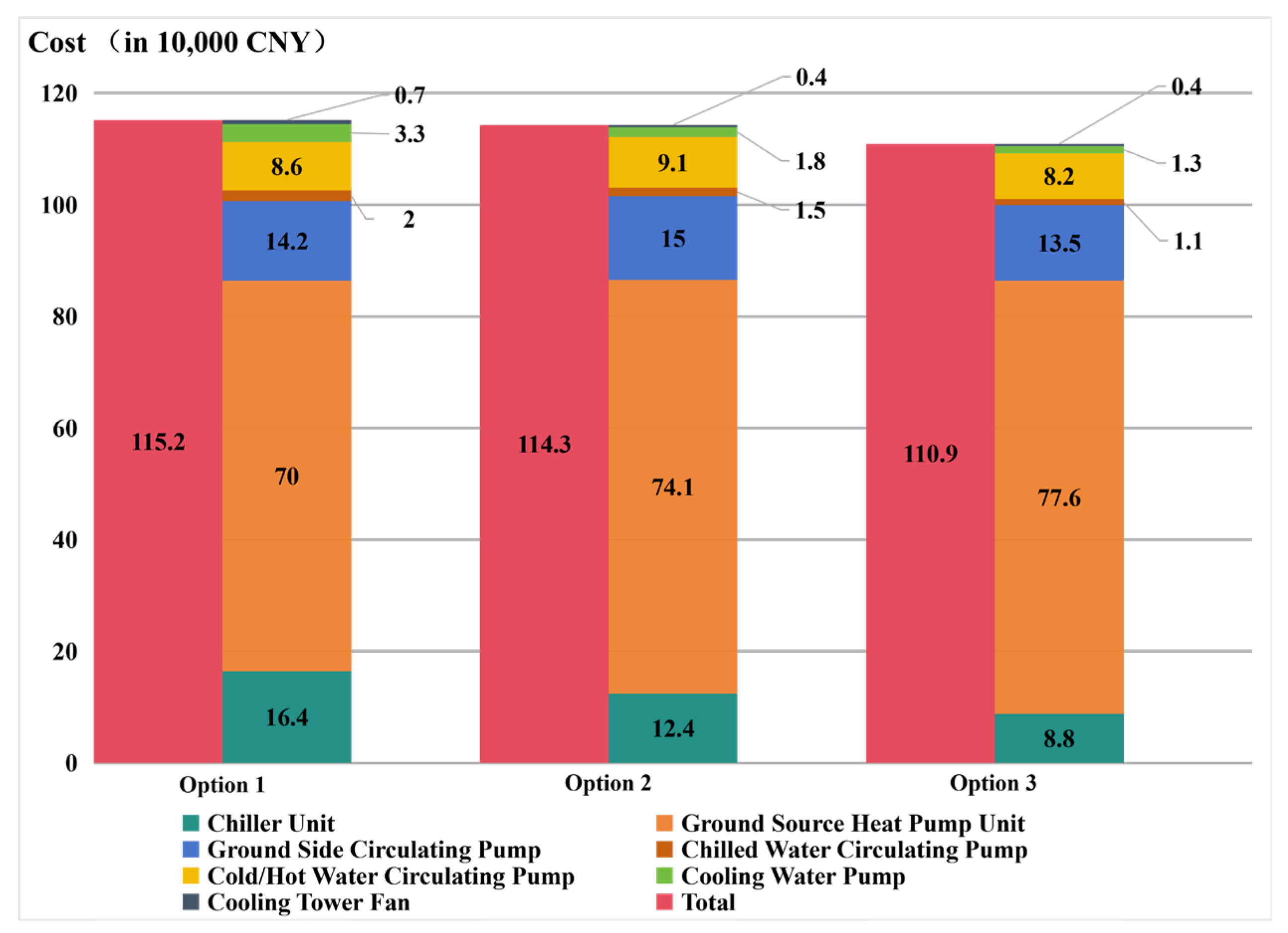
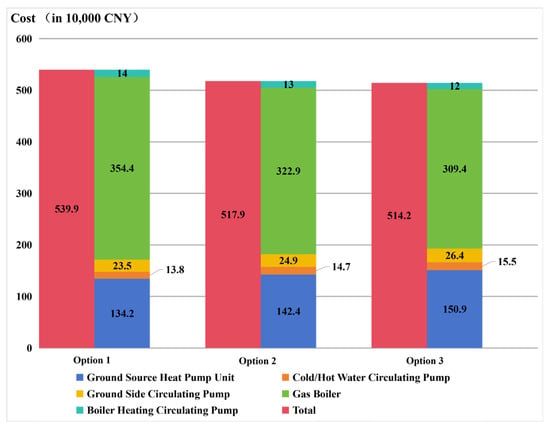
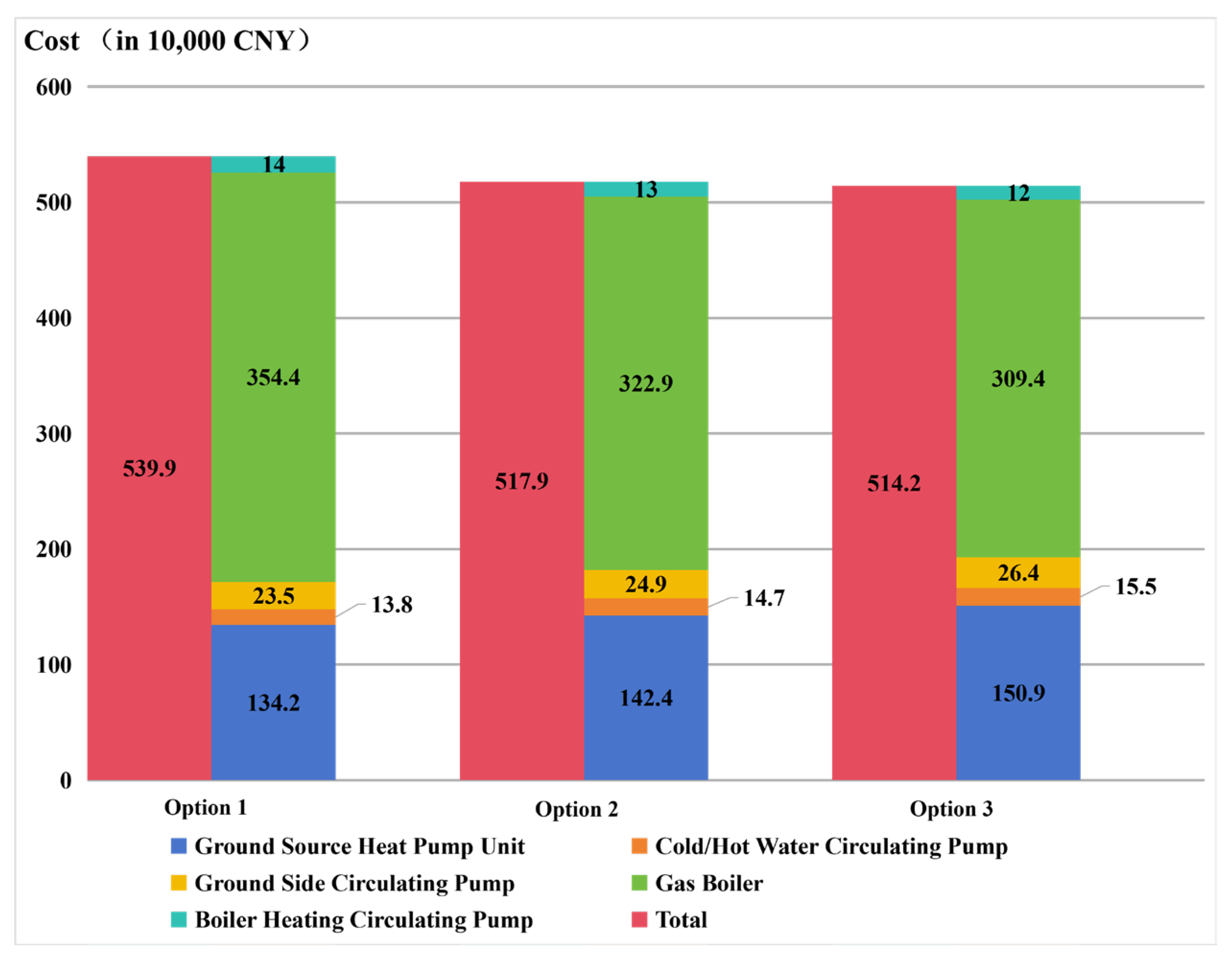
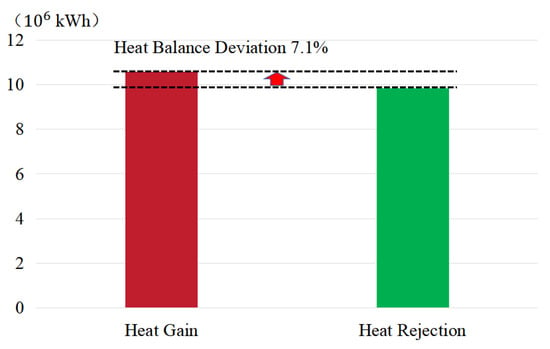
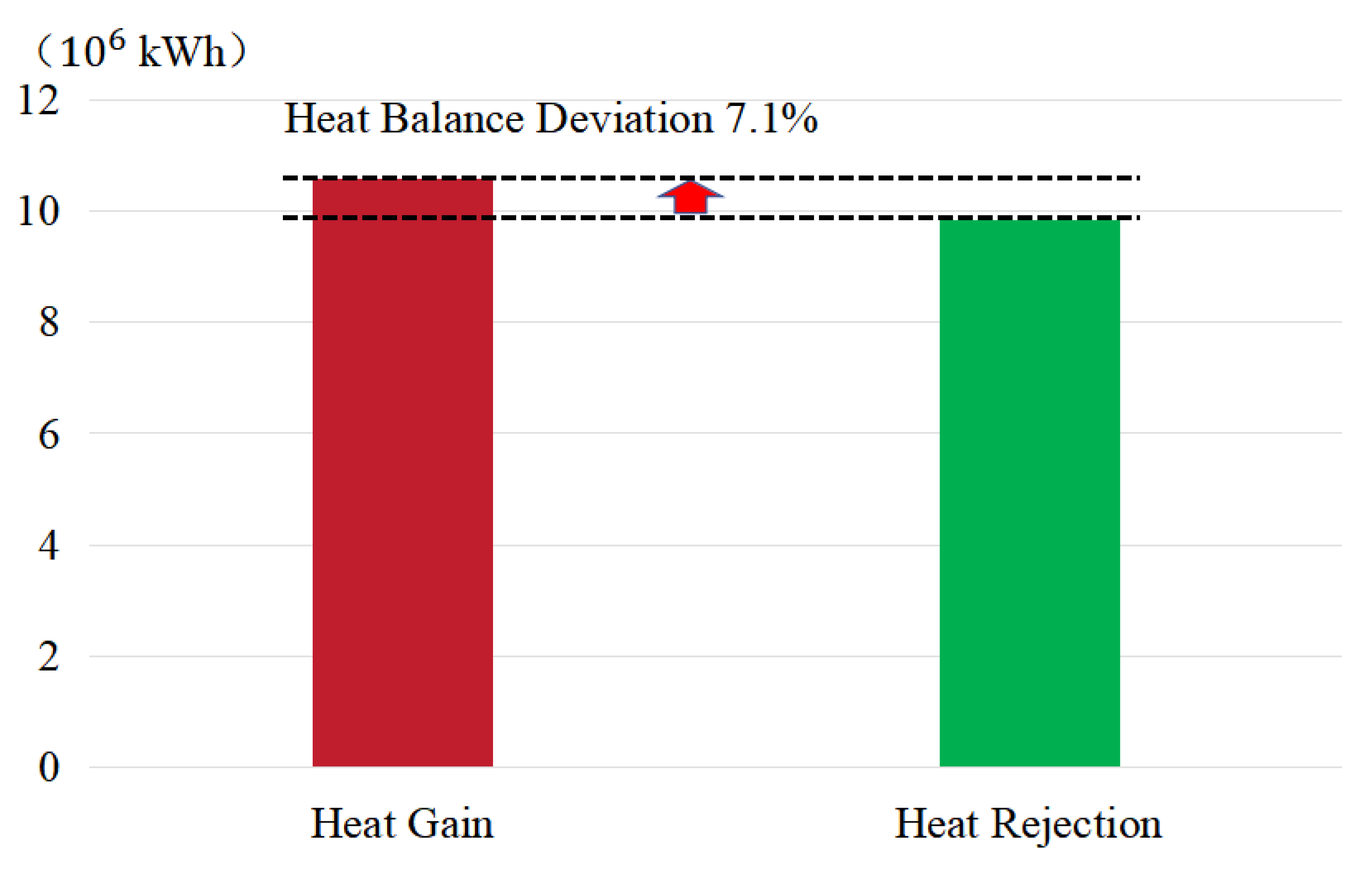

Disclaimer/Publisher’s Note: The statements, opinions and data contained in all publications are solely those of the individual author(s) and contributor(s) and not of MDPI and/or the editor(s). MDPI and/or the editor(s) disclaim responsibility for any injury to people or property resulting from any ideas, methods, instructions or products referred to in the content. |
© 2026 by the authors. Licensee MDPI, Basel, Switzerland. This article is an open access article distributed under the terms and conditions of the Creative Commons Attribution (CC BY) license.