


Abstract
Digital transformation is reshaping construction asset compliance, but fragmented information and weak evidence trails still constrain effective management. This systematic grey literature review (2014–2025) identifies technologies supporting asset management and compliance assurance and compares adoption maturity across the United Kingdom (UK), the United States (US), Singapore, and the Gulf Cooperation Council (GCC). Using multi-channel search strategies and the AACODS appraisal (Authority, Accuracy, Coverage, Objectivity, Date, Significance), 131 records were identified; 92 full texts reviewed; 82 eligible; and 43 sources retained. Coding identified a recurring five-technology “core digital stack”: Building Information Modelling (BIM), Digital Twins (DT), Internet of Things (IoT), Artificial Intelligence/Machine Learning (AI/ML), and Blockchain (BC). Within the retained corpus, BIM and AI/ML were the most frequently referenced technologies, whereas BC was referenced more selectively and discussed mainly for tamper-evident traceability. DT and IoT were typically discussed alongside BIM, while IoT also frequently co-occurred with AI/ML in analytics-led compliance workflows. A (Region × Technology) maturity matrix suggests higher, policy-led maturity where mandates and audit-ready information align with national frameworks (UK, Singapore), and more uneven, project-led adoption in decentralised contexts (US, GCC). Overall, the findings emphasise that effective compliance relies on integrated, evidence-focused digital stacks supported by standardised information governance rather than isolated tools.
1. Introduction
Built assets (buildings and infrastructure) must deliver sustained value throughout their lifecycles while remaining safe, reliable, and demonstrably compliant with regulatory, environmental, and contractual requirements [1,2,3]. Yet the construction sector continues to face persistent performance constraints stemming from fragmented information flows, inconsistent evidence trails, and weak feedback loops between the delivery and operational phases [4,5]. These constraints become particularly acute when regulatory approvals, assurance activities, and oversight processes rely on the timely retrieval of accurate records and on the ability to evidence and justify decisions throughout the asset’s lifecycle [3,6].
Within this context, asset management, as defined in International Organisation for Standardisation (ISO 55000), provides a structured lifecycle approach for planning, operating, maintaining, and renewing physical assets to maximise value and manage risk [7]. Compliance assurance complements this by requiring demonstrable conformance with laws, codes, standards, and contractual assurance requirements, including the ability to produce and retain auditable evidence of decisions and performance [1,2,3,4]. In practice, these two functions are tightly integrated, as the ability to operate assets safely, sustainably, and efficiently increasingly relies on the availability of structured and trustworthy information about design intent, materials, products, inspections, changes, and operational performance throughout the asset life cycle [5,8,9]. This review adopts a lifecycle asset-management perspective, including delivery-phase technologies when they influence handover quality, information continuity, regulatory traceability, or audit-ready evidence for operations and maintenance. This coupling is particularly evident in fast-growing regions such as the Gulf Cooperation Council (GCC), including Saudi Arabia, the United Arab Emirates, Qatar, Kuwait, Bahrain, and Oman, where large-scale development and safety-oversight challenges have intensified interest in digital tools to strengthen governance, monitoring, and delivery reliability [10].
Historically, construction asset information has been fragmented across reactive maintenance practices, isolated organisational workflows, and predominantly paper-based handover documentation [11]. Such approaches limit traceability, make assurance evidence difficult to retrieve, and restrict the feedback loops needed for long-term performance optimisation. In response, digitalisation increasingly treats data as a strategic asset, enabling faster decision-making, stronger accountability, and more proactive risk management across delivery and operations [5]. However, digital technology alone does not resolve systemic issues unless it is accompanied by coherent information governance, secure data practices, and standards-aligned delivery processes [8,9].
A growing technology stack is therefore being deployed to strengthen lifecycle asset management and compliance assurance. Building information modelling (BIM) and common data environments (CDE) provide structured information foundations for coordination, controlled exchange, and auditability aligned with ISO 19650 principles [12,13,14,15,16,17,18]. Digital twins (DT) extend these foundations toward operational decision support by linking information models with performance and condition data [2,12,14,15,16,17,18,19]. Internet of Things (IoT) sensing and monitoring enable real-time visibility into site and asset conditions, supporting safety and performance oversight [20,21]. Artificial intelligence and machine learning (AI/ML) offer capabilities for pattern recognition, anomaly detection, and the automation of time-intensive assurance tasks, including compliance checking and documentation workflows [22,23,24]. Blockchain (BC) has also been proposed for tamper-evident records to support traceability, accountability, and trusted transactions, particularly where multi-party evidence is required across asset lifecycles [1]. Collectively, these technologies have the potential to reduce fragmentation across project delivery, asset operations, and regulatory oversight, but their impact remains contingent on adoption maturity, governance arrangements, and institutional capacity.
Despite growing research and practice guidance, evidence on technology-enabled asset management and compliance assurance remains fragmented across institutional and disciplinary boundaries [1,2]. Much of the literature focuses on single technologies, jurisdictions, or peer-reviewed sources, reducing visibility into the standards, mandates, and guidance that shape real-world adoption. As a result, a gap emerges between academic discussion and the evidence relied on by regulators, public clients, and delivery organisations.
Grey literature is therefore important in this domain because mandates, standards, pilots, technical guidance, and industry programmes often emerge more rapidly and in greater operational detail than peer-reviewed publication cycles allow [25]. At the same time, grey sources differ in purpose, transparency, and reliability, so they are used here as complementary evidence offering timely policy and implementation detail. To address these differences, all sources were systematically appraised using AACODS (Authority, Accuracy, Coverage, Objectivity, Date, Significance) [26,27,28,29]. This position aligns with earlier grey-literature work showing that first-tier sources such as government papers, standards, and institutional guidance are especially valuable in fast-moving digital fields because they capture emerging practice and policy detail before journal publication [26,27,28]. However, most studies on construction digitisation still focus on individual technologies, such as DTs, BIM-based compliance checking, and BC BIM integration, rather than providing cross-regional or multi-technology synthesis for compliance-oriented asset management [30,31,32].
This review examines how a digital technology stack (BIM, DTs, IoT, AI/ML, and BC) supports construction asset management and compliance assurance, and how adoption maturity varies across different governance contexts. It compares the United Kingdom (UK), the United States (US), Singapore, and the GCC, where rapid digitisation in flagship projects contrasts with uneven sector-wide diffusion [23,24,33,34,35,36,37,38,39,40,41,42,43]. These cases were selected purposively to compare contrasting governance contexts relevant to compliance-oriented asset management. For instance, the UK represents a mandate-led BIM and standards environment [9,16,44], Singapore represents a centrally coordinated digital-delivery model [13,41,42], the US represents a decentralised multi-agency environment [14,38,39], and the GCC represents a rapidly digitising but uneven project-led context [10,33,34,35,36,45,46]. Together, this comparative design enables examination of how differences in governance structure, policy coordination, and implementation context relate to technology adoption maturity. The research question guiding this study is:
What are the key technologies currently used in asset management and compliance assurance in the construction industry, and how are these technologies being adopted across different regions?
This study contributes by systematically appraising construction-focused grey literature using AACODS and developing a region-technology maturity matrix that clarifies comparative adoption pathways in compliance-oriented asset management. The remainder of the paper is structured as follows. To begin, Section 2 outlines asset management and compliance assurance foundations and situates the five-technology stack within standards and governance contexts; Section 3 details the systematic grey literature review protocol, including the search strategy, AACODS appraisal, coding approach, and maturity rubric; Section 4 presents findings on technology frequency and integration patterns; Section 5 examines cross-regional adoption maturity using the (Region × Technology) matrix and discusses implications for compliance-oriented implementation; and Section 6 concludes the paper and outlines limitations and future research.
2. Background and Related Work
Asset management in the built environment is concerned with realising value from physical assets over long service lives, balancing performance, cost, and risk through a structured lifecycle approach [7]. In construction, handover and commissioning are particularly important because they connect project delivery to whole-life asset performance. Provisioning usable digital asset information at handover, including BIM- and DT-enabled data, supports successful soft landings and ongoing operations. For BIM to deliver whole-life value, effective transfer of curated information into operational environments is therefore essential. A recurring challenge, however, is the discontinuity in information between delivery and operations, where asset data is often incomplete, fragmented, or difficult to reuse at handover and during subsequent updates [5]. Accordingly, delivery-phase digitalisation is considered here, where it shapes the information and assurance evidence transferred into operations.
Compliance assurance extends beyond meeting regulatory requirements in principle; it depends on producing verifiable, audit-ready evidence that demonstrates conformance throughout the asset’s lifecycle [3,4,6]. In discussing national infrastructure and the deployment of smart machines, the strategy stresses the need for coherent regulatory frameworks and dependable evidence, noting that fragmented or inconsistent data across organisations can slow compliance processes and increase operational risk, especially in sectors where safety and reliability are essential [4,23]. These framing shifts attention from simply meeting regulatory requirements to demonstrating that compliance can be reliably and transparently evidenced, placing greater importance on strong information governance, secure data management, and robust cybersecurity practices [8,47].
Digital approaches to asset management and compliance assurance, therefore, depend on standardised information management. The ISO 19650 series defines widely adopted principles for organising and digitising information across the asset lifecycle, including roles, processes, and information management concepts that support consistent exchange and accountability [18]. In practice, CDE and structured information workflows enable the controlled creation, approval, and reuse of information across phases, which is foundational to lifecycle assurance and evidence retention [12,18]. National strategies and sector programmes reinforce these standard-driven approaches. In the UK, digitally enabled delivery policy and associated reforms have sought to shape market behaviour through coordinated processes and standardised practices [9,44]. In the US, BIM advancement is supported through agency and sector roadmaps (e.g., infrastructure-focused guidance) that reflect a more decentralised governance environment [14,38,39]. Singapore’s coordinated approach integrates BIM and digital delivery through the Building and Construction Authority guidance and wider digital nation strategies [13,41,42]. In this context, governance refers to the rules, roles, workflows, audit trails, and access controls that support reliable and reusable digital compliance information throughout the asset lifecycle. Moreover, ISO 19650 is treated as one framework within this landscape, while statutory compliance continues to depend on national regulations, codes, and approval systems.
Against this governance backdrop, current practice and research increasingly describe a complementary technology stack that supports information continuity, monitoring, analytics, and traceability. Within this stack, BIM provides a structured representation of asset and project information, supporting coordination, information delivery, and lifecycle handover; however, its value for assurance depends on governance: consistent information requirements, clear responsibilities, controlled exchange, and secure handling of sensitive asset data [8,14,16,18]. Research and guidance on extended BIM dimensions (e.g., 6D/7D) emphasise the transition from design coordination toward sustainability and lifecycle performance uses [17]. In operational terms, BIM-enabled workflows can reduce rework and information loss, but only if data is curated for downstream use rather than produced solely to meet short-term delivery milestones [5,14,18]. DTs, originally developed in systems engineering and manufacturing, are now widely understood as BIM-enabled operational representations enriched with live or periodically updated performance data, which support simulation, forecasting, and predictive maintenance [11,12,15,19]. IoT sensing enables real-time visibility of site and asset conditions and can support exception-based assurance by generating time-stamped evidence streams for safety, environment, and performance monitoring [20,21]. AI/ML is increasingly proposed as an automation and analytics layer for tasks such as anomaly detection, evidence extraction, and parts of compliance checking. Still, assurance contexts impose higher expectations for transparency, accountability, and validation than many operational analytics settings [23,24,48]. BC is often framed as an integrity mechanism for tamper-evident audit trails, provenance, and multi-party traceability [1,49,50]. Nonetheless, significant integration challenges persist, including the need for robust interoperability with BIM, clear governance frameworks for access and permissions, and careful delineation of which information types are suitable for immutable BC storage [1]. BC can preserve provenance, yet it cannot remedy poor-quality or poorly governed inputs.
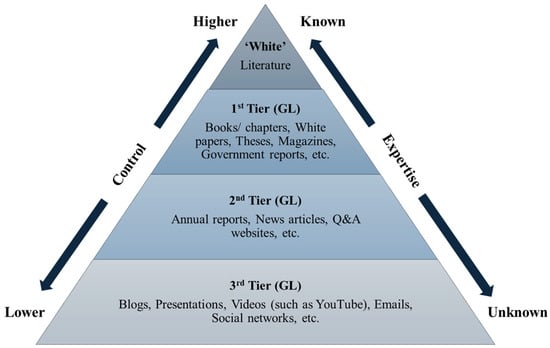
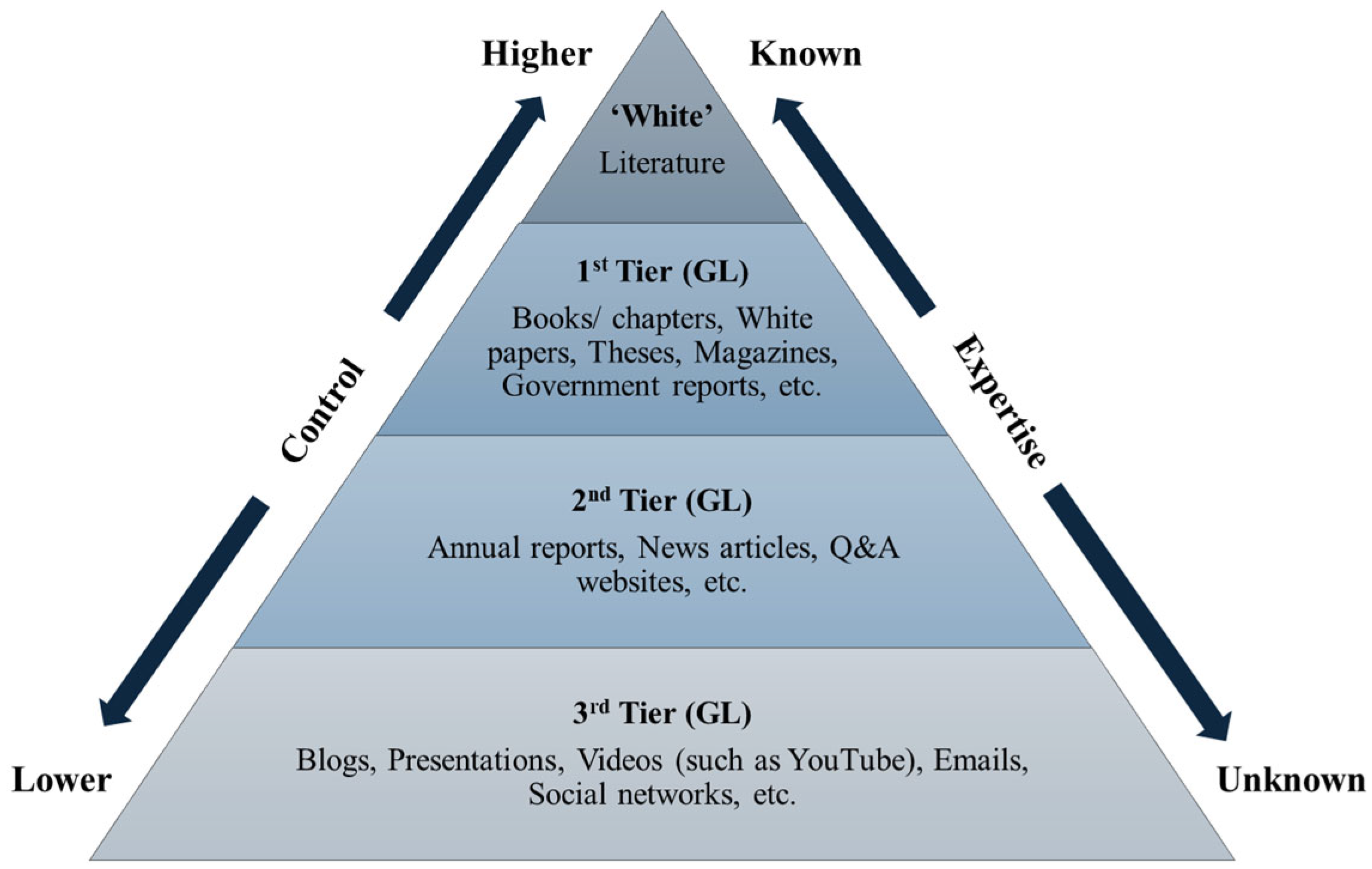
Academic studies remain essential for theory building; however, peer-reviewed publication cycles often lag behind the rapid rollout of construction technology pilots and policy directives. Recent information science research confirms that grey literature, especially first-tier sources, as shown in Figure 1, such as government white papers and standards, captures emergent practice in real-time, offering details often absent from scholarly journals [27,28]. Integrating this evidence supports academic work and enables a timelier, practice-based assessment of regional adoption.
Figure 1.
Shades of grey literature modified for construction research (Based on [27]).
In addition to the grey literature, the AACODS checklist provides a defensible framework for assessing the Authority, Accuracy, Coverage, Objectivity, Date, and Significance of grey sources. At the same time, the Preferred Reporting Items for Systematic Reviews and Meta-Analyses (PRISMA) 2020 supports transparent reporting of evidence selection and synthesis [26,51,52,53]. The completed PRISMA 2020 main checklist is provided in the Supplementary Materials.
However, peer-reviewed work published after the review window reinforces several themes identified in the grey evidence. One review reports that efforts to scale digital twins in off-site construction remain constrained by interoperability, data sovereignty, and “black-box” artificial intelligence (AI) issues, mirroring governance and integration barriers observed in programme-led contexts [30]. Another study demonstrates the feasibility of automating BIM-based design-compliance checking by translating textual specifications into computable rules using Natural Language Processing (NLP) and deep learning, indicating a shift from manual interpretation toward data-driven rule formalisation [31]. A further systematic review synthesises BC-BIM integration workflows and concludes that BC’s near-term value is strongest for assurance, provenance, and auditability rather than for broad operational deployment [32]. Taken together, these studies show that the field remains technologically rich but methodologically segmented, reinforcing the need for a cross-regional synthesis of systematically appraised grey evidence.
Despite growing research and practice guidance, three gaps remain salient for compliance-oriented asset management: evidence is fragmented across institutional and disciplinary boundaries; cross-regional comparisons are often partial, focusing on a single technology or a single jurisdiction; and grey evidence, although central to mandates and standards, is less often synthesised systematically with transparent quality appraisal. This study addresses these gaps by systematically appraising and synthesising grey literature across four contrasting contexts and translating the evidence into a (Region × Technology) maturity matrix for BIM, DTs, IoT, AI/ML, and BC.
3. Materials and Methods
A systematic grey-literature review (GLR) was conducted to capture the most up-to-date evidence on construction technologies [27,54]. This approach was selected because innovation in the sector frequently advances faster than peer-reviewed publication cycles [25]. Consequently, grey sources, government reports, technical standards, and white papers offer timely insight into technology adoption, regulation, and on-site challenges [55]. Such material is indispensable for understanding regional developments in the UK, USA, Singapore, and the GCC [56,57]. Methodologically, this review builds on grey-literature approaches that treat first-tier policy, standards, and institutional documents as essential evidence in fast-moving digitalisation contexts [27,28,54,55], extending this by combining AACODS appraisal with a region-technology maturity comparison across four governance settings. The regional cases were purposively selected to represent contrasting governance contexts relevant to compliance-oriented asset management, as outlined earlier, spanning a mandate-led setting in the UK, a centrally coordinated model in Singapore, a decentralised multi-agency environment in the US, and a rapidly digitising yet uneven, project-led context in the GCC.
To ensure rigour, a multi-channel search was conducted, as shown in Table 1, covering the period from January 2014 to July 2025 and drawing on government portals, professional repositories, technology-vendor libraries, and targeted Google queries. The initial harvest yielded 131 candidate documents. Manual exact-match deduplication identified one duplicate, leaving 130 unique records for screening. Because the search was source-led, duplicates were rare, and overlaps were consolidated.
Table 1.
The multi-channel search ran between January 2014 and July 2025.
In addition, each document was evaluated using the AACODS framework [29,51] to address the variable credibility of grey literature and ensure a transparent, reproducible quality threshold. Although AACODS provides qualitative guidance [26,51], a three-point scale (High = 3, Medium = 2, Low = 1) was applied, and only sources scoring 14 or above out of 18 were retained. Forward-looking or commentary-style documents were included when they met the eligibility threshold and were used only as contextual evidence rather than as primary indicators of maturity or impact.
To reduce subjectivity, AACODS scores were assigned using source-neutral criteria rather than relying on publisher categories. Authority was judged on identifiable authorship, topic-specific expertise, and institutional remit. At the same time, Objectivity was assessed through the balance of claims, transparency of evidence, disclosure of scope and limitations, and the extent of promotional framing. Government, professional body, consultancy, and vendor documents were therefore all eligible for high scores where these criteria were met. Full operational definitions for all AACODS dimensions and the three-point scale are provided in Table 2. To minimise bias arising from differences in industry structure and grey-literature output, the same search window, channel structure, technology keywords, AACODS appraisal, coding, and maturity rubric were applied across all regions. Maturity was not inferred from document volume alone but from common evidence dimensions applied consistently to each region-technology pair.
Table 2.
AACODS scoring criteria used for grey-literature quality appraisal.
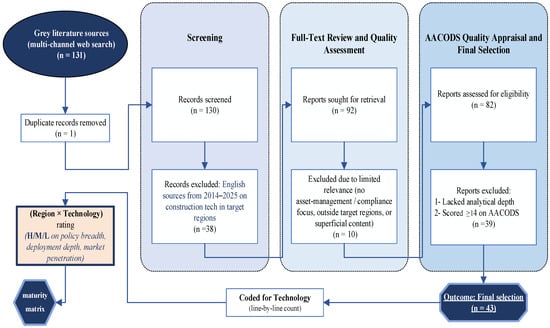
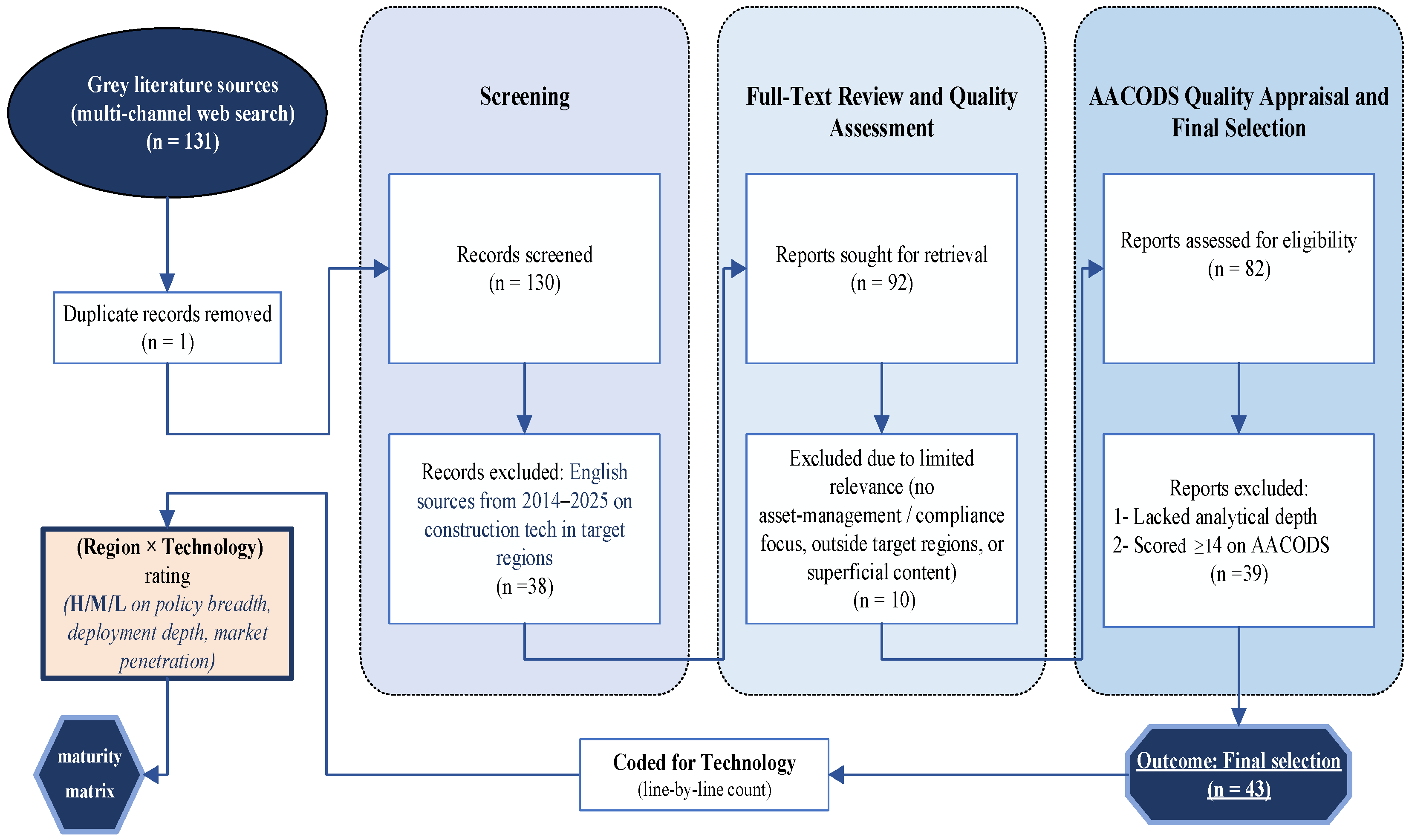
Figure 2 illustrates the three-stage pipeline, including Screening, Full-Text Review and Quality Assessment, AACODS Quality Appraisal, and Final Selection, aligned with the PRISMA principles of transparent reporting and adapted for grey literature [52,53]. Also, drawing on the final selection, documents were coded for technology mentions, enabling the (Region × Technology) rating and resulting in the cluster maturity matrix.
Figure 2.
Systematic grey-literature screening process—from search to cluster maturity matrix.
- Stage 1 (Screening): English-language items, 2014–2025, relevant to construction technology in the target regions, as shown in Table 1; 131 candidate documents were identified. After manual exact-match deduplication (title, issuing body, year/version, and uniform resource locator (URL or digital object identifier (DOI), 130 unique records were screened, of which 92 progressed to full-text review.
- Stage 2 (Full-Text Review and Quality Assessment): All 92 sources were reviewed for depth and rigour; ten were excluded due to limited relevance, leaving 82 retained.
- Stage 3 (AACODS Quality Appraisal and Final Selection): Each source was scored across the six AACODS dimensions as shown in Table 2. Sources meeting the predefined AACODS threshold (total score ≥ 14/18) were retained for the final evidence base [25].
The retained set included sources with credible authorship, transparent methods, up-to-date content, balanced analysis, and strong policy relevance [56]. Of the 82 entities assessed, 43 scored between 14 and 18, offering the most robust evidence. Notably, more than half achieved the maximum score, indicating strong alignment with the review’s primary focus.
Throughout the review, predefined variables were charted from each source into a standardised extraction sheet, including authoring body, publication year, source type, region, technologies, examples, outcomes, and recommendations. The extracted data were then analysed using AACODS appraisal and manual line-by-line coding. Technologies cited in ten or more sources and appearing across all four regions were classified as core for later analysis. To ensure consistency, predefined coding criteria were used, and a technology was coded as present when it was discussed substantively in relation to lifecycle asset management, compliance assurance, information governance, or implementation practices affecting downstream operations and maintenance. Sources focused primarily on site productivity or construction execution were excluded unless they showed a clear link to handover quality, information completeness, regulatory traceability, or audit-ready evidence used beyond delivery.
Technology codes were non-exclusive, and a source could receive multiple codes when BIM, DTs, IoT, AI/ML, and BC were discussed together. Frequency counts, therefore, indicate recurrence in the corpus, while dependencies were examined through co-occurrence analysis.
Synthesis combined descriptive analysis of technology frequency and co-occurrence patterns with evidence-informed maturity mapping. To translate the extracted evidence into a comparative (Region × Technology) maturity matrix, each region-technology pair was assessed against three dimensions using the operational rubric shown in Table 3 to ensure consistent scoring.
Table 3.
Operational rubric used for comparative technology maturity assessment.
Overall maturity was rated High when all three dimensions were clearly evidenced, Medium when two were clearly evidenced, and Low when one or none were evidenced. When evidence suggested transitional or uneven conditions, such as strong policy commitment but limited diffusion in practice, intermediate categories were used to avoid implying unwarranted precision. Cases were classified as Medium-High when two dimensions showed clear evidence, and the third showed partial evidence, and as Low-Medium when one dimension was clearly evidenced and the second showed partial evidence.
4. Results and Analysis
The multi-channel search identified 131 candidate records. Manual exact-match deduplication identified one duplicate, leaving 130 unique records for (Stage 1) screening. Of these, 92 records met the screening criteria and progressed to full-text review (Stage 2). Following a full-text eligibility assessment, 82 sources were retained for quality appraisal. Applying the AACODS threshold (Total Score ≥ 14/18) resulted in a final evidence base of 43 grey literature sources (Stage 3).
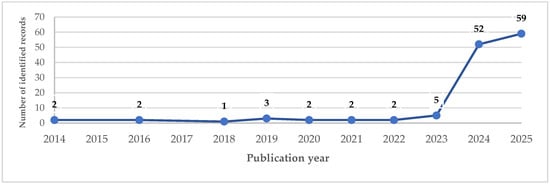
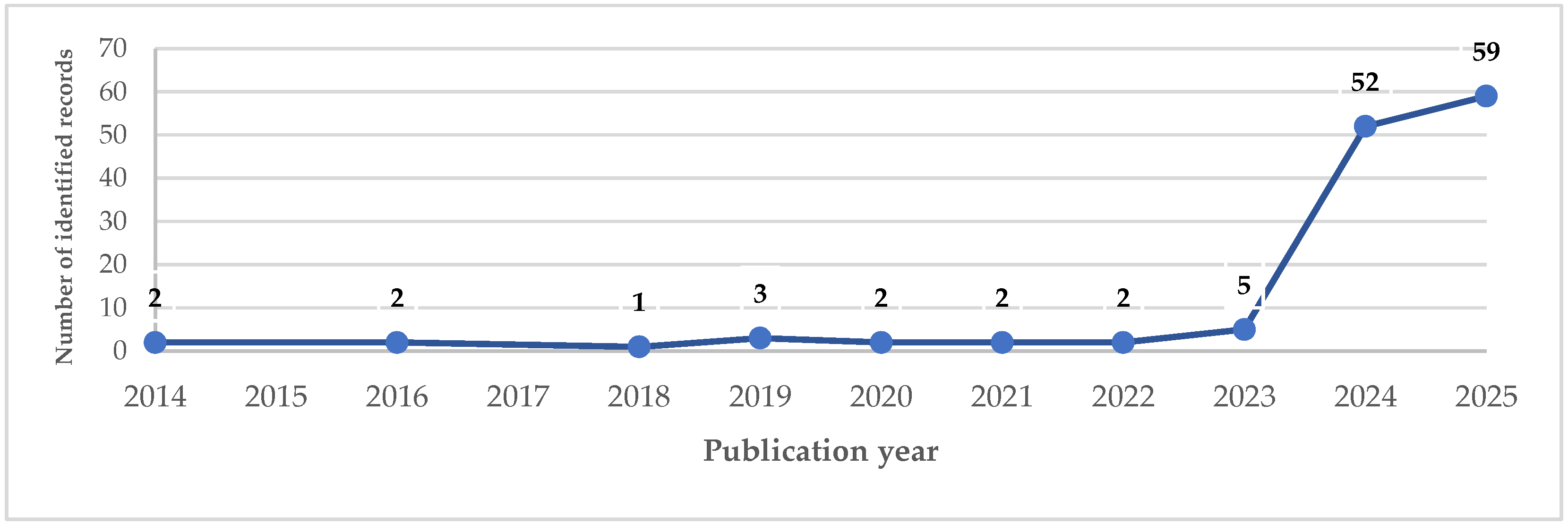
The included sources are heavily concentrated in the most recent part of the review window, with 31 of 43 sources (72.1%) published in 2024–2025. Figure 3 presents the year-by-year distribution of all identified documents, showing the number of sources published each year from 2014 to 2025.
Figure 3.
Annual distribution of identified records in the grey literature search (January 2014–July 2025).
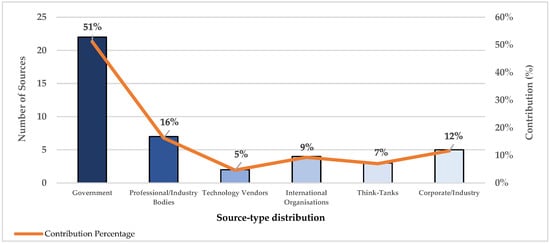
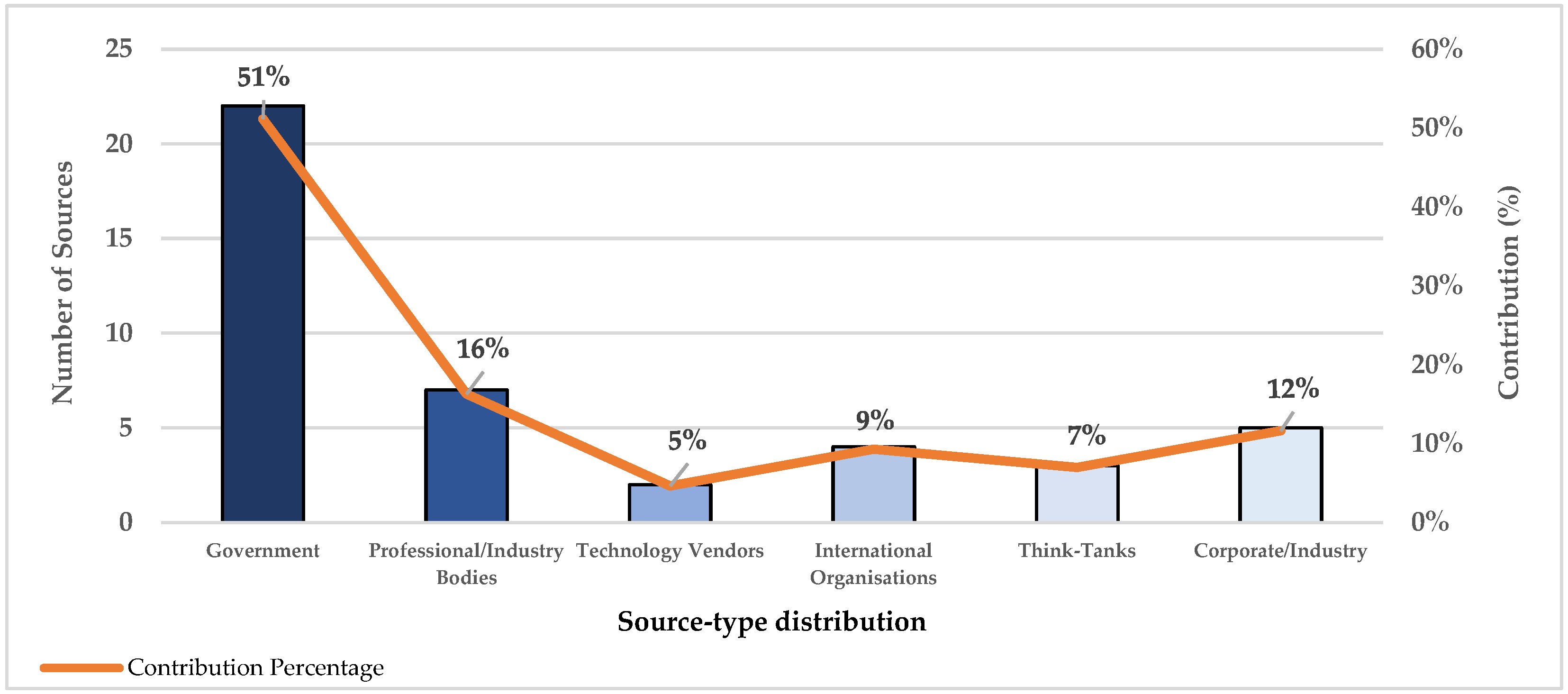
This recency supports the rationale for using grey literature to capture rapidly evolving technology programmes, standards activity, and regulatory initiatives. In addition, across the 43 included sources, Government sources dominate the included evidence base (51%), indicating that policy and institutional guidance currently shape much of the practical discourse on technology-enabled asset management and compliance.
As shown in Figure 4, the evidence base is predominantly policy-led, with government publications forming the largest share. This indicates that the most operationally influential guidance for technology-enabled asset management and compliance currently sits in standards, mandates, and institutional programmes rather than journal outlets. Furthermore, Table 4 presents item-level AACODS ratings for the 43 included grey literature sources, all of which met the quality threshold (AACODS ≥ 14/18). Each source was scored on the six AACODS dimensions using a three-point scale, giving a maximum possible total of 18.
Figure 4.
Source-type distribution of retained grey-literature sources (n = 43).
Table 4.
Item-level AACODS appraisal scores for included grey literature sources (n = 43).
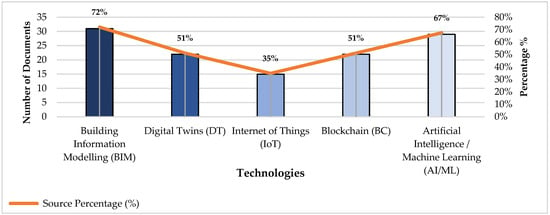
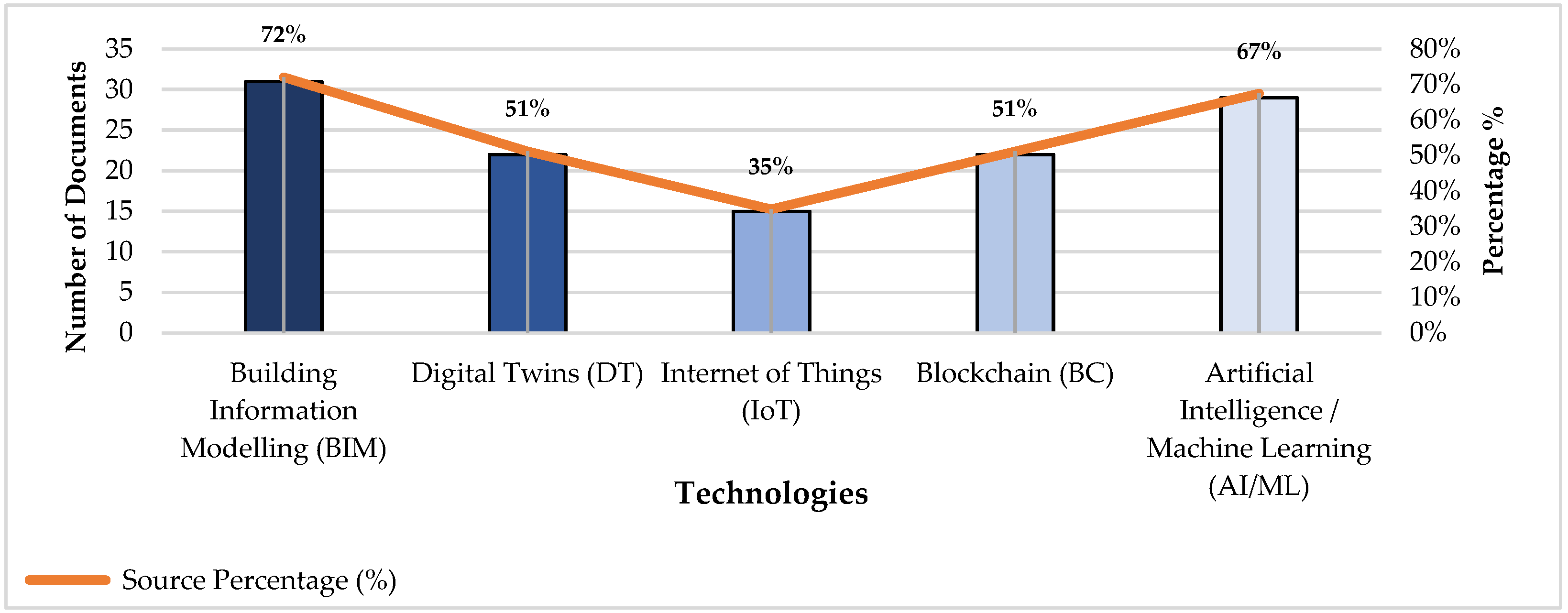
Line-by-line coding of the included evidence base (n = 43) identified five recurring technology categories that together form a “core digital stack” for technology-enabled asset management and compliance assurance, with Figure 5 showing how BIM, DT, IoT, BC, and AI/ML are distributed across the included sources.
Figure 5.
Frequency of the five core technologies across the 43 sources; counts indicate recurrence.
BIM (31/43; 72.1%) and AI/ML (29/43; 67.4%) are the most frequently referenced categories, followed by DT (22/43; 51.2%) and IoT (22/43; 51.2%), while BC is the least frequently referenced (15/43; 34.9%). Other technologies, such as virtual reality (VR) and augmented reality (AR), robotics, and three-dimensional printing, appear only intermittently and do not meet the review’s core criterion of recurring evidence across the included sources. In the remainder of Section 4, these five recurring technologies are treated as the study’s “core digital stack” because they appear across all four regions, although this does not imply equal maturity; BC remains the least well-evidenced component. They are discussed separately in Section 4.1, Section 4.2, Section 4.3, Section 4.4 and Section 4.5 for analytical clarity, with their integration examined in Section 4.6.
4.1. Building Information Modelling (BIM) System
BIM is widely recognised as the digital support of contemporary asset management [14,15,16,18]. It provides a centralised repository spanning design, construction, and operations, enabling consistent data exchange and audit trails [16]; this requirement is formalised in ISO 19650-1 [18]. In the context of this work, ISO 19650 is considered to guide information management and auditability, while statutory compliance remains governed by national laws and sector regulations. The UK exhibits the most mature ecosystem, having enforced BIM Level 2 on public projects since 2016 and aligning with the UK BIM Framework, which serves as a benchmark for advancing BIM practices in the U.S. [14,16]. Singapore’s Integrated Digital Delivery (IDD) extends BIM into a whole-life mandate, standardising data exchange across the entire asset lifecycle [41]. By contrast, the United States follows a decentralised trajectory, with agencies such as the Federal Highway Administration (FHWA) and the U.S. Army Corps of Engineers releasing their own BIM roadmaps [14,39]. Collectively, these cases demonstrate that regulatory compulsion accelerates the adoption of BIM, whereas voluntary schemes yield heterogeneous practices.
In compliance integration, automated documentation systems that integrate with BIM platforms now generate real-time compliance reports, preserving the “golden thread” of information across Computer-Aided Facility Management (CAFM) systems, asset registers, and Planned Preventive Maintenance (PPMs) schedules [6,8,58]. This integration is most advanced in the UK, where BS EN ISO 19650 supports information management alongside national safety and building-control requirements [44,47,61].
BIM is the most frequently evidenced cluster in the coded corpus, appearing in 31 of 43 sources (72.1%), as shown in Figure 5. BIM also serves as support for downstream technologies in this dataset: all sources that substantively discuss DTs and IoT reference BIM (22/22 and 22/22, respectively), indicating that monitoring and twin-enabled analytics are typically positioned as extensions built on BIM-based information foundations rather than standalone implementations.
4.2. Digital Twin Technologies
DT technologies represent the next evolution in asset management, merging BIM with live IoT data to create evolving virtual replicas that enable predictive analytics, simulation, and performance optimisation [1,2,12,19]. It provides deep insight into asset behaviour and safety, allowing failures to be anticipated and mitigated through virtual testing. This marks a shift from reactive to predictive management, helping operators fine-tune maintenance schedules based on real-time performance instead of fixed intervals [12].
The GCC region demonstrates particular interest in DT applications, with initiatives such as Dubai’s DT programme and NEOM’s wider smart-city digitalisation agenda illustrating regional interest in twin-enabled planning and operations [45,46]. Additionally, Autodesk’s DT technology, through its CDE, enables asset management to transition from a reactive to a predictive approach. Merging design, construction, and operational data, it enables virtual testing and smarter, real-time maintenance planning [12]. These initiatives utilise simulation to transition maintenance from a reactive to a predictive approach, thereby reducing downtime and enhancing citizen engagement.
DTs are discussed in 22 of 43 sources (51.2%), as shown in Figure 5, and are almost always framed in conjunction with enabling layers rather than as an isolated capability. Within the corpus, DT co-occurs with IoT in 19/22 sources (86.4%) and with AI/ML in 19/22 sources (86.4%), reflecting a dominant framing of twins as operational decision-support systems that depend on sensing and analytics.
4.3. Internet of Things (IoT) Sensor Networks
IoT sensor networks serve as a critical enabling layer for modern asset management by enabling real-time data collection, continuous monitoring, and intelligent analytics across distributed systems [20,69]. When integrated with BIM and DTs, these networks feed live sensor data into BIM models, transforming static information into actionable insights that enable predictive maintenance, energy efficiency, and support for sustainability goals, such as biodiversity and emissions reduction [20,70]. Their implementation varies globally, with Singapore leading through initiatives such as Smart Nation and Industry Transformation Maps (ITMs), supported by agencies such as the Economic Development Board (EDB). Noteworthy projects, such as the Open Digital Platform in Punggol Digital District, demonstrate how interconnected sensors enable diagnostics and strategic urban optimisation [43,63].
Beyond asset management, IoT sensors significantly enhance safety compliance by enabling live monitoring of structural integrity, environmental metrics, and workforce conditions [20]. These applications directly support compliance assurance by providing continuous monitoring and automated alerting for safety violations or environmental compliance issues.
IoT is evidenced in 22 of 43 sources (51.2%), as shown in Figure 5, and is strongly linked to analytics-led assurance workflows. In the coded dataset, IoT co-occurs with AI/ML in 21/22 sources (95.5%) and with DT in 19/22 sources (86.4%), supporting a common sense-to-model-to-analyse implementation pathway that is particularly important for compliance assurance, as it shifts evidence creation away from periodic, retrospective inspection and toward more continuous, data-driven monitoring.
4.4. Blockchain Technology
BC is increasingly discussed as a potential mechanism in the construction industry, especially in supporting traceability and compliance assurance as companies seek to improve transparency, trust, and collaboration across the value chain [1,4]. Through tamper-proof, time-stamped records, it enables automated oversight of tasks such as material delivery, smart contract execution, and approvals, boosting accountability among all stakeholders [49,50]. The technology’s distributed ledger creates secure, independently verifiable documentation, which is particularly valuable in complex, multi-party projects such as construction and healthcare [66].
Furthermore, it goes beyond traditional audits by enabling real-time monitoring and automated rule enforcement via smart contracts, with some sources proposing reduced manual handling and more responsive compliance workflows. Its immutable ledger instantly logs certifications and approvals, providing stakeholders with live visibility into compliance activities and strengthening trust throughout the project lifecycle [67]. In some sources, BC is proposed as a supporting mechanism for traceability and compliance assurance through secure data trails, transparent verification, and automated controls.
BC is the least frequently evidenced cluster, appearing in 15 of 43 sources (34.9%), as shown in Figure 5. In this corpus, it is primarily positioned as an integrity and traceability mechanism: BC co-occurs with AI/ML in 14/15 sources (93.3%) and with BIM/DT/IoT in 11/15 sources (73.3%), suggesting that BC typically functions as a specialised trust layer within broader governance and assurance architectures rather than as a standalone operational tool. However, the comparatively limited and early-stage evidence base means that claims about its contribution remain tentative.
4.5. Artificial Intelligence and Machine Learning
AI/ML are transforming asset management by automating decision-making, optimising maintenance schedules, and predicting equipment performance using data from BIM, IoT sensors, and operational records [22,23,24]. Practice-oriented commentary also suggests that data sharing and cross-disciplinary collaboration can support AI/ML uptake [60]. AI systems also streamline compliance by analysing project data, assigning risk scores, and detecting potential violations in real time, improving accuracy and regulatory efficiency [48]. These systems are proposed to support the processing of complex regulatory frameworks and automatically identify potential violations and areas requiring attention.
Global strategies, from the U.S. Department of Transportation to the UK’s Smart Machines Strategy, highlight AI’s role in infrastructure maintenance, safety, and smart-city development [10,23,24,71]. In Kuwait, the available grey evidence is better interpreted as a broader digital-governance context than as direct proof of operational AI maturity [35,36]. Meanwhile, Singapore’s deployment, backed by EDB and ITMs, demonstrates how platforms such as Punggol Digital District drive cross-system optimisation for adaptable, intelligent infrastructure [43,63]. This integrated approach supports cross-system optimisation and the development of more adaptive infrastructure that can respond to changing conditions and requirements.
AI/ML is discussed in 29 of 43 sources (67.4%), as shown in Figure 5, typically as a cross-cutting layer that automates analysis and supports risk-based decision-making for assurance. In the dataset, AI/ML co-occurs with BIM in 22/29 sources (75.9%), indicating that AI/ML maturity is closely tied to the availability of structured information (BIM/CDE).
4.6. Integration Patterns Across the Core Digital Stack
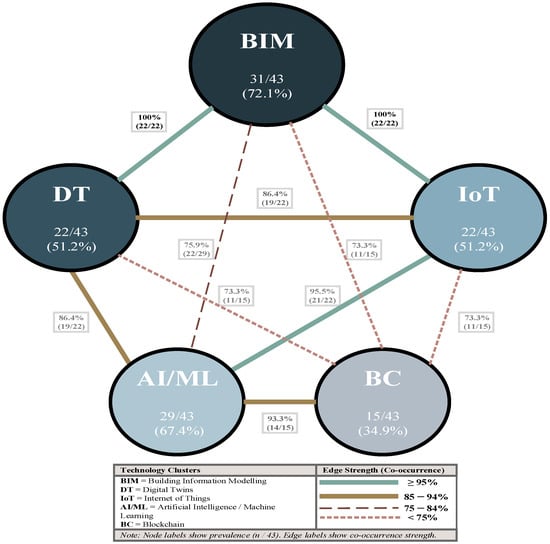
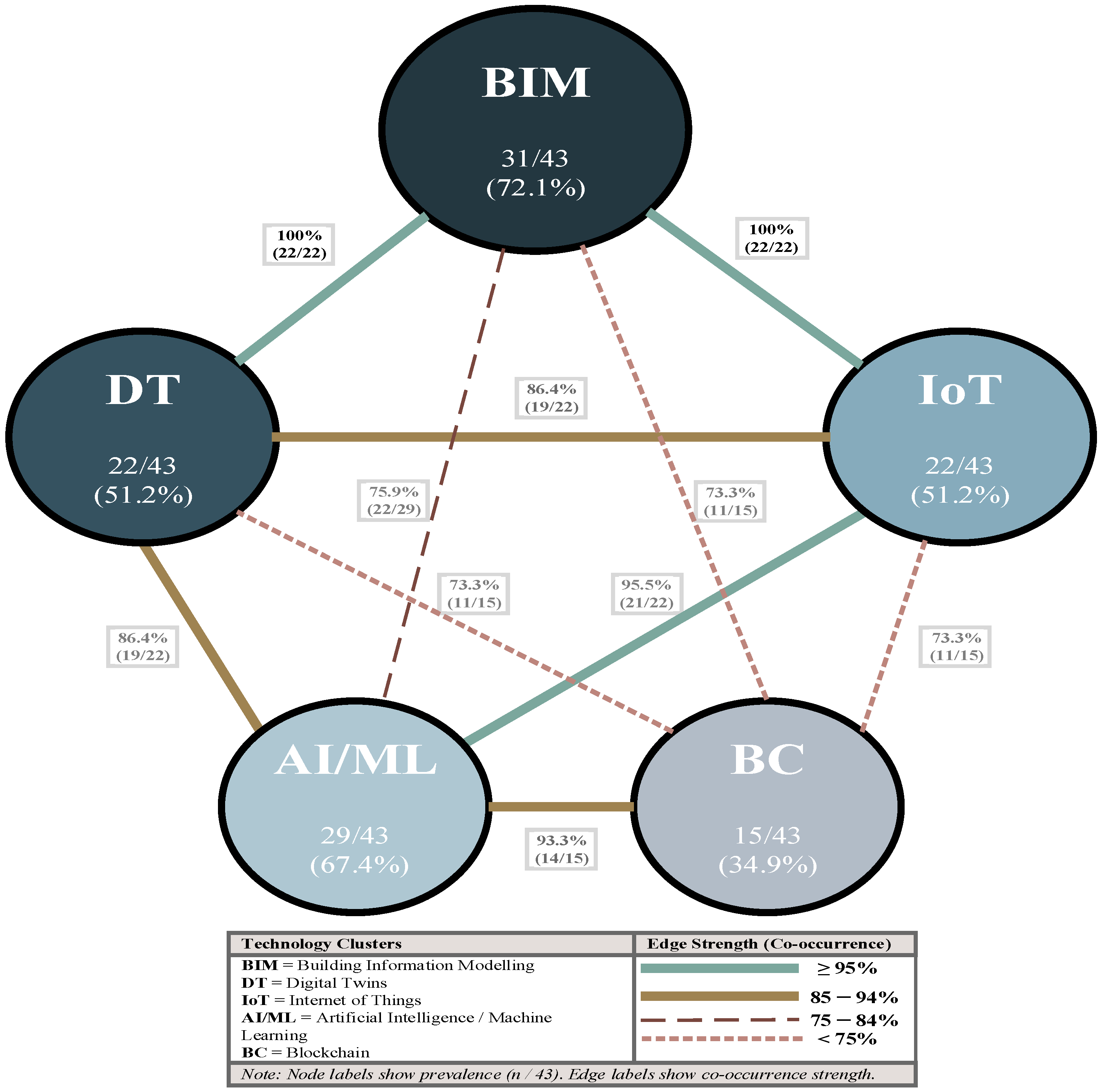
To examine dependencies among the recurring technologies identified in Figure 5, co-occurrence analysis was undertaken on the coded dataset (n = 43) as illustrated in Figure 6. The results show that BIM, DT, IoT, AI/ML, and BC are typically framed as components of an integrated digital stack rather than as isolated tools. BIM anchors this stack, with all DT-coded sources and all IoT-coded sources referencing BIM (22/22; 100% in both cases), underscoring BIM’s role as the primary source of information. DT and IoT are strongly coupled (19/22; 86.4%), consistent with the framing of twins as BIM-enabled representations augmented with sensor-derived operational data. IoT also appears closely coupled with AI/ML (21/22; 95.5%), reinforcing AI/ML’s positioning as an analytics layer applied to operational telemetry. BC, by contrast, occupies the most specialised and least mature position in the stack. Its strongest association is with AI/ML (14/15; 93.3%), and in 11 of 15 BC-coded sources (73.3%), it is discussed alongside the BIM, DT, and IoT cluster, aligning with its use in assurance, verification, and trust-oriented architectures rather than as a foundational operational platform.
Figure 6.
Co-occurrence network of the five core technology categories (n = 43).
Also in Figure 6, node labels show the prevalence of each technology (n/43). Edge labels show co-occurrence strength. For example, BIM-DT = 22/22 means that all documents that mention DTs also mention BIM. Overall, half of the included sources discuss three or more categories (23/43; 53.5%), and 11 sources (25.6%) discuss all five categories, reinforcing the interpretation that technology adoption is increasingly articulated as a layered stack rather than a single-tool implementation.
These findings address the research question by identifying the technologies underpinning asset management and compliance, and by demonstrating the regional governance influences on their adoption. A comparative maturity matrix, developed using the rubric in Section 3, is presented and interpreted in Section 5.
5. Discussion
Building on the results and interpreting them against differing national policy contexts, this review finds that BIM, DTs, IoT, AI/ML, and BC constitute the study’s core technology stack. Across the assessed technologies, both Singapore and the UK demonstrate high or medium-high levels of maturity. The UK continues to lead in BIM implementation, while Singapore stands out for its advanced regulatory integration, reflecting its strong top-down digital governance model. In contrast, adoption levels across the US and the GCC (e.g., Kuwait) are generally medium but uneven, with significant variation between technologies and markets. Within this broader context, BC remains the least-evidenced and lowest-maturity component, used mainly for provenance and auditability, while unresolved interoperability, governance, and upstream data-quality issues constrain wider deployment. Against this backdrop, the review focuses on the delivery-to-operations boundary, considering how technologies affect handover integrity, compliance evidence, and the quality of information used in later asset operation and maintenance.
The composition of the evidence base is notable. As shown in Figure 4, government sources dominate (51%), followed by professional/industry bodies (16%) and corporate/industry reports (12%), with international organisations (9%), think-tanks (7%), and technology vendors (5%) providing the remainder. This is not simply a sampling artefact; it reflects how public-sector mandates, regulatory regimes, national digital strategies, and standards infrastructures frequently shape construction digitalisation and compliance assurance. For technology-enabled compliance assurance, many of the most operationally influential sources are expressed through policy documents, standards, public guidance, and institutional roadmaps rather than journal articles. Because grey sources vary in credibility, the policy-heavy evidence base increases the importance of quality appraisal. Table 4 provides item-level AACODS scoring for all included sources, confirming that inclusion was restricted to sources meeting the predefined AACODS threshold (≥14/18). This appraisal strengthens the transparency of the synthesis by making the basis for inclusion explicit across government, professional, consultancy, and vendor sources using common quality criteria.
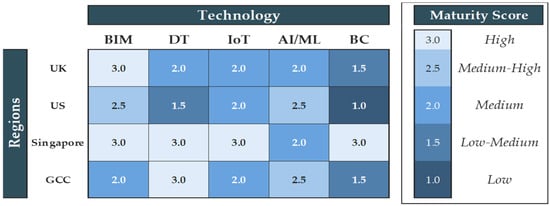
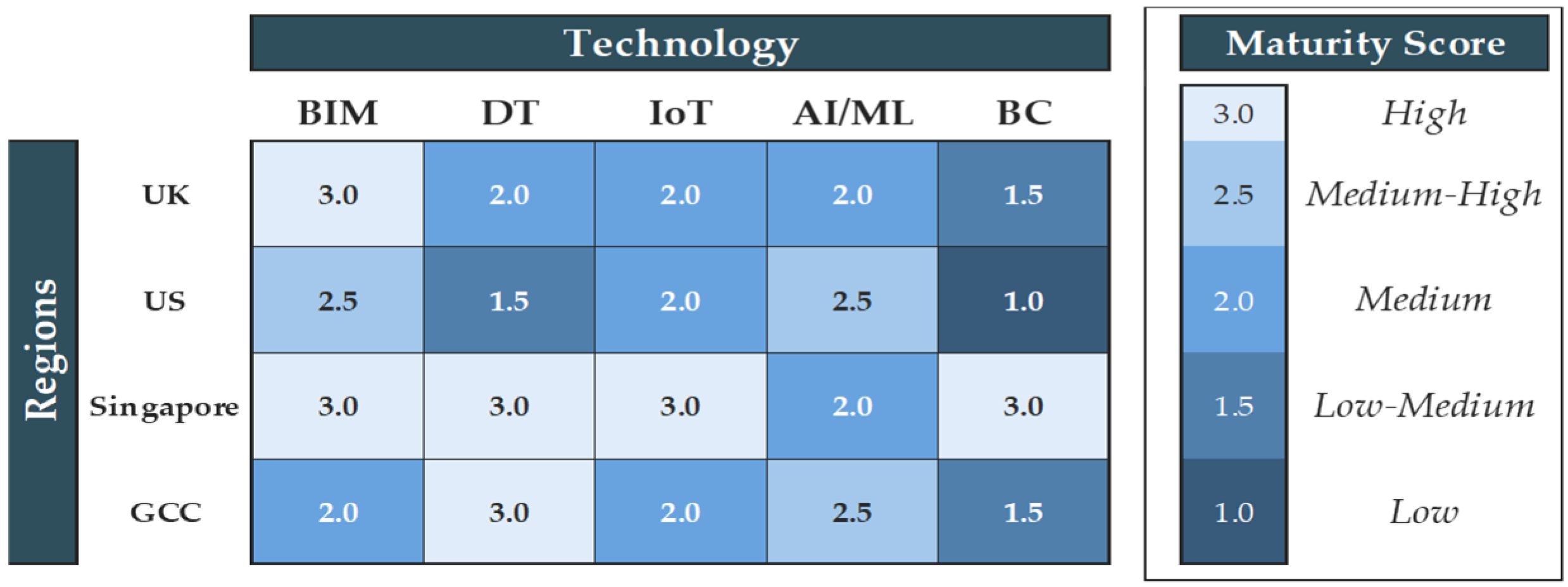
The comparative (Region × Technology) maturity ratings presented in Figure 7 were derived using the rubric defined in Section 3 and show that adoption is far from uniform. As discussed in Section 4.1, countries with explicit national mandates and coordinated programmes, such as the UK’s BIM Level 2 policy direction and Singapore’s IDD framework, exhibit consistently high BIM maturity. Singapore also shows high maturity in downstream technologies such as IoT and DTs, as examined in Section 4.2 and Section 4.3, reflecting the benefits of reliable, standardised data environments. These patterns suggest that maturity depends not on international standards alone, but on how information-management standards are translated into national regulatory practice, procurement requirements, and approval workflows.
Figure 7.
Comparative regional technology maturity matrix based on policy breadth, deployment depth, and market penetration, as defined in Table 3.
In contrast, the US, operating under agency-specific roadmaps, and the GCC states, driven primarily by flagship initiatives such as Dubai’s and NEOM’s city-scale DTs, show greater unevenness in maturity across the technology stack. This pattern reinforces the broader argument outlined throughout Section 4. This illustrates that transparent, enforceable governance accelerates digital uptake, whereas fragmented frameworks yield patchy progress. The comparative patterns can be summarised as follows:
- UK and Singapore lead, but through different pathways.
- −
- The UK demonstrates strong maturity in BIM and governance-linked compliance integration, as detailed in Section 4.1, while Singapore’s centrally coordinated model yields consistently high maturity across BIM, DTs, IoT, and AI, as discussed in Section 4.1, Section 4.2 and Section 4.3 and Section 4.5.
- The US shows uneven maturity consistent with decentralisation.
- −
- Certain agencies and sectors show strong progress in AI/ML and BIM, while market-wide maturity in DTs and BC remains inconsistent, as highlighted in Section 4.2, Section 4.4 and Section 4.5.
- GCC exhibits a “dual speed” pattern.
- −
- High maturity is evident in major DT programmes, as examined in Section 4.2. At the same time, the diffusion of BIM and IoT across the broader industry base remains moderate, as outlined in Section 4.1 and Section 4.3.
Collectively, these patterns underscore the pivotal role of coherent policy, concentrated investment, and a culture of data sharing in converting technological potential into measurable, system-wide maturity.
These comparative patterns are also consistent with the wider literature discussed in Section 2. Recent peer-reviewed work reports that digital-twin scaling remains constrained by interoperability, data sovereignty, and “black-box” AI issues [30], which aligns with the governance and integration barriers identified here. Research on BIM-based compliance checking shows growing movement toward computable-rule automation [31], emphasising the critical importance of BIM and CDE frameworks in modern design review processes. Likewise, recent synthesis on BC-BIM integration finds that BC’s near-term value is strongest for provenance, assurance, and auditability rather than for broad operational deployment [32], which is consistent with the selective, lower-maturity role identified in this study.
Viewed against that literature, the present review contributes a different perspective. Whereas the cited studies largely examine single technologies or narrower implementation problems [30,31,32], this review synthesises appraised grey evidence across multiple technologies and governance contexts. This makes it possible to compare not only technical capabilities, but also how mandates, standards, ecosystems, and institutional coordination shape digitisation maturity in practice.
The impact of economic scale and organisational readiness is equally pronounced. As outlined in Section 4.3, Singapore’s well-funded Smart Nation programme enables sensor-rich urban platforms. In contrast, GCC mega-projects, most notably Dubai’s and NEOM’s city-scale twins, achieve comparable sophistication but remain confined to high-profile developments, as stated in Section 4.2. In the broader U.S. market, as noted in Section 4.1, digital excellence coexists with lagging regions, underscoring how market fragmentation dilutes systemic gains. Evidence from Section 4.3 and Section 4.5 suggests that enterprises that foster data-sharing cultures and cross-disciplinary teams are more likely to harness AI/ML for predictive maintenance and automated compliance, whereas siloed, paper-driven routines impede progress. Thus, even where money and policy exist, organisational culture mediates the leap from intent to realised maturity, explaining why some GCC and U.S. stakeholders remain cautious despite access to advanced tools.
A final highlight is the interdependence of the five technologies. BIM serves as the foundational data support through CDEs aligned with ISO 19650-1 and national strategies, as outlined in Section 4.1. IoT strengthens this foundation by supplying real-time telemetry, as discussed in Section 4.3, while DTs build on both to enable simulation, prediction, and scenario testing, as examined in Section 4.2. AI/ML then transforms these data streams into actionable foresight, as explored in Section 4.5, and BC contributes secure, tamper-evident audit trails that support compliance and traceability, as detailed in Section 4.4.
This interdependence is not only conceptual; it is clearly reflected in the coded results. The co-occurrence analysis, as presented in Section 4.6, shows that discussions of DTs and IoT consistently co-occur with BIM within the evidence base, reinforcing a staged adoption logic rather than suggesting competing technological pathways. In practical terms, this indicates that overall maturity is constrained by the least developed component in the stack and by the strength of the governance infrastructure that enables information continuity across systems.
Accordingly, strategic rollout should follow a phased sequence: first consolidate BIM, CDEs, and core information-management practices; then scale IoT and DT capabilities; and finally embed BC and AI/ML workflows once data governance and evidence-management foundations are sufficiently robust.
Parallel investment in training and structured information-management standards, including ISO 19650-aligned practices, strengthens technological, organisational, and regulatory readiness, enabling each layer of the digital stack to reinforce the others, as discussed in Section 4.3 and Section 4.5. Regions that combine mandates, market incentives, and capacity-building, such as the UK’s BIM Level 2 direction and Singapore’s Integrated Digital Delivery programme, demonstrate compounded benefits across the stack, as evidenced in Section 4.1, Section 4.2 and Section 4.3. In contrast, isolated pilots risk entrenching digital silos, a pattern evident in GCC case evidence and in US agency-specific initiatives, as outlined in Section 4.2 and Section 4.1. Ultimately, technology alone is insufficient; mature adoption depends on policy alignment, sustained investment, and cultural change. The findings also point to several practical priorities for strengthening digital-asset governance and accelerating consistent uptake across regions:
- Treat information governance as a programme, not a technical add-on, by defining information requirements, roles, controlled workflows, audit trails, and secure access.
- Prioritise BIM/CDE maturity before scaling DT, IoT, and AI, since the stack logic means that later layers depend on the strength of earlier foundations.
- Design compliance assurance around evidence, defining what must be proved, how it is recorded, where it is stored, and how it is audited.
- Institutionalise pilots through procurement and templates, moving from showcase projects to repeatable delivery models.
- Use BC selectively for high-risk audit trails and provenance, and only where data quality, validation rules, and implementation overhead can be clearly justified.
6. Conclusions
This systematic grey-literature review synthesised 43 retained sources meeting the AACODS (threshold ≥ 14/18; Table 4) to examine how digital technologies enable construction asset management and compliance assurance across four regions. In response to the research question, “What are the key technologies currently used in asset management and compliance assurance in the construction industry, and how are these technologies being adopted across different regions?”, the evidence identifies five recurring technology categories as the prevailing digital stack: BIM, DTs, IoT, AI/ML, and BC. These categories are the technologies that appear across the full corpus with consistent recurrence, with BIM referenced in 31 of 43 sources (72.1%), AI/ML in 29 of 43 (67.4%), DTs and IoT each in 22 of 43 (51.2%), and BC in 15 of 43 (34.9%), as shown in Figure 5. These frequencies indicate recurrence in the corpus rather than technological independence. Co-occurrence patterns further indicate that DT and IoT are typically framed as extensions built on BIM-based information foundations, as presented in Section 4.6, reinforcing BIM’s role as the data support for audit-ready lifecycle compliance evidence. Here, “core” denotes recurrence across the corpus, not equal maturity or foundational status; among the five recurring technologies, BC is the most selective and least mature component. Accordingly, the paper addresses asset management through a lifecycle-continuity lens, including delivery-phase technologies only when they improve the asset information base, the compliance record, or the handover package relied upon in operations.
Across the included evidence, BIM is primarily used to structure and govern asset information and support audit-ready handover; DTs and IoT extend BIM into operations by linking models to condition/performance telemetry for monitoring and predictive maintenance; AI/ML is used as an analytics and automation layer for anomaly detection, evidence extraction and elements of compliance checking; and BC is discussed selectively for tamper-evident provenance and multi-party audit trails.
In addition, cross-regional comparison shows that adoption maturity is uneven, as shown in Figure 7. The UK and Singapore demonstrate greater maturity, with governance mechanisms such as defined information requirements, clear roles, controlled workflows, audit trails, and secure access that support standardisation and integration; however, this maturity reflects the interaction of such practices with national regulatory frameworks rather than the effect of ISO 19650 alone, while the US and GCC show more variable uptake, often concentrated among leading agencies, firms, or flagship projects. Across all regions, BC remains comparatively less mature than BIM and AI/ML, suggesting that its near-term role is most defensible as a targeted mechanism for traceability and auditability rather than broad operational deployment.
Limitations and Future Work
Three limitations should be acknowledged. First, although the AACODS appraisal enhances methodological rigour (Table 4), grey literature inevitably reflects institutional agendas and varying levels of transparency. Second, the coding approach provides valuable insights into frequency and co-occurrence patterns. Still, it does not quantify the impact of outcomes such as cost reduction or shortened approval times unless these metrics are consistently reported across the source documents. Third, the systematic search window concludes in July 2025; peer-reviewed work published thereafter should therefore be treated as contextual enrichment, as noted in Section 2, rather than as part of the systematic evidence base.
In addition, the regional comparison is purposive and interpretive rather than statistically representative, and remains sensitive to differences in the availability of grey literature across contexts.
Future research should build on these findings through longitudinal case studies that measure compliance performance and assurance efficiency over time, and through comparative governance analyses that evaluate which mandate mechanisms most effectively translate pilot successes into sector-wide diffusion.
This study contributes (i) a reproducible AACODS-based GLR approach for construction digitalisation research, (ii) a (Region × Technology) maturity matrix to characterise adoption pathways, and (iii) evidence-informed guidance that supports phased implementation: consolidate BIM and information governance, then scale IoT and DTs, and embed AI/ML and BC once data quality, interoperability, and evidence-management practices are robust. Key limitations are that grey literature may over-represent high-profile initiatives and that the review window ends in July 2025; future work should test these findings through longitudinal case studies that report measurable outcomes, including approval time, assurance efficiency, compliance non-conformance rates, and lifecycle cost impacts.
Supplementary Materials
The following supporting information can be downloaded at: https://www.mdpi.com/article/10.3390/buildings16071434/s1, Table S1: PRISMA 2020 Main Checklist.
Author Contributions
Conceptualization, A.A. and T.B.; methodology, A.A.; formal analysis, A.A.; investigation, A.A.; writing—original draft preparation, A.A.; writing—review and editing, T.B.; supervision, T.B. and Y.R. All authors have read and agreed to the published version of the manuscript.
Funding
This research received no external funding.
Data Availability Statement
The data presented in this study are available on request from the corresponding author.
Acknowledgments
The author gratefully acknowledges Thomas Beach for his academic guidance, critical insights, and constructive feedback throughout the development of this research. Appreciation is also extended to Yacine Rezgui and the wider School of Engineering at Cardiff University for their academic support and stimulating research environment. The author further acknowledges the General Secretariat of the Supreme Council for Planning and Development in the State of Kuwait for its sponsorship and continued support. A preliminary version of this work appears in the ACCCBE 2025 and CONVR 2025 proceedings [72].
Conflicts of Interest
The authors declare no conflicts of interest.
References
- Alsaffar, A.; Beach, T.; Rezgui, Y. Revolutionising Digital Construction: A Conceptual Framework from the Integration of DTs and BC for Enhanced Assets Management to Share Knowledge. In Proceedings of the 2024 IEEE Conference on Engineering Informatics (ICEI), Melbourne, Australia, 20–28 November 2024; pp. 1–8. [Google Scholar] [CrossRef] [Scilit]
- Alsaffar, A.; Beach, T.; Rezgui, Y. Enhancing asset management: Integrating digital twins for continuous permitting and compliance—A systematic literature review. J. Build. Eng. 2025, 99, 111515. [Google Scholar] [CrossRef] [Scilit]
- World Economic Forum. Could CO2 Help Reduce the Construction Sector’s CO2 Emissions? 2020. Available online: https://www.weforum.org/stories/2020/12/co2-can-help-the-construction-industry-thrive-heres-how/ (accessed on 1 April 2026).
- World Economic Forum. Industry Agenda: Shaping the Future of Construction — A Breakthrough in Mindset and Technology Prepared in Collaboration with the Boston Consulting Group. 2016. Available online: https://www3.weforum.org/docs/WEF_Shaping_the_Future_of_Construction_full_report__.pdf (accessed on 1 April 2026).
- RICS. Digitalisation in Construction Report. RICS: London, UK, 2024; Available online: https://www.rics.org/content/dam/ricsglobal/documents/research/Digitalisation-in-construction-report-2024.pdf (accessed on 1 April 2026).
- Infrastructure and Projects Authority. Example Asset Management (Compliance) Report. Infrastructure and Projects Authority: London, UK, 2025. Available online: https://assets.publishing.service.gov.uk/media/67cad87d8c1076c796a45c24/Example-Asset-Management-_Compliance_-Report.pdf (accessed on 1 April 2026).
- ISO-55000; Asset Management—Vocabulary, Overview and Principles. International Organization for Standardization: Geneva, Switzerland, 2024.
- National Protective Security Authority. Establishing a Dialogue About the Security of Digital Built Assets. 2020. Available online: https://www.npsa.gov.uk/system/files/documents/NPSA%20-%20Establishing%20a%20dialogue%20about%20the%20security%20of%20digital%20built%20assets.pdf (accessed on 1 April 2026).
- HM Government. Digital Built Britain Level 3 Building Information Modelling — Strategic Plan. 2015. Available online: https://www.cdbb.cam.ac.uk/system/files/documents/bis15155digitalbuiltbritainlevel3strategy.pdf (accessed on 1 April 2026).
- Gulf Research Center. Infrastructure Sector Outlook. 2024. Available online: https://programs.grc.net/wp-content/uploads/2024/09/GCC-Infrastructure-Sector-Outlook_2.pdf (accessed on 1 April 2026).
- Grieves, M. Digital Twin: Manufacturing Excellence through Virtual Factory Replication. 2015. Available online: https://www.researchgate.net/publication/275211047_Digital_Twin_Manufacturing_Excellence_through_Virtual_Factory_Replication (accessed on 1 April 2026).
- Autodesk. Connected Data Environment for Digital Twins. 2021. Available online: https://damassets.autodesk.net/content/dam/autodesk/www/pdfs/cde-whitepaper-en.pdf (accessed on 1 April 2026).
- Building and Construction Authority. Singapore BIM Guide Version 2 BCA Acknowledges the Leadership Provided by the BIM Steering Committee in Support of the Production of the Singapore BIM Guide; Building and Construction Authority: Singapore, 2013. [Google Scholar]
- FHWA. Advancing BIM for Infrastructure: National Strategic Roadmap, June 2021—FHWA-HRT-21-064. 2021. Available online: https://www.fhwa.dot.gov/publications/research/infrastructure/pavements/21064/21064.pdf (accessed on 1 April 2026).
- PD CEN/TR 18077:2024; Building Information Modelling; Digital Twins Applied to the Built Environment. Use Cases. British Standards Institution: London, UK, 2024. Available online: https://www.en-standard.eu/pd-cen-tr-18077-2024-building-information-modelling-digital-twins-applied-to-the-built-environment-use-cases/ (accessed on 1 April 2026).
- HES. Improving Health and Safety Outcomes in Construction Making the Case for Building Information Modelling (BIM); Health and Safety Executive: Merseyside, UK, 2018. Available online: https://www.hse.gov.uk/construction/assets/docs/improving-health-and-safety-outcomes-in-construction.pdf (accessed on 1 April 2026).
- Al-Raqeb, H.; Ghaffar, S.H. The Role of BIM 6D and 7D in Enhancing Sustainable Construction Practices: A Qualitative Study. Technologies 2025, 13, 65. [Google Scholar] [CrossRef] [Scilit]
- BS ISO 19650-1; Organization and Digitization of Information About Buildings and Civil Engineering Works, Including Building Information Modelling (BIM)—Information Management Using Building Information Modelling — Part 1: Concepts and Principles. British Standards Institution: London, UK, 2018.
- buildingSMART. Digital Twins and the Systems Perspective. buildingSMART International: London, UK, 2024. Available online: https://www.buildingsmart.org/wp-content/uploads/2024/10/Digital-Twins-and-the-Systems-Perspective_Whitepaper_bSI_2024_Final2.pdf (accessed on 1 April 2026).
- Internet of Things (IoT) Advisory Board (IoTAB) Report. 2024. Available online: https://opencommons.org/images/d/d7/Reduced_The_IoT_of_Things_Oct_2024.pdf (accessed on 1 April 2026).
- Khan, A.M.; Alrasheed, K.A.; Waqar, A.; Almujibah, H.; Benjeddou, O. Internet of things (IoT) for safety and efficiency in construction building site operations. Sci. Rep. 2024, 14, 28914. [Google Scholar] [CrossRef] [Scilit] [PubMed]
- Iyer, R. 8 Types of Digital Technology Shaping the Future of Engineering. 2025. Available online: https://www.ice.org.uk/news-views-insights/inside-infrastructure/types-of-digital-technology-shaping-engineering (accessed on 1 April 2026).
- Gov UK. Smart Machines Strategy 2035. UK Government: London, UK, 2025. Available online: https://www.gov.uk/government/publications/smart-machines-strategy-2035/smart-machines-strategy-2035 (accessed on 1 April 2026).
- ARPA-I. Summary of RFI Responses—Opportunities and Challenges of Artificial Intelligence (AI) in Transportation. 2024. Available online: https://www.transportation.gov/sites/dot.gov/files/2024-12/ARPA-I%20Summary%20Report%20on%20AI%20RFI%202024-12%20%28Final%29_1.pdf (accessed on 1 April 2026).
- Schöpfel, J. Towards a Prague Definition of Grey Literature. Grey J. 2011, 7, 5–18. [Google Scholar]
- Godin, K.; Stapleton, J.; Kirkpatrick, S.I.; Hanning, R.M.; Leatherdale, S.T. Applying systematic review search methods to the grey literature: A case study examining guidelines for school-based breakfast programs in Canada. Syst. Rev. 2015, 4, 138. [Google Scholar] [CrossRef] [Scilit] [PubMed]
- Kamei, F.; Wiese, I.; Lima, C.; Polato, I.; Nepomuceno, V.; Ferreira, W.; Ribeiro, M.; Pena, C.; Cartaxo, B.; Pinto, G.; et al. Grey Literature in Software Engineering: A critical review. Inf. Softw. Technol. 2021, 138, 106609. [Google Scholar] [CrossRef] [Scilit]
- Adams, R.J.; Smart, P.; Huff, A.S. Shades of Grey: Guidelines for Working with the Grey Literature in Systematic Reviews for Management and Organizational Studies. Int. J. Manag. Rev. 2017, 19, 432–454. [Google Scholar] [CrossRef] [Scilit]
- Tyndall, J. How Low Can You Go? Towards a Hierarchy of Grey Literature; Flinders University: Adelaide, Australia, 2008. [Google Scholar]
- Moghimi, N.; Arshang, O.; Hamzeh, F. Digital twins in offsite construction: Current implementations, challenges, and future pathways. Autom. Constr. 2026, 183, 106820. [Google Scholar] [CrossRef] [Scilit]
- Qi, L.; Zhang, S.; Rong, J.; He, X.; Li, X. A BIM based 3D design compliance review system for power grid projects. KSCE J. Civ. Eng. 2026, 100534, in press. [Google Scholar] [CrossRef] [Scilit]
- Hijazi, A.A.; Alashwal, A.; Shishehgarkhaneh, M.B.; Calheiros, R.N. Blockchain–BIM integration in construction: A systematic literature review of workflows, mechanisms, and platforms. J. Build. Eng. 2026, 120, 115388. [Google Scholar] [CrossRef] [Scilit]
- Kuwait Municipality. Building permits procedures manual. Kuwait Municipality: Kuwait City, Kuwait. Available online: https://web.archive.org/web/20250421135227/http://www.baladia.gov.kw:80/sites/ar/municipalityServices/Pages/buildingPermitsProceduresManual/manual.aspx (accessed on 1 April 2026).
- Kuwait VNR: Kuwait Voluntary National Review 2019 Report on the Implementation of the 2030 Agenda to the UN High-Level Political Forum on Sustainable Development. 2019. Available online: https://digitallibrary.un.org/record/3866777 (accessed on 1 April 2026).
- Kuwait Municipality. Annual Statistical Report of Kuwait Municipality. 2024. Available online: https://doi.org/10.5281/zenodo.19407455 (accessed on 1 April 2026).
- Kuwait VNR2: The National Observatory for Sustainable Development, General Secretariat of the Supreme Council for Planning and Development, State of Kuwait. 2023. Available online: https://kuwait.un.org/sites/default/files/2023-09/VNR2_English_Final.pdf (accessed on 1 April 2026).
- Aecom: A Review of the Delivery and Impact of National Highways’ Digital, Data and Technology (DDaT) Strategy and progress Against its Digital Roads Roadmap. 2022. Available online: https://www.orr.gov.uk/sites/default/files/2024-07/orr-national-highways-digital-data-and-technology-review.pdf (accessed on 1 April 2026).
- US Department of Transportation Federal Transit Administration. Project and Construction Management Guidelines. 2025. Available online: https://www.transit.dot.gov/sites/fta.dot.gov/files/2025-02/Project-and-Construction-Management-Guidelines-January-2025.pdf (accessed on 1 April 2026).
- US Army Corps of Engineers. Construction Management Innovation Office launches Strategy for Digital Advancement. 2025. Available online: https://www.usace.army.mil/Media/News/NewsSearch/Article/4035852/construction-management-innovation-office-launches-strategy-for-digital-advance/ (accessed on 1 April 2026).
- US Department of Energy. Advanced Building Construction Publications—2024. Available online: https://www.energy.gov/eere/buildings/articles/advanced-building-construction-publications-2024 (accessed on 1 April 2026).
- BCA. Integrated Digital Delivery (IDD). Building and Construction Authority (BCA). Available online: https://www1.bca.gov.sg/growth-and-transformation/productivity/idd-integrated-digital-delivery/ (accessed on 1 April 2026).
- IMDA. Built Environment Industry Digital Plan (IDP). Available online: https://services2.imda.gov.sg/ctoaas/BuiltEnvironmentIndustryDigitalPlan?utm_source=IMDA_website&utm_medium=organic_social&utm_campaign=BE_IDP (accessed on 1 April 2026).
- JTC Sustainability Report. Shaping A Greener Future. fy2023. Available online: https://www.jtc.gov.sg/-/media/project/jtc-cx/corpweb/assets/about-jtc/resources/documents/jtc-sustainability-report-fy2023.pdf (accessed on 1 April 2026).
- RICS. The Future of BIM: Digital Transformation in the UK Construction and Infrastructure Sector. 2023. Available online: https://www.rics.org/content/dam/ricsglobal/documents/standards/The-future-of-BIM_April-2023.pdf (accessed on 1 April 2026).
- Haldane, G. NEOM: A Vision for Smarter Cities. Turner & Townsend: 2024. Available online: https://www.turnerandtownsend.com/insights/neom-a-vision-for-smarter-cities/ (accessed on 1 April 2026).
- Dubai Municipality. Geospatial maps for smarter urban planning and building. Dubai Municipality: Dubai, United Arab Emirates, 2024. Available online: https://web.archive.org/web/20250715130407/https://www.dm.gov.ae/dubai_more/geospatial-maps-for-smarter-urban-planning-and-building/ (accessed on 1 April 2026).
- Taylor, D. Digital governance 101; Good Governance Institute: London, UK; Available online: https://www.good-governance.org.uk/publications/insights/digital-governance-101 (accessed on 1 April 2026).
- Dunlea, J. AI & Machine Learning for Regulatory Compliance. 2024. Available online: https://www.akkio.com/post/compliance-artificial-intelligence (accessed on 1 April 2026).
- Oulton, T. The Missing Link: How Blockchain Can Help Construction Industry Leaders to Monitor and Manage Change. 2023. Available online: https://www.rlb.com/europe/insight/perspective-2023-vol-2/the-missing-link-how-blockchain-can-help-construction-industry-leaders-to-monitor-and-manage-change/ (accessed on 1 April 2026).
- Riches, S. Integrating BIM, IoT and Blockchain in Construction—REBIM®. Available online: https://rebim.io/integrating-bim-iot-and-blockchain-in-construction/ (accessed on 1 April 2026).
- Evidence Toolkit. AACODS Checklist (Authority, Accuracy, Coverage, Objectivity, Date, Significance) for Evaluating Grey Literature—NHS Evidence Toolkit. 2024. Available online: https://nhsevidencetoolkit.net/resources/aacods-checklist/ (accessed on 1 April 2026).
- Page, M.J.; McKenzie, J.E.; Bossuyt, P.M.; Boutron, I.; Hoffmann, T.C.; Mulrow, C.D.; Shamseer, L.; Tetzlaff, J.M.; Akl, E.A.; Brennan, S.E.; et al. The PRISMA 2020 statement: An updated guideline for reporting systematic reviews. BMJ 2021, 372, n71. [Google Scholar] [CrossRef] [Scilit] [PubMed]
- Page, M.J.; Moher, D.; Bossuyt, P.M.; Boutron, I.; Hoffmann, T.C.; Mulrow, C.D.; Shamseer, L.; Tetzlaff, J.M.; Akl, E.A.; Brennan, S.E.; et al. PRISMA 2020 explanation and elaboration: Updated guidance and exemplars for reporting systematic reviews. BMJ 2021, 372, n160. [Google Scholar] [CrossRef] [PubMed]
- Farace, D.; Schöpfel, J. (Eds.) Grey Literature in Library and Information Studies; De Gruyter: Berlin, Germany; New York, NY, USA, 2010. [Google Scholar] [CrossRef] [Scilit]
- Benzies, K.M.; Premji, S.; Hayden, K.A.; Serrett, K. State-of-the-evidence reviews: Advantages and challenges of including grey literature. Worldviews Evid.-Based Nurs. 2006, 3, 55–61. [Google Scholar] [CrossRef] [Scilit] [PubMed]
- Conn, V.S.; Valentine, J.C.; Cooper, H.M.; Rantz, M.J. Grey Literature in Meta-Analyses. Nurs. Res. 2003, 52, 256–261. [Google Scholar] [CrossRef] [Scilit] [PubMed]
- Hopewell, S.; McDonald, S.; Clarke, M.J.; Egger, M. Grey literature in meta-analyses of randomized trials of health care interventions. Cochrane Database Syst. Rev. 2007, 2, MR000010. [Google Scholar] [CrossRef] [Scilit] [PubMed]
- Secretary of State for Housing, Communities & Local Government. Construction Products Reform Green Paper. UK Government: London, UK, 2025. Available online: https://assets.publishing.service.gov.uk/media/67befa24a0f0c95a498d1f96/CCS0924294540-001_PN8889787_SECURE_Construction_Green_Paper_2024_Web_Accessible.pdf (accessed on 1 April 2026).
- Smarter Technologies. IoT Solutions. Available online: https://smartertechnologies.com/iot-solutions/ (accessed on 1 April 2026).
- HCSS. Bold Predictions for Construction in 2025. 2025. Available online: https://www.hcss.com/blog/predictions-for-construction-in-2025/ (accessed on 1 April 2026).
- Gajjar, K.S. UK Government’s BIM Standards and Guidelines 2025: Shaping the Future of Construction. 2025. Available online: https://www.bimassociates.com/blog/bim-standards-guides-future-uk/ (accessed on 1 April 2026).
- Government Office for Science. Future of tunnelling: High level review of emerging technologies (annex). Government Office for Science: London, UK, 2024. Available online: https://www.gov.uk/government/publications/future-of-the-subsurface-report/future-of-tunnelling-high-level-review-of-emerging-technologies-annex (accessed on 1 April 2026).
- Ministry of Trade and Industry. Industry Transformation Maps (ITMs). Ministry of Trade and Industry: Singapore, 2025. Available online: https://web.archive.org/web/20251018132944/https://www.mti.gov.sg/FutureEconomy/Industry-Transformation-Maps (accessed on 1 April 2026).
- NEOM. NEOM and Samsung CT Commit to Worlds Largest Deployment of Rebar Construction Automation Technology. 2024. Available online: https://www.neom.com/en-us/newsroom/neom-and-samsung-ct-jv-announcement (accessed on 1 April 2026).
- Building and Construction Authority (BCA). Productivity. Building and Construction Authority: Singapore, 2024. Available online: https://www1.bca.gov.sg/growth-and-transformation/productivity/ (accessed on 1 April 2026).
- Hemhauser, D. Blockchain Revolution in Project Management: Enhancing Transparency, Security, and Efficiency. 2024. Available online: https://pmplaybook.substack.com/p/blockchain-for-project-management (accessed on 1 April 2026).
- Kaul. Blockchain in Compliance: Streamlining Audits and Reporting. 2024. Available online: https://web.archive.org/web/20250722141821/https://medium.com/liveplexmetaverseecosystem/blockchain-in-compliance-streamlining-audits-and-reporting-1af090af4909 (accessed on 1 April 2026).
- BS EN ISO/IEC 27001; Information Security, Cybersecurity and Privacy Protection—Information Security Management Systems—Requirements. British Standards Institution: London, UK, 2023.
- Harvie, L. Empowering the Future: The Role of Wireless Sensor Networks in Shaping IoT Innovations. 2023. Available online: https://medium.com/@lanceharvieruntime/empowering-the-future-the-role-of-wireless-sensor-networks-in-shaping-iot-innovations-7d22e9b63827 (accessed on 1 April 2026).
- GMO GlobalSign. IoT and Environmental Monitoring with Sensor Networks. 2024. Available online: https://www.iotforall.com/iot-and-environmental-monitoring-with-sensor-networks (accessed on 1 April 2026).
- UN-HABITAT. World Smart Cities Outlook 2024 Acknowledgements Contributors (Data Collection). ESCAP. 2024. Available online: https://unhabitat.org/sites/default/files/2024/12/un_smart_city_outlook.pdf (accessed on 1 April 2026).
- Alsaffar, A.; Beach, T.; Rezgui, Y. Unlocking Knowledge Through Grey Literature: Technology-Enabled Asset Management in Construction. In Proceedings of the ACCCBE 2025 & CONVR 2025, Lecture Notes in Civil Engineering; Skatulla, S., Dawood, N., Eds.; Springer: Cham, Switzerland, 2026; Volume 823. [Google Scholar]

Disclaimer/Publisher’s Note: The statements, opinions and data contained in all publications are solely those of the individual author(s) and contributor(s) and not of MDPI and/or the editor(s). MDPI and/or the editor(s) disclaim responsibility for any injury to people or property resulting from any ideas, methods, instructions or products referred to in the content. |
© 2026 by the authors. Licensee MDPI, Basel, Switzerland. This article is an open access article distributed under the terms and conditions of the Creative Commons Attribution (CC BY) license.