


Abstract
This study investigates the feasibility of incorporating recycled concrete aggregate (RCA) as a full replacement for fine aggregate in high-performance concrete (HPC). Five mixtures containing 0%, 25%, 50%, 75%, and 100% RCA were experimentally evaluated. Hardened density, compressive strength, splitting tensile strength, flexural strength, water absorption, microstructure (SEM), and carbon footprint were analyzed. Results showed a near-linear density reduction of 5.8% at 100% RCA due to lower specific gravity and higher porosity of RCA. Mechanical performance decreased with RCA content: compressive strength reduced from 78 MPa to 53 MPa (−32%), splitting tensile strength from 6.2 to 4.2 MPa, and flexural strength from 7.6 to 5.0 MPa. Water absorption increased by 42%, indicating increased permeability. SEM analysis revealed a weakened and porous interfacial transition zone (ITZ) surrounding RCA particles, explaining strength reduction. Carbon footprint analysis showed a slight increase in emissions with RCA due to cement dominance and RCA processing energy. Results confirm that RCA enhances material circularity but introduces a performance–durability trade-off, requiring optimized mix design and SCM integration for structural applications.
1. Introduction
Global demand for concrete continues to rise, driven by urbanization, infrastructure expansion, and rebuilding needs. As the world’s most used construction material, concrete underpins modern society, yet conventional concrete imposes significant environmental burdens [1,2,3,4,5]. Cement production is responsible for roughly 7–8% of global anthropogenic CO2 emissions and consumes large quantities of energy and natural resources (aggregate, water) [6,7,8]. Simultaneously, the construction and demolition sector generates vast amounts of waste; inefficient management of this waste both strains landfills and accelerates extraction of virgin resources. Consequently, sustainable construction strategies that reduce embodied carbon, divert waste from landfills, and conserve natural aggregates are priorities for researchers, industry practitioners, and policymakers [9,10,11].
Recycled concrete aggregates (RCAs), produced by crushing demolished concrete, present an attractive circular-economy solution: they reuse construction waste, reduce demand for virgin aggregates, and can lower embodied impacts of new concrete if properly managed [12,13,14,15]. However, RCA differs from natural aggregates in ways that complicate direct substitution. RCA typically contains residual adhered mortar, exhibits higher porosity and water absorption, lower particle density, and presents a weaker interfacial transition zone (ITZ) with new cement paste [16,17,18]. These features can impair mechanical properties, increase shrinkage and creep, and reduce resistance to aggressive environments (freeze–thaw, chloride ingress, sulfate attack), particularly when RCA replacement levels are high. As a result, the full potential of RCA remains unrealized in high-performance concrete (HPC) applications, where stringent requirements for strength, durability, and long service life are essential [19,20].
HPC is designed to deliver superior mechanical and durability performance compared to ordinary concrete, enabling longer service life, reduced member dimensions, and life-cycle cost benefits [21,22,23,24,25,26,27]. Integrating RCA into HPC is attractive from a sustainability standpoint but challenging due to the performance–sustainability trade-off. Past research has demonstrated that partial replacement of coarse aggregate with RCA (commonly up to 30%) can produce acceptable strength and durability in many applications, especially when accompanied by mix design adjustments (additional cement paste, optimized grading, high-range water reducers) and the use of supplementary cementitious materials (SCMs) such as fly ash, slag, or silica fume [28,29,30]. Nevertheless, results vary widely across studies due to differences in RCA source, processing quality, adhered mortar content, and test methods, leaving open questions about reproducible pathways to produce RCA-based HPC that reliably meets performance criteria across exposure classes.
Critical mechanisms governing RCA’s influence on concrete performance are now well documented. Residual adhered mortar reduces aggregate stiffness and increases porosity, leading to lower elastic modulus and higher deformation under load. The presence of old ITZs, microcracks from crushing, and microstructural heterogeneities promote preferential moisture and ion transport pathways, which can accelerate deterioration under chemical attack or freeze–thaw cycles [29,30,31,32]. Conversely, targeted interventions can mitigate these drawbacks. Pre-treatment of RCA (mechanical removal of adhered mortar, thermal or chemical treatments), quality classification and sieving, and densification procedures improve aggregate quality [33,34]. At the mixture level, SCMs can refine pore structure and improve ITZ bonding, while high-range water reducers and optimized aggregate gradation can restore workability without increasing the water/cement ratio, thus preserving strength [35,36,37]. Combined, these strategies suggest a pathway to high-performance, eco-friendly concrete incorporating RCA; however, systematic frameworks that quantify performance, durability, and environmental outcomes across industrially realistic RCA qualities and replacement levels are still lacking.
Beyond mechanical and durability performance, environmental assessment must be integral to any development of RCA-based HPC. The environmental benefit of RCA depends on multiple factors: reduced extraction and transport of virgin aggregates and avoiding landfill impacts and any additional energy or emissions from RCA processing (crushing, cleaning, sorting). Carbon footprint analysis (CFA) studies indicate potential reductions in embodied carbon and energy for concretes with RCA, but results are sensitive to transport distances, RCA processing intensities, cement content adjustments (which may increase when compensating for RCA weaknesses), and end-of-life scenarios [38,39,40]. Therefore, comprehensive trade-off analysis—linking material processing, mix design, performance, durability (hence service life), and CFA outcomes—is required to demonstrate net environmental gain and to propose realistic implementation strategies.
This study addresses these gaps by developing and evaluating high-performance eco-friendly concrete mixes that incorporate RCA across a range of replacement levels and processing conditions. The research integrates materials characterization, mix design optimization, mechanical and durability testing, microstructural analysis, and cradle-to-gate and cradle-to-grave environmental assessment. The overarching aim is to demonstrate whether, and under what conditions, RCA-based concretes can meet HPC performance targets while delivering meaningful reductions in embodied impacts.
Specifically, this research aims to develop a series of HPC mixtures with progres-sively increasing replacement levels of fine RCA, ranging from 0% to 100%. In contrast to the majority of RCA investigations, which prioritize the coarse fraction, this study targets the fine fraction to specifically capture the microstructural and early-age effects that govern overall performance. The study systematically evaluates the mechanical performance of these mixtures by measuring compressive strength, splitting tensile strength, and flexural strength at relevant curing ages of 7 and 28 days. In addition, microstructural characteristics, including the quality of the ITZ, porosity, and the presence of microcracking, are examined through scanning electron microscopy (SEM) to establish the link between internal morphology and macroscopic behavior. Beyond mechanical and microstructural assessment, the research also integrates a CFA to quantify embodied greenhouse gas emissions and energy demand under multiple scenarios, considering variations in transport distances, RCA processing methods, and service-life assumptions. Sensitivity analyses are further conducted to identify the parameters that most strongly influence the net environmental benefit of RCA incorporation in HPC.
The expected contributions of this research are threefold. First, it will provide systematic, experimentally backed evidence on the feasibility of producing HPC with significant RCA content without sacrificing mechanical performance. Second, it will elucidate the microstructural mechanisms by which RCA and mitigation strategies influence ITZ and transport properties, allowing targeted adjustments. Third, by integrating CFA with performance, it will clarify when RCA use yields true environmental benefits over typical service lives, thereby informing policy and specification development for sustainable construction.
2. Materials and Methods
2.1. Preparation of Materials
The materials utilized in this experimental investigation comprised both conventional concrete constituents and supplementary components designed for high-performance applications. All materials were sourced, characterized, and proportioned to ensure mix consistency and result reliability.
Cement: Ordinary Portland Cement (OPC) of Type I (42.5 R) (Isfahan Cement Company, Isfahan, Iran) conforming to ASTM C150 was used as the primary binder.
Silica Sand Powder: A commercially available, high-purity silica powder (P was utilized. Characterized by its fine particle size (typically <100 µm), this inert filler was incorporated to enhance particle packing density and refine the microstructure of the cementitious matrix (manufactured by Chirok Company Isfahan, Iran).
Fine Aggregate: Natural sand with a particle size grading of 0–2 mm served as the reference fine aggregate. Its properties, including specific gravity, water absorption, and gradation, were determined in accordance with ASTM C128/C136 [41,42].
RCA: The RCA, obtained from crushed concrete waste, was processed and sieved to match the 0–2 mm grading of the natural sand to allow for direct volumetric replacement. Key properties such as density, water absorption, and attached mortar content were quantified prior to batching. The attached mortar content was determined following the method described by [27,29]: RCA samples were immersed in a hydrochloric acid (HCl) solution to dissolve the cementitious mortar, and the mass loss after acid treatment was recorded as the attached mortar content. To account for the high-water absorption of the RCA, a prewetting procedure was applied.
Superplasticizer (SP): A polycarboxylate-ether-based high-range water-reducing superplasticizer was employed to achieve the required workability at low water-to-binder ratios while maintaining a cohesive mix.
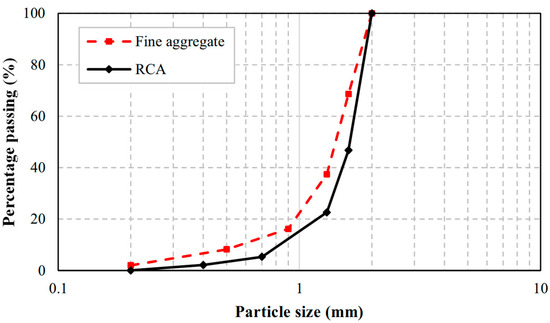
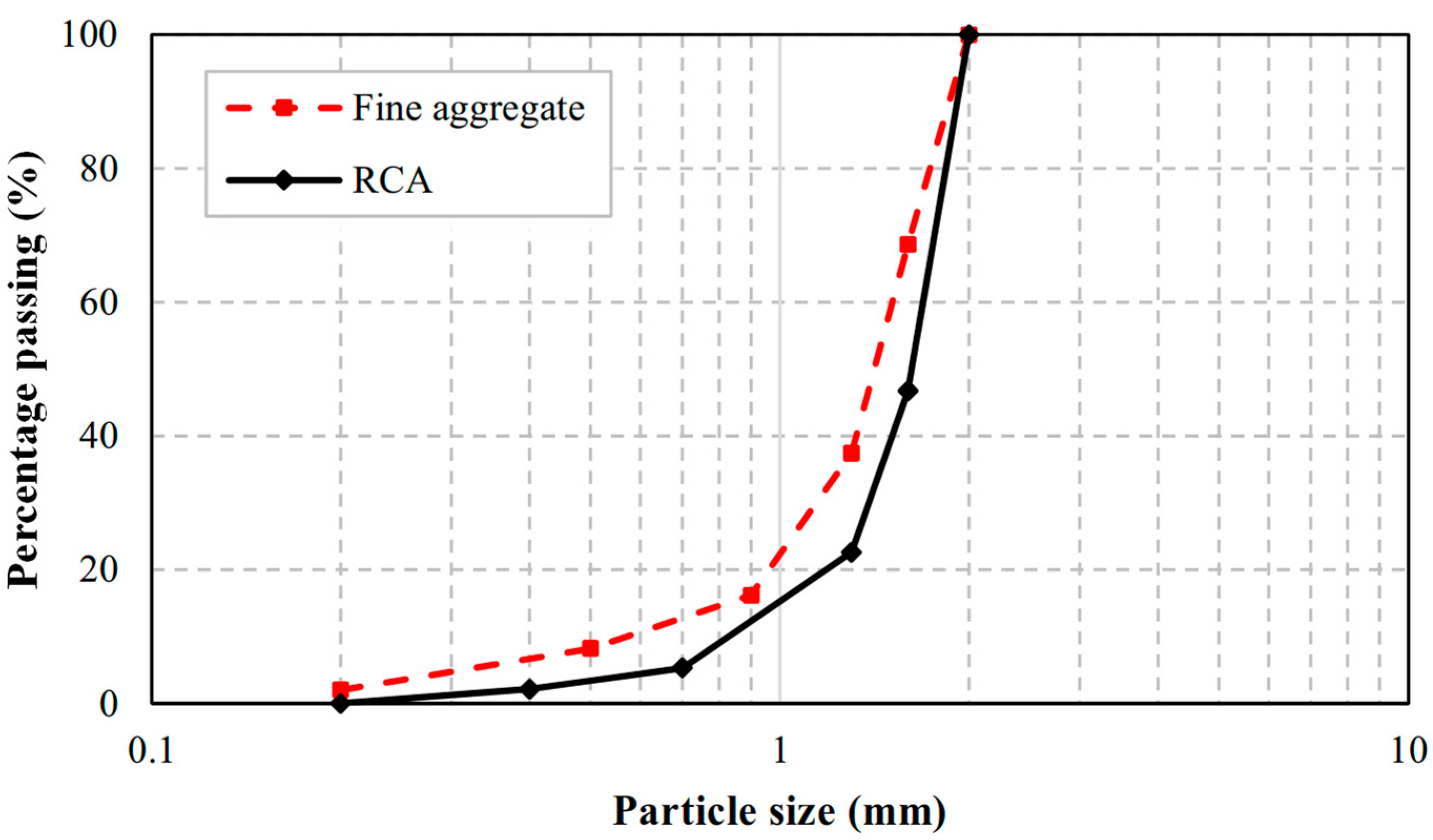
The selection and characterization of these materials, particularly the parallel gradation of natural sand and RCA, form a controlled foundation for assessing the effects of fine-aggregate replacement on the fresh and hardened properties of the concrete mixes. The particle size distribution of the natural fine aggregate and the RCA is presented in Figure 1. Both materials exhibit a grading within the fine aggregate range (0–2 mm), enabling direct volumetric replacement without altering the overall granular skeleton of the mix.
Figure 1.
Particle size distribution curves of the natural fine aggregate and RCA used in the HPC mixtures.
Table 1 shows the composition of the mixtures used in this study. The superplasticizer (SP) dosage was adjusted for each mixture to achieve a consistent slump value close to the target design specification.
Table 1.
Composition of the mixtures.
2.2. Experimental Tests
The experimental investigation comprised a comprehensive suite of mechanical and microstructural tests, all conducted in strict accordance with relevant international standards to ensure reliability and reproducibility. The mechanical properties were evaluated according to the following standardized procedures:
- Compressive Strength Test: Conducted on cured cubic specimens to determine the maximum axial load-bearing capacity. This test was performed according to [43].
- Splitting Tensile Strength Test (Indirect Tensile Test): Employed to ascertain the splitting tensile strength of the concrete specimens by applying a diametral compressive force along the length of a cylindrical disc. The test adhered to the specifications of [44].
- Three-Point Bending Test (Flexural Strength): Executed on prismatic beams to evaluate the modulus of rupture. The test followed the guidelines outlined in [45].
- For each mixture and test condition, three replicate specimens were tested. Complementing these mechanical evaluations, a microstructural analysis was performed to examine internal morphology and interfacial characteristics.
- SEM: High-resolution images of fractured surfaces from select specimens were obtained to analyze the cementitious matrix, aggregate morphology, and the critical ITZ [46,47,48]. Sample preparation and imaging were guided by established practices in materials characterization.
This multi-faceted testing regime, aligned with recognized standards, provided a robust dataset for correlating the macro-scale mechanical performance with the micro-scale structural features of the concrete mixes containing RCA.
2.3. CFA Method
CFA is essential for evaluating the environmental sustainability of HPC, particularly when RCA is incorporated as a substitute for natural materials [49,50]. Although HPC provides enhanced mechanical performance and durability, it often involves higher cement content, which increases embodied carbon emissions [46,51,52,53]. Therefore, environmental assessment must accompany mechanical evaluation to ensure that performance improvements are not offset by greater greenhouse gas emissions [54,55,56,57,58]. CFA quantifies the global warming potential associated with material production, transportation, and processing, providing a scientific basis for comparing conventional HPC with RCA-based alternatives. This integrated approach enables identification of trade-offs between structural performance and environmental impact and clarifies whether the use of recycled materials leads to a net reduction in emissions.
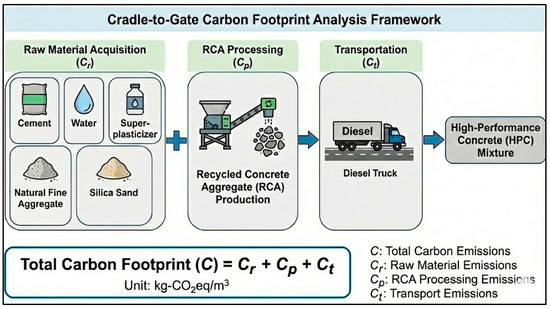
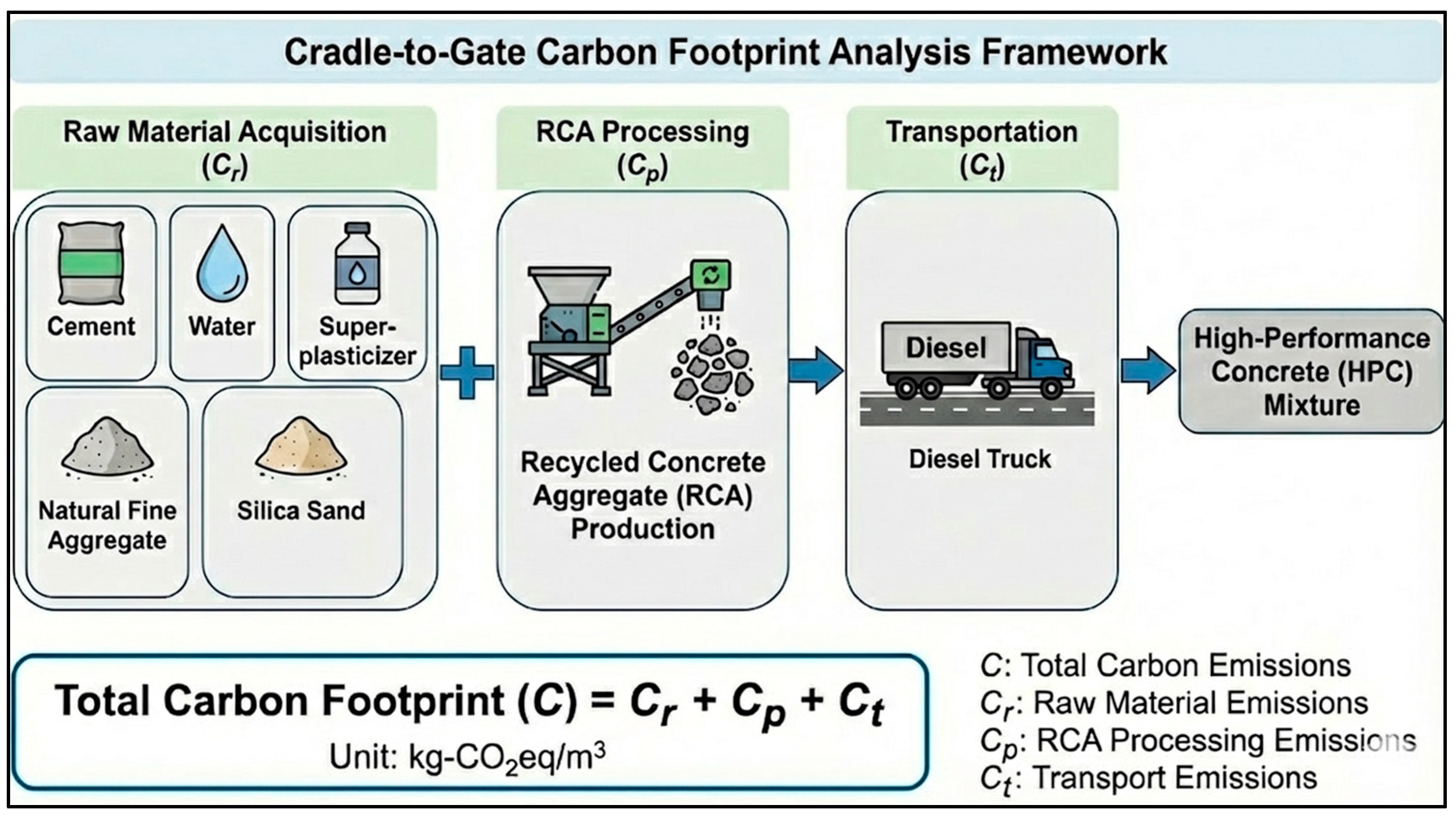
The system boundary adopted in this study follows a cradle-to-gate approach and is illustrated in Figure 2, which shows the emission sources considered in the analysis. Three main components contribute to the total carbon footprint of the concrete mixtures: (i) raw material production (), (ii) transportation (, and (iii) RCA preparation and processing (. Raw material emissions include the production of cement, silica powder, natural sand, water, and superplasticizer. Transportation emissions account for the movement of both virgin materials and recycled aggregates from their respective sources to the concrete batching plant. The third component includes emissions associated with RCA preparation, such as crushing, screening, and handling of demolition waste concrete to produce usable recycled aggregate.
Figure 2.
System boundary condition for the carbon footprint assessment of HPC samples.
The total carbon footprint of each concrete mix was calculated using Equation (1):
The raw material contribution was calculated as
where is the mass of material i and is its emission factor.
Transportation emissions were estimated by
where is the transport distance and is the emission factor of the transport mode.
Emissions from RCA preparation were determined based on the energy required for crushing and processing waste concrete, expressed through an equivalent emission factor for RCA production.
The summation of these three components allows direct comparison of the environmental performance of HPC mixtures with different RCA replacement levels.
It was assumed that the transportation distance for all conventional raw materials was 20 km, while for RCA a total transport distance of 20 km was considered, consisting of 10 km from the demolition site to the RCA processing facility and an additional 10 km from the processing facility to the concrete production plant. Transportation-related emissions were calculated using a diesel truck emission factor of 0.107 kg CO2-eq/(t·km). Table 2 lists the carbon footprint of the materials and processes used in this study.
Table 2.
Carbon emission factors and parameters used in CFA.
3. Results
This section evaluates the experimental findings, examining how increasing RCA replacement levels affect density, strength characteristics, water absorption, SEM, and carbon footprint of the developed HPC.
3.1. Density
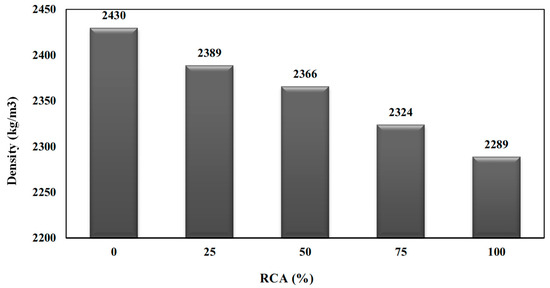
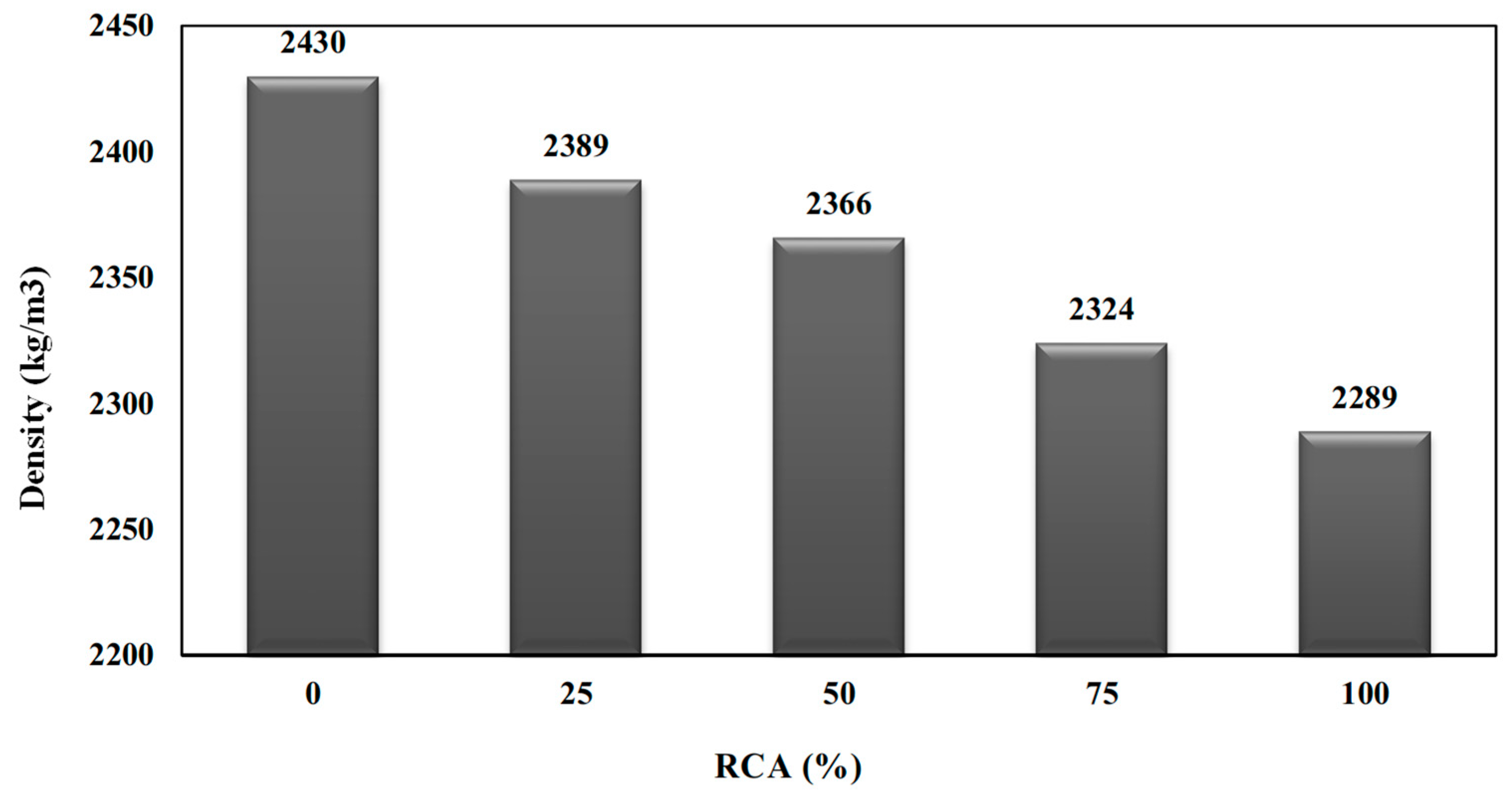
The variation in hardened density across the concrete mix designs containing RCA is illustrated in Figure 3. As shown, density exhibits a clear inverse relationship with the RCA replacement level.
Figure 3.
Density results of the HPC samples.
The control mix, containing 0% RCA as fine aggregate, achieved the maximum density of 2430 kg/m3. In contrast, the mix with 100% RCA replacement yielded the minimum recorded density of 2289 kg/m3, representing a decrease of approximately 5.8% compared to the control. A consistent, near-linear reduction in density was observed as the percentage of RCA increased. For instance, intermediate replacement levels of 25%, 50%, and 75% resulted in densities that progressively fell between these two extremes.
This trend can be primarily attributed to the lower specific gravity and higher porosity of RCA particles compared to natural sand. The adhered residual mortar on the RCA surfaces introduces a more porous phase into the mix, thereby reducing the overall composite density. These findings align with established literature on the subject, confirming that the incorporation of RCA, while beneficial for sustainability, typically results in a lighter concrete product.
3.2. Compressive Strength
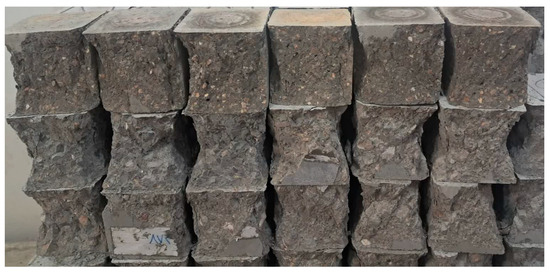
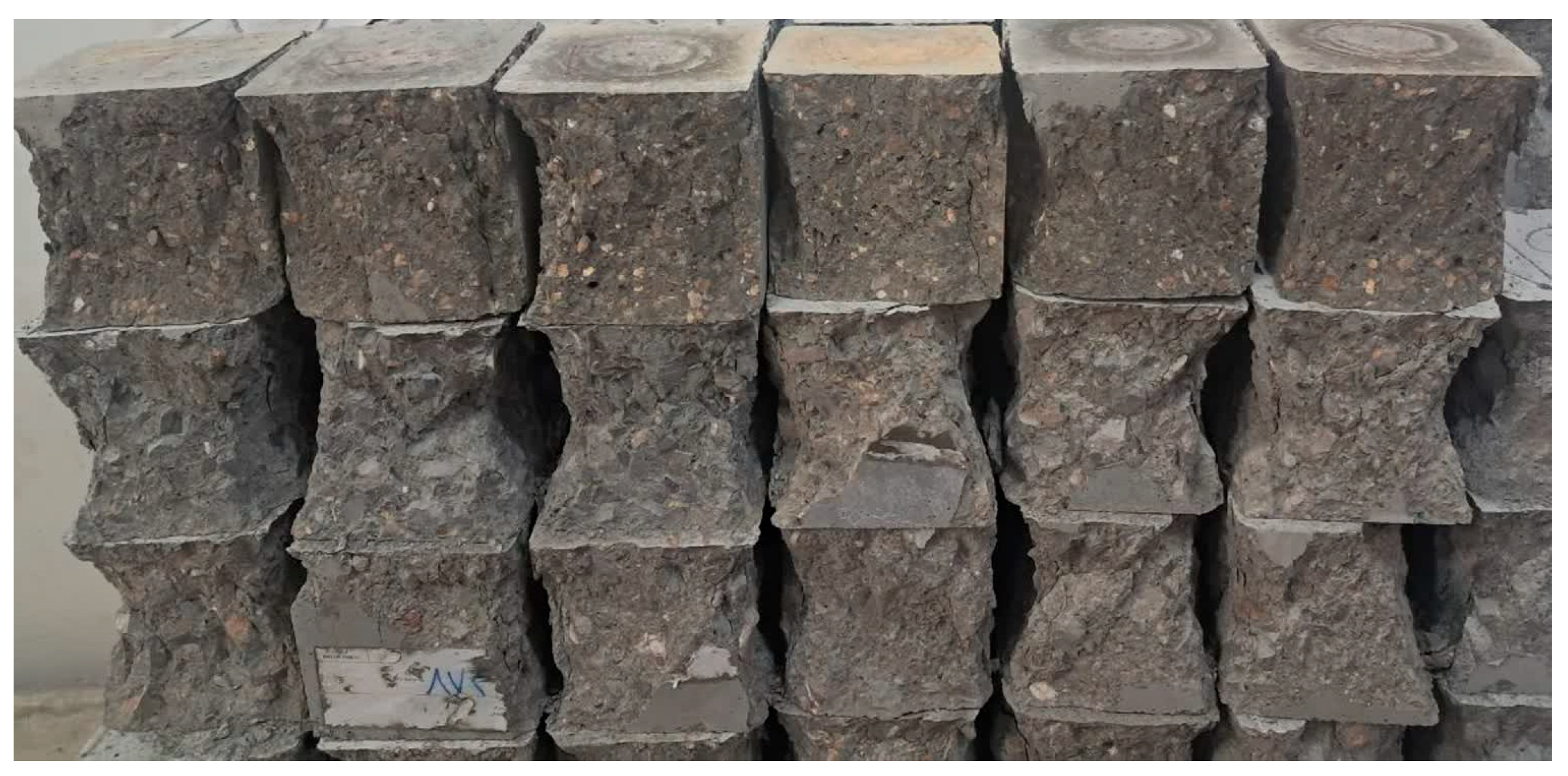
The samples after the compressive strength test are shown in Figure 4.
Figure 4.
Samples after the compressive test.
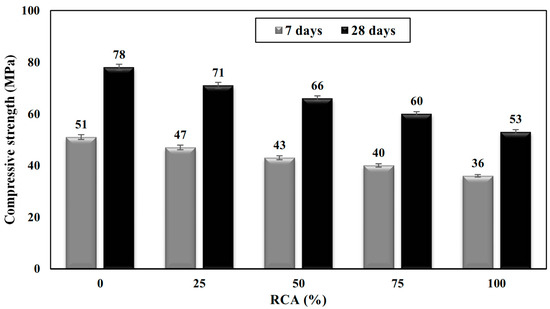
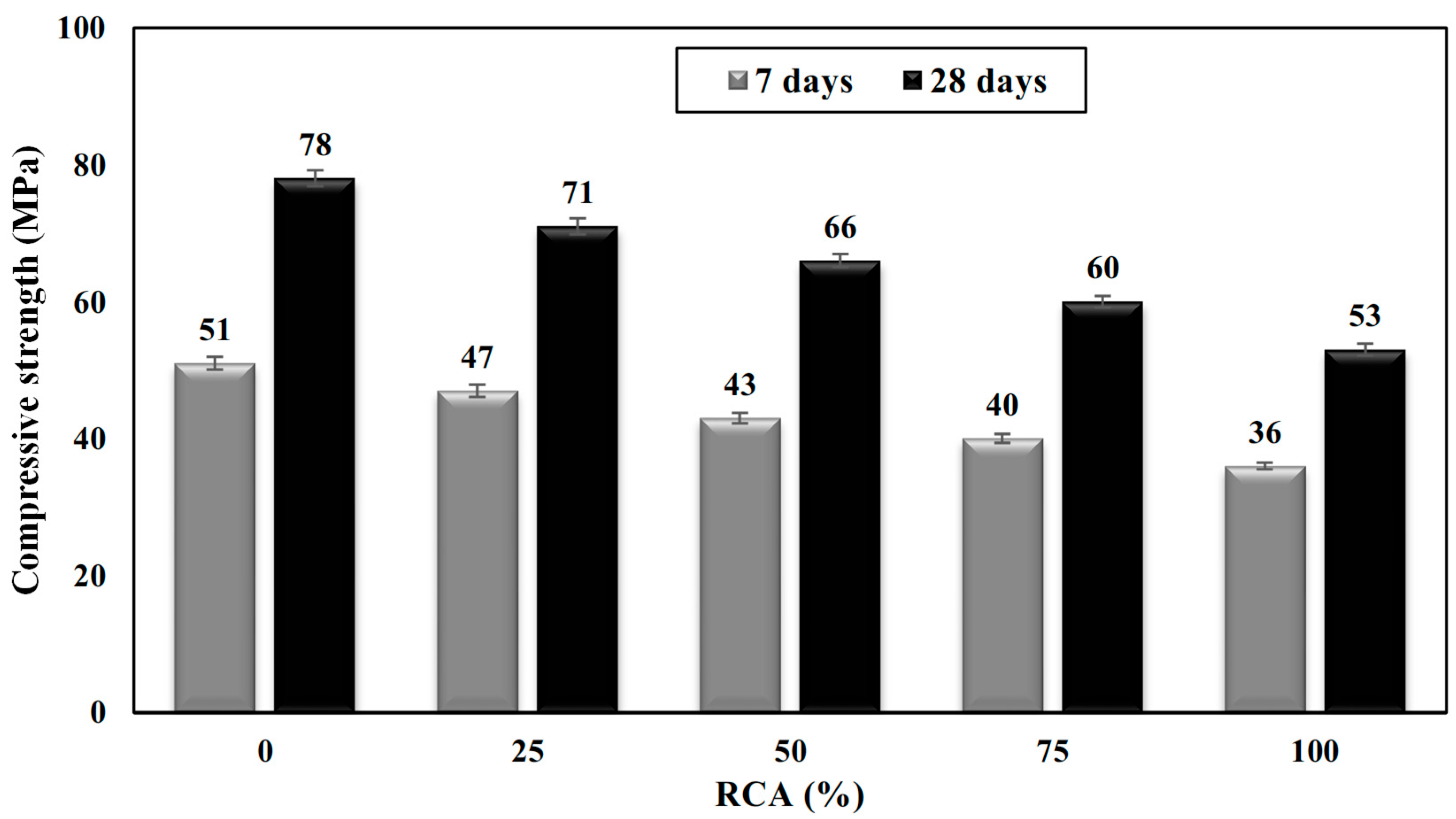
The 7-day and 28-day compressive strength results are presented in Figure 5. The results reveal a significant dependence on the fine-aggregate-replacement level with RCA, showing a pronounced inverse correlation in which compressive strength systematically declines as RCA content increases.
Figure 5.
Compressive results of HPC samples.
The reference mix, containing 100% fine aggregate (0% RCA), achieved the peak compressive strength of 78 MPa. In stark contrast, the mix with complete replacement (100% RCA) yielded the minimum strength of 53 MPa, marking a substantial reduction of approximately 32%. Intermediate replacement levels (e.g., 25%, 50%, and 75%) resulted in strengths that followed this descending trend, confirming a consistent, percentage-dependent degradation in performance.
This reduction in strength can be attributed to three primary mechanisms intrinsic to RCA. Firstly, the adhered residual mortar on RCA particles is typically more porous and weaker than the natural aggregate it replaces, creating a preferential zone of weakness within the cementitious matrix. Secondly, the increased total porosity and micro-cracking within the RCA particles compromises the aggregate’s intrinsic strength and creates stress concentration points under load. Finally, the higher water absorption of RCA, if not fully compensated for during mixing, can lead to a local reduction in the effective water-to-cement ratio at the ITZ and/or a harsher, less workable mix, potentially resulting in inadequate compaction and a more porous concrete structure.
Despite this reduction, it is noteworthy that all tested mix designs, including the 100% RCA variant, surpassed the 50 MPa threshold, thereby meeting the minimum compressive strength requirement for HPC. This indicates that even with significant RCA incorporation, concrete with structurally adequate strength can be produced, balancing sustainability objectives with performance criteria. In this study, HPC is defined according to ACI guidelines, with mixtures achieving compressive strengths exceeding 41 MPa, thereby meeting the strength-based criteria for HPC.
3.3. Splitting Tensile Strength
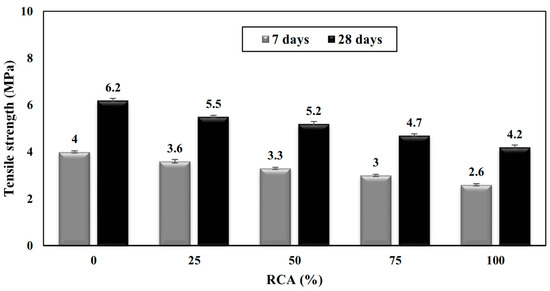
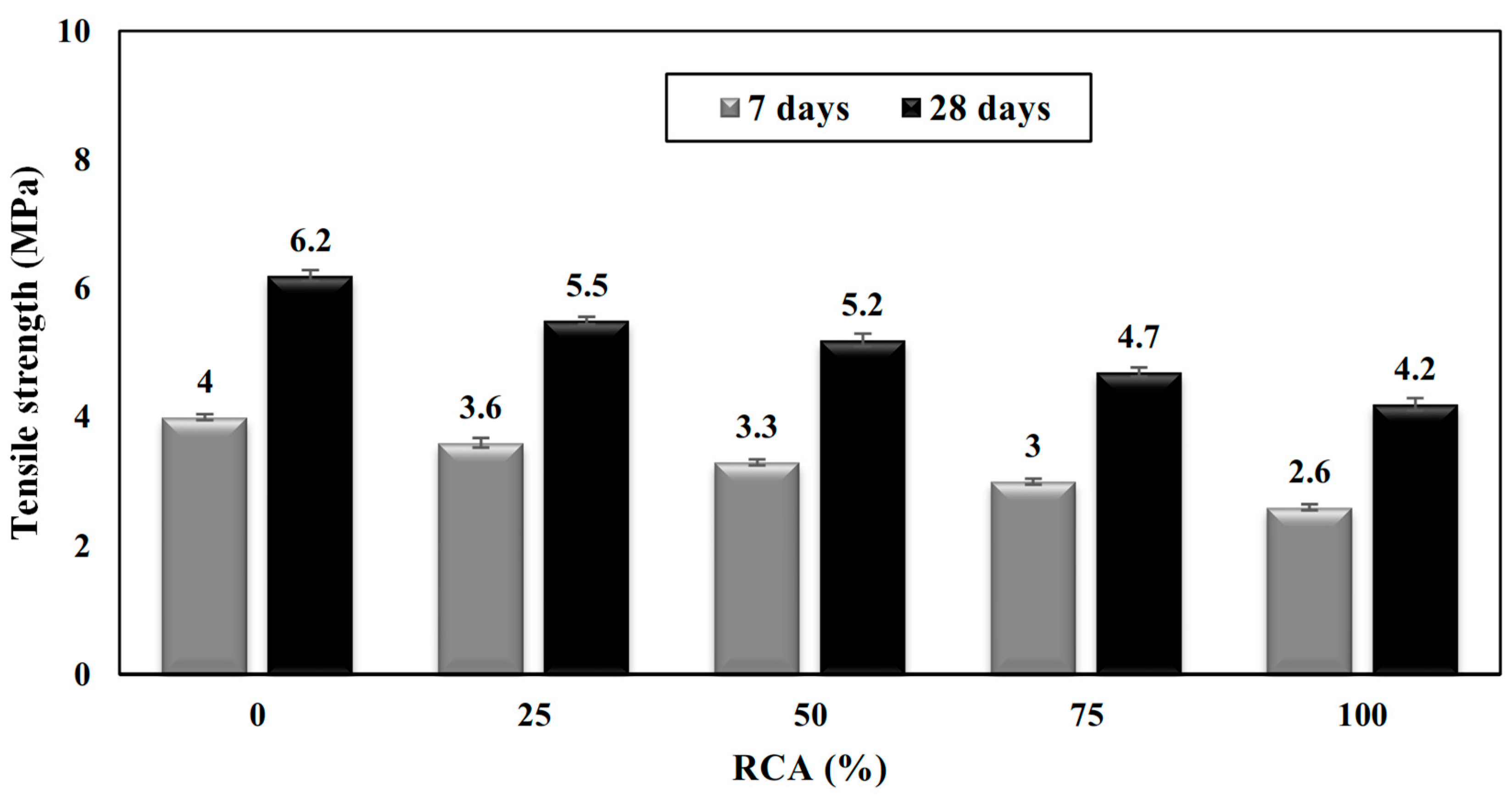
The splitting-tensile-strength results for the mix designs are presented in Figure 6. The control mix, containing no recycled concrete aggregate (0% replacement), exhibited the highest 28-day splitting tensile strength of 6.2 MPa. In contrast, the mix containing 100% fine-aggregate replacement with RCA produced the lowest 28-day splitting tensile strength of 4.2 MPa. In general, splitting tensile strength decreased progressively as the RCA replacement percentage increased.
Figure 6.
Splitting tensile results of HPC samples.
The reduction in splitting tensile strength with increasing RCA content can be explained by several interrelated factors. RCA particles typically contain adhered mortar and exhibit higher porosity and water absorption than natural sand, which weakens the paste–aggregate bond and alters the local water distribution within the ITZ, reducing tensile resistance. The presence of adhered mortar also leads to a more heterogeneous and weaker aggregate–matrix interface, which becomes the primary location for micro-crack initiation and propagation under tensile loading. Additionally, RCA particles tend to be more angular and irregular and may present less favorable grading characteristics, resulting in reduced packing efficiency and non-uniform stress distribution. Pre-existing micro-cracks and internal defects caused by prior service life and crushing further act as stress concentrators, facilitating crack growth. While the cementitious matrix may partially compensate for these deficiencies at low replacement levels, the cumulative effect of increased porosity, weaker interfaces, and internal flaws becomes dominant at higher RCA contents, leading to a more pronounced reduction in tensile capacity.
3.4. Flexural Responses
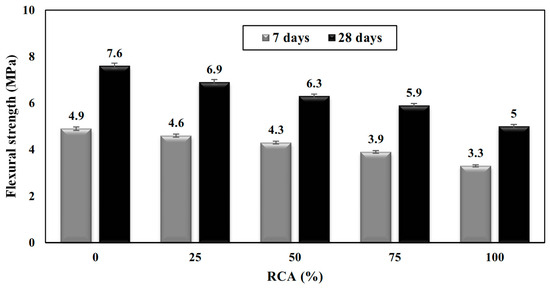
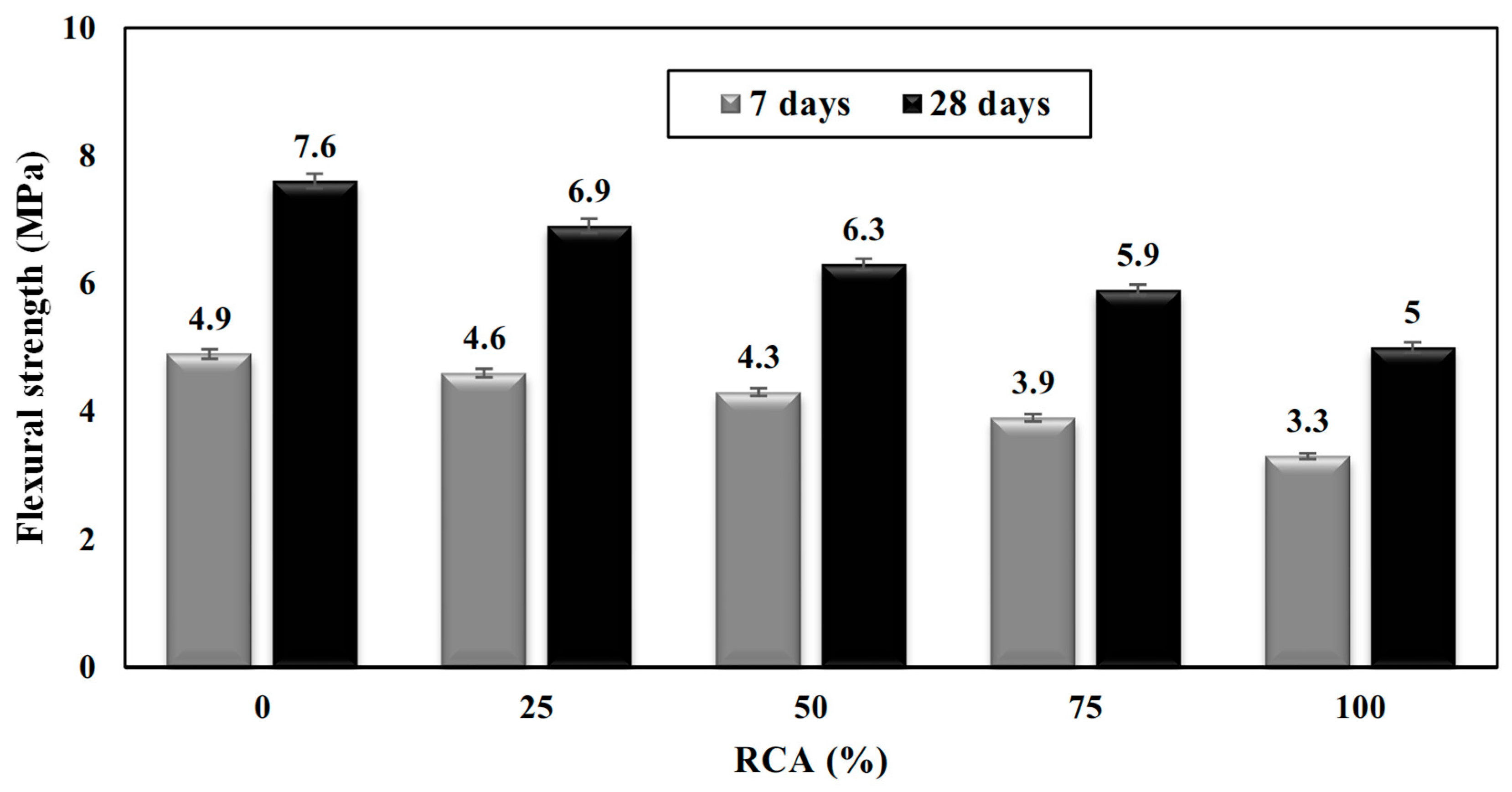
The flexural-strength results for the various mix designs are presented in Figure 7. The control mix (0% fine-aggregate replacement with RCA) attained the highest 28-day flexural strength of 7.6 MPa. Conversely, the mix incorporating 100% fine-aggregate replacement with RCA exhibited the lowest 28-day flexural strength of 5.0 MPa, representing a reduction of approximately 34% relative to the control. Flexural strength declined progressively with increasing RCA replacement percentage.
Figure 7.
Flexural results of HPC samples.
The decline in flexural performance with increasing RCA content can be attributed to several interrelated microstructural mechanisms. Flexural strength is highly sensitive to the quality of the aggregate–paste interface, and RCA particles containing adhered mortar create a weaker and more porous ITZ compared to natural sand, which becomes the primary failure plane under bending stress. RCA also exhibits higher porosity and water absorption, which extends into the surrounding paste, increasing permeability and reducing the overall density and mechanical integrity of the composite. The adhered mortar layer typically possesses lower strength and a different elastic modulus than the newly formed cement matrix, resulting in mechanical mismatch, reduced load-transfer efficiency, and early crack initiation at the ITZ. Furthermore, RCA particles often contain pre-existing micro-cracks and internal defects caused by crushing and prior service life, which act as stress concentrators and preferential crack-propagation paths under flexural loading. The more angular and irregular shape of RCA fines can also reduce packing efficiency, increase void content, and diminish the load-bearing capacity of the matrix. While these effects may be partially accommodated at low replacement levels, their cumulative interaction at high RCA contents leads to pronounced microstructural degradation and significant reductions in flexural strength.
To mitigate the deterioration in mechanical behavior caused by RCA incorporation, several approaches can be implemented. Limiting fine RCA replacement to moderate levels (approximately 25–50%) helps maintain adequate compressive, tensile, and flexural strength while still achieving sustainability benefits. Improving RCA quality through pre-treatment processes such as washing, mechanical grinding, or thermal treatment can reduce adhered mortar and enhance ITZ integrity, thereby improving load transfer between aggregate and matrix. Optimizing aggregate grading by blending RCA with natural sand increases packing density and reduces internal voids, which contributes to higher stiffness and strength. Enhancing the cementitious matrix using SCMs, such as silica fume or fly ash, along with high-range water-reducing admixtures can refine pore structure and densify the ITZ, leading to improved mechanical performance. Furthermore, the incorporation of micro- or macro-fibers can provide crack-bridging mechanisms, limit crack propagation, and enhance post-peak behavior, thereby compensating for the intrinsic microstructural weaknesses associated with RCA.
3.5. Water Absorption
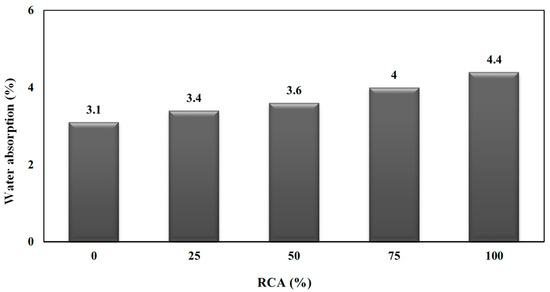
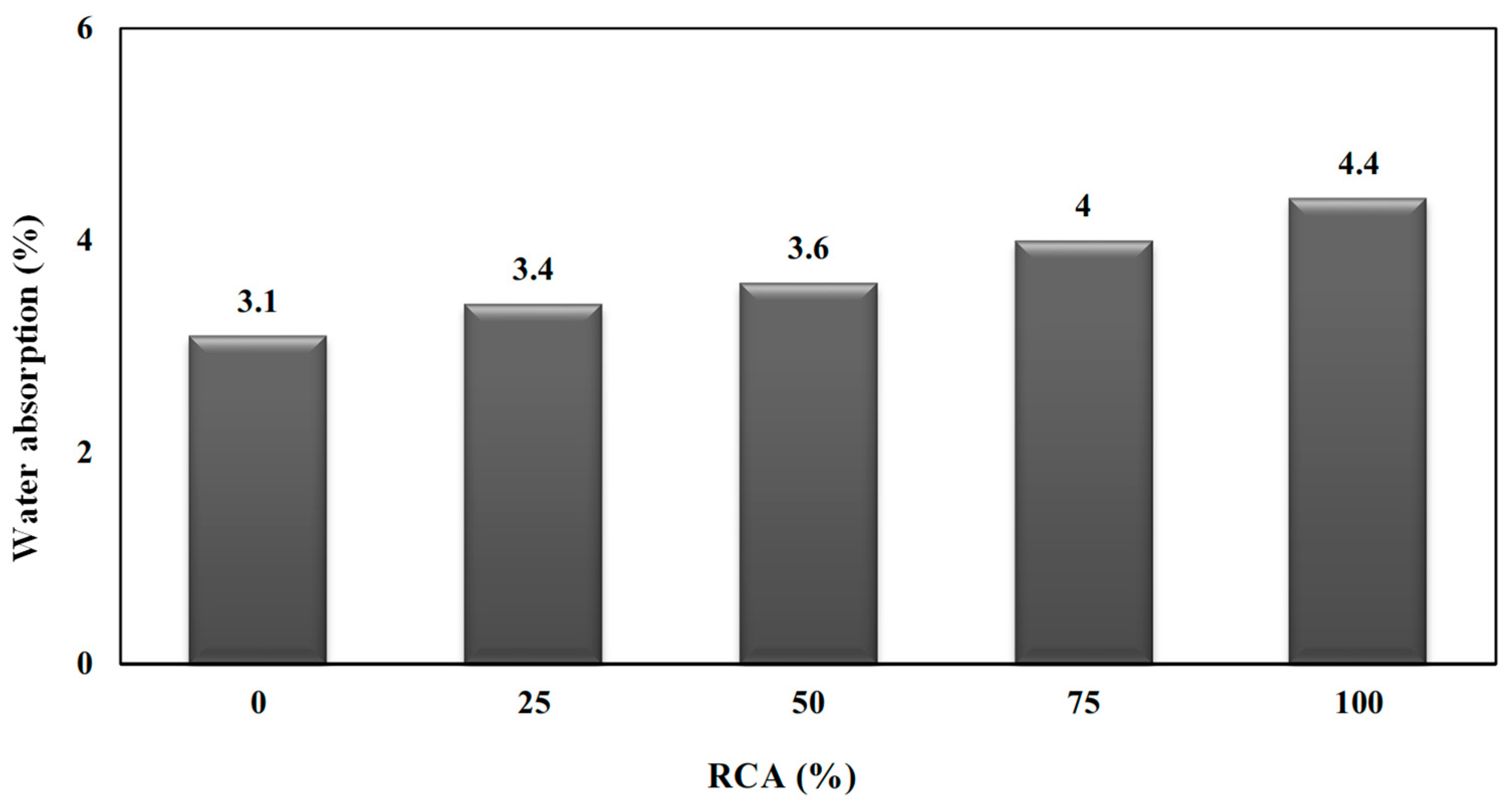
Figure 8 presents the water absorption results, revealing a strong positive relationship with RCA content. Absorption increased linearly from 3.1% for the 0% RCA control mix to 4.4% for the 100% RCA mix—a 42% rise.
Figure 8.
Water absorption results of HPC samples.
This trend is a direct consequence of the higher porosity and micro-cracking inherent to RCA particles. The porous adhered mortar and existing fissures create a more extensive capillary network within the concrete, significantly enhancing its capacity to absorb and retain water. Consequently, the overall pore structure becomes more open and interconnected as the RCA percentage increases.
The results underscore a key trade-off: utilizing RCA enhances sustainability but measurably increases the concrete’s permeability, a vital parameter for assessing its potential durability in aggressive environments.
3.6. SEM Test
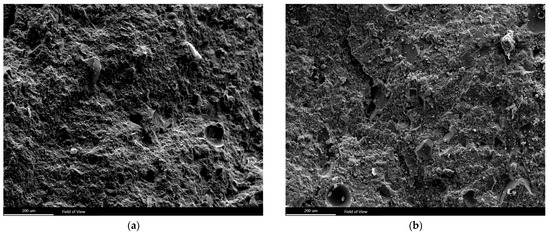
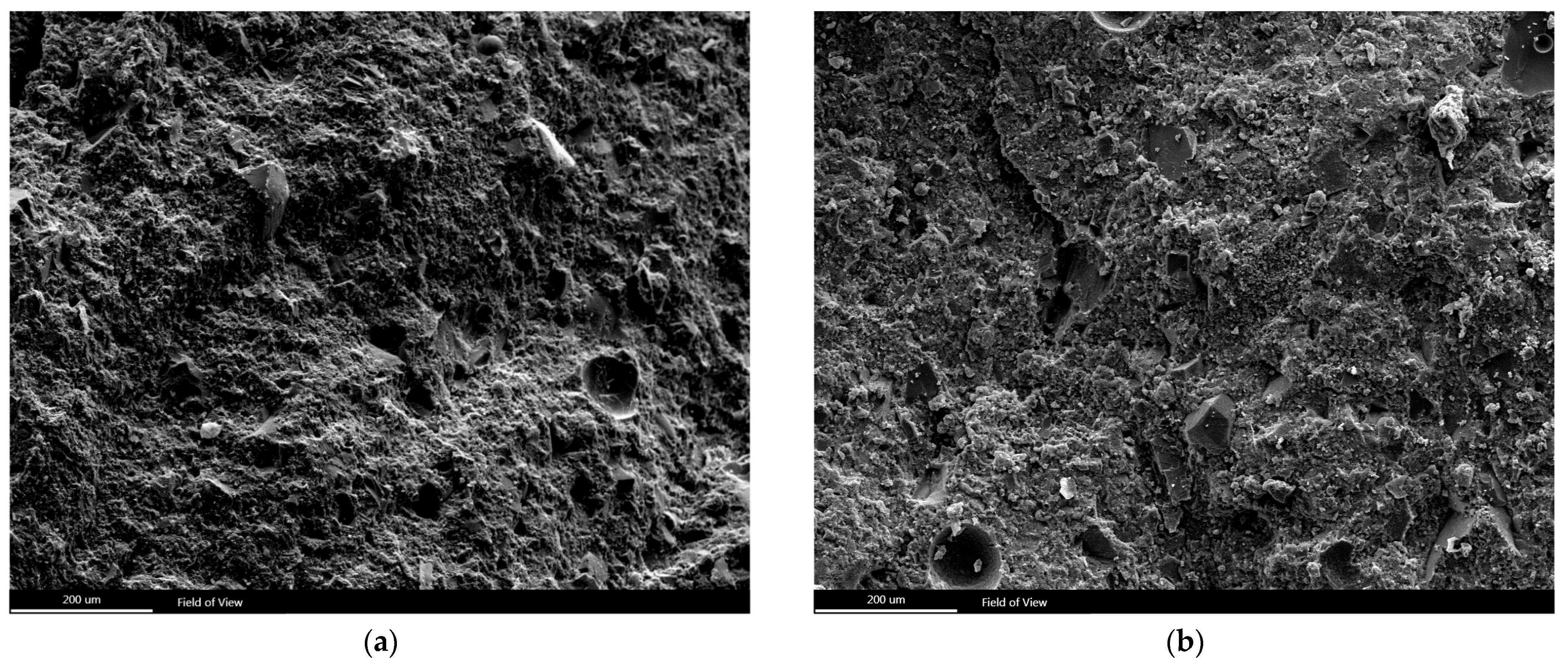
The primary objective of the microstructural investigation was to compare the optimal RCA-modified mix design with the reference mixture. Therefore, SEM analysis was intentionally conducted only on the 0% and 25% RCA samples, representing the baseline and the optimal replacement level, respectively. The SEM analysis provides a direct microstructural explanation for the observed trends in mechanical and physical properties. Figure 9 presents a comparative microstructural analysis between the control mix (0% RCA) and the mix containing 25% RCA as a fine aggregate replacement.
Figure 9.
SEM results for samples with (a) no RCA and (b) 100% RCA.
The micrograph of the control mix reveals a dense and homogeneous cement matrix with strong, continuous adhesion to the natural aggregate particles. The ITZ, the critical region between the aggregate surface and the bulk cement paste, appears thin, compact, and well-integrated, indicating effective bonding and minimal micro-porosity at this interface.
In stark contrast, the micrograph of the 25% RCA mix exhibits distinct degradation in the interfacial zones surrounding the RCA particles. Key observations include:
- Weakened and Porous ITZ: The bond between the new cement matrix and the RCA surface is visibly compromised. A noticeable gap and a more porous, crack-prone ITZ are evident, directly reducing the mechanical interlock and adhesion strength.
- Presence of Voids and Micro-Cracks: The microstructure shows an increased population of voids and micro-cracks, particularly emanating from the RCA particles. These are attributed to two factors: the porous nature of the adhered residual mortar on the RCA itself, and the pre-existing micro-damage within the RCA from its prior crushing history.
- Dual-Interface Complexity: Unlike natural aggregate, RCA presents a complex, multi-phase interface. The new cement paste must bond not to a pristine stone surface, but to an older, weaker mortar layer. This creates a weaker “mortar-to-mortar” interface, which is inherently less robust than the “paste-to-stone” interface found in the control mix [61].
These microstructural flaws act as stress concentrators and preferential failure paths under mechanical load. The weakened ITZ and the network of voids significantly reduce the composite material’s ability to transfer stress efficiently from the cement matrix to the aggregate. Consequently, this microstructural degradation provides the fundamental explanation for the systematic reduction in compressive strength and the increase in porosity and water absorption witnessed with the incorporation of RCA, even at a moderate replacement level of 25%.
In contrast, the mix containing RCA displayed a porous and weakened ITZ, with visible micro-cracks and gaps around the recycled aggregates. This compromised interface acts as a focal point for stress concentrations and provides pathways for water ingress, directly explaining the reductions in strength and increases in absorption.
Beyond the ITZ effects, however, several additional factors inherent to the characteristics of fine RCA contribute to the observed performance losses and warrant separate discussion:
- Grain Shape and Morphology
The crushing process used to produce RCA typically generates particles that are more angular, rougher, and more irregular in shape compared to natural fine aggregates. While this increased angularity can, in some cases, enhance inter-particle friction and mechanical interlock, it also reduces workability and may lead to inadequate compaction, particularly at higher replacement levels. The irregular morphology creates localized stress concentrations within the matrix, which can initiate micro-cracking under load and contribute to the overall strength reduction observed in this study.
- 2.
- Granulometric Mismatch
The particle size distribution of fine RCA often differs from that of natural sand due to the crushing and processing methods employed. Even when sieved to the same 0–2 mm range, RCA may exhibit a different gradation curve, potentially deviating from the optimal Fuller or ideal packing curves. This granulometric mismatch can disrupt the granular skeleton of the concrete, leading to:
- -
- Reduced packing density of the aggregate system;
- -
- Increased inter-particle void space requiring additional cement paste to fill;
- -
- Heterogeneous distribution of stresses within the matrix.
These effects collectively contribute to lower mechanical performance and higher permeability, complementing the ITZ-based explanation.
- 3.
- Filler Effect
Fine RCA particles contain residual hardened cement paste, which is significantly more porous and less stiff than natural aggregate. However, the very fine fraction of this residual paste (particles below 75 μm) can act as a micro-filler, potentially refining the pore structure if well dispersed. In this study, two opposing mechanisms may be at play:
Negative filler effect: The softer, porous nature of RCA fines reduces the overall stiffness of the aggregate skeleton, diminishing load-bearing capacity.
Positive filler effect: Very fine RCA particles may occupy spaces between cement grains, potentially enhancing packing density and serving as nucleation sites for hydration products.
In this study, our mixtures are classified as HPC based on the following criteria:
- -
- Compressive Strength
All mixtures in this study, including the 100% RCA mix, achieved compressive strengths exceeding 50 MPa at 28 days (ranging from 53 MPa to 78 MPa). This places them well above the high-strength threshold of 41 MPa defined by ACI 363 and aligns with international HPC strength classifications (e.g., C50/60 per Eurocode).
- -
- Enhanced Durability Potential
While durability tests (e.g., freeze–thaw, chloride migration) were beyond the scope of this initial study, the water absorption values obtained (reported in Section 3.4) provide an indirect indicator of permeability. The reference mix (0% RCA) exhibited low water absorption consistent with HPC specifications. Even with RCA incorporation, the 100% RCA mix maintained water absorption within ranges acceptable for many structural applications, though we acknowledge this requires further validation as noted in our Future Work Section.
- -
- Microstructural Density
SEM analysis of the reference mix (0% RCA) revealed a dense matrix with a well-formed ITZ, characteristic of HPC. The progressive microstructural changes observed with RCA addition do not negate the HPC classification of the mixture series but rather demonstrate the impact of RCA on HPC performance.
3.7. CFA Results
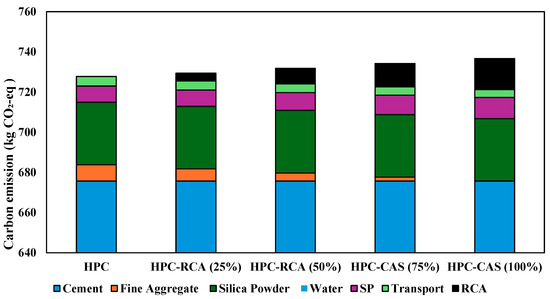
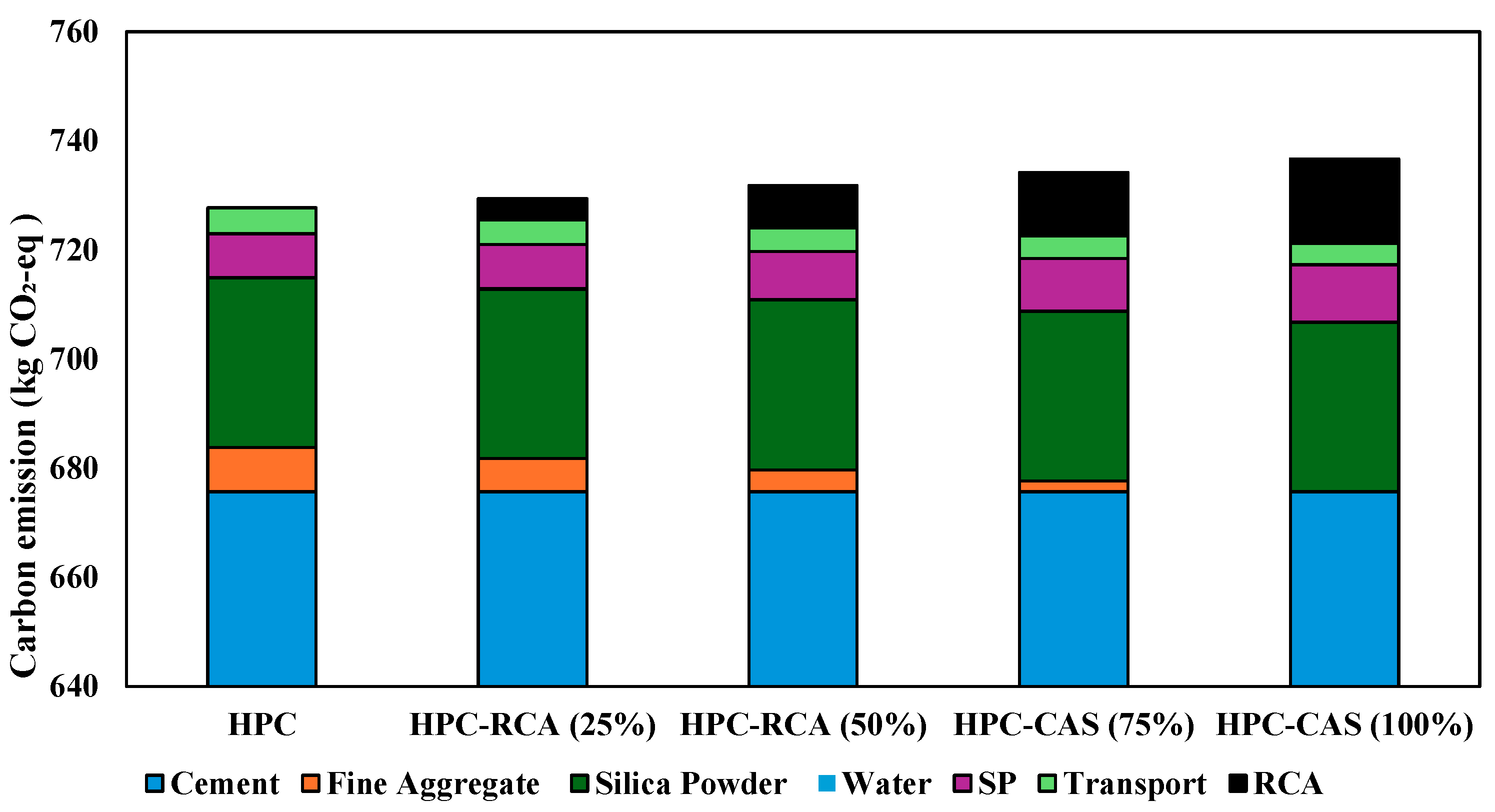
The CFA results shown in Figure 10 indicate a slight but consistent increase in total embodied emissions as the RCA replacement ratio rises. The total emissions increase from 727.75 kg CO2-eq/m3 for the control HPC to 735.89 kg CO2-eq/m3 for the mix with 100% RCA. Although this increase may appear counterintuitive for a “recycled” material, the results reveal that the most dominant contributor to total carbon emissions is cement, which alone accounts for more than 90% of the total footprint in all mixtures. Because the cement content remained constant across all mixes, the overall carbon footprint is largely governed by cement production rather than aggregate type. Consequently, the environmental influence of replacing natural sand with RCA becomes relatively small compared to the cement contribution.
Figure 10.
CFA results of the HPC samples studied.
Another important factor influencing the trend is the processing energy required for RCA preparation, including crushing, screening, and handling of demolition waste [40]. These operations introduce additional emissions that partially offset the benefits gained from reducing natural aggregate extraction. Furthermore, a gradual increase in superplasticizer dosage with higher RCA content also contributes to the rise in emissions, since chemical admixtures have relatively high emission factors per unit mass. Conversely, transportation emissions decrease with increasing RCA content because the assumed hauling distance for recycled aggregates is shorter than that of natural sand; however, transportation represents only a minor fraction of the total footprint and therefore cannot counterbalance the cement and RCA-processing contributions.
Despite the slight increase in calculated carbon emissions, the results demonstrate that the most significant sustainability benefit of RCA lies in resource conservation rather than immediate carbon reduction. The use of RCA directly reduces the demand for virgin fine aggregates, limiting quarrying activities, preserving natural landscapes, and decreasing ecological disturbance. Additionally, recycling construction and demolition waste diverts large volumes of material from landfills and supports circular economy principles. Therefore, the findings highlight a crucial sustainability perspective: cement content governs carbon emissions, while RCA governs resource efficiency. True carbon reduction in HPC systems would require strategies targeting clinker reduction, whereas RCA incorporation primarily enhances material circularity and long-term environmental resilience.
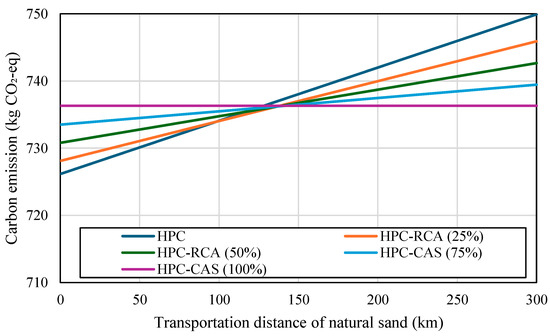
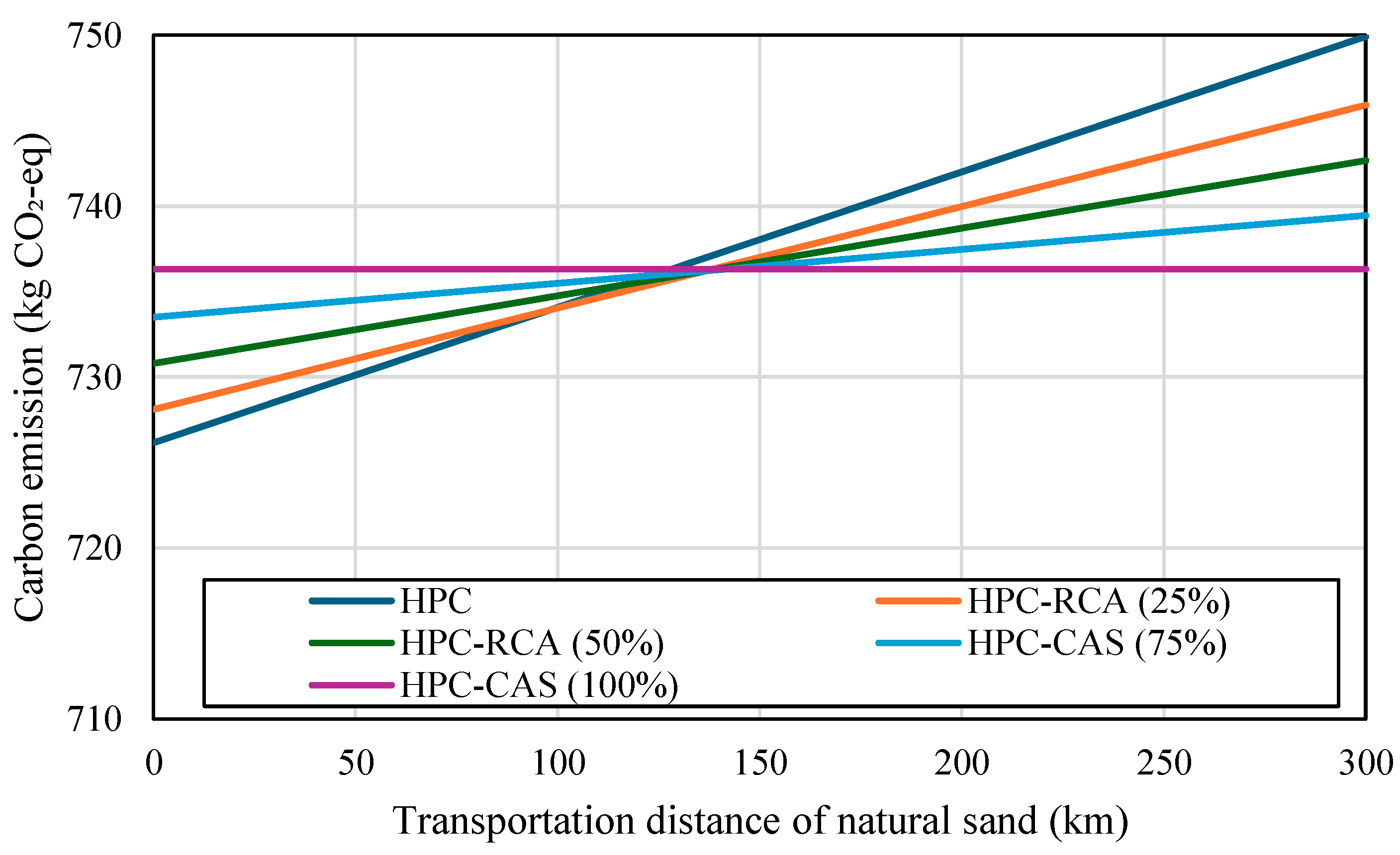
In the sensitivity analysis, only the transportation distance of natural sand was varied, while RCA transport and processing distances were kept constant. This approach was intentionally adopted to determine the threshold transport distance at which conventional concrete mixtures become environmentally less favorable than RCA-containing mixtures. By isolating the natural aggregate distance as the sole variable, the analysis provides a clear comparison of how sourcing distance influences the relative carbon performance of recycled versus conventional materials. Figure 11 shows the variation in total embodied carbon emissions of the studied mixtures as the transportation distance of sand increases from 0 to 300 km.
Figure 11.
Sensitivity analysis of the effect of natural sand transportation distance on the total embodied carbon emissions of HPC mixtures.
A clear and nearly linear increase in carbon emissions is observed for all mixtures as transport distance grows. The control HPC mix exhibits the highest sensitivity to transportation distance, with emissions rising from 726.16 kg CO2-eq/m3 at zero distance to 749.92 kg CO2-eq/m3 at 300 km. In contrast, mixtures incorporating higher proportions of RCA show reduced sensitivity to sand transportation because the quantity of fine aggregate decreases as RCA content increases. The mix with 100% RCA replacement shows almost no change with increasing distance, remaining constant at 736.33 kg CO2-eq/m3, since natural sand is fully eliminated.
These results indicate that transportation distance becomes an increasingly important factor in the environmental impact of concrete when virgin aggregates are used, particularly in regions where sand sources are far from construction sites. The analysis demonstrates that RCA incorporation provides an indirect environmental advantage by reducing dependency on long-distance transport of natural aggregates. While cement production remains the dominant contributor to overall emissions, transportation can become a secondary but influential factor under long-haul conditions. Therefore, the environmental benefit of RCA is amplified in scenarios where natural aggregate sources are geographically distant.
It should be noted that the present environmental assessment was conducted within a cradle-to-gate system boundary and therefore does not explicitly incorporate service-life considerations. The experimental results demonstrated that increasing RCA content increases permeability and water absorption, which may reduce durability under aggressive exposure conditions. In a cradle-to-grave framework, such durability-related effects could influence maintenance frequency, repair requirements, and structural lifespan, thereby altering total life-cycle emissions. Depending on the exposure environment and design service life, these additional impacts could partially offset the environmental advantages associated with resource conservation from RCA incorporation. Consequently, future research should integrate durability-based service-life prediction models with full life-cycle assessment to provide a more comprehensive evaluation of the long-term sustainability of RCA-based HPC.
4. Conclusions
This study comprehensively evaluated the effects of replacing natural fine aggregate with RCA on the key properties of HPC. The experimental results consistently demonstrate a clear and predictable trend: as the percentage of RCA increases, the mechanical performance declines, while permeability increases.
The results establish an inverse relationship between RCA replacement level and material quality. Increasing RCA content from 0% to 100% produces a predictable degradation trajectory: mechanical properties decline, while permeability increases. This trend is not merely correlative but mechanistically linked to the intrinsic characteristics of RCA, including lower particle density, higher porosity, and the presence of residual cement paste. The consistency of this gradient across compressive, tensile, and flexural strength measurements confirms that RCA content functions as a primary control variable for material performance.
The weakened interfacial transition zone (ITZ) surrounding RCA particles emerges as the root cause of performance degradation. Microstructural analysis confirms that visible micro-cracks and gaps at the RCA–matrix interface create preferential pathways for stress concentration and fluid transport. This finding establishes a direct mechanistic link between the physical characteristics of recycled aggregates and the macroscopic loss of strength and durability, validating that ITZ quality is the critical microstructural parameter governing RCA concrete performance.
The carbon footprint analysis reveals that RCA incorporation does not guarantee reduced embodied emissions. With cement production contributing over 90% of total emissions, aggregate substitution becomes a secondary factor in the overall carbon balance. The slight increase in emissions at higher RCA contents—attributable to processing energy and increased superplasticizer demand—demonstrates that the environmental case for RCA rests primarily on resource conservation and circular economy principles rather than immediate carbon reduction. Transportation distance sensitivity further confirms that regional factors significantly influence net environmental outcomes.
The fundamental trade-off identified in this study, enhanced material circularity at the expense of mechanical and durability performance, has direct implications for practice. The 32% reduction in compressive strength and 42% increase in water absorption at 100% RCA replacement represent non-negligible performance penalties that must be actively managed through mix design strategies. This finding suggests that high-volume fine RCA utilization is most viable when accompanied by:
- -
- Supplementary cementitious materials (SCMs) to densify the ITZ and refine pore structure;
- -
- Reduced water-to-cement ratios to offset increased permeability;
- -
- Targeting of applications where strength and durability requirements align with achievable performance levels.
4.1. Strategies for Improving HPC Performance with RCA
Increasing RCA content leads to gradual deterioration in mechanical and durability properties primarily due to residual mortar porosity and weakened ITZ characteristics. However, these limitations can be effectively mitigated through multi-parameter optimization strategies, including moderate replacement ratios, aggregate pre-treatment, grading optimization, matrix densification using SCMs and chemical admixtures, and fiber reinforcement for crack control. Synergistic implementation of these measures is expected to enable higher RCA utilization levels while maintaining the performance requirements of structural HPC, highlighting the importance of integrated mix design frameworks rather than single-variable modifications.
4.2. Future Work
Future studies should focus on quantitative microstructural characterization of fine RCA systems, including precise measurement of ITZ porosity, thickness, crack density, and pore size distribution using advanced imaging and porosimetry techniques, to enable predictive links between microstructure and macroscopic performance. Long-term durability assessments are also required, particularly regarding chloride penetration, freeze–thaw resistance, carbonation, and alkali–silica reaction, integrated into service-life prediction models. Optimization of mix design through synergistic use of SCMs and statistical design approaches should be investigated to balance strength and durability. Further research is also needed on advanced treatment methods for fine RCA, such as carbonation, bio-mineralization, and thermal or mechanical beneficiation, to improve particle quality. Comprehensive life-cycle assessments incorporating multiple environmental indicators, uncertainty analysis, and end-of-life scenarios should be conducted to evaluate circular economy potential. Finally, combining RCA incorporation with low-clinker binder systems represents a promising pathway for further reducing environmental impacts and should be explored in future investigations.
Author Contributions
Conceptualization, H.M., H.B. and P.S.; methodology, H.M. and H.B.; formal analysis, H.M. and H.B.; investigation, H.M. and H.B.; resources, H.M. and H.B.; data curation, H.M., K.S. and H.B.; writing—original draft preparation, H.M. and H.B.; writing—review and editing, P.S.; visualization, H.M. and H.B.; supervision, H.M., H.B. and P.S. All authors have read and agreed to the published version of the manuscript.
Funding
This research received no external funding.
Data Availability Statement
The data presented in this study is available on request from the corresponding author. The data is not publicly available due to confidentiality issues.
Conflicts of Interest
The authors declare no conflicts of interest.
Abbreviations
| CFA | Carbon Footprint Analysis |
| HPC | High-Performance Concrete |
| ITZ | Interfacial Transition Zone |
| RCA | Recycled Concrete Aggregate |
| SCMs | Supplementary Cementitious Materials |
| SEM | Scanning Electron Microscopy |
| SP | Superplasticizer |
References
- Huntzinger, D.N.; Eatmon, T.D. A life-cycle assessment of Portland cement manufacturing: Comparing the traditional process with alternative technologies. J. Clean. Prod. 2009, 17, 668–675. [Google Scholar] [CrossRef] [Scilit]
- Noviani, L.; Haryono, E.; Supartono, W.; Sahali, I.; Juliani, F.E. Environmental Impact Analysis of PCC Cement Products (Portland Composite Cement) Using LCA (Life Cycle Assessment). In IOP Conference Series: Earth and Environmental Science; IOP Publishing: Bristol, UK, 2023; p. 012003. [Google Scholar]
- Habert, G.; Miller, S.A.; John, V.M.; Provis, J.L.; Favier, A.; Horvath, A.; Scrivener, K.L. Environmental impacts and decarbonization strategies in the cement and concrete industries. Nat. Rev. Earth Environ. 2020, 1, 559–573. [Google Scholar] [CrossRef] [Scilit]
- Mostafaei, H.; Bahmani, H.; Mostofinejad, D. Damping Behavior of Fiber-Reinforced Concrete: A Comprehensive Review of Mechanisms, Materials, and Dynamic Effects. J. Compos. Sci. 2025, 9, 254. [Google Scholar] [CrossRef] [Scilit]
- Bahmani, H.; Mostafaei, H.; Mostofinejad, D. Review of energy dissipation mechanisms in concrete: Role of advanced materials, mix design, and curing conditions. Sustainability 2025, 17, 6723. [Google Scholar] [CrossRef] [Scilit]
- Andrew, R.M. Global CO2 emissions from cement production. Earth Syst. Sci. Data 2018, 10, 195–217. [Google Scholar] [CrossRef] [Scilit]
- Monteiro, P.J.; Miller, S.A.; Horvath, A. Towards sustainable concrete. Nat. Mater. 2017, 16, 698–699. [Google Scholar] [CrossRef] [Scilit] [PubMed]
- Mostafaei, H.; Ashoori Barmchi, M.; Bahmani, H. Seismic resilience and sustainability: A comparative analysis of steel and reinforced structures. Buildings 2025, 15, 1613. [Google Scholar] [CrossRef] [Scilit]
- Attri, G.K.; Gupta, R.C.; Shrivastava, S. Comparative environmental impacts of recycled concrete aggregate and manufactured sand production. Process Integr. Optim. Sustain. 2022, 6, 737–749. [Google Scholar] [CrossRef] [Scilit]
- Bahmani, H.; Mostafaei, H.; Mohamad Momeni, R.; Khoshoei, S.M. Utilization of Waste Marble Sludge in Self-Compacting Concrete: A Study on Partial Replacement of Cement and Fine Aggregates. Sustainability 2025, 17, 8523. [Google Scholar] [CrossRef] [Scilit]
- Bahmani, H.; Mostafaei, H.; Rostampour, M.A. Utilization of Stone Quarry Sludge in the Development of Environmentally Friendly High-Strength Concrete. J. Compos. Sci. 2025, 9, 648. [Google Scholar] [CrossRef] [Scilit]
- Yanagibashi, K.; Yonezawa, T.; Arakawa, K.; Yamada, M. A new concrete recycling technique for coarse aggregate regeneration process. In Challenges of Concrete Construction: Volume 5, Sustainable Concrete Construction: Proceedings of the International Conference held at the University of Dundee, Scotland, UK, 9–11 September 2002; Thomas Telford Publishing: London, UK, 2002; pp. 511–522. [Google Scholar]
- Yang, K.-H.; Chung, H.-S.; Ashour, A. Influence of Type and Replacement Level of Recycled Aggregates on Concrete Properties. ACI Mater. J. 2008, 105, 289–296. [Google Scholar] [CrossRef] [Scilit]
- ET 03.360. 571.8; Spanish Technical Specifications of Prestressed Concrete Monoblock Sleepers. ADIF: Madrid, Spain, 2009.
- Mostafaei, H.; Chamasemani, N.F.; Mashayekhi, M.; Hamzehkolaei, N.S.; Santos, P. Sustainability Enhancement and Evaluation of a Concrete Dam Using Recycling. Appl. Sci. 2025, 15, 2479. [Google Scholar] [CrossRef] [Scilit]
- Ramezanianpour, A.; Khazali, M.; Vosoughi, P. Effect of steam curing cycles on strength and durability of SCC: A case study in precast concrete. Constr. Build. Mater. 2013, 49, 807–813. [Google Scholar] [CrossRef] [Scilit]
- Hansen, T.C. Recycling of Demolished Concrete and Masonry; CRC Press: Boca Raton, FL, USA, 1992. [Google Scholar]
- Nagataki, S.; Gokce, A.; Saeki, T.; Hisada, M. Assessment of recycling process induced damage sensitivity of recycled concrete aggregates. Cem. Concr. Res. 2004, 34, 965–971. [Google Scholar] [CrossRef] [Scilit]
- Mostafaei, H.; Bahmani, H.; Wu, C. Sustainable high-performance concrete with rubber and PET waste: Mechanical, dynamic, microstructural, and life cycle cost analysis. Int. J. Pavement Eng. 2026, 27, 2624578. [Google Scholar] [CrossRef] [Scilit]
- Fayed, S.; Aksoylu, C.; Ecemiş, A.S.; Madenci, E.; Özkılıç, Y.O. Tensile behavior of green concrete made of fine/coarse recycled glass and recycled concrete aggregates. Buildings 2024, 14, 2969. [Google Scholar] [CrossRef] [Scilit]
- Gokce, A.; Nagataki, S.; Saeki, T.; Hisada, M. Identification of frost-susceptible recycled concrete aggregates for durability of concrete. Constr. Build. Mater. 2011, 25, 2426–2431. [Google Scholar] [CrossRef] [Scilit]
- Padmini, A.; Ramamurthy, K.; Mathews, M. Influence of parent concrete on the properties of recycled aggregate concrete. Constr. Build. Mater. 2009, 23, 829–836. [Google Scholar] [CrossRef] [Scilit]
- Rostampour, M.A.; Mostofinejad, D.; Bahmani, H.; Mostafaei, H. Crack Assessment Using Acoustic Emission in Cement-Free High-Performance Concrete Under Mechanical Stress. J. Compos. Sci. 2025, 9, 380. [Google Scholar] [CrossRef] [Scilit]
- Bahmani, H.; Mostafaei, H. Impact of Fibers on the Mechanical and Environmental Properties of High-Performance Concrete Incorporating Zeolite. J. Compos. Sci. 2025, 9, 222. [Google Scholar] [CrossRef] [Scilit]
- Bahmani, H.; Mostafaei, H.; Wu, C. Innovative Uses of Iron Ore Tailings in Sustainable Concrete: An In-Depth Review of Achievements, Future Potential, and Strategic Directions. Arab. J. Sci. Eng. 2025, 1–20. [Google Scholar] [CrossRef] [Scilit]
- Jagadesh, P.; Karthik, K.; Kalaivani, P.; Karalar, M.; Althaqafi, E.; Madenci, E.; Özkılıç, Y.O. Examining the influence of recycled aggregates on the fresh and mechanical characteristics of high-strength concrete: A comprehensive review. Sustainability 2024, 16, 9052. [Google Scholar] [CrossRef] [Scilit]
- Bahmani, H.; Mostafaei, H.; Santos, P.; Ferrández, D. Concrete Material Variability and Machine Learning Model Performance: A Comprehensive Review. Buildings 2026, 16, 556. [Google Scholar] [CrossRef] [Scilit]
- Sri Ravindrarajah, R.; Tam, C. Properties of concrete made with crushed concrete as coarse aggregate. In ICE Themes Recycled Aggregates: Use in Concrete; ICE Publishing: London, UK, 2019; pp. 87–104. [Google Scholar]
- De Pauw, P.; Thomas, P.; Vyncke, J.; Desmyter, J. Shrinkage and creep of concrete with recycled materials as coarse aggregates. In Sustainable Construction: Use of Recycled Concrete Aggregate: Proceedings of the International Symposium Organised by the Concrete Technology Unit, University of Dundee and Held at the Department of Trade and Industry Conference Centre, London, UK, 11–12 November 1998; Emerald Publishing Limited: Leeds, UK, 1998; pp. 213–225. [Google Scholar]
- Dhir, R.; Limbachiya, M.; Leelawat, T. Recycled Concrete Aggregate for Use in BS5328 Designated Mixes; DETR Report CTU/498; University of Dundee: Dundee, UK, 1998. [Google Scholar]
- Azúa, G.; González, M.; Arroyo, P.; Kurama, Y. Recycled coarse aggregates from precast plant and building demolitions: Environmental and economic modeling through stochastic simulations. J. Clean. Prod. 2019, 210, 1425–1434. [Google Scholar] [CrossRef] [Scilit]
- Bai, G.; Zhu, C.; Liu, C.; Liu, B. An evaluation of the recycled aggregate characteristics and the recycled aggregate concrete mechanical properties. Constr. Build. Mater. 2020, 240, 117978. [Google Scholar] [CrossRef] [Scilit]
- Hanif, A.; Kim, Y.; Lu, Z.; Park, C. Early-age behavior of recycled aggregate concrete under steam curing regime. J. Clean. Prod. 2017, 152, 103–114. [Google Scholar] [CrossRef] [Scilit]
- Bostanci, S.C.; Limbachiya, M.; Kew, H. Use of recycled aggregates for low carbon and cost effective concrete construction. J. Clean. Prod. 2018, 189, 176–196. [Google Scholar] [CrossRef] [Scilit]
- Çakır, Ö. Experimental analysis of properties of recycled coarse aggregate (RCA) concrete with mineral additives. Constr. Build. Mater. 2014, 68, 17–25. [Google Scholar] [CrossRef] [Scilit]
- Datta, S.D.; Rana, M.J.; Assafi, M.N.; Mim, N.J.; Ahmed, S. Investigation on the generation of construction wastes in Bangladesh. Int. J. Constr. Manag. 2023, 23, 2260–2269. [Google Scholar] [CrossRef] [Scilit]
- Gao, C.; Huang, L.; Yan, L.; Jin, R.; Chen, H. Mechanical properties of recycled aggregate concrete modified by nano-particles. Constr. Build. Mater. 2020, 241, 118030. [Google Scholar] [CrossRef] [Scilit]
- Silva, R.V.; De Brito, J.; Dhir, R. Tensile strength behaviour of recycled aggregate concrete. Constr. Build. Mater. 2015, 83, 108–118. [Google Scholar] [CrossRef] [Scilit]
- Sobuz, M.; Datta, S.; Rahman, M. Evaluating the properties of demolished aggregate concrete with non-destructive assessment. In Advances in Civil Engineering: Select Proceedings of ICACE 2020; Springer: Berlin/Heidelberg, Germany, 2021; pp. 223–233. [Google Scholar]
- Zheng, Y.; Li, Q.; Zhou, L.; Gao, F.; Deng, Z.; Wang, J.; Guo, Z.; Ding, H. Lifecycle assessment and lifecycle cost analysis of sustainable concrete incorporating recycled aggregates. Sustainability 2025, 17, 1779. [Google Scholar] [CrossRef] [Scilit]
- ASTM C136-06; Standard Test Method for Sieve Analysis of Fine and Coarse Aggregates. ASTM International: West Conshohocken, PA, USA, 2006.
- C128-15; Standard Test Method for Relative Density (Specific Gravity) and Absorption of Fine Aggregate. American Society for Testing and Materials: West Conshohocken, PA, USA, 2015.
- ASTM C39-12; Standard Test Method for Compressive Strength of Cylindrical Concrete Specimens. Annual Book of ASTM Standards. ASTM International: West Conshohocken, PA, USA, 2012.
- ASTM C496; Standard Test Method for Splitting Tensile Strength of Cylindrical Concrete Specimens. Annual Book of ASTM Standards. ASTM International: West Conshohocken, PA, USA, 2004.
- ASTM C78; Standard Test Method for Flexural Strength of Concrete. Annual Book of ASTM Standards. ASTM International: West Conshohocken, PA, USA, 2016.
- Ojha, D.; Yadav, A.; Srivastava, R.K. Experimental Study on Mechanical, Durability, And Environmental Performance of RCA-Based High-Strength Concrete. Int. J. Contemp. Res. Multidiscip. 2025, 4, 497–510. [Google Scholar]
- Vargas, P.; Restrepo-Baena, O.; Tobón, J.I. Microstructural analysis of interfacial transition zone (ITZ) and its impact on the compressive strength of lightweight concretes. Constr. Build. Mater. 2017, 137, 381–389. [Google Scholar] [CrossRef] [Scilit]
- Bonifazi, G.; Capobianco, G.; Serranti, S.; Eggimann, M.; Wagner, E.; Di Maio, F.; Lotfi, S. The ITZ in concrete with natural and recycled aggregates: Study of microstructures based on image and SEM analysis. In Proceedings of the 15th Euroseminar on Microscopy Applied to Building Materials, Delft, The Netherlands, 17–19 June 2015; pp. 299–308. [Google Scholar]
- Bahmani, H.; Mostafaei, H. Eco-friendly self-compacting concrete incorporating waste marble sludge as fine and coarse aggregate substitute. Buildings 2025, 15, 3218. [Google Scholar] [CrossRef] [Scilit]
- Mohammad, A.A.S.; Mohammad, S.I.; Oraini, B.A.; Alenazi, S.A.; Vasudevan, A.; Hassanshahi, O. Assessing the Eco-Efficiency of High Recycled Content Pavement Solutions: An Evaluation of the Mechanical, Durability, and Environmental Impacts. J. Compos. Sci. 2025, 9, 692. [Google Scholar] [CrossRef] [Scilit]
- Bahmani, H.; Mostafaei, H. Sustainable high-performance concrete: Harnessing recycled rubber and slag for strength and eco-friendliness. Sci. Rep. 2026, 16, 7376. [Google Scholar] [CrossRef] [Scilit]
- Alibeigibeni, A.; Stochino, F.; Zucca, M.; Gayarre, F.L. Enhancing concrete sustainability: A critical review of the performance of recycled concrete aggregates (RCAs) in structural concrete. Buildings 2025, 15, 1361. [Google Scholar] [CrossRef] [Scilit]
- Xing, J.; Wu, D.; Gao, M.; Bian, W.; Zhang, W.; Gillani, S.T.A. Multi-indicator decision modelling for sustainable high-performance concrete with full RCA substitution. In Proceedings of the Institution of Civil Engineers-Engineering Sustainability; Emerald Publishing Limited: Leeds, UK, 2025. [Google Scholar]
- Wu, P.; Xia, B.; Zhao, X. The importance of use and end-of-life phases to the life cycle greenhouse gas (GHG) emissions of concrete—A review. Renew. Sustain. Energy Rev. 2014, 37, 360–369. [Google Scholar] [CrossRef] [Scilit]
- Müller, H.S.; Haist, M.; Vogel, M. Assessment of the sustainability potential of concrete and concrete structures considering their environmental impact, performance and lifetime. Constr. Build. Mater. 2014, 67, 321–337. [Google Scholar] [CrossRef] [Scilit]
- Fan, C.; Miller, S.A. Reducing greenhouse gas emissions for prescribed concrete compressive strength. Constr. Build. Mater. 2018, 167, 918–928. [Google Scholar] [CrossRef] [Scilit]
- Dong, Y. Performance assessment and design of ultra-high performance concrete (UHPC) structures incorporating life-cycle cost and environmental impacts. Constr. Build. Mater. 2018, 167, 414–425. [Google Scholar] [CrossRef] [Scilit]
- Habert, G.; Arribe, D.; Dehove, T.; Espinasse, L.; Le Roy, R. Reducing environmental impact by increasing the strength of concrete: Quantification of the improvement to concrete bridges. J. Clean. Prod. 2012, 35, 250–262. [Google Scholar] [CrossRef] [Scilit]
- SimaPro. Ecoinvent: High-Quality LCI Database Integrated in SimaPro. SimaPro. 2021. Available online: https://simapro.com/databases/ecoinvent/#:~:text=The%20ecoinvent%20database%20is%20a,way%20than%20in%20previous%20versions (accessed on 27 August 2022).
- Lei, B.; Yu, L.; Chen, Z.; Yang, W.; Deng, C.; Tang, Z. Carbon emission evaluation of recycled fine aggregate concrete based on life cycle assessment. Sustainability 2022, 14, 14448. [Google Scholar] [CrossRef] [Scilit]
- Prasittisopin, L.; Tuvayanond, W.; Kang, T.H.-K.; Kaewunruen, S. Concrete mix design of recycled concrete aggregate (RCA): Analysis of review papers, characteristics, research trends, and underexplored topics. Resources 2025, 14, 21. [Google Scholar] [CrossRef] [Scilit]

Disclaimer/Publisher’s Note: The statements, opinions and data contained in all publications are solely those of the individual author(s) and contributor(s) and not of MDPI and/or the editor(s). MDPI and/or the editor(s) disclaim responsibility for any injury to people or property resulting from any ideas, methods, instructions or products referred to in the content. |
© 2026 by the authors. Licensee MDPI, Basel, Switzerland. This article is an open access article distributed under the terms and conditions of the Creative Commons Attribution (CC BY) license.