Skip to Content
BuildingsBuildings
  • Article
  • Open Access

2 March 2026

Study on the Influence of Sustained Axial Compression and Tension on the Permeability Properties of Panel Concrete

,
,
,
,
and
1
Three Gorges Jinsha River Yunchuan Hydropower Development Co., Kunming 650021, China
2
College of Water Conservancy and Environment, Three Gorges University, Yichang 443002, China
*
Author to whom correspondence should be addressed.

Abstract

The anti-seepage performance of concrete directly affects the anti-seepage effect and durability of the concrete face slab of the rockfill dam. Since the panel concrete is often in a complex stress state in practical engineering, its permeability coefficient will be significantly affected by the stress state. In this paper, the fixture is designed to apply different levels of axial compression and axial tensile load to concrete specimens, and the air-void structure, water absorption, and permeability coefficient are measured under sustained load. The results show that with the increase in axial compressive load, the air-void spacing, capillary water absorption and permeability coefficient decrease first and then increase, and the critical stress threshold is 0.38 fc. For the specimen with a water-cement ratio of 0.35, the permeability coefficient decreases by 45.1% and then increases by 802.4%. However, when the axial compressive load exceeds a certain threshold, the internal structure is damaged, and the permeability increases again. With the increase in axial tensile load, the air-void spacing, capillary water absorption, and permeability coefficient continue to increase, indicating that axial tensile stress will aggravate the expansion of micro-cracks in concrete and significantly increase the permeability coefficient. For the specimen with a water-cement ratio of 0.35, the permeability coefficient increases by 197.9% and then increases by 734.3% with the increase in tensile stress. The concrete with a water-cement ratio of 0.5 is more sensitive to the change in stress state than 0.35, showing a greater change in permeability coefficient and capillary water absorption. The research can provide an important basis for the design and construction of concrete face rockfill dam panel.

1. Introduction

Concrete panels serve as the primary impermeable element of a dam and are thus regarded as the lifeline of concrete-faced rockfill dams. Therefore, the permeability of panel concrete is a critical performance indicator [1,2,3]. Simultaneously, concrete panels face numerous durability issues, such as carbonation, freeze–thaw cycles, reinforcement corrosion, and dissolution, all of which are closely related to the transport of water within concrete [4,5,6,7,8]. As a porous medium, the internal pore structure and cracks within concrete significantly influence its permeability [9,10,11,12]. However, concrete is invariably subjected to various loads during service, which inevitably alter its internal pore structure and thus affect its permeability [13,14]. In the actual service environment, the concrete face of a rockfill dam often exhibits extrusion damage or tensile cracking, indicating that axial tension and axial compression loads are important state indices of the concrete face of a rockfill dam. Therefore, investigating the effect of axial tension and compression load on the pore structure and permeability of concrete panels is of considerable practical importance.
Extensive research has been conducted on the influence of load on concrete permeability [15,16,17,18,19,20]. Kermani conducted experiments on the permeability of concrete under compressive loading, demonstrating that both the applied pressure and the duration of the test had a significant effect on permeability [21]. Xue Weipei performed triaxial compression permeability tests under constant confining pressure and seepage water pressure, obtaining stress–strain curves, peak strength, and the permeability at various stress points [22]. Studies by Fang Yonghao [23], Wang [24], and others have shown that under axial compressive load, the impermeability of concrete improves to some extent when the compressive stress is below a certain critical value. Beyond this critical value, impermeability begins to deteriorate. Guo Yinchuan experimentally studied the deterioration of impermeability in basalt fiber-reinforced concrete under dynamic fatigue loading [25]. Yin Yuyang investigated the change in permeability of concrete after impact loading damage. It was found that the permeability of damaged concrete specimens increased by a factor of 5.37 to 43.83 compared to undamaged specimens, showing a linear increasing trend with the number of impact cycles [26]. However, most of the aforementioned studies focused on compressive loading or preloading conditions, leaving a gap in understanding the complex and sustained stress states specific to concrete panels. Existing studies mainly focus on compressive load or preloading and lack systematic research on the permeability of CFRD face slab concrete under sustained tensile stress. Moreover, the influence of water-cement ratio on the stress sensitivity of permeability has not been fully revealed, which limits the targeted design of face slab concrete.
In this paper, the evolution of pore structure, capillary water absorption, and permeability coefficient of CFRD panel concrete under continuous axial tension and compression is studied experimentally, and the correlation mechanism between stress-induced microstructure change and impermeability is revealed. The research results can provide a scientific basis for the design and construction of CFRD panel.

2. Experimental Program

2.1. Raw Materials

Ordinary Portland cement (Grade P·O 42.5) with a specific surface area of 333 m2/kg is used. The fineness of cement is 30% residue on a 45 μ m square hole sieve, which conforms to the requirements of GB 175-2023, Common Portland Cement [27]. Class F (low-calcium) fly ash, supplied by Chengkun Building Materials Co., Ltd. (Yi Chang, China), was incorporated at a replacement level of 20% by mass of cement. The fine aggregate was natural river sand from the Yezhumingzhu Sand Plant in Yichang City, conforming to the specifications for hydraulic concrete construction (DL/T 5144-2015) [28]. The sand was well-graded, with a fineness modulus of 2.71 and a saturated surface-dry bulk density of 1470 kg/m3. Crushed stone with a particle size range of 5–20 mm was used as the coarse aggregate. A polycarboxylate-based superplasticizer (PC-1009) and a high-efficiency air-entraining agent (FK-AE) were employed.

2.2. Mix Proportions and Specimen Grouping

According to the Chinese design code NB/T 10871-2021 for concrete-faced rockfill dams [29], the concrete requires a minimum strength grade of C25 and an air content between 4% and 6%. Considering the intended service conditions and experimental constraints, water-to-cement (w/c) ratios of 0.35 and 0.5 were adopted. The detailed mix proportions are presented in Table 1.
Table 1. Concrete mix proportions.
To meet fixture requirements and material performance measurement needs, prismatic specimens measuring 100 mm × 100 mm × 300 mm and cubic specimens measuring 100 mm × 100 mm × 100 mm were cast. Compressive strength ( f c ) and tensile strength (ft) were measured for both water-cement ratio concrete specimens up to 28 days. Two groups of compressive stress states (30% and 50% of ultimate compressive strength) and two groups of tensile stress states (3% and 6% of ultimate tensile strength) were designed. Each test group includes 3 parallel specimens to ensure the reliability of test results. The total number of specimens is 30, covering all combinations of water-cement ratios (0.35, 0.5) and stress levels (0, 30% fc, 50% fc, 3% ft, 6% ft). The specific specimen grouping is shown in Table 2.
Table 2. Specimen grouping.
According to Hooke ‘s law, the stress of the specimen can be expressed as:
σ = F A = k · L / A
where F is the spring force, k is the spring stiffness, L is the spring deformation, and A is the cross-sectional area of the specimen. The stress verification is conducted by using the strain gauge embedded in the specimen to ensure that the error between the measured stress and the design stress is within ±2%.

2.3. Specimen Preparation

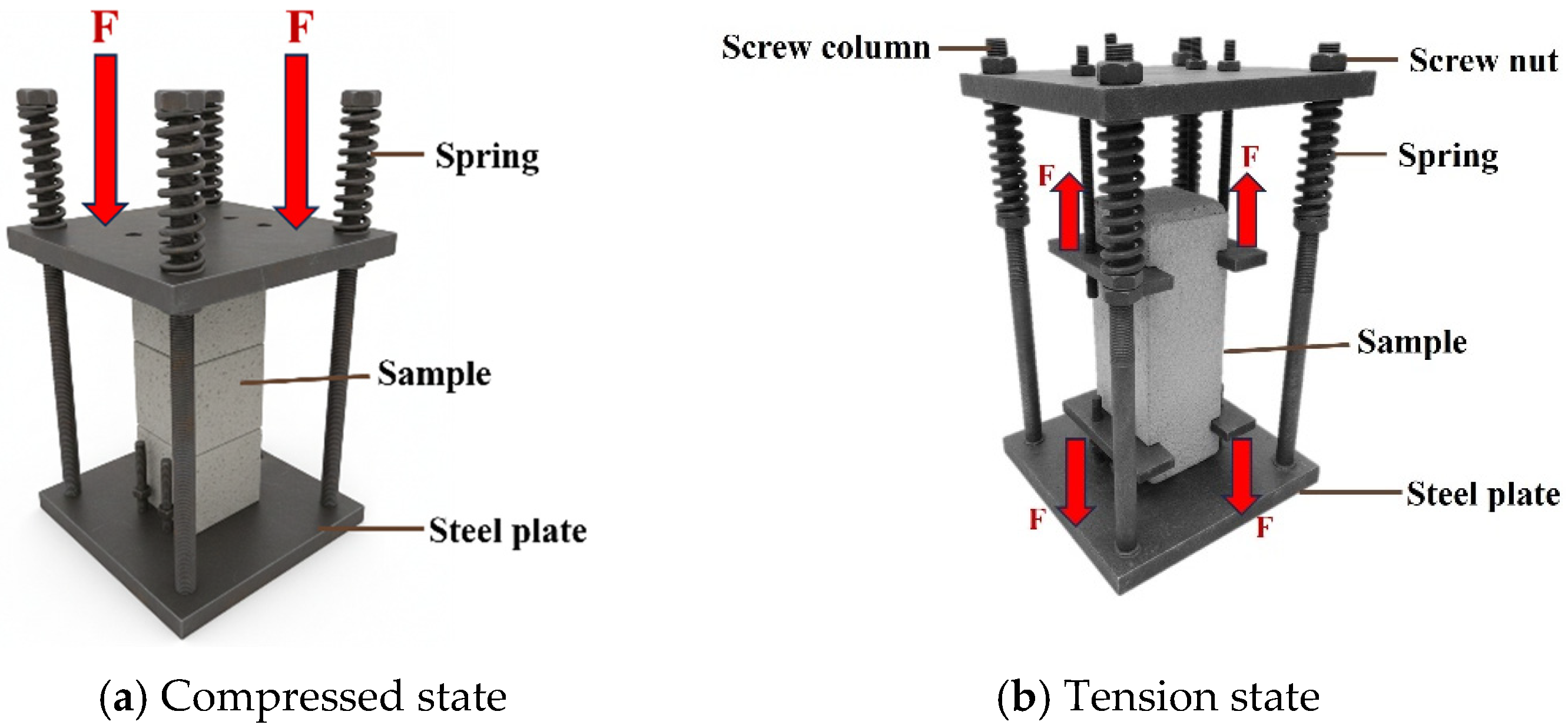
To apply sustained axial tensile and compressive loads to concrete specimens, a load application fixture was designed. This fixture consists of two upper and lower load-bearing plates, two upper and lower C-shaped fixing plates, four vertical columns, and four spring sections, as shown in Figure 1. When applying compressive axial load, springs exert pressure on the upper bearing plate, inducing a compressive axial state in the specimen, as shown in Figure 1a. When applying tensile load, springs apply upward pressure to the upper C-shaped fixing plate connected to the upper bearing plate, inducing a tensile axial state in the specimen, as shown in Figure 1b. The applied load in this experiment is short-term sustained loading. It should be noted that the results do not reflect long-term creep-related damage in CFRD panels during actual service.
Figure 1. Schematic of the stress-loading setup.
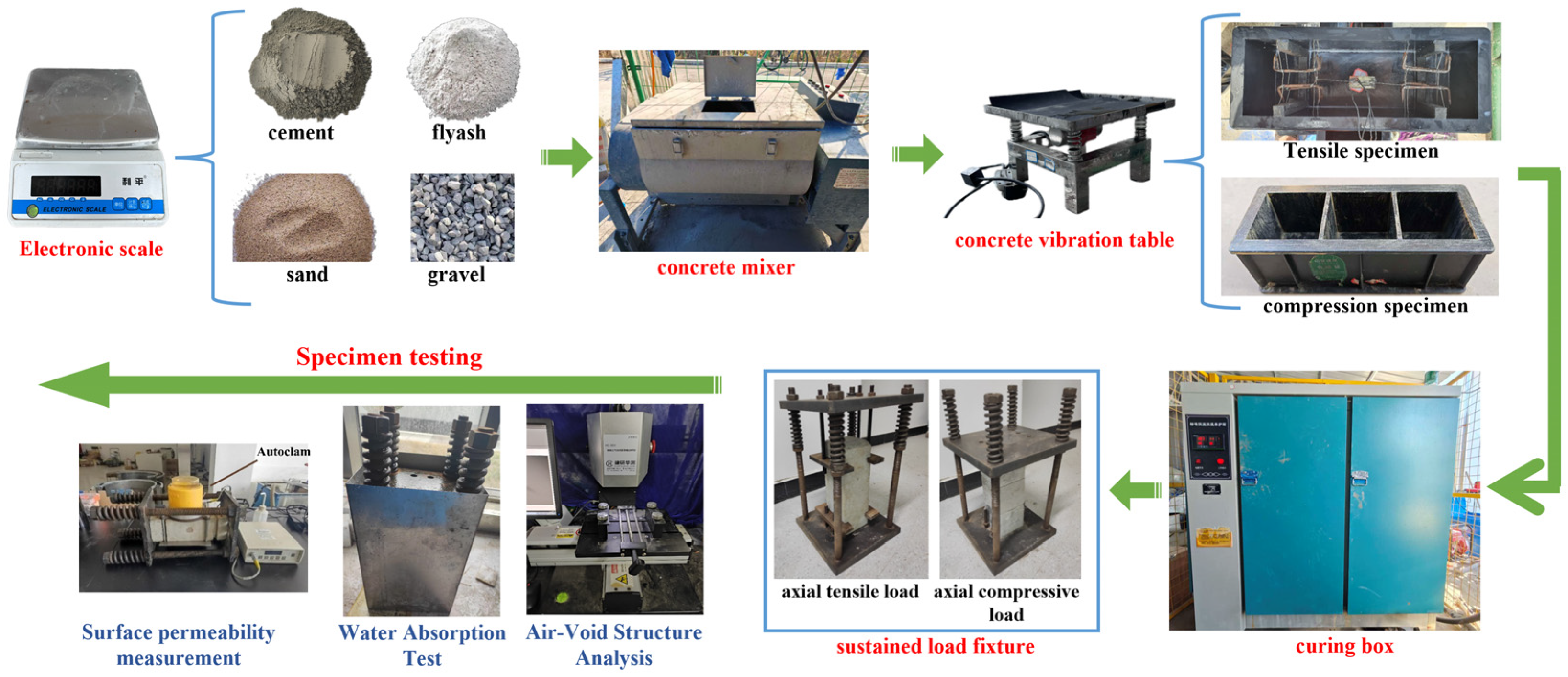
The fabrication and curing of test specimens strictly followed the “Code for Testing Hydraulic Concrete” (SL/T 352-2020) [30]. To prevent concrete specimens from breaking at the clamping points under axial tensile loading, eight steel bars were pre-embedded on both sides of the mold. Rubber strips were then applied to form the precast fixture grooves. Strain gauges were embedded within the specimens to ensure precise load application. The preparation and testing process of the specimen is shown in Figure 2. ‘Test specification for hydraulic concrete’ SL/T 352-2020.
Figure 2. Flow chart of the experiment.

2.4. Air-Void Structure Analysis

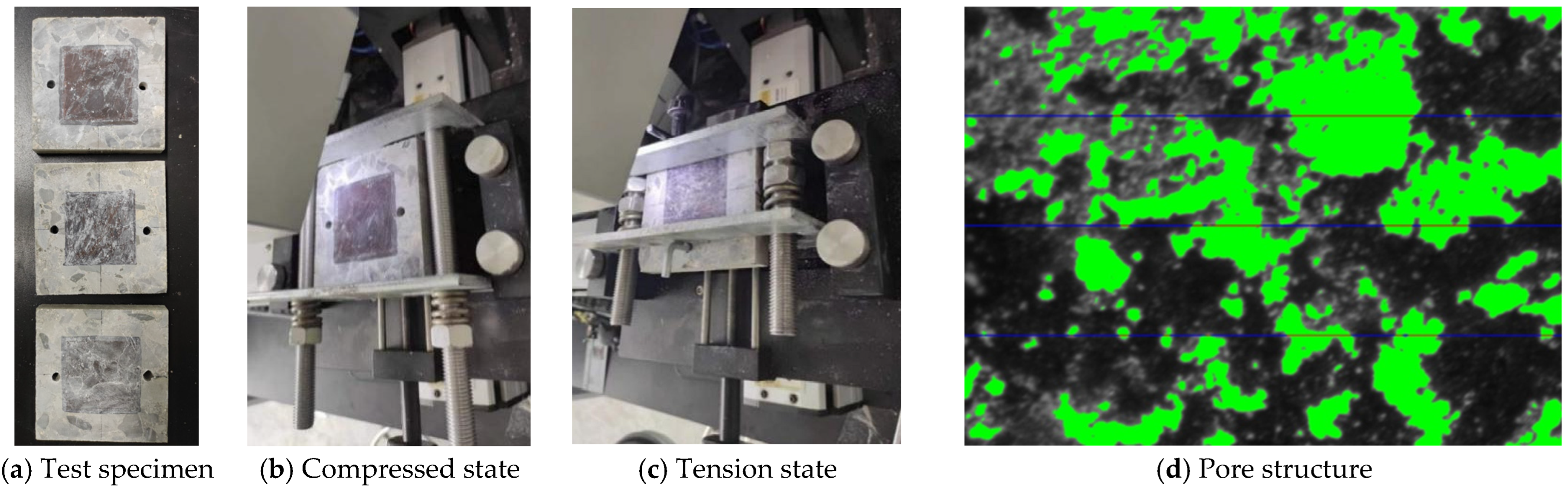
The test employed a concrete air-void spacing coefficient analyzer manufactured by Guanli Technology Co., Ltd. (Hangzhou, China). This device is used to determine the number, size, and spacing of air voids within hardened concrete. Cured concrete specimens were cut into 100 mm × 100 mm × 25 mm thin sections. Test surfaces were sequentially ground using 400-grit and 800-grit sandpaper. After grinding, the entire test surface was coated with black marker. Fluorescent powder was used to fill pores, and excess powder on the surface was wiped off to ensure no powder residue remained on non-pore areas of the test surface. Finally, the specimen is secured to the observation platform to begin data collection. To analyze the pore structure of concrete specimens under stress, a micro-loading device is designed to apply various stress states to the specimen, as illustrated in Figure 3.
Figure 3. Set up for pore structure measurement under stress.

2.5. Concrete Water Absorption Test

To investigate the water absorption characteristics of concrete specimens under sustained loading conditions, water absorption tests were conducted following the procedure proposed by Bamforth. Concrete specimens were dried in an oven to constant weight, then weighed using an electronic scale with an accuracy of 0.01 g to determine their initial mass, denoted as m o . The weighed specimen was mounted in a fixture and loaded using a universal testing machine. Subsequently, the specimen and fixture were immersed in water, ensuring the water level exceeded the specimen’s upper surface by at least 2 cm. Every 15 min, the specimen was removed from the water, and moisture on the specimen and loading device surfaces was wiped off with a damp cloth. The specimen was then weighed, with the mass recorded as m i g . To minimize experimental error, the mass of the loading device after 24 h of immersion is denoted as m c . During water absorption, the cumulative water absorption over time m i can be expressed as:
m i = m i g m o m c

2.6. Surface Permeability Measurement

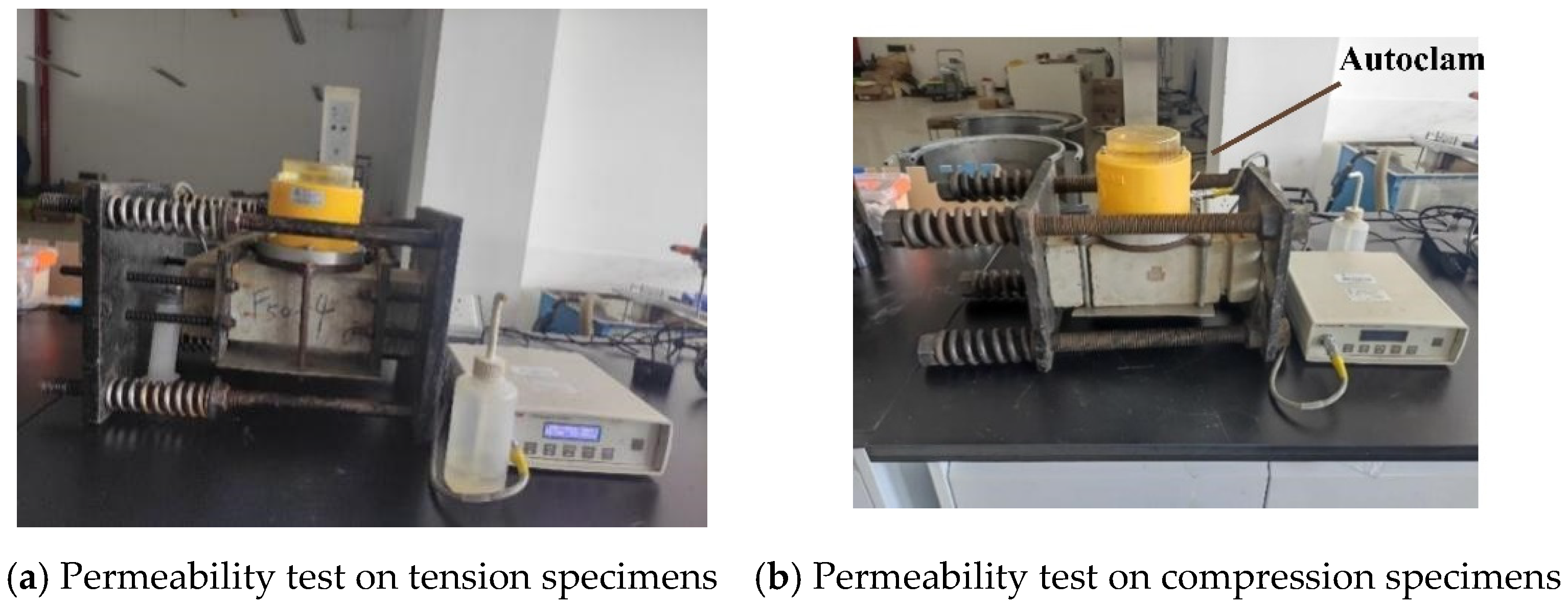
The Autoclam surface testing system (Shanghai Lrel Instrument Co., Ltd. (Shanghai, China)) was employed to investigate the water resistance of concrete surfaces. This method is highly sensitive to the micro-cracks near the concrete surface, so the test results mainly reflect the permeability characteristics of the concrete surface. Prior to testing, concrete specimens were placed in a drying oven. Subsequently, the dried specimens were transferred to a dry environment for cooling. Testing commenced once the specimens returned to ambient temperature, as illustrated in Figure 4.
Figure 4. Permeability test under sustained load.
The permeability test procedure was as follows:
(1)
The specimen was mounted in the stress fixture, and the designated stress was applied via the spring assembly. The Autoclam’s sealing gasket was then firmly attached to the specimen surface using the fastening screws.
(2)
The top water reservoir of the Autoclam was filled with distilled water, and the main unit was connected to the controller.
(3)
The water permeability test mode was selected. The instrument automatically logged the cumulative water permeation volume at 1 min intervals.
(4)
The test terminated automatically after a 15 min duration.
The permeability coefficient was derived from the steady-state flow method as follows:
K q = Q 2 2 T H A 2
In the formula: K q is the relative permeability coefficient, m/s; Q is the seepage volume, mm3; is the concrete water absorption rate, taken as 0.03; T is the time required to maintain constant pressure, s; H is the hydrostatic pressure on the specimen, m; A is the cross-sectional area subjected to water pressure, m2.

3. Results and Analysis

3.1. Effect of Stress Level on the Air-Void Structure of Concrete

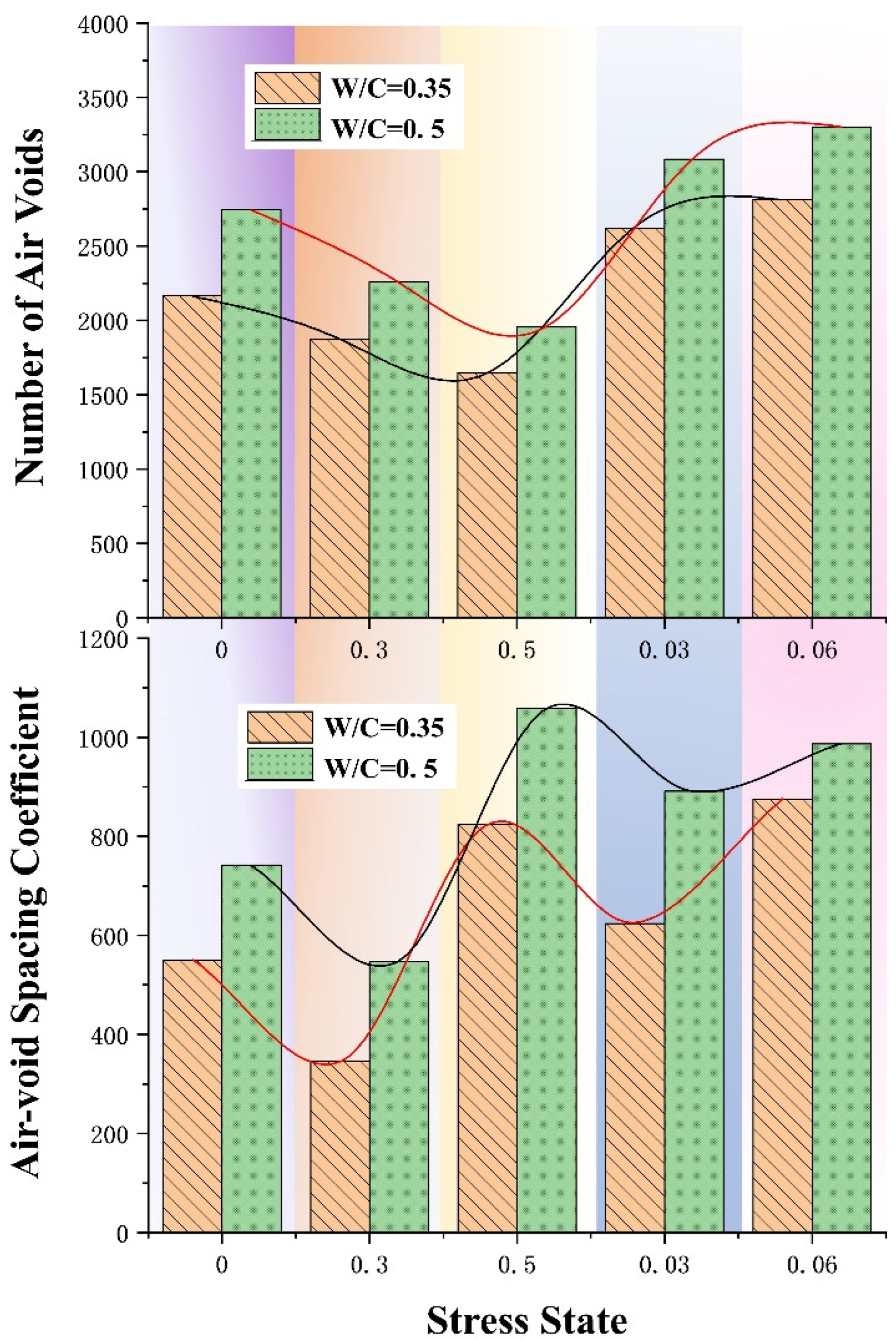
Figure 5 presents the variation patterns of the number of air voids and the air-void spacing coefficient of the specimens under different loads. It can be observed that the total number of air voids decreases with increasing compressive stress, while it increases with increasing tensile stress. Under compressive stress, the air voids are compressed and may collapse, leading to a reduction in number. At higher compressive stress levels, however, the initiation and propagation of micro-cracks interconnect neighboring voids, promoting their coalescence into larger ones. Consequently, while the void count decreases, the average spacing between voids increases. Under tensile stress, the formation of new micro-cracks, which can bridge existing air voids, results in an increase in both the void spacing and the mean chord length. A comparison between the mixes with w/c ratios of 0.35 and 0.5 indicates that the lower w/c ratio concrete, possessing higher strength and a denser microstructure, consistently contains fewer air voids.
Figure 5. The changes in the number of air voids and the spacing coefficient under different stress conditions.
Moreover, as the level of compressive stress increases, the concrete air-void spacing coefficient first decreases and then increases. At a compressive stress level of 0.3 f c , small air voids within the concrete are compressed. At a compressive stress level of 0.5 f c , micro-cracks appear within the concrete, causing numerous tiny pores to interconnect and form larger air voids. When concrete specimens are subjected to tensile stress, the air-void spacing continuously increases with rising tensile stress. At a tensile stress level of 0.03 ft, the air-void spacing coefficients for specimens with water-cement ratios of 0.35 and 0.5 are 0.624 mm (with an increase of 21.9%) and 0.891 mm (with an increase of 27.8%), respectively. At a tensile stress level of 0.06 ft, the air-void spacing coefficients for specimens with water-cement ratios of 0.35 and 0.5 were 0.875 mm (with an increase of 70.9%) and 0.987 mm (with an increase of 37.1%), respectively. This indicates that when concrete is subjected to tensile stress, its internal micro-pores decrease while larger pores continue to increase. Comparing the air-void spacing coefficients of specimens with water-cement ratios of 0.35 and 0.5 reveals that the coefficients for the 0.35 specimens are consistently lower than those of the 0.5 specimens. This demonstrates that reducing the water-cement ratio of concrete can decrease the air-void spacing coefficient of the specimens.

3.2. Effect of Stress Level on Water Absorption Characteristics

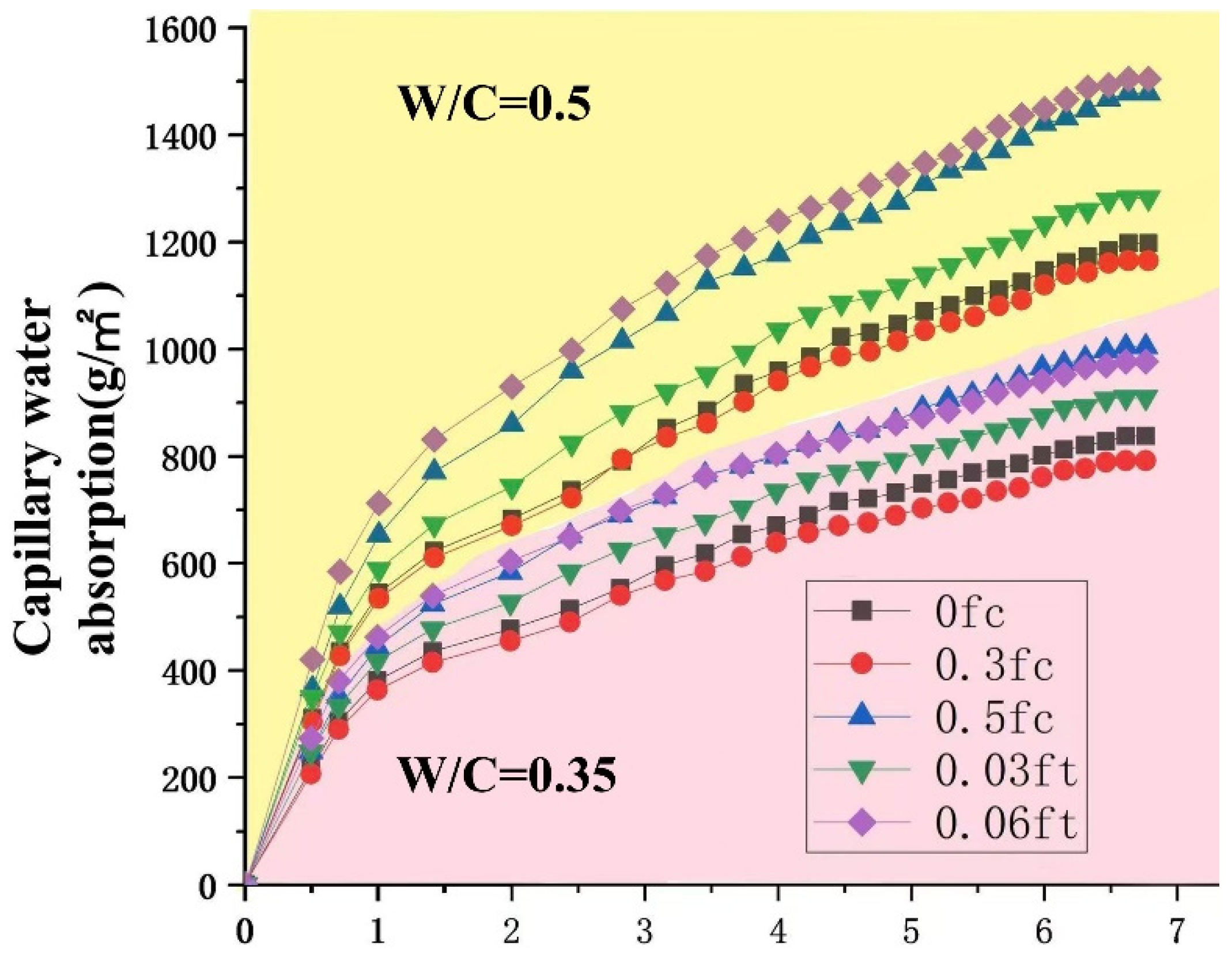
Figure 6 shows the water absorption curves over time for concrete specimens with water-cement ratios of 0.35 and 0.5 under different loads. The figure indicates that water absorption increases continuously with time for specimens of both water-cement ratios. The initial rate of increase is rapid, gradually slowing down until it ceases. The stable water absorption of the 0.35 water-cement ratio specimen under no load was 837.4 g/m3. When subjected to a compressive stress level of 0.3 f c , the specimen’s stable water absorption was 791.5 g/m3, with a decrease of 5.5%; at a compressive stress level of 0.5 f c , the stable water absorption reached 1003.8 g/m3, with an increase of 19.9%. Specimens subjected to a tensile load of 0.03 ft exhibited a stable water absorption of 909.7 g/m3, with an increase of 8.6%. Specimens subjected to a tensile load of 0.06 ft showed a stable water absorption of 977.3 g/m3, with an increase of 16.7%. Comparing water absorption at water-cement ratios of 0.35 and 0.5 reveals that the water-cement ratio significantly influences concrete’s water absorption capacity. Increasing the ratio from 0.35 to 0.5 resulted in respective increases of 42.9%, 47%, 44%, 41%, and 54% in concrete water absorption over 1 h under equivalent stress conditions.
Figure 6. Variation in capillary water absorption under different loads.
The critical stress range (0.3 fc–0.5 fc) is verified by piecewise linear regression. The correlation coefficient R2 of the low-stress segment (0.3–0.38 fc) is 0.94, and that of the high-stress segment (0.38 fc–0.5 fc) is 0.91, indicating that the two-segment model can well fit the experimental data. The inflection point (0.38 fc) is determined as the critical stress threshold, with a 95% confidence interval of [0.36 fc, 0.40 fc]. When the applied axial compressive load is below the critical value, it effectively enhances concrete compactness and improves water resistance. When the load exceeds the critical value, it induces internal cracking and interconnects pores, leading to increased capillary water absorption. When concrete specimens are subjected to varying proportions of axial tensile load, capillary water absorption continues to increase. This indicates that axial tensile load progressively enlarges the pore diameters within concrete and extends internal cracks, thereby increasing the concrete’s water absorption capacity.
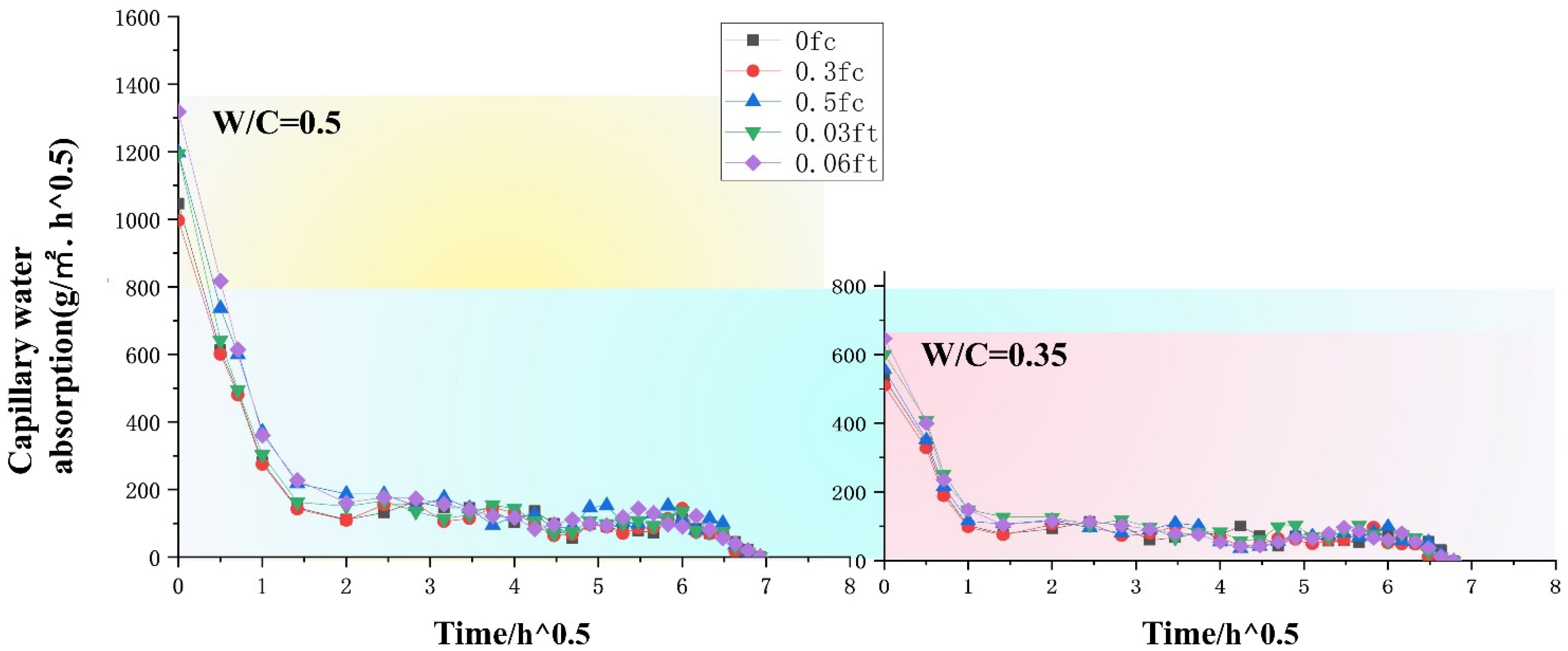
Figure 7 shows the variation curve of the capillary water absorption rate over time for concrete specimens under different load magnitudes. Analysis of this figure reveals that the capillary water absorption rate of concrete continuously decreases with increasing absorption time. The initial capillary water absorption rate is significantly higher than the later rate, and the initial rapid absorption phase is very short. This is primarily because the concrete specimens are internally dry after baking. When the concrete first comes in contact with water, the matrix suction is strong, causing water to rapidly penetrate into the concrete. As the saturation of internal pores continues to increase, the matrix suction gradually decreases, leading to a corresponding decrease in the concrete’s water absorption rate.
Figure 7. Capillary water absorption rate of specimens.
Stress conditions influence concrete’s capillary water absorption rate, though the effect is limited. Specifically, tensile stress increases capillary absorption, while low compressive stress slightly reduces it. Conversely, high compressive stress enhances capillary absorption, with the underlying mechanism consistent with the aforementioned principles.
During the initial capillary absorption phase, specimens with a 0.5 water-cement ratio exhibit higher capillary absorption rates than those with a 0.35 ratio. This occurs because an increased water-cement ratio not only enhances concrete porosity, thereby boosting its water absorption and water-holding capacity, but also induces significant changes in the concrete’s microstructure. These changes include an increase in the number and volume of harmful pores, leading to interconnected adjacent pores and consequently strengthening the concrete’s water absorption capability.

3.3. Effect of Stress Level on Concrete Permeability

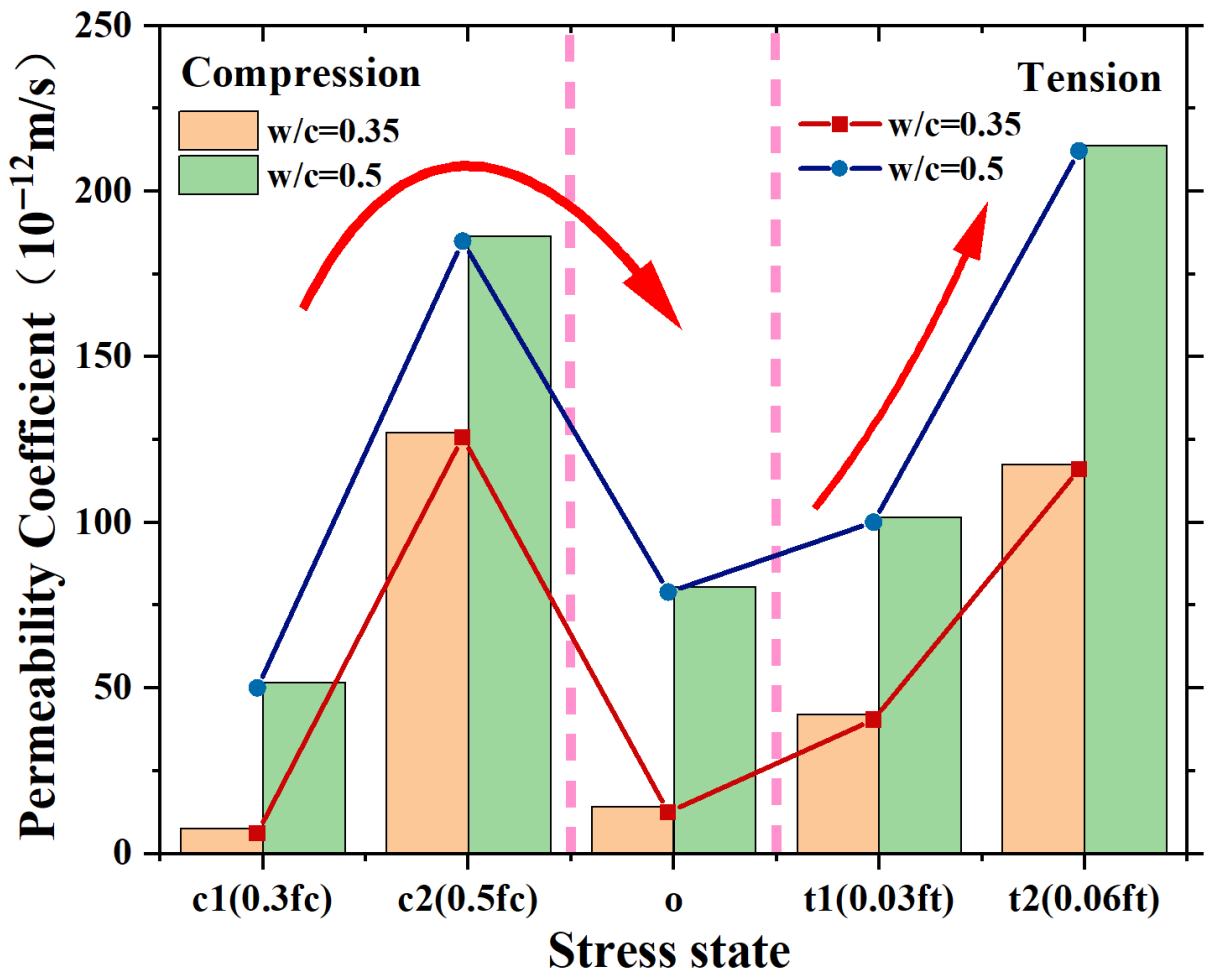
Figure 8 shows the distribution of permeability coefficients for concrete specimens under different stress levels. Analysis of this figure reveals: as compressive stress levels increase, the permeability coefficient first decreases and then increases. For specimens with a water-cement ratio of 0.35, the permeability coefficient decreases from 14.1 × 10⁻¹² m/s under no load to 7.74 × 10⁻¹² m/s (with a decrease of 45.1%) and then increases to 127.25 × 10⁻¹² m/s (with an increase of 802.4%). The variation in the concrete permeability coefficient with stress level under axial compression is consistent with the existing research results [31,32]. The fitting of the relationship between the permeability coefficient and the stress value shows that the critical stress threshold is 0.38 fc ± 0.02 fc (R2 = 0.92). Below this threshold, the permeability coefficient decreases with the increase in compressive stress. When the threshold is higher than this threshold, the permeability coefficient increases rapidly. Under tensile stress, the permeability coefficient shows a monotonic increasing trend. For specimens with a water-cement ratio of 0.35, the permeability coefficient increases from 14.1 × 10⁻¹² m/s under no load to 42 × 10−12 m/s (with an increase of 197.9%) and 117.65 × 10⁻¹² m/s (with an increase of 734.3%). The permeability coefficients of specimens with water-cement ratios of 0.35 and 0.5 exhibited consistent variation patterns under stress conditions. With the increase in water-cement ratio, the permeability coefficient of the concrete specimens became more significantly influenced by the stress level.
Figure 8. Effect of stress state on permeability coefficient.

4. Mechanism Analysis

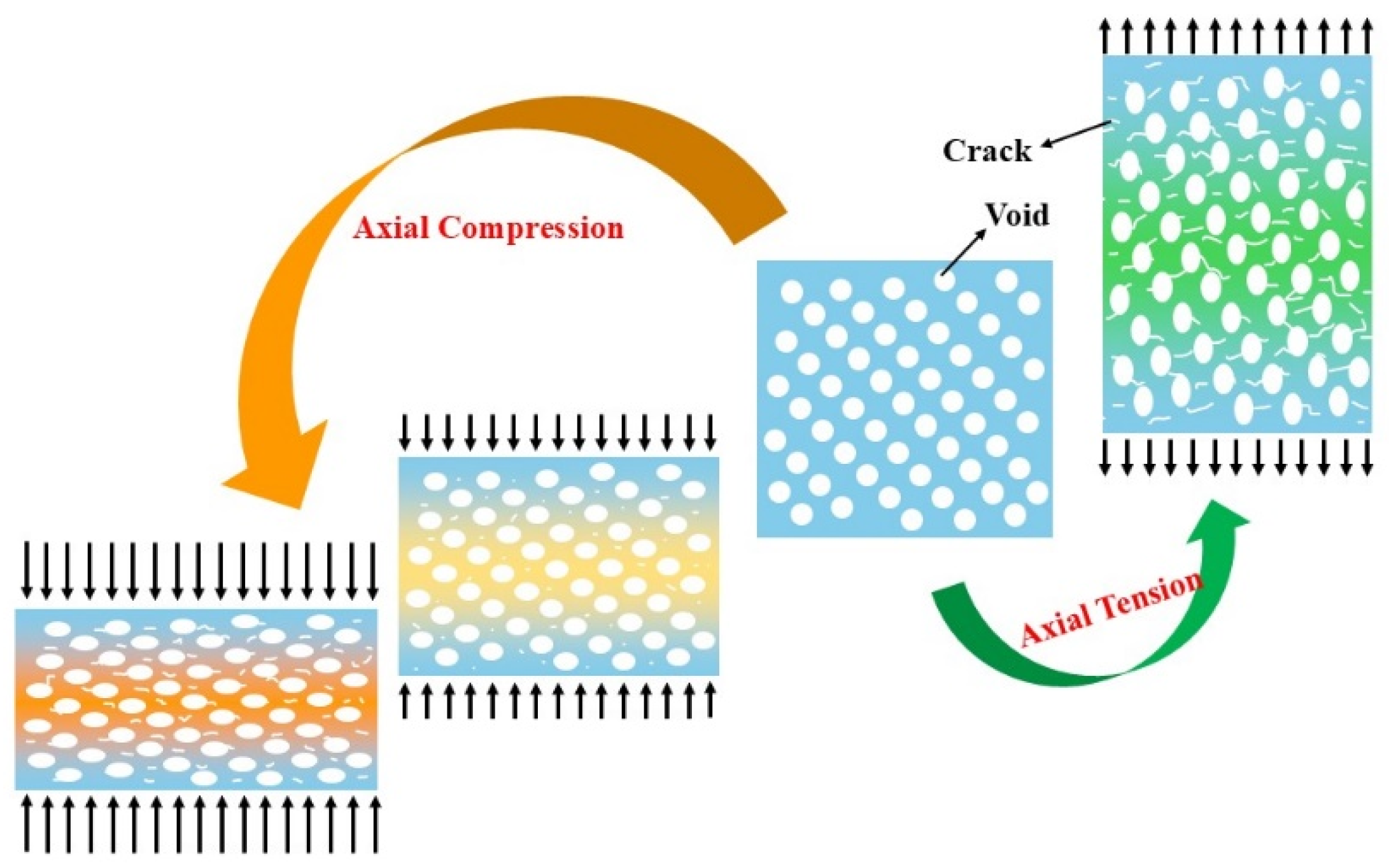
Concrete is a porous cementitious material where internal pores and cracks significantly influence its strength and permeability. Loading affects concrete permeability in two primary ways: first, by altering the internal pore structure, thereby modifying permeability characteristics; second, excessive loading can cause internal damage, leading to the initiation and propagation of micro-cracks, which increases the concrete’s permeability coefficient. The specific process is illustrated in Figure 9.
Figure 9. Mechanism of action diagram.
Under low compressive stress, initial cracks within the concrete specimen remain closed. At this stage, axial compressive loading is insufficient to generate new cracks between aggregates and cement paste. Instead, axial compression compacts cracks perpendicular to the loading direction, causing the permeability coefficient of the specimen to decrease as compressive stress increases. At higher compressive stress levels, axial compression causes existing cracks to widen or new cracks to form. These cracks progressively develop and interconnect. The effect of crack propagation on permeability then outweighs the effect of crack compaction, leading to a rapid increase in the concrete’s permeability coefficient, as shown in Figure 9. Air-void spacing coefficient is a supportive indicator for permeability changes, but the dominant factor affecting permeability under stress is load-induced micro-cracks. This change pattern aligns with the variation in pore structure and water absorption characteristics under stress, validating the aforementioned explanation. However, it should be pointed out that the above mechanism explanation is based on the test results and the inference of existing theories. In the future, CT scanning can be used to directly measure the evolution of cracks.
These patterns indicate a critical range of compressive stress between 0.3 f c and 0.5 f c . Below this threshold, the original micro-cracks within the concrete specimen remain closed, and the compressive load is insufficient to generate significant new cracks. Consequently, within this critical range, the permeability coefficient of the specimen decreases steadily with increasing stress. When the axial compression load exceeds this critical value, excessive load will lead to a large number of micro-cracks inside the concrete, and the permeability coefficient gradually expands with the increase in stress level, indicating that the influence of crack propagation on the permeability of concrete is greater than that of partial crack closure.
Under tensile loading, the permeability coefficient of concrete is consistently higher than that under no loading. As tensile load increases, the permeability coefficient also rises. Due to concrete’s relatively low tensile strength, tensile stress causes initial cracks to elongate and numerous micro-voids to enlarge, leading to a sustained increase in the permeability coefficient.

5. Conclusions

In order to study the influence of stress state on the permeability of CFRD panel concrete, the evolution of pore structure, capillary water absorption, and permeability coefficient of CFRD panel concrete under continuous axial tension and compression is studied and the correlation mechanism is revealed. The main results are as follows:
(1)
The air-void e spacing, capillary water absorption and permeability coefficient decrease first and then increase, and the critical stress threshold is 0.38 fc.
(2)
For the specimen with a water-cement ratio of 0.35, the permeability coefficient decreases by 45.1% and then increases by 802.4%.
(3)
The concrete with a water-cement ratio of 0.5 is more sensitive to the change in stress state than 0.35.
(4)
Tensile stress enhances concrete’s capillary water absorption rate. Lower compressive stress slightly reduces this rate, while higher compressive stress increases it.
(5)
Tensile stress will significantly increase the permeability coefficient by promoting micro-crack expansion. For the specimen with water-cement ratio of 0.35, the permeability coefficient increases by 197.9% and then increases by 734.3% with the increase in tensile stress.
(6)
Stress-induced cracks and internal pore structure affect the water absorption and permeability of concrete.
(7)
In the design process of rockfill dam concrete panel, the thickness of the panel can be adjusted according to the stress state of the panel.
(8)
The conclusions are applicable to short-term sustained axial tension and compression conditions. For long-term CFRD performance, further studies on creep-related damage and long-term sustained loading are required. Future studies can also explore the coupling effects of stress and environmental factors on the permeability of panel concrete.

Author Contributions

Conceptualization, H.Z. and B.X.; validation, X.Z.; Resources, B.X.; data curation, L.G. and J.L.; writing—original draft, X.Z. and H.Z.; writing—review and editing, B.X.; visualization, L.G. and Y.C.; supervision, X.Z., J.L. and B.X.; project administration, B.X. All authors have read and agreed to the published version of the manuscript.

Funding

This paper is supported by Luquan Wudongde Power Plant of Three Gorges Jinsha River Yunchuan Hydropower Development Co., Ltd. (5724020001.2.3).

Data Availability Statement

The original contributions presented in this study are included in the article. Further inquiries can be directed to the corresponding author.

Conflicts of Interest

Authors Xin Zhang, Hongxing Zhong and Lei Gao were employed by the company Three Gorges Jinsha River Yunchuan Hydropower Development Co. The remaining authors declare that the research was conducted in the absence of any commercial or financial relationships that could be construed as a potential conflict of interest.

References

  1. Ardalan, R.B.; Jamshidi, N.; Arabameri, H.; Joshaghani, A.; Mehrinejad, M.; Sharafi, P. Enhancing the permeability and abrasion resistance of concrete using colloidal nano-SiO2 oxide and spraying nanosilicon practices. Constr. Build. Mater. 2017, 146, 128–135. [Google Scholar] [CrossRef]
  2. Kyung-Taek, K.; Min-Su, S.; Jae-Yoon, K. Effect of concrete containing the biochar on properties and thermal insulation performance. J. Korean Recycl. Constr. Resour. Inst. 2022, 10, 428–434. [Google Scholar]
  3. Różycki, M.; Hager, I.; Zdeb, T.; Sitarz, M.; Mróz, K.; Zdeb, J.; Smorońska, N. Mechanical properties and water permeability of textile-reinforced reactive powder concrete with lightweight aggregate. Materials 2023, 16, 7619. [Google Scholar] [CrossRef]
  4. Pereira, C.; Gupta, R. Effect of CO2 sequestration on long-term concrete performance and durability. J. Build. Eng. 2025, 111, 113553. [Google Scholar] [CrossRef]
  5. Yang, L. Study on the Mechanism of Freeze-Thaw Cycling and Sulfate Erosion Effects on the Durability of Pavement Concrete; Xi’an University of Technology: Xi’an, China, 2015. [Google Scholar]
  6. Ma, F.; Yang, D.; Wang, S. Research on Crack Resistance and Durability of Concrete in High Concrete-Faced Rockfill Dams. Hydropower Hydraul. Eng. 2004, 30, 156–161. [Google Scholar]
  7. Ruan, Y.; Fang, K.; Zeng, L.; Wu, D. Research on Permeation and Dissolution Durability of Concrete in Dam Facings. People’s Yangtze River 2000, 31, 33–35. [Google Scholar]
  8. Yang, D.; Ma, F. Research on the Durability of Concrete Against Dissolution Erosion. In Proceedings of the National Academic Exchange Conference on Concrete Durability, Barcelona, Spain, 4–9 June 2000. [Google Scholar]
  9. Shan, J.; Zhang, Y.; Wu, S.; Lin, Z.; Li, L.; Wu, Q. Pore characteristics of pervious concrete and their influence on permeability attributes. Constr. Build. Mater. 2022, 327, 126874. [Google Scholar] [CrossRef]
  10. Liu, Q.; Li, H.; Cao, Q.; Ke, D.; Yin, S.; Li, Q. Microscopic Factors Affecting the Performance of Pervious Concrete. Materials 2024, 17, 1479. [Google Scholar] [CrossRef] [PubMed]
  11. Wang, K.; Jansen, D.C.; Shah, S.P.; Karr, A.F. Permeability study of cracked concrete. Cem. Concr. Res. 1997, 27, 381–393. [Google Scholar] [CrossRef]
  12. He, Y.; Alyousef, R.; Alaskar, A.; Alabduljabbar, H.; Mohamed, A.M.; Maureira-Carsalade, N.; Roco-Videla, A.; Issakhov, A.; Assilzadeh, H. Influence of crack on the permeability of plastic concrete. Smart Struct. Syst. 2021, 27, 871–890. [Google Scholar]
  13. Soongswang, P.; Tia, M.; Bloomquist, D. Factors affecting the strength and permeability of concrete made with porous limestone. Mater. J. 1991, 88, 400–406. [Google Scholar]
  14. Xu, G.; Shen, W.; Huo, X.; Yang, Z.; Wang, J.; Zhang, W.; Ji, X. Investigation on the properties of porous concrete as road base material. Constr. Build. Mater. 2018, 158, 141–148. [Google Scholar] [CrossRef]
  15. Kermani, A. Permeability of stressed concrete. Build. Res. Inf. 1991, 19, 360–366. [Google Scholar] [CrossRef]
  16. Xue, W.P.; Fan, H.J.; Gao, C.; Zhang, H.; Shen, L. Permeation behavior of hybrid fiber/concrete under triaxial compression with load-temperature coupling effects. J. Compos. Mater. 2022, 39, 5548–5556. [Google Scholar] [CrossRef]
  17. Fang, Y.; Li, Z.; Zhang, Y. Permeability of concrete under sustained compressive load. J. Chin. Ceram. Soc. 2005, 33, 1281–1286. [Google Scholar]
  18. Guo, Y.-C.; Xie, B.; Zhou, L.-C.; Zhao, Z.; Huang, W. Study on the Decay and Mechanism of Water Permeability Resistance in Basalt Fiber-Reinforced Concrete Under Dynamic Fatigue Loading. Bull. Silic. Res. 2022, 41, 810–817. [Google Scholar] [CrossRef]
  19. Yin, Y.; Hu, C.; Liu, H.; Jin, S. Experimental Study on the Effect of Impact Load Damage on Concrete Permeability. Build. Struct. 2022, 52, 1031–1036. [Google Scholar] [CrossRef]
  20. Xue, W.; Zhang, H.; Li, H.; Xu, W. Effect of early age loading on the subsequent mechanical and permeability properties of concrete and its mechanism analysis. J. Mater. Res. Technol. 2021, 14, 1208–1221. [Google Scholar] [CrossRef]
  21. Xue, W.; Xu, L.; Wang, Z.; Min, T.; Xu, J. Experimental study on seepage evolution and microscopic characteristics of initially damaged concrete under variable confining pressure. Constr. Build. Mater. 2023, 393, 132157. [Google Scholar] [CrossRef]
  22. He, J.; Hong, J.; Gao, R.; Liu, F.; Li, L. Experimental study on permeability of spun high strength concrete material during mechanical loading. Constr. Build. Mater. 2023, 403, 133034. [Google Scholar] [CrossRef]
  23. Tran, T.T.; Pham, D.T.; Vu, M.N.; Truong, V.Q.; Ho, X.B.; Tran, N.L.; Nguyen-Sy, T.; To, Q.D. Relation between water permeability and chloride diffusivity of concrete under compressive stress: Experimental investigation and mesoscale lattice modelling. Constr. Build. Mater. 2021, 267, 121164. [Google Scholar] [CrossRef]
  24. Yang, F.; Hu, D.; Zhou, H.; Teng, M.; Lan, M.; Teng, Q. Post-fatigue properties of high-strength concrete subjected to coupled 3D fatigue-static loading. Constr. Build. Mater. 2021, 306, 124879. [Google Scholar] [CrossRef]
  25. Liu, W.; Peng, H.; Guo, P.; Chen, S.; Liu, W.; Kang, Y. Experimental study on the mechanical and permeability properties of lining concrete under different complex stress paths. Front. Earth Sci. 2022, 10, 810115. [Google Scholar] [CrossRef]
  26. Fang, Y.; Yao, Z.; Huang, X.; Li, X.; Diao, N.; Hu, K.; Li, H. Permeability evolution characteristics and microanalysis of reactive powder concrete of drilling shaft lining under stress-seepage coupling. Constr. Build. Mater. 2022, 331, 127336. [Google Scholar] [CrossRef]
  27. GB 175-2023; Common Portland Cement. China Standards Press: Beijing, China, 2023.
  28. NB/T 10871-2021; Design Specification for Concrete Face Rockfill Dams. China Water & Power Press: Beijing, China, 2022.
  29. DL/T 5144-2015; Specifications for hydraulic concrete construction. China Electric Power Press: Beijing, China, 2015.
  30. SL/T 352-2020; Code for Testing Hydraulic Concrete. China Water & Power Press: Beijing, China, 2022.
  31. Ma, L.; Wen, Y.; Ma, L. Effect of sustained compressive load on gas permeability of lithium slag concrete. Concrete 2020, 1, 45–49. [Google Scholar]
  32. Song, B.; He, J.; Liu, C. Experimental study on the permeability of plastic concrete under different loads. South-North Water Divers. Water Conserv. Technol. 2015, 13, 309–313. [Google Scholar]
Disclaimer/Publisher’s Note: The statements, opinions and data contained in all publications are solely those of the individual author(s) and contributor(s) and not of MDPI and/or the editor(s). MDPI and/or the editor(s) disclaim responsibility for any injury to people or property resulting from any ideas, methods, instructions or products referred to in the content.

Article Metrics

Citations

Article Access Statistics

Multiple requests from the same IP address are counted as one view.