


Abstract
Lightweight artificial aggregates (LWAs) are key materials for sustainable construction, offering reduced structural self-weight, improved thermal performance, and enhanced resource efficiency. However, their production remains geographically concentrated and largely dependent on virgin raw materials, while significant volumes of industrial waste continue to be landfilled. This study addresses these challenges by developing regional LWAs through the incorporation of high levels of porcelain polishing residue (PPR) into red clay matrices, promoting waste valorisation within a circular economy framework. Four mixtures were produced with 20, 40, 60, and 80 wt.% PPR replacing red clay and sintered at 1220 °C and 1240 °C. Raw materials were characterized by laser granulometry, X-ray fluorescence, and X-ray diffraction, while the produced aggregates were evaluated in terms of bloating index, mass loss, bulk density, water absorption, modulus of deformation, crushing strength, and visual morphology. A full factorial experimental design coupled with analysis of variance (ANOVA) was applied to quantify the effects of mixture composition, firing temperature, and aggregate size. All formulations exhibited significant bloating (>35%), with expansion intensifying as PPR content and firing temperature increased, reaching up to 140.6% for mixtures with 80% PPR at 1240 °C. Bulk density values ranged from 0.53 to 1.14 g/cm3, and water absorption remained below 20% for all compositions, confirming their classification as lightweight aggregates. Mechanical performance was strongly dependent on the balance between expansion and matrix densification. The mixture containing 40% red clay and 60% PPR sintered at 1220 °C showed the most favourable performance, achieving crushing strengths of approximately 5.00 MPa while maintaining low density, outperforming commercial reference aggregates. Statistical analysis identified mixture composition and firing temperature as the dominant factors governing expansion and density. The results demonstrate that porcelain polishing residue is a technically viable and sustainable raw material for high-performance LWA production, enabling regional manufacturing routes with reduced environmental impact and strong potential for structural and non-structural construction applications.
1. Introduction
Lightweight artificial aggregates (LWAs) are widely recognized for their potential to reduce structural load of edification, enhance thermal and acoustic insulation, and improve the sustainability profile of construction materials [1,2,3,4]. In Brazil, however, the commercial production of LWAs is heavily concentrated in the Southeast, restricting broader adoption due to higher transportation costs and logistical constraints in other regions [4,5,6,7,8].
To address these challenges, a range of secondary materials have been investigated as alternative raw materials for lightweight aggregate manufacturing, including rice husk ash [9], sugarcane biomass residue [10,11], sewage sludge [12], granite and marble cutting residue [13], and scheelite residue [14], among others [15,16,17]; the choice and performance of these additions are influenced by factors such as chemical composition, particle size, and processing conditions [18,19].
From a sustainability standpoint, valorising industrial and agricultural waste as components for LWA manufacturing represents a circular-economy approach, reducing landfill burden and promoting resource efficiency in the construction sector [4,5,8,16,20,21]. Porcelain polishing residue (PPR), abundantly generated by the ceramic industry, is estimated at 30–35 tonnes daily according to Martins de Oliveira [5], resulting in environmental damage such as soil, air, and groundwater contamination [22,23].
Several studies indicate that porcelain polishing residue (PPR) has high levels of SiO2 and Al2O3, as well as MgO, which acts as a pyroexpansive agent in the production of LWAs [5,24,25,26]. During sintering, at temperatures between 1100 °C and 1200 °C, silica and alumina favor the formation of a liquid phase capable of retaining the gases released by MgO, promoting porosity and reducing the specific mass of lightweight aggregates [4,5,8,10,15,16,24,25].
Several studies have investigated the incorporation of industrial wastes in the production of lightweight aggregates (LWAs), including coal fly ash, sewage sludge ash, glass waste, ceramic sludge, and granite cutting residues. In general, these residues are incorporated at levels below 50–60%, primarily to avoid excessive liquid phase formation, structural collapse, or insufficient pore stabilization during sintering. The expansion mechanism is typically governed by the balance between gas release and the viscosity of the molten phase, which is strongly influenced by the oxide composition of the raw materials [1,3,7,8,10,13,15,16].
In the case of ceramic polishing residues and similar silica–alumina-rich wastes, previous research has mainly focused on partial substitution in clay-based systems, aiming to adjust plasticity and reduce firing temperature. However, investigations involving very high incorporation levels remain limited.
To the best of our knowledge, there are no studies reporting the use of porcelain polishing residue (PPR) at high proportions, such as 80%, combined with red clay rich in Fe2O3. The presence of iron oxide plays a crucial role in enhancing fusibility, reducing the viscosity of the liquid phase, and promoting controlled bloating during sintering. Furthermore, Fe2O3 contributes to the stabilization of the pore structure, influences aggregate coloration, and improves matrix cohesion, favoring the development of the characteristic internal porosity required for LWAs [4,5,8,19,22,23]. Therefore, the present study advances the field by exploring a composition range and oxide interaction that has not yet been systematically investigated.
The present study aims to develop regional lightweight aggregates (LWAs) through the incorporation of porcelain polishing residue (PPR) into red clay, with PPR contents of up to 80%, seeking to mitigate environmental impacts and stimulate the local economy. Physical, mechanical, visual, and microstructural properties are evaluated, supported by a comprehensive statistical framework based on analysis of variance (ANOVA), including main effects and interaction plots to assess the individual and combined influence of processing variables. Tests are applied to identify statistically significant differences and performance thresholds, enabling the optimization of expansibility and other key properties. The results support the definition of optimal formulations and culminate in a catalog of potential industrial applications, in line with global trends in sustainable construction that emphasize waste valorization and data-driven material innovation.
2. Materials and Methods
2.1. Materials
To produce lightweight aggregates, red clay (R-CLAY) was selected due to its abundance in the metropolitan region of João Pessoa, Paraíba State, Brazil. The clay was obtained from a licensed local clay extraction site that supplies raw material to regional ceramic industries. This geological formation is characterized by kaolinitic–illitic clay with Fe2O3 content exceeding 5 wt.%, which is considered favorable for bloating due to its fluxing behavior and its influence on melt viscosity during sintering, in accordance with Cougny [18]. The selection of this clay ensures both regional representativeness and industrial applicability.
The porcelain polishing residue (PPR) was supplied by a large-scale porcelain tile manufacturer located in João Pessoa/PB, Brazil. The residue originates from the final mechanical polishing stage of porcelain tile production, where abrasive tools remove a thin surface layer to achieve the desired finish. During this process, a fine particulate slurry composed predominantly of silica- and alumina-rich ceramic material is generated. The material used in this study was collected directly from the industrial sedimentation and temporary storage area prior to disposal, ensuring that it represents the typical composition of the factory’s continuous production cycle.
The selected manufacturer operates under standardized industrial processing conditions, which enhances the representativeness of the residue for polished porcelain tile production in Brazil. The use of this material therefore reflects a realistic industrial waste stream, strengthening the environmental relevance and scalability of the proposed lightweight aggregate production route within a circular economy framework.
2.2. Methods
2.2.1. Characterization of Raw Materials
Laser Granulometry
The particle size of the precursor materials was determined using a CILAS 1090 (CILAS, Orléans, France) particle size analyzer, using a dry method, in the range of 0.10 to 500 μm, with 100 classes.
Chemical Composition
The chemical composition of the precursor materials was determined through energy-dispersive X-ray fluorescence (XRF) analysis using an EDX-720 (Shimadzu Corporation, Tokyo, Japan) model equipment. The results were used as input parameters for the preparation and analysis of the mixtures produced, with a view to obtaining samples with a chemical composition suitable for bloating, according to Riley’s theory [19].
Mineralogical Composition
The mineralogical composition of the precursors was analyzed by X-ray diffraction (XRD) to identify and quantify the crystalline phases, using a Shimadzu XRD 7000 equipment (Shimadzu Corporation, Tokyo, Japan). The radiation used was Cu Kα (40 kV/30 mA); the goniometer speed was 2°/min, with a step of 0.02° 2θ and a sweep from 5° to 55° 2θ.
2.2.2. Aggregate Manufacturing
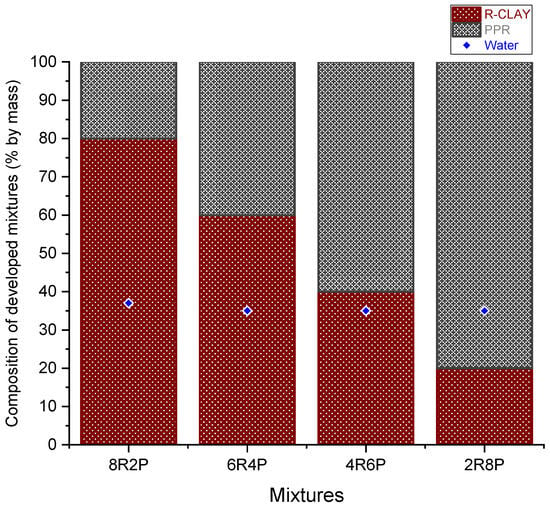
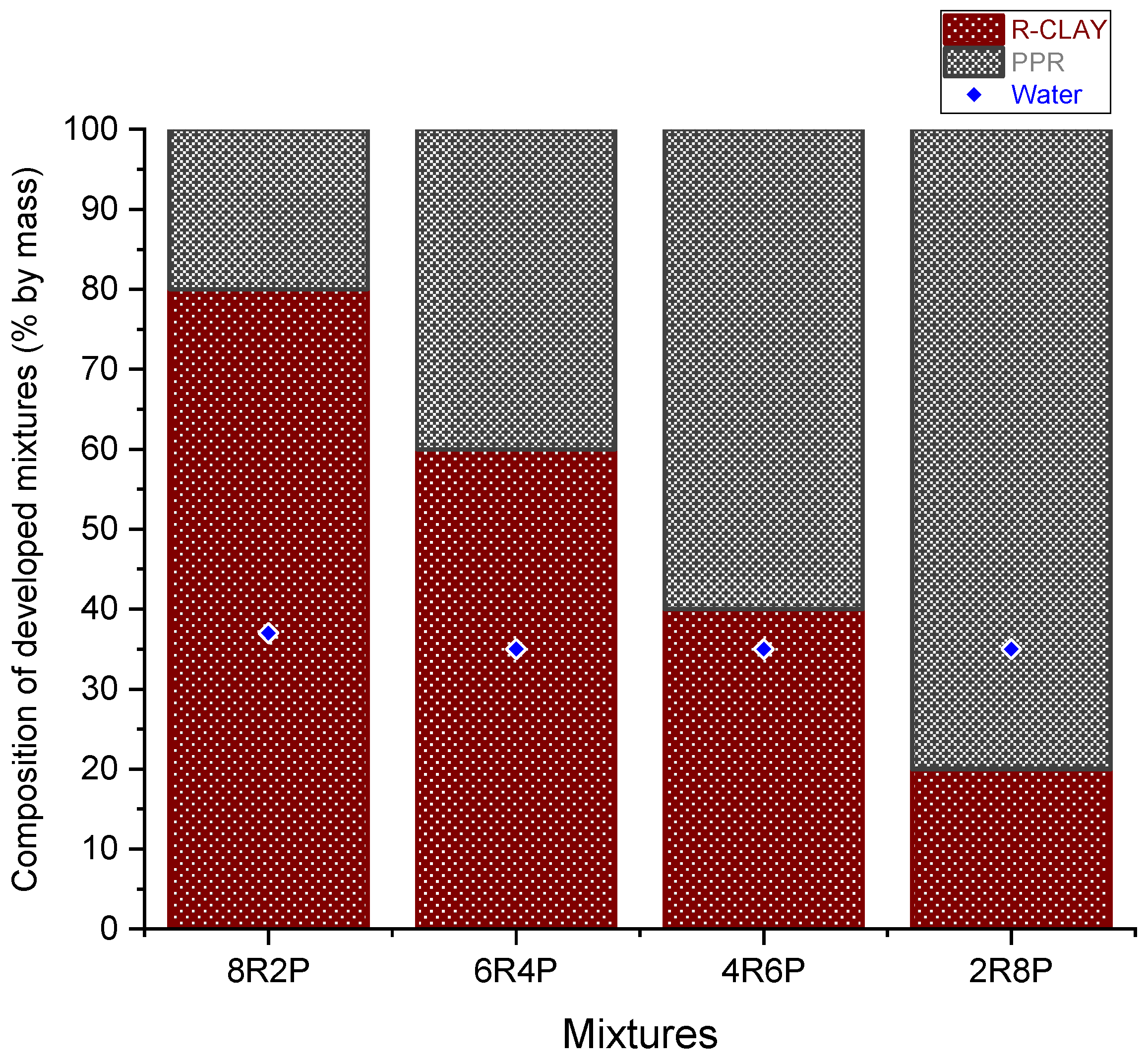
Initially, four mixtures were selected (Figure 1), varying the dry matter content of PPR between 20% and 80%. Each adopted nomenclature represents the proportion between red clay (R) and porcelain polishing residue (P). For example, 8R2P corresponds to 80% R-CLAY + 20% PPR. The plasticity of the mixtures was adjusted by adding 35% to 37% water, ensuring adequate homogenization [26,27].
Figure 1.
Composition of the mixtures (% by mass).
The aggregates were formed by extrusion, and the possible moisture content range for molding was determined through liquid limit (LL) [26] and plastic limit (PL) [27] tests. During the tests, it was possible to understand the material and determine whether the mixtures could be molded. To determine the molding moisture content, the moisture content range specified by the LL and PL was used as a starting point, selecting a value common to all mixtures, aiming to keep the moisture values as close as possible and avoid variability in the results. However, the expected moisture content could be adjusted during aggregate homogenization and pelletization, as these were performed manually.
Water was then added to the mixture in quantities previously defined for each formulation, thus obtaining a material with adequate plasticity for manual granule formation into approximately spherical shapes. Aggregates of three sizes (S—Small, M—Medium, and L—Large) were produced, and each granule required approximately 1 g, 3 g, and 6 g ± 0.1 g of wet mix, respectively. The methodology adopted sought to standardize the dimensions of the aggregates produced.
The ceramic bodies were fired in a Fortlab electric kiln, model MC 1200/450, at temperatures of 1220 and 1240 °C. The choice of temperatures was based on literature studies, with compositions rich in (PPR) [5,23,24,25,26]. A heating rate of 10 °C·min−1 and a 30 min dwell time at the target temperature were adopted.
According to previous studies, dwell times for the production of lightweight aggregates typically range from 10 to 30 min, depending on the raw material composition and expansion kinetics [6,7,8,9,10,11,12,14,28]. A 30 min dwell time was selected to ensure thermal stabilization and uniform pore formation, particularly at high PPR contents, promoting controlled bloating and improved aggregate stability.
2.2.3. Produced Aggregates Characterization
The study of the aggregates, manufactured using the extrusion forming method, involved characterization tests for bloating index, mass loss, bulk density, water absorption, modulus of deformation, and crushing strength.
Bloating Index and Mass Loss
The bloating index reflects the percentage expansion of the aggregate after sintering in the electric furnace. It is obtained using Equation (1), and it is important to note that positive values indicate bloating of the aggregate, i.e., an increase in its volume; however, negative values indicate shrinkage and the corresponding percentage decrease in volume.
where
BI is the aggregate bloating index (%);
Vi = average initial volume;
Vf = average final volume, considering, in both cases, all aggregates obtained from the same formulation and sintering temperature.
This index was calculated based on the average diameter measured with a digital caliper with an accuracy of 0.01 mm, in three different directions of the aggregate, after sintering. The test result represents the average of three aggregate determinations.
Mass loss reflects the percentage of mass lost by the aggregate after sintering. It is calculated based on the mass measurement of each aggregate in the dry state (after oven drying at 100 °C for 24 h) and after sintering at the respective temperature analyzed, using a 0.0001 g precision scale, according to Equation (2).
where
is the aggregate mass loss (%);
Ms is the aggregate mass in the sintered state (g);
Md is the aggregate mass in the dry state (g).
The test result for each mixture represents the average of determinations made on twenty aggregates.
Bulk Density and Water Absorption
The apparent density and water absorption tests were adapted from NBR 6458 [29] to accommodate aggregates with density lower than that of water, still following the complete procedure recommended by the standard. The results were obtained using Equations (3) and (4), respectively.
where
is the apparent density of the aggregate (g/cm3);
Wa is the water absorption, as a percentage of the dry mass of the material;
Md is the mass of the dry sample (g);
Msat is the mass of the saturated, surface-dried sample (g);
Mi is the mass of the sample fully immersed in water (g);
is the density of water (g/cm3) at the test temperature T (°C).
For samples with a density lower than that of water, necessary adjustments were made, determining the mass of the infuser and the volume of water displaced by it in the test tube. Subsequently, the mass of the infuser filled with lightweight aggregate and the volume of water displaced by the assembly were determined. Based on this data, it was possible to determine the relationship between the aggregate mass and the displaced volume, or the specific mass. Each sample tested used twenty aggregates, and therefore, a 0.0001 g precision balance was adapted to allow for immersed measurements.
Modulus of Deformation
The modulus of deformation of the aggregates produced was estimated based on the relationship proposed by ACI 213 R-03 [30] using Equation (5):
where
Ec = 0.008 × γ2,
Ec is the modulus of deformation (MPa);
γ is the apparent density (kg/m3).
Crushing Strength
The crushing compressive strength of the sintered samples was determined by loading individual aggregates to the point of failure. According to Li et al. [31], this methodology, applied to artificial lightweight aggregates, is widely used in several countries, and the crushing strength should be calculated using Equation (6).
where,
is the crushing strength (MPa);
P is the load under which the aggregate fractures, in Newtons;
d is the diameter of the aggregate being analyzed, in millimeters.
The test was performed using a Shimadzu AG-X 10 kN universal testing machine (Shimadzu Corporation, Tokyo, Japan), with a load capacity of 10 kN, at a speed of 0.1 mm/min. This procedure is similar to that adopted by Liu et al. [32]. The result is determined from the mean value calculated across the twenty aggregate compositions.
2.2.4. Visual Analysis
For visual analysis of the aggregates, photographs COOLPIX P520 camera (Nikon Corporation, Tokyo, Japan) were taken of all aggregates produced, at all sintering temperatures, in both intact and broken conditions, allowing macroscopic observation of the interior and exterior of the aggregates.
2.2.5. Microestructural Analysis
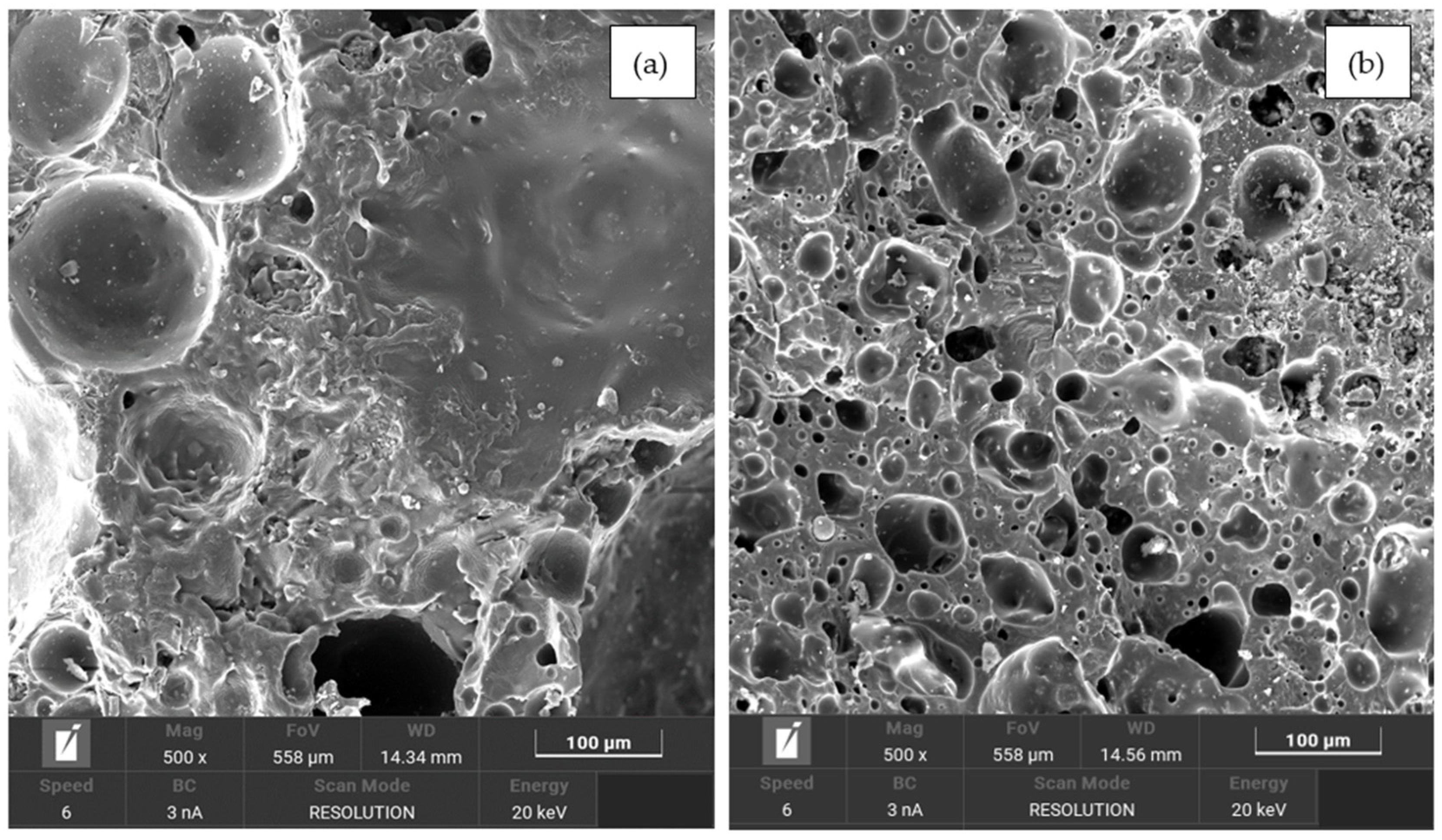
The microstructural analyses were performed using a Hitachi TM3000 scanning electron microscope (Hitachi High-Technologies Corporation, Ibaraki, Japan) (SEM), focusing on the two formulations that most significantly influenced the key aggregate properties (bulk density, water absorption, and crushing strength). The selected aggregates were sectioned using a low-speed precision saw to obtain approximately 1 cm3 specimens. The samples were oven-dried at 110 °C for 24 h to remove residual moisture prior to metallization. Subsequently, they were mounted on aluminum stubs using conductive carbon tape and sputter-coated with a thin gold layer to ensure adequate electrical conductivity during imaging. SEM micrographs were acquired under an accelerating voltage of 20 keV.
2.2.6. Statistical Analysis
Four response variables were selected for the statistical analysis: bloating index, bulk density, water absorption, and crushing strength. Based on these, an ANOVA was carried out considering interactions up to the third order, with the aim of identifying the individual and combined effects of the experimental factors (Table 1) on each response, using a two-sided 95% confidence level. To further deepen the interpretation of these effects, main-effect and interaction plots from the full factorial design were also constructed, enabling the visualization of trends, synergies, and antagonistic behaviours among the evaluated parameters.
Table 1.
Experimental factors, levels, and response variables considered in the full factorial design.
Nevertheless, potential model bias may arise from experimental variability inherent to thermal processing and assumptions of linear interaction within factorial designs. Despite these limitations, the consistency of trends observed in the interaction plots supports the reliability and generalizability of the results for similar clay–ceramic residue systems. The selected experimental ranges (20–80 wt.% PPR, firing temperatures of 1220 and 1240 °C, and small, medium, and large pellet sizes) were deliberately defined to cover a broad compositional and processing window, capturing low to high residue incorporation levels, typical industrial sintering temperatures for bloating, and size-dependent thermal gradients. This design enables the evaluation of both technological feasibility and practical applicability under realistic production conditions [32].
2.2.7. Application Catalog
Information on three basic properties of commercial lightweight aggregates (density, water absorption, and mechanical strength) was extracted from the European standard EN-13055-1 [33], from technical data sheets of two commercial lightweight aggregates [34,35], and from relevant literature [36]. The data were then compiled, resulting in the development of parameters for categorizing lightweight aggregates (Table 2).
Table 2.
Classification parameters for lightweight aggregates.
The criteria adopted resulted in the formation of five distinct groups of lightweight aggregates, suitable for application in engineering works and services. The application potential of the lightweight aggregates manufactured in this study was evaluated through a comparative analysis between the database, generated after the characterization tests, and the pre-established criteria in Table 2.
3. Results and Discussions
The results are organized into subsections covering (i) raw material characterization; (ii) lightweight aggregate characterization, including physical, mechanical, visual, microstructural, and statistical analyses; and (iii) the development of an industrial application catalog.
3.1. Raw Material Characterization
3.1.1. Laser Granulometry
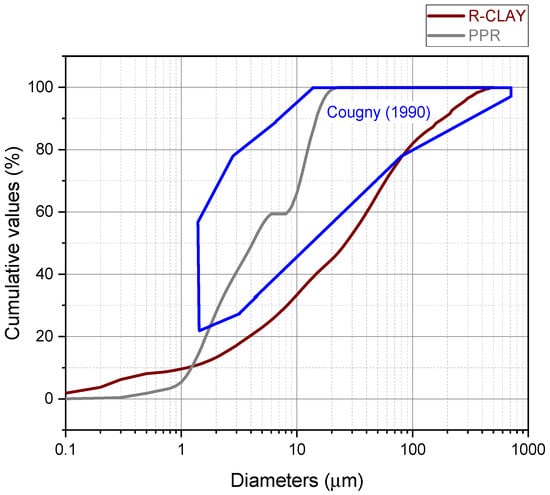
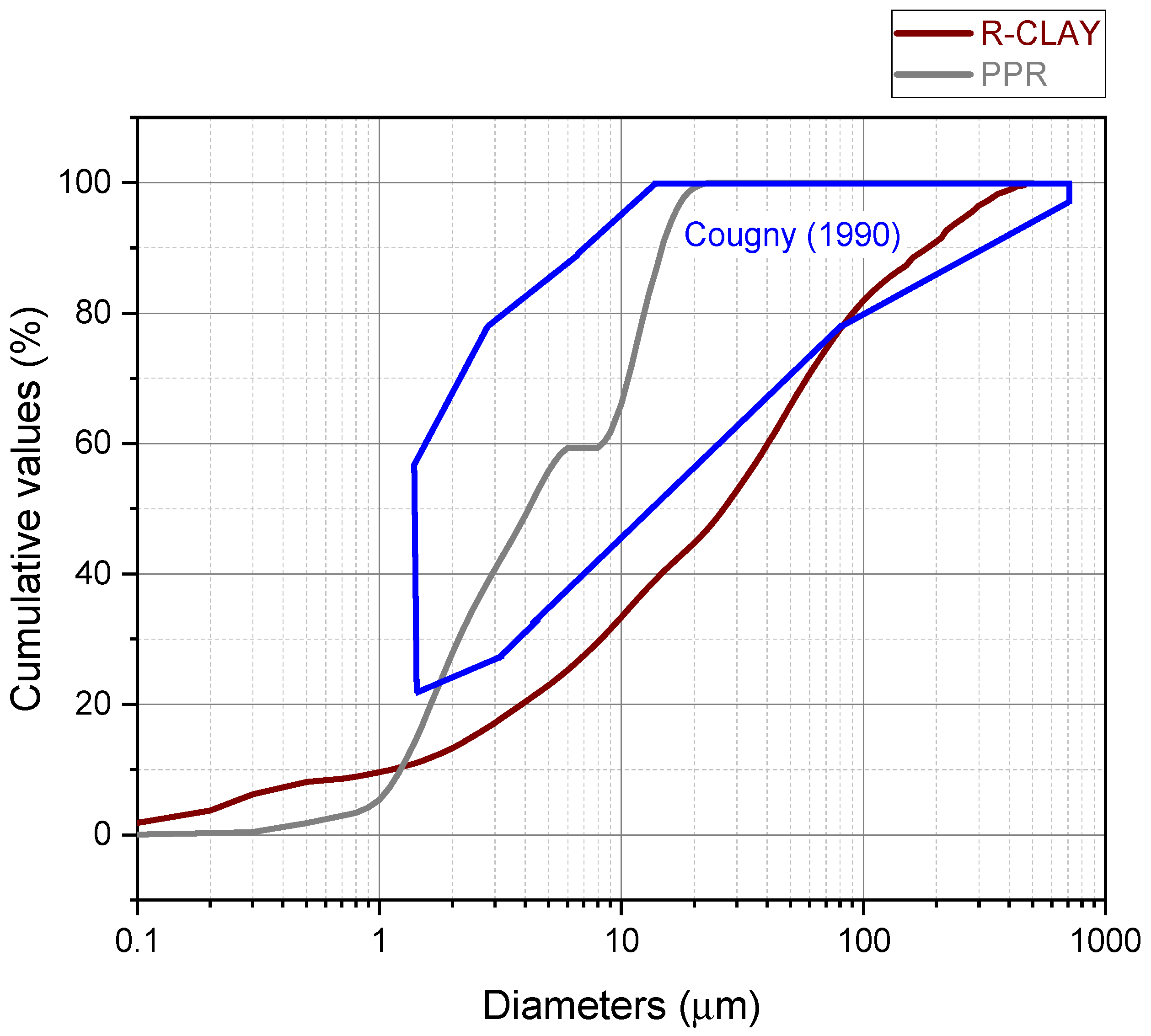
Figure 2 shows the particle size distribution curves for the raw materials (R-CLAY) and (PPR), obtained by laser particle size analysis. R-CLAY has a mean diameter of 63.22 μm, a 50% diameter of 26.50 μm, and a 90% diameter of 194.36 μm. Additionally, 13.16% of the accumulated mass has an average equivalent diameter of less than 2 μm.
Figure 2.
Particle size distribution curve of the precursor materials in Cougny area [18].
The PPR has a mean diameter of 14.69 μm, with 10% of the accumulated mass having an average equivalent diameter below 1.22 μm, a 50% diameter of 4.14 μm, and a 90% diameter of 14.69 μm. Therefore, it was found that the fine grain size residue, with maximum dimensions below 74 μm, is consistent with values reported in the literature [37,38].
It is observed that R-CLAY lies almost entirely outside the optimal expansion region for LWAs proposed by Cougny [19], with only a small portion falling within this range. In contrast, PPR is fully located inside the expansible region, indicating that higher PPR contents lead to more predictable expansion behavior in the resulting LWAs.
Although R-CLAY is outside the ideal region, its granular contrast with PPR favors gas entrapment during the expansion process, particularly at the moment of pyroplastic deformation, when R-CLAY is partially replaced by PPR. This behavior is consistent with findings reported in [4,8,14,21,39].
3.1.2. Chemical Composition
Table 3 presents the chemical composition of the precursor materials. Both R-CLAY and PPR exhibit high SiO2 and Al2O3 contents. These elevated levels of silica and alumina promote gas entrapment and significantly influence the strength development of LWAs [4,7,8,10,12,21]. R-CLAY also contains more than 5% Fe2O3, which can be beneficial during sintering due to redox reactions and the presence of organic matter, contributing to the formation of pyroplastic deformation in the produced mixtures [4,5,15,16,17,40].
Table 3.
Chemical composition of raw materials.
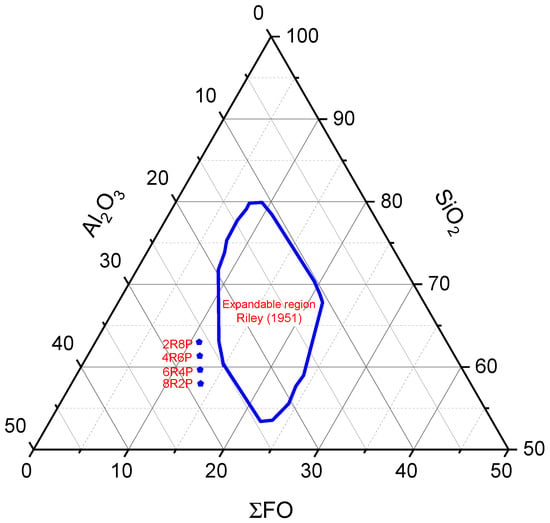
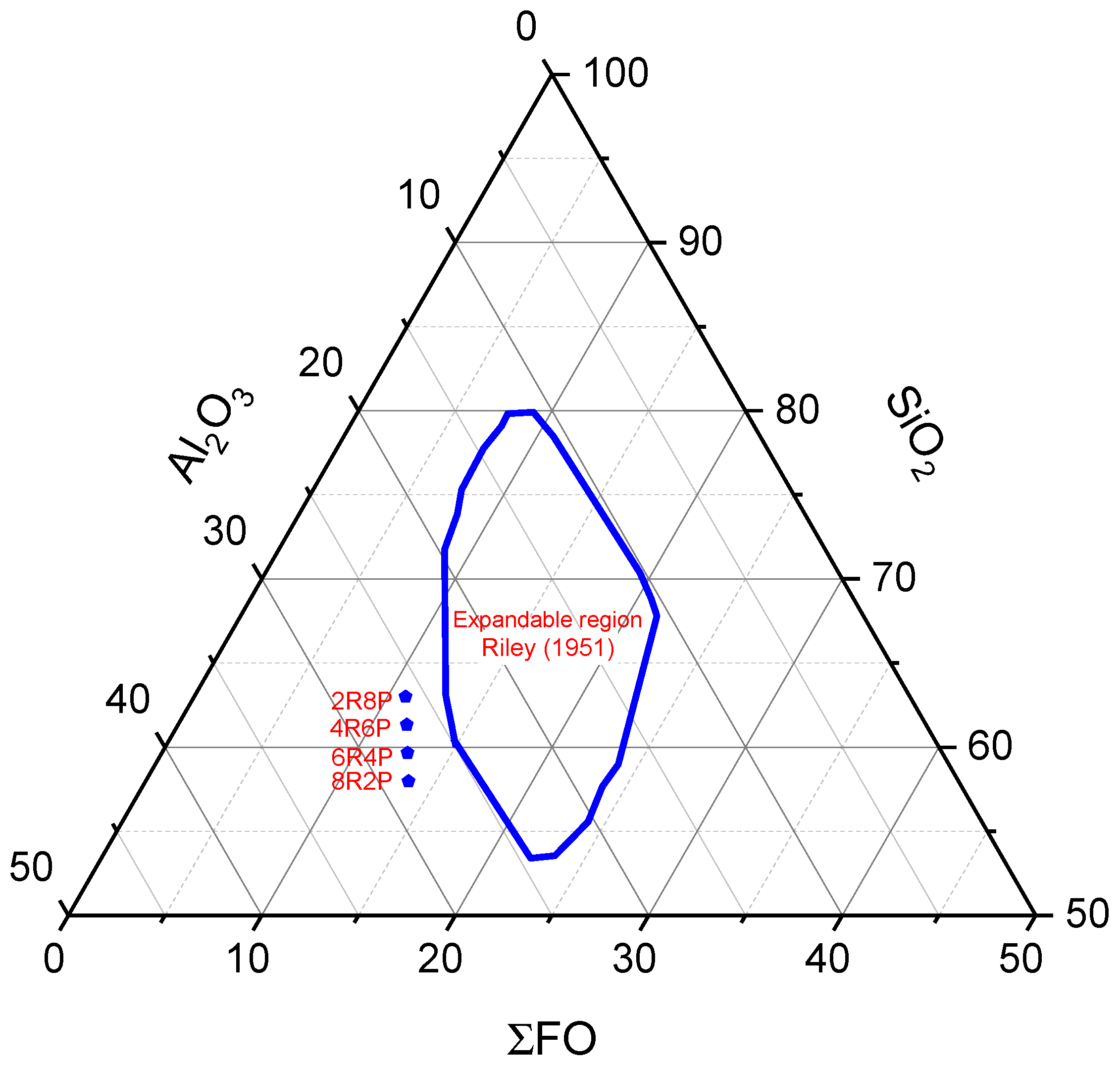
Several studies indicate that the ideal SiO2/ΣFO (Fluxing oxides) ratio ranges between 1.00 and 3.85 [11,13,32,40,41,42]. However, it is observed that only R-CLAY shows a slight deviation from this interval. Accordingly, the Riley ternary diagram [19] (Figure 3) was constructed, which shows that the mixtures also lie outside the region considered expandable. Nevertheless, this criterion should not be regarded as decisive for obtaining LWAs, since the sintering temperature plays a fundamental role in promoting expansion [4,5,8,39]. In fact, some studies report significant expansion, with microporous microstructures and satisfactory mechanical strength, even when the materials do not fully fall within the ideal region [1,3,9,12,21,32].
Figure 3.
Chemical composition of mixtures in the Riley [19] ternary diagram.
It is important to emphasize that Riley’s diagram was originally developed for clay-based systems and should be interpreted as a compositional guideline rather than an absolute predictive model [19]. Nevertheless, recent studies demonstrate that expansion can occur even outside the classical Riley zone when adequate melt viscosity and internal gas generation are achieved. The balance between liquid phase formation and gas entrapment, strongly influenced by sintering temperature and heating conditions, may override strict compositional boundaries, enabling the development of porous lightweight aggregates even in non-ideal oxide proportions [4,6,7,8,11,14].
3.1.3. Mineralogical Composition
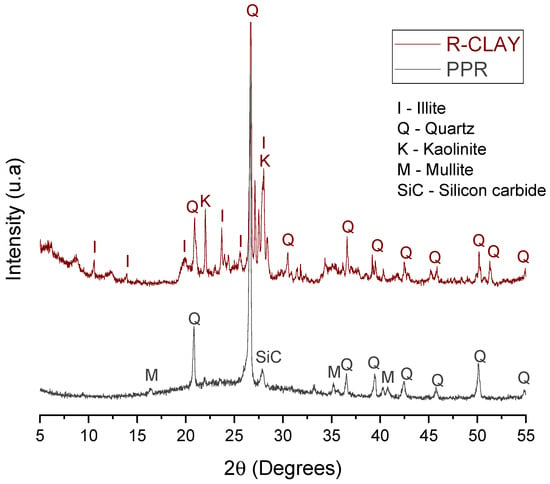
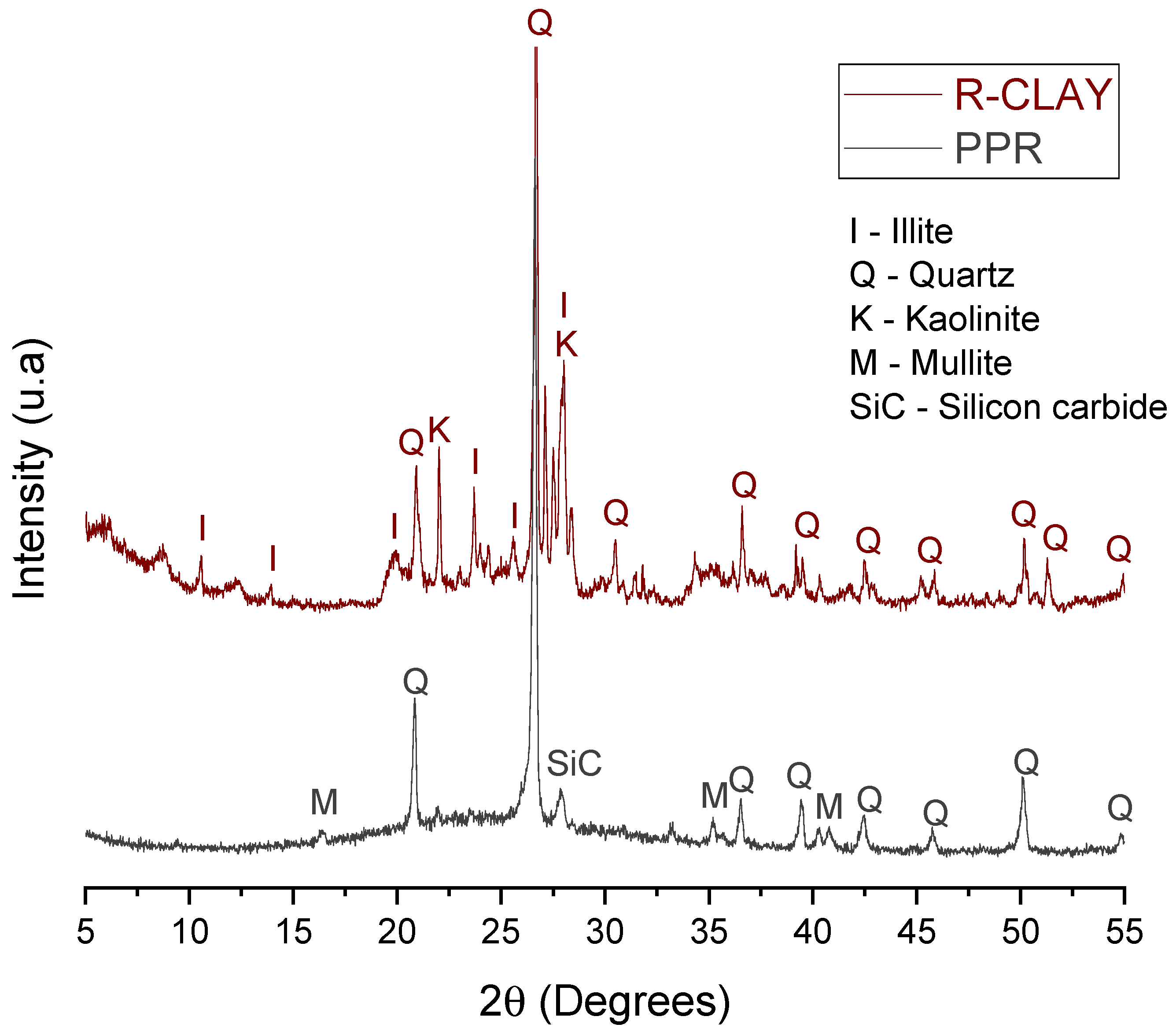
Figure 4 presents the mineralogical composition of the starting materials. R-CLAY consists of illite (K,H3O)(Al,Mg,Fe)2(Si,Al)4O10[(OH)2,(H2O)], quartz (SiO2), and kaolinite (Al2Si2O5(OH)4), which is consistent with the chemical composition shown in Table 3. PPR exhibits crystalline peaks corresponding to quartz, mullite (3Al2O3·2SiO2), and silicon carbide (SiC). The quartz originates from the porcelain tile body, the mullite results from porcelain crystallization above approximately 1200 °C, and the SiC derives from the polishing process, mainly from the abrasive agents used in the polishing (abrasive sandpaper made of silicon carbide and diamond compounds) [5,23,24,25,37,43].
Figure 4.
X-ray diffractograms of raw materials.
R-CLAY is a kaolinite–illite clay, and previous studies show that both illite-rich and kaolinite-rich clays are suitable for manufacturing lightweight expanded clay. However, illitic clay tends to be more effective due to its higher CO2 entrapment during carbonate decomposition [6,11,14,16] and its ability to generate gas during the pyroplastic deformation stage [4,14,19]. Similarly, mullite was identified in the porcelain polishing residue.
Quartz helps control melt viscosity, improving gas entrapment [40]. The presence of SiC in the PPR enhances expansion because, when sintered at temperatures between 1000 and 1250 °C, it releases gases (CO and CO2), increasing internal porosity. The predominant reaction is: SiC + 2O2 → SiO2 + CO2↑ [44].
3.2. Characterization of LWAs
3.2.1. Bloating Index and Mass Loss
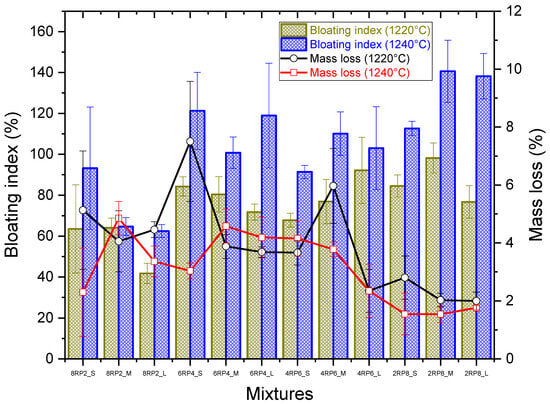
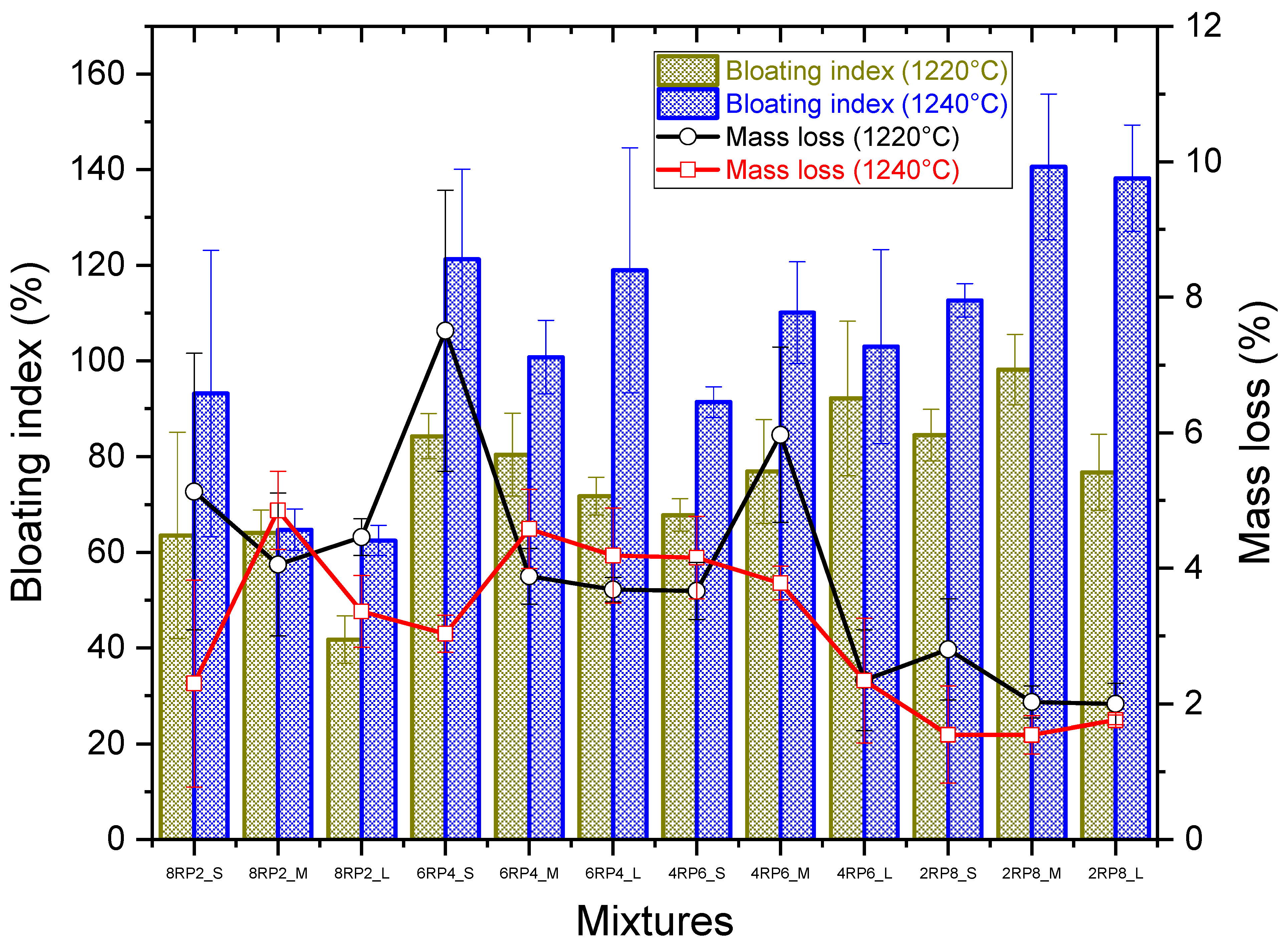
Figure 5 presents the bloating index and mass loss results for the produced mixtures fired at 1220 °C and 1240 °C. Overall, all compositions exhibit a bloating index exceeding 35%. Moreover, the degree of expansion systematically increases with higher PPR contents, a trend that is further intensified by the increase in firing temperature.
Figure 5.
Bloating index and mass loss of the LWAs.
The volumetric variation and mass loss of the LWAs were strongly influenced by the mixture composition and firing temperature. The most pronounced expansions were observed at 1240 °C, reaching 112.67% for the composition containing 2RP8_S, and up to 140.59% and 138.19% for the mixture with 2R8P_M, and 2R8P_L. In contrast, the lowest expansion levels were recorded at 1220 °C, with values of 63.51% (8R2P_S), 64.08% (8R2P_M), and a minimum of 41.73% for the composition with 8R2P_L.
The mass loss observed for the aggregate compositions was relatively low. In addition, increasing the PPR content led to a reduction in mass loss, with minimum values of up to 1.55% (S—Small), 1.54% (M—Medium), and 1.76% (L—Large) recorded for the composition containing 2R8P when sintered at 1240 °C. This behavior suggests that higher PPR contents contribute to a more stable ceramic matrix during firing, limiting material volatilization and decomposition losses.
The higher expansion at 1240 °C, especially for mixtures with elevated PPR contents, results from the overlap between gas release from PPR decomposition and clay matrix softening, which enables gas entrapment and pore growth. At lower temperatures and PPR levels, insufficient gas generation and matrix viscosity limit bloating, producing denser LWAs. The low mass loss indicates matrix stabilization and surface sealing at higher temperatures, in agreement with classical bloating mechanisms reported in the literature [4,5,8,14,45,46].
3.2.2. Bulk Density and Water Absorption
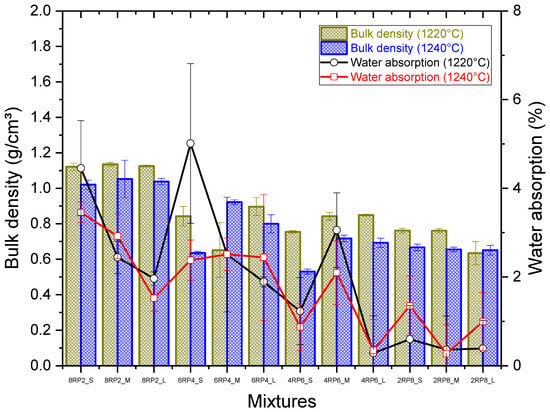
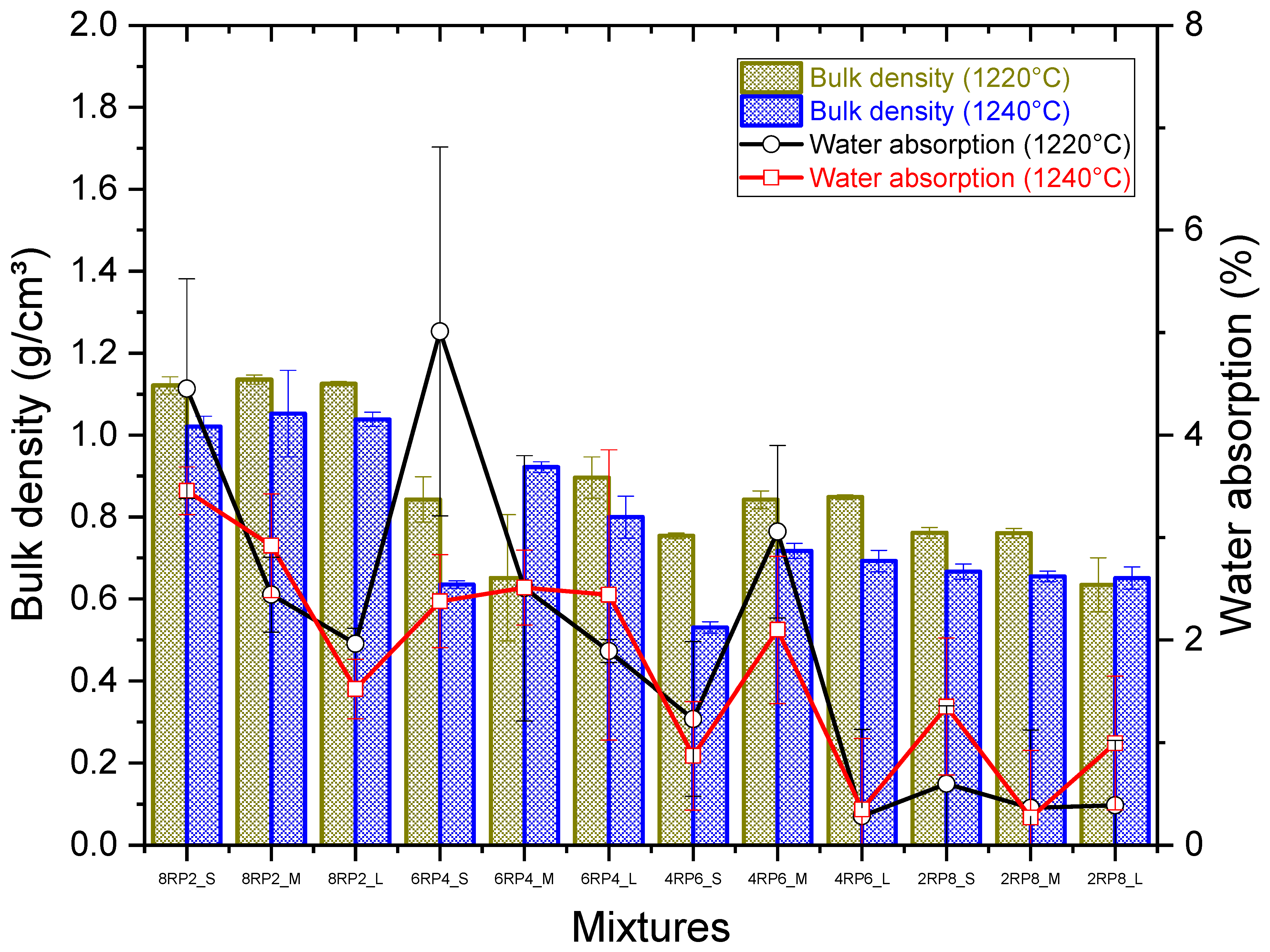
Figure 6 shows that all produced LWAs exhibit bulk density values below the normative limit of 2.00 g/cm3 [33] and water absorption lower than 20%, these results confirm their classification as lightweight aggregates, making them suitable for use in structural and high-strength lightweight concrete applications [34,35,36].
Figure 6.
Bulk density and water absorption of the LWAs.
The apparent specific mass of the LWAs ranged from 0.53 to 1.14 g/cm3, depending on the mixture composition and firing conditions. The lowest values were observed in mixtures with higher PPR contents, particularly the 2R8P_L composition (0.63 g/cm3), while higher densities were associated with lower residue contents, such as the 8R2P_M mixture (up to 1.14 g/cm3). An increase in both sintering temperature and PPR content led to a systematic reduction in apparent specific mass, indicating enhanced expansion and internal porosity development. This behavior is consistent with the significant expansion and mass loss observed for these compositions, as previously shown in Figure 5.
Water absorption was strongly influenced by mixture composition and sintering temperature, with higher values associated with increased PPR content and lower firing temperatures. The most pronounced results were observed in the 6R4P and 2R8P mixtures, reaching up to 5.11% at 1220 °C, which reflects the higher porosity developed under these conditions. The reduction in apparent specific mass and the increase in water absorption with higher PPR contents and lower firing temperatures are attributed to intensified gas release and limited matrix densification during sintering, which promote pore formation and aggregate expansion [23,39,47].
Although the 4R6P mixture sintered at 1220 °C reached a high crushing strength (~5.00 MPa), its performance must be assessed together with bulk density, given the typical trade-off between strength and lightweight character. The bulk density (0.80–0.95 g/cm3) remained within the range of commercial structural lightweight aggregates (0.75–1.10 g/cm3) reported in EN 13055-1 [33], technical data sheets [34,35], and literature data compiled by Rossignolo and Agnesini [48], indicating that the high strength was achieved without excessive densification, but through an optimized balance between gas generation and melt viscosity during sintering.
At 1240 °C, mixtures showed lower densities due to intensified bloating; however, mechanical strength decreased as a result of overexpansion and the formation of larger isolated pores acting as stress concentrators. Overall, the produced aggregates exhibited densities (0.53–1.14 g/cm3) and crushing strengths (1.00–5.00 MPa) comparable to commercial expanded clays and consistent with the typical range for structural lightweight aggregates (1.00–6.00 MPa) [33,34,35,36,48]. Furthermore, according to ASTM C330/C330M [49], lightweight coarse aggregates for structural concrete must present oven-dry densities not exceedingly approximately 880 kg/m3 (0.88 g/cm3) for structural applications, and several compositions developed in this study comply with this requirement while maintaining adequate mechanical performance.
3.2.3. Modulus of Deformation and Crushing Strength
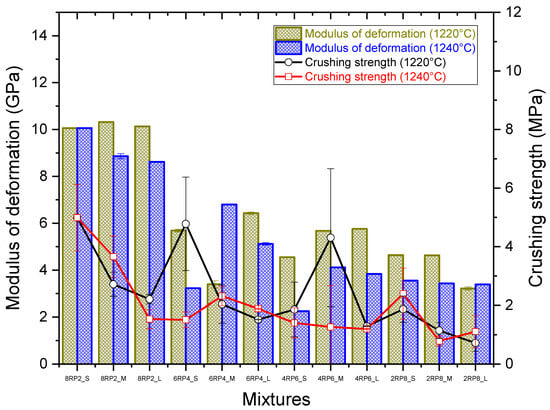
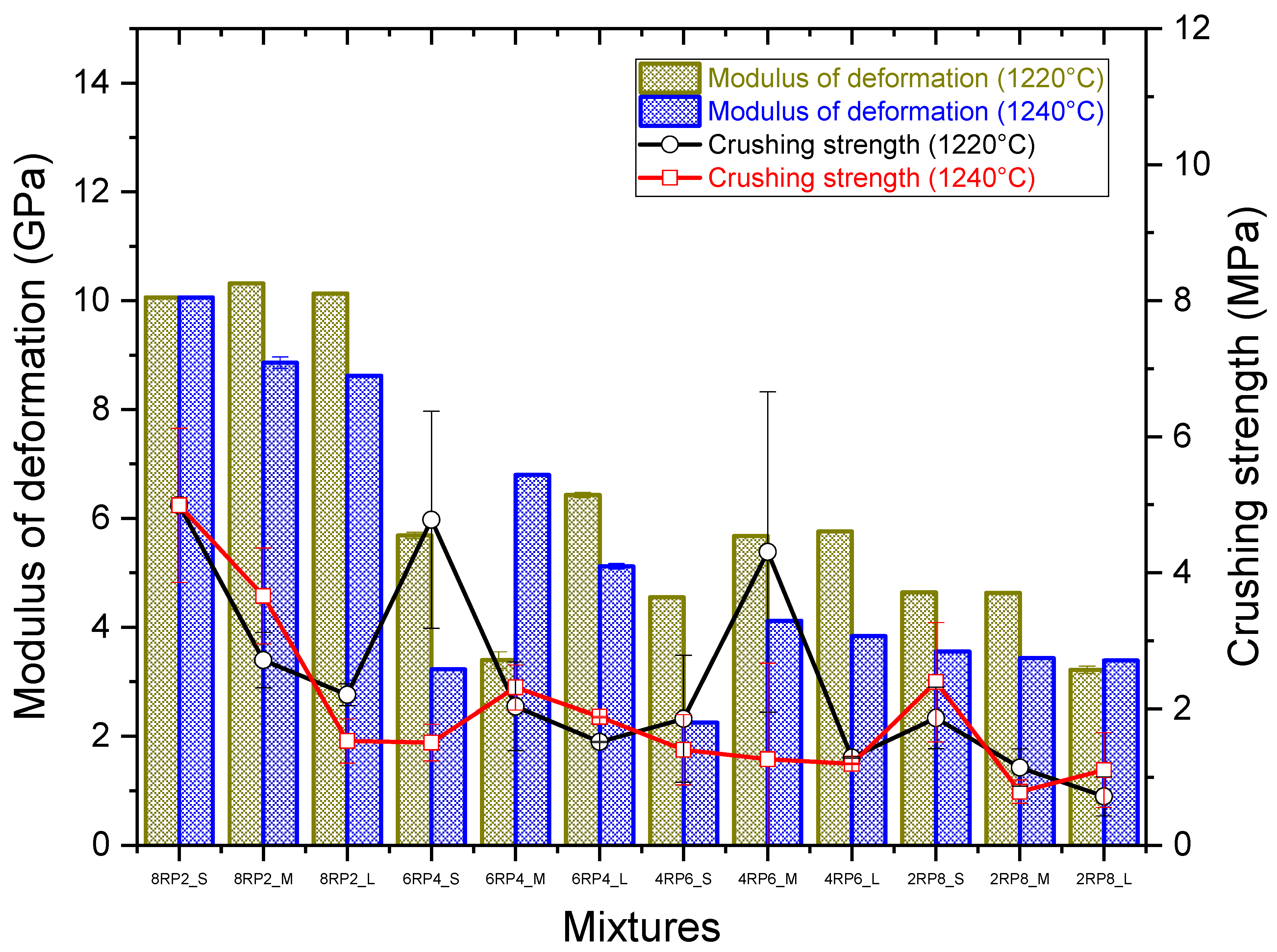
All produced LWAs exhibited mechanical strength indices higher than those reported for commercial lightweight aggregates used in structural lightweight concrete [34]. The best performance was obtained for the 4R6P mixture sintered at 1220 °C, reaching strength values of approximately 5.00 MPa, which indicates a favorable balance between expansion and matrix densification (Figure 7).
Figure 7.
Modulus of deformation and crushing strength of the LWAs.
The behaviour of the compositions observed in Figure 7 demonstrates that, in general, initially, with lower (PPR) contents, increasing the temperature resulted in little change in mechanical strength. However, in compositions with higher (PPR) amounts, the increase in temperature resulted in a significant reduction in mechanical strength, favouring the generation of gases, which, in turn, are trapped by the liquid phase formed, resulting in the development of isolated pores, which promote an increase in the material’s surface area and are considered stress concentrators, making it more brittle. This is consistent with the bloating index and mass loss data (Figure 5). However, the majority of the mixtures presented mechanical strength values above the minimum limit established for commercial lightweight aggregates (>1.00 MPa).
Considering the data in Figure 6, it is possible to verify that, with the exception of the composite aggregates with (4R6P), sintered at 1240 °C, the others produced are within the range of modulus of elasticity values of commercial lightweight aggregates (Lytag, Solite, Liapor, Leca, Arlita and Cinexpan), cataloged by Rossignolo and Agnesini [48], between 3 and 35 GPa.
3.2.4. Visual Analysis
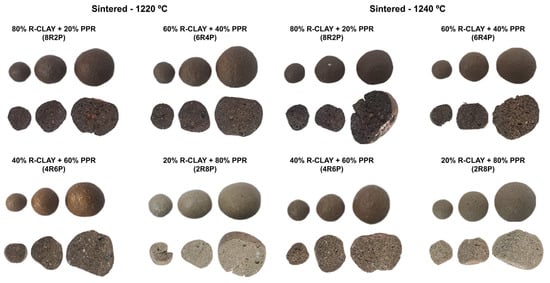
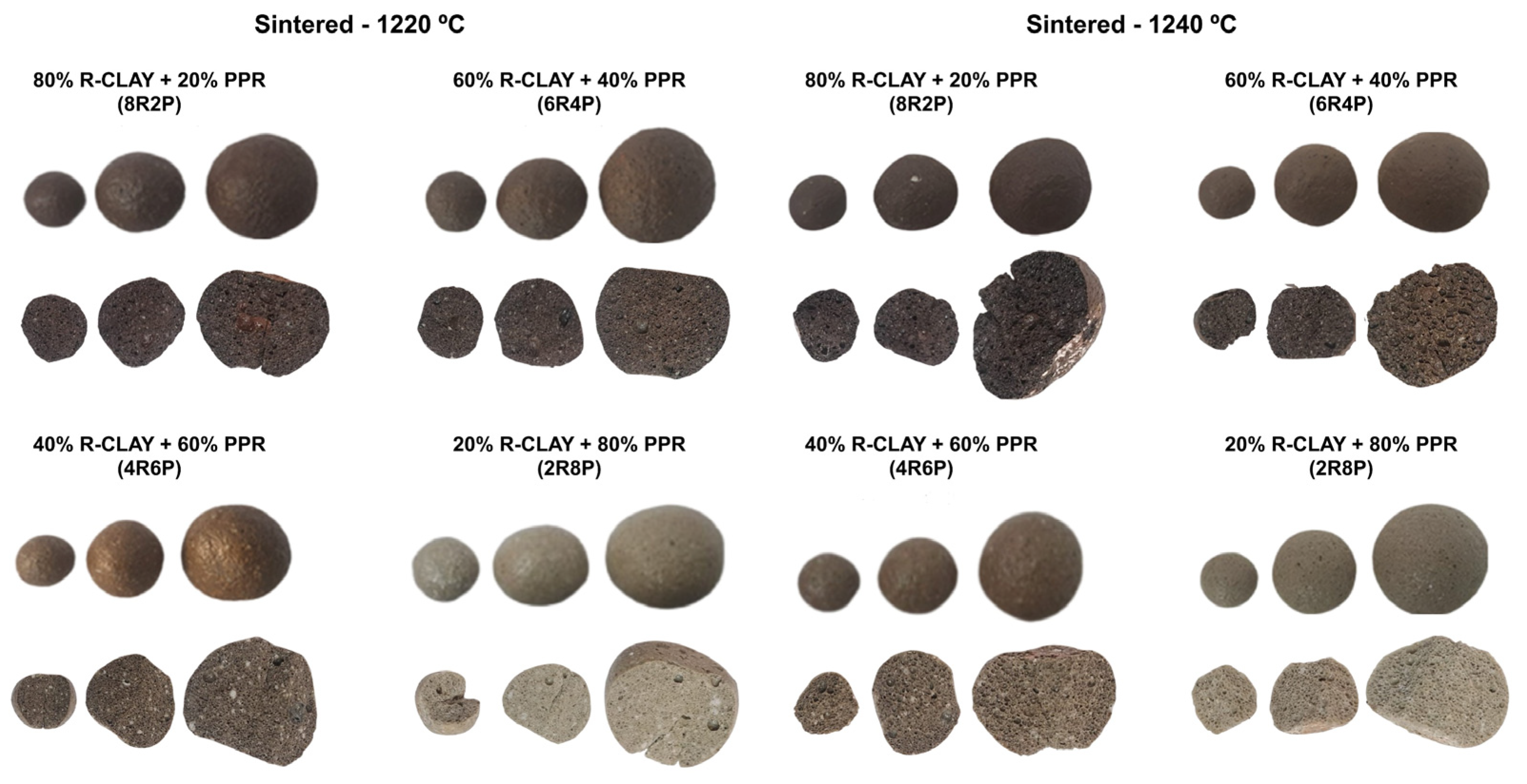
The following images show the visual analysis of the aggregates produced, in pellet form, in the four formulations [(8R2P), (6R4P), (4R6P), and (2R8P)] (Figure 8). These images show the appearance of the aggregates at sintering temperatures of 1220 and 1240 °C, as well as the external and internal appearance of the aggregates, photographed in their intact and ruptured state.
Figure 8.
Images recorded in the visual analysis of the aggregates produced, in different formulations, obtained after firing at temperatures of 1220 °C and 1240 °C.
Observing the visual aspect of the samples, formed by extrusion, it can be seen that they all presented the formation of a shiny surface, at the temperatures analyzed, in addition to a high level of porosity, when checked inside, with the temperature of 1240 °C having much larger pores compared to that of 1220 °C. Moreover, an increase in PPR content led to a progressive lightening of the LWA coloration, shifting from brown to beige. This behavior is attributed to the dilution effect and consequent reduction in Fe2O3 originating from the R-CLAY, which directly influences the chromatic response of the sintered matrix.
There is a significant difference between the compositions, as with higher amounts of (PPR), the aggregates presented greater homogeneity, producing larger pores, of more uniform size and distribution, a necessary condition to meet the requirements, according to Ayati et al. [16], which establishes that the ideal pore structure for lightweight aggregate comprises a high volume of pores of uniform size and distribution.
3.2.5. Microestructural Analysis of LWAs
Microstructural analysis was carried out on two selected mixtures to evaluate how composition and firing temperature affect pore morphology and matrix densification in LWAs, directly influencing bulk density, water absorption, and mechanical strength.
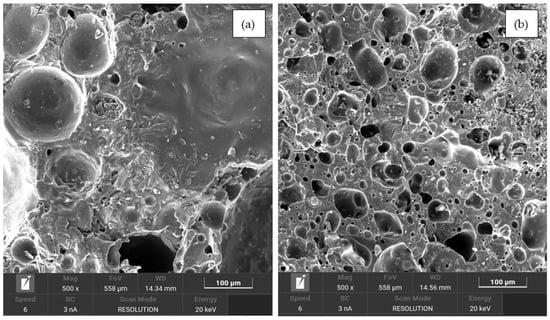
The formulations selected for scanning electron microscopy (SEM) were: (a) 8R2P_S sintered at 1220 °C and (b) 2R8P_S sintered at 1240 °C. These samples were chosen because they exhibit distinct microstructural features associated with different compositional and thermal conditions.
The microstructure of the 8R2P_S (Figure 9a) reveals a relatively controlled cellular structure, with mostly closed pores, larger in size but less numerous, distributed in a continuous matrix with thick walls. This arrangement indicates that the specificities of the liquid phase were sufficient to retain the gases generated during sintering, promoting moderate expansion (~60%) without significantly compromising structural integrity. As a consequence, the material has an apparent density of around 1.22 g/cm3 and a mechanical strength of approximately 6 MPa, demonstrating a balance between level and mechanical performance.
Figure 9.
Scanning electron microscopy (SEM) micrographs of lightweight aggregates (LWAs): (a) 8R2P_S sintered at 1220 °C and (b) 2R8P_S sintered at 1240 °C.
On the other hand, the 2R8P_S (Figure 9b) presents a much more porous microstructure, with high void density, a wide distribution of pore sizes and signs of coalescence, as well as thinner cell walls and greater interconnectivity. The higher temperature and PPR content favored the reduction in the peculiarities of the molten phase, intensifying the expansion (>80%) and the instability of the pore walls. This significant increase in porosity resulted in a significant reduction in apparent density (~0.5 g/cm3) and a drop in resistance to values below 4 MPa. Thus, note that the increase in expansion, although beneficial for reducing specific mass, demands mechanical efficiency due to the thinning of the walls and the greater connectivity of the voids.
3.2.6. Statistical Analysis
Table 4, Table 5, Table 6 and Table 7 present the analysis of variance (ANOVA) results for expansion, density, water absorption, and mechanical strength. For expansion and density, the highest contributions were associated with mixture composition and firing temperature, whereas for water absorption and mechanical strength, mixture composition and aggregate size were the dominant factors. The coefficients of determination (R2) for expansion and density were 95.21% and 93.45%, respectively, indicating strong statistical significance. In contrast, water absorption and mechanical strength exhibited lower R2 values of 74.86% and 79.56%, respectively, reflecting a more complex influence of the analyzed variables.
Table 4.
ANOVA analysis for bloating index.
Table 5.
ANOVA analysis for density.
Table 6.
ANOVA analysis for water absorption.
Table 7.
ANOVA analysis for mechanical strength.
It is important to highlight that the moderate R2 values obtained for water absorption and expansion intensity are associated with intrinsic limitations of the expansion mechanism. During sintering, the formation of an external vitreous layer may partially seal the aggregate surface, reducing water penetration even when internal porosity is present. Furthermore, the porosity generated in this study was predominantly closed porosity, while water absorption is primarily governed by open pore connectivity. This mismatch between total porosity and accessible porosity reduces the direct statistical correlation between compositional parameters and absorption behavior. Additionally, microstructural heterogeneity related to internal gas generation and liquid phase viscosity during thermal treatment may introduce experimental dispersion, even under controlled processing conditions.
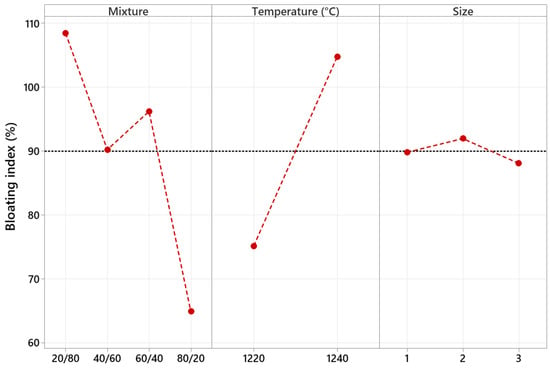
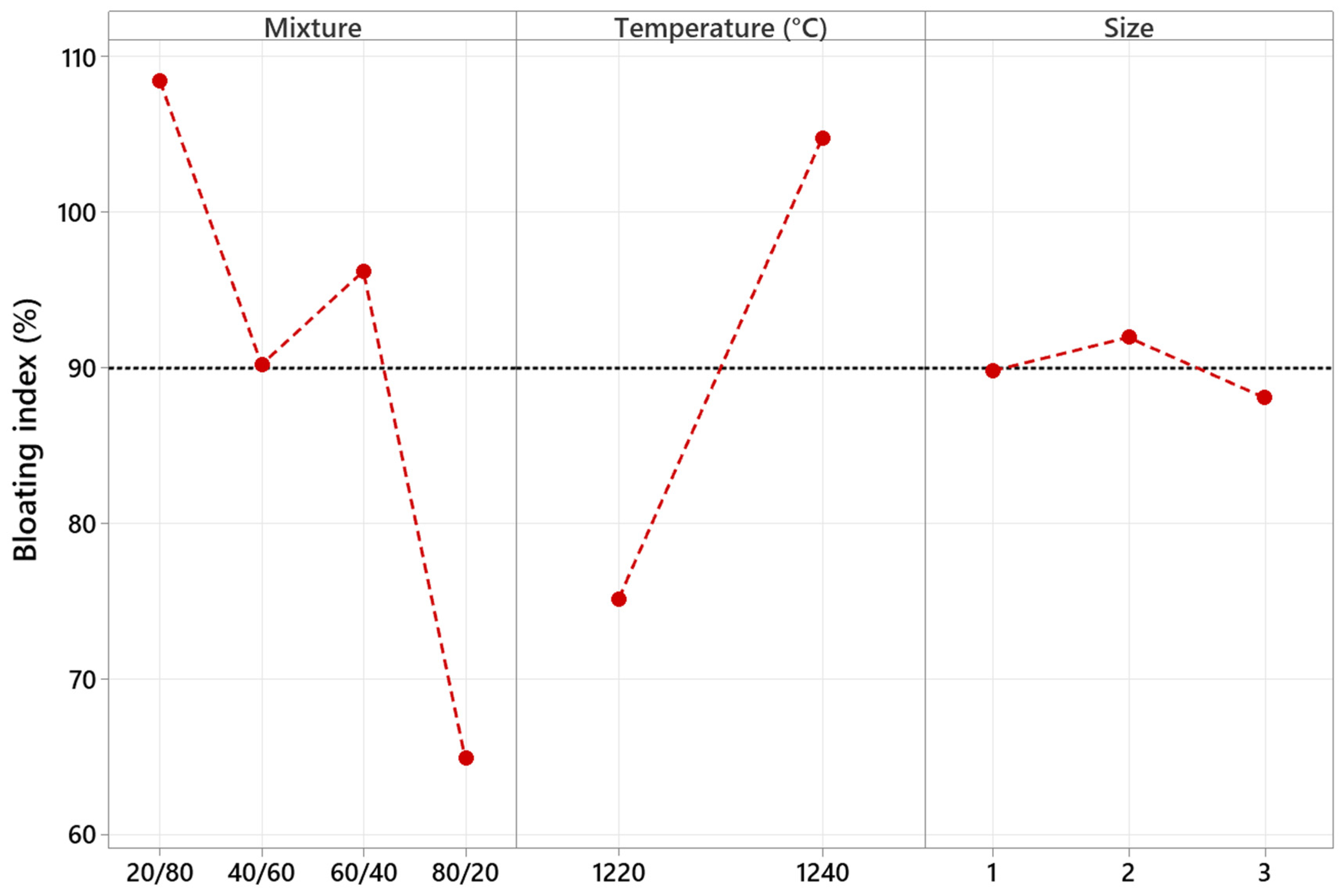
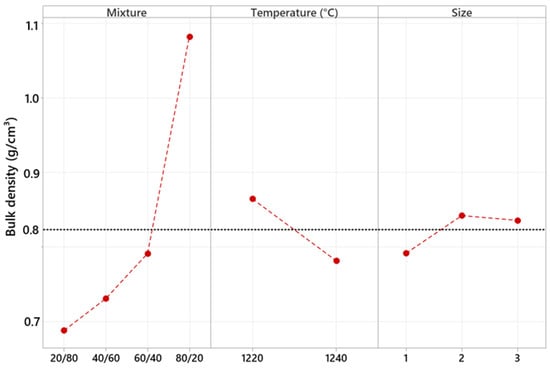
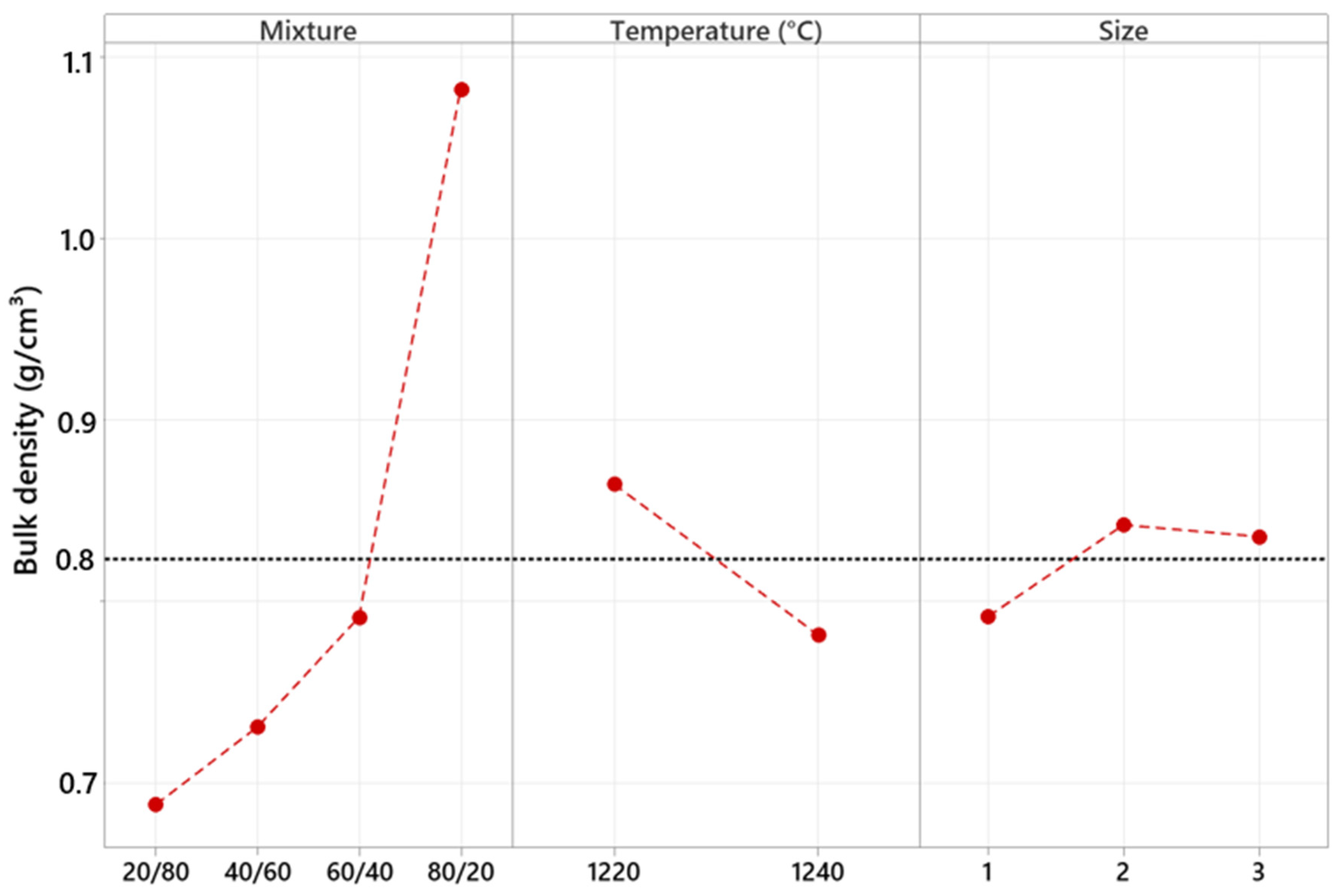
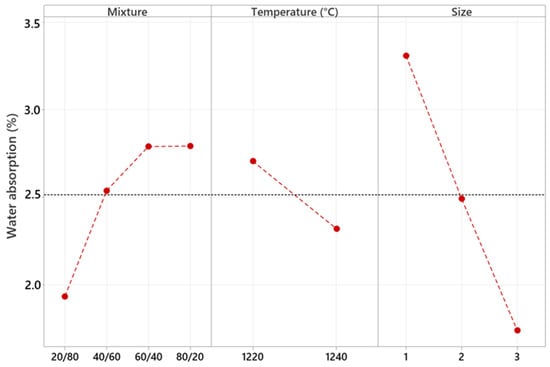
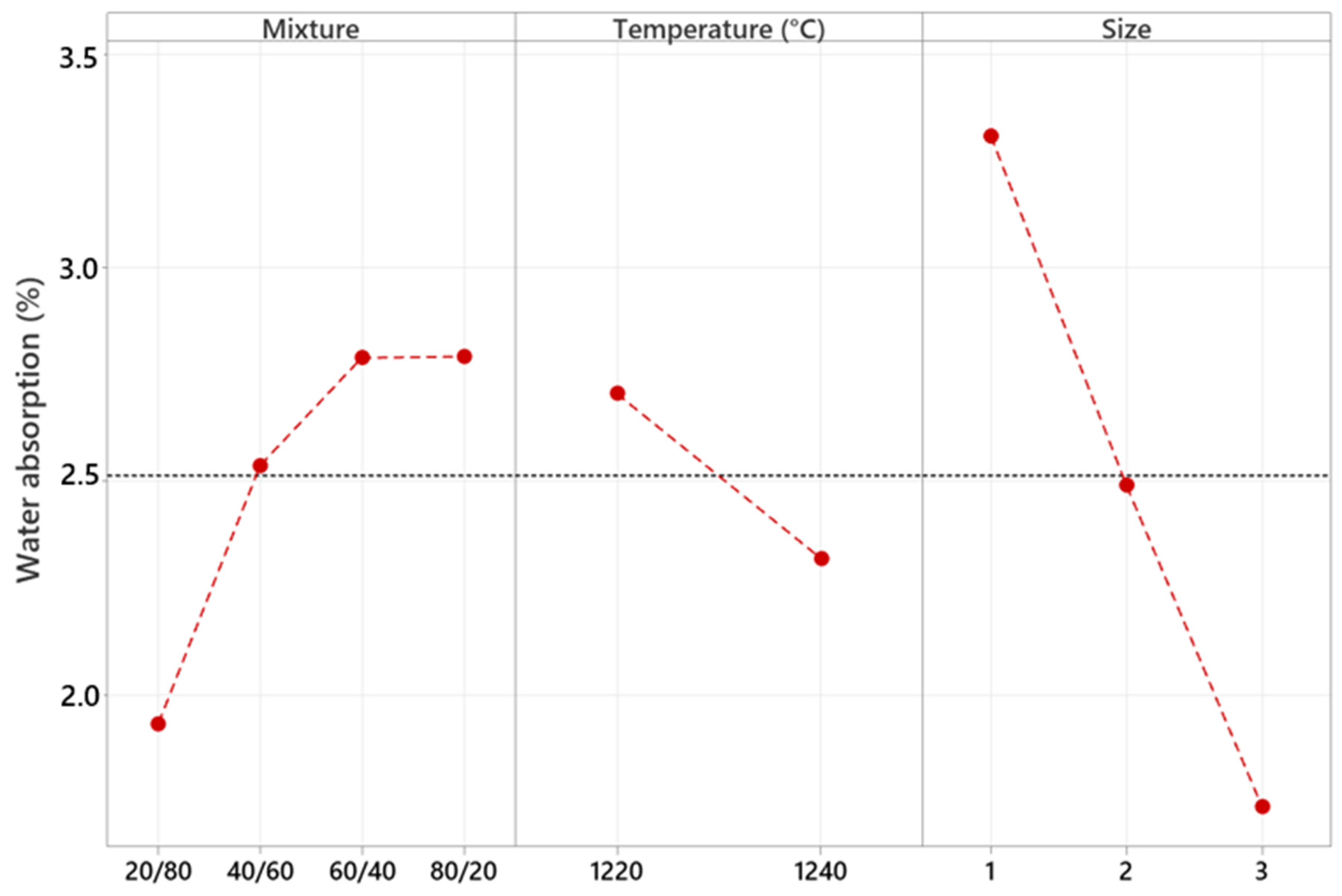
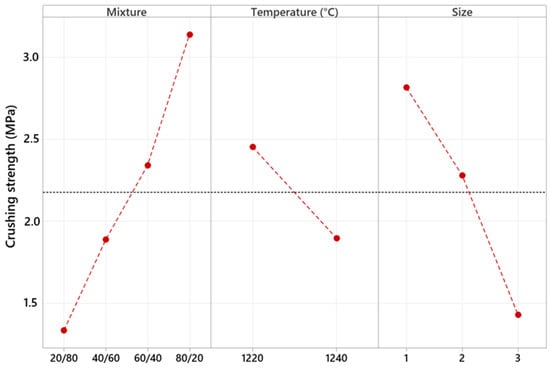
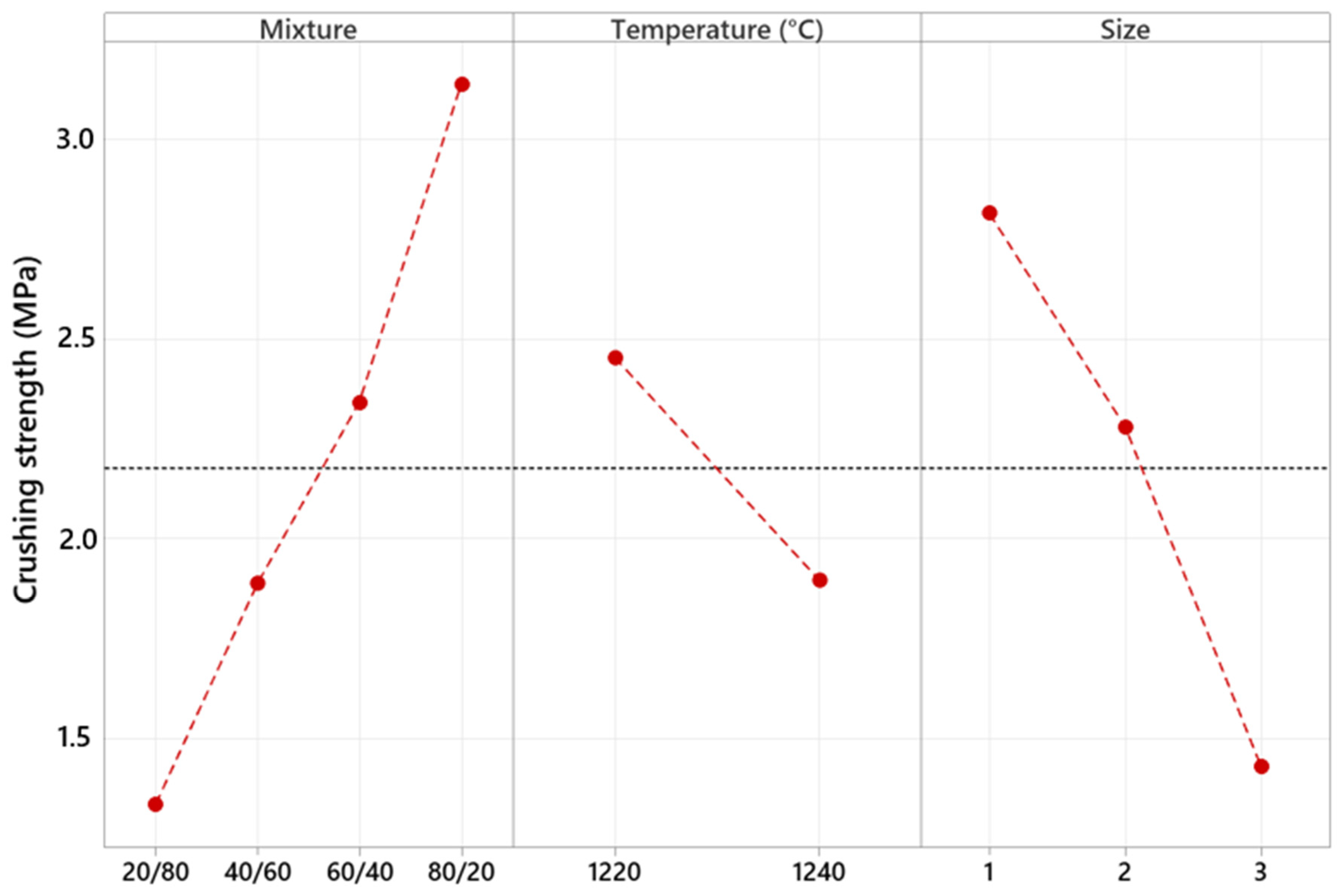
Figure 10, Figure 11, Figure 12 and Figure 13 present the main effects plots for expansion, bulk density, water absorption, and mechanical strength, respectively. Expansion is primarily controlled by mixture composition and firing temperature, with higher temperatures promoting greater bloating, while aggregate size plays a secondary role. As a consequence, bulk density shows an inverse behaviour, decreasing as expansion increases, particularly at elevated temperatures. Water absorption follows the porosity trend, increasing in more expanded mixtures and decreasing with higher firing temperature and larger aggregate sizes, which indicates reduced connectivity of open pores. Mechanical strength is favoured by denser and less porous structures, being enhanced by optimized mixture proportions and lower temperatures, while larger aggregate sizes lead to strength reductions due to higher internal porosity.
Figure 10.
Main effects chart for bloating index.
Figure 11.
Main effects chart for density.
Figure 12.
Main effects chart for water absorption.
Figure 13.
Main effects chart for mechanical strength.
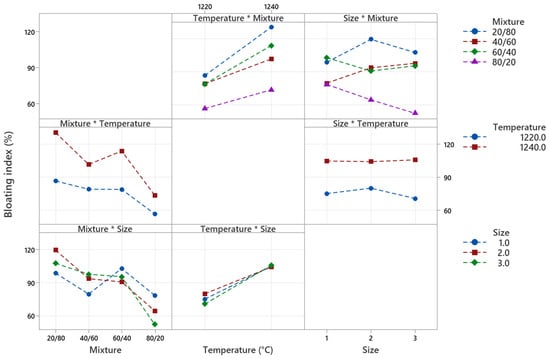
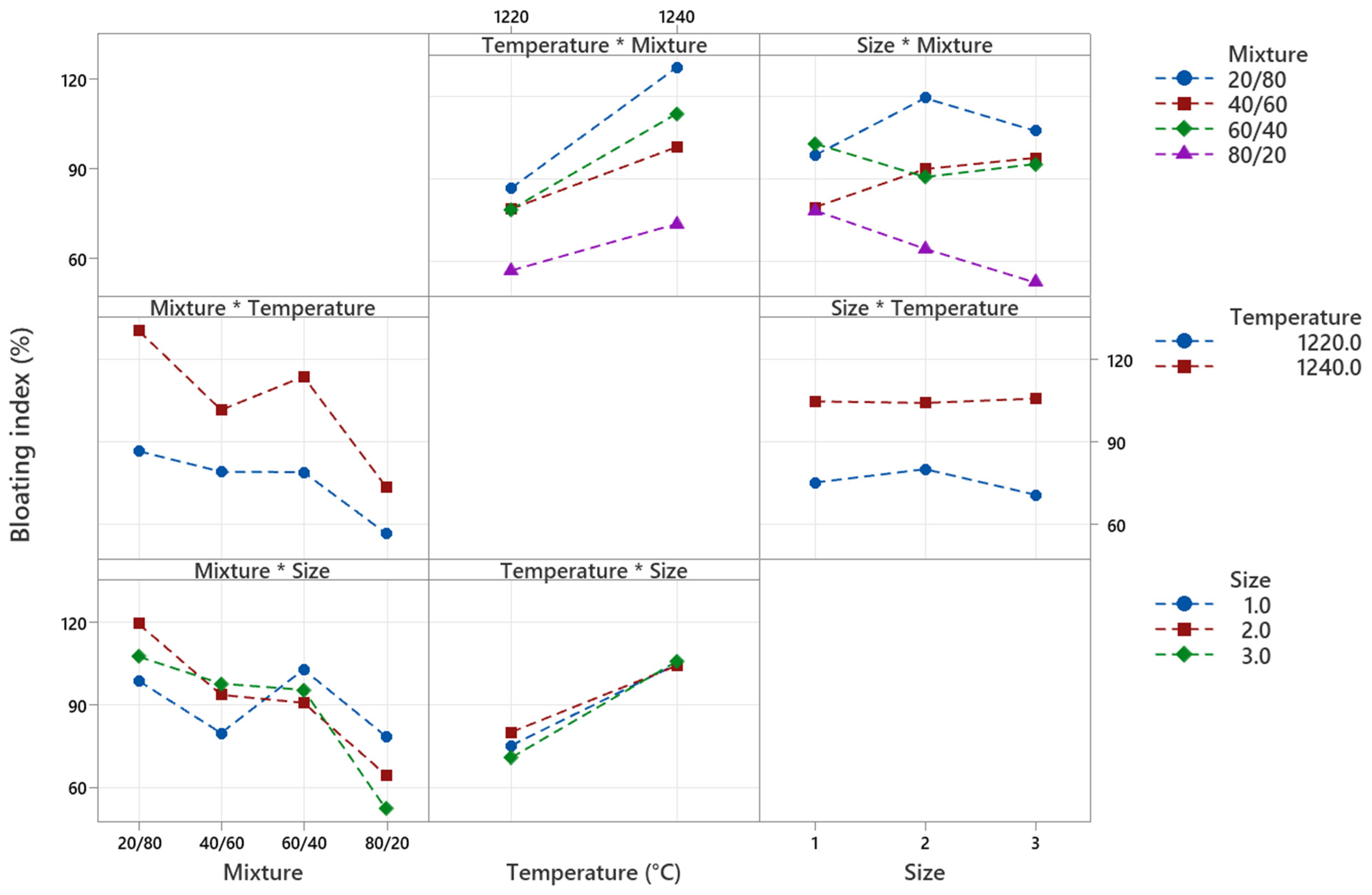
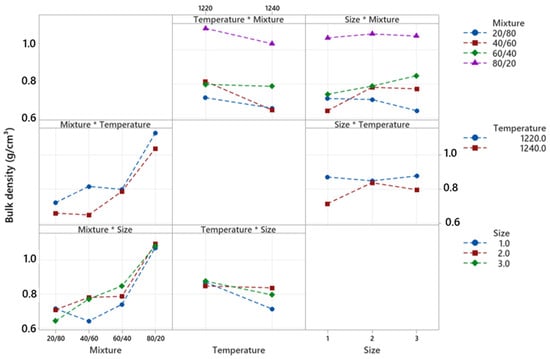
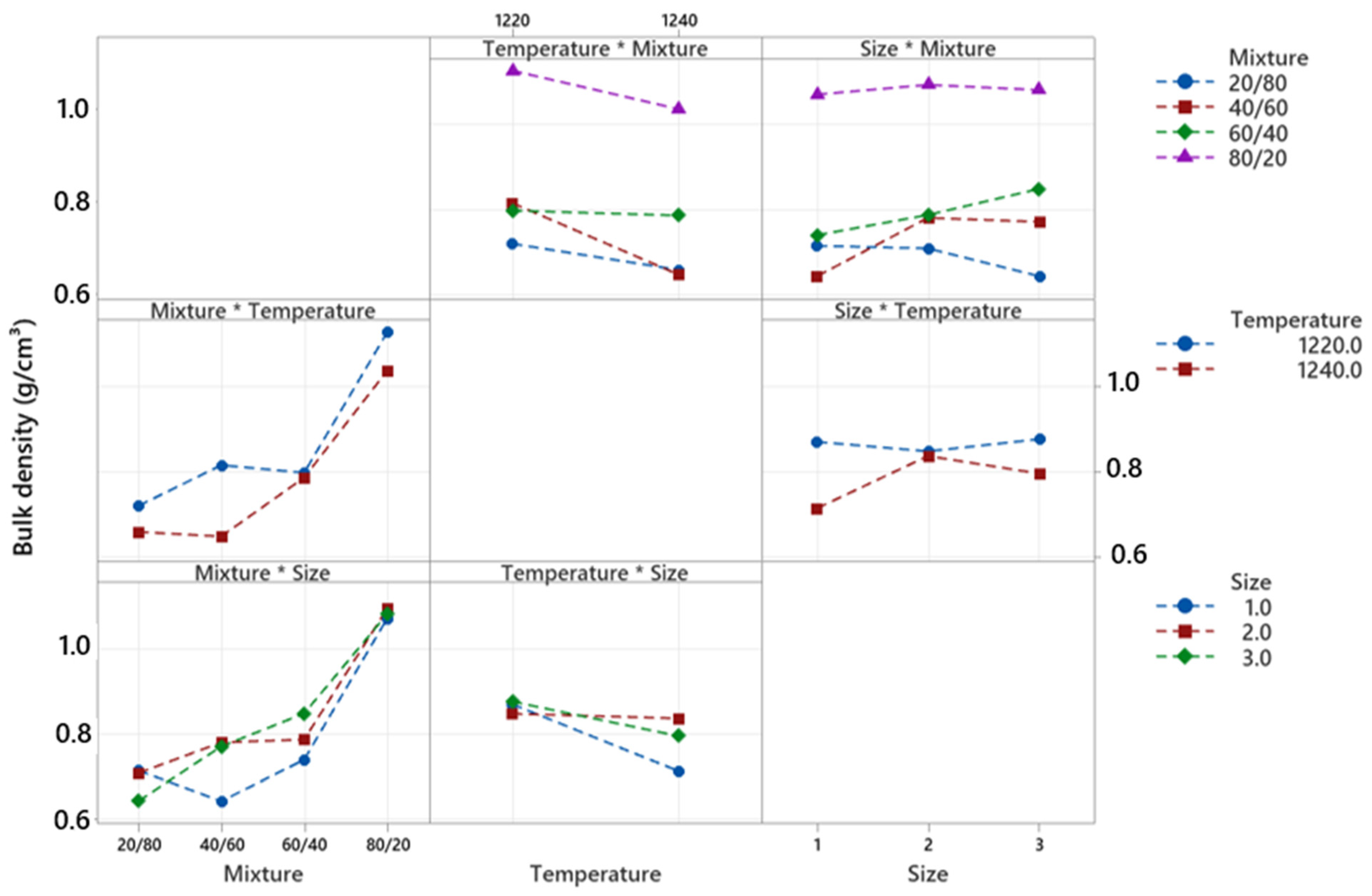
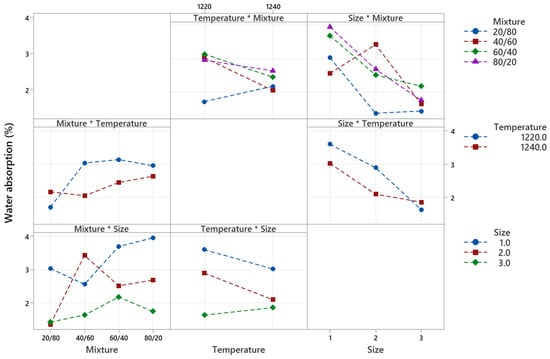
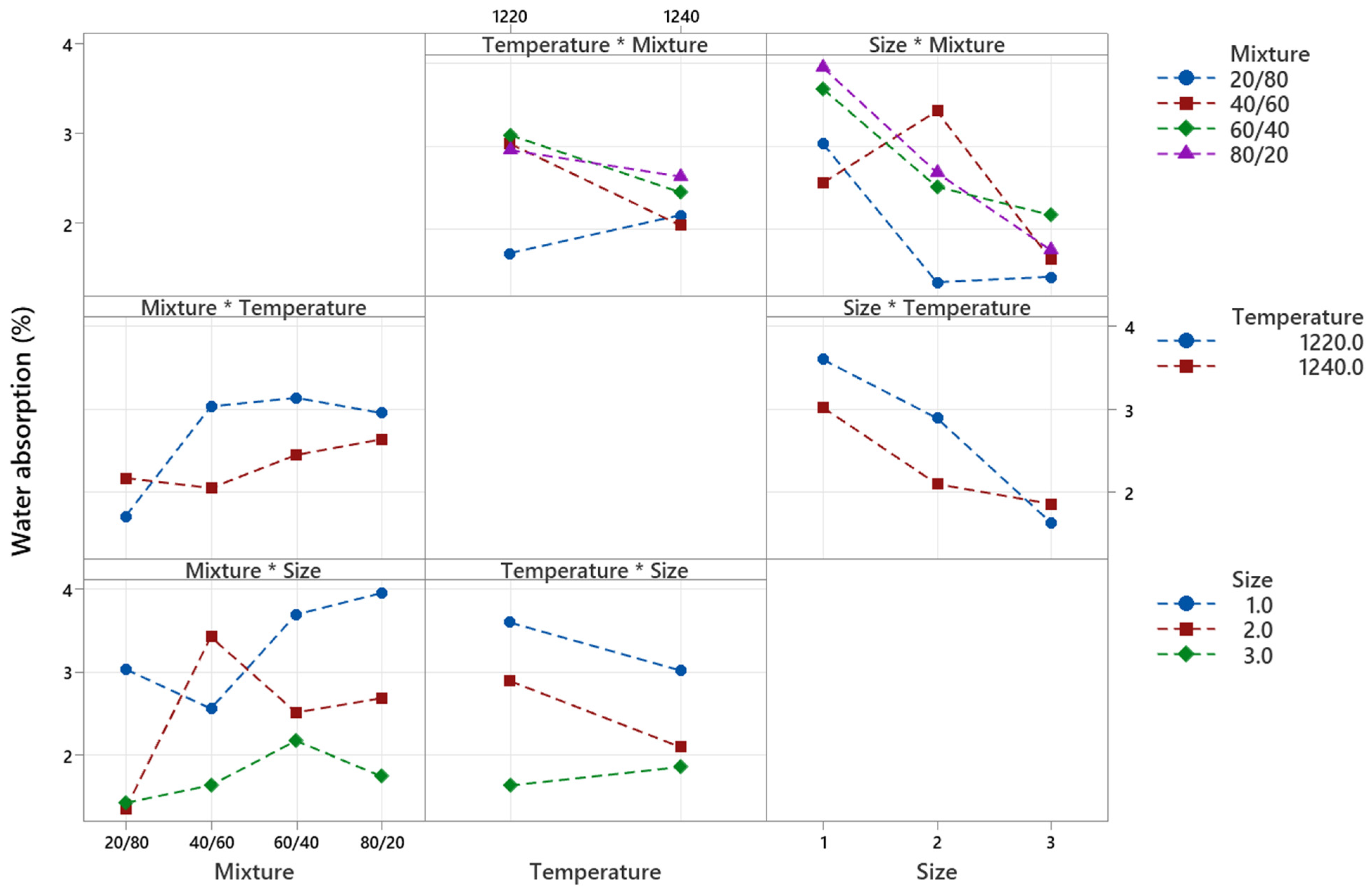
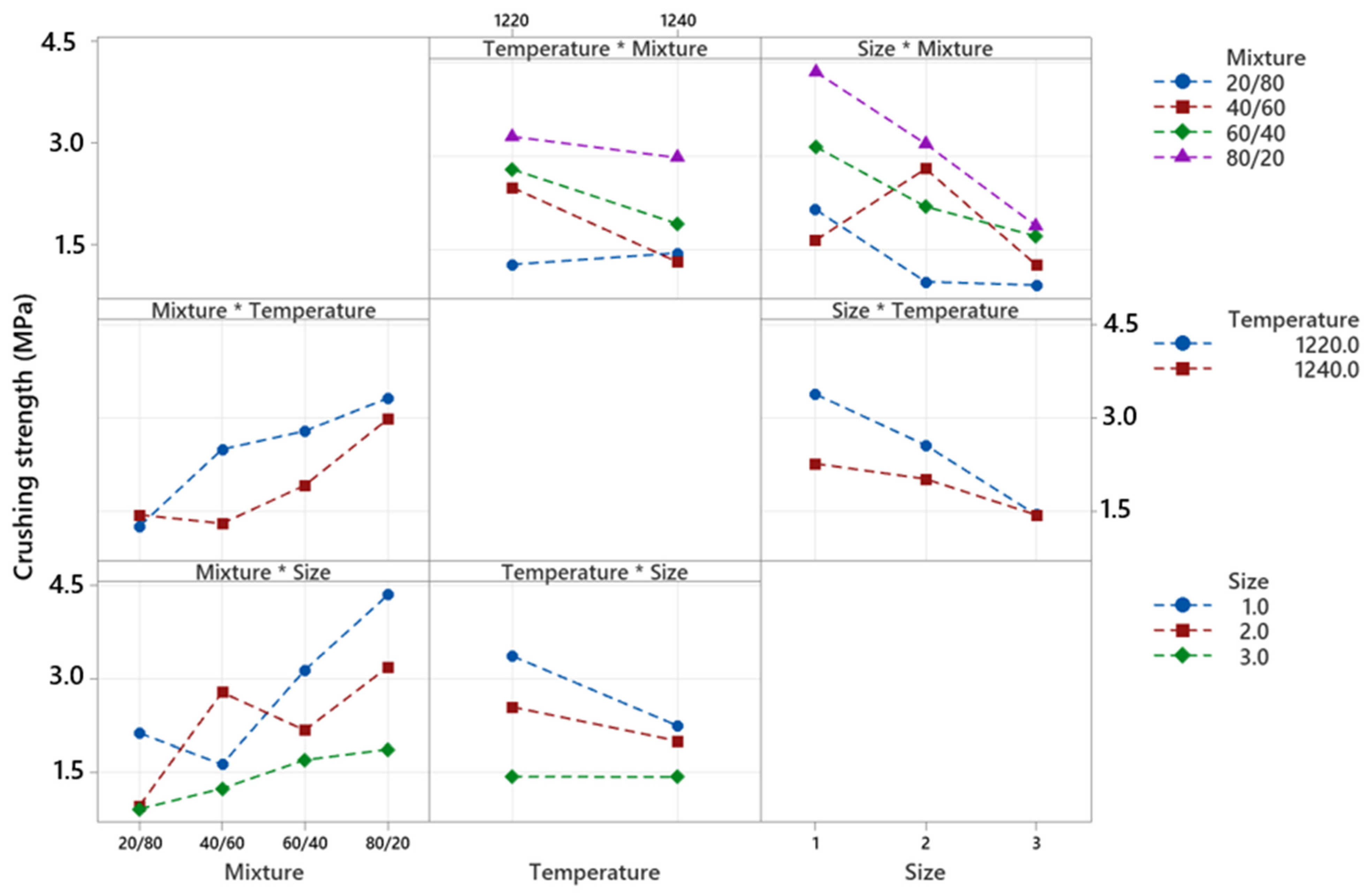
Figure 14, Figure 15, Figure 16 and Figure 17 present the full factorial interaction plots for the responses of bloating index, bulk density, water absorption, and mechanical strength, respectively. Overall, the interaction analysis reveals that the final properties of the aggregates result from a multivariate balance between composition, temperature and size. Mixture formulation and firing temperature emerge as primary design parameters, whereas aggregate size acts as a secondary tuning factor. These findings provide a robust framework for the rational design of lightweight aggregates tailored to specific structural and non-structural applications.
Figure 14.
Factorial interaction plots for bloating index.
Figure 15.
Factorial interaction plots for bulk density.
Figure 16.
Factorial interaction plots for water absorption.
Figure 17.
Factorial interaction plots for mechanical strength.
The interaction plots clearly demonstrate that the bloating behaviour is predominantly controlled by mixture composition and firing temperature, with a strong synergistic effect between these variables. Increasing the firing temperature from 1220 to 1240 °C significantly enhances expansion, particularly for mixtures richer in fluxing and gas-generating constituents, indicating intensified gas release and entrapment during the viscous sintering stage. Aggregate size exerts a secondary influence, mainly modulating the extent of expansion rather than altering its overall trend.
Bulk density exhibits an inverse response to bloating, confirming the strong coupling between expansion and structural lightening. The temperature–mixture interaction dominates density reduction, while aggregate size plays a minor but consistent role associated with pore size distribution and stability. These results indicate that density control is primarily governed by thermochemical mechanisms rather than geometric factors.
Water absorption reflects not only total porosity but also pore connectivity. Although highly expanded mixtures tend to increase porosity, higher firing temperatures and larger aggregate sizes reduce water absorption, suggesting a transition toward a more closed-pore structure with limited capillary connectivity. The interaction effects highlight that pore morphology is as critical as pore volume in defining the hygric performance of sintered lightweight aggregates.
Mechanical strength is maximized under conditions that promote denser and less porous microstructures. Optimized mixture compositions combined with lower firing temperatures lead to higher crushing strength, while increasing aggregate size systematically reduces strength due to higher internal porosity and reduced load-bearing continuity. The observed interactions emphasize the classical trade-off between lightweight character and mechanical performance.
Although the factorial design and ANOVA allowed the identification of statistically significant factors, the observed effects are supported by well-established physicochemical mechanisms governing lightweight aggregate expansion. Firing temperature directly influences liquid-phase formation and melt viscosity, which control the balance between gas generation and entrapment during sintering. An adequate viscosity range is required to retain internally generated gases and promote closed porosity development. Conversely, excessive liquid formation may lead to pore collapse or surface sealing due to the formation of a vitreous layer.
Mixture composition also plays a fundamental role by controlling the relative proportions of SiO2, Al2O3, and fluxing oxides, which determine the softening behavior and melting temperature of the system. Fluxing oxides reduce the viscosity of the molten phase, facilitating expansion, whereas high silica content increases structural rigidity and may limit pore growth. Therefore, the statistical significance of these factors is consistent with the thermochemical and rheological mechanisms governing expansion behavior.
3.3. Application Catalog
Table 8 presents a catalog of potential industrial applications for the produced LWAs, classified according to the criteria established in Table 2 and considering the different mixture compositions and firing temperatures (1220 °C and 1240 °C). It was observed that the aggregate diameter (1, 3, and 6 g) did not initially influence the performance response; therefore, a single direct classification was adopted for each mixture. Compositions that do not meet the required criteria are explicitly identified, enabling a clear and direct comparison among mixtures and processing temperatures.
Table 8.
Catalog of industrial applications for LWAs.
From Table 8, at 1220 °C, only the intermediate composition (40% R-CLAY + 60% PPR) meets the requirements for higher-value applications, indicating an adequate balance between gas generation and matrix densification. Mixtures with lower PPR contents show insufficient expansion, whereas higher PPR levels lead to excessive porosity and loss of performance. At 1240 °C, all compositions exhibit a marked deterioration in properties, making most applications unfeasible due to overexpansion and reduced mechanical integrity. Overall, the results confirm that the application potential of LWAs is restricted to a narrow compositional–thermal window, emphasizing the need for strict control of PPR content and firing temperature to achieve targeted industrial applications.
The use of recycled materials for the production of artificial lightweight aggregates represents a strategic pathway toward more sustainable construction practices. Incorporating industrial residues such as porcelain polishing waste as pyroexpansive agents not only valorises waste streams that would otherwise be landfilled but also reduces the demand for virgin raw materials and associated environmental burdens. The results of this study demonstrate that high levels of recycled pyroexpansive agents can be effectively used to tailor the density and internal porosity of lightweight aggregates while maintaining functional performance. This approach supports circular economy principles by closing material loops and highlights the technical feasibility of transforming ceramic industrial waste into value-added lightweight aggregates for structural and non-structural applications [50].
In addition to the European standard EN 13055-1 [33], the produced aggregates were also evaluated according to the requirements of ASTM C330/C330M [49], which specifies lightweight aggregates for structural concrete in the United States. According to ASTM C330 [49], lightweight coarse aggregates for structural concrete shall present an oven-dry density typically not exceeding 880 kg/m3 (approximately 0.88 g/cm3) for coarse fractions and must allow the resulting structural lightweight concrete to achieve a minimum compressive strength of 17 MPa at 28 days.
The bulk density values obtained in this study ranged from 0.53 to 1.14 g/cm3. Mixtures presenting densities below 0.88 g/cm3 fall within the density limits commonly associated with structural lightweight aggregates under ASTM C330 [49]. Furthermore, the crushing strength values obtained (up to 5.00 MPa at the aggregate level) are consistent with performance ranges reported for structural lightweight aggregates intended for concrete production. Therefore, the developed aggregates demonstrate potential compliance with both European (EN 13055-1) [33] and American (ASTM C330/C330M) [49] standards, reinforcing their international applicability.
4. Conclusions
This research was based on the possibility of producing lightweight aggregates using the extrusion forming method from red clay from the Paraíba coast (R-CLAY) and incorporating porcelain tile polishing residue (PPR). These aggregates have properties suitable for engineering use. Based on the results obtained and the experimental design, the following conclusions can be drawn.
- Porcelain polishing residue proved to be an effective pyroexpansive agent in the production of artificial lightweight aggregates, enabling high levels of waste incorporation (up to 80 wt.%) while maintaining bulk density and water absorption within international lightweight aggregate standards.
- The interaction between Fe2O3-rich R-CLAY and PPR was decisive for controlled bloating behaviour, promoting liquid-phase formation and gas entrapment during sintering, which governed pore development and aggregate expansion.
- An optimal compositional–thermal window was identified for the mixture containing 40% R-CLAY and 60% PPR sintered at 1220 °C, which achieved the best balance between low density and mechanical performance, reaching crushing strengths of approximately 5.00 MPa and outperforming commercial reference aggregates.
- Excessive firing temperature (1240 °C), although increasing expansion, led to overbloating and mechanical degradation, highlighting the critical importance of precise control of sintering conditions in waste-rich LWA formulations.
- Factorial design and ANOVA showed that composition and firing temperature control LWA performance, but nonlinear sintering effects are not fully captured. Future work should address porosity, melt rheology, gas kinetics, and improved predictive modelling.
The results show that lightweight aggregates produced from regional raw materials and industrial residue can be applied in high-strength and structural/non-structural lightweight concrete and mortars. In Northern and Northeastern Brazil, they are suitable for precast elements, buildings, slabs, and masonry, reducing self-weight, foundation demand, and improving thermal and construction efficiency. In Paraíba, this technology strengthens the regional construction sector through sustainable, locally produced aggregates. The use of 80 wt.% PPR enables recycling of ~800 kg of residue per ton of aggregate and reduces virgin clay extraction by up to 80%, supporting circular economy principles.
Author Contributions
I.C.P.: Writing—original draft, investigation, formal analysis. J.A.d.S.N.: Writing—review and editing, investigation, formal analysis, data curation. M.H.C.L.: Writing—original draft, investigation, formal analysis. M.A.S.d.A.: Writing—review and editing, visualization, validation, formal analysis, data curation, conceptualization. C.M.P.: Writing—review and editing, validation, supervision, formal analysis, data curation. R.P.S.D.: Writing—review and editing, validation, supervision, formal analysis, data curation. All authors have read and agreed to the published version of the manuscript.
Funding
This work was supported by the Coordenação de Aperfeicoamento de Pessoal de Nivel Superior—Brasil (CAPES)—Finance Code 001, under scholarship number 88887.799961/2022-00.
Data Availability Statement
The original contributions presented in this study are included in the article. Further inquiries can be directed to the corresponding author.
Acknowledgments
We gratefully acknowledge the financial support provided by the Paraíba Research Support Foundation (FAPESq), the National Council for Scientific and Technological Development (CNPq), and the Coordination for the Improvement of Higher Education Personnel (CAPES). We also thank the Federal Institute of Paraíba (IFPB), the Structures and Materials Laboratory of the Federal University of Paraíba (LABEME/UFPB), and the Ceramic Materials Laboratory (LMC/UFPB) for providing the infrastructure and technical support that were essential to the successful execution of this project.
Conflicts of Interest
The authors declare that they have no known competing financial interests or personal relationships that could have appeared to influence the work reported in this paper.
References
- González-Corrochano, B.; Alonso-Azcárate, J.; Rodas, M. Production of Lightweight Aggregates from Mining and Industrial Wastes. J. Environ. Manag. 2009, 90, 2801–2812. [Google Scholar] [CrossRef] [Scilit]
- Lau, P.C.; Teo, D.C.L.; Mannan, M.A. Mechanical, Durability and Microstructure Properties of Lightweight Concrete Using Aggregate Made from Lime-Treated Sewage Sludge and Palm Oil Fuel Ash. Constr. Build. Mater. 2018, 176, 24–34. [Google Scholar] [CrossRef] [Scilit]
- Chung, S.-Y.; Sikora, P.; Kim, D.J.; El Madawy, M.E.; Abd Elrahman, M. Effect of Different Expanded Aggregates on Durability-Related Characteristics of Lightweight Aggregate Concrete. Mater. Charact. 2021, 173, 110907. [Google Scholar] [CrossRef] [Scilit]
- da Silva Neto, J.A.; dos Anjos, M.A.S.; Dutra, R.P.S.; Mendonça de Souza, M.; Pederneiras, C.M. Development of Sustainable Artificial Lightweight Aggregates with Binary Mixtures of Waste Rich in Aluminosilicate and Carbonate in Kaolinitic Clay. Sustainability 2025, 17, 2017. [Google Scholar] [CrossRef] [Scilit]
- Martins de Oliveira, V.S.; Silva Neto, J.A.; Nascimento, G.L.; Anjos, M.A.S.; Dutra, R.P.S.; Pederneiras, C.M. Evaluating Porcelain Polishing Waste as a Pyro-Expansive Agent in Clay Formulations for Sustainable Lightweight Aggregates. Sustainability 2025, 17, 7385. [Google Scholar] [CrossRef] [Scilit]
- Mendonça De Souza, M.; Barbosa, N.P.; Dos Anjos, M.A.S.; Aguiar, J.G.C.; Da Silva Neto, J.A.; Pederneiras, C.M. Recycling red ceramic waste as a raw material for lightweight aggregates. Appl. Sci. 2025, 15, 5729. [Google Scholar] [CrossRef] [Scilit]
- Mendonça De Souza, M.; Barbosa, N.P.; Dos Anjos, M.A.S.; Farias, E.C.; Aguiar, J.G.C.; Da Silva Neto, J.A.; Pederneiras, C.M. Sustainable Lightweight Aggregates from Diatomite Residue. Sustainability 2025, 17, 6508. [Google Scholar] [CrossRef] [Scilit]
- da Silva Neto, J.A.; dos Anjos, M.A.S.; Dutra, R.P.S.; Mendonça de Souza, M.; Pederneiras, C.M. Optimization via Taguchi of Artificial Lightweight Aggregates Obtained from Kaolinite Clay and Ceramic Waste: Development and Industrial Applications. Buildings 2025, 15, 2003. [Google Scholar] [CrossRef] [Scilit]
- Lyra, G.P.; Santis, B.C.D.; Santos, V.; Pallone, E.M.J.; Kiminami, R.H.G.A.; Rossignolo, J.A. Microwave Fast Sintering Production of Sustainable Lightweight Aggregates with Agroindustrial Waste. J. Mater. Civ. Eng. 2022, 34, 04022155. [Google Scholar] [CrossRef] [Scilit]
- Geng, J.; Han, K.; Wang, Y.; Zhu, J.; Yang, Z.; Liu, J.; Zhang, H.; Sun, X.; Liang, B.; Zheng, Y. Properties of Artificial Lightweight Aggregates Prepared from Coal and Biomass Co-Fired Fly Ashes and Sewage Sludge Fly Ash. Ceram. Int. 2024, 50, 28609–28618. [Google Scholar] [CrossRef] [Scilit]
- Souza, N.S.L.; Anjos, M.A.S.; Sá, M.V.V.A.; Farias, E.C.; Souza, M.M.; Branco, F.G.; Pereira, A. Evaluation of Sugarcane Bagasse Ash for Lightweight Aggregates Production. Constr. Build. Mater. 2021, 271, 121604. [Google Scholar] [CrossRef] [Scilit]
- Souza, M.M.; Anjos, M.A.S.; Sá, M.V.V.A.; Souza, N.L. Developing and Classifying Lightweight Aggregates from Sewage Sludge and Rice Husk Ash. Case Stud. Constr. Mater. 2020, 12, e00340. [Google Scholar] [CrossRef] [Scilit]
- Soltan, A.M.M.; Kahl, W.A.; El-Raoof, F.A.; El-Kaliouby, B.A.H.; Serry, M.A.K.; Abdel-Kader, N.A. Lightweight Aggregates from Mixtures of Granite Wastes with Clay. J. Clean. Prod. 2016, 117, 139–149. [Google Scholar] [CrossRef] [Scilit]
- Souza, M.M.; Anjos, M.A.S.; Sá, M.V.V.A. Using Scheelite Residue and Rice Husk Ash to Manufacture Lightweight Aggregates. Constr. Build. Mater. 2021, 270, 121845. [Google Scholar] [CrossRef] [Scilit]
- Dondi, M.; Cappelletti, P.; D’Amore, M.; de Gennaro, R.; Graziano, S.F.; Langella, A.; Raimondo, M.; Zanelli, C. Lightweight Aggregates from Waste Materials: Reappraisal of Expansion Behavior and Prediction Schemes for Bloating. Constr. Build. Mater. 2016, 127, 394–409. [Google Scholar] [CrossRef] [Scilit]
- Ayati, B.; Ferrándiz-Mas, V.; Newport, D.; Cheeseman, C. Use of Clay in the Manufacture of Lightweight Aggregate. Constr. Build. Mater. 2018, 162, 124–131. [Google Scholar] [CrossRef] [Scilit]
- Bernhardt, M.; Tellesbø, H.; Justnes, H.; Wiik, K. Mechanical Properties of Lightweight Aggregates. J. Eur. Ceram. Soc. 2013, 33, 2731–2743. [Google Scholar] [CrossRef] [Scilit]
- Cougny, G. Specifications for clayey raw materials used to produce expanded lightweight aggregates. Bull. Eng. Geol. Environ. 1990, 41, 47–55. [Google Scholar]
- Riley, C.M. Relation of Chemical Properties to the Bloating of Clays; Wiley: Hoboken, NJ, USA, 1951. [Google Scholar]
- Silva Neto, J.A.; Dias, L.d.S.; De Medeiros, F.K.; Barbosa, M.d.S.; Marcal, N.A.; Dutra, R.P.S.; Negreiros, A.M.S.; Bezerra, U.T. A Scientiometric Review of Artificial Lightweight Aggregates Applying VOSviewer Software. Contrib. Cienc. Soc. 2024, 17, e5619. [Google Scholar] [CrossRef] [Scilit]
- Singh, N.; Raza, J.; Colangelo, F.; Farina, I. Advancements in Lightweight Artificial Aggregates: Typologies, Compositions, Applications, and Prospects for the Future. Sustainability 2024, 16, 9329. [Google Scholar] [CrossRef] [Scilit]
- Almeida, M.I.; Dias, A.C.; Demertzi, M.; Arroja, L. Environmental Profile of Ceramic Tiles and Their Potential for Improvement. J. Clean. Prod. 2016, 131, 583–593. [Google Scholar] [CrossRef] [Scilit]
- Soares Filho, J.E.; Aurich, J.C.; Sousa, F.J.P.; Nascimento, R.M.; Paskocimas, C.A.; Silva, A.H.A. Polishing Performance of Eco-Friendly Porcelain Stoneware Tiles Reusing Bricks and Roof Tiles Wastes. J. Clean. Prod. 2020, 256, 120362. [Google Scholar] [CrossRef] [Scilit]
- Ramos, G.A.; de Matos, P.R.; Pelisser, F.; Gleize, P.J.P. Effect of Porcelain Tile Polishing Residue on Eco-Efficient Geopolymer: Rheological Performance of Pastes and Mortars. J. Build. Eng. 2020, 32, 101699. [Google Scholar] [CrossRef] [Scilit]
- Santos, H.M.M.; Jochem, L.F.; de Matos, P.R.; Casagrande, C.A.; Marinho, É.P.; Szeląg, M.; de Nóbrega, A.C.V. Porcelain Tile Polishing Residue in Concrete as an Additive or Replacement for Portland Cement. Appl. Sci. 2023, 13, 2824. [Google Scholar] [CrossRef] [Scilit]
- ABNT NBR 6459; Soil—Determination of the Liquid Limit. Brazilian Association of Technical Standards (ABNT): Rio de Janeiro, Brazil, 2017.
- ABNT NBR 7180; Soil—Determination of the Plastic Limit. Brazilian Association of Technical Standards (ABNT): Rio de Janeiro, Brazil, 2016.
- Bernardin, A.M.; Silva, M.J.; Riella, H.G. Characterization of cellular ceramics made by porcelain tile residues. Mater. Sci. Eng. 2006, 437, 222–225. [Google Scholar] [CrossRef] [Scilit]
- NBR 6458; Gravel Grains Retained on a 4.8 mm Sieve—Determination of Specific Gravity, Apparent Specific Gravity and Water Absorption. Brazilian Association of Technical Standards: Rio de Janeiro, Brazil, 2017.
- ACI 213R-03; Guide for Structural Lightweight Aggregate Concrete. ACI Manual of Concrete Practice, Part 1. American Concrete Institute—ACI: Farmington Hills, MI, USA, 2003; 38p.
- Li, Y.; Wu, D.; Zhang, J.; Chang, L.; Fang, Z.; Shi, Y. Measurement and statistics of single pellet mechanical strength of differently shaped catalysts. Powder Technol. 2000, 113, 176. [Google Scholar] [CrossRef] [Scilit]
- Liu, M.; Xiao, L.; Wang, W.; Guo, J.; Zhang, L.; Zhang, H. Effect of SiO2 and Al2O3 on characteristics of lightweight aggregate made from sewage sludge and river sediment. Ceram. Int. 2018, 44, 4313. [Google Scholar] [CrossRef] [Scilit]
- BS EN 13055-1; Lightweight Aggregates—Lightweight Aggregates for Concrete, Mortar and Grout. BSI: London, UK, 2002.
- Cinexpan, Expanded Clay. Technical Data Sheet—Type 1506.pdf. Available online: https://www.cinexpan.com.br/pdf/ficha-tecnica-tipo-1506.pdf (accessed on 15 June 2025).
- Arlita. Arlita Leca Technical Guide. Available online: https://www.arlita.es/sites/default/files/2017-07/Weber_Guia_tecnica_Arlita_Leca.pdf (accessed on 15 June 2024).
- Rossignolo, J.A. Structural Lightweight Concrete: Production, Properties, Microstructure and Applications, 1st ed.; PINI Publisher: São Paulo, Brazil, 2009. [Google Scholar]
- Marques, L.N.; Menezes, R.R.; Neves, G.A.; Santana, L.N.L.; Lira, H.L.; Ferreira, H.C. Reuse of porcelain polishing residue for use in ceramic mass. Electron. J. Mater. Process. 2007, 2, 34–42. [Google Scholar]
- Souza, P.A.B.F. Study of the Plastic, Mechanical, Microstructural and Thermal Behavior of Concrete Produced with Porcelain Tile Waste. Ph.D. Thesis, Federal University of Rio Grande do Norte, Natal, Brazil, 2007; 208p. [Google Scholar]
- Souza, M.M.; Barbosa, N.P.; Anjos, M.A.S. Characteristics and utilization prospects of red ceramic waste in lightweight aggregates: A systematic review. Ceramics 2022, 68, 402–408. [Google Scholar] [CrossRef] [Scilit]
- Silva Neto, J.A.; Cavalcante, D.S.L.; Medeiros, C.M.; Anjos, M.A.S.; Dutra, R.P.S.; Souza, M.M.; Pederneiras, C.M.; Silva Mateus, R.F.M. Development of artificial lightweight aggregates with chamotte and eucalyptus firewood ash residues: Life cycle assessment and economic feasibility. Constr. Build. Mater. 2025, 504, 144600. [Google Scholar] [CrossRef] [Scilit]
- Santis, B.C.; Rossignolo, J.A. Evaluation of the influence of lightweight calcined clay aggregates on the performance of structural concrete. Built Environ. 2014, 14, 21–32. [Google Scholar]
- Han, M.; Han, D.; Shin, J. Use of bottom ash and stone dust to make lightweight aggregate. Constr. Build. Mater. 2015, 99, 192–199. [Google Scholar] [CrossRef] [Scilit]
- Rambaldi, E.; Esposito, L.; Tucci, A.; Timellini, G. Recycling of polishing porcelain stoneware residues in ceramic tiles. J. Eur. Ceram. Soc. 2007, 27, 3509. [Google Scholar] [CrossRef] [Scilit]
- Cuevas, K.; Lopez, M. The Effect of Expansive Agent and Cooling Rate in the Performance of Expanded Glass Lightweight Aggregate as an Internal Curing Agent. Constr. Build. Mater. 2021, 271, 121505. [Google Scholar] [CrossRef] [Scilit]
- Balapour, M.; Thway, T.; Rao, R.; Moser, N.; Garboczi, E.J.; Hsuan, Y.G.; Farnam, Y. A thermodynamics-guided framework to design lightweight aggregate from waste coal combustion fly ash. Resour. Conserv. Recycl. 2022, 178, 106050. [Google Scholar] [CrossRef] [Scilit]
- Chen, Y.X.; Liu, G.; Schollbach, K.; Brouwers, H.J.H. Development of cement-free bio-based cold-bonded lightweight aggregates (Bcblwas) using steel slag and miscanthus powder via CO2 curing. J. Clean. Prod. 2021, 322, 129105. [Google Scholar] [CrossRef] [Scilit]
- Tuan, B.L.A.; Hwang, C.-L.; Lin, K.-L.; Chen, Y.-Y.; Young, M.-P. Development of lightweight aggregate from sewage sludge and waste glass powder for concrete. Constr. Build. Mater. 2013, 47, 334–339. [Google Scholar] [CrossRef] [Scilit]
- Rossignolo, J.A.; Agnesini, M.V.C. Structural lightweight concrete. In Concrete: Science and Technology; Isaia, G.C., Ed.; IBRACON: São Paulo, Brazil, 2011; Volume 42, pp. 1531–1568. [Google Scholar]
- ASTM C330/C330M-23; Standard Specification for Lightweight Aggregates for Structural Concrete. ASTM International: West Conshohocken, PA, USA, 2023.
- Uche, C.K.A.; Abubakar, S.A.; Nnamchi, S.N.; Ukagwu, K.J. Polyethylene terephthalate aggregates in structural lightweight concrete: A meta-analysis and review. Discov. Mater. 2023, 3, 24. [Google Scholar] [CrossRef] [Scilit]

Disclaimer/Publisher’s Note: The statements, opinions and data contained in all publications are solely those of the individual author(s) and contributor(s) and not of MDPI and/or the editor(s). MDPI and/or the editor(s) disclaim responsibility for any injury to people or property resulting from any ideas, methods, instructions or products referred to in the content. |
© 2026 by the authors. Licensee MDPI, Basel, Switzerland. This article is an open access article distributed under the terms and conditions of the Creative Commons Attribution (CC BY) license.