


Abstract
Expanded polystyrene (EPS) foam concrete is attractive for lightweight building applications, yet its practical use is often limited by weak EPS–cement interfacial bonding, which promotes interfacial debonding and crack propagation and thereby compromises mechanical performance. Although nano-SiO2 (NS) has been reported to improve EPS–cement compatibility, the interfacial strengthening mechanism is still not fully clarified across scales, especially the molecular-level interactions that govern the formation of a robust interfacial transition zone (ITZ). Herein, EPS particles were modified with NS and a multi-scale framework (macro tests, micro-characterization, and molecular dynamics (MD) simulations) was employed to establish a mechanistic linkage between interfacial chemistry/structure and macroscopic performance. The results show that an optimal NS dosage of 9% (by cement mass) increases the 28-day compressive strength and flexural strength of EPS concrete by up to 18.3% and 11.2%, respectively, compared with the unmodified system. SEM, XRD, and FTIR collectively indicate a denser interfacial microstructure, increased hydration-product accumulation near the EPS surface, refined interfacial porosity, and the occurrence of condensation-related reactions involving NS. MD simulations further reveal that NS facilitates the formation of molecular bridges between EPS and C–S–H through hydrogen bonding and ionic interactions, which enhances interfacial adhesion and contributes to improved ITZ thermal stability. This study provides a cross-scale mechanistic understanding for designing high-performance EPS foam concrete via targeted interfacial engineering. MD simulations further suggest that NS enhances interfacial bonding by increasing the occurrence of hydrogen-bond networks and ionic associations at the EPS/C–S–H interface, as evidenced by the intensified interaction-related distributions and peaks in the simulation outputs.
1. Introduction
With the transformation of the construction industry towards green, low-carbon, and sustainable development, lightweight concrete, due to its low density and excellent thermal insulation properties, has shown great potential in prefabricated and green buildings [1,2]. As a typical lightweight aggregate, expanded polystyrene (EPS) particles can significantly reduce the self-weight of structures and improve thermal insulation performance, playing an important role in energy conservation and carbon reduction. Introducing EPS into the concrete system not only reduces the foundation load demand but also reduces carbon emissions over the entire life cycle [3,4,5]. However, EPS lightweight concrete still has significant limitations [6]. Due to the strong hydrophobicity of EPS particles and their weak bond with the cement matrix interface, they easily form a weak interfacial transition zone, which can induce cracking or delamination [7,8], thus limiting their application in load-bearing structures, and are mostly used as non-load-bearing or filling materials [9,10].
To address this, scholars both domestically and internationally have conducted extensive modification research, primarily focusing on two directions: fiber reinforcement and mineral admixtures [5,11]. In terms of fibers, Li Zhennan et al. [12] reviewed the research progress of basalt fiber-reinforced concrete (BFRC), pointing out that although basalt fiber increases the porosity of concrete, it can effectively enhance the bending and cracking resistance. Wu, Zheng [13] dded corn straw fibers (CSF) to EPS concrete specimens to evaluate the effects of CSF and EPS contents on the performance of EPS cement-based composites. The study found that CSF can reduce the density of EPS concrete while improving its mechanical properties. Hu, Peifang [14] conducted dynamic splitting tensile tests on different fiber-reinforced EPS lightweight concrete. The experimental results indicated that incorporating these fibers markedly enhanced the static and dynamic splitting tensile strength of EPSLC. Although the introduction of fibers has improved the mechanical properties of EPS concrete to some extent, the weak bond between EPS and the matrix interface limits the fiber enhancement effect, making it difficult to fully realize its potential [8].
Compared to fibers, mineral materials help reduce undesirable pores, improve pore structure, and are more cost-effective [15,16,17]. They are widely used to improve the pore structure and density of EPS concrete [18]. Bian, Shun [2] developed lightweight aggregates (CSLA) with a geopolymer–EPS core–shell structure using industrial by-products such as fly ash, slag, carbonized slag, and alunite, aiming to improve the performance of geopolymer concrete. He Haijie [19] introduced different amounts of vitrified microspheres and found that they could effectively inhibit the carbonation process of EPS concrete, reducing the carbonation depth by more than 50% after 28 days. Building on this, nanomaterials are considered an effective approach to improving the performance of cement-based composites due to their large surface area, high surface energy, and significant reactivity. Among them, nano-SiO2(NS) can not only fill pores at the microscopic scale and reduce the porosity in the interface zone, but also act as an active pozzolanic material, promoting cement hydration and generating more C–S–H gel, thereby enhancing the matrix’s density and mechanical strength [20,21,22]. Ashokan, A [23] incorporated nano-silica into steel fiber-reinforced concrete, and the tests showed that adding 1–2% nano-silica improved the compressive strength at all fiber contents. Alvansazyazdi, M [24] replaced 2% of the cement weight with hydrophobic nano-silica particles in high-strength concrete mixtures. The study found that concrete containing nano-silica particles exhibited superior physical and mechanical properties compared to other mixtures. Nia, SB [25] gradually replaced silica fume with nano-silica in self-compacting concrete (SCC) and evaluated the workability of the prepared self-compacting concrete mixtures. Ahmed, SA [26] examined the effects of varying NS content on the volume density, compressive strength, flexural strength, splitting tensile strength, and penetration depth of structural expanded polystyrene concrete, providing critical insights for optimizing structural lightweight concrete. Ahmadi, S H [27] replaced cement with different proportions of NS, and the results showed that NS enhanced the viscosity of self-compacting lightweight concrete while reducing its flowability. Zhang, CP [28] modified a foaming agent based on sodium dodecyl sulfate with amphoteric nano-silica (ANS), and subsequently used the designed foam material to prepare foam concrete. The results demonstrated that the foam modified with ANS exhibited excellent stability and strength. Du, YY [29] added 0.2%, 0.6%, and 1.0% NS to cement mortar and conducted strength tests. The results indicated that the synergistic effect of nano additives enhanced the mechanical properties of the mortar. Majeed, SS [30] evaluated the performance of ultra-lightweight foam concrete (ULFC) with varying proportions of SDNs, also conducting scanning electron microscopy (SEM) analysis. The results showed a significant improvement in the mechanical properties of ULFC, highlighting the potential benefits of incorporating SDNs into ULFC. Zhang, YT [31] assessed the impact of NS and carbon nanotubes on the mechanical properties, general microstructure, and interfacial transition zone (ITZ) of lightweight aggregate concrete containing large volumes of artificial shale ceramics (ASC-LAC). The results indicated that when the replacement levels of NS and carbon nanotubes were below 2.5 wt% and 0.25 wt%, respectively, their synergistic effects were positive. Based on this, we reasonably infer that a synergistic effect may form between NS and EPS particles, which not only holds promise for improving interface compatibility and bonding performance but also provides new possibilities for further enhancing the overall mechanical properties and durability of EPS lightweight concrete.
In summary, the practical application of EPS lightweight concrete is primarily constrained by its low matrix compactness and weak EPS–paste interfacial bonding, which facilitates interfacial debonding and crack propagation. Although previous studies have shown that nano-silica can refine pore structure and accelerate hydration, the cross-scale interfacial strengthening mechanism in EPS systems and its linkage to macroscopic performance remain insufficiently clarified. Therefore, this study aims to improve EPS lightweight concrete using nano-silica without markedly increasing density or cost, by quantifying macroscopic mechanical properties, characterizing ITZ densification and interfacial bonding via microstructural observations, and elucidating key interfacial interactions through molecular simulations. The results of this study provide direct guidance for optimizing EPS lightweight concrete, and are helpful for its rational application in lightweight structures and semi-structural building components where strength improvement is required.
2. Experimental Methods
2.1. Raw Materials
The materials used in this experiment include cement, gravel, fine sand, nano-SiO2, EPS particles, and a water-reducing agent. The cement is P.O 42.5 ordinary Portland cement with a strength of 42.5 MPa, supplied by Zhonglian Cement Hebei Co., Ltd. The main chemical composition is shown in Table 1. The coarse aggregate is granite crushed stone, with a particle size range of 6 mm–10 mm, a bulk density of 1450 kg/m3, and an apparent density of 2675 kg/m3. The fine aggregate is river sand, with a fineness modulus of 2.6, an apparent density of 2700 kg/m3, and a bulk density of 1900 kg/m3.
Table 1.
Chemical composition of cement.
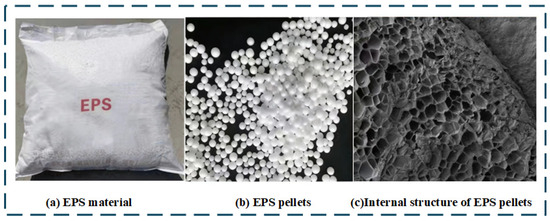
The nano-SiO2 powder is produced by Shanghai Maclin Biochemical Technology Co., Ltd., with the main parameters shown in Table 2. The EPS particles used in this experiment are primarily composed of polystyrene, with an average particle size of 2–4 mm and an apparent density of 20 kg/m3. Figure 1a–c show the macroscopic appearance and internal structure of the EPS particles, and Table 3 presents the physical parameters of the EPS particles. The water-reducing agent used is polycarboxylate-based, supplied entirely by Hongxiang Construction Admixture Factory in Laiyang, Shandong Province, China. The EPS particles were first immersed in absolute ethanol for 12 h to remove surface impurities, followed by natural drying to a constant mass. Nano-SiO2 was weighed according to the designed mass ratio and dispersed in deionized water by ultrasonication for 20 min to obtain a homogeneous suspension. Subsequently, the EPS particles were added to the suspension, continuously stirred for 5 min, and then soaked for 24 h to promote the deposition of nano-SiO2 on the particle surfaces. After the soaking process, the EPS particles were removed and naturally dried to a constant mass to obtain the modified EPS aggregates.
Table 2.
Physical properties of Nano-SiO2 powder.
Figure 1.
EPS particles.
Table 3.
Physical properties of EPS particles.
2.2. Design of Mix Proportions for Experimental Specimens
The EPS concrete mix ratio design experiment in this study follows the JGJ55-2011 “Standard for Concrete Mix Proportion Design” and adopts the design method for ordinary Portland cement concrete. The base concrete is C30 with a design strength of 30 MPa. The nano-SiO2 solution is a controllable factor, with nano-SiO2 dosages of 3%, 6%, and 9% by cement weight, prepared as a uniform solution. As shown in Table 4.
Table 4.
The Mix Ratio of EPS Specimens.
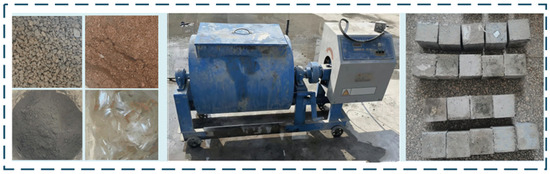
The required raw materials for the experiment are prepared according to the mix ratio, and the cement mixer is pre-wetted; the cement, gravel, and sand are mixed uniformly for 1 min. The EPS particles are manually dispersed and divided into three equal parts, which are added to the mixer in batches. Each part is thoroughly mixed for 30 s until it is evenly distributed in the cement before adding and mixing the next batch. The water, defoaming agent, and nano-SiO2 solution are uniformly mixed and then added to the mixer. The fourth step involves uniform mixing, placing the mixture into the mold coated with demolding agent, and placing it on a vibrating table for surface plastering and curing. Finally, the mixture is cured at room temperature for 48 h, followed by standard curing after demolding, until the curing ages of 7 and 28 days. Compressive and flexural specimens for each mix ratio group are prepared with 3 replicates and cured under standard conditions (20 ± 2 °C, humidity ≥ 95%) for 7 and 28 days. After curing, comparative tests are conducted. The specific steps are shown in Figure 2.
Figure 2.
Test Specimen Preparation.
3. Testing and Simulation
3.1. Macroscopic Mechanical Property Tests
3.1.1. Compressive Strength Testing
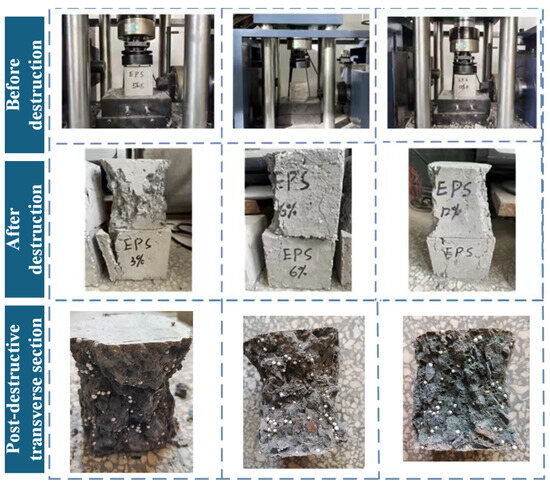
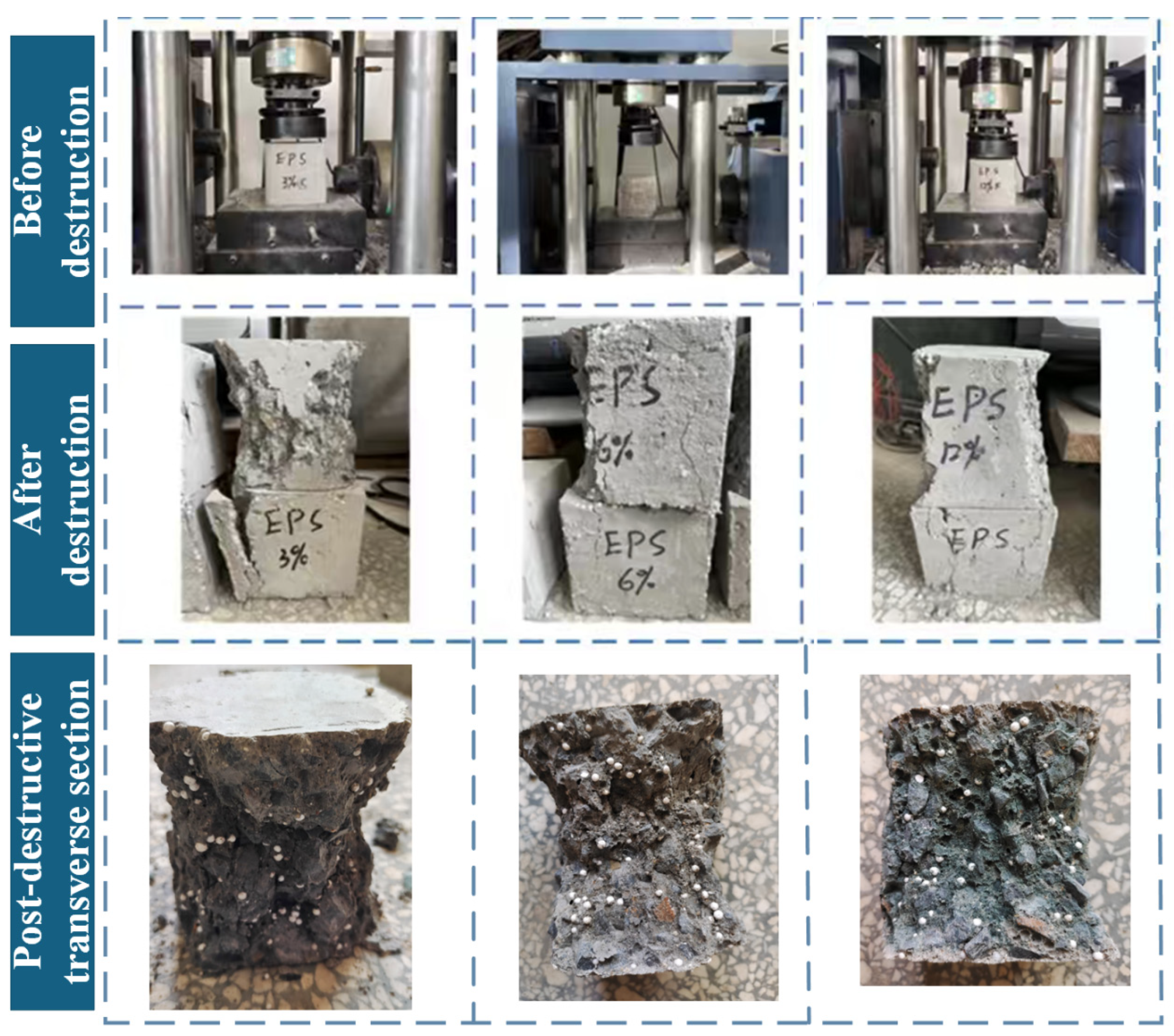
The mechanical property tests were performed in accordance with the Chinese standard “Test Methods for Physical and Mechanical Properties of Concrete” (GB/T 50081-2019) [32]. According to the ASTM C349 standard, for EPS concrete compressive strength testing, the YZW50B compressive testing machine with a maximum compressive strength of 2000 kN is used for external force loading, with a loading speed set to 0.5 mm/min for the specimen. The dimensions of the cubic compressive test specimens are 100 mm × 100 mm × 100 mm. The instrument and loading principle are shown in Figure 3.
Figure 3.
Compressive test and mechanism of action.
3.1.2. Flexural Strength Testing
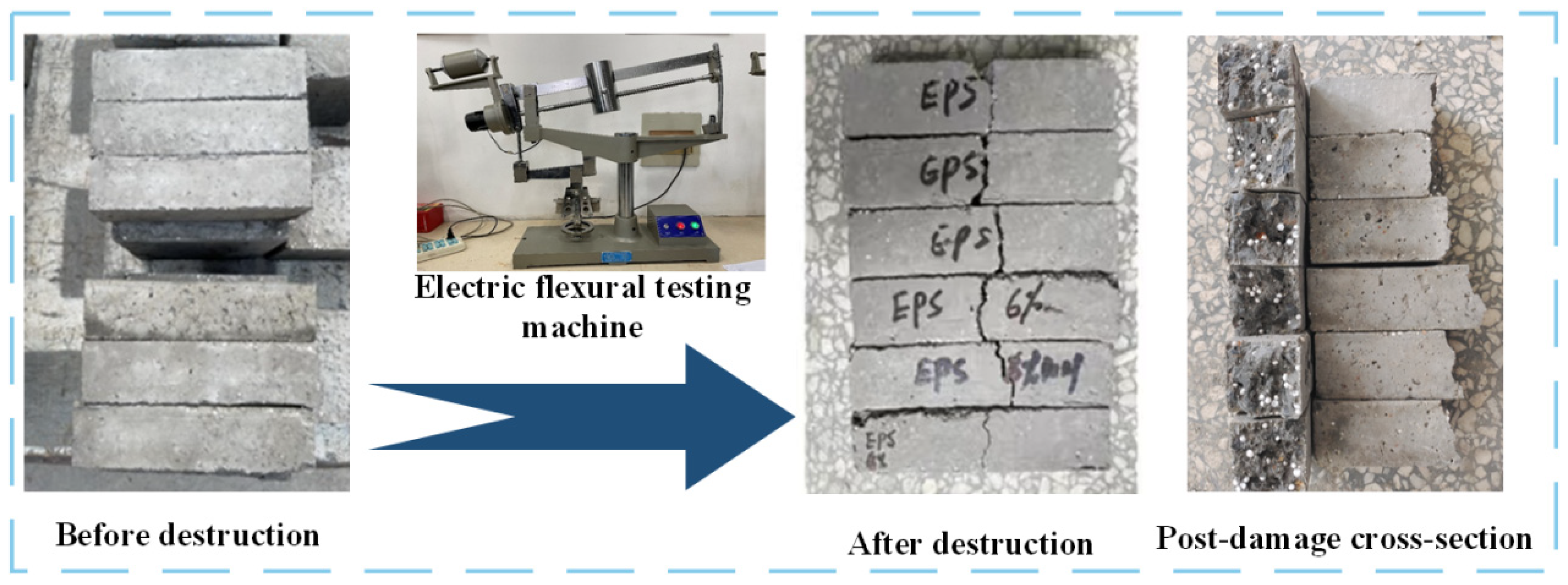
The standard specimen size (40 mm × 40 mm × 160 mm) and test procedure are used to evaluate the flexural strength. The experimental device uses the DKZ-5000 electric bending testing machine produced by Tianjin Gangyuan Testing Instrument Factory (Tianjin, China), with a scale accuracy of 1%. This testing device can convert the bending force and flexural strength of cement mortar. The instrument and loading principle are shown in Figure 4.
Figure 4.
Flexural test and mechanism of action.
3.2. Micromechanical Experiments
At the microscale, scanning electron microscopy (SEM), X-ray diffraction (XRD), and Fourier transform infrared spectroscopy (FTIR) were employed to systematically characterize EPS lightweight concrete modified with nano-SiO2.
To reveal the interfacial structure and morphology of hydration products in the modified concrete, specimens cured for 28 days were selected for SEM observation. The specimens were first cut into approximately 10 mm cubic blocks and progressively polished to obtain smooth cross-sections. To terminate the hydration process and preserve the microstructural features, the prepared specimens were subjected to solvent exchange by immersion in anhydrous ethanol, allowing the pore solution to be gradually replaced. After solvent exchange, the specimens were dried in a constant-temperature oven to remove residual ethanol. To avoid charge accumulation affecting the imaging, a conductive metal film was sprayed onto the sample surface, which was then fixed onto the sample holder for observation. Field emission scanning electron microscopy was used to image and analyze the pore structure, interfacial transition zone, and morphological characteristics of hydration products in the specimens.
To clarify the phase composition and crystallinity changes of the material, XRD testing was conducted on samples cured for 28 days. After the samples were soaked in anhydrous ethanol to terminate the hydration, they were crushed into fine powder with a particle size of over 200 mesh and dried at low temperature under vacuum conditions. The resulting powder samples were tested using a Rigaku Miniflex 600 desktop diffractometer to identify the types and relative contents of the main hydration products and analyze the effect of nano-SiO2 on the matrix crystal structure.
To investigate the chemical action mechanism of nano-SiO2 in the cement-based system, FTIR testing was performed using a PerkinElmer infrared spectrometer. The ground samples were scanned 32 times in the wavenumber range of 4000–500 cm−1 with a resolution of 4 cm−1 to ensure data stability. By comparing the characteristic absorption peaks of different samples, the changes in functional groups were analyzed, thereby revealing the effect of nano-SiO2 on the hydration process and interfacial chemical structure.
3.3. MD Model Development and Force Field Selection
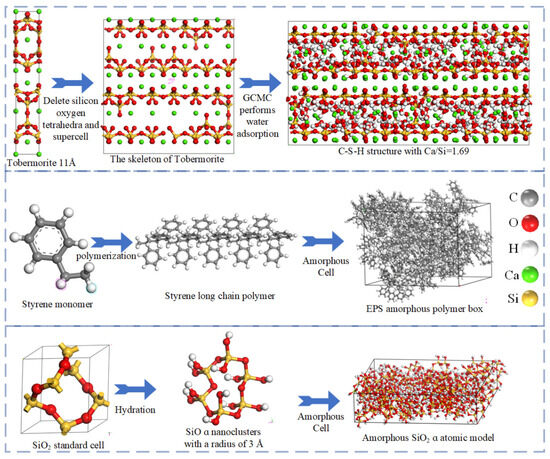
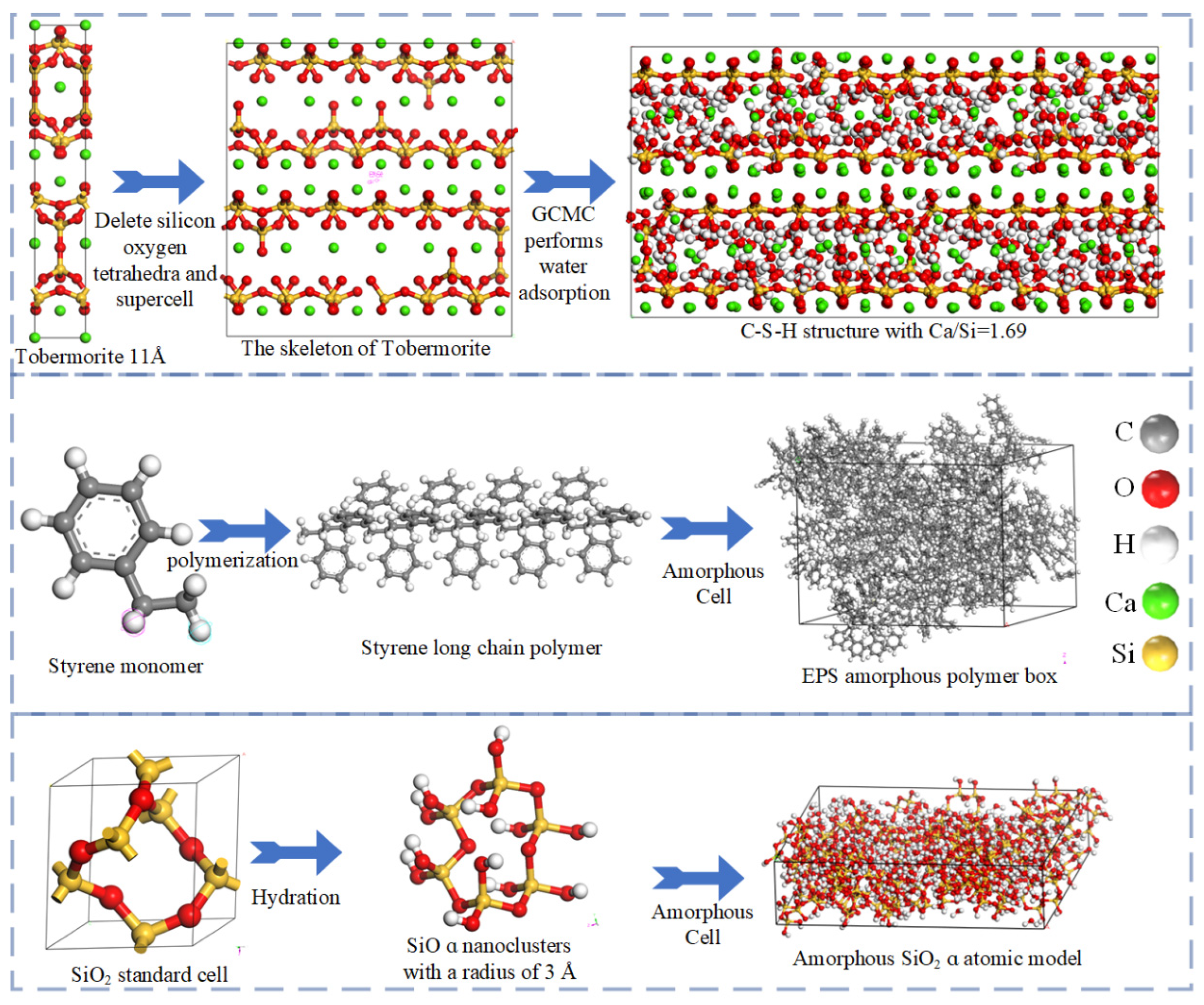
At the atomic level, the analysis of interfacial forces is a highly complex issue, and molecular dynamics (MD) methods have been widely proven to effectively reveal the microscopic behavior of materials and predict their macroscopic responses [33,34]. By constructing interfacial models before and after modification and performing MD simulations, the differences in interface structure and mechanisms can be intuitively compared, thereby revealing the mechanism of the modifier in improving compatibility and stability. The focus of the modeling in this study is on simulating the interface between NS-modified EPS and the cement matrix. The mechanical properties of concrete largely depend on the cement hydration products, among which calcium silicate hydrate (C-S-H) is considered the most critical binding phase [35]. C-S-H is often described as a gel-like substance with significant disorder characteristics, possessing both crystalline and porous structural attributes [36,37,38]. At the nanoscale, it can be approximated as being made of alternating layers of calcium silicate, and its framework structure is similar to that of the natural mineral Jennite. Therefore, the Jennite crystal model is often used in molecular dynamics studies to construct the atomic model of C-S-H [39,40,41]. In this study, the construction of the C-S-H model was based on relevant literature [42]. Specifically, the initial model used the monoclinic snow-silica-calcium stone proposed by Hamid as the basic unit cell [43], with an interlayer distance of about 11 Å and the chemical formula Ca2.25[Si3O7.5(OH)1.5]·H2O. Its lattice parameters are a = 11.16 Å, b = 7.39 Å, c = 22.78 Å, with α = β = γ = 90°. During the construction of the model, some water molecules and dimeric structures were selectively removed to adjust the calcium–silicon ratio, making it closer to the actual chemical composition of C-S-H gel. The model was then cut along the [001] direction and extended into an orthogonal unit cell using supercell operations, ultimately resulting in a C-S-H supercell model with dimensions of a = 20.2 Å, b = 22.16 Å, c = 13.24 Å, and τ = 90° [44,45,46].
In the polymer section, this study constructed a molecular model of expanded polystyrene (EPS), which is formed by the polymerization of styrene monomers into long-chain polymers that are amorphous in nature. To simulate its actual state in concrete, an amorphous polymer box was first generated in the Amorphous Cell module of Materials Studio, based on the author’s previous research. In the model construction, each polymer chain consists of 14 styrene monomers, and the system contains 8 chains to ensure the model’s representativeness [47]. The resulting amorphous box underwent geometric optimization and energy minimization to stabilize the structure and achieve a reasonable packing state. The final molecular model has the following unit cell parameters: a = 22.21 Å, b = 22.21 Å, c = 28.09 Å, α = β = γ = 90°. This amorphous model effectively reflects the molecular arrangement characteristics of EPS in lightweight concrete, laying the foundation for subsequent interfacial interaction simulations.
To construct the nano-SiO2 model, this study first retrieves the standard unit cell of silicon dioxide from the unit cell database as the initial configuration. Using the Nano Build module in Materials Studio (MS), the unit cell was then spherical cut to obtain SiO2 nanoparticle clusters with a radius of approximately 3 Å, simulating the actual size effect of nanoparticles in the concrete system [48]. On this basis, the surface of the clusters was chemically modified by oxidation treatment to introduce hydroxyl groups, making the surface properties more similar to the common hydrated silica state observed in experiments. This step effectively enhances the chemical reactivity of the nanoparticles with the cement matrix, providing a solid foundation for subsequent interfacial interaction analysis. To better characterize the disordered features of nano-SiO2, the structure was extended and relaxed using the Amorphous Cell (AC) module in MS, resulting in an atomic model of SiO2 that closely approximates the amorphous state [49]. Through this process, the final nano-SiO2 model not only retained the local tetrahedral framework structure characteristics but also exhibited an overall amorphous disordered arrangement, thus more realistically reflecting the actual state of nano-SiO2 in the cement-based system. This model will be coupled with the C-S-H interface to simulate the impact of nano-SiO2 on the interface structure and performance [48]. The modeling process is shown in Figure 5.
Figure 5.
The specific process of creating a C-S-H/Nano-SiO2/EPS/Nano-SiO2/C-S-H model.
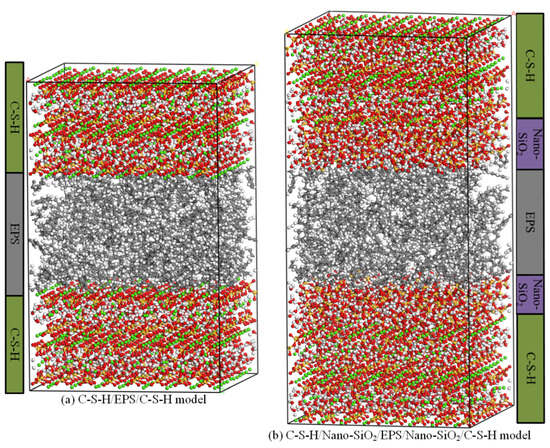
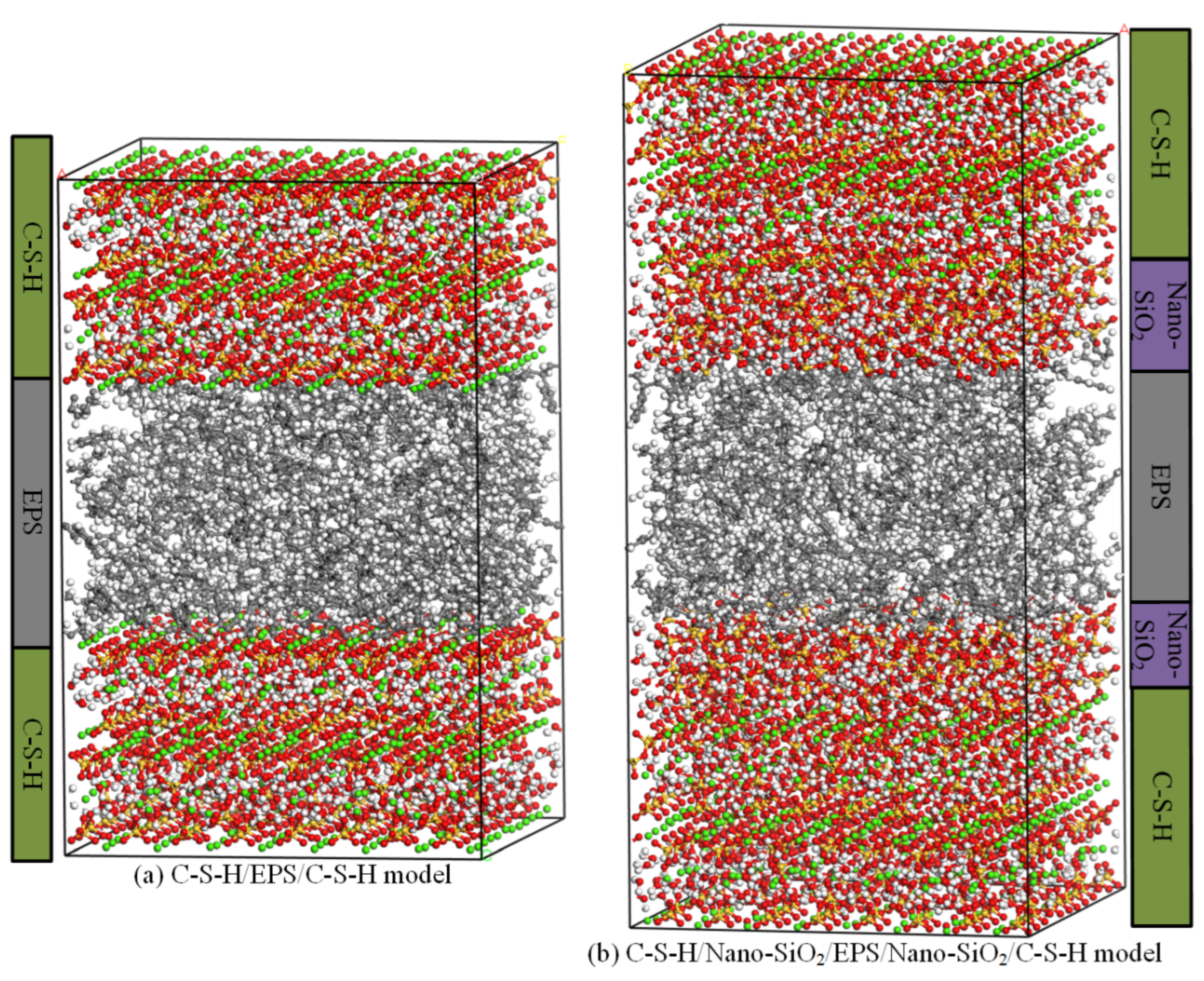
In the present work, the layered interface model was created with the aid of the Build Layers module. First, the C-S-H/EPS/C-S-H model was established, consisting of two layers of C-S-H with EPS polymer in the middle. The model dimensions are a = 20.20 Å, b = 22.16 Å, and c = 37.20 Å. Further, nano-SiO2 particles were introduced on both sides of EPS to construct the C-S-H/Nano-SiO2/EPS/Nano-SiO2/C-S-H composite model, with the unit cell height extended to c = 53.13 Å to more comprehensively simulate the modification effect.
In the optimization step, the polymer portion was placed in the interface system as a constrained layer. The surfaces of C-S-H and nano-SiO2 were not fixed but were stabilized through geometric optimization and energy relaxation, allowing the atoms at the interface to freely adjust and achieve a reasonable arrangement. Although only the main components were selected and the system was moderately simplified, this approach aligns with conventional molecular dynamics modeling practices and does not diminish the scientific validity of the simulation results.
In this study, the COMPASS force field was used for potential energy calculations [38]. The COMPASS force field was used to simulate the interaction between EPS–C-S-H with or without a modifier. It has been widely applied in the study of C-S-H gel simulation, and it can successfully describe the structure, energy, and mechanical properties of various calcium silicate phases [50,51]. Previous simulation studies by the authors have also shown that this force field maintains good consistency with experimental results in the C-S-H gel system [52], making it fully applicable to the interface modeling and performance analysis in this study. The final established models include the unmodified C-S-H/EPS/C-S-H interface and the nano-SiO2-containing C-S-H/Nano-SiO2/EPS/Nano-SiO2/C-S-H interface.
After completing the geometric optimization, the two established interface models underwent dynamic relaxation under ensemble control. First, a constant-pressure and -temperature ensemble (NPT) was used. By adjusting the system’s temperature and external pressure, the volume was allowed to freely change, gradually reaching a balance of density and volume, thus better reflecting the physical conditions of real materials. The run time for this stage was 200 ps, allowing the system to transition from the initial configuration to the equilibrium configuration in a short time. The system was then switched to a constant temperature and volume ensemble (NVT), where temperature control was maintained under constant volume conditions to eliminate the effects of early volume fluctuations on energy distribution [50]. This stage ran for 1 ns, allowing the model to achieve a more stable energy state and atomic arrangement. Through this two-stage relaxation process, the physical properties of the system were fully balanced, ensuring the reliability and authenticity of subsequent analyses. The final optimized interface structures include the C-S-H/EPS/C-S-H model and the nano-SiO2-modified C-S-H/Nano-SiO2/EPS/Nano-SiO2/C-S-H model, which are referred to as C-S-H/EPS and C-S-H/NS/EPS in subsequent studies, as shown in Figure 6.
Figure 6.
Two optimized crystal cell models.
4. Results and Discussion
4.1. Macroscopic Test Results
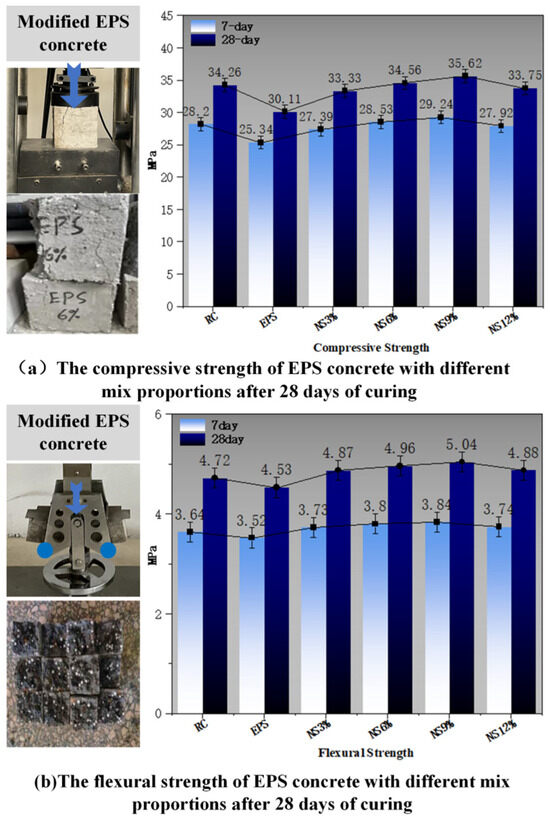
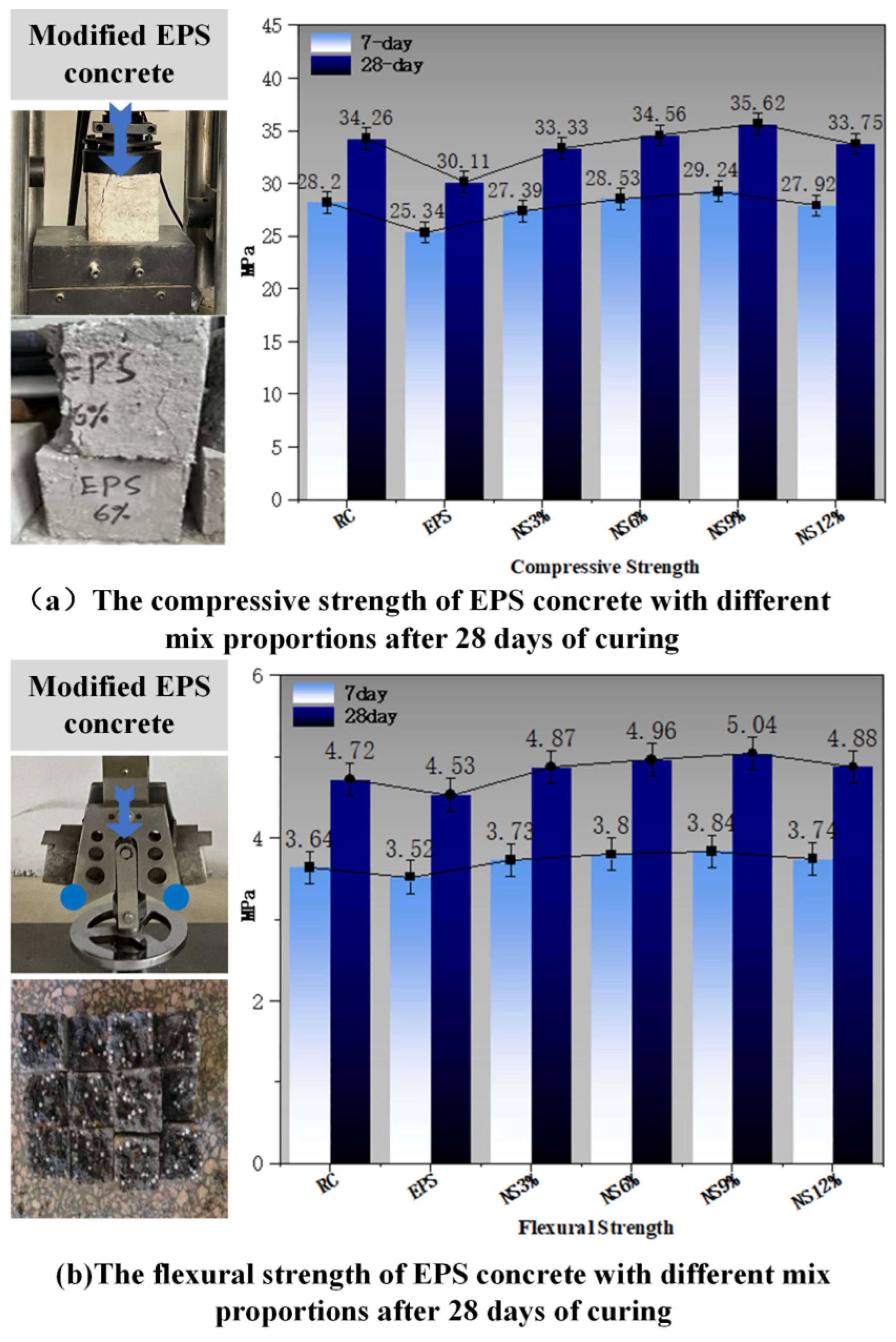
Figure 7 shows the mechanical performance test results of EPS concrete. As seen in the figures, with the increase in nano-SiO2 content, the compressive and flexural strength of EPS concrete generally show an initial increase followed by a slight decrease. Figure 7a shows that when the nano-SiO2 content is 3%, 6%, 9%, and 12%, the 7-day compressive strength increases by 8.1%, 12.6%, 15.4%, and 10.2%, respectively, compared to the unmodified concrete; the 28-day compressive strength increases by 10.7%, 14.8%, 18.3%, and 12.1%, respectively. As seen in Figure 7b, the 7-day flexural strength increases by 6.2%, 7.9%, 9.1%, and 6.3%, respectively; the 28-day flexural strength increases by 7.4%, 9.6%, 11.2%, and 7.8%, respectively. The test results show that the incorporation of nano-SiO2 into EPS concrete significantly improves its compressive and flexural strength, and the enhancement effect becomes more pronounced with the extension of curing age. The mechanism of action is primarily reflected in the following aspects: First, nano-SiO2 has an extremely high specific surface area and surface activity, enabling it to act as a “nucleation core” to promote the hydration reaction of cement, accelerating the formation of C–S–H gel, thus improving the density of the paste. Secondly, nano-SiO2 particles themselves possess strong pozzolanic activity, which can react with calcium hydroxide generated during cement hydration to further generate more C–S–H gel, effectively reducing porosity and optimizing the microstructure. Furthermore, the particulate filling effect of nano-SiO2 allows it to enter the interfacial transition zone (ITZ) between the aggregates and the paste in EPS concrete, repairing the interface defects caused by the introduction of EPS particles, thus significantly improving the density and bonding performance of the ITZ. Finally, the interaction between nano-SiO2 and the hydration products in the paste not only enhances the chemical bonding at the interface but also reduces the initiation and propagation of microcracks through physical filling effects, thereby enhancing the overall strength and durability of the concrete. As the content of nano SiO2 increases, the interaction between particles gradually strengthens, which may lead to particle aggregation and interface saturation. Exceeding the threshold results in poor dispersion of nanoparticles in concrete, thereby reducing their contact area with the cement matrix, lowering the effect of their catalytic hydration reaction, causing a decline in the workability and plasticity of the concrete, and further increasing the dosage may instead lead to a gradual flattening or decline in the improvement of the concrete’s mechanical properties.
Figure 7.
Effect of modification on the compressive and flexural strengths of EPS concrete with different mixture proportions.
In summary, the combined effects of nano-SiO2’s “pozzolanic effect + nucleation effect + filling effect” play a significant role in improving the matrix structure and interfacial bonding performance of EPS concrete, thus effectively enhancing its mechanical properties.
4.2. Microscopic Test Results
4.2.1. SEM
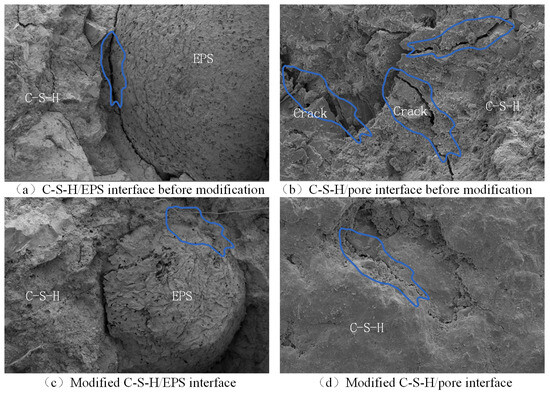
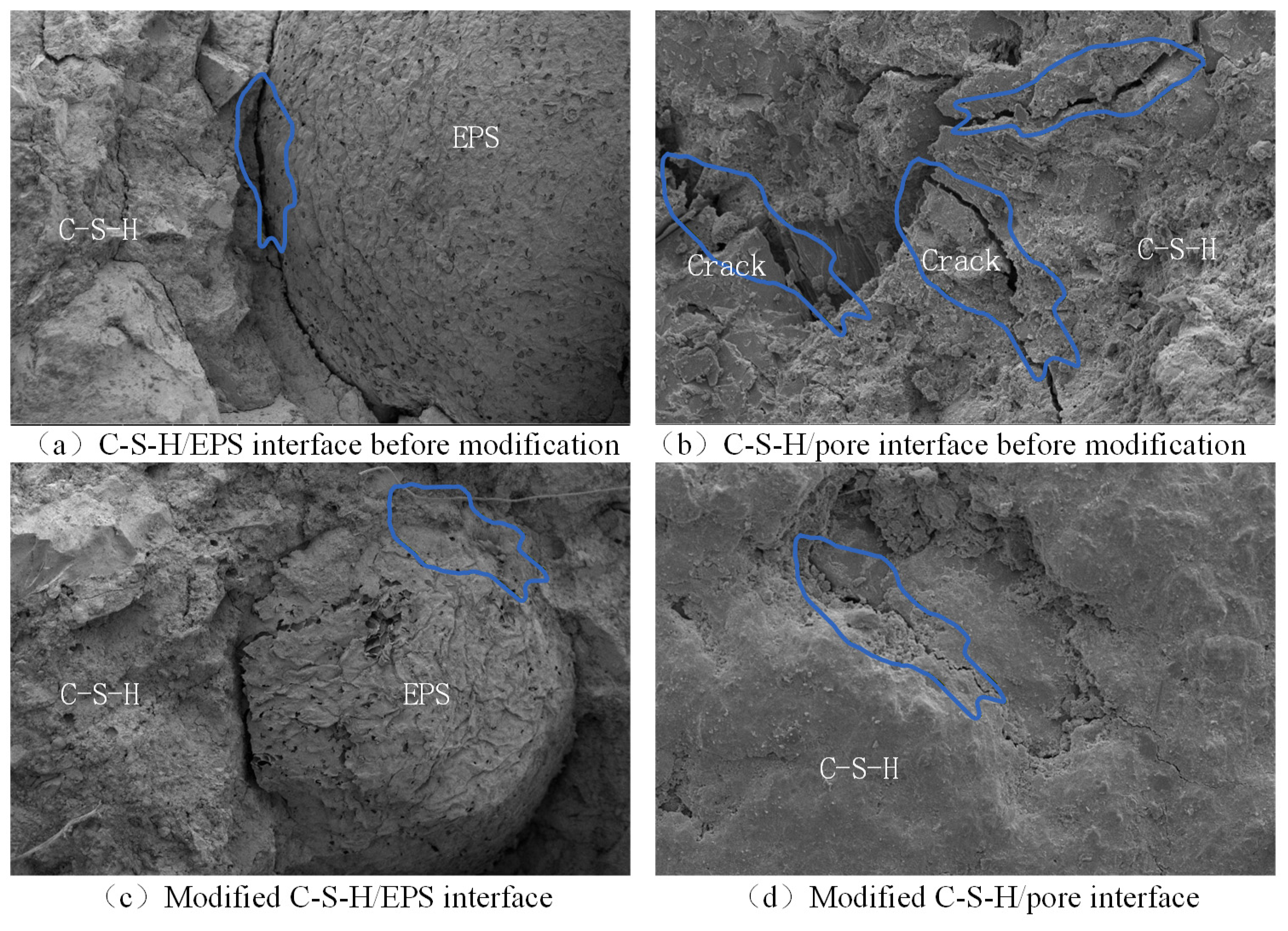
The interface morphology and matrix structure characteristics before and after nano-SiO2 modification were compared using SEM, and the results are shown in Figure 8.
Figure 8.
SEM observations of EPSRC prior to and following EPS modification.
As seen in Figure 8a, in the unmodified C-S-H/EPS interface region, there are significant gaps between the EPS particles and the cement matrix, with relatively loose interface bonding. These interface voids are prone to becoming stress concentration points, weakening the overall mechanical properties of the composite material. In contrast, Figure 8c shows that after introducing nano-SiO2 modification, the interface between EPS and the cement matrix becomes significantly denser, with the gaps notably reduced, indicating that the modification effectively improves the interface bonding quality. Further observation of the cement matrix section, Figure 8b shows that in the unmodified sample, the C-S-H structure is relatively loose, with numerous pores and through cracks, which weaken the strength and durability of the matrix. In the modified system (Figure 8d), the matrix structure is denser, the number of pores is reduced, and cracks are significantly smaller, indicating that the introduction of nano-SiO2 improves the matrix’s density and overall integrity.
In summary, the SEM results visually reveal that after nano-SiO2 modification, the interface between EPS and cement matrix becomes tighter, and the number of pores and cracks inside the cement matrix decreases. These structural changes provide direct evidence for the enhancement of macroscopic performance. However, it should be noted that SEM can only reflect the pore and interface state at the morphological level, and the deeper underlying mechanisms still need to be explained at the atomic scale. Therefore, this study further combines molecular dynamics simulations to systematically explore the energy changes and microscopic interaction structures at the interface of the modified system.
4.2.2. XRD
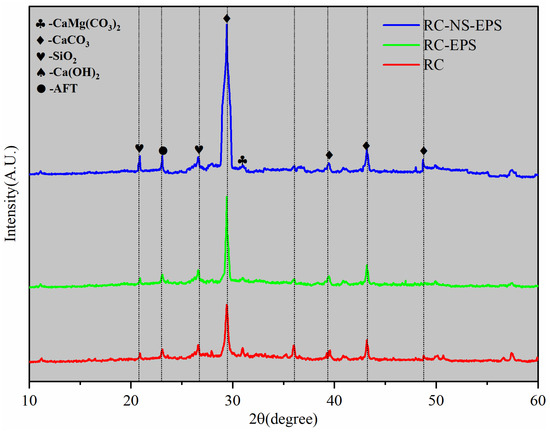
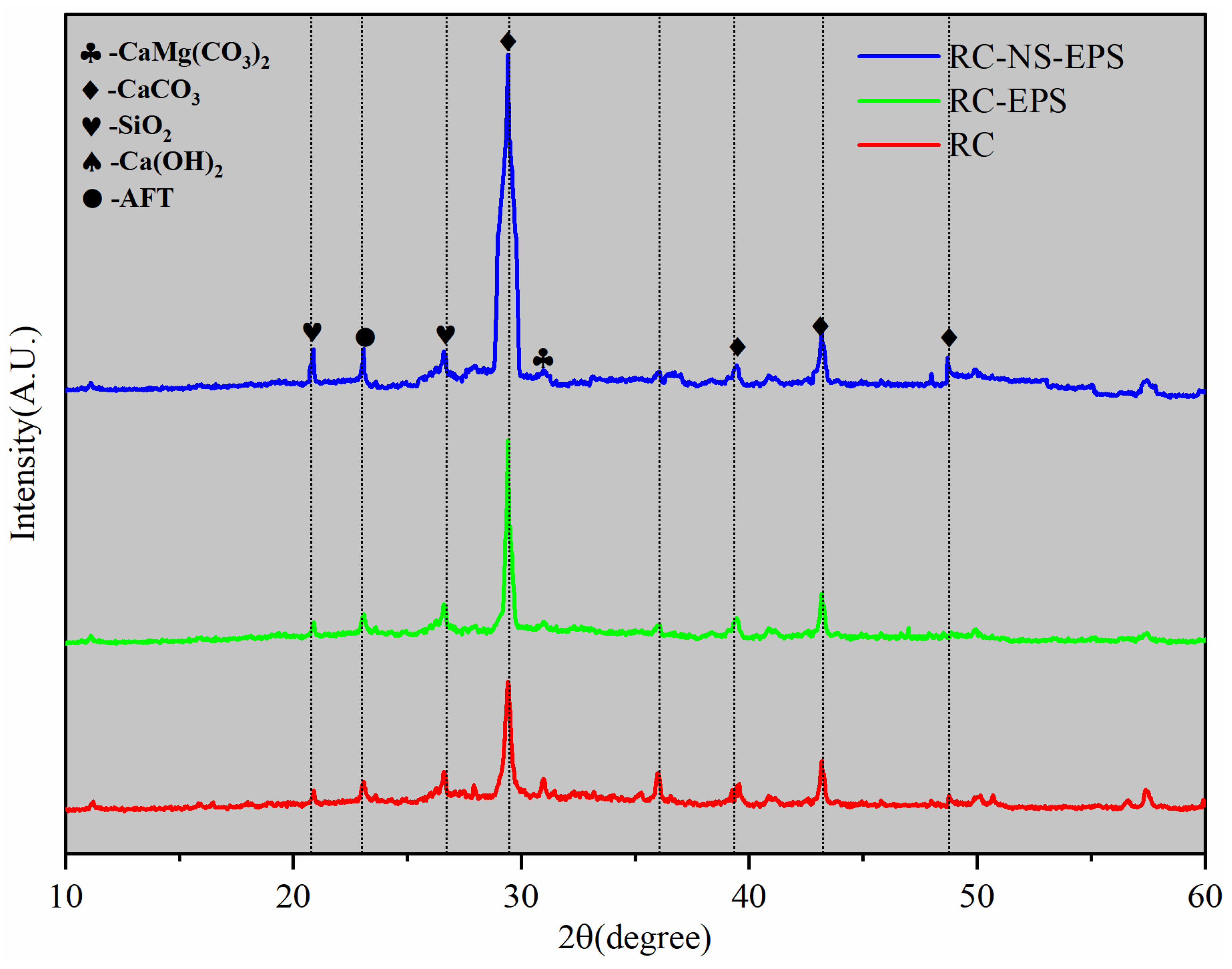
Based on the SEM results showing improved interface density and matrix pore structure, XRD was further used to analyze the crystallography of hydration products in three groups of samples (RC, RC-EPS, and RC-NS-EPS), and the results are shown in the Figure 9. The diffraction peak positions of the three samples are generally consistent within the 2θ range, showing the characteristic peaks of common cement-based hydration products and aggregate minerals, but with noticeable differences in peak intensity.
Figure 9.
XRD of different specimens.
In the control group RC, a clear diffraction peak of calcium carbonate (CaCO3) was observed at 2θ ≈ 29.4°, and a characteristic peak of calcium hydroxide (Ca(OH)2) at 2θ ≈ 34.2°, along with a signal from ettringite (AFT) at 2θ ≈ 27.6°. Additionally, the silica (SiO2, 2θ ≈ 26.6°) and dolomite component CaMg(CO3)2 (2θ ≈ 32.9°) from the sand and gravel aggregates were also stably present. These results indicate that the hydration products in the RC system mainly consist of the conventional Ca(OH)2, CaCO3, and AFT. After adding EPS (RC-EPS), the main hydration product diffraction peaks still appear, but the intensity changes little, indicating that the addition of EPS has a limited direct effect on the crystalline structure of the cement system, with more influence observed in the physical filling effect and interfacial interactions.
In contrast, in the nano-SiO2-modified RC-NS-EPS system, the diffraction peaks of some hydration products are significantly enhanced. For example, the peak intensity of CaCO3 at 2θ ≈ 29.4° is significantly higher in RC-NS-EPS compared to RC and RC-EPS, indicating that the introduction of nano-SiO2 may have promoted the carbonation process, increasing the CaCO3 content. The increase in carbonate products helps fill the pores and improve the matrix structure, consistent with the reduction in pores and enhancement of interface density observed in the SEM. At the same time, the peak intensity of Ca(OH)2 at 2θ ≈ 34.2° is lower than that in the unmodified samples, suggesting that some Ca(OH)2 has been further converted into carbonates or involved in secondary hydration reactions under the influence of nano-SiO2.
In summary, the XRD results show that the incorporation of nano-SiO2 regulates the transformation of hydration products, increasing the generation of carbonate products and reducing the residual Ca(OH)2. This optimization of product distribution not only improves the matrix density at the microscopic level but also provides structural evidence for the enhancement of macroscopic mechanical properties.
4.2.3. FTIR
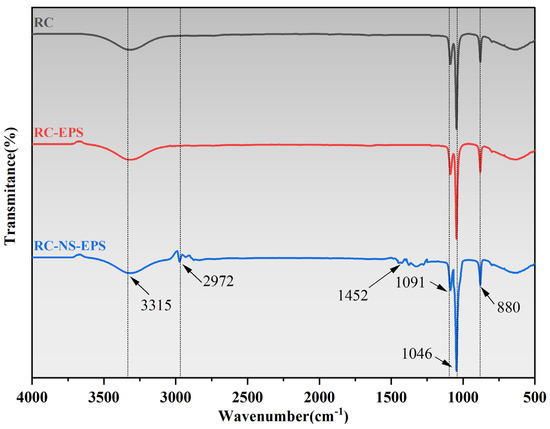
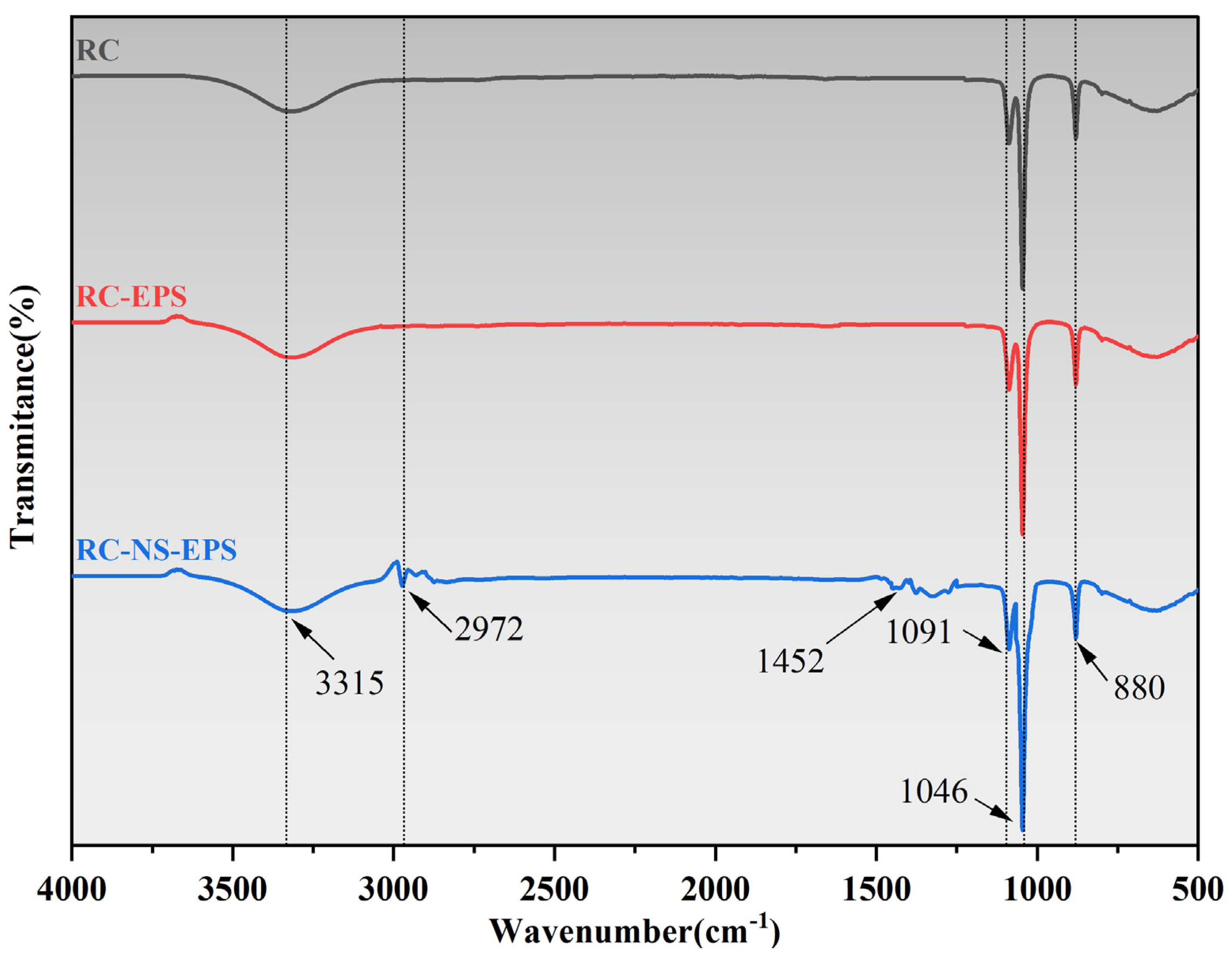
To further investigate the impact of nano-SiO2 on the chemical structure of the EPS concrete interface, FTIR spectra of three groups of samples (RC, RC-EPS, and RC-NS-EPS) were compared and analyzed, and the results are shown in the Figure 10. Overall, all three samples show typical characteristic peaks of cement-based materials in the main absorption regions, but there are significant differences in peak intensity and some peak positions.
Figure 10.
FTIR spectra of the three samples.
In the high wavenumber region, an absorption peak at approximately 3315 cm−1 corresponds to the –OH stretching vibration, indicating the presence of hydroxyl groups or adsorbed water in the hydration products. This peak is more pronounced in the RC-NS-EPS sample, indicating an increase in hydroxyl content in the interface region after modification, which helps further interaction with the functional groups on the nano-SiO2 surface. The absorption peak at 2972 cm−1 is attributed to the C–H bond stretching vibration, mainly originating from the alkyl groups in the EPS polymer chain. This peak is still present in the modified samples, indicating that the polymer backbone is preserved.
In the mid-low wavenumber range, the peak at 1452 cm−1 is related to the bending vibration of the –CH2– group, and its intensity increases with the introduction of EPS and nano-SiO2. More importantly, strong absorption peaks observed at 1091 cm−1 and 1046 cm−1 correspond to the stretching vibrations of Si–O–Si and Si–O–C bonds, respectively, indicating that nano-SiO2 participates in the formation of siloxane linkages within the alkaline environment of the cement matrix. This bonding may promote the densification of the interfacial transition zone (ITZ). Meanwhile, the peak at 880 cm−1 is related to CaCO3, and its enhancement indicates that the carbonation reaction is promoted to some extent under the influence of nano-SiO2.
In summary, the FTIR results reveal that nano-SiO2 modification not only preserves the organic characteristic groups of EPS but also introduces new silicon-oxygen bonding signals in the interface region, indicating that the modification enhances the bonding between C-S-H and EPS at the chemical level. Combining the aforementioned SEM and XRD results, it can be inferred that nano-SiO2 enhances the interface compatibility and overall mechanical properties of the composite material by promoting the formation of hydration and carbonation products and strengthening the interfacial chemical bonds.
4.3. Molecular Dynamics Simulations
4.3.1. BE
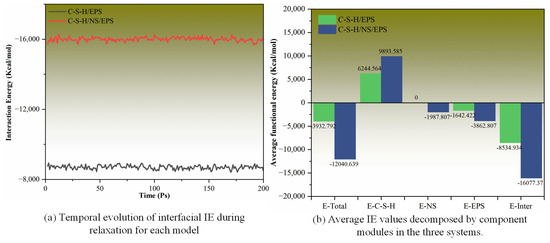
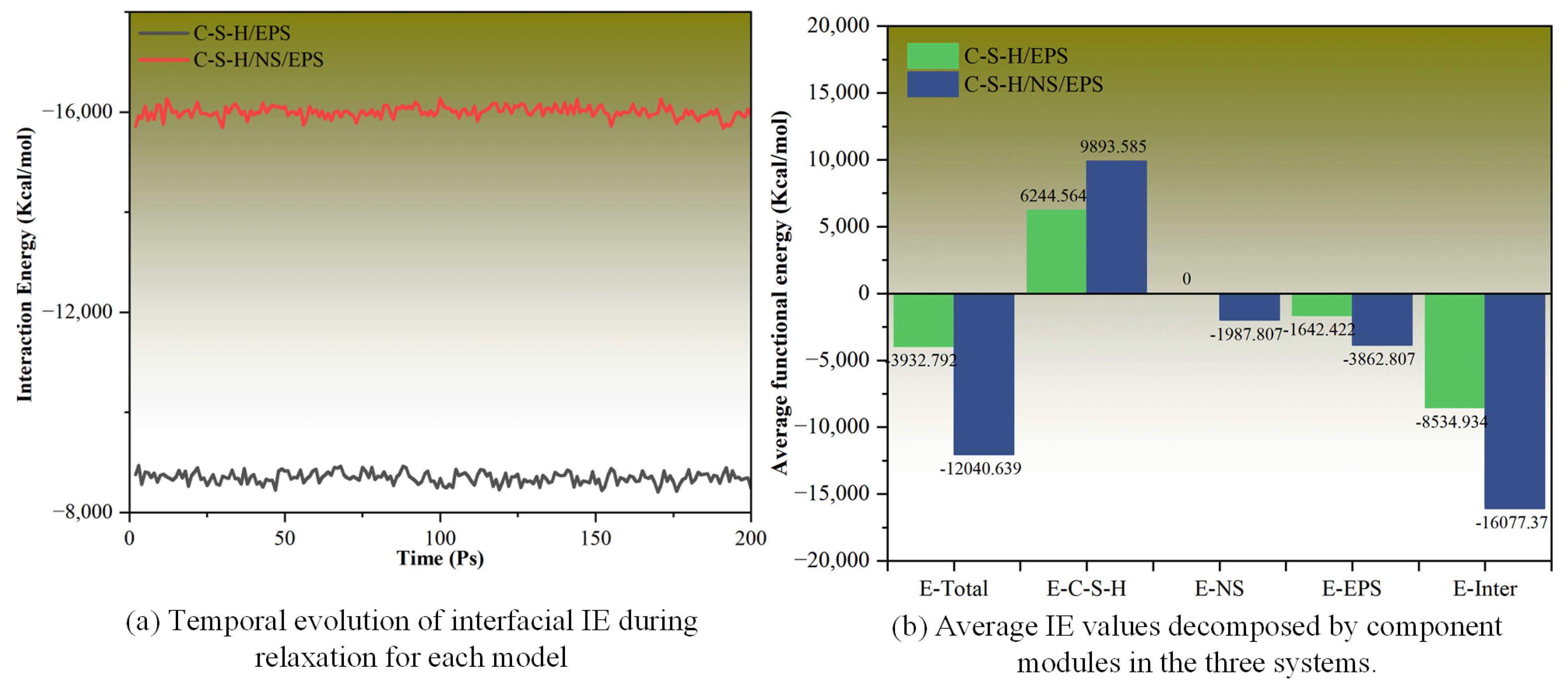
Interfacial interaction energy (IE) quantitatively characterizes the strength of material interface bonding and is an important indicator for evaluating interface stability. For the molecular dynamics analysis, the interaction energy is obtained by comparing the total energy of the interface model with the energies of each constituent calculated separately. The lower its value (the larger the absolute value), the stronger the interfacial interaction, and the more stable the system becomes [53]. Based on the energy changes in the interface model during the relaxation process, the IE evolution curves and averages for the two systems were calculated, as shown in Figure 11.
Figure 11.
IE analysis of the three C–S–H/EPS interface systems.
From the energy evolution curves during the relaxation phase (Figure 11a), it can be seen that both interface systems exhibit significant fluctuations in the initial stage, which gradually converge and stabilize in a steady range, indicating that the model has reached equilibrium. In the steady phase, the IE curves of different systems show significant differences, with the C-S-H/NS/EPS system having a lower overall energy level, indicating that its interfacial bonding is significantly stronger than that of the unmodified C-S-H/EPS model. Further functional energy decomposition (Figure 11b) reveals the source of this difference. The average IE value for the unmodified system is about −8535 kcal/mol, while after introducing nano-SiO2, the absolute value of IE increases to −16,077 kcal/mol, with an increase of nearly 90%. The decomposition results indicate that this enhancement is mainly attributed to stronger interactions between C-S-H and nano-SiO2, as well as the promotion of the synergistic effect between the polymer and the matrix at the interface by the nanoparticles.
Overall, the introduction of nano-SiO2 significantly improves the thermodynamic stability of the C-S-H/EPS interface, providing a microscopic basis for the subsequent enhancement of mechanical properties. This result validates the effectiveness of NS modification in interface enhancement, and its mechanism will be further revealed in the subsequent RDF analysis section.
4.3.2. RCD
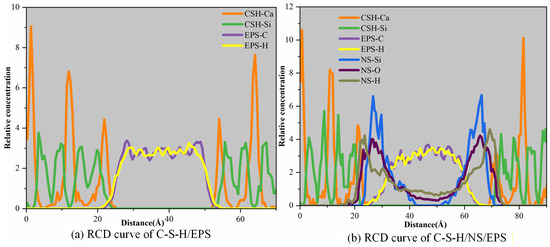
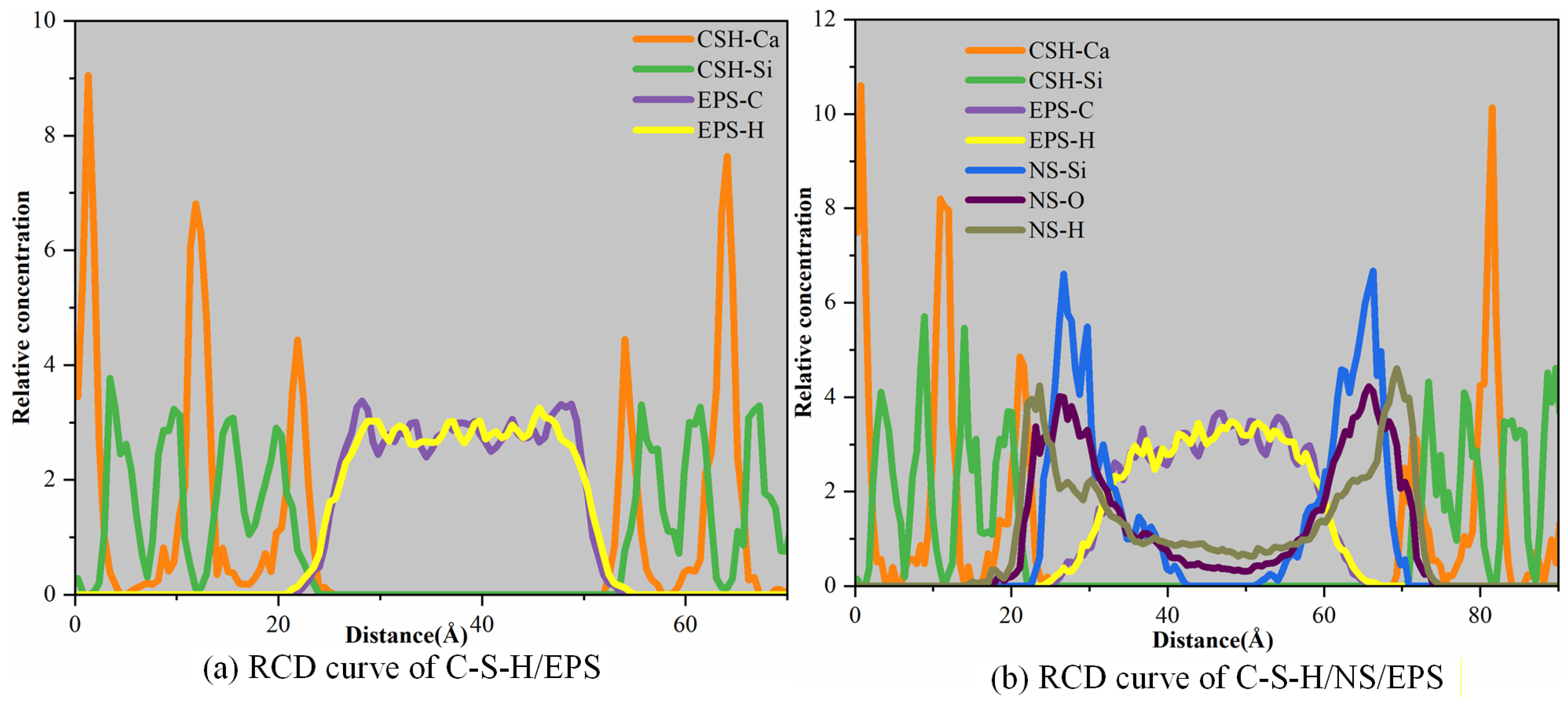
In molecular dynamics simulations, relative concentration distribution (RCD) reveals the spatial distribution characteristics of various atoms in the interface region along specific directions. This study calculated the atomic concentration distribution along the Z-axis direction for two interface models, C-S-H/EPS and C-S-H/NS/EPS, and the results are shown in the figure.
As seen in Figure 12a, in the unmodified system, Ca and Si atoms in the C-S-H phase show a highly ordered periodic distribution, forming distinct peaks at approximately 20 Å and 60 Å, reflecting the regularity of the layered framework. The C and H atoms in the EPS molecule are primarily distributed in the middle region, and their atomic distribution is largely separated from that of the C-S-H layers, showing weak interpenetration between the interfaces. This separation indicates that under unmodified conditions, there is a lack of strong interfacial interactions between C-S-H and EPS, with primarily physical contact.
Figure 12.
Relative concentration distribution of key atoms in the two models.
In contrast, the C-S-H/NS/EPS system in Figure 12b shows significantly different distribution characteristics. In addition to maintaining the layered framework characteristics of Ca and Si atoms, Si, O, and H atoms in nano-SiO2 show distinct concentration peaks in the 30–50 Å range, overlapping with the distribution region of C and H atoms in the EPS molecule. This partial overlap suggests that with the introduction of nano-SiO2, the atoms in the interface region experience stronger interactions and mixing. Particularly, the overlap of Si–O distribution in nano-SiO2 with the C and H signals in EPS indicates that nano-SiO2 acts as a bridging agent at the interface, enhancing the compatibility and stability between the EPS and C-S-H layers.
In summary, the RCD curve reveals that the presence of nano-SiO2 significantly alters the atomic distribution characteristics at the interface, causing an overlap between the previously relatively independent C-S-H and EPS interfaces. This phenomenon indicates that the introduction of nano-SiO2 enhances the degree of interface coupling, providing microscopic evidence for the improvement of interfacial energy and bonding strength.
4.3.3. RDF
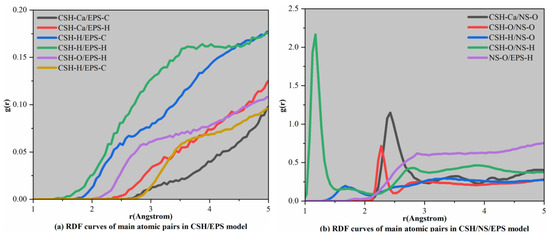
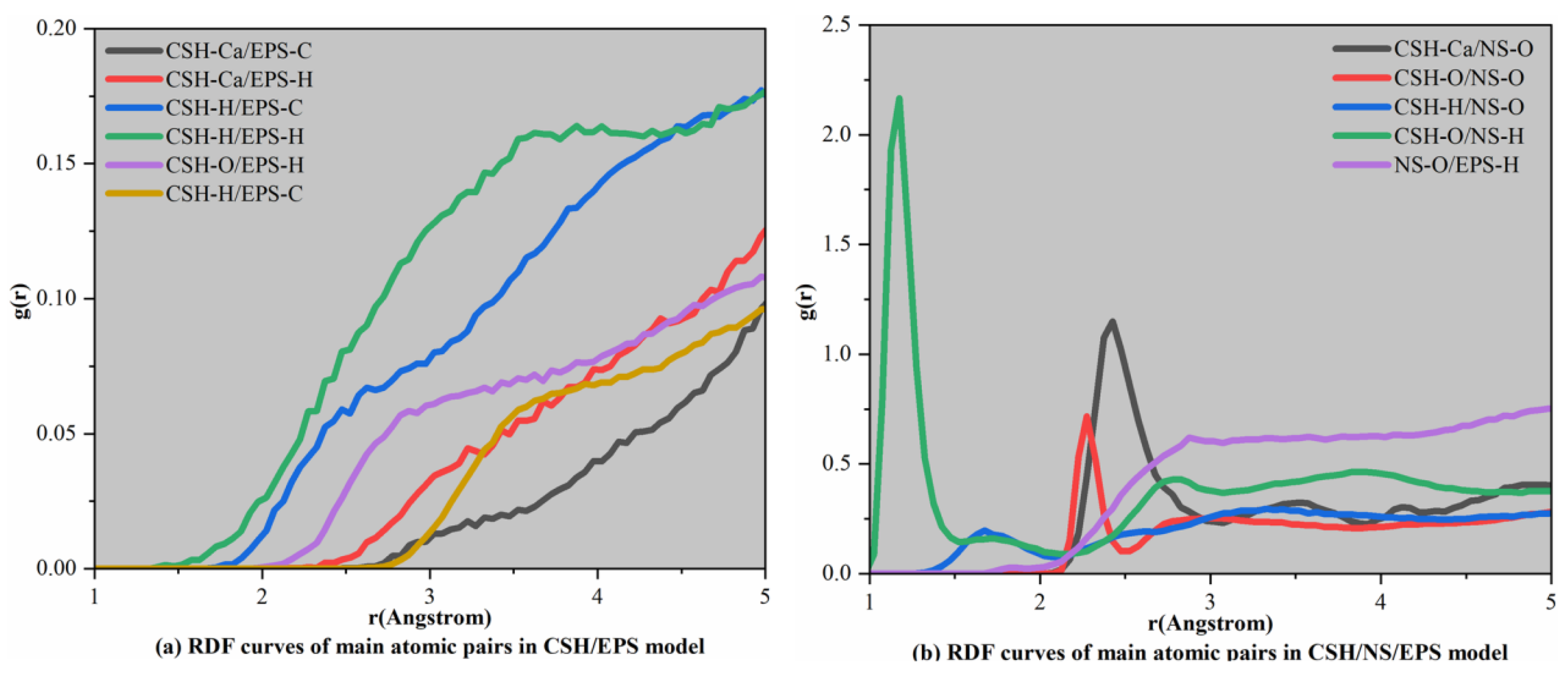
As an important descriptor of interaction strength and atomic ordering, the radial distribution function (RDF) reflects the local structural characteristics between atomic pairs at the interface. In this work, RDF curves for the main atomic pairs in the C–S–H/EPS and C–S–H/NS/EPS systems were obtained to examine the regulatory role of nano-SiO2 on the interfacial microstructure, and the corresponding results are given in Figure 13.
Figure 13.
RDF profiles of the principal atoms for both models.
As seen in Figure 13a, in the unmodified system, the RDF curves for Ca and Si in C-S-H and C and H in the EPS molecule show lower overall peak values, with a relatively smooth distribution and only a weak peak appearing between 2–4 Å. This indicates a lack of significant chemical bonding between the two phases, which are primarily held together by weak van der Waals forces, resulting in a loosely bonded interface.
However, in the C-S-H/NS/EPS model after introducing nano-SiO2 (Figure 13b), the curve shows significant differences. The Ca atoms in C-S-H and the O atoms in NS show a strong characteristic peak at approximately 2.0 Å, indicating stable ionic coordination; simultaneously, the O in NS and the H in the EPS molecule form a noticeable peak near 1.8 Å, indicating the presence of a hydrogen bonding network in the interface region. The appearance of these characteristic peaks indicates that the introduction of nano-SiO2 not only enhances the direct interaction between C-S-H and the polymer but also constructs a denser interface structure through hydrogen bonding and coordination interactions.
In summary, in the unmodified system, the interfacial interactions are dominated by weak physical forces, while in the nano-SiO2-modified system, the coordination bonds and hydrogen bonds between interfacial atoms are significantly enhanced, making the interface region’s structure more compact and ordered. This result at the atomic scale validates the positive role of nano-SiO2 in improving the compatibility and stability of the C-S-H/EPS interface.
4.3.4. MSD
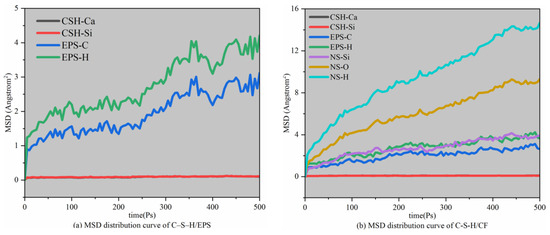
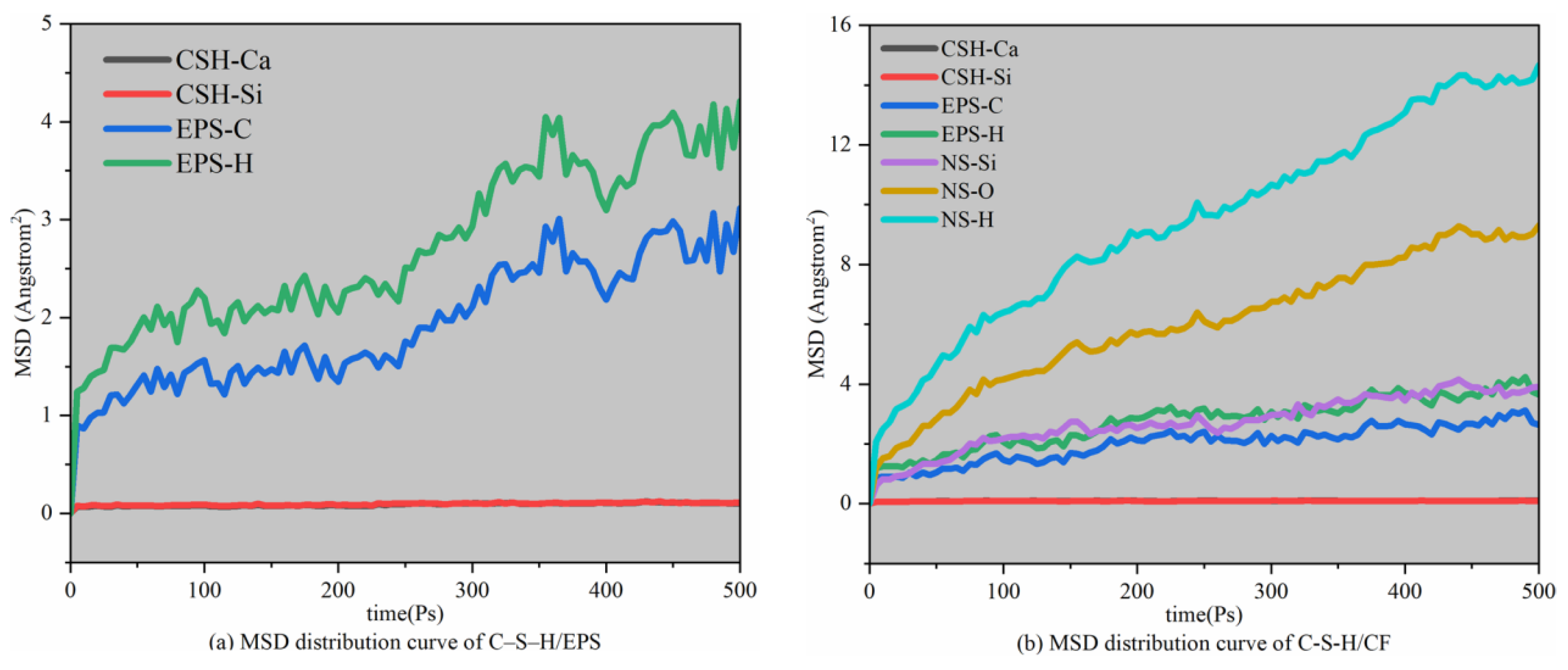
The mean squared displacement (MSD) reflects the migration ability of atoms or molecules over time and is an important indicator of the dynamic stability of a system. A lower MSD value usually indicates that atoms are in a constrained state within the structure, while a higher MSD value implies increased degrees of freedom for movement and enhanced fluctuations in the interface region. By comparing the MSD curves of the unmodified and nano-SiO2-modified systems (Figure 14), the effect of modification on the dynamic characteristics of the interface structure can be revealed.
Figure 14.
MSD profiles and diffusion coefficients for the principal atoms in both models.
In the unmodified C-S-H/EPS system (Figure 14a), the MSD of Ca and Si atoms remains close to zero, indicating that the C-S-H layer’s framework is very stable, and atomic movement is significantly constrained. In contrast, the C and H atoms in EPS show a gradually increasing displacement trend, with the H atom curve steeper and higher than that of C atoms, indicating that the hydrogen atoms at the ends of the polymer chains have higher activity and mobility. Overall, the C-S-H layer in this system is stable, while the EPS part is more active, resulting in limited interfacial interaction.
After the introduction of nano-SiO2 (Figure 14b), the system’s dynamic characteristics underwent significant changes. In addition to the Ca and Si atoms in C-S-H maintaining low MSD values, the O and H atoms in nano-SiO2 exhibit significant displacement growth over short to medium ranges, indicating that they have some degree of freedom of movement at the interface, allowing them to interact dynamically with the EPS molecules. Specifically, the curves of NS-O and EPS-H remain at a high level throughout the simulation, indicating that the formation of a hydrogen bond network at the interface enables tighter coupling between the polymer and the inorganic phase. Meanwhile, the overall MSD value of EPS atoms is lower than that of the unmodified system, suggesting that the introduction of nano-SiO2 limits the disordered movement of polymer chain segments and enhances the stability of the interface.
In summary, in the unmodified system, the interface is dominated by physical contact, with EPS molecules having more movement freedom; while after nano-SiO2 modification, the excessive movement of EPS molecules at the interface is effectively suppressed through hydrogen bonding and coordination interactions, making the system more stable. This result further validates the effectiveness of nano-SiO2 in enhancing the bonding between the C-S-H and EPS interfaces from a dynamic perspective.
5. Conclusions
In this study, nano-modifier NS was used to modify pre-treated EPS, and a multi-scale analysis method combining macro, micro experiments and MD simulations was used to investigate the enhancement mechanism of the interface performance between EPS and cement.
- The macroscopic tests reveal that EPS incorporation leads to a minor reduction in concrete compressive strength, while the introduction of NS offsets the strength deficiency caused by EPS, resulting in an overall increase in the compressive strength of the modified EPS concrete. In terms of flexural strength, both pre- and post-modified EPS concrete show significant improvements, with further enhancement observed after the addition of NS.
- Multiple microscopic tests indicate that the modified EPS enhances the connection between EPS and the cement matrix interface through friction and bonding interactions. At the same time, the application of NS promotes the further hydration of unhydrated cement, generating more gel materials that fill the pores in the concrete.
- MD simulations indicate that in the NS-modified EPS concrete system, there is not only mechanical adhesion between EPS and the cement matrix, but also the formation of a large number of hydrogen and ionic bonds, significantly enhancing interface stability and reducing the free expansion vibrations of interfacial atoms. These enhanced interfacial interactions significantly improve interface stability and restrain atomic mobility and thermal vibration at the interface, which is manifested as microstructural densification and corresponding improvement in macroscopic mechanical performance.
In conclusion, the research results confirm that NS modification effectively improves the mechanical performance and durability of EPS concrete by enhancing the interfacial bonding and chemical compatibility between EPS and the cement matrix. These findings provide support for a comprehensive understanding of the enhancement mechanism and offer valuable insights for the application of EPS concrete in construction.
Author Contributions
Conceptualization, C.Z., F.X. and Y.F.; methodology, C.Z. and F.X.; software, C.Z., Y.F. and L.L. (Lijvan Li); formal analysis, C.Z. and Z.K.; investigation, C.Z., Y.F. and L.L. (Longteng Lv); resources, C.Z. and Y.F.; data curation, C.Z. and L.L. (Longteng Lv); writing—original draft preparation, C.Z. and L.L. (Longteng Lv); writing—review and editing, Y.F. and L.L. (Lijvan Li); visualization, C.Z., F.X. and Z.K.; supervision, Y.F. All authors have read and agreed to the published version of the manuscript.
Funding
This research was funded by the Henan Province Science and Technology Key Project (No. 232102320173), Key Scientific Research Project of Henan Province Higher Education Institutions in 2025 (No. 25CY020), Henan Provincial Science and Technology Key Project (No. 252102241011).
Data Availability Statement
The data presented in this study are available on request from the corresponding author.
Conflicts of Interest
The authors declare there are no conflicts of interest.
References
- Haller, T.; Scherb, S.; Beuntner, N.; Thienel, K.C. Renewable construction with lightweight concrete—Reclaimed recycled material systems with CO2-absorption. Constr. Build. Mater. 2025, 466, 140339. [Google Scholar] [CrossRef] [Scilit]
- Bian, S.; Tang, W.; Liu, X.R.; Li, Y.; Sun, X.L.; Yang, Y.P.; Yan, S.J.; Wu, Y.Y.; Liu, G.X.; Dan, J.M.; et al. Preparation of geopolymer-EPS core-shell lightweight aggregate and performance in lightweight geopolymer concrete. J. Mater. Sci. 2025, 60, 11381–11397. [Google Scholar] [CrossRef] [Scilit]
- Liu, N.; Chen, B. Experimental study of the influence of EPS particle size on the mechanical properties of EPS lightweight concrete. Constr. Build. Mater. 2014, 68, 227–232. [Google Scholar] [CrossRef] [Scilit]
- Xu, Y.; Tong, S.R.; Xu, X.; Mao, J.T.; Kang, X.; Luo, J.; Jiang, L.H.; Guo, M.Z. Effect of foam stabilization on the properties of foamed concrete modified by expanded polystyrene. J. Build. Eng. 2023, 73, 106822. [Google Scholar] [CrossRef] [Scilit]
- Niu, G.; Liu, C.; Jia, L.T.; Ma, L.; Shi, Y.F.; Jiang, Y.F.; Jia, Z.J.; Chen, Y.; Banthia, N.; Zhang, Y.M. Preparation and performance analysis of 3D printed lightweight EPS concrete: Insights from the excess paste theory. Cem. Concr. Compos. 2024, 149, 105509. [Google Scholar] [CrossRef] [Scilit]
- Li, Y.; Liu, N.; Chen, B. Properties of lightweight concrete composed of magnesia phosphate cement and expanded polystyrene aggregates. Mater. Struct. 2015, 48, 269–276. [Google Scholar] [CrossRef] [Scilit]
- Yuan, J.; Li, D.B.; Li, W.L.; Yang, H.L.; Zhang, W.H.; Wang, L.B.; Wang, J.J.; Xiong, Z.Z. Study on frost resistance of EPS concrete based on EPS beads wrapping modification. Constr. Build. Mater. 2022, 345, 128400. [Google Scholar] [CrossRef] [Scilit]
- Imtiaz, A.; Sharif, M.B.; Irfan-ul-Hassan, M.; Ghafoor, M.T.; Hasan, S. Effect of Expanded Polystyrene Beads on Mechanical, Thermal, and Acoustic Properties of Lightweight Concrete. Arab. J. Sci. Eng. 2025, 50, 1715–1727. [Google Scholar] [CrossRef] [Scilit]
- Zhang, L.W.; Huang, M.Y.; Yang, F.H.; Zhang, W.H. A novel hydrophilic modification method of EPS particles: Conception design and performances in concrete. Cem. Concr. Compos. 2023, 142, 105199. [Google Scholar] [CrossRef] [Scilit]
- Chung, S.Y.; Abd Elrahman, M.; Stephan, D. Effects of expanded polystyrene (EPS) sizes and arrangements on the properties of lightweight concrete. Mater. Struct. 2018, 51, 57. [Google Scholar] [CrossRef] [Scilit]
- Wei, J.; Yang, Q.S.; Yu, Y.; Jiang, Q.; Li, X.C.; Liu, S.C.; Li, K.X.; Wang, Q. Experimental study of multiscale hybrid fiber-reinforced ambient-cured LEGC under uniaxial compression. Constr. Build. Mater. 2024, 411, 134386. [Google Scholar] [CrossRef] [Scilit]
- Li, Z.N.; Shen, A.Q.; Zeng, G.P.; Chen, Z.T.; Guo, Y.C. Research progress on properties of basalt fiber-reinforced cement concrete. Mater. Today Commun. 2022, 33, 104824. [Google Scholar] [CrossRef] [Scilit]
- Wu, Z.; Wang, X.L.; Chen, Z.H. Experimental study on preparation and performance of the Corn Straw Fiber (CSF) reinforced EPS concrete. J. Build. Eng. 2024, 89, 109378. [Google Scholar] [CrossRef] [Scilit]
- Hu, P.F.; Wang, J.F.; Wang, W.Q.; Shen, Q.H.; Wu, X.T.; Wu, Y.E. Behaviour of fibre reinforced EPS lightweight concrete under dynamic splitting tension. J. Build. Eng. 2025, 111, 113360. [Google Scholar] [CrossRef] [Scilit]
- Yuan, B.X.; Huang, X.L.; Huang, Q.Y.; Shiau, J.; Liang, J.K.; Zhang, B.F.; Zheng, J.J.; Fahimizadeh, M.; Sabri, M.M. Effects of particle size on properties of engineering muck-based geopolymers: Optimization through sieving treatment. Constr. Build. Mater. 2025, 492, 142967. [Google Scholar] [CrossRef] [Scilit]
- Yuan, B.X.; Huang, X.L.; Li, R.C.; Luo, Q.Z.; Shiau, J.; Wang, Y.H.; Yuan, J.H.; Sabri, S.M.M.; Huang, S.Y.; Liao, C. Dynamic behavior and deformation of calcareous sand under cyclic loading. Soil Dyn. Earthq. Eng. 2025, 199, 109730. [Google Scholar] [CrossRef] [Scilit]
- Yuan, B.X.; Huang, Q.Y.; Xu, W.Y.; Han, Z.J.; Luo, Q.Z.; Chen, G.R.; Yuan, J.H.; Zhang, Q.Y.; Sabri, S.M.M. Study on the interaction between pile and soil under lateral load in coral sand. Geomech. Energy Environ. 2025, 42, 100674. [Google Scholar] [CrossRef] [Scilit]
- He, D.Y.; Zheng, W.K.; Chen, Z.L.; Qi, Y.L.; Zhang, D.W.; Li, H. Influence of Paste Strength on the Strength of Expanded Polystyrene (EPS) Concrete with Different Densities. Polymers 2022, 14, 2529. [Google Scholar] [CrossRef] [Scilit]
- Dorado, F.; Toledo, L.; de la Osa, A.R.; Esteban-Arranz, A.; Sacristan, J.; Pellegrin, B.; Steck, J.; Sanchez-Silva, L. Adhesion enhancement and protection of concrete against aggressive environment using graphite-Fe2O3 modified epoxy coating. Constr. Build. Mater. 2023, 379, 131179. [Google Scholar] [CrossRef] [Scilit]
- Althoey, F.; Zaid, O.; Martínez-García, R.; Alsharari, F.; Ahmed, M.; Arbili, M.M. Impact of Nano-silica on the hydration, strength, durability, and microstructural properties of concrete: A state-of-the-art review. Case Stud. Constr. Mater. 2023, 18, e01997. [Google Scholar] [CrossRef] [Scilit]
- Rath, B.; Praveenkumar, T.R.; Dhami, K.S.; Paramasivam, P.; Yusuf, M. Sustainable LC3 Concrete in the Circular Economy: Assessment of Mechanical, Microstructural, and Durability Characteristics with Surkhi, Metakaolin, Nano-Silica, and M-Sand Blended Concrete. Glob. Chall. 2025, 9, 2500026. [Google Scholar] [CrossRef] [Scilit] [PubMed]
- Rezaei, F.; Memarzadeh, A.; Davoodi, M.R.; Dashab, M.A.; Nematzadeh, M. Mechanical features and durability of concrete incorporating recycled coarse aggregate and nano-silica: Experimental study, prediction, and optimization. J. Build. Eng. 2023, 73, 106715. [Google Scholar] [CrossRef] [Scilit]
- Ashokan, A.; Dhairiyasamy, R.; Rajendaran, S. Investigating the influence of nano-silica incorporation on mechanical characteristics of steel fiber-reinforced concrete to mitigate solid waste and environmental contamination. Energy Sources Part A—Recovery Util. Environ. Eff. 2024, 46, 131–147. [Google Scholar] [CrossRef] [Scilit]
- Alvansazyazdi, M.; Alvarez-Rea, F.; Pinto-Montoya, J.; Khorami, M.; Bonilla-Valladares, P.M.; Debut, A.; Feizbahr, M. Evaluating the Influence of Hydrophobic Nano-Silica on Cement Mixtures for Corrosion-Resistant Concrete in Green Building and Sustainable Urban Development. Sustainability 2023, 15, 15311. [Google Scholar] [CrossRef] [Scilit]
- Nia, S.B.; Shafei, B. Synergistic effects of nano and micro silica on fresh and hardened properties of self-consolidating concrete. Case Stud. Constr. Mater. 2024, 21, e03443. [Google Scholar] [CrossRef] [Scilit]
- Ahmed, S.A.; Ebrahem, E.; El-Feky, M.S. Achieving sustainable performance: Synergistic effects of nano-silica and recycled expanded polystyrene in lightweight structural concrete. Sci. Rep. 2024, 14, 26648. [Google Scholar] [CrossRef] [Scilit]
- Ahmadi, S.H.; Mazloom, M.; Salehi, H. Total and initial fracture energies of self-compacting lightweight concrete containing silica fume and nano-silica. Eng. Fract. Mech. 2024, 308, 110382. [Google Scholar] [CrossRef] [Scilit]
- Zhang, C.P.; Fan, D.Q.; Lu, J.X.; Pang, C.M.; Poon, C.S. Ultra-stable foam enabled by nano silica engineering for foam concrete improvement. Cem. Concr. Compos. 2024, 150, 105575. [Google Scholar] [CrossRef] [Scilit]
- Du, Y.Y.; Korjakins, A.; Sinka, M.; Pundiene, I. Lifecycle Assessment and Multi-Parameter Optimization of Lightweight Cement Mortar with Nano Additives. Materials 2024, 17, 4434. [Google Scholar] [CrossRef] [Scilit]
- Majeed, S.S.; Mydin, M.A.O.; Bahrami, A.; Dulaimi, A.; Özkiliç, Y.O.; Omar, R.; Jagadesh, P. Development of ultra-lightweight foamed concrete modified with silicon dioxide (SiO2) nanoparticles: Appraisal of transport, mechanical, thermal, and microstructural properties. J. Mater. Res. Technol.—JMRT 2024, 30, 3308–3327. [Google Scholar] [CrossRef] [Scilit]
- Zhang, Y.T.; Sun, X.W. A comprehensive assessment of nanomaterials reinforced lightweight aggregate concrete containing high-volume artificial shale ceramsite. J. Build. Eng. 2024, 84, 108696. [Google Scholar] [CrossRef] [Scilit]
- Diotallevi, P.P.; Landi, L.; Guiduzzi, M. Experimental tests of RC beams strengthened with composite materials using IPN water-based resins. Mater. Struct. 2017, 50, 174. [Google Scholar] [CrossRef] [Scilit]
- Bai, G.; Pan, Y.; Zhang, Y.; Li, Y.; Wang, J.; Wang, Y.; Teng, W.; Jin, G.; Geng, F.; Cao, J. Research advances of molecular docking and molecular dynamic simulation in recognizing interaction between muscle proteins and exogenous additives. Food Chem. 2023, 429, 136836. [Google Scholar] [CrossRef] [Scilit]
- Al-Karmalawy, A.A.; Dahab, M.A.; Metwaly, A.M.; Elhady, S.S.; Elkaeed, E.B.; Eissa, I.H.; Darwish, K.M. Molecular Docking and Dynamics Simulation Revealed the Potential Inhibitory Activity of ACEIs Against SARS-CoV-2 Targeting the hACE2 Receptor. Front. Chem. 2021, 9, 661230. [Google Scholar] [CrossRef] [Scilit]
- Golewski, G.L.; Szostak, B. Strength and microstructure of composites with cement matrixes modified by fly ash and active seeds of C-S-H phase. Struct. Eng. Mech. 2022, 82, 543–556. [Google Scholar] [CrossRef]
- Wang, L.; Guo, F.X.; Lin, Y.Q.; Yang, H.M.; Tang, S.W. Comparison between the effects of phosphorous slag and fly ash on the C-S-H structure, long-term hydration heat and volume deformation of cement-based materials. Constr. Build. Mater. 2020, 250, 118807. [Google Scholar] [CrossRef] [Scilit]
- Wang, L.; Jin, M.M.; Zhou, S.H.; Tang, S.W.; Lu, X. Investigation of microstructure of C-S-H and micro-mechanics of cement pastes under NH4NO3 dissolution by 29Si MAS NMR and microhardness. Measurement 2021, 185, 110019. [Google Scholar] [CrossRef] [Scilit]
- Geng, Z.C.; Tang, S.W.; Wang, Y.; A, H.B.; He, Z.; Wu, K.; Wang, L. Stress relaxation properties of calcium silicate hydrate: A molecular dynamics study. J. Zhejiang Univ. Sci. A 2024, 25, 97–115. [Google Scholar] [CrossRef] [Scilit]
- Al-Muhit, B.; Sanchez, F. Nano-engineering of the mechanical properties of tobermorite 14 Å with graphene via molecular dynamics simulations. Constr. Build. Mater. 2020, 233, 117237. [Google Scholar] [CrossRef] [Scilit]
- Sarkar, P.K.; Mitra, N. Molecular level study of uni/multi-axial deformation response of tobermorite 11 Å: A force field comparison study. Cem. Concr. Res. 2021, 145, 106451. [Google Scholar] [CrossRef] [Scilit]
- Zhou, Y.; Zheng, H.; Li, W.; Ma, T.; Miao, C. A deep learning potential applied in tobermorite phases and extended to calcium silicate hydrates. Cem. Concr. Res. 2022, 152, 106685. [Google Scholar] [CrossRef] [Scilit]
- Pellenq, R.J.M.; Kushima, A.; Shahsavari, R.; Van Vliet, K.J.; Buehler, M.J.; Yip, S.; Ulm, F.-J. A realistic molecular model of cement hydrates. Proc. Natl. Acad. Sci. USA 2009, 106, 16102–16107. [Google Scholar] [CrossRef] [Scilit]
- Hamid, S.A. The crystal structure of the 11Å natural tobermorite Ca2.25[Si3O7.5(OH)1.5]·H2O. Z. Krist. 1981, 154, 189–198. [Google Scholar]
- Hou, D.; Wu, C.; Yang, Q.; Zhang, W.; Lu, Z.; Wang, P.; Li, J.; Ding, Q. Insights on the molecular structure evolution for tricalcium silicate and slag composite: From 29Si and 27Al NMR to molecular dynamics. Compos. Part B—Eng. 2020, 202, 108401. [Google Scholar] [CrossRef] [Scilit]
- Luo, Q.; Xiang, Y.; Yang, Q.; Liang, T.; Xie, Y. Molecular simulation of calcium-silicate-hydrate and its applications: A comprehensive review. Constr. Build. Mater. 2023, 409, 134137. [Google Scholar] [CrossRef] [Scilit]
- Mohamed, A.K.; Parker, S.C.; Bowen, P.; Galmarini, S. An atomistic building block description of C-S-H—Towards a realistic C-S-H model. Cem. Concr. Res. 2018, 107, 221–235. [Google Scholar] [CrossRef] [Scilit]
- Feng, Y.; Qin, D.; Li, L.; Li, Y.; Wang, C.; Wang, P. EVA enhances the interfacial strength of EPS concrete: A molecular dynamics study. J. Exp. Nanosci. 2021, 16, 383–397. [Google Scholar] [CrossRef] [Scilit]
- Wei, Q.; Wang, Y.; Wang, S.; Zhang, Y.; Chen, X. Investigating the properties and interaction mechanism of nano-silica in polyvinyl alcohol/polyacrylamide blends at an atomic level. J. Mech. Behav. Biomed. Mater. 2017, 75, 529–537. [Google Scholar] [CrossRef] [Scilit] [PubMed]
- Zhou, X.; Li, B.; Huang, Q.; Huang, J. Molecular Dynamics Simulation of Mechanical and Tribological Properties of Ultrahigh Molecular Weight Polyethylene Enhanced by Modified Silica Nanoparticles. J. Mater. Eng. Perform. 2024. Early Access. [Google Scholar] [CrossRef] [Scilit]
- Ke, Q.; Gong, X.; Liao, S.; Duan, C.; Li, L. Effects of thermostats/barostats on physical properties of liquids by molecular dynamics simulations. J. Mol. Liq. 2022, 365, 120116. [Google Scholar] [CrossRef] [Scilit]
- Feng, Y.; Lv, L.T.; Jiang, H.L.; Shi, X. Multiscale experimental and simulation analysis on the synergistic modification mechanism of nano-SiO2/EVA at the recycled concrete interface. Compos. Interfaces 2025, 32, 1097–1122. [Google Scholar] [CrossRef] [Scilit]
- Li, W.; Chai, W.; Zhang, L.; Guo, Y.; Wang, W.; Chen, S. Atomic insight into the influences of moisture ingress on the structures and dynamics of graphene-epoxy interfaces. Compos. Sci. Technol. 2022, 219, 109222. [Google Scholar] [CrossRef] [Scilit]
- Meng, H.; Cui, Z.; Yu, Y.; Li, Y.; Jiang, S.; Liu, Y. From Molecular Dynamics to Taste Sensory Perception: A Comprehensive Study on the Interaction of Umami Peptides with the T1R1/T1R3-VFT Receptor. J. Agric. Food Chem. 2024, 72, 6533–6543. [Google Scholar] [CrossRef] [Scilit] [PubMed]

Disclaimer/Publisher’s Note: The statements, opinions and data contained in all publications are solely those of the individual author(s) and contributor(s) and not of MDPI and/or the editor(s). MDPI and/or the editor(s) disclaim responsibility for any injury to people or property resulting from any ideas, methods, instructions or products referred to in the content. |
© 2026 by the authors. Licensee MDPI, Basel, Switzerland. This article is an open access article distributed under the terms and conditions of the Creative Commons Attribution (CC BY) license.